Let’s set aside the idea that embroidery must be bright and bustling with color. Instead, I want you to think about texture, light, and the quiet conversation between thread and fabric. Your home, with its warm wood and soft linen, is the perfect canvas for embroidery that doesn’t shout, but speaks in a calm, confident whisper.
In this collection, we’ll explore the sophisticated world of off-white, sand, and cream. You’ll see how a limited palette forces you to become more intentional with your stitches. A simple satin stitch, when angled just so, can catch the light and create dimension. A single, clean line can feel more powerful than a hundred intricate fills.
This isn’t about restriction; it’s about refinement. You’ll learn to create art that feels integrated with your space, adding a layer of handmade warmth that is both modern and timeless. It’s time to stitch with purpose and create pieces that bring a sense of harmony and quiet beauty to your home.
1. Sculpt Abstract Forms With Directional Satin Stitch
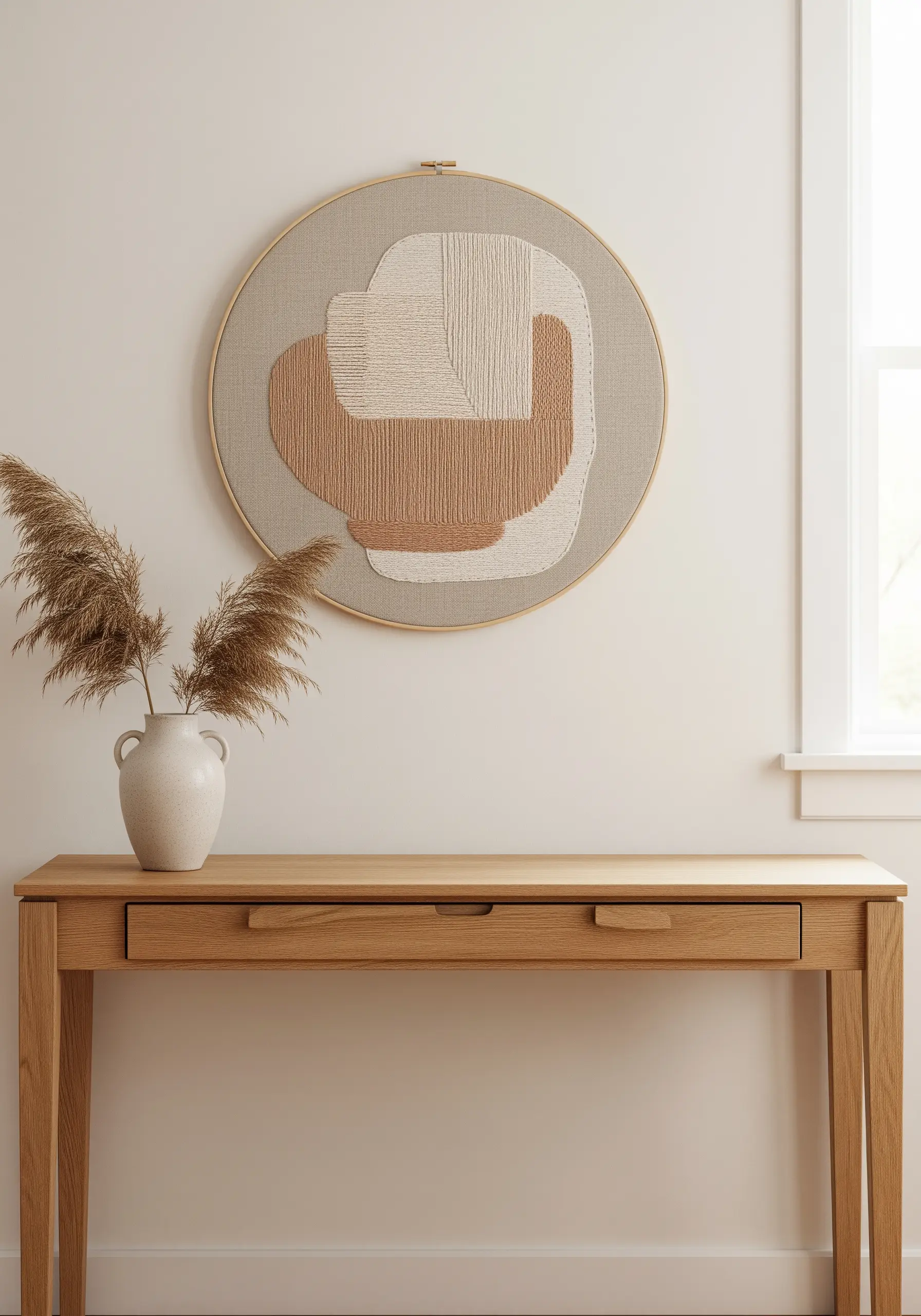
Transform simple abstract shapes into sculptural art by mastering directional satin stitch.
Instead of filling a shape with uniform stitches, change the angle of your stitches in different sections.
This simple adjustment catches the light differently, creating the illusion of planes and shadows without changing your thread color.
Use a full six strands of cotton floss on a tightly woven linen to achieve a dense, paint-like coverage that emphasizes the form.
This technique elevates a basic fill stitch into a sophisticated tool for creating texture and depth in abstract thread embroidery ideas.
2. Add Graphic Dimension With a Couching Stitch
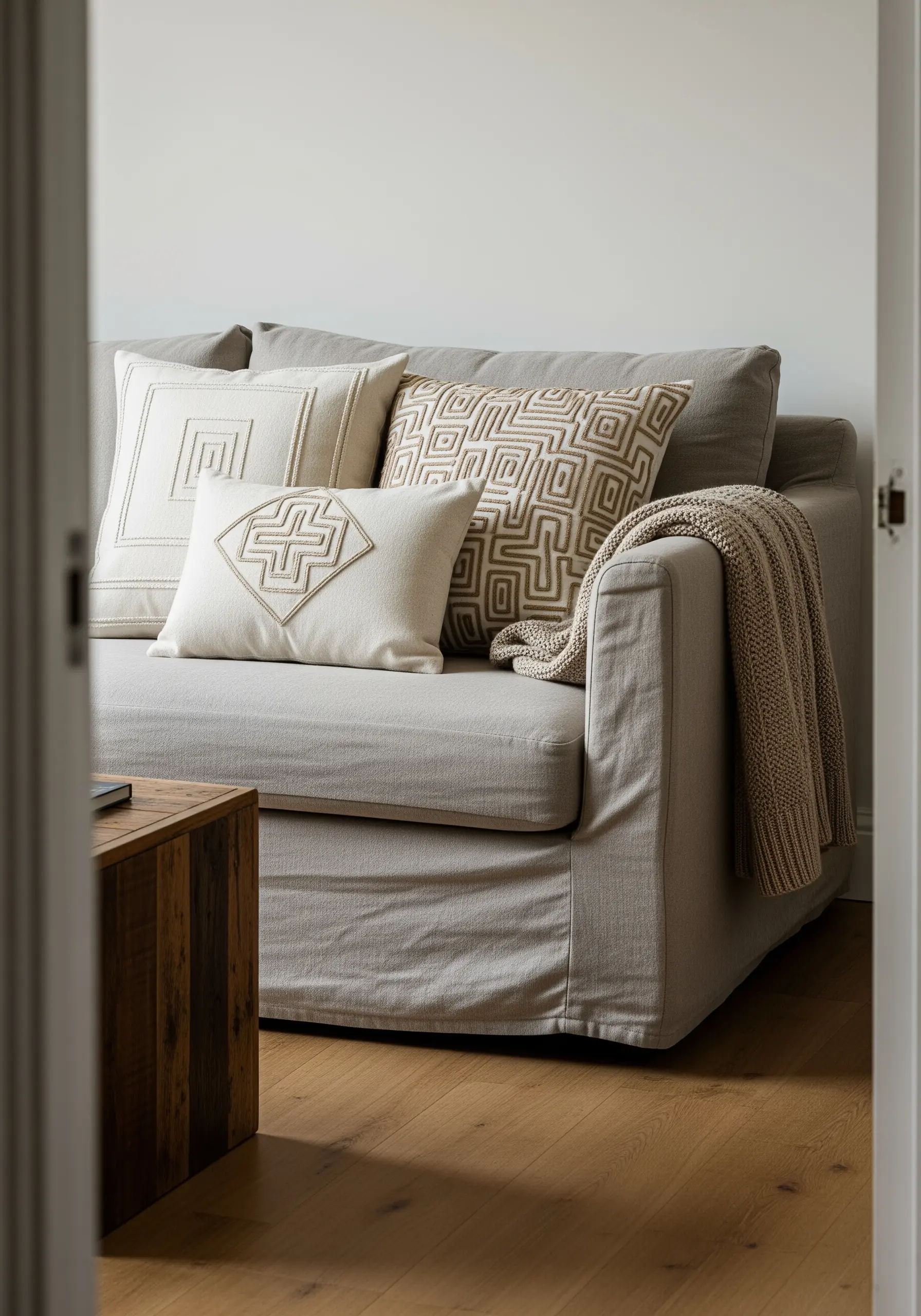
To create bold, geometric patterns on pillows or upholstery, use a couching stitch for a raised, clean line.
Lay down a thick cord or yarn (like a pearl cotton size 3 or even a fine wool yarn) along your design line.
Then, use a single strand of matching embroidery floss to tack it down with small, perpendicular stitches at regular intervals.
This method is faster than satin stitch outlines and gives your design a distinct, three-dimensional quality that feels both modern and luxurious.
It’s the perfect way to make your embroidered pillow covers look professionally finished.
3. Frame Negative Space With a Single Sculptural Line
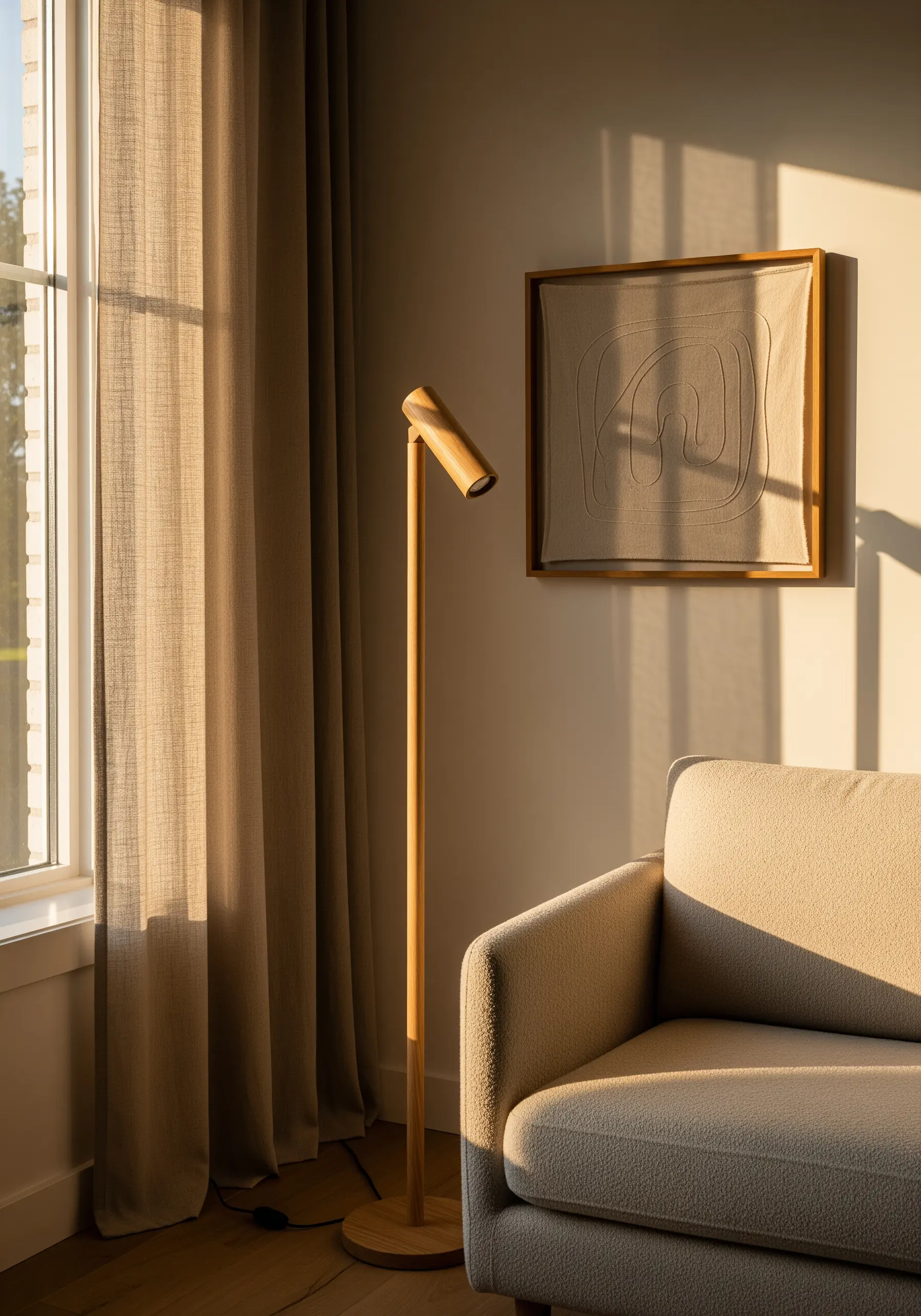
Embrace minimalism by using a single, continuous line to create your artwork, making the un-stitched fabric just as important as the thread.
Choose a thick, textural thread, such as a size 5 pearl cotton, to give the line weight and presence.
Stitch it using a backstitch or a stem stitch, focusing on creating smooth, deliberate curves.
The goal isn’t to fill space but to divide it, drawing the eye and creating a sense of calm movement.
This approach turns simple stitching into compelling abstract face line embroidery designs that feel like modern sculptures.
4. Create Subtle Landscapes With Varied Seed Stitch
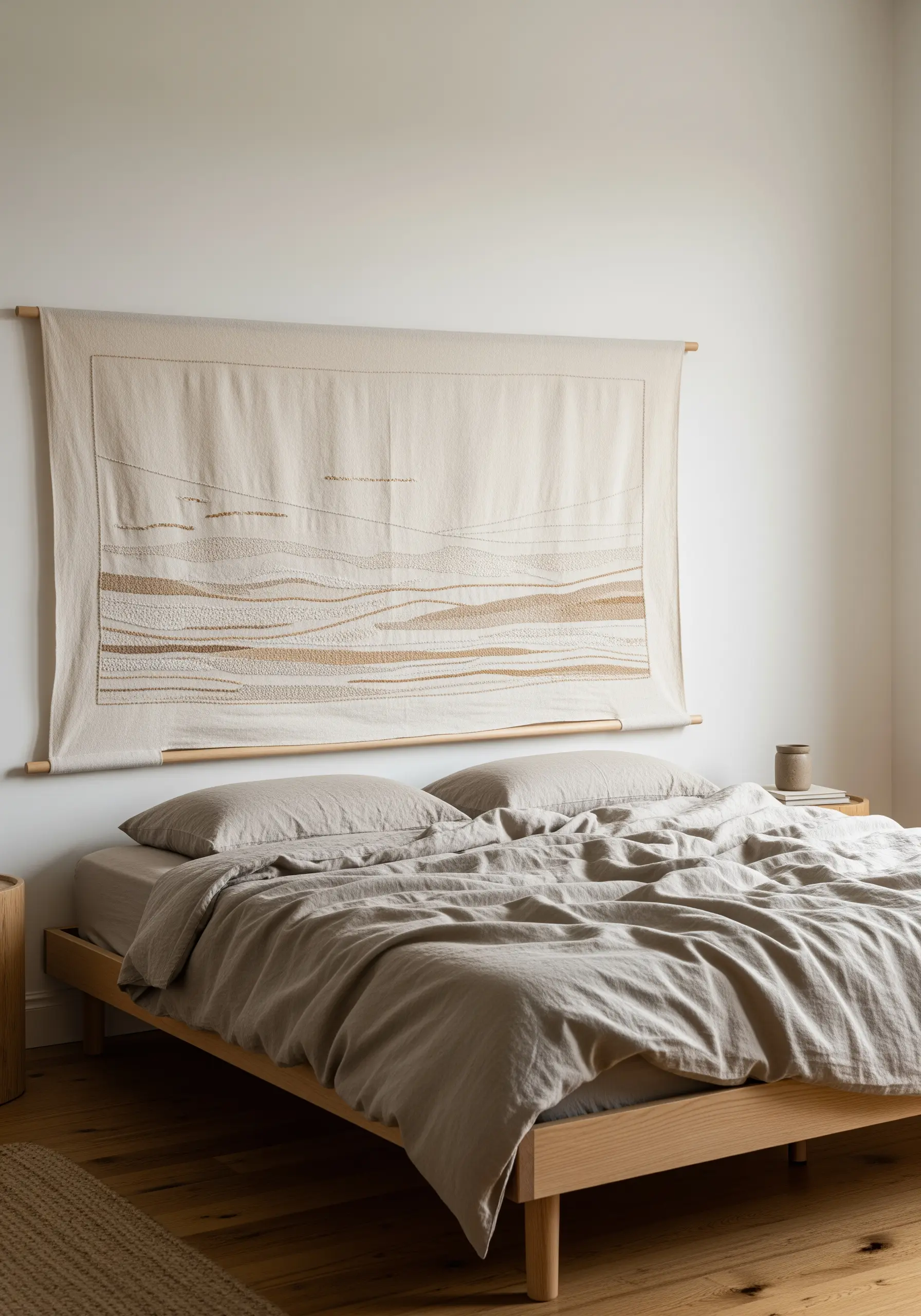
Mimic the gentle contours of sand dunes or rolling hills by using a simple seed stitch with varied density.
Instead of spacing your stitches evenly, cluster them tightly in some areas and scatter them sparsely in others.
This creates tonal gradients and a sense of depth using only one color of thread.
Work on a large piece of natural canvas or linen for a statement piece that feels both organic and expansive.
The result is one of the most effective embroidered textile wall hangings for a serene, nature-inspired space.
5. Refine Botanical Art With a Precise Stem Stitch
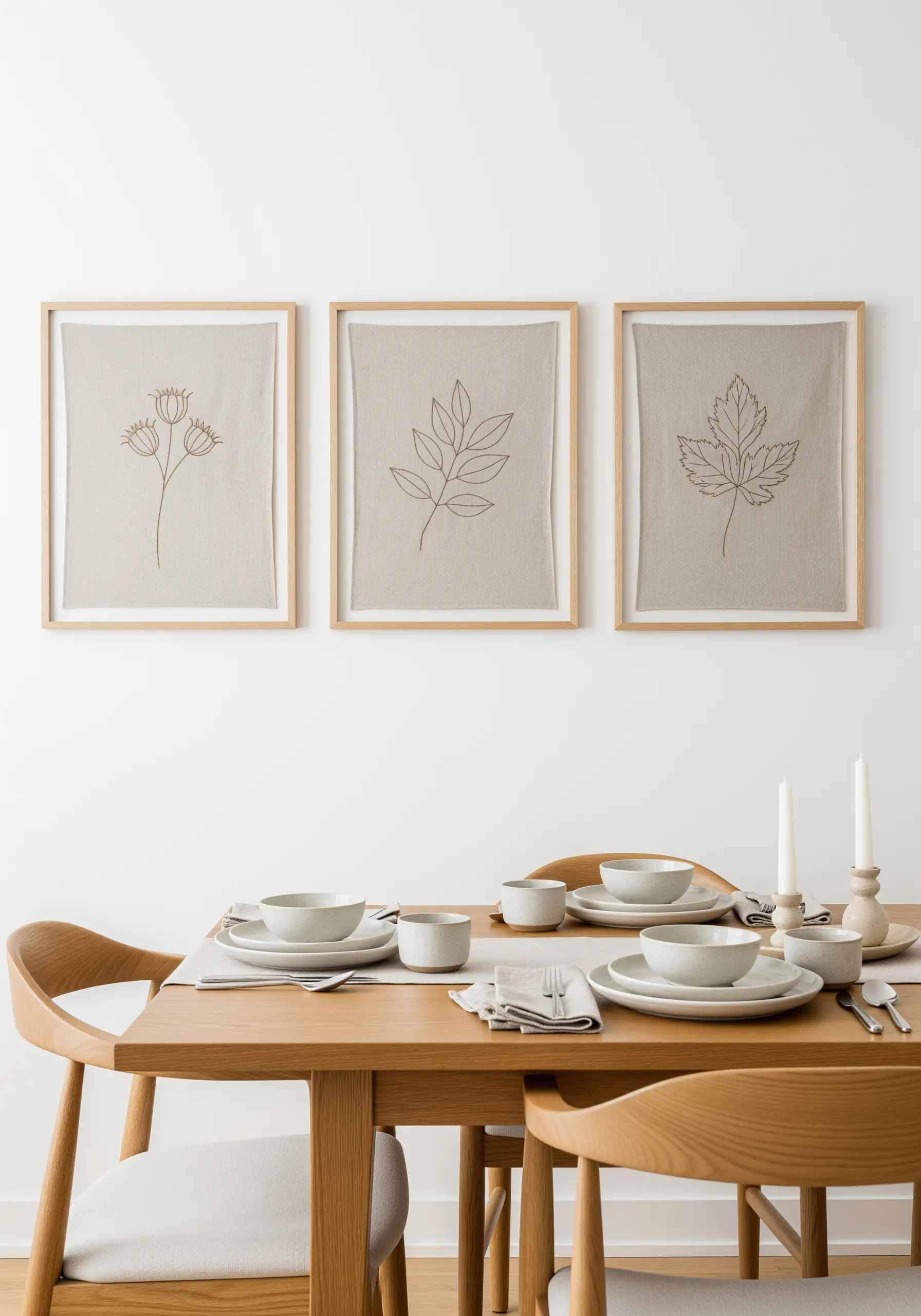
For delicate, gallery-style botanicals, the key is a flawless outline that honors the simplicity of the form.
Use a two-strand stem stitch for your entire design, focusing on keeping each stitch identical in length.
This consistency is what gives the final piece its clean, graphic quality, turning a simple sketch into a refined work of art.
Frame three distinct but related motifs together on matching linen to create a cohesive triptych that feels intentional and curated.
This technique is perfect for elegant botanical line art embroidery patterns.
6. Build Intricate Texture With Monochrome Pattern Darning
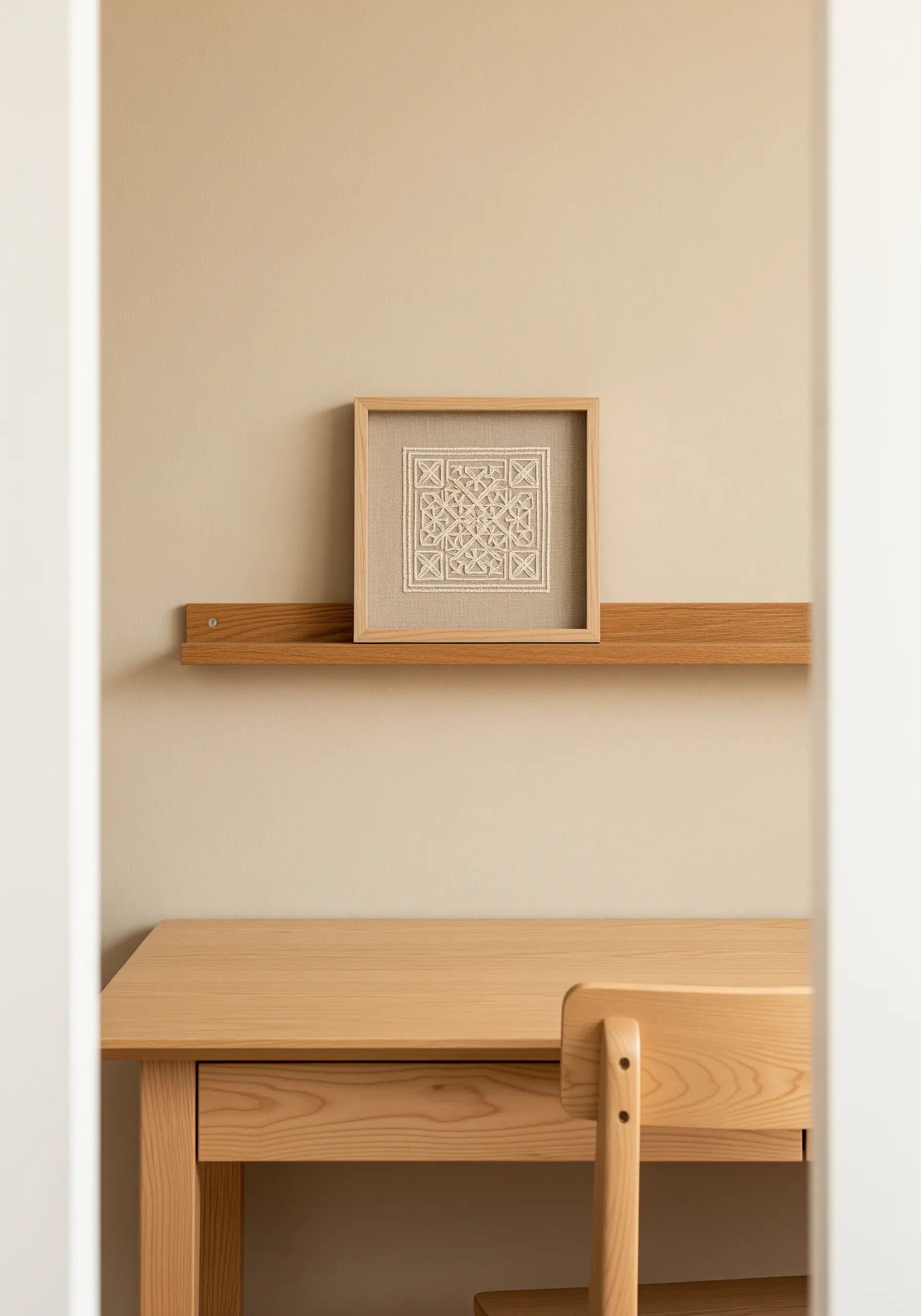
Create a design that invites closer inspection by using pattern darning or blackwork techniques with a single neutral thread.
Work on an evenweave fabric like linen and use running stitches to build geometric patterns that form a rich, tactile surface.
By sticking to one color—like an off-white on a sand-colored ground—the focus shifts entirely to the texture and the intricate play of light on the stitched grid.
These detailed framed embroidery patterns add a layer of quiet sophistication to any room.
7. Weave Sculptural Dimension With Chunky Yarns
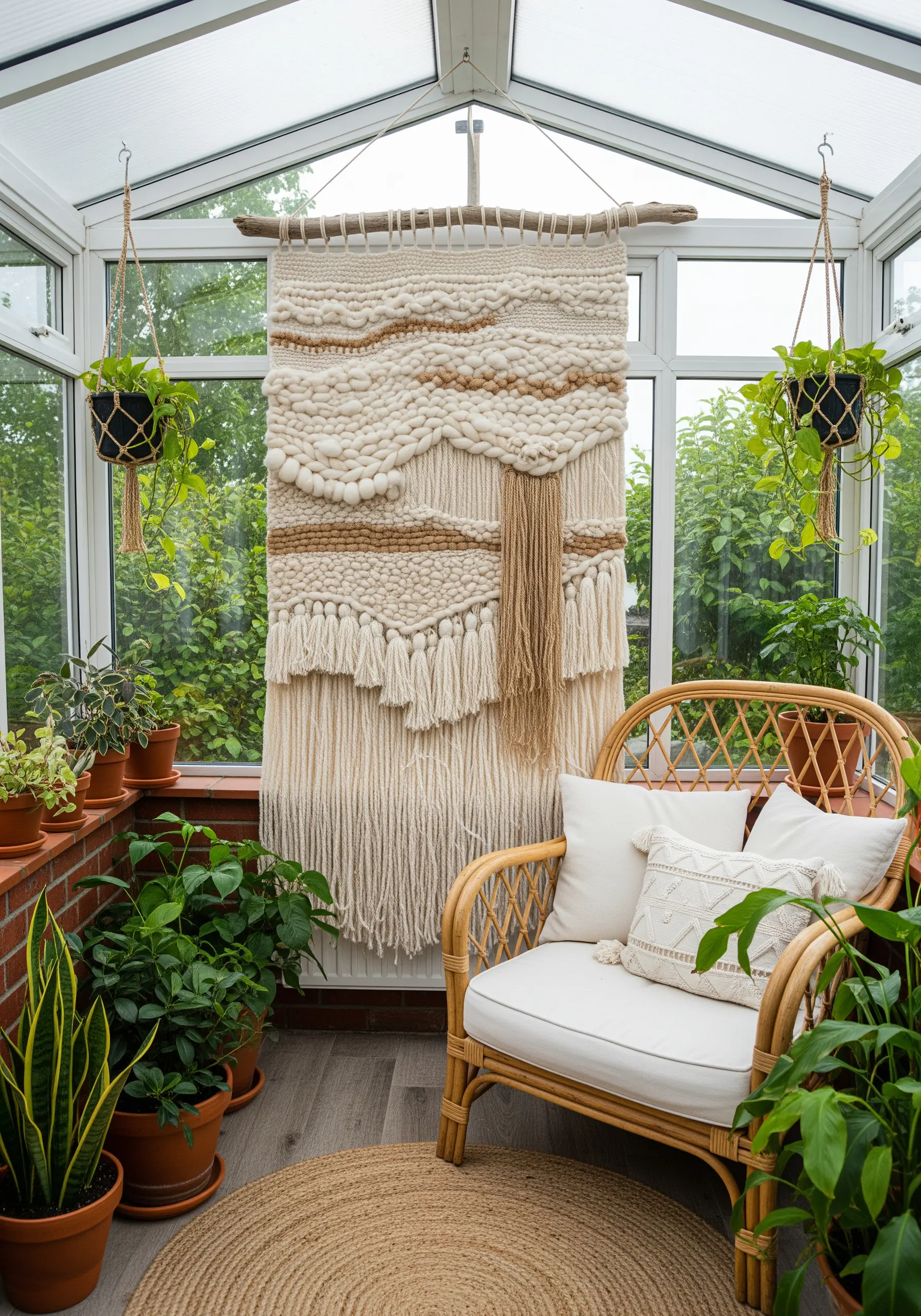
Move beyond floss to incorporate chunky yarns and roving, creating a wall hanging with dramatic, sculptural texture.
Use a large, sturdy needle to couch thick wool yarn onto a heavy canvas backing, or punch needle large sections for a looped effect.
Combine this with oversized French knots and woven sections to build a landscape of texture.
This method blurs the line between embroidery and weaving, resulting in tactile high-texture fabric collage embroidery projects that make a powerful statement.
8. Elevate Everyday Linens With Delicate Motifs
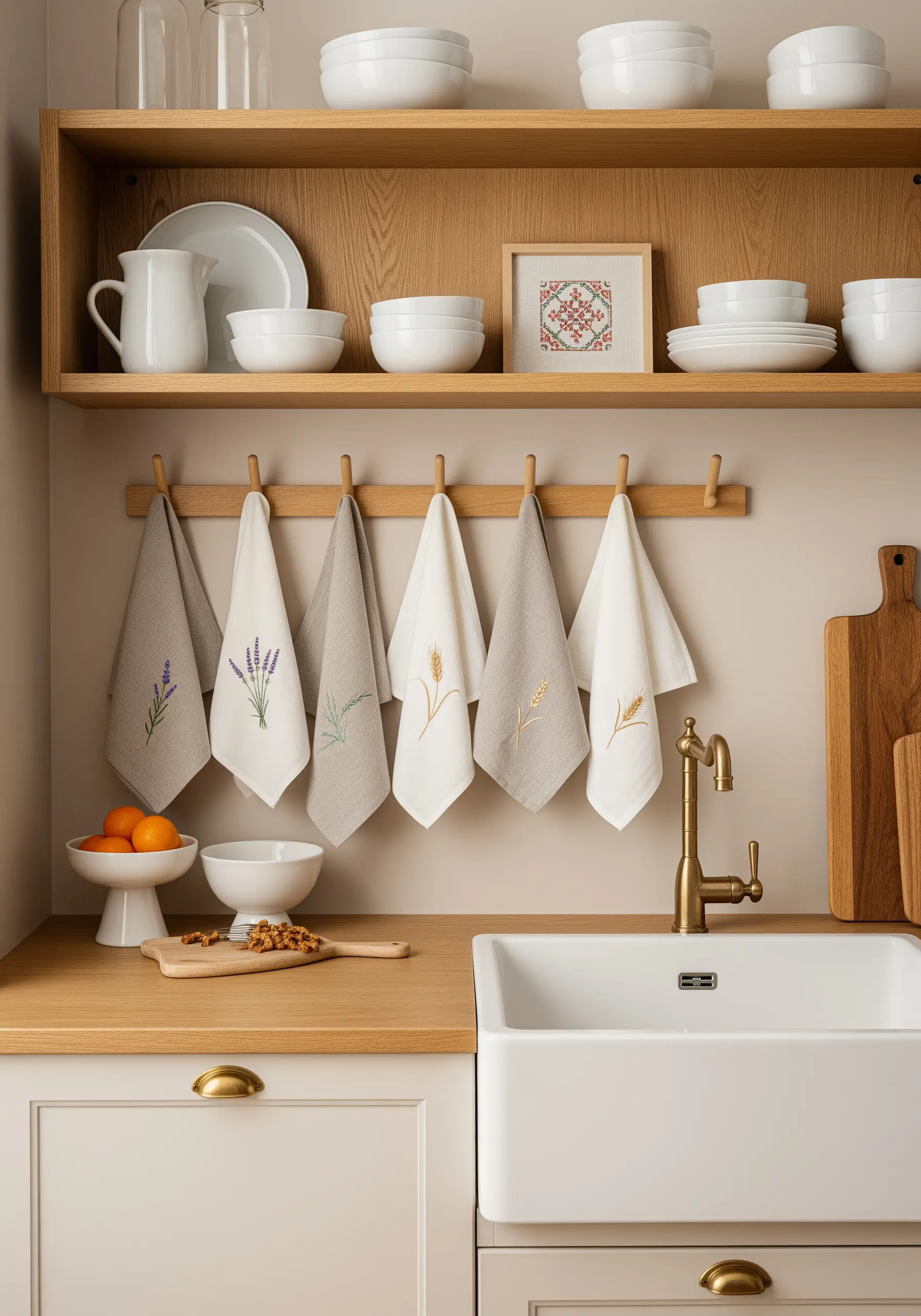
Embellish functional items like kitchen towels with small, thoughtfully placed motifs for a touch of handmade elegance.
Choose simple botanical designs—like a sprig of lavender or a stalk of wheat—that can be completed quickly but still look refined.
Use just two or three strands of floss and simple stitches like stem stitch, satin stitch, and French knots.
This ensures the design is durable enough for daily use while adding a quiet beauty to your home.
It’s a perfect way to practice modern hand-stitched patterns on items you’ll use and appreciate every day.
9. Curate a Cohesive Hoop Art Gallery Wall
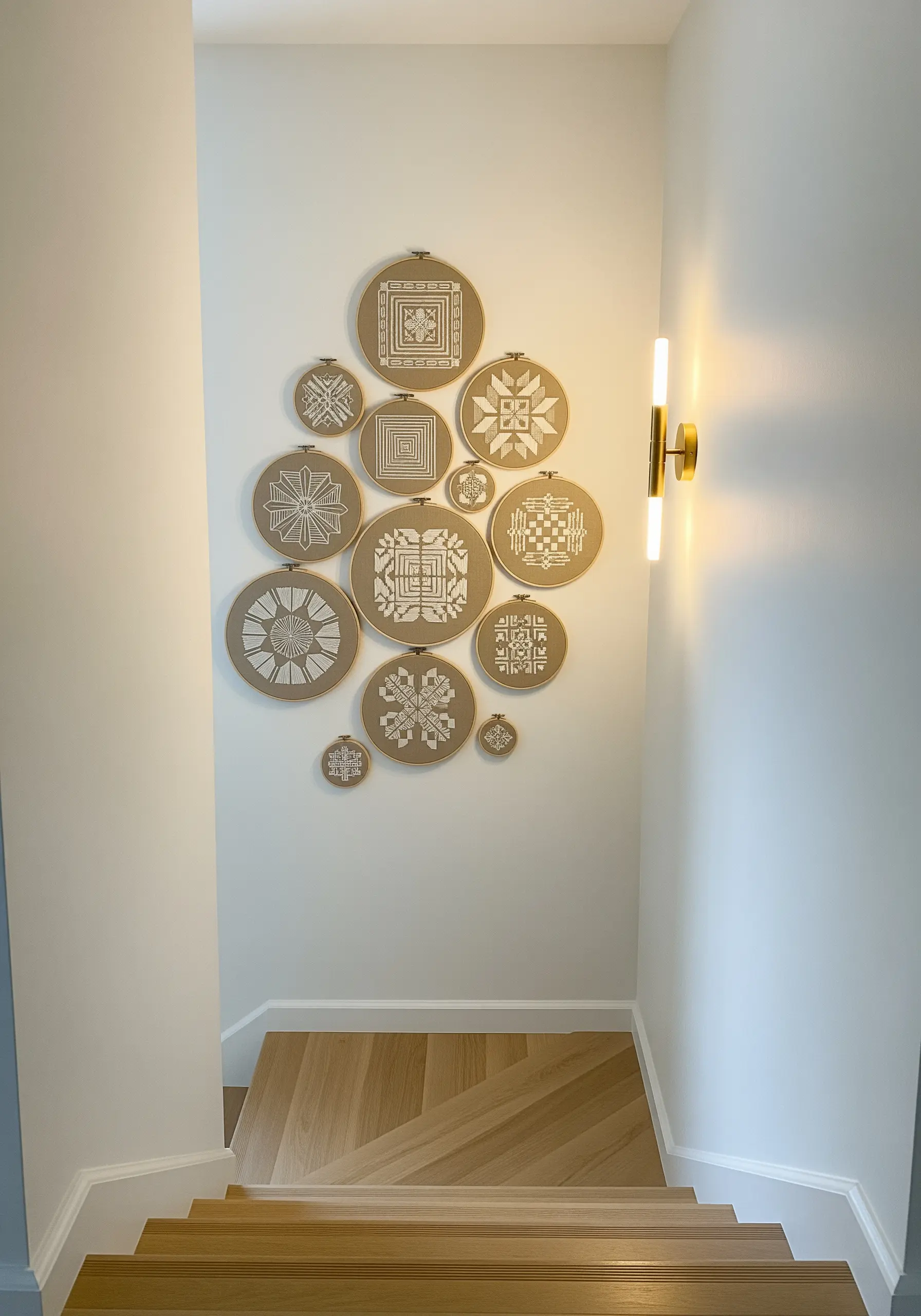
Design a stunning focal point by grouping multiple hoops into a single, cohesive art installation.
To achieve a unified look, use the same background fabric and a limited palette of just one or two thread colors across all hoops.
Create visual interest by varying the size of the hoops and the complexity of the geometric patterns within them.
Arrange them in an organic, asymmetrical cluster to create a sense of movement and energy.
This approach allows you to create impressive minimal DIY embroidery pieces that look like a custom commission.
10. Create Flowing Borders With Feather Stitch
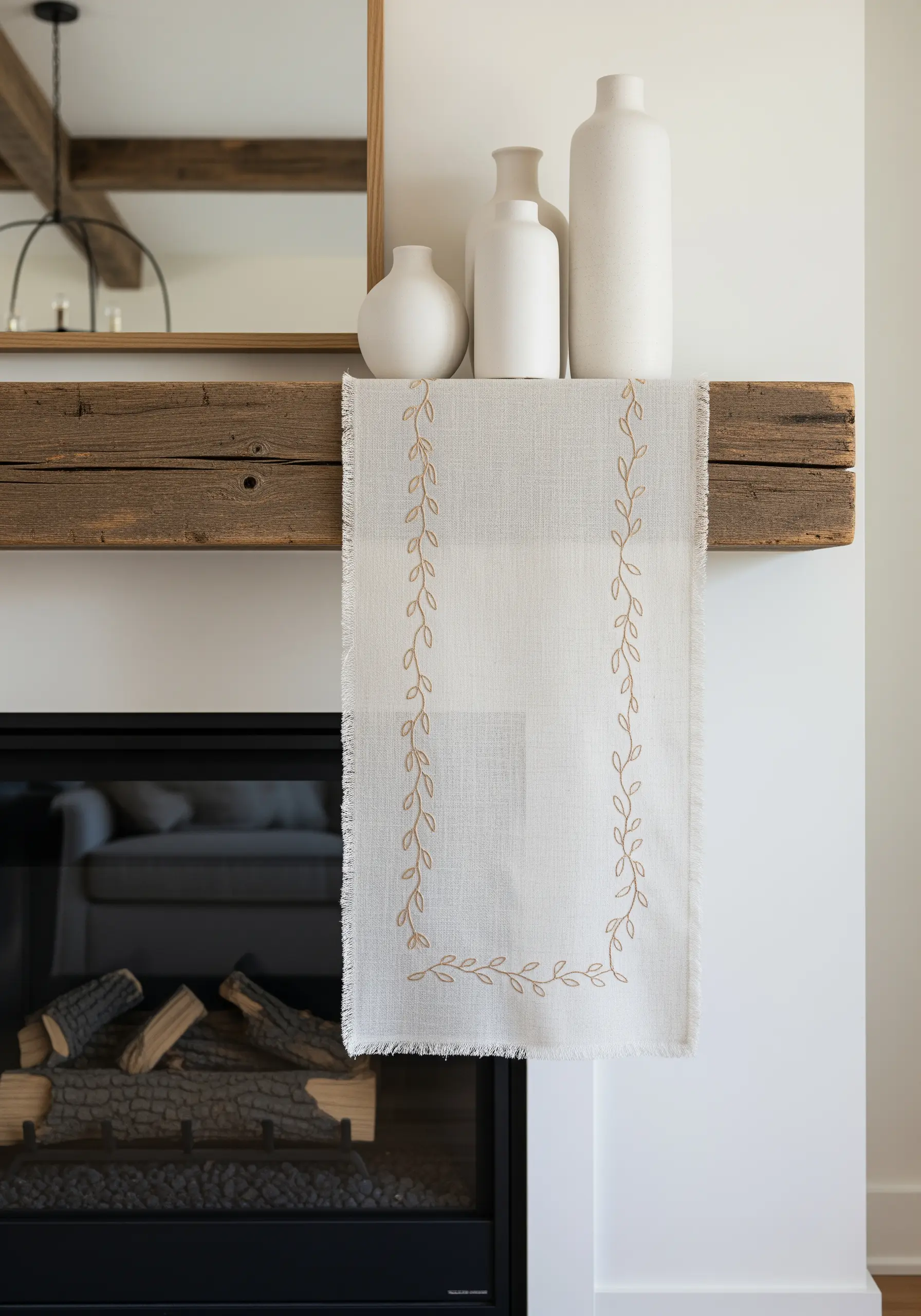
Instead of a simple backstitch, use the feather or fly stitch to create graceful, organic borders on table runners and linens.
This stitch naturally creates a branching, vine-like effect that feels soft and less rigid than a straight line.
Work with three strands of a sand-colored floss on off-white linen for a subtle, tone-on-tone effect that complements the fabric’s natural texture.
Finish the edges with a simple fringe to enhance the relaxed, rustic feel of your simple embroidery designs.
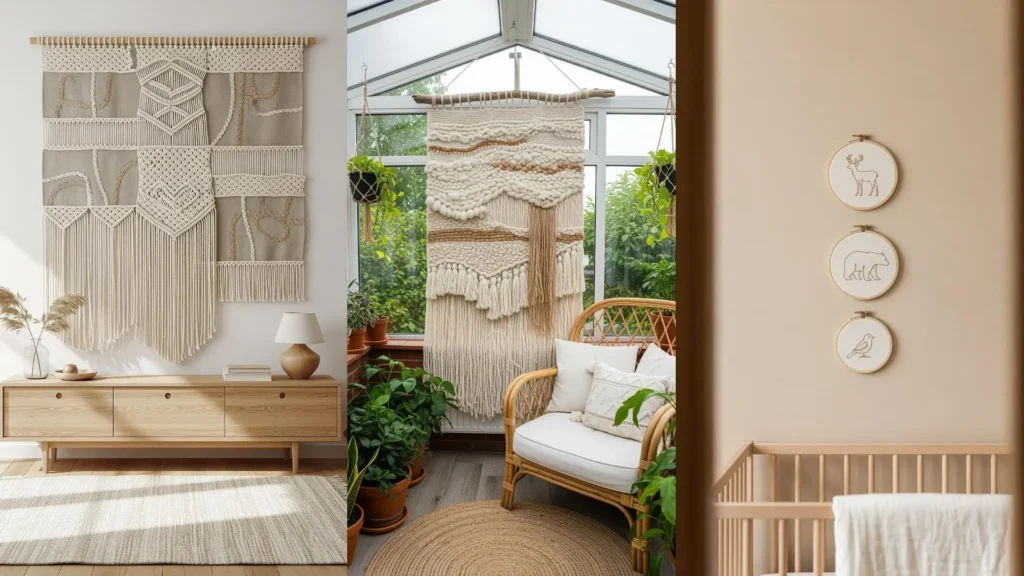
11. Blend Macrame and Embroidery for Layered Art
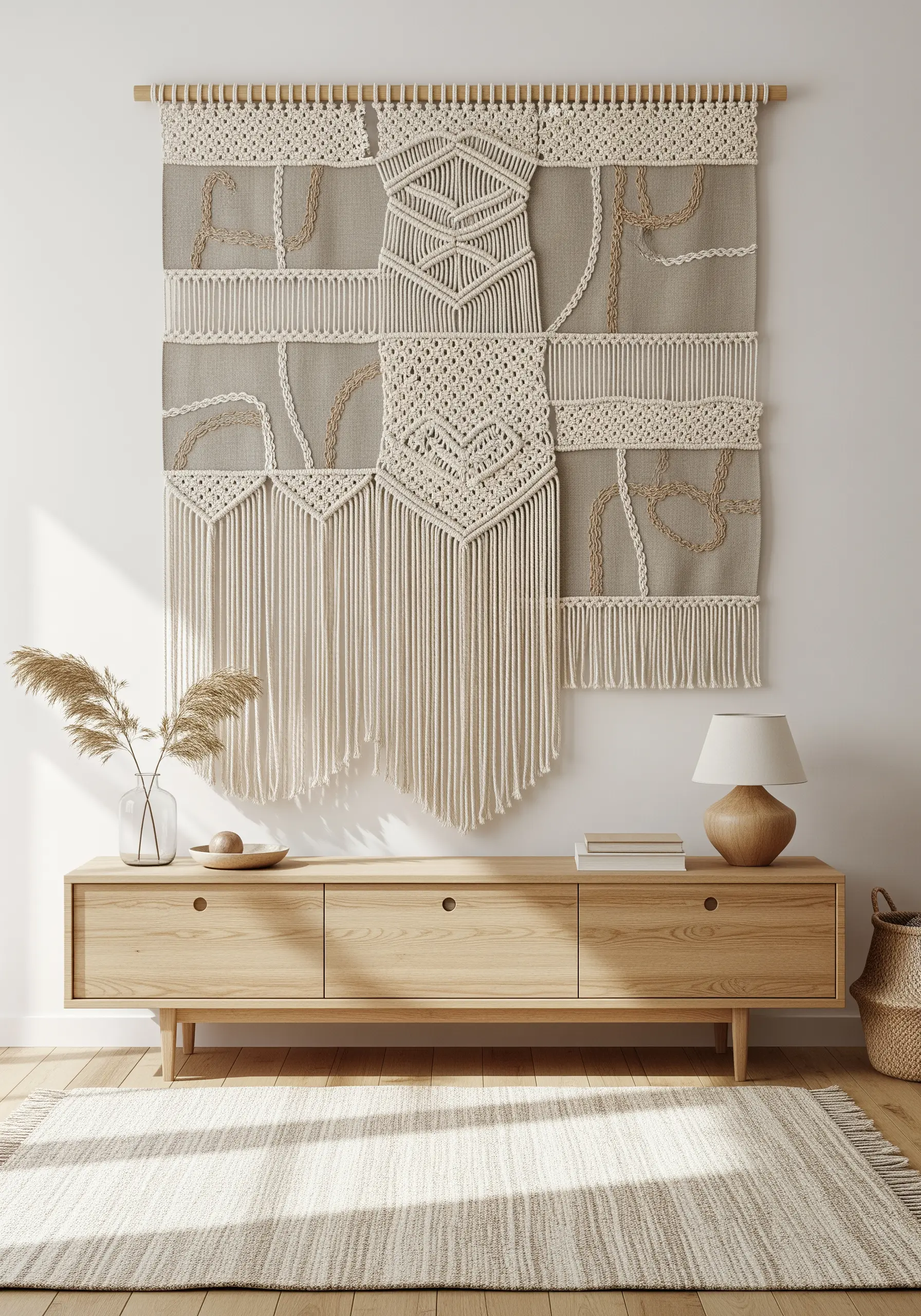
Combine the texture of knotting with the precision of stitching for a truly unique mixed-media wall hanging.
Start with a neutral linen base fabric and use chain stitch or couching to add linear embroidered elements.
Then, create separate macrame sections using a natural cotton cord and attach them directly to the fabric panel.
This layering of techniques creates a fascinating interplay of textures, blending two beloved fiber arts into one cohesive piece.
Explore more mixed-fiber ideas to push your creative boundaries.
12. Capture Ethereal Motion With Sheer Overlays
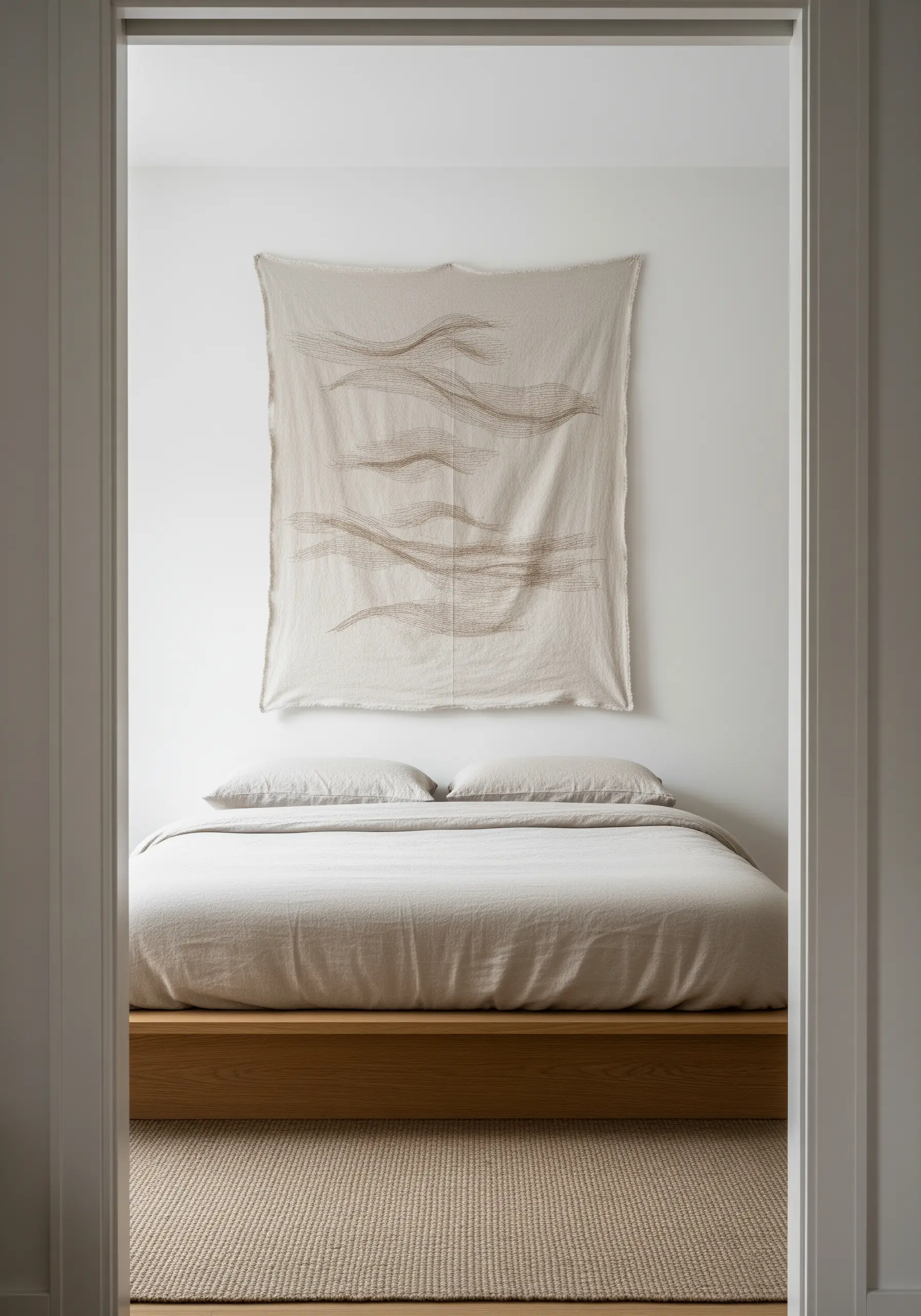
Create a design with a soft, dream-like quality by stitching on a lightweight, semi-transparent fabric like linen gauze or cotton voile.
Use a single strand of thread and dense clusters of running stitches to form abstract, flowing shapes that evoke wind or water.
When hung, the fabric’s sheerness allows light to pass through, making the stitched lines appear to float.
This is a beautiful way to create abstract thread landscapes that feel light, airy, and deeply emotive.
13. Define Form With Architectural Satin Stitch Blocks
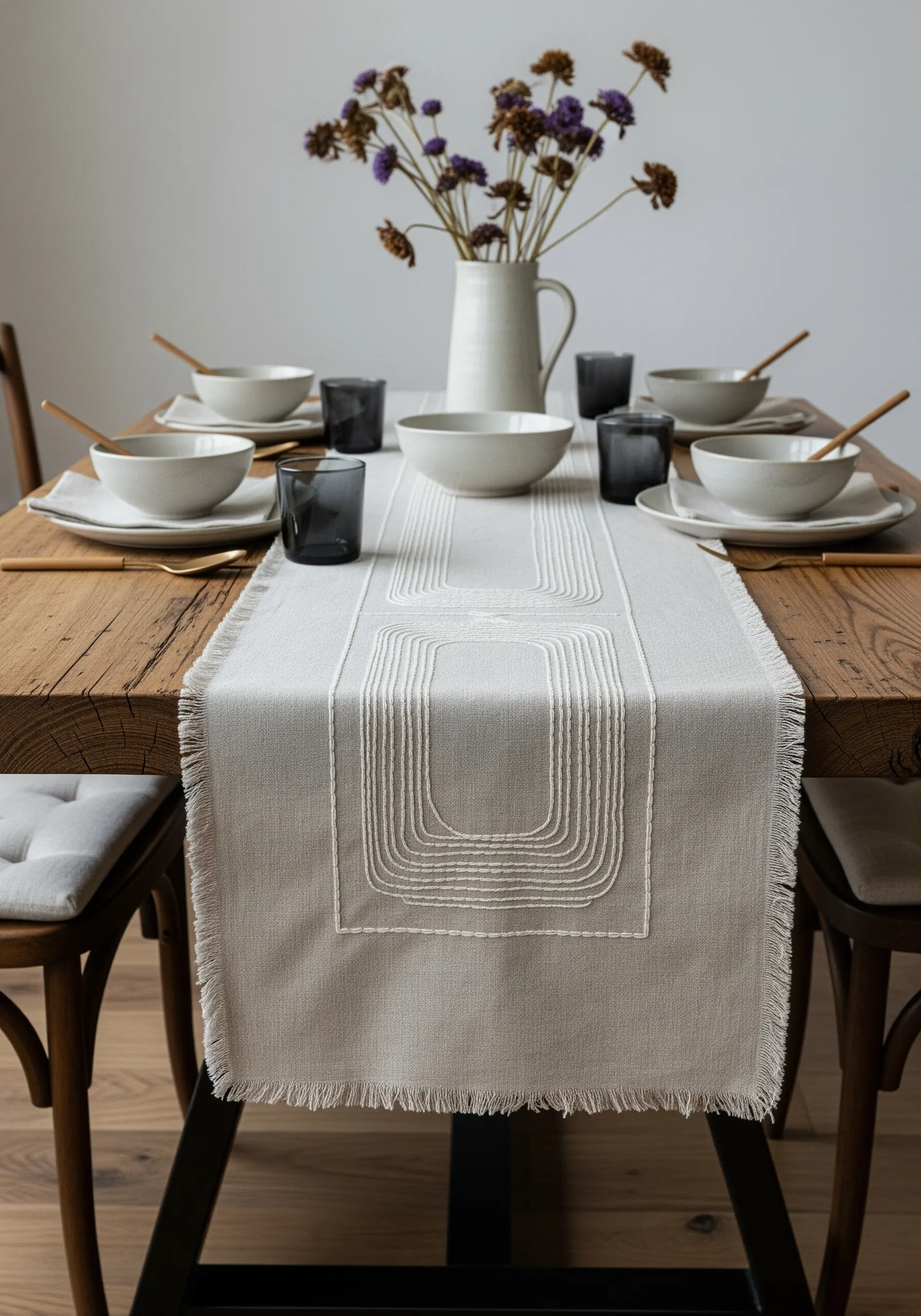
Use satin stitch to build clean, architectural forms on table linens for a look that is both modern and impactful.
Create concentric rectangular shapes, ensuring the stitches in each band are perfectly parallel and densely packed.
For added subtlety, alternate the direction of your stitches—horizontal in one band, vertical in the next—to create a checkerboard effect in the way the thread reflects light.
This precision transforms simple floss into a bold, graphic statement, perfect for modern minimalist table linen embroidery ideas.
14. Modernize Folk Patterns With a Tonal Palette
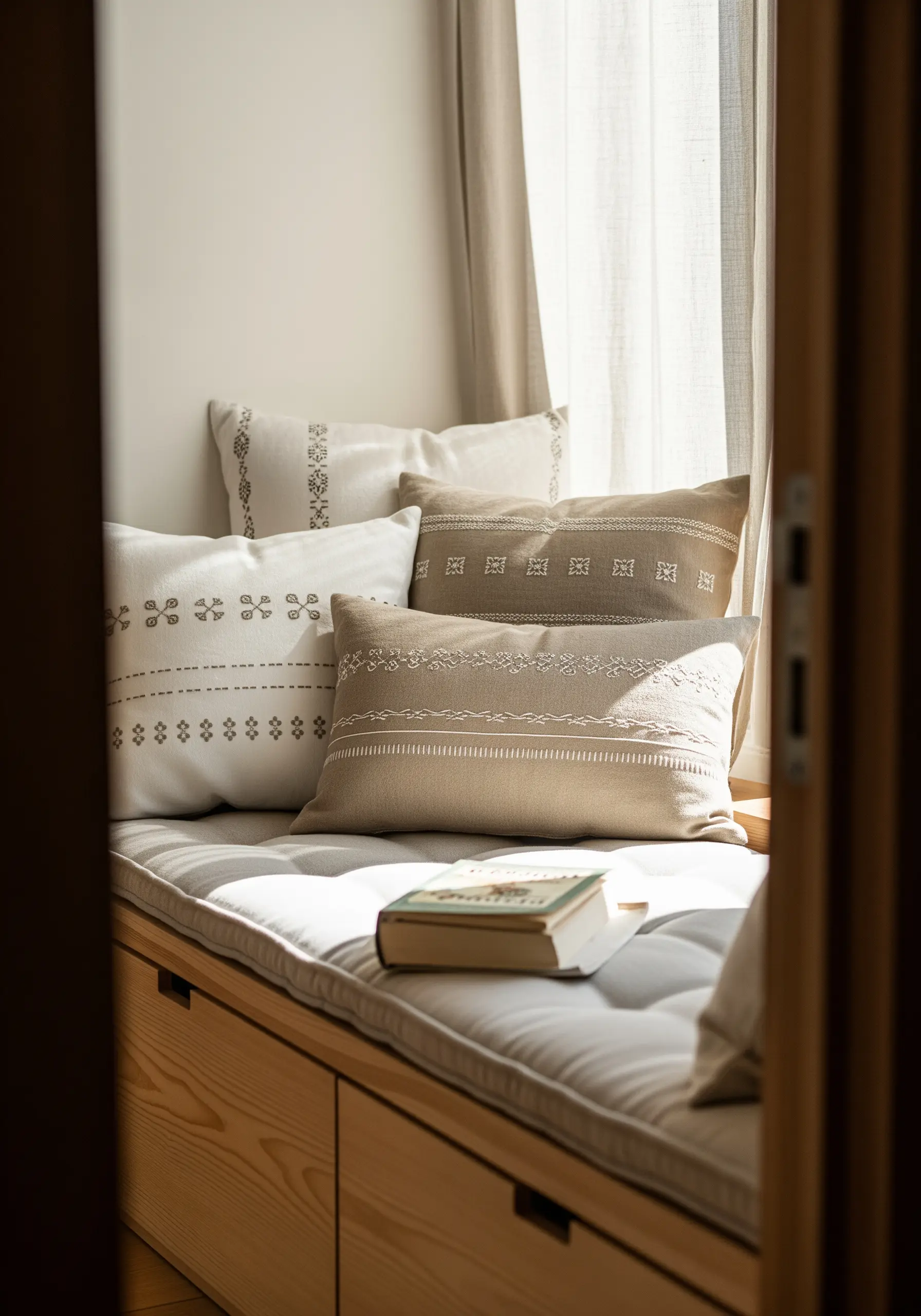
Breathe new life into traditional folk or sashiko-inspired patterns by stitching them in a sophisticated, tone-on-tone color scheme.
Choose a thread that is only a few shades lighter or darker than your base fabric—for instance, an ivory thread on a natural linen cushion.
This subtle contrast allows the intricate geometry of the pattern to shine without overwhelming the senses.
It’s a refined way to incorporate historical designs into a modern, serene home aesthetic, especially for subtle pastel embroidery cushion designs.
15. Achieve Flawless Script With a Whipped Backstitch
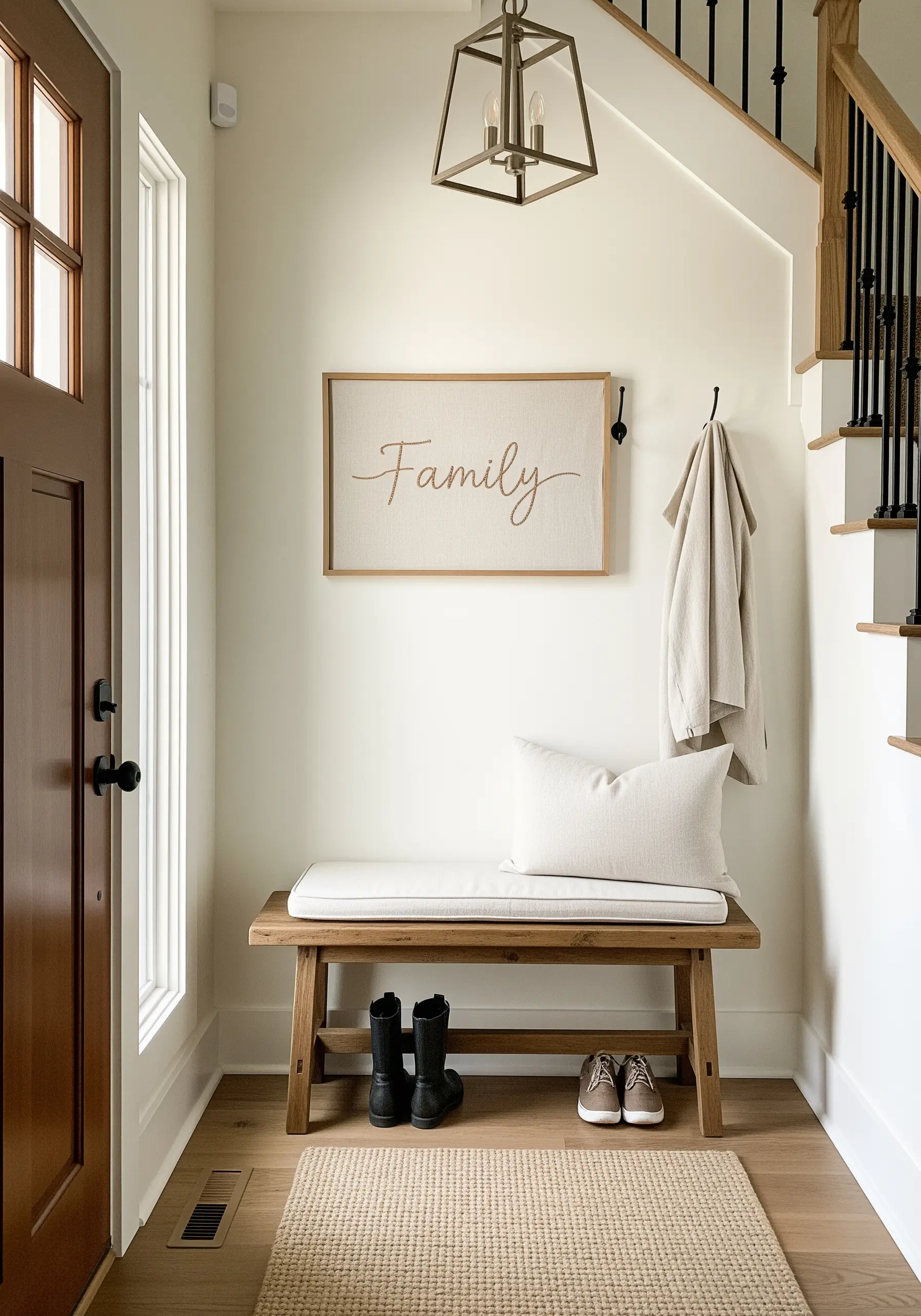
To create elegant, fluid lettering that mimics calligraphy, a whipped backstitch is your most reliable technique.
First, lay down a foundation of simple backstitches along your script lines.
Then, without piercing the fabric, weave a second thread under each backstitch, pulling it just tight enough to conceal the gaps.
This creates a smooth, raised line with no visible breaks, perfect for graceful embroidered quote wall hangings.
Use a thread that matches your linen fabric for a subtle, embossed appearance.
16. Communicate Charm With Minimalist Animal Outlines
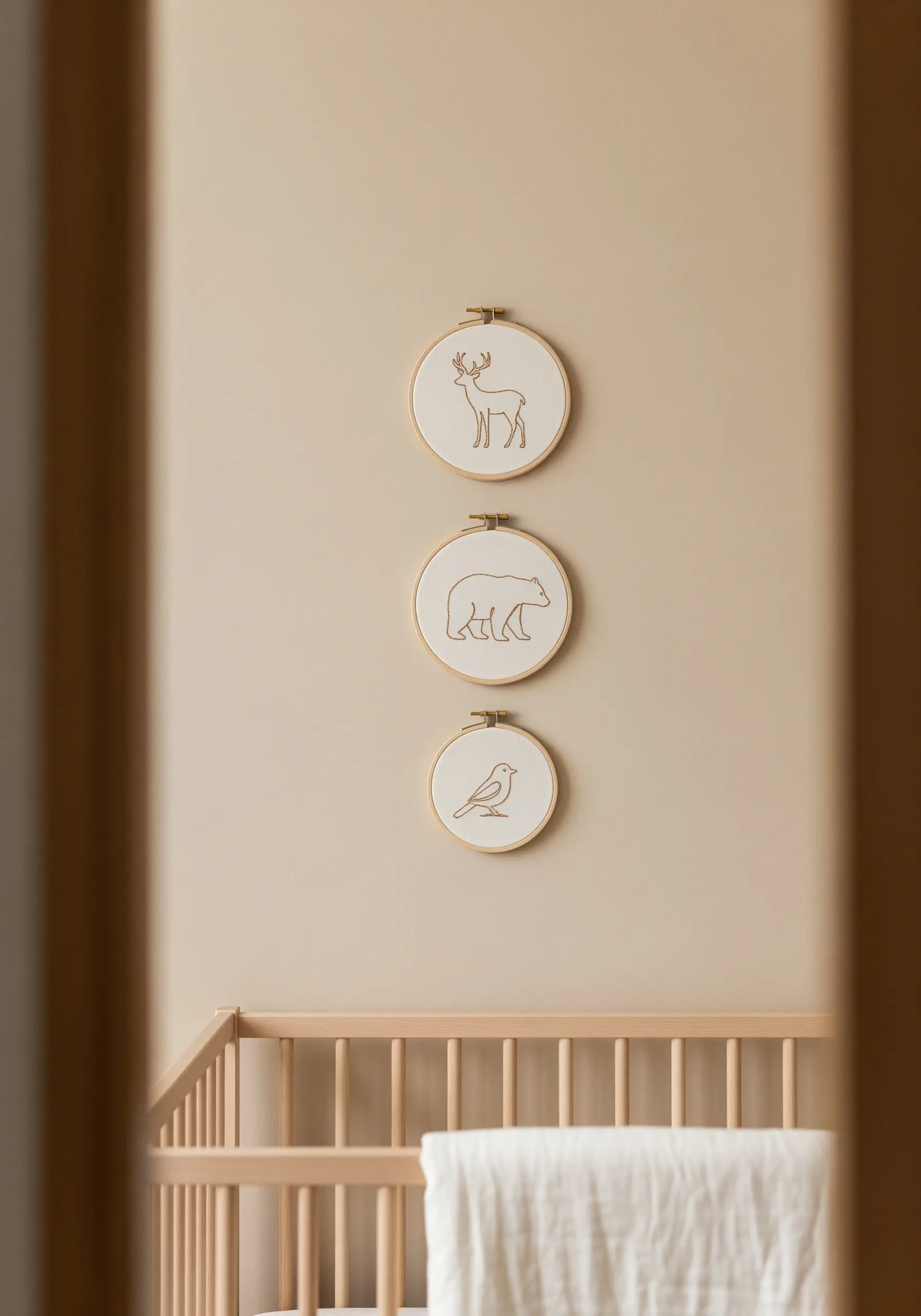
Capture the essence of an animal with just a single, clean outline for a look that is both charming and minimalist.
This is especially effective for nursery decor, where simplicity creates a calming atmosphere.
Use a split stitch with two or three strands of floss to achieve a solid, consistent line that has more presence than a simple backstitch.
Grouping several different animals in matching hoops creates a sweet, cohesive collection perfect for a feature wall.
These simple minimal pet-themed line art stitches prove that less is often more.
17. Create Meditative Mandalas With Concentric Circles
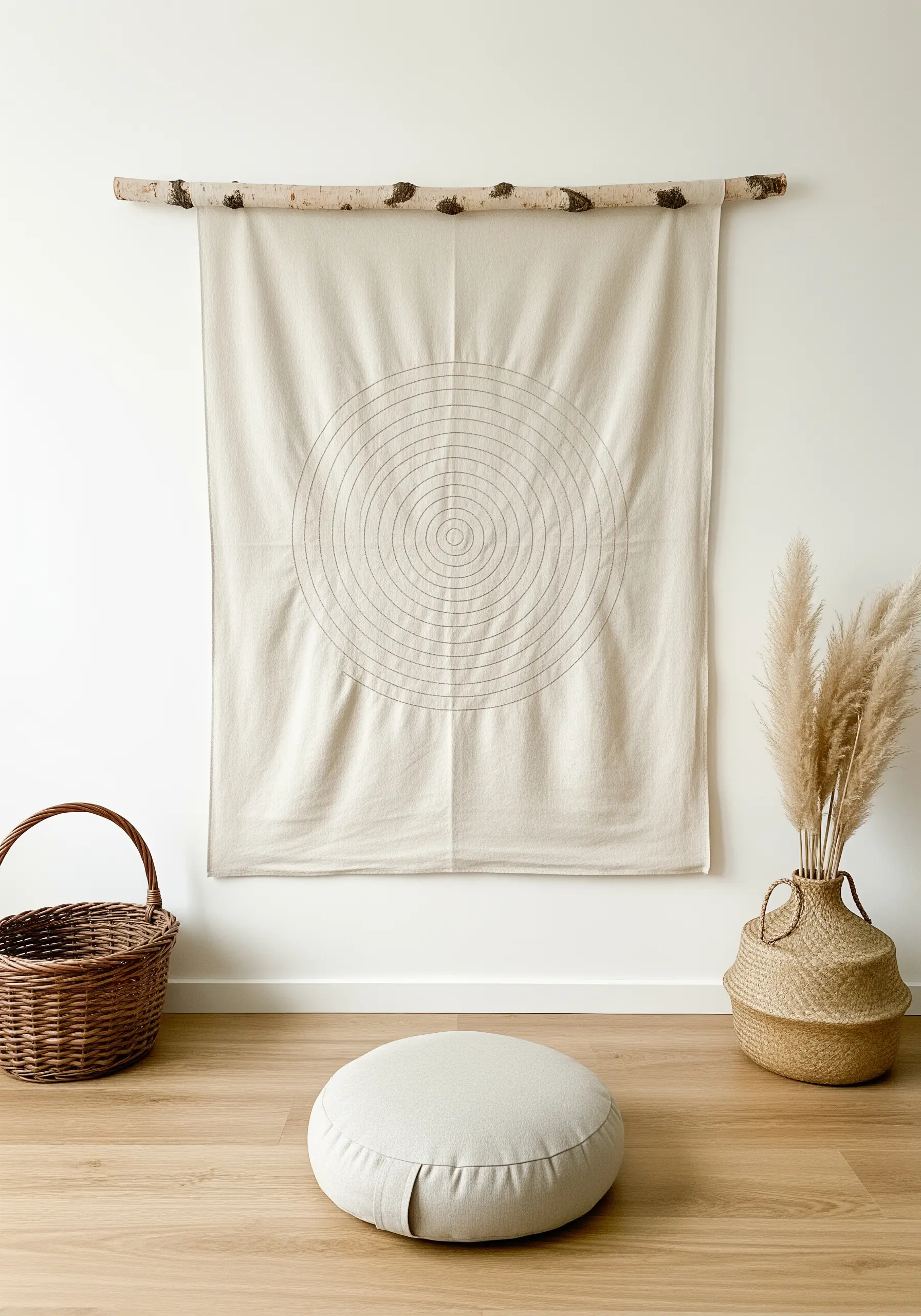
Stitch a simple yet powerful mandala using only concentric circles for a piece that promotes calm and focus.
Use a drawing compass to trace perfect circles onto your fabric, then carefully stitch over them with a neat backstitch or stem stitch.
The repetition of the circular motion and the act of stitching can be incredibly meditative.
Hung as a large wall tapestry in a quiet corner, it serves as a visual anchor for a meditation or relaxation space.
This is one of the purest forms of modern minimal mandala embroidery ideas.
18. Compose Abstract Art With Pure Texture
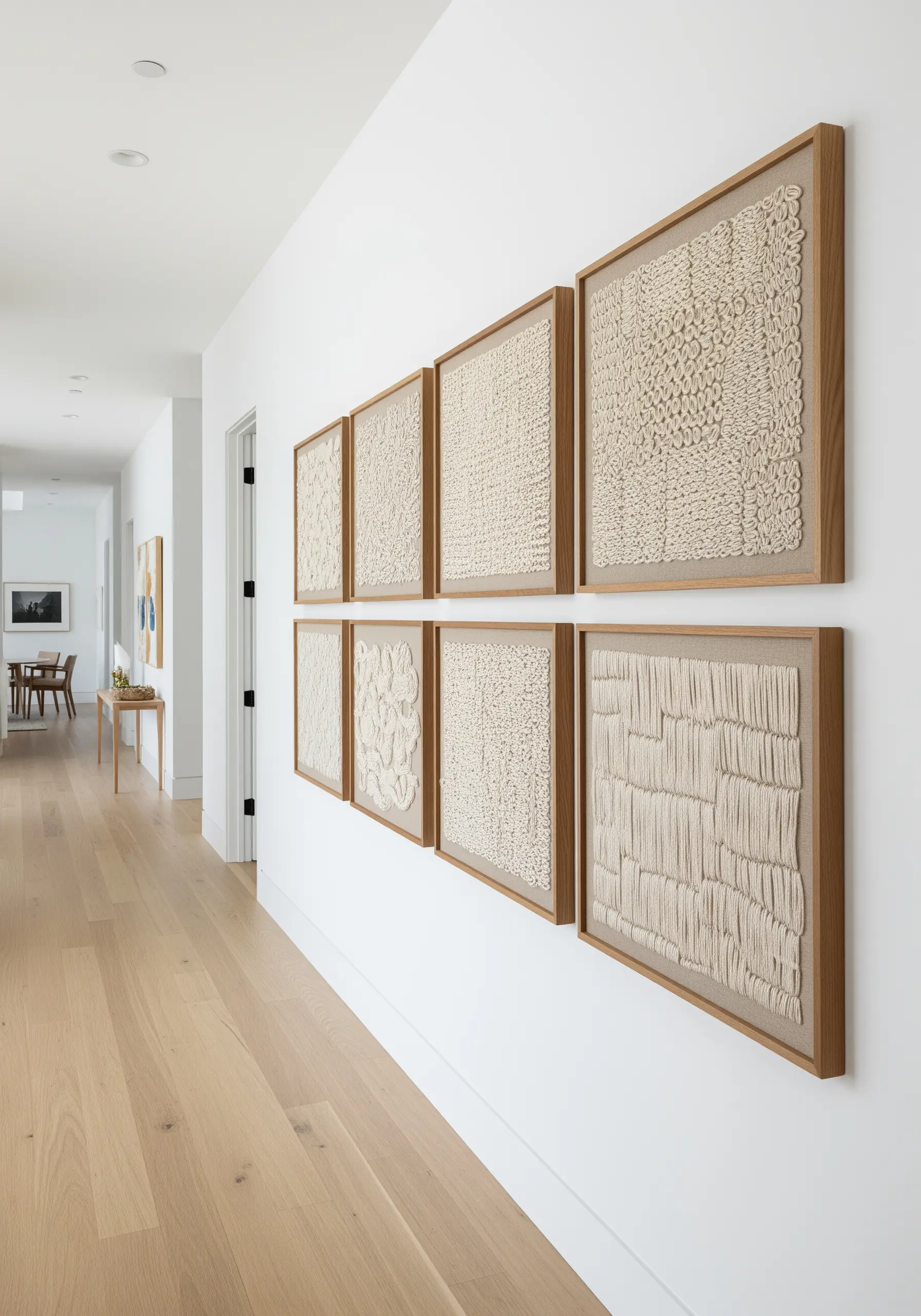
Create compelling abstract art by abandoning pictorial representation and focusing solely on texture.
Fill your hoop or frame with a dense collage of textural stitches: chunky French knots, long bullion stitches, woven wheels, and raised chain stitch bands.
By using only shades of cream and off-white, you remove color as a variable, forcing the viewer to engage with the tactile landscape you’ve created.
This is a powerful way to capture nature’s textures—like coral reefs or mossy stones—in an abstract form.
19. Design Ethereal Dividers on Sheer Linen
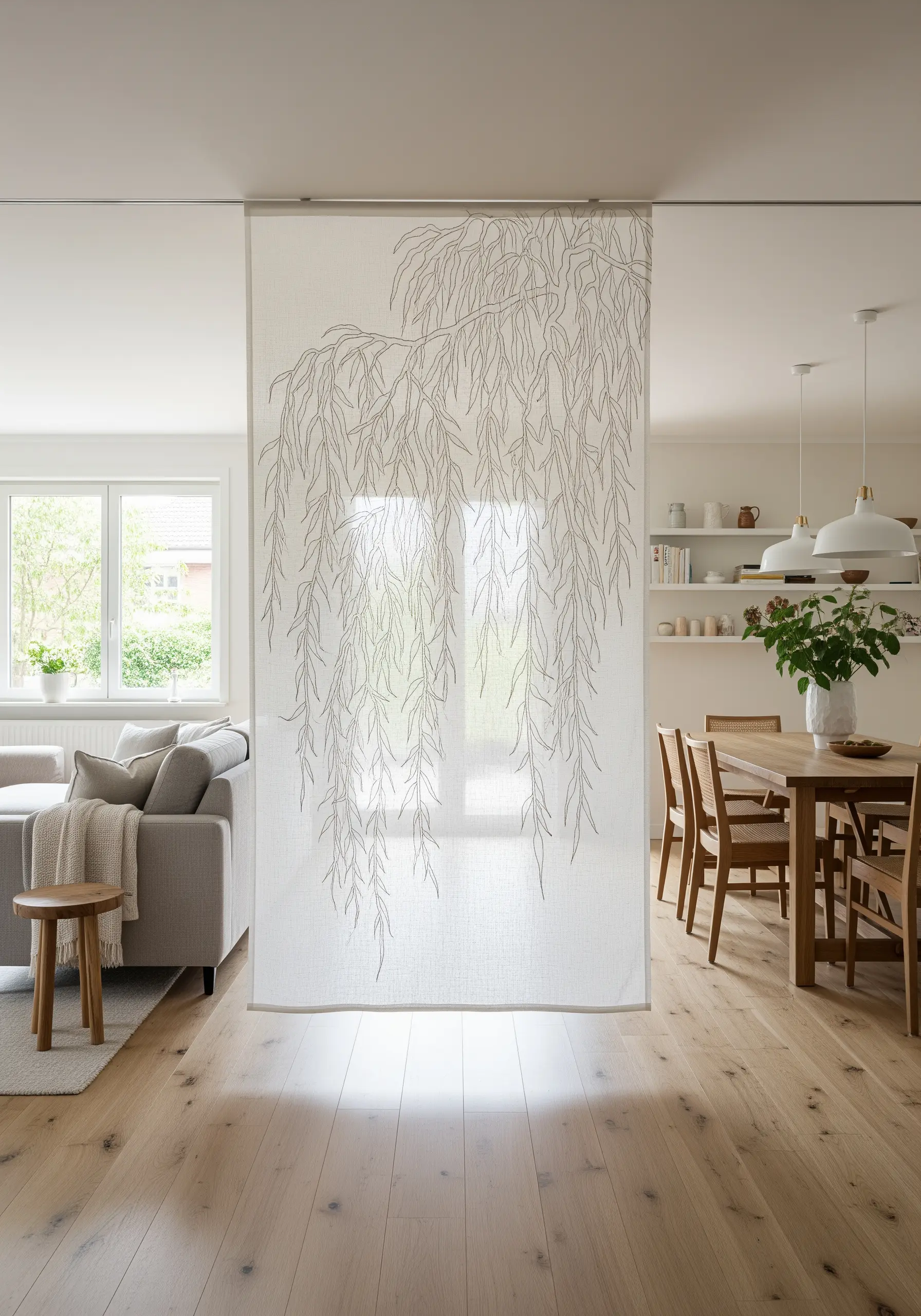
Use embroidery on sheer or semi-sheer fabric to create beautiful, light-filtering room dividers or window panels.
Choose an open, airy design like weeping willow branches that allows plenty of light to pass through.
A simple backstitch or stem stitch in a slightly darker neutral thread will provide just enough definition without sacrificing the fabric’s translucent quality.
This technique transforms a simple piece of fabric into a functional architectural element, defining a space while maintaining an open feel with organic shape embroidery patterns.
20. Add Refined Lettering to Functional Textiles
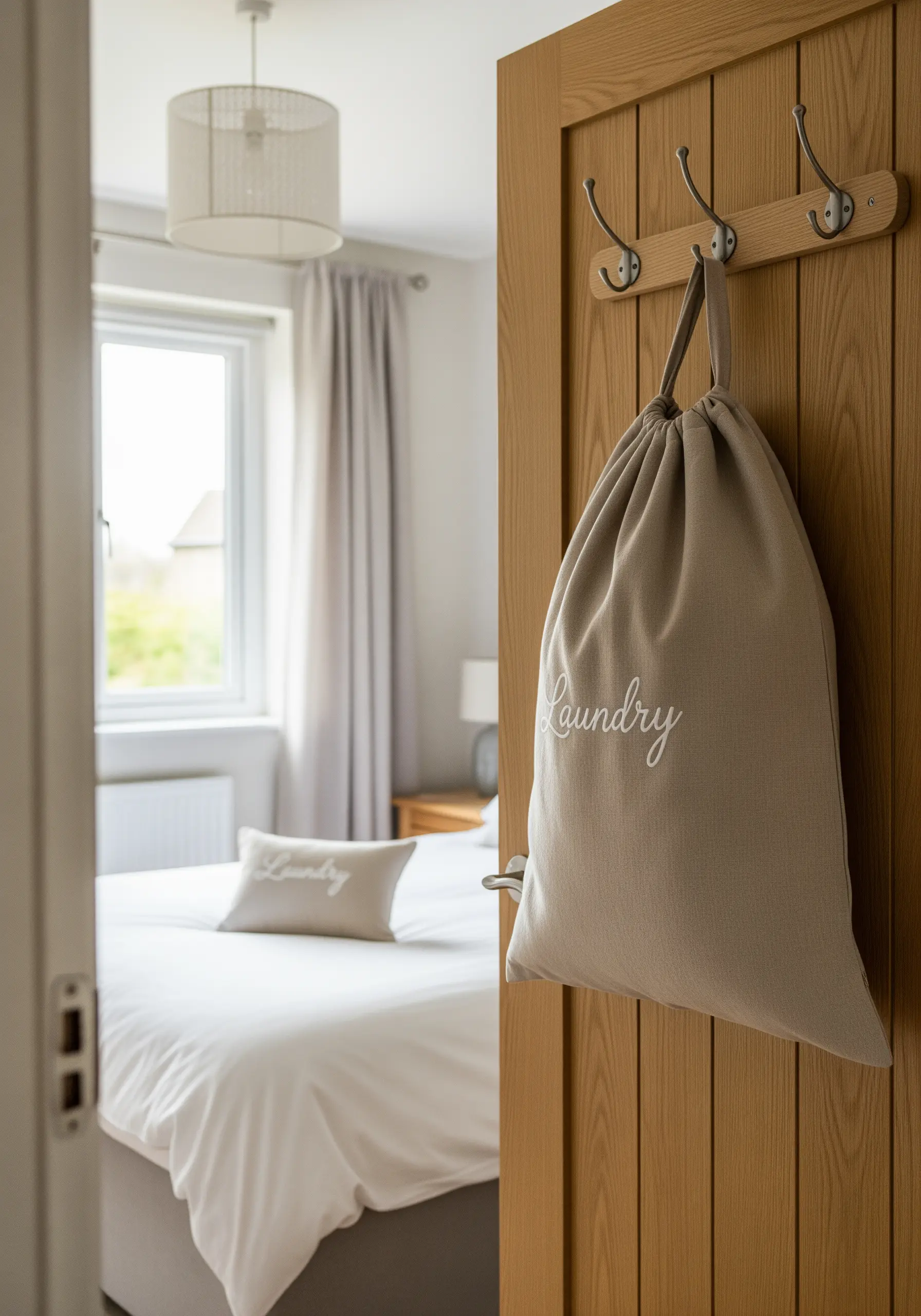
Personalize everyday items like laundry bags or storage totes with clean, elegant script for a touch of custom luxury.
For a delicate, modern look, choose a fine script font and stitch it using a two-strand split stitch in a contrasting but still neutral color, like white on beige linen.
The key to making it look refined, not rustic, is the precision and consistency of your stitches.
This simple act of adding text elevates a utilitarian object into a considered piece of home decor, making it a perfect project for practicing tiny lettering embroidery ideas.