If you’ve ever found yourself staring at a finished piece, feeling like something is missing—some element of polish or intention—I want you to try something different. Put aside the color wheel for a moment and let’s explore the quiet, confident power of tone-on-tone embroidery.
This is not about making your work invisible; it’s about making it textural. When you remove the distraction of contrasting colors, you invite the eye to appreciate the details that truly matter: the sculptural quality of a French knot, the smooth path of a stem stitch, the way light catches on a single strand of silk floss against matte linen. Your stitching becomes an integrated part of the textile itself, not just a decoration on top of it.
These techniques are your path to creating pieces that feel less like craft and more like art. They are subtle, sophisticated, and deeply personal. You will learn to see thread, fabric, and composition in a new way, creating harmony and elegance in every piece you touch. Let’s begin.
1. Sculptural Stitching on Plush Textiles
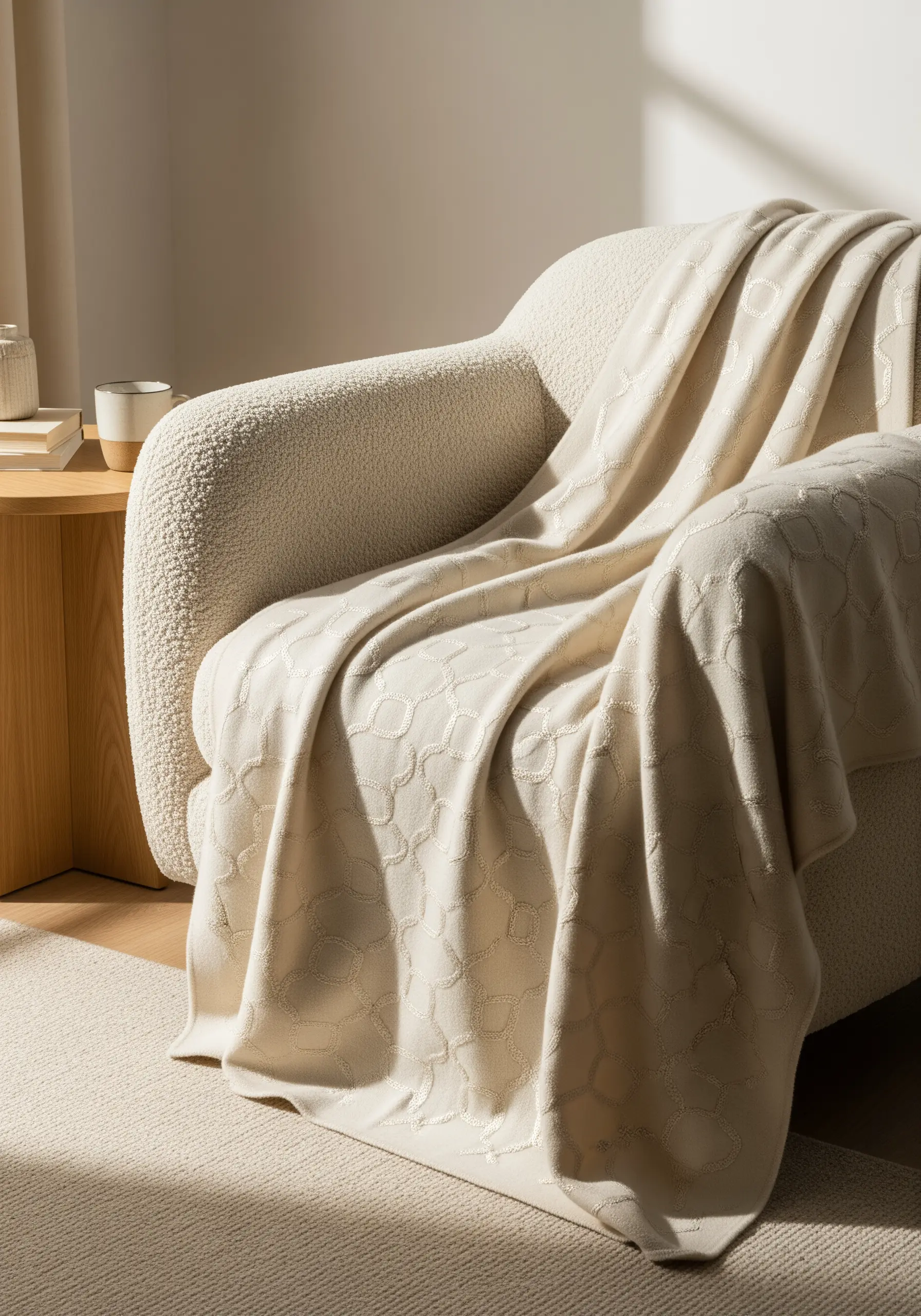
To achieve a raised, dimensional texture on a knit or fleece blanket, switch from standard floss to a thicker yarn like perle cotton No. 3 or even a fine tapestry wool.
Use a simple chain stitch or a heavy backstitch to create a pattern that feels embossed rather than just decorated.
The key is matching the thread color exactly to the fabric—this shifts the focus from color to the interplay of light and shadow on the raised stitches.
This technique creates a visible dimension that doesn’t get lost in the fabric’s natural texture, resulting in a quiet, luxurious finish.
2. Abstract Topography with Running Stitch
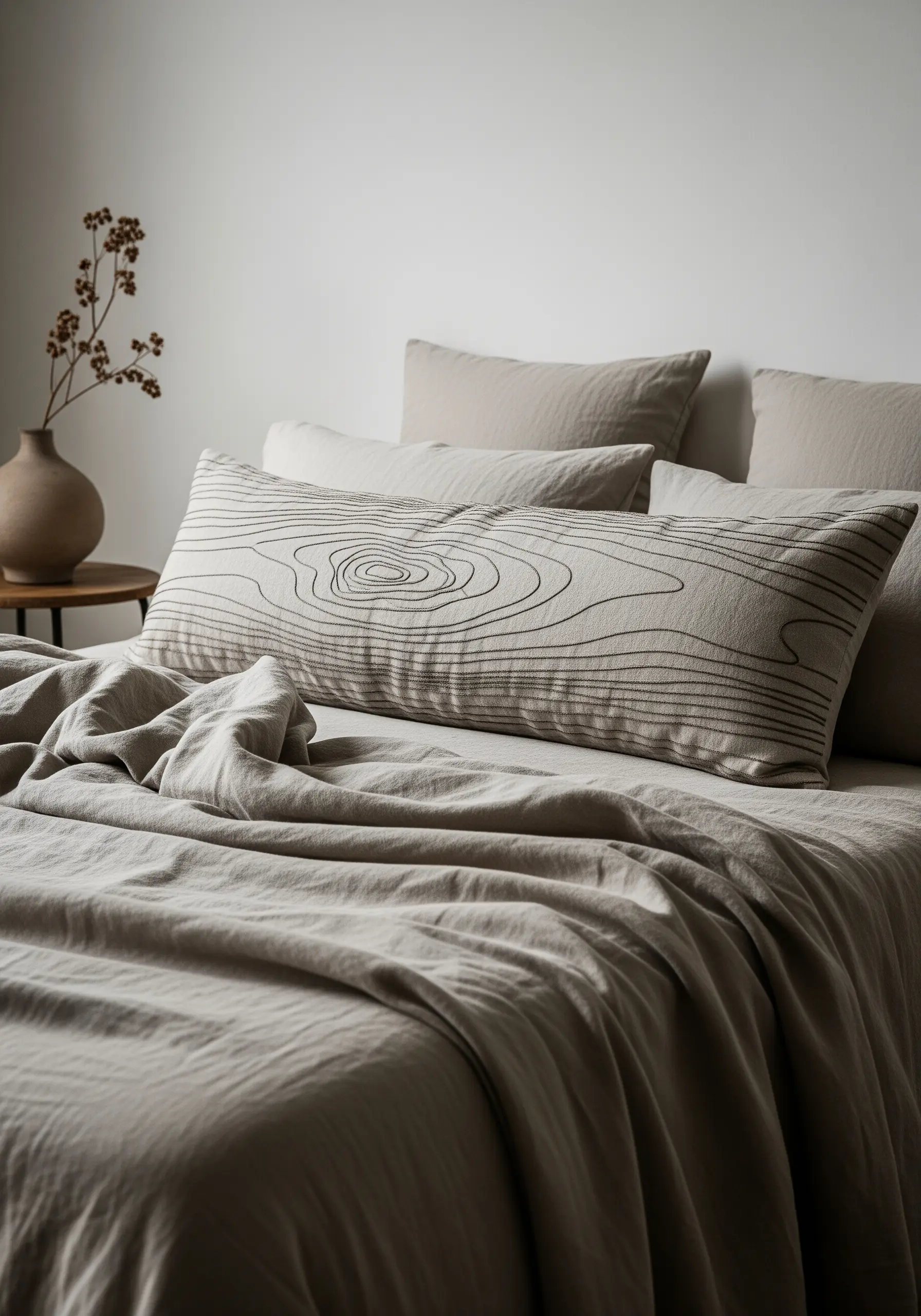
Recreate the organic flow of wood grain or topographical maps using a simple running stitch with varied lengths.
Instead of a high-contrast thread, choose a floss just one or two shades darker or lighter than your base fabric. This creates a subtle shimmer that reveals the pattern as the light changes.
Let the lines meander and cluster naturally; avoid forcing perfect symmetry for a more authentic, hand-drawn feel.
This approach turns a simple pillow into a piece of abstract thread landscapes, adding character without overwhelming a neutral space.
3. Pairing High and Low-Relief Textures

Create a sophisticated cushion set by combining two different textural techniques in the same color family.
For the high-relief design, use dimensional stitches like French knots or bullion knots to form dense, tactile floral motifs.
Contrast this with a second cushion featuring a flat, graphic pattern, like a spiral of simple running stitches.
This pairing creates a dynamic visual rhythm—one piece is boldly textural while the other is quietly graphic, making the arrangement feel curated. It’s a great way to explore 3D floral embroidery techniques.
4. Open-Stitch Borders for Airy Elegance
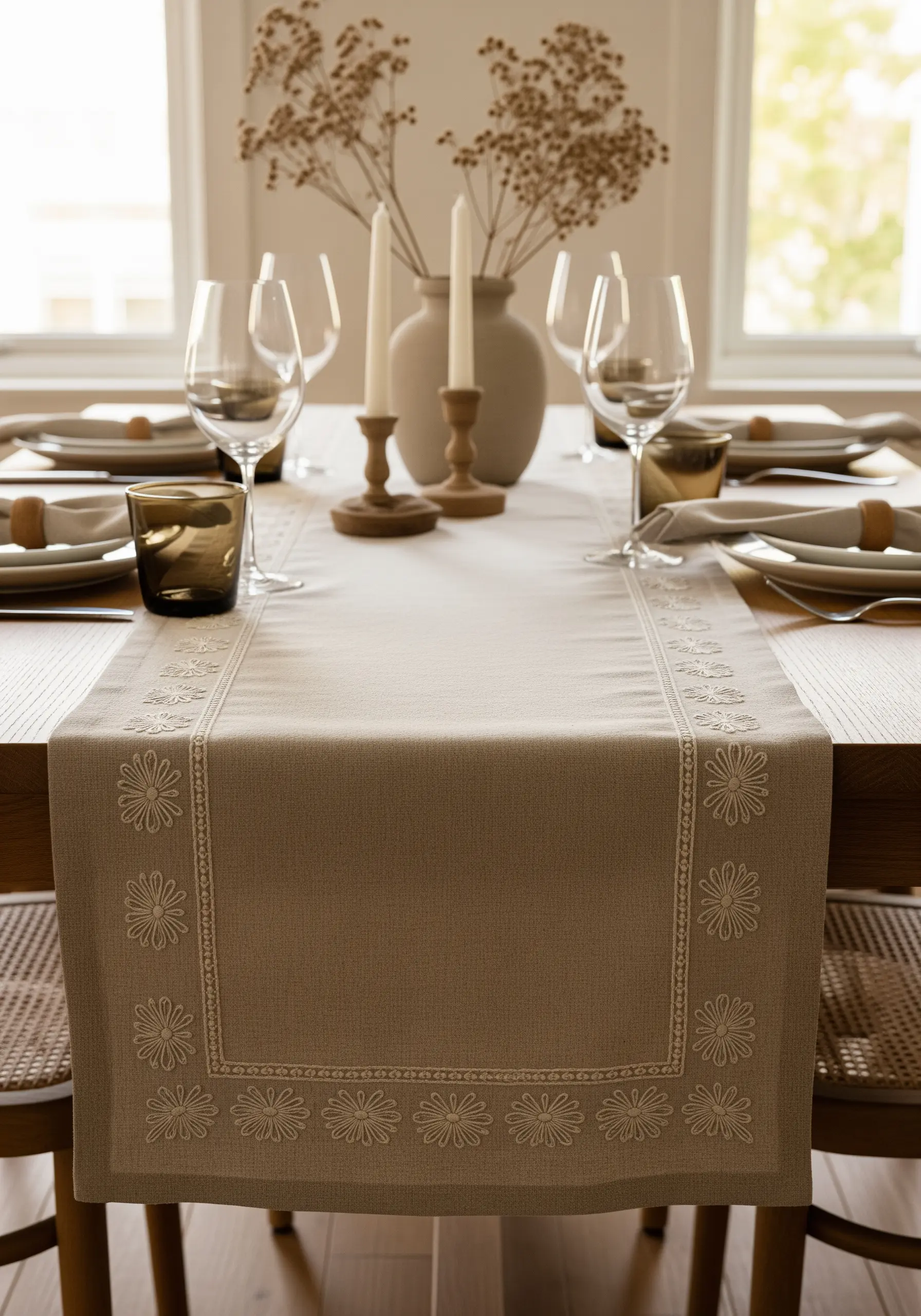
When embroidering borders on table linens, resist the urge to fill everything with satin stitch.
Instead, use an open, linear stitch like a stem stitch or a whipped backstitch to outline your motifs. This maintains the fabric’s drape and feels less heavy.
Choose a thread with a slight sheen, like a rayon or silk blend, to catch the light beautifully against a matte linen background.
The negative space inside the motifs becomes as important as the stitches themselves, contributing to a clean aesthetic perfect for minimalist table linen embroidery.
5. Weightless Vines on Sheer Fabrics
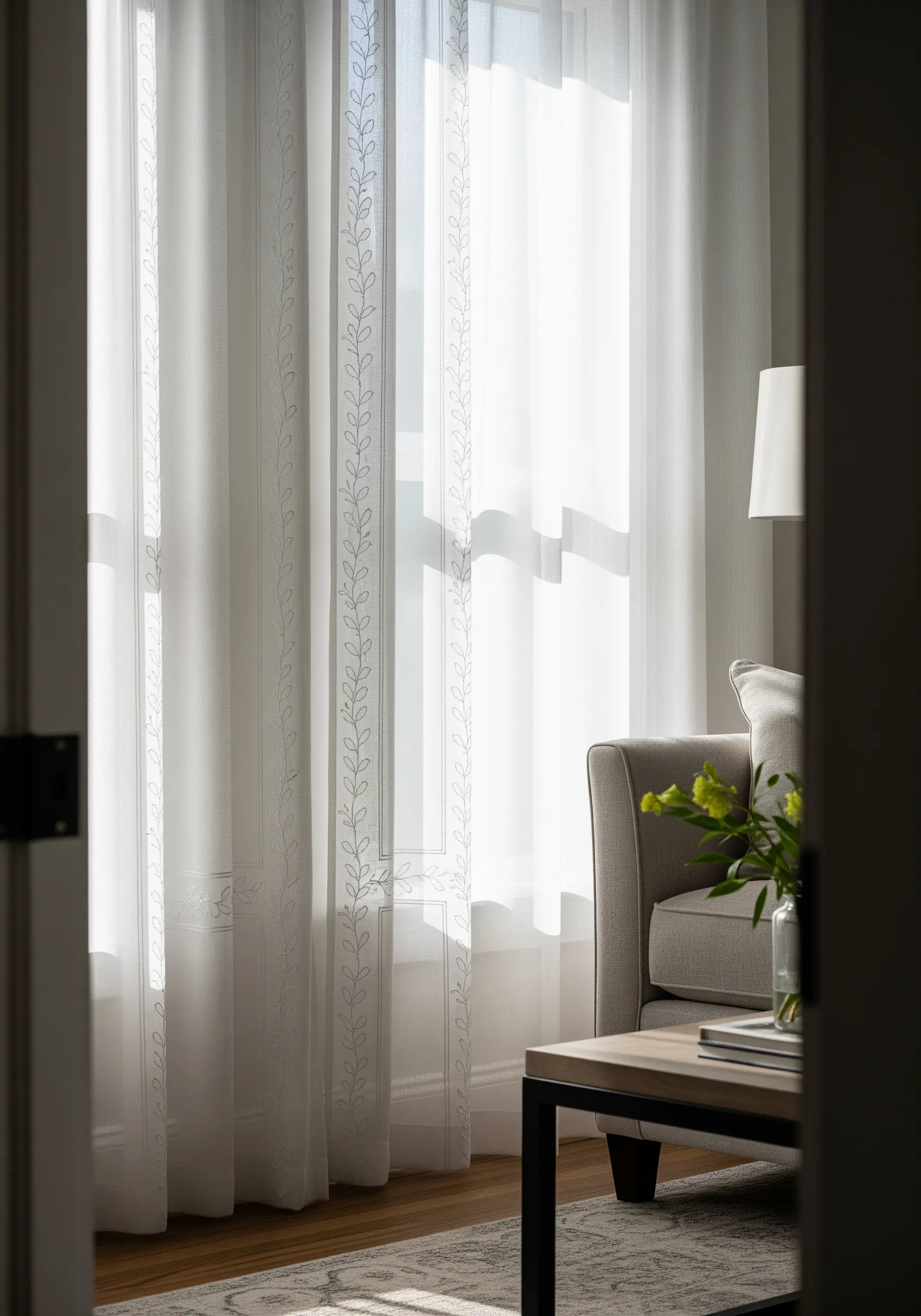
Embroidering on sheer curtains requires a delicate touch to avoid puckering. Use a lightweight, tear-away stabilizer on the back while you stitch, then gently remove it.
Stick to simple, self-contained stitches like a lazy daisy for leaves and a fine stem stitch for the vine. This minimizes thread tension and preserves the fabric’s transparency.
Select a thread that is only one shade different from the fabric—a soft grey on white or an ivory on cream—to create a pattern that feels etched into the light.
6. The Power of Monochrome Thread Painting
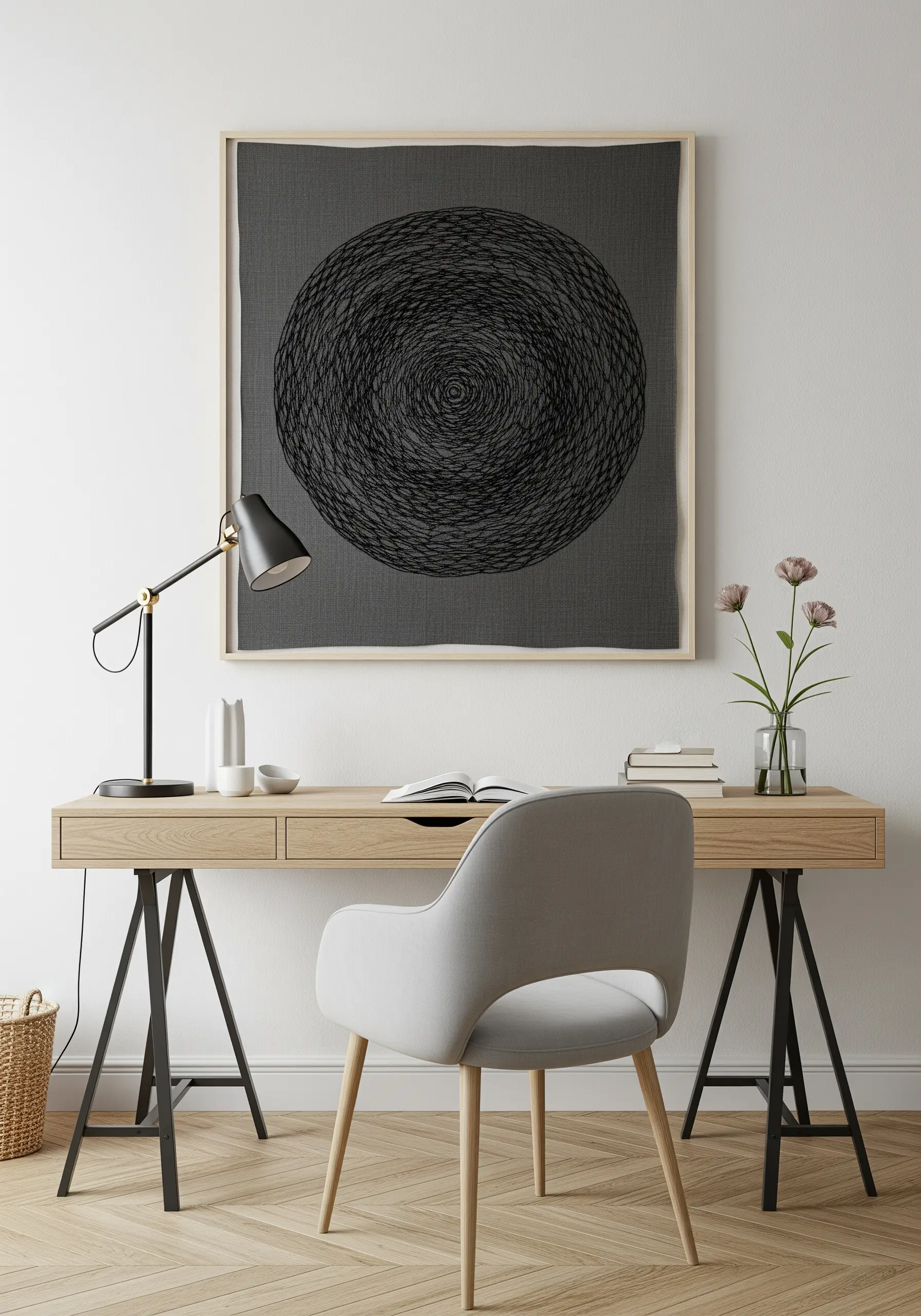
Create a powerful piece of wall art using only one color of thread on matching fabric. This forces the eye to focus solely on texture and form.
Use a continuous, dense stitch like a tightly packed seed stitch or free-form running stitches to build up layers of texture. Overlap your stitches in different directions to create a sense of movement.
Framing the piece with a natural wood or simple metallic frame adds warmth and prevents the monochrome design from feeling flat.
This is a bold way to make framed embroidery patterns that command attention, proving that you don’t need color to make a dramatic statement.
7. Continuous Line Motion for Upholstery
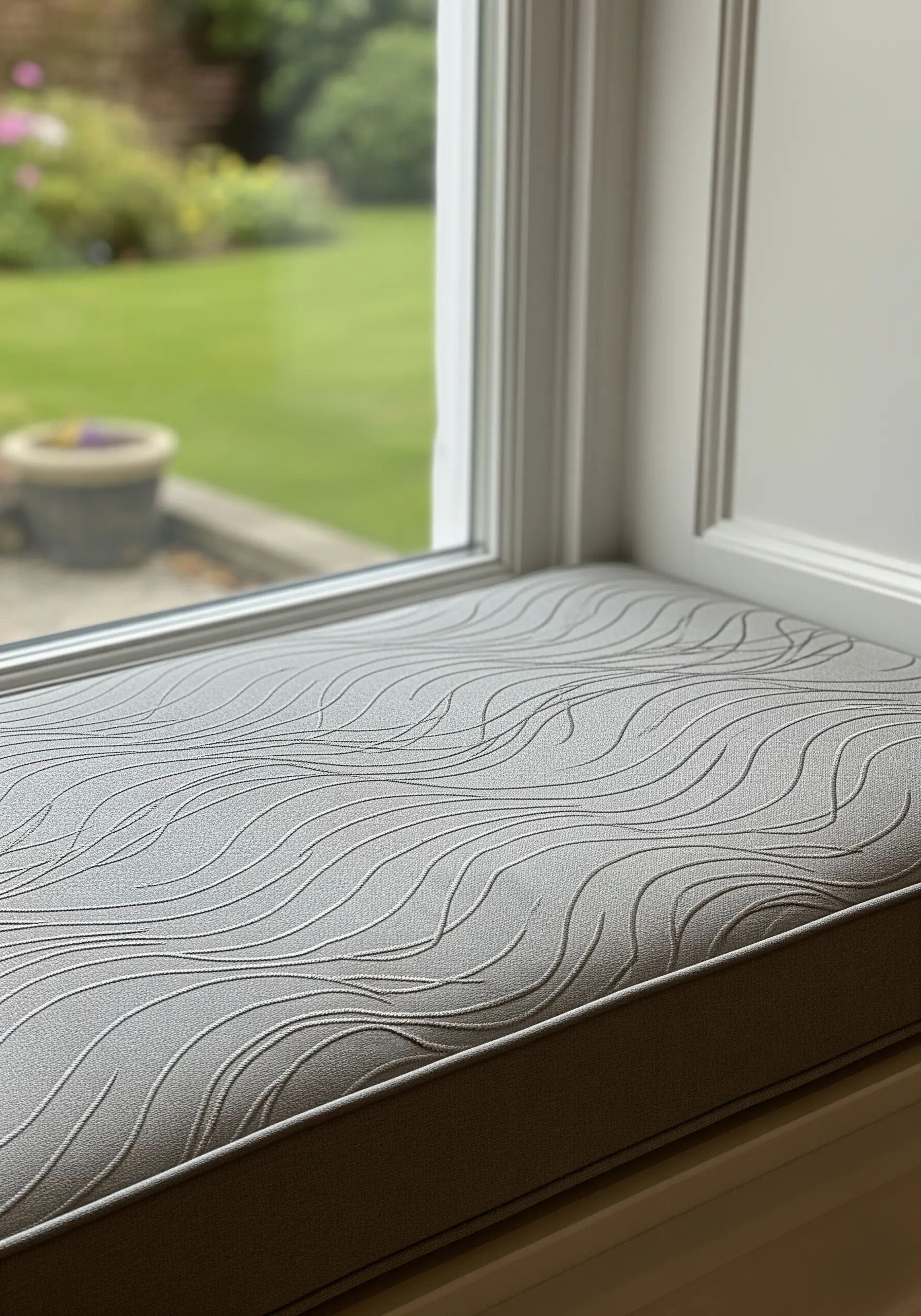
To achieve this seamless, fluid pattern on upholstery-grade fabric, a machine embroidery technique is often the most effective.
Plan your design as a continuous line to minimize starts and stops, which ensures a cleaner, more professional finish.
Use a slightly thicker thread designed for upholstery or quilting to ensure the embroidery is durable enough for everyday use.
The tone-on-tone approach adds a bespoke, high-end feel to furniture, creating a pattern that reveals itself through texture and light rather than color.
8. Building Textural Borders with Knot Stitches
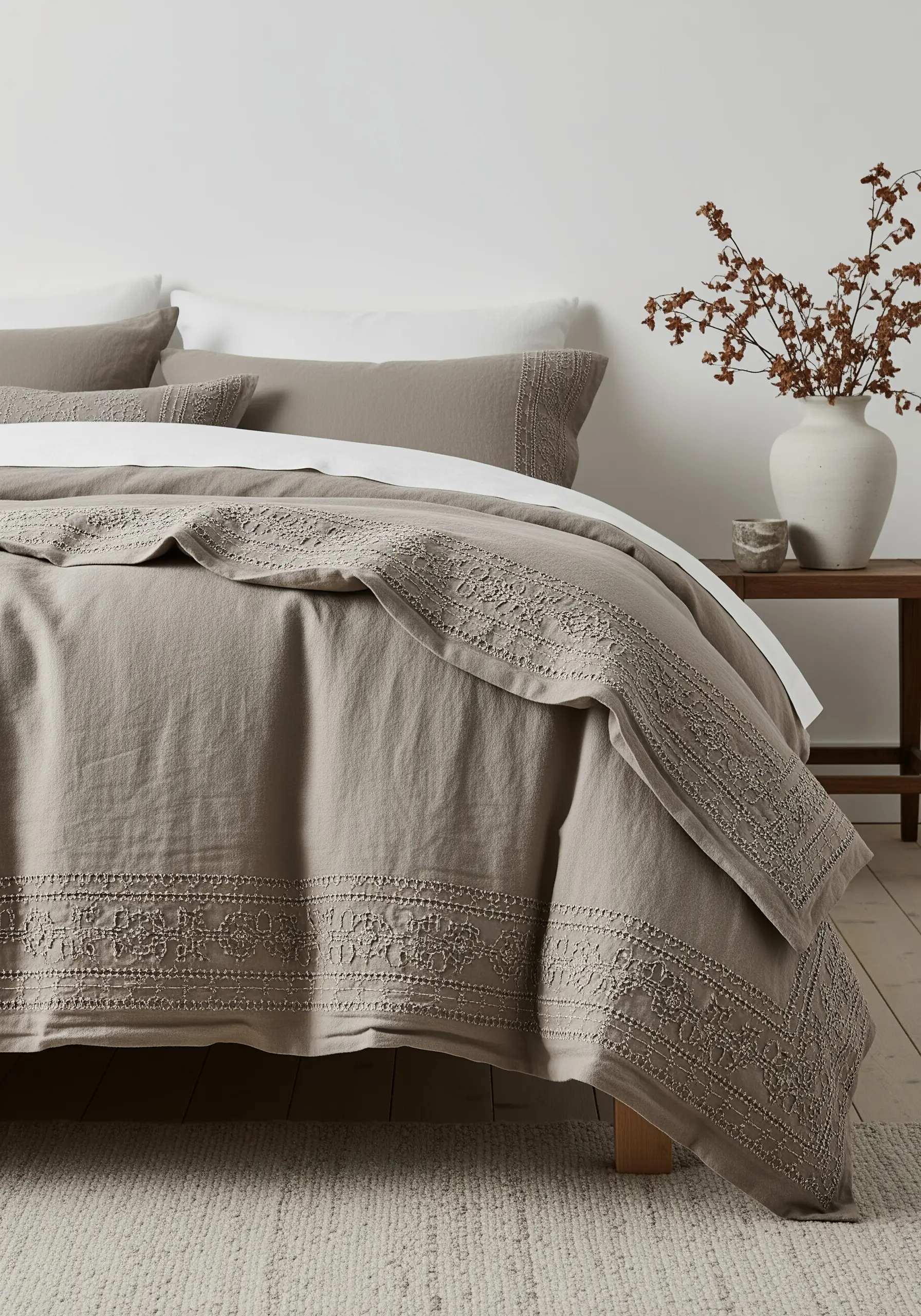
Elevate simple bed linens by adding a wide border of dense, textural stitches.
Fill an intricate pattern with thousands of French knots or colonial knots packed closely together. This creates a raised, pebbled surface that feels incredibly luxurious.
To keep the project manageable, work in small sections and use a hoop or frame to maintain even tension across the heavy linen.
Choosing a thread in the exact same shade as the fabric ensures the design reads as pure texture, adding weight and sophistication. This works beautifully for neutral thread linen embroidery combos.
9. Monogramming on High-Texture Fabrics
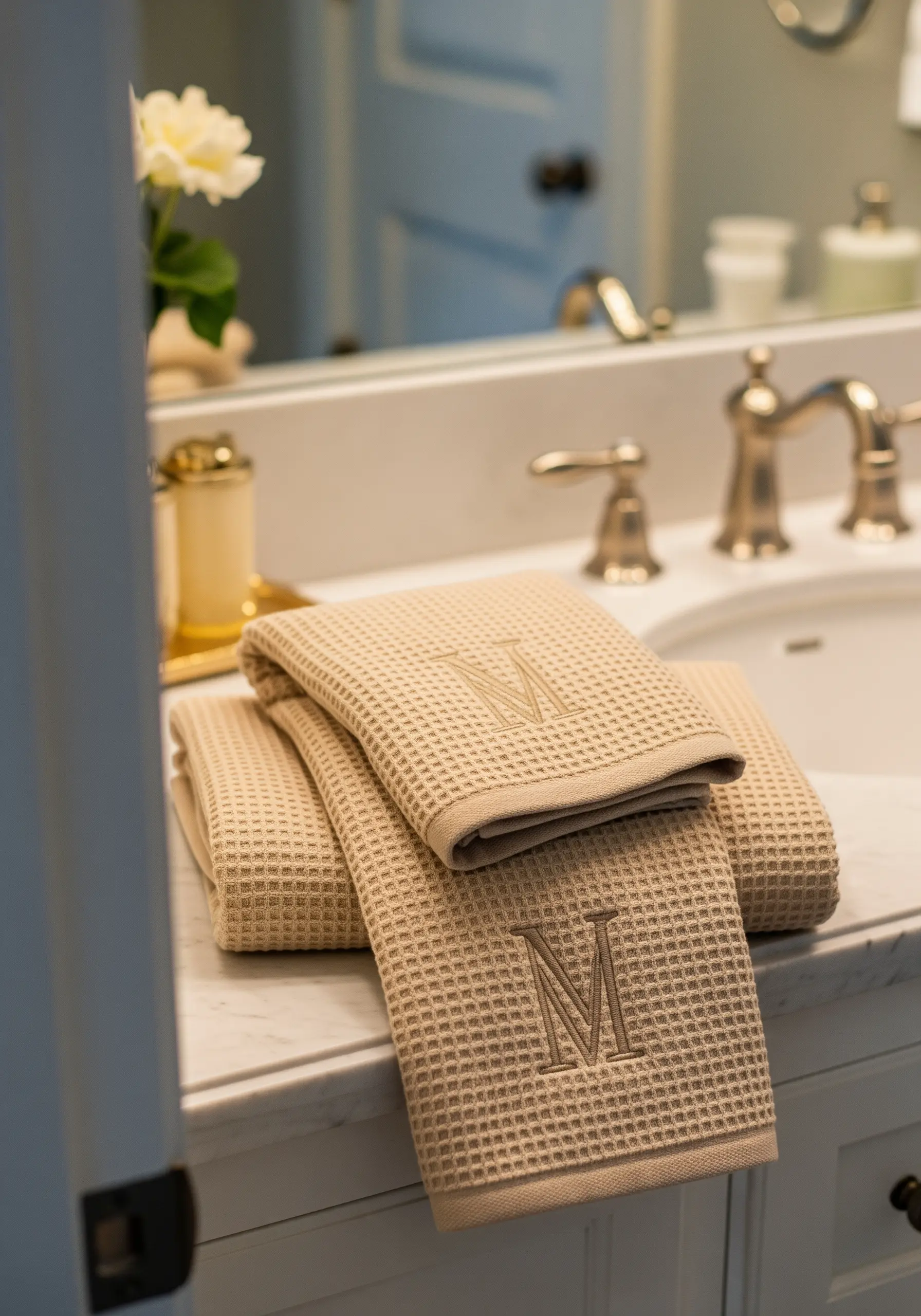
When embroidering on a waffle or terrycloth towel, a simple outline will get lost. You need to create a solid, stable base.
Use a water-soluble stabilizer on top of the fabric. This provides a smooth surface to stitch on and prevents your threads from sinking into the weave.
Lay down a foundation of satin stitches or a dense fill stitch before outlining the monogram. This gives the final stitches a raised, professional platform.
For a truly luxe finish, use a thread with a slight satin sheen to contrast against the matte texture of the cotton towel, a key detail for making minimal monogram styles look polished.
10. Directional Satin Stitch for Graphic Motifs
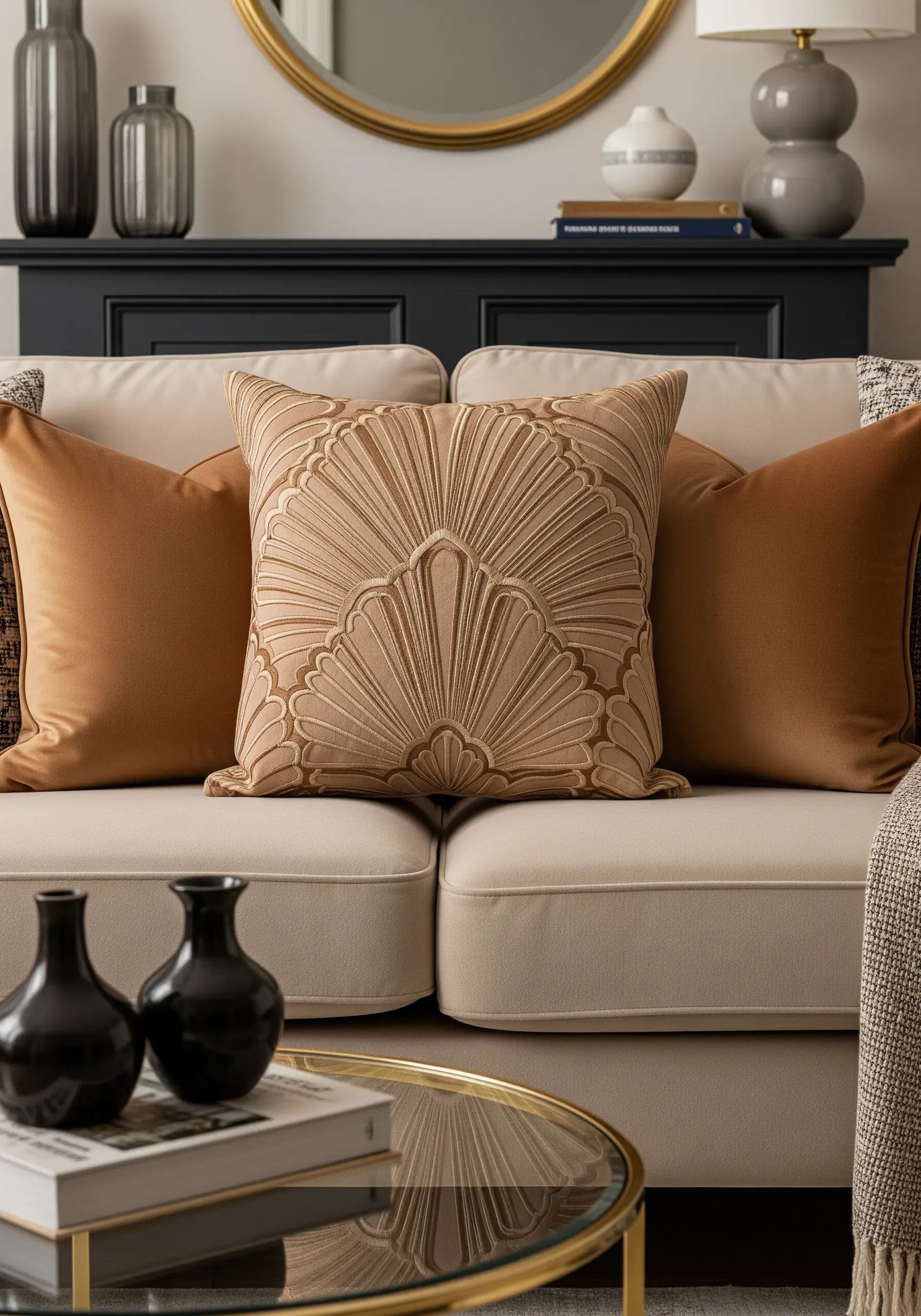
Bring a simple graphic motif to life by carefully considering the direction of your satin stitches.
For a fan or sunburst design, angle your stitches to radiate from a central point. This creates subtle shifts in how the thread reflects light, defining the shape without needing outlines.
Use a thread that matches the fabric’s value but has a different finish—a matte floss on a sateen fabric, or a silk thread on linen—to enhance this light-play effect.
The result is a design that feels both bold and integrated, adding a layer of architectural elegance to your decor.
11. Vertical Accents for Visual Height

Add a sense of elegance and height to dining chairs with a simple, vertically oriented embroidery detail.
A linked chain motif, created with a heavy chain stitch or a padded satin stitch, draws the eye upward and makes the chair back appear longer.
Choose a durable thread, like a cotton perle, that can withstand the wear and tear of daily use.
This technique is a perfect example of how a small, thoughtful detail can alter the perception of a piece of furniture, giving it a custom, designer quality.
12. Tonal Blocking with Concentric Shapes
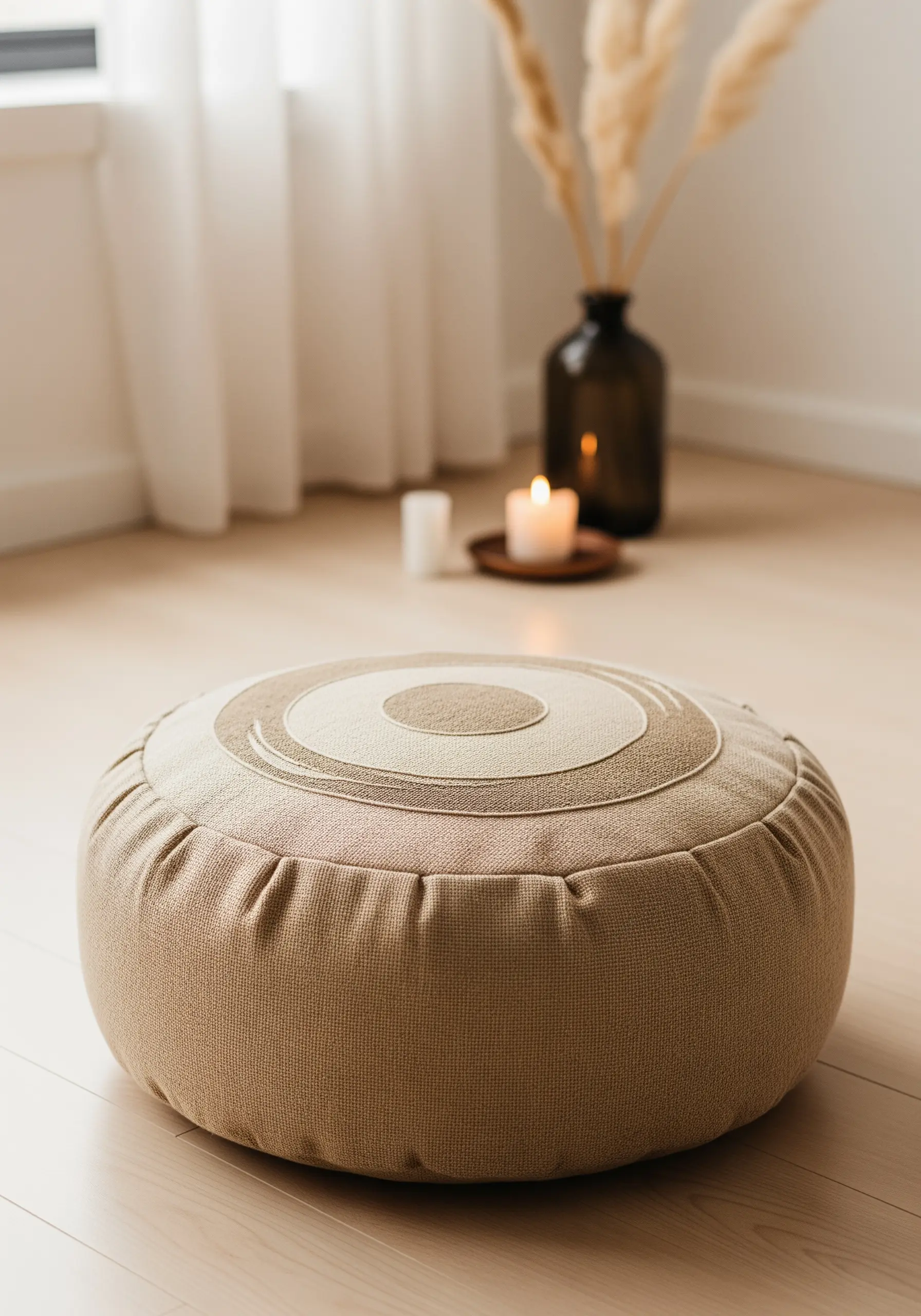
Explore the nuance of a single color family by using tonal blocking in your embroidery.
On this floor cushion, concentric circles are filled with stitches in three slightly different neutral shades: ecru, beige, and taupe.
Use a simple fill stitch, like a long-and-short stitch or even a dense seed stitch, to ensure the focus remains on the subtle color shifts.
This technique creates a design that is grounding and calm, perfect for meditation cushions or cozy floor seating. It’s a great approach for serene embroidery ideas.
13. The Refined Finish of a Blanket Stitch

Elevate a simple wool or fleece blanket by finishing the edge with a hand-stitched detail.
The blanket stitch is both decorative and functional, preventing the fabric from fraying while adding a clean, graphic border.
For a modern look, use a thicker yarn or perle cotton and keep your stitches evenly spaced and consistent in height.
Choosing a thread one or two shades lighter than the blanket creates a subtle frame that highlights the softness of the textile without being distracting.
14. Scattered Motifs for Subtle Playfulness
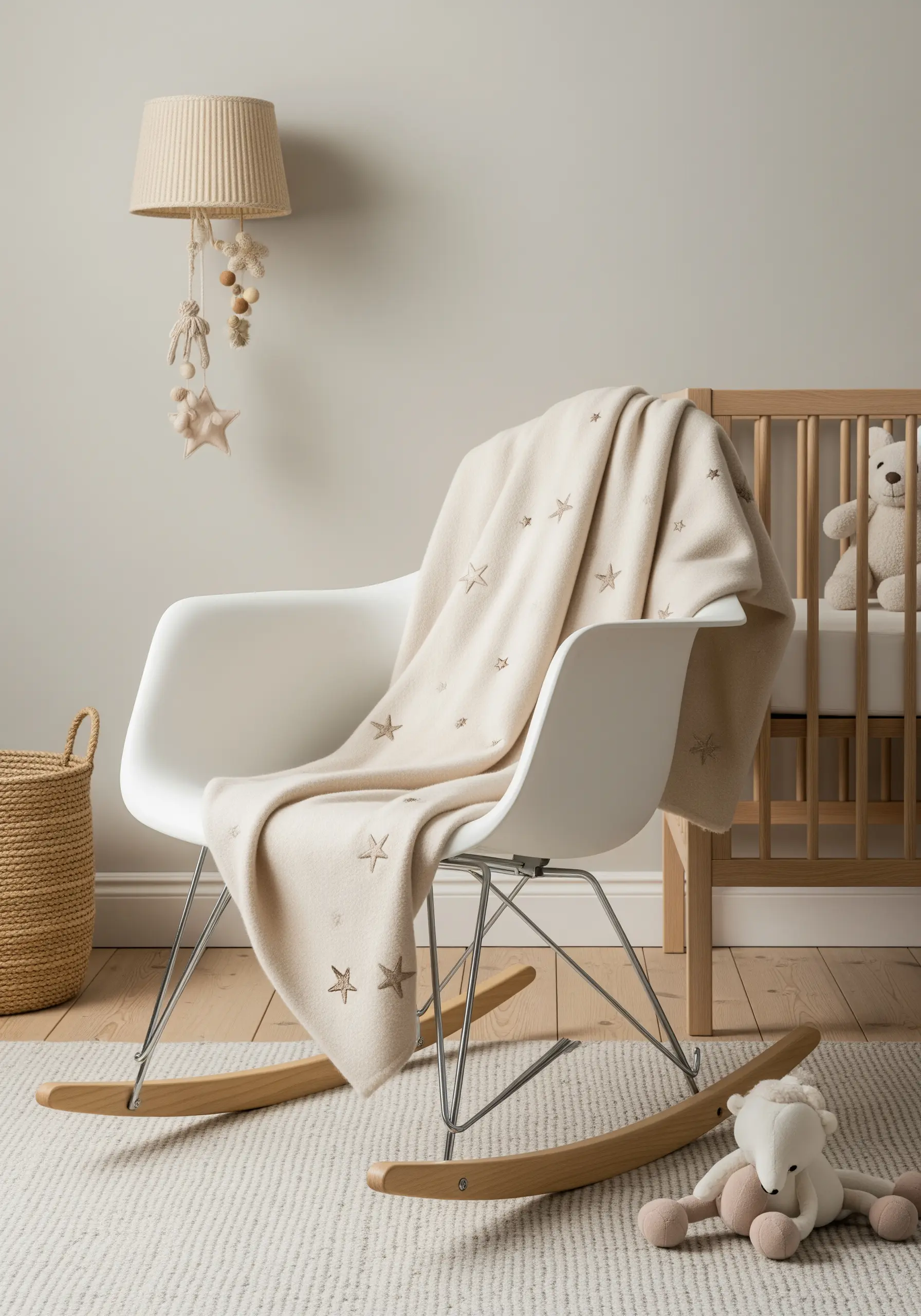
Create a charming, high-end look on a baby blanket by scattering small, simple motifs instead of creating a busy, centralized design.
Use a basic satin stitch or outline stitch to create simple stars or dots. Vary their orientation and spacing for a more organic, ‘fallen from the sky’ look.
Select a thread that is just a few shades deeper than the blanket fabric, like a warm beige on cream. This keeps the design gentle and soothing.
This approach results in a piece that feels personal yet sophisticated enough to become a treasured heirloom, a perfect idea for cloud-soft embroidery projects.
15. Architectural Lines on Upholstered Surfaces

Complement the clean lines of modern furniture with a geometric, architectural embroidery pattern.
Use a simple but bold stitch, like a backstitch or stem stitch, worked with multiple strands of floss for a defined line.
Choose a thread color that offers just enough contrast to be visible—a soft white on beige, or a charcoal on grey—so the pattern enhances the form rather than overwhelming it.
This technique turns a simple ottoman into a statement piece, adding a layer of custom detail that bridges the gap between furniture and art.
16. Quilting as Linear Embroidery

Think of quilting as a form of large-scale line embroidery that creates texture and dimension.
A simple grid or diamond quilting pattern, stitched with a matching thread, adds structure and a subtle graphic quality to pillows and bedspreads.
The texture comes from the slight puffiness of the fabric between the stitch lines, a technique known as trapunto if you want to add extra batting for more definition.
This method coordinates beautifully with other textured elements, like a tufted headboard, to create a layered, hotel-luxe bedroom environment.
17. Minimalist Form with Corded Stitching

Create striking, minimalist wall art by focusing on a single, sculptural line.
Achieve this raised, cord-like effect by using a padded satin stitch or couching a thick yarn onto the fabric with smaller, matching stitches.
Using a heavy, textured fabric like linen or canvas as your base provides the right amount of weight and structure to support the raised embroidery.
This technique distills embroidery down to its essential elements—line and texture—for a piece of minimal embroidery wall pieces that feels both modern and serene.
18. Embroidered Lettering for Textural Spines

Transform a collection of journals or decorative books by covering them in linen and embroidering the titles.
Use a small, neat backstitch or split stitch for clean, legible letters. A single strand of floss is often all you need for this delicate work.
To ensure your lettering is perfectly aligned, draw your guides with a water-soluble pen before you begin stitching.
This project adds a personal, tactile quality to your bookshelf, turning everyday objects into a coordinated, textural display.
19. Architectural Blueprints as Abstract Motifs
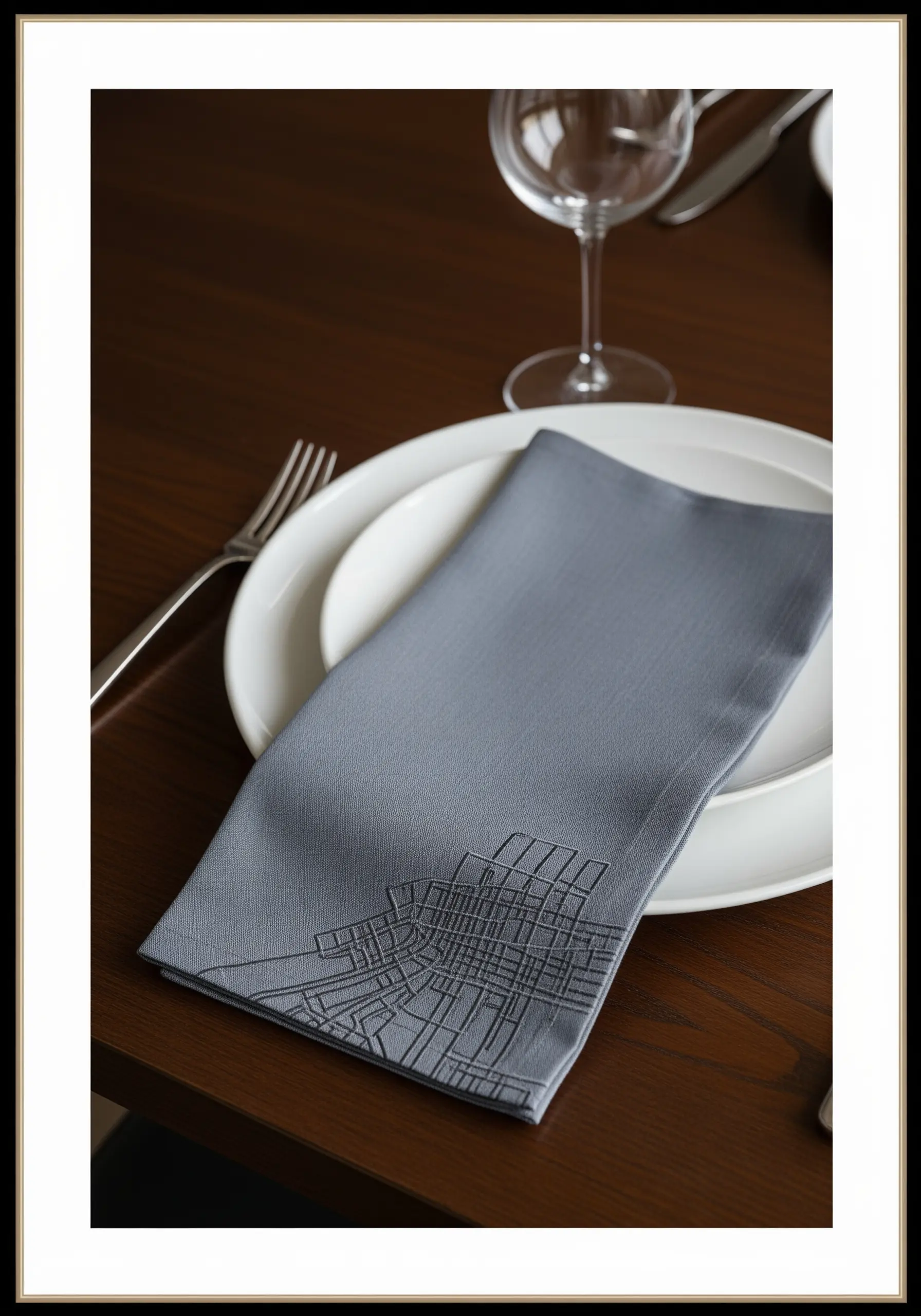
Use the abstract patterns of city maps or architectural blueprints as inspiration for a modern embroidery design.
Simplify the lines into a clean, graphic representation, focusing on the grid-like structure. A simple backstitch is perfect for this.
Stitching with a thread that is the exact same color as the fabric creates an ’embossed’ effect, a subtle detail that guests will discover upon closer inspection.
This is a sophisticated way to personalize linens with a meaningful location, turning a napkin into a conversation piece.
20. Layering Linear and Tufted Textures
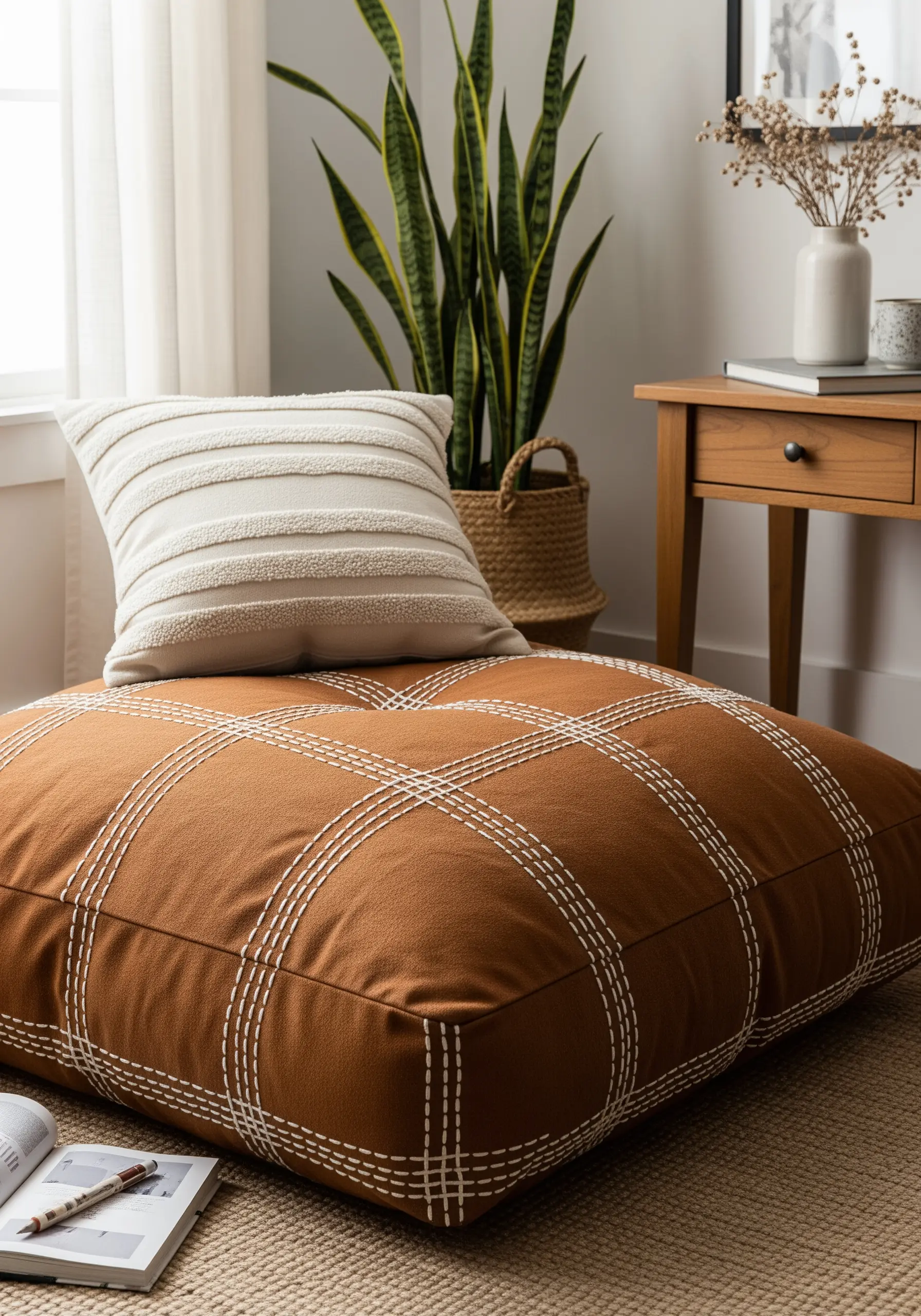
Create an inviting floor seating area by layering cushions with different but complementary embroidered textures.
Combine a flat, graphic pattern, like a running stitch grid, with a plush, high-pile texture.
Achieve the tufted effect using loop stitches (like the turkey stitch) that are then trimmed, or by couching a thick, fluffy yarn onto the surface.
While the colors are different here, applying this textural contrast in a monochrome palette—like ivory on cream—would create an exceptionally rich and subtle effect.
21. Minimalist Icons for Elegant Organization
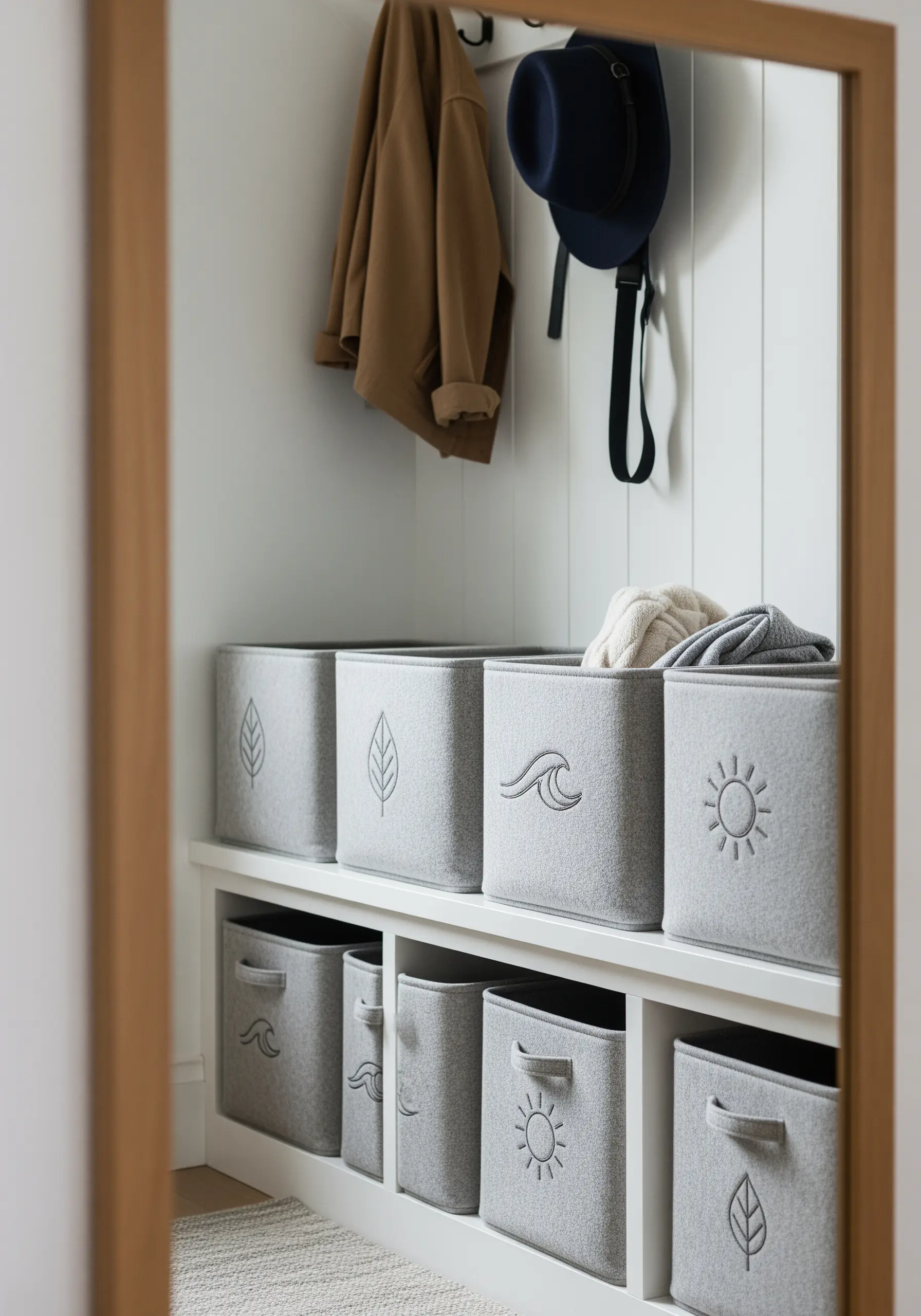
Elevate simple fabric storage bins with minimalist, single-line embroidered icons.
Choose elemental symbols—a leaf, a wave, a sun—that are universally understood and aesthetically clean.
Use a stem stitch or whipped backstitch with a thicker floss to create a smooth, defined line that stands out against the felted or canvas texture of the box.
This is a beautiful, functional system that uses embroidery to bring a sense of calm and order to your storage.
22. Weighted Borders with Dense Foliage

Add literal and visual weight to heavy drapery with a densely embroidered border.
Fill an entire band of fabric with layered leaf motifs using a fishbone stitch or satin stitch. Overlap the shapes to create a sense of depth and lushness.
Use a thread with a subtle sheen, like a silk or rayon blend, in a slightly lighter shade than the curtain fabric. This will catch the light and highlight the rich texture.
This technique not only adds a luxurious, custom finish but also helps the curtains hang more beautifully due to the added weight at the hem.
23. Geometric Texture with Knotted Grids
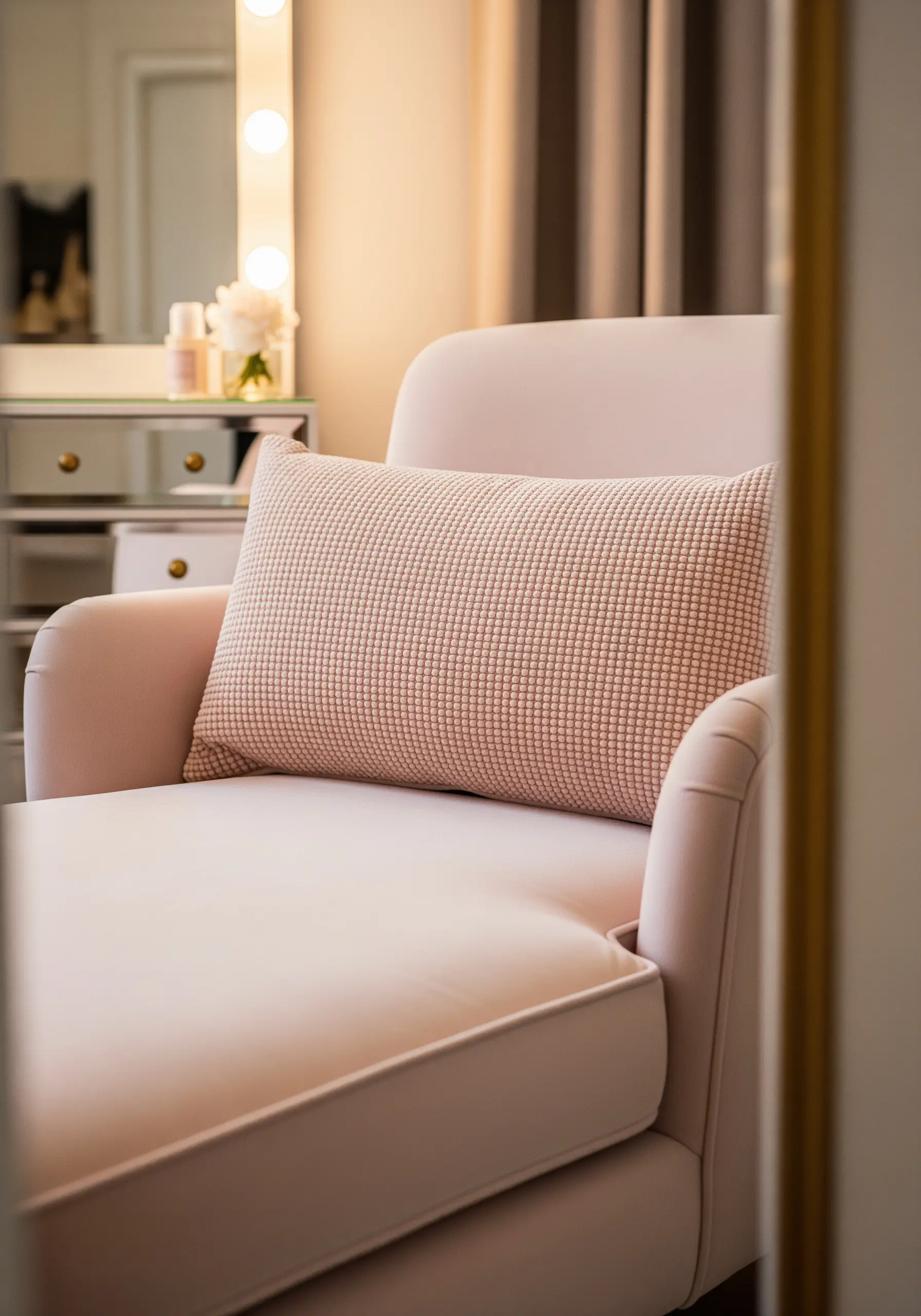
Create a highly tactile, geometric surface using a grid of French knots.
Instead of filling a shape, use the knots to define the points of a grid pattern. This creates a texture that is both soft and structured.
Mark your grid first with a removable fabric pen to ensure perfect spacing. The precision is what makes this simple technique look so high-end.
This is a wonderfully meditative stitch to work on, and the resulting pebbled texture adds a sophisticated, contemporary feel to a simple pillow.
24. Mimicking Knit Textures with Raised Stitches
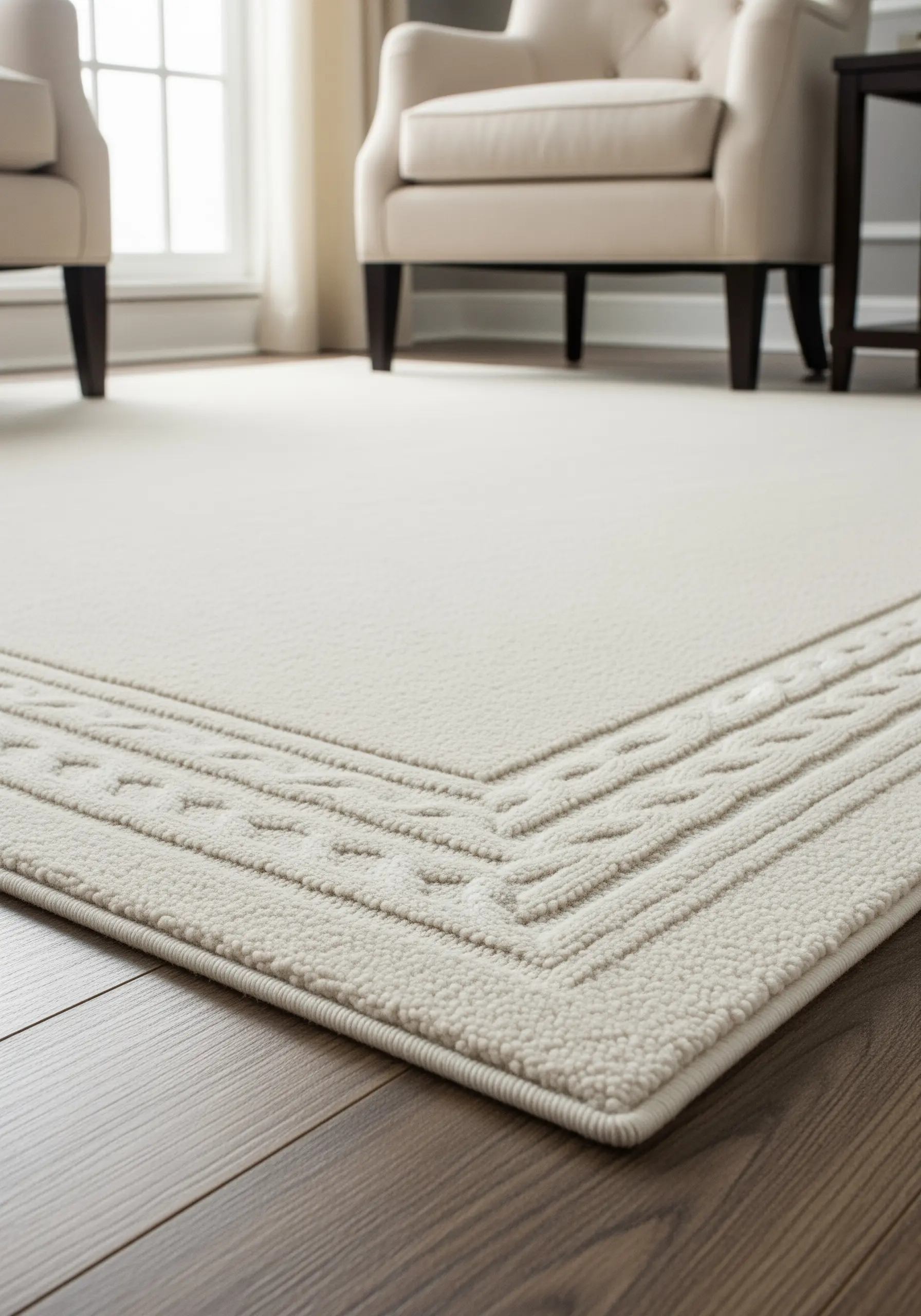
Translate the cozy texture of a cable-knit sweater into an embroidered motif. This technique is often seen in rug making but can be adapted for heavy textiles.
Use a heavily padded satin stitch or a very thick, plush yarn couched onto the surface to create the raised, overlapping ‘cables’.
The key is to build significant height so the pattern reads as three-dimensional. Work on a sturdy base fabric like canvas or thick felt.
This approach creates a surprising and delightful textural experience, borrowing the comfort of knitting and applying it in a new context.