Your dining table can be more than just a place to eat; it can be a quiet retreat, a canvas for calm. A simple stone-gray runner is the perfect foundation, but it’s your thread that will give it a soul. It’s time to move beyond just following a pattern and start thinking about how each stitch contributes to a feeling of peace and intention.
In these ideas, you won’t just see motifs—you’ll see techniques. You’ll discover how changing the direction of a stitch can create shadow, how a single metallic thread can add a whisper of light, and how negative space can be just as powerful as a dense pattern. This is about making thoughtful choices that transform a piece of fabric into a quiet statement of your personal style.
Consider this your guide to stitching with purpose. Each design is a principle you can learn and adapt. Let these techniques give you the confidence to turn simple gray linen into a centerpiece of serene, modern artistry for your home.
1. Architectural Framing with Overlapping Lines
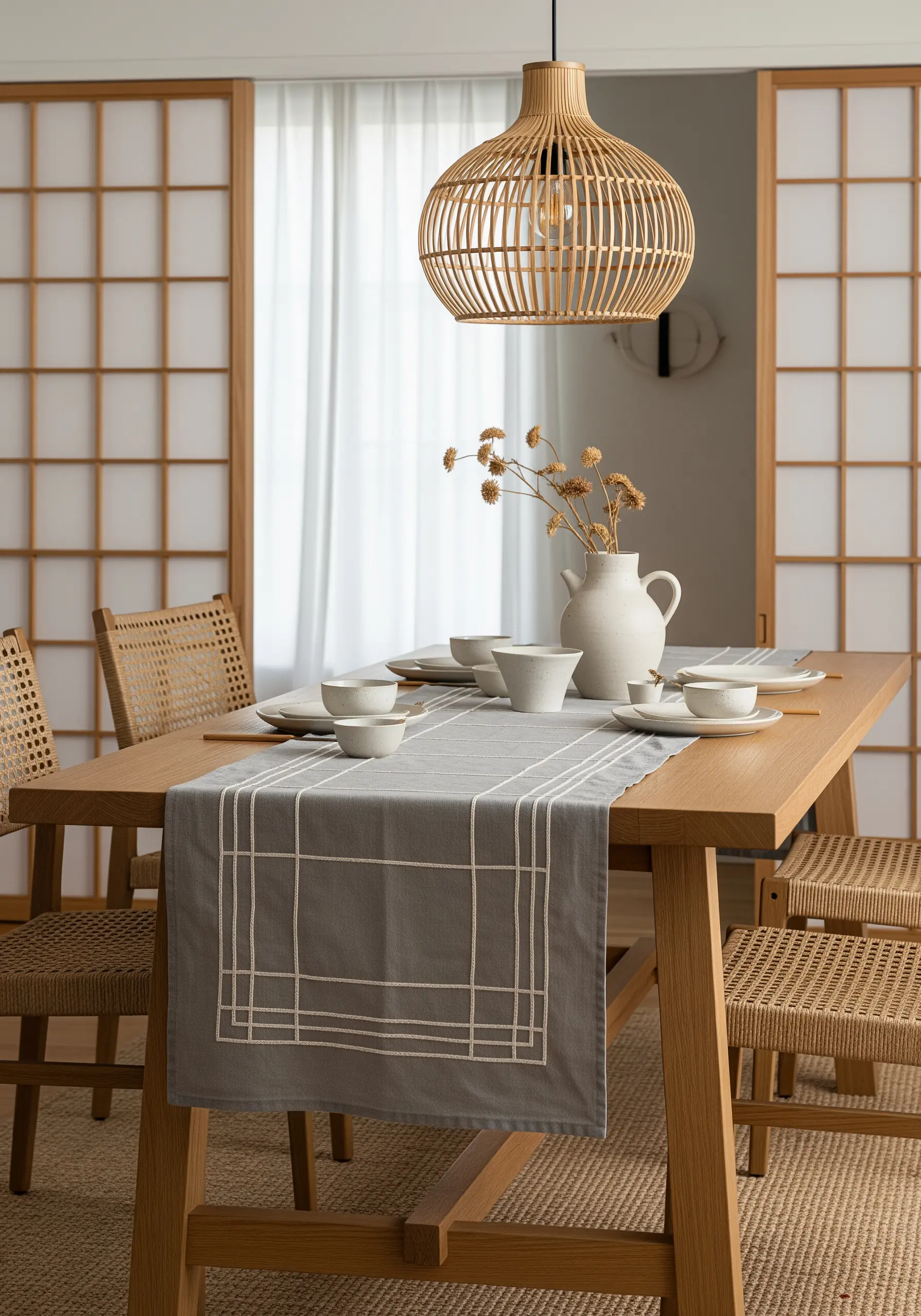
Create a sophisticated, layered border using a simple backstitch.
Use a water-soluble pen and a clear ruler to draw your intersecting geometric lines, ensuring perfect right angles for a clean, architectural look.
Vary the thread weight—use three strands of floss for the outer frame and two for the inner lines to create subtle visual depth.
This technique turns basic lines into a refined, intentional design that complements modern or Japandi-style dining rooms.
2. Organic Detail with a Single Fern Frond
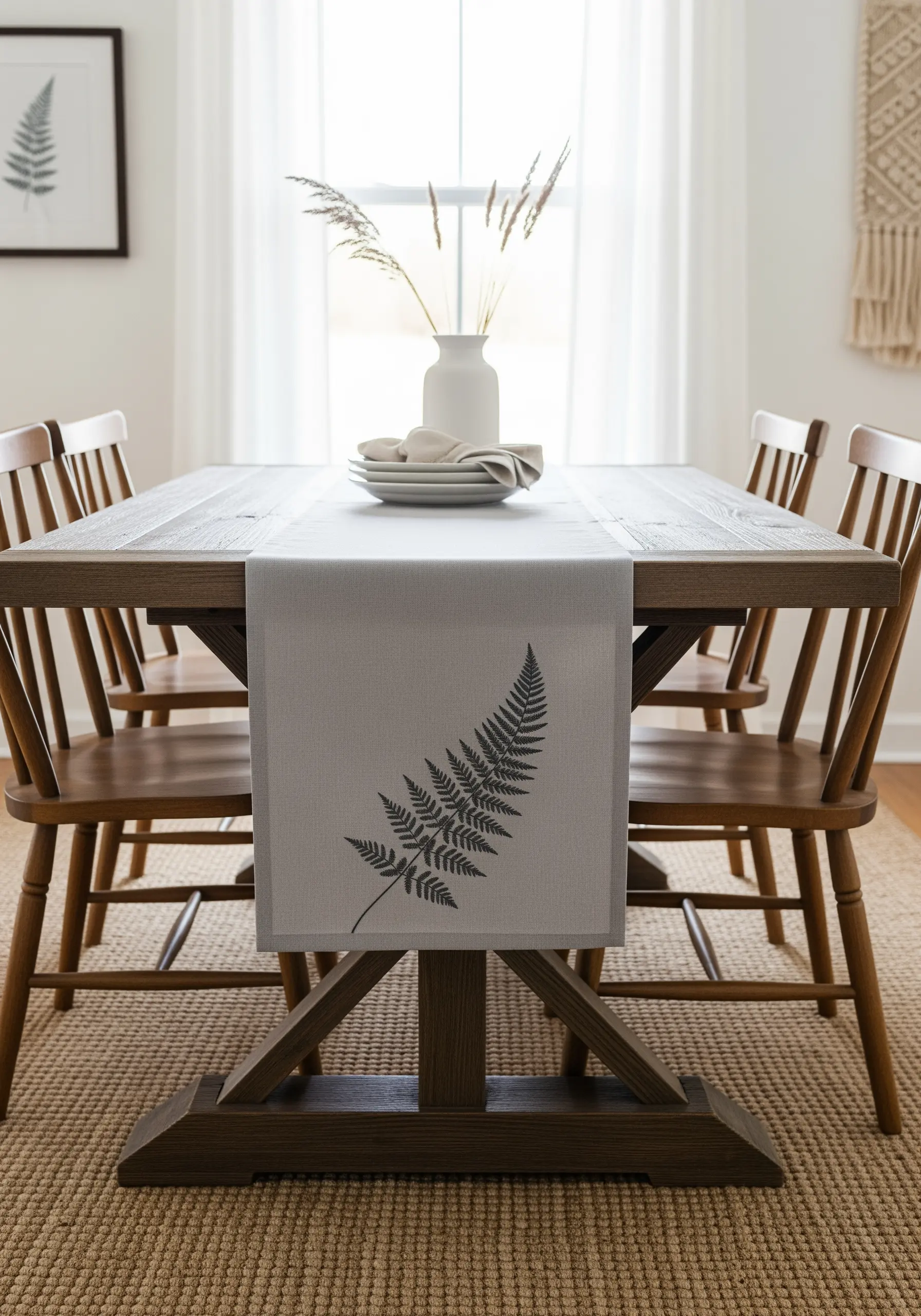
Capture the delicate structure of a fern by using a fishbone stitch for each leaflet.
This stitch creates a natural-looking central vein and allows the threads to lie at an angle, mimicking real foliage.
Choose a dark charcoal thread on a lighter gray linen to create contrast that is striking yet soft.
Place the motif at one end of the runner, allowing the negative space to give the design room to breathe and feel more artistic.
This approach elevates a simple botanical into a piece of lush texture.
3. Fluid Motion with Interwoven Whipped Stitches
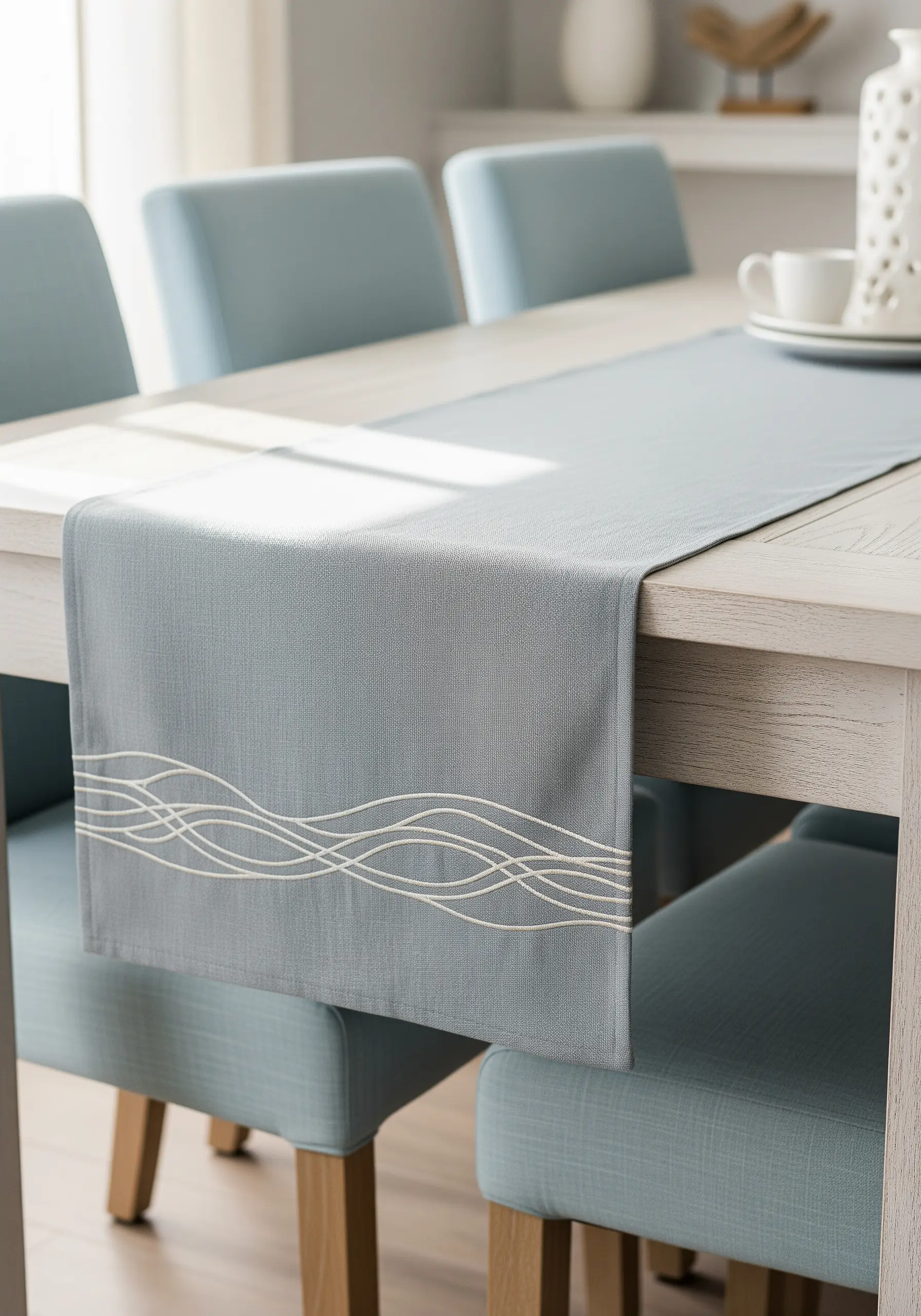
For an elegant, wave-like pattern, start by stitching several undulating lines with a simple running stitch.
Next, take a contrasting thread (like a soft ivory) and whip it around the running stitches without piercing the fabric.
This technique creates a raised, smooth, and continuous line that flows beautifully across the textile.
The interwoven effect feels more dynamic and polished than a simple backstitch, perfect for capturing a sense of calm movement.
4. Modern Playfulness with Layered Satin-Stitched Circles
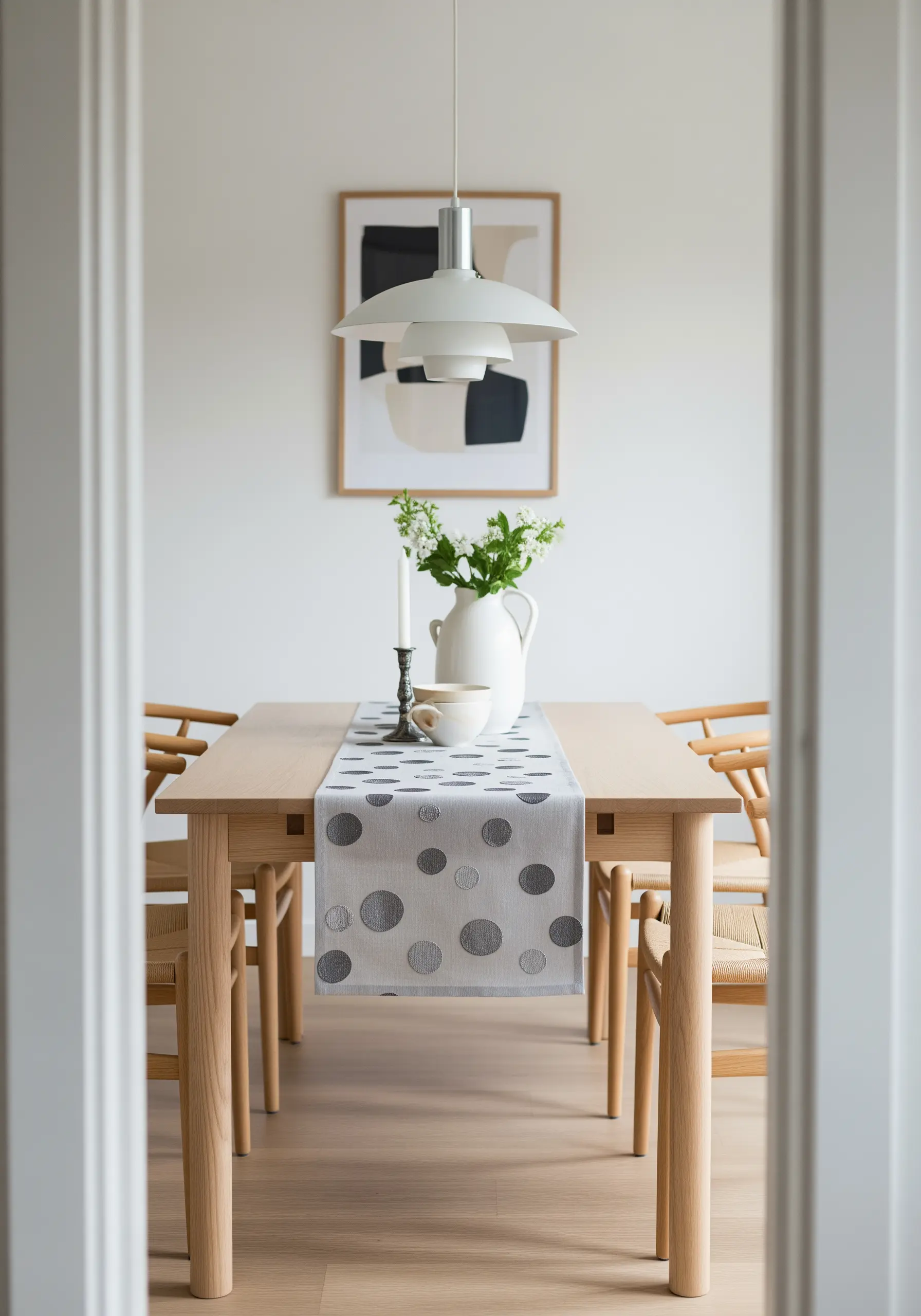
To achieve perfectly smooth, round satin stitches, first outline each circle with a tiny split stitch.
This raised edge acts as a guide and prevents the satin stitches from becoming uneven, giving you a crisp, clean shape.
Use three shades of gray floss—light, medium, and charcoal—to create a sense of depth and playful rhythm.
Scatter the circles asymmetrically for a more modern, less rigid composition.
5. Rustic Texture with a Bold Couching Stitch
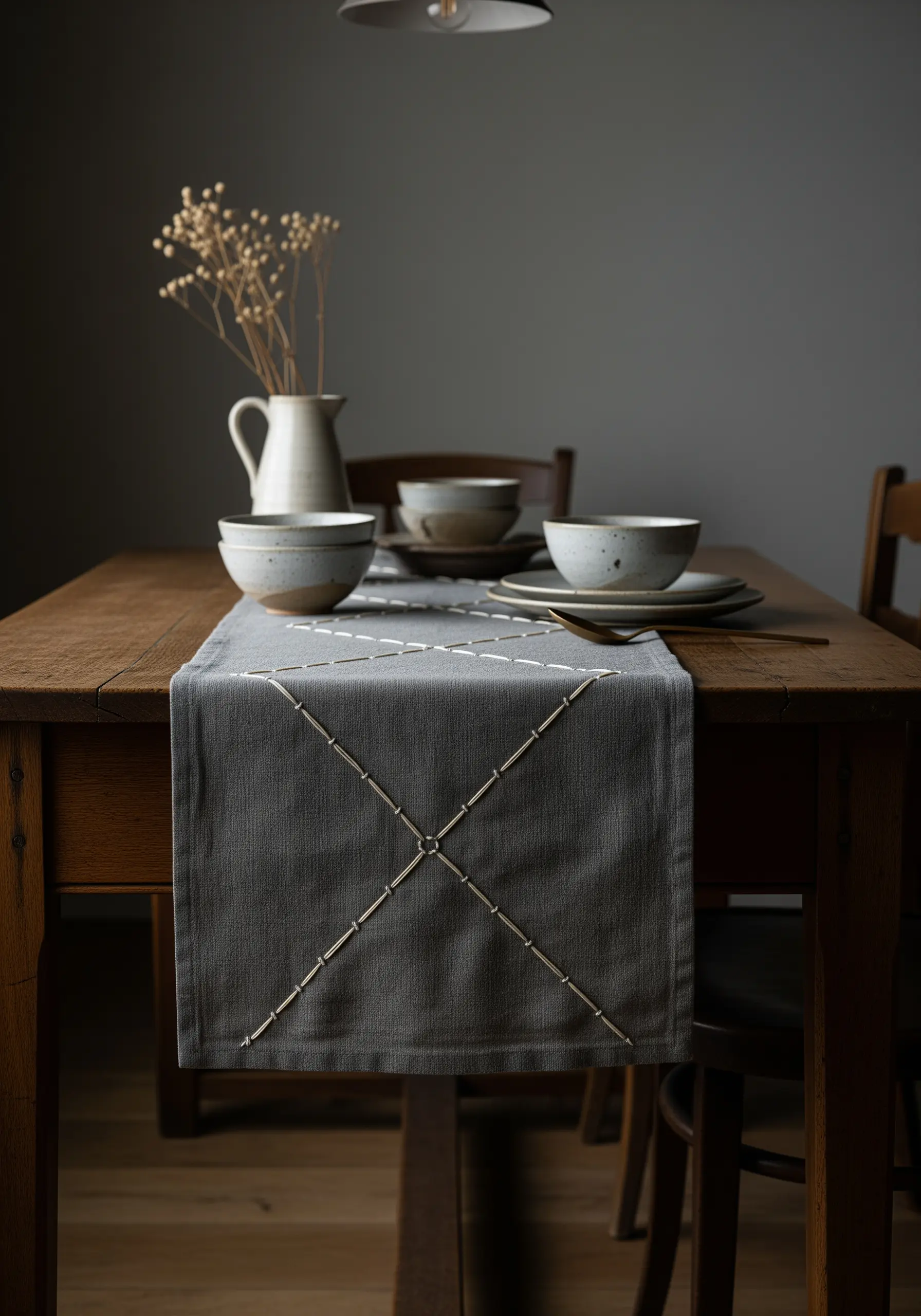
Create this dramatic, textured ‘X’ not with a single stitch, but by laying down a thick material like cotton cord or chunky yarn.
Then, use a single strand of contrasting floss to tack the cord down with small, evenly spaced couching stitches.
This method adds a sculptural, three-dimensional quality that feels both rustic and modern.
It’s an incredibly fast way to make a bold statement that invites touch.
6. Delicate Realism with Shaded Eucalyptus
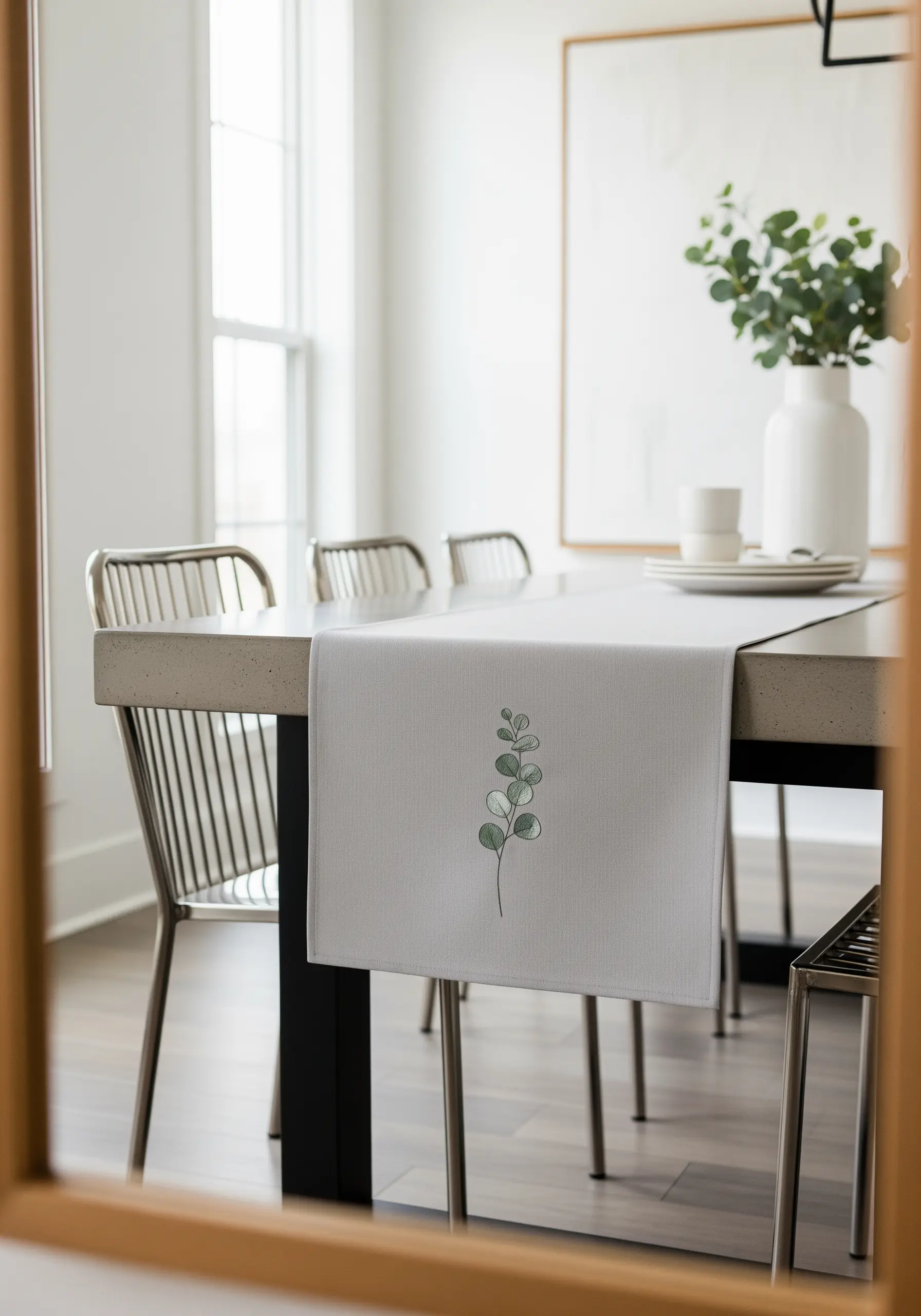
Give simple leaves a painterly quality by using a long-and-short stitch to blend two or three soft, gray-green tones.
Work from the outer edge of the leaf inward, slightly overlapping your stitches to create a smooth gradient.
Keep the stem a simple, fine backstitch to ensure the leaves remain the delicate focal point.
This technique elevates a simple sprig into a botanical study, adding a touch of serene nature to your table.
7. Graphic Landscapes with Directional Satin Stitch
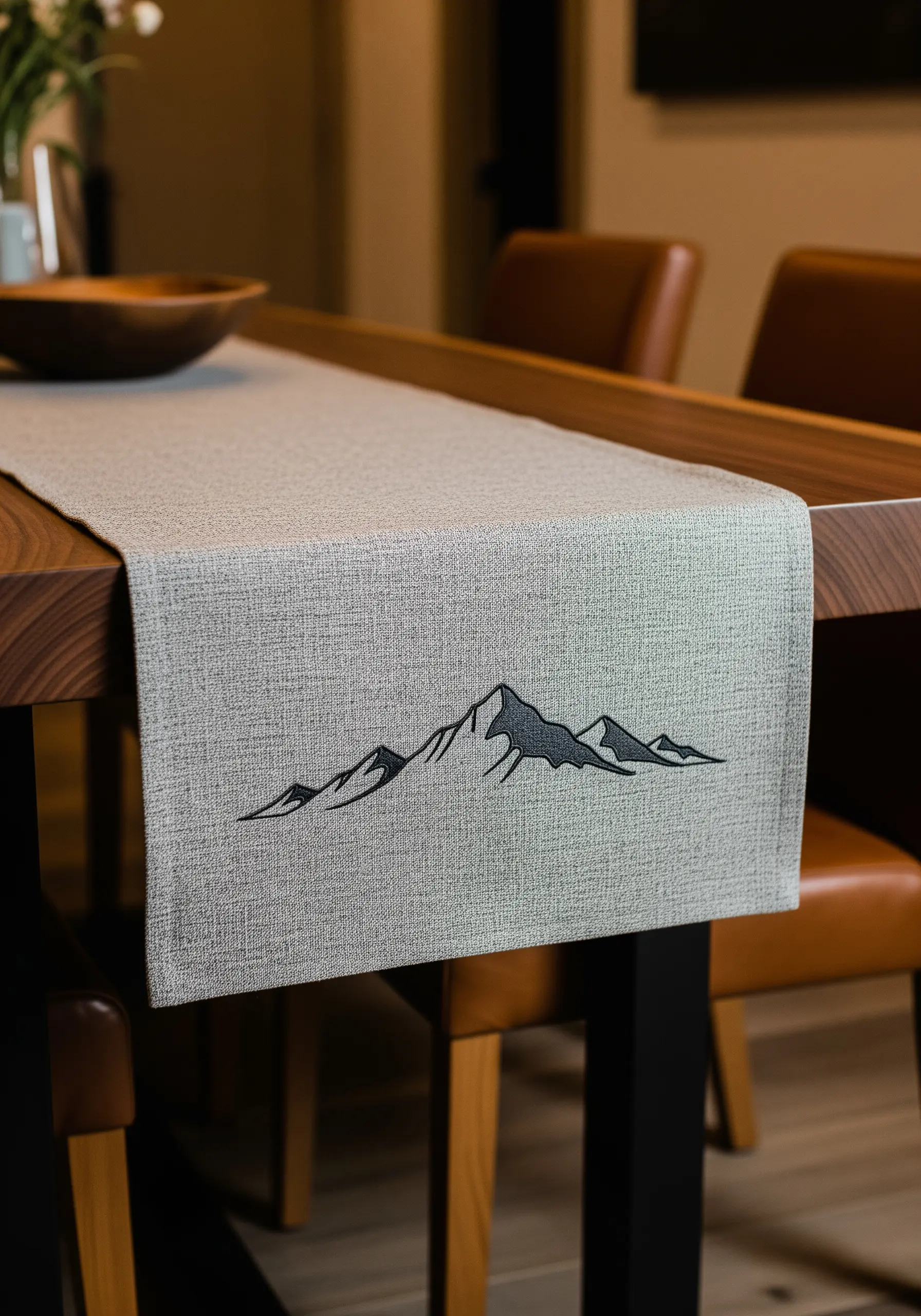
Transform a simple mountain silhouette into a graphic statement by using satin stitch to create areas of light and shadow.
Vary the direction of your stitches to follow the planes and slopes of the mountains—this small detail adds a powerful sense of form and dimension.
Use just two colors, black and a mid-gray, to keep the design minimal and impactful.
This is a perfect example of abstract thread landscapes for a modern home.
8. Celestial Elegance with Varied French Knots
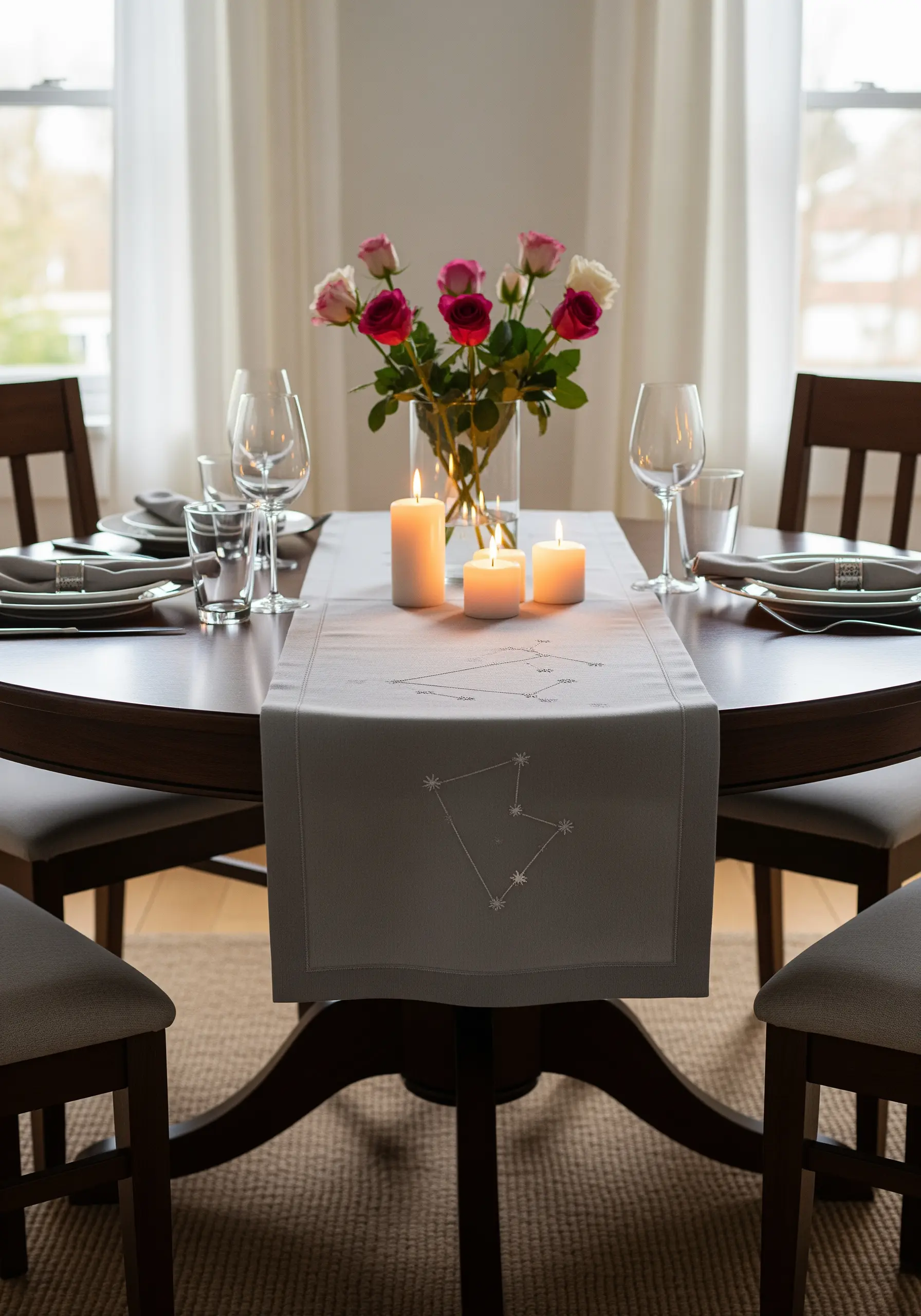
Stitch a delicate constellation using fine, single-strand backstitches for the connecting lines.
For the stars, use French knots, but vary their size by changing the number of times you wrap the thread around the needle—once for tiny stars, twice for brighter ones.
This subtle variation creates a realistic sense of depth against the dark gray ‘night sky’ fabric.
Use an off-white or silver metallic thread for a gentle shimmer under candlelight.
9. Minimalist Structure with Parallel Whipped Lines
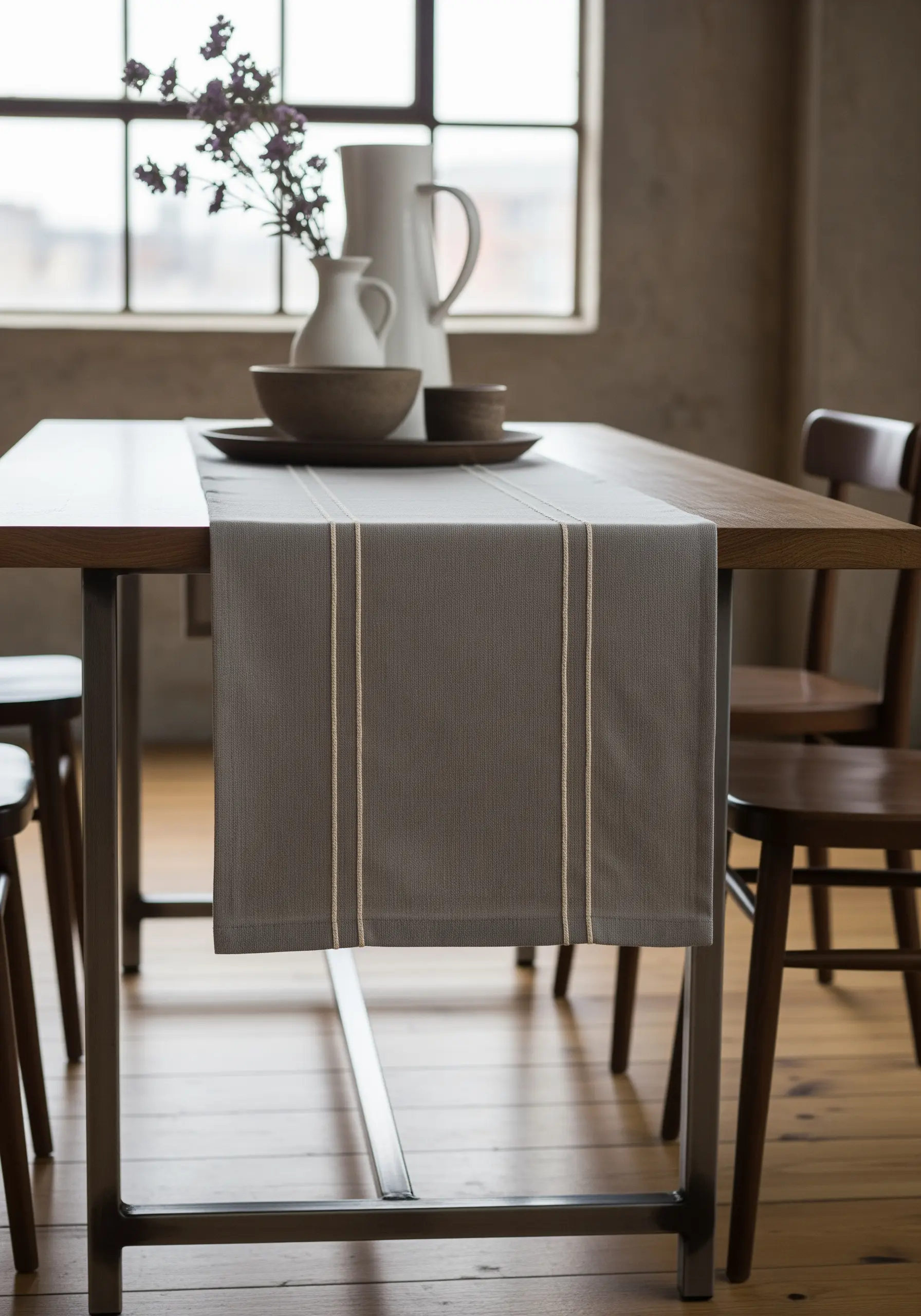
Achieve perfectly uniform, raised lines by first stitching two parallel running stitches.
Then, use the same color thread to whip the stitches, creating a smooth, cord-like effect that adds texture without adding visual clutter.
This technique is more refined than a simple backstitch and provides a clean, tailored look that complements minimalist decor.
Use an ivory thread on charcoal gray for a classic, high-contrast combination.
10. Airy Movement with Detached Chain Stitches
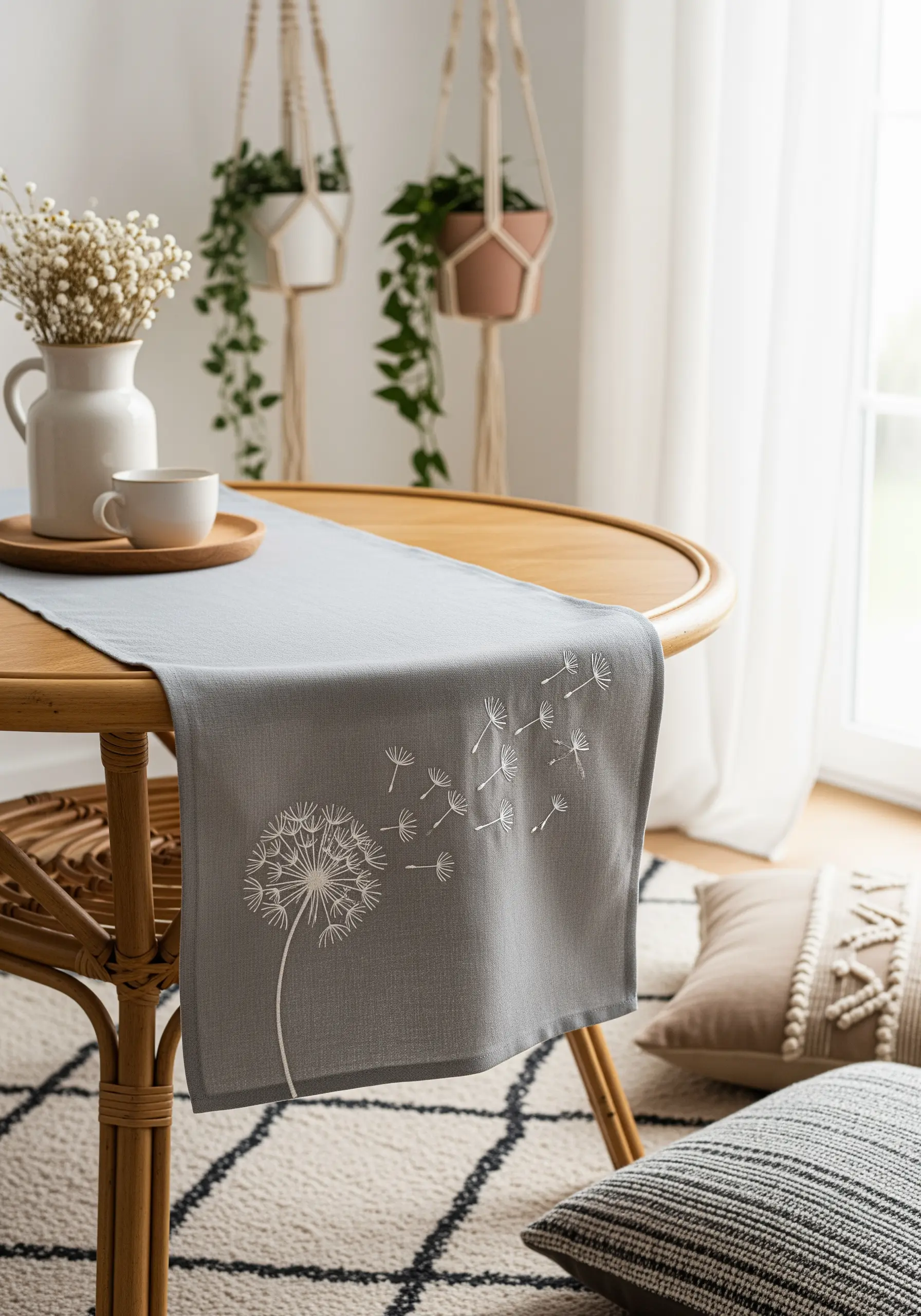
To capture the feeling of dandelion seeds floating on the breeze, use a combination of delicate stitches.
A fine backstitch creates the stems, while a single detached chain stitch (or lazy daisy) forms the parachute of each seed.
Add a tiny straight stitch at the base of the parachute to represent the seed itself.
This light-handed approach gives the entire composition a sense of weightlessness and movement.
11. Subtle Luster with a Metallic Thread Bee
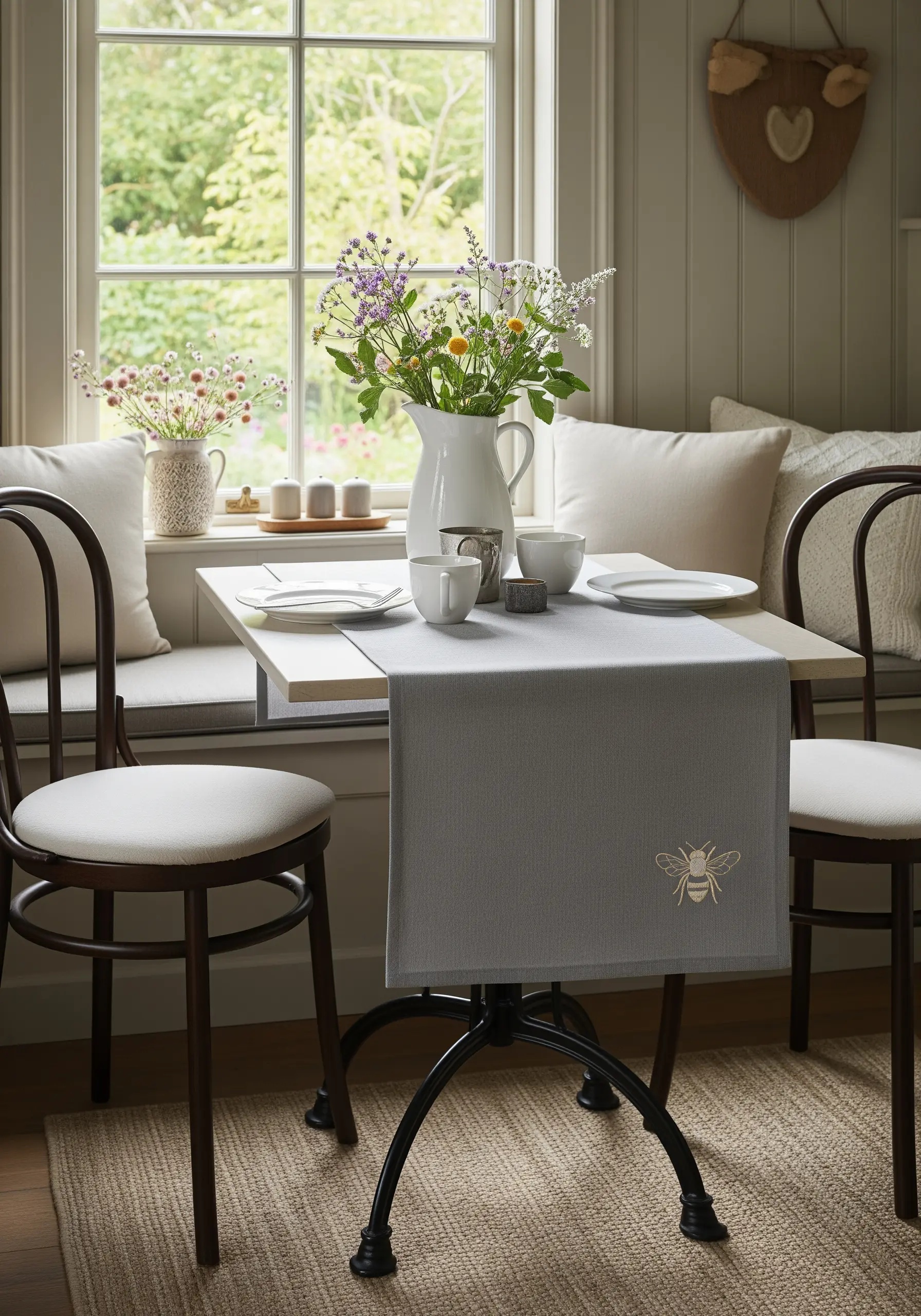
Add a touch of unexpected elegance by stitching a simple bee motif with pale gold metallic thread.
To make working with metallic thread easier, use shorter lengths to prevent tangling and a thread conditioner like beeswax.
Use a simple backstitch for the outline and wings. The metallic sheen against the matte gray linen creates a beautiful, subtle highlight that catches the light.
It’s a perfect example of how metallic thread wall art projects can inspire smaller decor pieces.
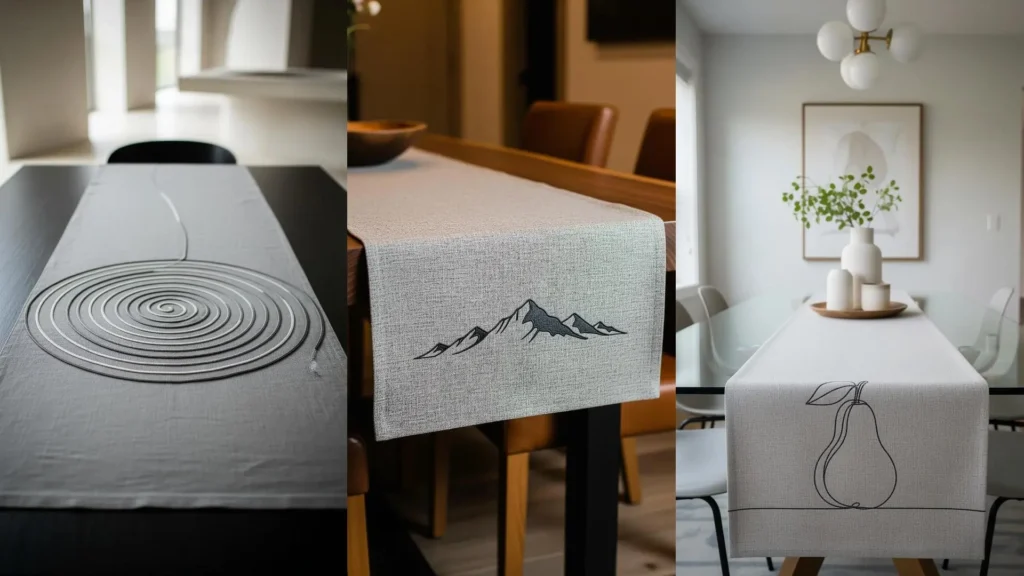
12. Continuous Line Art with a Heavy Chain Stitch
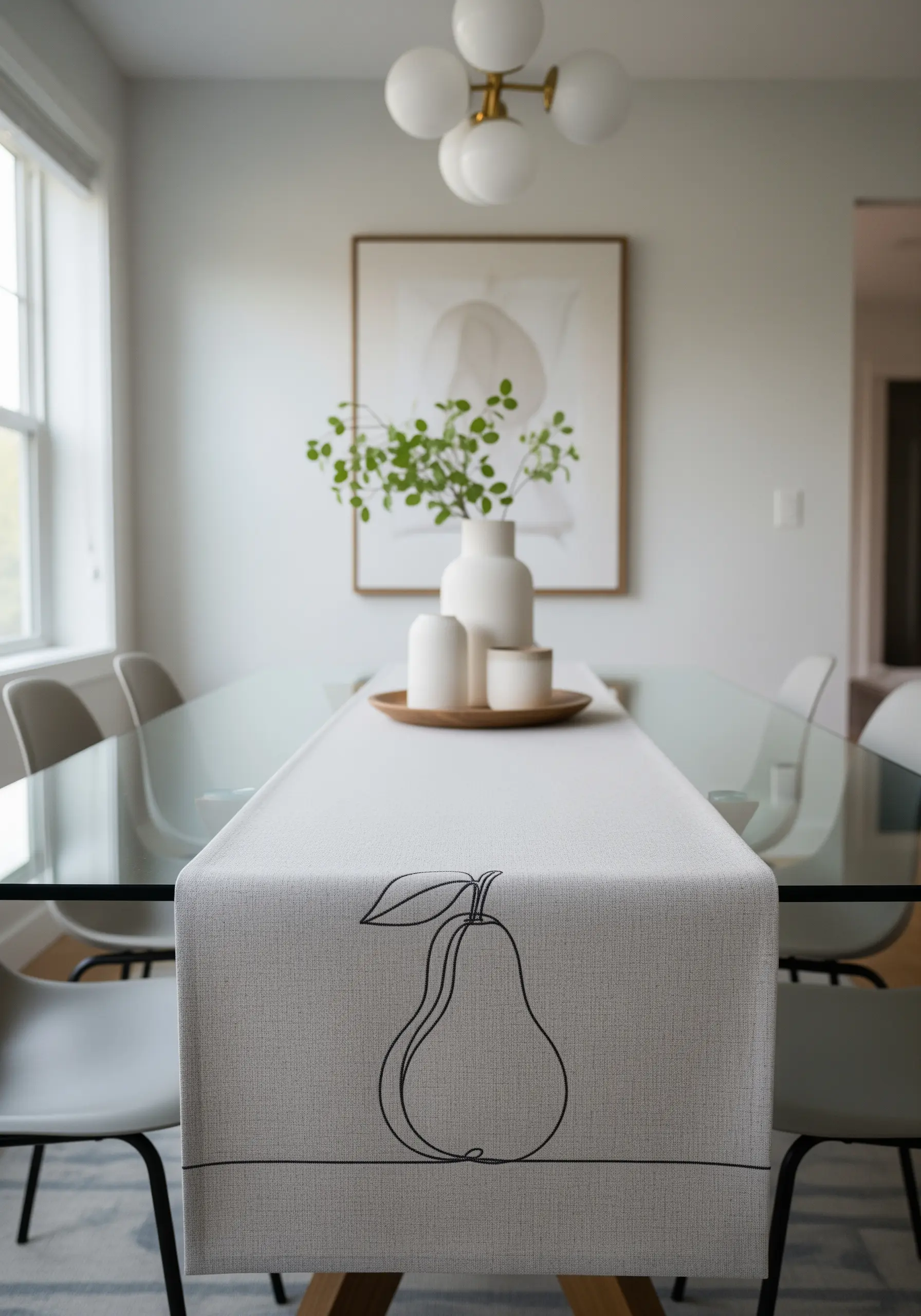
Capture the essence of minimalist line art by using a single, bold stitch for the entire design.
A heavy chain stitch, made with three or four strands of floss, creates a thick, graphic line that stands out beautifully.
The goal is to create the illusion of a single, unbroken stroke, making the simple pear motif feel both effortless and intentional.
This technique turns a basic sketch into a strong, modern statement.
13. Meditative Texture with Spiraling Couching
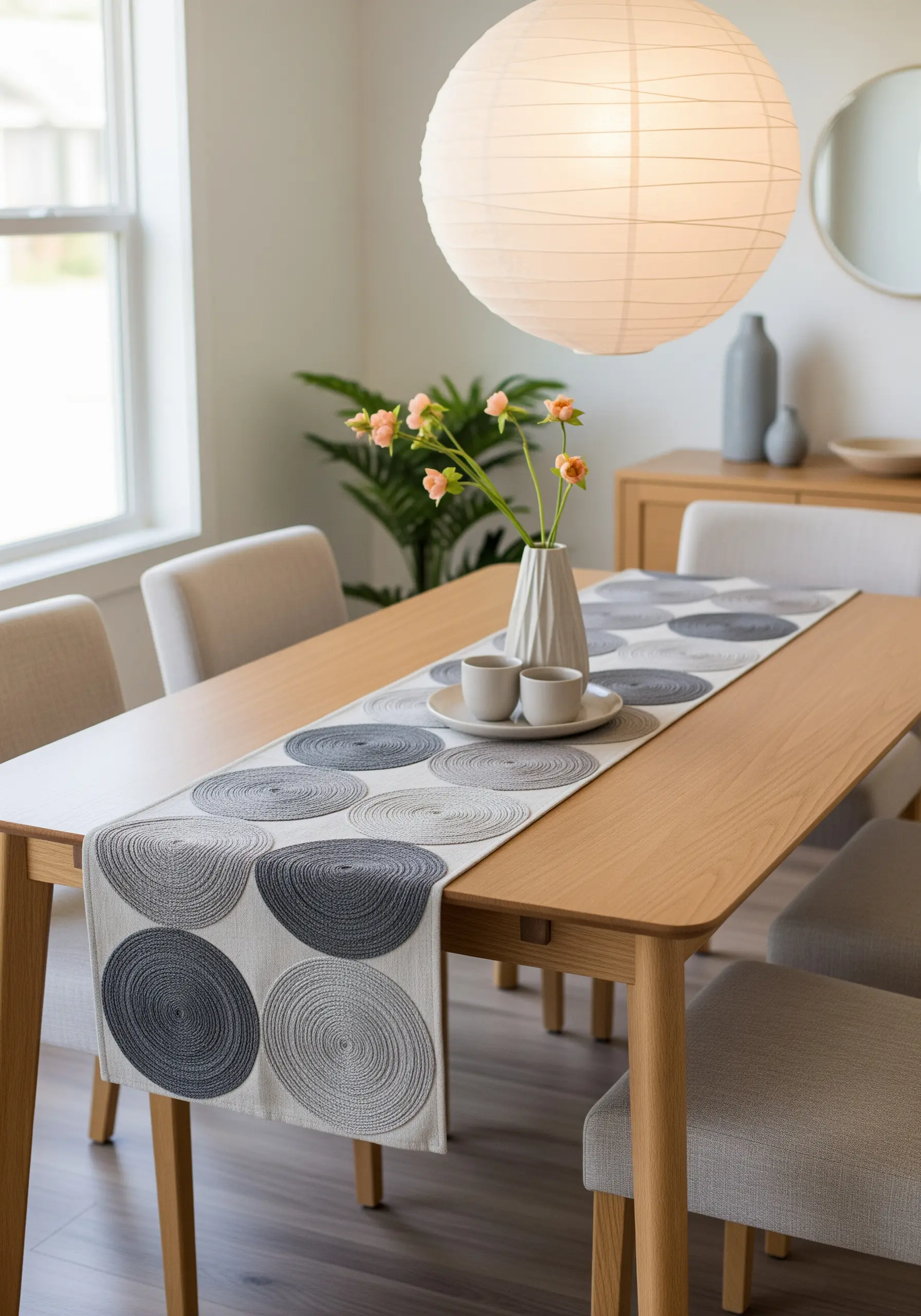
Create these captivating, textured circles not with thread, but with a thicker material like yarn or fine cotton rope.
Lay the yarn in a spiral and use a matching embroidery floss to tack it down with tiny, evenly spaced couching stitches.
This adds incredible dimension and a tactile quality to the runner, turning a simple geometric pattern into a sculptural piece.
It’s a fast, high-impact technique perfect for modern thread mandala ideas.
14. Refined Edging with a Tonal Herringbone Border
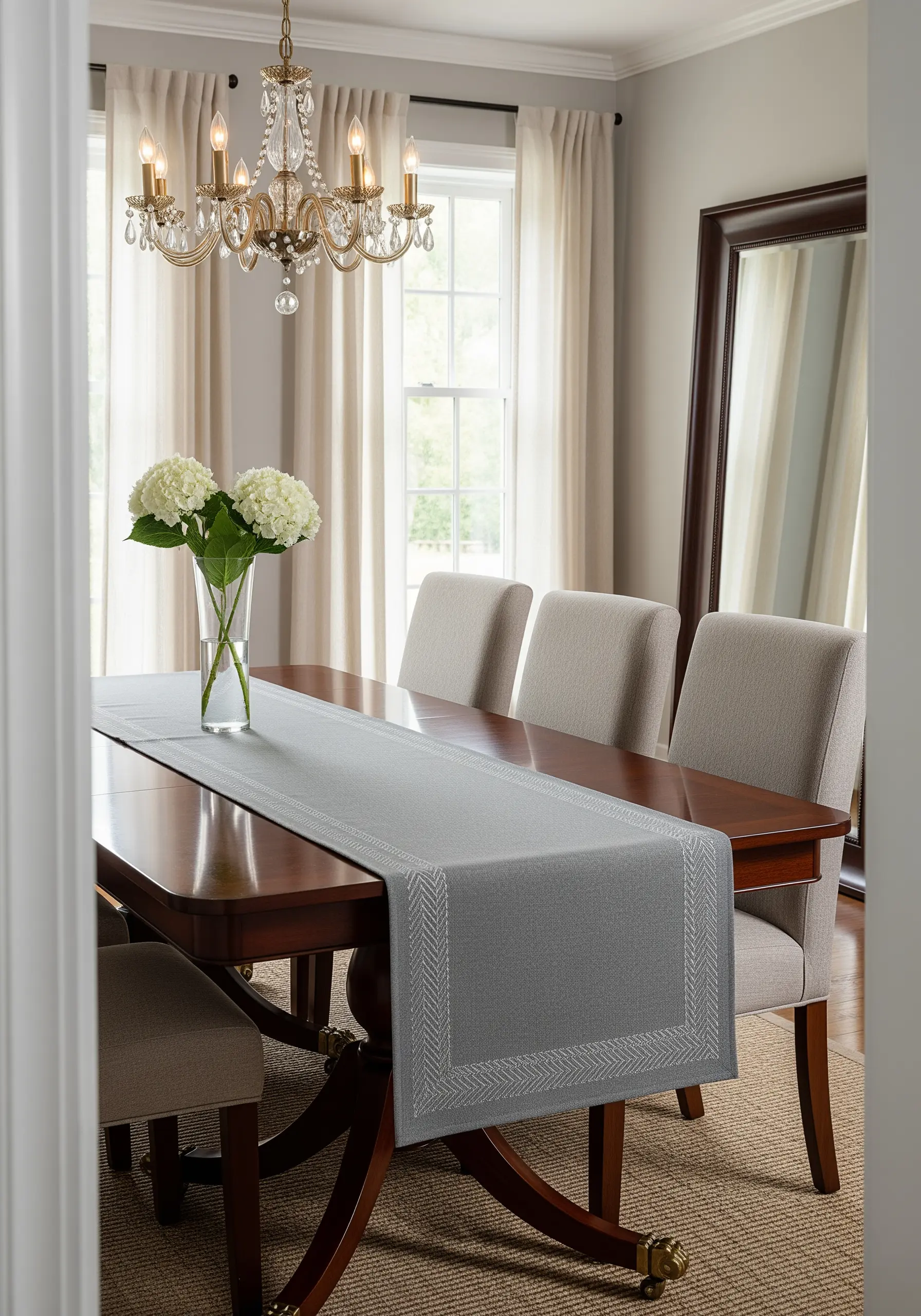
For a subtle and sophisticated frame, use a thread that is only one shade lighter than your gray fabric.
The herringbone stitch creates a beautiful, plaited texture that adds a sense of classic craftsmanship without being overly decorative.
This tone-on-tone approach gives the runner a polished, high-end feel, adding texture that is discovered upon closer look rather than announced from across the room.
15. Rhythmic Pattern with a Modern Sashiko Grid
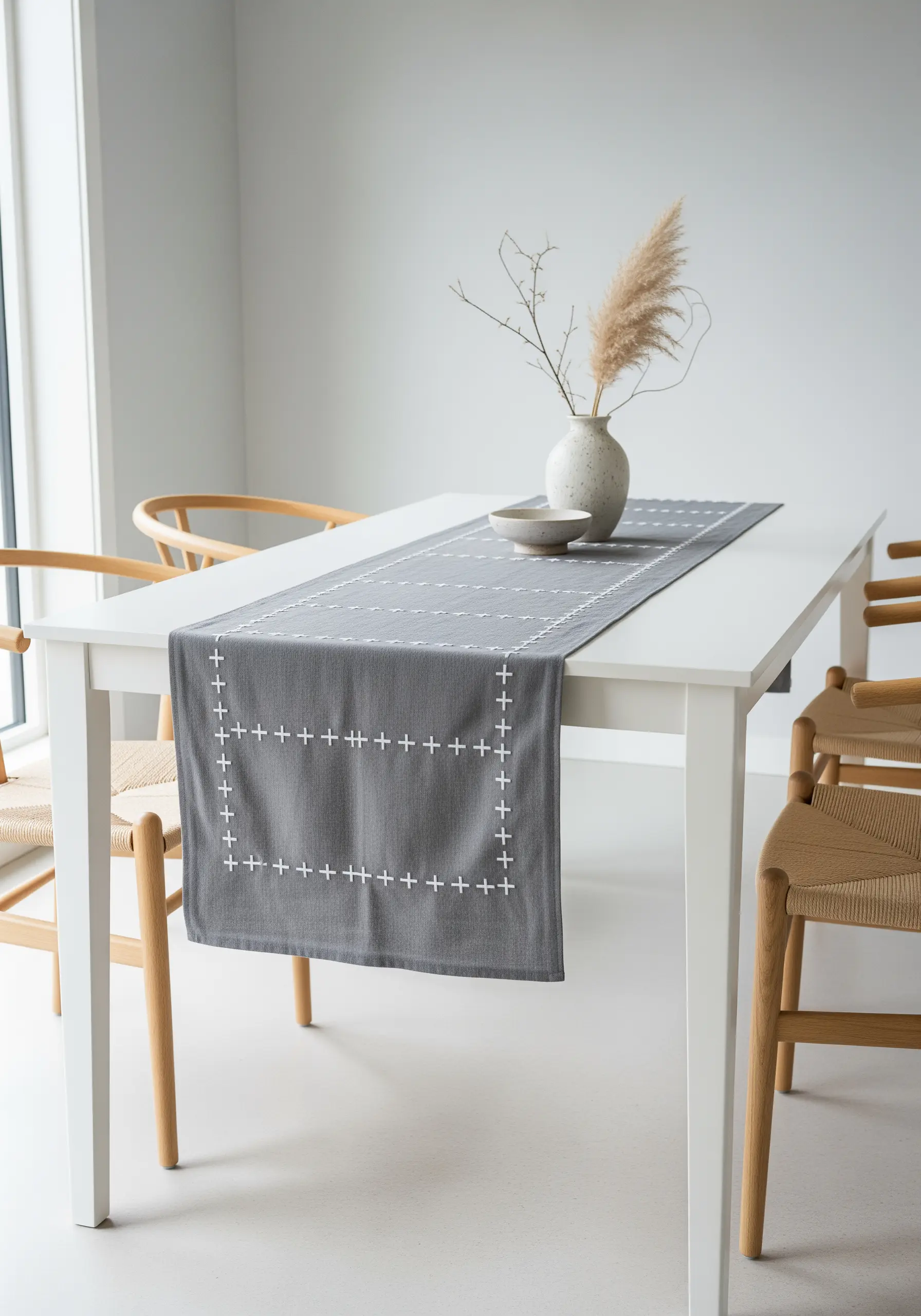
Embrace the calm of Japanese Sashiko stitching by creating a border of simple plus-sign motifs.
Use a thicker, matte thread like perle cotton in a bright white for a clean, graphic contrast against the dark gray fabric.
The key to this design’s power is precision: focus on making each straight stitch the same length and keeping the spacing perfectly even.
The result is a design that feels both meditative and modern.
16. Golden Ginkgo with a Glimmering Split Stitch
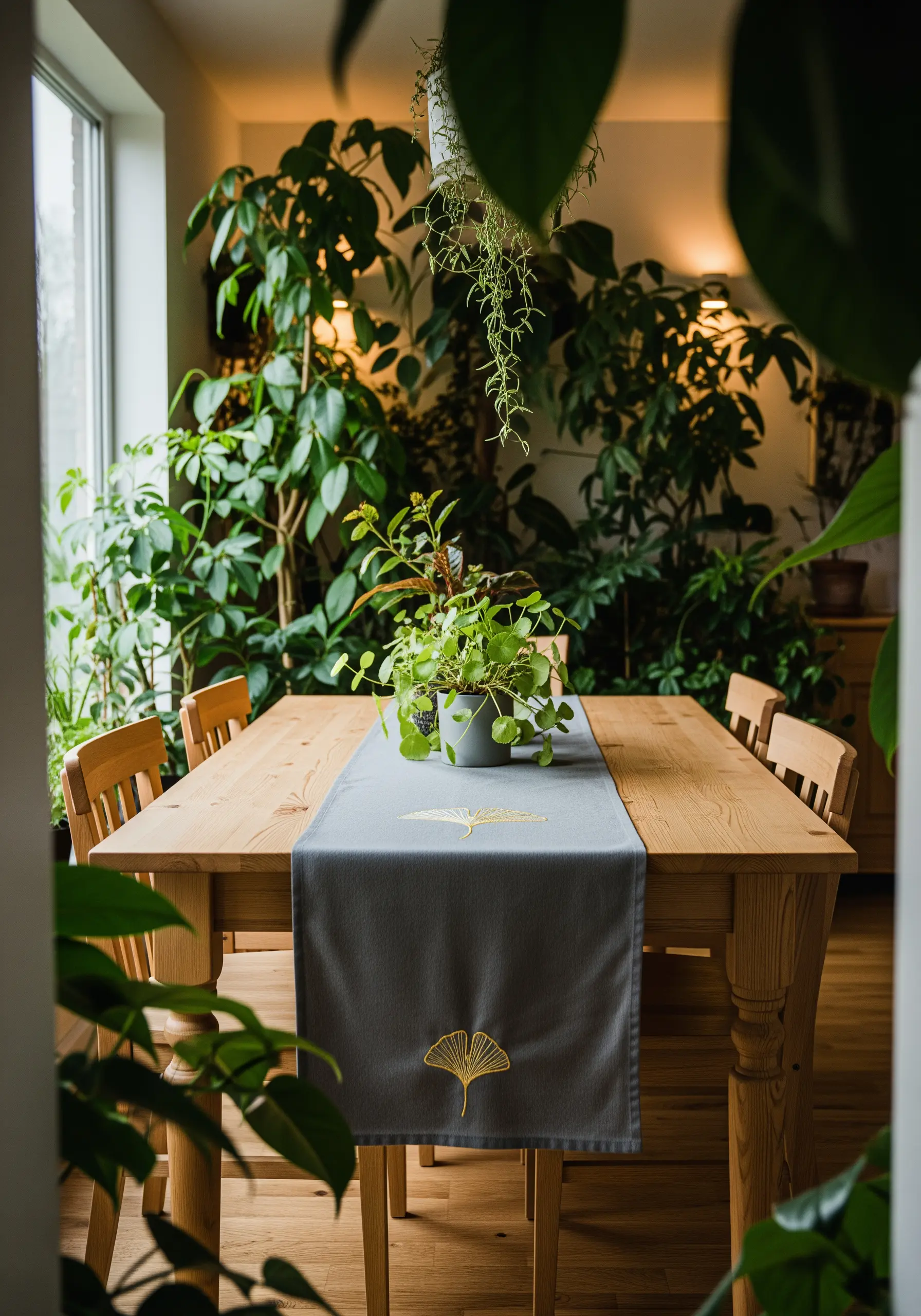
To achieve the sharp, clean lines of a ginkgo leaf, a split stitch is the perfect choice.
When worked with a single strand of gold metallic thread, it creates a solid, shimmering line that looks more like fine wire than thread.
This technique ensures your delicate outlines are crisp and defined, giving the motif an elegant, almost gilded appearance.
The contrast of warm gold on cool gray is sophisticated and striking.
17. Geometric Dimension with Felt Appliqué
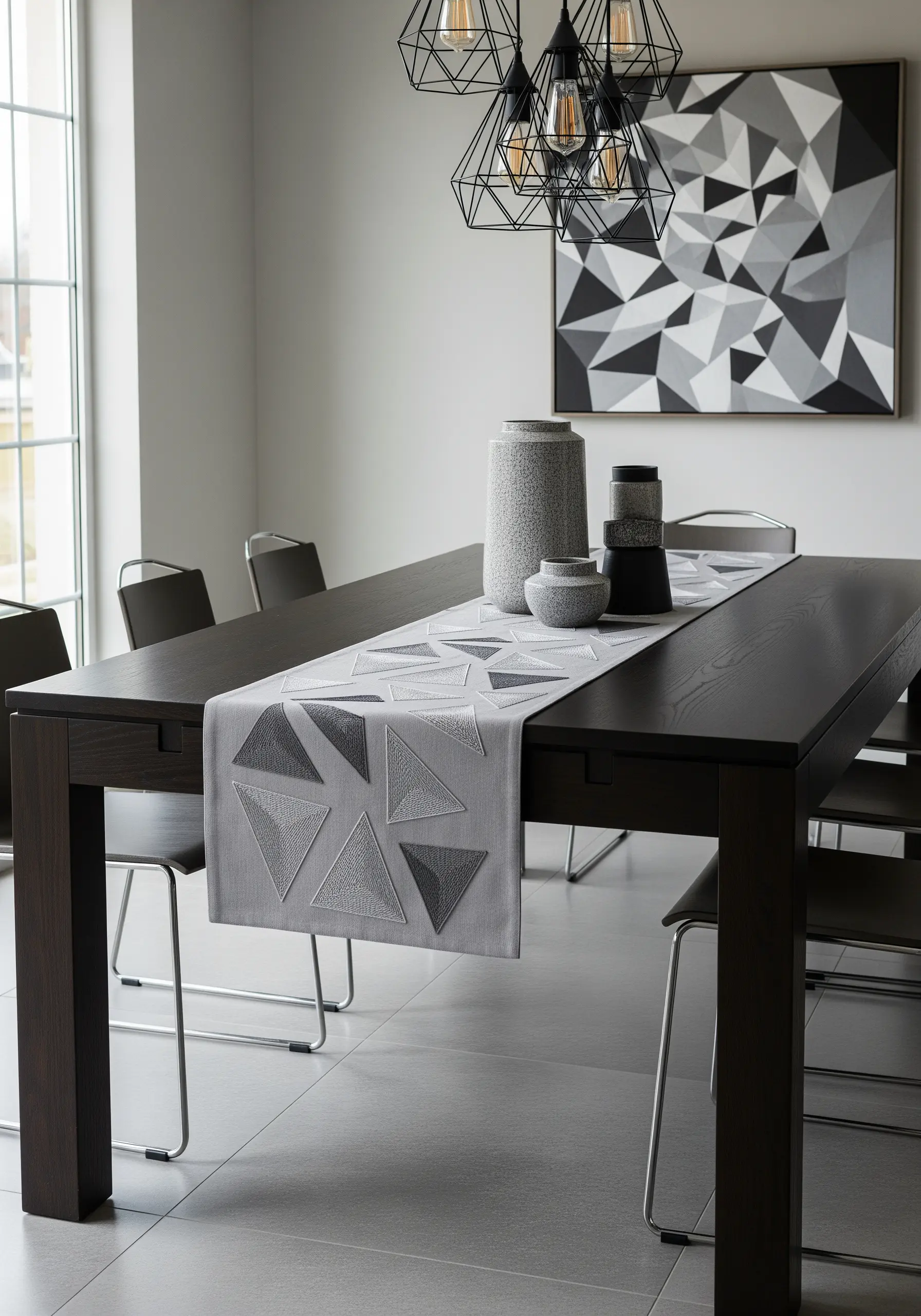
Create a bold, graphic design by combining felt appliqué with simple embroidery.
Cut triangles from felt in several shades of gray and arrange them on your runner. Secure them with a fusible bonding web before stitching.
Then, outline each shape with a clean, tight blanket stitch using a contrasting white thread. This adds dimension and texture, making the geometric forms pop.
18. Graceful Tendrils with a Variegated Stem Stitch
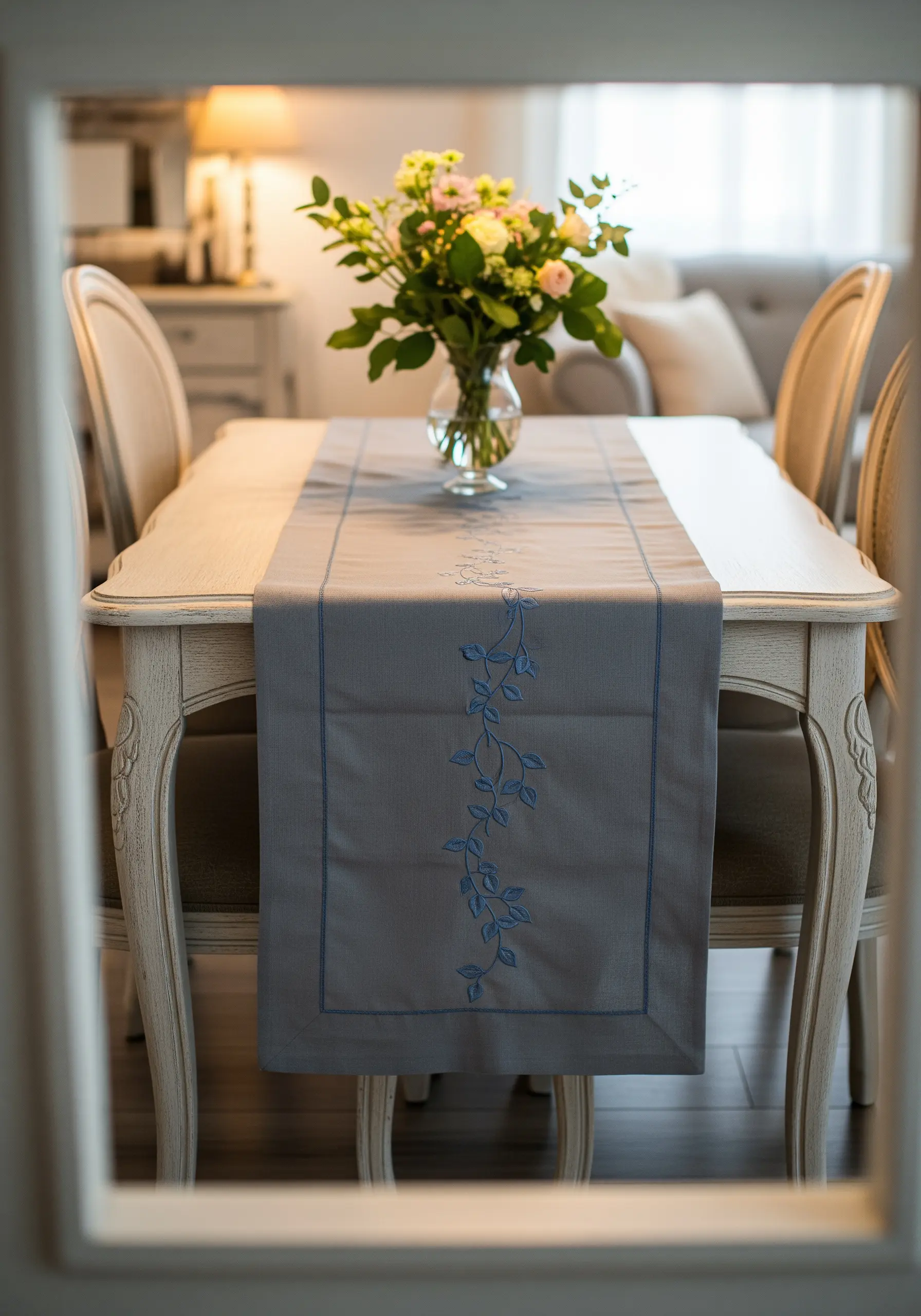
Let the thread do the work for you by choosing a variegated floss that shifts between two shades of gray-blue.
Using a simple stem stitch, the natural color changes in the thread will create subtle highlights and shadows along the vine.
This gives the design a dynamic, hand-painted quality without the complexity of changing threads, adding effortless depth to the graceful curves.
19. Lifelike Texture with Turkey Work Cattails
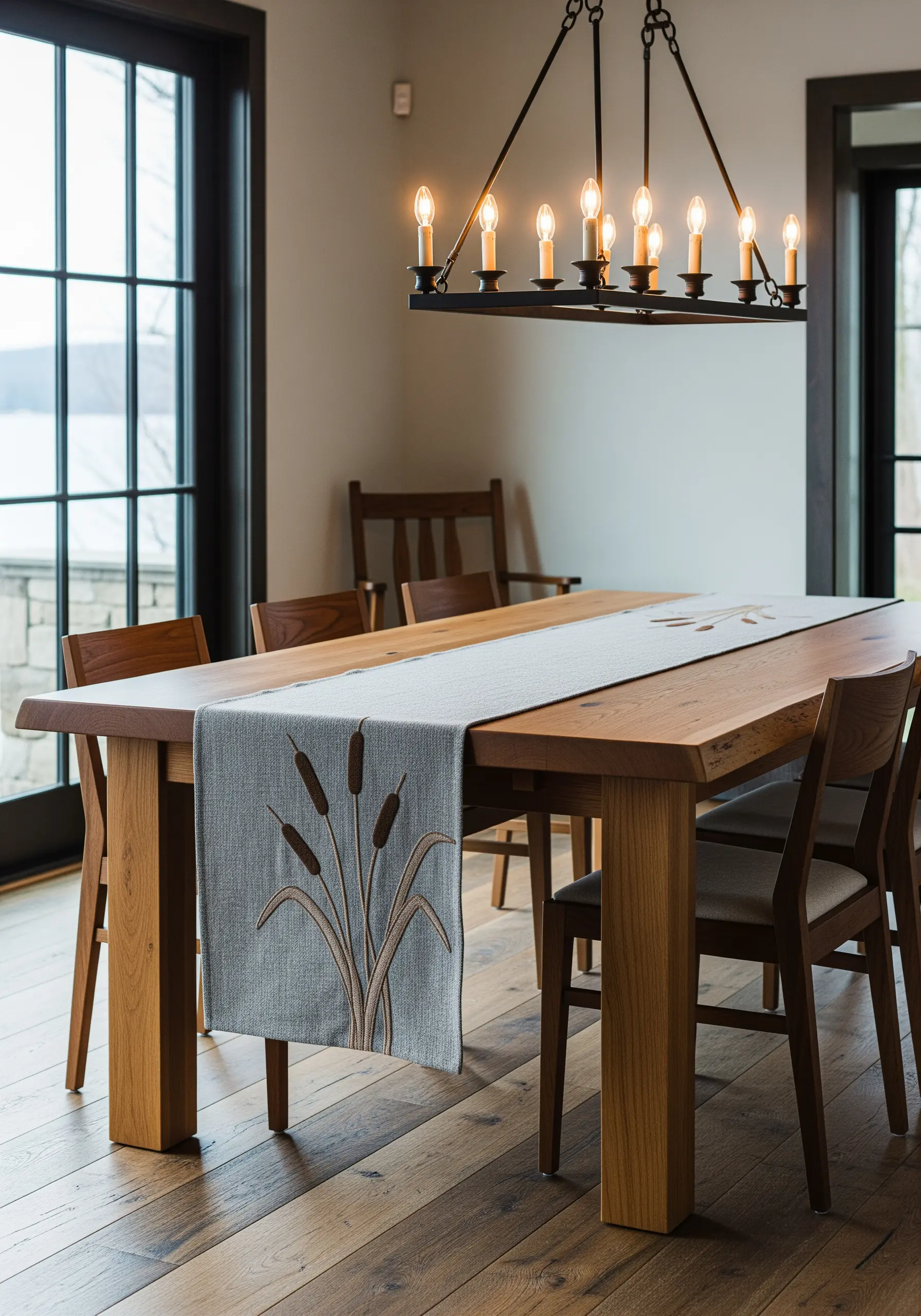
To replicate the plush, velvety texture of cattails, use the Turkey work stitch (also known as the Ghiordes knot).
Create loops with a soft brown yarn and then carefully trim them to create a dense, fuzzy pile.
Contrast this 3D texture by stitching the stems and leaves in a flat, smooth satin stitch.
This mix of textures makes the design incredibly lifelike and engaging, turning a simple runner into a piece of nature texture embroidery.
20. Playful Bursts with Woven Star Stitches
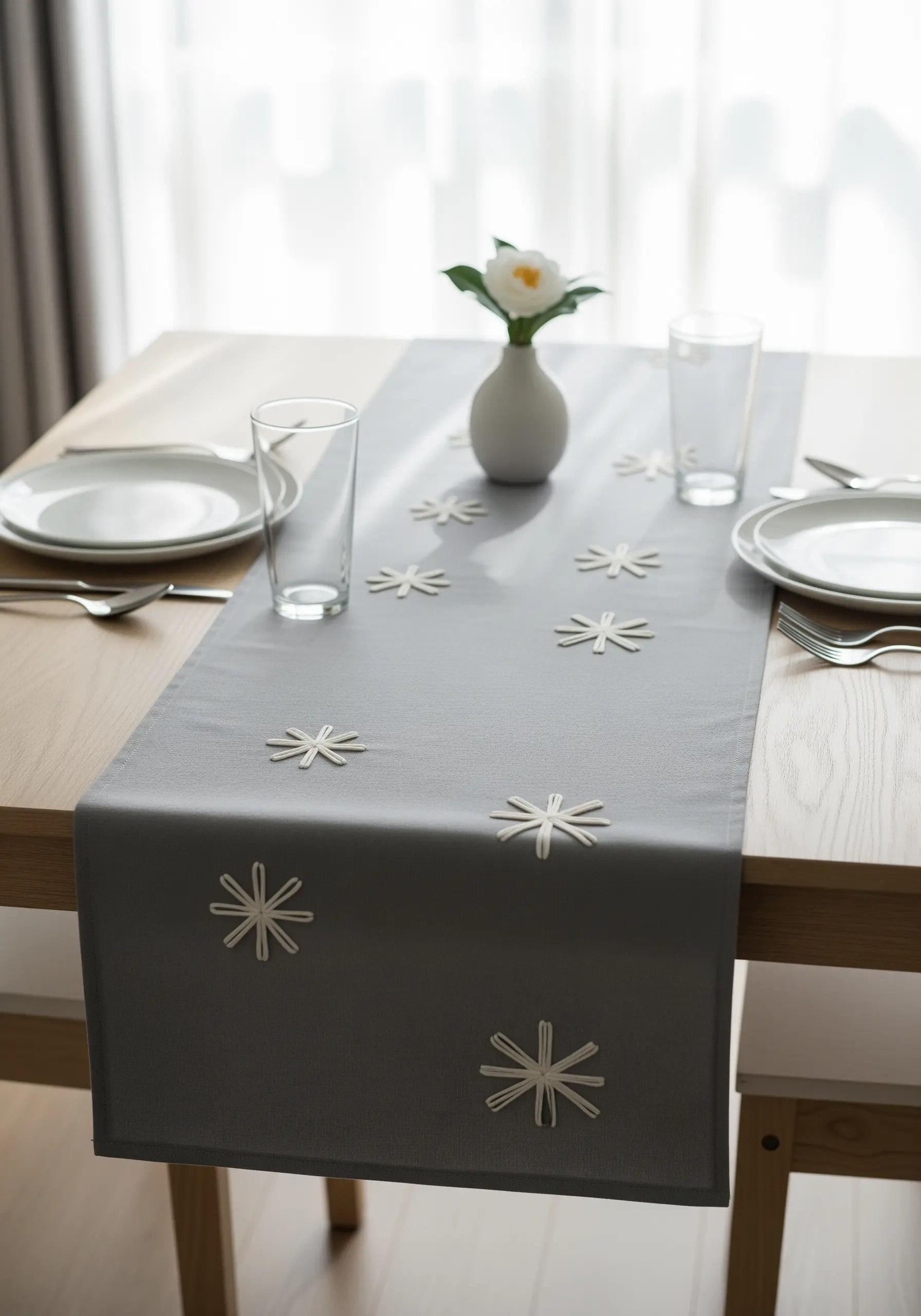
Elevate simple starbursts by using a woven spider web stitch instead of basic straight stitches.
First, create a foundation of an odd number of straight stitches radiating from a central point. Then, weave your thread over and under these spokes to create a raised, circular star.
Scatter them asymmetrically in an off-white thread for a joyful, modern pattern that feels spontaneous and light.
21. Delicate Framing with an Open Lace Stitch
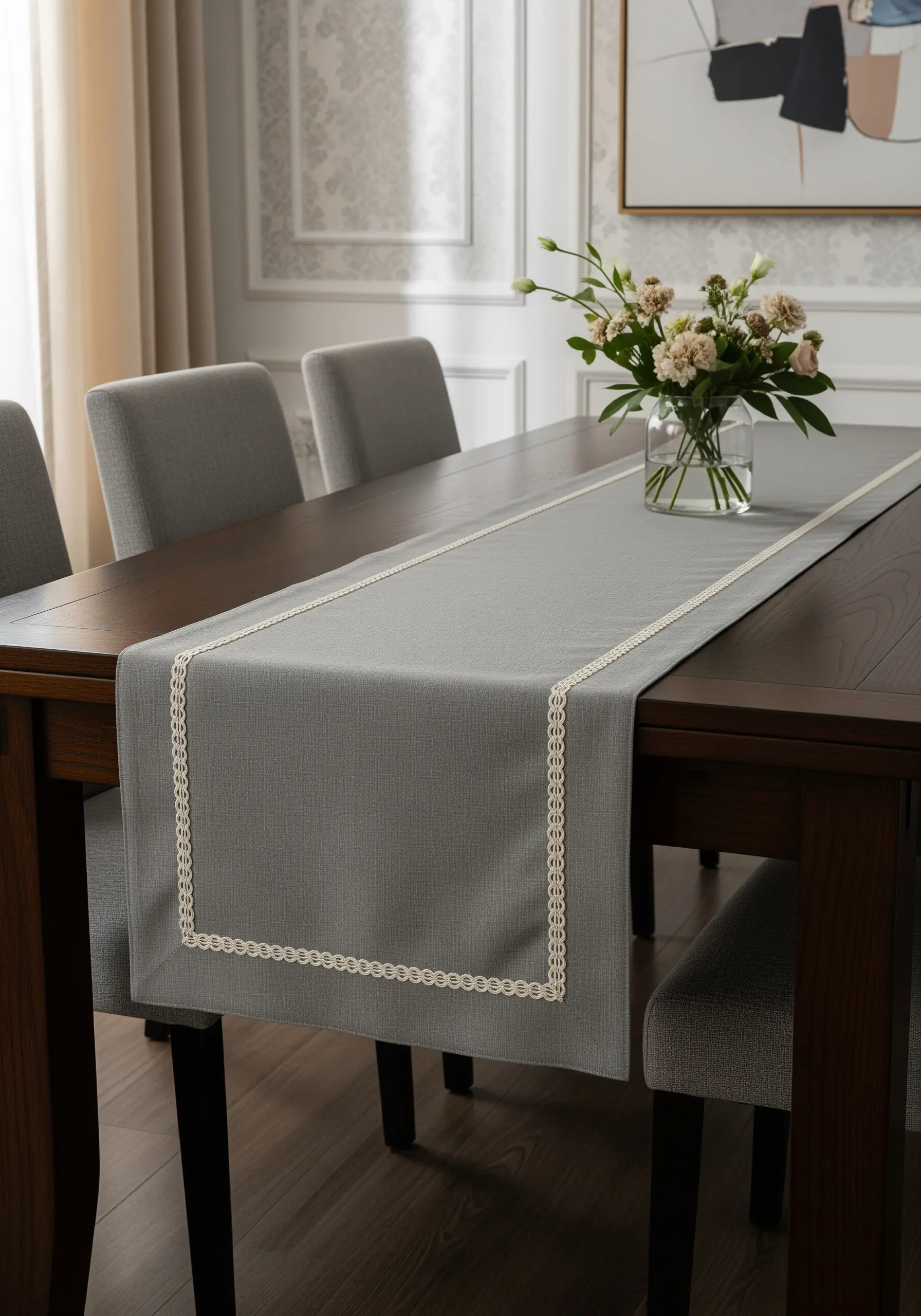
Create a border that feels light and airy by using an openwork stitch like the Cretan or feather stitch.
Instead of a solid line, these stitches create a pattern that resembles delicate lace or knotted netting.
Use a fine perle cotton in a creamy white to contrast gently with the gray fabric, adding a touch of vintage elegance to a modern runner.
22. Crisp Avian Silhouette with a Split Stitch
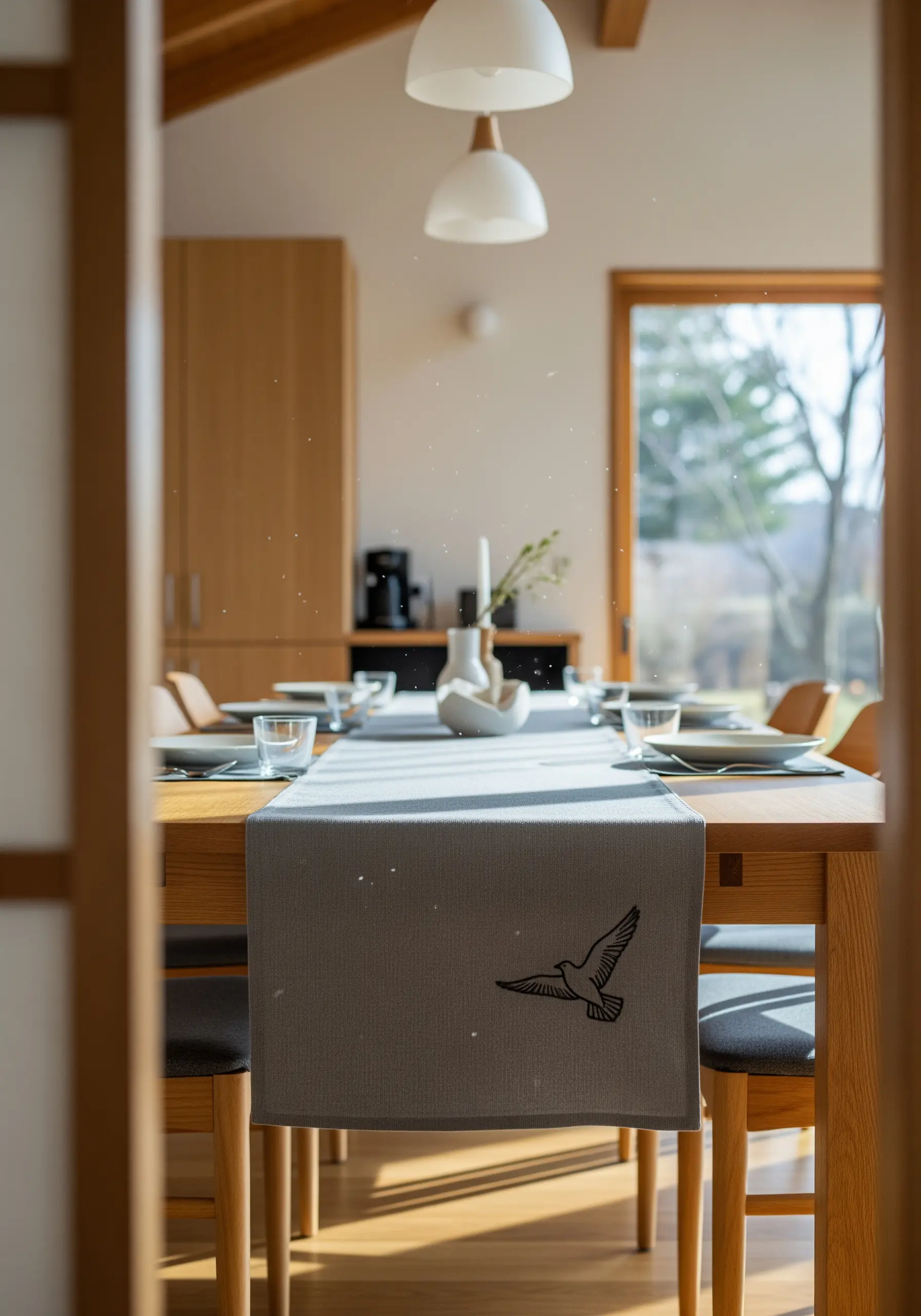
When your design relies on a clean, sharp outline, the split stitch is your most reliable tool.
By piercing the previous stitch, it creates a solid, chain-like line with no gaps, perfect for graphic motifs like this bird silhouette.
Use two strands of black floss for a defined line that stands out against the mid-tone gray, giving your embroidery a crisp, professional finish.
This technique is perfect for all kinds of bird & butterfly embroidery patterns.
23. Cascading Willow Leaves with Fishbone Stitch
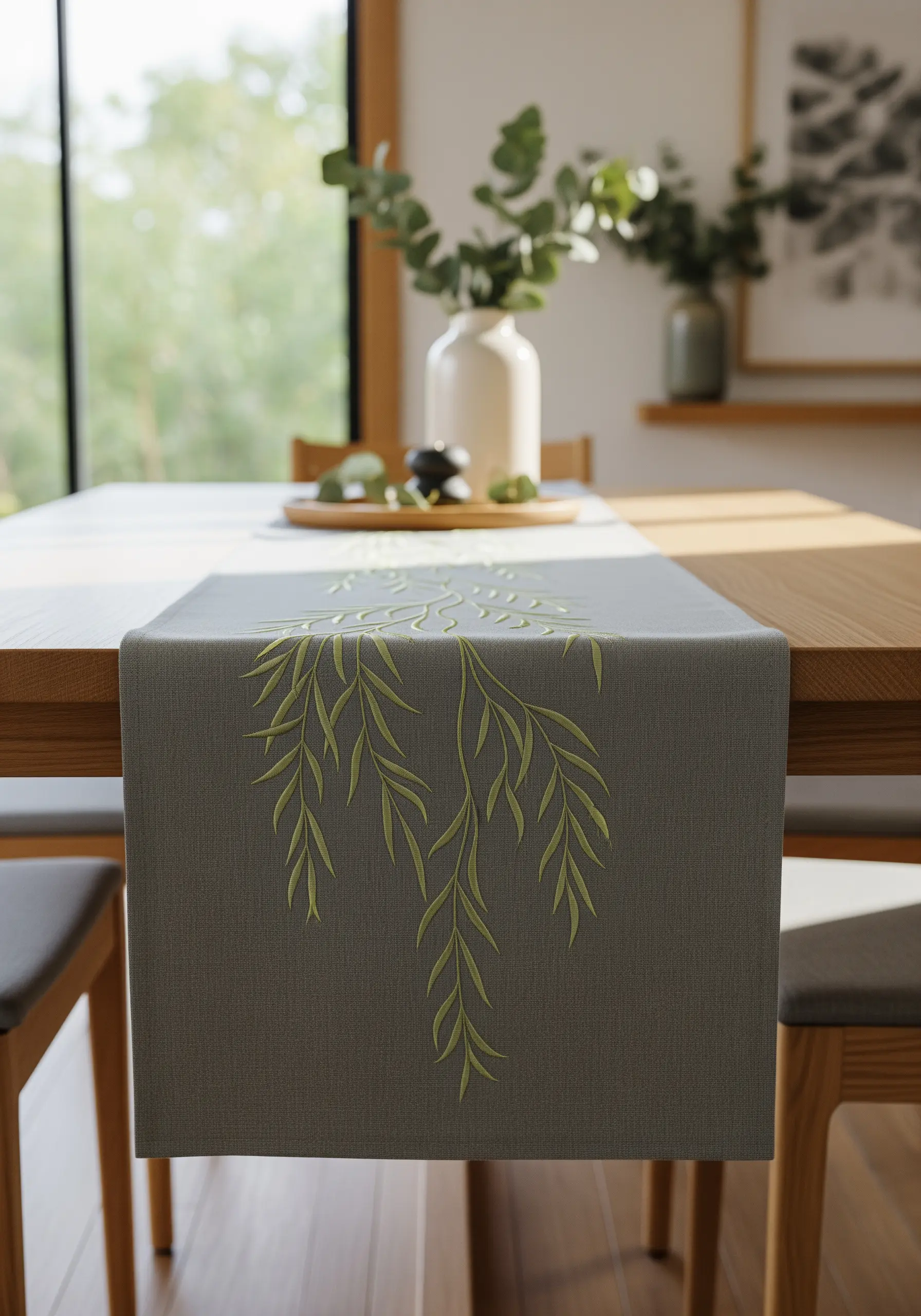
The long, slender shape of willow leaves is perfectly suited to the fishbone stitch.
This stitch creates a central spine while allowing the angled stitches to mimic the natural droop of the foliage.
A fresh, chartreuse-green thread provides a vibrant yet sophisticated pop of color against the stone-gray fabric, bringing a sense of life and gentle movement to the table.
24. Bold Chevrons with Padded Satin Stitch
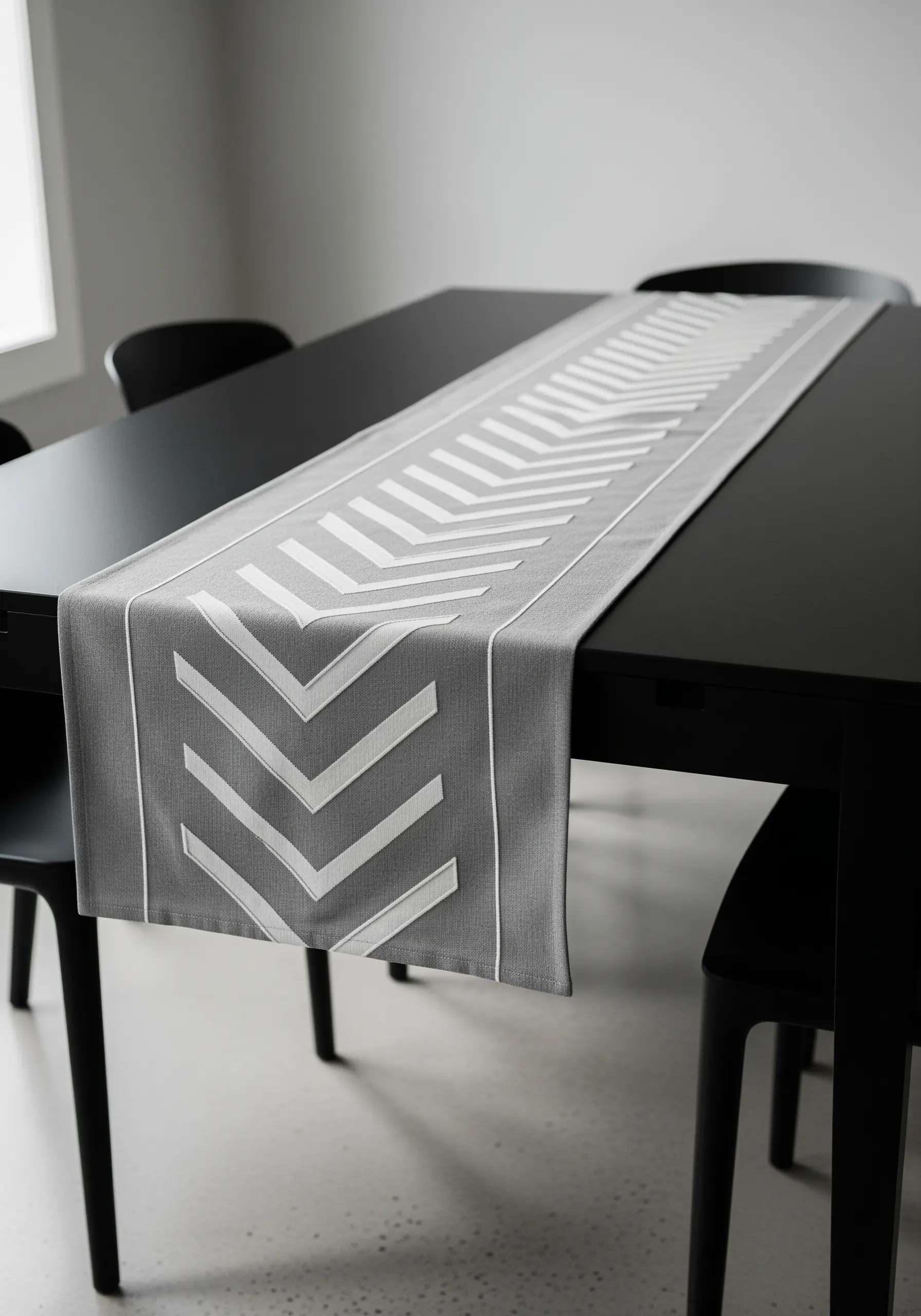
Make your geometric patterns truly stand out by using padded satin stitch.
First, fill the entire chevron shape with a base layer of small seed stitches. Then, cover this padding with your final satin stitches, worked in the opposite direction.
This technique raises the embroidery from the surface of the fabric, creating a satisfyingly plush, three-dimensional effect that adds weight and presence to the design.
25. Gentle Rain Texture with Tone-on-Tone Stitches
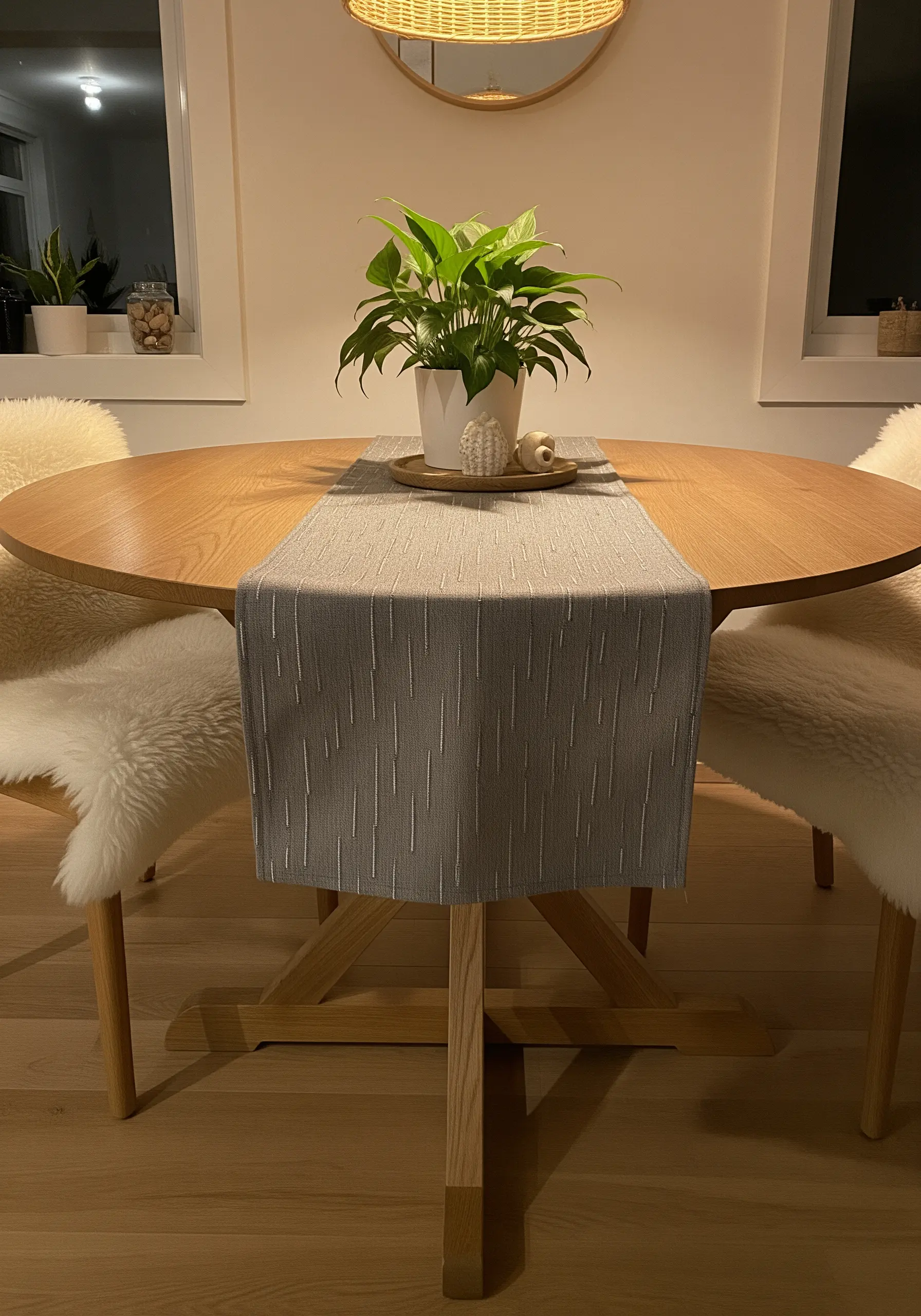
Create an incredibly subtle and sophisticated texture by using a thread that is the exact same color as your fabric.
Fill the ends of the runner with short, vertical straight stitches of varying lengths, arranged randomly like falling rain.
The effect is a pattern of light and shadow that you feel more than see, adding a layer of quiet interest without disturbing the calm.
This is one of the most elegant tone-on-tone embroidery techniques.
26. Interwoven Knotwork with a Raised Stem Stitch
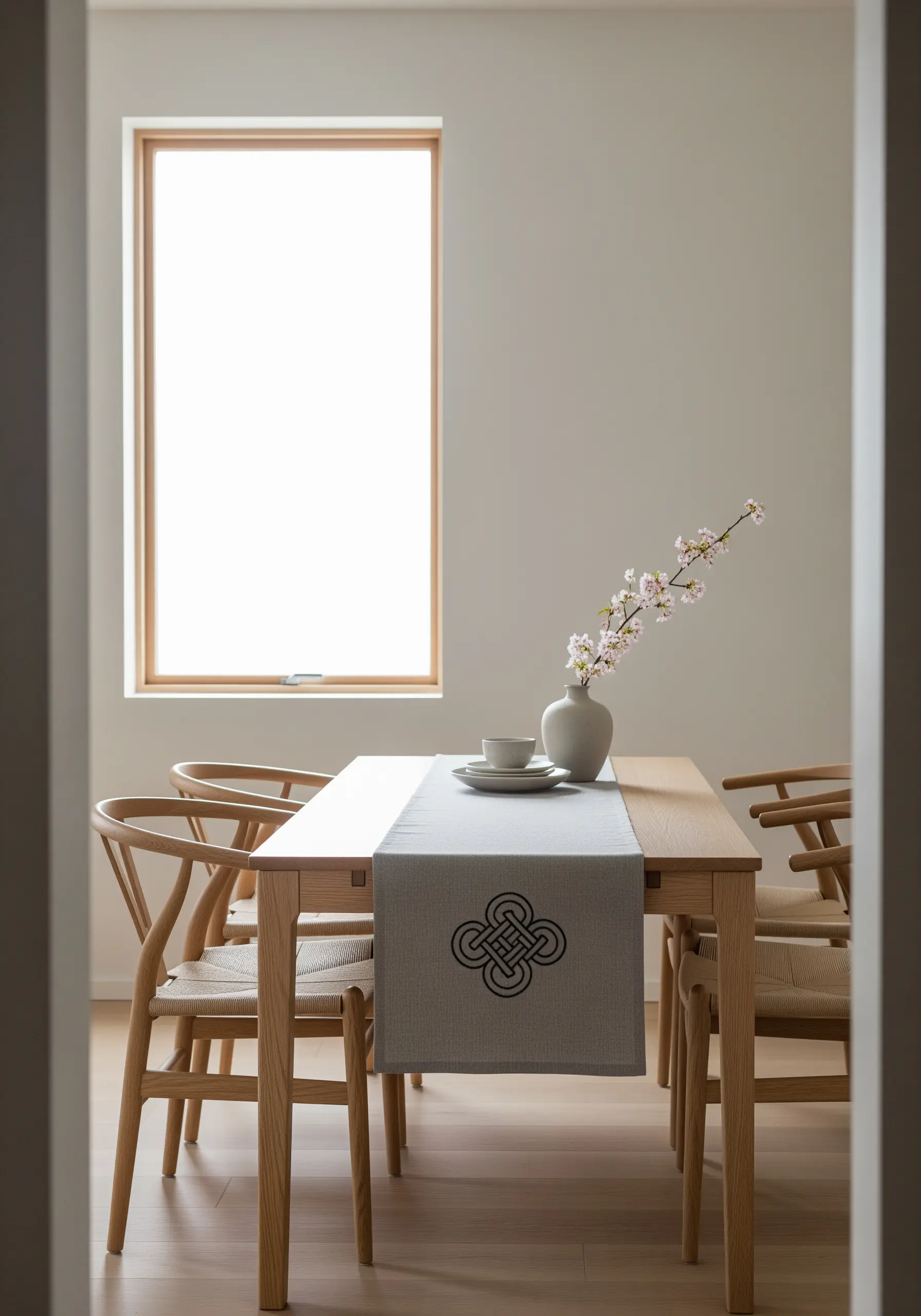
To give a Celtic knot or other interwoven design a cord-like, dimensional appearance, use a raised stem stitch.
First, lay down foundation lines with straight stitches, then work your stem stitch over them without piercing the fabric.
This technique lifts the embroidery off the surface, making the lines appear to truly weave over and under one another and giving the design a sculptural quality.
27. Echoing Curves with Parallel Contour Stitching
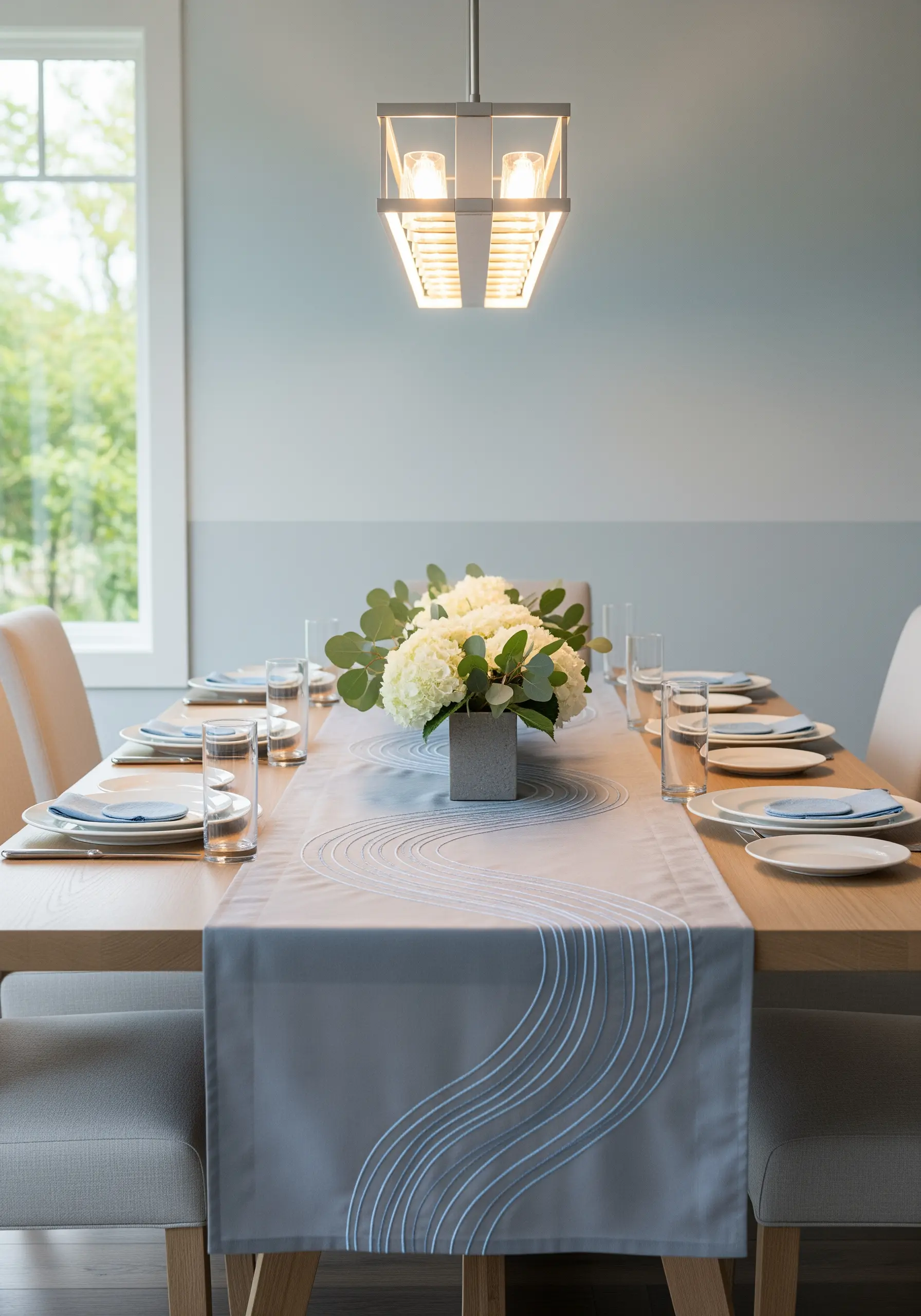
Create a sense of gentle, expansive movement by stitching a series of parallel, flowing curves.
Use a fine thread in a light, contrasting color, like ice blue or silver, against the gray fabric.
A simple stem stitch or backstitch will provide the clean, continuous lines needed. The repetition of the curves creates a hypnotic, calming effect, like ripples in water or isobars on a weather map.
28. Art Deco Glamour with a Metallic Sunburst
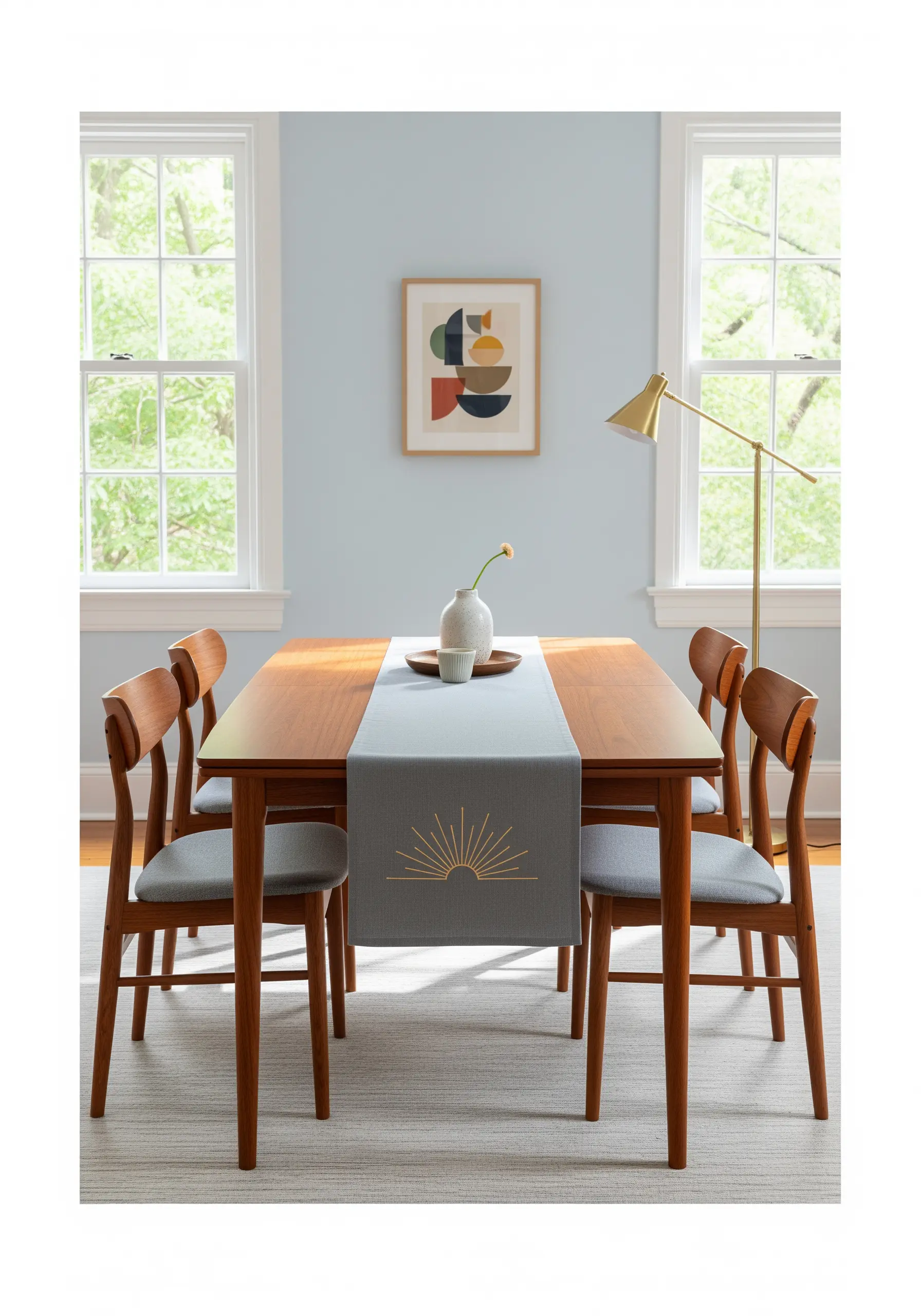
Capture the optimism of Art Deco design with a simple, stylized sunburst motif.
Use straight stitches for the rays, alternating between an off-white matte cotton and a pale gold metallic thread.
This combination adds just enough shimmer to feel special without being flashy.
The clean lines and touch of metallic give the runner a sophisticated, vintage-modern feel, perfect for elevating everyday dining.
29. Classic Architecture with a Greek Key Border
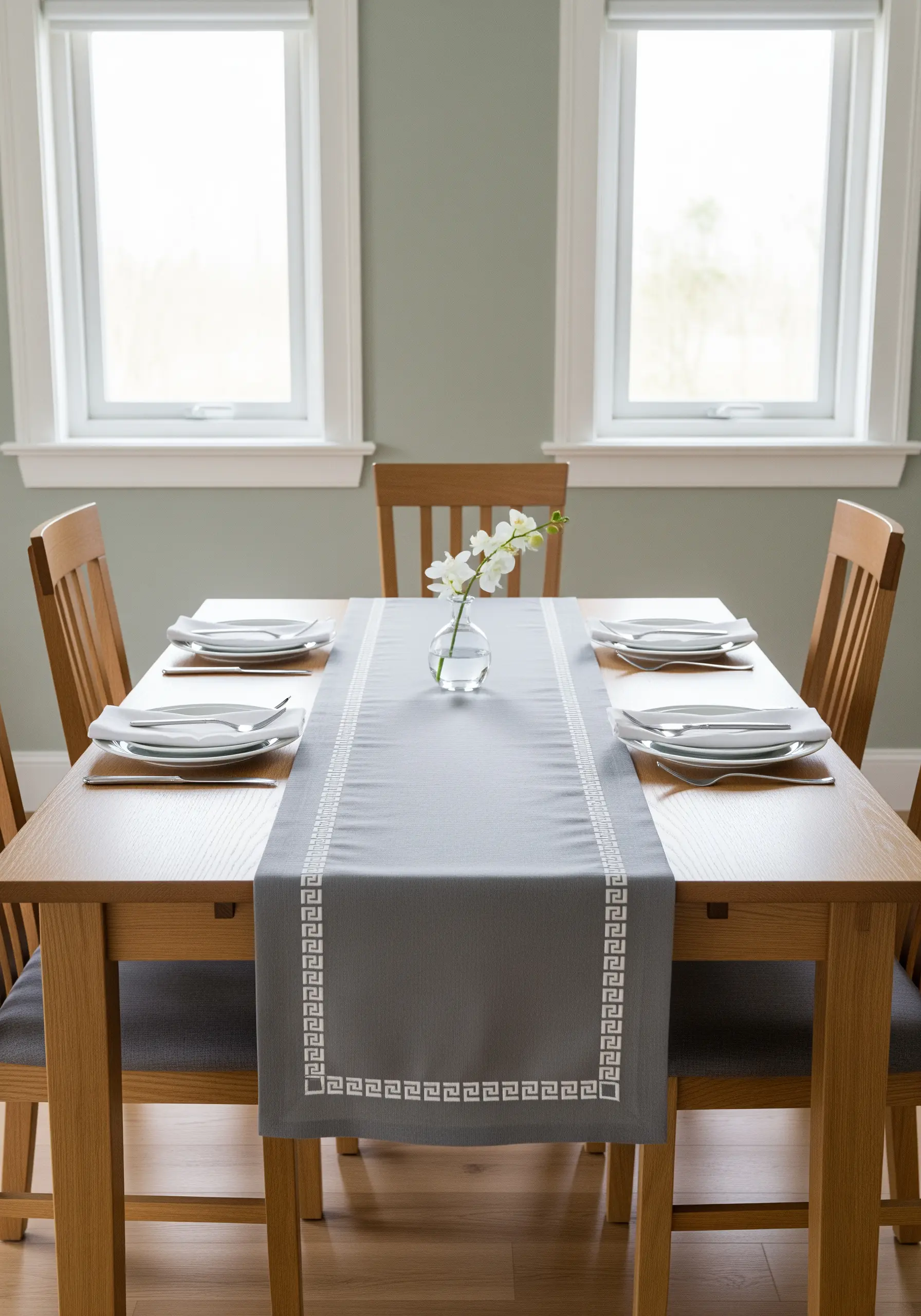
Add a timeless, formal touch to your table runner with a classic Greek key border.
Precision is essential for this geometric pattern, so use a water-soluble transfer pen and a ruler to ensure your lines are perfectly straight and your corners sharp.
A simple, neat backstitch in a contrasting white or cream thread provides the clean, graphic line this design requires to look its best.
30. Harvest Warmth with Golden Wheat Sheaves
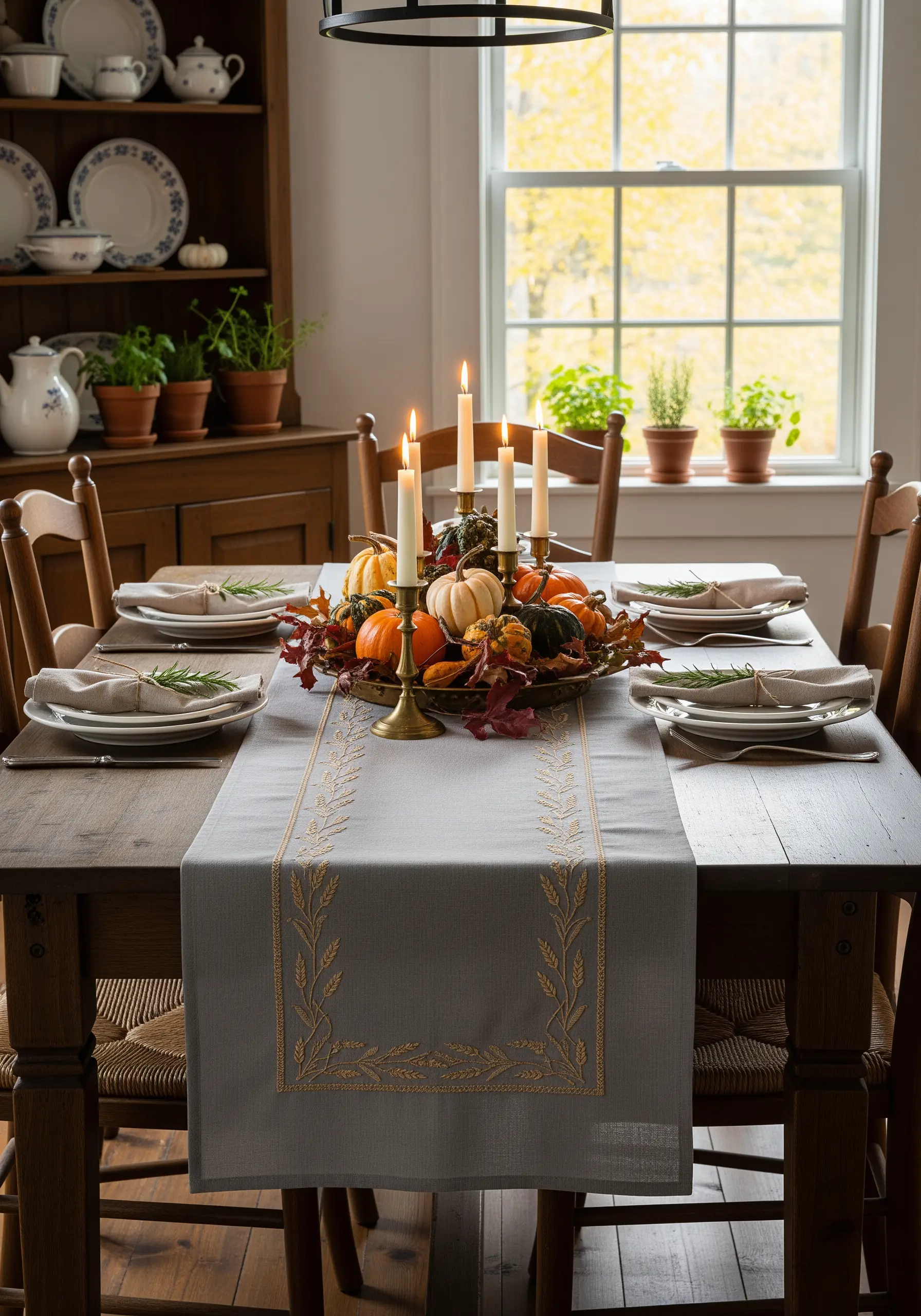
Evoke a sense of cozy, rustic charm with a border of embroidered wheat.
Use a fly stitch or detached chain stitch for the individual husks, layering them as you work up the stalk.
A few well-placed French knots at the very top create the texture of the grains.
Choose a warm, golden ochre thread to contrast beautifully with the cool stone-gray, creating a welcoming, autumnal feel.
31. Sculptural Minimalism with a Couched Spiral
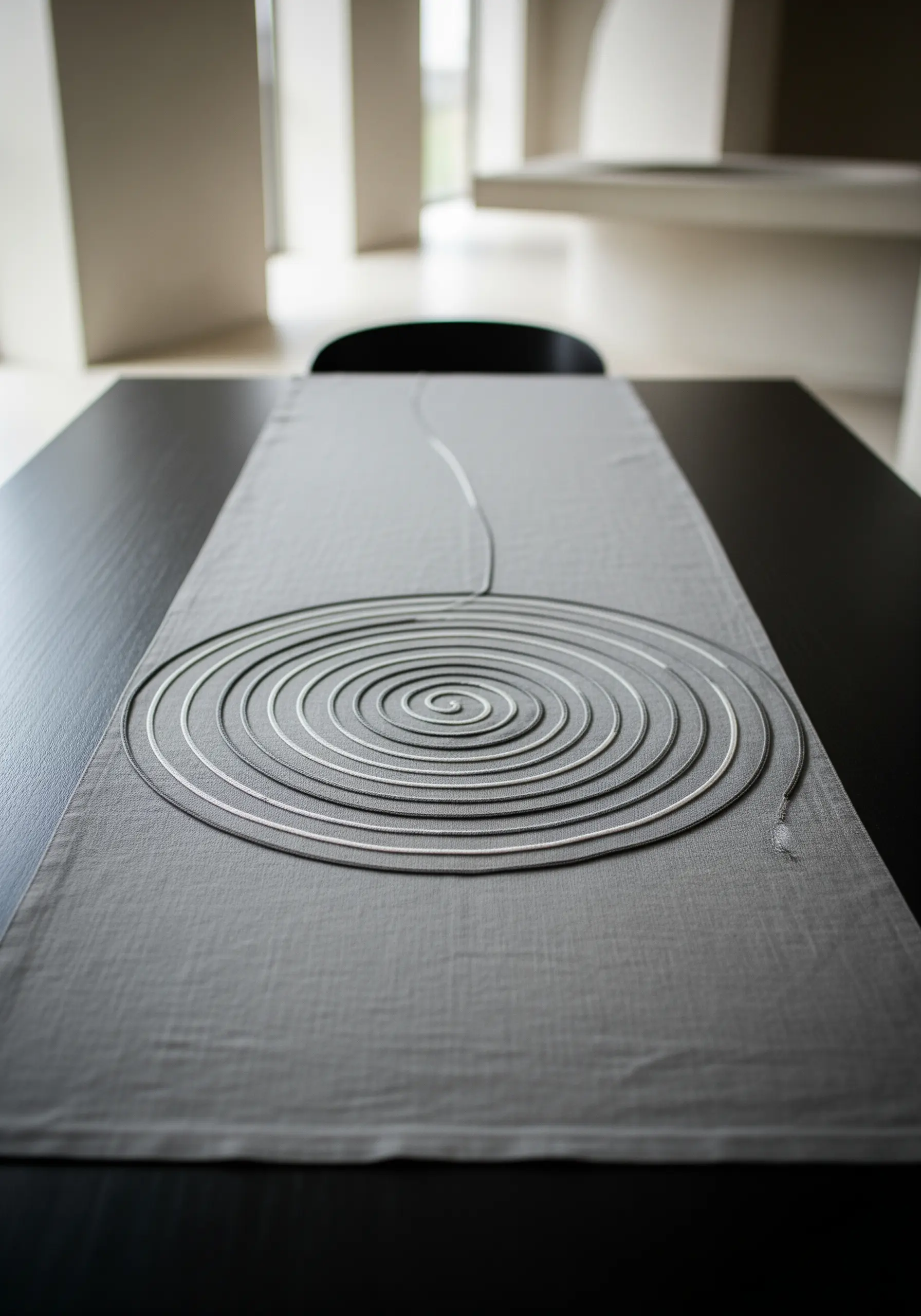
For a design that is both minimal and highly textural, couch a thick cotton cord onto your runner.
Simply lay the cord in a spiral pattern and use a matching or contrasting embroidery floss to tack it down with small, evenly spaced stitches.
This technique is incredibly fast and creates a bold, three-dimensional line that makes a powerful modern statement. It invites you to trace the spiral with your finger.
32. A Canopy of Leaves in Negative Space
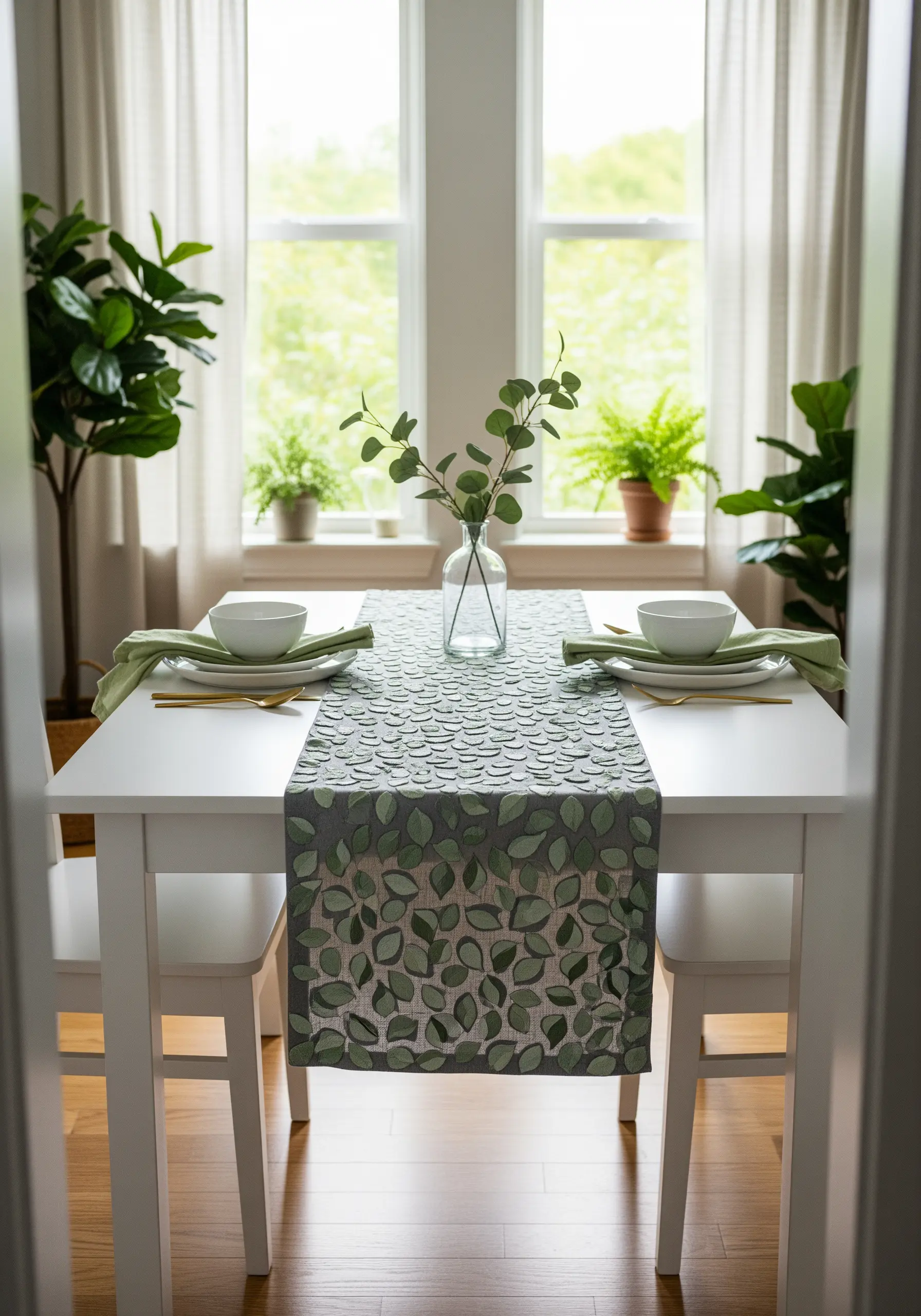
Create the impression of a dense layer of leaves by stitching only their outlines and letting the fabric show through.
Use a simple backstitch in several shades of green and gray-green, overlapping the shapes to build a sense of depth.
By focusing on the negative space, the gray runner becomes an integral part of the design itself, acting as the color of the leaves. This is a clever and artistic approach to botanical embroidery.
33. Modern Weaving with Interlaced Stitches
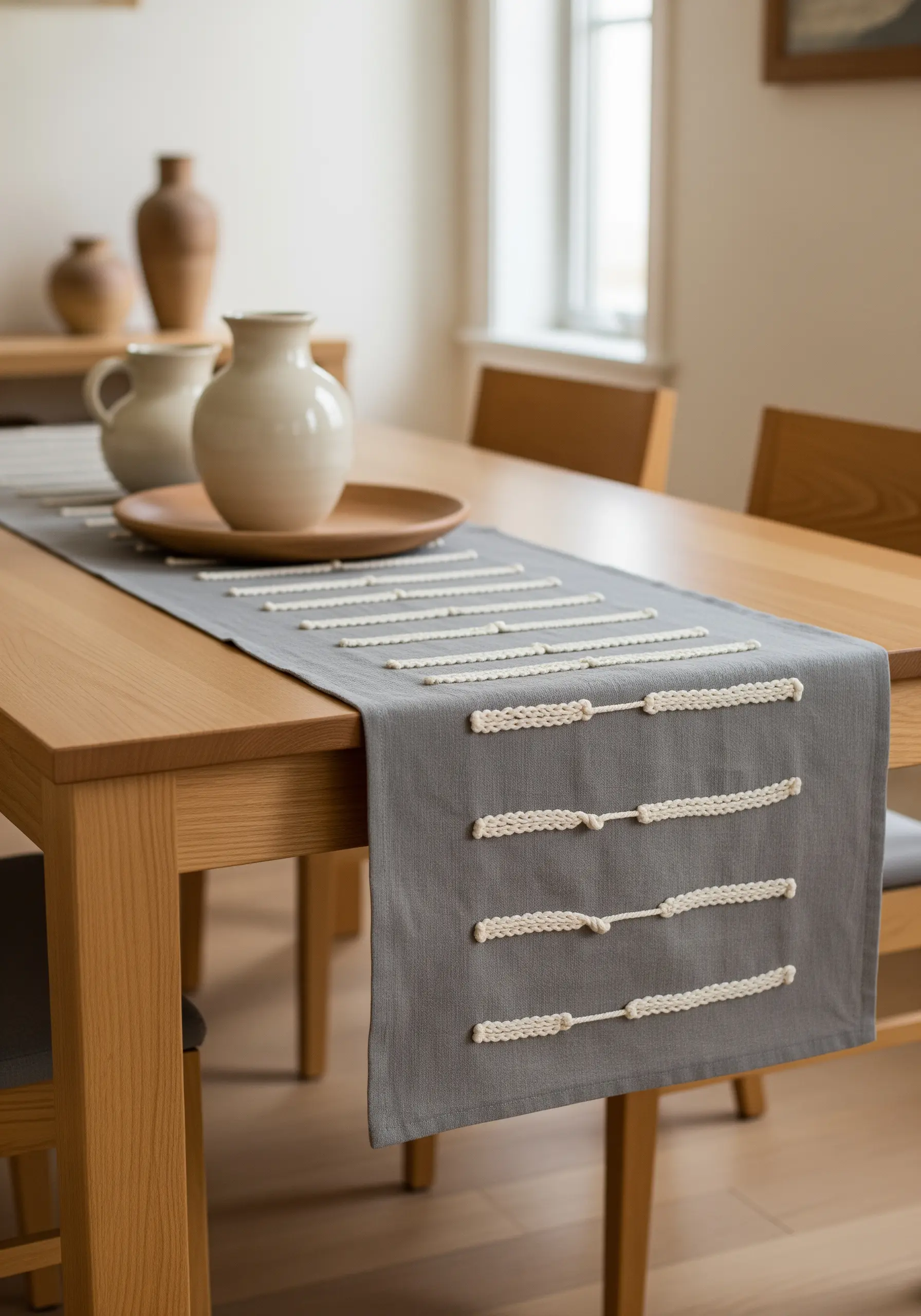
Add unexpected texture by creating a small woven section on your runner.
First, stitch a series of parallel horizontal running stitches. Then, take a thick, textured yarn on a blunt tapestry needle and weave it vertically through the running stitches.
The combination of the fine foundation stitches and the chunky woven yarn creates a beautiful, tactile detail that feels both modern and handmade.
34. Ethereal Feather with an Open Cretan Stitch
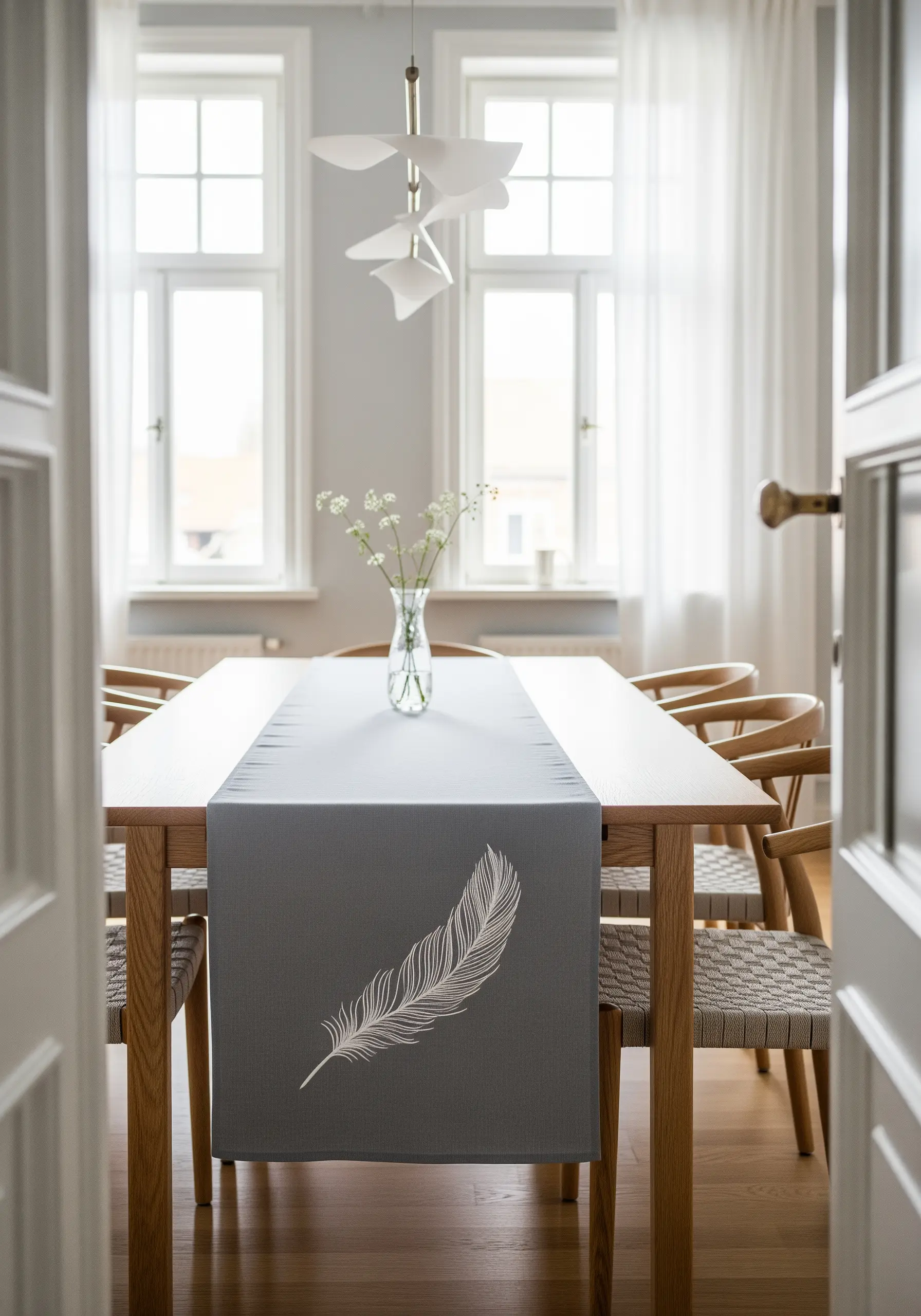
Capture the weightless quality of a feather by using a delicate, open stitch.
Start with a straight stitch for the central shaft. Then, work an open Cretan stitch or feather stitch down each side, keeping the stitches light and evenly spaced.
Using a single strand of fine white or silver thread enhances the ethereal effect, making the feather look as if it just floated down onto the table.
Mastering this stitch is essential for realistic feather embroidery techniques.