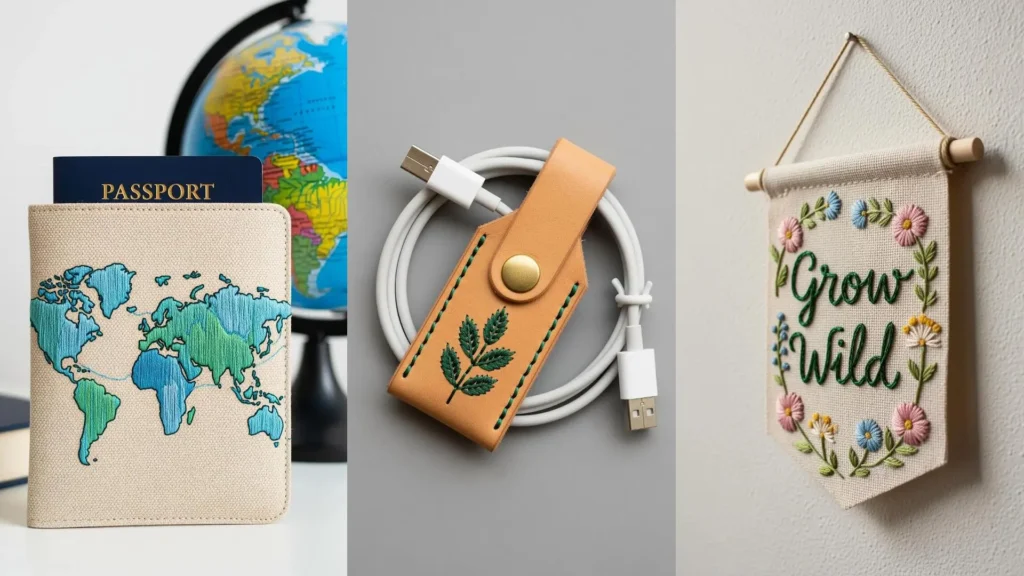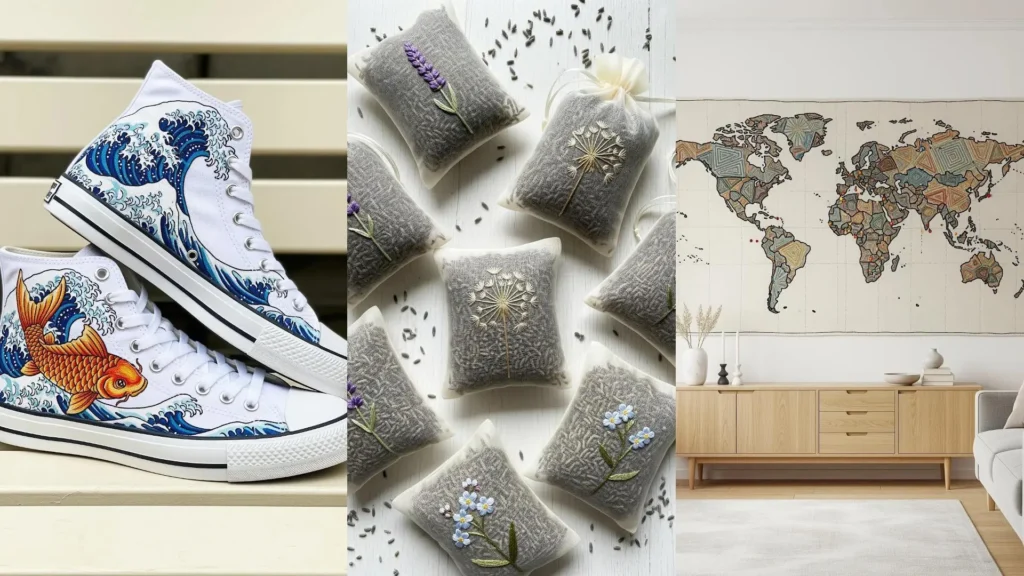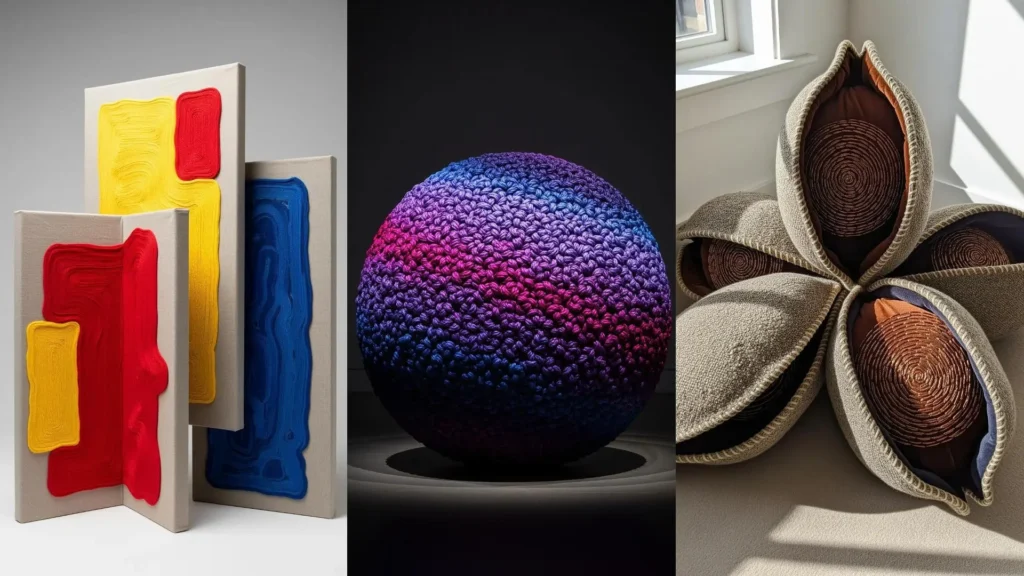
You’ve mastered the satin stitch and your French knots are perfect. But perhaps you’re looking at your hoop art and feeling a desire to create something with more… presence. Something that moves beyond the frame and occupies space in a new way.
The shift from two-dimensional embroidery to sculptural fiber art isn’t about learning impossibly complex techniques. It’s about changing how you see your materials. Thread becomes a line to draw with in space. Fabric becomes a plane to be bent and shaped. Stitches become texture that can be built up into solid form.
Here, we’ll explore the principles behind monumental fiber sculptures and translate them into techniques you can try right now. Think of it as borrowing from the masters to give your own work a new dimension—transforming the familiar comfort of needle and thread into something truly extraordinary.
1. Build Form with Sculptural Couching
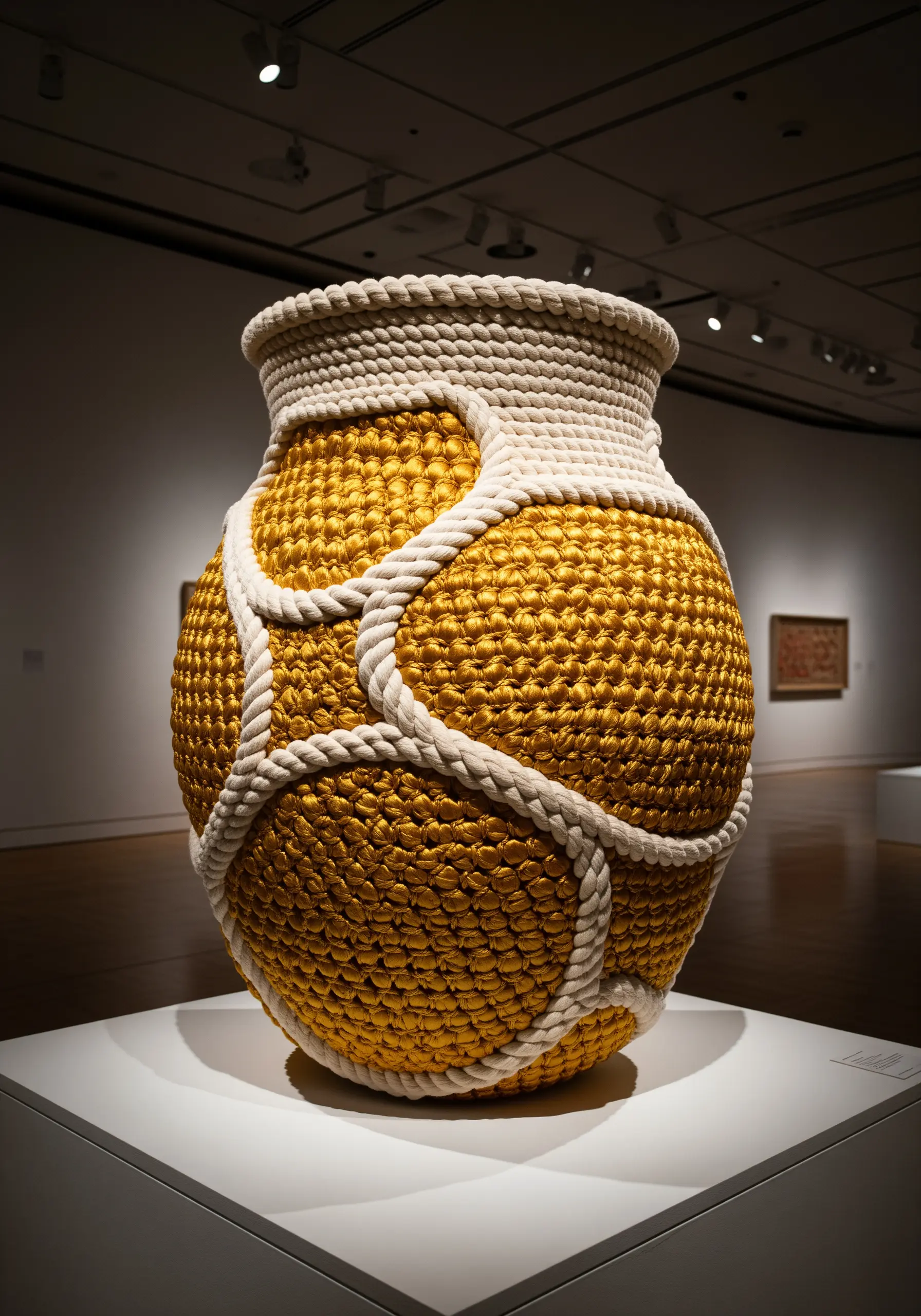
Move beyond decorative outlines by couching thick, structural materials like cotton rope or braided cord onto your fabric.
This technique creates immediate architectural dimension, contrasting the soft, dense texture of your stitching with the bold, graphic lines of the cord.
Use a strong, coordinating thread and a curved needle to make anchoring the rope easier, especially on a finished piece.
The key is the tension: pull your couching stitches just tight enough to secure the cord without causing the fabric to pucker, allowing the rope to define the final form.
2. Layer Freestanding Elements for Depth
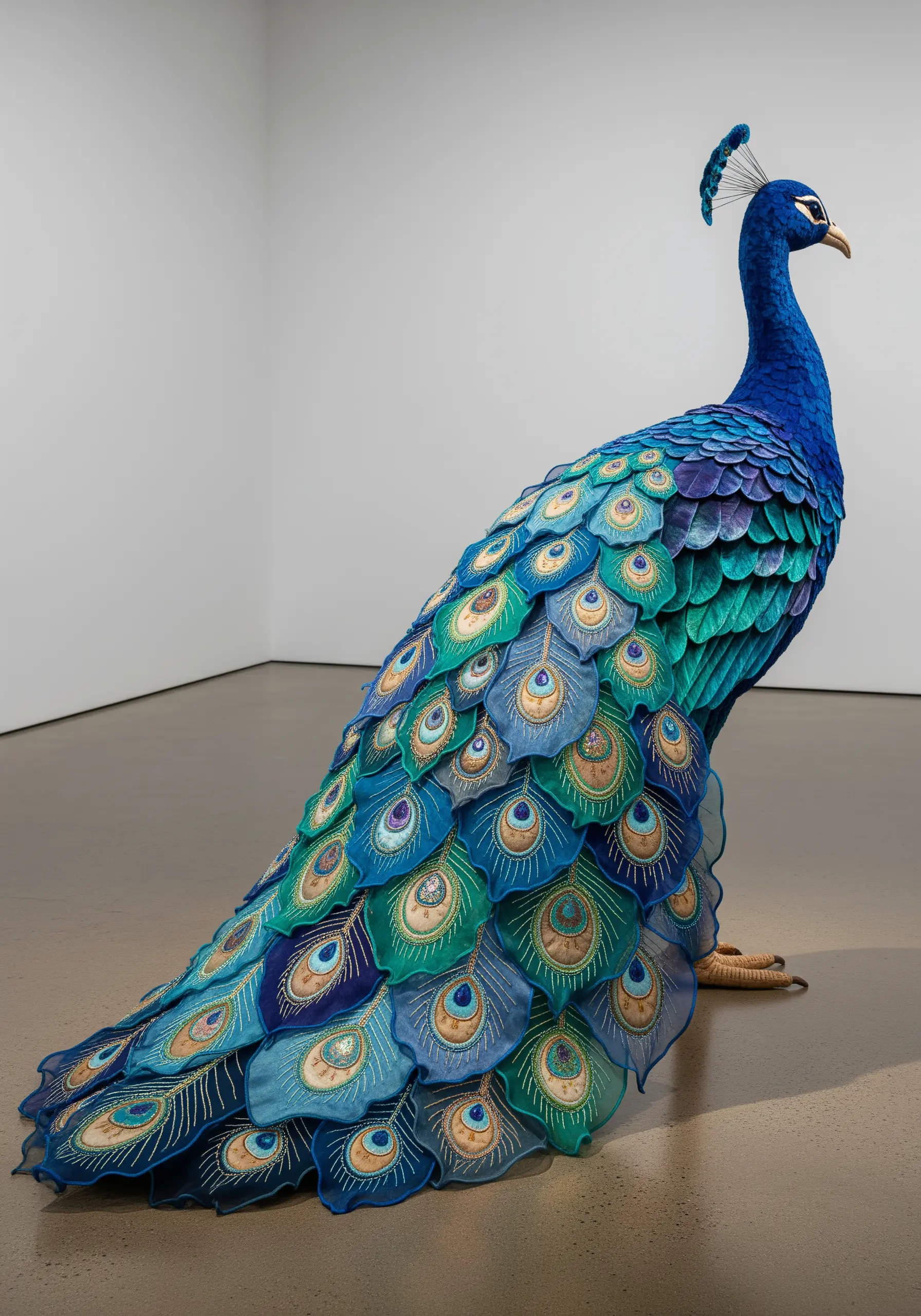
Construct your subject in components instead of stitching it flatly onto a single background fabric.
Create individual feathers or petals using stumpwork techniques—stitching onto a separate piece of fabric, cutting it out, and reinforcing the edges with a buttonhole stitch.
For added shape, stitch a fine wire into the edge of each element before cutting it out; this allows you to bend and sculpt it into a lifelike position.
By layering these three-dimensional pieces, you build a form that has realistic depth, shadow, and movement, transforming your work into a true sculpture.
3. Define 3D Forms with Linear Stitches
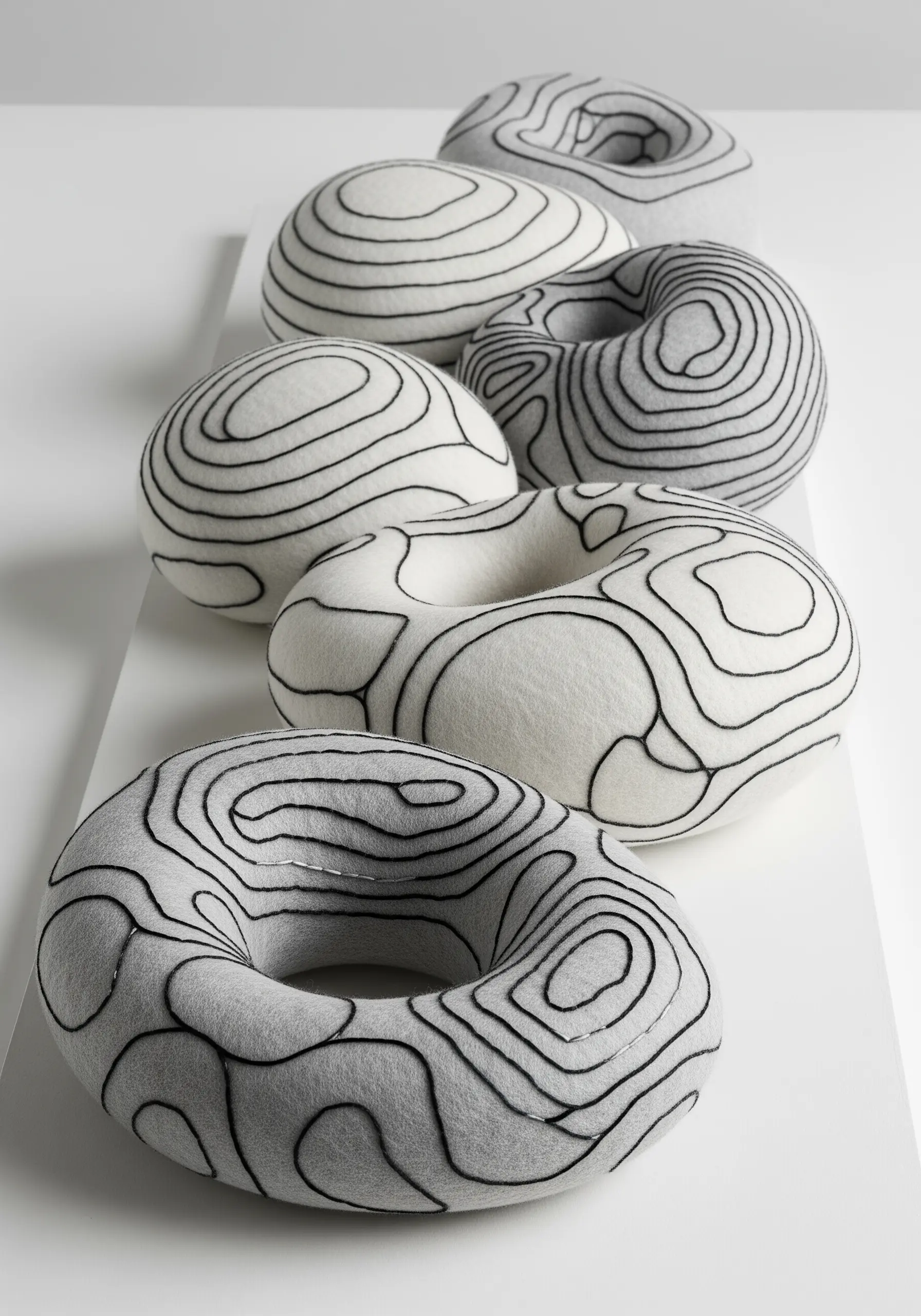
Use simple line work to transform a soft, three-dimensional object into a piece of graphic art.
Instead of filling an area with color, trace its contours with a precise backstitch or stem stitch, as if you were drawing a topographical map.
This technique works beautifully on felted wool or thick canvas, where the thread can sit cleanly on the surface without sinking in.
The minimalism of the stitch emphasizes the object’s shape, making these abstract line art embroidery styles a powerful way to explore form and volume.
4. Integrate Mixed Media for Ethereal Effects
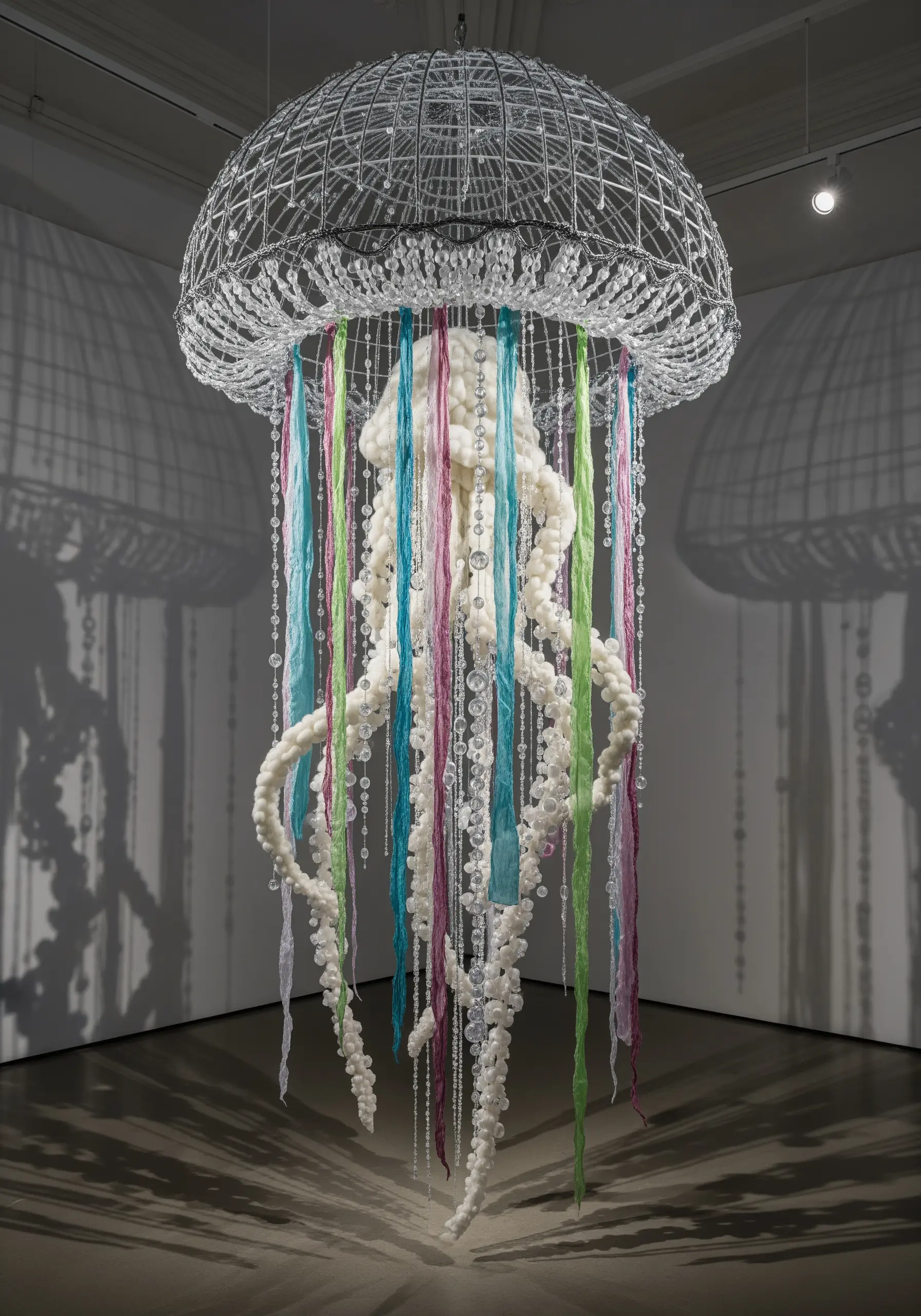
Incorporate non-traditional materials to move your work from a textile piece to a multi-sensory installation.
Combine embroidery threads with elements like wire, crystal beads, and sheer fabric strips to play with light, reflection, and transparency.
Try stitching with fine metallic thread and letting it dangle, weighting the ends with small beads to create movement and catch the light.
These mixed-media contemporary embroidery designs are less about a single image and more about creating an atmosphere that interacts with its environment.
5. Construct Miniature Worlds with Stumpwork
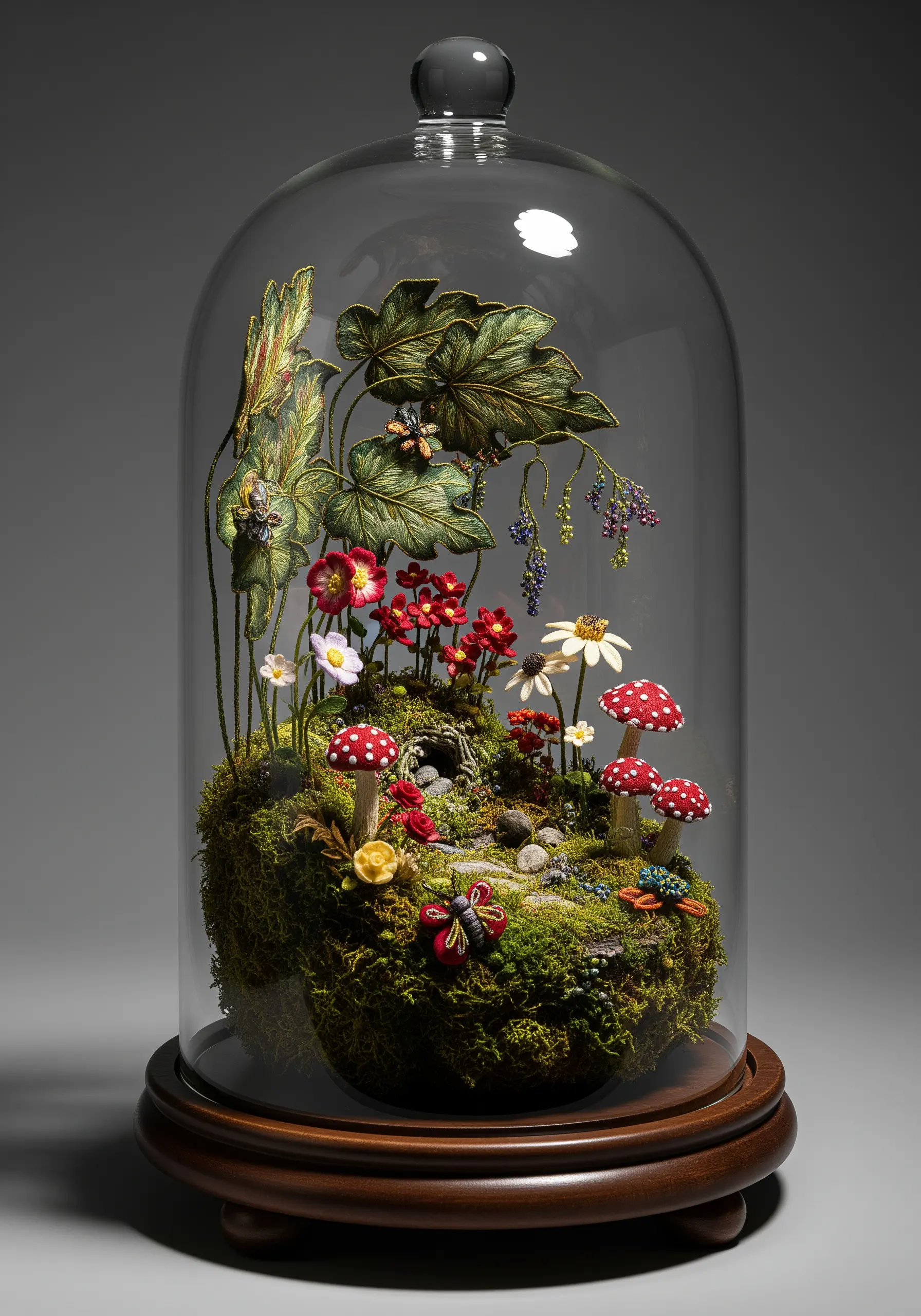
Use stumpwork to build intricate, three-dimensional scenes that invite closer inspection.
Create raised, rounded shapes by padding areas with layers of felt before covering them with satin stitch—perfect for mushrooms or smooth pebbles.
Form delicate, freestanding leaves and petals by stitching onto fabric, wiring the edges, and then cutting them out to be shaped and attached separately.
A dense field of French knots in varying shades of green and brown creates a wonderfully realistic mossy ground, adding another layer of tactile reality.
6. Wrap and Embellish for Geometric Texture
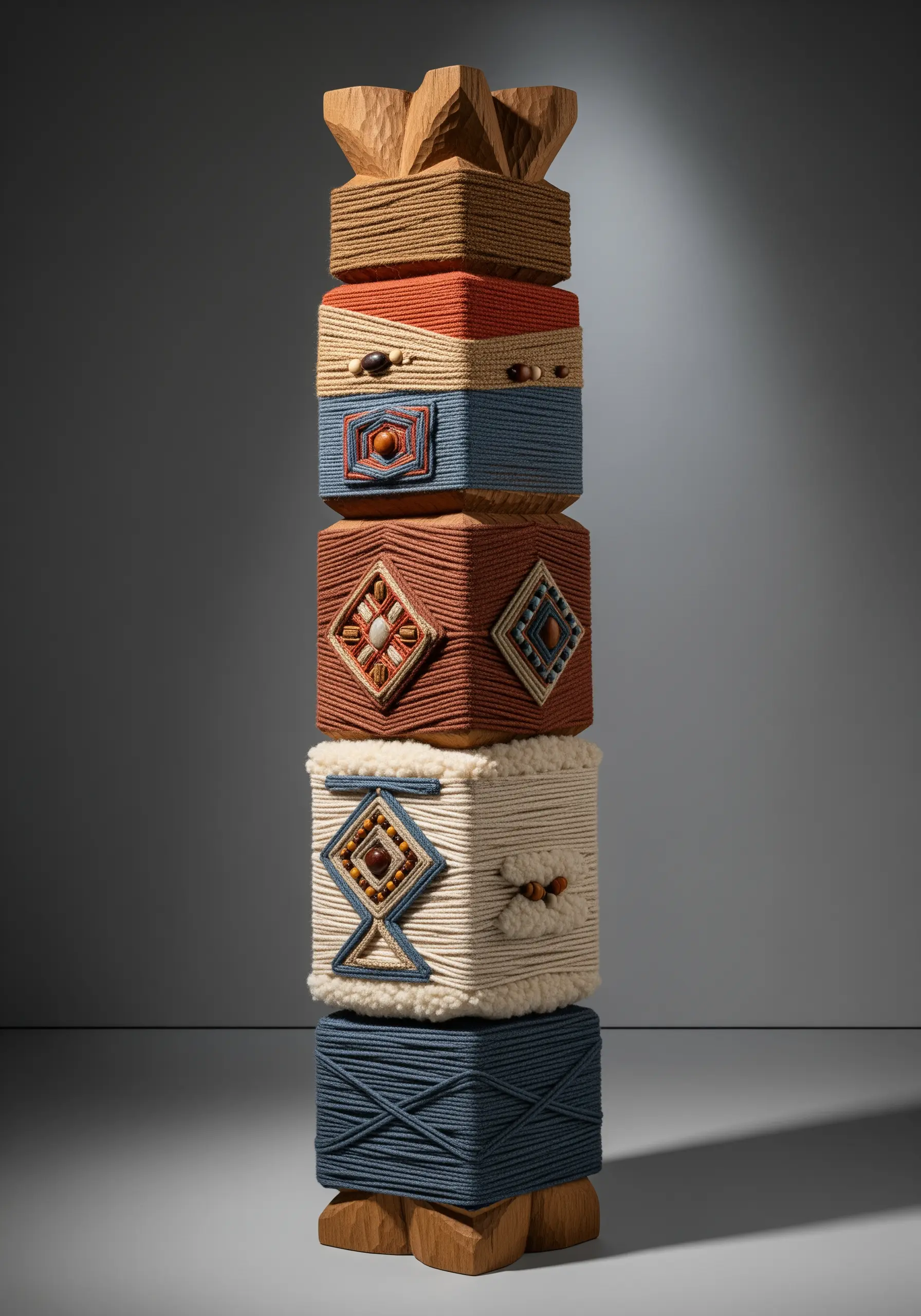
Transform simple blocks or objects by wrapping them tightly in yarn, creating a canvas for further embellishment.
The wrapping itself becomes a textural element, especially when you alternate between smooth, chunky, and fluffy fibers.
Once wrapped, you can stitch directly into the yarn, couching thinner threads on top to create geometric patterns or adding beads for focal points.
This method allows you to explore bold color blocking and create gorgeous mixed-fiber textures without needing to stitch an entire surface from scratch.
7. Design with Fringe and Negative Space
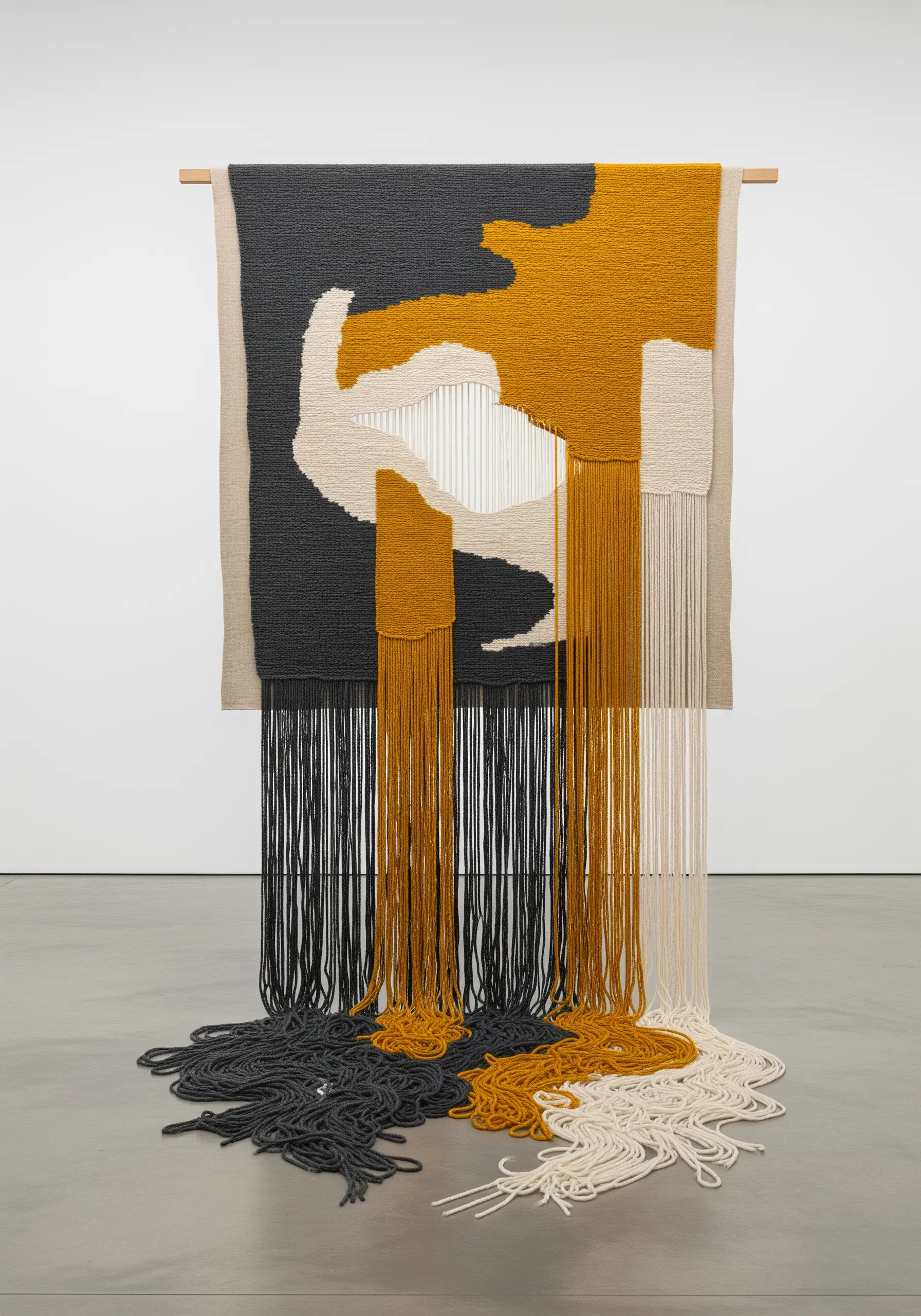
Allow the elements of your work to deconstruct and flow into the surrounding space.
Instead of trimming your threads, let them hang loose and long, turning the fringe into a primary design feature that pools on the floor.
Juxtapose densely textured, stitched areas with the complete absence of stitching, using the raw canvas as a shape in itself.
This approach turns a wall hanging into one of those immersive fiber art installations that command a room through its use of both presence and absence.
8. Sculpt with Fabric Appliqué and Seams
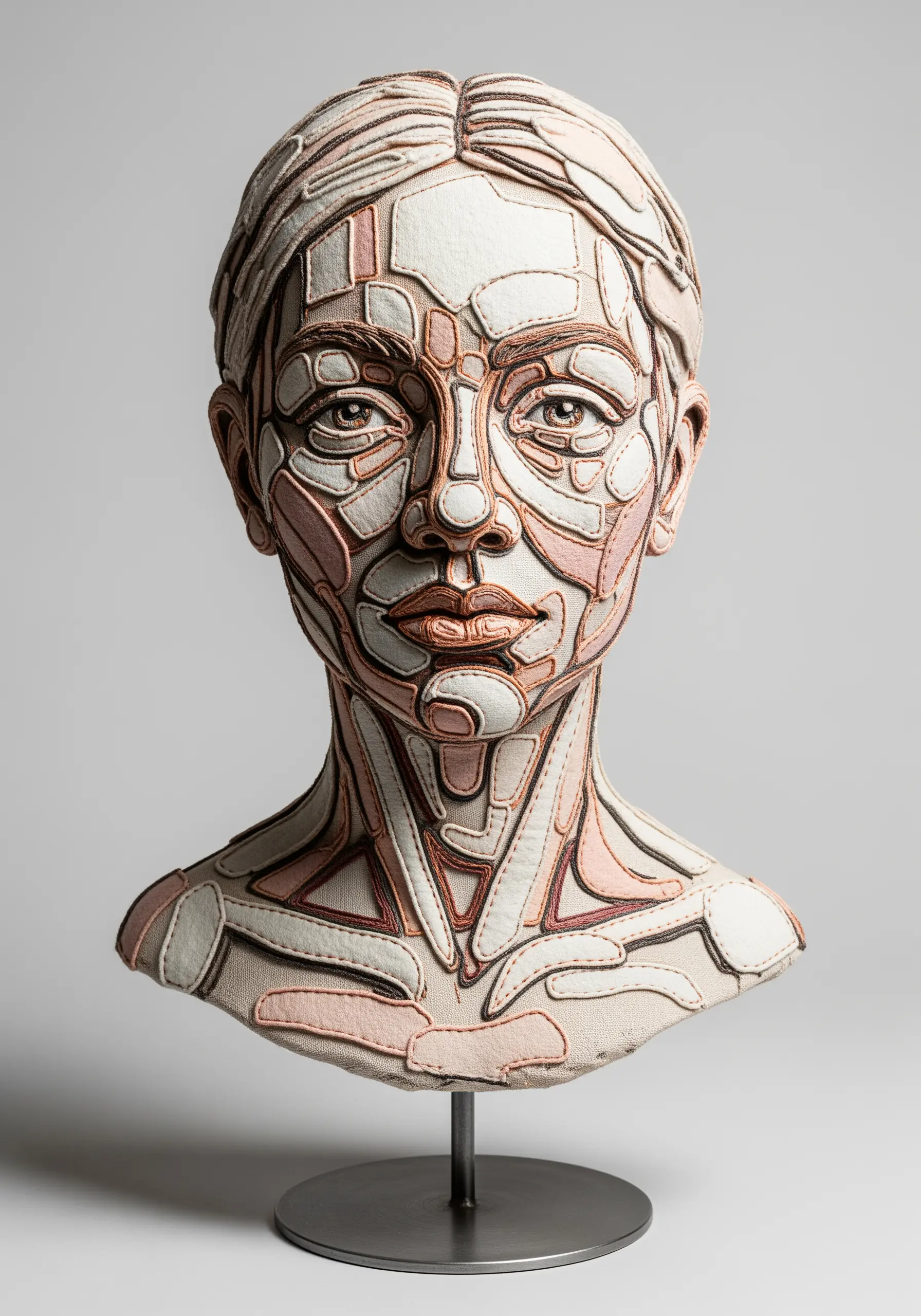
Use fabric pieces and visible seams to build a three-dimensional portrait, much like a quilter pieces a block.
Cut small shapes of fabric in various skin tones to represent the planes and shadows of a face.
Instead of hiding your stitches, join the pieces with a contrasting thread using a whipstitch or blanket stitch, turning the seam lines into dynamic contour drawings.
This technique elevates simple appliqué into sculptural hand-stitched portrait wall art ideas, where the construction itself tells the story.
9. Create Impact Through Repetition and Detail
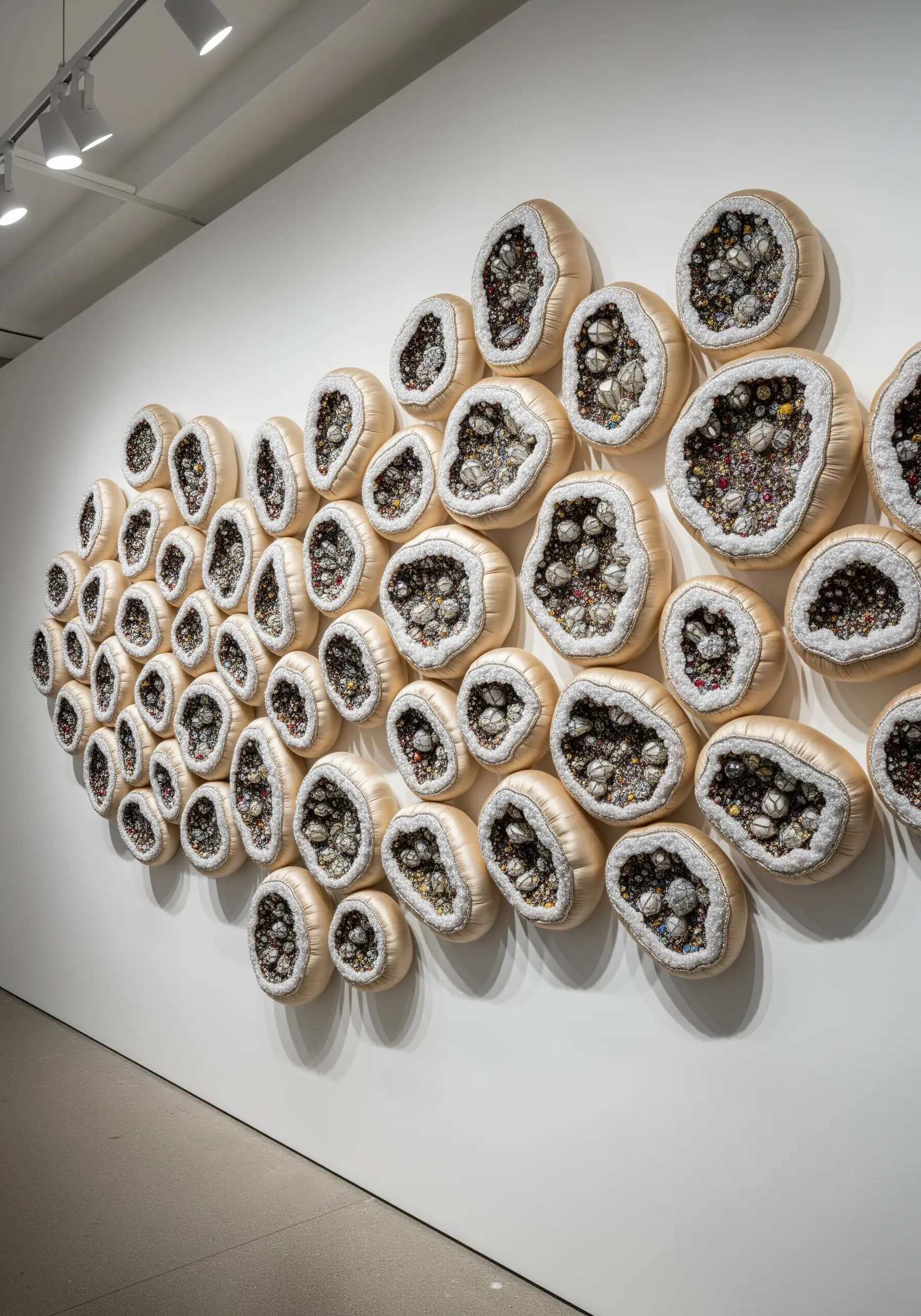
Turn a single, small embroidered object into a large-scale installation through strategic repetition.
Begin by creating one soft, padded form—a simple stuffed oval or circle works perfectly.
Embellish the center of this form with dense beadwork, French knots, or sequins to create a rich, jewel-like interior that contrasts with the smooth exterior.
By making many of these and arranging them in a large cluster on a wall, you create a powerful visual statement that draws the viewer in to appreciate each detailed piece.
10. Elevate Form with Architectural Stitching
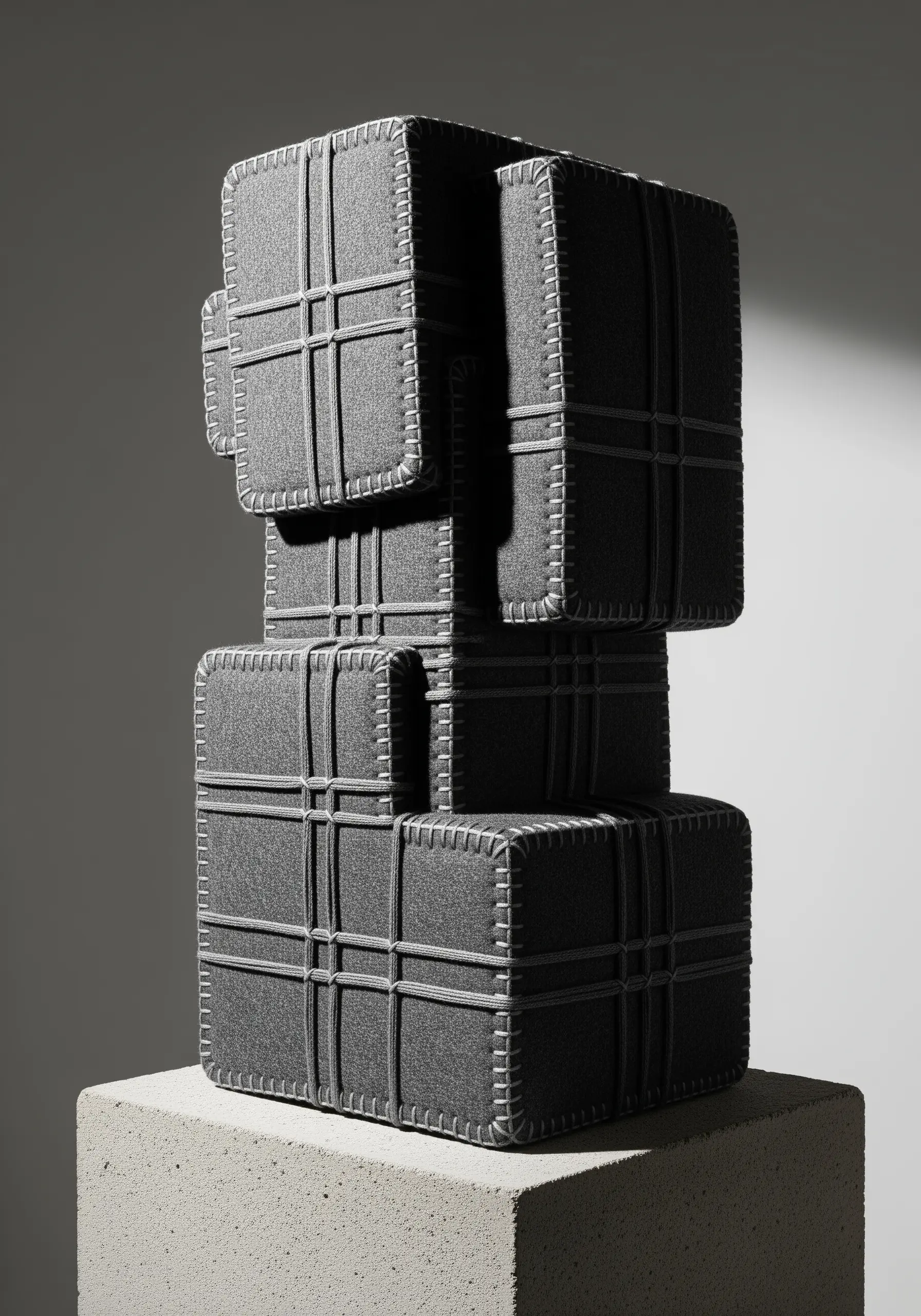
Use a simple, utilitarian stitch as a primary design element to give your work a clean, architectural finish.
Cover a structural form, like a box or foam block, with a heavy fabric like felt.
Instead of trying to hide the seams, accentuate them with a perfectly spaced blanket stitch in a contrasting, high-sheen thread like pearl cotton.
This technique celebrates the construction of the object, turning a functional stitch into a crisp, graphic detail, perfect for clean, monochrome embroidery ideas.
11. Stitch on Sheer Fabric to Sculpt with Shadow
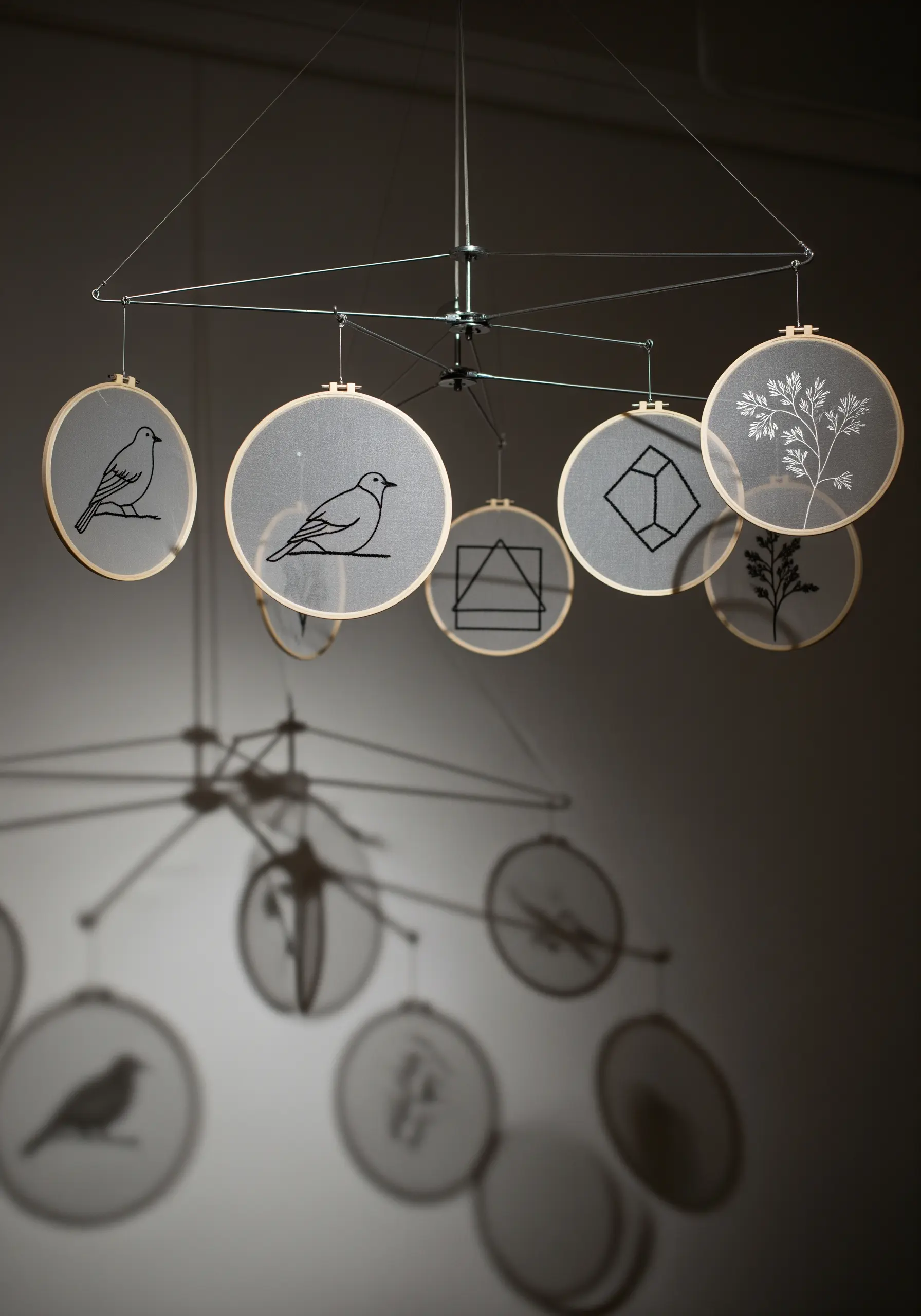
Embrace transparency by using organza, tulle, or voile as your canvas, making light and shadow an integral part of your artwork.
A simple design stitched in a single, dark thread will pop against the sheer background, creating a floating effect.
When suspended and lit correctly, the piece will cast a shadow that duplicates and distorts the embroidery, adding a new, kinetic layer to the work.
This is one of the most effective minimalist embroidery ideas for creating a dynamic, gallery-worthy display with very simple means.
12. Cover a Sphere with Textural Stitches
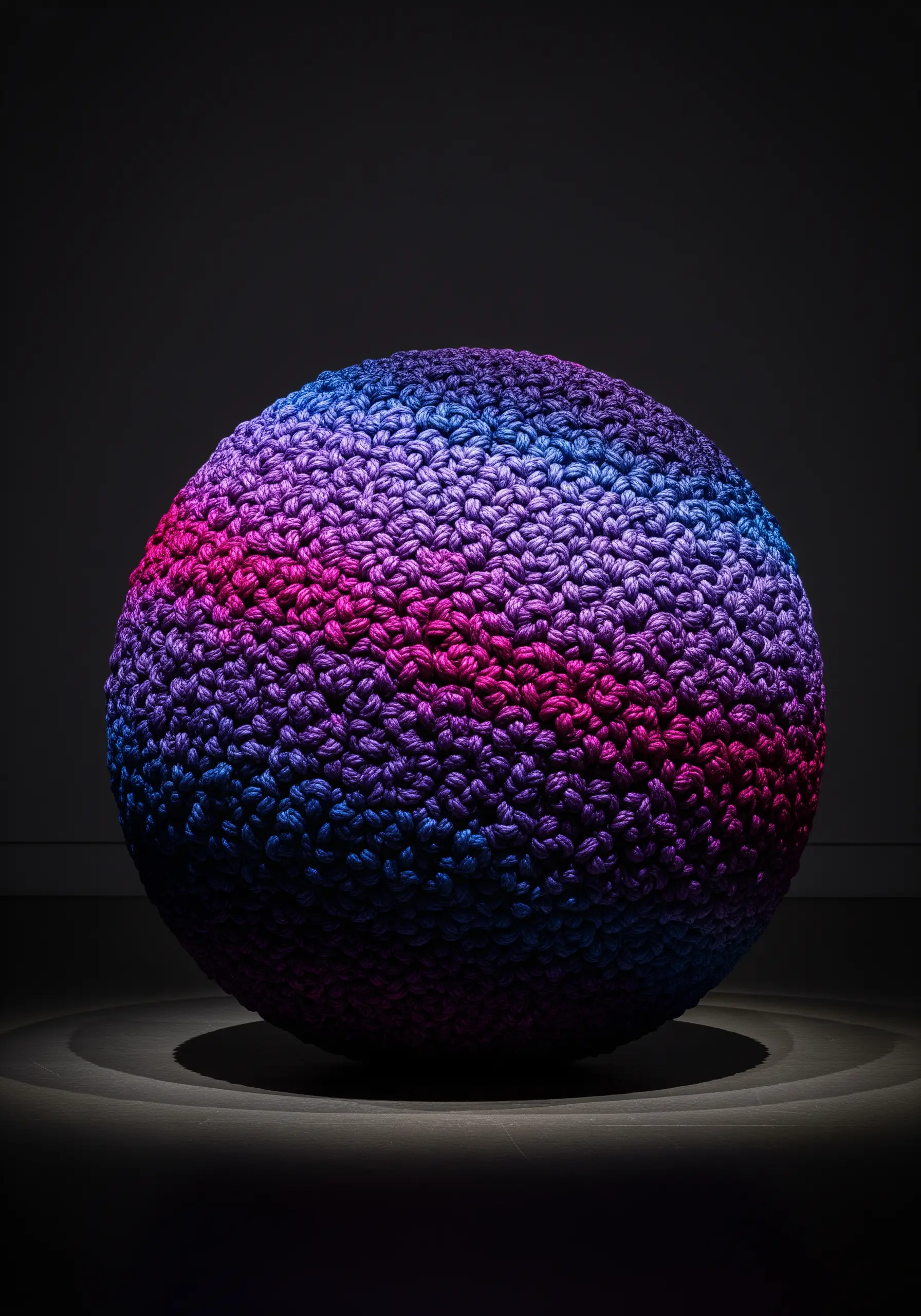
Explore how a single, repeated stitch can create a unified surface over a three-dimensional form.
Start with a sphere—styrofoam, felted wool, or a soft ball—and cover it entirely with a dense layer of French knots, colonial knots, or seed stitches.
The power of this technique comes from the color blending. Use variegated thread or switch floss colors gradually to create a seamless gradient that flows across the curved surface.
This transforms a simple shape into a tactile object, perfect for exploring abstract color blend stitch ideas in three dimensions.
13. Build Organic Forms with Dimensional Stitches
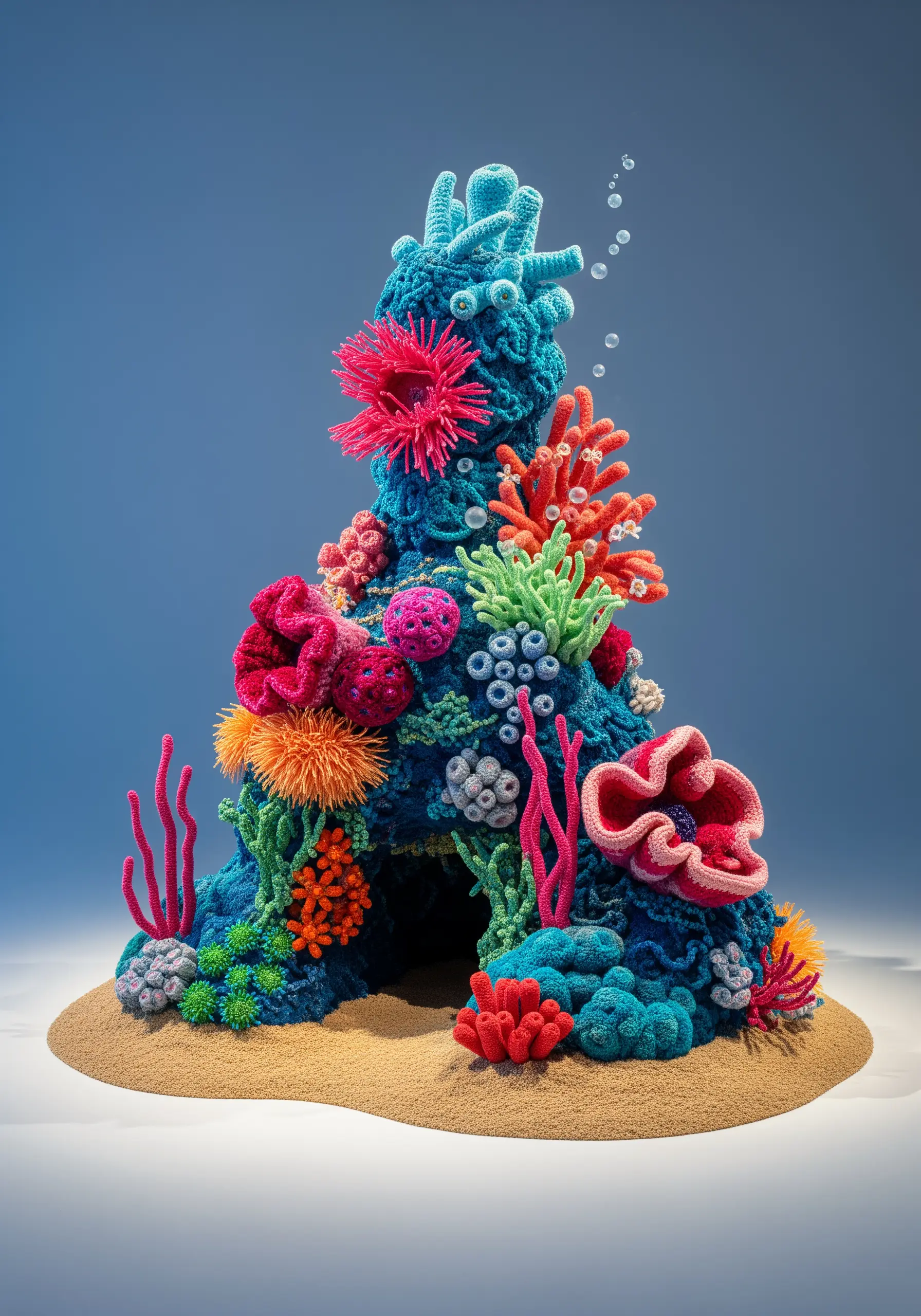
Create a sculptural, tactile ecosystem by combining a variety of highly dimensional stitches.
Master the bullion knot, cast-on stitch, and woven wheel to build forms that rise significantly from the fabric surface, mimicking coral, fungi, or flowers.
Don’t be afraid to cluster them tightly and layer them over one another; this creates the rich, chaotic texture found in nature.
This approach is perfect for nature texture embroidery projects that invite the viewer to not just see, but also imagine touching the work.
14. Paint with Yarn for Bold, Tactile Canvases
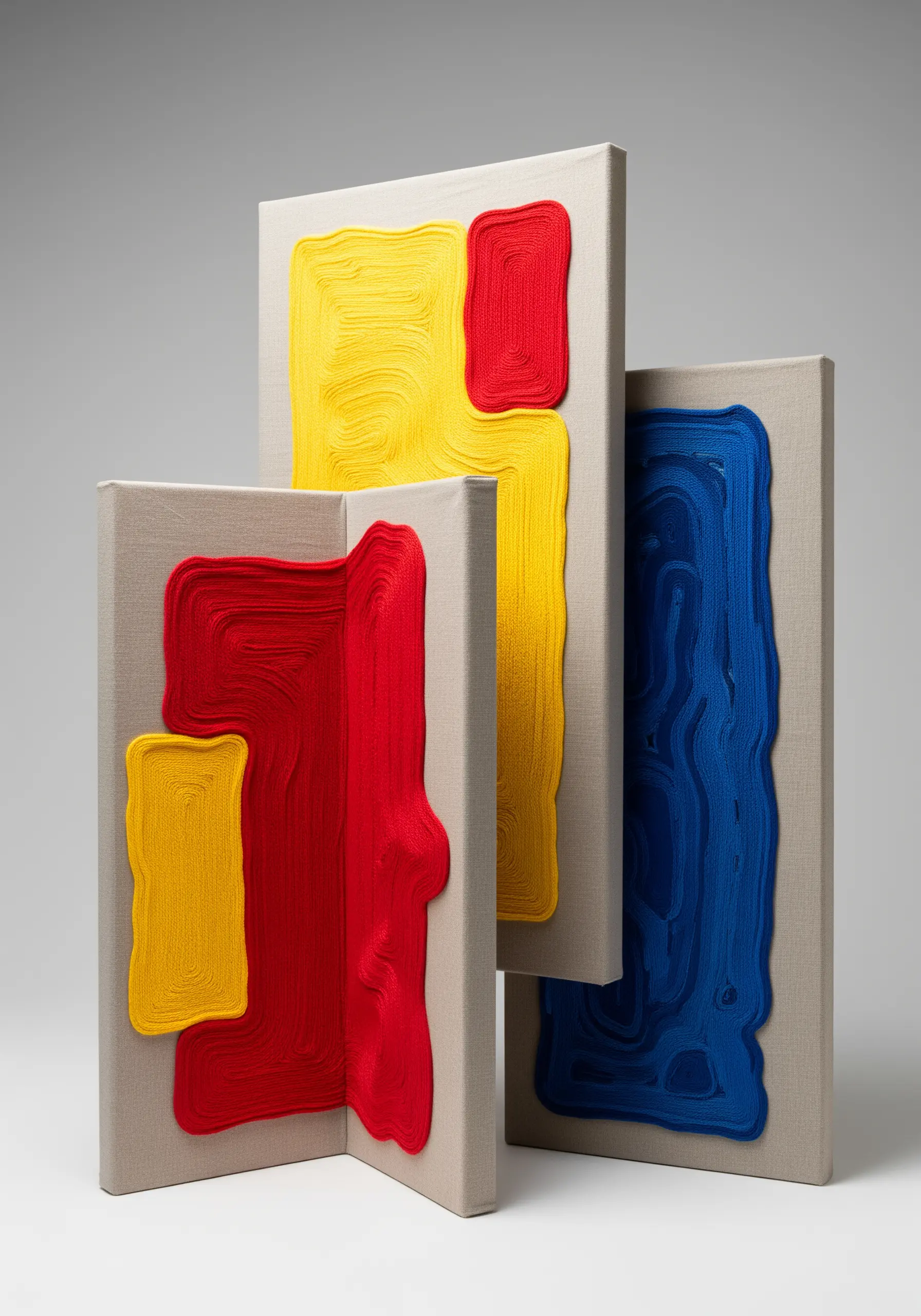
Use thick yarn or roving to create bold, painterly effects on stretched canvas.
Instead of traditional embroidery stitches, lay down strands of yarn and secure them with a discreet couching stitch, allowing the yarn’s texture and direction to mimic brushstrokes.
Vary the density and direction of your yarn to create a sense of movement and depth, just as a painter would with thick oil paint.
This technique results in dramatic, abstract thread embroidery ideas where the fiber itself becomes the sculptural medium.
15. Create Structure with a Wire Armature
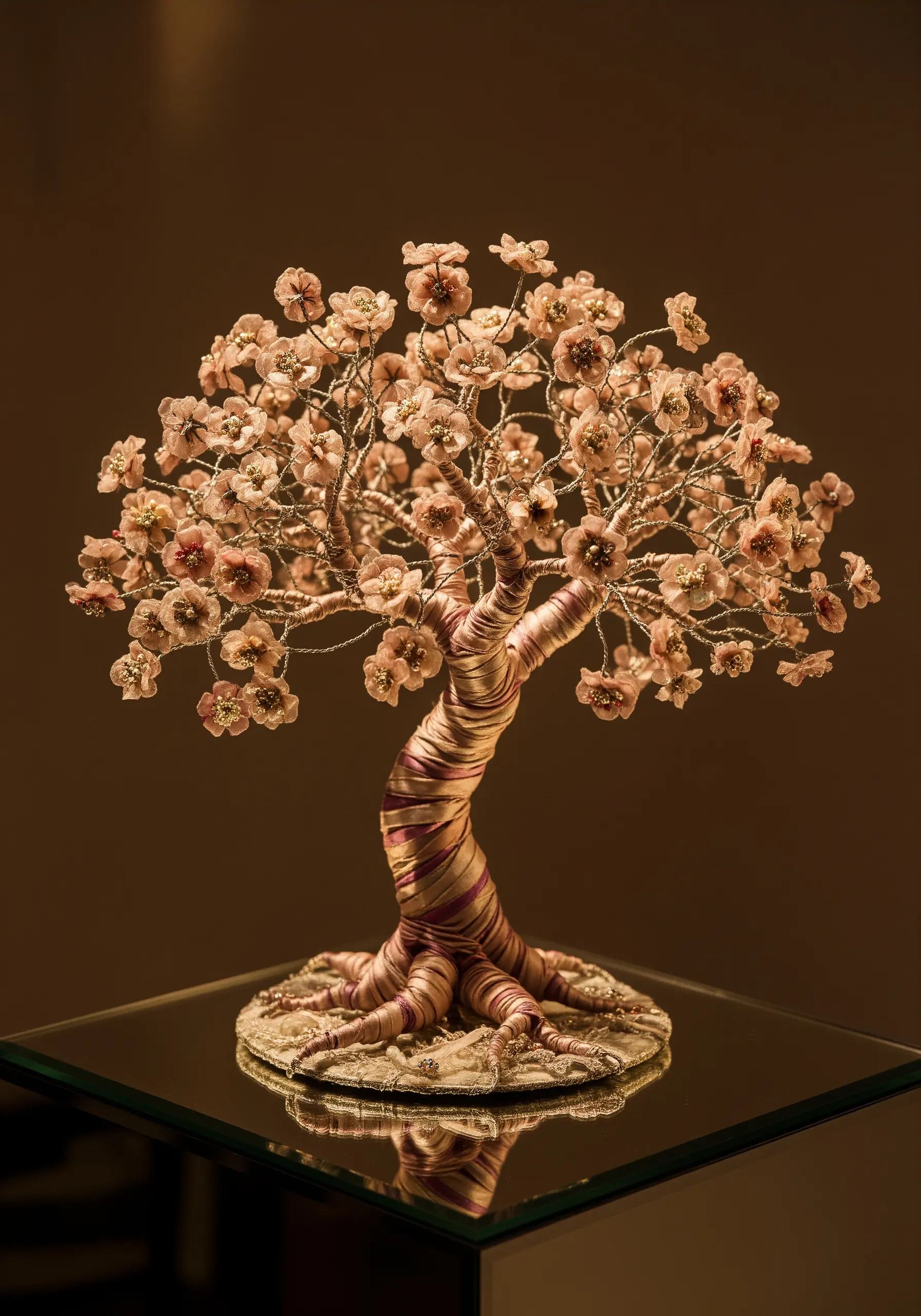
Give your embroidery a self-supporting skeleton by building it around a wire armature.
Start by shaping pliable craft wire into the form of a tree trunk, branches, or figure.
Tightly wrap the wire with thread or thin strips of fabric to create a solid, colored base.
You can then add your embroidered details, such as tiny detached chain stitches for leaves or small stumpwork flowers wired directly onto the branches, to bring the sculpture to life.
16. Hide Intricate Details Within Simple Forms
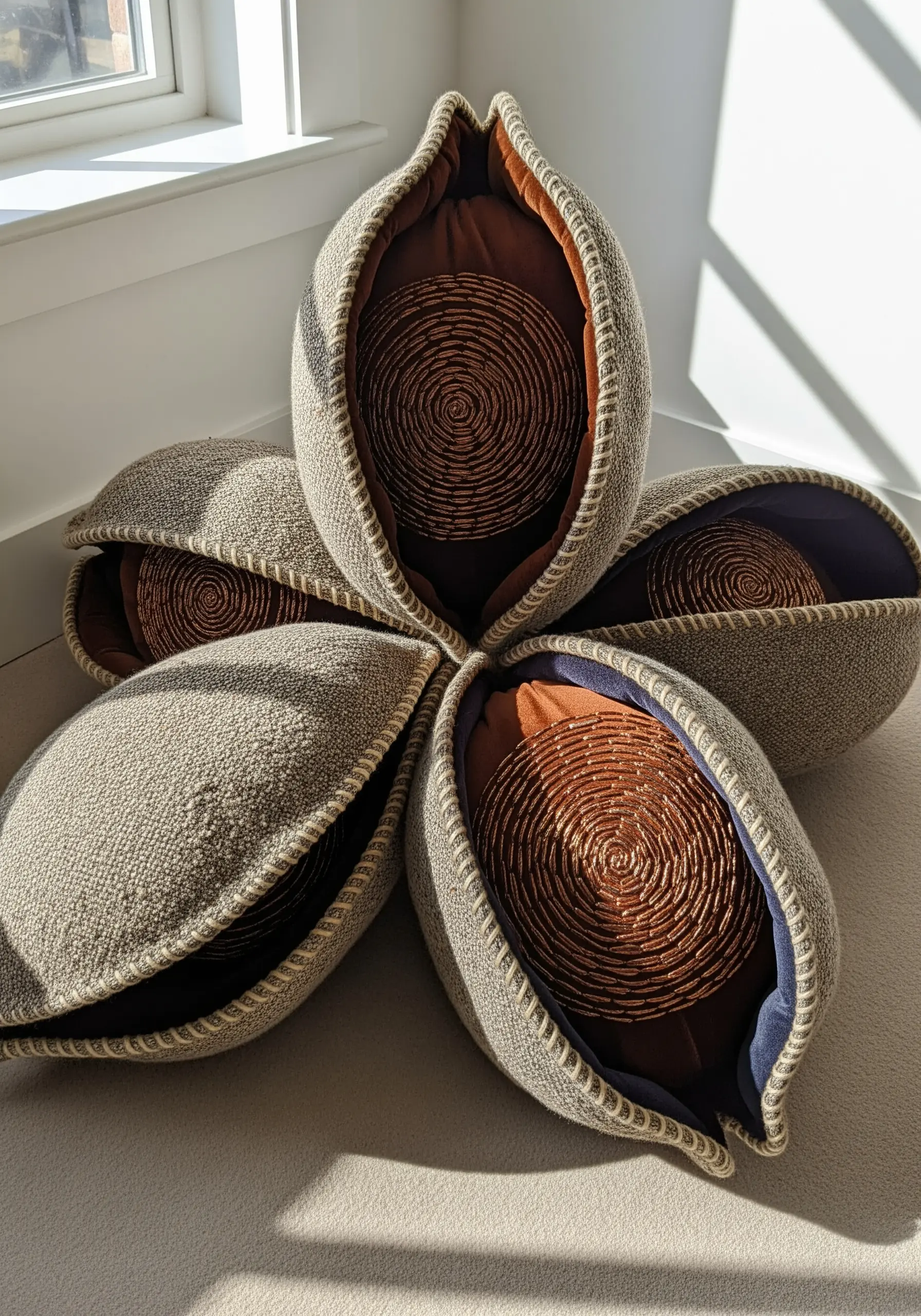
Create a powerful sense of discovery by contrasting a plain, sculptural exterior with a highly detailed, embellished interior.
Construct a simple, three-dimensional form from fabric, like a pod or a lidded box, keeping the outside minimal and unadorned.
Focus all your intricate work on the inside surface, filling it with dense beadwork, intricate stitching, or a complex pattern.
This approach transforms your piece into an intimate object that rewards curiosity and adds a surprising layer to your cozy neutral decor ideas with handmade embroidery touches.
17. Draw in Space with Tensioned Thread
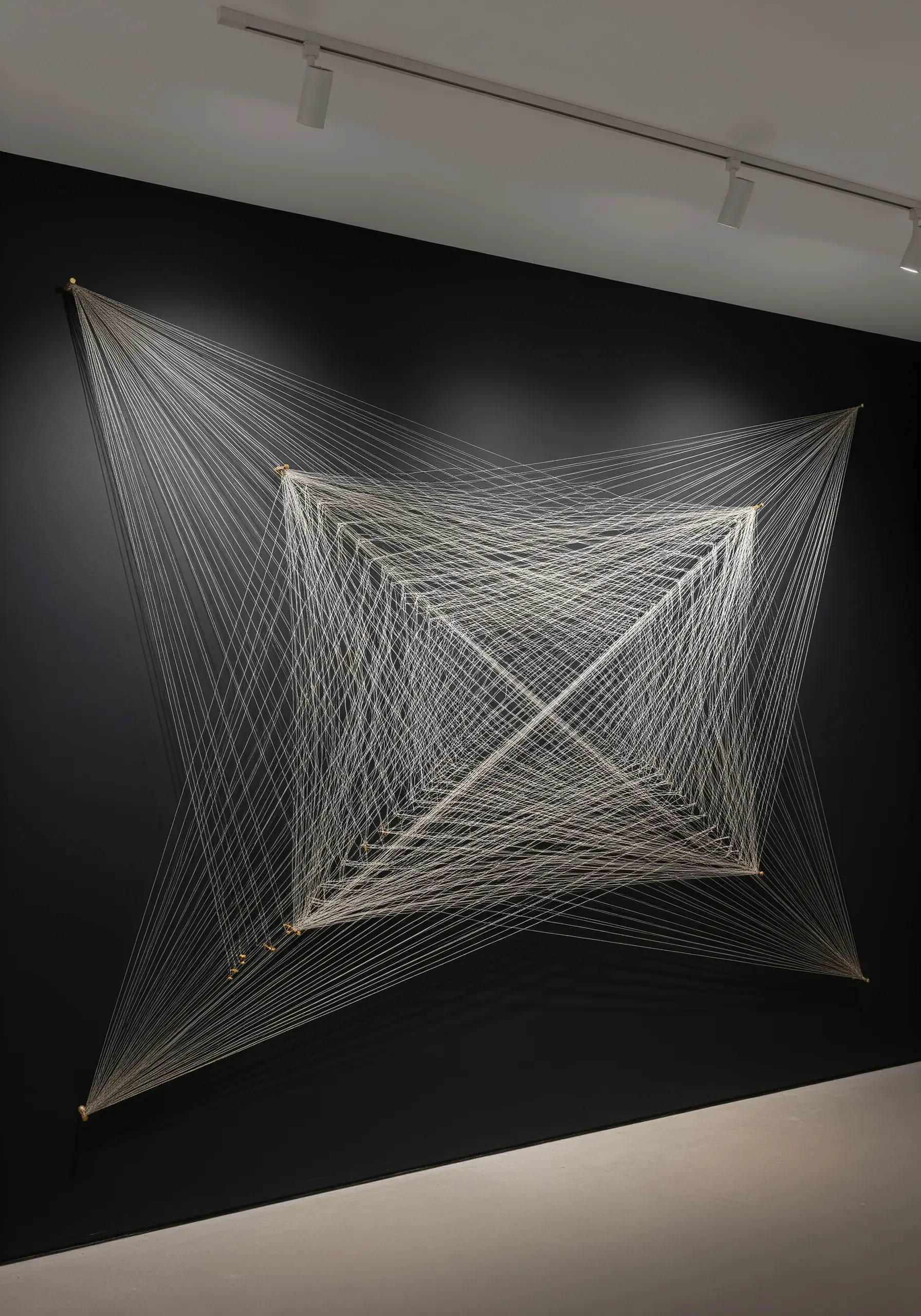
Move your embroidery off the fabric and into the third dimension by using string art techniques.
Instead of stitching through a surface, create a form by stretching threads between fixed points on a frame or directly on a wall.
By layering and intersecting the threads, you can build complex geometric shapes and optical illusions that appear to shift as the viewer moves.
This is one of the most impactful modern geometric thread art ideas, turning a single strand of thread into a large-scale architectural installation.