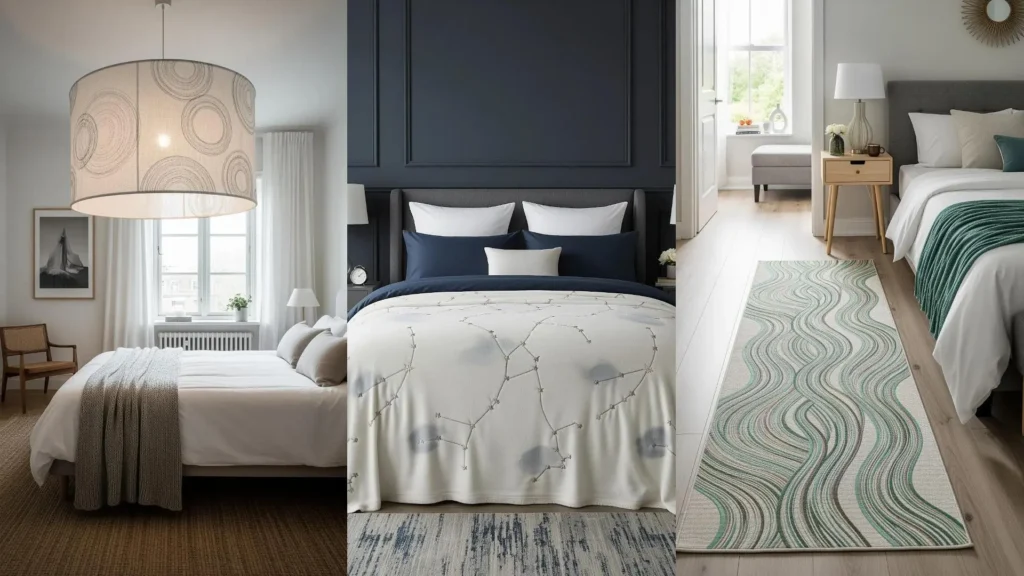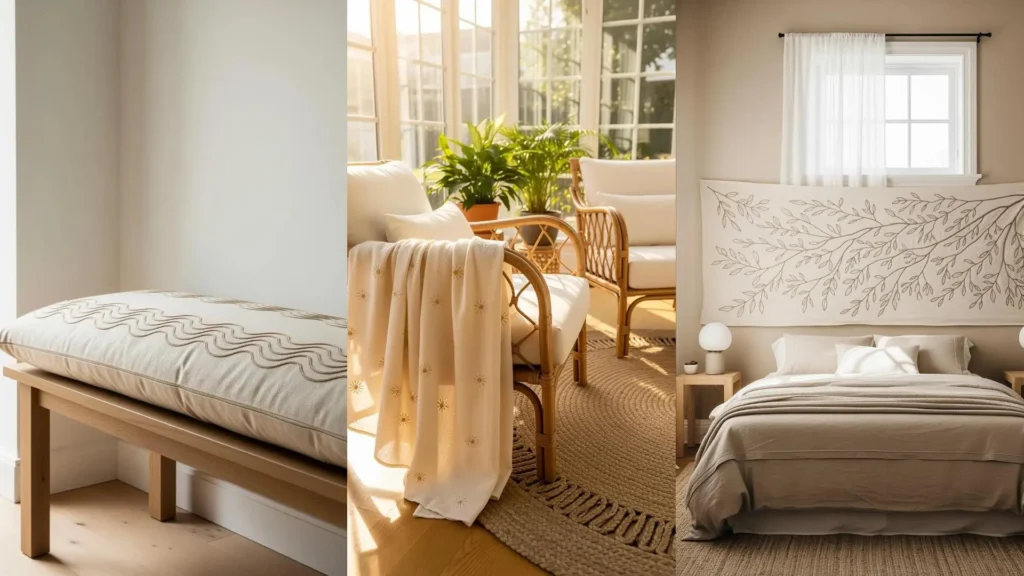
Embroidery, especially with a quiet, neutral palette, is more than a craft—it’s a way to slow down and create pockets of peace in your home. Forget the pressure of complex, colorful patterns. Instead, I want you to see how the simplest stitches, worked with intention, can build texture, form, and feeling.
In each of these projects, the focus isn’t on mastering dozens of techniques. It’s about understanding how one or two well-chosen stitches can transform a surface. You’ll learn to play with thread weight to create dimension, use negative space to make a design breathe, and see how a consistent, rhythmic stitch can be a meditation in itself.
Your needle and thread are tools for sculpting with softness. Let’s explore how to use them to create a space that feels calm, curated, and completely, authentically yours. You have everything you need to begin right now.
1. Create Sculptural Line Art with Couching
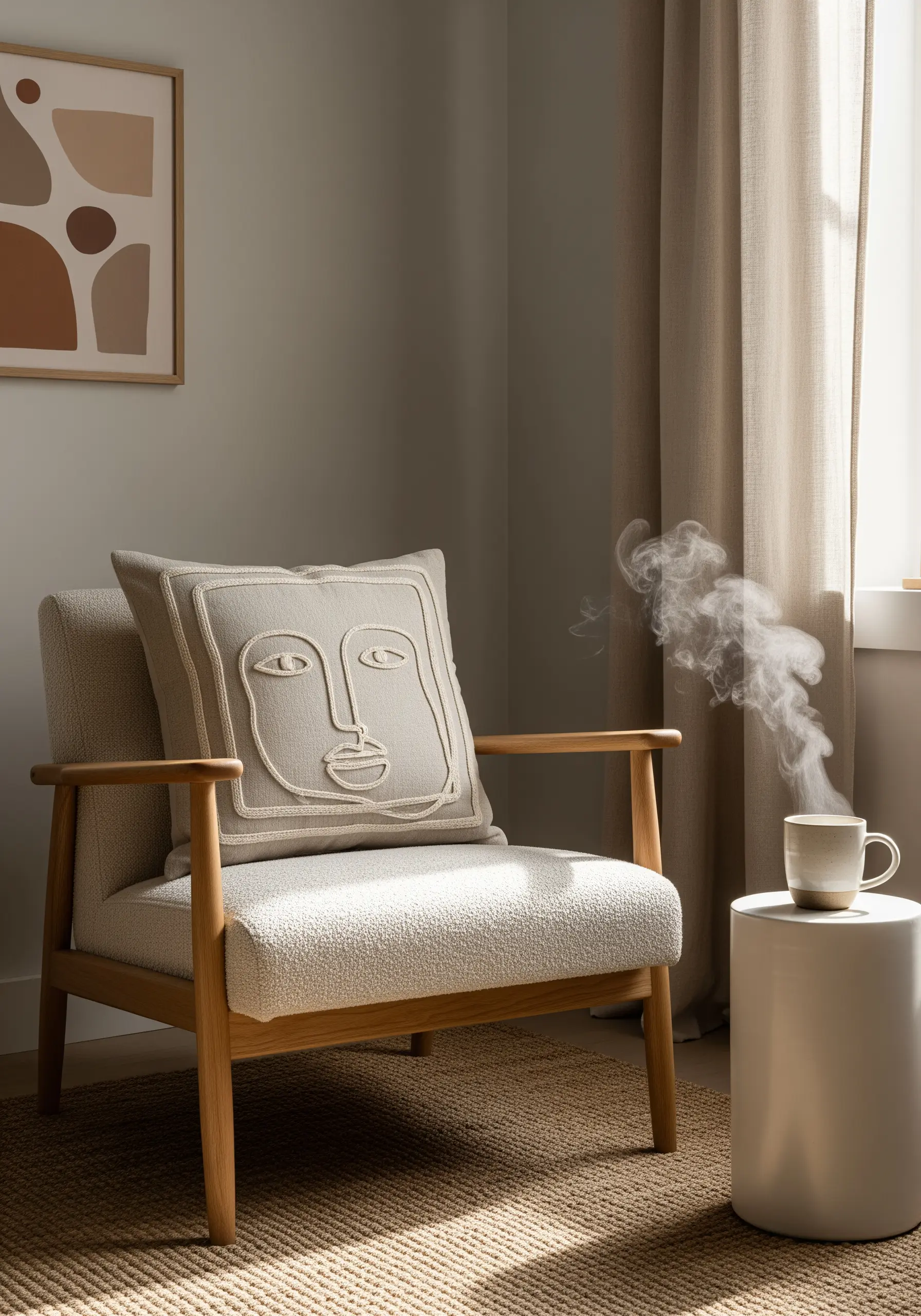
Transform a simple cushion into a piece of abstract art by using a couching technique with thick yarn or cotton piping cord.
Instead of stitching *through* the heavy cord, lay it on the surface of your fabric and secure it with small, evenly spaced tacking stitches in a matching, thinner thread.
This method creates a bold, raised line that feels both graphic and soft, turning a basic line drawing into a tactile focal point.
Choose a bouclé or thick linen fabric to enhance the textural contrast between the smooth cord and the soft base.
2. Frame High-Contrast Geometric Meditations
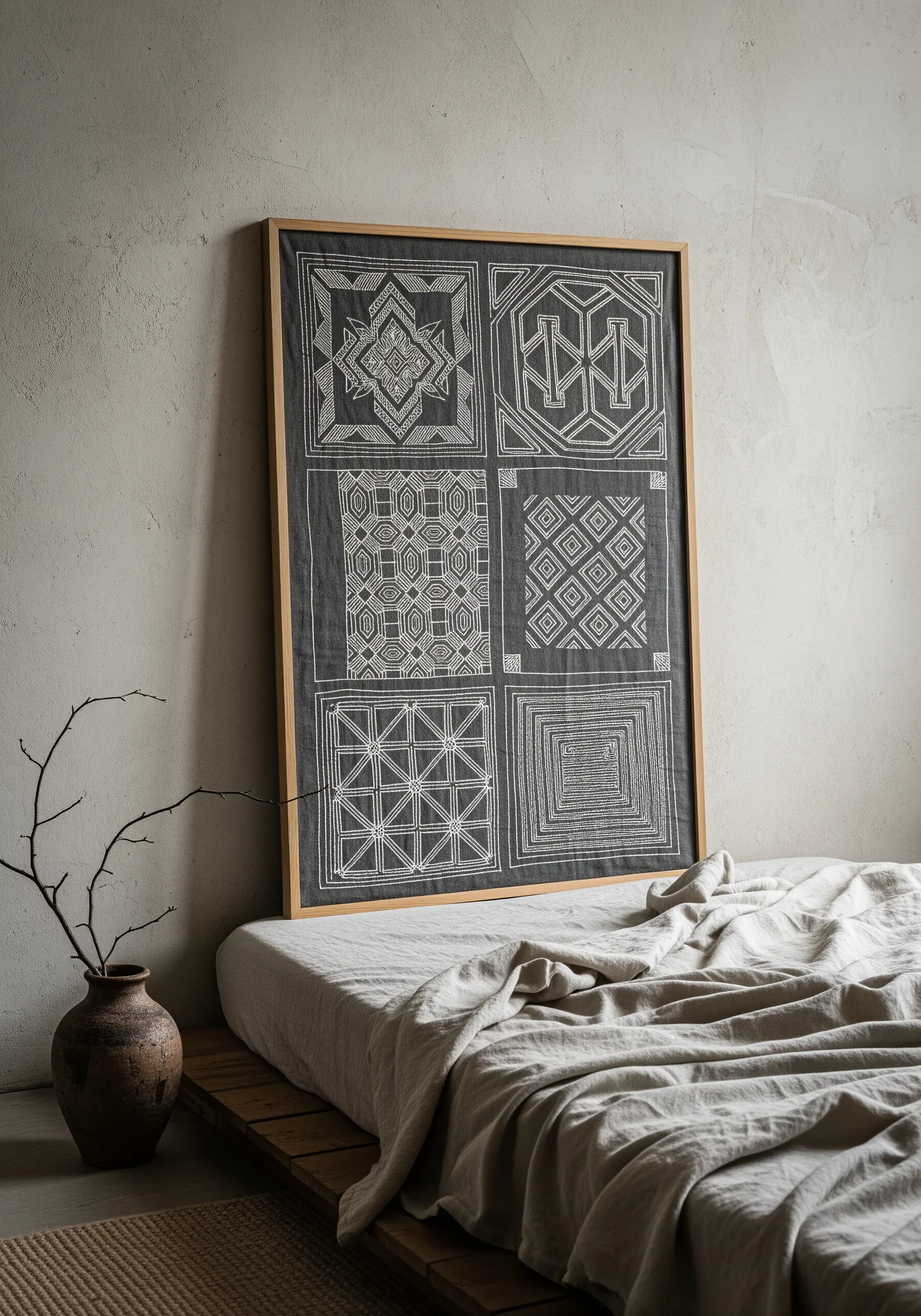
Achieve the striking look of block printing with just a needle and thread by stitching geometric patterns in bright white on a dark linen or cotton canvas.
Use a simple backstitch or running stitch for all your line work, focusing on precise spacing and consistent stitch length to create a clean, rhythmic effect.
This technique relies on the power of contrast and repetition, making even the simplest squares and diamonds feel intricate and intentional.
Grouping four or six unique patterns into a single large frame creates a cohesive piece of statement-size embroidered textile hangings that anchor a room.
3. Master the Art of Minimalist Botanicals
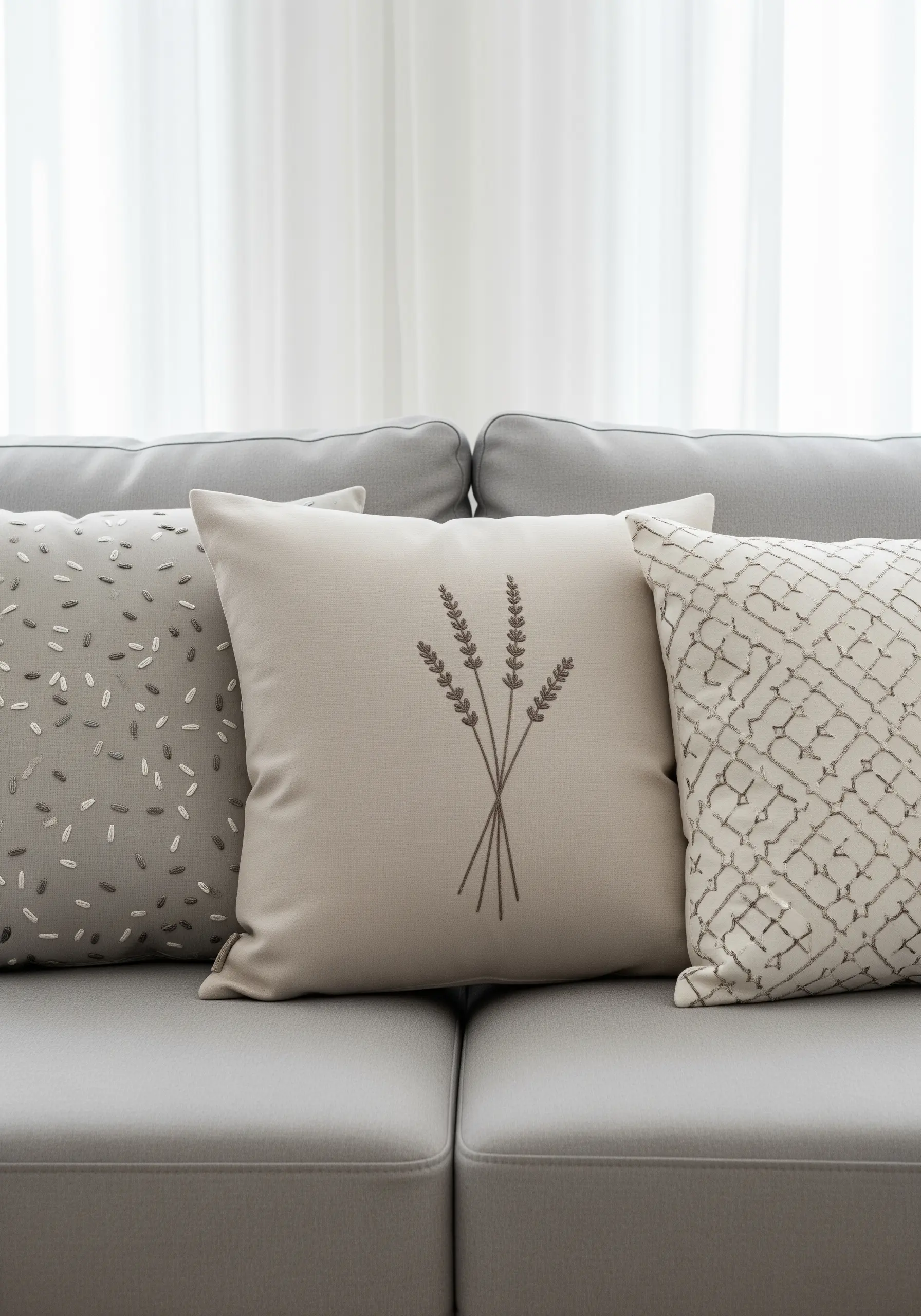
Embellish a pillow with a single, elegant botanical motif, like a sprig of lavender or eucalyptus.
Use a fine stem stitch for the stalks to give them a smooth, continuous line, and fill in the leaves or buds with short satin stitches or a few well-placed seed stitches.
The key to this serene look is embracing negative space; allow the unstitched fabric to frame your motif, giving it room to breathe.
Select a thread just a few shades darker than your base fabric for a subtle, tone-on-tone effect that whispers rather than shouts.
4. Stitch Rhythmic Waves with Chain Stitch
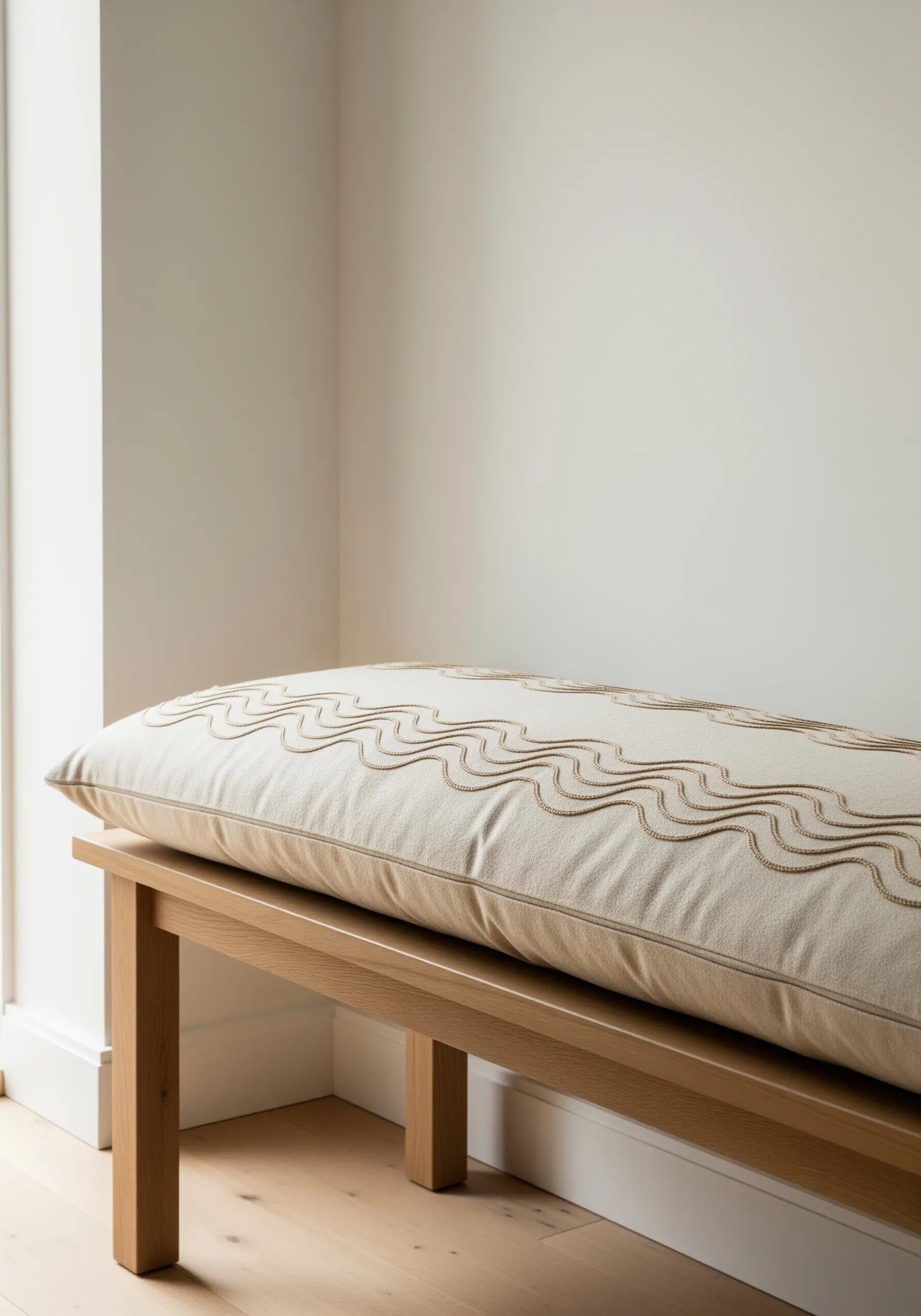
Create a sense of calm movement on a long lumbar pillow by stitching flowing, parallel waves.
A chain stitch is the perfect choice here, as it produces a raised, rope-like line that adds both visual interest and tangible texture.
To ensure your waves are uniform, lightly draw your guides with a water-soluble pen before you begin stitching.
Using a slightly thicker pearl cotton or 6-strand floss will make the texture more pronounced, turning a simple pattern into a sophisticated design element.
5. Embrace Wabi-Sabi with a Single Line
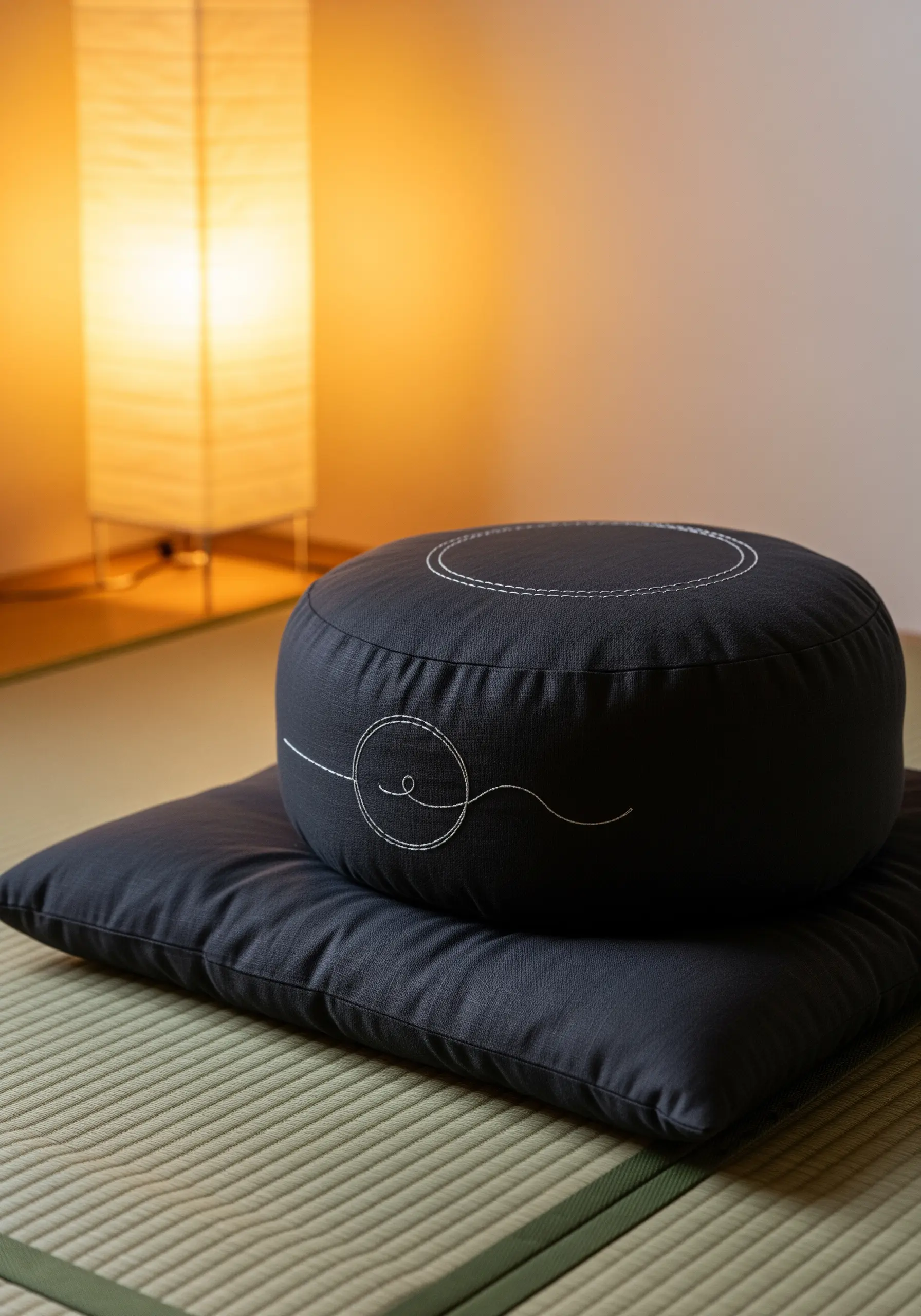
Add a touch of minimalist philosophy to a meditation cushion or floor pillow with a single, imperfect, meandering line.
Use a simple running stitch with a high-contrast thread, like white on charcoal gray, to make the design stand out.
Don’t strive for perfect stitches; the beauty of this concept lies in its organic, hand-drawn quality, celebrating the quiet imperfections that make a piece unique.
This approach transforms a functional object into a reminder to find peace in simplicity.
6. Define Edges with a Geometric Border
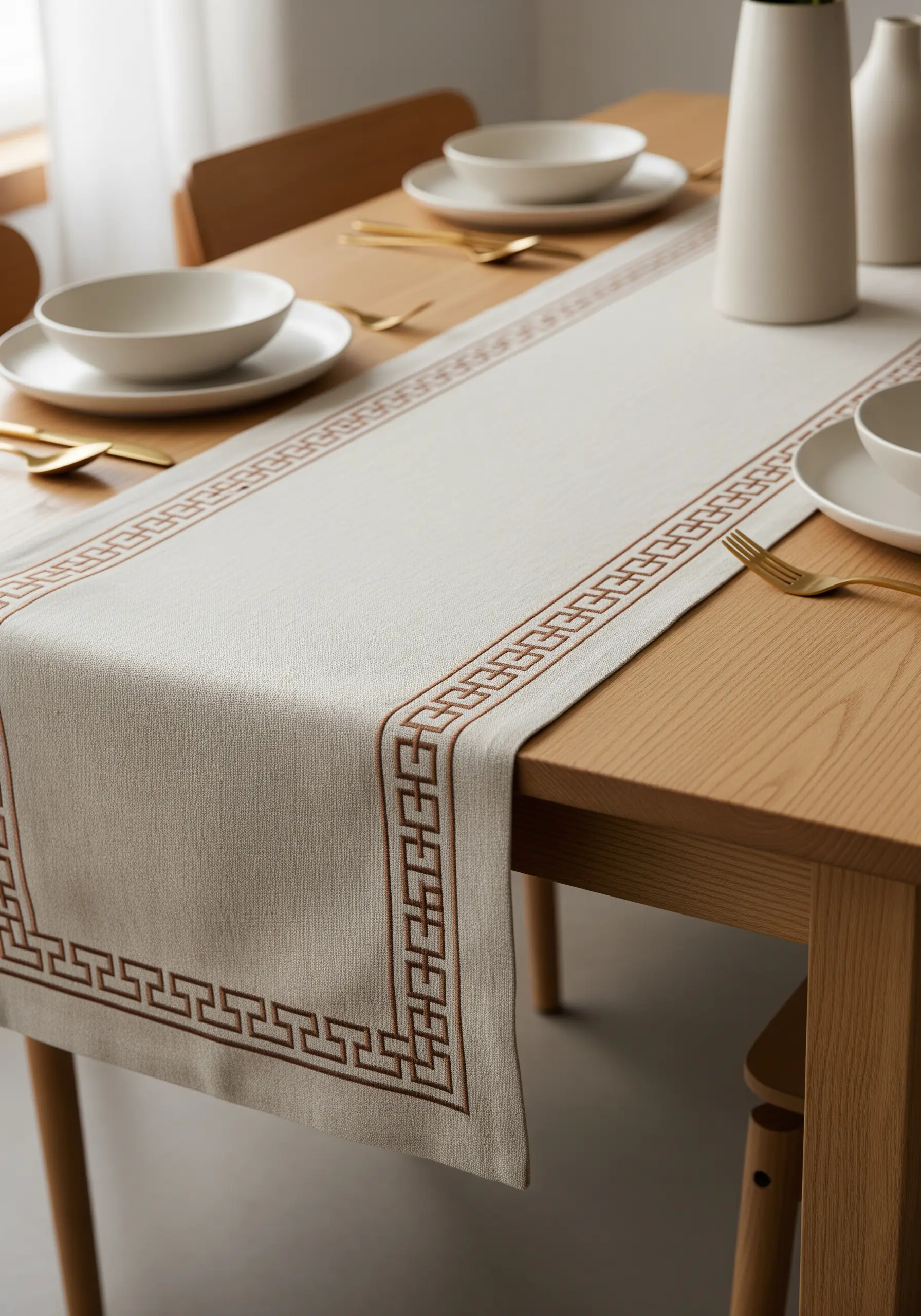
Elevate a simple linen table runner with a crisp, geometric border inspired by classic architectural motifs.
Use a satin stitch to fill the shapes, ensuring your stitches lie flat and close together for a smooth, solid appearance. Work in a frame or hoop to prevent the fabric from puckering under the tension of the dense stitching.
This technique adds a sense of structure and formality, turning an everyday textile into a refined piece for any occasion.
7. Add Chunky Texture with Knotted Yarn

Create extraordinary softness and dimension on a throw blanket by couching or appliquéing thick, chunky yarn.
You can braid or chain crochet the yarn first to create a substantial cord, then attach it to the surface of the blanket with a strong, matching thread.
This method allows you to add bold, sculptural elements without having to stitch with unwieldy, thick fibers directly.
It’s a perfect way to bring cozy, handmade organic pieces that add instant texture to your reading nook.
8. Sculpt a Zen Garden with French Knots
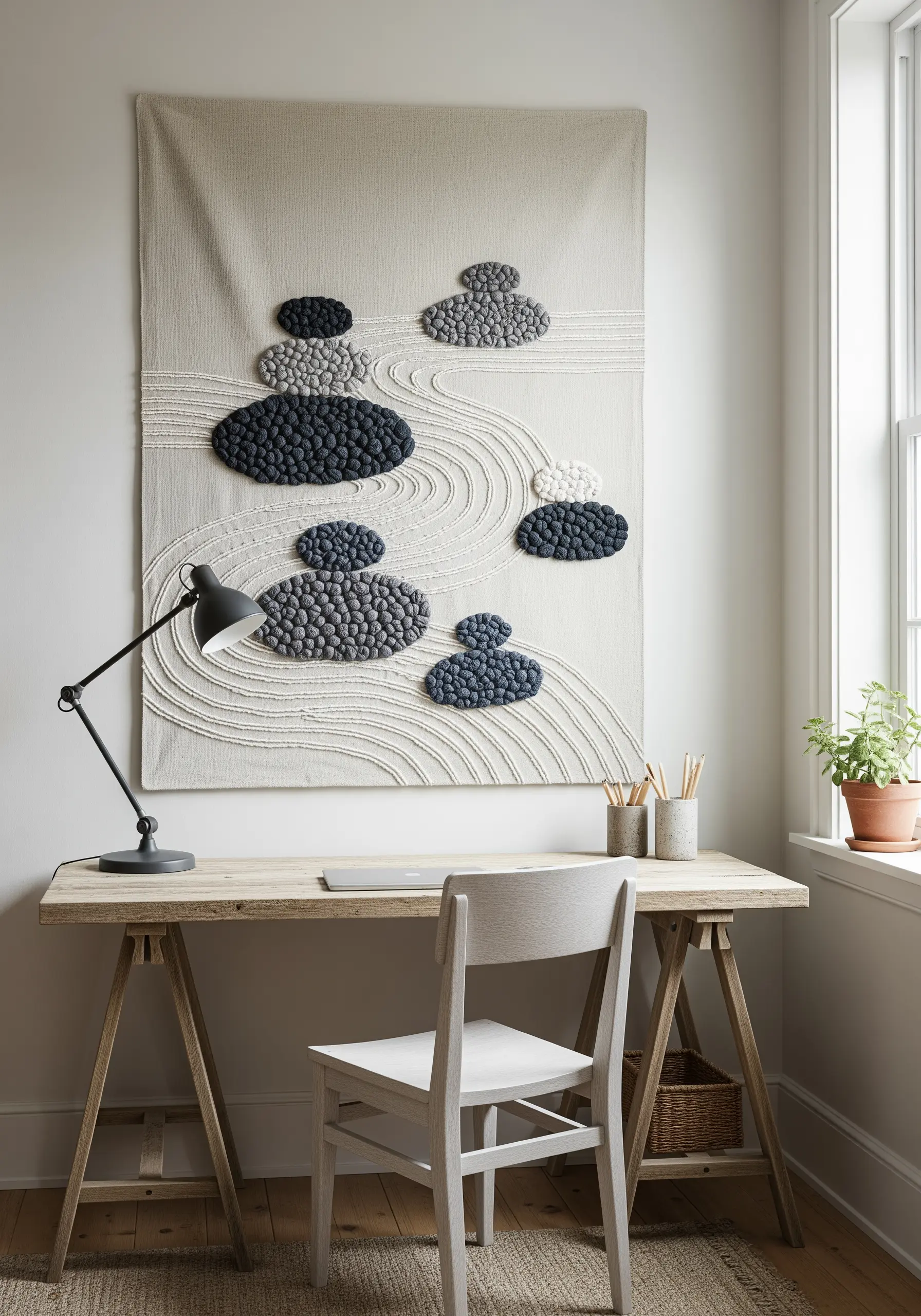
Evoke the tranquility of a Japanese rock garden by creating textured ‘stones’ with densely packed French knots.
Vary the size and color of your pebble shapes using shades of charcoal, gray, and cream to create depth and interest.
Outline each shape first, then fill it inwards, packing the knots tightly together for a plush, three-dimensional effect.
Use a fine backstitch to create the raked sand lines in the background, completing your meditative wall hanging.
9. Go Large-Scale with a Botanical Headboard
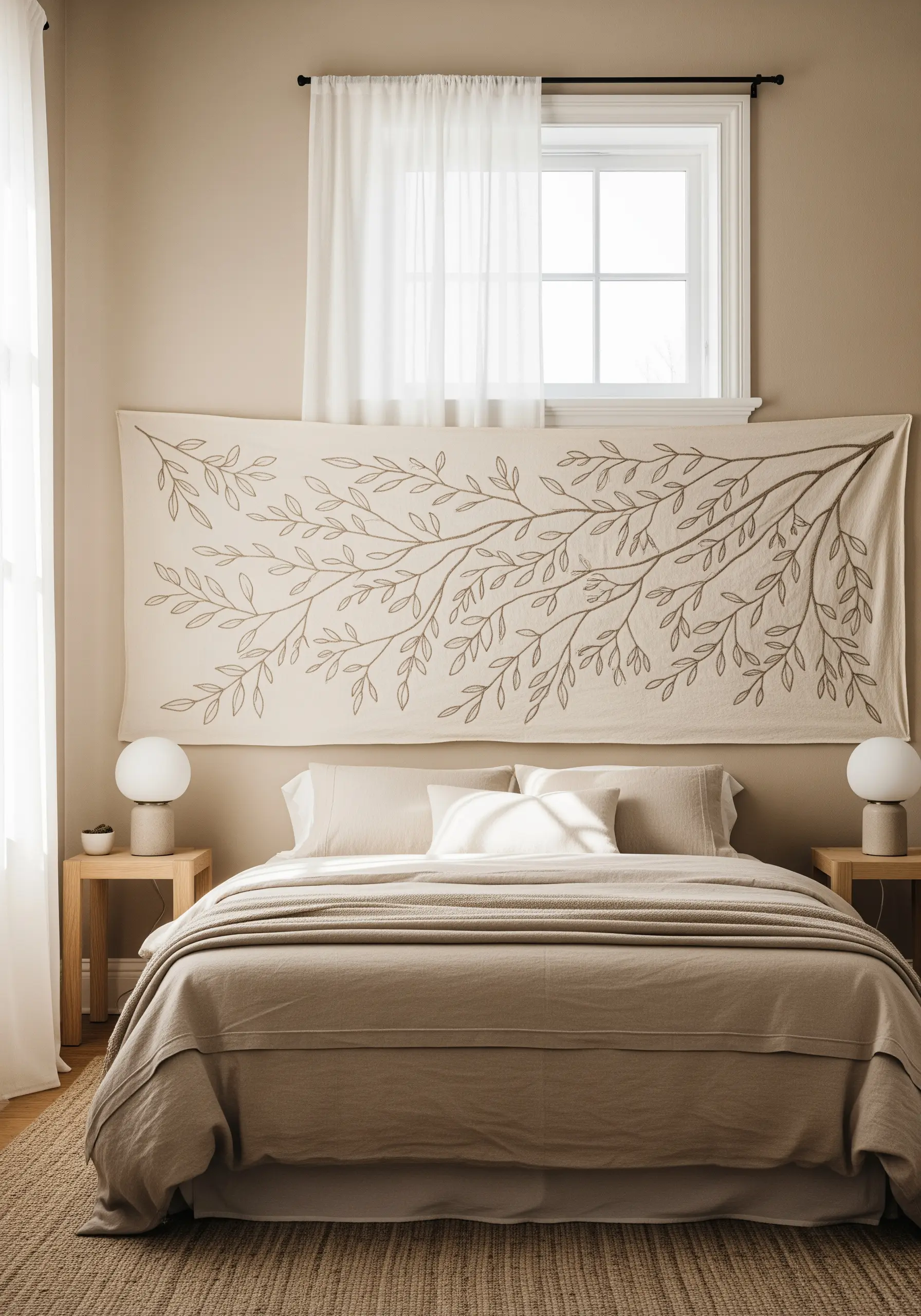
Turn your bed into a serene focal point by creating a large embroidered tapestry to serve as a headboard.
Choose a simple, sprawling branch motif that can fill the space without overwhelming it.
Use a basic stem stitch or backstitch for the branches and simple straight stitches or seed stitches for the leaves.
The impact here comes from the scale, not the complexity of the stitches. It’s an elegant way to introduce serene embroidery ideas into your bedroom decor.
10. Create an Abstract Triptych with Leftover Thread
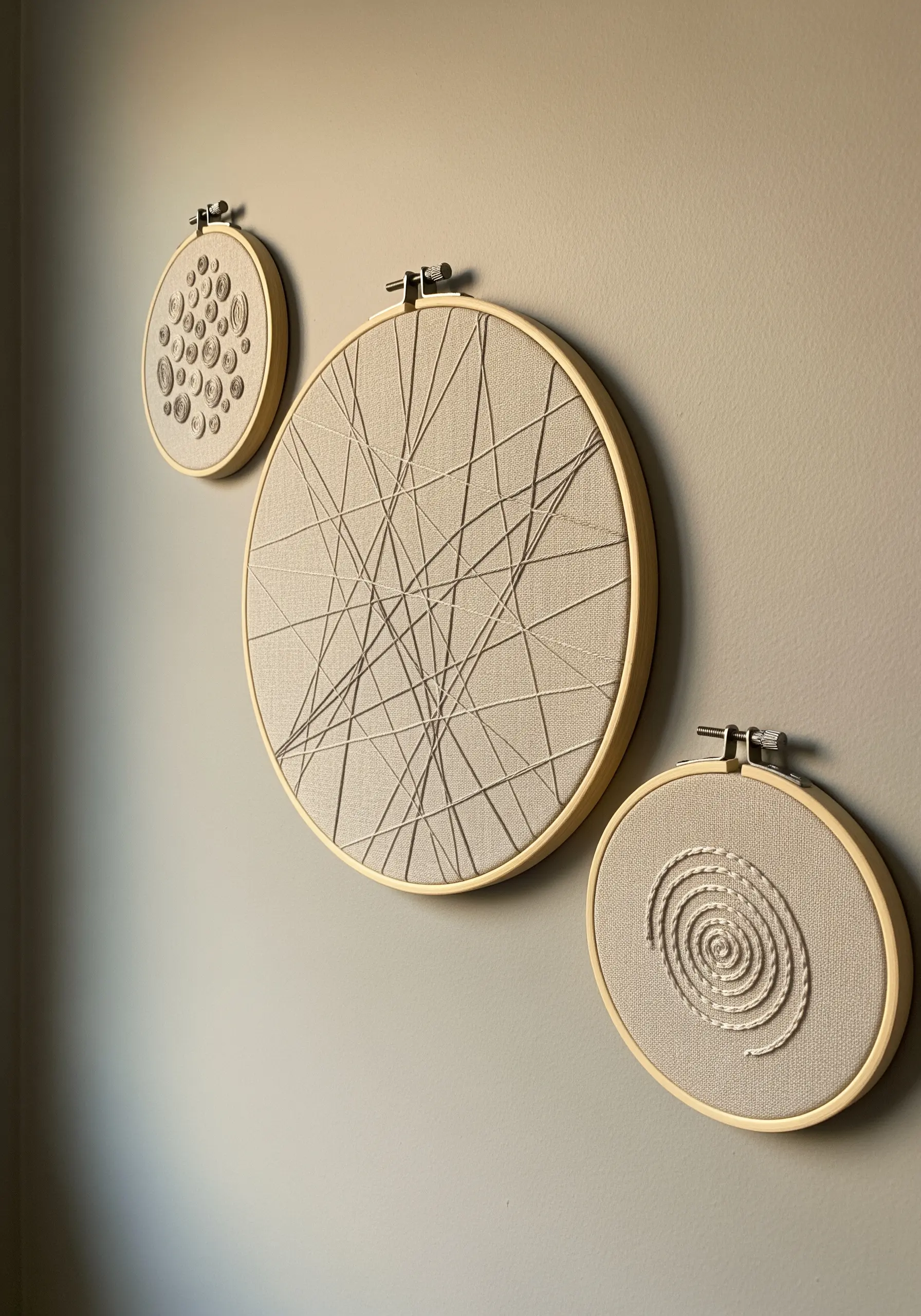
Turn your thread scraps into a modern art installation by creating a set of three coordinating abstract hoops.
Explore different techniques in each: use intersecting straight stitches pulled taut to explore tension, create a dense spiral with backstitch, or make textured polka dots with padded satin stitch.
Keeping the fabric and color palette consistent across all three hoops ensures the final collection feels cohesive and intentional.
This is one of the best abstract hoop art concepts to transform leftover thread into gallery-worthy textures.
11. Scatter Subtle Starbursts for a Touch of Light
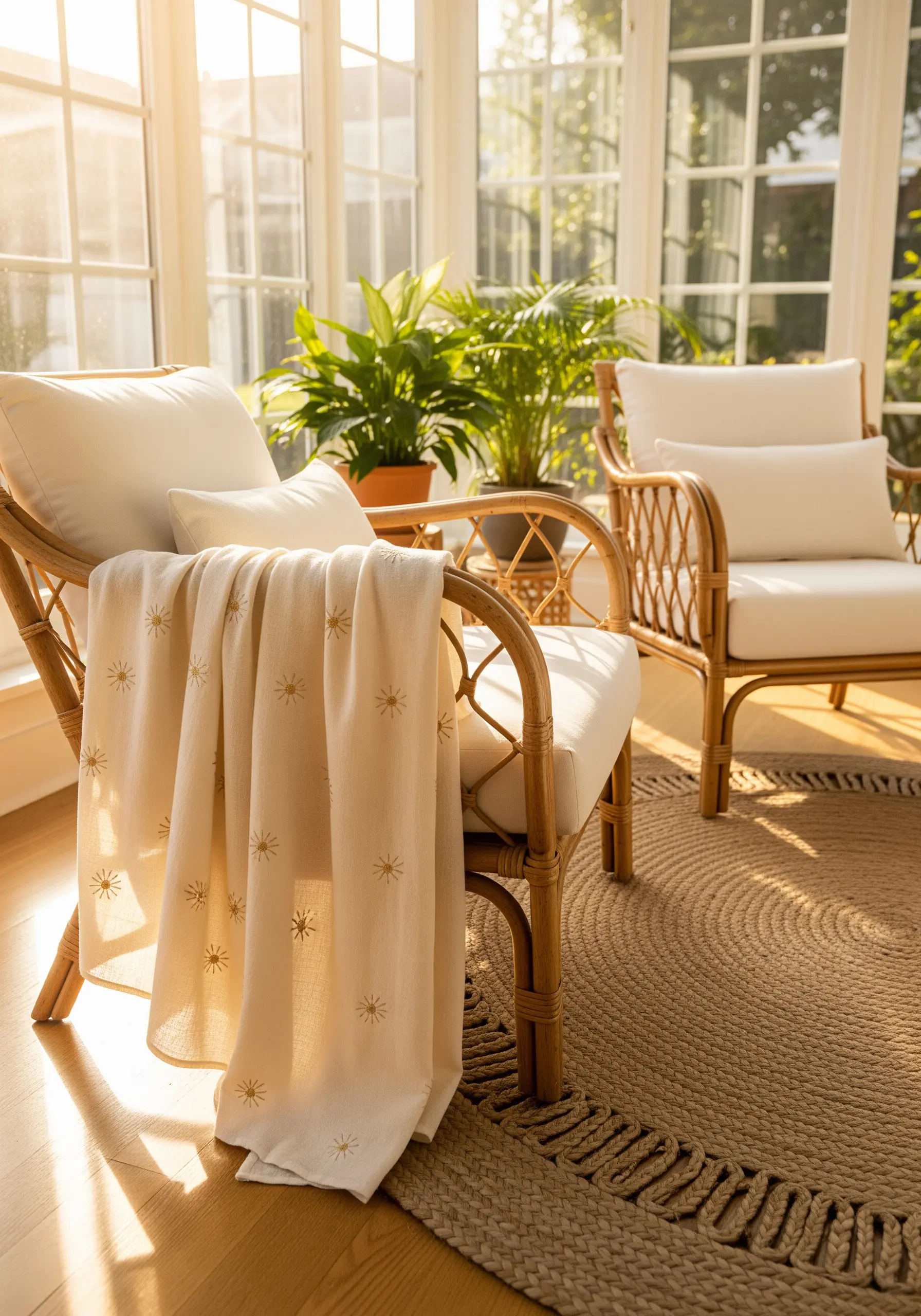
Embellish a simple cotton or linen throw with small, scattered starburst motifs for a delicate, airy feel.
Create each starburst with a series of straight stitches of varying lengths radiating from a central point. There’s no need for perfect symmetry; a slightly irregular, hand-drawn look adds to the charm.
Use a metallic or high-sheen thread in a soft gold or silver to catch the light and add a hint of understated glamour.
12. Personalize Linens with a Padded Monogram
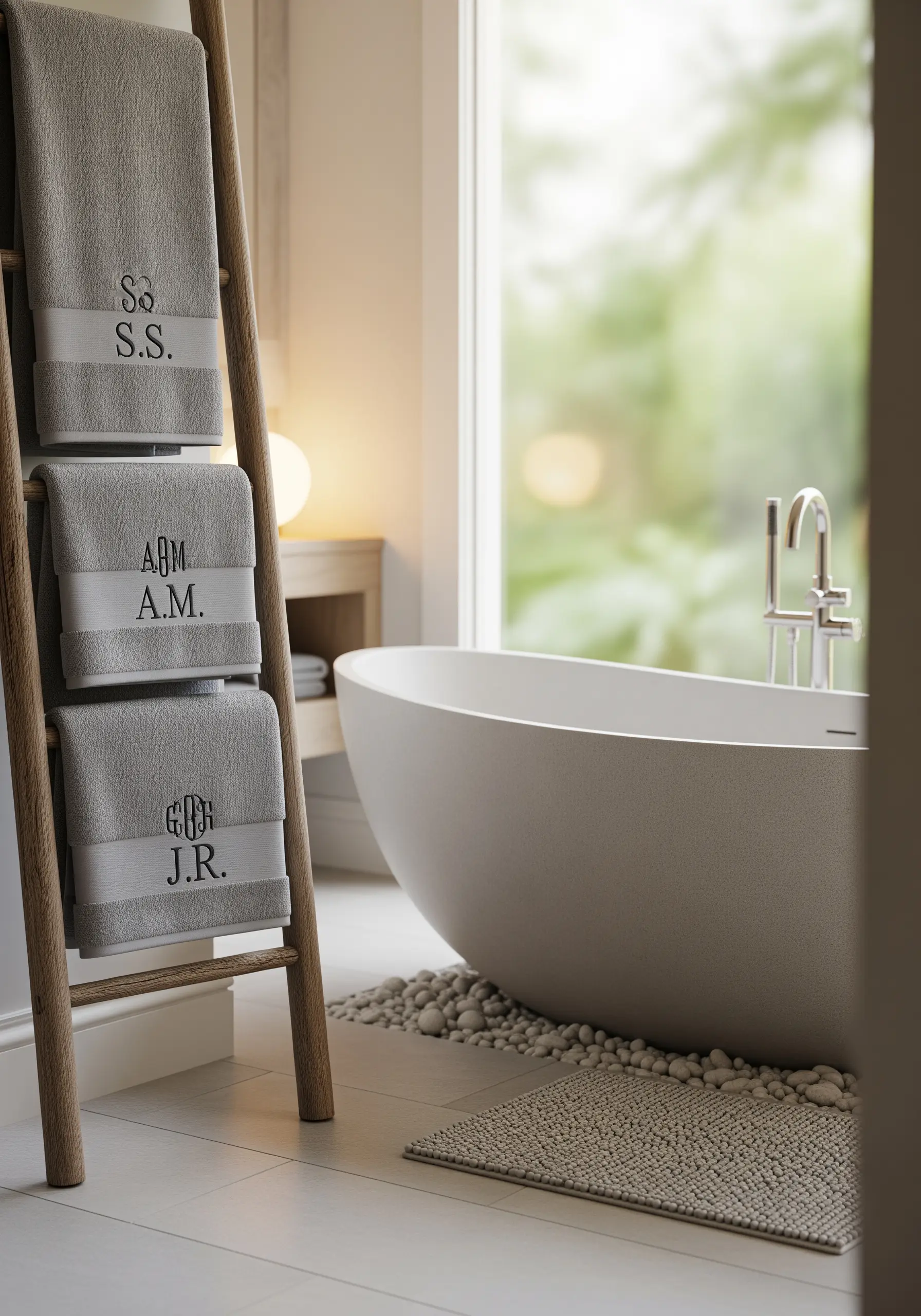
Add a touch of timeless luxury to your bath towels with a beautifully stitched monogram.
To give your letters a professional, raised appearance, first create a base layer of padding stitches (small straight stitches) within the outline of your design.
Then, cover this padding with smooth, even satin stitches, worked perpendicular to the padding stitches. This technique lifts the monogram from the fabric’s surface, giving it definition and a high-end finish.
13. Illustrate Kitchen Towels with Herbal Line Art
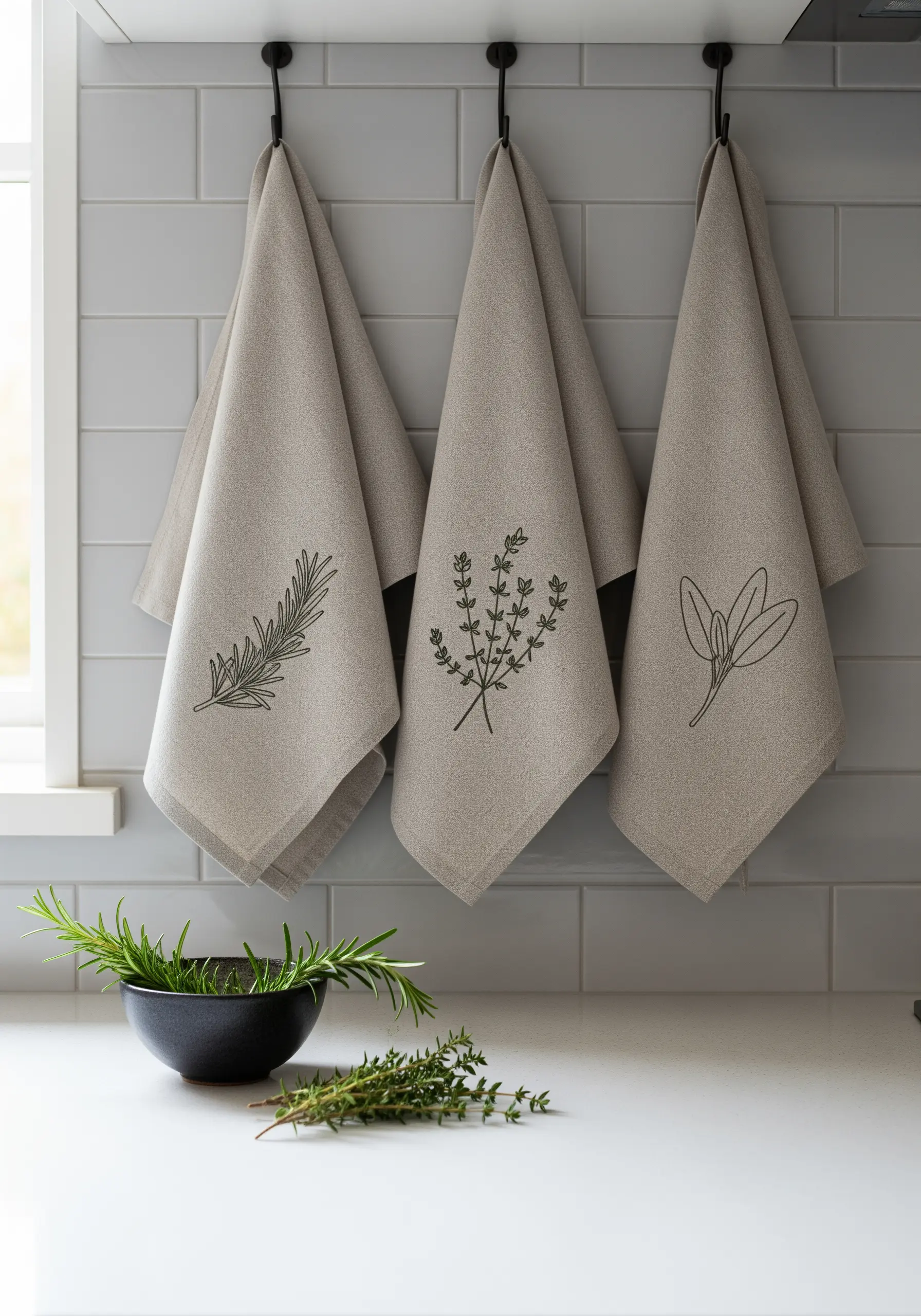
Bring a touch of the garden into your kitchen by embellishing linen towels with simple herbal illustrations.
Use a single, dark thread and a clean backstitch to trace the delicate forms of rosemary, thyme, or sage.
The key is to keep the lines crisp and the design minimal, focusing on the recognizable silhouette of each herb.
These minimal plant motifs are not only beautiful but also add a touch of handmade charm to a practical item.
14. Create a Translucent Screen with Tall Grasses
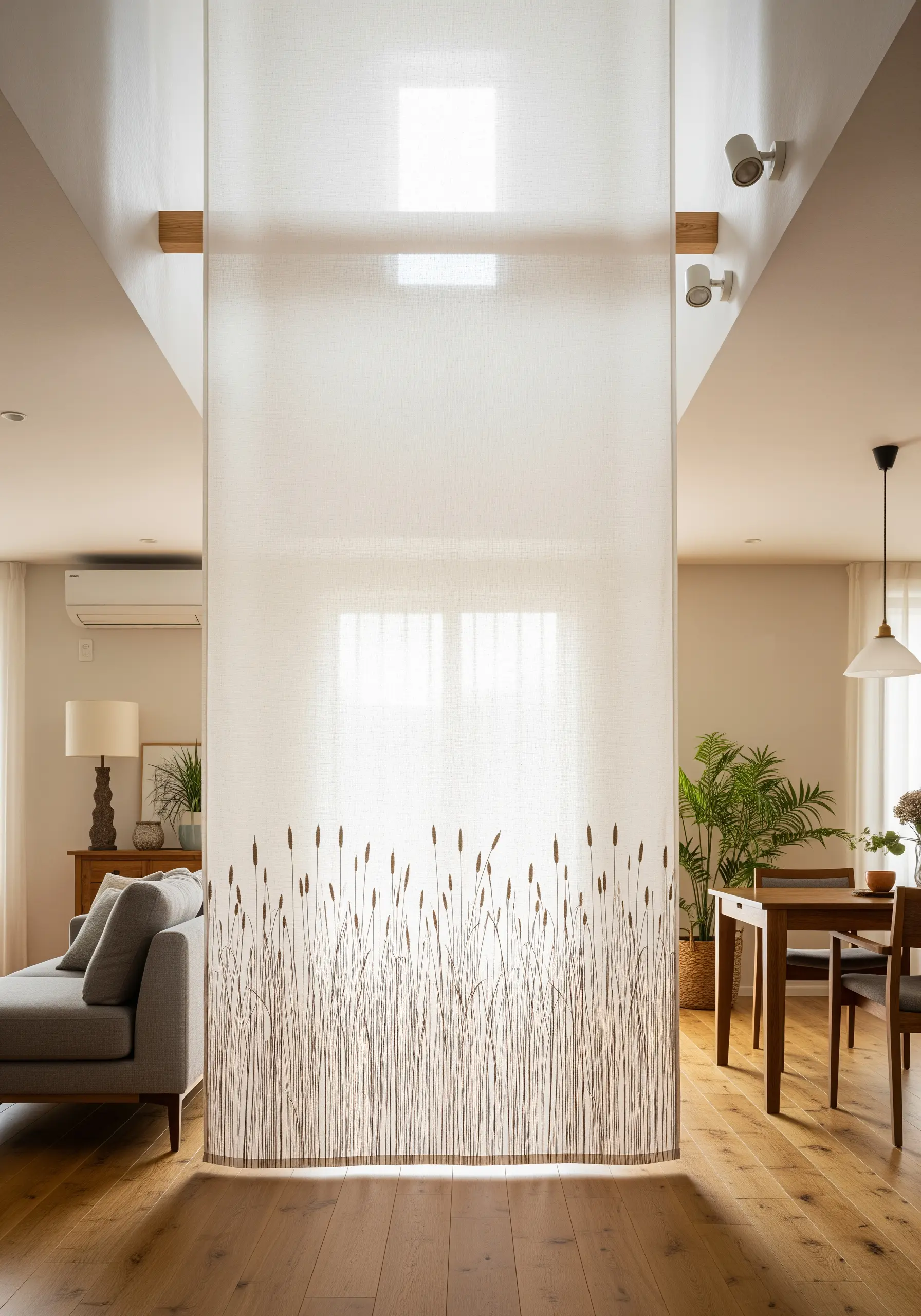
Use embroidery on sheer fabric to create a stunning and functional room divider that plays with light.
Stitch a border of tall reeds or grasses along the bottom edge using long, vertical straight stitches in a dark, earthy brown.
The semi-transparent fabric allows the design to be visible from both sides while gently filtering light, creating beautiful shadows that shift throughout the day.
This project transforms simple stitches into an architectural element that defines your space with grace.
15. Craft a Dreamy Nursery Scene with Padded Appliqué
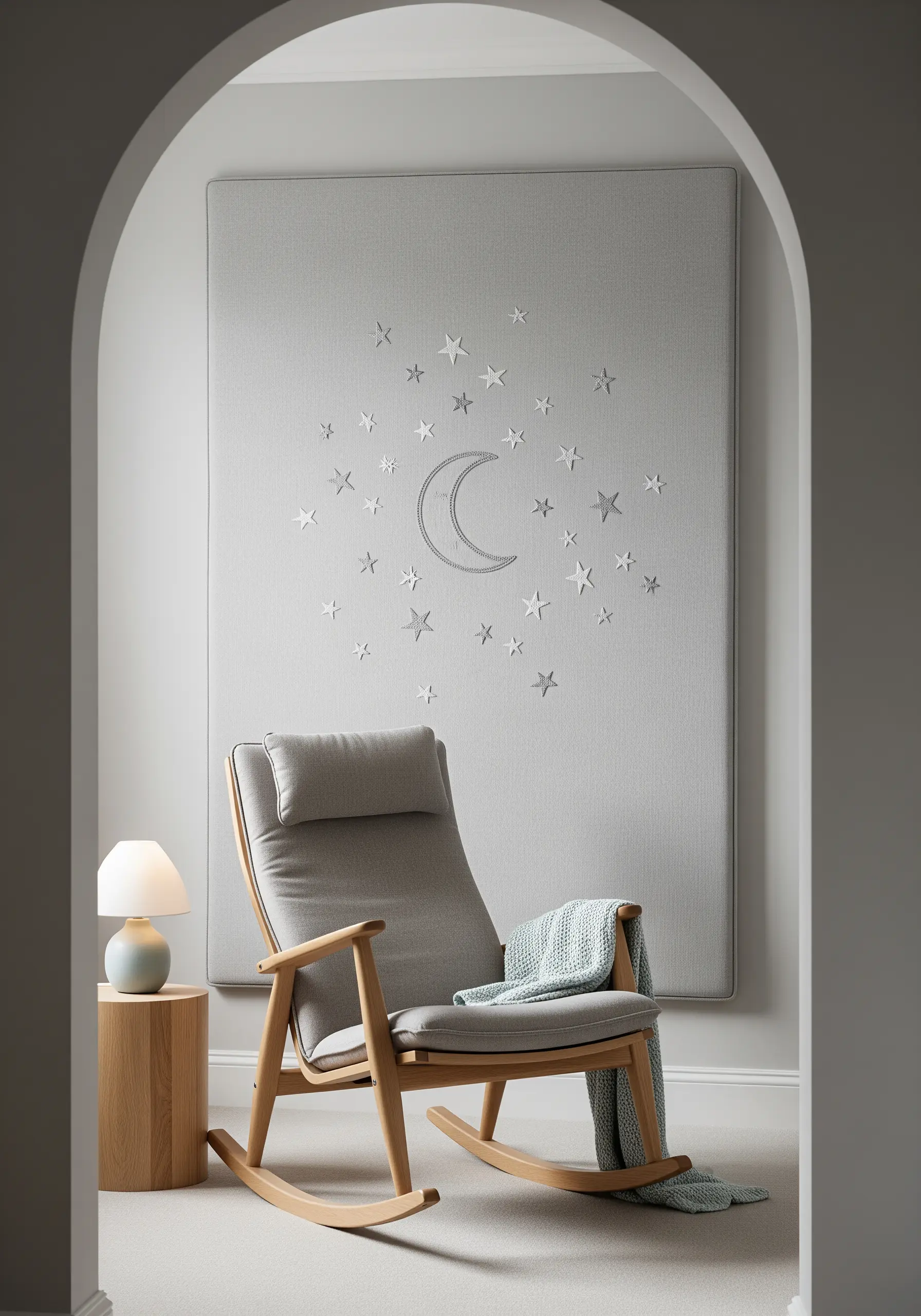
Design a soothing piece of wall art for a nursery or quiet corner by creating soft, sculptural celestial shapes.
Cut your moon and star shapes from a contrasting fabric, place a thin layer of batting underneath each one, and then secure them to your base fabric with a neat satin stitch or blanket stitch around the edges.
This padded appliqué technique gives the motifs a gentle, pillow-like dimension that is both visually and emotionally soft, perfect for creating a calm, cozy atmosphere.
16. Elevate Stitch Samplers into a Curated Collection
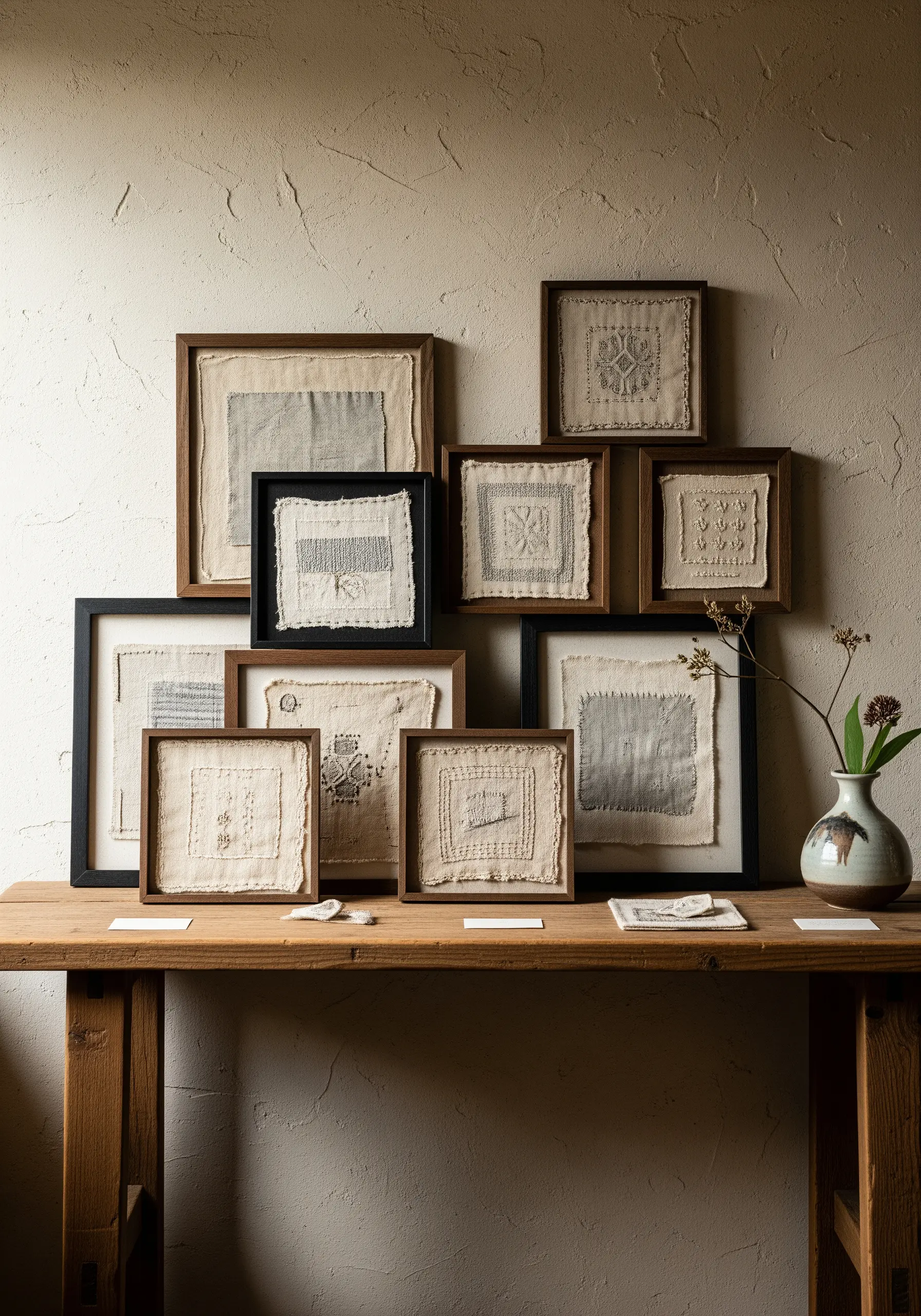
Transform your practice swatches and stitch experiments into a beautiful gallery wall display.
Work small samplers on coordinating neutral linen scraps, exploring different geometric fills, line stitches, and textural knots.
Don’t worry about perfection; the raw edges and visible handwork are part of the charm. Mount them in a collection of mismatched wooden frames to create an eclectic, layered look.
This approach honors the process of learning and turns your stitching journey into DIY wall art embroidery projects that everyone will ask about.
17. Center Your Design with an Intricate Mandala
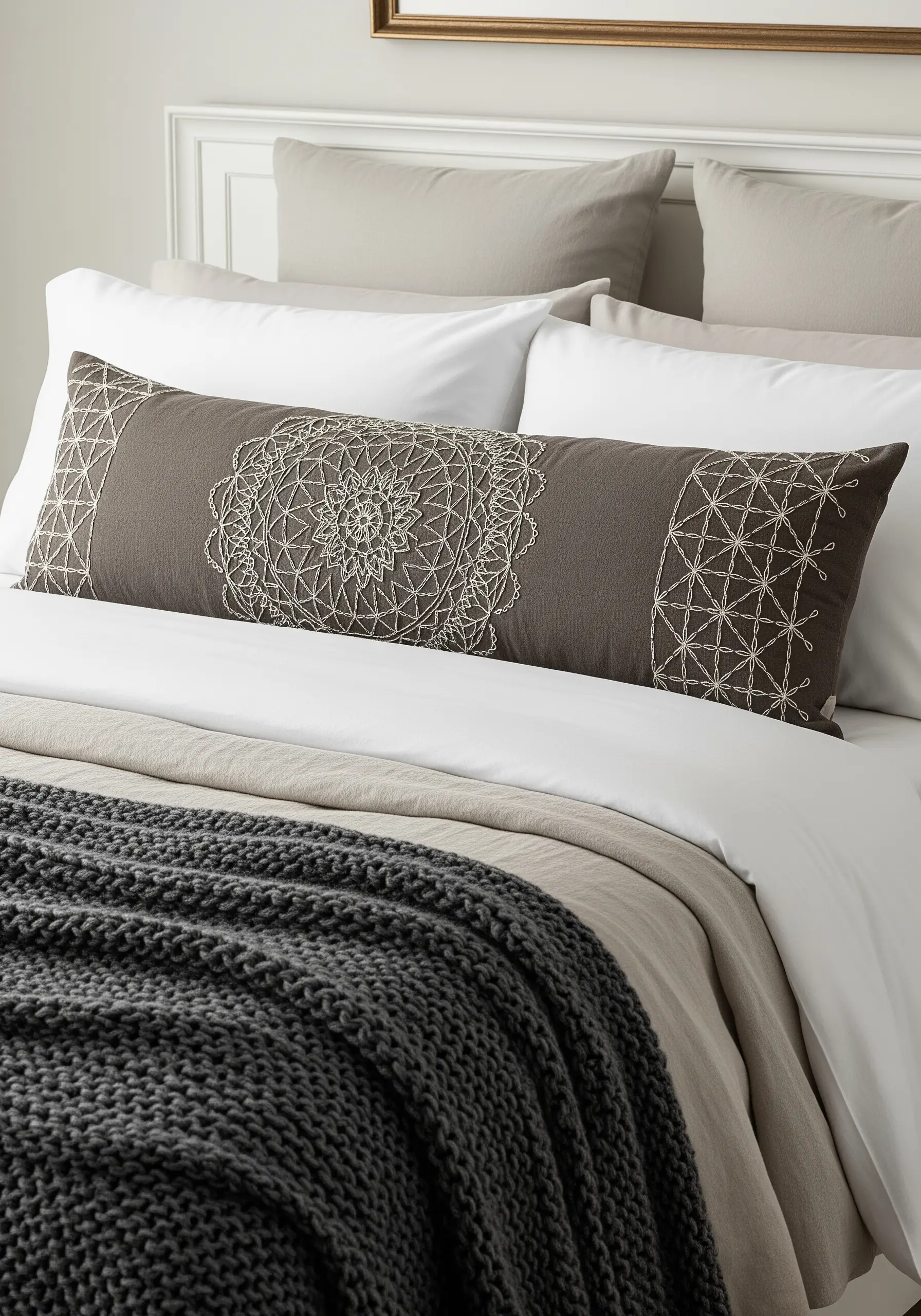
Bring a sense of focus and tranquility to a bedroom with a long pillow featuring a detailed mandala.
Use a light-colored thread on a darker fabric to make the intricate line work pop. A fine, consistent backstitch or whipped backstitch is ideal for creating the clean, symmetrical lines.
The repetitive, meditative process of stitching a mandala is as calming as the finished piece itself, making it one of the most relaxing handmade embroidery ideas to create a relaxing evening routine.
18. Integrate Stitched Objects into Shelf Décor
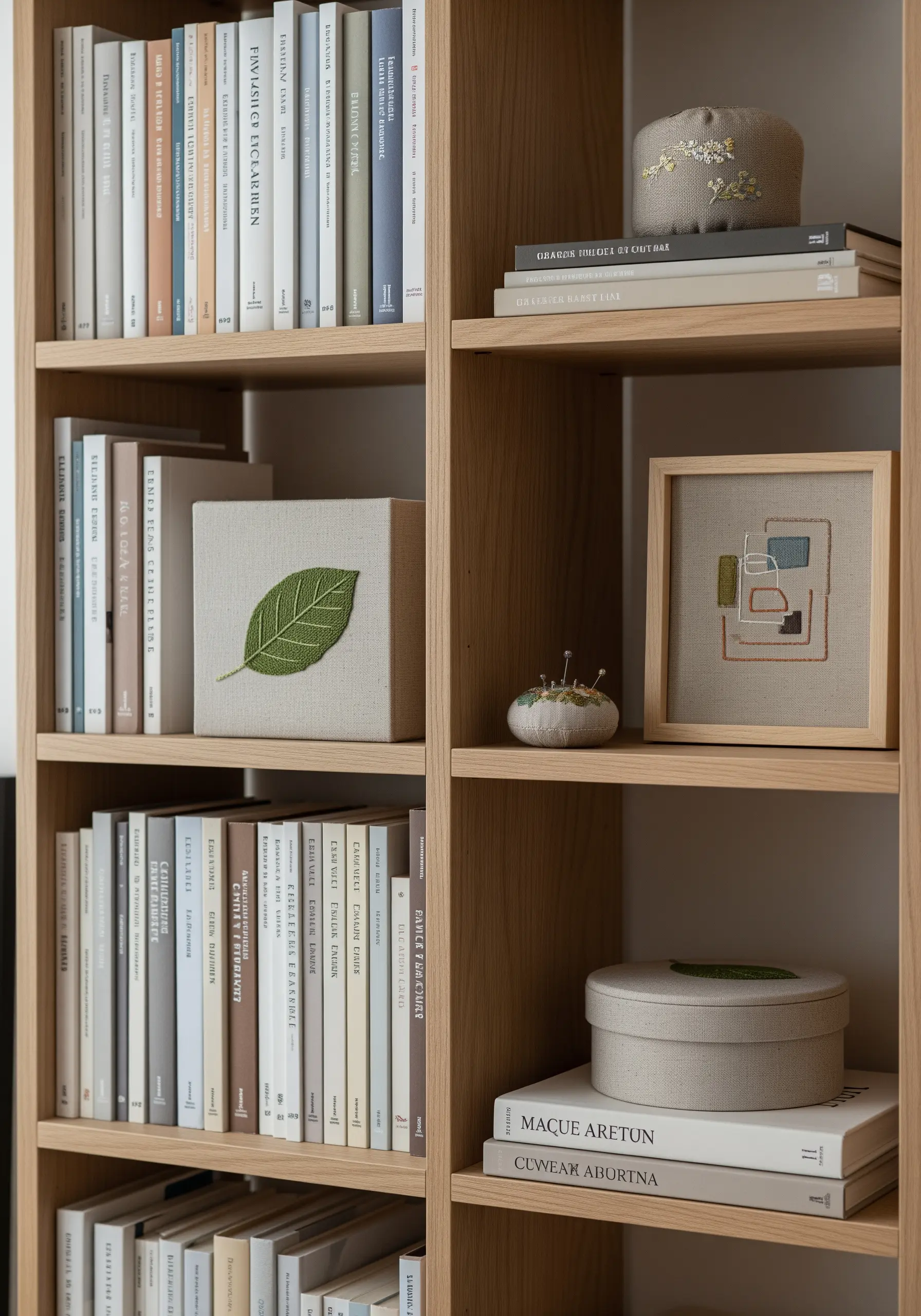
Think beyond the hoop and create small, embroidered objects that can be styled on a bookshelf or mantelpiece.
Wrap a small canvas or wooden block with linen and embroider a simple, graphic motif like a single leaf or an abstract shape.
To achieve a smooth, filled effect for the leaf, use long and short stitch, blending your stitches carefully at the edges. These small creative handmade art objects that double as home decor add a surprising and personal touch among your books and photos.
19. Make a Bold Statement with Couched Rope
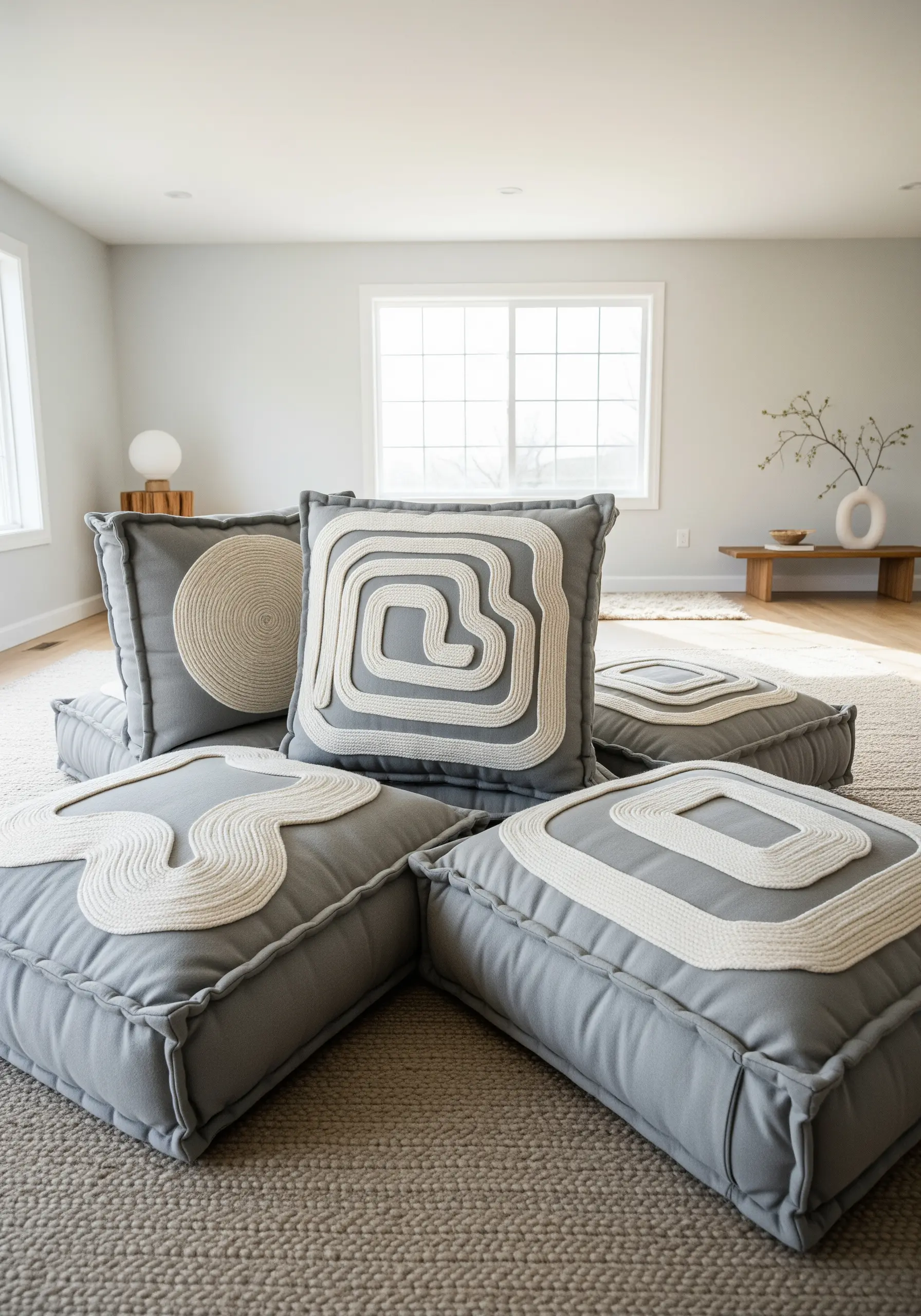
For a high-impact, graphic look on floor cushions, use the couching technique with thick cotton rope.
Plan a bold, abstract design and lay the rope along your drawn lines, stitching it down with a sturdy, invisible thread (or a matching one for a more visible effect).
This method allows you to create large-scale, sculptural designs quickly and effectively.
It’s a fantastic way to produce bold, textural art that is both visually striking and durable enough for everyday use.
20. Weave Light with a Stitched Lampshade
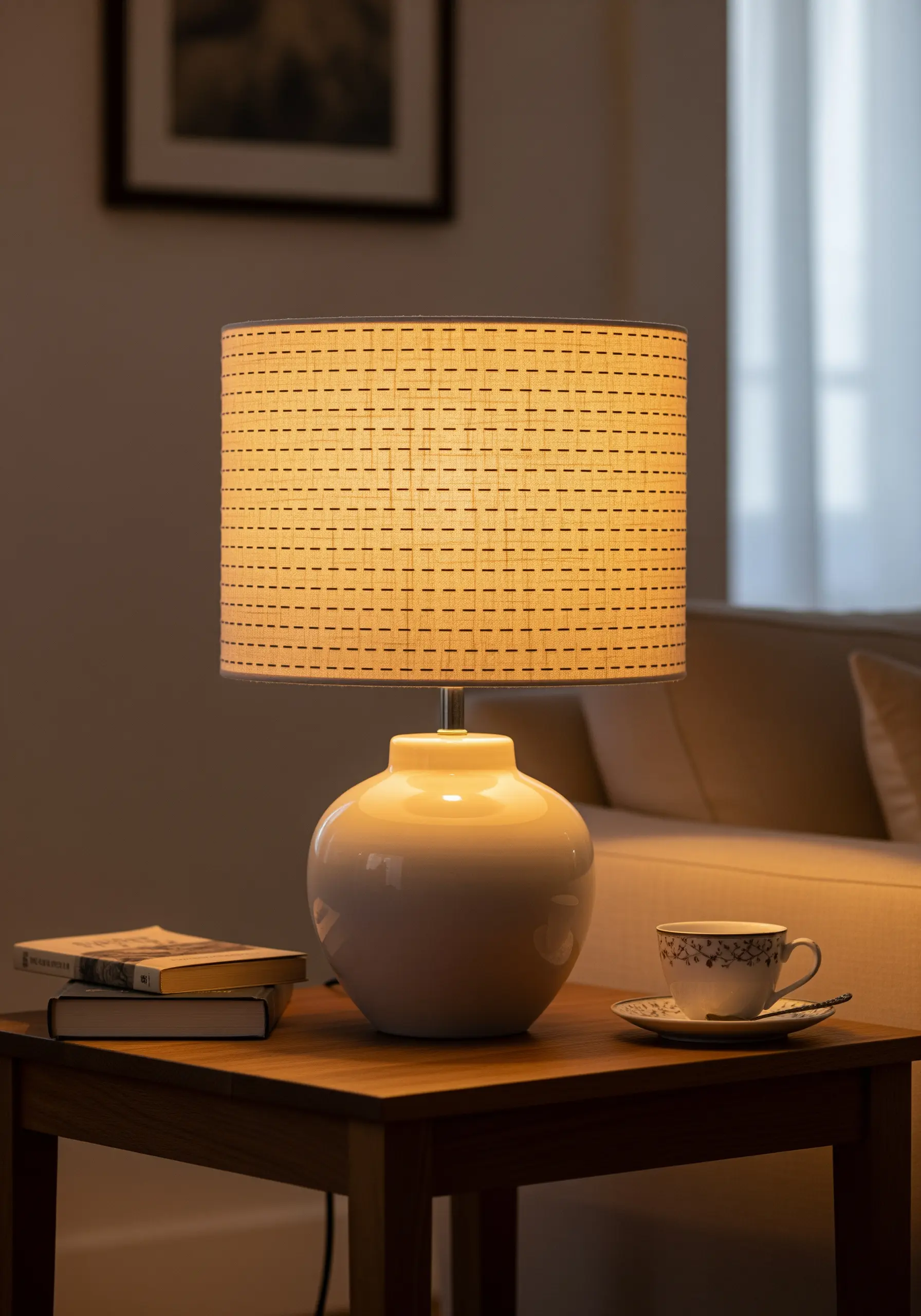
Transform a plain lampshade into a source of patterned light using simple running stitches.
Work rows of stitches directly onto the lampshade fabric, creating a grid or dashed line pattern.
When the lamp is turned on, the light will shine through the perforations made by your needle, and the threads themselves will create a subtle, linear shadow.
This technique is all about the interplay of light and texture, adding a layer of quiet, handmade detail to your room’s ambiance.
21. Capture Organic Flow with a Meandering River Line
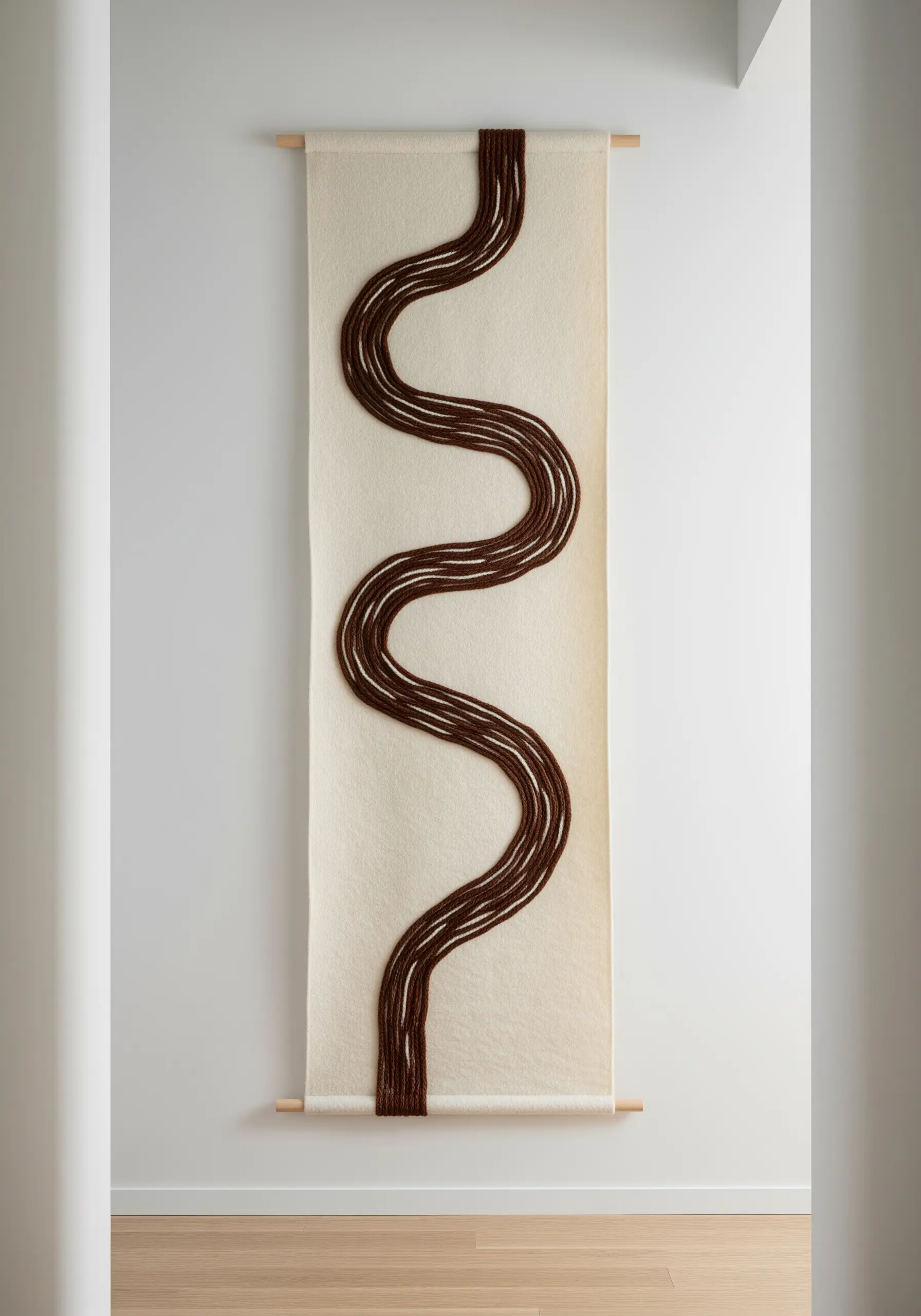
Create a minimalist wall hanging that embodies the calm, flowing energy of a river.
On a narrow panel of wool felt or heavy linen, use thick yarn or multiple strands of floss to stitch a single, undulating line from top to bottom.
Employ a wide satin stitch or a dense long-and-short stitch to give the line weight and texture, ensuring it stands out against the neutral background.
This powerful yet simple design is a perfect example of how to combine thread and negative space to achieve luxury minimal art.
22. Embroider a Gentle Reminder with Flowing Script
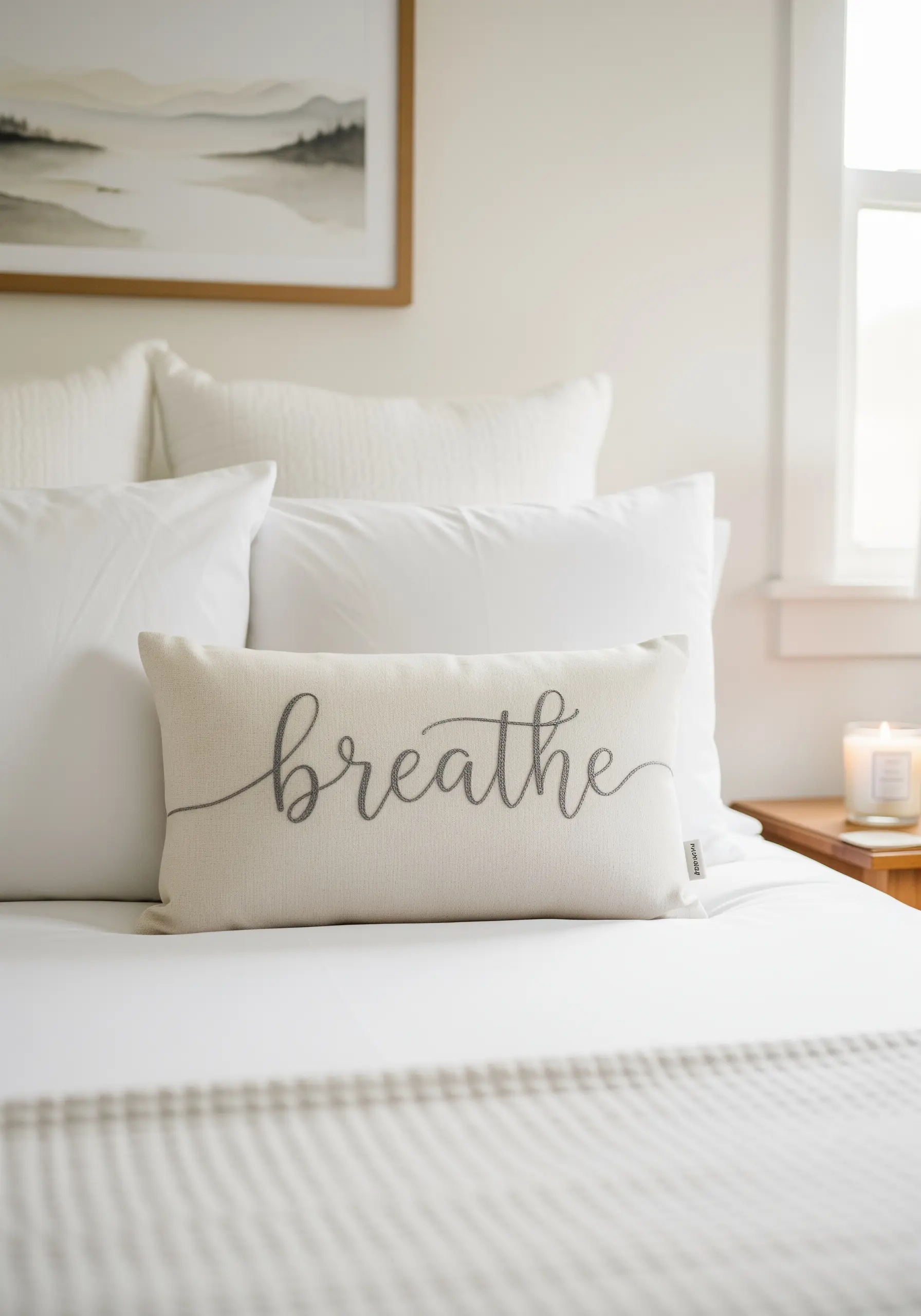
Stitch a meaningful word or a short mantra onto a pillow to create a piece of functional, encouraging art.
To replicate the thick and thin lines of modern calligraphy, use a variable stem stitch or split stitch. Go over the ‘downstroke’ sections of the letters a second time to build up their width.
Choose a soft, flowing script and a soothing gray thread on a natural linen base to enhance the calming message of the word itself.
23. Frame a View with a Botanical Curtain Border
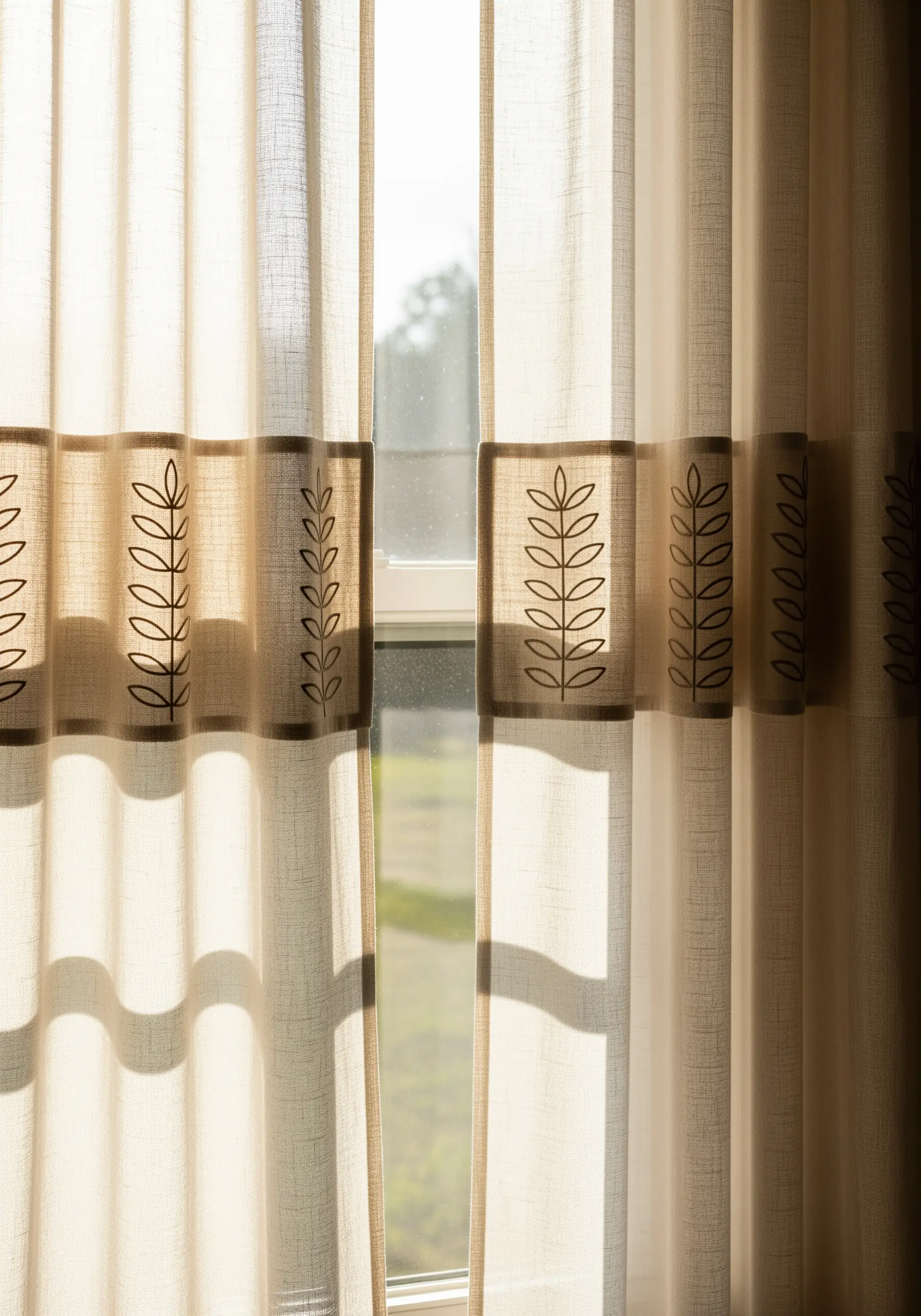
Add a delicate, custom touch to sheer or semi-sheer curtains with an embroidered border.
Stitch a repeating pattern of simple botanical sprigs within a blocked-out section of the curtain panel. Using a simple backstitch keeps the design light and airy, allowing it to complement the view outside rather than obstruct it.
The sunlight filtering through the fabric will illuminate the stitches, turning your windows into beautifully framed pictures.
24. Add a Playful Touch with a Paw Print Motif
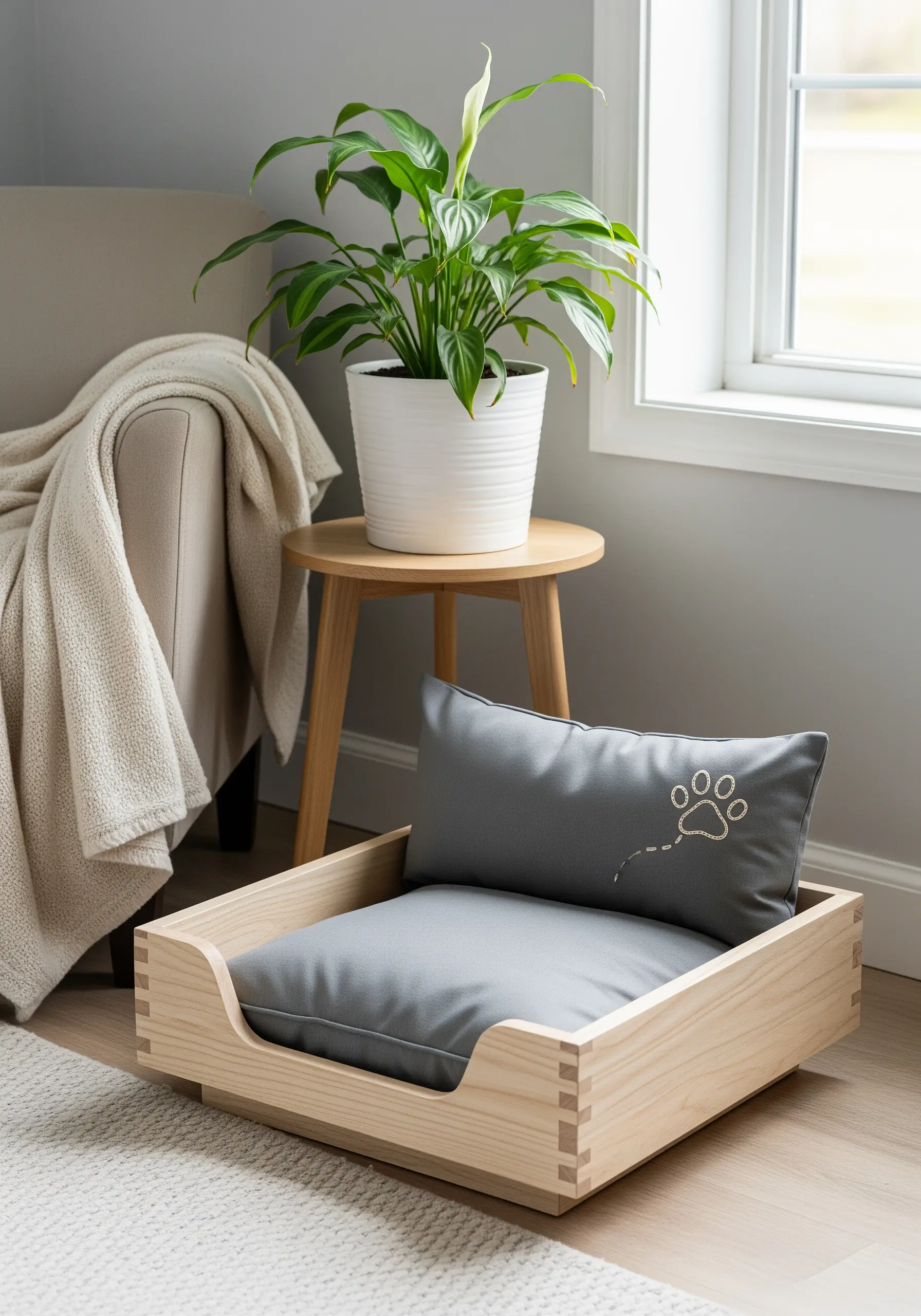
Personalize a pet’s bed or a cozy throw pillow with a sweet and simple paw print design.
Use a smooth satin stitch to fill in the paw pads, ensuring your stitches are uniform and lie in the same direction for a clean finish.
A dotted line of running stitches leading up to the print adds a sense of movement and whimsy.
This is a simple project you can complete in an evening, and it’s a wonderful way to add a small touch of personal meaning to your home.
25. Finish Edges with a Bold, Rustic Blanket Stitch
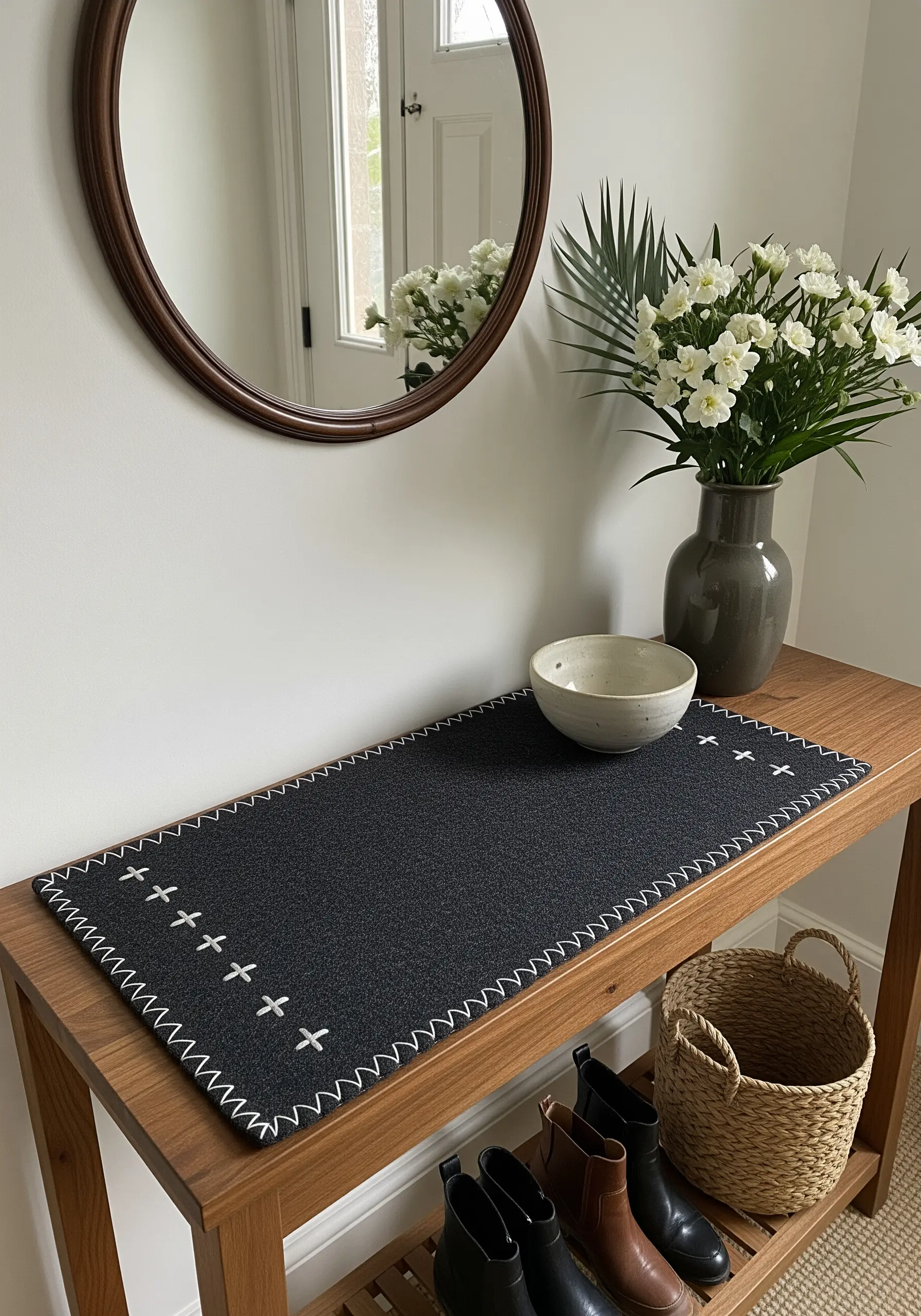
Give a simple table runner or placemat a handcrafted, modern-rustic finish with a contrasting border.
Use a thick, bright white pearl cotton on a dark, textured fabric like charcoal felt or heavy canvas.
A large, evenly spaced blanket stitch or a decorative cross stitch along the edge adds both durability and a strong graphic element.
This technique is incredibly simple but makes a huge impact, proving that minimal embroidery patterns can be the most effective.