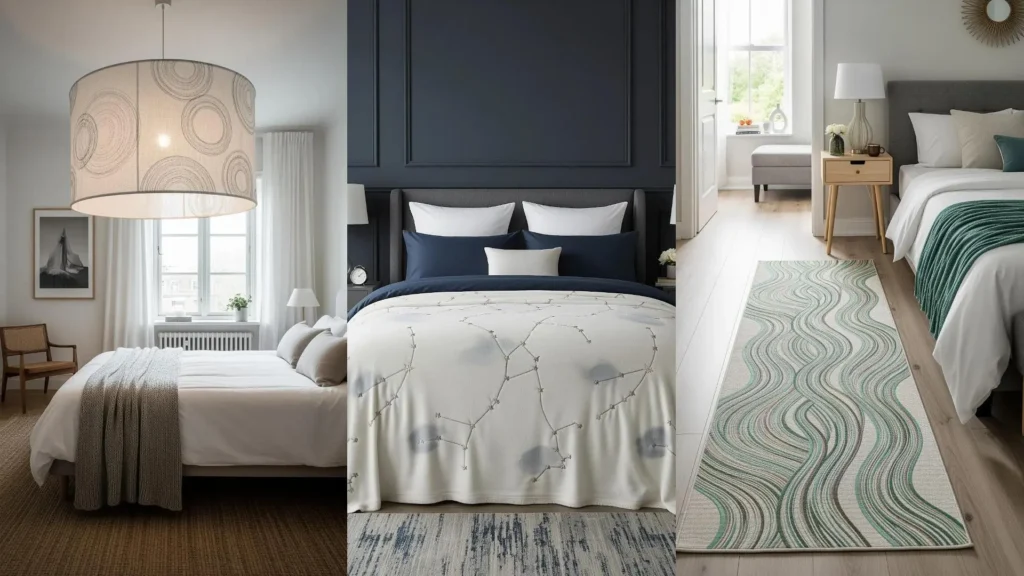
You don’t need a riot of color to make a statement. In fact, some of the most compelling embroidery relies on something far more subtle: the quiet conversation between thread and fabric.
By limiting your palette to the calming tones of taupe and vanilla, you shift the focus to what truly elevates your work—texture, form, and the rhythm of your stitches. This is where you can explore the sculptural quality of a thick yarn, the crispness of a single perfect line, or the soft dimension of a padded stitch.
These ideas are designed to help you create art that feels both modern and timeless, transforming a bare wall into a space of quiet intention. It’s about adding warmth and personality without adding noise—letting the elegance of simplicity speak for itself.
1. Layered Textures for Abstract Landscapes
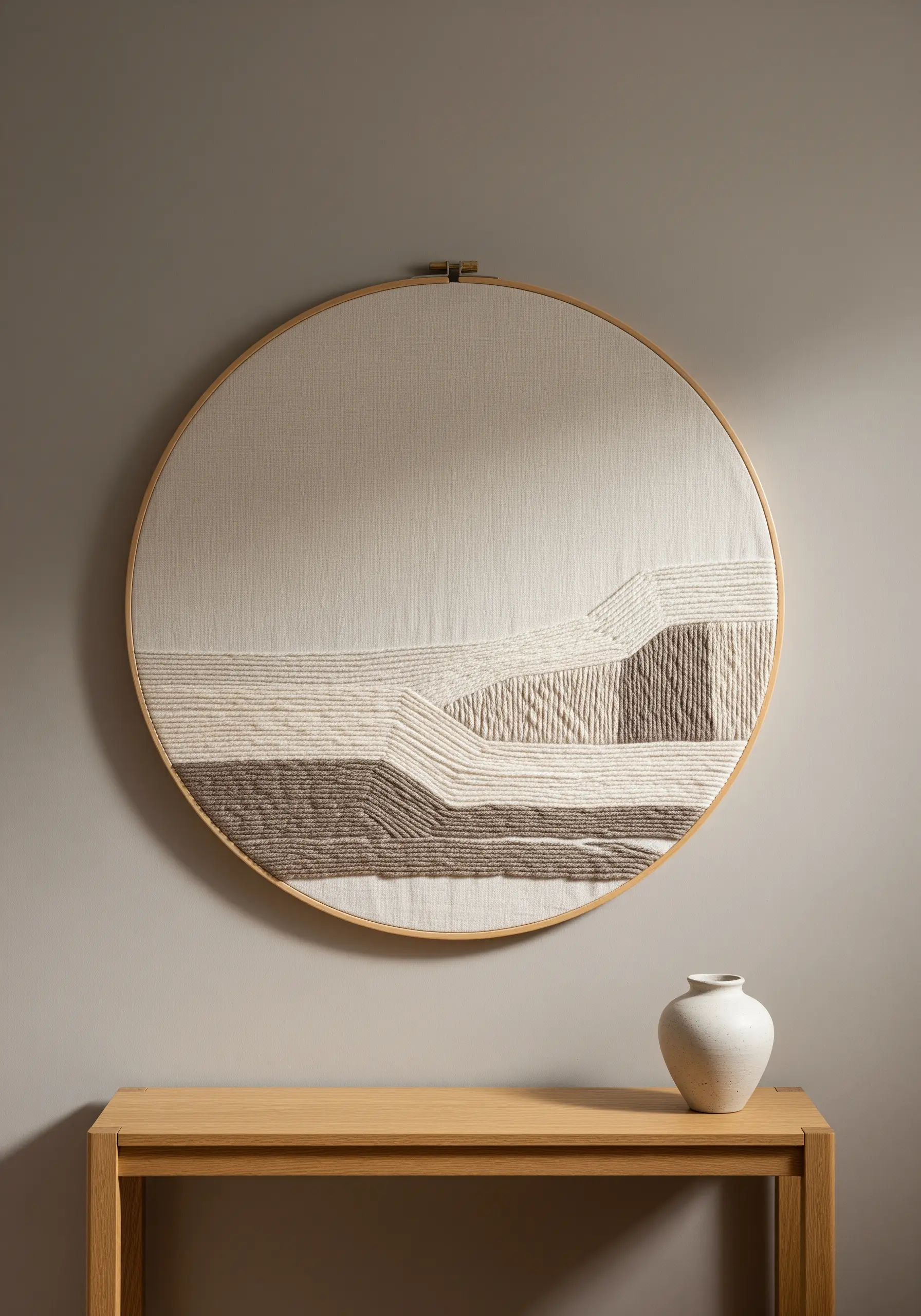
Create depth and movement by layering different yarn weights and textures within a single hoop.
Use a couching stitch to secure thick, chunky yarn for the foundational layers, then fill smaller areas with finer threads using a dense satin stitch or long-and-short stitch.
This technique mimics geological strata, transforming a simple abstract shape into a tactile landscape.
Choose a heavy, open-weave fabric like linen or burlap that can support the weight of the yarn without puckering.
2. Architectural Line Art with Perle Cotton
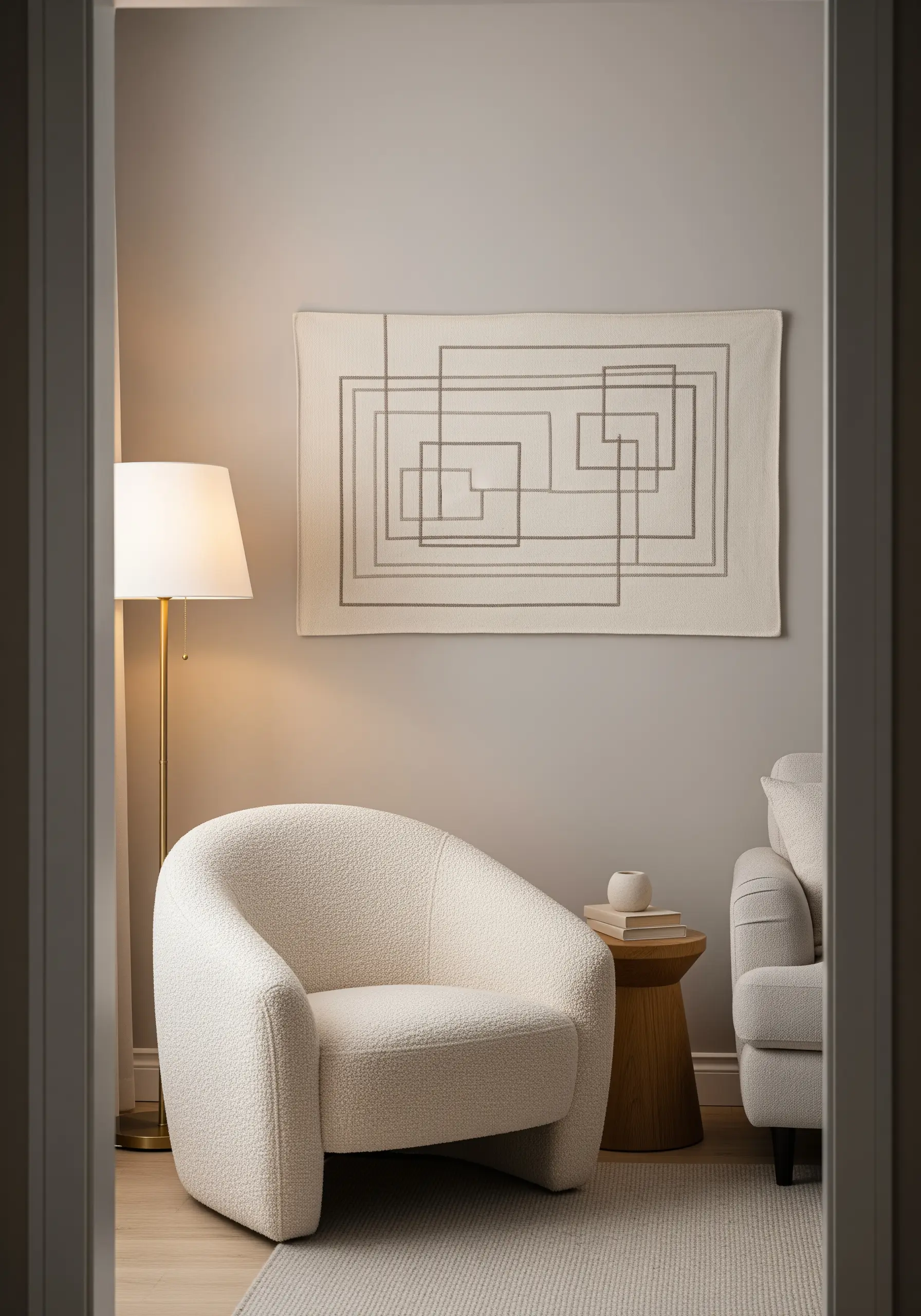
For clean, geometric designs, trade standard six-strand floss for a single strand of perle cotton (size 5 or 8).
Its twisted structure gives each line a subtle, rope-like definition that stands out against the fabric, creating a crisp, graphic effect perfect for minimalist art.
Use a simple backstitch, ensuring each stitch is the same length for a uniform, almost machine-made precision.
This approach emphasizes form and negative space, making it ideal for minimalist embroidery wall art ideas.
3. Create Dimension with Padded Botanical Motifs
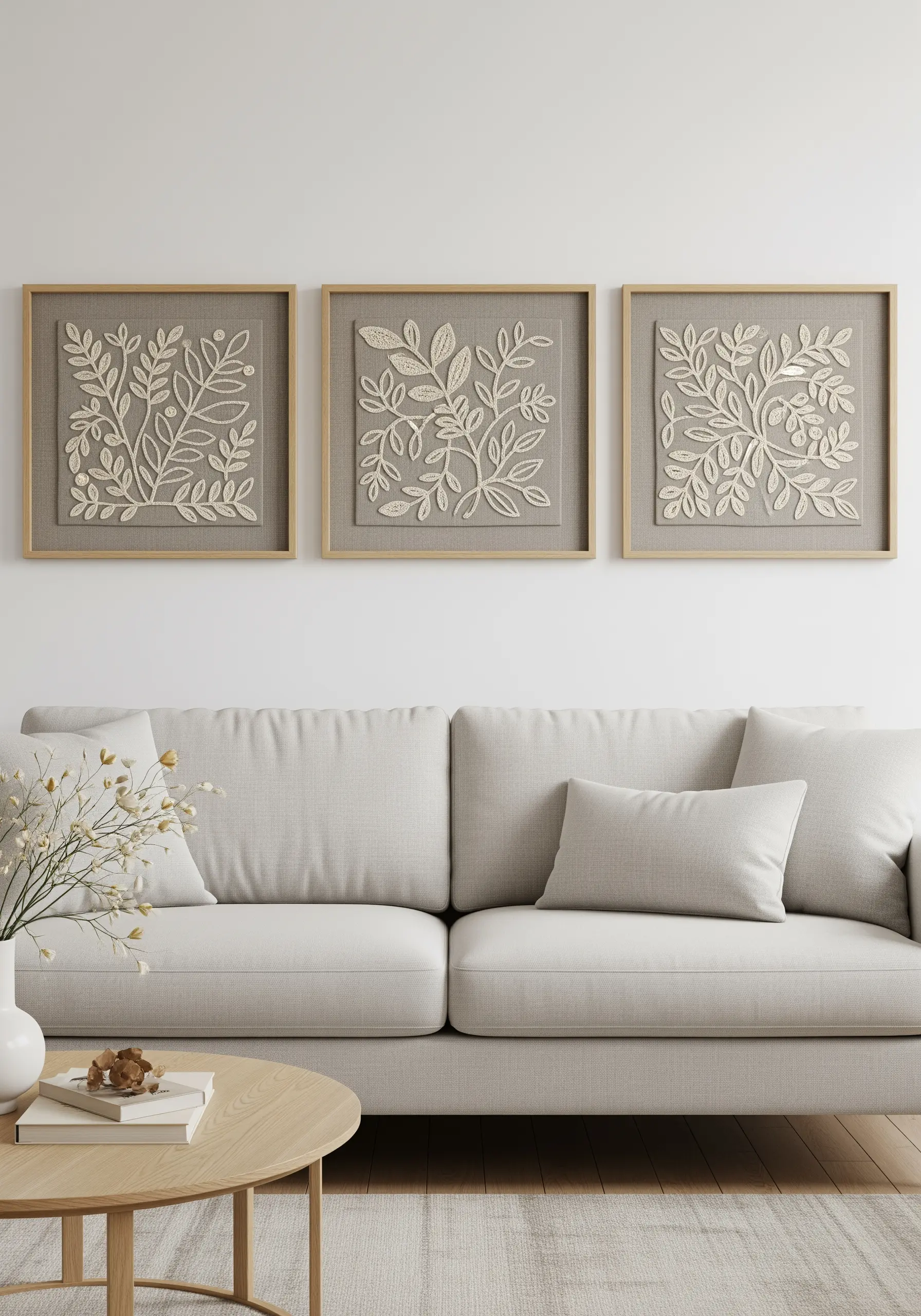
Elevate simple leaf and vine patterns by using a padded satin stitch to give them a three-dimensional, sculptural quality.
First, create an underlayer of small, straight stitches within the shape’s outline, then cover it with satin stitches worked in the opposite direction.
This foundation lifts the final stitches off the fabric surface, creating highlights and shadows that make the design pop.
Working on a neutral, textured fabric like raw linen enhances the contrast between the smooth thread and the organic background.
4. The Elegance of Single-Thread Line Work
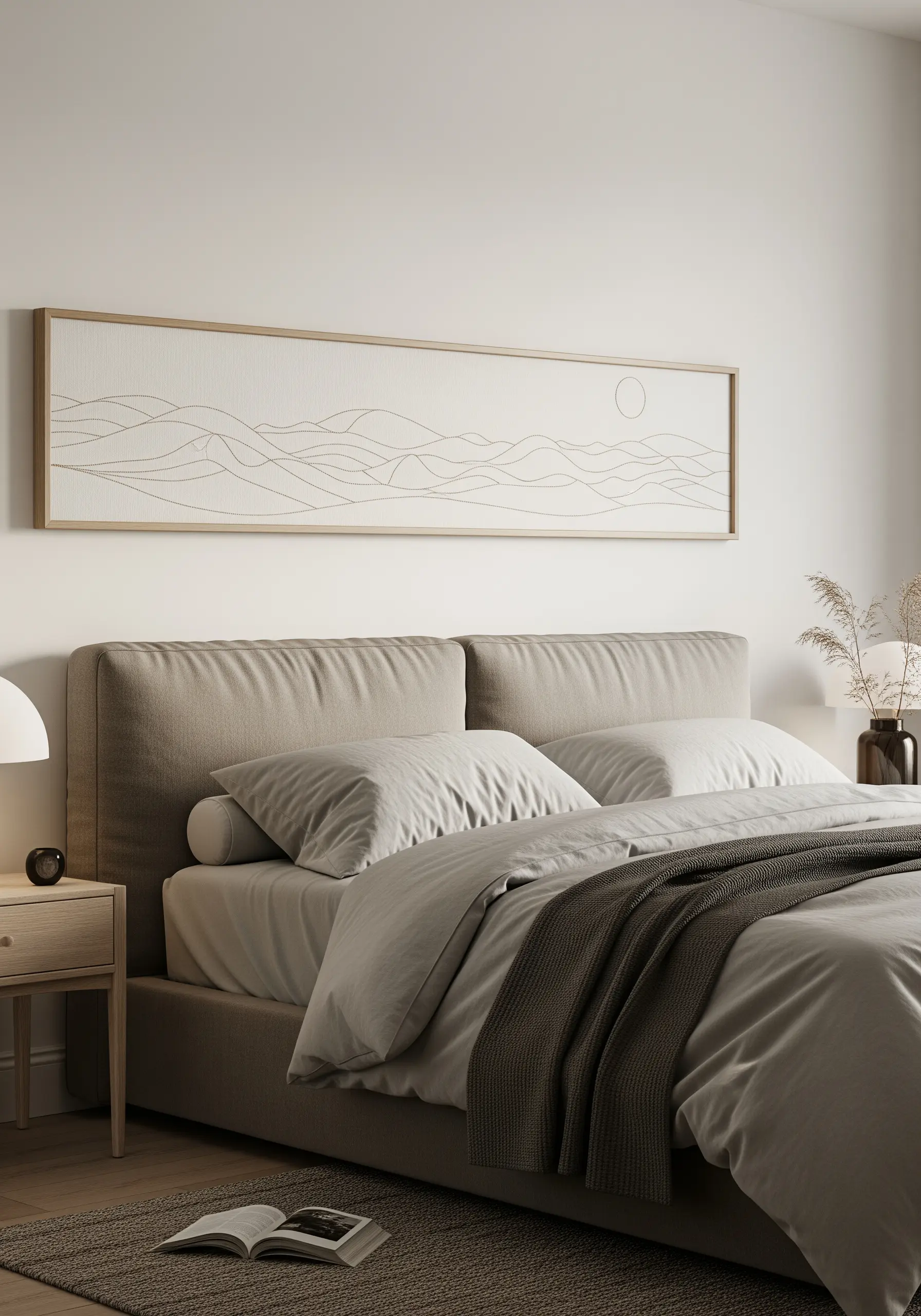
Capture the feeling of a delicate ink drawing by using only a single strand of embroidery floss.
A split stitch is perfect for this, as it creates a fine, continuous line that flows beautifully around curves, ideal for serene landscapes or abstract forms.
By limiting your thread weight and color, you draw all the attention to the purity of the line and the composition itself.
This minimalist approach is one of the most effective embroidery decor ideas to add a calm, elegant vibe to a bedroom or quiet space.
5. A Study in Contrasting Textures
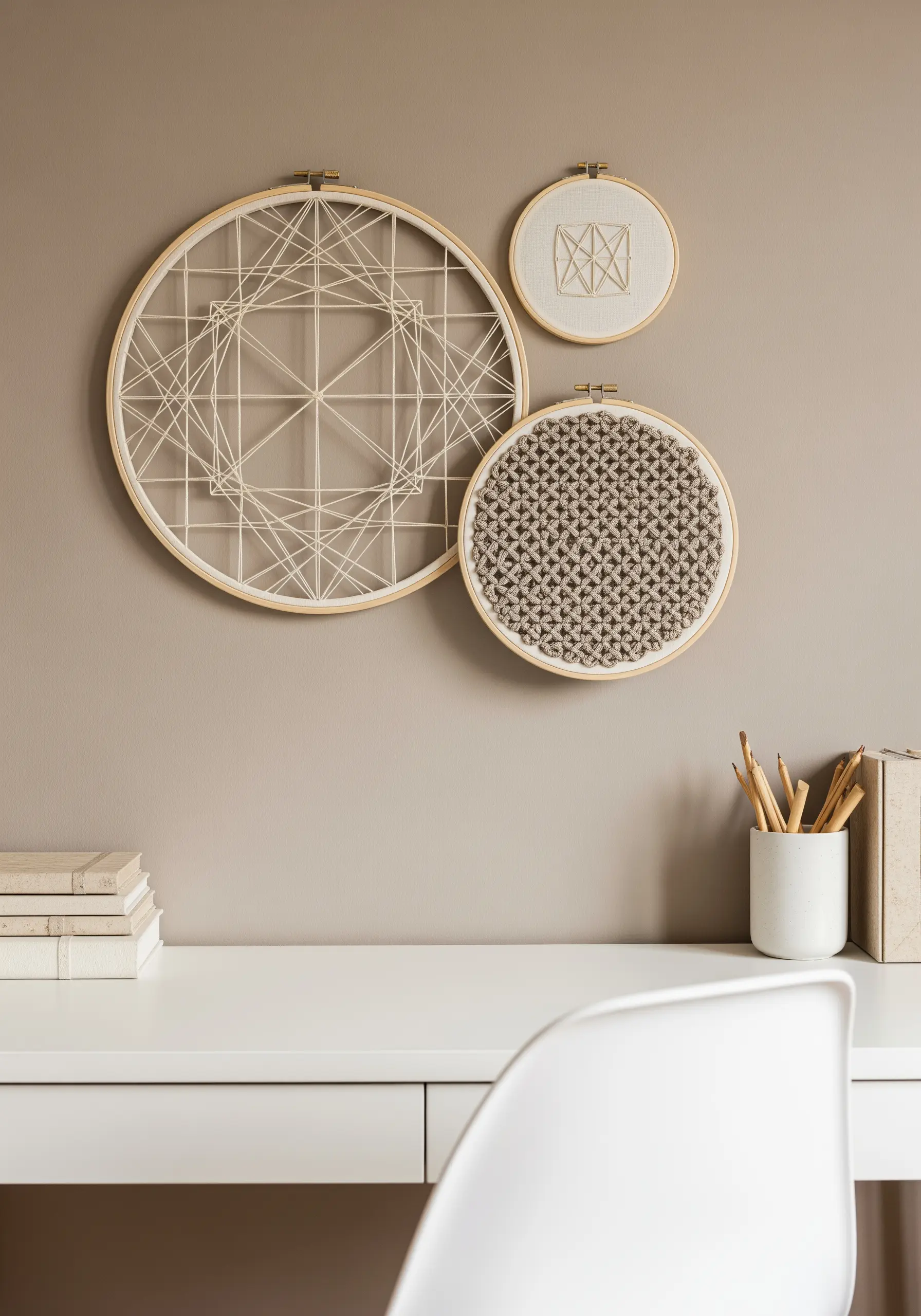
Create a visually dynamic wall display by grouping hoops that explore different techniques within the same color palette.
Combine an open, airy string-art piece with a densely filled geometric pattern using a woven stitch, and anchor them with a simple line drawing.
This contrast—between dense and sparse, linear and filled—makes each piece feel more intentional and creates a cohesive yet interesting gallery wall.
It’s a perfect way to practice and showcase your growing range of skills.
6. Bold Statements with Couched Macrame Cord
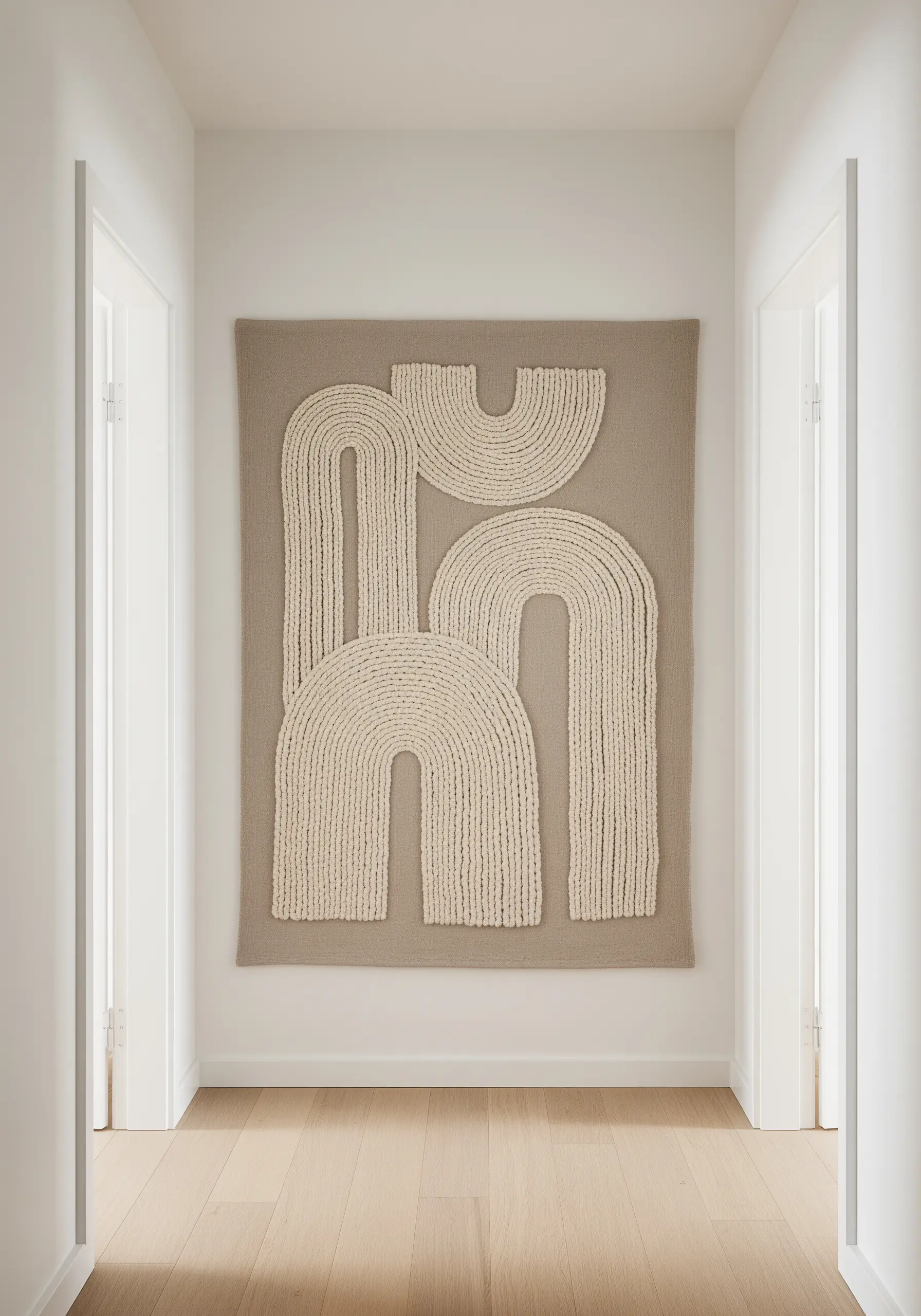
For large-scale, high-impact art, move beyond thread and couch thick macrame cord or rope onto a heavy canvas backing.
Lay the cord along your design line and use a strong, complementary thread (like a perle cotton) to tack it down with small, evenly spaced stitches.
This method allows you to create bold, graphic shapes with incredible texture that would be impossible with traditional embroidery floss.
It transforms embroidery into a sculptural practice, perfect for stunning fiber art installations that command attention.
7. Adding Subtle Energy with Seed Stitches
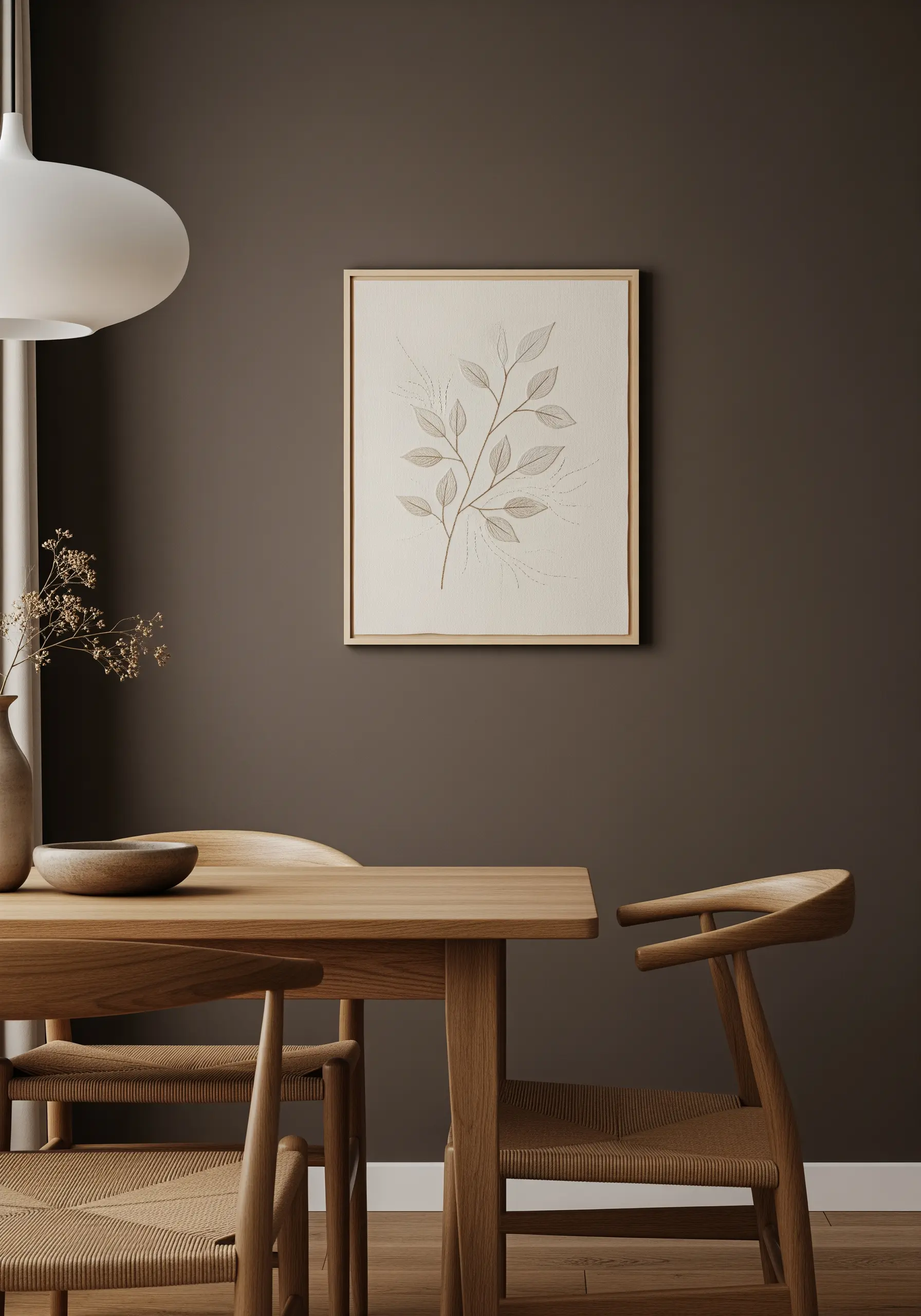
Bring a sense of life and movement to delicate botanical drawings by filling the negative space around them with scattered seed stitches.
These are tiny, straight stitches worked at random angles, creating a shimmering, textured background that doesn’t overwhelm the main subject.
Use a single strand of floss in a slightly darker or lighter shade than your outlines to add depth without introducing a new color.
This technique softly animates the composition, making the piece feel finished and intentional.
8. Radial Designs for Meditative Stitching
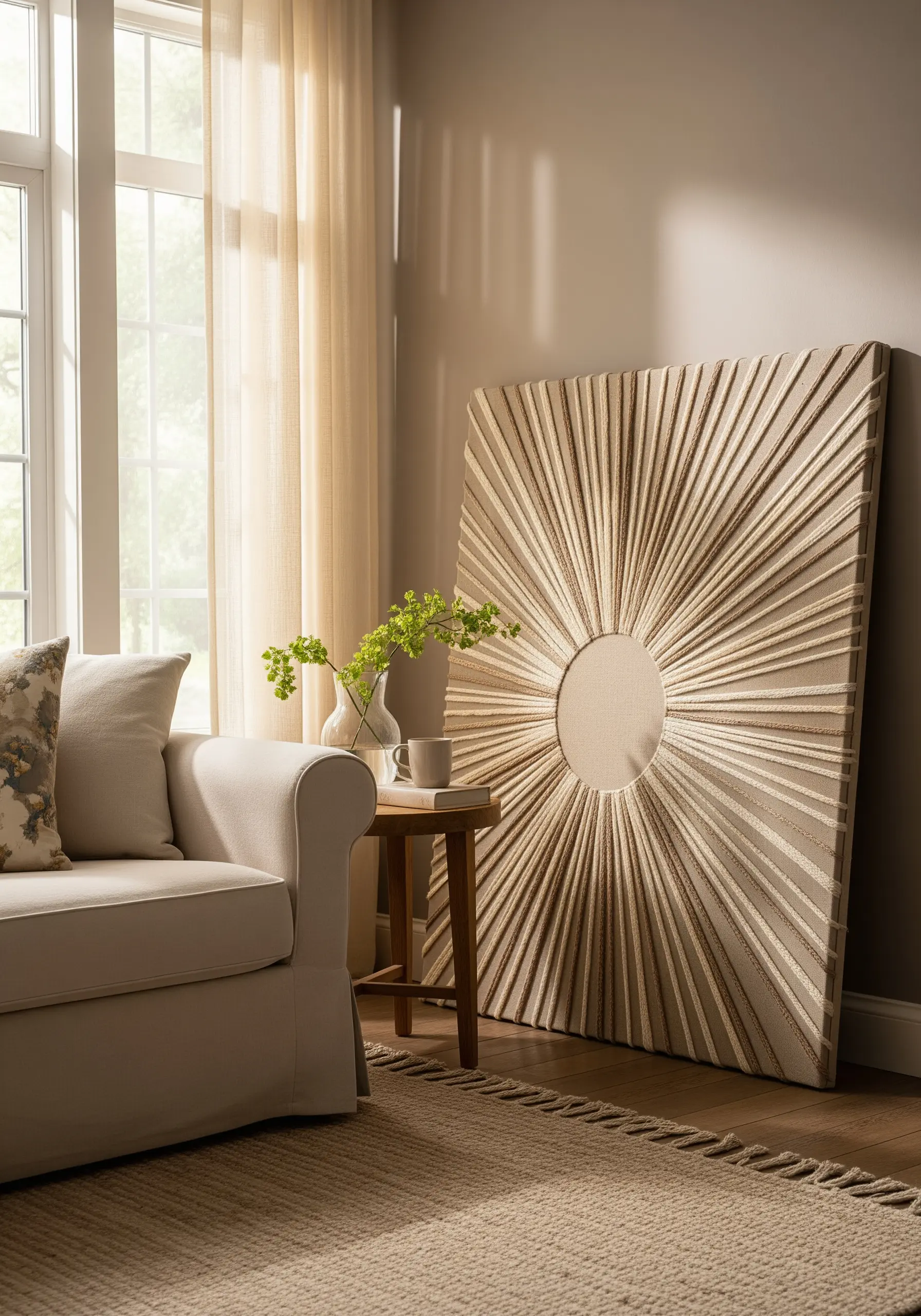
Create a powerful sunburst effect using long, straight stitches anchored at a central point and radiating outwards.
To achieve this, stretch a square piece of fabric over a sturdy artist’s canvas or frame, which prevents sagging in the middle.
Use a strong thread like perle cotton or even fine yarn, and mark your anchor points precisely to ensure perfect symmetry.
The repetitive motion of pulling the thread across the canvas is deeply meditative, making these calming DIY embroidery projects for quiet afternoons.
9. Composing with Embroidered Appliqué
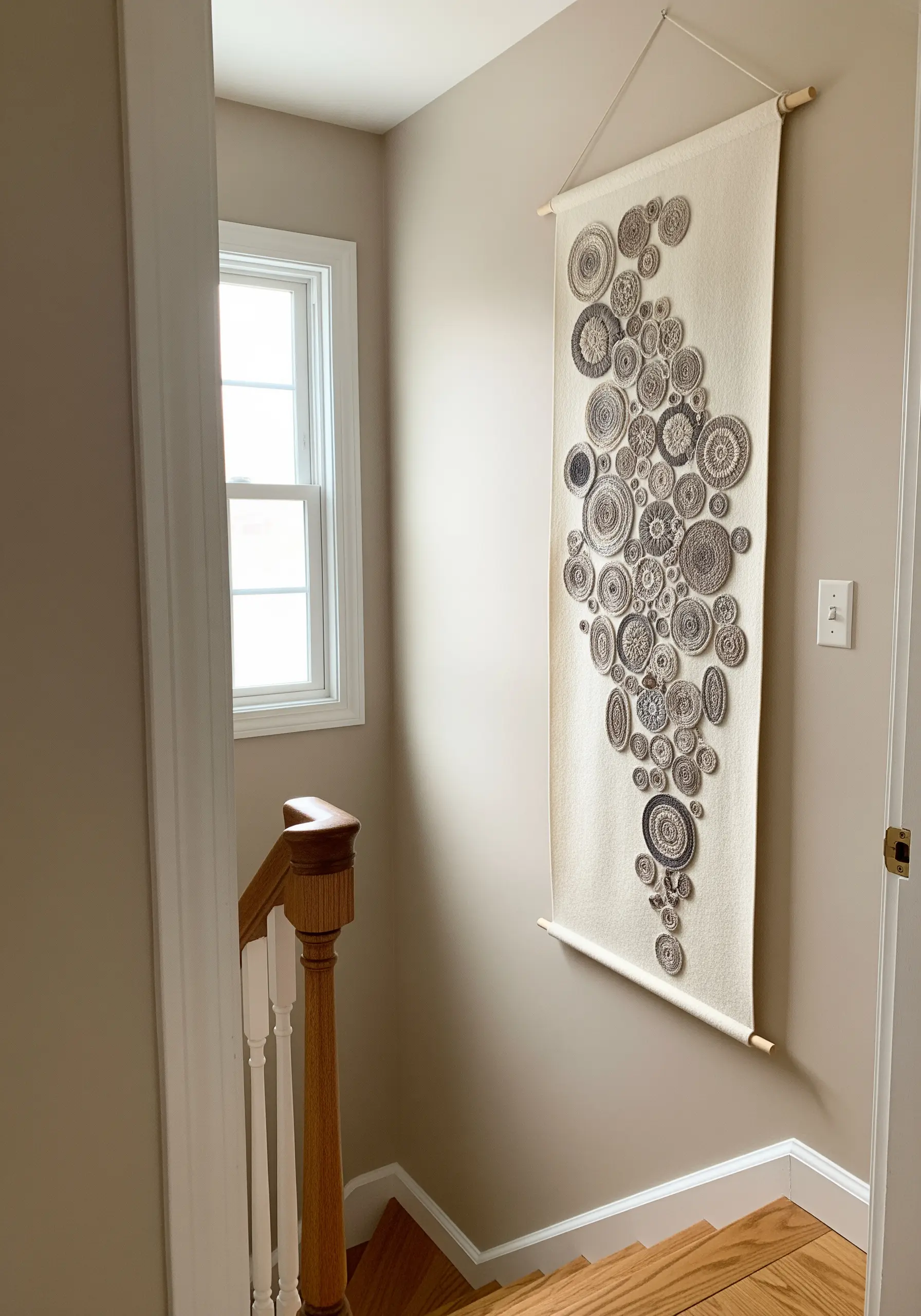
Build a complex, layered wall hanging by creating individual embroidered motifs on separate fabric scraps and then appliquéing them onto a larger backing cloth.
Stitch dozens of small circles using woven wheel stitches, French knots, and satin stitch fills in shades of taupe and vanilla.
Once complete, trim each circle and arrange them in a cascading pattern, securing them with a few hidden stitches.
This modular approach is less intimidating than tackling a massive single piece and allows for more creative freedom in the final composition.
10. The Power of a Single, Sculptural Line
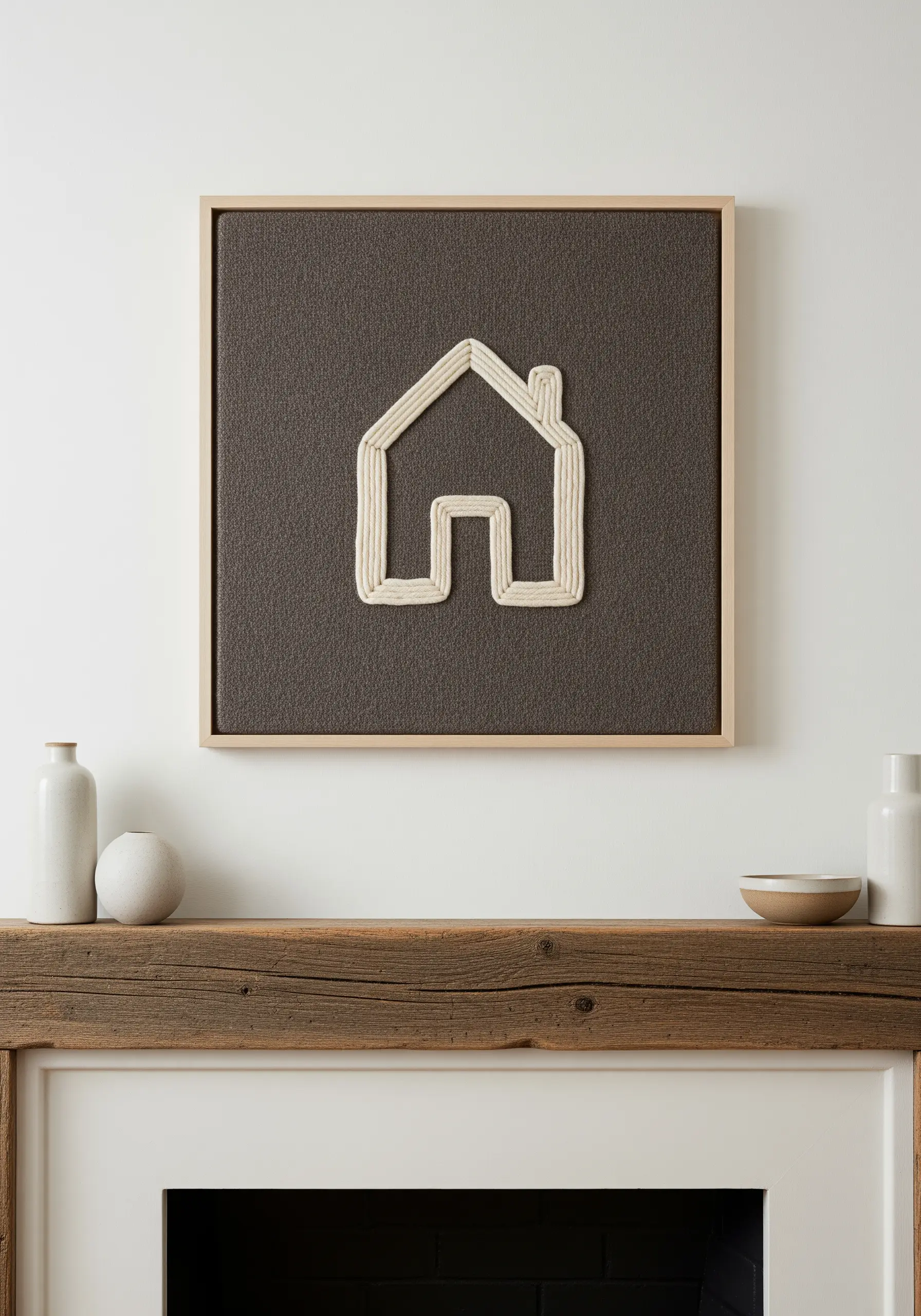
Make a minimalist icon feel warm and substantial by using a single, continuous piece of thick yarn or rope to form its outline.
Couch the material onto a high-contrast fabric, like a dark charcoal or deep taupe, to make the vanilla-colored line pop.
The key is to use a single, unbroken piece of cord, which gives the simple shape a sense of fluidity and wholeness.
This is a powerful way to create organic embroidery designs with a graphic, modern edge.
11. Raw Edges for a Refined, Rustic Feel
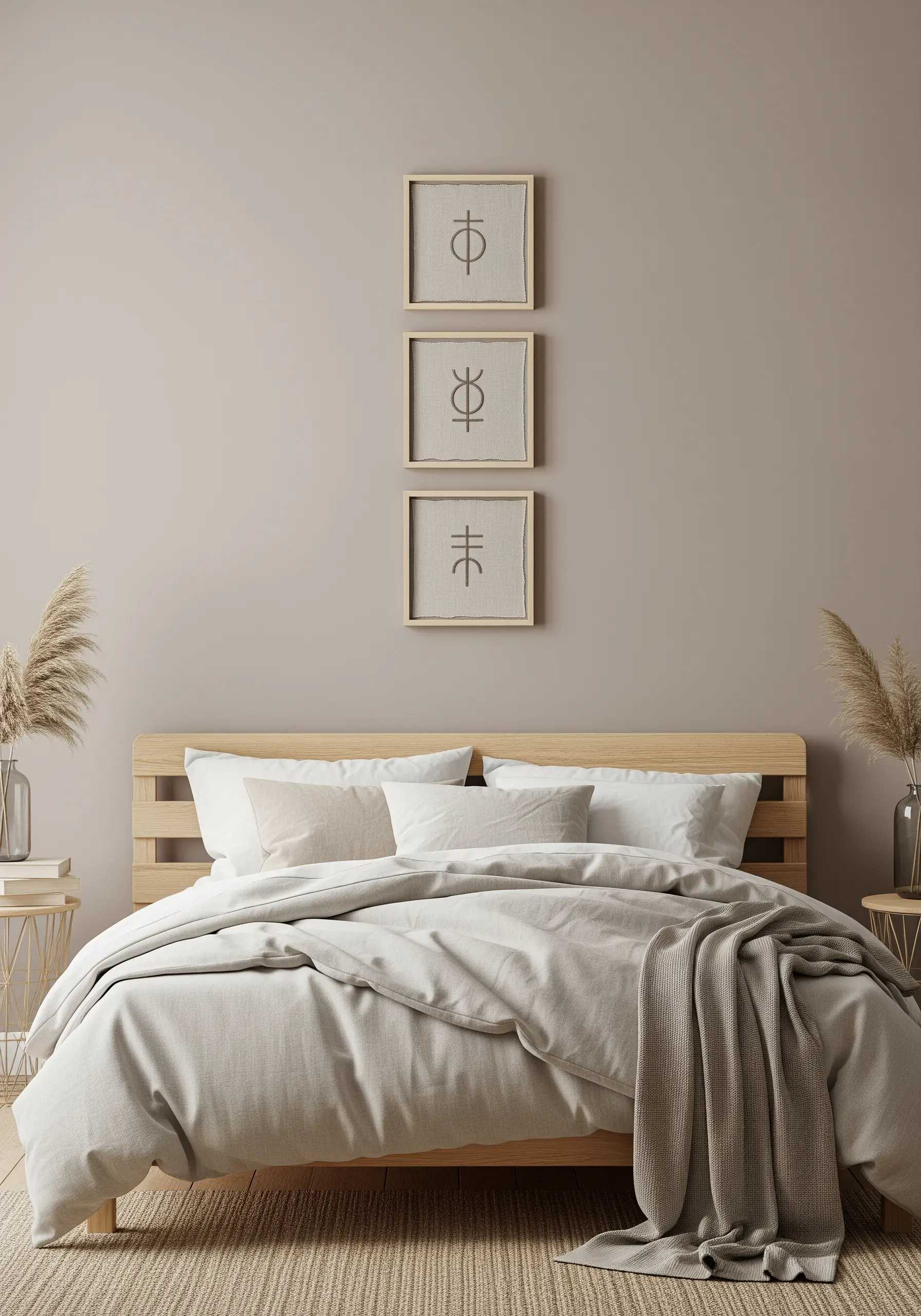
Instead of finishing your fabric with a clean hem, allow a soft, frayed edge to become part of the design.
Embroider your simple symbols or line art on a piece of linen, leaving a generous border around the stitched area.
Gently pull a few threads from each side to create a delicate fringe, then mount the fabric in a floater frame so the raw edges are visible.
This detail adds a layer of organic texture that perfectly complements the simplicity of minimalist motifs.
12. Weaving Texture with Brick Stitch Fills
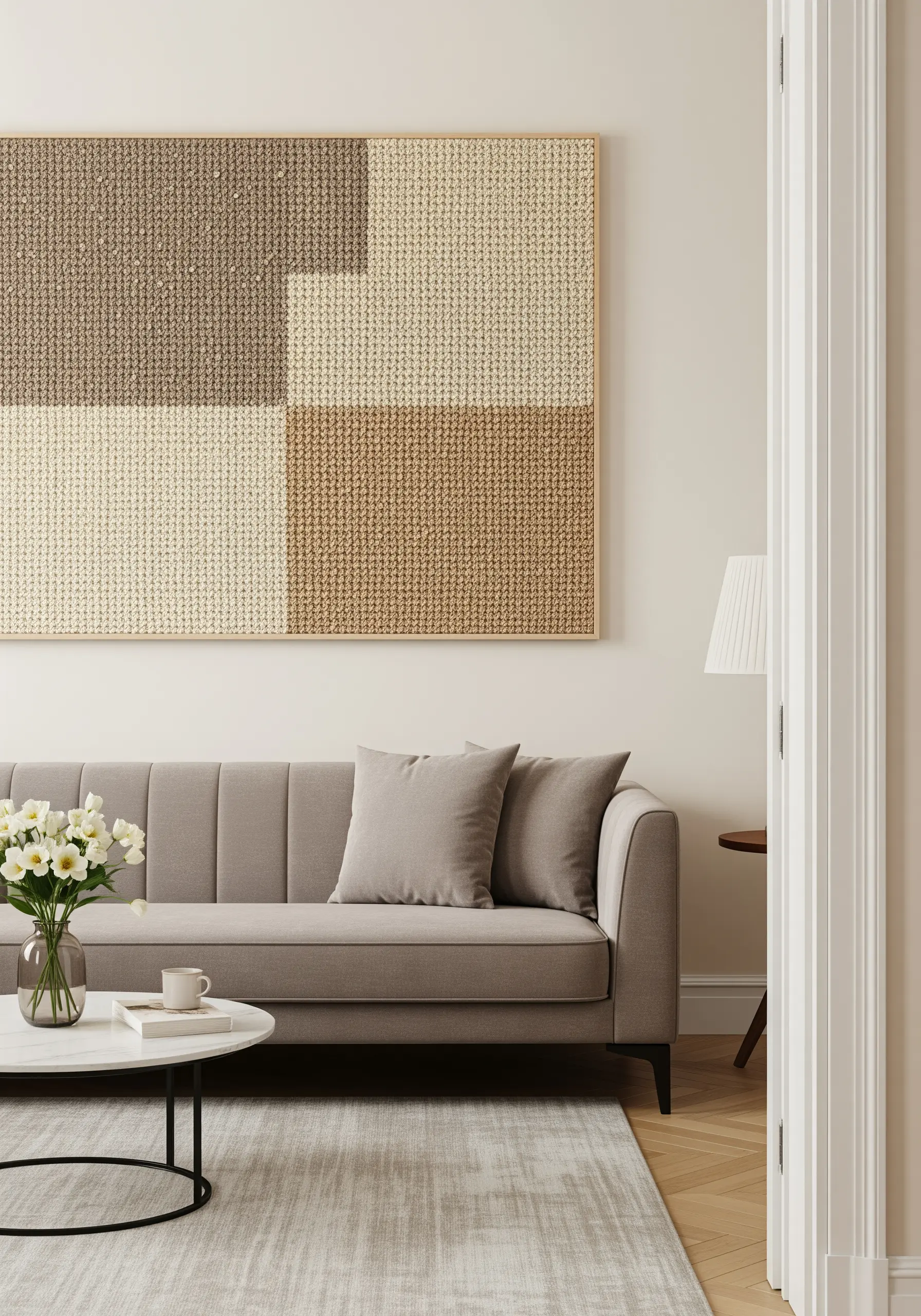
When filling large geometric blocks, use the brick stitch instead of a traditional satin stitch for a more textured, woven appearance.
This stitch is essentially a series of staggered, offset straight stitches that mimic the pattern of a brick wall.
It breaks up the light more than a flat satin stitch, adding subtle dimension and visual interest to color-blocked designs.
It’s also more forgiving over large areas, as it’s less prone to gapping or loosening.
13. Mapping Out Complexity with Precision
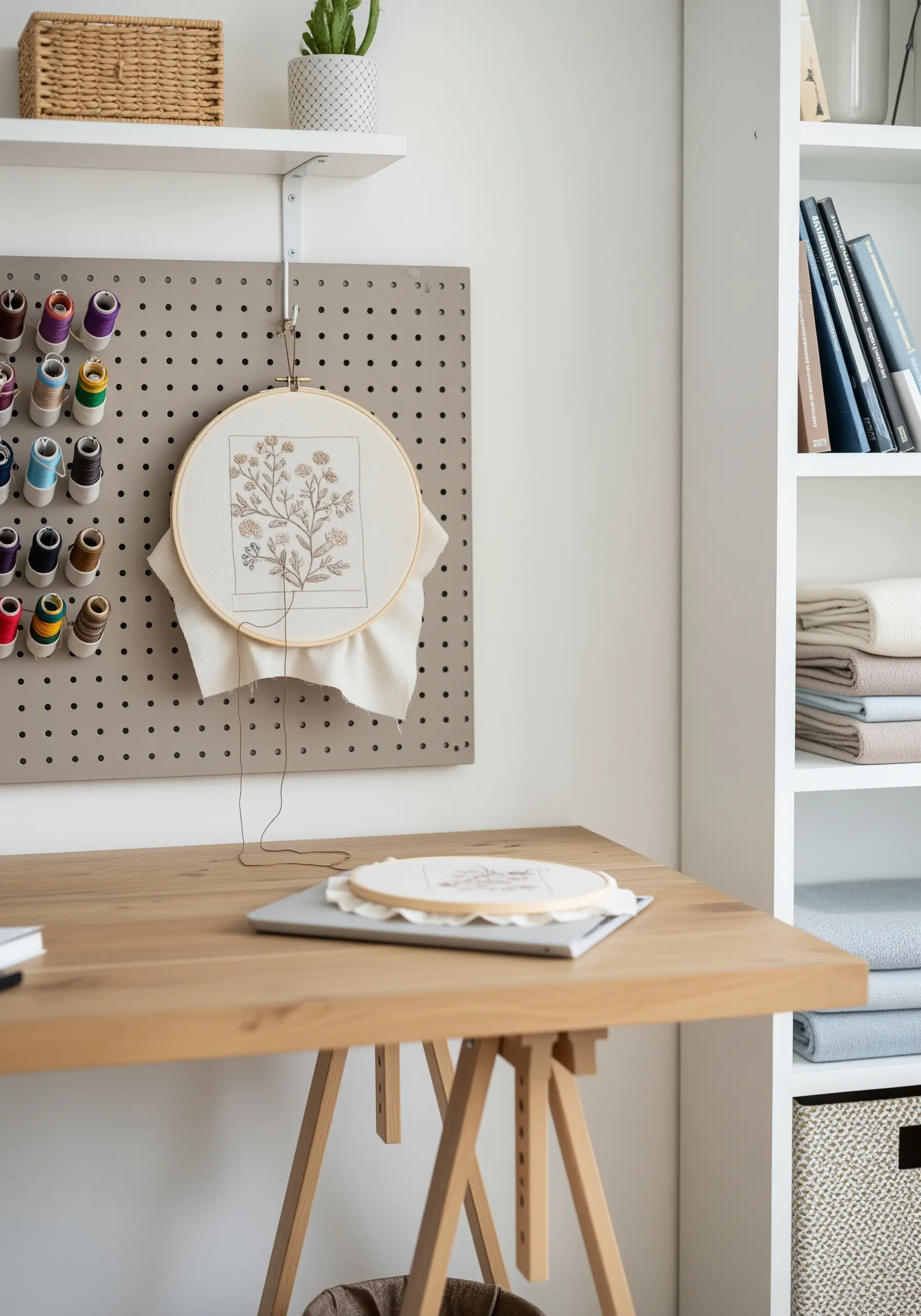
For intricate botanical designs, transfer your pattern onto the fabric with a fine-tipped, water-soluble pen before you begin stitching.
This allows you to plan the placement of every leaf and stem, ensuring the final composition feels balanced and intentional.
Use a variety of simple stitches—stem stitch for lines, French knots for texture, and lazy daisy for small petals—to build up layers of detail.
This methodical approach is key to creating delicate botanical line art embroidery patterns that look effortlessly elegant.
14. Perfecting Script with a Whipped Backstitch
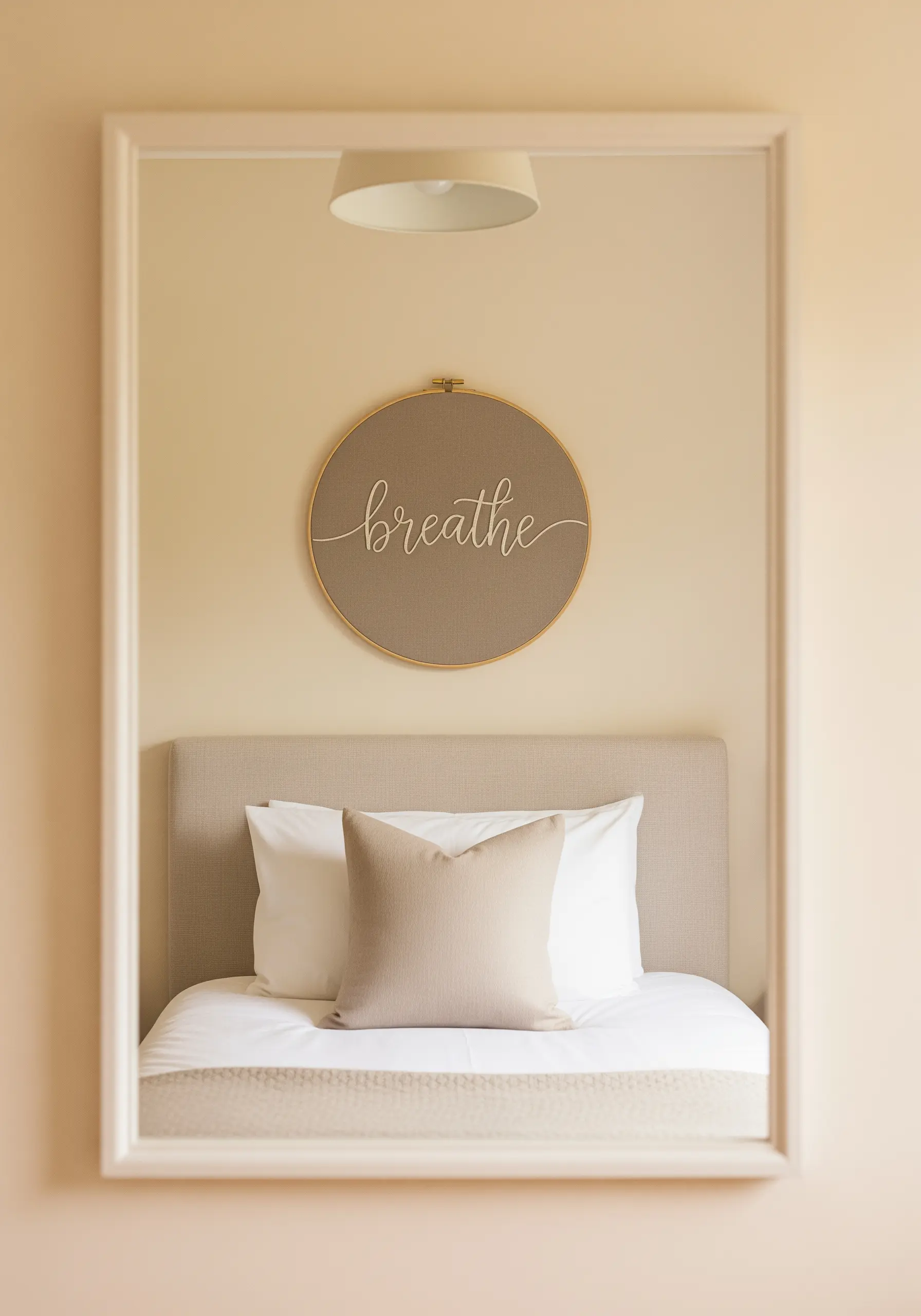
To create smooth, flowing script that looks like calligraphy, use a whipped backstitch.
First, lay down a foundation of simple backstitches along your lettering. Then, without piercing the fabric, slide your needle under each backstitch, wrapping the thread around the line.
This technique smooths out the jagged edges of the individual stitches, creating a single, raised line that flows beautifully around curves.
It gives peaceful, poetic quote embroidery hoops a professional, polished finish.
15. Finishing Wall Hangings with Natural Dowels
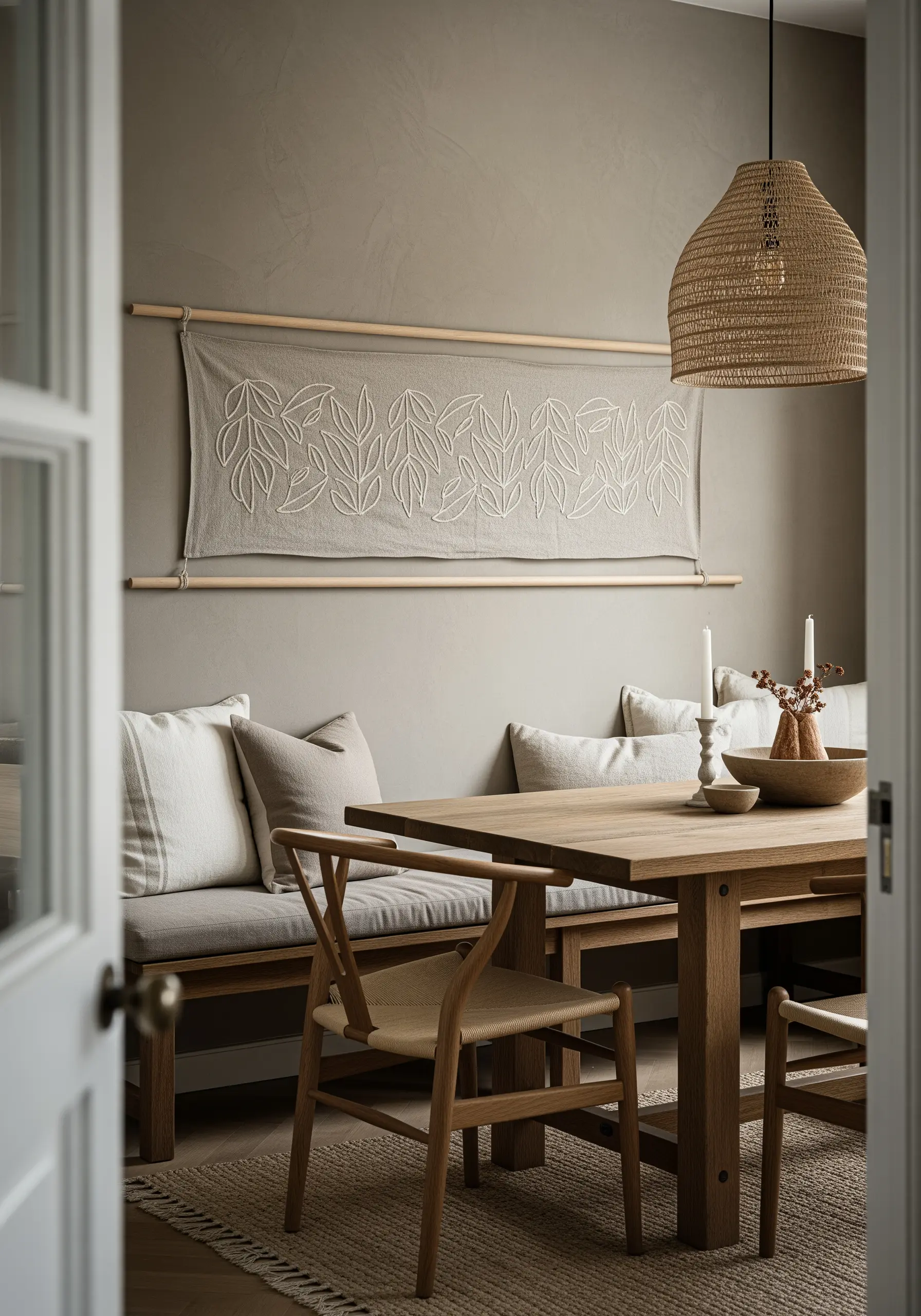
Give your embroidered panels a clean, modern finish by mounting them on simple wooden dowels.
Create a channel at the top and bottom of your finished embroidery by folding the fabric over and stitching it down, then simply slide the dowels through.
This method avoids the formality of a traditional frame and allows the textile to hang naturally, emphasizing its softness and texture.
It’s a simple framing solution that complements the greige and ivory embroidery art ideas perfectly.
16. Creating Fringe with Laid Work
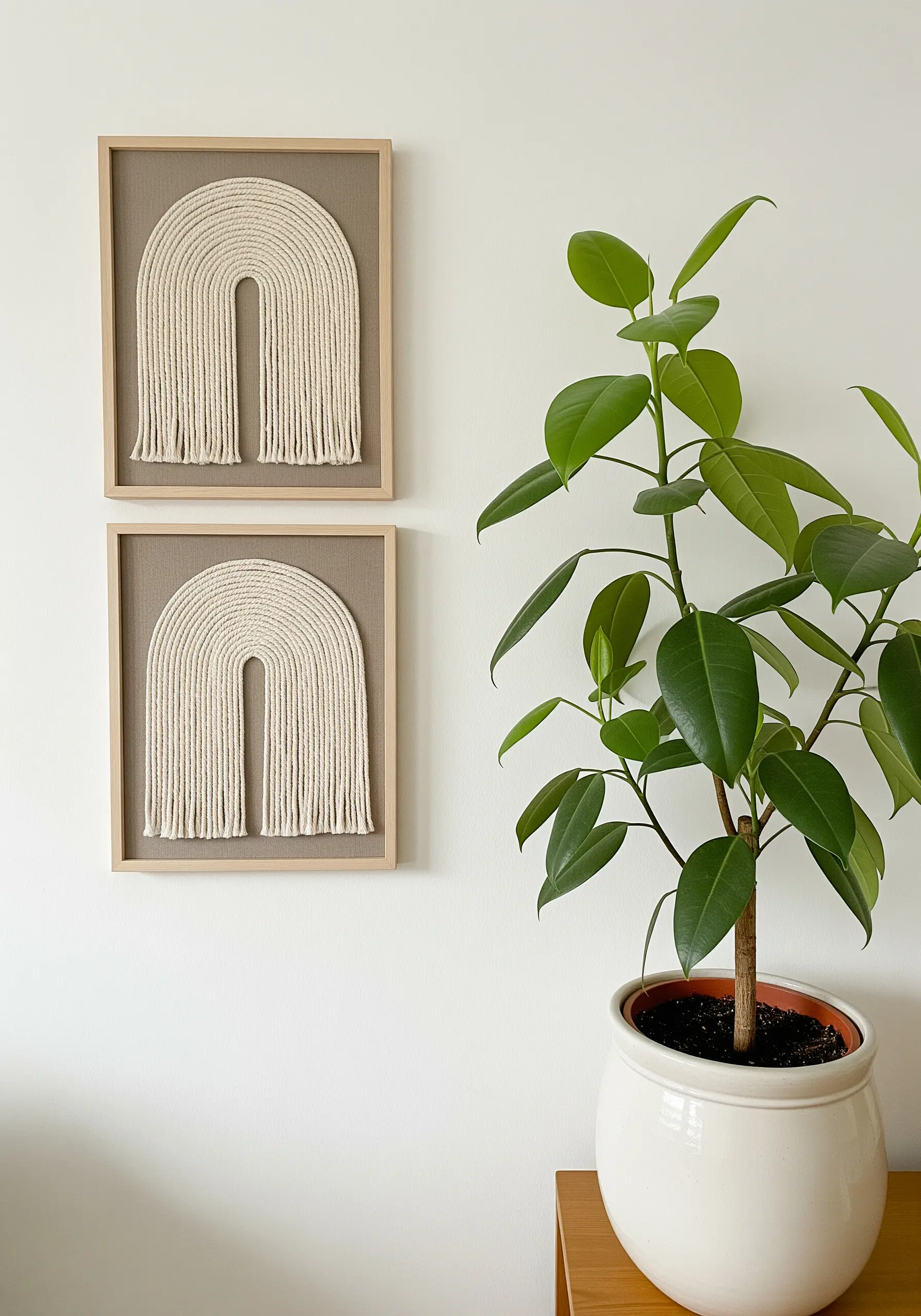
Achieve a soft, fringed texture by adapting a laid work stitch, also known as Turkey work.
As you make each stitch, leave a long loop of yarn on the surface of the fabric. Once an area is filled with loops, secure them with a tiny anchoring stitch and carefully snip the loops open.
This creates a dense, plush pile that you can trim for a neat edge or leave shaggy for a more organic feel.
It’s a fantastic way to introduce texture-rich thread art ideas into otherwise flat designs.
17. Visualizing Sound with Vertical Stitches
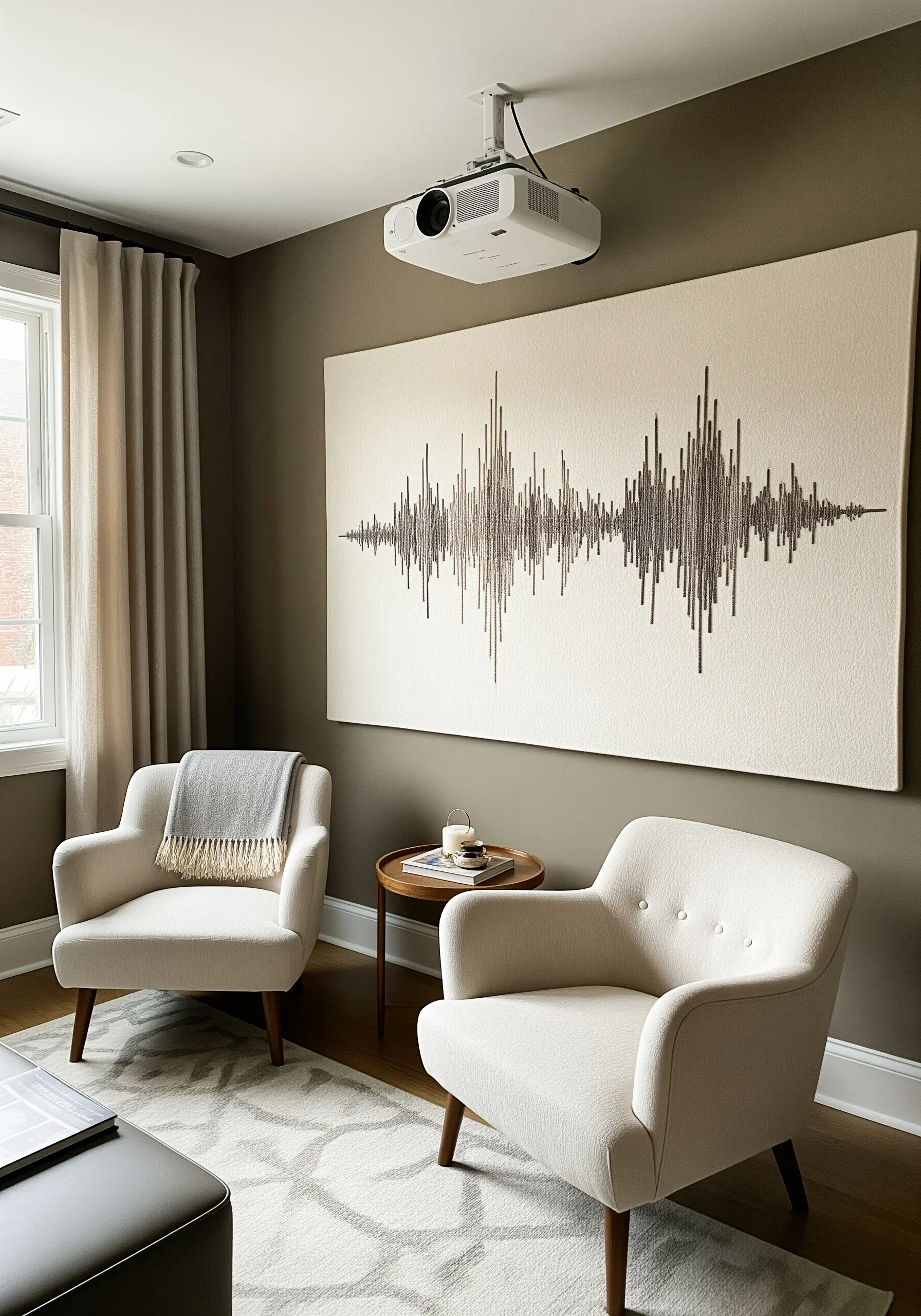
Translate a personal audio clip—like a laugh, a favorite song, or a heartbeat—into a striking piece of visual art.
Use a free online tool to generate a waveform image from your sound file, then transfer the outline to your fabric.
Fill the shape with dense, vertical straight stitches or satin stitches, varying their height to match the peaks and valleys of the soundwave.
This technique turns data into a deeply personal and modern work of art, creating one of the most unique DIY embroidery presents you can make.
18. Sculpting with Abstract Rope Forms
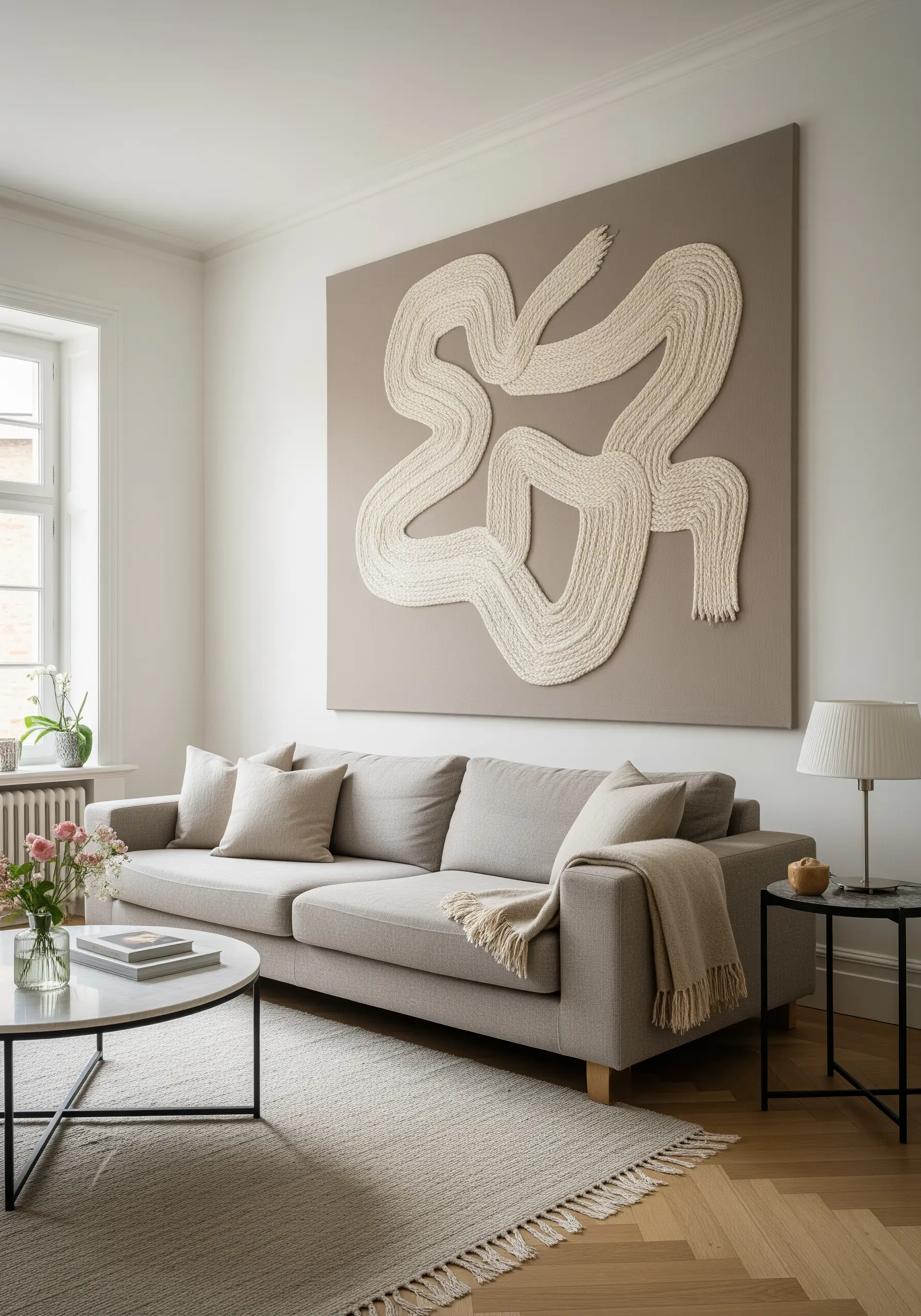
Embrace the freedom of abstract expressionism by couching thick, soft rope onto a large canvas to create a fluid, continuous line.
Instead of following a pre-drawn pattern, allow the rope to curve and fold naturally as you stitch it down, letting the form evolve organically.
The contrast between the soft, bulky rope and the flat canvas background creates a powerful interplay of texture and shadow.
This approach elevates simple materials into DIY framed embroidery art projects that look expensive and gallery-worthy.
19. The Charm of Irregular Repetition
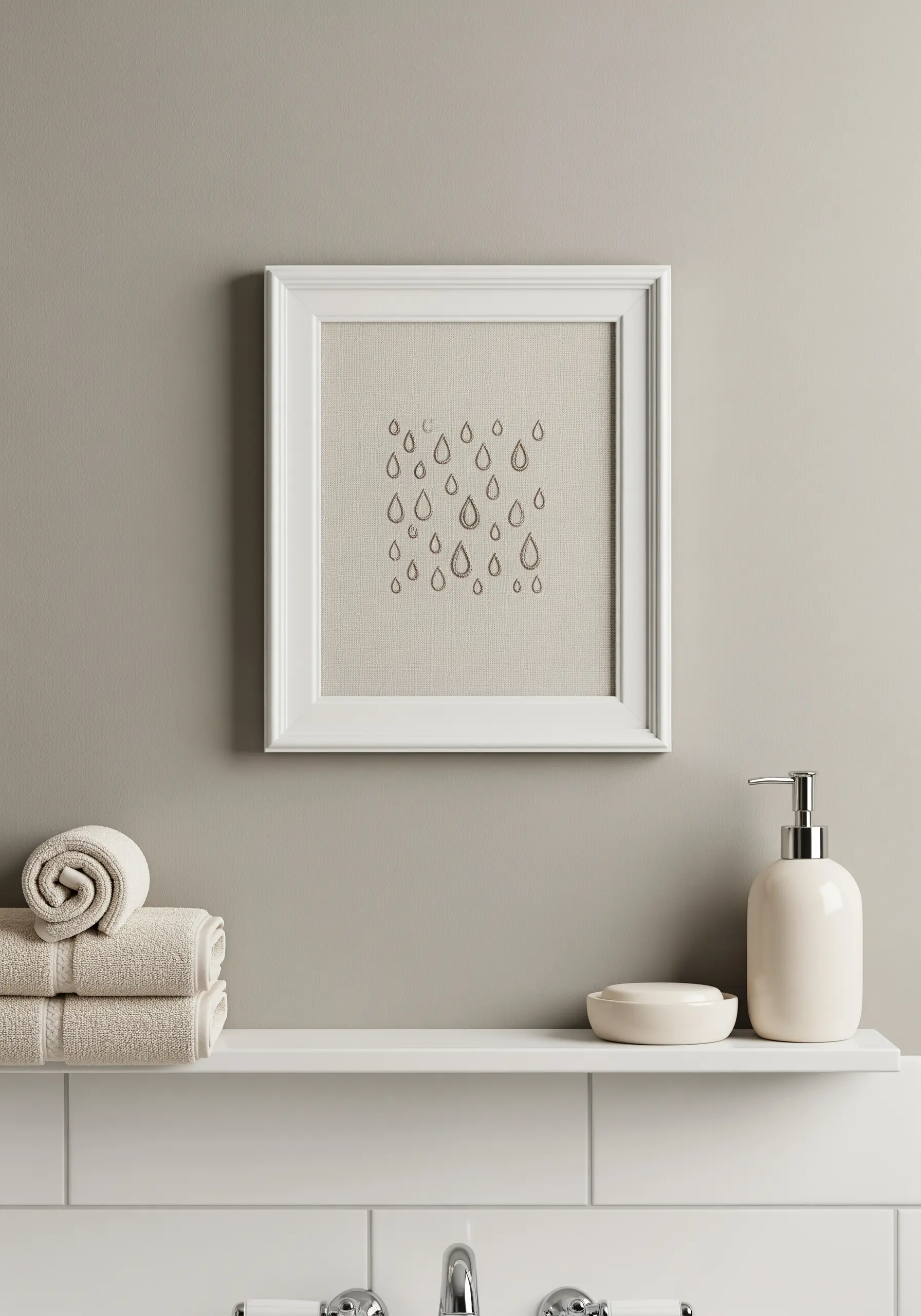
Create a pattern that feels natural and dynamic by intentionally varying the size, shape, and spacing of a repeated motif.
For a pattern like raindrops, stitch each one with a slightly different tilt or width, and add a few tiny, simple circles to represent splashes.
This subtle imperfection is what makes the composition feel hand-drawn and alive, rather than static and computer-generated.
It’s a simple principle that elevates easy small embroidery patterns into charming, thoughtful art.