Embroidery is more than a craft; it’s a practice of mindfulness, a way to slow down and create something of quiet, lasting beauty with your own hands. Neutral mandala patterns, with their rhythmic symmetry and serene forms, are the perfect vehicle for this practice. They invite you to focus on the simple, meditative repetition of each stitch.
In these patterns, you’ll discover how to transform simple home textiles into personal works of art. We will move beyond just following a pattern and explore the techniques that give your work a polished, professional finish. It’s about understanding how thread weight, stitch texture, and subtle color shifts can create depth and elegance.
Whether you’re embellishing a simple cushion, creating a statement wall hanging, or adding a personal touch to a cozy throw, these ideas are designed to build your confidence. You’ll learn to make intentional choices that elevate your embroidery, turning each project into a calming ritual and each finished piece into a source of peace for your home.
1. Achieve Serenity with a Large-Scale Tapestry
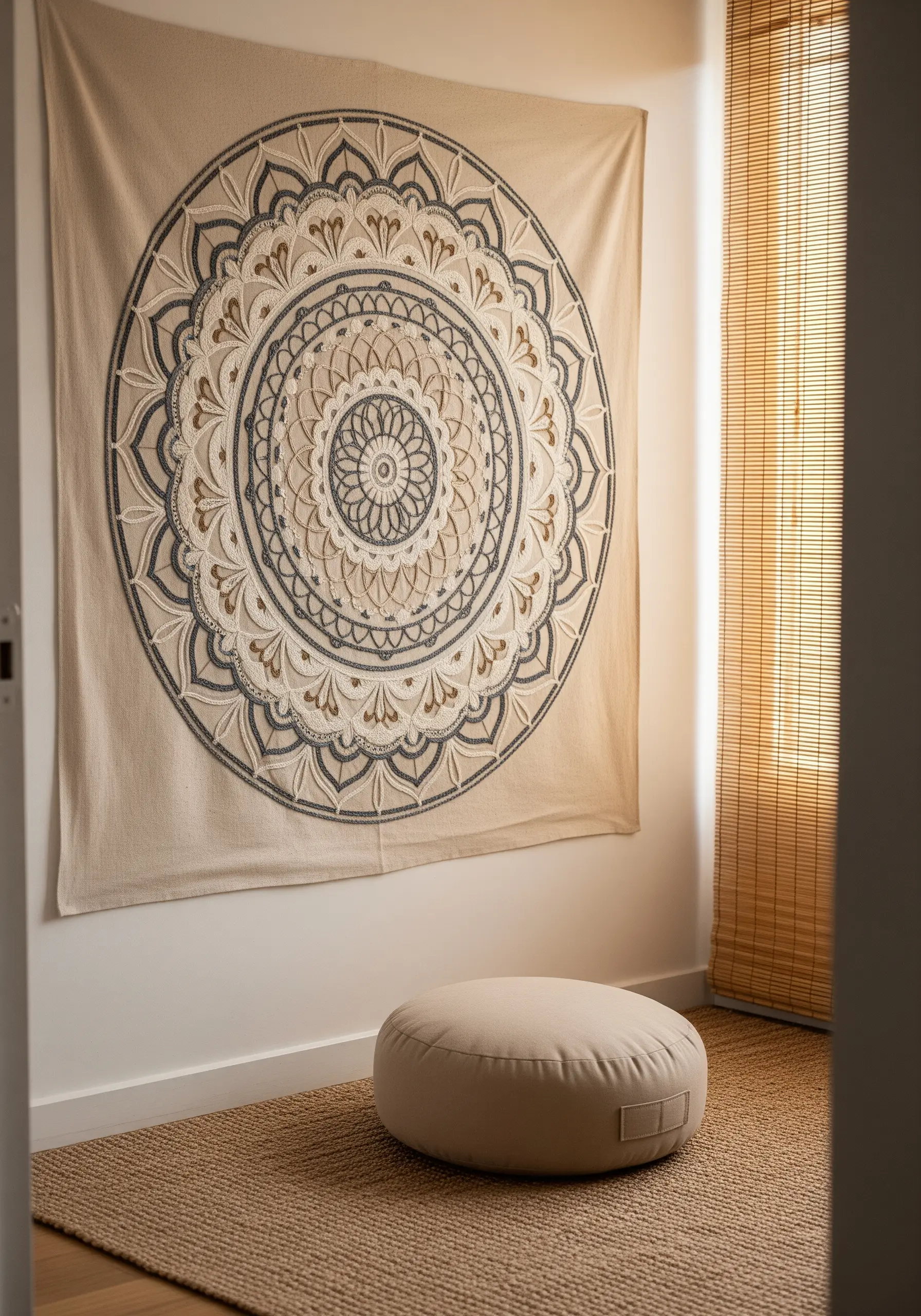
When embroidering a large-scale piece like a wall hanging, your thread choice is critical for impact.
Instead of standard six-strand floss, consider using a thicker tapestry wool or pearl cotton in size 3 or 5.
This adds weight and presence to your stitches, making them visible from a distance.
To keep the lines clean, use a chain stitch or a heavy backstitch, ensuring your tension is consistent across the entire fabric panel to prevent puckering.
2. Juxtapose Textures for a Tactile Finish
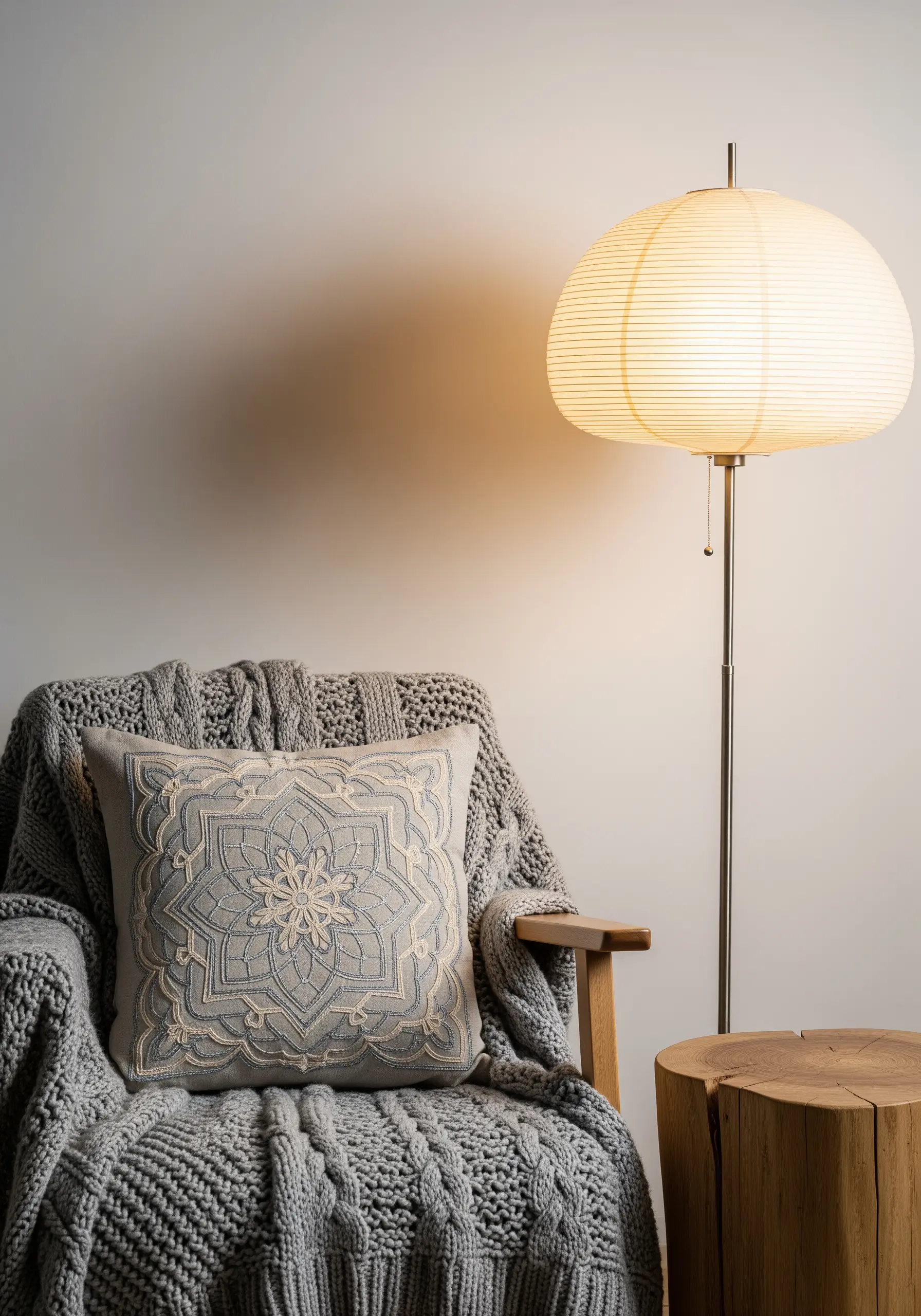
Create a sophisticated sensory experience by layering smooth embroidery onto a highly textured surface, such as a chunky knit throw.
Stitch a mandala onto a separate piece of smooth, sturdy cotton or linen first, then carefully appliqué it onto the cushion cover.
This method prevents the knit from stretching or distorting your stitches and ensures the crisp geometry of the mandala remains intact.
The contrast between the clean lines of the embroidery and the soft chaos of the knit is what gives this piece its professional, designer feel.
For a perfect match, explore these linen-tone embroidery cushion covers.
3. Master the Art of Tone-on-Tone Subtlety
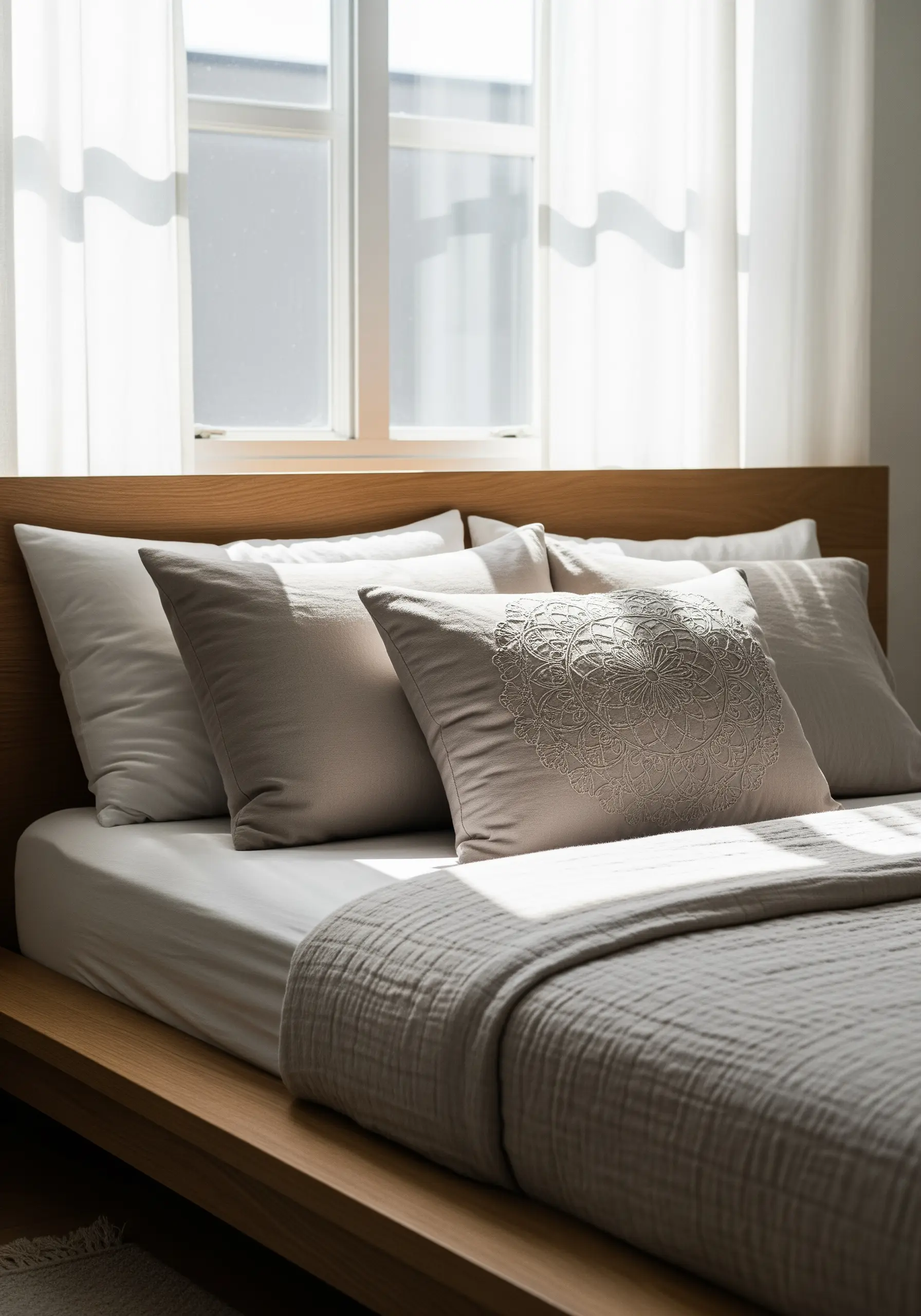
The most elegant neutral designs often rely on subtle shifts in tone rather than color.
Choose a thread that is only one or two shades lighter or darker than your base fabric, such as an ivory thread on a soft taupe pillowcase.
This creates a design that reveals itself slowly, catching the light to create dimension and texture without overwhelming the space.
It’s a quiet, confident approach that feels both luxurious and deeply calming.
4. Use High Contrast for Dramatic Wall Art
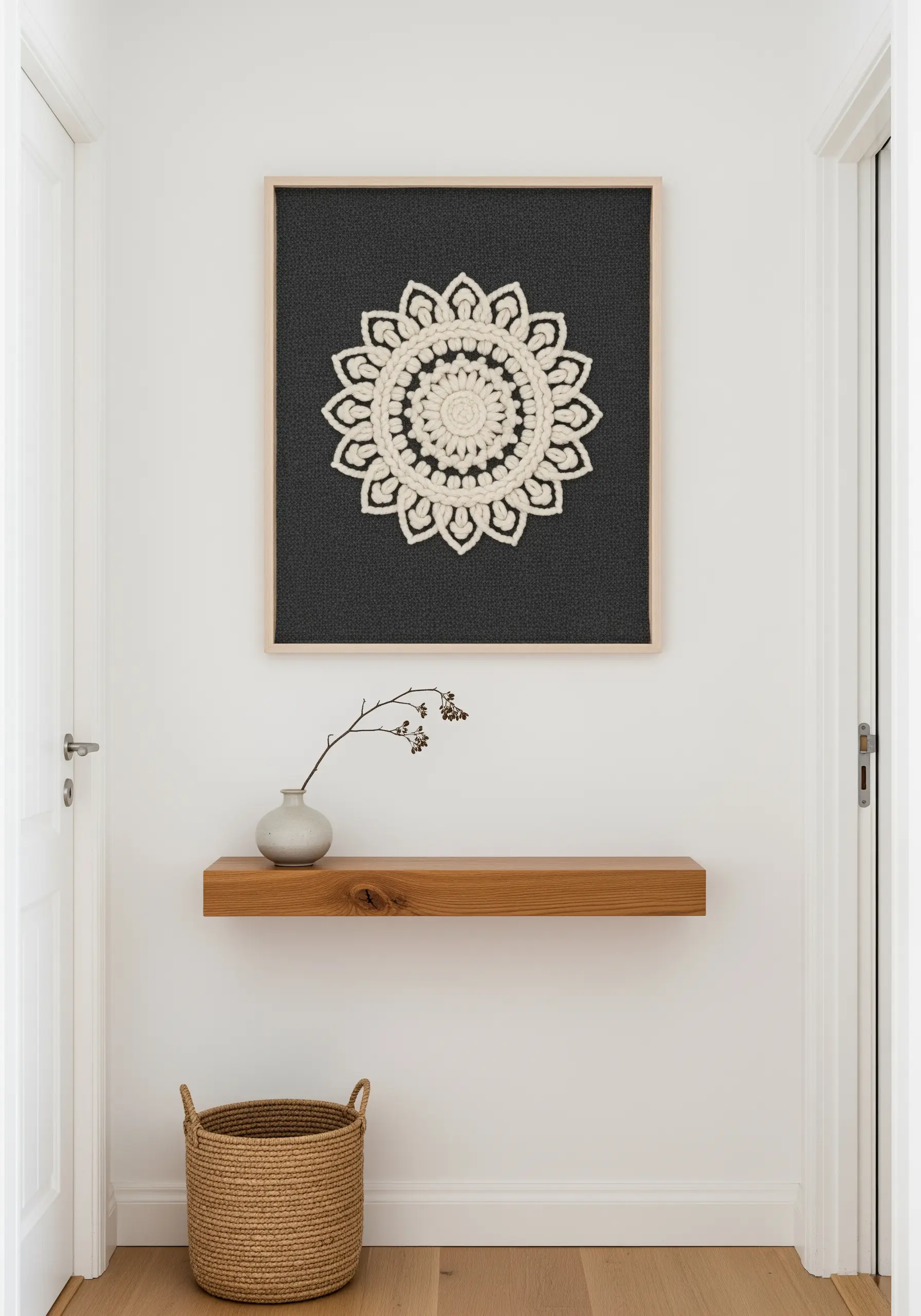
To make a neutral mandala truly stand out as framed art, maximize the contrast between your thread and fabric.
Stitch with a thick, creamy white wool or cotton yarn on a tightly woven black or charcoal canvas.
Instead of delicate stitches, opt for bold textures like a whipped backstitch, couching, or dense clusters of French knots to give the design a three-dimensional, sculptural quality.
This technique turns a simple pattern into a powerful piece of yarn wall art.
5. Add a Personal Touch to Upholstery
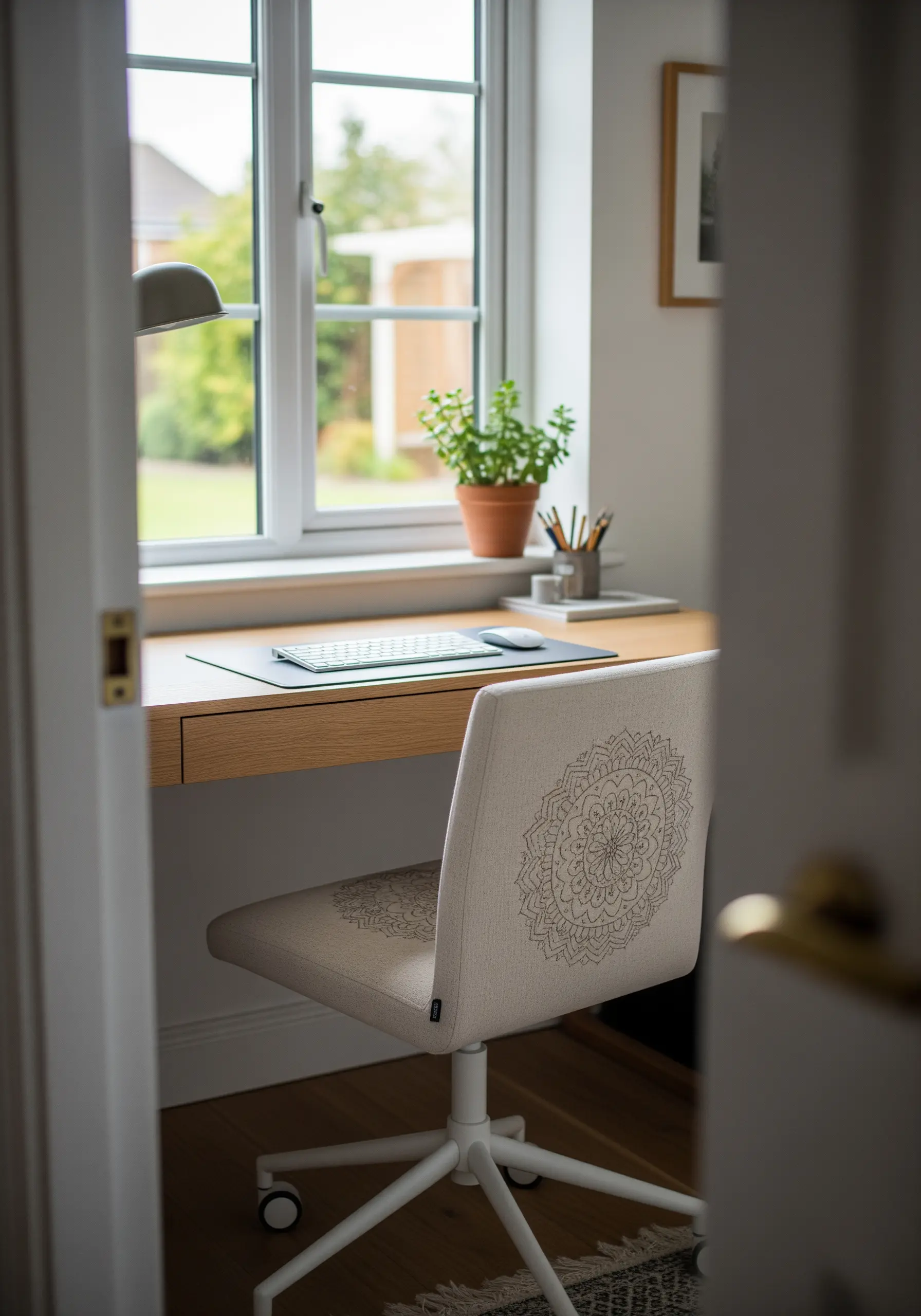
Embroidering on furniture requires a focus on durability.
For a piece like an office chair, choose a strong upholstery-grade fabric and use a resilient thread like polyester or a bonded nylon blend.
Opt for flat, snag-resistant stitches such as the backstitch, split stitch, or a very tight satin stitch.
These stitches will withstand daily wear while adding a custom, high-end detail that transforms a functional object into something personal and beautiful.
6. Create Rhythm on Table Linens
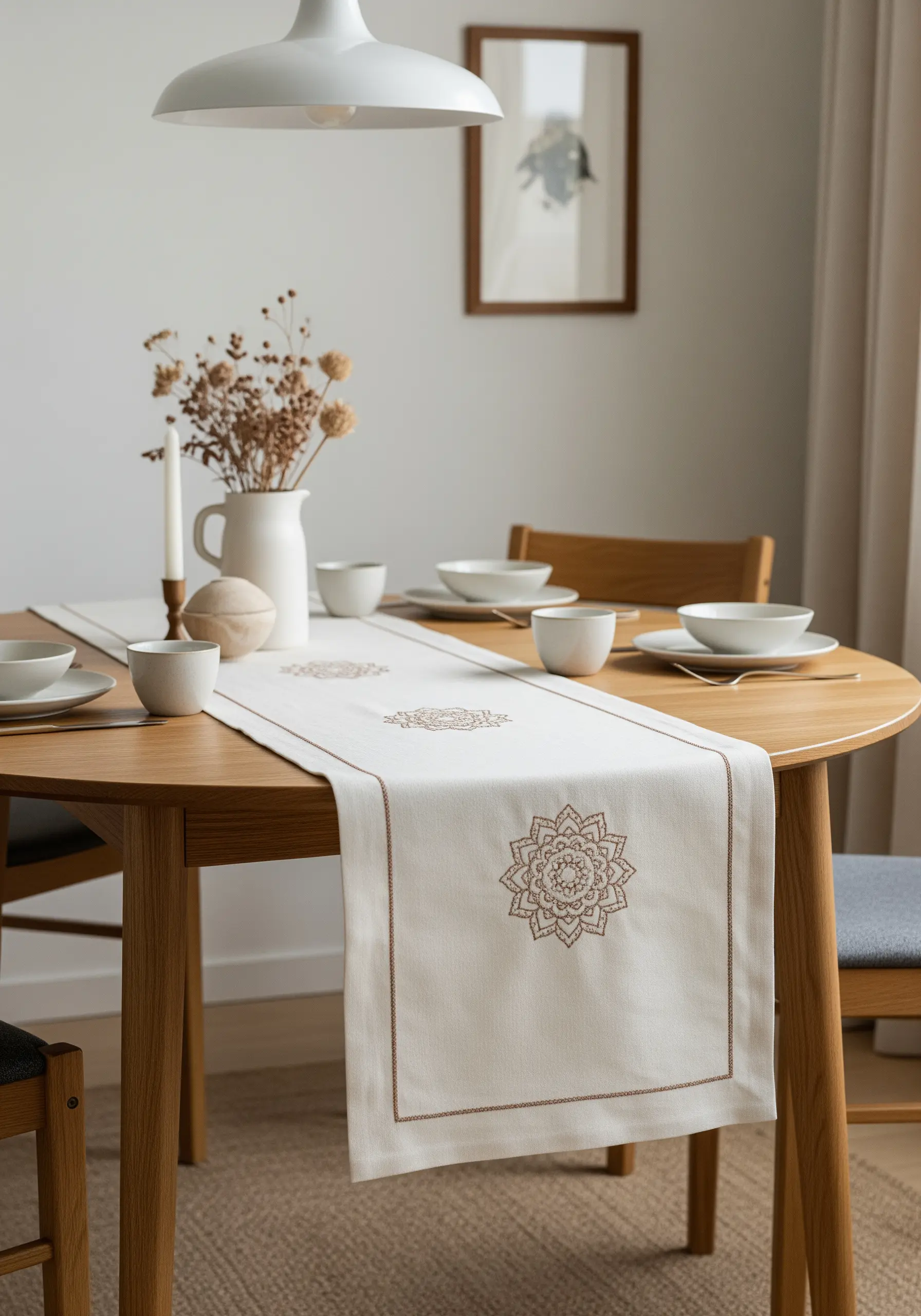
For a long surface like a table runner, create a sense of harmony and flow by repeating a simplified mandala motif.
Instead of one large, central design, place smaller, identical mandalas at each end and perhaps one in the center.
This repetition draws the eye along the length of the table and creates a balanced, intentional look.
A simple running stitch or stem stitch in a warm brown or grey thread will give you a clean, graphic result that complements minimalist table settings, similar to these line art garden motifs.
7. Blend Multiple Neutrals for Depth
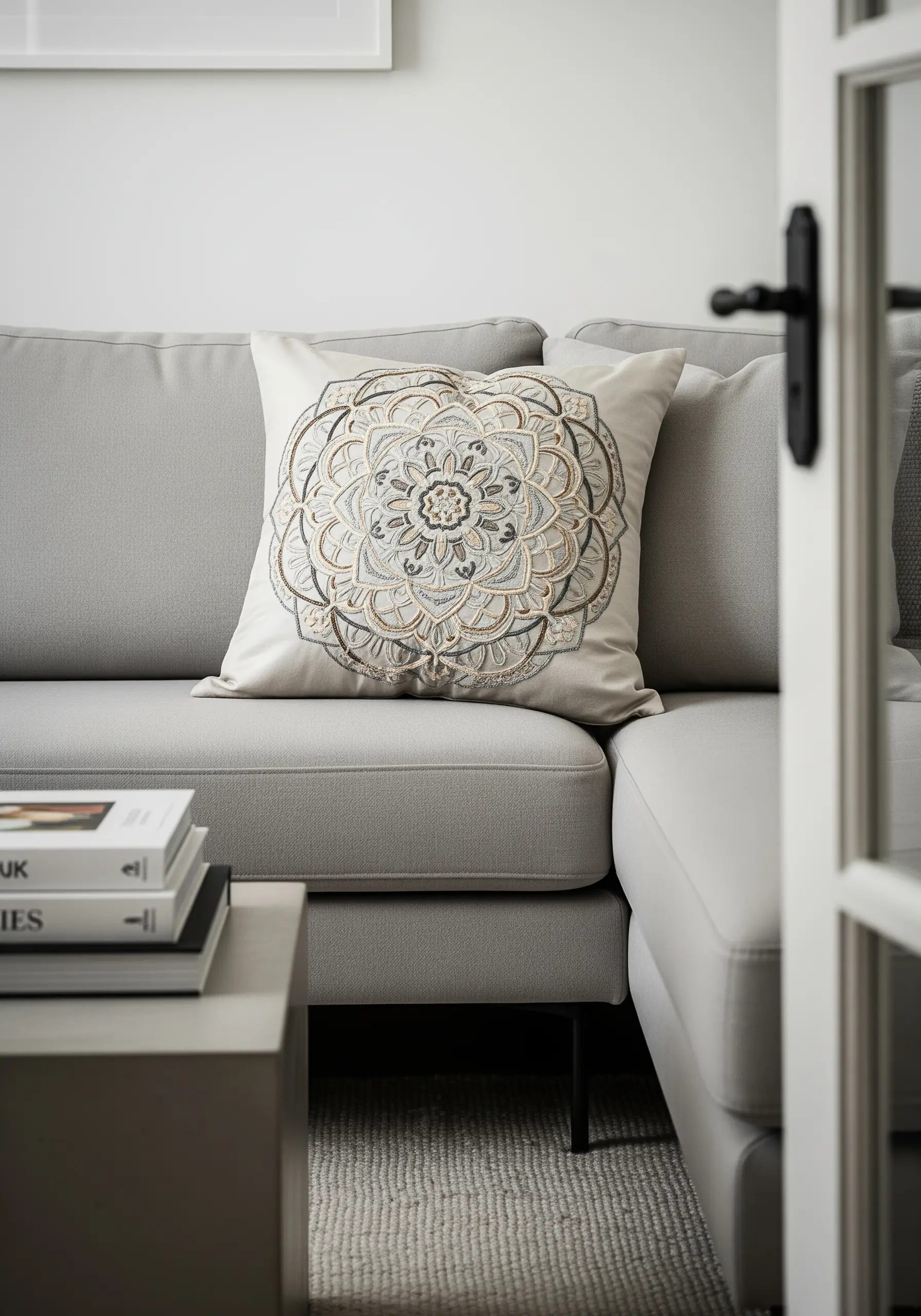
Elevate your mandala by moving beyond a single neutral color.
Select a palette of three to four harmonious tones—such as soft grey, ecru, taupe, and a charcoal accent—and assign them to different rings or elements within the design.
This technique adds incredible depth and complexity without introducing bright color, making the pattern feel richer and more dynamic.
It directs the eye inward toward the center, enhancing the meditative quality of the mandala.
8. Pair Whitework with Natural Materials
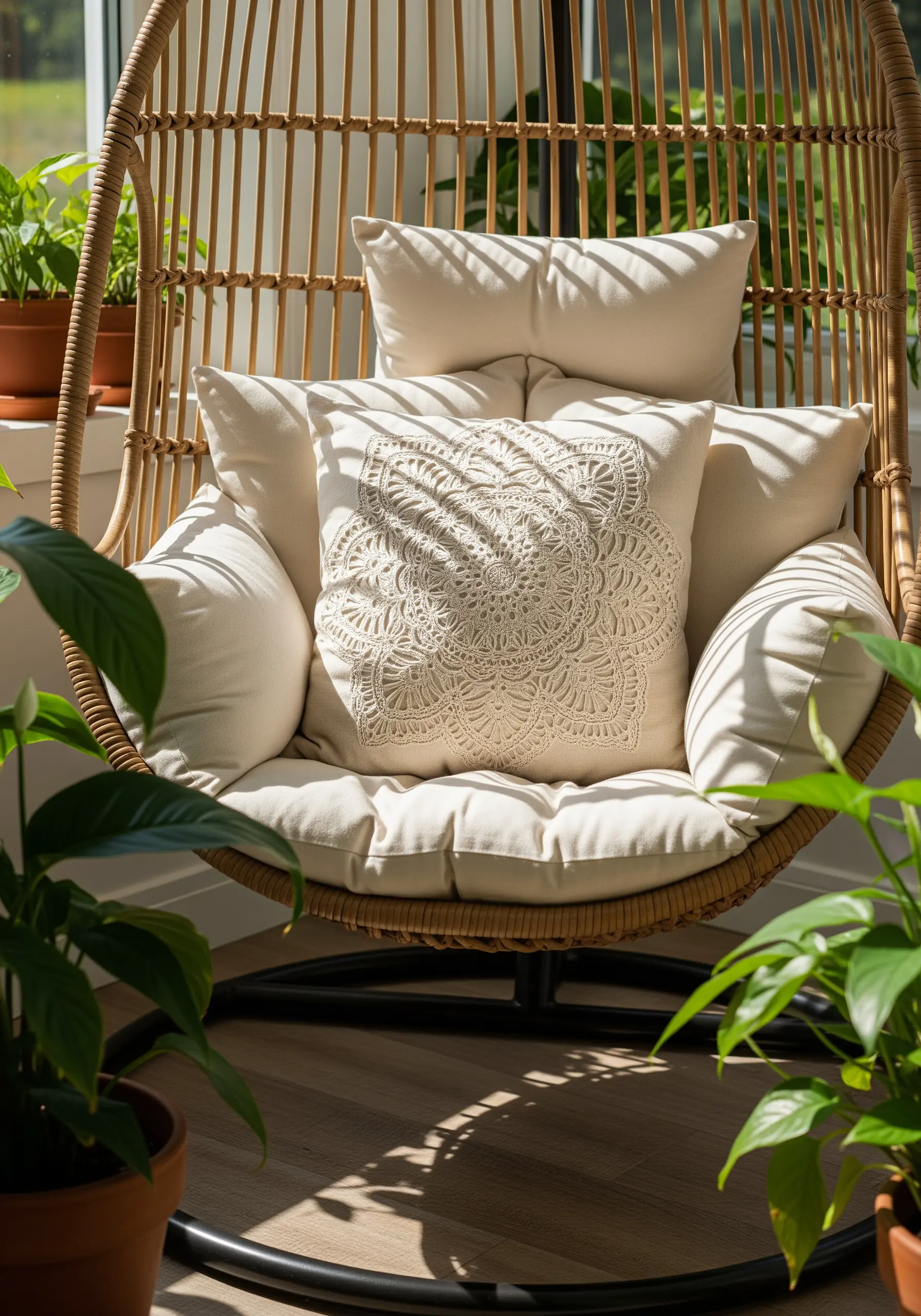
There is a timeless elegance to whitework embroidery—using white thread on a white or off-white fabric.
This technique shines when paired with natural textures like rattan, wicker, or light wood.
Focus on creating texture through your stitch choice: use padded satin stitch for raised areas, French knots for dotted effects, and pulled thread work for lacy details.
These greige & ivory embroidery art ideas capture this aesthetic perfectly, creating a piece that feels both organic and refined.
9. Conquer Terrycloth with a Stabilizer
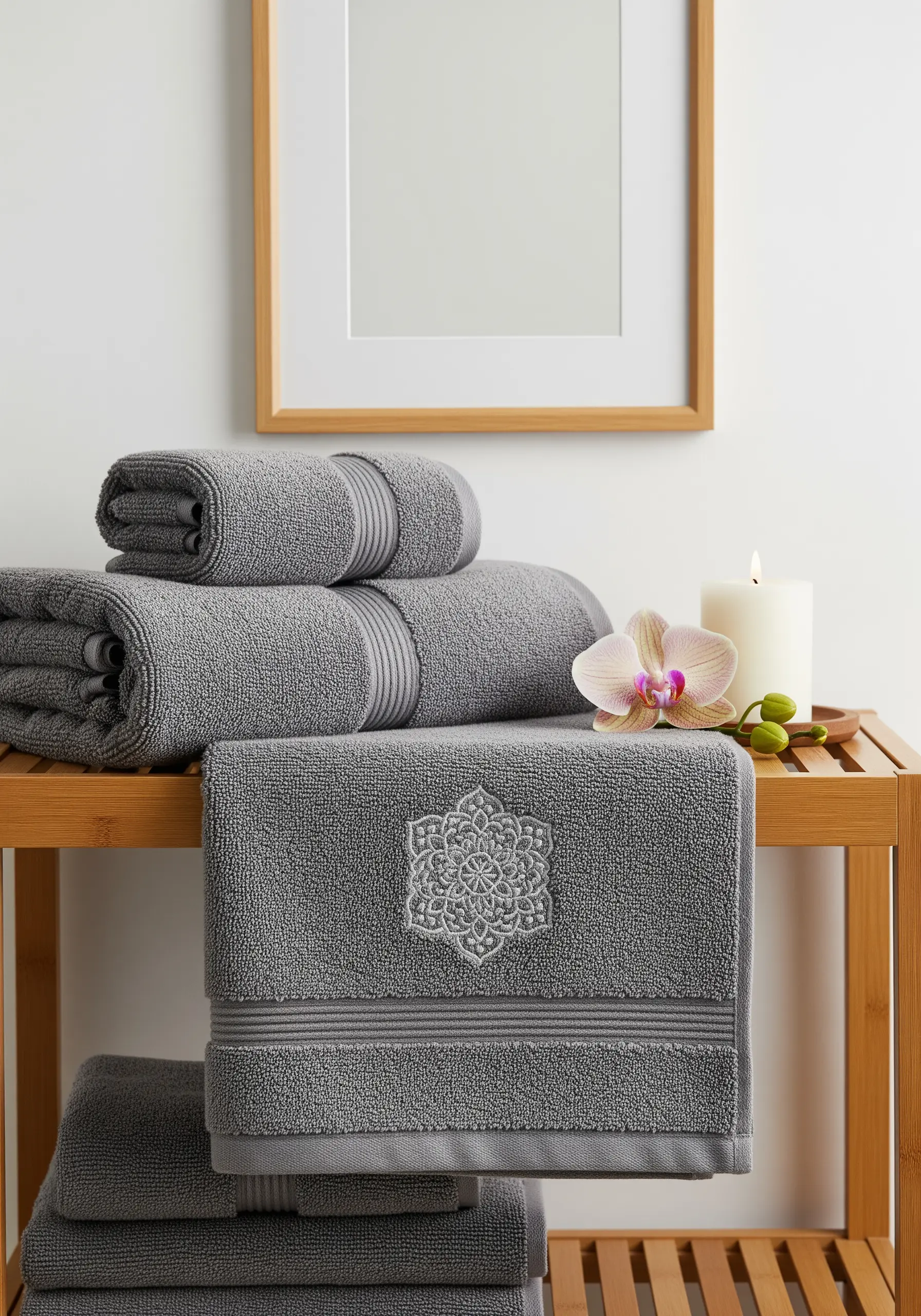
Embroidering on a high-pile fabric like a terrycloth towel can be challenging, as stitches tend to sink and disappear.
The solution is to use a water-soluble topping stabilizer.
Place a layer over the area you intend to stitch; it creates a smooth surface for your needle and thread to glide over, keeping your stitches crisp and on top of the loops.
Once you’re finished, simply wash the towel, and the stabilizer will dissolve completely, leaving behind a perfectly defined mandala.
10. Use Symmetry for a Polished Window Seat
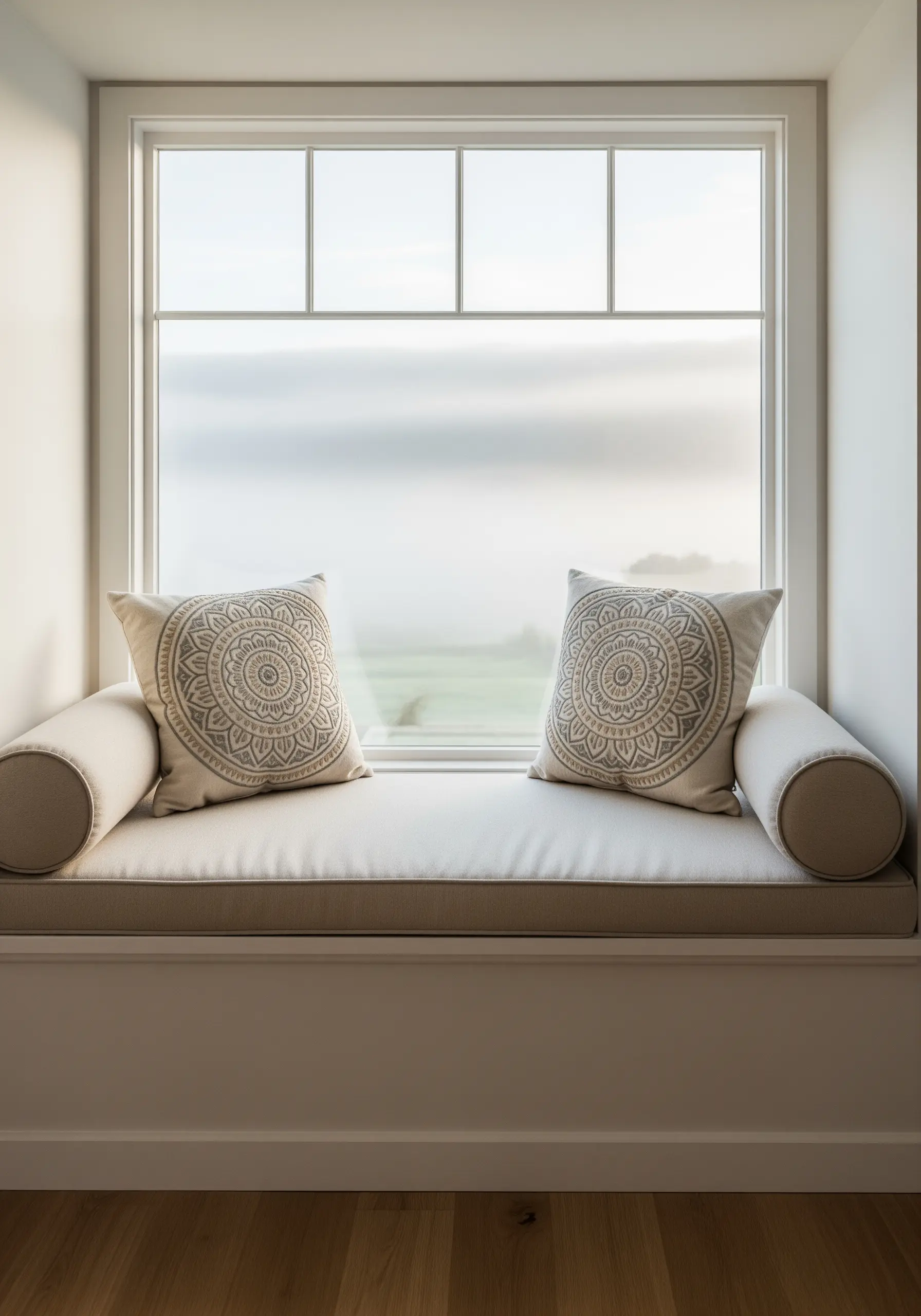
When decorating a defined space like a window seat, symmetry creates an immediate sense of calm and order.
Stitch two identical mandala cushions, ensuring the patterns are perfect mirror images of each other.
This simple design choice elevates the space from a cozy nook to a thoughtfully designed feature.
Use a single, grounding color like a soft stone grey on an oatmeal linen to maintain a serene, uncluttered aesthetic.
11. Choose the Right Stitch for Knit Blankets
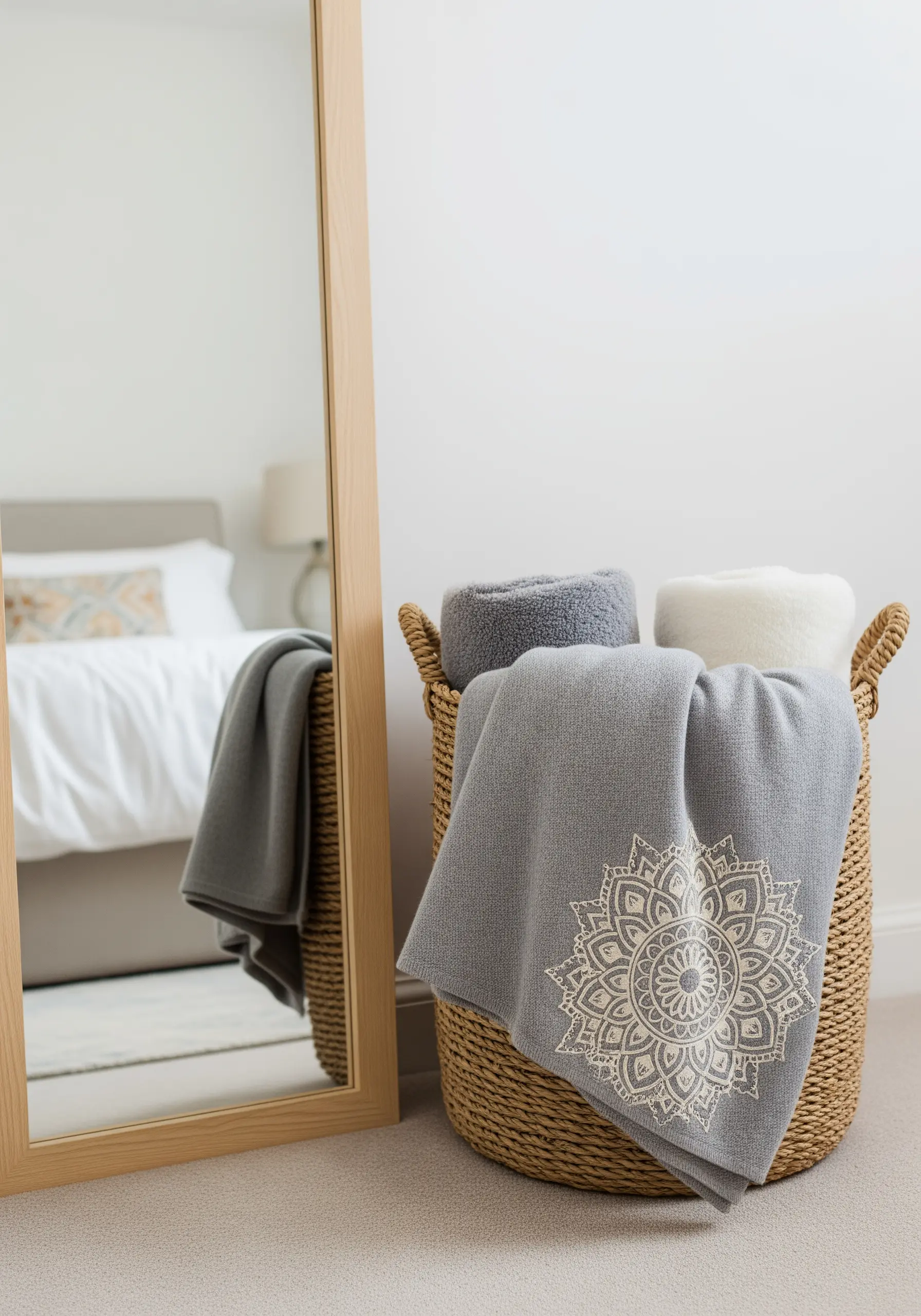
When working on embroidered throws and blankets with a visible weave or knit, your stitch choice should complement the fabric’s natural stretch.
Avoid tight, dense stitches like satin stitch, which can pull and pucker the material.
Instead, opt for stitches that have more flexibility, such as the chain stitch, split stitch, or even simple running stitches.
Use a ballpoint needle, which slides between the fabric’s fibers rather than piercing them, to prevent snags and damage.
12. Embrace Negative Space for High Impact
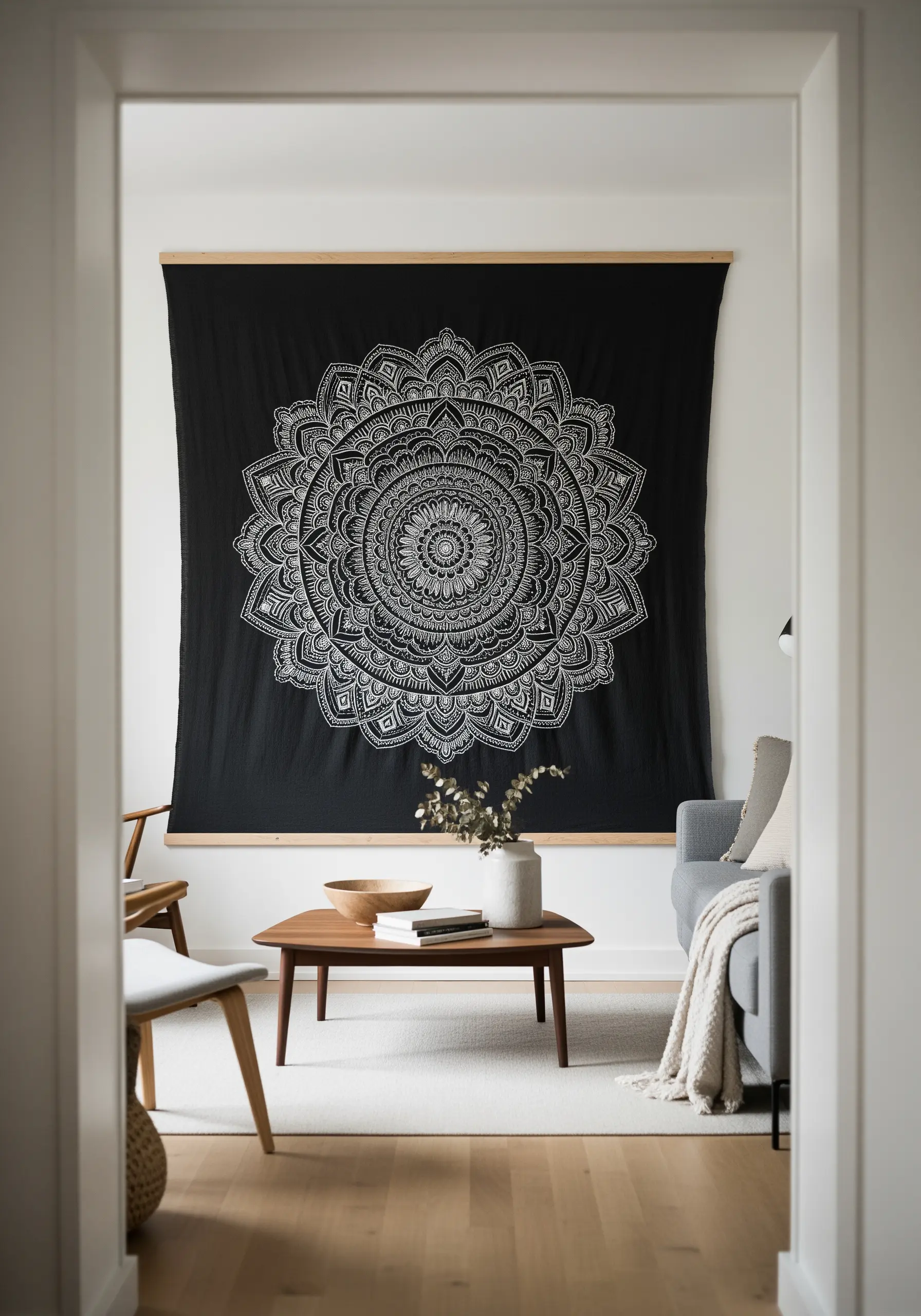
In a high-contrast design, the unstitched fabric is as crucial as the stitches themselves.
On a black or navy background, use a fine, bright white thread to create a delicate, lace-like mandala.
Focus on the precision of your lines—a perfectly executed backstitch or stem stitch is all you need.
The vastness of the dark fabric makes the intricate white pattern appear to float, creating a design that is both dramatic and minimalist.
13. Deconstruct a Mandala for a Modern Triptych
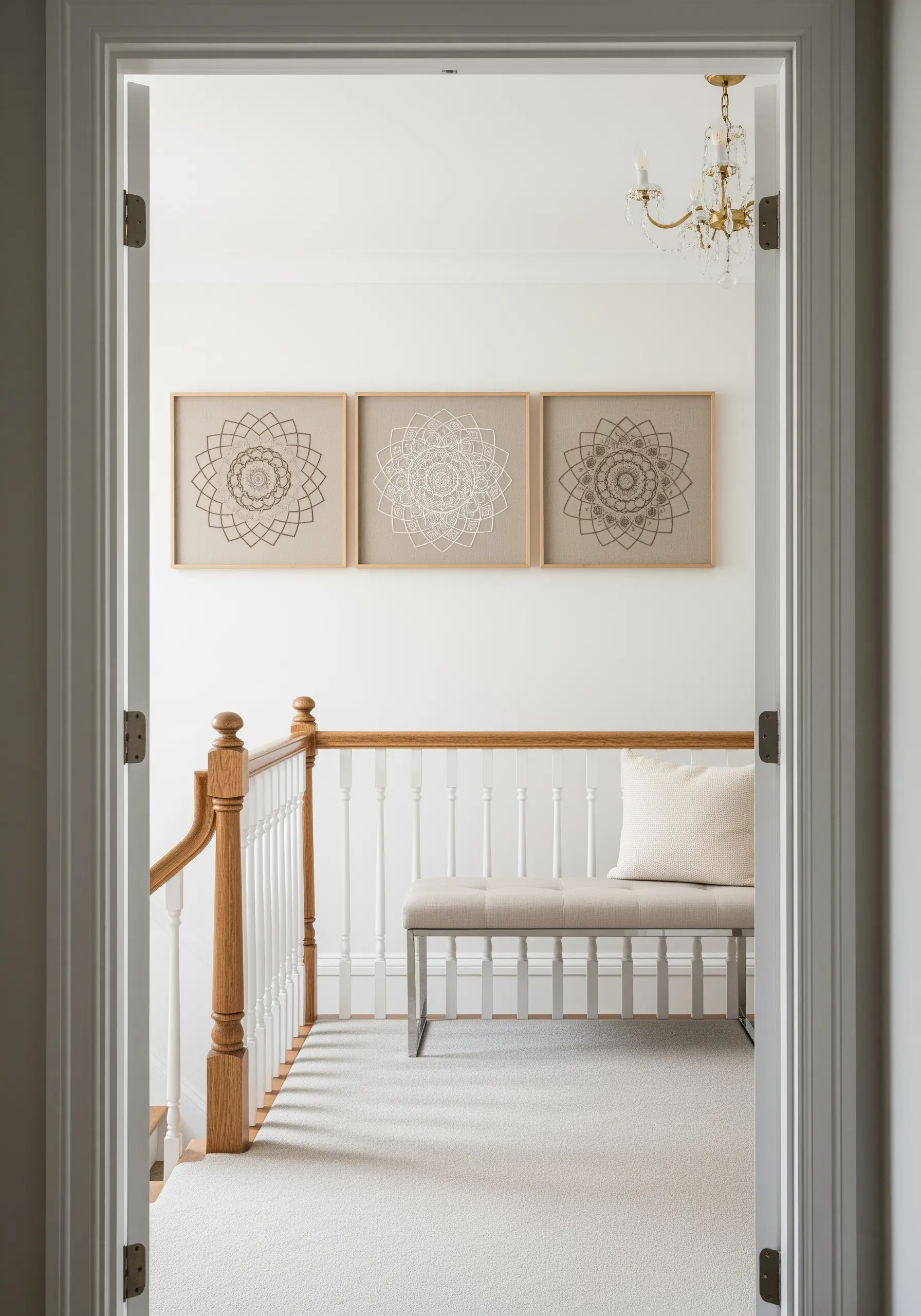
Instead of a single, large piece, create a modern gallery effect by splitting one mandala design across three separate frames.
You can either stitch a third of the design in each hoop or embroider three different but coordinating mandalas.
Mount them on the same neutral linen fabric and use identical frames to create a cohesive, polished look.
This approach turns a traditional motif into a sophisticated series of elegant framed embroidery artworks.
14. Translate Embroidery into a Quilted Texture
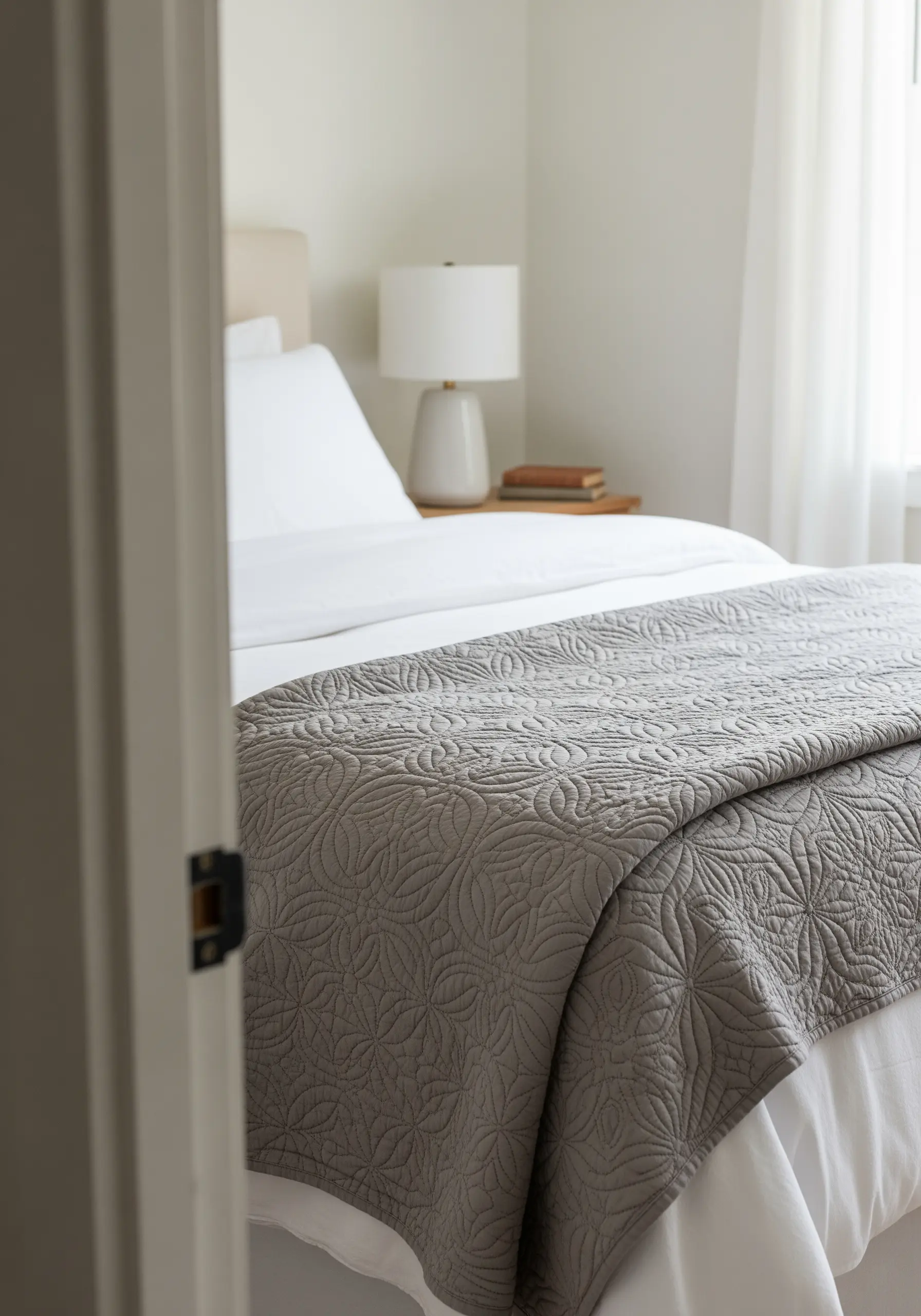
A mandala pattern doesn’t always have to be rendered in embroidery floss; it can be beautifully interpreted through quilting.
Use a free-motion quilting foot on your sewing machine to “draw” the mandala pattern onto a quilt or bedspread.
The stitched lines will create a subtle, textural relief that is especially beautiful in a single, solid color.
This technique adds pattern and warmth without adding another color to your bedroom palette.
15. Adapt Your Pattern for Curved Surfaces
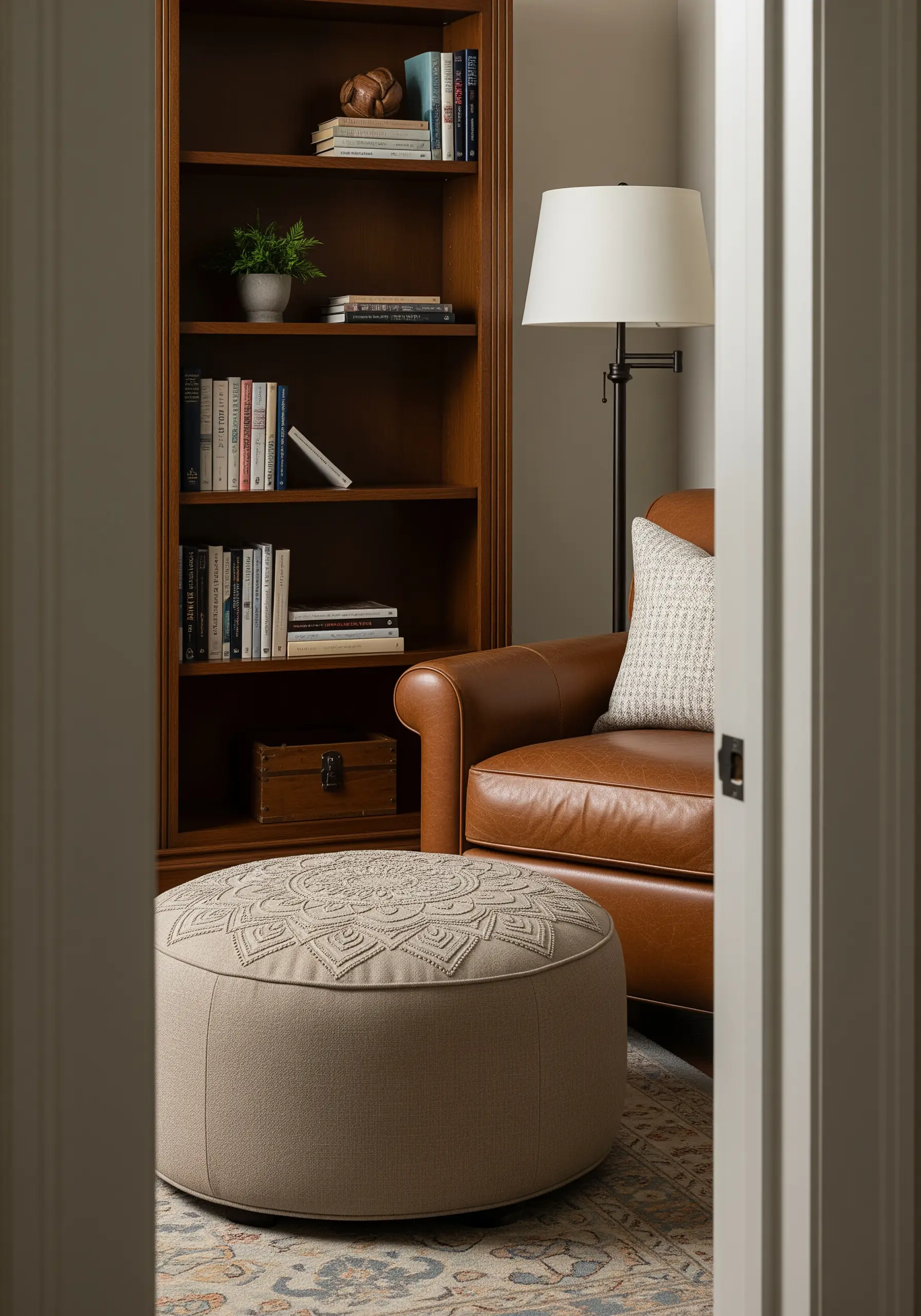
When embroidering on a three-dimensional object like an ottoman, a flat pattern needs careful adjustment.
Print your pattern and test how it wraps around the curve; you may need to slightly distort or resize elements to ensure they appear balanced from all angles.
Use a heavier fabric and a tear-away stabilizer to prevent the material from shifting as you stitch on the rounded surface.
The goal is for the design to look like it was woven into the fabric, not simply placed on top.
16. Create Cohesion with Lumbar Pillows
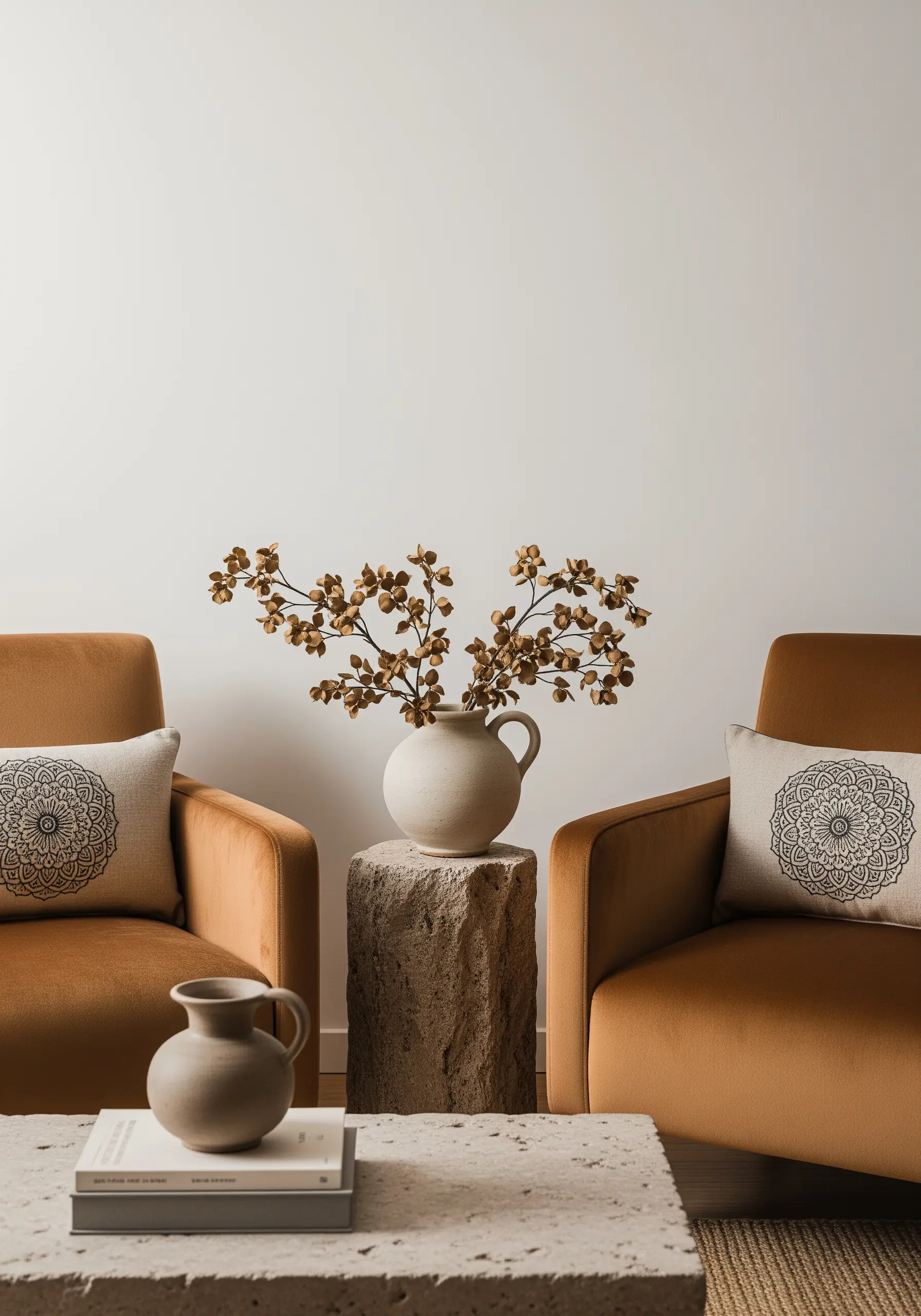
For long lumbar or bolster pillows, a repeating series of smaller mandalas often works better than one oversized design.
Space three or five motifs evenly across the length of the pillow to create a sense of rhythm and balance.
You can use the exact same pattern for each, or introduce subtle variations in the details of each mandala to add a layer of handcrafted charm.
This approach ensures the design feels integrated with the shape of the pillow itself.
17. Prioritize Softness for Nursery Textiles
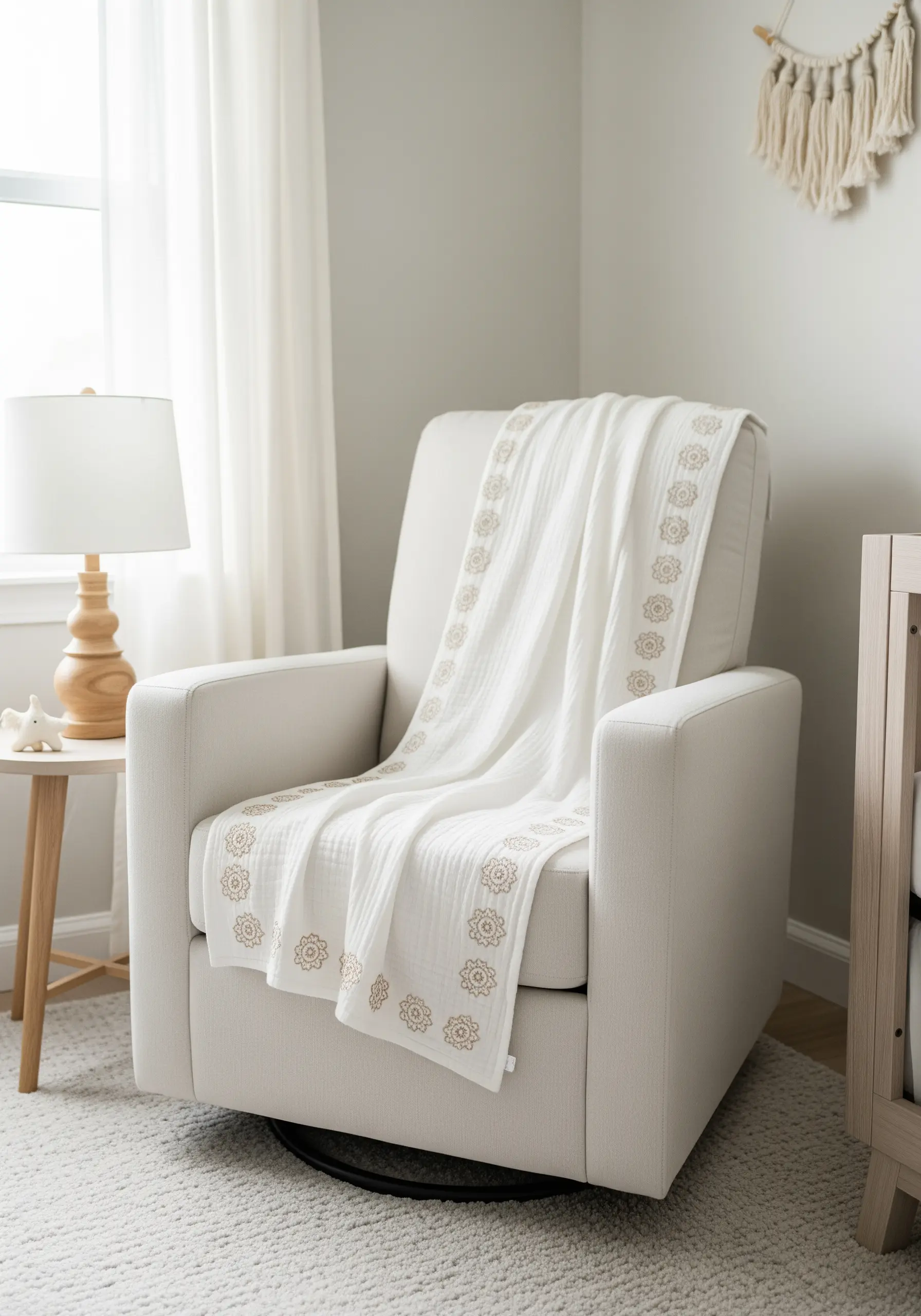
When embroidering for a nursery, the feel of the finished piece is just as important as the look.
Choose exceptionally soft materials like a double-gauze muslin or a bamboo-cotton blend for the base fabric.
Stitch with a soft, pliable thread like merino wool yarn or a high-quality cotton floss.
A simple running stitch border of tiny mandalas will add a gentle, handmade touch without creating any rough texture against a baby’s skin.
18. Curate a Mindful Hoop Art Gallery Wall
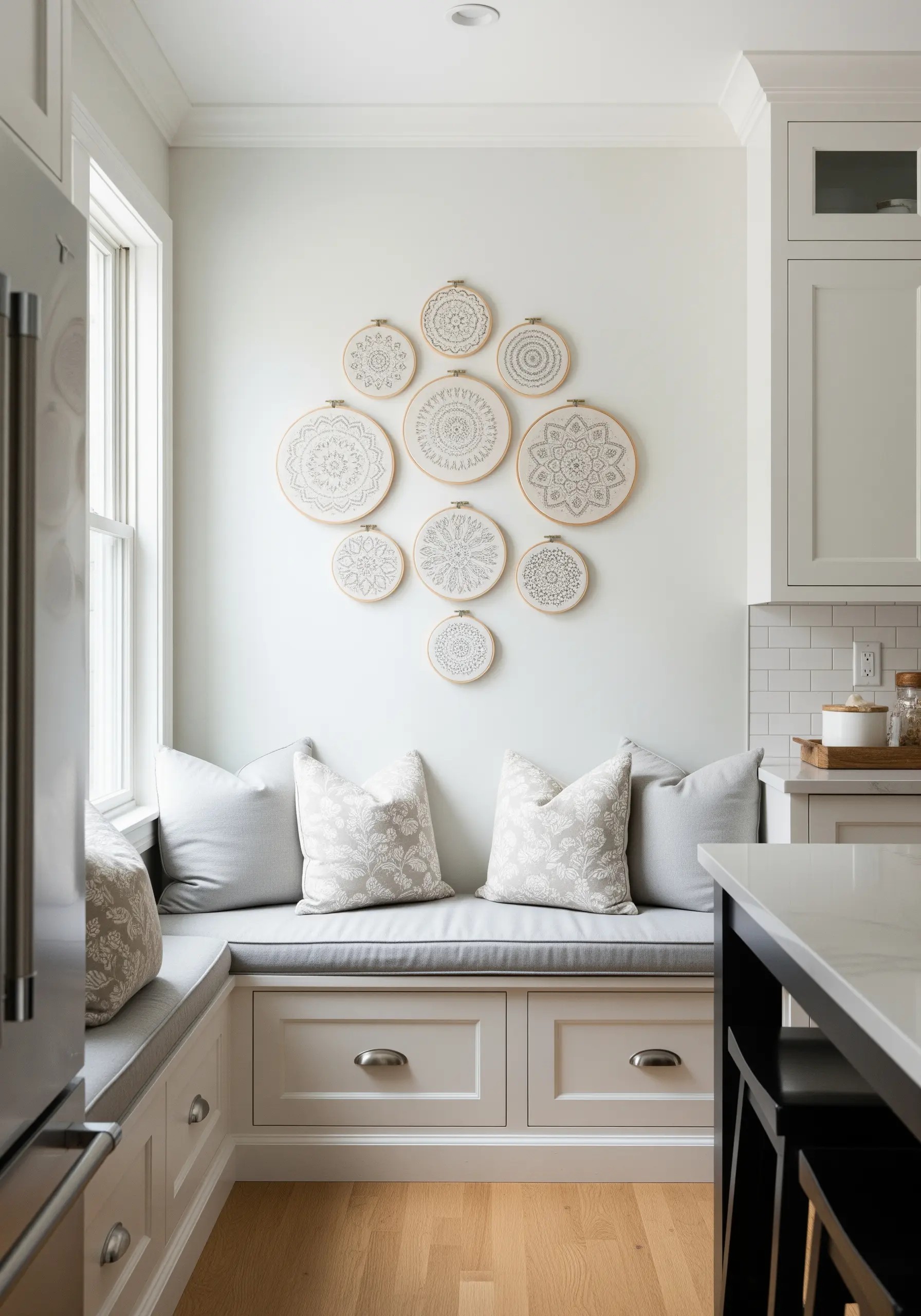
Create a stunning focal point by grouping multiple hoop-framed mandalas into a single art installation.
To ensure the collection feels curated, not cluttered, stick to a strict rule: use the same neutral fabric and a limited palette of one or two thread colors across all pieces.
Vary the size of the hoops and the complexity of the mandala patterns to create visual interest and rhythm.
This method transforms simple hoops into elegant circle frame minimal embroidery compositions.
19. Harmonize Embroidery with Fabric Texture
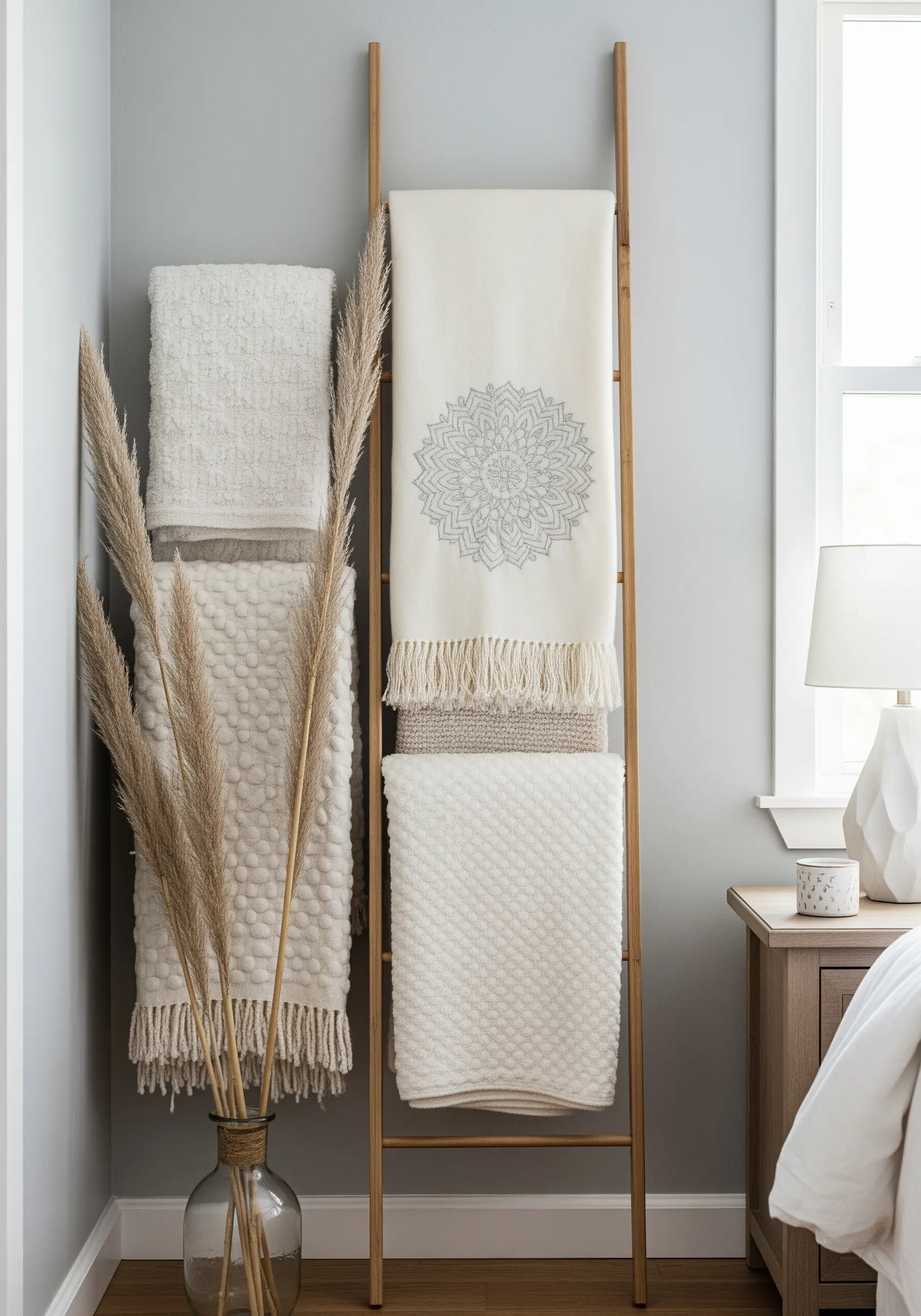
Before you begin stitching on a textured blanket, let the existing fabric guide your design choices.
For a blanket with a pronounced weave or fringe, a delicate, single-strand mandala might get lost.
Instead, choose a bolder pattern and use a thicker thread, like a full six strands of floss or even a fine yarn, to ensure the embroidery holds its own.
The goal is a harmonious partnership between the base textile and your stitched addition.
20. Introduce Beads for a Hint of Texture
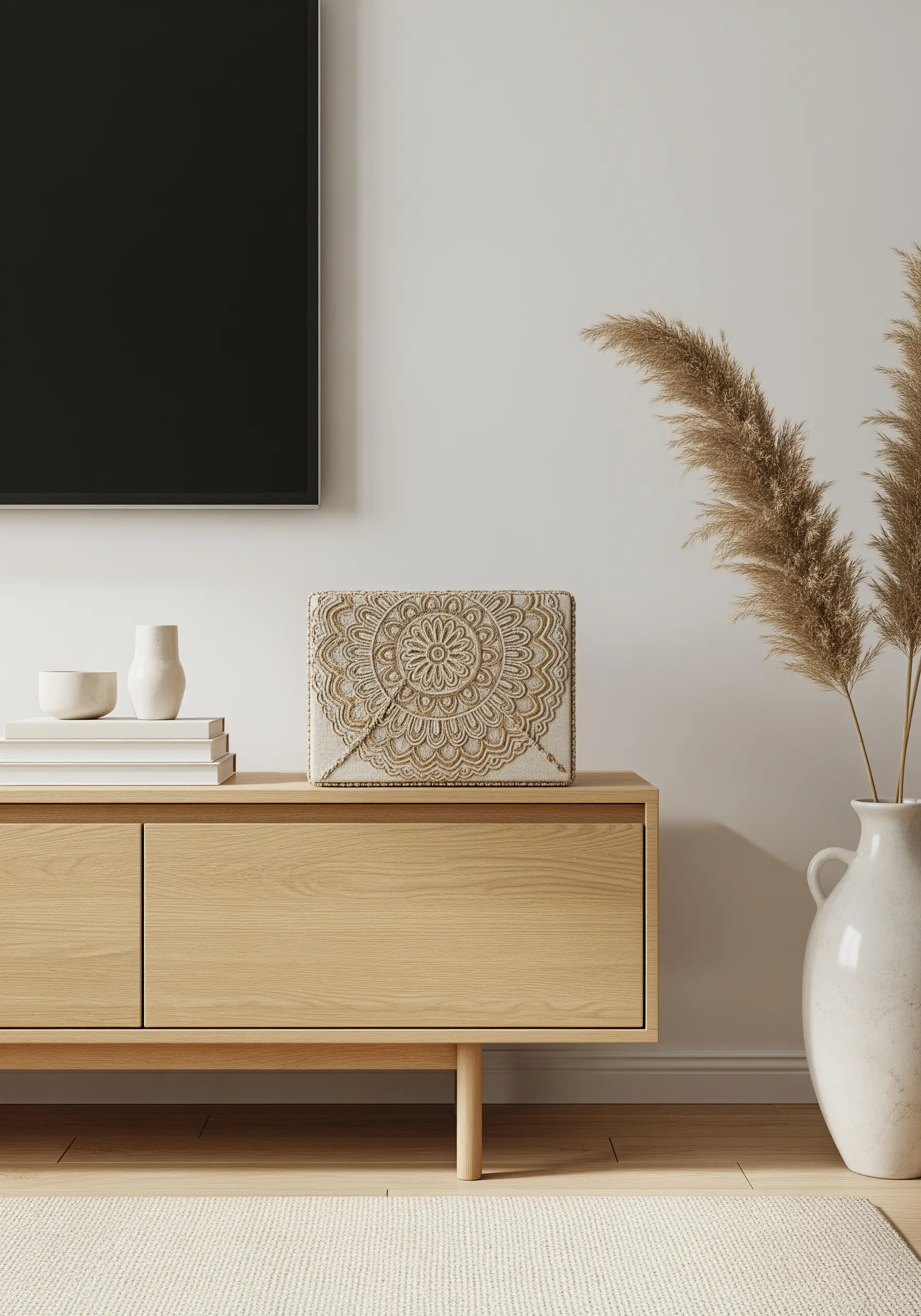
Add a subtle, sophisticated shimmer to your mandala by incorporating beadwork.
Instead of filling an area with satin stitch, use tiny seed beads in a matching neutral color like matte cream, bronze, or pearly white.
You can also accentuate the center of the mandala or dot the intersections of the pattern with a single bead.
This is a perfect way to experiment with DIY mixed-media embroidery projects, adding texture and light without adding color.
21. Integrate Your Design with Tufted Furniture
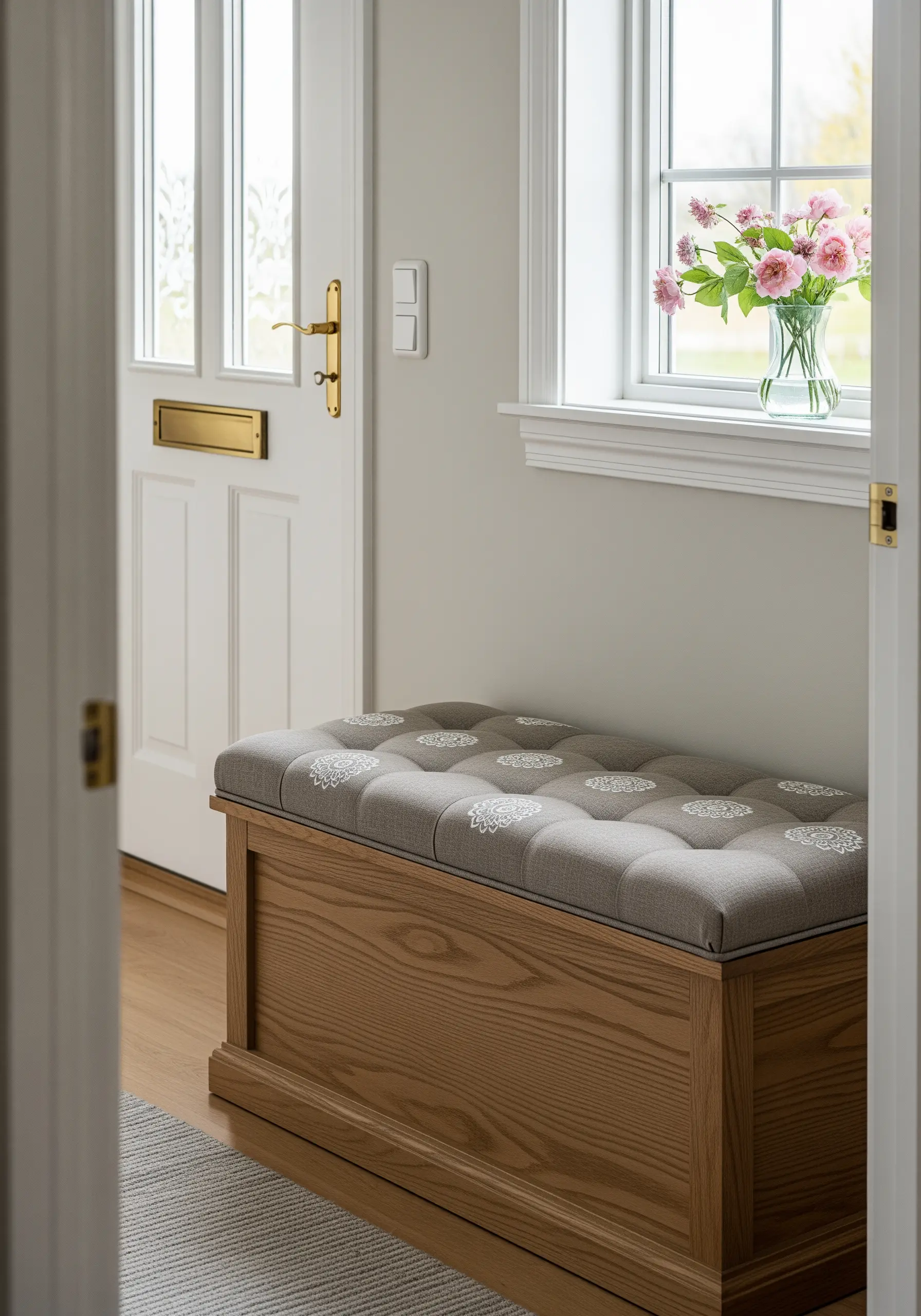
When embroidering on a tufted piece of furniture, see the tufts as part of the design, not an obstacle.
Plan your embroidery to radiate outwards from the tufted buttons, using them as the natural center points for a series of smaller, repeating mandalas.
This clever placement makes the embroidery look like an integral part of the upholstery, creating a truly custom, high-end piece.
22. Scale Up for a Dramatic Headboard
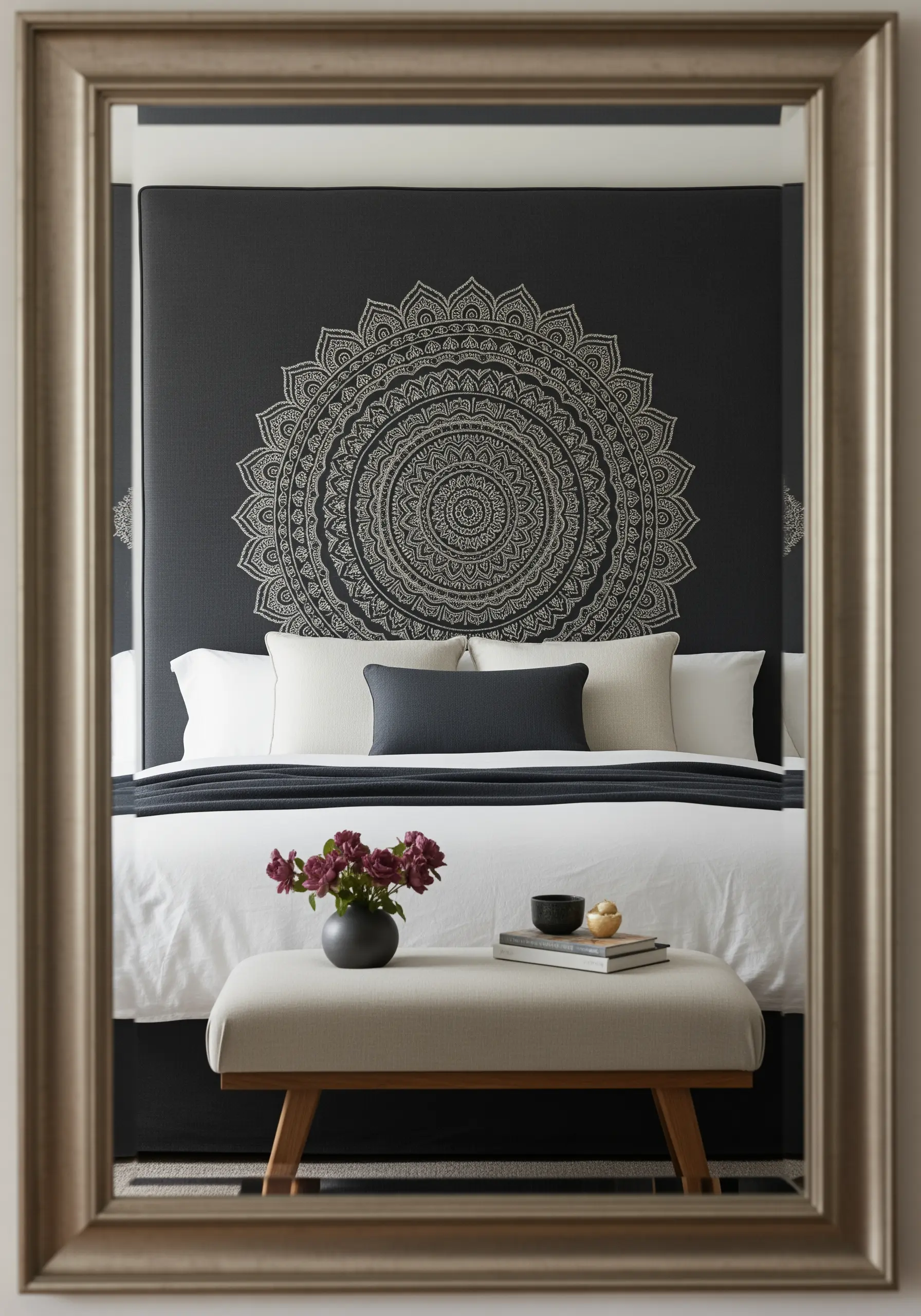
Transform a simple upholstered headboard into a stunning work of art with a single, oversized mandala.
To transfer such a large design accurately, use an iron-on transfer pencil or a water-soluble fabric marker and a projector to trace the pattern onto the fabric before it’s upholstered.
Use a simple but bold stitch, like a whipped backstitch in a contrasting thread, to ensure the intricate details are visible and make a powerful statement.
23. Create a Sculptural Effect with Chunky Yarn
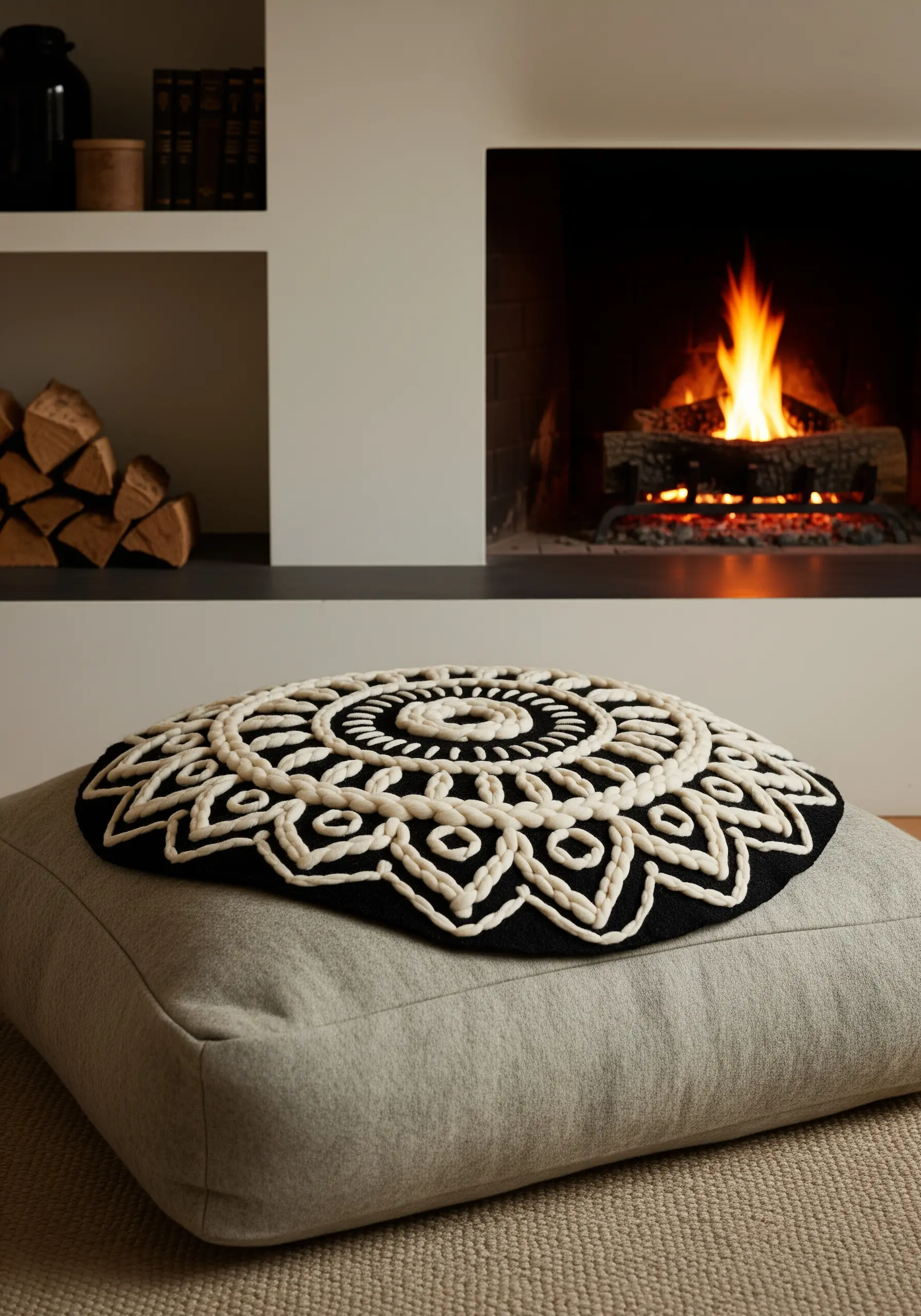
For a floor cushion that invites touch, move beyond thread and embrace chunky yarn.
Use a technique called couching, where you lay the thick yarn on the surface of the fabric and tack it down with a smaller, matching thread.
This allows you to create bold, raised lines that give the mandala a highly textural, almost sculptural quality.
This is a great way to create layered yarn wall art on a functional object.
24. Choose Durability for Functional Placemats
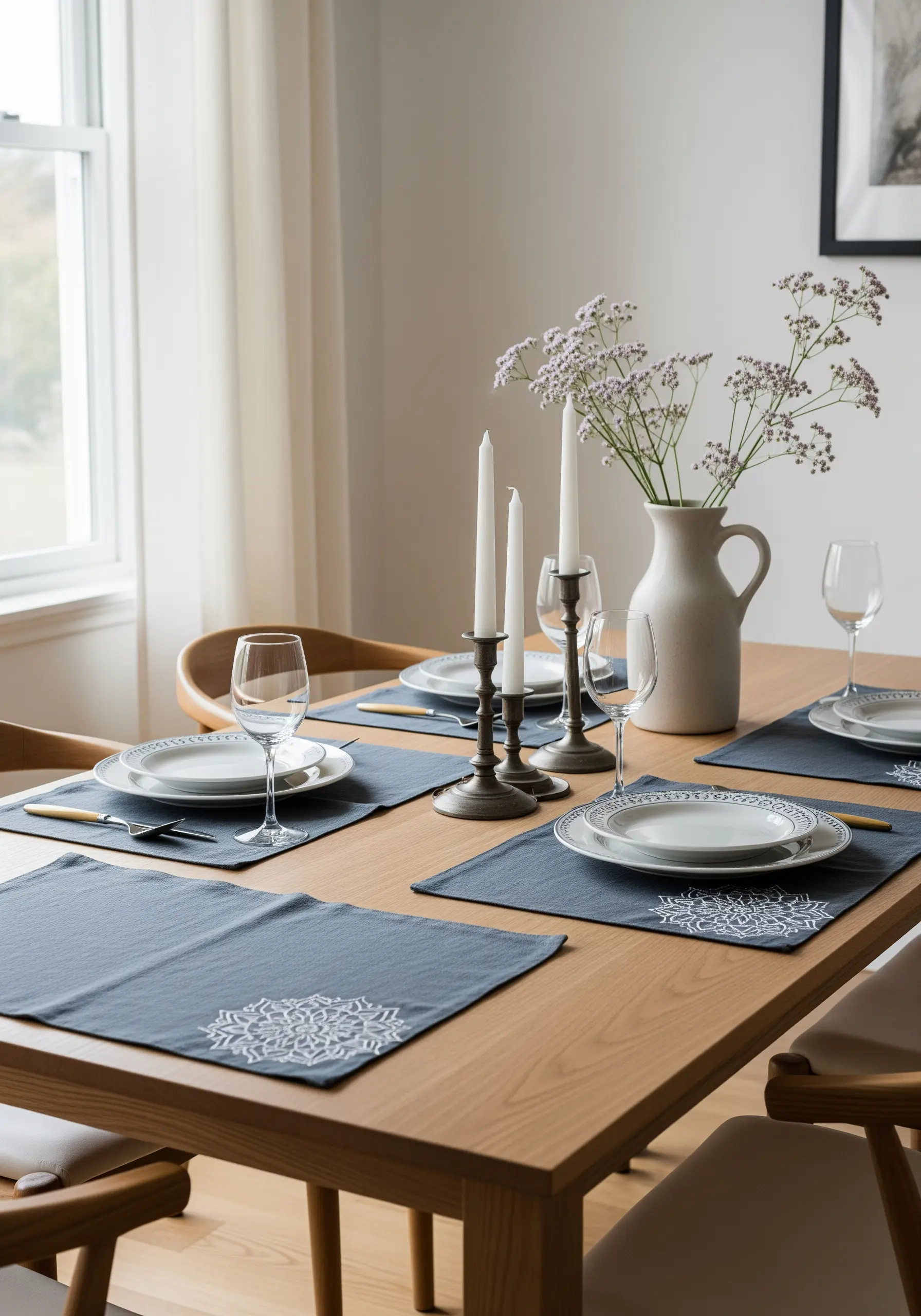
When embroidering items for the dining table, practicality is paramount.
Select a durable, washable fabric like a cotton-linen blend and use high-quality, colorfast cotton floss that won’t bleed in the wash.
Place the mandala design in a corner or along one edge where it’s less likely to come into direct contact with food and utensils.
Flat stitches like the stem stitch, backstitch, and running stitch are ideal as they are less prone to snagging.
25. Design for Flow on 3D Upholstery
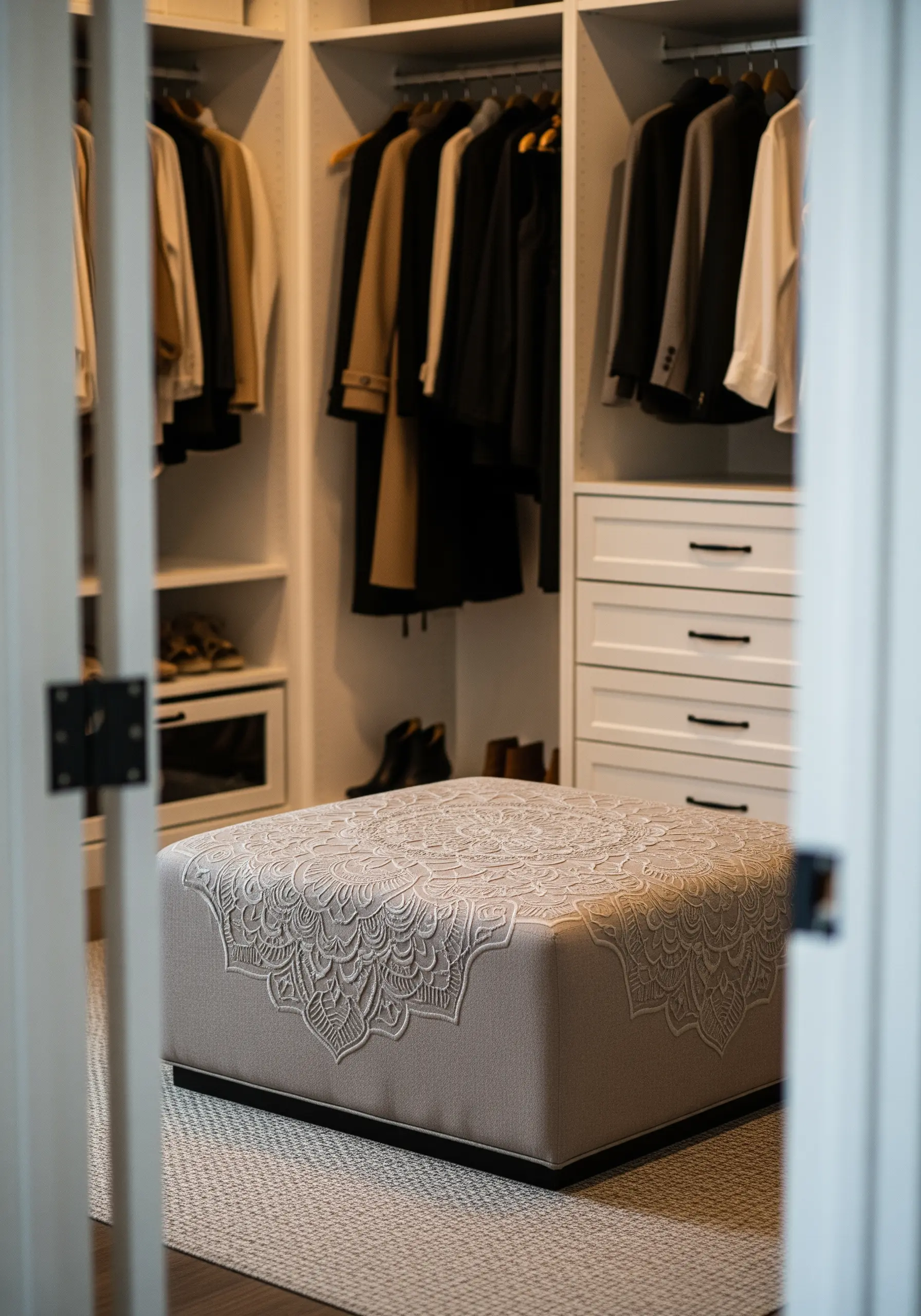
Take your upholstery embroidery to the next level by designing a mandala that flows over the edges of the piece.
Instead of containing the entire design on the top surface of an ottoman, allow the outer rings of the pattern to cascade down the sides.
This creates a dynamic, custom-fitted look that feels much more integrated and luxurious than a simple, centered motif. Plan the layout carefully before you begin stitching to ensure a seamless transition.
26. Display Your Process as Part of the Art
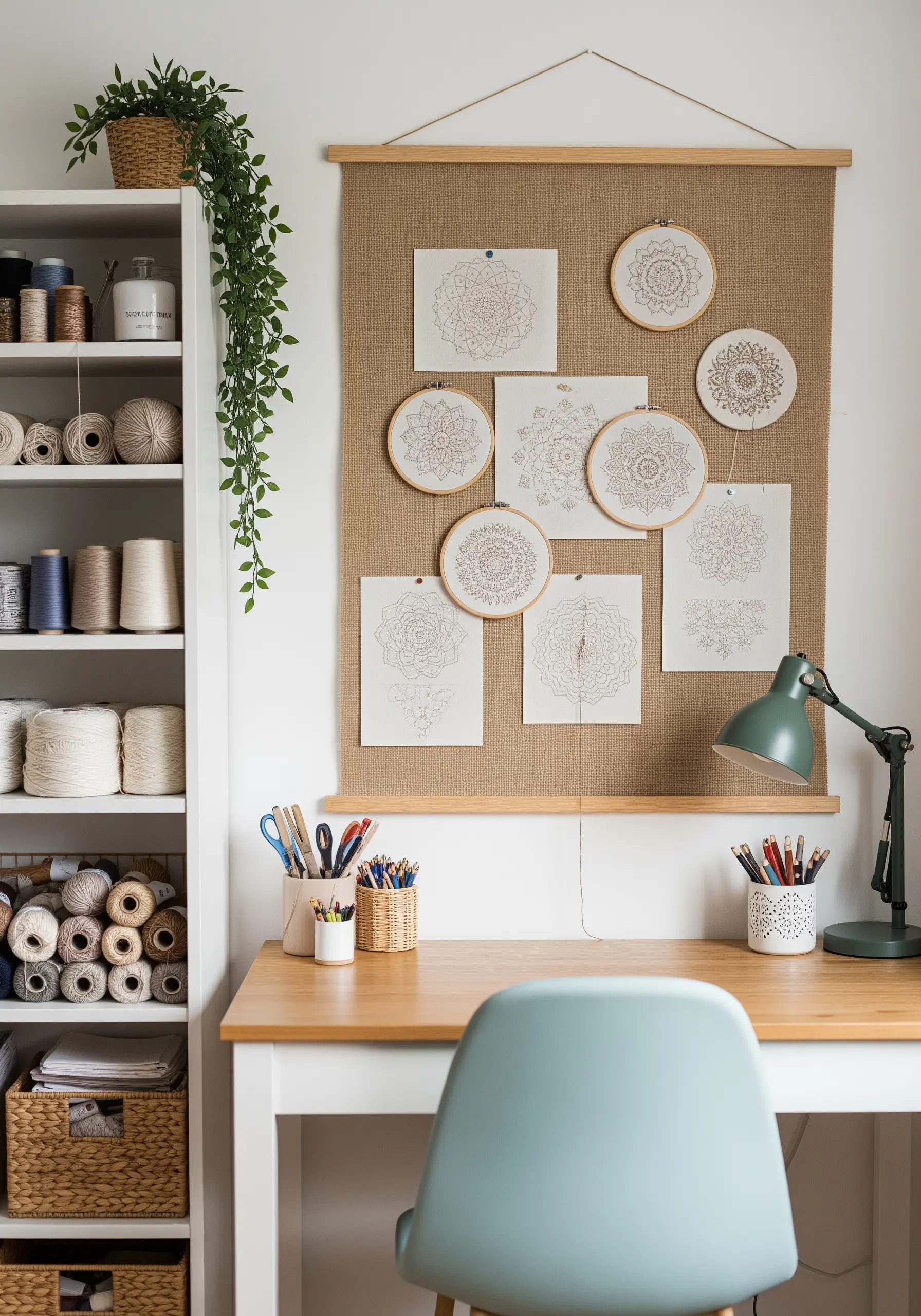
Elevate your craft space by turning your design process into a decorative element.
Create a mood board by pinning your finished mandala hoops alongside the original paper patterns and thread swatches onto a burlap or linen pinboard.
This not only keeps you organized and inspired but also creates a beautiful, narrative display that celebrates the journey of making.
These easy paper art hacks can help you display your work like a professional.
27. Embrace Simplicity with Graphic Line Art
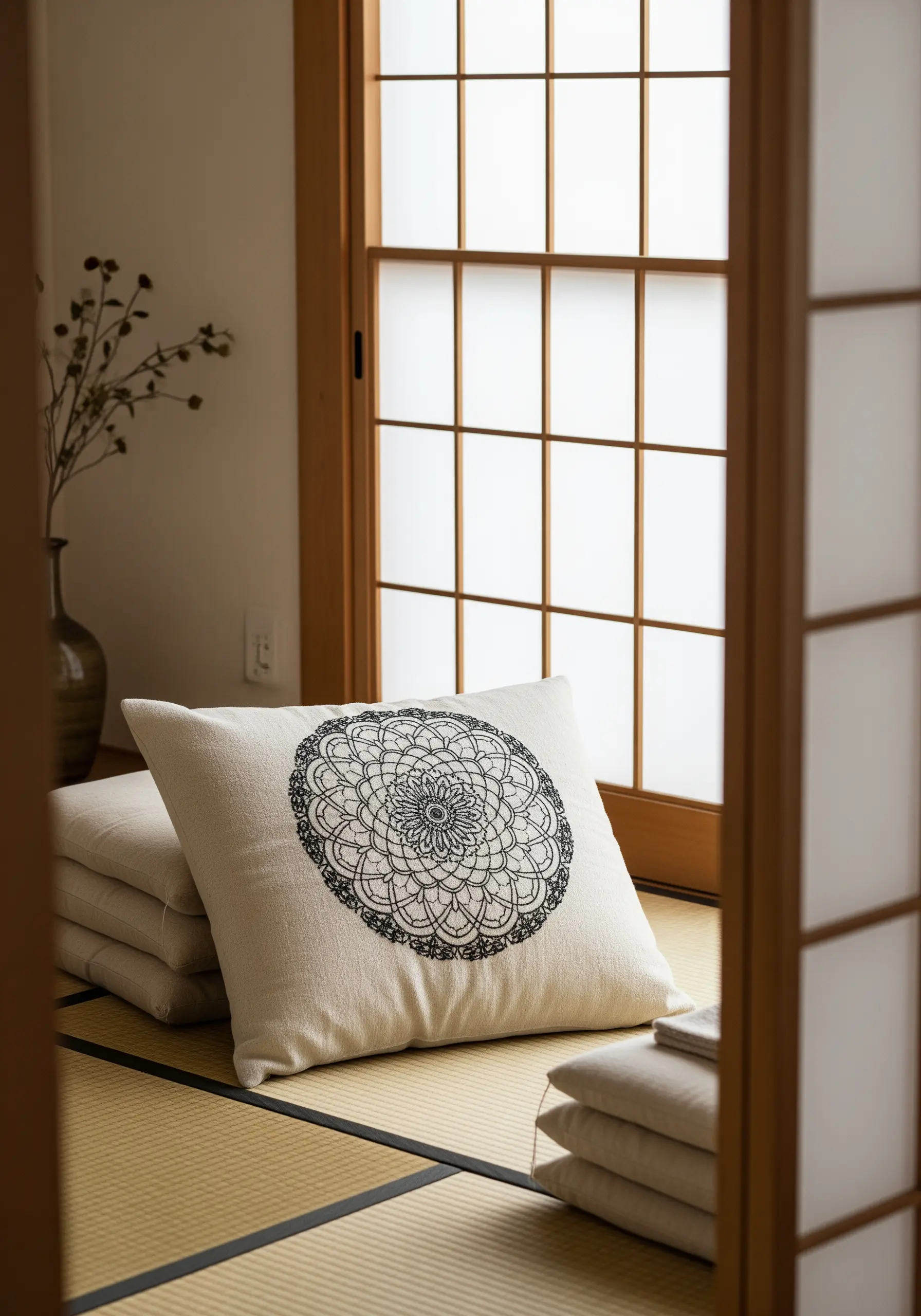
In a minimalist or Japandi-inspired space, a simple, graphic mandala can have more impact than a densely filled one.
Choose a high-contrast palette, like black thread on natural linen, and focus on the purity of the line.
Use a single, consistent stitch—like a two-strand backstitch—for the entire design.
The beauty of this approach lies in its precision and restraint, creating a piece that feels both meditative and modern.
28. Use Embroidery as an Artistic Focal Point
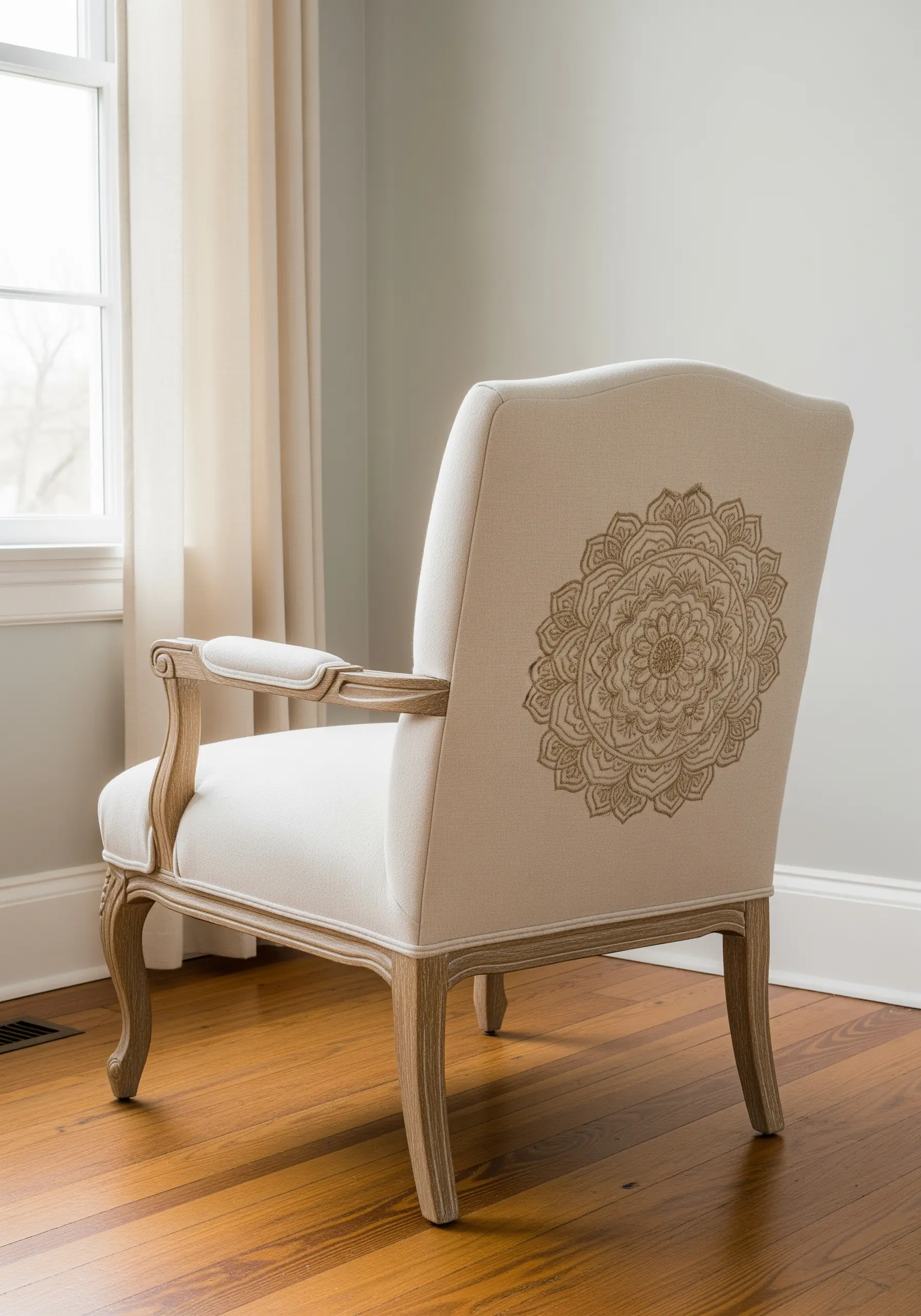
Turn a classic piece of furniture into a statement by using embroidery as the primary decorative feature.
On a simple, neutral armchair, a single, beautifully executed mandala on the backrest instantly draws the eye and communicates a sense of artistry and care.
Choose a thread color that complements the wood tone of the chair’s frame to create a harmonious, cohesive look.
29. Play with Light on Sheer Curtains
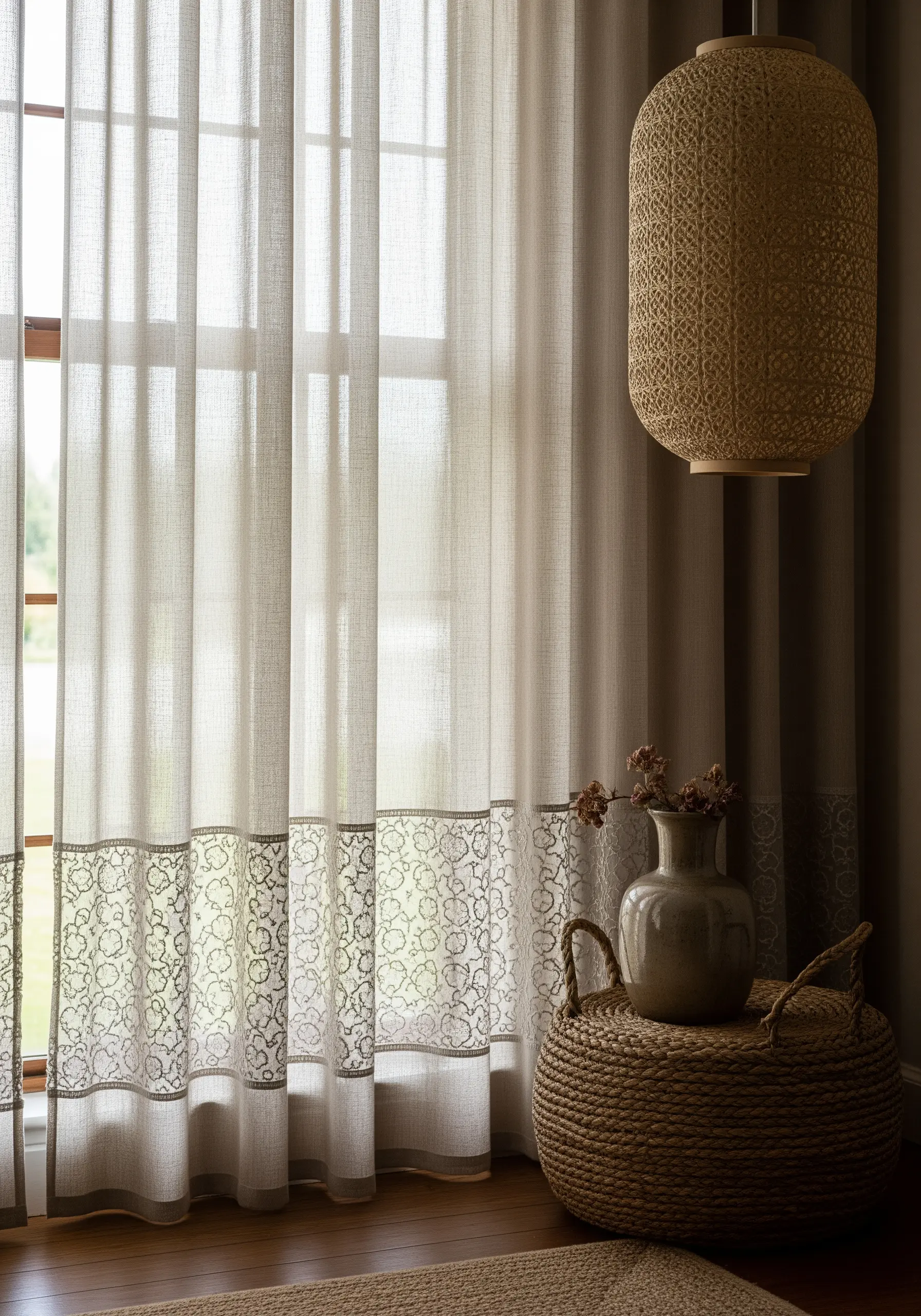
Embroidering on sheer or semi-sheer fabric creates a magical effect where the design interacts with light.
Stitch a delicate mandala border along the hem of linen curtains using a thread that is slightly darker than the fabric.
When sunlight filters through, the pattern will cast faint, beautiful shadows into the room, adding a layer of dynamic, ever-changing art to your space.
Consider these ideas for cream & clay embroidered curtain borders for more inspiration.
30. Adapt Circular Designs for Bolster Pillows

A traditional circular mandala can feel awkward on a long, narrow bolster pillow.
Instead, adapt the design by ‘unrolling’ it into a linear pattern or selecting just a single, repeating element from a larger mandala.
Stitching a row of these smaller, simplified motifs along the length of the pillow respects its form and creates a more elegant, integrated design.
31. Create Raised Texture with Padded Stitching
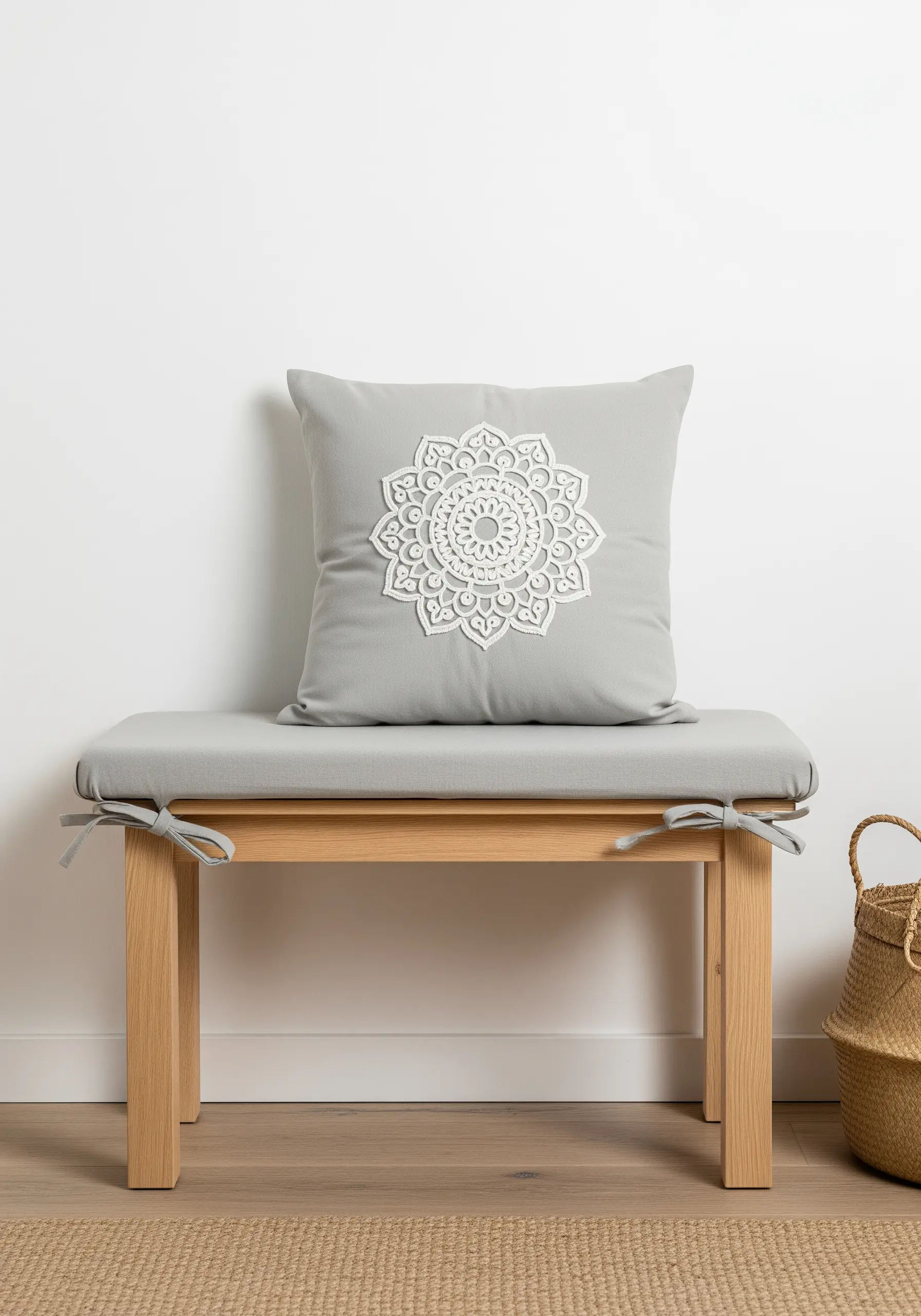
To make your mandala physically stand out from the fabric, use padded satin stitch.
First, create a base of small, underlying stitches (like running or split stitches) within the shape you want to fill.
Then, work your satin stitches over this padding.
The result is a raised, dimensional effect that gives the design a satisfying, tactile quality, especially effective in a high-contrast color scheme like white on grey.
32. Split Your Design for a Contemporary Diptych
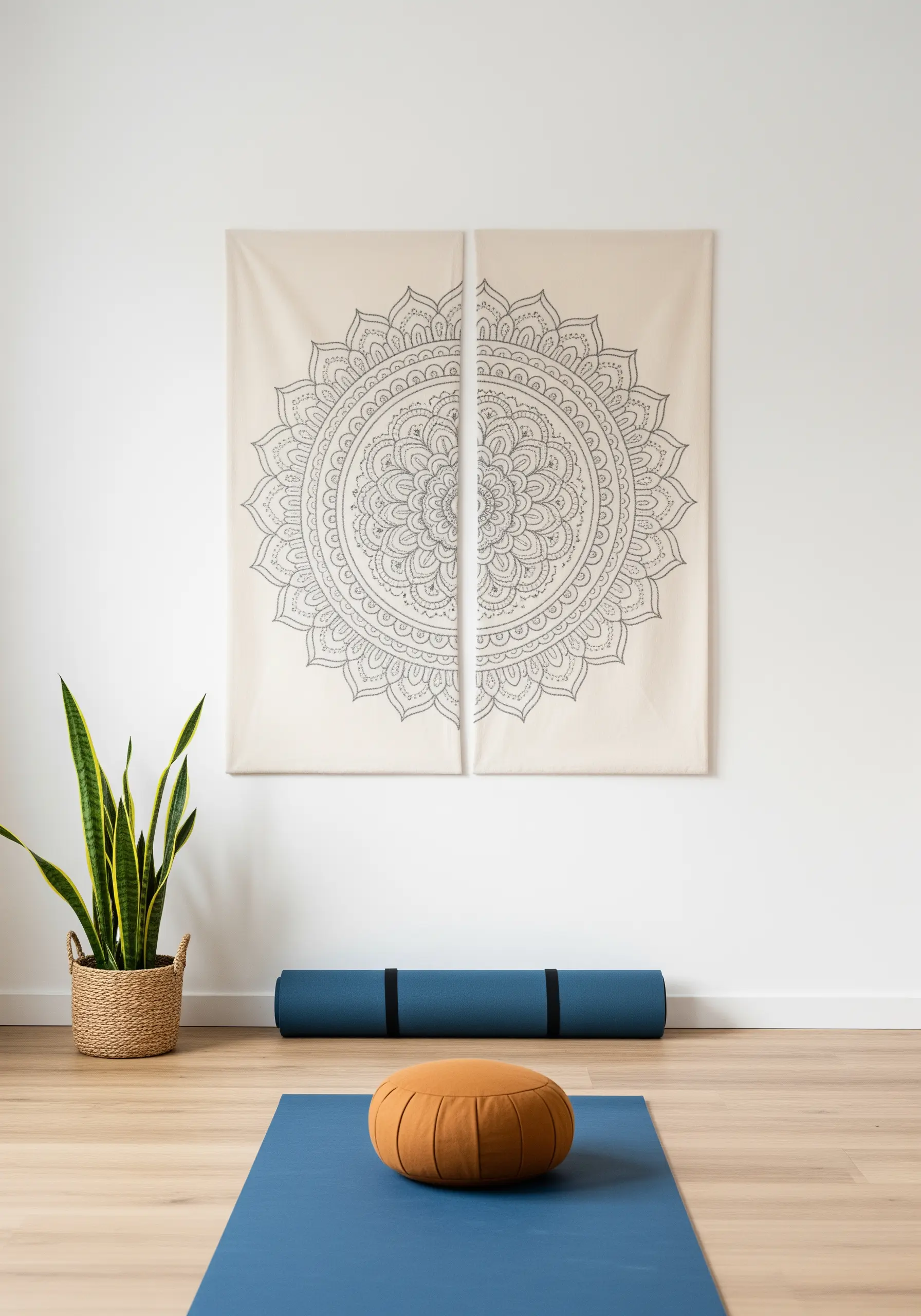
For a truly modern take on mandala art, split a single design down the middle and display it across two separate fabric panels or canvases.
This diptych format breaks the traditional symmetry and encourages the viewer to see the pattern in a new way.
Ensure the two halves are perfectly aligned when hung to maintain the connection, creating a piece that feels both unified and creatively deconstructed.
33. Use a Gentle Touch on Luxury Fabrics
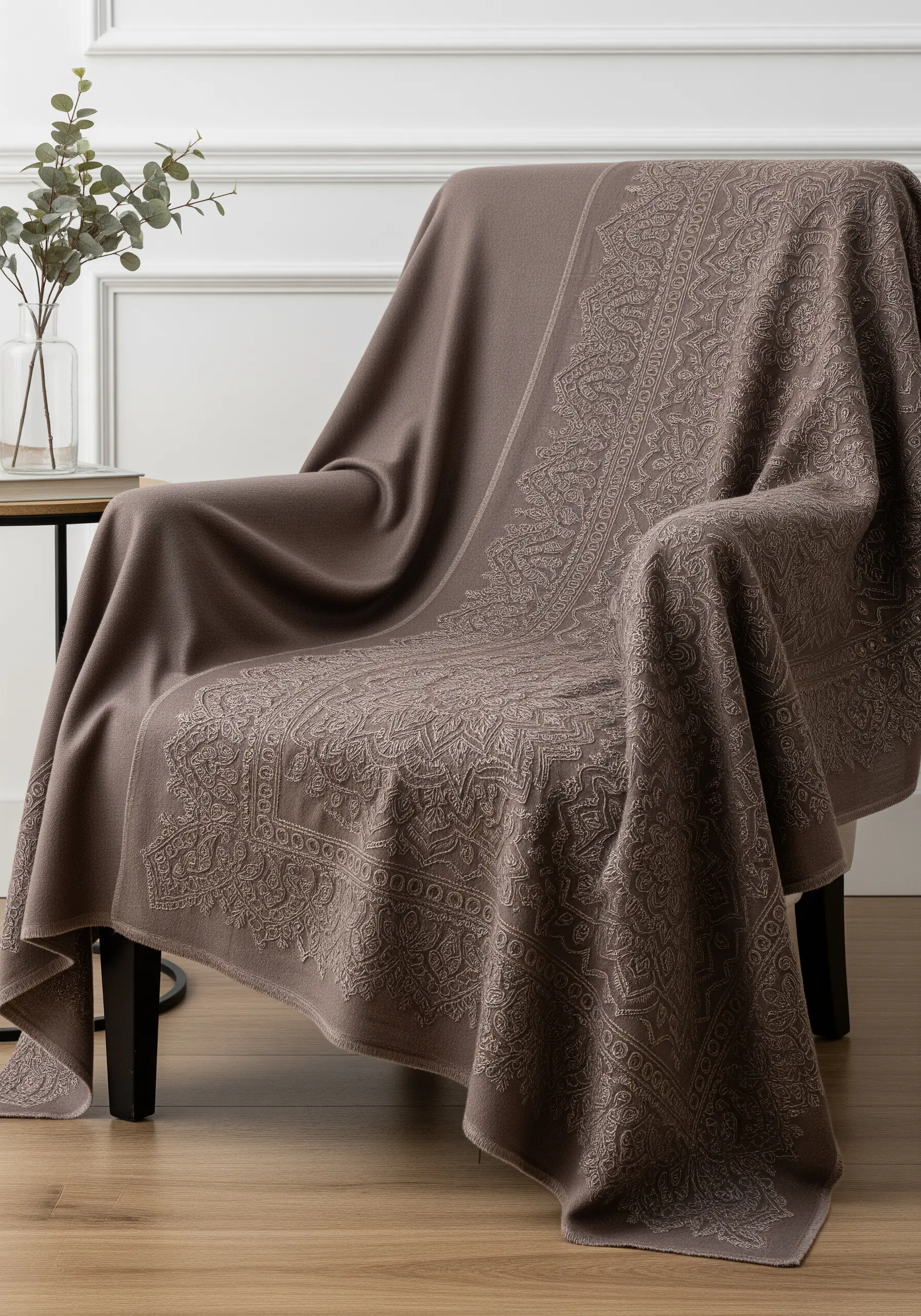
When working with delicate, expensive fabrics like cashmere or fine merino wool, your technique must be impeccable.
Use a very fine, sharp needle (like a crewel size 10) to minimize the impact on the weave.
Opt for a lightweight, smooth thread such as a single strand of silk or a fine cotton floss.
Stitch with gentle, even tension to avoid puckering the luxurious material, allowing the embroidery to become a whisper-soft accent.
34. Complement Textured Fabric with Simple Stitches
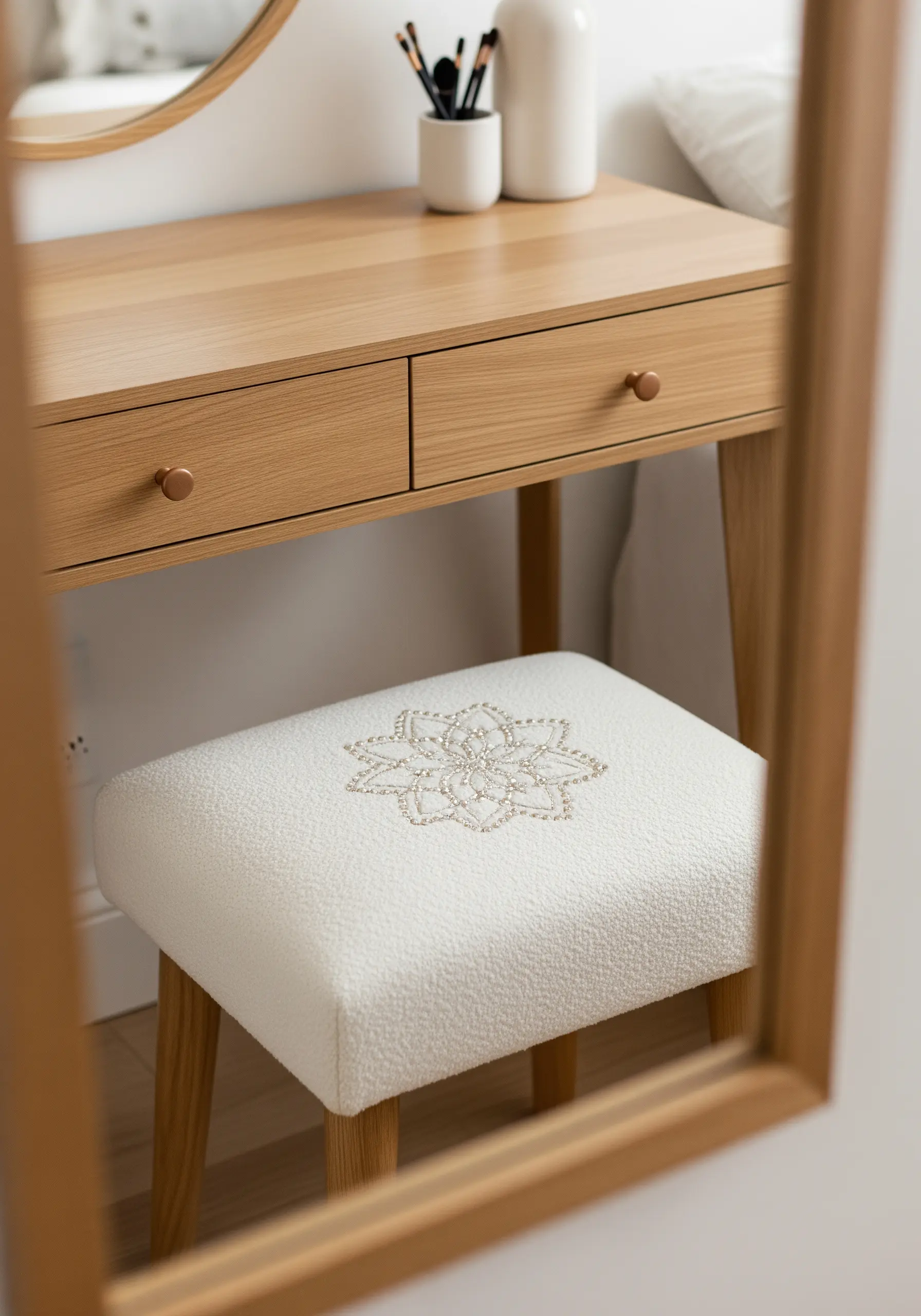
If your base fabric is already highly textured, like a boucle or a thick tweed, your embroidery should be a quiet counterpoint.
Instead of a complex, multi-stitch design, choose a simple pattern and render it in a single, elemental stitch.
A series of well-placed French knots or a clean seed stitch pattern will add a layer of handcrafted detail without competing with the fabric’s inherent character.