
Minimalism isn’t about having less; it’s about making sure that what you have is intentional, meaningful, and beautiful. The same is true for your embroidery. You don’t need dozens of complex stitches or a riot of color to create something that feels special. Often, the most resonant pieces are born from a single, well-placed line.
Think of your thread as a pencil, and your fabric as a clean sheet of paper. The goal isn’t just to fill the space, but to enhance it. A simple geometric pattern on a napkin, a delicate vine on a curtain tie-back, or a single bold word on a canvas—each one adds personality and a quiet sense of luxury to your home.
Here, you’ll find ideas that focus on precision, texture, and composition. They are designed to show you how a few thoughtful stitches can transform everyday objects into personal works of art. Let’s begin.
1. Create a Minimalist Triptych
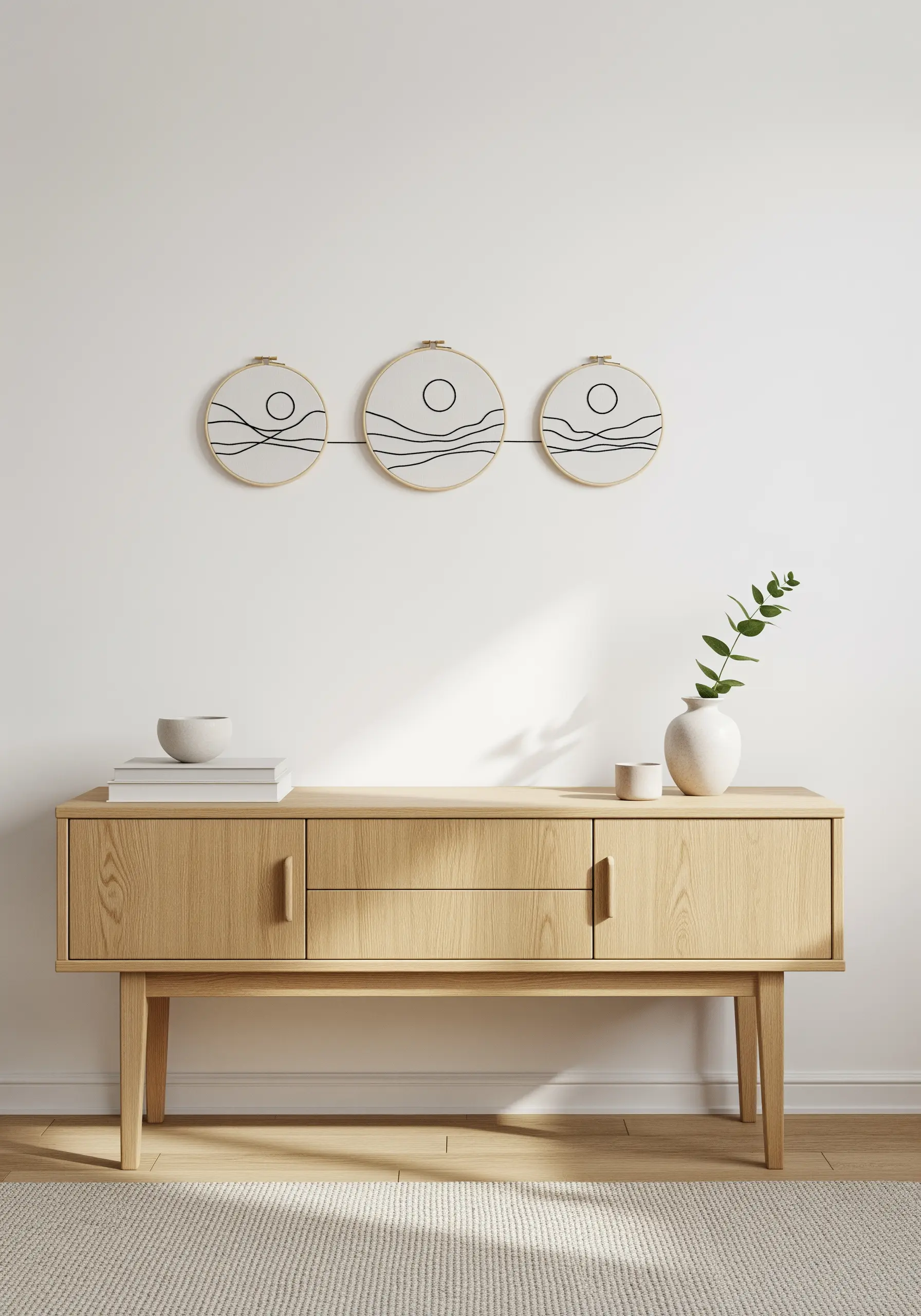
Transform a single, continuous line drawing into a sophisticated three-part wall feature.
First, stretch your design across three hoops, ensuring the lines connect seamlessly from one frame to the next.
Use a simple backstitch with three strands of black floss for a clean, graphic line that stands out against the neutral fabric.
The power of this design lies in its use of negative space—the unstitched fabric is just as important as the embroidered line, creating a calm, balanced composition.
This method allows you to build a gallery wall without visual clutter.
2. Stitch Geometric Borders on Linens
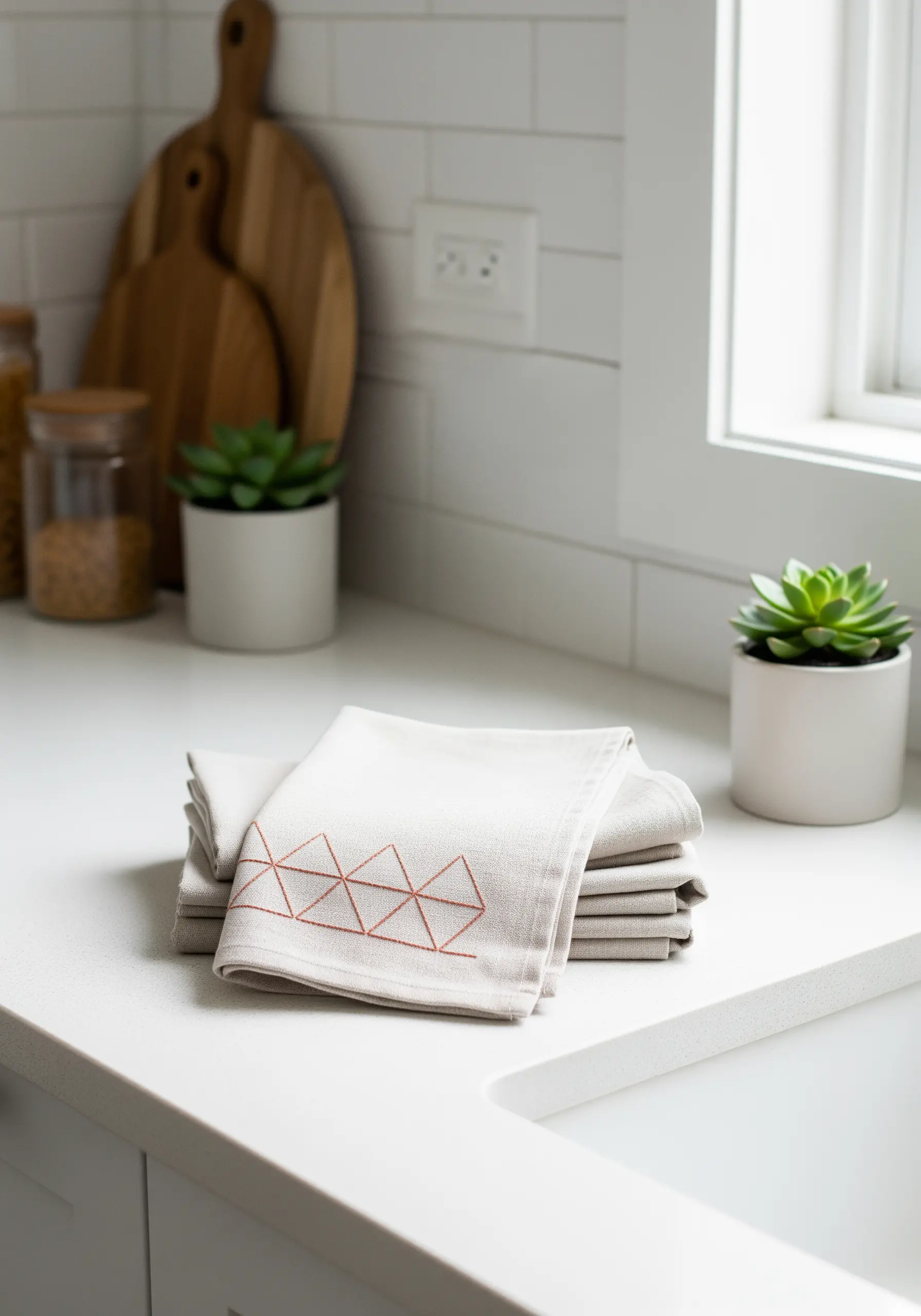
Elevate everyday napkins with a clean, geometric running stitch pattern.
Use a water-soluble marking pen and a ruler to draw your grid directly onto the fabric, ensuring perfect symmetry.
Choose a thread color that offers a warm contrast, like this terracotta against natural linen, for a subtle yet intentional accent.
By using three to four strands of floss, your running stitches will have enough weight to feel deliberate and graphic, rather than sparse.
These modern minimalist table linen embroidery ideas add a custom touch to your tablescape.
3. Add Line Art to Accent Pillows
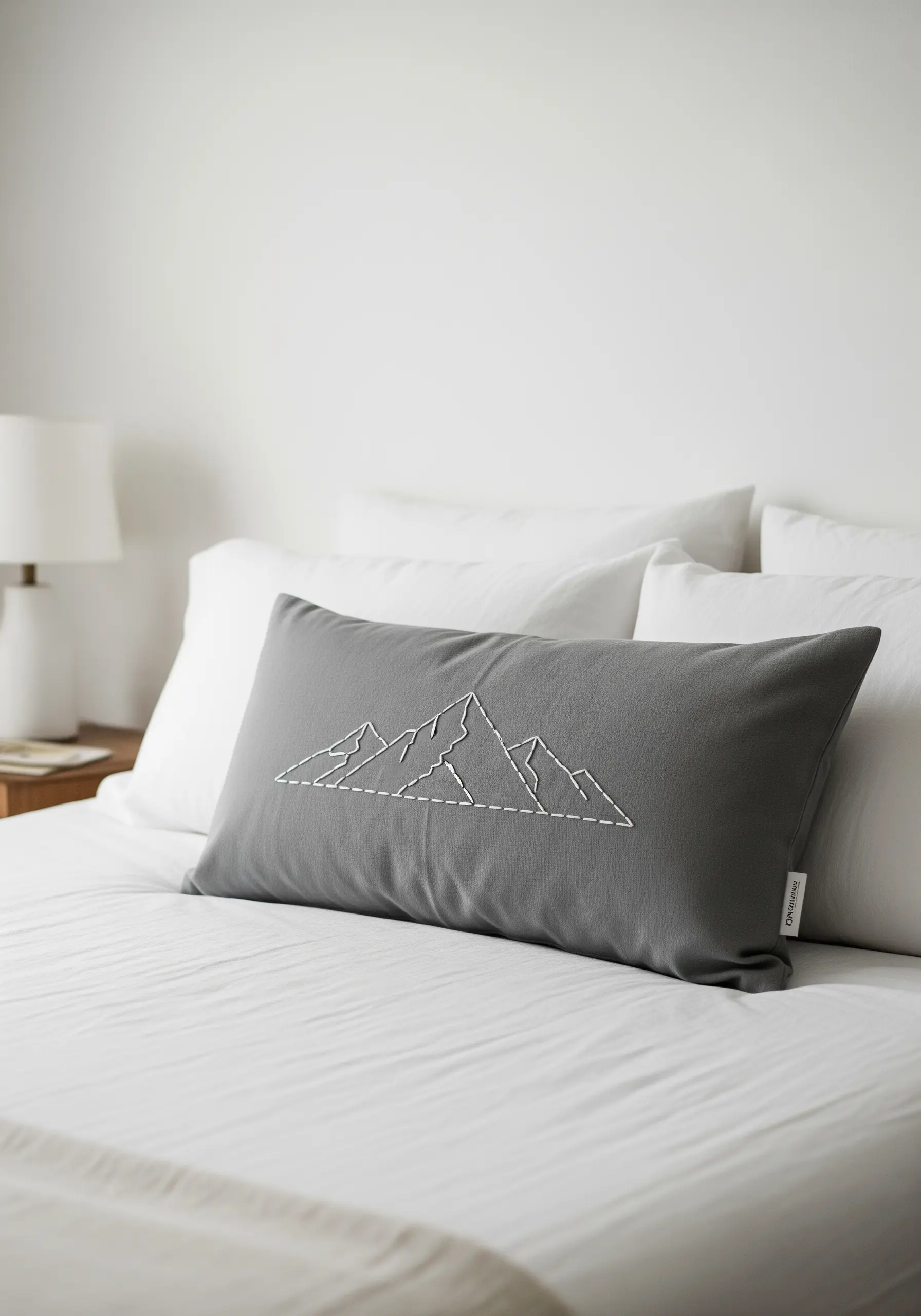
Embroider a bold, single-line mountain range to give a plain cushion cover a modern, graphic update.
Opt for a whipped backstitch using all six strands of white floss to create a smooth, slightly raised line that stands out against the dark grey fabric.
The high contrast is key here; it turns a simple outline into a striking focal point.
Stitching on a heavy fabric like this cotton canvas requires a sharp, sturdy needle to move through the weave cleanly without snagging.
4. Combine Outline Stitches with Color Blocking
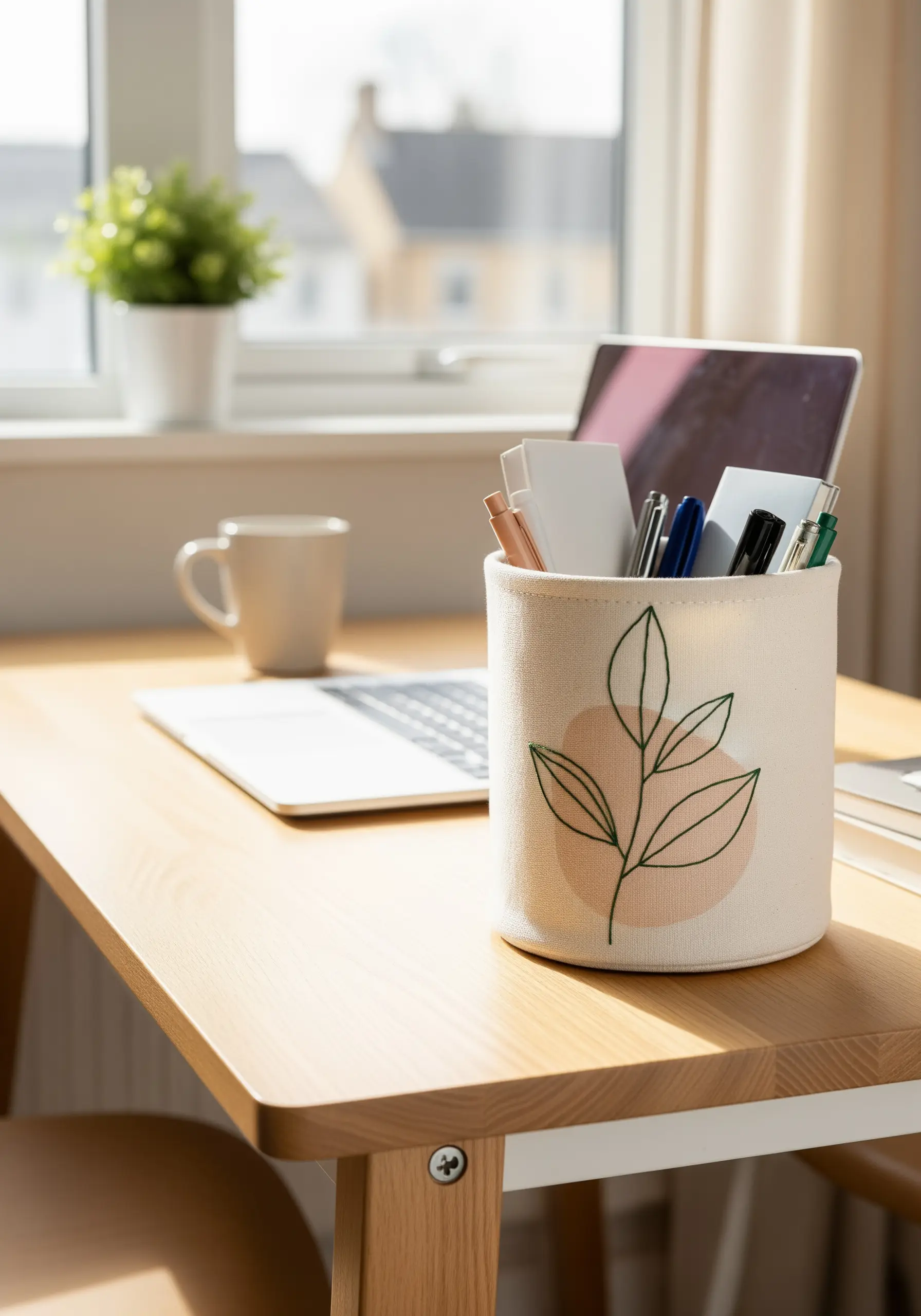
Create visual depth by layering a delicate line-art motif over a soft, color-blocked shape.
First, apply a faint circle of blush fabric paint or use a scrap of sheer fabric for the background, letting it dry completely.
Then, use a stem stitch with dark green thread to outline the botanical sprig, making the lines flow smoothly over the painted area.
This technique adds a layer of complexity and softness, making the botanical line art embroidery patterns appear more integrated and artistic.
5. Use French Knots for Delicate Texture
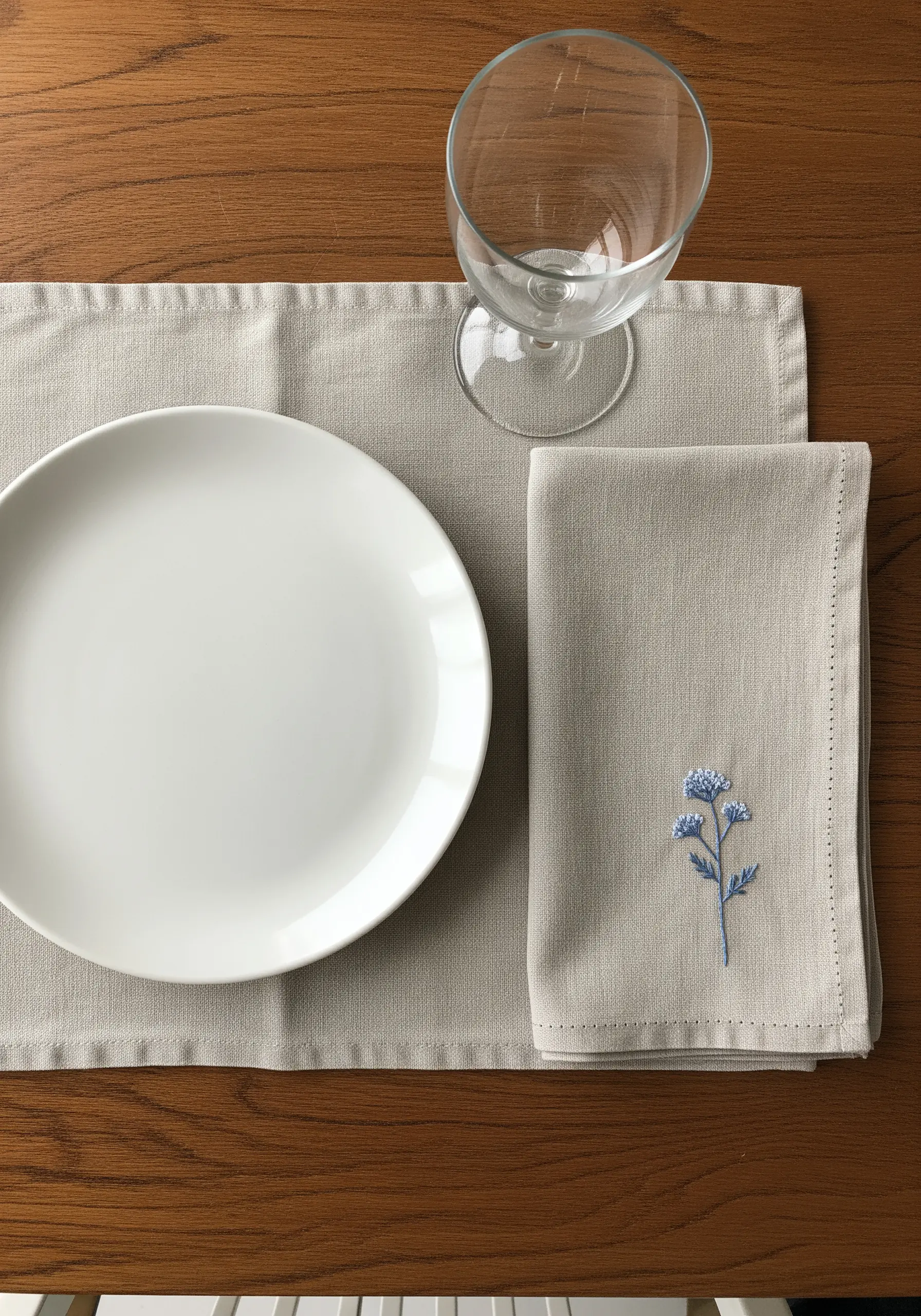
Give a simple floral motif realistic texture by using French knots for the flower heads.
Work the stem and leaves in a delicate stem stitch using two strands of floss.
For the blossoms, switch to French knots, wrapping the thread twice around the needle for fuller, more defined dots.
Using a variegated blue thread will give the petals subtle color shifts without you having to change floss, adding depth effortlessly.
This is one of the most effective ways to capture nature’s textures in your next embroidery project.
6. Create Raised Lettering with Yarn
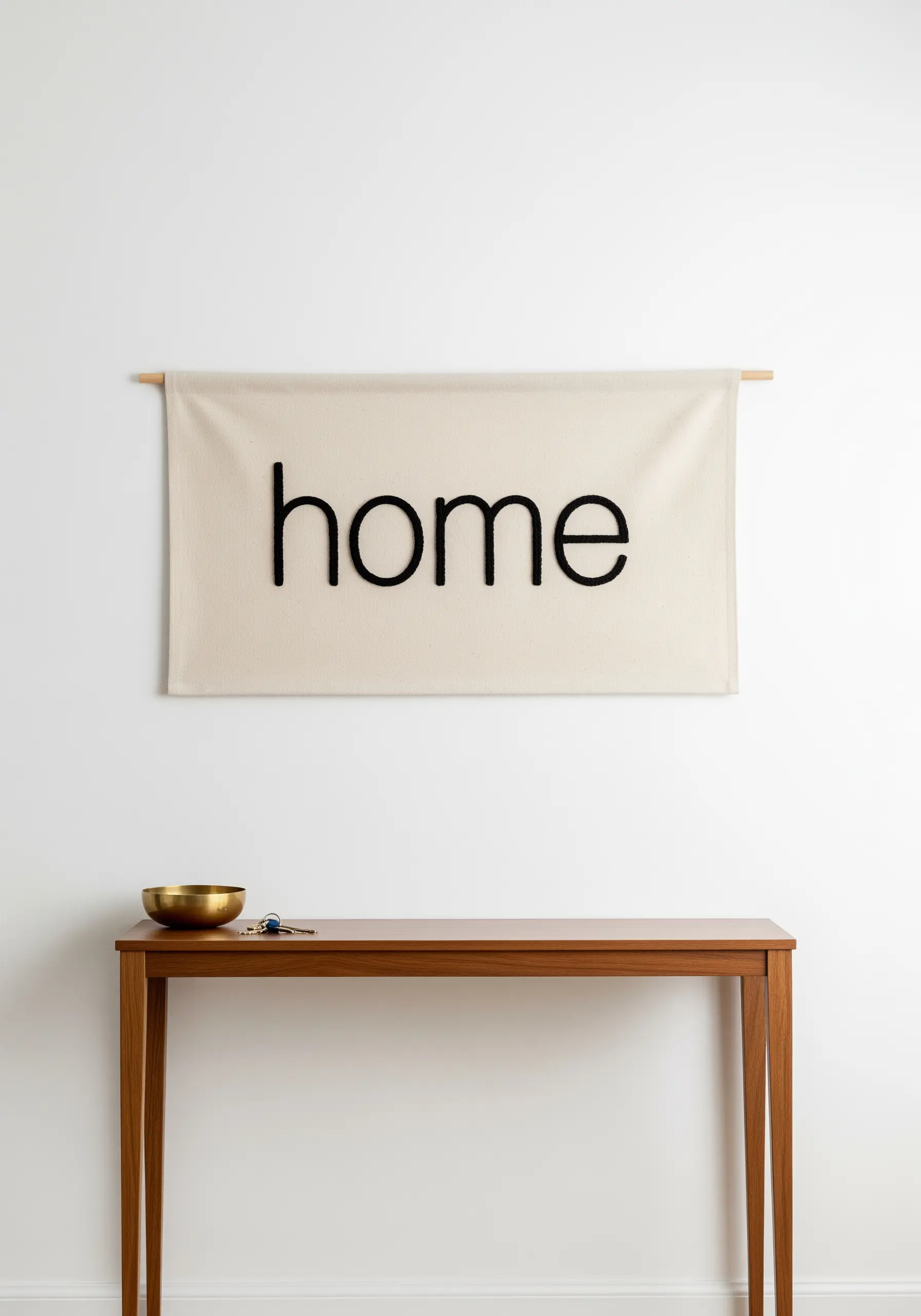
For bold typographic art, swap embroidery floss for fine-gauge yarn to create pronounced, textured letters.
Use a couching stitch—laying the yarn on the surface and securing it with small, discreet stitches of matching floss—to achieve smooth curves.
Alternatively, a chunky chain stitch will also give you that raised, almost three-dimensional effect.
This technique makes your lettering tactile and impactful, turning a simple word into a statement piece of embroidered textile wall hangings.
7. Puncture a Lampshade with a Starry Pattern
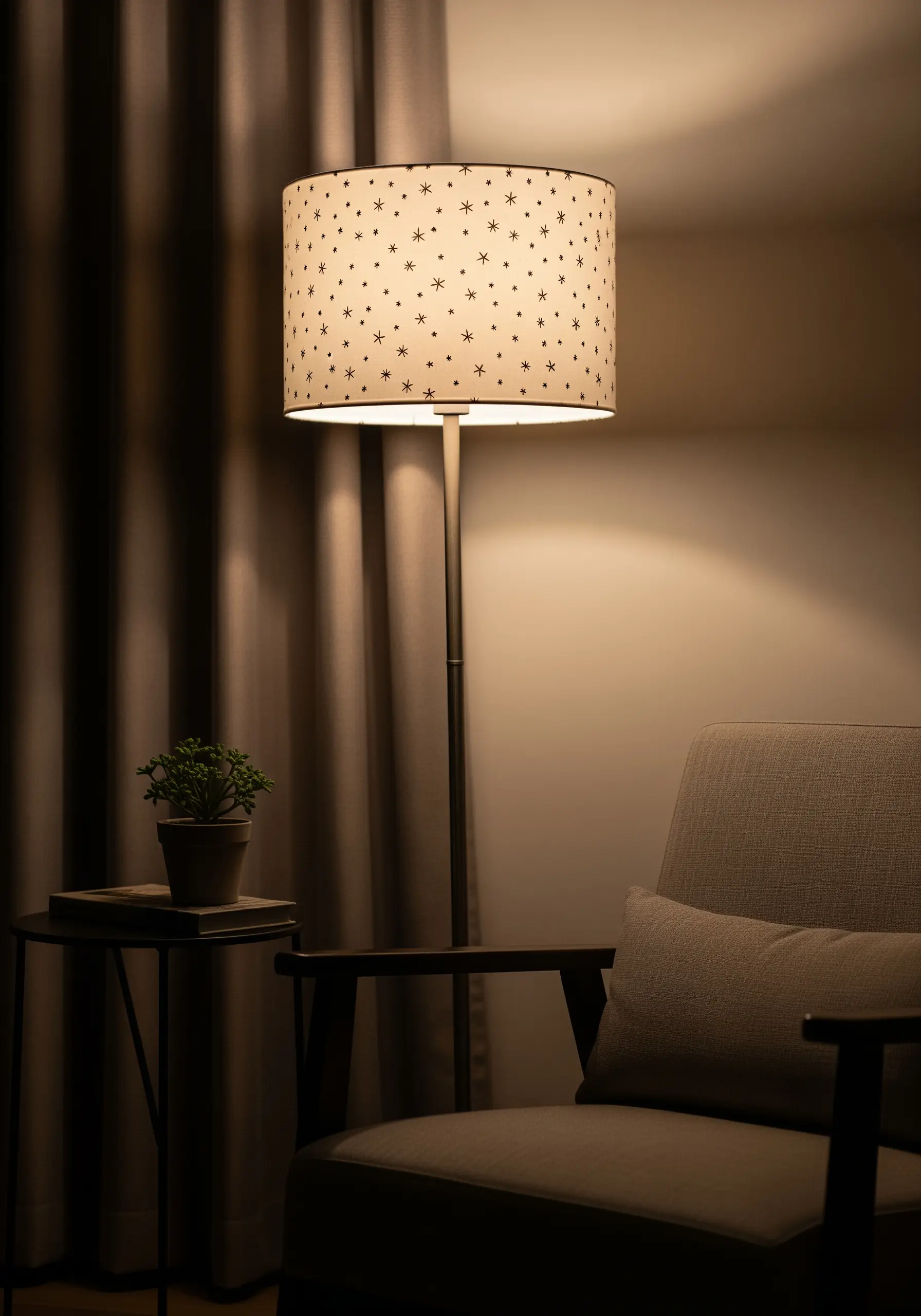
Add a subtle, magical glow to a room by embroidering directly onto a paper or fabric lampshade.
Use a simple star stitch or small cross stitches, repeated in a random pattern, to mimic a night sky.
A sharp needle and thimble are essential for piercing the stiff material cleanly.
When the lamp is on, each stitch will be backlit, creating a beautiful, diffused light effect that adds instant ambiance to your space.
8. Design a Modern Border with Seed Stitch
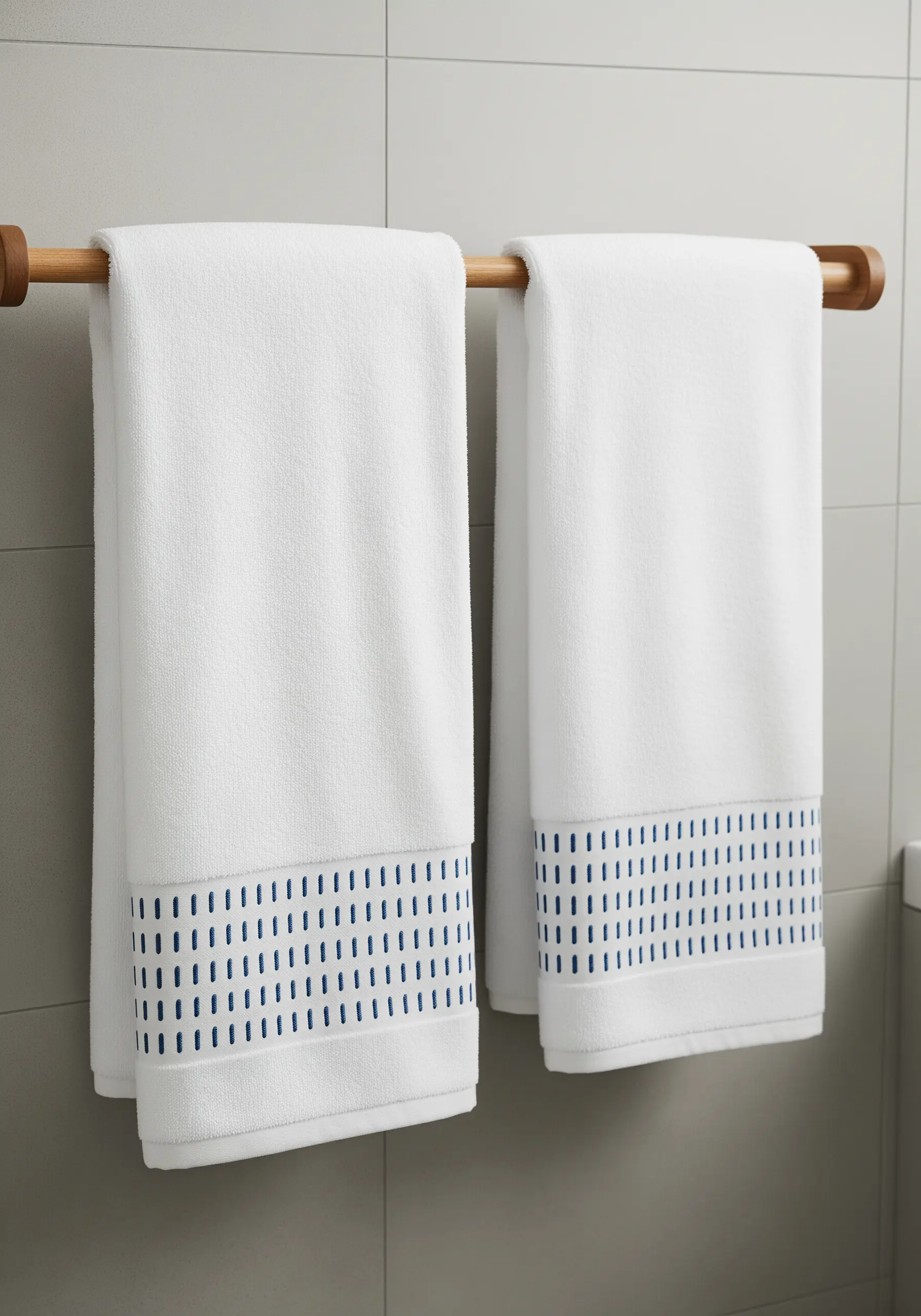
Upgrade plain bath towels with a modern, abstract border using simple stitches.
Mark out parallel lines on the towel’s flatweave band and fill the space with short, vertical straight stitches—also known as seed stitches.
Vary the spacing slightly to create a sense of rhythm and movement.
On thick, absorbent terry cloth, always use a tear-away stabilizer on the back to prevent the fabric from puckering and to keep your stitches even.
9. Stitch Graphic Icons on Canvas
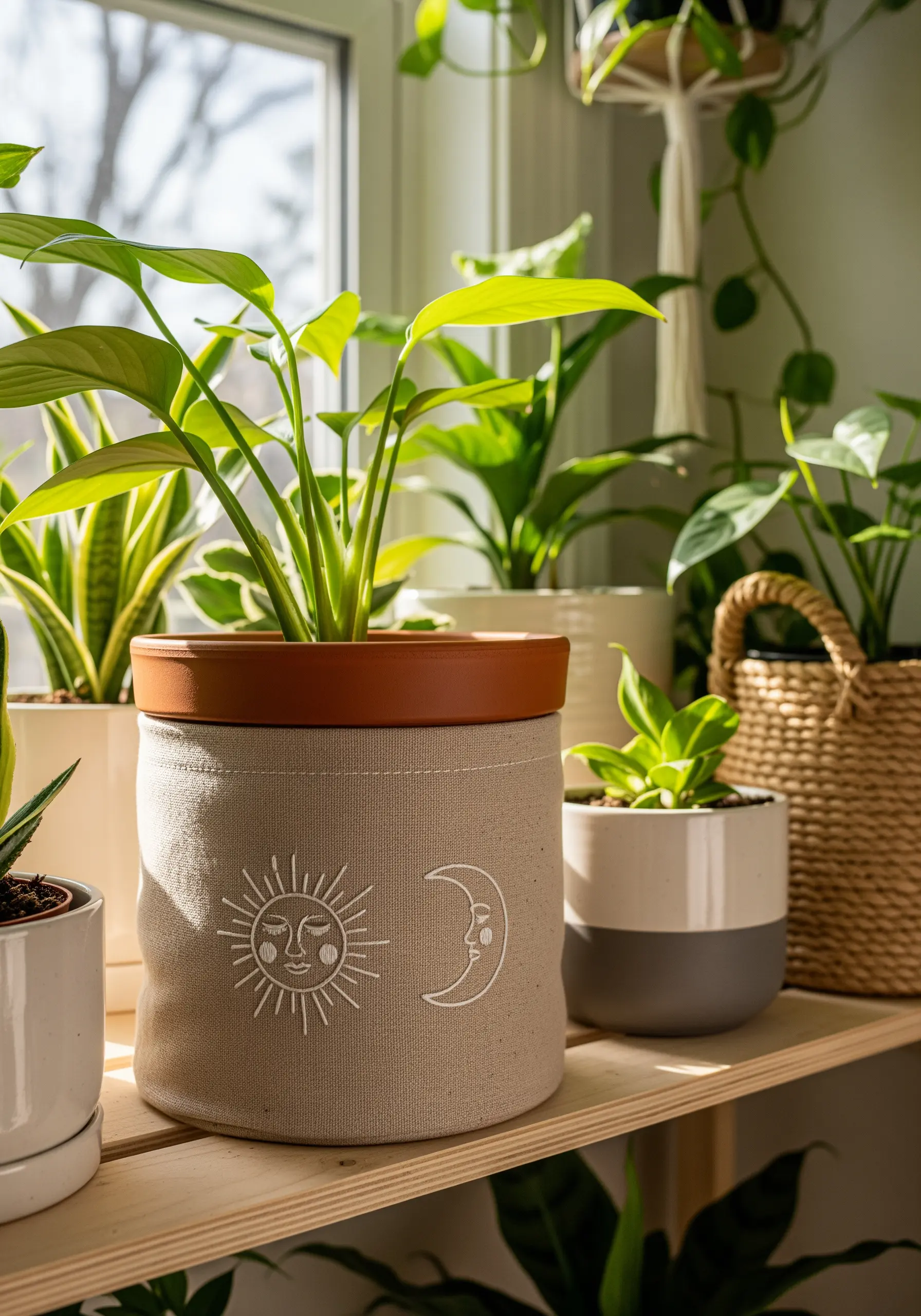
Personalize a canvas plant pot or storage bin with high-contrast celestial motifs.
Use a bright white or cream thread on a neutral, earth-toned fabric to make your design pop.
A split stitch is perfect for creating the smooth, solid curves of the moon, while radiating straight stitches form the sun’s graphic rays.
The simplicity of the motifs combined with the crisp linework results in a design that feels both playful and polished.
10. Use an Oversized Hoop as a Frame
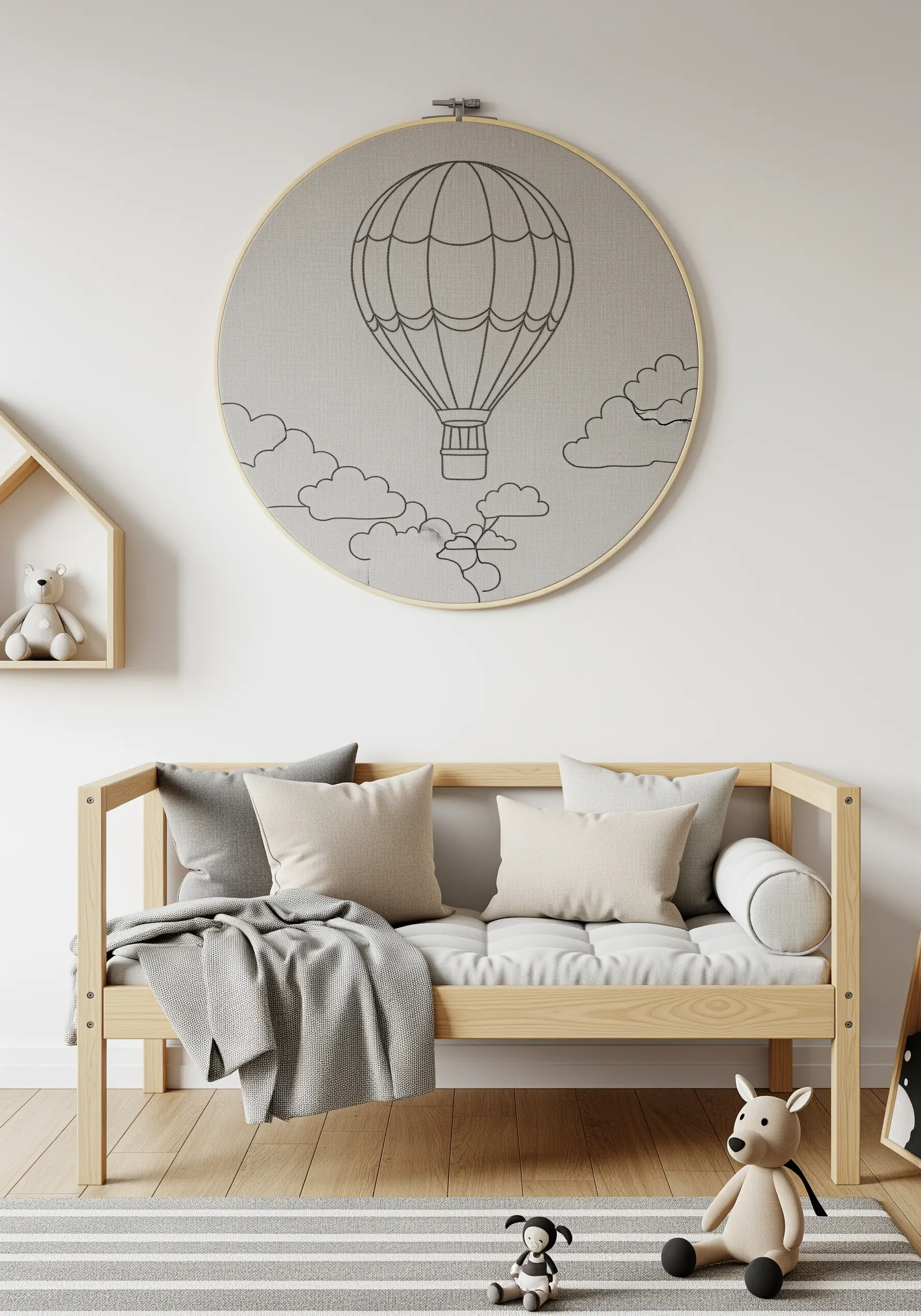
Turn your embroidery into a large-scale piece of art by using an oversized hoop as the final frame.
For a clean, illustrative style perfect for a nursery or child’s room, stick to a basic backstitch with three strands of dark floss.
The negative space within the large hoop is crucial; it gives the design room to breathe, making the artwork feel light and airy.
This is one of the easiest embroidered nursery decor ideas for small apartments that still feels impactful.
11. Explore Large-Scale Abstract Art
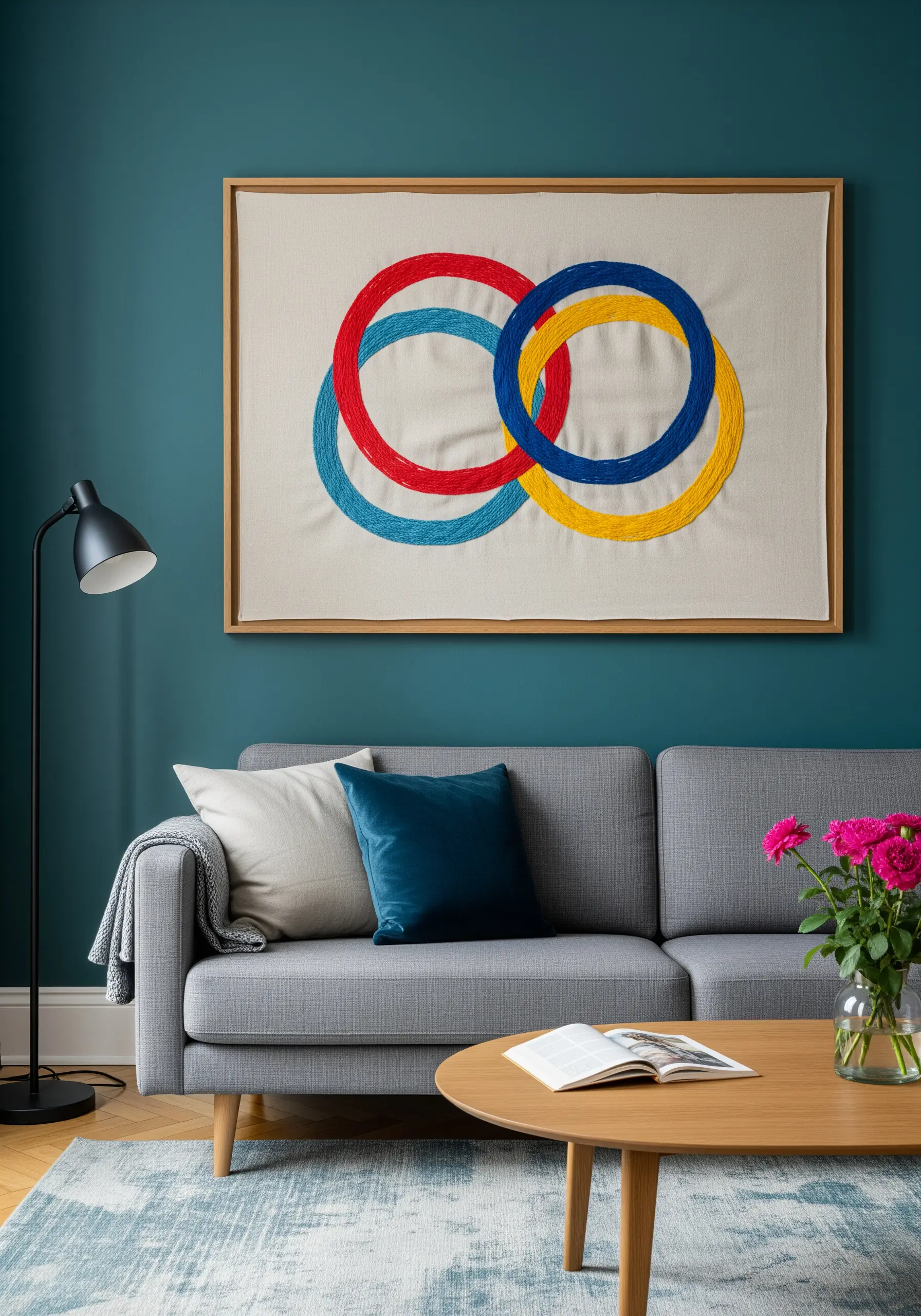
Move beyond small hoops and create a significant piece of abstract textile art for your wall.
To fill these large interlocking circles, use a chain stitch with multiple strands of floss or a fine yarn. This stitch fills space faster than satin stitch and adds a beautiful, braided texture.
Working with a bold, primary color palette against a neutral background makes the abstract shapes feel dynamic and intentional.
These DIY framed embroidery art projects can become the focal point of a room.
12. Embroider Directly onto Furniture
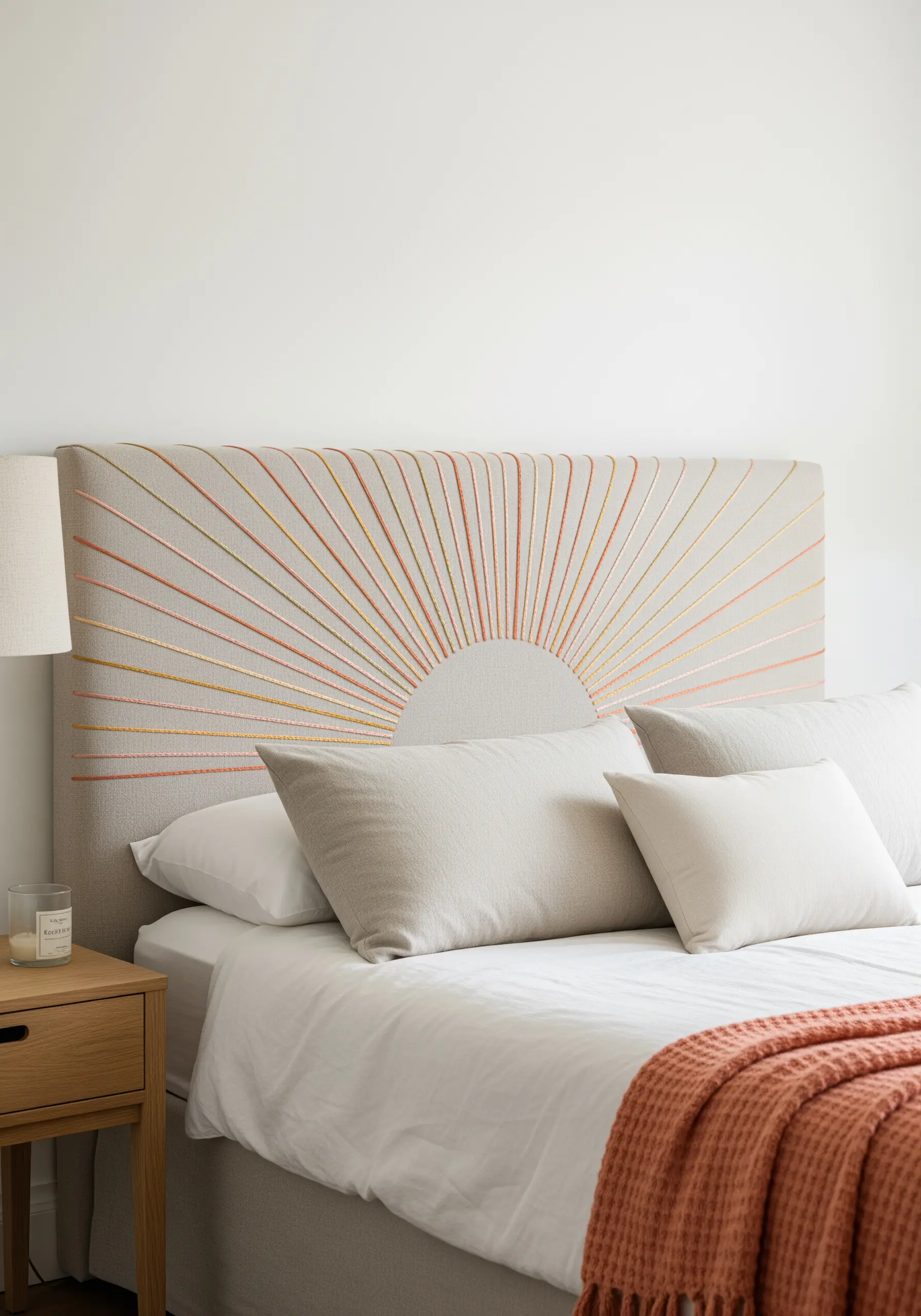
Make a truly unique piece by embroidering a sunrise pattern onto an upholstered headboard.
This design uses long, straight stitches radiating from a central point. The key is maintaining consistent, firm tension to prevent sagging threads.
Use a strong upholstery thread or pearl cotton and a curved upholstery needle to make stitching through the thick fabric and padding easier.
A subtle, multi-tonal color palette adds warmth and sophistication, turning furniture into functional art.
13. Craft Functional Embroidered Objects
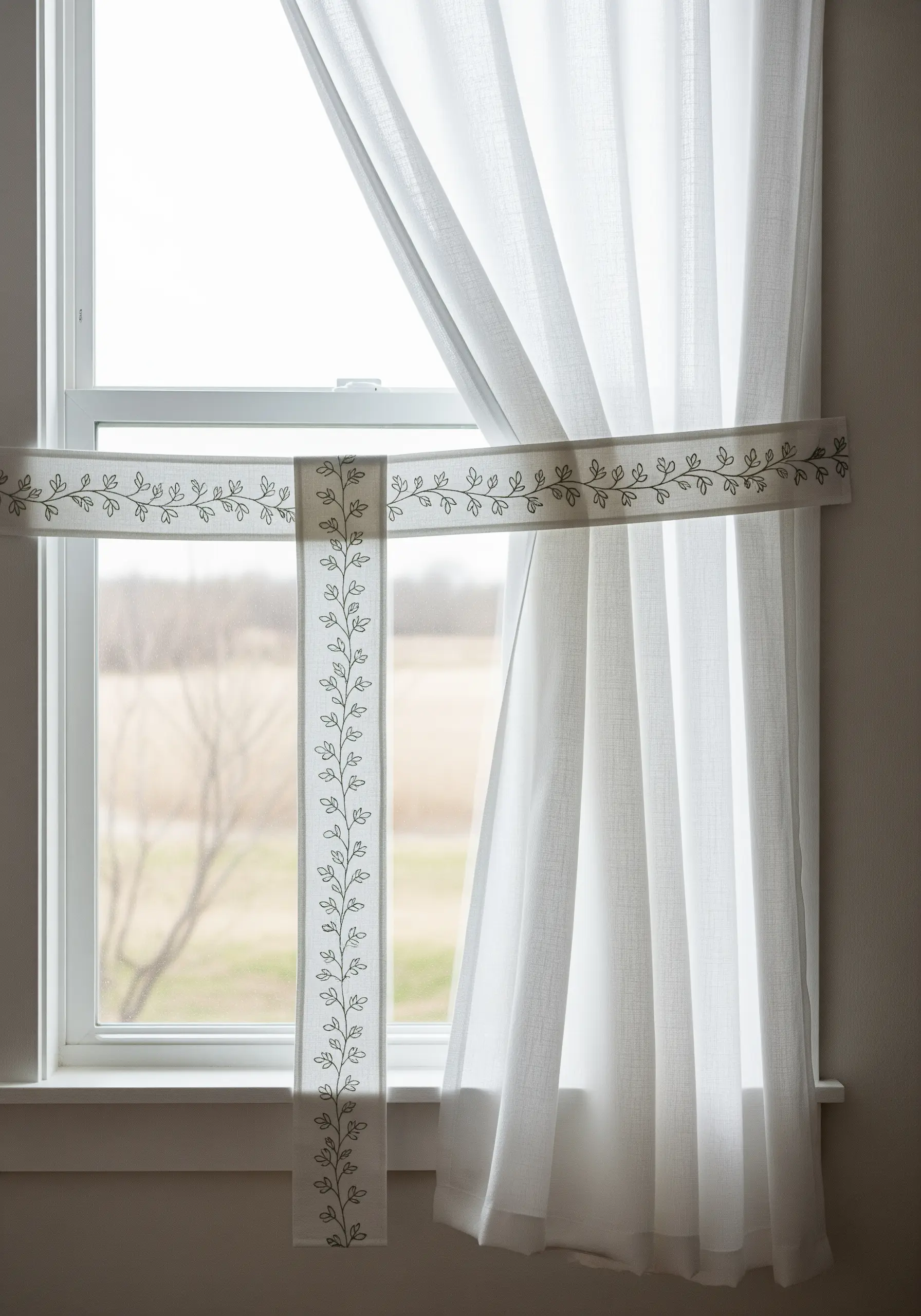
Create an elegant curtain tie-back by embroidering a delicate pattern onto a simple fabric band.
A repeating vine motif is perfect for this. Use a stem stitch for the main vine and lazy daisy stitches for the leaves to create an organic, flowing line.
Choose a thread color that offers a subtle contrast to both the band and the curtain fabric for a cohesive, designer look.
This project proves that even the most practical items in your home can be elevated with a touch of embroidery.
14. Stitch a Constellation on Felt
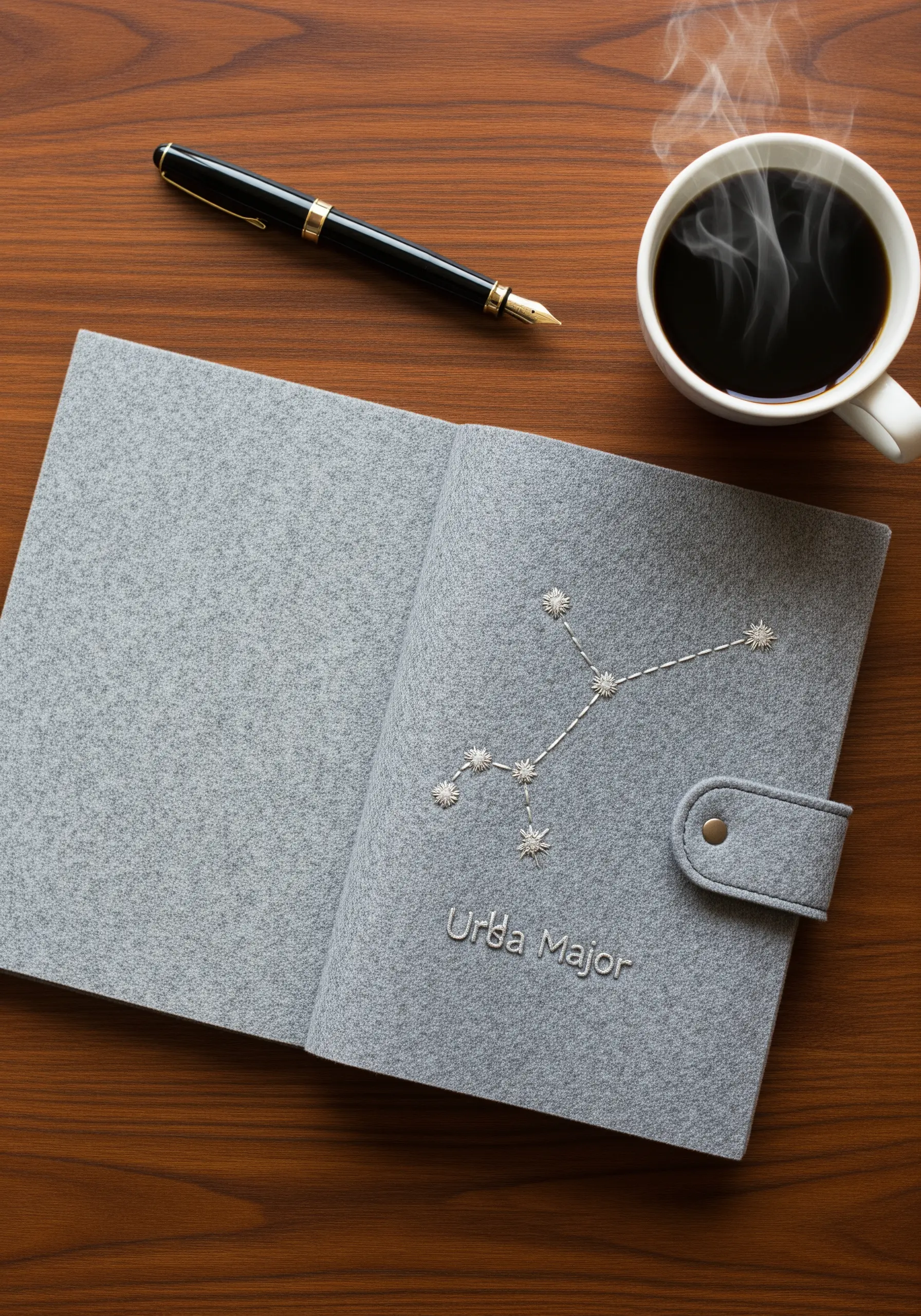
Embroidering on pressed felt is perfect for beginners because it doesn’t fray and provides a stable surface.
Create a celestial design using metallic silver thread for a subtle shimmer that mimics starlight.
Use small star stitches or French knots for the stars and connect them with a simple backstitch.
The soft texture of the felt combined with the sparkle of the metallic thread creates a beautiful tactile and visual contrast.
15. Add a Custom Monogram to Upholstery
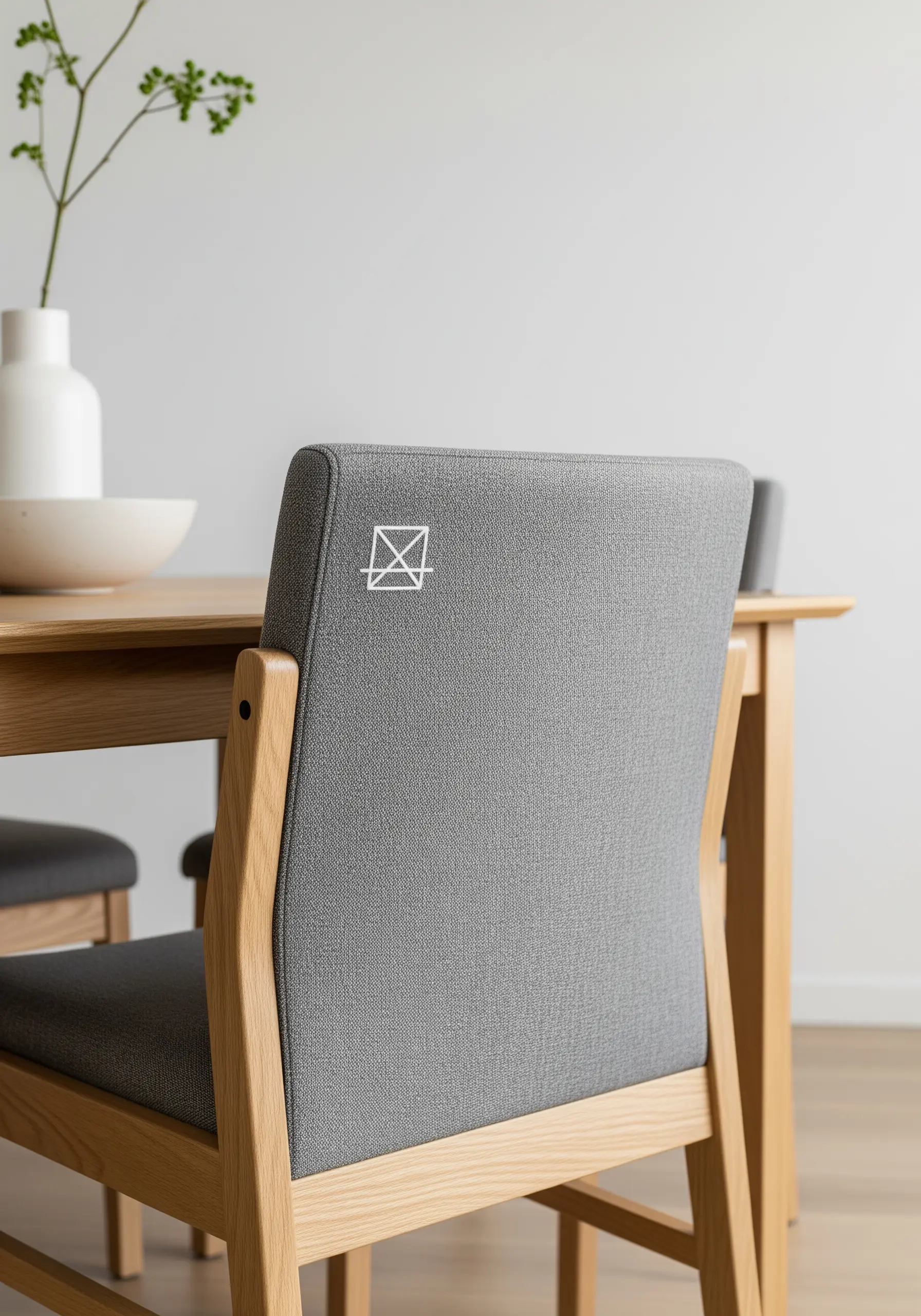
Place a small, abstract monogram on the back of a dining chair for a subtle, high-end customization.
Choose a simple line-art design that reflects your personal style.
Use a durable upholstery thread in a contrasting color, like white on grey, to ensure the design is both visible and long-lasting.
This tiny detail adds a layer of intentionality and transforms a mass-produced piece of furniture into something uniquely yours.
16. Frame a Table with a Rhythmic Border
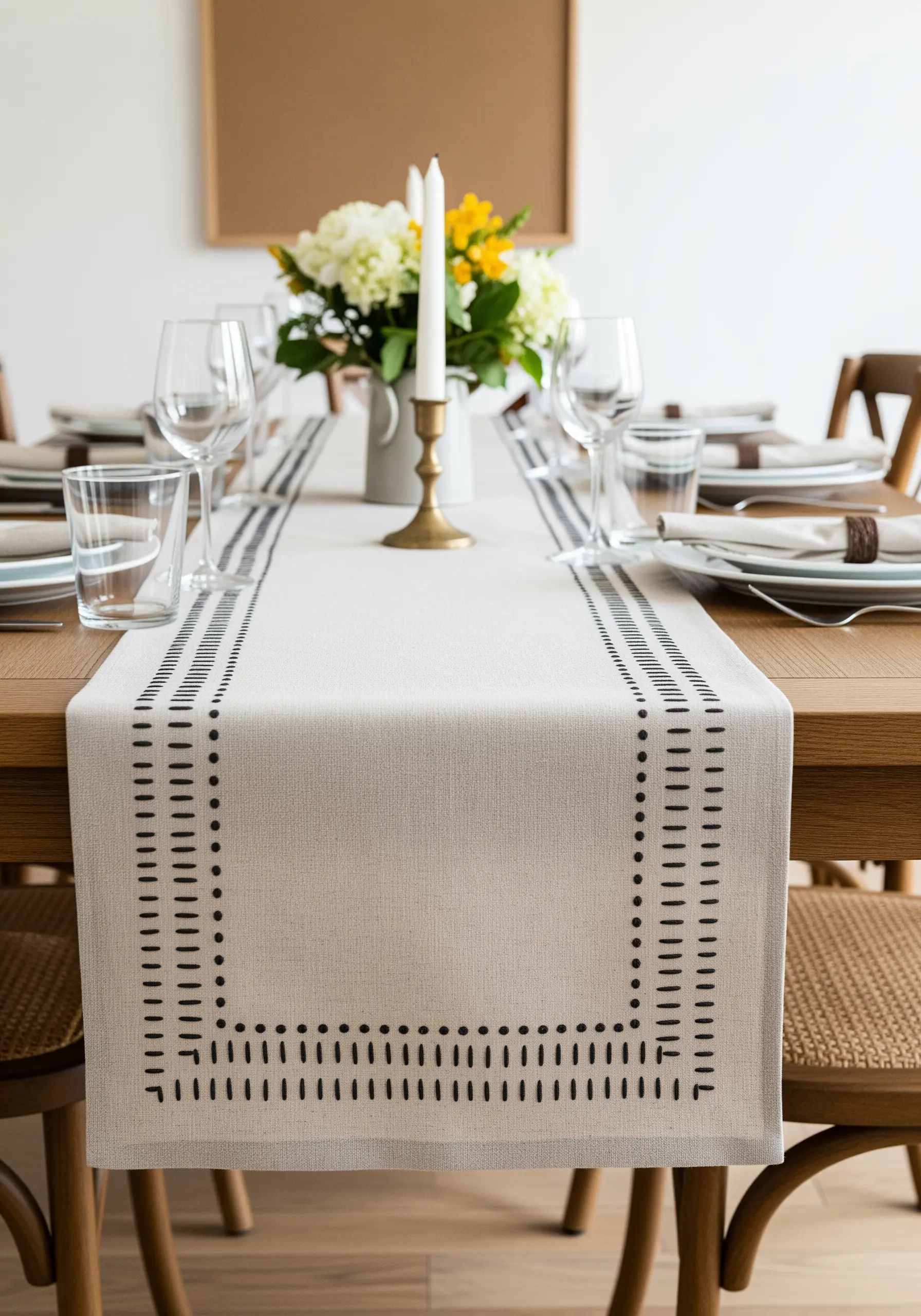
Define a tablescape by adding a hand-stitched border to a linen table runner.
This design uses a combination of running stitches and small straight stitches to create a pattern that feels both geometric and organic.
Mark your lines with a fabric pen to keep them perfectly straight, but allow for slight, natural variations in stitch length to retain the handmade character.
These hand-stitched table runner embroidery designs add structure and elegance to your dining setup.
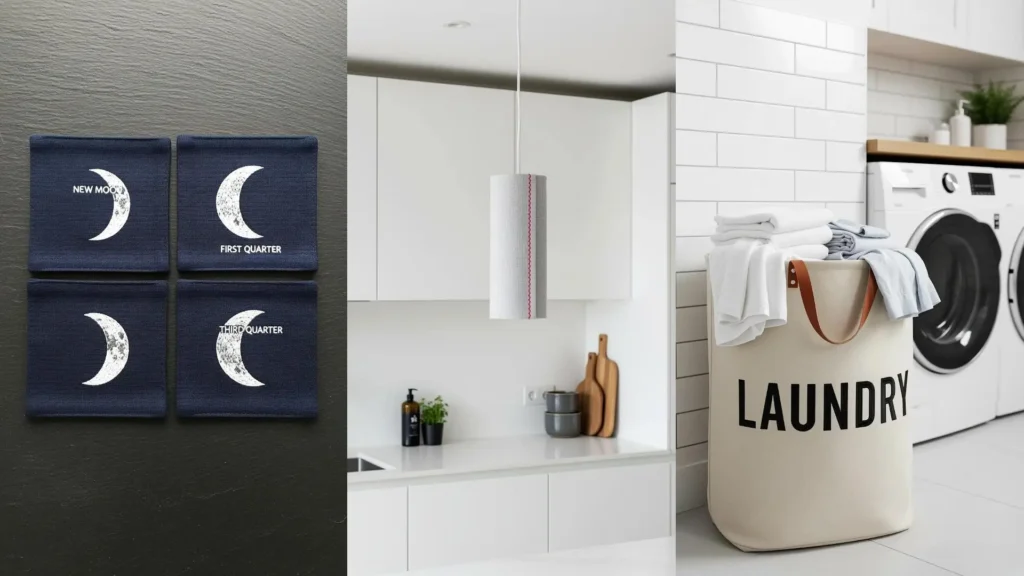
17. Apply Bold Typography to Canvas Bins
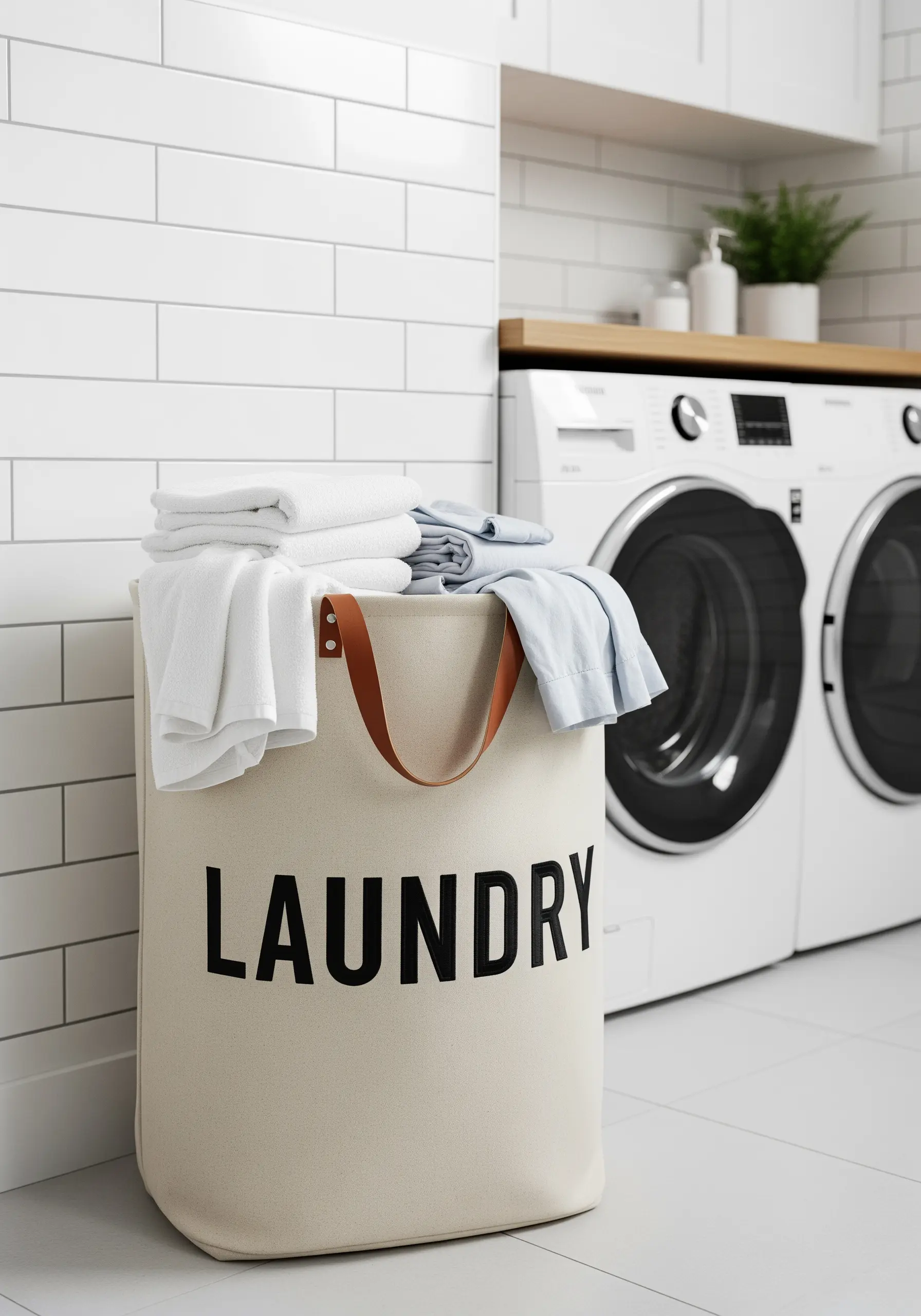
Make functional items like laundry hampers part of your decor with clean, bold lettering.
To achieve these sharp, solid letters, trace your type and fill it with a dense satin stitch. For a faster alternative that still looks bold, use a wide chain stitch to outline the letters.
Always use a heavy-duty needle and strong thread when working with thick canvas to ensure your stitches are secure and the process is smooth.
18. Couch Chunky Yarn for Dramatic Texture
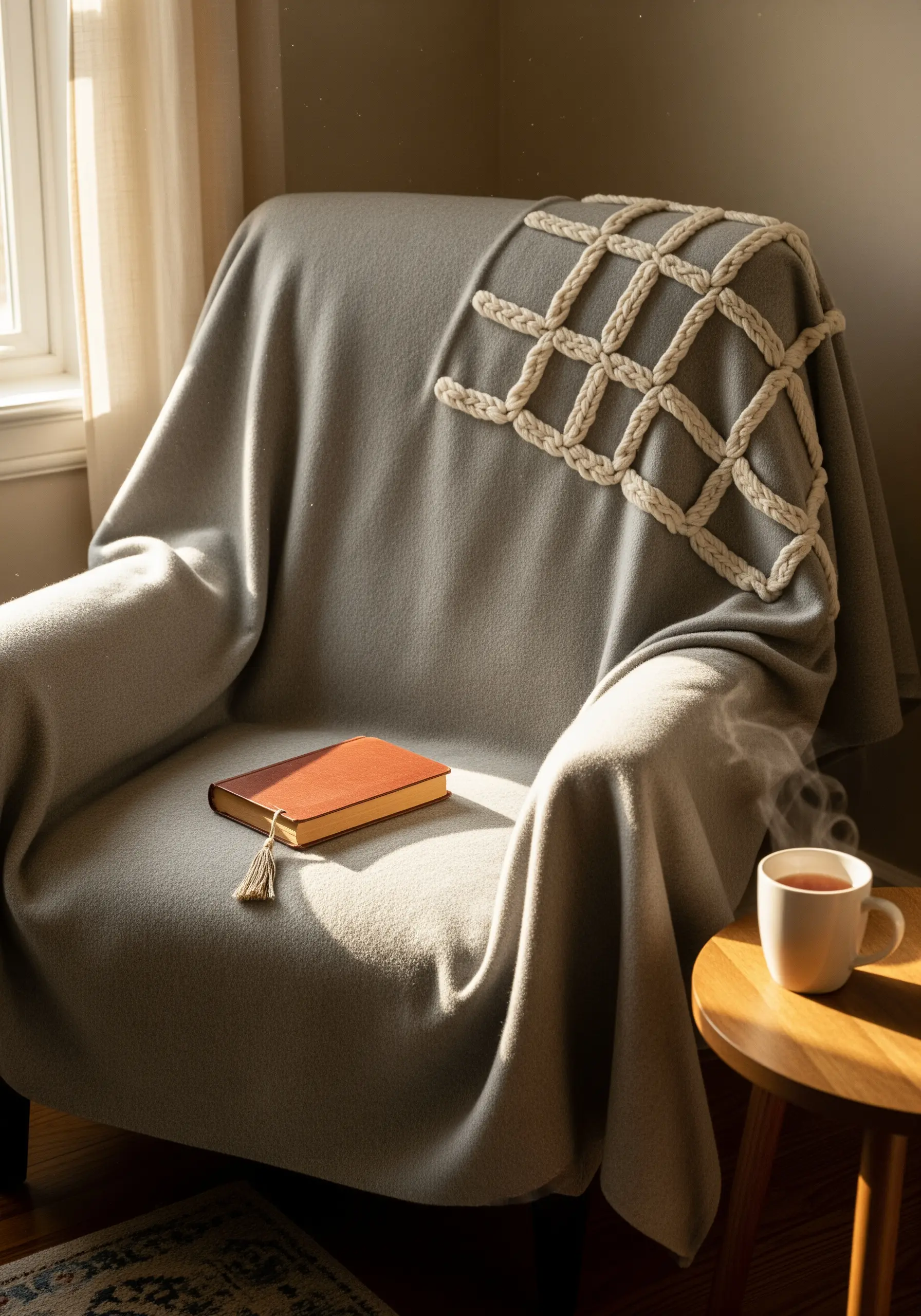
Create an incredibly tactile design by attaching thick, chunky yarn to a simple throw blanket.
This technique is called couching: lay the thick yarn in a grid pattern on the fabric surface.
Then, use a regular needle and matching embroidery floss to tack it down with small, almost invisible stitches.
The result is a high-contrast textural piece that adds cozy, sculptural dimension to any textile.
19. Accent Decor with a Single Line
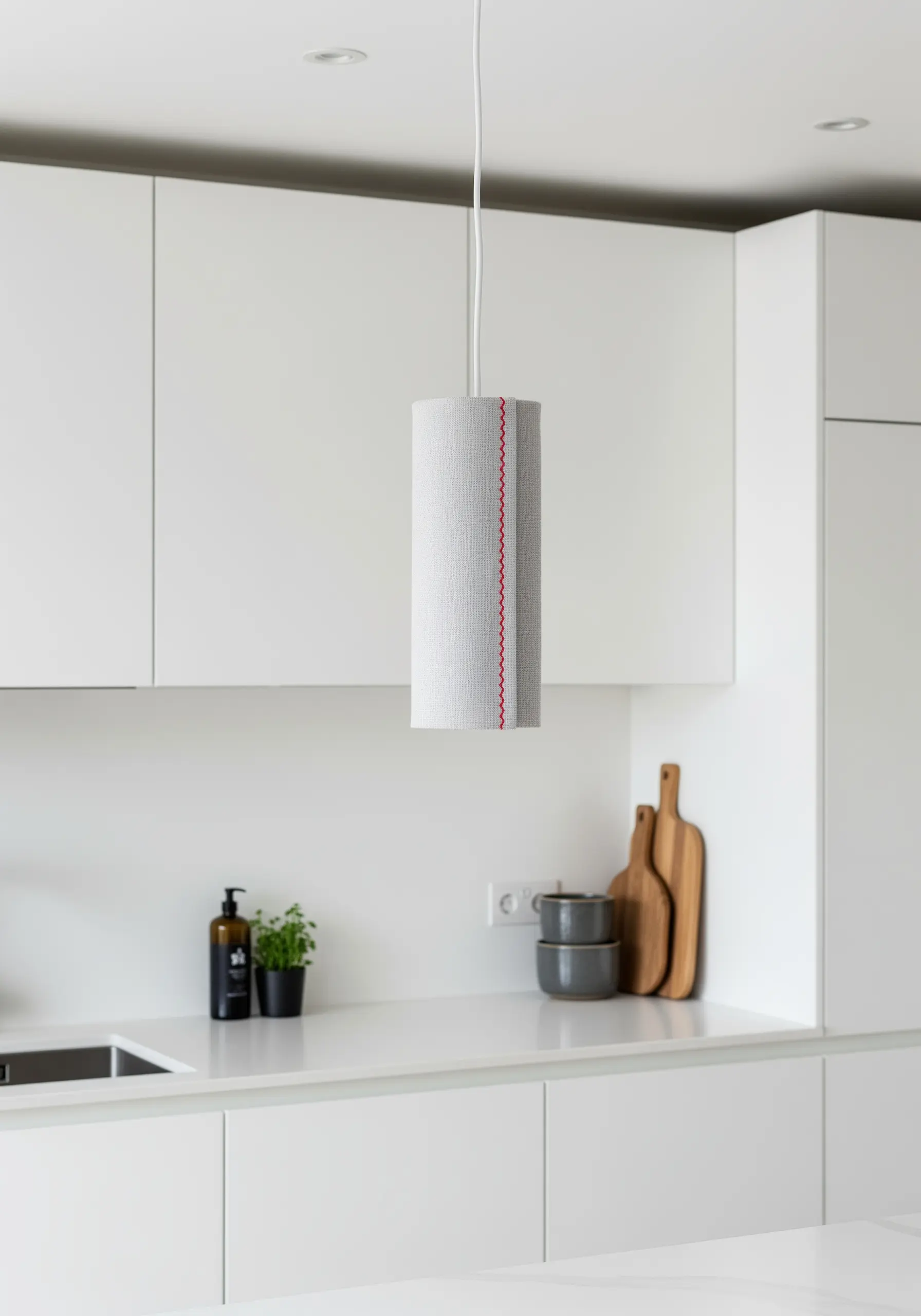
Demonstrate the power of true minimalism by transforming an object with a single, deliberate line of stitching.
Here, a simple running stitch in a high-contrast red thread is added to a plain grey pendant lampshade.
This one detail introduces color, texture, and a handmade element, instantly elevating the object from generic to custom-designed.
It’s a powerful reminder that you don’t need a complex pattern to make a significant visual impact.
20. Create a Cohesive Set of Coasters
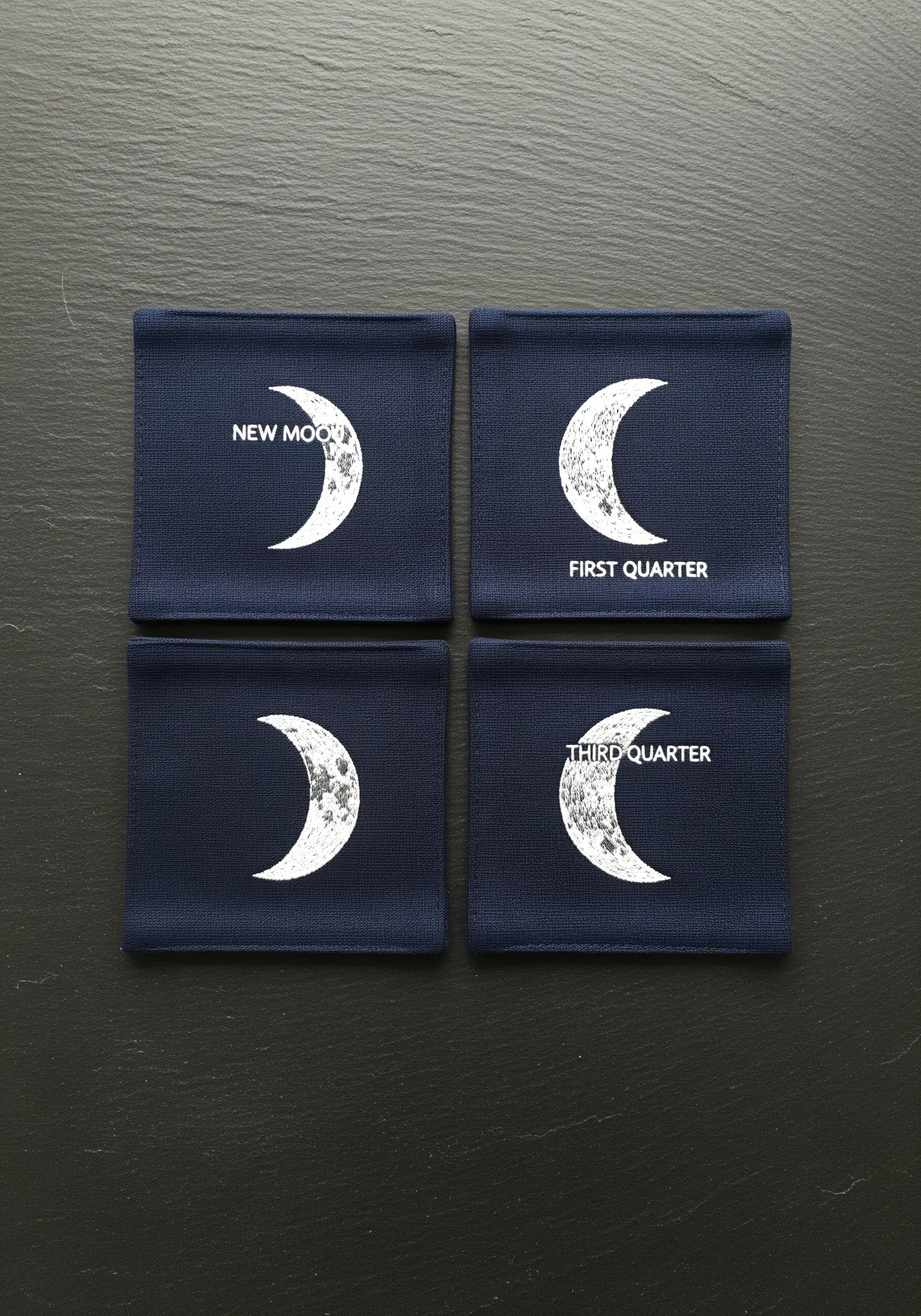
Design a themed set of functional items, like these moon phase coasters, to add a personal touch to your coffee table.
To get that textured, crater-like effect, fill the moon shapes with a chaotic arrangement of seed stitches using a light-colored thread on a dark background.
For a smoother look, you could use a padded satin stitch.
Using a heavy cotton canvas ensures the coasters are durable and hold their shape well.
21. Integrate Hoop Art into a Gallery Wall
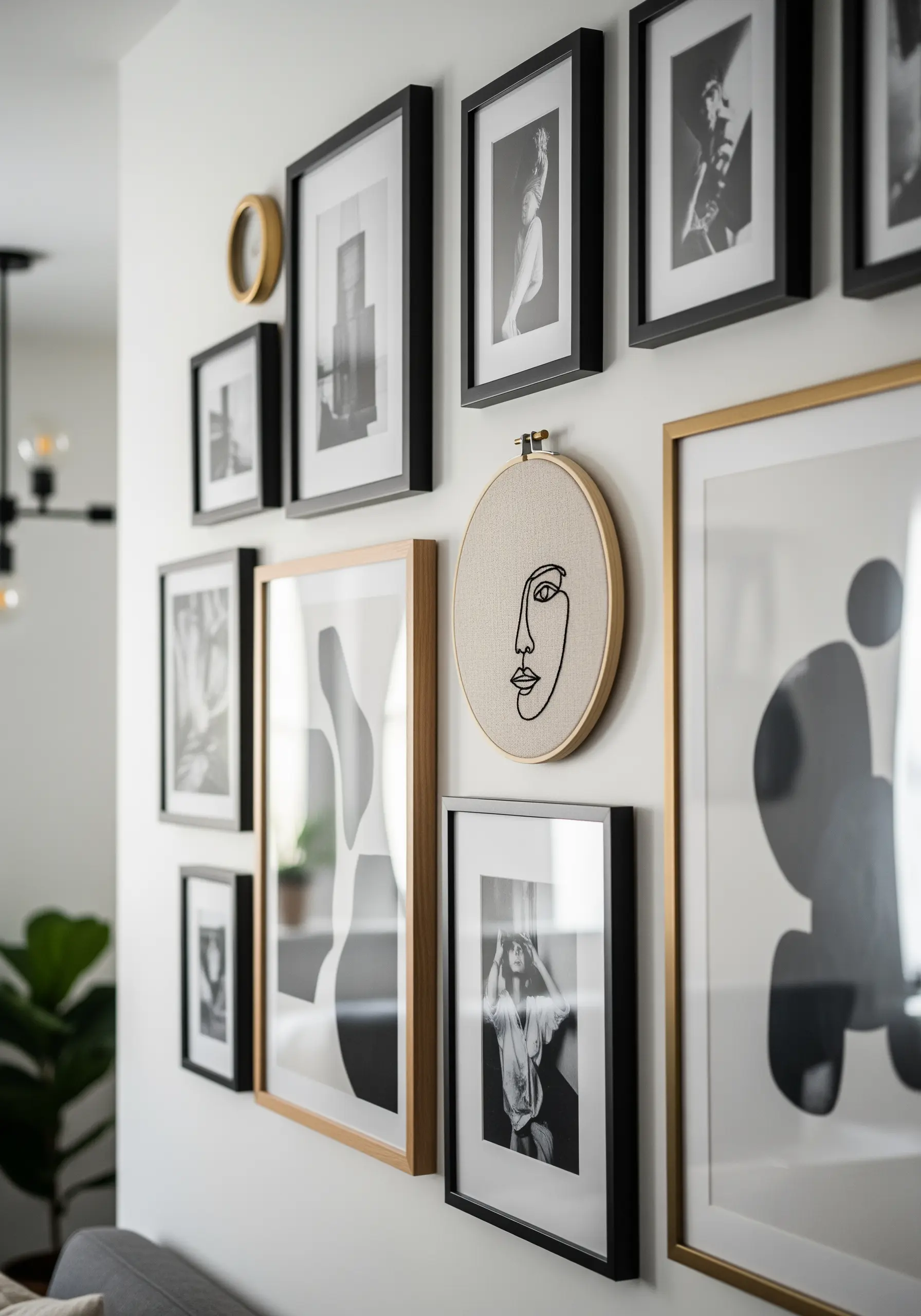
Add warmth and texture to a gallery wall by mixing in a piece of hoop art.
A minimalist design, like a single-line face profile, works beautifully alongside photographic prints and graphic art.
The natural wood of the hoop and the texture of the linen fabric provide a soft, organic contrast to the hard edges of traditional frames.
This simple addition makes your entire art collection feel more curated, personal, and dynamic.
22. Personalize Pet Accessories
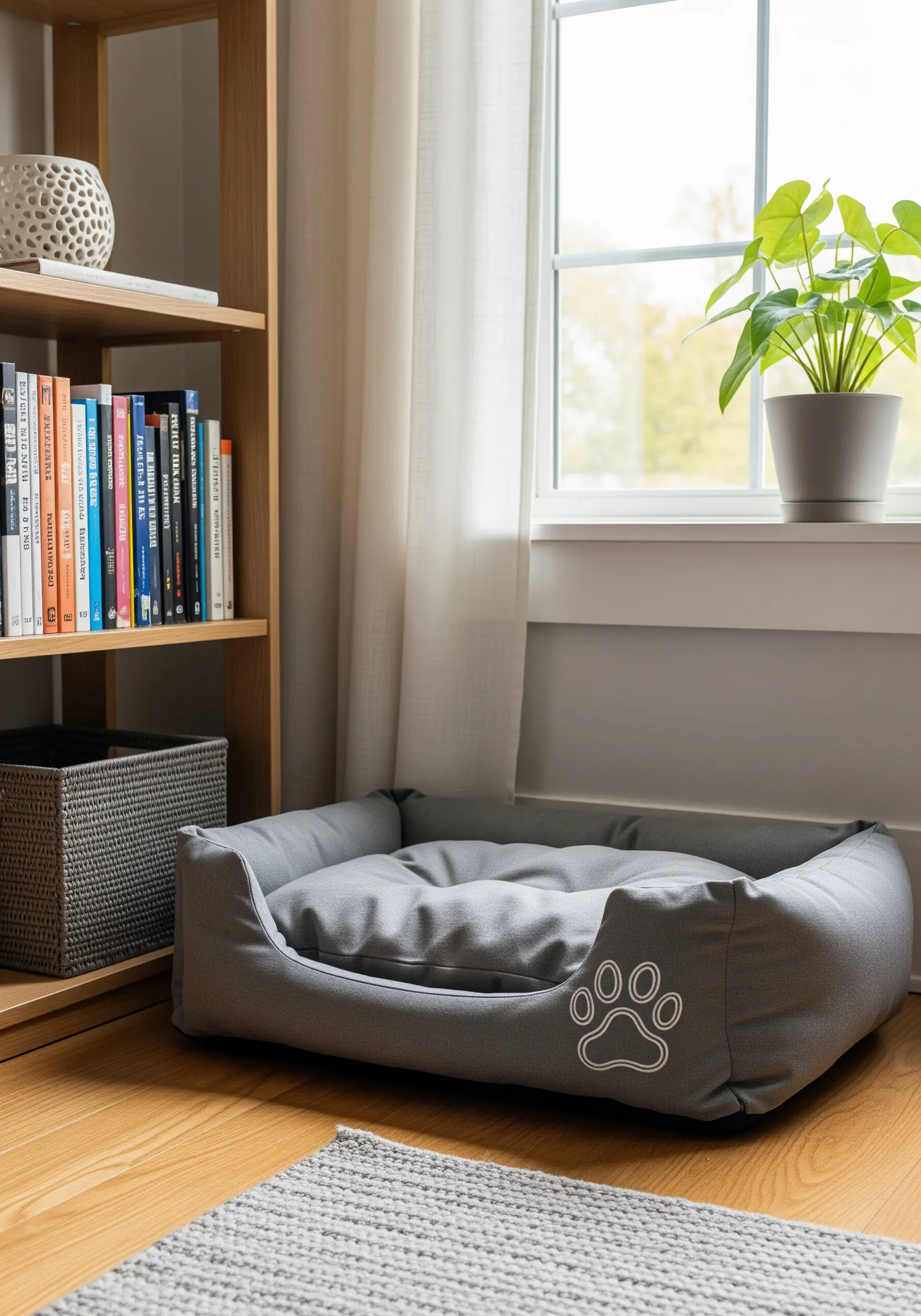
Add a charming, custom detail to your pet’s bed with a simple embroidered motif.
A paw print outline is a perfect choice, stitched here with a clean backstitch in a contrasting white thread.
When embroidering items that will see a lot of wear, choose a durable, washable thread like cotton pearl or use all six strands of standard floss for strength.
This small touch makes a store-bought item feel special and integrated into your home’s aesthetic.
23. Go Big with a Textile Wall Hanging
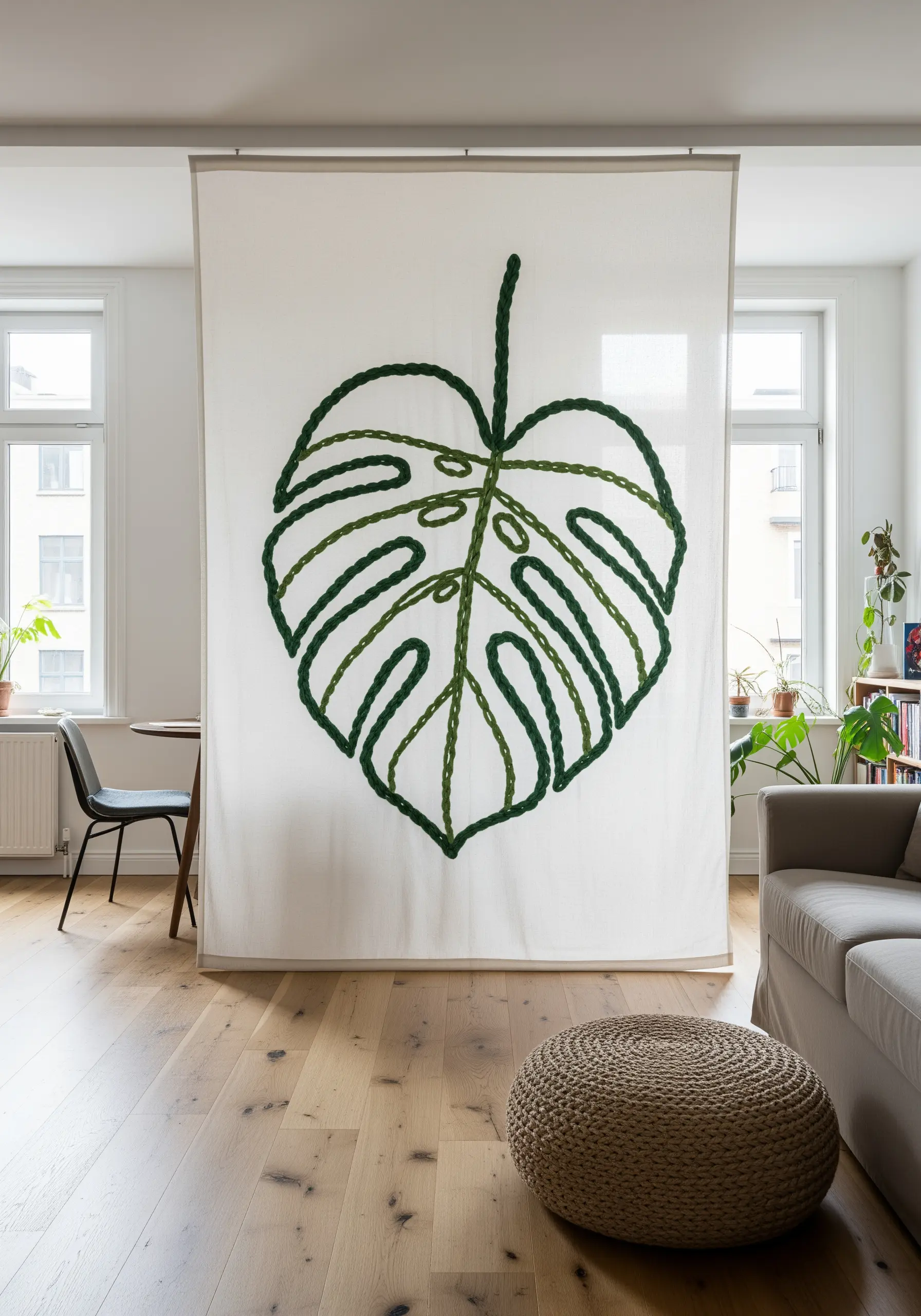
Create a stunning focal point by translating a simple botanical drawing into a large-scale embroidery tapestry.
Use a thick yarn or multiple strands of chunky wool and a giant chain stitch to create the bold outline of the monstera leaf.
Stitch it on a sheer, lightweight fabric like linen or cotton voile to create a piece that functions as a room divider, playing beautifully with natural light.
This project proves that minimalist embroidery can be both delicate and dramatically oversized.


