Before you drift off to sleep, imagine ending your day not with a screen, but with the quiet, rhythmic motion of a needle and thread. Creating an embroidered mandala is more than a craft; it’s a moving meditation—a way to untangle your thoughts and stitch a little bit of calm back into your world.
Here, you won’t find overly complex patterns or demanding techniques. Instead, I want to show you how subtle shifts in texture, color, and form can transform your embroidery into a soft, serene accent for your most personal space. We’ll explore how stitching on different fabrics, playing with thread weight, and even leaving space empty can make your work feel more intentional and peaceful.
Think of each stitch as a quiet breath. This is your invitation to slow down, focus on the simple beauty of a well-placed knot or a perfectly curved line, and create something that not only looks beautiful but feels deeply restorative.
1. Elevate Your Space with Large-Scale Canvas Art
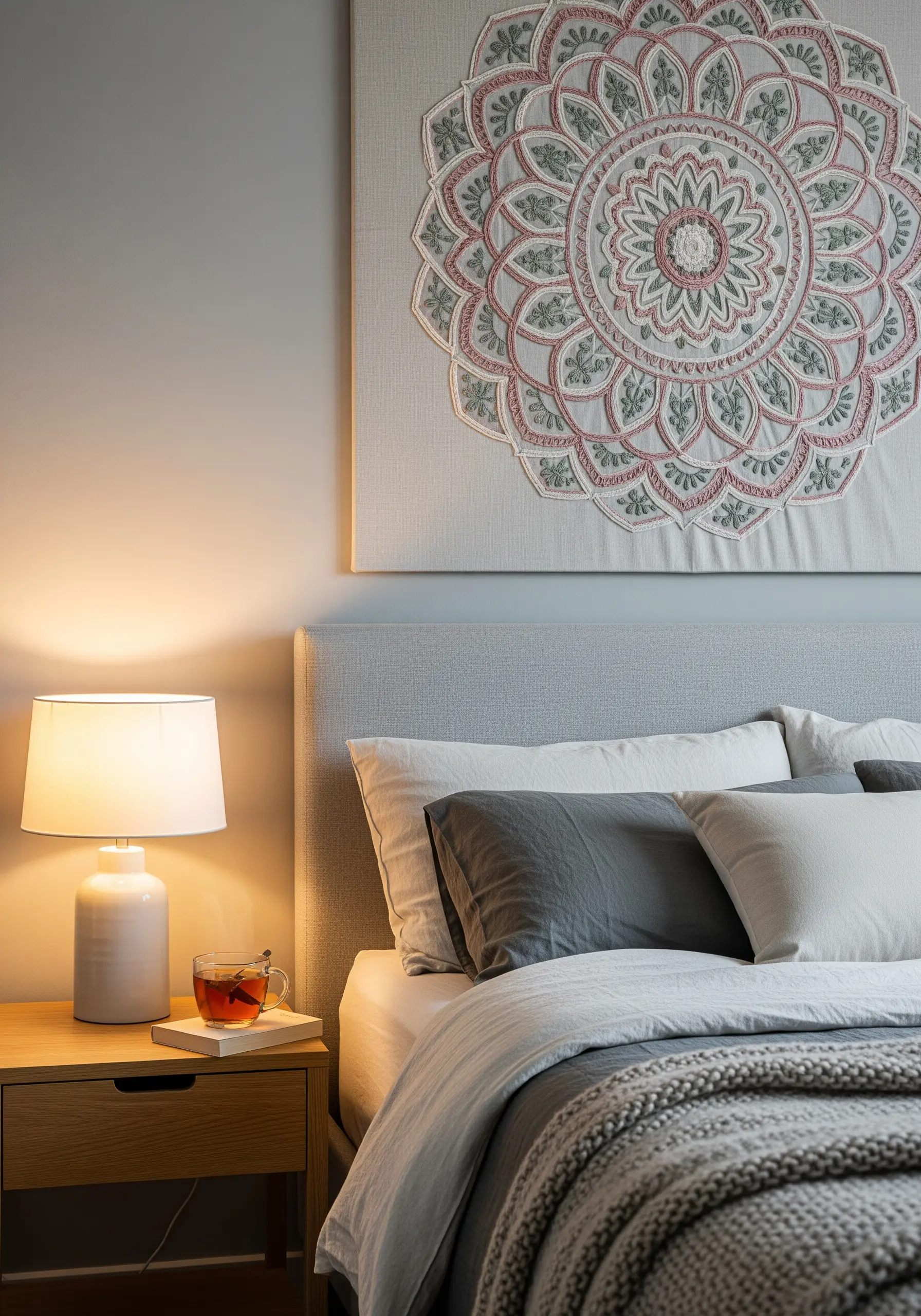
Move beyond the hoop and embroider your mandala onto a large, stretched canvas to create a significant focal point.
Use a thicker thread, like a #8 or #5 pearl cotton, to make the stitches substantial and visible from a distance.
For clean lines on this scale, outline your shapes with a simple backstitch or stem stitch before filling them, ensuring every curve is defined.
A soft, tonal palette of dusty rose and sage green on a neutral background creates a serene, calming presence perfect for a bedroom.
2. Master Definition on Textured Upholstery
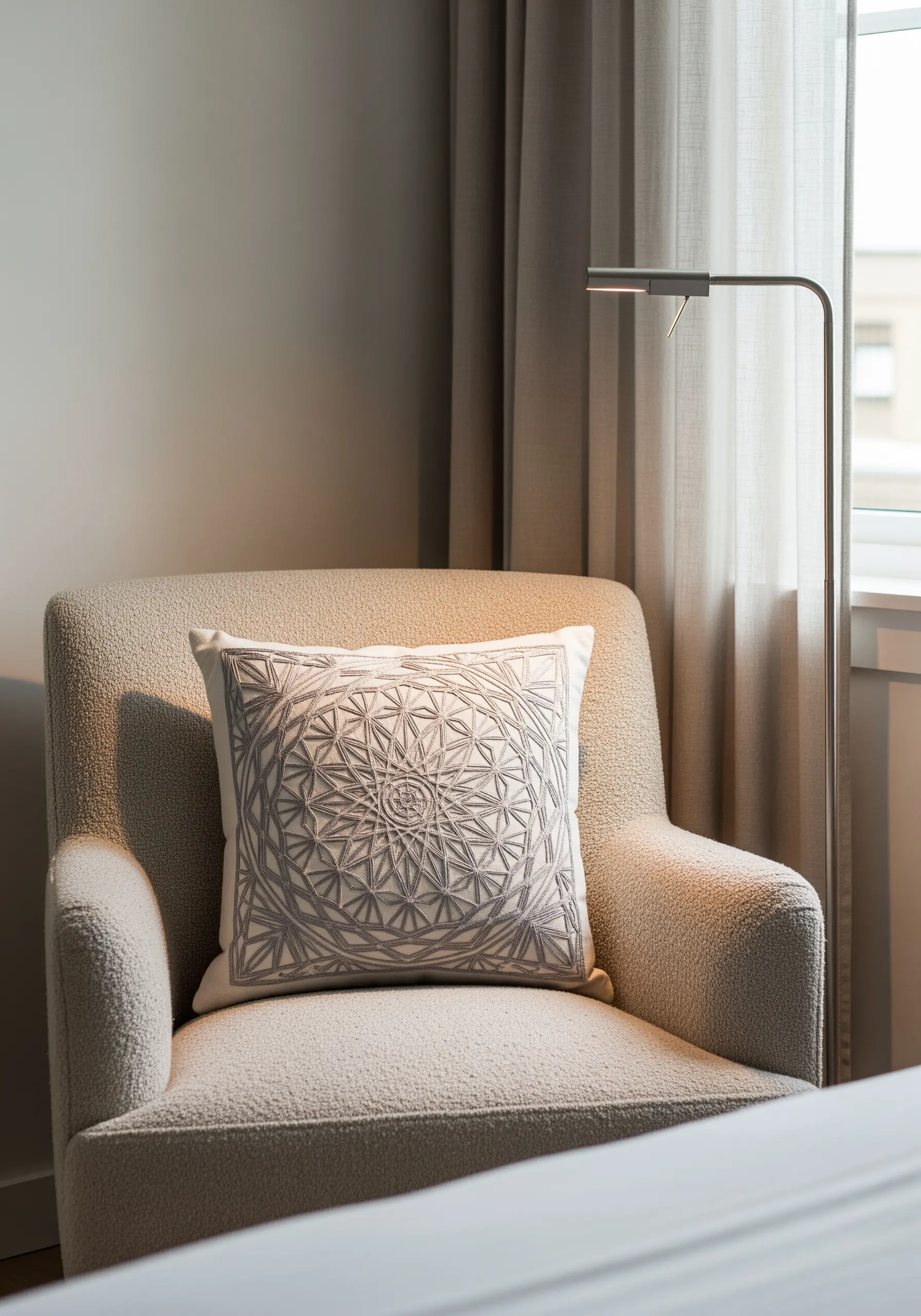
When stitching on heavily textured fabric like boucle or tweed, use a lightweight stabilizer on the back to prevent your stitches from sinking into the weave.
Choose bold, geometric patterns over fine, delicate ones, as the fabric’s texture will obscure tiny details.
A monochrome palette, like this cool grey on cream, allows the texture of the stitches to stand out, creating a design that is felt as much as it is seen.
Use a simple satin stitch and keep your stitches uniform; consistent tension is key to achieving that crisp, graphic finish.
3. Design an Airy, Open-Stitch Floral Wreath

To prevent a large floral mandala from feeling heavy, embrace negative space.
Use open fill stitches like the fishbone stitch for leaves and the detached chain stitch (lazy daisy) for petals.
This technique allows the background fabric to peek through, creating a light, breathable composition that feels effortless.
These floral mandala embroidery ideas work best with a soft, desaturated palette of peach, mint, and pale yellow to enhance the gentle aesthetic.
4. Embrace the Calm of Minimalist Line Work

Create a powerful statement with a single color of thread on unbleached linen or cotton.
The success of this style lies in precision—focus on maintaining perfectly even stitch lengths with a backstitch or split stitch to create flawless lines.
This approach transforms a simple wall hanging into a piece of serene, minimalist embroidery decor that complements a calm, uncluttered space.
The simplicity of the technique allows the complexity of the mandala pattern itself to take center stage.
5. Add Subtle Radiance with Metallic Accents

Incorporate metallic thread sparingly to add a touch of light without overwhelming the design.
To avoid frustration, use a thread conditioner or beeswax and a needle with a larger eye, which reduces friction and shredding.
Pair a single metallic shade, like a soft gold, with calming neutrals such as sand and ecru. This creates a sophisticated shimmer rather than a garish sparkle, perfect for elegant bedroom decor.
Keep your stitches short when using metallics to maintain control and ensure they lie flat against the fabric.
6. Stitch Ethereal Mandalas on Sheer Curtains
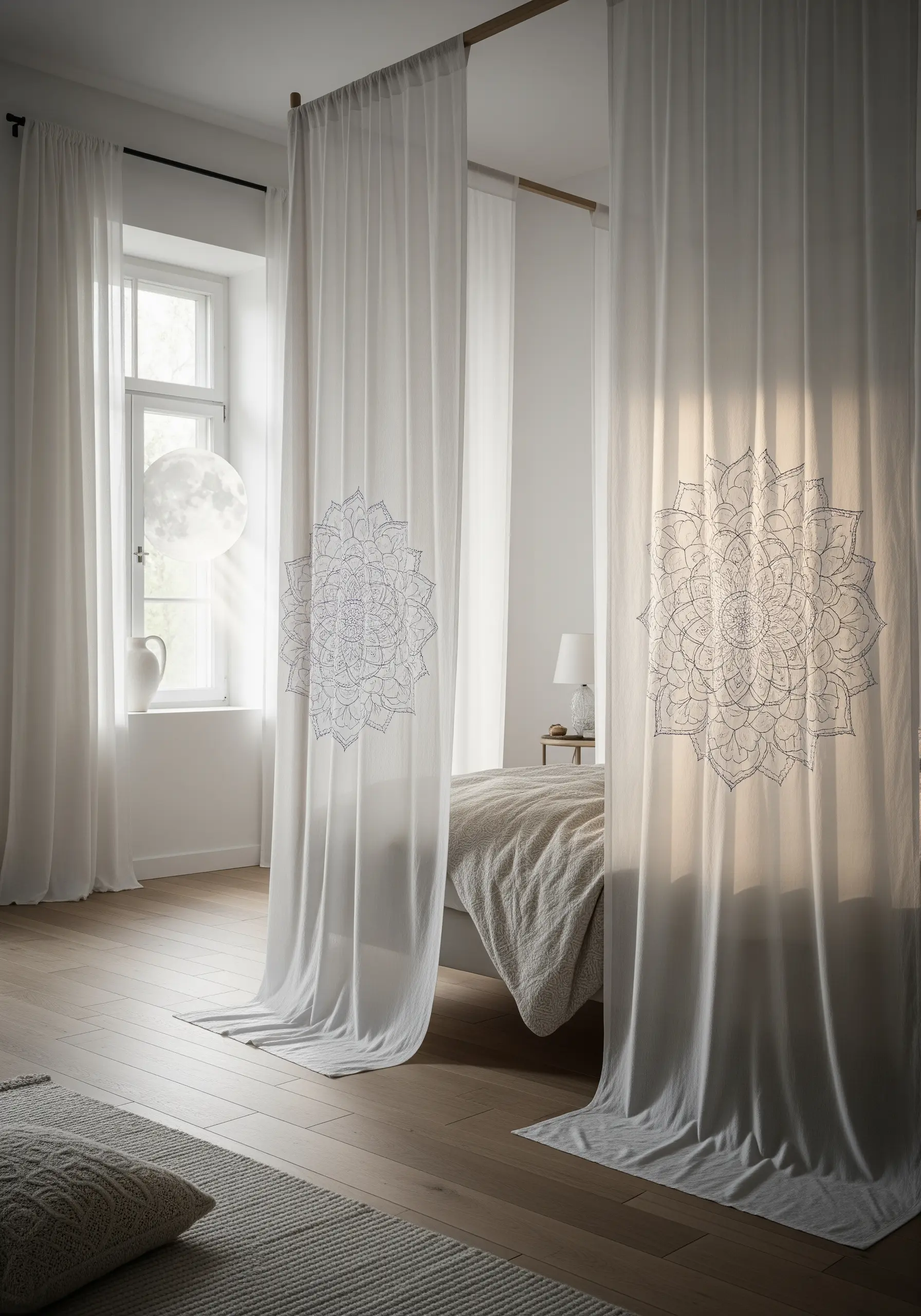
To embroider on sheer fabrics like voile or organza, hoop the material with a layer of water-soluble stabilizer for support.
Use only one or two strands of floss and choose fine, delicate stitches like the seed stitch or a simple running stitch to avoid puckering the lightweight fabric.
The finished embroidery will appear to float in mid-air, creating a beautiful, light-filtering effect as the sun streams through the window.
This technique is perfect for adding a private, dreamy layer to your bedroom sanctuary.
7. Ground Your Space with a Warm, Earthy Palette
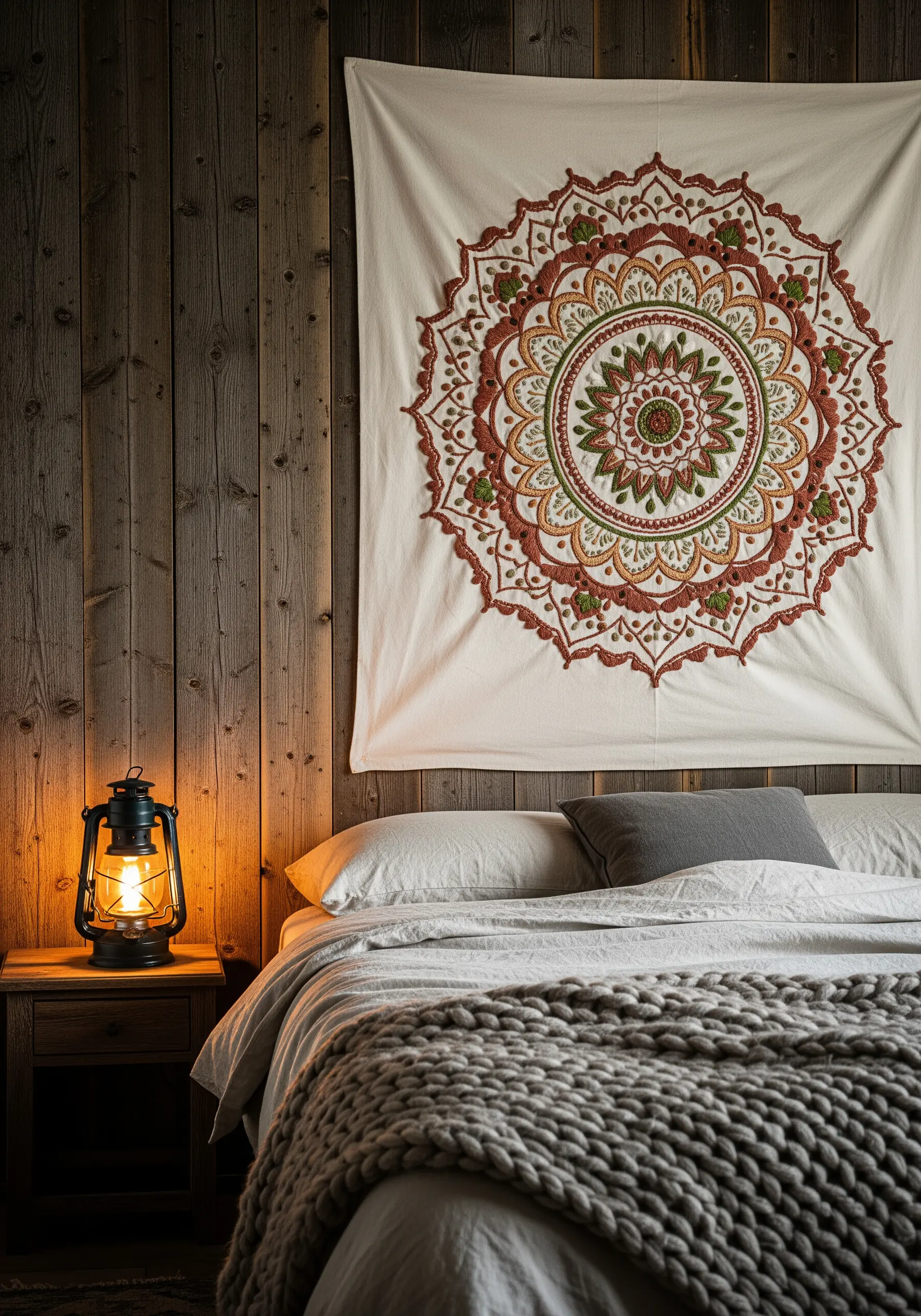
Choose a color story of terracotta, moss green, and deep ochre to create a mandala that feels grounding and connected to nature.
For a large tapestry, use a full six strands of cotton floss or even fine wool thread to build texture and fill space more quickly.
Combine dense satin stitch for central elements with crisp backstitch outlines for the outer layers. This contrast in stitch density adds visual depth.
These earth-tone patterns are perfect for creating a cozy, cabin-like retreat.
8. Find Meditative Focus in Miniature
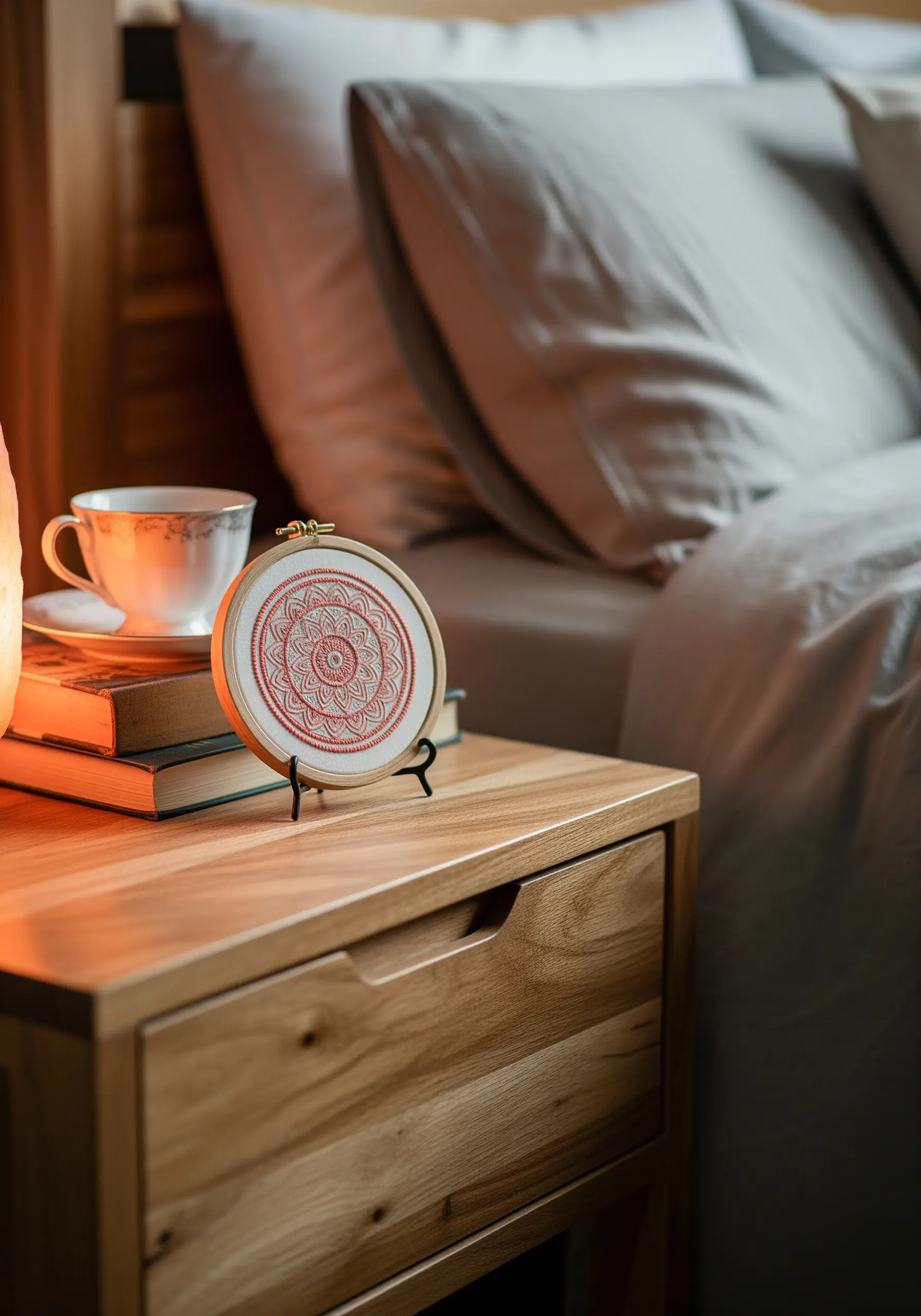
Working on a small scale invites a quiet, meditative state, making it a perfect pre-sleep ritual.
For these tiny embroidery ideas, use a single strand of floss and a fine needle to achieve crisp, delicate lines that won’t look bulky in a small hoop.
A simple backstitch is all you need. The focus here isn’t on complex stitches but on the rhythmic precision of creating an intricate pattern on a small canvas.
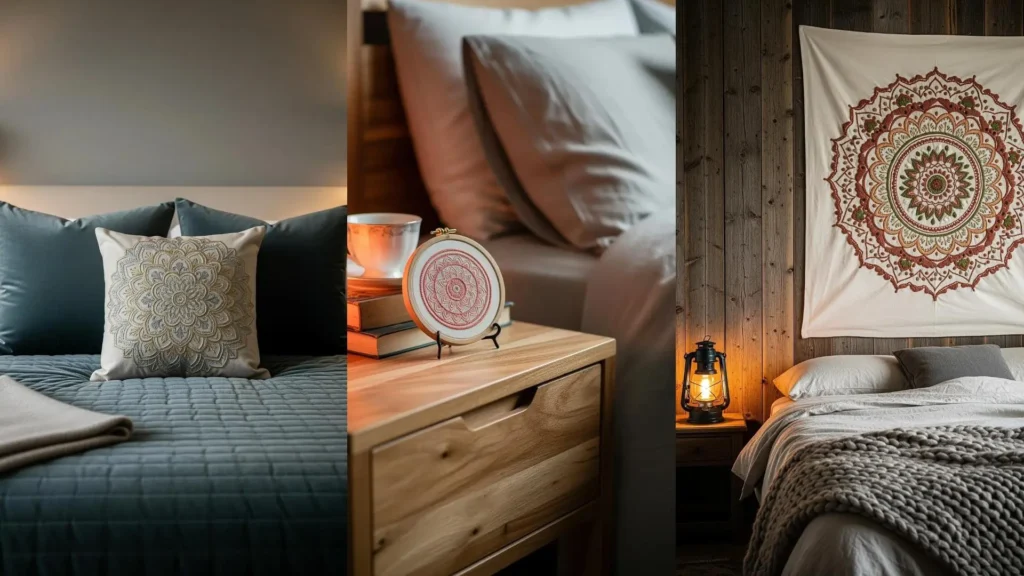
Display it on a mini easel on your nightstand as a reminder to find calm in the small details.
9. Stitch a Durable and Functional Meditation Cushion
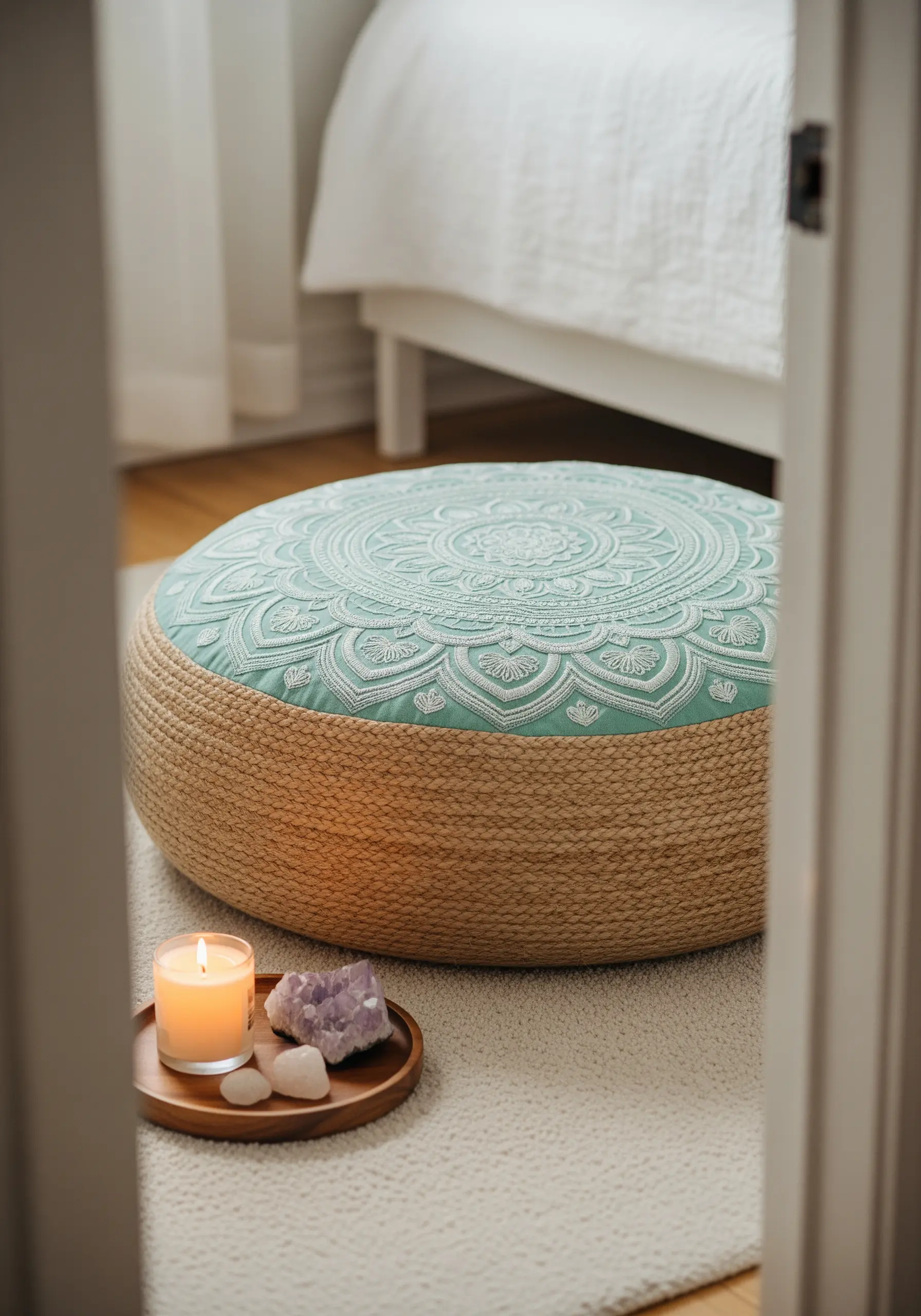
When embroidering an object for daily use, prioritize durability in both materials and technique.
Select a sturdy fabric like cotton canvas or a heavy linen blend that can withstand wear.
Use stitches that lie flat and are resistant to snagging, such as the chain stitch, split stitch, or a dense satin stitch.
A tone-on-tone color scheme—like this white thread on a soft aqua base—provides beautiful texture that is soothing and not distracting, perfect for a meditation aid.
10. Create Crisp Contrast on Soft Knit Blankets
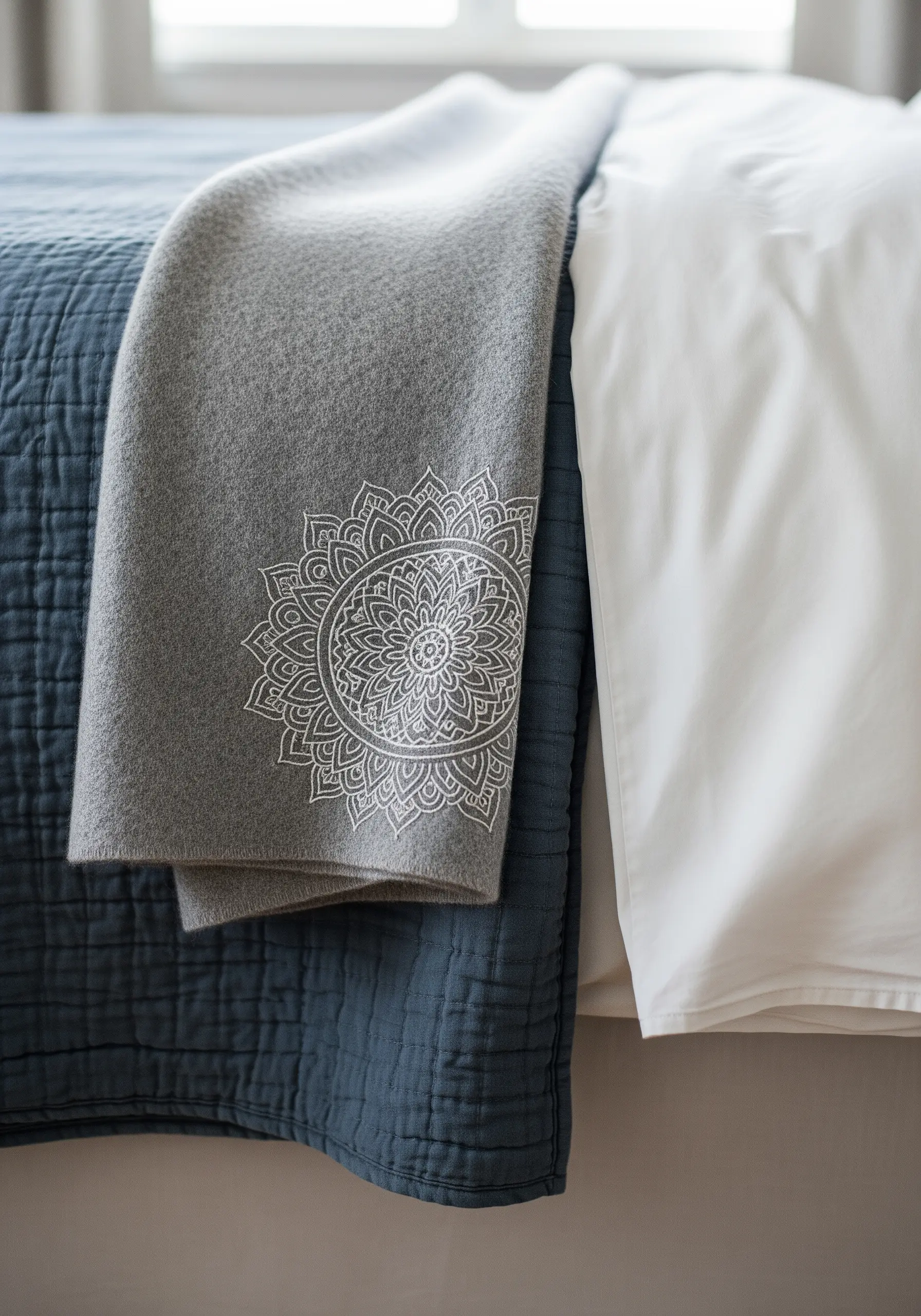
To embroider on plush or knit fabrics like fleece or wool, always place a water-soluble stabilizer on top of your design area.
This simple trick prevents your stitches from sinking into the fabric’s pile, ensuring they remain sharp and visible.
Use a thicker thread, such as pearl cotton, and a high-contrast color scheme—like this bright white on deep charcoal—to make your linework pop.
This method allows you to easily customize cozy embroidered throws and blankets for a personal touch.
11. Integrate Fiber Art Textures for a Boho Finish
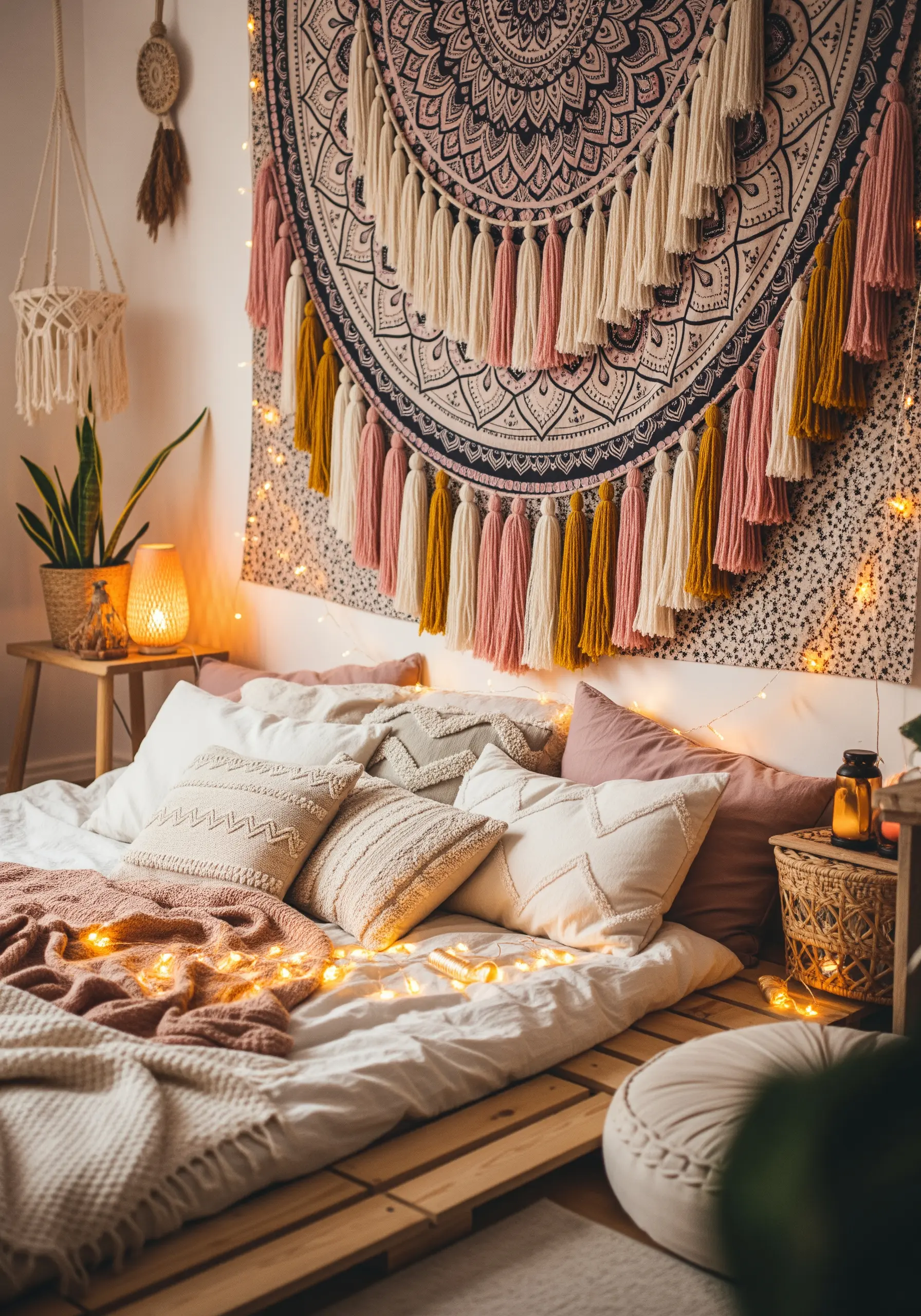
Elevate your embroidered mandala by combining it with other fiber art techniques.
After stitching the central design, extend the piece’s presence by adding thick, chunky tassels or macrame knots around the border.
This mixed-media approach adds incredible texture and a free-spirited, bohemian feel to your wall.
Vary the colors and lengths of your tassels to create a beautiful, cascading effect that turns a simple tapestry into one of many stunning fiber art installations.
12. Curate a Calm Gallery with a Mandala Triptych
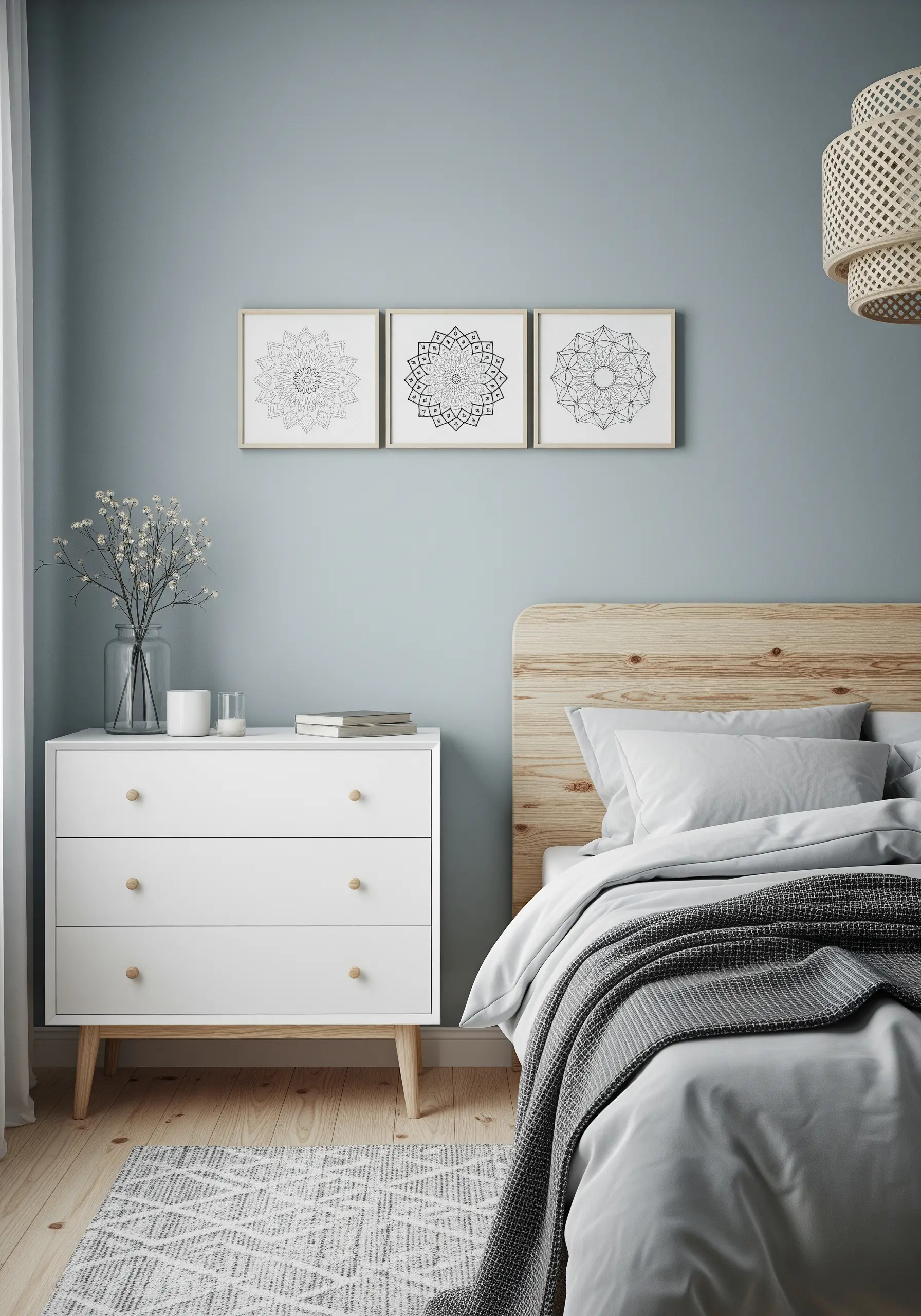
Create a serene and cohesive display by stitching a series of mandalas to hang together.
To achieve a unified look, use the same fabric, thread color, and frame style for each piece.
Introduce variety by choosing three distinct but related mandala patterns—this creates visual interest while maintaining a harmonious, intentional aesthetic.
Simple line art in black thread on white fabric, presented in thin frames, results in elegant and modern framed embroidery artworks.
13. Explore Subtle Dimension with Whitework Embroidery
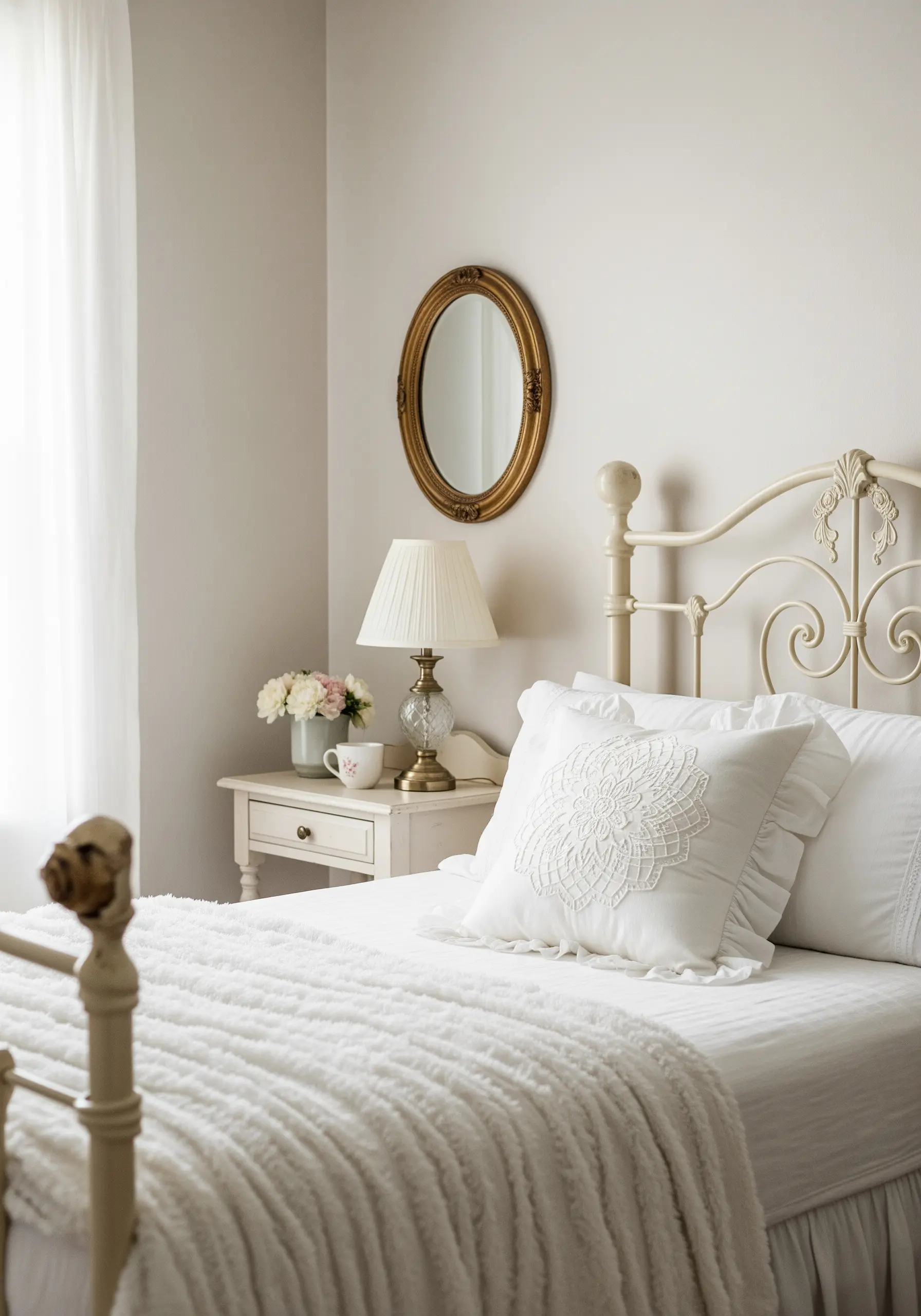
Whitework, or white-on-white embroidery, is the art of creating design through texture rather than color.
The magic is in the interplay of light and shadow on the stitches, so vary your stitch types and directions.
Combine raised stitches like French knots with smooth satin stitches and crisp stem stitch outlines to create a rich, tactile surface.
This technique gives any piece an instant heirloom quality, turning a simple pillow into a work of subtle elegance.
14. Frame the Light with a Window-Hung Hoop
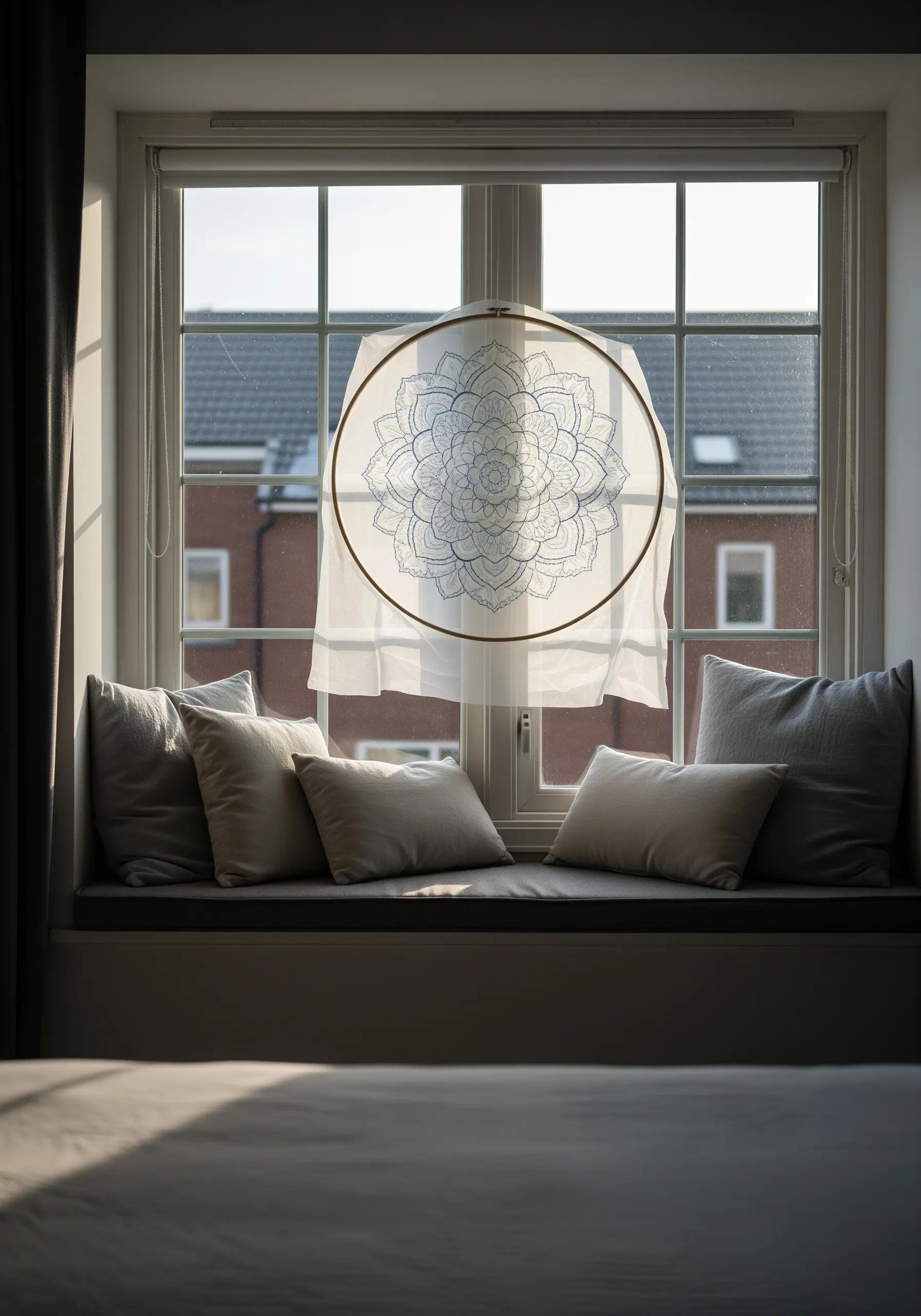
Turn your embroidery into a piece that interacts with the changing light of the day.
Stitch your mandala on a sheer or semi-sheer fabric, finish it in the hoop, and hang it directly in a window.
The sunlight will illuminate the delicate lines, creating an effect similar to stained glass. A darker thread color, like navy or charcoal, will create a stronger, more defined silhouette.
This is a beautiful, unexpected way to display your work and add a layer of artistry to your view.
15. Add a Touch of Luxury with Velvet

Embroidering on velvet creates an incredibly lush and tactile finish, perfect for a statement cushion.
Always stitch in the direction of the velvet’s pile to keep it smooth, and use a sharp needle to pierce the dense fabric cleanly.
A tonal color scheme, where the thread is a shade lighter or darker than the fabric, highlights the texture and the elegant sheen of the material.
Pairing the rich fabric with a silky rayon floss enhances the opulent, light-catching quality of the final piece.
16. Re-imagine Symmetry in a Vertical Frame
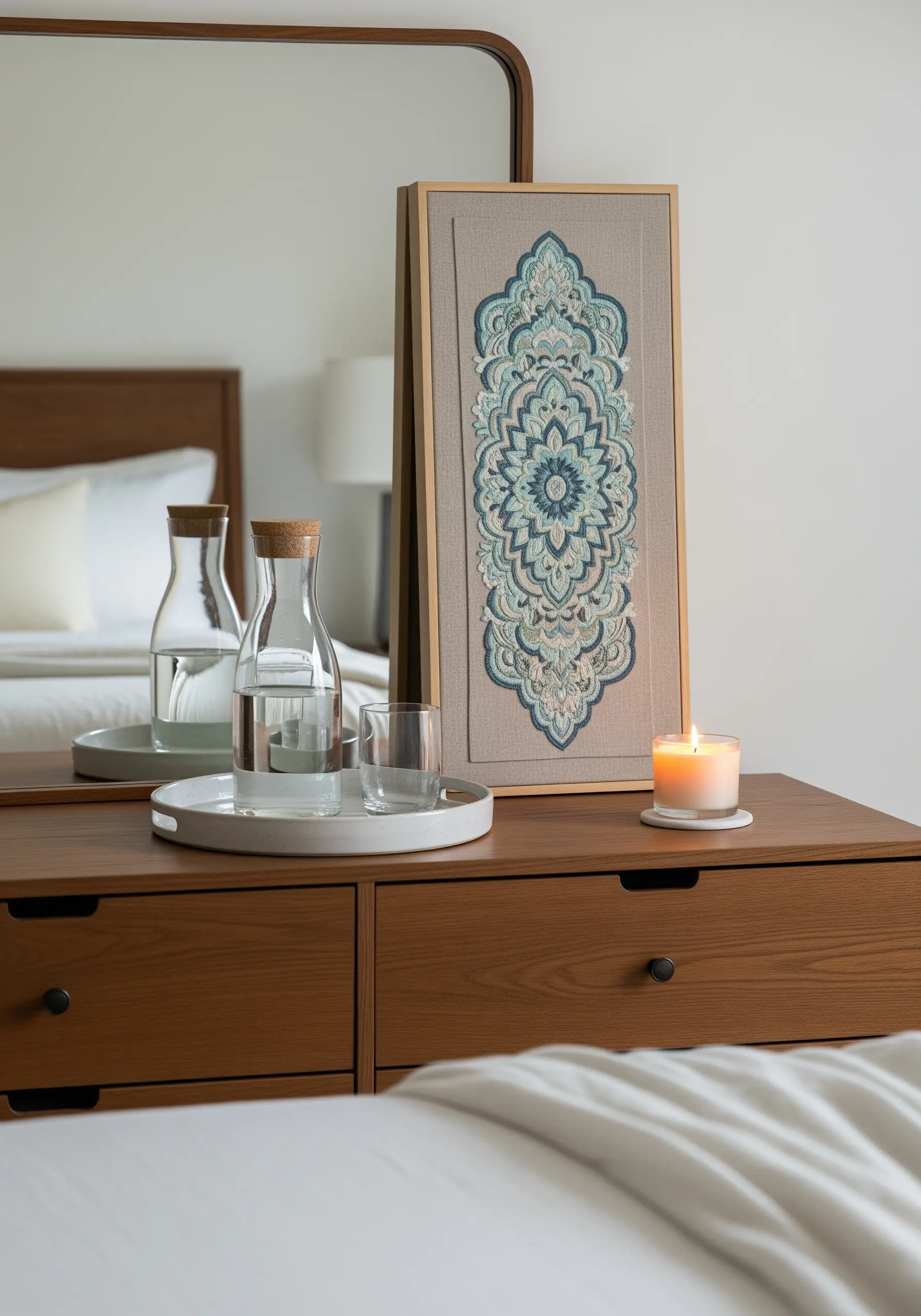
Break away from the traditional circular format by adapting your mandala to fit a rectangular frame.
You can achieve this by elongating one axis of a symmetrical design or by focusing on a repeating vertical motif within the mandala structure.
This modern interpretation feels intentional and custom-designed for its space, turning a familiar pattern into a unique piece of abstract art.
A cool palette of blues, teals, and cream on a neutral linen background keeps the look sophisticated and calm.
17. Create a Sunrise with a Half-Mandala Design
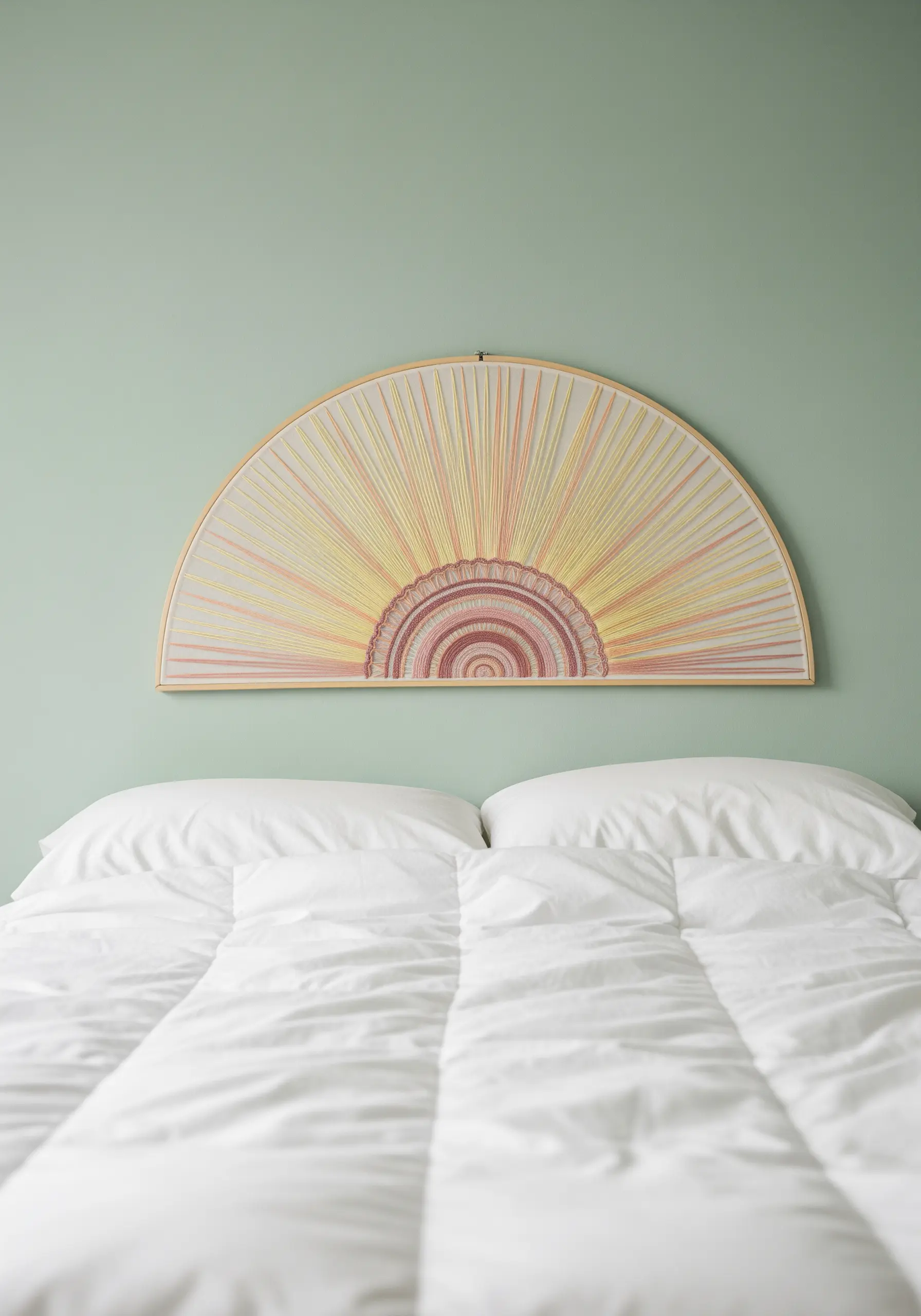
You don’t need the full circle to capture the essence of a mandala. A semi-circle composition can be just as powerful.
Use radiating straight stitches fanning out from a central point to evoke the feeling of a rising sun.
This asymmetrical approach is dynamic and modern, drawing the eye upward and filling a space with optimistic energy.
This is one of the most effective modern thread mandala ideas for creating a focal point above a bed.