You have the stitches down. You’ve chosen your threads. But you feel a gap between the work you’re making and the art you want to create. It’s a common feeling, but the solution isn’t about mastering more complex techniques—it’s about challenging your perception of what thread can do.
This month, I want you to think beyond the hoop. Consider your thread not just as a tool for coloring in a pattern, but as a sculptural material, a structural element, or a line that can tell a story. Think about how it interacts with light, form, and function.
These projects are designed to push you out of your comfort zone. They invite you to blend embroidery with paper, light, and even clockwork. Each one is a creative problem to solve, an opportunity to transform a familiar craft into a unique and personal art object. Let’s begin.
1. Construct a Sculptural Thread Terrarium
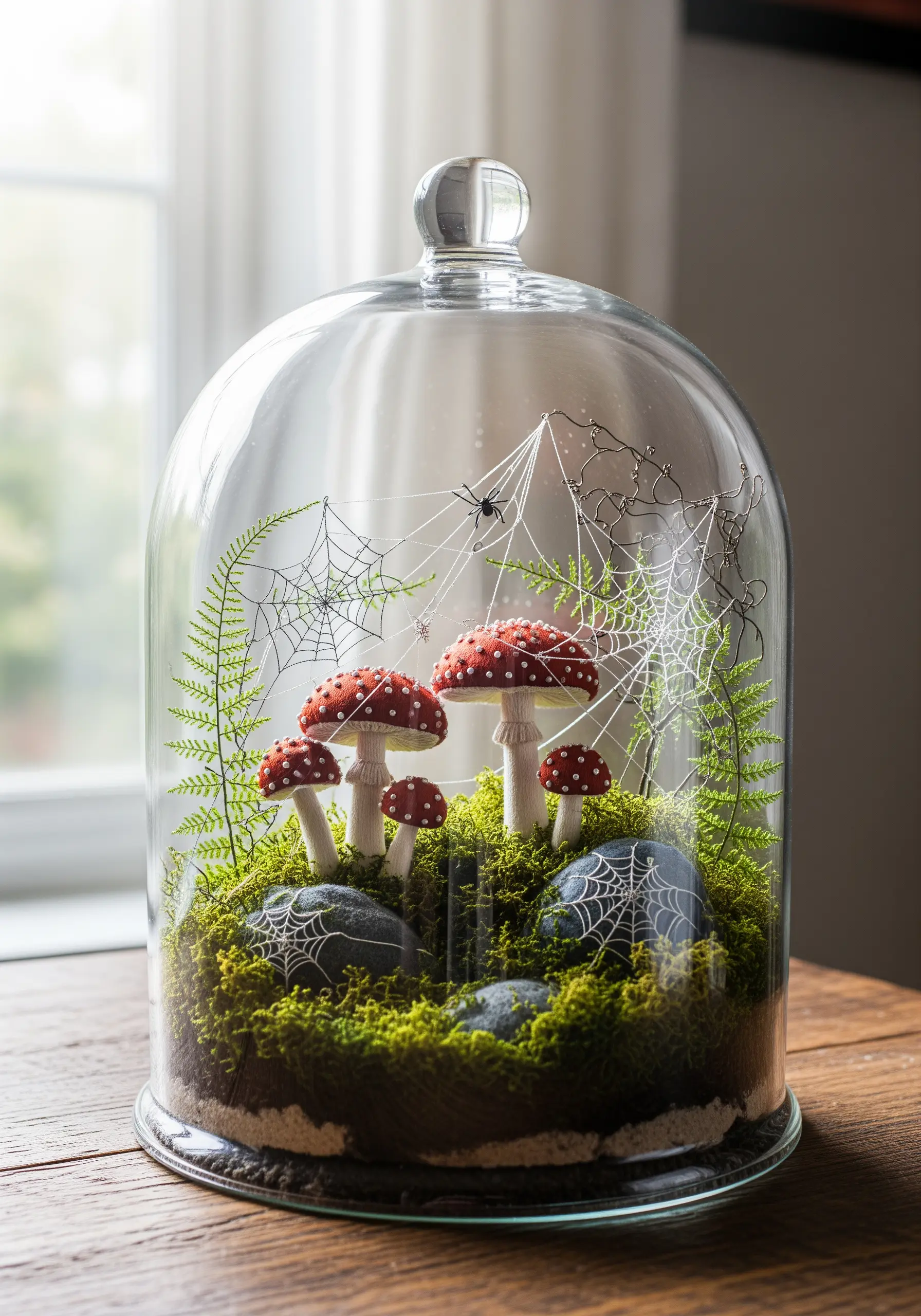
Move your embroidery off the hoop by creating delicate, three-dimensional thread sculptures inside a glass cloche.
Use fine metallic or silk thread stretched between anchor points—like small pebbles and faux botanicals—to build intricate structures like spiderwebs.
To give the webs their form, create a delicate wire frame first, then wrap it tightly with your thread.
This technique challenges you to think about tension, balance, and how thread can occupy space, turning a simple craft material into a sculptural element.
2. Weave Abstract Shapes into Macrame
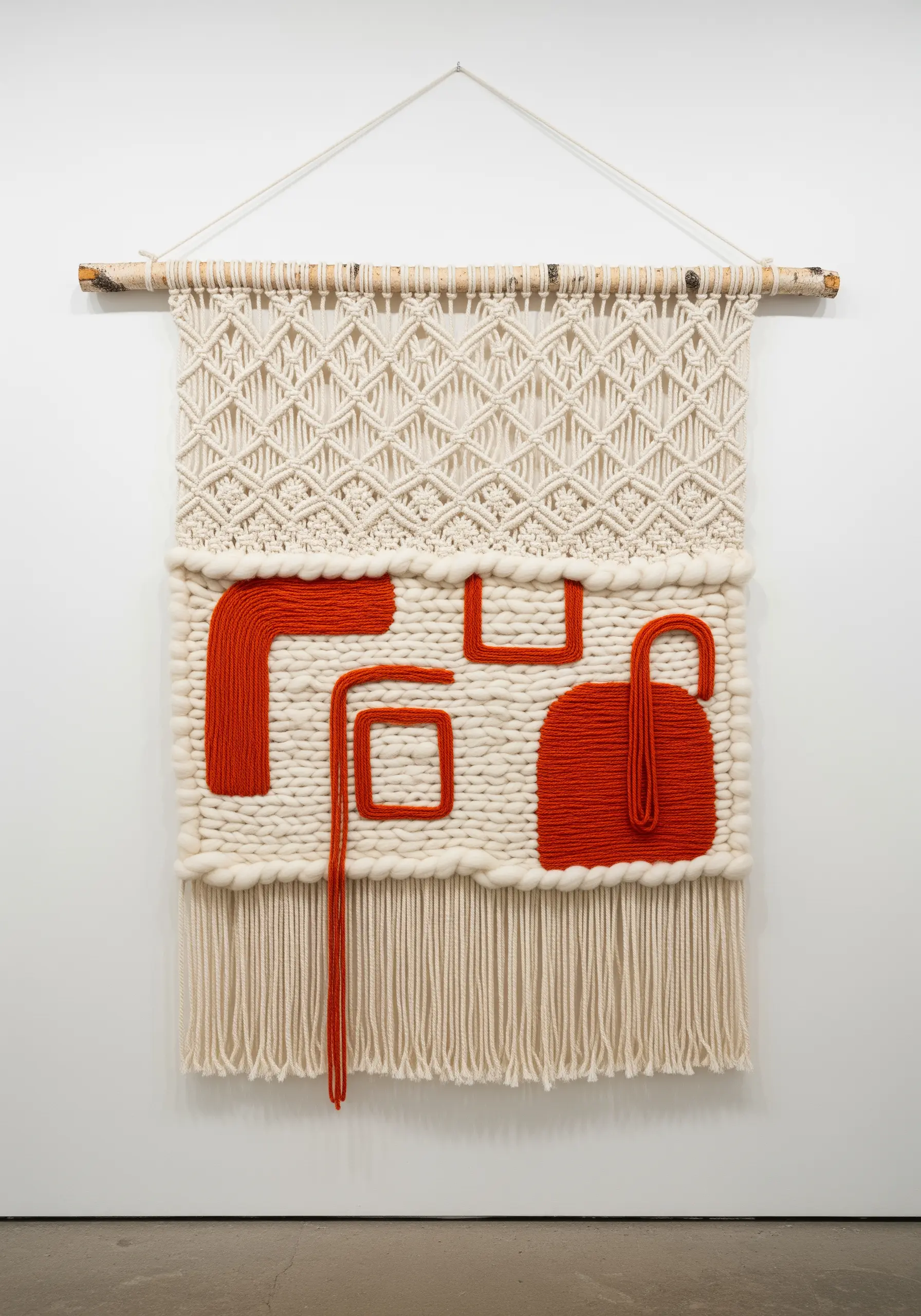
Elevate a standard macrame wall hanging by integrating sections of high-contrast, textural weaving.
Create your foundational macrame piece with neutral cotton cord, leaving intentional gaps in the design.
Warp those empty spaces with cotton string and use a tapestry needle to weave in bold, abstract shapes with thick wool roving or chunky yarn.
The contrast between the knotted geometry of macrame and the soft, sculptural forms of the weaving creates a sophisticated focal point and adds modern depth.
3. Sculpt with Densely Embroidered Fabric
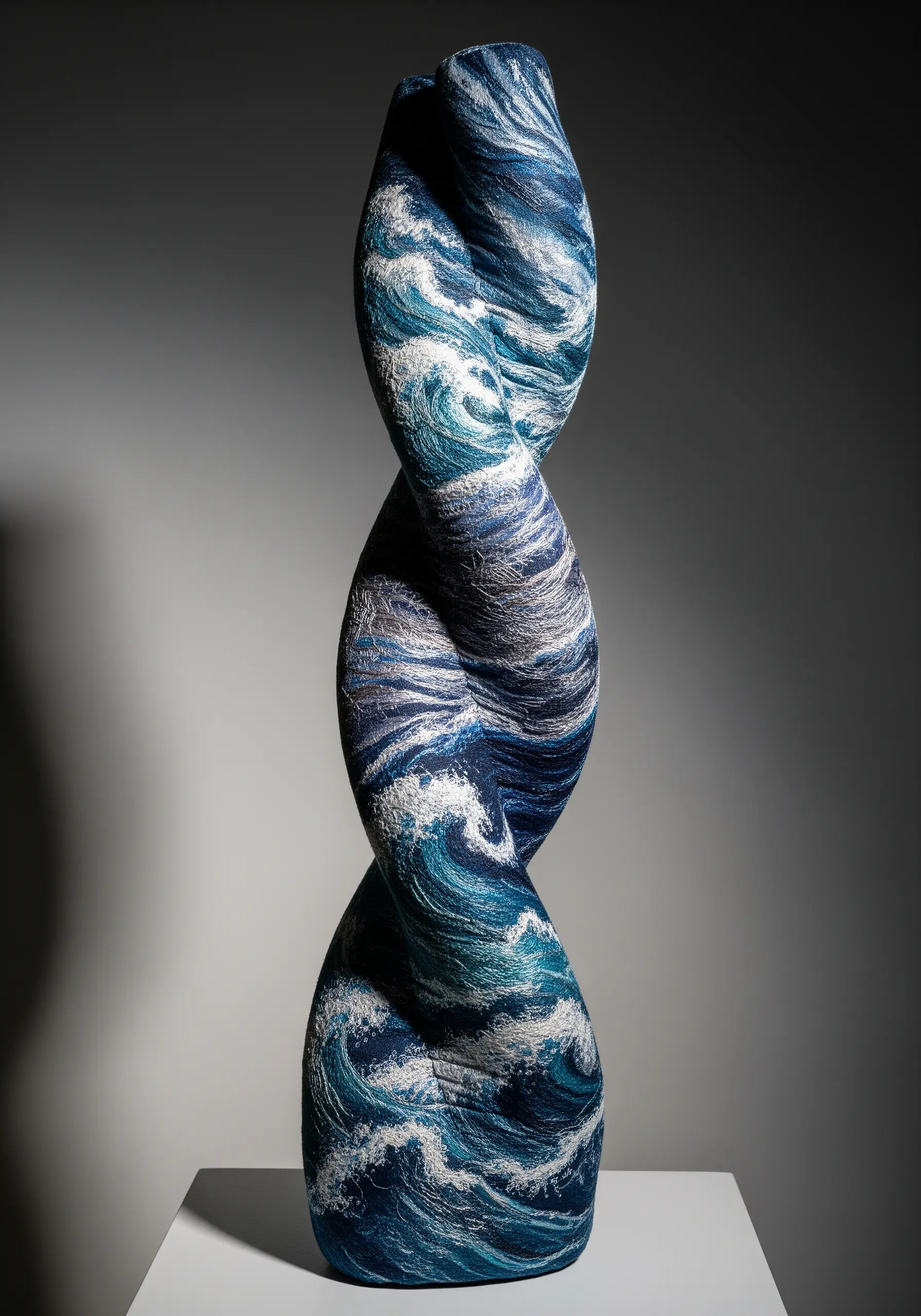
Create a freestanding sculpture by treating densely stitched fabric as a malleable material.
Begin by completely covering a sturdy base cloth, like felt or canvas, with tight, directional stitching—long-and-short stitch works beautifully for blending colors.
The density of the threadwork will give the fabric a rigid, structural quality.
While the fabric is still slightly pliable, shape it around a wire armature or mold and secure it, allowing it to hold its form as a true abstract thread sculpt design.
4. Assemble an Embroidered Celestial Mobile
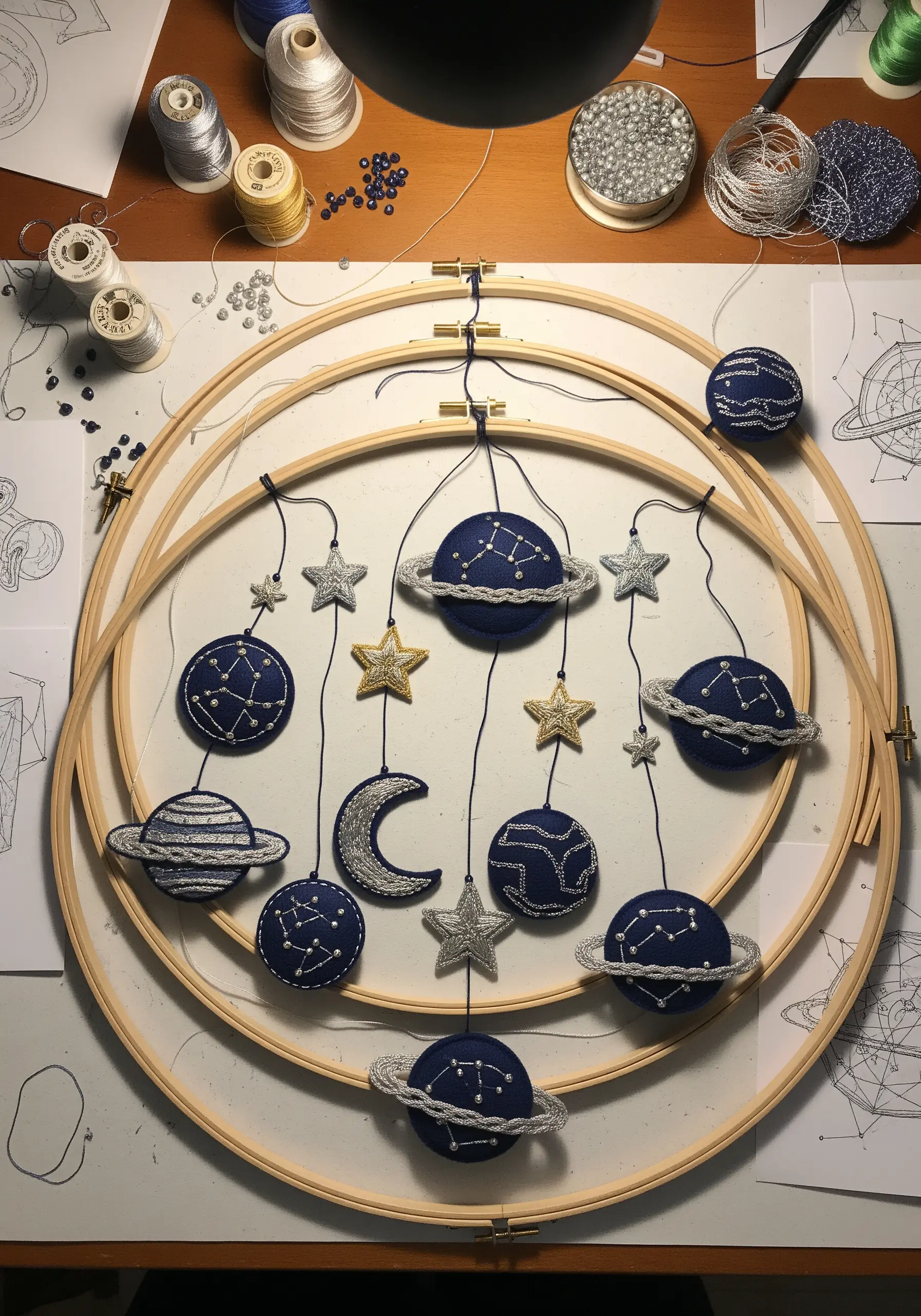
Construct a delicate mobile by creating small, three-dimensional embroidered ornaments.
Stitch constellations and celestial bodies onto felt or dark linen using metallic silver and gold threads for a subtle shimmer.
For each piece, stitch your design, then cut it out with a matching backing piece. Sew them together and add a small amount of stuffing for a soft, pillowy dimension.
Use tiny seed beads or French knots for stars to add texture that catches the light, and suspend them from embroidery hoops or a natural branch.
5. Curate a Mixed-Media Shadow Box
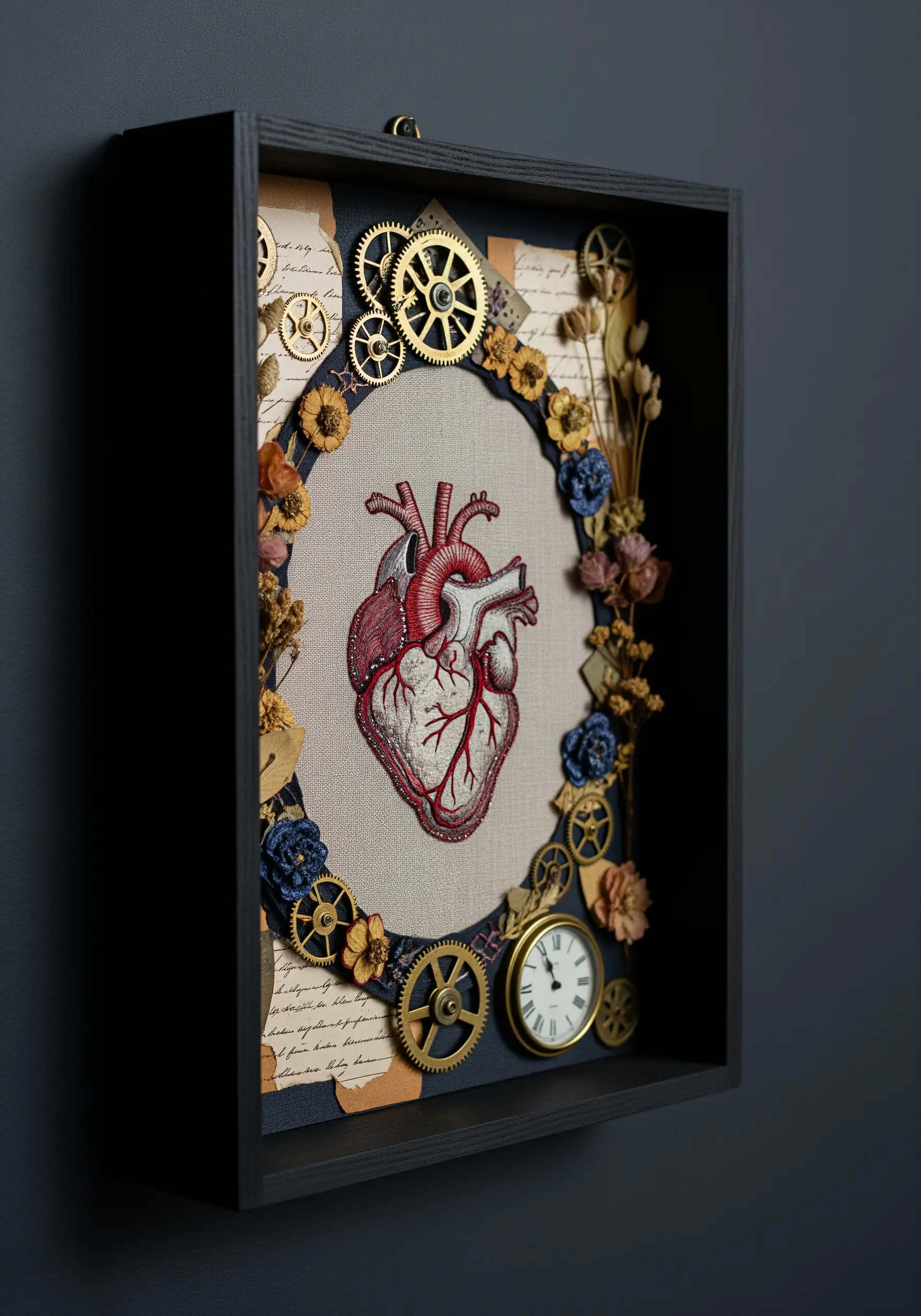
Position your embroidery as the centerpiece of a narrative shadow box composition.
After completing an intricate piece, such as an anatomical heart, frame it within a deep shadow box and surround it with curated objects—dried flowers, vintage clock parts, or aged paper.
This approach transforms your stitching from a standalone piece into the focal point of a larger story.
It encourages you to think like a curator, selecting textures and items that complement your thread work and build a cohesive, emotional theme.
6. Design a Functional Fiber Art Clock
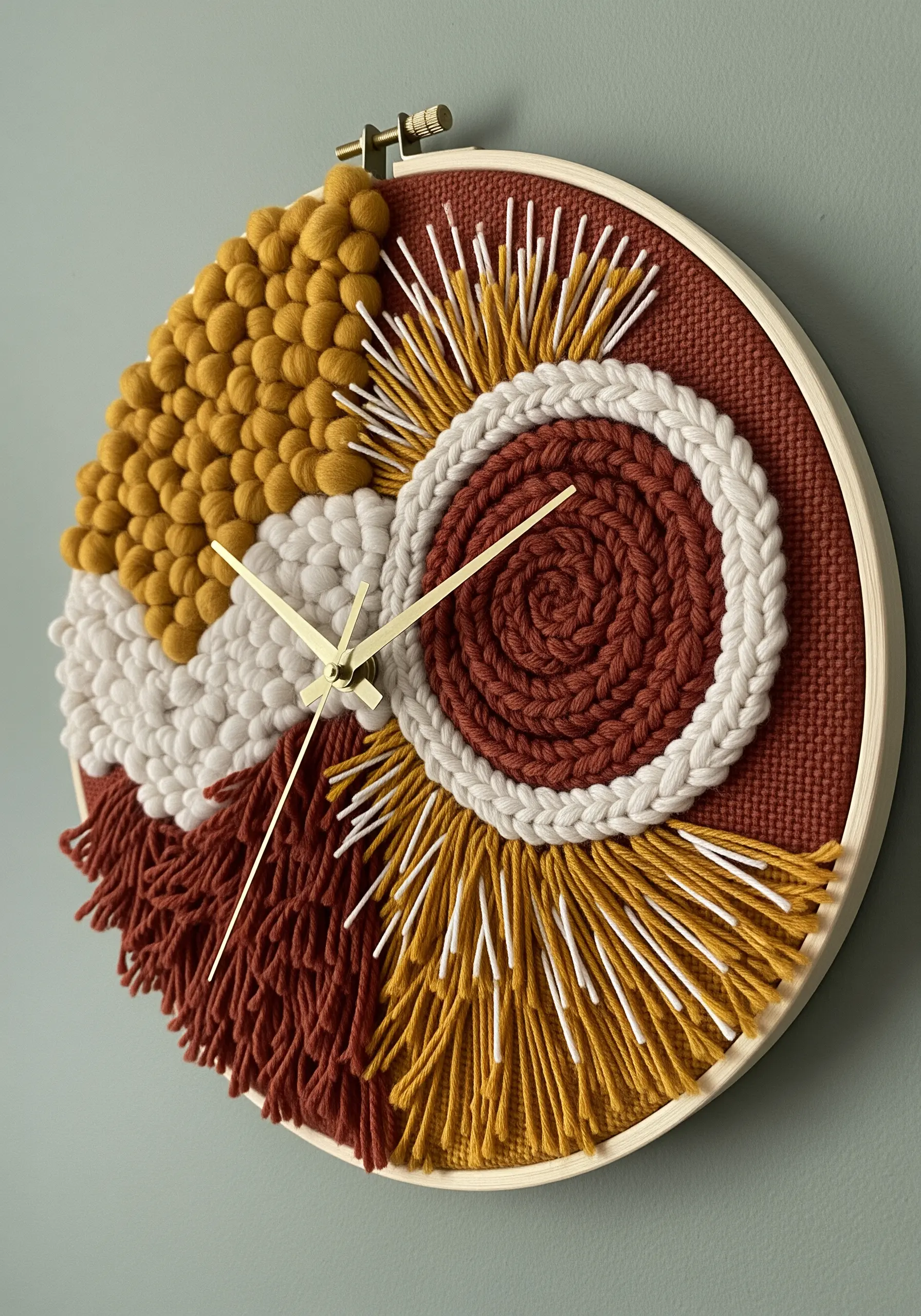
Combine embroidery and weaving techniques to create a beautiful, functional art object.
Stretch a piece of coarse-weave fabric over a large hoop and fill the space with textural stitches—tightly packed French knots, woven sections of chunky yarn, and radiating straight stitches.
The key is to create a dynamic, asymmetrical composition that feels balanced yet organic.
Once complete, carefully drill a hole through the center of the fabric and hoop and install a simple clock mechanism, turning your fiber art into a statement timepiece.
7. Create Architectural Renderings with Thread
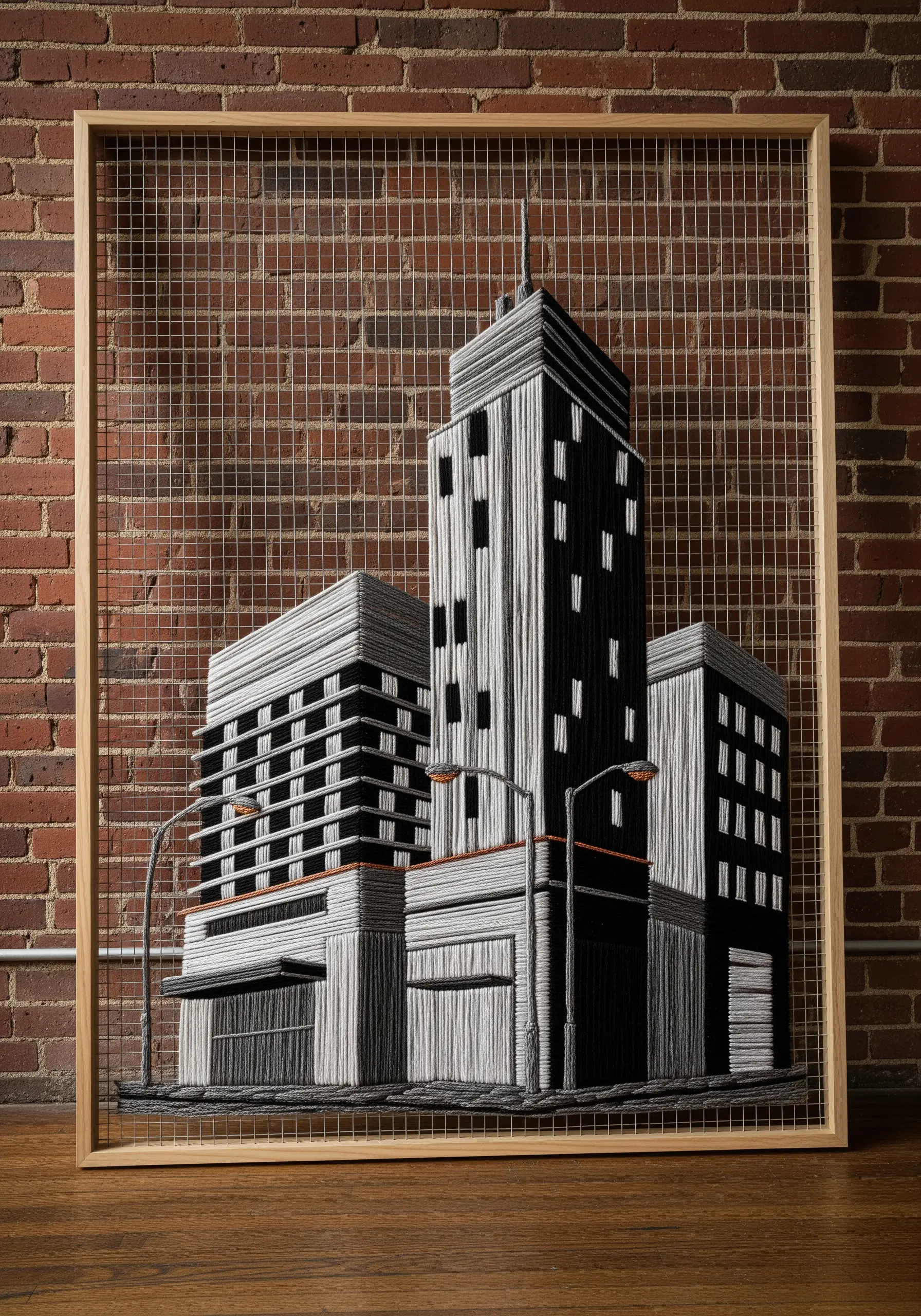
Use a wire grid or mesh screen as your canvas to explore architectural forms with string art techniques.
Instead of stitching through fabric, you will wrap and stretch thread between points on the grid to create solid planes, sharp lines, and the illusion of perspective.
Use monochrome threads in varying weights—thicker for foreground elements, finer for details—to build depth and shadow.
This method forces you to consider negative space and the structural power of a single taut line, resulting in a striking, graphic art piece.
8. Stitch an Earthy Geode Triptych
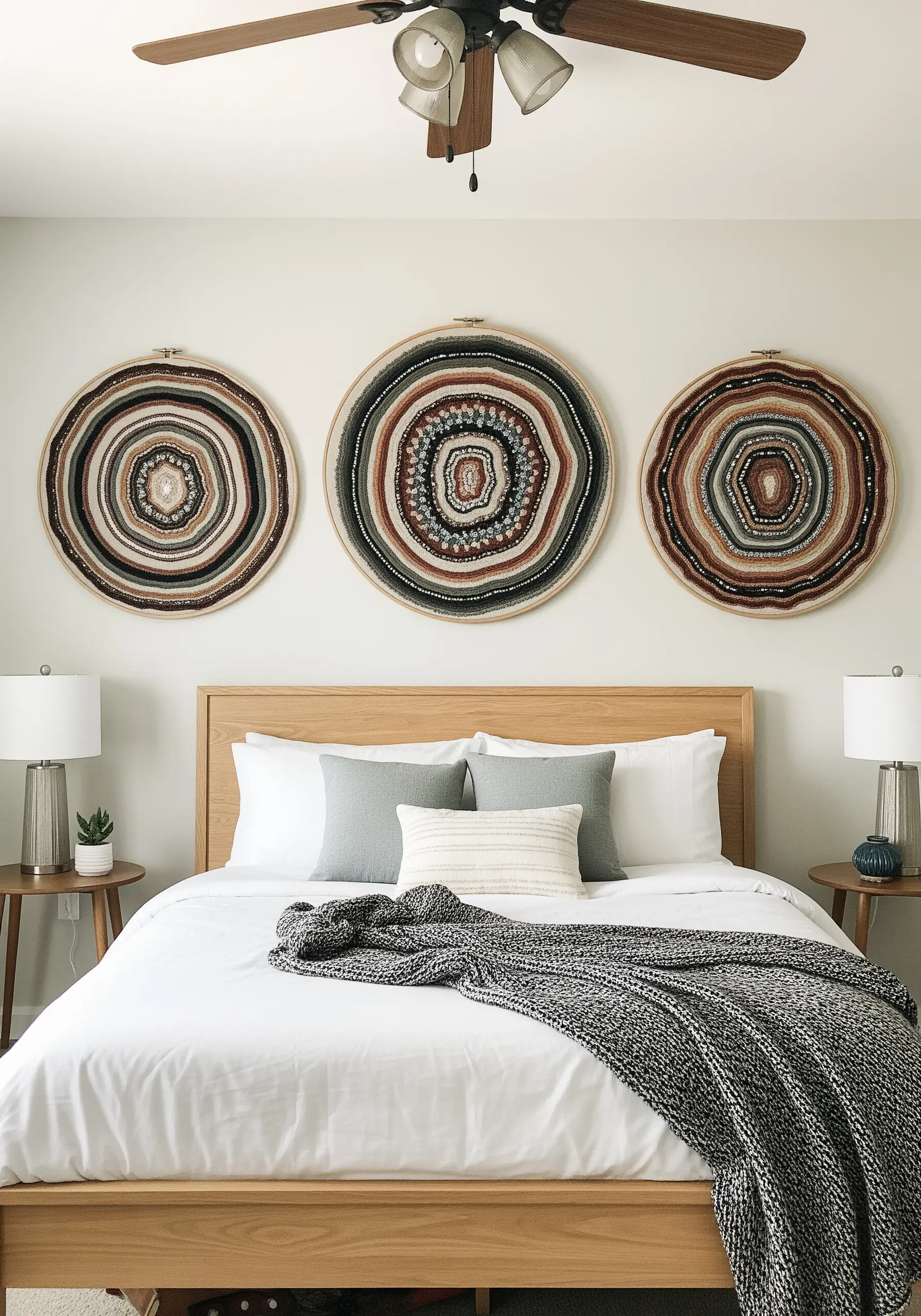
Mimic the natural formation of a geode by layering concentric rings of texture and color.
Work across three large hoops to create a commanding triptych that flows from one piece to the next.
Vary your stitches to create contrast: use smooth satin stitch for solid bands, dense French knots for crystalline clusters, and rows of seed beads or metallic thread for shimmering veins.
A successful geode design relies on a masterful color gradient, transitioning from dark, earthy outer rings to a sparkling, light-filled center.
9. Suspend a Minimalist Botanical Mobile
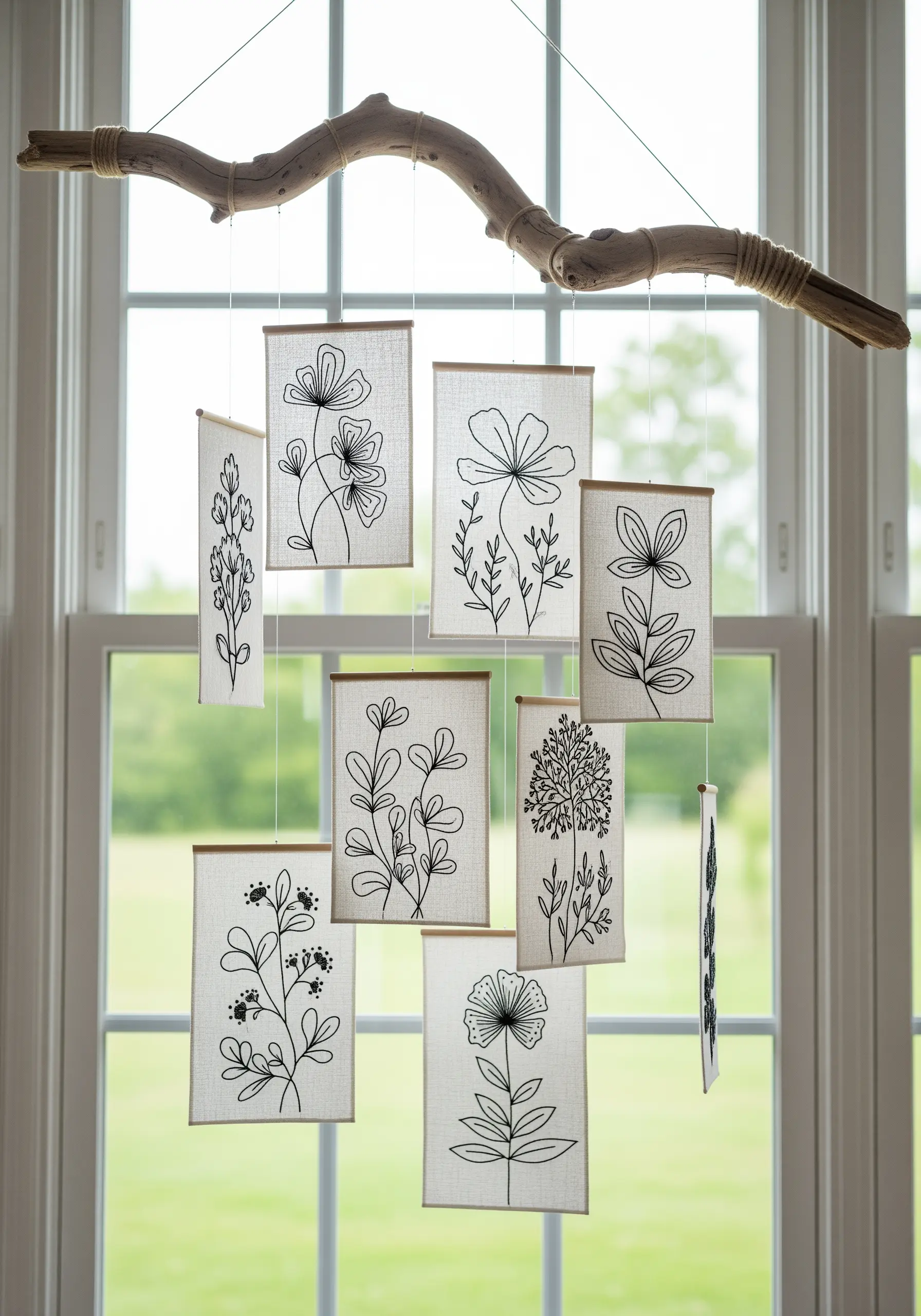
Craft a lightweight, airy mobile using simple line art on individual fabric panels.
Choose a crisp, natural fabric like linen and stretch small rectangular sections in mini stretcher bar frames.
Embroider each panel with a different minimal botanical pattern using a clean backstitch or stem stitch in high-contrast black thread.
Suspend the finished panels from a piece of driftwood at varying heights to create a sense of gentle, floating movement and elegant simplicity.
10. Illuminate Stitches on a Lampshade
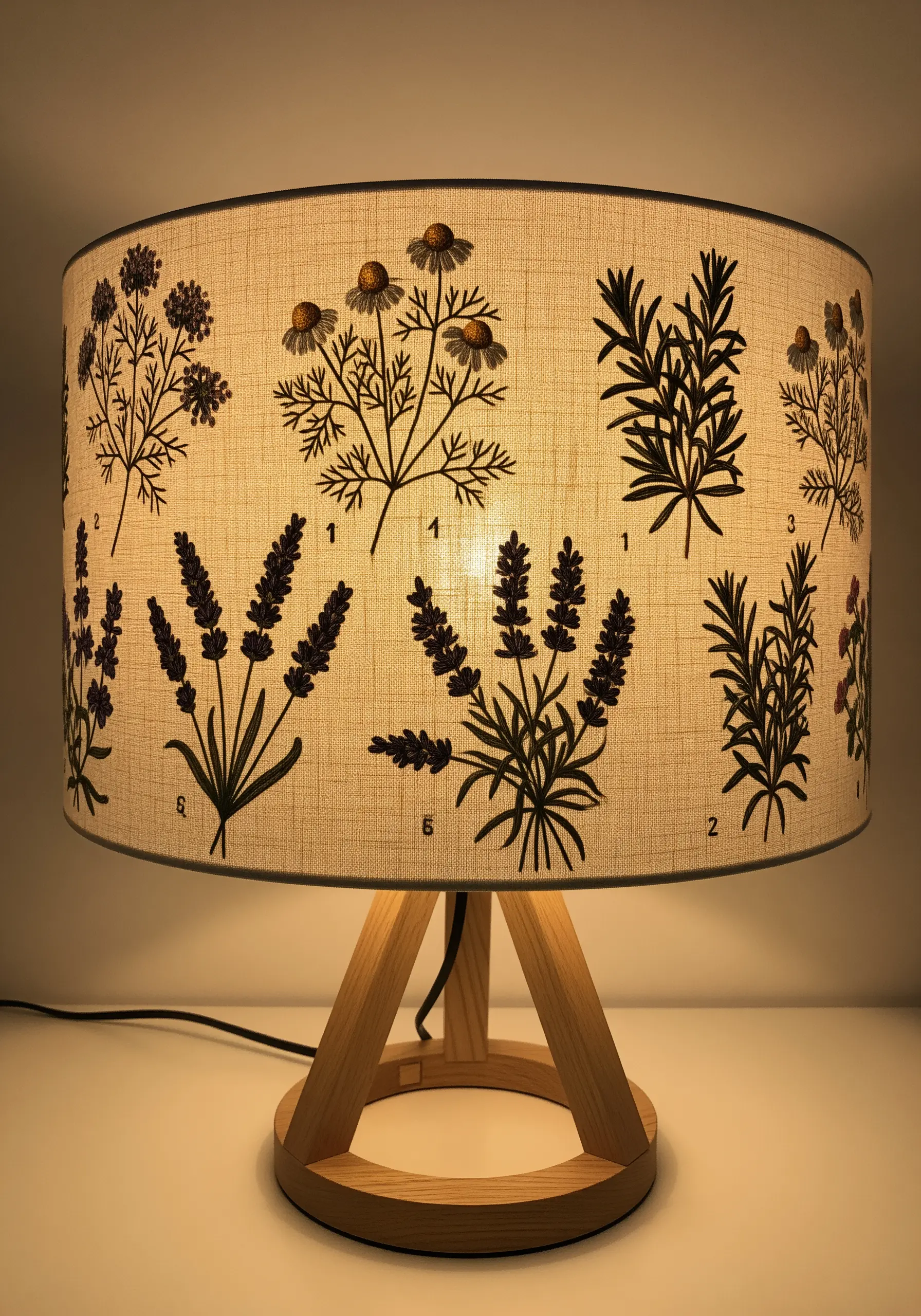
Turn your embroidery into a functional light source by stitching directly onto a lampshade panel.
Use a DIY lampshade kit, which allows you to work on the fabric while it’s flat.
Choose a design with clear silhouettes, like these medicinal herbs, and use a dark thread with three to four strands to ensure the shapes are bold and defined.
When the lamp is turned on, the light will shine through the fabric, transforming your stitches into a warm, glowing display.
11. Sculpt a Topographic Map with Threaded Paper
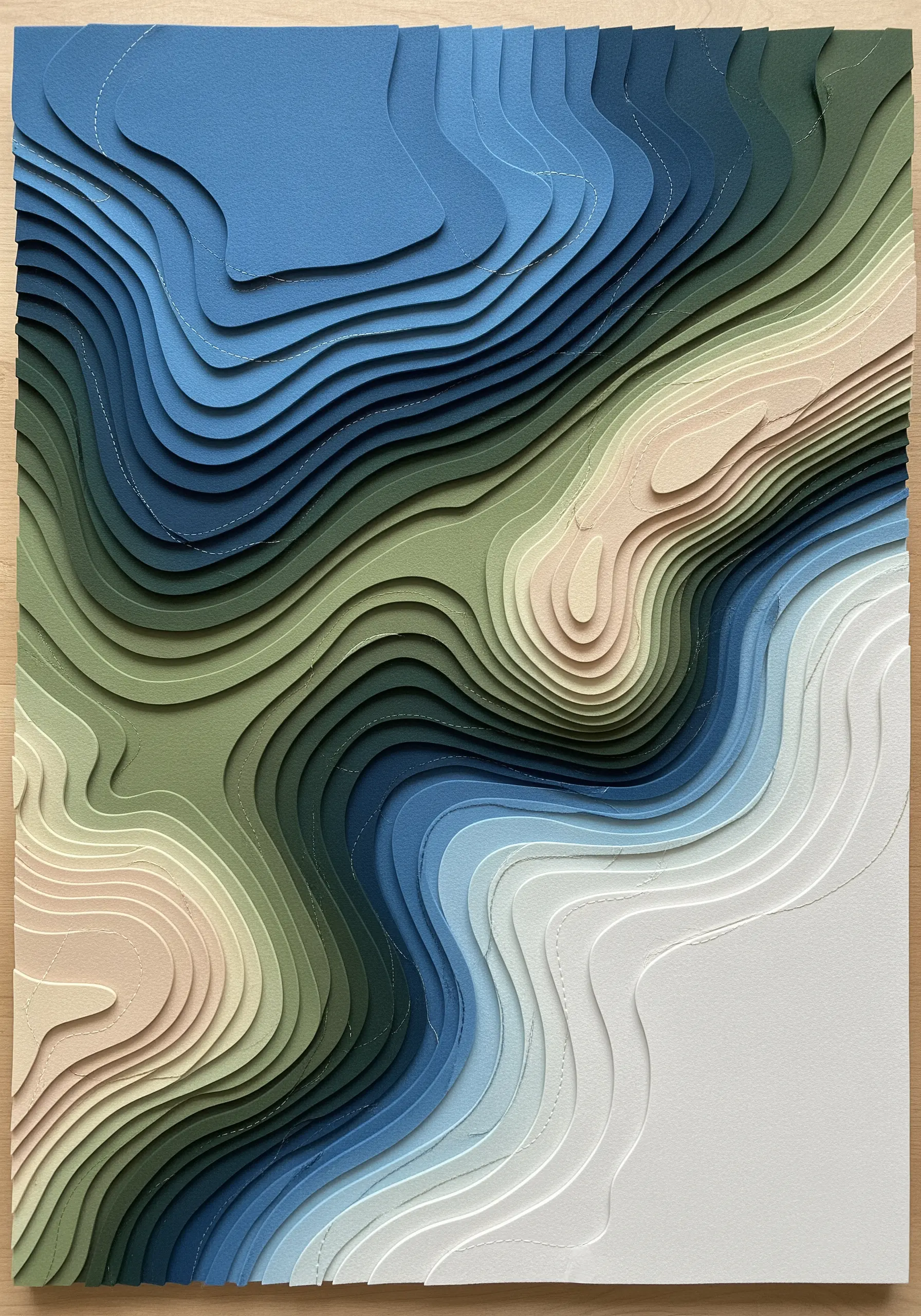
Combine paper art and embroidery to build a three-dimensional topographic map.
Cut layers of heavy cardstock in graduating shades to represent different elevations, creating a landscape of rolling hills and valleys.
Instead of glue, use a simple, delicate running stitch along the contour lines to connect the paper layers.
The thread adds a subtle, tactile detail that unifies the piece and provides a handmade counterpoint to the sharp, clean edges of the paper.
12. Embroider on a Sheer Room Divider
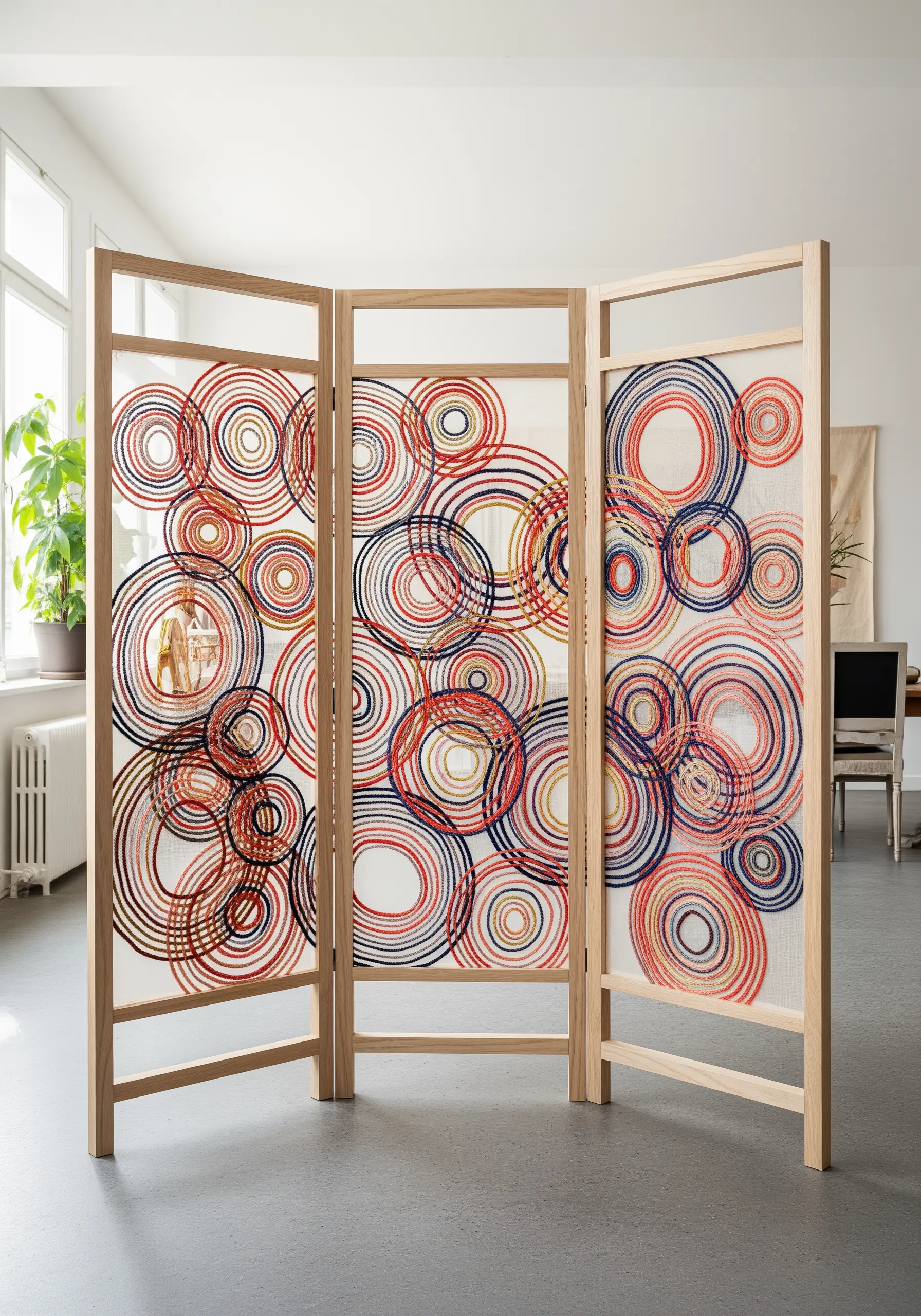
Make a large-scale artistic statement by embroidering onto sheer fabric panels in a folding screen.
The transparency of voile or organza allows light to pass through, making the threads appear to float in mid-air.
Use a simple running stitch and a bold, abstract pattern of overlapping circles to create visual energy and movement.
This project challenges you to work at a larger scale and consider how your art interacts with the light and space around it, becoming a piece of functional, architectural decor.
13. Render a Portrait with String Art
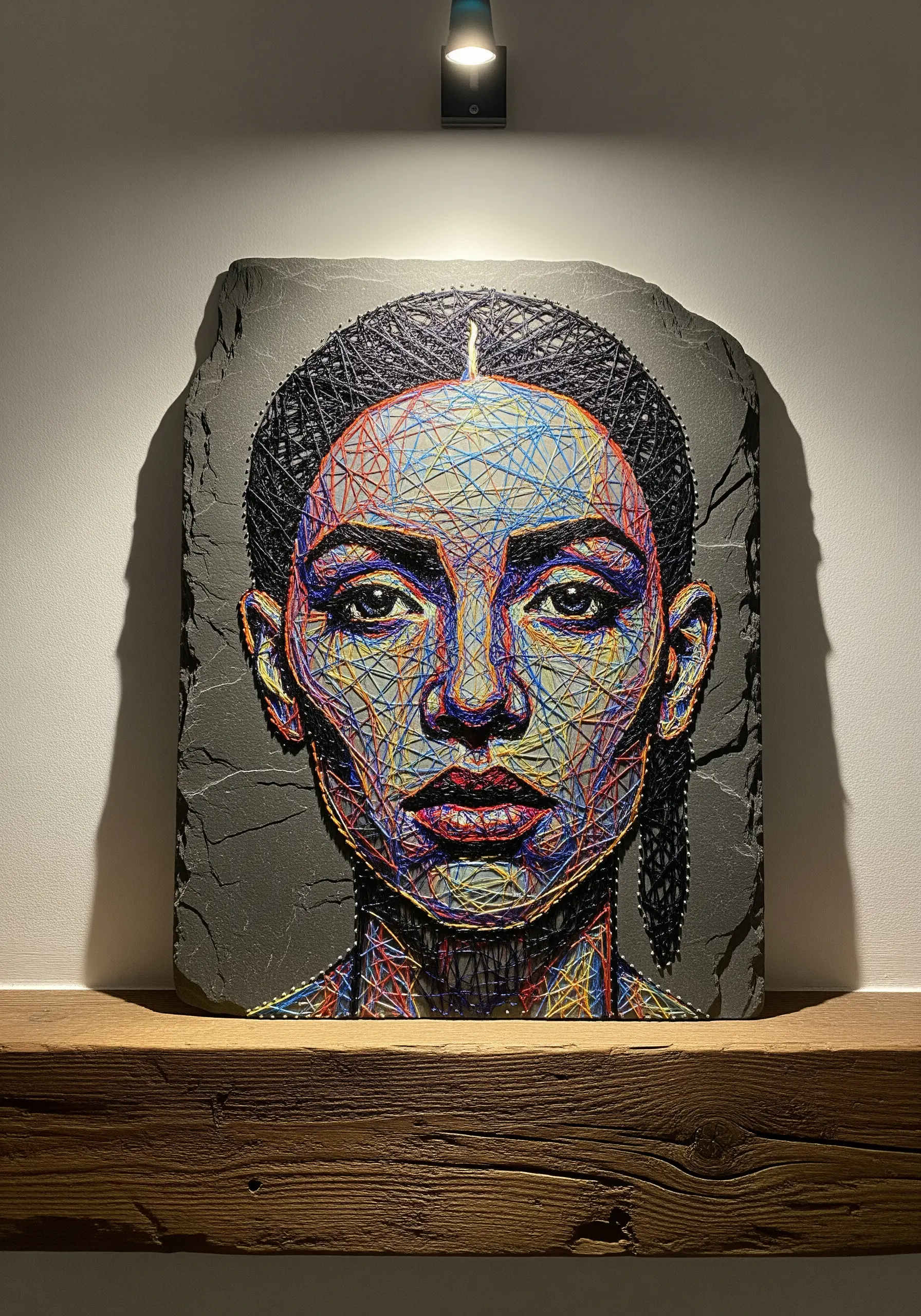
Create a strikingly complex portrait by wrapping colorful threads around nails hammered into a solid surface.
This technique, known as string art, uses the layering of straight lines to build up tone, shadow, and form, much like cross-hatching in a drawing.
Start by creating a map of anchor points around the key features of your subject.
You will then build up the image by wrapping thread from point to point, using color density to shape the final portrait. It’s a methodical process that turns simple thread into a piece of photorealistic art.
14. Sculpt a 3D Coral Reef with French Knots
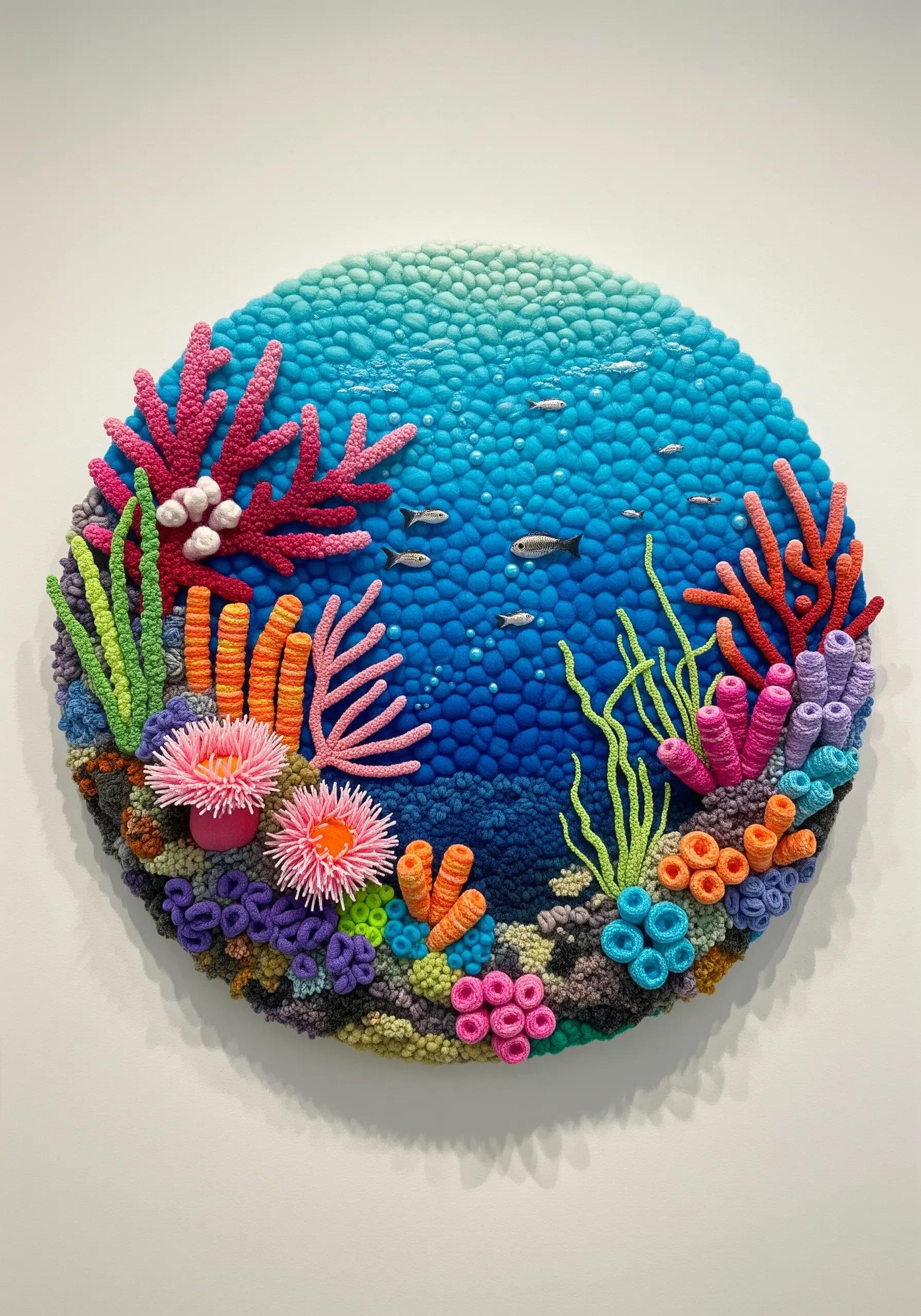
Build a vibrant, textural underwater world using a combination of sculptural stitches.
Create the background water with a dense gradient of blue French knots, packing them tightly for a bumpy, unified texture.
For the coral and anemones, use raised stitches like the Turkey work (ghiordes knot) for shaggy textures and bullion knots for tube-like shapes.
This project is an exercise in maximalism, where layering colors and textures creates a rich, tactile ecosystem that invites you to look closer.
15. Weave a Modern Narrative Tapestry
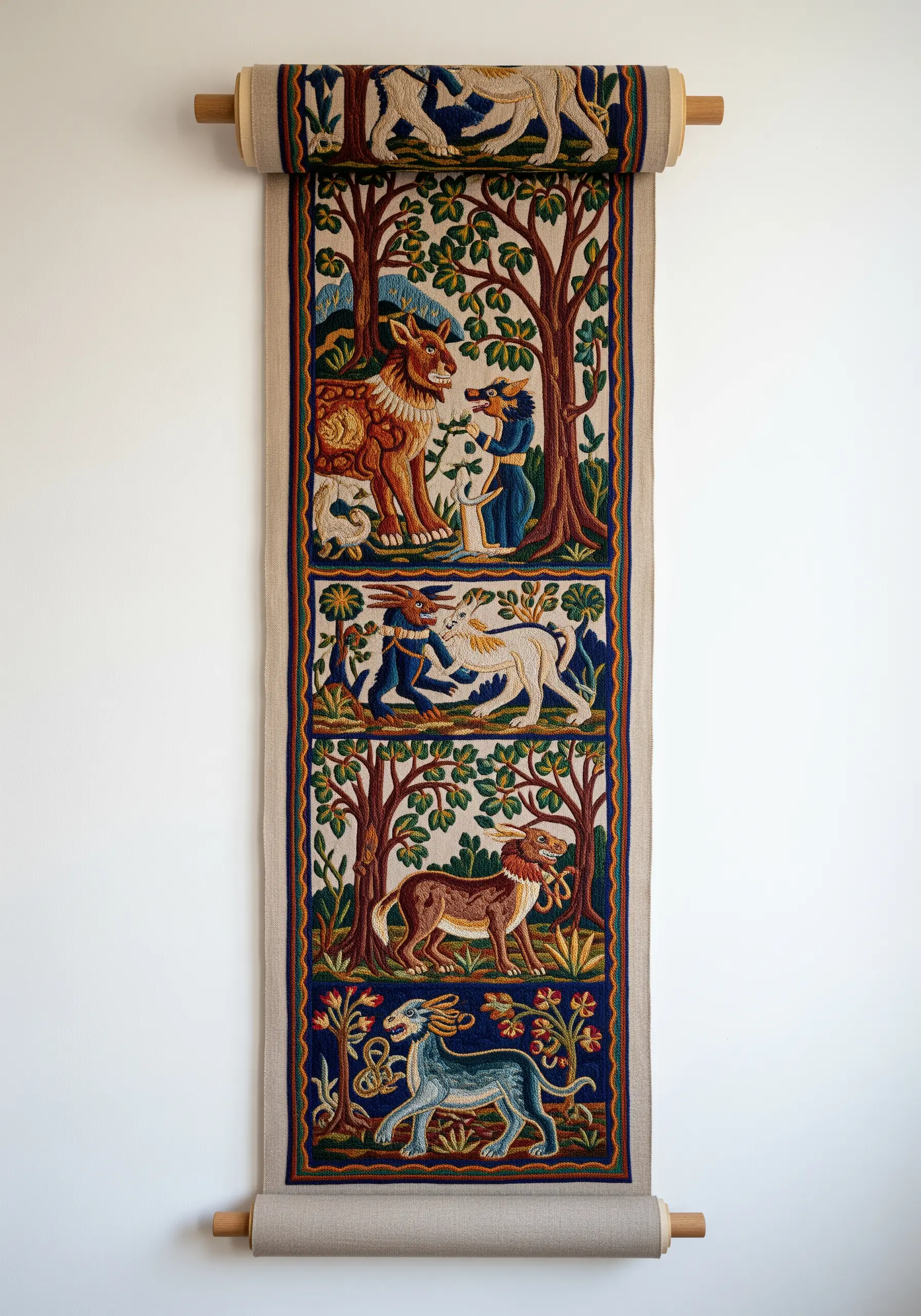
Tell a personal or imagined story using the traditional format of a narrative tapestry.
Divide your fabric into distinct panels, like a comic strip, and fill each one with a scene that contributes to the overall story.
Use classic, flat stitches like satin stitch and long-and-short stitch to create solid blocks of color, focusing on clear iconography and symbolic imagery.
This project encourages you to think beyond decorative motifs and use your needle and thread as a true storytelling tool.
16. Create a Painterly Appliqué Jacket Panel
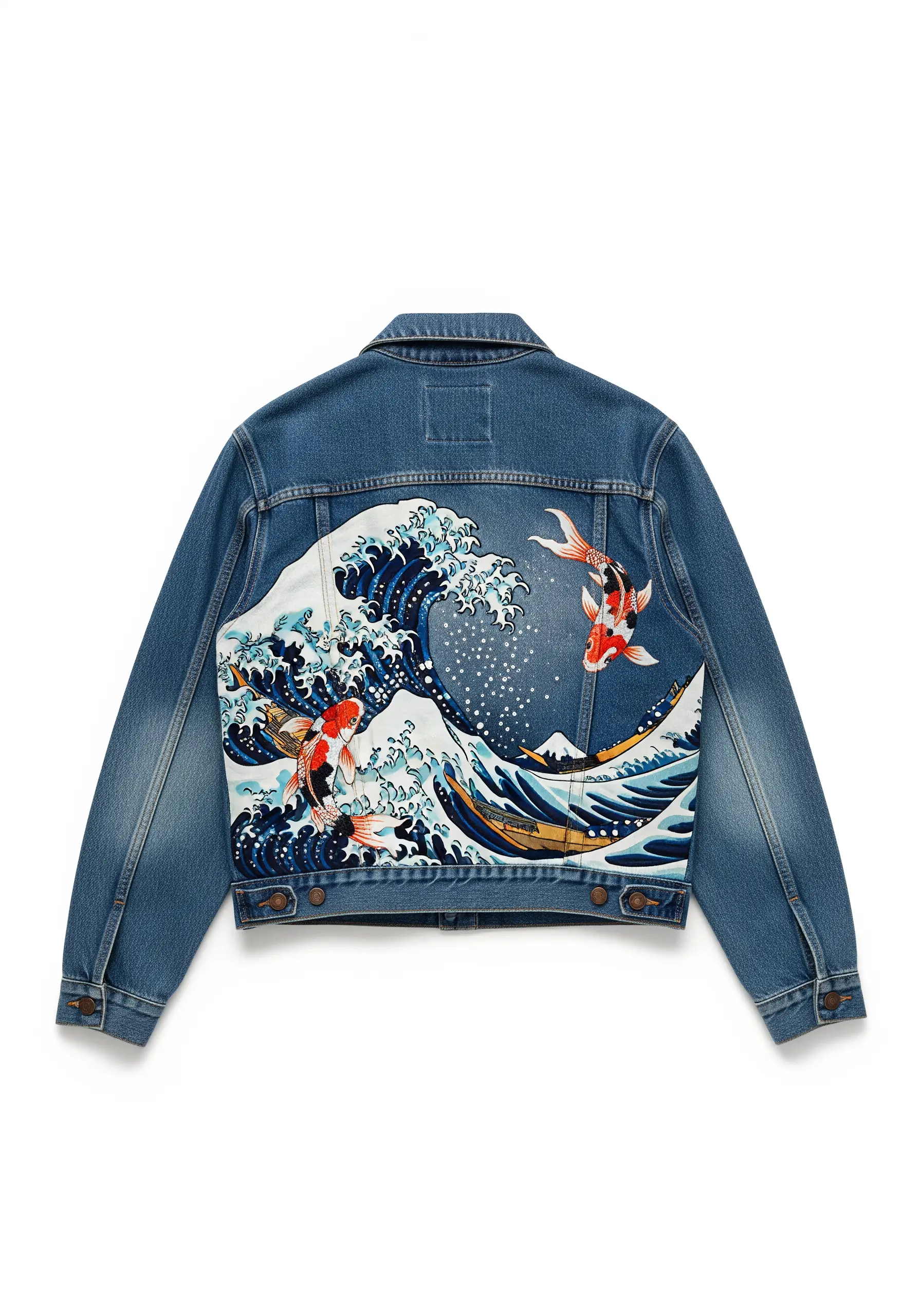
Embellish a denim jacket with a large, statement piece without the risk of puckering the fabric.
Embroider your design onto a separate piece of sturdy fabric, like canvas, using a stabilizer to keep your stitches smooth and even.
Use the long-and-short stitch technique to blend colors seamlessly, achieving a painterly effect like the famous Great Wave.
Once complete, carefully cut out the design, fold the raw edges under, and appliqué it securely onto the back of the jacket for a bold, wearable work of art.
17. Design a Backlit Dandelion Lantern
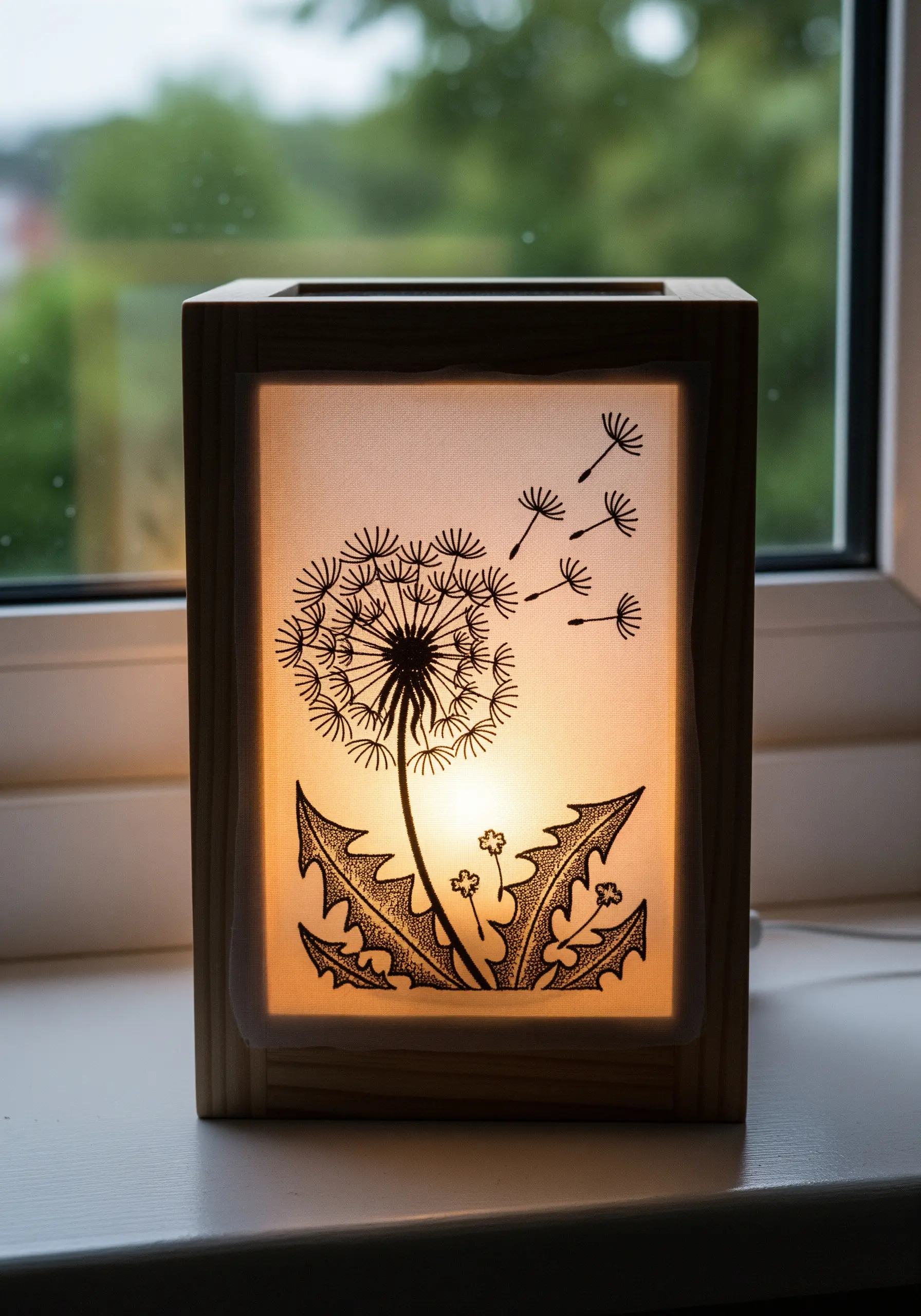
Create a magical lantern by embroidering a design on a semi-translucent fabric panel.
Stretch a light-colored linen or cotton voile in a simple wooden box frame, ensuring it is taut.
Stitch your design using high-contrast black thread; a combination of satin stitch for solid areas and delicate straight stitches for fine details works perfectly.
Place a small, battery-powered LED light inside to illuminate the fabric from behind, turning your embroidery into a glowing silhouette.
18. “Mend” Fabric with Embroidered Kintsugi
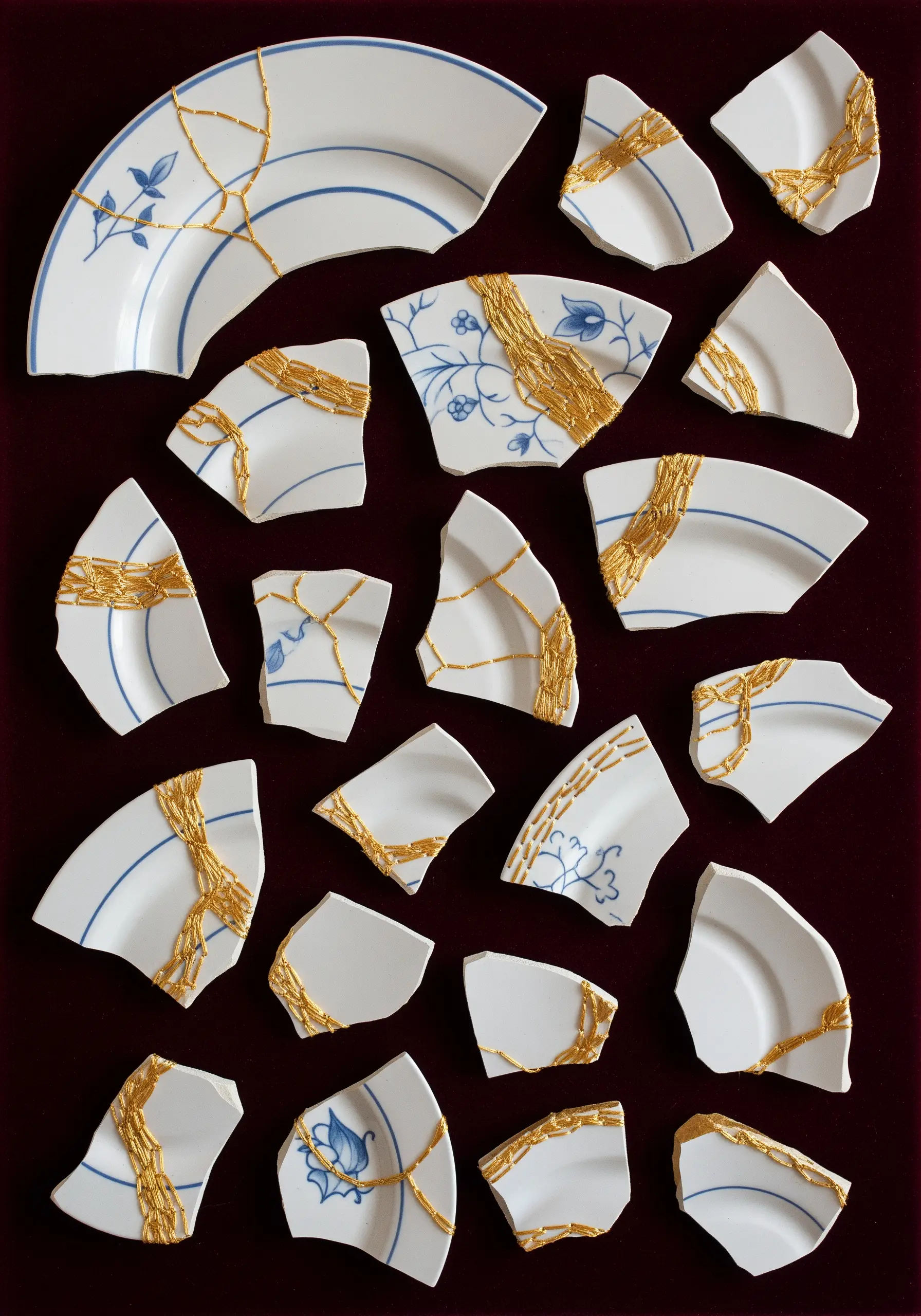
Apply the Japanese philosophy of Kintsugi—mending broken pottery with gold—to textiles.
Arrange fragments of a patterned fabric onto a solid background, leaving small gaps between the pieces.
Then, use a thick, shimmering gold metallic thread to “repair” the breaks with wide satin stitches or couching.
This technique transforms fabric scraps into a cohesive and meaningful art piece, celebrating imperfection and finding beauty in repair.