Your stitching is more than a hobby; it’s a quiet language you use to bring intention and calm into your home. But sometimes, you might feel stuck, wondering how to translate that feeling into a finished piece that looks as peaceful as the process felt.
Let’s shift our focus from just the pattern to the materials themselves. Natural cotton thread—in its humble, matte finish—is the perfect medium for a minimalist aesthetic. It doesn’t scream for attention. Instead, it invites a closer look, rewarding with subtle texture and clean, honest lines.
Here, you won’t find overly complex projects. Instead, you’ll discover techniques that amplify the beauty of simplicity. We’ll explore how to use thick cord for sculptural effect, how tone-on-tone stitching creates depth, and how the rhythm of a simple running stitch can become art. This is your guide to creating pieces that feel both modern and timelessly serene.
1. Create Sculptural Line Art with Couching
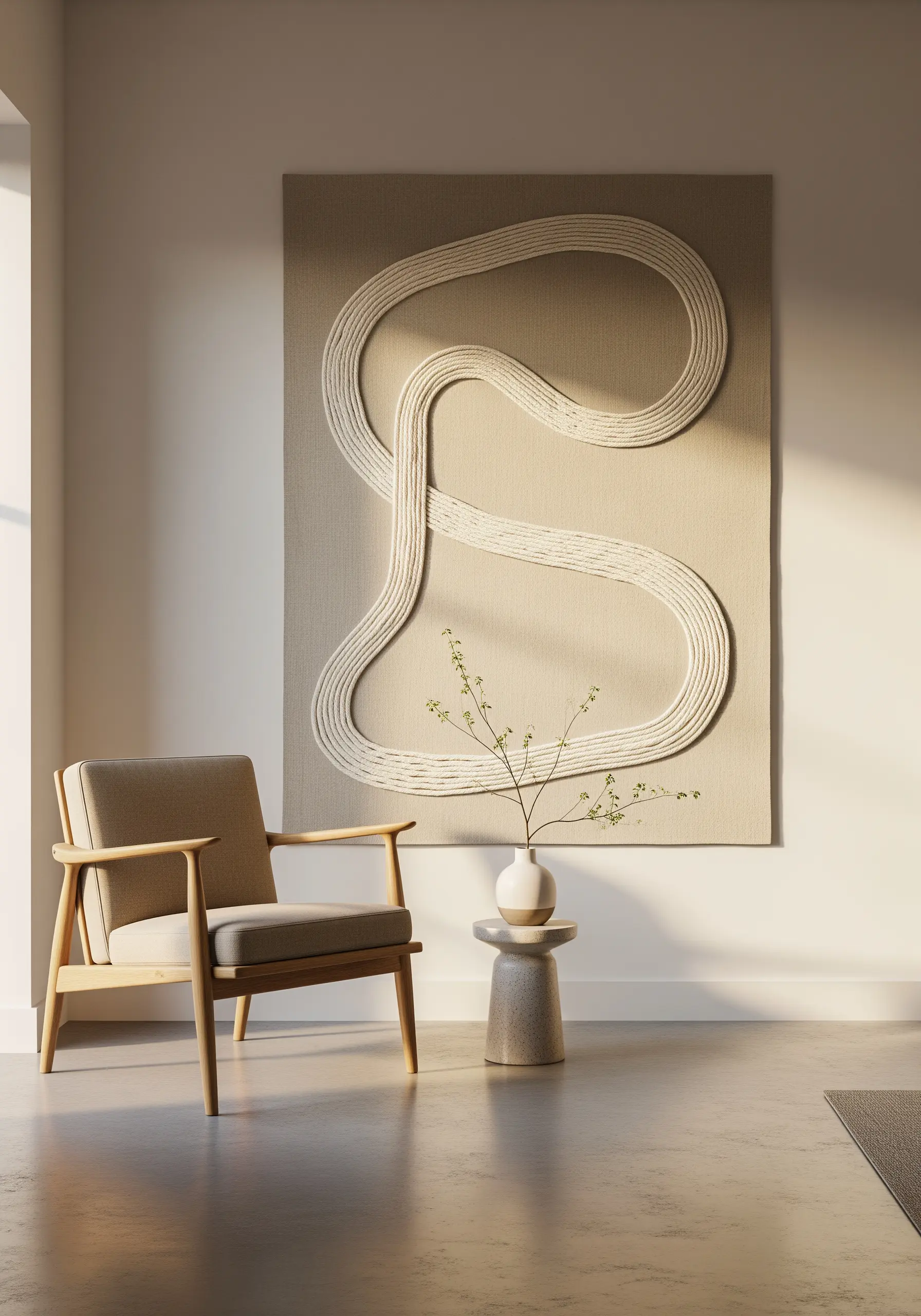
Transform a simple wall hanging into a statement piece by trading thread for thick cotton rope.
Instead of stitching *through* the fabric, use a technique called couching: lay the rope on the surface and secure it with small, evenly spaced stitches using a matching, finer thread.
This method allows you to create bold, continuous lines that have a three-dimensional, sculptural quality.
Focus on a single, flowing line to maintain a minimalist aesthetic, letting the texture—not the complexity—be the focus of these large-scale embroidery projects.
2. Stitch Geometric Knots on Cushion Covers
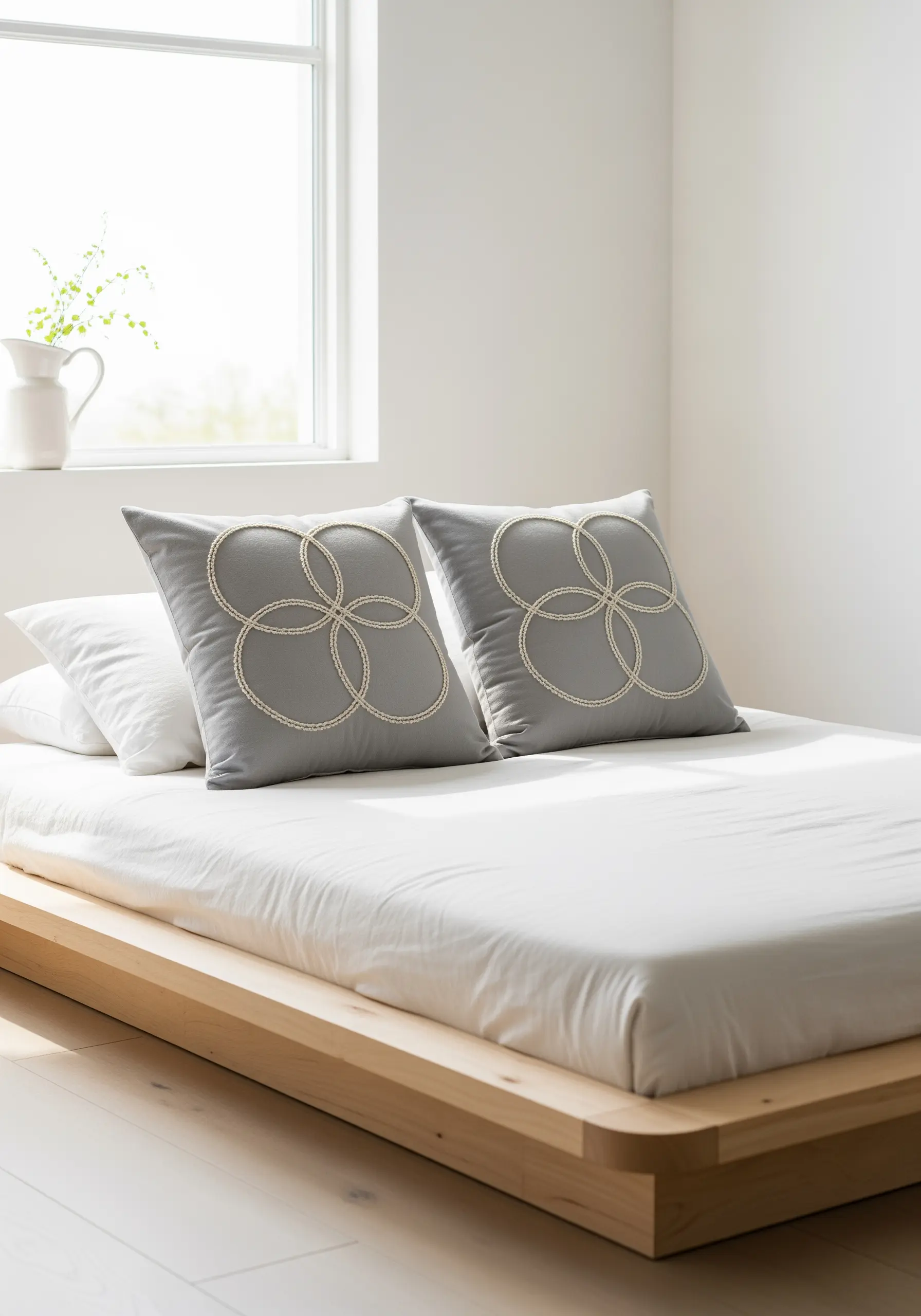
Elevate plain cushions with a continuous, overlapping geometric pattern.
To achieve this clean, raised effect, use a thick cotton cord and couch it onto the fabric surface with a matching thread color.
Draw your pattern onto the fabric with a water-soluble pen first to ensure perfect symmetry in the overlapping loops.
The key is precision; keep your couching stitches small and consistent so they disappear, allowing the cord’s form to become the sole design element on your embroidered pillow covers.
3. Frame a Throw with Rhythmic Running Stitches

Introduce subtle detail to a simple throw with a border of graphic running stitches.
Use a contrasting cotton thread—like a charcoal grey on an ivory base—to create a visual frame that feels both modern and handmade.
Mark your lines with a ruler and disappearing ink pen to keep them perfectly straight.
Vary the length and grouping of your stitches to create a rhythm, turning a basic stitch into one of these thoughtful modern minimal border designs.
4. Outline Fluid Waves on a Table Runner
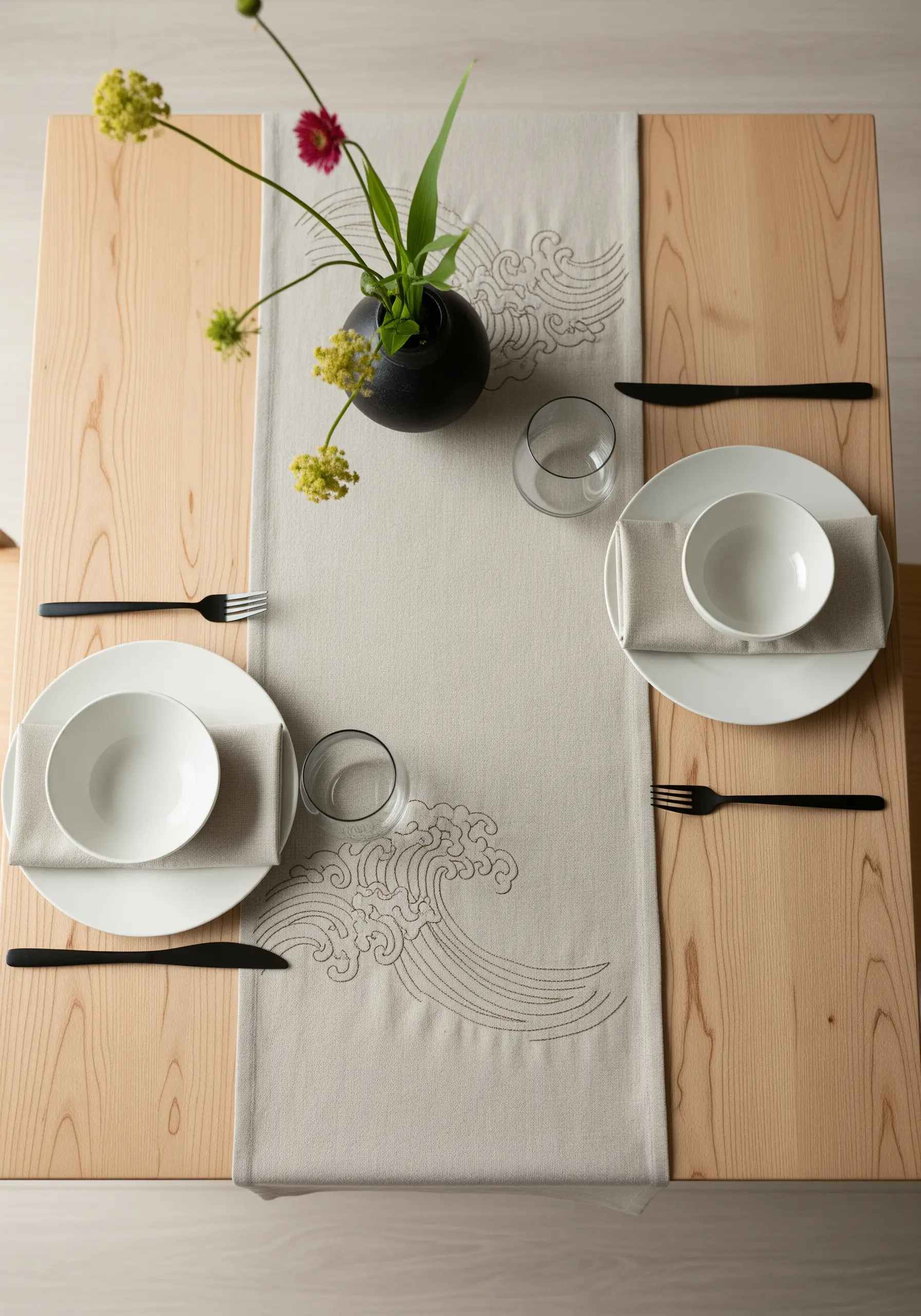
Capture the essence of movement on your table linens with a flowing wave motif.
Use a whipped backstitch or a stem stitch in a slightly darker, earthy tone to create a smooth, raised line that feels solid and intentional.
To maintain the design’s fluidity, aim to stitch each wave as a single, continuous line without obvious breaks.
This technique turns simple hand-stitched table runner embroidery designs into graceful, understated art.
5. Frame Meditative Stitch Grids

Explore the beauty of imperfection and repetition by creating a series of framed stitch studies.
Work on a neutral linen fabric, using a single color of cotton thread to create grids, spirals, and rows of simple stitches like the running stitch or cross stitch.
The goal isn’t perfect uniformity but a mindful exploration of pattern and texture.
Grouped together, these minimal DIY embroidery pieces perfect for a gallery wall create a cohesive and calming visual story.
6. Master Tone-on-Tone Texture for Mandalas
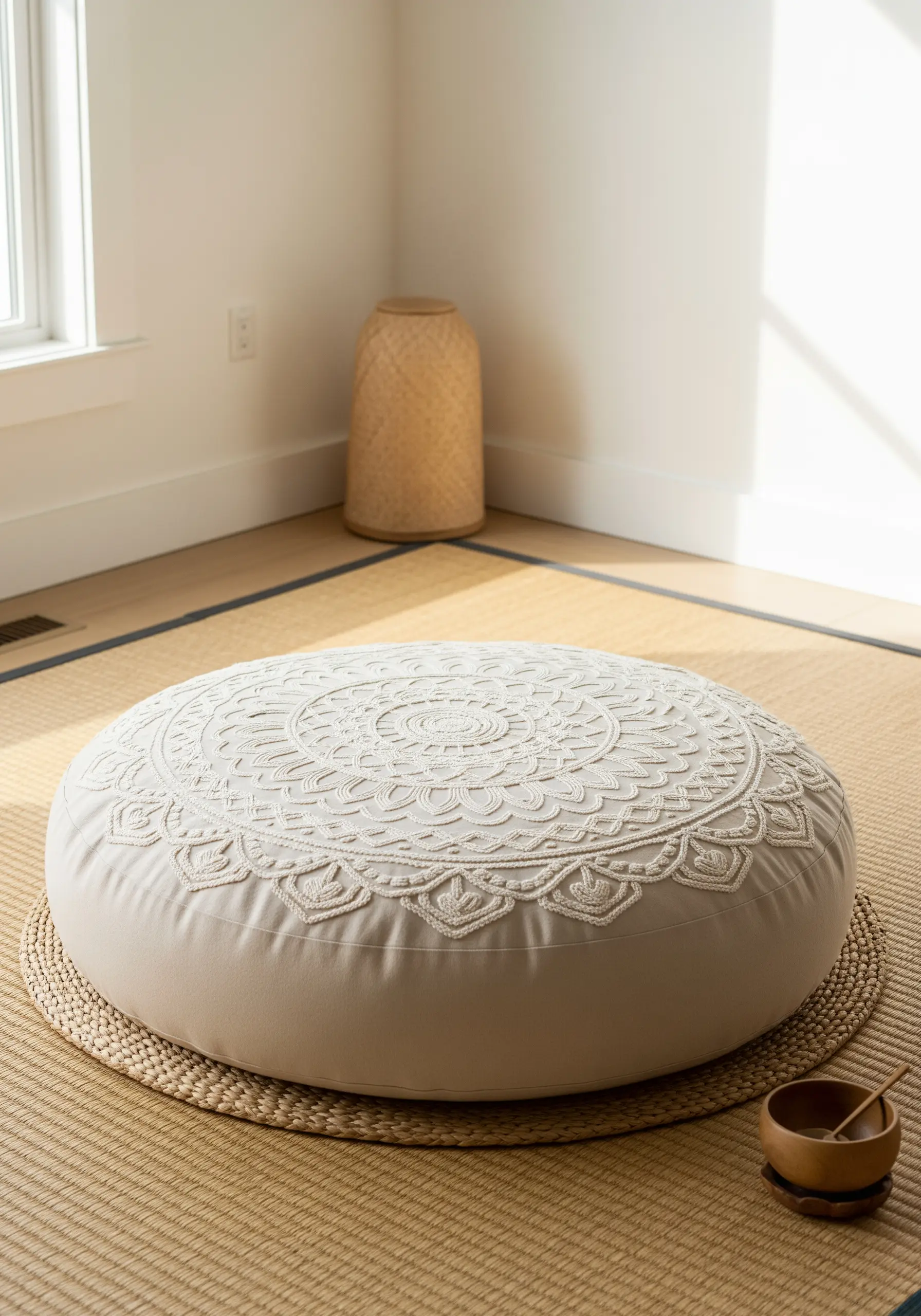
Create an intricate mandala that feels soft and integrated, not loud.
The secret is a tone-on-tone approach: use an ivory or ecru cotton thread on a fabric of the exact same shade.
This shifts the focus from color to texture, allowing the raised lines of chain stitches and the smooth fills of satin stitches to create the pattern.
It’s the perfect technique for modern minimal mandala embroidery ideas that promote calm over complexity.
7. Add Functional Beauty with a Bold Blanket Stitch
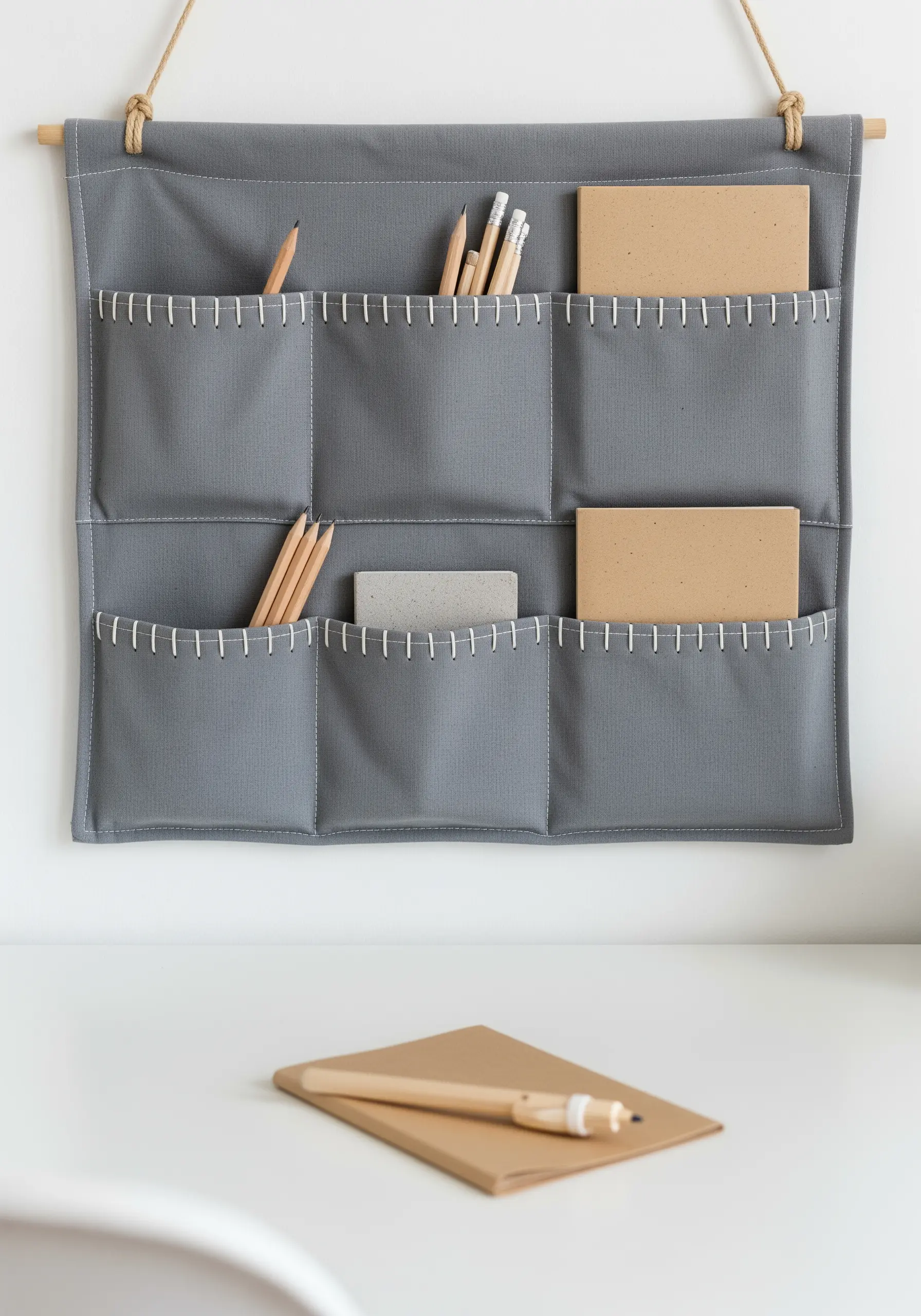
Elevate a simple fabric wall organizer by making the construction stitches a key design feature.
Use a thick, contrasting cotton thread—like a bright white on charcoal gray canvas—to stitch the pocket edges with a prominent blanket stitch or whipstitch.
Space the stitches wider than you normally would to give them a graphic, almost rustic quality.
This approach proves that even the most DIY embroidery projects that keep your space clutter-free and stylish can be beautiful.
8. Ground Stitches on Textured Waffle Weave
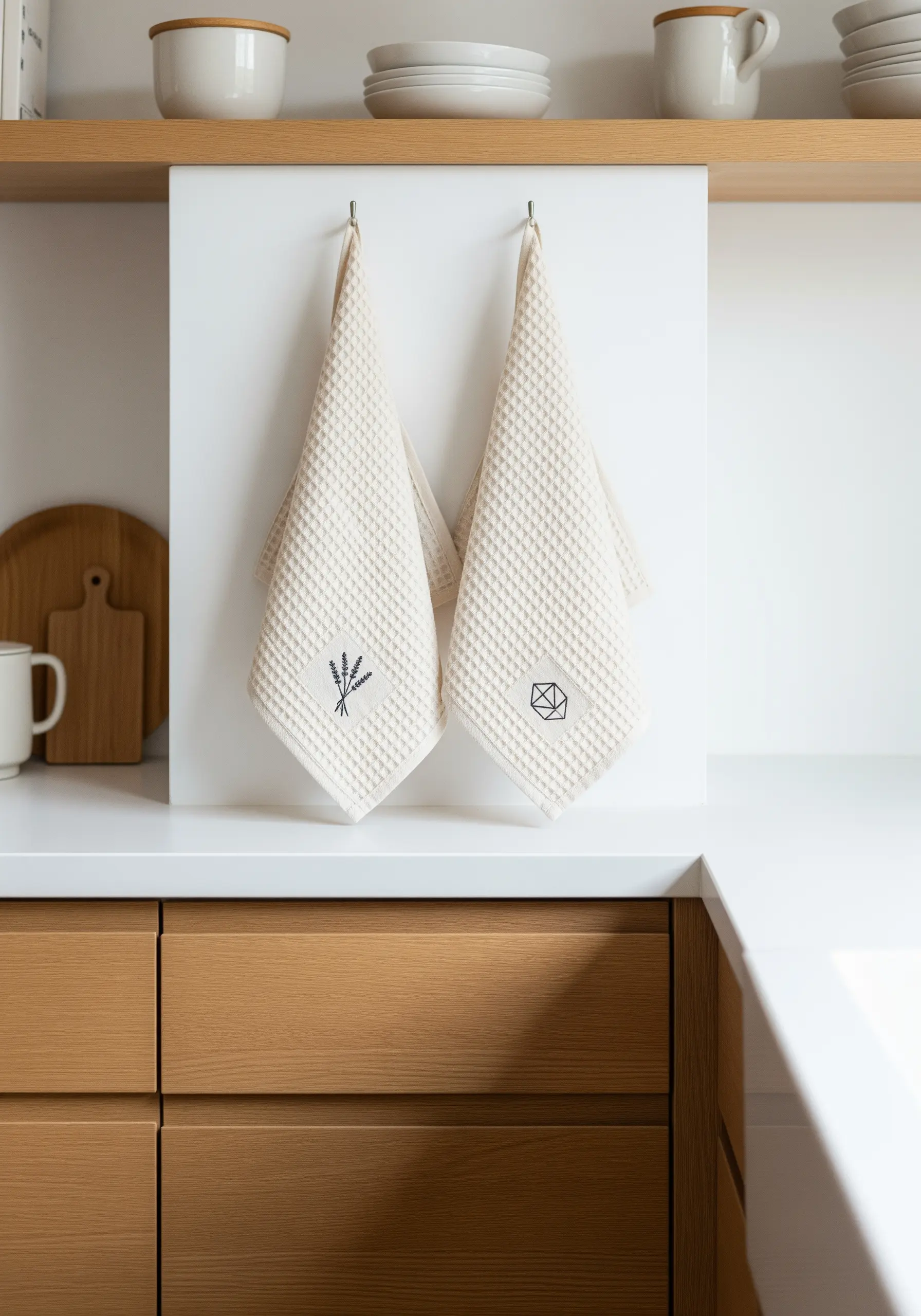
Embroidering on textured fabric like waffle weave requires a specific approach to prevent stitches from getting lost in the grid.
Place a layer of water-soluble stabilizer on top of the fabric before you begin stitching your motif.
This creates a smooth surface for your needle and ensures your stitches sit proudly on top of the weave.
Opt for simple, graphic designs and tiny embroidery motifs that won’t compete with the fabric’s inherent texture.
9. Construct Soft-Sculpture Nursery Decor
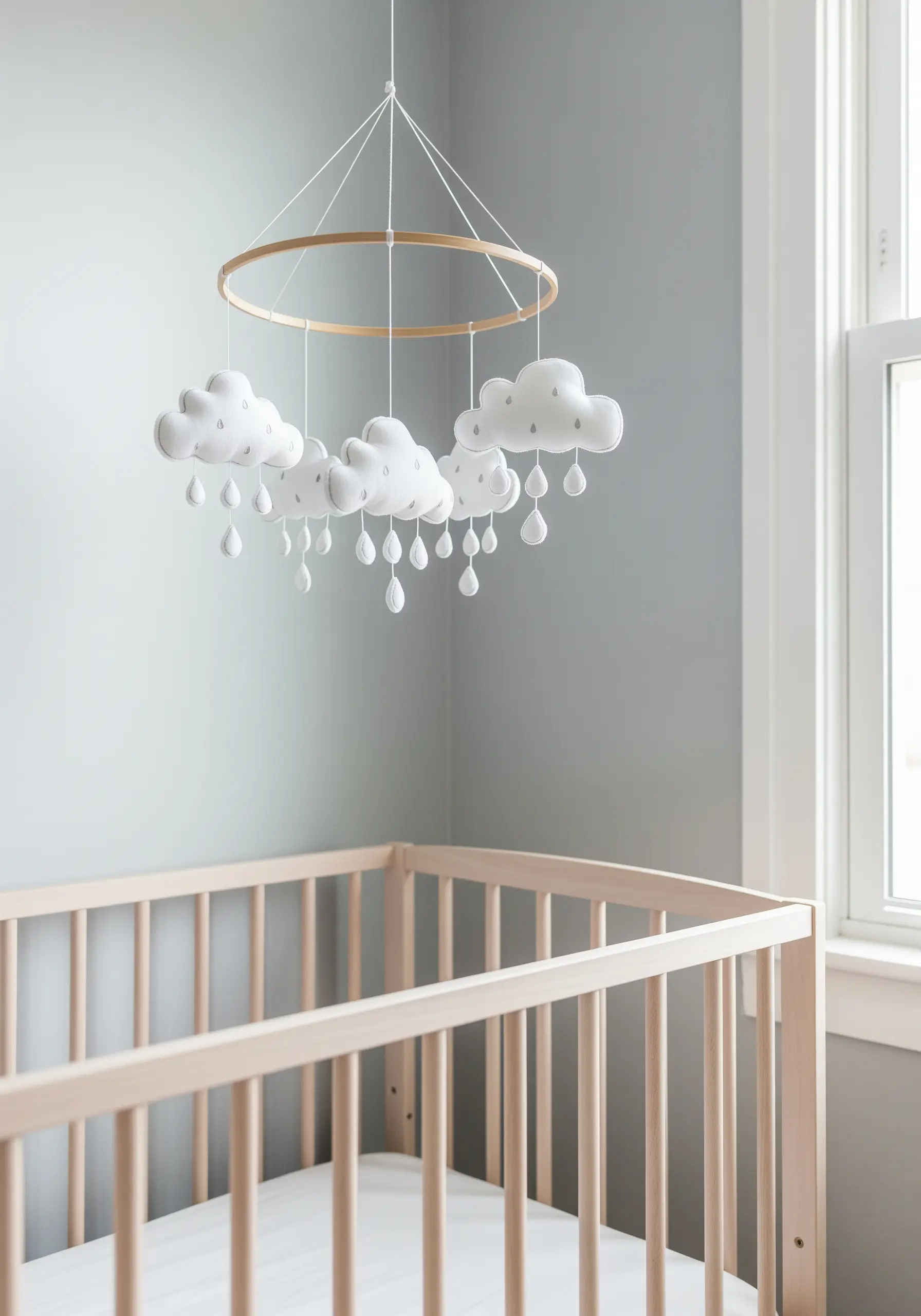
Apply your embroidery skills to three-dimensional objects by creating a serene nursery mobile.
Cut cloud shapes from soft felt and use a simple backstitch in a matching thread to sew the edges together, leaving a small opening to stuff with batting for a plush effect.
Add hanging raindrops using French knots or small felt teardrops attached with a single strand of thread.
These cloud-soft embroidery hoops for nursery walls and mobiles bring gentle, handmade charm to a room.
10. Create a Light-Filtering Pattern on Sheer Curtains
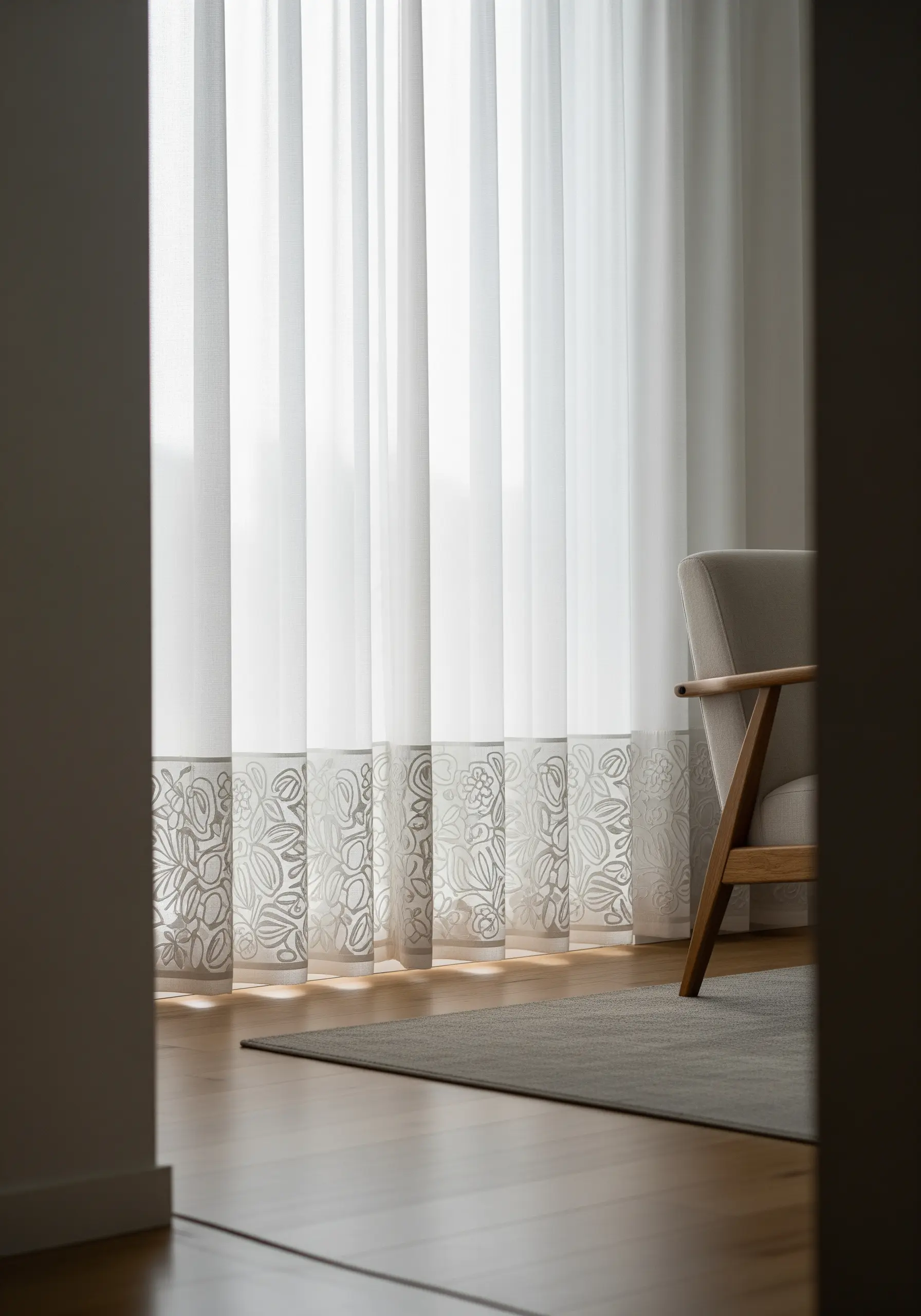
Embellish sheer curtains with a pattern that interacts with light.
Using a tone-on-tone cotton thread (white on white), create a dense botanical pattern along the bottom border using satin stitch and stem stitch outlines.
When light passes through, the embroidered areas will appear more opaque, creating a beautiful, subtle contrast that changes throughout the day.
This method transforms simple cream clay embroidered curtain borders into dynamic art.
11. Stitch Perfectly Graphic Lines on Towels
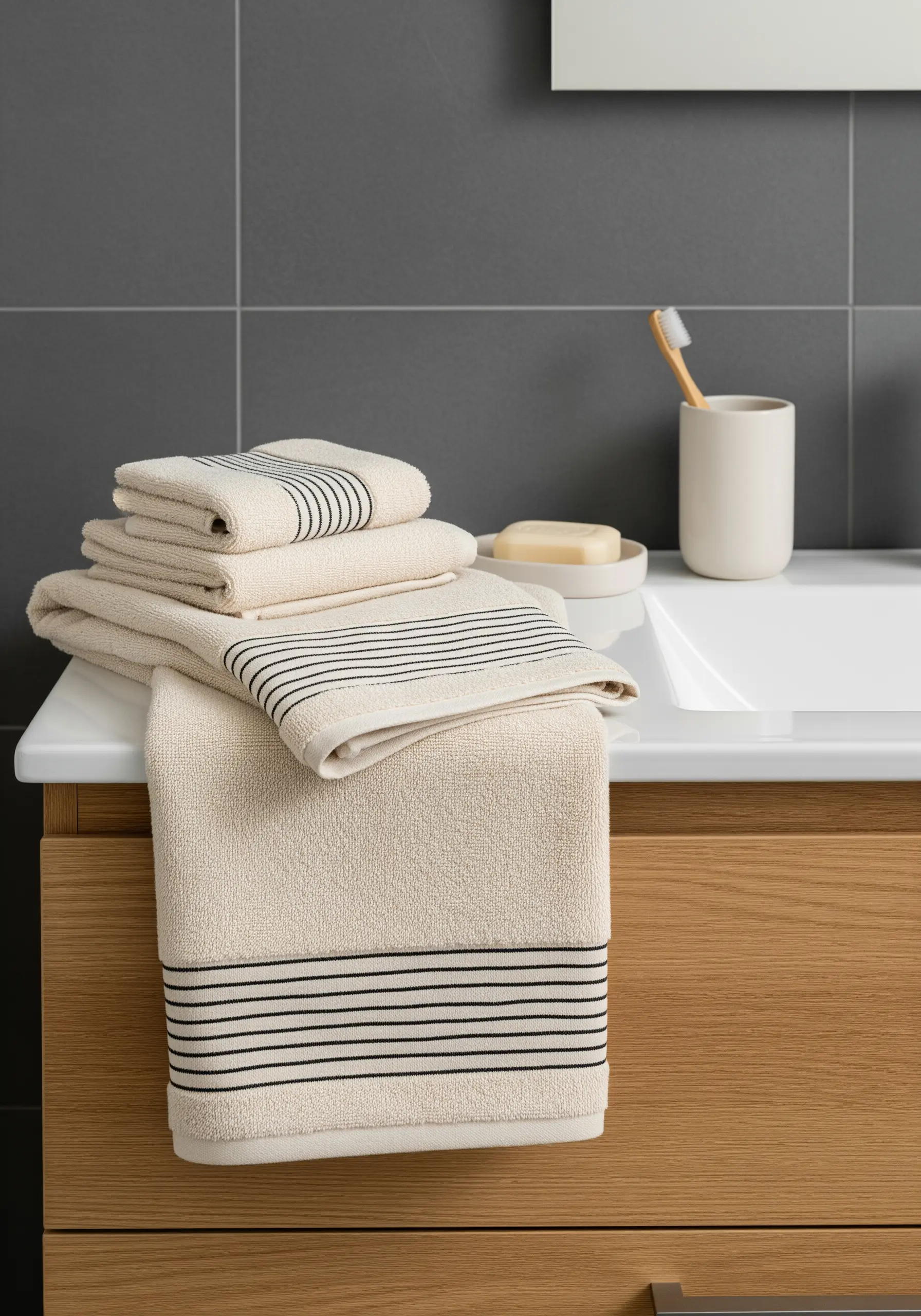
Achieve a clean, hotel-luxe look on bath linens by embroidering graphic stripes.
To get perfectly crisp, parallel lines, use a water-soluble marker and a ruler to draw your guides directly onto the terrycloth.
Use a dense satin stitch, working slowly to pack the threads tightly together for a solid, block-like appearance.
For a finer line, a series of closely packed running stitches also creates a sharp, minimalist effect that instantly upgrades your bathroom decor.
12. Fill a Large Motif with Meditative Seed Stitch
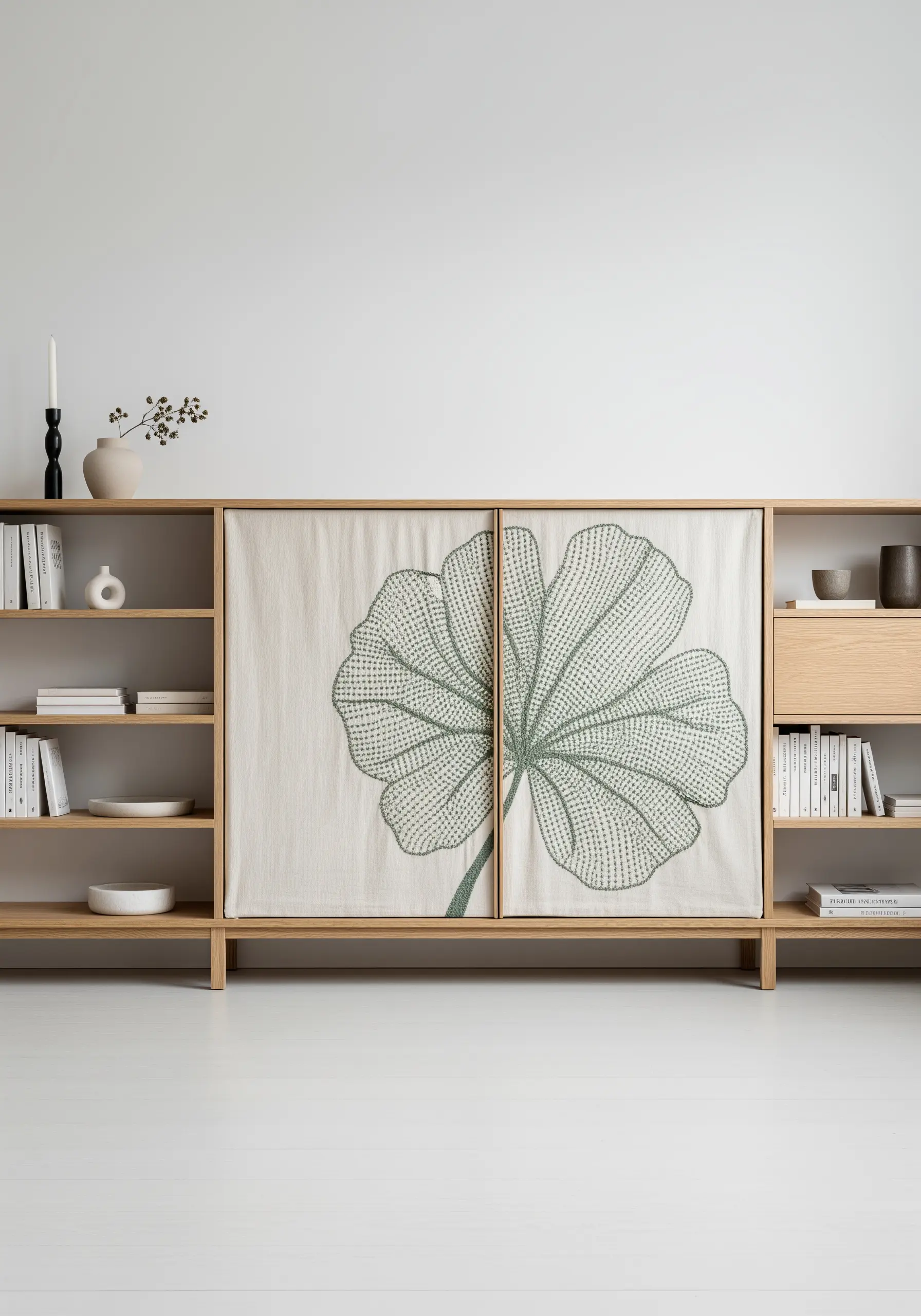
Tackle a large-scale design, like this leaf on a cabinet panel, without the pressure of perfect satin stitch.
Instead, use a seed stitch fill—tiny straight stitches placed randomly in different directions.
This technique is forgiving, meditative, and creates a beautiful, dappled texture that adds depth and an organic feel.
By splitting the design across two panels, you create functional botanical embroidery wall pieces that double as furniture.
13. Wrap and Define Form with Contrasting Cord

Turn a simple fabric planter cover into a graphic object using thick, contrasting cord.
This technique isn’t traditional embroidery but uses the same principles of line and tension.
Wrap the cord around the fabric-covered pot, creating an abstract geometric pattern by crossing the lines over one another.
Secure the cord discreetly at the back to maintain the clean aesthetic of these small DIY planters handmade pots.
14. Design a Flowing Path on a Room Divider
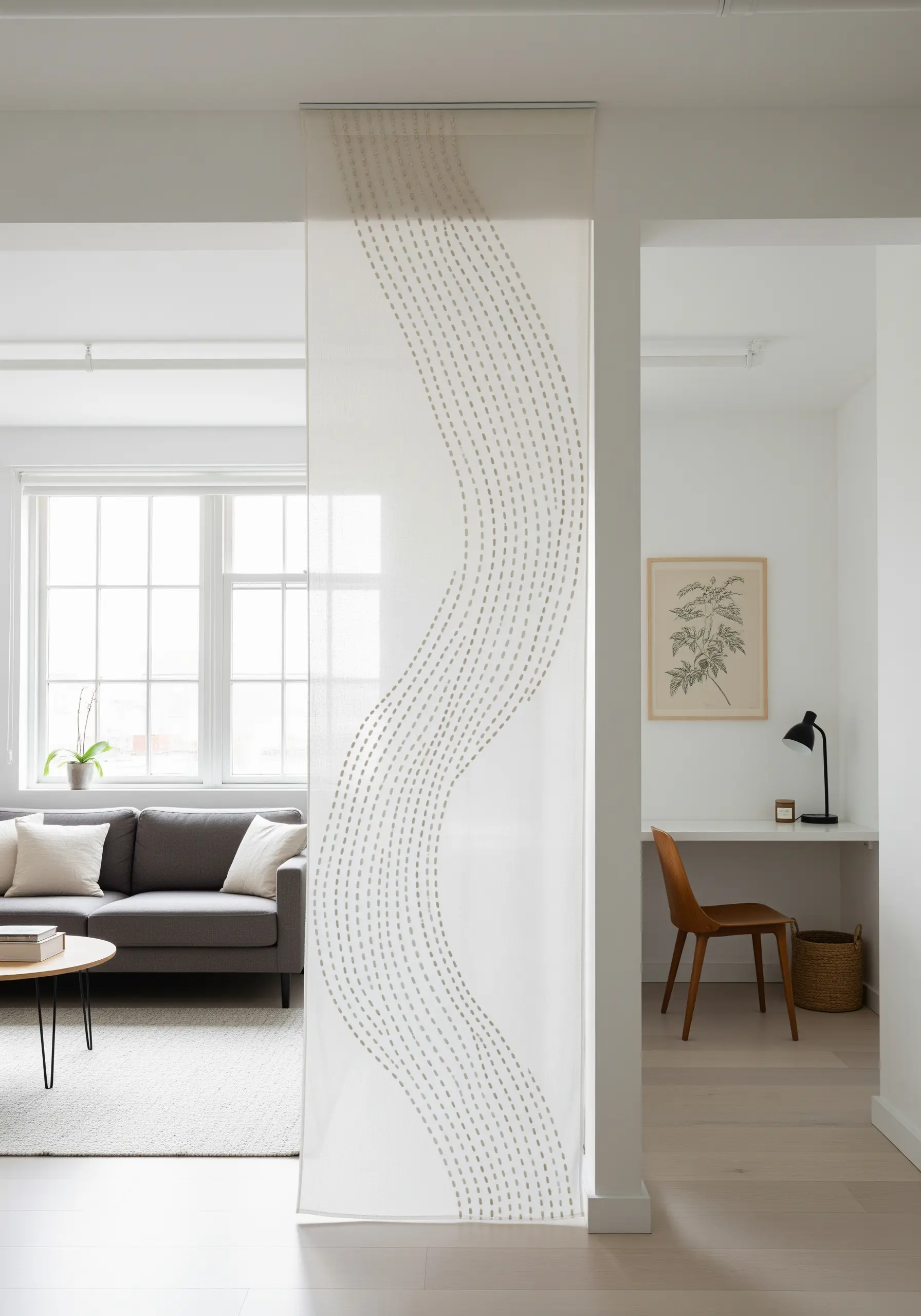
Guide the eye and create a sense of movement on a large, sheer surface like a room divider.
Create a flowing, river-like pattern using rows of simple, evenly spaced seed stitches or small French knots.
The repetition of the small stitches forms a larger, cohesive shape that feels both delicate and intentional.
This project proves that minimalist embroidery DIYs to add personality to your space can have a massive architectural impact.
15. Add a Subtle Geometric Pattern to a Valet Tray
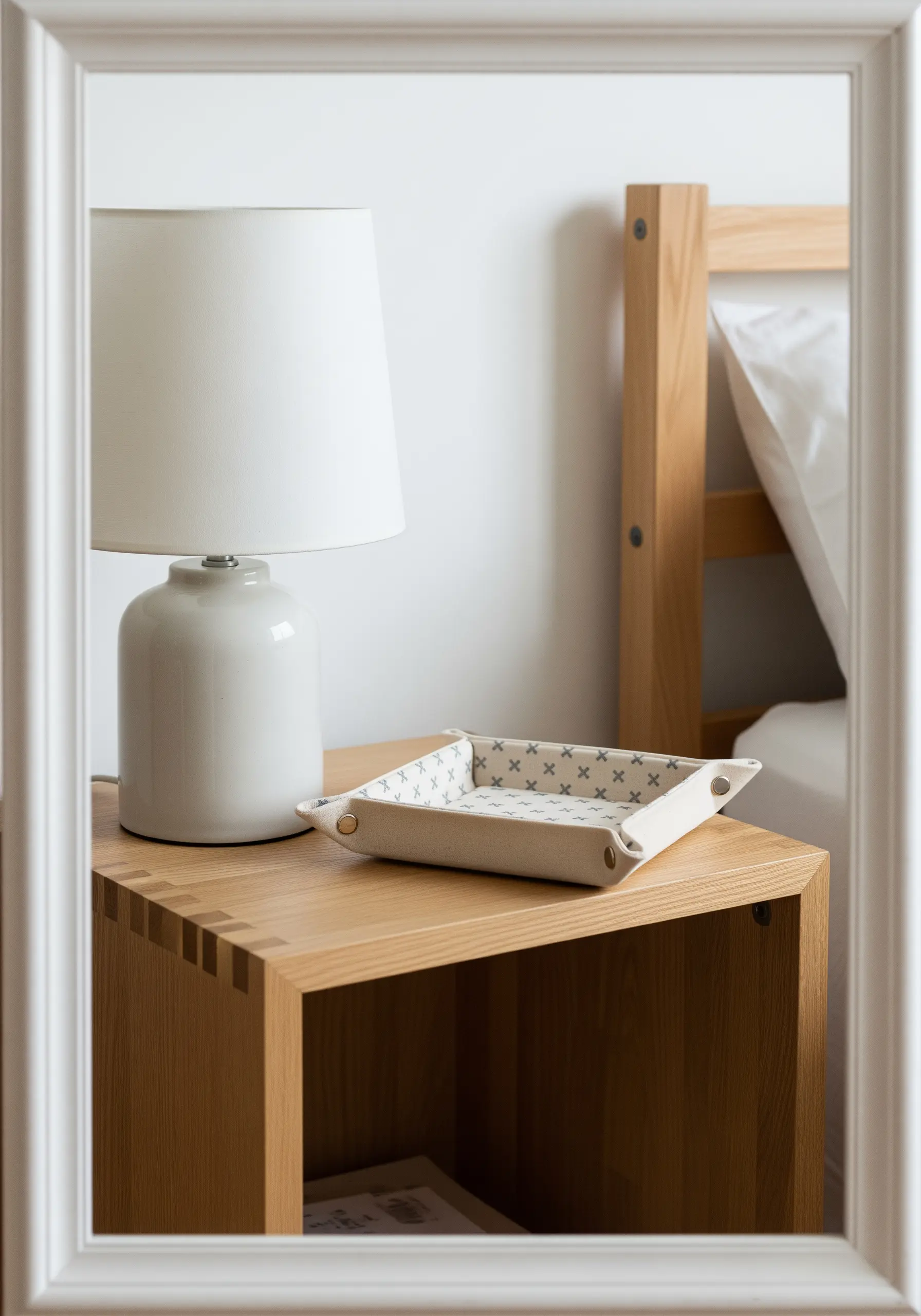
Personalize a functional item like a bedside tray with a minimal, repeating pattern.
Choose a simple geometric motif—like a cross or a starburst—and stitch it in a grid pattern on the fabric base before constructing the tray.
Use a thread that offers gentle contrast, like a dark grey on cream, for a look that’s sophisticated rather than bold.
These subtle embroidery touches that make your desk look pinterest-ready add a bespoke feel to everyday objects.
16. Combine Fill and Outline on Felt Coasters
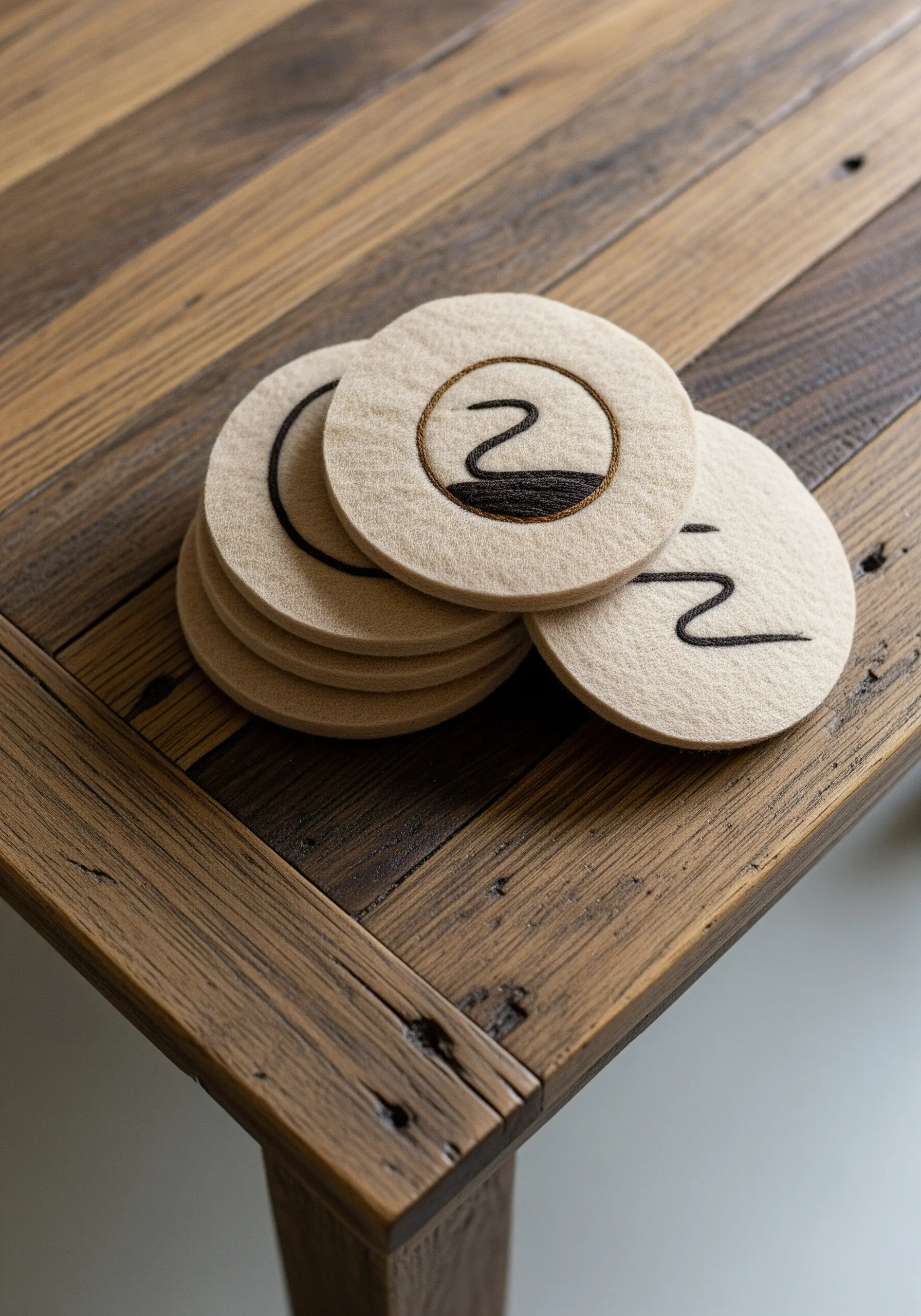
Explore textural contrast on a small scale with minimalist coasters.
On a thick felt base, use a smooth satin stitch to fill a small section of your design, like the circle in a stylized wave.
Then, use a simple backstitch or stem stitch for the outline elements.
The combination of the flat, dense fill and the sharp line creates a dynamic, tactile result, perfect for simple embroidery accents to refresh your coffee table.
17. Stitch Minimalist Lines onto Notebook Covers
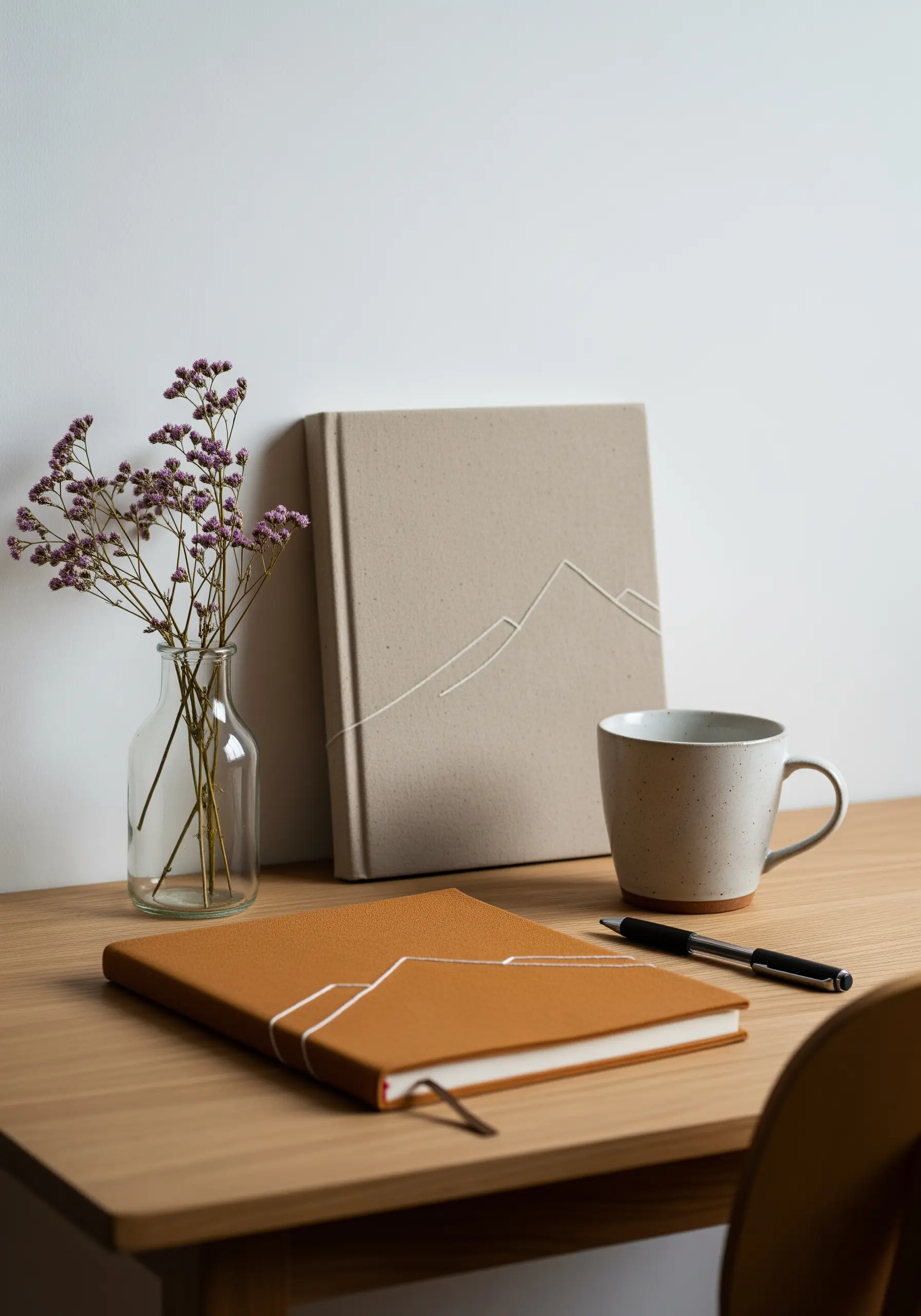
Take your embroidery beyond fabric and onto paper or book cloth for a uniquely tactile finish.
To avoid tearing, gently pre-pierce your stitching holes along your design line with a sharp awl or a thick needle.
Use a durable cotton thread and a simple running stitch or backstitch to create a clean, graphic mountain range or abstract line.
This transforms everyday stationery into thoughtful objects, much like DIY cozy embroidery bookmarks.
18. Pierce a Lampshade with a Starry Night Sky
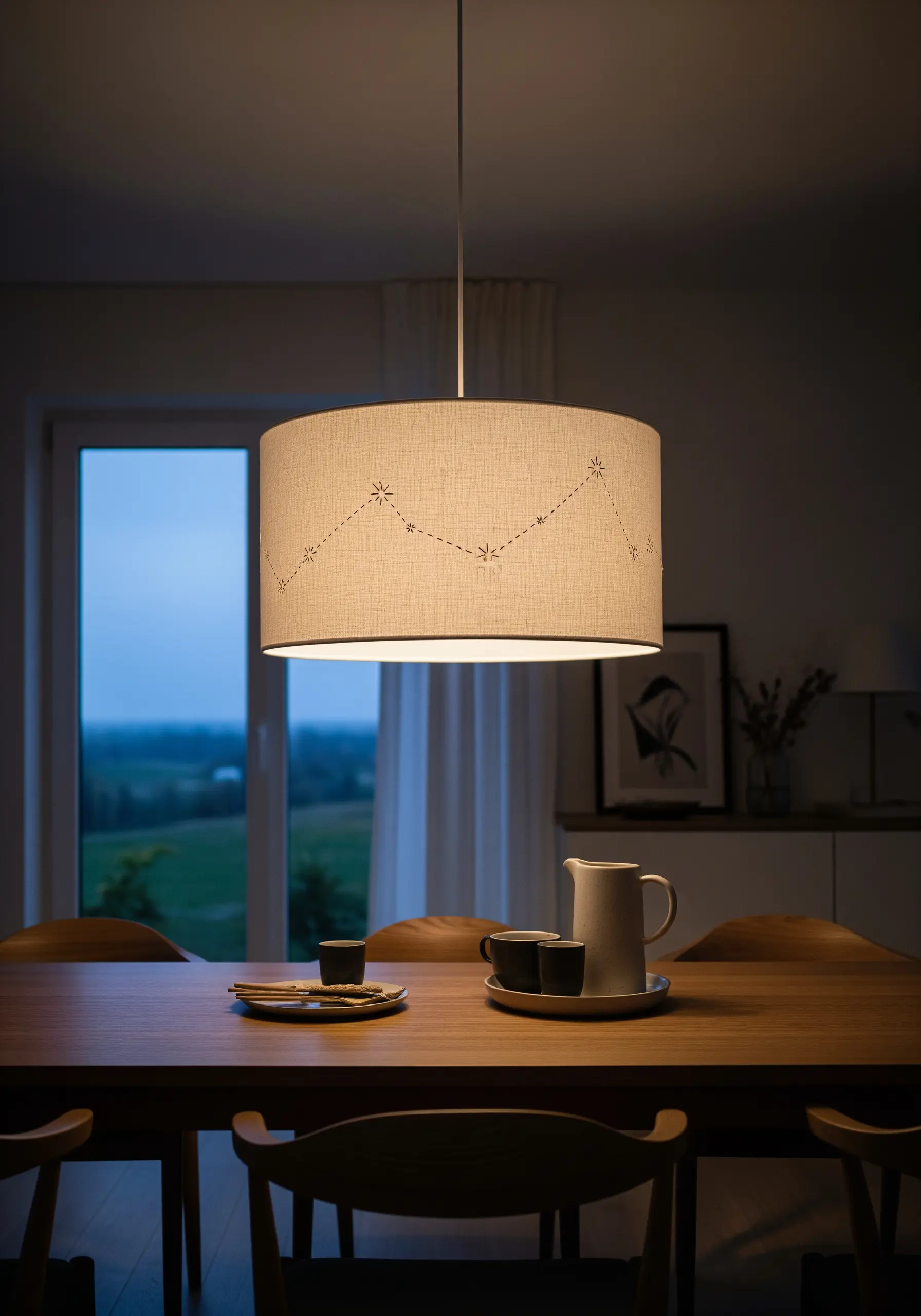
Create a design that truly comes to life when illuminated by embroidering a lampshade.
Use a simple star stitch or French knot to plot out constellations on a linen or cotton lampshade.
During the day, it’s a subtle, textural pattern; at night, the light will shine through the stitched holes, projecting a gentle, starry glow.
This is one of the most effective tiny night sky embroidery designs for creating ambient magic.