
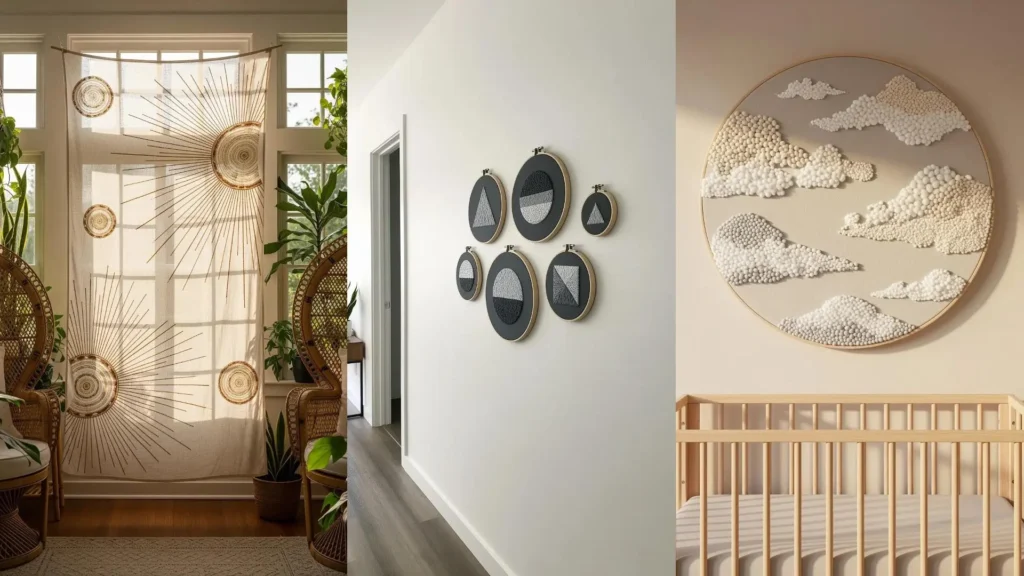
You have the threads, the fabric, and the desire to create something beautiful. But sometimes, your finished work doesn’t quite capture the serene, polished aesthetic you envision. You see stunning pieces online and wonder what secret technique separates your craft from their art.
The secret isn’t necessarily more complex stitches or a rainbow of colors. In fact, it’s often the opposite. By embracing a limited, neutral palette, you shift the focus from color to what truly elevates embroidery: texture, line, and form. This restraint is not a limitation; it is a tool that forces intentionality into every single stitch you make.
Think of these palettes and techniques as a quiet conversation between thread and fabric. Each idea is designed to help you build confidence in your choices, whether it’s mastering the clean edge of a satin stitch or creating sculptural depth with chunky yarn. It’s time to create art that not only looks beautiful on your wall but also feels deeply and authentically yours.
1. Master Sculptural Dimension with Couching
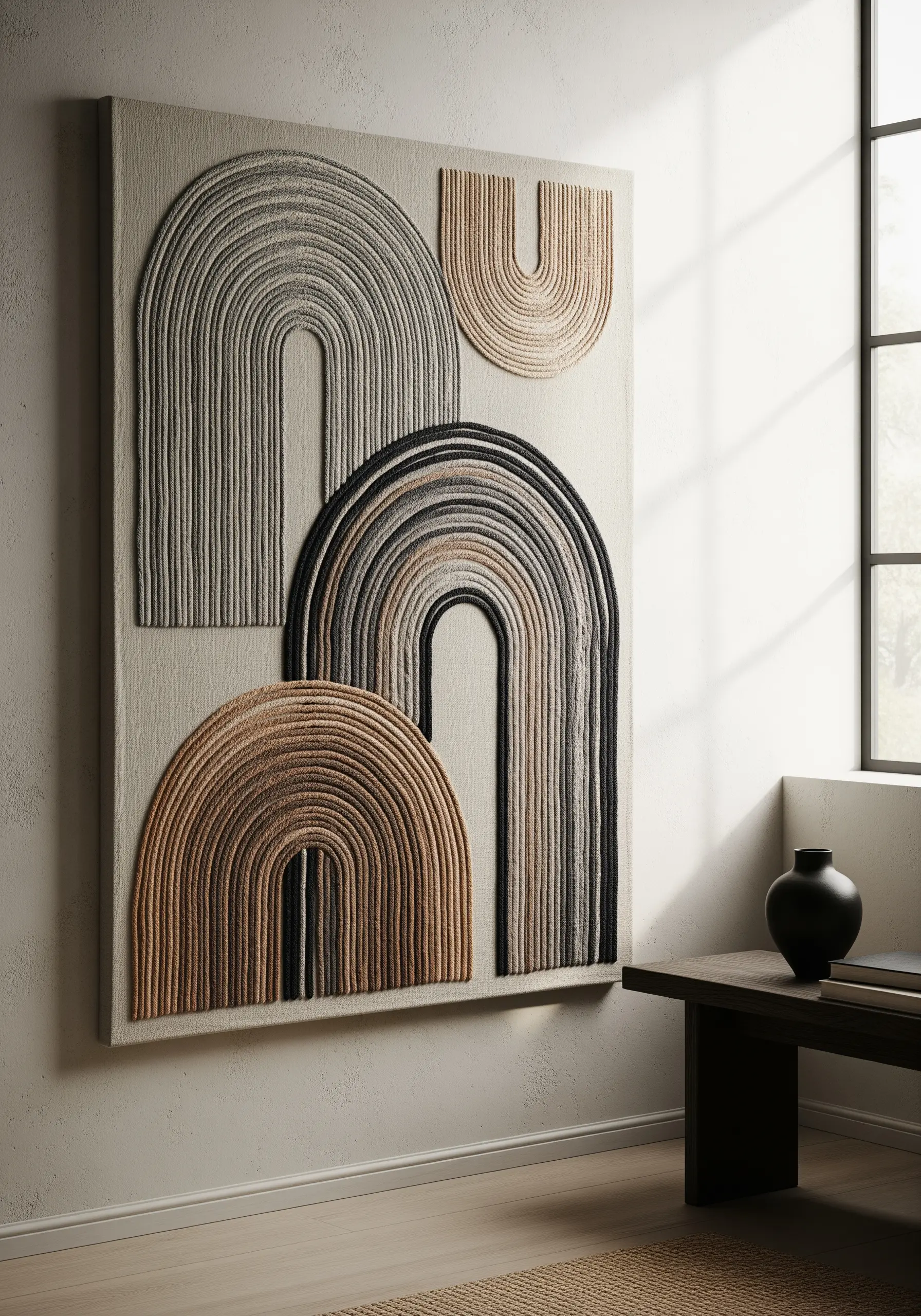
Create high-relief abstract art by couching thick yarn or multiple strands of floss onto a heavy canvas backing.
Instead of a traditional stitch, lay your textural yarn on the surface and use a thinner, matching thread to tack it down with small, perpendicular stitches.
This method preserves the yarn’s volume and allows you to create bold, clean arcs and shapes that sit on top of the fabric rather than piercing through it.
Arrange your shapes asymmetrically to create visual weight and a dynamic composition that feels both organic and intentional.
2. Curate a Cohesive Botanical Triptych
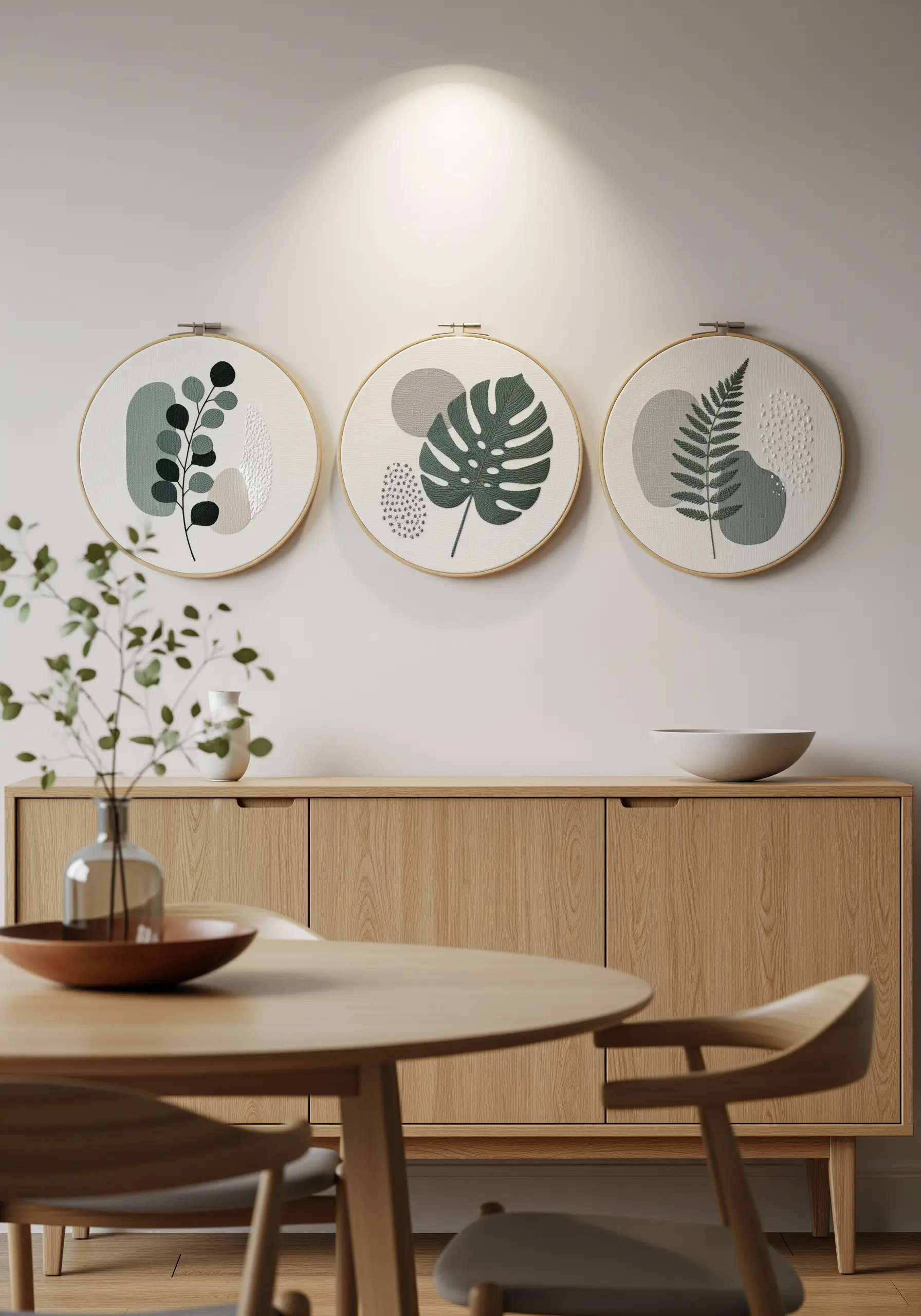
Elevate simple botanical motifs by displaying them as a coordinated set of three.
To ensure harmony, use the same base fabric and a strict two- or three-color palette across all hoops.
Vary the composition in each hoop: one dense with foliage, one focused on a single statement leaf, and one more delicate and airy.
Incorporate negative space as a key design element; this gives the compositions room to breathe and makes the collection feel more like a gallery installation.
Use a combination of flat satin stitch for leaves and raised French knots for textural accents to add subtle, sophisticated contrast.
3. Explore Monumental Coiling with Natural Fibers
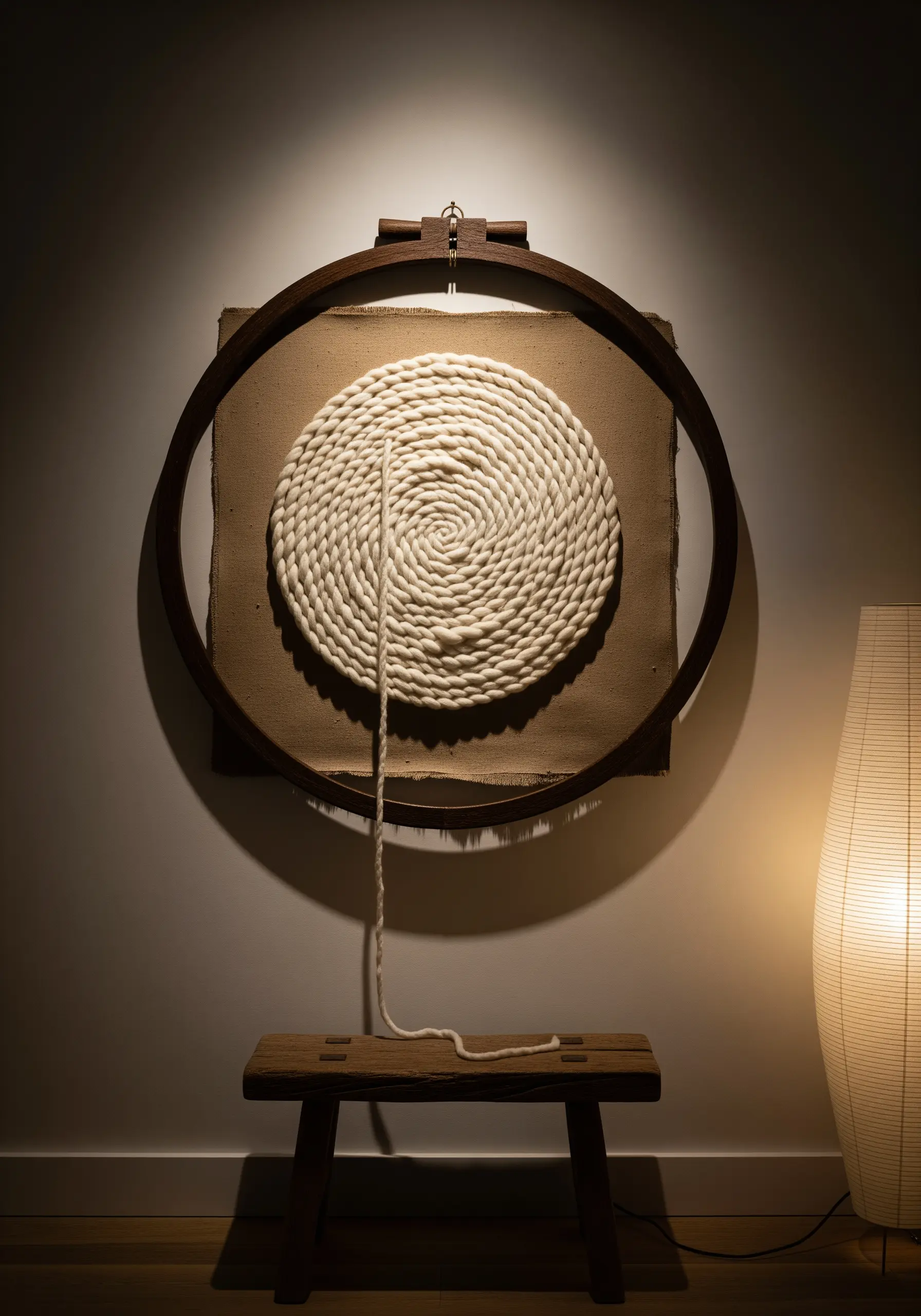
Move beyond thread and embrace thick, sculptural materials like cotton rope or wool roving for a statement piece.
Work on a sturdy backing like burlap or heavyweight linen stretched over a large, custom frame or hoop.
Create a perfect spiral by coiling the rope and stitching it down from the back with a heavy-duty needle and coordinating thread, ensuring your stitches are invisible from the front.
This technique transforms simple rope into a mesmerizing, meditative focal point that celebrates raw texture and form.
4. Capture Fluidity with Minimalist Line Work
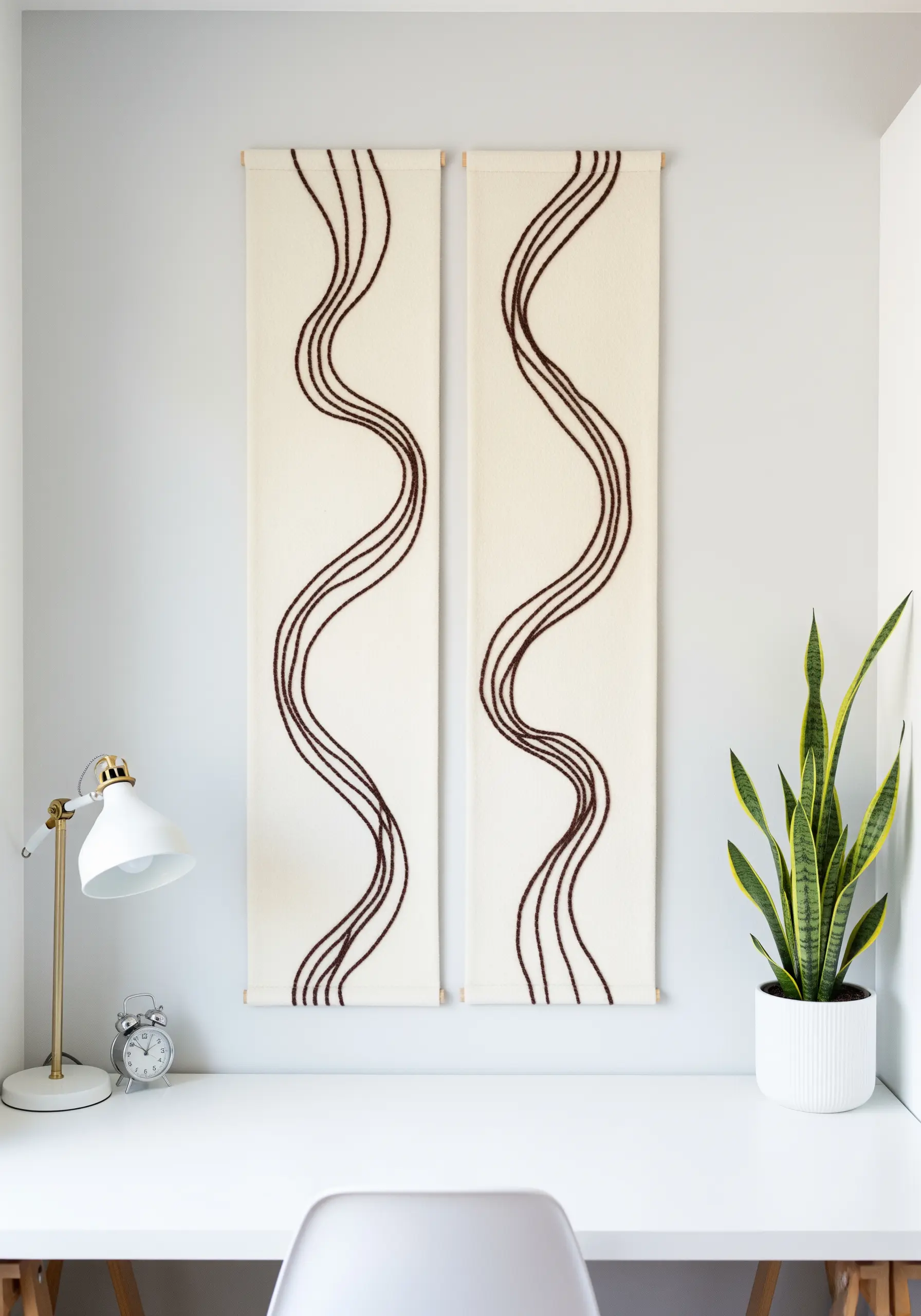
Create the illusion of effortless movement by stitching continuous, organic lines on clean, unadorned fabric panels.
To achieve perfectly smooth curves, use a whipped backstitch or a stem stitch with high-contrast thread, like deep espresso on off-white wool felt.
The key is consistent tension and stitch length; practice on a scrap piece until your lines flow without any pulling or puckering.
Displaying two panels side-by-side as a diptych turns a simple line into a sophisticated, abstract thread embroidery statement.
5. Paint Abstract Landscapes with Thread
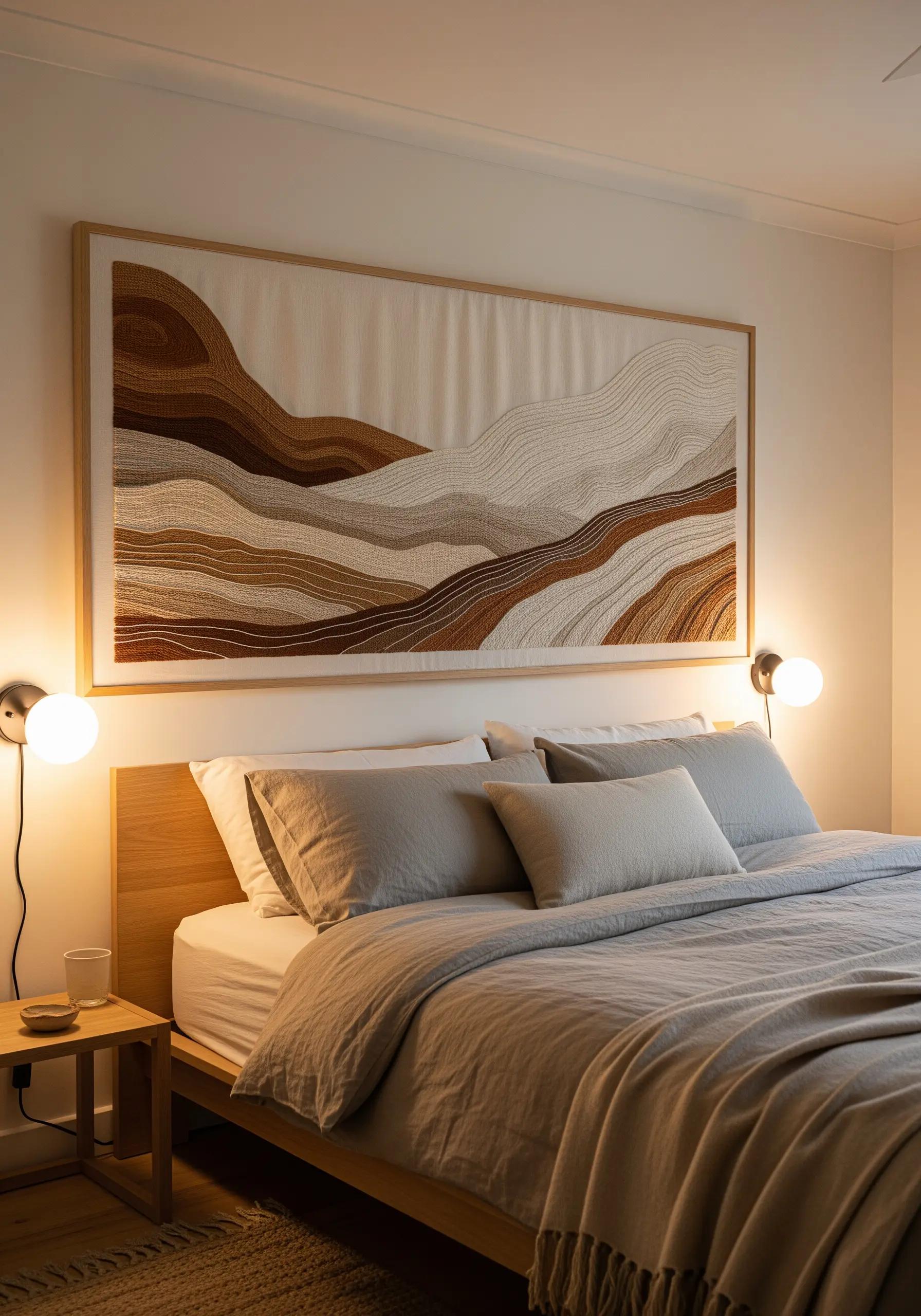
Recreate the soft, rolling hills of a landscape using thread painting techniques within a neutral palette.
Use long-and-short stitch to blend adjacent shades of beige, taupe, and brown, creating seamless gradients that mimic natural topography.
Vary the direction of your stitches in each section to reflect the angle of the slope, enhancing the sense of depth and movement.
This technique turns a simple landscape into a rich, nature-texture wall hanging that feels both abstract and deeply familiar.
6. Design a Geometric Gallery Wall
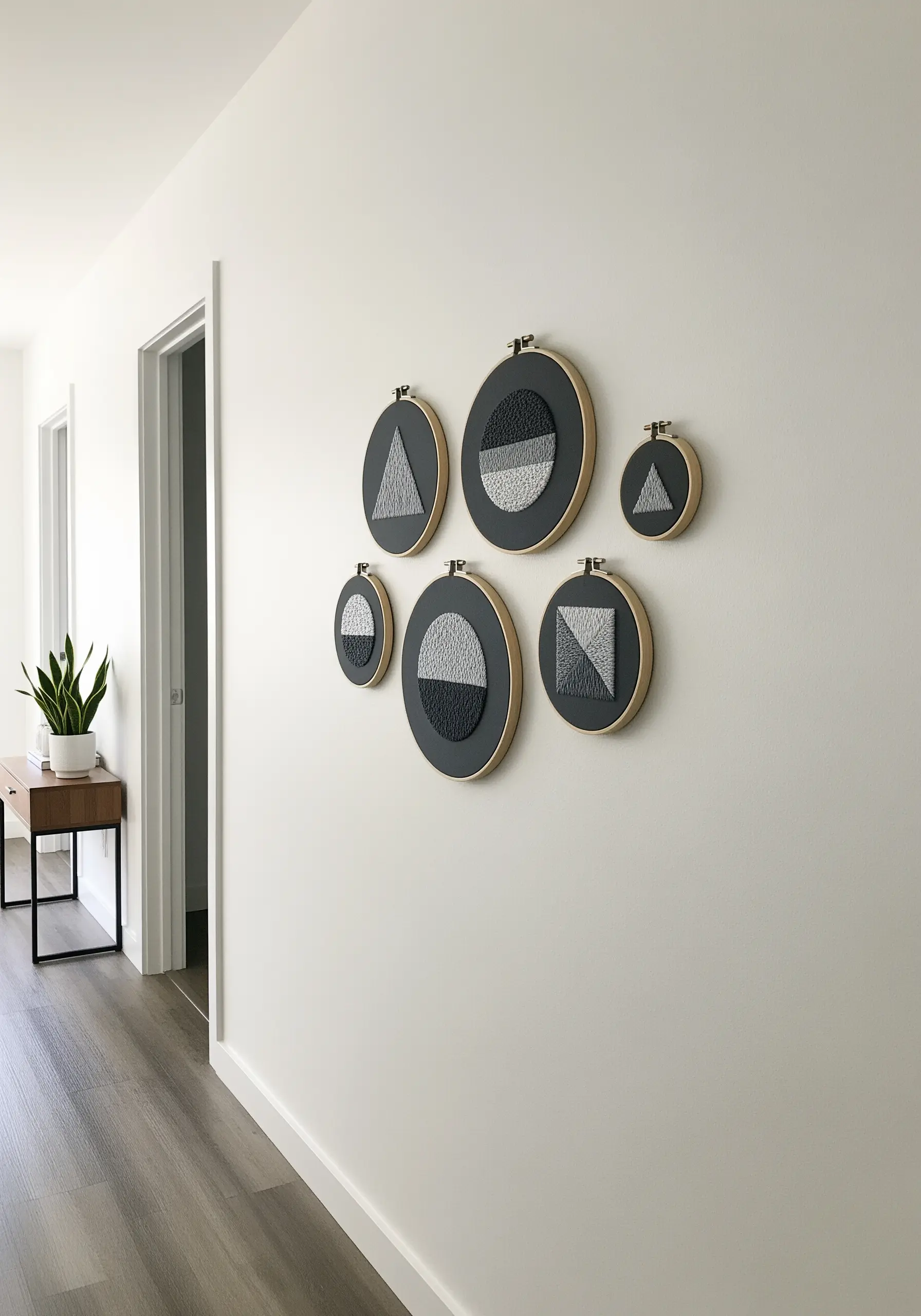
Group small, related hoops together to create a dynamic gallery wall that feels personal and curated.
Work with a limited palette of charcoal, grey, and white to maintain a modern, cohesive look.
Explore different fill techniques within simple geometric shapes: use dense satin stitch, woven stitches (like a spiderweb wheel), or tightly packed seed stitches.
This contrast in texture is what makes each minimal embroidery composition unique while still belonging to the collection.
Arrange the hoops at varying heights in an organic cluster for a more engaging and less rigid display.
7. Create Movement with Directional Satin Stitch
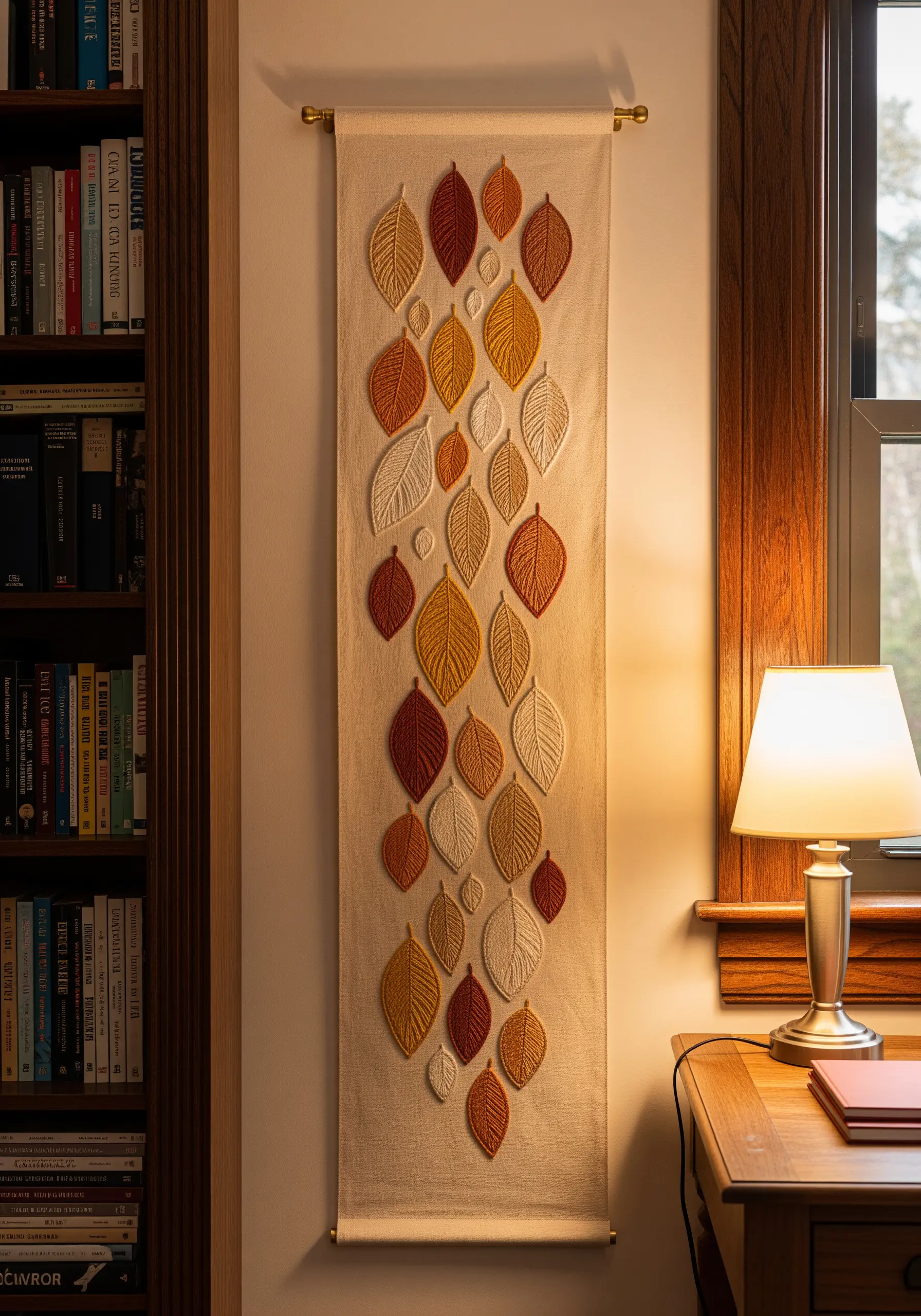
Bring a simple motif, like falling leaves, to life by varying the angle of your satin stitch.
Instead of filling each leaf with uniform vertical or horizontal stitches, angle them to follow the natural curve of the leaf, from the stem to the tip.
Use a palette of analogous colors—like ochre, terracotta, and cream—to add warmth and depth without overwhelming the design.
This subtle shift in stitch direction creates a sense of realism and movement, making the composition feel dynamic and alive.
8. Elevate Line Art on Textured Linen
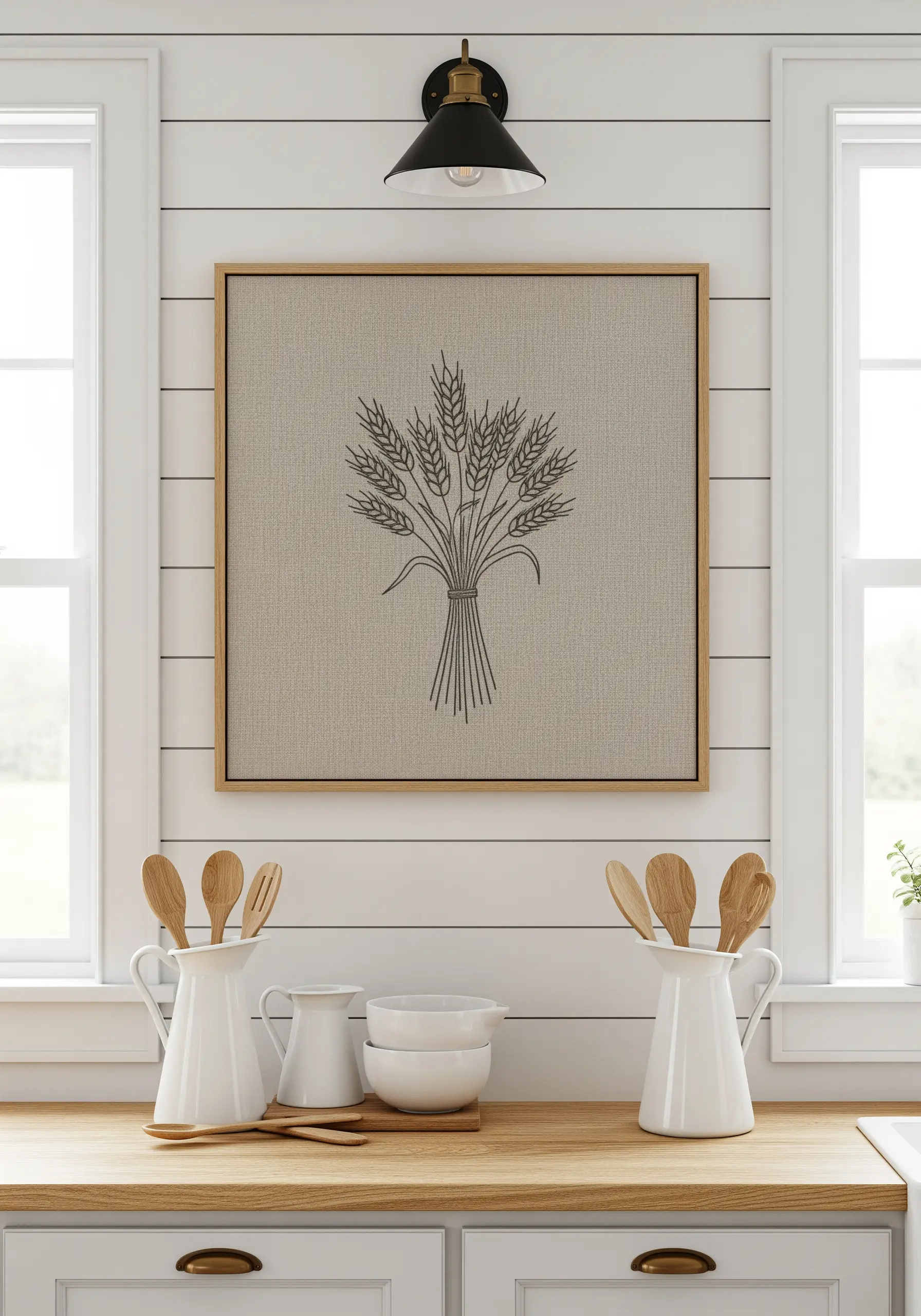
Give simple line art a rustic, sophisticated feel by stitching it onto a high-quality, textured fabric like oatmeal linen.
The natural slubs and weave of the linen add depth and character that a plain cotton fabric lacks.
Use a single, dark thread color (like a deep charcoal or sepia) and a clean backstitch or stem stitch to ensure your lines are crisp and defined.
This pairing of simple design and rich fabric texture results in an effortlessly elegant framed artwork that feels timeless.
9. Sculpt Soft Forms with Chunky Fibers
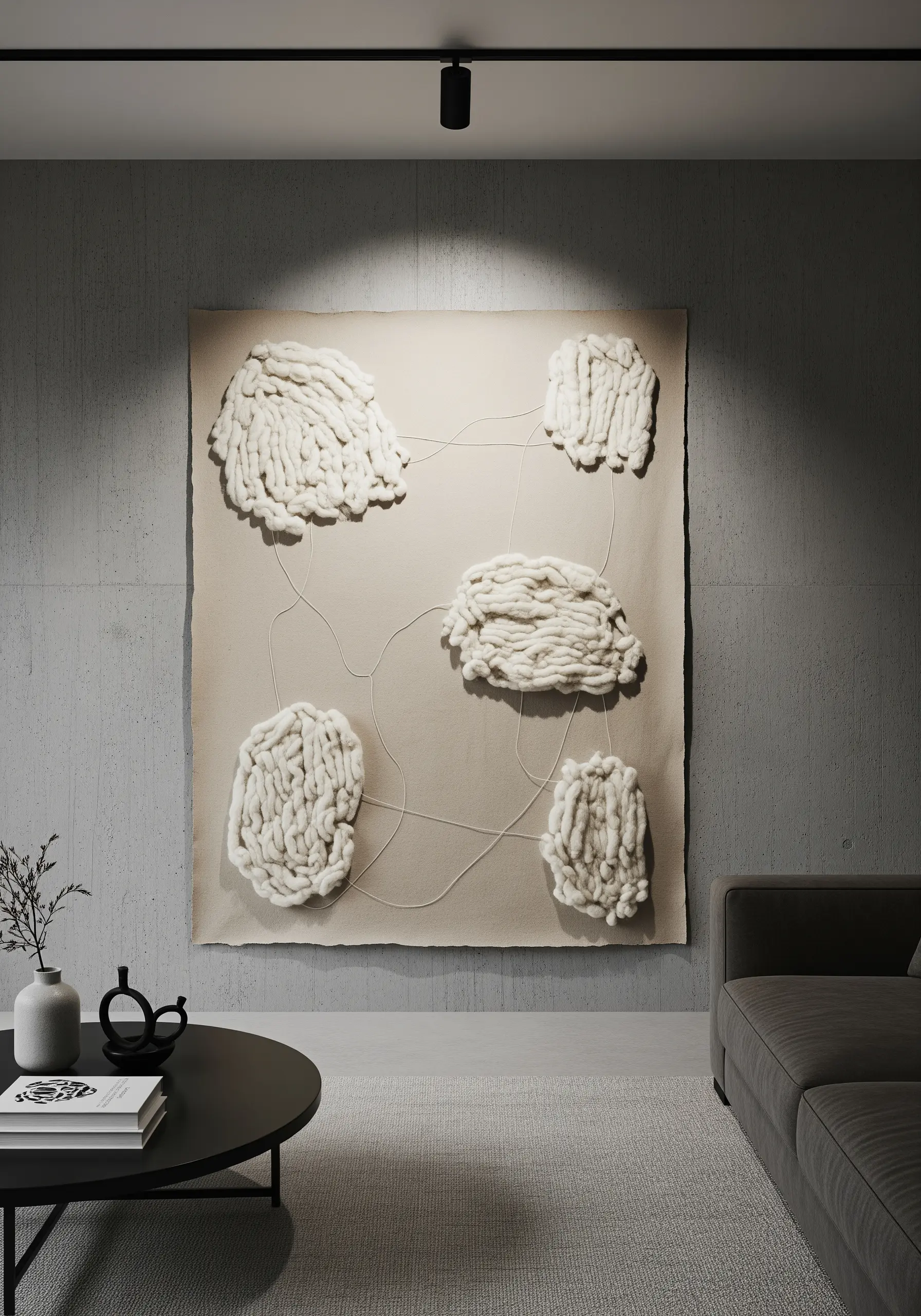
Create dramatic, three-dimensional shapes using unspun wool roving or super-chunky yarn.
Use loop stitch (or turkey work) and leave the loops uncut to form soft, cloud-like mounds of texture.
Tack down the roving on a backing fabric, allowing it to bunch and coil organically to build up volume.
Connect these textural islands with thin, taut strands of thread to create a visual map, adding a layer of delicate geometry to the bold, soft forms.
This is one of those mixed-fiber projects that looks incredibly complex but is surprisingly intuitive to create.
10. Achieve Precision with Thread Gradients
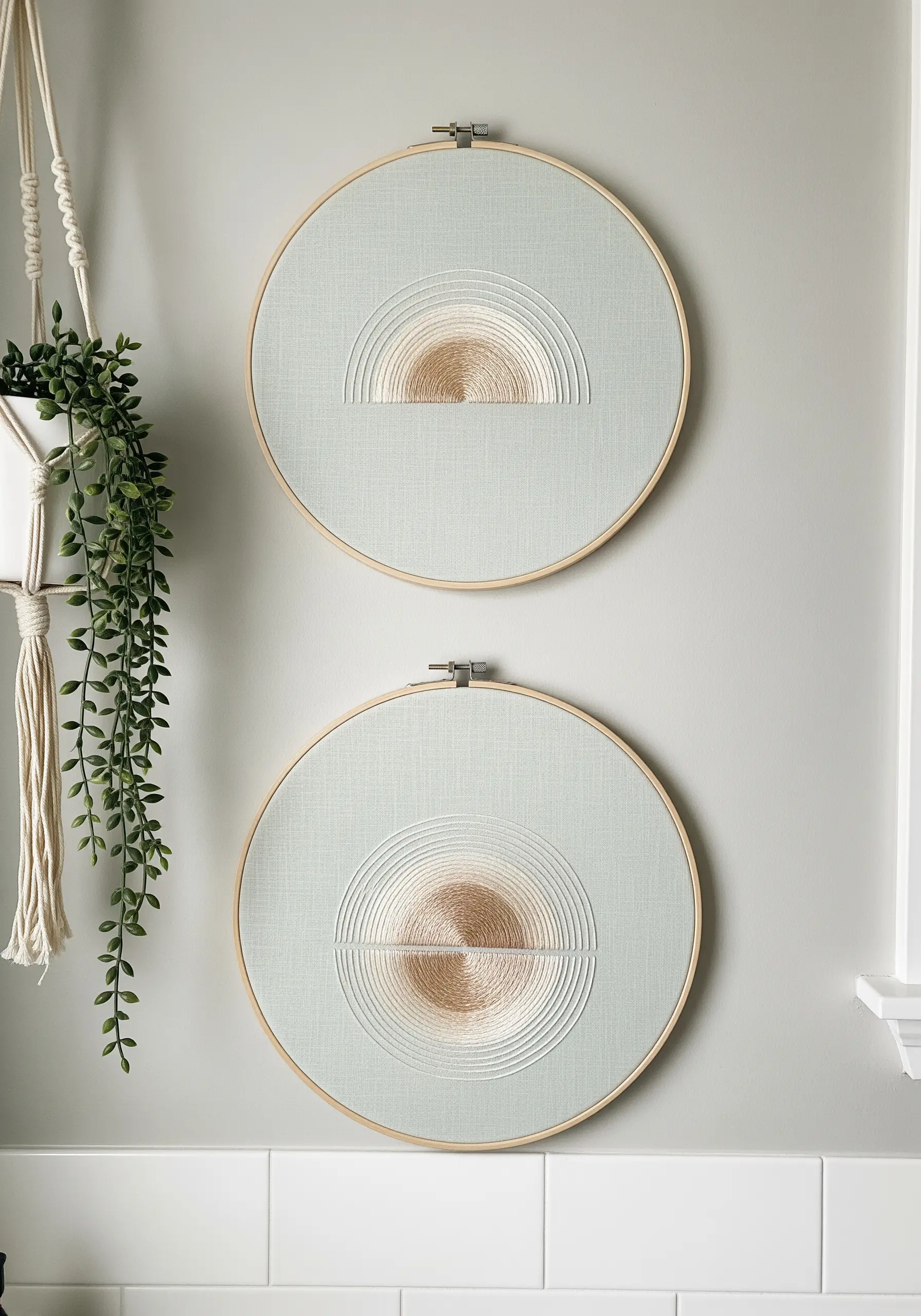
Create a perfect, subtle gradient by stitching with single strands of floss in concentric lines.
Select five to seven closely related shades, moving from a dark neutral to a light one, like a deep bronze fading to pale ivory.
Use a simple straight stitch, laying each stitch side-by-side without overlapping to form clean, graphic bands of color.
The key to this design is impeccable tension and spacing, resulting in a hypnotic, almost digital effect that highlights the beauty of using neutral colors in embroidery.
11. Build Soft Textures with Dense French Knots
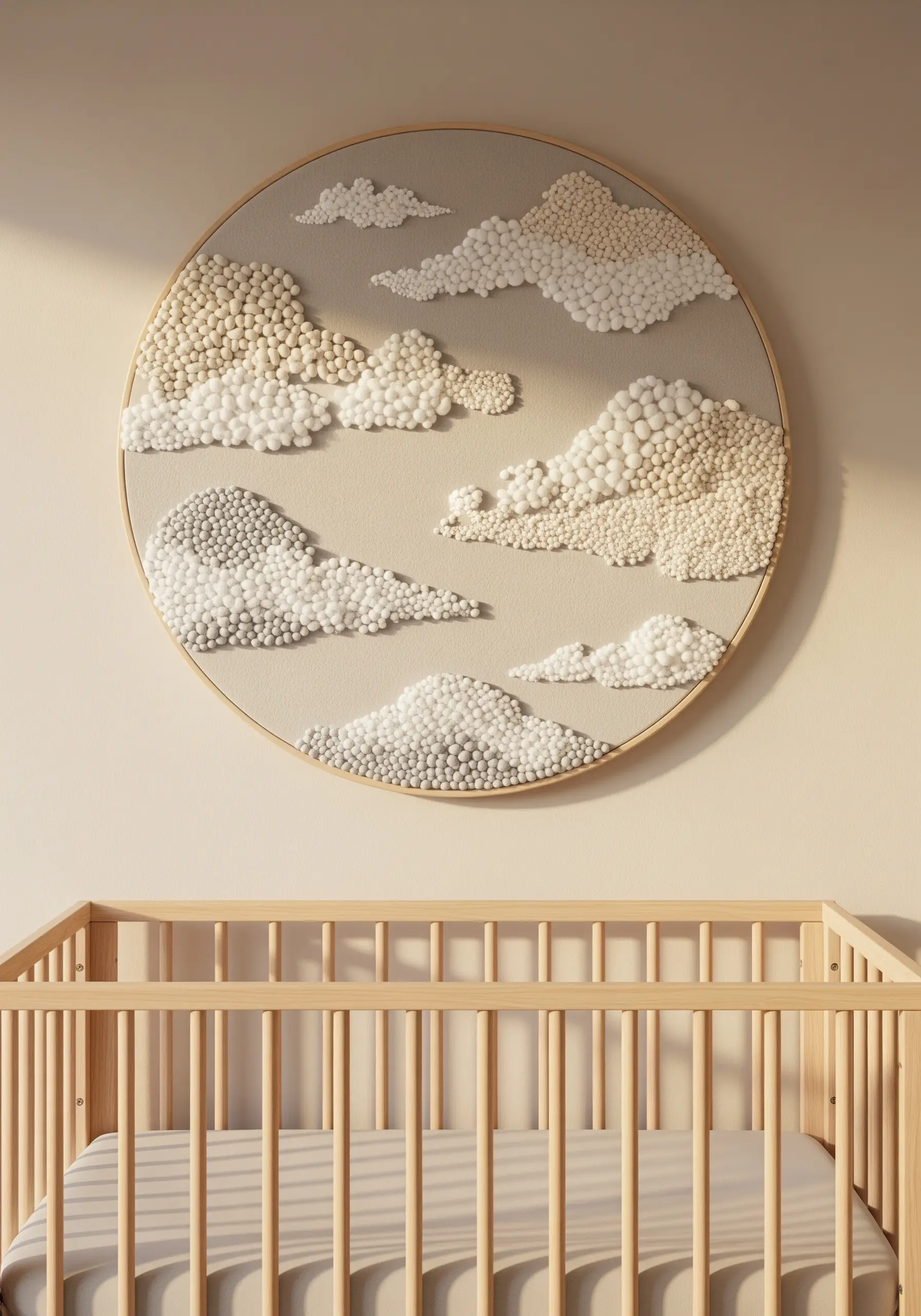
Design a piece perfect for a nursery or serene space by filling shapes with clusters of French knots.
To create soft, cloud-like forms, use a palette of warm whites, creams, and pale greys.
Use a soft, matte cotton thread in a medium weight (like size 8 pearl cotton) to give your knots a plush, rounded appearance.
Vary the density of the knots—packing them tightly in some areas and spacing them out in others—to create subtle shading and a gentle, pillowy dimension.
These cloud-soft embroidery hoops are all about tactile comfort and visual calm.
12. Translate Architecture into Minimalist Stitches
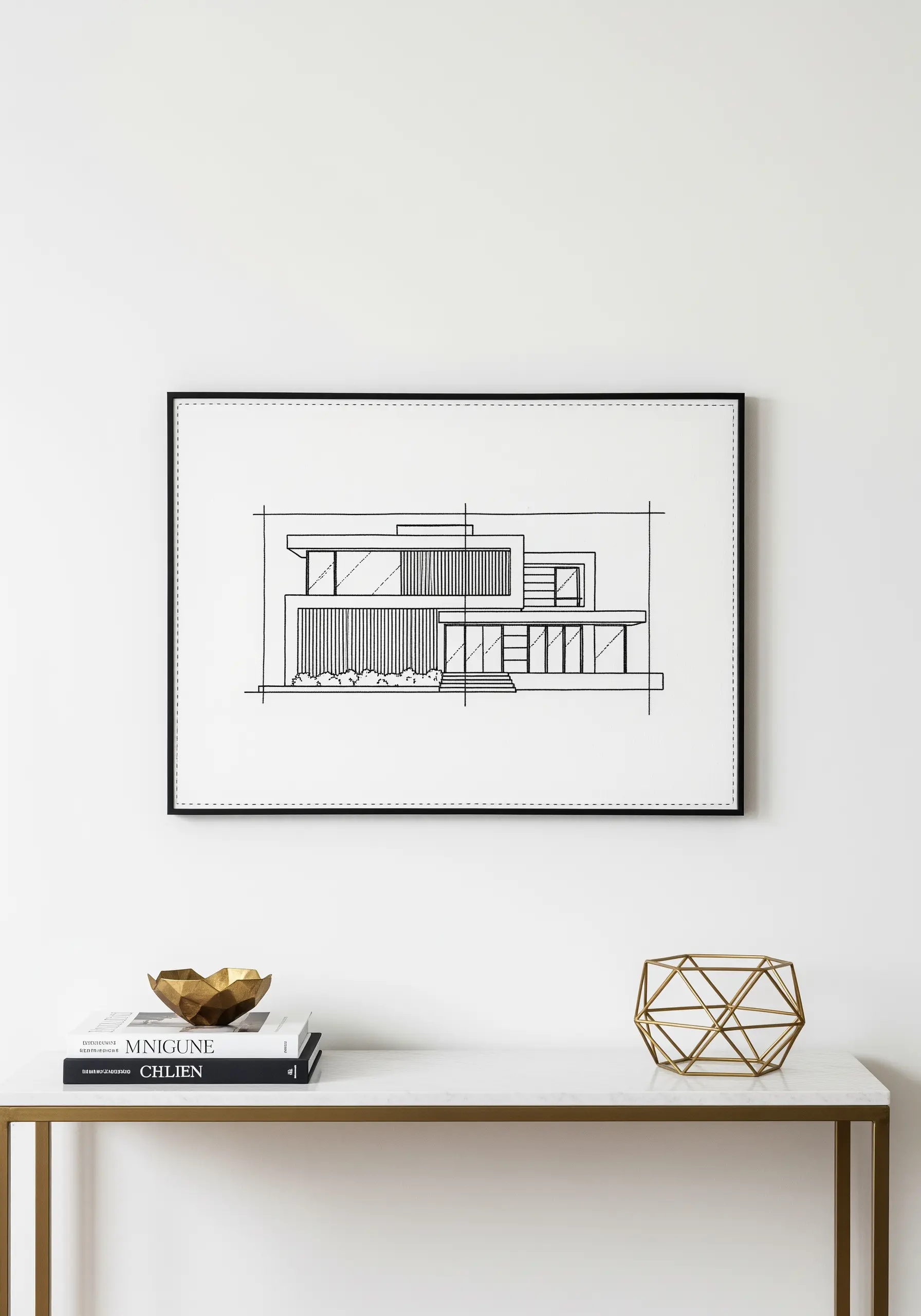
Transform an architectural drawing or a photo of your home into a piece of meaningful line art.
Trace the essential lines onto your fabric, simplifying complex details to their core geometric shapes.
For perfectly straight lines and sharp corners, use a split stitch or a two-sided insertion stitch, which provides more structure than a standard backstitch.
Adding a simple running stitch border around the piece gives it a finished, blueprint-like quality, turning a personal memory into a sophisticated work of art.
13. Play with Light on Sheer Fabric
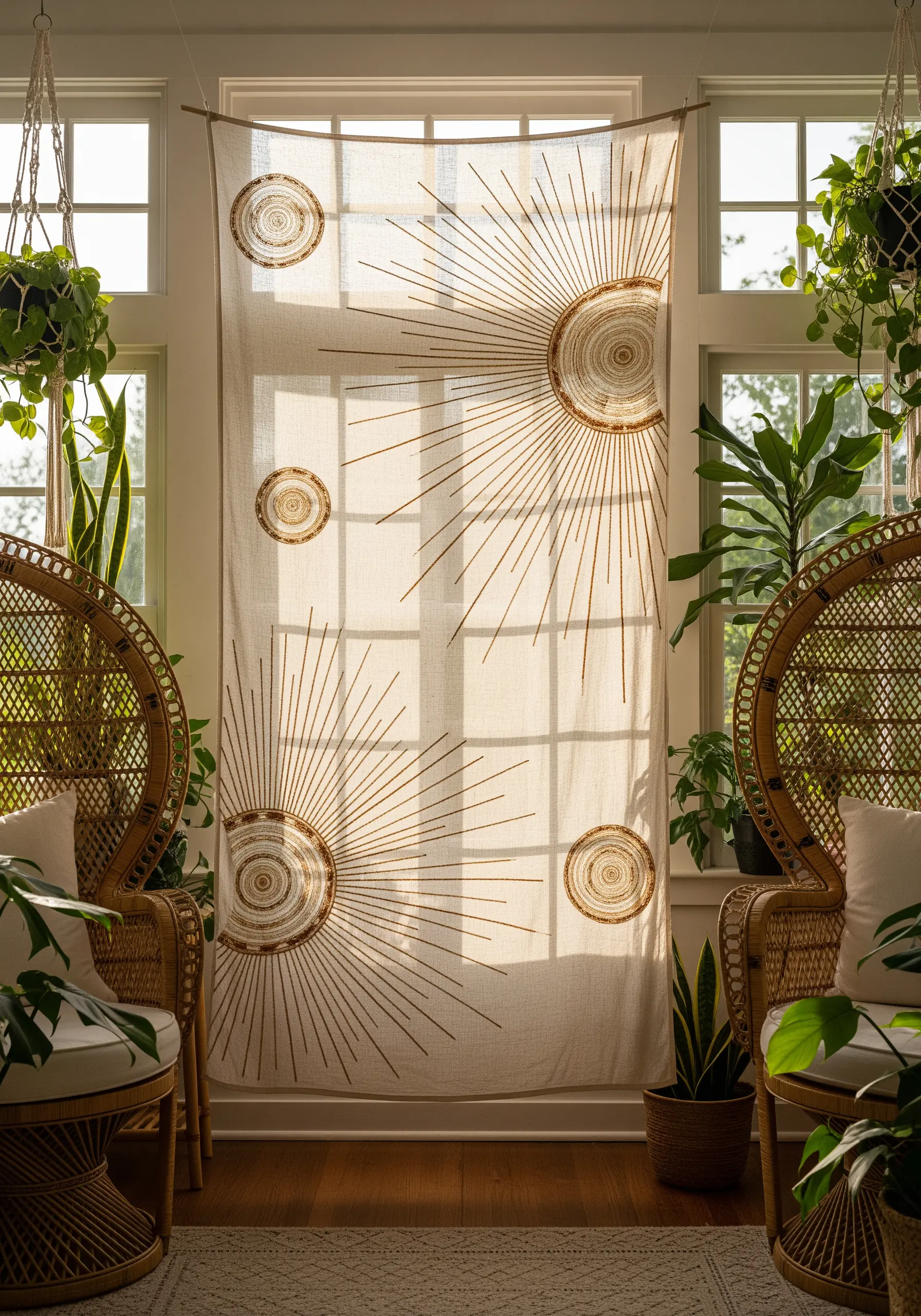
Embroider on translucent fabrics like linen gauze or organdy to create art that interacts with natural light.
Use radiating straight stitches and simple circular fills to create sun-like motifs that cast beautiful shadows.
A tear-away or water-soluble stabilizer is essential to prevent the delicate fabric from puckering while you work.
When hung in a window, the light filters through the negative space, making the embroidery appear to float and transforming the piece throughout the day.
14. Visualize Sound with Abstract Blocks
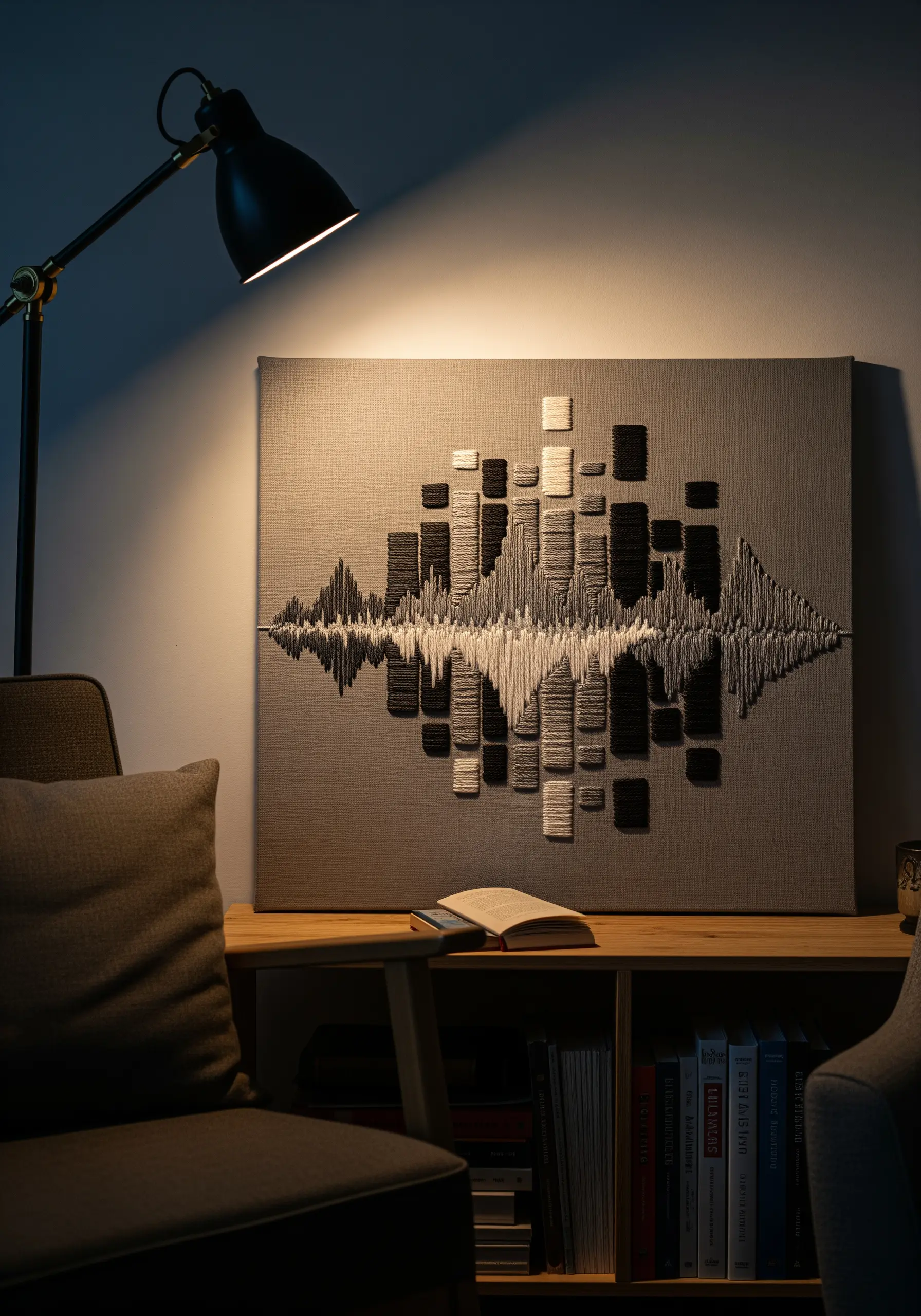
Turn a meaningful sound—like a voice memo or a favorite song clip—into a piece of abstract art.
Use a free audio editor to generate a visual waveform of your sound, then translate that shape into your design.
Represent the peaks and valleys with vertical satin stitch blocks of varying heights and shades of grey, black, and white.
This technique turns invisible data into a tangible, textured object, creating one of the most personal abstract thread embroidery projects you can make.
15. Weave a Mandala with Dimensional Knots
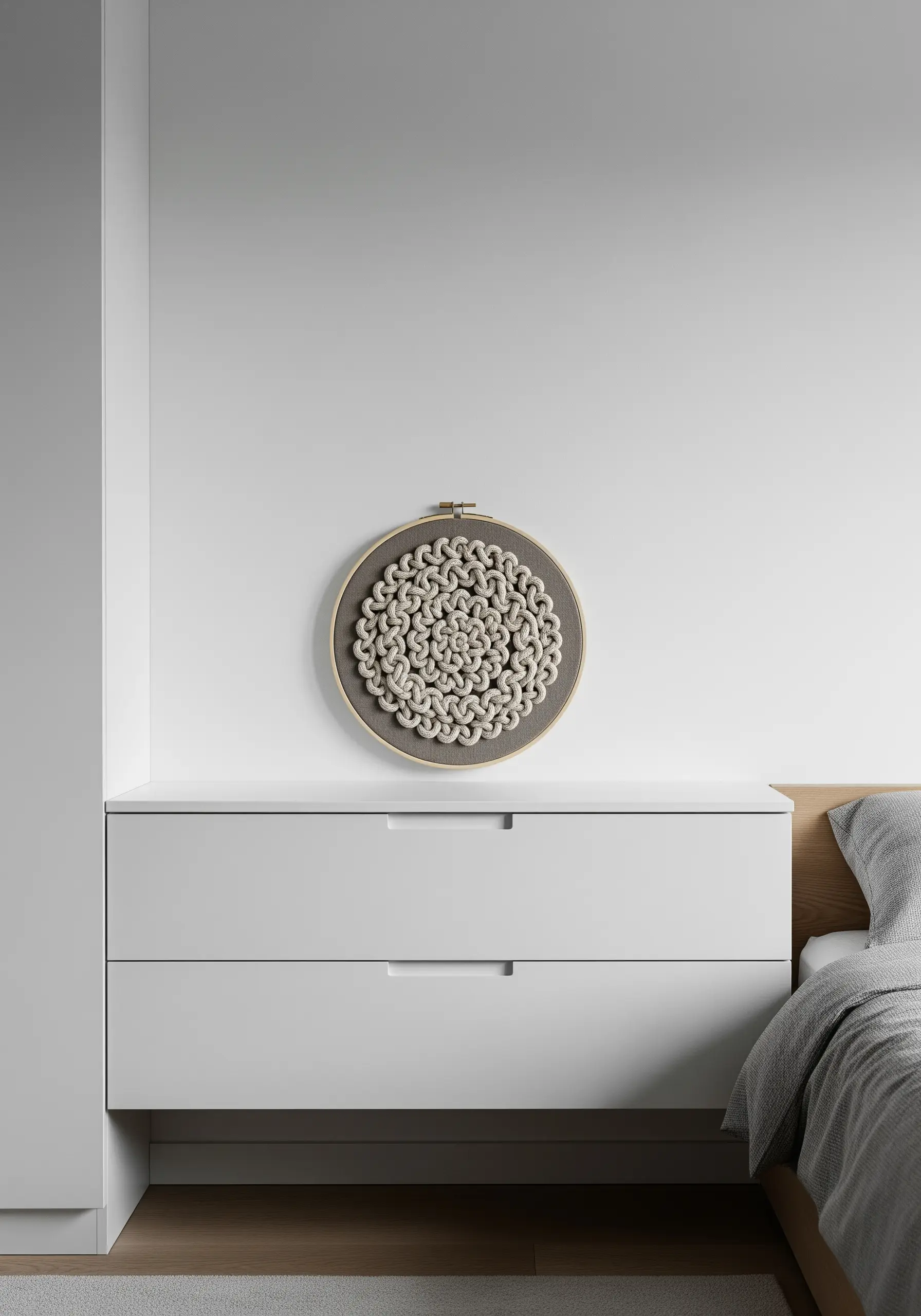
Create a highly textural, mandala-like design using knots instead of traditional stitches.
Master the bullion knot or a macrame-style Josephine knot to build raised, woven patterns on your fabric.
Use a thicker thread, like pearl cotton size 5 or even fine cord, to give the knots structure and volume.
The result is a tactile, sculptural piece that blends the meditative quality of mandalas with the rustic appeal of woven fiber art, creating a perfect piece of modern thread mandala art.
16. Master Precision with Geometric Color Blocking
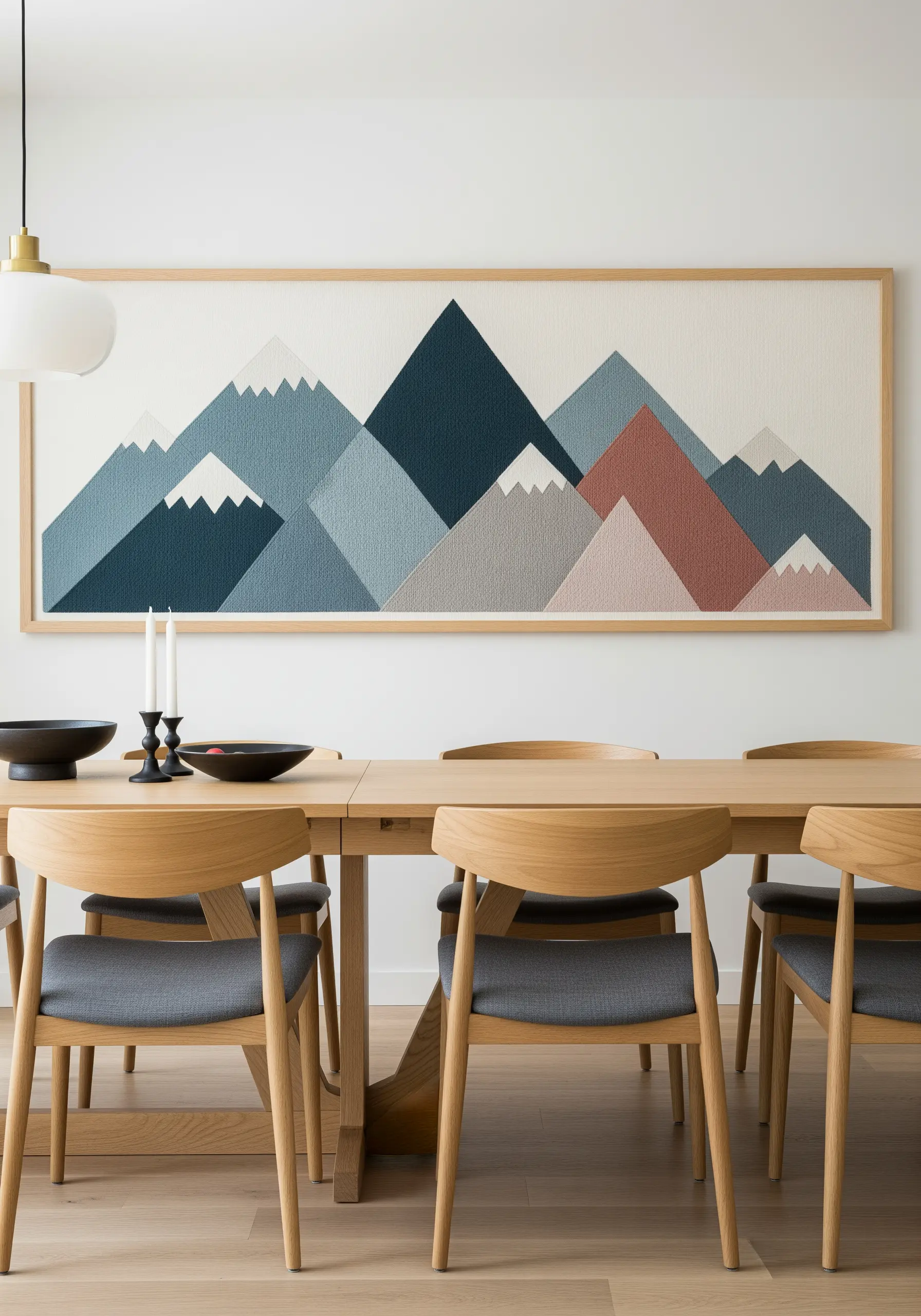
Achieve a crisp, graphic style by filling large geometric shapes with perfectly smooth satin stitch.
To keep the edges sharp, outline each shape with a split stitch before filling it in. This creates a raised border that your satin stitches can tuck into neatly.
Use a palette of muted, earthy tones with a single pop of color, like dusty rose against blues and greys, to create a focal point.
Vary the direction of your satin stitch in adjacent shapes to create a subtle play of light and shadow, adding depth to the flat design.
17. Create Dramatic Contrast with Lunar Phases
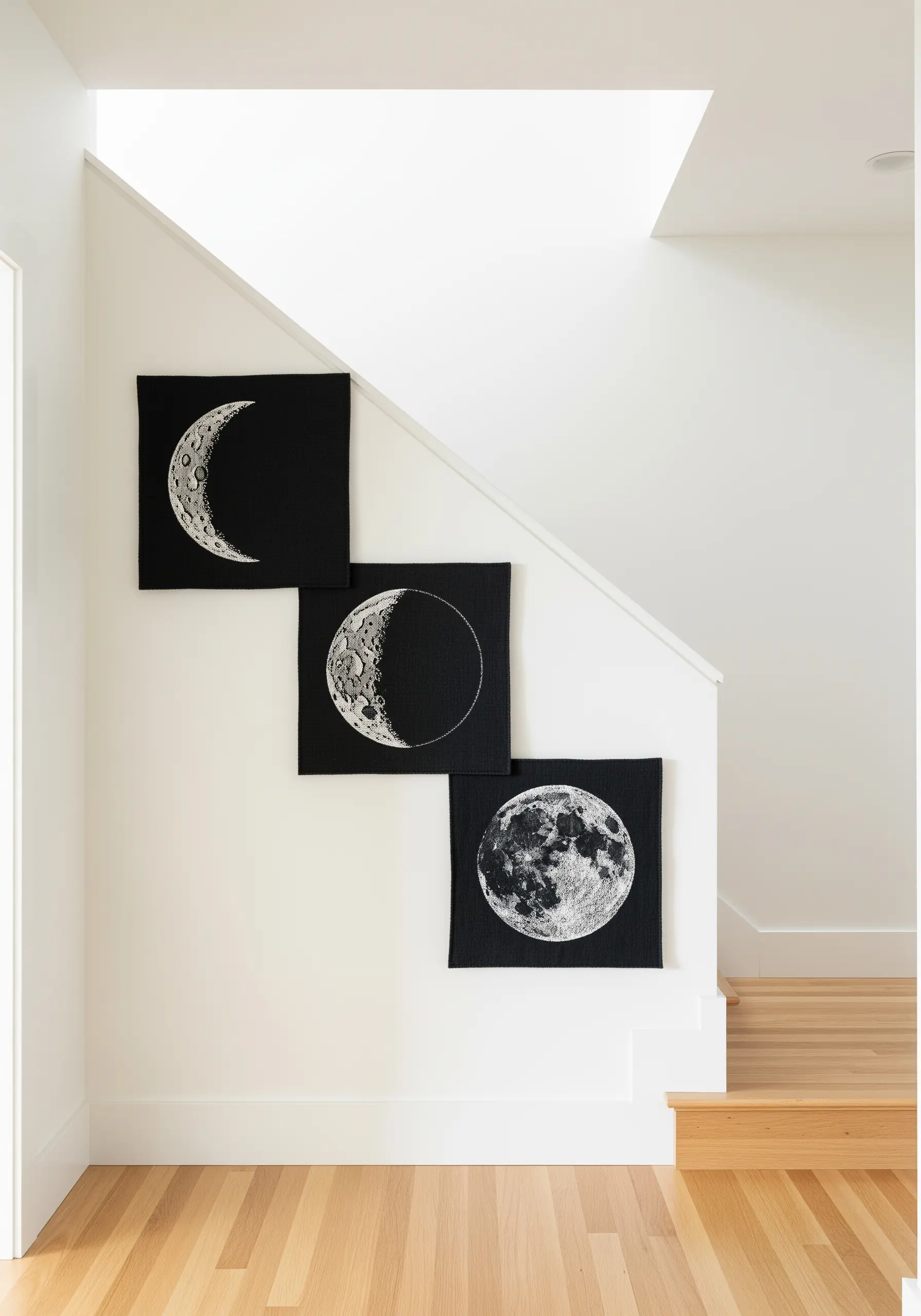
Explore the challenge of stitching light thread on dark fabric to create a striking celestial series.
To make white or silver thread pop against a black background, use a backing layer or stitch each line twice to ensure full coverage.
Create the textured surface of the moon by filling the shape with a dense, chaotic mix of French knots and tiny straight stitches in white, light grey, and metallic silver.
This technique creates a photorealistic effect that makes the embroidery feel almost luminous, perfect for minimal sky and moon designs.
18. Capture Form with Single-Line Figure Studies
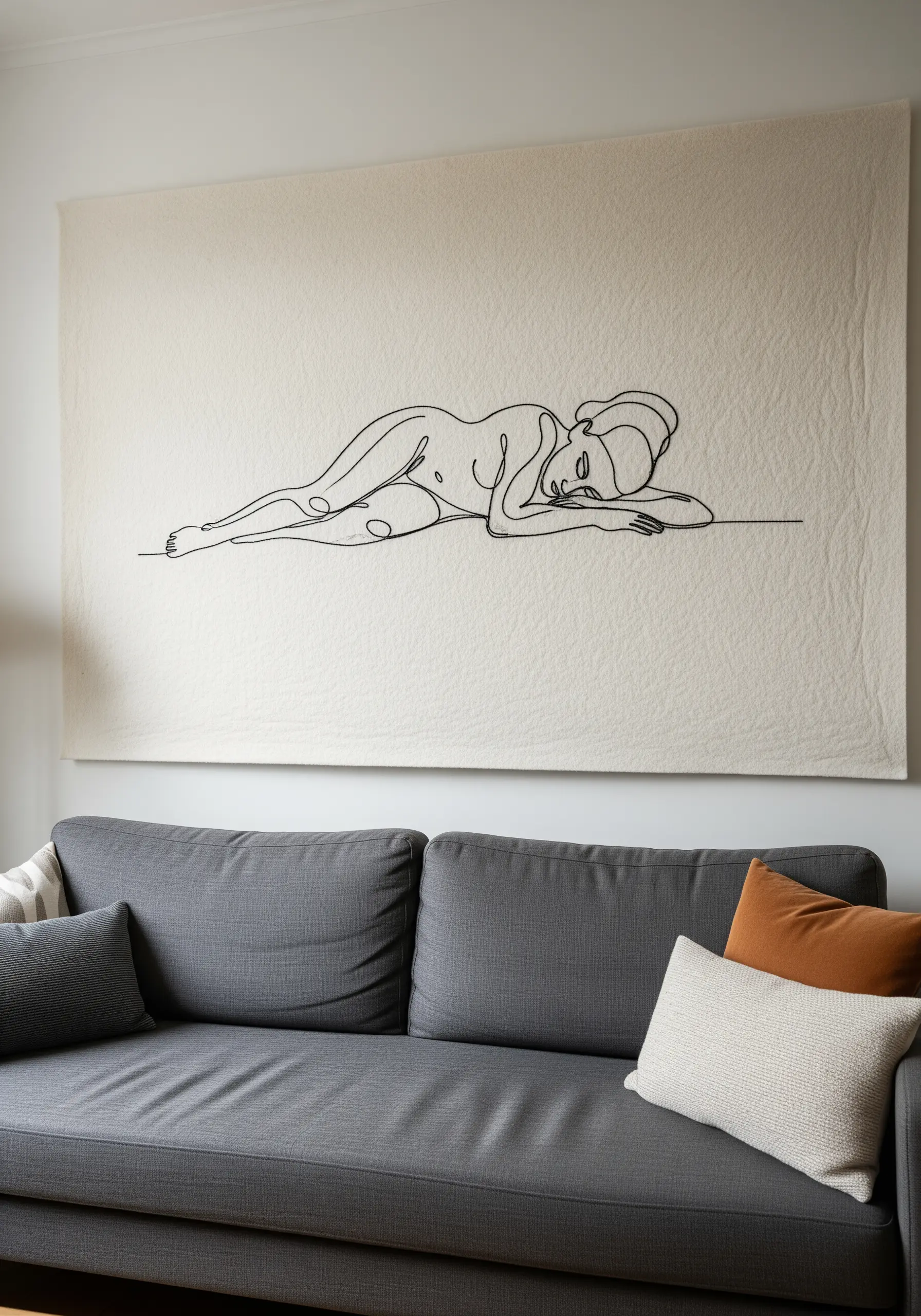
Embrace the ultimate form of minimalism by rendering a human figure with a single, unbroken line of thread.
To create a fluid line that doesn’t snag or break, use a whipped backstitch. This involves completing a standard backstitch outline and then lacing a second thread through it without piercing the fabric.
This technique smooths out the segmented look of a backstitch, resulting in a clean, continuous contour that feels graceful and intentional.
It’s the perfect way to create minimal portrait line embroidery with a sophisticated, artistic edge.
19. Imply Depth and Perspective in a Flat Motif
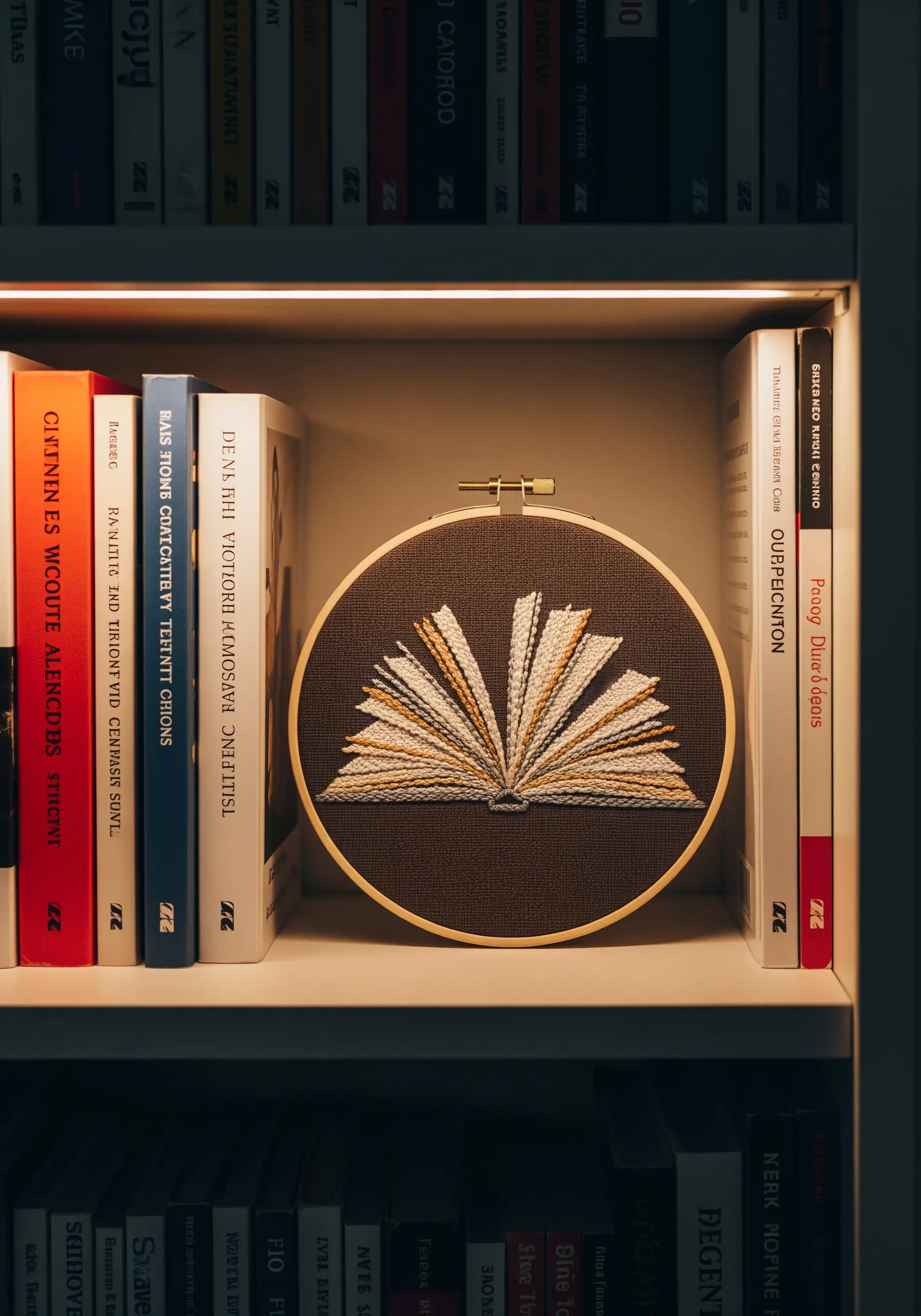
Make a simple object, like an open book, appear three-dimensional using clever stitching and color choices.
Use directional satin stitches for the pages, angling them outwards from the central spine to create a fanned effect.
Incorporate several shades of off-white, cream, and pale gold, stitching them in thin vertical stripes to mimic the shadows between pages.
This subtle color variation and shift in stitch angle tricks the eye into seeing depth and layers, transforming a flat motif into a dynamic object.
20. Define Space with Repetitive Geometric Symbols
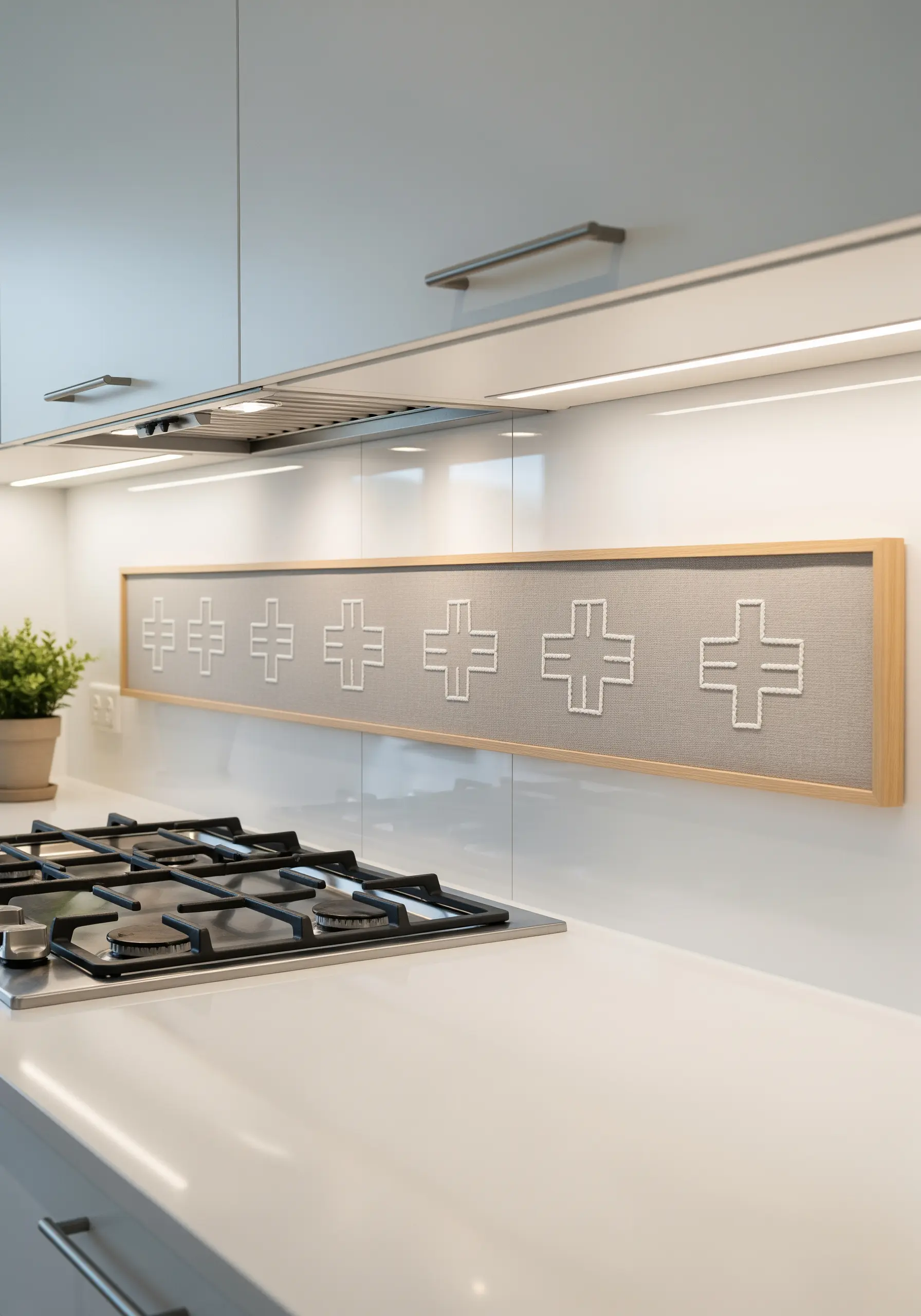
Create a calming, rhythmic piece of art by repeating a single, simple geometric motif across a long panel.
Choose a symbol that holds personal meaning or simply appeals to your aesthetic, like a plus sign or a simplified cross.
Use a highly textural stitch, such as dense French knots or seed stitch, to fill the shapes. This gives the simple pattern a tactile quality.
The negative space between each symbol is just as important as the stitches themselves, creating a balanced and meditative composition that’s perfect for a kitchen or hallway.
21. Embrace Subtlety with Tone-on-Tone Stitching
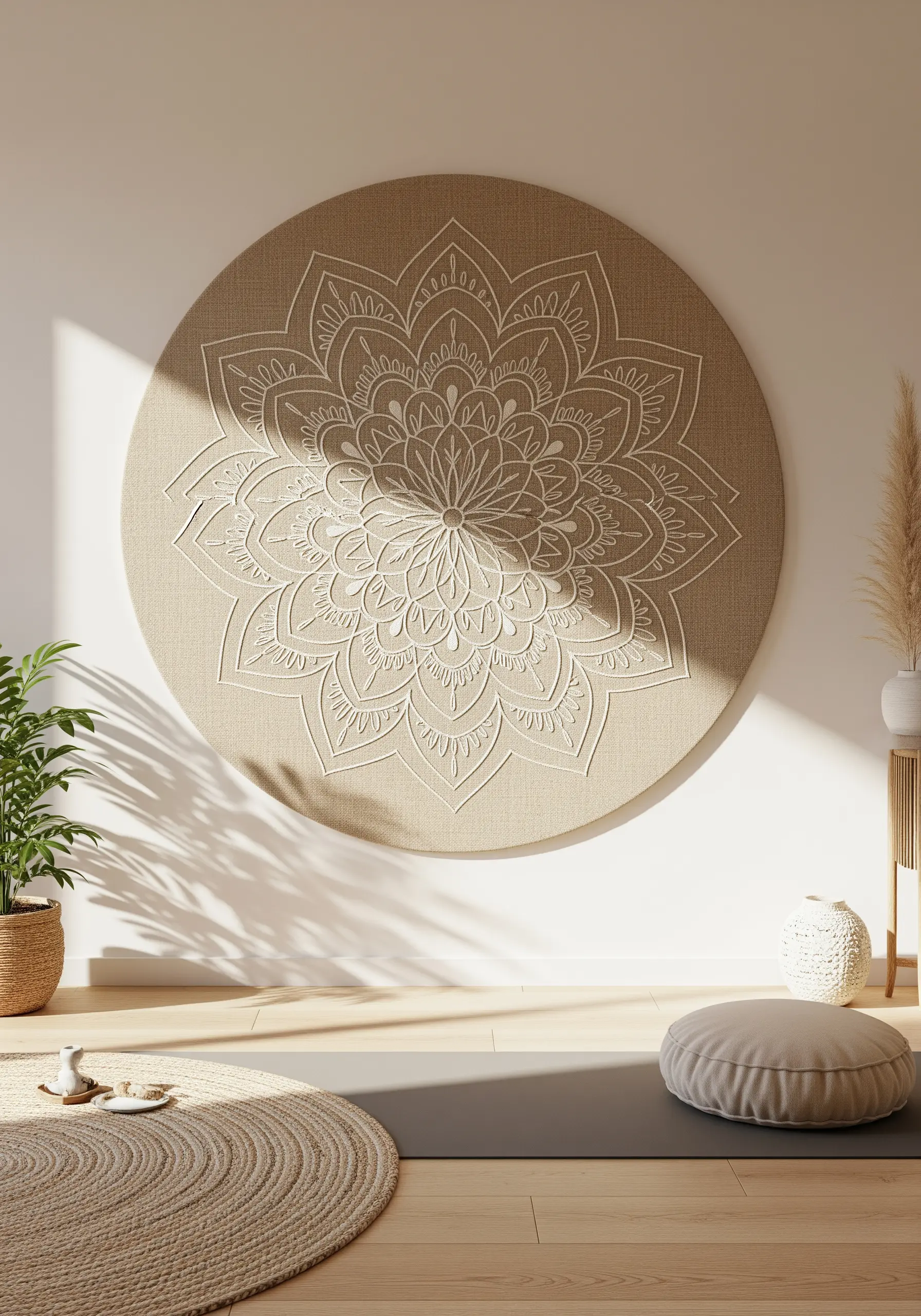
Explore the quiet beauty of stitching with thread that is only a shade or two lighter than your fabric.
Working tone-on-tone—like ivory on natural burlap—shifts the focus from color to texture and light.
The design becomes a subtle relief that catches the light, revealing its intricate details only upon closer inspection.
Use a raised stitch like a stem stitch or chain stitch to help the outline stand out from the textured background, creating a piece of art that is incredibly serene and sophisticated.
22. Elevate Simple Icons with Padded Satin Stitch
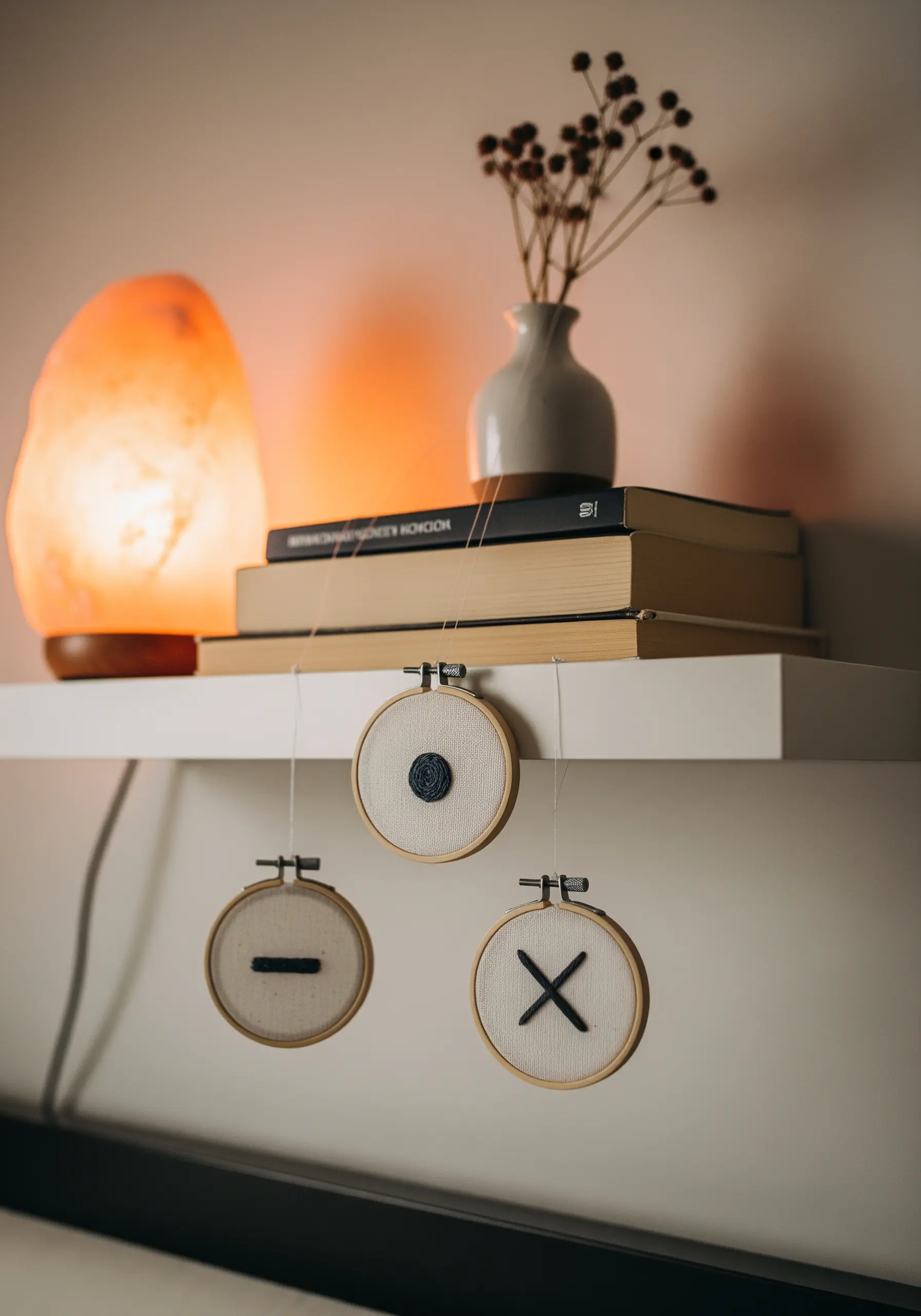
Turn basic symbols into polished, three-dimensional emblems using padded satin stitch.
Before you begin your satin stitch, fill the shape with a layer of small underlying stitches (like seed stitch or a spiral of split stitch).
When you stitch your satin stitch over this padded base, the shape will be raised from the fabric, giving it a satisfying, button-like dimension and a professional sheen.
This technique is perfect for making small hoop embroidery feel substantial and luxurious.
23. Design a Dramatic, Large-Scale Fiber Tapestry
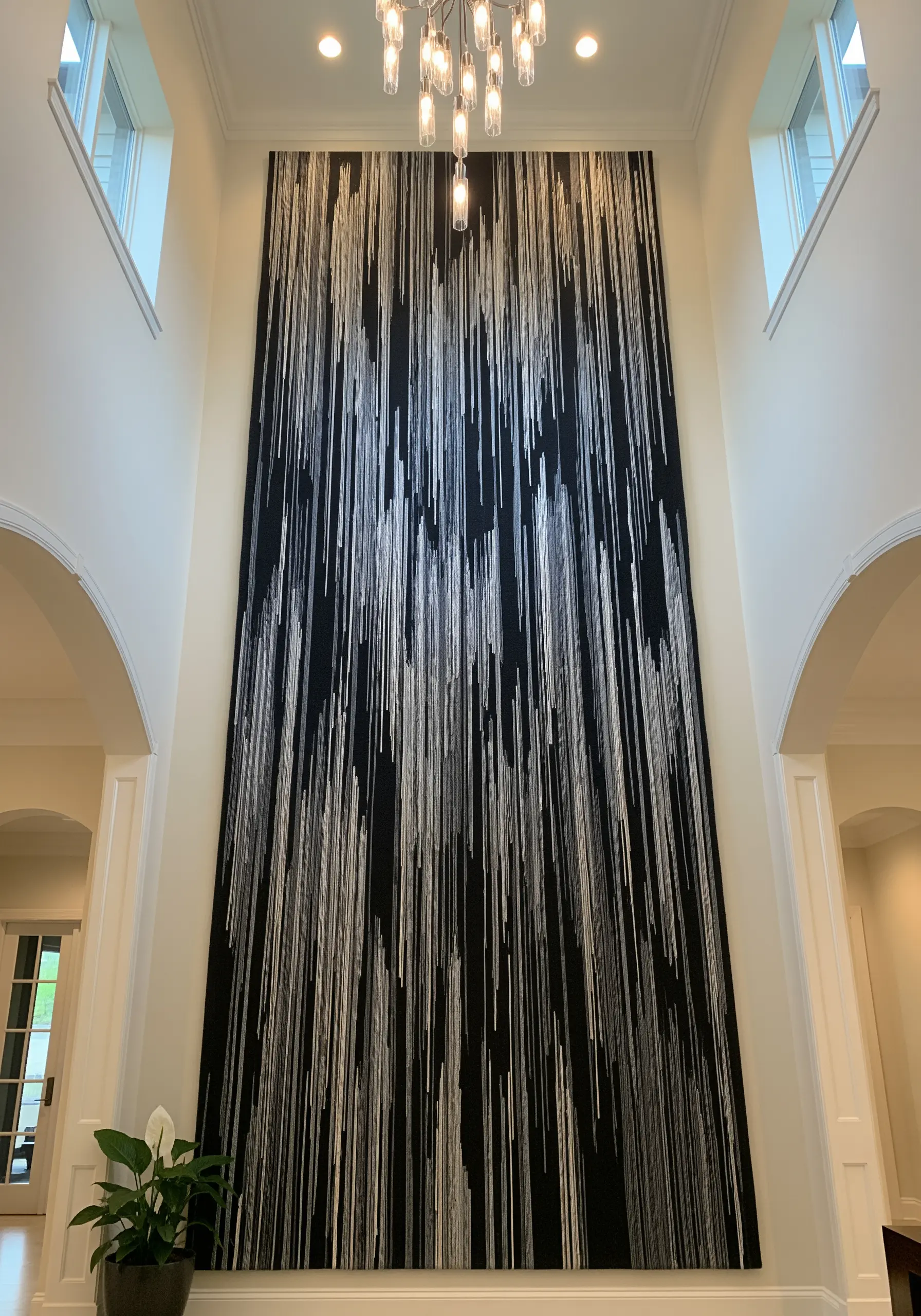
Make a bold statement in a large space by creating an oversized textural tapestry.
Work on a piece of heavy black canvas and use thick, variegated threads in white, silver, and grey to create a rain-like effect.
Instead of stitching, try couching down bundles of thread with a sewing machine or by hand to cover large areas quickly.
This method allows you to build dense layers of vertical lines that play with light and create a sense of movement, turning an entire wall into a dramatic focal point.
24. Stitch a Personal Narrative with Map Embroidery
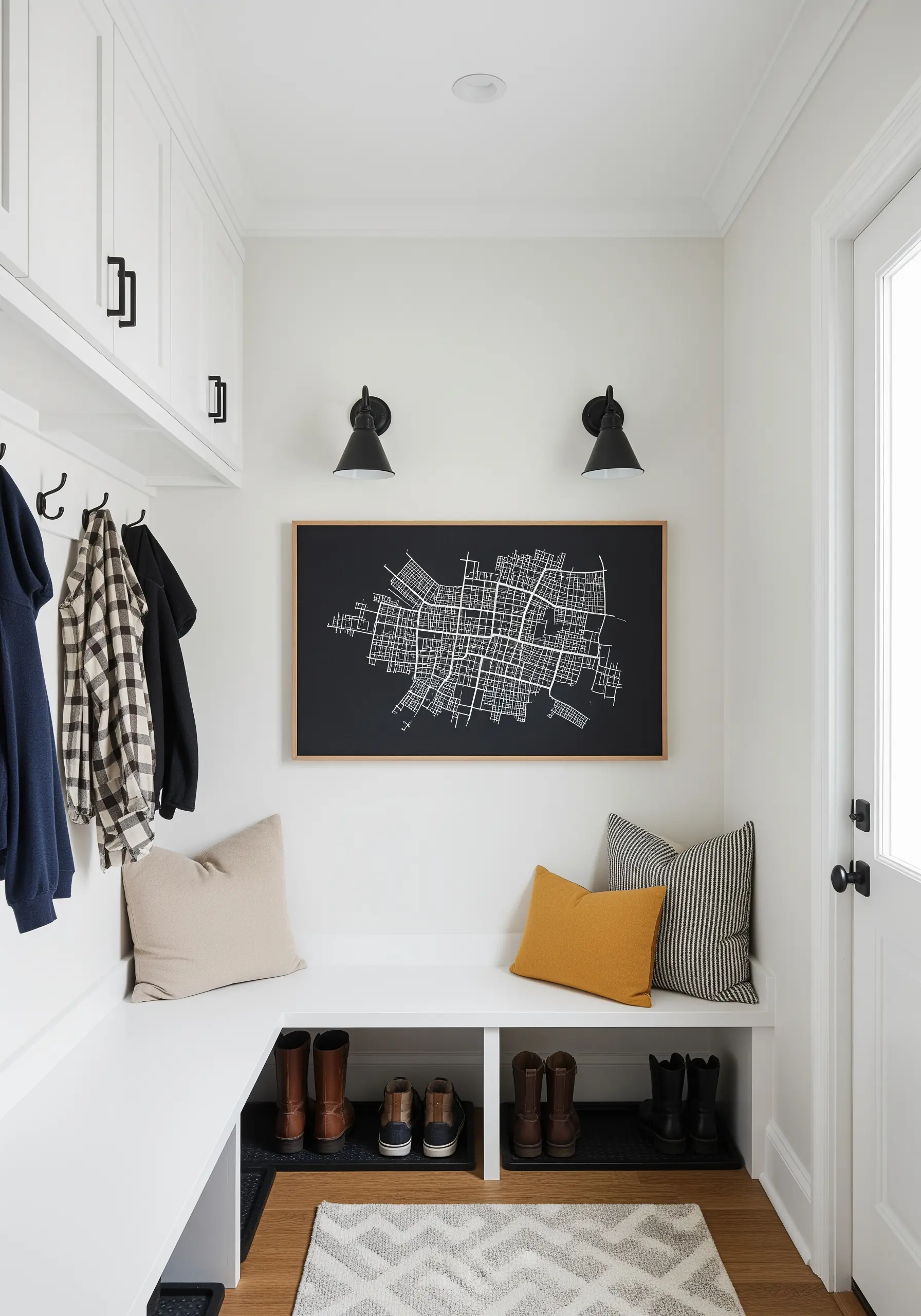
Immortalize a meaningful place—like your hometown or a favorite travel destination—by embroidering its map.
Print a simplified map onto a water-soluble stabilizer, iron it onto your fabric, and stitch directly over the lines.
Use a single strand of white floss on black fabric with a simple backstitch for a crisp, high-contrast look.
Once you’re finished, dissolve the stabilizer in water, leaving only your intricate, stitched street grid. It’s a way to create minimal embroidery accents that are deeply personal.
25. Refine Organic Outlines with Whipped Stitches
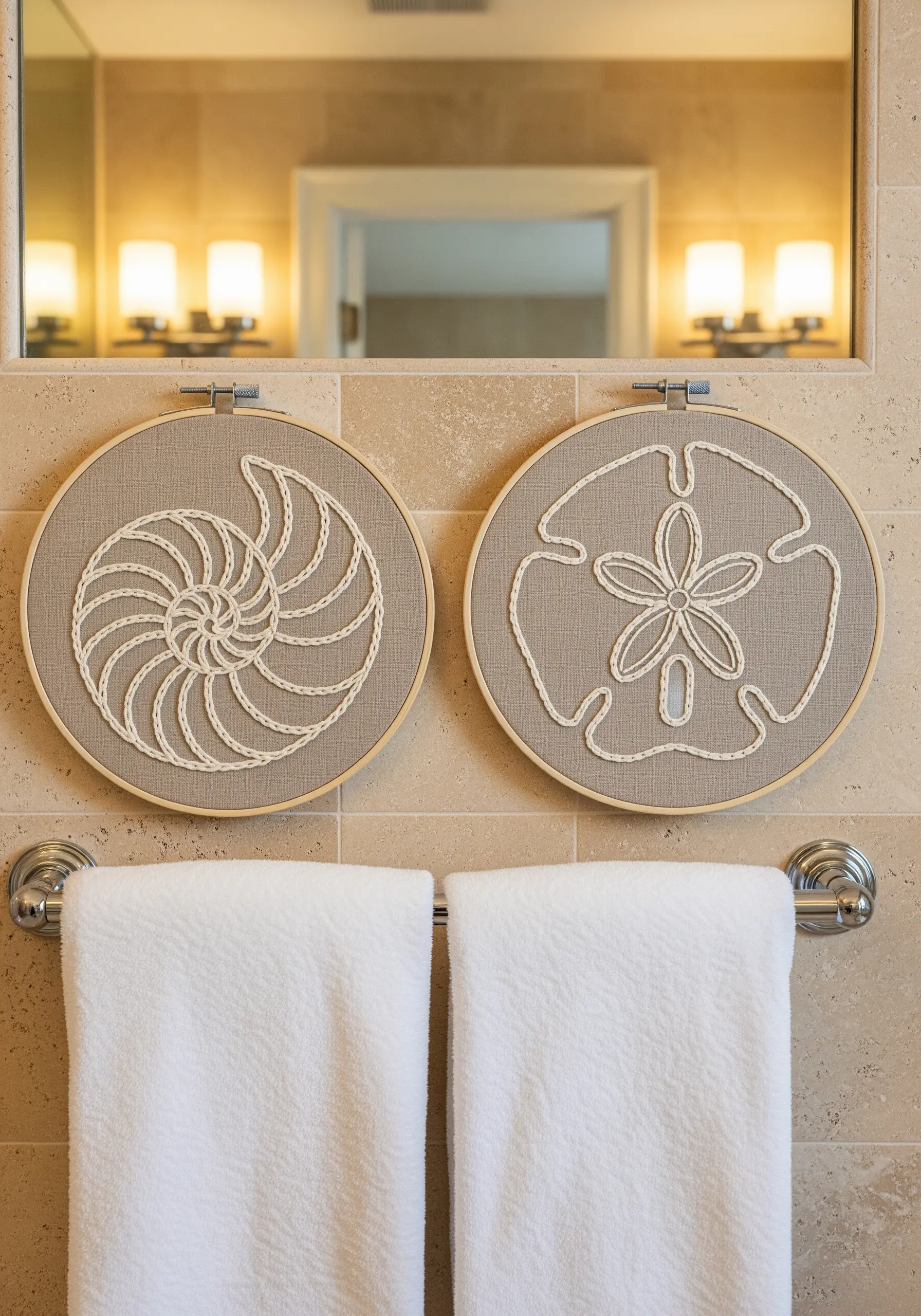
Capture the delicate, flowing lines of natural objects like shells and fossils with a raised, smooth outline.
Use a whipped chain stitch or a whipped stem stitch to create a rounded, cord-like effect that stands out beautifully against linen fabric.
The whipping motion (lacing a second thread through the base stitch) conceals the individual stitches, resulting in a single, unbroken contour.
This technique is perfect for giving organic shapes a clean, defined, and sculptural edge, ideal for coastal-inspired embroidery projects.
26. Create Floating Designs on Transparent Mesh
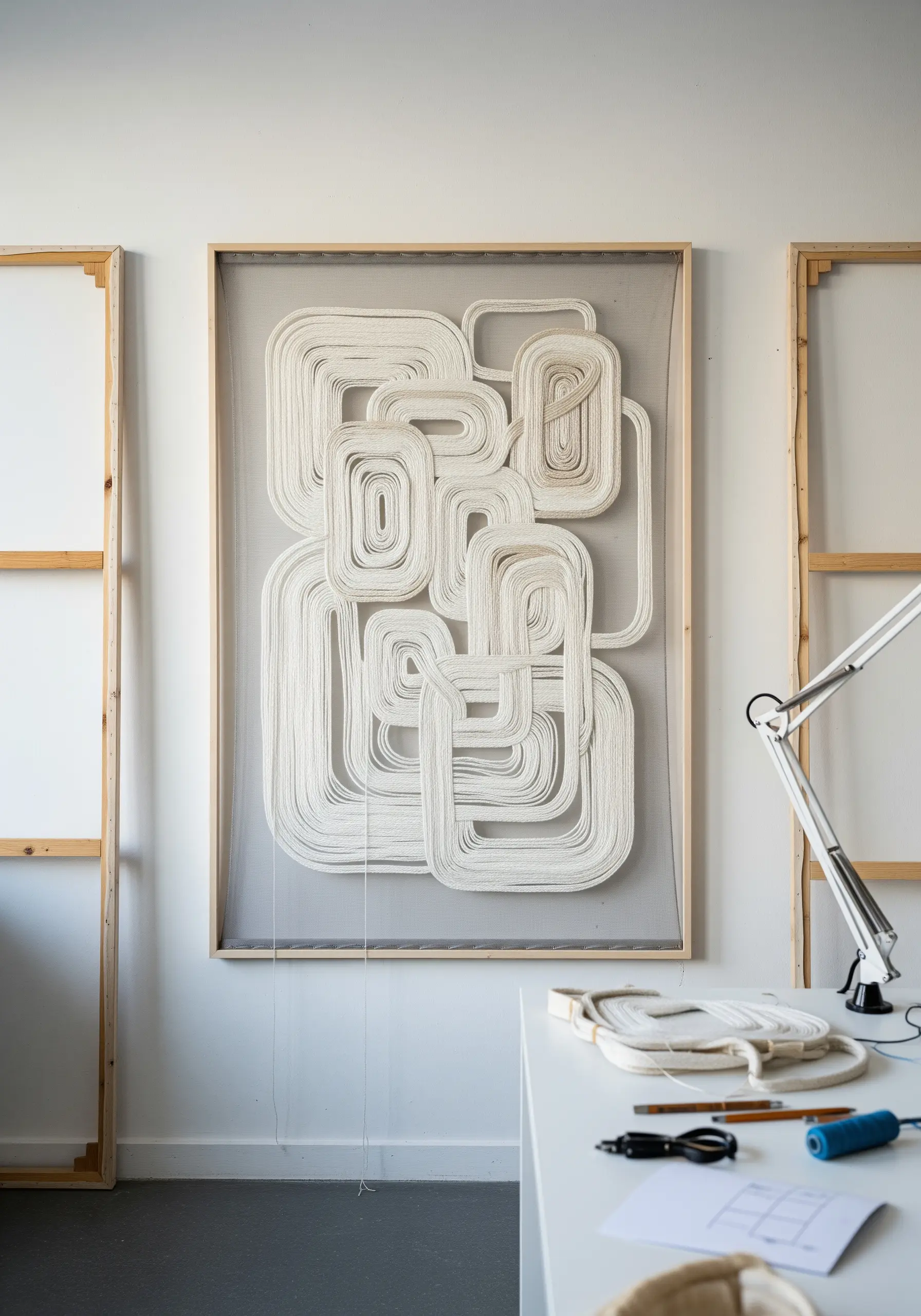
Experiment with stitching on unconventional surfaces like fine mesh or tulle to create an ethereal, floating effect.
Use a thick, cord-like thread that can support its own shape, wrapping and couching it onto the mesh stretched within a frame.
The transparent background disappears when hung on a wall, making the threads appear suspended in mid-air.
This advanced technique challenges your understanding of tension and support, resulting in a truly unique piece of modern thread art.
27. Achieve Plush Texture with Punch Needle
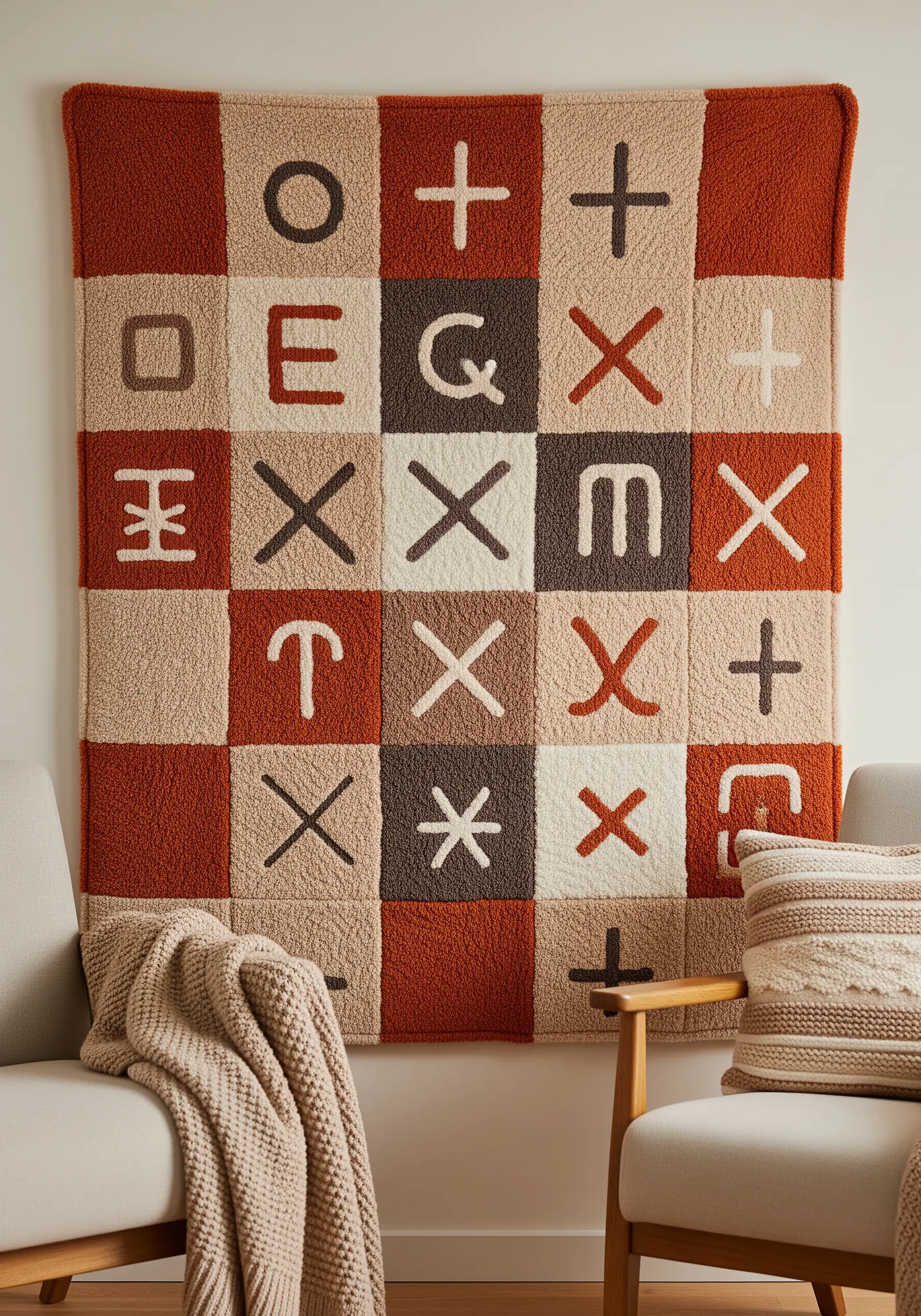
For a rich, rug-like texture, switch from a needle to a punch needle tool.
This technique creates dense loops of yarn on the front of your fabric, allowing you to fill large areas with plush, satisfying texture quickly.
Design a grid-based pattern with simple symbols or letters to keep the focus on the tactile quality of the piece.
Using a warm, earthy palette of rust, brown, and cream enhances the cozy, handmade feel, making it perfect for a comfortable living space.
28. Suggest Form with an Abstract Skyline
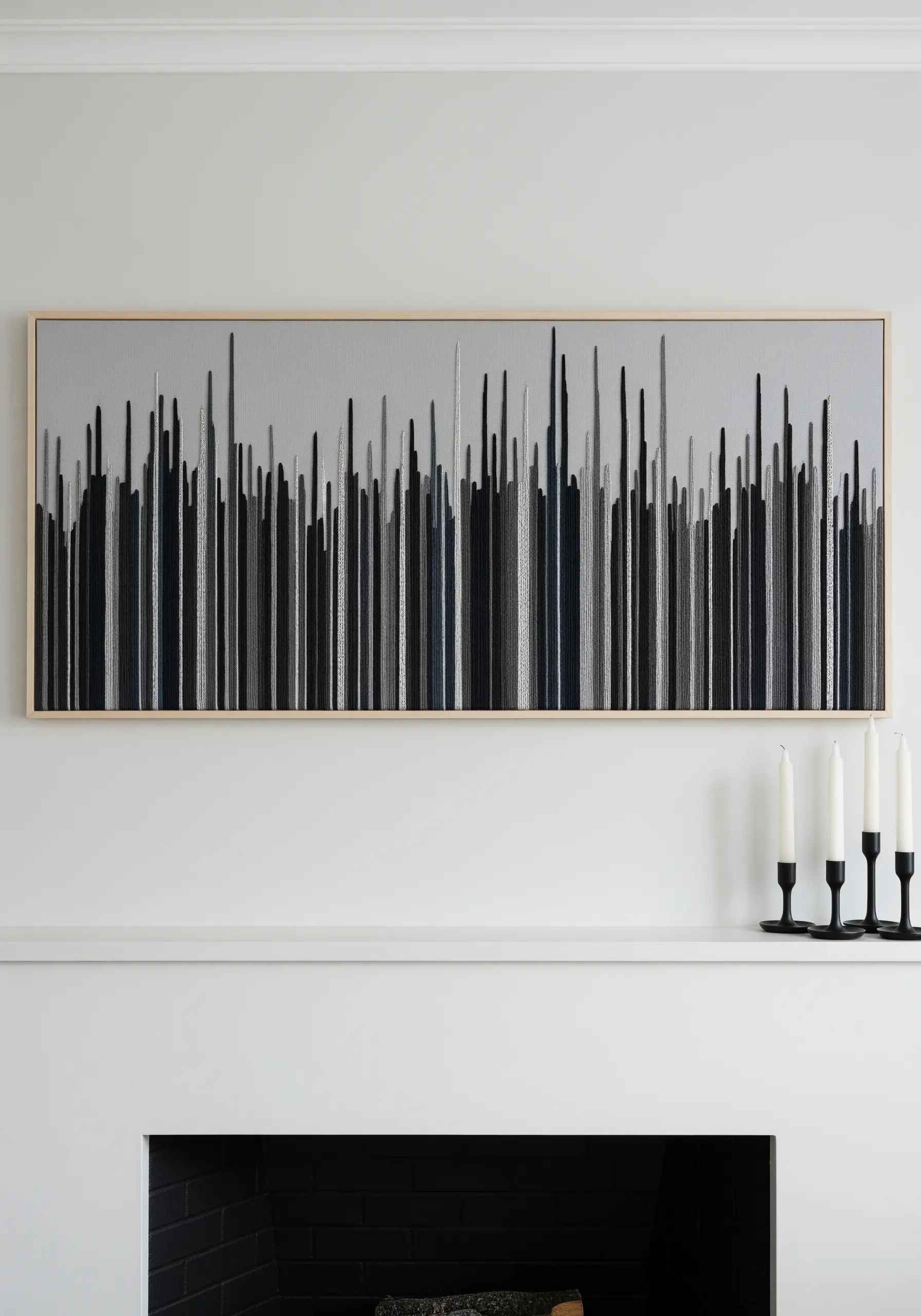
Create the impression of a city skyline without stitching a single building.
Use vertical satin stitches in varying heights and a monochromatic palette of black, charcoal, and grey to represent an urban landscape.
Slightly blend the thread colors where the stitches meet to create a soft, almost atmospheric effect.
This minimalist approach captures the energy and density of a city while remaining a sophisticated, abstract thread landscape suitable for any modern interior.


