You’ve mastered the fundamentals, and now you’re looking for what’s next. The future of embroidery isn’t just about learning a new stitch—it’s about redefining what can be stitched. It’s about looking at the world of materials around you and seeing not just thread, but texture, light, and form.
Consider the iridescent shimmer of a discarded CD, the rigid structure of electronic components, or the slick surface of a plastic wrapper. These are your new materials. By combining them with traditional threads, you can create art that feels truly contemporary, telling stories of technology, consumption, and reinvention.
This collection is designed to shift your perspective. You’ll see how simple techniques like couching, appliqué, and basic straight stitches can be used to control and celebrate these unconventional materials. It’s time to move beyond the floss and see your needle as a tool for assemblage, sculpture, and futuristic expression.
1. Circuit Board Couture: Stitching with E-Waste
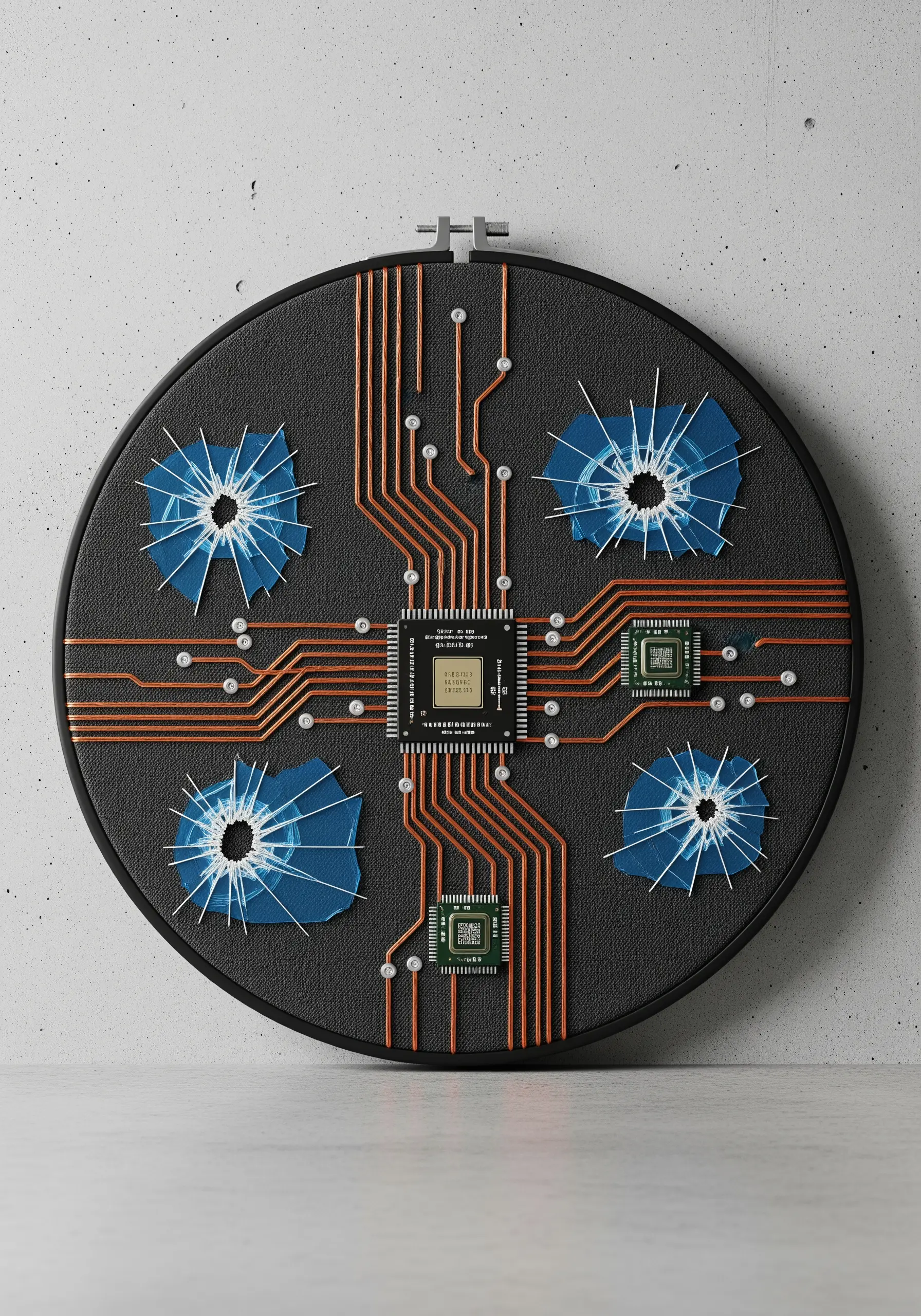
Create the precise lines of a circuit board using a couching stitch with a thick, copper-colored metallic cord.
Source non-functional microchips from old electronics and secure them with tiny, discreet stitches at their corners to serve as focal points.
For the ‘glitch’ effect, layer and stitch down fragments of iridescent blue plastic or cellophane.
This contrast between rigid technology and deconstructed texture creates a powerful visual narrative about our relationship with hardware.
2. Holographic Rain: Weaving with Light on Sheer Fabric
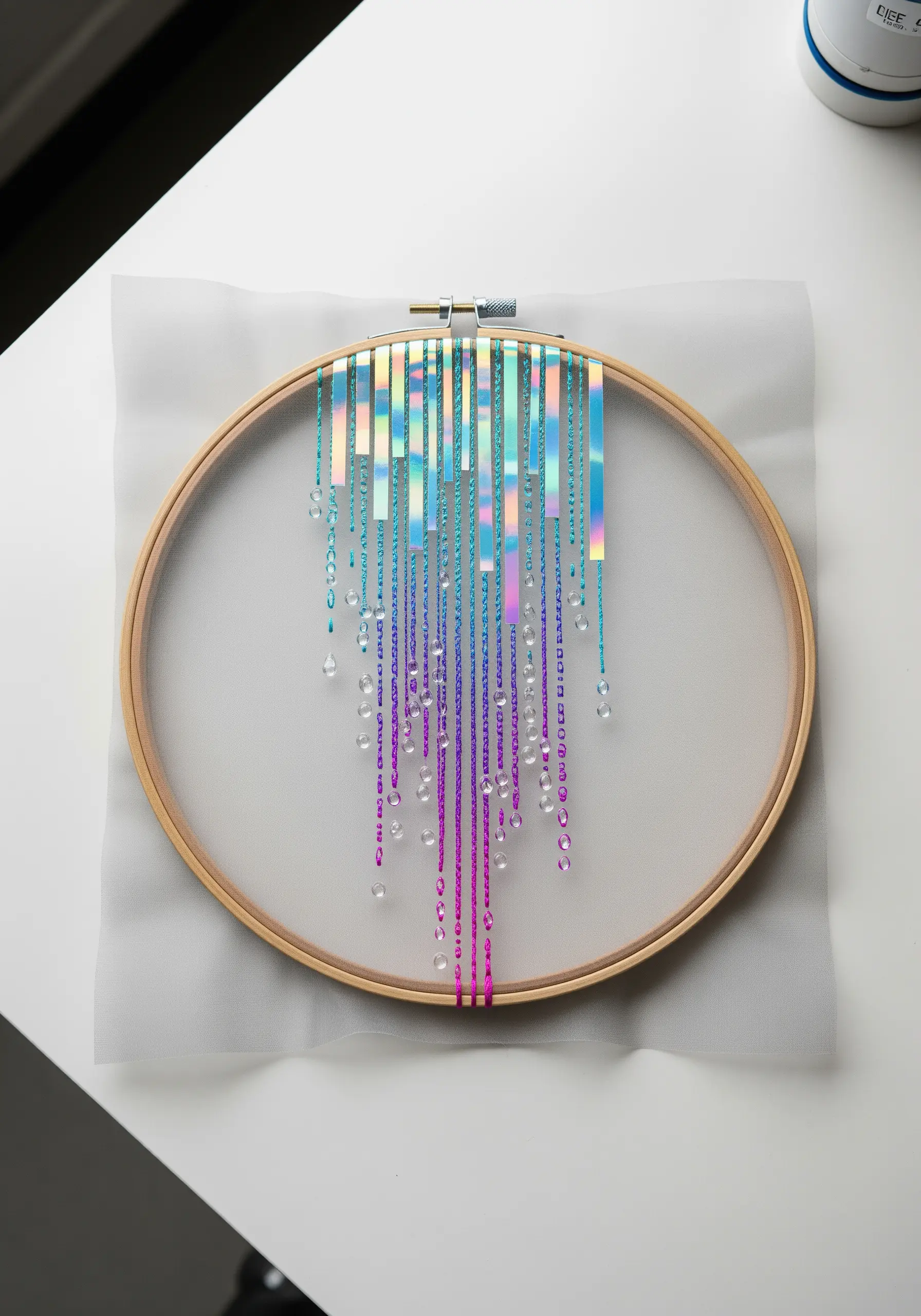
Work on a sheer organza or tulle base to give your materials a floating, ethereal quality.
Cut thin strips from holographic gift wrap or iridescent cellophane film.
Secure them at the top of your hoop with a simple running stitch, then intersperse them with delicate strands of clear and iridescent seed beads.
By varying the lengths of the strips and bead strands, you create a dynamic waterfall illusion that catches and refracts light beautifully.
3. Cyberpunk Tapestry: Dimensional Cityscapes with Found Objects
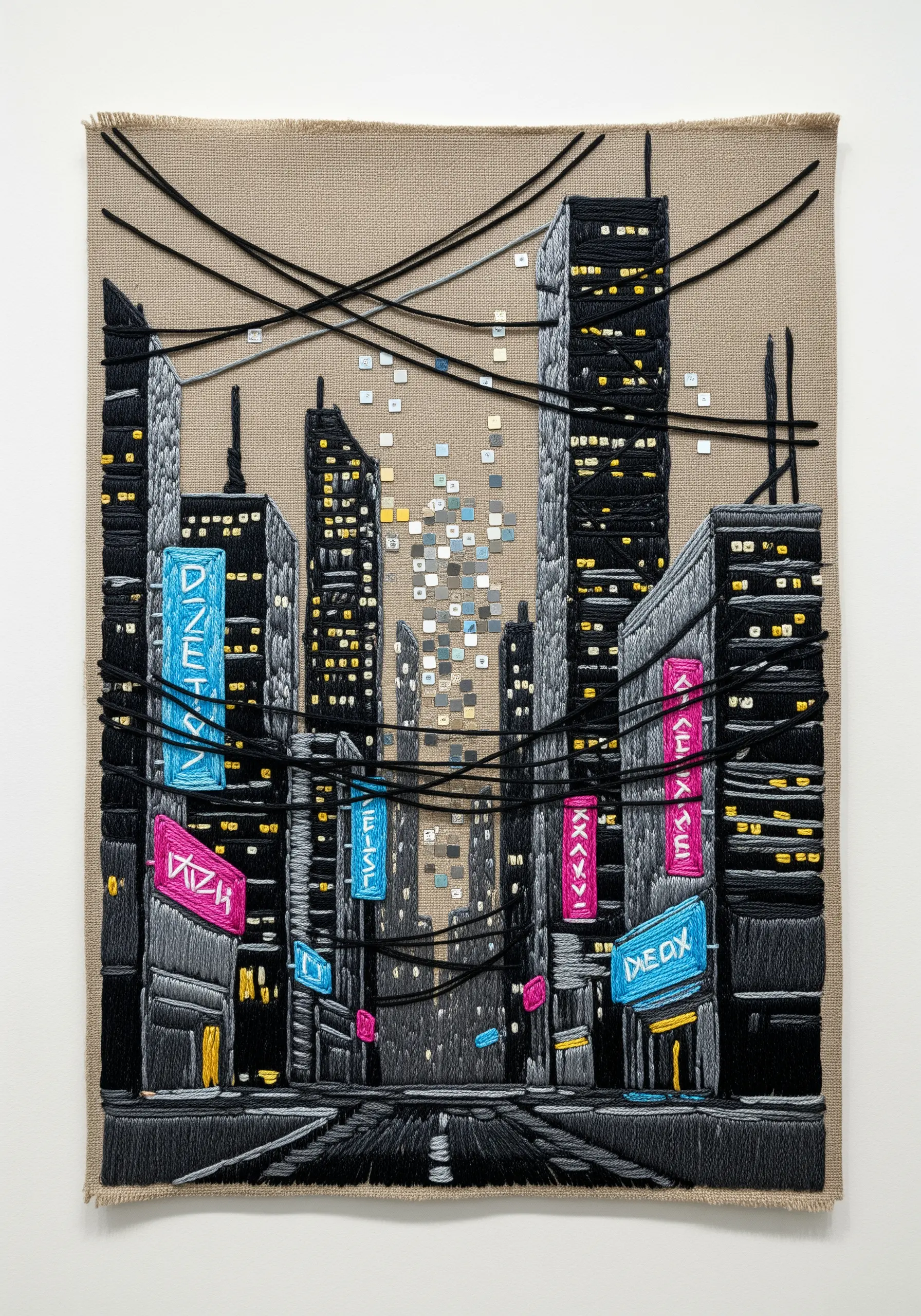
Build visual depth by using threads of varying weights—couch down thick black yarn for foreground cables and use single-strand floss for distant building outlines.
For the glowing windows, stitch down tiny squares of metallic confetti or cut-up mylar with a single seed bead in the center.
The sharp contrast between the matte thread of the buildings and the high-shine reflective windows perfectly mimics the gritty glow of a futuristic city at night.
4. Techno-Botanicals: Sculpting with Wire and Synthetic Ribbon
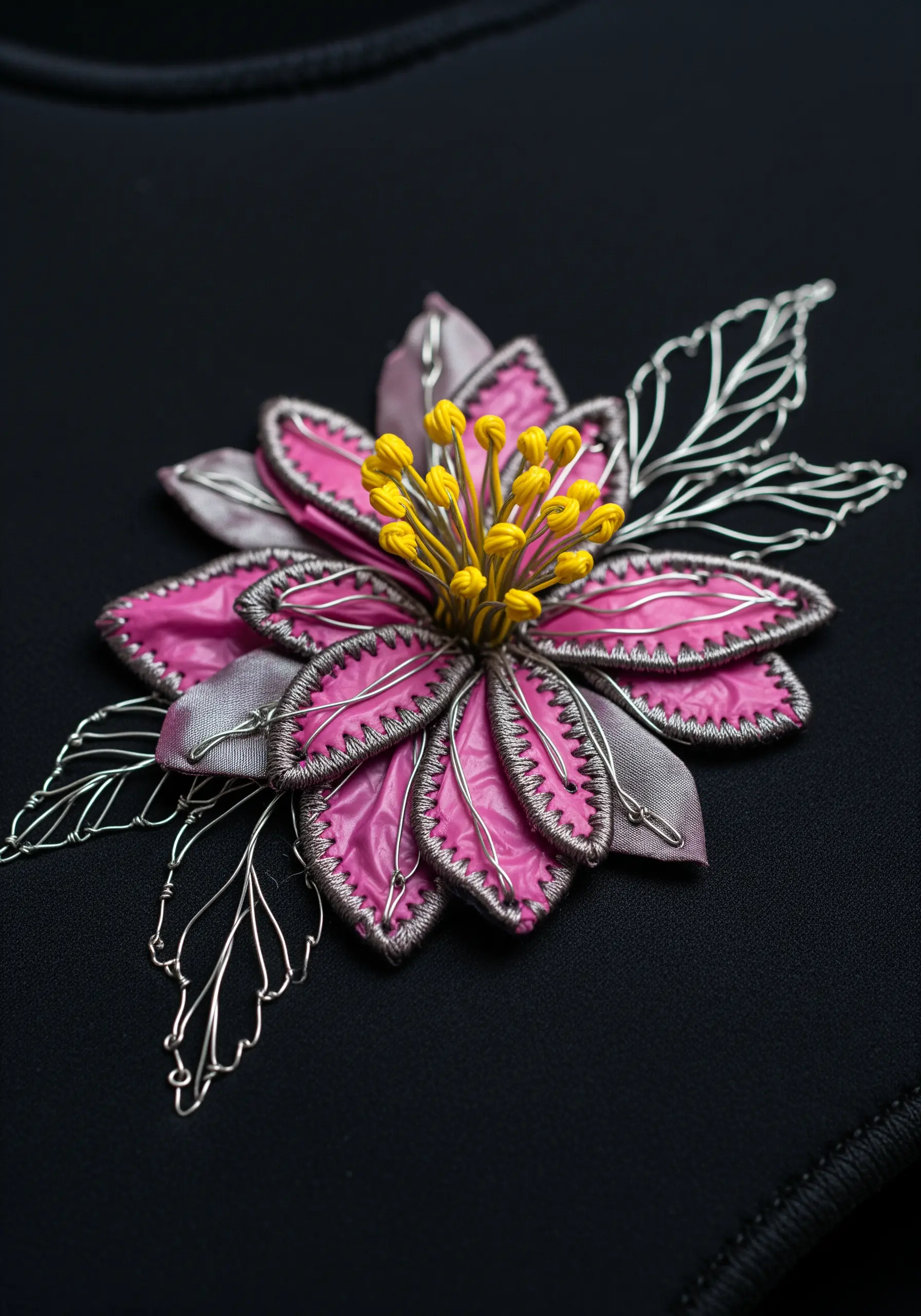
Begin by forming a delicate frame for each petal and leaf using a fine-gauge, pliable silver wire.
Next, wrap or couch a vibrant synthetic ribbon—like vinyl or a plasticized fabric—onto the wire frame to create the petal’s body.
Use a contrasting metallic thread for the couching stitches, turning a functional stitch into a decorative, mechanical-looking detail.
This technique transforms flat materials into a stunning 3D floral embroidery sculpture.
5. Glitch Portraiture: Deconstructing Form with Floating Stitches

Instead of using traditional satin stitch to fill shapes, employ long, detached straight stitches that extend beyond the subject’s outline.
To achieve the sharp color-blocking effect, map out your CMYK (cyan, magenta, yellow) zones on your fabric before you begin stitching.
This technique relies on the tension between filled space and negative space, turning a simple portrait into a dynamic piece of digital-inspired art.
6. Visualizing Sound: Stitching with Reclaimed CD Fragments

To replicate the iridescent sheen of a soundwave, use a single strand of holographic thread or couch down thin slivers from a recycled CD.
For the sharpest effect, work on a matte black fabric to maximize the contrast and light reflection.
The dense, vertical satin stitches create a graphic representation of audio, while the recycled material itself provides a futuristic and meaningful shimmer.
7. Cosmic Collage: Mapping Galaxies with Crushed Recycled Plastics

Create the swirling arms of the galaxy with long, curved stitches using metallic and variegated threads to suggest movement.
For the dense stardust clusters, use a couching stitch to secure crushed white plastic (from recycled containers) or small, pale stones.
This powerful textural contrast between the smooth thread and the rough, aggregated material gives your cosmic scene incredible depth and a tactile quality.
8. Synthetic Coral Reefs: Combining Raised Stitches and Plastic Tubing

Use a padded satin stitch with a high-sheen copper metallic thread to create the raised, organic branches of the coral.
For the anemone-like details, cut small sections of translucent green plastic tubing, straws, or even stripped wire casings.
Secure them to the fabric with French knots or seed beads stitched through their centers, creating a vibrant, alien-like sea floor that combines soft and hard textures.
9. Crystalline Structures: Geometric String Art with Acrylic Shards
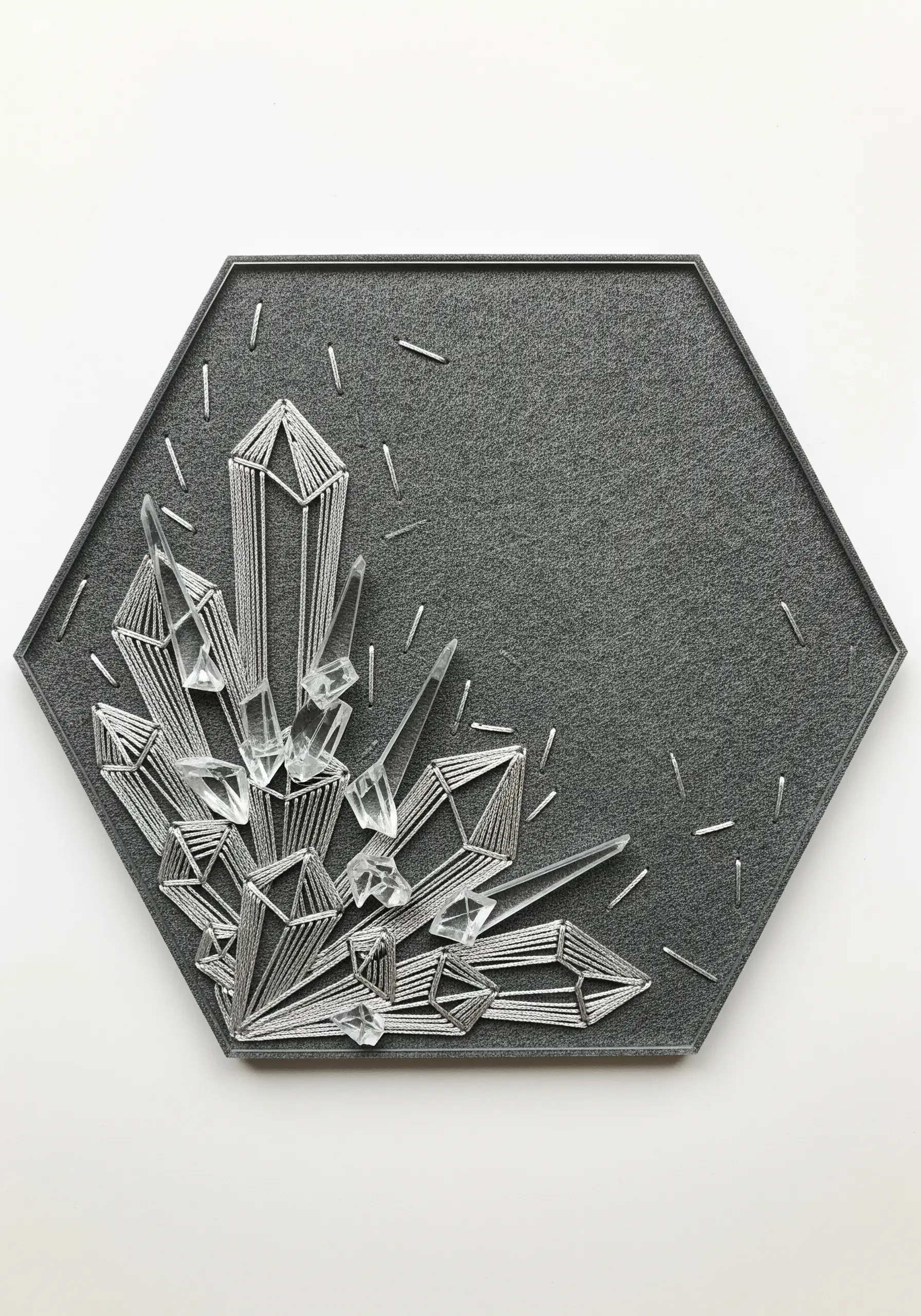
This technique moves beyond the hoop, using a felt-covered board or heavy cardstock as a rigid base.
Map out your crystal shapes with small pins, then wrap metallic silver thread tightly between the points to build the geometric facets.
To add a refractive, futuristic quality, incorporate shards of clear acrylic or recycled clear plastic, securing them within the web of threads as you work.
10. Shattered Glass Mosaic: Apparel Embellishment with Mirror Shards

For wearable art, always use lightweight, craft-safe acrylic mirror pieces instead of real glass.
Secure each piece to the fabric with a strong adhesive first, then frame it with a dense satin stitch border using a durable metallic thread.
Add delicate straight stitches radiating from an off-center point on each piece to create the convincing ‘cracked’ effect, transforming a garment into a piece of statement fashion.
11. Liquid Chrome: Sculpting with 3D Paint and Metallic Beads
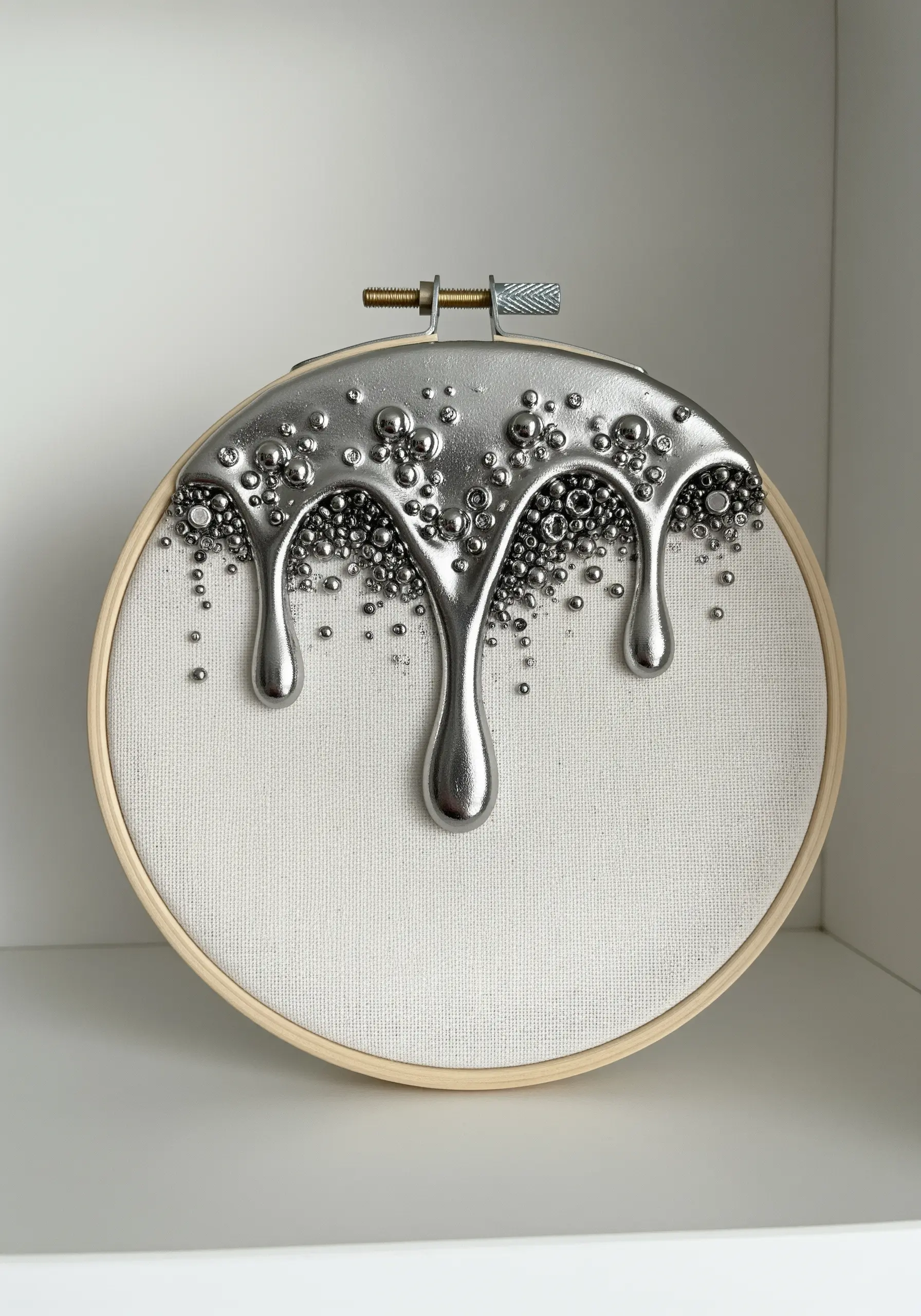
Achieve a molten metal look by applying silver 3D fabric paint or puff paint directly onto your stretched fabric.
Create your desired drips and pools first, working quickly.
While the paint is still wet, gently press in metallic beads of various sizes, such as ball bearings or silver-coated pearls.
The paint secures the beads as it dries, creating a seamless, sculptural surface that looks and feels like liquid metal.
12. Tech-Waste Assemblage: Integrating Electronic Components
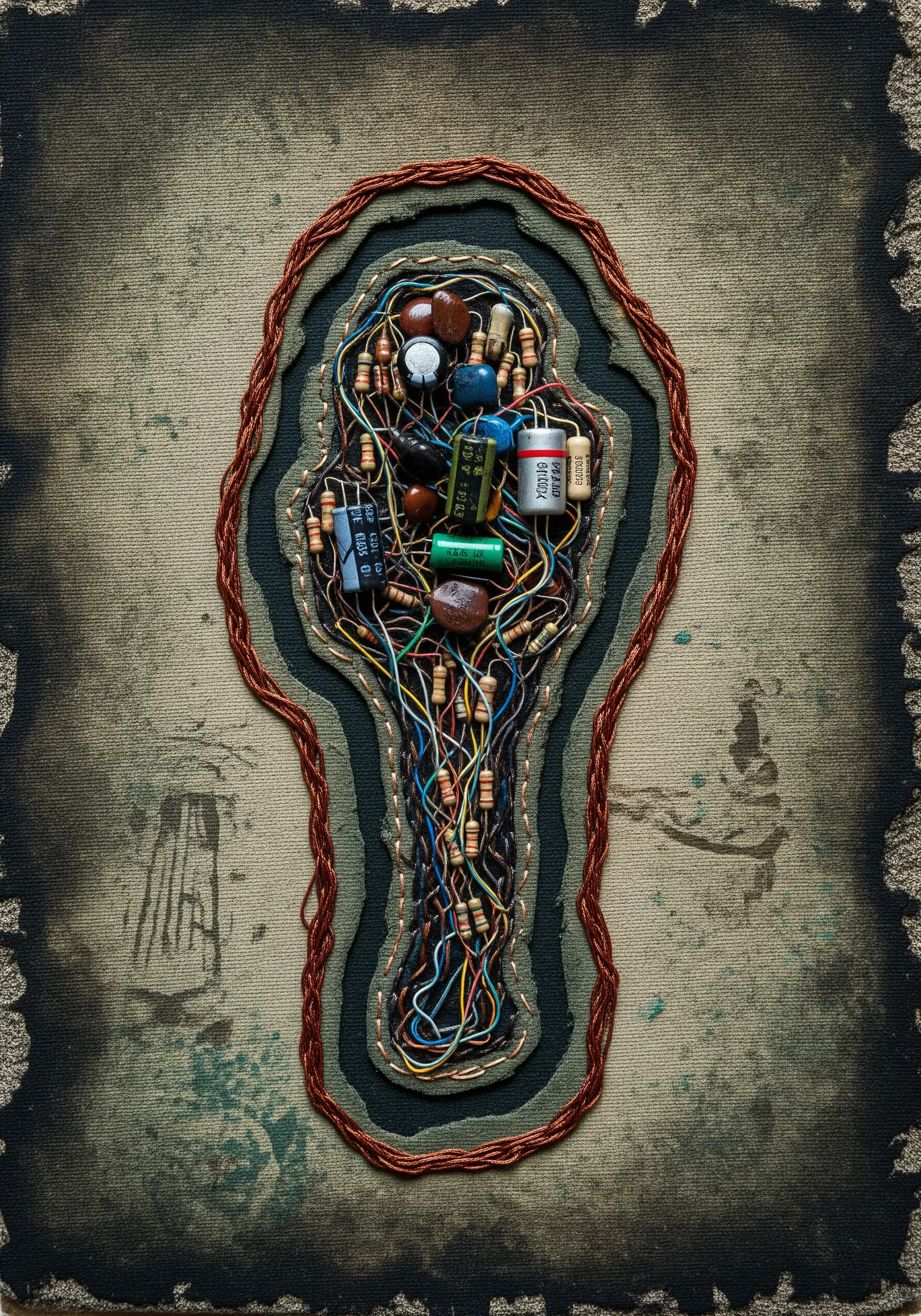
Gather discarded electronic components like resistors, capacitors, and wires from old devices.
Use their existing metal leads to stitch them directly onto a sturdy fabric like canvas or felt.
Let the colorful wires become your ‘thread,’ couching them down to create pathways and connections between the components.
This method turns e-waste into a fascinating mixed-media piece that tells a story of technology and obsolescence.
13. Bio-Luminescent Forms: Neon Knots and Sculptural Wire

Create the core of your abstract design with densely packed French knots in fluorescent, high-contrast colors for a rich, coral-like texture.
For the radiating tentacles, use plastic-coated electrical wire or flexible telephone wire.
You can either couch the wire onto the surface or pass it through the fabric from behind for a more sculptural, truly three-dimensional effect that seems to burst from the hoop.
14. Ethereal Layers: Stitching over Recycled Plastic Sheeting

Use a piece of crinkled plastic packaging—like a grocery bag or bubble wrap—as a base layer to create a unique, textured background.
Trap the plastic under a layer of water-soluble stabilizer, then create your design with long, floating straight stitches over the top.
Outline the final shape with a tight backstitch in metallic thread.
When you dissolve the stabilizer, the thread remains, leaving a ghostly, semi-transparent effect held together by your stitches.
15. Pixelated Petals: Geometric Ribbon Folding for Botanical Art

Instead of traditional stitches, create leaves and flowers from folded satin ribbon using a technique inspired by Kanzashi.
Cut small squares of ribbon, fold them into sharp triangles, and stitch them down at the base.
By layering different shades of green and blue, you can create a beautiful, pixelated gradient effect.
Use a twisted chain stitch for the stem to complement the angular, geometric texture of the petals.
16. Architectural Blueprints: Precision Stitching on Technical Canvas
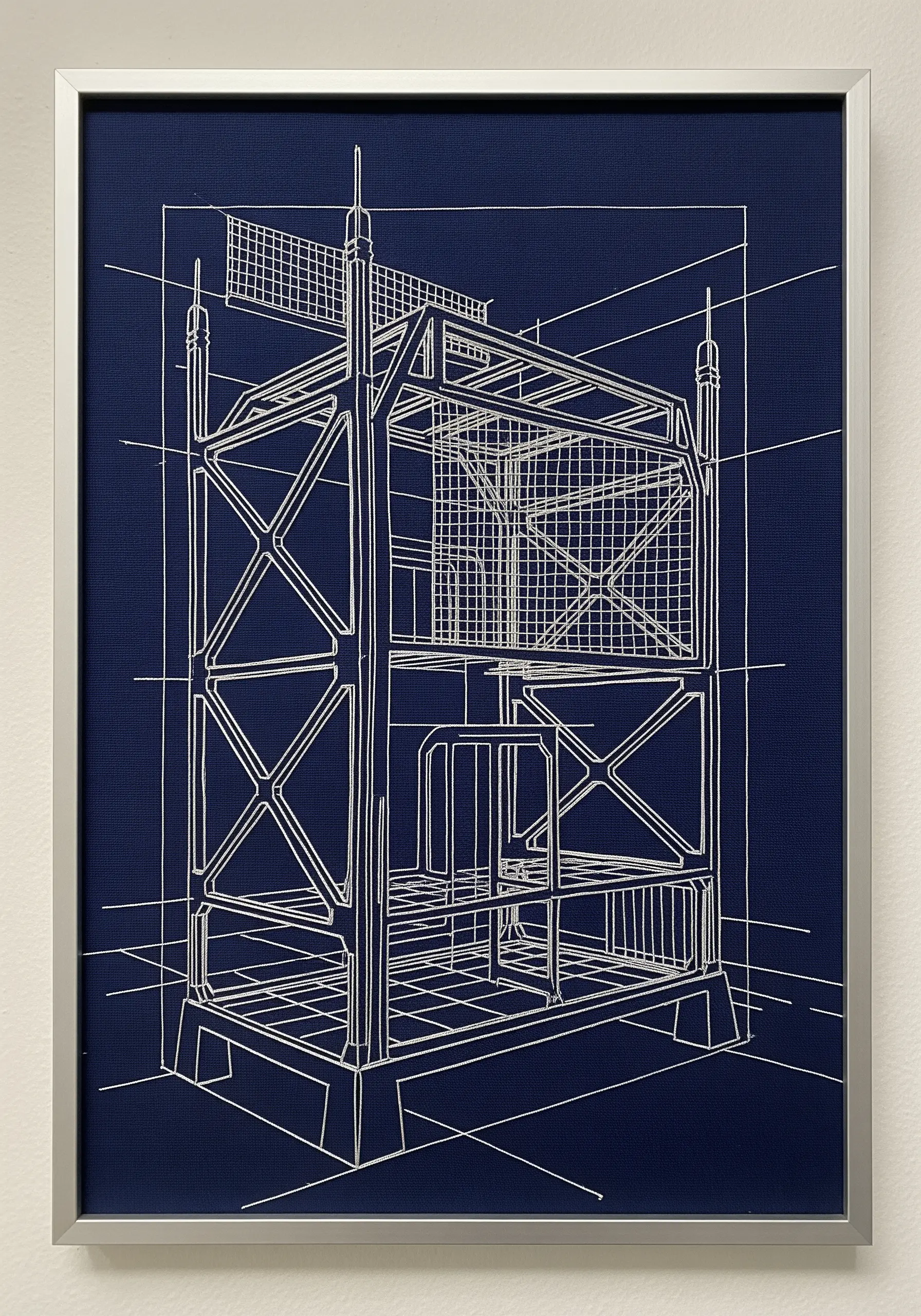
Achieve the crisp, clean lines of a technical blueprint by using a single strand of bright white thread on a dark, tightly woven canvas.
A simple backstitch or stem stitch provides the best control for sharp lines and corners.
The key to this minimalist style is precision: ensure your design transfer is perfect and keep your stitch length flawlessly consistent for a professional, graphic finish.
17. Digital Rain: Translating Code into Hanging Thread Art
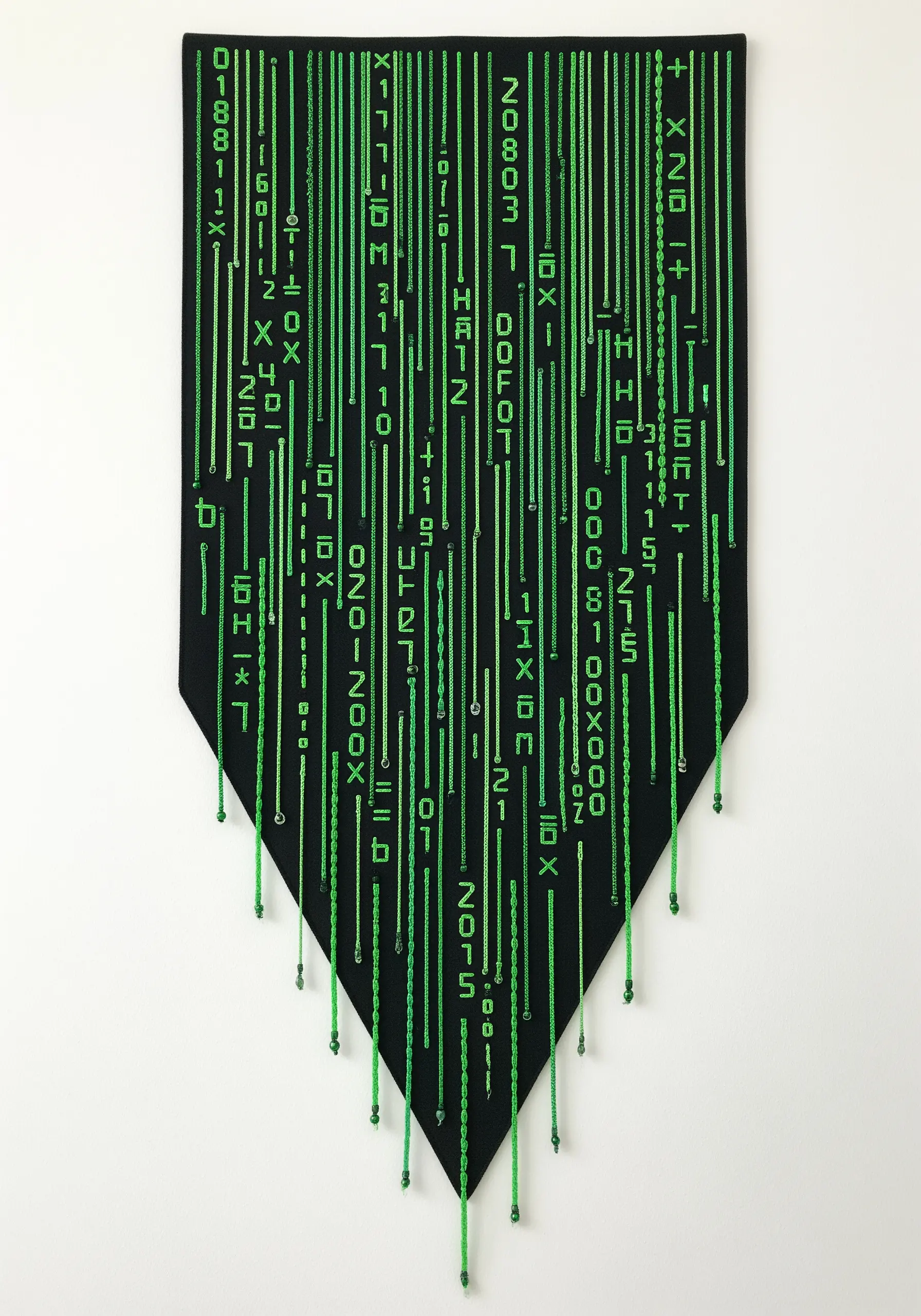
Work on a long, banner-shaped piece of black fabric to give your threads room to ‘fall’.
Use various shades of bright green thread to stitch abstract symbols, letters, and numbers in vertical lines.
Intentionally let the threads hang loose at different lengths to create the iconic ‘digital rain’ effect from The Matrix.
Add small, metallic green beads to the ends of the threads to give them weight and a subtle glimmer, enhancing the illusion of moving code.
18. Plastic Kintsugi: Mending Recycled Materials with Golden Thread
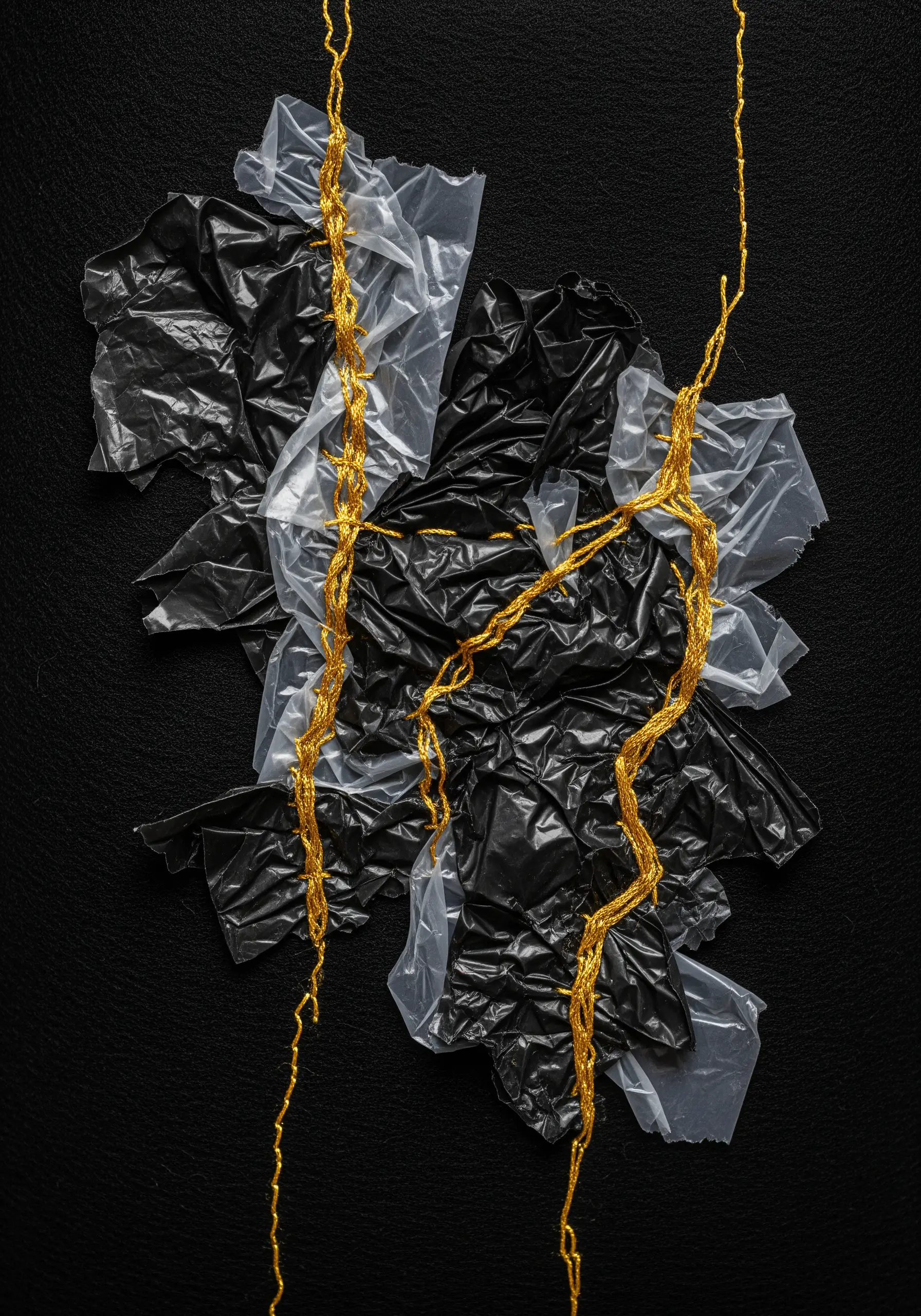
Embrace the Japanese art of kintsugi, or ‘golden repair’, by using recycled materials as your canvas.
Layer and tack down pieces of black and clear plastic bags onto your base fabric.
Then, use a thick, shimmering gold metallic thread to stitch over the ‘cracks’ and join the pieces.
A whipped backstitch or a couched metallic cord will give you the bold, raised line that mimics the golden lacquer of traditional pottery repair.
19. Beaded Cartography: Mapping the World with Found Objects
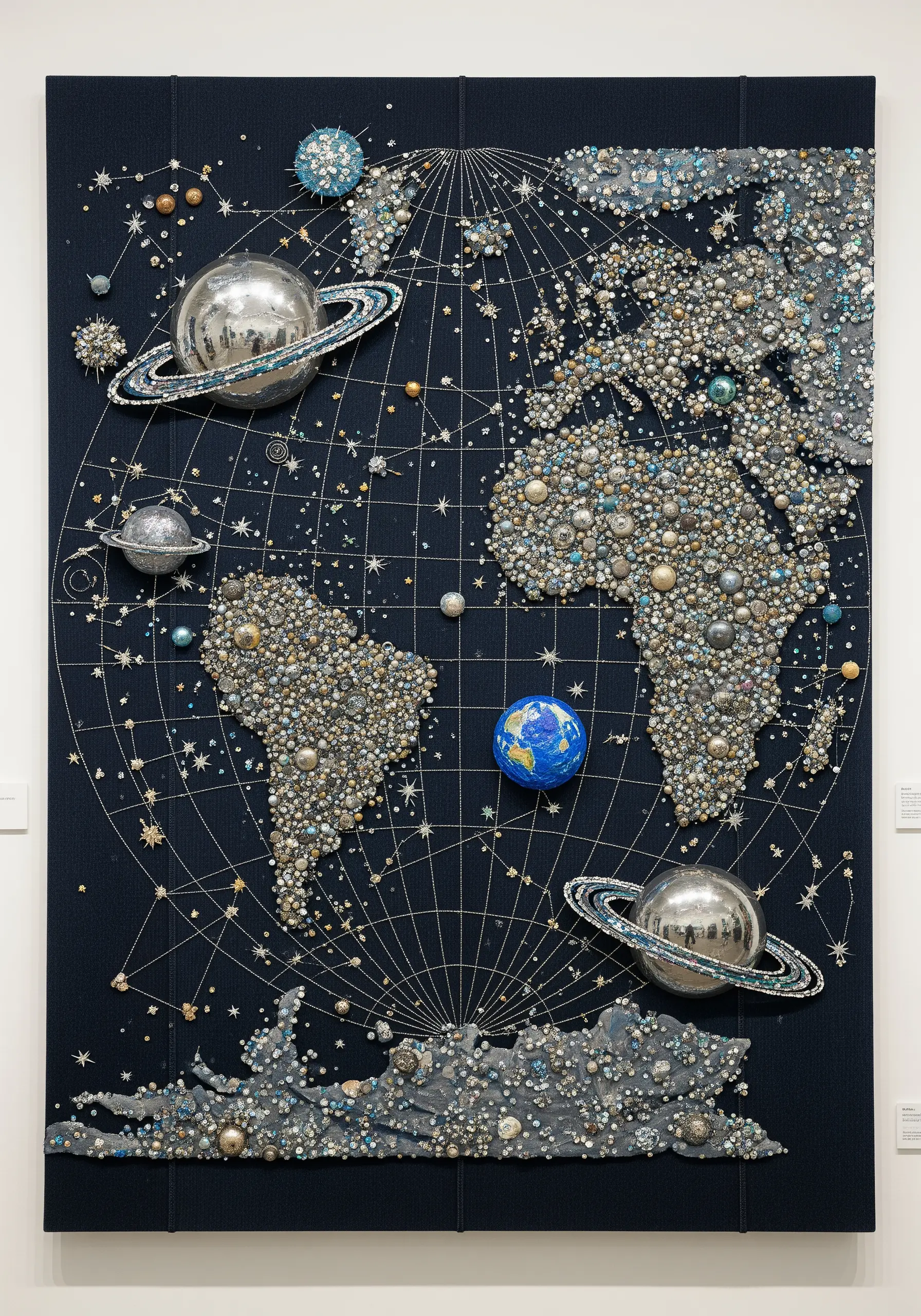
Transform a simple world map outline into a textural masterpiece by filling it with a dense collage of unconventional materials.
Use beads, sequins, buttons, and even small hardware like washers and nuts to represent the continents.
Group similar colors and textures to define regions, creating a tactile topography.
Use a fine silver thread to stitch the latitude and longitude lines, creating a unifying grid that holds the composition together.
20. Industrial Textures: A Sampler of Metal and Plastic

Create a modern sampler by first dividing your hoop into cells with a bold, couched black yarn.
Fill each cell with a different industrial material: ball chain, metal seed beads, coiled wire, or iridescent flakes.
To contain loose materials like flakes, trap them under a layer of sheer organza before stitching the border.
This approach is a fantastic way to experiment with securing different non-traditional materials in a structured format.
21. Suspended Hardware: Floating Metal on Sheer Fabric

Stitching on a sheer background like tulle or voile creates the powerful illusion that your elements are floating in mid-air.
Secure hardware like nuts and bolts by stitching through their openings with a matching metallic thread for a clean finish.
For the foil elements, crumple and shape small pieces of aluminum foil, then couch them down with a fine copper wire, adding an extra layer of industrial texture and color.
22. Bionic Vision: Hyperrealism with Thread and Plastic
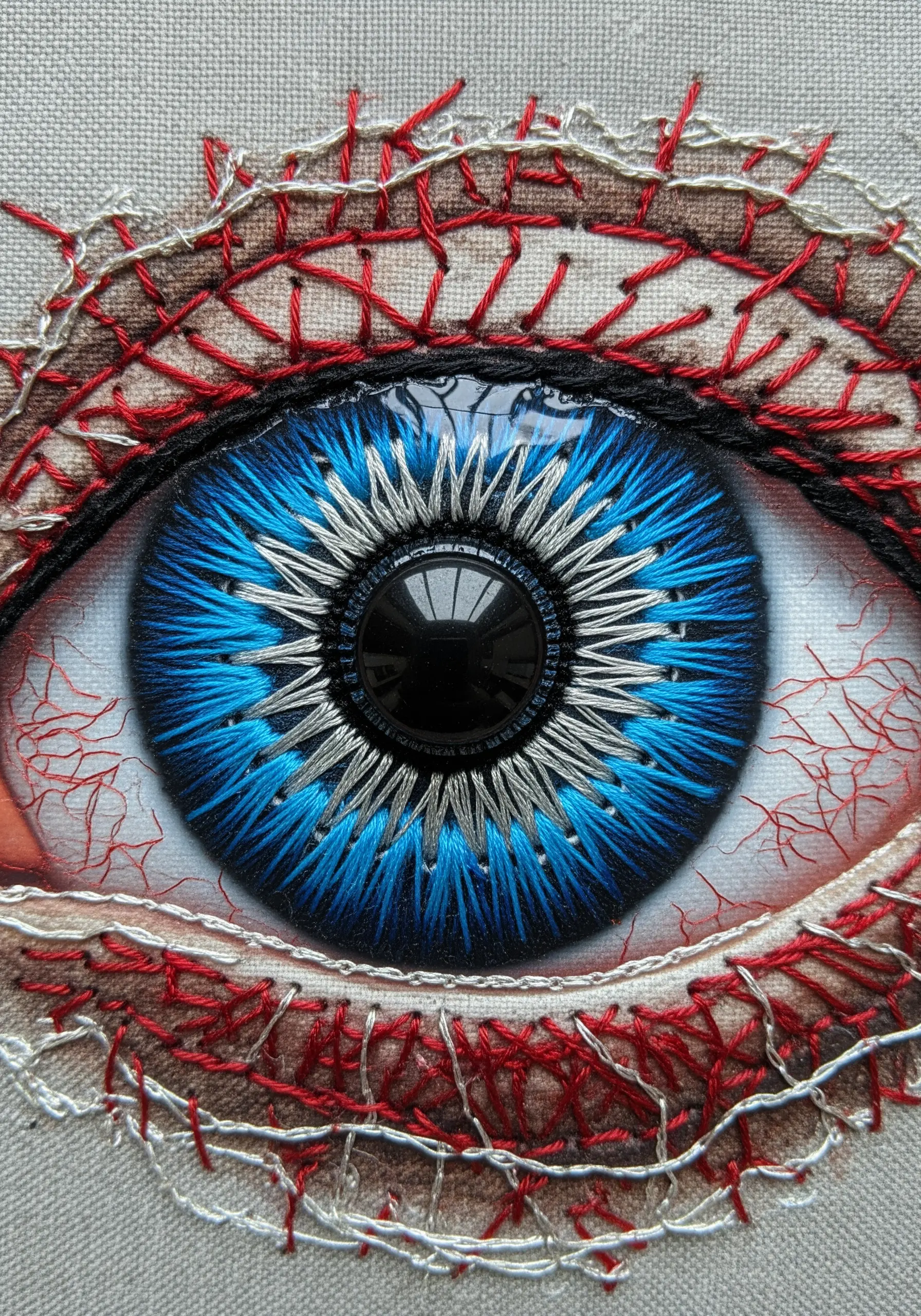
Achieve the glossy, reflective quality of a pupil by incorporating a non-textile element into your thread painting.
Create the iris with dense, radiating satin stitches in multiple shades to create depth.
For the pupil, use a flat black button, a cabochon, or a drop of black resin.
Stitching right up to and slightly over the edge of this solid piece creates a seamless blend, giving the eye an uncanny, bionic appearance.
23. Topographic Landscapes: Layering Fabric and Metallic Outlines
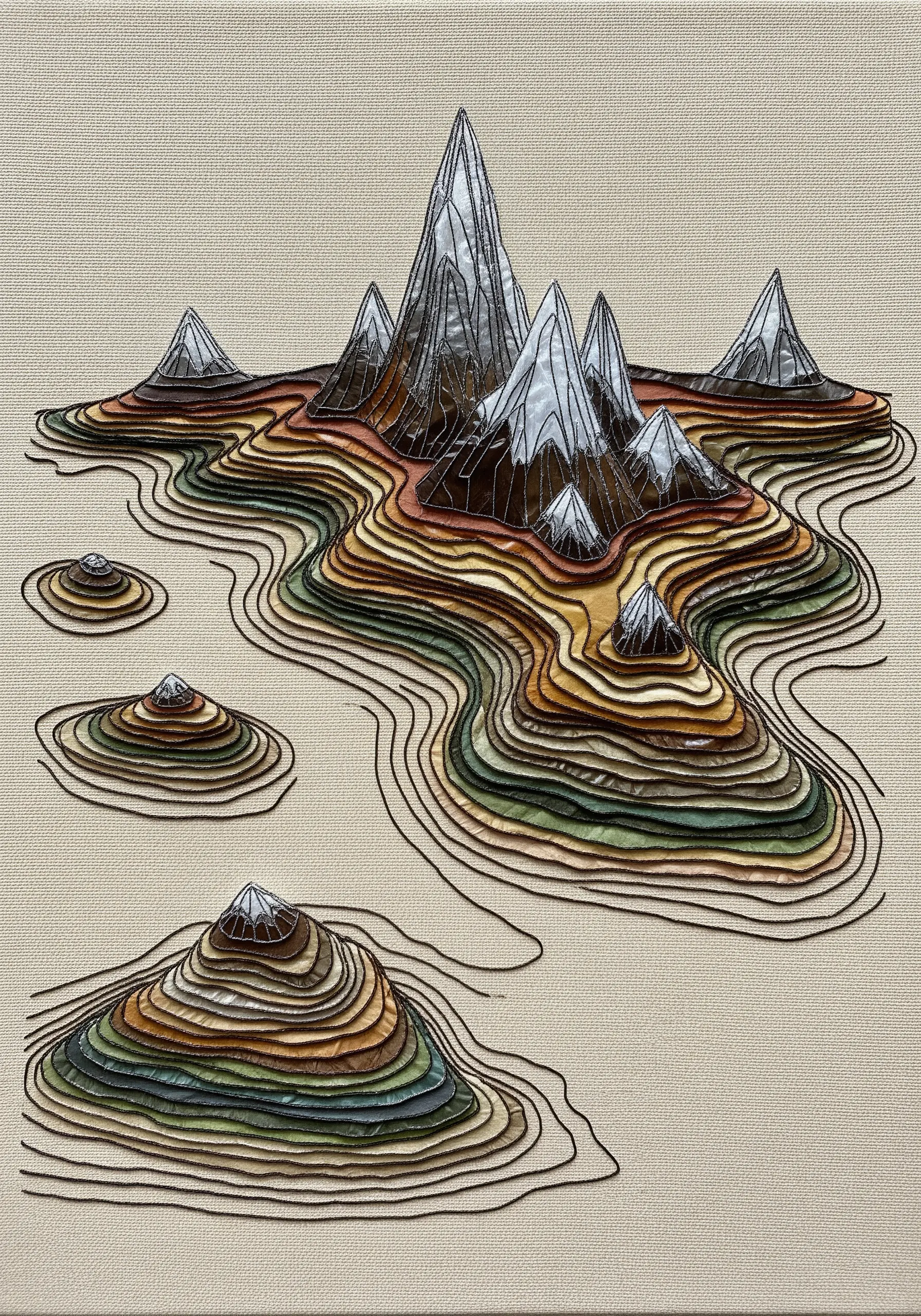
Build a 3D landscape by cutting and layering pieces of fabric in different colors to represent changes in elevation.
Use a raw-edge appliqué technique, securing each layer with a simple running stitch near the edge.
Finally, use a fine metallic or black thread to stitch the precise contour lines.
This final step not only secures the fabric layers completely but also adds the shimmering, map-like quality that makes the piece so striking.
24. Iridescent Plumage: Constructing Feathers from Plastic Film

Create the central quill of the feather with a raised stem stitch or by couching down a piece of silver wire.
For the barbs, cut very thin strips from an iridescent or holographic plastic film.
Lay each strip at an angle against the quill and secure it with a tiny, single stitch in its center using a fine metallic thread.
This allows the ends to remain free, giving the feather realistic movement and maximizing its light-reflecting properties.
25. Deconstructed Data: Abstract Weaving with Wires and Plastic
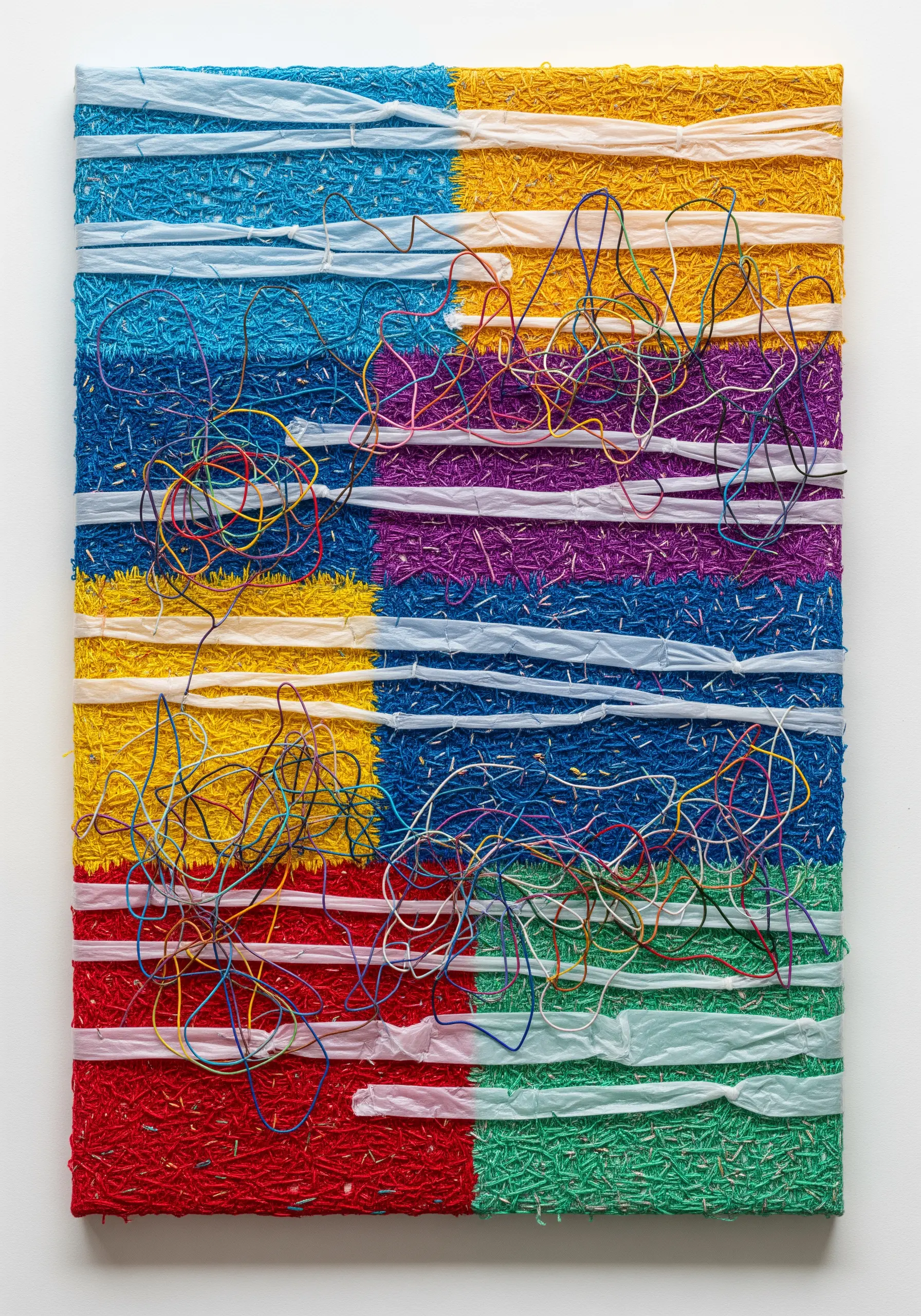
This piece is about embracing controlled chaos and texture.
Create dense blocks of color with satin stitches, but intentionally leave the edges uneven and raw.
Weave strips of recycled plastic bags through the piece, securing them loosely to add dimension.
Finally, couch down a tangle of colorful, stripped electrical wires, letting them loop and cross over the stitched sections for a truly industrial finish.
26. Synthetic Scales: Armor Plating with Plastic Sequins
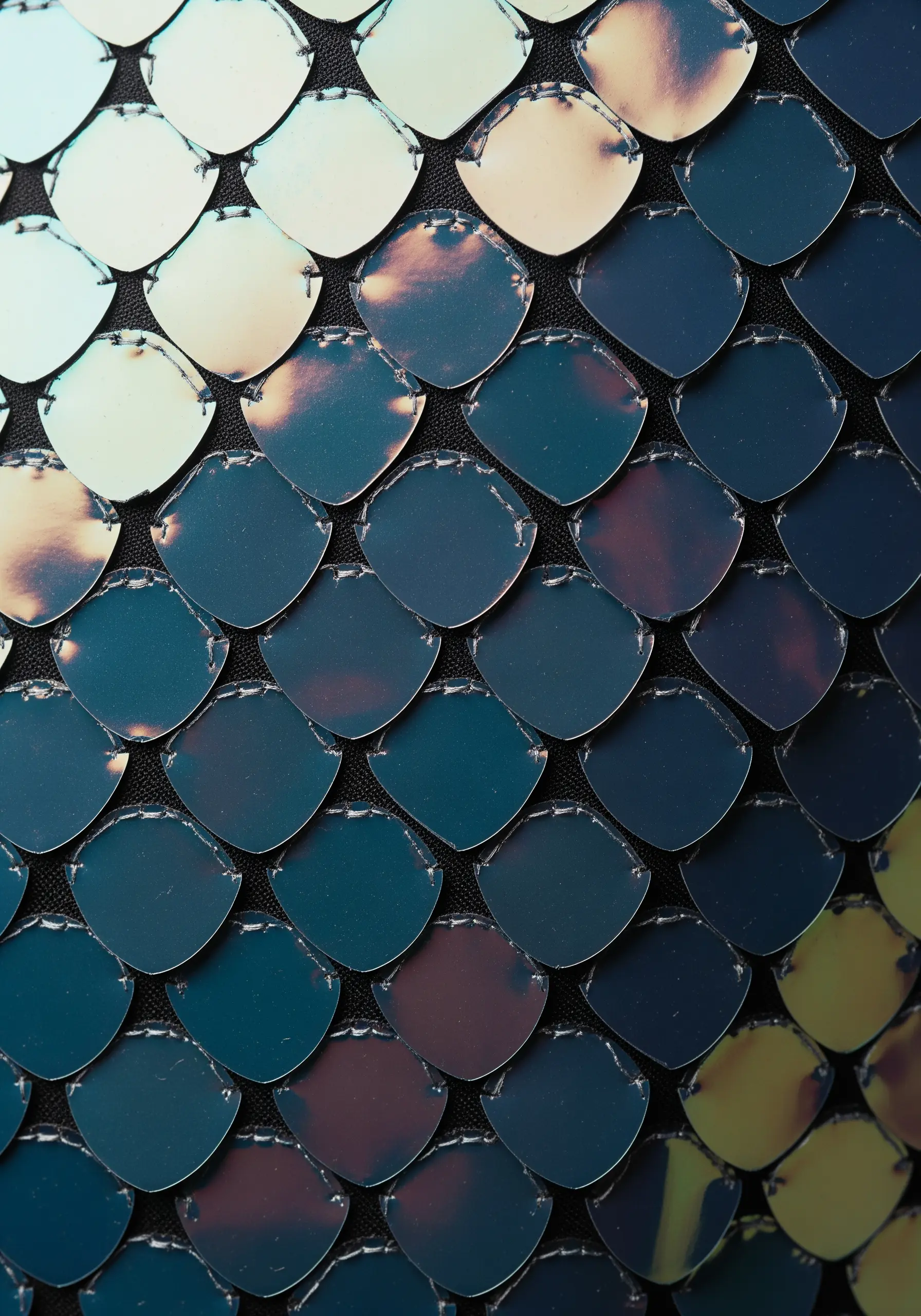
You can achieve this futuristic, armor-like texture by using large, non-traditional sequins or by cutting your own ‘scales’ from sheets of iridescent plastic.
Stitch each scale down at its top point only, using a single, secure stitch.
Then, overlap them in neat rows, just like roof tiles or fish scales.
This method allows the bottom of each scale to lift slightly, creating incredible dimension, movement, and light play.
27. Micro-Metropolis: Architectural Models in Thread and Paper
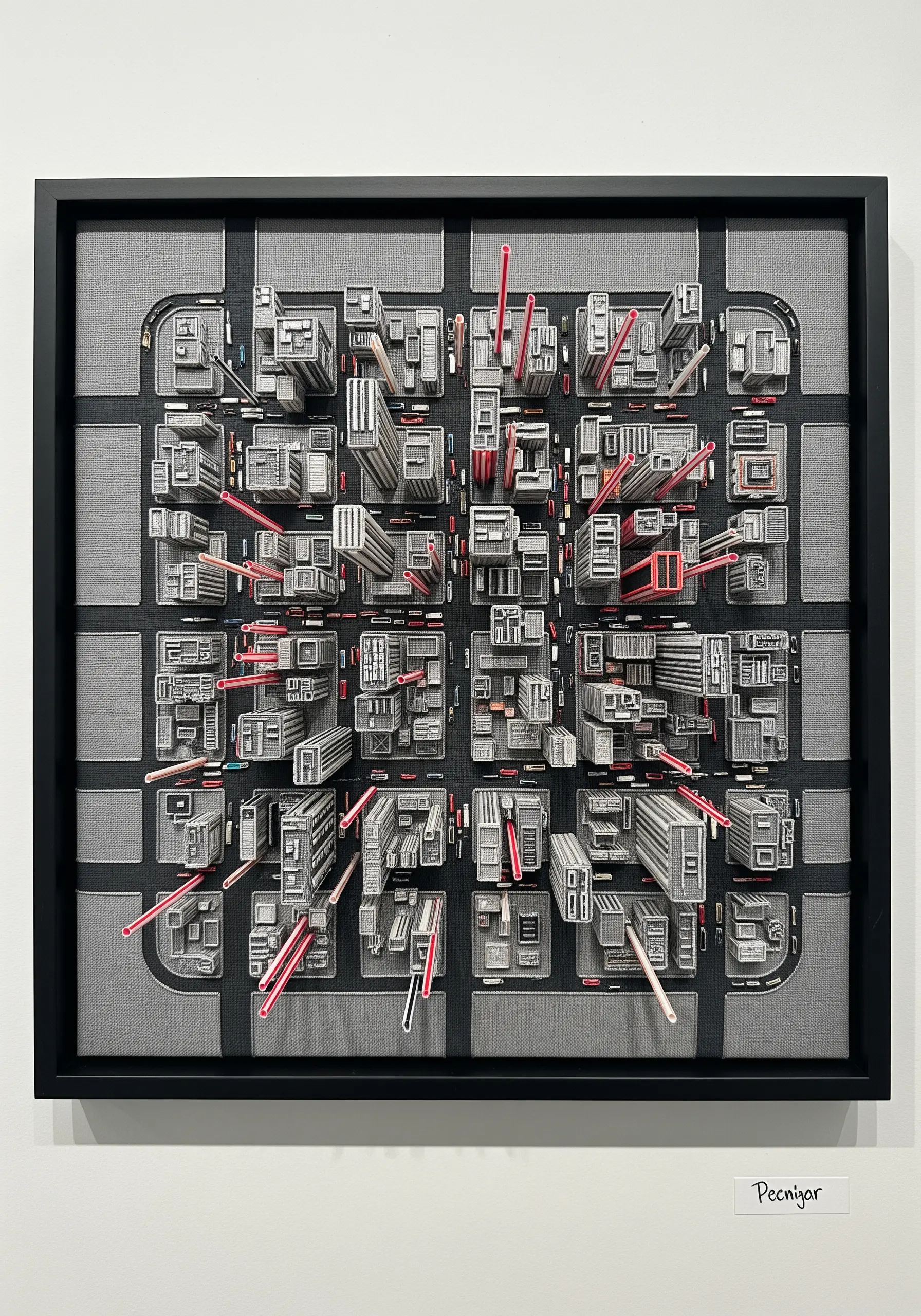
This is a true mixed-media sculpture that merges embroidery with model-making.
Build the tiny skyscrapers by wrapping thread tightly around small blocks of wood, stiff cardstock, or even recycled plastic pieces.
Arrange and adhere them to a fabric-covered canvas to create your city grid.
Use long, taut stitches with a contrasting thread to represent energy lines or transit routes, connecting the buildings and adding a vibrant, graphic element to your 3D cityscape.