
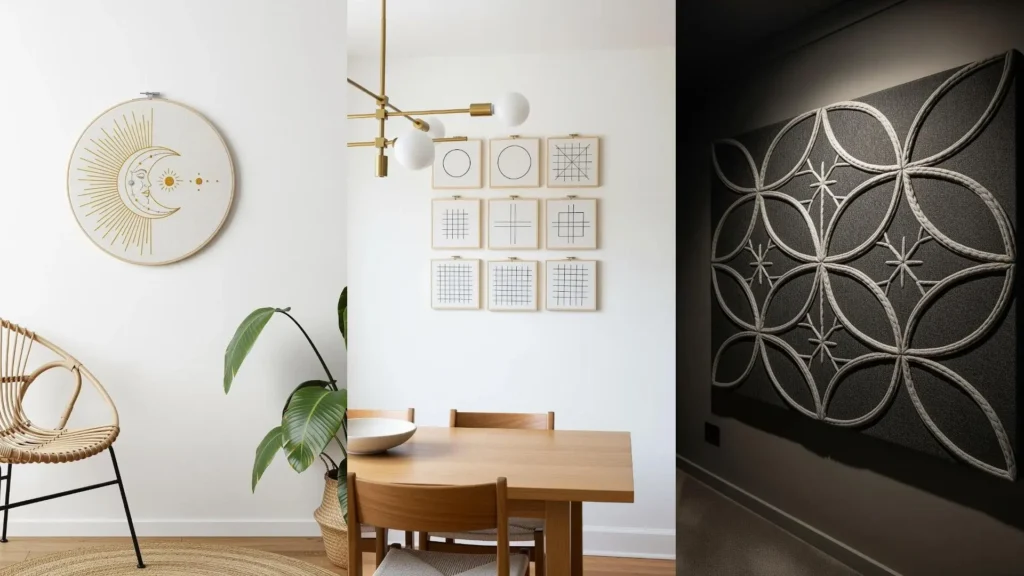
Forget the idea that embroidery must be intricate, floral, or dense to be beautiful. The most impactful statements often come from the quiet confidence of a clean line, a balanced shape, and intentional texture.
In your hands, thread and fabric can become a form of minimalist architecture for your walls. It’s about learning to see the space between the stitches, to appreciate the rhythm of a simple pattern, and to choose materials that speak for themselves.
This is where your work transforms from a craft into art. Each of these ideas is more than just a pattern—it’s a principle. A new way to handle your needle, to see color, or to compose a piece that feels uniquely, peacefully, and powerfully yours.
1. Build Texture with Geometric Thread Wrapping
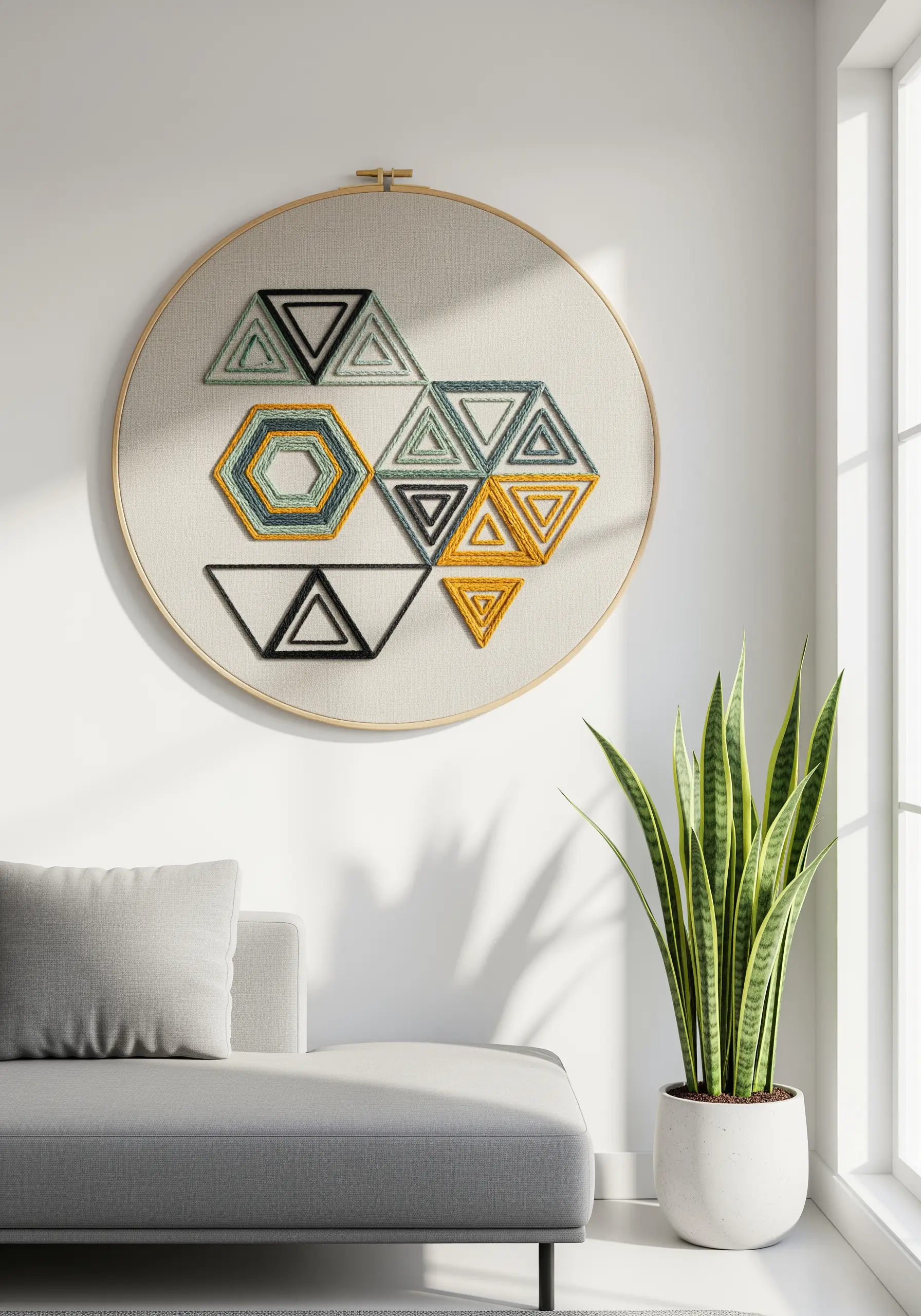
Instead of filling shapes with traditional stitches, create dimension by wrapping thread around a foundational outline.
Use a sturdy backstitch for the initial shape, then couch or wrap thicker yarn or multiple strands of floss around it.
This method builds texture quickly and creates a graphic, almost sculptural effect that stands out against the linen background.
Vary the density of the wrapping to play with color gradients and visual weight, transitioning from tight wraps to looser ones to reveal the base thread.
2. Master the Minimalist Line with a Triptych
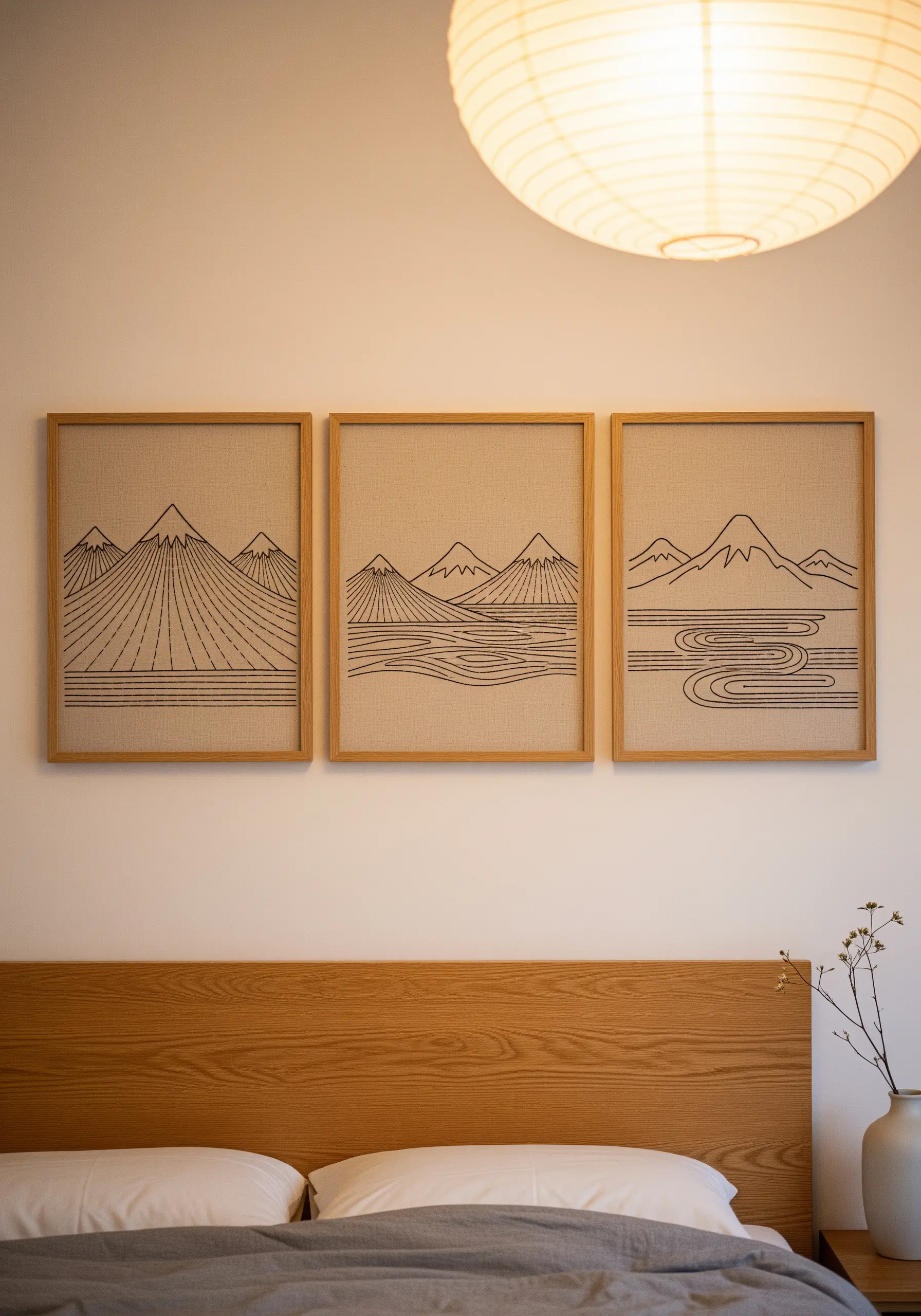
Create a sophisticated narrative by splitting a single landscape concept across three panels.
Use a single strand of black floss with a precise backstitch or stem stitch to achieve crisp, clean lines that mimic an ink drawing.
The key is consistency in stitch length and tension across all three pieces.
Stitching on a neutral, textured fabric like raw linen adds warmth and depth, preventing the minimalist design from feeling cold.
This technique turns minimal embroidery wall pieces into a cohesive, gallery-style installation.
3. Achieve Opaque Color Blocking with Satin Stitch
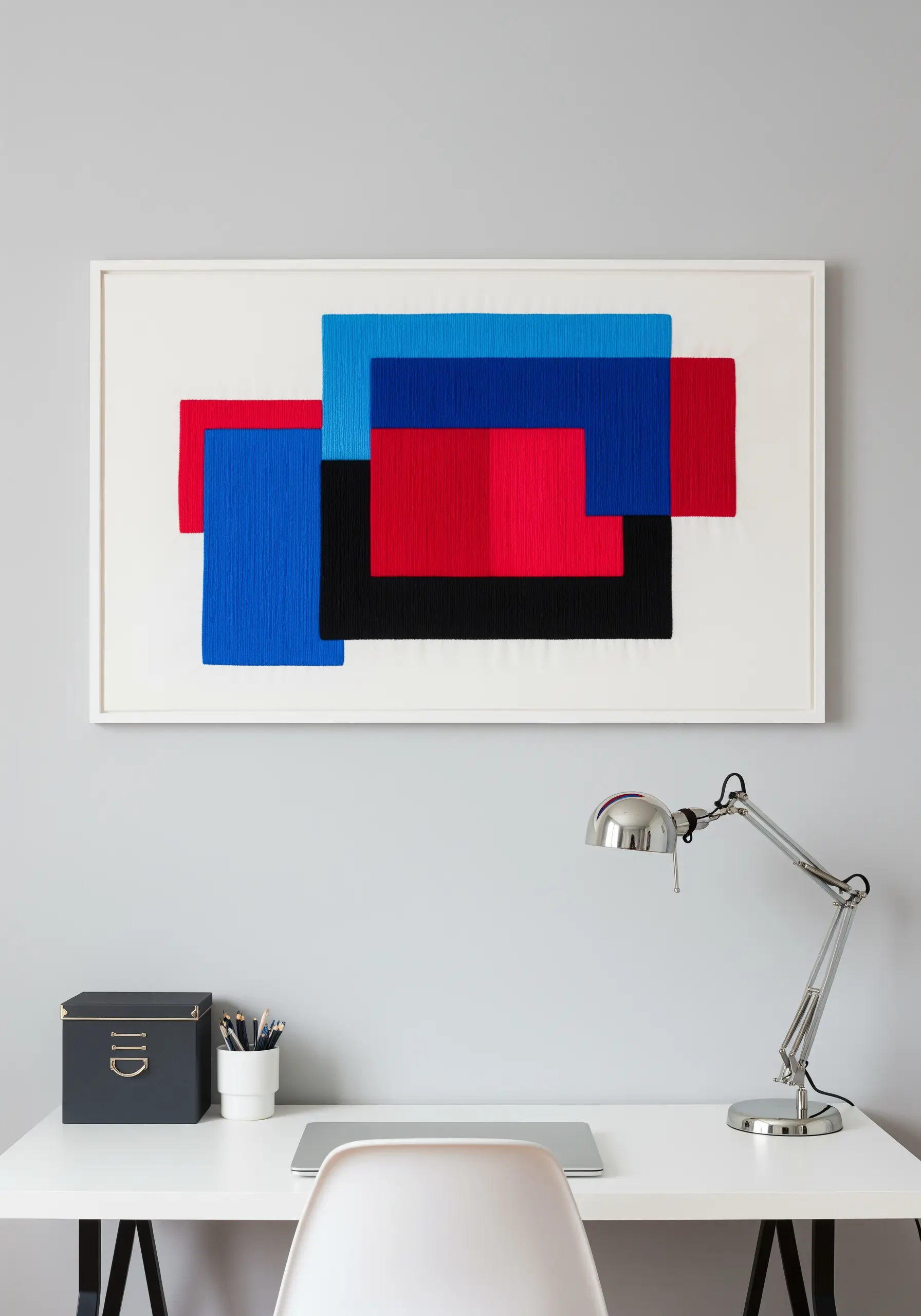
For bold, graphic statements, the satin stitch is your greatest tool for creating solid fields of color.
To ensure your edges are perfectly clean, outline each shape first with a split stitch; this creates a raised border that your satin stitches can tuck into neatly.
Keep your stitches parallel and close together without overlapping to achieve a smooth, light-reflective surface that looks almost like solid fabric.
A primary color palette—red, blue, and black—creates a powerful, modern art feel that commands attention.
4. Blend Metallic and Matte Threads for Art Deco Glamour
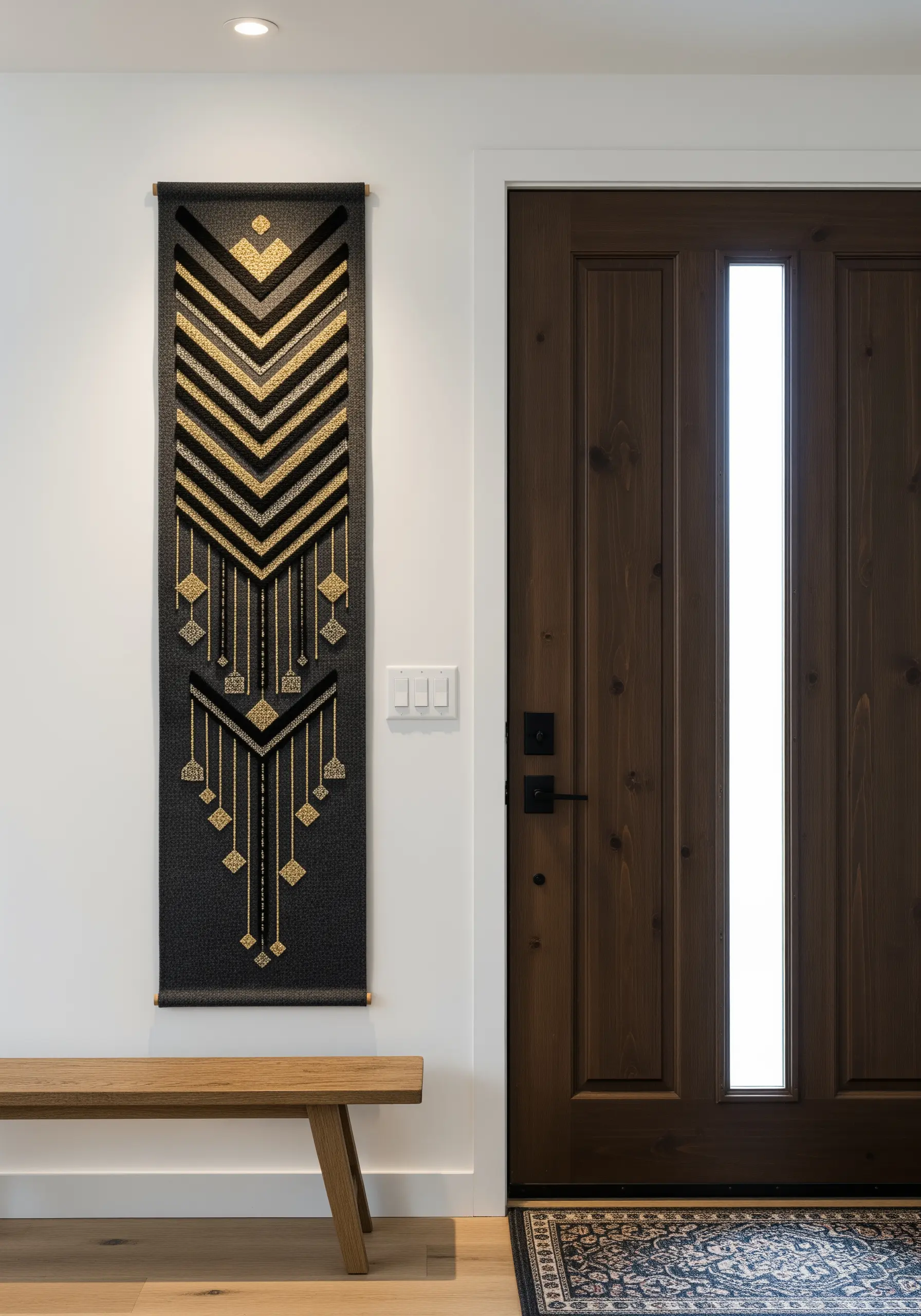
Introduce subtle luxury by pairing metallic gold thread with matte black or charcoal floss.
Use the metallic thread for key accents and outlines, as its reflective quality naturally draws the eye.
For the filled chevron shapes, alternate between matte and metallic threads to create a dynamic texture that shifts with the light.
Incorporate tiny French knots or seed stitches with gold thread to add delicate, jewelry-like details that complete the opulent look.
This approach is perfect for gold thread luxury wall art projects.
5. Create a Conceptual Grid with Simple Line Work
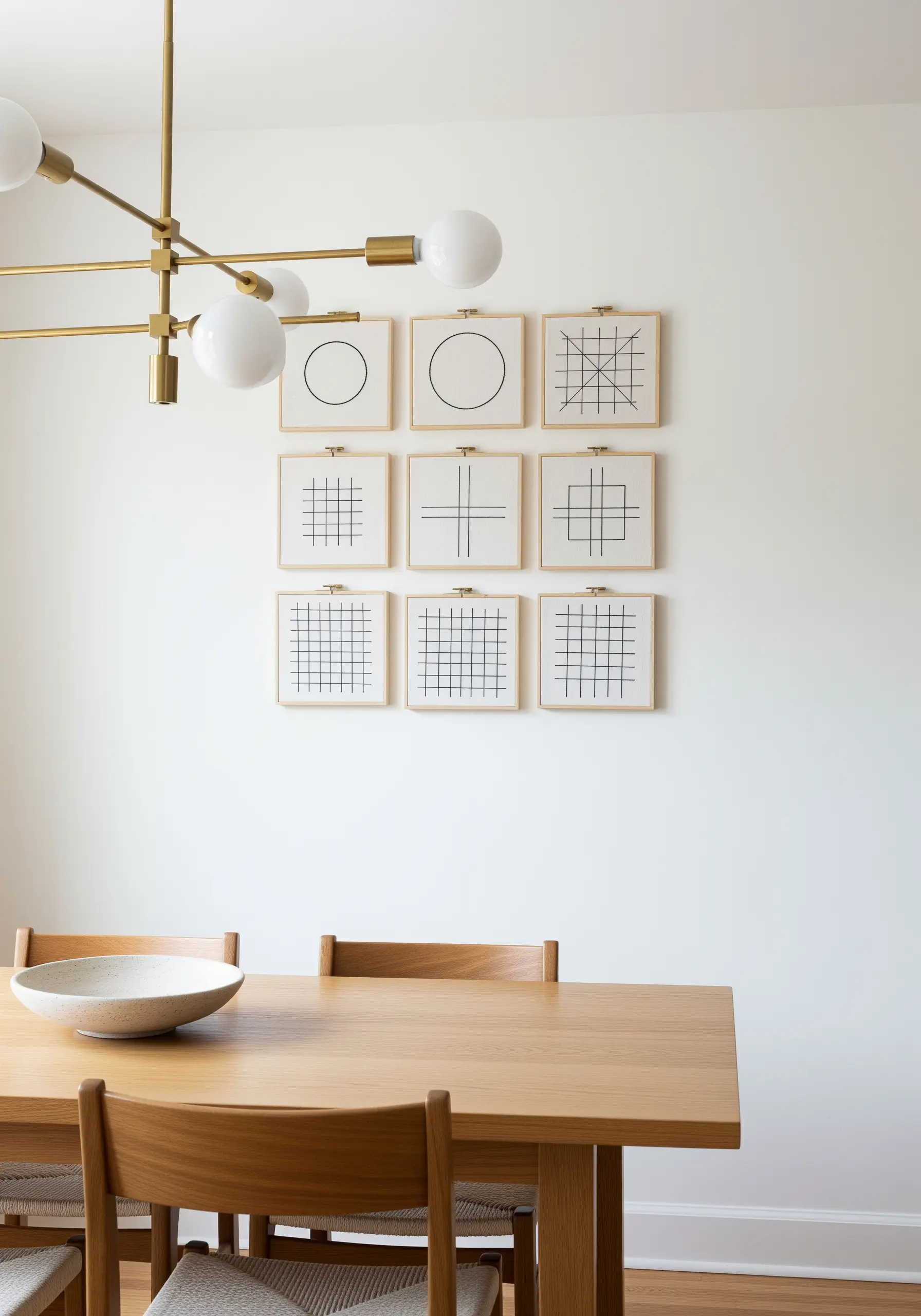
Transform the most basic shapes—circles, crosses, and grids—into a compelling art installation through repetition and variation.
To ensure perfect symmetry and precision, draw your grid onto the fabric with a water-soluble marker before you begin stitching.
Use a simple backstitch with two strands of black floss for a clean, graphic quality.
Arranging minimal embroidery compositions in a disciplined 3×3 grid turns simple studies into a sophisticated statement piece.
6. Use Variegated Yarn for Effortless Color Depth
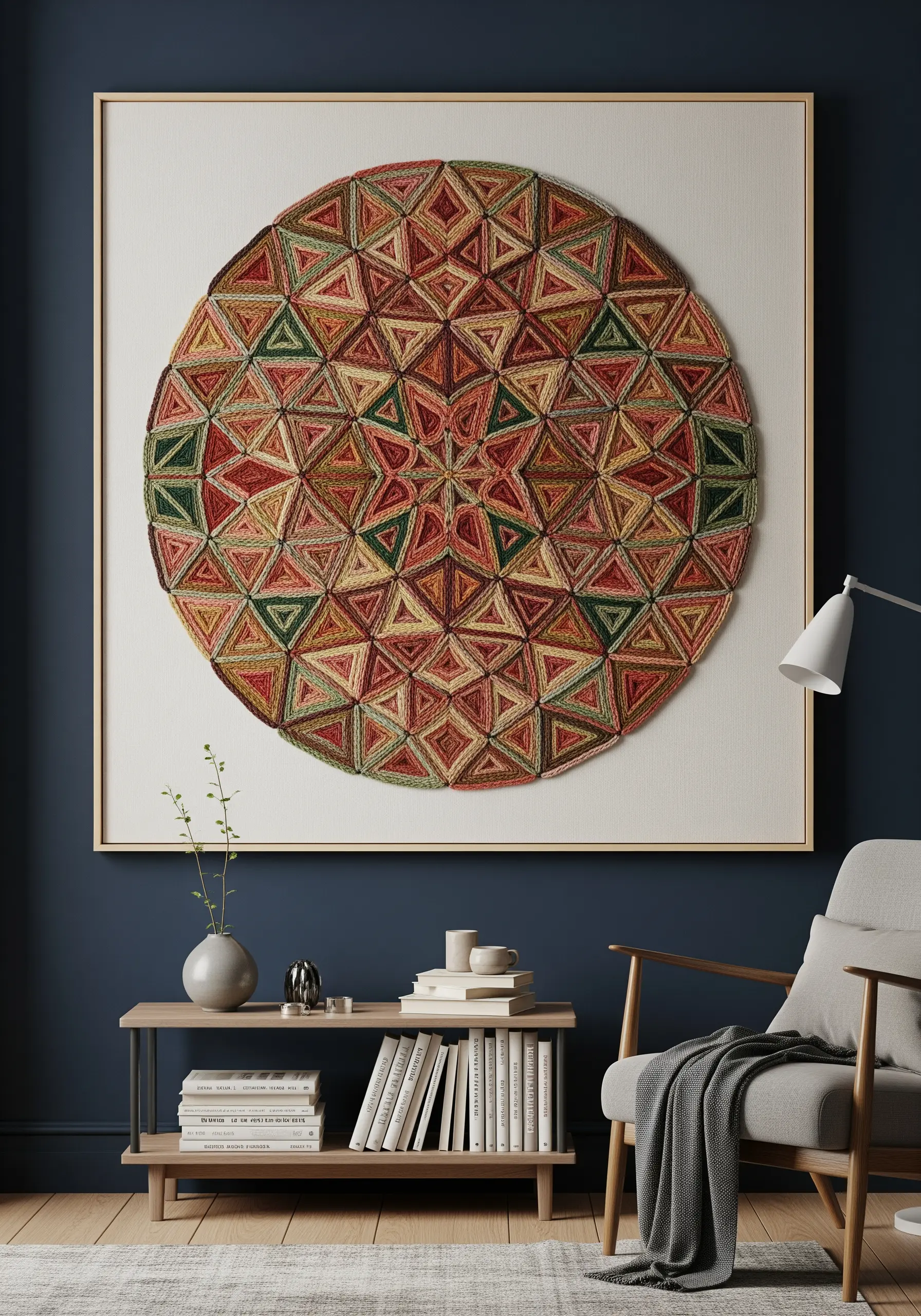
Achieve a complex, multi-tonal effect without changing your thread by using variegated yarn or floss.
The natural color shifts in the yarn will create an intricate, mosaic-like appearance automatically as you fill in your geometric shapes.
For a large-scale piece like this, use a thicker wool or tapestry yarn and couch it down with a finer, matching thread for control and texture.
This method allows you to build rich, string art-inspired mandala embroidery designs that feel layered and dynamic.
7. Craft Sculptural Lines with Chunky Wool Roving
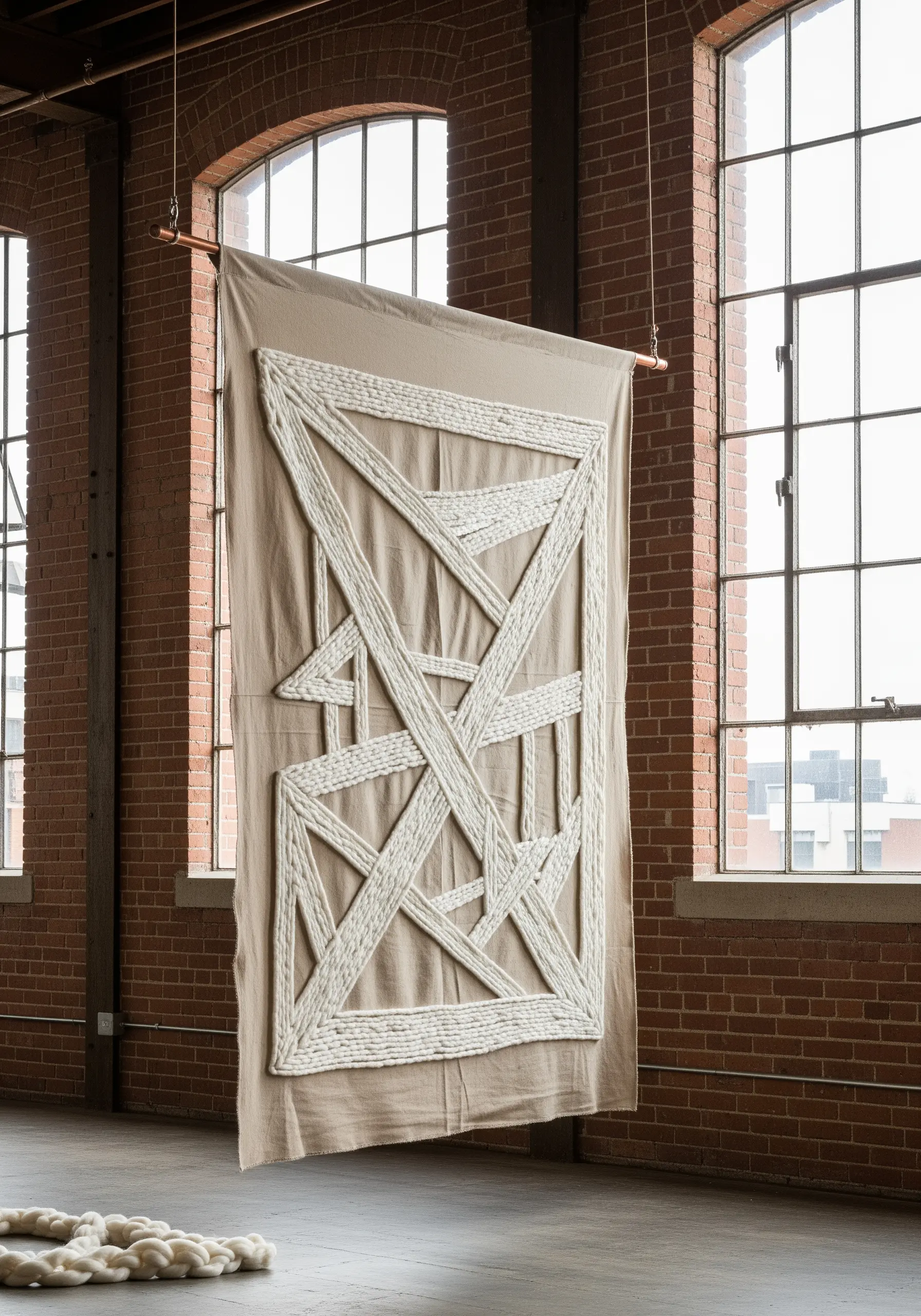
Move beyond thread and embrace the dramatic texture of thick wool roving or chunky yarn to create bold, architectural lines.
Instead of stitching through the fabric, lay the roving on the surface and use a strong, complementary thread to couch it into place with small, discreet stitches.
This technique allows you to create oversized, abstract embroidery stitches that turn plain fabric into bold wall sculptures.
The contrast between the soft, bulky wool and the flat canvas background creates a powerful, three-dimensional statement.
8. Define Shapes with Raised Chain Stitch Outlines
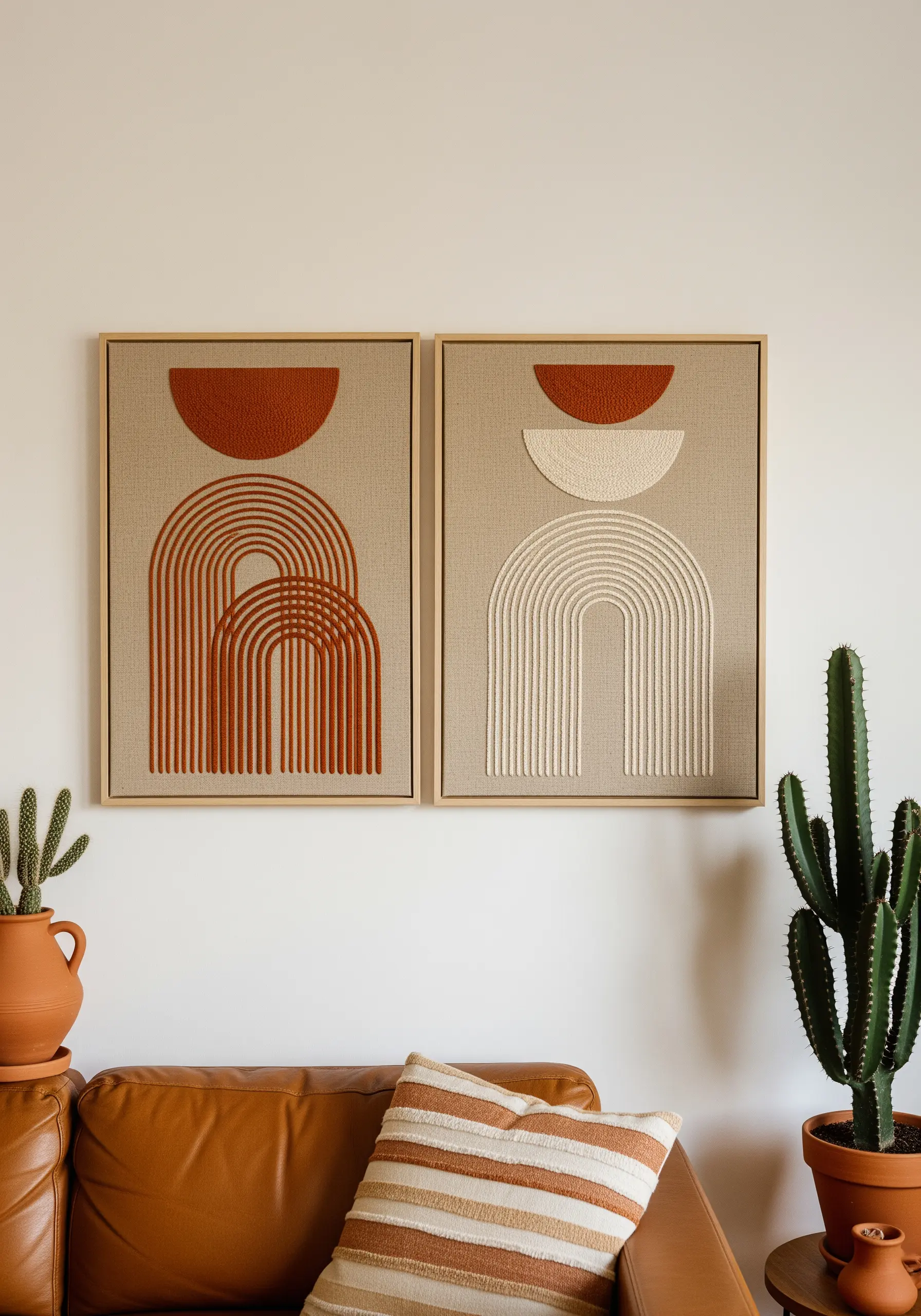
For minimalist designs with a tactile feel, use a raised stitch like the chain stitch for your outlines and fills.
The interlocking loops of the chain stitch create a beautifully textured, rope-like line that adds dimension and shadow.
When filling shapes, work the chain stitch in concentric rows, following the curve of the arc for a smooth, organic finish.
Pairing a warm terracotta with a textured off-white creates a balanced, earthy composition that feels both modern and grounded.
9. Explore Visual Rhythm Through Serial Hoops
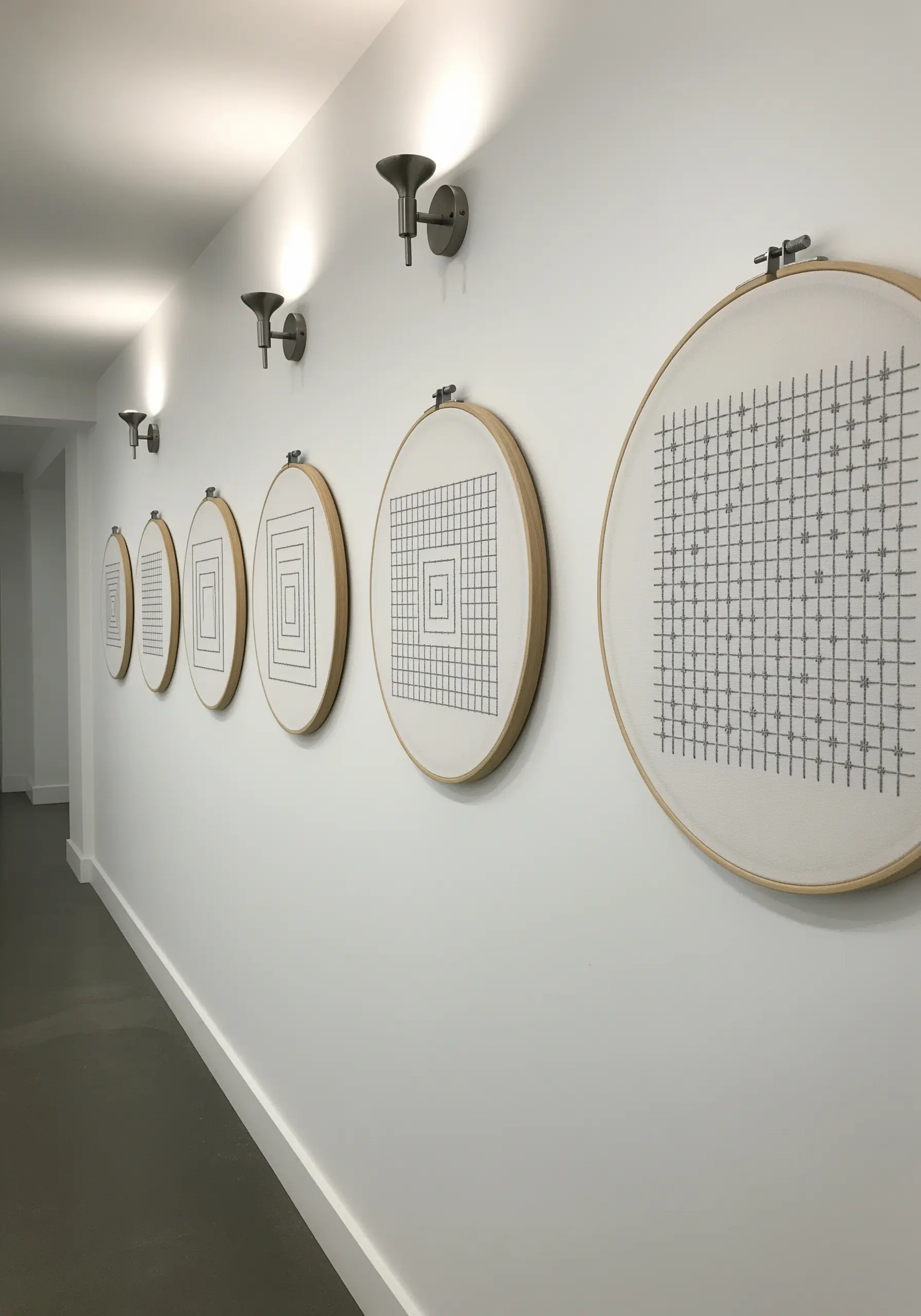
Develop a single geometric concept across multiple hoops to create a piece that explores progression and change.
Start with a simple grid and gradually add or alter elements in each subsequent hoop, showing a pattern’s evolution.
This systematic approach turns your stitching into a form of visual data or a quiet, meditative study.
Displaying them in a linear sequence enhances the sense of movement and transformation, inviting viewers to follow the design’s journey.
10. Imply Dimension with Stitch Direction
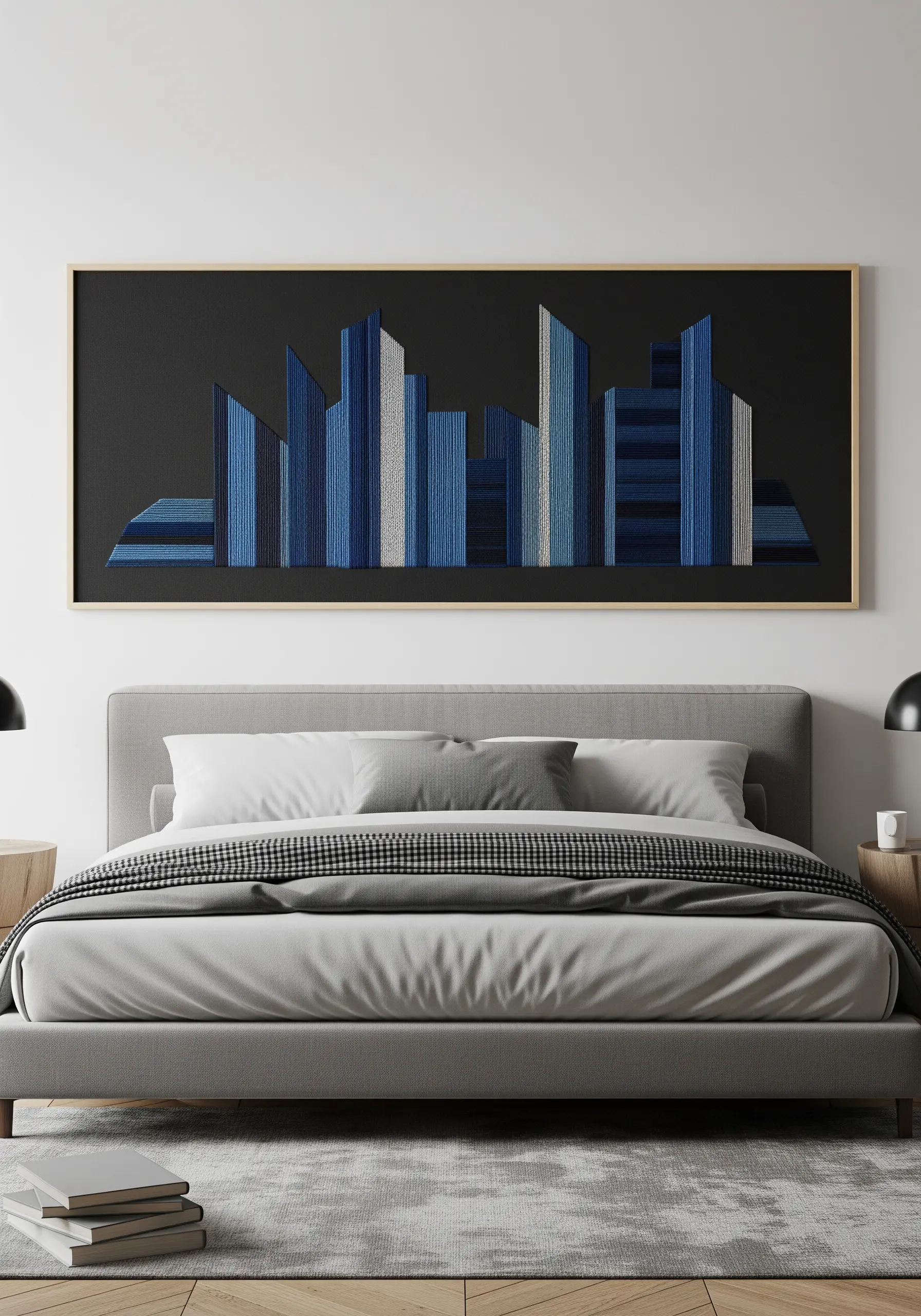
Create the illusion of architectural planes and shadows by carefully controlling the direction of your satin stitches.
Within a single skyscraper shape, divide it into sections and change the angle of your stitches—vertical for one plane, diagonal for another.
This simple shift changes how light reflects off the thread, creating a sense of depth and structure without needing multiple colors.
Using a palette of blues, whites, and grays against a dark background enhances the feeling of a city skyline at dusk.
11. Embrace Playful Composition with Abstract Shapes
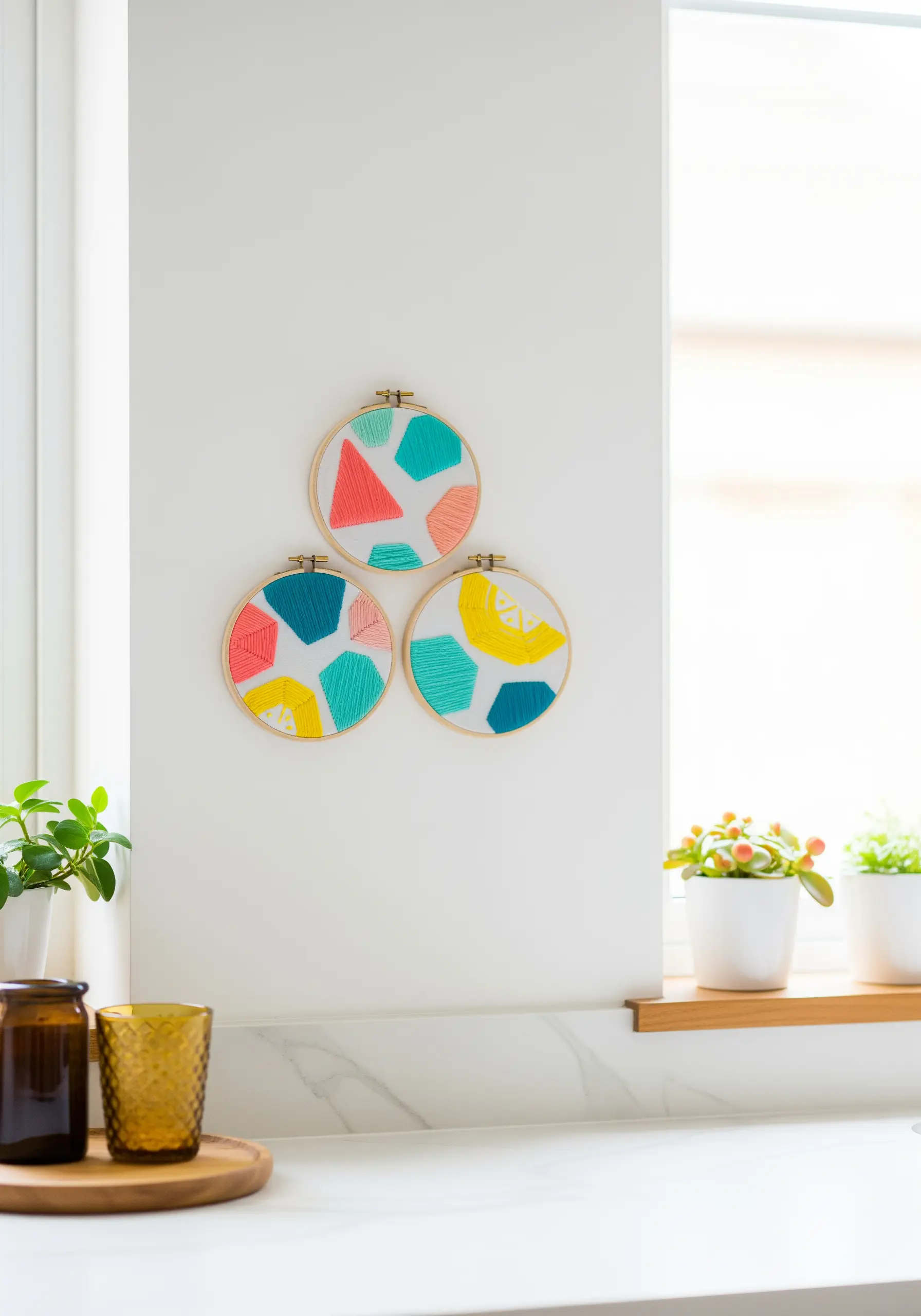
Break free from symmetry and create a joyful, energetic display with clusters of small, colorful hoops.
Fill irregular, organic shapes with a simple satin stitch, focusing on clean execution rather than complex patterns.
Use a vibrant, high-contrast color palette to make the designs pop. The key is to arrange the shapes so they feel balanced yet spontaneous.
This is one of the most effective color pop embroidery art ideas for brightening up a kitchen or creative workspace.
12. Balance Bold Shapes with Delicate Details
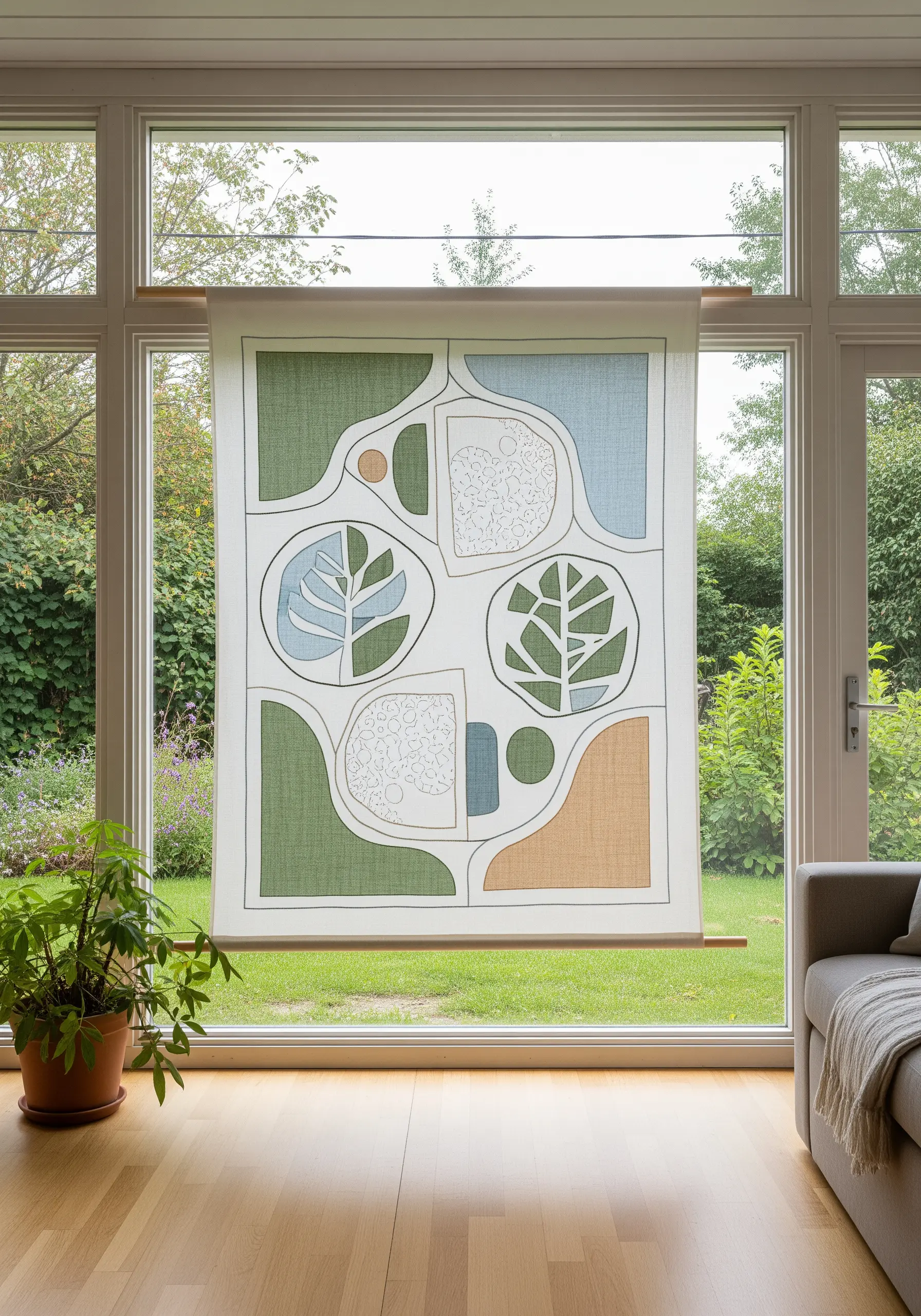
Create a sophisticated composition by pairing large, color-blocked areas with sections of fine, intricate line work.
Fill the larger organic shapes with a smooth darning stitch or satin stitch for a flat, woven appearance.
For the detailed leaf sections, switch to a single strand of floss and use a tiny backstitch or seed stitches to create a delicate, contrasting texture.
This interplay between solid and detailed areas guides the viewer’s eye and adds layers of visual interest.
13. Create 3D Illusions with Monochrome Shading
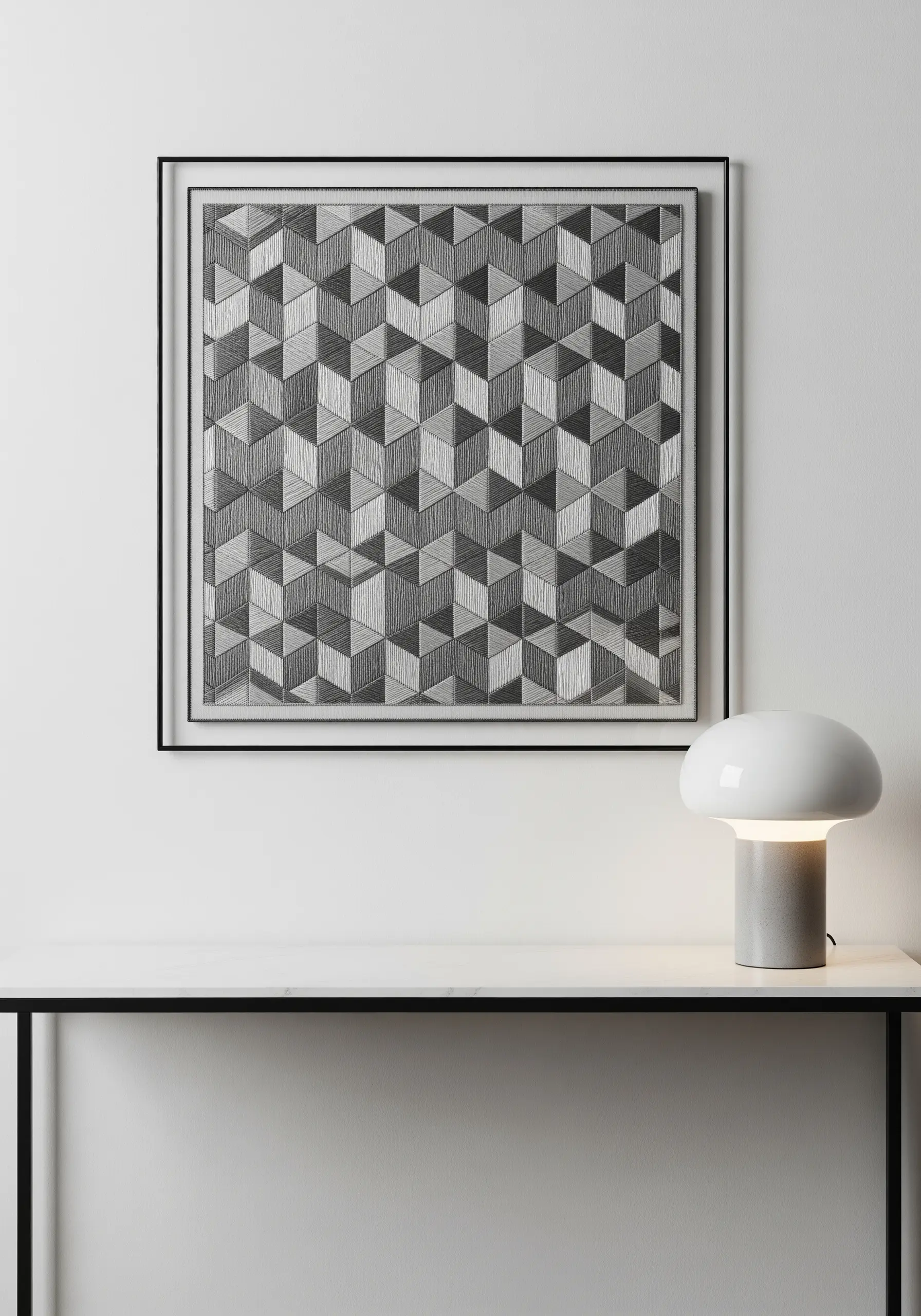
You don’t need color to create depth; texture and stitch direction are powerful enough to trick the eye.
Use a simple backstitch or straight stitch to fill in the facets of this repeating cube pattern.
To create the illusion of shadow and light, simply change the direction of your stitches for each of the three visible sides of the cube.
This technique, known as blackwork, relies on pattern density and direction to build abstract optical illusion stitches, proving that a single color can have incredible dimension.
14. Elongate a Space with Vertical Panels
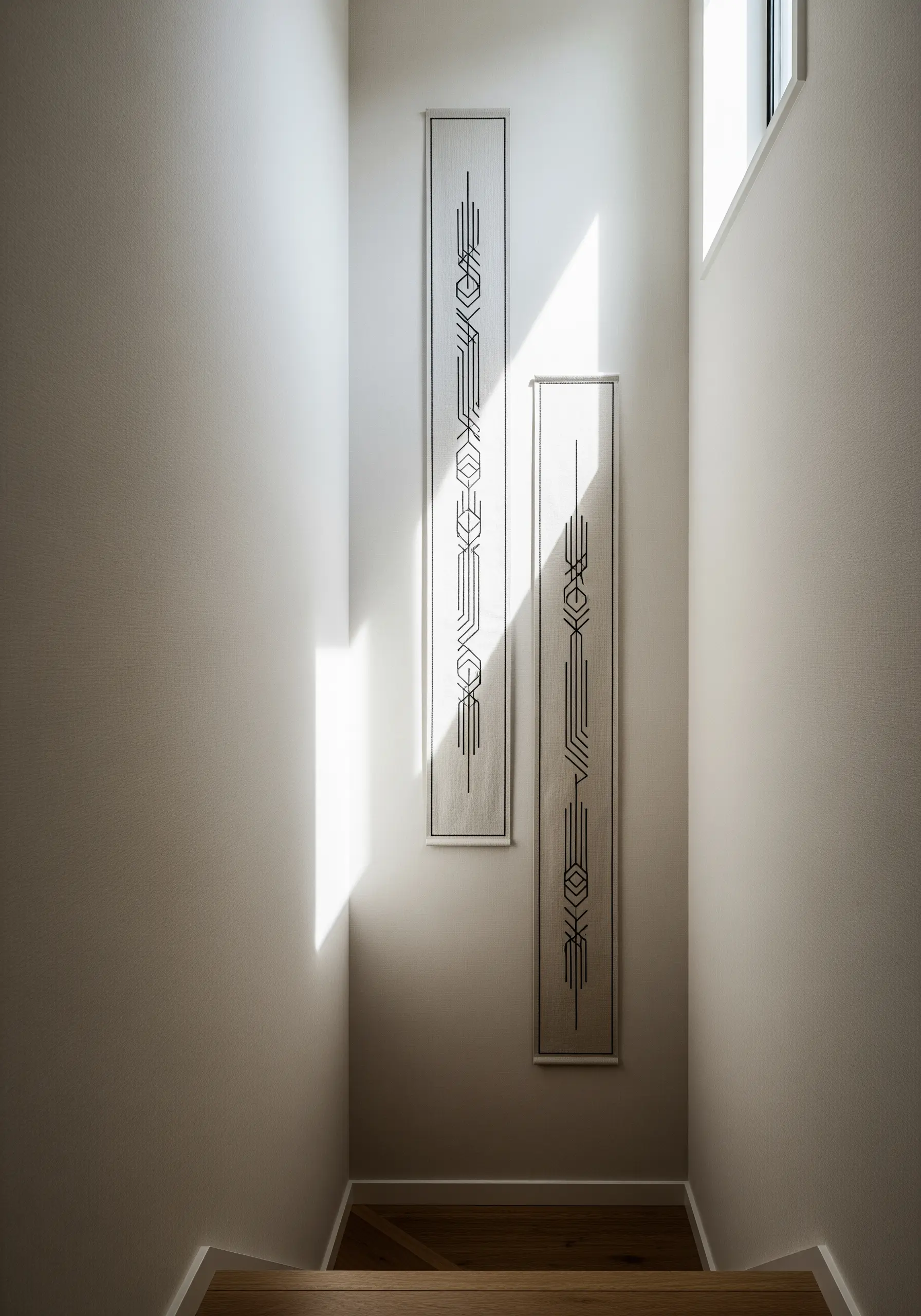
Emphasize height and create an elegant focal point in narrow spaces like hallways or staircases with long, vertical designs.
Use a single color of thread on a light background to maintain a minimalist, uncluttered aesthetic.
Focus on precise, ruler-straight lines using a backstitch, ensuring your tension is even to prevent fabric puckering.
The symmetrical, Art Deco-inspired motifs create a sense of order and sophistication, drawing the eye upward and making the space feel taller.
15. Suggest Motion with Flowing, Curved Lines
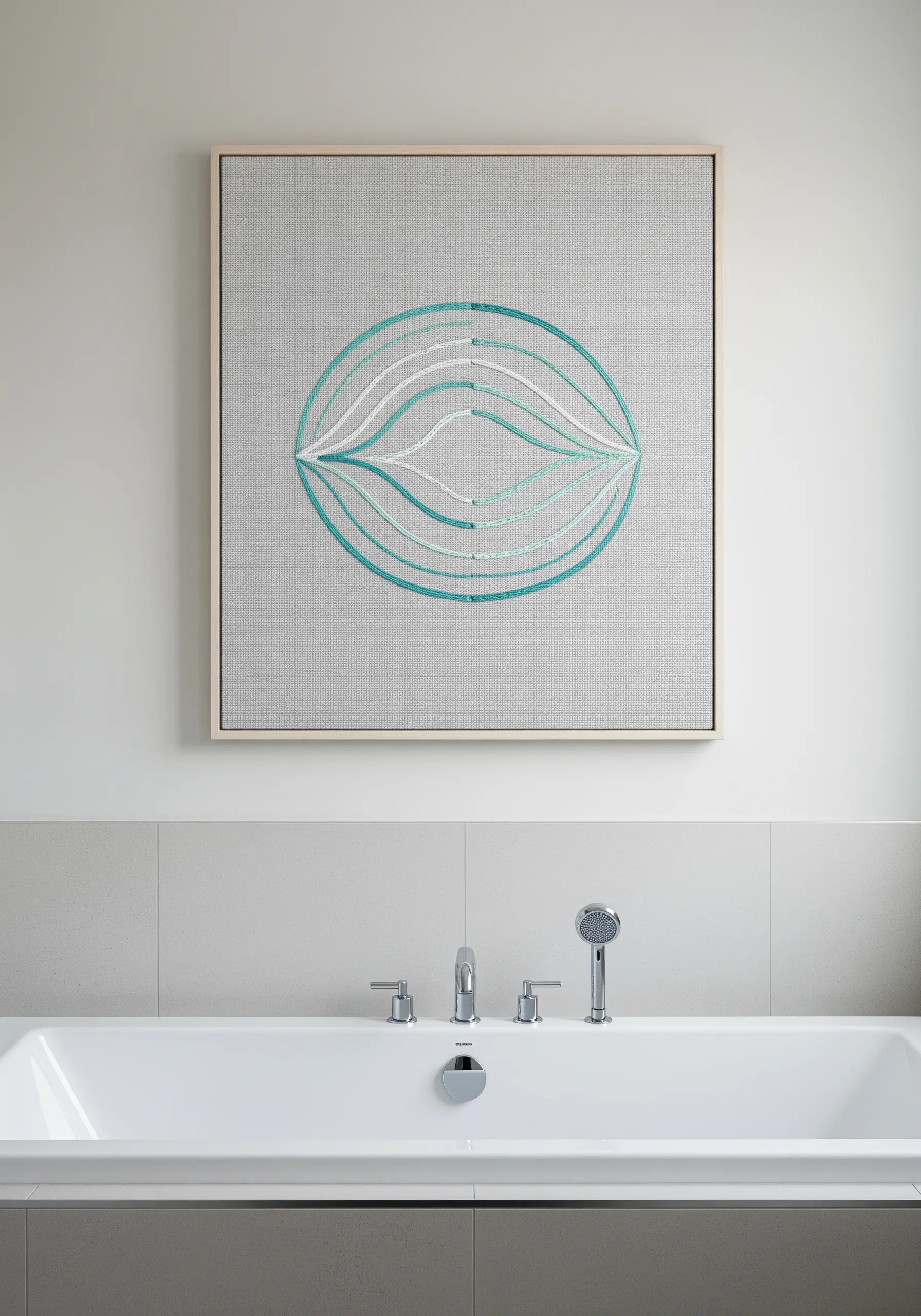
Capture a sense of fluidity and calm by building your design with graceful, concentric curves.
To achieve smooth, sweeping lines, use a stitch that excels on curves, like the stem stitch or split stitch. This prevents the jagged look that a backstitch can sometimes create.
Introduce a subtle gradient by using several shades of the same color, transitioning from dark to light to enhance the feeling of movement.
This is one of the best embroidery color palettes that instantly lower stress, making it perfect for a bathroom or bedroom.
16. Couch Thick Rope for High-Impact Texture
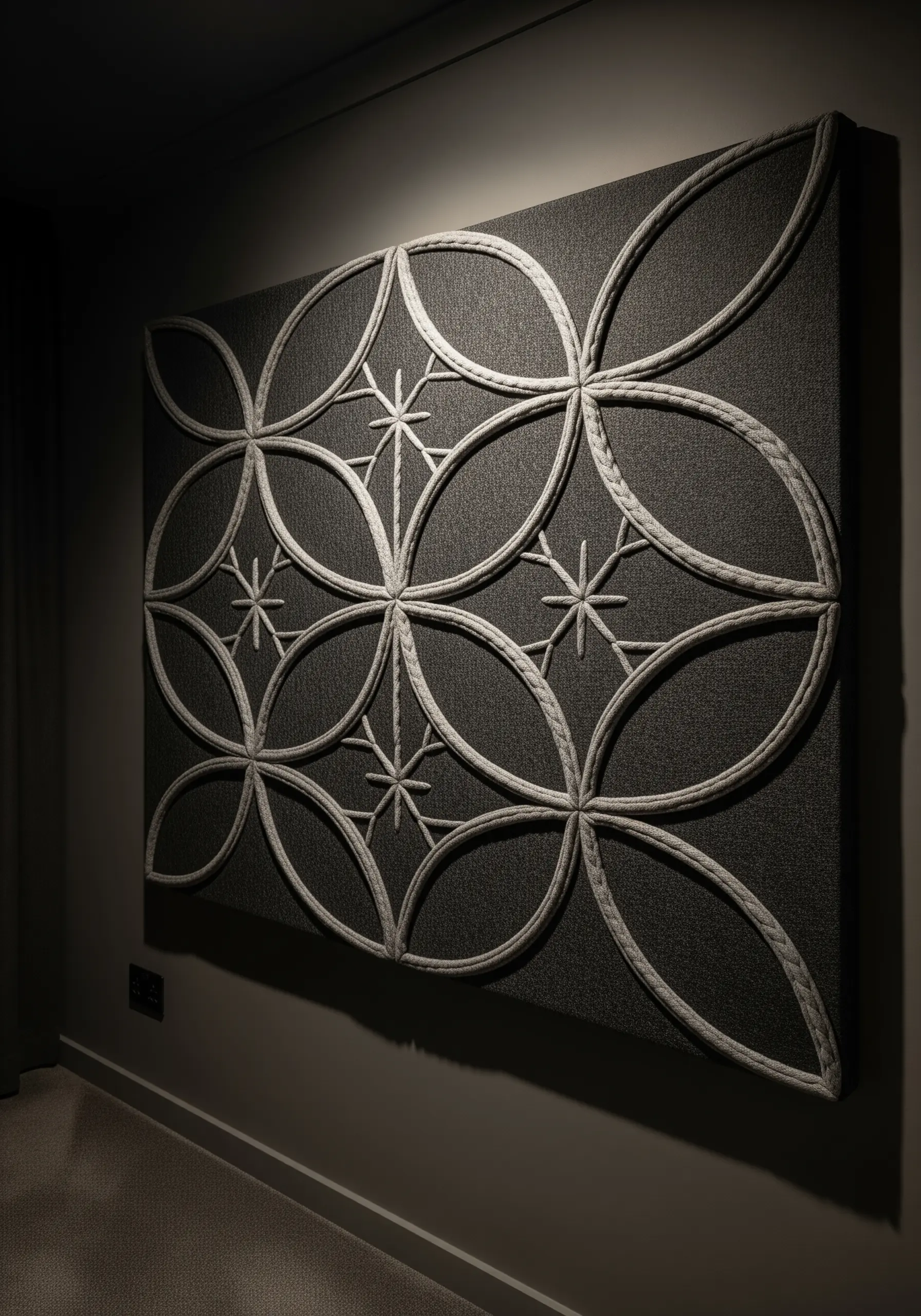
For a truly sculptural piece, use thick cotton rope as your primary design element.
Lay the rope onto a sturdy, dark fabric panel—like felt or canvas—and secure it by couching it with a strong, invisible, or matching thread.
This technique allows you to create bold, graphic patterns that have significant physical presence and cast dramatic shadows.
The contrast between the thick, pale rope and the dark, textured background creates a powerful statement piece that blurs the line between embroidery and sculpture.
17. Command Attention with High-Contrast Graphics
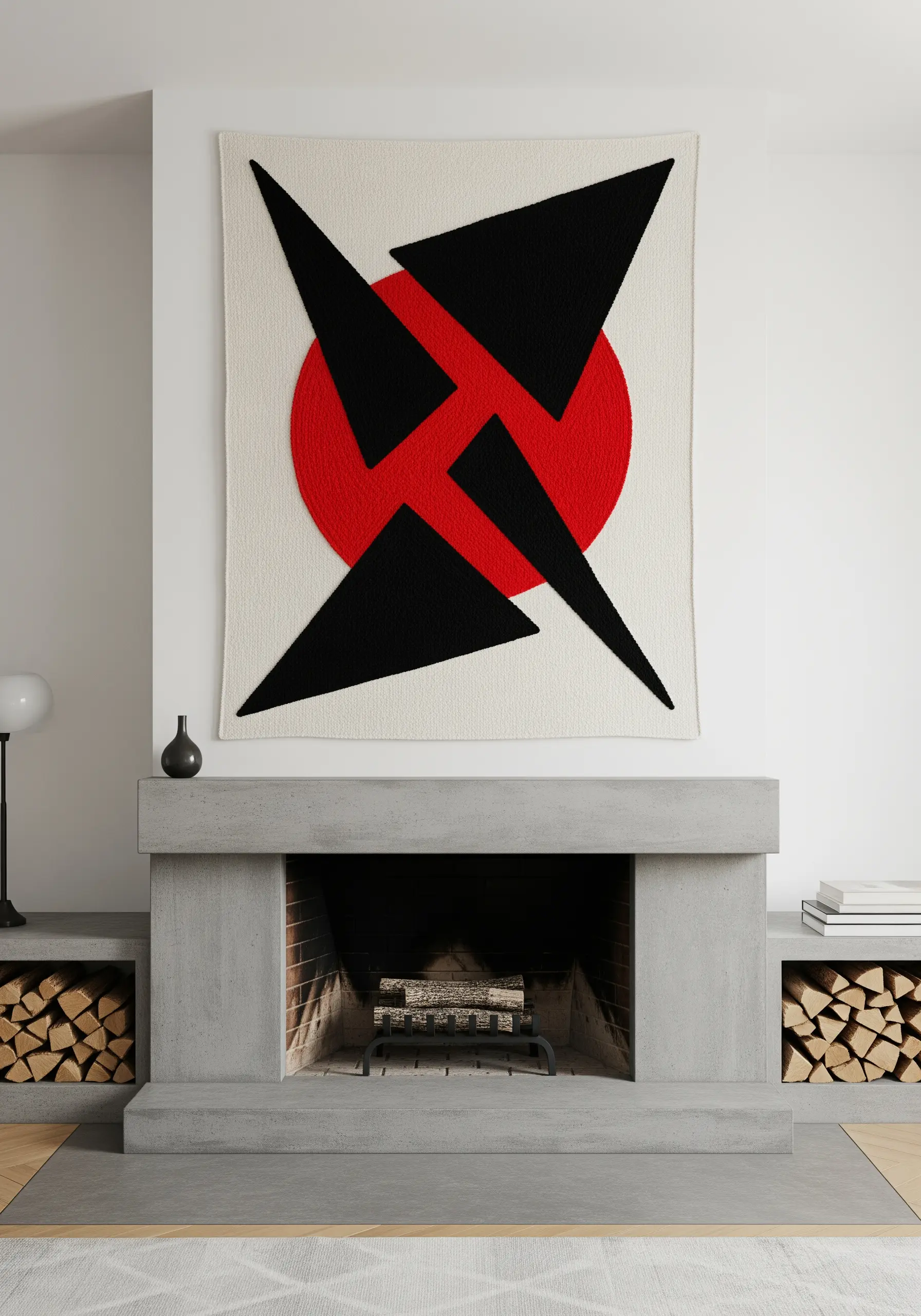
Make an unforgettable statement by pairing sharp, geometric shapes with a severely limited, high-impact color palette.
To achieve the dense, opaque fills required for this style, use a vertical satin stitch and pack your threads tightly.
Using just black, red, and off-white evokes a Constructivist or Bauhaus aesthetic, giving your textile art historical weight and graphic power.
The scale of the piece is also crucial; a large format transforms the design from a simple pattern into an immersive piece of art.
18. Emulate Quilting with Directional Stitches
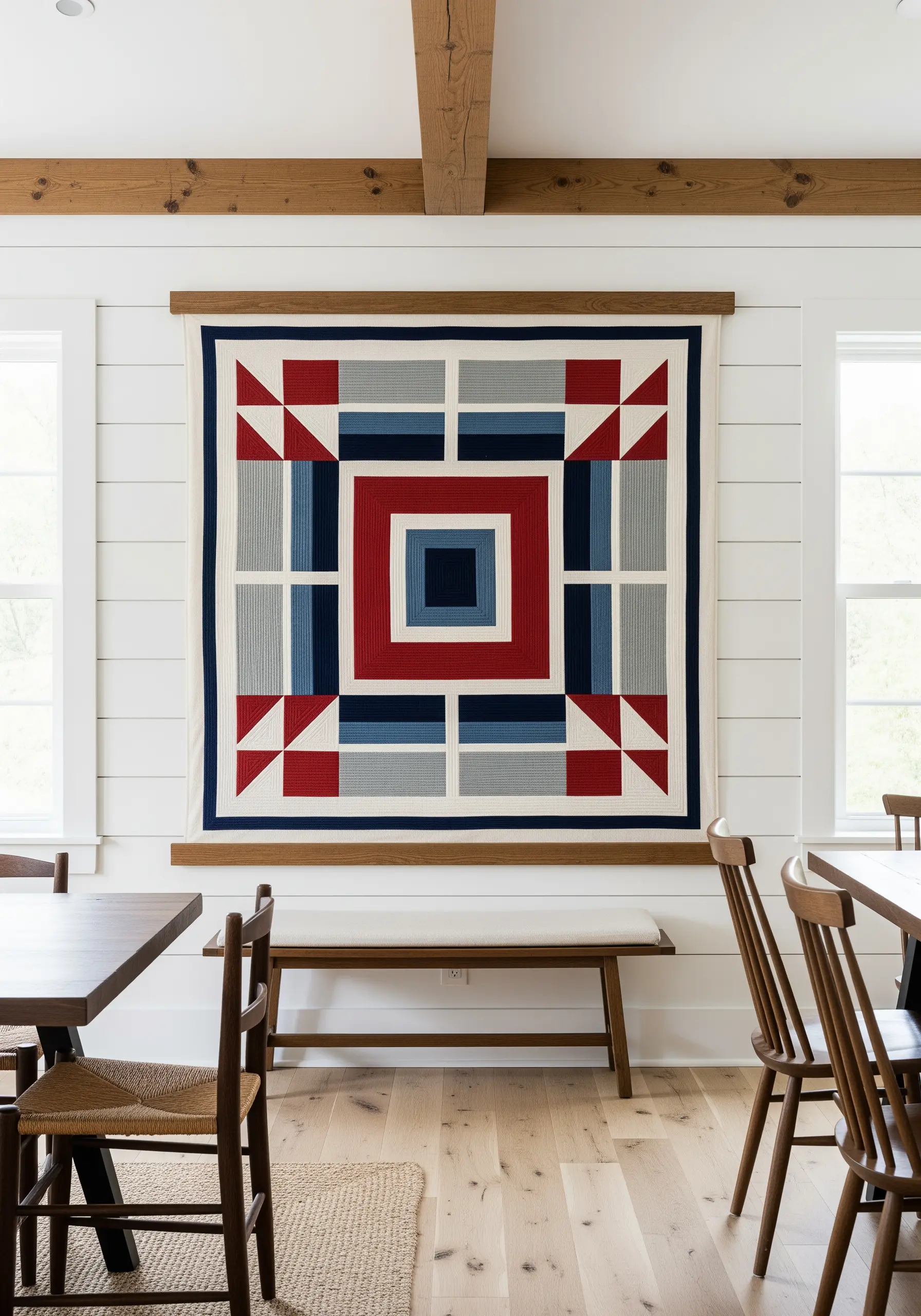
Translate the logic and beauty of traditional quilting into thread by using dense blocks of directional stitching.
Fill each shape—squares, rectangles, triangles—with perfectly parallel straight stitches or satin stitches.
Alternate the direction of the stitches in adjacent blocks (vertical next to horizontal) to mimic the seams and texture of pieced fabric.
This technique gives the finished piece a satisfying structure and depth, honoring a classic craft with a modern, stitched interpretation.
19. Create a Meditative Rhythm with Repetitive Arcs
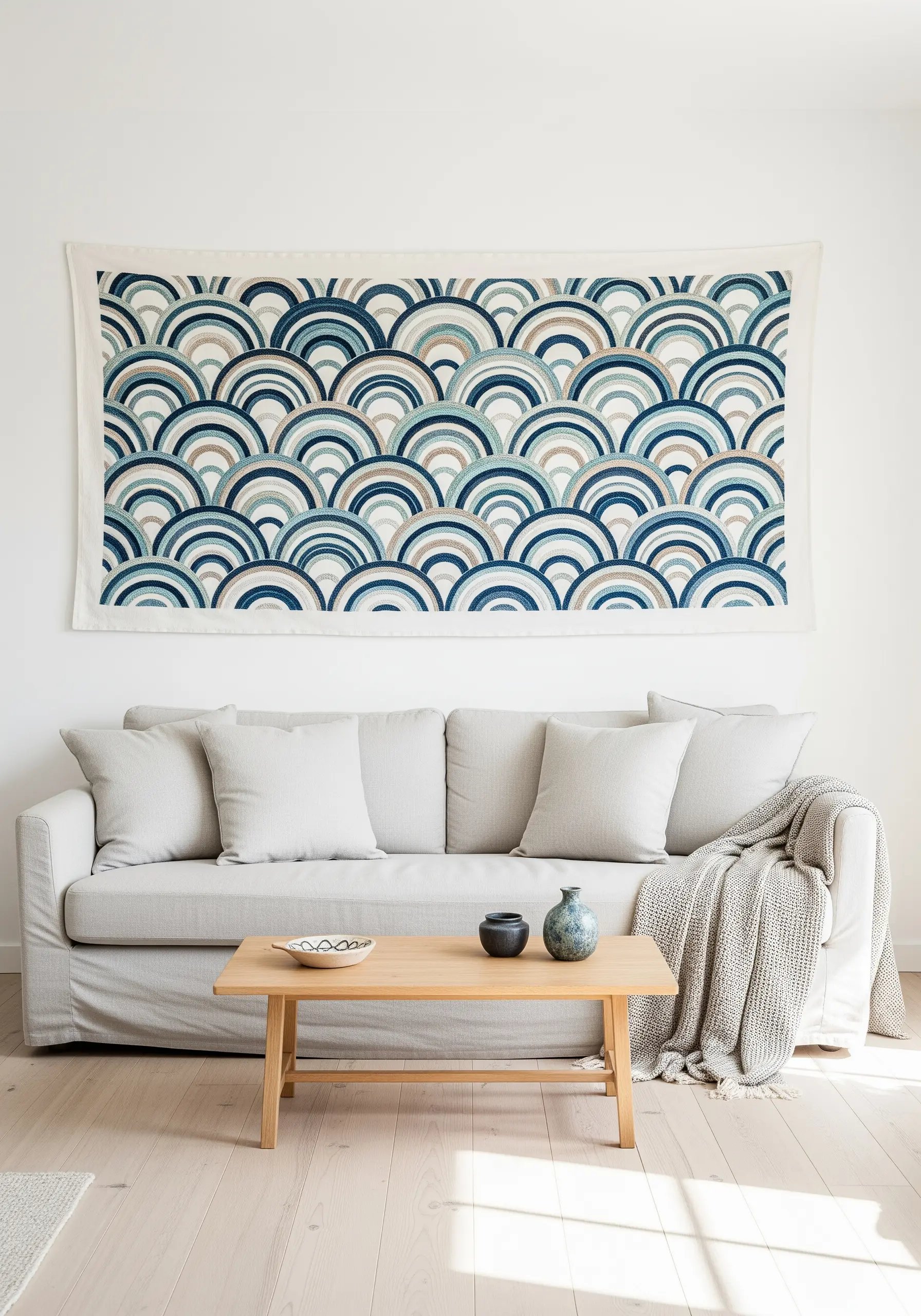
Fill a large space with a sense of calm and flow by building a design from a single, repeated element.
The Japanese Seigaiha, or wave pattern, is perfect for this. Use a chain stitch or split stitch to define each arc, giving it a pleasing, tactile quality.
Work with a serene, coastal-inspired palette of blues, teals, and sandy beiges to enhance the pattern’s tranquil, oceanic feel.
The repetition of the stitching process itself can be a meditative act, infusing the final piece with a sense of peace.
20. Achieve Delicate Precision with Single-Thread Outlines
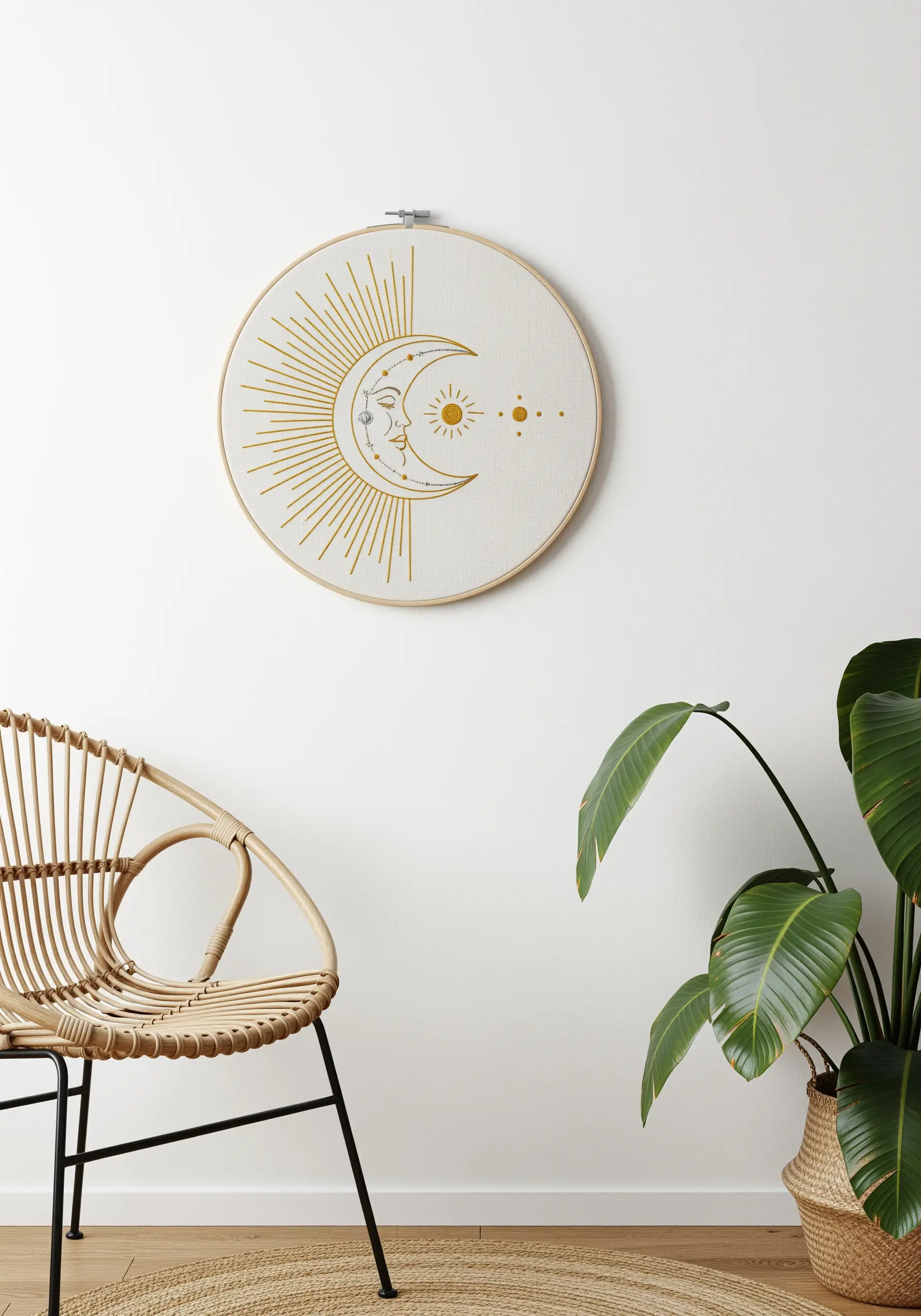
For fine, illustrative designs, the key to elegance is using only a single strand of embroidery floss.
This allows you to stitch sharp points and delicate curves with the precision of a pen line, which is essential for details like facial features and radiating sunbeams.
A whipped backstitch will give your lines a smoother, more solid appearance than a standard backstitch, creating a truly seamless look.
Stitching with a single metallic gold thread on unbleached linen creates a beautiful contrast that feels both celestial and earthy.
21. Stitch on Sheer Fabric for a Floating Effect
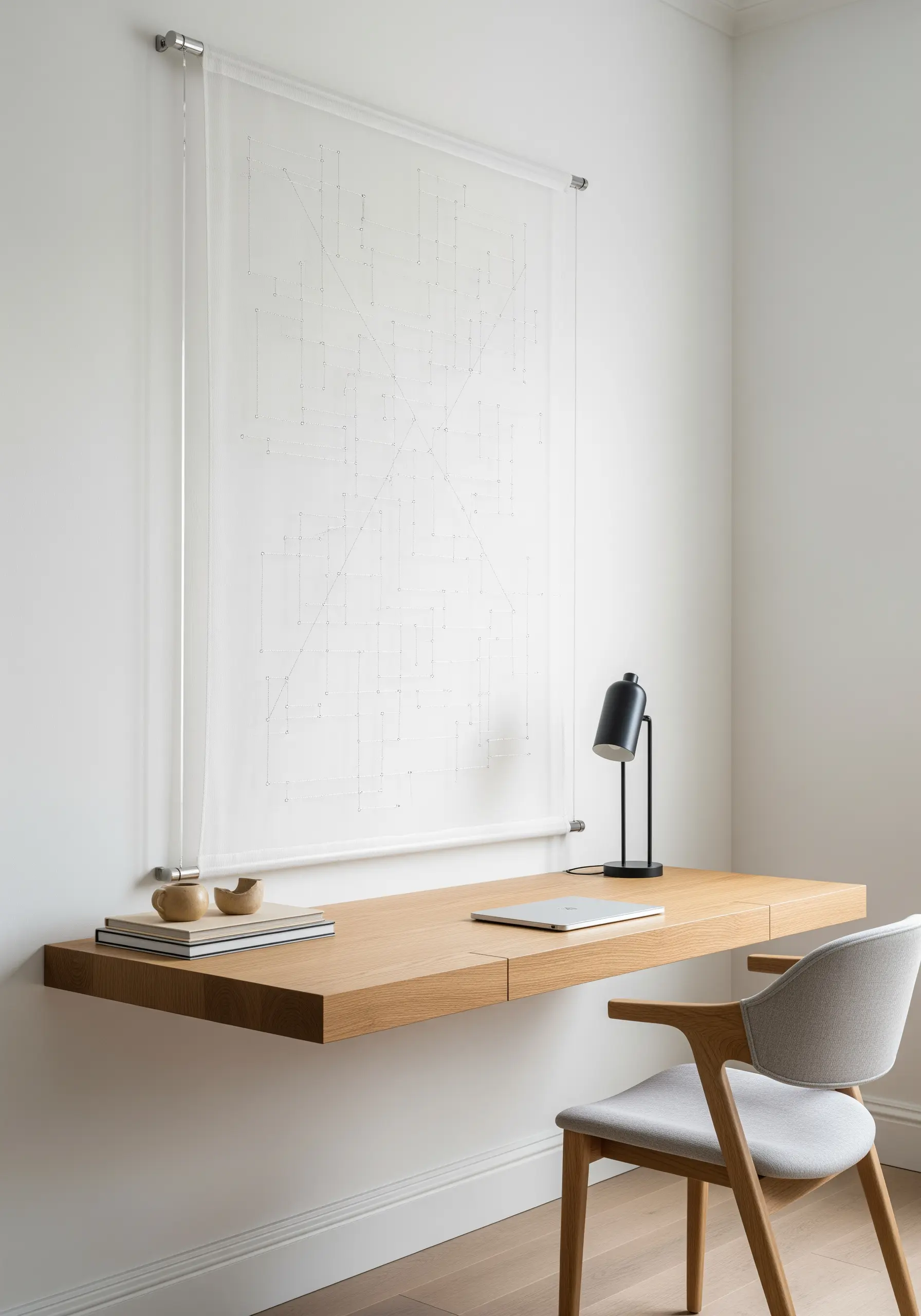
Create an ethereal, modern look by embroidering on a transparent or semi-transparent fabric like organza or tulle.
Use a simple backstitch for clean, geometric lines. The challenge lies in managing tension, so work in a hoop and keep your stitches relaxed to avoid puckering.
Since the back of your work will be visible, you must keep it exceptionally neat, trimming thread tails closely and planning your stitch path to minimize travel stitches.
When hung, the design appears to float in mid-air, creating a delicate and architectural piece of art.
22. Create Kinetic Energy with Fluorescent Thread
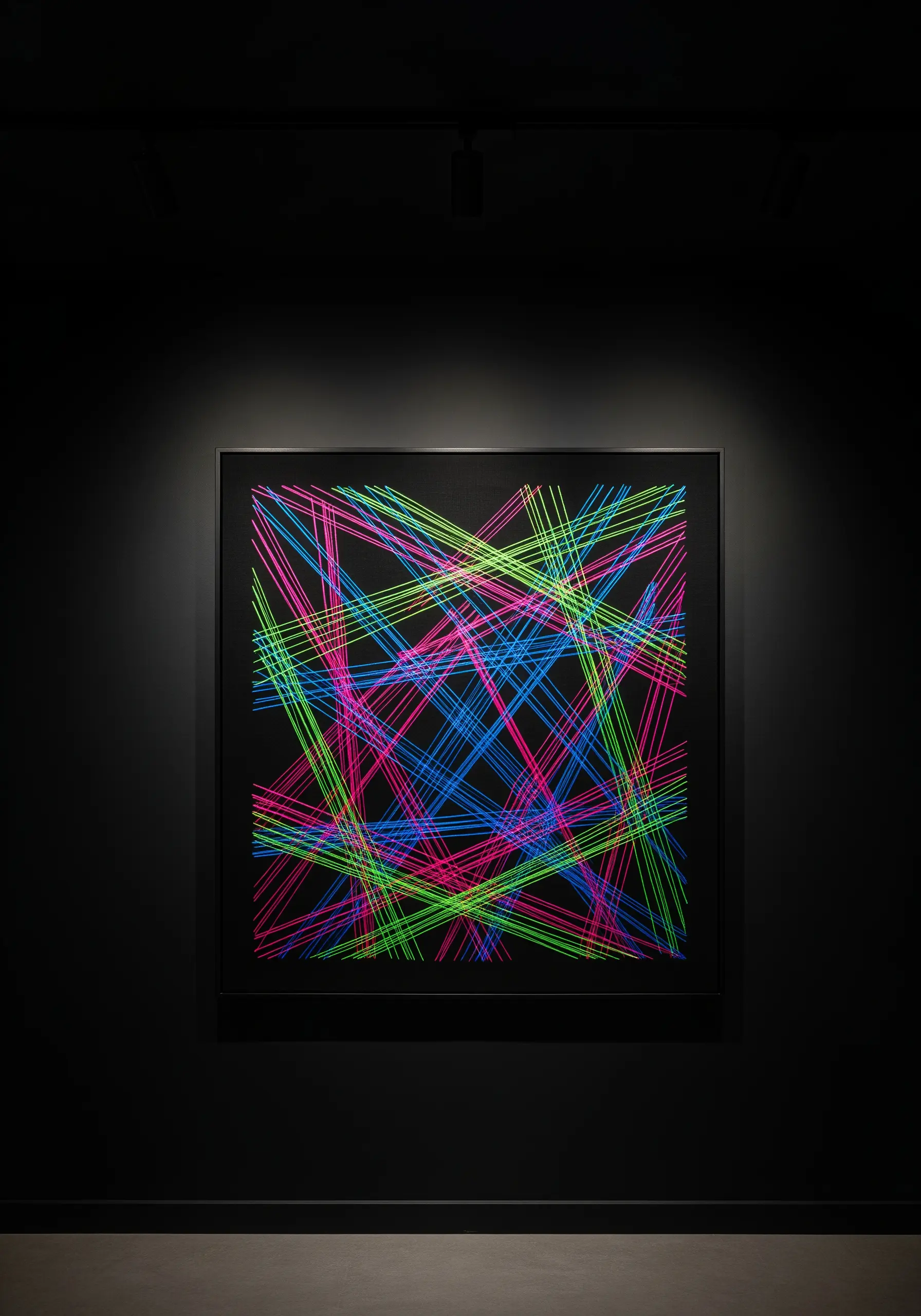
Design a piece that feels alive with movement by layering long, straight stitches in vibrant, fluorescent colors.
Work on a black or dark navy fabric to make the neon threads appear to glow, especially under direct light.
Instead of following a rigid pattern, allow the lines to intersect randomly, building up a dense, web-like texture that feels spontaneous and energetic.
This is one of the most dynamic futuristic stitch patterns you can create, evoking the feeling of light trails or laser beams.
23. Build Dynamic Compositions with Layered Shapes
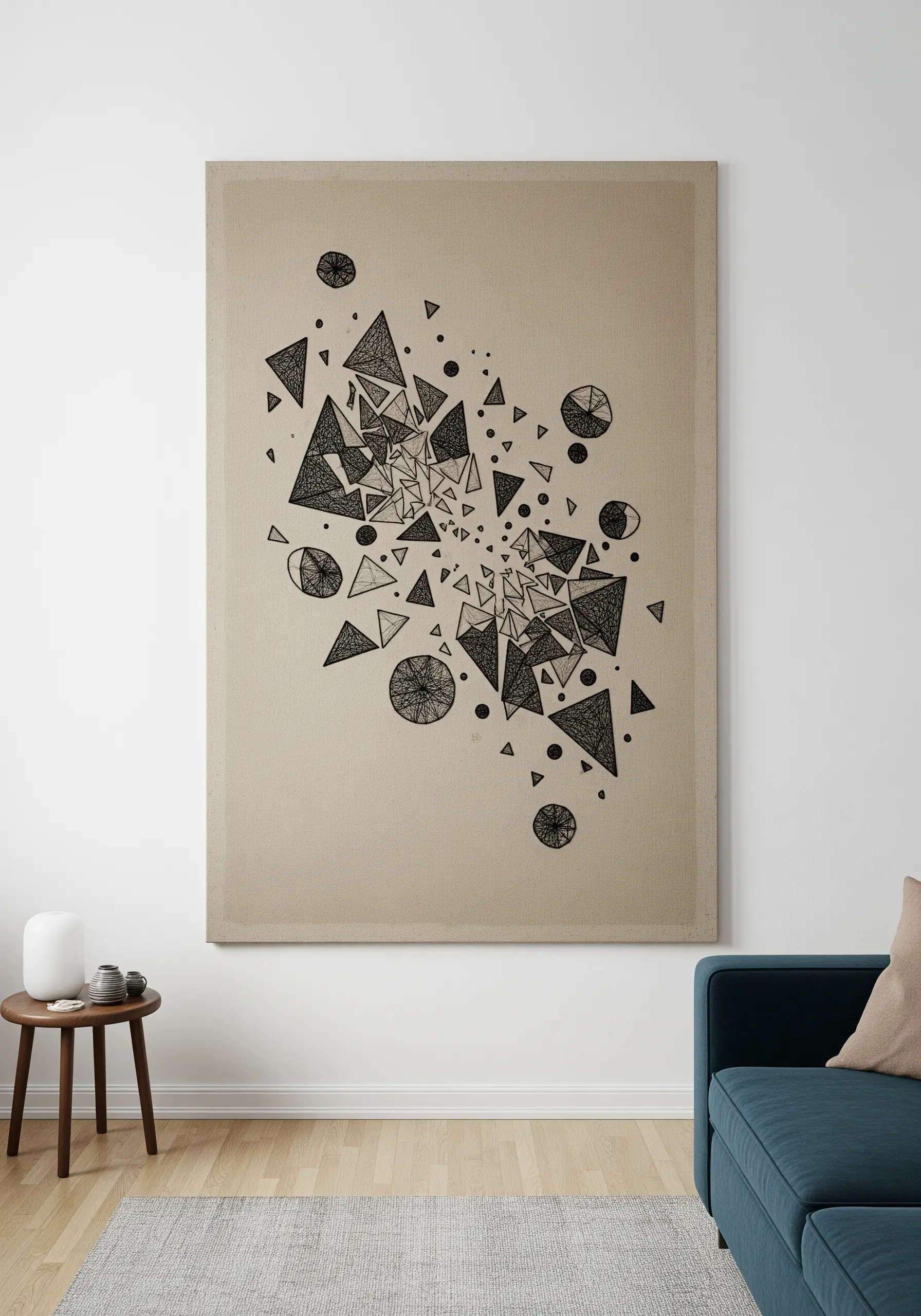
Create a sense of explosive energy by layering simple geometric shapes—triangles and circles—in a seemingly chaotic arrangement.
To maintain clarity, vary the fill patterns within the shapes. Use cross-hatching for some, solid backstitching for others, and leave some as empty outlines.
This textural variation prevents the complex design from becoming visually overwhelming and adds sophisticated detail.
Working in a single color on neutral fabric places all the emphasis on the interplay of shape and pattern.
24. Use Sheer Overlays for Ghostly Dimensions
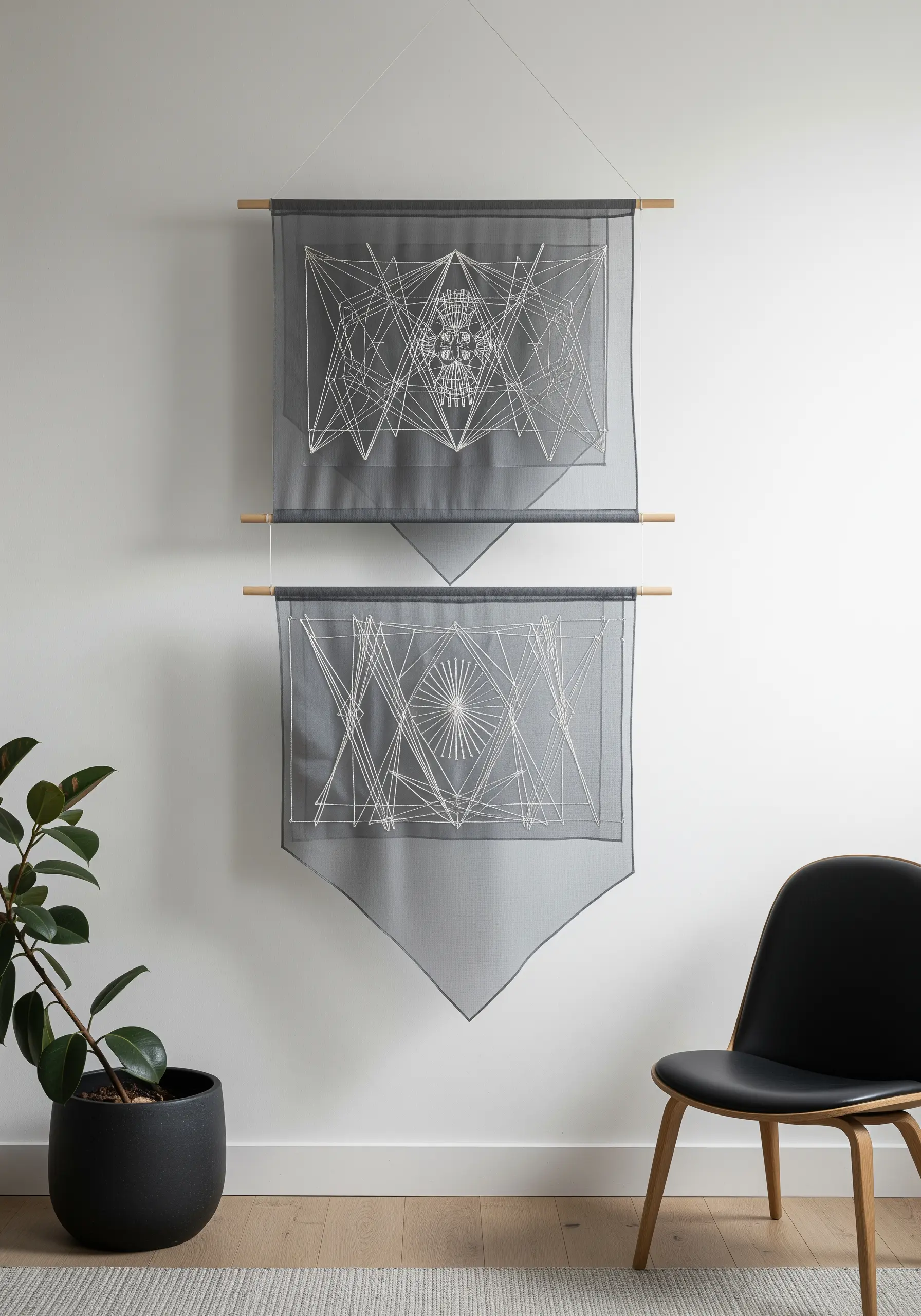
Add a layer of mystery and depth to your work by stitching your design on sheer fabric, like charcoal organza, and hanging it over a solid wall.
The transparent material allows the wall color to show through, becoming an integral part of the artwork’s palette.
Stitch with a contrasting white or silver thread to make the geometric lines pop against the dark, airy background.
This technique creates a subtle, layered effect where the design seems to hover just off the surface, interacting with light and shadow.
25. Define Sacred Geometry with Metallic Thread
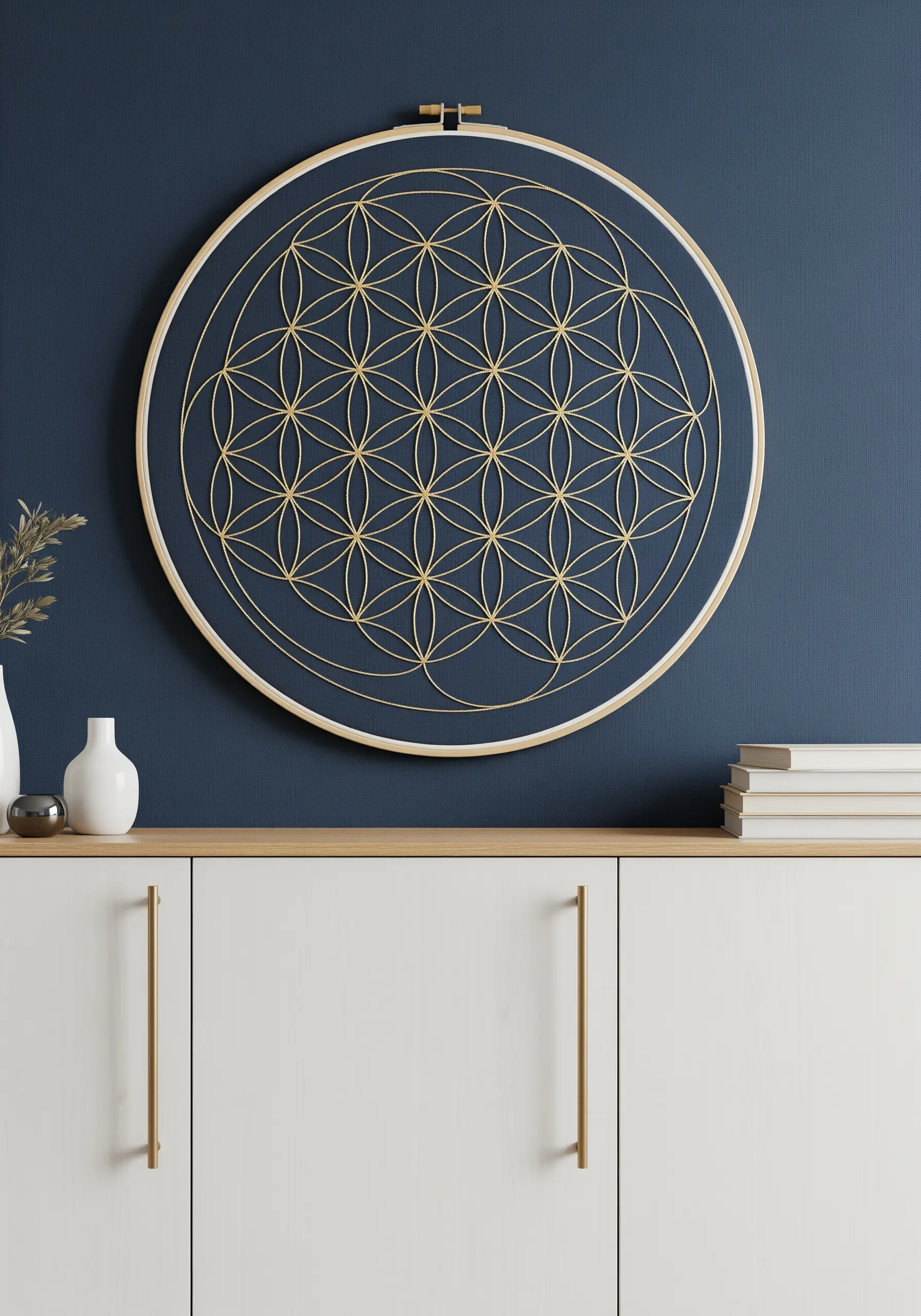
Lend an air of reverence and precision to sacred geometry patterns like the Flower of Life by using a single, elegant material choice.
Stitch the entire design with a fine metallic gold thread on a deep navy or black fabric. The contrast creates a stunning visual that feels both ancient and modern.
Use a neat backstitch or whipped backstitch to ensure every intersecting line is crisp and every curve is perfectly smooth.
The simplicity of the materials allows the complexity and harmony of the geometric form to take center stage.
26. Transform a Blueprint into Personal Art
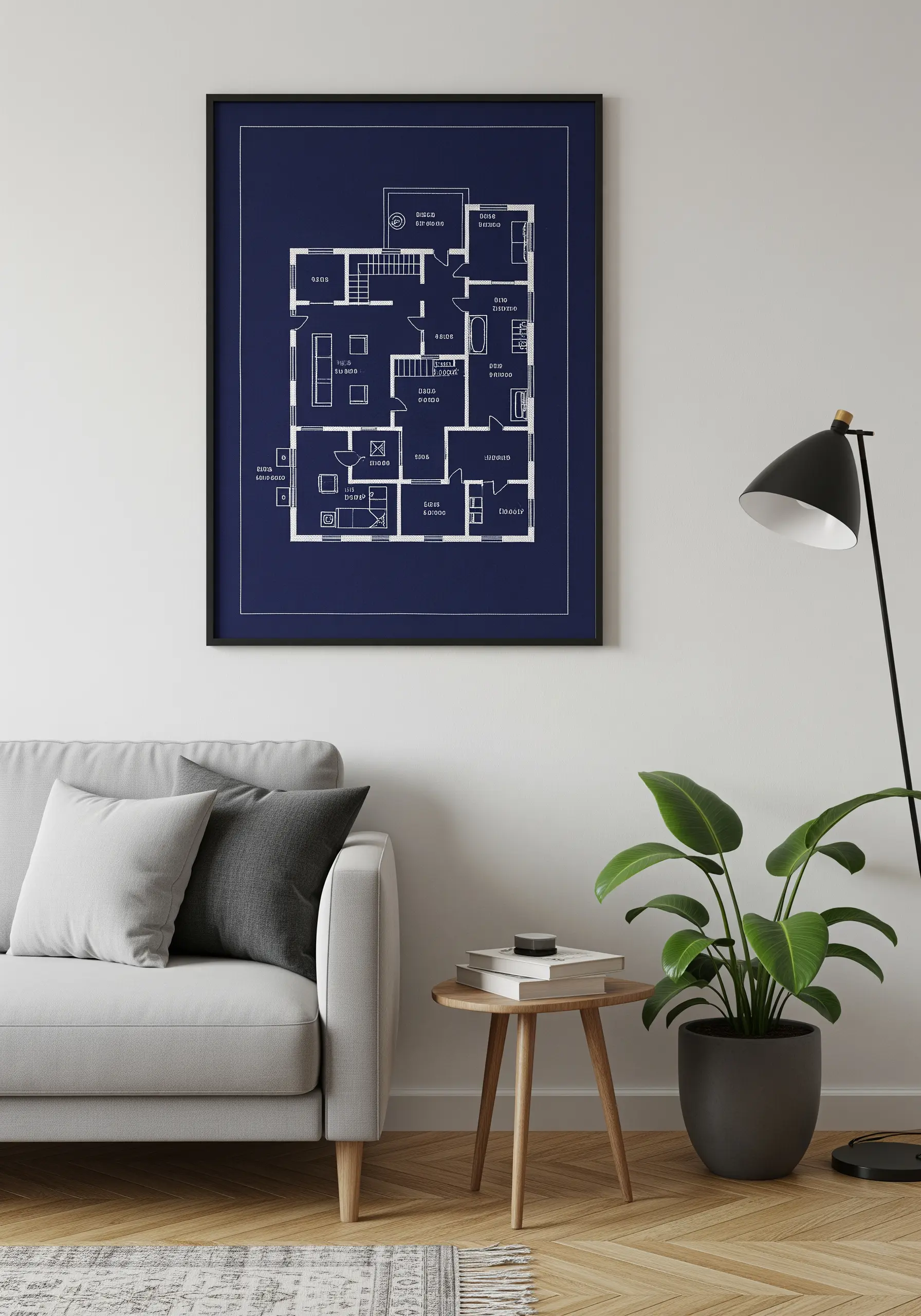
Celebrate a meaningful place by translating an architectural blueprint into a stitched work of art.
Use a single strand of white floss on a dark blue linen or cotton to replicate the classic blueprint aesthetic.
A precise backstitch is essential for capturing the straight lines and small details of the floor plan.
This project transforms a technical drawing into a deeply personal and custom embroidery gift idea, immortalizing the layout of a cherished home.
27. Stitch Perspective with Grayscale Gradients
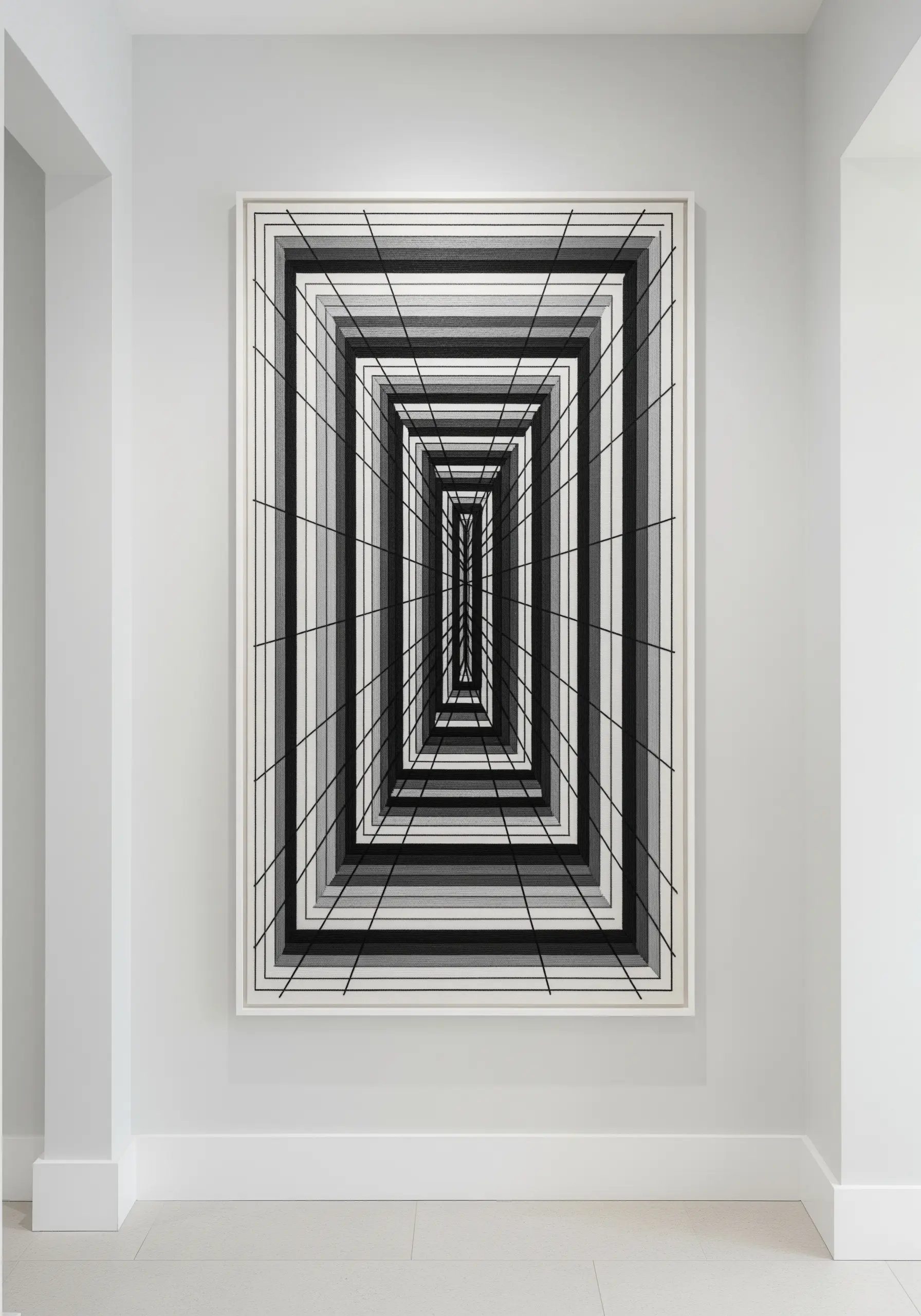
Create a powerful optical illusion of depth by combining linear perspective with a careful gradient of gray threads.
Use long satin stitches for the receding walls of the tunnel, transitioning from dark gray on the outside to near-white at the center.
Overlay this with a grid of straight black lines that converge at the central vanishing point to amplify the sense of perspective.
The disciplined use of color and line forces the eye to perceive a three-dimensional space on a two-dimensional surface.
28. Build Bas-Relief with Coiled Yarn
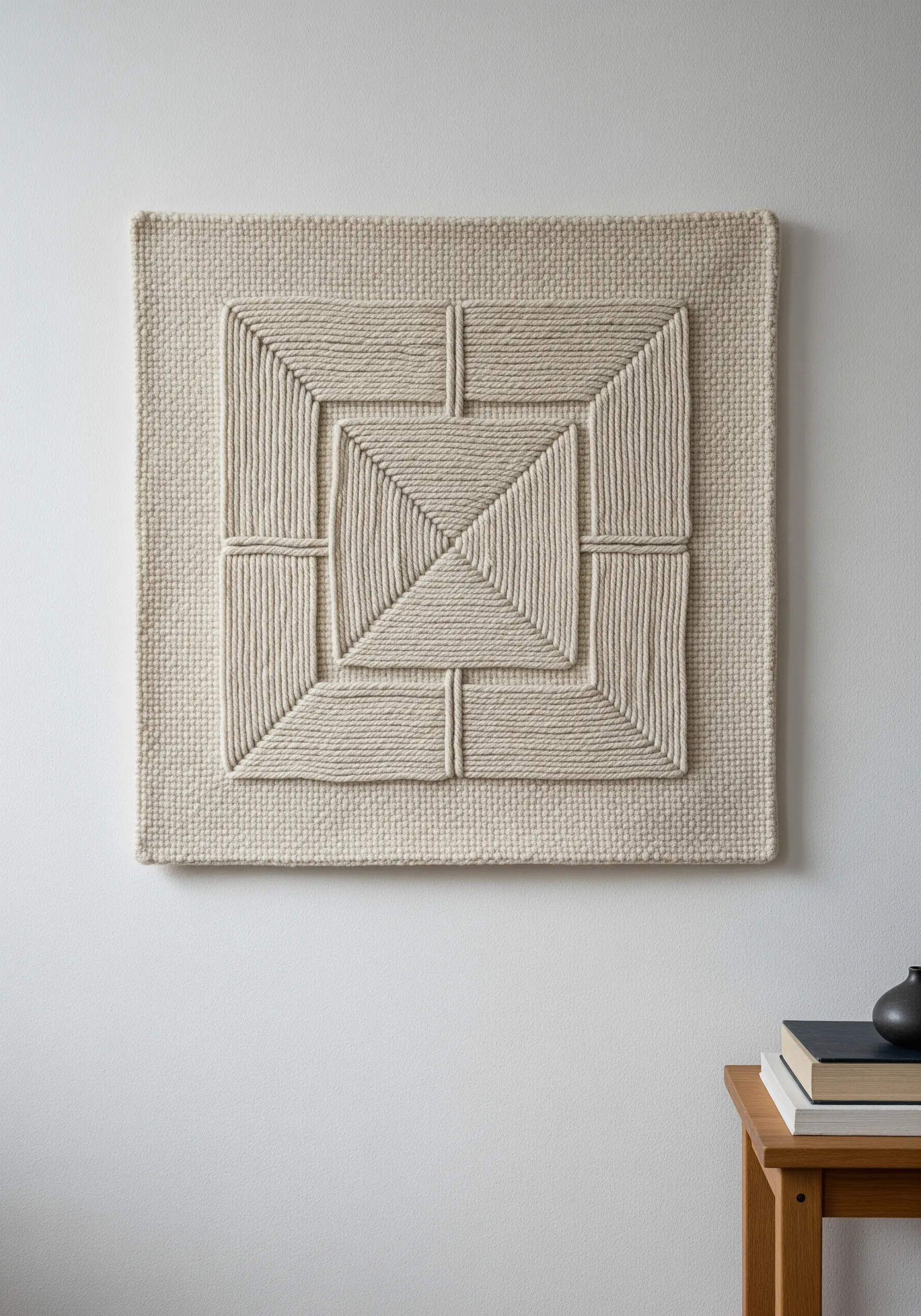
Create a minimalist sculpture from thread by coiling and couching thick yarn to build raised, geometric forms.
On a woven fabric base, lay down thick yarn or cord in tight, concentric squares and other shapes.
Use a matching, thinner thread to invisibly stitch the yarn into place from behind or with tiny, hidden stitches on top.
This tone-on-tone technique creates a subtle, sophisticated piece where texture, shadow, and form are the main focus, resulting in handmade organic pieces that double as wall art.
29. Balance Composition with Negative Space
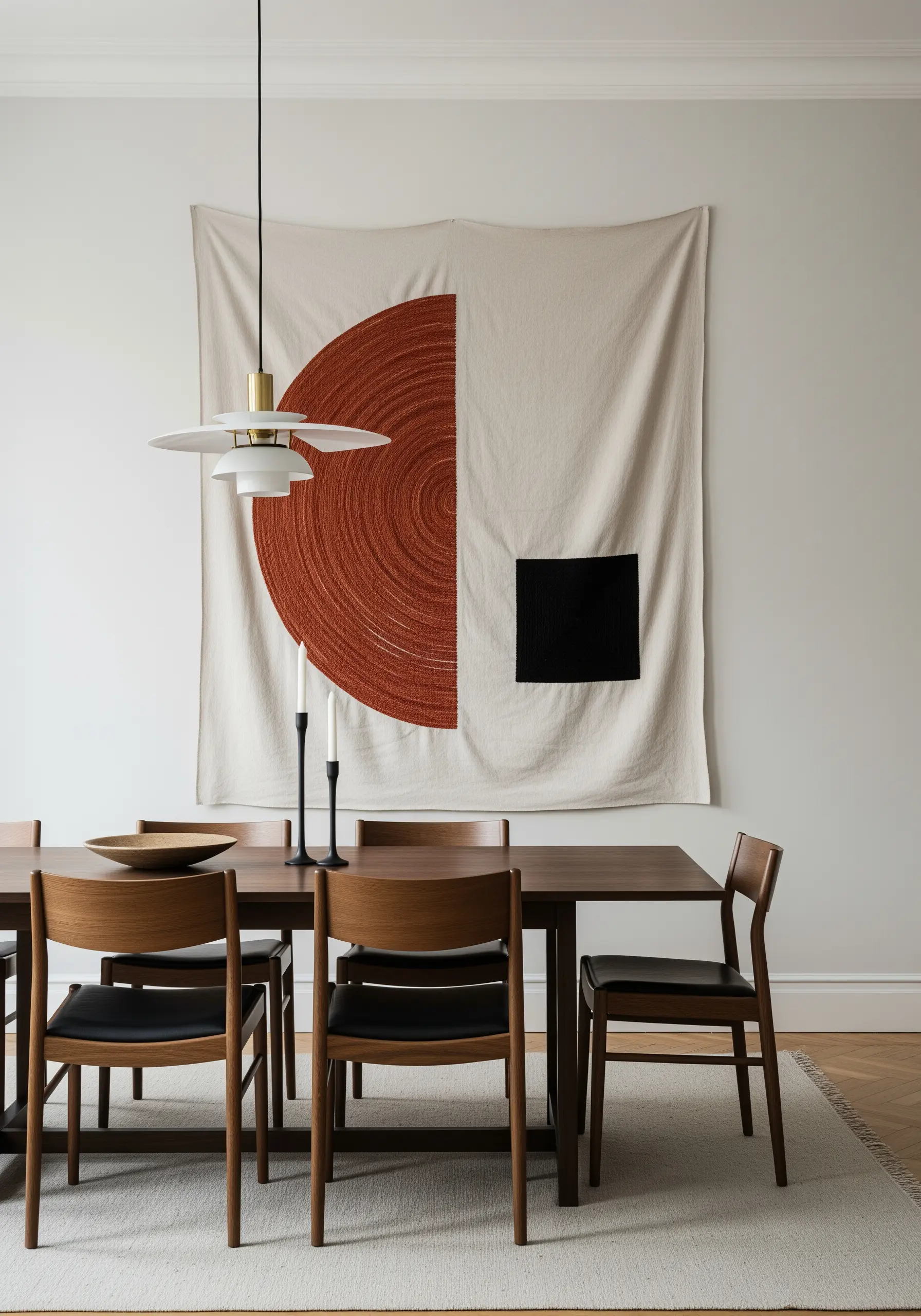
In minimalist design, the unstitched areas of your fabric are just as important as the stitched ones.
Create a powerful composition by placing your densely stitched geometric shapes off-center, allowing the negative space to breathe and balance the piece.
Use a circular fill stitch, like a spiral of backstitches or chain stitches, to create texture and movement within the large circle.
This intentional use of emptiness gives the artwork a calm, confident feel, proving that less is often more.
30. Curate a Triptych of Linear Studies
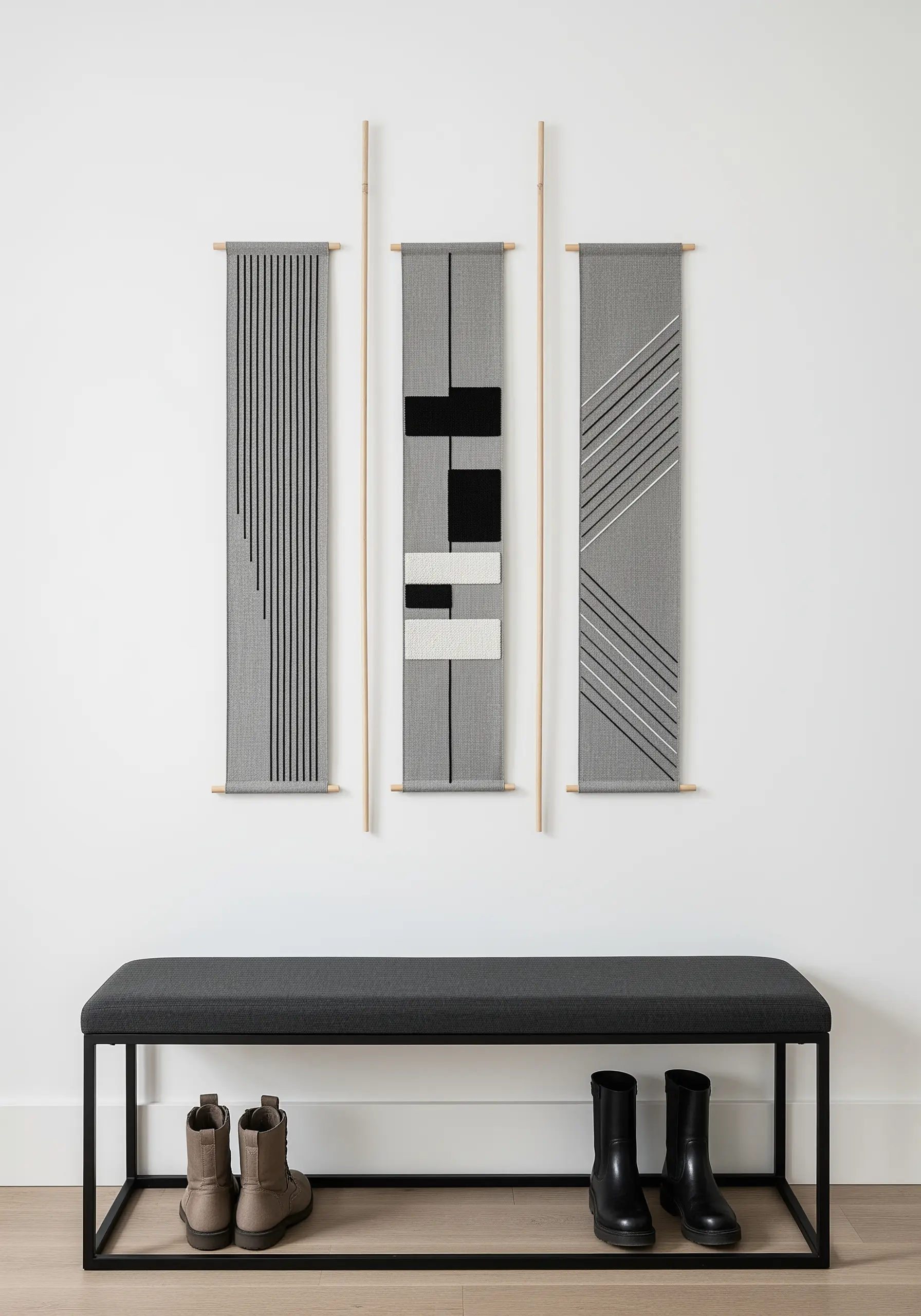
Elevate simple straight-line stitching into a cohesive art installation by presenting it as a curated triptych.
Explore variations on a theme: one panel can feature descending lines, another diagonal, and a third can play with geometric blocks.
Using the same fabric and color palette across all three pieces unites them into a single, intentional statement.
This approach transforms basic stitch practice into contemporary stitch designs that turn plain linen into luxe minimalist wall art.


