
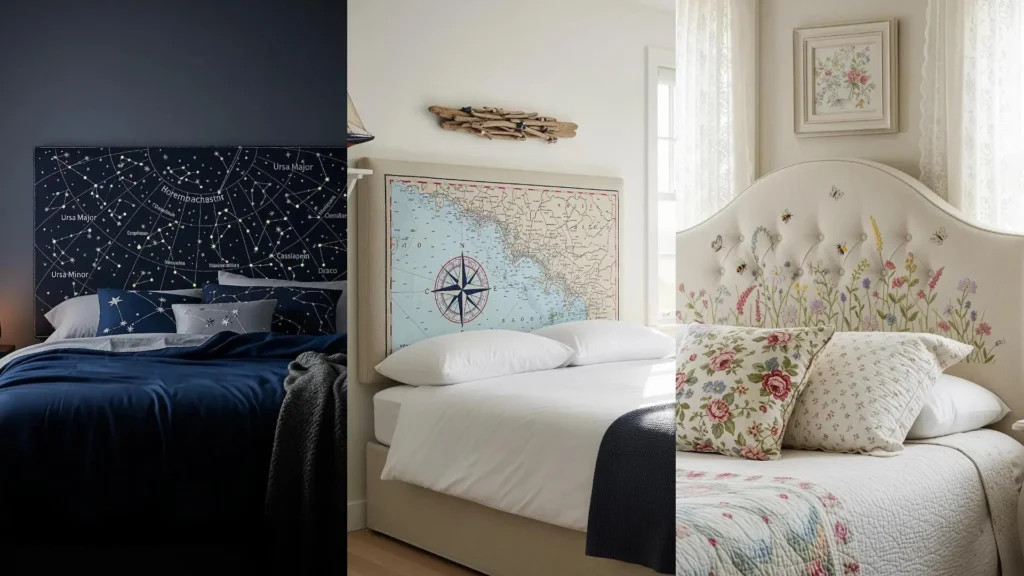
An embroidered headboard might seem like a grand undertaking, but I want you to think of it differently. It’s not one giant project; it’s a canvas for the stitches you already know and love, applied with intention.
This is your opportunity to move beyond the hoop and see how texture, color, and line can transform an entire room. Whether you choose a single, elegant line or a lush botanical scene, the principle is the same: thoughtful stitching creates art.
Here, you’ll find techniques that give you the confidence to scale up your work. You’ll see how a simple stitch, when repeated, can build incredible texture, and how a well-chosen thread can bring a flat surface to life. Let’s begin.
1. Layered Tropical Leaves with Color Blocking
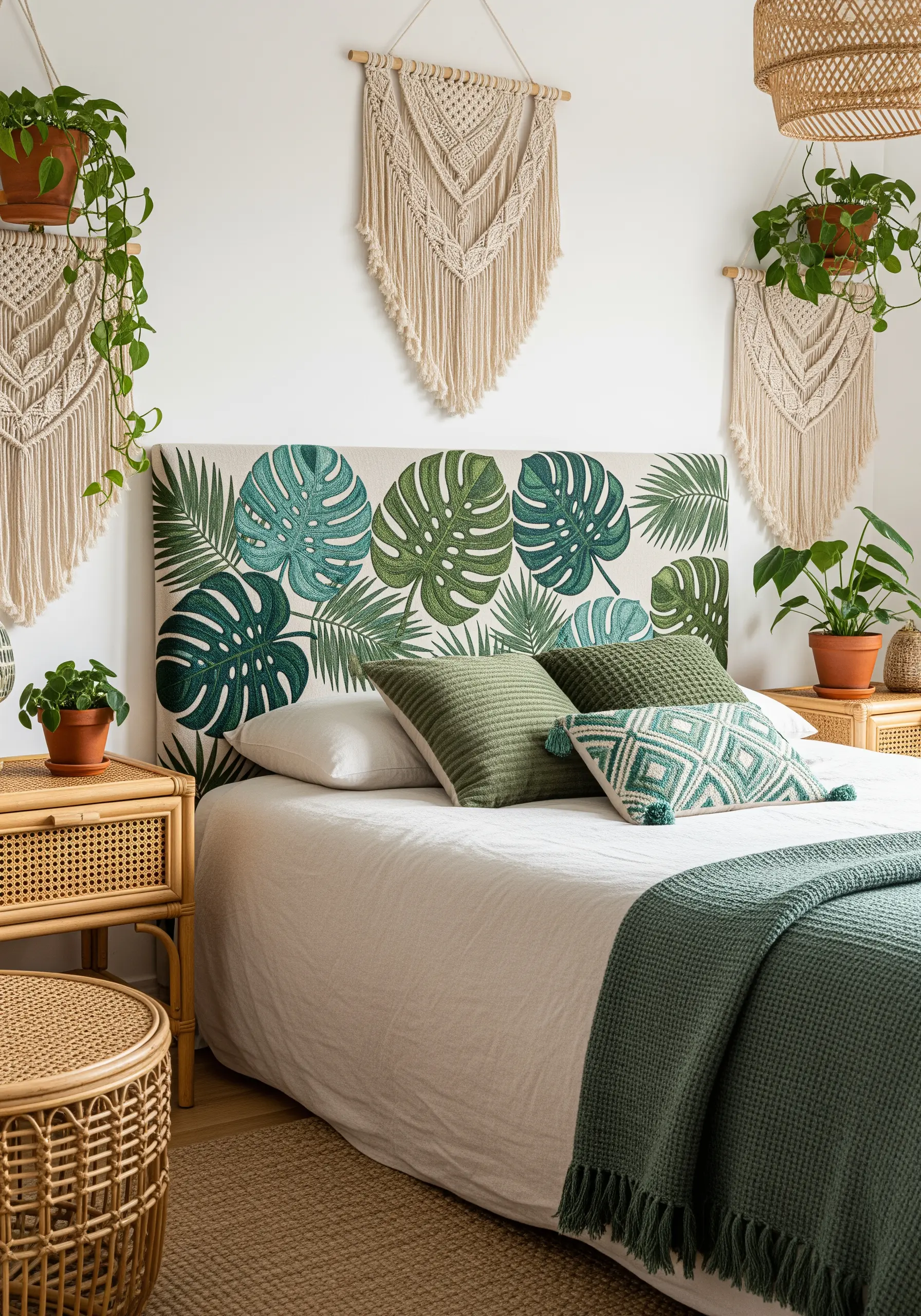
To achieve this lush, overlapping effect, treat each leaf as its own color-blocked section.
Use a dense satin stitch or a tight long-and-short stitch, ensuring your stitches all follow the natural direction of the leaf’s veins for a smooth, cohesive finish.
For large-scale projects like a headboard, work on a sturdy, tightly woven fabric like cotton canvas or linen blend to prevent puckering under the weight of the thread.
Vary the shades of green—from deep emerald to light teal—to create visual depth and prevent the design from looking flat.
This is one of the best houseplant embroidery motifs for bringing bold, graphic energy into a room.
2. Art Deco Radiance with Metallic Thread
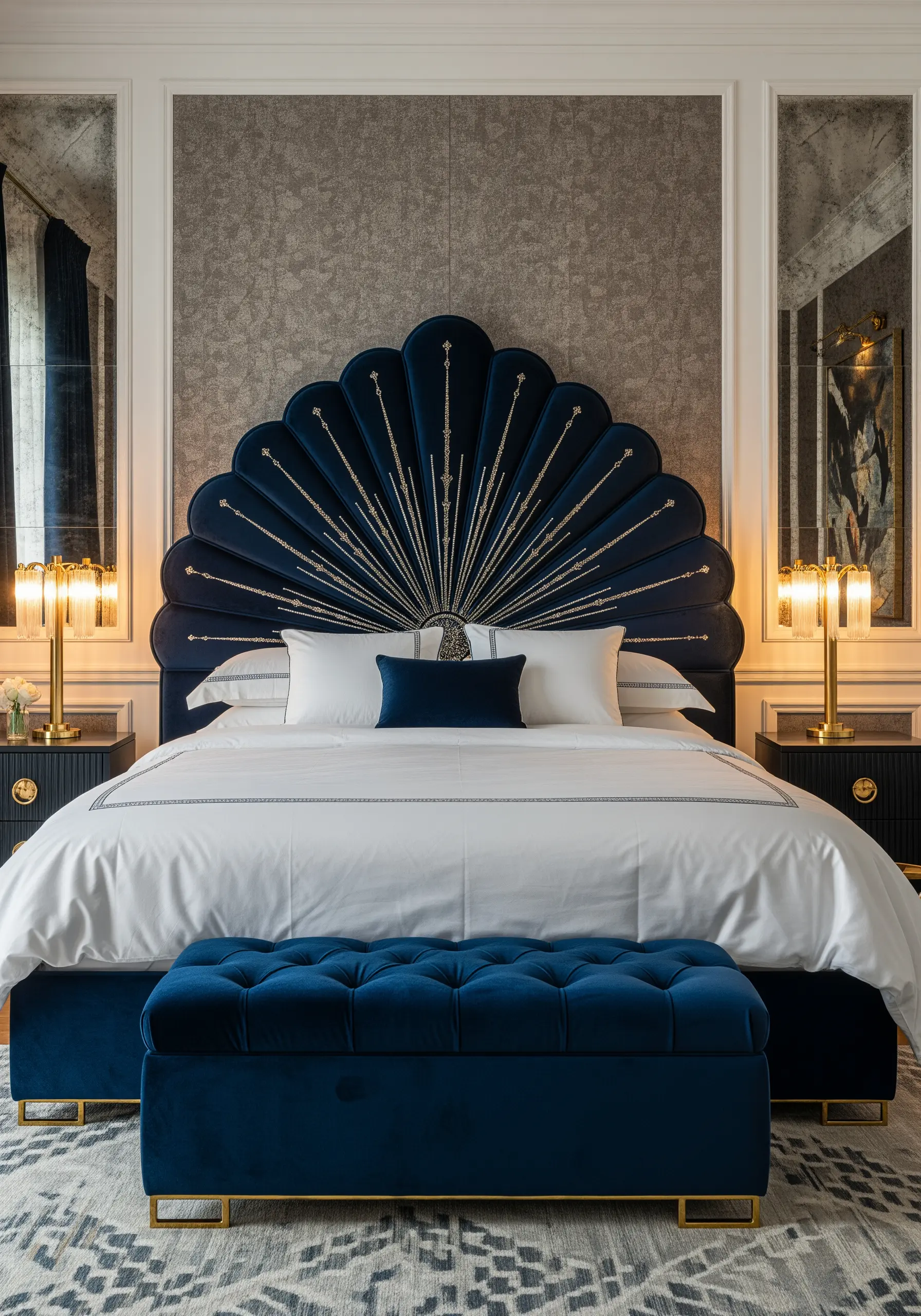
Create this striking sunburst effect using radiating straight stitches on a high-contrast fabric like velvet.
To make the lines sharp and luminous, use a high-quality metallic thread and a needle with a larger eye to prevent shredding.
Stitch from the center outward, securing each line individually to maintain even tension, which is crucial on plush fabrics that can otherwise distort.
The combination of a dark, matte background and reflective thread amplifies the design’s luxurious, geometric elegance.
3. Minimalist Mountain Range with a Single Line
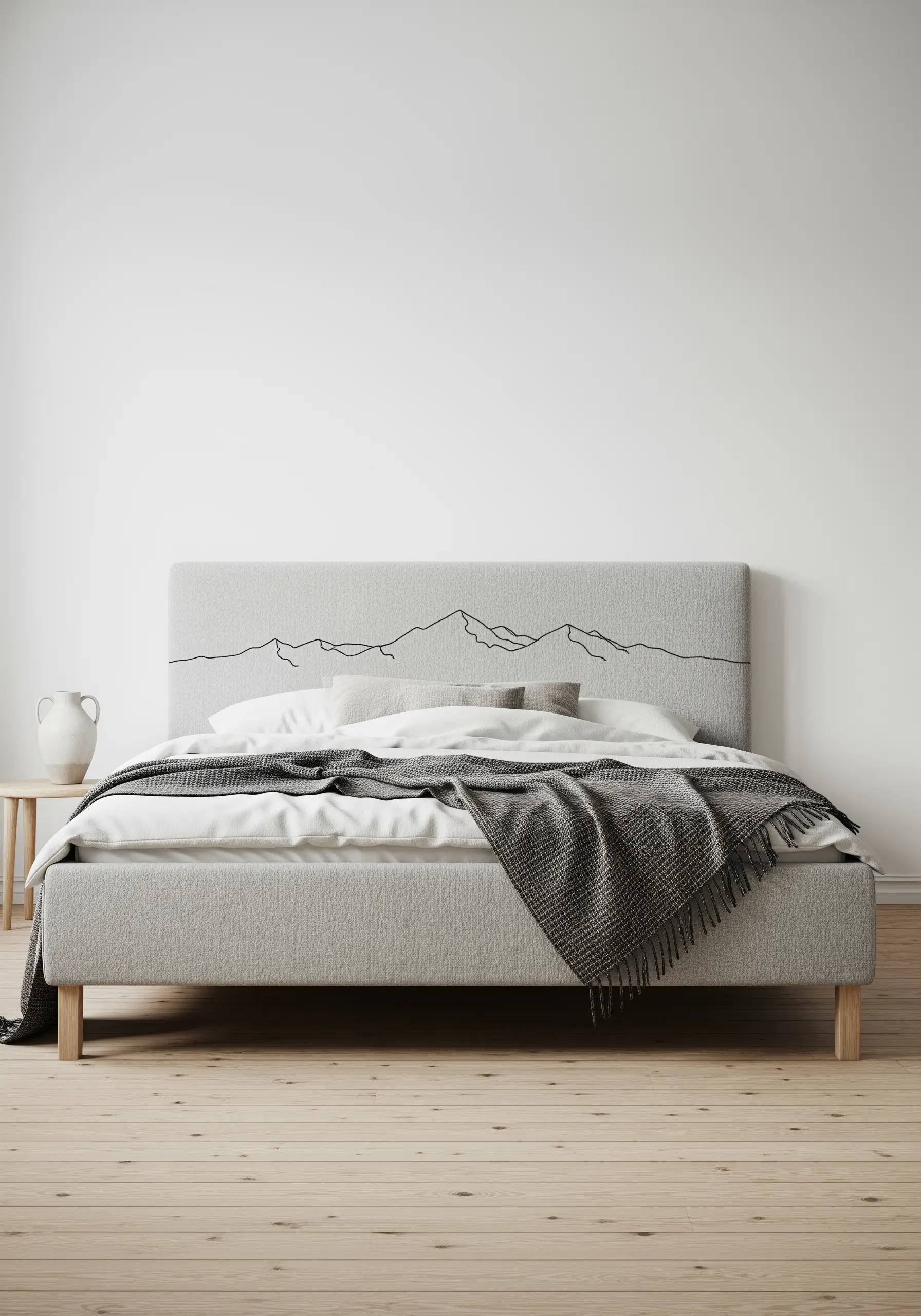
For a clean, graphic horizon line, choose a whipped backstitch or a stem stitch using a slightly thicker thread, like a #8 pearl cotton.
This technique creates a smooth, uninterrupted line that has more presence than a simple backstitch, giving it the feel of a sophisticated ink drawing.
The key to this design is its simplicity and the use of negative space; resist the urge to add more detail.
It works beautifully on textured, neutral fabrics like heather grey linen, allowing the single, strong line to become the focal point.
4. Delicate Wildflower Meadow Composition
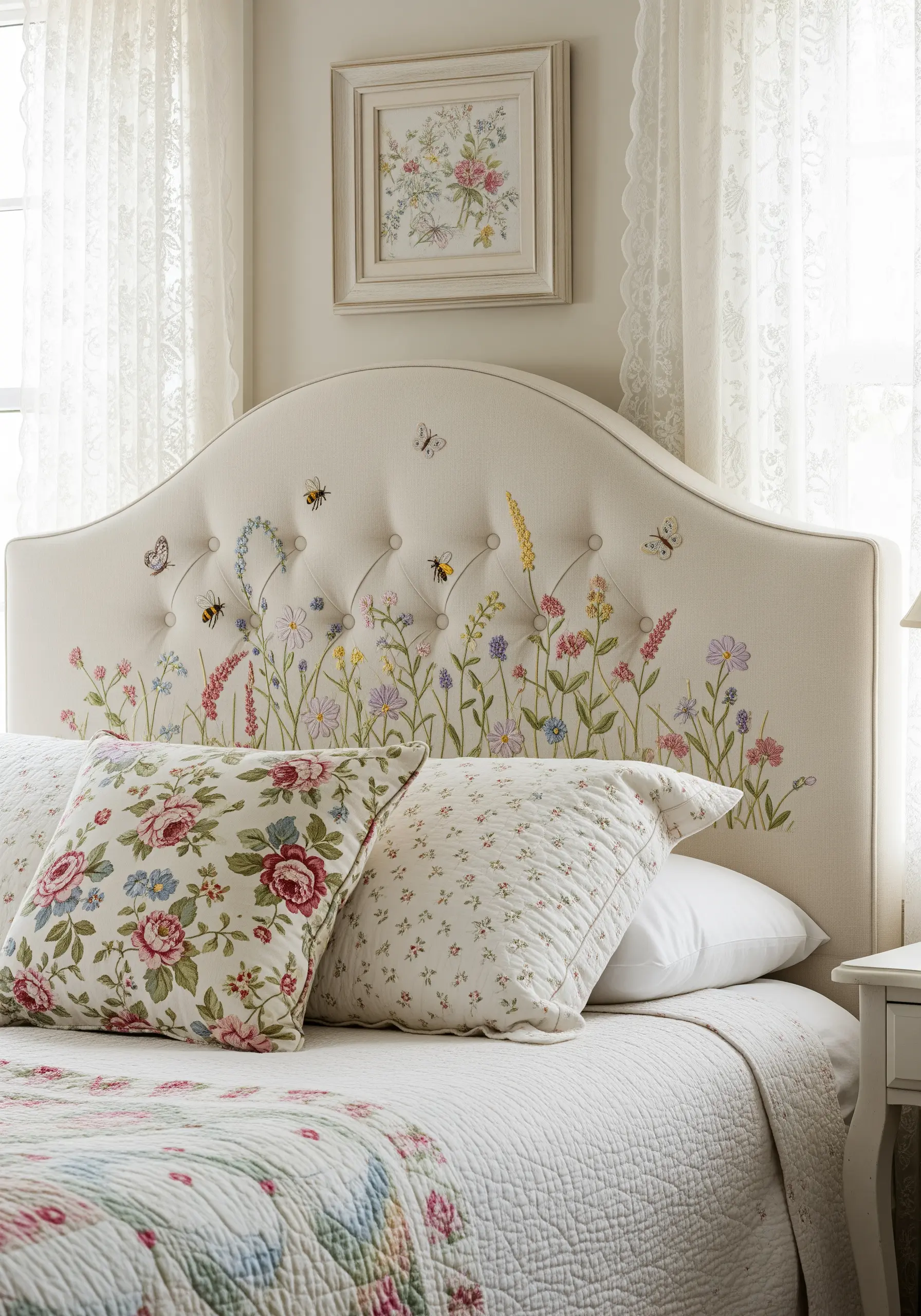
To capture the airy, scattered feel of a meadow, use a light touch with single-strand floss for the finest details.
Vary your stitches: lazy daisy for petals, French knots for flower centers, and simple straight stitches for grasses.
Arrange the flowers in organic, uneven clusters, allowing them to grow naturally up the headboard rather than creating a rigid border.
This approach transforms a simple surface into one of the most gorgeous floral embroidery ideas for a soft, romantic bedroom.
5. Celestial Map with Glow-in-the-Dark Thread
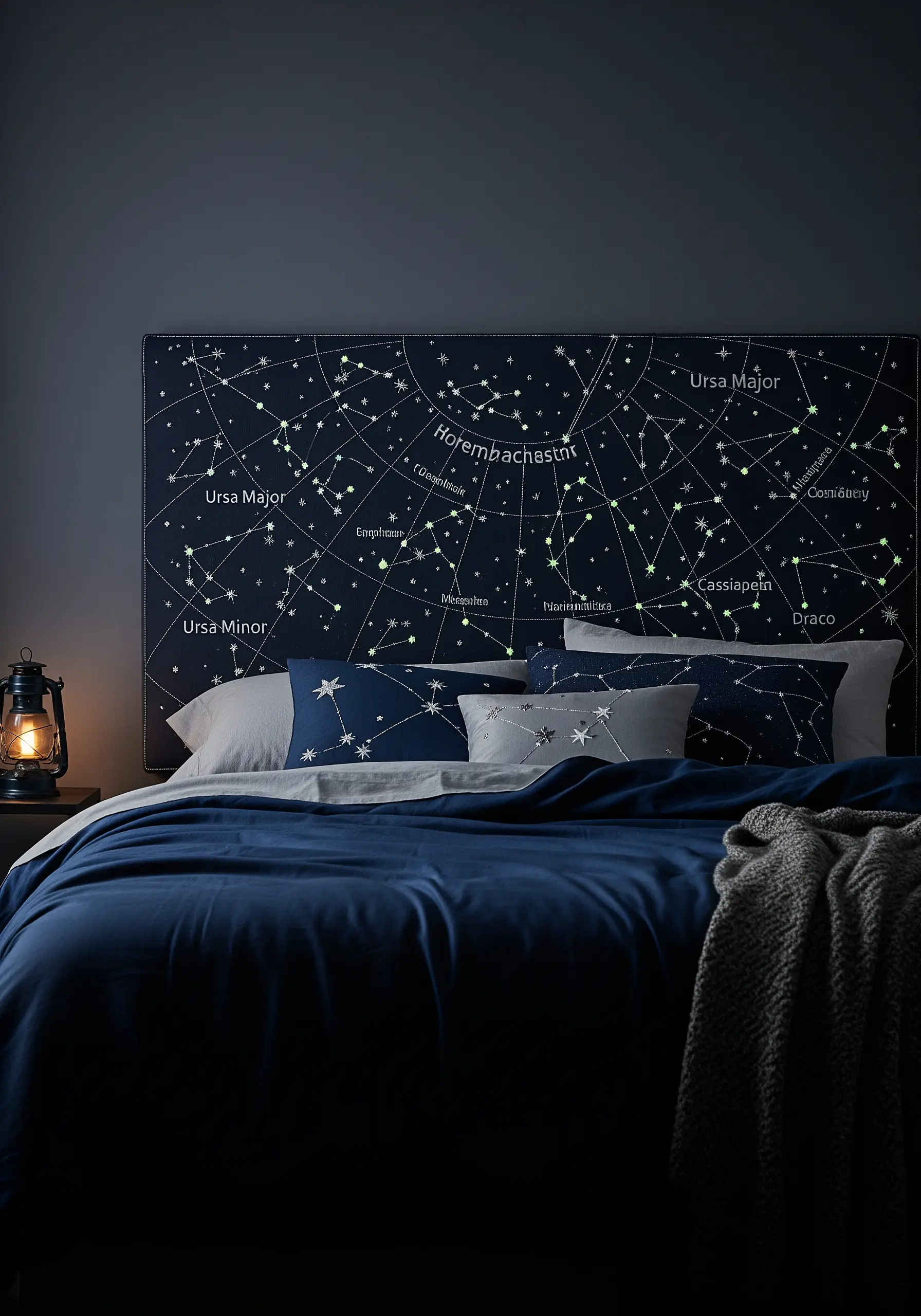
Bring a constellation map to life by using glow-in-the-dark thread for the stars and a simple white or silver for the connecting lines.
Use tiny star stitches or French knots for the individual stars to maximize the glowing effect.
Before stitching, ‘charge’ your thread under a bright light to ensure it’s working properly.
The magic of this design lies in its dual appearance—a crisp astrological chart by day and a luminous starscape by night.
6. Bold Abstraction with Couched Yarn
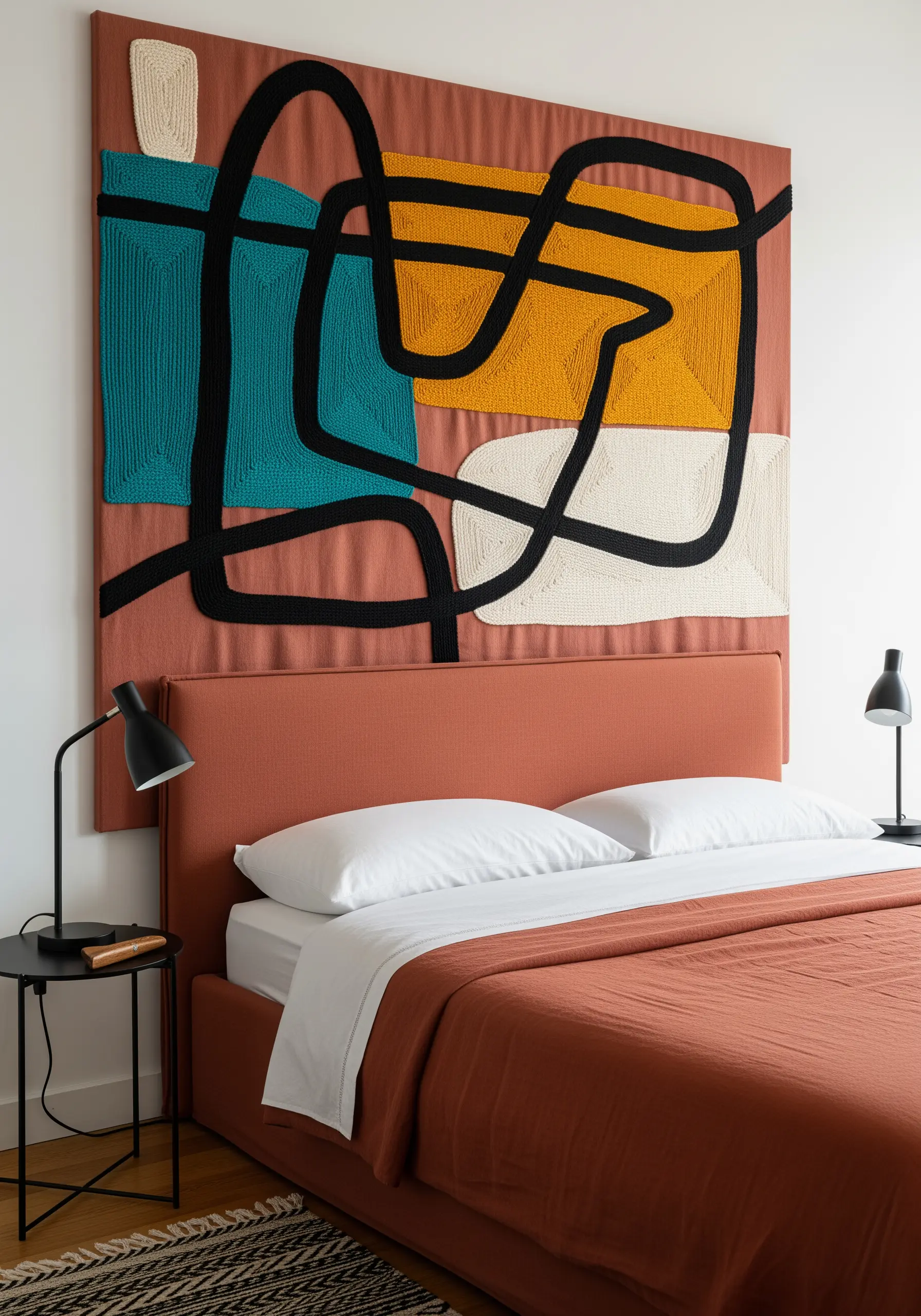
For powerful, graphic lines, use couching: lay down thick yarn or cord and secure it to the fabric with small, perpendicular stitches in a matching or contrasting thin thread.
Fill the color-blocked sections with dense chain stitch or darning stitch, which adds incredible texture and fills large areas faster than satin stitch.
This abstract yarn wall art technique turns your headboard into a tactile, modern art piece with sculptural presence.
Choose a durable, non-stretch fabric as the base to support the weight and tension of the heavy yarn.
7. Serene Underwater Coral Garden
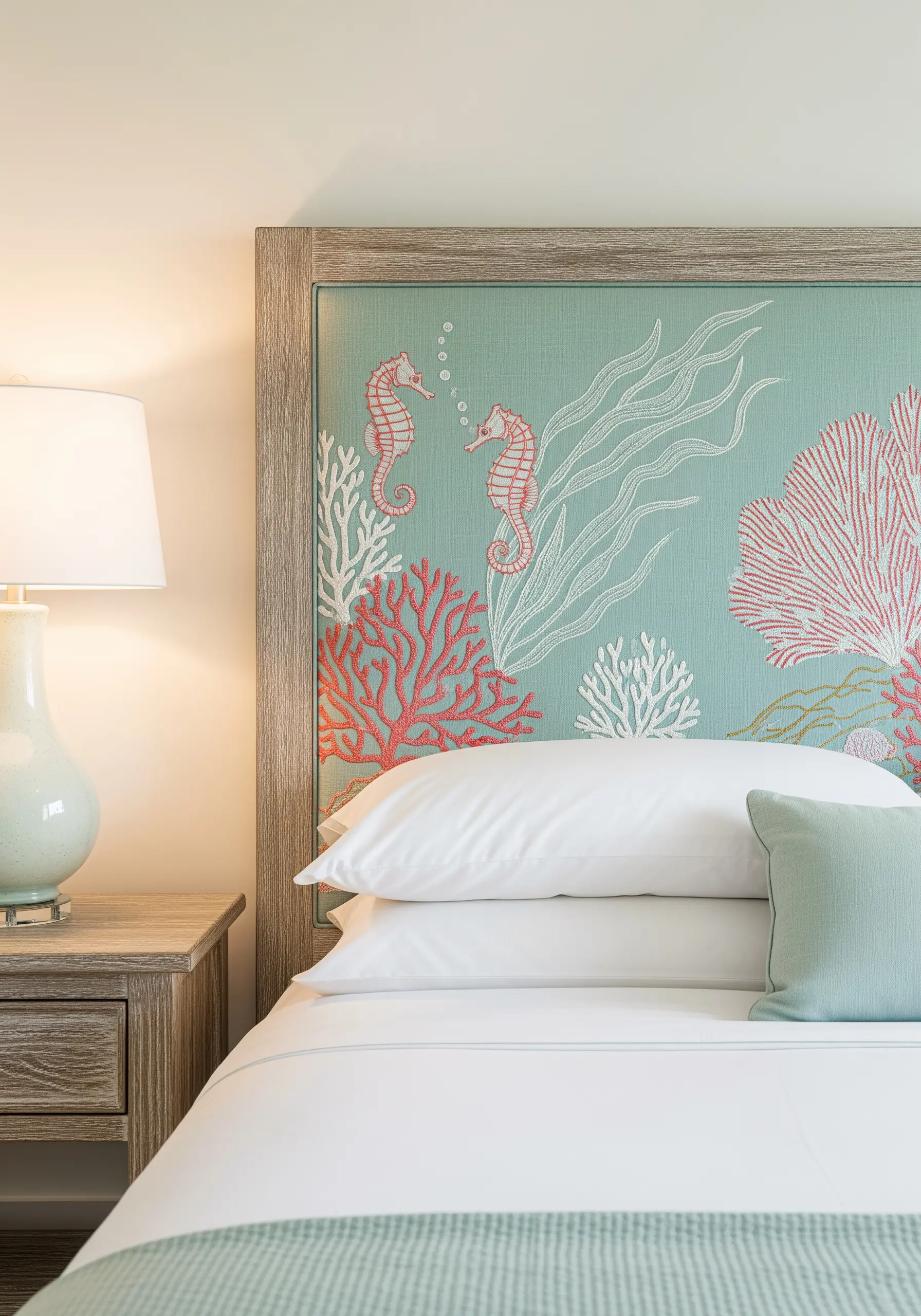
Capture the delicate textures of the ocean by combining different stitches for each element.
Use bullion knots or clusters of French knots to create the bumpy texture of coral, while long, flowing stem stitches can form the seaweed.
Keep the color palette soft and limited—coral pinks, seafoam green, and white—to maintain a calm, coastal aesthetic.
This is one of those coastal vibe embroidery projects where texture is just as important as the motif itself.
8. Asymmetrical Cherry Blossom Branch
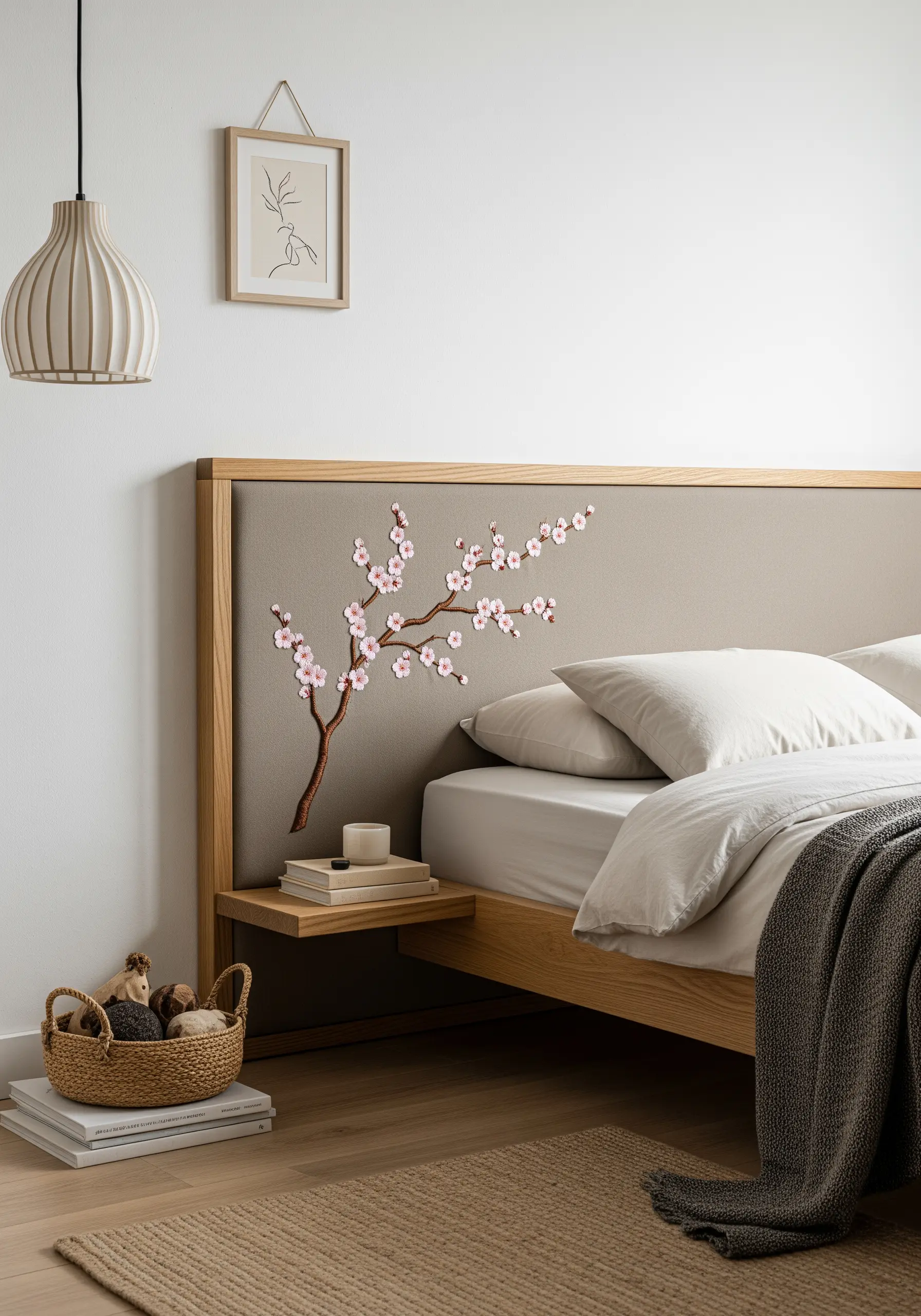
Create realistic, delicate blossoms using a subtle gradient of pink and white threads in a long-and-short stitch.
For the branch, use a whipped backstitch or stem stitch with brown floss, varying the thread thickness to mimic the tapering of a real branch.
The asymmetrical placement is key to this design’s elegance; it draws the eye and feels more organic and dynamic.
This intentional use of negative space elevates a simple floral motif into a refined piece of botanical art.
9. Enchanted Forest Scene on Velvet
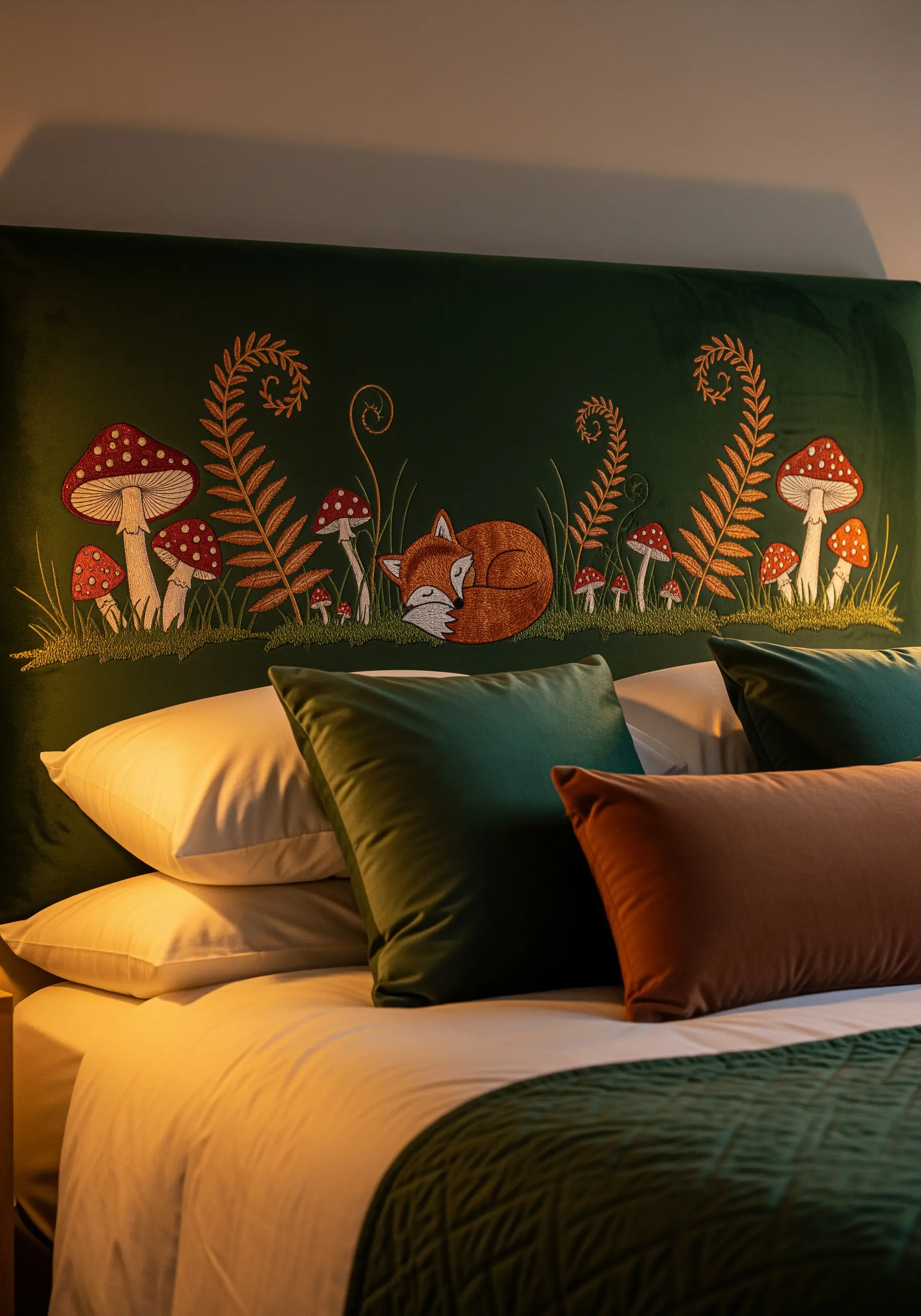
A deep, rich velvet background provides the perfect canvas for a magical woodland scene.
Use a satin stitch with a slight sheen, like rayon or silk floss, for the sleeping fox to make it stand out against the matte velvet.
For the surrounding ferns and mushrooms, employ a mix of textures: detached chain stitches for fern leaves and padded satin stitch for the mushroom caps to give them dimension.
The contrast between the plush fabric and the smooth, detailed embroidery creates a luxurious, storybook feel.
10. Geometric Honeycomb with Quilting
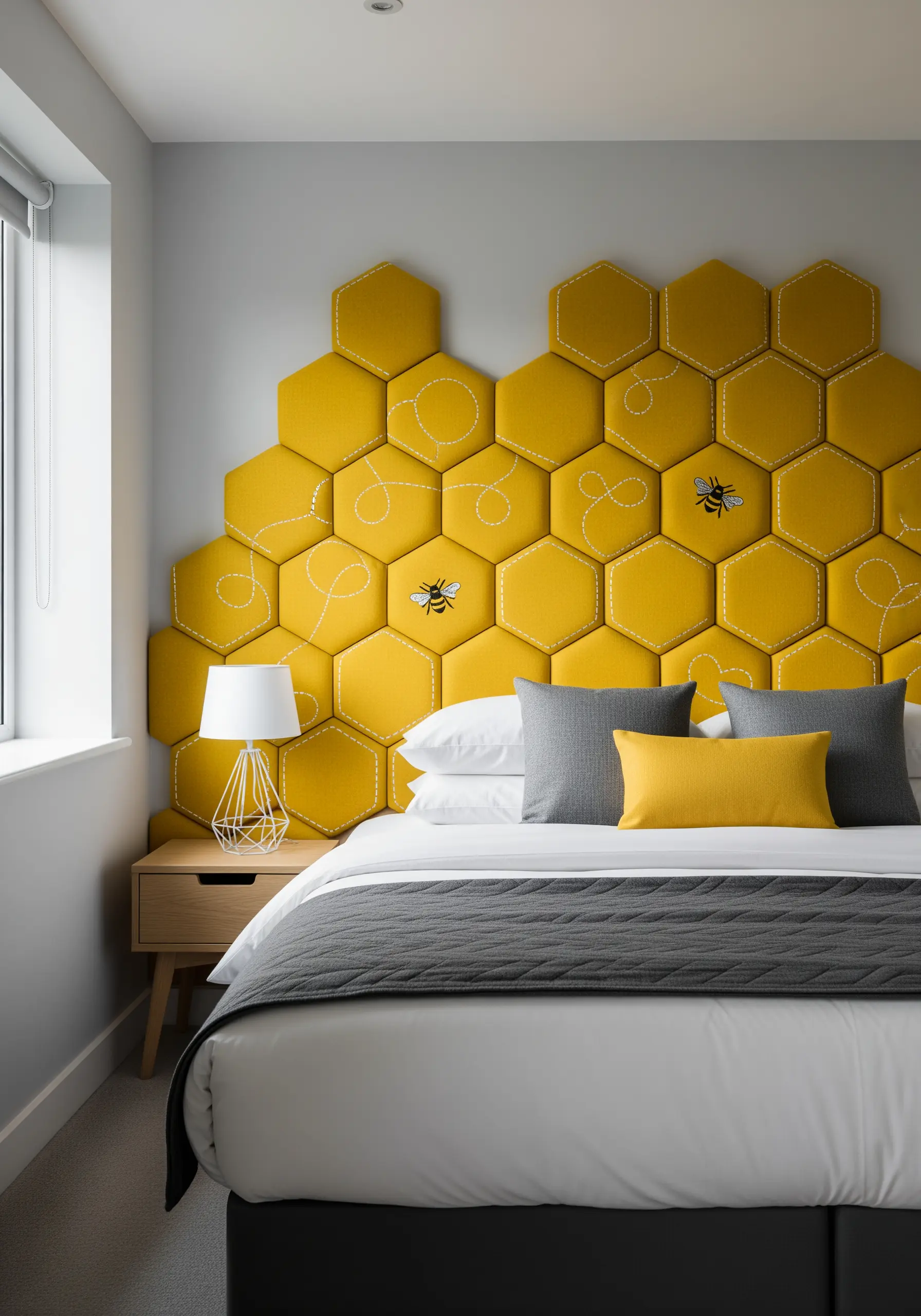
This design combines simple embroidery with padded appliqué for a stunning 3D effect.
Create individual padded hexagon panels and arrange them in an organic, asymmetrical shape on the wall.
Use a simple running stitch in a contrasting color to add a hand-stitched detail that mimics quilting lines and bee flight paths.
The occasional embroidered bee adds a playful, narrative touch to the clean geometric pattern.
11. Textured Desert Landscape Mural
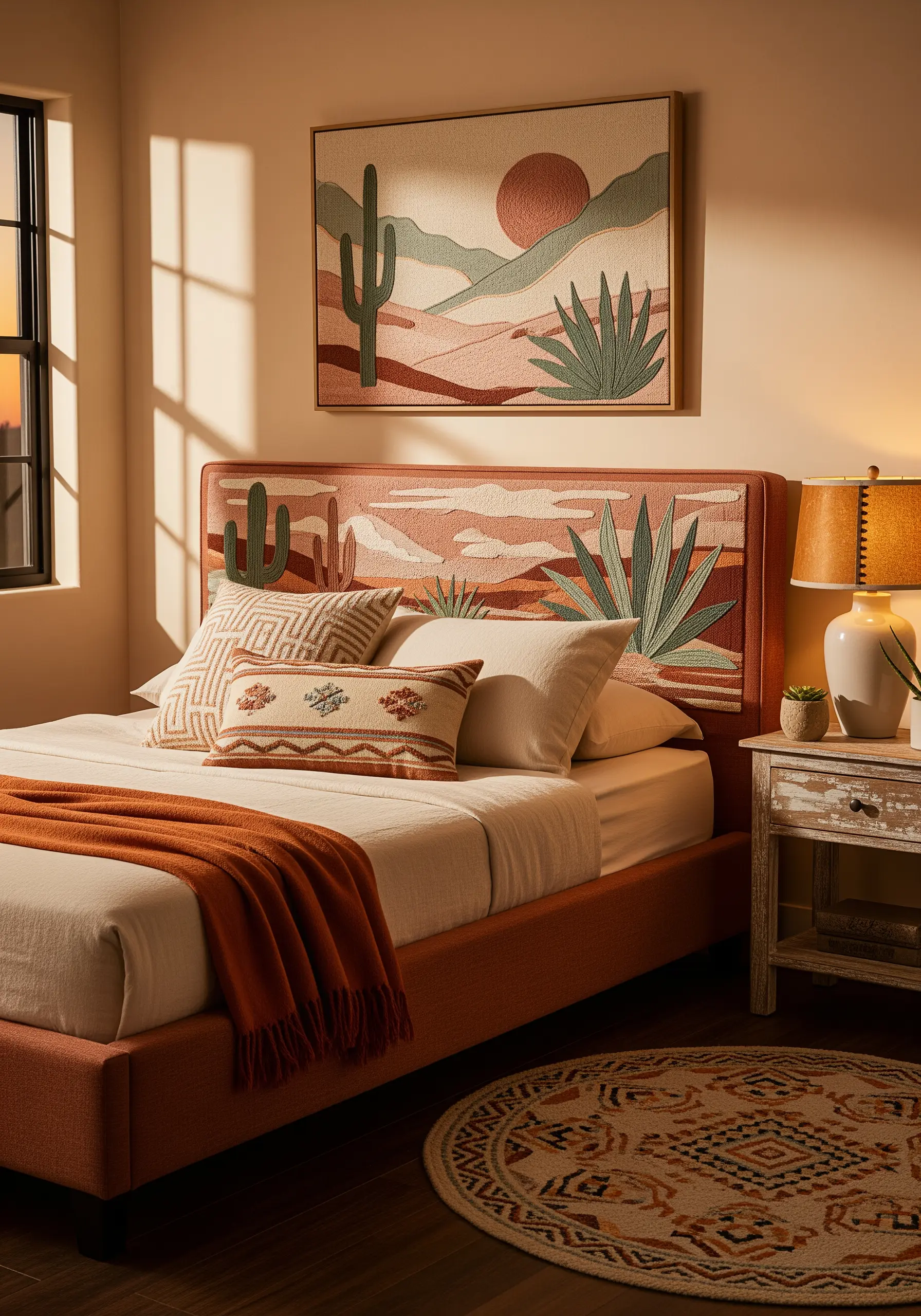
Build a layered desert scene by combining fabric appliqué with textural embroidery stitches.
Use different fabrics—like linen, wool, and felt—for the hills and sky to create inherent texture before you even add a stitch.
Then, embellish with chain stitches or seed stitches to represent sandy ground and long-and-short stitch for the agave and cactus.
This mountain landscape thread painting technique, adapted for a stylized scene, relies on texture to tell the story.
12. Vibrant Tropical Birds in Full Color
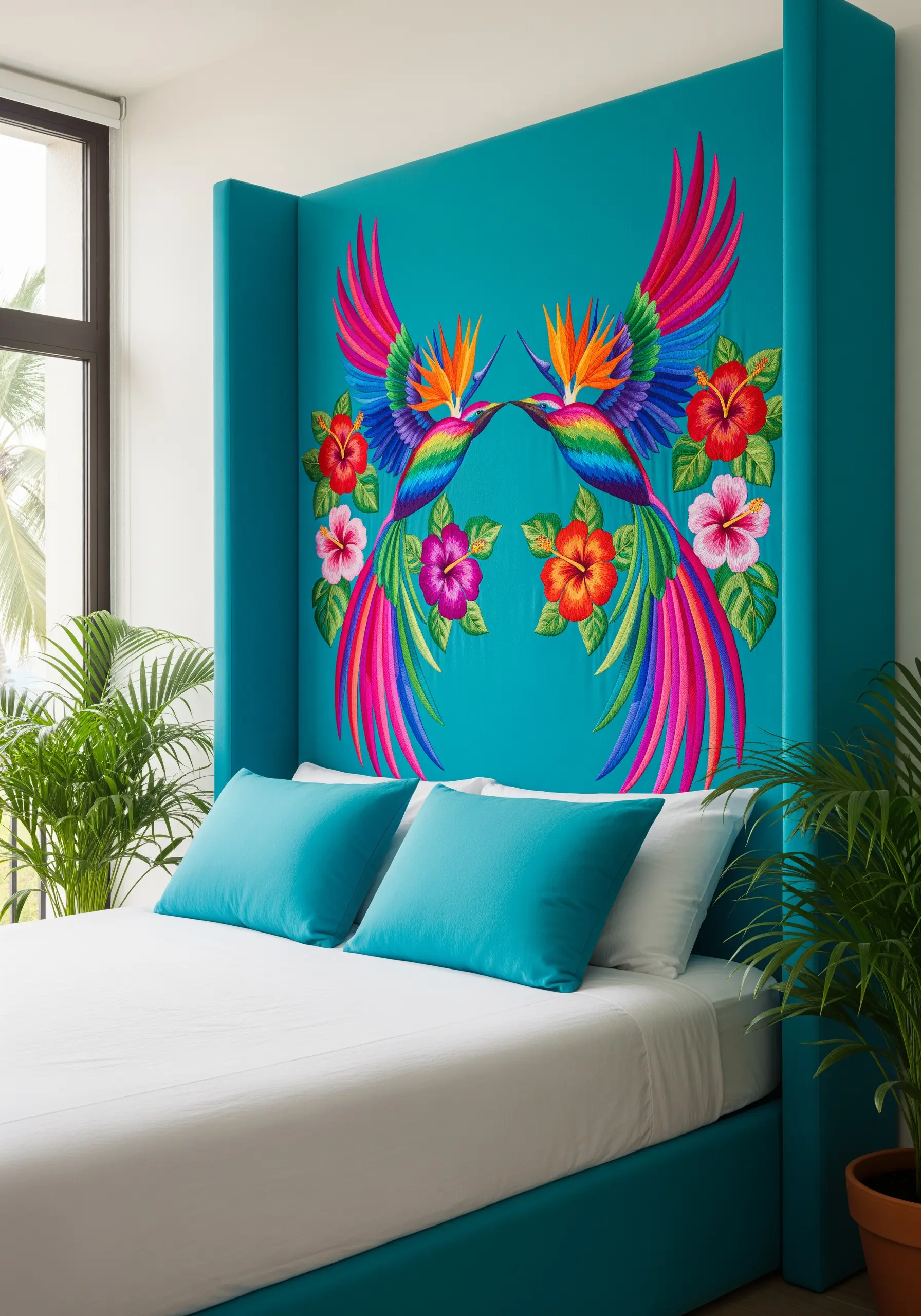
To achieve this level of vibrant, painterly detail, long-and-short stitch is your essential technique.
Work with single strands of thread and blend colors fearlessly—pinks into oranges, blues into greens—to create the birds’ iridescent plumage.
Use a high-quality cotton or silk thread for a smooth, lustrous finish that catches the light.
On a bold, solid-colored background like this turquoise, the intense colors of the embroidery create an electrifying focal point.
13. Folk Art Inspired Textile Panel
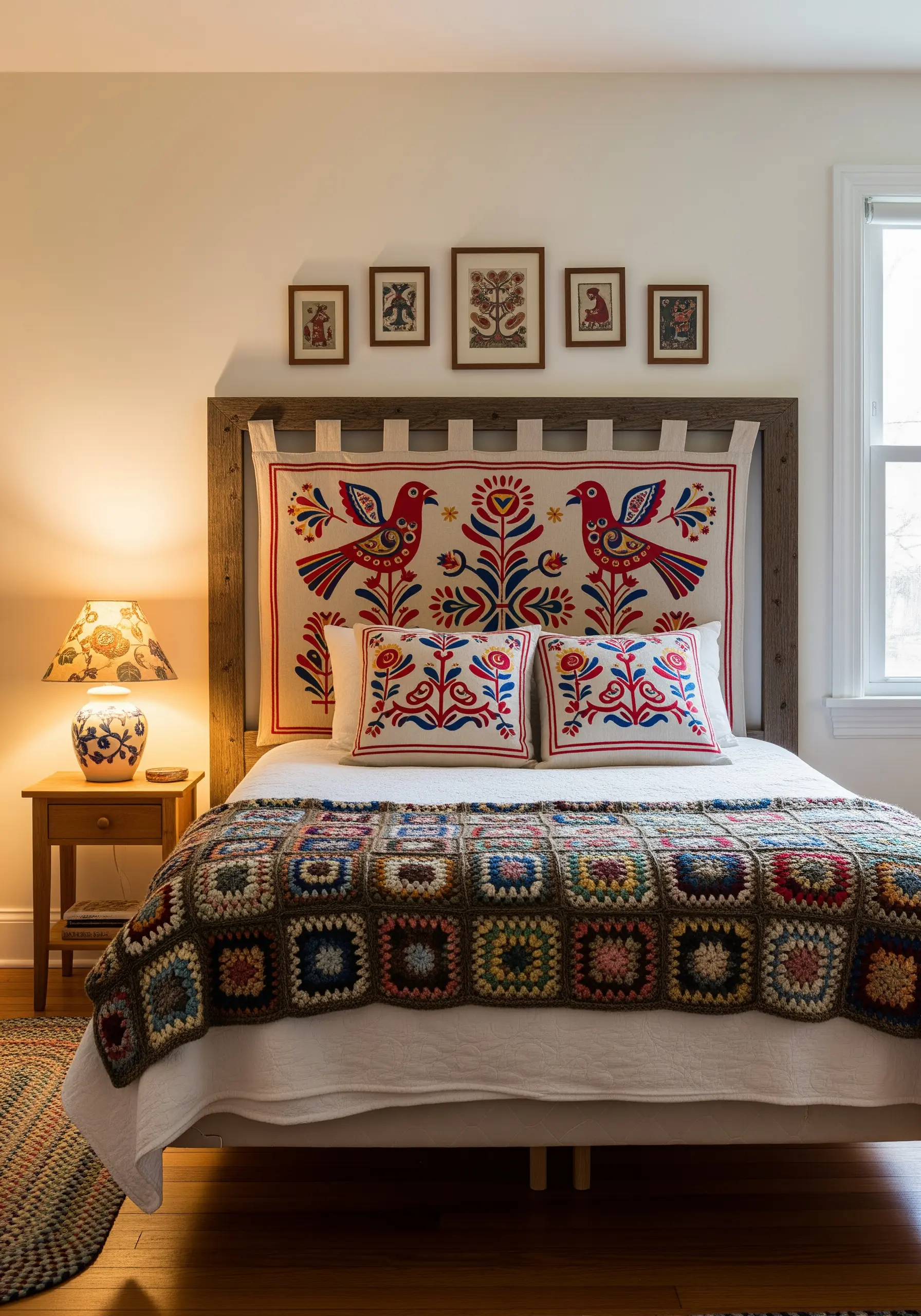
Embrace the charm of folk art with bold, symmetrical motifs and a limited, high-contrast color palette.
Use flat, graphic stitches like satin stitch and chain stitch to fill in the shapes, focusing on clean edges rather than realistic blending.
Framing an embroidered textile panel with rustic wood is a clever way to create a headboard with character and warmth.
This design celebrates pattern and repetition, key elements of traditional textile art.
14. Monochrome Architectural Texture
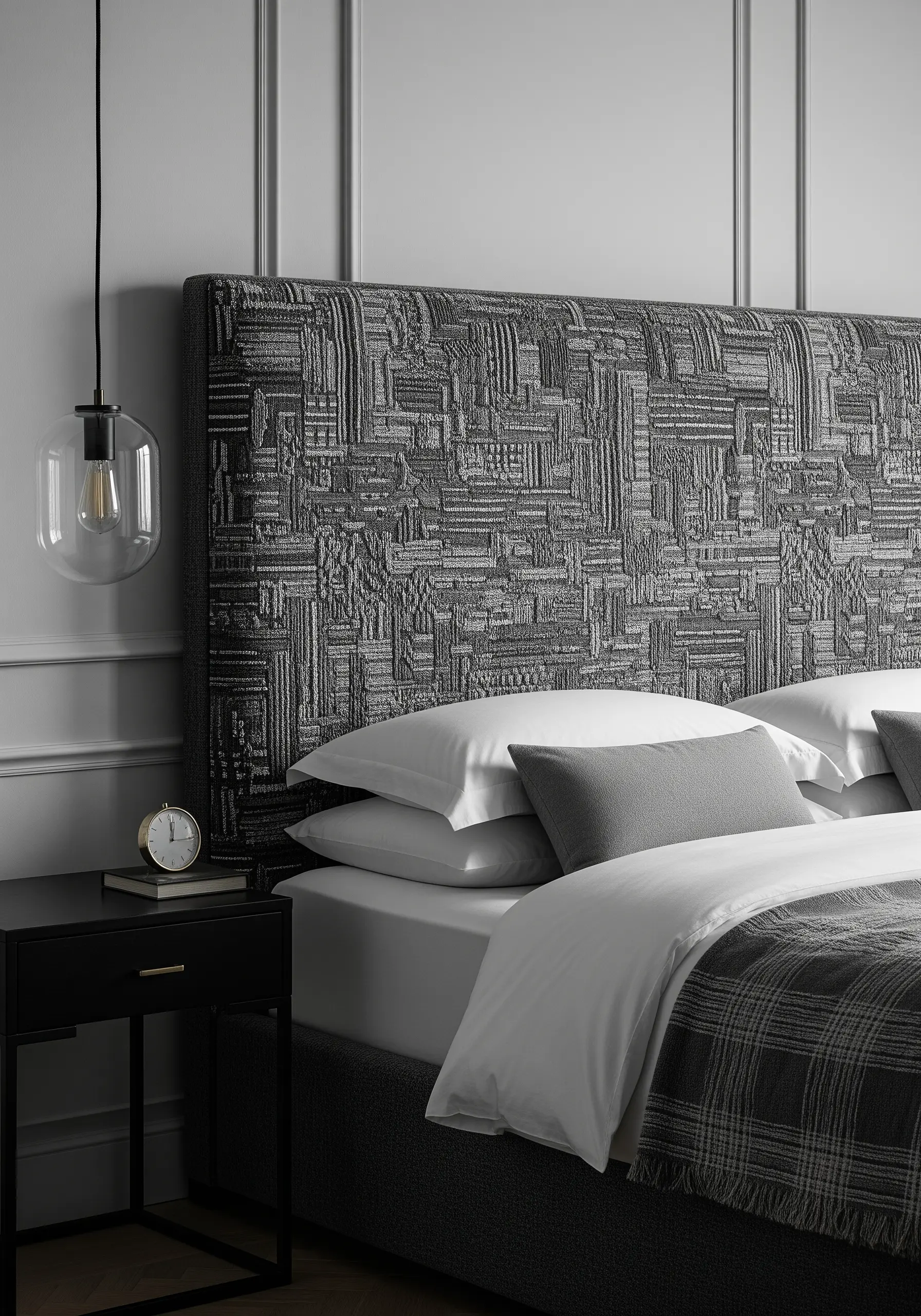
Create a deeply textural, sophisticated surface using only one color of thread.
The visual interest comes from varying the direction and type of your fill stitches—blocks of vertical satin stitch next to horizontal seed stitch or diagonal running stitches.
This technique, known as blackwork or whitework depending on the colors, creates a pattern that plays with light and shadow.
It’s a perfect example of how tone-on-tone embroidery techniques can achieve a high-end, architectural look.
15. Literary Quote with Botanical Accents
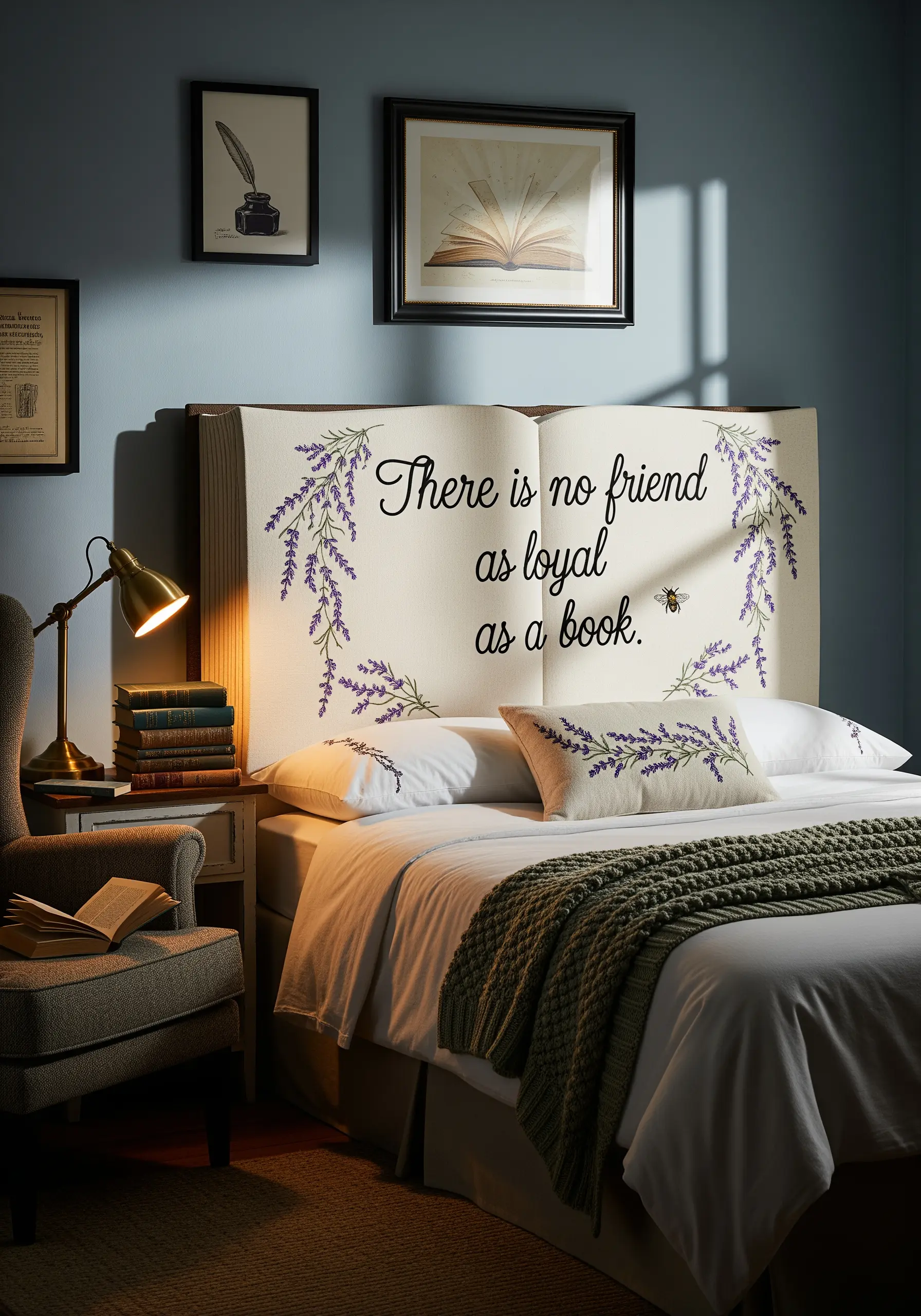
For crisp, readable lettering, use a stem stitch or a whipped backstitch for the cursive script.
Practice your lettering on a scrap piece of fabric first to get the curves smooth and consistent.
Frame the quote with delicate botanicals, like the lavender here, using simple straight stitches and French knots to add a soft, organic touch.
The open-book shape of the headboard is a whimsical detail that completes this tribute to reading.
16. Art Nouveau Floral Elegance
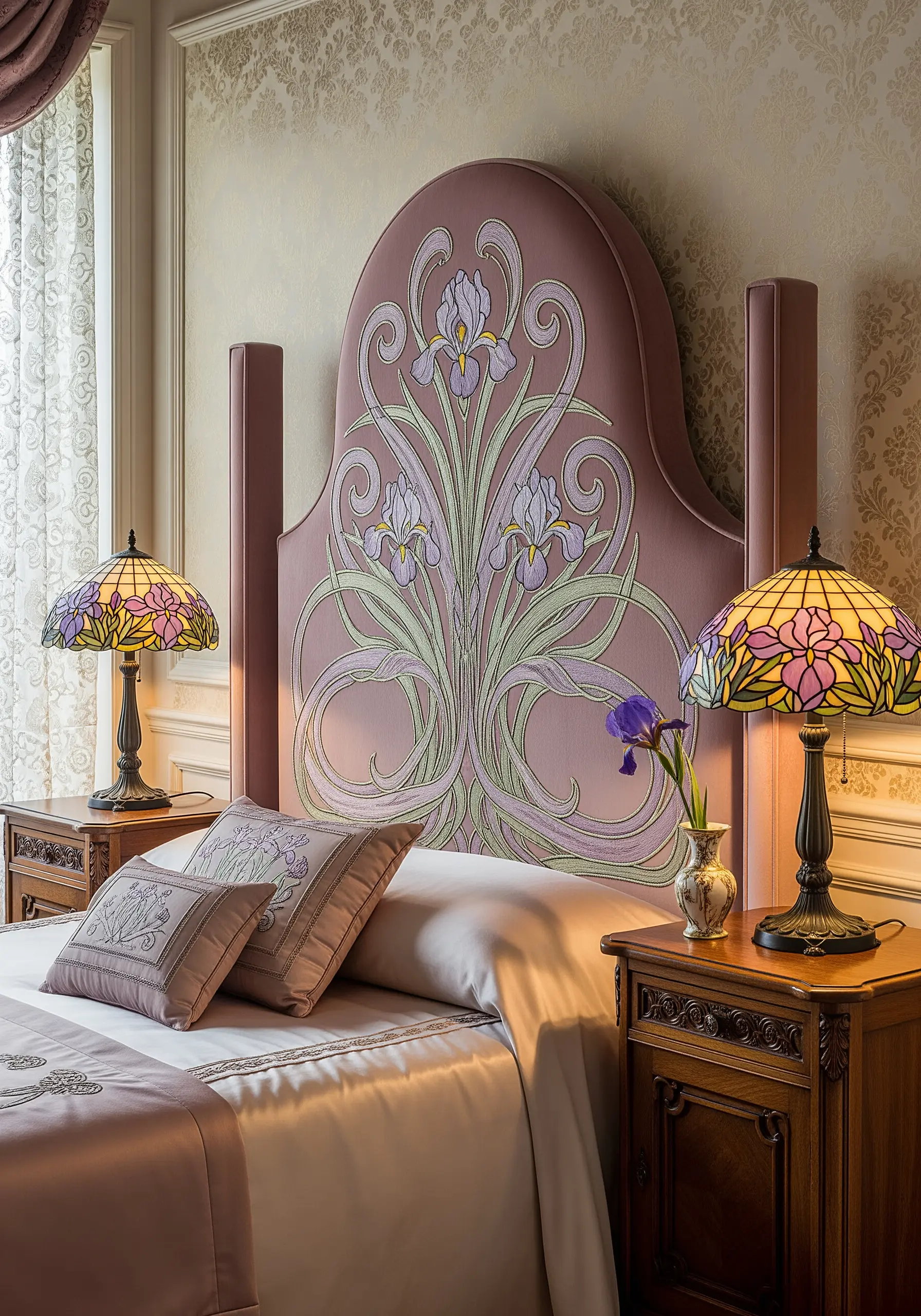
Capture the essence of Art Nouveau with long, flowing, curvilinear lines.
Use a smooth, consistent stem stitch or whipped backstitch for the outlines to ensure they have a graceful, uninterrupted flow.
Choose a muted, harmonious color palette—like dusty rose, lavender, and sage green—to enhance the style’s connection to nature and sophisticated aesthetic.
The beauty of this design lies in its elegant composition and the rhythm of its lines, not in complex, heavy stitching.
17. Minimalist Cityscape with Light
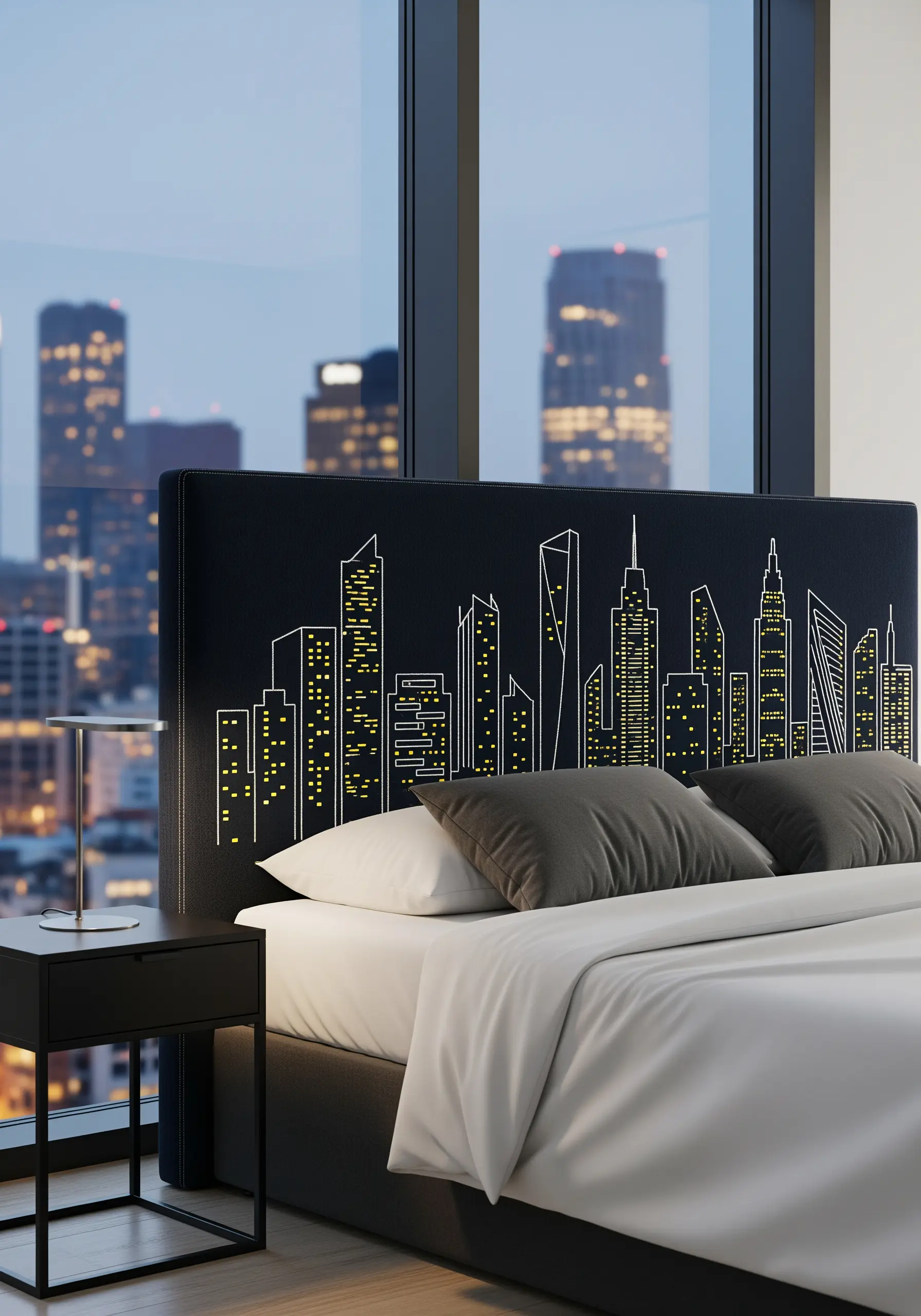
Recreate a city skyline with clean, minimalist line art using a simple backstitch in a contrasting color.
Use bright yellow or gold French knots to represent the lit windows, creating a striking pop of color and texture against the dark fabric.
This design is all about precision and restraint. Ensure your lines are perfectly straight and your knots are uniform in size.
It’s a modern, graphic approach that works perfectly for an urban-themed bedroom.
18. Rustic Olive and Lavender Wreath
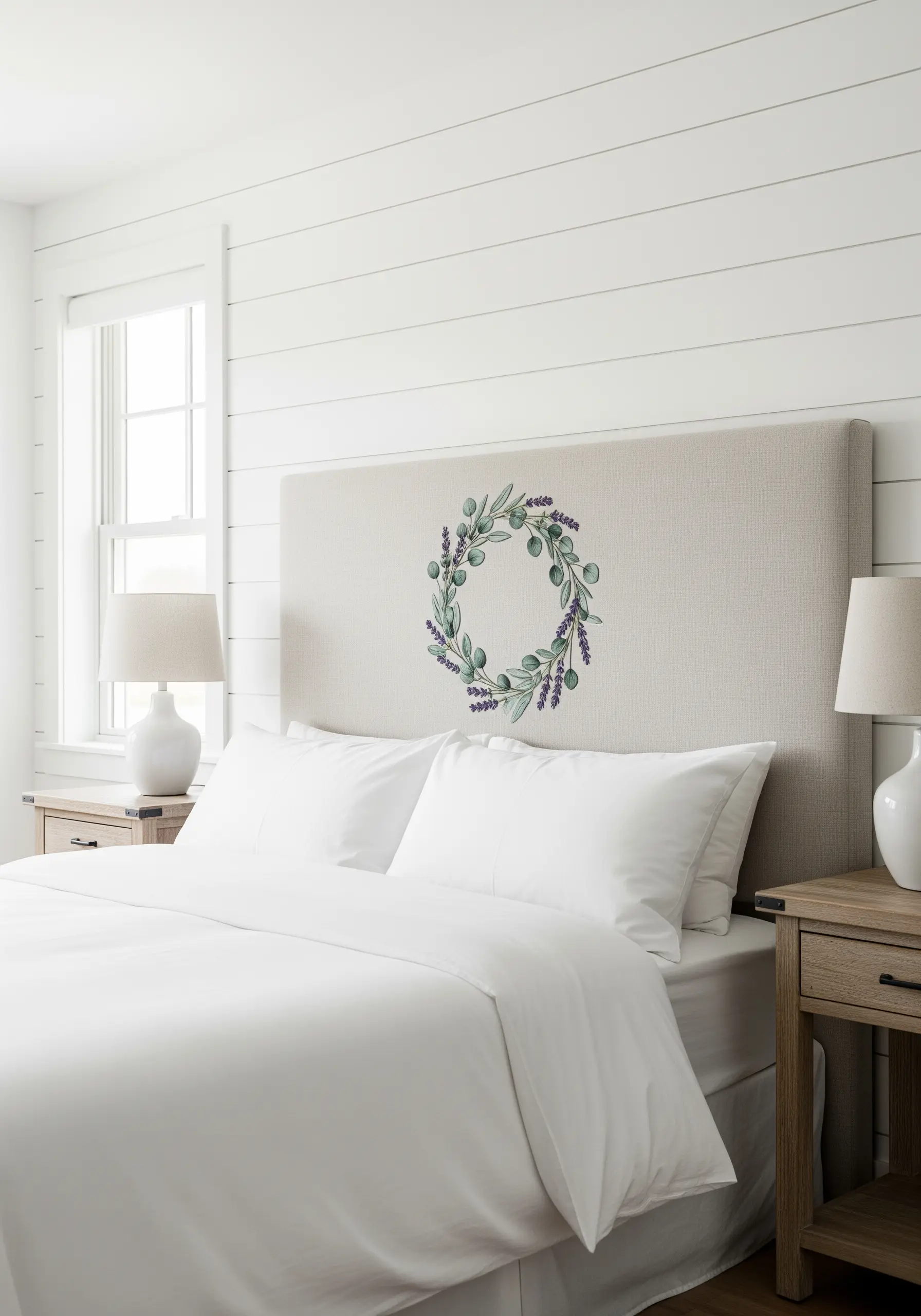
To create a delicate, natural-looking wreath, focus on the details of each botanical element.
Use the fishbone stitch for the olive leaves to create a central vein and realistic shape, and clusters of French knots for the lavender buds.
Stitch the wreath with a slightly open, airy composition to keep it from looking too dense or heavy.
This medicinal herb embroidery design centered on a natural linen headboard adds a touch of rustic, farmhouse elegance.
19. Moroccan Trellis with Golden Cord
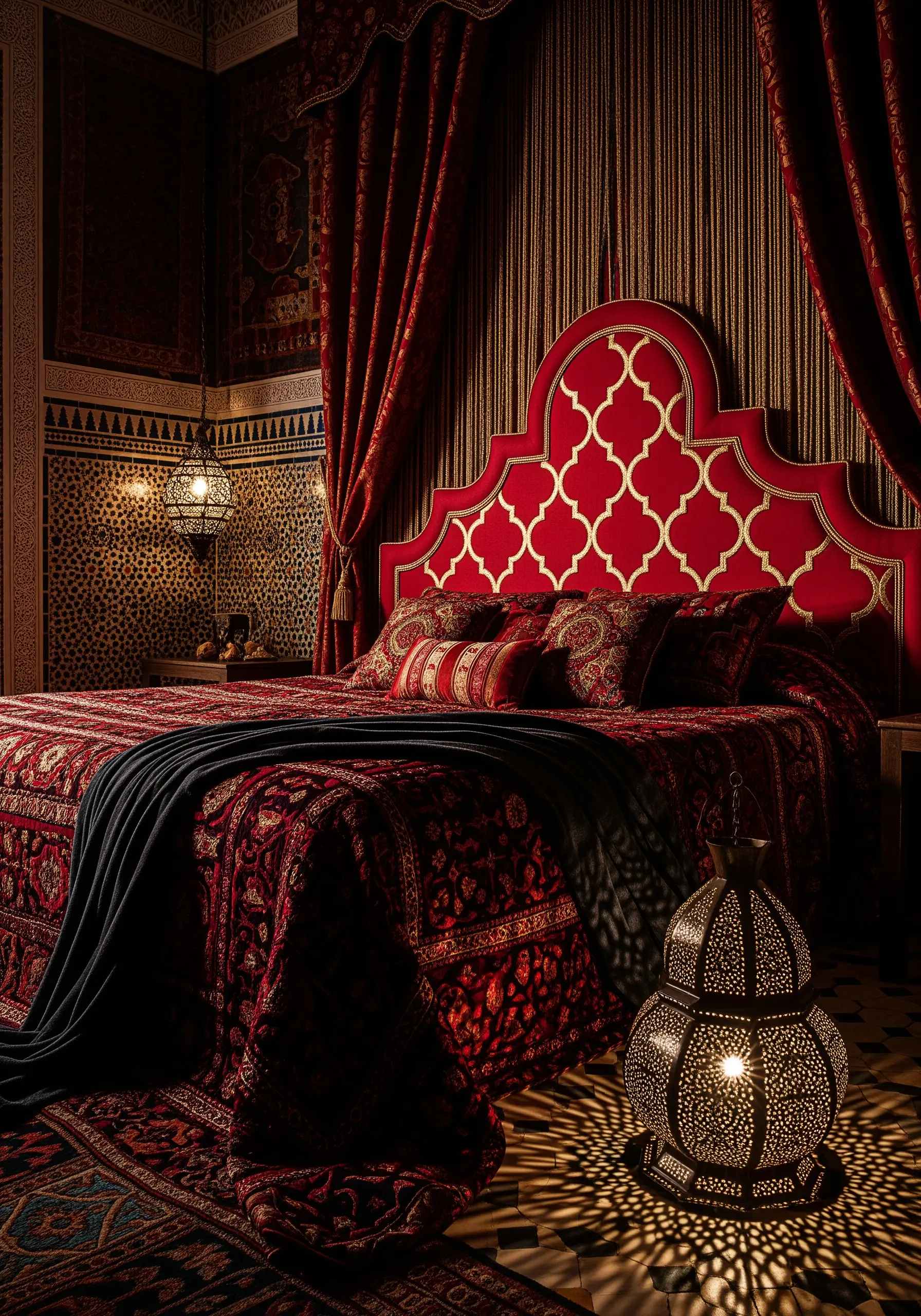
Achieve this opulent Moroccan-inspired design by couching a thick golden cord onto a rich, jewel-toned fabric.
Lay the cord in the desired trellis pattern and use a matching, finer thread to tack it down with small, evenly spaced stitches.
This technique is much faster than satin-stitching a thick line and creates a raised, luxurious texture that defines the geometric pattern.
It’s a perfect way to add a touch of regal, architectural detail to your bedroom decor.
20. Psychedelic Waves with Punch Needle
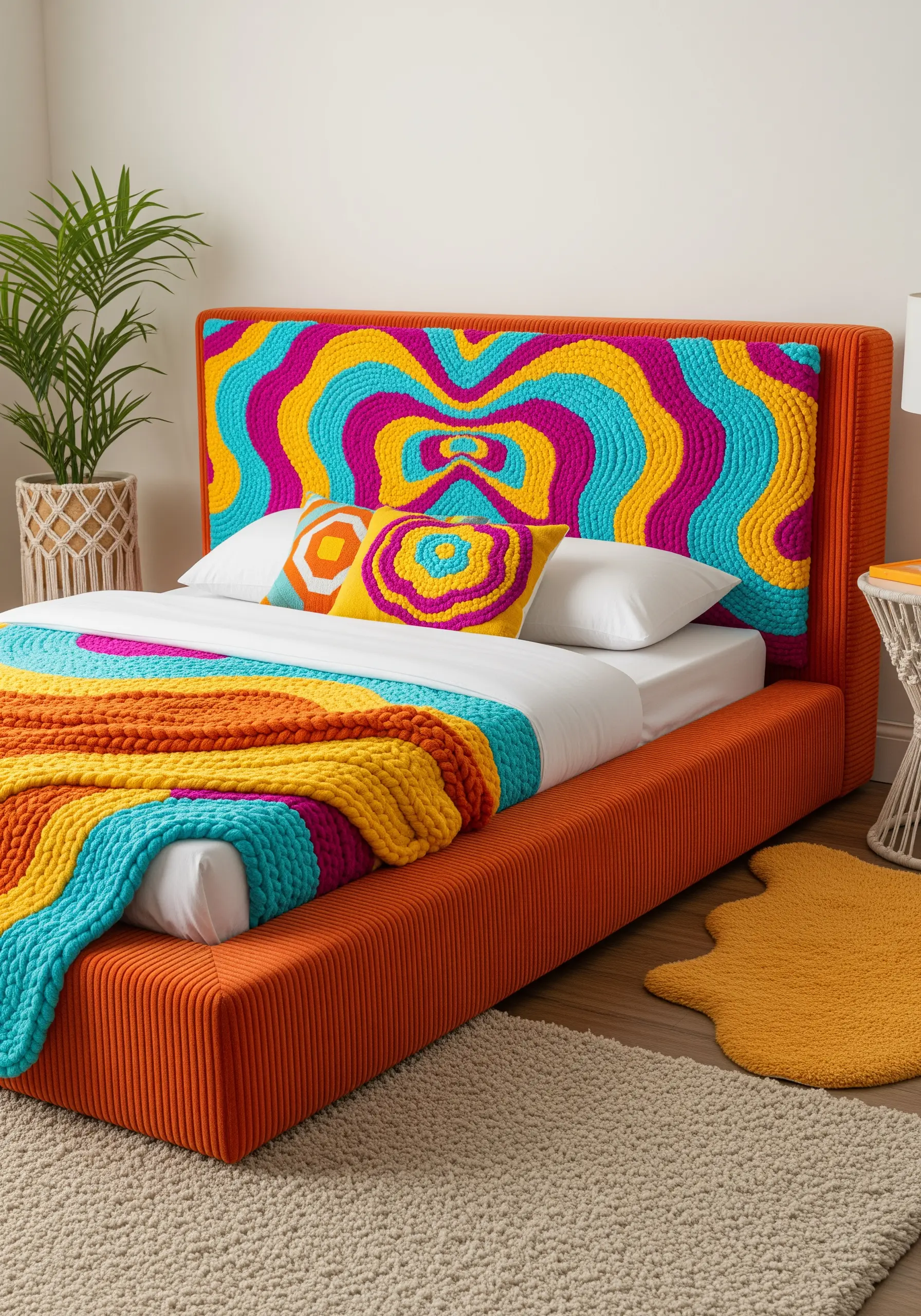
For this bold, textural, and groovy design, punch needle is the ideal technique.
Using a punch needle and thick yarn allows you to create dense, plush loops that give the piece a carpet-like texture and incredible dimension.
Map out your color-blocked waves and work section by section, choosing vibrant, high-contrast colors for maximum impact.
The result is a piece of fiber art that uses color and texture to evoke emotion and bold energy.
21. Vintage Nautical Chart
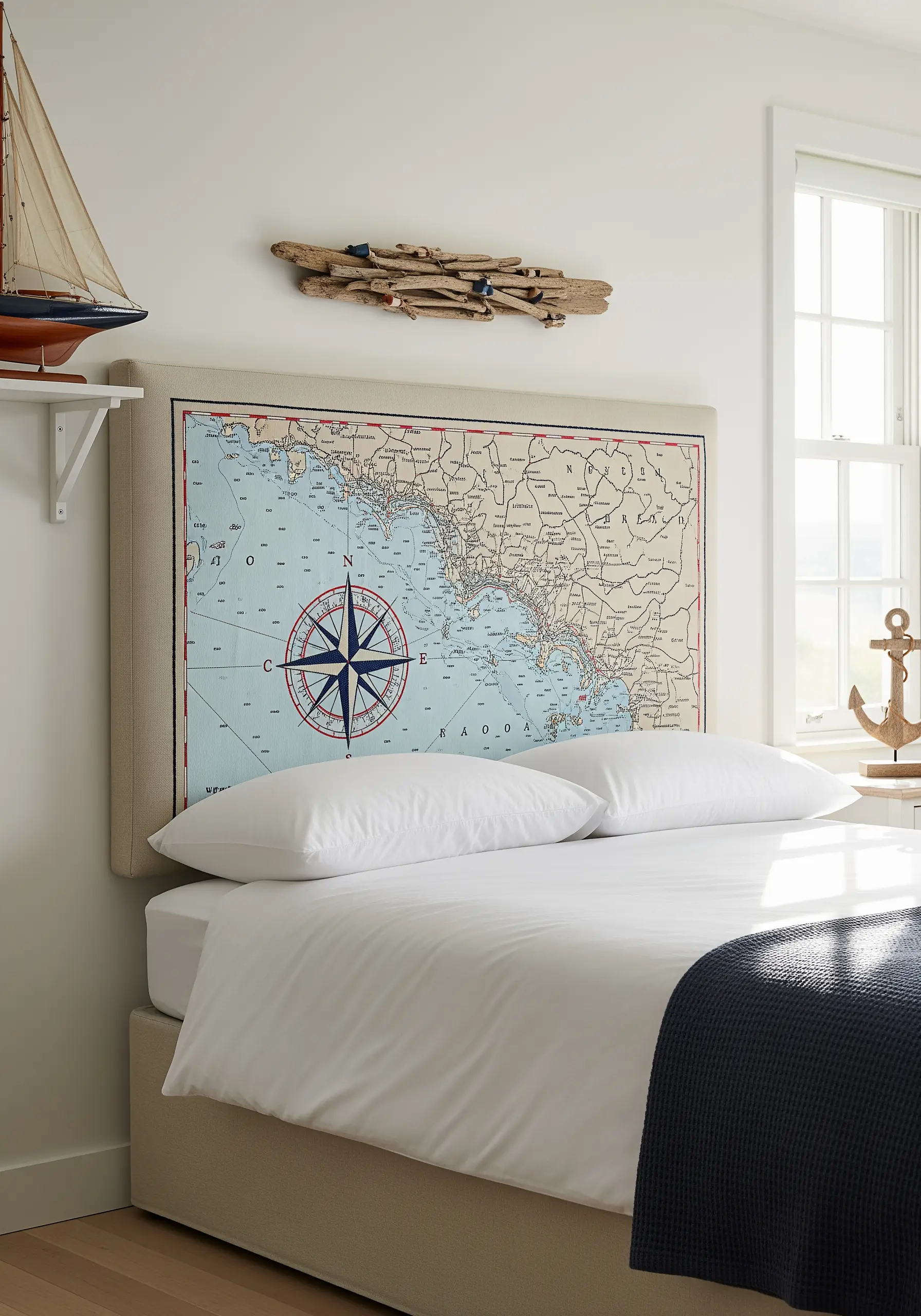
To embroider a detailed map, precision is key. Transfer the design accurately and use a single strand of black or navy floss.
A tiny, meticulous backstitch is perfect for tracing the fine lines of the coastline and lettering.
For the compass rose, you can switch to a satin stitch with a pop of color to make it a focal point.
This project is a testament to how simple line work, when done with care, can create an incredibly intricate and personal piece of art.
22. Garden Trellis Rose Panels
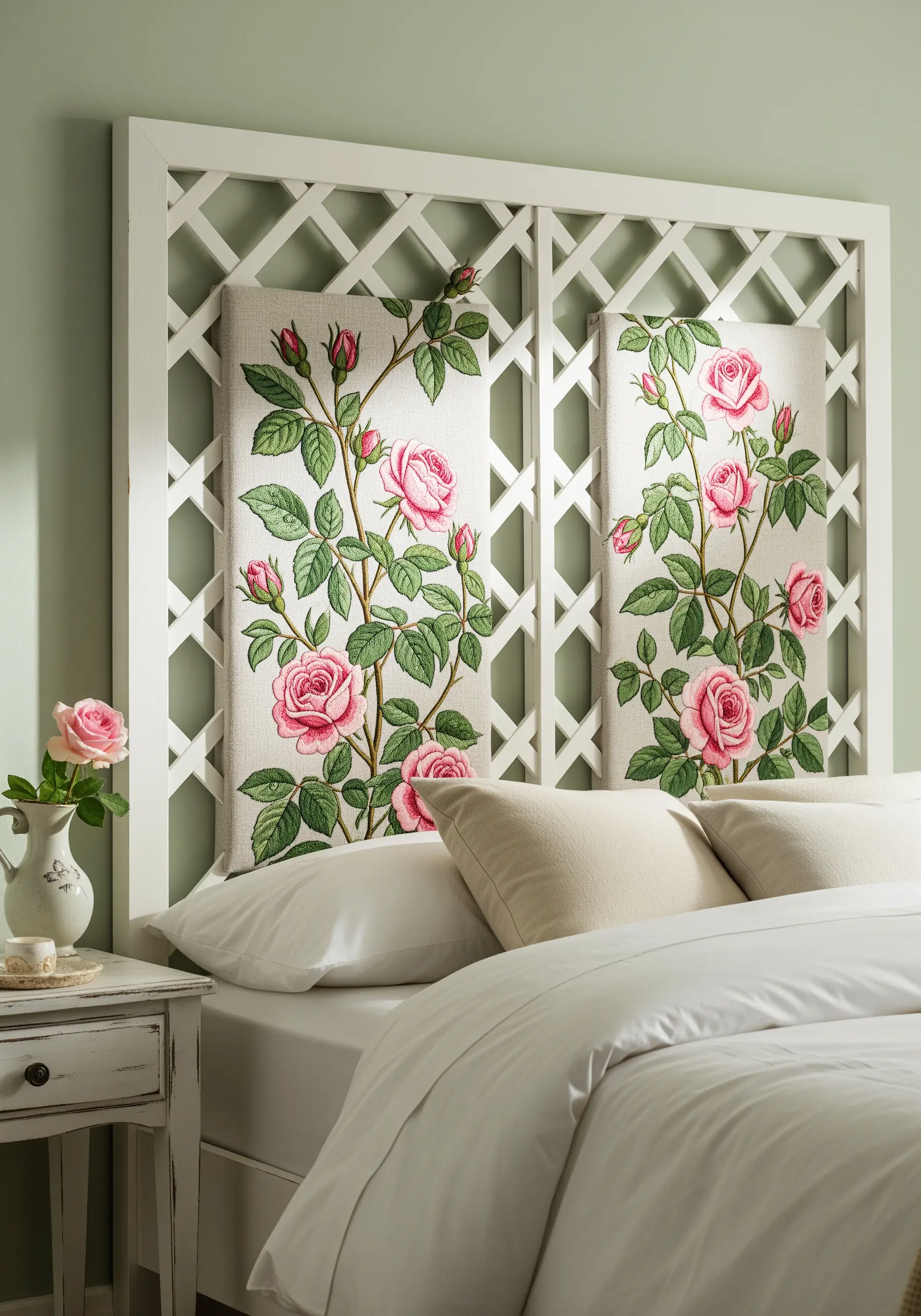
This design cleverly breaks up a large project into manageable embroidered panels set within a trellis frame.
Embroider your rose motifs on separate pieces of fabric, allowing you to focus on the detailed thread painting without wrestling with a large headboard.
Use long-and-short stitch to blend shades of pink for the petals, giving them a soft, realistic gradient.
This modular approach makes a large-scale botanical project feel much more achievable.
23. Autumnal Scatter with Appliqué
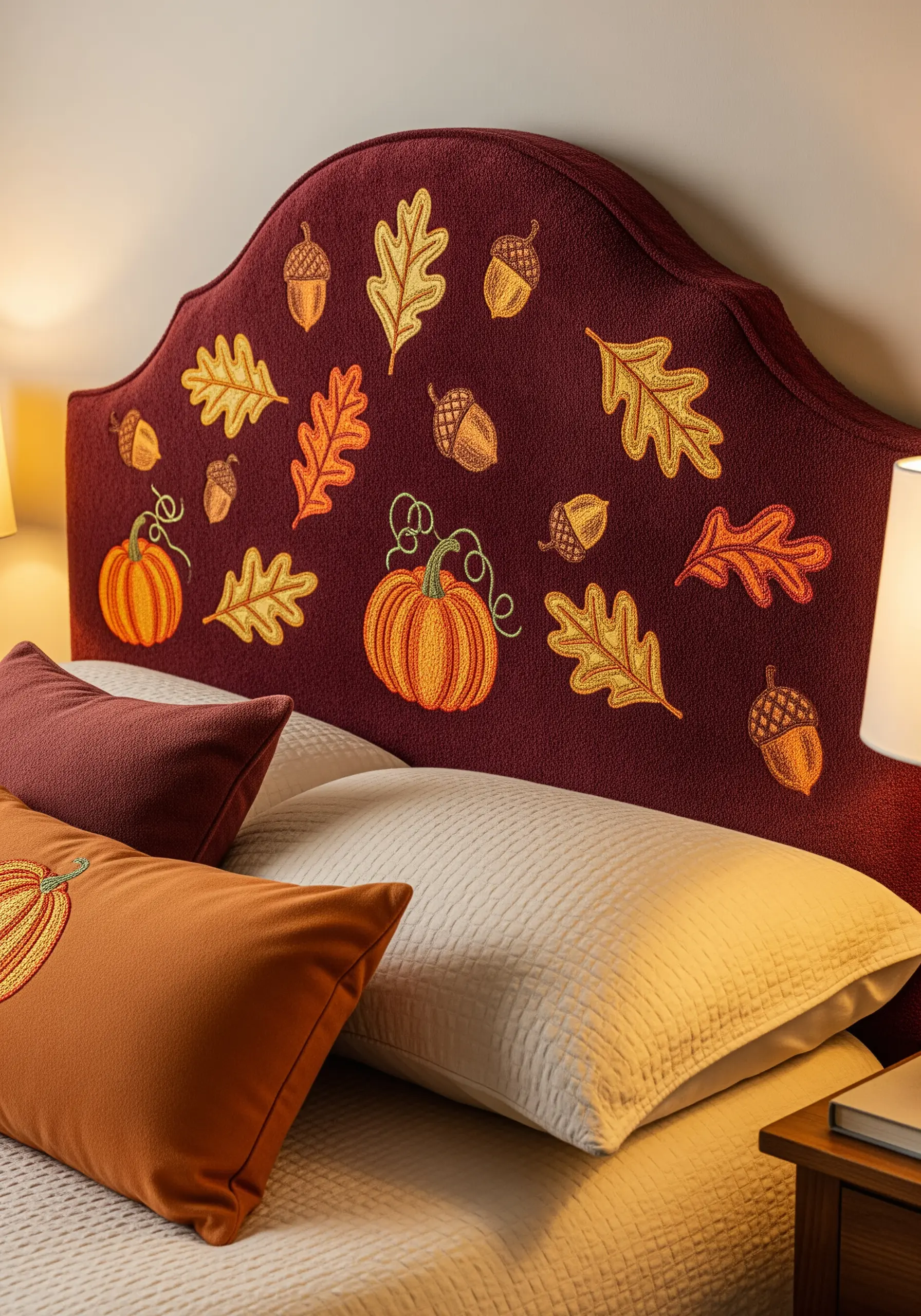
Create a cozy, autumnal feel by combining simple embroidery with felt or fabric appliqué.
Cut out leaf and acorn shapes from felt in warm tones and attach them to the headboard using a decorative blanket stitch or a simple running stitch around the edge.
Add embroidered details like veins on the leaves or cross-hatching on the acorn caps to give the flat shapes dimension and texture.
This mixed-media approach is playful, textural, and perfect for seasonal wall art projects.
24. Modernist Composition with Geometric Forms
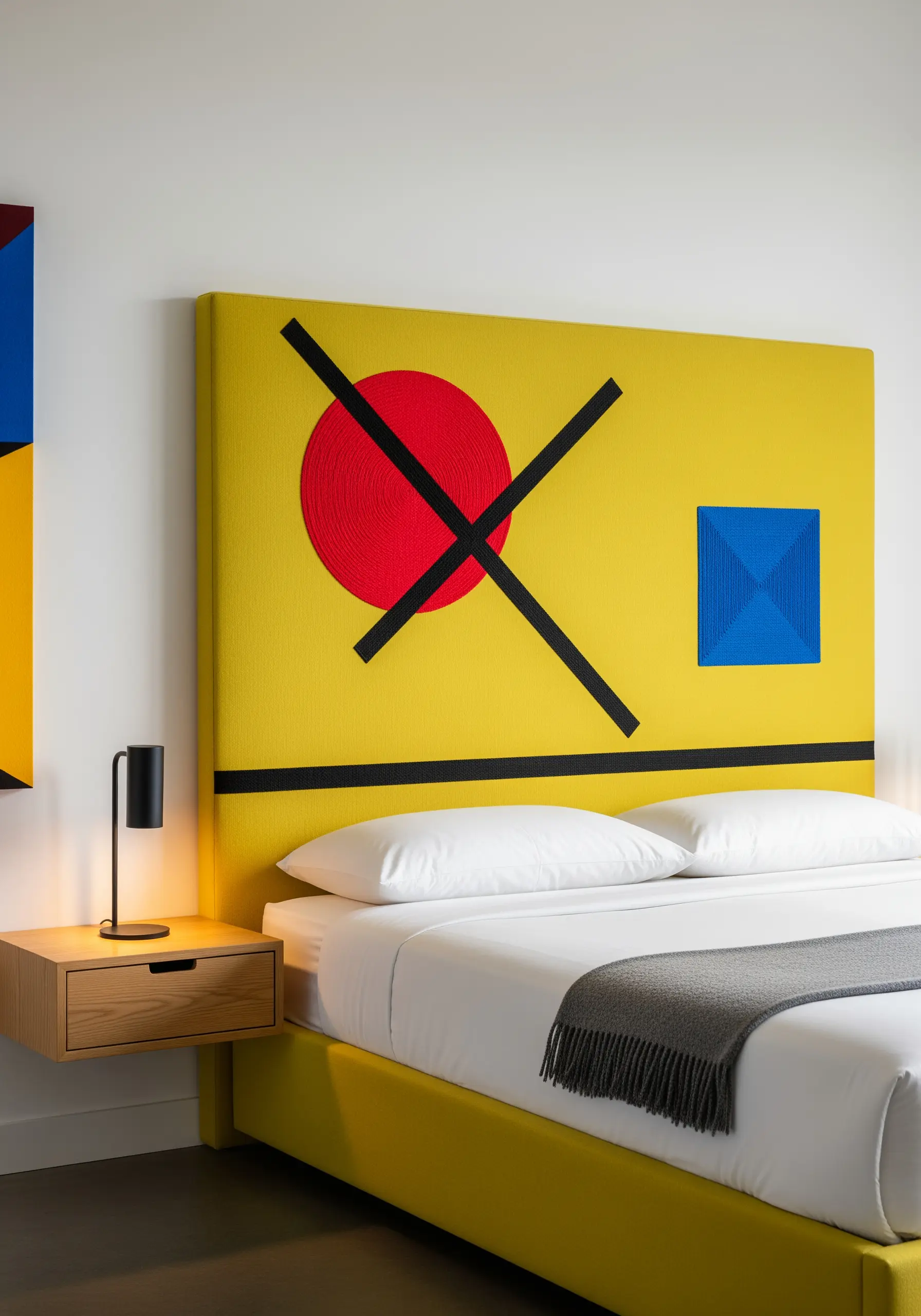
Channel the spirit of modern art by using bold, primary-colored geometric shapes and strong black lines.
Create texture within the shapes by using dense fill stitches, like the vertical satin stitch in the red circle and a woven pattern in the blue square.
Use couched thick black yarn for the intersecting lines to give them a dominant, graphic presence.
This design is a powerful exercise in composition, color theory, and using stitch direction to create interest.
25. Japanese Sashiko-Inspired Pattern
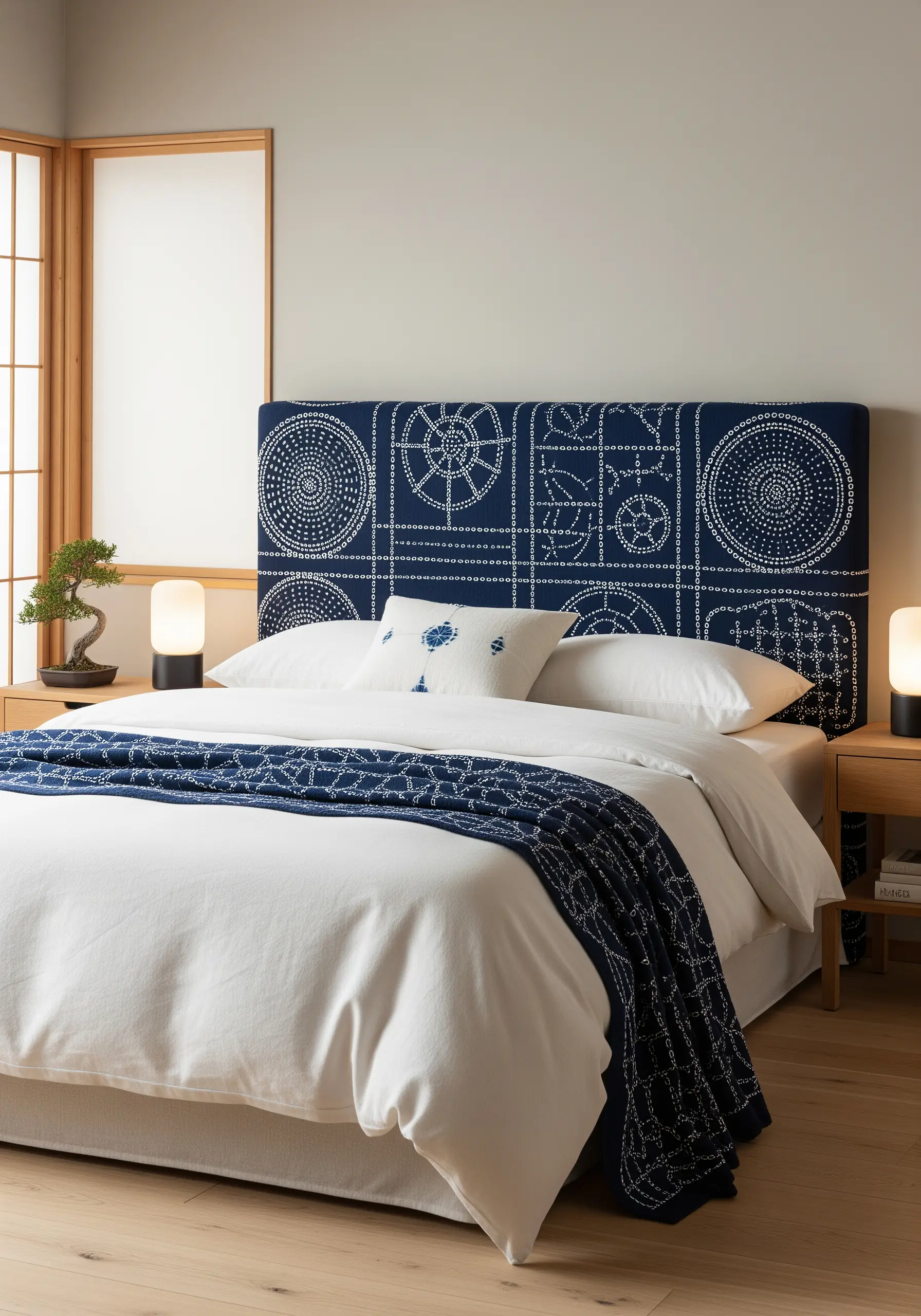
Achieve this serene, geometric look with Sashiko, a traditional Japanese embroidery technique using a simple running stitch.
The beauty of Sashiko lies in its uniformity. Use a special Sashiko thread (or a #8 pearl cotton) and focus on keeping your stitch length and the spaces between them perfectly consistent.
Stitching on a deep indigo fabric with white thread is the classic combination, creating a result that is both graphic and meditative.
This technique turns a simple stitch into a stunning, rhythmic pattern.
26. Stained Glass Floral Window
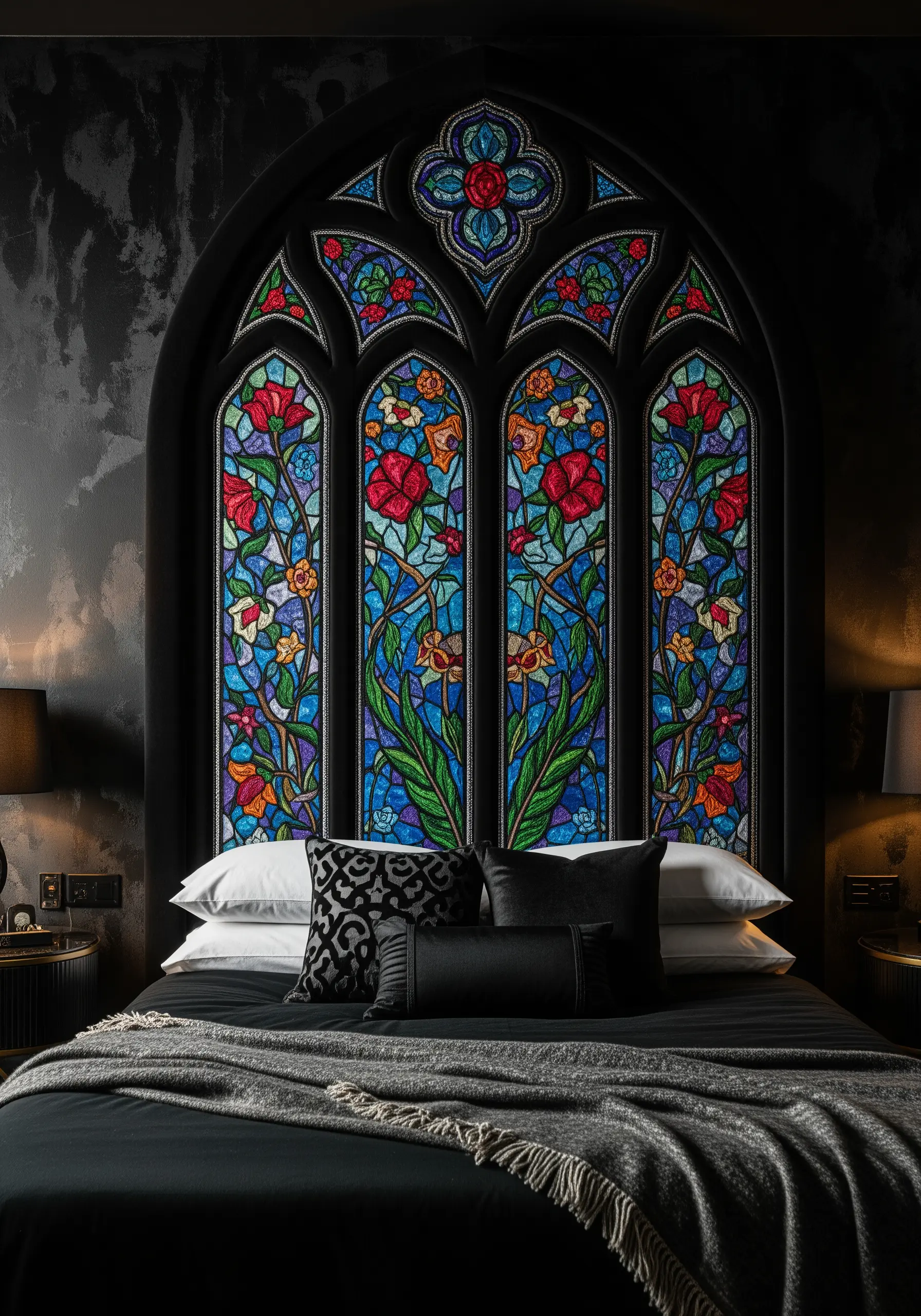
To mimic the look of stained glass, the outlines are the most critical element.
Use a thick, bold line of couched black cord or multiple strands of black floss worked in a stem stitch to create the ‘leaded’ divisions.
Fill the sections with a smooth, dense satin stitch using silk or rayon threads, as their high sheen will replicate the luminosity of glass.
Working on a dark fabric enhances the vibrancy of the jewel-toned fills, making the entire piece glow.


