
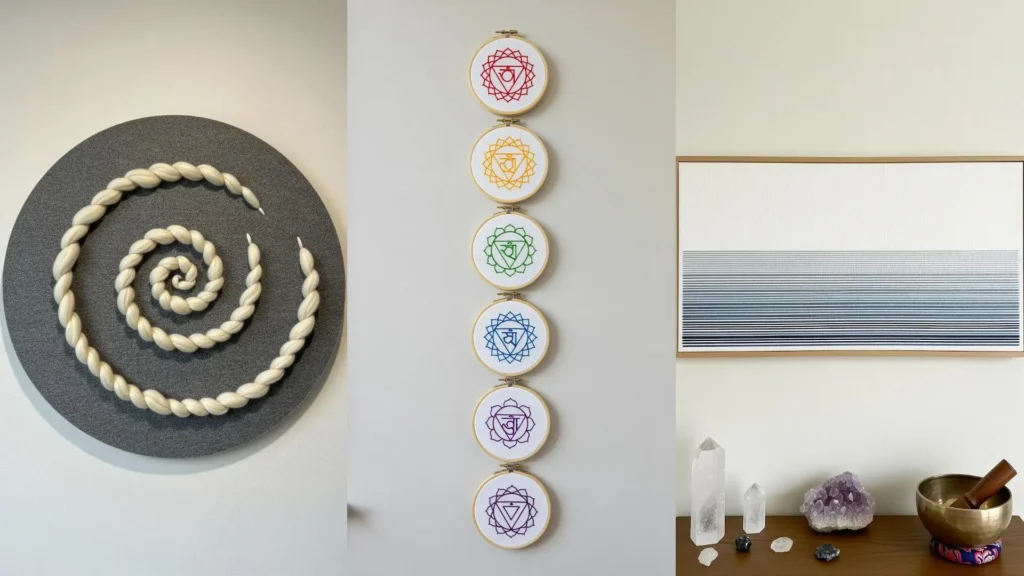
Embroidery can be more than just a craft; it can be a practice. A way to slow down, to focus your breath, and to create something that brings a tangible sense of peace to your surroundings. The gentle rhythm of pulling a needle and thread through fabric is, in itself, a form of meditation.
But how do you translate that feeling into a finished piece that feels just as calm and intentional? It begins with subtraction. By choosing simpler forms, quieter colors, and more thoughtful textures, you allow your work to breathe. You create space—not just on the fabric, but in your mind.
Here, you’ll find ideas that move beyond complex patterns. We’ll explore how a single line, a subtle texture, or a harmonious color choice can transform a simple cloth into a focal point for your meditation room, yoga corner, or any nook where you seek serenity. Let’s stitch a quieter world, together.
1. The Enso Circle: A Study in Imperfect Harmony
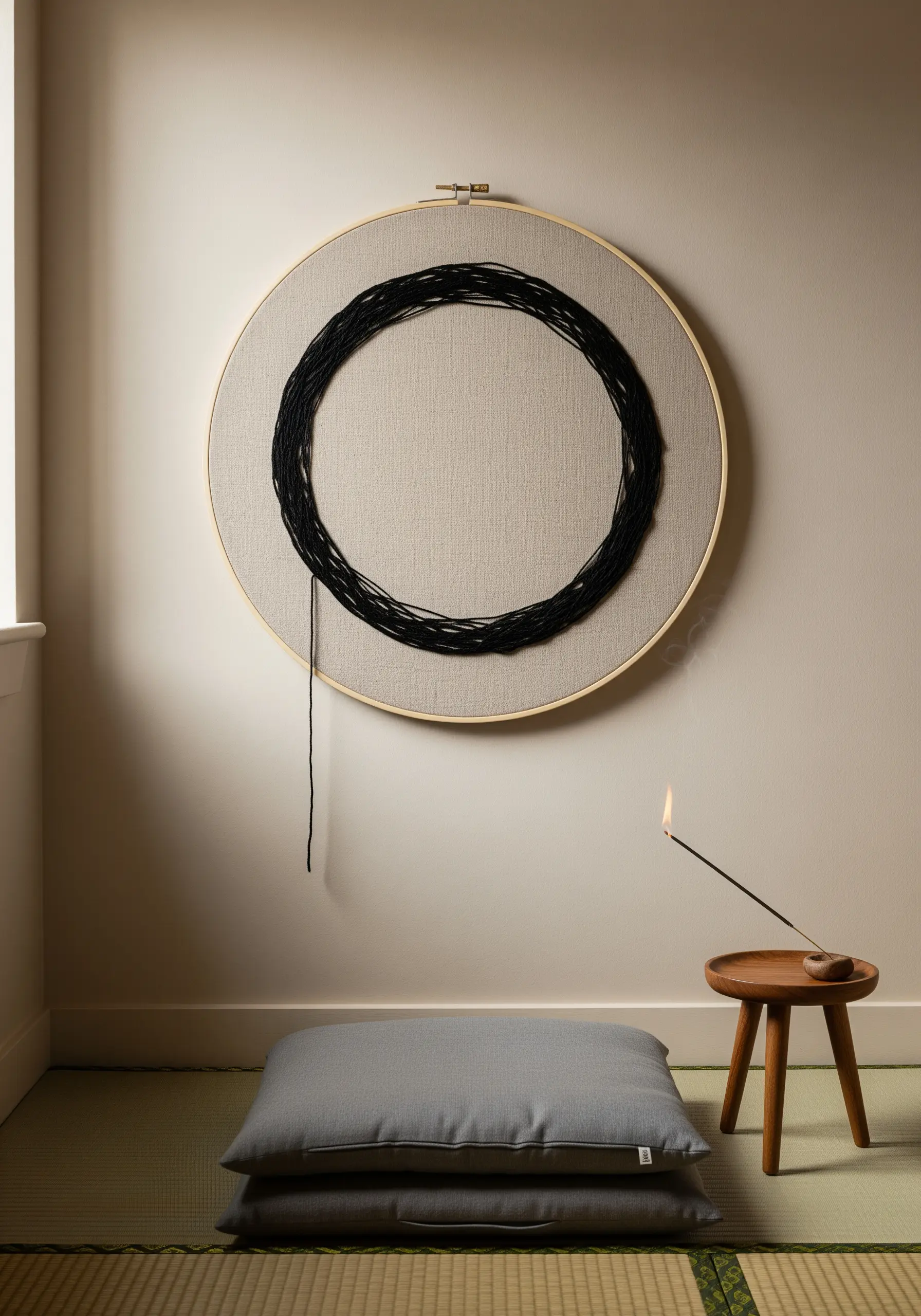
Embrace the Zen concept of Enso, or the hand-drawn circle, by letting go of stitches entirely.
Instead, couch a thick, textural yarn or multiple strands of black floss onto a neutral linen background.
The technique involves laying the yarn on the fabric and securing it with small, evenly spaced tacking stitches in a matching thread.
This method preserves the raw texture of the fiber and creates a bold, sculptural presence that a simple stitch cannot replicate.
Let one end hang free to represent the wabi-sabi idea of finding beauty in imperfection.
2. Meditative Geometry with Sashiko Stitching
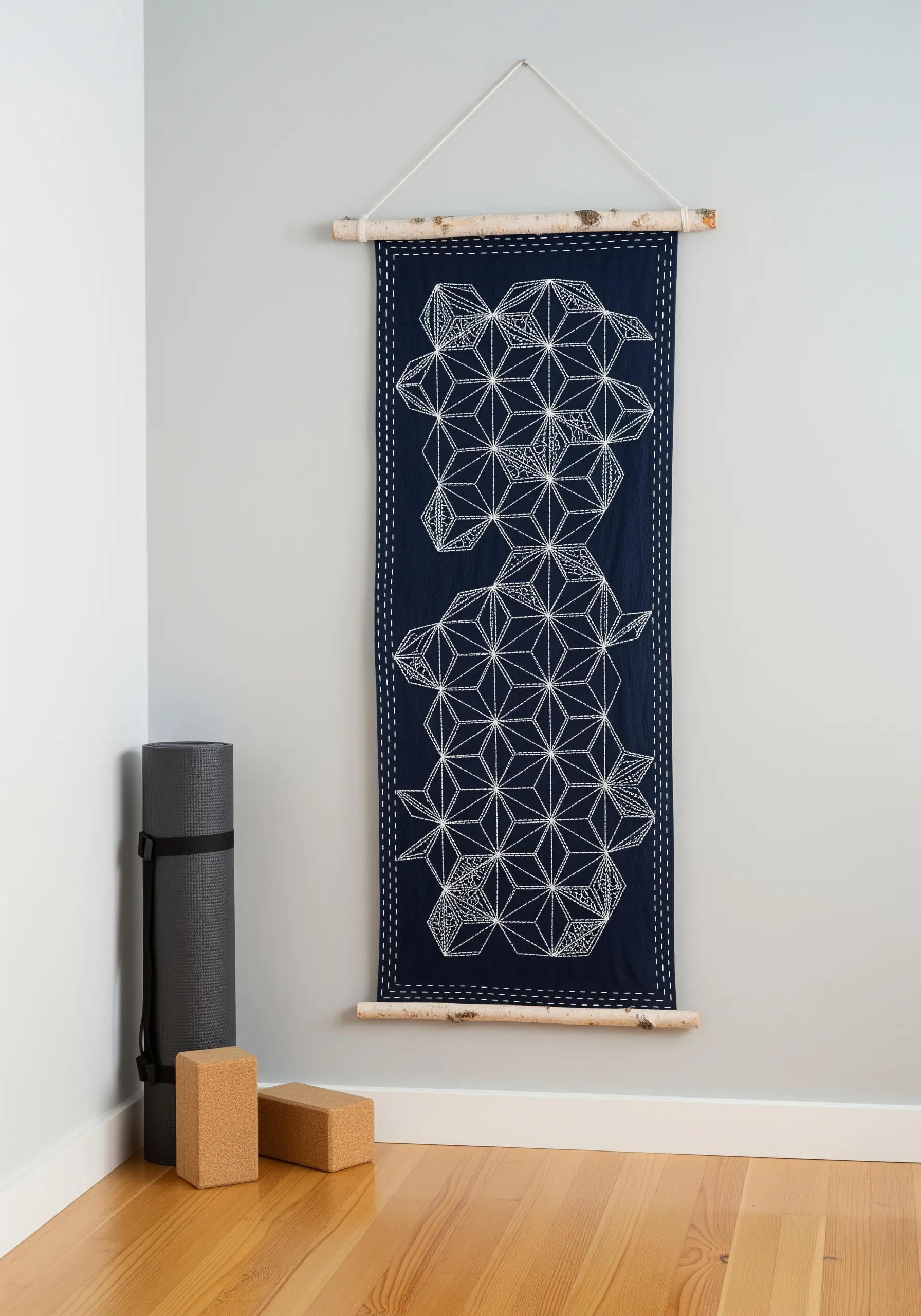
Explore the calming rhythm of Japanese Sashiko stitching to create intricate geometric patterns like the Asanoha (hemp leaf) motif.
Use traditional Sashiko thread, which is thicker and more twisted than standard floss, on a dark indigo or navy cotton fabric for authentic contrast.
The beauty of this technique lies in the running stitch; focus on keeping your stitch length consistent and leaving tiny, uniform gaps between each stitch.
Display your finished piece as a wall hanging using natural elements like birch or driftwood dowels to enhance its organic, serene feel.
3. Large-Scale Landscapes with Line-Weight Variation
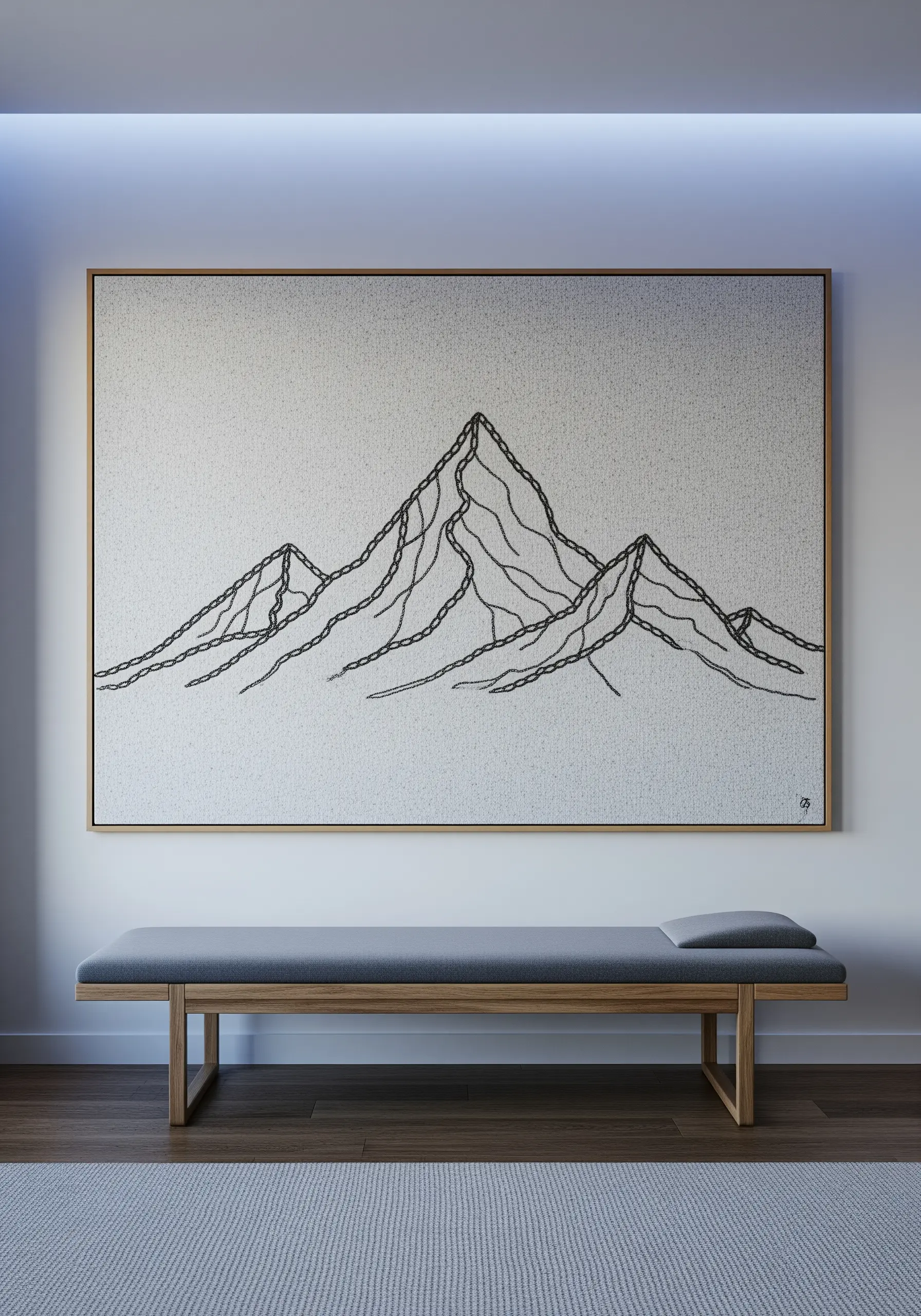
Elevate a simple mountain outline into a statement piece by playing with scale and line weight.
On a large, tightly stretched canvas, use a heavy-weight thread like perle cotton or a full six strands of floss for the main ridges, stitched in a bold chain stitch.
For the finer, contouring lines within the peaks, switch to a delicate two-strand whipped backstitch.
This contrast in thickness creates a powerful sense of depth and dimension, turning a basic line drawing into a sophisticated piece of textile art.
4. A Cohesive Chakra Collection in a Vertical Series
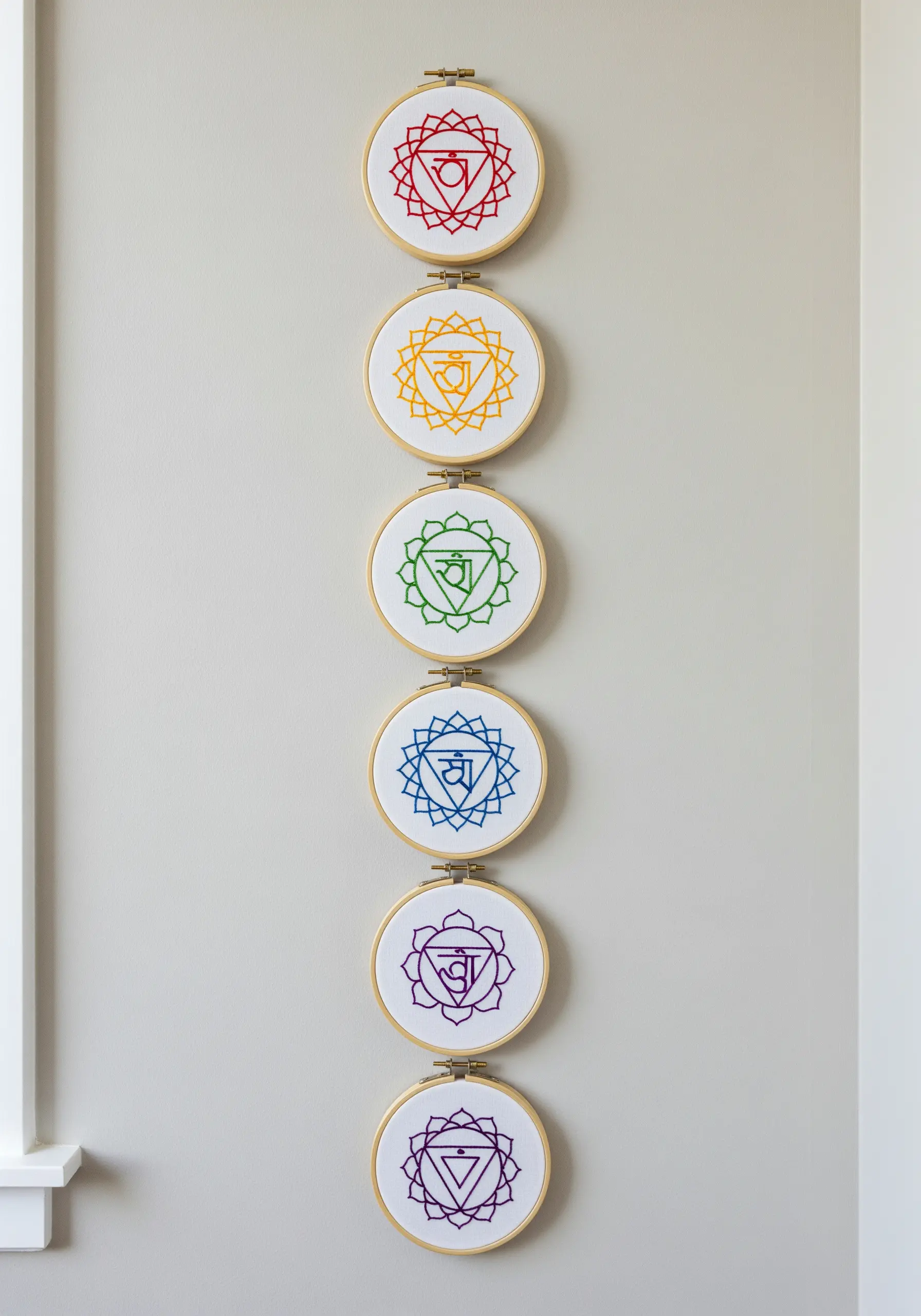
Create a harmonious flow in your yoga corner by stitching a series of chakra symbols.
To ensure the collection feels unified, use the same size hoop and the same neutral background fabric for each piece.
Assign a specific, vibrant color of six-strand floss to each symbol, using a clean backstitch or split stitch to keep the geometric lines sharp.
When you display them vertically, the consistent framing and repeating visual language create a powerful, meditative focal point that guides the eye upward.
5. The Subtlety of Tone-on-Tone Embroidery
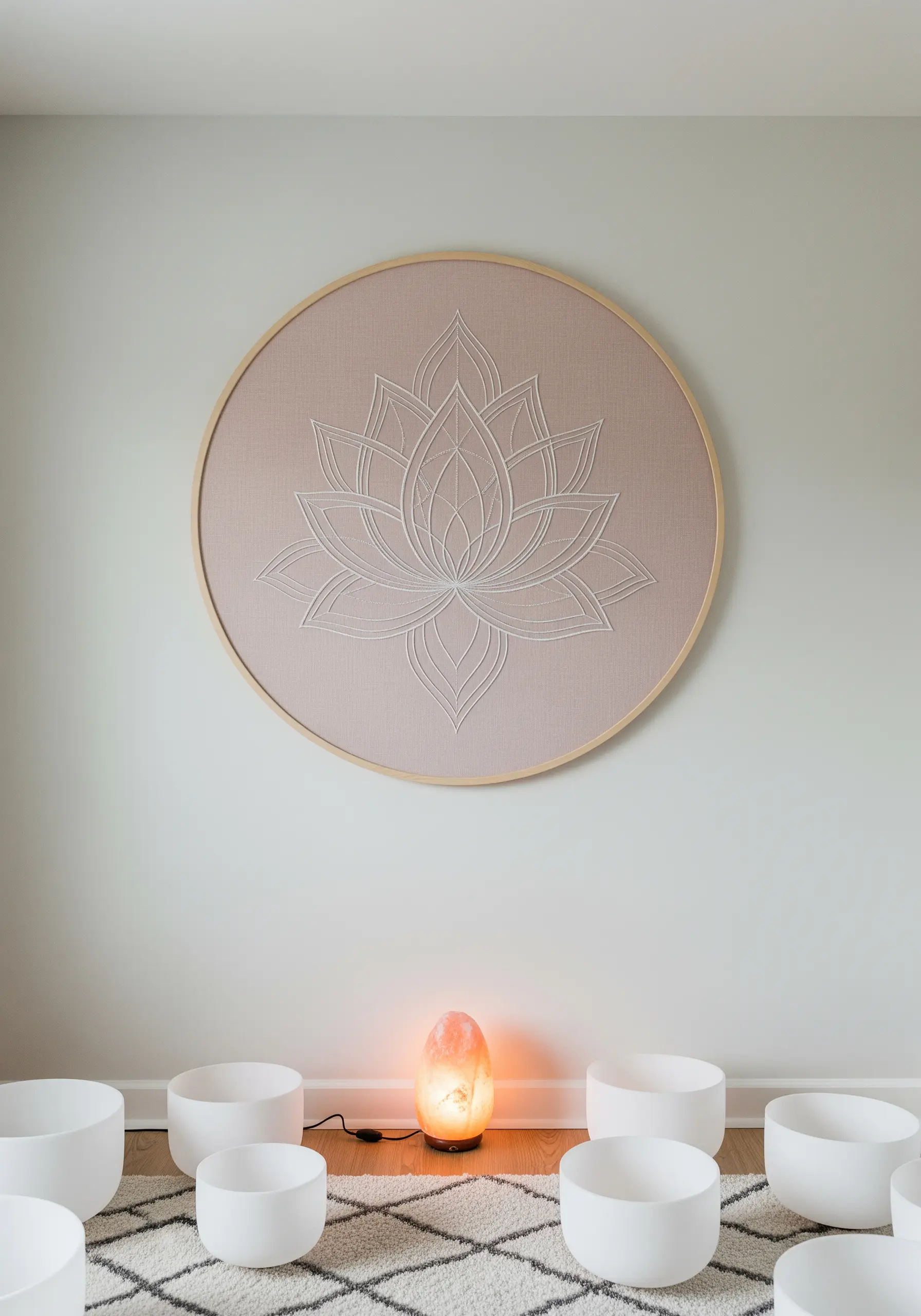
Achieve an ethereal, high-end aesthetic by using a thread color that is only a shade or two lighter than your fabric.
For this lotus design, stitching white floss onto a soft dusty rose or blush linen creates an effect that is subtle from a distance but reveals intricate detail up close.
Use a precise split stitch for the outlines to maintain the clean, graphic quality of the petals.
This monochrome embroidery technique feels calm and sophisticated, adding texture without introducing visual noise.
6. Capturing Fluid Motion with Directional Stitches
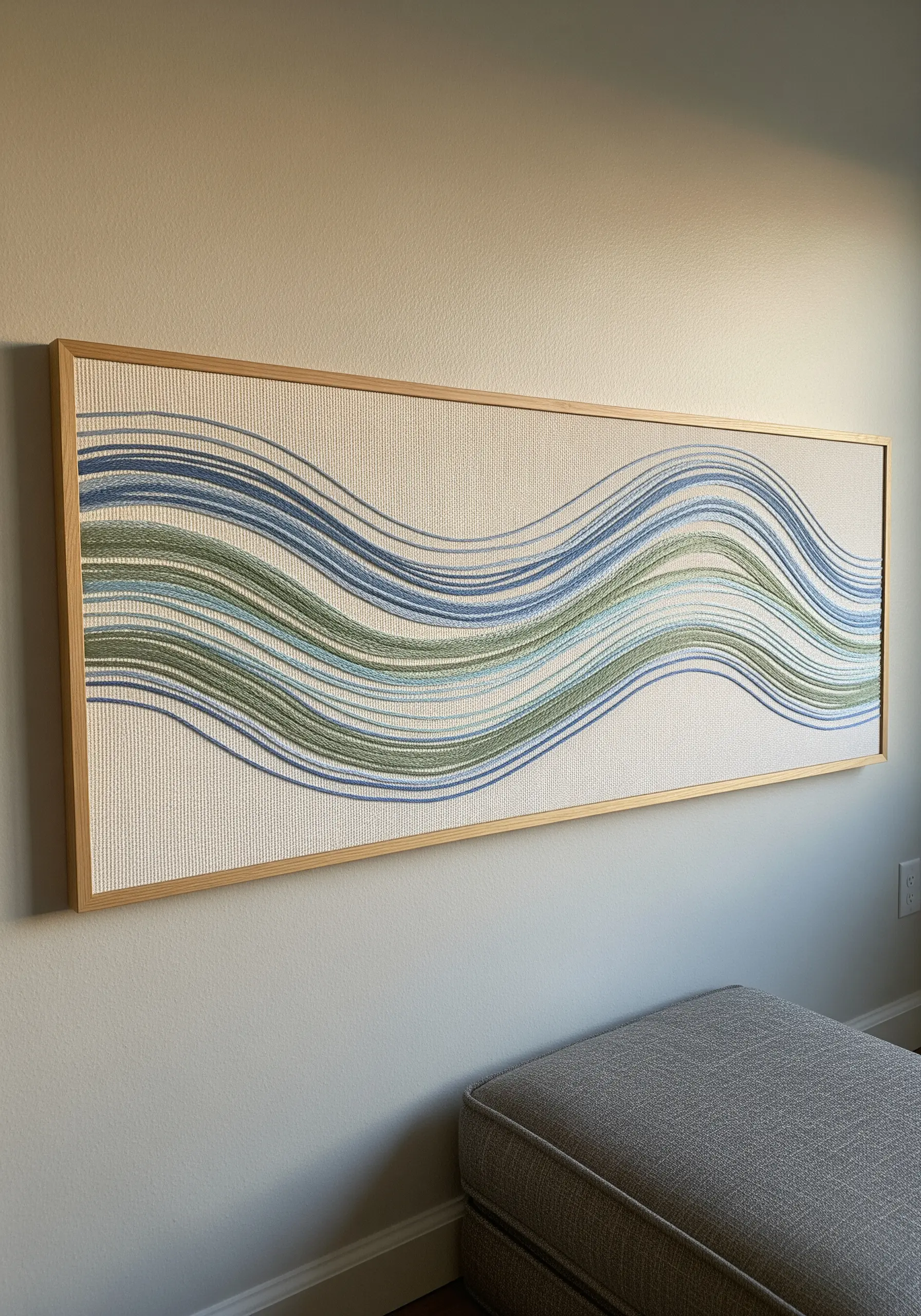
Recreate the gentle movement of water by stitching long, flowing lines of abstract waves.
Choose an analogous color palette—like shades of blue, teal, and seafoam green—to create a natural sense of harmony.
Use a simple stem stitch or split stitch, ensuring all your stitches follow the curve of the wave to enhance the feeling of motion.
Vary the number of strands you use for different lines; a thicker, six-strand line next to a delicate two-strand line adds depth and visual rhythm.
7. High-Contrast Botanicals with Metallic Thread
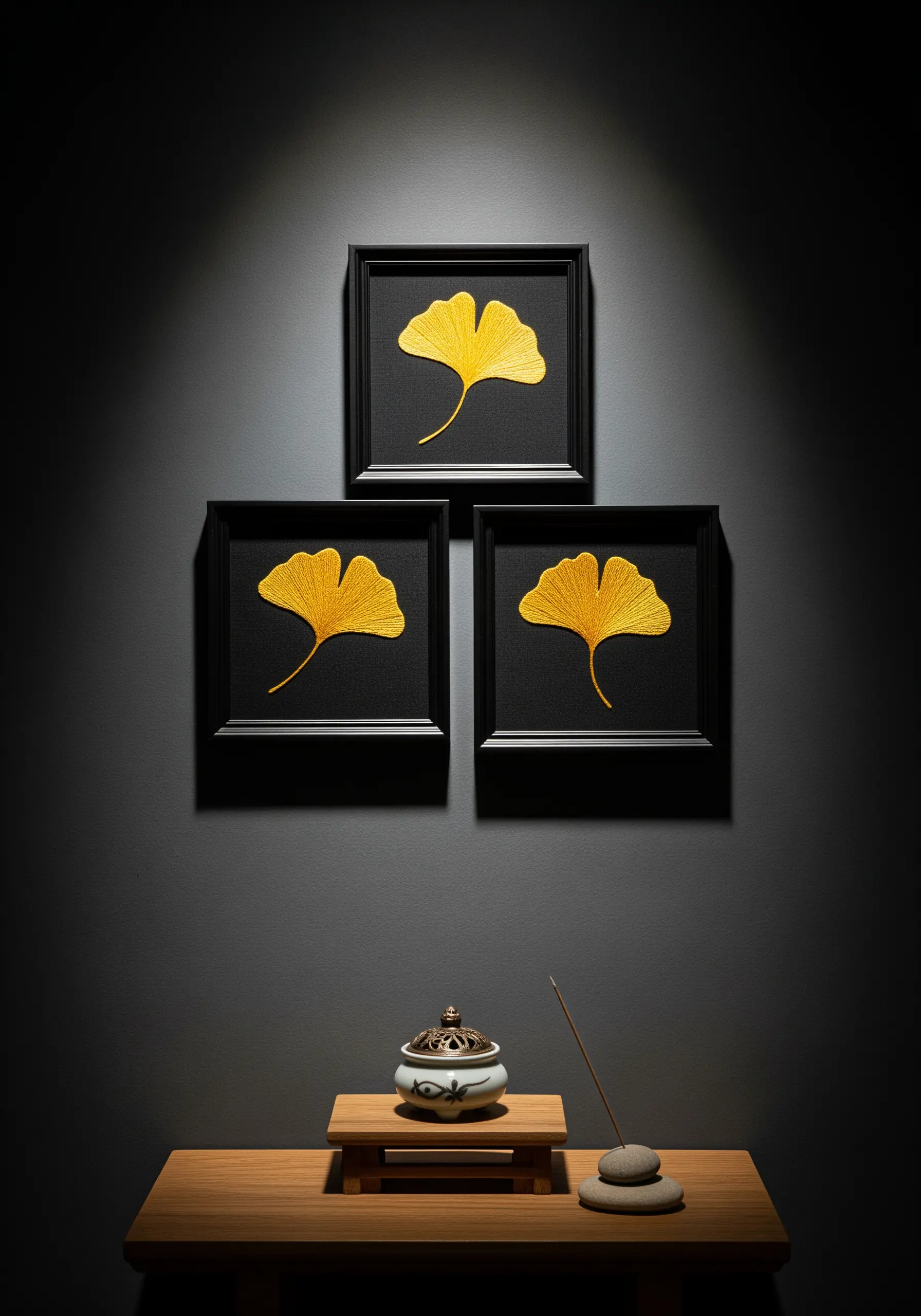
Make a single motif command attention by pairing a vibrant metallic thread with a deep, matte background.
When working with metallic floss, which can be prone to snagging, use shorter thread lengths (around 12 inches) and a needle with a larger eye.
To create the smooth, filled look of this ginkgo leaf, lay your satin stitches at a slight angle, following the natural direction of the leaf’s veins.
The contrast between the shimmering gold and the stark black fabric creates a dramatic, gallery-worthy effect.
8. Sculptural Texture with Couched Roving
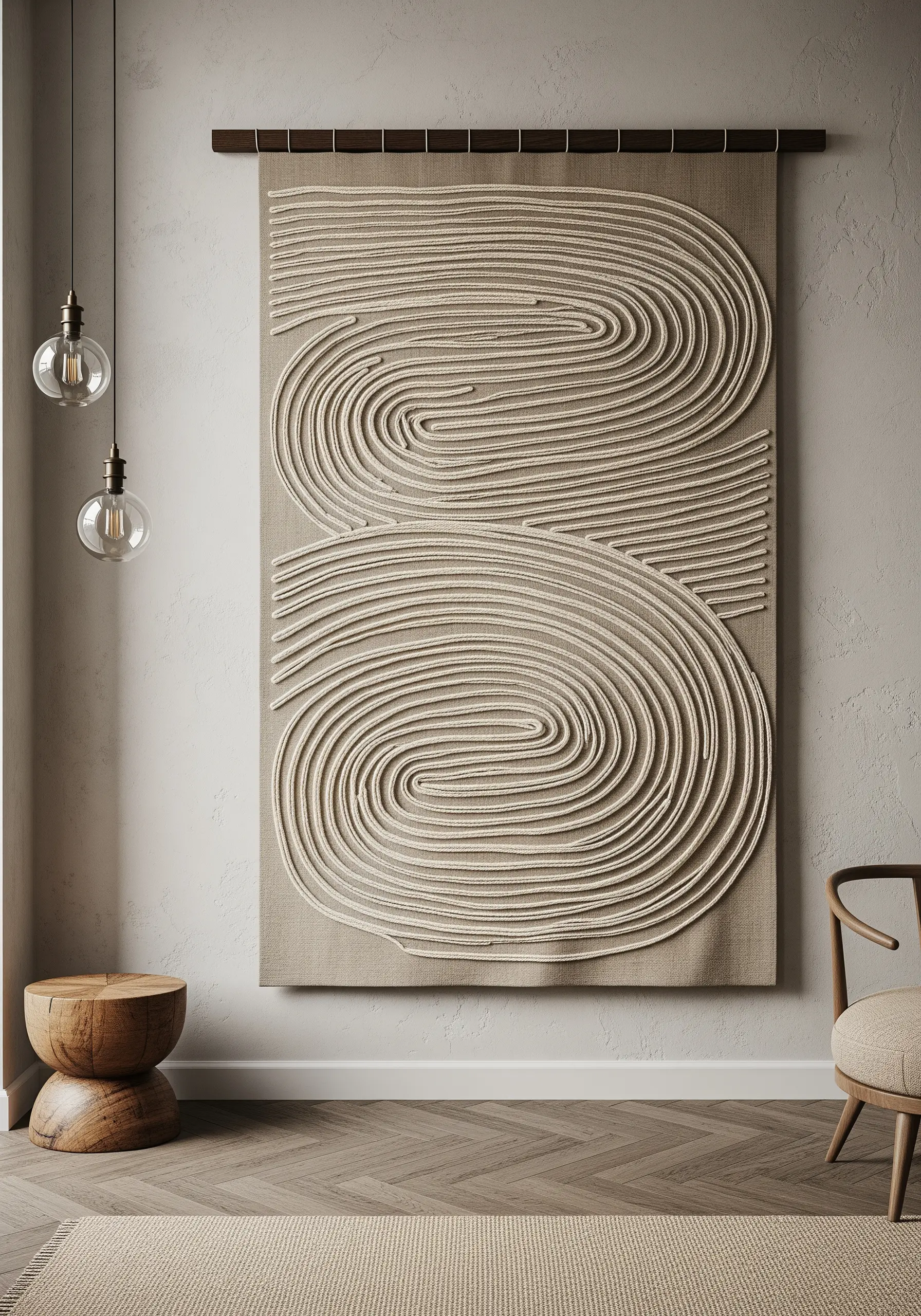
Move beyond thread to create dramatic, three-dimensional forms inspired by Zen gardens.
This powerful texture is achieved by couching thick wool roving or cotton piping cord onto a heavy linen or canvas base.
Lay down your thick fiber in swirling patterns and use a strong, matching thread to tack it into place with small, discreet stitches from the back or sides.
This DIY yarn wall art becomes a tactile focal point, inviting both the eyes and the hands to trace its meditative paths.
9. Lunar Phases Rendered in Knots and Stitches
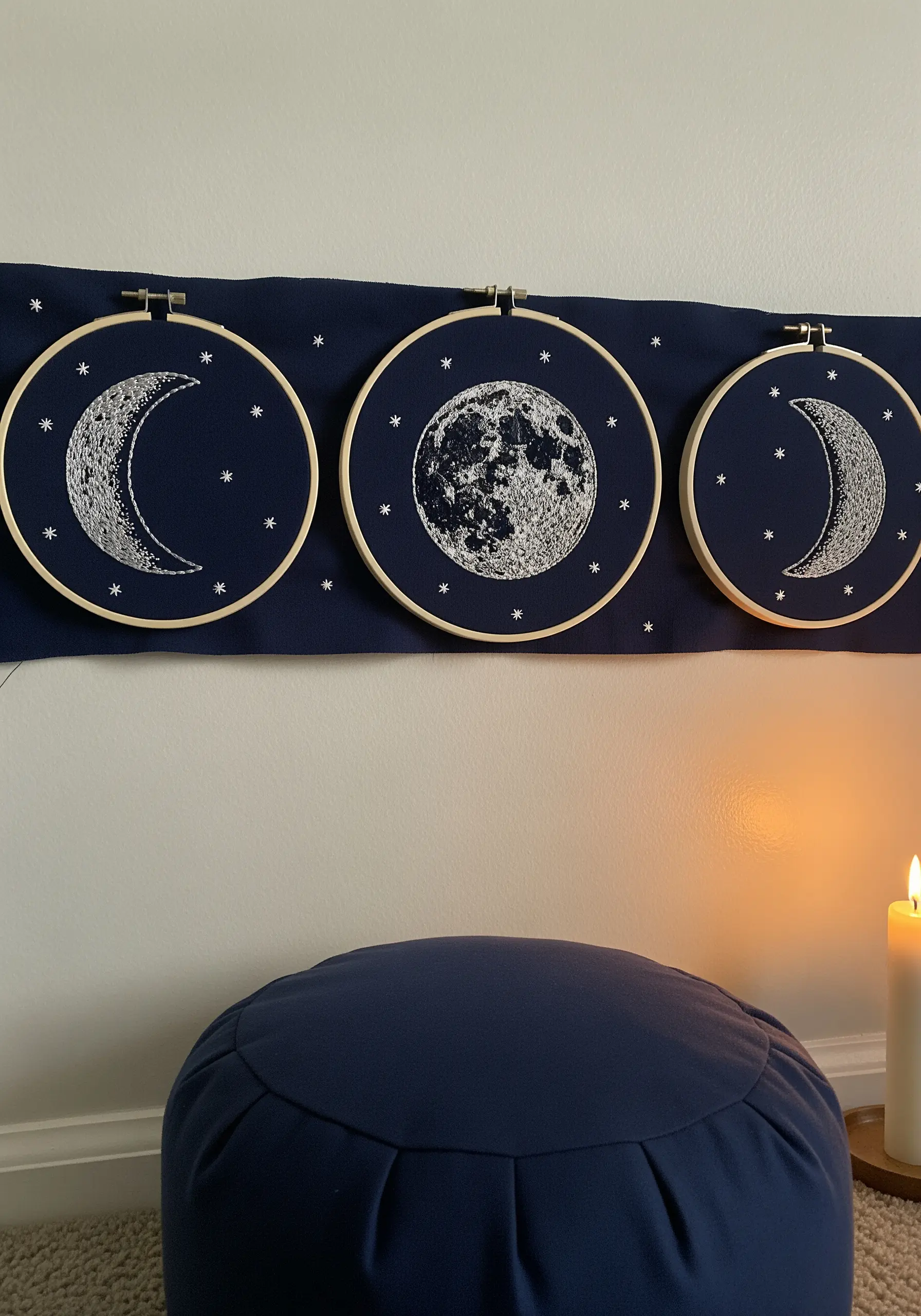
Capture the moon’s cratered surface by using a dense application of French knots and seed stitches.
To achieve a realistic texture, use a mix of white, light grey, and silver metallic threads, concentrating the French knots in small, varied clusters.
Fill the remaining space with tiny, randomly placed seed stitches (single straight stitches) to create a subtle shimmer.
Stitching on a deep navy fabric makes the lunar details pop, turning your hoop into a window to the night sky.
10. The Purity of a Single, Unbroken Line
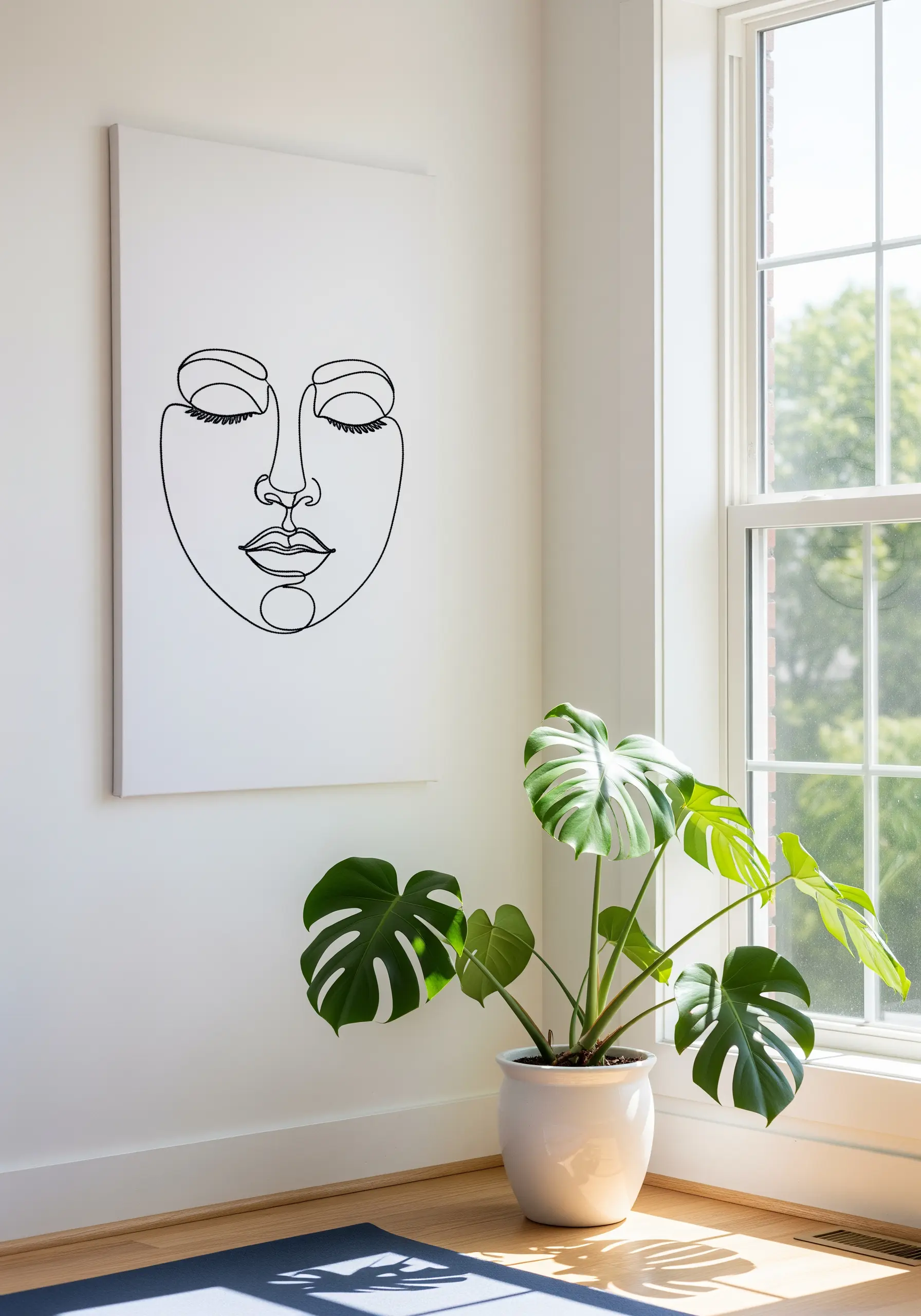
For minimalist portraits, the goal is a line that feels as fluid and effortless as an ink drawing.
To achieve this, use a whipped backstitch. First, lay down a standard backstitch, then whip a second thread around the stitches without piercing the fabric.
This technique smooths out the segmented look of a regular backstitch, creating a seamless, elevated line.
Use a bold, 6-strand black floss on a crisp white canvas for a graphic, high-impact result that embodies calm and simplicity.
11. Defining Form with Negative Space
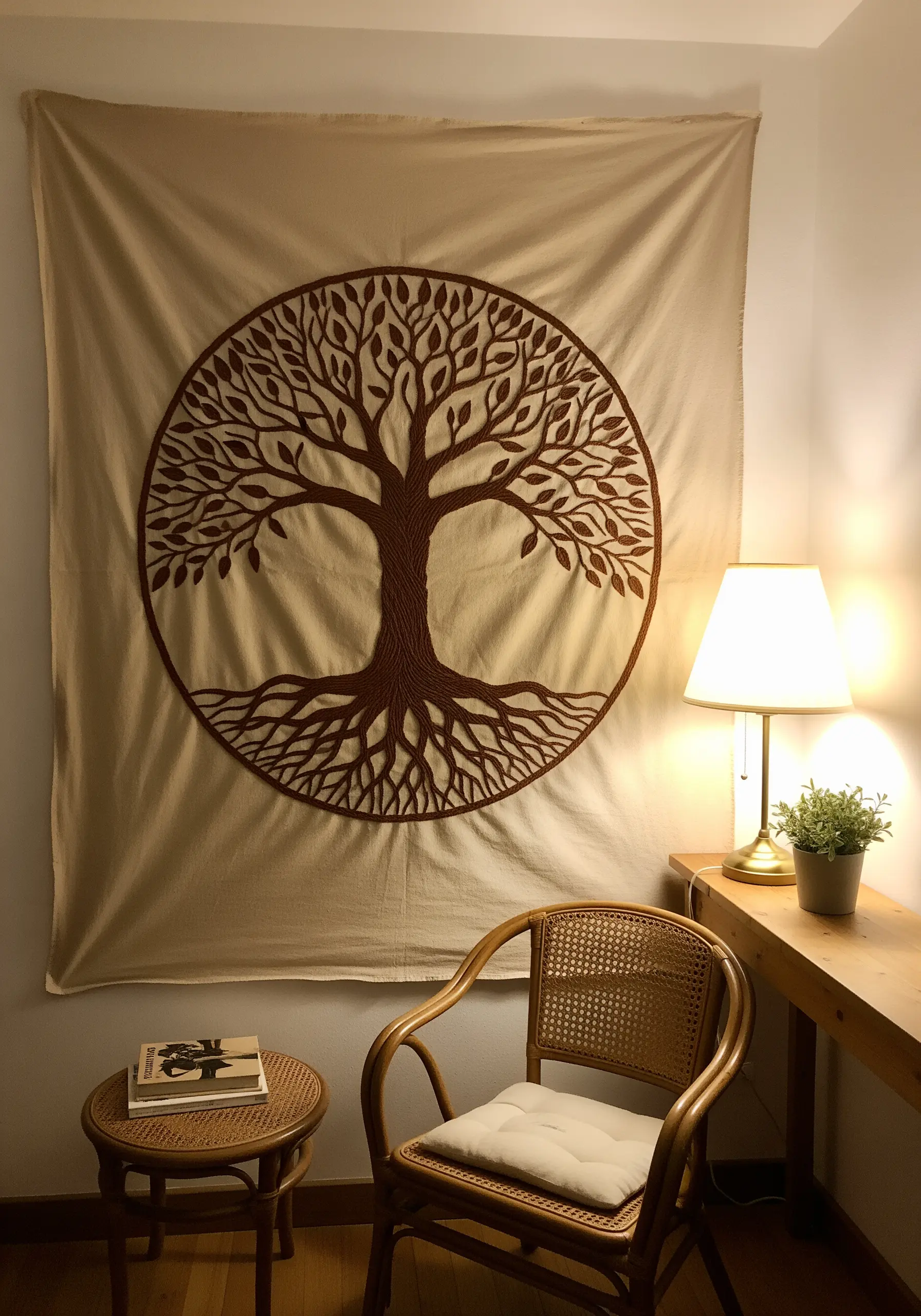
For a design like the Tree of Life, what you *don’t* stitch is as important as what you do.
Instead of outlining the tree, fill the shape entirely with a dense, smooth satin stitch or a field of tight chain stitches.
This technique turns the tree into a solid, textural silhouette, making the un-stitched background an integral part of the design.
Using a rich, earthy brown thread on a natural, unbleached cotton enhances the organic and grounded feeling of the piece.
12. Stitching a Path for Mindful Contemplation
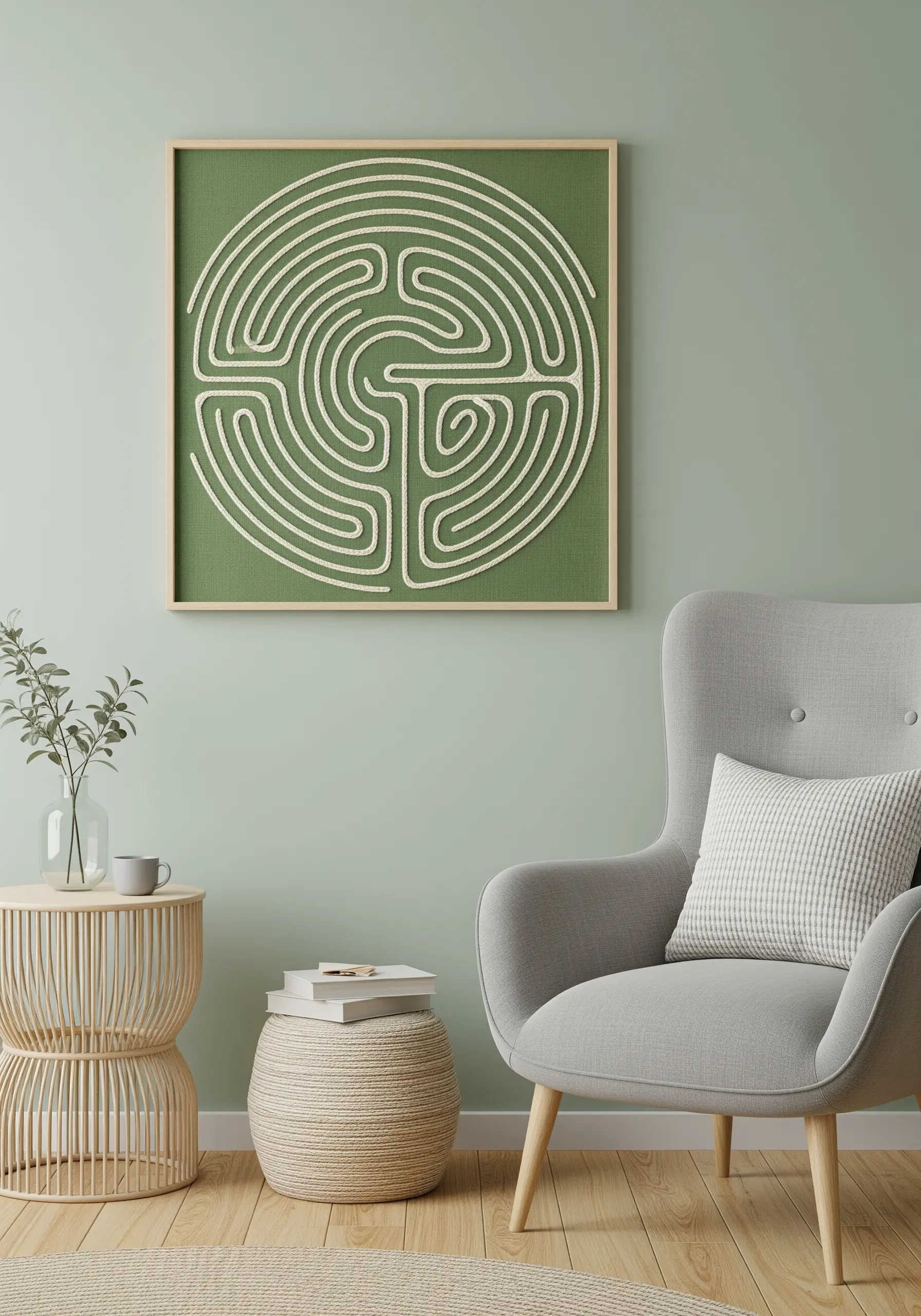
A labyrinth is the perfect subject for meditative stitching, as its single, continuous path encourages focus.
To create this piece, use a single, unbroken length of thick, textural thread like perle cotton and couch it onto your fabric base.
This maintains the integrity of the single path, unlike segmented stitches.
Choosing a soft, natural color palette, like cream on sage green, enhances the design’s calming and grounding properties, making it a perfect visual tool for a quiet corner.
13. Composing a Zen Story with a Hoop Trio
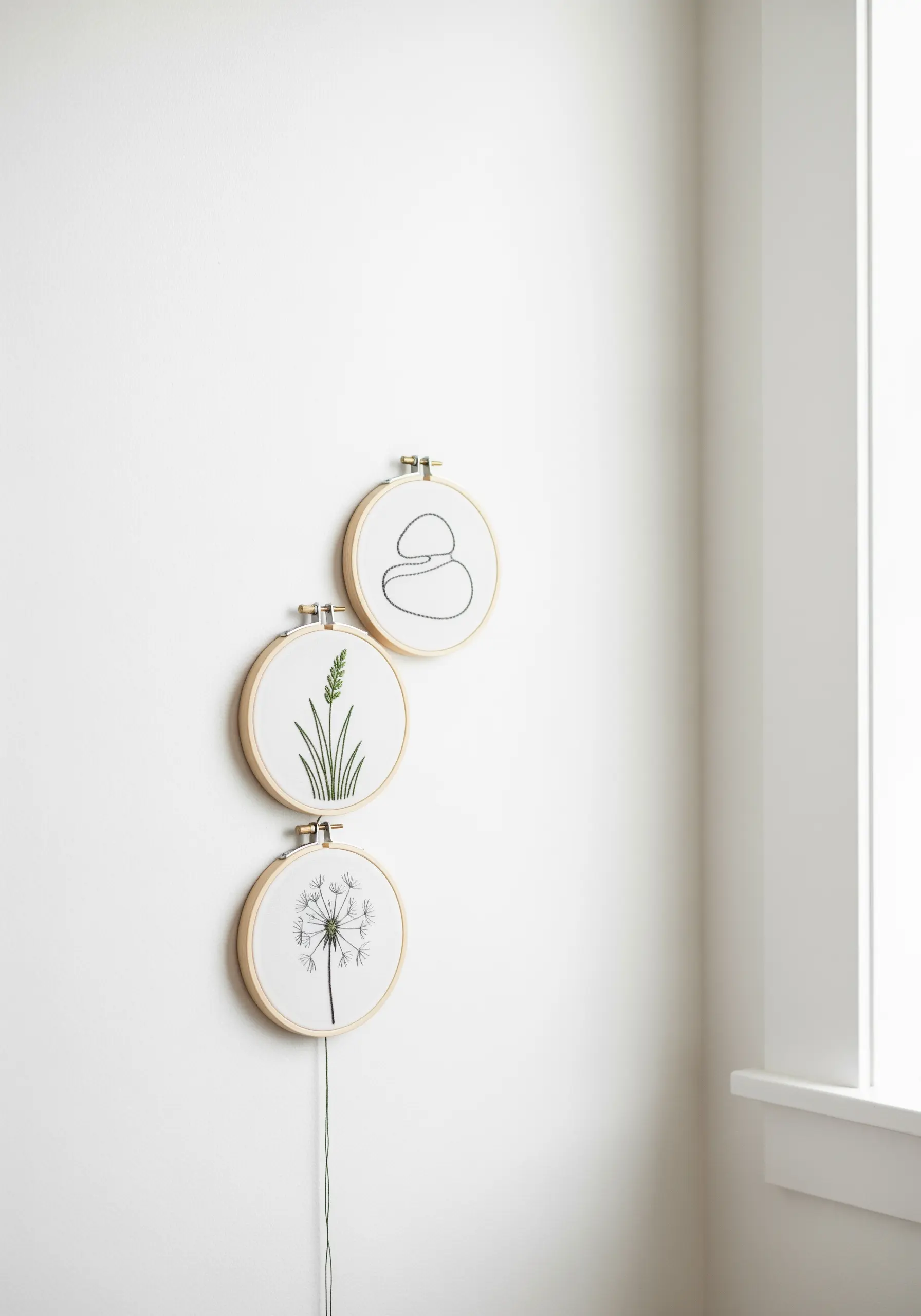
Tell a small, quiet story by grouping simple, nature-inspired motifs.
To create a cohesive collection, maintain a consistent minimalist style across all hoops, using simple backstitch for outlines and sparse satin or long-and-short stitches for fills.
The key is balance: one hoop with a solid form (stones), one with vertical energy (grass), and one with delicate detail (dandelion).
This thoughtful curation transforms simple nature-inspired patterns into a poetic visual narrative.
14. Exploring Scale and Rhythm with Appliqué
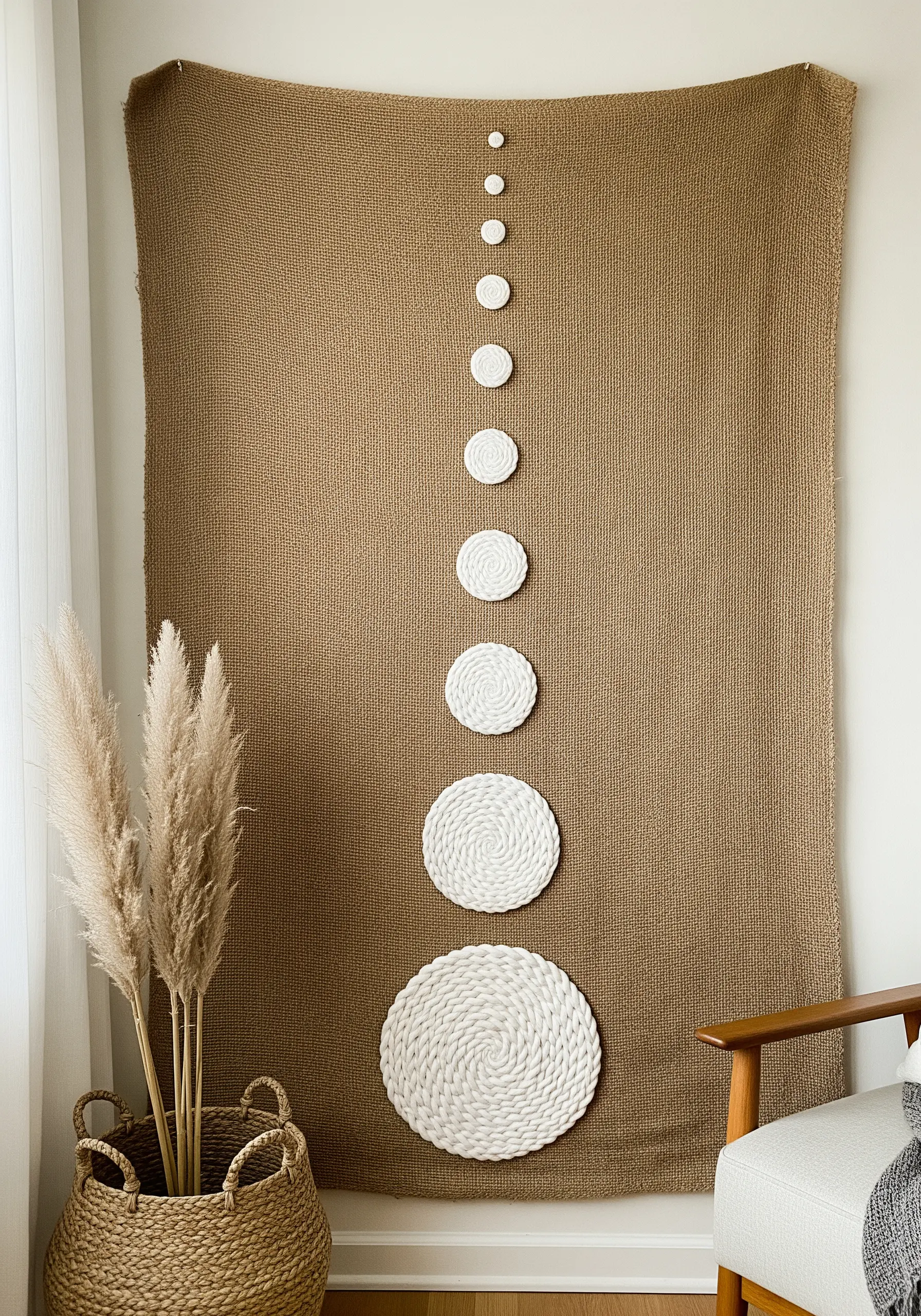
Create a dynamic sense of growth and progression by varying the size of a repeated element.
These textured discs are not stitched directly, but are created separately and then appliquéd onto the burlap background.
Try coiling and stitching thick yarn into flat spirals of increasing size. By attaching these dimensional forms to a flat surface, you introduce shadow and depth.
This arrangement draws the eye upward, creating a visual metaphor for meditation, growth, or the alignment of energy centers.
15. Building Dimension with French Knots
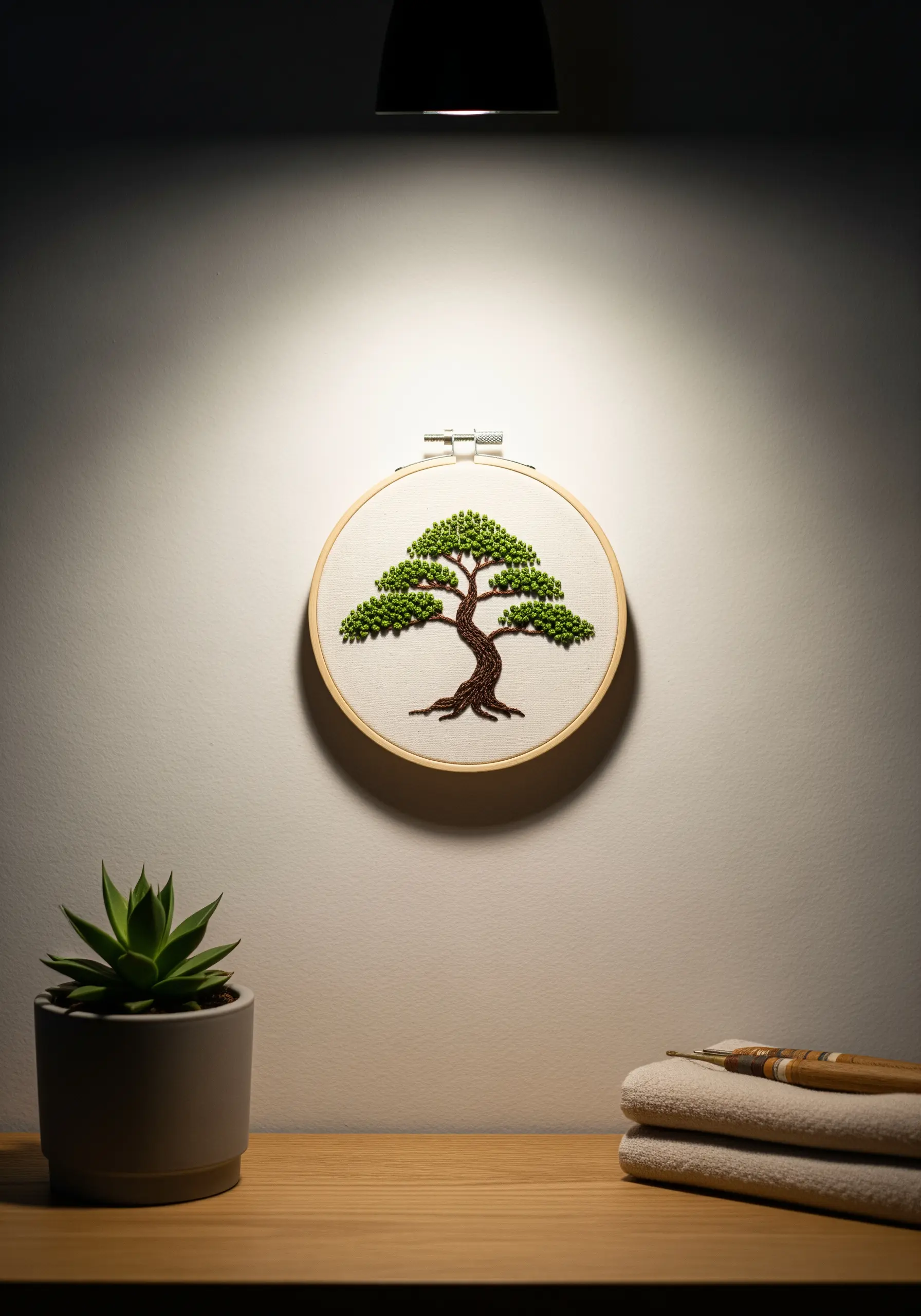
Give your bonsai tree a lush, three-dimensional canopy by using densely packed French knots.
Create subtle dimension by using two or three closely related shades of green floss, clustering them randomly to mimic the natural variation of light and shadow on leaves.
For the trunk, use a darker brown thread in a stem stitch, varying the stitch direction slightly to suggest the texture of bark.
This contrast between the smooth trunk and the bumpy foliage makes the design feel incredibly tactile and alive.
16. The Radiance of Geometric String Art
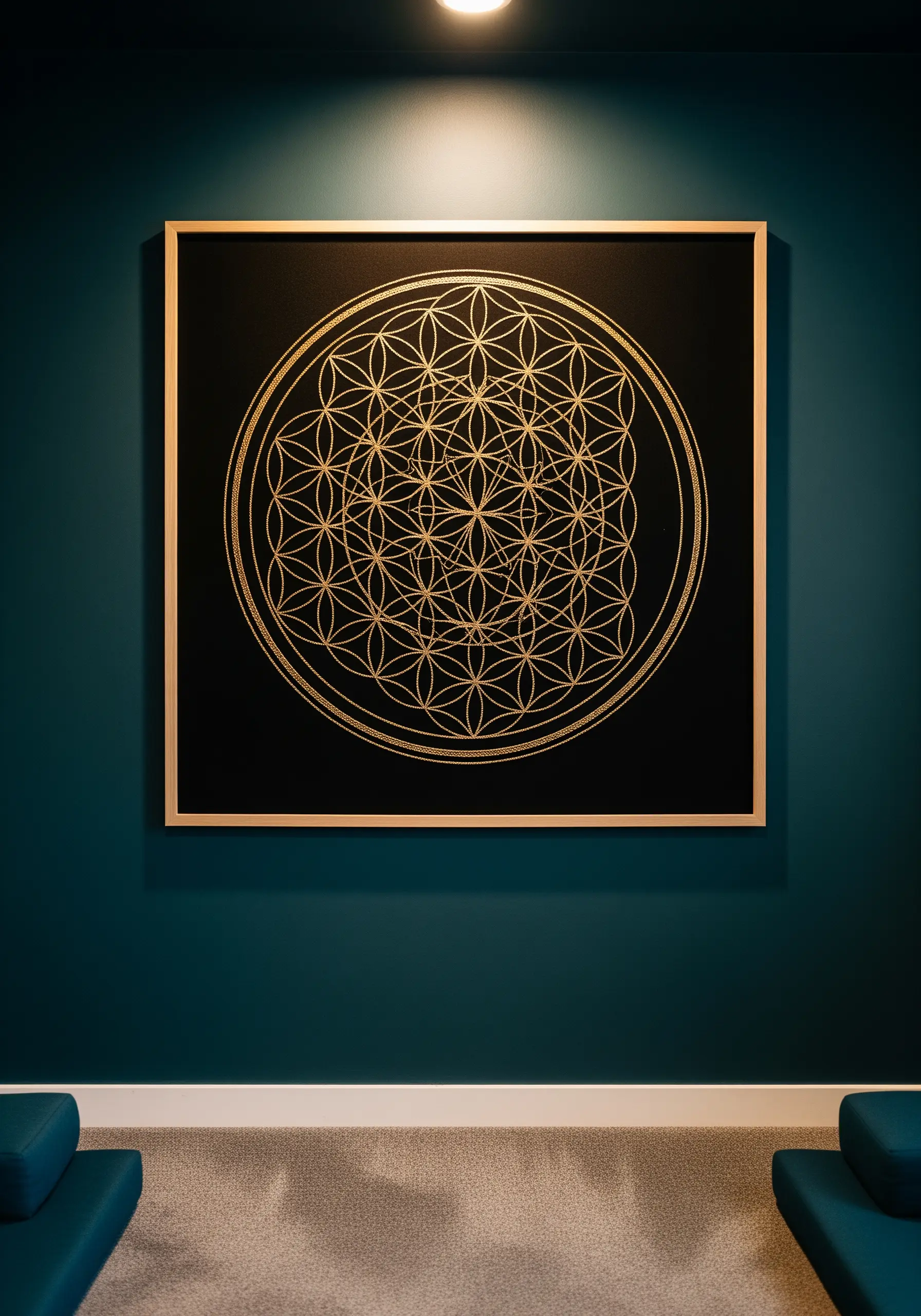
For sacred geometry patterns like the Flower of Life, precision is paramount.
Instead of traditional stitching, consider a string art approach. Mark your key intersection points on a firm, fabric-covered board and use small pins or nails as anchors.
Wrap a continuous gold thread around the anchors to form the pattern. This method ensures perfectly straight lines and crisp intersections, creating a flawless, radiant energy grid.
The technique highlights the mathematical beauty of the form in a way that hand stitching cannot.
17. Expressive Hands in Minimal Line Art
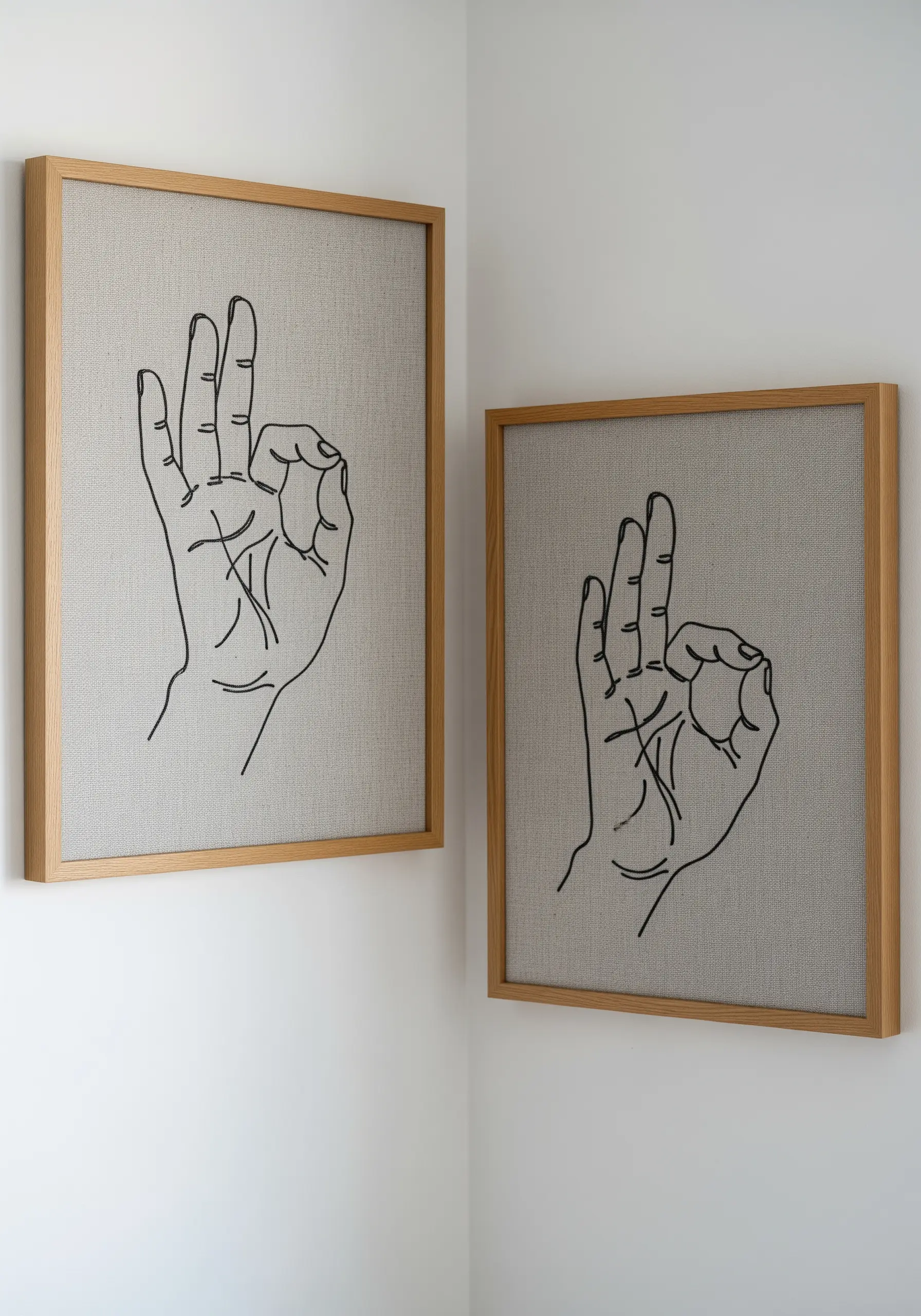
Capture the grace of a hand mudra with the simplicity of a single line.
Use a two-ply backstitch to create lines that are delicate yet defined. The key to making it look authentic is to embrace slight imperfections and line variations, just as you’d find in a quick sketch.
Stitch on a textured, neutral fabric like a cotton-linen blend; the natural weave adds a subtle organic quality that complements the hand-drawn feel of the design.
These modern line art hands become a quiet reminder of intention and peace.
18. Ethereal Stitching on Sheer Fabric
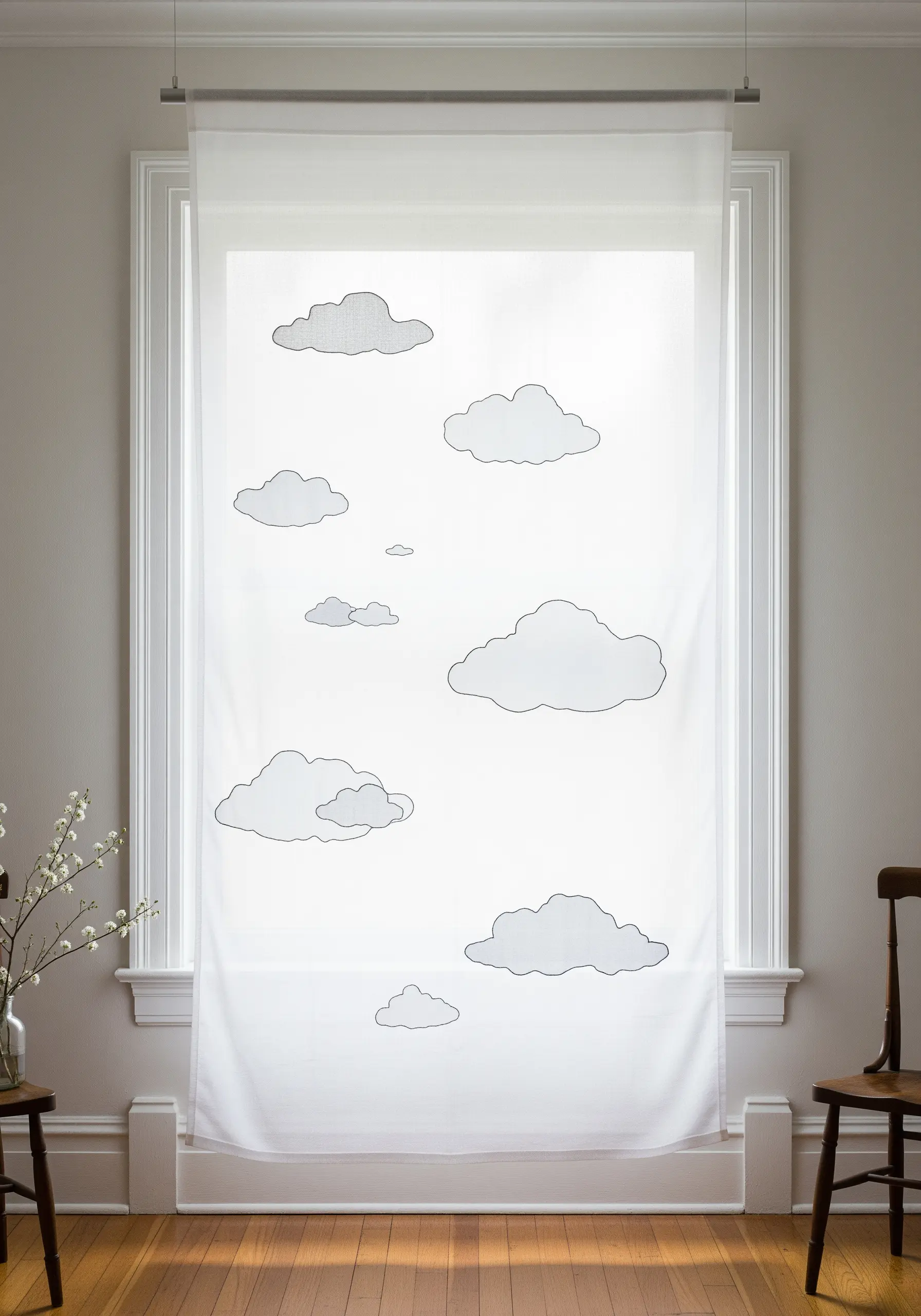
Embroidering on sheer fabric like organza or voile creates a magical, floating effect.
To prevent puckering, always use a water-soluble stabilizer. Hoop the stabilizer with your fabric, stitch your design, and then gently rinse it away, leaving only the stitches behind.
For the clouds, use a simple backstitch for the outlines and a very sparse seed stitch for the fill.
This light touch ensures the clouds appear airy and translucent, allowing light to filter through the delicate composition.
19. A Mandala of Textural Stitches
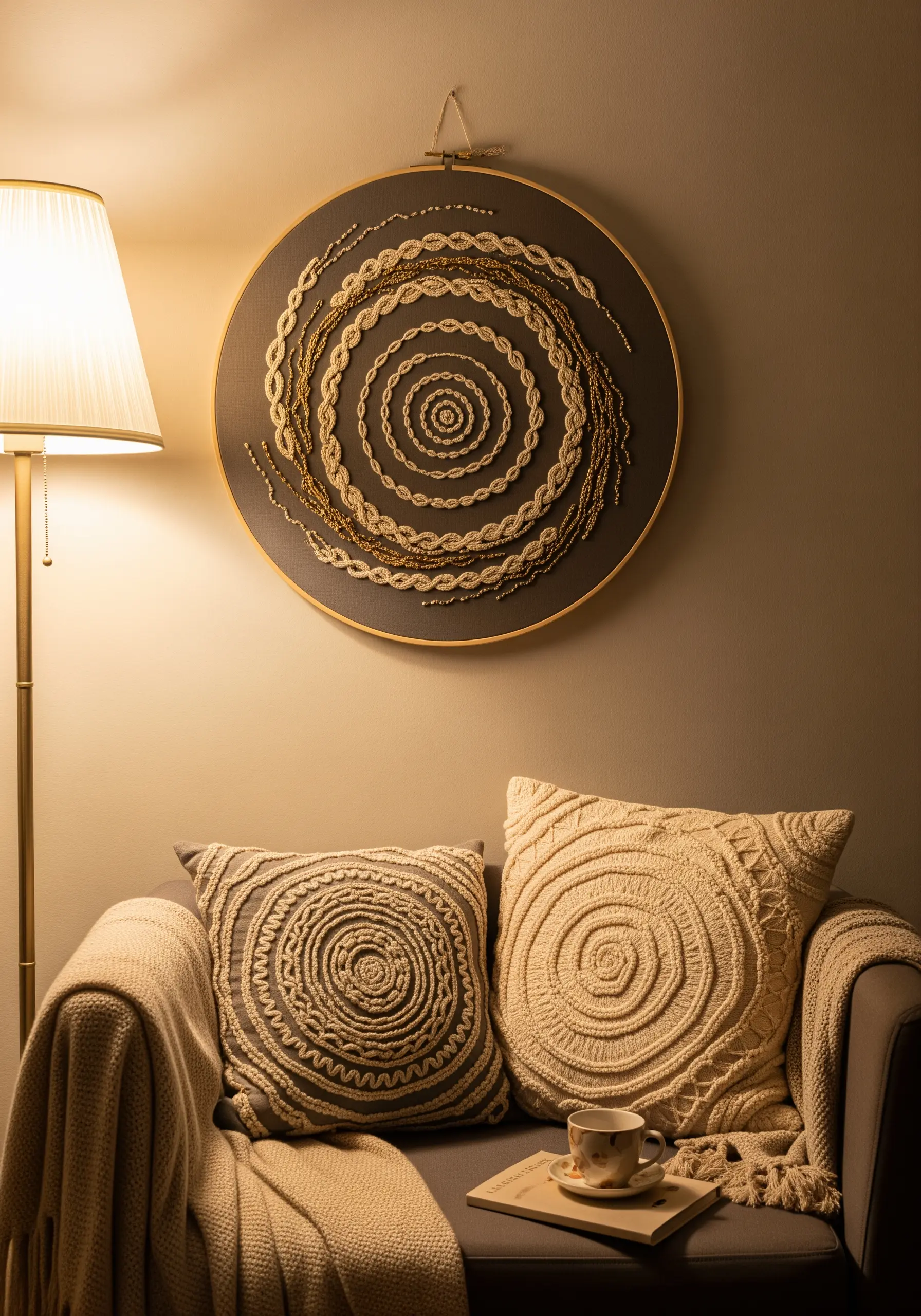
Build a captivating mandala not with color, but with a rich variety of stitches and materials.
Design your piece in concentric circles. Dedicate each ring to a different technique: a row of French knots, a band of chain stitch, a line of couched metallic cord, or a circle of tiny beads.
By keeping the color palette neutral—using creams, golds, and natural tones—the focus remains entirely on the interplay of textures.
This approach turns a simple hoop into a tactile map for meditation.
20. Replicating Ink Brushstrokes with Thread
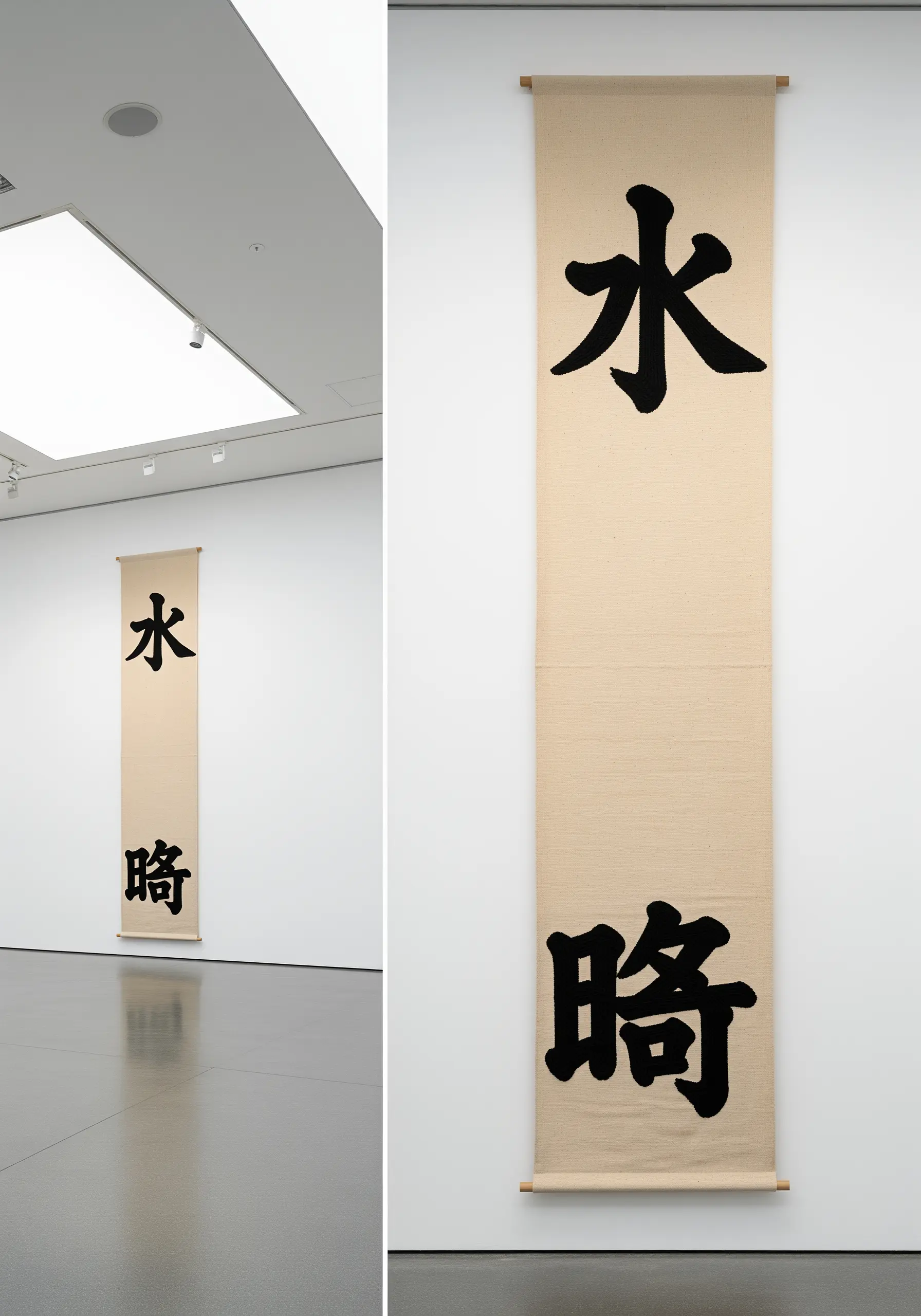
Capture the bold, fluid energy of Japanese calligraphy by using thread to mimic ink.
To create the characteristic thick-and-thin strokes, use a directional satin stitch. Sketch the character onto your fabric, then fill it with stitches, angling your needle to follow the flow of the brushstroke.
For wider sections, your stitches will be longer and more parallel; for tapered ends, they will converge.
Using a matte black thread on raw, unbleached canvas enhances the connection to traditional ink and paper, giving your work an authentic, powerful presence.
21. Curating a Botanical Gallery Wall
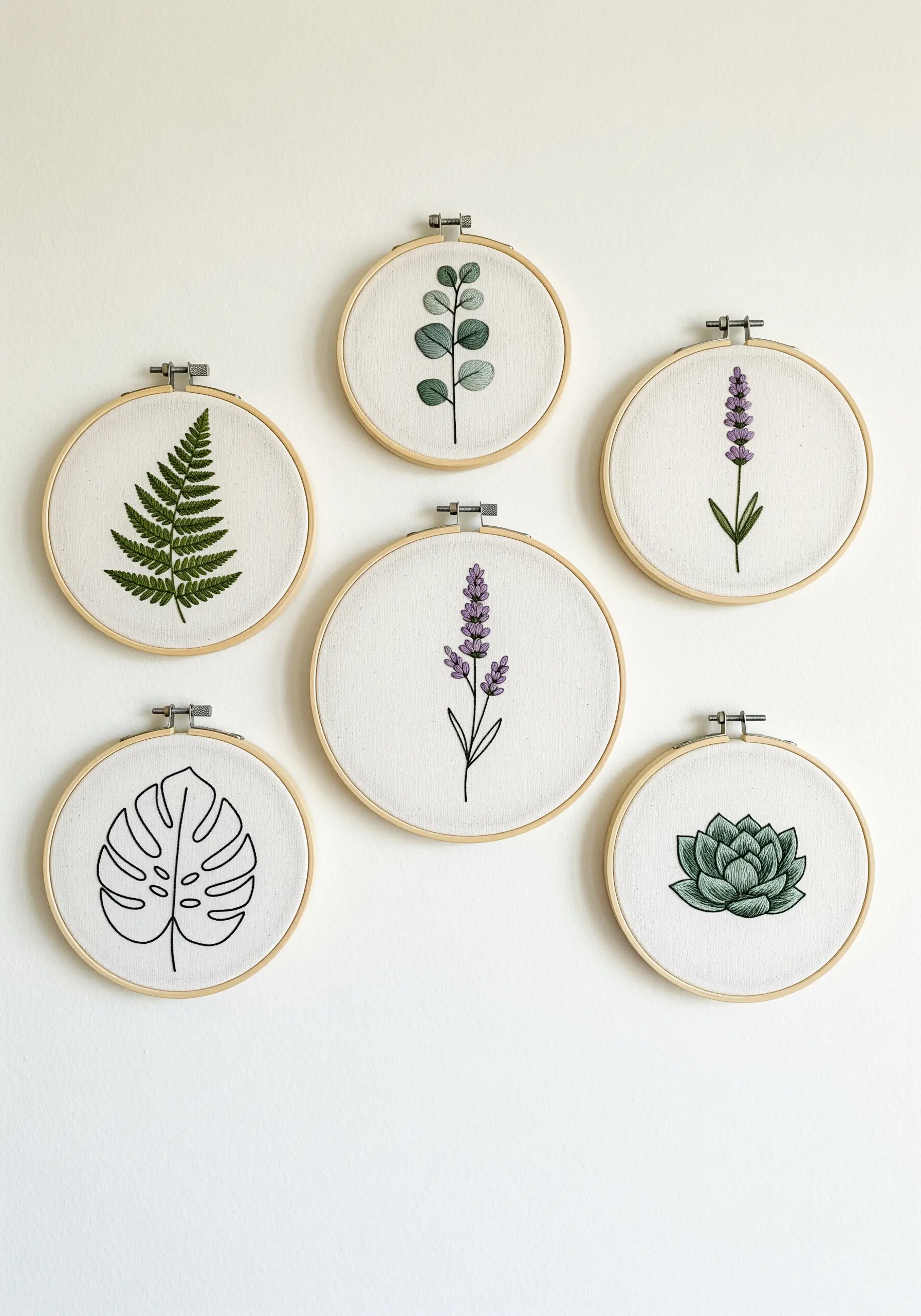
Create a sophisticated botanical display by unifying a collection of different plant motifs.
The key to a cohesive look is establishing clear rules: use the same size hoop, the same off-white linen fabric, and a consistent style for each plant.
For instance, render some with clean backstitch outlines (like the monstera) and others with a simple satin stitch fill (like the succulent).
This curated approach makes the collection feel intentional and artful, turning your wall into a serene, modern herbarium.
22. Achieving High-Relief with Padded Appliqué
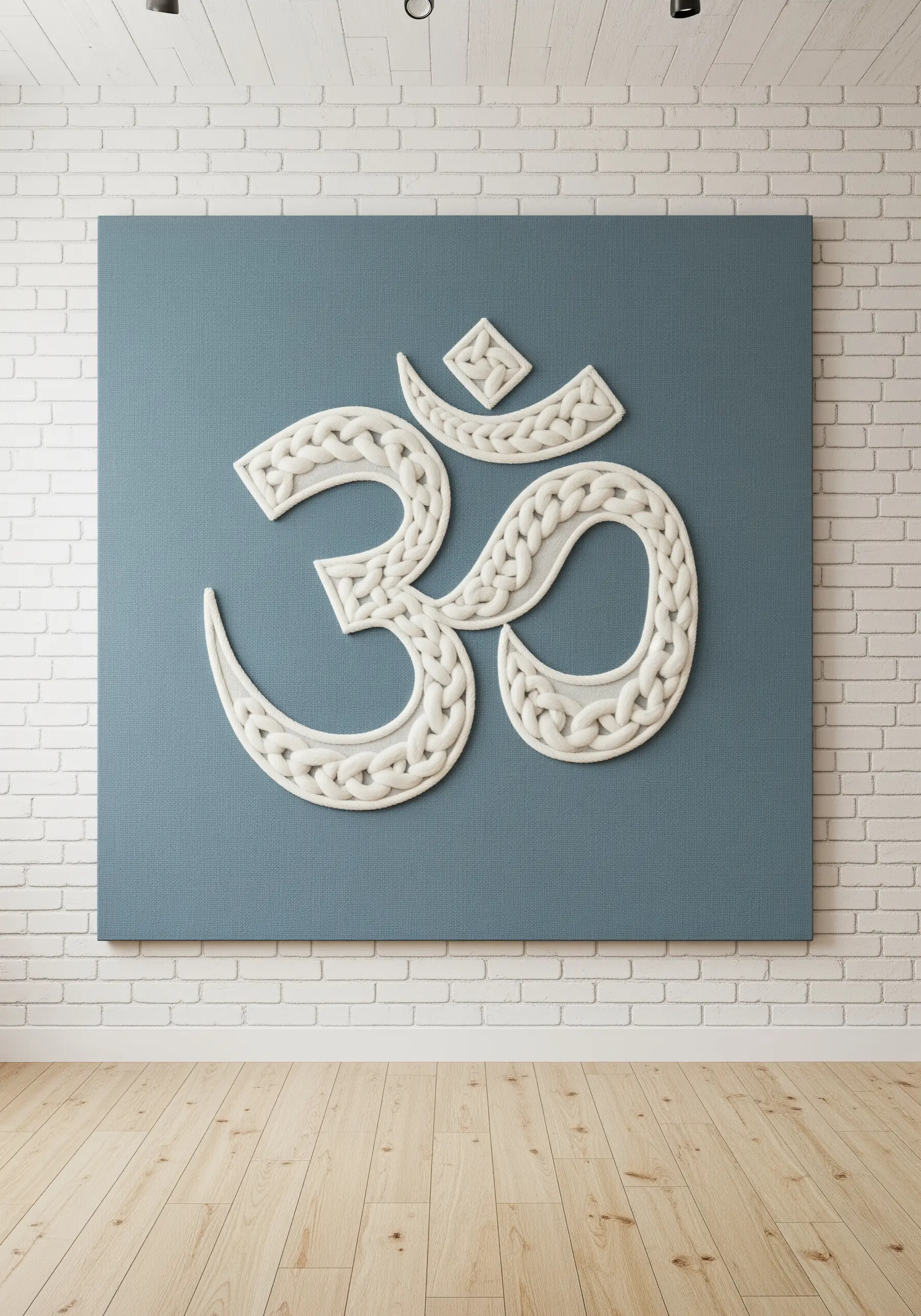
Give symbolic motifs like the Om symbol a powerful, sculptural presence that stands off the canvas.
This is achieved through trapunto or padded appliqué. First, create the symbol’s shape from a thick material like felt, quilt batting, or even chunky braided yarn.
Place this padded shape onto your canvas and then cover it with a top layer of fabric or tightly wrapped yarn, securing it from behind.
The result is a bold, 3D form that plays with light and shadow, giving the ancient symbol a contemporary, tactile dimension.
23. The Emotional Power of a Single Red Line
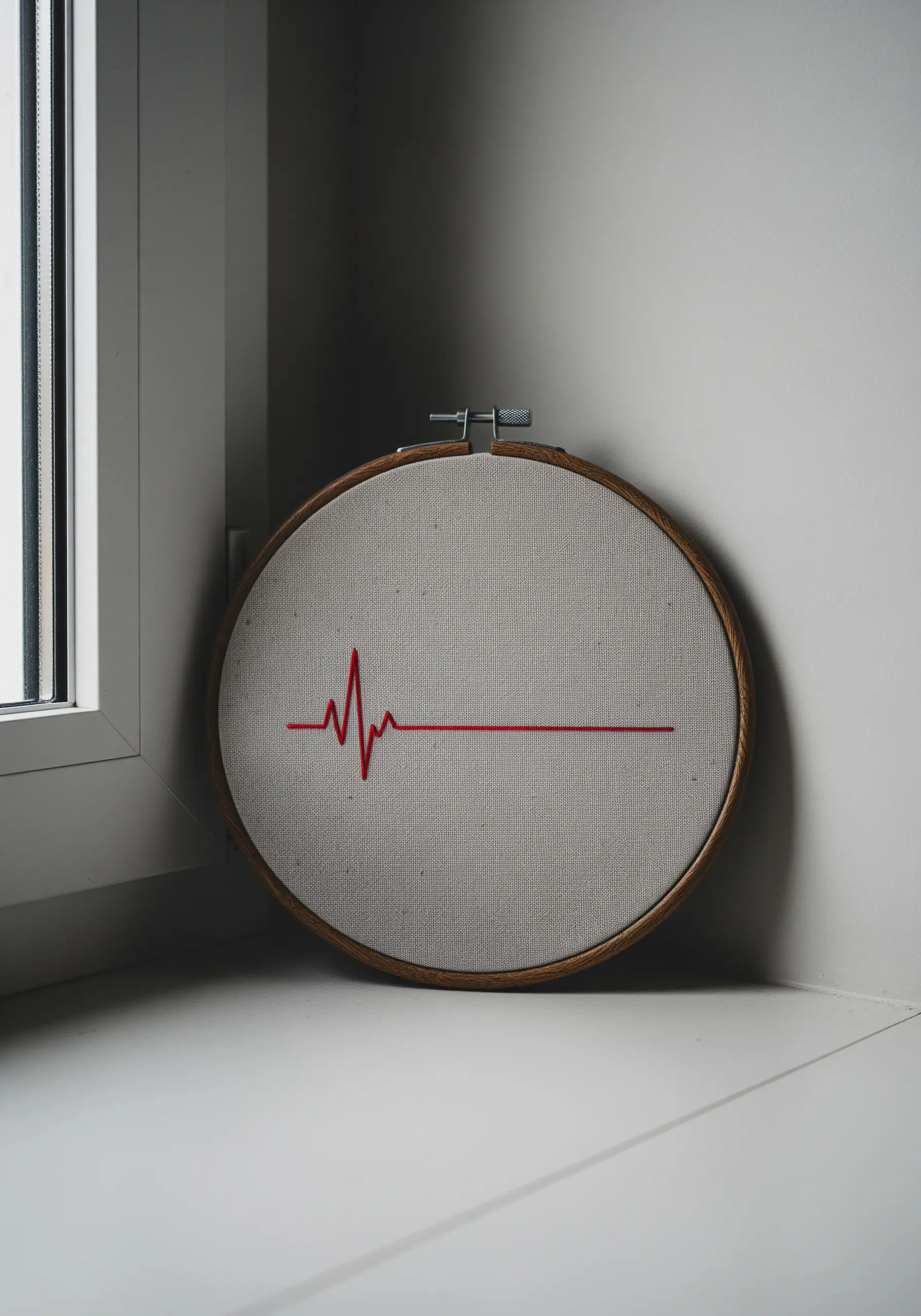
In minimalist embroidery, a single line can carry immense weight and meaning.
For a design like a heartbeat, the smoothness of the line is critical. Use a 3-strand split stitch, which creates a texture similar to a tiny chain, ensuring a continuous and solid appearance.
The stark contrast of a single vibrant red thread against a neutral, textured linen background focuses all the viewer’s attention on the line itself—its rhythm, its pause, and its continuation.
This is a powerful exercise in letting a simple stitch tell a profound story.
24. Hypnotic Circles and the Beauty of Raw Edges
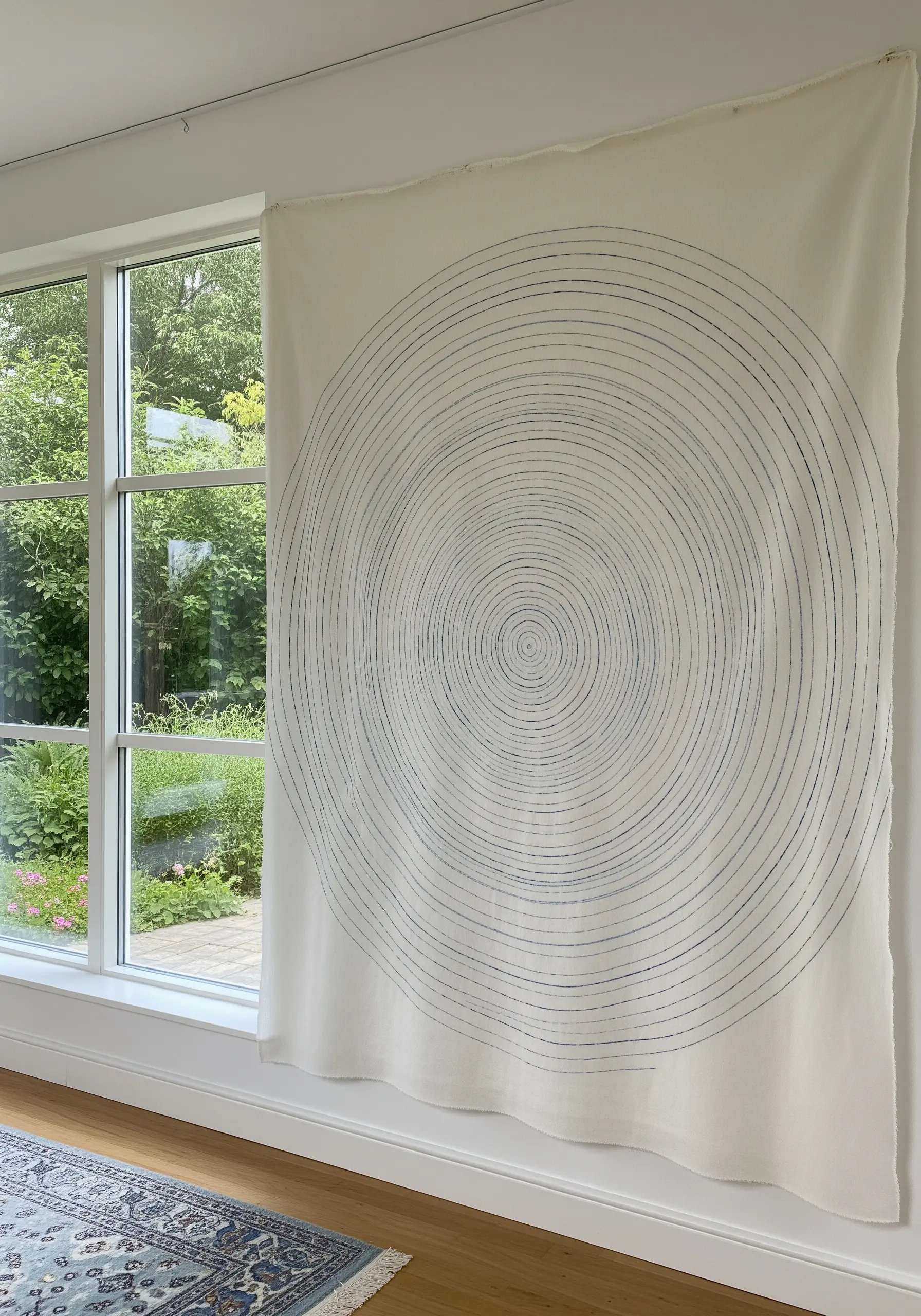
Embrace a more organic, less constricted form of display by stitching on a large piece of fabric with raw, unfinished edges.
The meditative effect of the concentric circles is created with a simple, consistent backstitch. Don’t worry about perfect circles; slight wobbles and variations add to the hand-drawn, authentic character.
Hanging the piece directly on the wall without a frame or hoop allows the fabric to drape naturally, softening the geometry and creating a calming, textile-centric installation.
25. Creating Serenity with a Stitched Gradient
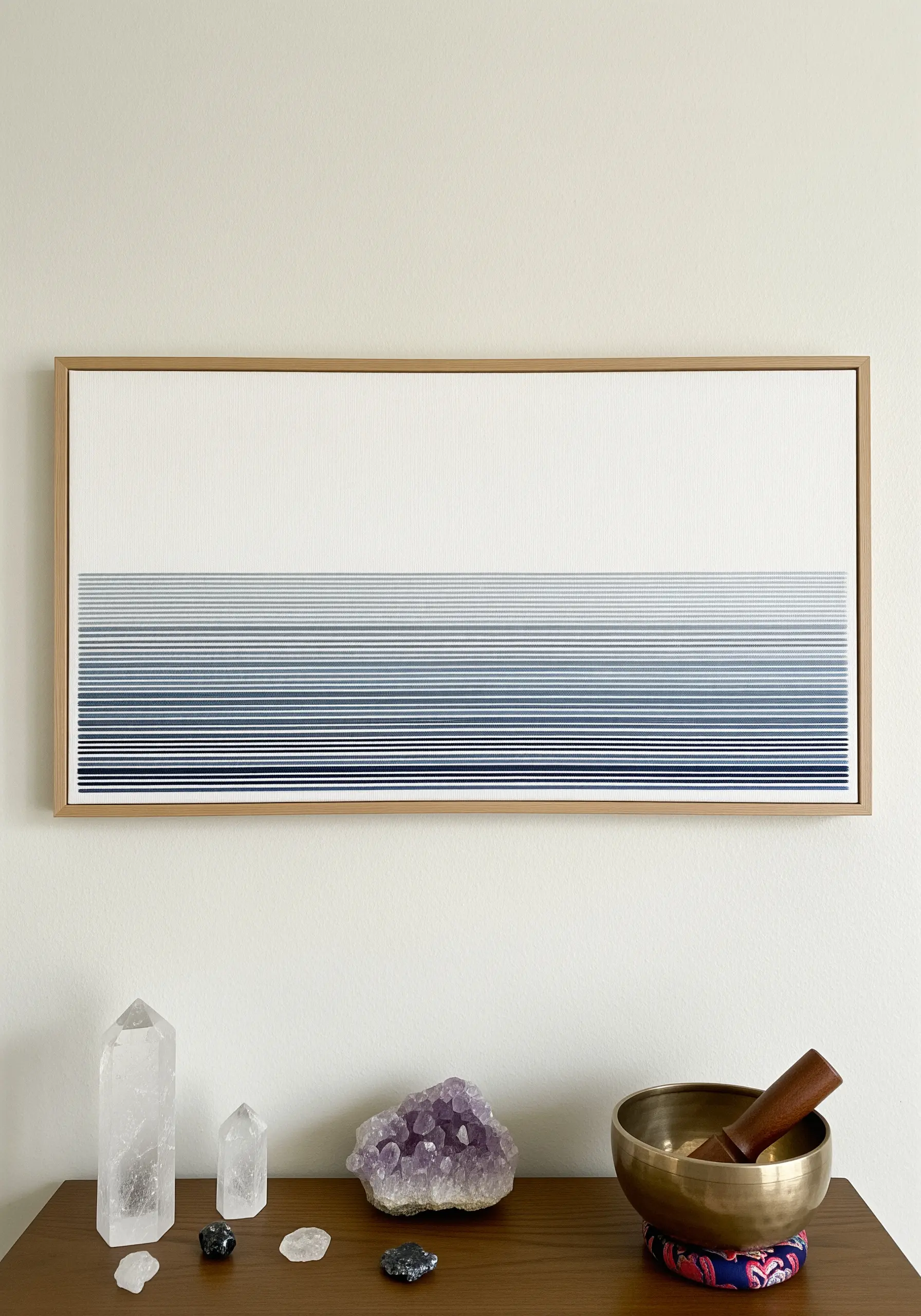
Evoke the calm of a distant horizon or a still body of water using a simple color gradient.
This effect is created by stitching straight, parallel rows of long stitch across the canvas.
Select a range of threads in the same color family, from dark to light. Stitch several rows of one color, then switch to the next shade, and so on.
The tight, uniform lines blend together, creating a smooth visual transition that is incredibly peaceful and pleasing to the eye, transforming simple stitches into an abstract landscape.
26. Geometric Harmony in an Unconventional Frame
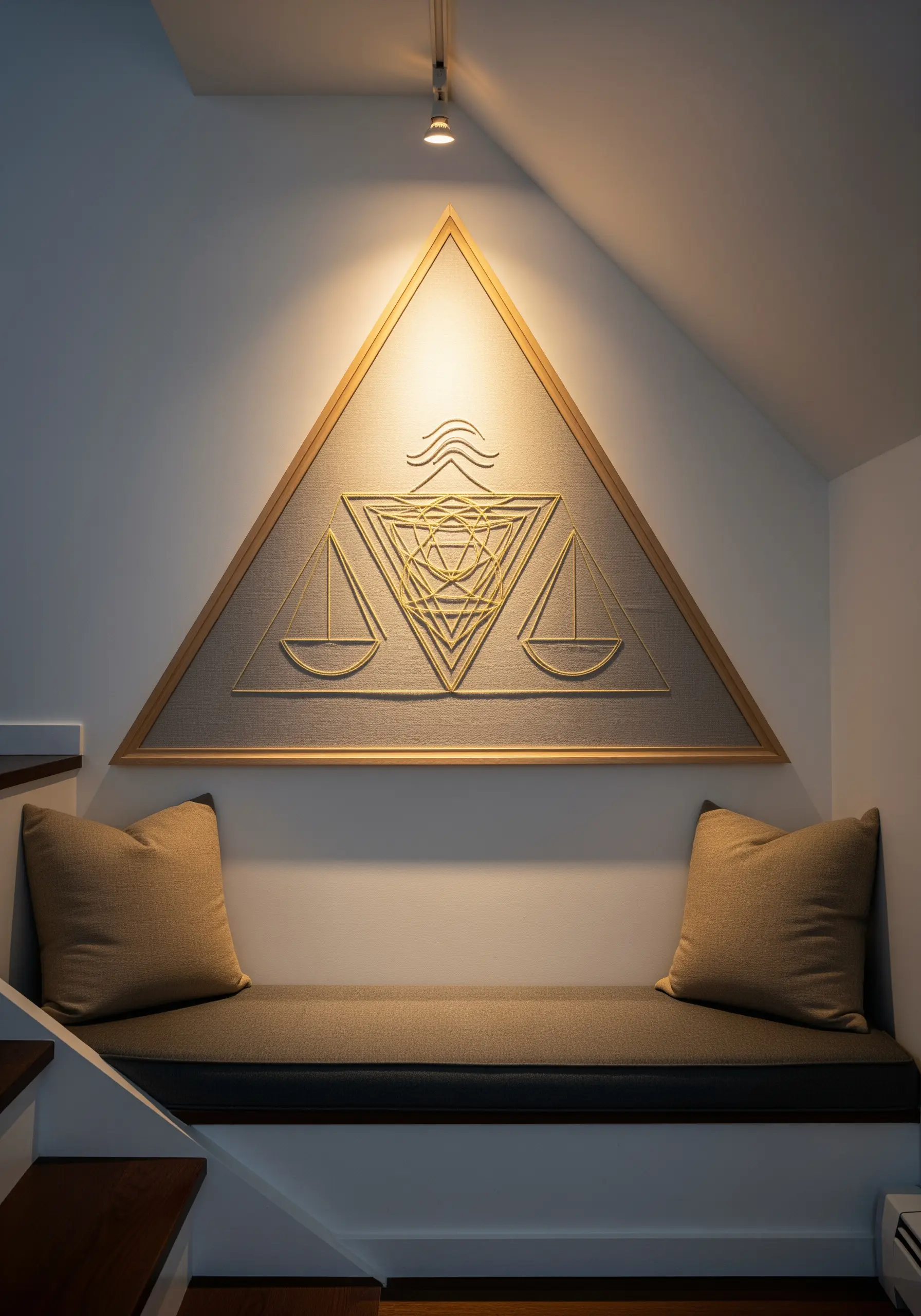
Working within a non-circular frame, like a triangle, adds an immediate layer of dynamic energy to your composition.
This design uses string art principles, where thread is wrapped around strategically placed anchor points (either small pins or stitched knots) to create geometric forms.
Using a single color of thread against a neutral background keeps the focus on the interplay of lines and the tension they create.
The triangular frame contains the energy of the intersecting lines, making it a powerful symbol of balance and stability.
27. Balanced Duality: Sun and Moon as a Pair
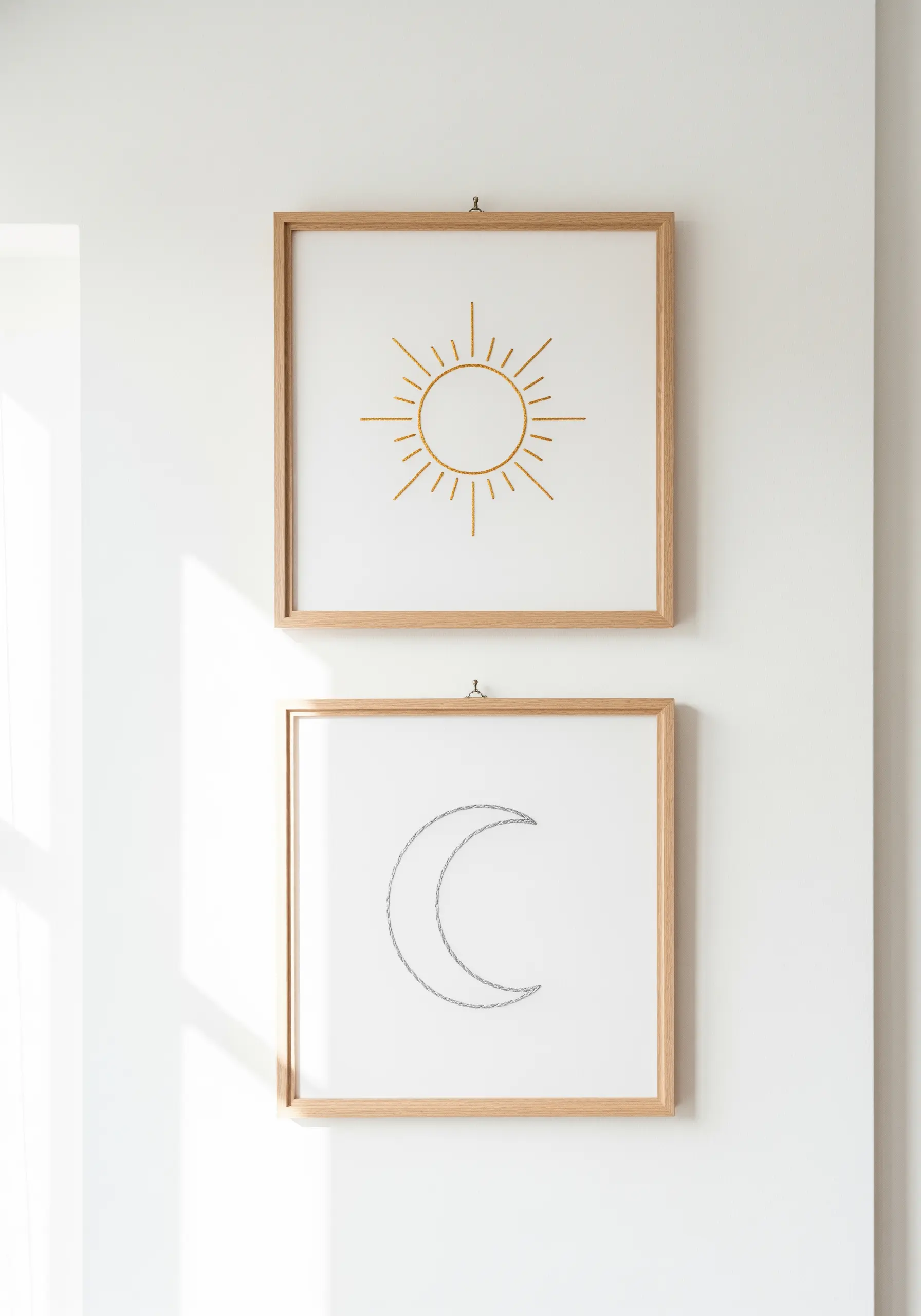
When creating a diptych, the key is to establish a visual dialogue between the two pieces.
Use identical frames, fabric, and scale to create a clear connection. Then, introduce a simple duality: one gold thread for the sun, one silver for the moon.
Stitch both with a clean, 3-strand chain stitch to give the lines a subtle, rope-like texture and a sense of substance.
This simple, balanced pairing creates a serene narrative of day and night, light and shadow.
28. Integrating Natural Elements into Your Work
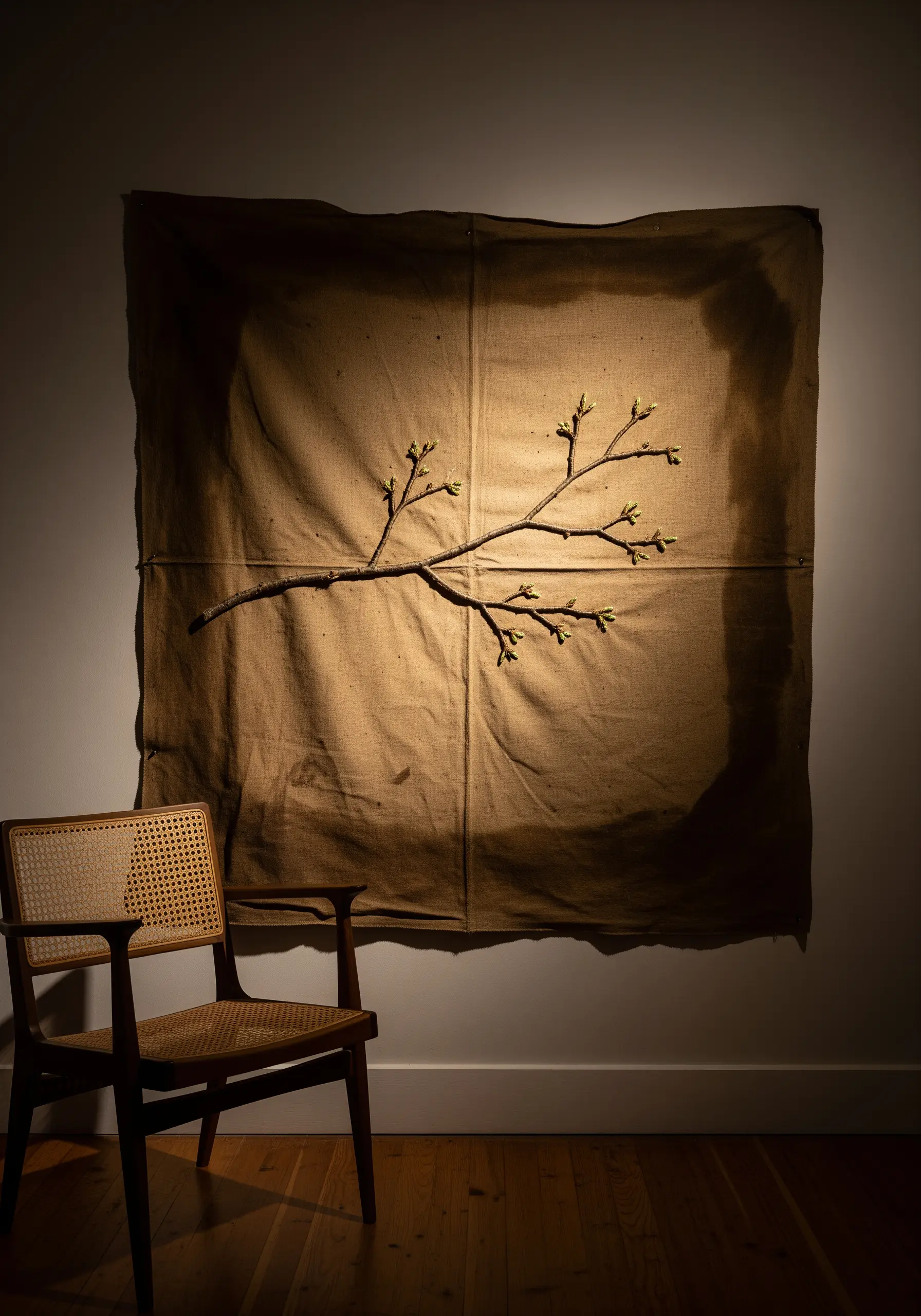
Create a truly organic piece by blending your stitch work with found natural objects.
Here, a real branch is carefully secured to a raw canvas backdrop. The embroidery is then added directly to the tips of the branch, creating tiny, budding leaves with single detached chain stitches (lazy daisies).
This handmade organic piece blurs the line between the natural and the man-made, resulting in a wabi-sabi artwork that celebrates the beauty of new growth and imperfection.
29. Layered Lines for a Watercolor Effect
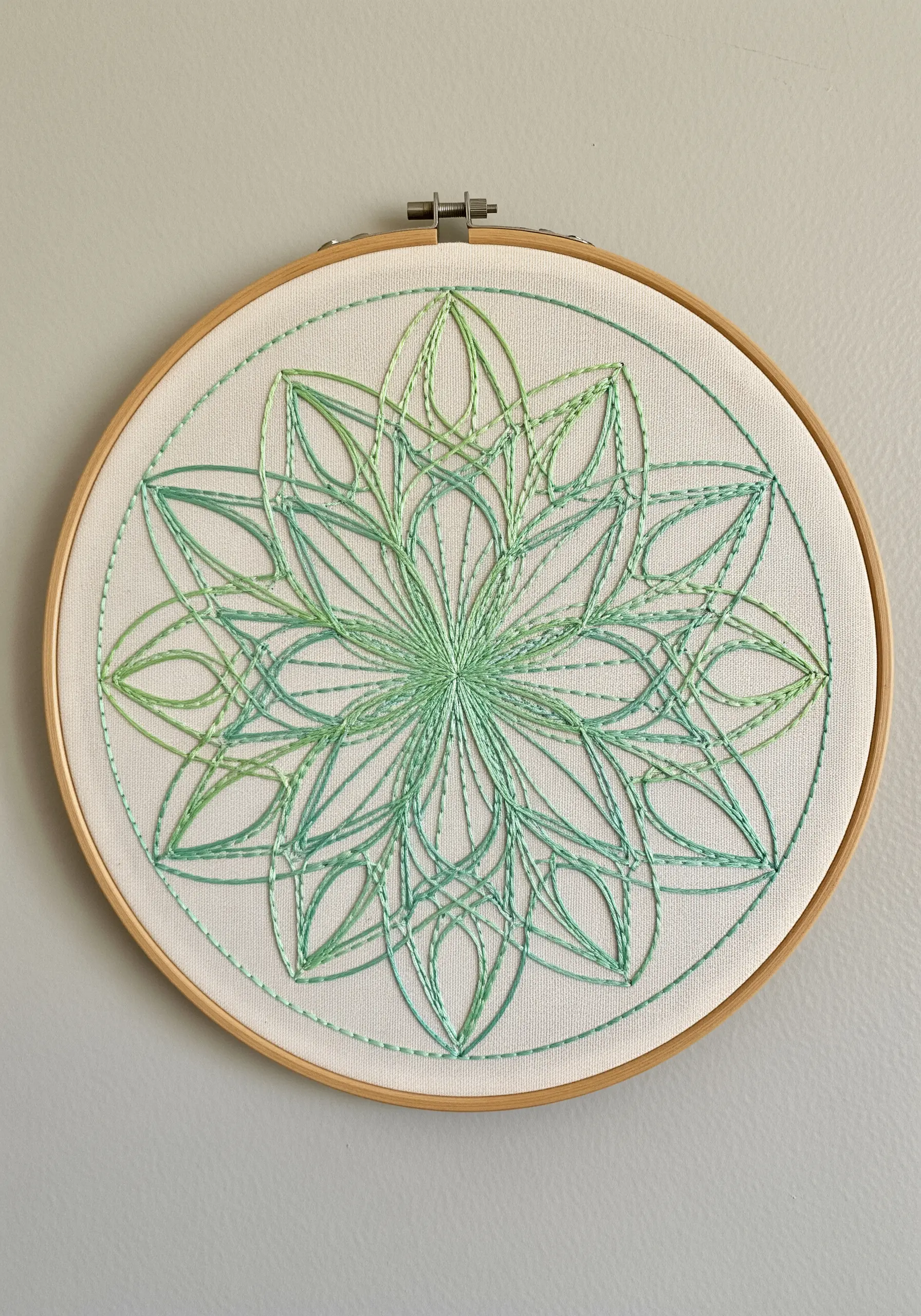
Achieve a soft, blended look reminiscent of watercolor painting by layering simple straight stitches.
Instead of filling shapes, use an open, layered approach. Use two or three shades of green floss, and stitch the radiating lines of the mandala, allowing the different colors to overlap and intersect freely.
This creates a sense of transparency and light that you can’t get with dense, opaque stitches.
The result is a design that feels airy, delicate, and full of gentle energy.
30. The Elegance of a Botanical Triptych
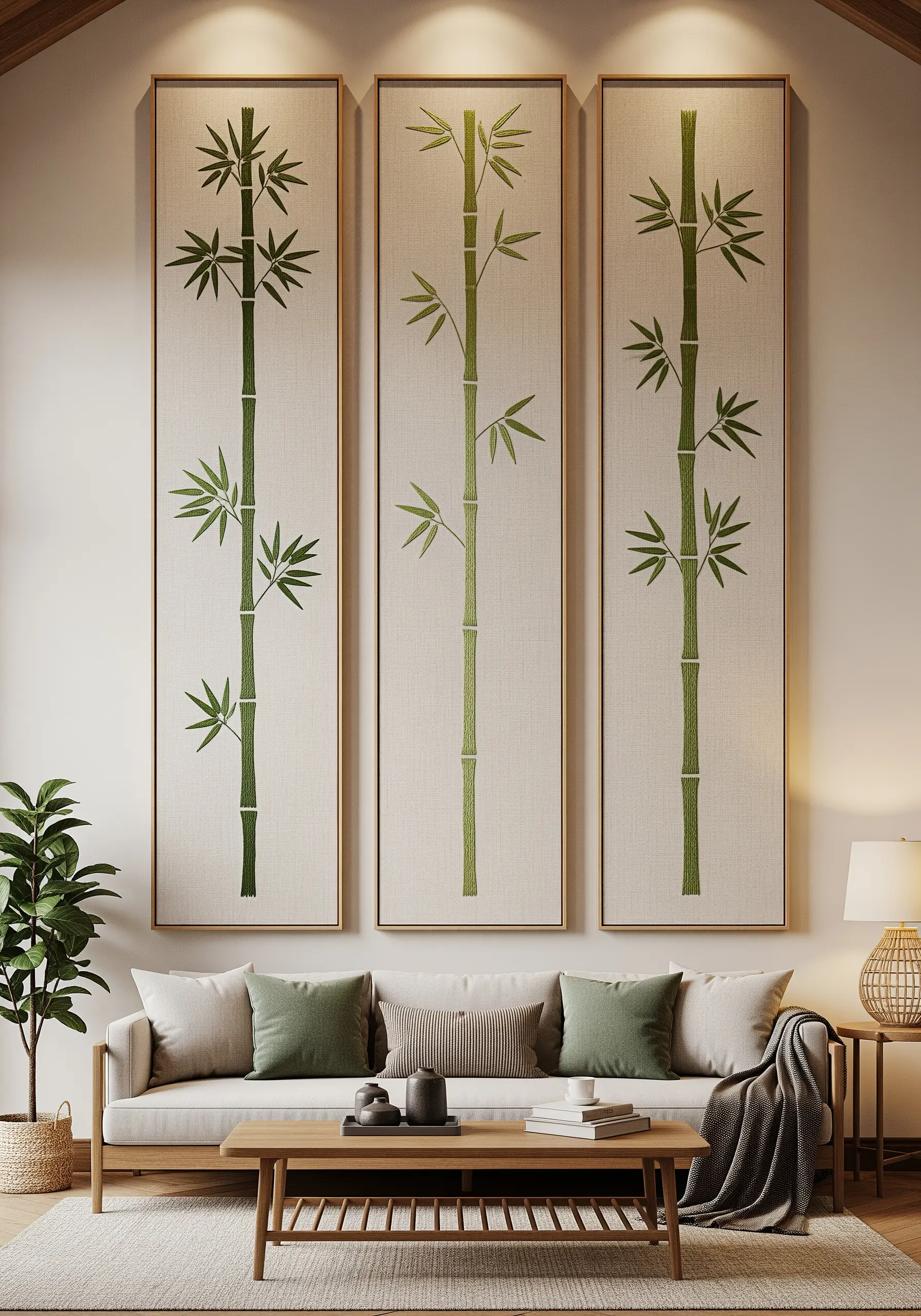
Create a sophisticated, expansive piece of art by dividing a single subject across multiple panels.
For these bamboo stalks, ensure continuity by lightly drawing the entire design across the three fabric panels before you begin stitching.
Use a vertical satin stitch for the main stalks to give them a smooth, strong appearance, and a delicate fishbone stitch for the leaves to create a central vein and realistic texture.
This multi-panel approach adds a modern, graphic quality to a classic botanical subject.
31. The Bold Simplicity of a Sculptural Spiral
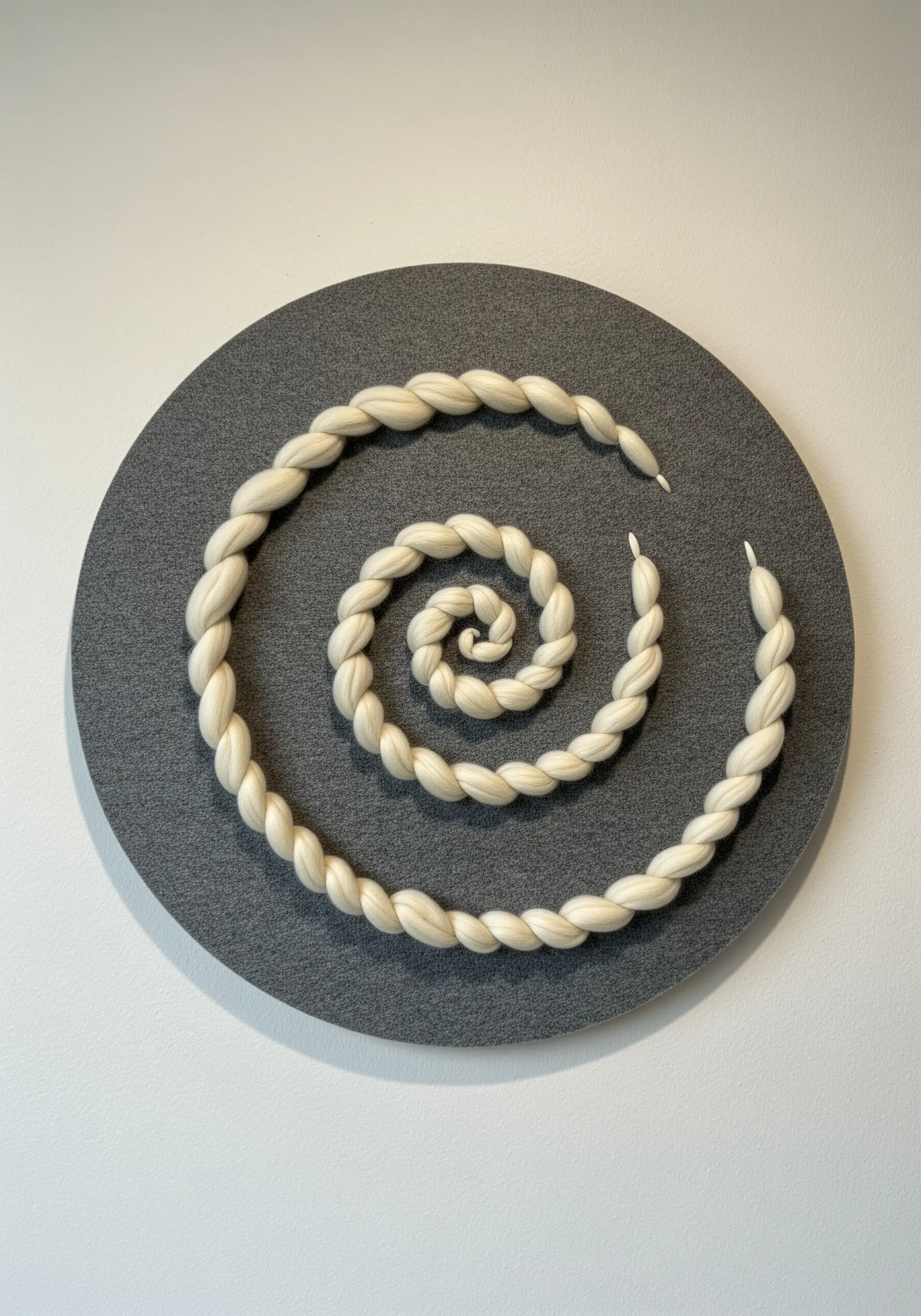
Make a powerful minimalist statement by focusing on a single, highly textural form.
This spiral is created not with embroidery thread, but with thick, soft wool roving that has been twisted or braided for definition.
Couch this sculptural cord onto a contrasting felt or wool base, carefully hiding your tacking stitches underneath the spiral to maintain a clean look.
This abstract thread sculpt design celebrates the material itself, turning a simple shape into a compelling, tactile object.
32. Stitching with Light: Glow-in-the-Dark Constellations
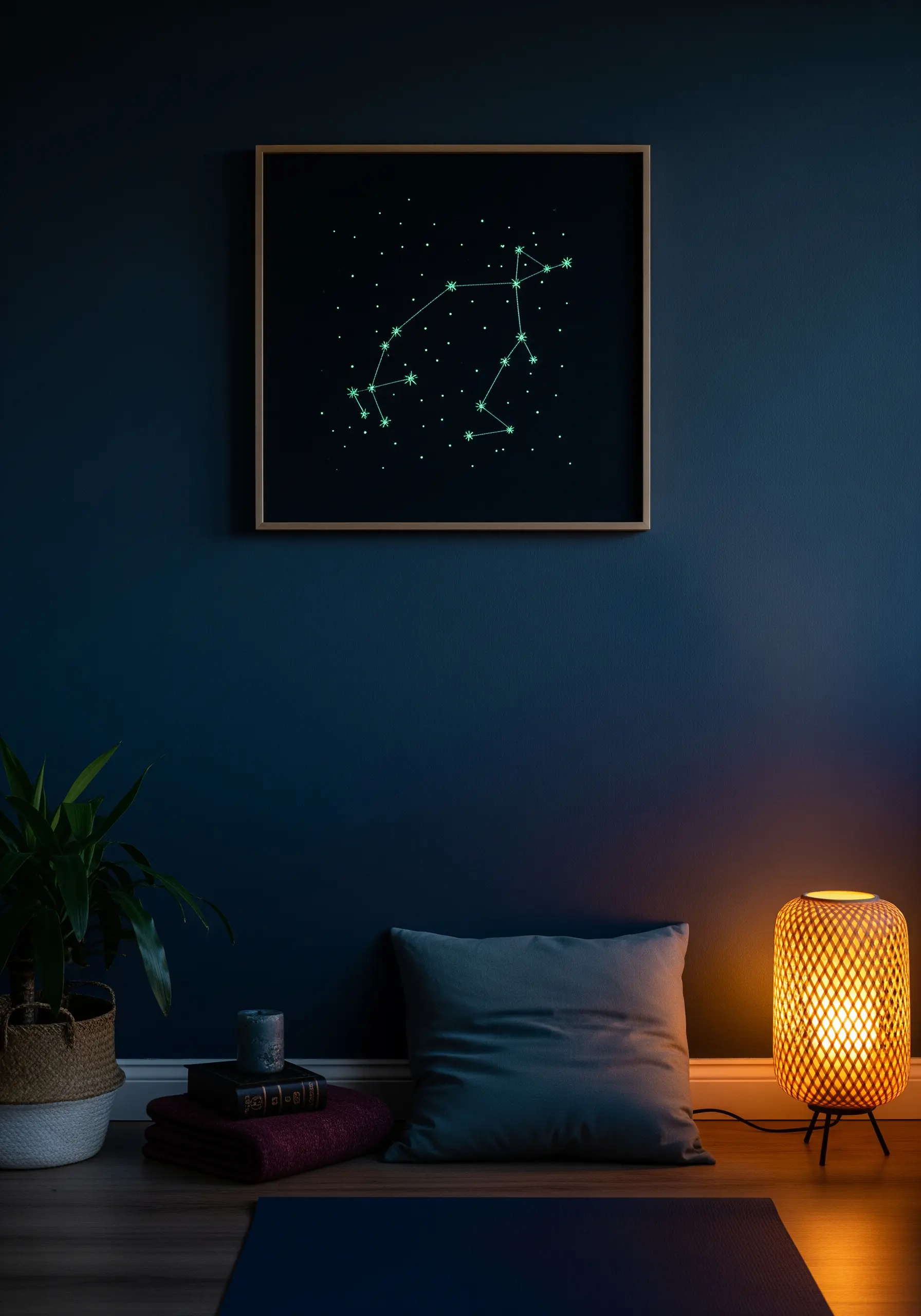
Add a layer of hidden magic to your work by using specialty glow-in-the-dark thread.
During the day, it appears as a simple white or off-white stitch against a dark background. To get the best glow, use it for French knots to represent stars and a simple backstitch for the connecting lines.
Expose the finished piece to a bright light source to ‘charge’ the thread.
In a darkened room, your constellation will emerge with a soft, ethereal light, creating a secret piece of art just for your quiet moments.
33. Representing the Elements with Stitch and Texture
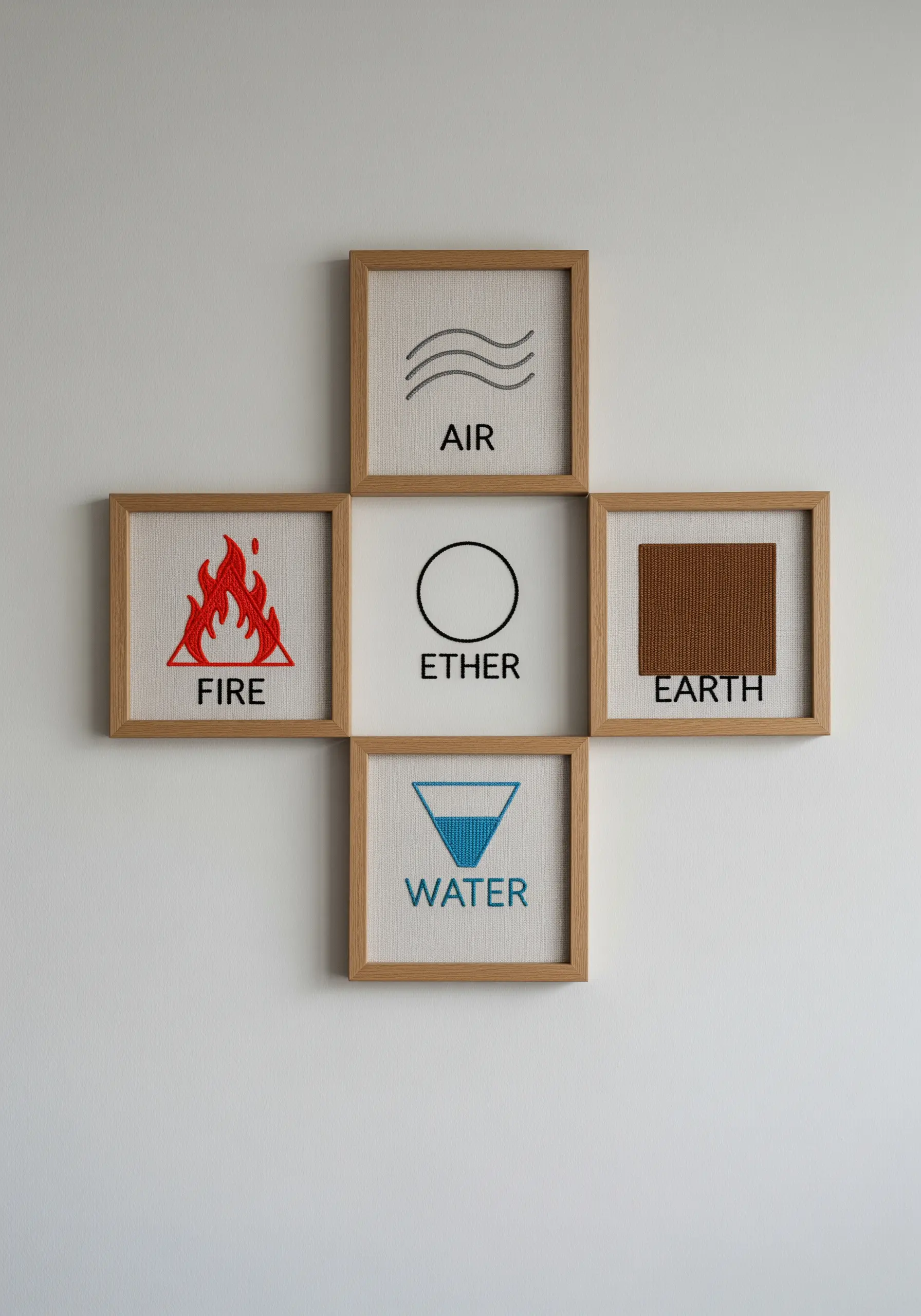
Go beyond simple outlines and assign a specific stitch to each of the four elements to convey its unique energy.
Use long, wavy backstitches for the flowing lines of Air. For Fire, layer short, sharp straight stitches in red and orange. For Water, use a smooth, blue satin stitch. And for Earth, create a dense, grounded field of brown seed stitches.
This conceptual approach to stitch selection elevates a simple symbolic chart into a multi-textured meditation on the natural world.
34. The Stillness of an Unbroken Horizon
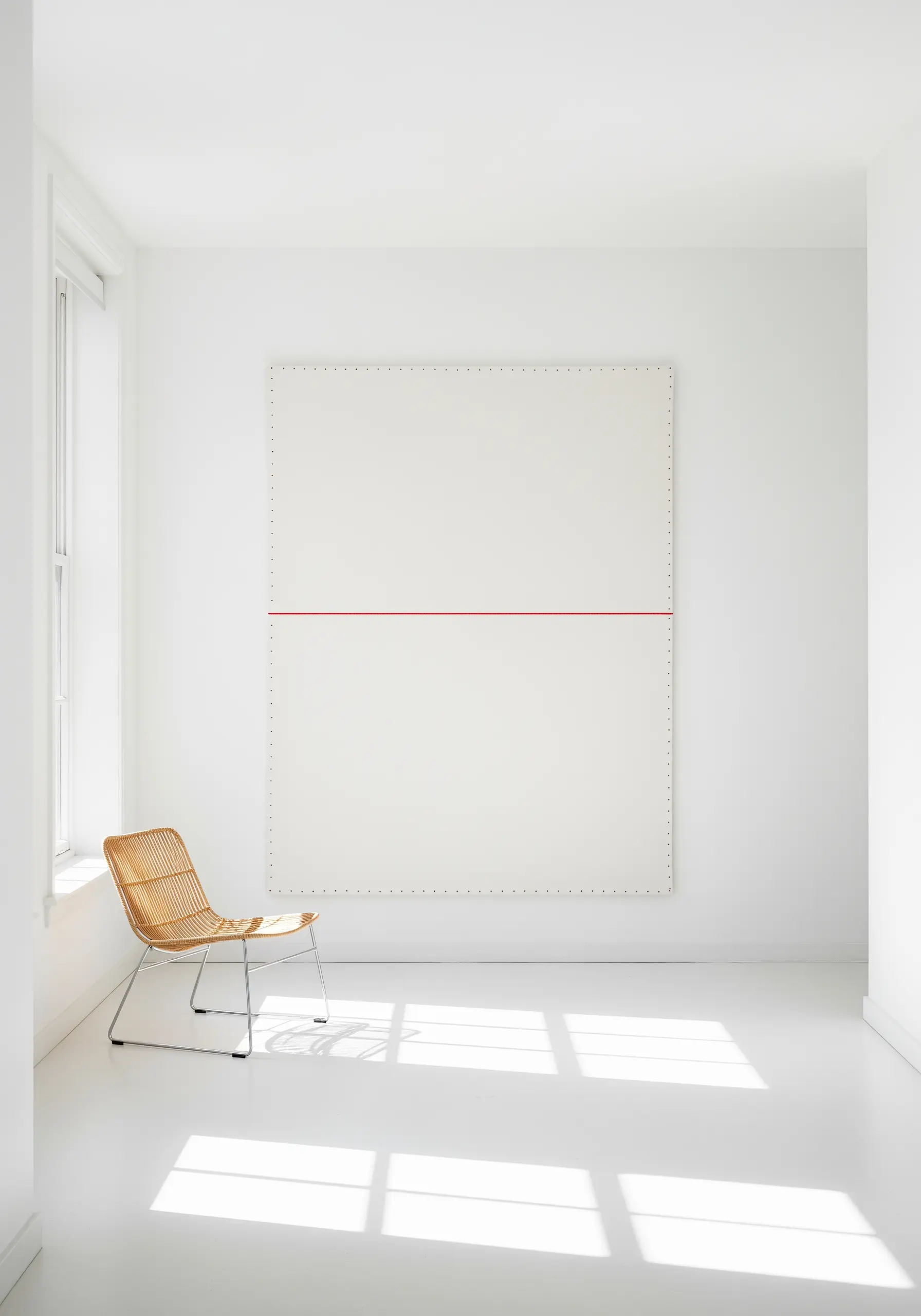
In a truly minimal space, a single line can define the entire room’s atmosphere.
To create a perfectly straight, taut line on a large scale, use a couching technique with a thicker cord or yarn. Snap a chalk line on your stretched canvas for a perfect guide.
Lay your cord along the line and use a matching fine thread to stitch it down from behind, or with tiny, invisible tacking stitches from the front.
The surrounding negative space becomes the subject, and the single red line provides a point of focus, stability, and quiet contemplation.
35. Hand-Stitched Lettering as a Gentle Reminder
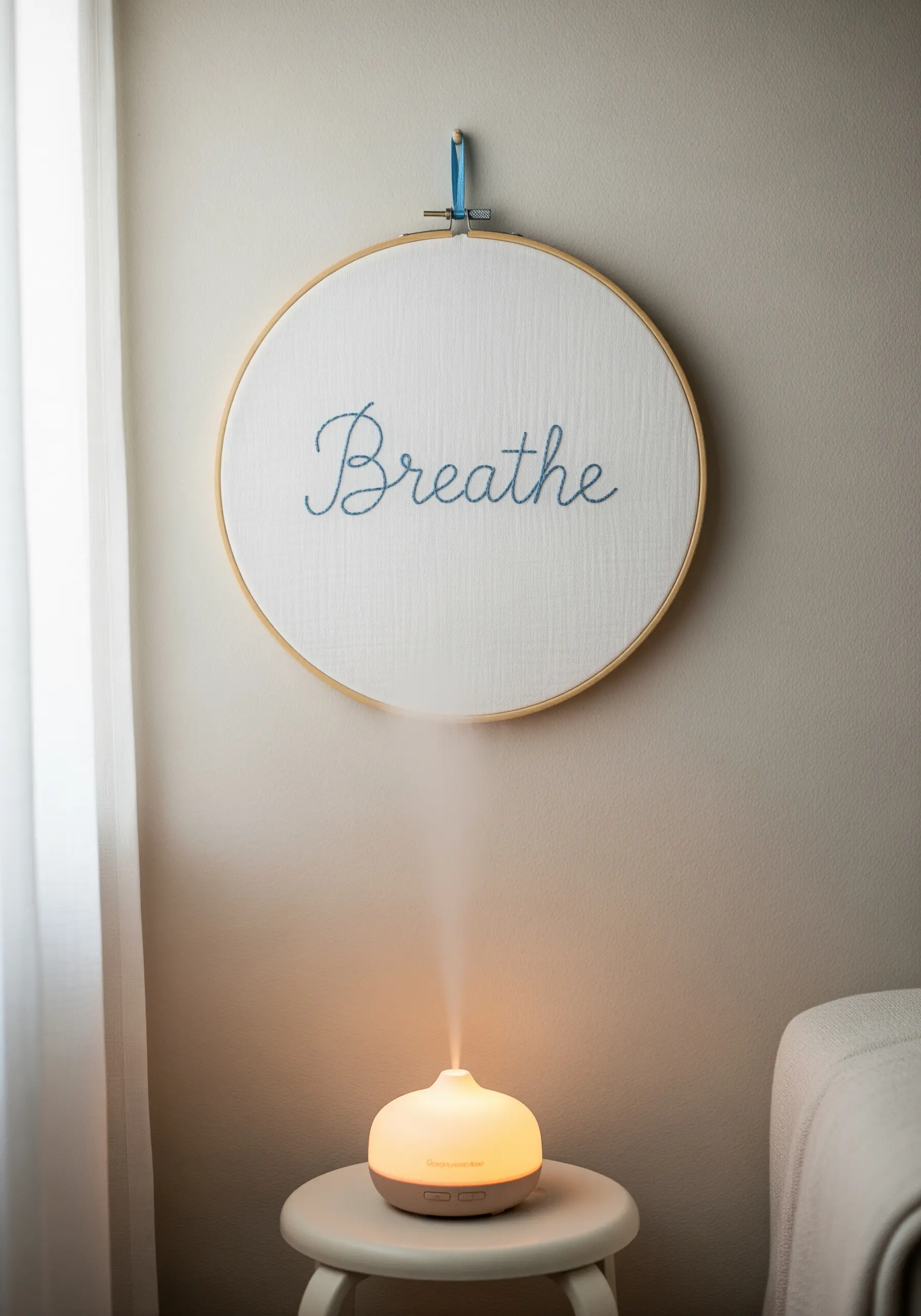
Embroider a single, meaningful word to serve as a daily intention.
To achieve elegant, flowing cursive, trace your chosen word from a font you love. Use a 3- or 4-strand whipped backstitch to create a smooth, rounded line without the jagged edges of a basic backstitch.
Choose a soft, calming color that complements your space, like this gentle blue on a crisp white linen.
These cute small hoop quotes transform your embroidery into a quiet, personal mantra.


