

Your bedroom should be more than just a place to sleep; it should be a sanctuary that reflects the care and creativity you pour into your craft. But how do you move your embroidery from a hoop on the wall to an integrated part of your decor?
The answer lies in thinking beyond the frame. It’s about seeing every textile surface—from a plain pillowcase to a lampshade, or even a closet door—as a potential canvas for your stitches. It’s about choosing the right technique for the right material to create accents that feel intentional, personal, and deeply luxurious.
Here, you’ll find ideas that shift your perspective. We’ll explore how to add subtle texture to a quilt, how to stitch on velvet without puckering, and how to use thread to sculpt with light. These aren’t just projects; they are ways to infuse your most personal space with the quiet, thoughtful beauty of your own hands.
1. Create Architectural Depth with Wall-Mounted Thread Art
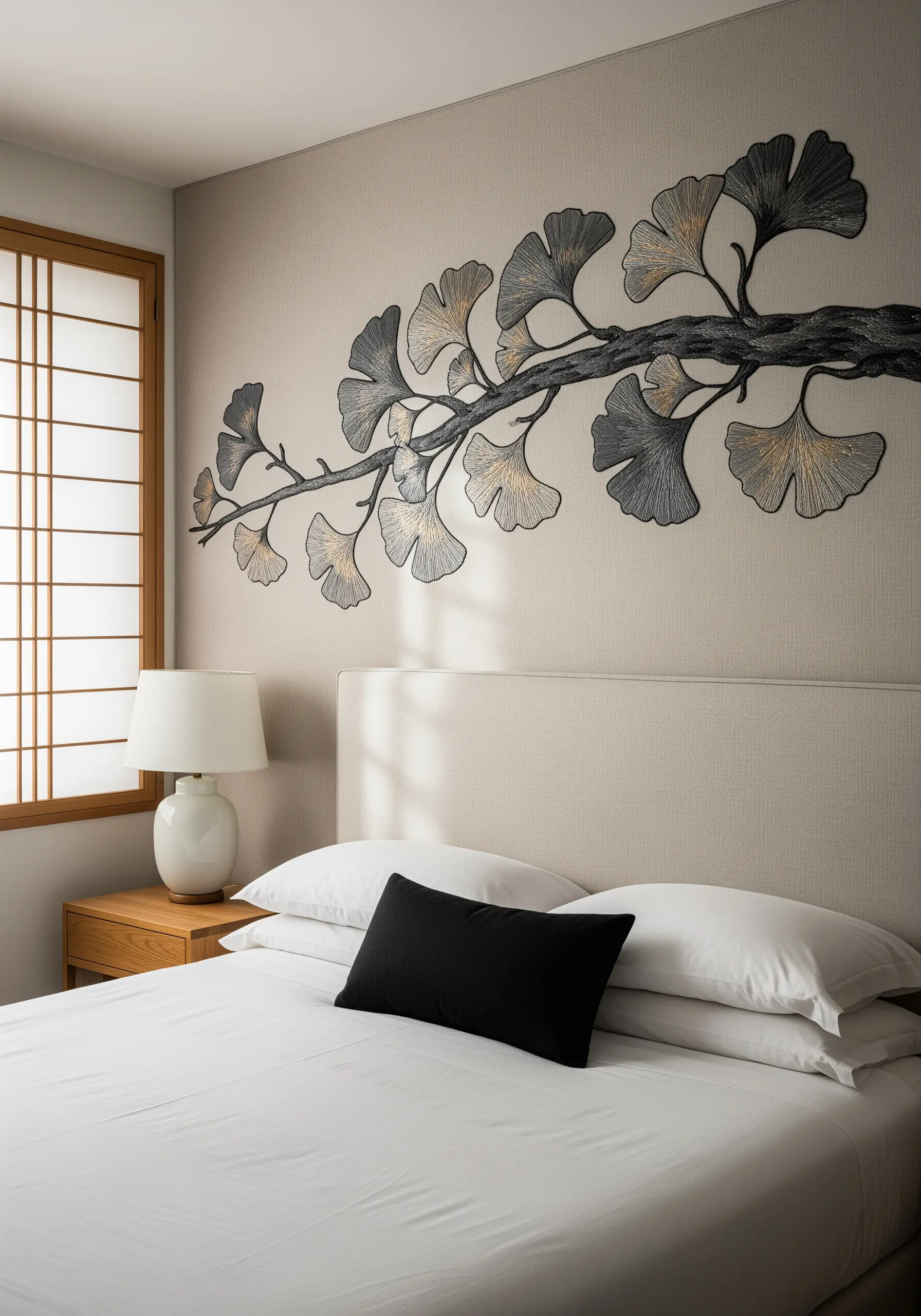
Transform a blank wall into a focal point by mounting an embroidered panel or stitching directly onto a fabric-covered surface.
To achieve this sculptural effect, use couching with thick, metallic cords or black yarn to outline your botanical design.
For the leaves, fill the space with long straight stitches radiating from a central vein, creating a fan-like texture that catches the light.
This technique elevates simple line art into a high-impact installation that interacts with the room’s architecture.
2. Master Moody Botanicals on a Grand Scale
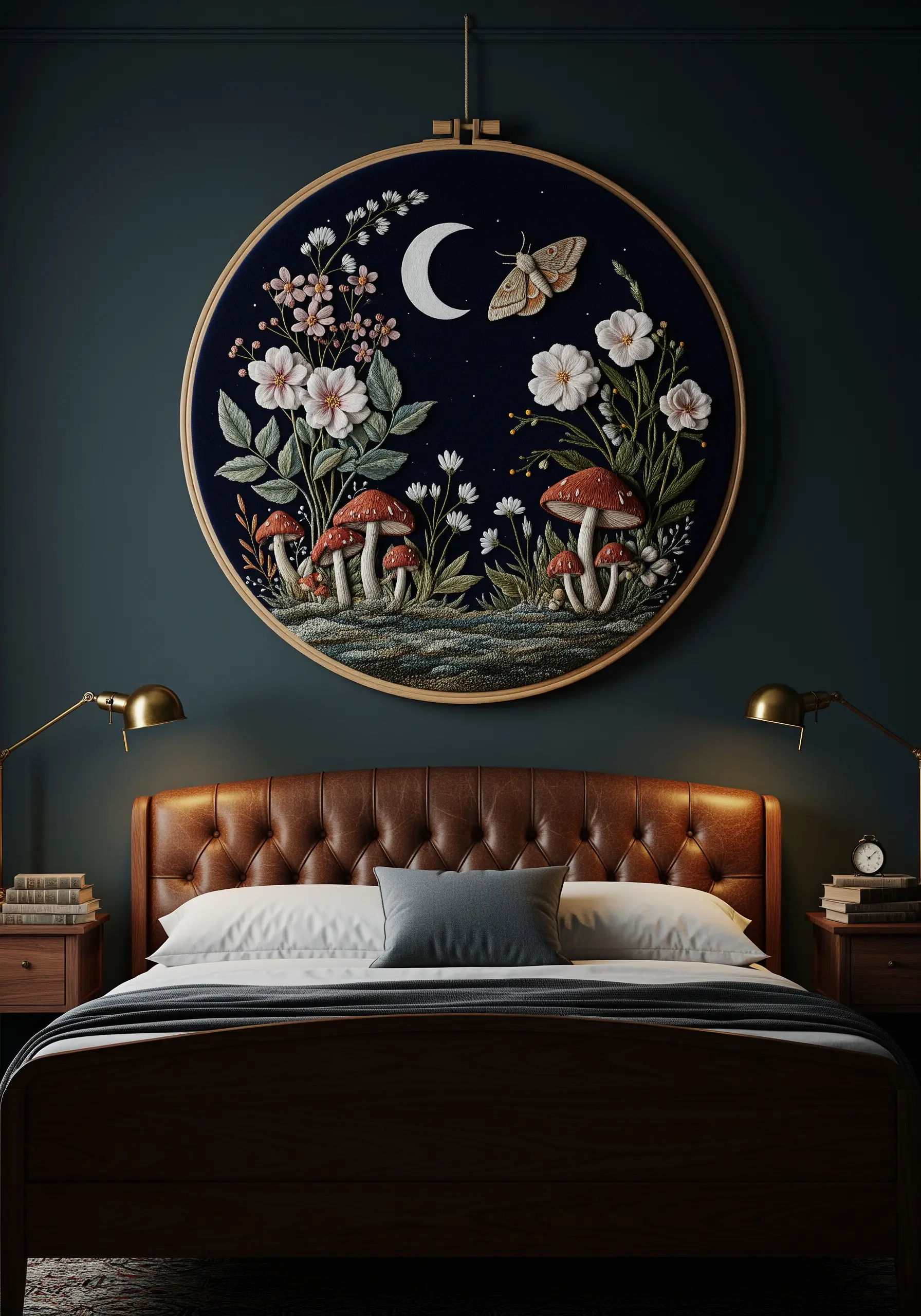
An oversized hoop transforms a simple stitch project into a commanding piece of art, perfect for hanging above a bed.
Choose a dark, tightly woven fabric like navy linen or cotton twill to make your colors appear more saturated and vibrant.
Use a single strand of white floss for delicate details like the moth’s wings, and switch to a full six strands for the mushroom caps to create a satisfying, dimensional texture.
This play on scale and contrast gives traditional motifs a contemporary, gallery-worthy presence.
3. Embroider Velvet with Celestial Luster
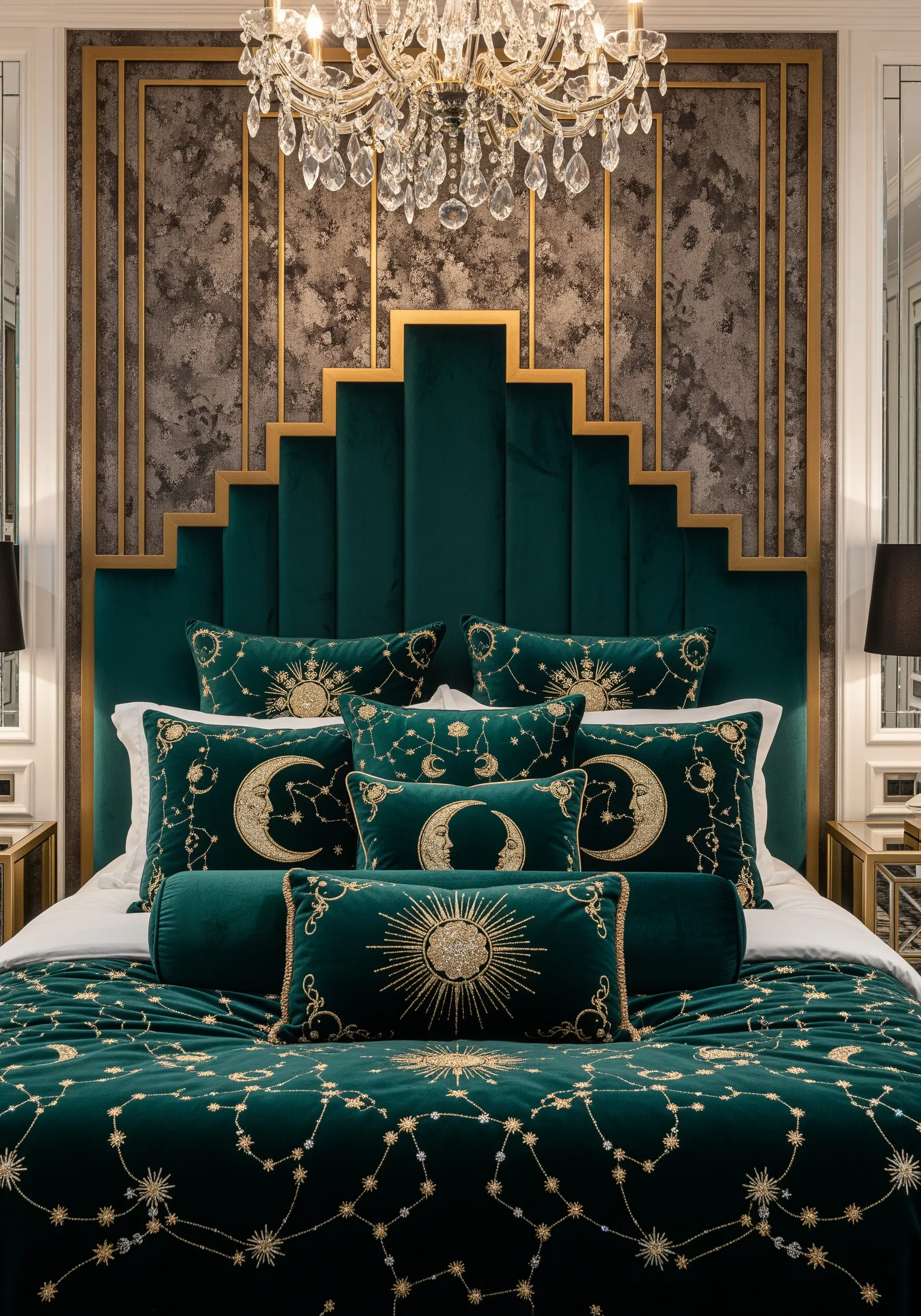
Stitching on a plush fabric like velvet requires a specific approach to avoid crushing the pile and causing puckering.
Always use a heavy-duty cut-away stabilizer on the back to support the fabric’s weight and the density of the stitches.
Select a fine metallic thread and a sharp, thin needle to glide through the fabric without snagging.
Work with slightly reduced thread tension on your machine, or keep your hand stitches loose, to let the embroidery sit on top of the velvet rather than sinking into it.
4. Stitch Delicate Wildflower Vines on Sheer Curtains
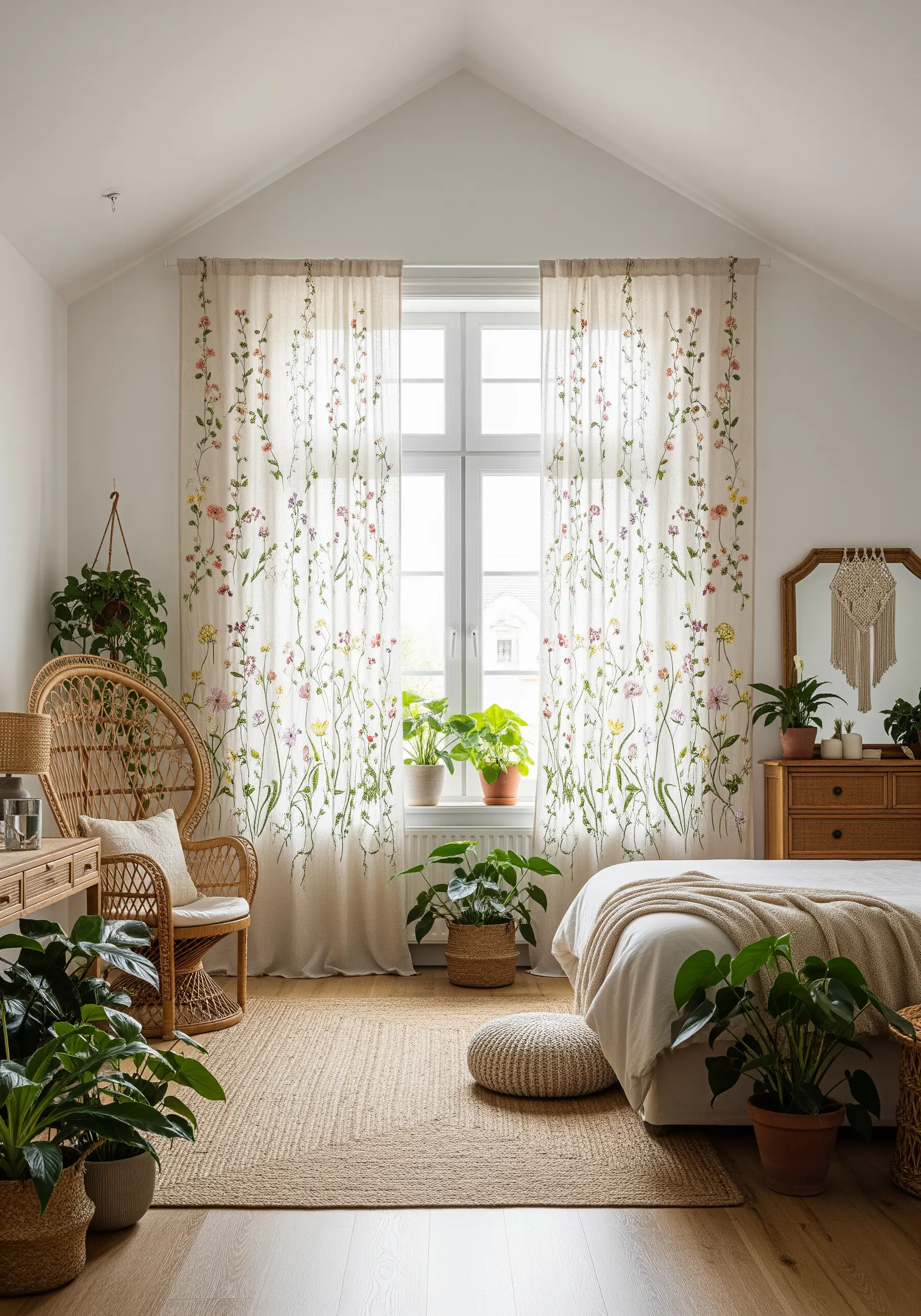
To embroider on lightweight voile or organza without causing pulls, choose your materials wisely.
Use a water-soluble or lightweight tear-away stabilizer that can be removed completely, leaving the fabric’s transparency intact.
Opt for a single strand of cotton floss and a fine needle (size 9 or 10) to keep the stitches from weighing down the delicate weave.
A simple stem stitch for the vines and lazy daisy stitches for the petals are all you need to create an ethereal, light-as-air design that dances in the sunlight.
5. Add Graphic Punch to Knits with Yarn Couching
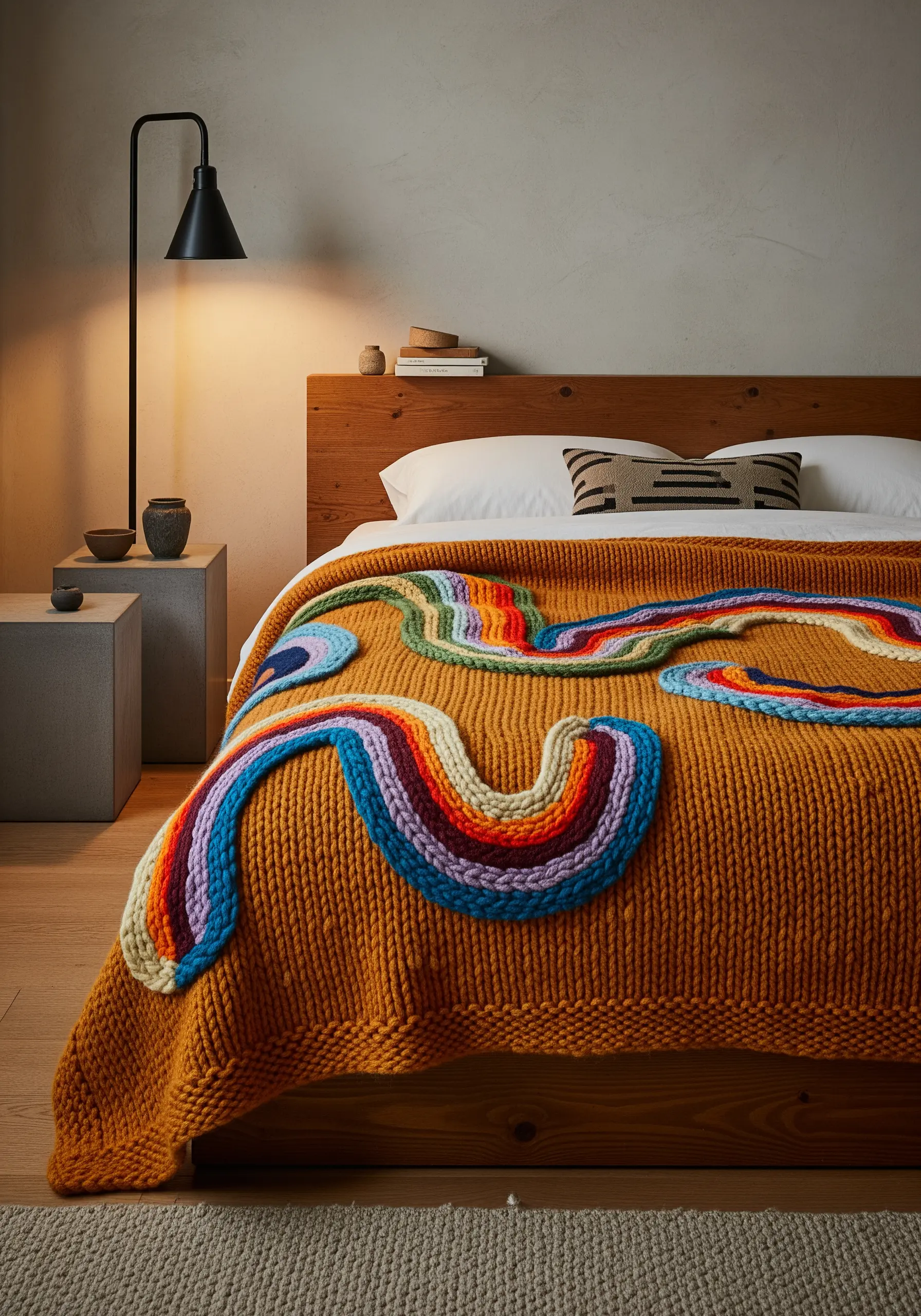
You don’t need to be a knitter to create a statement blanket; instead, add texture to a store-bought piece with couching.
Arrange thick, colorful yarn or wool roving in an organic, flowing pattern on top of a chunky knit throw.
Using a contrasting or matching embroidery floss, tack the yarn down with small, evenly spaced straight stitches.
This technique is one of the fastest ways to create cozy mixed-fiber projects, adding bold, graphic lines and touchable texture without any complex stitches.
6. Capture a Cityscape with Architectural Line Work
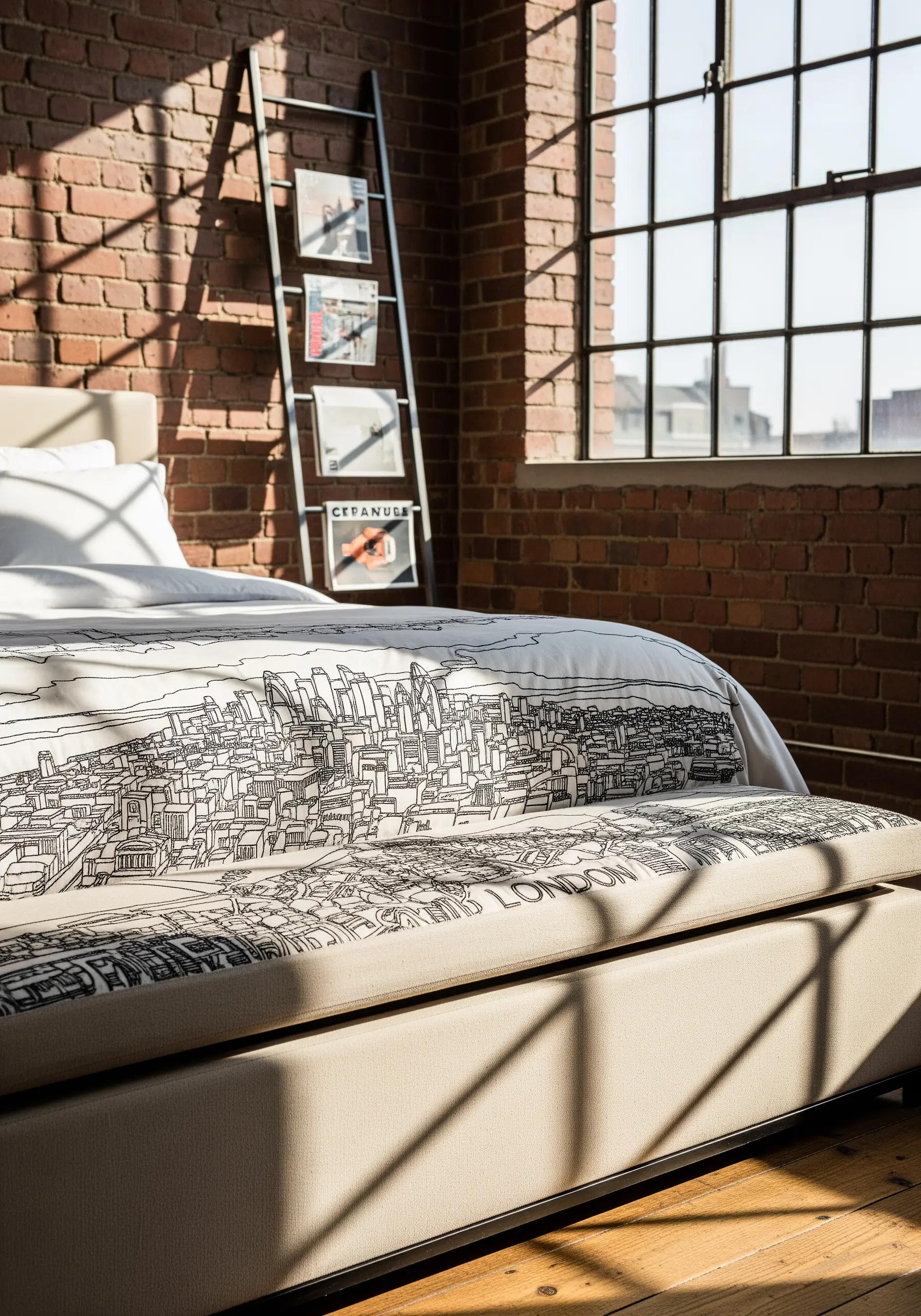
Recreate the energy of a city skyline using nothing more than black thread on a crisp white duvet cover.
For sharp, clean lines that mimic an ink drawing, use a two-ply backstitch or a whipped stem stitch, which creates a smooth, uninterrupted line.
Transfer your design using a water-soluble pen to ensure your guidelines disappear completely, leaving only the precise threadwork behind.
This high-contrast, graphic approach turns your bedding into a piece of modern, embroidered city skyline wall decor that happens to be on your bed.
7. Elevate a Lampshade with a Roped Texture
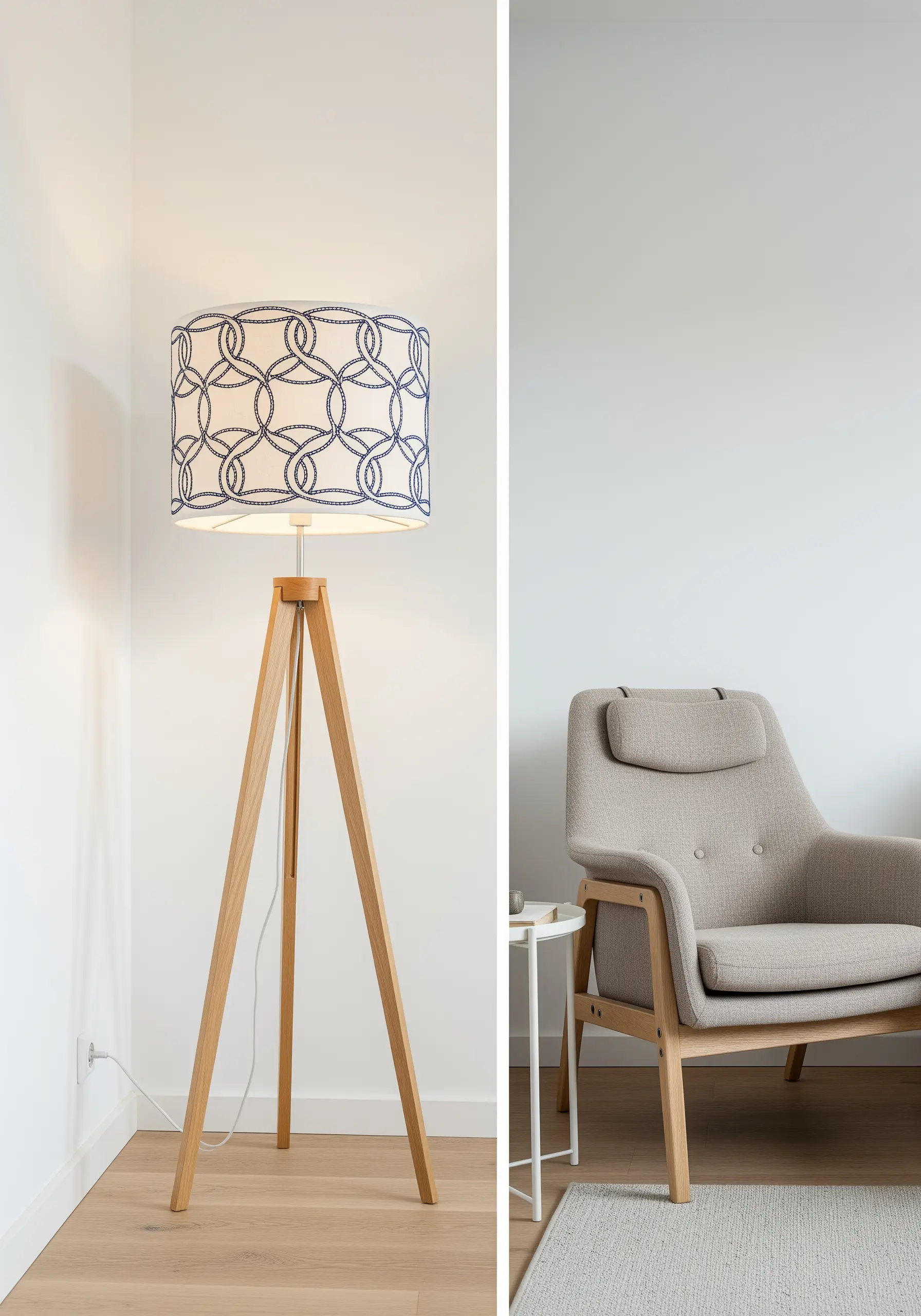
Turn a plain lampshade into a bespoke lighting feature by embroidering a repeating geometric pattern.
To mimic the look of nautical rope, use a thick thread like #5 pearl cotton and a chain stitch or a whipped running stitch.
Embroider your design on a flat panel of medium-weight, light-filtering cotton or linen before constructing the lampshade.
This ensures your stitches are even and the tension is perfect, creating a professional finish that adds subtle texture to your room’s lighting.
8. Design a Radiant Mandala for Upholstery
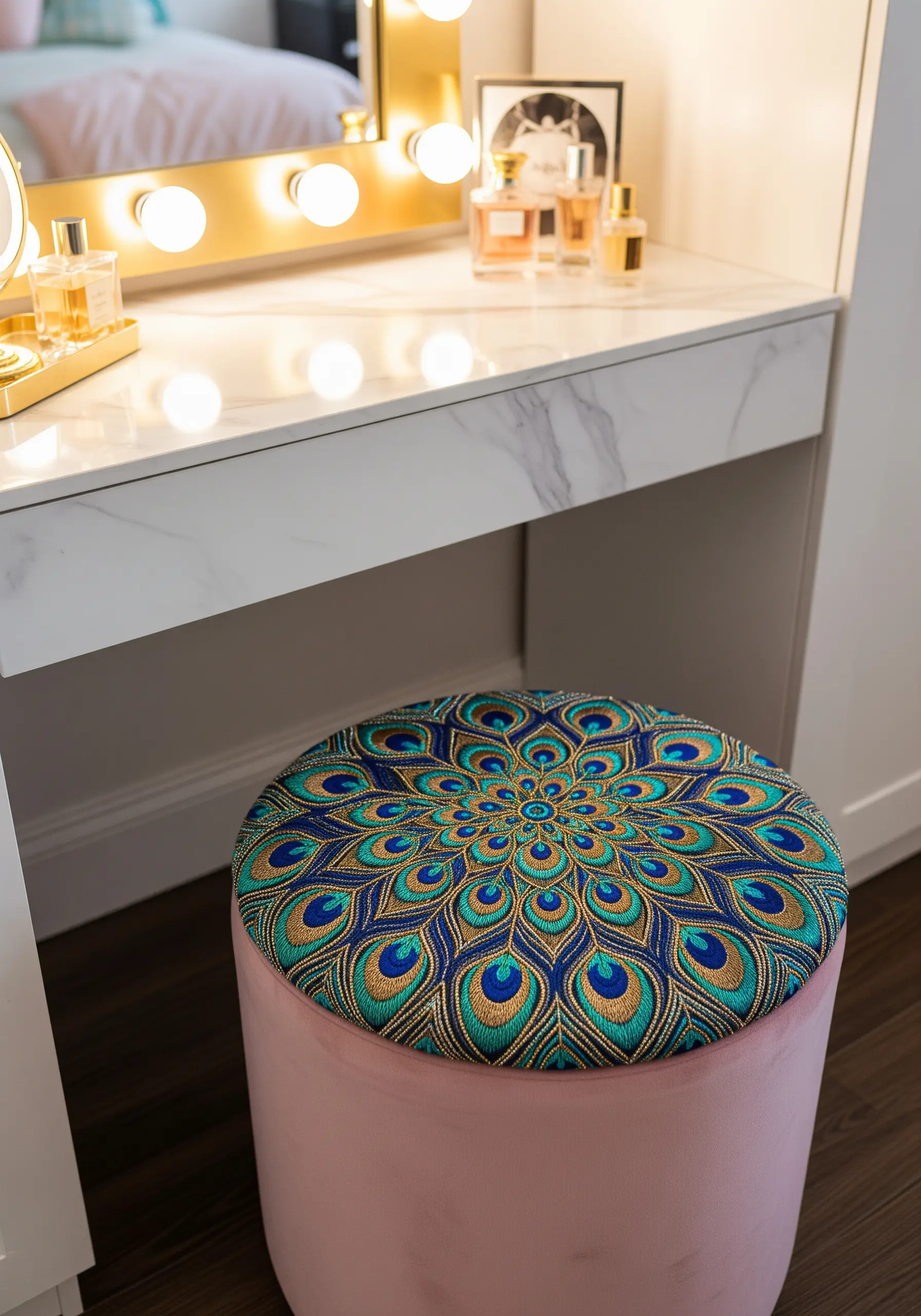
When embroidering a perfectly symmetrical design like a mandala, precision is everything.
Print your pattern on a water-soluble stabilizer and adhere it to your fabric; this ensures every stitch is perfectly placed.
To capture the iridescence of peacock feathers, blend satin stitches using three or four shades of green, blue, and gold silk floss.
The combination of radial symmetry and shimmering thread turns a simple vanity stool into an opulent accent piece.
9. Embrace Minimalist Calm with a Single Botanical Sprig
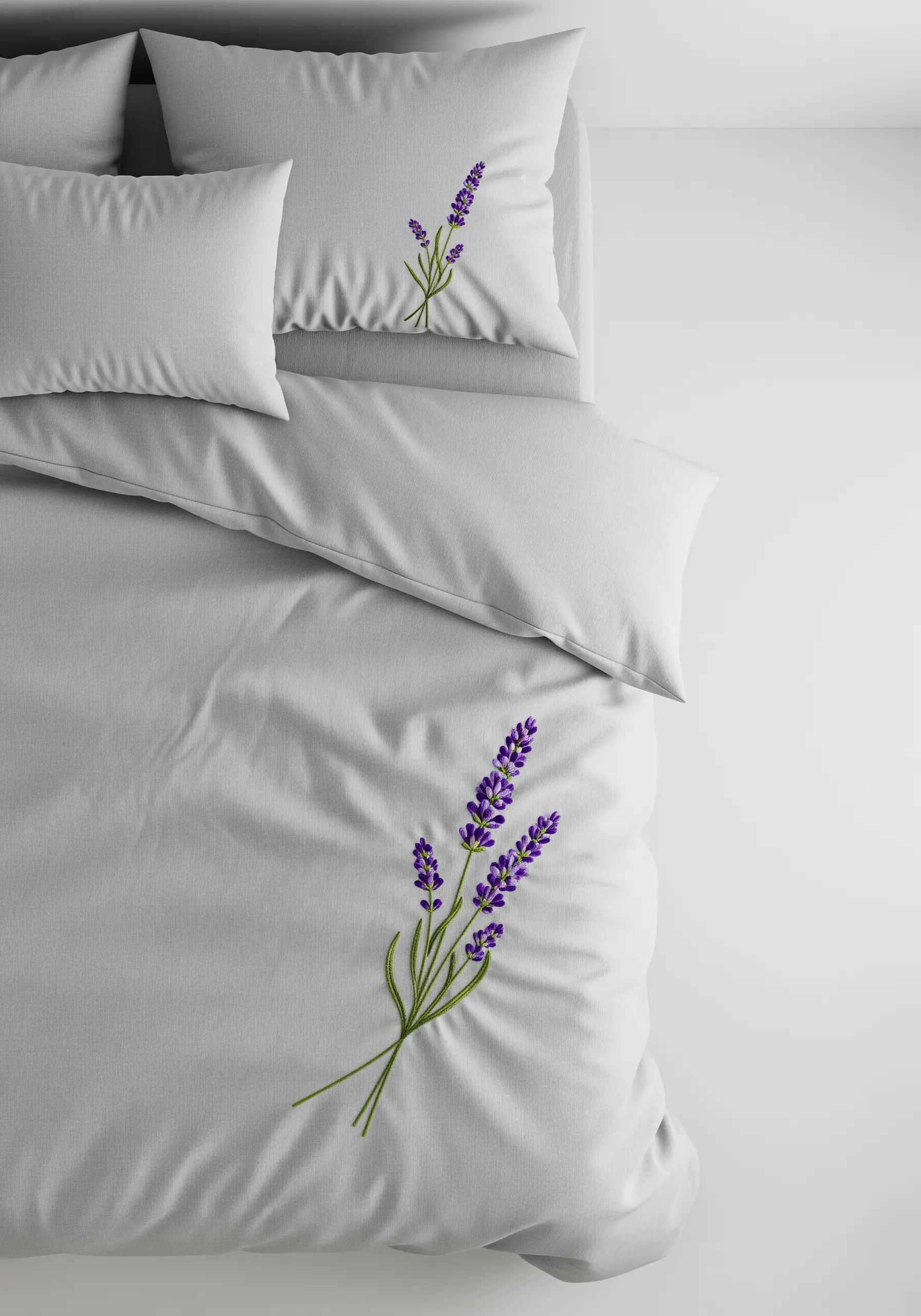
The power of this design lies in its restraint and thoughtful placement, proving that less is often more.
Position a single sprig of lavender off-center on a pillowcase or duvet to create a sense of calm and visual balance.
Use three strands of floss for the stem stitch to give the stalk structure, but switch to just two strands for the French knot buds to maintain a delicate feel.
This small touch of minimal embroidery transforms standard bedding into a personalized, serene retreat.
10. Weave a Mythical Narrative with a Tapestry Headboard
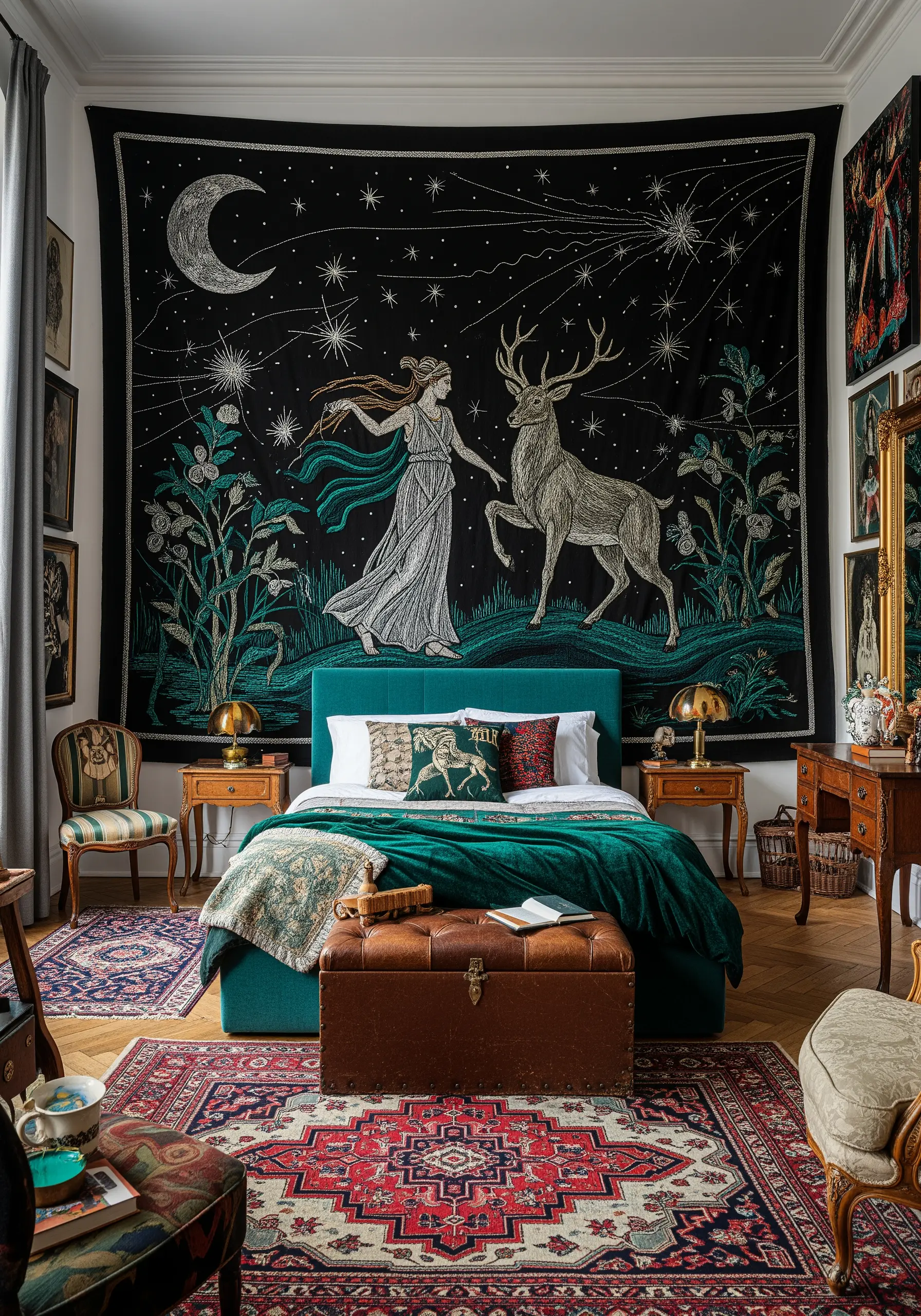
Create a dramatic, immersive bedroom atmosphere by hanging a large-scale embroidered tapestry behind your bed.
To tackle a project this size, break the design into a grid and focus on one section at a time.
Use simple, efficient stitches to fill large areas: seed stitch for grassy textures, backstitch for outlines, and satin stitch for solid figures.
A limited palette of black, white, and one accent color ensures the complex scene remains cohesive and visually striking, not chaotic.
11. Add a Bold Border to Natural Fiber Rugs
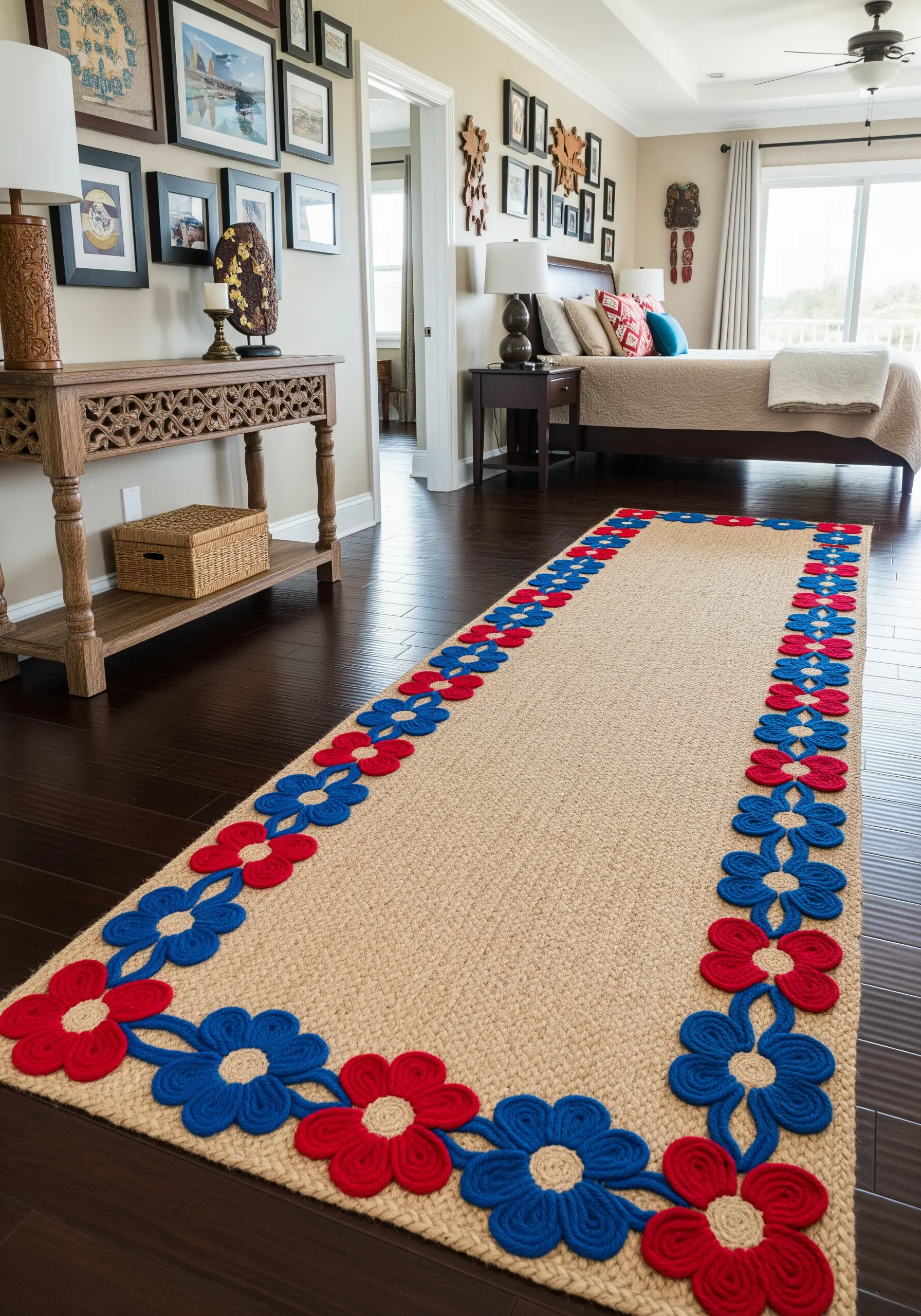
Embellish a plain jute or sisal rug by adding a vibrant, textural border with thick yarn.
Because you can’t stitch through the dense rug material, use couching: lay down your colorful yarn and secure it with a durable, neutral-colored thread like linen or upholstery thread.
Use a curved upholstery needle to make tacking the yarn down easier and faster.
This method allows you to add custom details to rugged home textiles that would otherwise be impossible to embroider.
12. Personalize Furniture with Illustrative Portraits
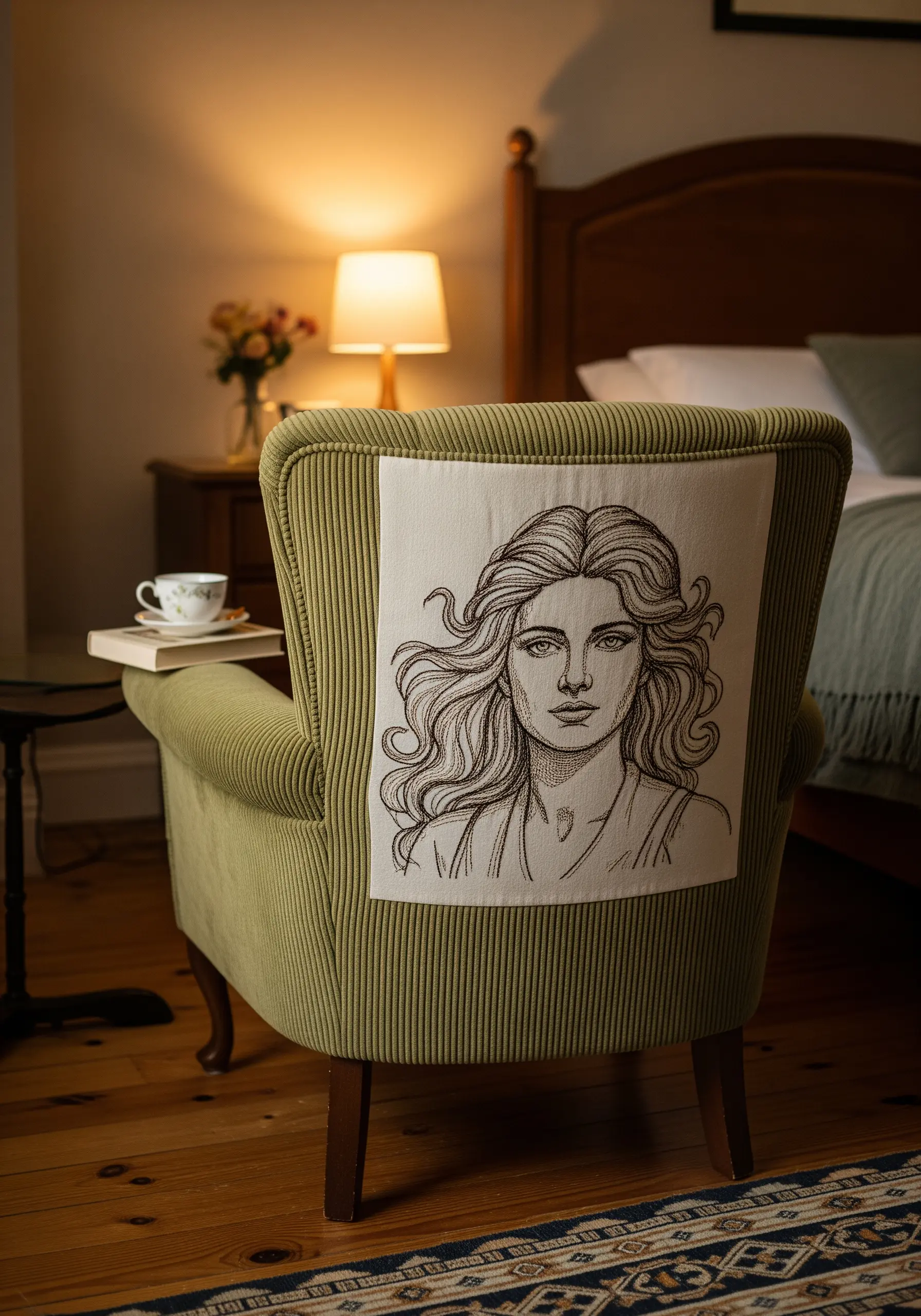
Elevate an armchair from a simple piece of furniture to a personal statement with a custom embroidered slipcover.
To create the look of a delicate pencil sketch, use a single strand of black or charcoal grey thread on a light-colored fabric like linen or cotton canvas.
A whipped backstitch will give you the smoothest, most continuous lines, perfect for capturing the flow of hair and the curve of a cheekbone.
This is a beautiful way to feature single-line face profiles and other line art in an unexpected, functional way.
13. Frame a Mirror with an Ombré of French Knots
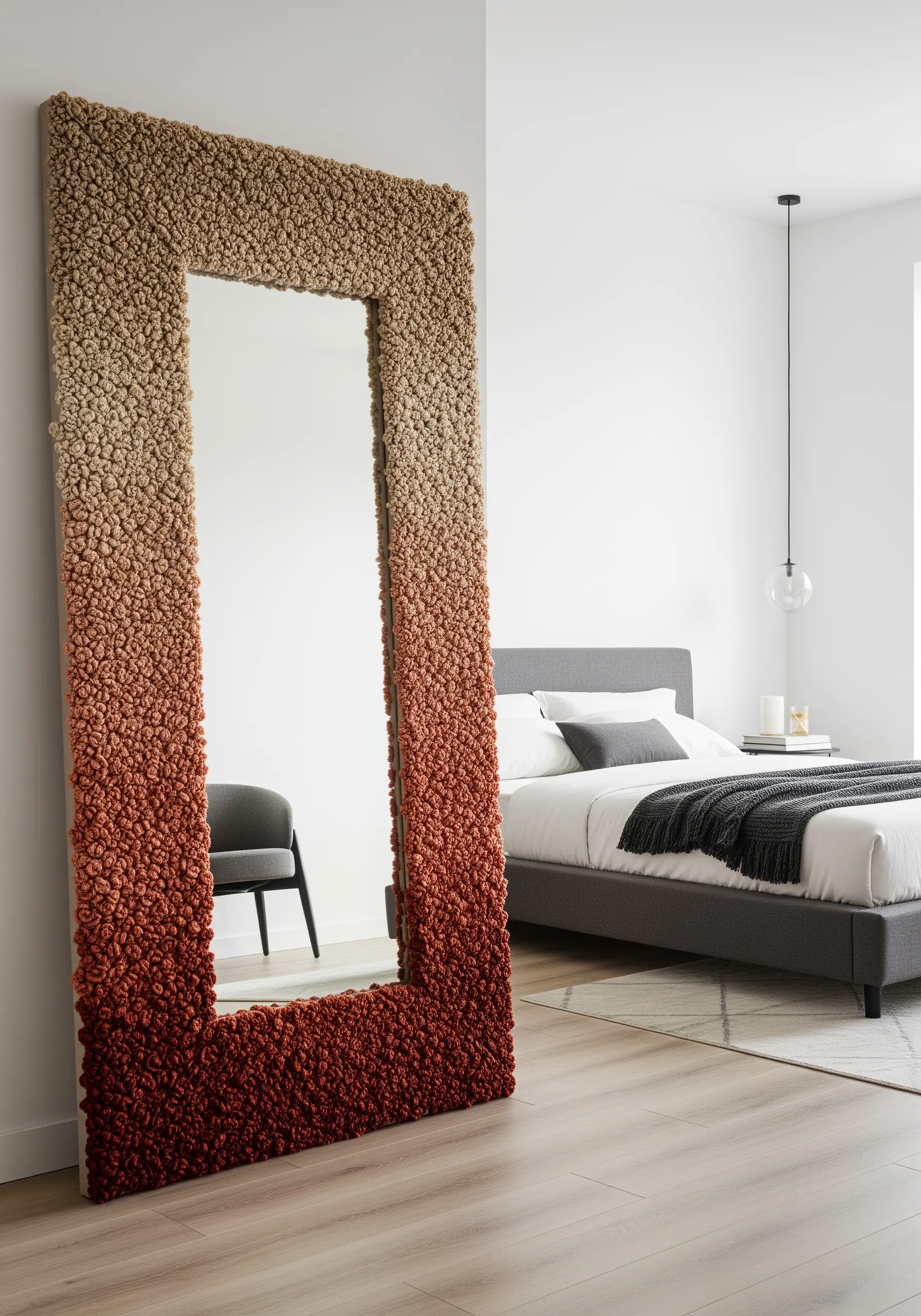
Surround a simple floor mirror with a deep, touchable texture by creating a frame covered in dense French knots.
Work on strips of heavy canvas with chunky yarn, planning your color gradient beforehand to ensure a smooth transition from light to dark.
Pack the knots tightly together for a plush, uniform surface that completely hides the base fabric.
Once the panels are complete, wrap and secure them around a plain wooden mirror frame for a dramatic, fiber-art transformation.
14. Achieve a Painterly Sheen on a Satin Bed Runner
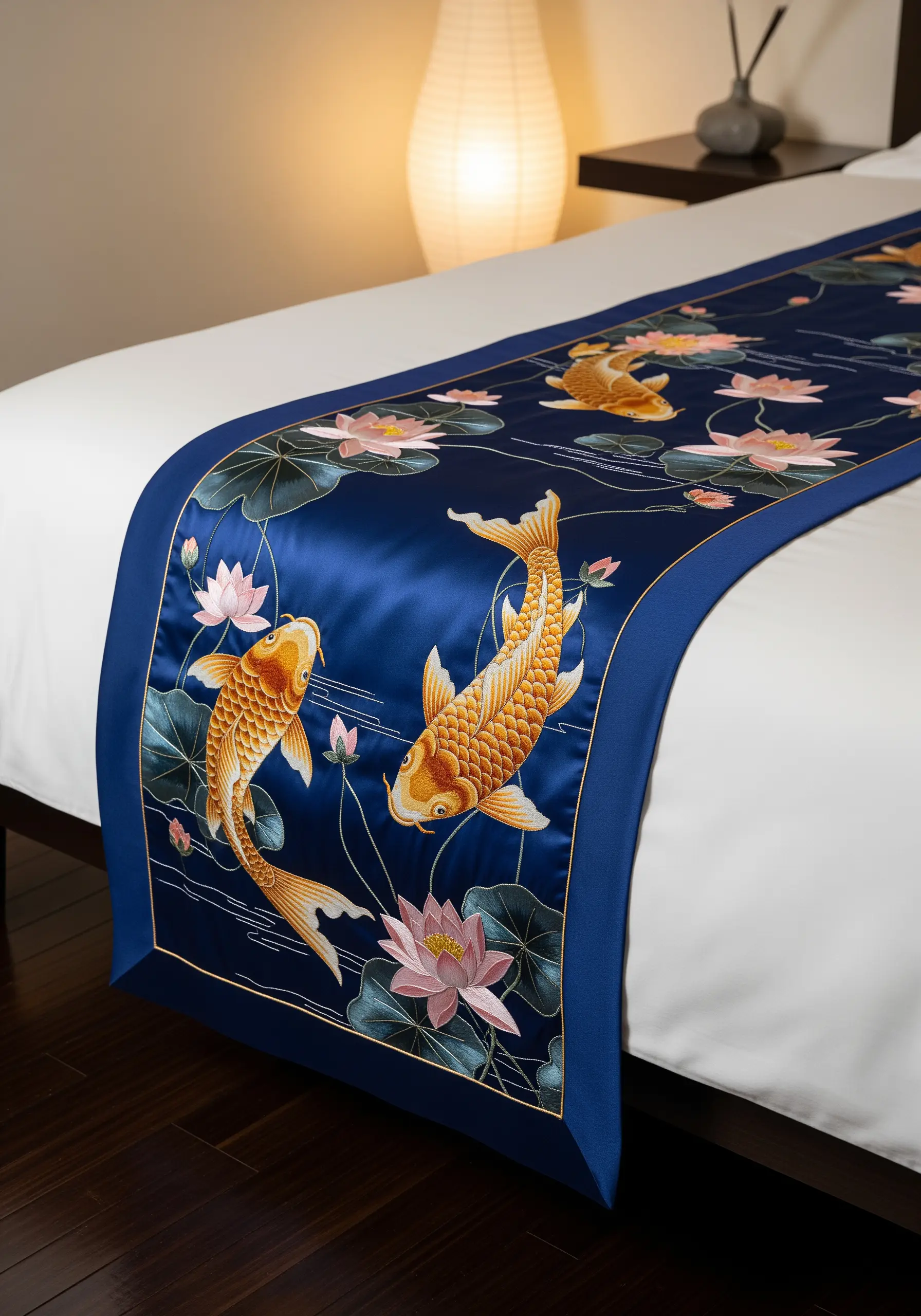
Stitching on satin creates a beautiful luster but requires care to prevent snags and puckers.
Always use a strong, iron-on stabilizer and keep the fabric taut in a non-slip hoop.
For the blended colors on the koi fish, use the long-and-short stitch technique with single strands of silk or rayon floss, which have a higher sheen than cotton.
Outline the finished shapes with a fine metallic thread to add definition and a touch of classic elegance.
15. Weave a Celestial Canopy with Glow-in-the-Dark Thread
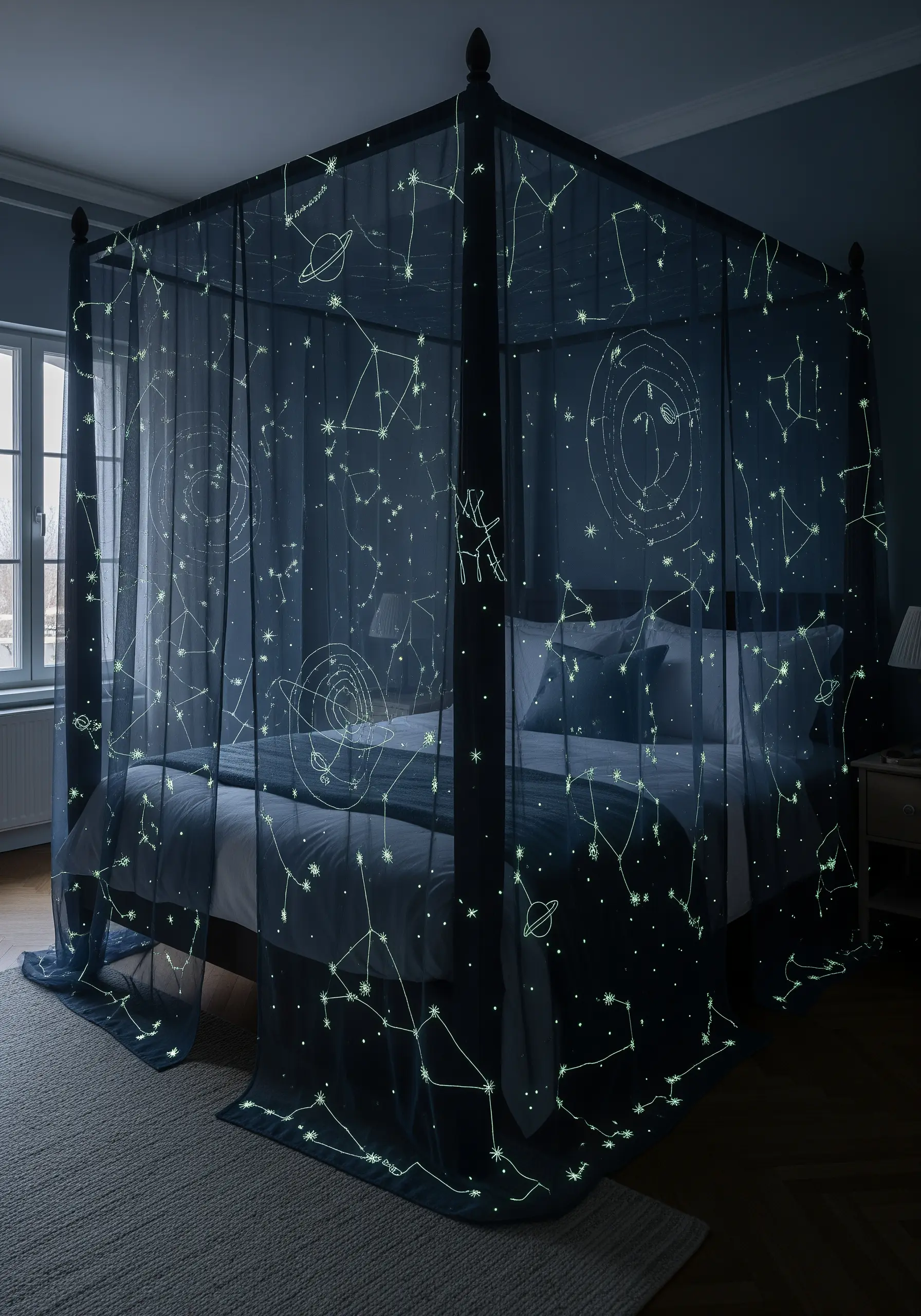
Turn a simple bed canopy into a magical stargazing experience by embroidering constellations with glow-in-the-dark floss.
Choose a sheer but stable fabric like organza or tulle, and use a water-soluble stabilizer that will wash away completely.
Use simple stitches to create your cosmos: small straight stitches for connecting stars and tiny French knots for the stars themselves.
During the day, it’s a subtle, delicate detail; at night, it transforms the room into a private planetarium.
16. Upholster Wardrobe Doors with Graphic Line Art
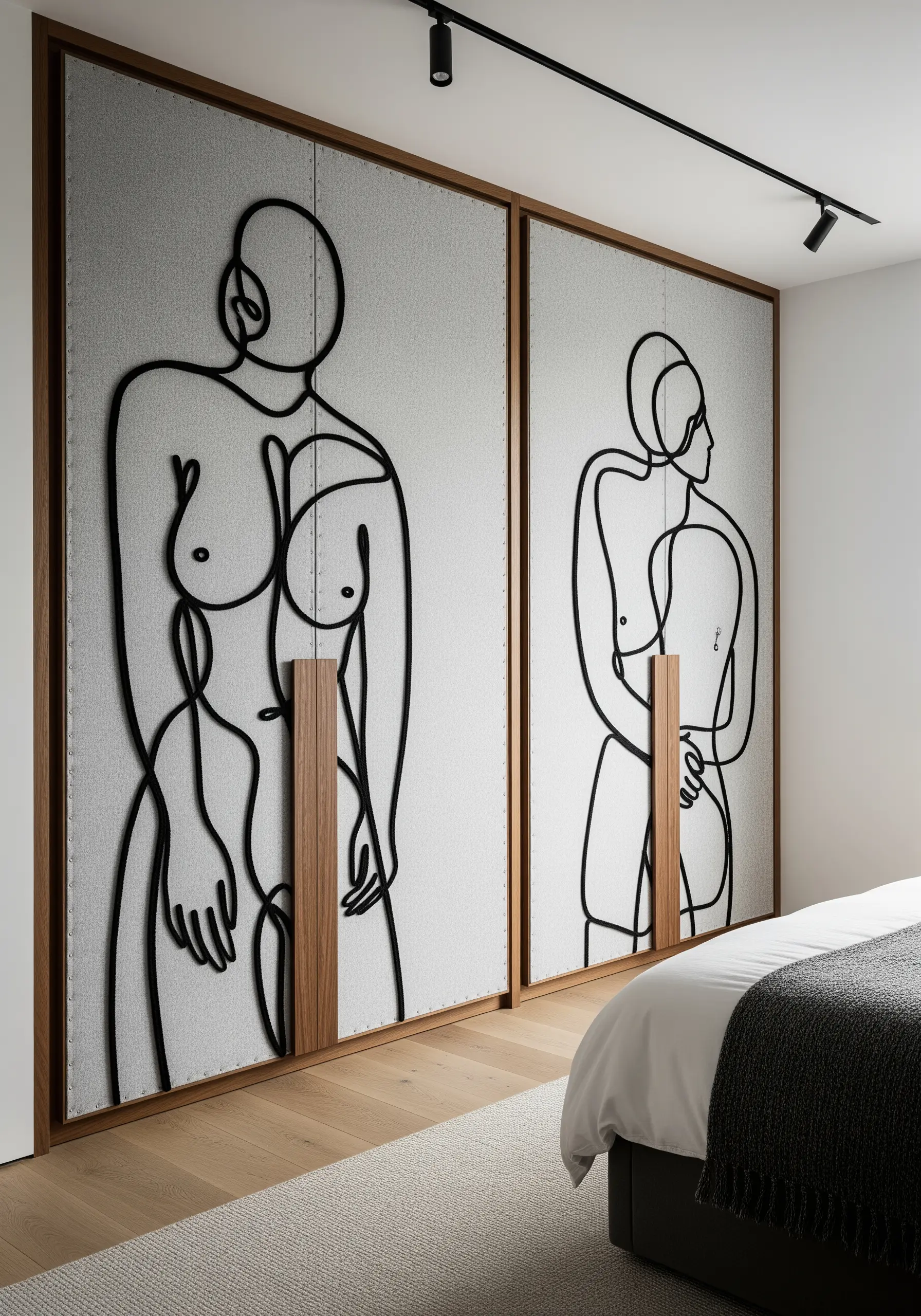
Integrate fiber art directly into your room’s architecture by applying it to unexpected surfaces like closet doors.
First, upholster the door panels with a neutral, textured fabric such as felt or a heavy linen blend.
Then, create your bold, abstract figures by couching thick black cording onto the fabric surface with a durable, invisible thread.
This technique adds immense visual interest and a soft, tactile quality to a typically hard, overlooked surface.
17. Create a Flowing Scene Across a Folding Screen
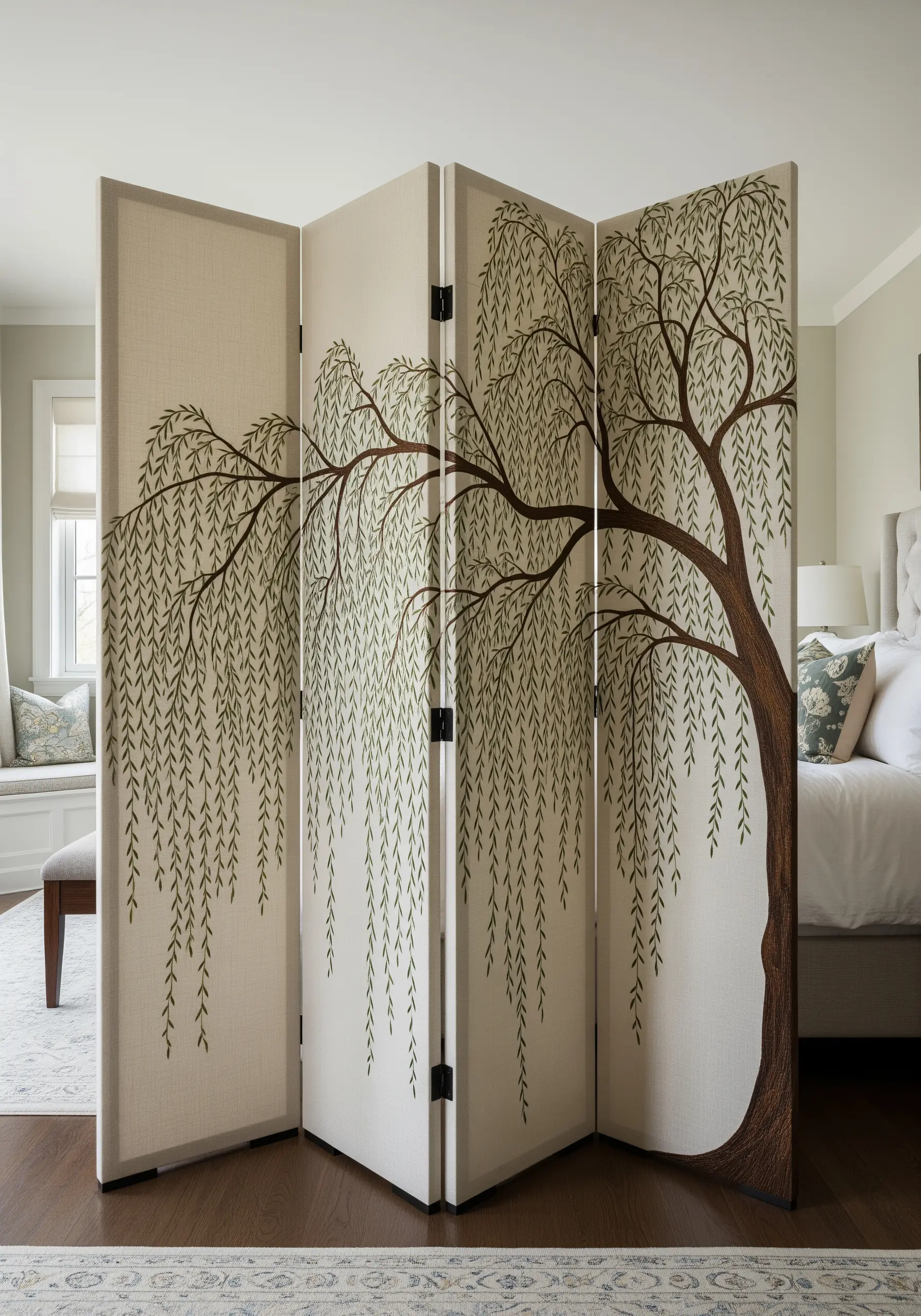
A folding screen offers a unique, multi-panel canvas for a single, continuous embroidery design.
To ensure your weeping willow tree flows seamlessly from one panel to the next, create a full-size paper template and trace the design onto each fabric panel before you begin stitching.
Use a chunky satin stitch for the trunk to give it weight and texture, and then fill the leaves with thousands of long, delicate straight stitches to mimic their graceful drape.
18. Sculpt with Light Using a Pierced Lampshade
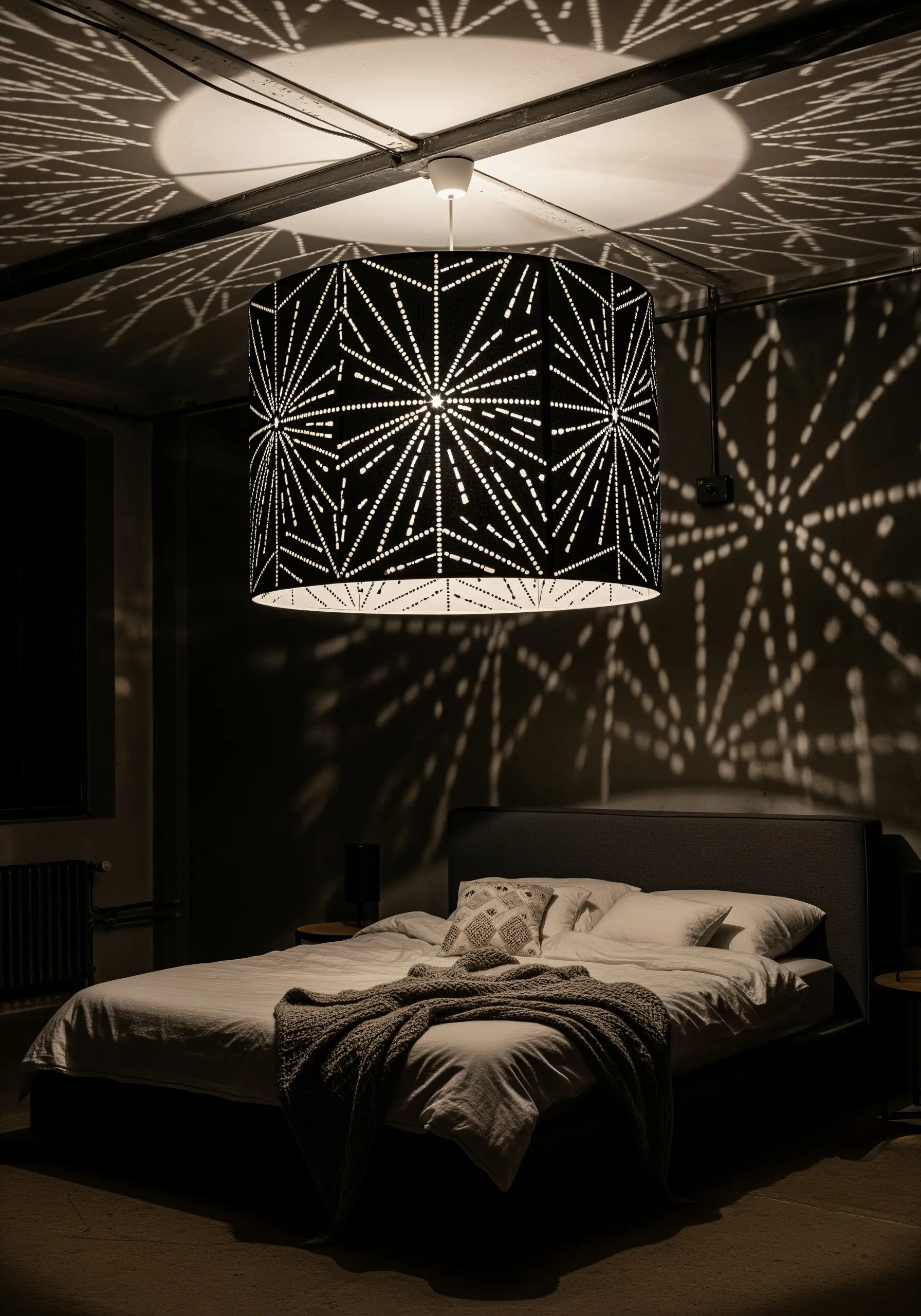
This technique uses the principles of embroidery to shape light itself, creating a dynamic, patterned glow.
Instead of thread, your tool is simply a needle or an awl. Start with a stiff, opaque lampshade material like cardstock or thick fabric.
Carefully pierce a geometric pattern, varying the size and density of the holes to create your design.
When the lamp is turned on, the pinpricks of light project your pattern onto the surrounding walls, turning the entire room into your canvas.
19. Build a Mountainscape with Sculptural Stitches
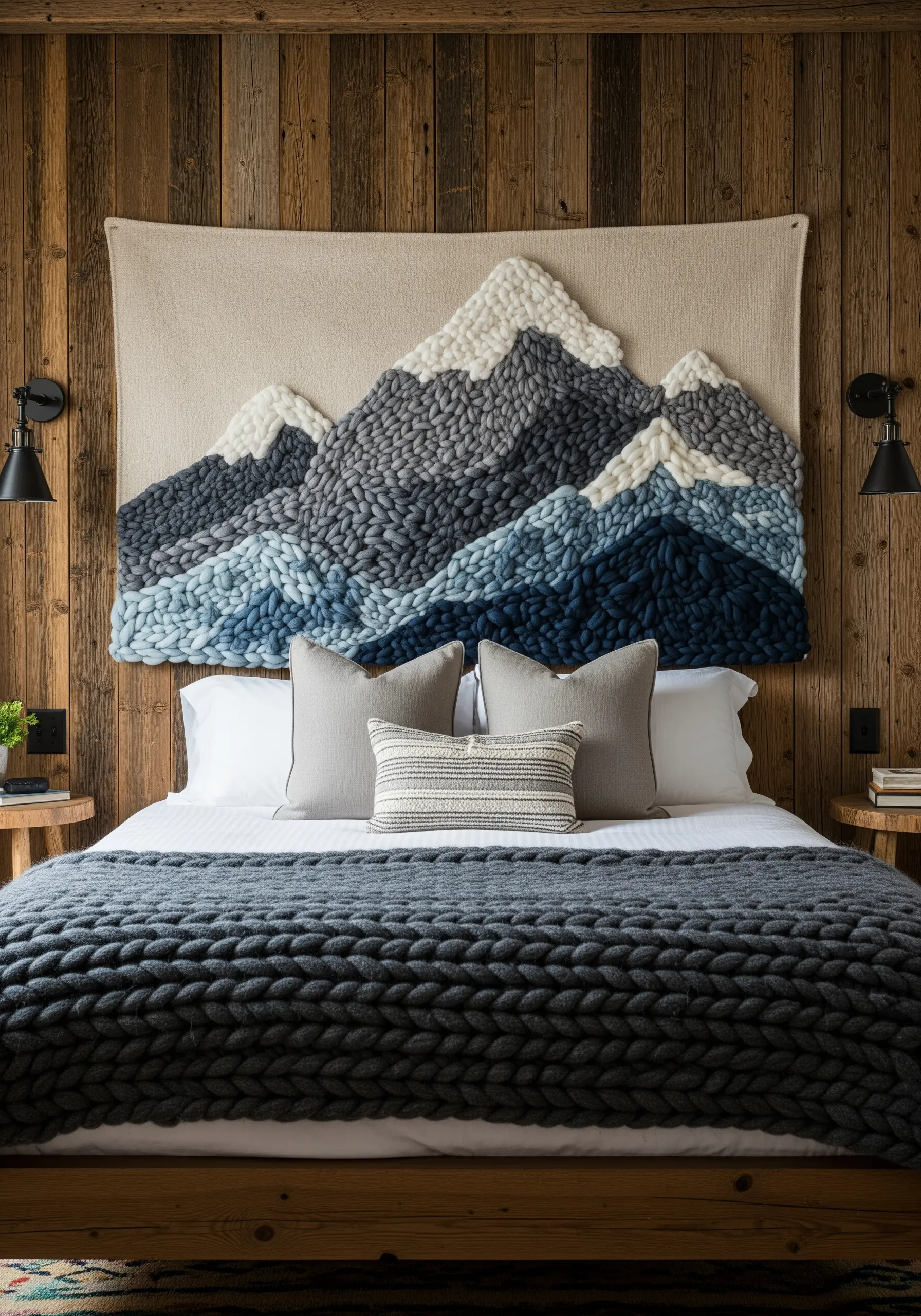
Recreate the rugged, layered texture of a mountain range by using chunky wool roving and yarn instead of fine floss.
On a heavy canvas backing, fill in your design with high-texture stitches like oversized loop stitch (or Turkey work) and dense French knots.
To create the layered, topographical effect, work from the background to the foreground, allowing the stitches of each mountain to slightly overlap the one behind it.
This is a perfect example of texture-rich thread art that feels more like sculpting than stitching.
20. Paint a Coastal Scene with Thread

Capture the subtle color shifts of a sunset over the ocean by treating your thread like paint.
Use the long-and-short stitch to blend colors seamlessly in the sky and water, creating a soft, painterly gradient.
Introduce texture in the foreground by using French knots for the seafoam and varied straight stitches for the dune grass, making it feel closer to the viewer.
This combination of smooth blending and foreground texture creates a convincing sense of depth in your embroidered landscape.
21. Compose a Modern Triptych with Color Blocking
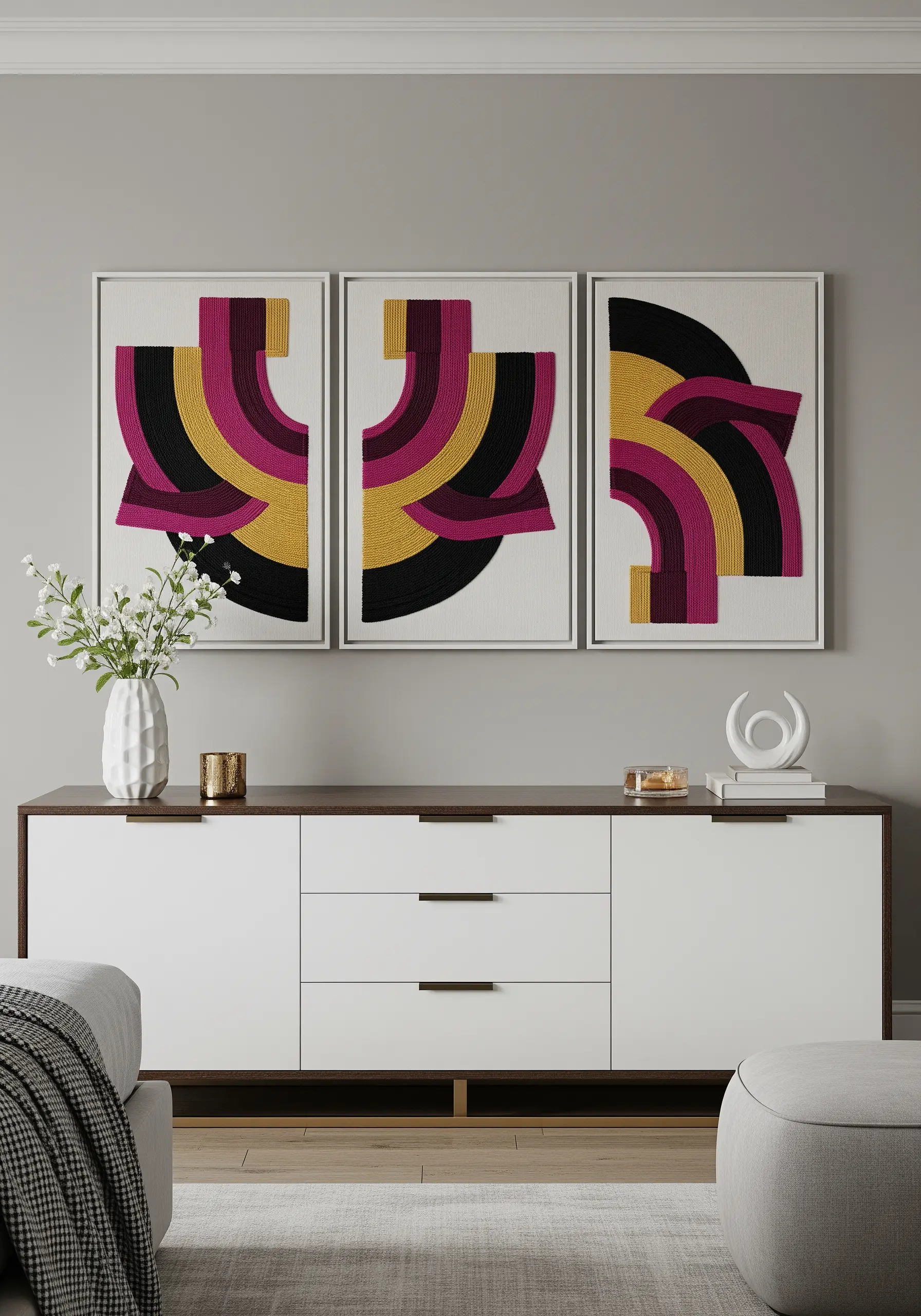
Create a sophisticated, gallery-style display by splitting a single abstract design across three separate frames.
To achieve those perfectly crisp, clean edges between color blocks, first outline each shape with a precise split stitch.
Then, fill the shapes with a dense, smooth satin stitch, ensuring all your stitches lie in the same direction within each block for a uniform sheen.
Arranging framed embroidery pieces as a triptych gives them a modern, intentional feel.
22. Frame Your Windows with Art Deco Elegance
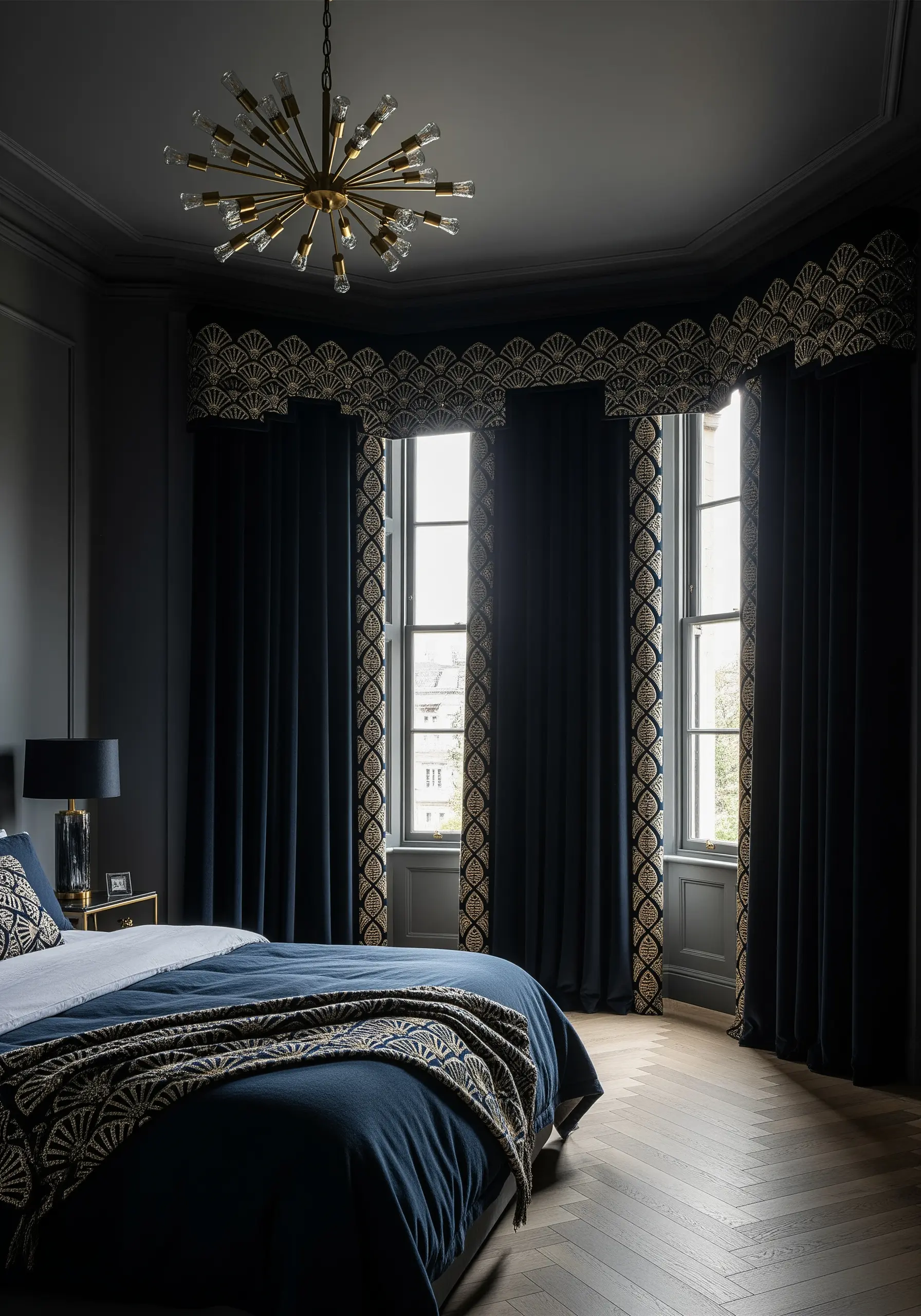
Add a touch of architectural grandeur to your bedroom by embroidering a custom Art Deco-style border on your curtains.
Use a combination of gold metallic thread and a high-contrast color on a dark, heavy fabric like navy velvet or linen.
Create the iconic fan shapes with satin stitch, and use couching for the clean, sharp outlines to maintain the geometric integrity of the design.
This tailored embellishment makes off-the-shelf curtains look like a bespoke, high-end installation.
23. Add Subtle Geometry with Sashiko-Inspired Quilting
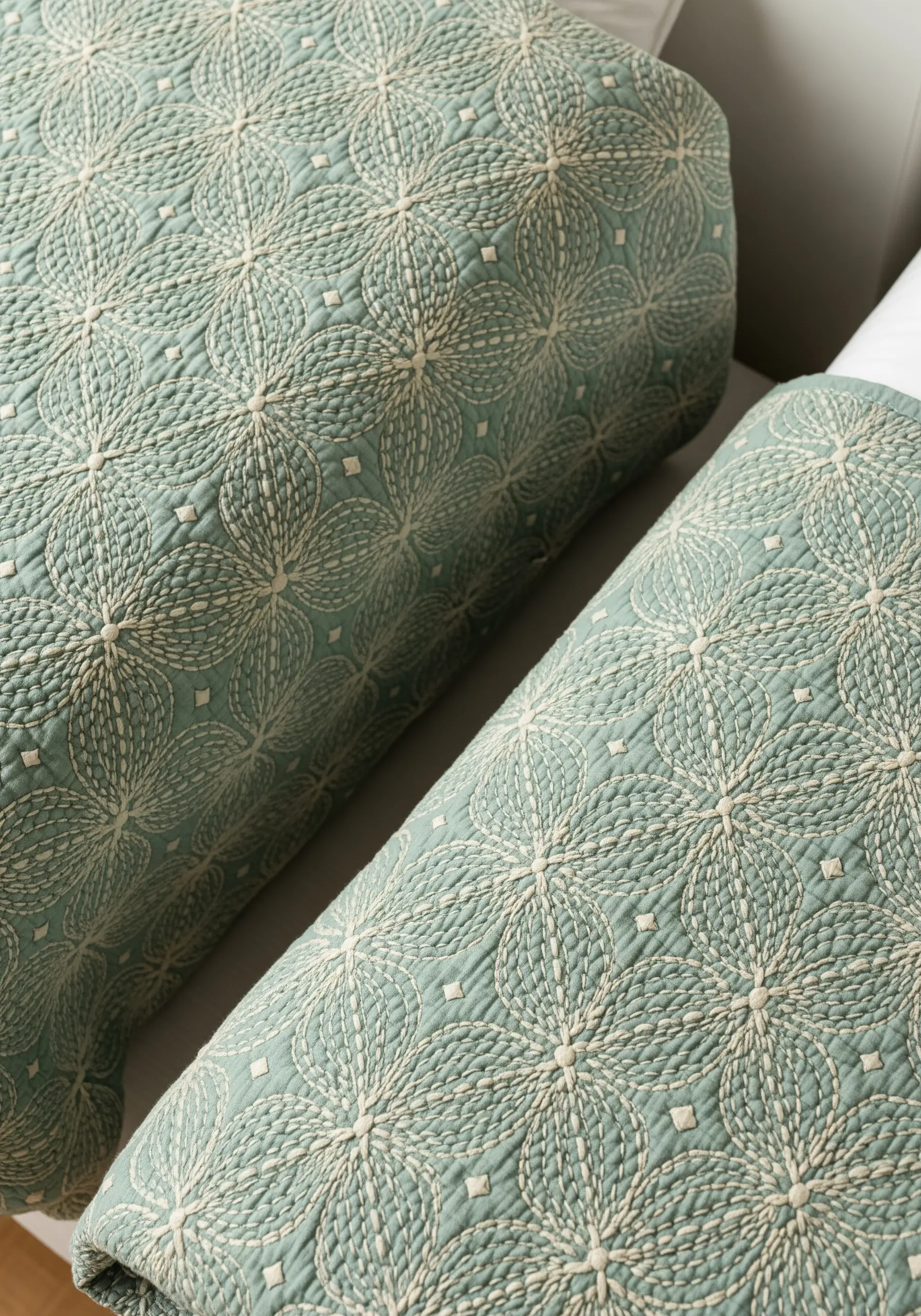
Elevate a simple quilt or coverlet with the meditative, rhythmic practice of Sashiko-style stitching.
Use a thick, contrasting thread—like traditional white Sashiko thread or #8 pearl cotton on a colored linen base—to make the pattern pop.
The beauty of this technique is in its simplicity: a clean, even running stitch is all you need to create intricate geometric patterns.
The resulting texture is subtle, sophisticated, and adds a layer of handcrafted warmth to your bedding.
24. Unify Your Vanity with Cohesive Botanical Motifs
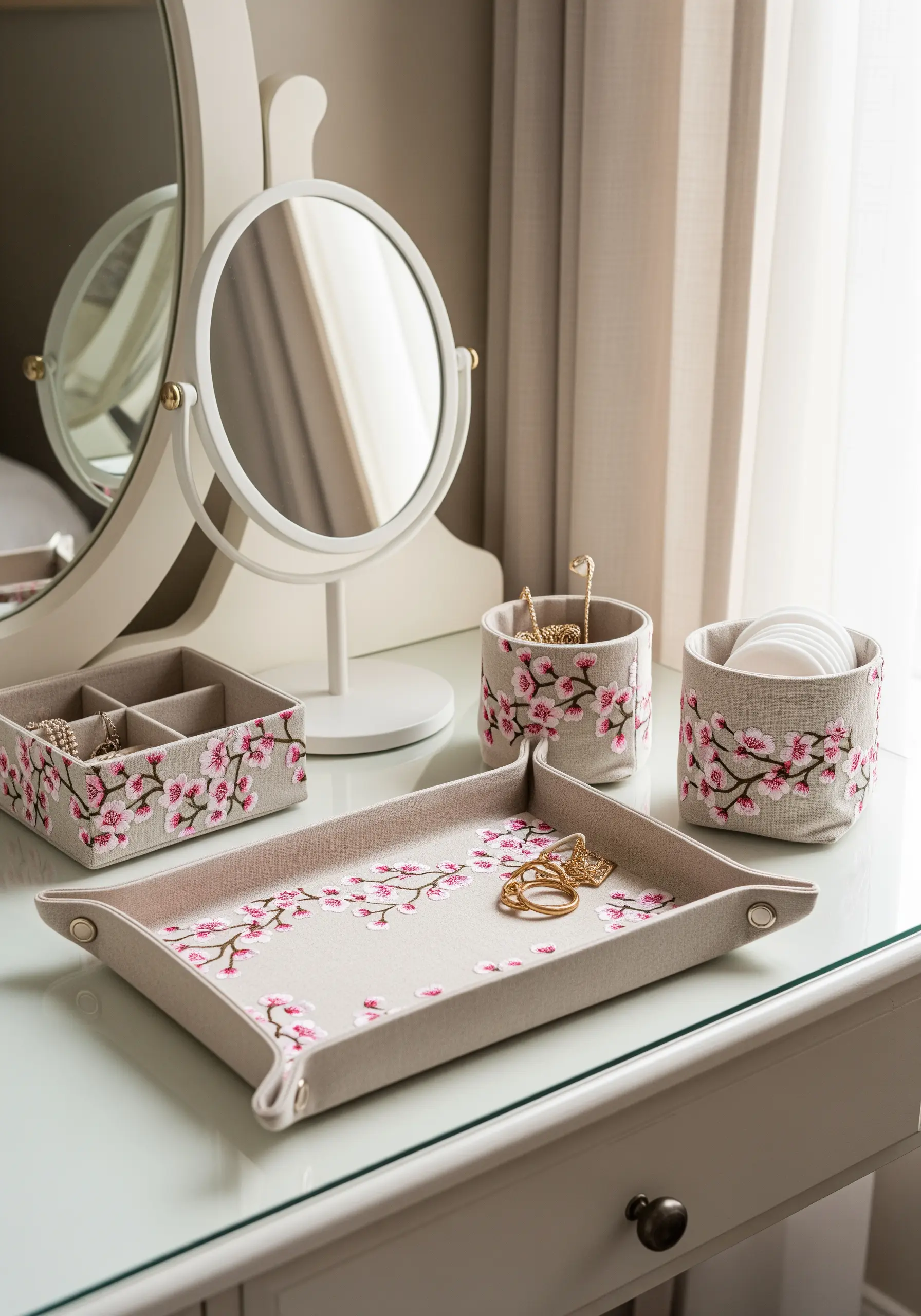
Create a serene and organized vanity space by embellishing a set of fabric organizers with a matching embroidery design.
Choose a sturdy, neutral fabric like linen canvas that can hold its shape once constructed.
For the delicate cherry blossoms, use single-strand detached chain stitches for the petals and tiny French knots for the centers.
By embroidering the fabric while it’s still flat, you ensure a flawless finish on these small handmade projects, turning everyday storage into beautiful decor.
25. Crown Your Room with an Embroidered Ceiling Medallion
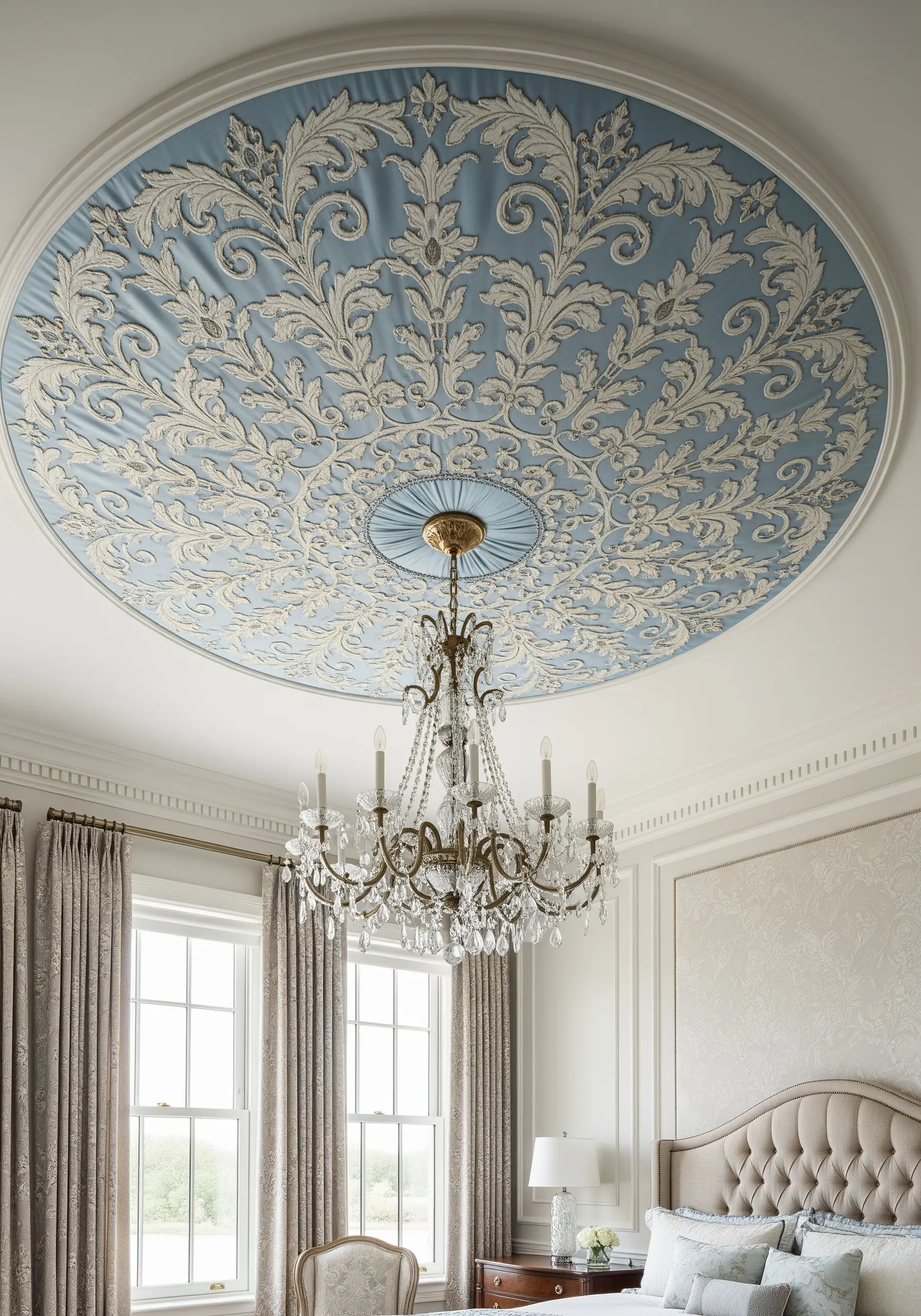
For the ultimate statement, take your embroidery vertical—all the way to the ceiling.
Stretch a piece of luxurious fabric, like pale blue silk dupioni, in a very large quilting frame or on a custom-built stretcher.
Use a classic damask or acanthus leaf pattern, filling the design with raised satin stitch and padded satin stitch to create a three-dimensional, sculptural effect.
Once completed, the fabric can be professionally mounted on a lightweight circular base and installed around a chandelier for breathtaking, unexpected opulence.
26. Upholster a Statement Piece in Vibrant, Dense Stitches
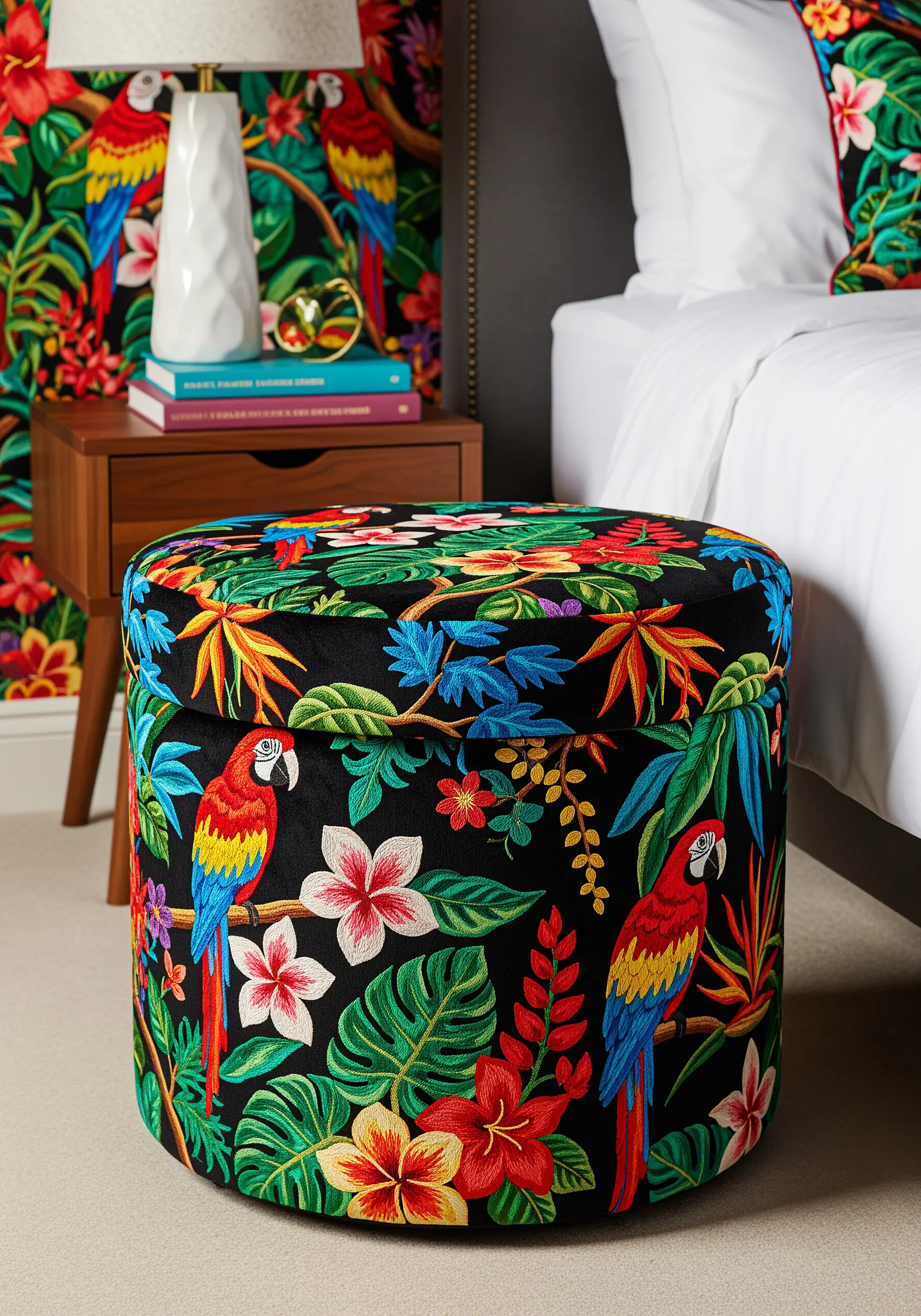
Turn a functional item like a storage ottoman into the vibrant centerpiece of your room with bold, all-over embroidery.
Choose a durable base fabric, like black velvet or cotton canvas, that can withstand both the dense stitching and everyday use.
Use a full six strands of floss and tight, overlapping satin stitches to achieve the solid, saturated colors of the tropical birds and botanicals.
A heavy-duty stabilizer is non-negotiable here to prevent the fabric from distorting under the weight of thousands of stitches.
27. Finish with a Flourish: The Embellished Door Tassel

An ornate tassel is a small detail that adds a final layer of texture, color, and personality to a room.
Create a padded, three-dimensional form and cover it with a base fabric. Then, let it become a sampler for your most detailed work.
Embellish the surface with intricate beadwork, couched metallic threads, and small, precise stitches like French knots and bullion knots.
This small, jewel-like object is a testament to your skill and adds a touch of bespoke luxury to an often-overlooked detail like a doorknob.


