Your bedroom should be a sanctuary, a place where you can exhale. And the art you choose for its walls can be more than just decoration—it can be a quiet reminder, a gentle intention set in thread.
But how do you move beyond simply following a pattern to creating something that truly feels like your own peaceful thought? The artistry is in the details you choose: the soft texture of linen, the subtle sheen of a single silk thread, the way a padded stitch makes a word feel substantial and real.
Think of these hoops not as craft projects, but as anchors for your quiet moments. Each idea here is a starting point, showing you how a small adjustment in technique or material can transform a simple quote into a poetic, personal statement. It’s time to stitch your own peace.
1. Master Restrained Typography and Negative Space
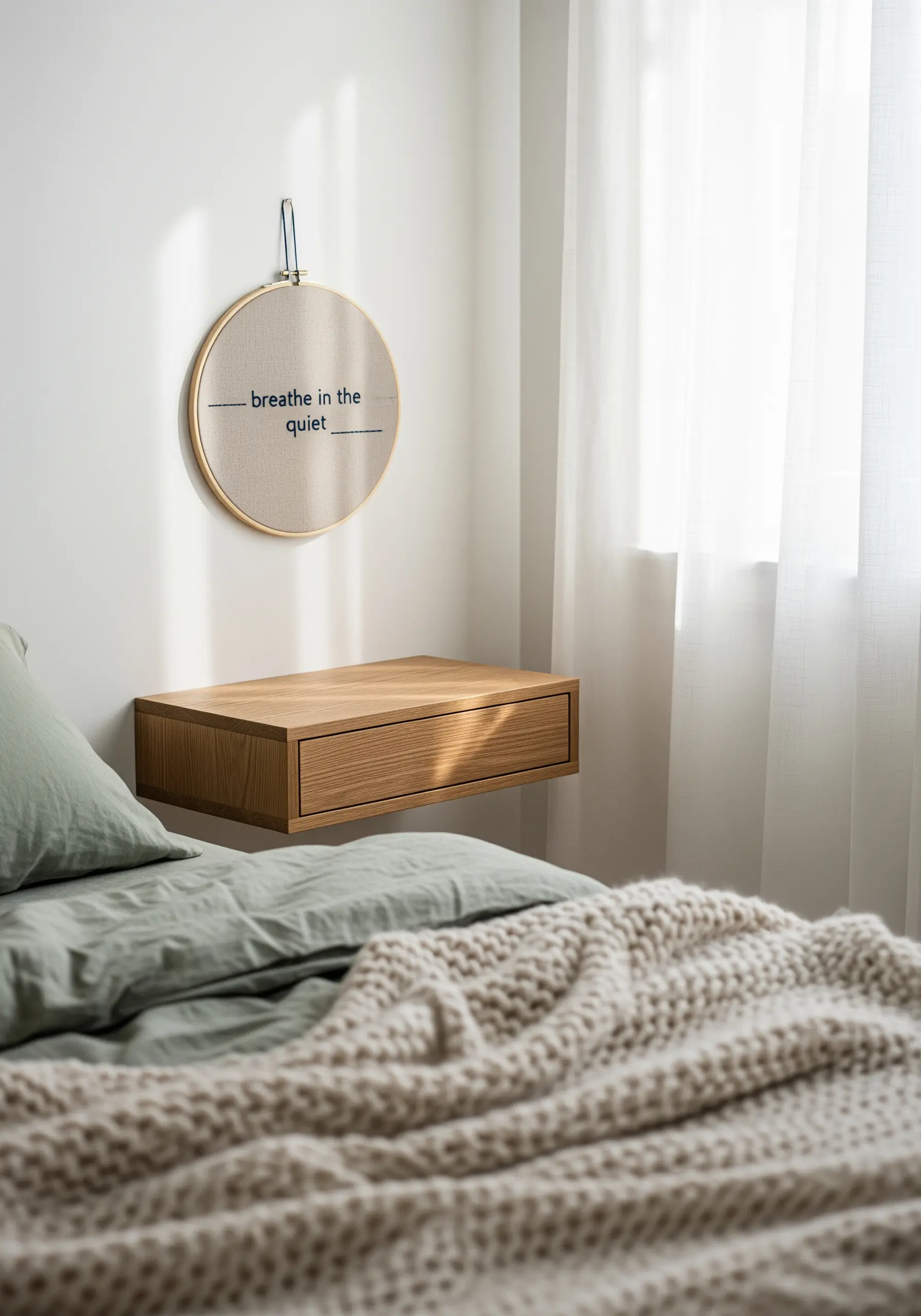
To achieve this clean, typewriter-like effect, use a simple backstitch with just two strands of floss.
This creates crisp, legible letters without adding unnecessary bulk.
The real quietness in this design comes from the generous use of negative space, which allows the words to breathe and gives the message a calm, centered presence.
Choose a fabric with a natural texture, like an oatmeal linen or evenweave, to add warmth and prevent the minimalist design from feeling cold.
2. Integrate Texture with Bohemian Fringe
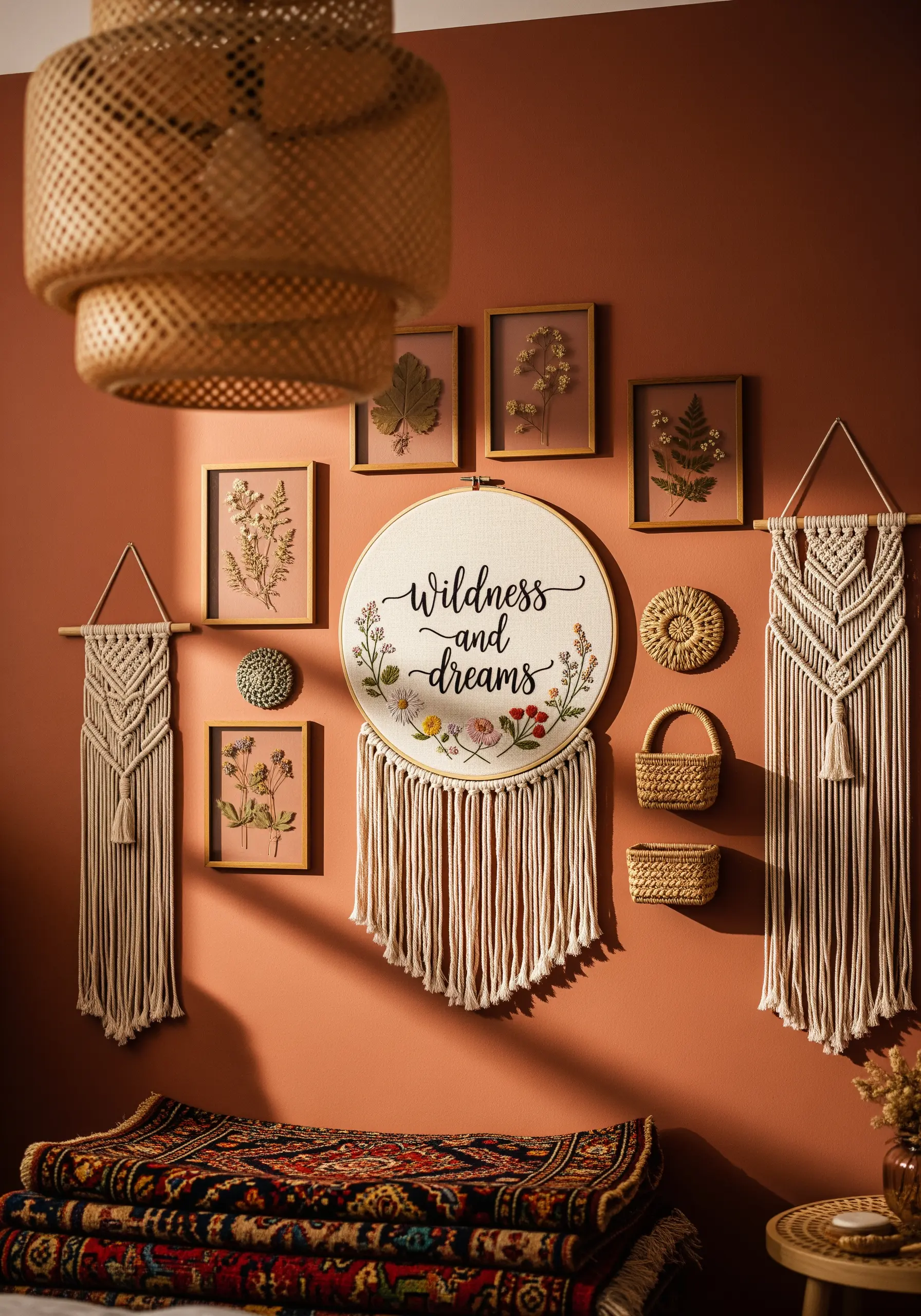
Combine embroidery with macrame to create a piece that is rich in texture and free-spirited style.
Stitch your lettering and a floral border as usual, then create a simple macrame fringe using lark’s head knots along the bottom of the inner hoop before reassembling it.
This layered, textural finish extends the artwork beyond the circular frame, transforming it into a more substantial wall hanging.
The contrast between the delicate stitches and the soft, chunky yarn adds depth and tactile appeal.
3. Frame Your Words with Symmetrical Woodland Motifs
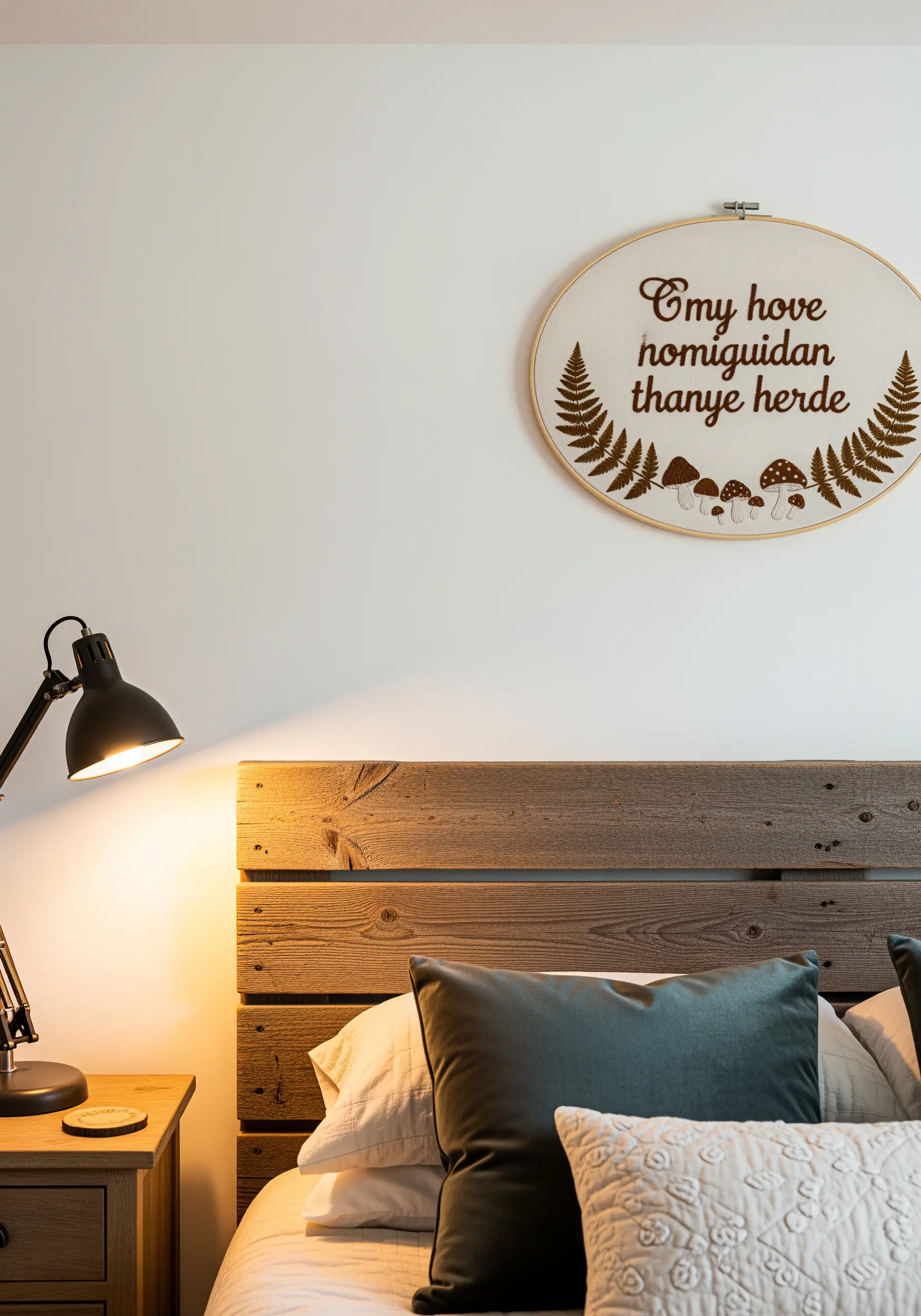
Ground your quote by framing it with balanced, natural elements like ferns and mushrooms.
Use a fishbone stitch for the fern fronds to create a beautifully textured, herringbone-like pattern that mimics nature.
For the mushrooms, a padded satin stitch will give them a subtle, rounded dimension, making them pop from the fabric.
Sticking to a limited, earthy color palette of browns and deep greens will unify the design and enhance the woodland feel.
4. Achieve Crisp Edges on High-Contrast Lettering
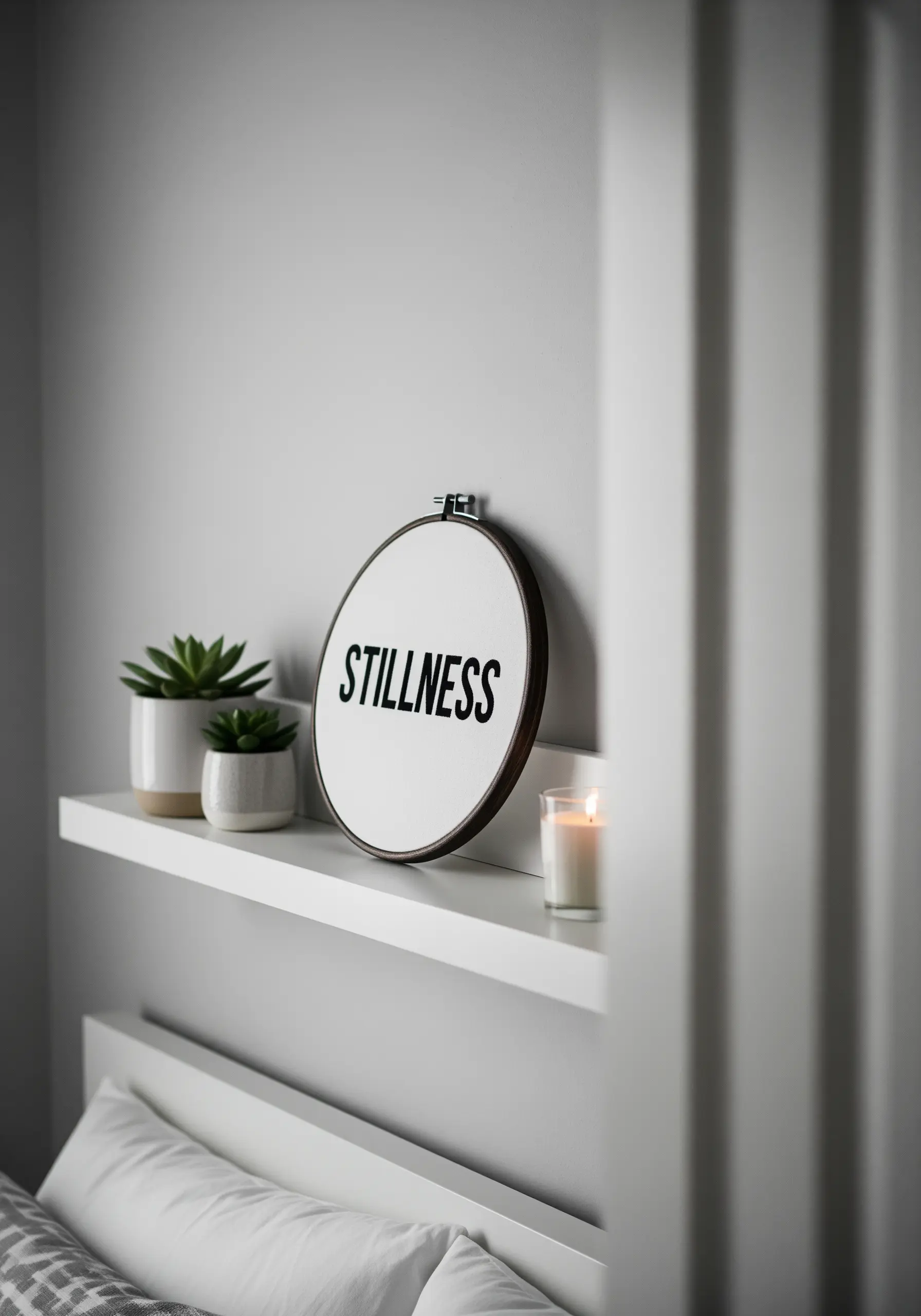
For a bold, graphic statement, the key is impeccably sharp edges.
Before you begin your satin stitch, outline each letter with a split stitch using two strands of matching floss.
This simple step creates a raised border that acts as a guide, allowing you to tuck the start and end of each satin stitch underneath for a perfectly clean line.
Use all six strands of black floss on a stark white cotton twill to maximize the dramatic, high-contrast impact.
5. Add a Touch of Luster with Metallic Thread
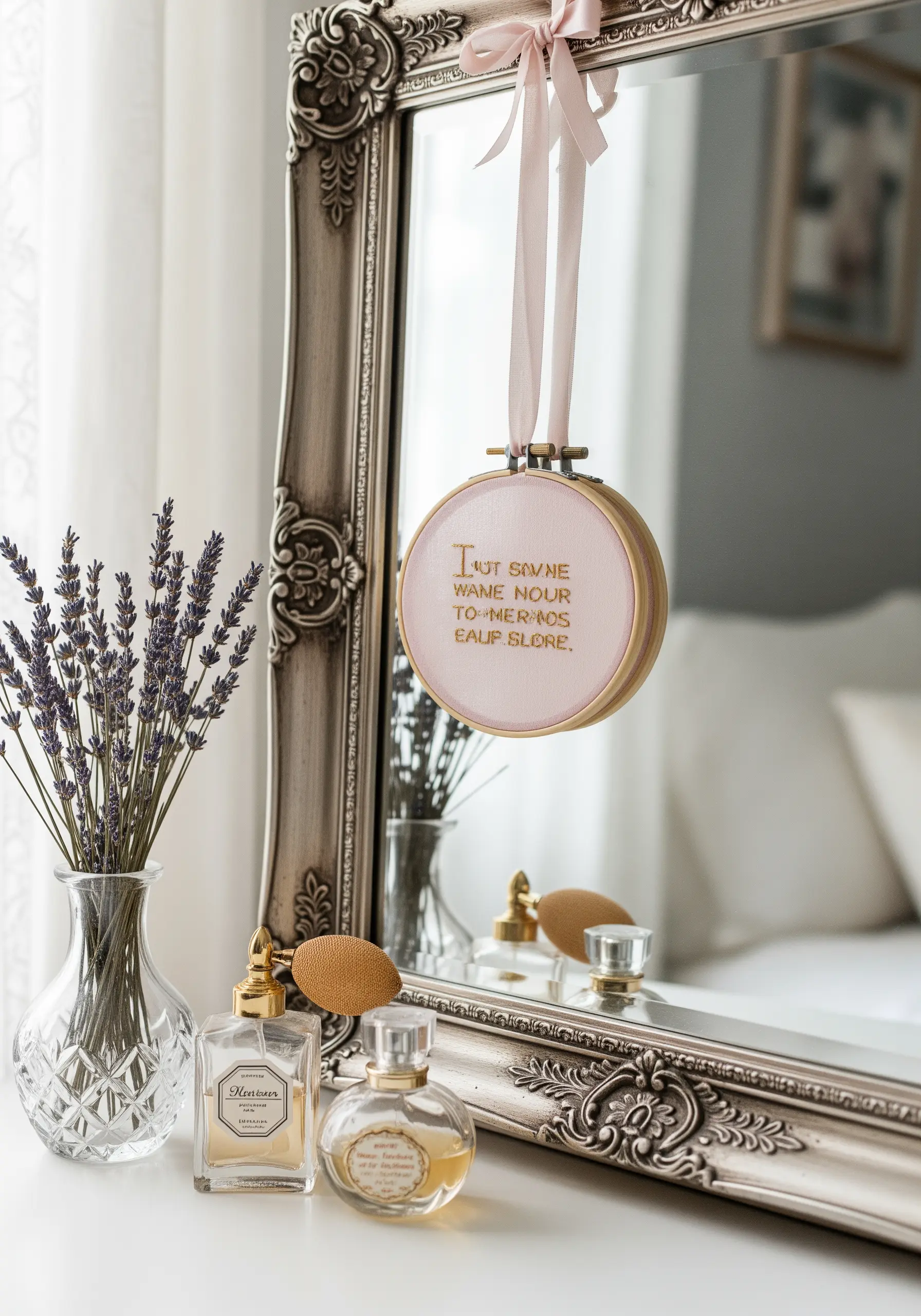
Elevate a simple quote by stitching it in metallic thread for a subtle, elegant shimmer.
To prevent fraying, work with shorter lengths of metallic floss—no longer than 12 inches—and consider using a thread conditioner like beeswax.
Pairing a warm gold thread with a soft, blush-pink fabric creates a romantic and sophisticated palette.
The gentle way the light catches the metallic fibers adds a touch of magic without being overwhelming.
6. Unify Your Palette for a Cohesive Feel
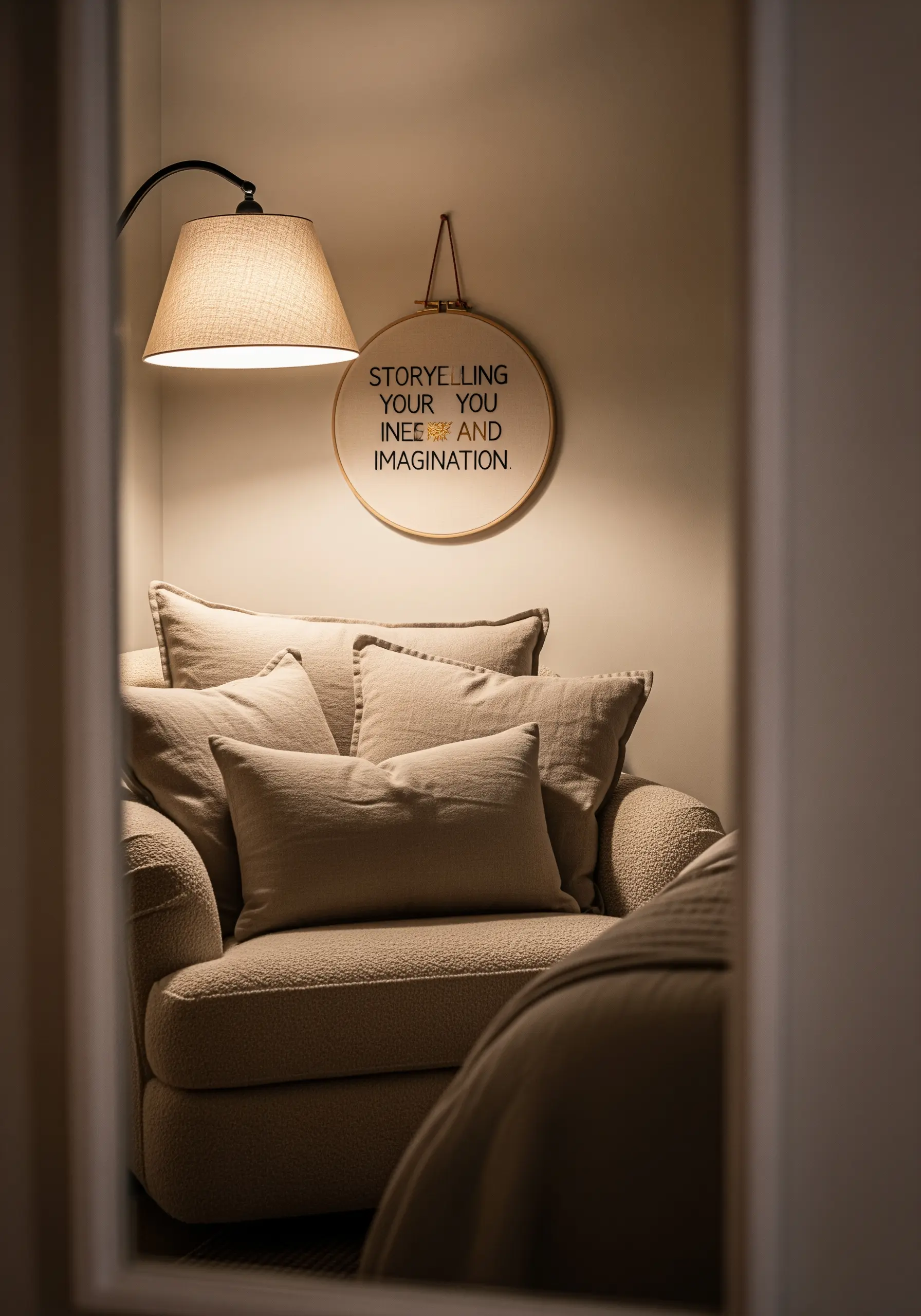
Make your embroidered art feel truly integrated with your space by pulling thread colors directly from your room’s decor.
Match a warm gold thread to the glow of a reading lamp or a deep charcoal to a nearby accent pillow.
This thoughtful color selection ensures your hoop feels intentional and harmonious rather than like an afterthought.
Combine a clean, sans-serif font with a smaller serif font to create a clear visual hierarchy and guide the eye through the quote.
7. Evoke Natural Growth with Gradient Threads

Use a single variegated thread to create a beautiful ombré effect in your lettering, suggesting growth and vitality.
The color shifts naturally as you stitch, adding depth and visual interest without the need to switch floss.
Frame your quote with a simple leafy wreath using lazy daisy stitches for the leaves and French knots for tiny berries.
This combination of gradient text and botanical motifs creates a design that feels alive and organic.
8. Explore the Subtlety of White-on-White Texture
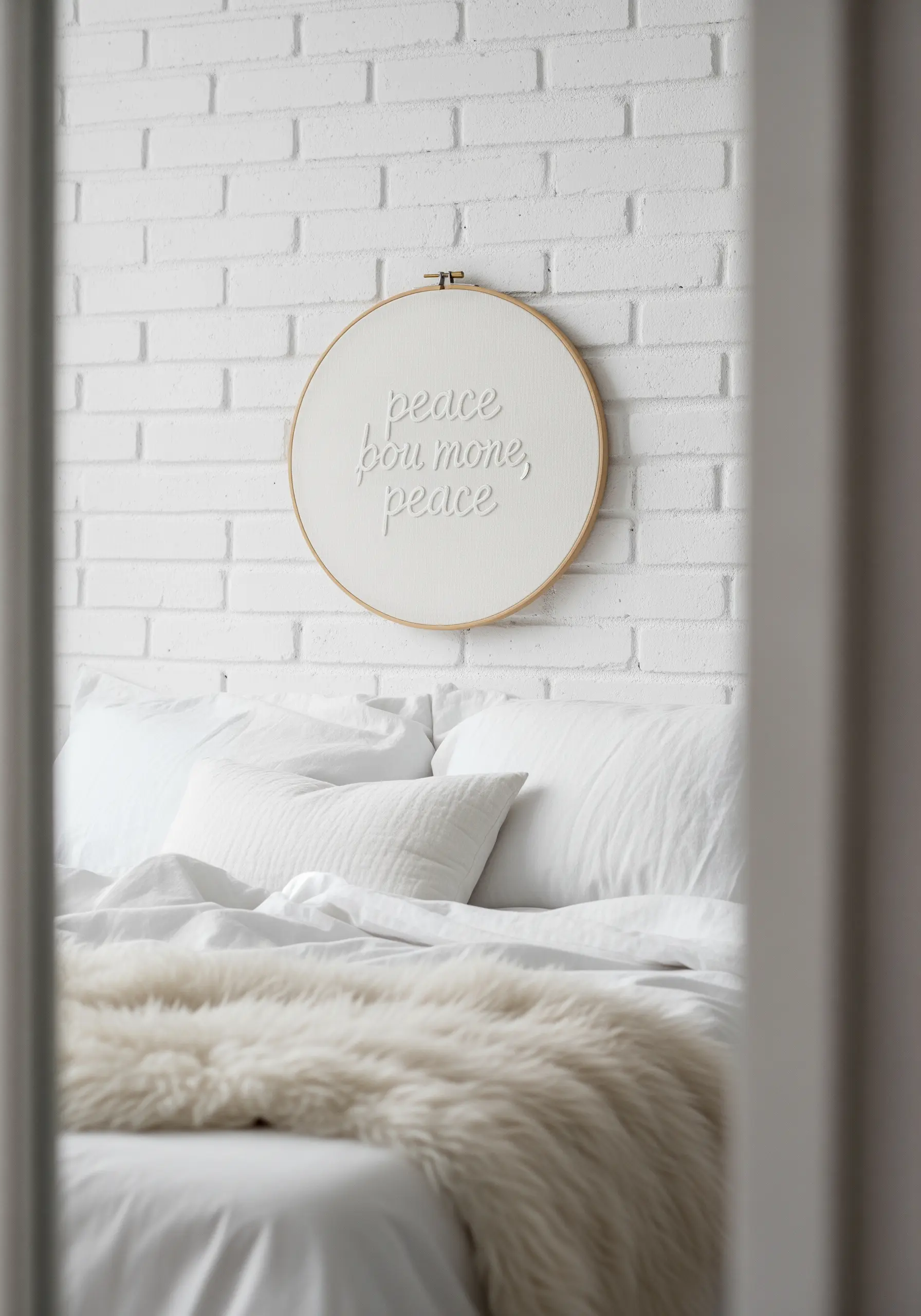
Create a powerfully serene statement by removing color and focusing entirely on texture.
This technique, known as whitework, relies on the interplay of light and shadow on your stitches.
Use a thick thread like pearl cotton or all six strands of floss, and employ a padded satin stitch to create raised, sculptural letters.
The result is a sophisticated and tactile piece of art that invites a closer look and feels incredibly peaceful.
9. Create a Celestial Scene on a Dark Canvas
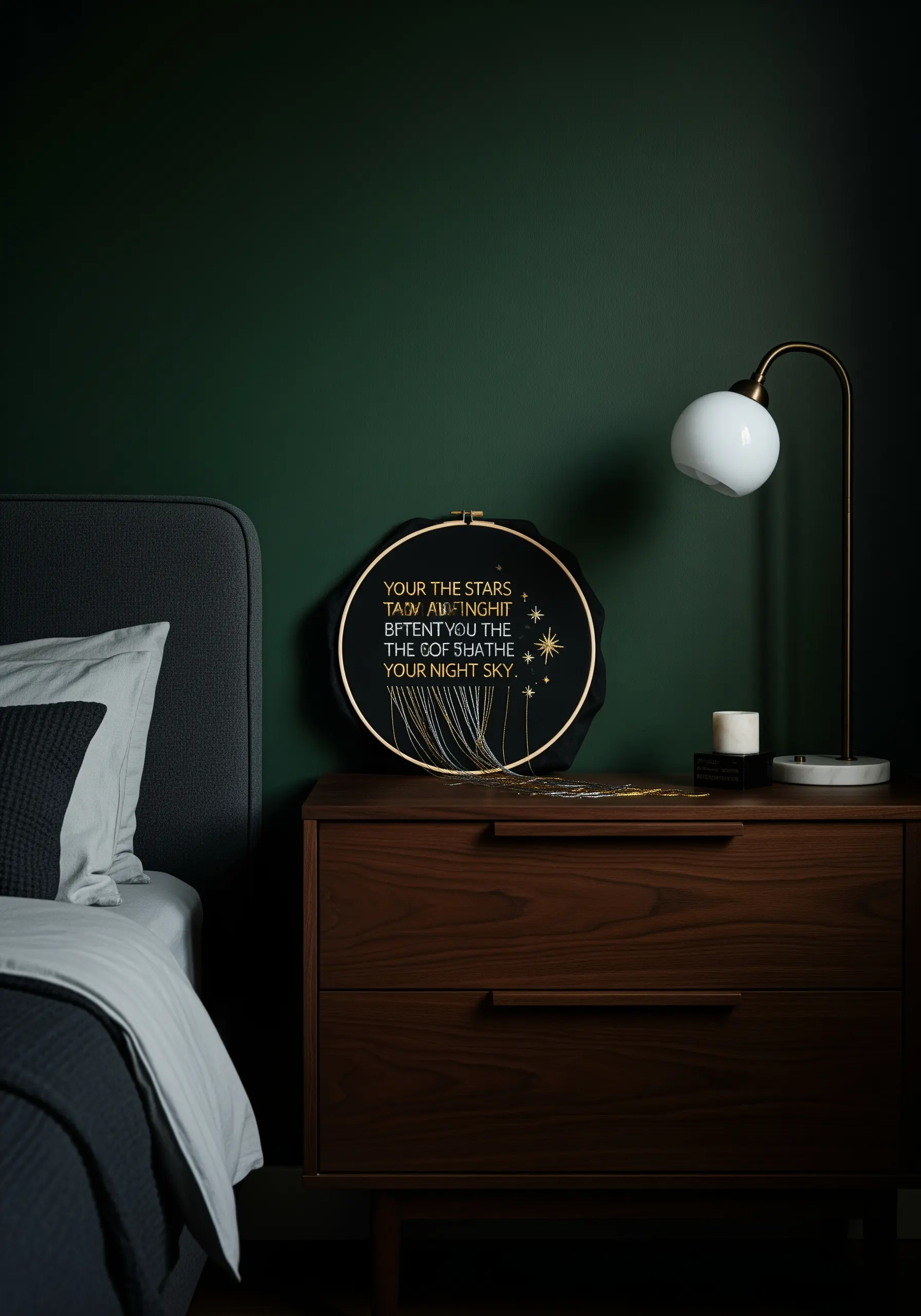
Use black or navy fabric as a dramatic backdrop to make light and metallic threads shine like stars.
For delicate starbursts, use a single strand of metallic floss and create a series of straight stitches radiating from a central point.
To craft the cascading stardust, stitch long, loose straight stitches of varying lengths, allowing them to drape gracefully at the bottom of the hoop.
This technique adds a magical sense of movement and wonder to your celestial quote.
10. Tell a Story with a Triptych of Hoops
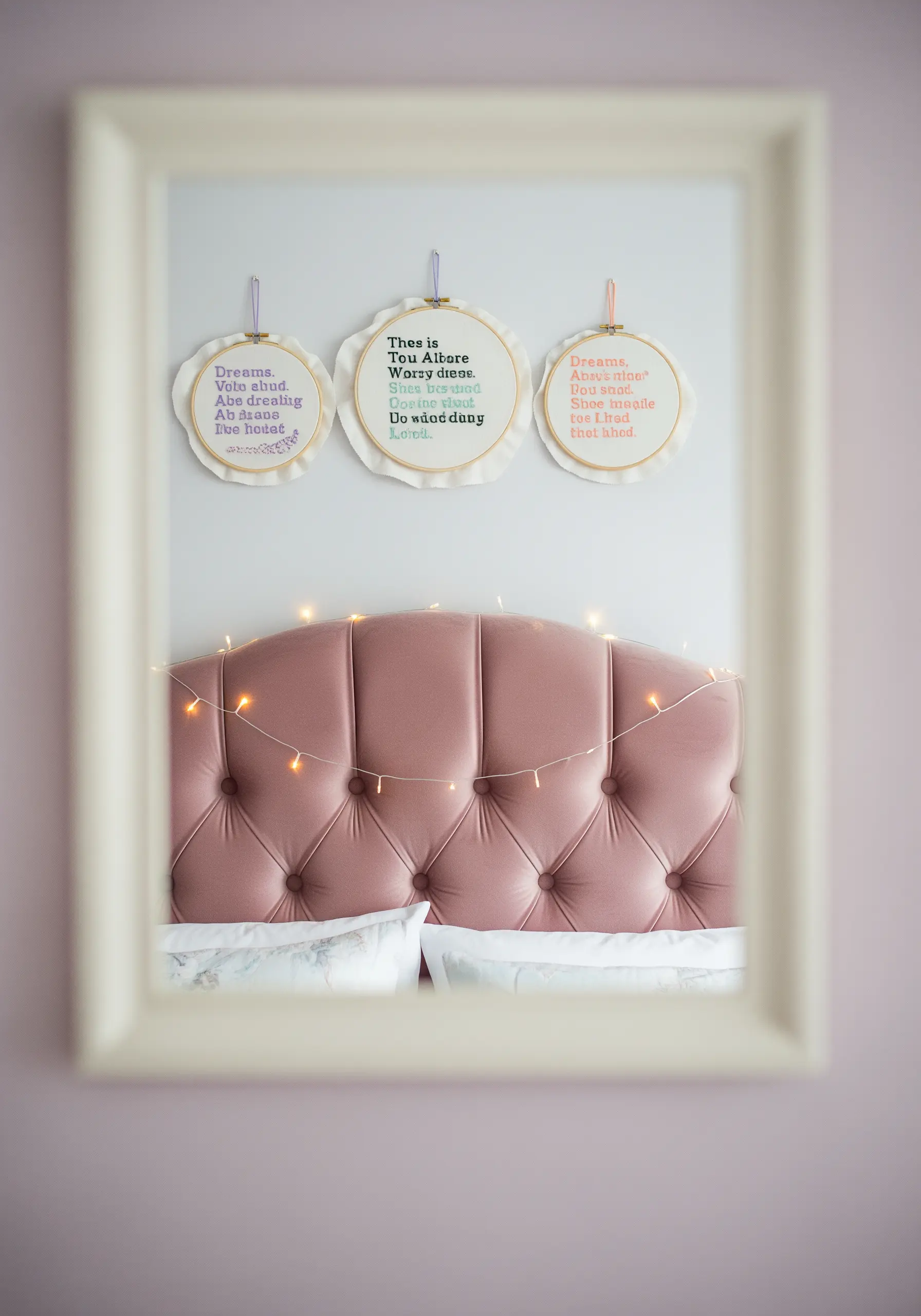
Amplify the impact of your message by splitting a longer quote or theme across a trio of hoops.
Maintain visual harmony by using a consistent color palette, font style, and fabric across all three pieces.
To give them a polished, decorative finish, trim the excess fabric with pinking shears for a zig-zag edge or glue a circle of scalloped felt to the back.
This elevates the individual hoops into a cohesive art installation over a headboard or dresser.
11. Use Color Blocking for a Joyful Message

Make a simple quote pop with energy by using bright, distinct colors for each word.
To give the letters a soft, almost plush appearance, use a padded satin stitch.
First, fill the shape of each letter with horizontal straight stitches, then cover those with vertical satin stitches.
This technique raises the letters from the fabric, making the colors appear more saturated and giving the piece a playful, three-dimensional quality.
12. Capture Light with Sheer Fabric Embroidery
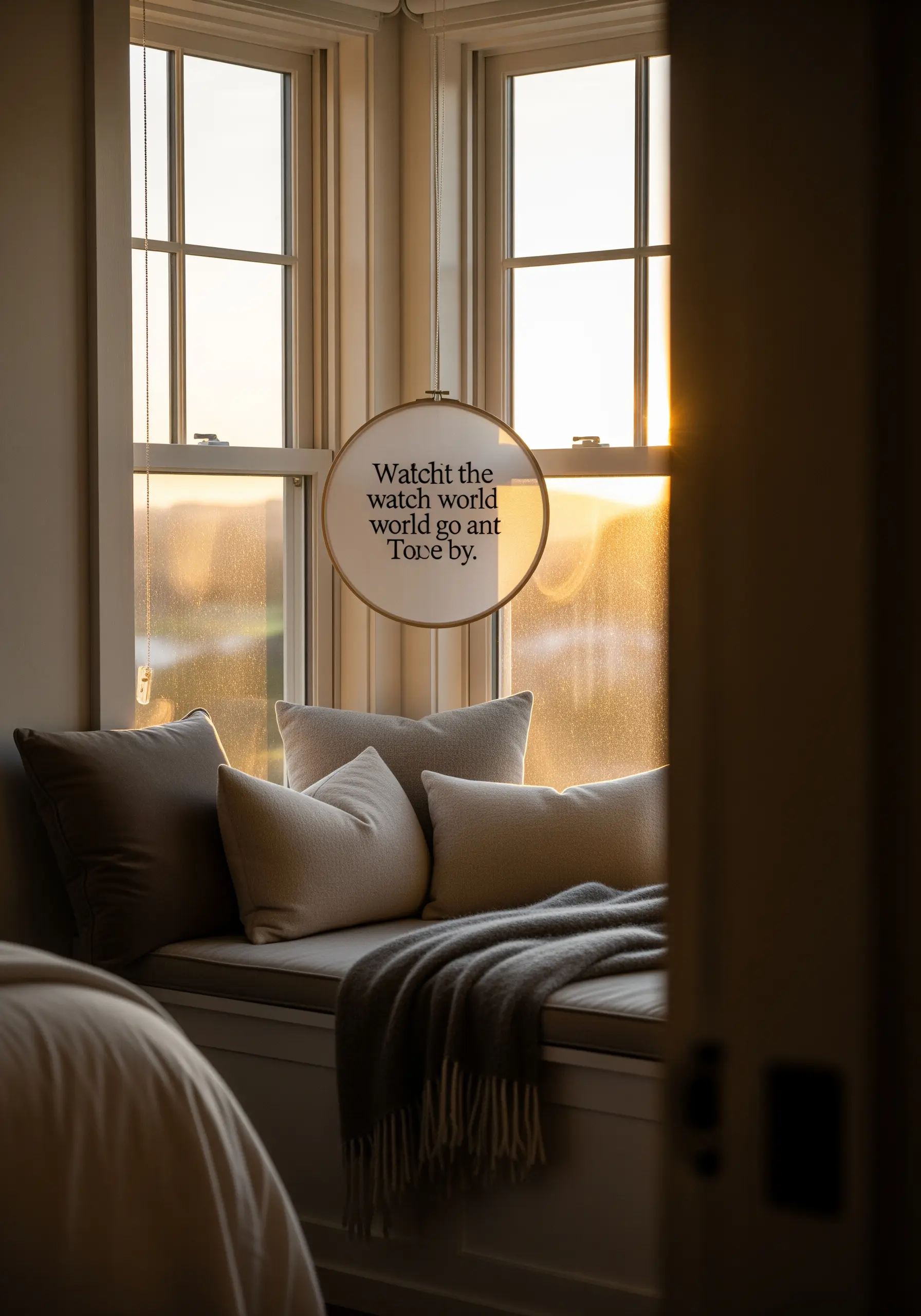
Create a design that seems to float in mid-air by stitching your quote onto a sheer fabric like organza or voile.
To keep the delicate fabric from puckering, hoop it with a layer of water-soluble stabilizer.
This provides the necessary tension for even stitches and simply rinses away with warm water when you’re finished.
Since the back of your work will be visible, be extra mindful to keep your stitches neat and secure your threads carefully.
13. Weave a Romantic Wreath of Roses
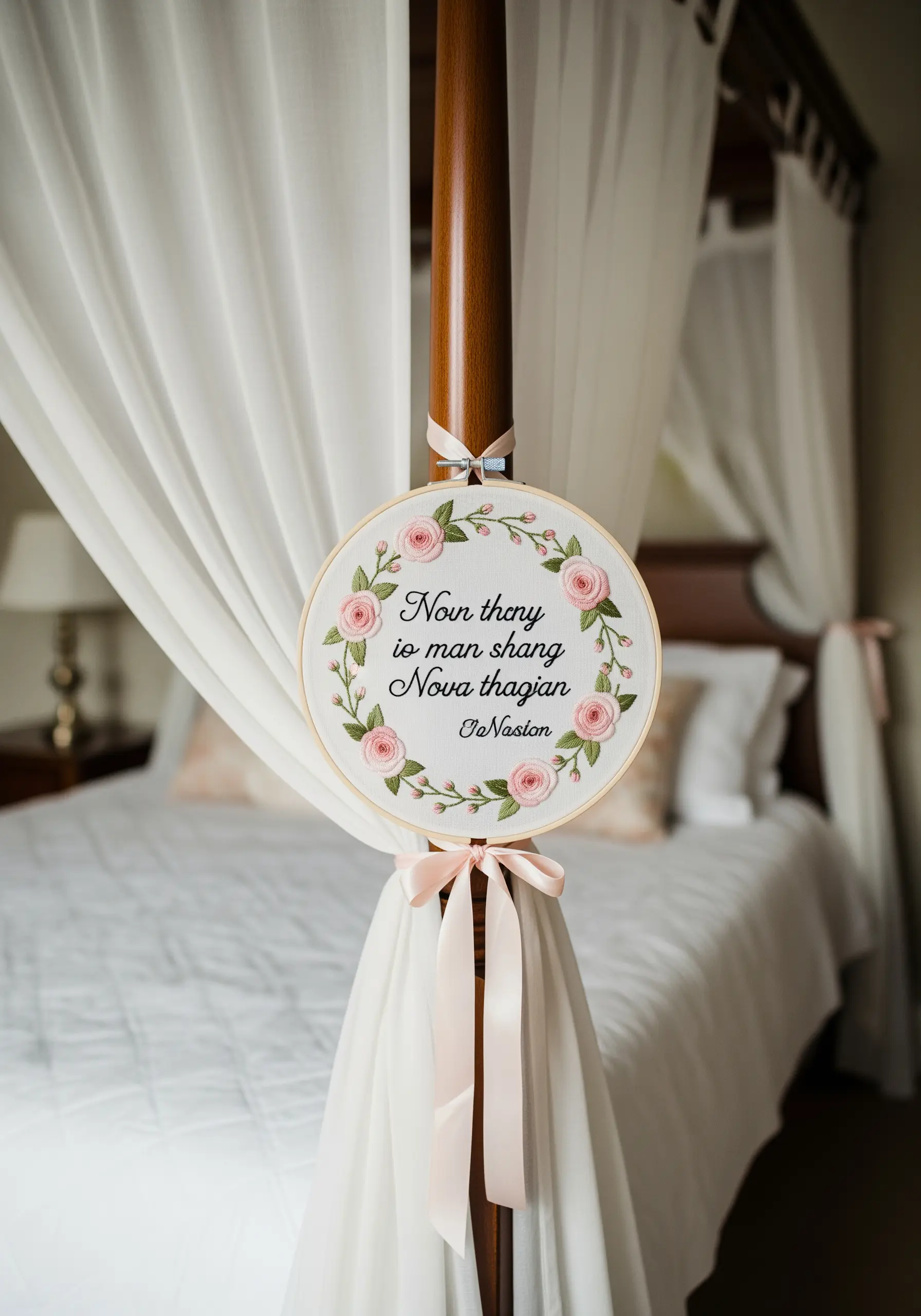
Frame your quote with a timeless floral wreath using the wonderfully simple wagon wheel rose stitch.
Create a foundation of five straight stitches like the spokes of a wheel, then weave your thread over and under each spoke until you have a full, dimensional rose.
Vary the tightness of your weave for different bloom effects—tighter for a bud, looser for an open flower.
Pair them with simple fishbone stitch leaves for a classic, romantic design.
14. Add Cottage Charm with Patterned Fabric
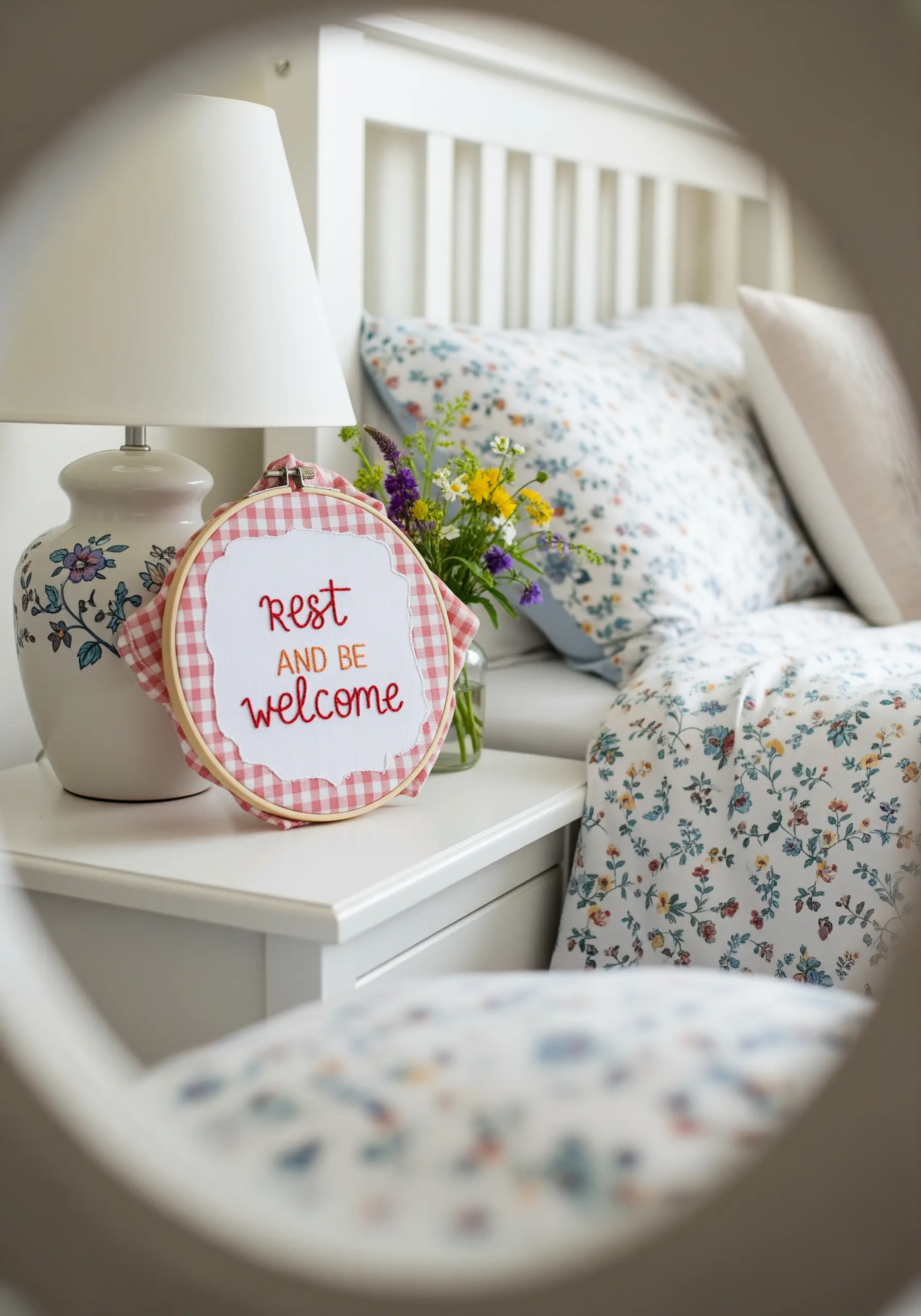
Let your fabric do some of the decorative work by choosing a classic pattern like gingham as your canvas.
The key to readability is high contrast; select a thread color that stands out boldly against both colors in the pattern.
A simple, confident script stitched with all six strands of floss ensures your message remains the focal point.
For a final polished touch, wrap the outer hoop with a coordinating fabric ribbon.
15. Balance Text with Botanical Line Art
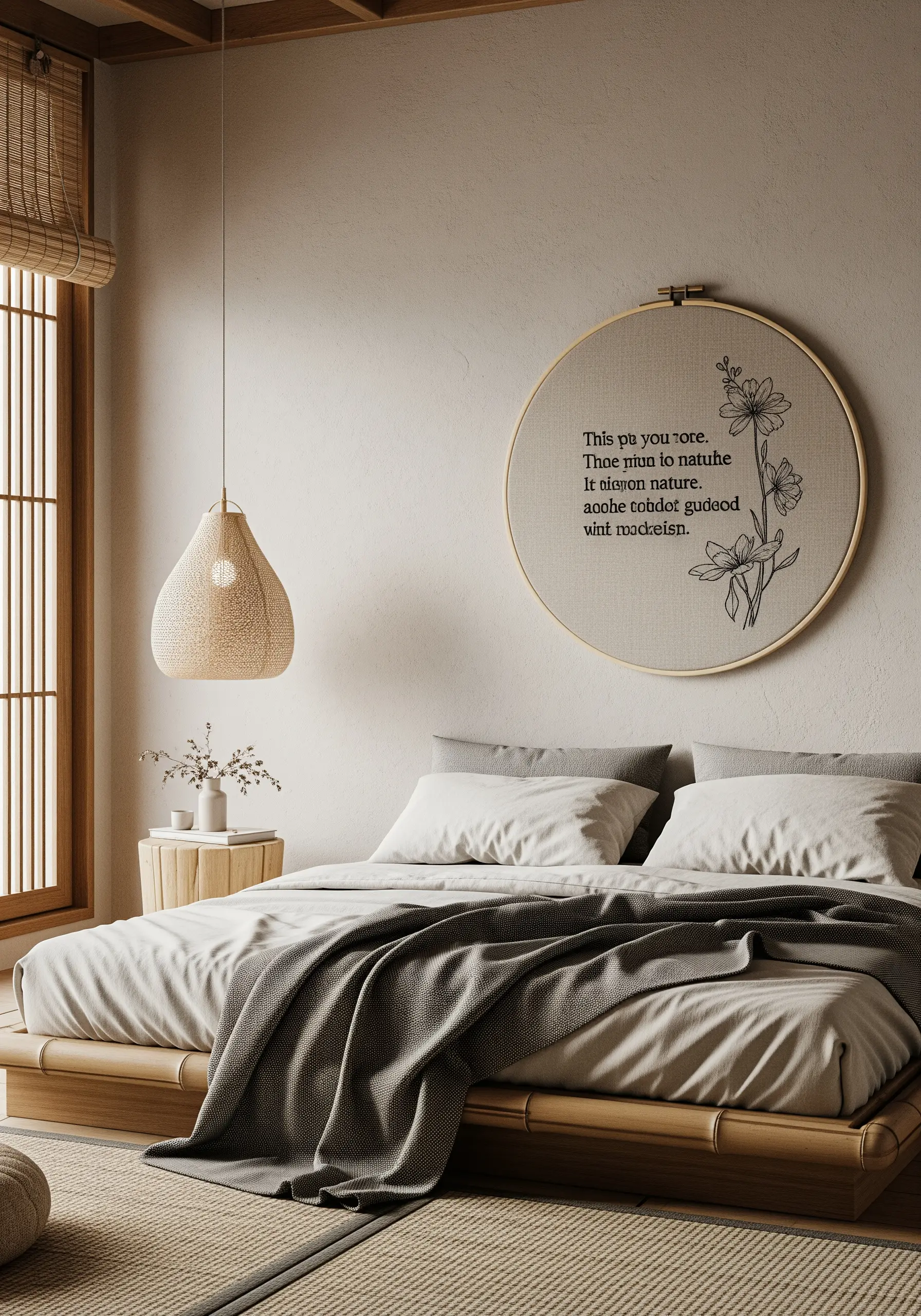
For a serene, modern aesthetic, combine your text with delicate botanical line art.
Use a single strand of black or charcoal grey floss and a neat backstitch to achieve a fine, ink-drawn look.
Create a balanced and contemporary composition by placing the text on one side and the illustration on the other, leaving plenty of negative space.
This asymmetrical layout feels intentional, calm, and effortlessly elegant.
16. Compose a Maximalist Floral Tapestry

Fill your entire hoop with a riot of color and texture to create a stunning maximalist backdrop for your quote.
Use a dense combination of French knots, lazy daisy stitches, and short, layered straight stitches to ‘paint’ a field of flowers.
To ensure your lettering stands out, stitch it last. First, fill the letters with a solid, light-colored satin stitch, then outline them with a single strand of a dark color to create a crisp, defined edge.
17. Stitch the Calming Motion of Ocean Waves
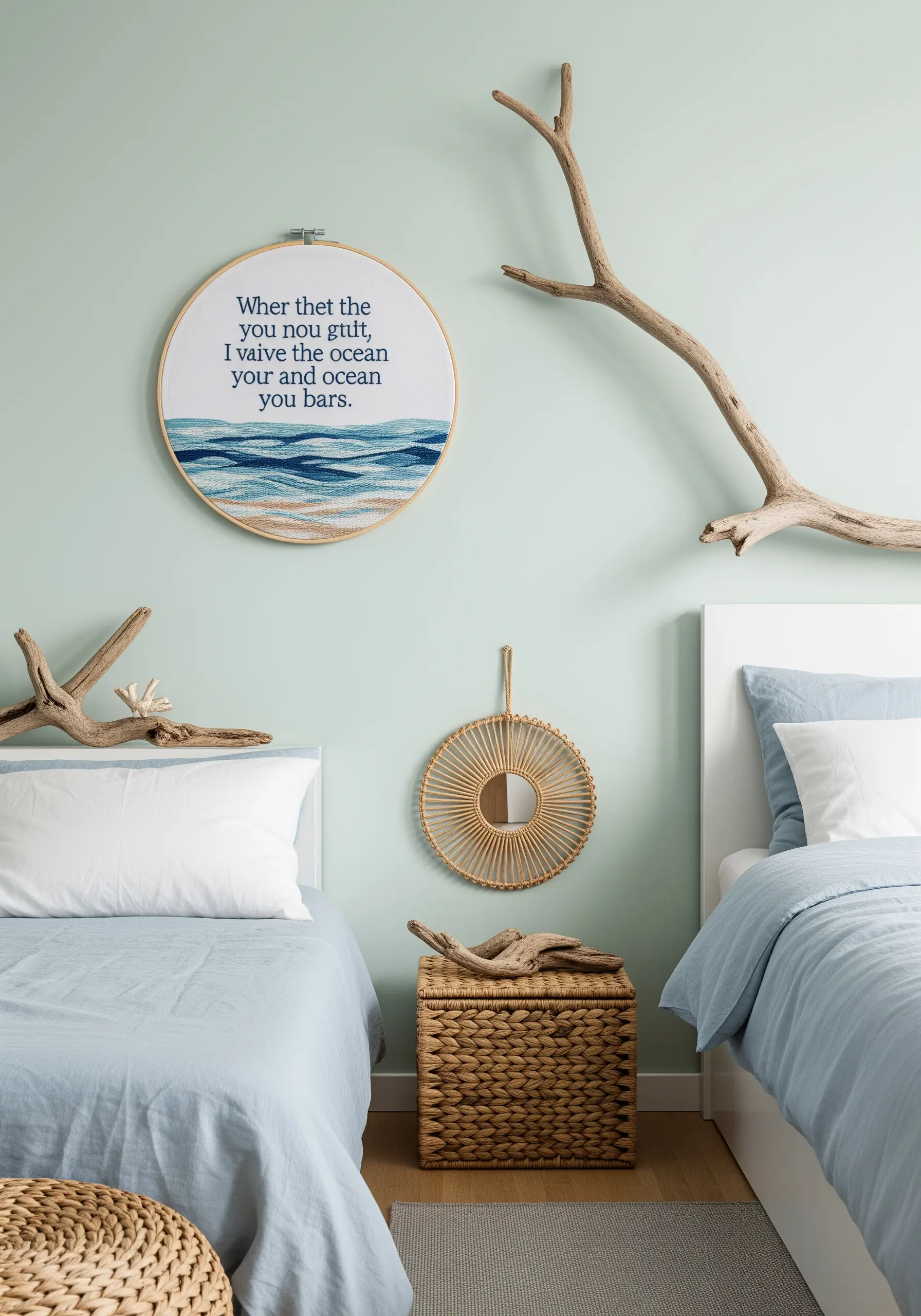
Capture the essence of the coast by recreating the texture of sand and sea with thread.
Use layered rows of split stitch or long-and-short stitch in varying shades of blue, aqua, and white to build depth and movement in the water.
For the shoreline, scatter French knots in sandy beige and ecru tones to mimic the texture of wet sand.
This technique transforms the lower half of your hoop into a miniature embroidered landscape.
18. Emphasize Meaning with Color and Scale
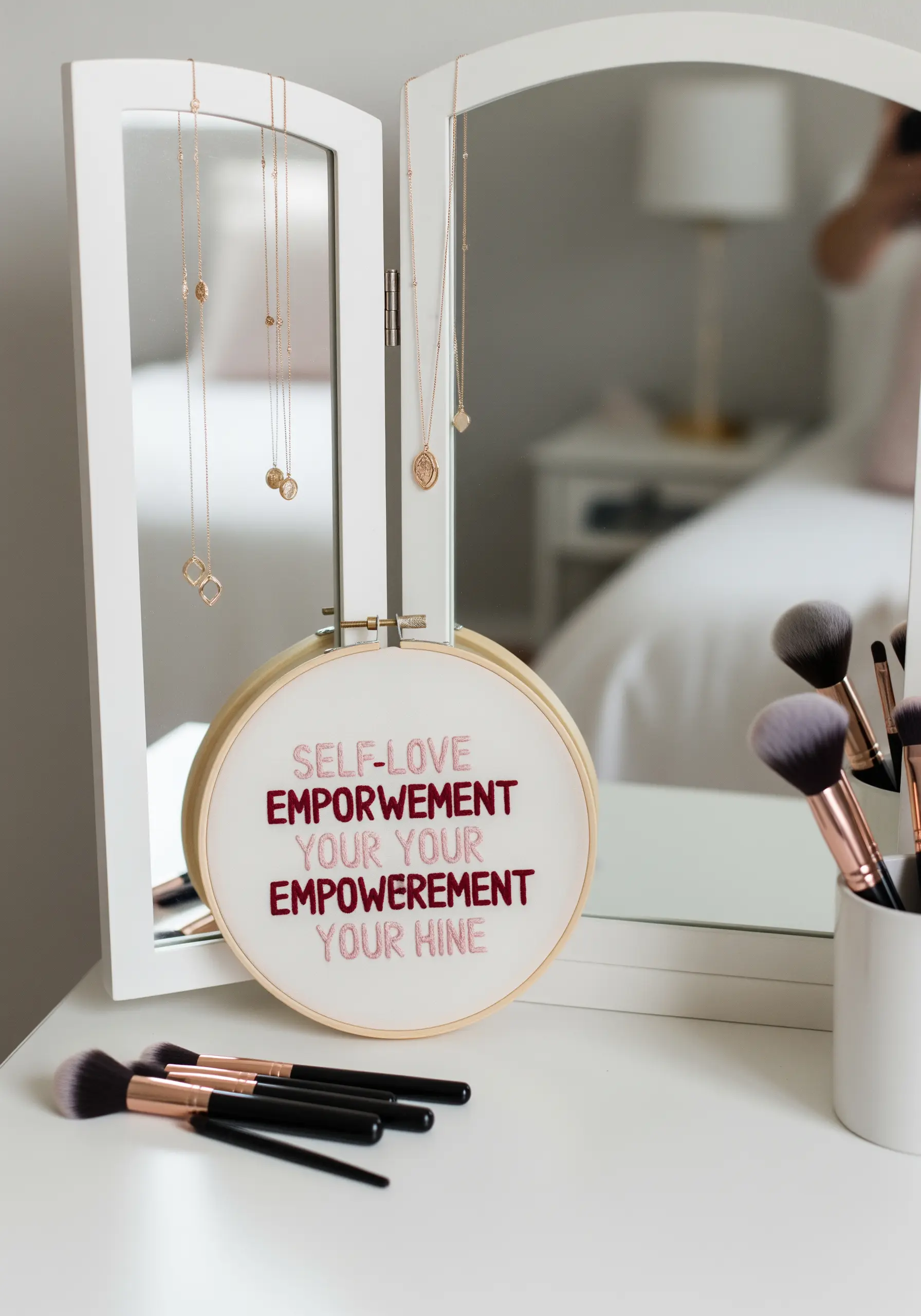
Give certain words in your quote more weight by strategically changing their color or size.
Stitching a key word in a bold, contrasting hue immediately draws the eye and reinforces the core message.
Using a consistent, dense satin stitch for all the lettering creates a cohesive, powerful look, even with multiple colors.
This simple typographic choice turns a standard quote into a more dynamic and intentional piece of art.
19. Design with Clean, Graphic Typography
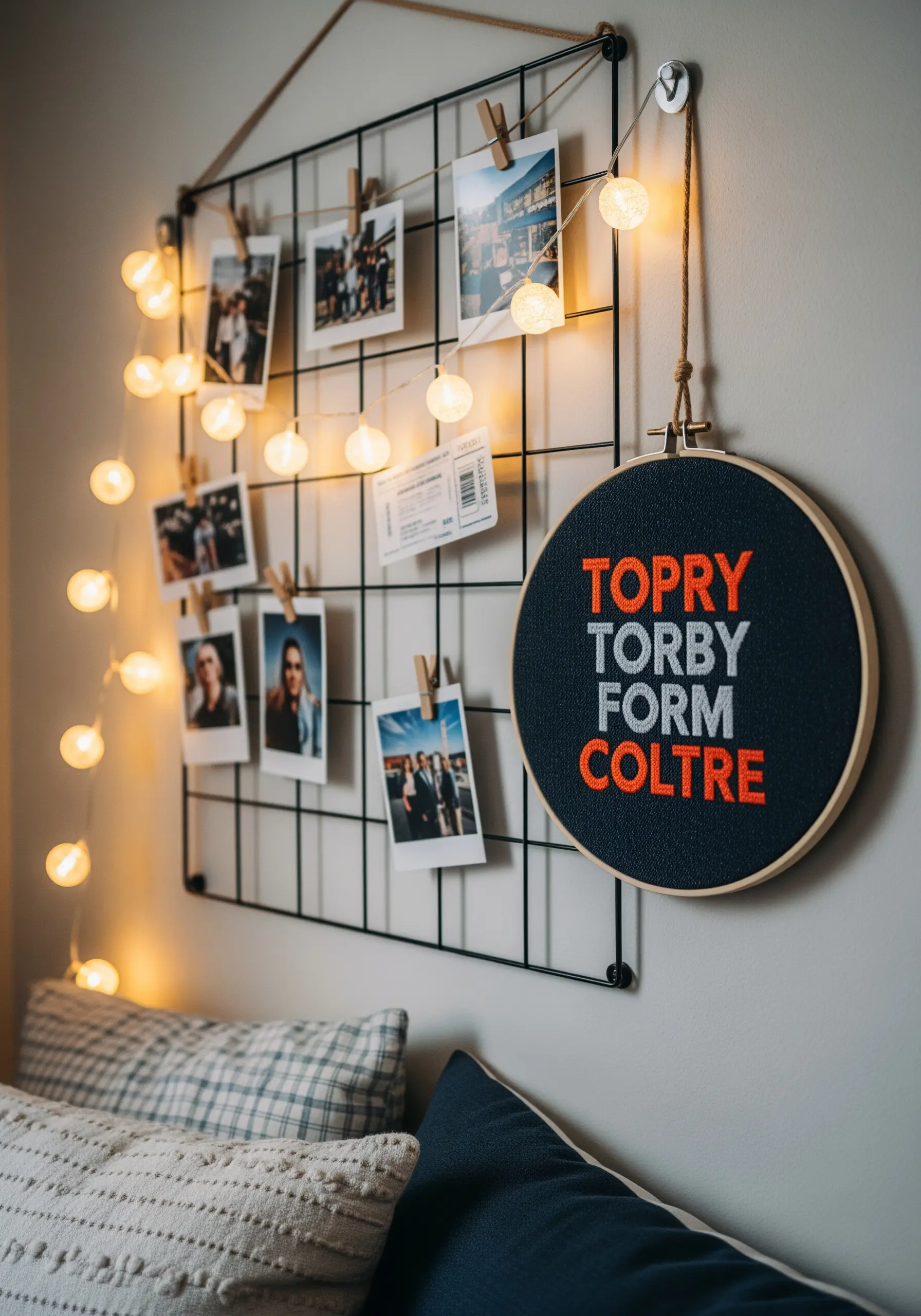
Achieve a bold, contemporary look by choosing a sans-serif font with strong, geometric lines.
To ensure perfect alignment and spacing, lightly draw a grid on your fabric with a water-soluble marker before you start.
Stitch on a dark, evenweave fabric like black Aida cloth to make bright thread colors feel almost electric.
The combination of the grid-like fabric and the clean font creates a modern, almost digital aesthetic.
20. Craft an Elegant Literary Statement Piece
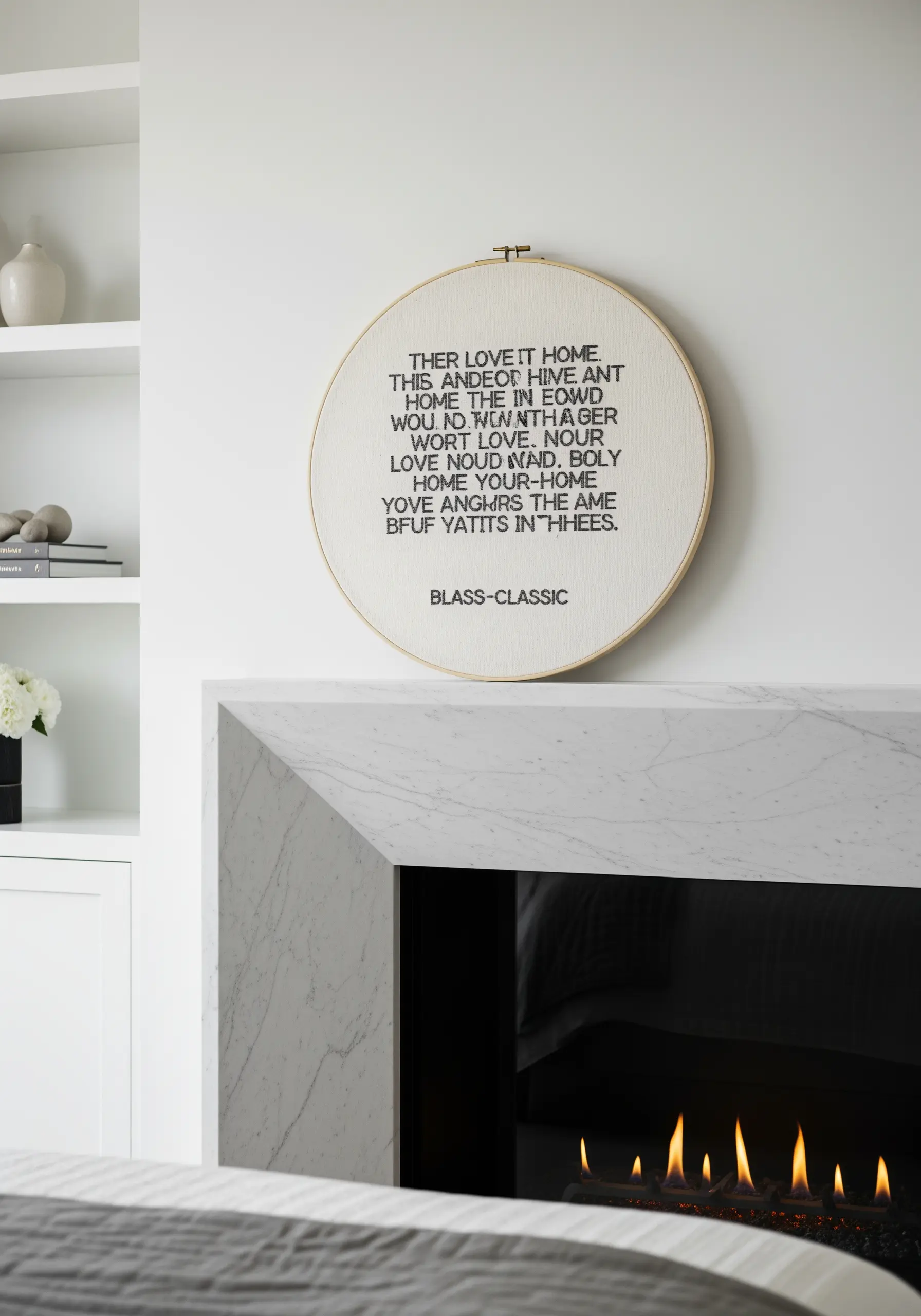
When embroidering a large block of text, readability and consistency are paramount.
Choose a classic, clean font and use only two or three strands of floss to prevent the letters from looking crowded or bulky.
Pay close attention to the spacing between words and lines to create an even, pleasing rhythm across the piece.
Stitching the author’s name in a slightly different style provides a subtle visual anchor and a professional finishing touch.