Have you ever felt that your stitching, while beautiful, is missing a certain depth or story? It’s a common feeling—the desire to move beyond purely decorative work and create something that resonates on a deeper level.
This is where looking to global art forms can transform your practice. It’s not about copying, but about understanding a new visual language—the bold graphicism of Slavic cross-stitch, the meditative rhythm of Japanese Sashiko, or the radiant light of Indian Shisha work.
By exploring these techniques, you are not just learning a new stitch; you are learning a new way to see. You are borrowing from centuries of artistry to infuse your own work with fresh perspective, texture, and meaning. Let these ideas guide you toward creating handmade objects that feel less like projects and more like personal artifacts.
1. Japanese Sashiko-Inspired Line Art

Create a bold statement piece by translating the principles of Japanese Sashiko stitching into large-scale wall art.
Use a single, high-contrast thread color—like optic white on indigo linen—to give traditional motifs a modern, graphic feel.
Focus on stitch uniformity, using a consistent backstitch or running stitch to achieve clean, rhythmic lines that draw the eye.
Balance dense geometric patterns in one quadrant with flowing, organic motifs like waves or leaves in another to create a dynamic yet harmonious composition.
2. Vibrant Otomí-Inspired Textile Narratives
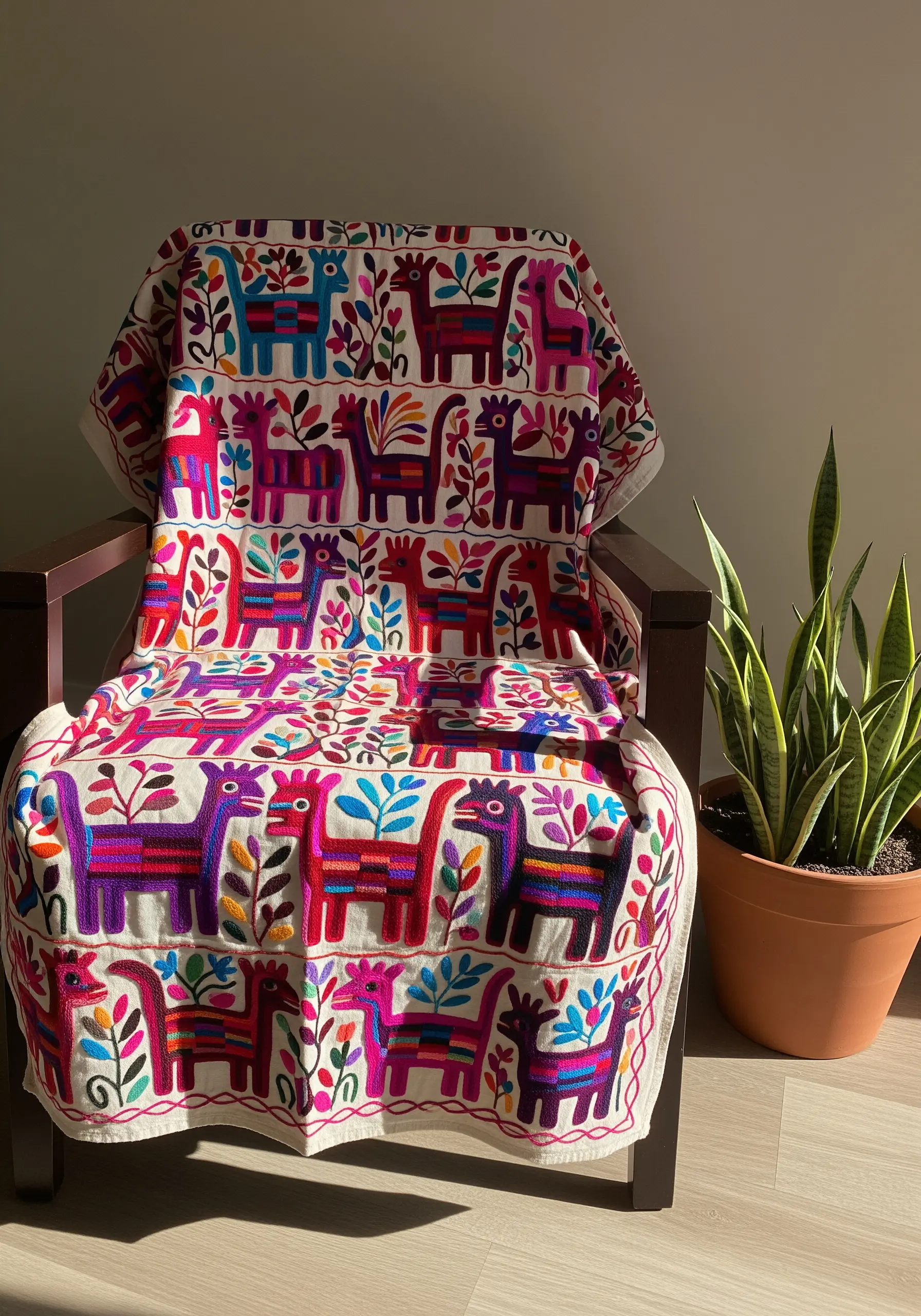
Channel the joyful energy of Mexican Otomí embroidery by filling stylized figures with bold, dense stitches.
Swap standard cotton floss for fine crewel wool or tapestry yarn to achieve a plush, raised texture that makes the colors feel even richer.
Define each shape with a crisp chain stitch or blanket stitch outline before filling it with long-and-short stitch.
Embrace a non-naturalistic color palette—think fuchsia deer and turquoise botanicals—to tell a playful, folkloric story through your textile.
3. Pointillism with Textured French Knots

Translate the meditative rhythm of Australian Aboriginal dot painting into a tactile embroidery piece using densely packed French knots.
Vary the size of your knots by adjusting the number of times you wrap the thread around the needle—one wrap for small dots, two or three for larger ones.
This subtle variation in size adds depth and dimension that mimics the feel of layered paint.
Work with an earth-tone palette of ochre, rust, and cream on a dark fabric base to create a grounded, organic composition.
4. Sculptural Cord Couching on Vessels

Transform simple vases or bowls into sculptural art by using couching to attach thick cord or yarn to their surfaces.
First, wrap your vessel tightly in a base fabric like linen or canvas, securing it with a strong adhesive.
Then, lay down your decorative cord and anchor it with small, perpendicular stitches using a fine thread that matches the cord—this makes your anchoring stitches virtually disappear.
This technique adds bold, graphic lines and a compelling tactile dimension to any three-dimensional object.
5. Radiant Shisha Mirror Embellishments
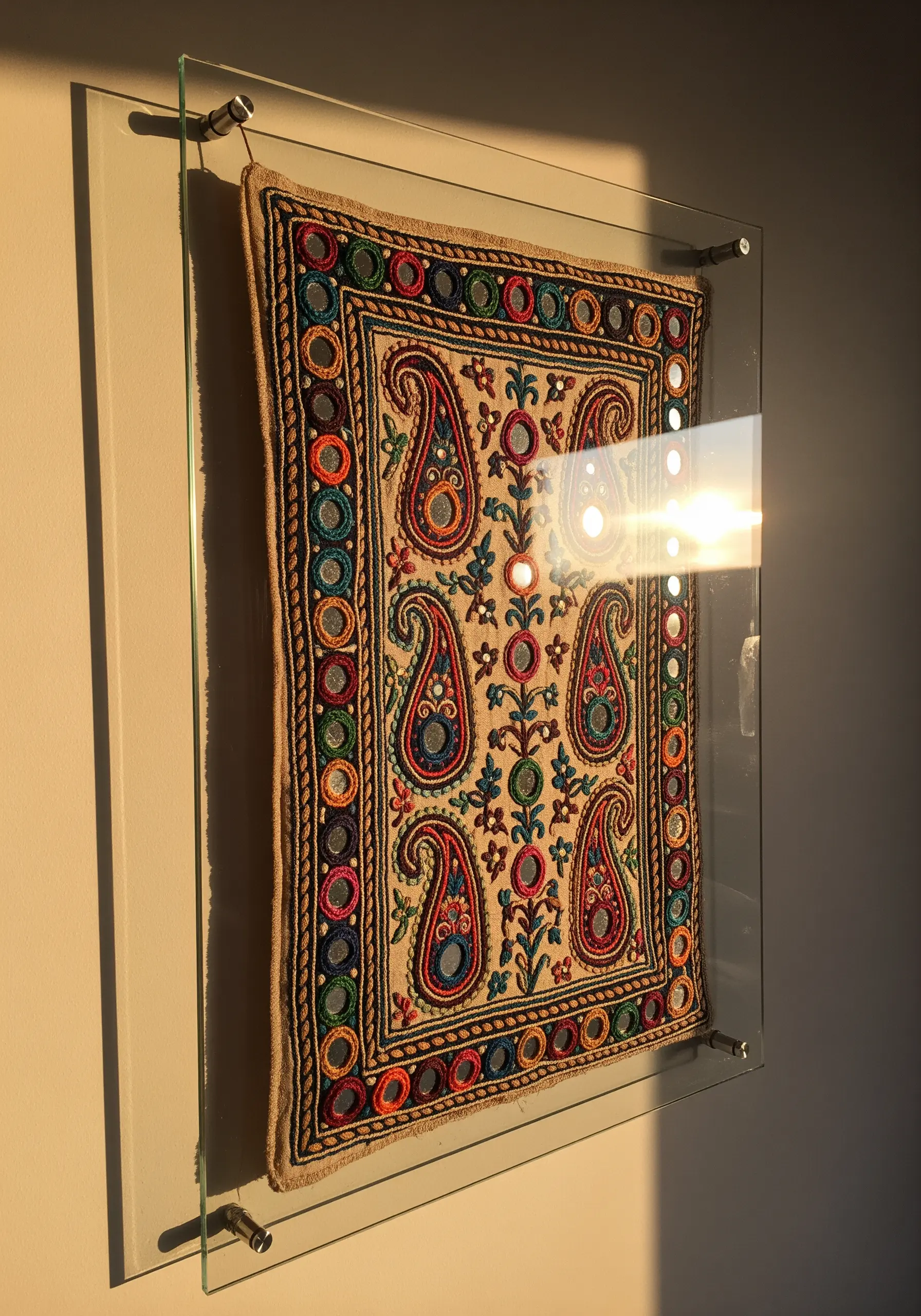
Integrate the light-catching magic of Indian Shisha embroidery by anchoring small craft mirrors (shisha) onto your fabric.
Secure each mirror with a specialized stitch frame—a series of foundation stitches followed by a tight buttonhole or Cretan stitch border that locks it in place.
Surround the mirrors with vibrant chain stitch outlines and classic paisley motifs to create a rich, layered design.
The reflective quality of the mirrors adds a dynamic element of light and movement that brings the entire textile to life.
6. Minimalist Scandinavian-Folk Mobiles

Create a serene nursery mobile by applying delicate embroidery to simple felt shapes, inspired by Scandinavian folk art.
Use a single strand of contrasting floss to stitch geometric details onto the felt pieces with a clean backstitch or running stitch.
The beauty of this style lies in its restraint; the simple lines add character without overwhelming the soft, minimalist forms.
Lightly stuff each shape with poly-fil before sewing it closed to give the birds and houses a gentle, three-dimensional presence.
7. High-Relief Moroccan-Inspired Textures
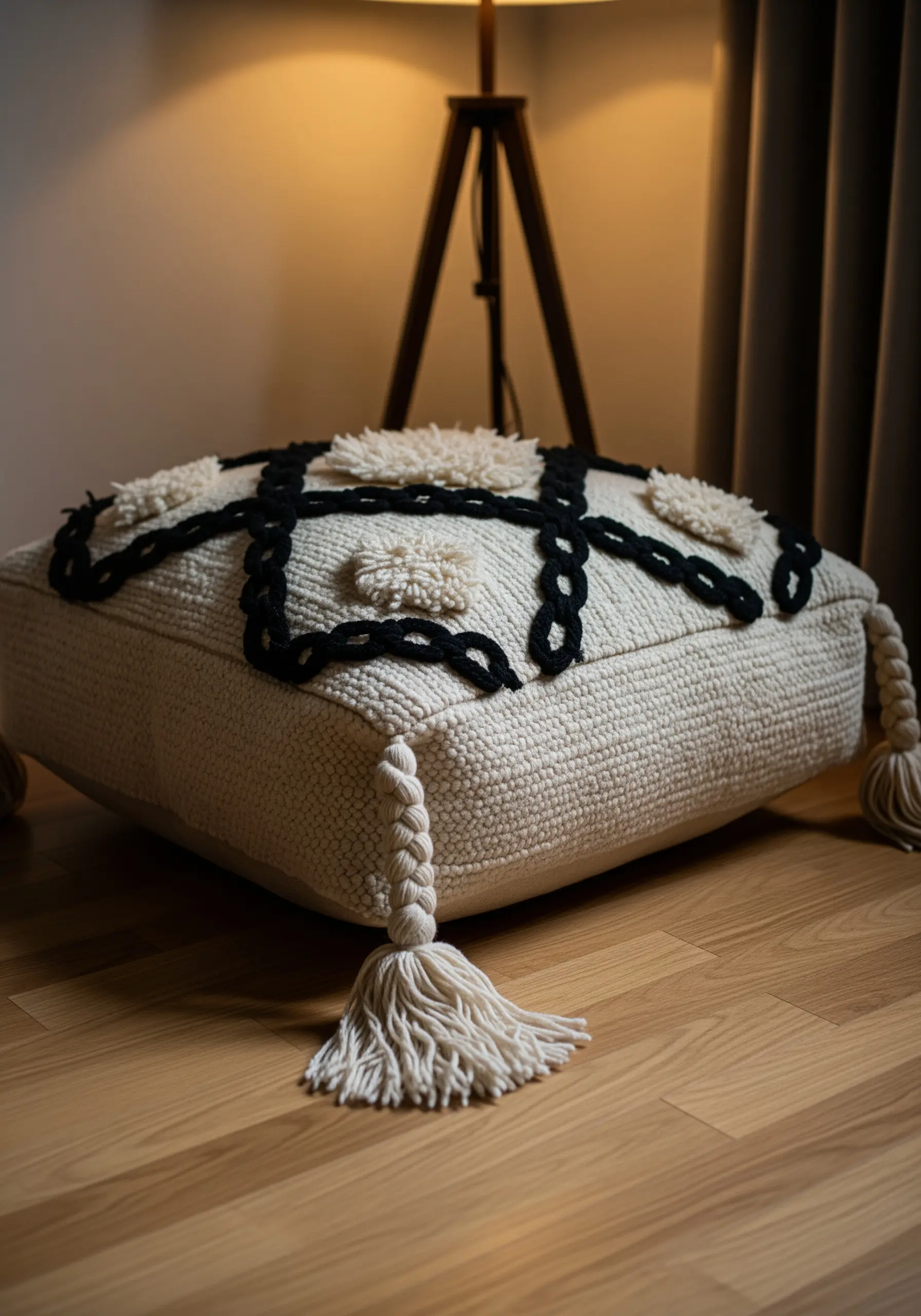
Explore the rich textures of Moroccan textiles by combining multiple high-relief techniques on a single cushion or wall hanging.
Use couching to secure chunky black yarn in bold geometric patterns, creating a strong graphic structure for your design.
Fill designated areas with Turkey work (or Ghiordes knots) and trim the loops to create plush, shaggy sections that invite touch.
Finish with thick, braided tassels for a piece where texture, not color, is the undisputed star, a hallmark of many cultural embroidery motifs.
8. Geometric String Art on Canvas
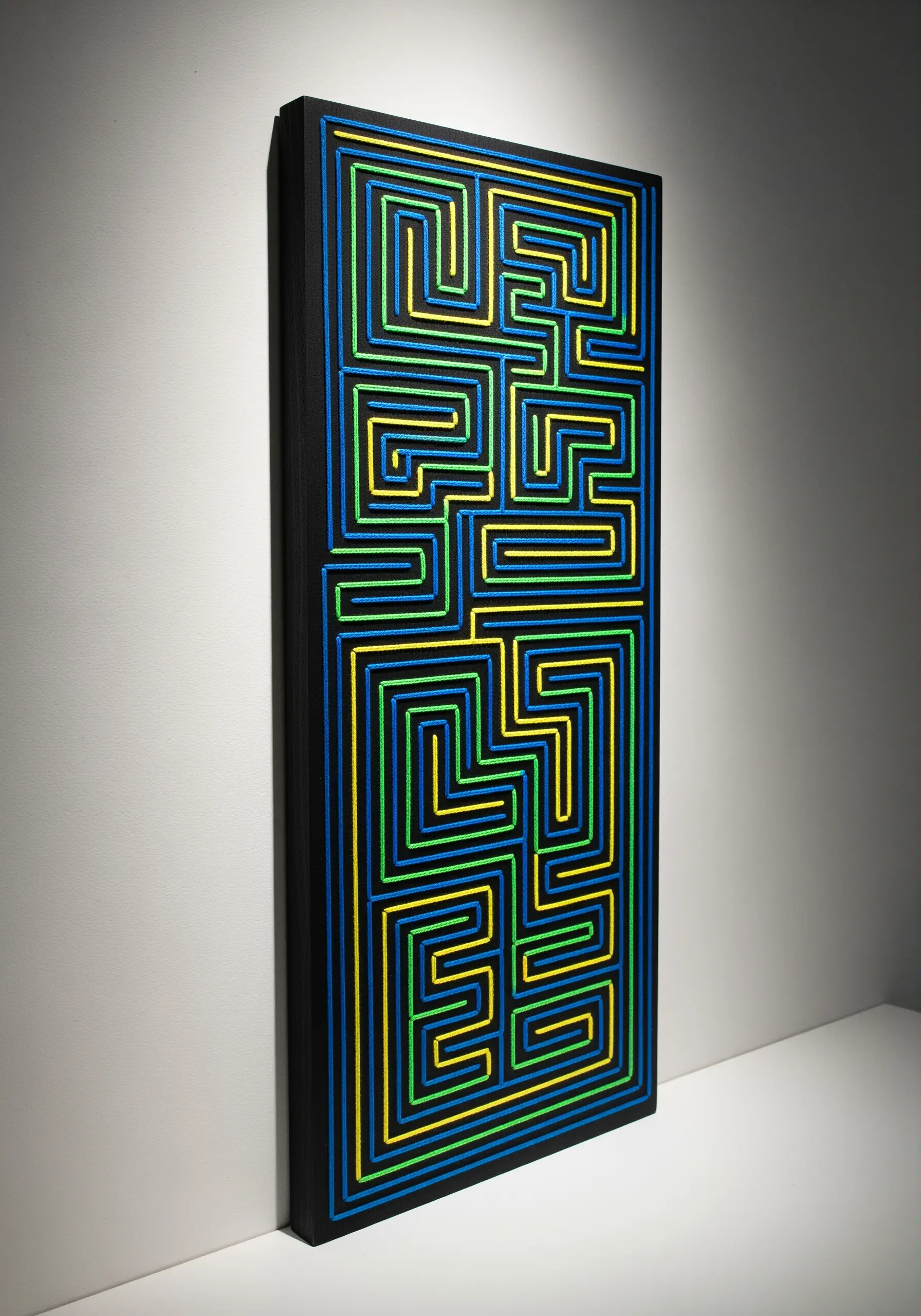
Channel the hypnotic precision of 70s string art by stitching geometric patterns directly onto a painted canvas.
Prime and paint a stretched canvas with black acrylic paint to create a stark, non-reflective background.
Use a long, sharp needle to pre-pierce your design points, then use a vibrant, high-sheen thread like pearl cotton to stitch your maze-like pattern.
The clean lines and vivid colors against the absolute black create a powerful optical effect that feels both retro and modern.
9. Atmospheric Chinese Silk Shading

Capture the ethereal quality of traditional Chinese landscape paintings using the delicate art of silk shading, or thread painting.
Work with single strands of silk floss on a silk or fine cotton ground fabric; the natural luster of the thread is essential for this technique.
Use the long-and-short stitch to blend colors seamlessly, creating soft gradients that suggest mist-covered mountains and tranquil waters.
This technique requires patience, but it transforms your needle into a paintbrush, allowing you to create truly painterly effects.
10. Symmetrical Slavic Cross-Stitch Linens

Embrace the bold, graphic power of Slavic folk embroidery by creating a geometric table runner with cross-stitch.
Choose an evenweave fabric like linen or Aida cloth to ensure your stitches are uniform and perfectly square, which is critical for geometric patterns.
Work with a limited, high-contrast palette—traditionally red and black on a natural linen background—to give the motifs their characteristic strength and clarity.
The precision and symmetry of the design will transform a simple piece of fabric into a functional work of art.
11. Iznik Tile-Inspired Floral Motifs

Recreate the brilliant color and crisp lines of Turkish Iznik pottery using dense satin stitch on small stretched canvases.
Use a thread with a subtle sheen, like pearl cotton, and pack your satin stitches tightly together to achieve a smooth, ceramic-like surface.
Before filling a shape with color, outline it with a single, fine line of black or dark blue split stitch.
This outlining technique defines each petal and leaf, perfectly mimicking the dark outlines that characterize Iznik tilework.
12. Sculptural Celtic Knot Fiber Art

Construct a symbolic Celtic knot wall hanging by combining wrapping and weaving techniques with chunky fibers.
Create a wire frame in the shape of a triquetra or other Celtic knot to serve as your foundation.
Wrap the entire frame tightly with a bulky yarn, then weave a finer, contrasting thread—like a metallic silver—across the open spaces to create a web-like fill.
The interplay between the thick, braided frame and the delicate woven interior gives the piece both strength and elegance.
13. Radiant Indigenous-Inspired Beadwork
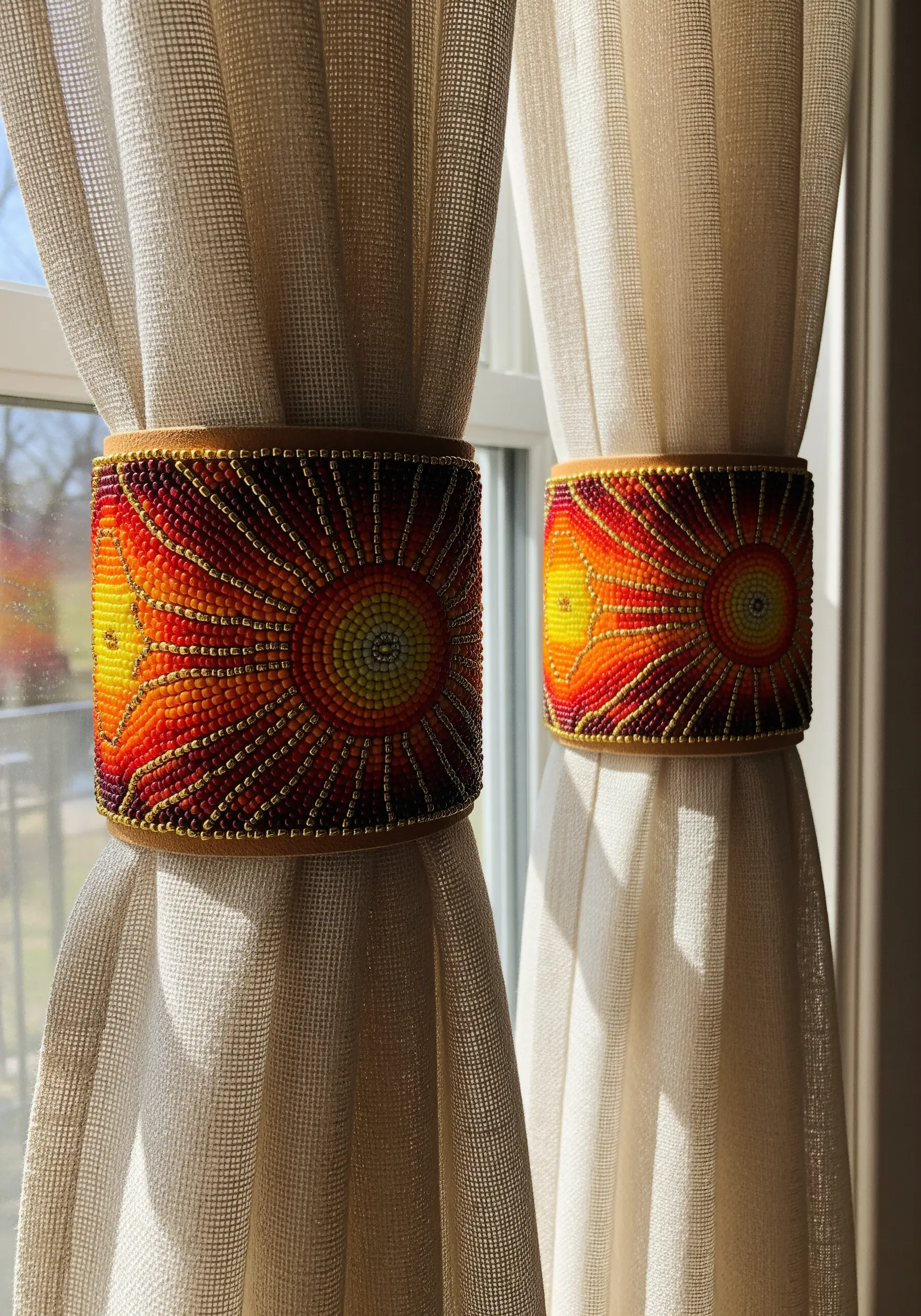
Stitch a radiant sunburst gradient onto fabric or leather using seed beads, inspired by Native American beadwork traditions.
Map out your color progression on graph paper first to ensure a smooth transition from yellows and oranges to deep reds.
Apply the beads using a consistent backstitch, stitching down two or three beads at a time for a secure and even surface.
Use this technique to create striking curtain tie-backs or embellishments for bags and jackets, adding a touch of handmade luxury.
14. Layered Macrame and Woven Tapestries

Create a stunning statement wall hanging by combining the open, airy structure of macrame with the dense, graphic quality of weaving.
Begin by creating a top panel with classic macrame knots, then use the unwoven tails of that section as the warp for your loom.
Weave a contrasting color block below the macrame, using a simple tabby weave to create a solid field of color.
This technique creates a piece with two distinct yet harmonious personalities, making it one of the most stunning mixed-fiber projects you can try.
15. Zhostovo-Inspired Thread Painting
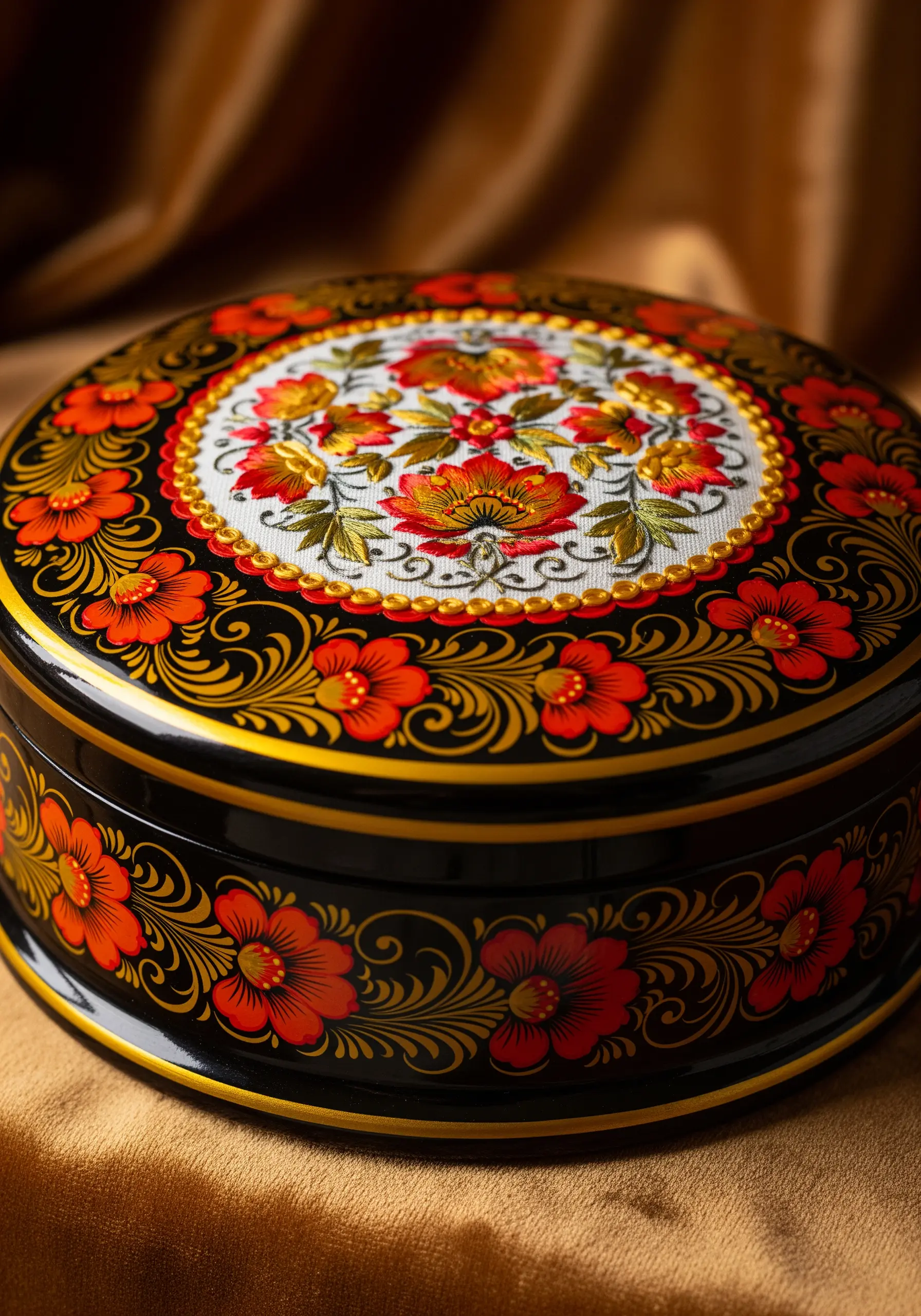
Mimic the glossy, dimensional look of Russian Zhostovo folk art painting with strategic thread shading and color layering.
Work on a black fabric background to make your floral colors appear exceptionally vibrant and luminous.
Use single strands of floss and meticulous long-and-short stitches, layering colors from dark to light to create pronounced highlights on petals and leaves.
This illusion of a light source gives the embroidery a painted, three-dimensional quality that feels like polished lacquer.
16. Interpretive ‘Mati’ Hoop Art Gallery
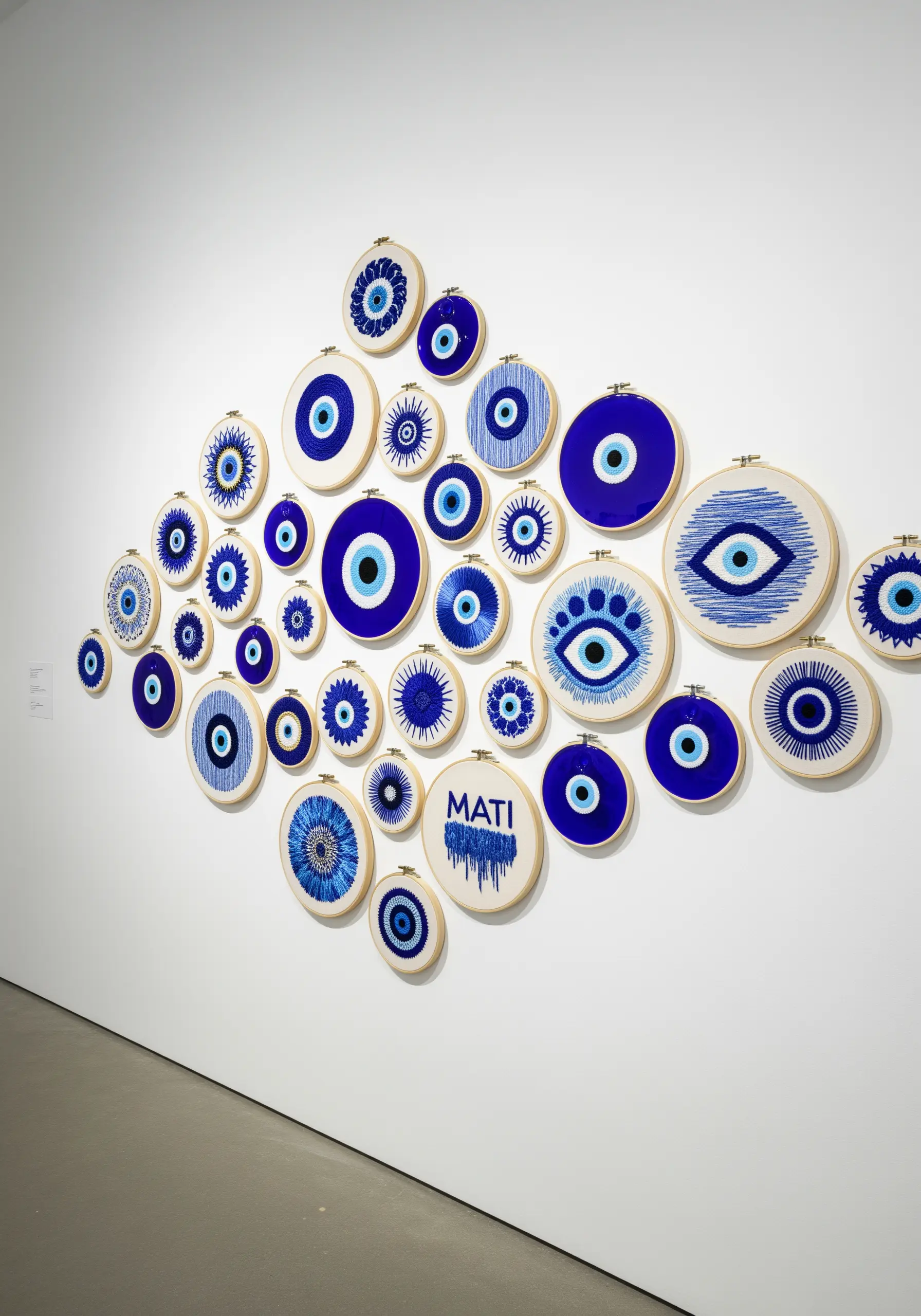
Explore a single, powerful symbol—the Greek ‘Mati’ or evil eye—by creating a collection of interpretive hoop art pieces for a gallery wall.
Challenge yourself to render the motif in different styles: one with perfect satin stitch, another with loose, sketchy seed stitches, and a third as an abstract composition of lines and circles.
Stick to a cohesive color palette of blues and white to unify the collection.
Grouping these varied interpretations together transforms simple hoops into a powerful, contemporary art installation, perfect for a minimal embroidery composition.
17. Sculptural Stumpwork Cactus Garden

Move your embroidery from two dimensions to three by creating a whimsical cactus garden using stumpwork techniques.
Craft individual pads and barrels by stitching over felt padding or shaping wire-edged fabric pieces.
Embellish these forms with textural stitches—like French knots for areoles or straight stitches for spines—before assembling your cactus.
This method allows you to build charming, everlasting sculptural plants that bring a playful and unexpected element to your decor.
18. Egyptian Revival Journal Cover

Create a journal cover with the regal elegance of ancient Egyptian art by combining appliqué with metallic thread couching.
Use fabric appliqué for the large blocks of color in the figures’ garments, securing the edges with a neat buttonhole stitch for a clean finish.
Outline the figures and add hieroglyphic details with couched gold metallic thread, which gives the design a luxurious, artifact-like quality.
The contrast between the matte linen fabric and the shimmering gold thread creates a rich, historical texture perfect for personalizing journals.
19. Batik-Inspired Seed Stitch Tapestry
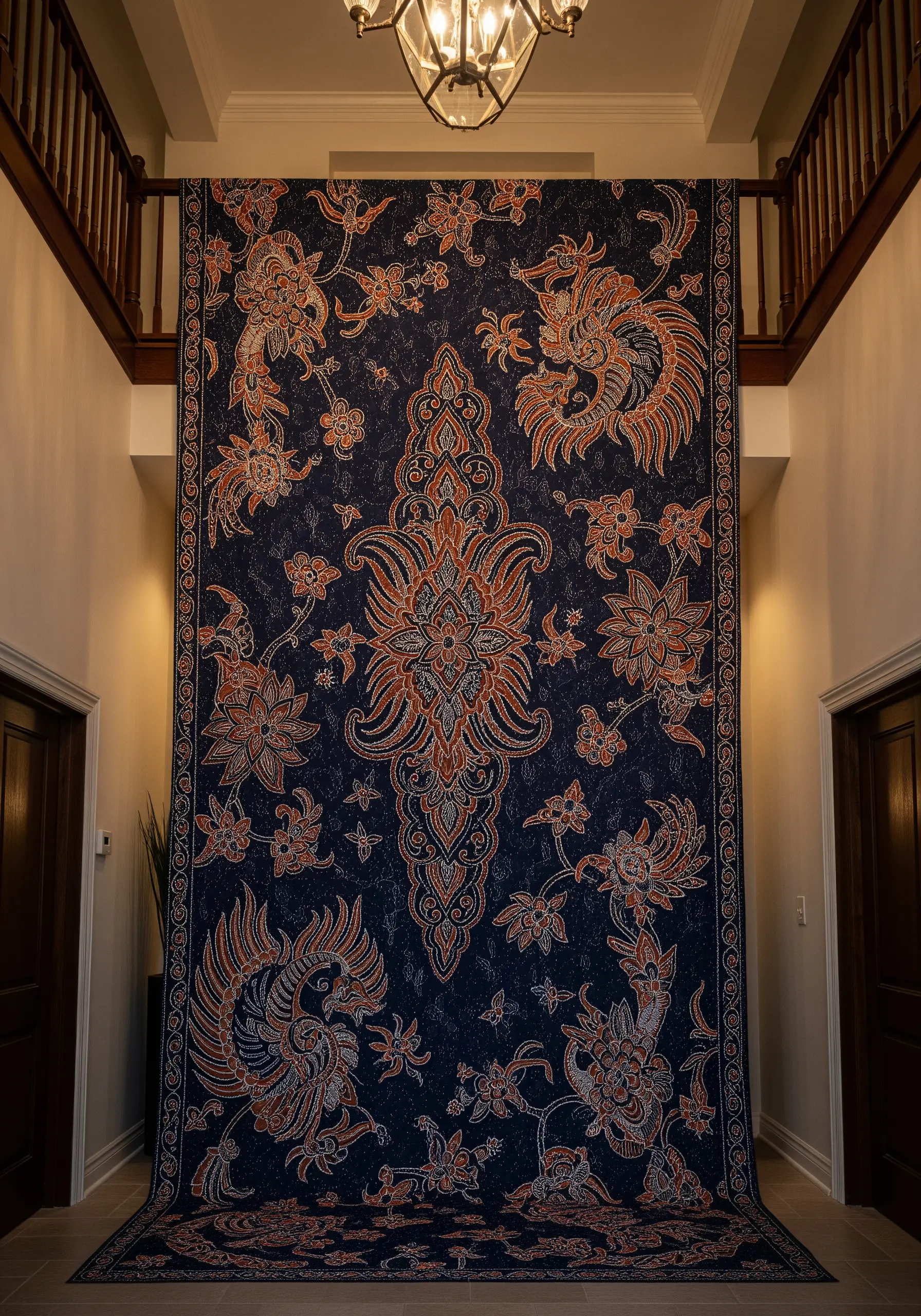
Emulate the intricate linework of Indonesian Batik without wax or dye by using a dense fill of tiny seed stitches.
Draw your complex floral and animal motifs onto a dark navy or black fabric.
Instead of filling the shapes with satin stitch, cover them entirely with thousands of tiny, randomly oriented straight stitches using a single contrasting color, like cream or rust.
This pointillist technique creates a beautiful, crackled texture that masterfully evokes the spirit of traditional Batik cloth.
20. Delft Blue Motifs on 3D Fabric Orbs

Translate the iconic blue and white charm of Dutch Delftware pottery into soft, sculptural objects for your home.
Stitch classic windmill and floral motifs onto flat panels of white linen using two strands of royal blue floss.
Use simple backstitch for outlines and sparse seed stitches for shading to keep the designs light and delicate.
Once stitched, cut out the circular patterns, sew them into spheres, and stuff them firmly to create a collection of charming, touchable art objects.