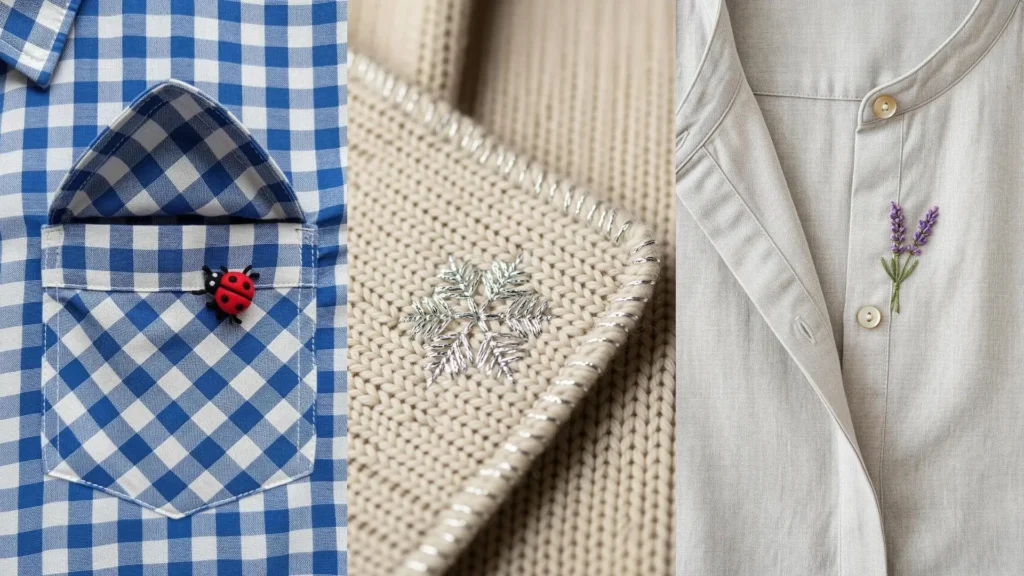
Have you ever looked at a beautifully embroidered cushion and wondered how to achieve that same sense of polish and intention in your own work? It’s not about finding more complex patterns, but about understanding the techniques that give a piece its soul.
This collection moves beyond simple stitches. Here, you’ll discover how to use couched cord to create the elegant lines of Moroccan tilework, or how French knots can mimic the jeweled texture of a pomegranate. You’ll see how the simple running stitch, used in Indian Kantha work, can transform a flat surface into a quilted, textural canvas.
Think of your cushion covers as a space for exploration. Each motif, whether from Turkish, Indian, or Moroccan tradition, offers a new way to think about color, texture, and line. Let these ideas guide you toward creating pieces that aren’t just decorative, but are rich with story and masterful technique.
1. Master Indian Zardozi & Shisha Mirror Work
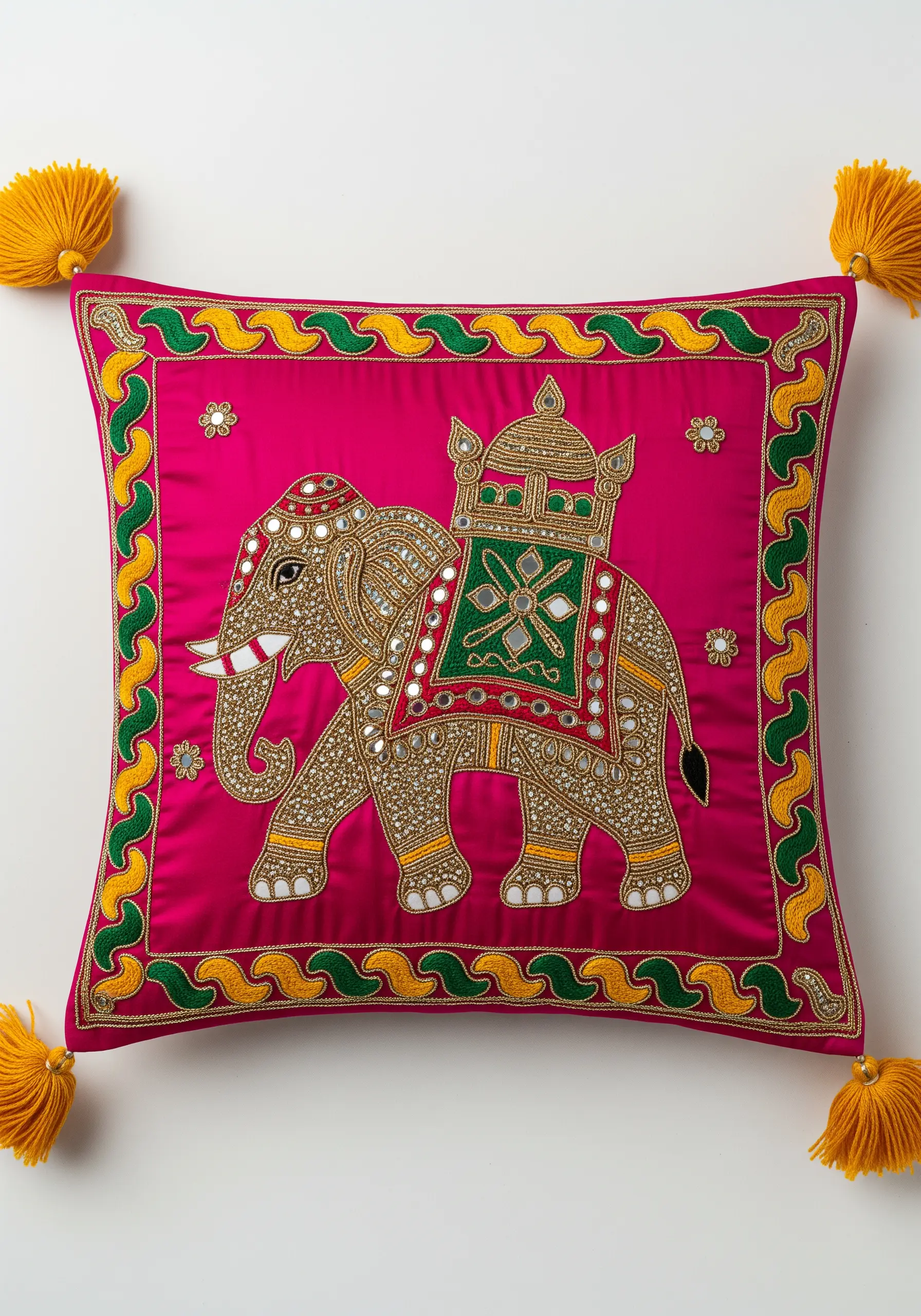
Create regal texture by combining metallic Zardozi thread with Shisha mirror embroidery.
First, secure the small mirrors (shisha) to your fabric using a framework of straight stitches, then lock them in with a tight buttonhole stitch around the edge.
For the elephant motif, outline the shape with a couched gold cord, then fill the sections with dense chain stitches using metallic floss.
This combination of reflective surfaces and rich texture is what gives traditional Indian embroidery its opulent, celebratory feel.
2. Stitch Symmetrical Turkish Iznik Florals

Capture the spirit of Turkish Iznik ceramics by focusing on symmetry and clean color blocking.
Use a dense, smooth satin stitch to fill the pomegranate and tulip motifs, ensuring your stitches lie flat and parallel for a uniform sheen.
Define each shape with a single strand of black or dark blue thread using a delicate backstitch—this mimics the fine ink lines on tiles and makes the colors pop.
For a truly polished look, ensure the mirrored halves of your design are as identical as possible in stitch direction and density.
3. Create Bold Moroccan Lines with Yarn Couching
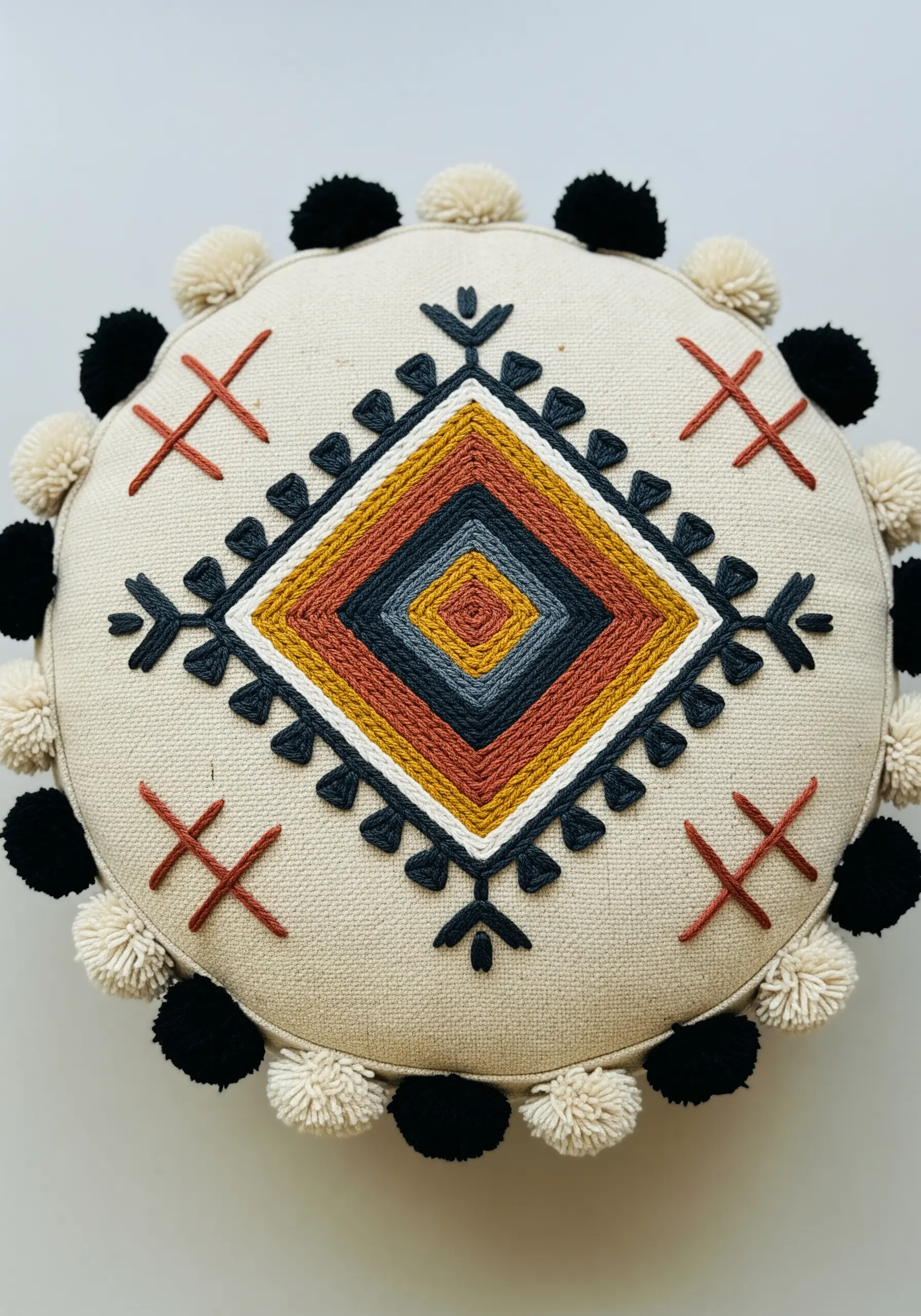
Achieve the graphic, textural impact of Moroccan Berber designs by couching thick yarn onto your cushion fabric.
Instead of stitching *with* the yarn, lay it on the surface of your fabric and use a thinner, matching embroidery floss to tack it down with small, perpendicular stitches.
This technique allows you to create bold, clean lines and concentric shapes that would be impossible with traditional stitches.
It’s a fast, high-impact method perfect for recreating the feel of hand-woven textiles and geometric patterns.
4. Fill Vibrant Suzani Patterns with Chain Stitch
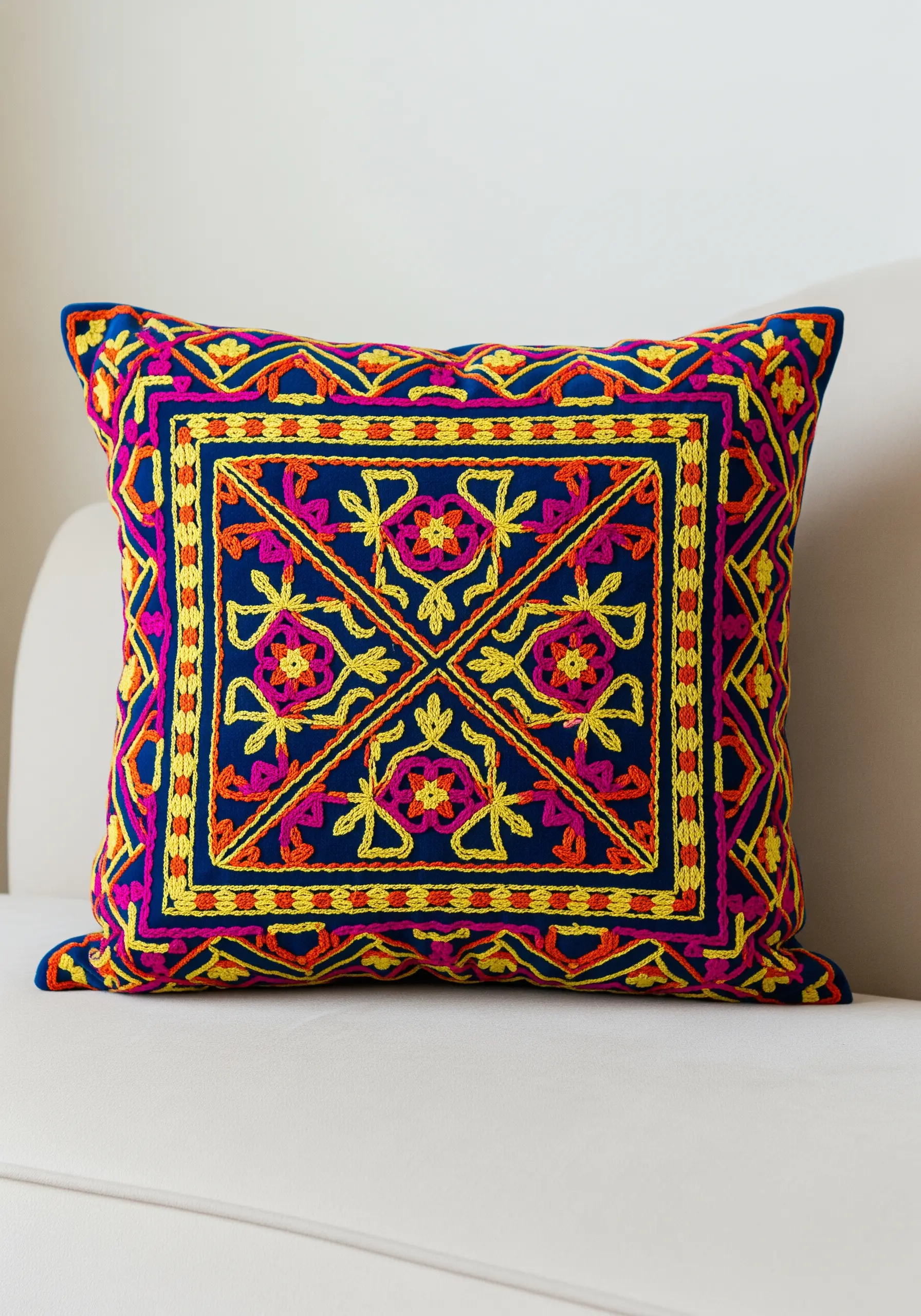
Embrace the energetic color and movement of Central Asian Suzani textiles by using the chain stitch for both outlines and fills.
Working in dense, spiraling rows of chain stitch creates a textured, woven appearance that is characteristic of this style.
Don’t be afraid to use bold, high-contrast color combinations like magenta, yellow, and orange against a dark background.
The slightly rustic quality of the chain stitch is part of the charm, so focus on consistent loop size rather than perfect uniformity.
5. Adapt Floral Motifs for Bolster Cushions
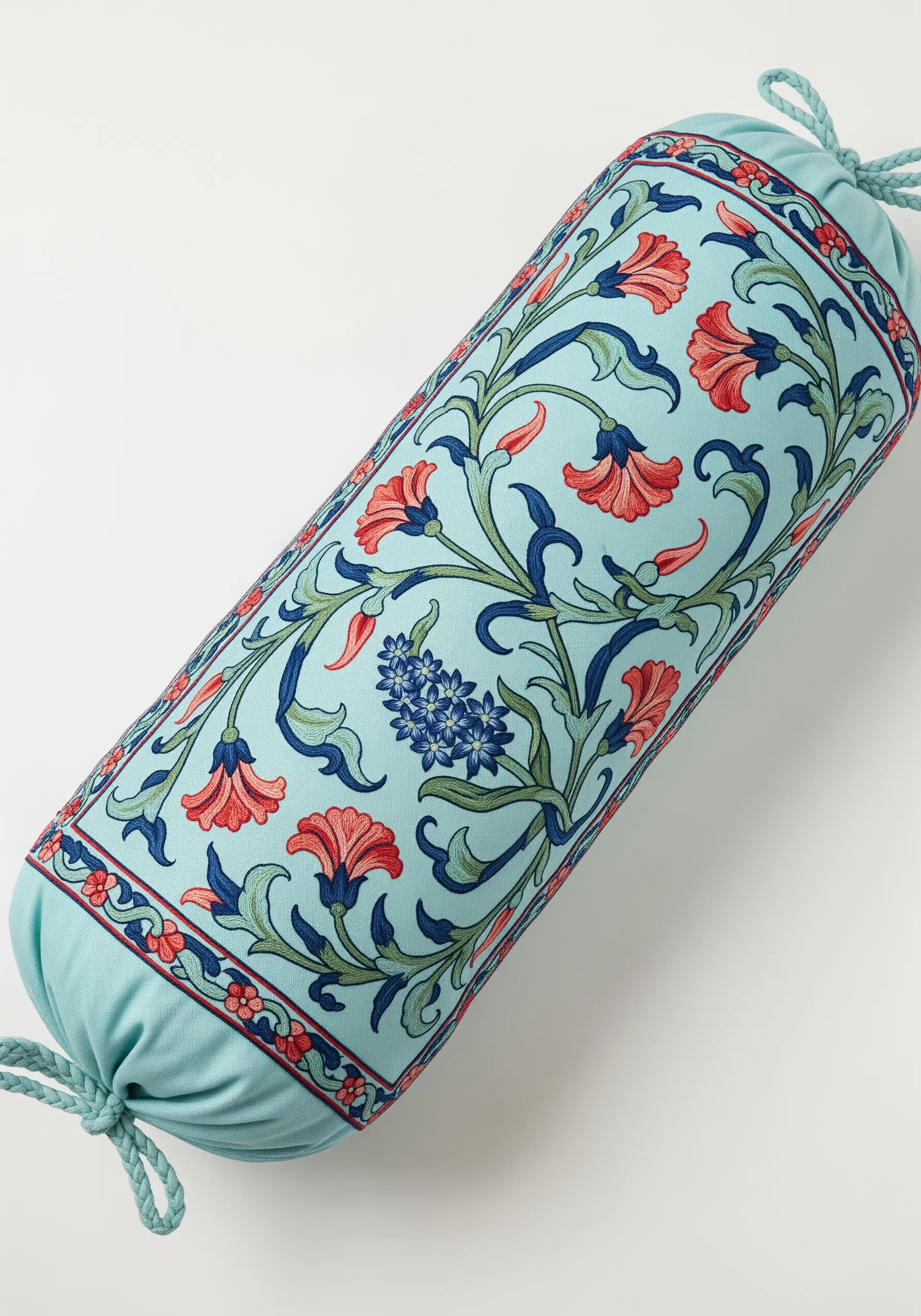
Transform a simple bolster cushion by stitching a continuous, scrolling floral pattern that wraps around its cylindrical shape.
Use a flowing stem stitch for the vines and stems; its twisted structure is perfect for creating smooth, elegant curves.
Fill the flowers and leaves with satin stitch, angling your stitches to follow the natural direction of the petals and foliage.
This approach turns a standard cushion into an intentional, decorative object where the design complements its unique form.
6. Define Moroccan Knots with Negative Space
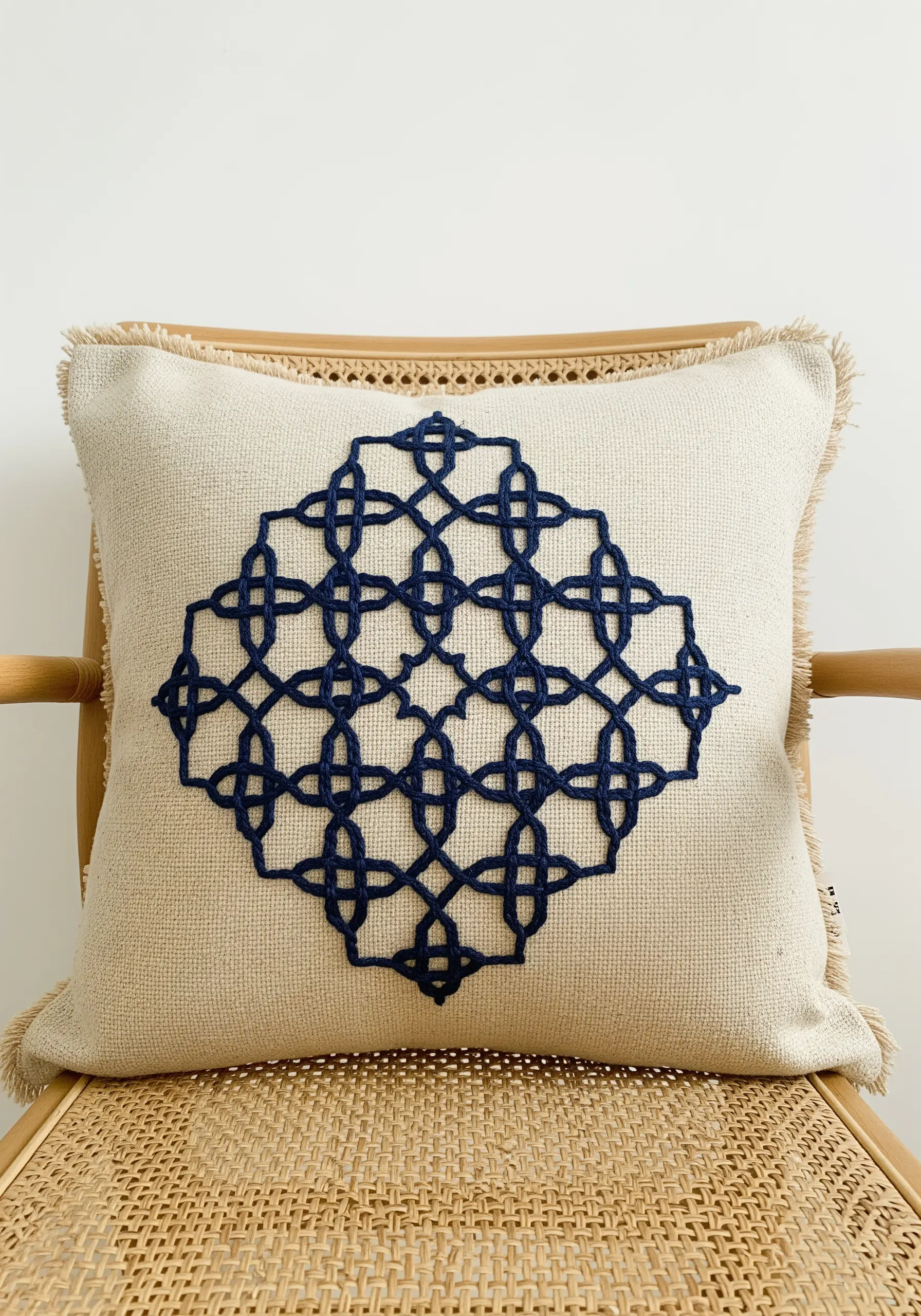
When stitching intricate Moroccan tile patterns, the unstitched fabric is just as important as the thread.
Use a thick, raised stitch like a whipped backstitch or a heavy chain stitch to create the interlocking geometric lines.
Focus on maintaining perfectly even spacing between your lines to create a crisp, balanced pattern.
The beauty of this style lies in the interplay between the bold, textured thread and the clean negative space of the background fabric.
7. Combine Kantha Stitching and Sequin Highlights
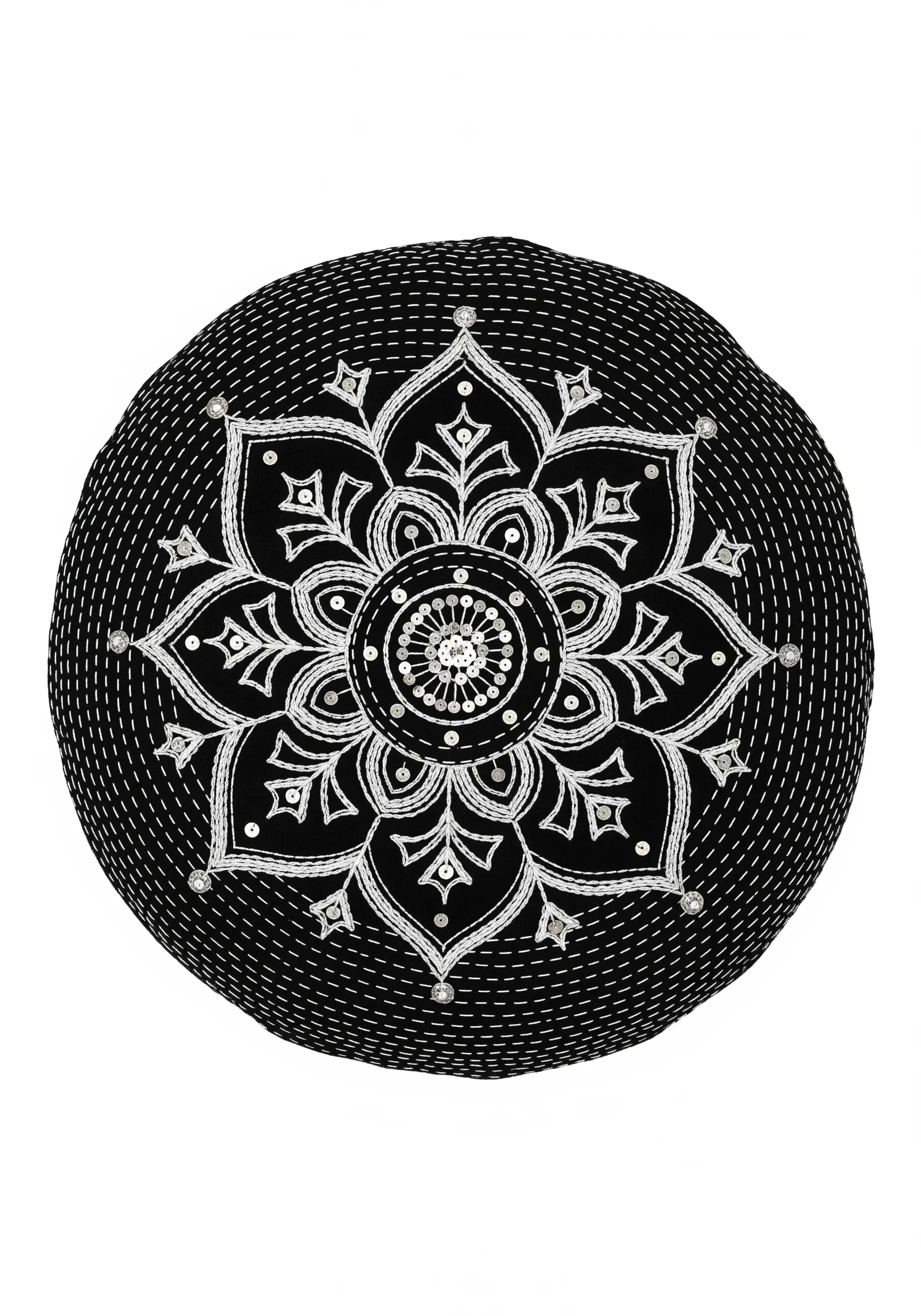
Create a dynamic surface by contrasting a matte, textural background with shimmering embellishments.
Fill the entire background of your cushion with parallel rows of a simple running stitch, known as Kantha work, to create a subtle, quilted texture.
For the central mandala, use a bright silver thread for the outlines and secure individual sequins with a tiny seed bead in the center of each one.
This mix of rustic texture and delicate sparkle gives the design incredible depth, similar to embroidered mandala wall art.
8. Couch Cord for Raised Tree of Life Outlines
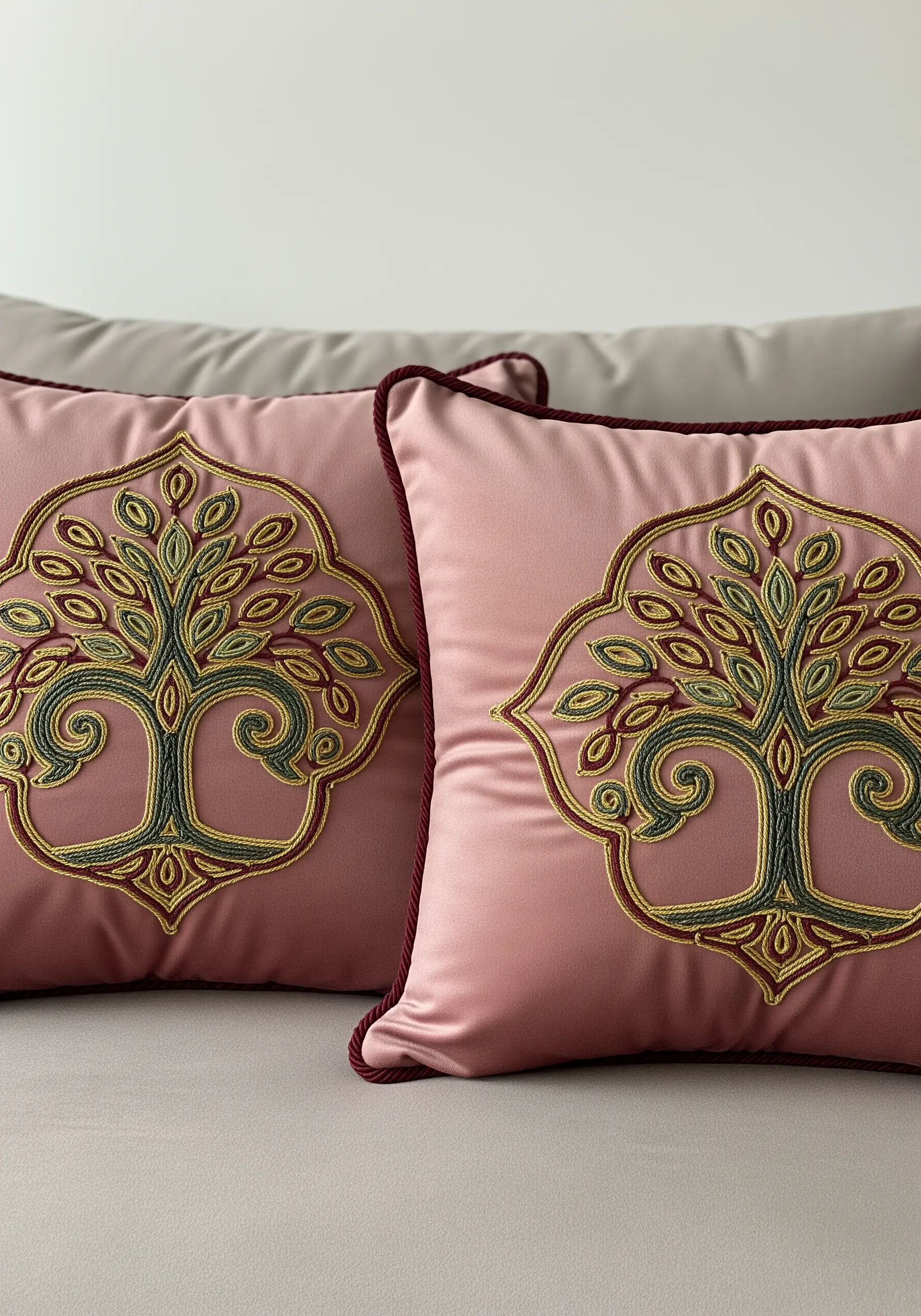
Give symbolic motifs like the Tree of Life a sculptural quality by using couched cord on a smooth fabric like satin or silk.
Lay down fine decorative cord along your design lines, then use a single strand of matching floss to stitch it into place with small, discreet stitches.
Fill the interior sections with a contrasting color using long-and-short stitch to create a subtle gradient.
This technique creates a crisp, raised outline that provides definition and a luxurious, three-dimensional finish, making it perfect for nature-themed embroidery samplers.
9. Create Graphic Hamsa Motifs with Concentric Lines
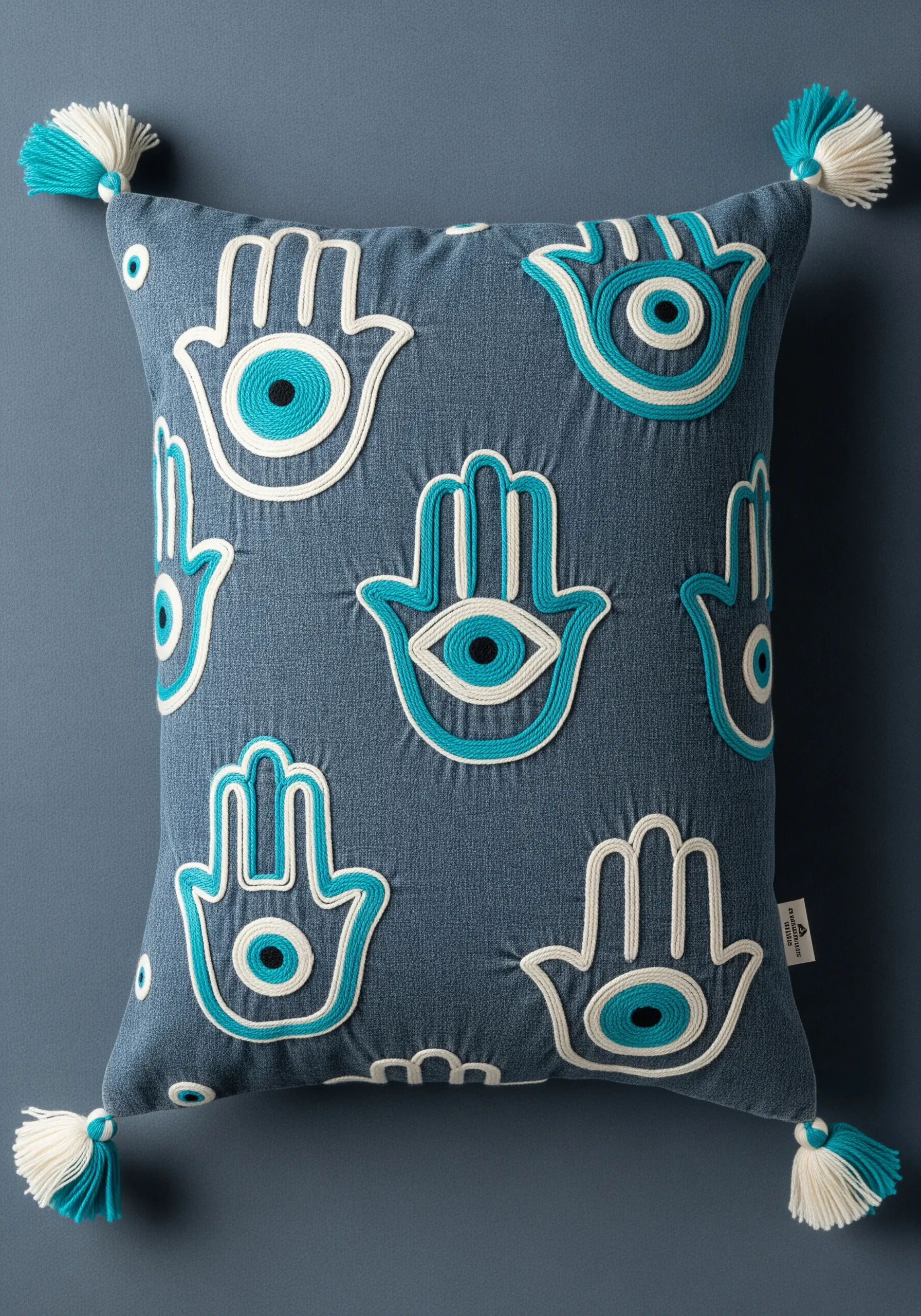
Stitch the iconic Hamsa hand and evil eye symbols using clean, concentric outlines for a modern, graphic interpretation.
Use a two-ply thread and a smooth split stitch or chain stitch to build the lines from the center outwards.
Maintaining equal distance between each concentric ring is key to achieving a clean, hypnotic effect.
Repeating the motif across the cushion cover creates a powerful, rhythmic pattern that is both protective and visually striking.
10. Achieve Chikankari Elegance with White-on-White
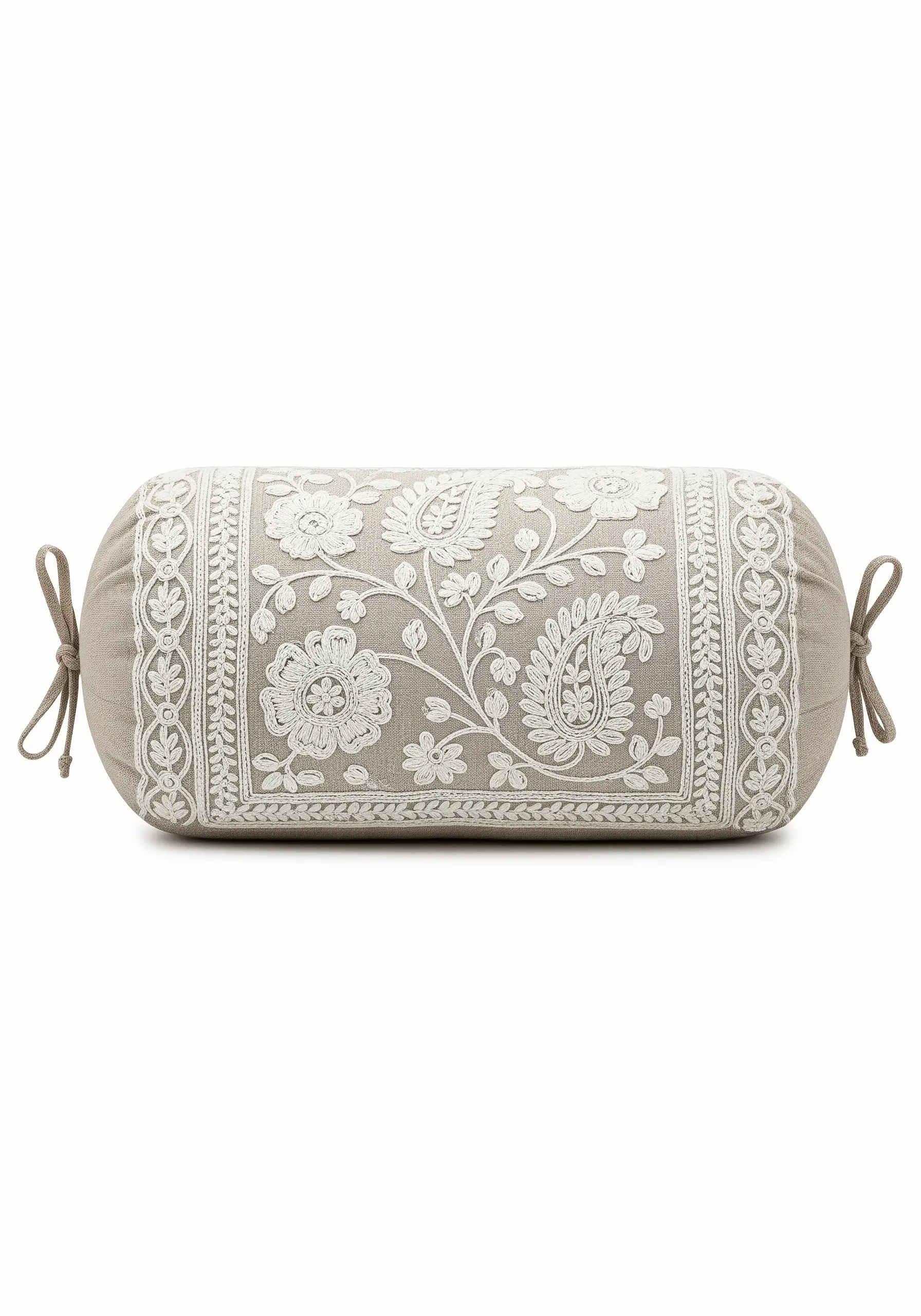
Evoke the subtlety of Indian Chikankari embroidery by using white thread on a neutral linen or cotton base.
This style relies on texture, not color. Combine different stitches for effect: use satin stitch for bold floral fills, stem stitch for delicate vines, and tiny French knots for seed details.
For a truly authentic touch, try shadow work by using herringbone stitch on the back of the fabric, creating a faint, ethereal shadow on the front.
The result is one of the most elegant and simple embroidery designs that make your old linen look brand new.
11. Blend Matte and Metallic Threads for Depth
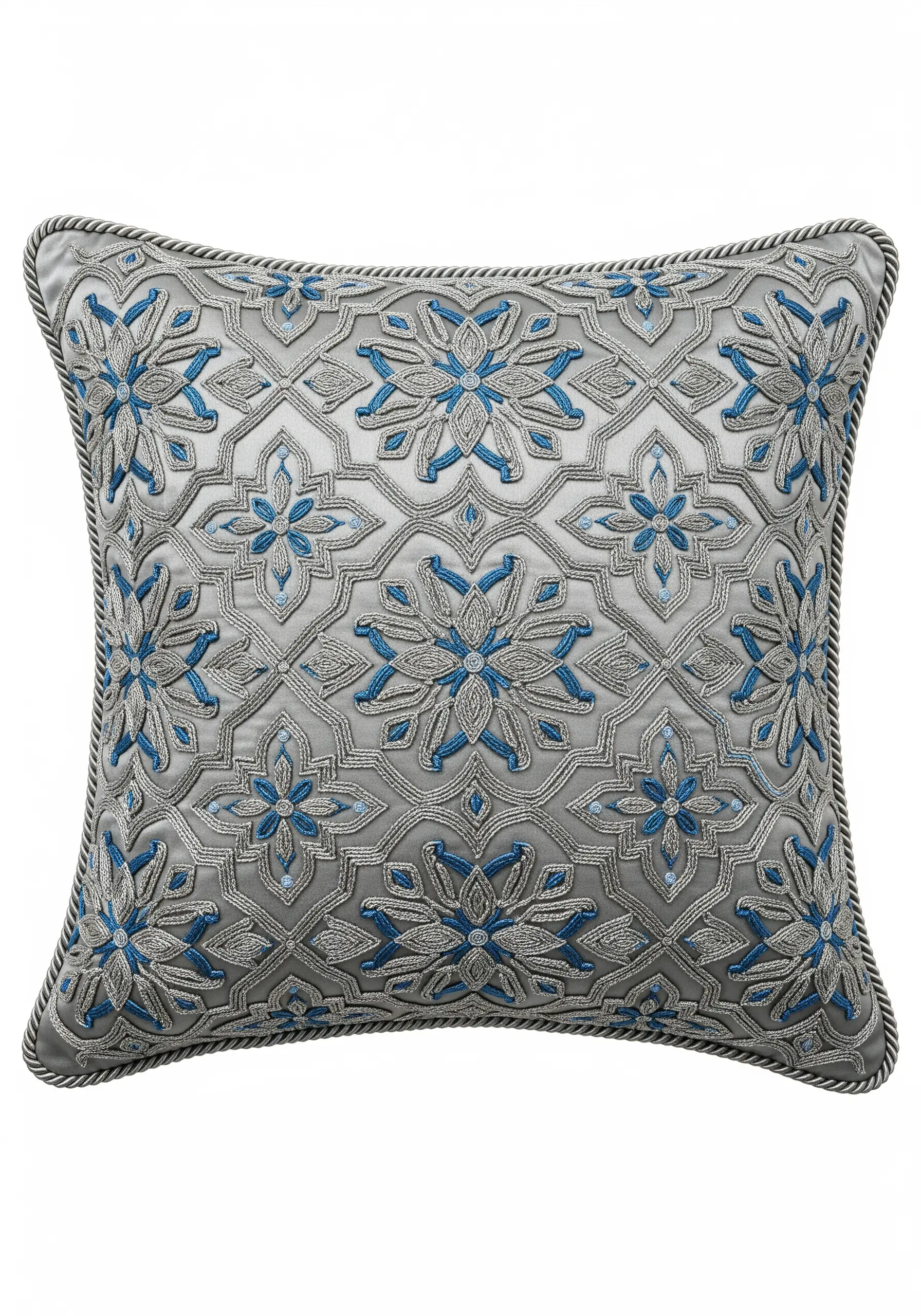
Add sophisticated dimension to geometric patterns by combining the shimmer of metallic thread with the softness of matte cotton floss.
Use a silver metallic thread for the main gridwork of your design, creating a framework that catches the light.
Fill in the floral accents with a matte cotton thread in shades of blue and grey.
This subtle interplay of finishes creates a visual hierarchy, making the metallic elements stand out while the matte fills add softness and depth.
12. Mimic Kilim Rugs with Geometric Fill Stitches
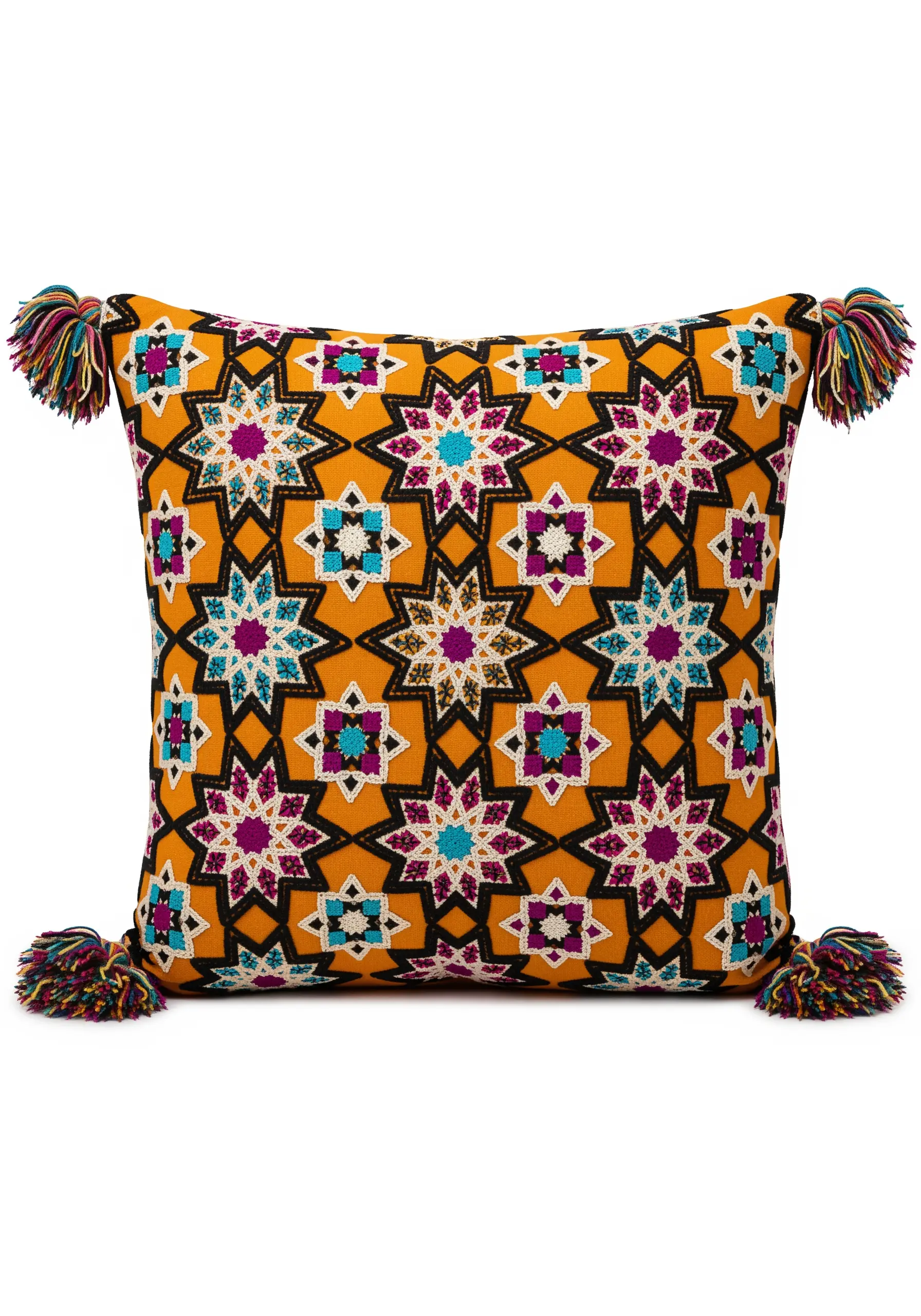
Recreate the look of a woven Kilim rug by filling bold, geometric shapes with flat, dense stitches.
Use a vertical or horizontal satin stitch within each color block, ensuring the direction of your stitches is consistent within each shape but varied between adjacent shapes.
Outline each block with a dark backstitch to mimic the structure of woven textiles.
Complete the look with chunky, multi-colored tassels on the corners to enhance the authentic, handcrafted feel.
13. Master Painterly Florals with Thread Painting
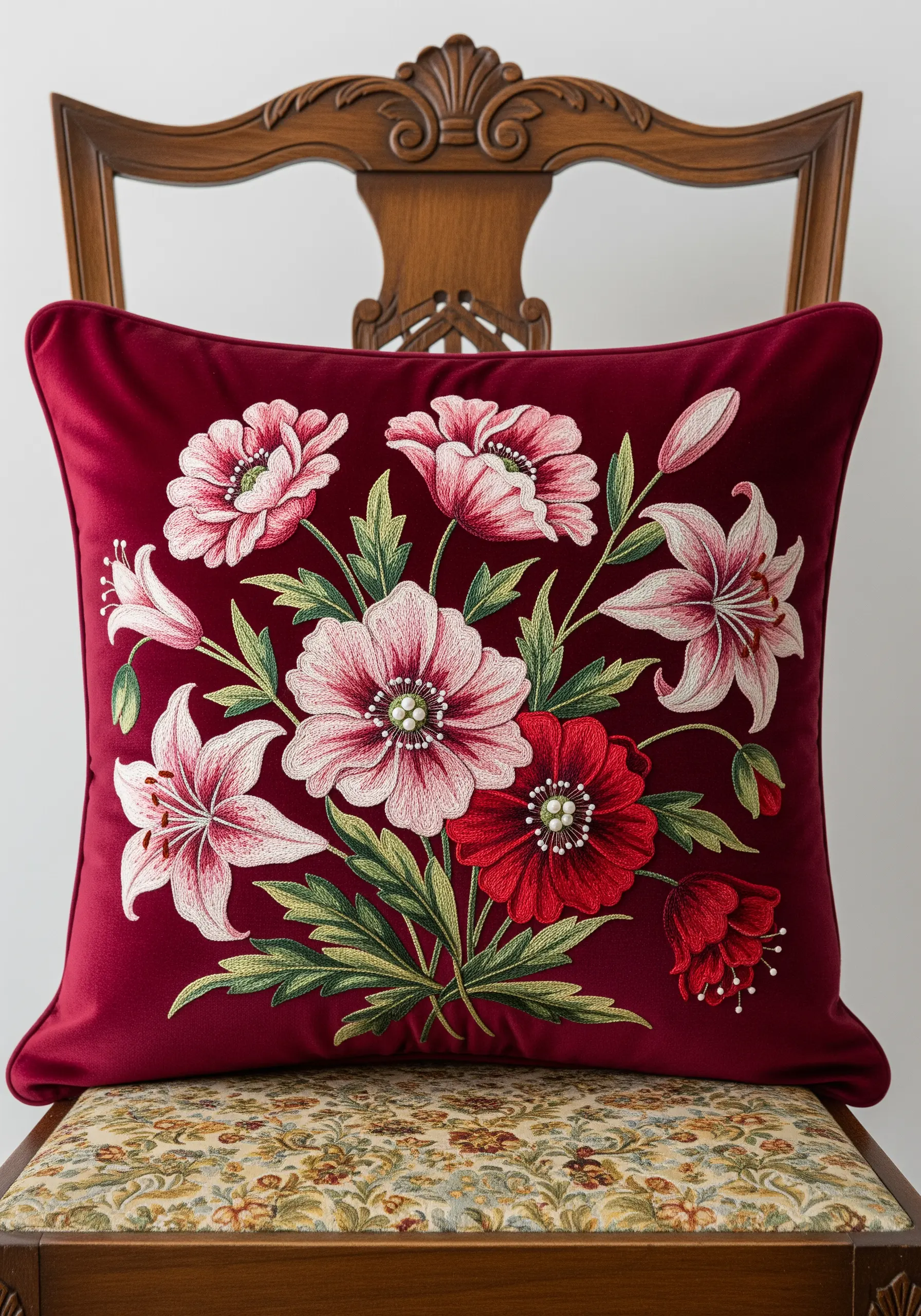
Achieve realistic, blended florals on a luxurious fabric like velvet by using the long-and-short stitch technique, also known as thread painting.
Work with a single strand of floss and use several shades of a color to create smooth gradients, blending each row of stitches into the one before it.
Always use a stabilizer on the back of velvet to prevent the fabric from puckering and to support the density of the stitches.
This technique elevates floral designs, turning them into intricate, painterly works of art and is perfect for creating gradient color floral embroidery ideas.
14. Create a Graphic Silhouette Border
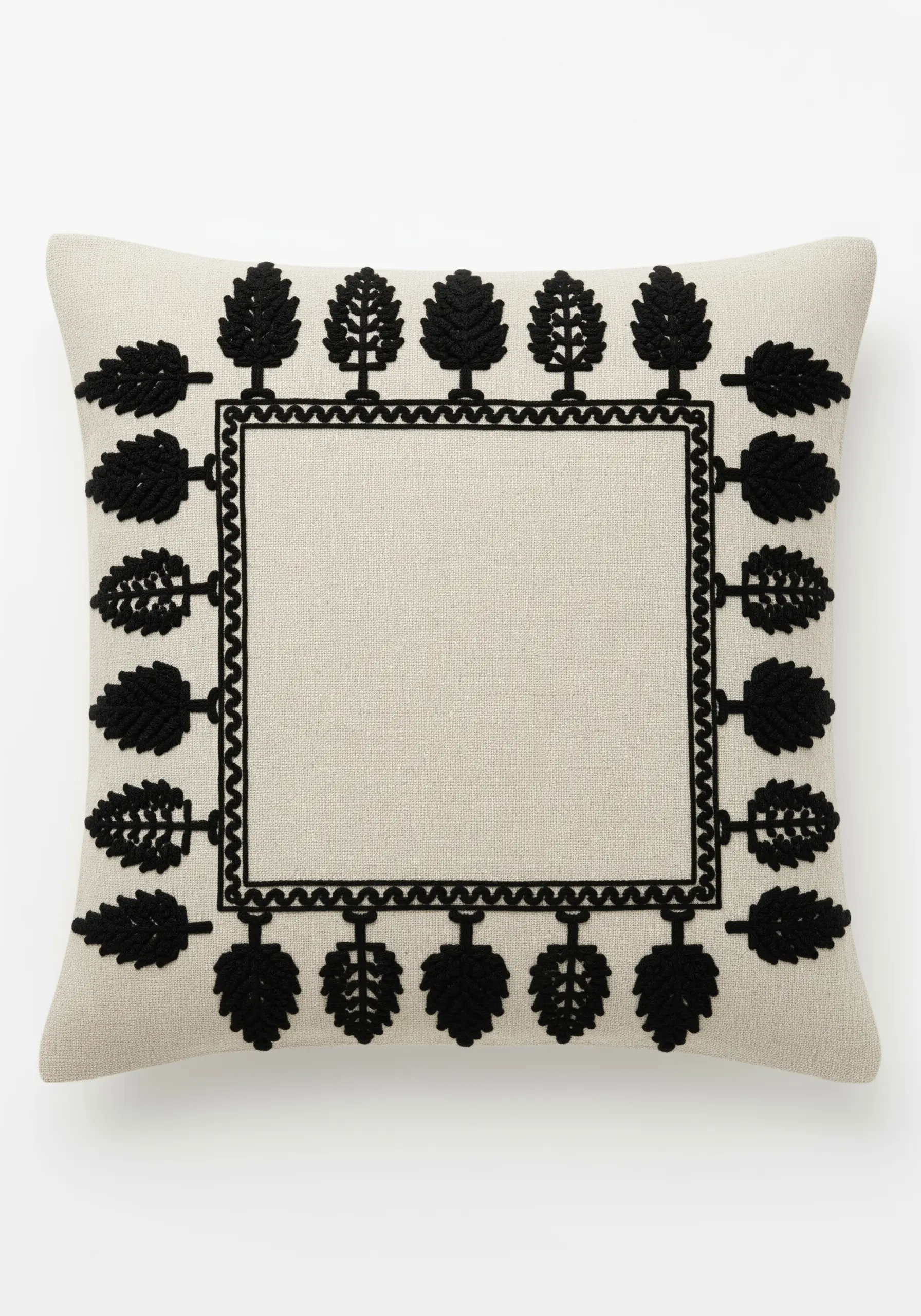
Frame the center of your cushion with a high-contrast border of graphic, repeating motifs.
Use a dense, solid satin stitch to fill in the simple tree and leaf shapes, creating a bold, block-print effect.
The key to this design is the stark contrast between the black thread and the neutral linen fabric, which emphasizes the clean, sharp edges of each silhouette.
This approach creates a formal, contained design that feels both modern and rooted in folk art traditions, much like many minimal embroidery patterns that look harder than they are.
15. Stitch Expressive Berber Symbols
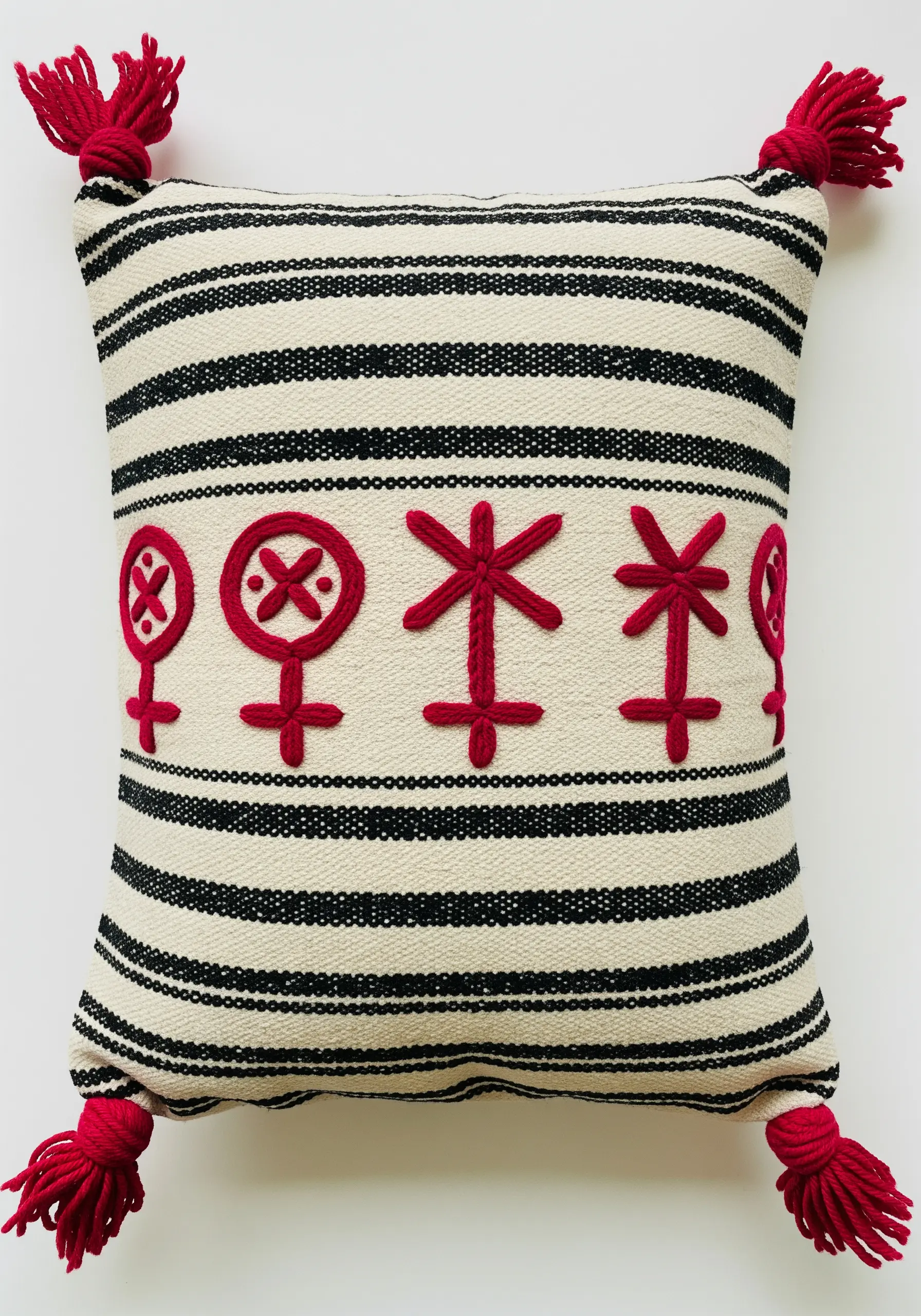
Channel the symbolic language of North African Berber textiles by stitching bold, abstract symbols on a rustic, woven fabric.
Use a thick thread or yarn and a raised stitch, like a heavy stem stitch or chain stitch, to give the symbols tactile prominence.
The beauty of these motifs lies in their simplicity and asymmetry. Allow for slight imperfections, as they contribute to the authentic, handcrafted character of the piece.
A single, contrasting color against a striped or neutral background makes the symbols the clear focal point.
16. Use Running Stitch to Build Background Texture
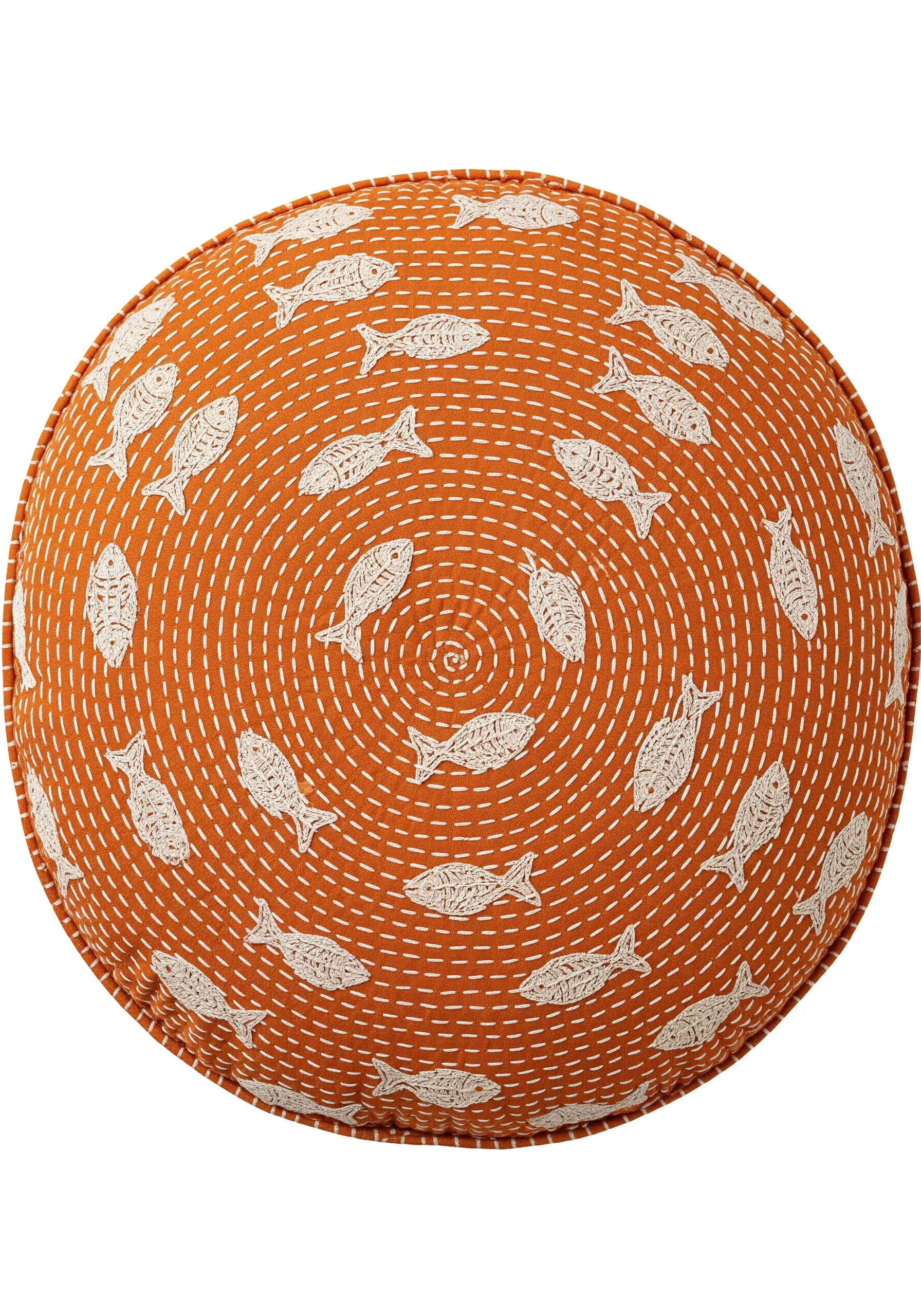
Transform a plain fabric surface into a textured canvas using the humble running stitch, a key feature of Indian Kantha work.
Stitch concentric circles or parallel lines of running stitch across the entire cushion cover before adding your primary motifs.
This creates a subtle, quilted effect that adds immense visual interest and a soft, tactile quality.
The simple fish motifs, stitched in a contrasting color, appear to float on top of this textured background, giving the whole piece a sense of depth and movement.
17. Achieve Flawless Calligraphy with Couched Cord
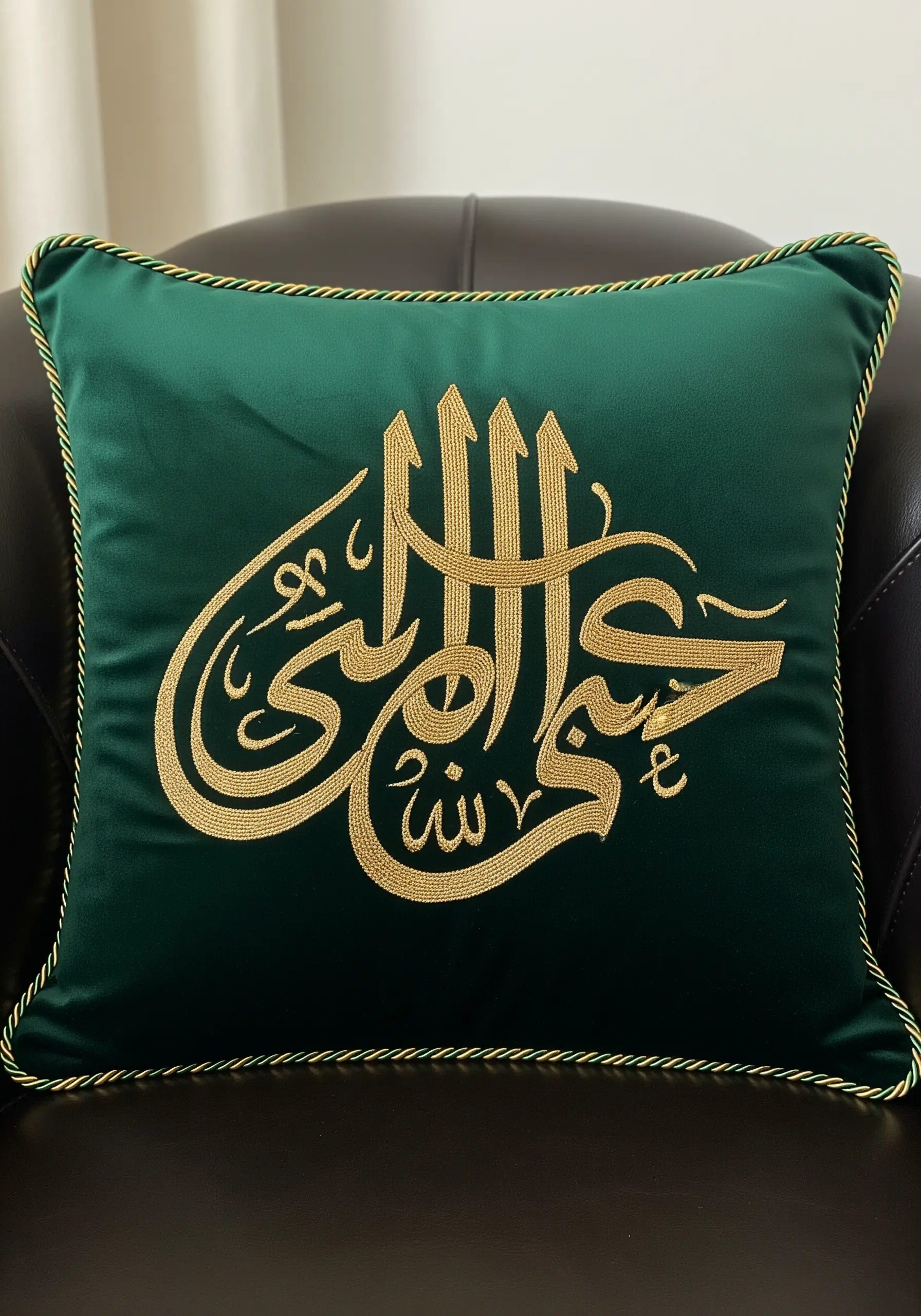
Render the elegant sweeps and curves of Arabic calligraphy with precision by couching metallic cord onto a velvet base.
This technique allows you to perfectly replicate the thick and thin strokes of a calligrapher’s pen, something that is difficult to achieve with direct stitching.
Lay multiple strands of gold cord side-by-side for the thicker parts of the letters and use a single cord for the finer lines.
Tack the cords down with a fine, matching thread to create a seamless, raised design that looks exceptionally luxurious and is perfect for peaceful, poetic quote embroidery hoops.
18. Create a Rich Tapestry with Fabric Collage
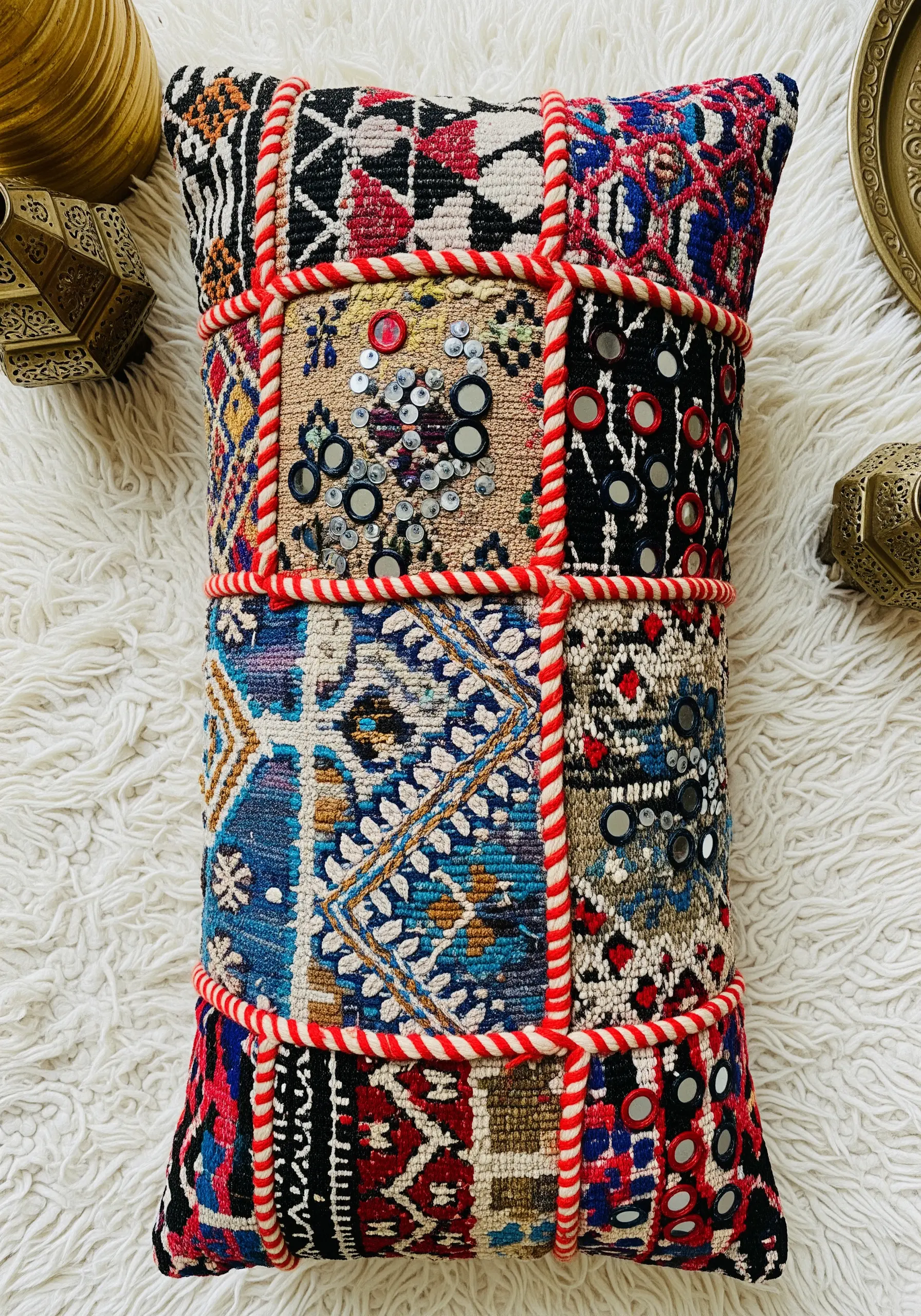
Build a vibrant, textural surface inspired by Indian Banjara textiles by combining appliqué, mirror work, and embroidery.
Start by arranging and stitching down small patches of patterned and textured fabrics to create a patchwork base.
Unify the design by outlining the patches with a bold herringbone or blanket stitch, and add shimmer by incorporating Shisha mirrors and sequins.
The final touch is a chunky, couched cord to create a grid, which organizes the delightful chaos and adds structure to the finished piece.
19. Weave a Delicate Trellis with Whipped Stitch
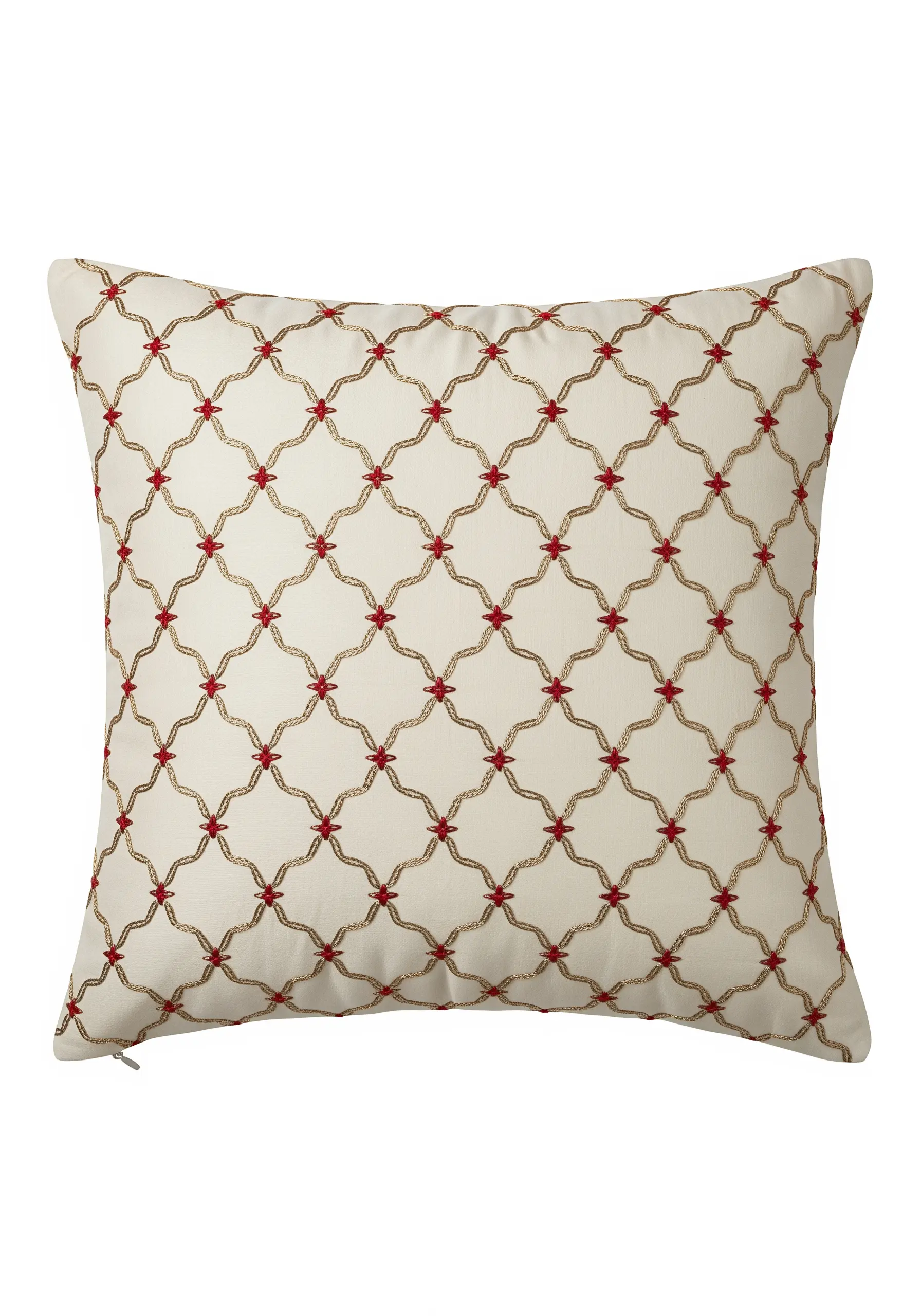
Create a refined, rope-like trellis pattern by using a whipped backstitch or whipped running stitch.
First, lay down a grid of simple backstitches. Then, take a second thread (in the same or a contrasting color) and weave it through the backstitches without piercing the fabric.
This technique creates a raised, twisted line that adds dimension and elegance to the geometric pattern.
Add tiny French knots or seed beads at the intersections for a delicate, decorative flourish.
20. Texture Pomegranate Seeds with French Knots

Bring the pomegranate, a classic Turkish and Persian symbol of abundance, to life with textural stitches.
Fill the fleshy seed sections with hundreds of tightly packed French knots in shades of red and pink to create a jeweled, three-dimensional effect.
Contrast this texture by using a smooth, flat satin stitch for the outer peel of the fruit.
Finally, outline the entire motif with a couched gold cord to provide a crisp, defined edge and a touch of luxury, making it a design that could inspire minimal food motifs.
21. Embroider Directly onto Leather for a Luxe Finish
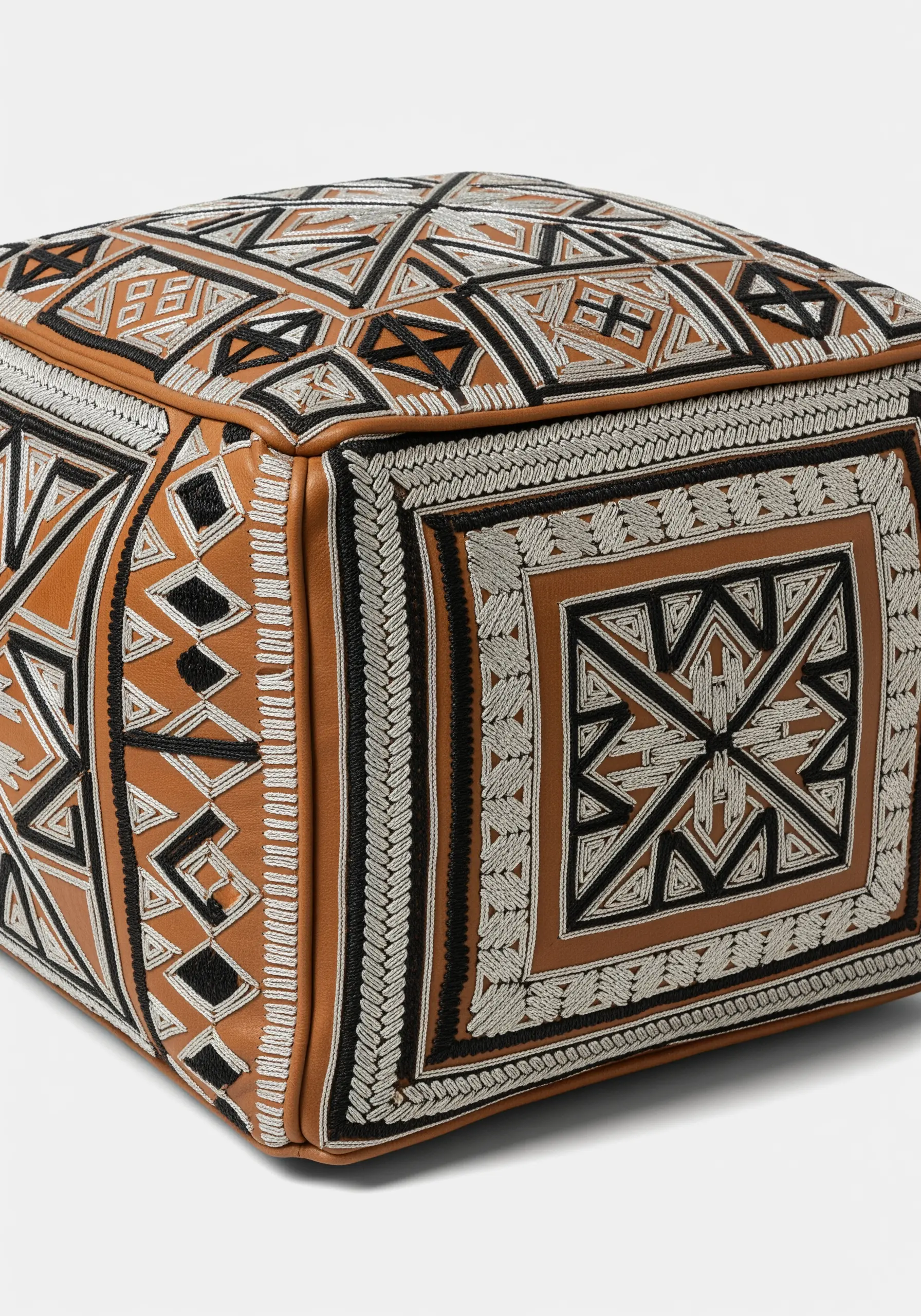
Apply Moroccan embroidery techniques to unconventional materials like leather for a truly unique piece.
To stitch on leather without tearing it, use a special leather needle and consider pre-punching your stitching holes with an awl for the cleanest result.
Use a strong, heavy-duty thread or fine cord and simple stitches like backstitch or chain stitch that won’t perforate the material too much.
The contrast between the smooth, rich leather and the intricate silver and black threadwork is undeniably sophisticated.
22. Combine Appliqué with Visible Running Stitch
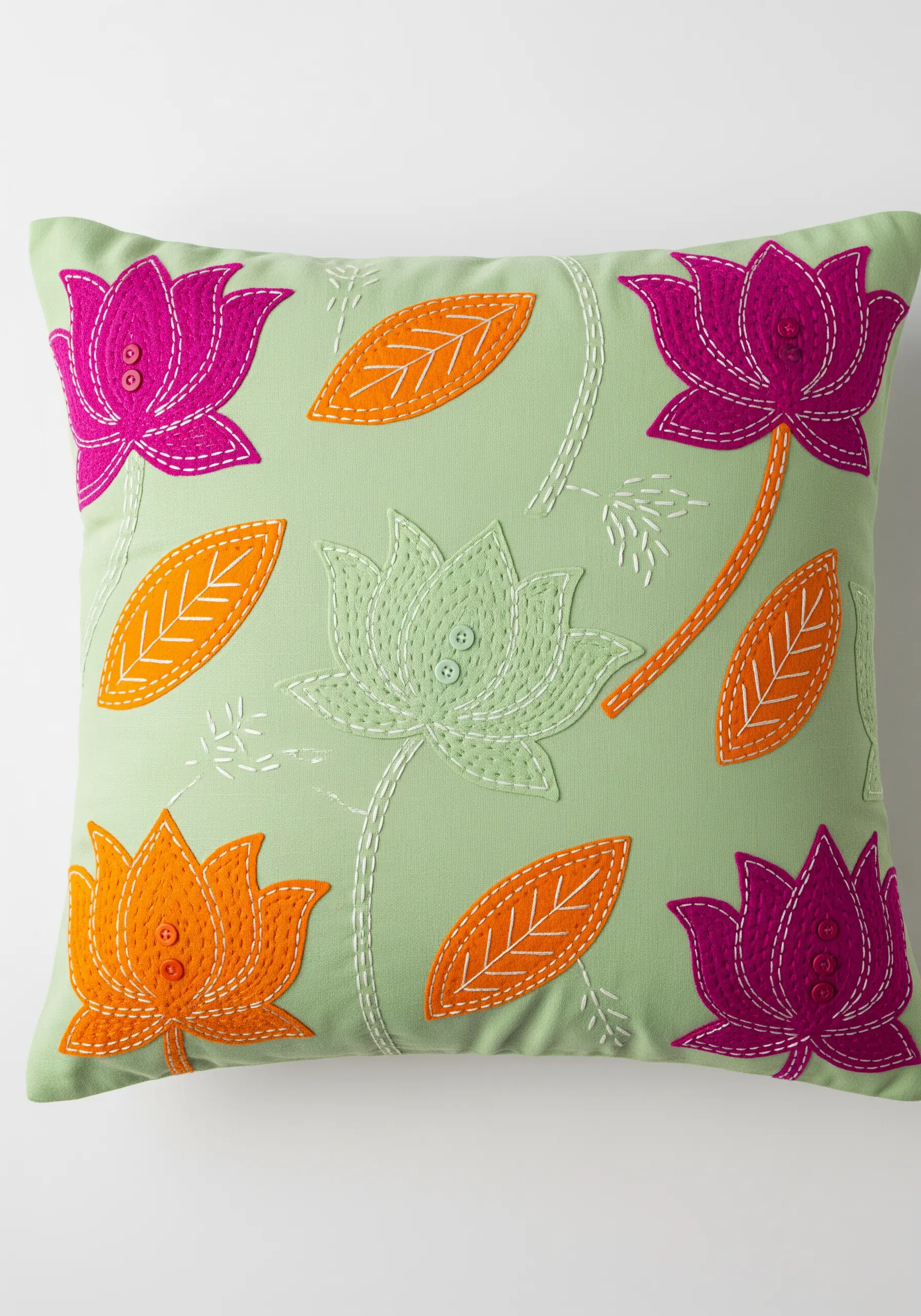
Achieve a charming, contemporary folk-art look by combining fabric appliqué with simple, visible hand stitching.
Cut your flower and leaf shapes from felt or non-fraying cotton, tack them in place, and then secure them with a contrasting running stitch just inside the edge.
This visible stitch becomes part of the design itself, celebrating the handcrafted process.
Adding small buttons to the flower centers enhances the playful, tactile quality of the piece.
23. Add Definition to Tufting with Chain Stitch
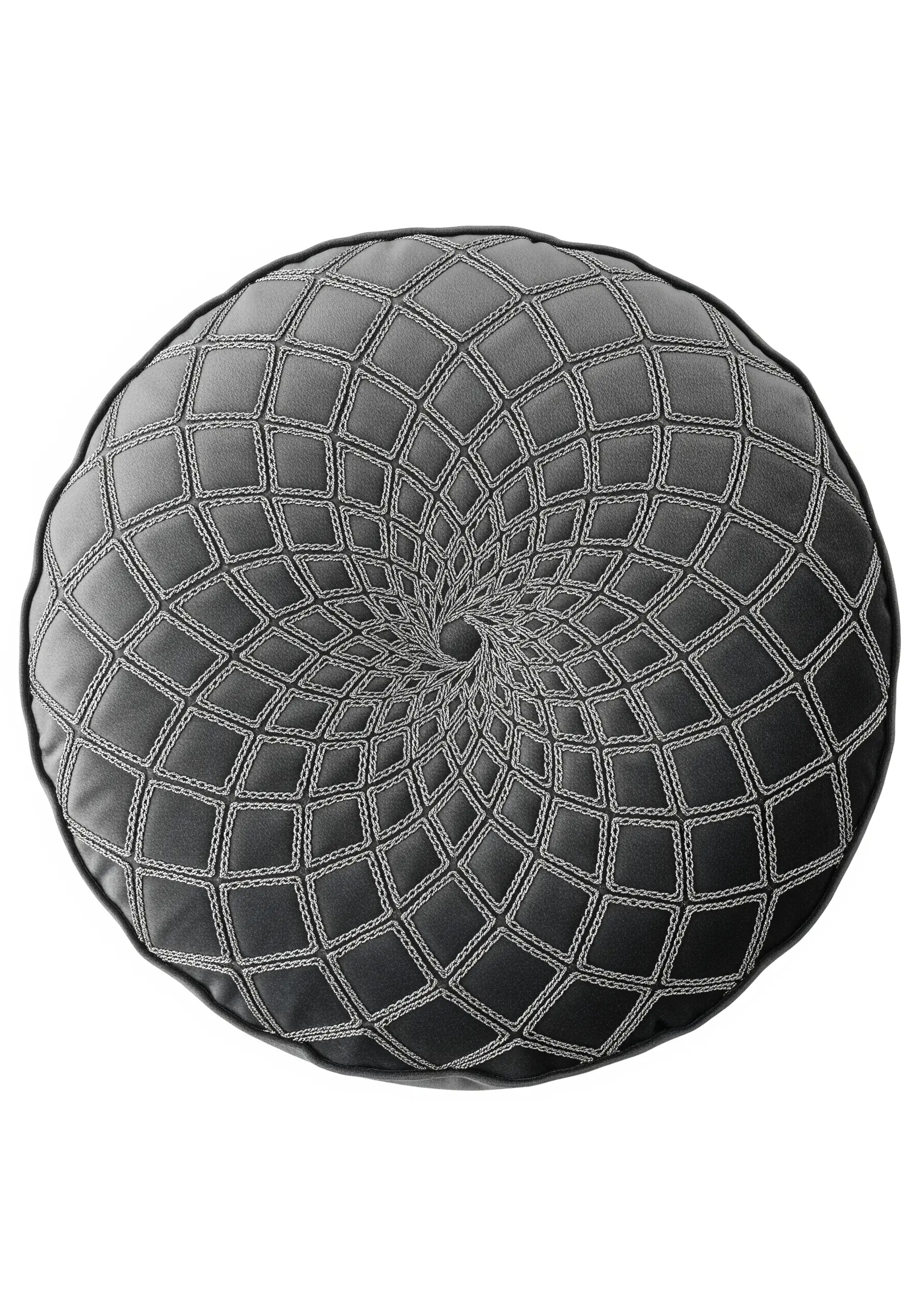
Elevate a simple tufted cushion by tracing the quilted lines with a decorative stitch.
Using a contrasting thread color, work a continuous chain stitch along the indentations of the tufting.
This not only adds a decorative element but also accentuates the sculptural, geometric quality of the cushion’s surface.
The technique turns a functional quilting feature into a deliberate and striking design element.
24. Build Folk Art Motifs with Chunky Couching
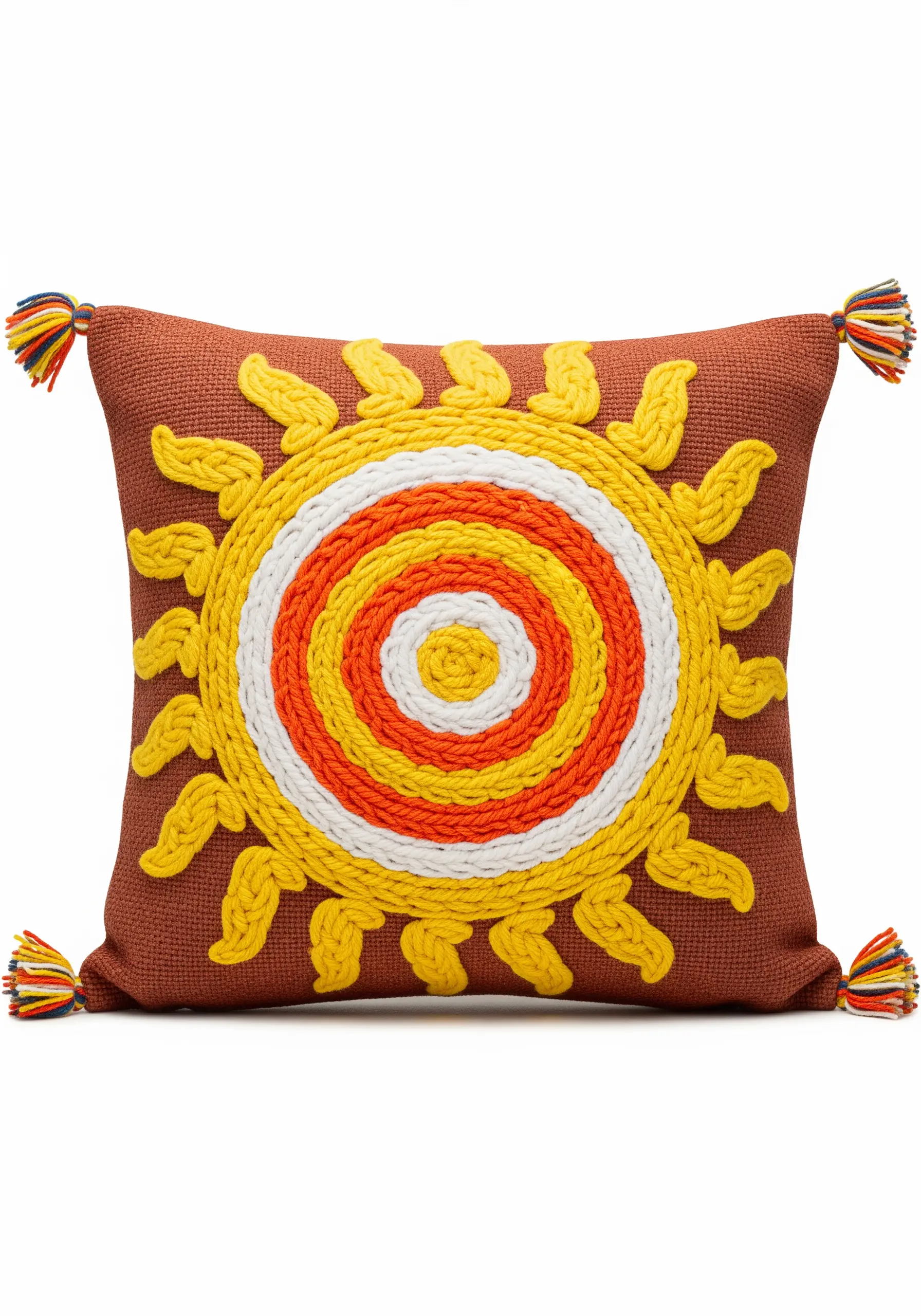
Create bold, graphic folk art designs quickly and effectively by couching very thick yarn or wool roving.
Lay down the chunky fiber in concentric circles to form the sun motif, tacking it in place with a strong, matching thread.
This method is exceptionally fast and creates a highly textural, almost three-dimensional result that is perfect for large-scale designs on cushions.
The simplicity of the technique allows the vibrant colors and chunky texture to be the main focus.
25. Use Directional Satin Stitch for Feathered Sheen
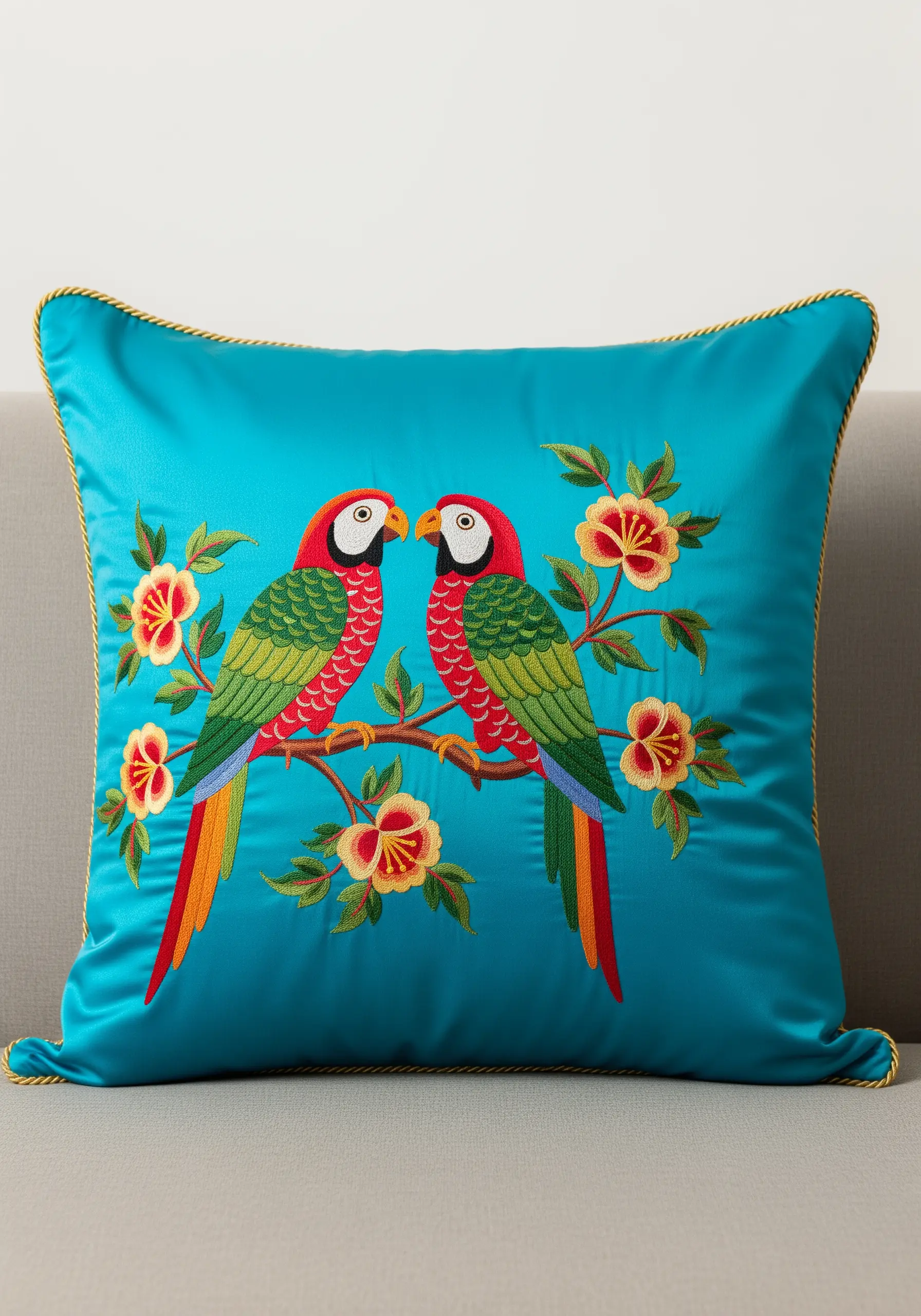
Capture the iridescent quality of bird feathers by carefully controlling the direction of your satin stitches.
Instead of keeping all stitches parallel, angle them to follow the contours of the bird’s wings and body.
This variation in stitch direction causes the thread to catch the light differently, creating a natural-looking shimmer and sense of movement.
Using a silk or satin fabric as your base enhances this effect, making the embroidered birds feel vibrant and alive, a technique perfect for stitching colorful tropical bird embroidery stitches.
26. Weave Color Blocks to Emulate Kilim Patterns
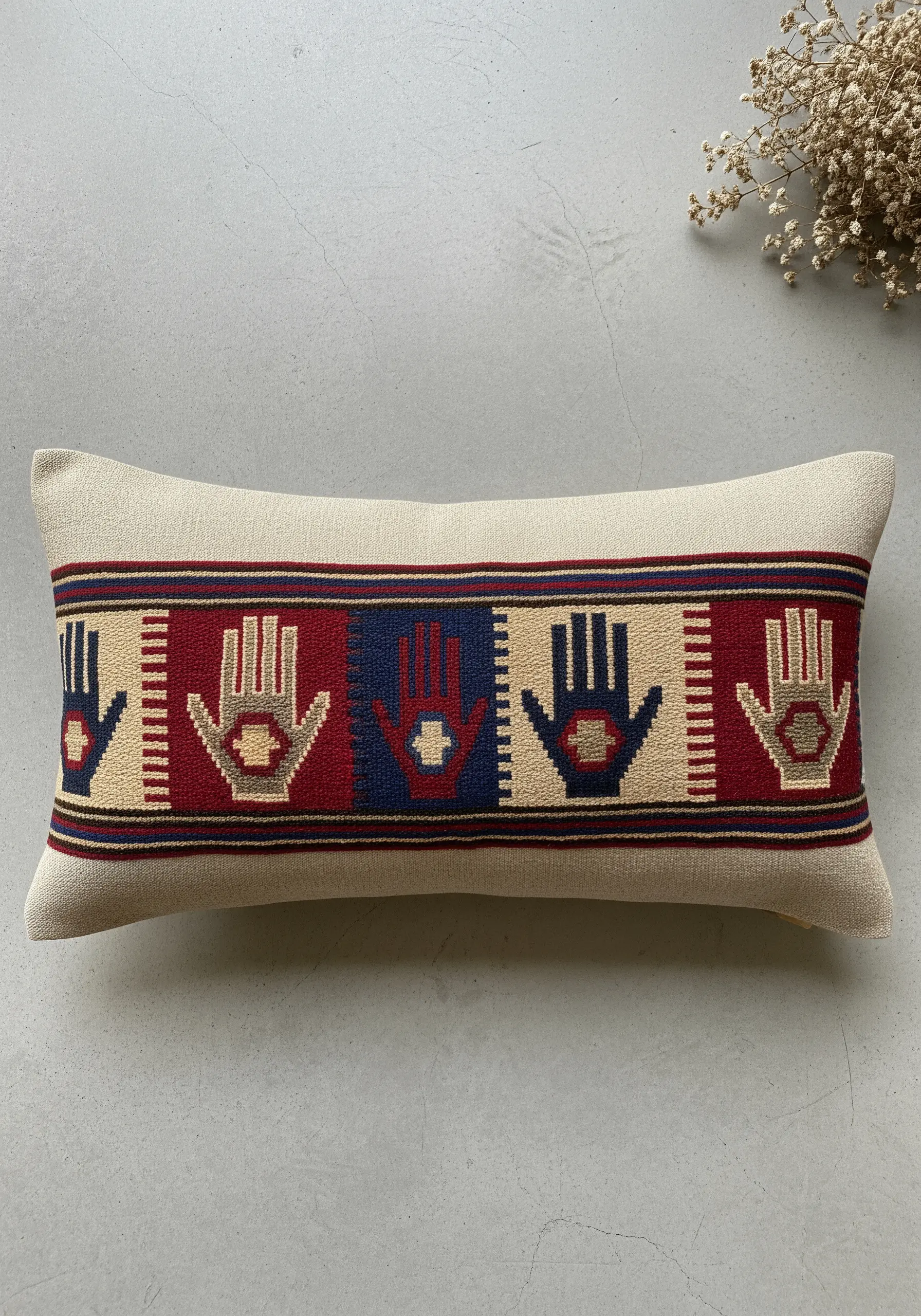
Mimic the appearance of a woven Kilim fabric by stitching distinct blocks of color using a flat darning stitch or vertical satin stitch.
Fill each section of your design—like these stylized Hamsa hands—with a single color, laying your stitches side-by-side to create a solid, woven texture.
The key is to keep the boundaries between colors crisp and clean, replicating the interlocking threads of a loom.
This stitch-based approach to weaving allows you to create intricate, tapestry-like designs on any plain-weave fabric.
27. Define a Moroccan Trellis with Clean Outlines
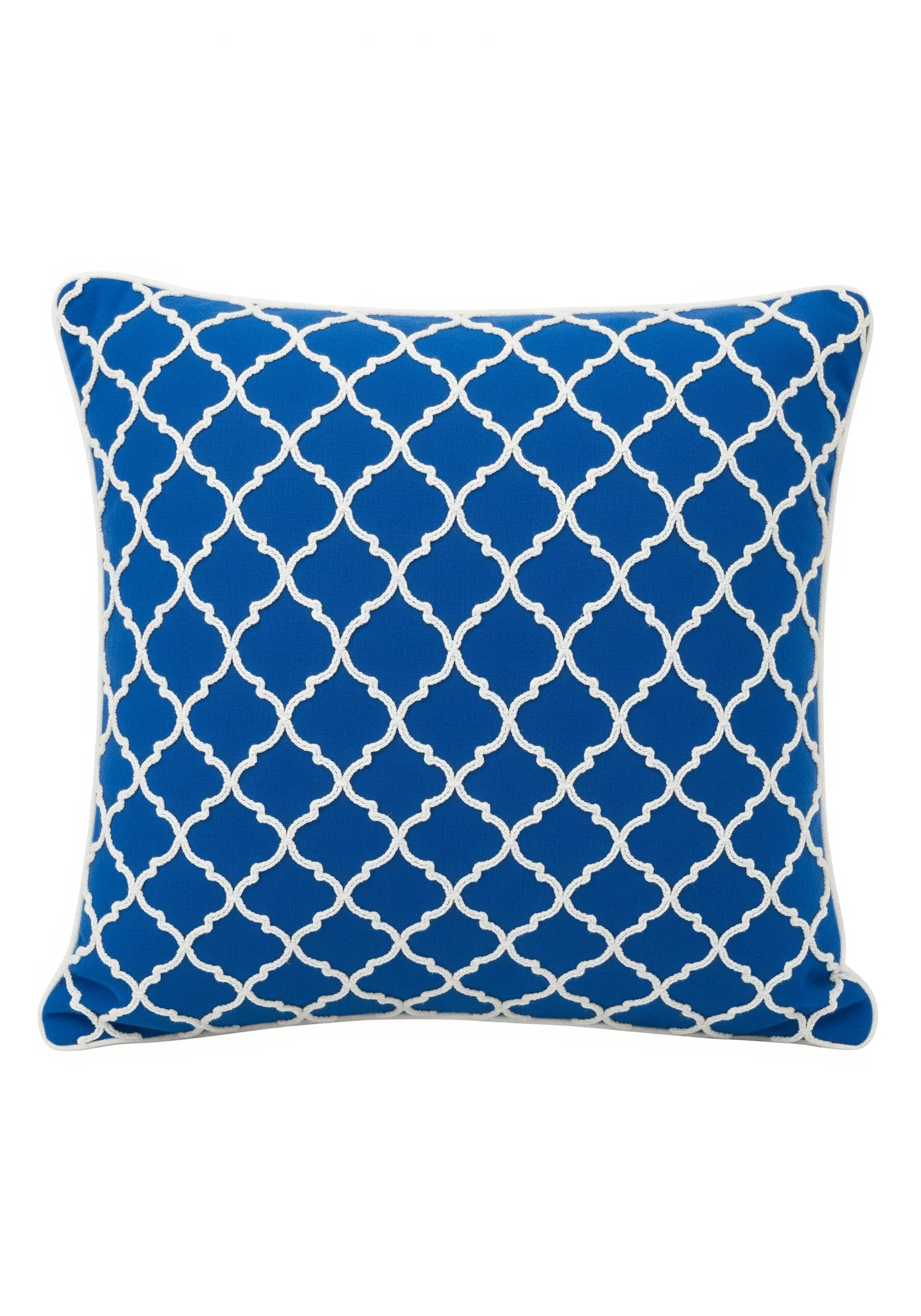
Create the iconic Moroccan quatrefoil trellis pattern by focusing on the perfection of the outline stitch.
Use a smooth, consistent stitch like a stem stitch or a two-ply backstitch to trace the elegant, looping lines of the design.
The goal is to create a perfectly uniform white line that pops against the bold blue background.
In this style, precision is everything. The visual impact comes from the rhythm and repetition of the flawless geometric shapes.
28. Layer Stitches within a Paisley Motif
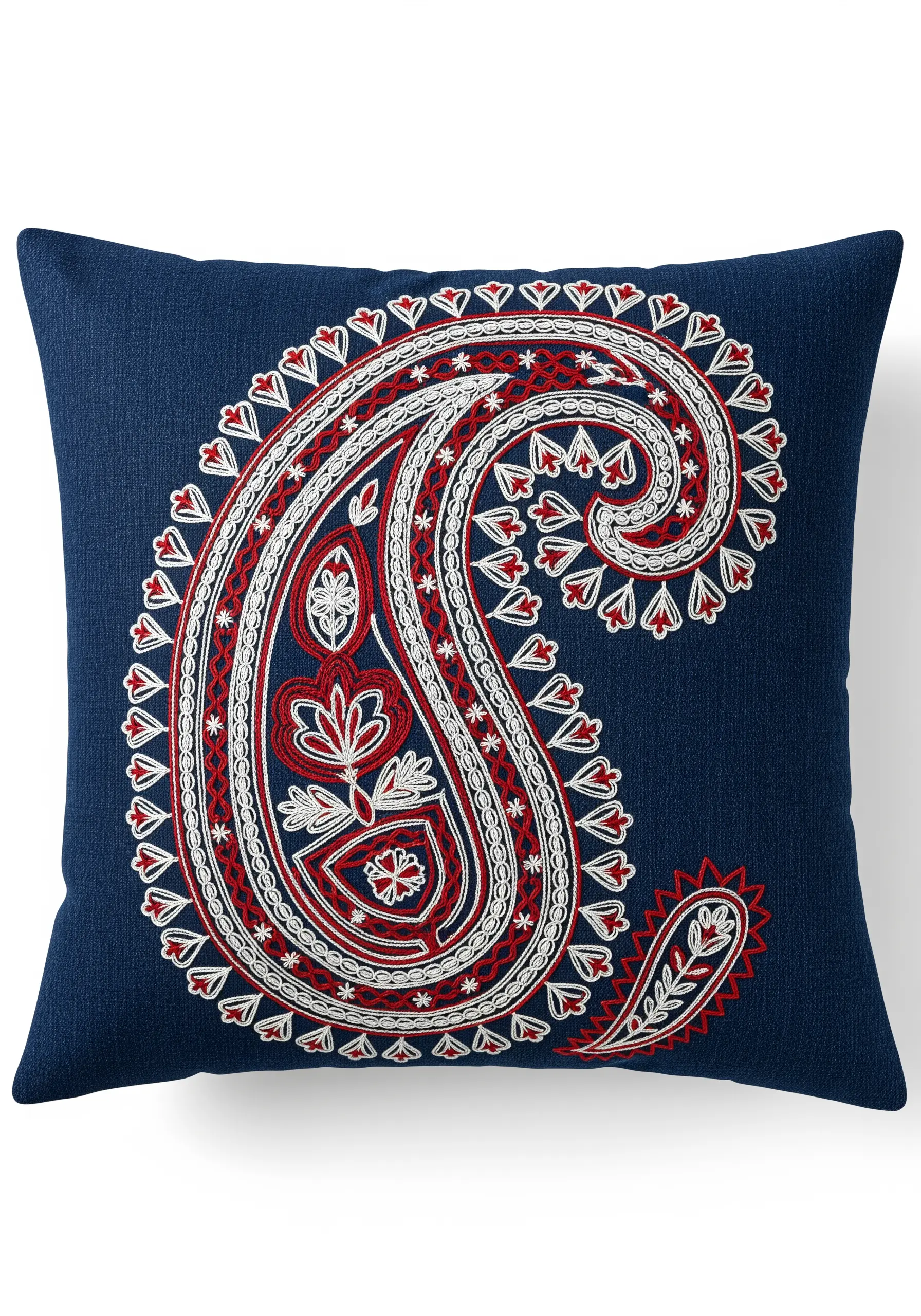
Give a large paisley motif depth and intricacy by filling its various sections with different stitches and colors.
Use a bold, whipped backstitch in white for the primary outlines to make them stand out.
Fill interior bands with a contrasting red satin stitch, and use delicate, decorative elements like seed stitches or small lazy daisy stitches for the finer details.
This layering of textures turns a simple outline into a rich, detailed composition, a method often seen in mini embroidery designs inspired by vintage patterns.
29. Stitch Serene Cloud Scrolls on Satin
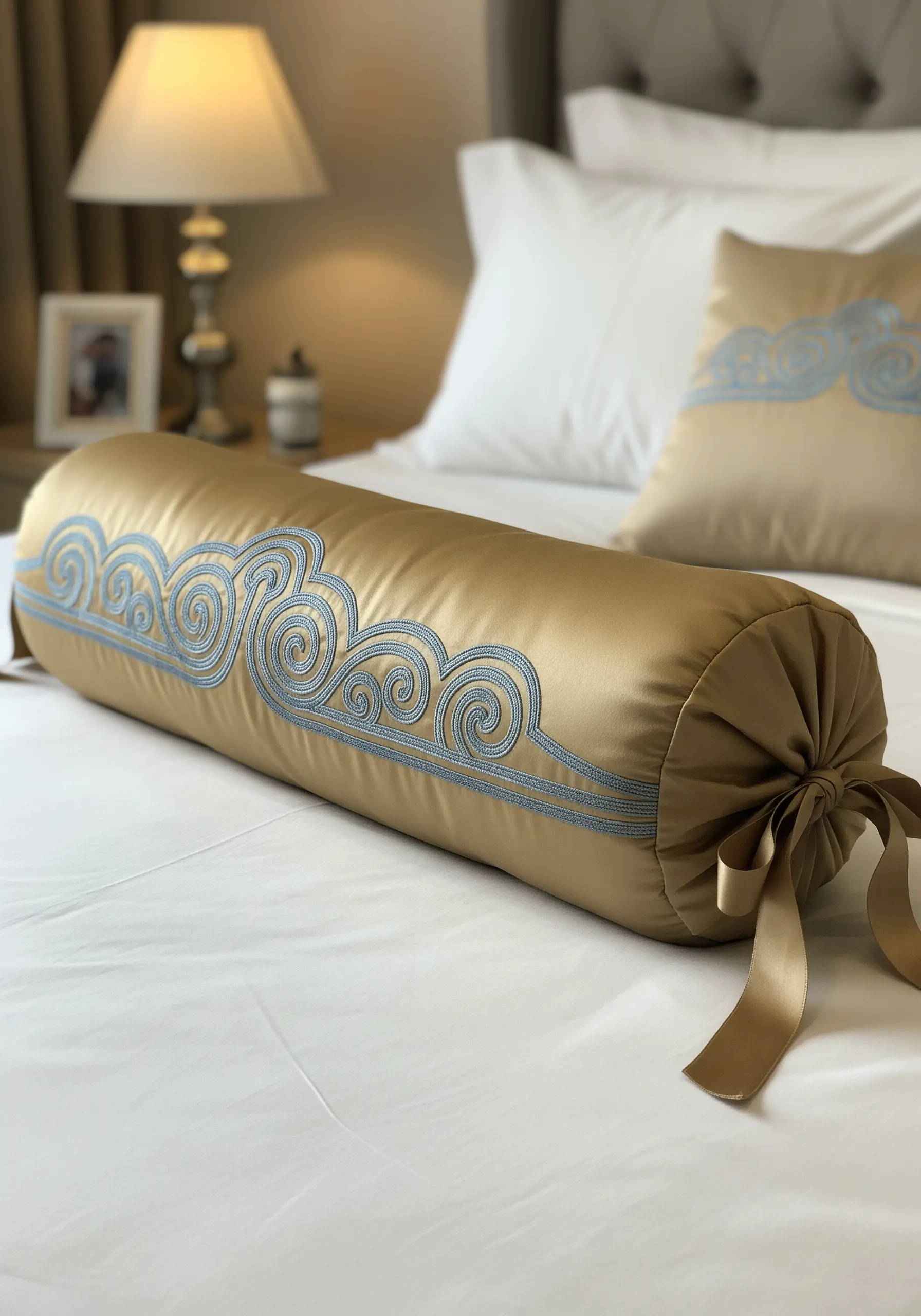
Capture the graceful movement of East Asian cloud motifs by using couched cord on a lustrous satin fabric.
The smooth surface of satin provides the perfect canvas for the elegant, swirling lines of the design.
Use a fine decorative cord and tack it down with a nearly invisible stitch to maintain the fluidity of the curves.
The contrast between the matte, textural cord and the high-sheen background creates a design that is both serene and sophisticated.
30. Mix Wool Couching and Sequins for Modern Texture
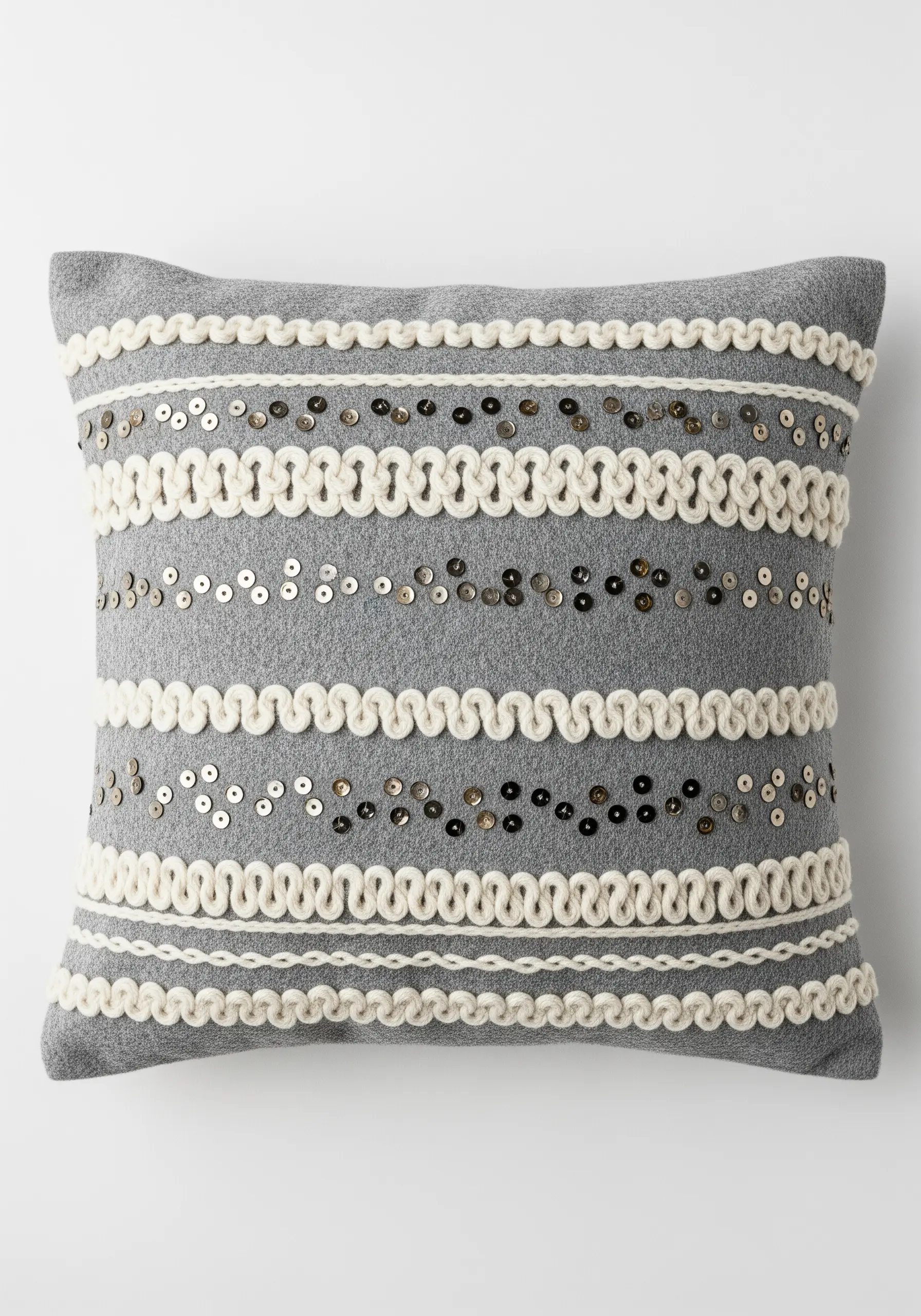
Create a contemporary textural design by pairing soft, organic materials with unexpected sparkle.
Couch thick, natural wool yarn in undulating lines across a felt or wool-blend cushion cover for a soft, sculptural effect.
In the spaces between the wool, stitch scattered rows of metallic sequins. Secure them with a single backstitch through the center for a minimalist look.
This high-contrast pairing of matte and shiny, soft and hard, creates a sophisticated and tactile surface that invites touch.