

Have you ever finished a piece of embroidery and felt that, while technically correct, it was missing a certain… presence? That it felt more like a craft project than a piece of art you’d proudly display?
That feeling is the space between following a pattern and making an artistic statement. The good news is that bridging that gap doesn’t require years of training or expensive new tools. It requires a shift in perspective—thinking less like a stitcher and more like a designer who uses thread as their medium.
Here, we will move beyond the hoop and explore how to give your embroidery the scale, texture, and intentionality it needs to become a true focal point in your home. It’s about understanding how a simple change in thread weight, stitch direction, or canvas size can transform your work into something that feels like it belongs in a boutique gallery. You’re closer than you think.
1. Integrate Sculptural Fiber Art for Textural Depth
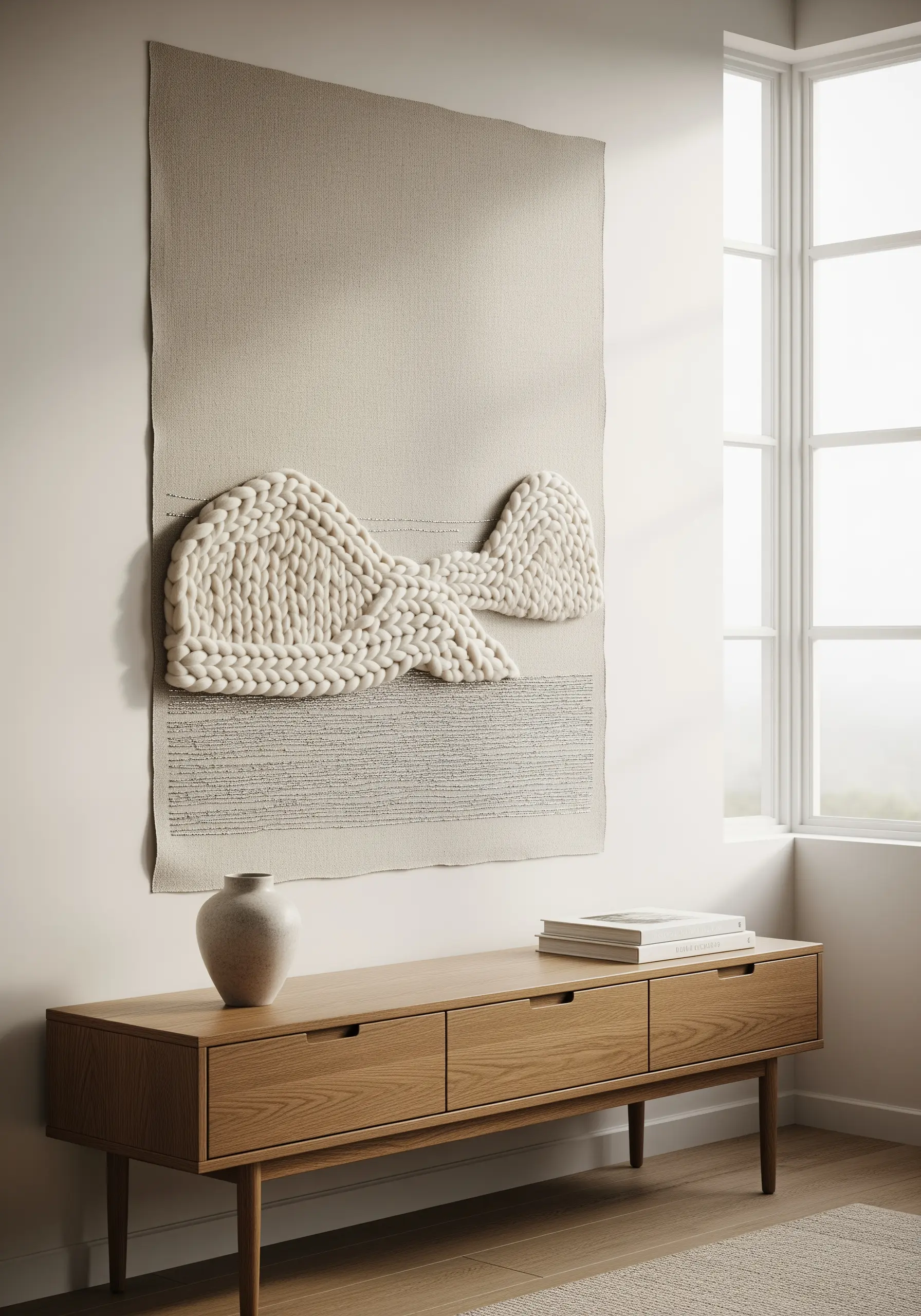
Move beyond flat stitching by incorporating oversized, sculptural elements into your canvas work.
Use chunky wool roving or thick yarn, couching it onto a heavy linen or burlap canvas with a matching, thinner thread.
This creates a dramatic contrast between the fine texture of the background fabric and the bold, three-dimensional form of the yarn.
For a clean finish, stretch your canvas over a wooden frame before you begin, ensuring the fabric is taut enough to support the weight of the heavy fibers.
This technique turns your wall into a tactile experience, inviting viewers to appreciate not just the look but the feel of the piece.
2. Master the Triptych for a Grand Botanical Statement
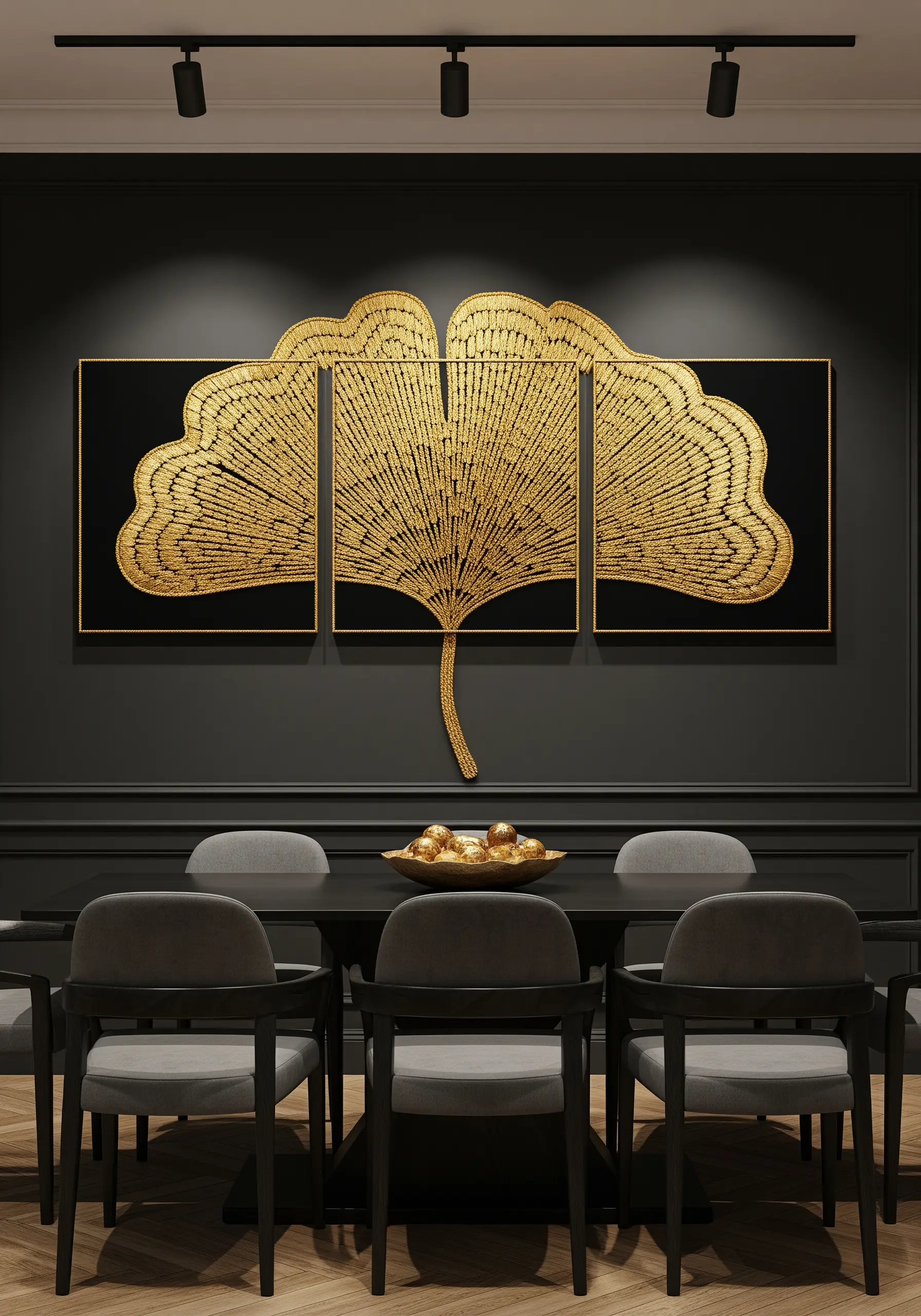
Elevate a single motif by splitting it across three separate canvases, creating an impressive triptych that commands attention.
Use a metallic or high-sheen thread against a dark, matte canvas to maximize visual impact.
For the intricate veins of a leaf, couch a fine metallic cord onto the surface rather than stitching with it directly; this prevents fraying and ensures a perfectly smooth, reflective line.
Fill the body of the leaf with dense seed stitches or short straight stitches, creating a textured, shimmering surface that catches the light from every angle.
3. Juxtapose Geometric Lines with a Single Organic Motif
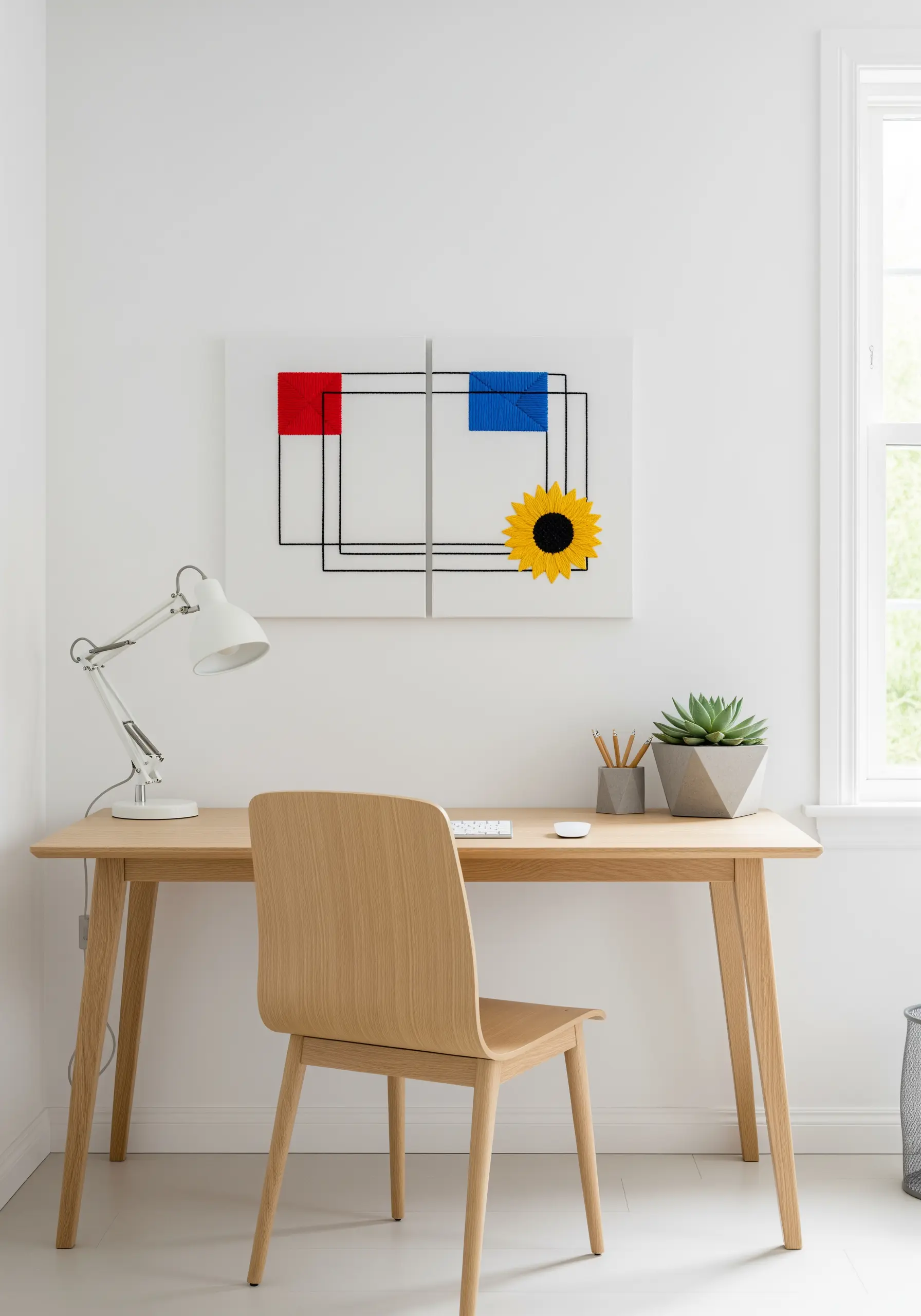
Create a modern, abstract composition by balancing crisp geometric lines with a single, richly textured organic element.
Use a single strand of black floss and a precise split stitch or backstitch to create the clean, architectural framework.
For the contrasting floral, switch to a thicker thread and use dense satin stitch or long-and-short stitch to build a solid, vibrant block of color.
This contrast in both form and texture is what gives the piece its sophisticated, gallery-like quality, proving that simplicity and complexity can coexist beautifully.
4. Achieve Serenity with Raised Stitches and a Muted Palette
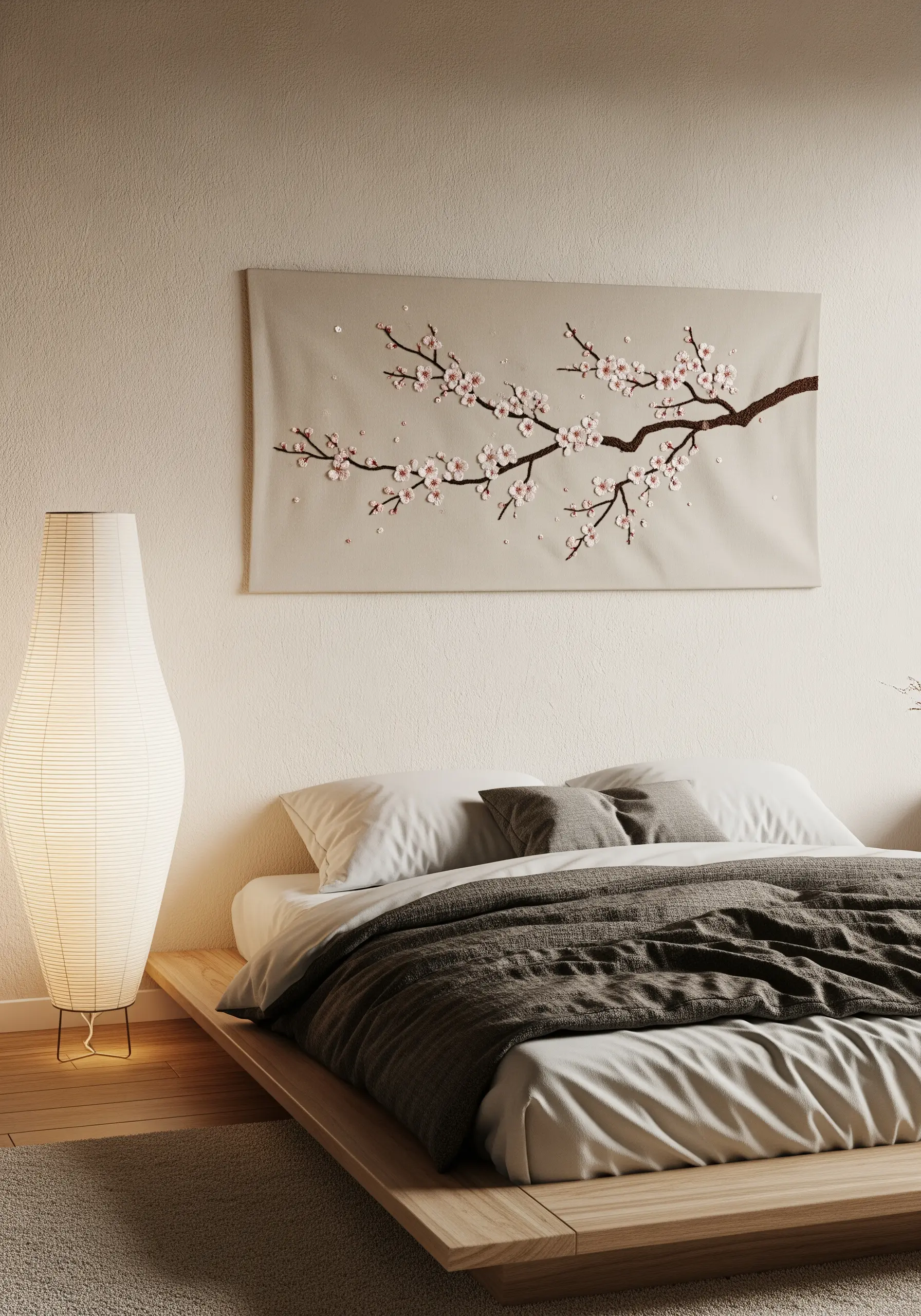
Evoke a sense of calm and tranquility by focusing on texture over color.
Use French knots and bullion knots to create cherry blossoms, varying the number of wraps to create buds of different sizes for a more natural look.
Keep the color palette soft and minimal—creams, pale pinks, and earthy browns—stitched onto an unbleached linen or cotton canvas.
This approach allows the raised texture of the stitches to become the main focal point, adding subtle dimension that enhances the peaceful mood of your bedroom embroidery accents.
5. Embrace Maximalism with Full-Coverage Thread Painting
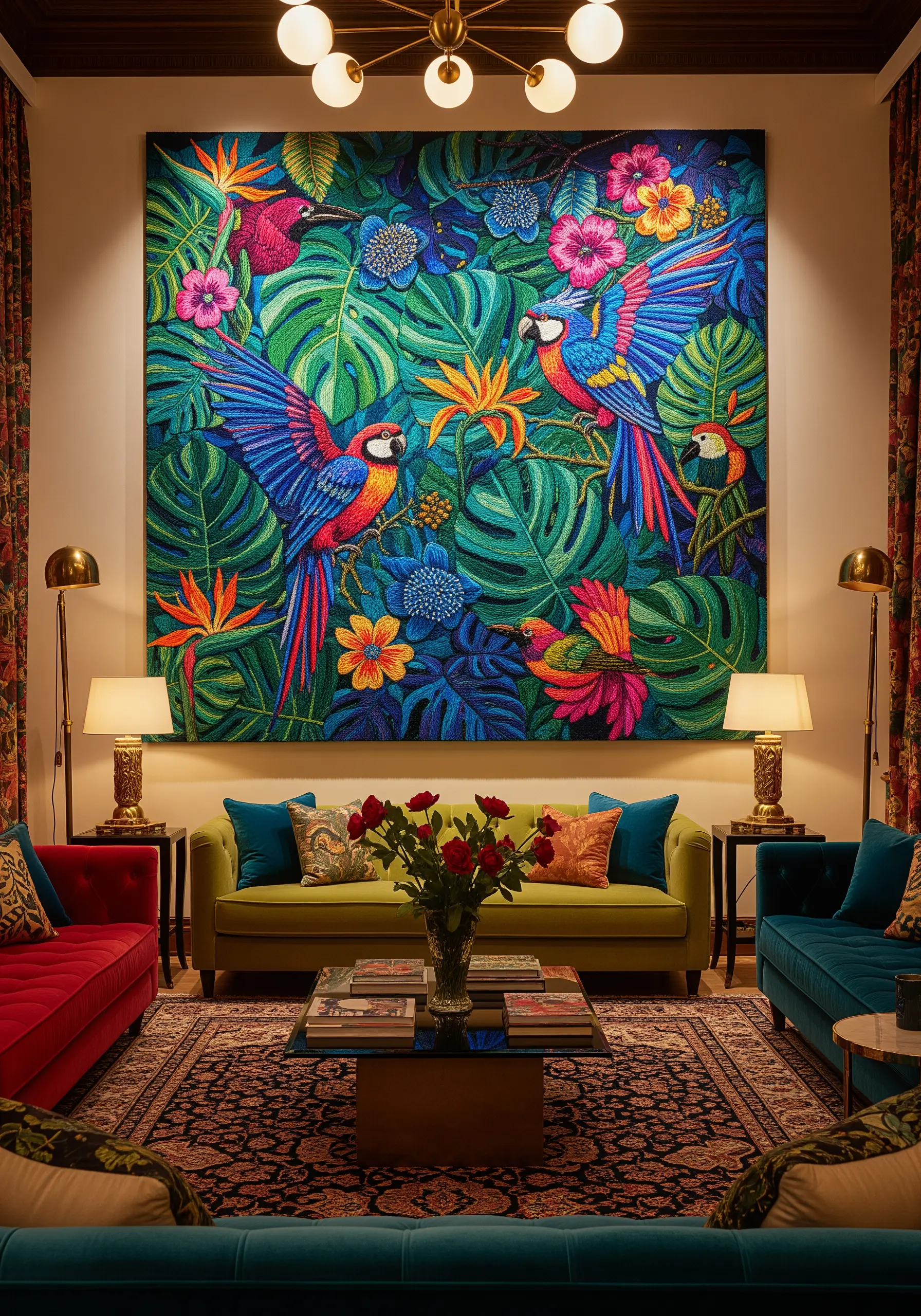
Create a breathtaking tapestry effect with full-coverage embroidery, where every inch of the canvas is filled with dense stitches.
This technique, known as thread painting, relies on the long-and-short stitch to blend colors seamlessly, creating painterly depth and vibrancy.
Work in small sections, laying your stitches in the direction of natural growth—outward for petals, upward for leaves—to give your composition lifelike movement.
Choose a bold, saturated color palette to create tropical leaf and flower combination patterns that transform a blank wall into an immersive, vibrant jungle.
6. Capture the Cosmos with Fine Metallic Thread
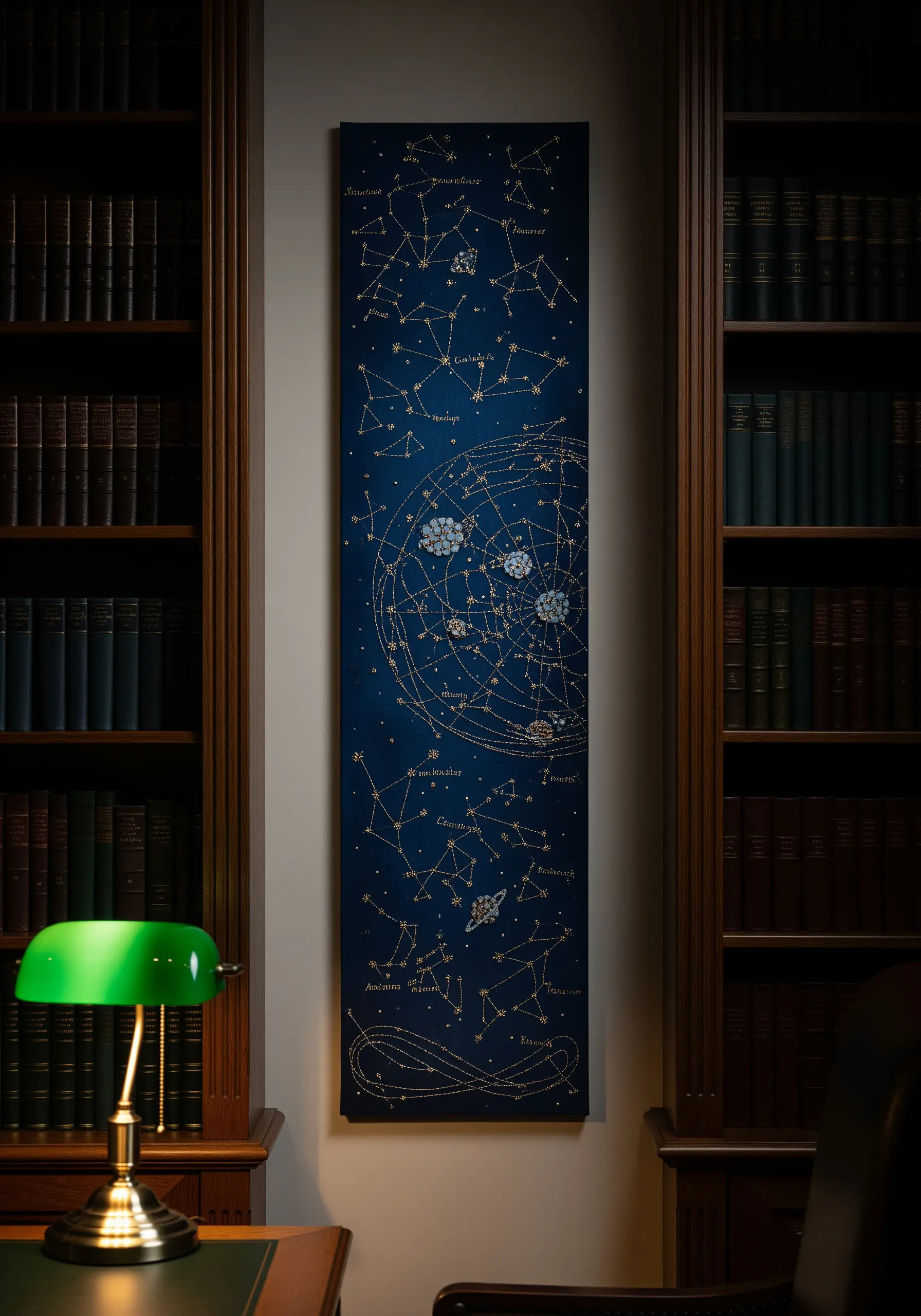
Turn a simple piece of dark canvas into a celestial map by using fine metallic thread for your line work.
To prevent the metallic thread from snagging or untwisting, use a shorter length of thread than you normally would and work with a needle that has a larger eye.
A simple backstitch or stem stitch is all you need to trace constellations, while tiny seed stitches or French knots can represent distant stars and galaxies.
The subtle shimmer of the metallic thread against the deep blue or black fabric creates an elegant, understated piece of metallic thread wall art perfect for a study or library.
7. Build Dynamic Waves with Textural Couching and Knots
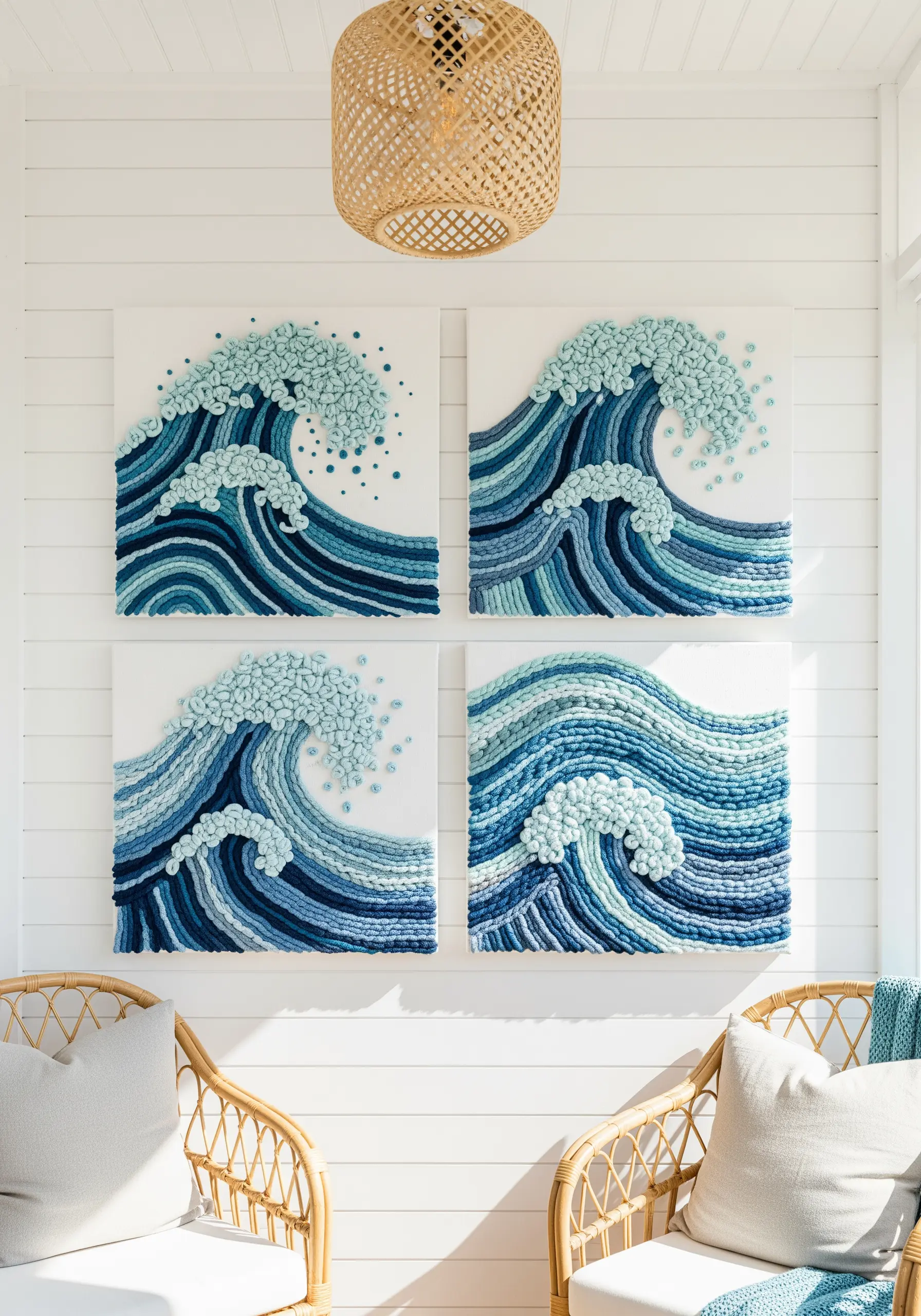
Capture the movement of water by combining different fibers and textural stitches in a cohesive color palette.
Create the flowing lines of the waves by couching down thick bundles of yarn in varying shades of blue.
For the sea foam, use a punch needle or dense clusters of French knots with a lighter, fluffier yarn like merino wool to create a raised, bubbly texture.
Arranging four canvases together allows you to create abstract thread waves and swirls with a sense of continuous motion, turning a simple motif into a dynamic installation.
8. Express Raw Energy with Abstract Thread Splatter
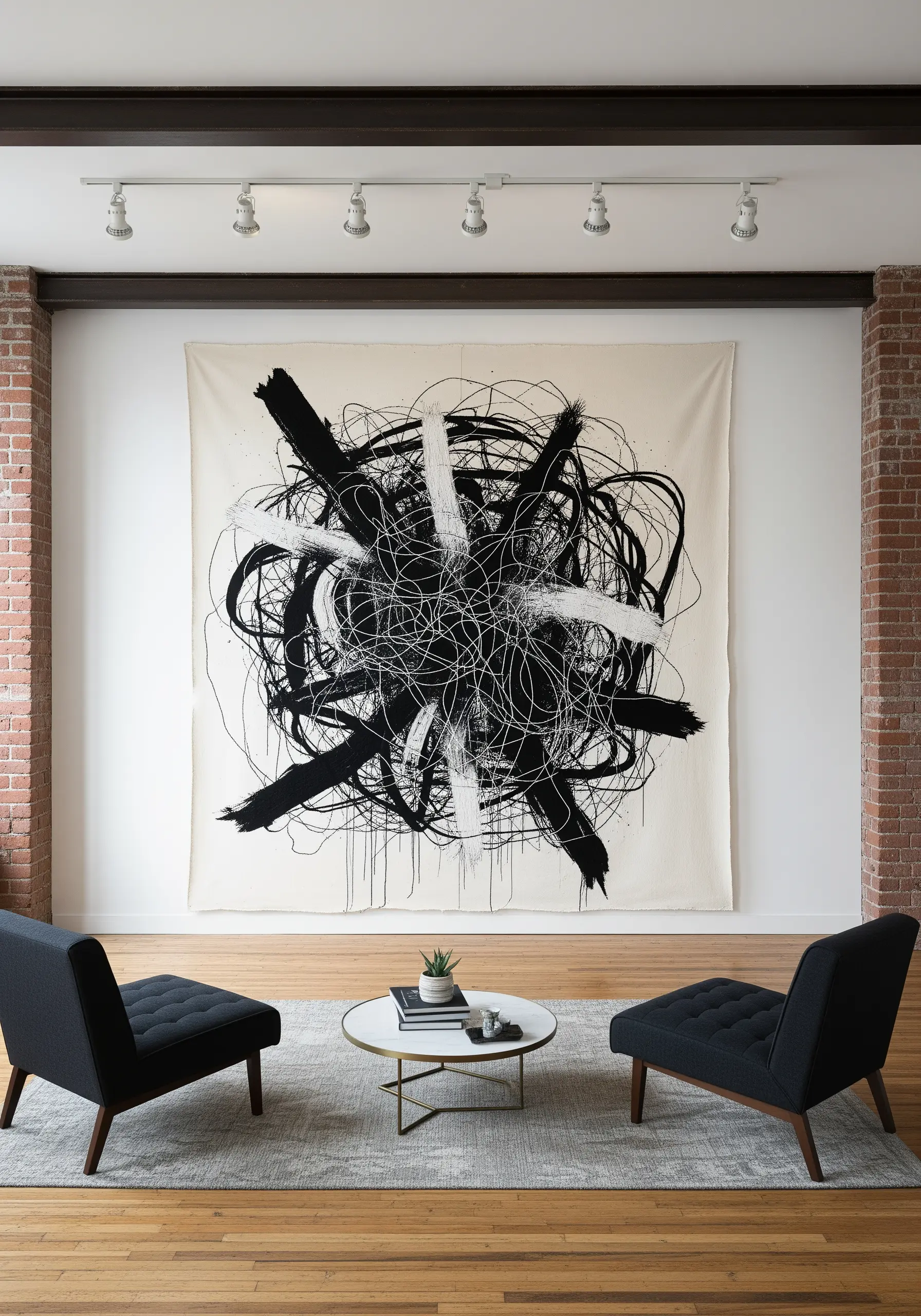
Channel the energy of abstract expressionism by layering threads in a seemingly chaotic, yet controlled, manner.
Start by stretching a large canvas and applying broad, gestural strokes of fabric paint to create a base layer.
Once dry, use a free-motion embroidery machine or hand-stitch long, overlapping straight stitches with black and white thread to build up layers of texture and line.
Allow some threads to hang loose and drip down the canvas to enhance the spontaneous, energetic feel of abstract thread splatter-inspired projects.
9. Create Graphic Impact with Radial Thread and Beadwork
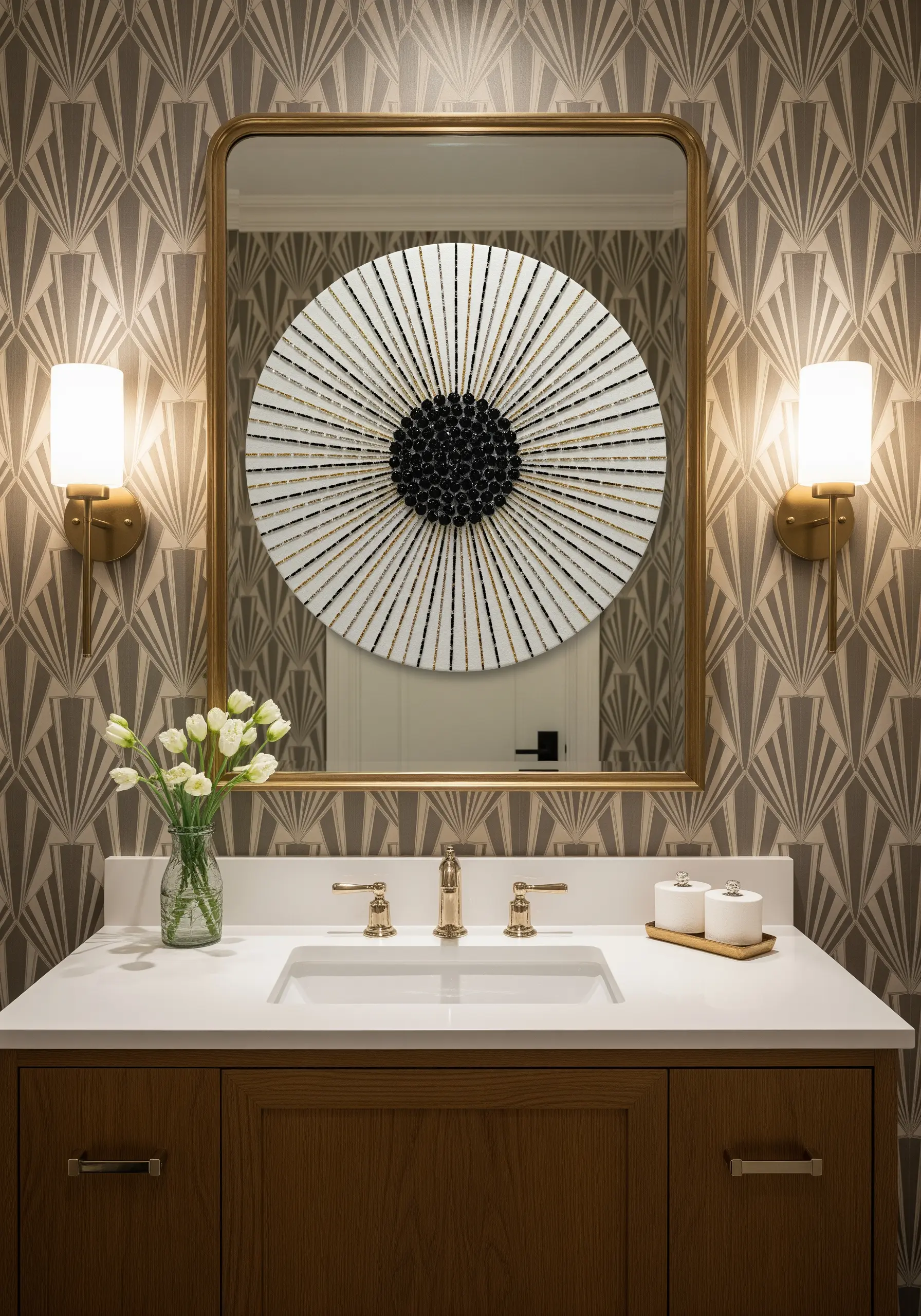
Achieve a striking, Art Deco-inspired look by arranging threads in a precise radial pattern.
Mount your canvas on a firm board or circular frame and mark the center point and outer circumference.
Use a thick, smooth thread like perle cotton and stitch long straight lines from the outer edge to a smaller inner circle, keeping the tension perfectly even.
Fill the center with dense black beadwork or French knots to create a dark, textured core that makes the radiating lines appear even brighter and more dramatic.
10. Reinvent the Backsplash with Minimalist Line Art
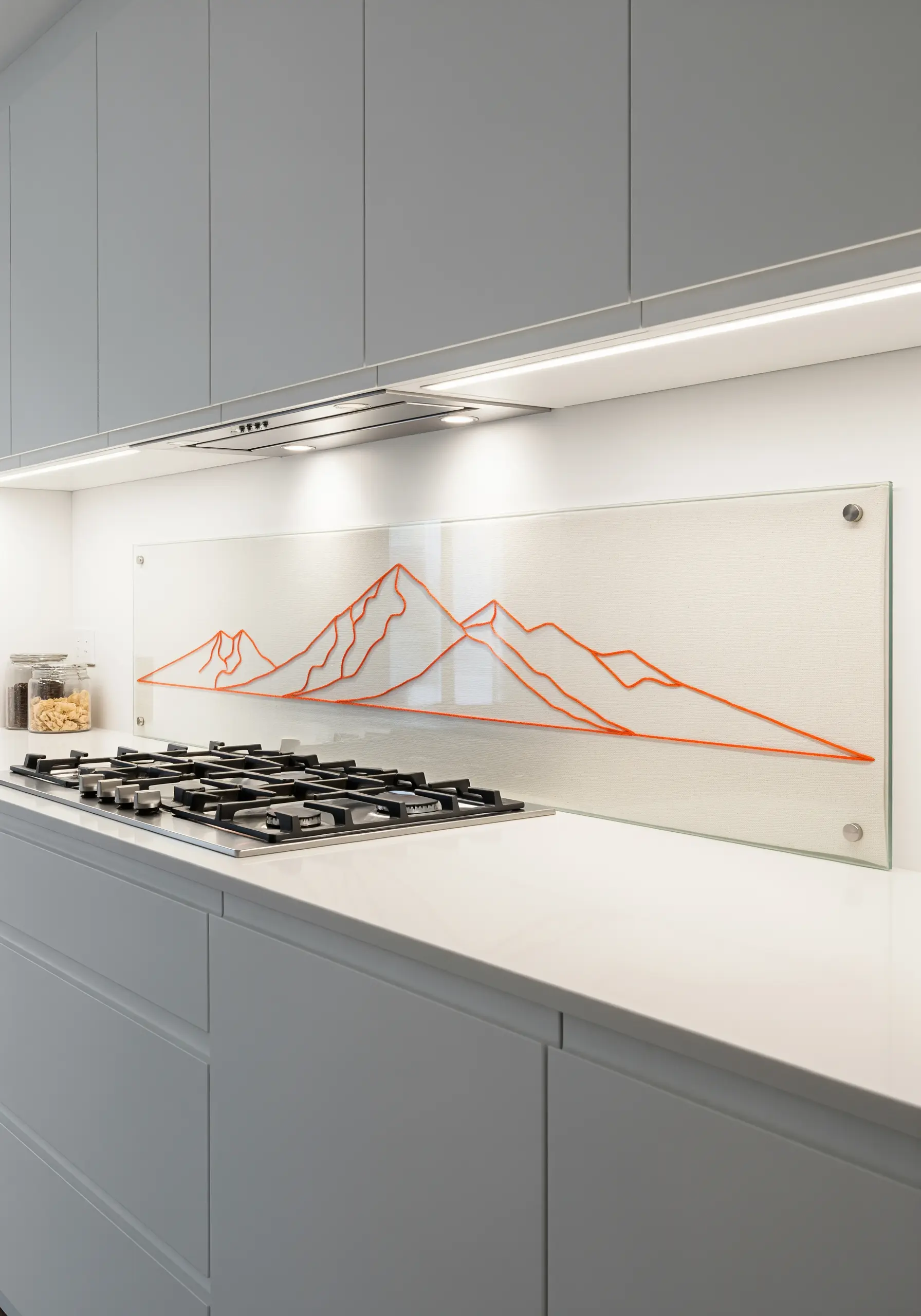
For a truly unique installation, embroider your design on canvas and protect it under glass for an unexpected kitchen or bathroom feature.
Choose a simple, continuous line drawing, like a mountain range or cityscape, that can be executed with a single, clean backstitch or stem stitch.
Use a bold, high-contrast thread color on a stark white canvas for maximum graphic impact.
Mounting the finished piece behind a custom-cut sheet of tempered glass transforms your stitching into a durable, functional piece of art.
11. Explore Celestial Themes on Tall, Narrow Canvases
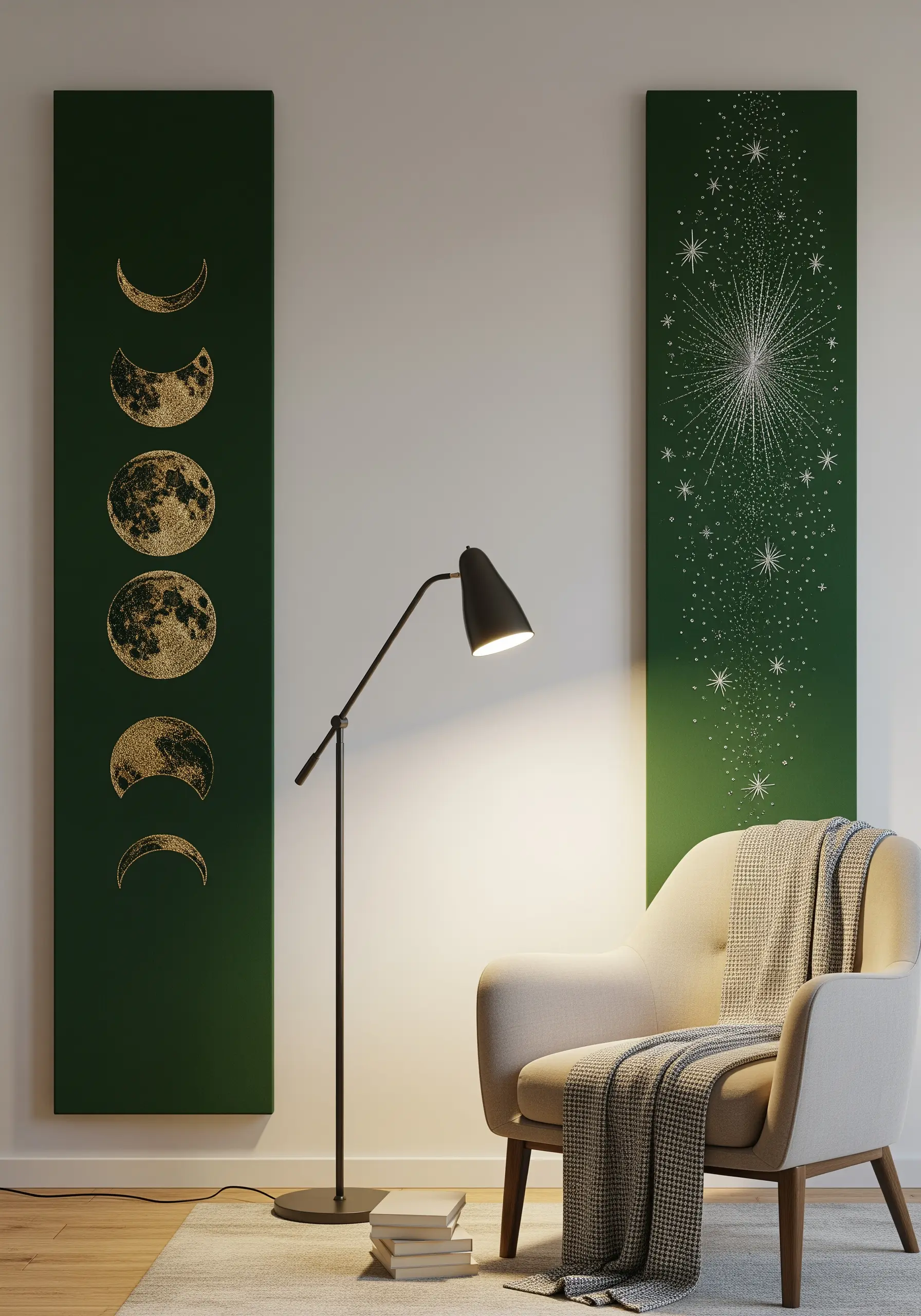
Use unconventional canvas dimensions to create a dramatic, vertical art piece that draws the eye upward.
Pair a deep, rich background color like emerald green or navy with shimmering metallic threads to depict celestial motifs like moon phases or starbursts.
Create texture on the lunar surfaces with tiny, tightly packed seed stitches or French knots in varying shades of gold and silver.
For the starbursts, use radiating straight stitches of different lengths to create a sense of explosive, glittering light.
12. Achieve Soft Sculpture with Raised Satin Stitch Petals
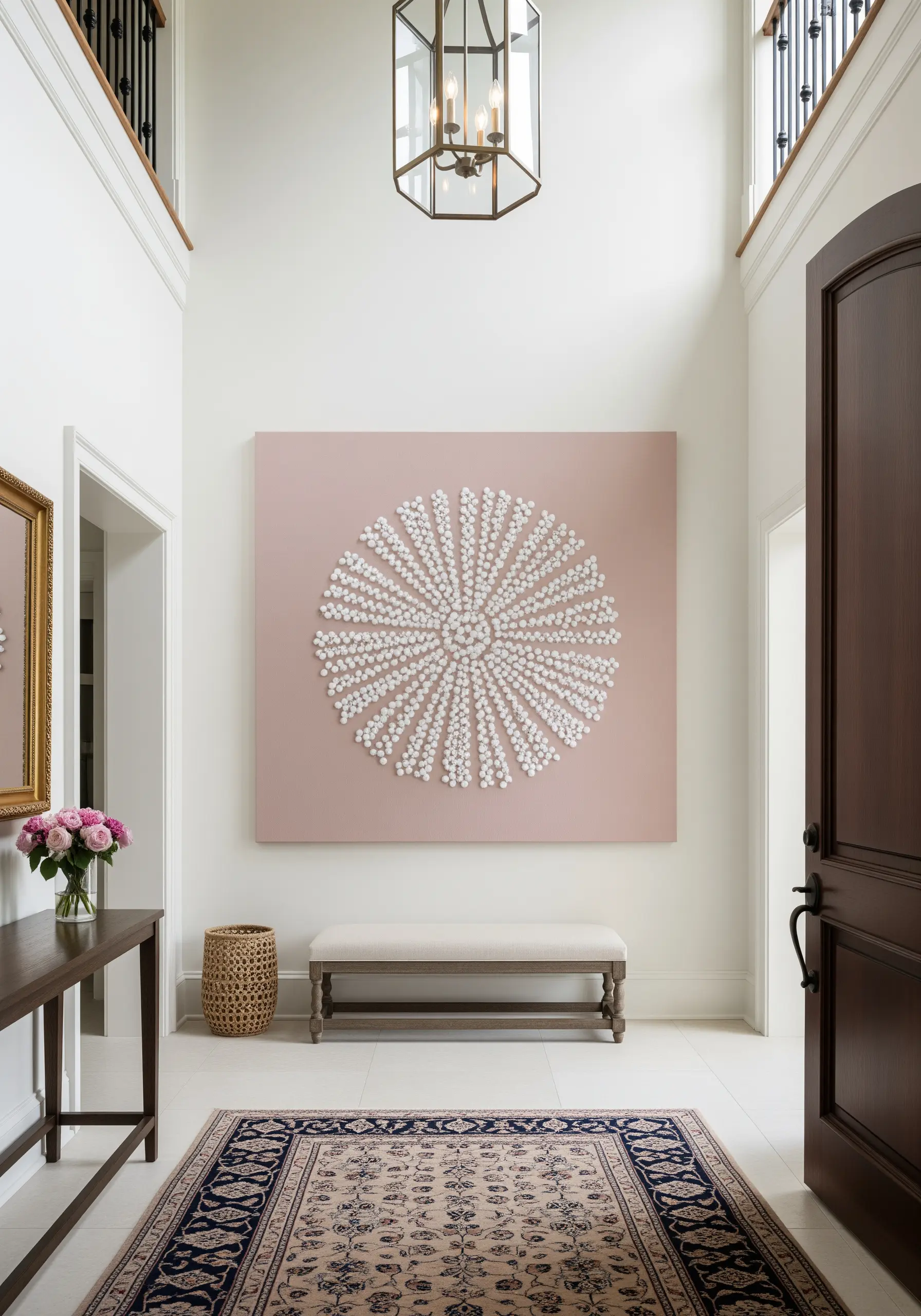
Create a three-dimensional floral mandala using padded satin stitch for a soft, sculptural effect.
To give each ‘petal’ its puffy appearance, first lay down a base of smaller satin stitches or felt padding in the desired shape.
Then, work your final layer of satin stitches over this padding, pulling the thread taut to create a smooth, raised surface.
Using a single color, like white or cream, on a softly colored canvas keeps the focus entirely on the interplay of light and shadow across the raised forms.
13. Embrace Deconstruction with Raw Edges and Visible Stitches
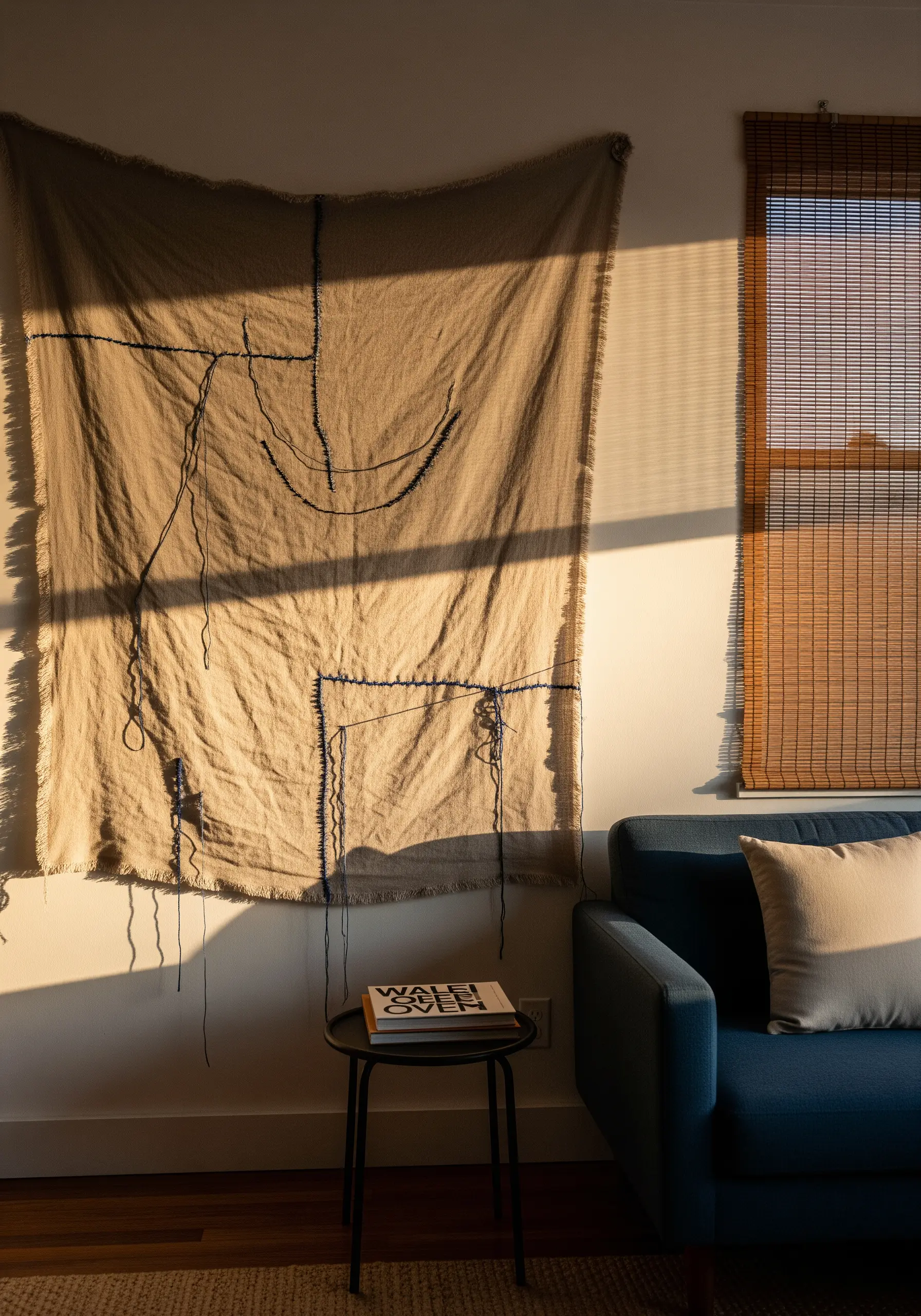
Challenge traditional finishing techniques by creating a piece that celebrates its own construction.
Use a loosely woven fabric like linen or Osnaburg, and instead of hemming the edges, allow them to fray naturally.
Use a thick, contrasting thread like sashiko or perle cotton to stitch together abstract shapes with large, visible running stitches.
Let the thread ends hang loose, turning them into a deliberate part of the design. This creates an authentic, wabi-sabi aesthetic that feels both raw and refined.
14. Isolate Bold Shapes with Couching for a Graphic Grid
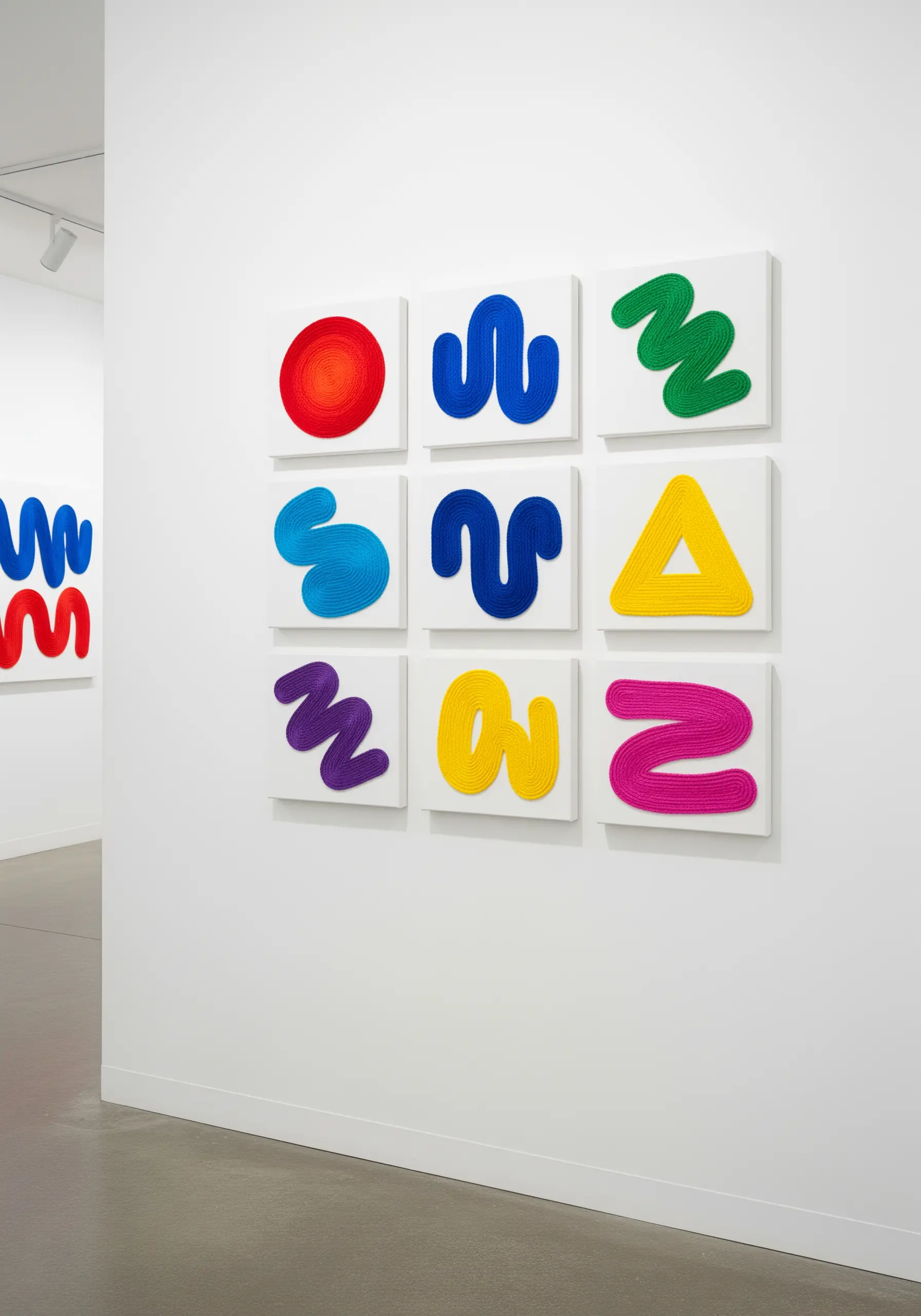
Create a playful, modern gallery wall by dedicating each small canvas to a single, vibrant shape.
Outline your abstract form, then couch thick, colorful yarn along the lines to create a bold, continuous border.
Fill the shape by continuing to couch the yarn in concentric rows until the entire area is covered. This technique creates a dense, rope-like texture that is visually striking.
Arranging these simple, graphic canvases in a grid formation results in a powerful, cohesive installation that feels like a contemporary art exhibit.
15. Channel Mid-Century Modern with Abstract Color Blocking
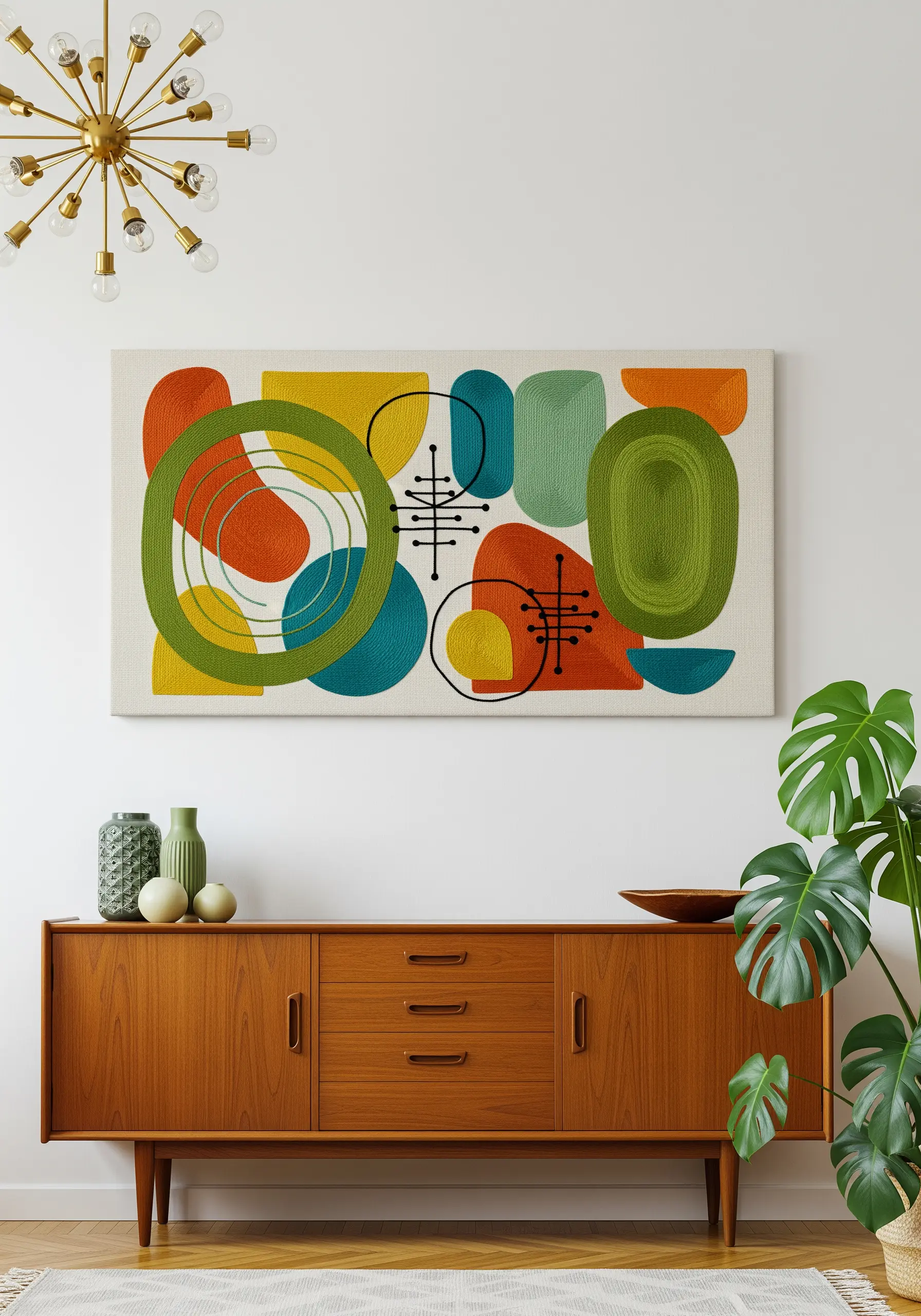
Capture the spirit of mid-century design by filling abstract, organic shapes with solid blocks of satin stitch.
Use a retro-inspired color palette—mustard yellow, avocado green, teal, and burnt orange—on a neutral cream canvas.
To keep your satin stitch smooth and even over larger areas, break them into smaller sections or use the long-and-short stitch for a more forgiving fill.
Incorporate fine black backstitched lines to add graphic details that echo the era’s iconic atomic and boomerang motifs.
16. Evoke Calmness with Monochromatic Pointillism
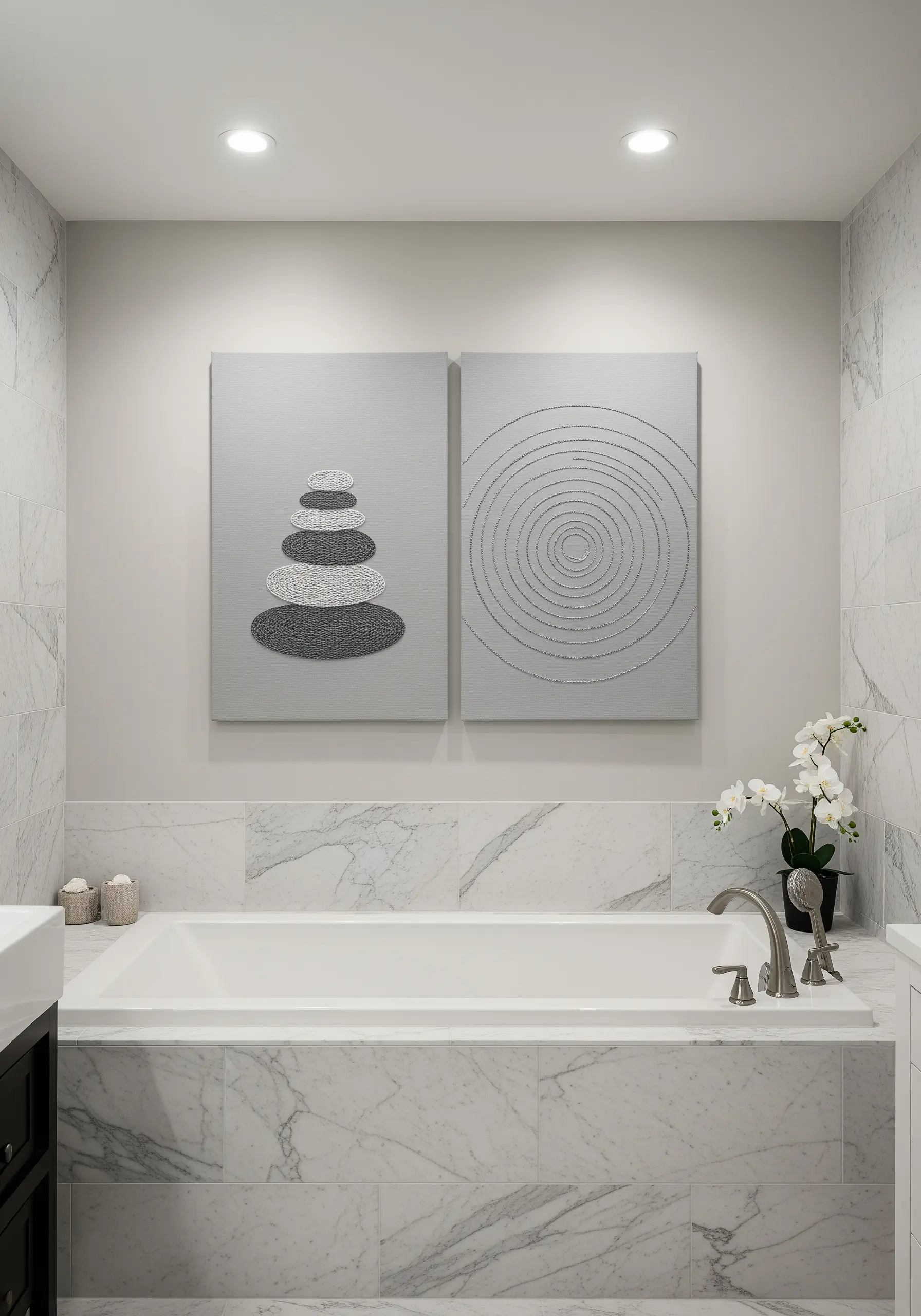
Create serene, minimalist art by using only French knots or seed stitches in a limited, grayscale palette.
This pointillist approach allows you to build subtle gradients and shapes through stitch density alone.
Place stitches closer together for darker, more defined areas, and space them further apart for lighter, more ethereal effects.
The meditative quality of the stitches, combined with the tranquil imagery of stacked stones or spirals, makes these pieces perfect for creating a calm, spa-like atmosphere.
17. Design a Nursery Triptych with Simple Outlines
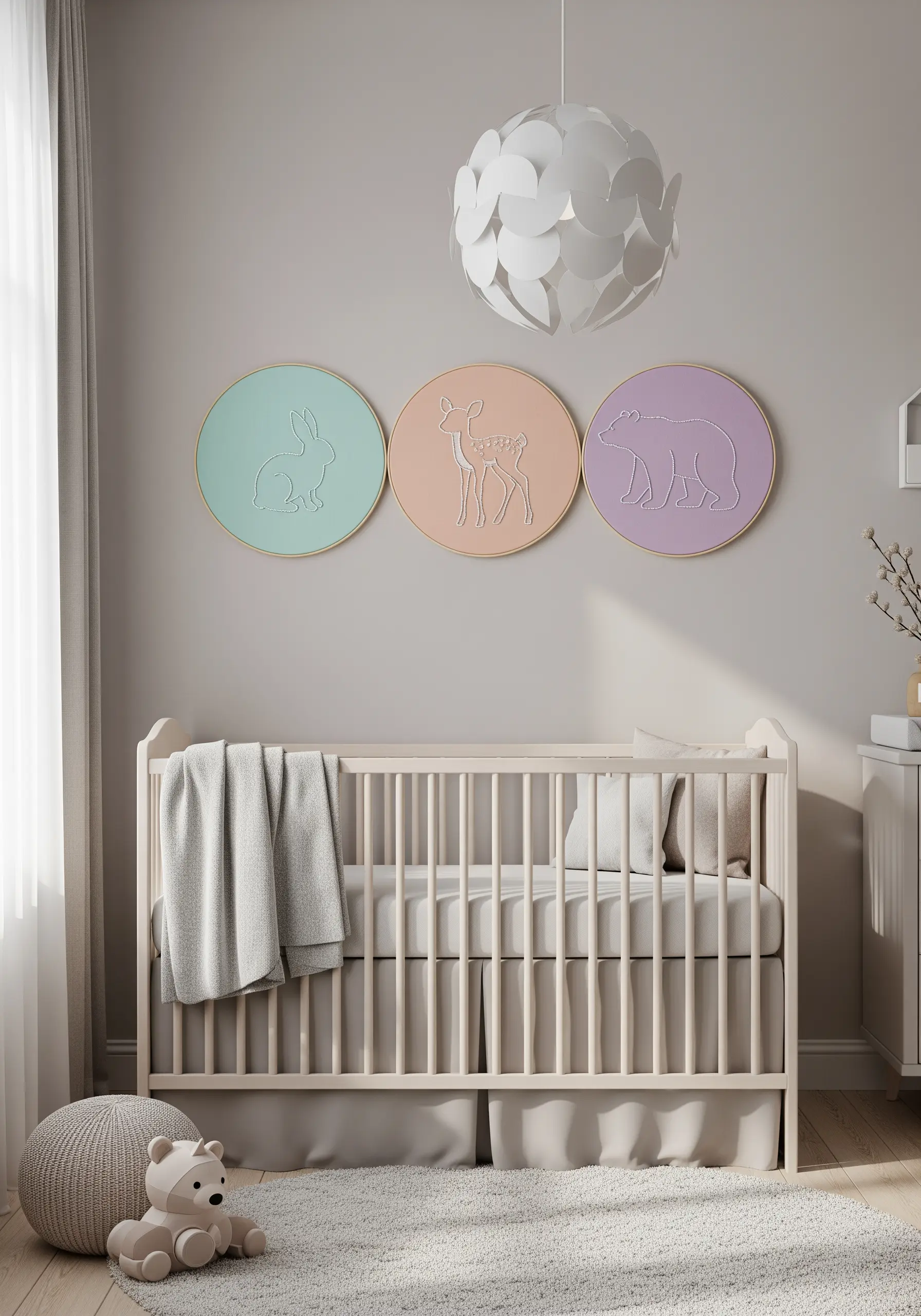
Create gentle, soothing art for a nursery by using simple outlines on softly colored, painted canvases.
First, paint your round canvases in a trio of complementary pastel shades. Once dry, transfer your simple animal silhouettes.
Use a single strand of matching or slightly darker floss and a neat backstitch to trace the outlines. The key is subtlety and simplicity.
This technique creates sophisticated and embroidered nursery decor ideas that feel handmade and personal without overwhelming the space.
18. Mimic Neon Lights with Contrasting Couching
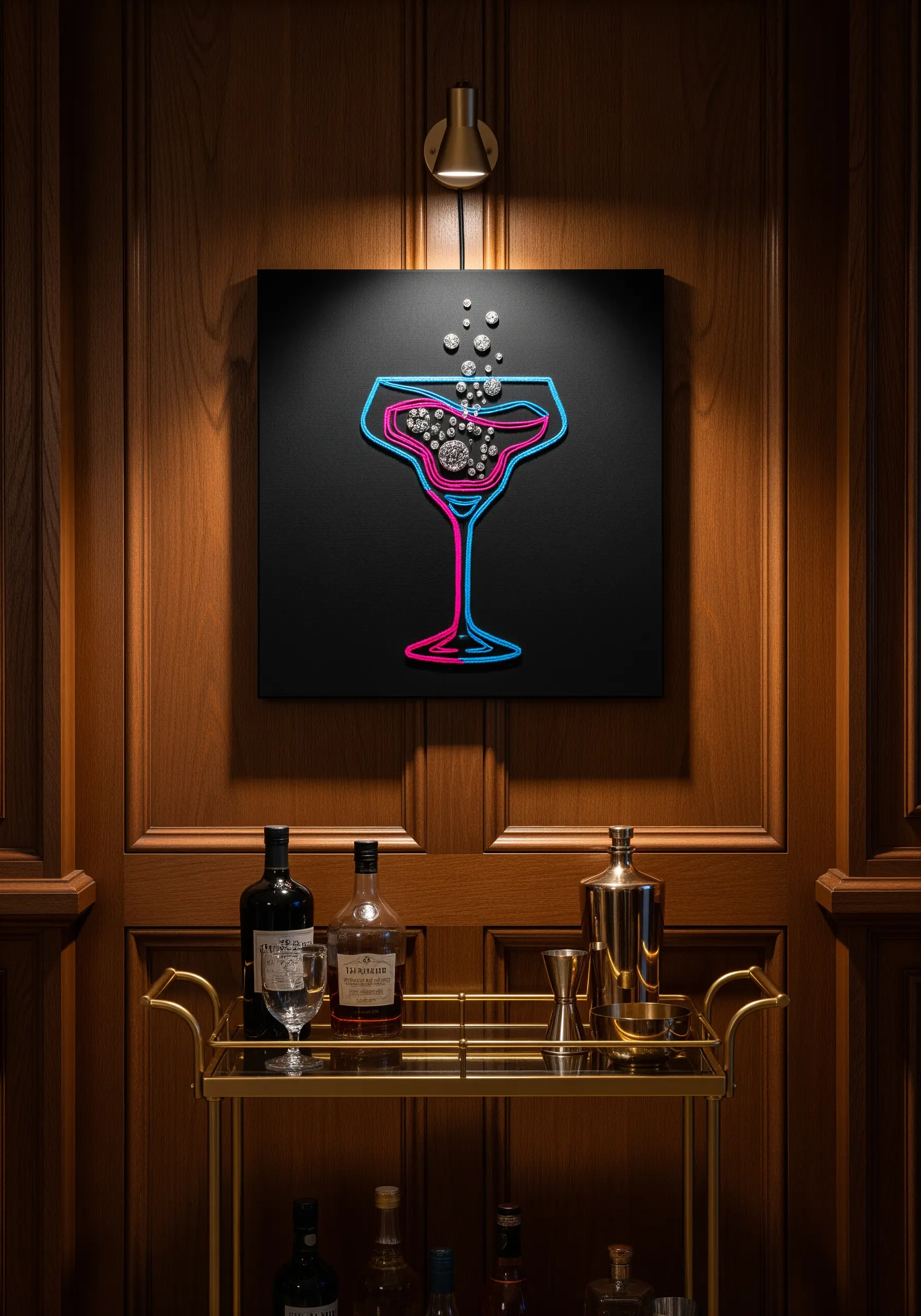
Recreate the vibrant glow of a neon sign using brightly colored yarn and strategic beadwork.
On a stark black canvas, couch down two contrasting colors of thick yarn right next to each other to form your design’s outline.
The high contrast between the yarn colors and the black background is what creates the illusion of light.
Add clear or silver-lined seed beads sporadically within the design to mimic the fizz and sparkle of bubbles or light reflections, adding a touch of playful glamour.
19. Create a Thread Waterfall for a Dramatic Installation
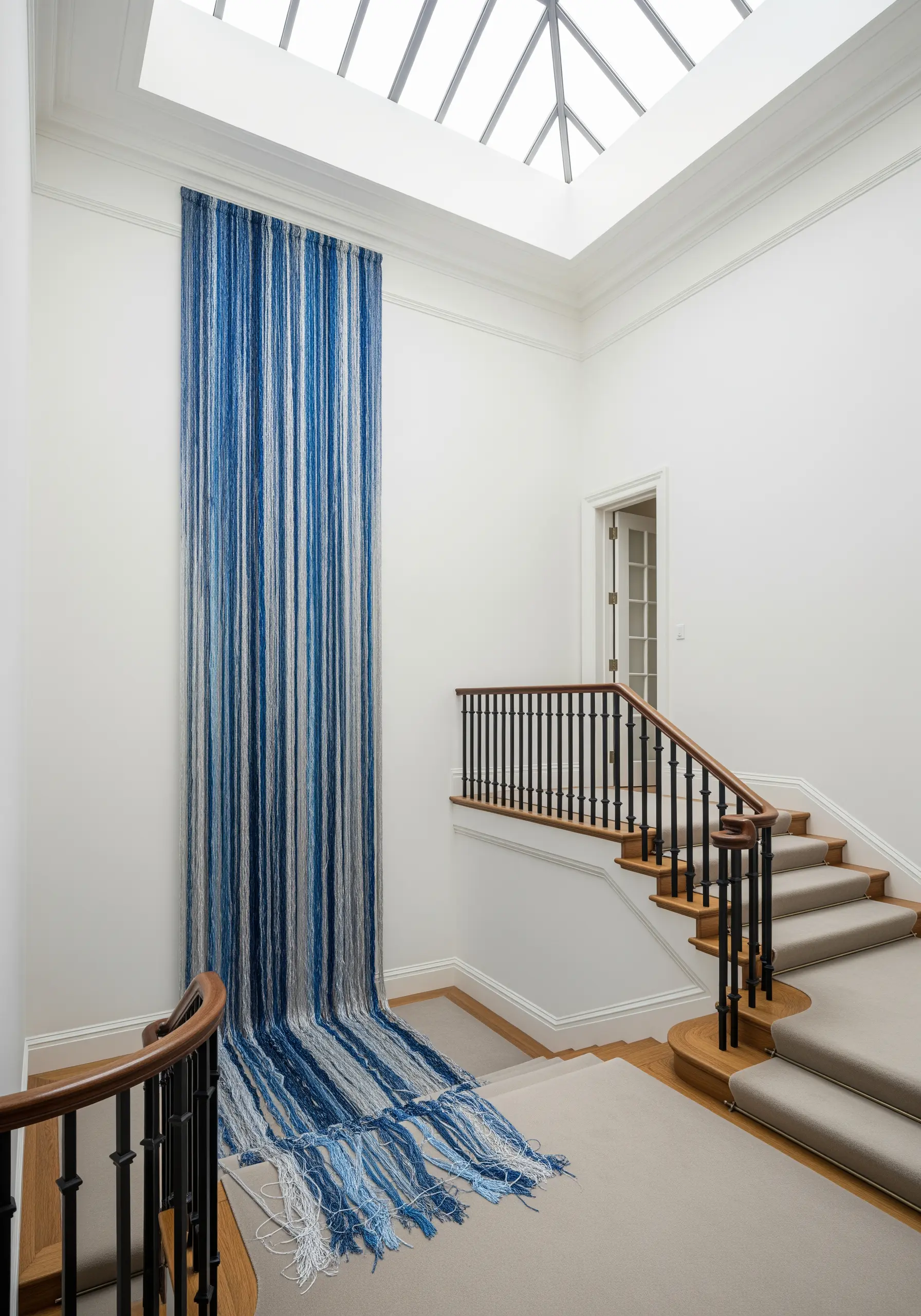
Make a monumental statement with a floor-to-ceiling fiber art installation that flows down the wall.
Instead of stitching onto canvas, create a dense cascade of threads suspended from a wooden dowel or rod.
Achieve a gradient effect by arranging hundreds of long strands of yarn and embroidery floss in carefully planned color blocks.
The sheer scale and the way the threads move with the air in the room turns your embroidery into a dynamic, architectural element, making it one of the most stunning fiber art installations imaginable.
20. Achieve Bold Graphics with High-Contrast Linework
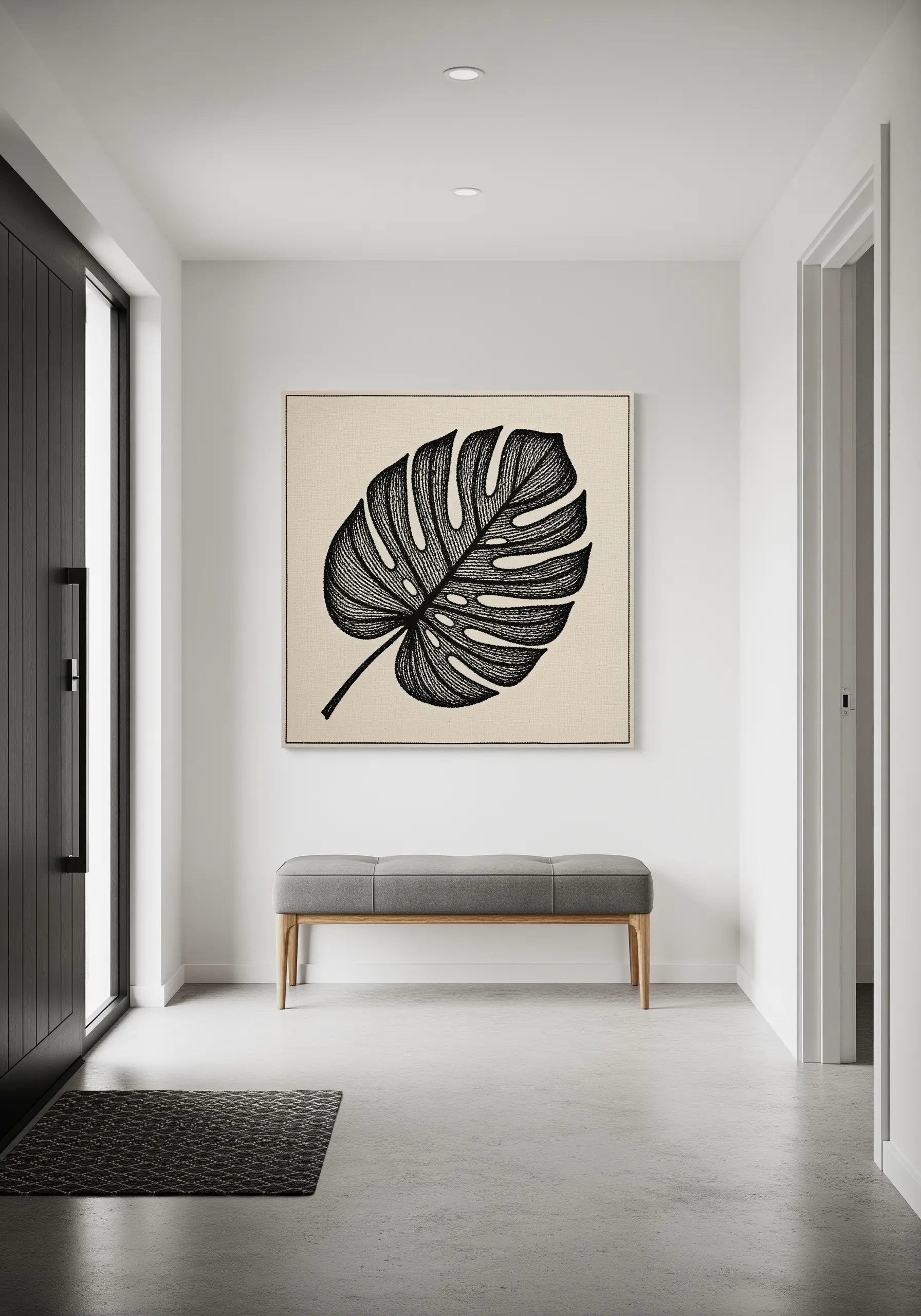
Make a single botanical motif the hero of your space by using dense, black thread on a light, neutral canvas.
Instead of a simple outline, fill the entire leaf shape with parallel lines of satin stitch or stem stitch, worked closely together.
Vary the direction of your stitches to follow the natural contours and veins of the leaf; this adds subtle texture and a sense of realism to the otherwise graphic design.
This high-contrast, block-print style turns a simple leaf into a powerful piece of modern art.
21. Frame a Mirror with Symmetrical Chinoiserie Panels
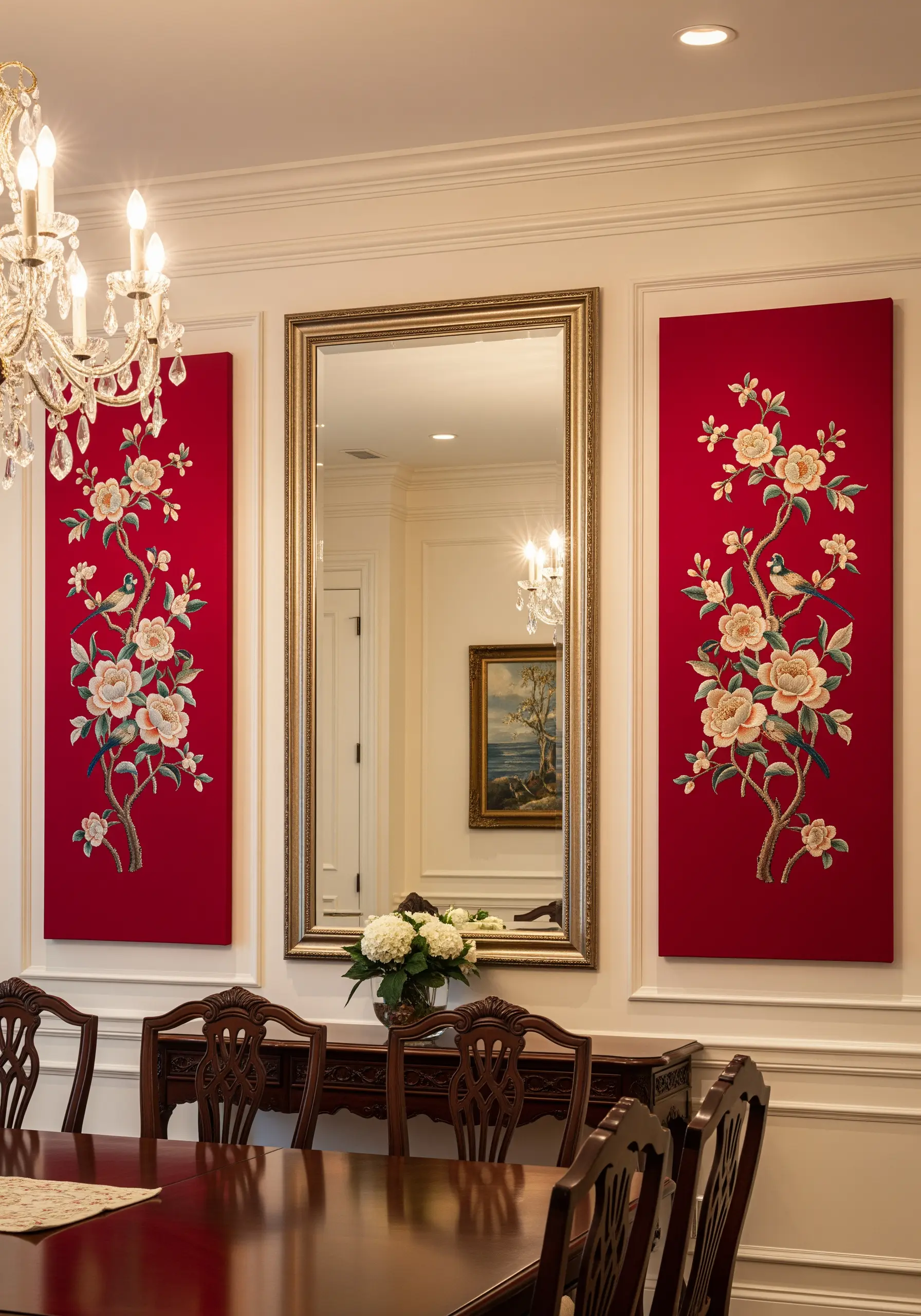
Create a sense of formal elegance and balance by flanking a central feature, like a mirror, with two identical embroidered panels.
Choose a classic Chinoiserie or floral motif and stretch a vibrant, solid-colored silk or satin over your canvases.
Use traditional silk-shading techniques (long-and-short stitch) to blend colors in the petals and leaves, creating a painterly, luminous quality.
This symmetrical arrangement elevates the entire wall, turning individual embroideries into a cohesive and intentional design feature, creating truly elegant framed embroidery artworks.
22. Supersize a Mandala for a Meditative Headboard
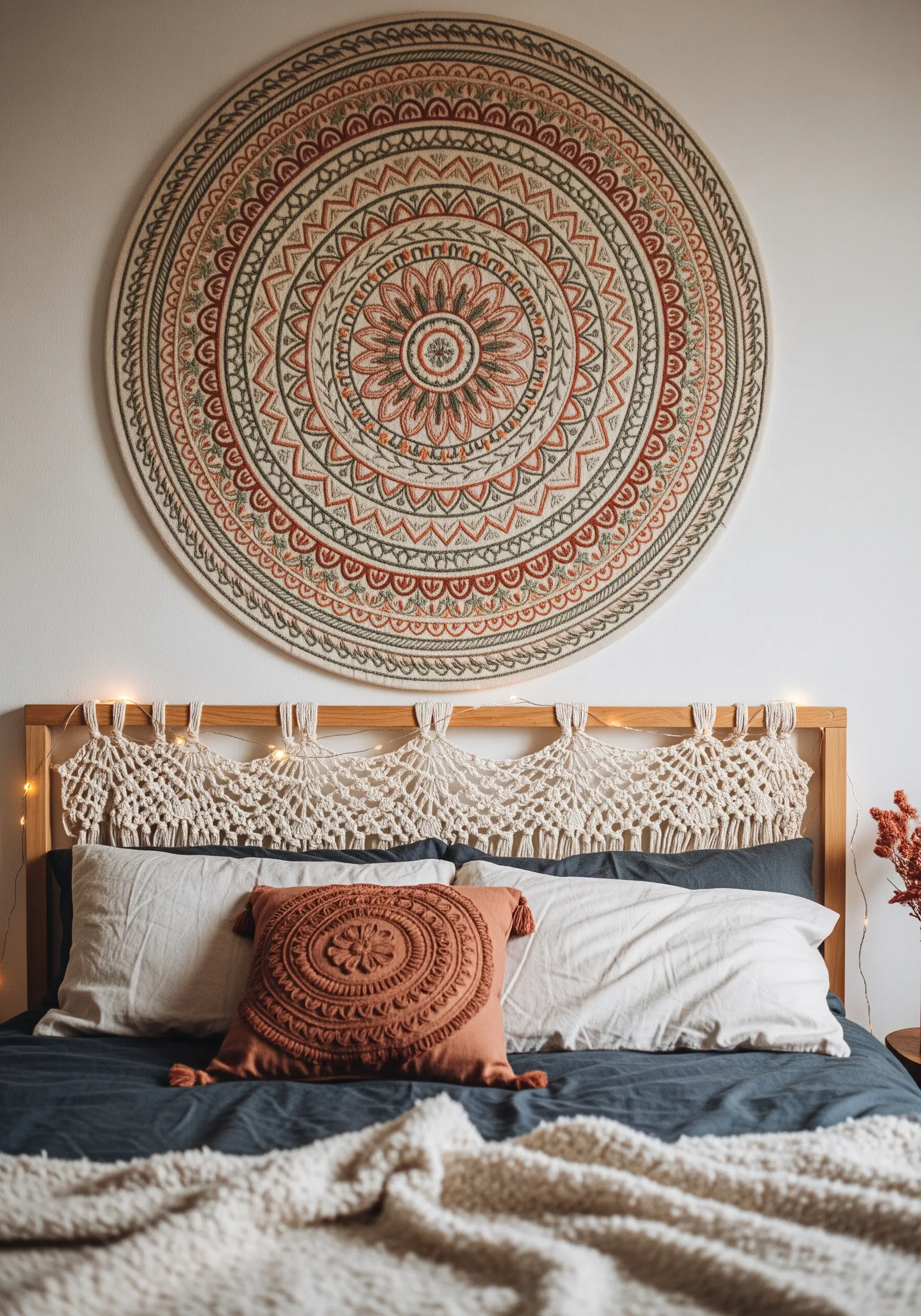
Transform your bedroom into a sanctuary by creating a large-scale embroidered mandala to hang above the bed.
Stretch your canvas onto an oversized embroidery hoop or a round artist’s canvas to get the perfect circular shape.
Use a simple running stitch or backstitch with thicker threads like perle cotton or sashiko thread to create the intricate geometric patterns.
Working on a piece this large is a meditative process in itself, and the final result becomes a calming, centering focal point for the entire room.
23. Create an Explosion of Color with 3D Stitches
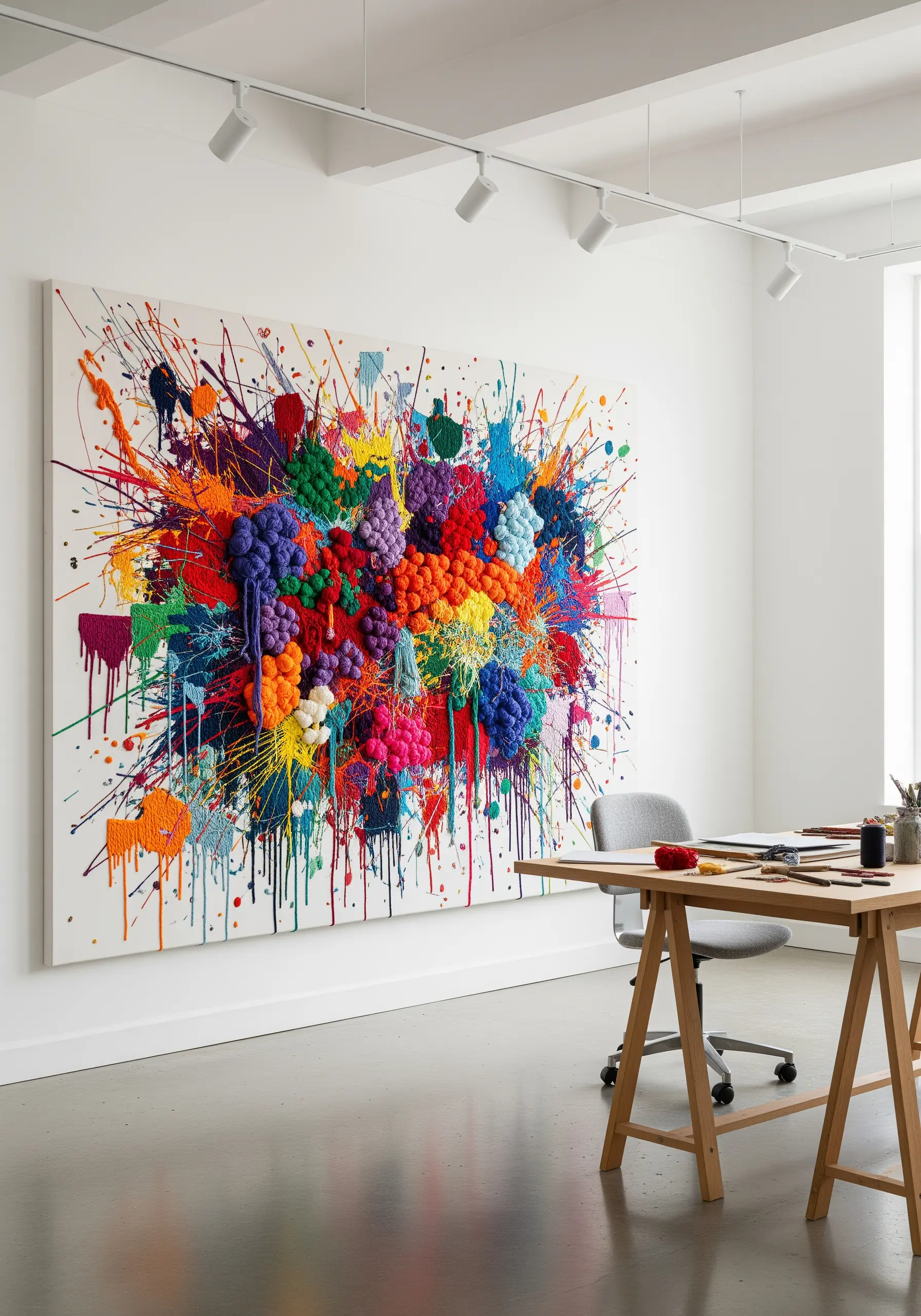
Combine the energy of abstract painting with the texture of fiber art for a truly dynamic piece.
Start by creating a ‘splatter’ effect with long, loose straight stitches and dripping threads around the edges of your composition.
Build up a central cluster of highly textural, three-dimensional stitches: French knots, bullion knots, woven wheels, and cast-on stitches.
Use a riot of bold, contrasting colors to enhance the sense of explosive energy. This is a perfect way to experiment with abstract color psychology stitch ideas and pure texture.
24. Curate a Minimalist Herbarium on Separate Canvases
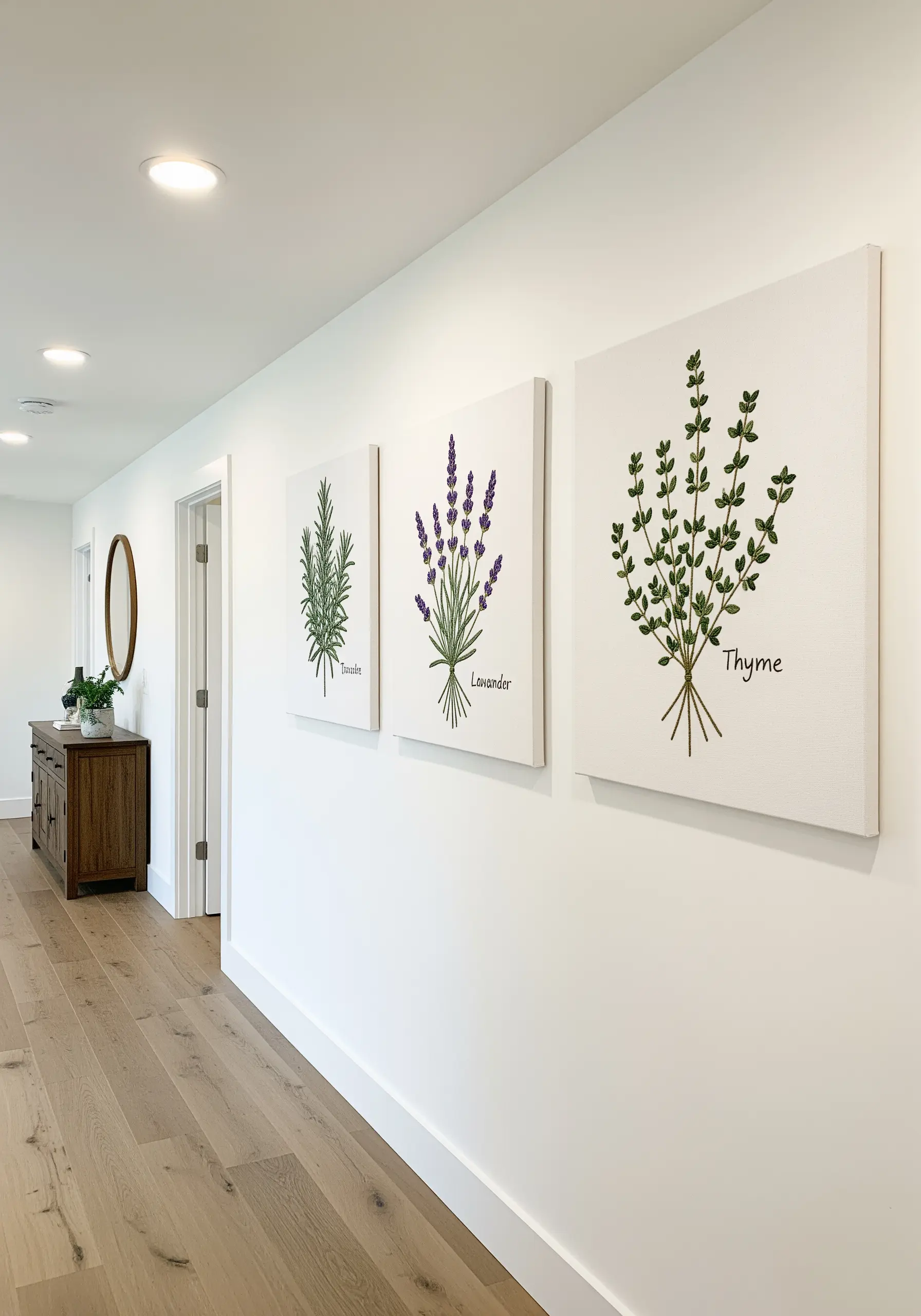
Craft a clean, modern botanical display by dedicating one canvas to each herb specimen.
The key to this refined look is consistency: use the same simple stitch style (like stem stitch for stems and detached chain stitch for leaves) across all pieces.
Add a small, neatly stitched label to each canvas for an authentic, scientific botanical illustration feel.
Grouping the individual canvases creates a cohesive collection that feels both artistic and educational, perfect for a hallway or kitchen. These are beautiful delicate lavender stitch ideas and more.
25. Achieve a Woven Look with Geometric Punch Needle
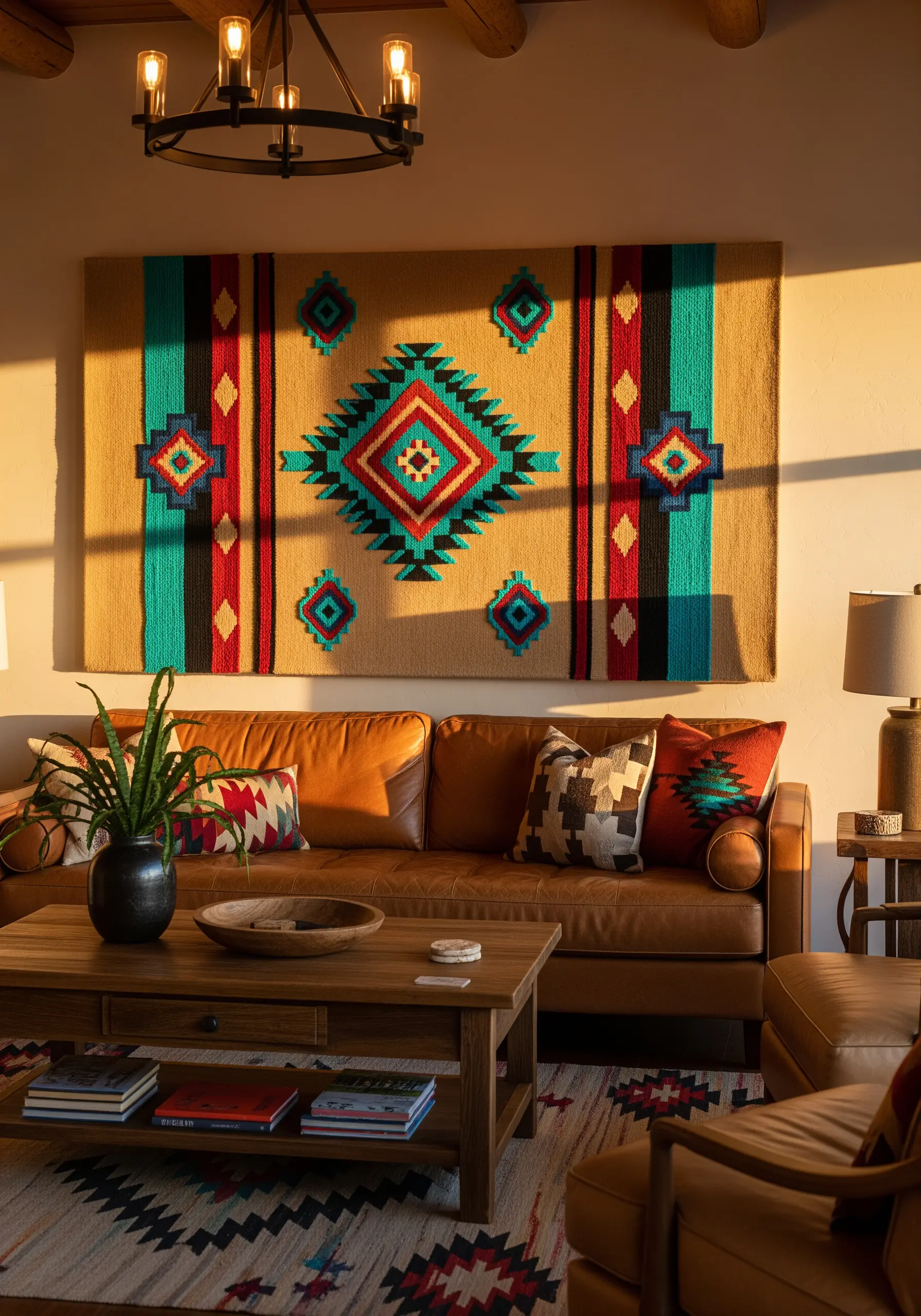
Mimic the appearance of a traditional woven blanket by using a punch needle technique on a large-scale canvas.
The punch needle creates tight, uniform loops that, when worked in blocks of color, resemble the geometric patterns of Southwestern textiles.
Use a rustic, earthy color palette—terracotta, turquoise, sand, and charcoal—with a thick, textural wool yarn.
Stretching the finished piece over a large wooden frame transforms it from a textile into a substantial piece of wall art that adds warmth and graphic impact to a room.
26. Visualize Sound with Stitched Waveforms
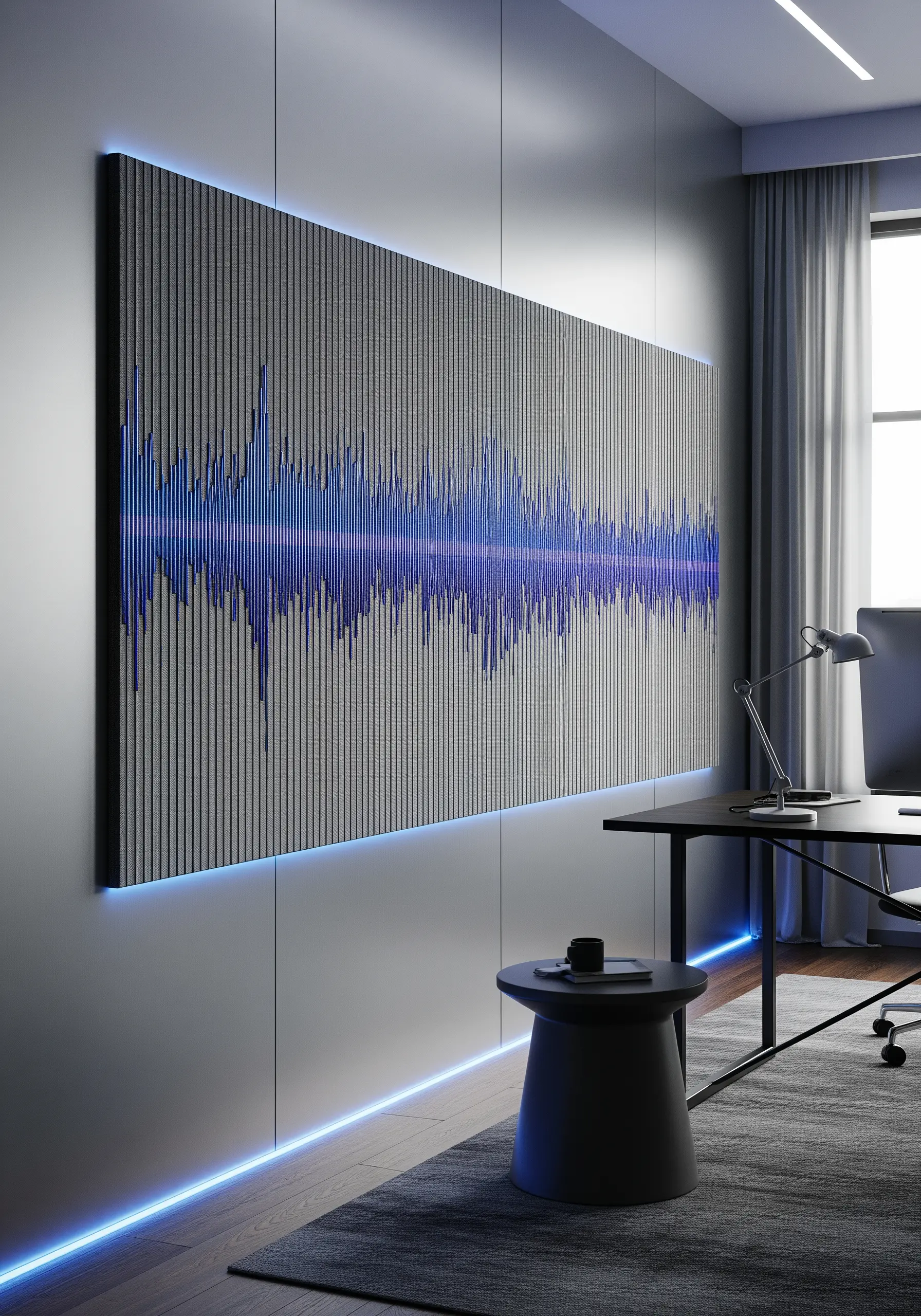
Turn a meaningful sound—a favorite song, a loved one’s voice—into a deeply personal piece of abstract art.
Generate a visual waveform of your chosen audio clip and transfer the outline to a long canvas or fabric-covered acoustic panel.
Use a single color of thread and fill the shape with vertical straight stitches of varying heights to match the peaks and valleys of the sound wave.
Adding subtle backlighting can enhance the modern, technical aesthetic, turning a fleeting moment into a permanent, tangible object.
27. Interrupt a Classic Portrait with a Burst of Floral Embroidery
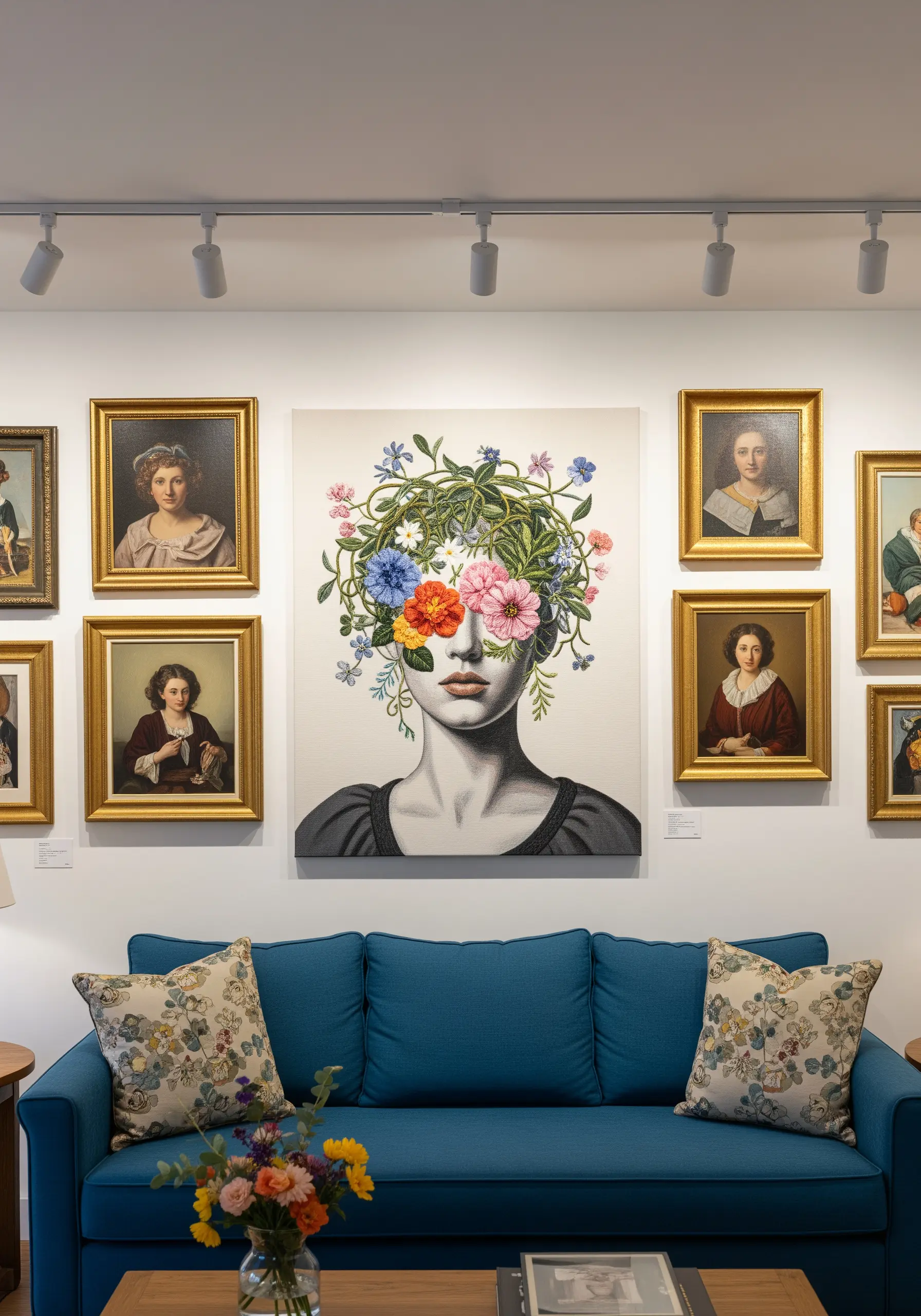
Create a stunning surrealist piece by combining printing and embroidery in an unexpected way.
Have a vintage-style portrait professionally printed onto a high-quality artist’s canvas, leaving it unstretched.
Then, use this canvas as your fabric, embroidering a dense, vibrant bouquet of flowers directly over the subject’s face using a variety of stitches like woven wheels, satin stitch, and French knots.
This mixed-media contemporary embroidery design creates a powerful juxtaposition between the classic and the contemporary, the monochrome and the colorful.
28. Embrace Simplicity with a Single, Meditative Line
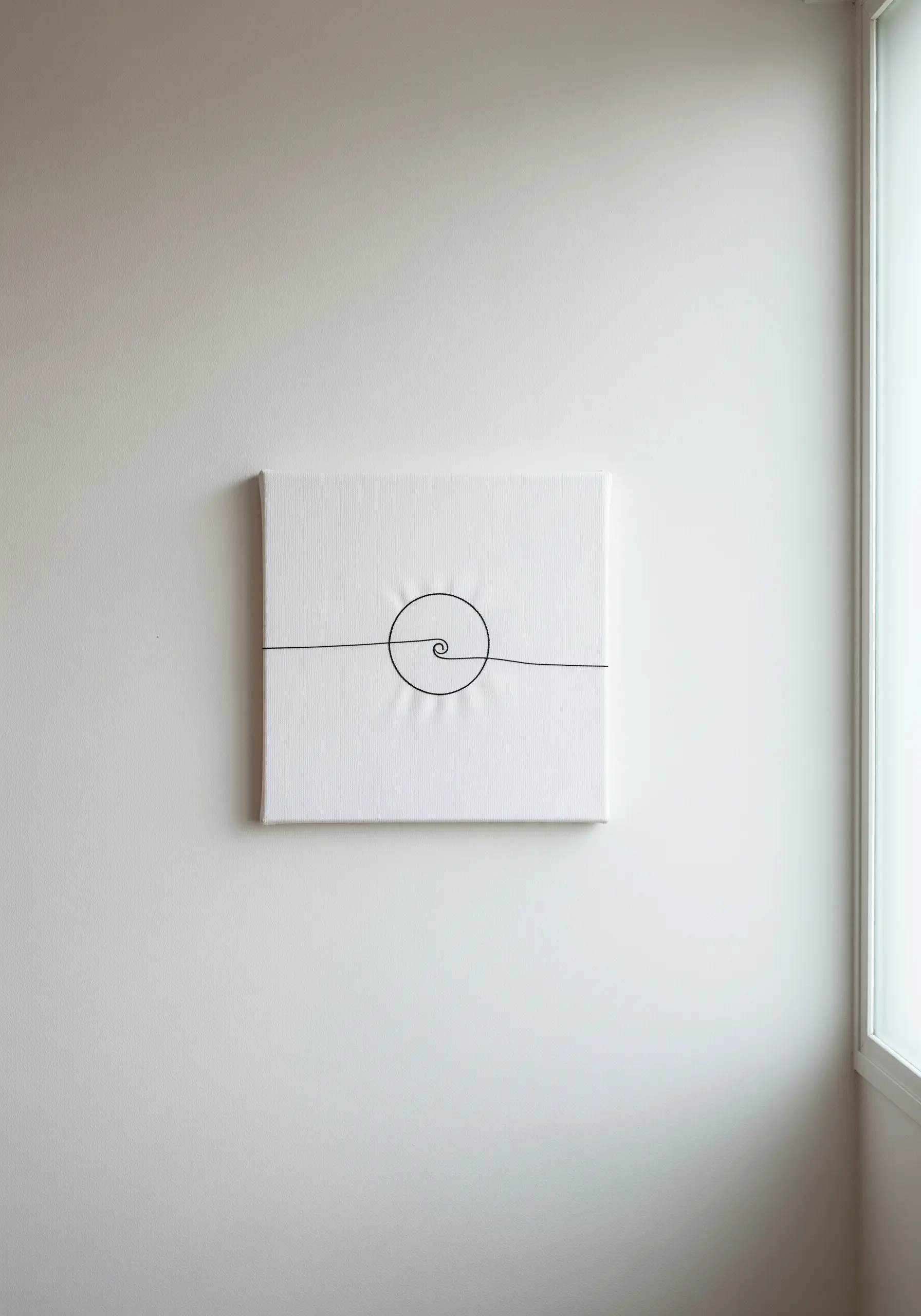
Prove that less is more by making a single, thoughtful line the entire focus of your piece.
The power of this technique lies in its precision. Carefully draw your design—a simple spiral or a continuous abstract shape—onto the canvas with a removable marker.
Use a single strand of black thread and a meticulous backstitch to create a line that is clean, consistent, and unbroken.
This approach to minimal embroidery decor ideas transforms a simple stitch into a statement of quiet confidence and intentional design.


