You have the threads, the fabric, and the desire to create something beautiful and calm. But perhaps you feel stuck, wondering how to translate that feeling into stitches that look intentional, modern, and truly your own.
Minimalism isn’t about doing less; it’s about making every element matter. It’s choosing a single, bold line over a dozen scattered motifs. It’s understanding how the texture of a thick yarn contrasts with smooth linen, or how negative space can be more powerful than a dense pattern.
Think of these projects not just as instructions to follow, but as a new way of seeing. They are principles you can apply to a pillow, a wall hanging, or a simple tea towel. This is your invitation to stitch with quiet confidence, creating pieces that don’t just fill your space, but expand it.
1. Define Space with Sculptural Couching
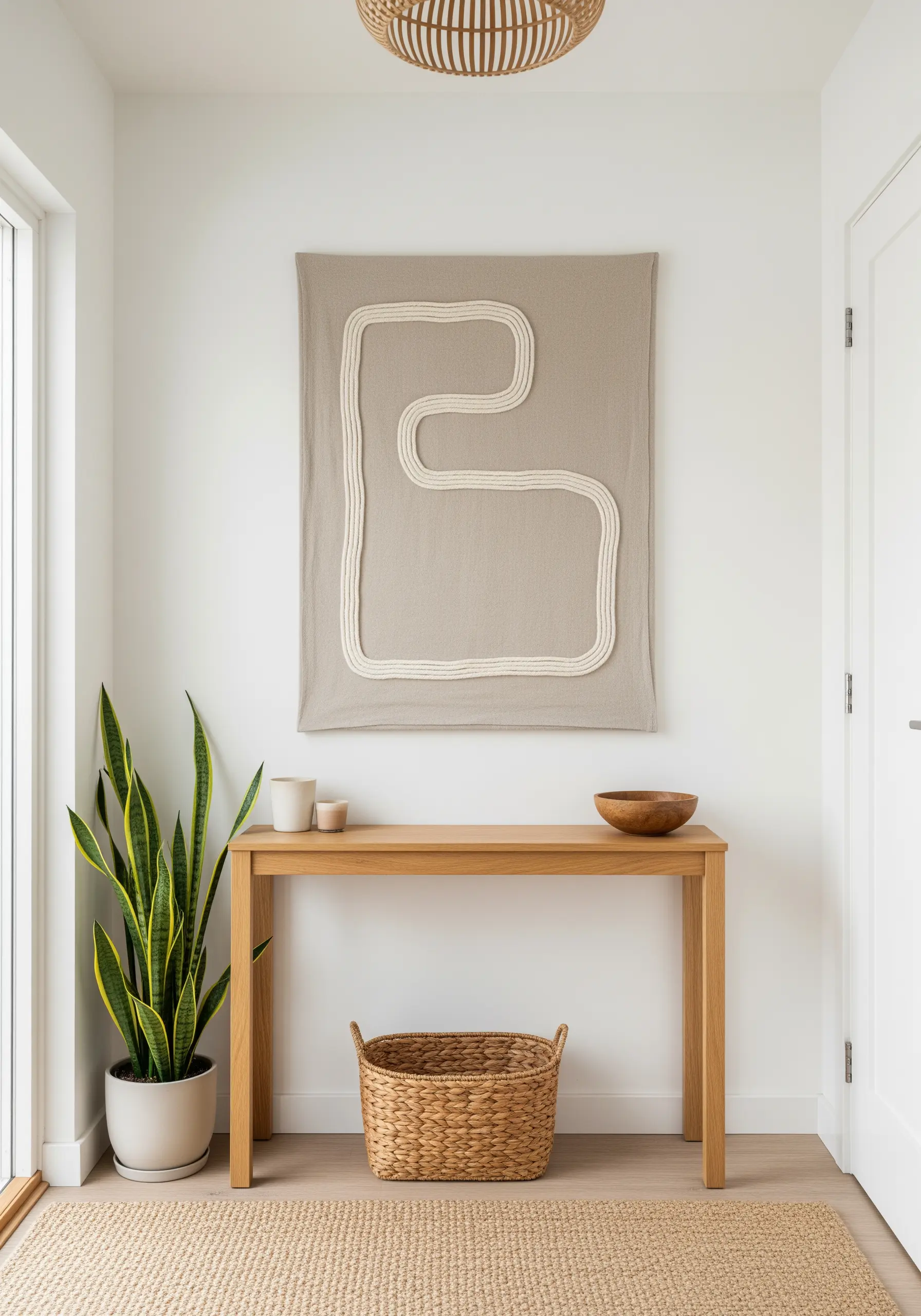
Transform a simple linen panel into an architectural statement piece by using the couching technique with thick, textured cord or soft yarn.
Instead of fine floss, choose a material with presence—like a cotton rope—and tack it down with a thinner, matching thread every half-inch.
This method creates a bold, three-dimensional line that adds depth and shadow, turning a simple abstract curve into a piece of soft sculpture.
The contrast between the soft linen and the firm cord creates a tactile appeal that elevates your entryway or any blank wall.
These embroidered textile wall hangings prove that minimalism is about impact, not absence.
2. Master Geometric Precision on Textured Fabric
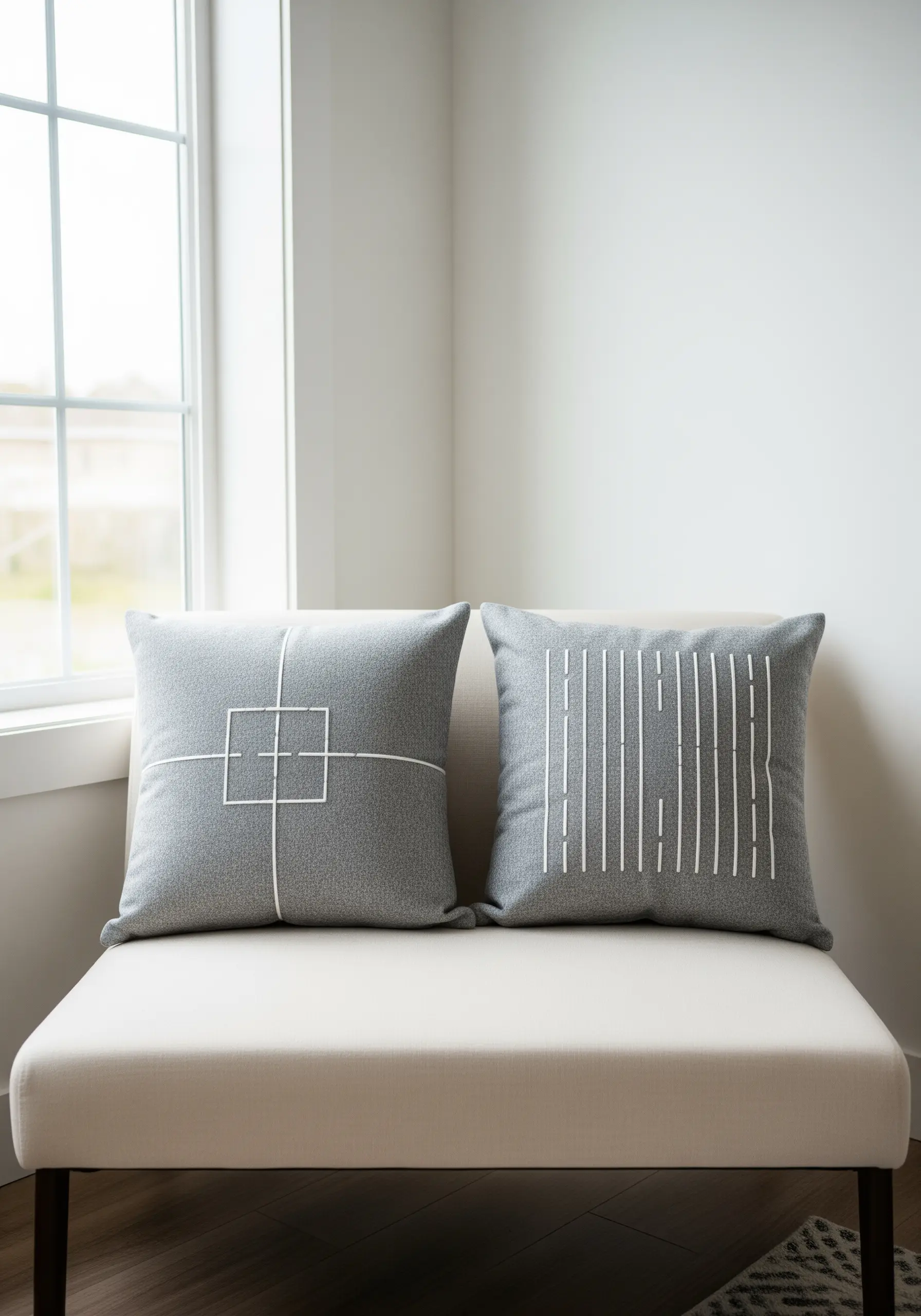
Embrace the challenge of stitching clean lines on a textured fabric like this gray tweed.
To prevent your stitches from sinking or becoming uneven, use a crisp backstitch or stem stitch with a slightly heavier thread, like a #8 Perle cotton.
This gives the white lines a raised, graphic quality that stands out against the woven background.
For perfect right angles, mark your turning points with a disappearing fabric pen and pivot your needle precisely at the corner before continuing the stitch line.
The result is a design that feels both modern and impeccably crafted.
3. Elevate Edges with a Contrasting Blanket Stitch

Turn a simple throw into a bespoke piece by focusing on the finishing detail.
A hand-stitched blanket stitch along the edge does more than prevent fraying—it frames the textile and adds a touch of intentional craftsmanship.
Choose a contrasting yarn in a complementary neutral tone to make the stitches a deliberate design element.
Focus on maintaining perfectly even spacing and depth for a polished, professional look. This small touch transforms cozy essentials into thoughtful embroidered throws and blankets.
4. Create Cohesion with a Minimalist Botanical Trio

When displaying multiple hoops, the key to a sophisticated look is consistency in theme, color, and scale.
Work with a single strand of black or dark gray floss to achieve delicate, illustrative lines that feel sketched onto the fabric.
A split stitch is your best tool here, as it creates a smoother, more solid line than a backstitch, which is perfect for capturing the gentle curves of leaves and stems.
Displaying them vertically draws the eye upward, making it a perfect solution for styling a small desk area or narrow wall.
These wall hoop art ideas are designed to feel light and airy.
5. Integrate Embroidery into Upholstery
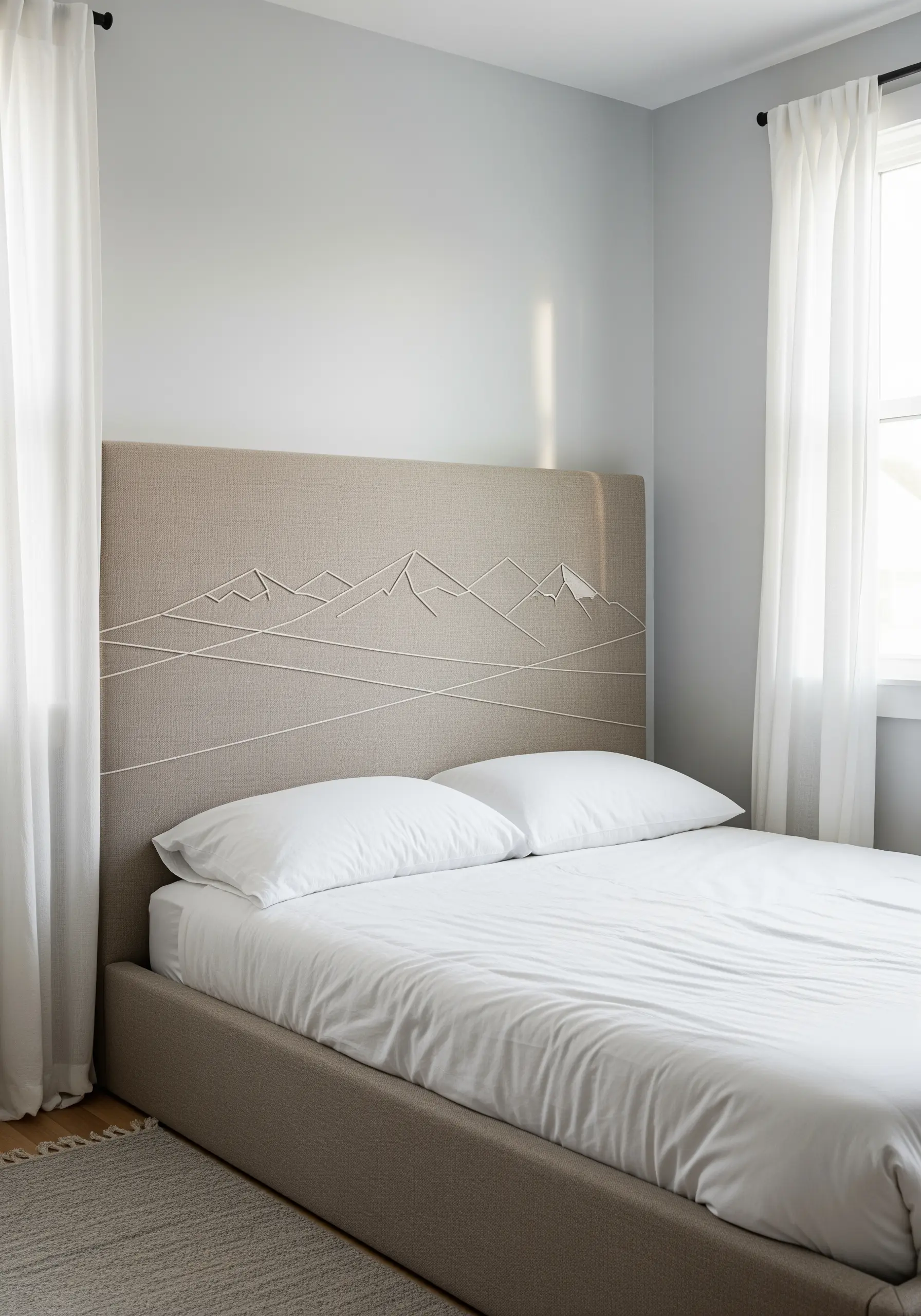
Take your stitching beyond the hoop by embroidering directly onto furniture, like this linen headboard.
A design inspired by string art works exceptionally well for this application. Use a thick, durable thread like upholstery twine or sashiko thread for visibility and strength.
Plan your design using pins and a guide string to ensure your lines are taut and balanced before making your first stitch.
Small, discreet couching stitches will secure the long horizontal lines without interrupting the minimalist aesthetic, creating high-impact apartment bedroom embroidery projects.
6. Achieve Delicate Detail on Kitchen Linens
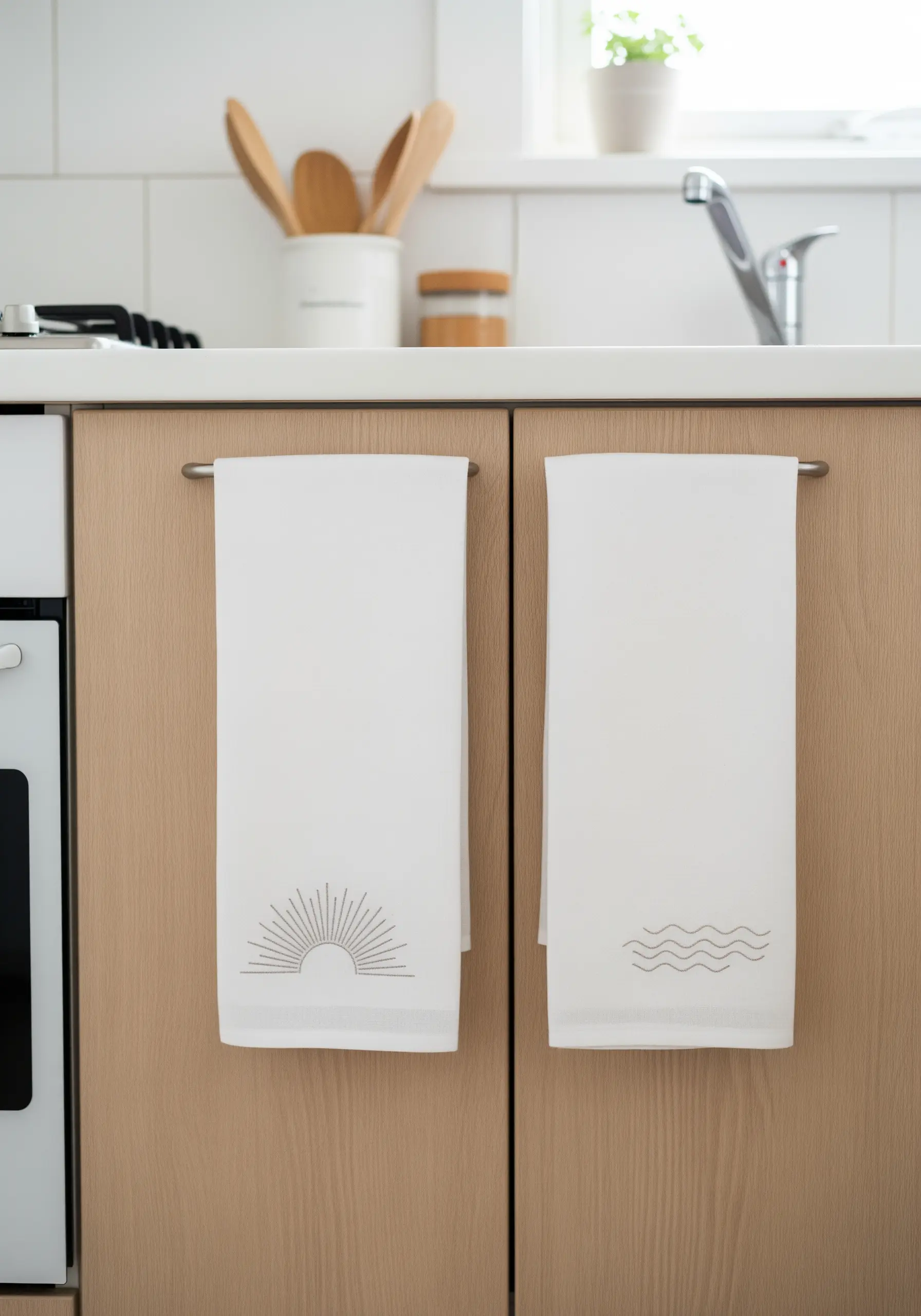
When embroidering functional items like tea towels, subtlety is key.
Choose a high-quality, absorbent fabric like linen or cotton flour sack, and use only one or two strands of floss for your motifs.
This ensures the design remains delicate and doesn’t interfere with the towel’s softness or utility.
For the radiating lines of a sunburst or the gentle curves of waves, a simple backstitch provides the ultimate precision, creating crisp graphics that feel both modern and timeless.
These simple line art fruit & food motifs prove that less is more.
7. Add Organic Movement with Braided Yarn

Introduce dramatic texture to a table runner by couching a pre-braided element down the center.
Use four or five lengths of chunky yarn to create a thick, supple braid, securing the ends neatly before you begin stitching.
Lay the braid in an organic, meandering path along the runner and tack it into place with a strong, matching thread.
The interplay of the flat linen and the high-relief braid creates a dynamic centerpiece that draws guests to the table.
These hand-stitched table runner embroidery designs are simpler than they appear.
8. Frame Your Work with a Raw-Edge Float
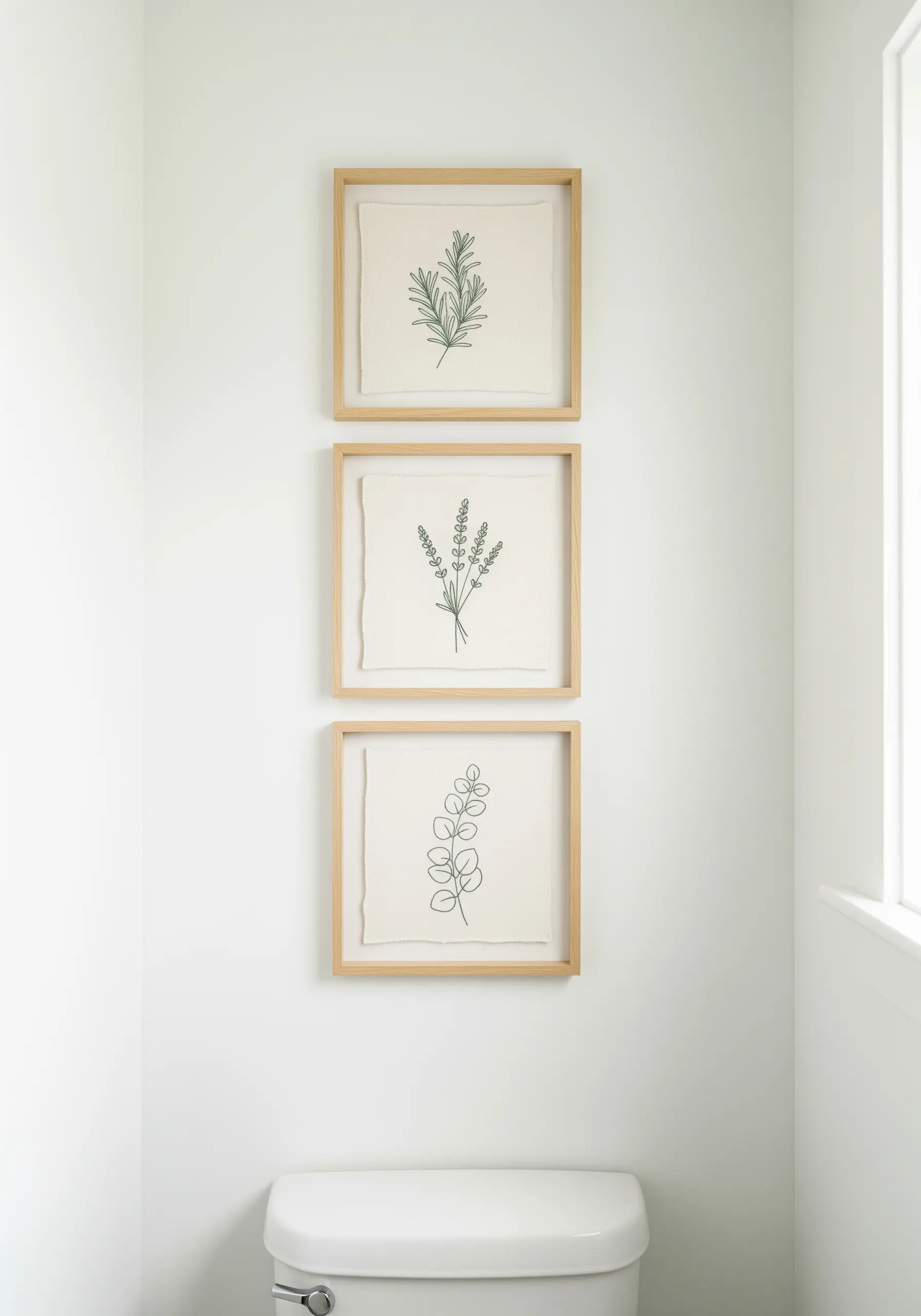
Elevate your embroidery by rethinking its presentation. Instead of mounting it in a hoop, try framing it with a raw, deckled edge.
Embroider your botanical design on a piece of high-quality, heavyweight cotton or linen fabric, leaving ample margin.
Carefully tear the fabric along all four sides to create a soft, frayed edge that adds texture and an artisanal feel.
Mount the piece on archival mat board so it appears to float within a deep shadowbox frame. This technique turns simple line work into gallery-worthy art.
9. Explore Rhythm with Sashiko-Inspired Stitches
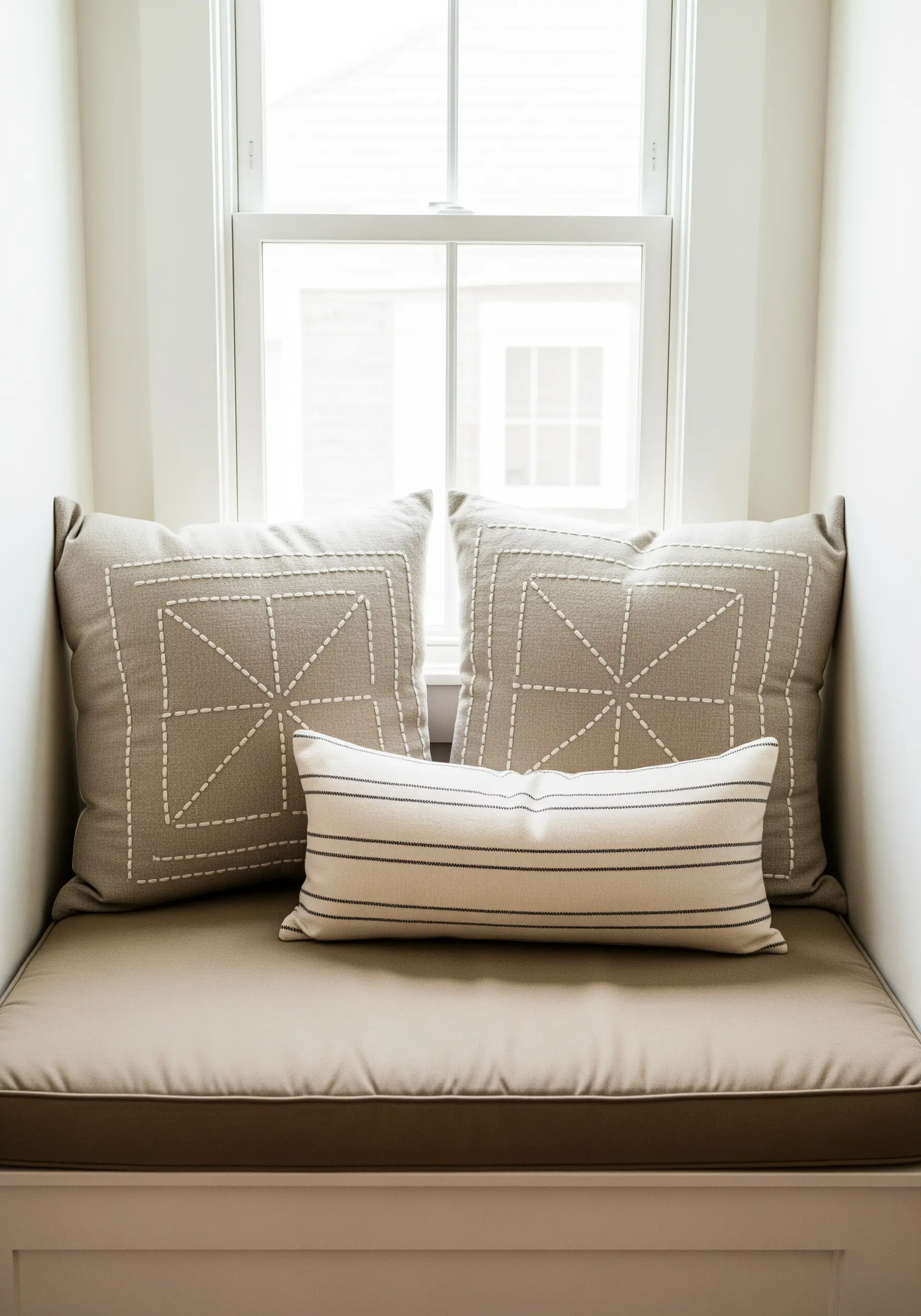
Create compelling geometric patterns on cushions using a variation of the simple running stitch, inspired by Japanese Sashiko.
Use a thick, high-contrast thread, like white Perle cotton on taupe fabric, to make every stitch count.
The key to this technique is the rhythm and consistency of your stitches; strive for perfectly uniform stitch length and spacing.
This meditative process results in durable, textured designs that add a layer of sophisticated comfort to any seating nook.
10. Build Texture with Concentric Stitched Arcs
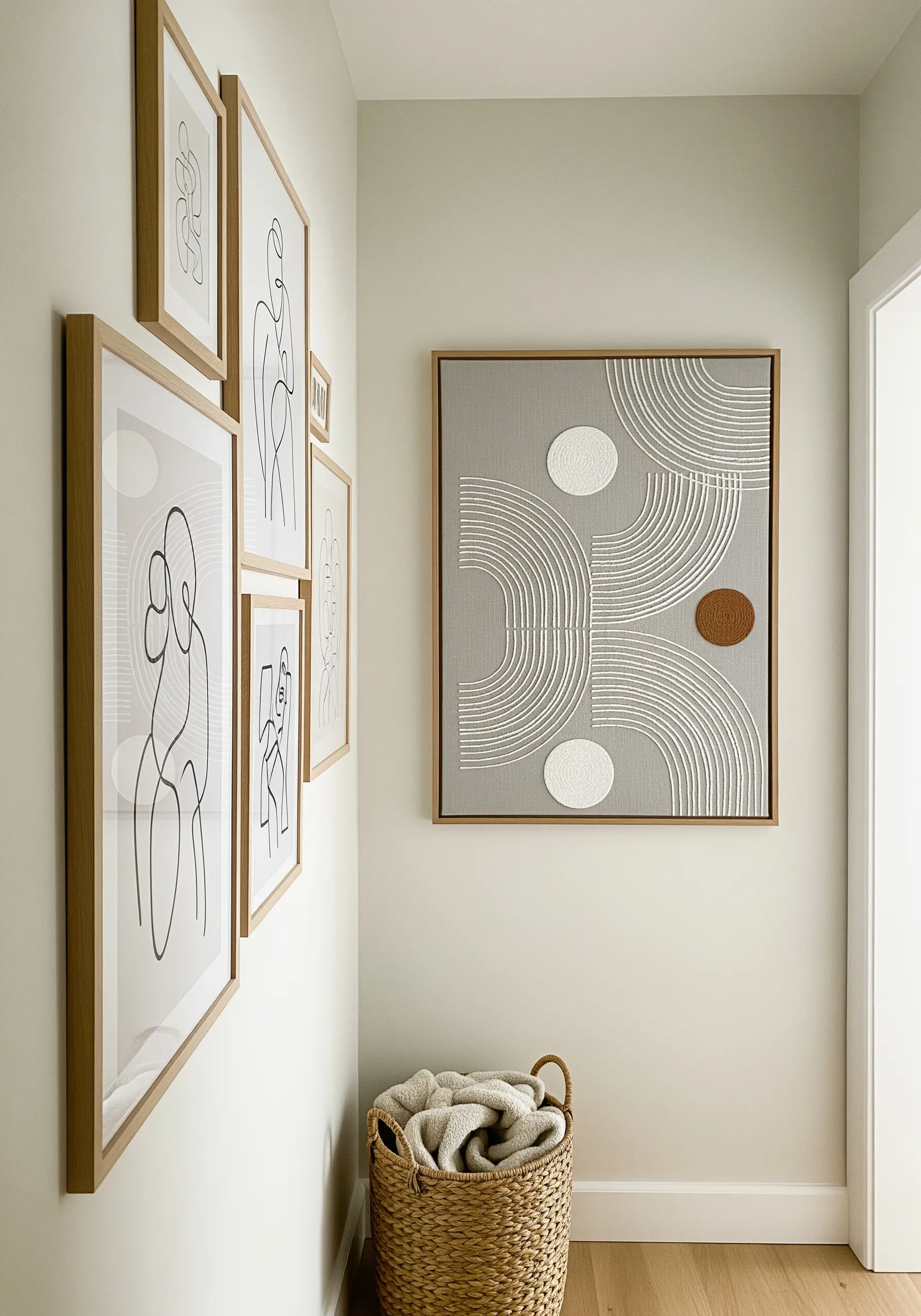
Create a stunning abstract piece by filling shapes with dense, repetitive lines of stitching.
Using a single color of thread, work concentric arcs in a stem stitch or split stitch to build incredible texture and the illusion of movement.
To keep the lines perfectly parallel, draw faint guide arcs with a water-soluble marker before you begin.
Adding small, contrasting elements—like the densely filled satin stitch circles or a stitched leather patch—provides a focal point and enhances the composition’s complexity.
Explore these abstract hoop art concepts to turn thread into texture.
11. Finish Small Art on a Mini Stretched Canvas
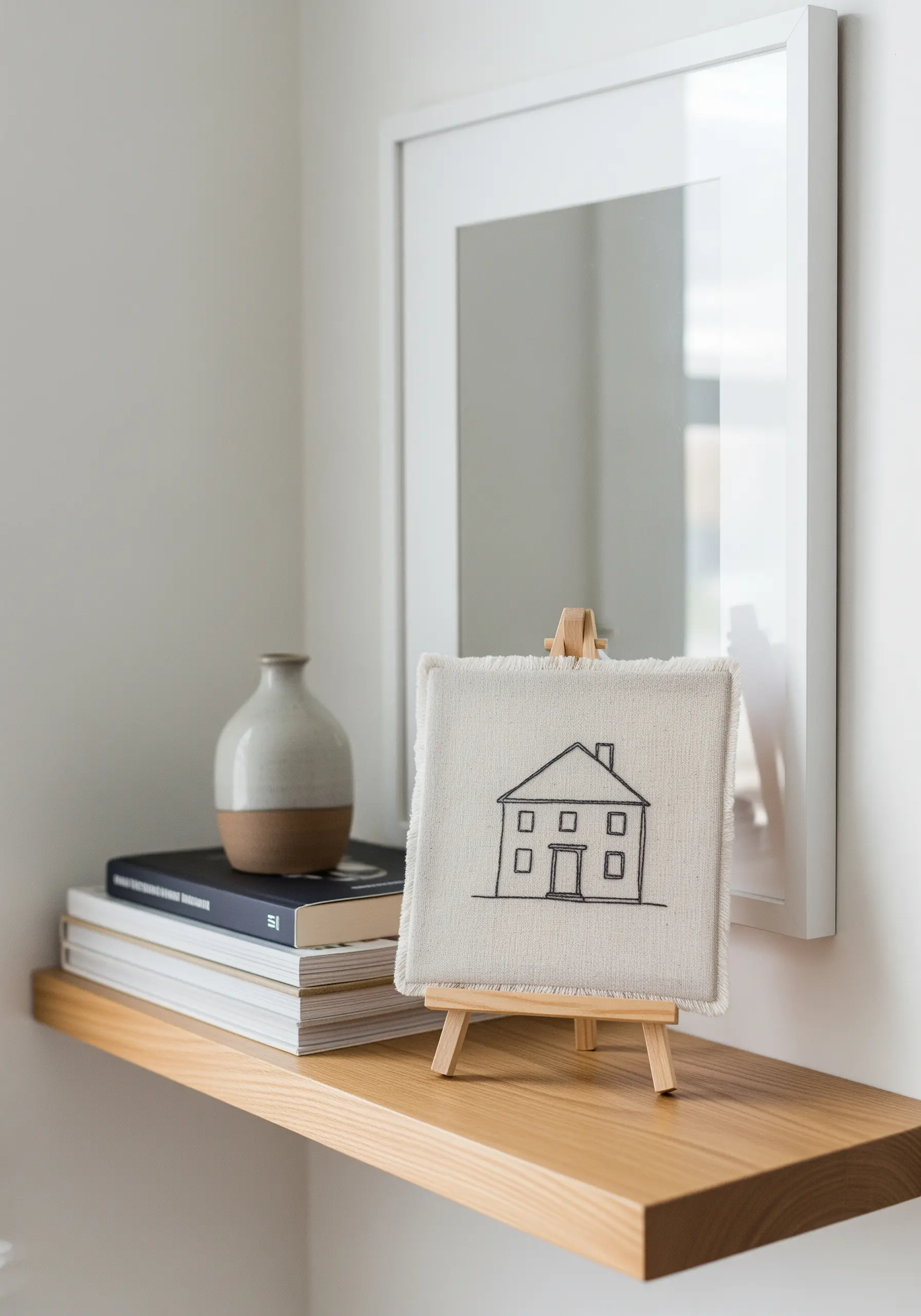
For a charming display that doesn’t require a traditional frame, finish your small embroidery on a miniature stretched canvas.
Stitch your line-art design on a piece of linen larger than your canvas. Wrap the fabric tightly around the front and staple it securely to the back of the wooden frame, ensuring your design is centered.
Gently fray the edges before wrapping for a soft, rustic finish.
This method gives your work a solid, object-like quality, perfect for displaying on a shelf or mantelpiece.
These handmade mini decor pieces have a professional, gallery-style finish.
12. Create Tonal Landscapes with Fabric Appliqué

Construct a serene landscape not with thread, but with layers of fabric in muted, tonal shades.
Cut organic, wavy shapes from different neutral fabrics like cotton, linen, and felt to represent hills or dunes.
Arrange the layers on your base fabric and secure them with a simple, decorative running stitch just along the top edge of each piece.
This fabric collage embroidery technique adds subtle dimension and texture, turning fabric scraps into a sophisticated piece of art.
13. Add Subtle Stitching to 3D Objects
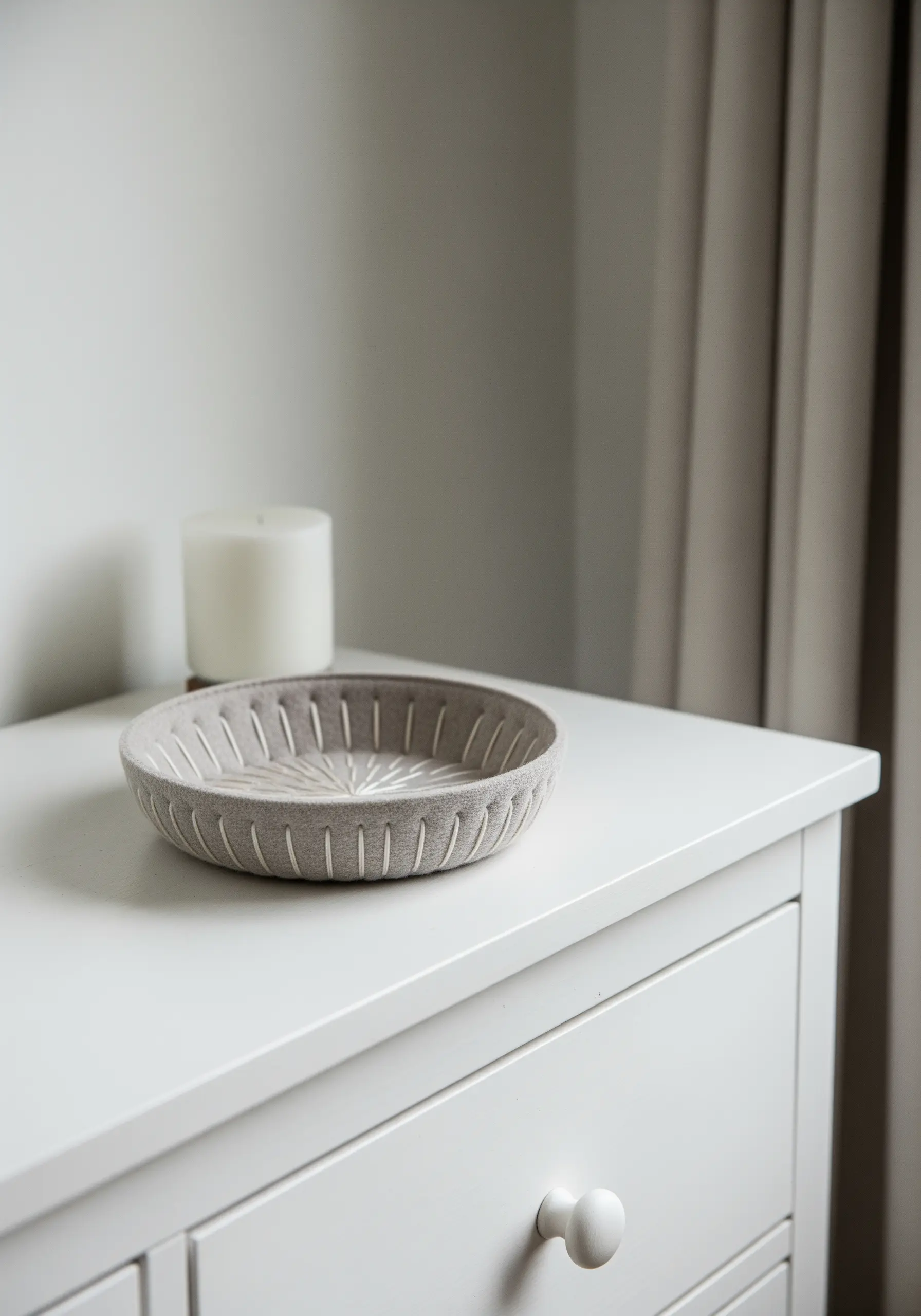
Consider taking your embroidery off the flat surface and onto three-dimensional forms.
This decorative bowl effect can be achieved by covering a simple form (like a papier-mâché bowl) with linen fabric.
Embroider the radiating straight stitches before assembling and gluing the fabric to the form, ensuring your stitches are tight and even.
This unexpected application of embroidery turns a simple decorative object into a unique, tactile piece of art.
You can find inspiration in these unique handmade objects that blend craft and form.
14. Imply Texture on Sheer Curtains
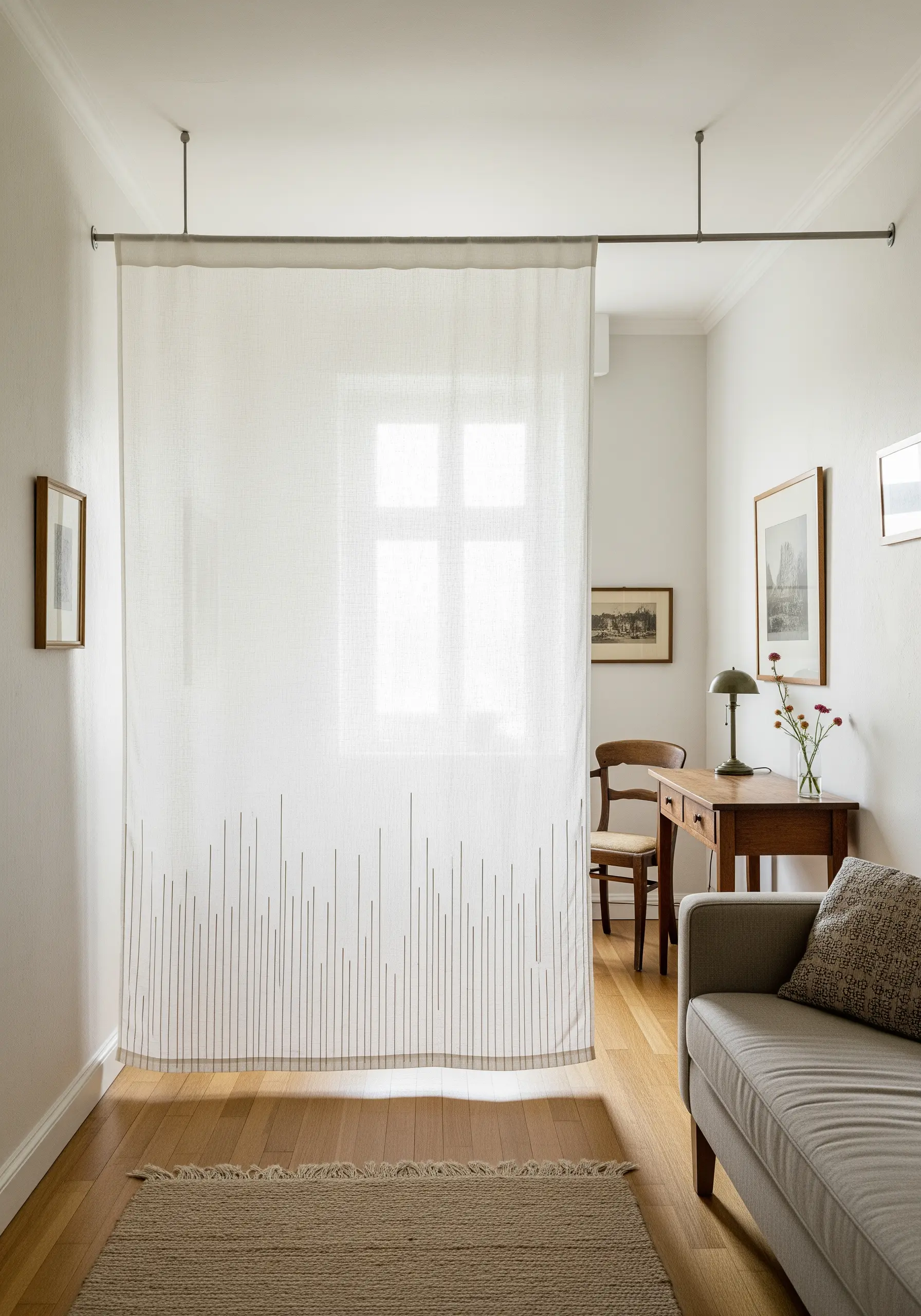
Embroidering on sheer fabric can instantly add custom detail and filter light beautifully.
To prevent puckering on delicate materials like voile or linen gauze, use a lightweight tear-away or water-soluble stabilizer on the back while you stitch.
Use a single strand of thread and a sharp needle to create clean, vertical straight stitches of varying lengths.
This minimalist ‘rain’ pattern adds visual interest and privacy without blocking light, making the room feel taller and brighter.
15. Guide the Eye with a Cascading Vertical Design

Utilize the full vertical space of a narrow wall or staircase with a long, elegant wall hanging.
A pattern of cascading motifs, like these gently falling leaves, creates a sense of calm movement and draws the eye upward, making the space feel taller.
Keep the motifs simple and spaced generously to maintain a light, airy feel. This approach to composition is one of the most effective ways to make embroidered wall hangings that enhance, rather than overwhelm, a space.
16. Frame Functional Textiles with a Clean Border
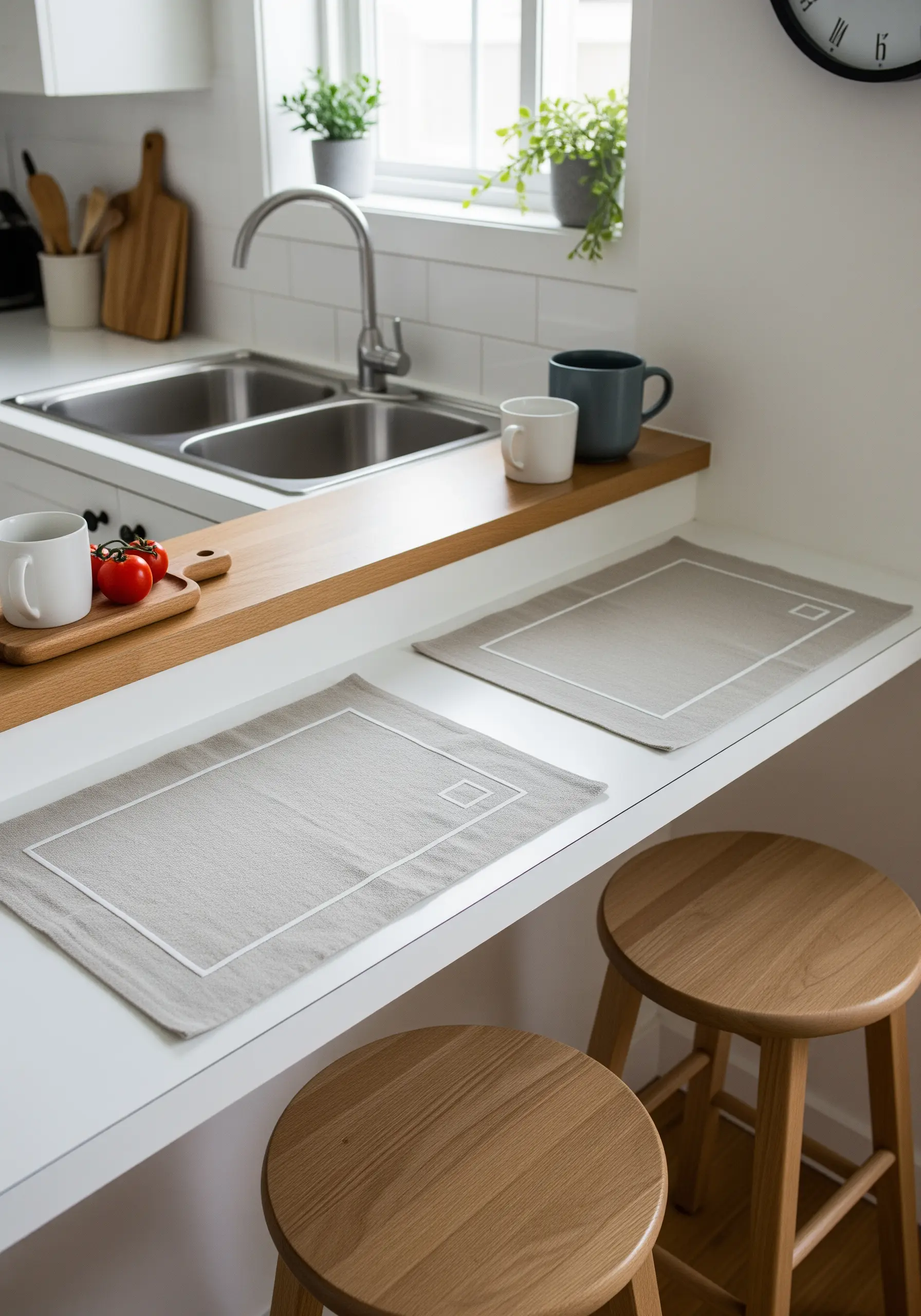
Elevate everyday placemats with a simple, architectural border.
Use a ruler and a disappearing fabric pen to draw a precise rectangular frame, then stitch along the lines with a neat backstitch or stem stitch.
Choosing a thread that is just one or two shades lighter than the fabric creates a subtle, tonal effect that feels sophisticated and intentional.
This small detail brings a sense of order and polish to your table setting, making these modern minimalist table linen embroidery ideas perfect for daily use.
17. Create Graphic Impact with Radiating Lines
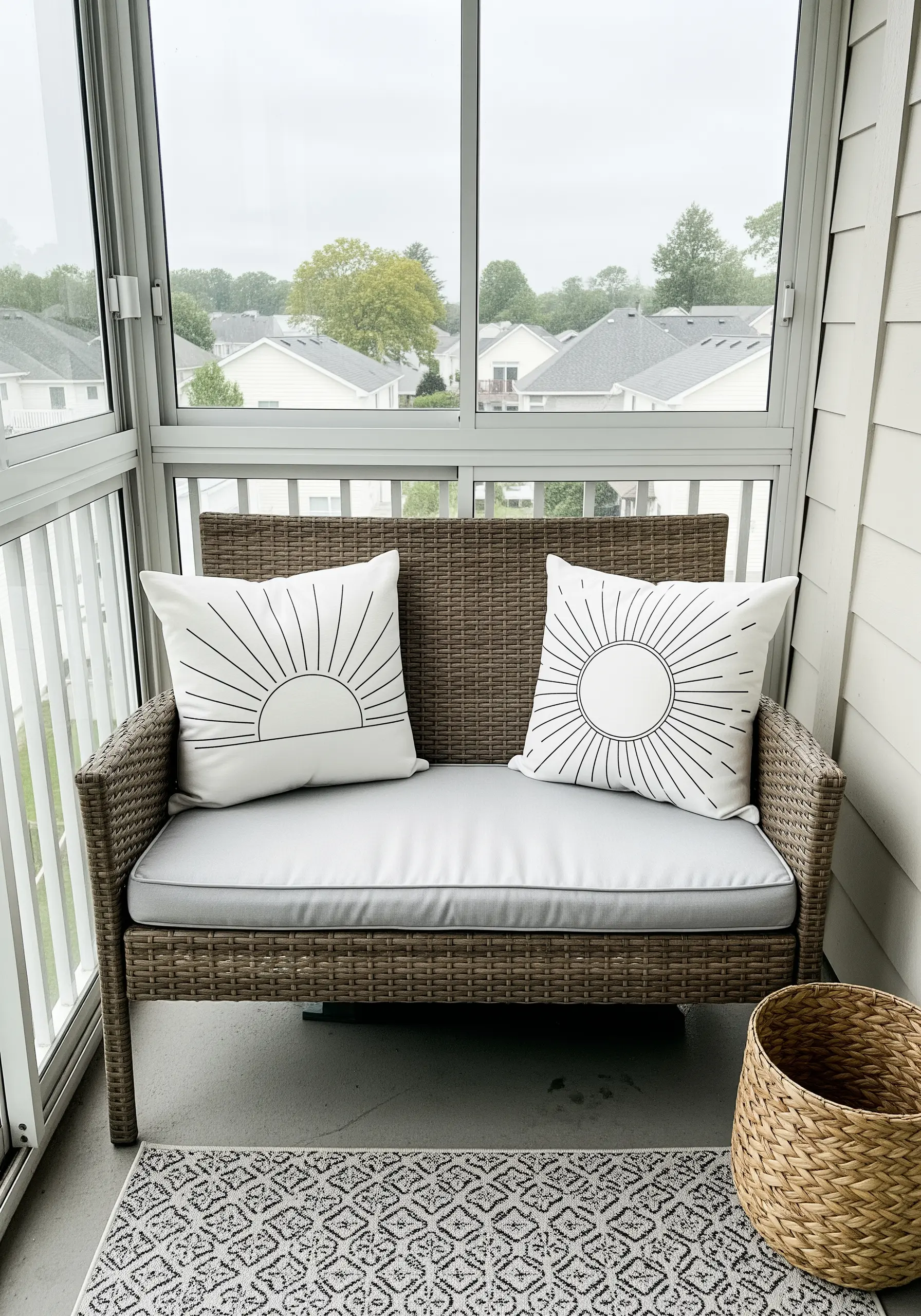
A simple sunburst motif is a powerful way to add graphic energy to a plain cushion cover.
To achieve perfectly straight, taut lines, use a hoop that is larger than your design and ensure your fabric tension is drum-tight.
Work your straight stitches from the outer edge inward toward the center arc; this helps control tension and placement more effectively than stitching outward.
These high-contrast minimalist embroidery ideas are striking from a distance and draw the eye.
18. Design Meditative Patterns for Floor Cushions

For large-scale projects like a floor cushion, couching thick cotton rope is both visually striking and durable.
Sketch out a continuous, labyrinth-like pattern that fills the circular space evenly. This creates a mesmerizing design that invites touch and contemplation.
Use a heavy-duty needle and strong upholstery thread for your couching stitches, hiding them at regular intervals to secure the rope firmly to the canvas base.
These custom embroidery gift ideas combine comfort and artistry.
19. Tell a Story with Celestial Sheers
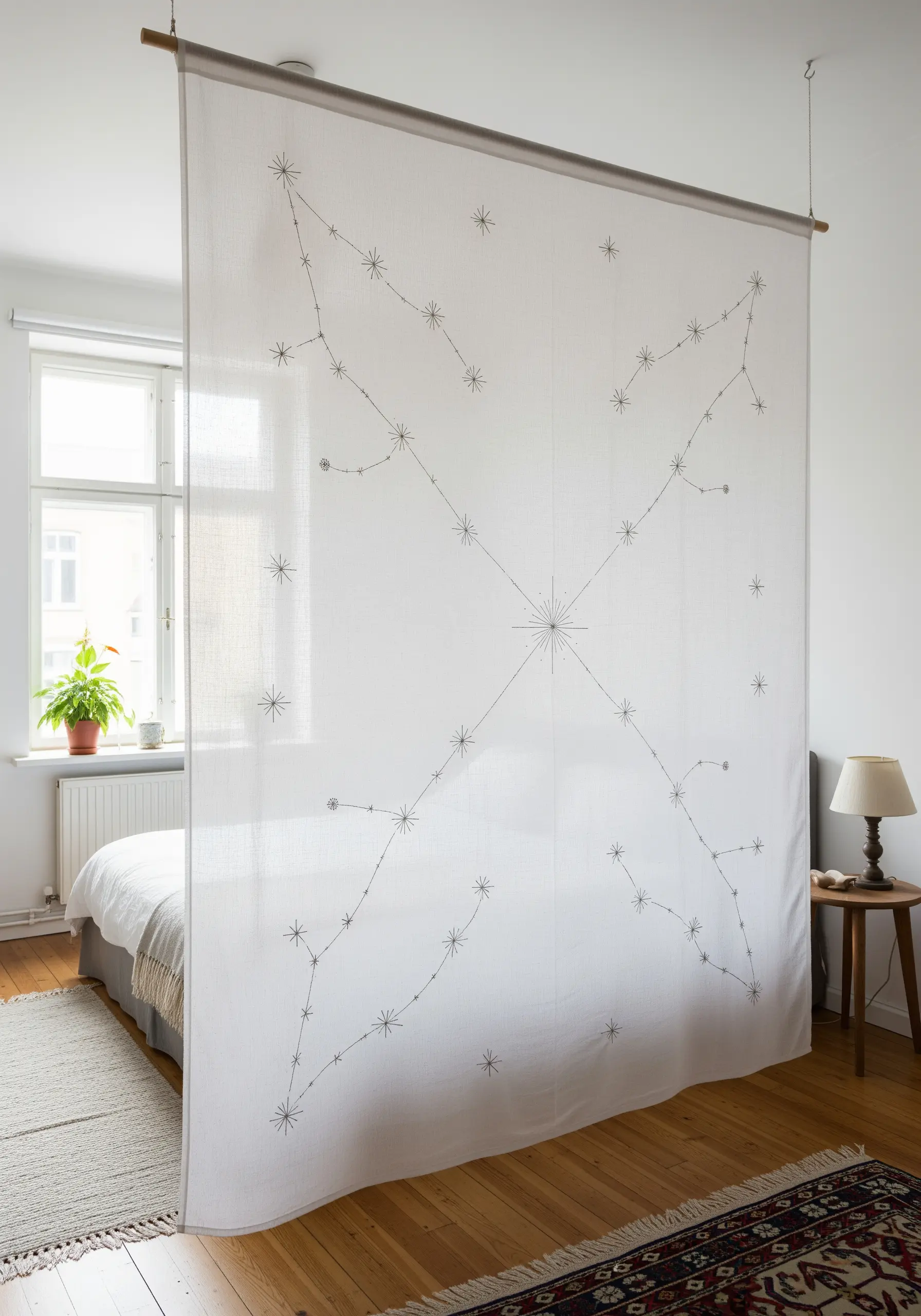
Turn a simple room divider into a celestial map by stitching constellations onto sheer fabric.
The transparency of the material allows the design to interact with the light, creating a delicate, ethereal effect.
Use a simple backstitch for the connecting lines and tiny star stitches or French knots for the stars themselves.
Choosing a dark gray or silver metallic thread against the white fabric will make the constellations subtly sparkle as the light changes throughout the day.
These minimal sky & moon designs add a touch of magic.
20. Practice Mindful Stitching with Concentric Circles

A meditation cushion is the perfect canvas for a simple, centering design.
Use a compass or circular objects to trace a series of concentric circles on your fabric.
Stitch over the lines using a simple, repetitive stitch like a running stitch or backstitch. The steady, rhythmic motion of creating the circles can be a meditative practice in itself.
This project is less about complex technique and more about focus and intention, making it one of the most calming mandala embroidery wall art ideas to adapt for functional objects.
21. Highlight Construction with a Decorative Whipstitch
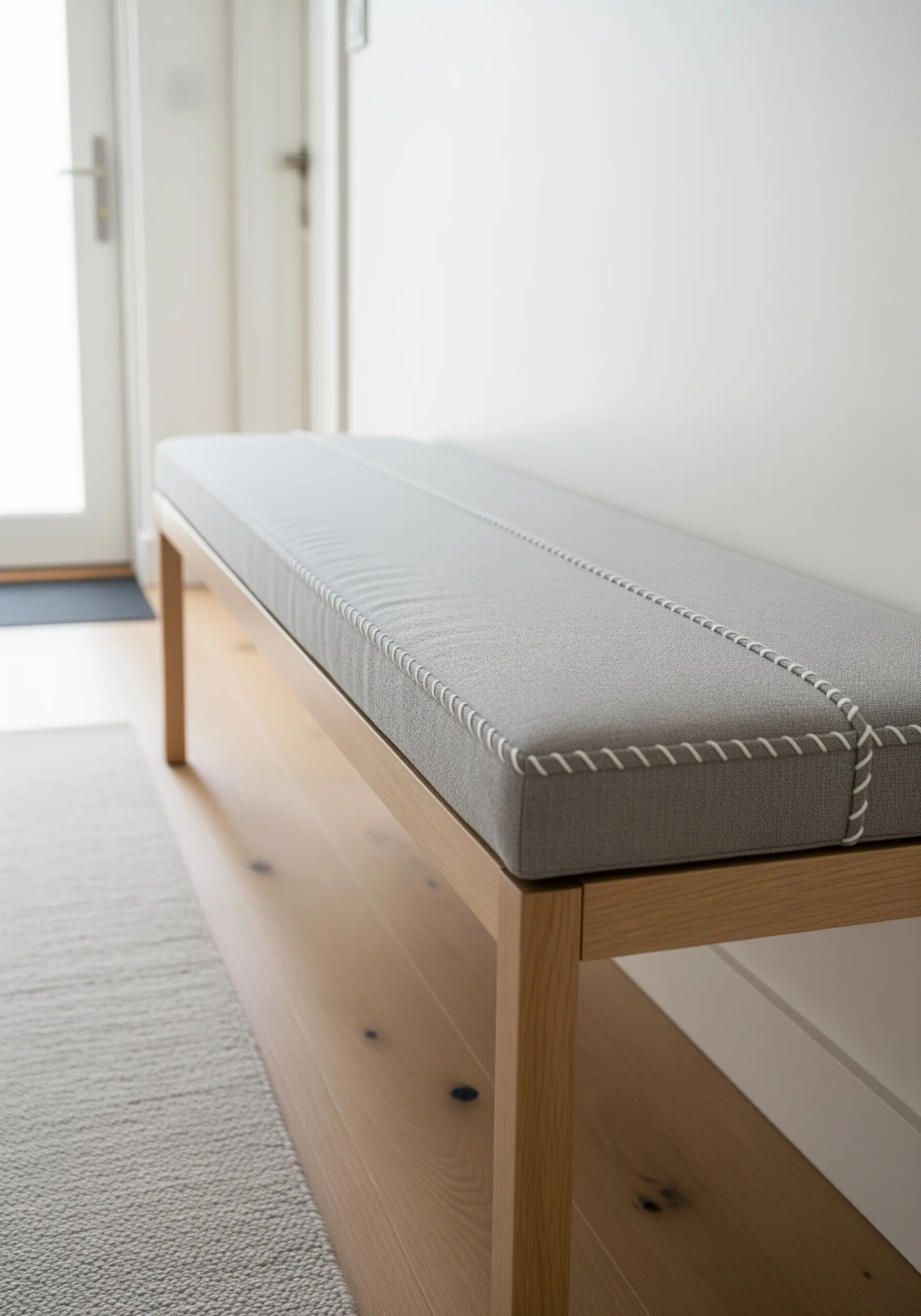
Turn a structural element into a design feature by highlighting seams with a bold, contrasting stitch.
Instead of a hidden seam, use a thick thread or yarn to join cushion panels with an external whipstitch or blanket stitch.
This technique, often used in leatherwork and rustic crafts, adds a handcrafted, honest quality to modern upholstery.
Mark your stitch points with a ruler for perfect uniformity, ensuring the functional stitch also serves as a precise, decorative detail.
These handmade embroidery touches celebrate the art of construction.
22. Personalize Plant Decor with Botanical Line Art
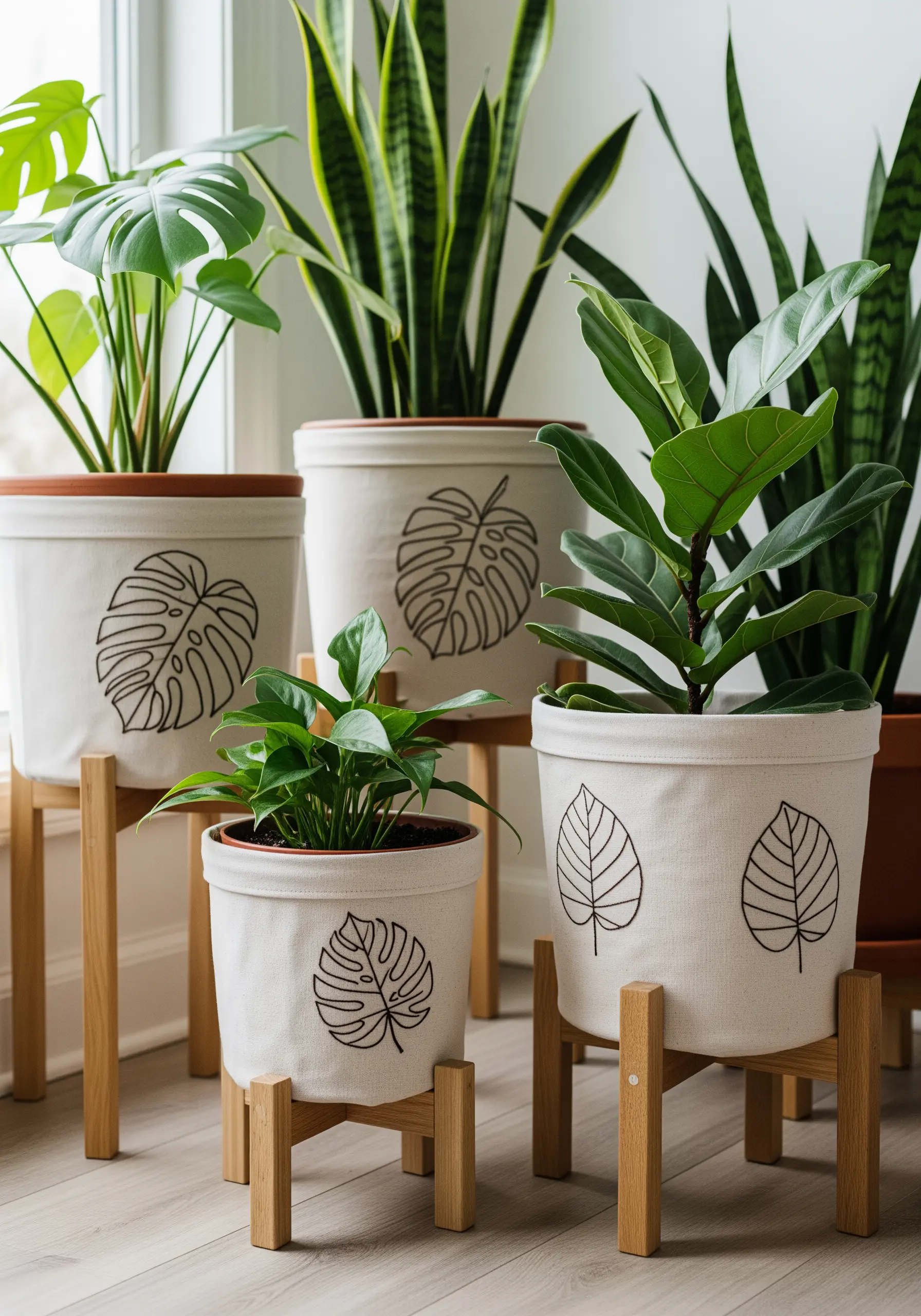
Give your indoor plants a style upgrade by stitching onto simple canvas planters.
Choose iconic, graphic leaf shapes like the Monstera or Fiddle Leaf Fig for instant recognizability.
A simple backstitch using three strands of black floss is sturdy enough for the canvas and provides a clean, bold line.
Stitch your designs before assembling the pot covers for easier handling. This is a quick and effective way to create a cohesive, personalized look for your plant collection.
23. Create a Focal Point with a Stitched Grid
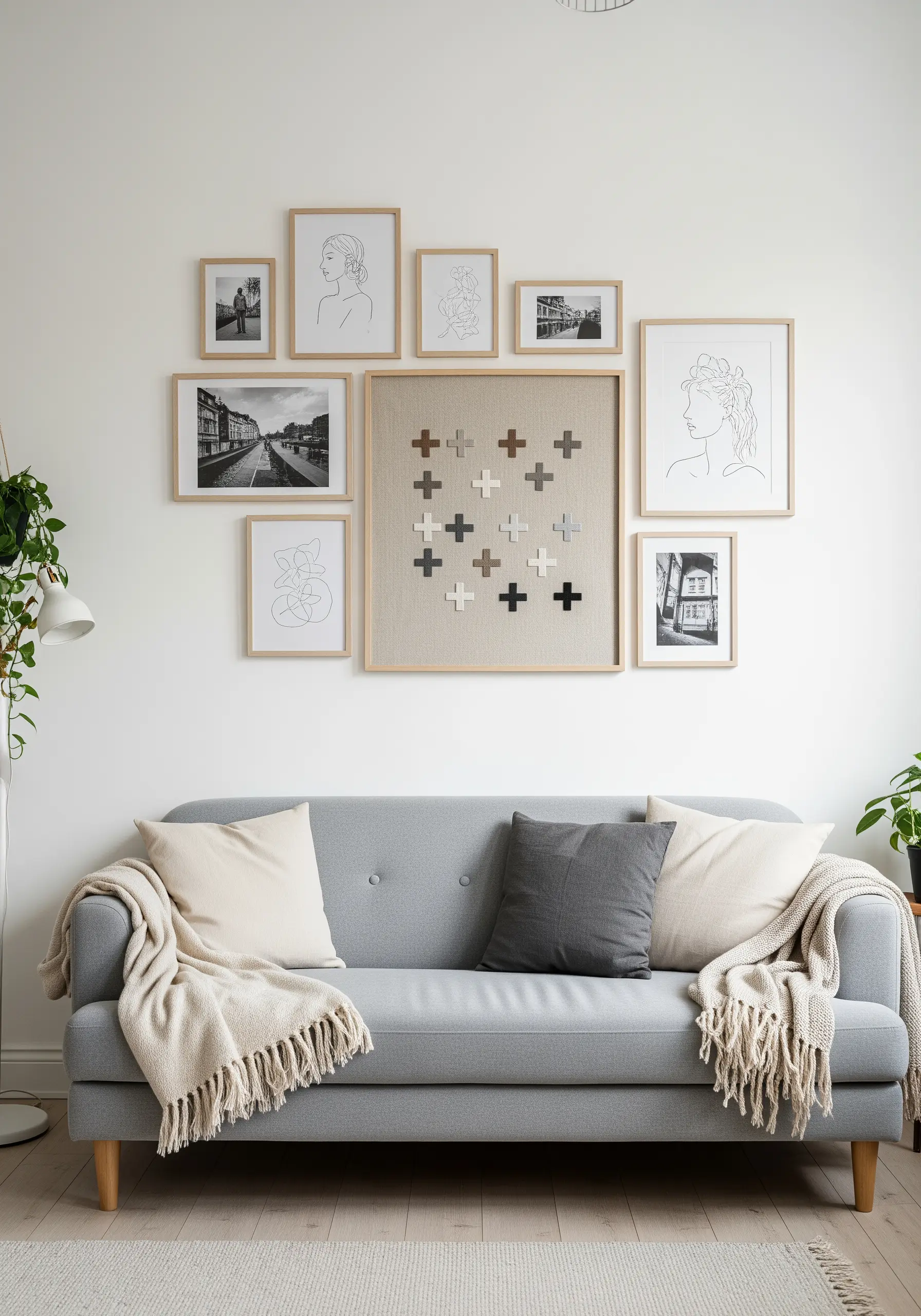
Integrate embroidery into your gallery wall by creating a central piece that anchors the collection.
Work on a large, framed piece of linen and create a grid of simple, repeating motifs like these Swiss crosses.
Use a satin stitch to fill each shape, and introduce subtle variation by using several shades of a single neutral color family—from charcoal to light gray.
This tonal shift adds depth and sophistication, turning a simple pattern into a complex, textured artwork.
These minimal DIY embroidery pieces can unify an entire wall.