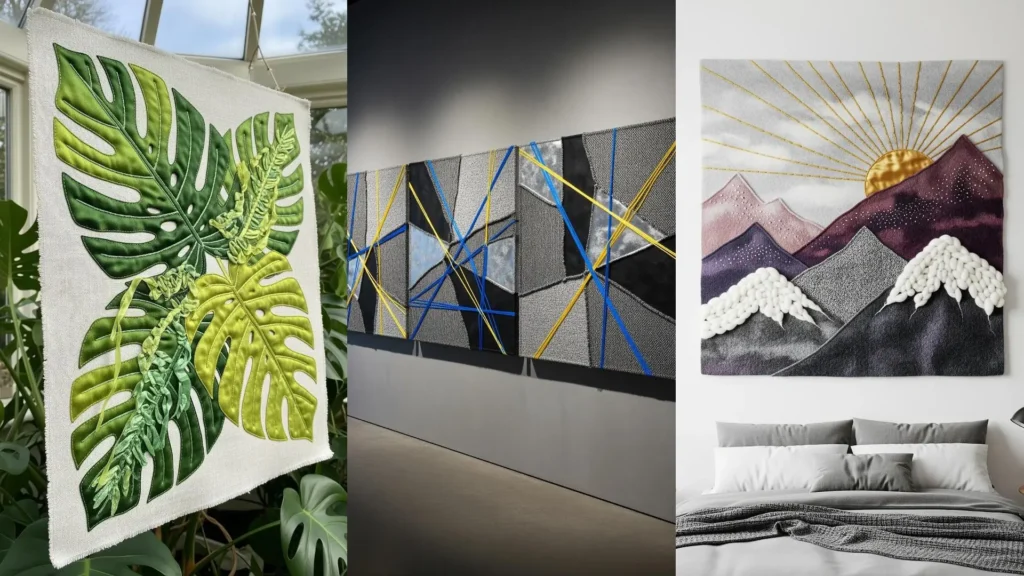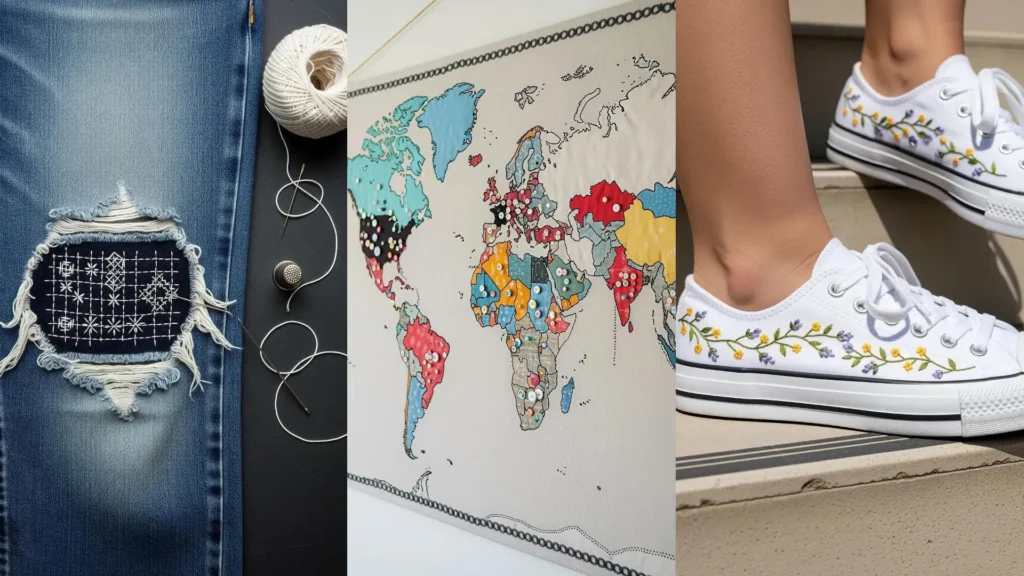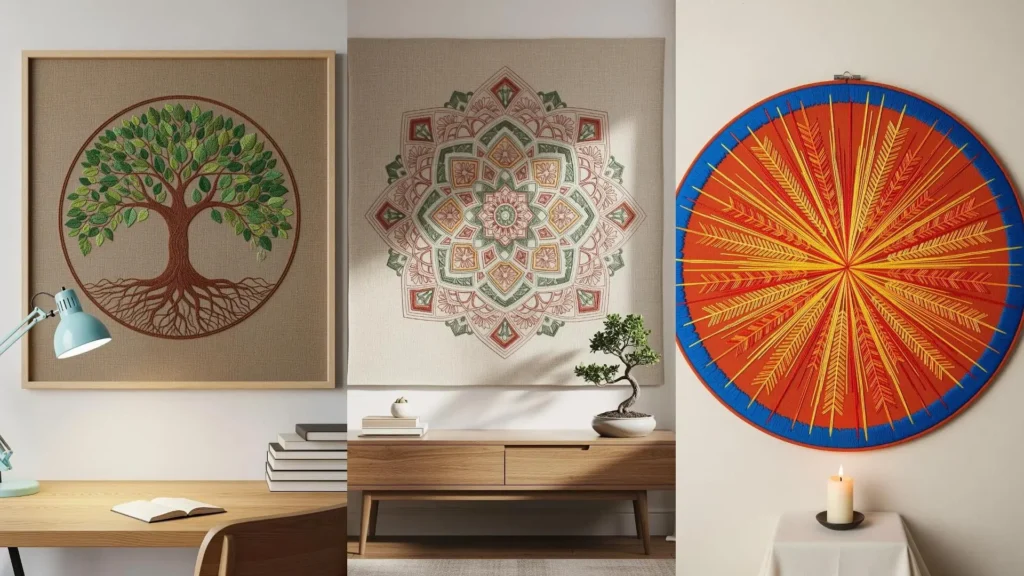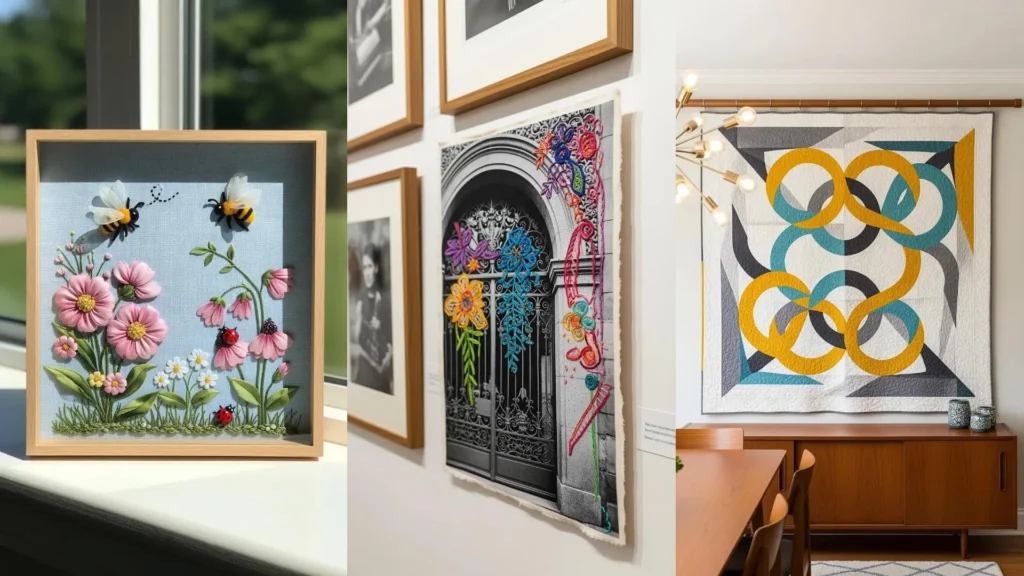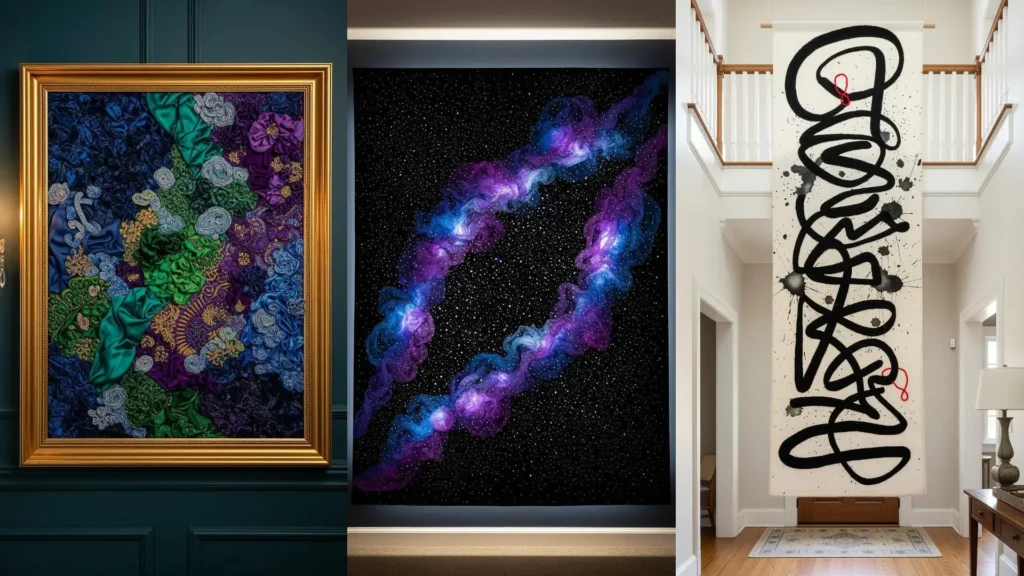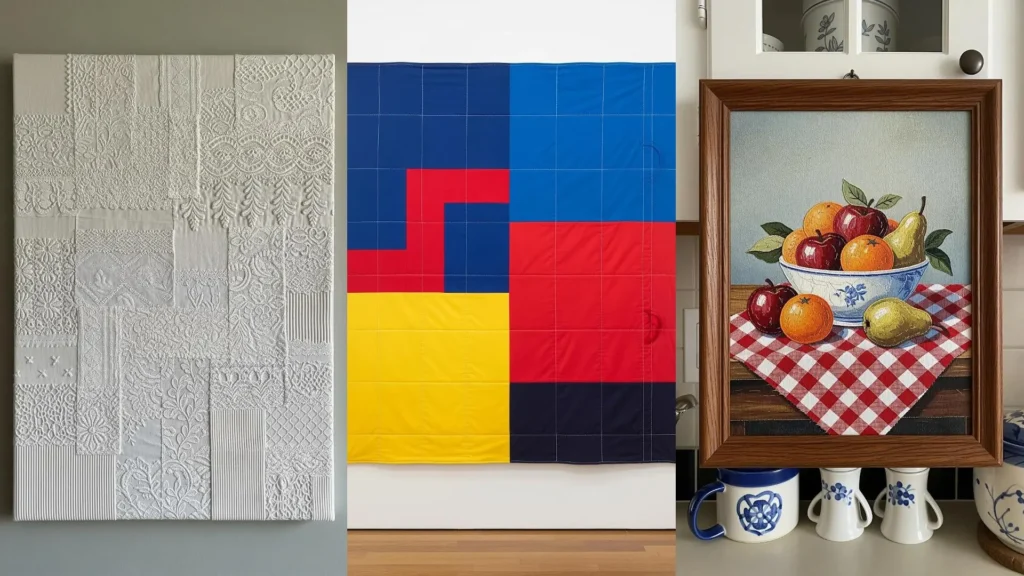
Look at that pile of old clothes—the worn-out jeans, the stained t-shirts, the dresses that no longer fit. Before you discard them, I want you to see them not as clutter, but as a palette of textures, colors, and memories waiting for a new purpose.
This isn’t just about mending or patching. It’s about transforming these textiles into expressive art. The softness of a favorite sweater, the perfect fade of denim, the intricate pattern of a blouse—these qualities are your starting point for creating something deeply personal and visually stunning.
Here, you’ll find ways to cut, layer, and stitch those fabrics into collages that feel both modern and meaningful. I’ll guide you through techniques that elevate your work from simple craft to intentional art, helping you create pieces that hold stories in every thread.
1. Create a Monochromatic Denim Landscape
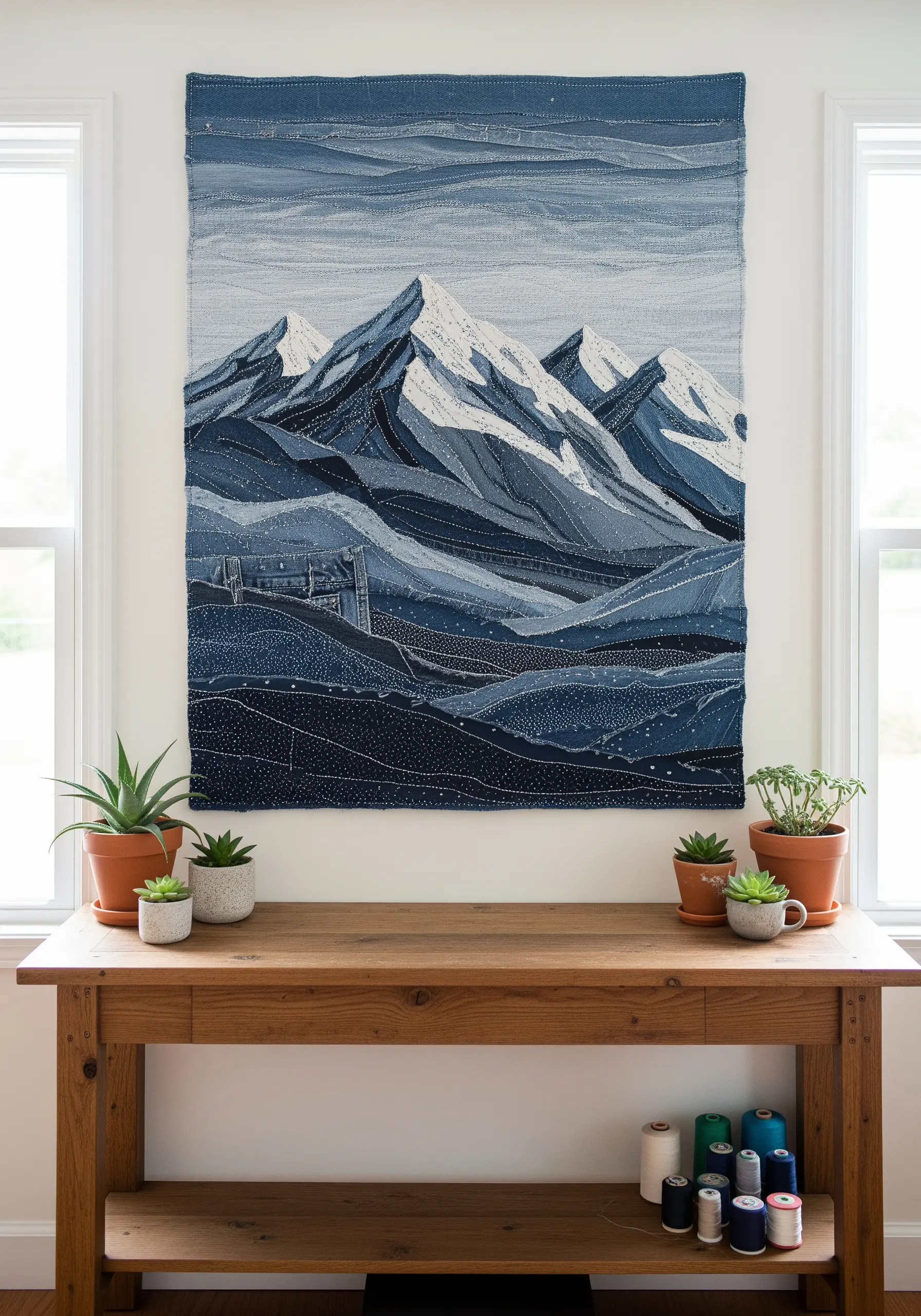
Use various washes of old denim to build painterly depth in a landscape scene.
Arrange the lightest denim for snow-capped peaks and the darkest shades for foreground shadows to create an immediate sense of perspective.
Instead of dense stitching, use sparse running stitches with white thread to suggest snow flurries or atmospheric haze—this adds texture without overwhelming the fabric’s natural tones.
This technique turns worn-out jeans into a sophisticated piece of embroidery decor that feels both rustic and modern.
2. Construct a Graphic Collage Portrait
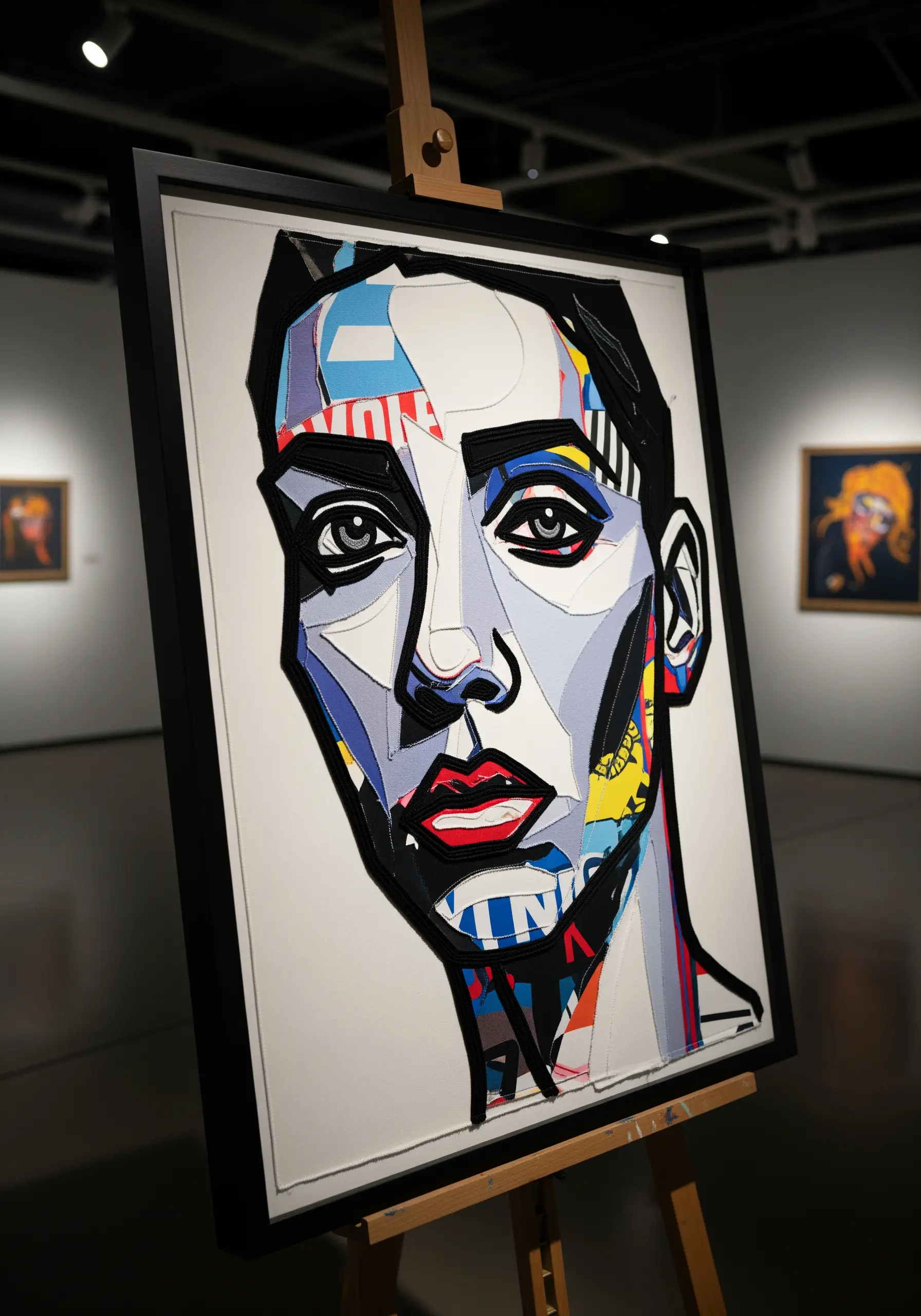
Build a powerful portrait by treating fabric scraps like shards of glass in a mosaic.
Start with a clear line drawing of a face and cut fabric pieces from old shirts and patterned textiles to fill in the shapes.
To achieve that sharp, graphic quality, outline every fabric piece with a bold, black whipstitch or satin stitch.
This method transforms simple shapes into a cohesive and expressive piece, proving that thread can be as powerful as a pen for creating single line face profiles.
3. Layer a Multi-Panel Forest Scene
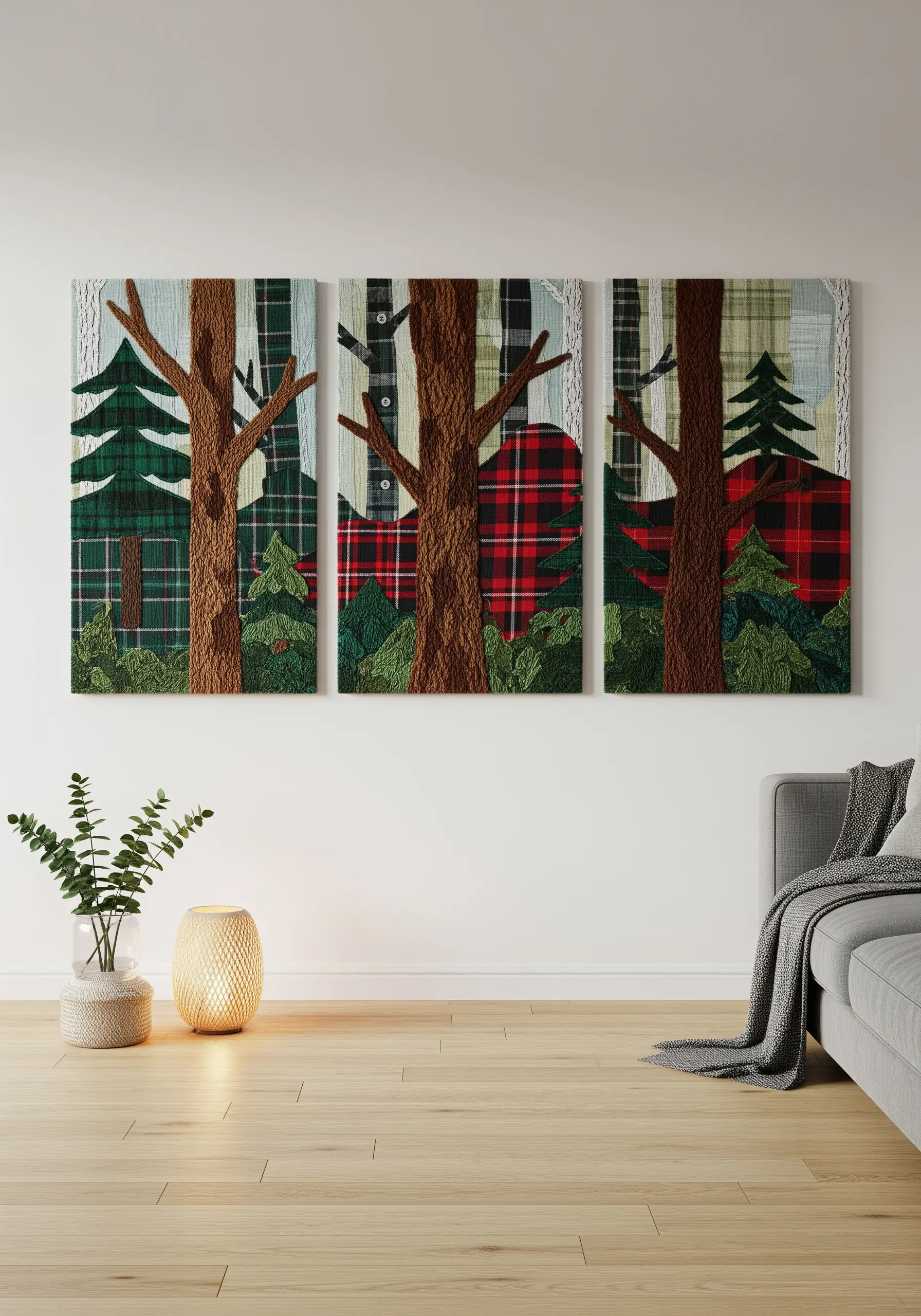
Create an immersive forest scene by dividing it into a triptych, or three separate panels.
Use highly textured fabrics like old plaid flannel shirts, corduroy, and wool to give your composition immediate tactile appeal.
For tree trunks, couch thick yarn onto the surface to create a raised, three-dimensional effect that contrasts beautifully with the flat fabric background.
This multi-panel approach makes a large-scale project feel more manageable and adds a professional, gallery-style look to your wall.
4. Sculpt a Dynamic Fabric Wave
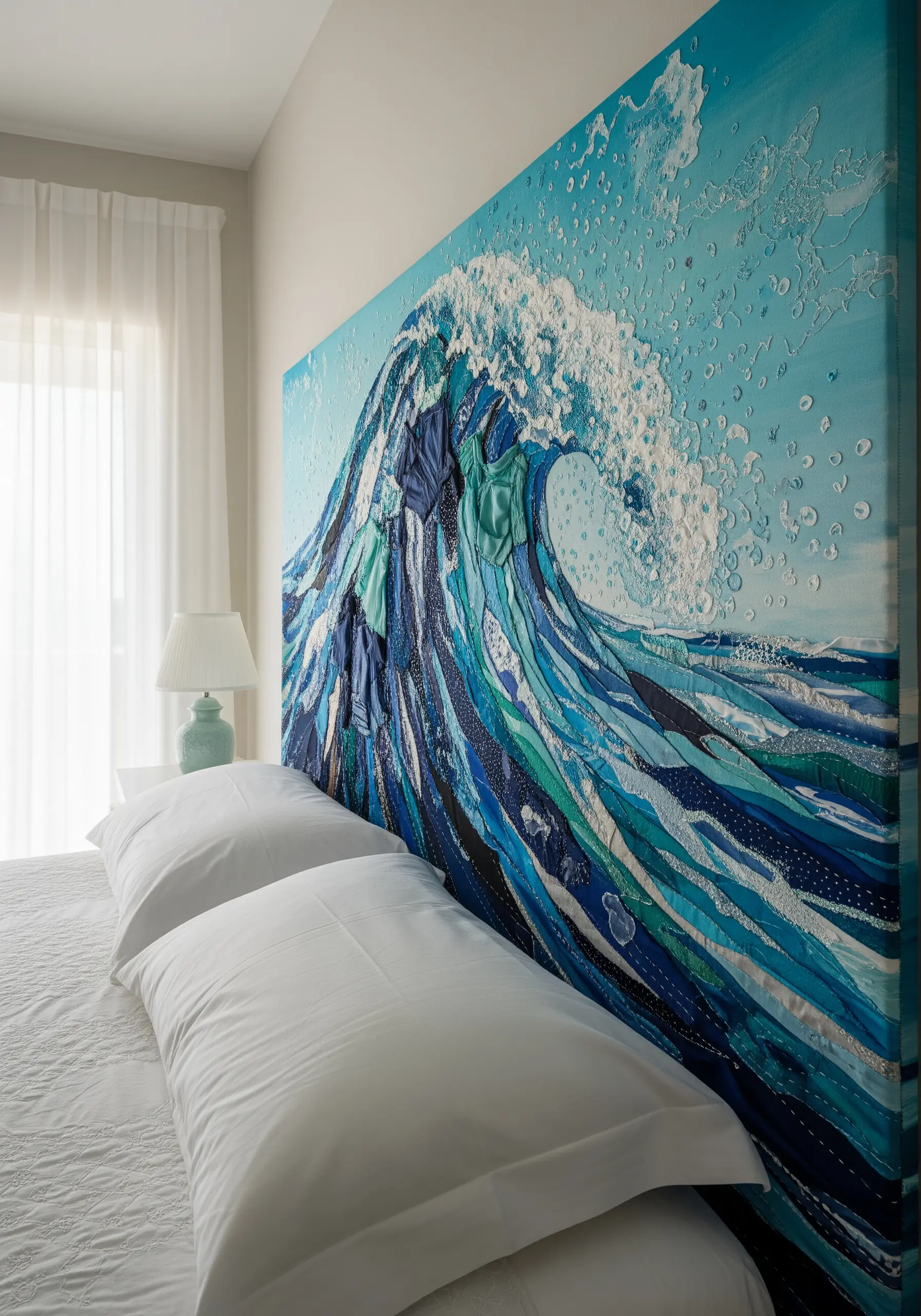
Capture the powerful movement of water by layering strips of fabric from old clothing in shades of blue, teal, and white.
Arrange the fabric pieces directionally to mimic the curve and crash of a wave, creating a strong sense of energy.
For the sea foam, use a combination of frayed white fabric, delicate lace remnants, and dense clusters of French knots.
This mix of smooth appliqué and high-texture stitching is what gives the final piece its dramatic, lifelike quality, perfect for a coastal theme.
5. Weave with Upcycled T-Shirt Yarn
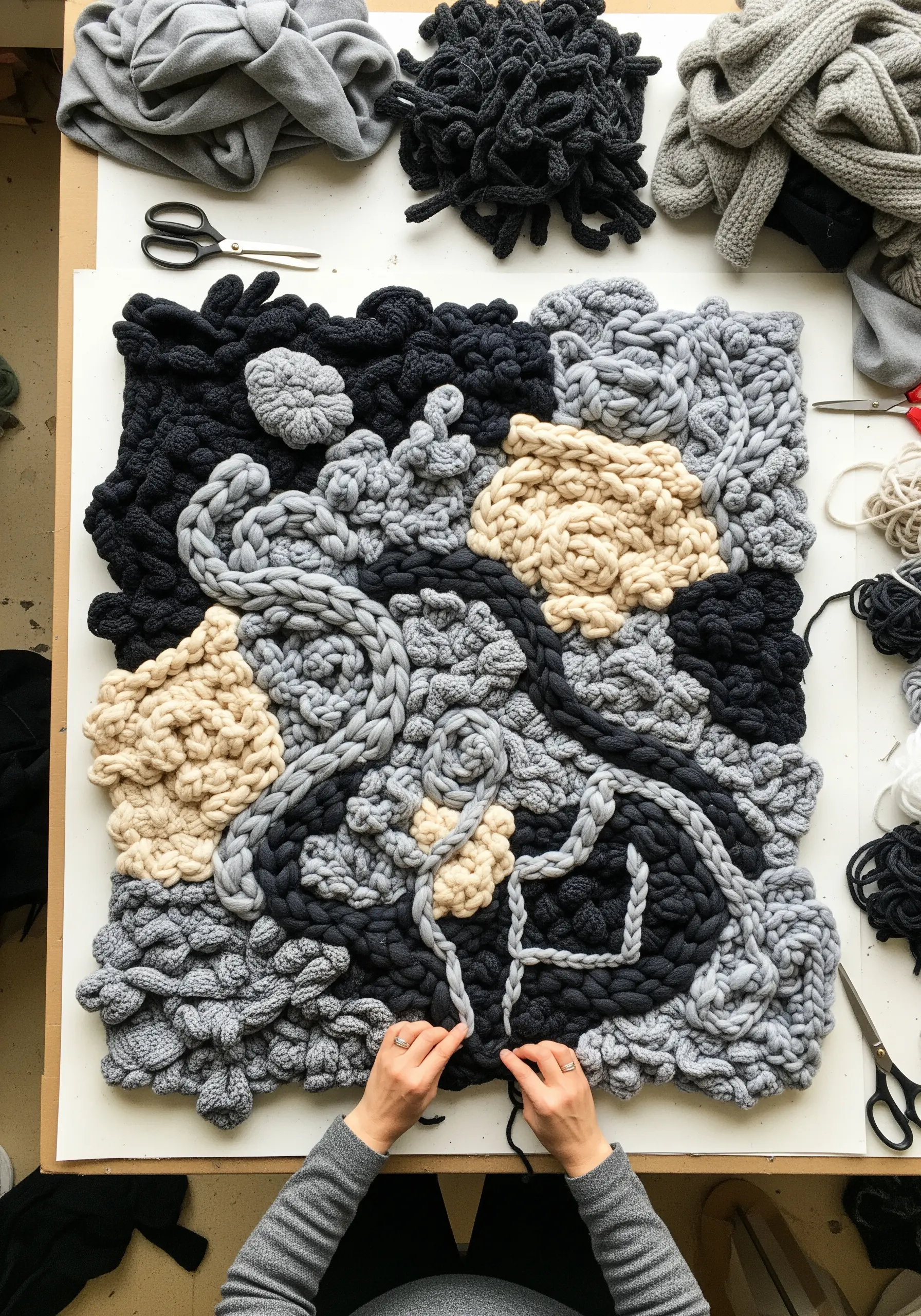
Transform old cotton t-shirts into chunky, pliable yarn by cutting them into continuous one-inch strips.
Gently pull the strips to make the edges curl in, creating a smooth, durable yarn perfect for weaving or finger knitting.
Work on a simple canvas or even a piece of sturdy cardboard, creating bold, organic shapes with your homemade yarn.
This is one of the best high-texture fabric collage embroidery projects for anyone who loves tactile, sculptural art.
6. Design a Playful Appliqué Garden
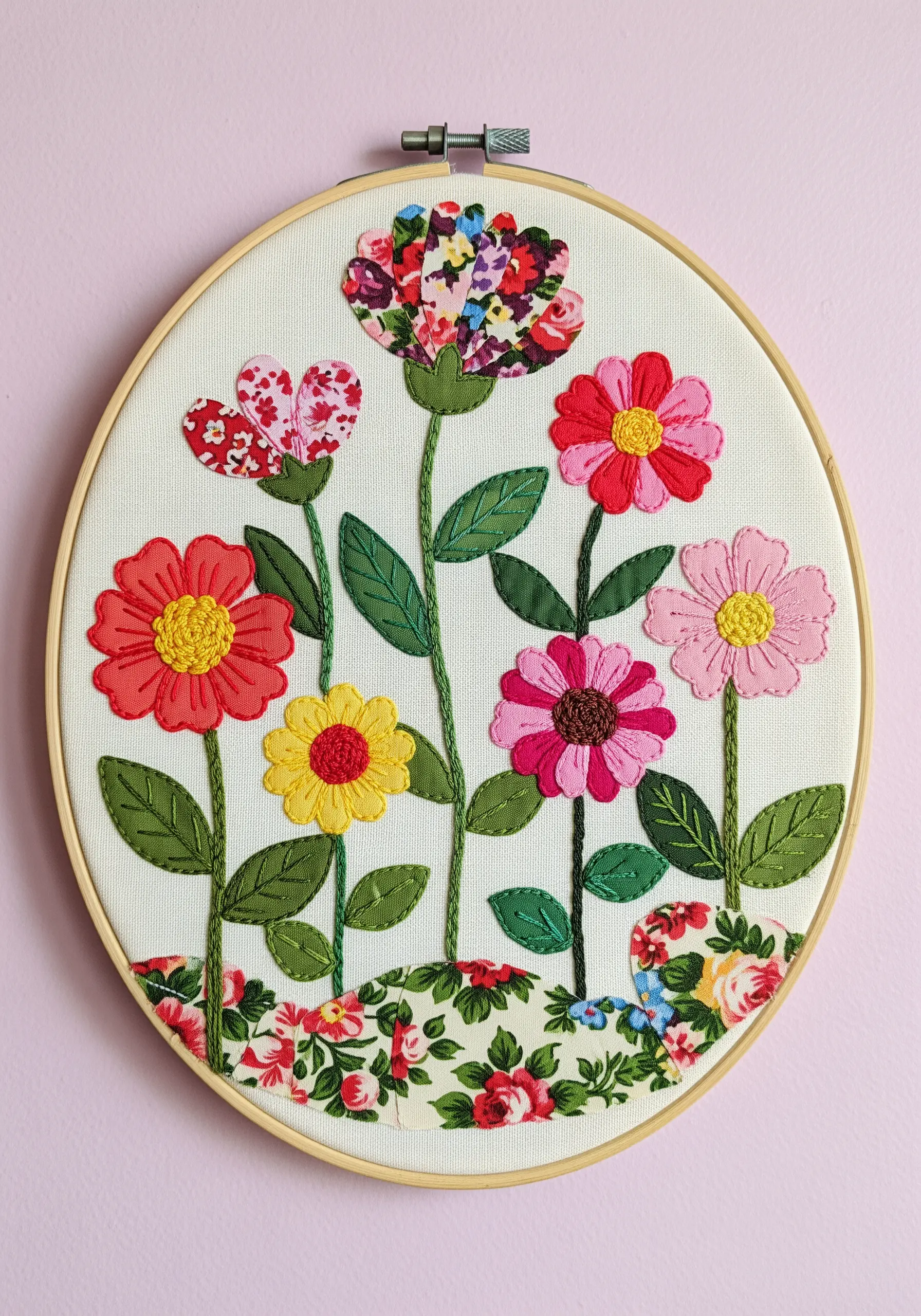
Create a cheerful garden scene using brightly patterned fabric scraps from old dresses or blouses.
To ensure your fabric shapes are crisp and easy to stitch, iron on a fusible webbing to the back before cutting out your petals and leaves.
Secure each piece with a neat, tight blanket stitch around the edges—this not only holds the fabric but also adds a charming, illustrative outline.
This technique is a perfect way to practice your botanical stitch ideas while using up even the smallest pieces of beloved fabrics.
7. Build a Textured Architectural Façade
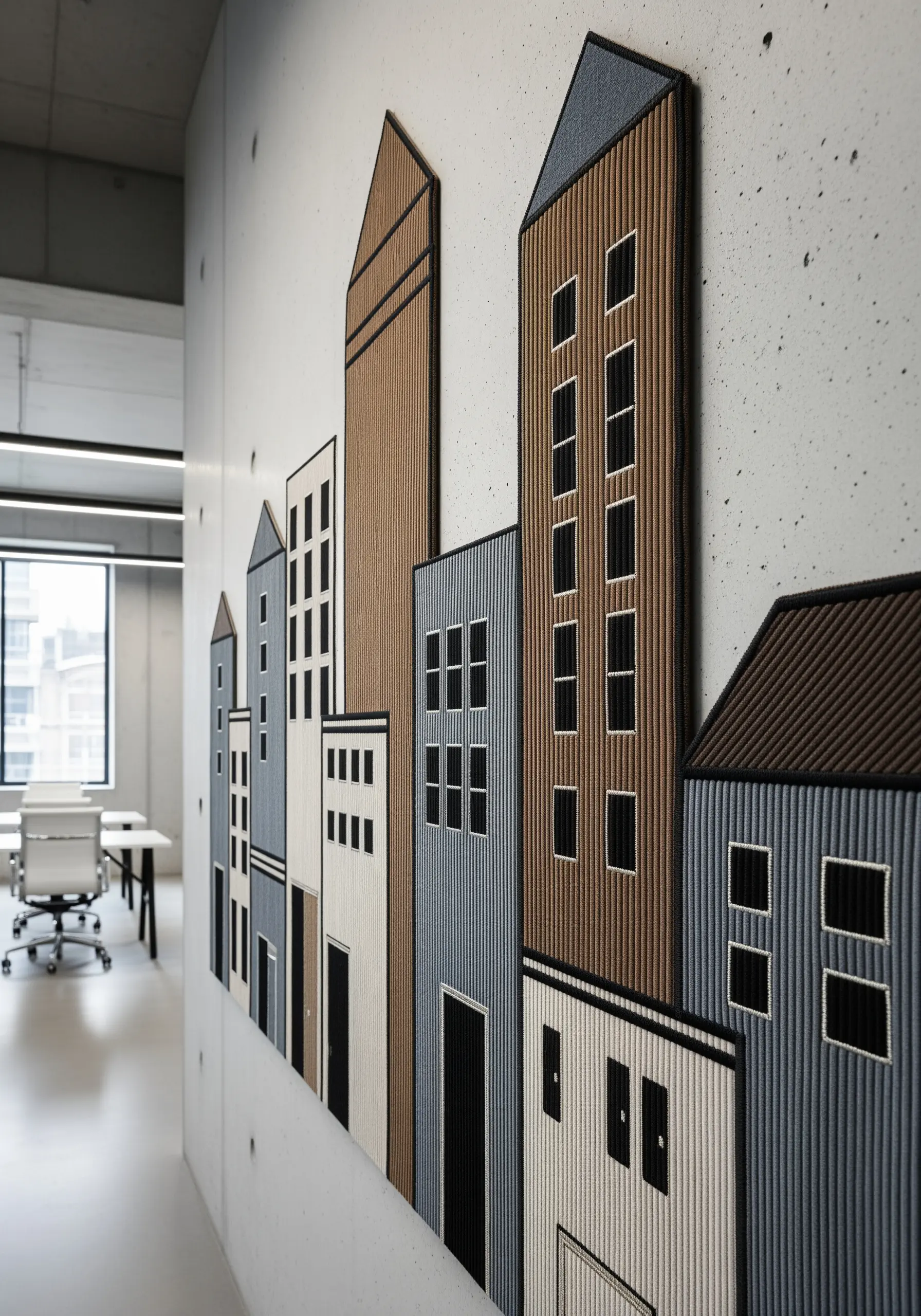
Use the inherent texture of fabrics like corduroy or ribbed knits to suggest architectural details in a cityscape collage.
Align the vertical ribs of the fabric to mimic siding or the structured lines of a skyscraper, letting the material do the hard work for you.
Add minimalist details like windows and doors with a simple running stitch in a high-contrast thread, which creates a clean, graphic look.
The result is a sophisticated piece of embroided city skyline wall decor with surprising depth and texture.
8. Compose a Delicate Heirloom Collage
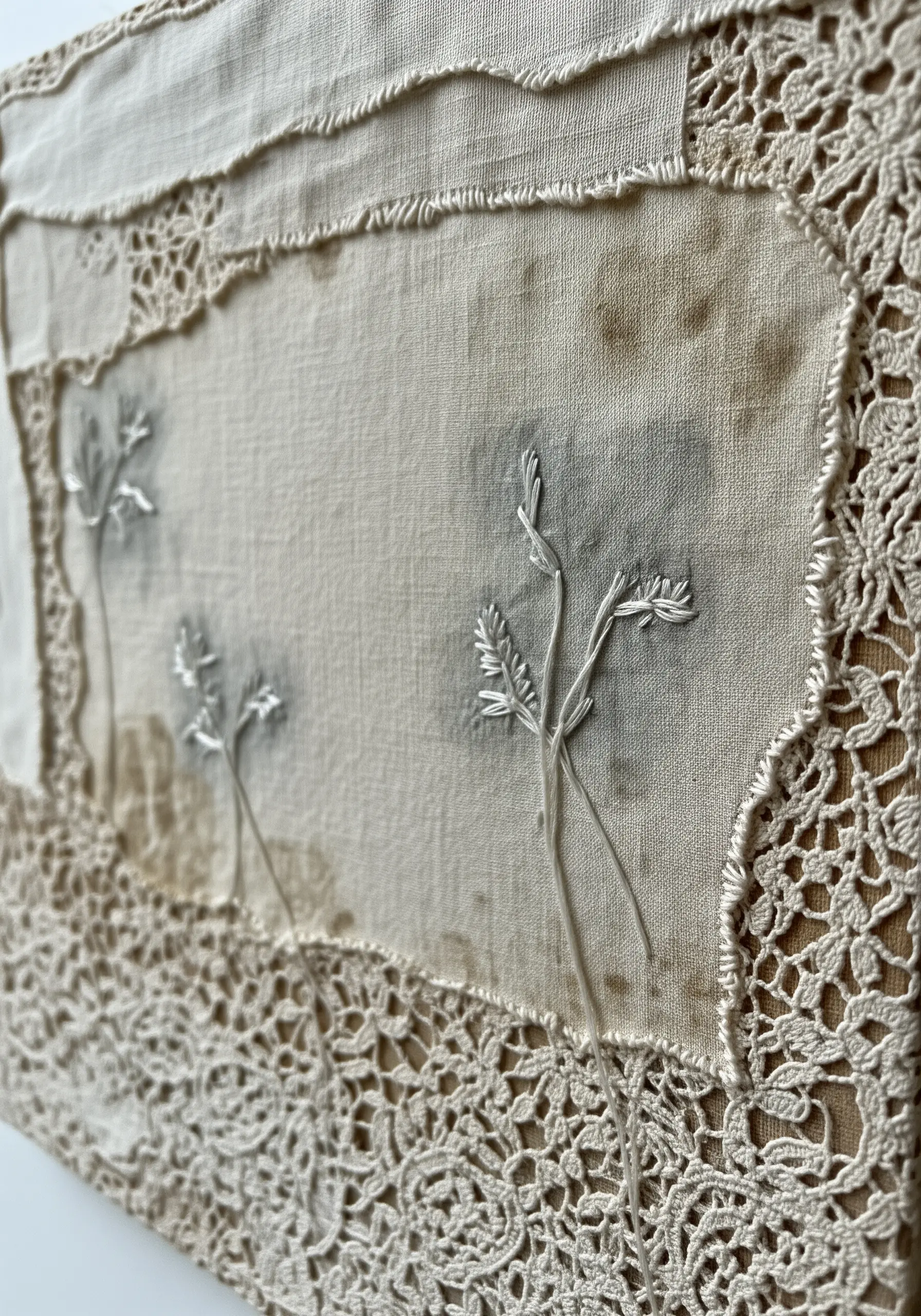
Give new life to stained or torn heirloom linens by making their imperfections a central part of your design.
Layer pieces of old lace, discolored handkerchiefs, and tattered napkins on a neutral background like burlap or raw canvas.
Instead of dense embroidery, add just a few delicate botanical motifs in a single-strand stem stitch, creating a whisper of detail.
This approach honors the history of the fabrics and is a beautiful way to create simple embroidery designs with deep personal meaning.
9. Master Modern Color-Block Art
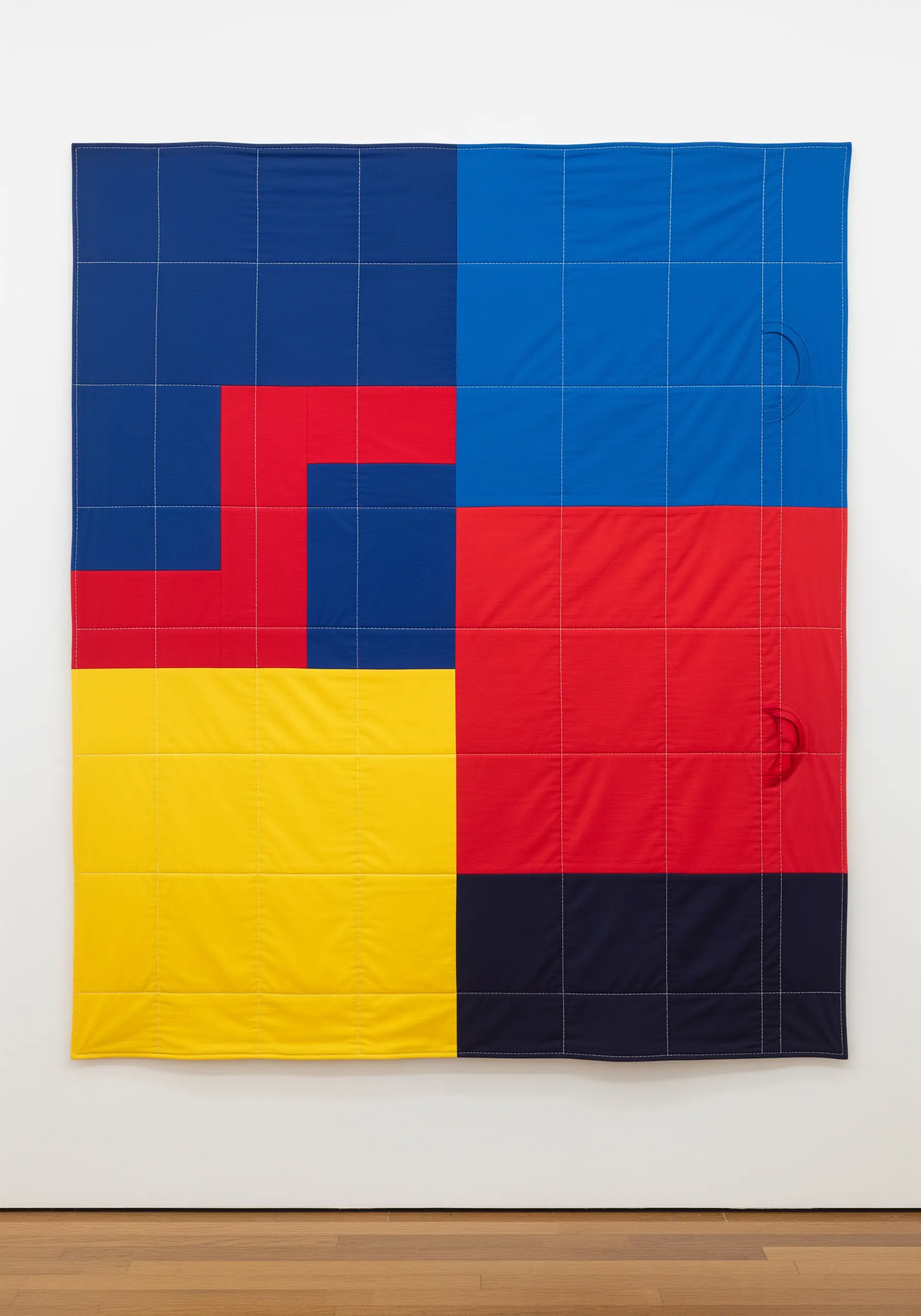
Create a bold, minimalist art piece using large blocks of solid-colored fabric from old t-shirts or bedsheets.
Focus on a primary color palette for a graphic, modern aesthetic reminiscent of Bauhaus design.
Instead of intricate embroidery, use a simple, functional running stitch in a contrasting color (like white on blue) to quilt the layers together.
This grid stitch not only adds a subtle texture but also turns a simple fabric arrangement into a structured work of textile art.
10. Illustrate a Narrative Storybook Scene
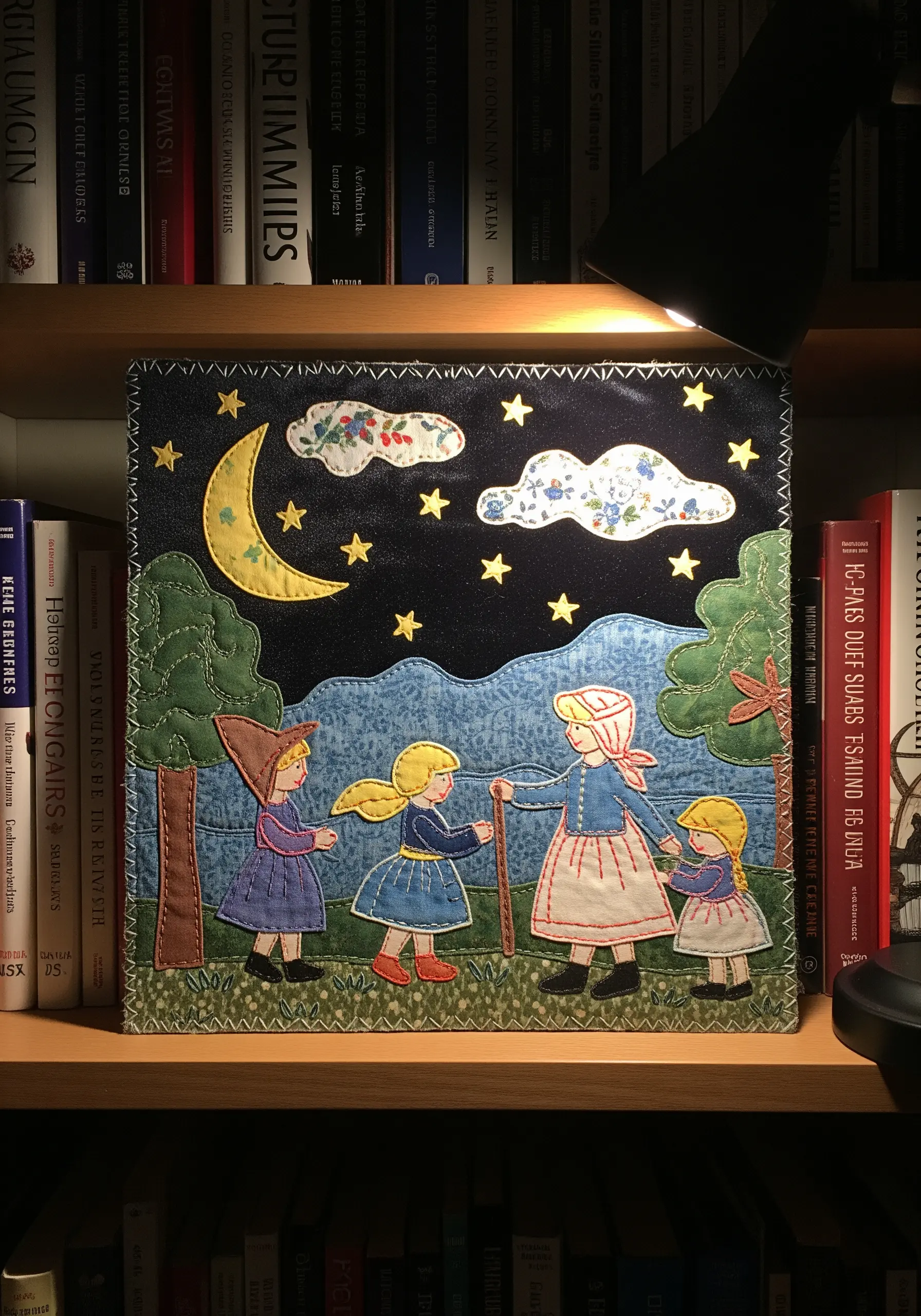
Turn treasured scraps of children’s clothing into a whimsical storybook illustration.
Use appliqué to build your characters and scenery, choosing fabrics with small patterns for clothes and solid felts for elements like trees and clouds.
Outline each shape with a simple backstitch or whipstitch to give the piece a charming, hand-drawn quality.
This technique is a deeply personal way to preserve memories, turning outgrown garments into a piece of narrative art.
11. Assemble a Large-Scale Denim Tapestry
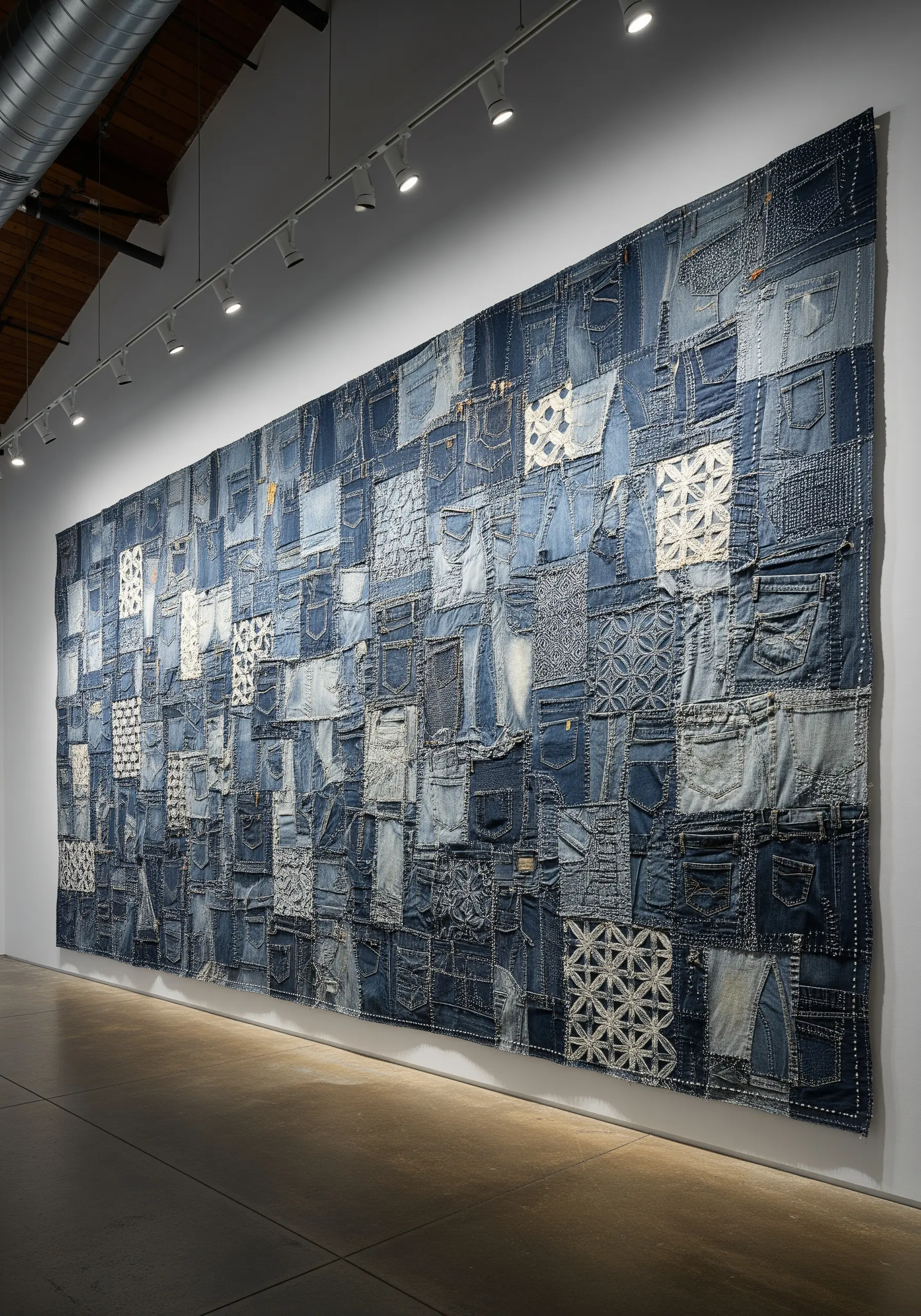
Create a monumental tapestry by patchworking dozens of denim squares from old jeans.
Pay attention to the arrangement of tones, creating gradients from light to dark washes to give the overall piece a sense of movement and depth.
Incorporate iconic denim details like pockets, seams, and belt loops to add texture and historical character.
Elevate some squares with traditional Sashiko stitching patterns; the intricate white thread on blue denim provides a stunning focal point and makes for stunning framed embroidery pieces on a grand scale.
12. Craft a Dapper Animal Portrait
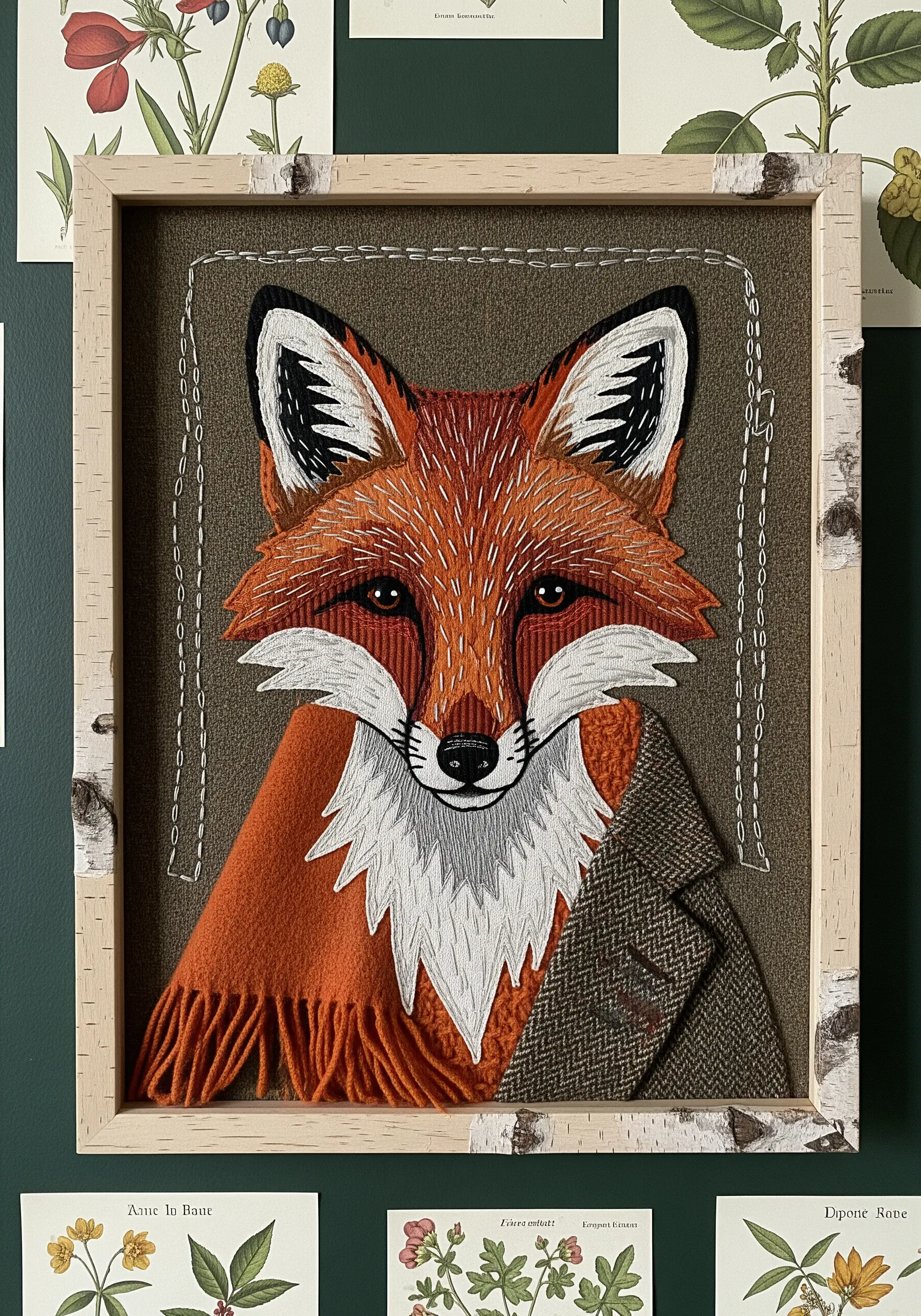
Give an animal portrait a whimsical personality by dressing it in appliqué clothing made from textured fabrics.
Use a scrap of tweed for a jacket, a piece of soft flannel for a scarf, and smooth cotton for a shirt collar.
For the animal’s fur, transition seamlessly from fabric to thread by using long-and-short stitch to blend the edges.
This combination of appliqué and embroidery creates a rich, characterful portrait, perfect for practicing realistic animal embroidery patterns.
13. Embellish with Celestial Beadwork
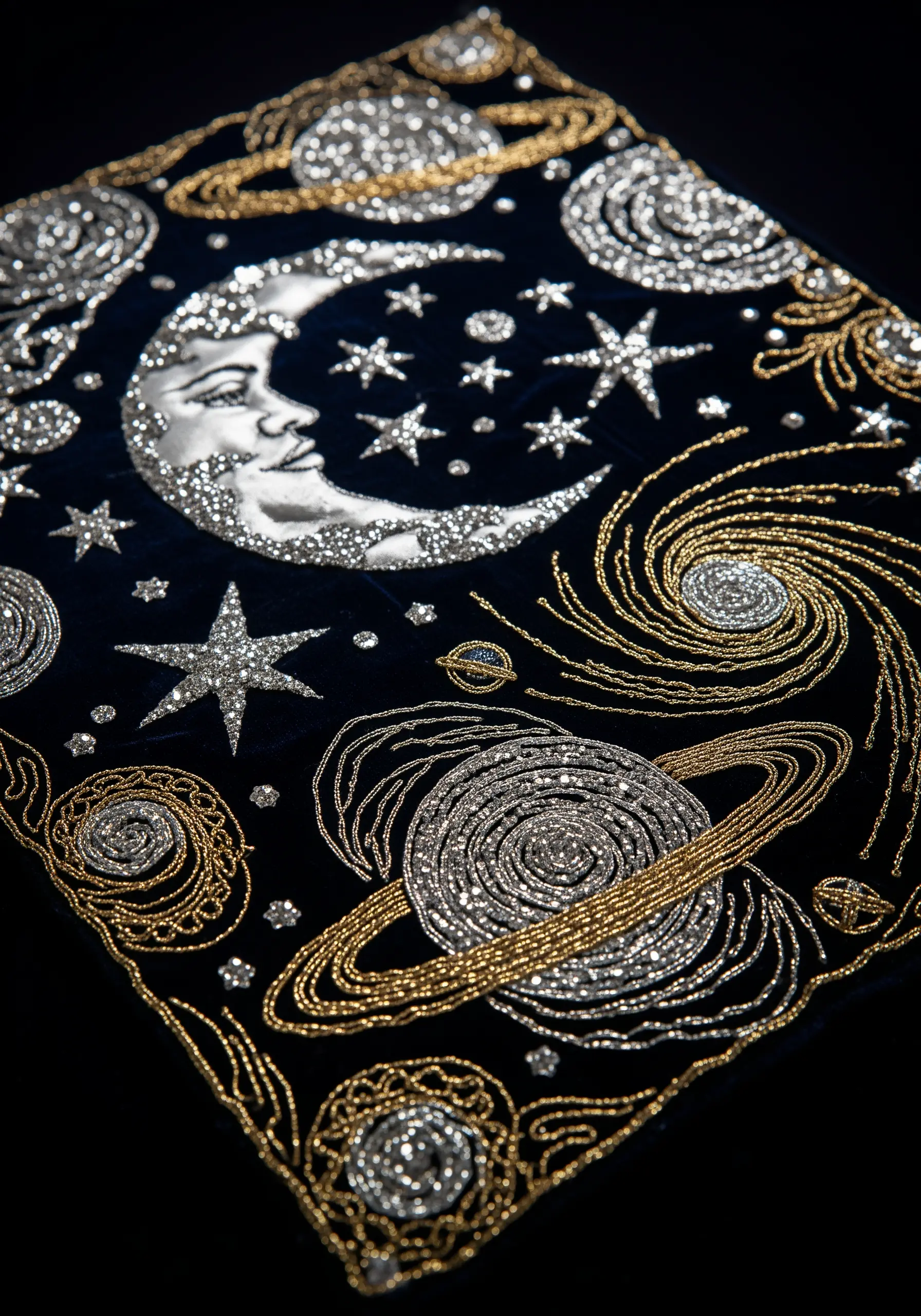
Create a luxurious celestial scene by using dark velvet from an old garment as your night sky.
Appliqué the moon and planets using scraps of metallic or silk fabrics for a soft sheen.
Elevate the design by adding beadwork and sequins to create sparkling stars and swirling galaxies. Use a couching stitch with metallic thread to outline planetary rings for a defined, glittering effect.
This technique transforms simple collage into a piece of couture-level art.
14. Sculpt a 3D Fabric Terrarium
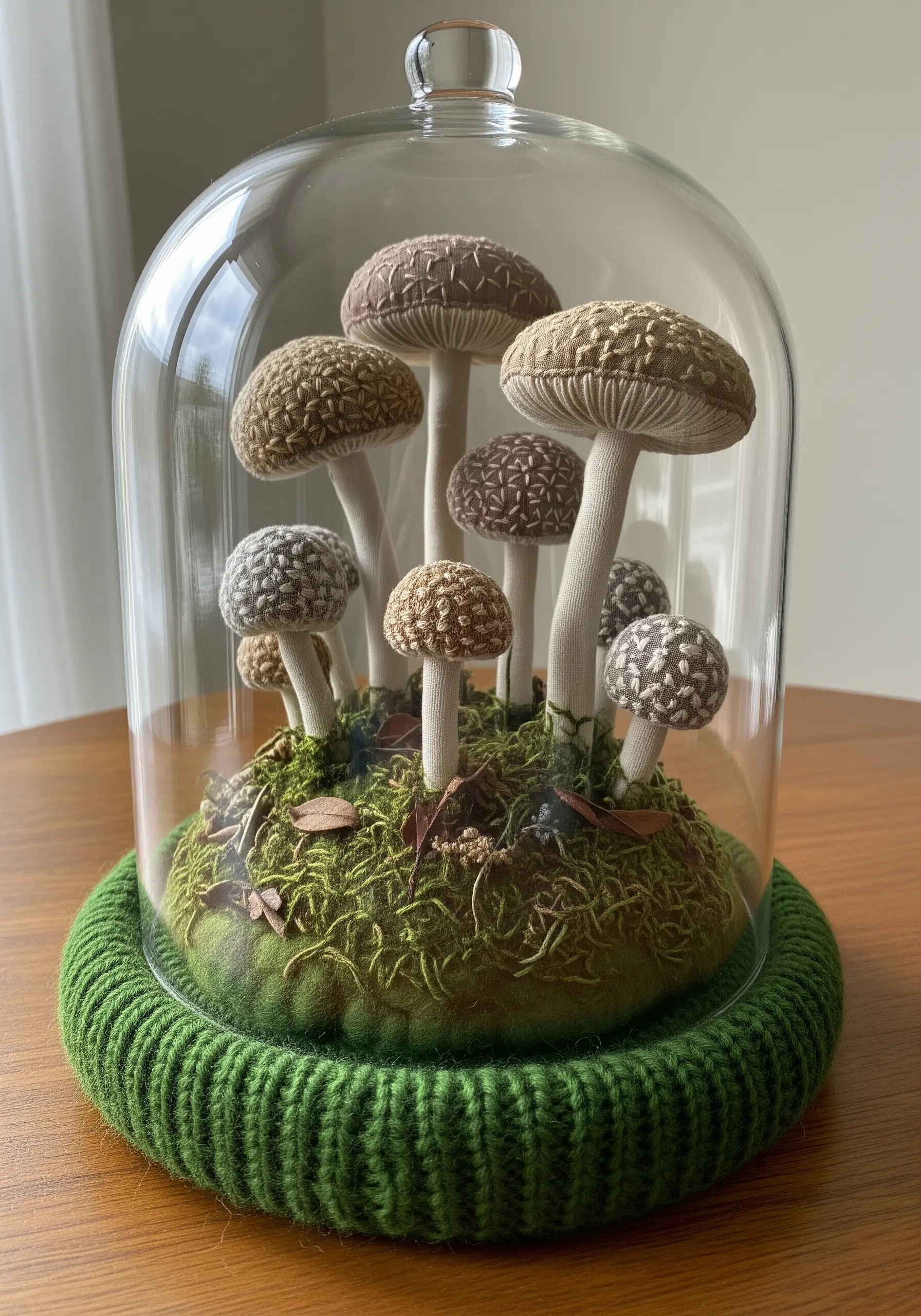
Move your collage off the canvas and into three dimensions by creating a sculptural mushroom scene.
Use scraps of old sweaters or corduroy to sew and stuff small mushroom caps, then add texture to the tops with French knots or seed stitches.
Create a mossy ground from green felt or a repurposed knitted sweater cuff, and arrange your mushrooms on top.
Displaying the final piece under a glass cloche turns it into a magical, self-contained world, like something from a realistic mushroom forest floor embroidery project.
15. Design a Bold Pop Art Panel
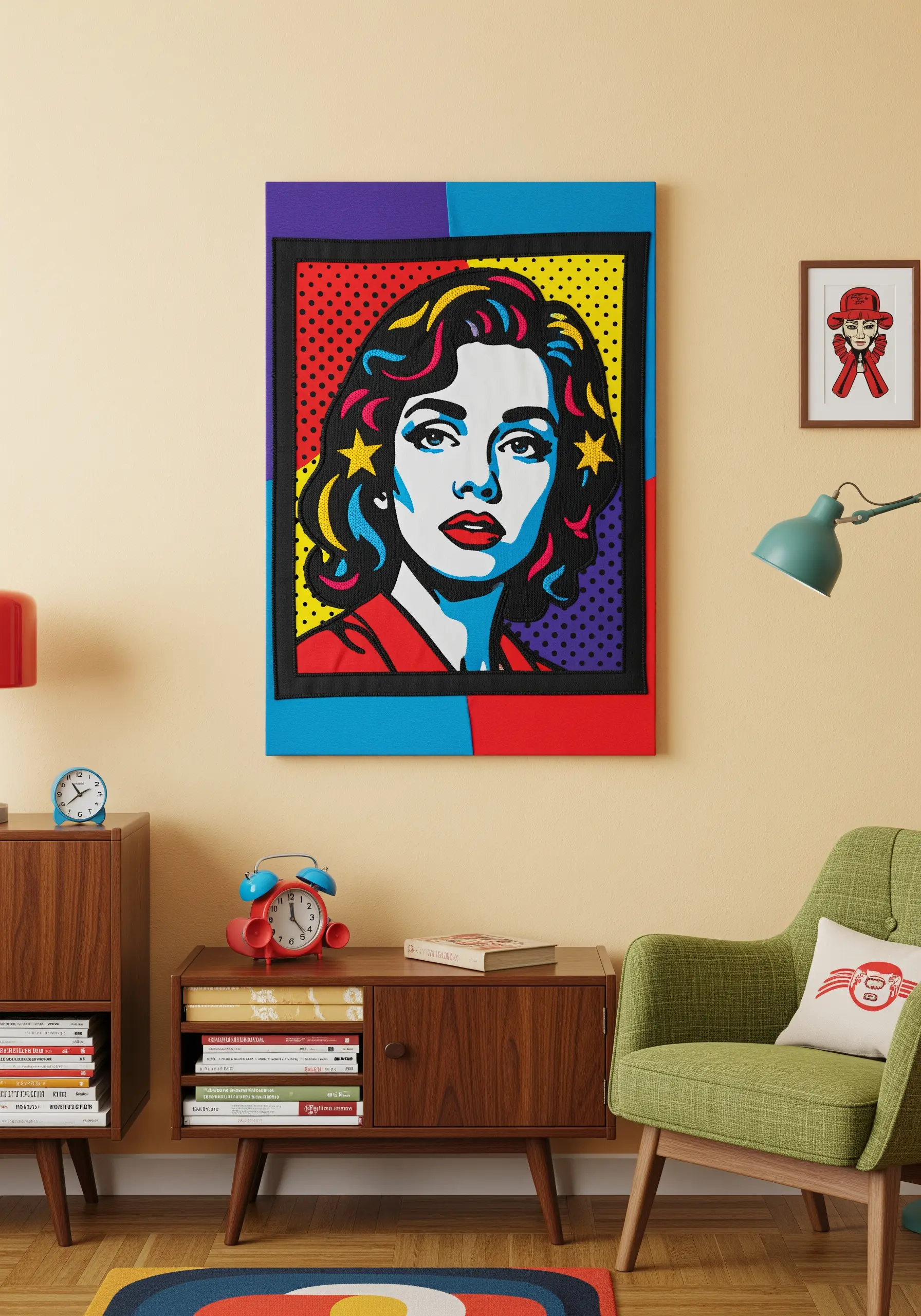
Channel the energy of Pop Art by using solid, high-contrast fabric scraps to create a graphic portrait.
Source bold reds, blues, and yellows from old t-shirts to mimic the style’s signature color palette.
To create the iconic Ben-Day dots, either use a polka-dotted fabric or meticulously place uniform French knots in a grid pattern.
A thick, black satin stitch outline is crucial for defining the shapes and achieving that authentic, comic-book look, turning it into impactful fabric art.
16. Combine Line Art with Fabric Blocking
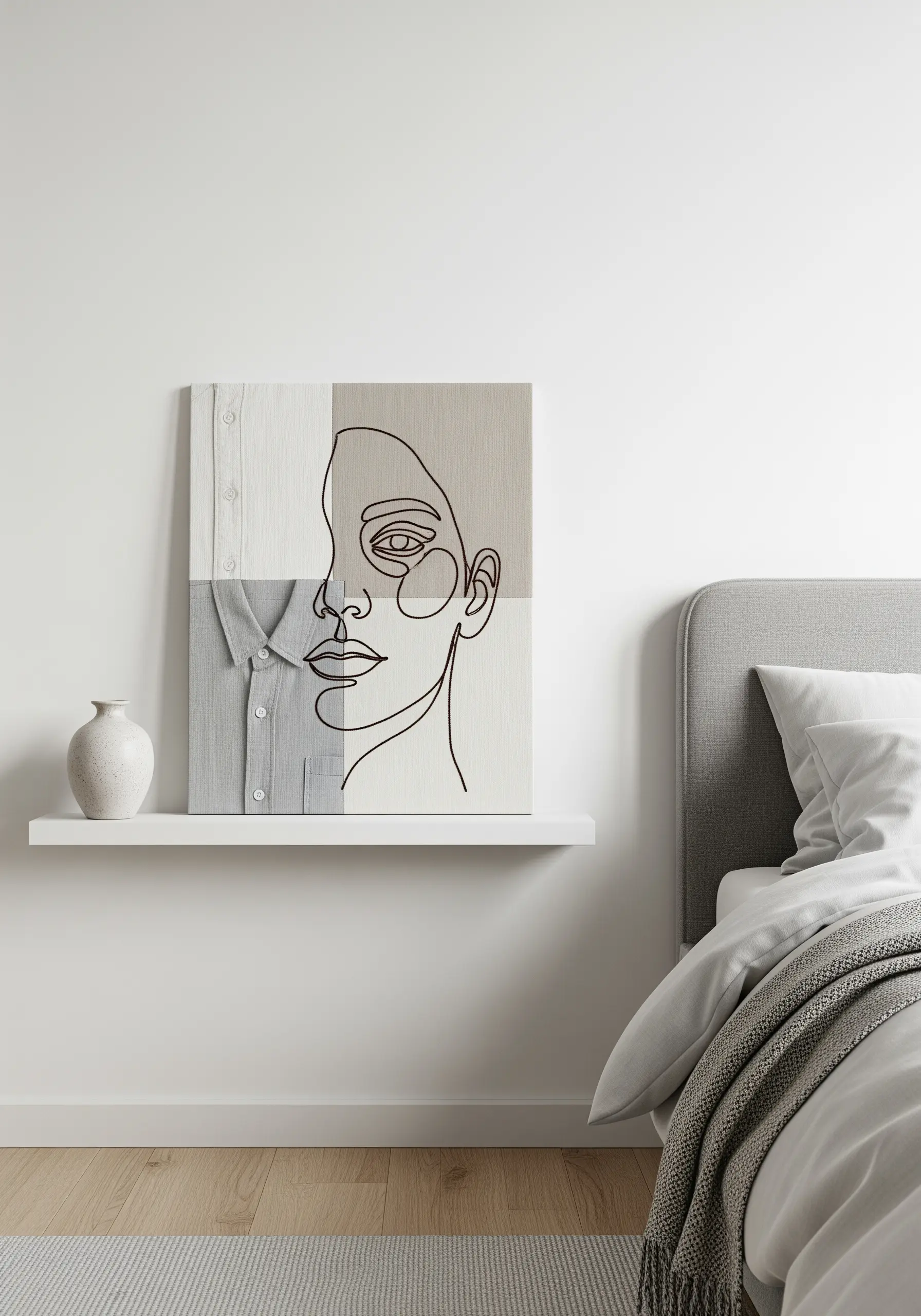
Create a minimalist yet compelling piece by combining a simple fabric background with clean line embroidery.
Stitch together two or three panels of neutral-colored fabric from old shirts to create a subtly color-blocked canvas.
Use a single, continuous line of backstitch in black thread to draw a face or figure that flows across the fabric seams.
The stark simplicity of the embroidery unifies the collaged background, resulting in delicate line art embroidery ideas that feel modern and intentional.
17. Revitalize a Denim Jacket with a Fabric Panel
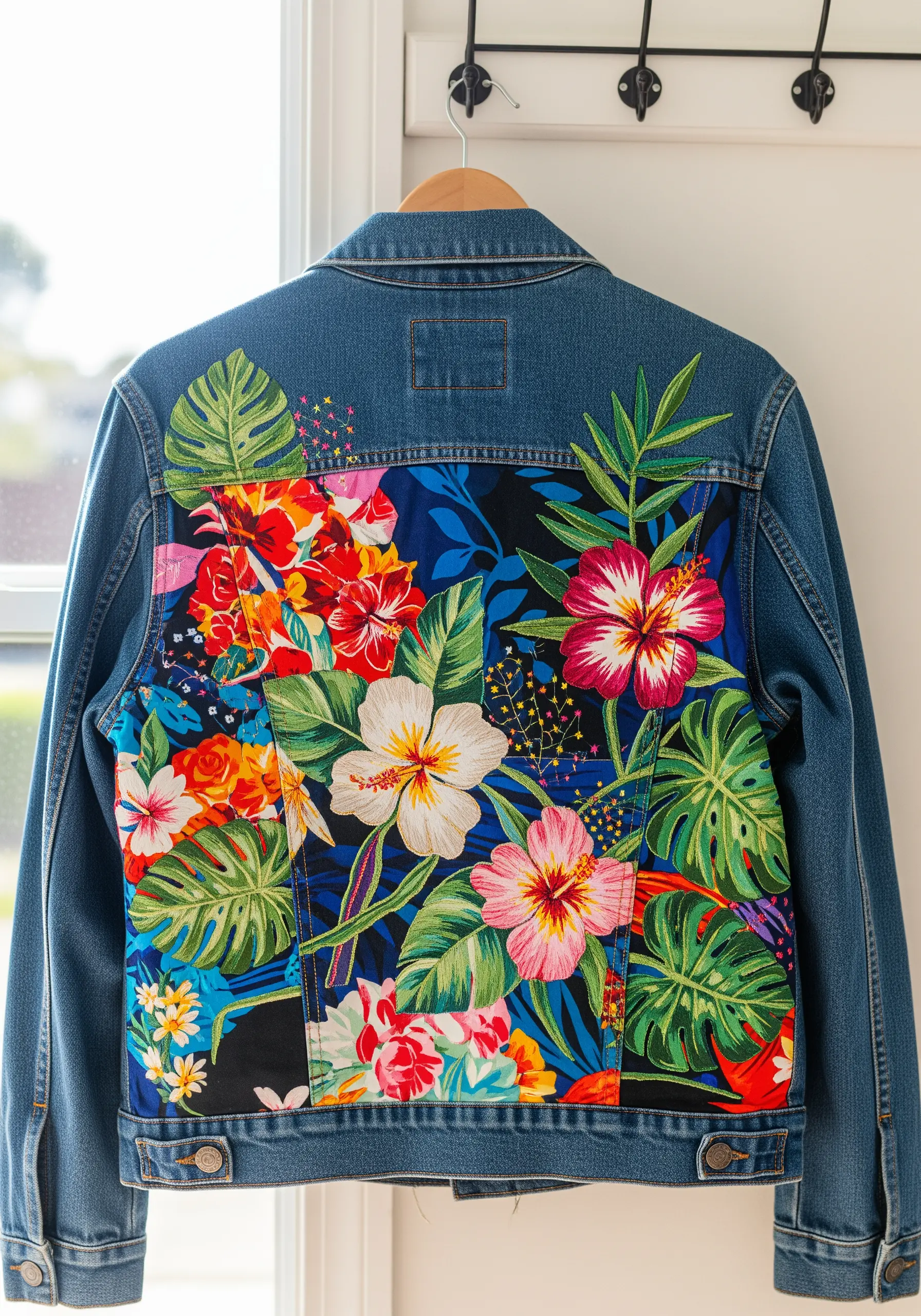
Give a tired denim jacket an instant upgrade by adding a statement panel to the back.
Cut a piece from a vibrant, patterned fabric—like an old Hawaiian shirt or a floral scarf—to fit perfectly within the jacket’s back seams.
Iron on a fusible adhesive to keep the panel flat and prevent fraying, then secure the edges with a simple, clean running stitch.
This no-fuss embellishment is one of the quickest ways to create tiny embroidery patterns that make your clothes look custom-made.
18. Curate a Seasonal Wardrobe Story
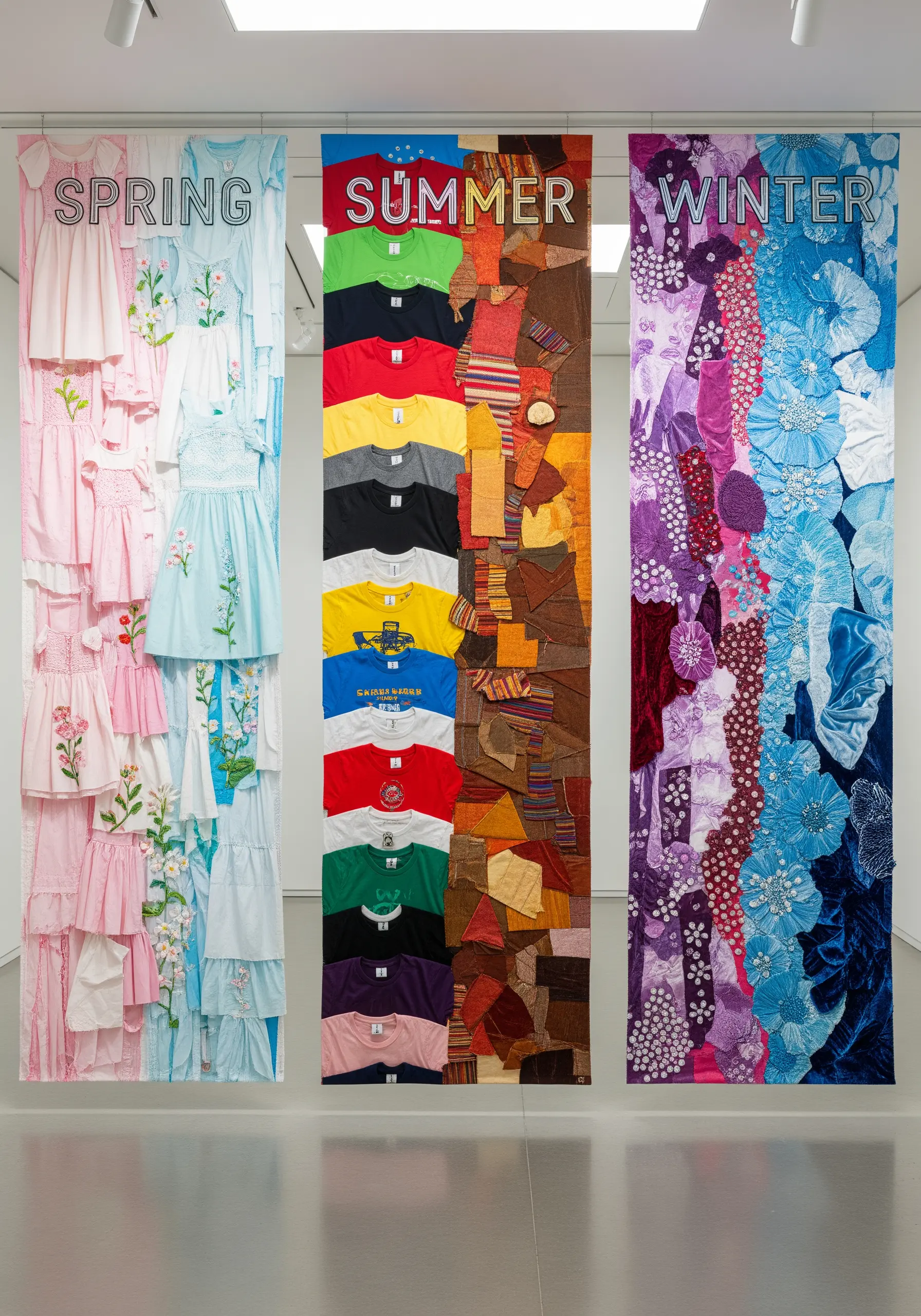
Create a conceptual art piece by collaging entire garments into large narrative banners.
Gather clothing that represents a specific season—light cotton dresses for spring, colorful t-shirts for summer, rich-toned sweaters for autumn.
Arrange the garments by color to create a beautiful gradient, tacking them onto a large backing fabric.
The power of this piece comes from the collective memory held within the clothes themselves, transforming them into a personal time capsule.
19. Construct an Abstract Clothing Sculpture
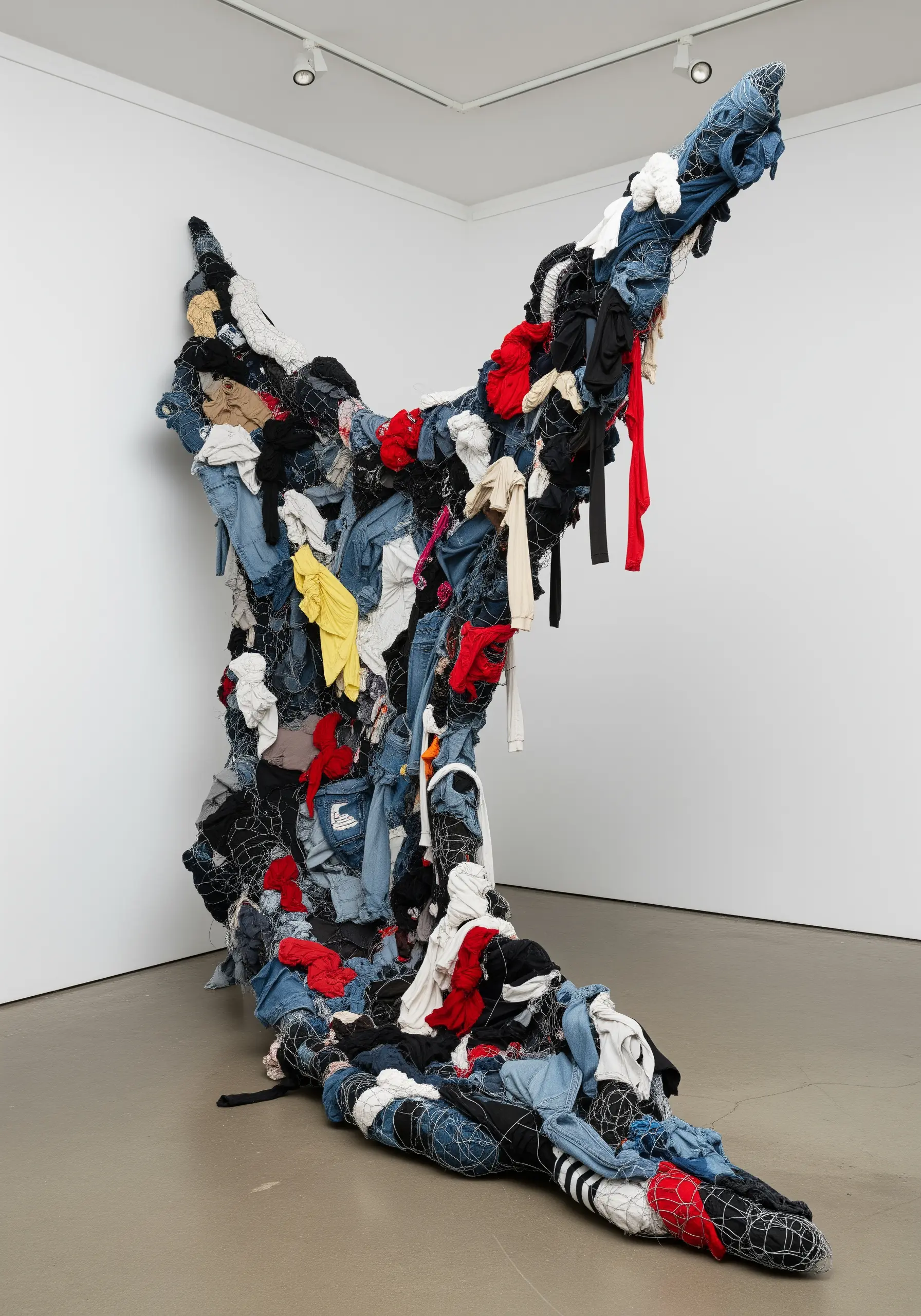
Push the boundaries of fabric collage by moving into three-dimensional sculpture.
Start with a simple wire armature to create your desired shape, then wrap, twist, and stitch whole or deconstructed garments around it.
Embrace the chaos of tangled sleeves, layered denim, and pops of color to build a dynamic, expressive form.
This method transforms clothing from something to be worn into the raw material for stunning fiber art installations.
20. Craft a Ruffled Fabric Medallion
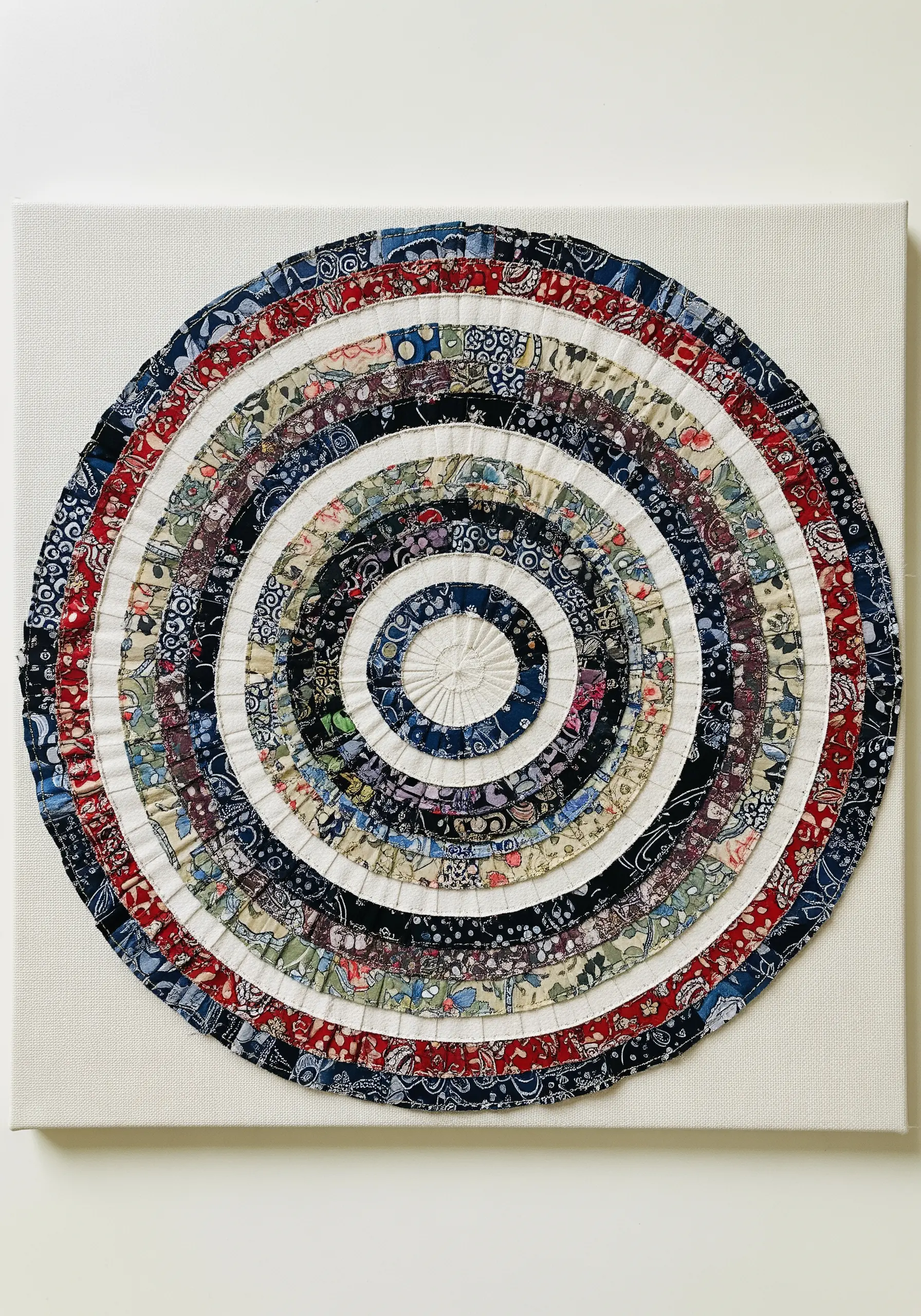
Use thin strips of patterned fabric to create a highly textured, circular medallion.
Take a long strip of fabric, fold it in half lengthwise, and use a running stitch along the raw edge to gather it into a tight ruffle.
Spiral the ruffled strip onto a canvas, stitching it down as you go to form concentric circles of color and pattern.
This technique is a fantastic way to use up even the smallest, most delicate scraps from old blouses or dresses.
21. Chart a Personal Embroidered Map
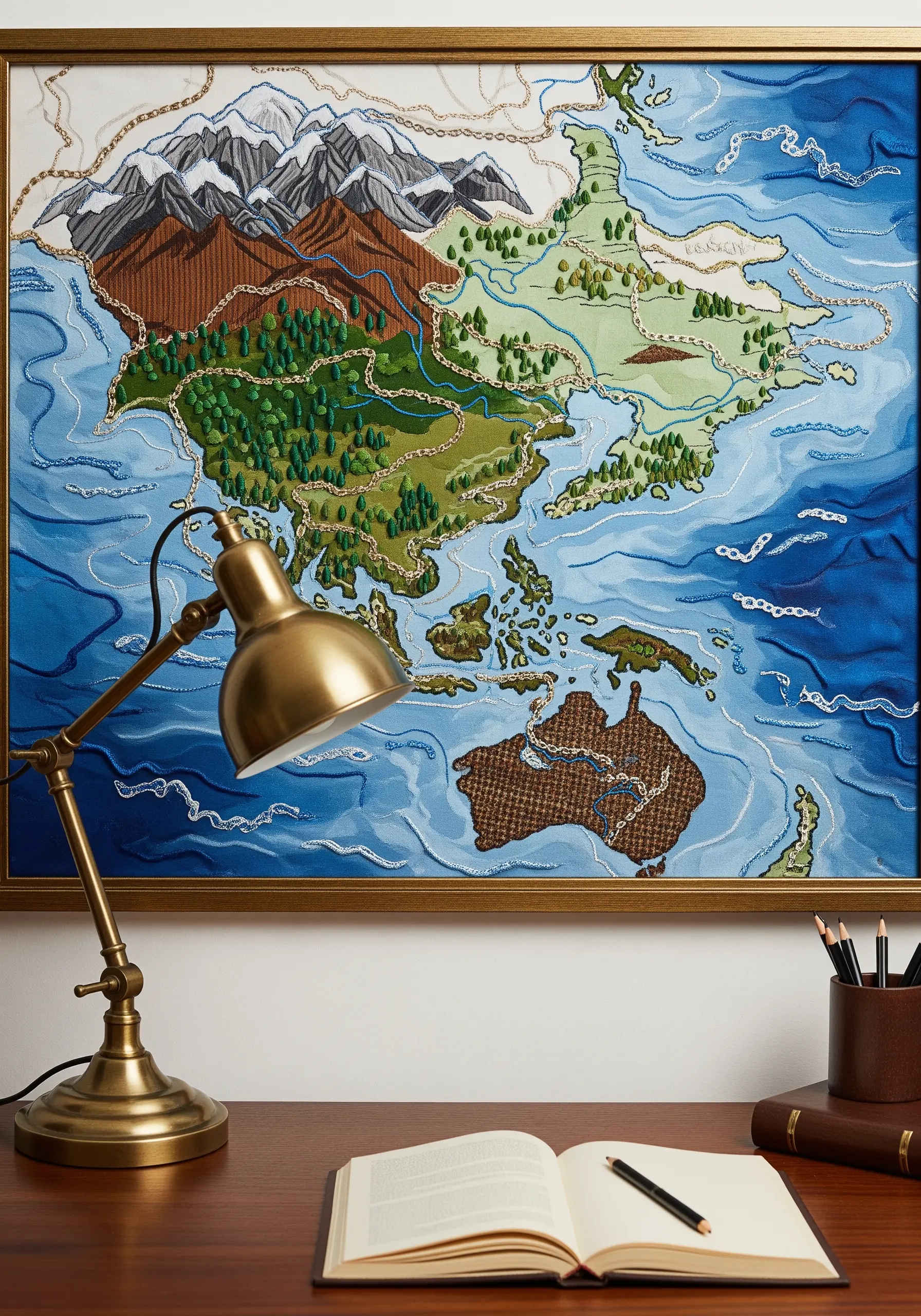
Create a meaningful map by using different fabrics to represent various terrains.
Choose a nubby brown tweed for mountain ranges, a soft green velvet for forests, and smooth blue cotton for oceans and lakes.
Use embroidery to add the finer details: a chain stitch for rivers, a backstitch for borders, and French knots for cities.
Mark a special journey with a line of metallic thread to turn your map into a beautiful record of your adventures, just like these line art travel adventure symbols.
22. Explore a White-on-White Textural Patchwork
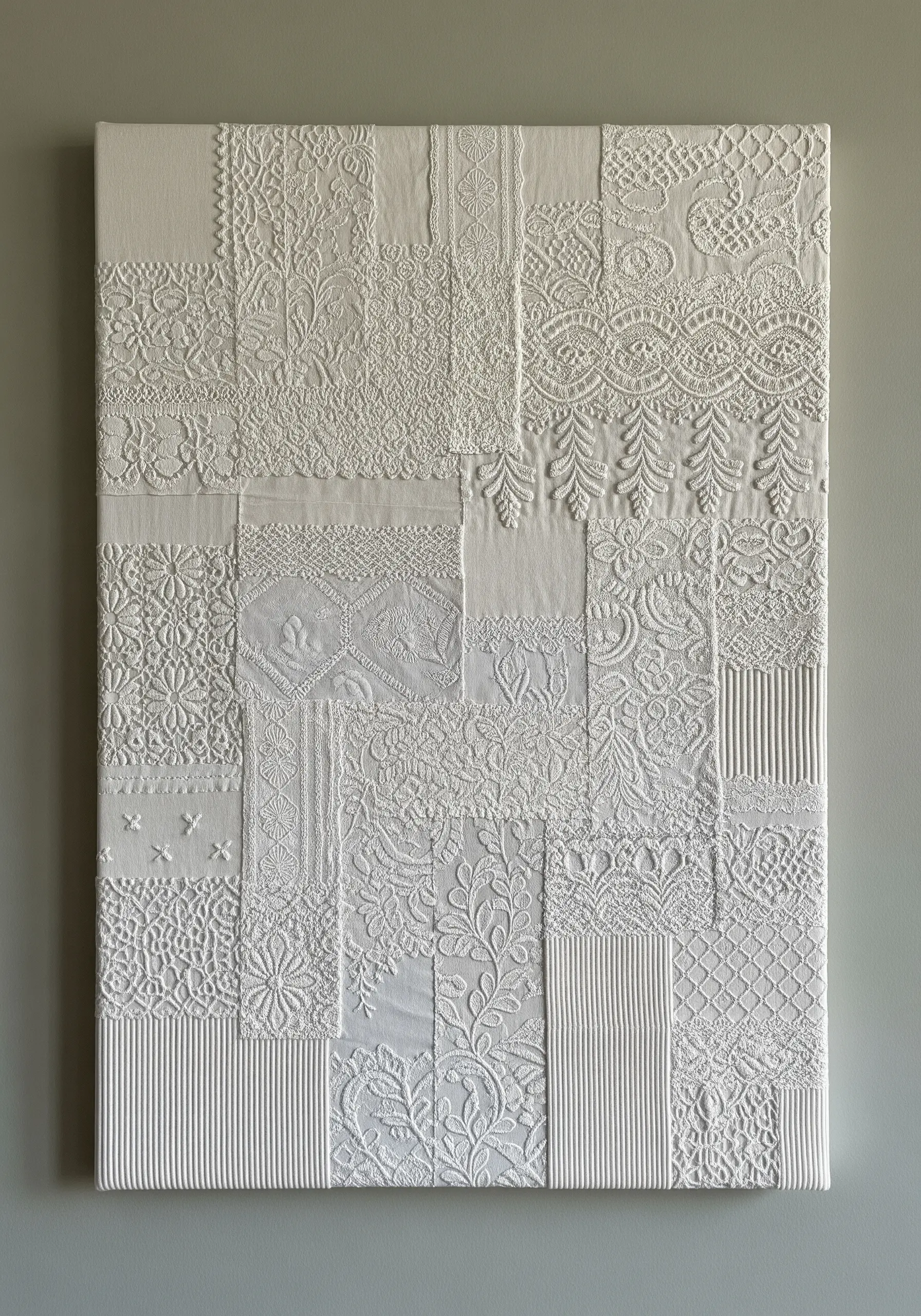
Challenge yourself to create a composition that relies solely on texture, not color.
Gather scraps of white and ivory fabrics with distinct surfaces: old lace, ribbed jersey from a tank top, an embroidered napkin, and plain cotton shirting.
Arrange these pieces in a simple geometric patchwork on a white canvas.
The beauty of this minimalist piece emerges from the way light plays across the different textures, creating a subtle and sophisticated work of art that pairs perfectly with greige & ivory embroidery art ideas.
23. Achieve 3D Thread Painting on Appliqué
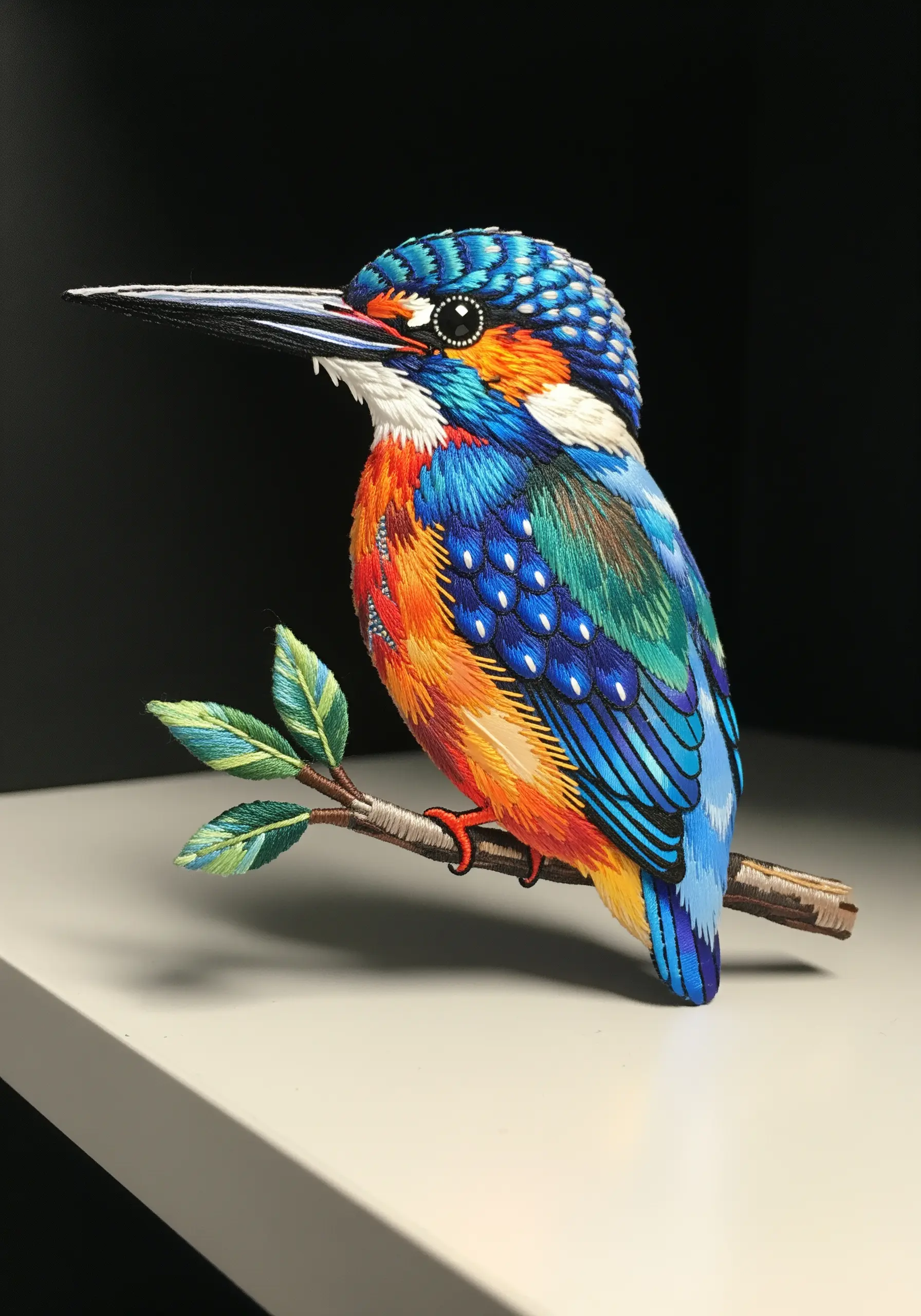
Create hyper-realistic embroidered figures by building upon a fabric base.
Start by cutting simple shapes from colored fabric to block out the main areas of your subject, like the body of a bird.
Then, use the long-and-short stitch technique, also known as thread painting, to cover the fabric and blend colors seamlessly.
Stitch slightly beyond the fabric edges to create soft, feathery textures that make your embroidery appear to lift off the background.
24. Create a Trompe l’Oeil Fabric Window
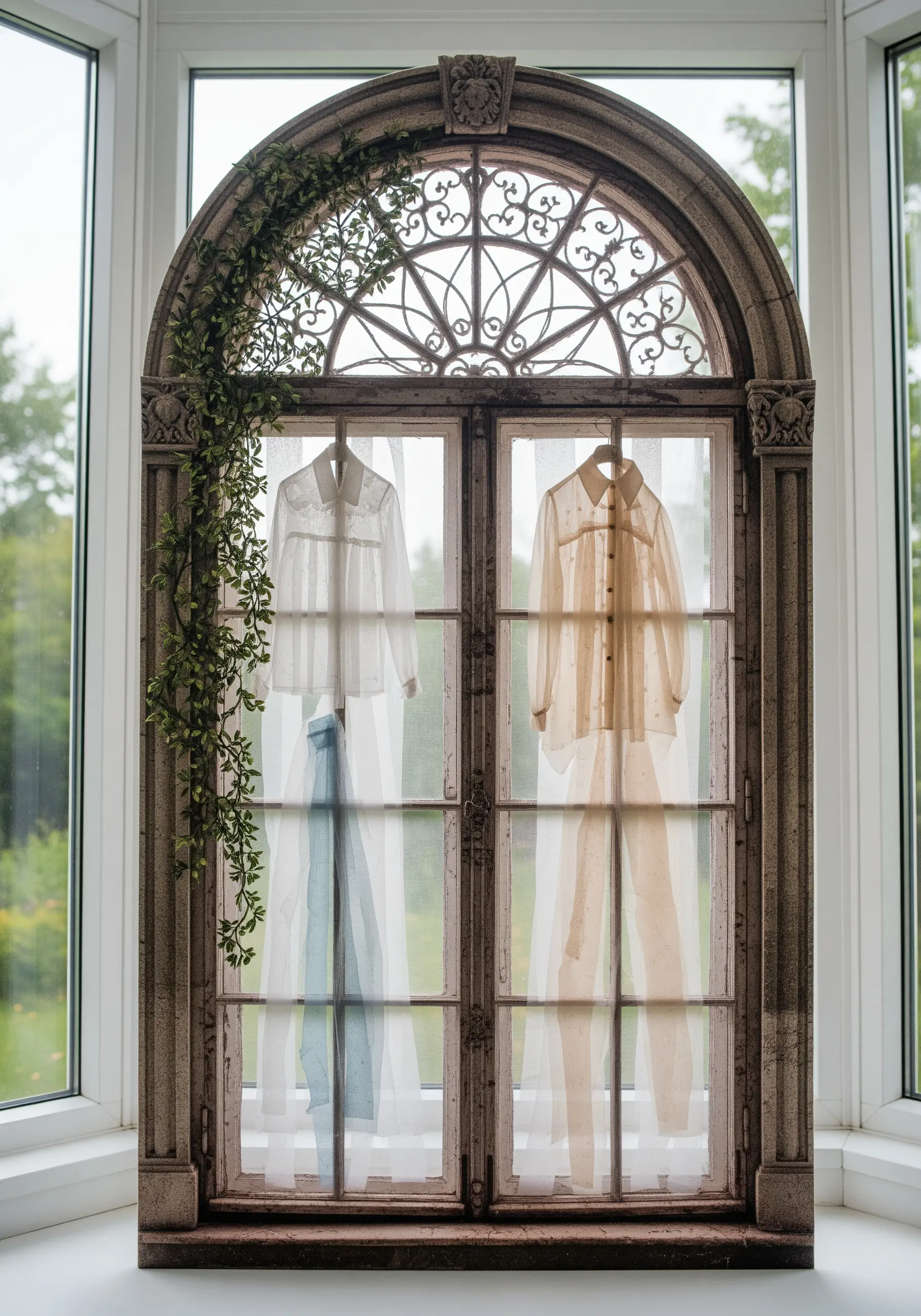
Play with illusion by creating a piece that looks like a window into another space.
Source a vintage window frame or embroider one directly onto your background fabric.
Behind the frame, hang delicate, translucent garments like old sheer blouses or silk slips.
The layered, ghostly fabrics create a sense of mystery and narrative depth, suggesting a story just out of view.
25. Embrace Deconstructed Denim and Stitch
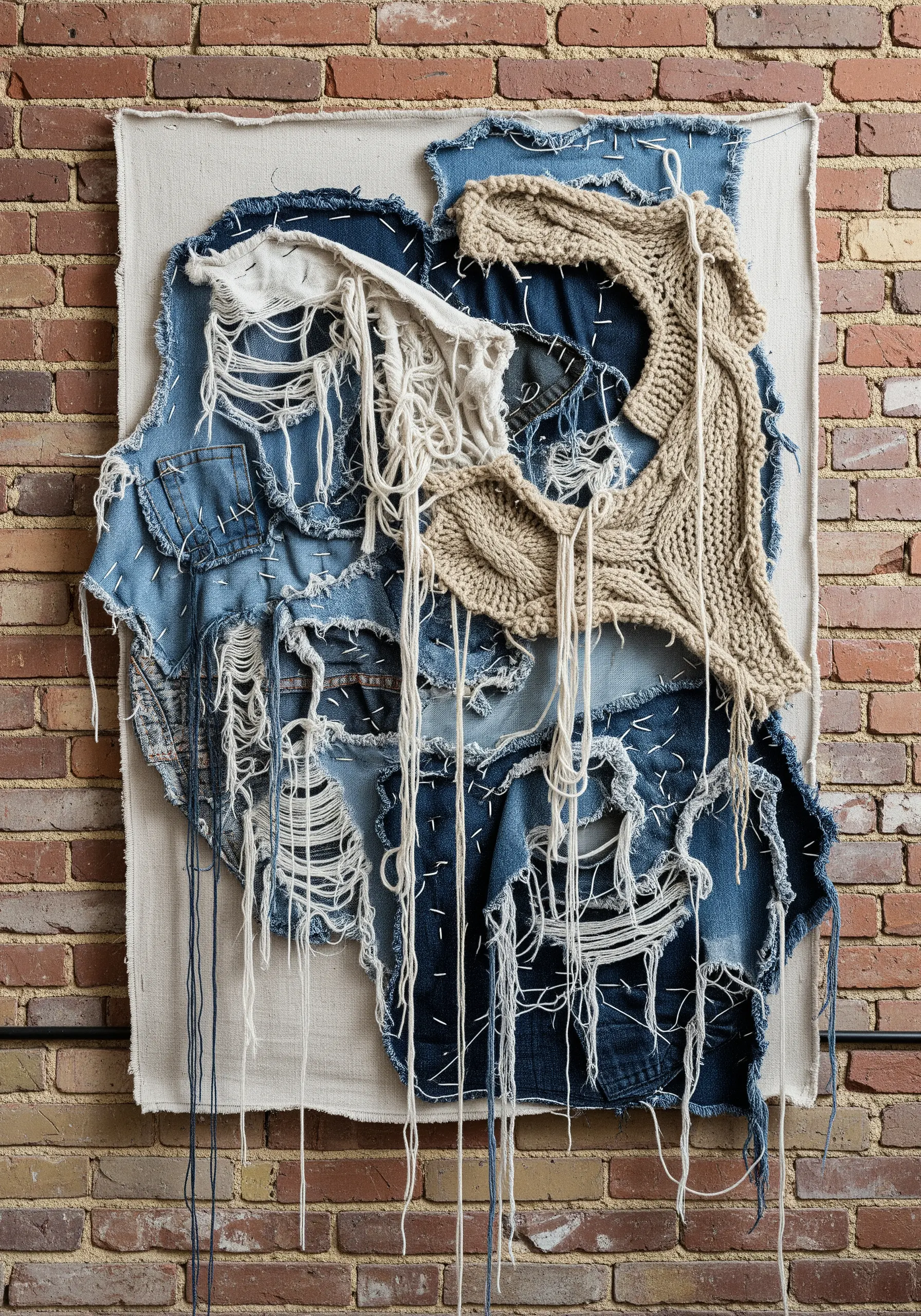
Find beauty in imperfection by creating a raw, deconstructed collage.
Tear, fray, and distress pieces of old denim, then layer them with other textured scraps like a piece of a chunky knit sweater.
Use a thick, contrasting thread and a simple running stitch to hold the chaotic layers together, letting the stitches be visible and expressive.
Allow threads to hang loose, making them an intentional part of the final design for these beautiful abstract mixed media embroidery ideas.
26. Sew a Monumental Botanical Curtain
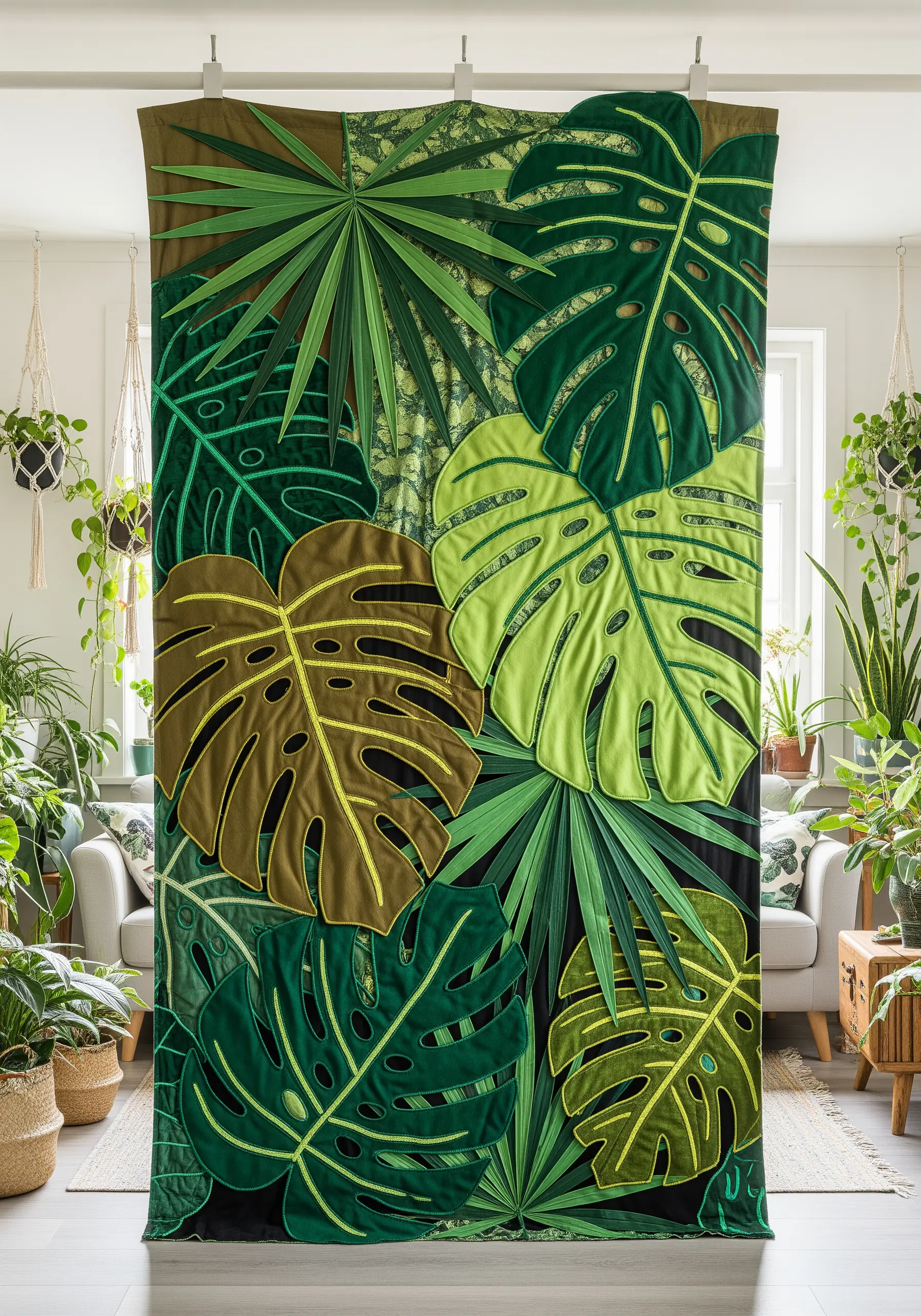
Make a dramatic statement piece by creating a large-scale botanical wall hanging.
Draw and cut oversized leaf shapes from various green fabrics sourced from old bedsheets, tablecloths, or t-shirts.
Appliqué the leaves onto a dark background fabric, allowing them to overlap to create a dense jungle effect.
Outline each leaf with a wide, contrasting satin stitch or zigzag stitch to make the shapes pop, creating a vibrant, graphic look similar to these tropical leaf flower combination patterns.
27. Recreate a Still Life with Fabric
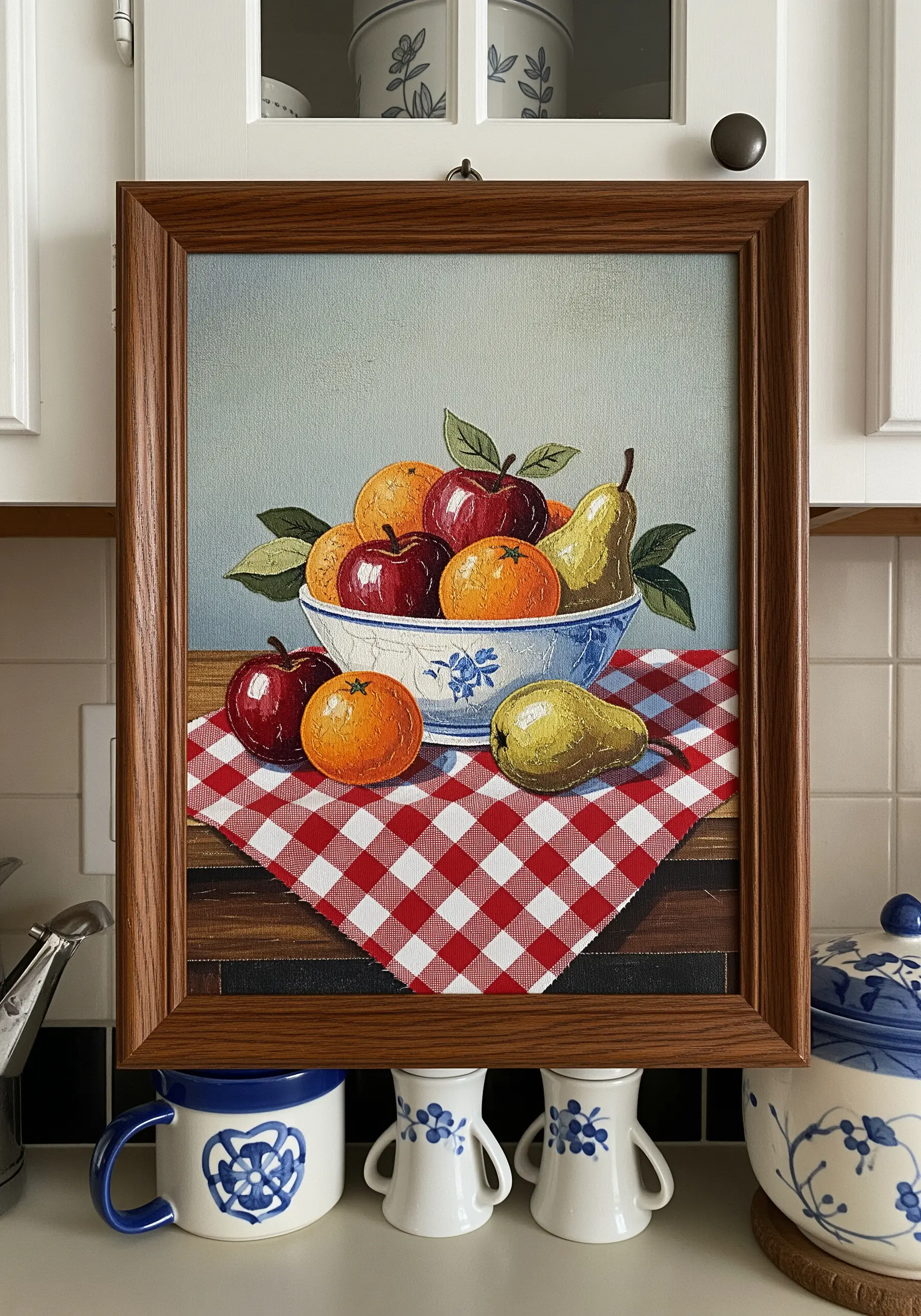
Translate the art of still life painting into the medium of textiles.
Use fabric appliqué for the larger, simpler elements of your composition, such as a piece of gingham from an old tablecloth for the cloth itself.
Then, use embroidery to render the more complex, rounded shapes of the fruit, using satin stitch or long-and-short stitch to create highlights and shadows.
This blend of techniques gives your still life a unique, painterly charm and rich texture.
28. Stitch a Solar System Mobile from Sweaters
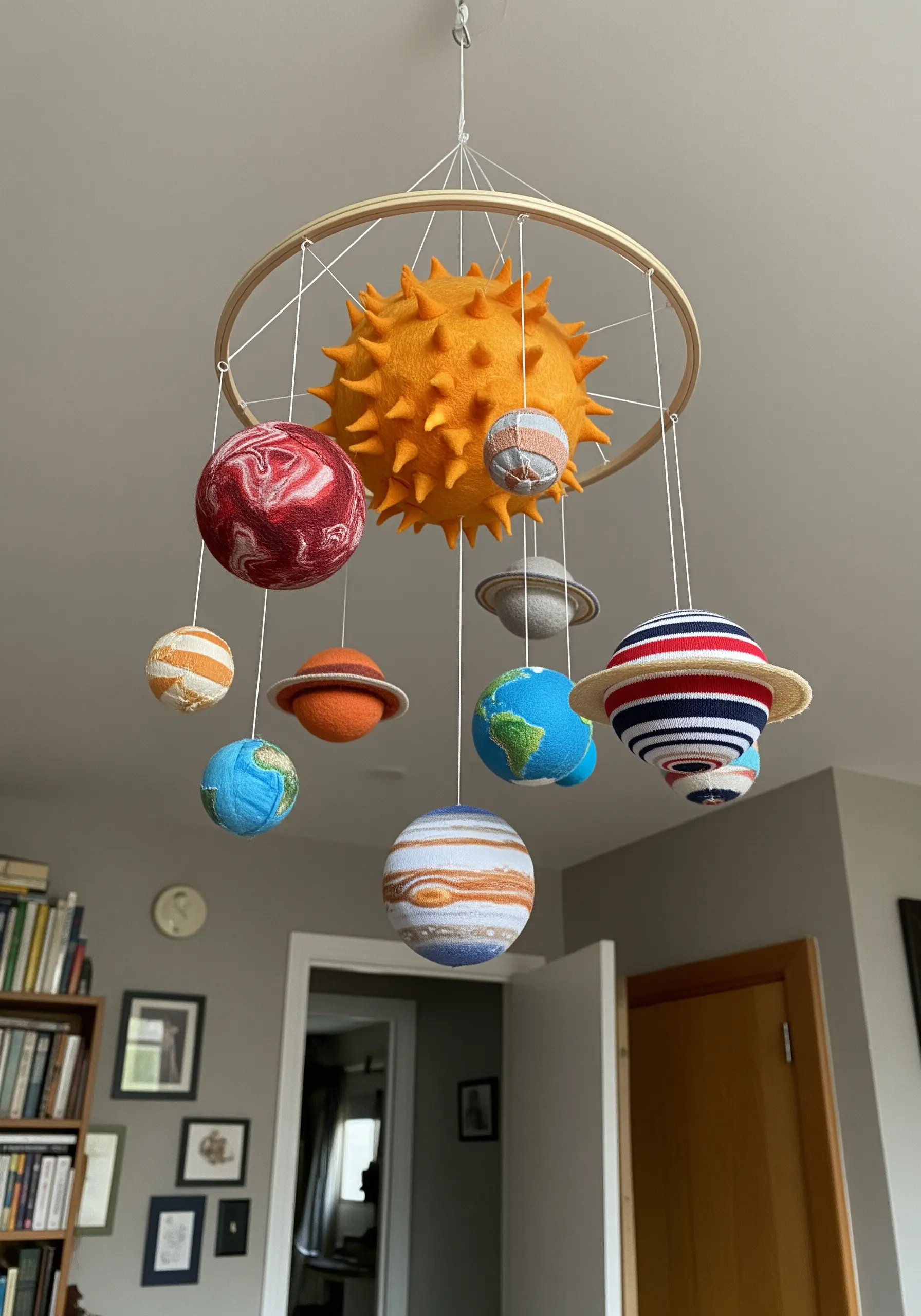
Craft a whimsical solar system mobile using the soft, textured fabric of old sweaters.
Cut circles from sweaters in various colors, stitch them into spheres, and stuff them to create your planets.
Use simple embroidery to add details: chain stitch stripes for Jupiter, a satin stitch ring for Saturn, and French knot continents for Earth.
Hang the finished planets from a standard embroidery hoop for a charming piece of embroidered nursery decor.