
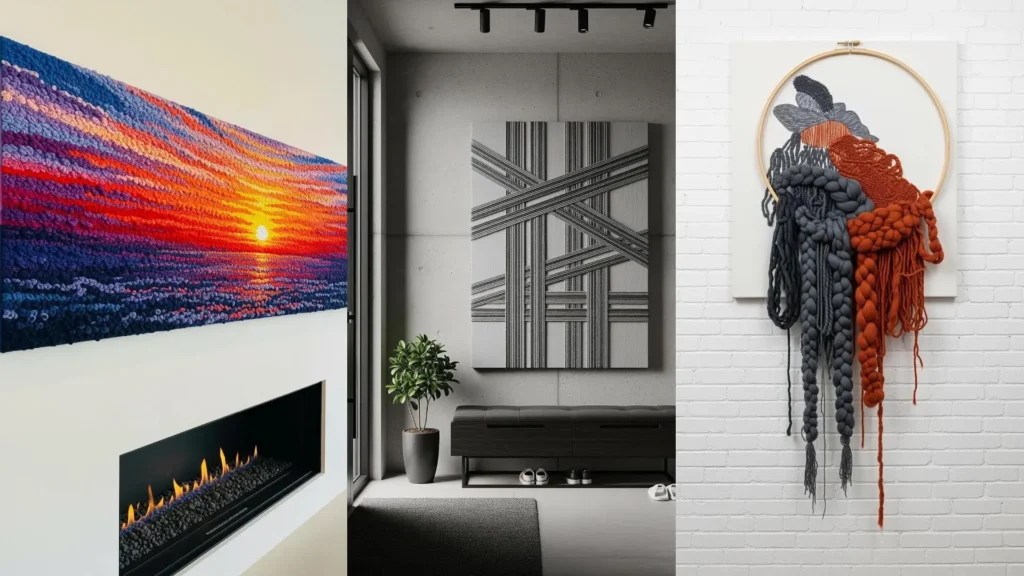
You’ve mastered the basic stitches, and your hoops are neat and lovely. But you feel a pull toward something more—something with presence, that interacts with the space around it. You’re ready to move beyond decorating a surface and start sculpting with thread.
This is where your work transforms. By thinking about texture, dimension, and material in a new way, you can turn fabric and fiber into bold, expressive art that doesn’t just hang on a wall, but commands it.
Here, we’ll explore techniques that build form, create shadow, and play with scale. These aren’t about learning dozens of complicated new stitches, but rather about shifting your perspective—seeing yarn as a line you can bend, a mass you can shape, and a texture you can build into something extraordinary.
1. Couching with Oversized Wool Roving
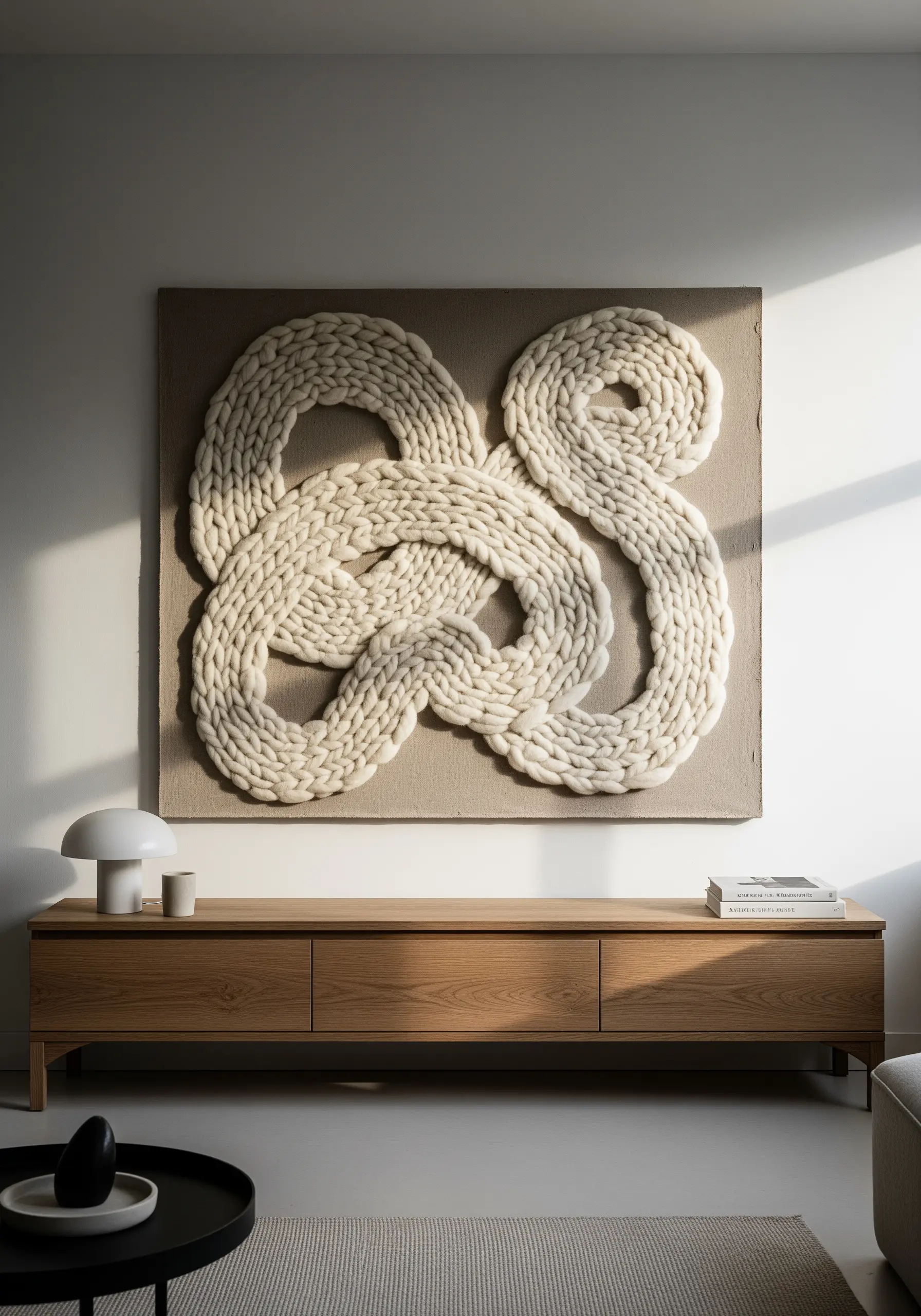
To achieve this bold, sculptural look, you are not stitching *through* the fabric with the thick yarn, but rather laying it on top and securing it.
Use a technique called couching: lay your chunky wool roving or thick rope along your design line on a heavy canvas.
From the back, use a strong, matching-colored sewing thread and a curved needle to make small, invisible tacking stitches over the roving to hold it firmly in place.
This method allows you to create powerful, continuous lines without distorting the foundation fabric, turning your embroidery into a true bas-relief sculpture.
2. Architectural Precision with Thread on Panels
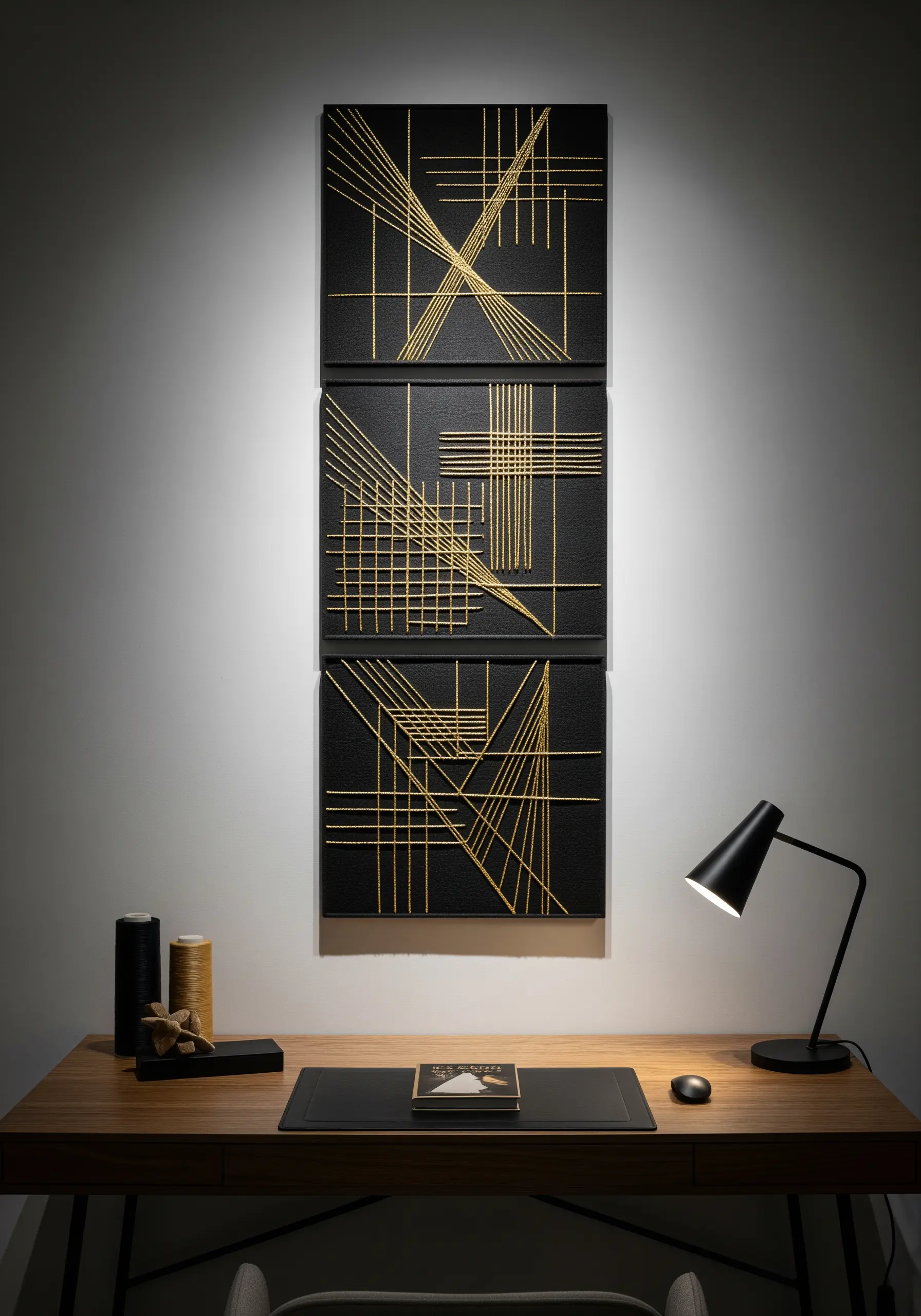
For crisp, geometric compositions, swap fabric for a rigid surface like painted canvas board or thin plywood.
First, mark your intersecting points lightly with a pencil and use an awl to pre-punch the holes.
This ensures your thread enters and exits cleanly without fraying or losing tension.
Use a strong, smooth thread like a metallic Cordonnet or a glazed cotton to create sharp, unwavering lines that define the space with architectural grace.
This approach elevates thread into a medium for graphic drawing, creating modern thread art with striking precision.
3. Building Organic Volume with Knot Variations
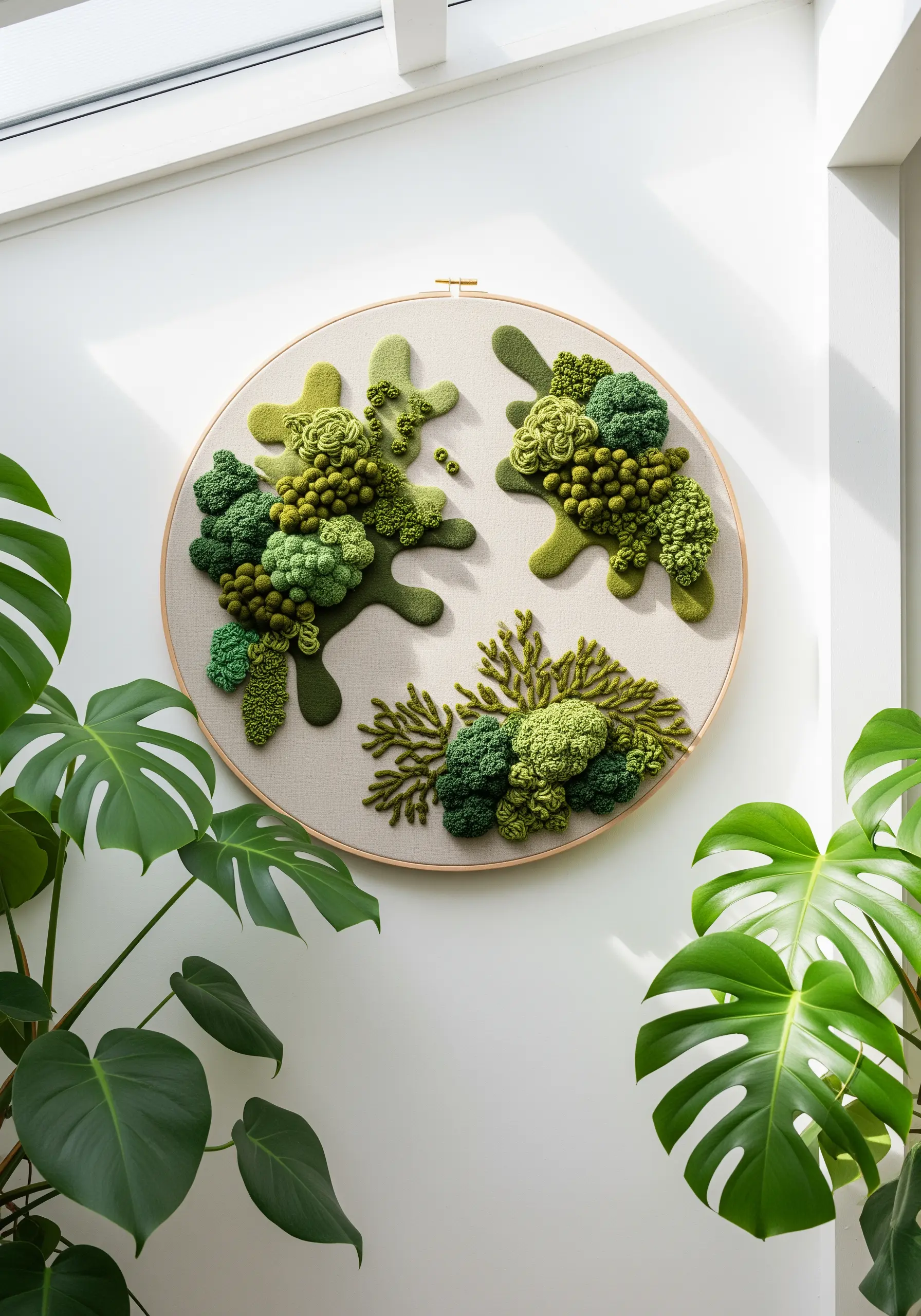
Create these moss-like, biomorphic forms by clustering different types of knots together.
Combine densely packed French knots, longer bullion knots, and the tufted Ghiordes knot (or turkey stitch) to build incredible dimension.
Work with an analogous color palette—like various shades of green—and use different thread weights, from fine cotton floss to thick wool yarn, within the same cluster.
This variation in texture and height is what gives the final piece its organic, living quality, making it feel like a specimen from a fantasy world.
It’s one of the best ways to capture nature’s textures in your next embroidery project.
4. Sculptural Braiding as a Focal Point
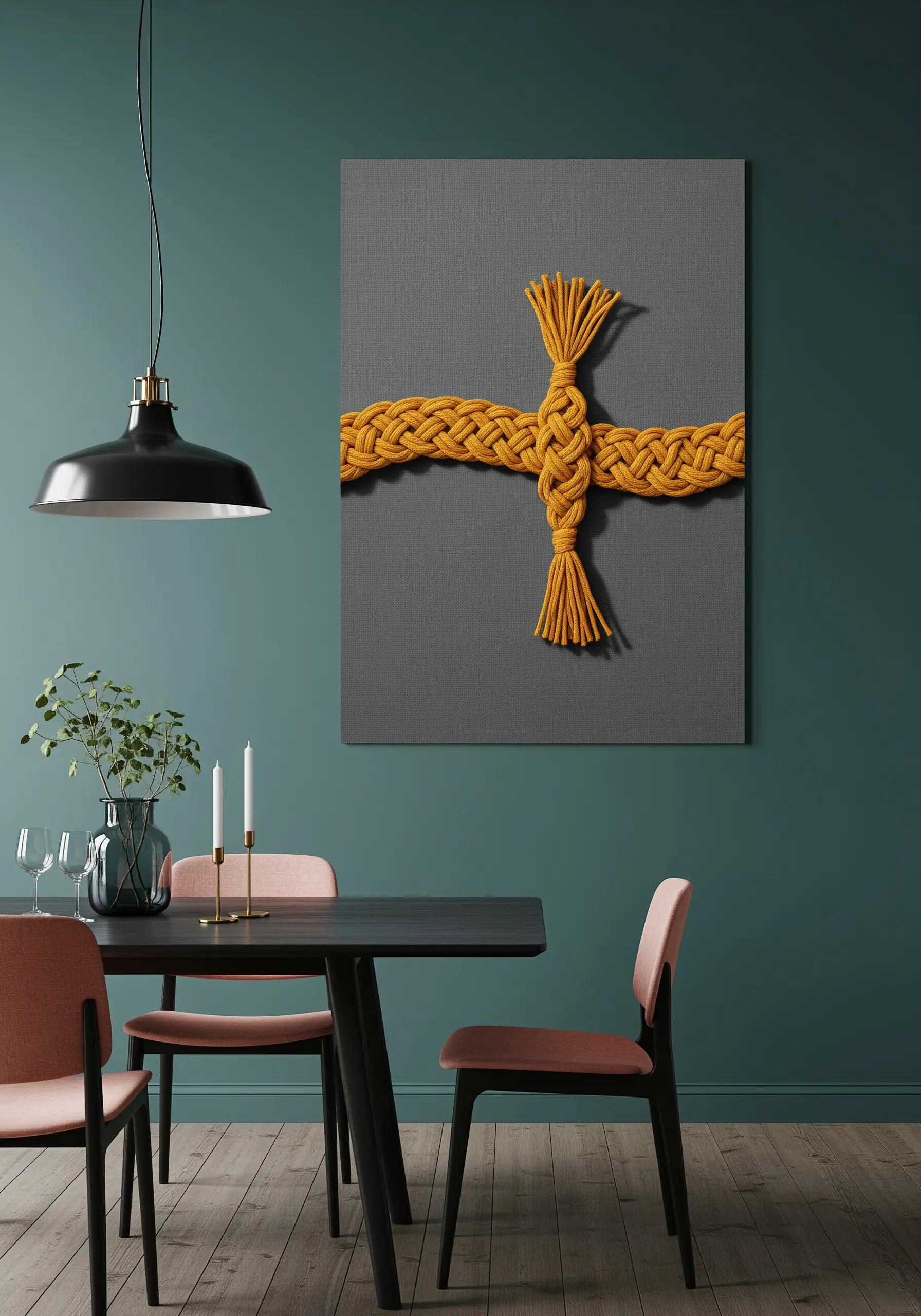
Turn your thread into a substantial, sculptural element before it even touches the fabric.
Braid multiple strands of thick yarn or soft cotton rope together to create a single, chunky cord.
Then, couch this braided element onto a tightly stretched, neutral linen canvas, allowing it to be the sole focus of the composition.
By preparing the fiber this way, you create a design with immense visual weight and texture that commands attention in any room.
Finish by leaving the ends loose for a soft, deconstructed edge.
5. Deconstructed Weaving on Raw Canvas
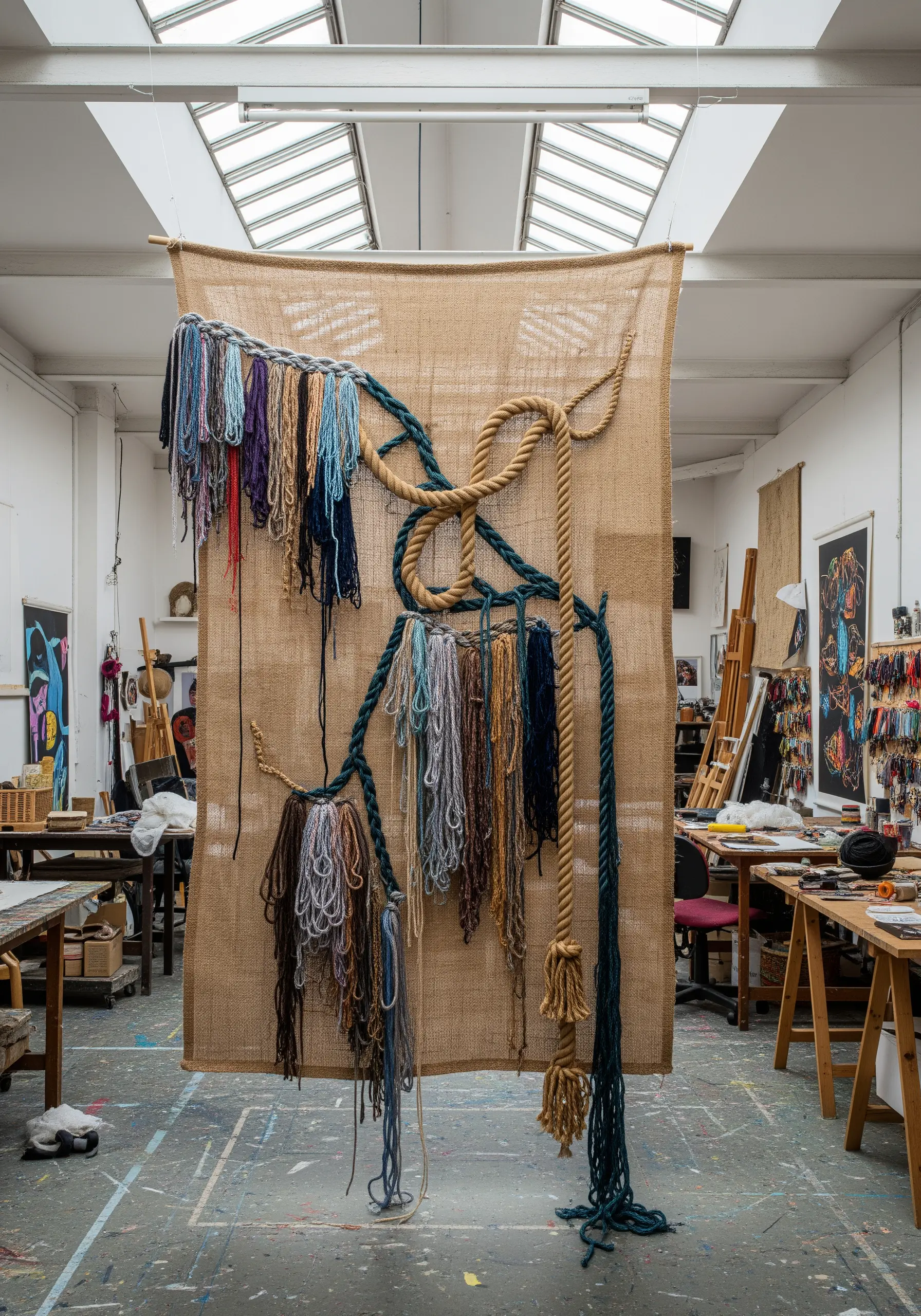
Embrace a more freeform, improvisational approach by working on a large, un-stretched piece of burlap or jute.
Use a large darning needle to weave thick ropes, multi-colored yarn bundles, and even un-spun fiber directly into the open weave of the fabric.
Let threads hang loose and combine couching with simple running stitches to create a raw, layered composition.
This technique turns your stitching session into a performance, resulting in unexpected fiber art installations that feel both powerful and personal.
6. Monochrome Texture Fields with Padded Satin Stitch
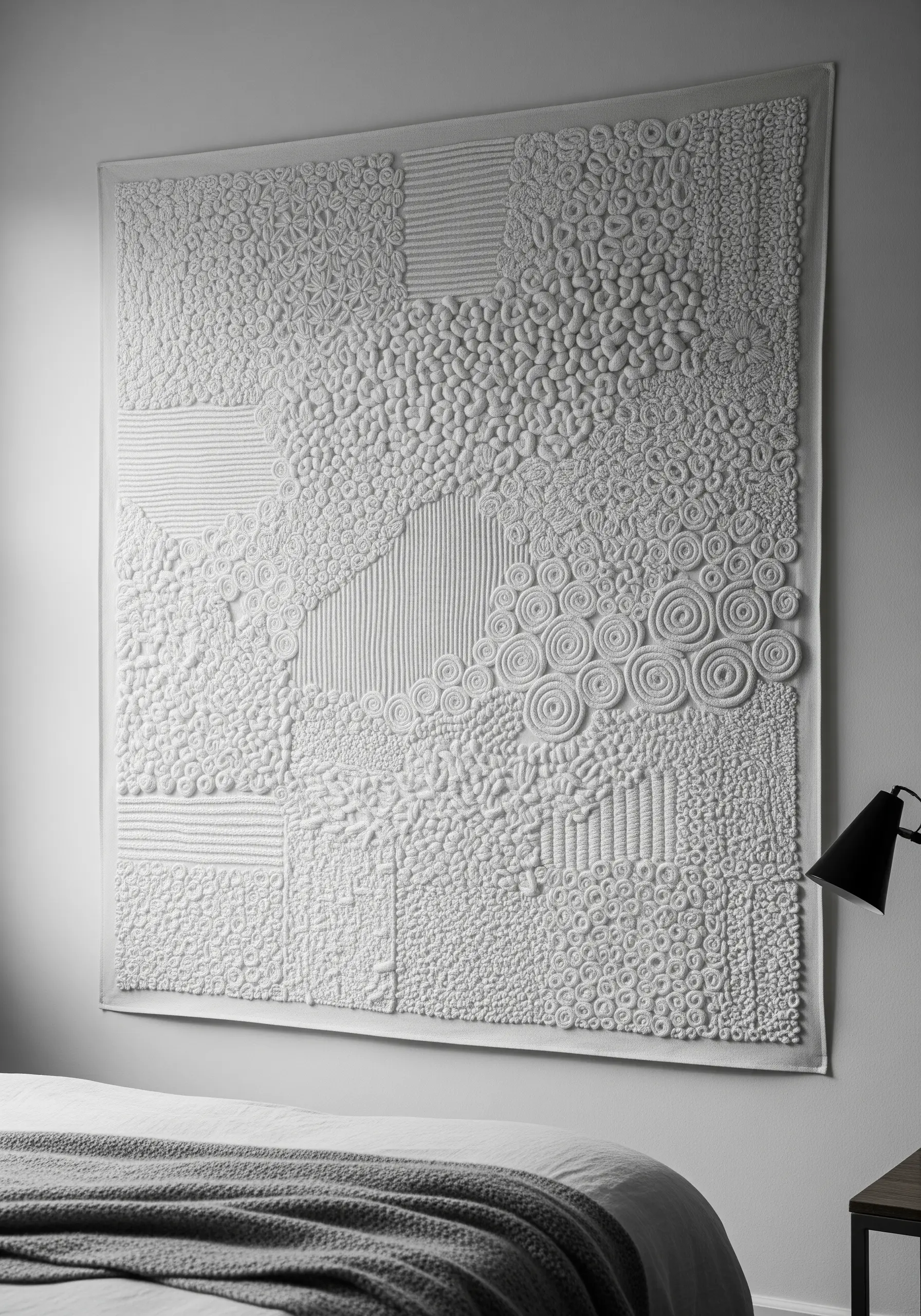
To create this quilted, bas-relief effect, use padding underneath your stitches.
Map out your abstract shapes and fill them with a base layer of felt or several layers of long, straight stitches using a heavy-weight yarn.
Then, cover this padding with dense satin stitches, French knots, or seed stitches, all in the same color as your base fabric.
The monochrome palette removes color as a distraction, focusing the eye entirely on the interplay of light and shadow across the different raised textures.
This technique can transform a simple wall into one of the most texture-rich embroidery ideas for bedroom spaces built for rest.
7. Maximalist Color-Blocking with Punch Needle
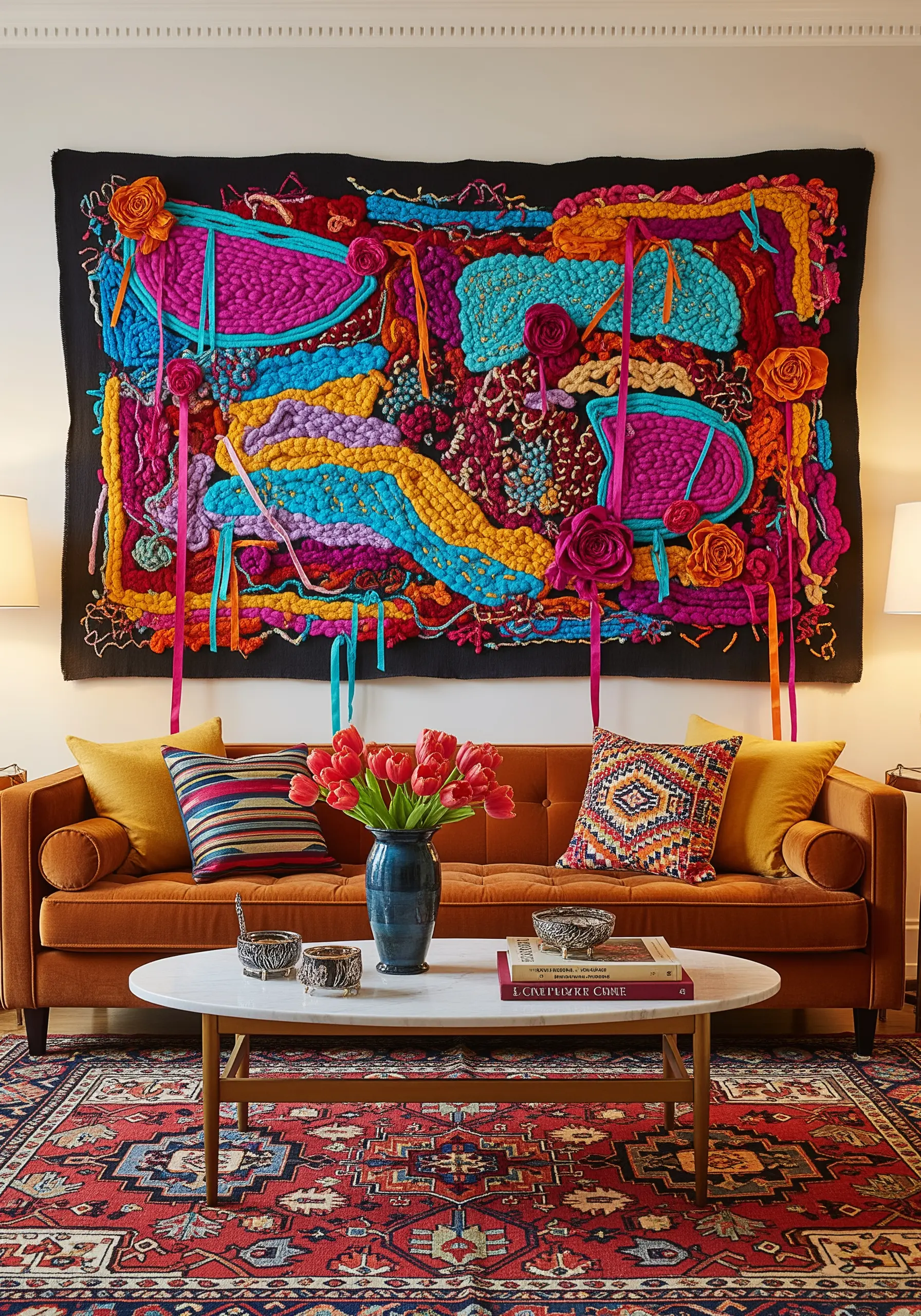
For bold, graphic fields of color with a plush texture, the punch needle is your ideal tool.
Work from the back of your fabric to create dense loops on the front, mapping out your abstract shapes like a paint-by-number.
Combine different yarn weights and loop heights to add another layer of sculptural interest.
To create crisp edges between color blocks, outline your shape first with a single row of punches before filling it in.
The result is a vibrant, tactile tapestry that feels both painterly and playful.
8. Industrial Tension with Wrapped Cords
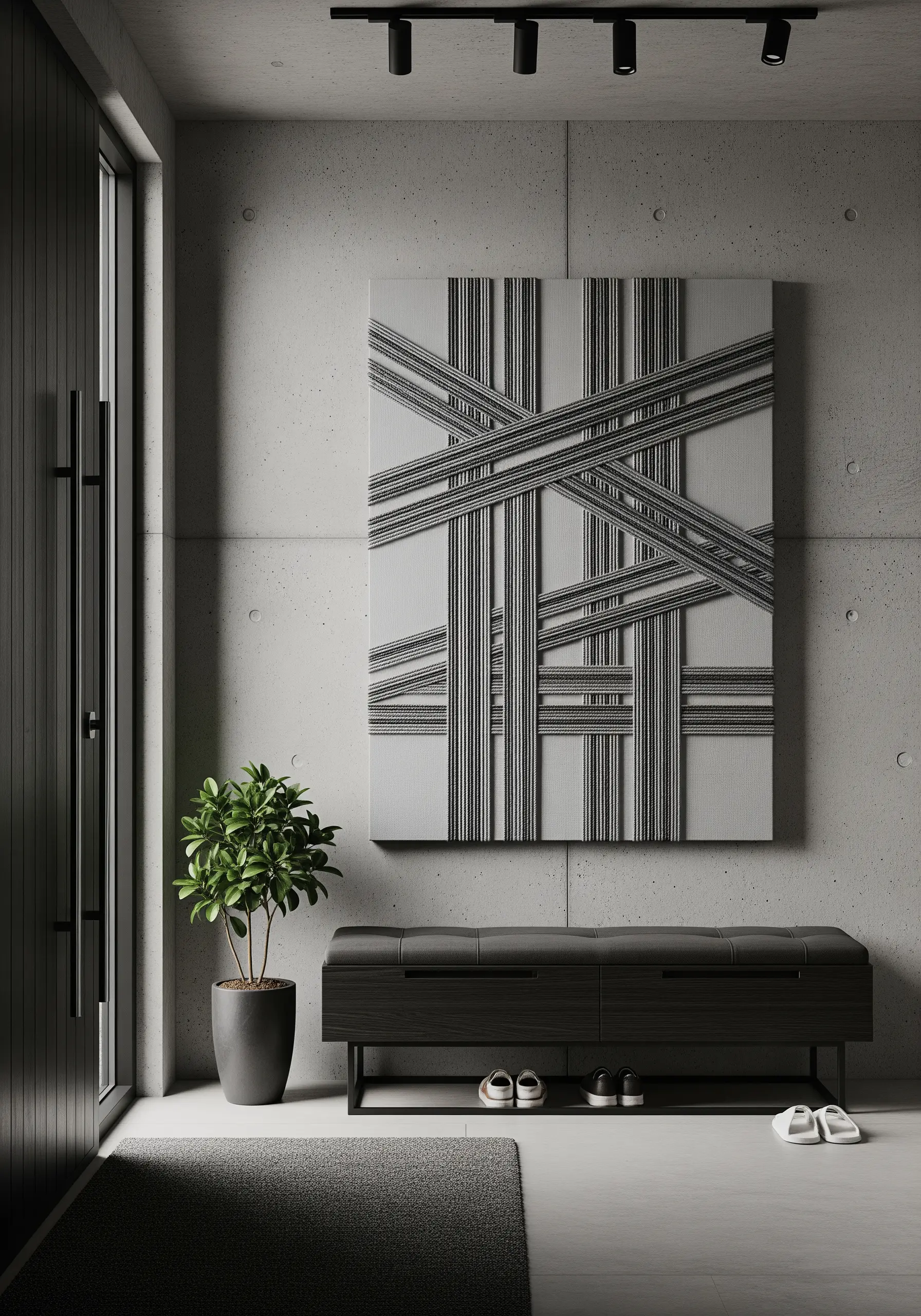
Create a look that feels both industrial and artisanal by wrapping cords and stretching them across a canvas.
Start with a sturdy wooden frame and stretch your base fabric tightly.
Wrap a thick cotton cord or rope with a finer, contrasting thread—like black thread around a white cord—before you begin.
Secure the ends of the wrapped cords to the back of the frame, pulling them taut to create overlapping, architectural lines.
This method uses tension as a design element, resulting in a clean, graphic, and highly modern wall piece.
9. Galactic Gradients with Seed Stitch Clusters
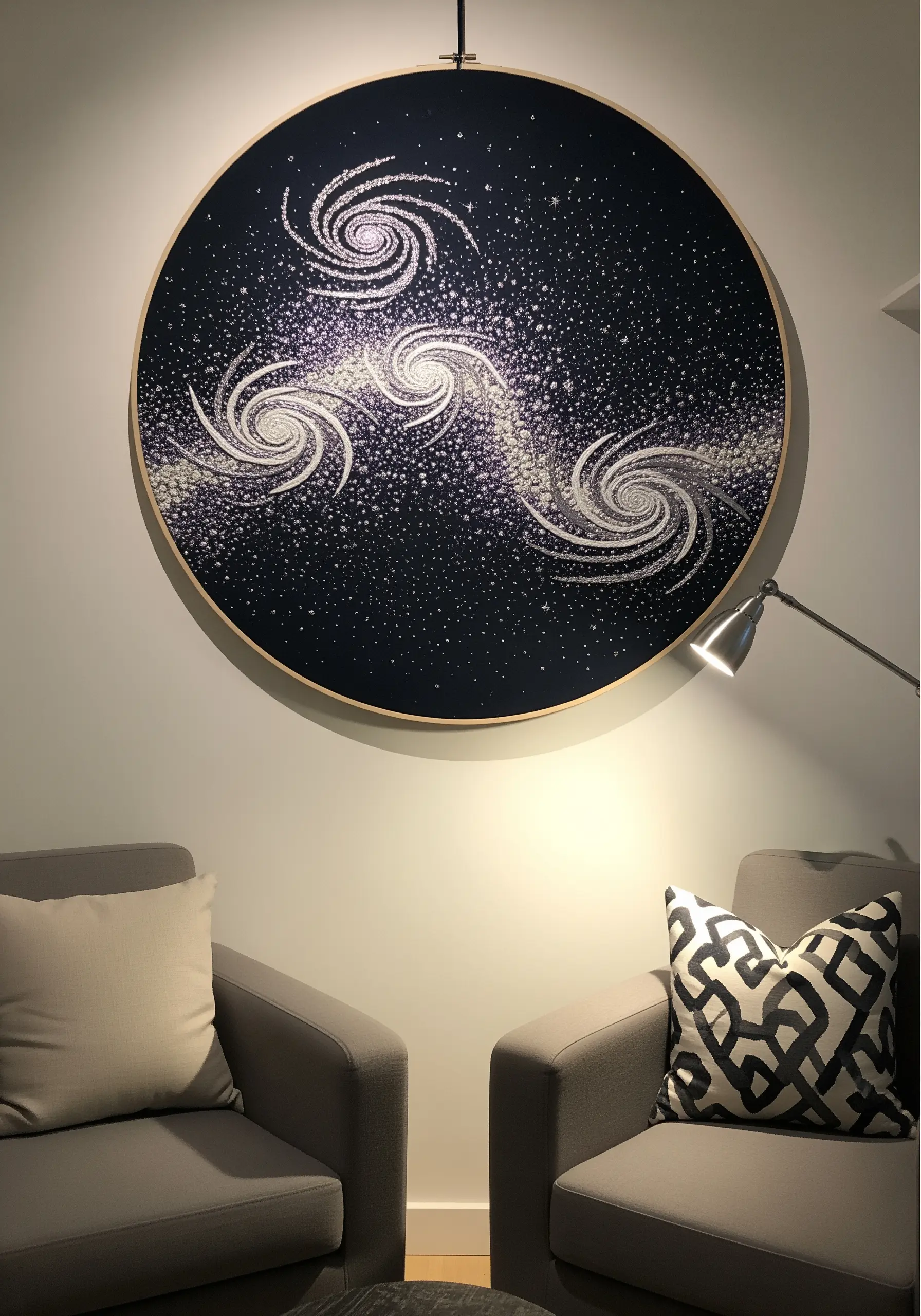
To render celestial swirls like these, you’ll rely on stitch density and thread choice.
On a dark navy or black cotton fabric, use a combination of metallic, variegated, and glow-in-the-dark floss.
Create the swirling arms with tiny, directional seed stitches, placing them tightly together where the galaxy is brightest and scattering them as you move outward.
Fill the empty space with randomly placed single-strand French knots to represent distant stars. The varied finishes of the threads will catch the light differently, creating a dynamic, shimmering effect.
This is a stunning example of night garden embroidery ideas using dark fabric metallic threads for dramatic contrast.
10. Topographical Layers with Mixed Weaves
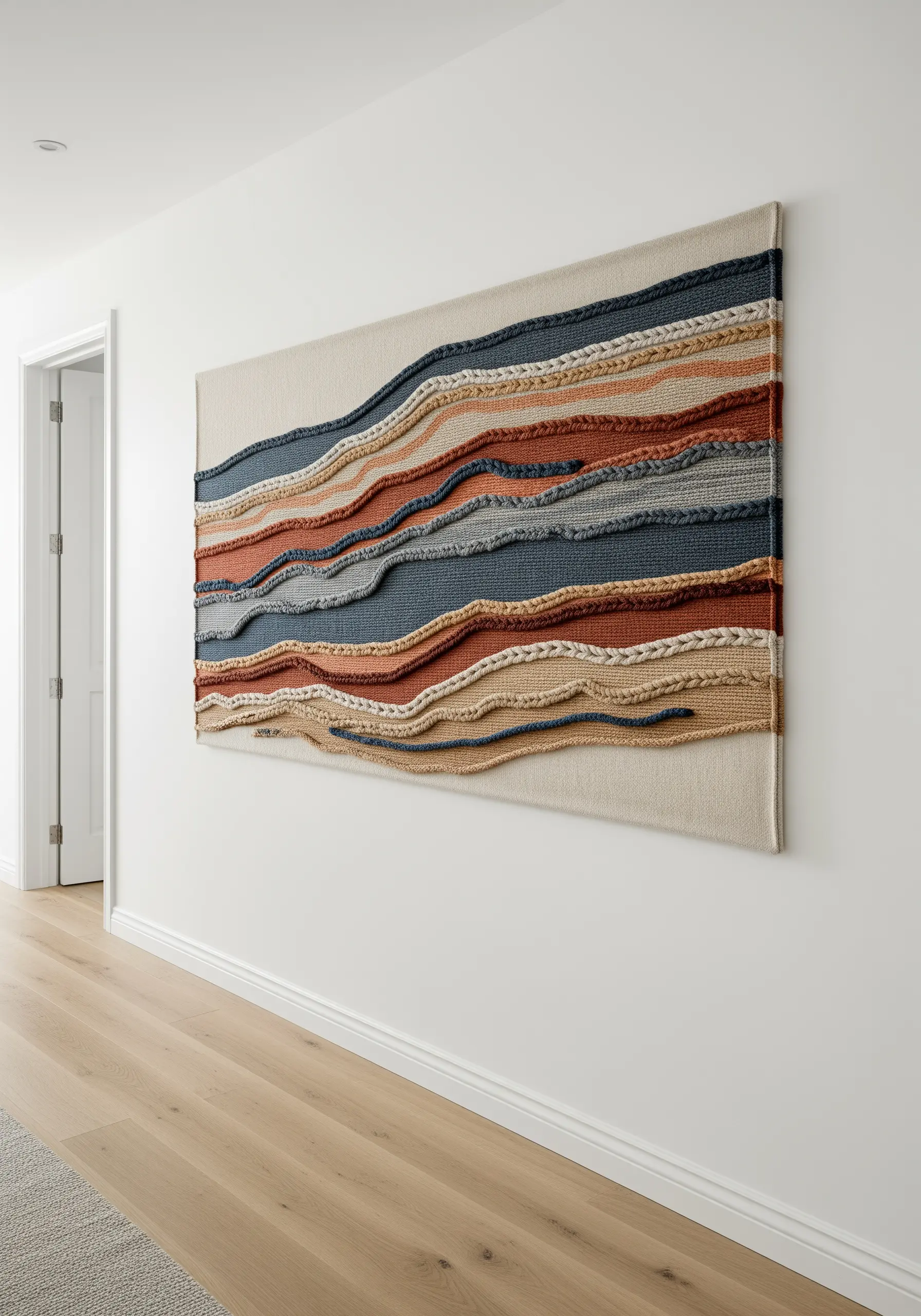
Build a landscape of texture by couching various pre-woven or braided materials onto your canvas.
Instead of just yarn, incorporate strips of woven jute, braided cotton, and crocheted chains in an earthy, muted palette.
Lay these textured strips in undulating, horizontal lines, securing them with a matching, unobtrusive thread.
The interplay between the different weaves and thicknesses creates a topographical effect that feels like an abstract, stratified landscape.
This earth-tone pattern brings a sense of grounded calm to any space.
11. Sculptural Florals with Silk Ribbon Stitches
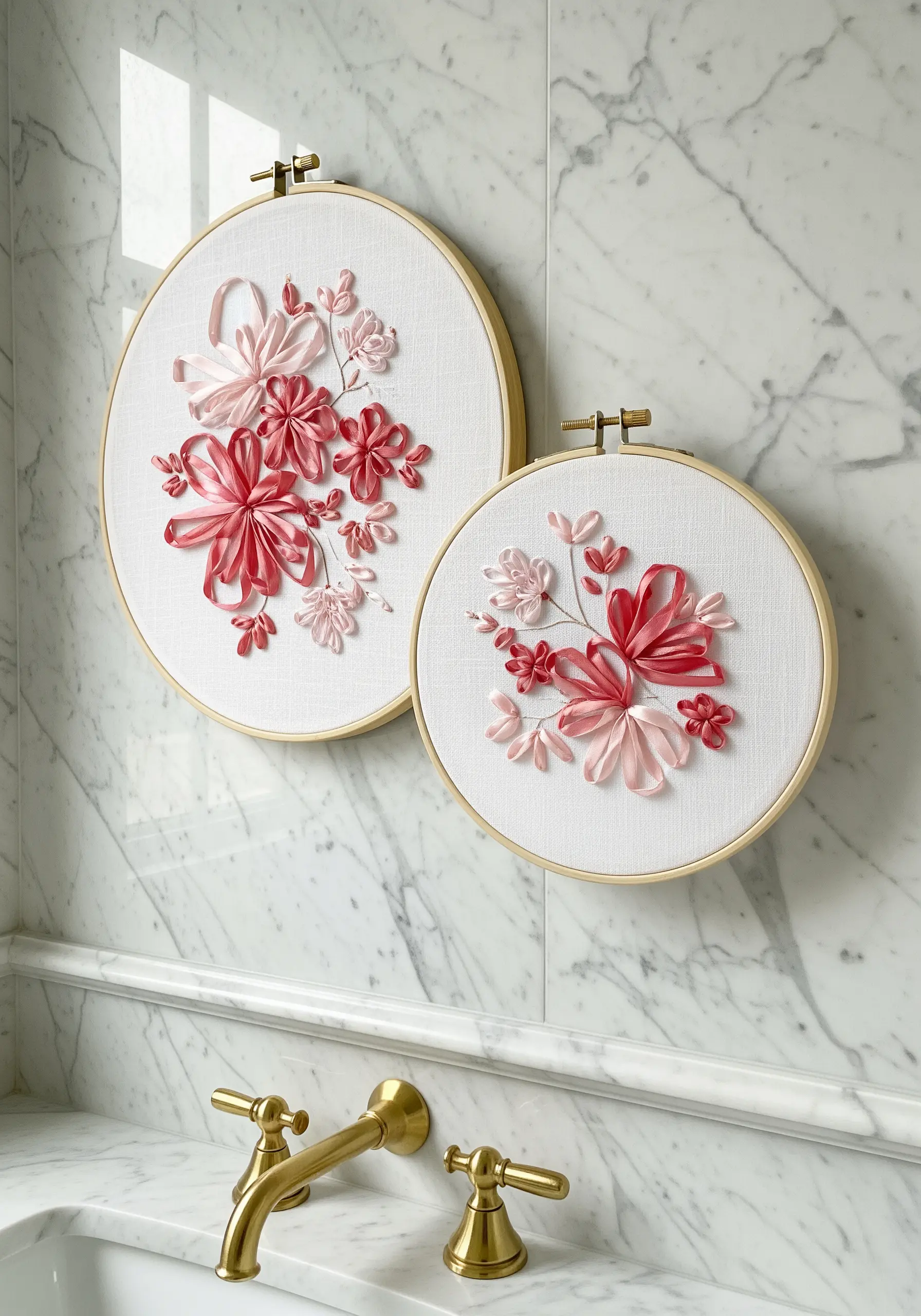
For lush, dimensional petals that catch the light beautifully, switch from floss to silk ribbon.
Use a milliner’s needle with a large eye to avoid snagging the delicate ribbon.
Create petal shapes with the folded ribbon stitch and the Japanese ribbon stitch, gently twisting the ribbon as you pull it through the fabric to create naturalistic folds.
Combine different ribbon widths—from a fine 2mm to a bolder 7mm—to create visual hierarchy and depth in your floral arrangement.
12. Unconventional Forms with Extreme-Scale Braids
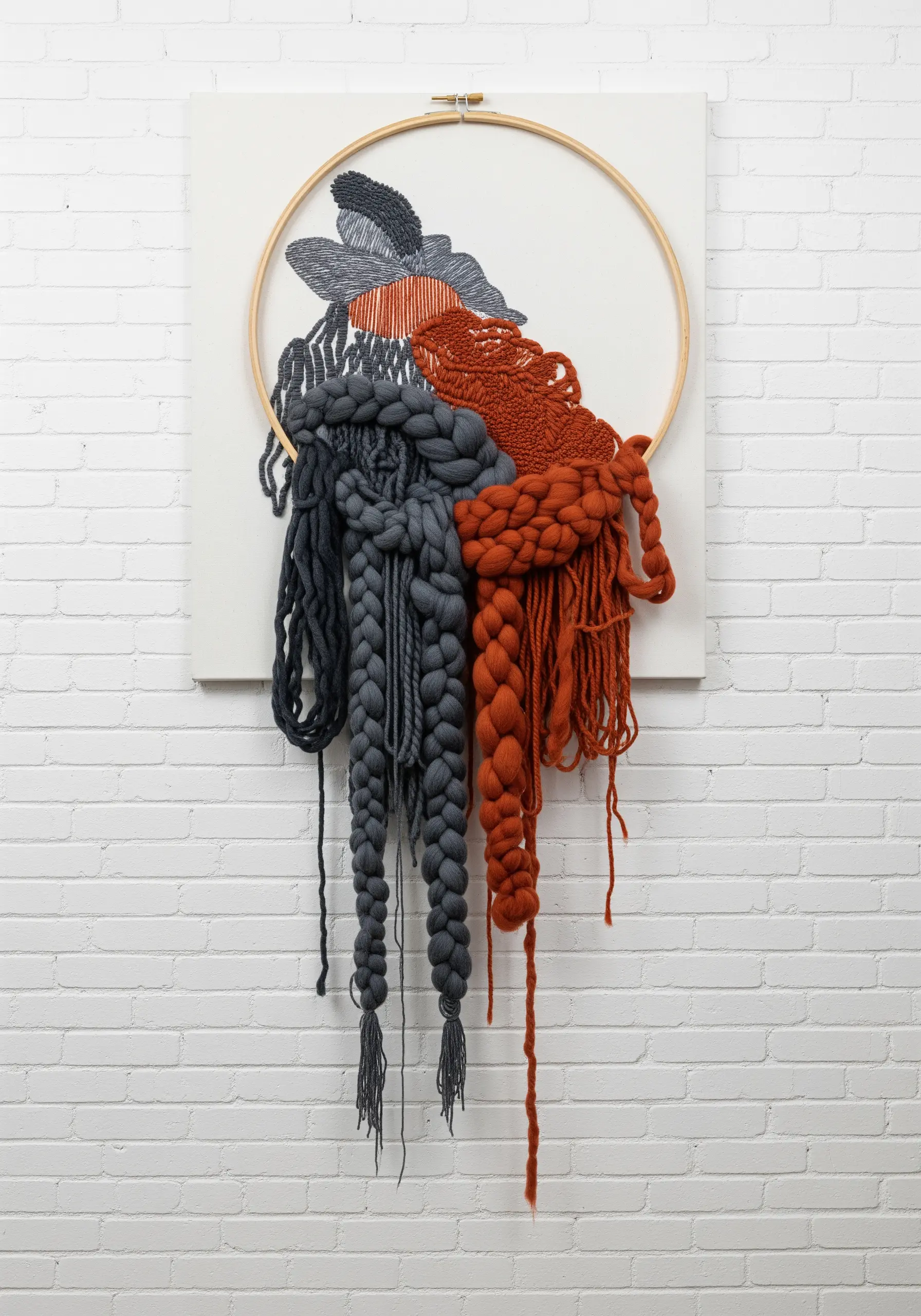
Challenge the boundaries of the hoop by letting your sculptural elements break free.
Use arm-knitting or finger-crocheting techniques with super-chunky wool yarn to create massive braids and knots.
Mount a piece of canvas inside a hoop, but use it as an anchor point rather than a container.
Secure your oversized braids to the canvas and hoop, then allow them to cascade down the wall, turning the piece into a dramatic, free-hanging sculpture.
This is one of those stunning fiber art installations that transform any room instantly.
13. Graphic Motifs with Raised Stem Stitch
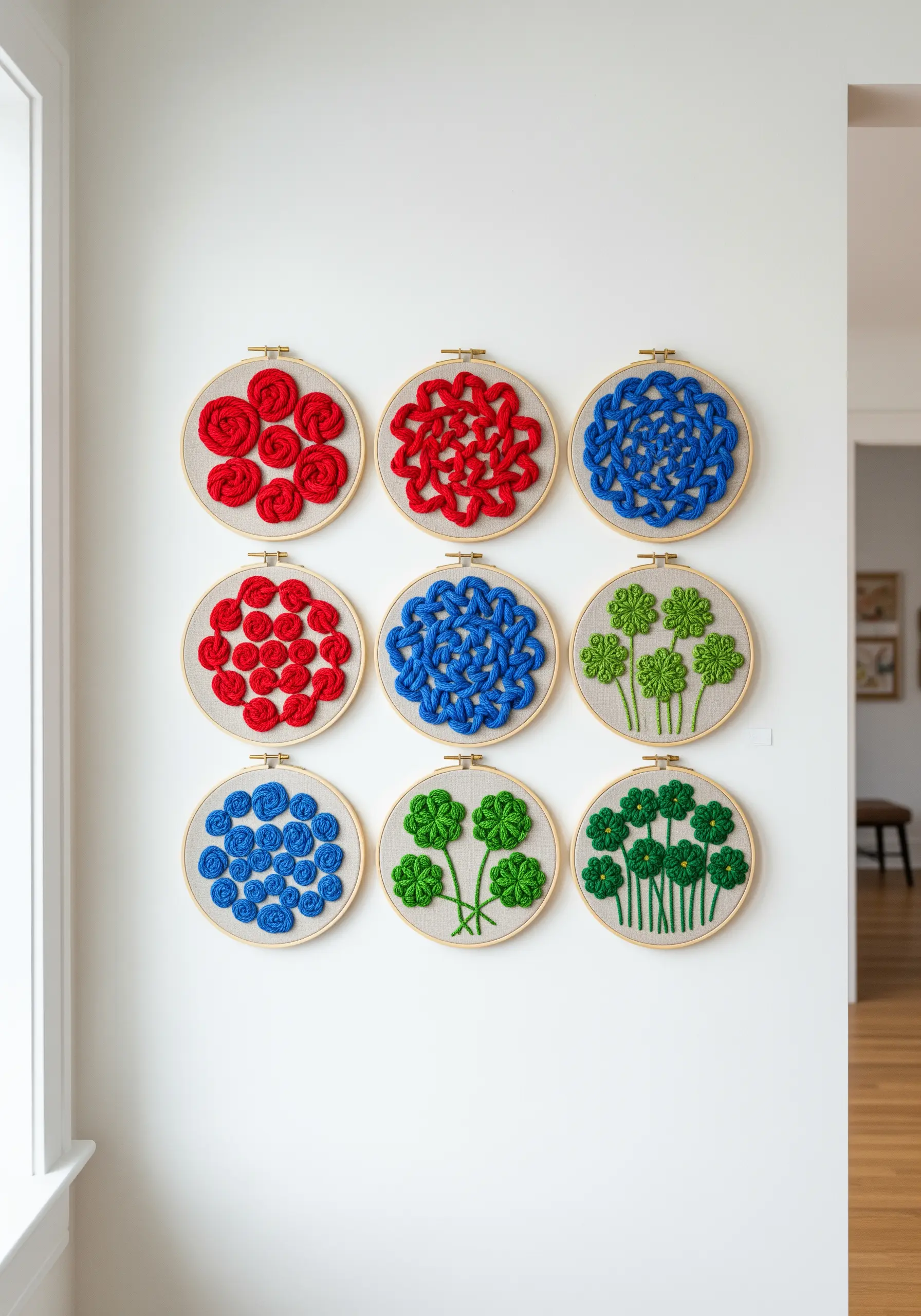
This bold, graphic texture is achieved using a padded variation of the stem stitch, often called the raised stem stitch or rope stitch.
Instead of stitching directly onto the fabric, you work the stem stitches over a foundation of laid threads or a piece of cord.
This lifts the stitches off the surface, creating a highly defined, rope-like line that’s perfect for filling shapes with a clean, directional texture.
Arrange hoops in a grid to turn these simple motifs into a striking gallery wall.
14. Appliqué and Stitch for Narrative Effect
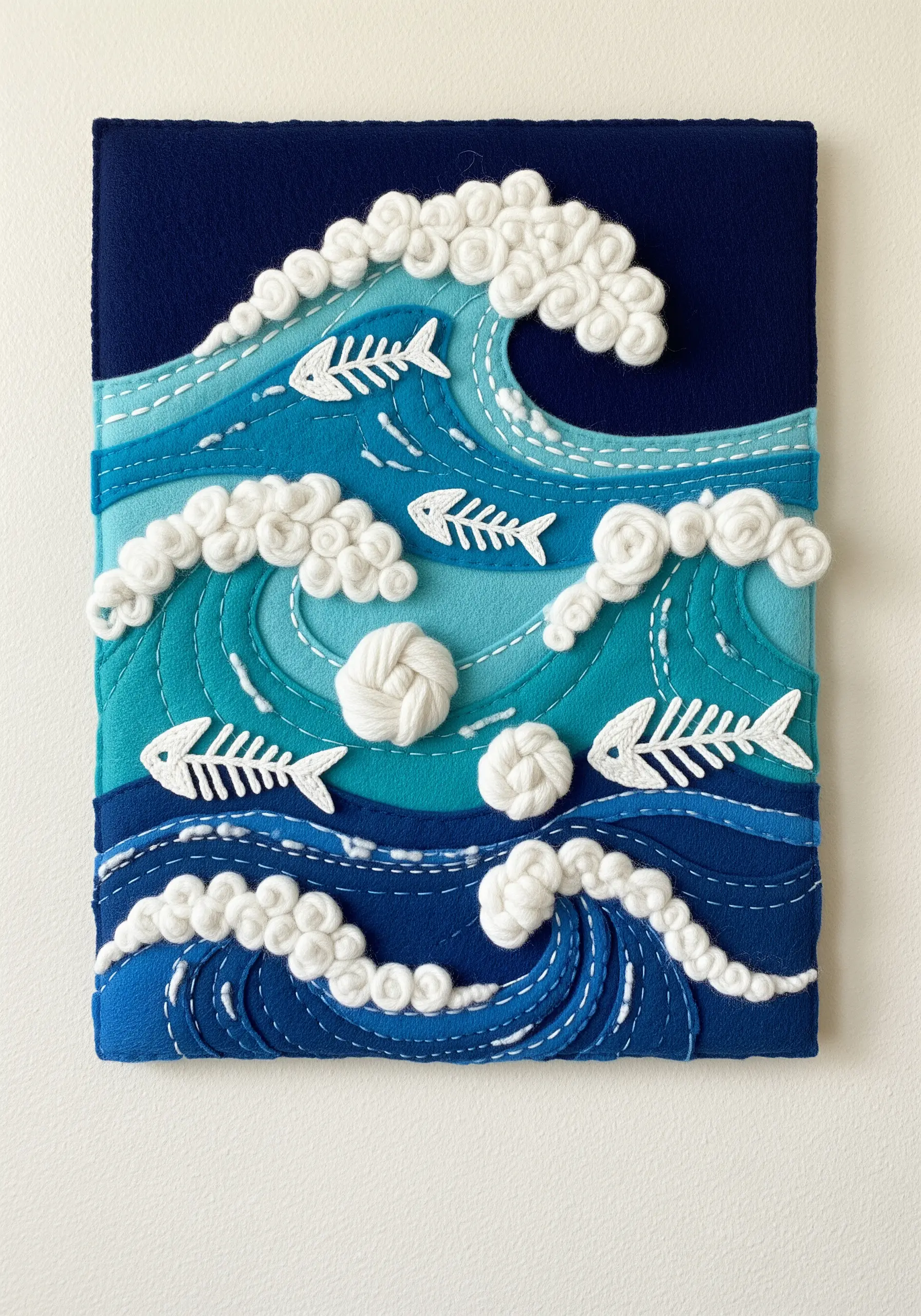
Create a dynamic scene by combining appliqué with dimensional embroidery.
Cut your main shapes—like the waves—from different shades of felt and secure them to the background fabric with a simple whipstitch.
This layering immediately establishes depth and form.
Then, add sculptural details on top using embroidery: use a Ghiordes knot for sea foam, couched yarn for outlines, and simple straight stitches for illustrative details like the fish skeletons.
This mixed-media approach turns a flat surface into a vibrant, storytelling collage, a perfect example of fabric collage embroidery compositions that add storytelling to every stitch.
15. Impressionistic Landscapes with a Tufting Gun
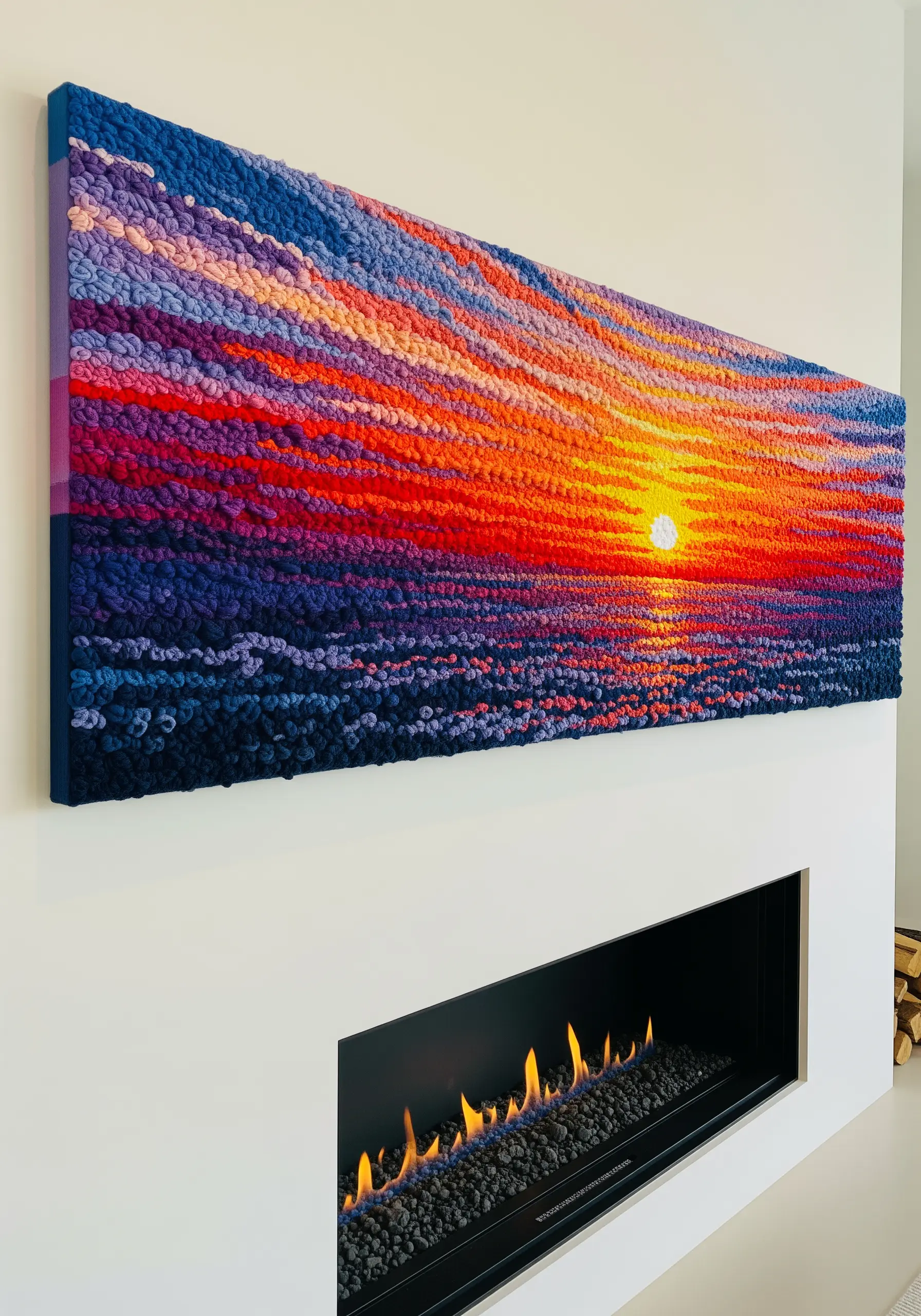
To create a vast, painterly landscape with deep texture, a tufting gun is an incredibly effective tool.
Working on a large, tightly stretched monk’s cloth frame, you can fill large areas with plush loops of yarn much faster than with traditional methods.
Treat your different colored yarns like dabs of paint, blending them together to create soft, impressionistic gradients that capture the light of a sunset.
The resulting piece has the visual impact of a large-scale painting combined with the inviting softness of a textile.
16. Minimalist Tension Drawing on Linen
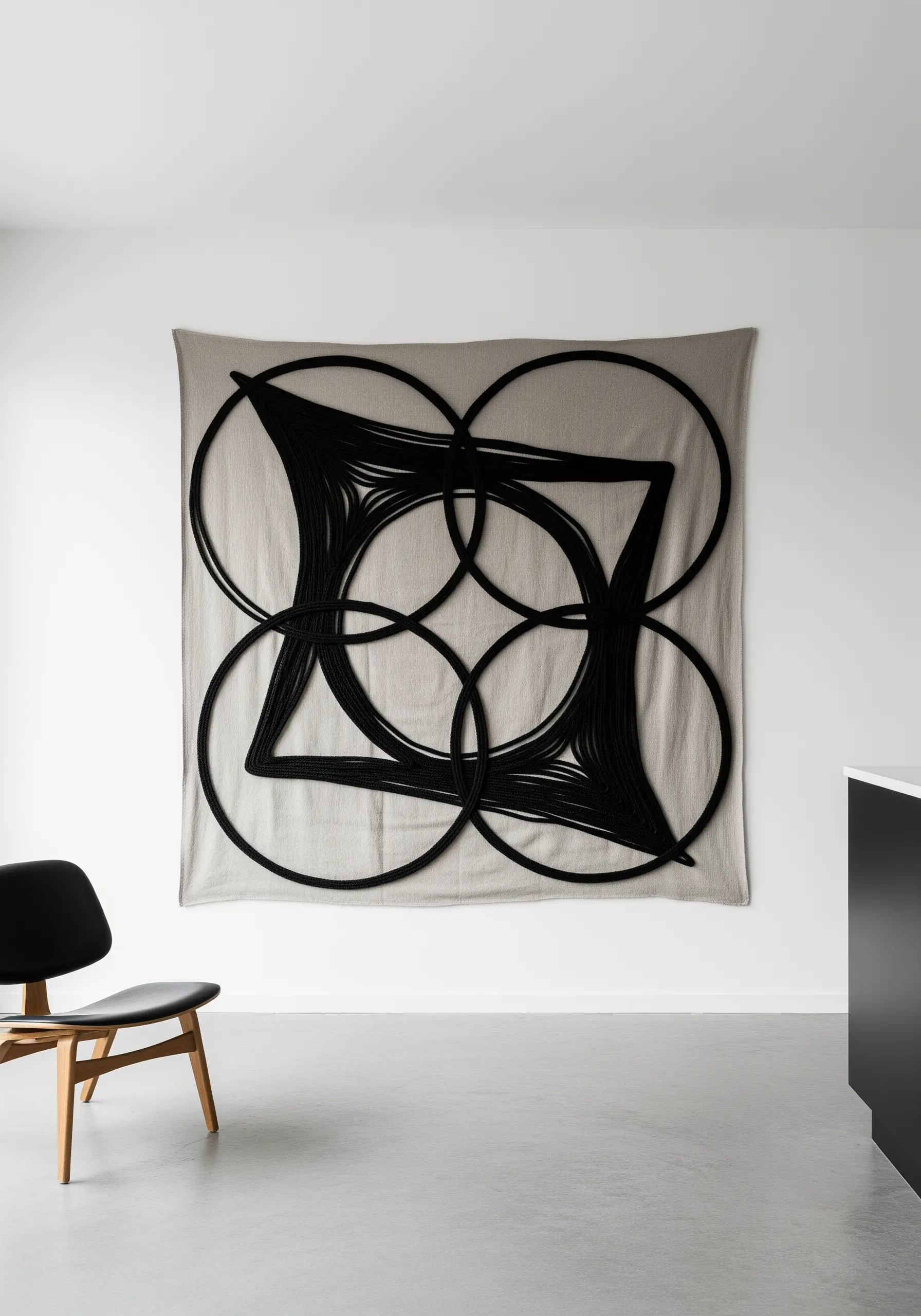
Explore the beauty of negative space with a large-scale thread drawing.
On a large linen tapestry, use just one or two anchor points at the top and bottom to create long, sweeping lines of thick black yarn.
Instead of stitching through the fabric, you’ll wrap the yarn around the entire piece or secure it at key points on the back.
By pulling the yarn taut between these points, you create geometric shapes defined by tension and shadow, turning the piece into a bold, minimalist statement.
It’s one of the most effective large-scale embroidery tapestries that become the focal point of any home.
17. Integrating Natural Elements with Couching
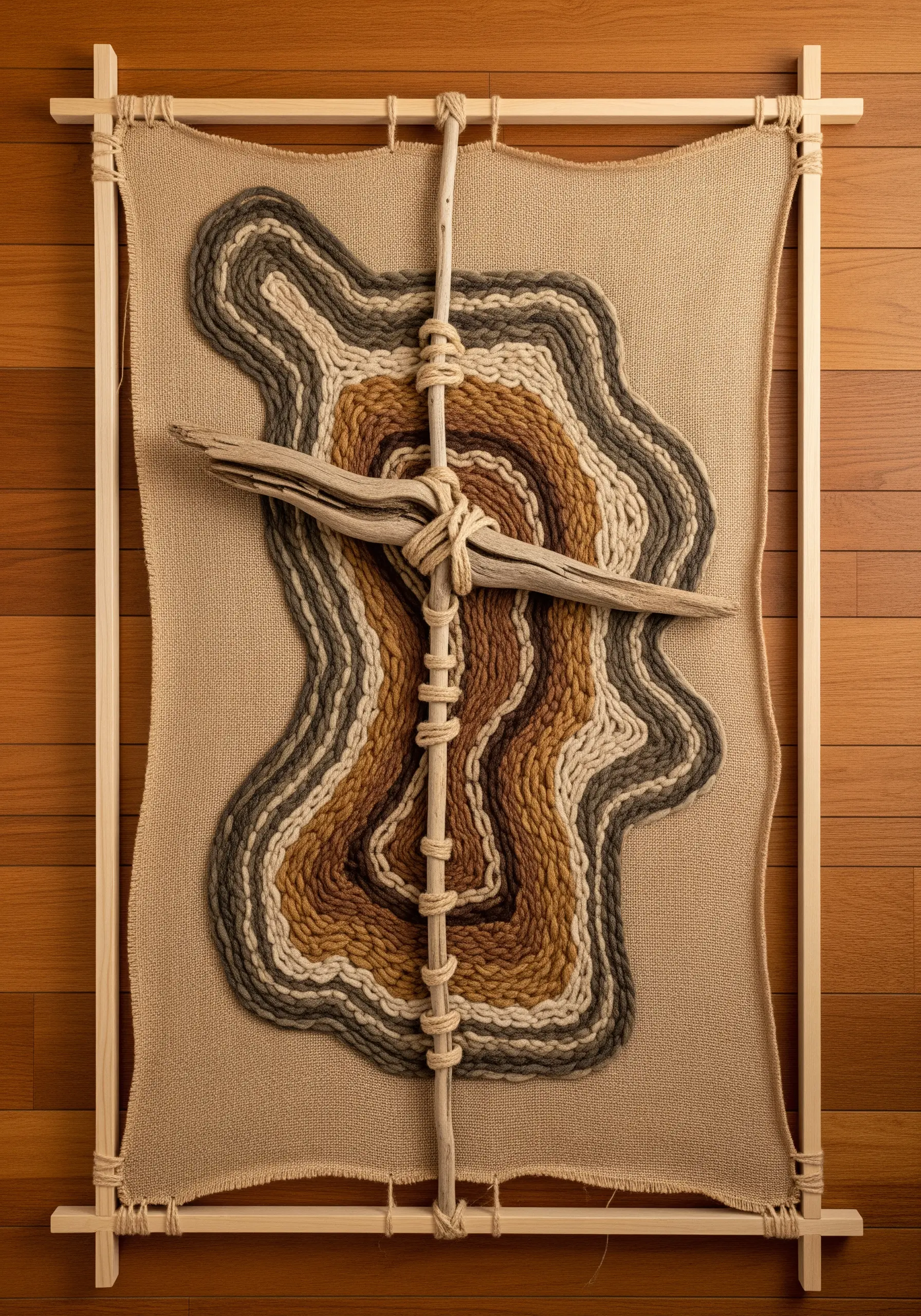
Bring organic, found objects directly into your work by using them as sculptural armatures.
Secure a piece of driftwood or a smooth branch to your stretched burlap canvas using strong couching stitches.
Then, echo the object’s form by stitching concentric, topographical lines around it with thick, neutral-colored yarn.
This technique creates a direct conversation between the natural and the handmade, resulting in a piece that feels grounded, elemental, and deeply connected to its materials.
These are the kinds of handmade pieces that bring natural beauty into every corner of your home.


