There is a unique power in a single, unbroken line—it can tell a story, capture a feeling, or define a personality with nothing more than its own fluid movement. When you translate that line into thread, you elevate it, giving it texture, shadow, and a quiet, tactile presence.
Forget complex shading and a dozen colors. Abstract face embroidery is an exercise in thoughtful minimalism. It teaches you that the weight of your thread, the subtle curve of a stitch, and the space you leave empty are just as expressive as the most intricate design.
Here, you’ll discover how to make every stitch count. You will learn to control your line to create work that is not just decorative, but resonant. This is your chance to capture pure emotion, one deliberate stitch at a time.
1. Master the Sculptural Line
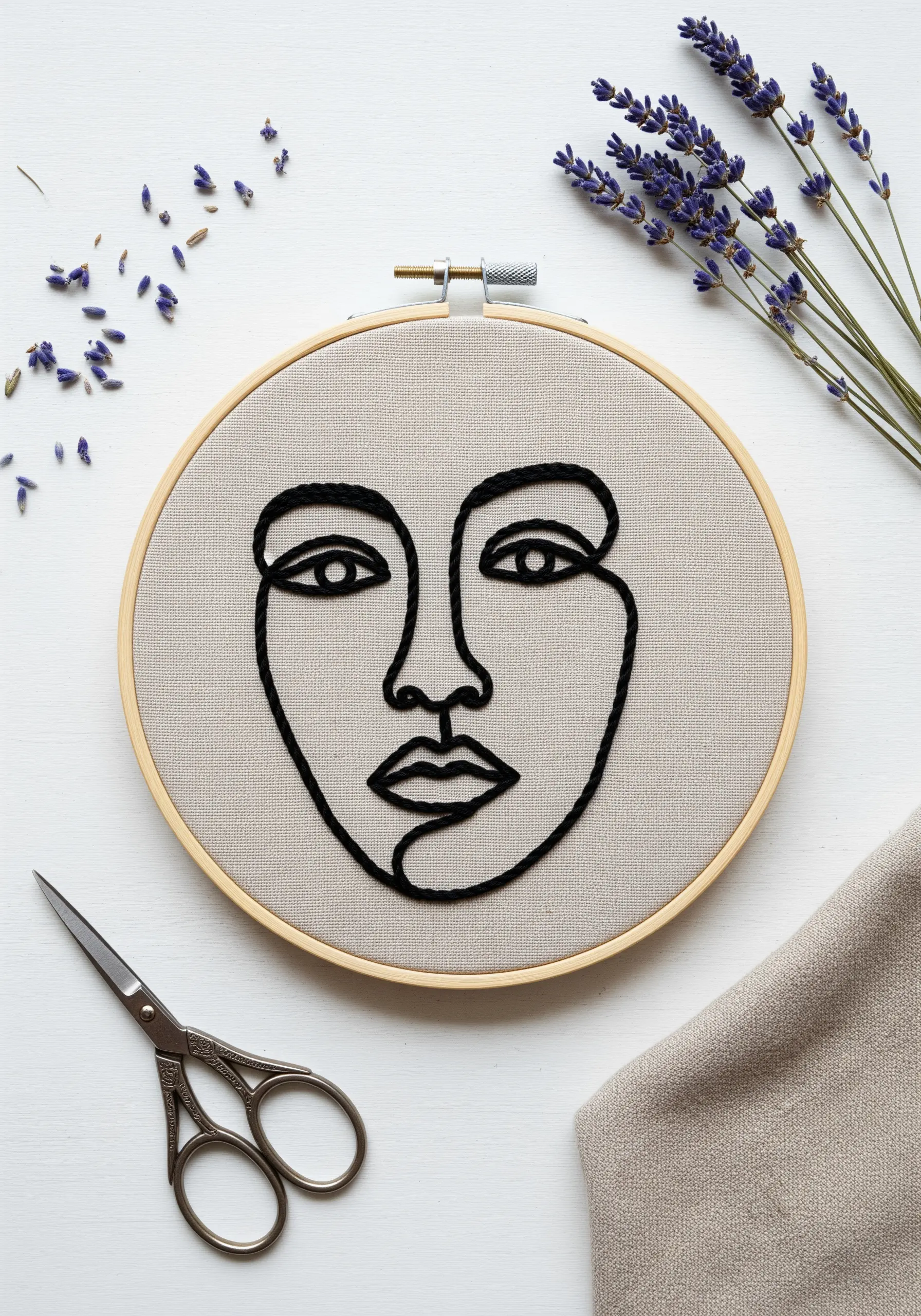
To achieve this bold, continuous line, use a whipped backstitch or a stem stitch with all six strands of embroidery floss.
This technique creates a smooth, rope-like texture that feels more substantial than a simple outline.
Work on a tightly woven fabric like cotton canvas or a high-count linen to support the thread’s weight and prevent any puckering or distortion.
The goal is a line that sits proudly on the fabric surface, creating a subtle shadow and a sense of dimension.
2. Stitch with Luminous Metallics on a Dark Canvas

When working with metallic thread on dark fabric, the key is to minimize friction.
Use a thread conditioner (like beeswax) and a needle with a larger eye to prevent the delicate metallic fibers from shredding or tangling as you stitch.
A simple backstitch or chain stitch in a gold or copper thread creates a dramatic, jewel-like effect against black cotton or velvet.
This high-contrast approach transforms a simple line drawing into one of your most elegant framed embroidery artworks.
3. Convey Joy with Minimalist Stitches
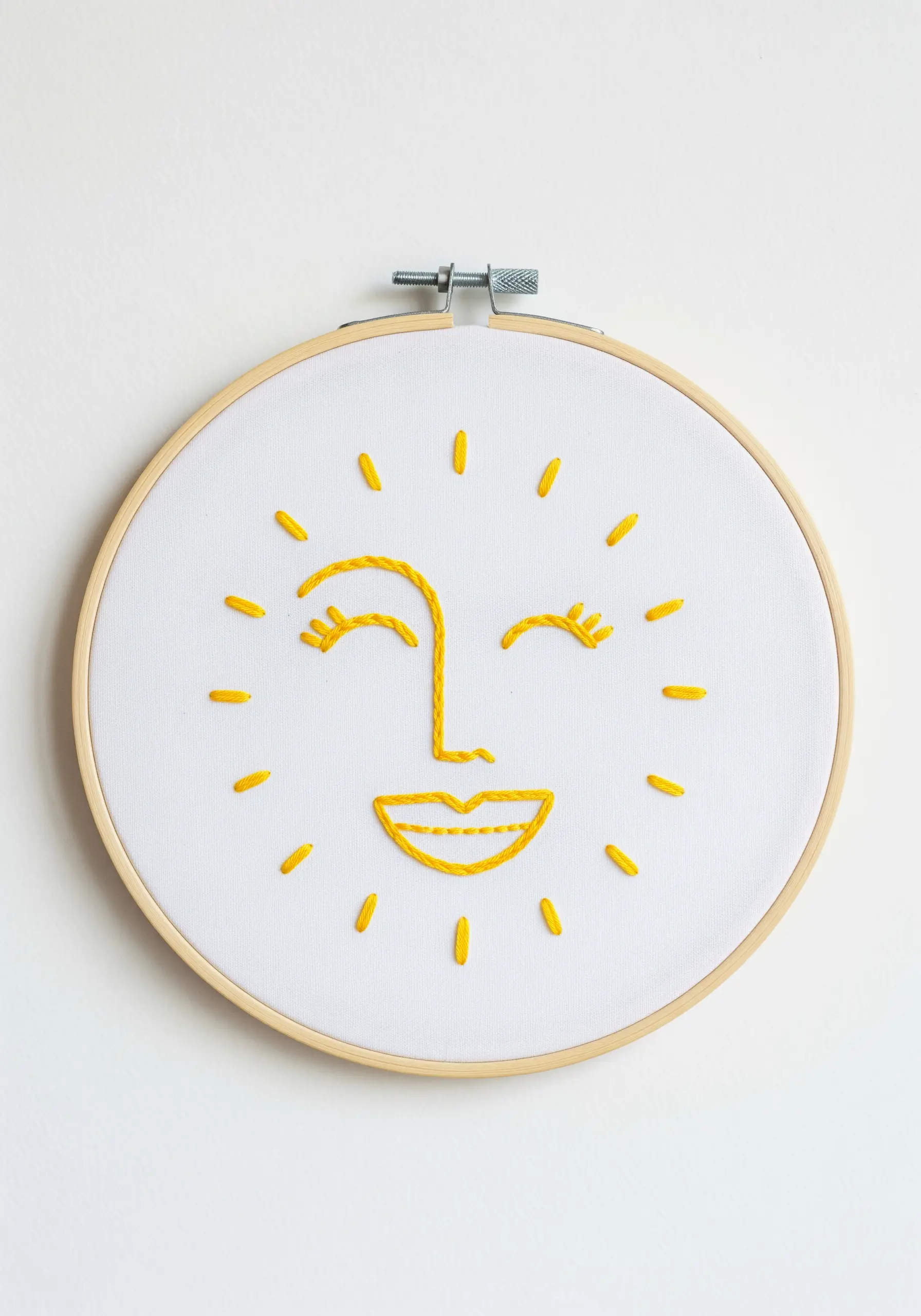
Express emotion with not just lines, but with deliberate stitch placement.
Use a split stitch for the continuous face outline to maintain a consistent thickness, ensuring the smile and eyes look unified.
For the sun rays, switch to single, detached straight stitches, varying their length slightly to add a sense of radiating energy and playfulness.
This combination of a smooth, curved line and sharp, straight accents creates a dynamic and cheerful composition.
4. Embroider on Textured Home Décor Fabrics

To transfer a line design onto a textured fabric like felt or wool, use a water-soluble stabilizer.
Simply trace your design onto the stabilizer, stick it to your pillow cover, and stitch directly through it.
When you’re finished, the stabilizer dissolves in water, leaving your stitches crisp and perfectly placed without getting lost in the fabric’s nap.
Use a thicker thread, like a pearl cotton, to ensure your line art stands out against the soft, tactile surface.
5. Blend Colors with Variegated Thread

Create a stunning rainbow gradient without changing your thread a single time.
Select a high-quality variegated floss where the color changes are gradual and harmonious.
Use a stem stitch or chain stitch; these stitches twist slightly, which beautifully showcases the subtle color shifts in the thread.
Plan the direction of your stitching to control where the colors land, for example, starting with the warmer tones on one side and finishing with cooler tones on the other.
6. Couch Thick Cord for Statement Apparel
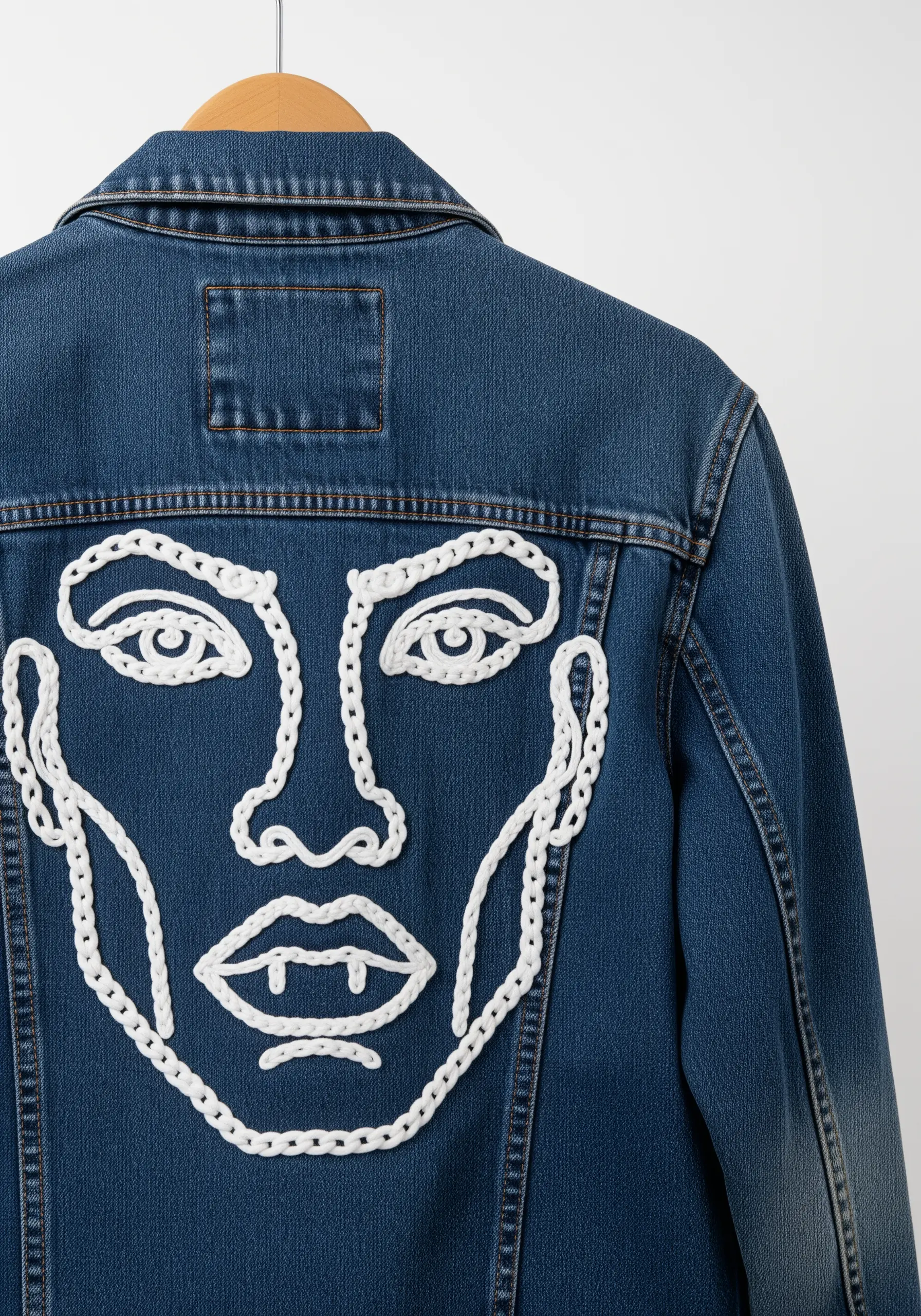
When you want a line so bold it can’t be stitched, couch it instead.
This technique involves laying a thick yarn, cord, or even fine rope onto the fabric and securing it with small, perpendicular stitches in a matching or contrasting thin thread.
This is the perfect way to add dramatic, sculptural lines to durable fabrics like denim.
It transforms your embroidery into a wearable piece of high-texture art, perfect for vintage-inspired denim jacket embroidery motifs.
7. Achieve Serenity with a Monochromatic Palette
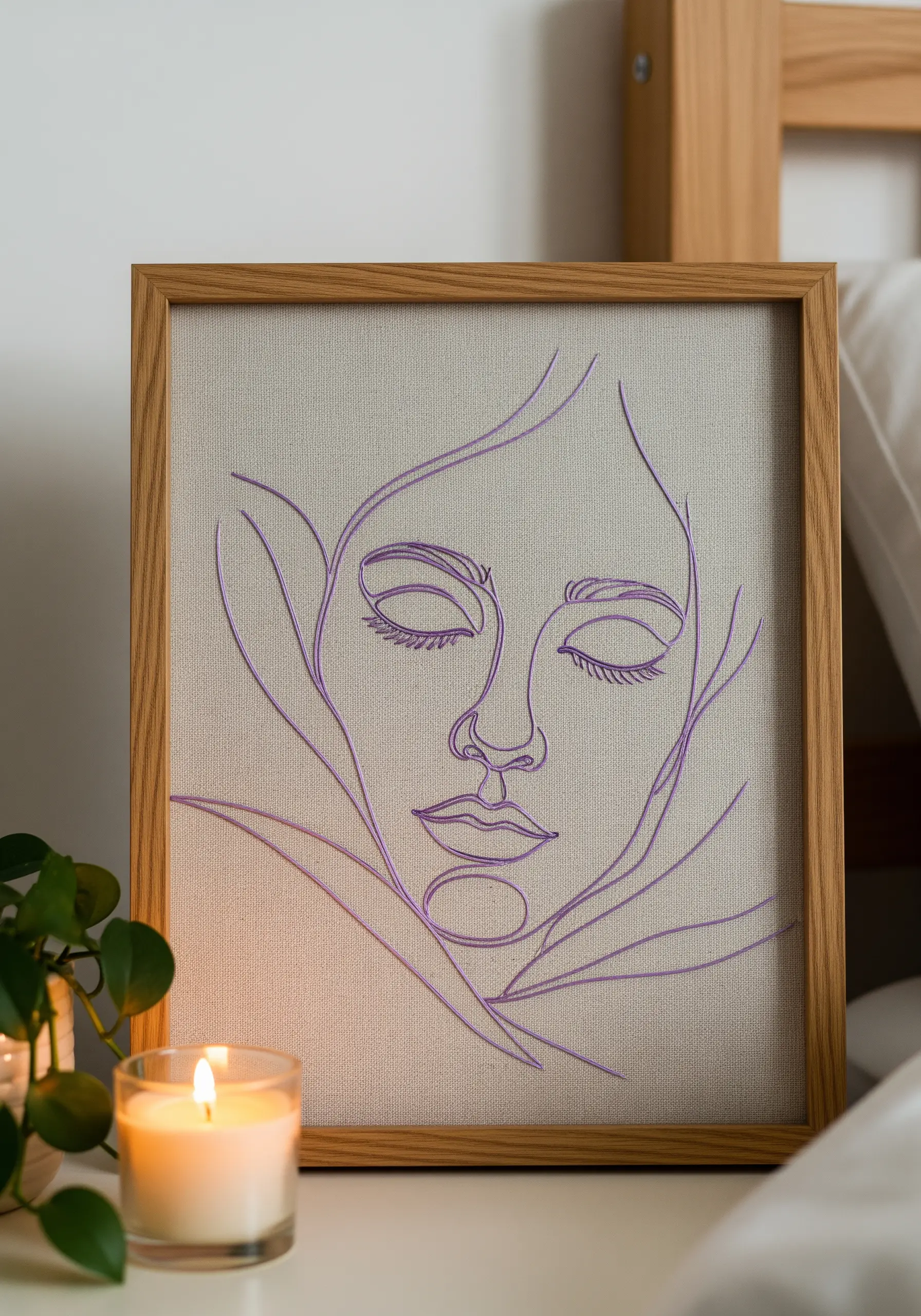
Create a feeling of calm and sophistication by pairing a single thread color with a neutral fabric.
Choose a soft, muted tone like lavender, dusty rose, or sage green for your line work.
The key to making this minimalist approach feel complete is impeccable stitching—a smooth, even backstitch or split stitch is essential.
This technique is perfect for creating delicate line art embroidery ideas that add a touch of tranquility to your space.
8. Build Dimension with Architectural Lines
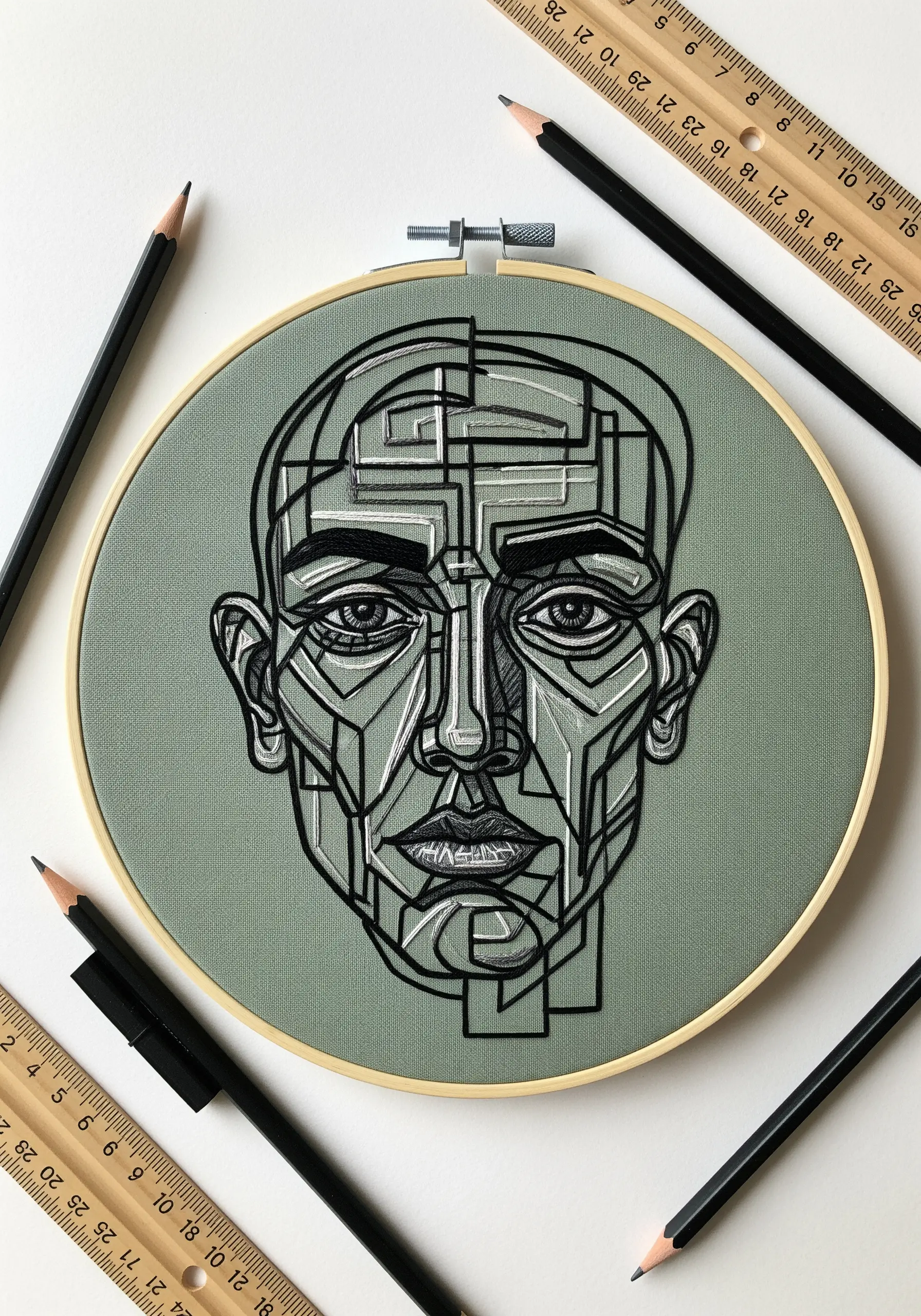
Explore complexity by layering lines to create the illusion of form and shadow.
Use a fine, single strand of black thread for the foundational geometric shapes to keep the lines crisp and defined.
Introduce a slightly thicker white or light grey thread for highlights, using satin stitch to fill small areas and create contrast.
This technique borrows from architectural drawing, turning a flat portrait into a compelling, dimensional study.
9. Integrate a Second Motif for Storytelling

Tell a small story by combining your line art face with a complementary motif.
For the face, use a simple, clean backstitch in a neutral color like charcoal grey to keep it understated.
Then, make the secondary element—like the sun—pop with a vibrant color and a texture-rich stitch, such as a woven wheel or dense satin stitch.
This contrast in color and texture draws the eye and creates a clear focal point, adding a layer of narrative to the piece.
10. Weave Botanicals into Your Portrait
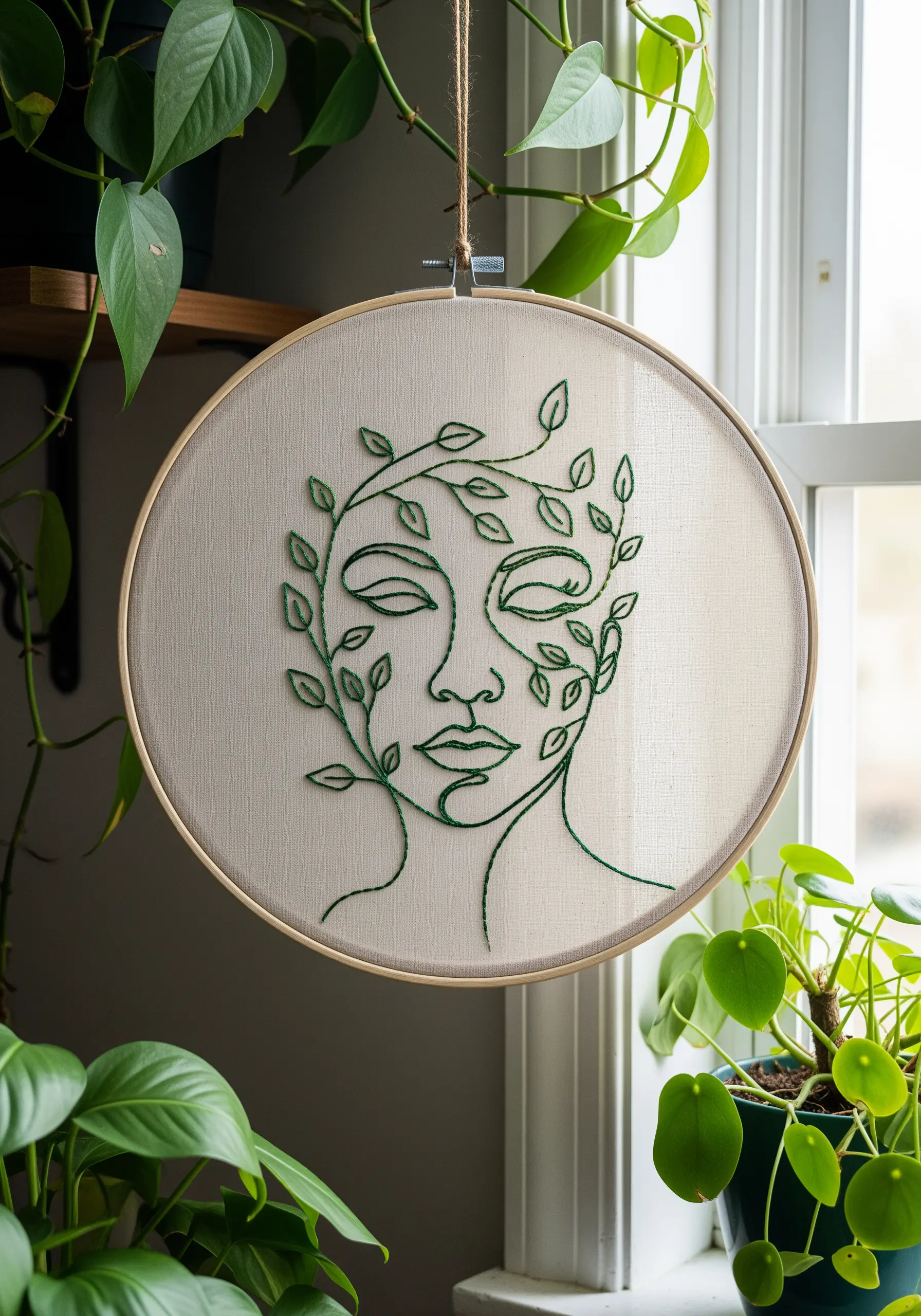
Merge portraiture and nature by allowing botanical elements to grow from your line art.
Use a consistent backstitch for the face to establish a clear foundation.
For the leaves and vines, vary your stitches: use lazy daisy stitches for small leaves, fishbone stitch for larger ones, and stem stitch for the vines.
This variety of fern and foliage stitch variations adds organic texture and makes the botanicals feel alive and distinct from the face.
11. Express Intensity with Directional Satin Stitch
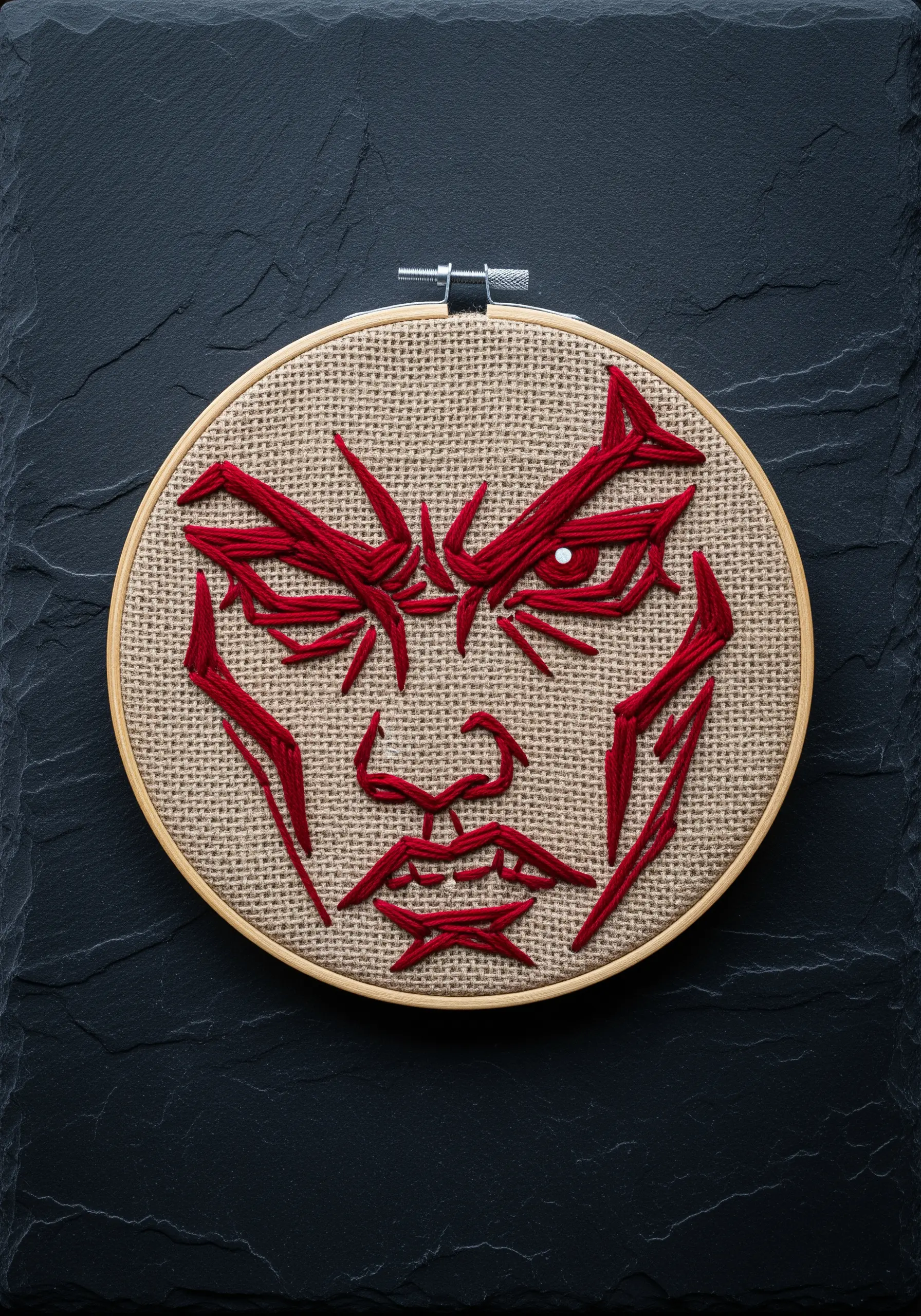
Use satin stitch not just for filling, but for creating direction and energy.
On a coarse fabric like burlap or Aida, use all six strands of floss to create bold, graphic shapes that won’t sink into the weave.
Angle your satin stitches to follow the contours of the design—outward for the spiky eyebrows, vertically for the nose.
This directional stitching creates a powerful sense of movement and tension, transforming simple shapes into a dynamic expression.
12. Capture Tenderness in a Single Line
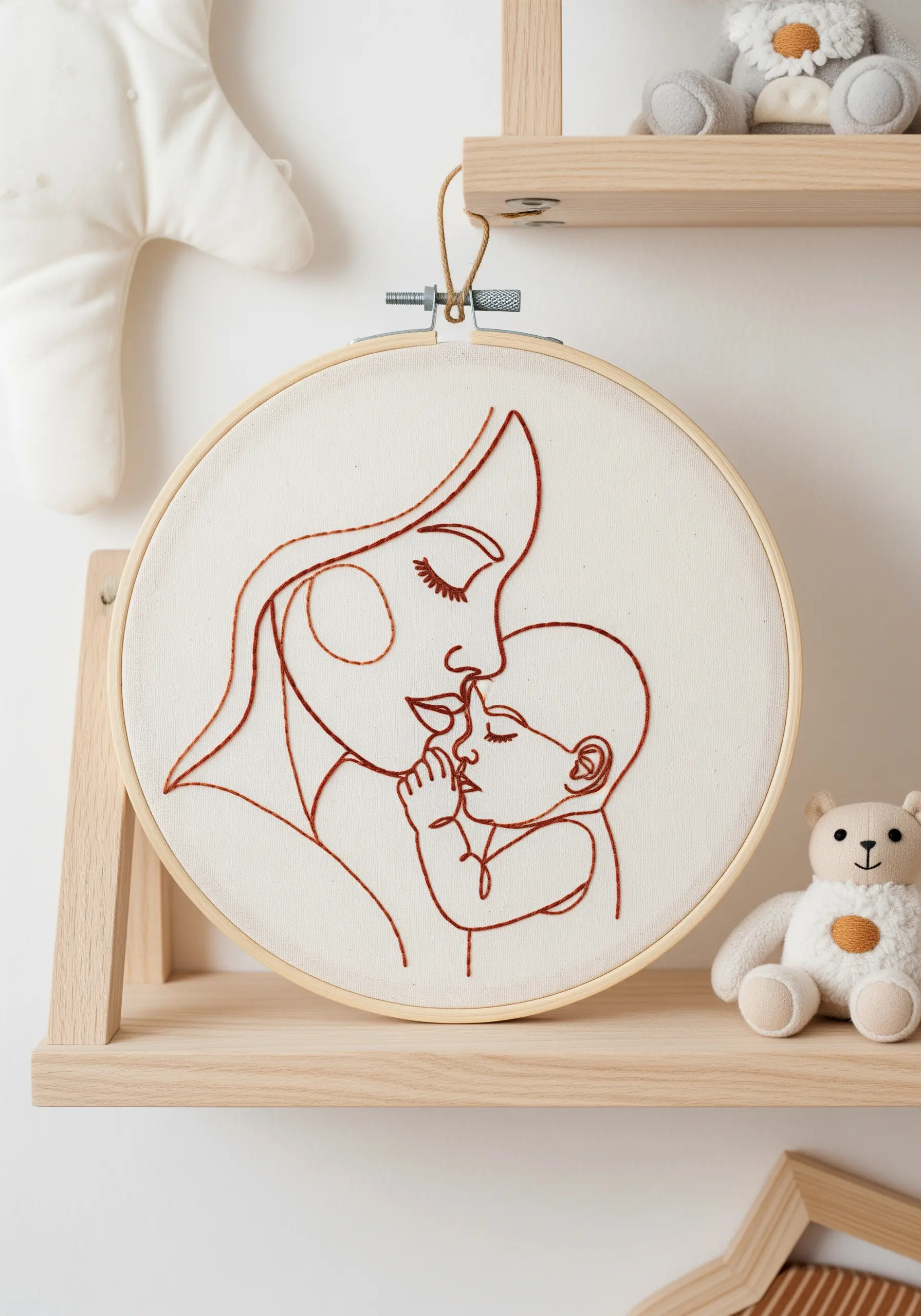
For designs that convey gentle emotion, your stitch choice is paramount.
Opt for a whipped backstitch. First, you create a standard backstitch outline, and then you whip a second thread around it without piercing the fabric.
This creates an exceptionally smooth, rounded line with no visible gaps between stitches, perfect for rendering soft curves and tender moments.
This technique is ideal for mother and child line art motifs, where softness is key.
13. Create a Celestial Scene with Mixed Media
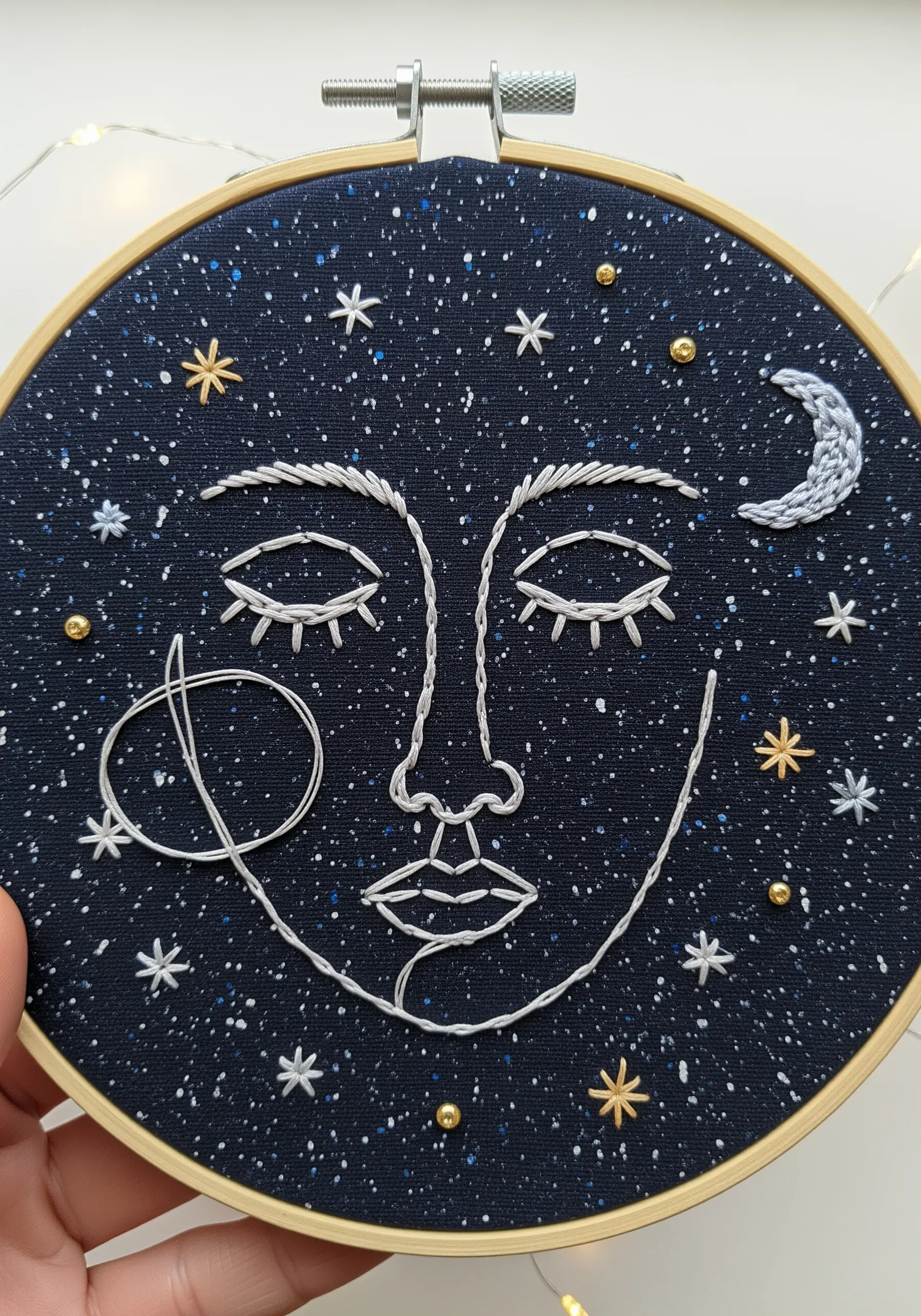
Elevate your embroidery by incorporating more than just thread.
After stitching your main portrait with a light-colored thread on a dark fabric, add dimension with French knots for distant stars and tiny metallic beads for prominent ones.
For a painterly splatter effect, dilute a bit of white acrylic paint with water and flick it across the fabric with a stiff brush before you begin stitching.
These mixed-media contemporary embroidery designs add depth and a touch of magic to your work.
14. Define Features with Contrasting Textures

Give a simple, two-tone face more personality by using different stitch textures for different features.
Use a clean backstitch or stem stitch for the main outline of the face and mouth to create a defined shape.
Then, switch to a dense, circular satin stitch or a series of tight French knots for the eyes.
This textural contrast makes the eyes the focal point, adding a sense of surprise and character to an otherwise minimal design.
15. Electrify Your Design with Neon Thread

Make your line art impossible to ignore by using vibrant neon thread on a dark canvas.
Choose two or three high-contrast neon colors, like pink, orange, and yellow, for a striking effect.
To keep the design cohesive, stitch the entire outline in one continuous line, but switch colors at key points where lines intersect or change direction.
This technique turns a simple tote bag into a bold statement piece, perfect for minimalist line art embroidery patterns with a maximalist twist.
16. Perfect Your Stitch Tension for Fine Lines
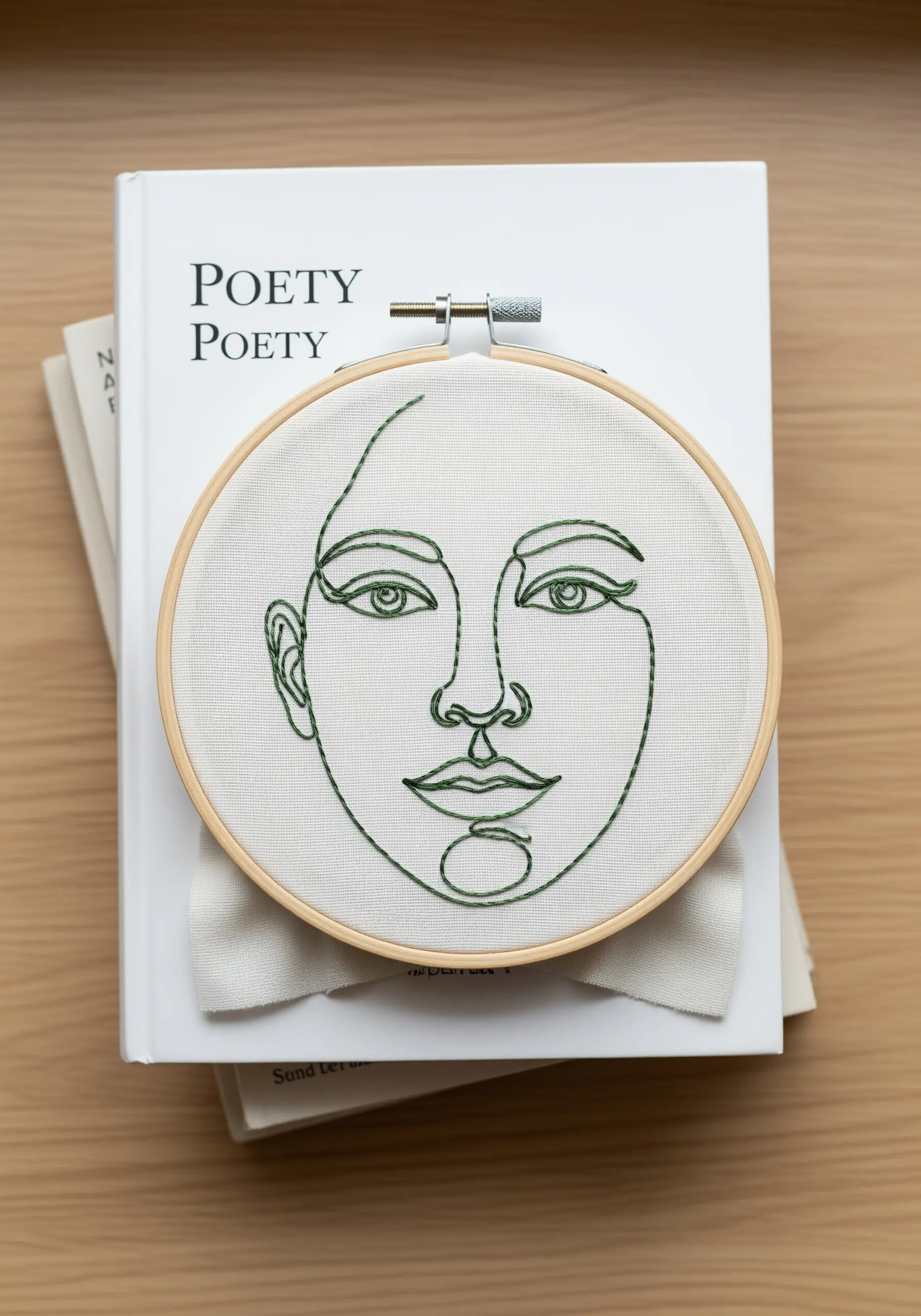
When working with only a few strands of thread for a delicate look, consistent tension is everything.
Ensure your fabric is drum-tight in the hoop to prevent any pulling or puckering.
As you stitch, pull each stitch taut, but not so tight that it distorts the fabric weave. The goal is for the thread to lie flat and smooth on the surface.
This attention to detail is what separates amateur work from professional-quality minimal embroidery patterns.
17. Frame Your Work for a Polished Finish

Give your minimalist embroidery the presentation it deserves by framing it thoughtfully.
For high-contrast pieces, like white thread on black fabric, choose a frame in a light, natural wood to add warmth and prevent the composition from feeling too stark.
Ensure the fabric is stretched taut over a backing board before framing to eliminate any wrinkles or sagging.
This final step transforms your stitched piece into a sophisticated work of art ready for display.
18. Add Playful Energy with Abstract Squiggles
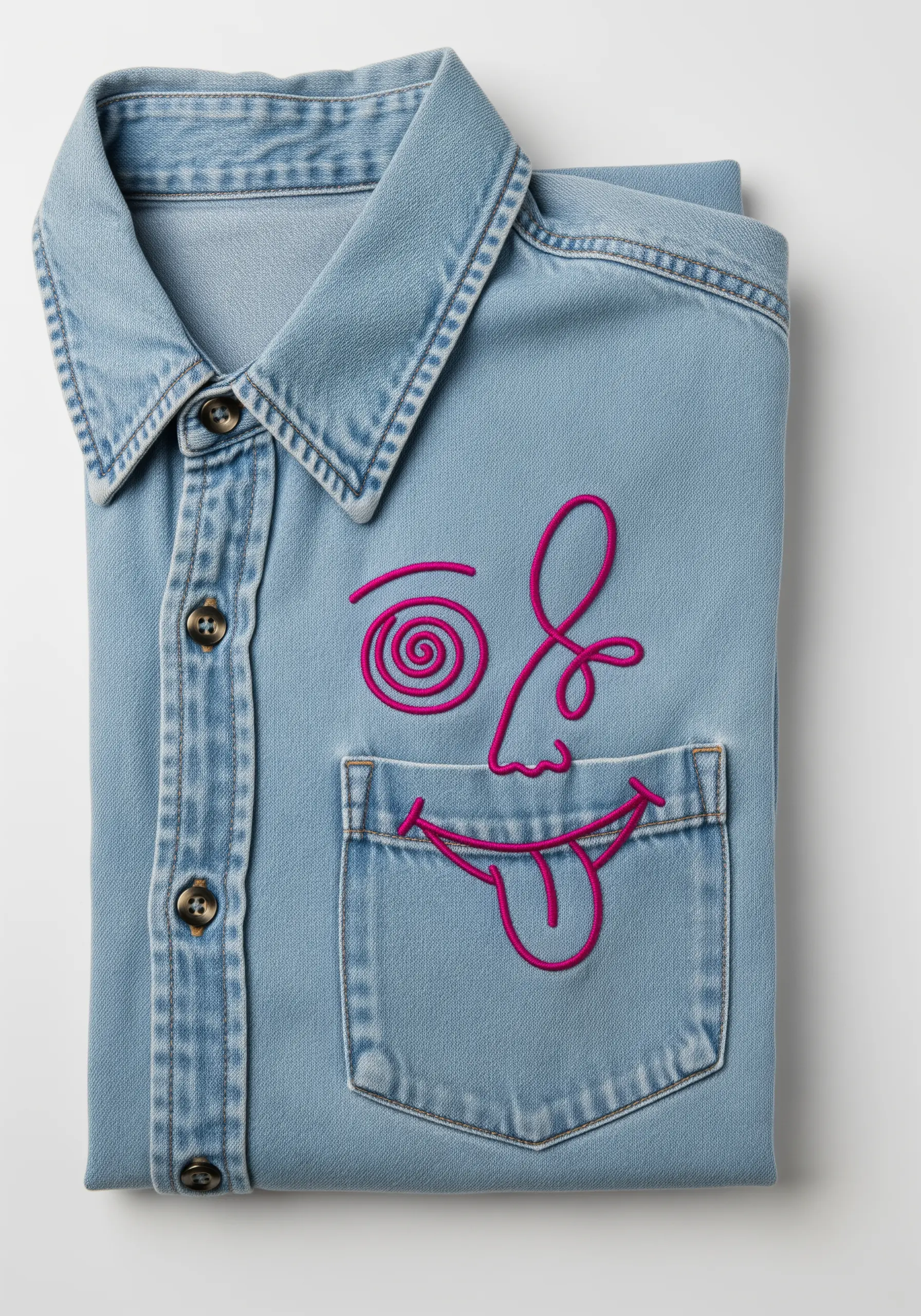
Break free from realistic portraiture by incorporating whimsical, abstract elements.
Use a vibrant, single-color thread like magenta or electric blue to ensure the playful shapes stand out against the fabric, especially on casual apparel like a denim shirt.
A simple stem stitch is perfect for this, as it handles tight curves and spirals with ease, creating a smooth, doodle-like quality.
This approach is a fun way to turn your old clothes into art.
19. Use Negative Space to Ask a Question

Incorporate symbols into your line art to add a layer of conceptual meaning.
Stitch the main portrait with a clean, continuous line, but intentionally leave a space for a secondary element.
Forming an earring from a question mark, for instance, transforms the piece from a simple portrait into a conversation starter.
This thoughtful use of negative space and symbolism elevates your design beyond the purely decorative.
20. Complement Your Stitching with a Rustic Frame

The frame is an extension of your artwork, so choose one that enhances its texture and mood.
For embroidery with thick, sculptural lines on a natural fabric like linen or canvas, a rustic wooden frame works beautifully.
The raw, textured wood mirrors the tactile quality of the thread, creating a cohesive, organic feel.
These are the kinds of framed embroidery ideas that feel both modern and timeless.
21. Create a Flow of Music with Thread and Beads

Visualize an abstract concept like music by combining line work with embellishments.
Use a crisp backstitch in black thread to define the musical notes and staff lines, ensuring they are sharp and legible.
Then, add a scattering of tiny, colorful seed beads or sequins among the notes.
This touch of sparkle suggests the effervescent, magical quality of a melody and adds a delicate texture that makes the entire piece sing.
22. Blend Thread Painting with Line Art

Create a powerful composition by merging two distinct styles: minimalist line art and dense thread painting.
First, stitch the face using a single, delicate backstitch line to establish the portrait.
Then, build the surrounding element, like a wave, using long and short stitches in multiple shades of a color to create a smooth, painterly gradient.
This contrast between the simple line and the complex, textured fill creates a stunning visual dynamic and showcases your technical range.
23. Capture Intimacy with Mirrored Lines
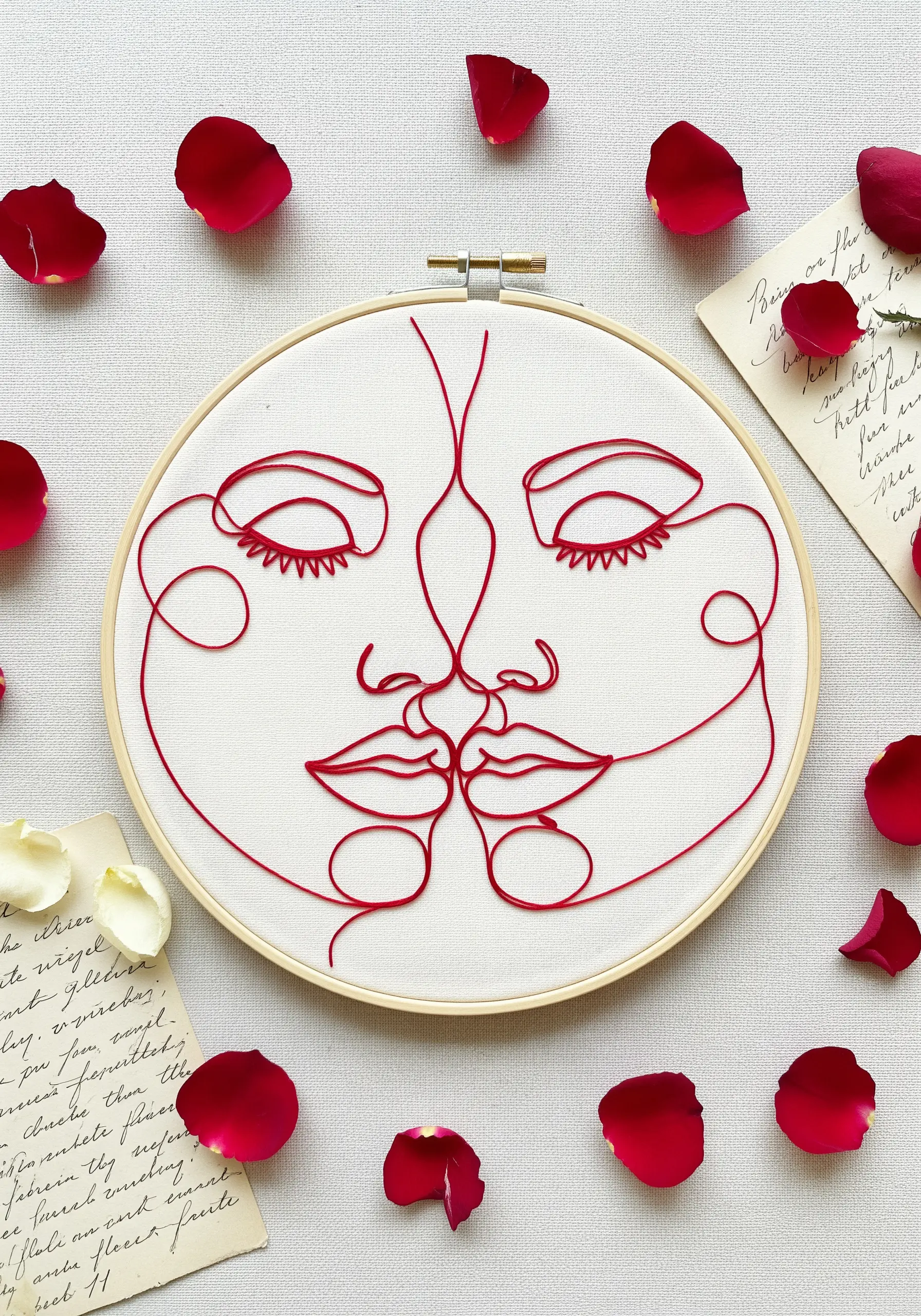
For a design that symbolizes connection, use symmetry and a single, vibrant color.
Stitch the entire piece with a bold red thread to evoke passion and emotion.
The key to this design is the delicate mirroring of the two faces, creating a sense of intimacy and reflection.
Use a stem stitch to give the continuous line a slightly rounded, soft quality that enhances the romantic feeling of the artwork.
24. Build a Mask with Layered Cording
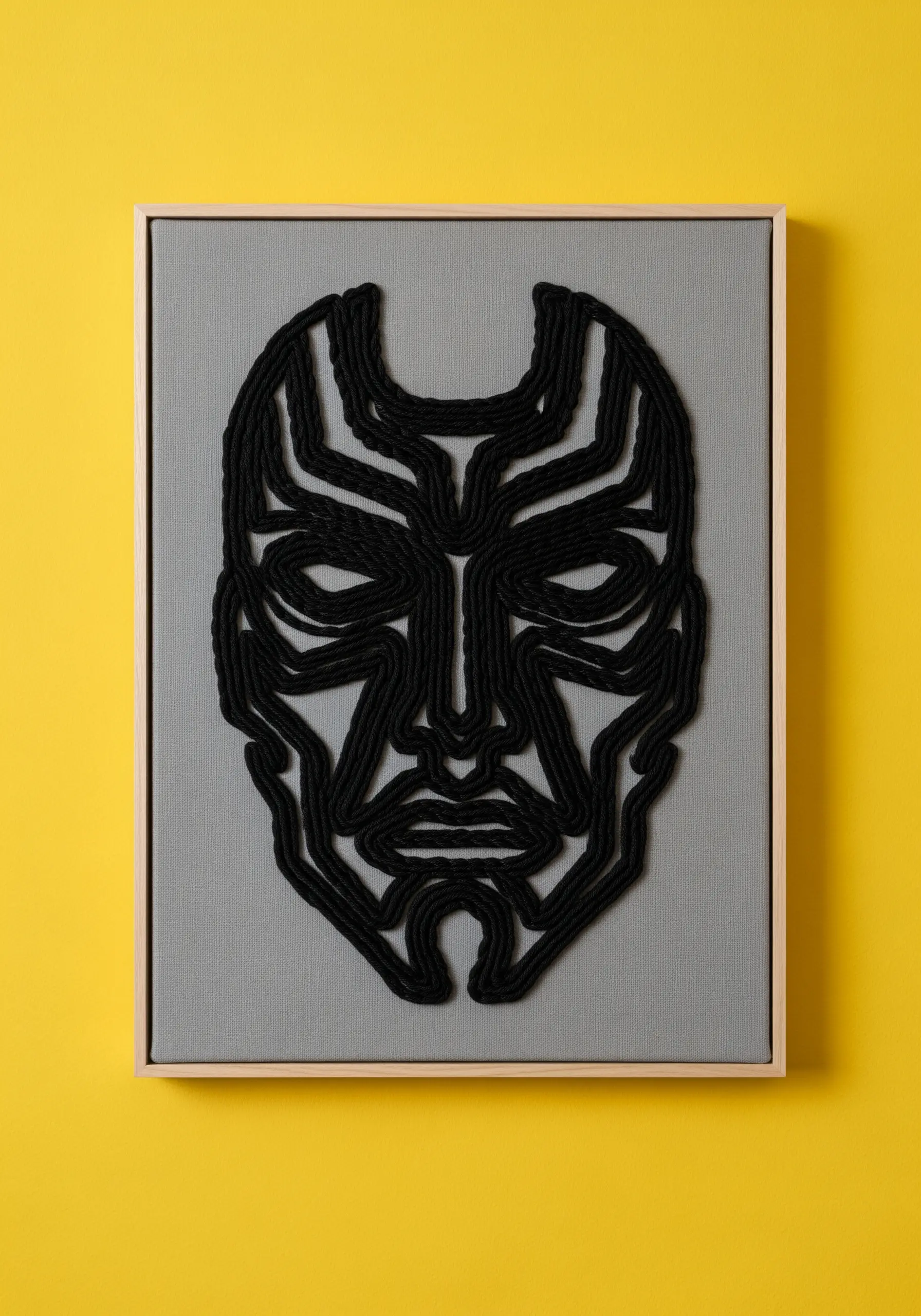
Create a powerful, three-dimensional effect by layering thick cord on your canvas.
Instead of a single continuous line, couch down multiple segments of black cord, layering them where necessary to build up form and create a sense of depth.
This technique turns the fabric surface into a sculptural base, resulting in a piece with significant physical presence and shadow play.
The result is less like a drawing and more like one of your own bold wall sculptures.
25. Explore Psychology with Surrealist Details
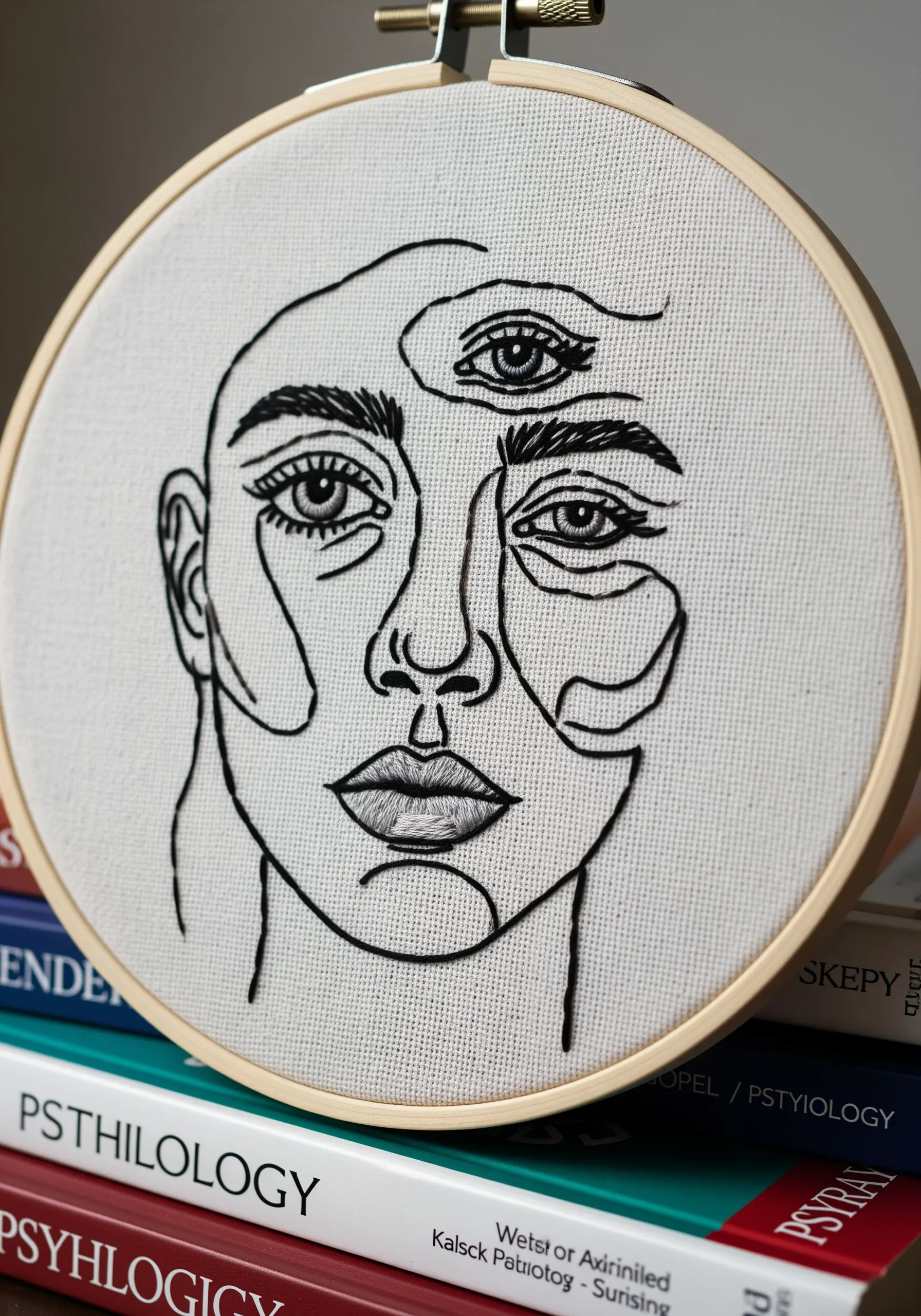
Add a surrealist touch to your portrait by incorporating unexpected elements, like a third eye.
Use a very fine thread (just one or two strands) to stitch the details of the eyes, allowing you to create delicate lashes and pupils.
Contrast this fine detail with the bolder, simpler lines of the face’s outline.
This shift in scale and detail draws the viewer in, inviting them to look closer and contemplate the piece’s deeper meaning.