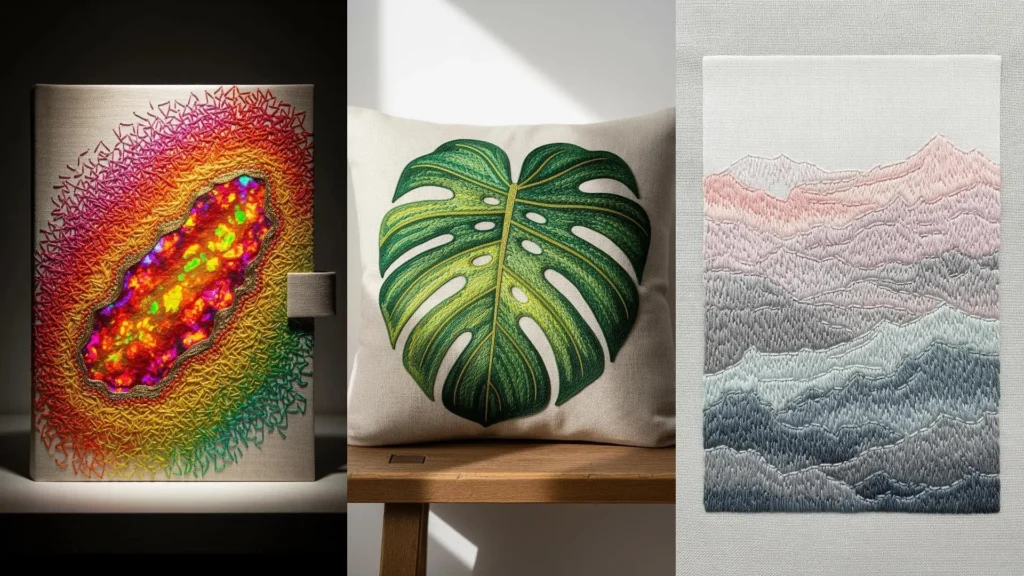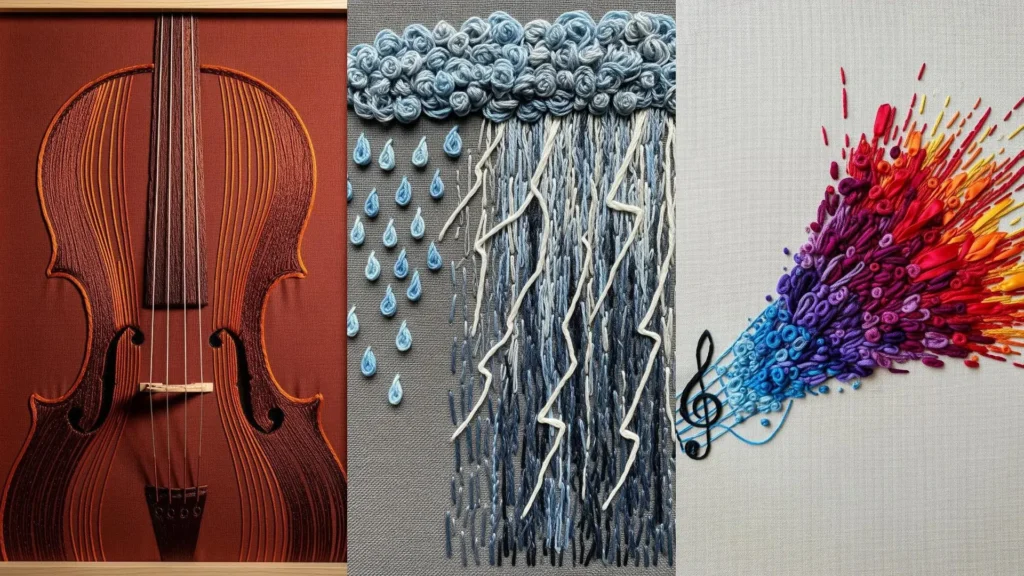
You can translate the feeling of music into something you can touch. Think of your needle as a conductor’s baton and your thread as the orchestra. Instead of just filling in a pattern, I want you to start thinking about how each stitch can represent a sound, a rhythm, or a silence.
This isn’t about creating perfect replicas of instruments or notes. It’s about capturing the flow of a melody with a smooth satin stitch, the impact of a drum beat with a tight French knot, or the silence between phrases with thoughtful negative space. You already have the skills; now it’s time to apply them with a new intention.
In these projects, we’ll explore how to use color, texture, and composition to convey tempo, mood, and harmony. You’ll learn why a thick, couched cord feels like a bass line, and how delicate, scattered stitches can echo a gentle piano melody. Let’s begin.
1. Weaving Rhythmic Flow with Satin Stitch Bands
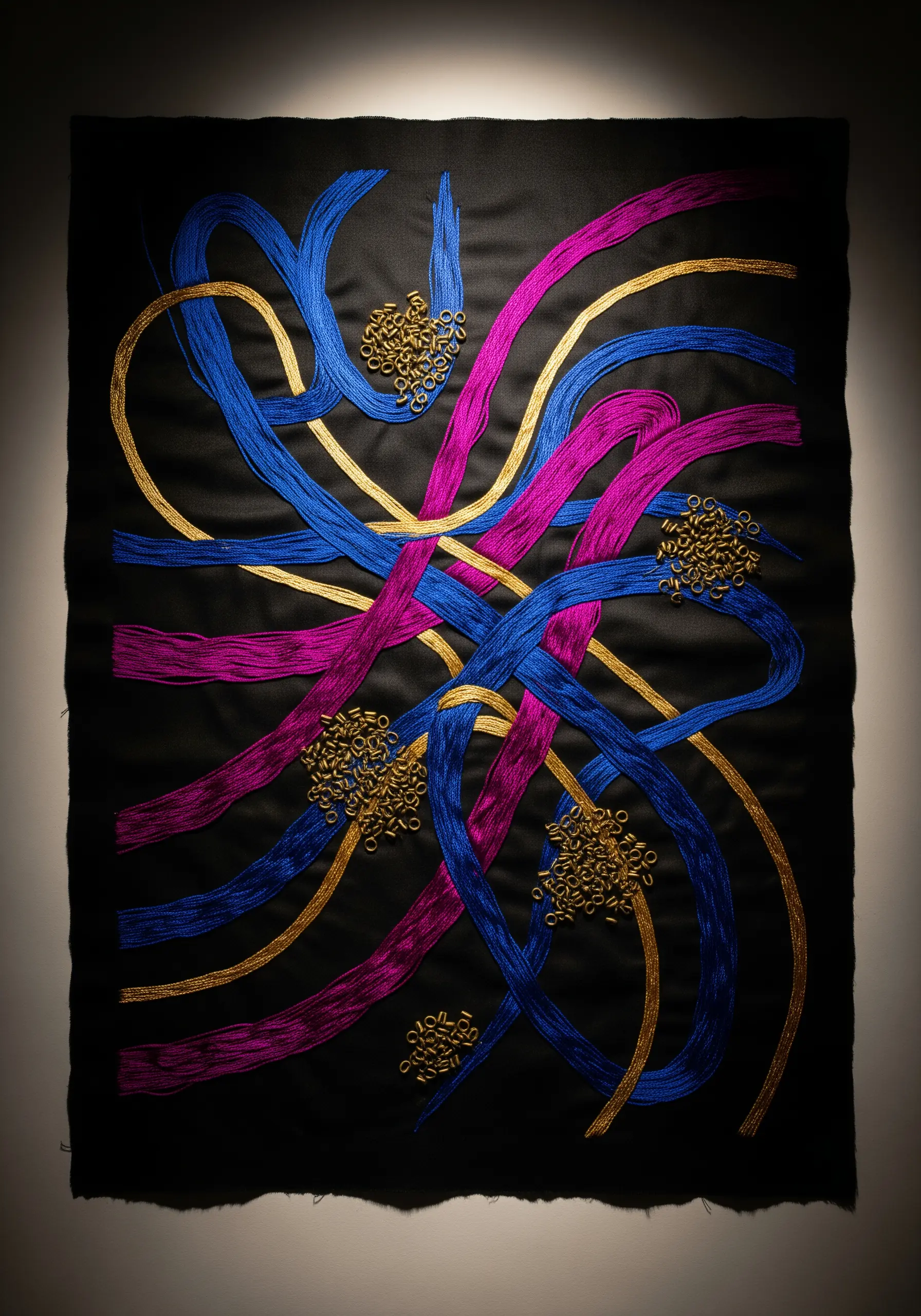
Create drama by stitching wide, overlapping bands of satin stitch on a dark, reflective fabric like black satin.
To keep the stitches perfectly smooth, use a laying tool or the side of your needle to guide each strand of a high-sheen rayon or silk thread into place.
This technique gives the bands a liquid quality that emphasizes their flow.
Interrupt the smooth lines with dense clusters of French knots or small metallic beads to represent a crescendo or a staccato pause in the music, adding both textural and visual contrast.
2. Blending Colors to Capture Infinite Melody
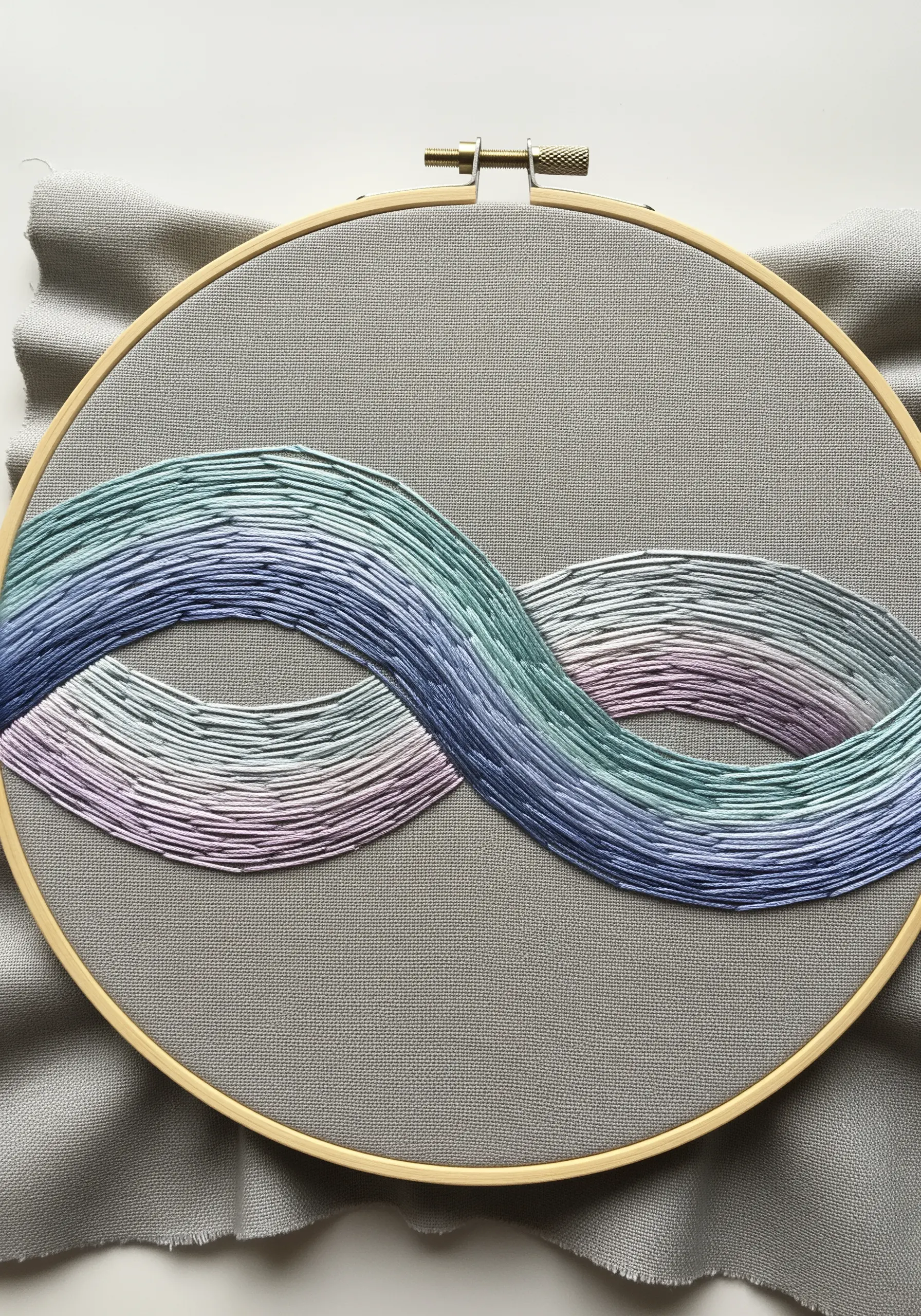
To achieve a seamless gradient that mimics the smooth transition of a melody, use the long-and-short stitch.
Begin with your lightest color and gradually introduce darker shades, one strand at a time, to avoid any harsh lines between hues.
Ensure your stitches follow the curve of the shape—in this case, an infinity loop—to create a convincing sense of three-dimensional form.
Stitching on a neutral grey fabric allows the subtle color shifts to become the main focus, turning the thread itself into a visual representation of sound.
3. Charting Digital Beats with Grid and Texture

Translate the structured rhythm of electronic music into a visual grid using sharp, clean lines of backstitch.
Use a single strand of neon thread on a stretched black canvas to give these lines maximum graphic impact and a modern, gallery-like finish.
Fill in selected squares with dense clusters of French knots to represent sound blocks or synth pads.
This powerful contrast between the flat, smooth lines and the bumpy, raised texture creates a dynamic composition that feels both orderly and energetic.
4. Layering Sheer Fabrics for Ethereal Harmonies
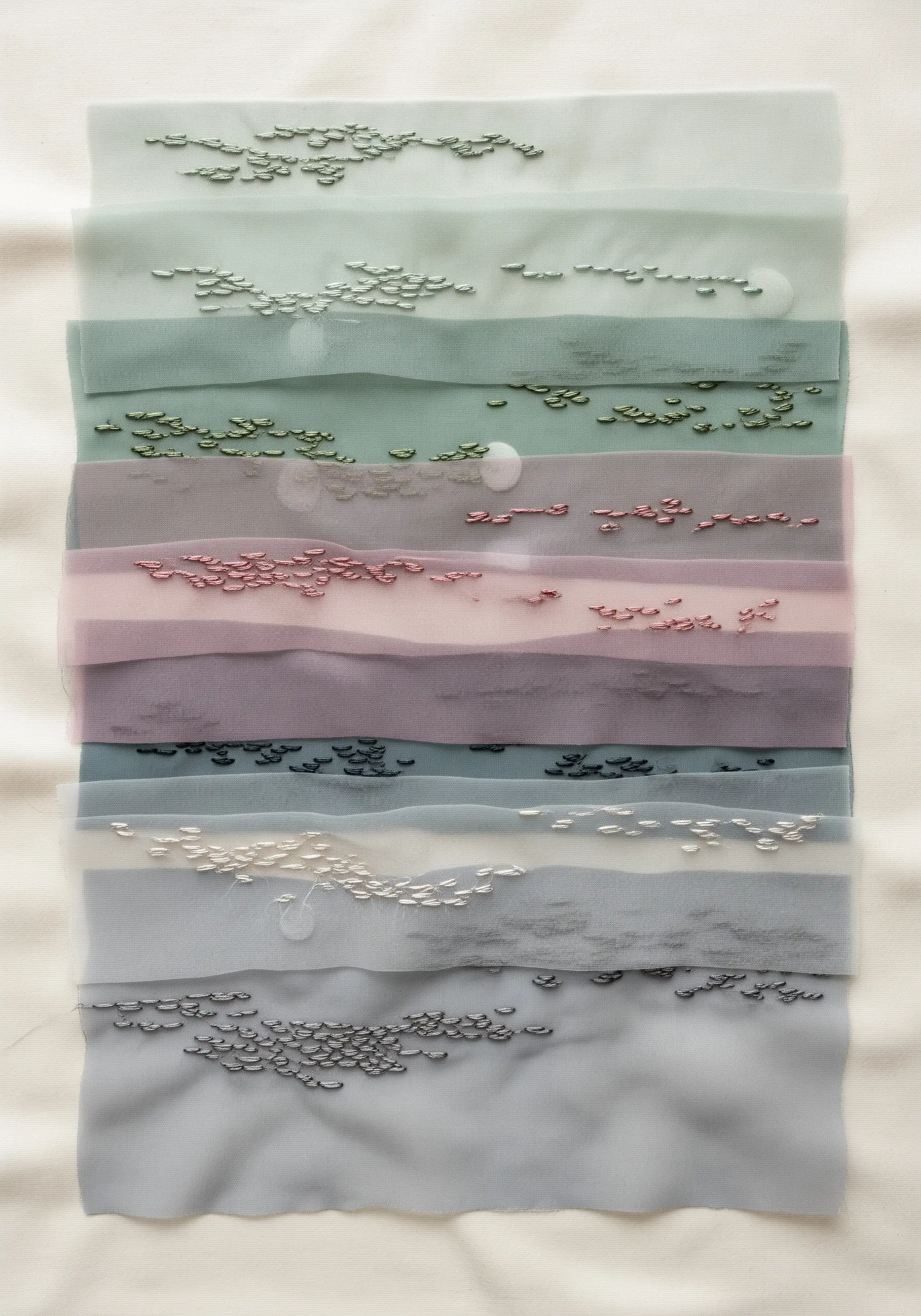
Capture the delicate, layered quality of ambient music by stitching on multiple pieces of organza or chiffon.
Work small, scattered clusters of seed stitches or tiny French knots onto each sheer layer individually before assembling them.
When you stack the fabrics, the stitches appear suspended at different depths, creating a beautiful illusion of floating notes.
The transparency allows the underlying colors and stitches to blend, forming new, subtle harmonies that change with the light.
5. Visualizing a Crescendo with a Burst of Stitches
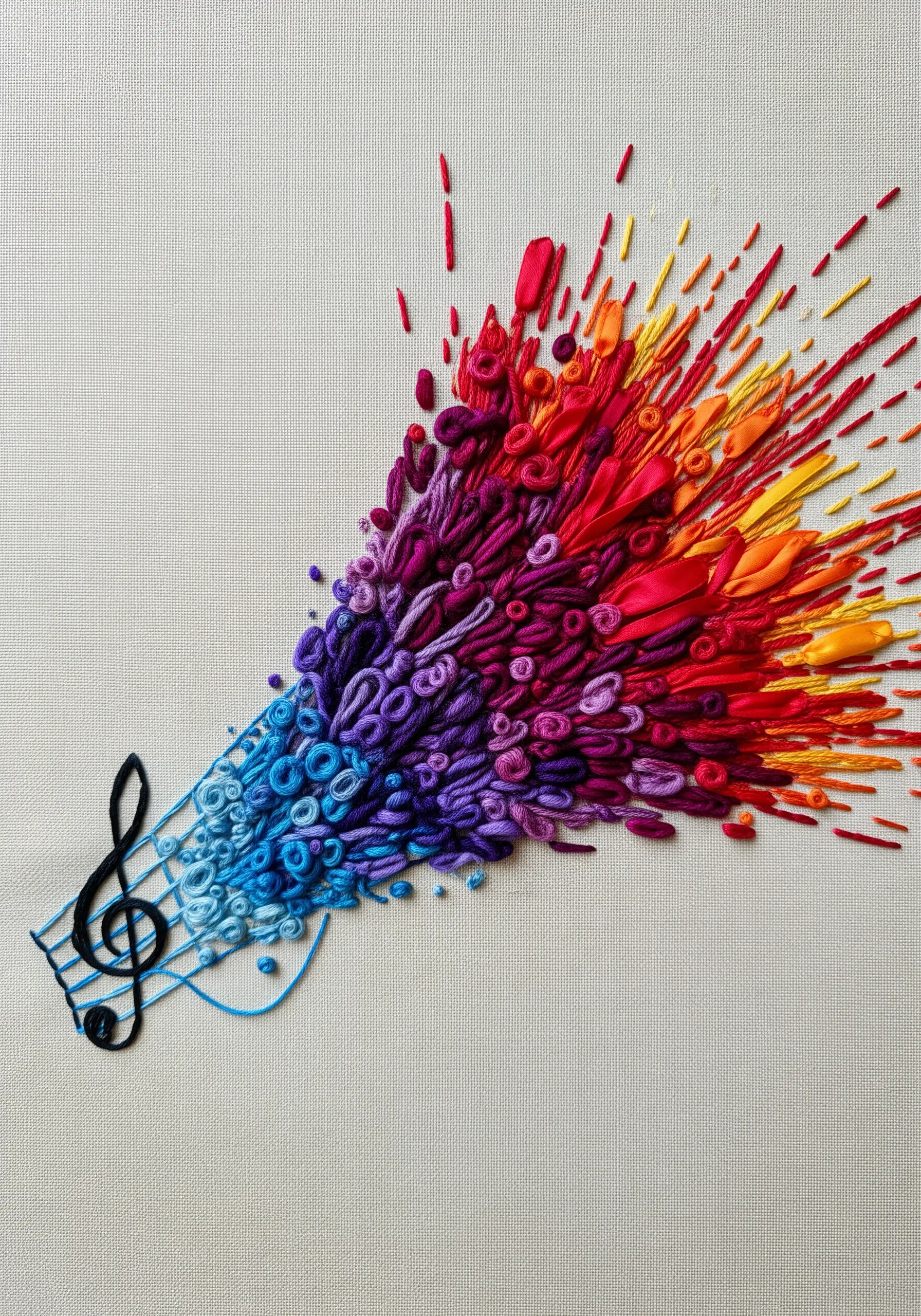
Represent a powerful burst of sound by combining multiple stitches, colors, and textures emerging from a single point.
Start with a simple backstitched treble clef, then erupt into a joyful, chaotic mix of straight stitches, French knots, woven wheel stitches, and even thin silk ribbons.
Using a wide range of thread weights will add essential dimension.
This creates the effect of an abstract thread burst, perfectly capturing a musical climax, while a color gradient from cool to hot enhances the sense of rising energy.
6. Stitching Syncopation with Rhythmic Motifs

Create a strong visual rhythm by repeating a simple motif with slight, intentional variations across the fabric.
Use tightly packed black French knots for the main “beat,” establishing a consistent, grounding element in your pattern.
Then, add energetic bursts of red and yellow straight stitches to represent off-beat accents or syncopation.
Arranging these motifs in a loose grid provides structure, while the irregular stitched “rays” add a playful, energetic feel that keeps the eye moving.
7. Sculpting Sound with High-Relief Couching
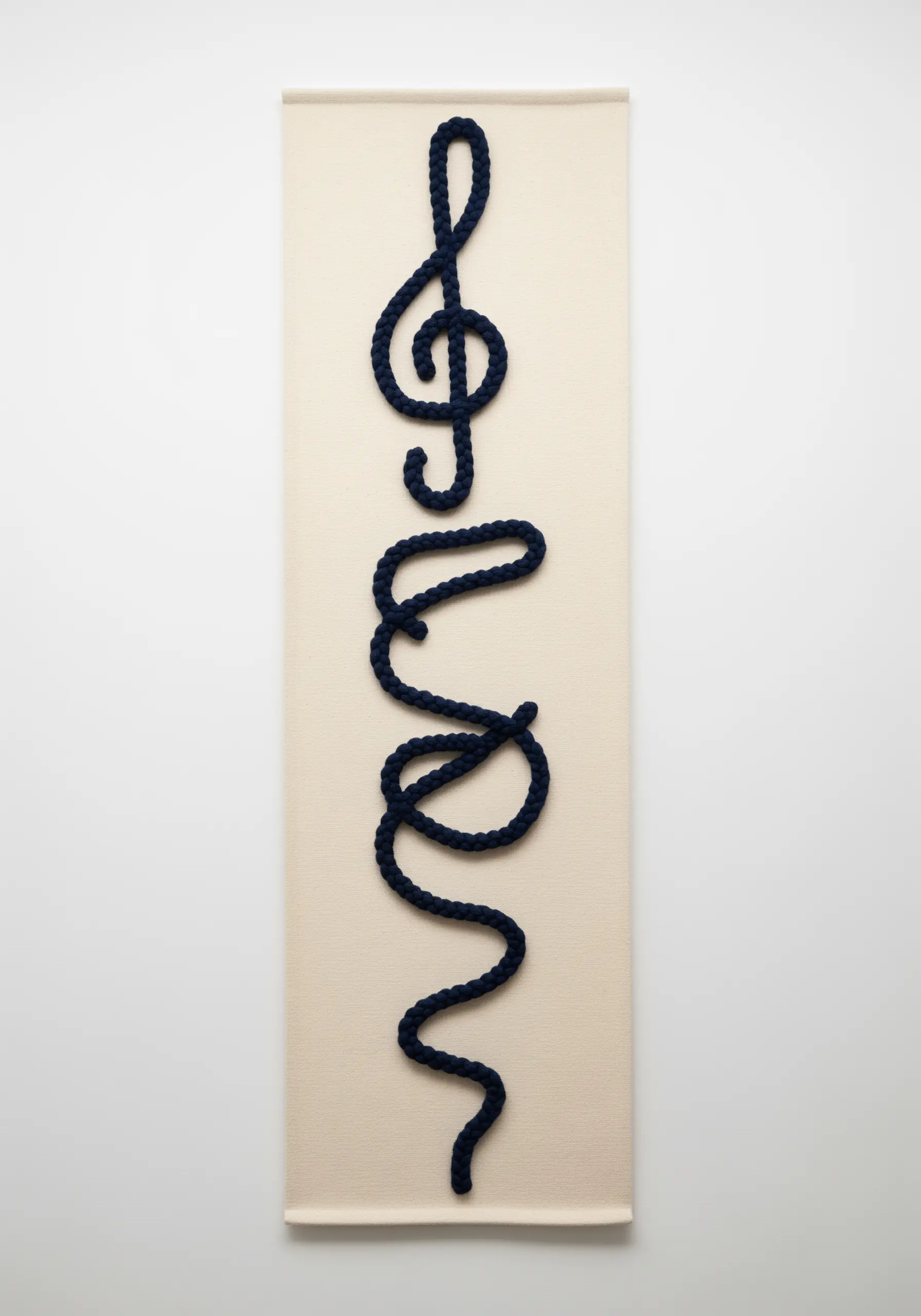
Move beyond standard thread and couch thick cord or rope onto your fabric for a bold, sculptural effect.
This technique allows you to create dramatic, three-dimensional lines that represent a deep, resonant bass line or a powerful melody.
Use a matching, thinner thread to make small, evenly spaced tacking stitches that secure the rope invisibly.
The stark contrast between the heavy rope and the clean, minimal canvas creates a powerful abstract statement about the physical presence of sound.
8. Composing a Harmony with a Floral Grid
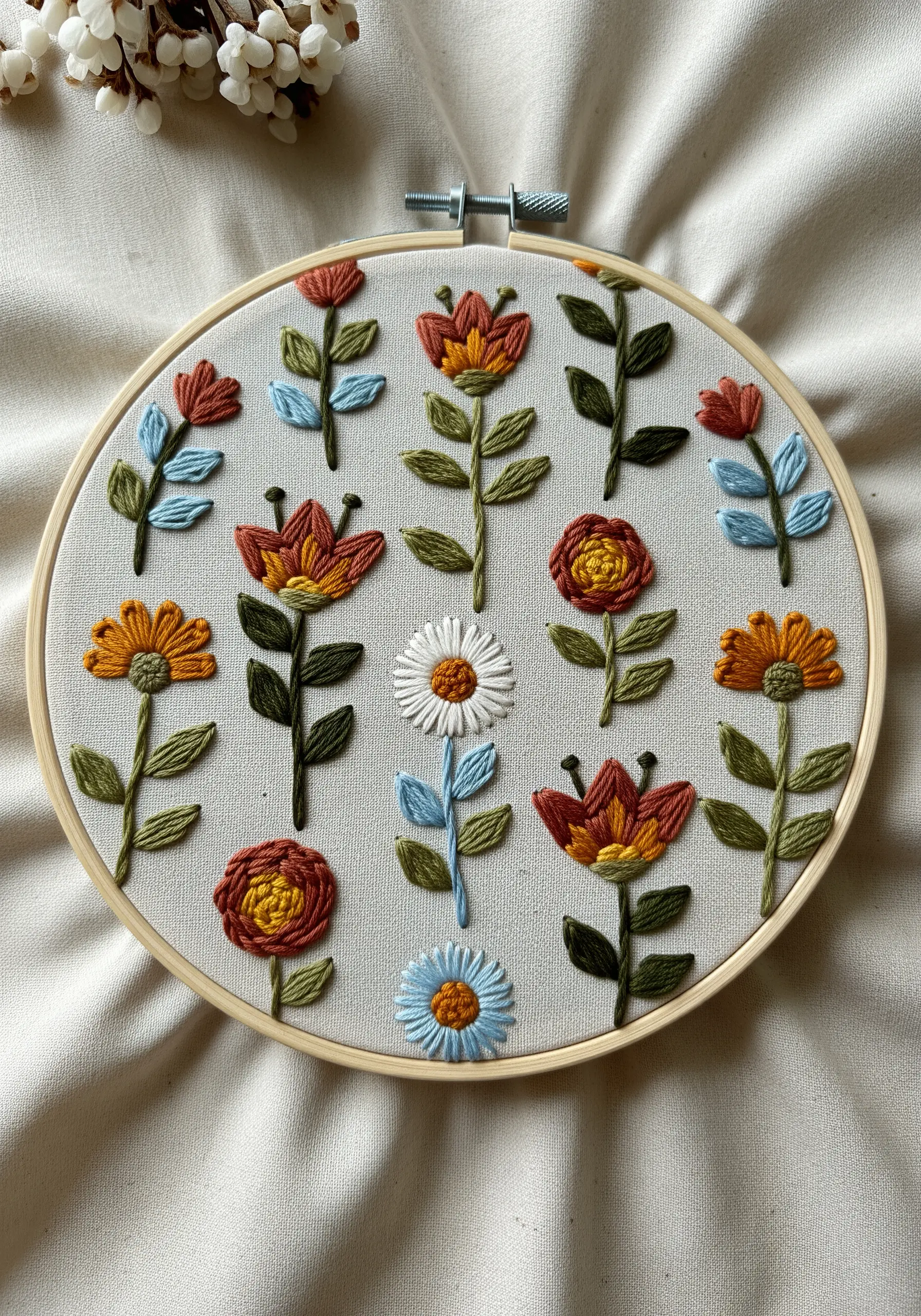
Arrange simple floral motifs in a structured grid to represent a musical score where each flower acts as a distinct note.
Use padded satin stitch—placing a base of small straight stitches underneath—to give the petals a raised, dimensional quality that catches the light beautifully.
Varying the colors and flower types creates visual harmony and interest within the rigid structure.
This composition balances the organic forms of nature with the mathematical precision of music, resulting in a piece that feels both intentional and full of life.
9. Capturing Electric Energy with Chaotic Layering

Express the raw, distorted energy of an electric guitar riff with intentionally chaotic, layered straight stitches.
Use metallic threads in silver and electric blue to mimic the look of vibrating strings and crackling electricity.
Forget perfect placement; overlap your stitches freely in different directions to build up a texture that feels frenetic and alive.
Containing this energy with a clean, sharp satin stitch outline provides a finished edge that makes the chaotic interior pop.
10. Weaving a Symphony with Thread Painting
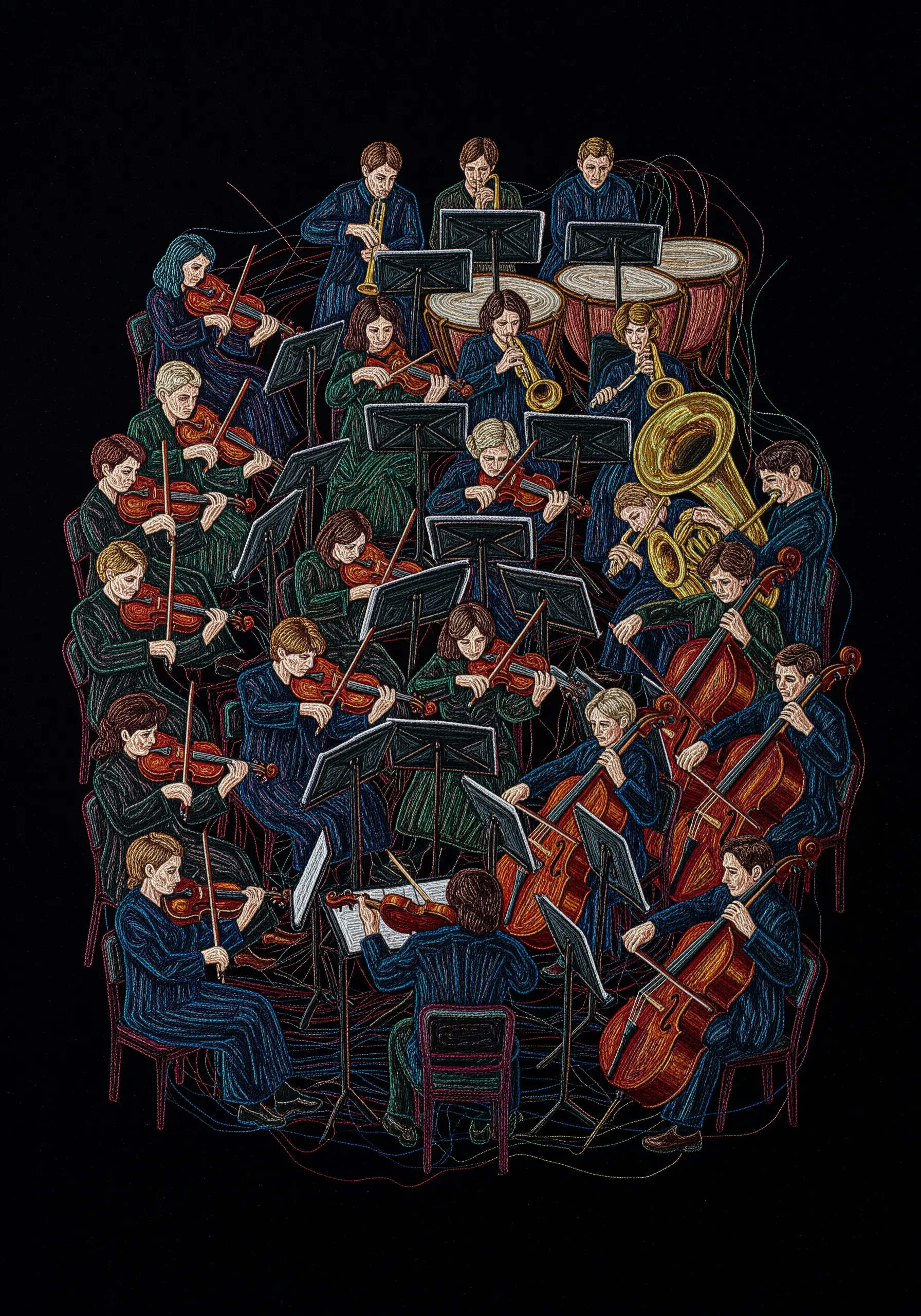
Recreate the complexity of an orchestra by using thread painting techniques to blend colors and create form.
Work with single strands of floss and dense, overlapping straight stitches to “paint” the figures and instruments, allowing for subtle shading and detail.
Keep the outlines slightly loose and gestural, letting a few stray threads escape the main form to suggest the vibration of sound filling the space.
This approach transforms a detailed scene into an atmospheric and dynamic composition.
11. Adding Textural Commentary to Musical Scores
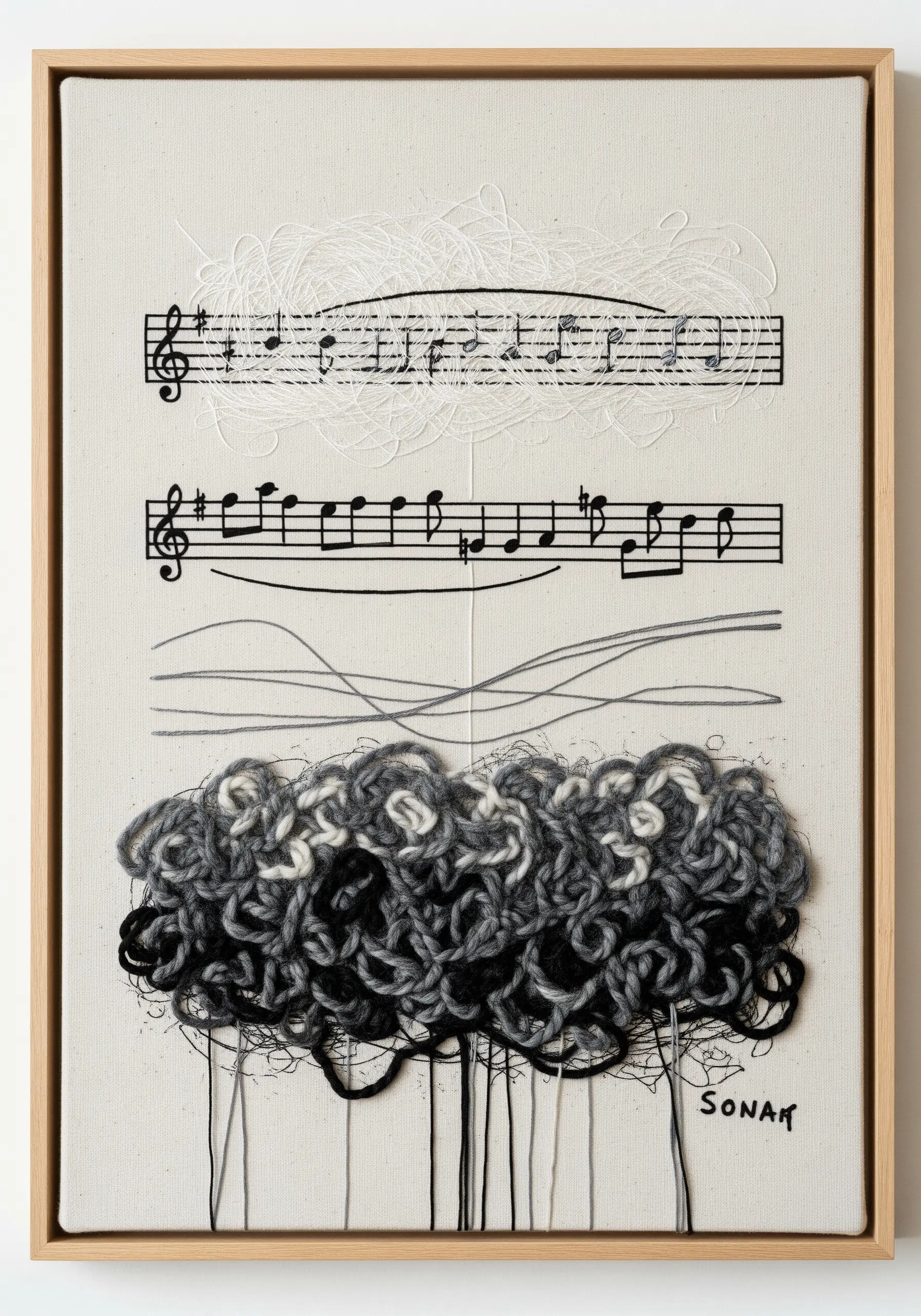
Transform a piece of sheet music into a mixed-media artwork by stitching directly onto a printed canvas.
Use your threads and yarns to interpret the music visually and emotionally.
Try fine, chaotic threads to represent a light, airy passage, and switch to thick, chunky couched yarn for a heavy, dramatic chord.
This project invites you to respond intuitively to music, using texture as your own layer of artistic interpretation.
12. Interlocking Rhythms with Chain Stitch Pathways
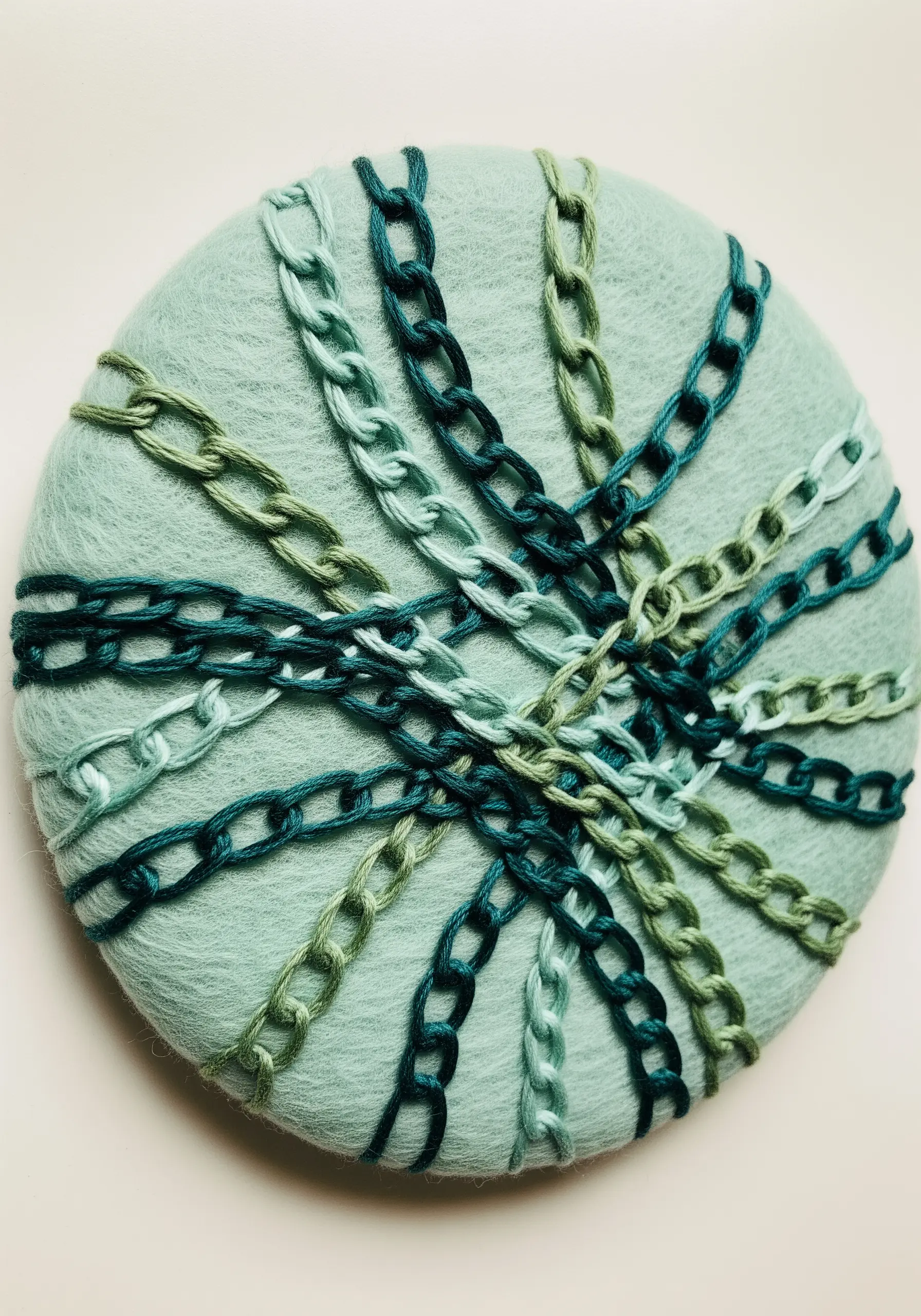
Use the chain stitch to create interlocking lines that represent different melodic pathways weaving together in harmony.
The continuous, linked nature of the chain stitch is perfect for creating fluid, unbroken lines that guide the eye across the piece.
By varying the colors and allowing the lines to cross over and under each other, you create a beautiful sense of movement and connection.
Stitching on a thick wool felt base adds a soft, tactile quality that absorbs light and makes the thread colors appear richer.
13. Accenting the Beat with Percussive Stitches
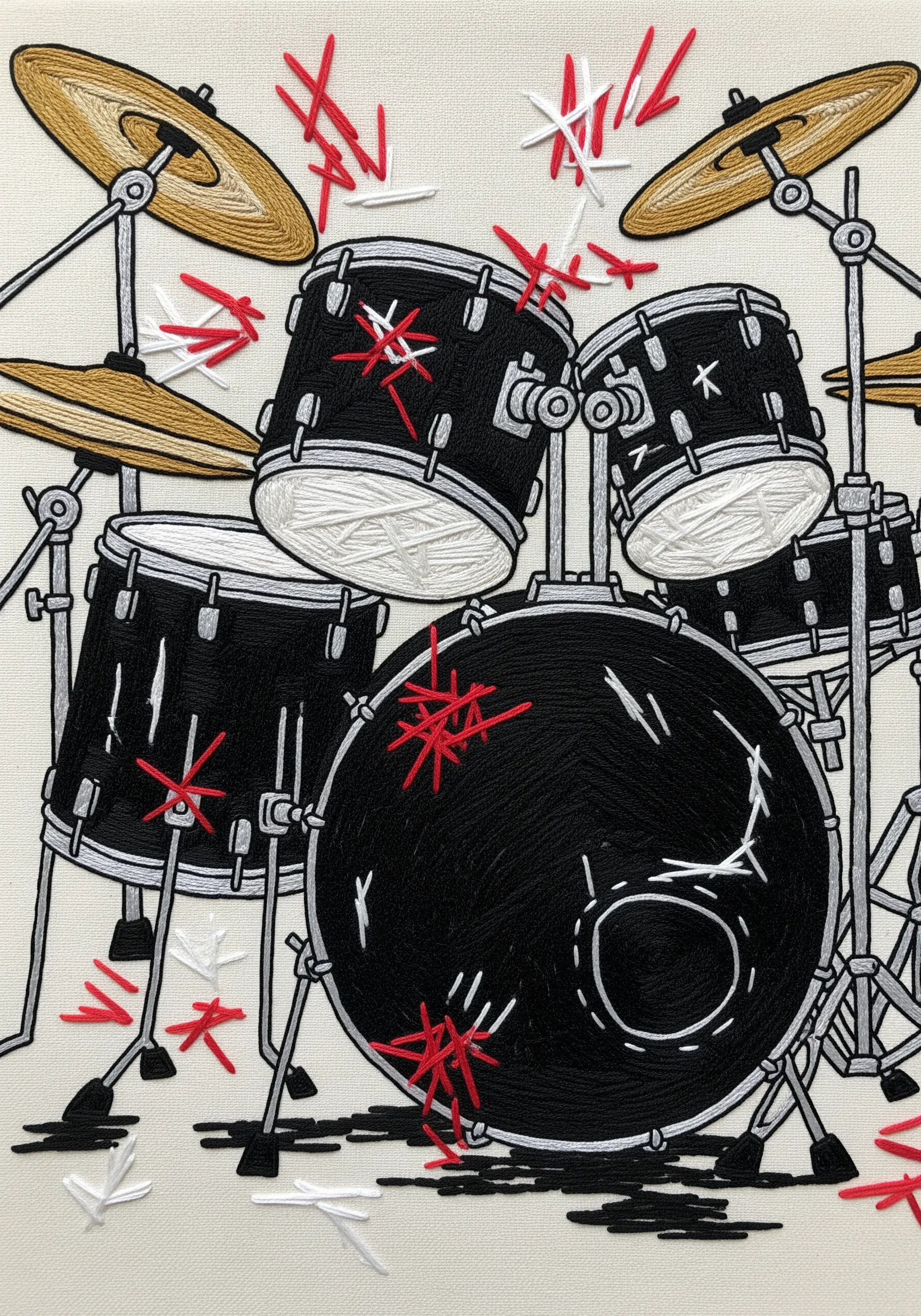
Capture the sharp, percussive sound of a drum kit by adding explosive accent stitches to an otherwise clean design.
First, outline the main shapes with a neat backstitch and fill them with smooth satin stitch for a solid, graphic look.
Then, add small, sharp bursts of straight stitches in a high-contrast color like red or white.
These “impact” marks visually represent the crash of a cymbal or the hit of a snare, adding a palpable sense of sound and energy to the composition.
14. Mapping a Sound Circuit with Appliqué and Line
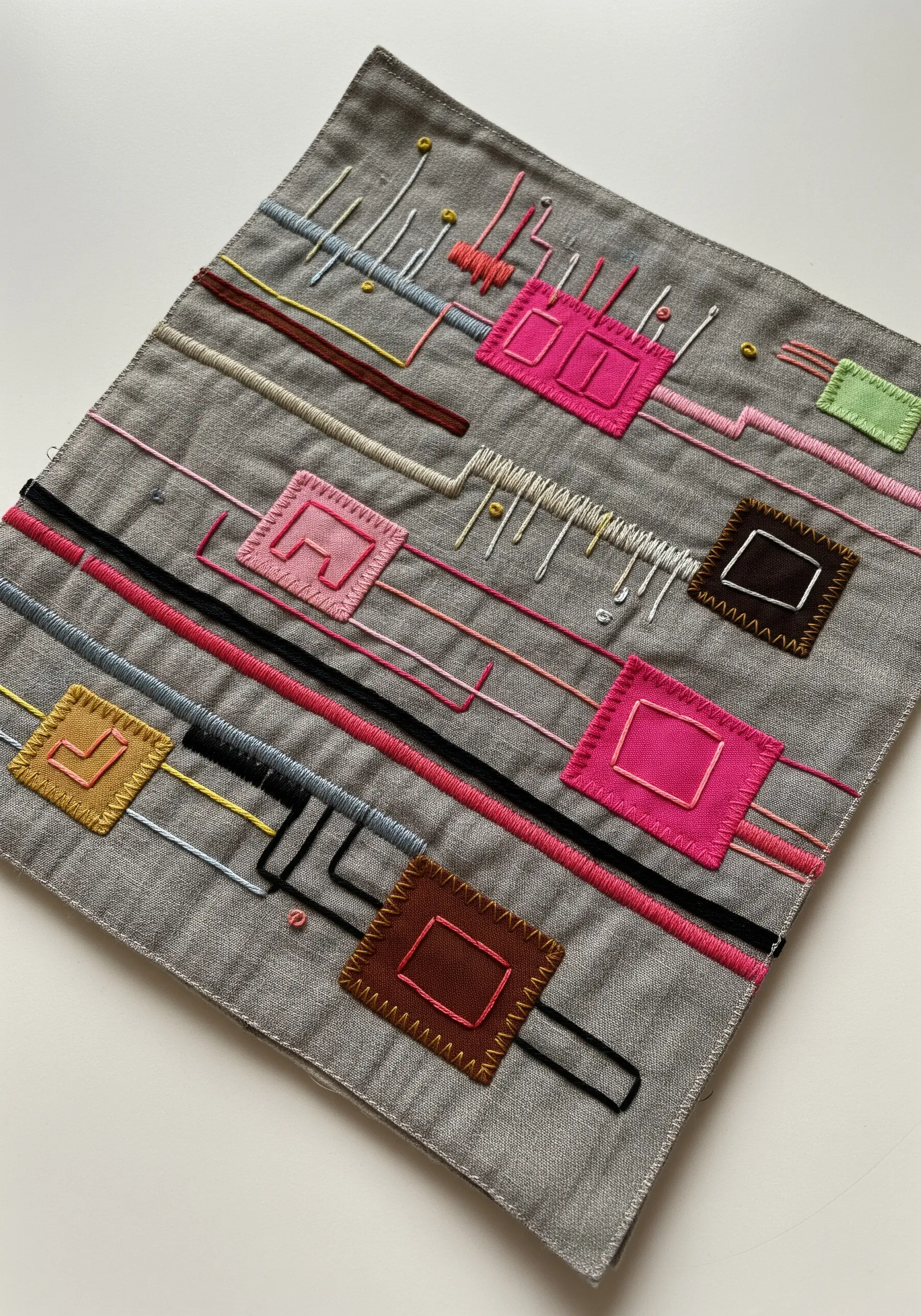
Create an abstract representation of a synthesizer or audio circuit board for a modern, graphic effect.
Use small, appliquéd fabric squares as the main components, securing them with a neat blanket stitch for a clean finish.
Then, connect these “nodes” with straight stitches and couched cords in various thread weights to represent wires and flowing signals.
This technique combines the bold shapes of appliqué with the delicacy of line work to build a complex, layered design that feels both technical and artistic.
15. Stitching Sound Waves with Thread Density
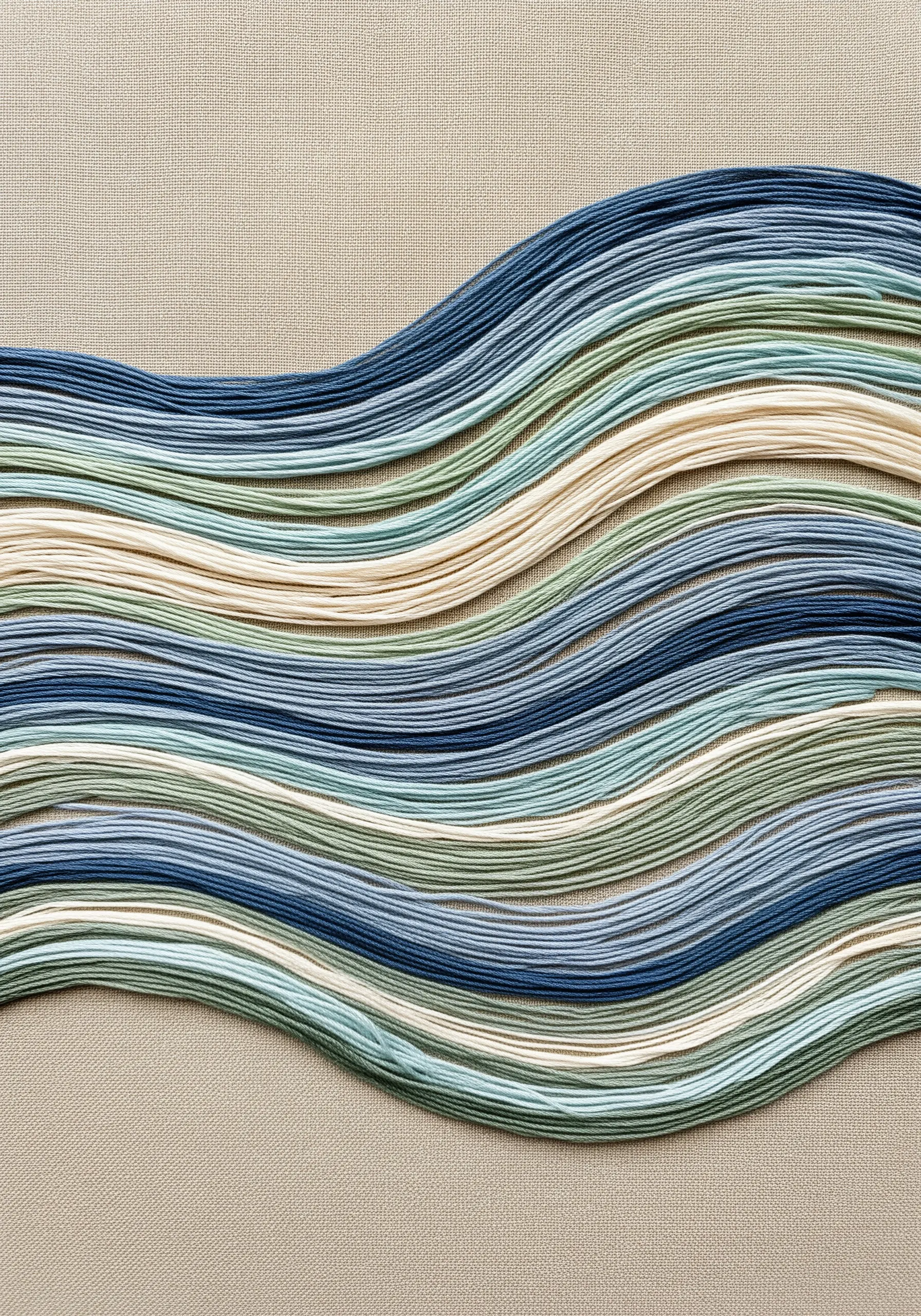
Visualize the ebb and flow of sound waves by stitching dense, parallel lines of thread across your fabric.
Use a full six strands of cotton floss to create thick, substantial lines that hug each other closely, forming a solid band of texture.
The slight, natural variations in tension and spacing will create a subtle surface texture that mimics the organic fluctuations of a waveform.
A calm, analogous color palette of blues, greens, and creams enhances the serene, flowing effect, perfect for representing a peaceful melody.
16. Creating a Vortex of Color and Rhythm
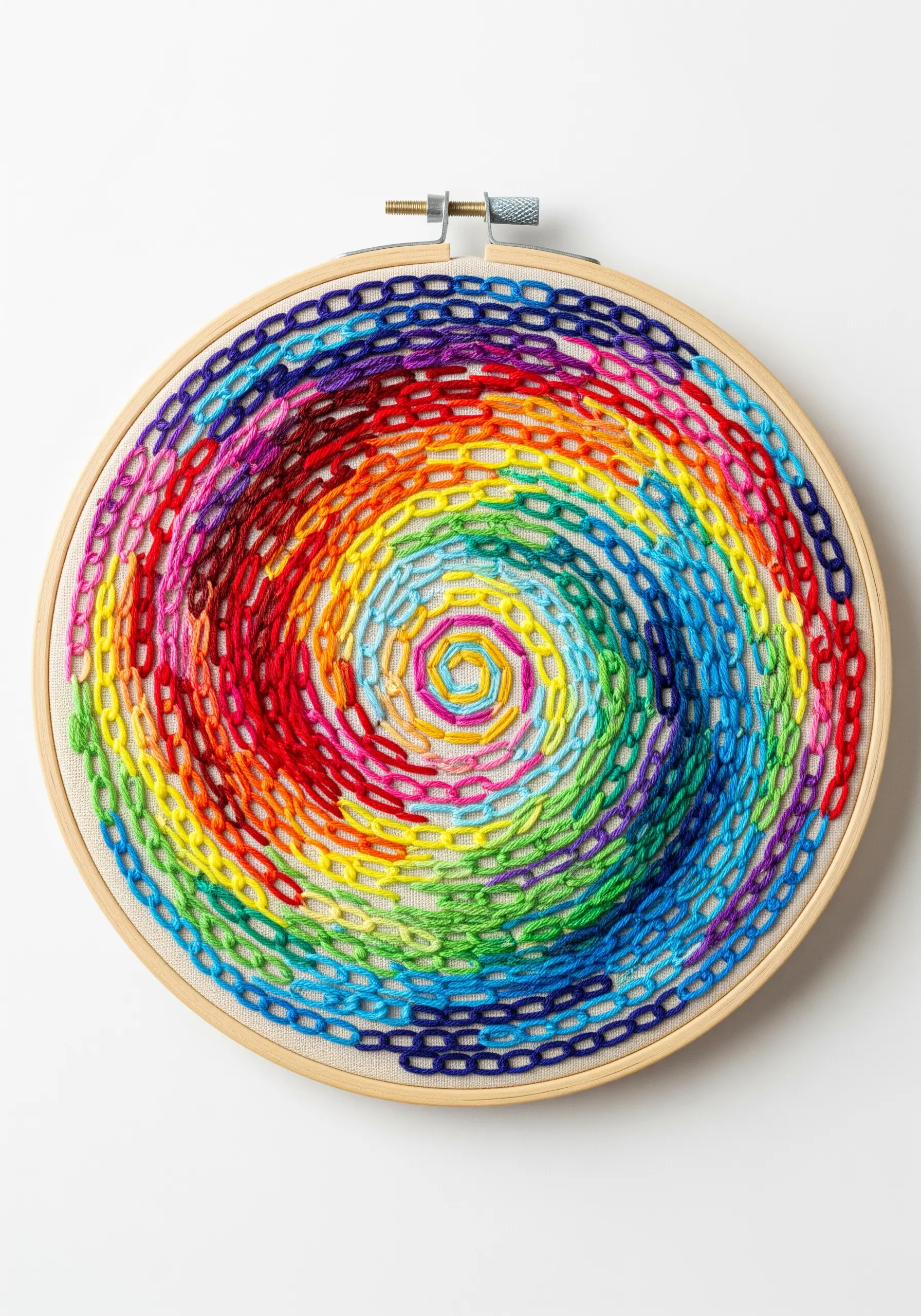
Use a continuous spiral of chain stitches to create a mesmerizing vortex of color and movement.
Begin in the center and work your way outward, changing your thread color every few rows to create a smooth rainbow gradient.
The interconnected, looped texture of the chain stitch inherently enhances the spiral’s sense of motion and energetic flow.
This meditative project produces a vibrant, hypnotic result, perfect for representing looping electronic music or a steadily building crescendo.
17. Visualizing Audio Levels with Gradient Knots
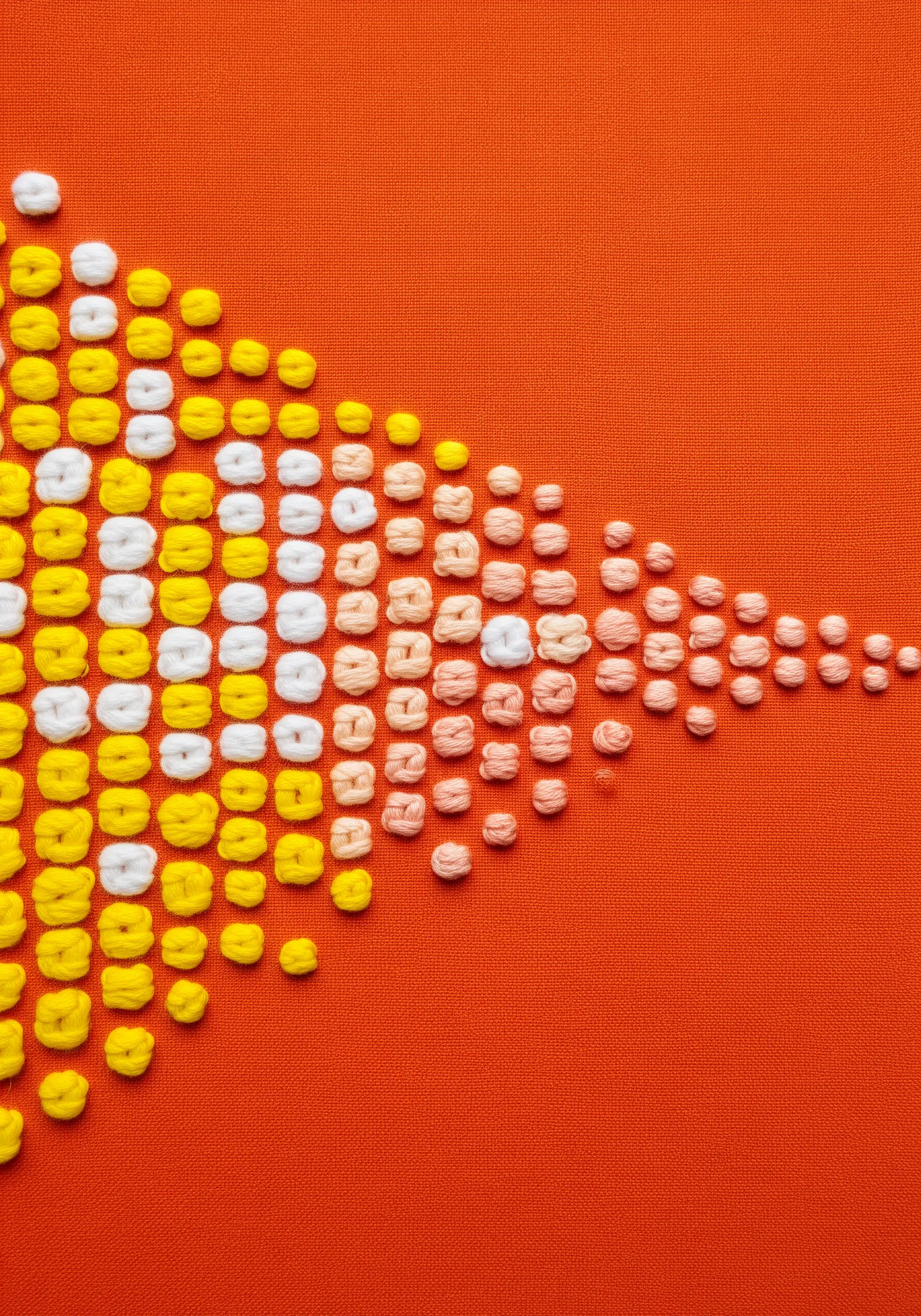
Use French knots as pixels of sound, arranging them to form a shape reminiscent of a digital audio waveform or volume meter.
Create a smooth gradient effect by mapping out your colors beforehand and gradually changing your thread from light to dark.
To add more textural interest, vary the number of times you wrap the thread around the needle for each knot—one wrap for small knots, two or three for larger ones.
This gives the piece a dynamic, pointillist quality that feels both digital and handmade.
18. Juxtaposing Order and Flow in Composition
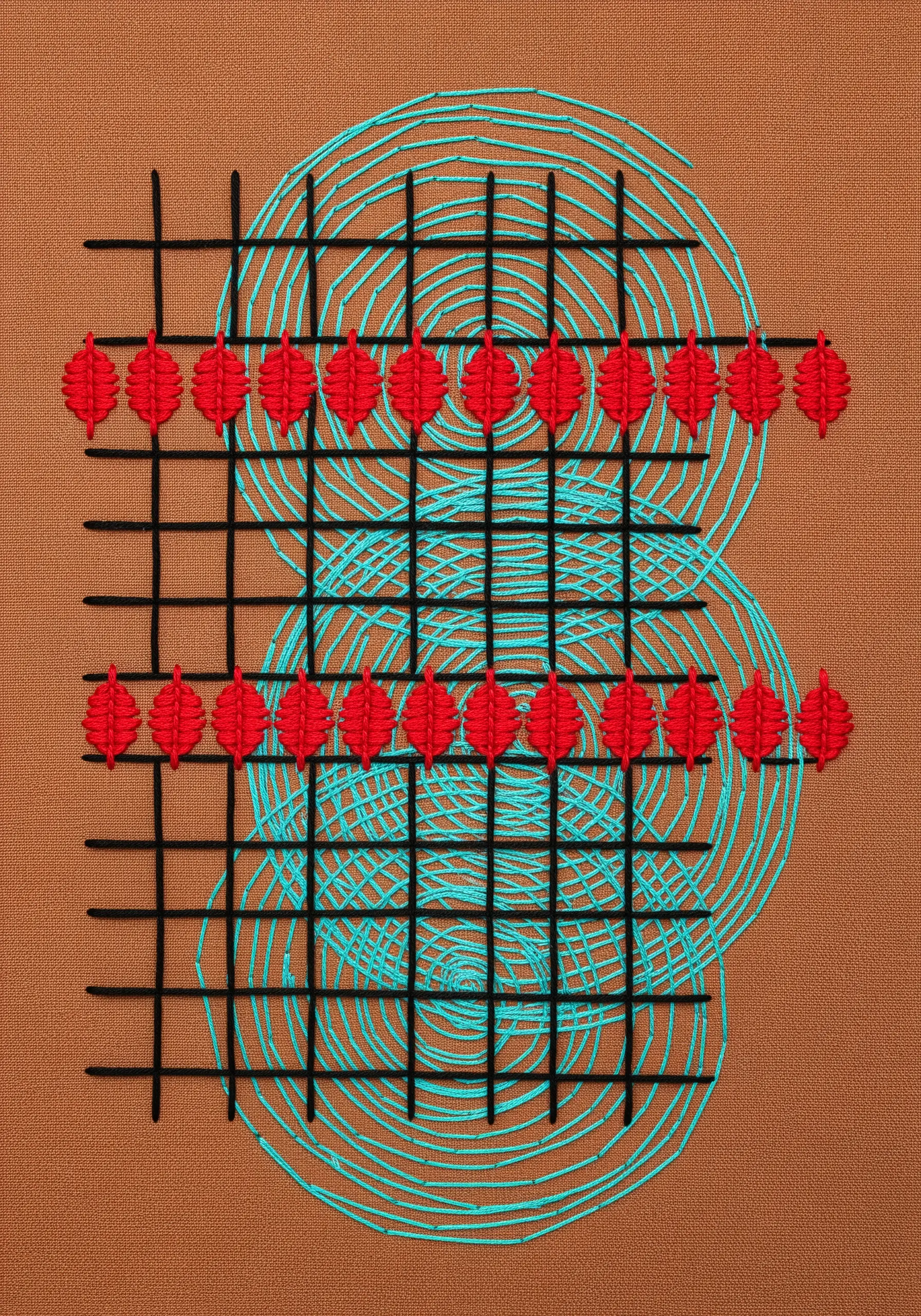
Explore the relationship between structure and improvisation by combining a rigid, geometric grid with free-flowing organic shapes.
Use a simple backstitch in a dark, grounding color to create the sharp, predictable lines of the grid.
Then, overlay this structure with soft, curved lines or repeating leaf-like motifs in a bright, contrasting color.
This contrast creates a dynamic tension, much like an expressive melody played over a steady, underlying rhythm. The opposing elements make each other stronger.
19. Defining Form with String Art Tension
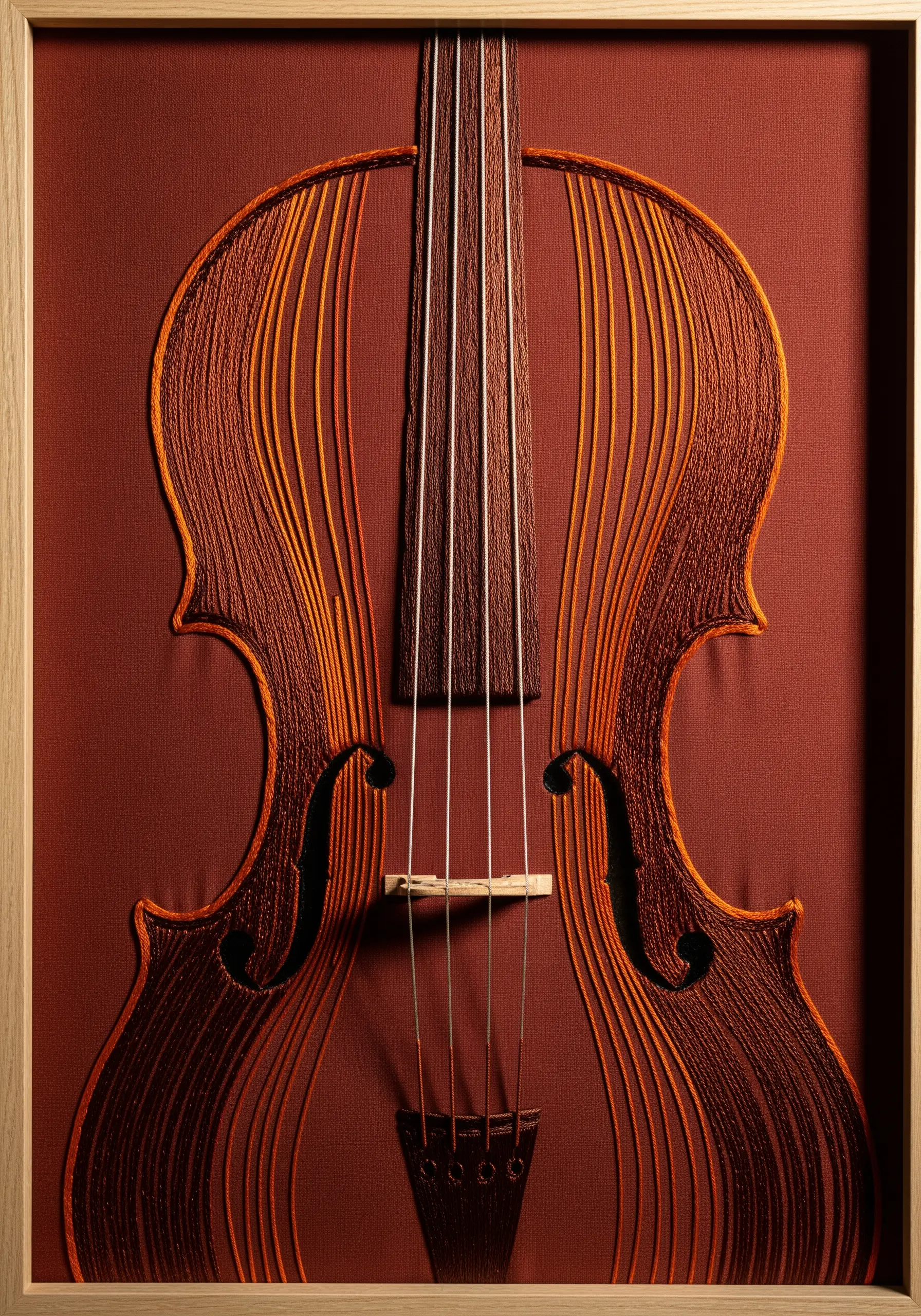
Instead of filling a shape with traditional stitches, use the principles of string art to define its form with taut, intersecting lines.
First, establish the silhouette with a strong outline stitch or a couched cord.
Then, stretch threads from one side of the outline to the other, creating a sense of volume and vibration through layers of straight lines.
In this technique, the negative space becomes just as important as the thread, creating stunning modern thread art that transforms a familiar object into a beautiful abstraction.
20. Perfecting Satin Stitch for Graphic Impact
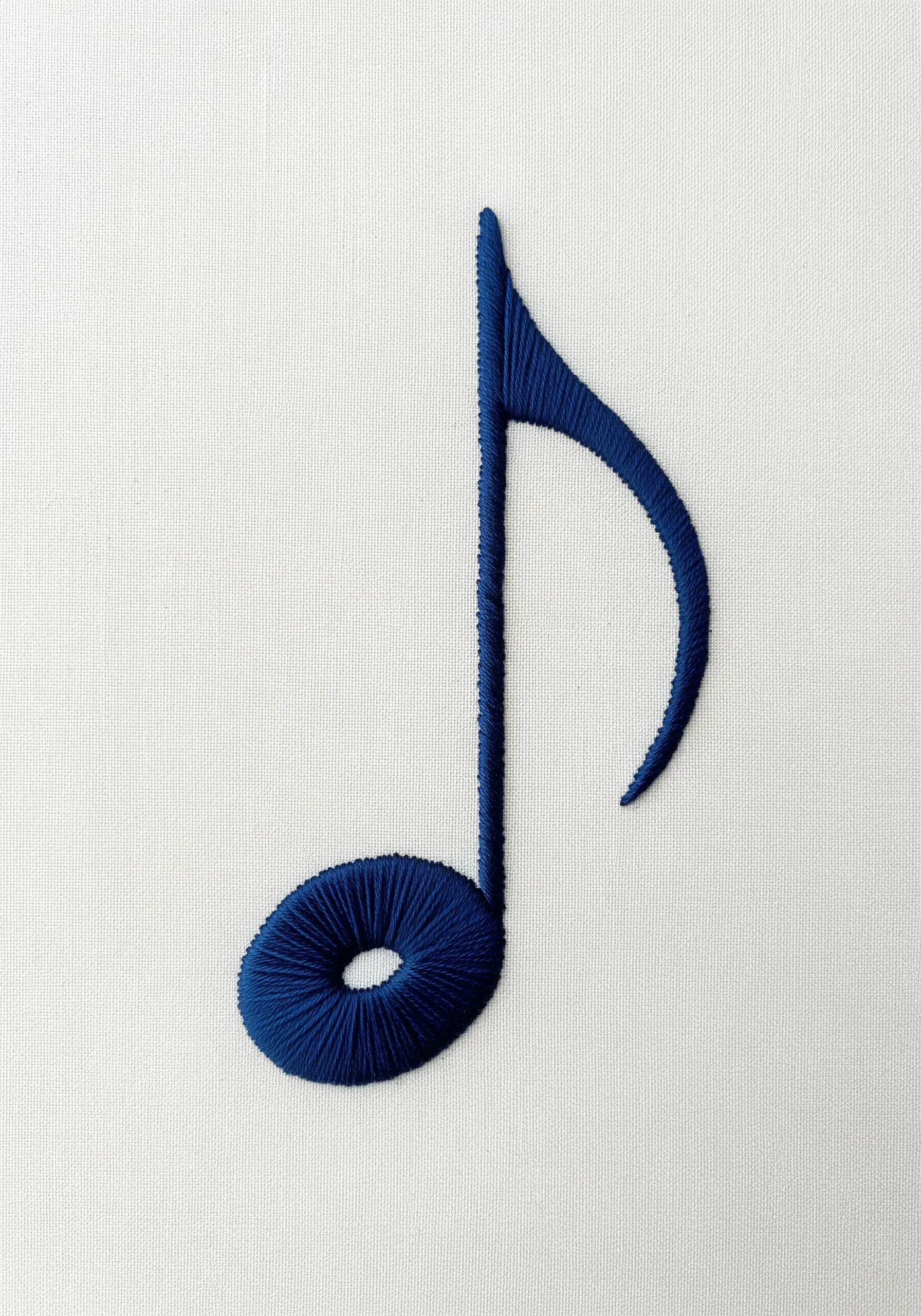
Elevate a simple, graphic shape like a musical note by focusing on a flawless satin stitch execution.
To achieve a perfectly smooth, reflective surface, first outline the entire shape with a split stitch.
This raised edge will act as a guide for your needle, preventing uneven edges and helping your satin stitches lie flat.
Angle your stitches slightly—not perfectly horizontal or vertical—to best catch the light and create a subtle, elegant sheen that gives the shape life.
21. Composing a Cacophony with Mixed-Media Layers
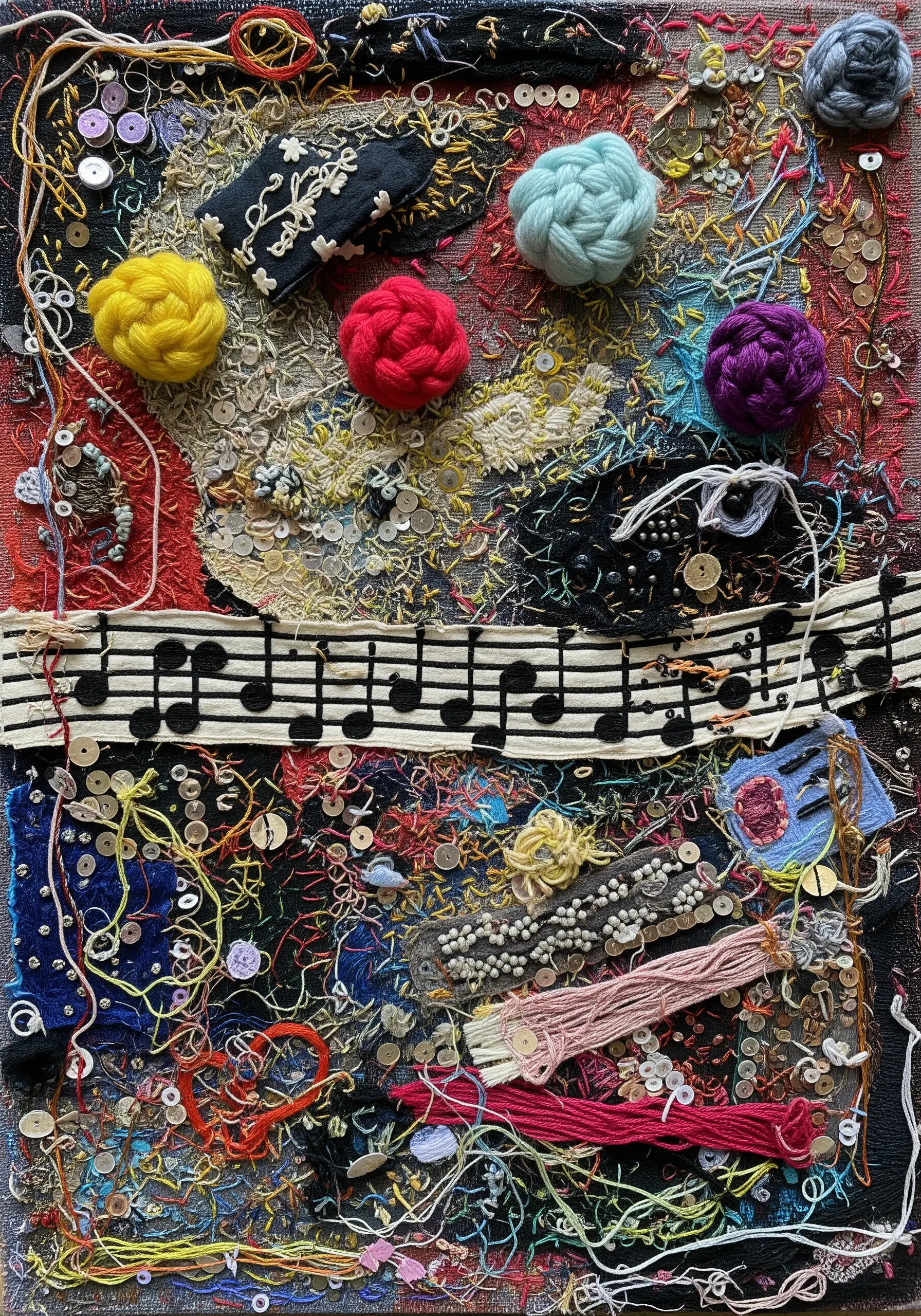
Embrace a maximalist, intuitive approach to represent a complex, layered piece of music or a joyful cacophony of sounds.
Combine a wide variety of materials: appliquéd fabric scraps, beads, sequins, thick yarn, and threads of all weights.
Don’t over-plan; let one texture inspire the next, building up layers organically.
Use couching to tack down heavier elements and fill every remaining space with a riot of French knots, seed stitches, and chaotic straight stitches. This is an exercise in pure, expressive freedom.
22. Capturing Ephemeral Melodies with Metallic Thread
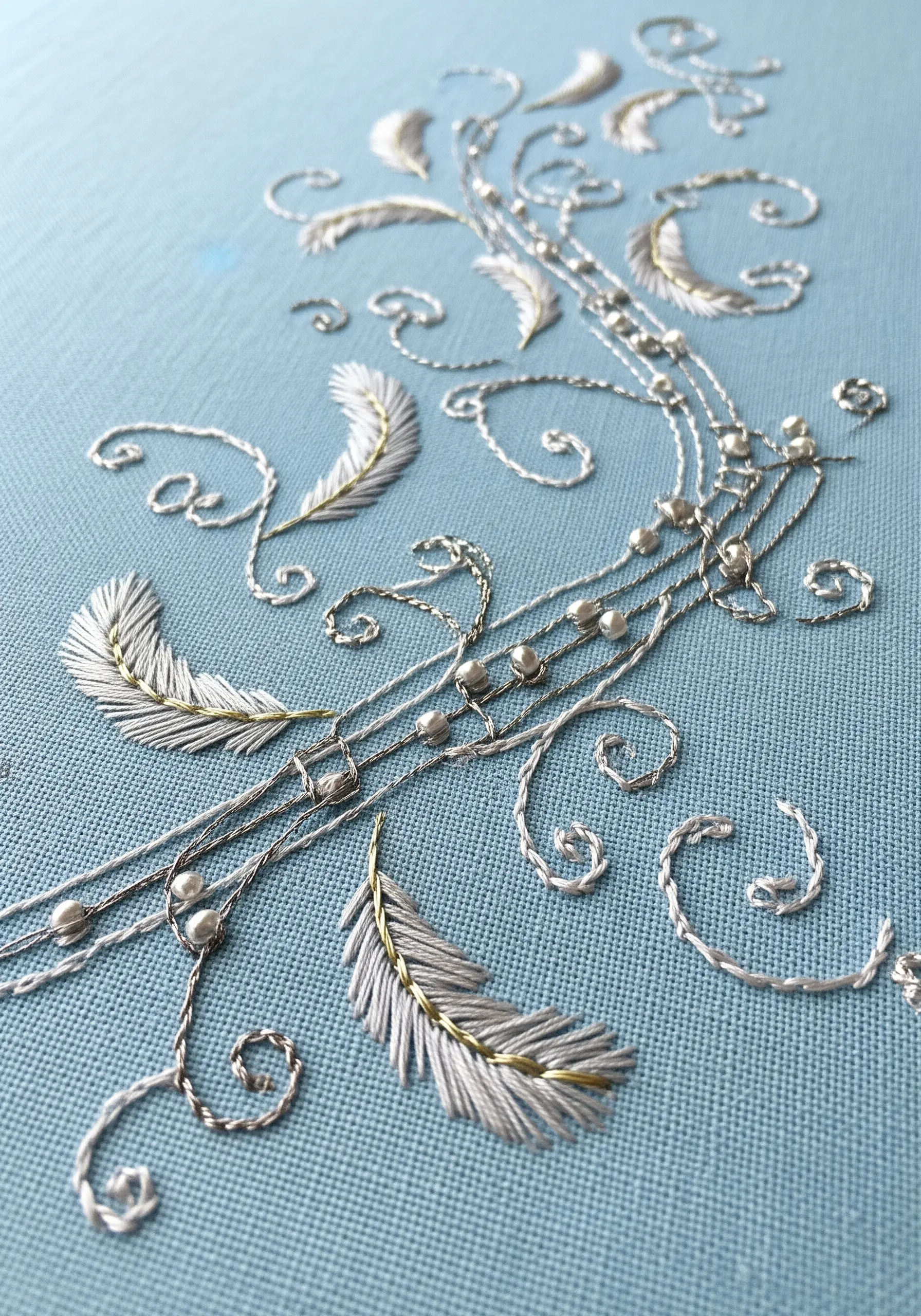
Suggest a light, airy melody by using delicate stitches and carefully placed shimmering accents.
Use a fine metallic thread for swirls and outlines; its ability to catch the light adds a touch of magic.
Create small, feather-like motifs with satin stitch, adding a single strand of gold to the fill for subtle warmth and dimension.
Incorporate tiny seed beads or freshwater pearls as “notes” along the lines. The key here is restraint—using these precious materials sparingly makes them far more impactful.
23. Translating Musical Tempo into Line and Color
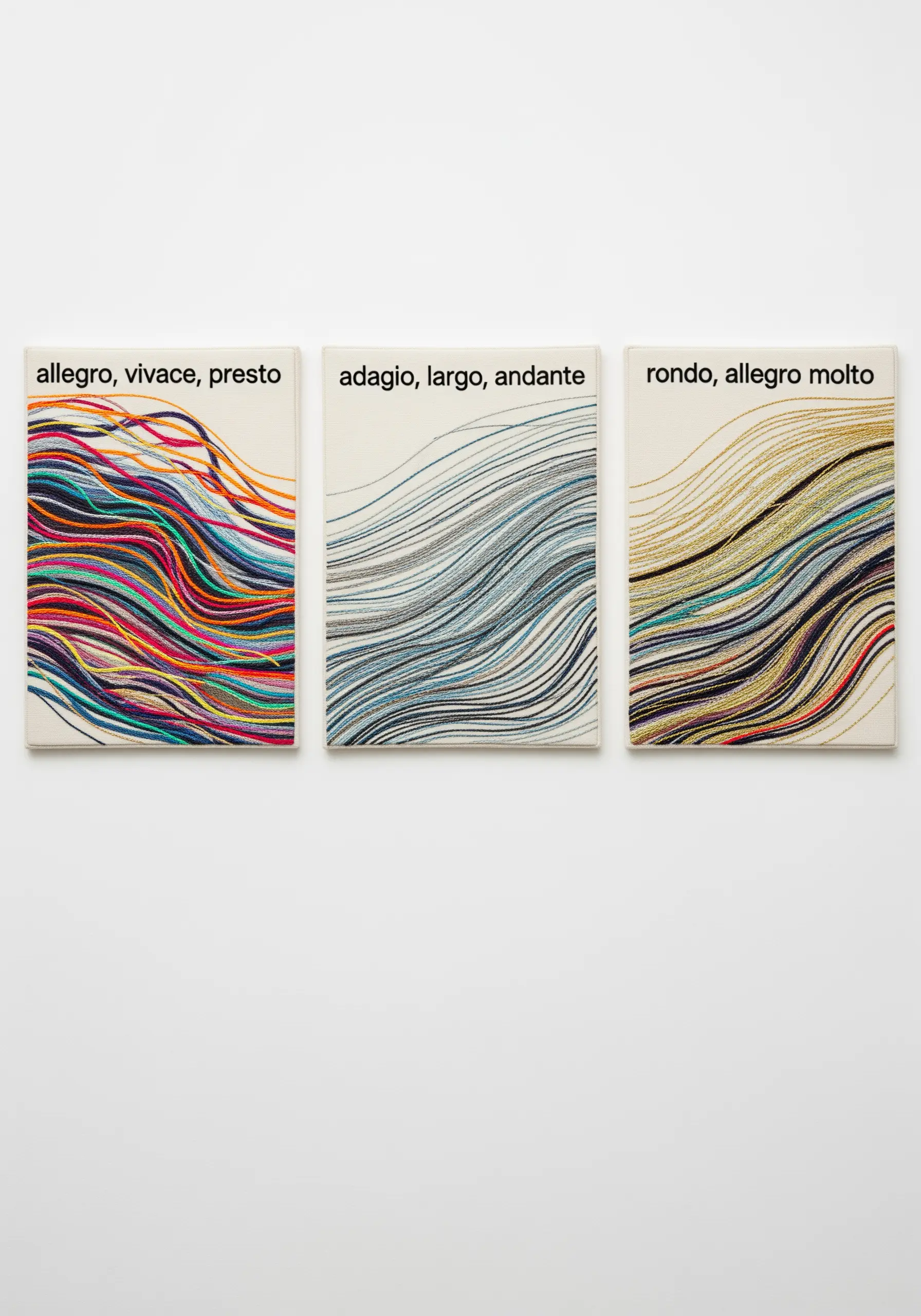
Create a triptych of canvases that visually interprets different musical tempos through abstract stitching.
For “allegro” (fast and lively), use vibrant, high-contrast colors and energetic, overlapping lines that seem to vibrate with speed.
For “adagio” (slow and stately), switch to a muted, analogous color palette and stitch smoother, more parallel lines that convey a sense of calm.
This project forces you to think abstractly about how color choice, line density, and stitch quality can powerfully convey a specific feeling or pace.
24. Braiding Threads for Rhythmic Texture
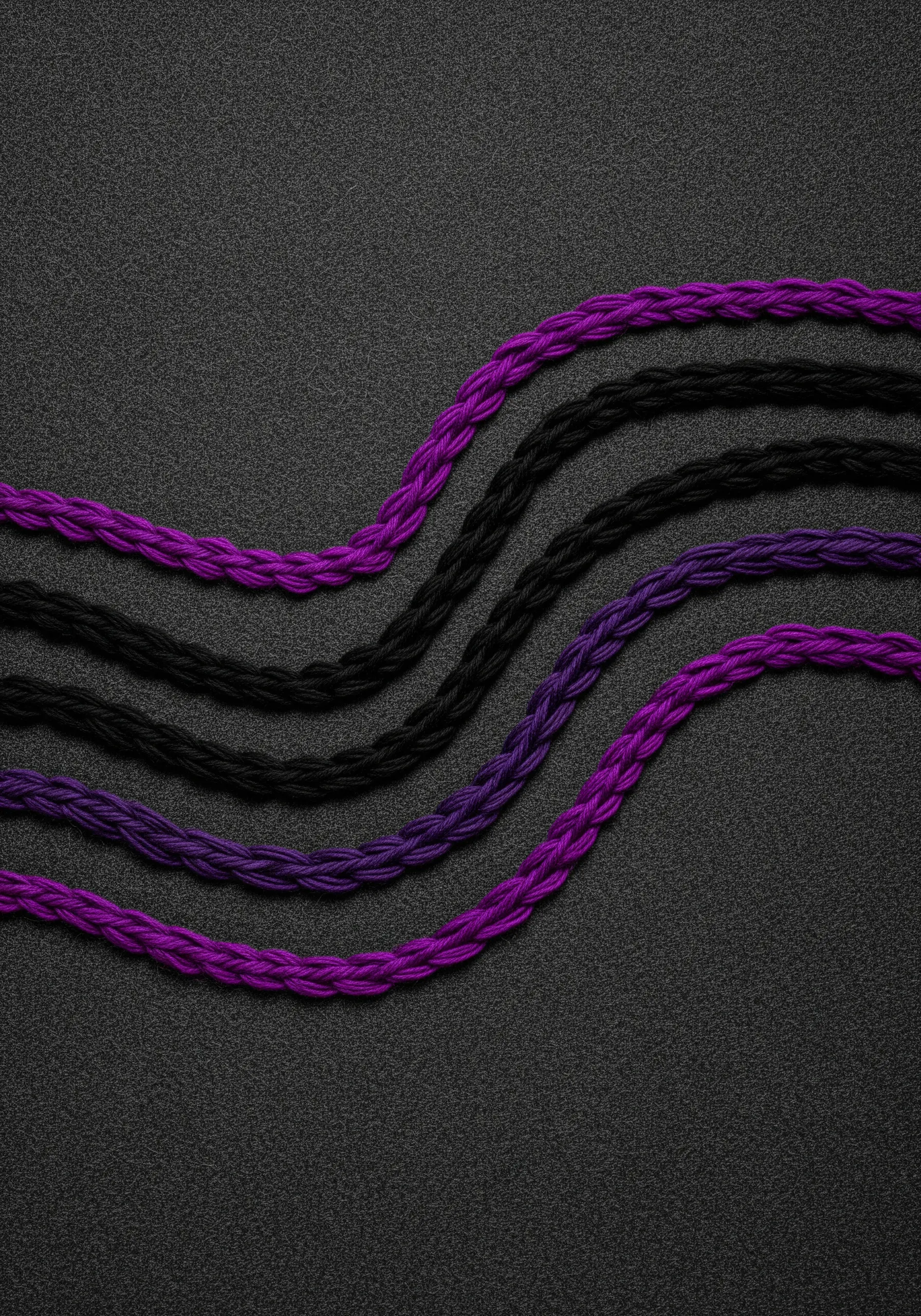
Instead of using single strands, braid multiple threads together before stitching to create a thick, highly textured line with visual weight.
This is a simple way to add instant dimension to your work without learning a complex stitch.
Couch this braided cord onto your fabric using a thinner, matching thread for an invisible hold.
You can create a striking two-tone effect by braiding contrasting colors together. This technique is perfect for representing interwoven harmonies or a strong, steady bass line.
25. Exploring Minimalism and the Power of the Pause
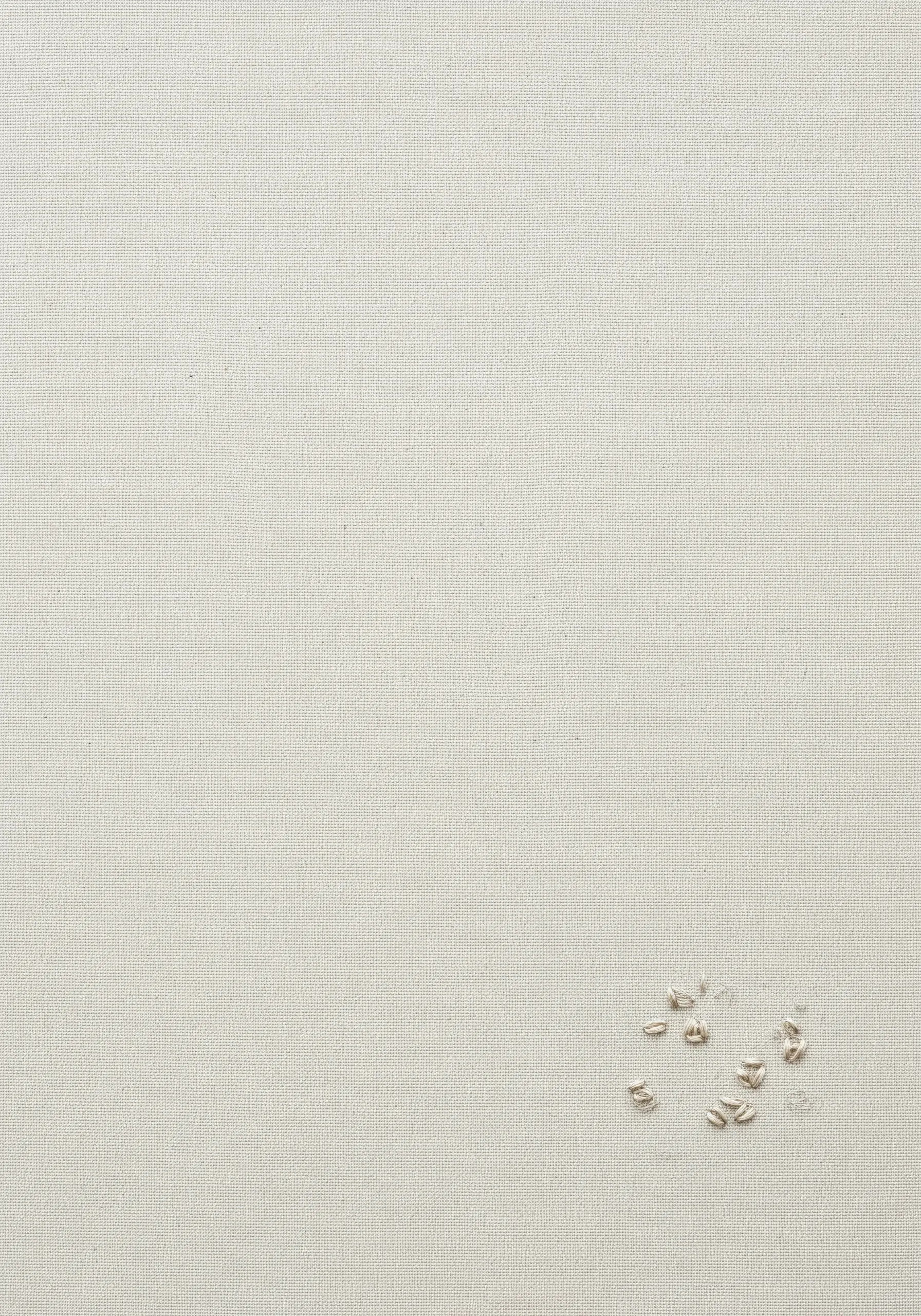
In music, the silence between notes is just as important as the notes themselves. Represent this concept with extreme minimalism.
Use just a few scattered seed stitches or French knots in a single, neutral color on a vast expanse of un-stitched linen.
The negative space becomes the focus of the piece, creating a sense of quiet, calm, and contemplation.
This is a powerful exercise in artistic restraint, proving that you don’t need dense, complex stitching to make a profound statement.
26. Creating Rhythm with Geometric Repetition

Design a border or all-over pattern based on the consistent repetition of simple geometric shapes.
The predictable rhythm of the repeating pattern creates a visual beat, similar to a drum machine or a recurring musical phrase (an ostinato).
Using a single color on a neutral fabric forces the eye to focus on the pattern’s structure and form.
This type of stitching, often found in blackwork and other historical techniques, is a meditative way to explore how repetition creates visual flow and harmony.
27. Combining Appliqué and Beading for Pop Art Rhythm
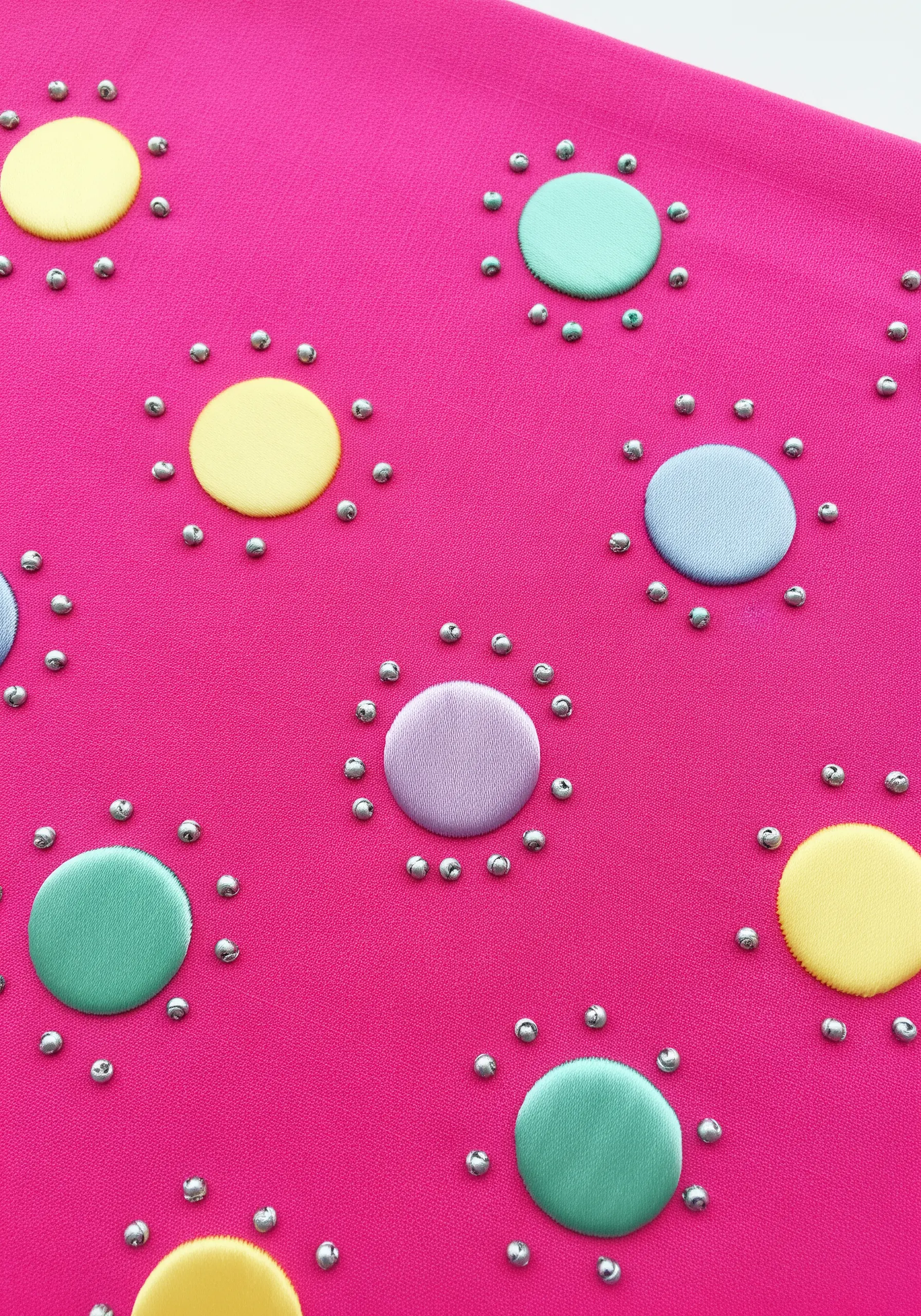
Create a bold, graphic pattern by combining flat appliqué with the dimensional sparkle of beading.
Cut perfect circles from different colored fabrics and secure them with a hidden stitch for a clean, seamless look.
Then, add a tight ring of metallic seed beads around each circle to define its edge and add a touch of light.
The contrast between the soft, matte fabric and the hard, shiny beads creates a vibrant, pop-art effect that is all about joyful, rhythmic placement.
28. Sculpting a Melody with Thread and Beads
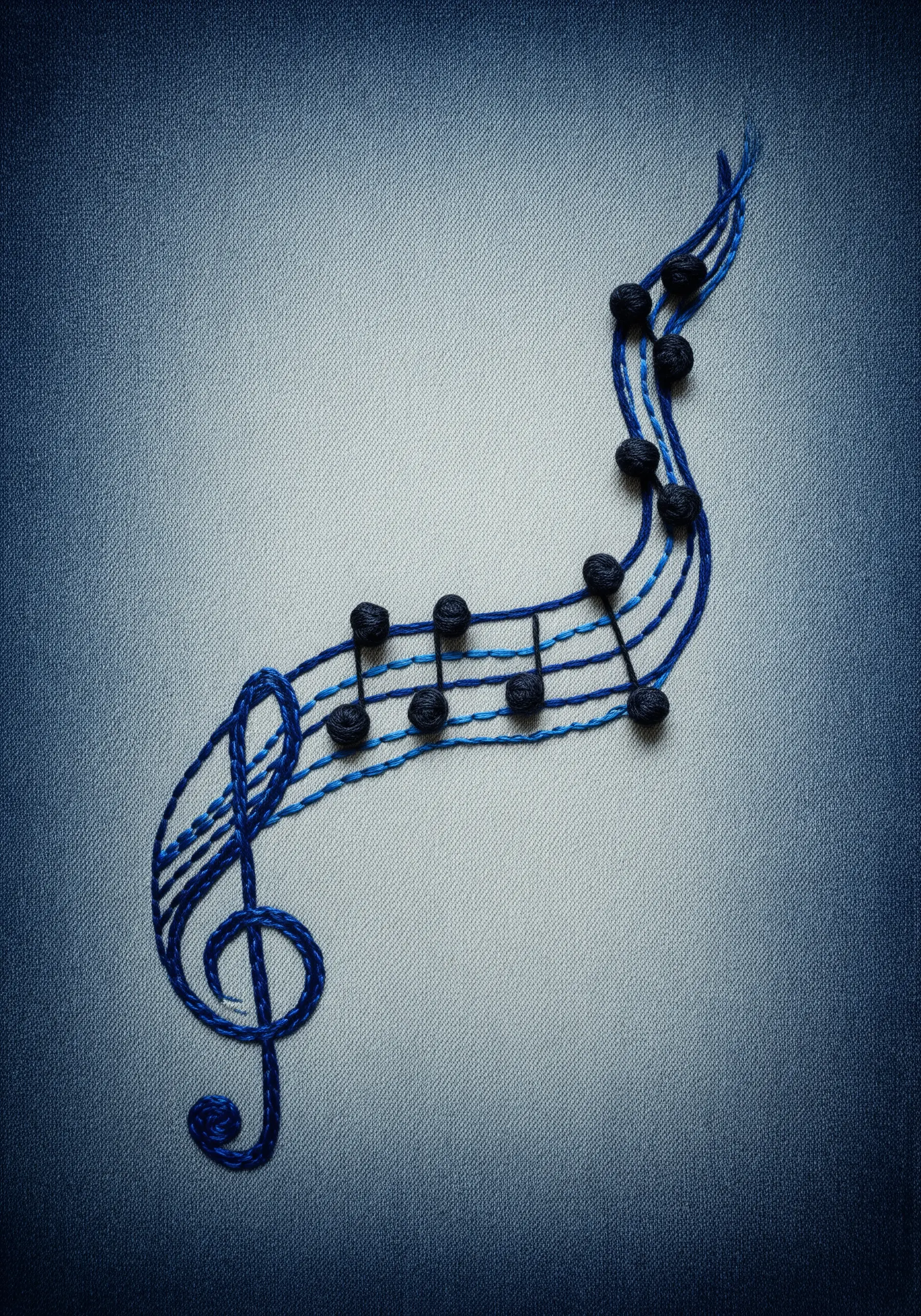
Construct a musical staff using a combination of linear threadwork and three-dimensional elements.
Use couching to lay down the staff lines with a smooth, consistent thread, establishing the foundation of the piece.
For the notes themselves, use wrapped beads or large, tightly-wound bullion knots to make them pop.
This combination of flat and sculptural elements makes the melody literally stand off the fabric, creating a dynamic piece with real depth and shadow play.
29. Crafting a Synthwave Landscape with Light and Line

Evoke the retro-futuristic aesthetic of synthwave music using neon thread and iridescent sequins on a dark background.
Create a perspective grid with a bright, glowing thread using a simple backstitch for perfectly clean, sharp lines.
Then, scatter sequins randomly across the “floor” of your grid to represent distant city lights or digital artifacts.
The way the sequins catch and refract light will complete the otherworldly, electronic vibe of the piece, adding movement and sparkle.
30. Achieving Metallic Sheen with Directional Stitching
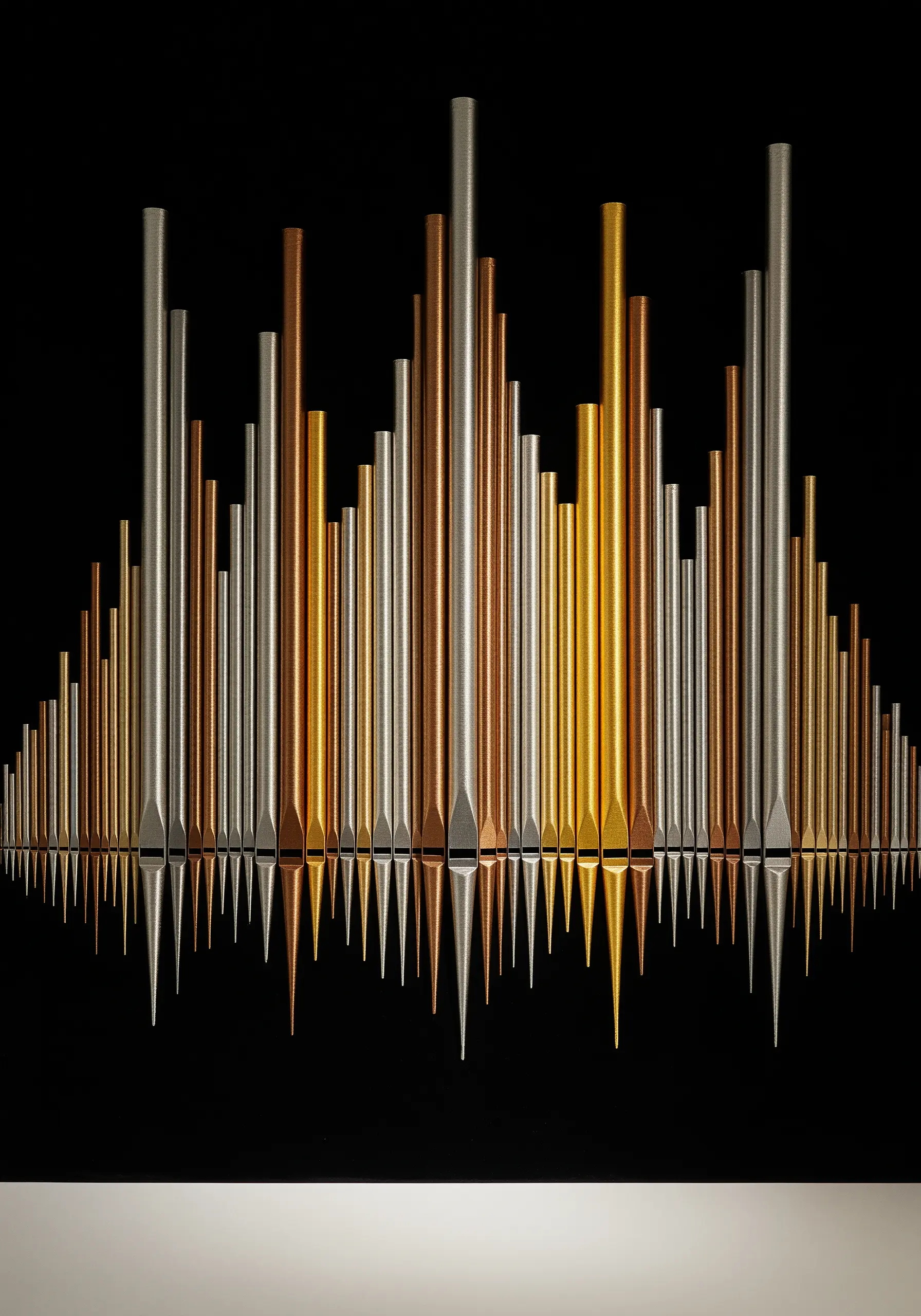
To mimic the polished, reflective surface of metal organ pipes, use vertical satin stitches with metallic or high-sheen silk floss.
The key to success is absolute consistency in your stitch direction and tension.
Every single stitch must lie perfectly parallel to its neighbor to create a smooth, unbroken surface that reflects light uniformly, just like real metal.
Using a palette of different metallic shades—gold, silver, copper, and pewter—will represent different tones and create a sense of harmony and grandeur.
31. Stitching a Celestial Score on Sheer Fabric
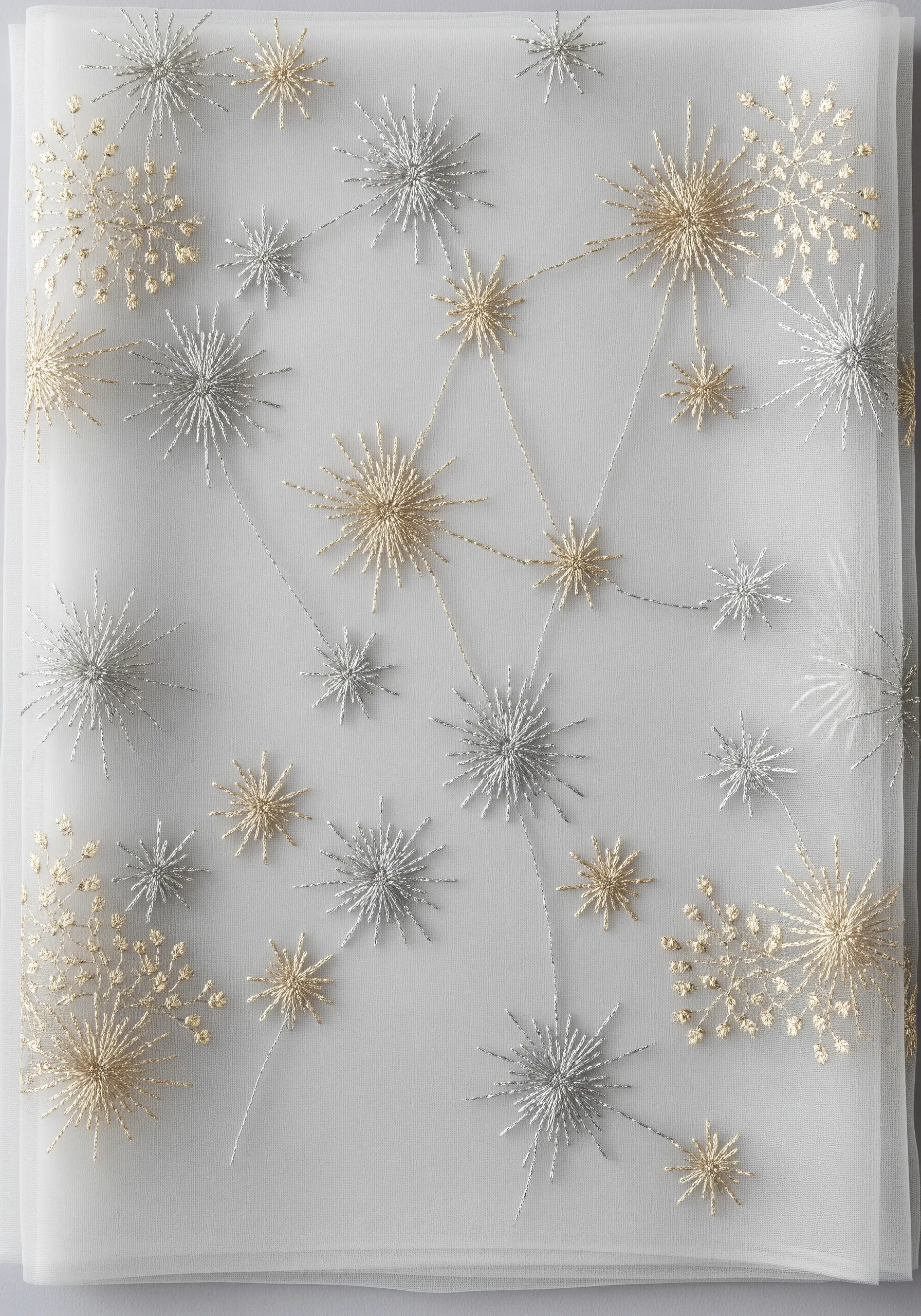
Create a truly ethereal composition by stitching starburst or firework motifs onto a sheer background like tulle or organza.
Use metallic silver and gold threads exclusively to make the designs sparkle with celestial light.
The transparency of the fabric is key; it makes the stitches appear to float in mid-air, unattached to any surface.
Connect some of the starbursts with delicate, meandering lines of backstitch to suggest constellations or the path of a shooting star, creating a magical, silent score.
32. Creating Motion with Curved Satin Stitch

Challenge your satin stitch skills by applying the stitch to a dynamic, swirling shape, which requires careful control.
Instead of keeping your stitches parallel, you must fan them out to follow the curves of the design.
This technique, often called shaped or encroaching satin stitch, allows you to fill complex shapes smoothly without gaps.
By alternating bright, high-contrast colors, you dramatically enhance the sense of spinning motion, creating a piece that feels full of kinetic energy and rhythm.
33. Making a Statement with Minimalist Line Work
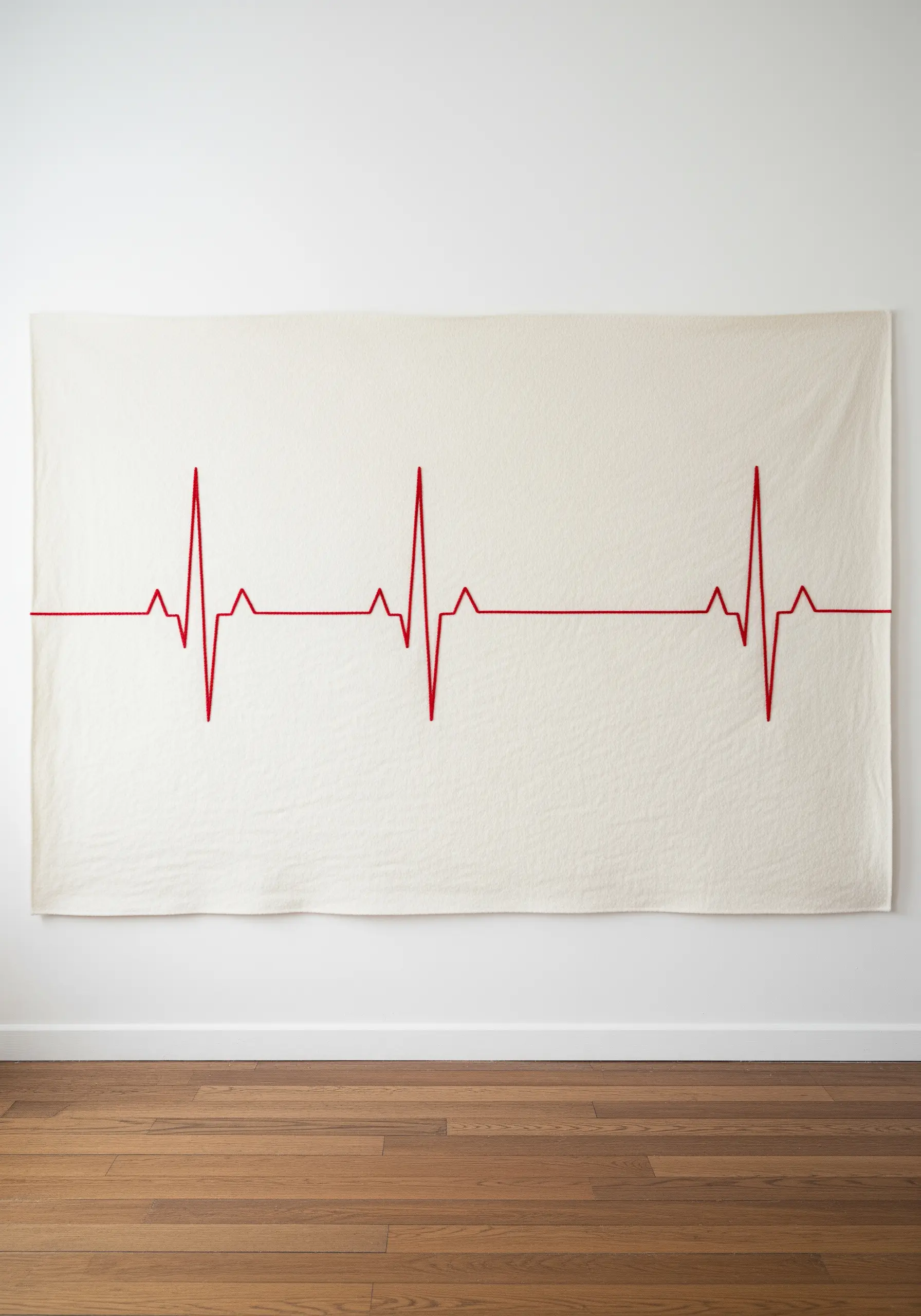
Translate the most fundamental human rhythm—the heartbeat—into a powerful, large-scale statement piece.
On a large swath of neutral, unadorned canvas, use a single, bold line of couched cord or thick yarn to create the EKG waveform.
The extreme simplicity of the design is precisely what gives it its profound impact.
This project is a perfect example of large-scale embroidery, demonstrating that a single, meaningful line can have more emotional resonance than a thousand complex stitches.
34. Expressing a Stormy Mood with Texture
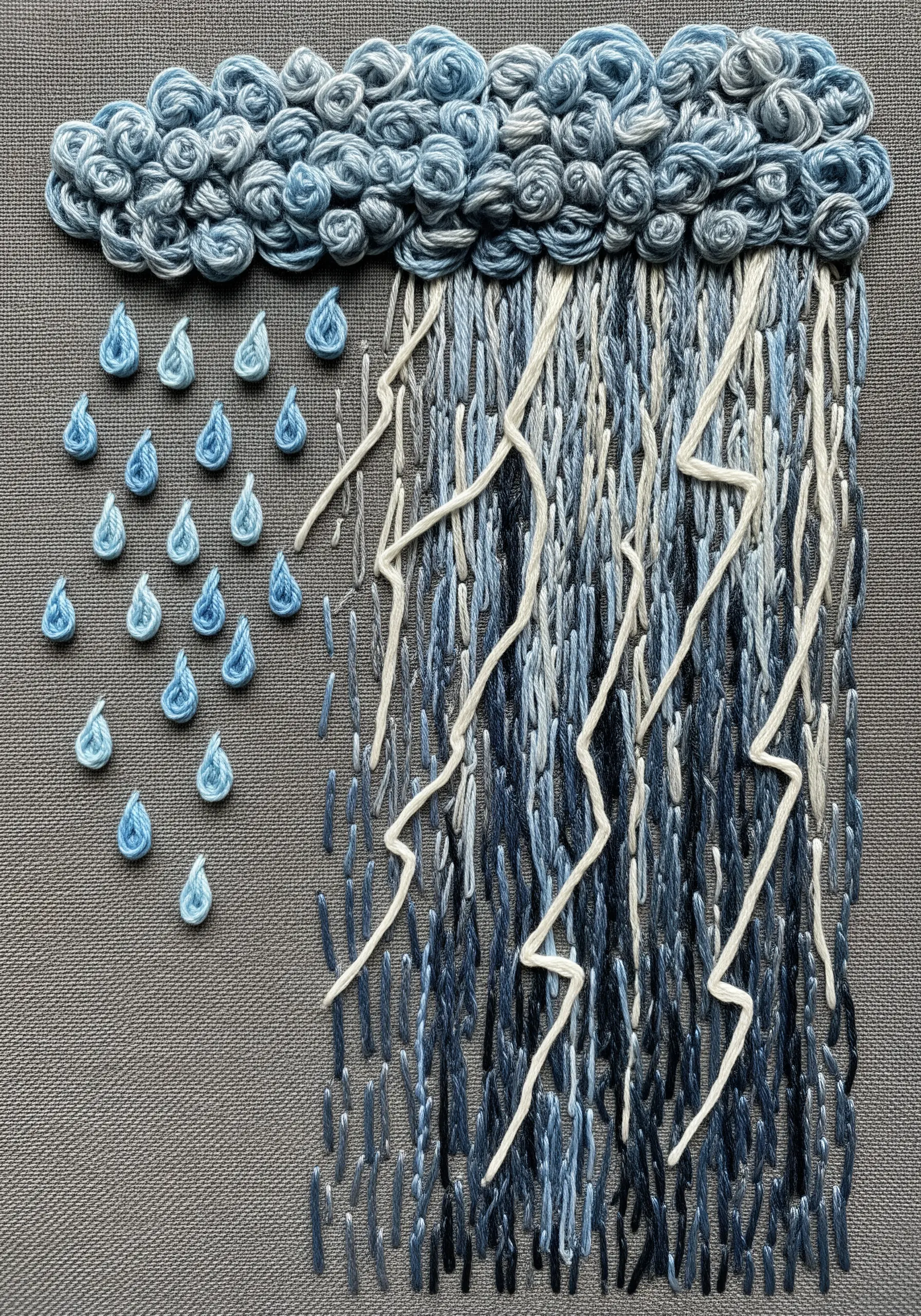
Capture the chaotic energy of a thunderstorm by assigning a specific stitch texture to each natural element.
Use bullion knots or dense clusters of French knots to build a turbulent, three-dimensional cloud with volume and shadow.
For the falling rain, use long, vertical straight stitches with variegated blue and grey thread to create a sense of movement and shifting light.
Finally, add sharp, jagged lines of white backstitch or stem stitch to represent the sudden, bright flash of lightning, completing the stormy scene.