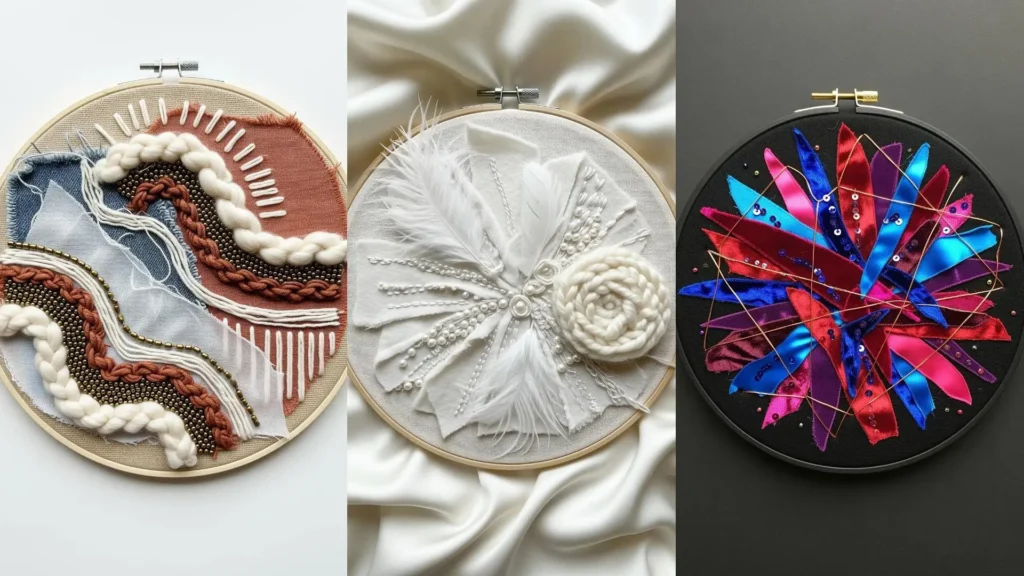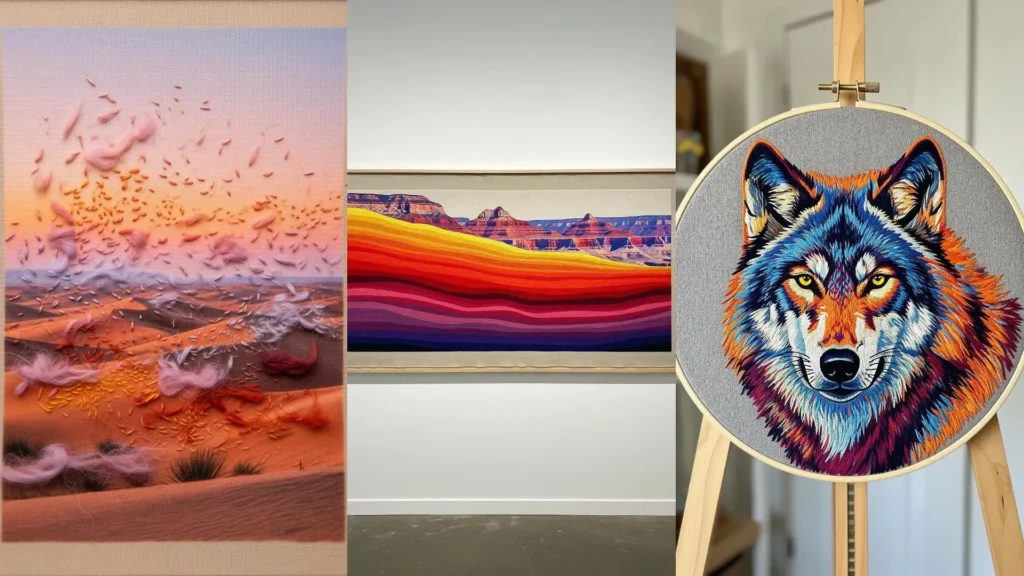
Before you pick up a needle, I want you to look at a photograph—any photograph—and see it not as a finished image, but as a starting point. Your thread doesn’t have to just copy what’s there; it can interpret, disrupt, and transform it into something entirely new.
The goal isn’t just realism. It’s about translating a feeling, a texture, or an idea into stitches. It’s about asking, ‘What if this sky wasn’t blue, but a chaotic storm of metallic thread?’ or ‘What if this portrait dissolved into pure color?’ This is where your unique artistry begins.
In the ideas that follow, you’ll find ways to break the rules with intention. You’ll learn how to blend the hyper-realistic with the boldly abstract, how to use texture to tell a story, and how to turn a simple image into a piece of surreal, personal art. Let’s begin.
1. Juxtapose Realism with Digital Glitch
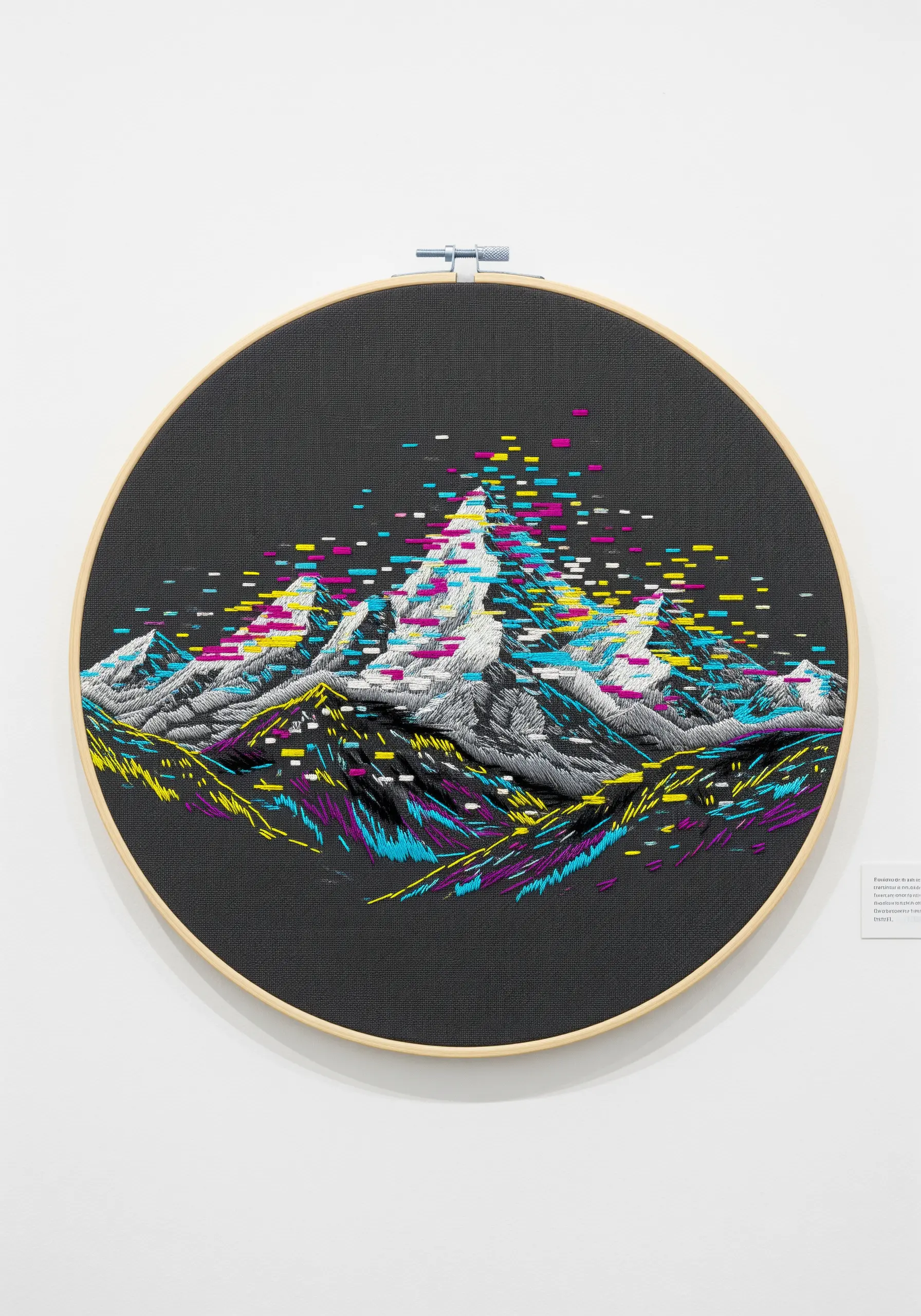
Combine realistic, thread-painted landscapes with sharp, abstract blocks of satin stitch to create a digital glitch effect.
Work on dark fabric to make your vibrant, neon threads pop with electric intensity.
First, complete the detailed mountain range using single-strand floss and subtle color blending.
Then, interrupt the realism by overlaying thick, horizontal blocks of color—this contrast in texture and style is what creates the visual tension.
2. Translate Soundwaves into Abstract Landscapes
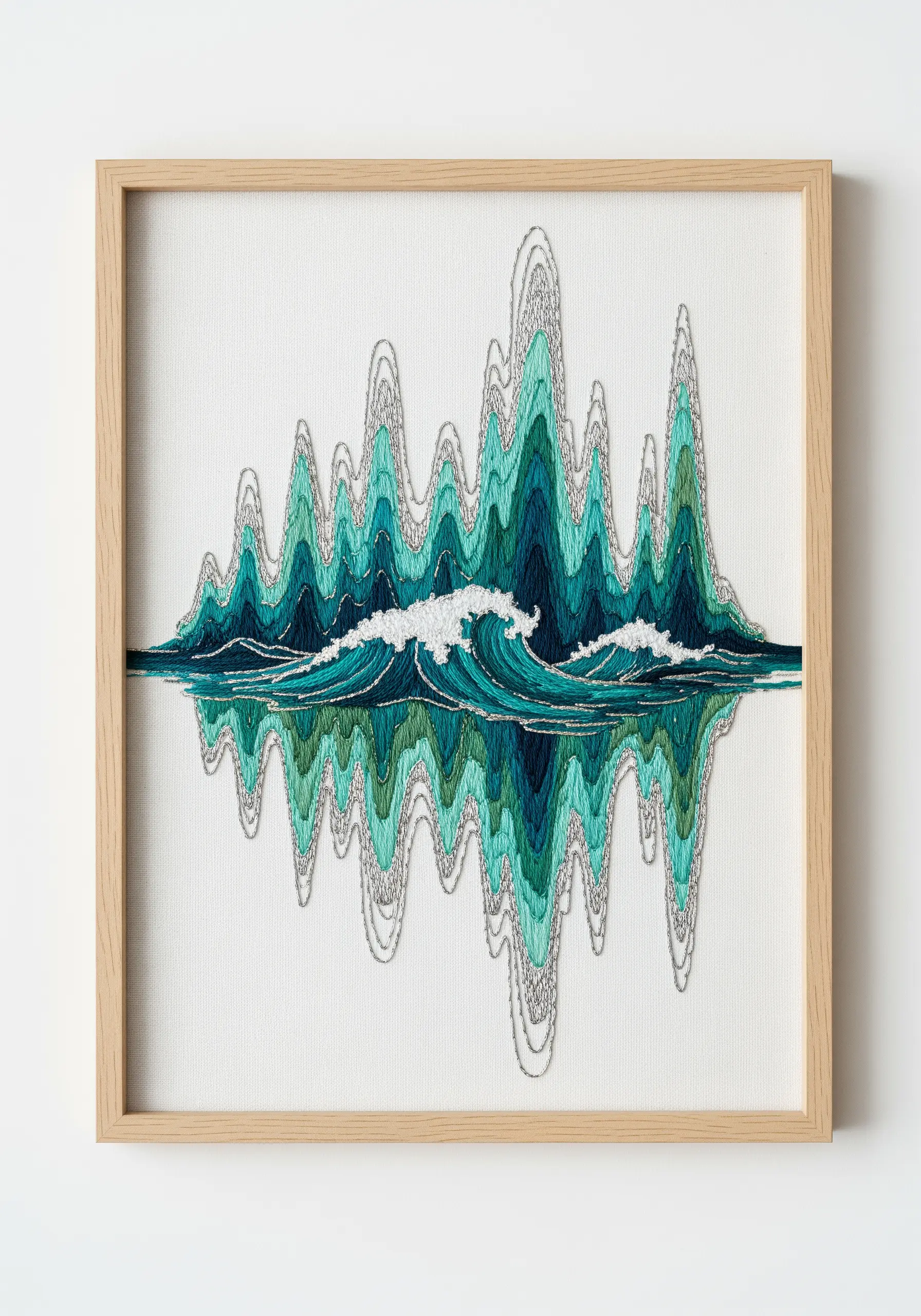
Turn a waveform or a line from a photograph into a symmetrical, reflective landscape.
Use a simple backstitch for the outlines to maintain crisp, graphic clarity against the white canvas.
Fill the shapes with directional satin stitch, using shades of one color family—from dark to light—to create the illusion of atmospheric depth.
For the reflection, stitch a mirror image but consider using slightly grayer or muted tones to enhance the watery, ethereal quality.
3. Blend Photorealism with Liquid Drips
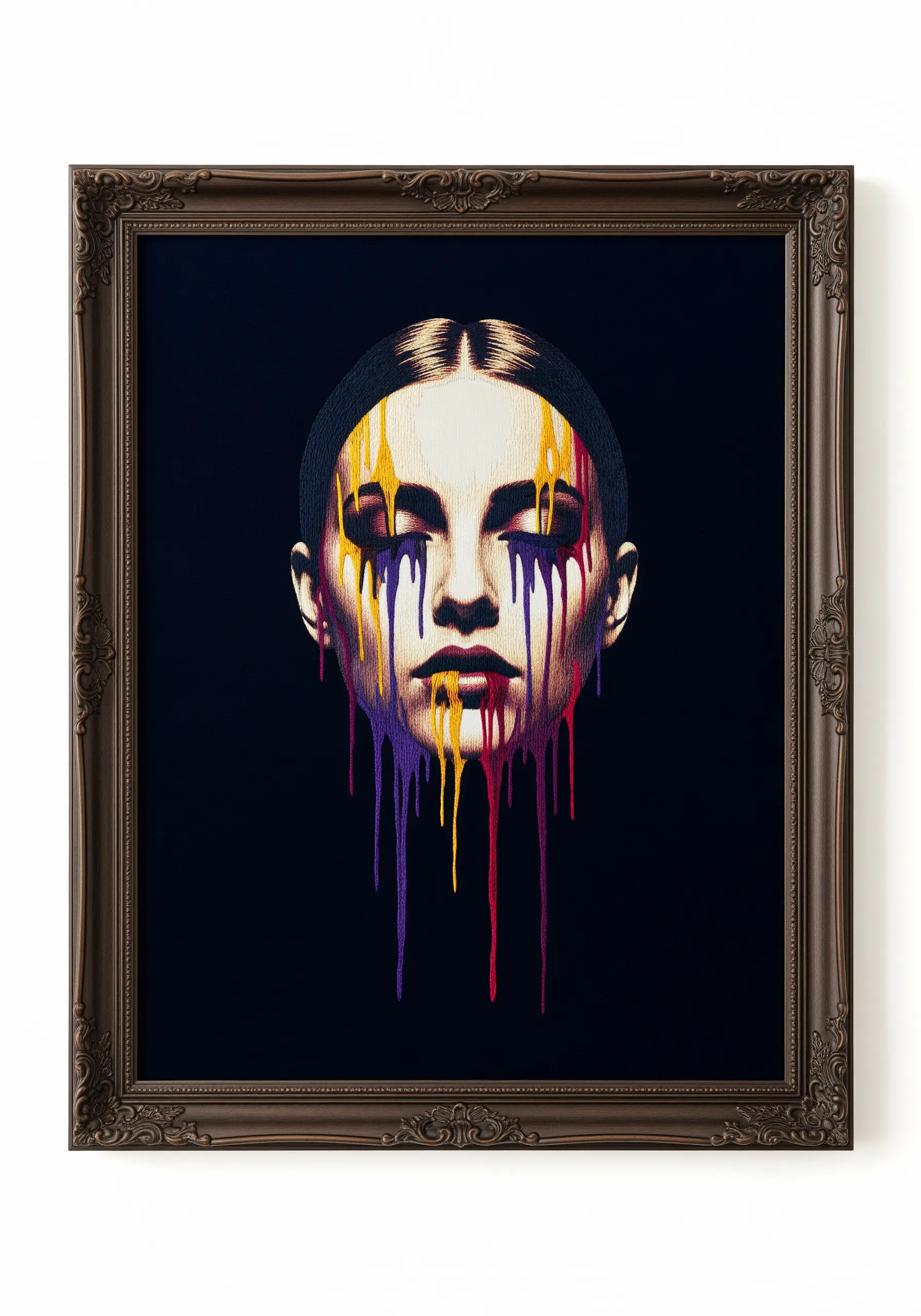
Achieve a surrealist portrait by contrasting a meticulously thread-painted face with long, flowing stitches that mimic dripping paint.
Use dense long-and-short stitch with single-strand floss for the skin to create smooth, photorealistic gradients.
For the drips, use multiple strands of a high-sheen thread and work them as single, uninterrupted vertical stitches.
Let the thread have a little slack at the end to enhance the feeling of weight and gravity, making the ‘paint’ look wet and fluid.
4. Imply a Forest with Vertical Stitches
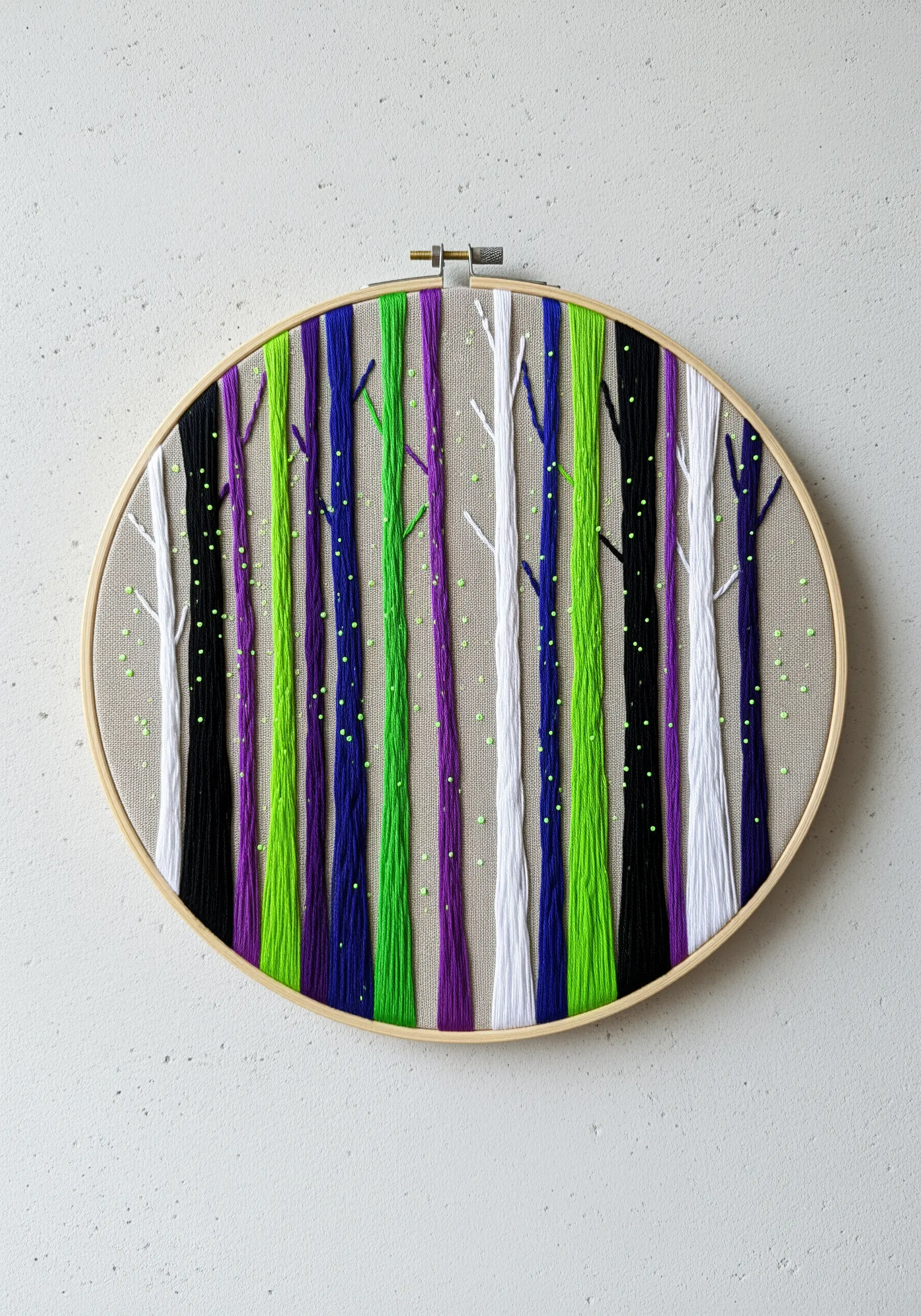
Suggest a forest without drawing a single leaf by using bold, vertical satin stitches for tree trunks.
Use a thick tapestry wool or multiple strands of embroidery floss to give the trunks a strong, graphic presence.
Vary the colors and spacing to create rhythm and depth, letting the negative space between the trunks define the composition.
Add a sprinkle of tiny, bright French knots to create a sense of floating light or magical spores, adding a touch of whimsy to the minimalist design.
5. Stitch a Skyline with an Electric Atmosphere
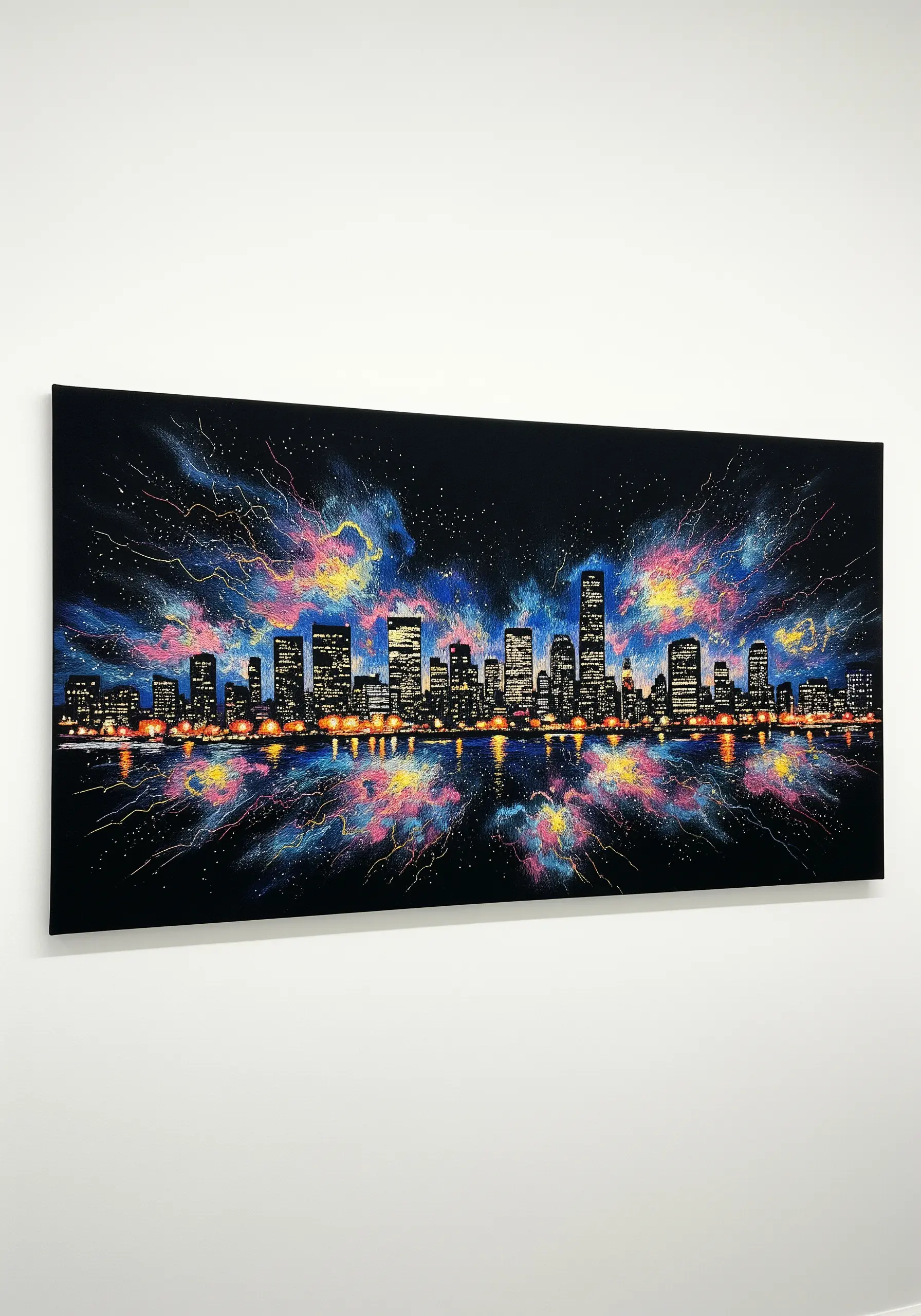
Contrast the rigid structure of a city skyline with a chaotic, expressive sky full of energetic stitches.
Use tiny, precise straight stitches in white and yellow for the building lights to create a sense of scale and realism.
For the sky, abandon structure and use a freeform mix of seed stitches, random directional stitches, and couched metallic threads to build texture and movement.
The reflection in the water should be a looser, more distorted version of the cityscape, blurring the lines between reality and abstraction.
6. Deconstruct a Flower into Abstract Shards
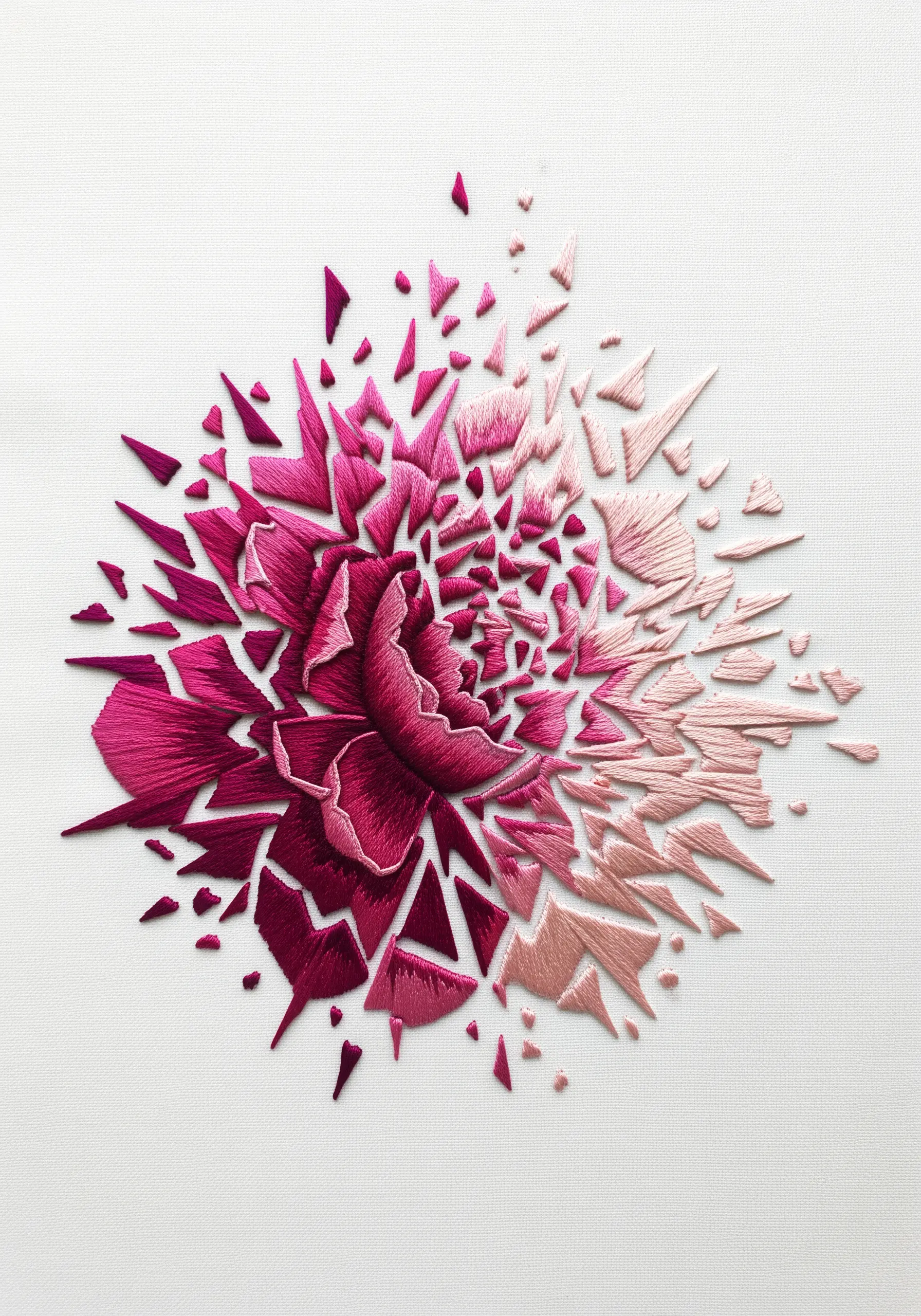
Create dynamic movement by stitching a flower that appears to be shattering into geometric fragments.
Render the center of the bloom with traditional floral thread painting to establish a realistic anchor point.
For the exploding pieces, use sharply angled satin stitch blocks that radiate outwards.
Vary the size, shape, and direction of these ‘shards’ and use a color gradient from dark to light to give the impression of the flower dissolving into the background.
7. Paint with Thread and Sculpt with Wool Roving
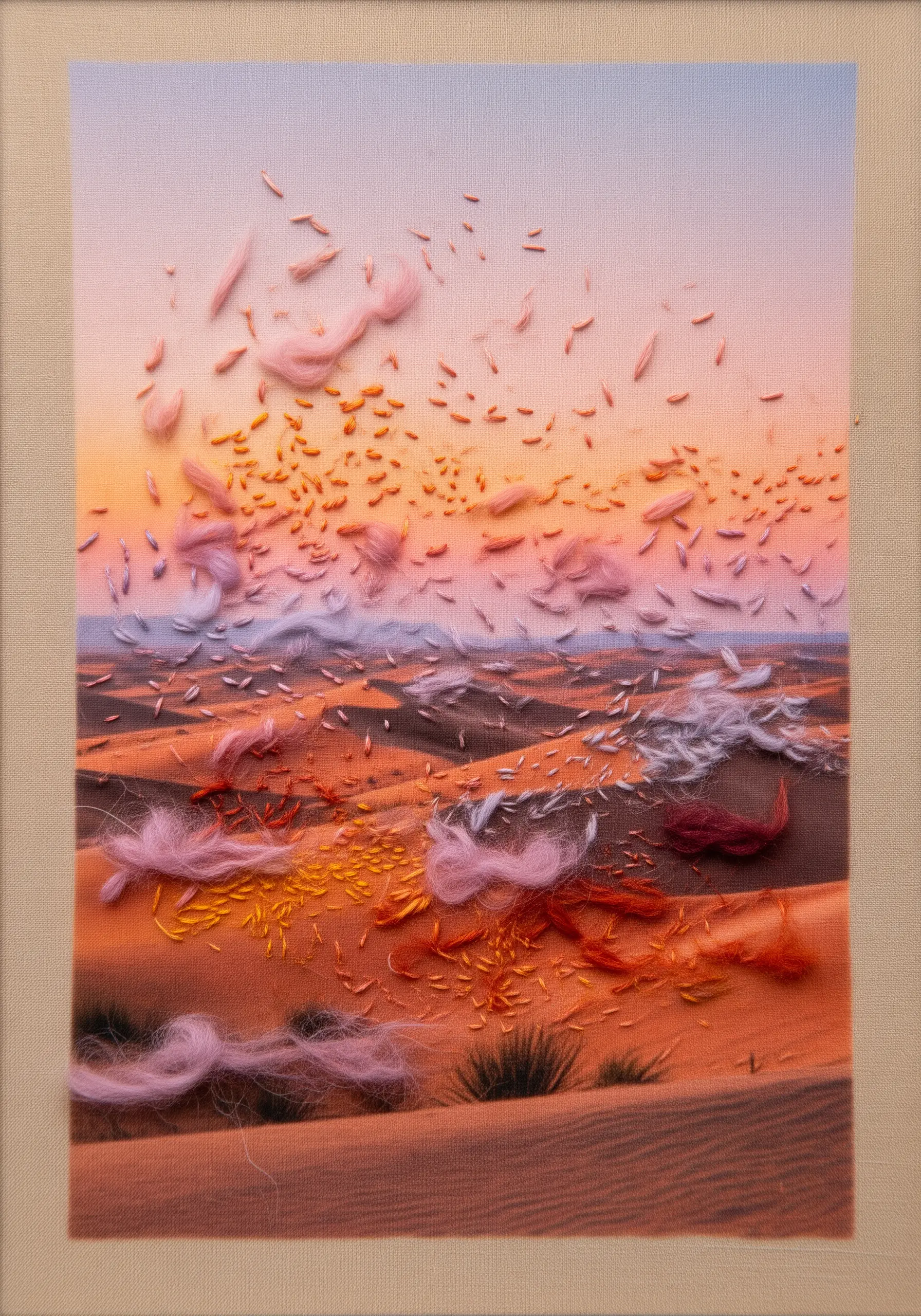
Introduce profound depth and softness to your embroidered landscapes by incorporating unspun wool roving.
First, thread-paint the foundational elements of your scene, like the desert dunes, using simple straight stitches.
Then, tack down small, airy tufts of wool roving with a felting needle to create clouds or atmospheric haze.
This mixed-media approach adds a dreamy, tactile dimension that thread alone cannot replicate, making your skies feel incredibly soft and real.
8. Create an Architectural Blueprint with Thread
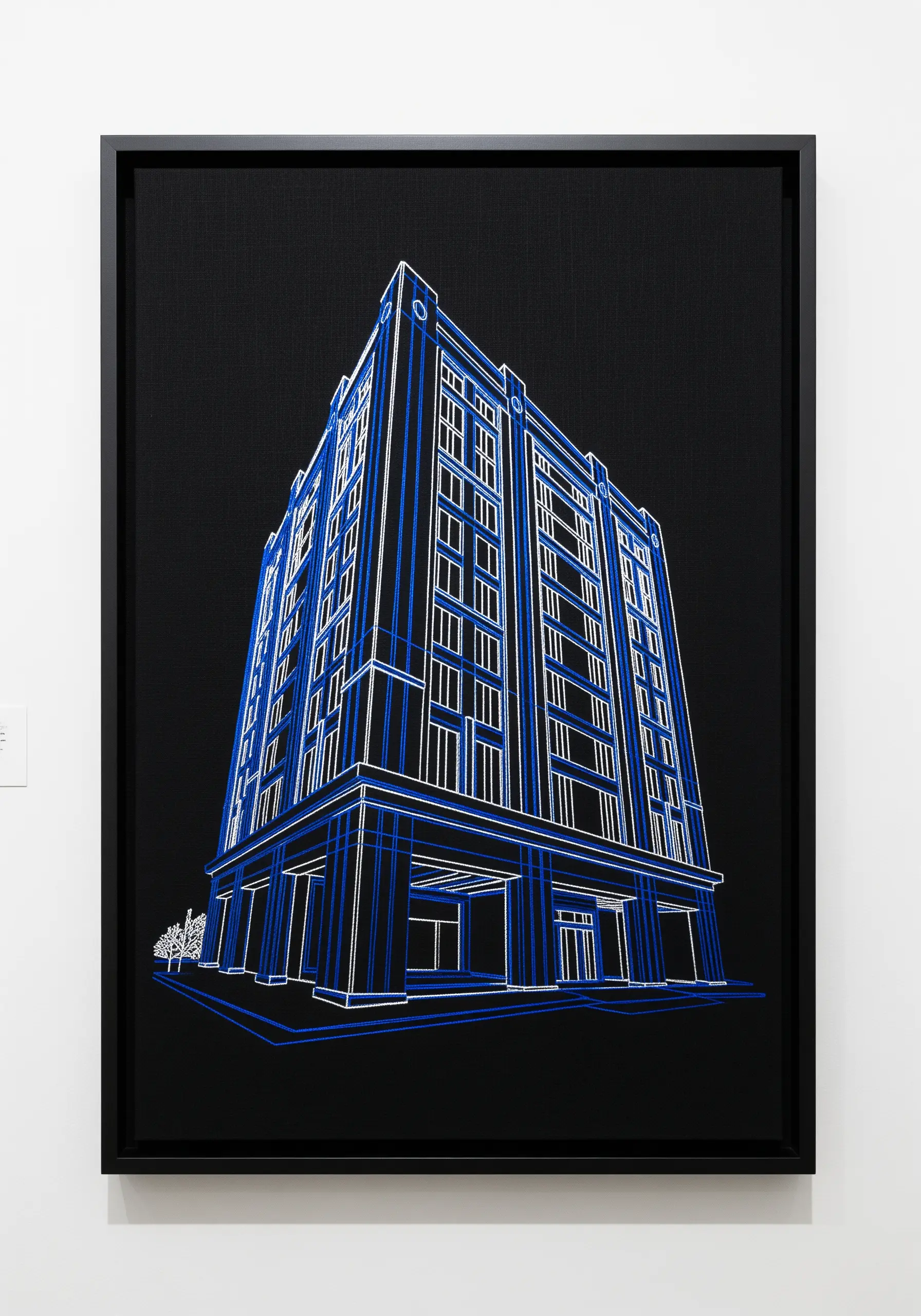
Transform an architectural photograph into a striking piece of graphic art using only line work.
Work on a black or dark navy fabric for maximum contrast, which is essential for the blueprint aesthetic.
Use a single strand of white or electric blue thread and a crisp backstitch to trace the building’s primary lines.
The power of this technique lies in its precision and clarity; focus on consistent stitch length and sharp angles to achieve that clean, technical drawing feel.
9. Thread-Paint with an Unconventional Pop-Art Palette
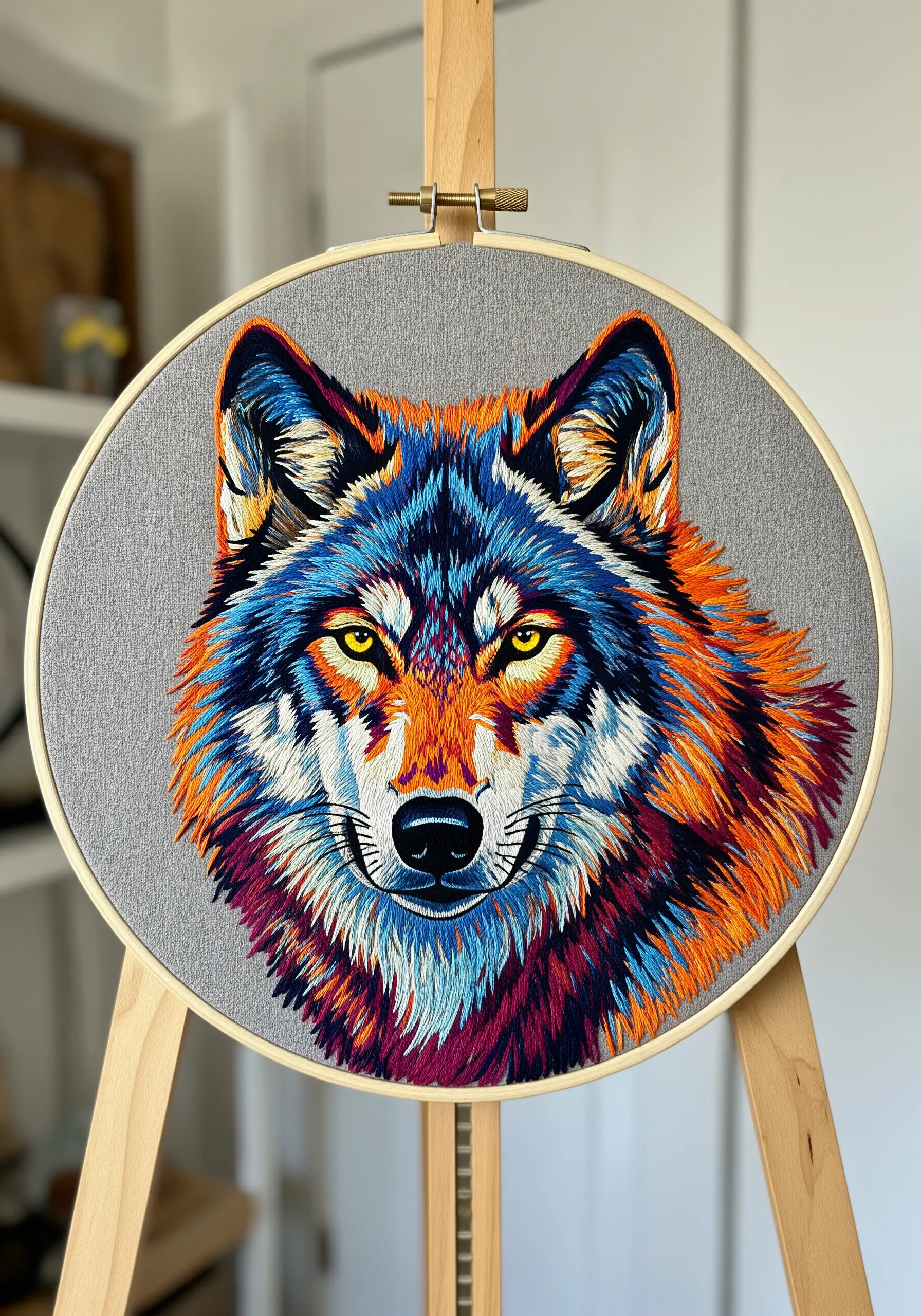
Reimagine a traditional animal portrait by swapping natural colors for a vibrant, high-contrast palette.
Instead of blending colors smoothly, apply them in distinct, graphic patches, much like a pop-art screenprint.
Use directional long-and-short stitches to follow the flow of the fur, which adds texture and form even with unrealistic colors.
This technique infuses the subject with personality and energy, turning a simple portrait into a bold statement piece.
10. Weave a Sky for Textural Contrast
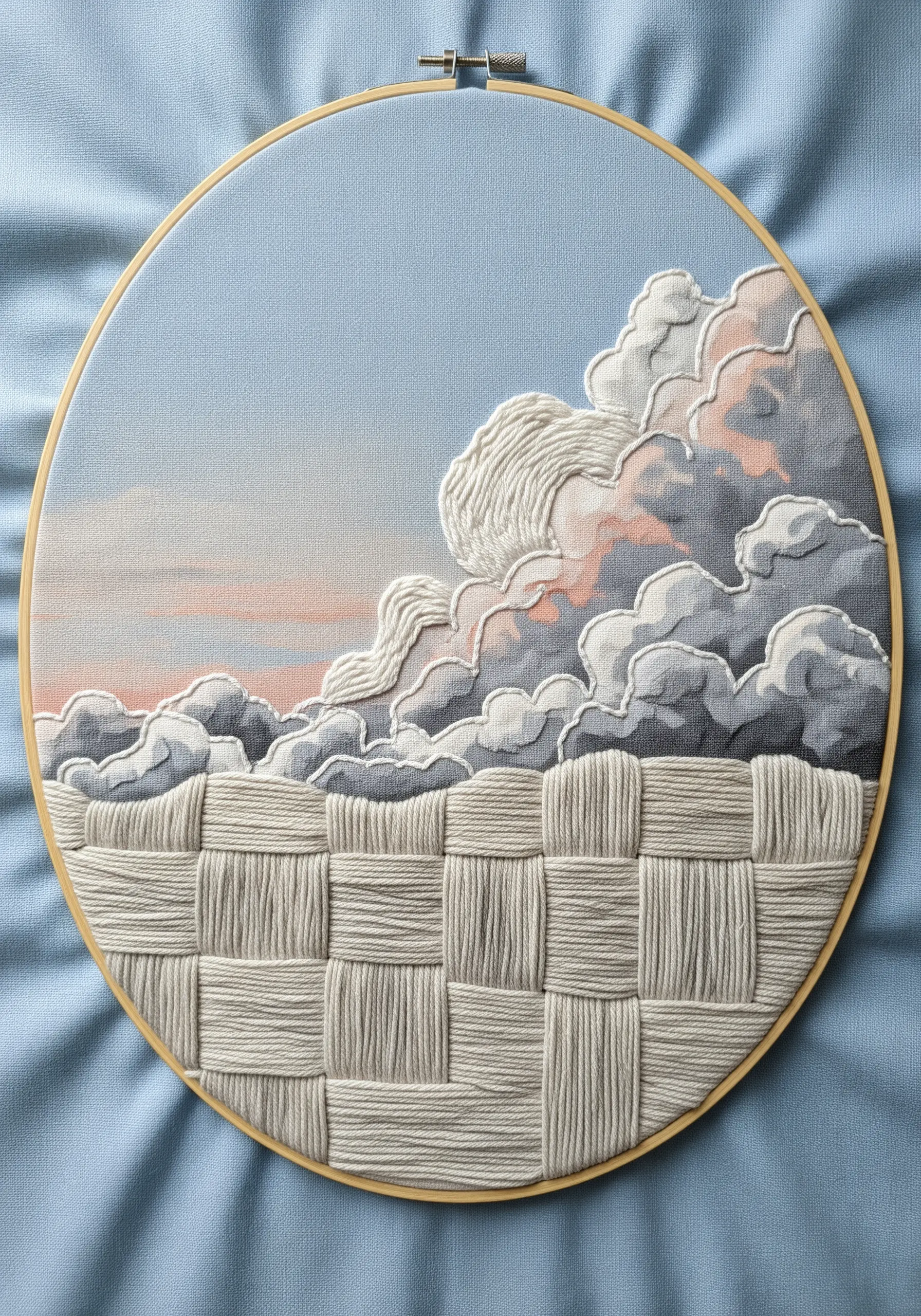
Add unexpected dimension to your hoop art by integrating a woven section into your design.
First, create a background of soft, thread-painted clouds.
For the foreground, lay down a grid of long vertical stitches (the warp) and then use a blunt needle to weave a thicker yarn over and under (the weft).
This creates a dense, tactile basket-weave texture that pushes forward visually, making the delicately stitched clouds recede into the distance.
11. Stitch a Meditative, Imperfect Circle
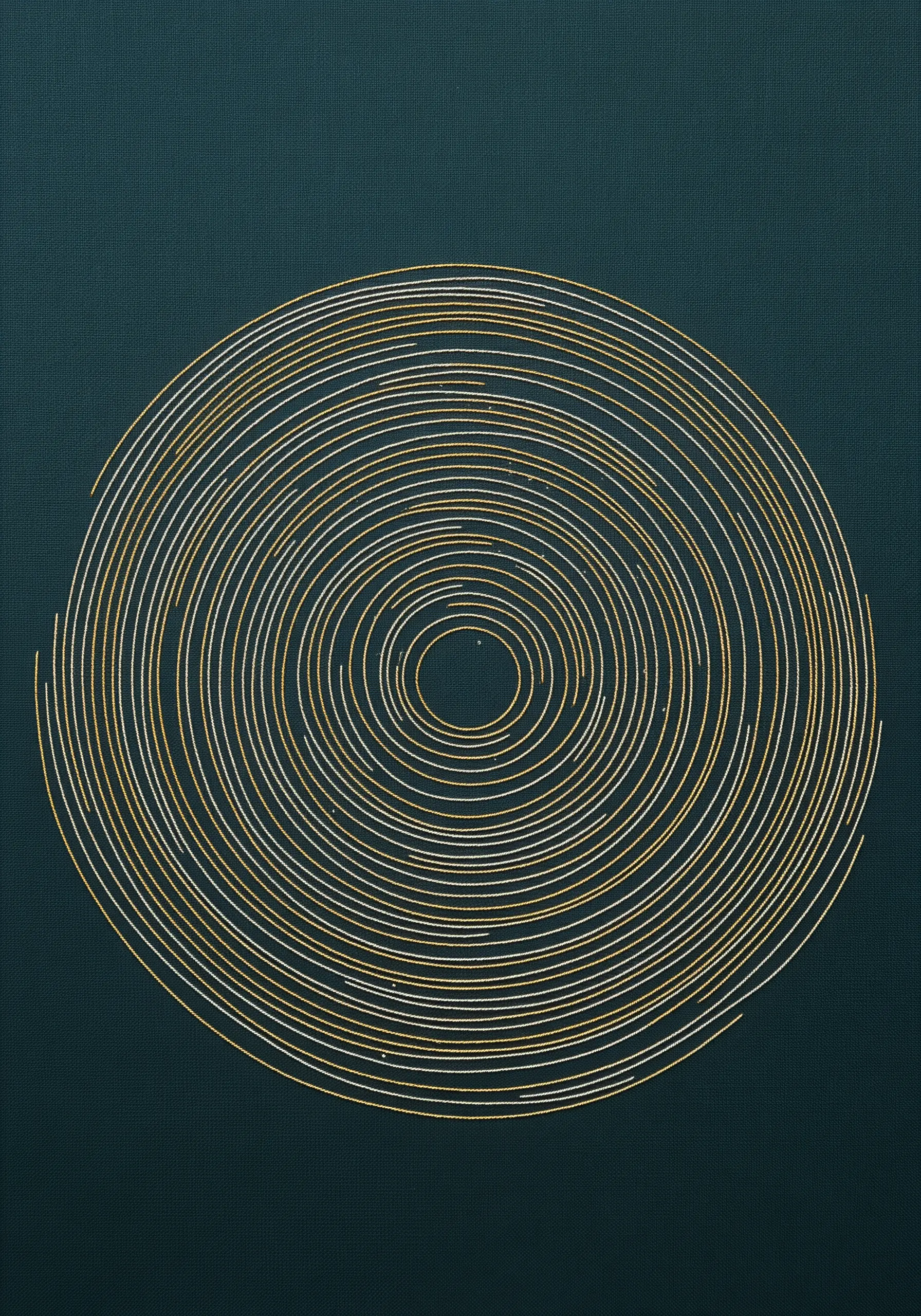
Create a mesmerizing abstract piece using concentric circles stitched with a simple running stitch or backstitch.
The beauty of this design is in its handmade quality, so embrace the slight wobbles and imperfections in your circles.
Alternate between two thread types, such as a matte cotton floss and a shimmering metallic thread, to create a subtle vibration and visual rhythm.
This project is more about finding a meditative flow than achieving geometric perfection.
12. Capture the Essence of Fire in a Leaf
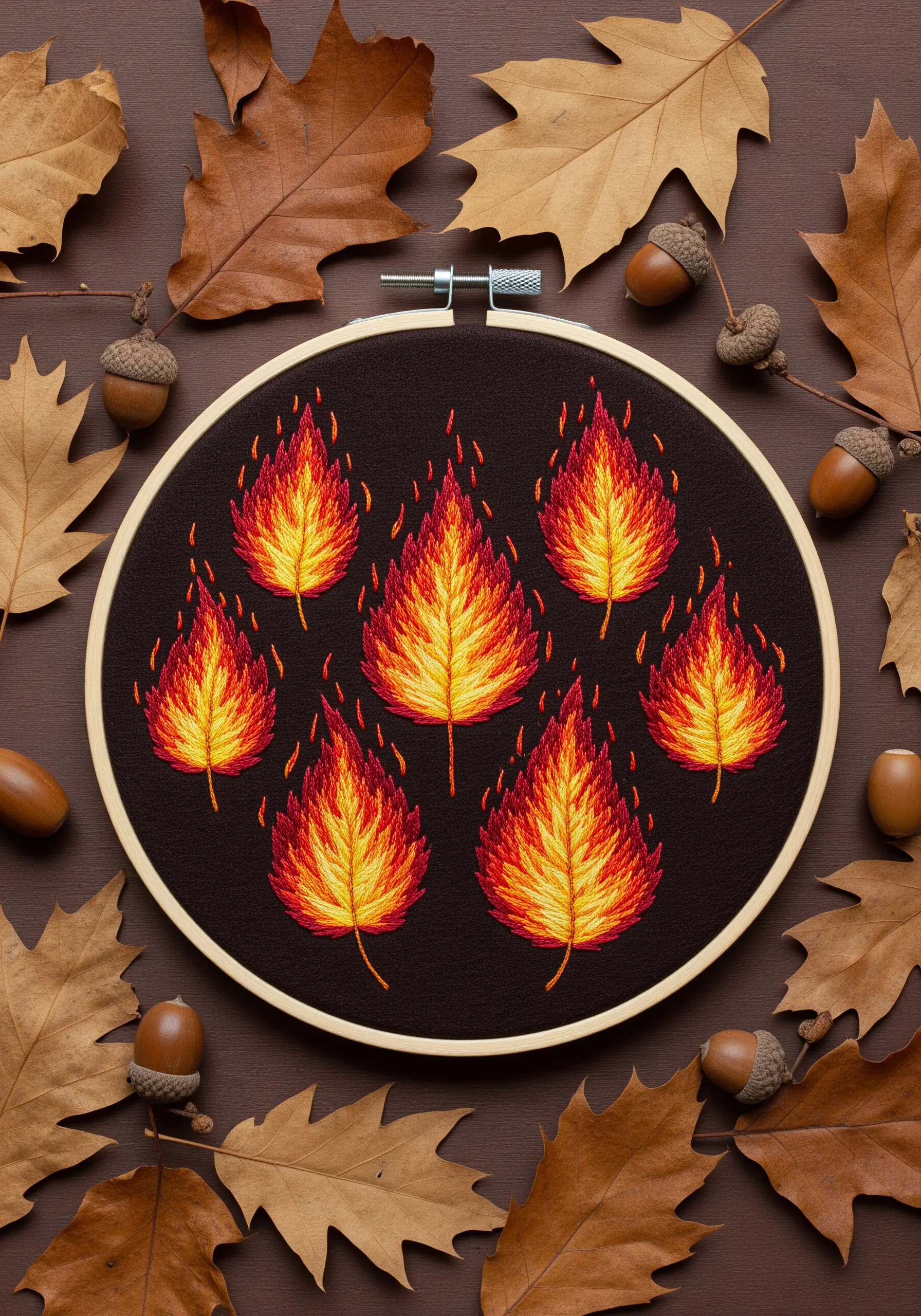
Transform a simple autumn leaf into a flickering flame using a seamless color gradient.
Use the long-and-short stitch to blend your colors from a bright yellow core to a deep red edge.
To make the blending smooth, ensure the first row of each new color interlocks with the stitches of the previous color.
Direct your stitches to radiate outward from the central stem, mimicking both the veins of a leaf and the upward lick of a flame.
13. Embellish a Photograph with Cosmic Stitches
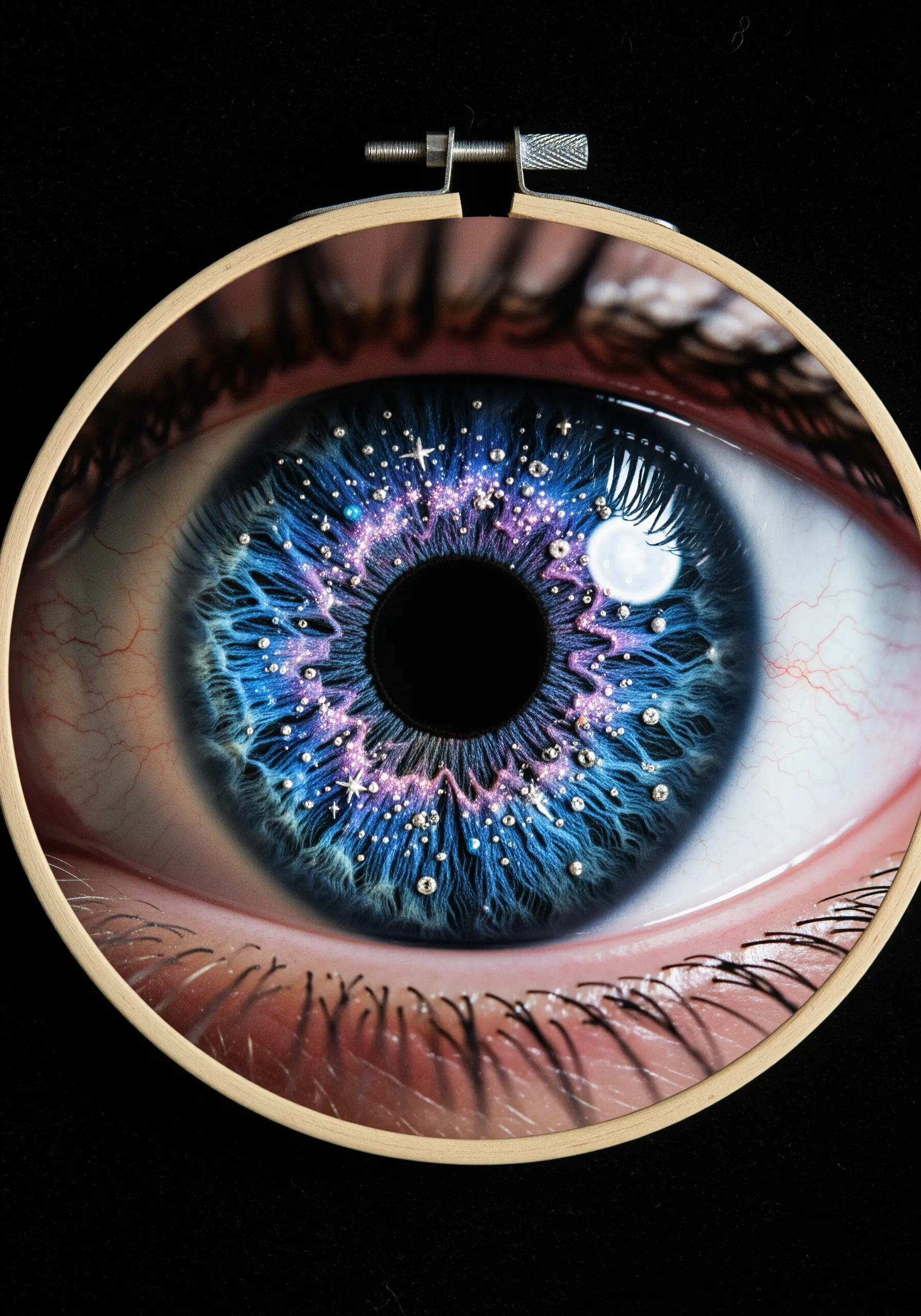
Elevate a fabric-printed photograph by adding selective, textural embroidery.
This mixed-media technique allows you to achieve hyper-realism from the photo while adding your own artistic, tactile layer.
Use French knots and colonial knots scattered across the iris to represent a starfield.
Add radiating straight stitches in a metallic or iridescent thread to create highlights and cosmic rays, turning a simple image into a piece of surreal art.
14. Imply Form with Abstract Marks on a Muted Background
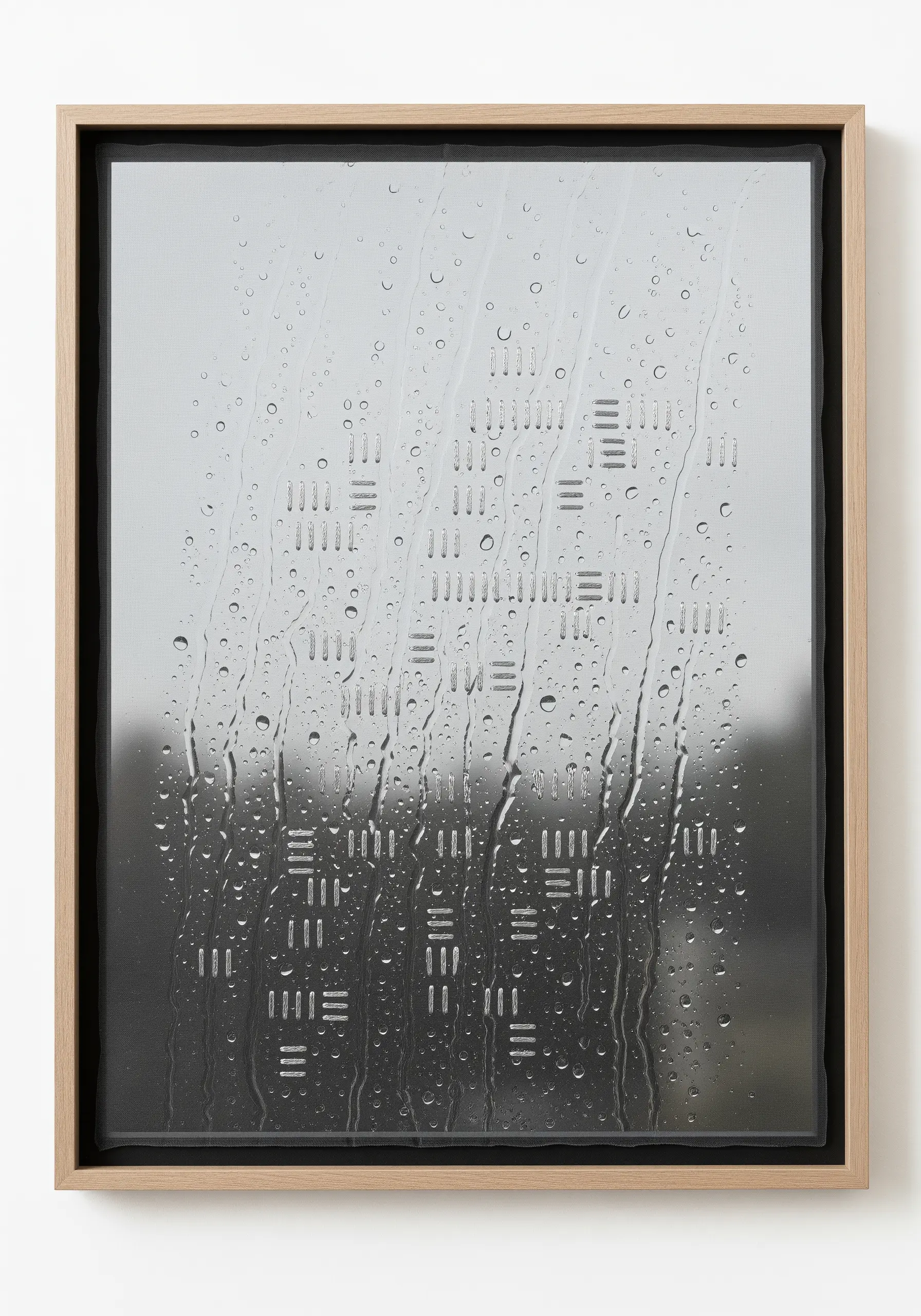
Create a moody, atmospheric piece by stitching minimalist patterns over a soft-focus background, like a rainy window.
Use a thread that is only subtly different in tone from your background fabric; the effect should be quiet and textural, not loud.
Stitch small, repeating geometric marks—like tiny satin stitch bars or seed stitches—in a loose grid.
This technique suggests a hidden language or digital code, inviting the viewer to look closer and interpret the meaning.
15. Engineer a Mandala from Mechanical Gears
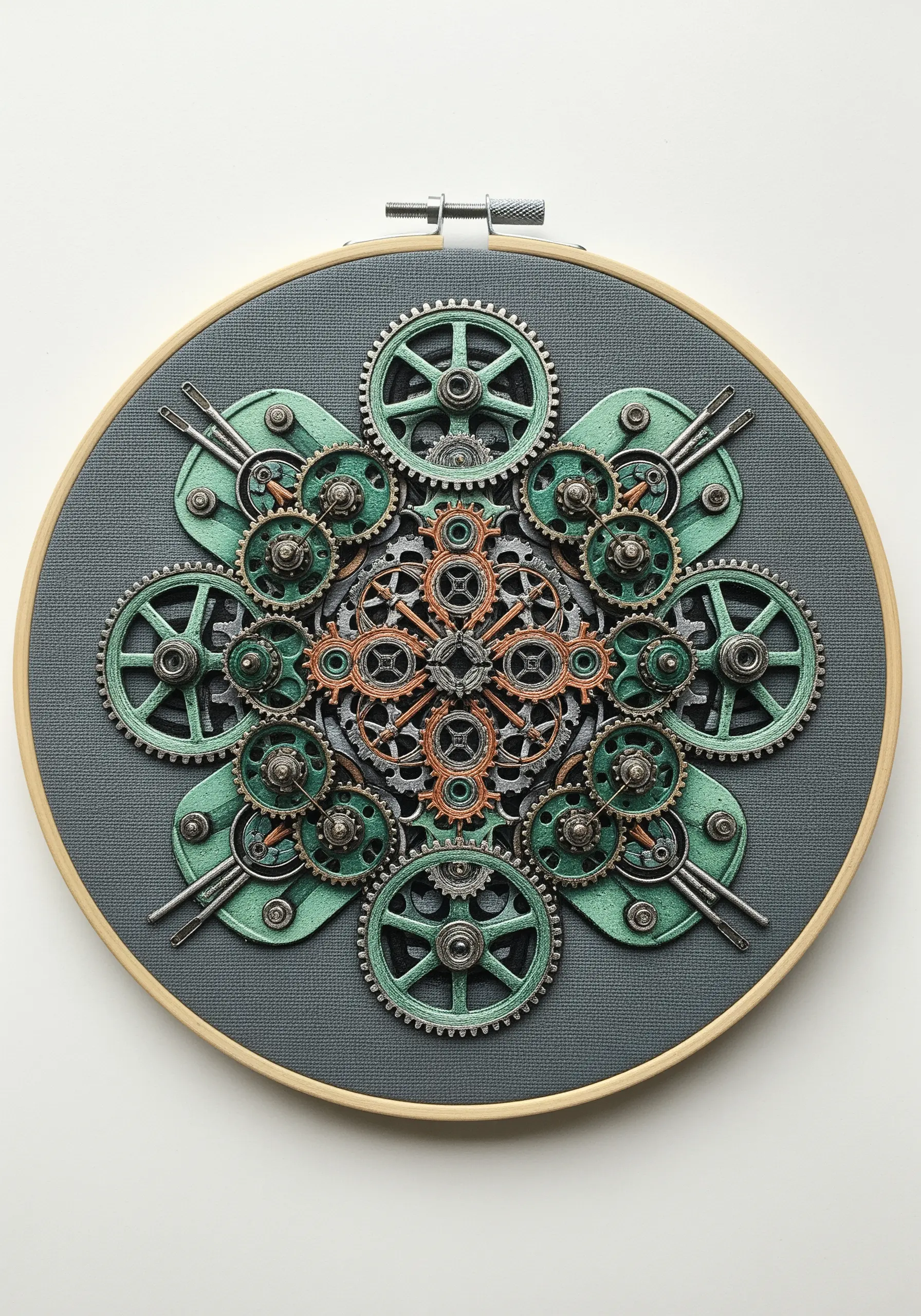
Construct a complex, steampunk-inspired mandala using the structure of gears and mechanical parts.
To give the gears a three-dimensional appearance, use multiple shades of the same color family to create highlights and shadows with satin stitch.
Define the edges of each component with a sharp, clean backstitch in a darker thread—this enhances the metallic, machine-cut feel.
This is a testament to how embroidery can capture industrial textures and precise forms.
16. Merge a Landscape with a Bold Color Field
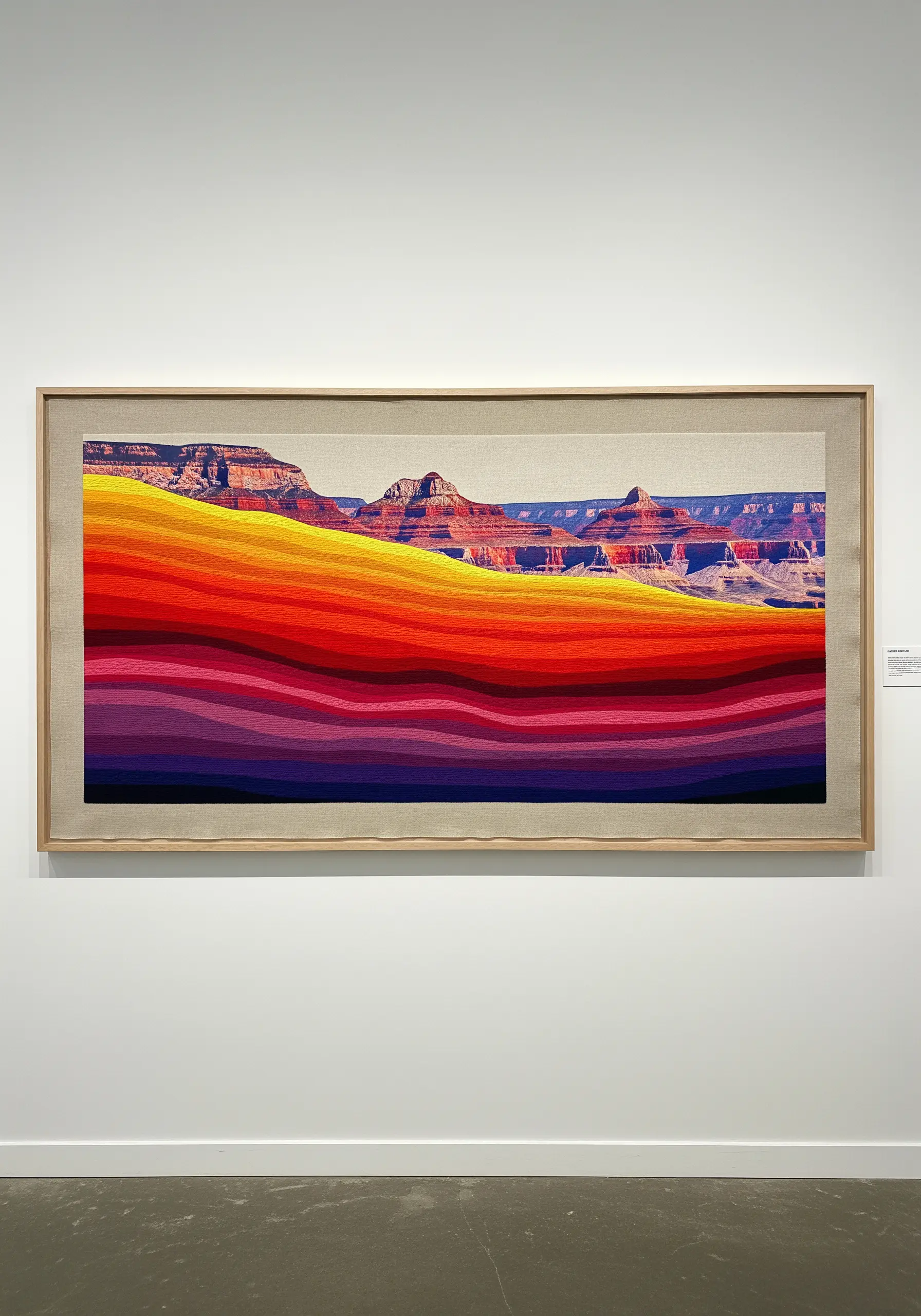
Create a powerful composition by dividing your canvas into two distinct styles: realism and pure abstraction.
Stitch the upper portion with detailed thread painting to capture the texture and colors of a real landscape, like the Grand Canyon.
Fill the entire lower portion with dense, perfectly horizontal satin stitches, creating a smooth, graphic field of color.
The clean line where these two opposing styles meet creates a surreal horizon that is visually arresting.
17. Superimpose Technology onto Natural Textures
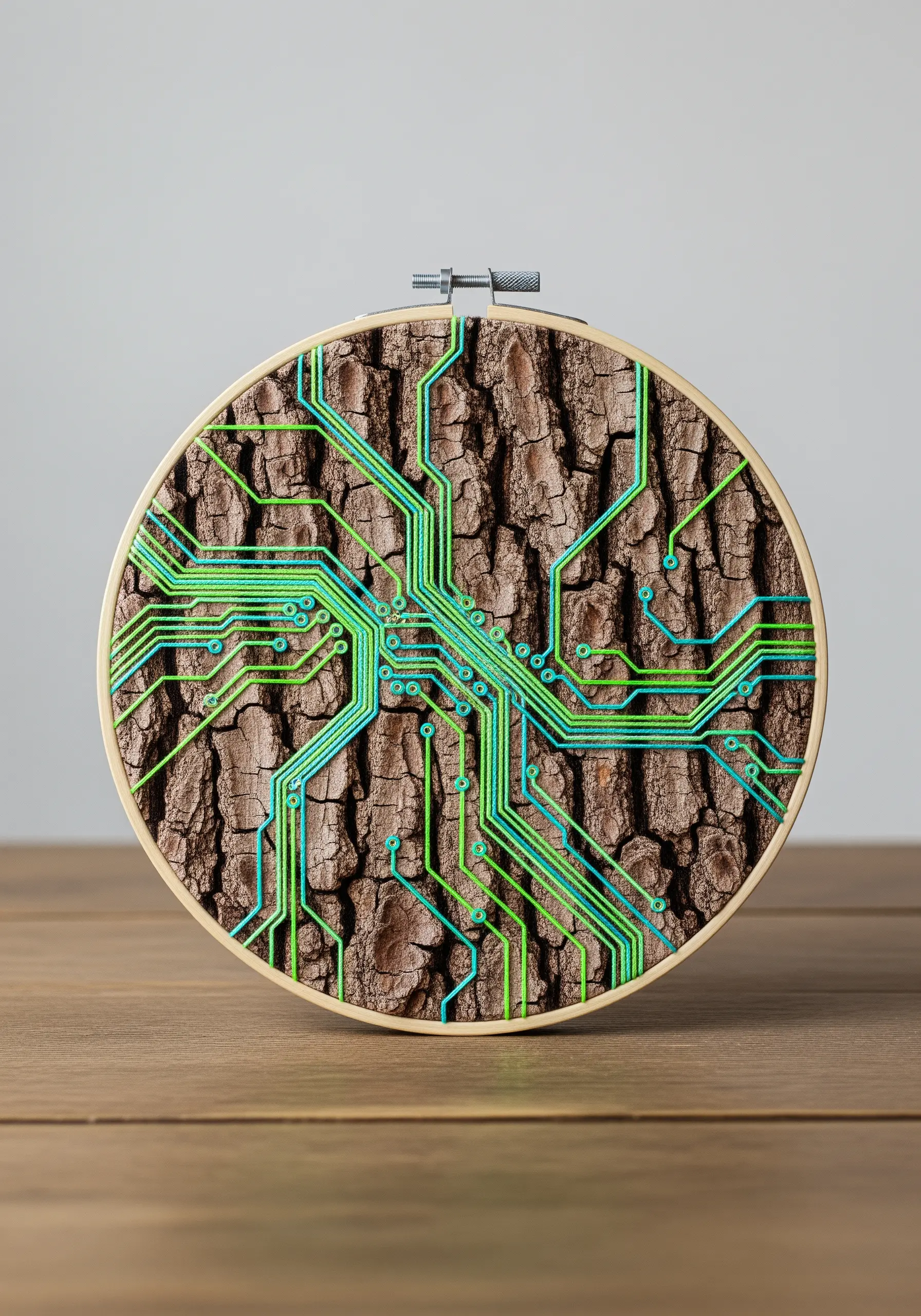
Explore the relationship between nature and technology by embroidering a geometric pattern onto an organic surface.
Start with fabric printed with a high-resolution photograph of a natural texture, like tree bark.
Using a bright, high-sheen thread, stitch a clean, graphic design like a circuit board over the top.
The stark contrast between the rigid, perfect lines of your stitching and the chaotic, natural pattern beneath creates a compelling and thought-provoking piece.
18. Sculpt Chaos with Layered Straight Stitches
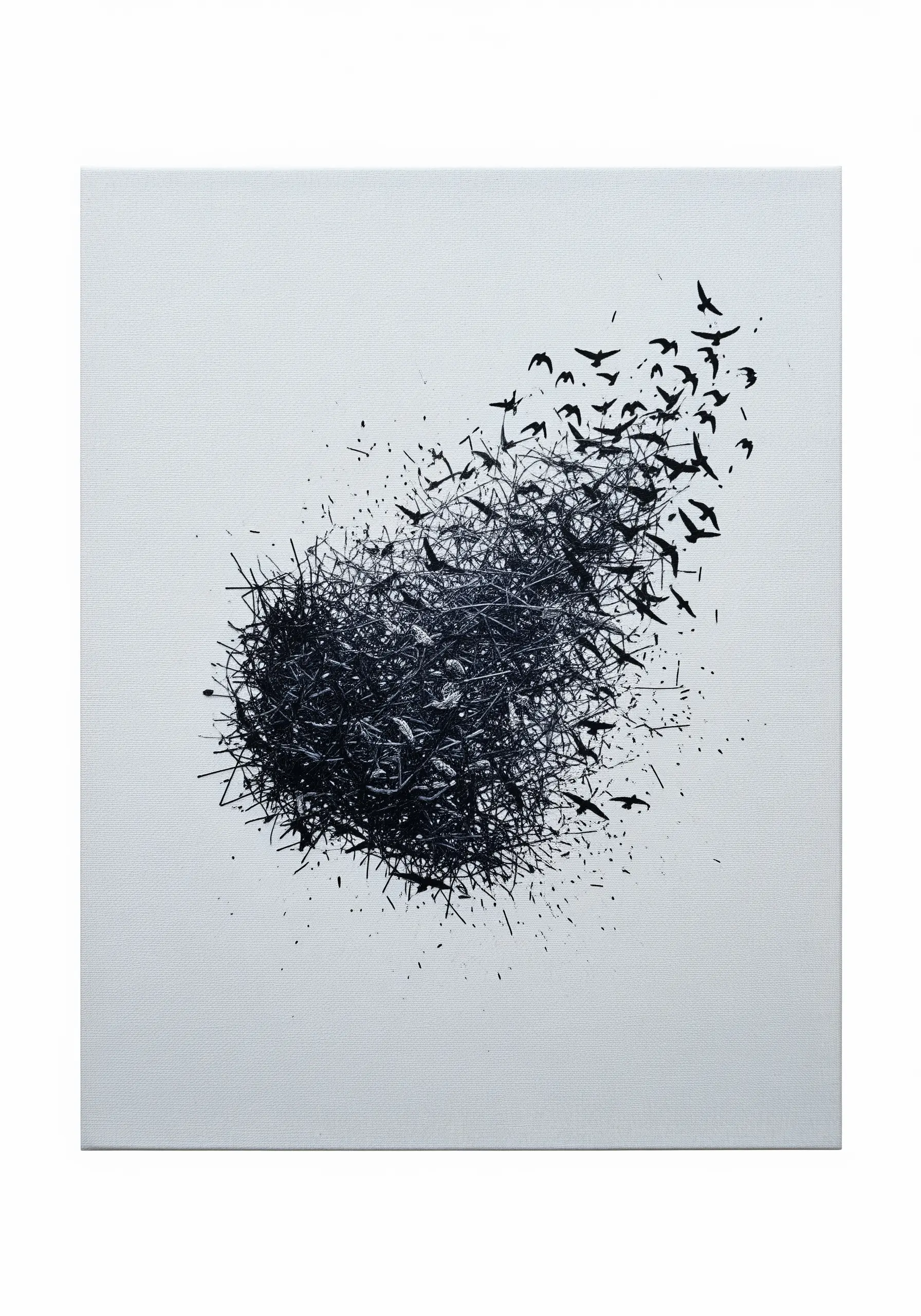
Create a dramatic sense of movement and disintegration using dense, chaotic layers of a single stitch.
Build the central mass by layering thousands of straight stitches in different lengths, angles, and even tensions.
For a monochrome piece, use shades of black and dark grey to create depth within the chaos.
The birds are merely suggested silhouettes; the true subject is the explosive energy radiating from the densely stitched core.
19. Create Depth with a Field of Vertical Stitches
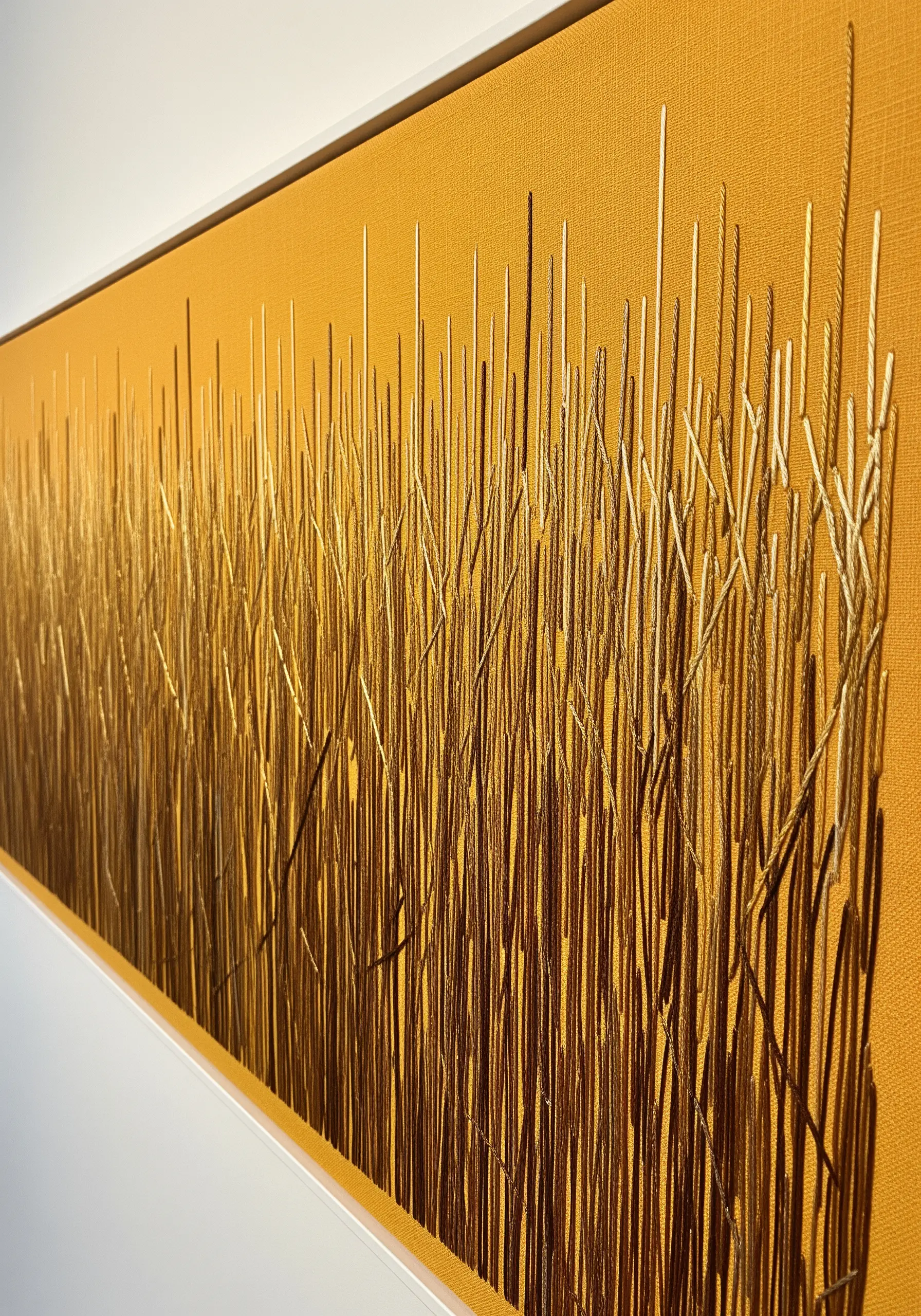
Evoke a vast, shimmering field of wheat or grass using nothing more than vertical straight stitches.
The key to creating depth is variety: use multiple shades of thread, from matte to metallic, and vary the height of each stitch.
Place longer, thicker stitches in the ‘foreground’ and shorter, finer ones in the ‘background’ to create a powerful illusion of perspective.
Work on a colored canvas that can peek through the stitches, acting as the earth beneath the field.
20. Stitch Crystalline Structures with Iridescent Thread
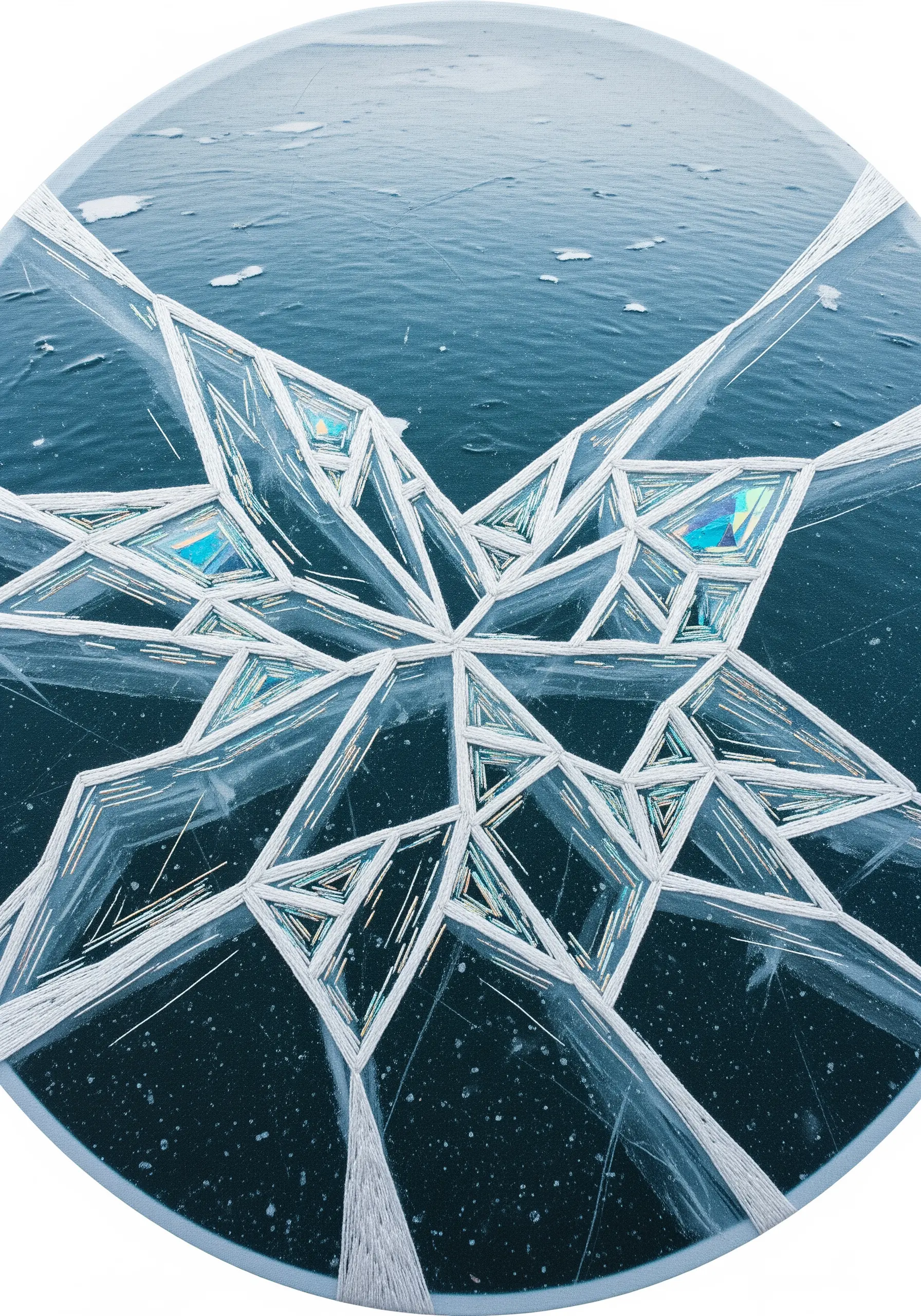
Capture the sharp, geometric beauty of ice crystals by combining precise line work with shimmering fills.
Start on a dark, moody fabric that mimics deep water.
Outline the geometric shapes of the ice cracks with a crisp white backstitch.
Fill select facets with long satin stitches using an iridescent or holographic thread; as the light hits it from different angles, it will fracture into colors, just like real ice.
21. Grow Gemstones from a Stitched Portrait
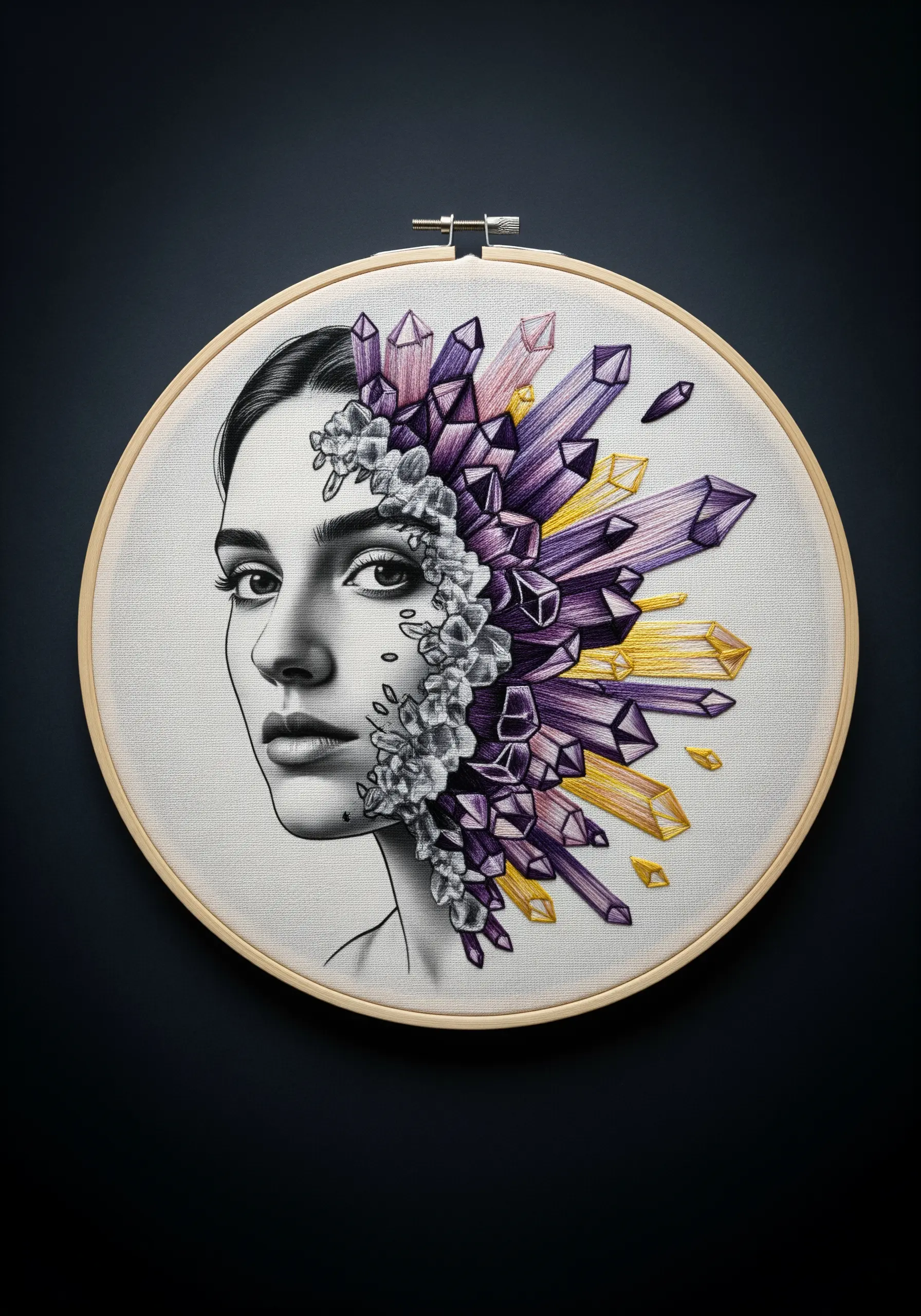
Merge delicate portraiture with bold, geometric forms by ‘growing’ crystals directly from your line work.
Render the portrait using a simple, clean backstitch to keep the focus on the form.
For the crystals, use satin stitch to create sharp, angular facets. Use a distinct shade for each facet to suggest how light hits the planes, giving the gems a realistic, three-dimensional volume.
This contrast between soft organic lines and hard crystalline shapes creates a stunning surrealist effect.
22. Build Abstract Compositions with Coiled Thread
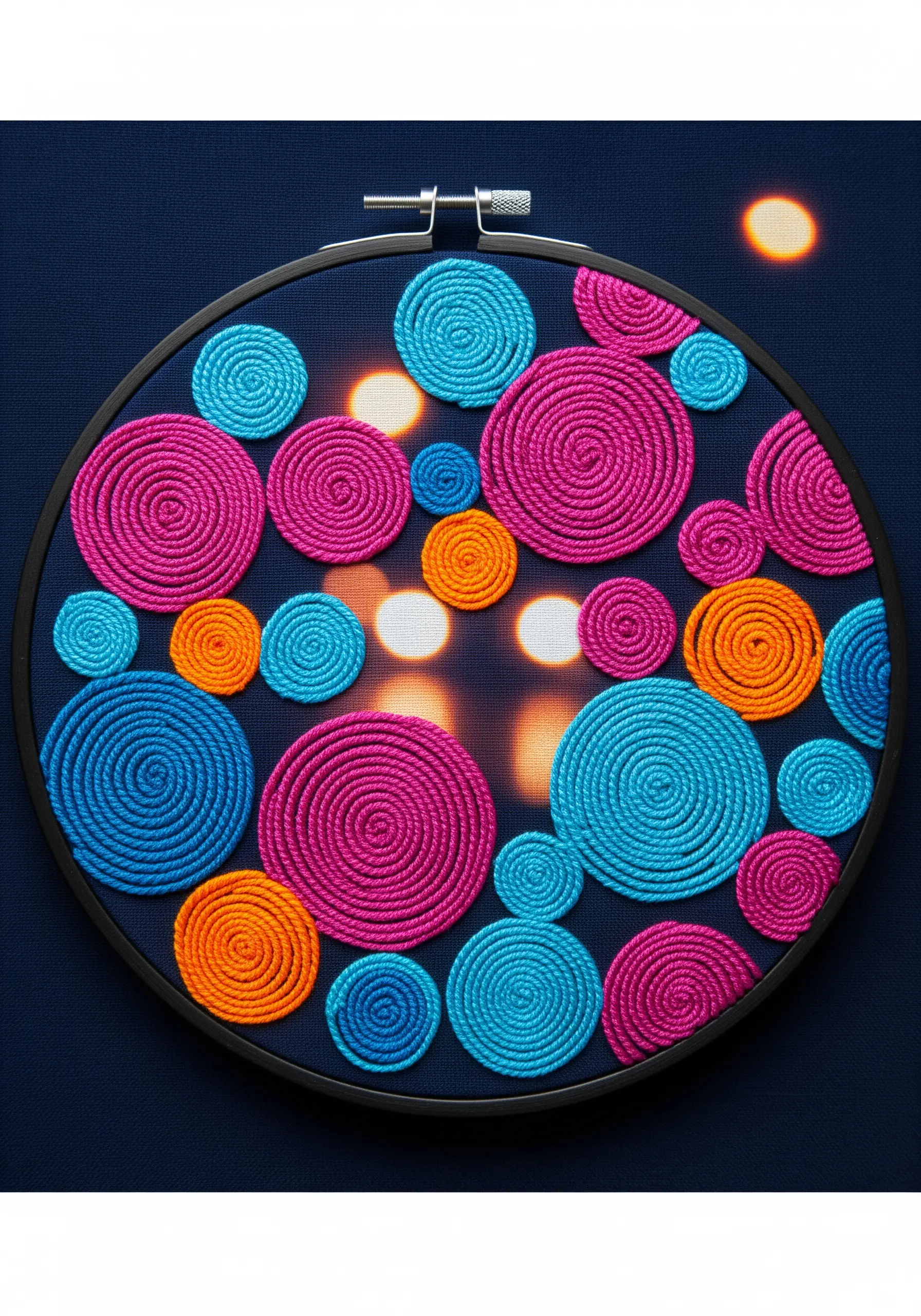
Create bold, graphic circles with incredible texture by coiling thick thread and couching it down.
Use a thick yarn or cording and carefully shape it into a tight spiral on your fabric.
With a second, finer thread in a matching color, use tiny, almost invisible tacking stitches to secure the coil in place.
This technique results in clean, raised, and highly textural elements that make your abstract embroidery patterns pop off the fabric.
23. Capture Flowing Water with Silk Ribbon
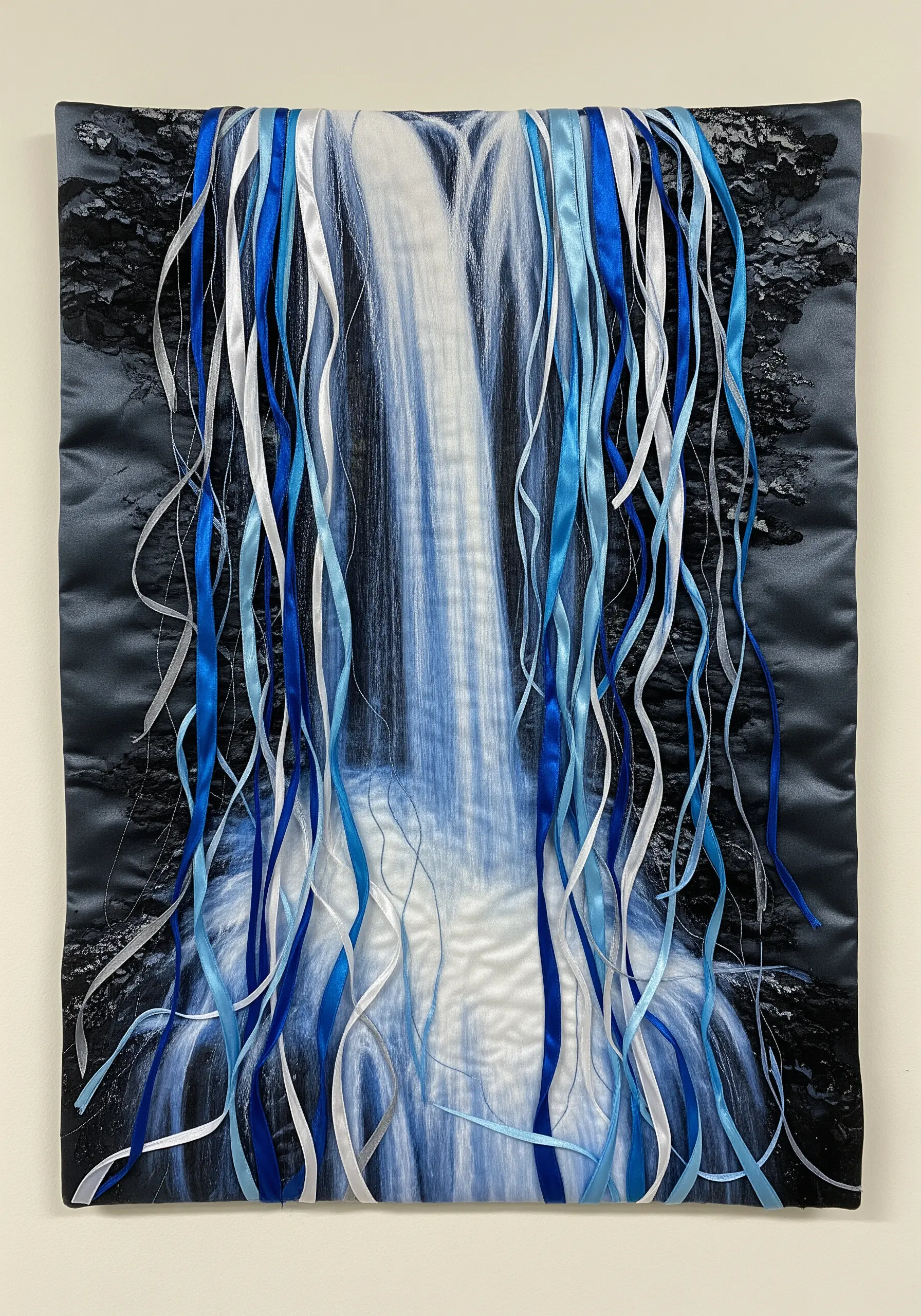
Go beyond thread to capture the unique volume and movement of a waterfall by incorporating silk ribbon.
Create the static background elements, like rocks, with dense, textural thread work to ground the piece.
Then, use silk ribbons in various widths and shades of blue, grey, and white for the cascading water.
Allow the ribbons to twist, fold, and fall naturally, securing them only at the top and bottom to preserve their fluid, three-dimensional quality.
24. Paint a Seamless Gradient with Thread
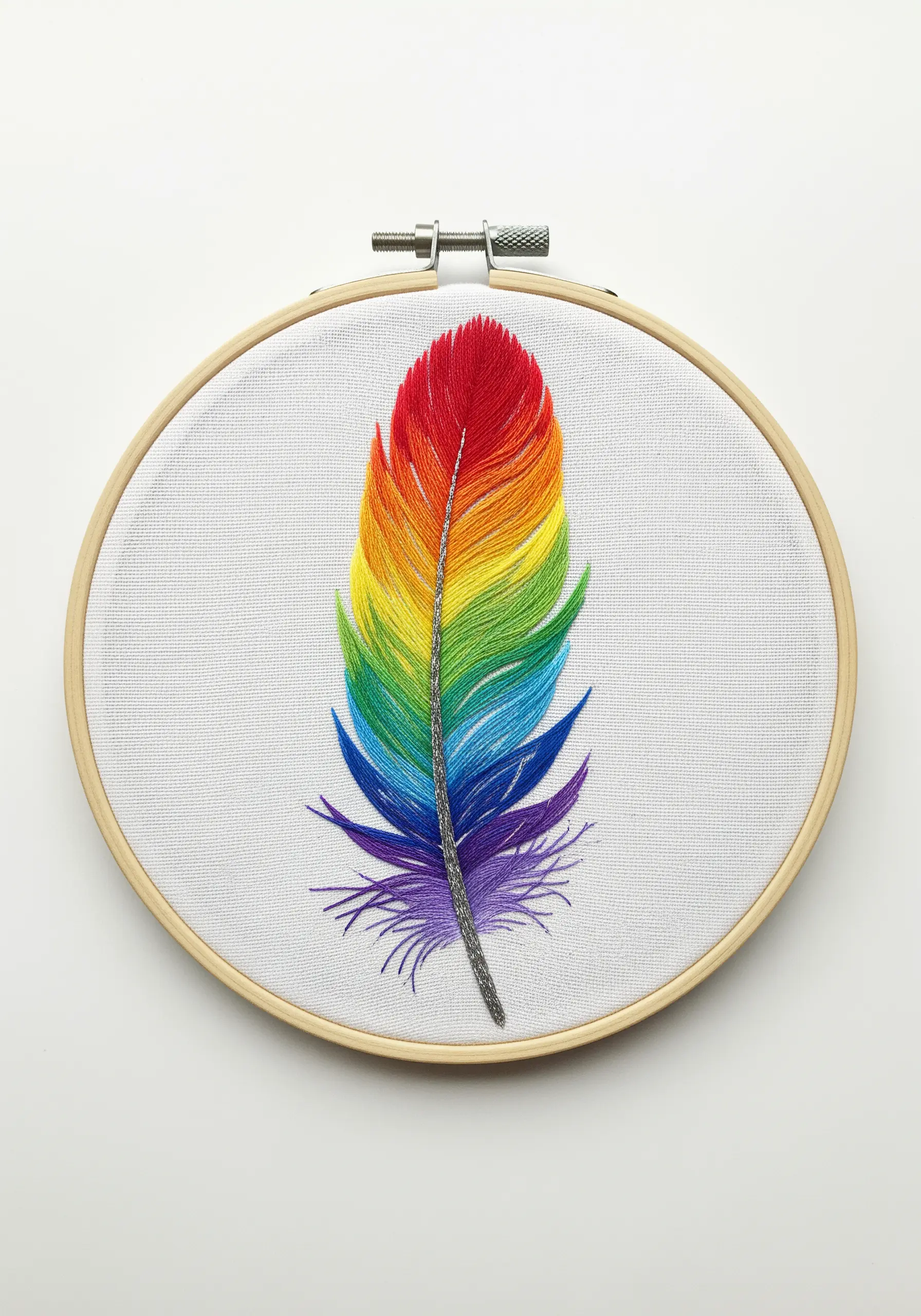
Achieve a smooth, painterly blend of color, perfect for feathers or sunsets, using the long-and-short stitch.
Mentally divide your shape into color zones. When you transition from one color to the next, your stitches must physically interlock.
The first row of the new color should come up through the ends of the previous color’s stitches.
For the feather’s fluffy base, switch to loose, detached chain stitches and stray straight stitches to create a softer, wispier texture that contrasts with the sleek body.