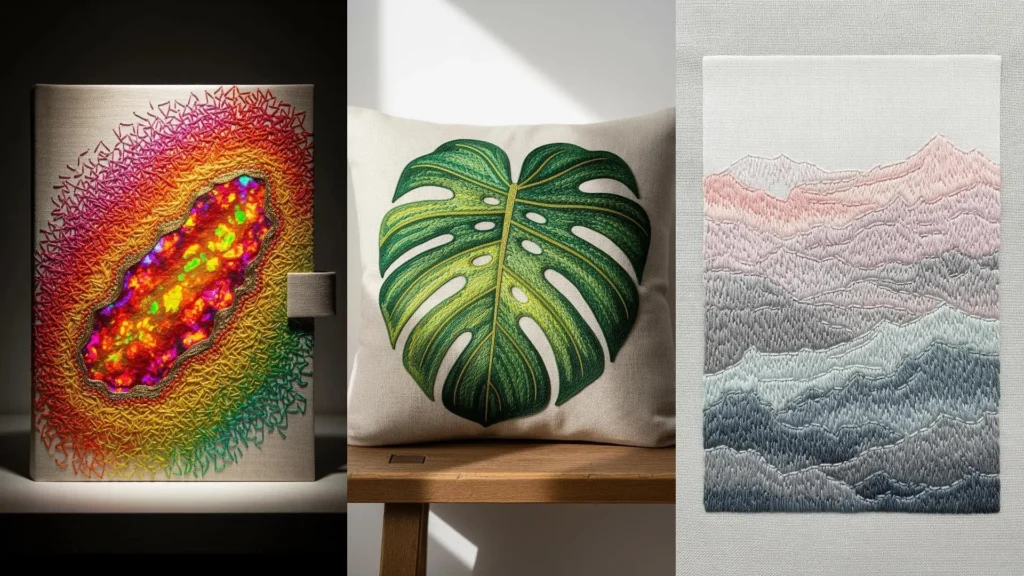
Architectural embroidery offers a unique way to capture the soul of a city, transforming skylines from mere landscapes into personal, tactile works of art. It’s a chance to move beyond traditional motifs and explore the beauty of line, form, and perspective with your needle and thread.
Whether you’re drawn to the intricate detail of historic landmarks or the bold geometry of modern skyscrapers, these designs translate beautifully into string art and embroidery. The key is not to replicate a photograph, but to interpret the structure and atmosphere. Think in terms of texture, light, and shadow.
Here, you’ll discover how to use simple stitches to build complex forms, how color choices can evoke a specific mood, and how playing with thread tension and density can create stunning depth. Let these ideas guide you toward creating an architectural piece that feels both monumental and deeply personal—a tribute to a place you love, stitched entirely by you.
1. Render a Sunset Gradient with Layered Threads
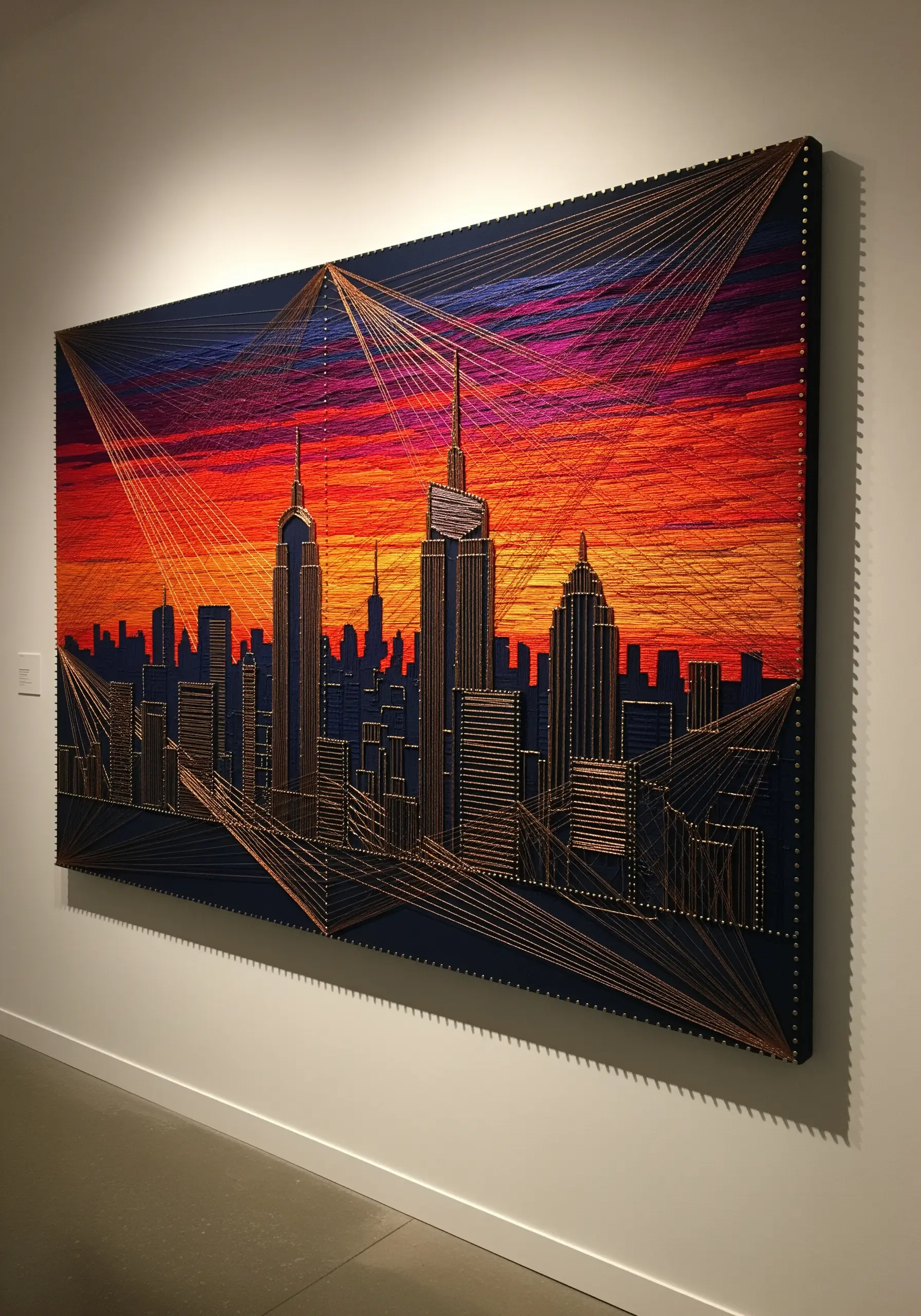
Create the illusion of a vibrant sunset by layering different colors of thread across the sky portion of your canvas.
Start with the lightest color (yellow or pale orange) at the horizon, stitching long, horizontal threads from one side to the other.
Gradually introduce darker shades like magenta, purple, and deep blue as you move upward, allowing the threads to slightly overlap.
This technique creates a soft, painterly blend without complex stitches, letting the tension and density of the threads do the work.
Keep the building silhouettes in a single dark color to create a dramatic contrast that makes the sky feel luminous.
2. Design a Cohesive Triptych Wall Display
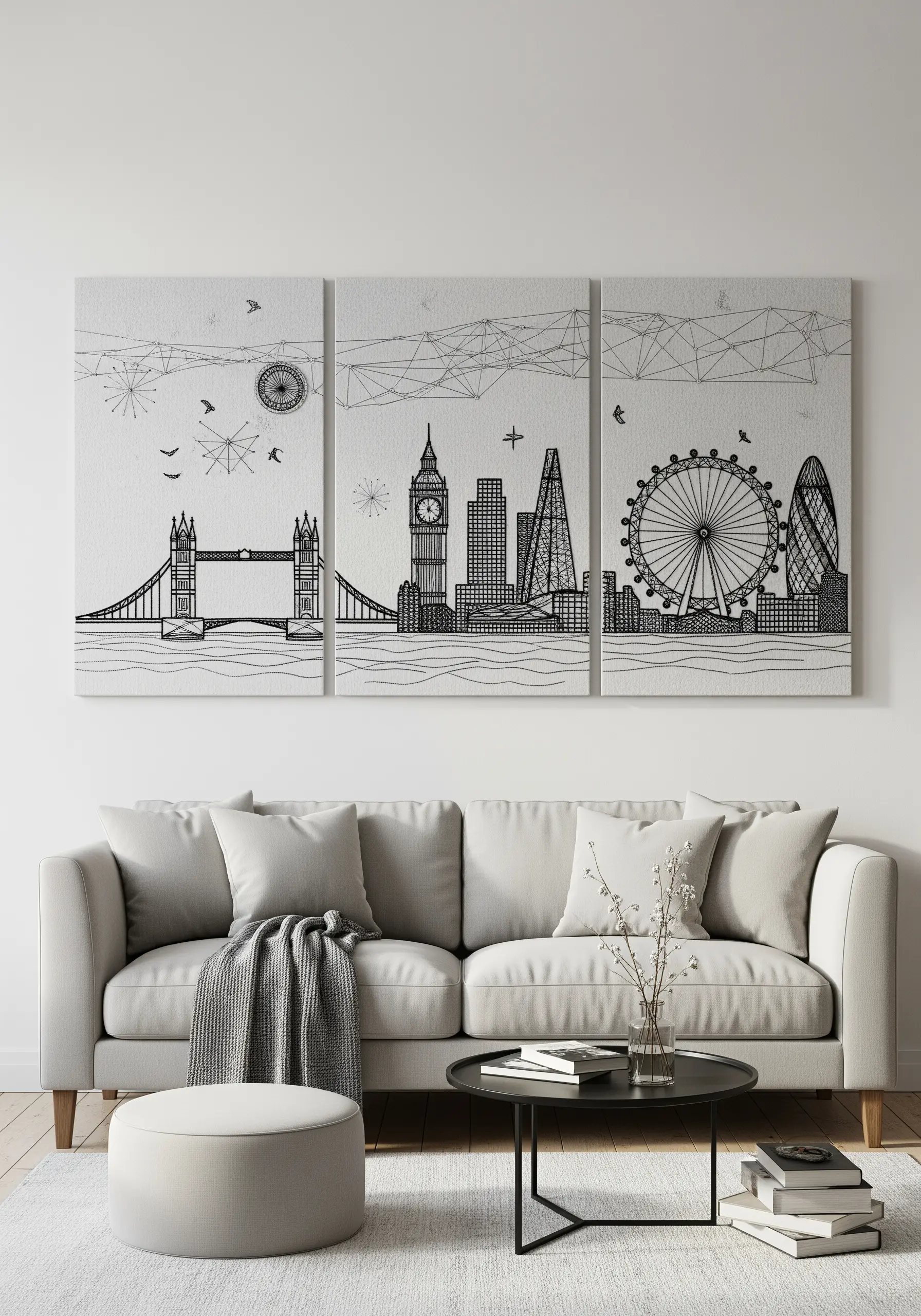
Break a sprawling skyline into three separate, coordinated panels to create a modern and high-impact art piece.
To ensure continuity, let key architectural elements or horizon lines flow from one canvas to the next.
Use a single color of thread, like black on white canvas, to maintain a clean, graphic aesthetic that emphasizes the line work.
This approach transforms a simple embroidery project into a significant piece of minimalist embroidery wall art, perfect for a living room or office.
Vary the density of your geometric fills and line art across the panels to add visual interest while keeping the overall look unified.
3. Electrify Your Skyline with Neon Threads
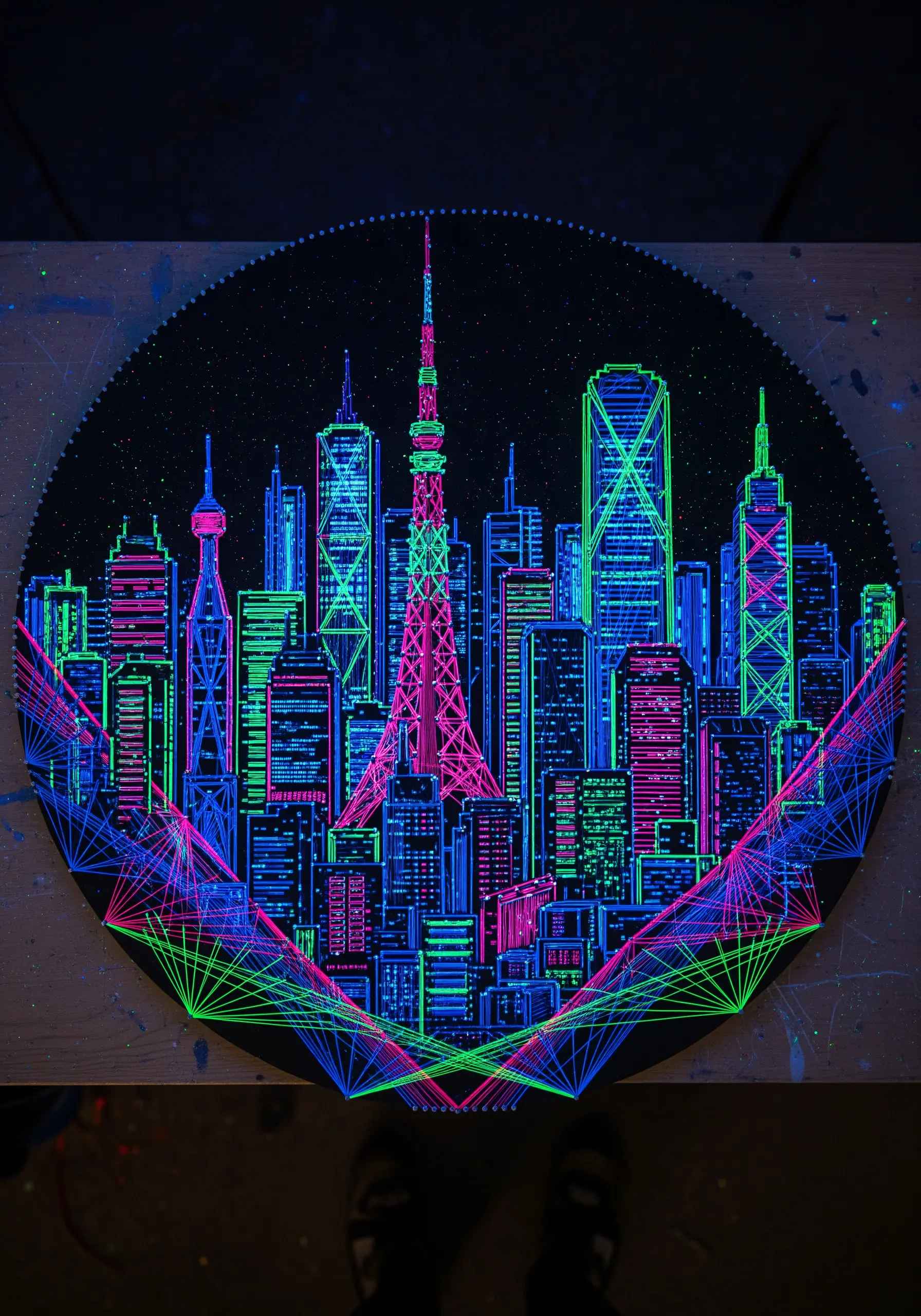
Capture the energy of a city at night by using UV-reactive or fluorescent embroidery floss on a black fabric background.
The high contrast makes every stitch pop, mimicking the glow of neon signs and city lights.
Use simple backstitches or long straight stitches to create the building outlines and windows, letting the intense color be the main feature.
For an added layer of dimension, use intersecting straight stitches in different neon colors to represent light rays or reflections, creating a dynamic, cyberpunk feel.
4. Add Sophistication with Metallic and Beaded Details
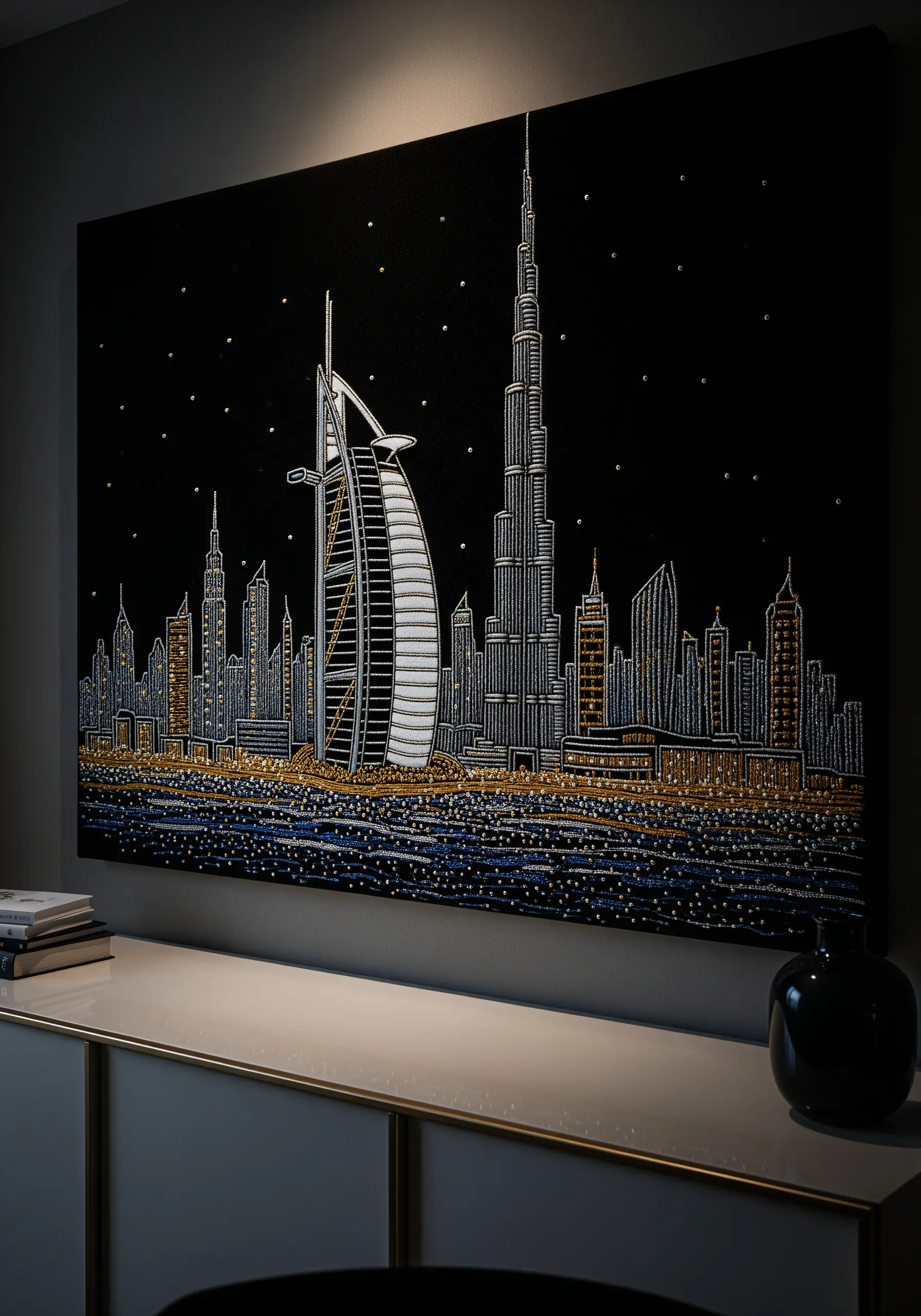
Elevate a nighttime scene by incorporating metallic threads for architectural highlights and reflections.
Use gold, silver, or copper thread to outline key buildings or trace lines of light on the water.
To prevent snagging, work with shorter lengths of metallic floss and consider using a thread conditioner.
For the starry sky, scatter tiny silver seed beads or stitch individual French knots with white thread—this adds a delicate texture that catches the light beautifully.
This combination of metallic sheen and subtle texture creates a sense of luxury and depth.
5. Stitch Realistic Water Reflections
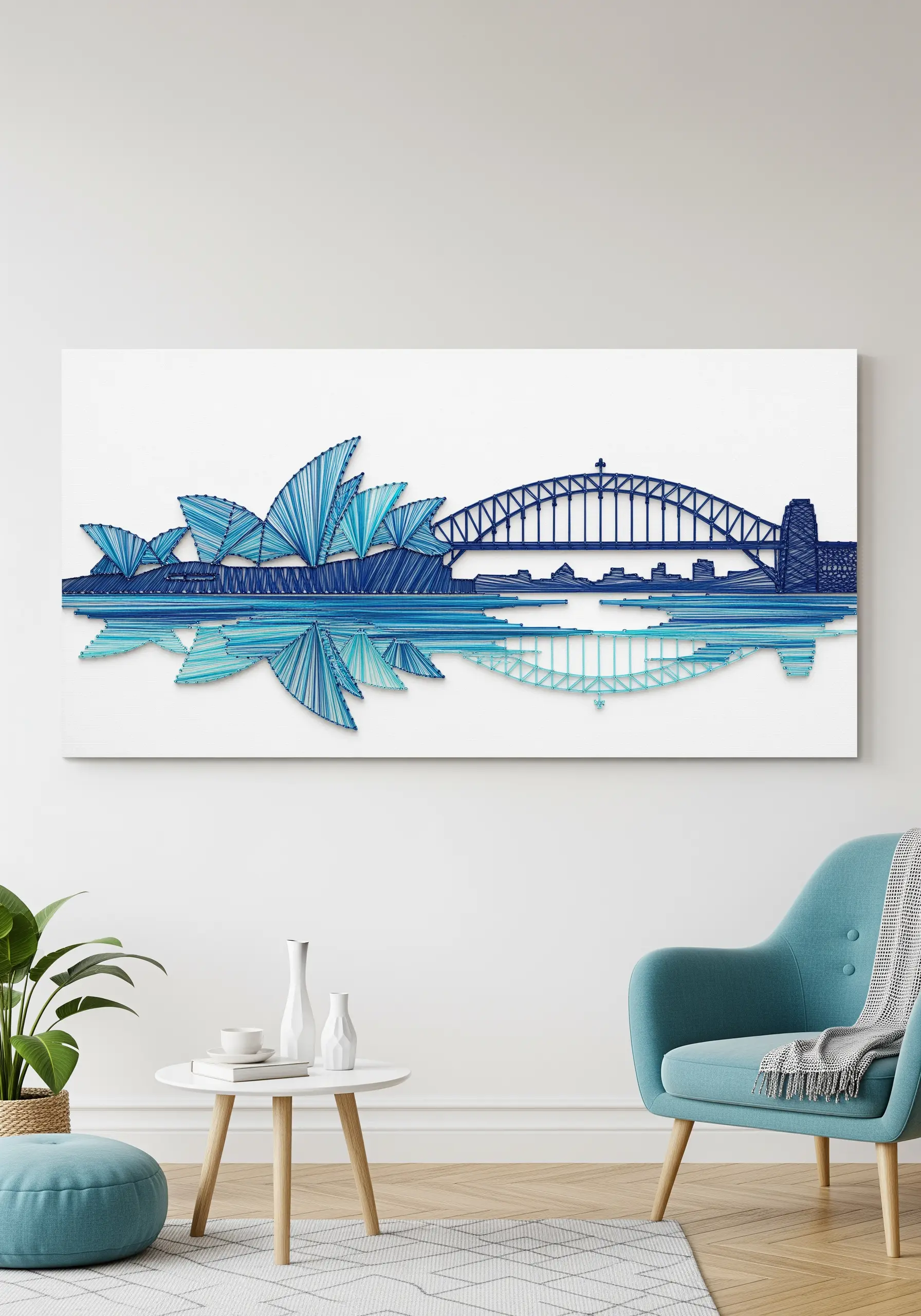
To create the illusion of water, switch from tight, architectural stitches to looser, horizontal ones for the reflection.
Use several shades of the same color family—like cerulean, navy, and seafoam green—and allow them to blend slightly.
Break up the reflection with small gaps or use a slightly wavy stitch to mimic the movement of water.
The key is to mirror the shapes of the architecture above, but with less rigidity and softer lines, creating a convincing and tranquil effect.
6. Embrace Art Deco with High-Contrast Geometry
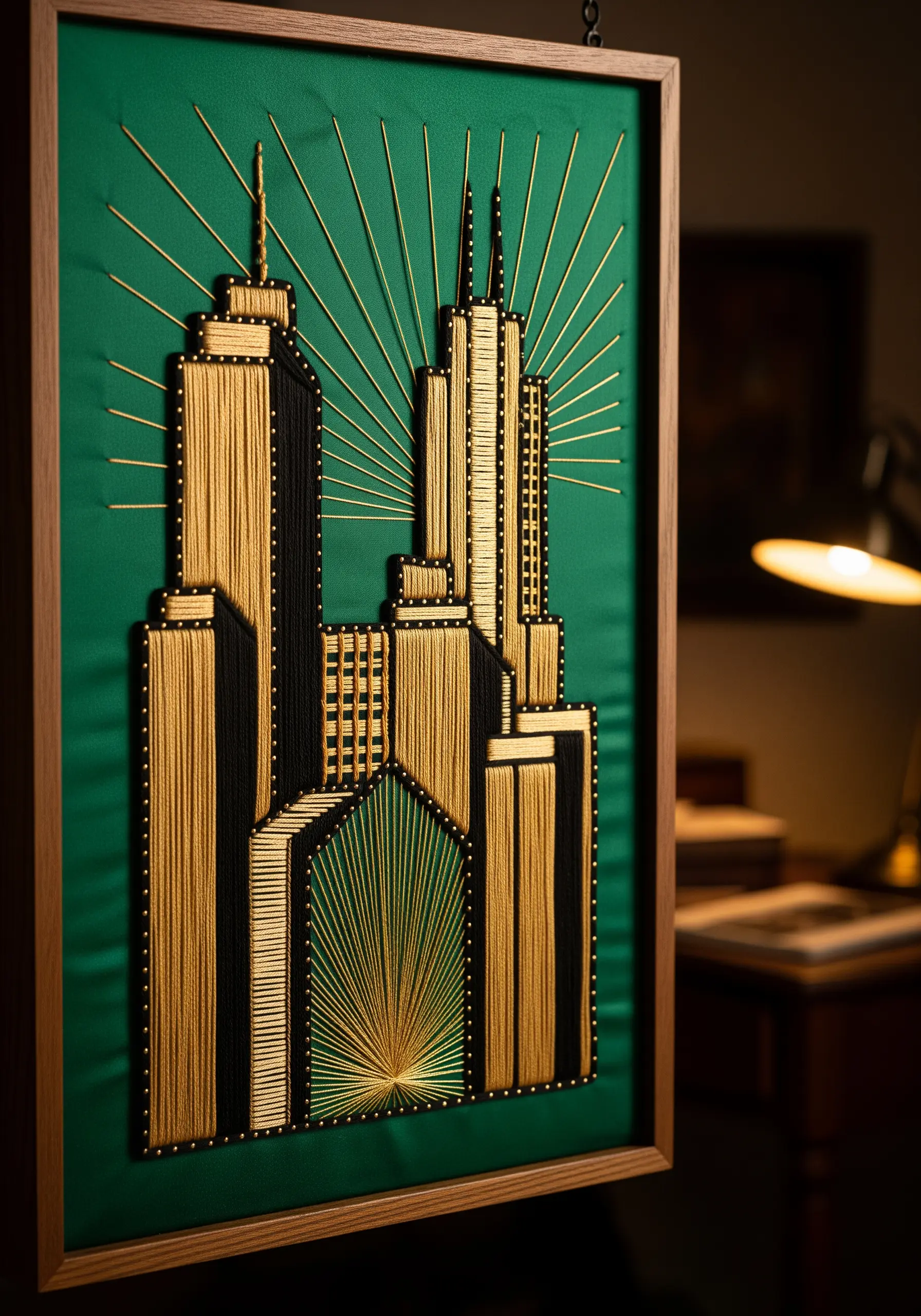
Capture the glamour of the Art Deco era by pairing a rich, jewel-toned fabric with high-shine metallic threads.
An emerald green or sapphire blue cotton-linen provides a luxurious backdrop for gold or silver stitches.
Focus on strong vertical lines and geometric shapes like sunbursts and fans, using dense satin stitch or long straight stitches to fill the building forms.
The contrast between the matte fabric and the lustrous thread is what defines this style, giving your work a bold, polished finish.
7. Balance Intricate Detail with Abstract Texture

Create visual harmony by pairing a meticulously detailed landmark, like the Eiffel Tower, with areas of pure texture and abstract line work.
Render the main structure with a precise backstitch or split stitch in a single color for clarity.
In the surrounding areas, introduce abstract geometric lines and fill certain shapes with dense clusters of French knots or seed stitches.
This technique prevents the composition from feeling too busy, allowing the detailed centerpiece to stand out while adding modern, textural interest.
8. Create a Modular Cityscape with Hexagonal Frames
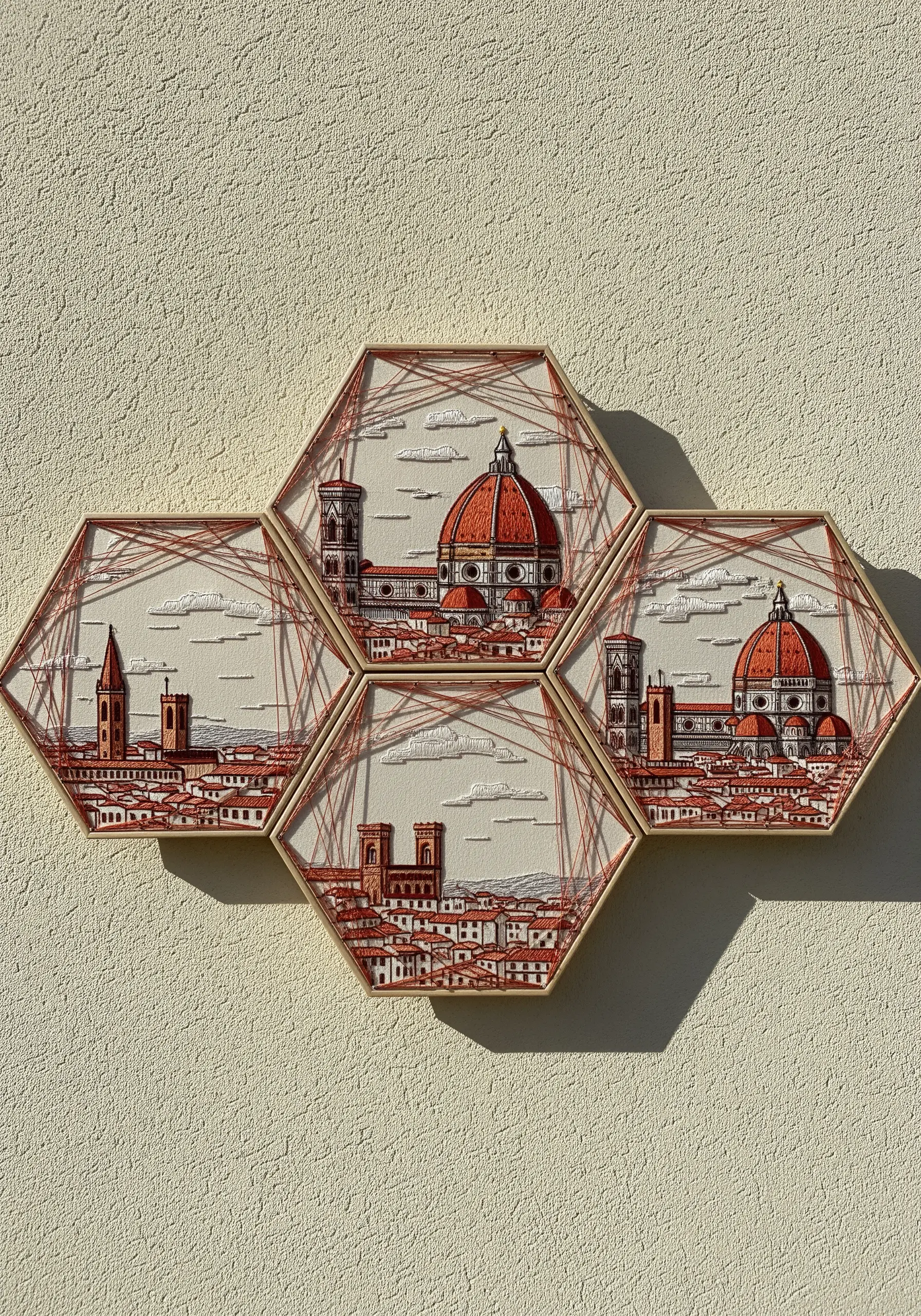
Tell a larger story by breaking a cityscape into smaller vignettes, each framed within a hexagonal hoop.
This modular approach allows you to focus on specific architectural details—a dome, a bell tower, a bridge—in each piece.
Arrange the finished hexagons in a honeycomb pattern on your wall to create a dynamic, interconnected display.
Use a consistent color palette and thread style across all pieces to ensure the final arrangement feels like a single, cohesive work of art.
This is a wonderful way to build a large-scale piece over time, one small, manageable section at a time.
9. Achieve Depth Through Monochromatic Layering
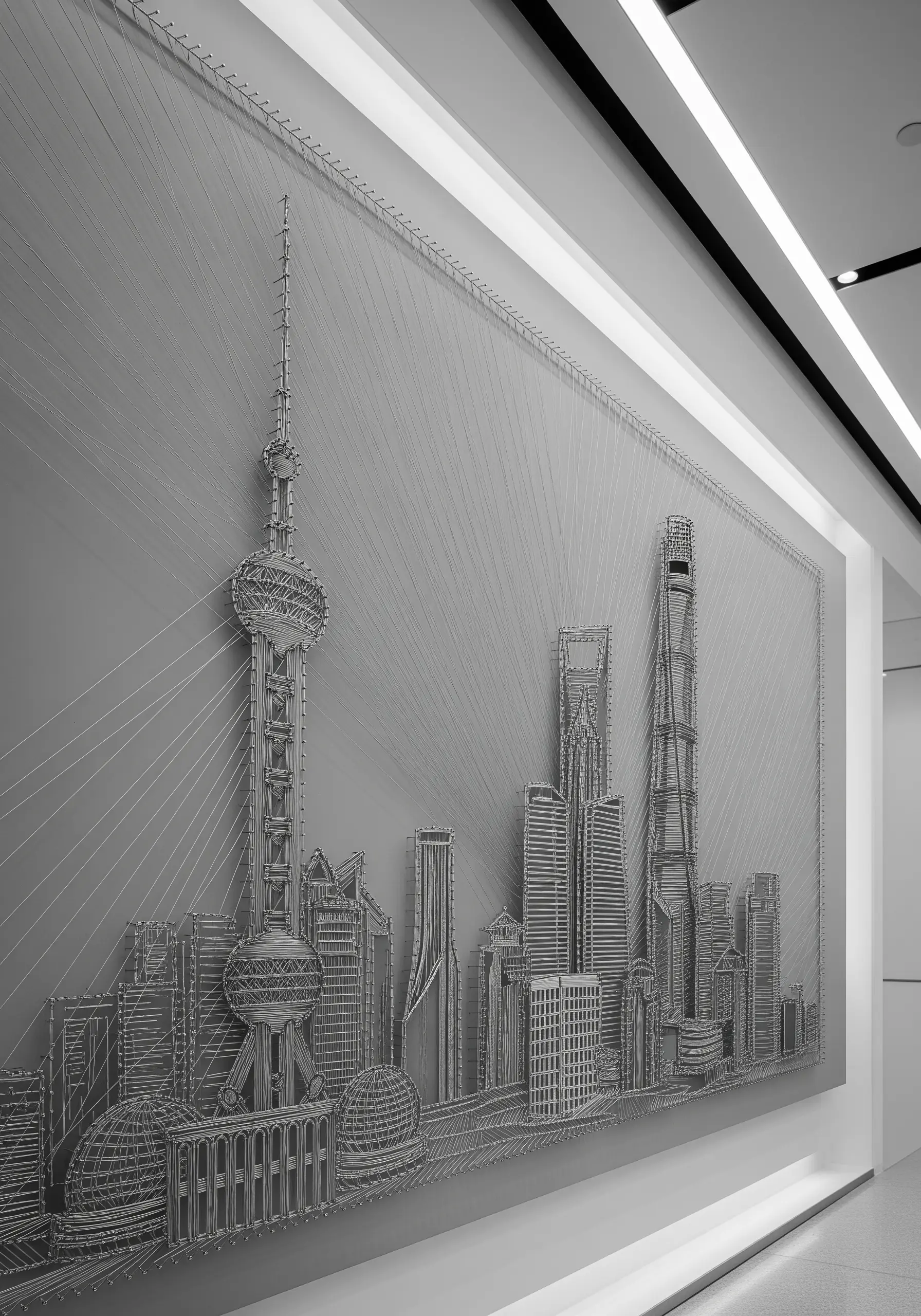
Explore the power of a single color by building your entire cityscape with shades of grey, white, or silver thread.
Use the darkest thread for buildings in the foreground and progressively lighter shades for structures in the distance.
Varying the density of your stitches also creates depth; dense, tight stitches appear closer, while sparse, thin lines recede.
This subtle technique results in a sophisticated, atmospheric piece where texture and tone, not color, define the composition.
10. Block Out a Landscape with Bold, Chunky Yarn
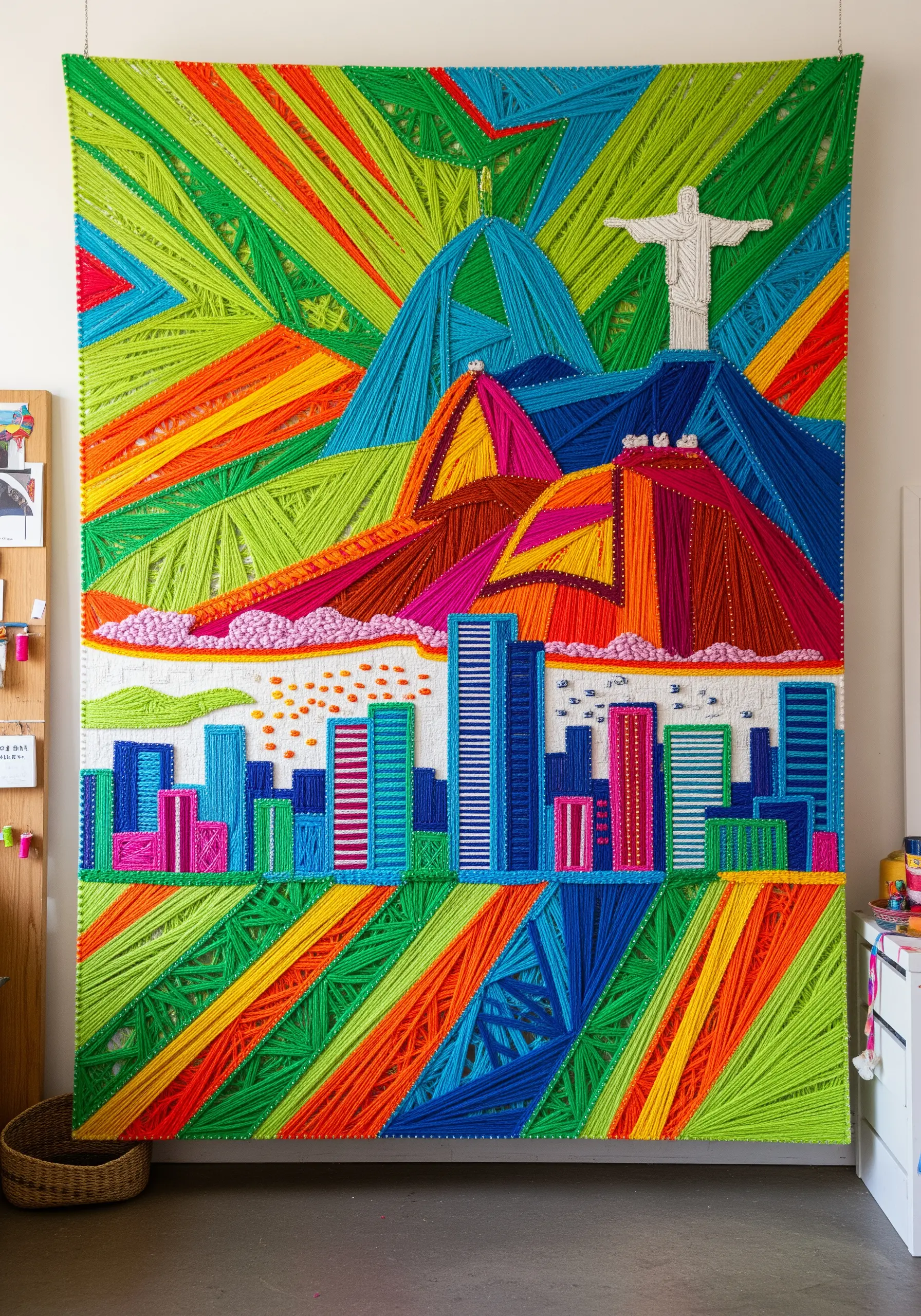
Move beyond delicate floss to create a high-texture, expressive landscape with chunky yarn.
Map out large sections of your design—mountains, sky, buildings—and fill them with bold blocks of color.
Use a large needle and a sturdy canvas or burlap base to handle the weight of the yarn.
This technique is less about fine detail and more about creating a powerful, graphic statement with vibrant color and tactile dimension, turning your wall into a focal point.
11. Contrast Architectural Lines with Organic Florals
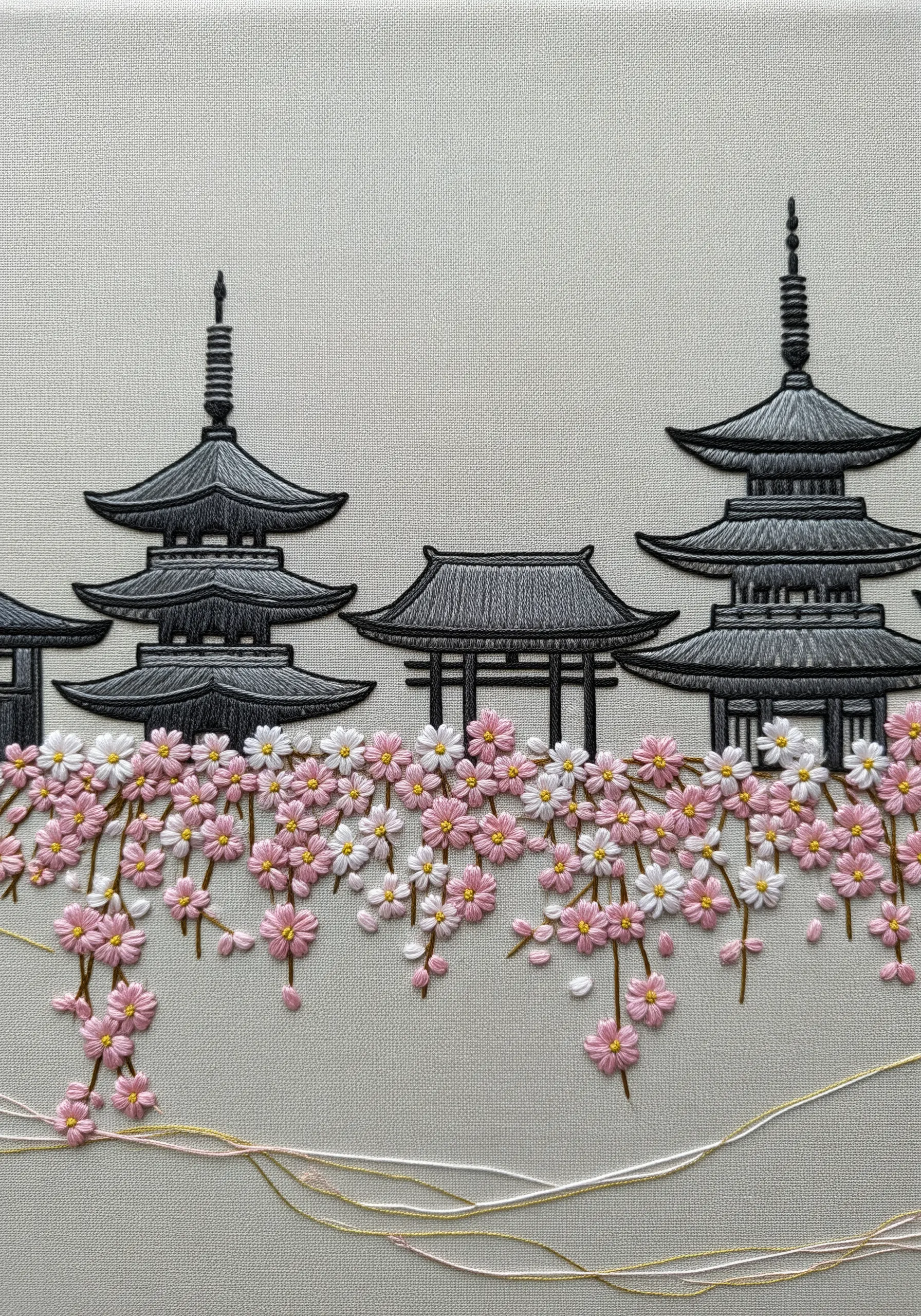
Juxtapose the rigid, straight lines of architecture with the soft, organic shapes of nature for a beautifully balanced design.
Render buildings in a simple, dark satin stitch or backstitch to give them a solid, graphic presence.
In the foreground, add a cascade of cherry blossoms using delicate detached chain stitches for petals and French knots for the centers.
This pairing of hard and soft elements creates a narrative within your piece, adding a layer of gentle beauty to the urban landscape.
12. Isolate Color to Create a Dramatic Focal Point
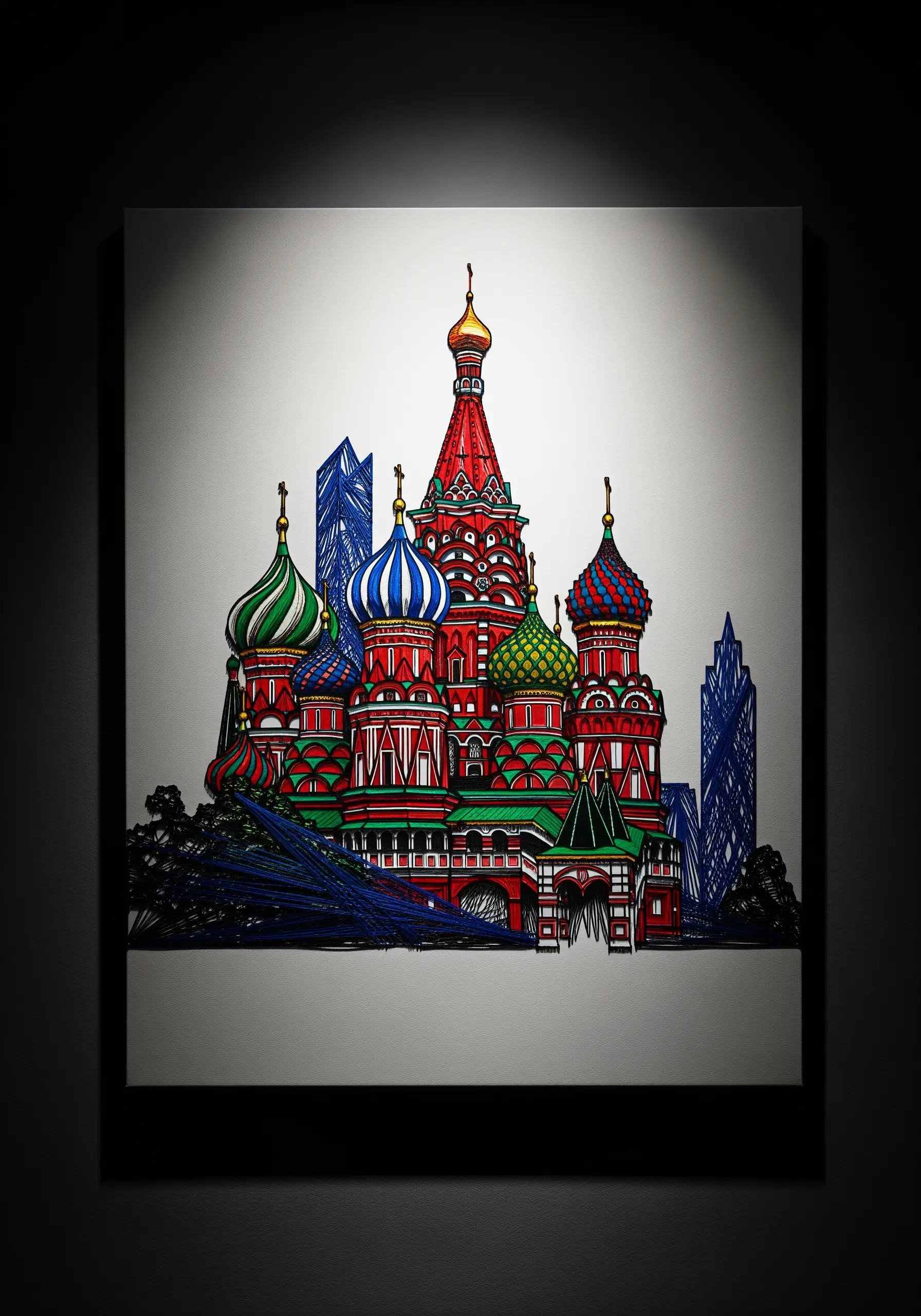
Make a single landmark the hero of your composition by rendering it in full, vibrant color while keeping the surrounding city in monochrome.
Stitch the background buildings using simple black or grey backstitches to create a sense of distance and context.
For your focal point, like St. Basil’s Cathedral, use a rich palette and dense satin stitches to capture its intricate details and colors.
This selective use of color immediately draws the eye and transforms your embroidery into a compelling piece of storytelling.
13. Weave a Dreamscape with Variegated Thread
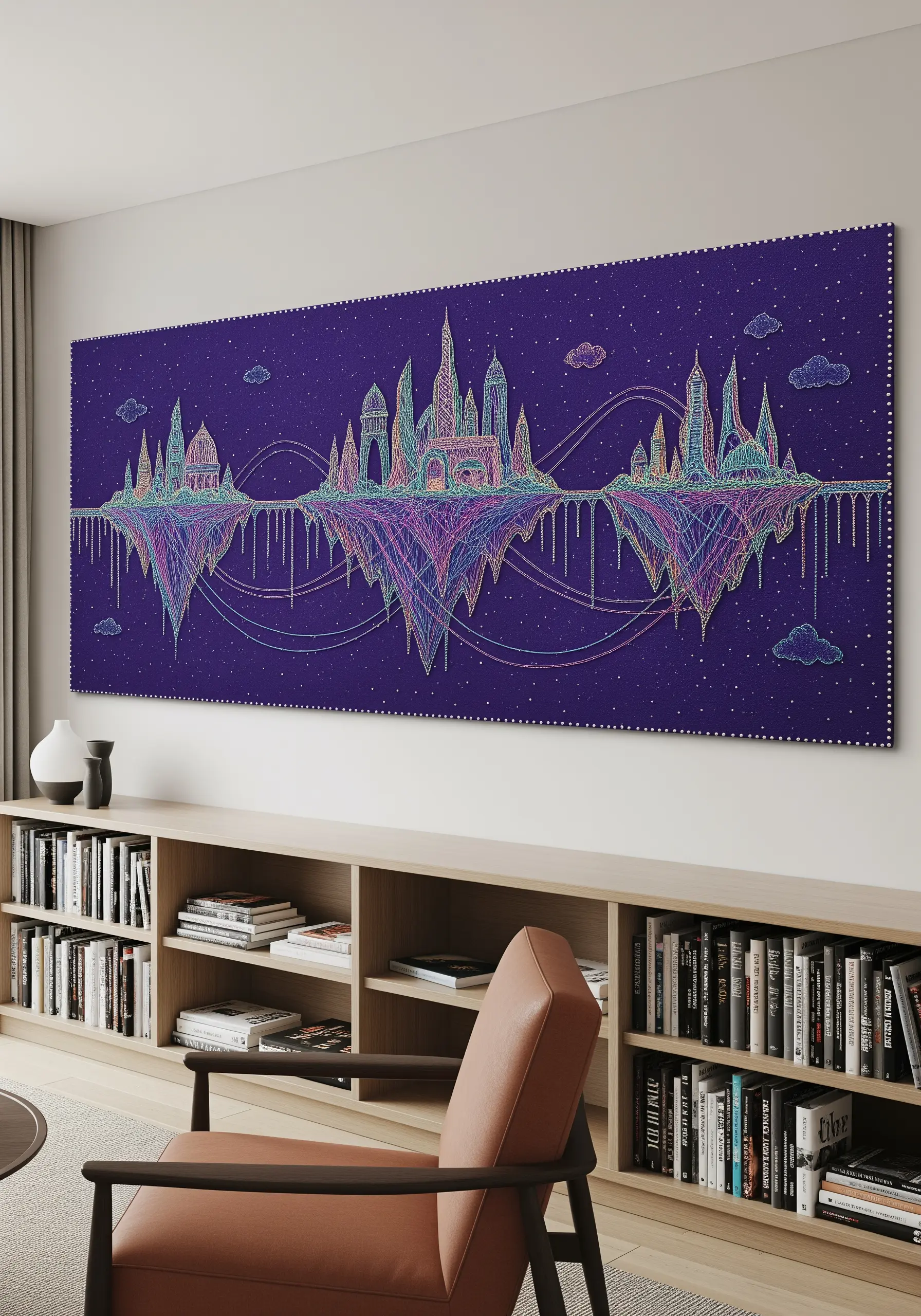
Create a magical, ethereal city by using variegated embroidery floss for your line work.
The thread’s subtle color shifts will do the blending for you, giving the architecture a shimmering, otherworldly quality.
Stitch your fantasy skyline on a dark blue or purple fabric to enhance the mystical feel.
Add scattered single stitches or French knots in a metallic silver thread to represent stars, completing the dreamlike atmosphere of your floating city.
14. Evoke History with a Sepia-Toned Palette
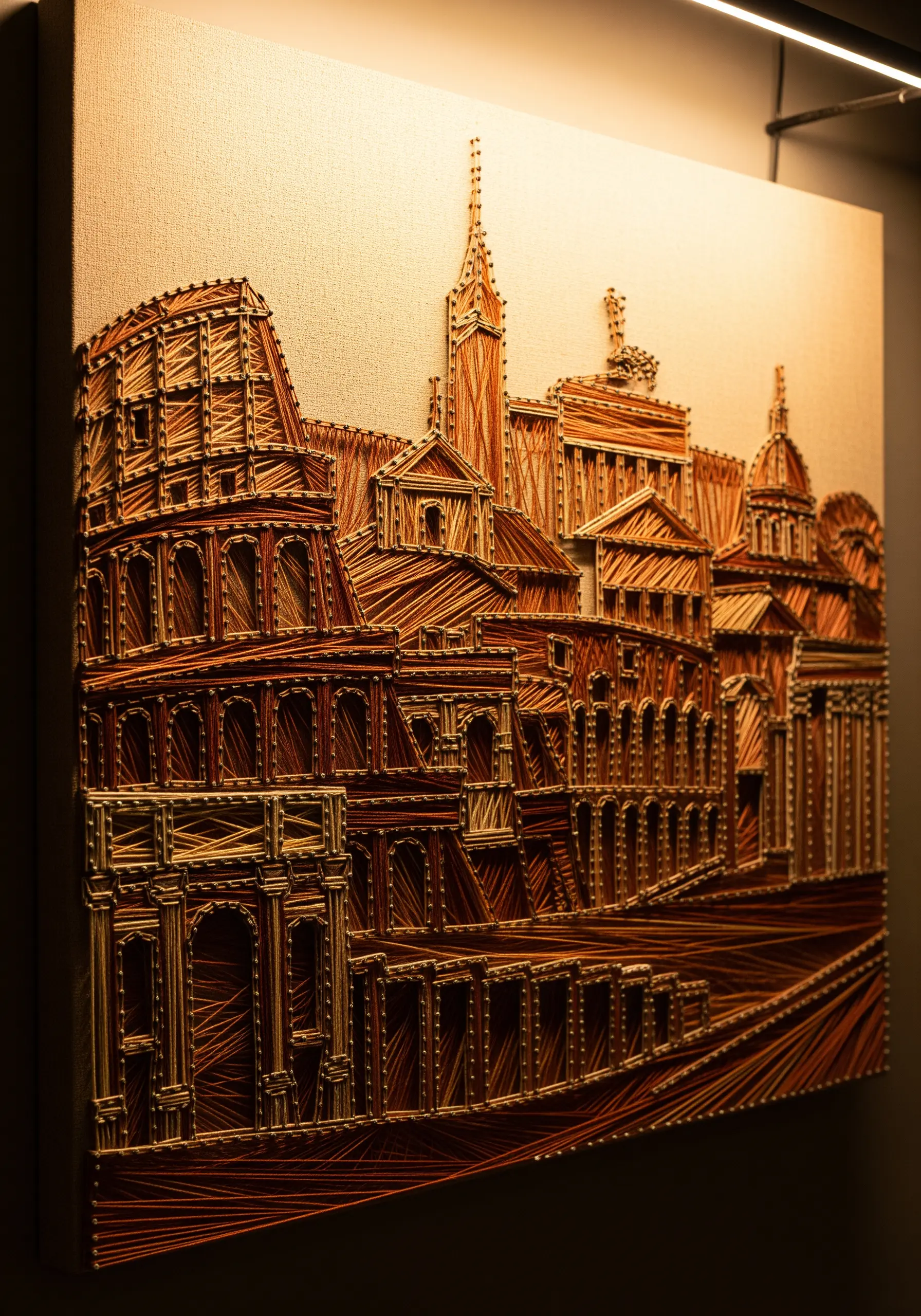
Capture the timeless beauty of an ancient city by working exclusively with a monochromatic palette of browns, creams, and terracotta tones.
This limited color scheme mimics the look of vintage photographs or classical drawings, instantly adding a sense of history and warmth.
Use different shades to define light and shadow, giving your buildings dimension and form.
Stitching on a natural linen or off-white canvas enhances the rustic, historical feel of the piece.
15. Capture Celebratory Light with Sequins and Stitches
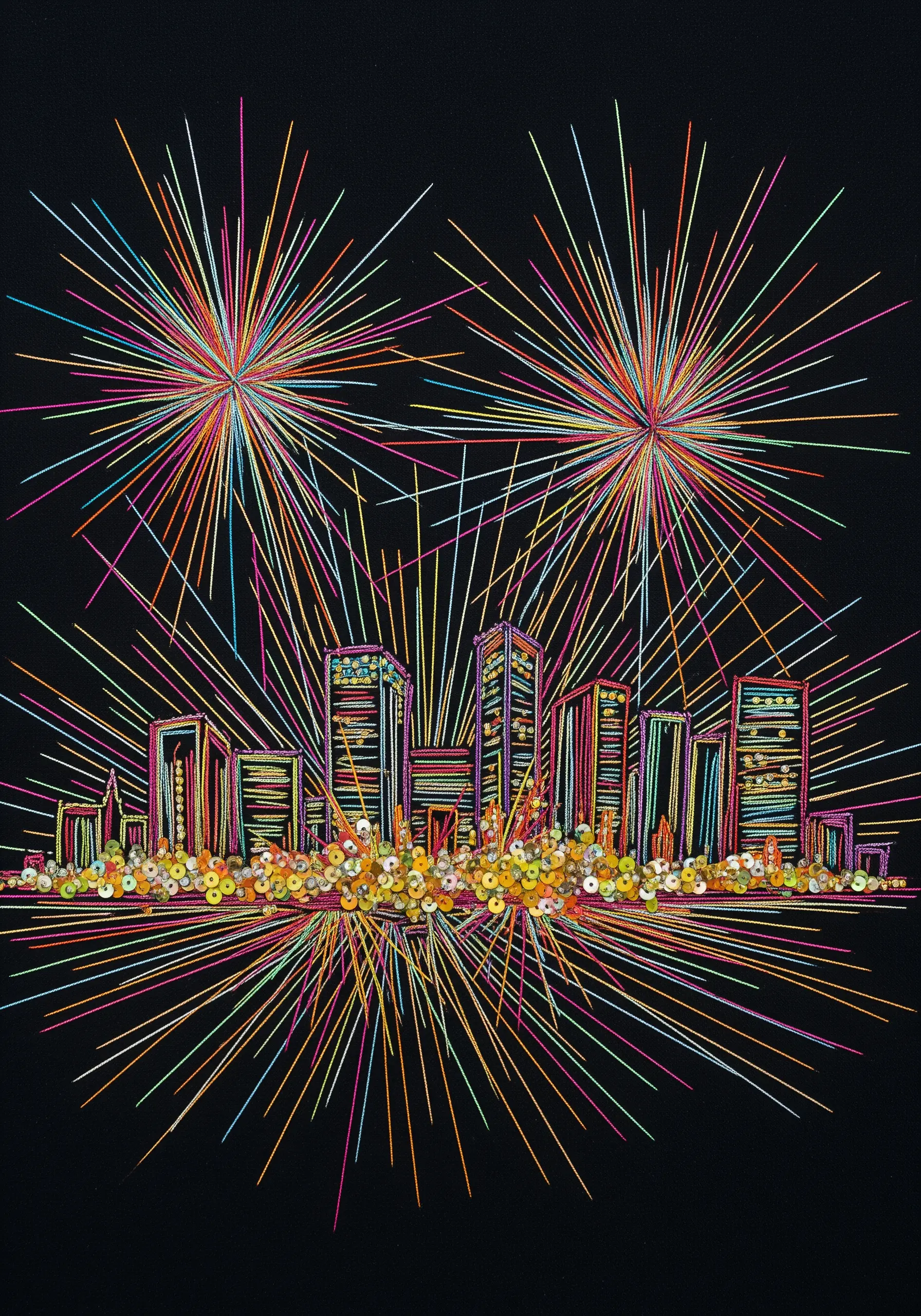
Recreate the explosive energy of fireworks by combining radiating straight stitches with a scattering of sequins.
For the firework bursts, use multiple strands of bright, colorful floss and stitch long lines fanning out from a central point.
At the base of the skyline, where the celebration is densest, stitch on gold and iridescent sequins to mimic bursts of light and festive glitter.
This mixed-media approach adds texture, sparkle, and a dynamic sense of movement to your piece.
16. Deconstruct a Landmark into a Gallery Wall
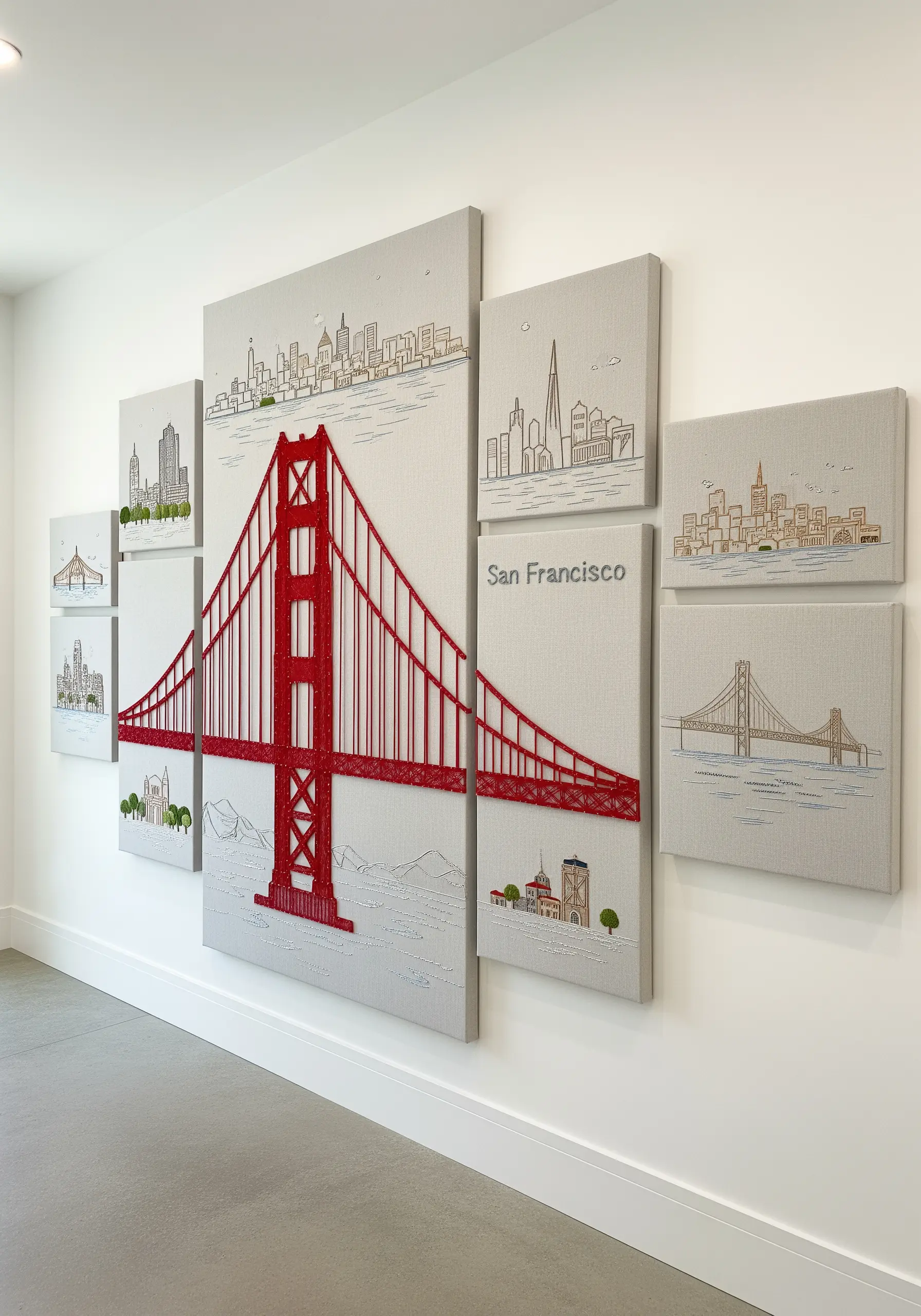
Create an immersive art installation by dedicating a large central canvas to a main landmark and surrounding it with smaller, complementary panels.
The main piece, such as the Golden Gate Bridge, can be stitched with bold, dense stitches like satin or long-and-short stitch for high impact.
On the smaller canvases, stitch minimalist outlines of other city views or different angles of the same landmark.
This deconstructed approach turns a single subject into a multi-faceted narrative, creating an impressive and modern display.
17. Create Perspective with Converging Thread Lines
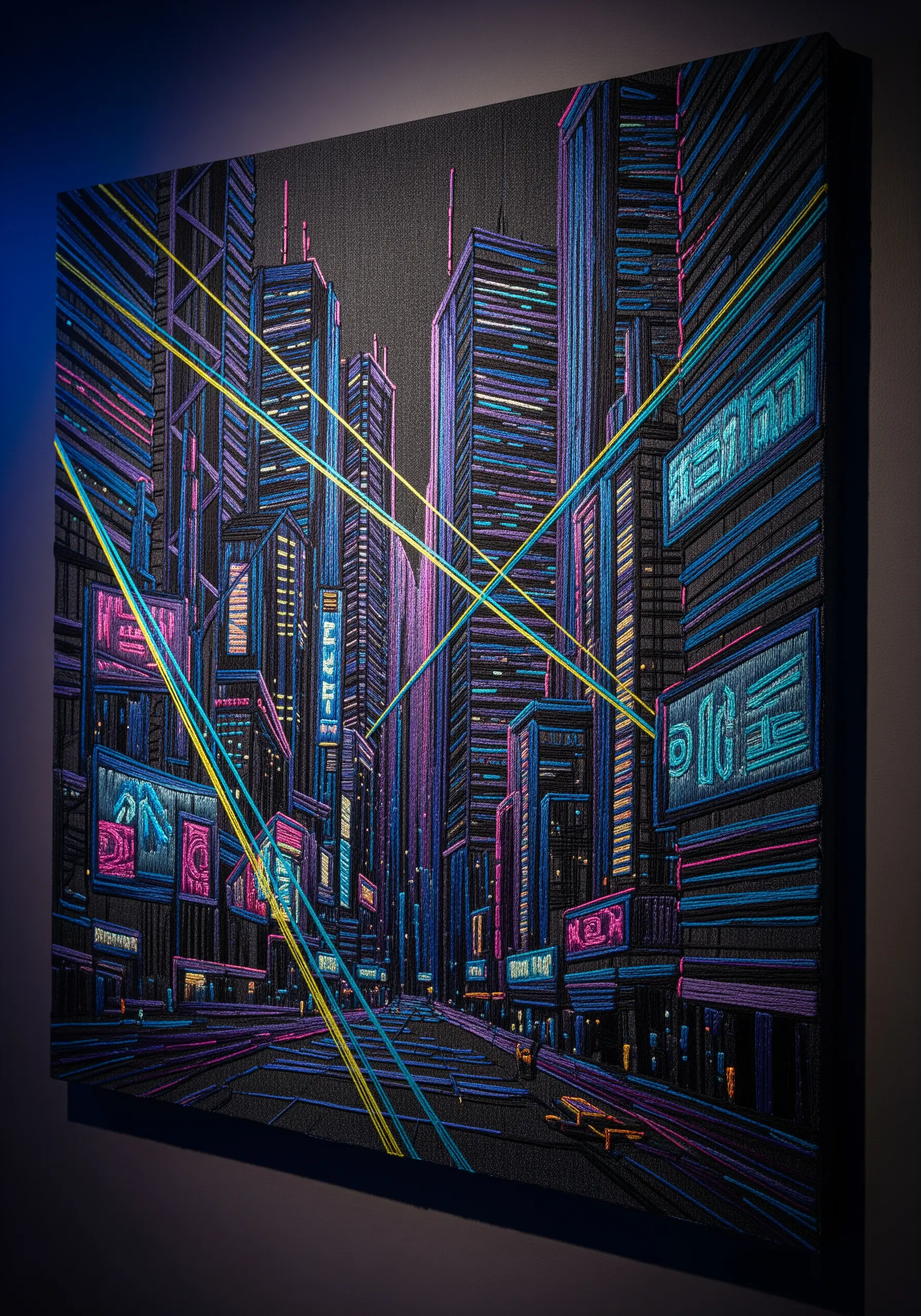
Give your cityscape a powerful sense of depth by using thread to create strong lines of perspective.
Stitch long, taut lines of neon thread that start wide in the foreground and converge toward a vanishing point in the distance.
This technique draws the viewer’s eye into the scene, making a flat surface feel like a three-dimensional space.
It’s particularly effective for evoking the feeling of looking down a long, illuminated street in a bustling metropolis.
18. Translate String Art Logic to Fabric

Achieve the clean, graphic look of traditional string art by stitching on a rigid, wood-like surface or a tightly woven canvas.
Use a single color of high-contrast thread, like bright white on a tan or brown background, to mimic the classic nail-and-thread aesthetic.
Focus on straight, taut stitches to define the architectural columns and roofs.
For the chaotic, intersecting lines, simply stitch long, random straight stitches across the design, letting them overlap to build texture and form without a pattern.
19. Define Architecture with Bold Outlines

Make your colorful buildings stand out by first outlining every shape with a single strand of black or dark grey thread.
Use a simple backstitch for the outlines to create clean, crisp lines around windows, doors, and rooflines.
Fill in the outlined sections with solid blocks of color using a smooth satin stitch.
This technique, similar to stained glass or cartoons, contains the color and gives your architecture a sharp, graphic quality that is incredibly satisfying to look at.
20. Sculpt with Light Using Radiating Stitches
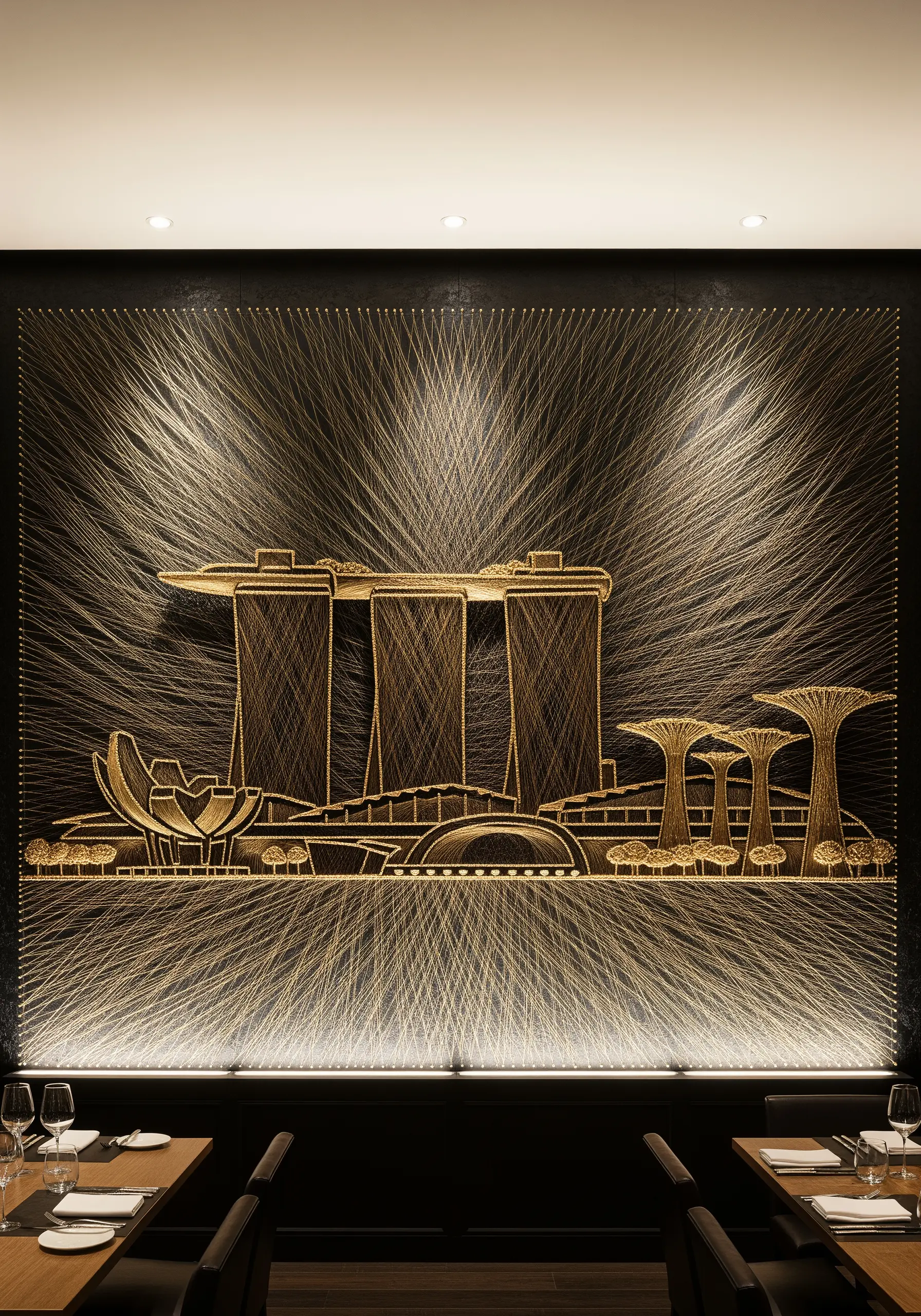
Create the illusion of dramatic backlighting by stitching thousands of fine, radiating lines from a central light source behind your skyline.
Use a fine, high-sheen thread, like a gold metallic or a silk floss, on a dark, matte background for maximum contrast.
The sheer density of the overlapping threads will build a texture that appears to glow, especially when viewed under direct light.
This technique transforms simple straight stitches into a breathtaking piece of fiber art.
21. Fuse a Cityscape with a Whimsical Theme
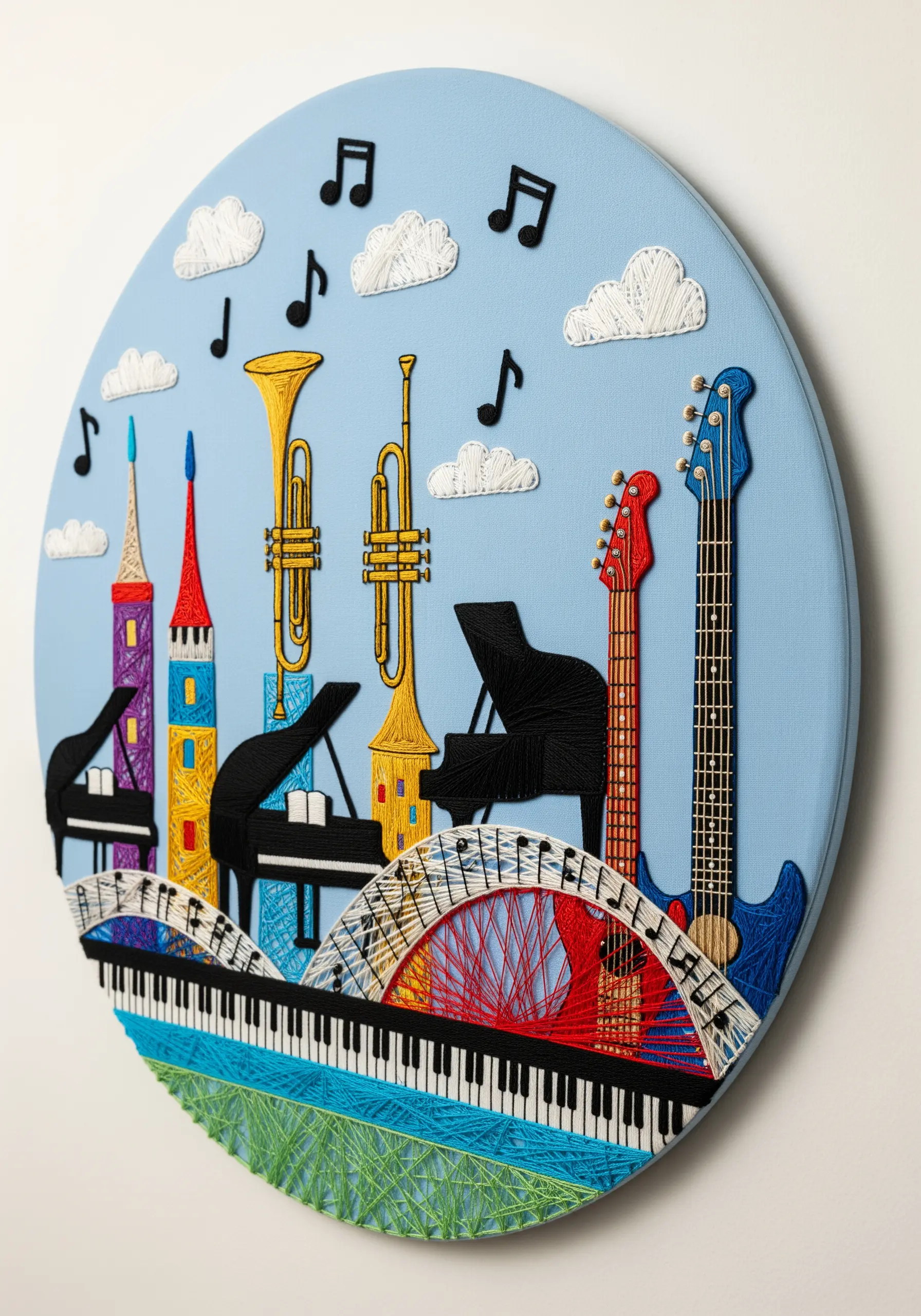
Create a playful, surrealist composition by merging architectural forms with an unexpected theme, like music.
Transform building spires into trumpets or create a bridge from piano keys. This invites creativity and results in a truly unique piece.
Use a variety of stitches to differentiate the elements: smooth satin stitch for instrument bodies, couching for strings, and French knots for fluffy clouds.
A cheerful, light-colored background fabric keeps the overall mood bright and imaginative.
22. Paint with Texture to Animate Water
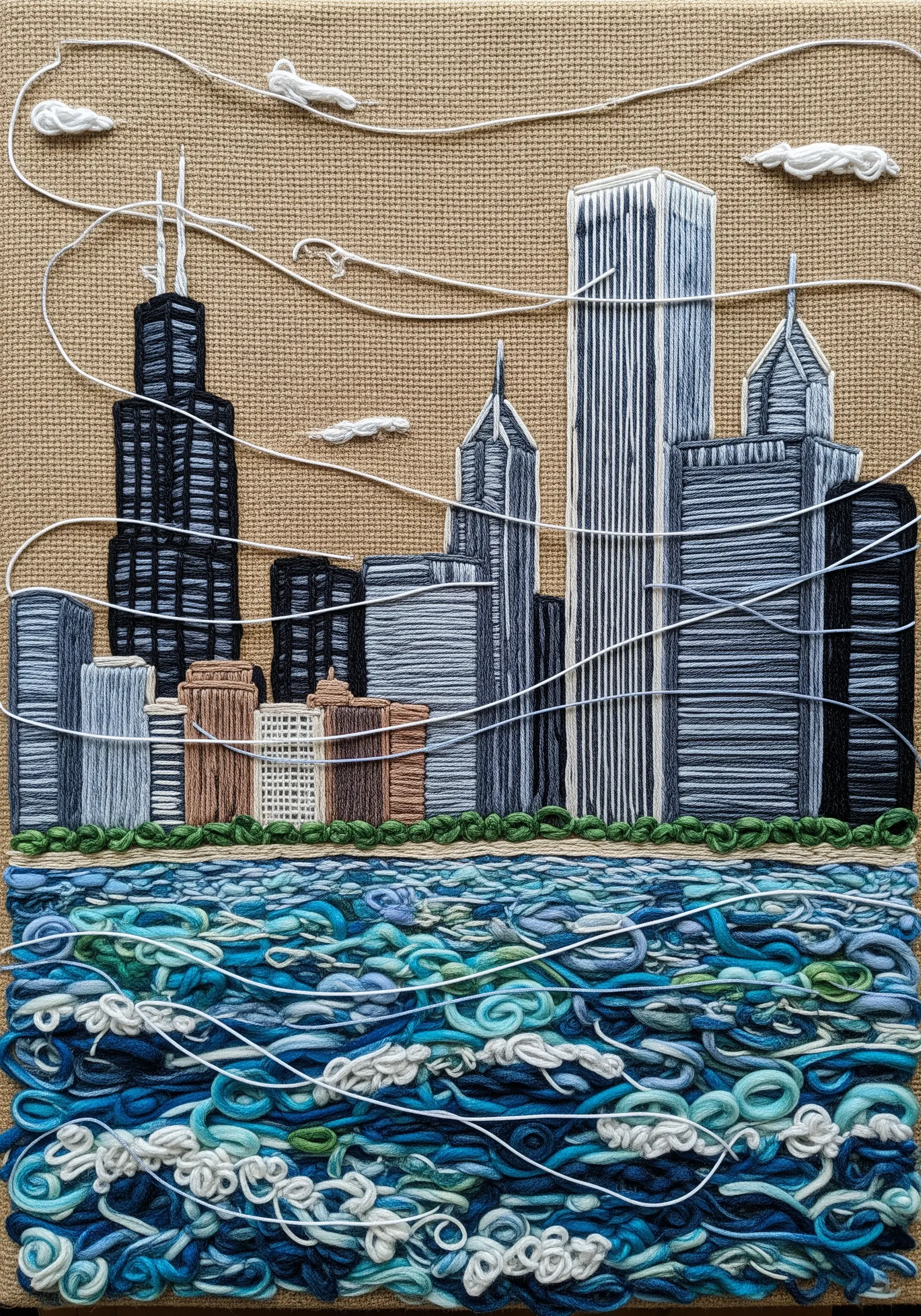
Instead of using flat stitches for water, create a dynamic, textured surface that conveys movement.
Use a mix of threads and yarns in various shades of blue, green, and white. Couch down thick, loopy pieces of yarn to create swells and waves.
Incorporate bullion knots and loose French knots to represent seafoam and splashing water.
This highly tactile approach provides a stunning contrast to the straight, orderly lines of the city buildings, bringing your entire scene to life.
23. Map Abstract Forms with Geometric Lines
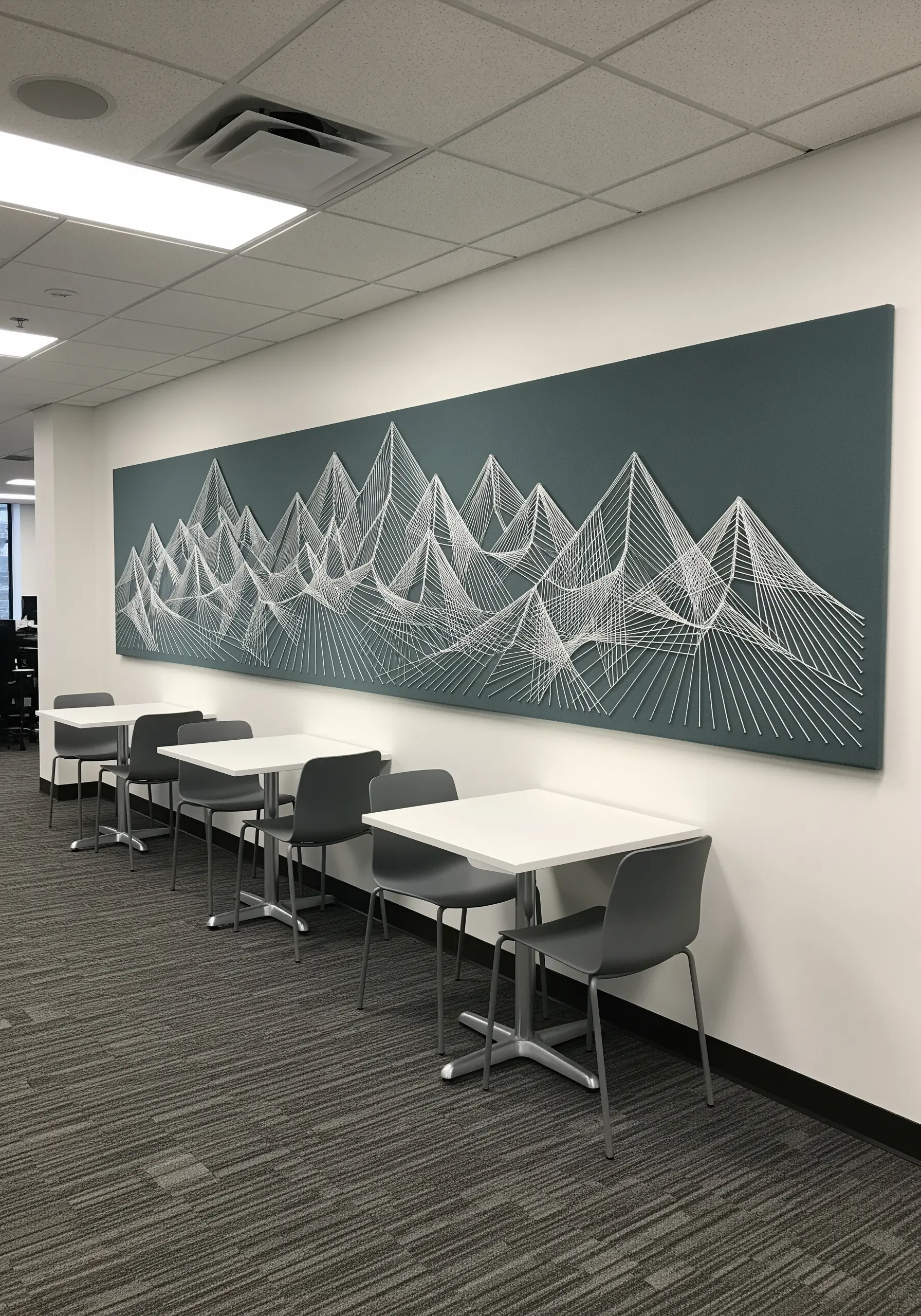
Reduce a complex landscape, like a mountain range or a dense city, to its essential form using intersecting straight lines.
This technique isn’t about realism but about capturing the energy and shape of the subject.
Plot out key anchor points along the top and bottom of your design and connect them with long, taut stitches.
The magic happens where the threads overlap, creating moiré patterns and a sense of depth and structure from apparent chaos.
Use a single color of thread on a solid background to emphasize the beauty of the lines themselves.
24. Create a High-Energy Scene with a Limited Palette
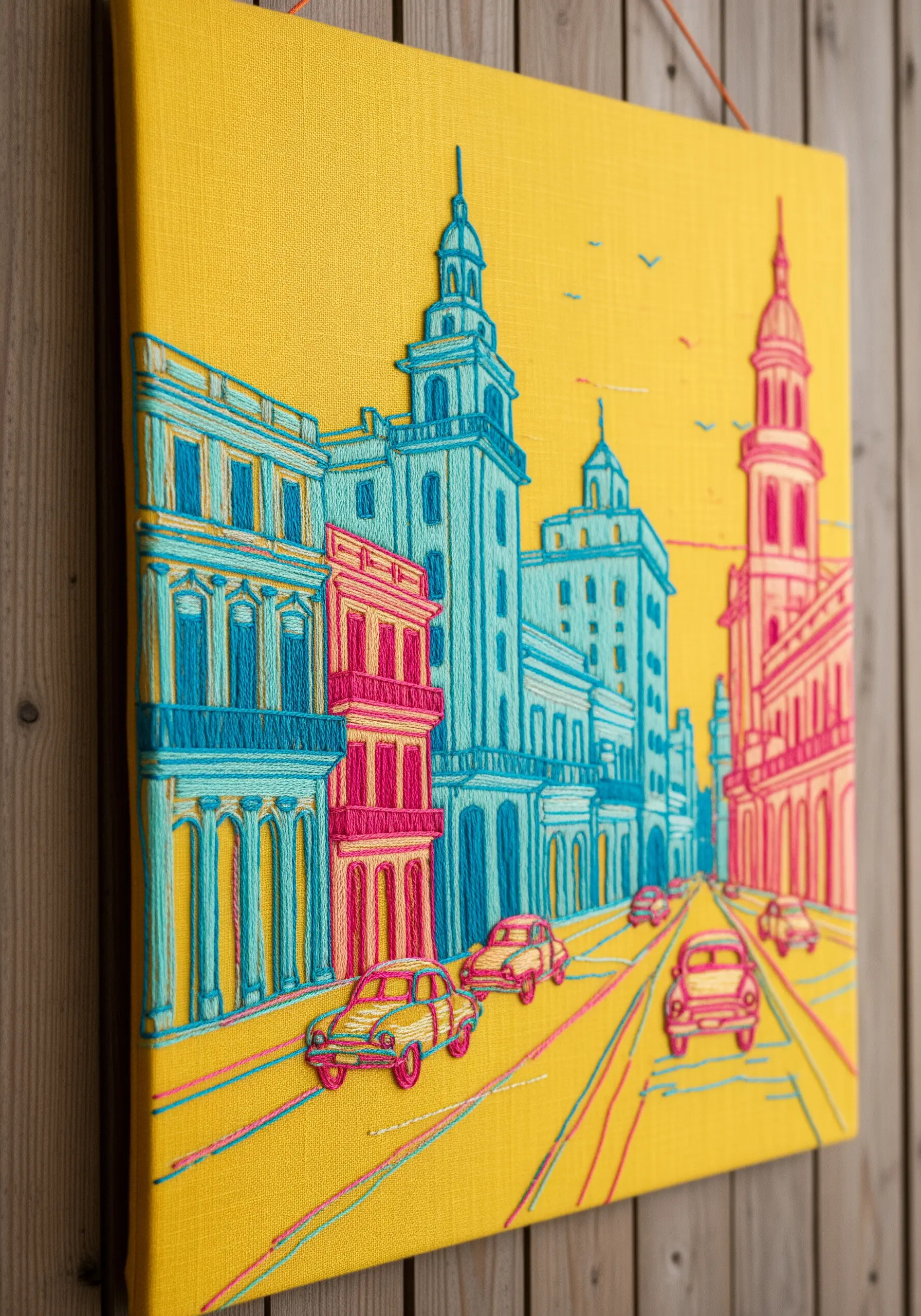
You don’t need a full spectrum of colors to create a vibrant piece. Choose two or three high-contrast colors and a bold background.
By using a limited palette—like cyan and magenta on a bright yellow canvas—you create a cohesive yet energetic look.
Focus on clean lines and solid fills to make the most of the color interaction. This approach gives your work a graphic, screen-printed quality that feels modern and intentional.
It proves that thoughtful color choice is more powerful than using every color available.
25. Combine Architecture with Atmospheric Phenomena
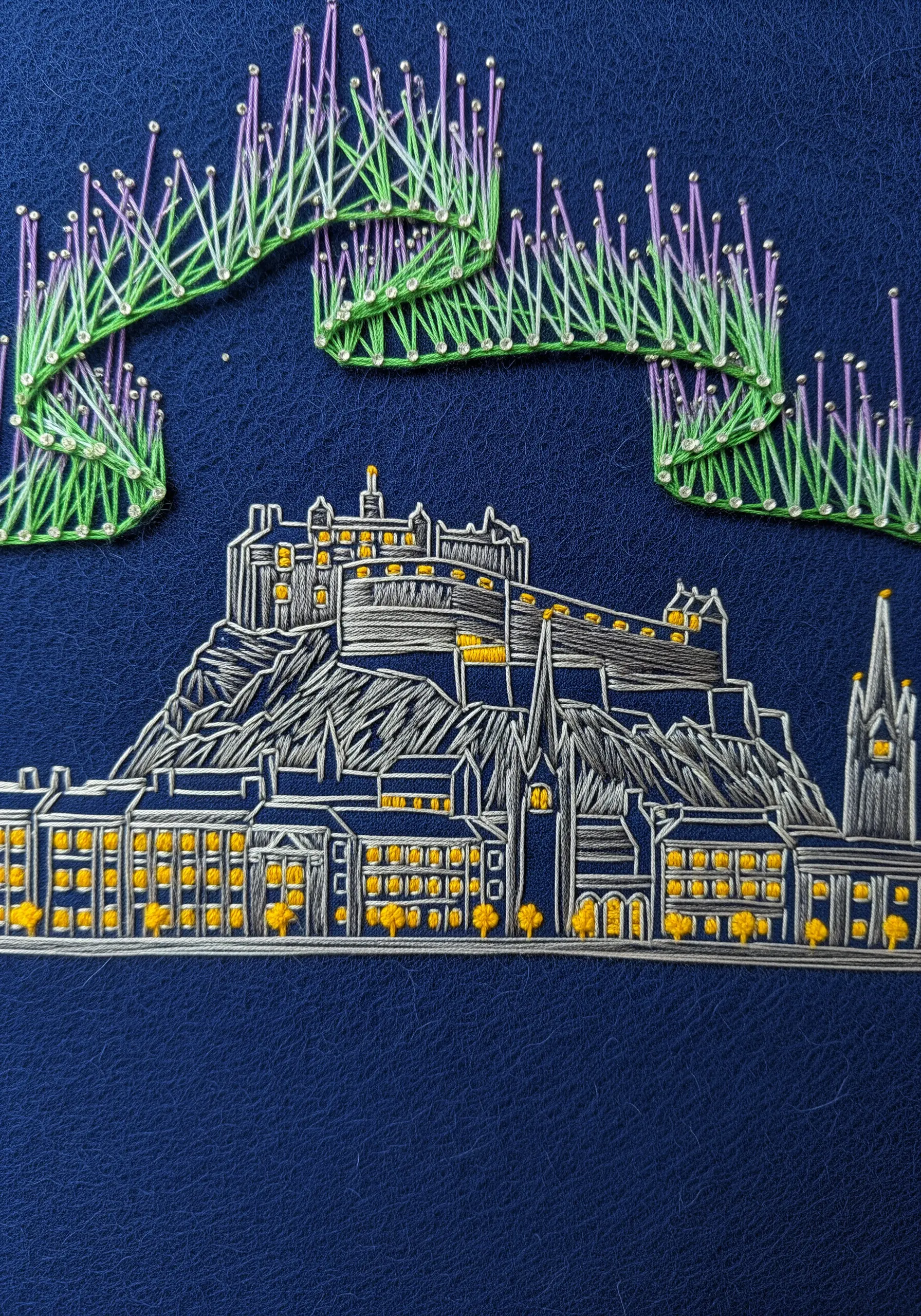
Ground a magical sky event, like the Northern Lights, by pairing it with a solid, recognizable landmark.
Stitch the castle or skyline using simple, dense stitches in neutral colors like grey and white, adding small pops of yellow for lit windows.
For the aurora, use long, vertical satin stitches in variegated or neon green thread, fanning them out to create a sense of movement.
The contrast between the static architecture and the dynamic sky makes for a captivating and atmospheric piece.
26. Use a Gradient Fabric for an Instant Sunset
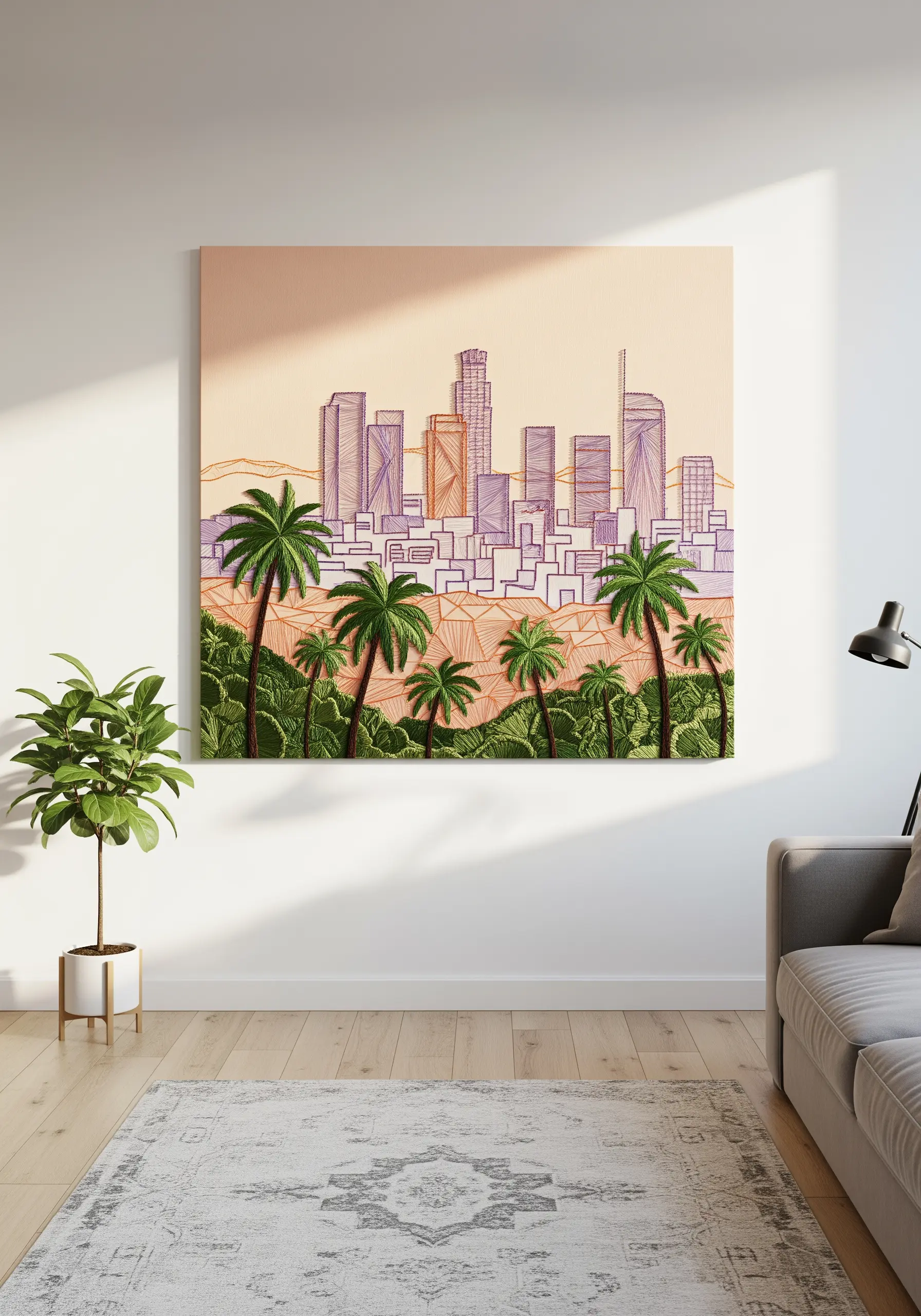
Save time and achieve a perfectly smooth background gradient by starting with pre-dyed ombré fabric.
Choose a fabric that transitions from a warm orange or pink at the bottom to a soft purple or peach at the top.
This allows you to focus all your stitching efforts on the skyline and foreground elements.
Stitch the buildings in a contrasting color to make them stand out against the soft-focus sky, creating a beautiful piece with minimal effort for the background.
27. Create a ‘Sketch’ Effect with Chaotic Stitches
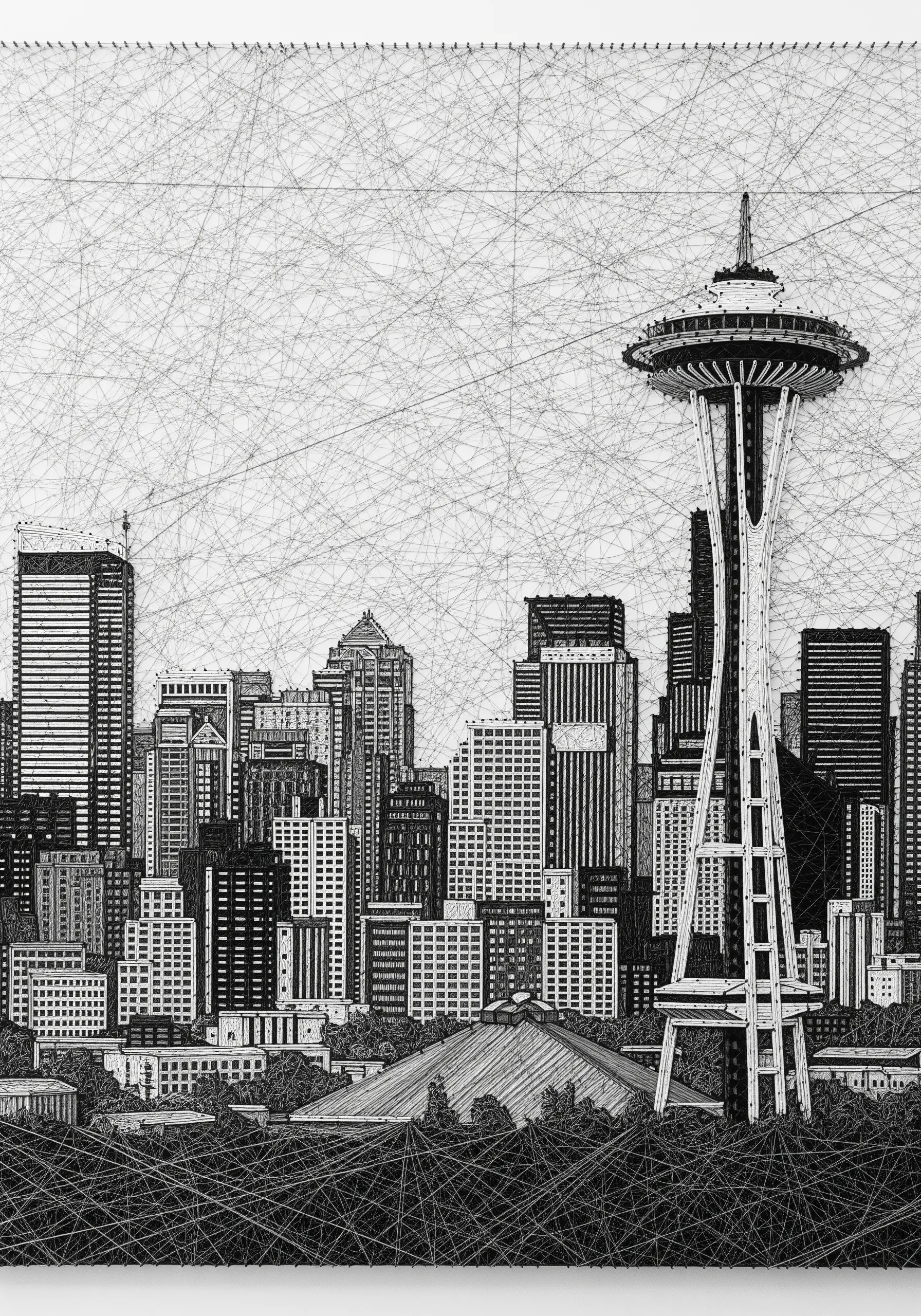
Give your architectural embroidery a dynamic, hand-drawn feel by adding a background of random, intersecting stitches.
First, complete your main subject—the skyline—with precise, detailed stitches to ensure it is recognizable and clear.
Then, using a very fine thread in a contrasting color, fill the negative space with a web of chaotic, overlapping long stitches.
This technique adds a layer of raw energy and texture, transforming a static portrait into a piece that feels alive and full of movement.
28. Highlight Architectural Patterns with Metallics
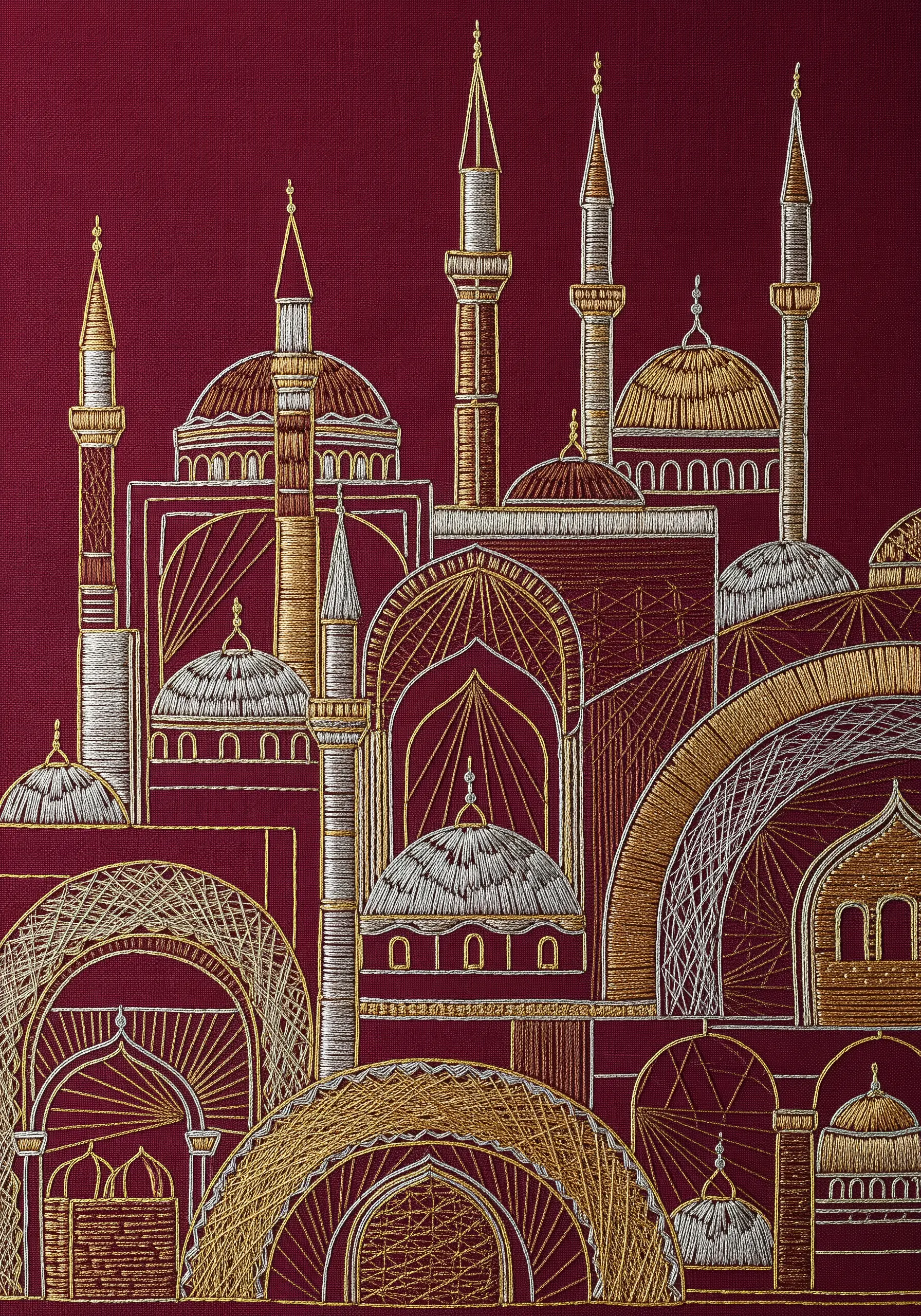
Draw attention to the intricate, repeating patterns of ornate architecture by tracing them with metallic threads.
Use a foundation of satin stitch in a matte color like cream or white to build the main structures, like domes and arches.
Then, layer over this foundation with gold and silver threads to outline geometric details, latticework, and decorative flourishes.
This layering technique creates a rich, opulent texture and highlights the craftsmanship of both the architecture and your stitching.
29. Design Playful Nursery Art with Chunky Yarn
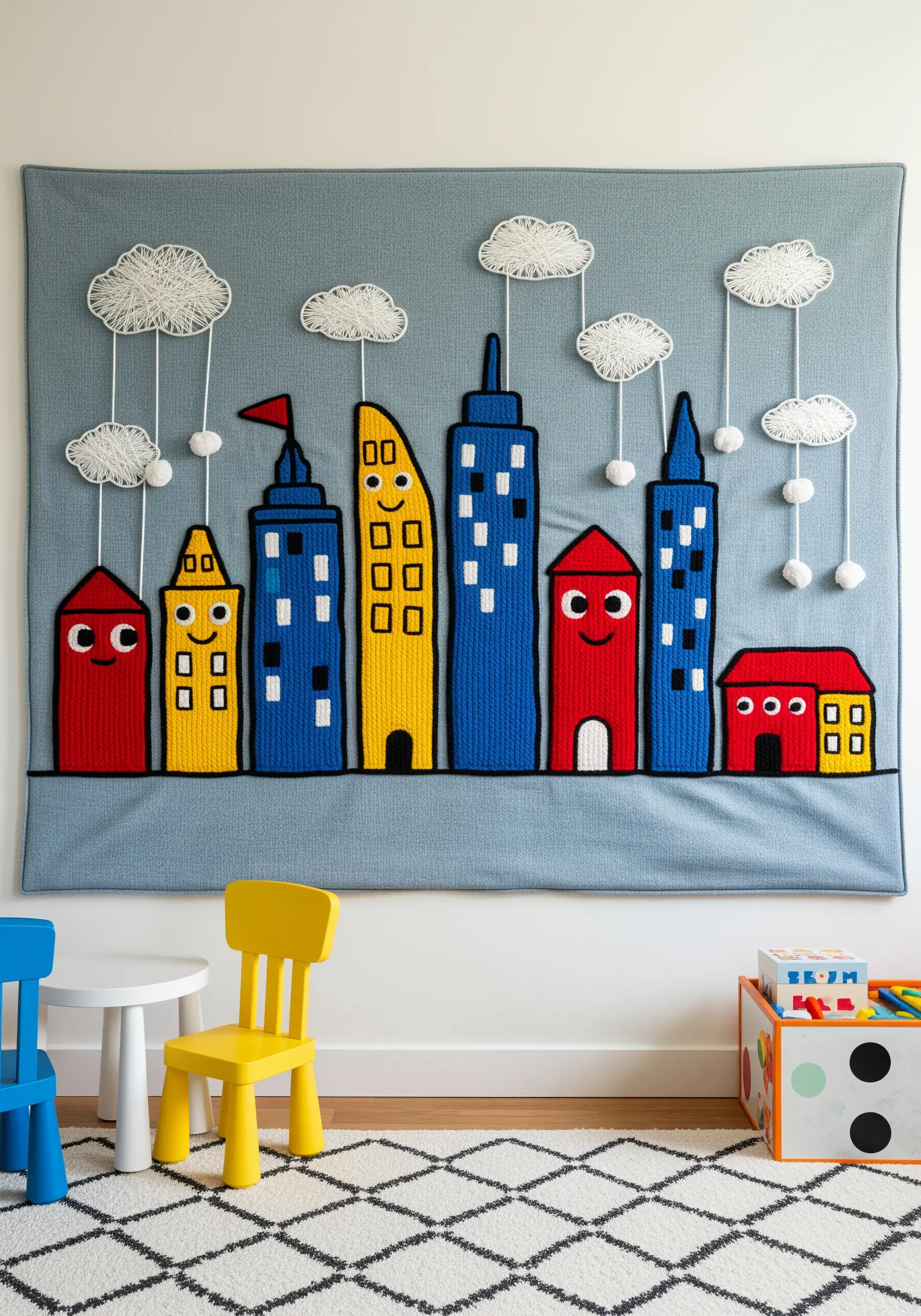
Create charming and tactile wall art for a child’s room by using thick, colorful yarn and simple, friendly shapes.
Fill in the building shapes with vertical satin stitches using chunky yarn, which covers the area quickly and creates a soft, woven texture.
Add whimsical details like hanging pom-pom clouds and simple embroidered faces to give the cityscape a cheerful personality.
This style is perfect for embroidered nursery decor that is both visually engaging and soft to the touch.
30. Emphasize Form with High-Contrast Line Art
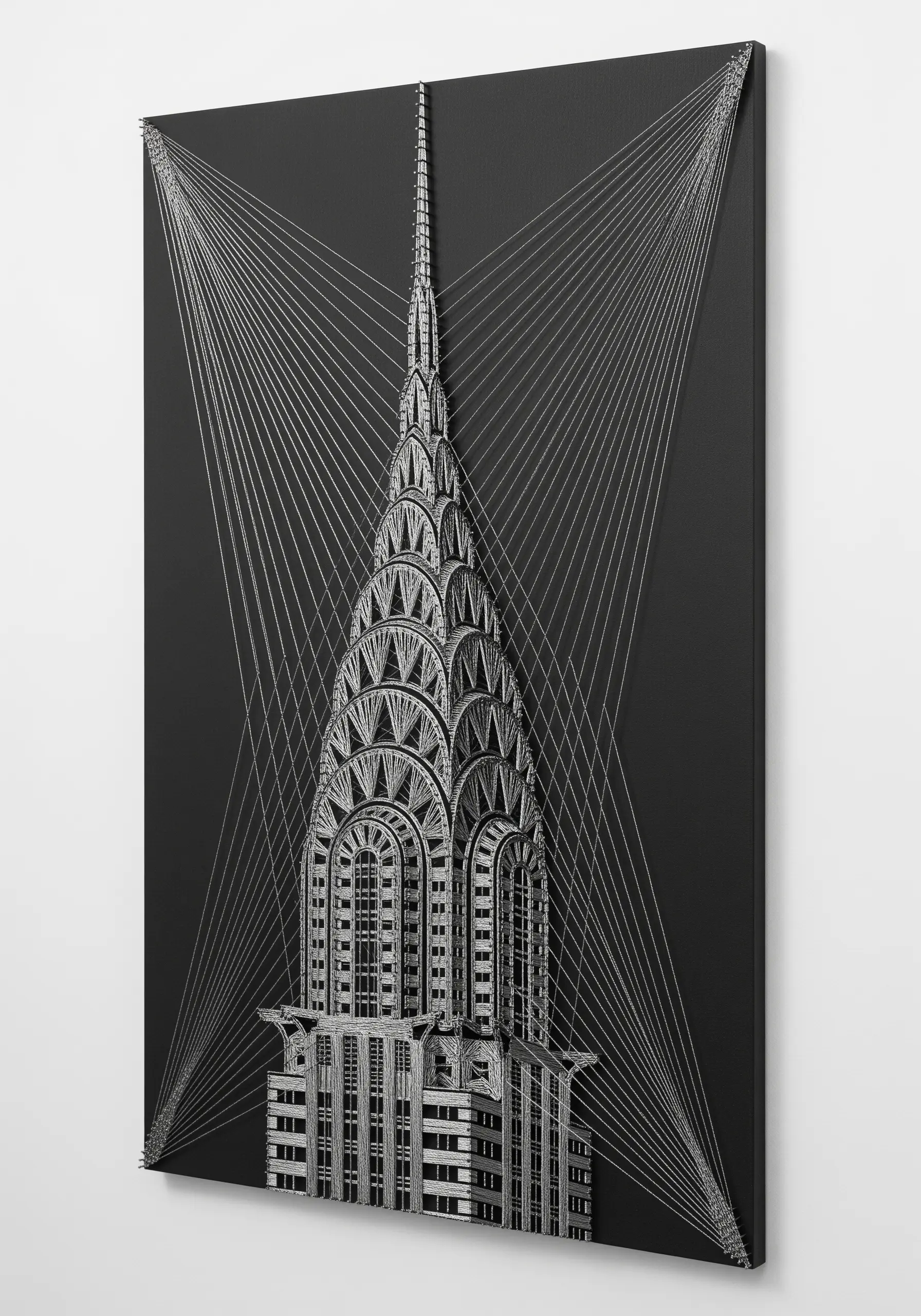
Isolate an iconic building’s silhouette and intricate details by using a single strand of light-colored thread on a stark black background.
This high-contrast approach strips the subject down to its essential lines and forms, emphasizing the architectural design.
Use precise backstitches for the outlines and radiating straight stitches for decorative elements like the sunburst pattern of the Chrysler Building’s spire.
The visual drama comes from the clean, glowing lines against the void, creating a piece that is both minimalist and incredibly detailed.