Your bedroom should be a sanctuary—a place where every texture feels soft, every color is calm, and every detail brings you a quiet sense of joy. Embroidery is a uniquely personal way to create that feeling, transforming simple fabrics into pieces that feel like they were made just for you.
But often, the challenge isn’t learning a new stitch; it’s knowing how to use the stitches you already know to create something that looks polished, intentional, and deeply calming. It’s about choosing the right texture for the right place, whether it’s the plush relief of a pillow or the ethereal whisper of a design on a sheer curtain.
Here, we’ll move beyond basic patterns and explore how subtle shifts in technique—using thicker thread, padding your stitches for dimension, or focusing on texture over color—can elevate your work instantly. You’ll find ideas that add warmth and sophistication, turning your bedroom into the soft, cloud-like retreat you deserve.
1. Architectural Couching for Statement Headboards
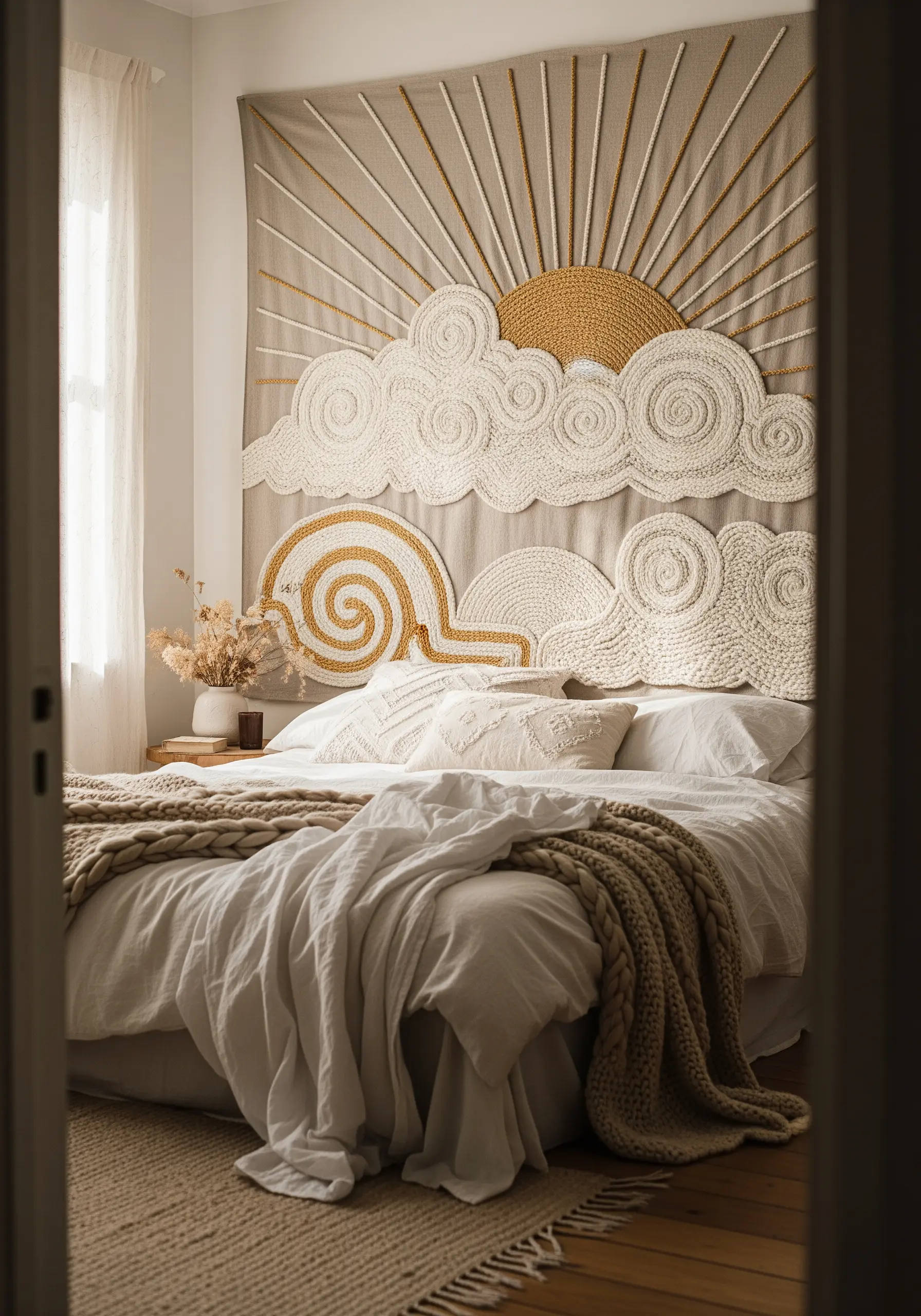
Create a high-impact, low-effort headboard by couching thick cotton rope or chunky yarn onto a sturdy canvas backdrop.
Instead of intricate stitches, you’ll secure the rope with small, evenly spaced tacking stitches in a matching thread, letting the rope’s texture define the design.
This technique allows you to work on a grand scale, creating bold, graphic lines that feel both soft and architectural.
The key is maintaining consistent tension in your tacking stitches to prevent the rope from buckling, ensuring your sunrays and clouds lie perfectly flat.
For the filled sun, use a spiral couching technique, starting from the center and working your way out to achieve that dense, woven texture.
2. High-Relief Satin Stitch for Graphic Motifs
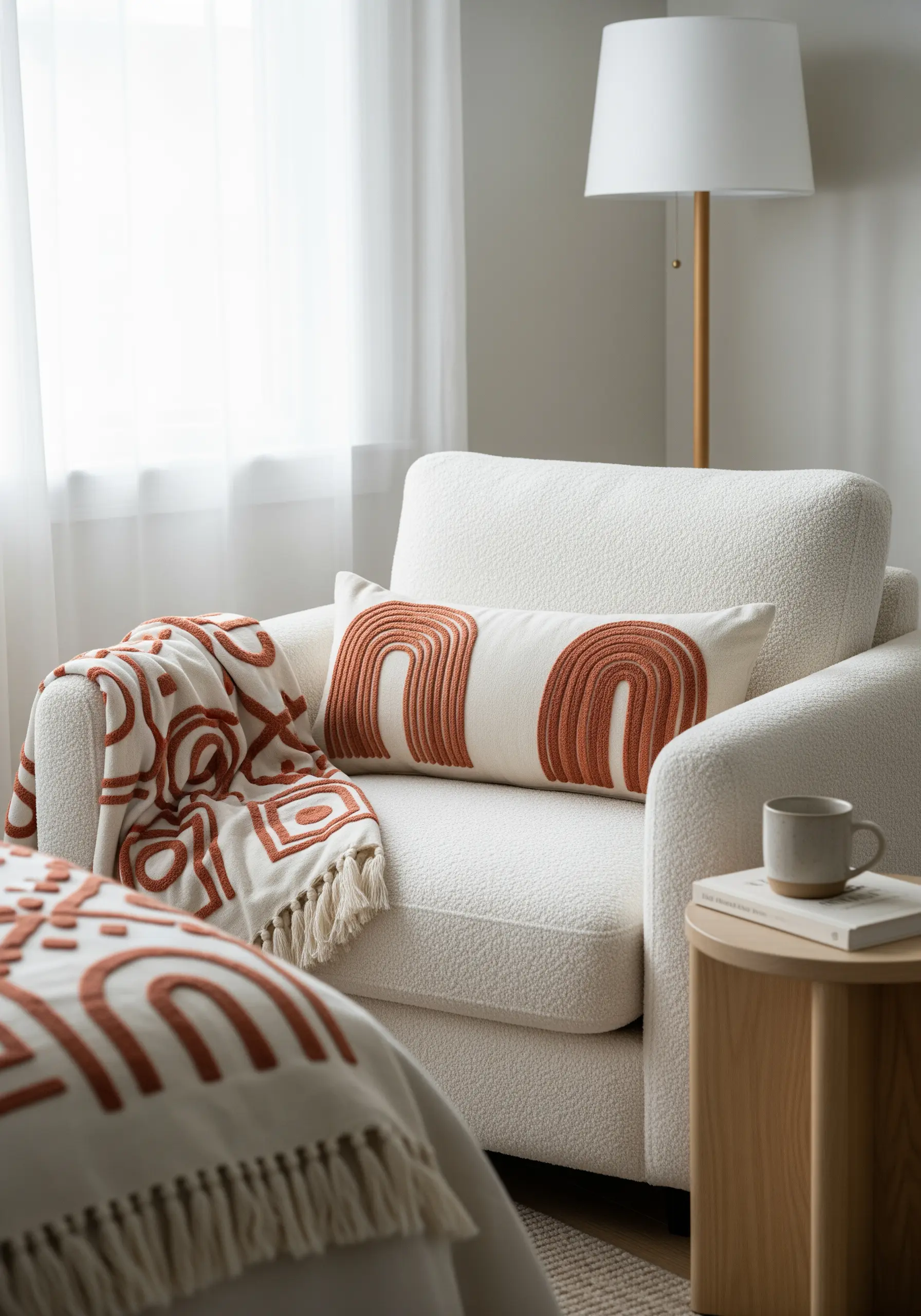
Elevate simple shapes like these boho arches by using a chunky, high-relief satin stitch.
To achieve this plush, rounded effect, use all six strands of embroidery floss or even a fine wool yarn.
Before you begin the satin stitch, create a padded base by filling the shape with small, underlying straight stitches—this raises the final layer, giving it a three-dimensional quality.
Stitch your final satin stitches perpendicular to the padding stitches for the smoothest finish.
This technique transforms a basic cushion into a tactile piece of decor that invites touch, adding depth to your room’s textile palette.
3. Ethereal Stitches on Sheer Curtains
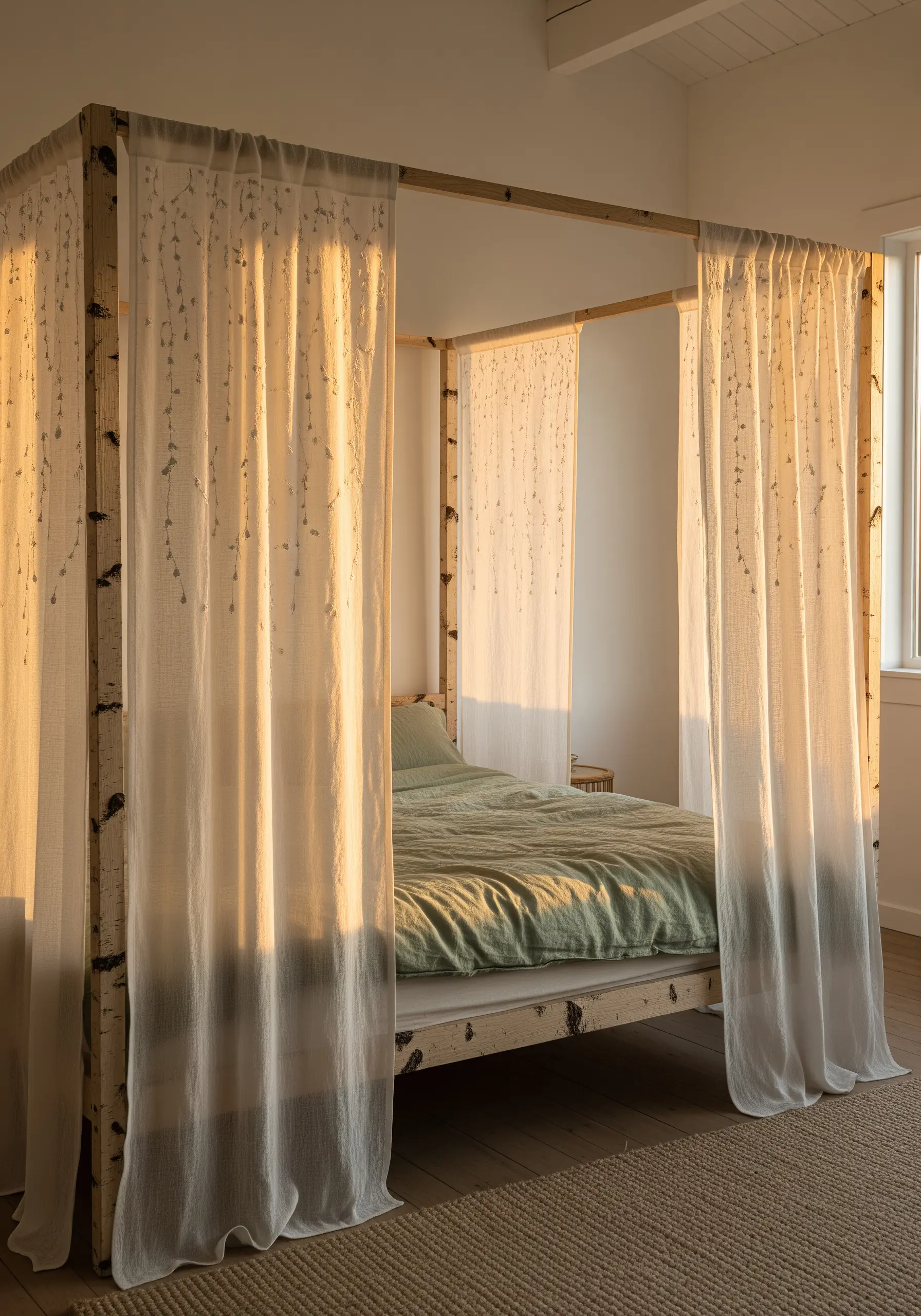
Embroidering on sheer linen or cotton voile creates a magical, floating effect perfect for a dreamy bedroom atmosphere.
Use a single strand of thread in a subtle color like silver-grey or ecru for a delicate, barely-there look.
The secret to stitching on lightweight fabric without puckering is a water-soluble stabilizer; hoop the stabilizer with the fabric to provide tension, then dissolve it away once you’re finished.
Simple stitches like detached chain stitch for leaves and stem stitch for vines are ideal, as they won’t weigh down the delicate fabric.
This approach allows light to filter through the threads, making your embroidery a dynamic part of the room’s changing light.
4. A Monochrome Study in Tactile Diversity
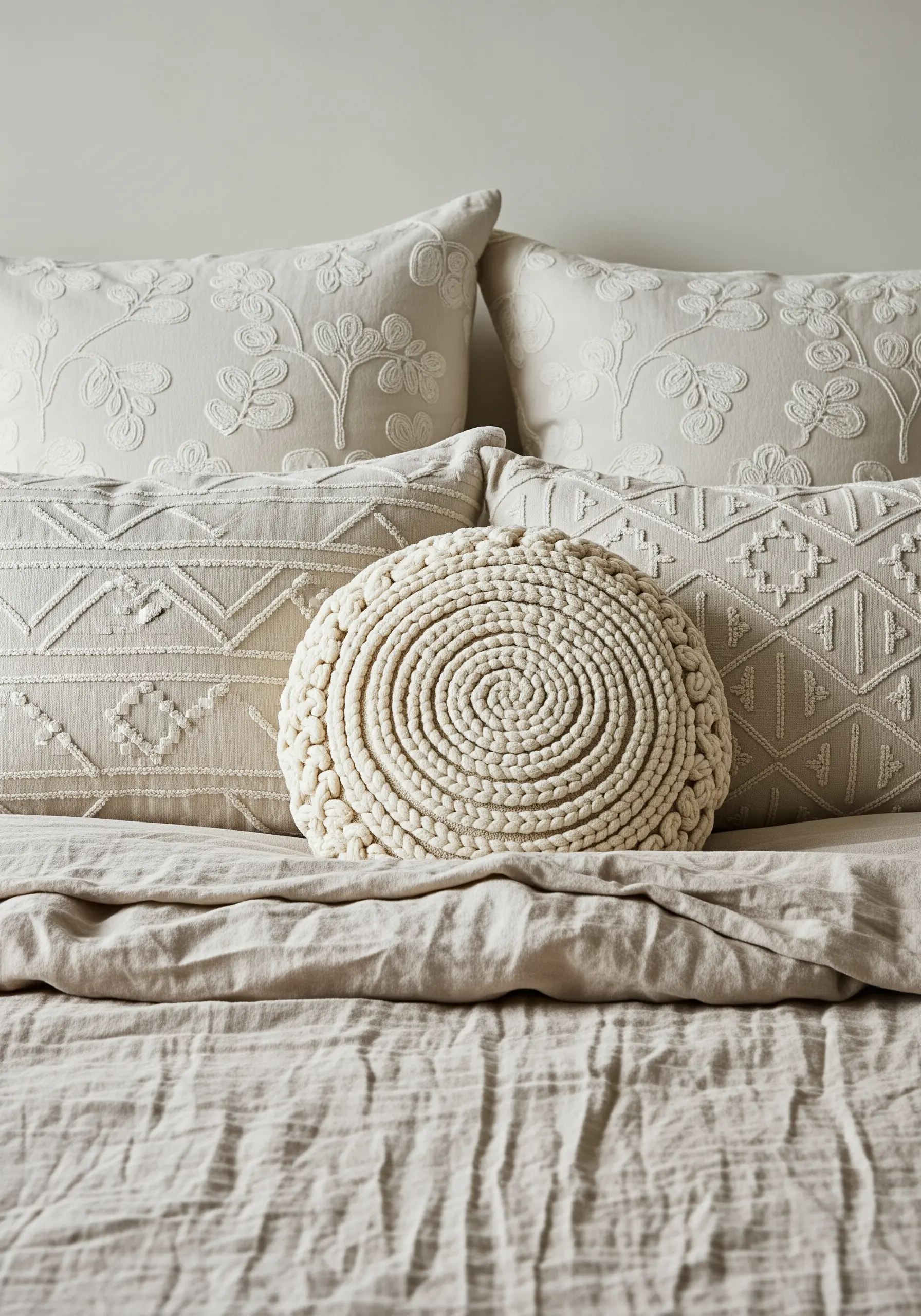
Create a sophisticated, layered look by focusing entirely on texture, not color.
Combine multiple techniques on a single textile surface using the same shade of thread, such as ivory on natural linen.
Explore couching thick cord into a spiral for a central medallion, then frame it with pillows featuring geometric running stitches or raised satin stitch motifs.
This tone-on-tone embroidery approach forces the eye to appreciate the physical form of each stitch, adding depth and interest without creating visual noise.
It’s the perfect strategy for a serene, cloud-like bedroom that feels cohesive and intentionally designed.
5. High-Contrast Thread Painting for Celestial Drama
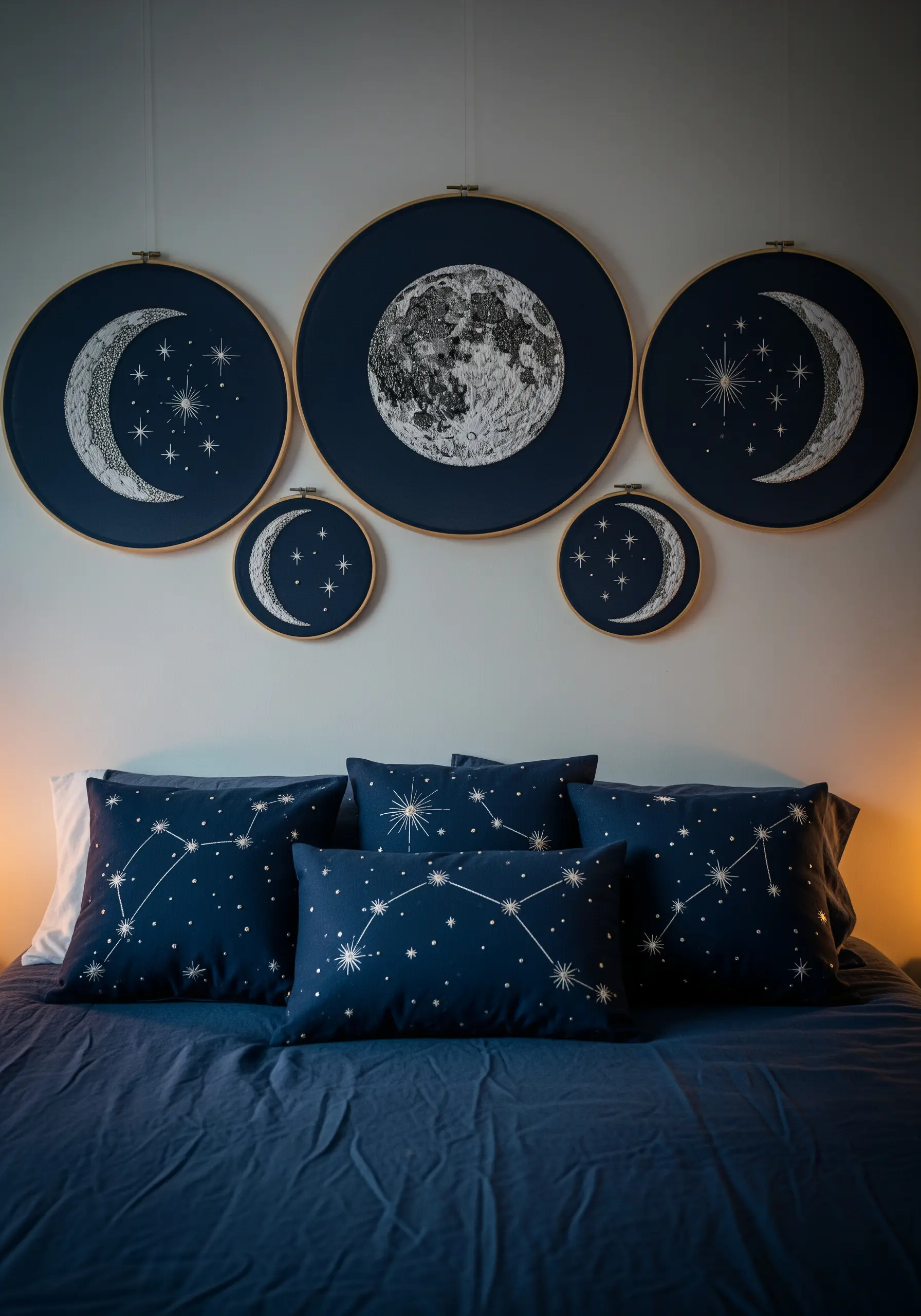
Achieve stunning celestial detail by working with a single strand of white or silver thread on a dark navy or black cotton canvas.
For the moon’s cratered surface, use a dense combination of tiny, chaotic seed stitches and French knots to build texture and shadow.
Use a crisp backstitch for the crescent outlines and radiating star lines to ensure they look sharp against the dark background.
For the smaller stars, a single French knot or a simple cross stitch is all you need.
Arranging multiple hoops of varying sizes creates a dynamic gallery wall that draws the eye upward, transforming your wall into a slice of the night sky.
6. The Power of a Single, Confident Line
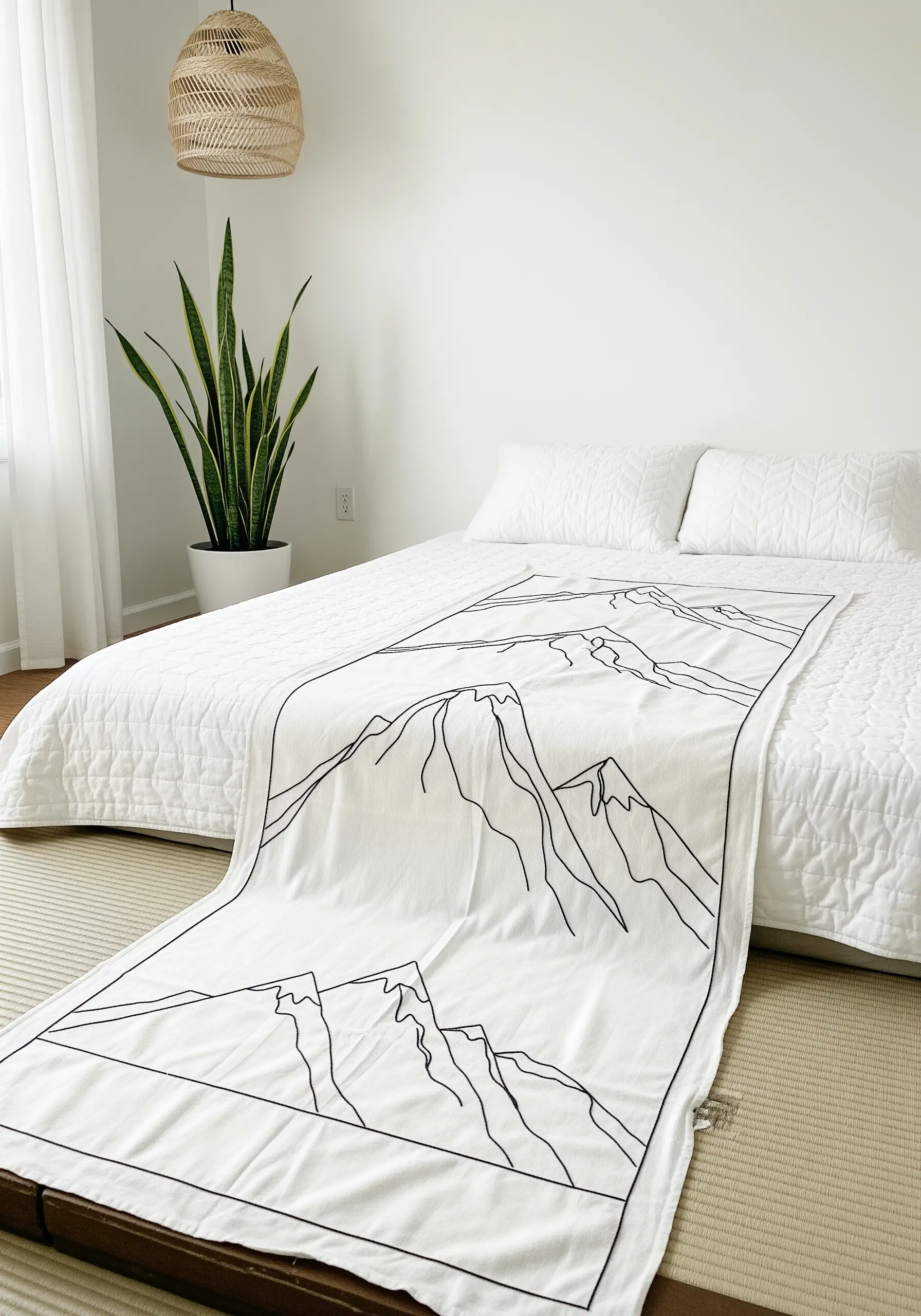
Transform a simple bed runner or wall hanging with the elegance of minimalist line art.
Choose a high-contrast combination, like black thread on white cotton, to make the design pop.
Use a whipped backstitch or a stem stitch with a slightly thicker thread (3-4 strands) to create a smooth, uninterrupted line that has presence and weight.
The beauty of this style lies in its use of negative space; the unstitched areas are just as important as the embroidered lines.
This technique proves that you don’t need complex fills or multiple colors to create a piece of art that feels modern, calm, and impactful.
7. Warm Gradients with Long-and-Short Stitch
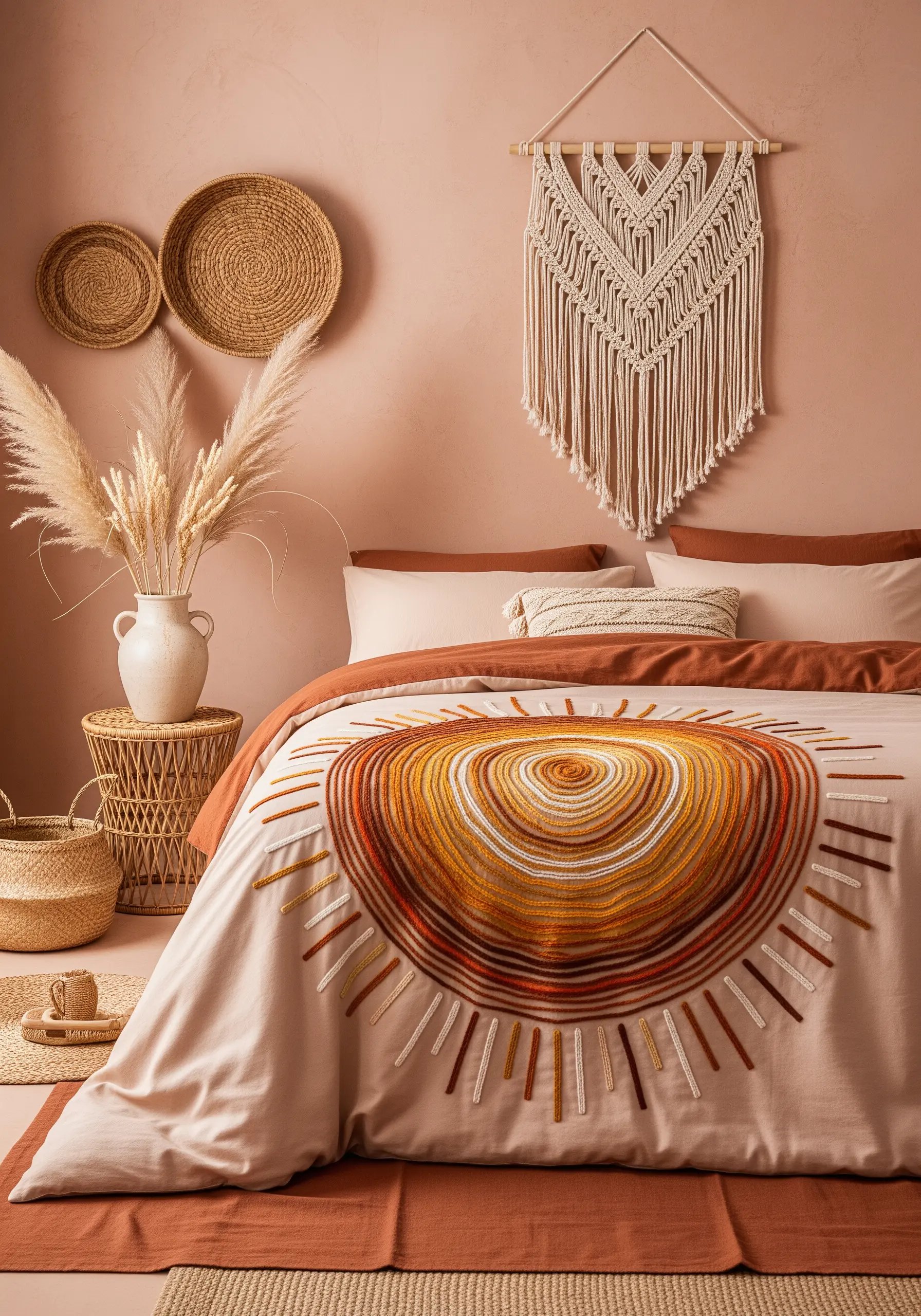
Create a radiant, sun-drenched effect on your duvet cover by mastering the long-and-short stitch for seamless color blending.
Work in concentric circles, starting with the lightest yellow at the center and gradually introducing warmer tones like gold, orange, and terracotta.
The key is to stagger the length of your stitches in each row, allowing the next color to nestle in without creating harsh lines.
This technique gives the motif a soft, painted quality that feels organic and full of warmth—perfect for a boho-inspired bedroom.
Finish with radiating straight stitches to represent sunbeams, varying their length for a dynamic feel.
8. White-on-White Textural Trio
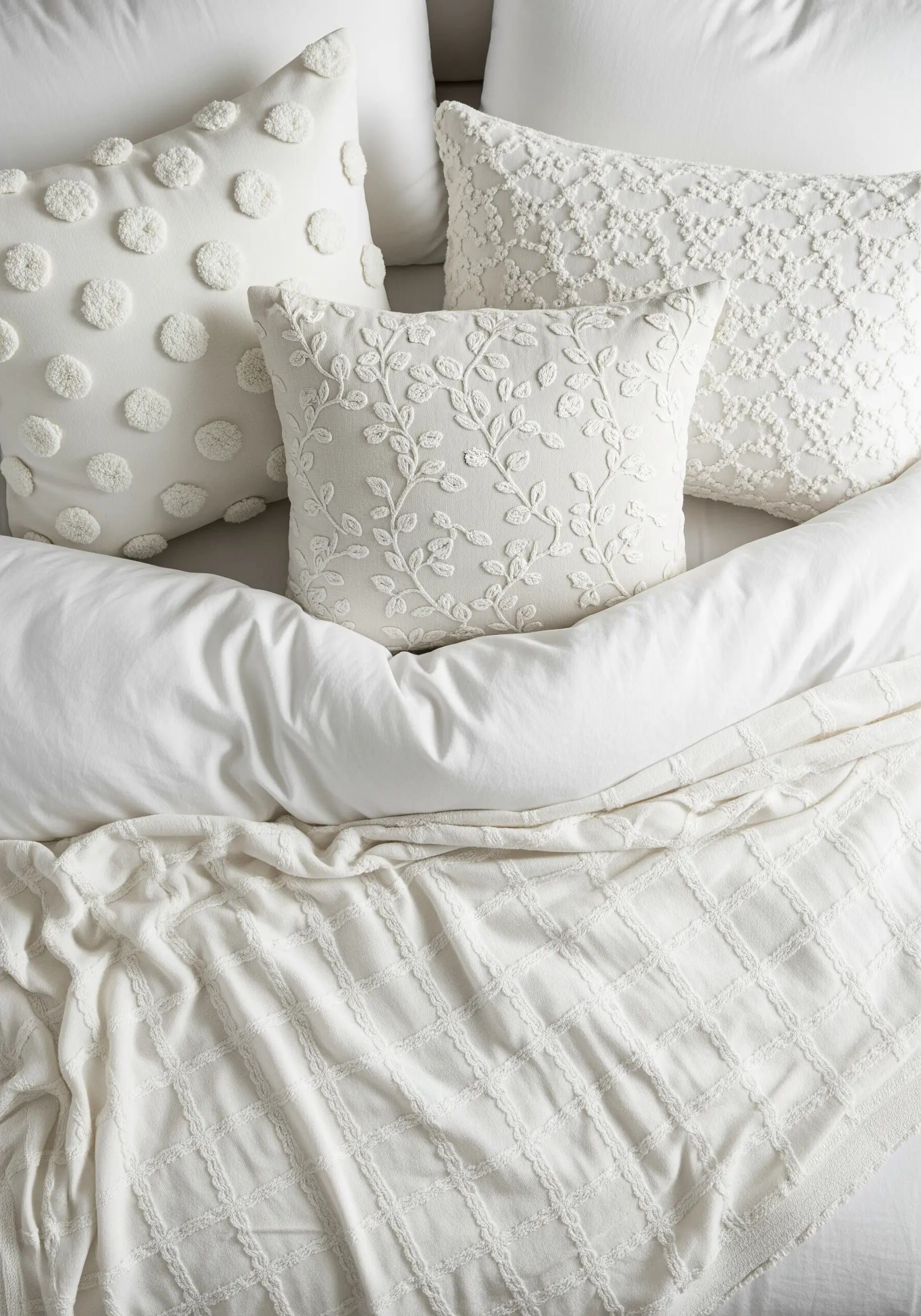
Discover the quiet beauty of white-on-white embroidery, where texture is the star.
Create a cohesive yet diverse pillow arrangement by assigning a different textural stitch to each piece.
Try plush French knots arranged in a polka-dot pattern for a playful feel, or use a dense seed stitch to fill delicate leaf motifs for a more organic look.
For a third texture, consider a raised lattice effect using woven bars or a simple grid of running stitches.
This approach adds a layer of handcrafted luxury to your bed, creating a tranquil, all-white sanctuary that is anything but plain.
9. A Meadow of Scattered Lazy Daisies
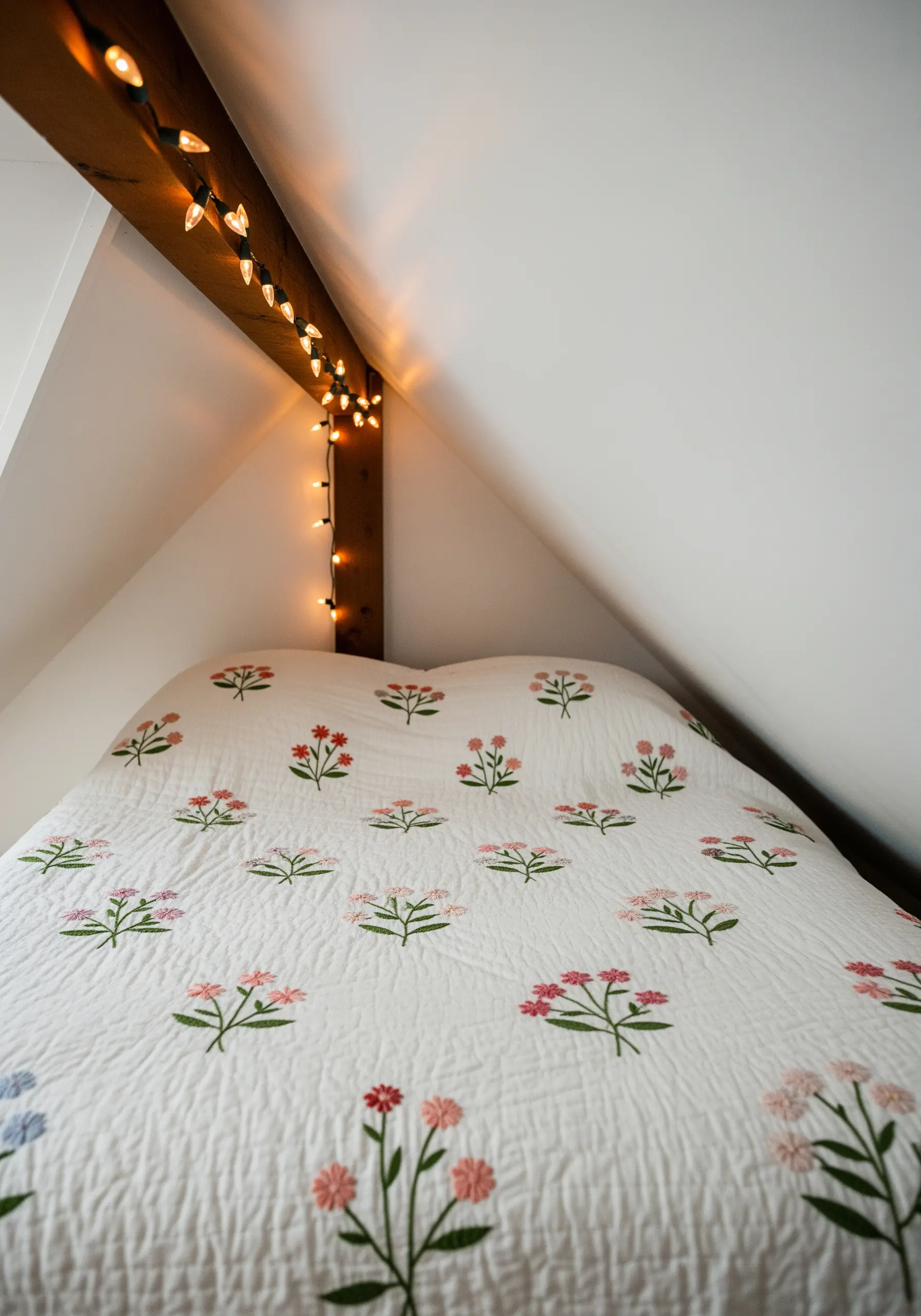
Bring the gentle charm of a wildflower meadow to your quilt with a scattered pattern of simple floral motifs.
Use the lazy daisy stitch (detached chain stitch) for petals and a single French knot for the flower’s center—it’s a quick and satisfying combination.
Vary the colors of the flowers in a soft, muted palette to create a harmonious rhythm without overwhelming the design.
Stitch the stems with a simple stem stitch using two strands of green floss for definition.
The random placement of these gentle floral embroidery ideas makes the piece feel organic and handmade, perfect for a cozy, cottage-inspired attic bedroom.
10. Whispers of Dandelion on a Window Shade
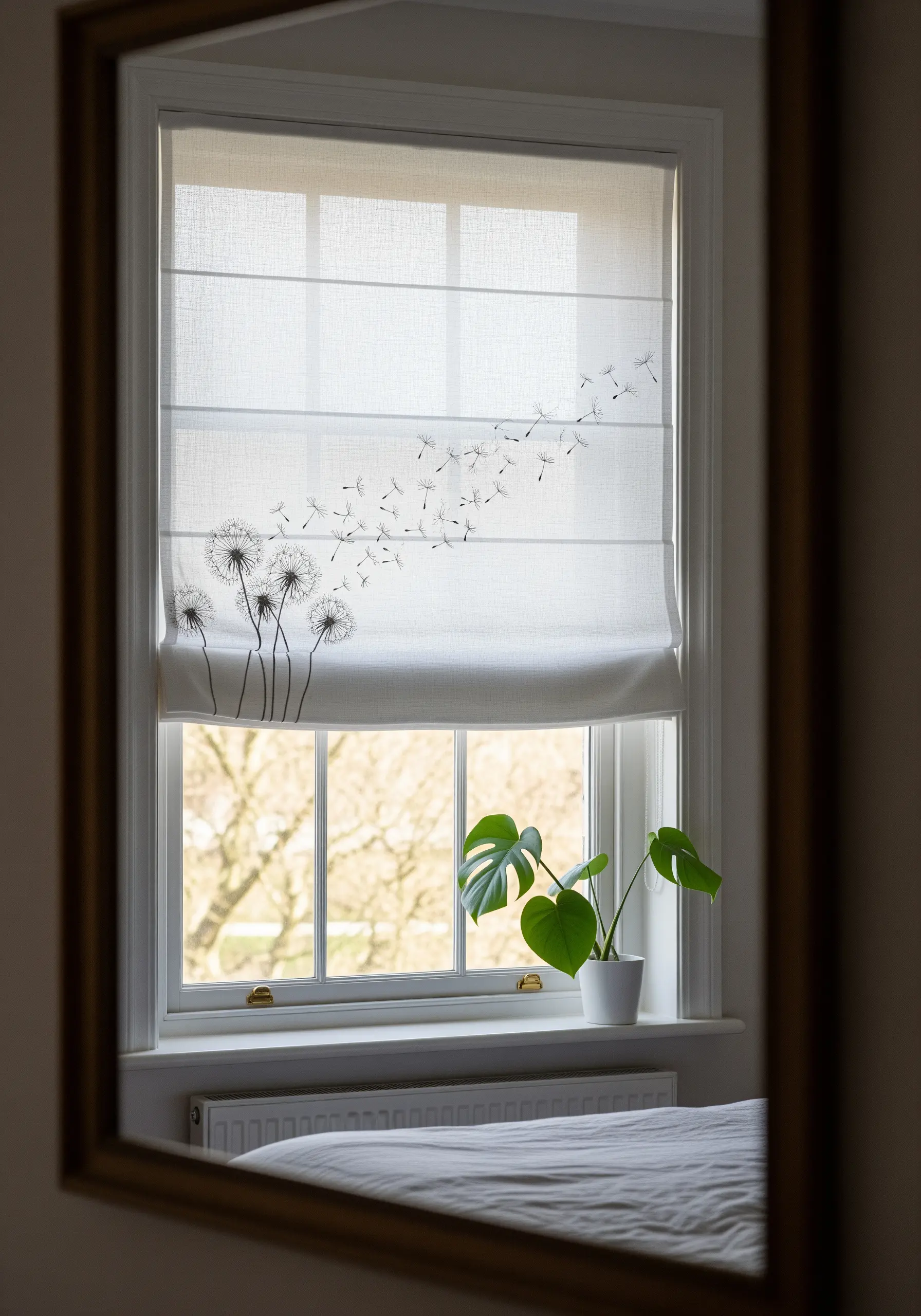
Capture the delicate, fleeting nature of dandelion seeds with fine, wispy stitches on a linen roman shade.
Use a single strand of black or dark grey thread to create the elegant silhouettes of the stems and seed heads.
For the drifting seeds, use a combination of tiny straight stitches and French knots to suggest movement and airiness.
The key is to create an asymmetrical composition that flows diagonally across the fabric, as if carried by a gentle breeze.
This subtle embellishment turns a functional window treatment into a piece of art that interacts beautifully with natural light.
11. Upholstered Elegance with Chinoiserie Motifs
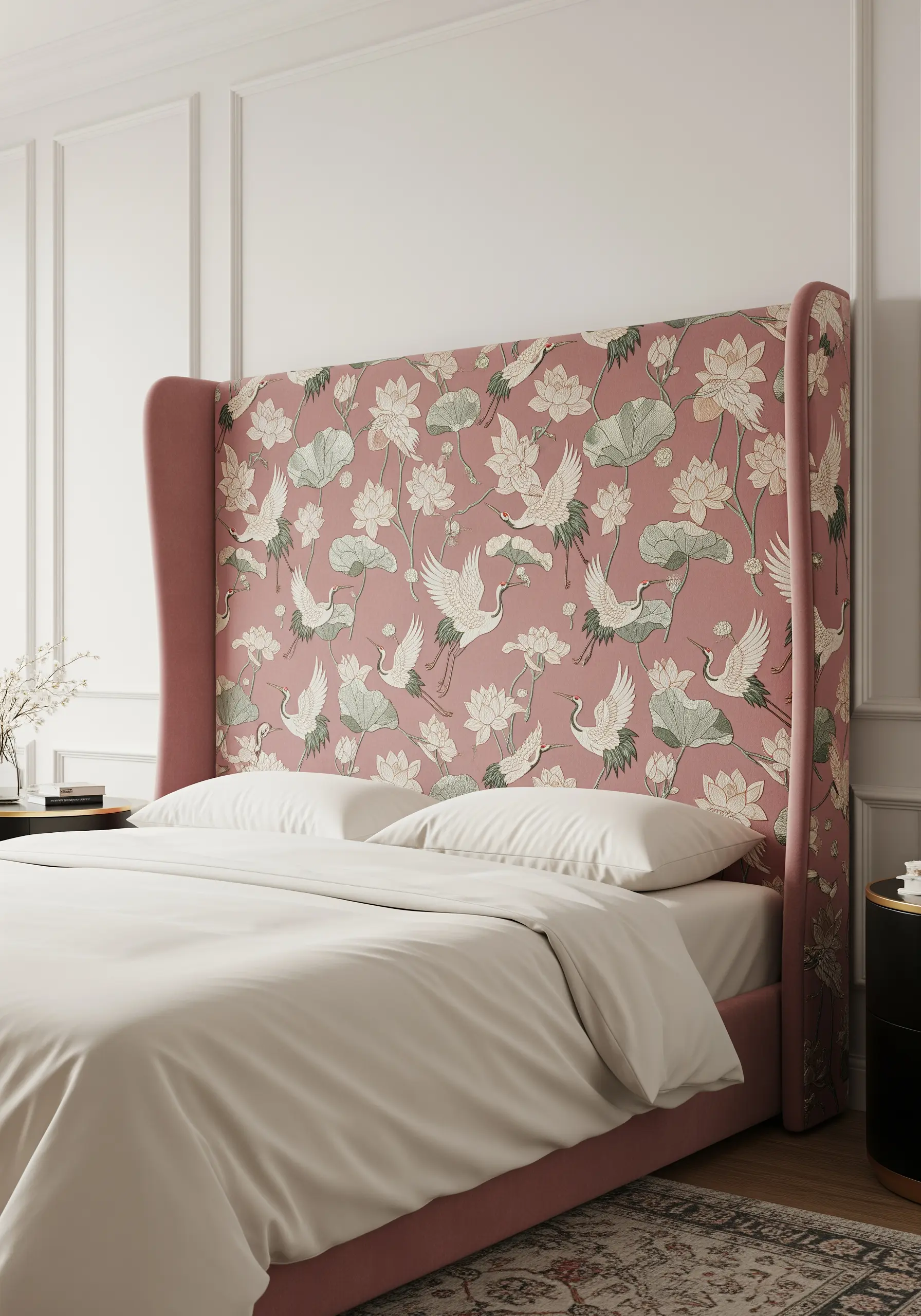
Transform a simple headboard into a bespoke piece of furniture by embroidering directly onto upholstery-grade fabric.
For a large, repeating pattern like this, create a stencil to transfer the design consistently across the surface.
Use a durable thread, like a pearl cotton or tapestry wool, that can withstand tension and wear.
Focus on clean outlines using a split stitch or stem stitch, and fill larger areas with a uniform satin stitch.
Working on an upholstered piece requires a strong needle and a thimble, but the result is a unique embroidered headboard that feels truly custom and luxurious.
12. Meditative Mandala Stitching
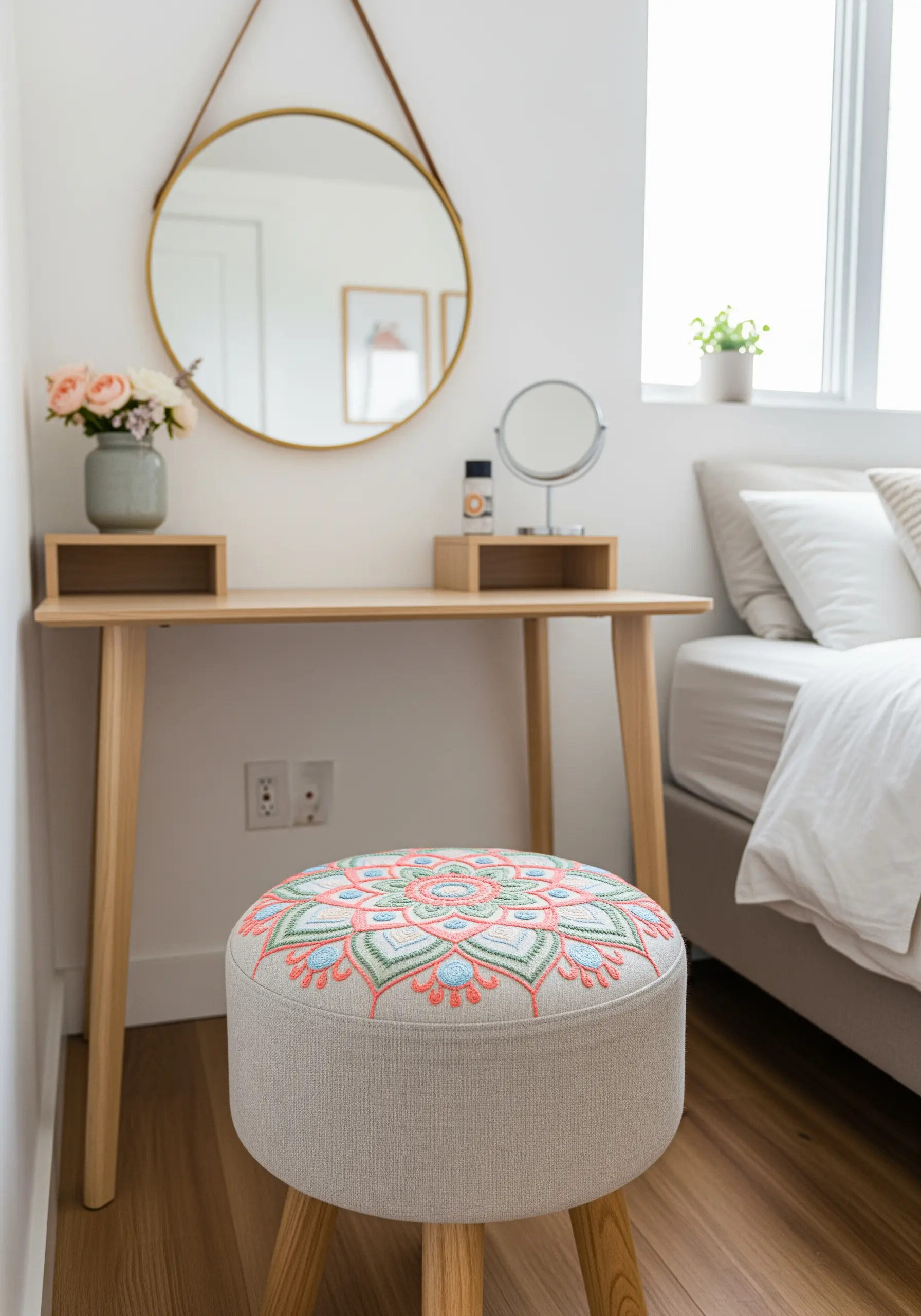
Embellish a simple piece of furniture, like this vanity stool, with a calming, symmetrical mandala design.
The repetitive nature of stitching a mandala is inherently relaxing, making it a perfect project for a peaceful bedroom.
Build your design from the center out, using different stitches for each concentric ring to create textural interest—try chain stitch for bold lines, backstitch for delicate details, and satin stitch for filled shapes.
Choose a soft, harmonious color palette that complements your room’s decor, adding a touch of serene, boho artistry.
13. Classic Monograms with Heirloom Details
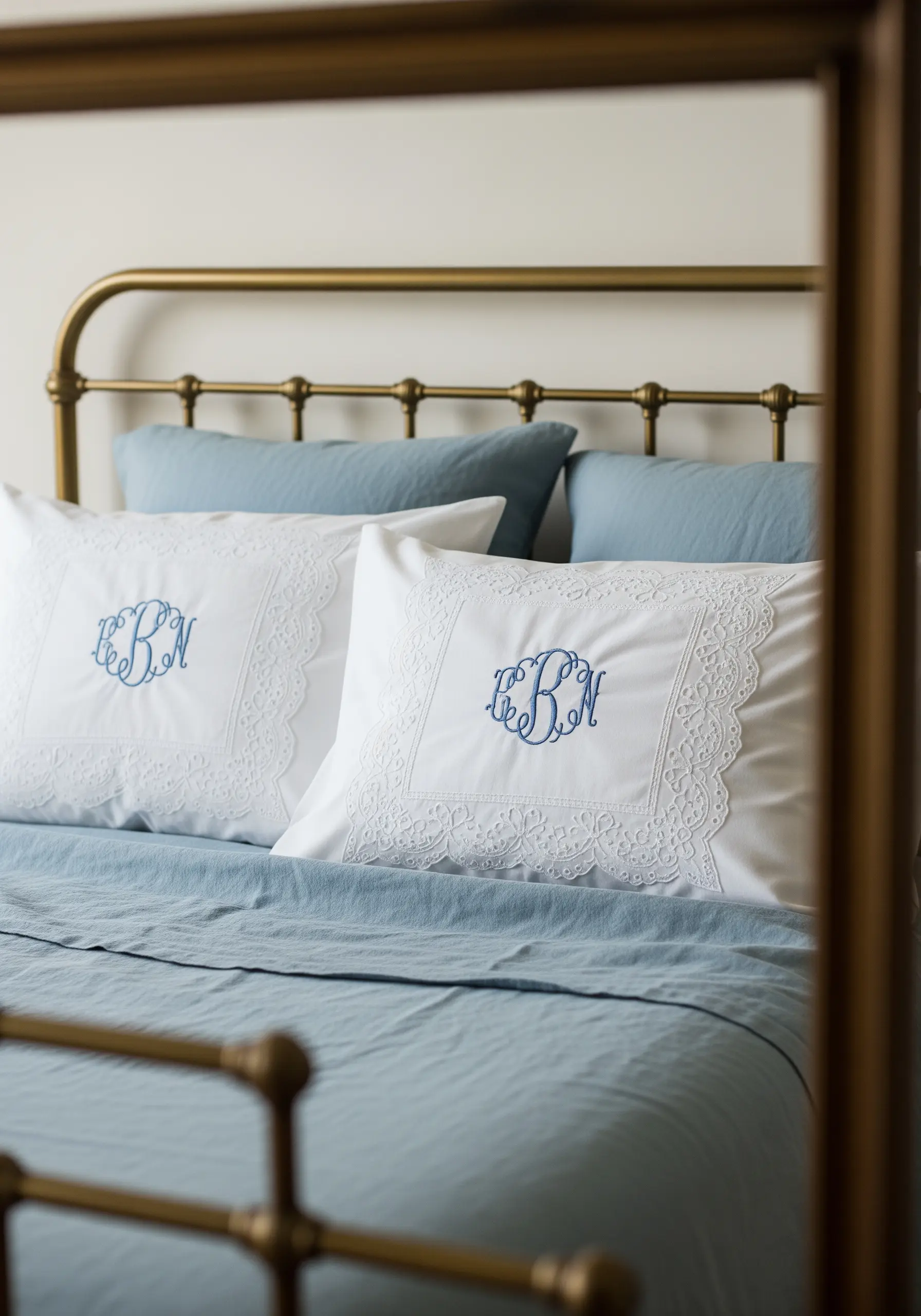
Add a touch of timeless elegance to your pillowcases with beautifully embroidered monograms.
For a classic script, use a padded satin stitch to give the letters a raised, dimensional quality that feels luxurious.
Trace your chosen initials onto the fabric, then fill the shape with underlying straight stitches before covering them with perfectly smooth satin stitches.
Pair the monogram with delicate lace or broderie anglaise trim to enhance the heirloom feel.
This is a wonderfully personal touch that turns everyday linens into cherished keepsakes.
14. Bold Simplicity on Textured Wool
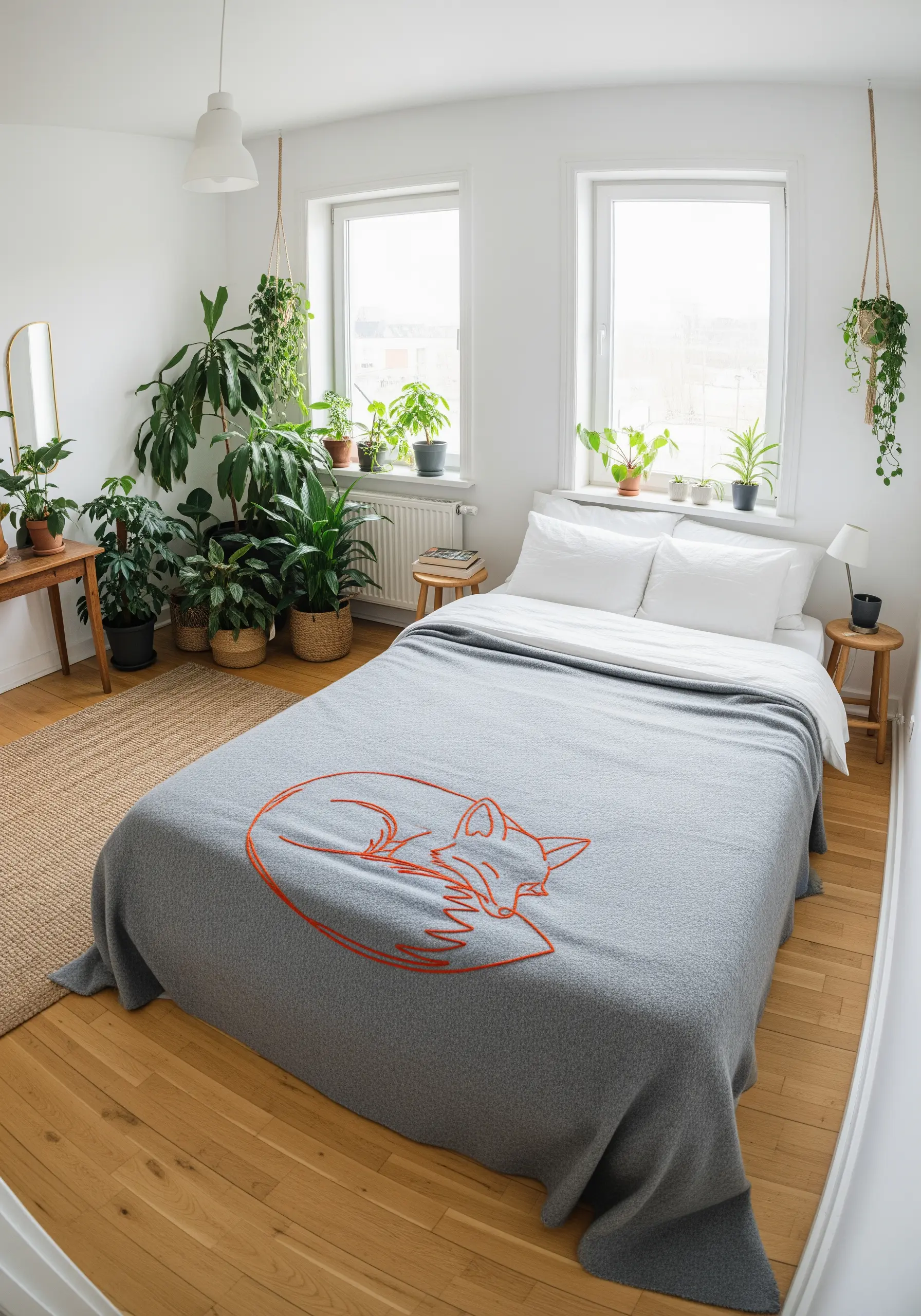
Make a strong visual statement by embroidering a simple line-art motif onto a heavily textured blanket.
Choose a smooth, high-contrast thread, like a vibrant orange pearl cotton on a grey wool or felted fabric.
Use a simple but bold stitch, such as a whipped backstitch or a heavy chain stitch, to ensure the line stands out against the fabric’s texture and doesn’t get lost.
The juxtaposition of the clean, graphic line with the soft, fuzzy surface of the blanket creates a compelling piece that is both modern and cozy.
15. Thread-Painted Landscapes with Sculptural Details
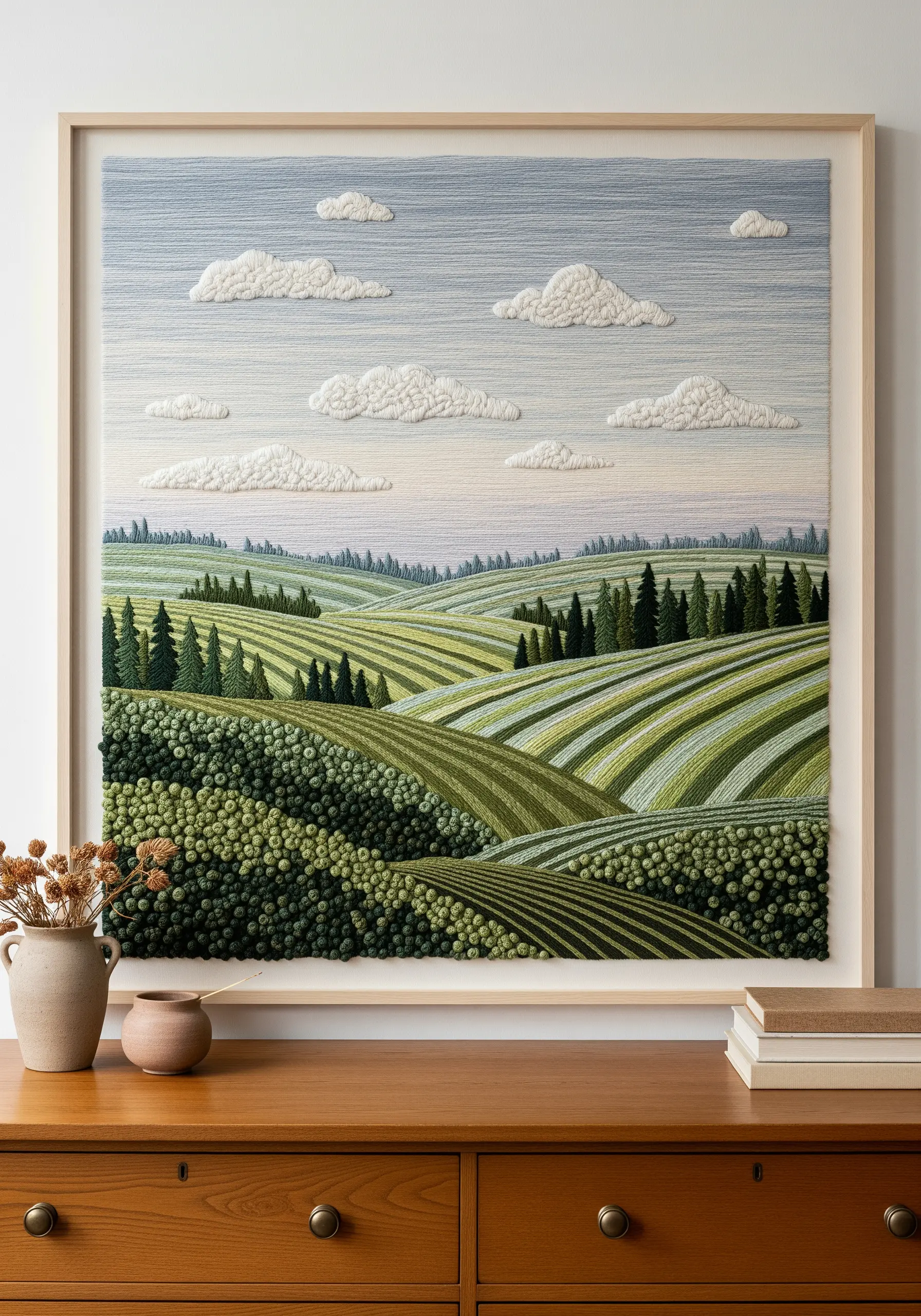
Create a breathtaking piece of threaded landscapes by combining thread painting with sculptural stitch techniques.
Use long-and-short stitch with multiple shades of green and blue to create the smooth, rolling hills and sky.
For the foreground and trees, introduce texture with dense French knots, varying the color and density to suggest depth and shadow.
Make the clouds pop by using turkey work (Ghiordes knot), trimming the loops to create a fluffy, three-dimensional effect that literally stands off the fabric.
This multi-textured approach turns a flat image into a tactile, immersive experience.
16. Botanical Silhouettes on a Room Divider
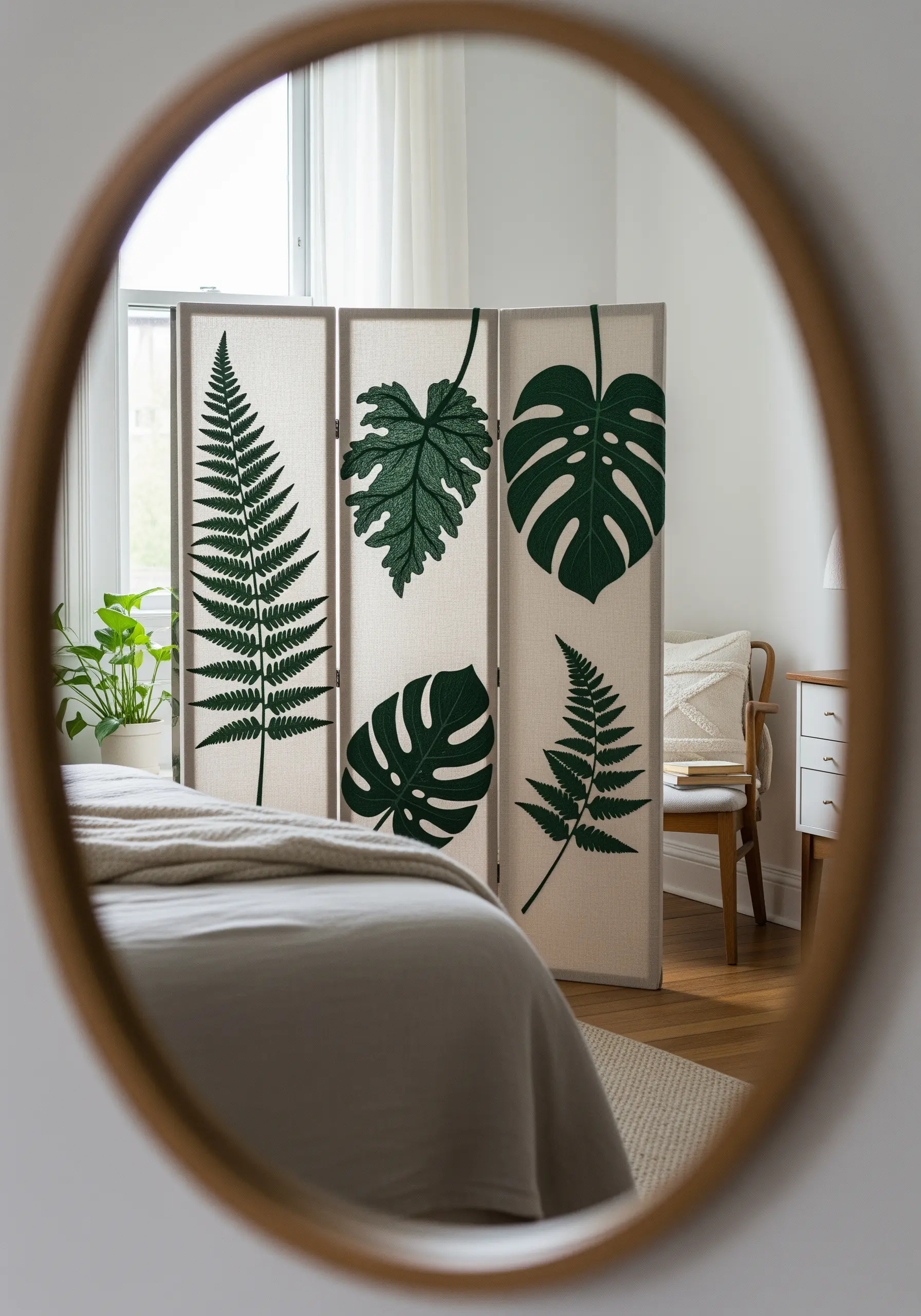
Turn a functional room divider into a stunning botanical feature with large-scale leaf embroidery.
To tackle such large motifs, use a satin stitch with a thick thread like tapestry wool or multiple strands of floss for quick, even coverage.
To keep your edges crisp on a large scale, outline each leaf shape with a split stitch first; this creates a firm boundary for your satin stitches to meet.
This technique is perfect for defining a space or hiding a cluttered corner while bringing the calming influence of nature indoors.
Working on tensioned fabric panels makes it easier to achieve a smooth, professional finish without puckering.
17. Playful Geometry with Honeycomb Fills
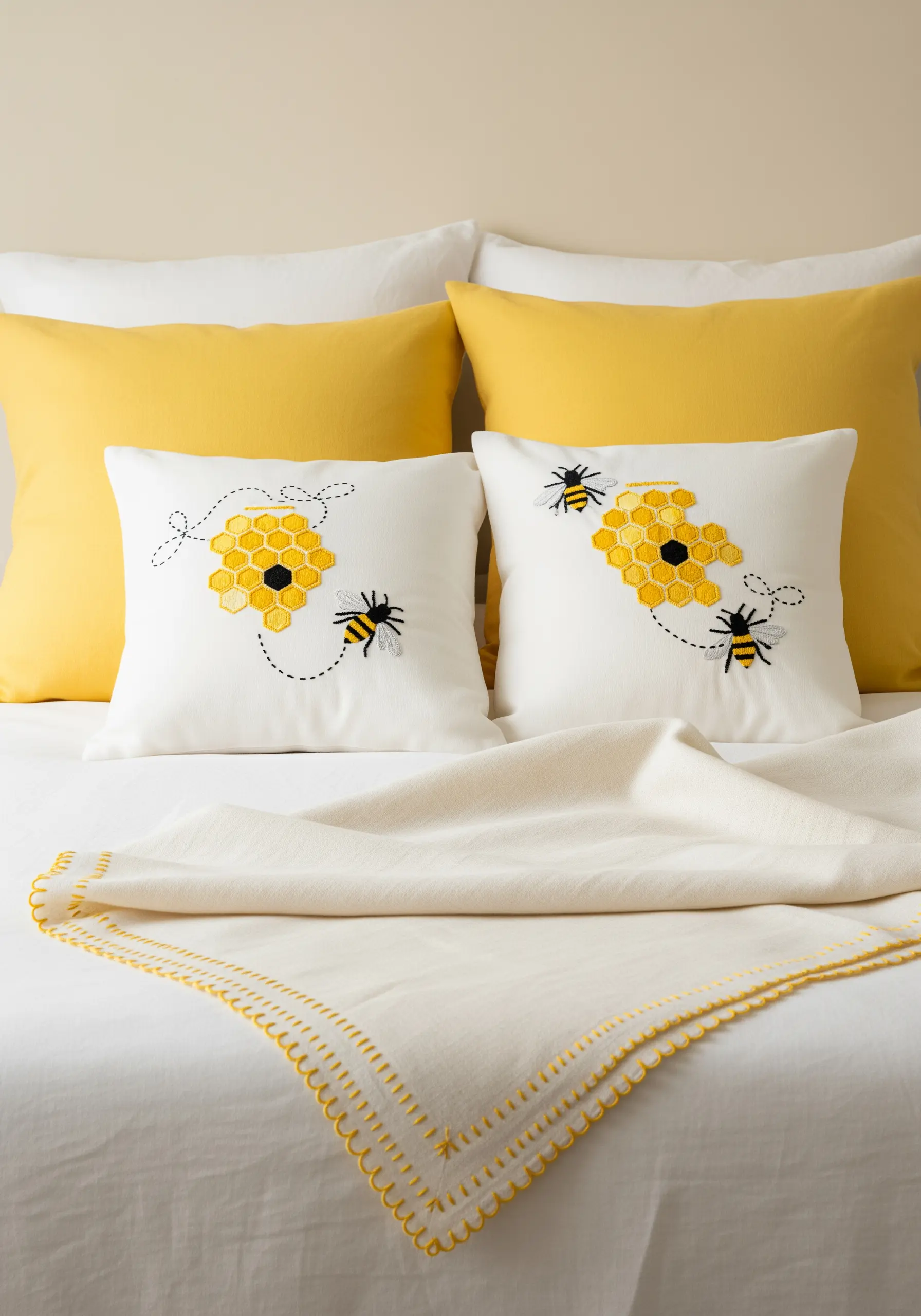
Add a touch of playful charm to your pillows with a bright and cheerful bee motif.
Create the honeycomb pattern using a satin stitch in sunny yellow and gold tones, outlining each hexagon in black backstitch for sharp definition.
The bees themselves can be stitched with simple satin stitch bodies and delicate, single-strand wings.
Incorporate a whimsical dashed line using a running stitch to trace the bees’ flight path, adding a sense of movement and storytelling to the design.
This is a delightful way to bring a pop of color and nature-inspired joy to your bedroom.
18. Layered Textures in a Soft Monochromatic Palette
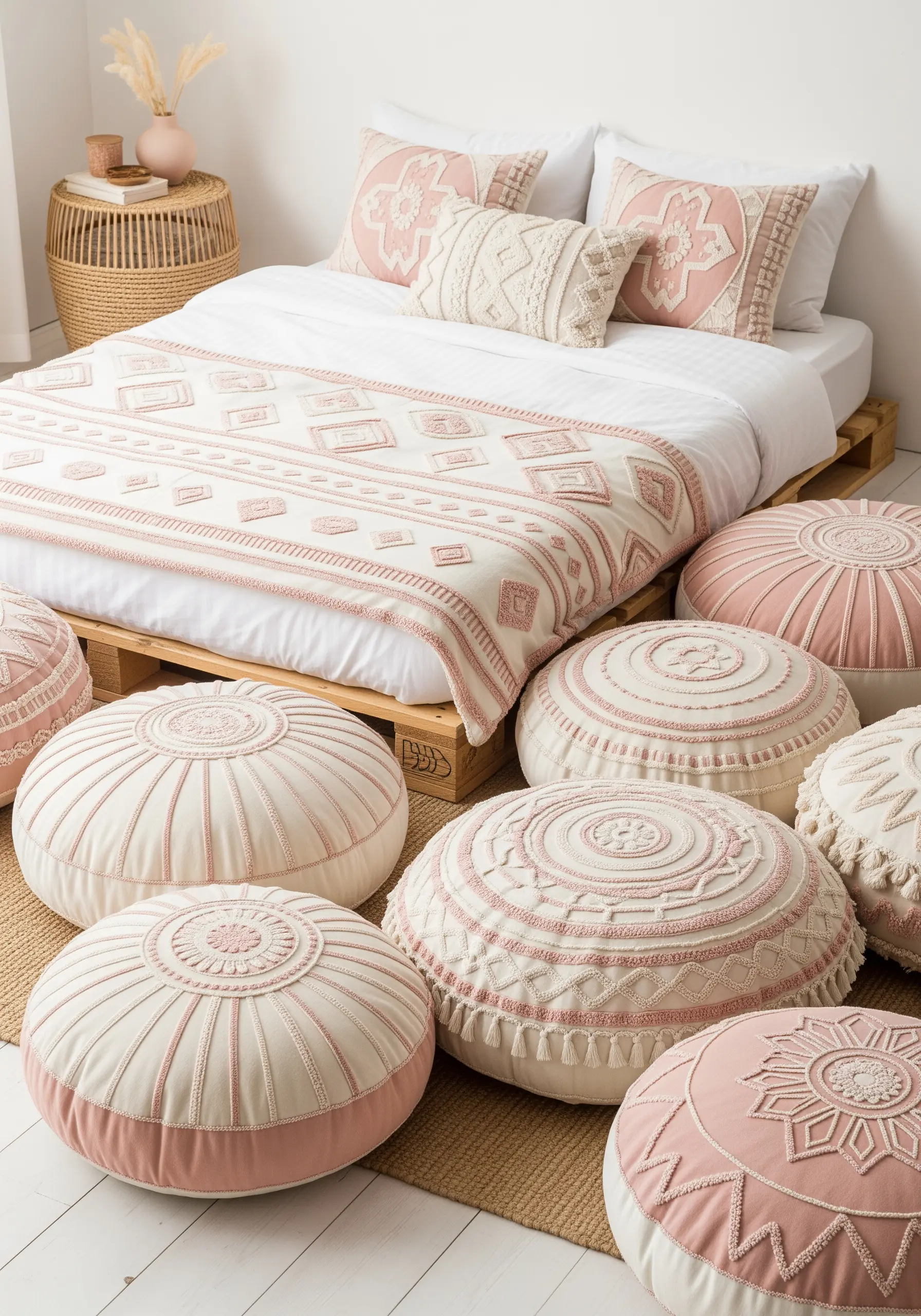
Achieve a rich, inviting look by layering various textural embroidery styles within a single color family.
Combine tufted details, raised satin stitch patterns, and simple running stitch grids across different textiles like pillows and floor cushions.
The use of a consistent color—in this case, soft pink on an off-white base—ensures the overall effect is harmonious and calming, not chaotic.
This approach celebrates the tactile nature of embroidery, creating a space that feels deeply comfortable and visually interesting.
It is perfect for creating boho-style embroidery decor that feels curated and cozy.
19. The Ultimate Plushness of Turkey Work
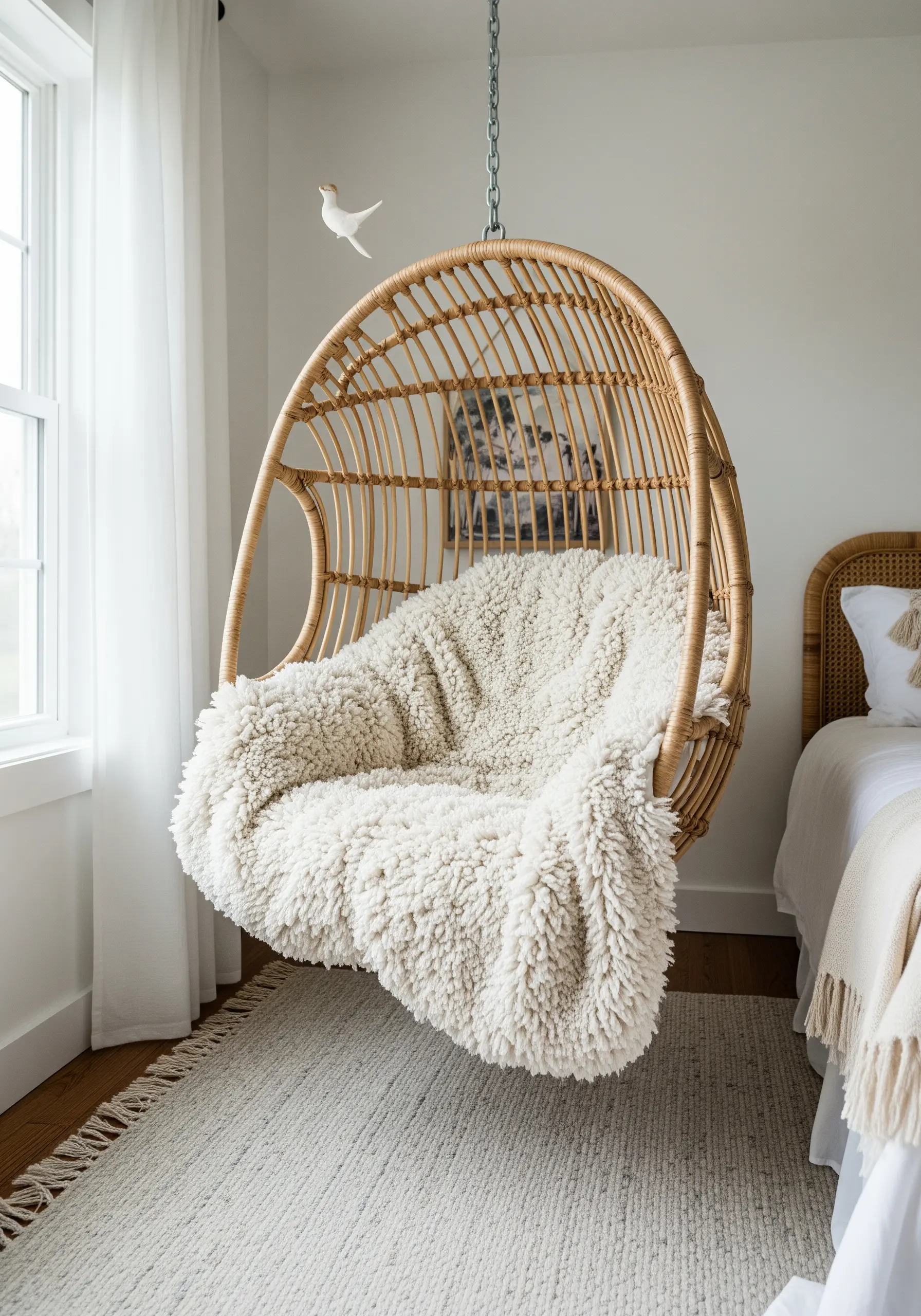
For an incredibly soft and shaggy texture that mimics faux fur or sheepskin, master the turkey work stitch, also known as the Ghiordes knot.
This stitch creates loops on the surface of your fabric, which you can then trim to your desired length for a dense, plush pile.
Use a thick, soft yarn like wool or chenille on a sturdy backing fabric for the best results.
Work your stitches close together for maximum fluffiness. While time-consuming, this technique creates an unparalleled tactile experience, perfect for a cozy throw in a reading nook.
20. Subtle Constellations on a Linen Lampshade
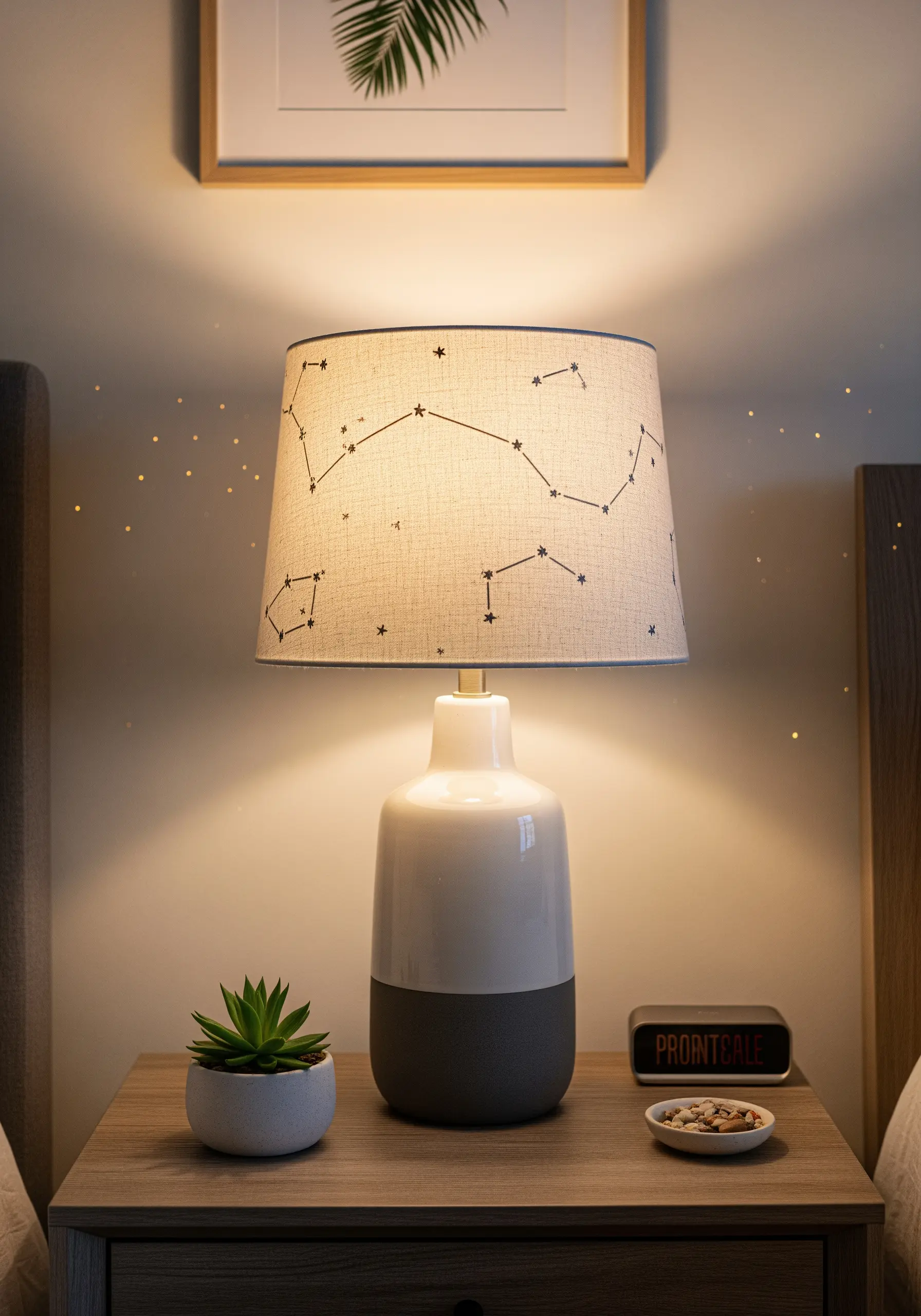
Add a celestial glow to your bedside table by embroidering a constellation pattern directly onto a fabric lampshade.
Use a dark thread on a light-colored linen shade for a subtle design that truly shines when the lamp is turned on.
Small, simple backstitches are perfect for connecting the stars, which can be represented by tiny French knots or single seed stitches.
To work on the curved shade, you can either remove the fabric or use a small hoop and work in sections.
This simple embellishment transforms a plain lamp into a piece of personalized, functional art that casts a magical light.
21. Sculptural Dimension with Appliquéd Knits
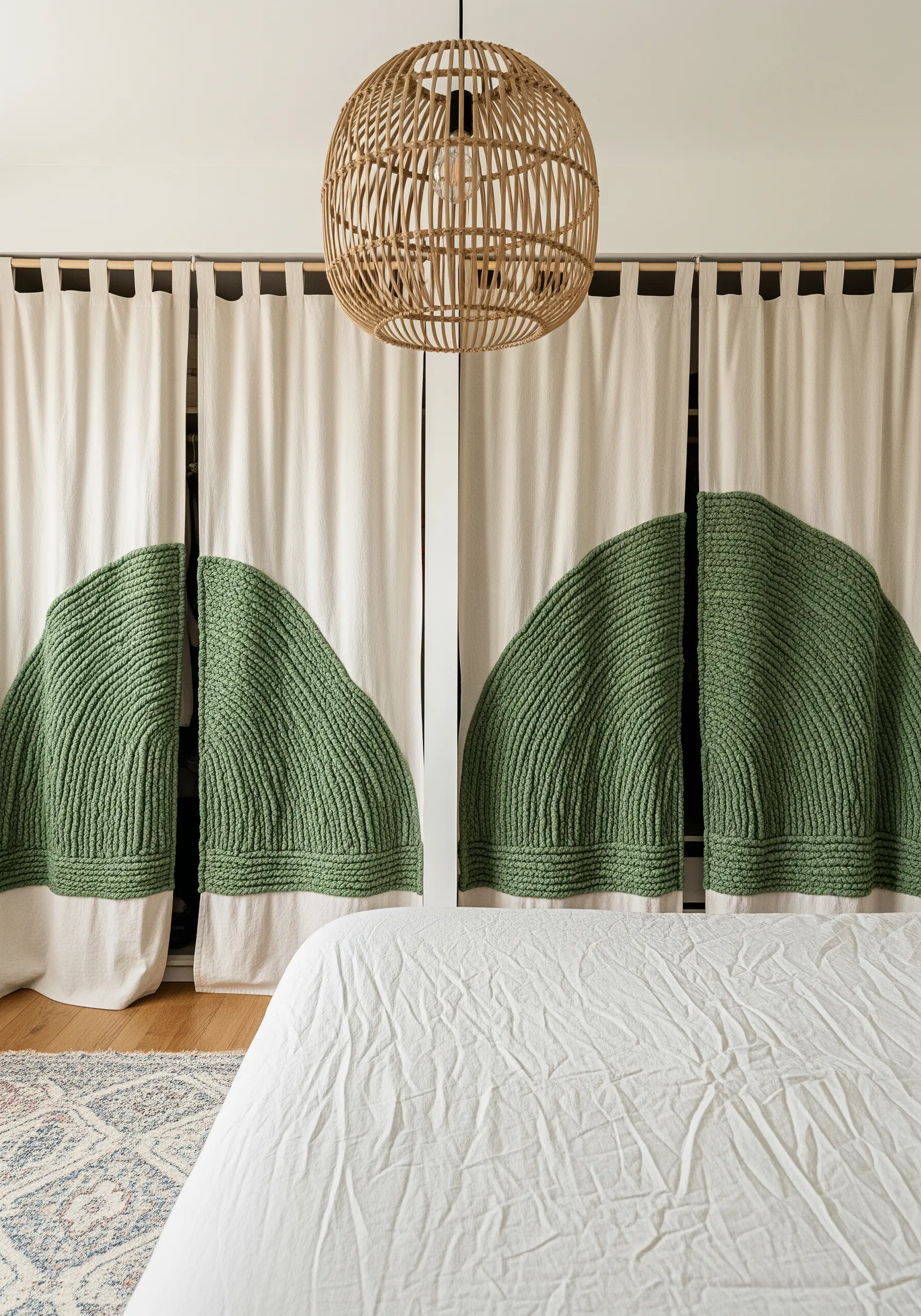
Create a bold, textural statement on curtains or wall hangings by appliquéing a chunky knit fabric onto a flat base.
This technique offers a dramatic, three-dimensional effect that traditional embroidery cannot easily replicate.
Simply cut your desired shape from a piece of knit material and carefully stitch it onto your curtain panel using a whipstitch or blanket stitch with a matching thread.
The contrast between the flat weave of the curtain and the high relief of the knit creates a striking visual and tactile experience, adding warmth and modern artistry to your windows.
22. The Delicate Realism of Fishbone Stitch Feathers
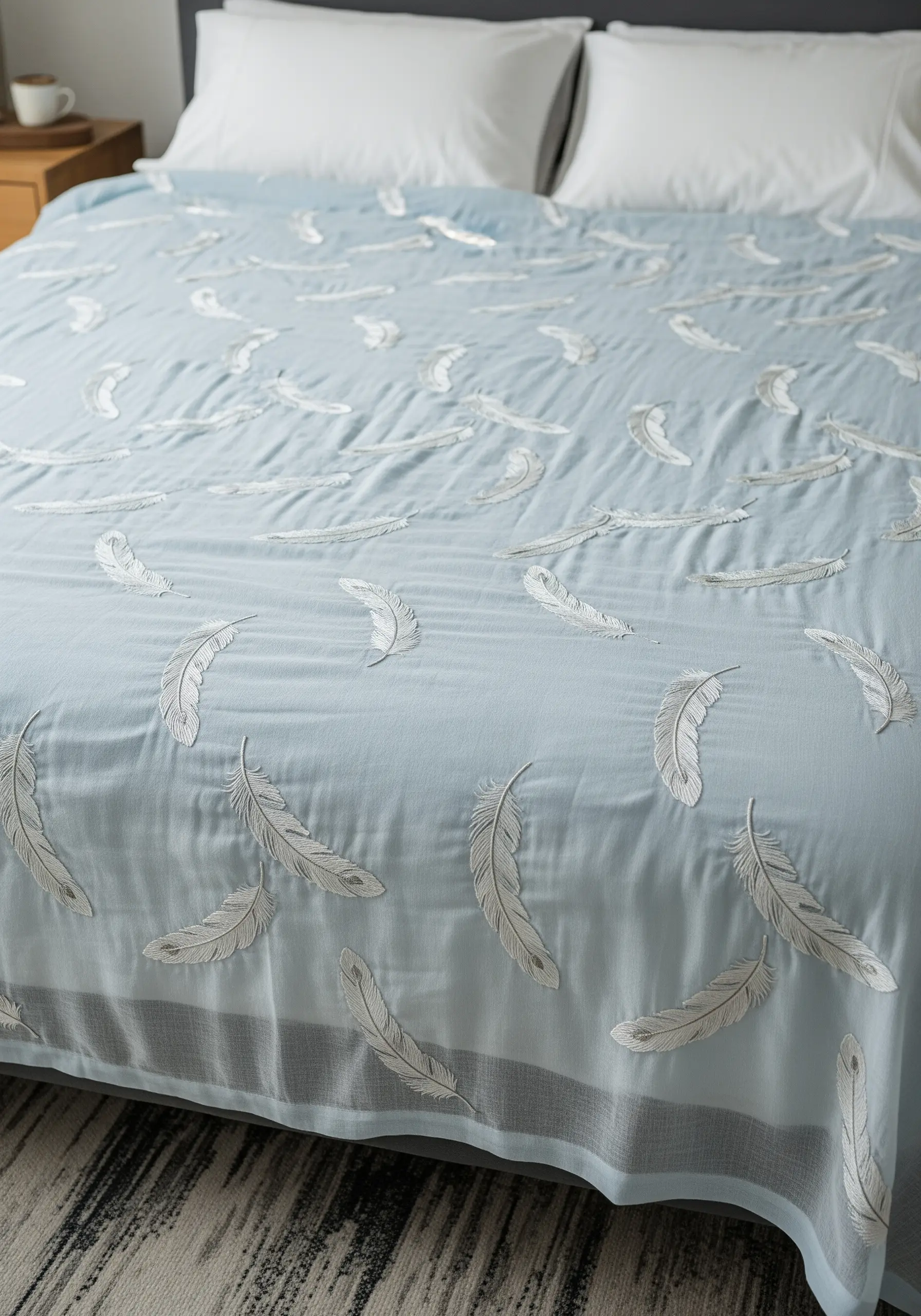
Capture the weightless beauty of feathers by scattering them across a bedspread using the fishbone stitch.
This stitch is ideal for creating the central spine and angled barbs of a feather in one fluid motion.
Use a fine, lustrous thread like a single ply of silk or rayon floss in white or silver on a soft blue fabric to enhance the ethereal quality.
Vary the orientation and size of the feathers to create a sense of gentle, natural movement, as if they’ve just drifted down to rest.
This subtle embroidery design adds a layer of serene detail to your bedding.
23. Upholstery Embroidery with Muted Rainbows
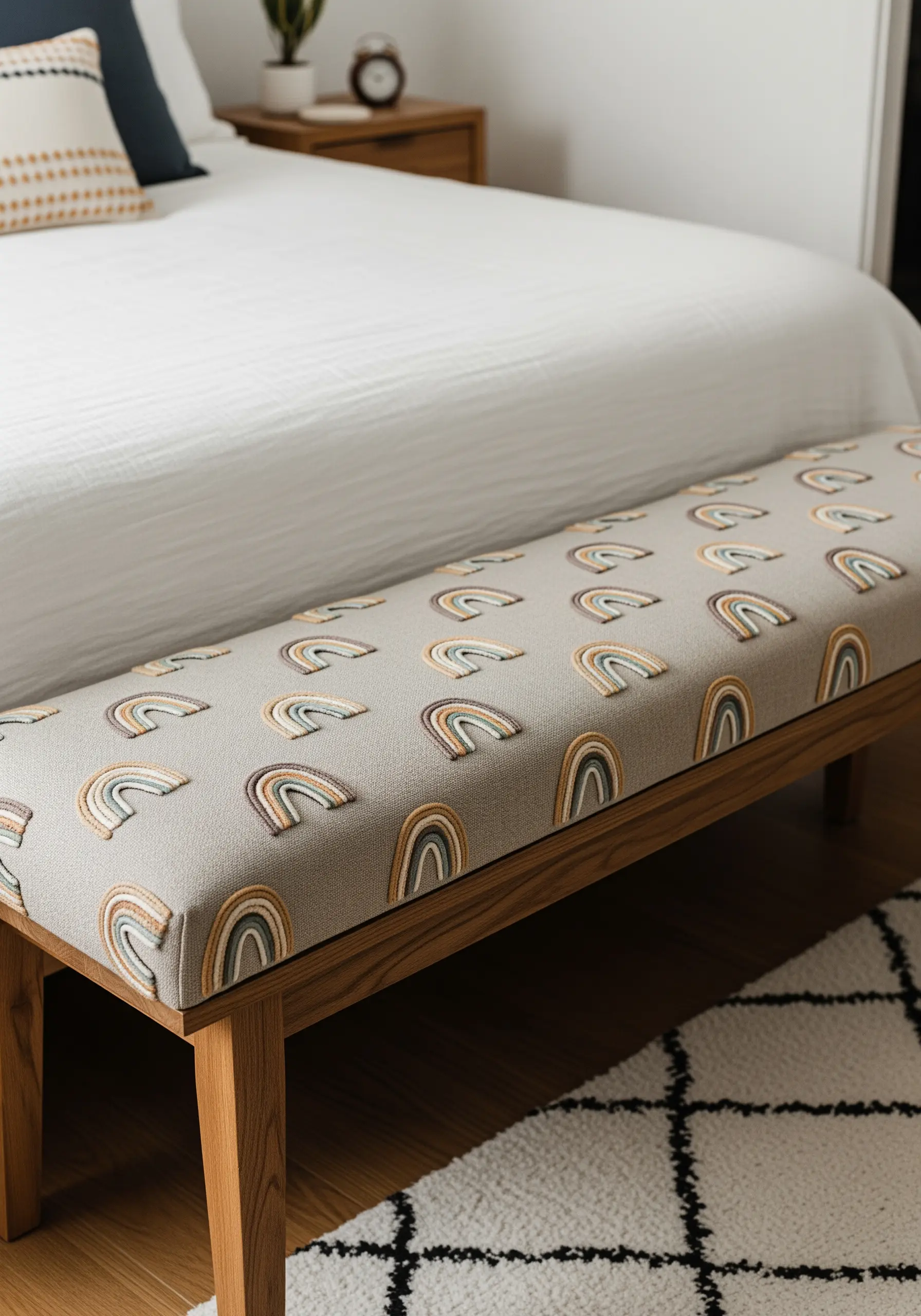
Embellish functional furniture like an end-of-bed bench with a repeating pattern of small, textural motifs.
For these muted rainbows, a dense satin stitch using a durable pearl cotton provides both color and a pleasingly raised texture.
Working on upholstery fabric requires a strong, sharp needle and good tension control to avoid puckering the heavy material.
Choose an earthy, desaturated color palette to keep the pattern sophisticated and calming, ensuring it integrates seamlessly into a modern boho bedroom.
This is a fantastic way to customize a simple piece of furniture and tie your room’s color scheme together.
24. High-Relief Whitework for a Sculptural Bedscape
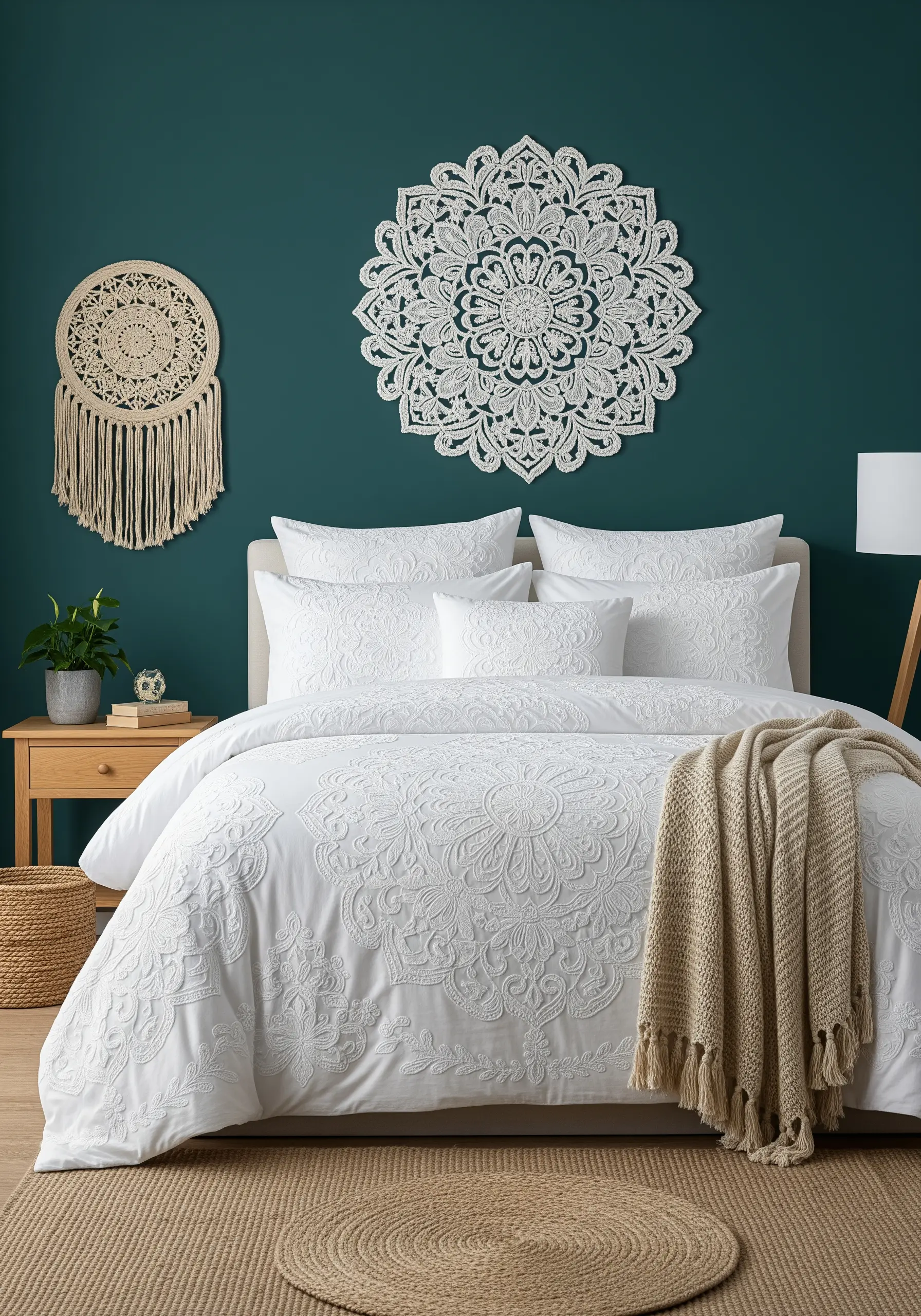
Create the ultimate cloud-like bed with a whitework duvet cover that relies entirely on sculptural texture.
This technique, known as padded whitework, involves creating raised surfaces that catch the light beautifully.
Use a combination of padded satin stitch for bold floral motifs, raised stem stitch bands for outlines, and dense knots for textural fills.
The key is building up layers of thread or felt padding underneath your primary stitches to give them significant height.
The result is a breathtakingly intricate yet calming focal point for your bedroom.
25. Graphic Texture with Woven Couching
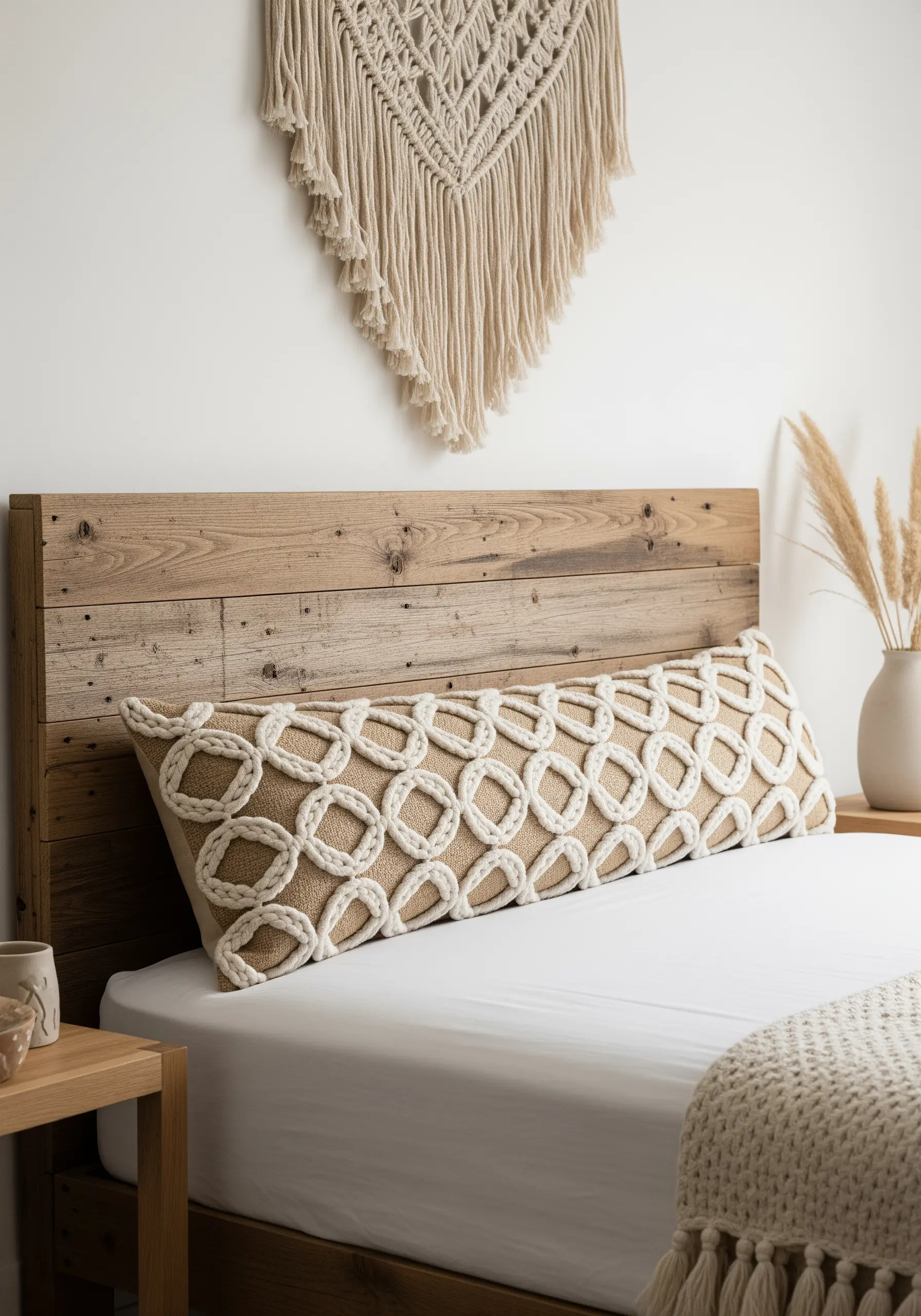
Achieve a bold, macrame-like effect on a lumbar pillow using a woven couching technique.
Lay down thick cotton cord or rope in your desired pattern—here, a series of interlocking rings—and secure it to a burlap or heavy linen base with small, strong stitches.
The contrast between the smooth, thick rope and the rustic texture of the base fabric is key to the design’s success.
This method is much faster than traditional embroidery for creating large-scale, high-impact textural patterns and adds a strong element of bohemian yarn wall art to your bedding.
26. Stitching Sound with Gradient Straight Stitches
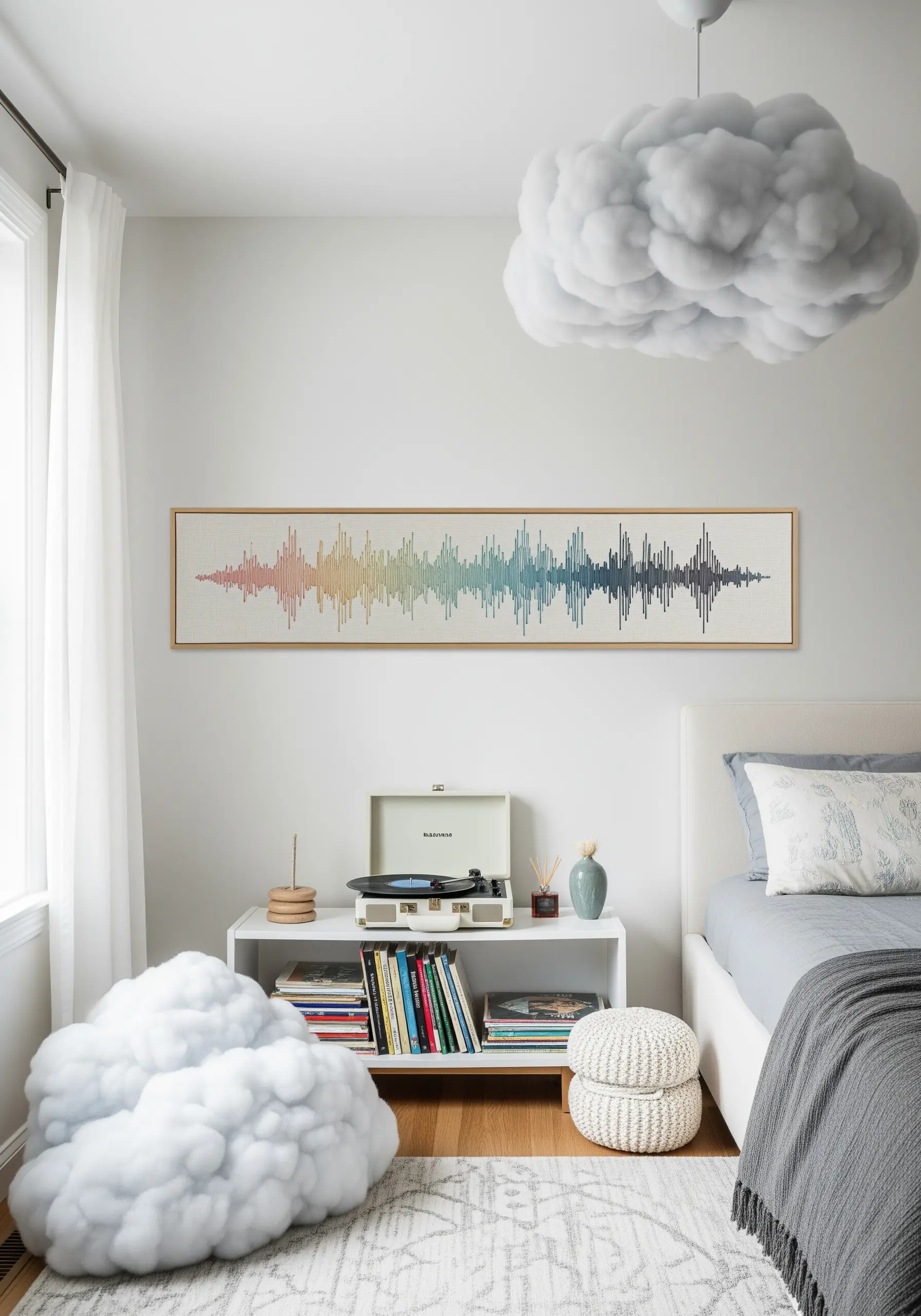
Translate a meaningful soundwave—like a favorite song or a loved one’s voice—into a unique piece of abstract art.
Use vertical straight stitches or very narrow satin stitches, varying their height to match the peaks and valleys of the soundwave pattern.
Create a soft, atmospheric effect by working through a gradient of colors, subtly shifting from one hue to the next.
Using a single strand of floss will give you the most precision for this detailed work.
This highly personal project turns an invisible memory into a tangible, beautiful object that resonates with meaning.
27. Sculpted Fiber Art for Floor Textiles
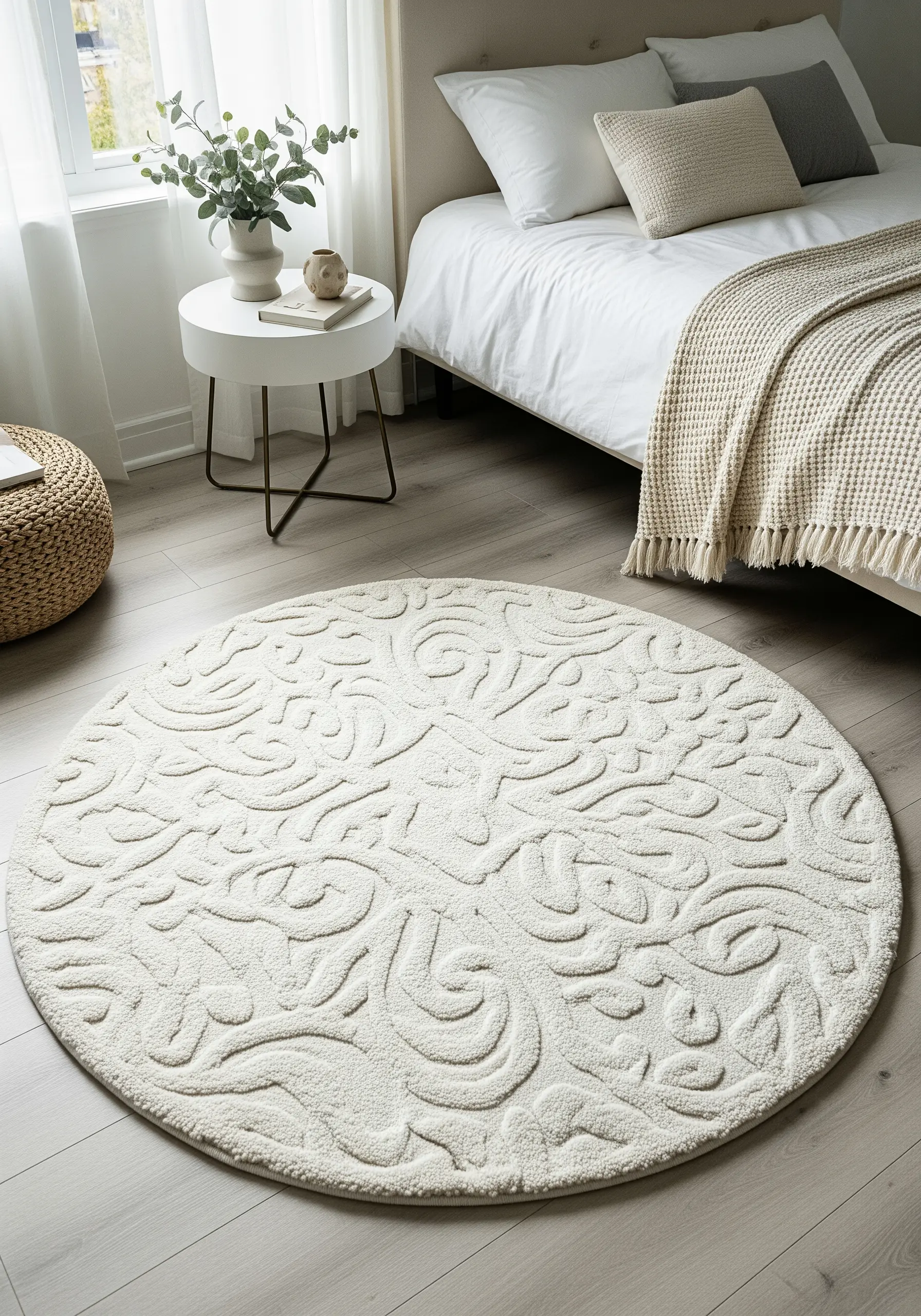
Bring textural embroidery to the floor by creating a sculpted rug with punch needle or rug hooking techniques.
Use a punch needle tool with varying loop heights to create a high and low pile, forming a subtle, raised pattern.
Working with a thick wool or cotton rug yarn in a single neutral color keeps the focus on the sculpted, swirling design.
This method allows you to create a custom, tactile piece that feels incredibly soft underfoot and adds a layer of sophisticated, handcrafted texture to your bedroom.
28. A Breath of Provence with Lavender Bouquets
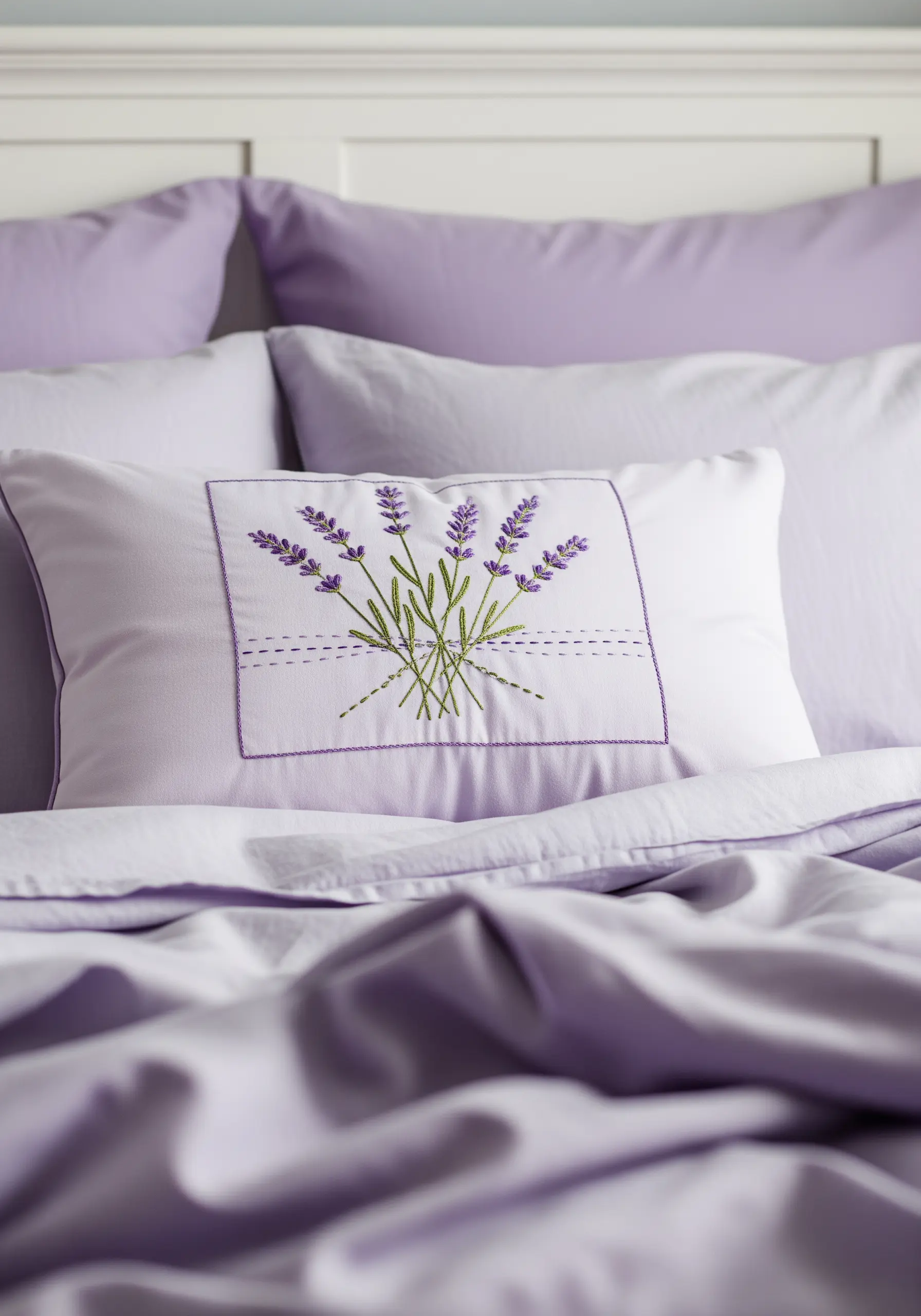
Infuse your bedroom with the calming essence of lavender by stitching a simple bouquet on a crisp pillowcase.
Use green stem stitch for the stalks and light purple French knots for the delicate flower buds, clustering them tightly at the top.
Add a few detached chain stitches in a darker green for leaves to complete the sprig.
Frame your little bouquet with a simple running stitch border to give it a polished, finished look.
This classic and serene motif is a beautiful way to bring a touch of lavender-inspired embroidery to your sleep space.
29. Desert Hues in Thread-Painted Harmony
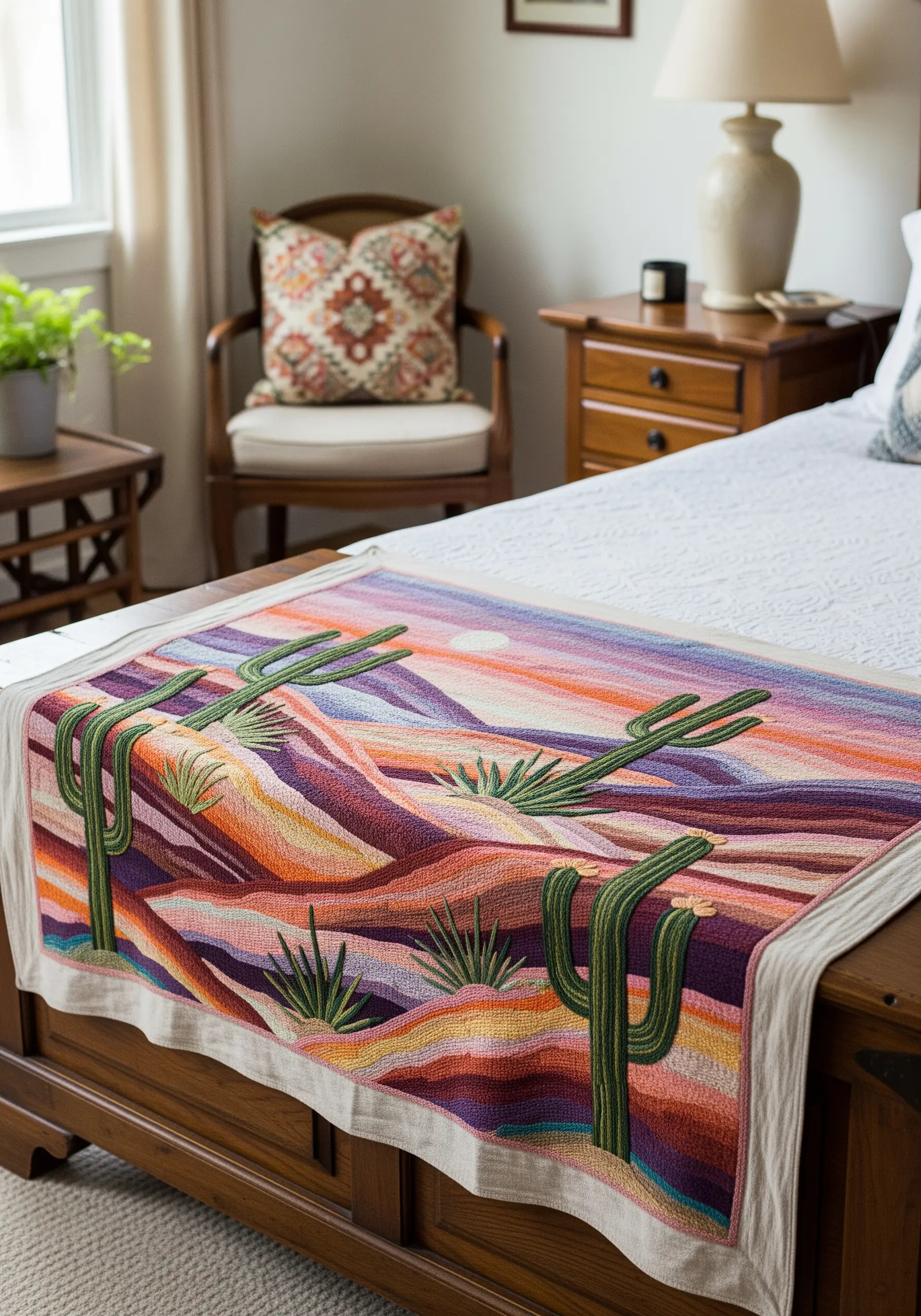
Capture the warm, layered colors of a desert sunset on a bed runner using thread painting techniques.
Fill the undulating shapes of the landscape with long-and-short stitch, blending shades of purple, orange, pink, and sand to create a smooth, painterly effect.
Keep your stitches directional, following the curves of the hills to enhance the sense of depth and movement.
For the cacti, switch to a bold satin stitch in contrasting greens to make them stand out as graphic silhouettes against the soft, blended background.
30. Gilded Ginkgo Leaves on Sunlit Sheers
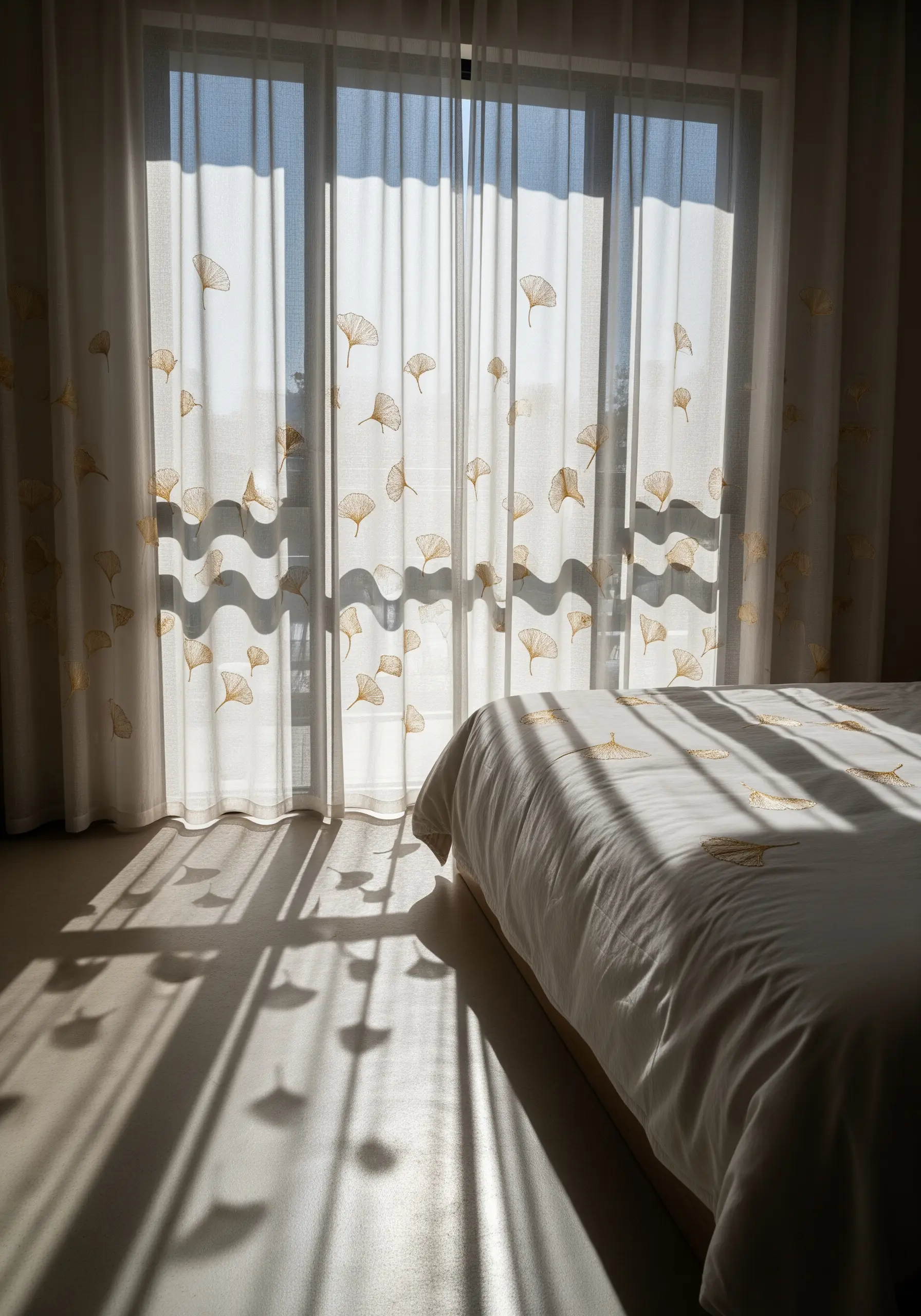
Let your embroidery catch the morning sun by stitching delicate motifs on sheer curtains with metallic thread.
Use a shimmering gold thread to outline and partially fill ginkgo leaf shapes, allowing the light to pass through and make them glow.
A simple outline stitch like split stitch or backstitch is perfect for defining the shape, while a few straight stitches can suggest the veins.
The key is to use a lightweight design and a metallic thread that isn’t too heavy for the fabric. This adds a touch of understated glamour that changes throughout the day.