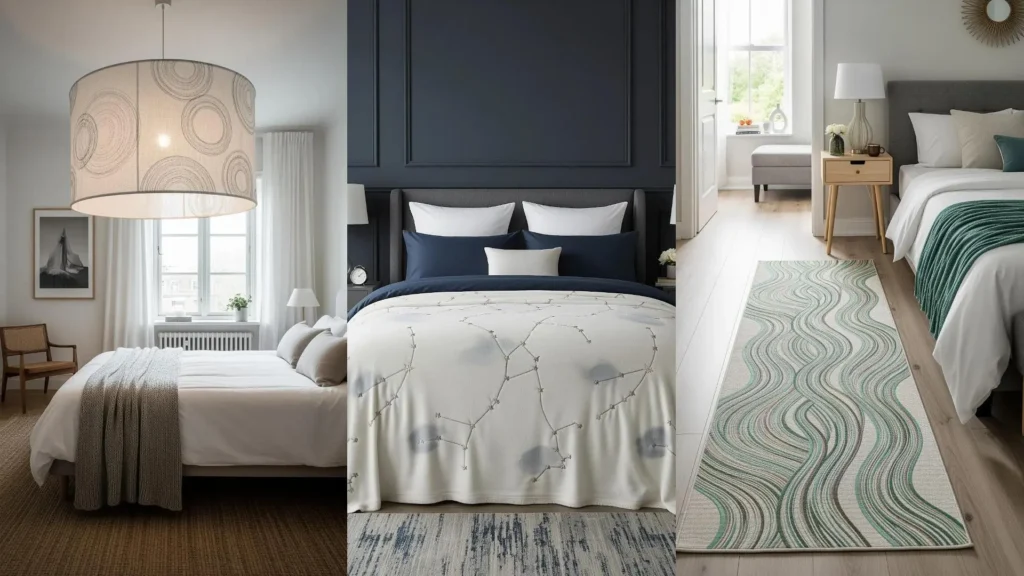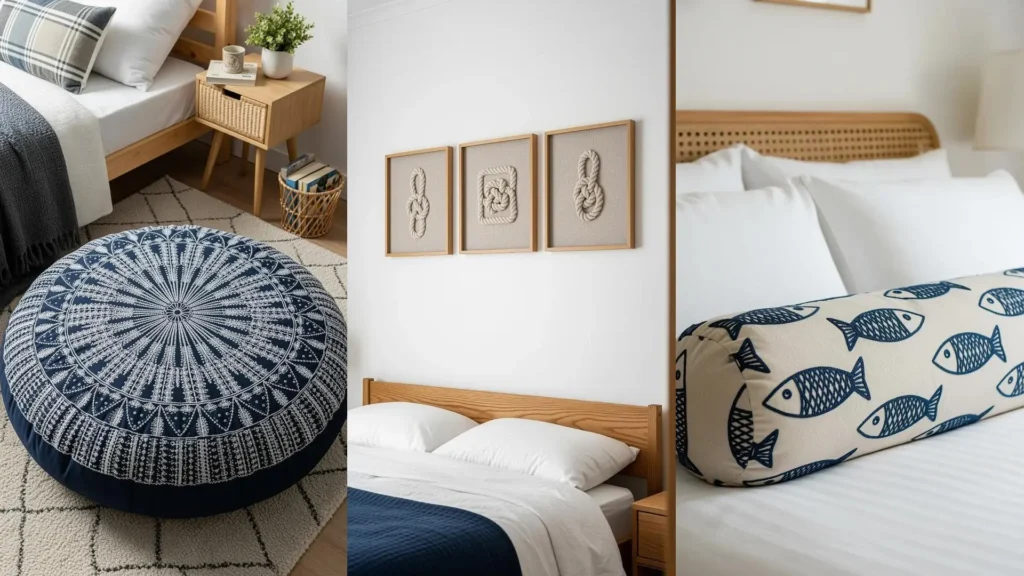
Your bedroom should be a sanctuary—a place where you can exhale and feel completely at ease. Embroidery, with its gentle rhythm and focus, is one of the most personal ways to cultivate that sense of peace, stitch by stitch.
But how do you move beyond simple patterns to create something that truly feels like art? It begins with intention. Think of your needle as a brush and your thread as paint. The techniques you choose are what will transform a simple piece of fabric into an expression of calm, coastal energy.
In these projects, I’ll guide you through the small adjustments that make a significant difference—how to create texture that mimics seafoam, blend colors like a sunset, and use negative space to evoke the vastness of the ocean. This is your invitation to stitch with confidence and turn your bedroom into the serene retreat you deserve.
1. Create Dynamic Wave Texture with Layered Stitches
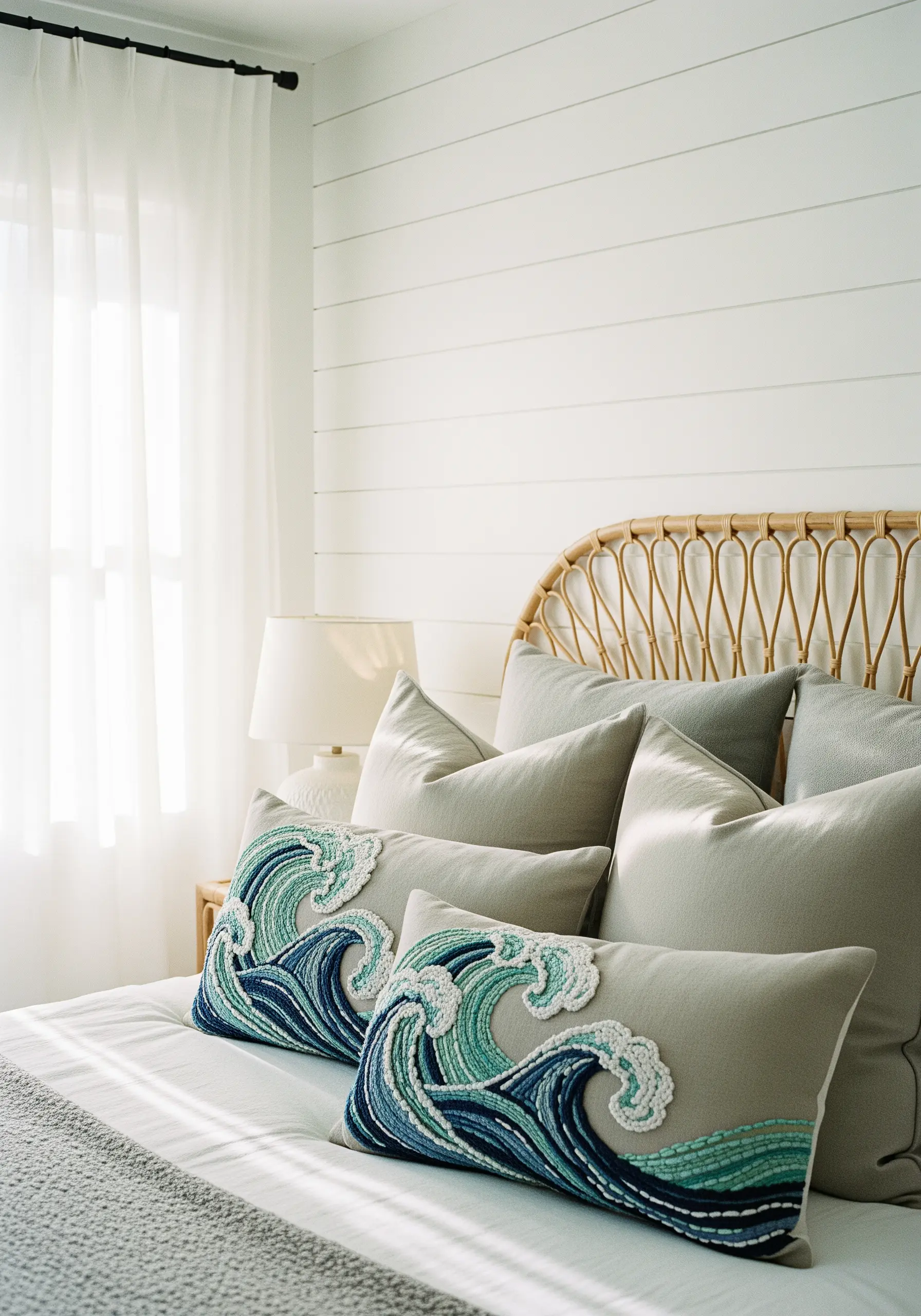
Give your wave motifs sculptural depth by moving beyond flat satin stitches.
Use a foundation of chain stitches or split stitches to build up the main body of the wave, following its natural curve.
For the cresting foam, switch to a thicker, textured thread like a cotton perle or even fine yarn, and work dense French knots or turkey stitches.
This layering technique creates a tangible contrast between the smooth water and the frothy foam, making your cushion a true statement piece.
The combination of different thread weights and stitch heights is what gives the design its sophisticated, high-end finish.
2. Stitch a Serene Sunset with Thread Painting
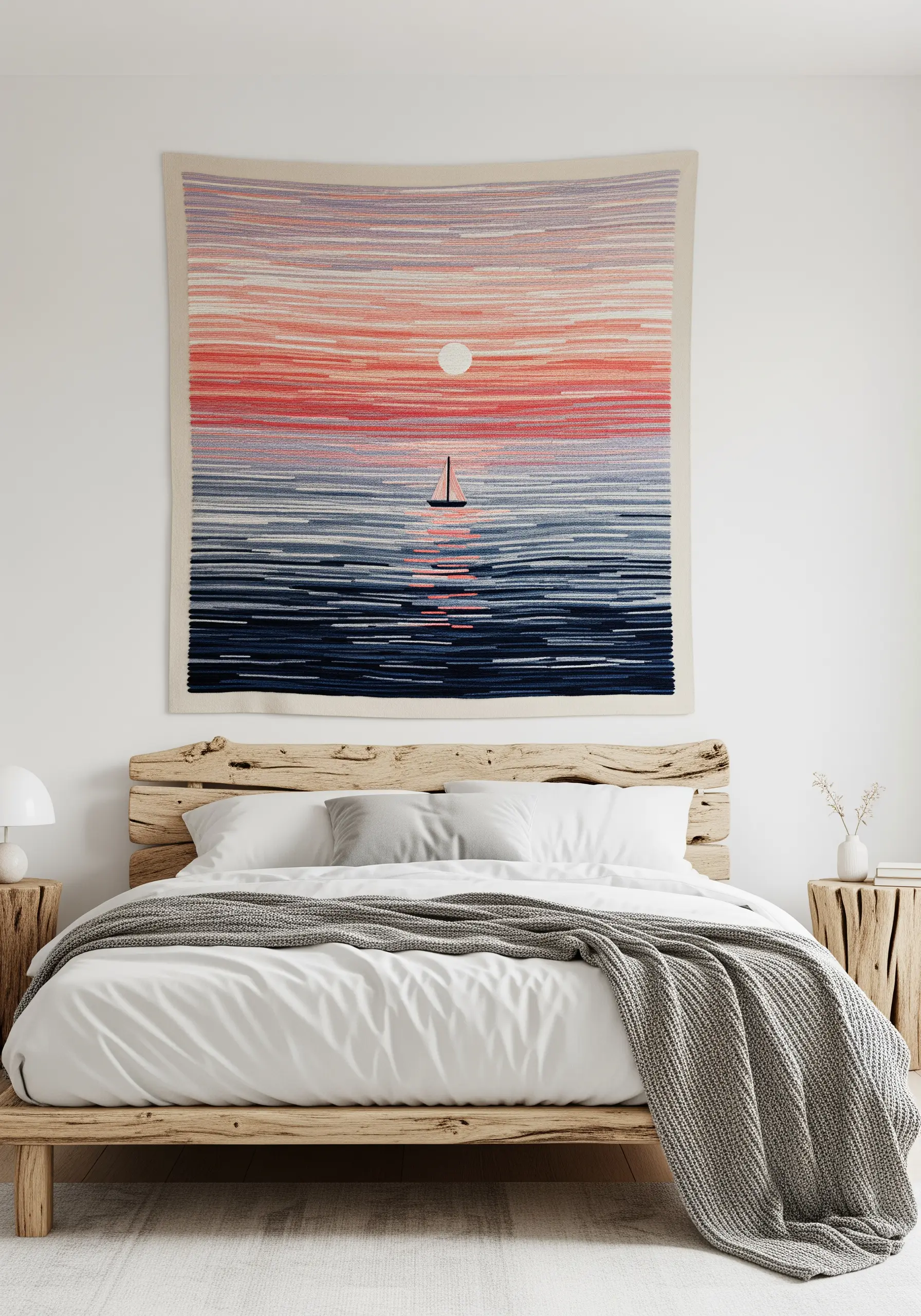
Capture the soft gradient of a coastal sunset by treating your thread like paint.
Use a single strand of embroidery floss and the long-and-short stitch technique to seamlessly blend shades of pink, orange, and blue.
Work in horizontal bands, allowing the end of one stitch to nestle into the middle of the next, which eliminates harsh lines and creates a painterly effect.
For the water’s reflection, mirror the sky’s colors but use slightly shorter, more broken stitches to suggest movement.
This method transforms a simple scene into a large-scale embroidery tapestry that radiates calm.
3. Embroider on Sheer Curtains for an Ethereal Effect
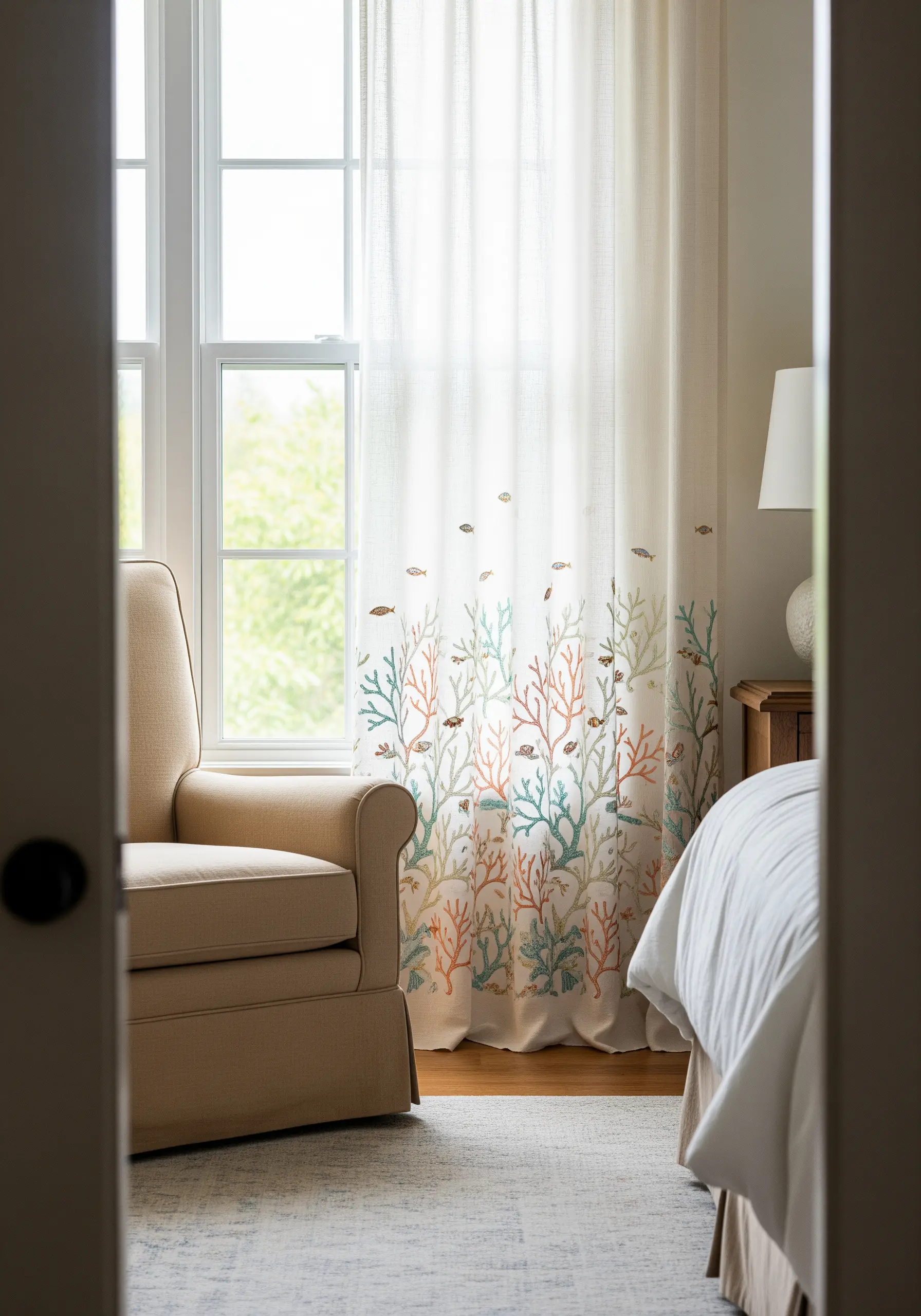
Stitching on lightweight or sheer fabric can feel intimidating, but the result is beautifully delicate.
Always use a lightweight, wash-away stabilizer on the back to prevent puckering and provide support as you stitch.
Choose simple, linear stitches like stem stitch, backstitch, or seed stitch for the coral and fish motifs.
These stitches add detail without overwhelming the fine fabric, allowing light to filter through and make your embroidery almost float in the air.
This creates a subtle, breezy atmosphere perfect for a coastal-inspired bedroom.
4. Combine Appliqué and Stitching for Clean, Graphic Motifs
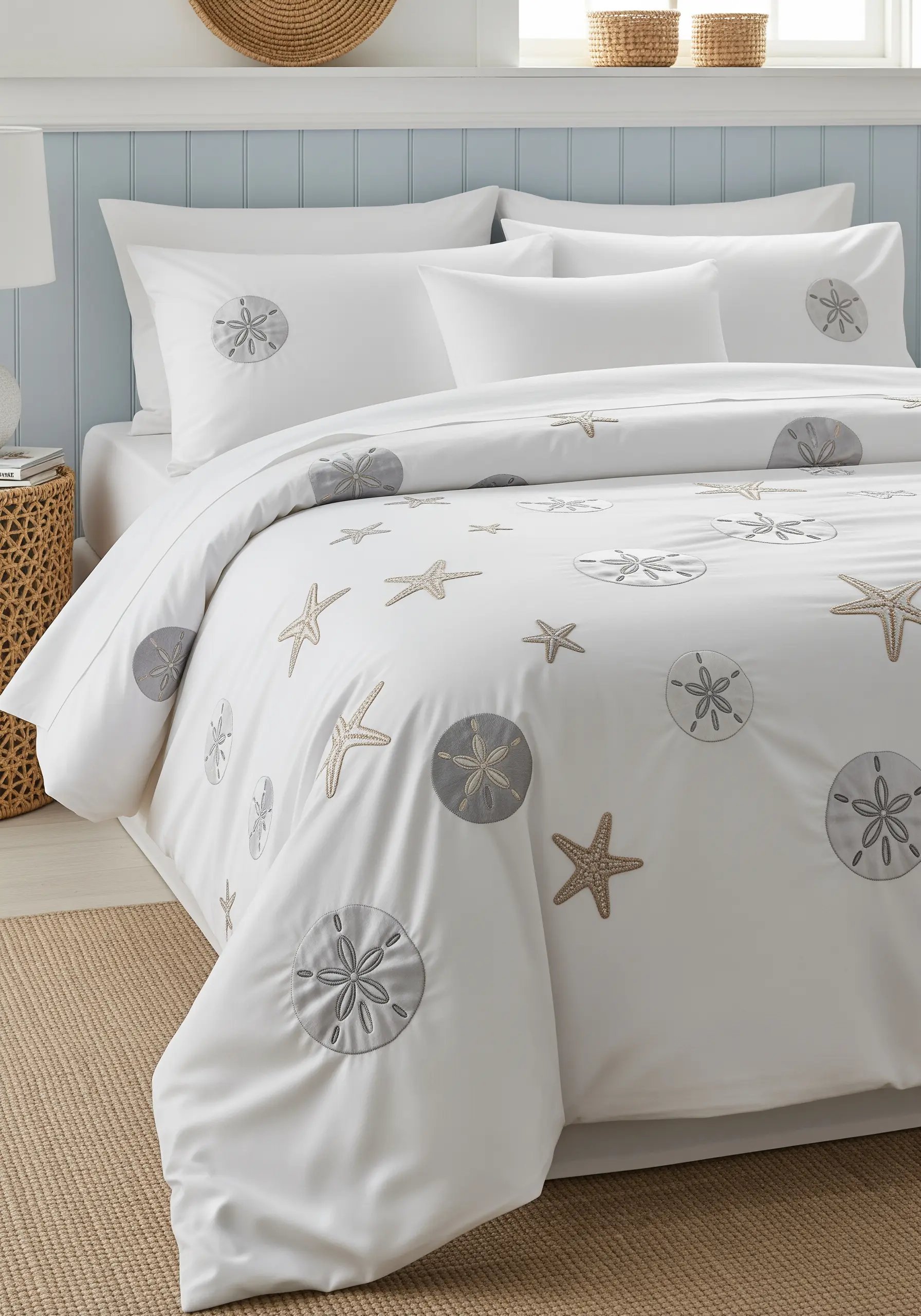
For crisp, modern coastal designs on bedding, combine fabric appliqué with minimal embroidery.
Cut your sand dollar and starfish shapes from a contrasting fabric like felt or a tight-weave cotton.
Secure them to your duvet cover with an iron-on adhesive, then frame the edges with a tight, clean satin stitch for a professional finish.
Add interior details with simple straight stitches or a few seed stitches, allowing the clean shapes to remain the focus.
This technique is faster than filling a large area and results in a bold, contemporary look.
5. Curate a Coastal Gallery Wall with Cohesive Hoop Art
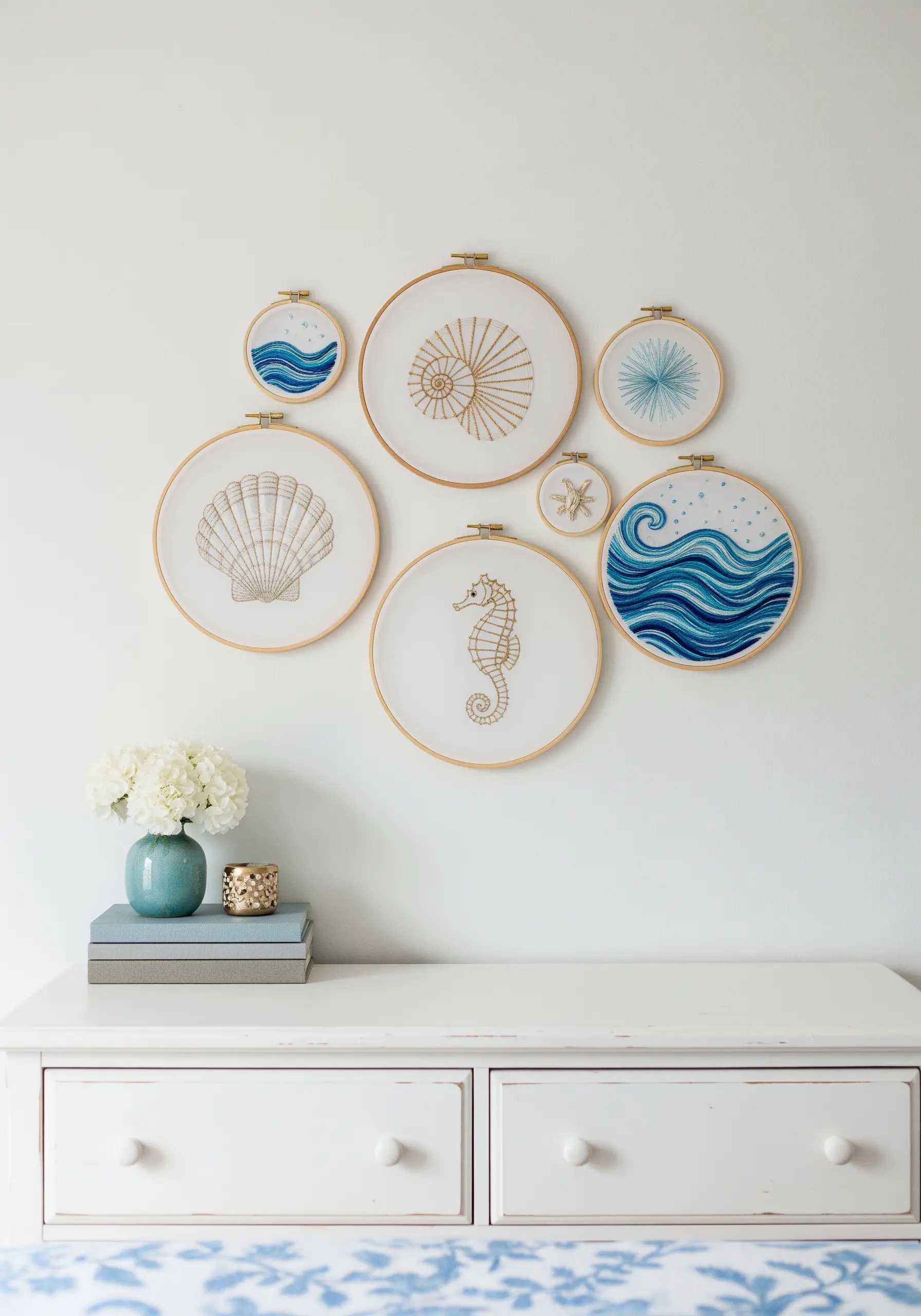
Create a stunning focal point by grouping several hoops into a cohesive collection.
To ensure harmony, stick to a limited color palette—here, shades of blue, sand, and white unify the different motifs.
Vary the stitches to add interest: use radiating straight stitches for a sand dollar, couched cord for a spiral shell, and layered backstitch for waves.
This thoughtful mix of texture and technique turns simple patterns into inspiring hoop art projects that tell a story together.
Arrange hoops of different sizes asymmetrically for a dynamic and modern display.
6. Add Subtle Detail to Patterned Fabric with Outline Stitching
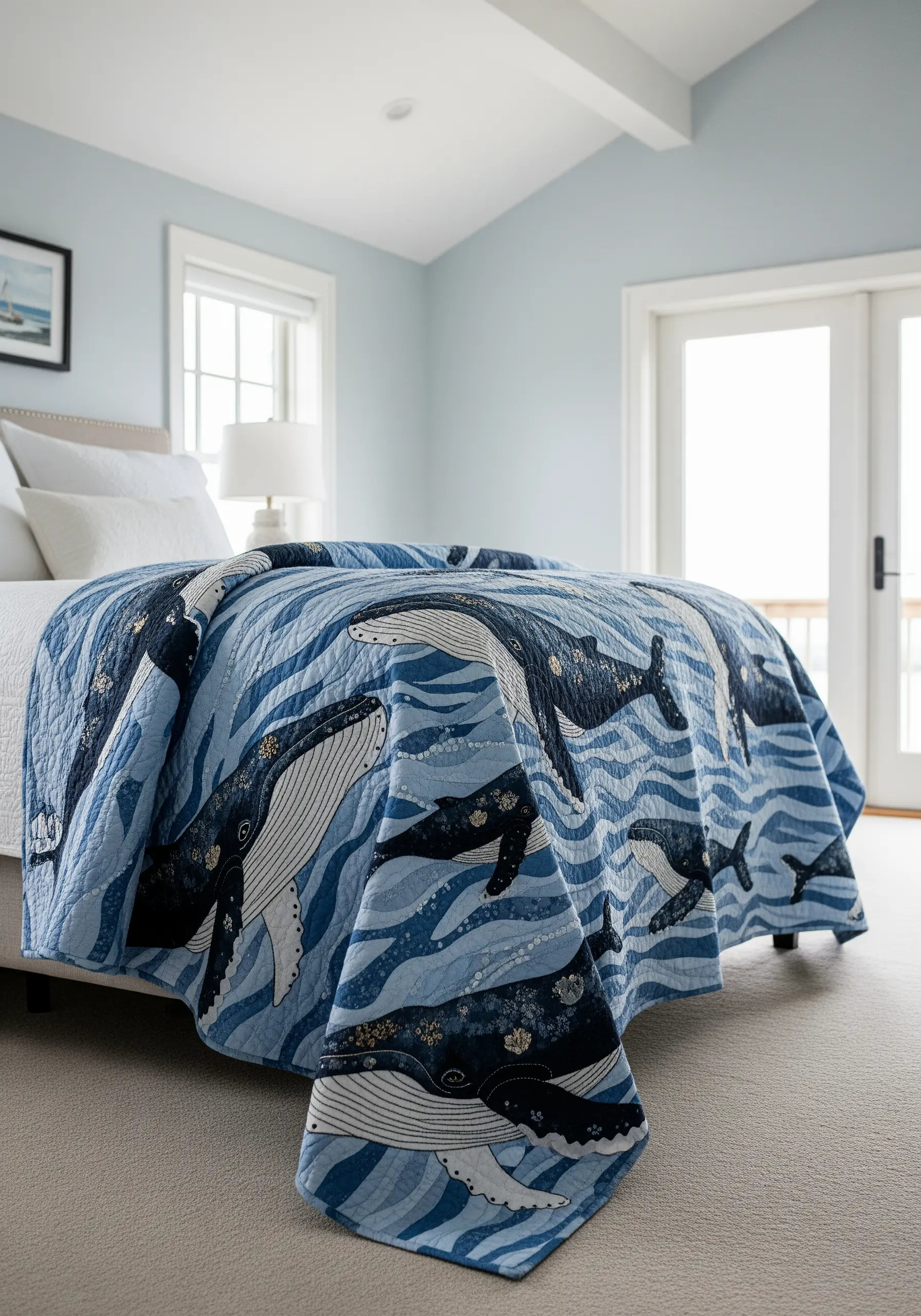
When working on a patterned quilt or fabric, you don’t need complex stitches to make an impact.
Instead of competing with the print, enhance it with selective, high-contrast outline embroidery.
Use a simple backstitch or stem stitch in a dark color like black or navy to define the edges of the whale motifs.
This small addition clarifies the design, adds a hand-finished touch, and makes the printed shapes pop without adding visual clutter.
This is a perfect way to personalize a store-bought piece and make it your own.
7. Create Rhythmic Patterns with a Single Continuous Stitch
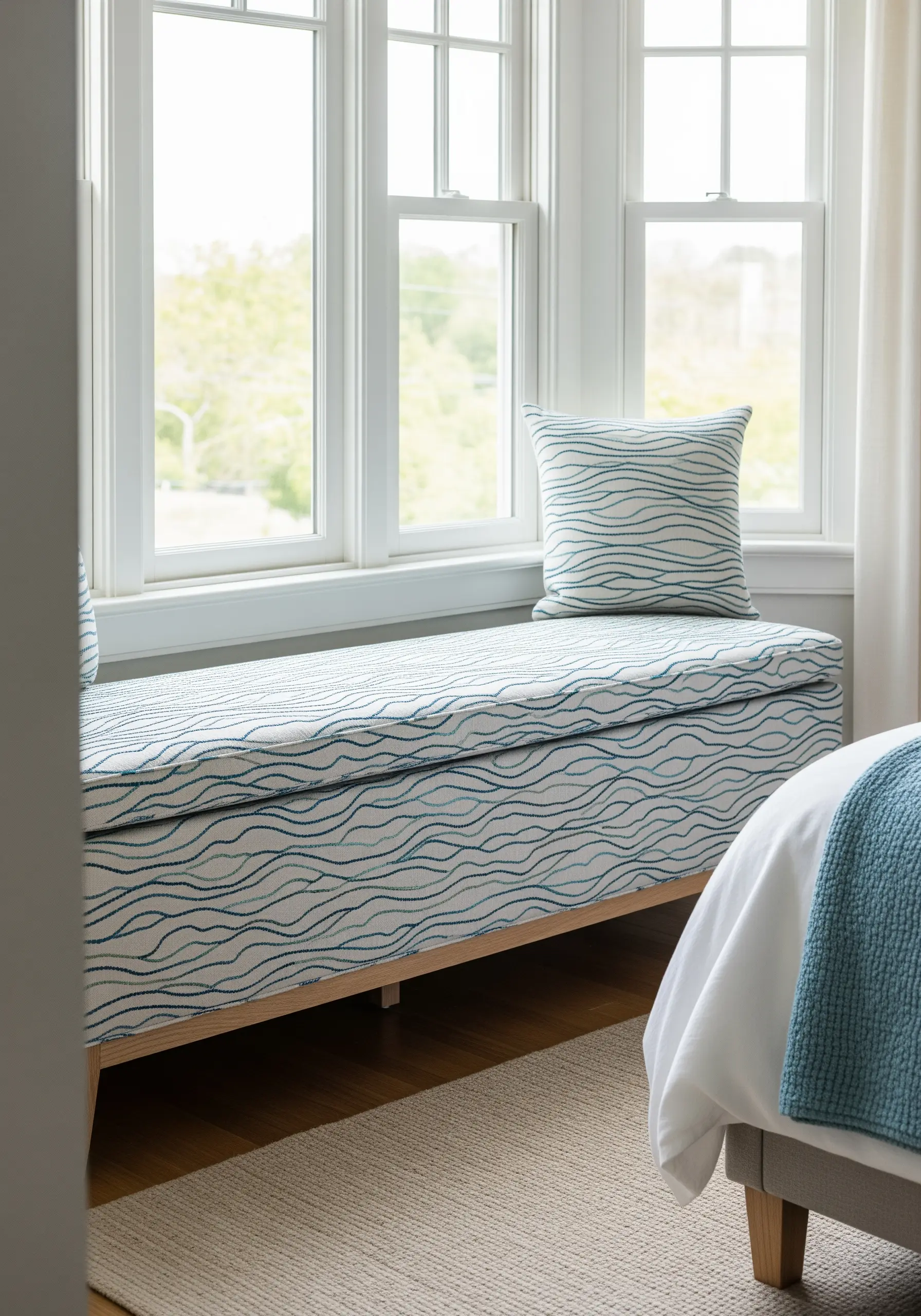
Transform a plain surface, like this bench cushion, with a simple, repeating wave pattern.
The key to making this look sophisticated is consistency.
Use a single, elegant stitch like a whipped backstitch or a stem stitch to create smooth, unbroken lines.
Mark your guidelines with a water-soluble pen to ensure your waves are evenly spaced.
This meditative stitching process results in a minimal embroidery pattern that brings a sense of calm motion and rhythm to the room.
8. Embellish a Lampshade with Delicate Botanical Stitches
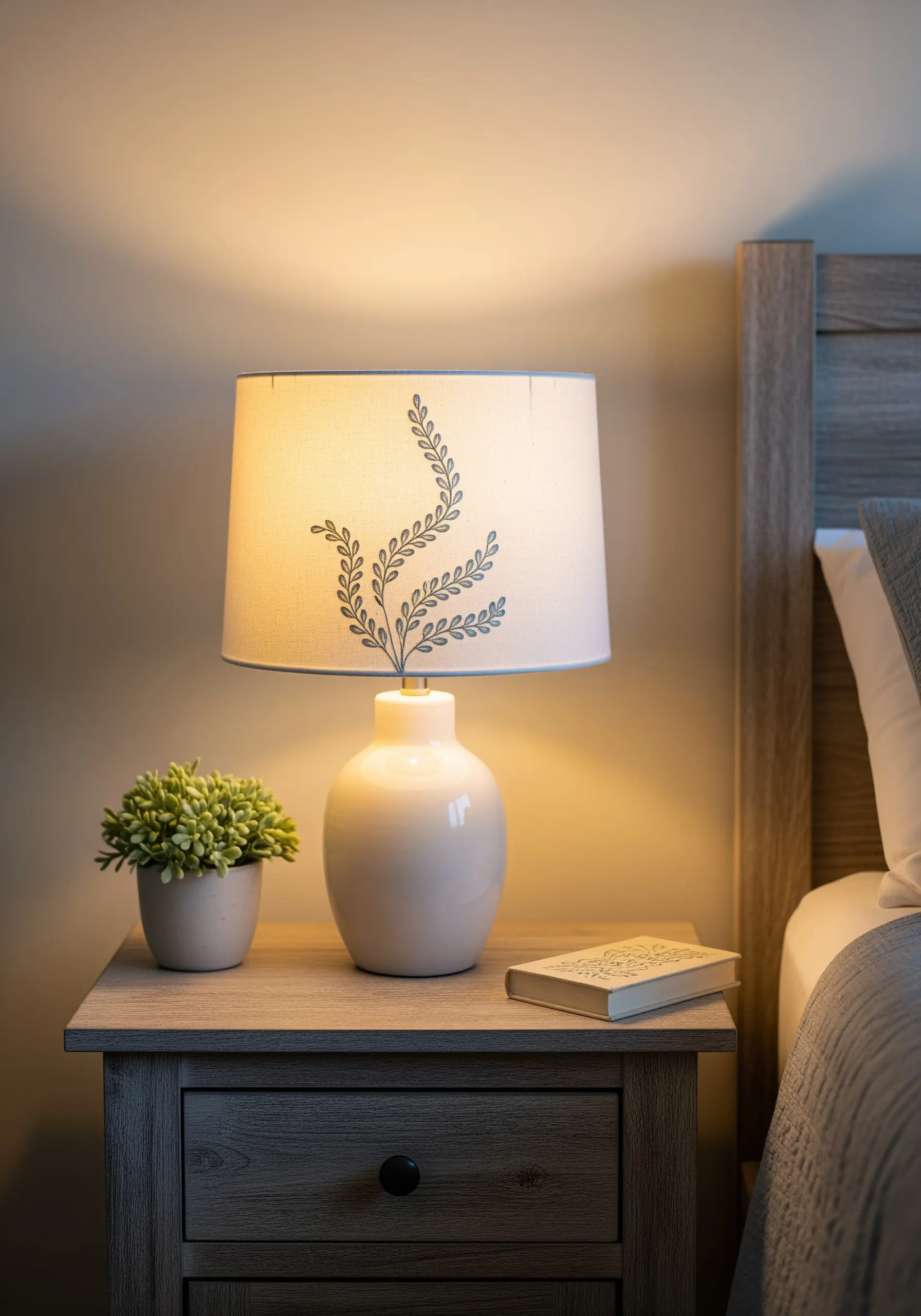
Adding embroidery to a lampshade softens the light and introduces a personalized, organic element.
Choose a simple design like a seaweed or fern branch that complements the shape of the shade.
Use a basic backstitch or stem stitch in a single, calming color.
To transfer your design without leaving marks, trace it onto water-soluble stabilizer and stick it to the lampshade.
Once you’re finished stitching, you can gently dab away the stabilizer with a damp sponge.
This technique ensures your work is clean and your lampshade glows beautifully.
9. Capture Lifelike Detail with Thread Painting
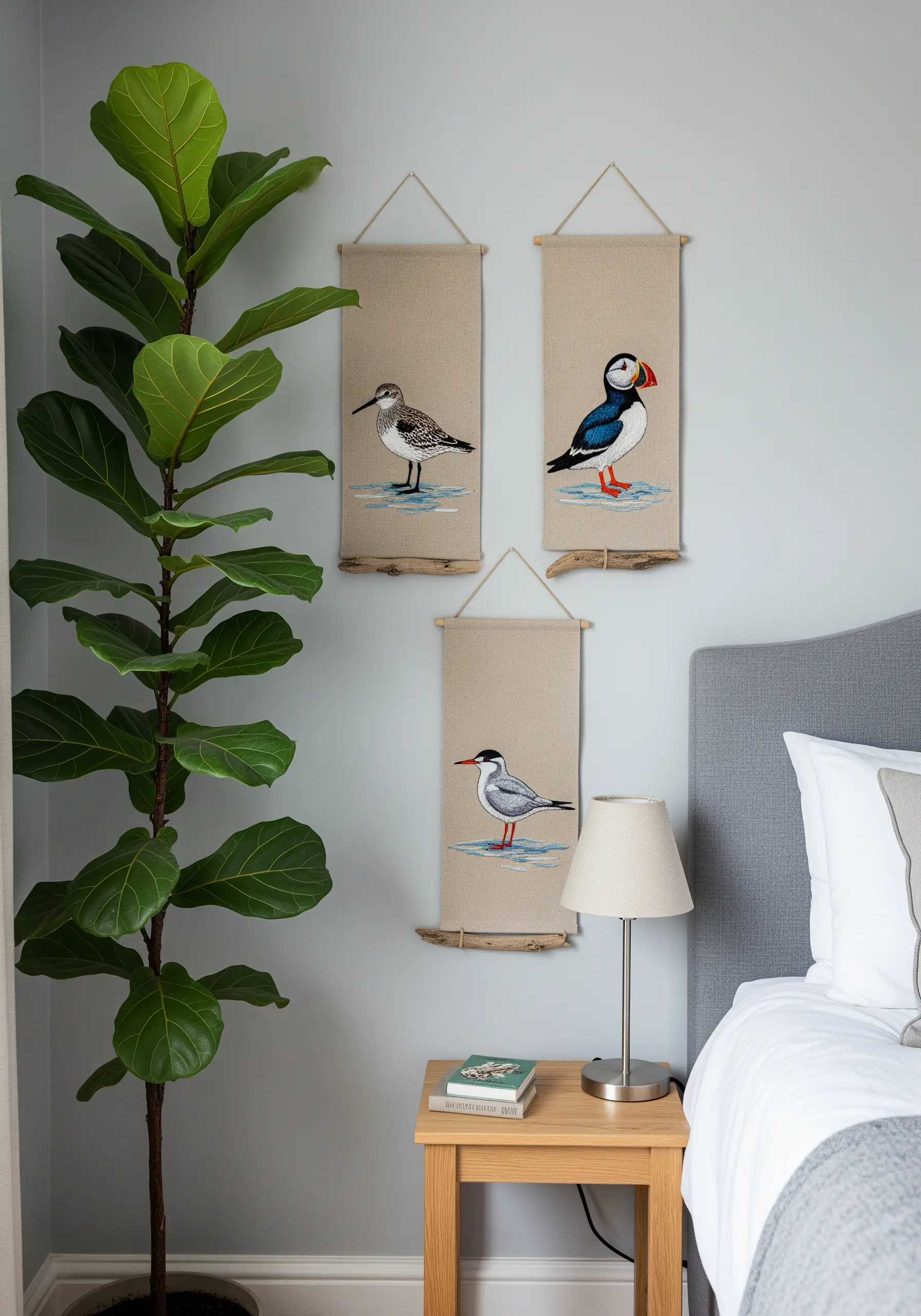
Bring coastal birds to life by using thread painting to capture the subtle color variations in their feathers.
Work with a single strand of floss and use the long-and-short stitch to blend colors smoothly, creating realistic shading and highlights.
Pay close attention to the direction of your stitches to mimic the natural growth of feathers.
For the ground, a few rows of seed stitches in sandy tones and French knots for pebbles add just enough context without distracting from the main subject.
Finish by mounting the fabric on a piece of driftwood for an authentic coastal touch.
10. Add Soft Sculptural Elements with Padded Appliqué
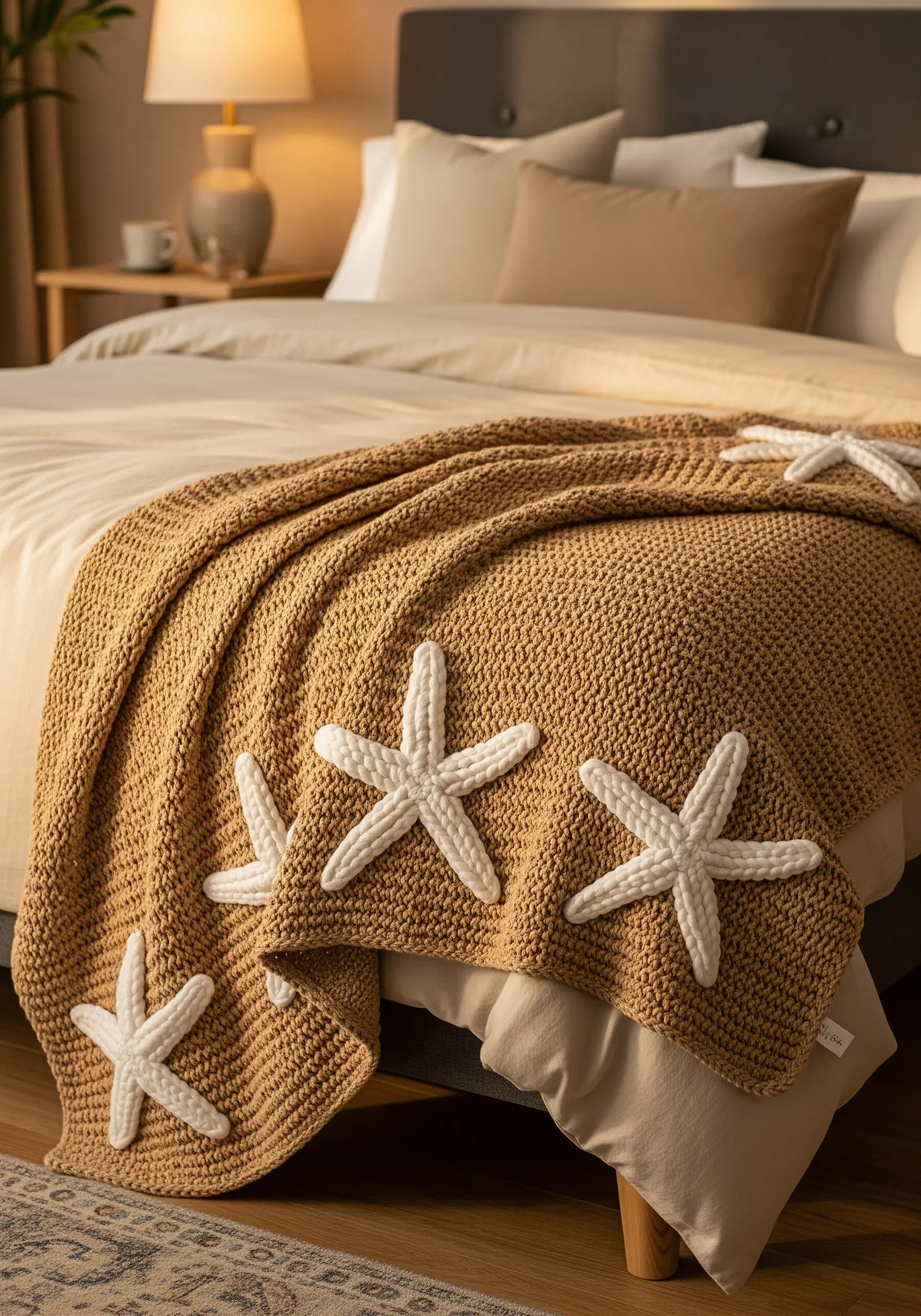
Make your starfish motifs stand out on a textured throw blanket with padded appliqué.
Cut two identical starfish shapes from your chosen fabric.
Stitch them together around the edges, leaving a small opening. Lightly stuff the shape with poly-fil before stitching it closed.
Finally, attach the plush starfish to your blanket with small, discreet whip stitches around the border.
This trapunto-style technique creates a soft, 3D effect that is both visually striking and wonderfully tactile.
11. Recreate an Ocean Gradient with Color-Blocking Stitches
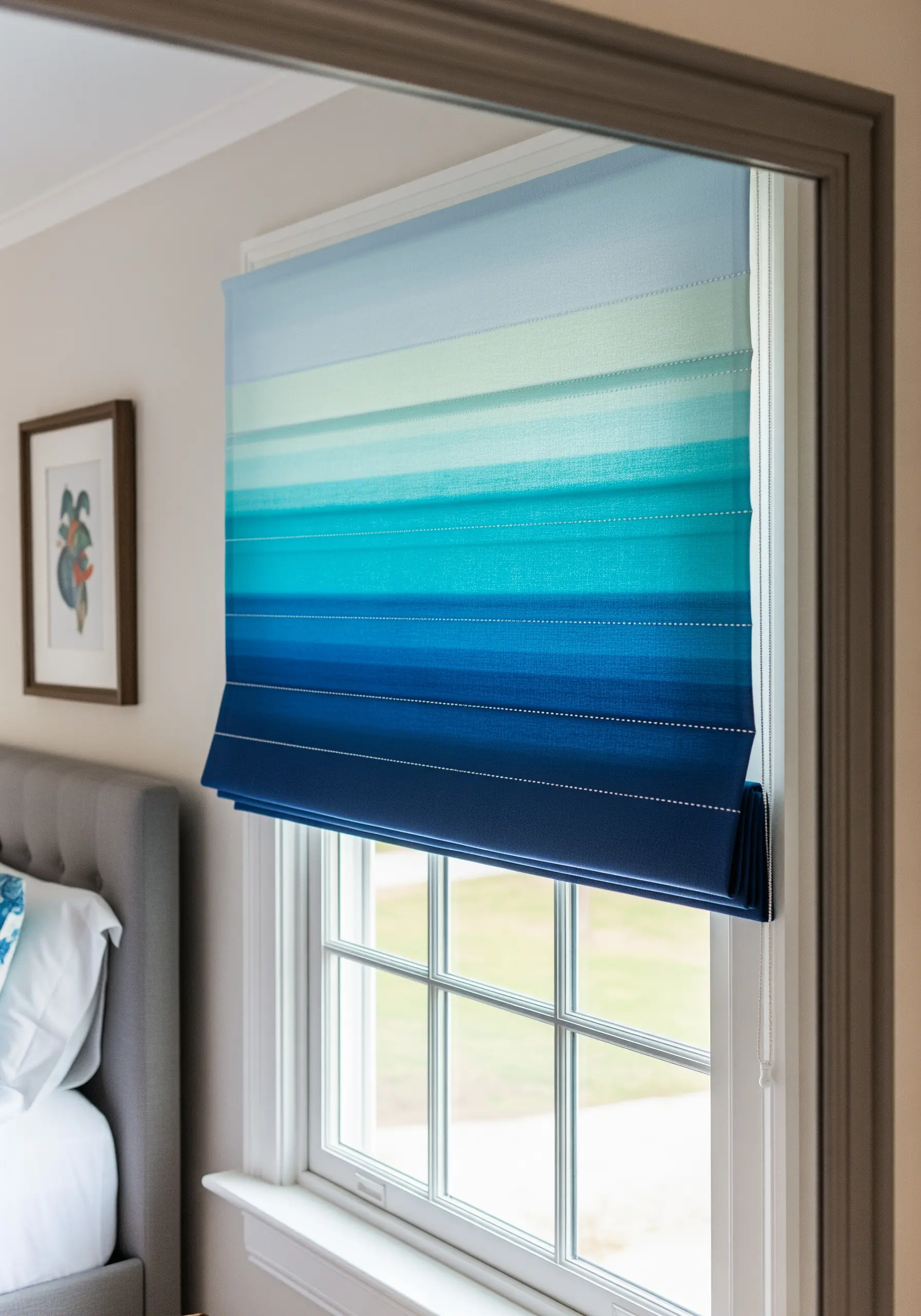
Translate the beauty of an ombré fabric into a stunning stitch project for a window blind or wall hanging.
Divide your design into horizontal bands and fill each one with dense, straight stitches or seed stitches.
Select a range of threads from deep navy to seafoam green and pale sky blue.
By changing your thread color in each block, you can achieve a beautifully clean and graphic gradient effect.
This exercise in thread color blending results in a modern, abstract interpretation of a coastal horizon.
12. Elevate Monograms with Padded Satin Stitch
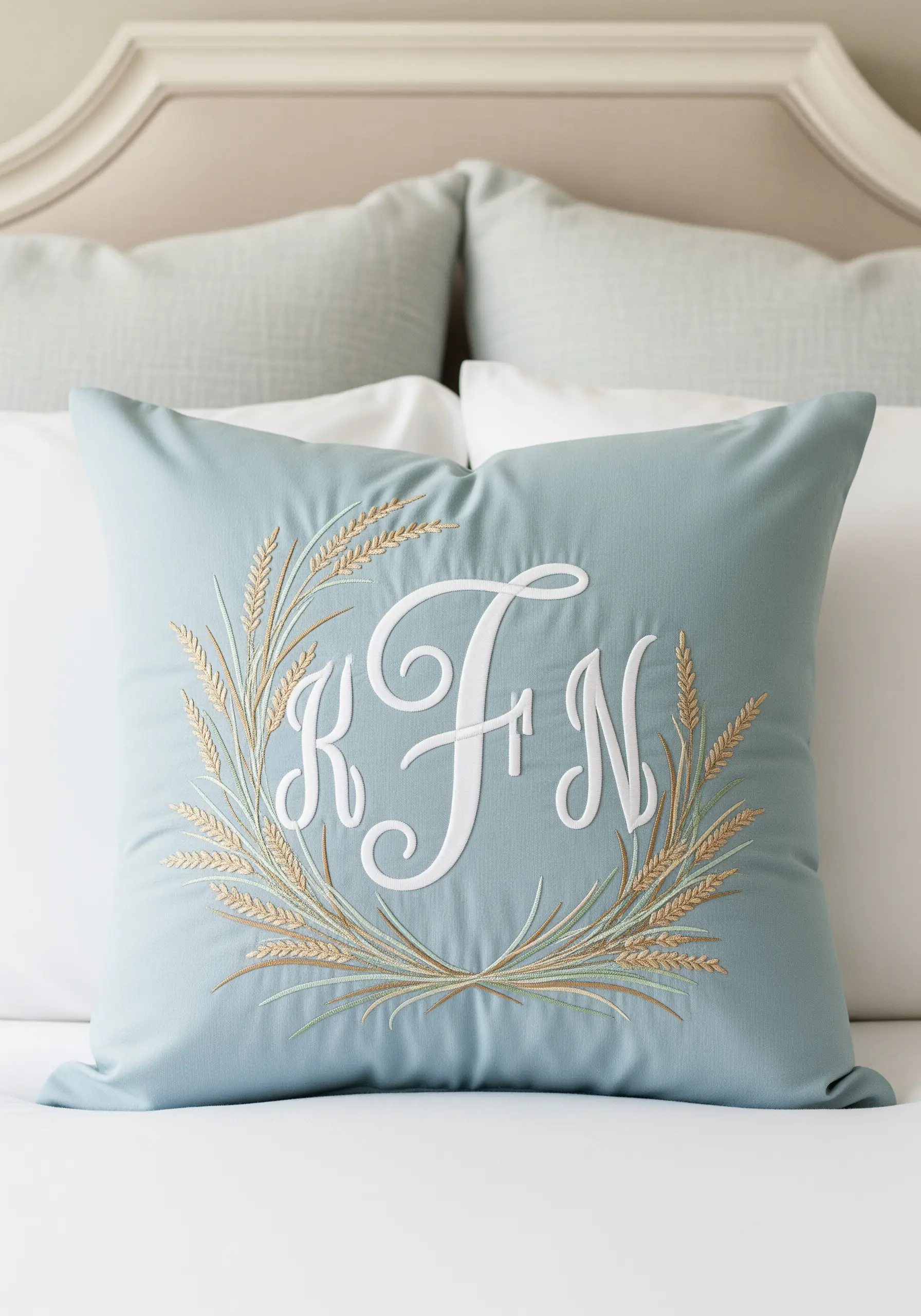
Give a personalized monogram a luxurious, raised appearance using padded satin stitch.
First, stitch a foundation of small running stitches or a split stitch outline just inside the lines of your letters.
Then, work your satin stitches over this foundation, completely covering the padding stitches underneath.
This simple preparation lifts the satin stitch from the fabric surface, creating dimension and a beautiful play of light and shadow.
Frame your minimal monogram style with delicate wheat sheaves in fishbone stitch for a classic coastal-farmhouse feel.
13. Add Graphic Accents to Functional Home Items
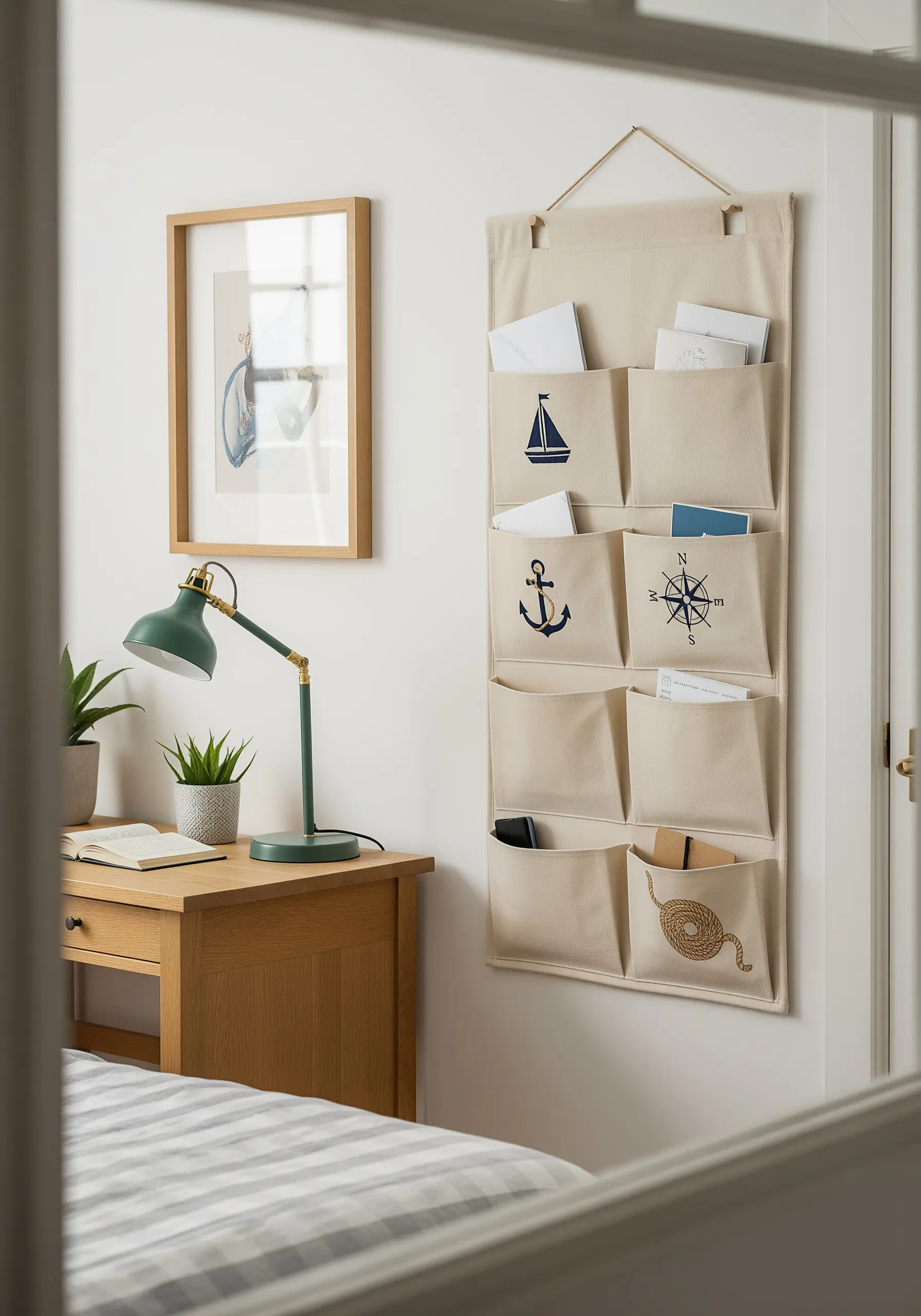
Elevate everyday items like a canvas wall organizer with simple, bold embroidered icons.
On heavy canvas, use a thicker thread—like all six strands of floss or a pearl cotton—to ensure your design stands out.
Choose a strong outline stitch like a chain stitch or a two-strand backstitch for clean, graphic lines.
Simple nautical motifs like an anchor, compass rose, or sailboat add personality and charm without compromising the item’s functionality.
This is a quick and effective way to infuse your coastal theme into practical decor.
14. Capture a Shoreline with a Tapestry of Textures
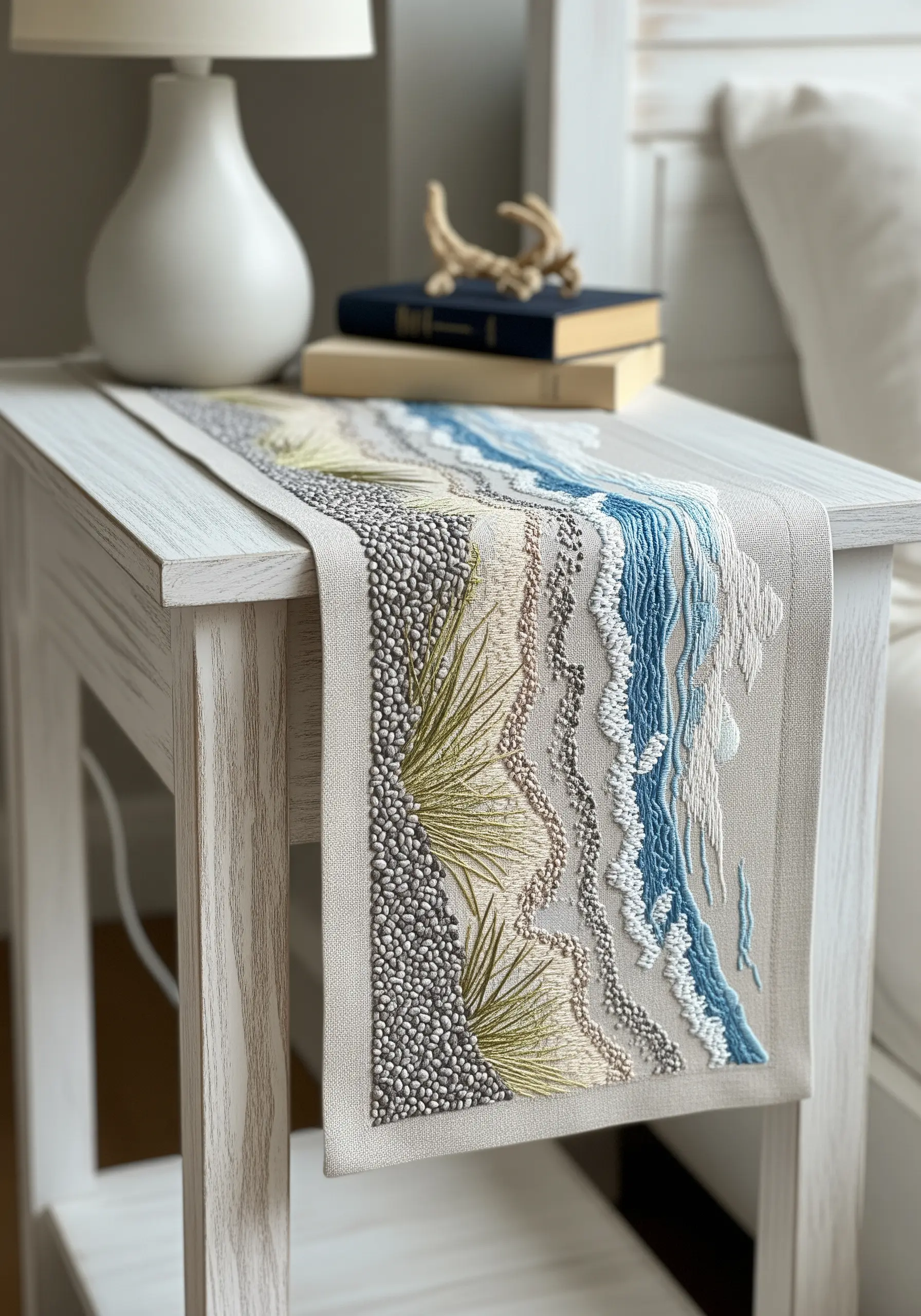
Recreate the rich textures of a shoreline on a table runner by assigning a different stitch to each element.
Use dense French knots in grey and beige tones for the pebbled beach, creating a wonderfully tactile surface.
Stitch long-and-short stitches for blades of dune grass, and use a mix of bullion knots and chain stitches for the frothy sea foam.
This project is a masterclass in using varied stitches to represent nature’s textures, turning a simple piece of linen into a work of art.
15. Adapt Intricate Patterns for Calming, Meditative Stitching
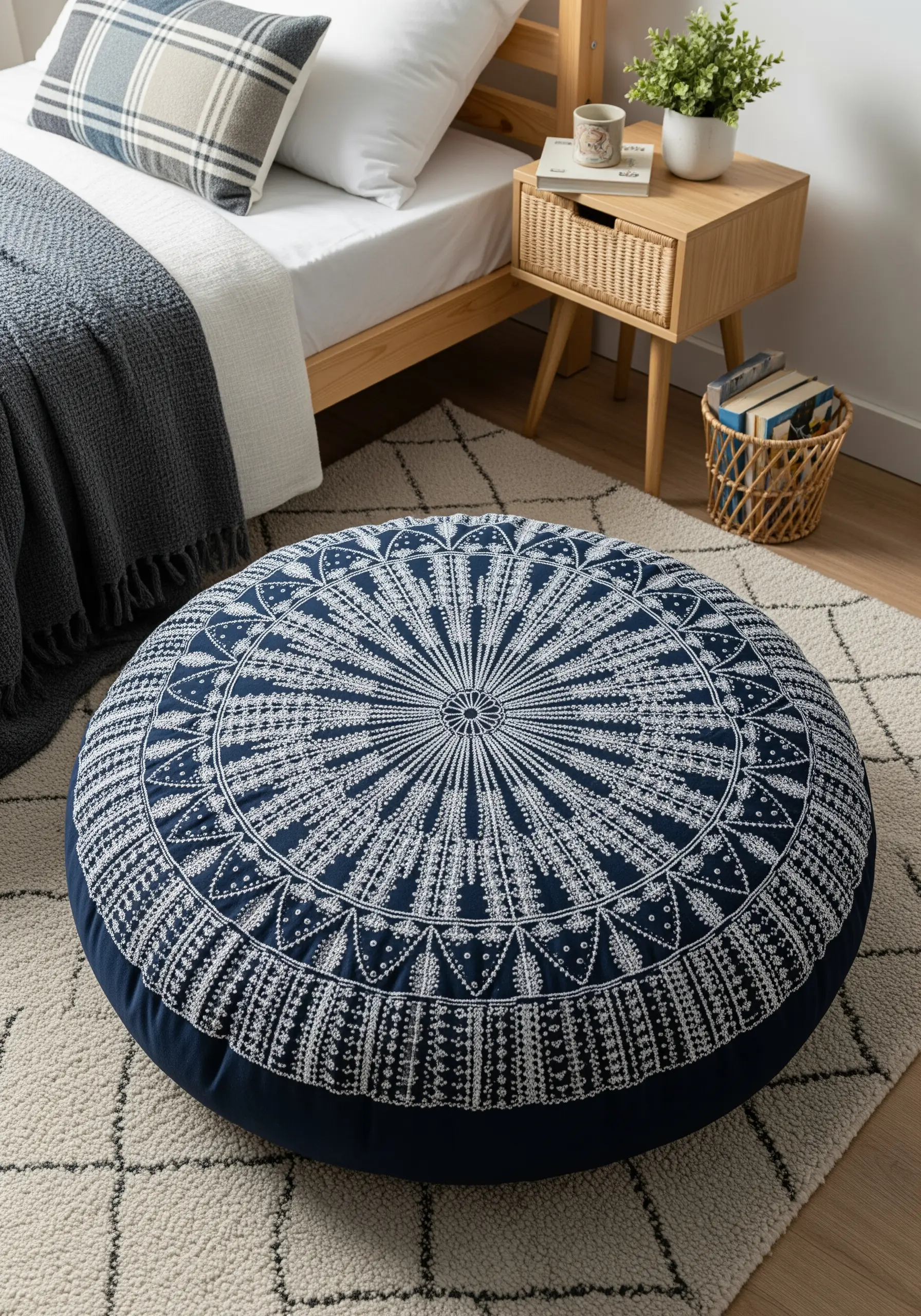
Translate the look of a complex mandala into a manageable hand embroidery project for a floor cushion.
Focus on the radial lines of the design and use a simple, elegant stitch like a whipped backstitch or stem stitch in a contrasting white thread.
You don’t need to fill every section; the negative space is just as important for creating a light, airy feel.
The repetitive motion of stitching the geometric pattern can be incredibly calming, making it a perfect project for creating mandala embroidery wall art or decor.
16. Add Subtle Structure to Sheer Fabrics with Running Stitch
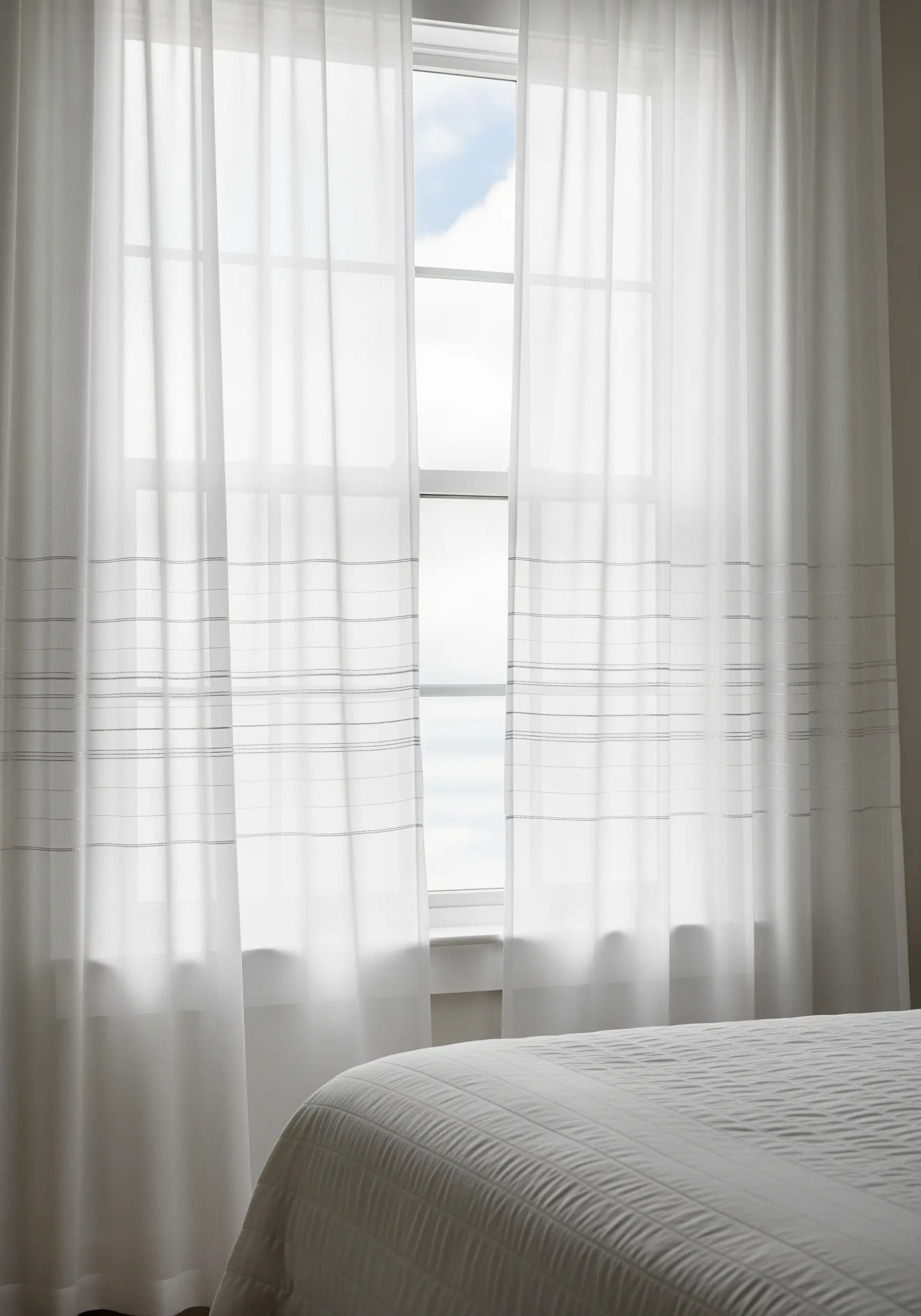
Enhance sheer curtains with a touch of modern, minimal detail.
Instead of a bold pattern, create subtle horizontal bands using a simple running stitch.
Use a thread color that is just a few shades darker than the fabric for a gentle, tone-on-tone effect.
This adds visual interest and a sense of structure without blocking the light or view.
It’s a perfect minimalist embroidery project for a serene bedroom, suggesting the quiet lines of a distant horizon.
17. Make a Statement with Large-Scale Headboard Embroidery
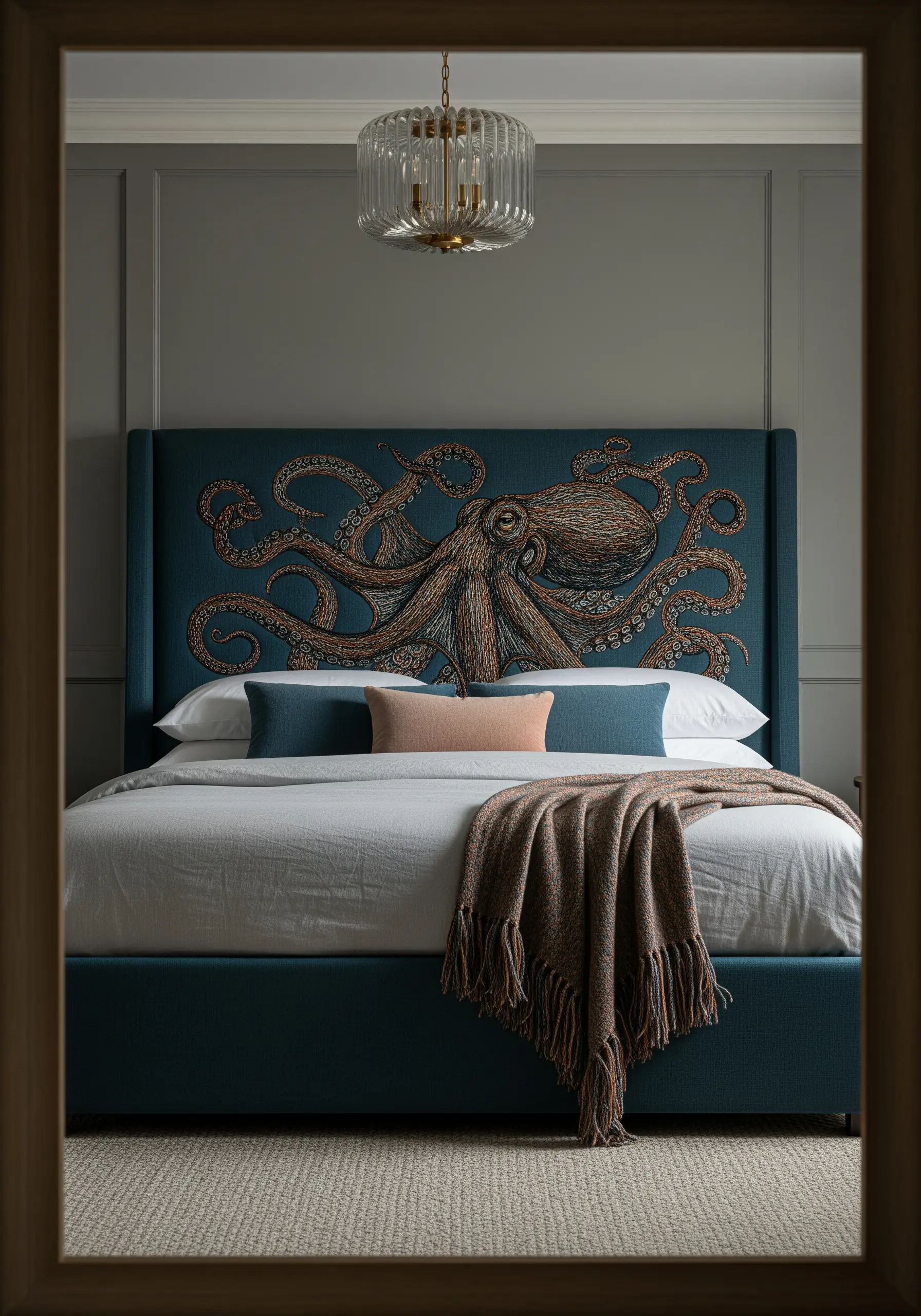
Turn a simple upholstered headboard into a breathtaking focal point with a large-scale embroidered design.
To tackle a project this size, choose a durable stitch that covers ground effectively, such as a chain stitch or split stitch.
Break the octopus design into manageable sections, like one tentacle at a time, to maintain control and stitch quality.
Using a mix of thread colors for shading will give the creature incredible depth and realism, creating one of the most stunning intricate embroidery designs to showcase above your bed.
18. Create Graphic Patterns Using Fishbone Stitch
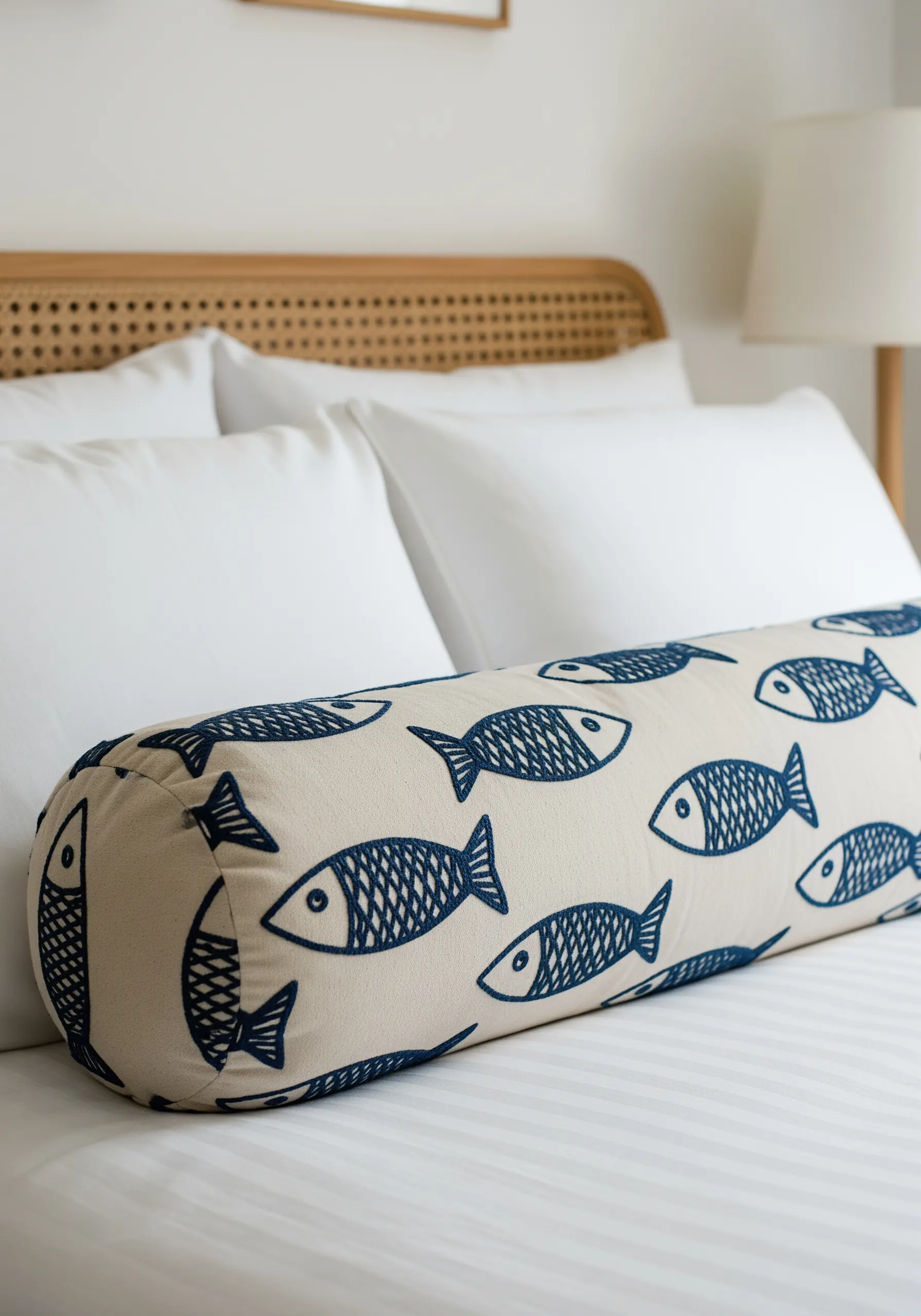
For repeating motifs like this school of fish, the fishbone stitch is a perfect choice.
This stitch creates a central line, like a spine, with angled stitches branching off, naturally forming the body and texture of the fish.
It’s an efficient way to fill small, defined shapes while adding beautiful, uniform texture.
Alternate the direction of the fish on your bolster pillow to create a sense of playful movement and rhythm.
19. Achieve 3D Effects by Couching Rope and Cord
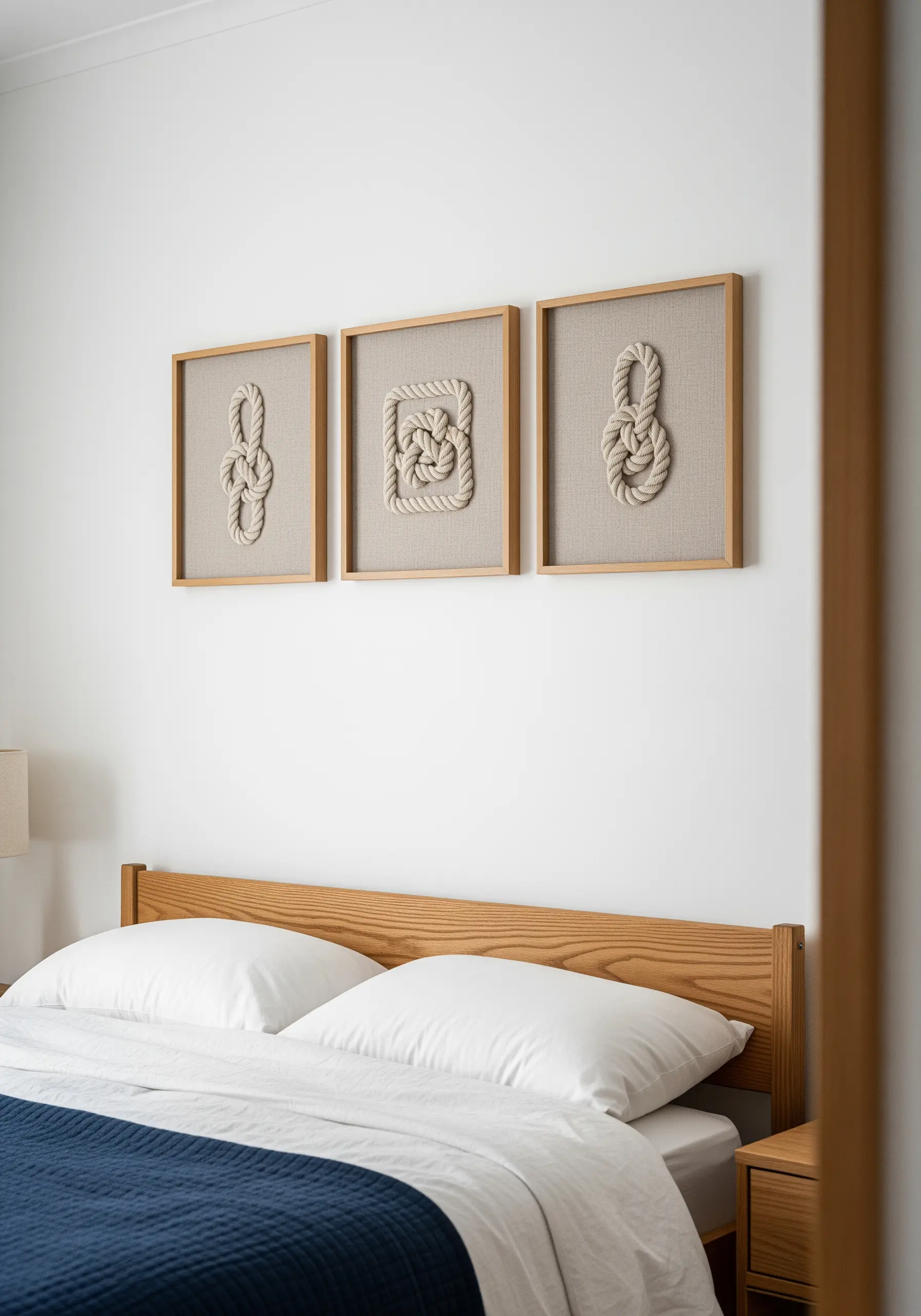
Create striking, sculptural wall art by attaching thick rope to fabric instead of stitching with thread.
This technique, called couching, involves laying the rope on the fabric in your desired shape—in this case, nautical knots—and securing it with small, evenly spaced stitches.
Use a strong thread that matches the rope to make your securing stitches invisible.
This form of modern thread art adds incredible texture and dimension, turning a simple knot into a piece of minimalist sculpture.
20. Outline a Favorite Coastline for a Personal Touch
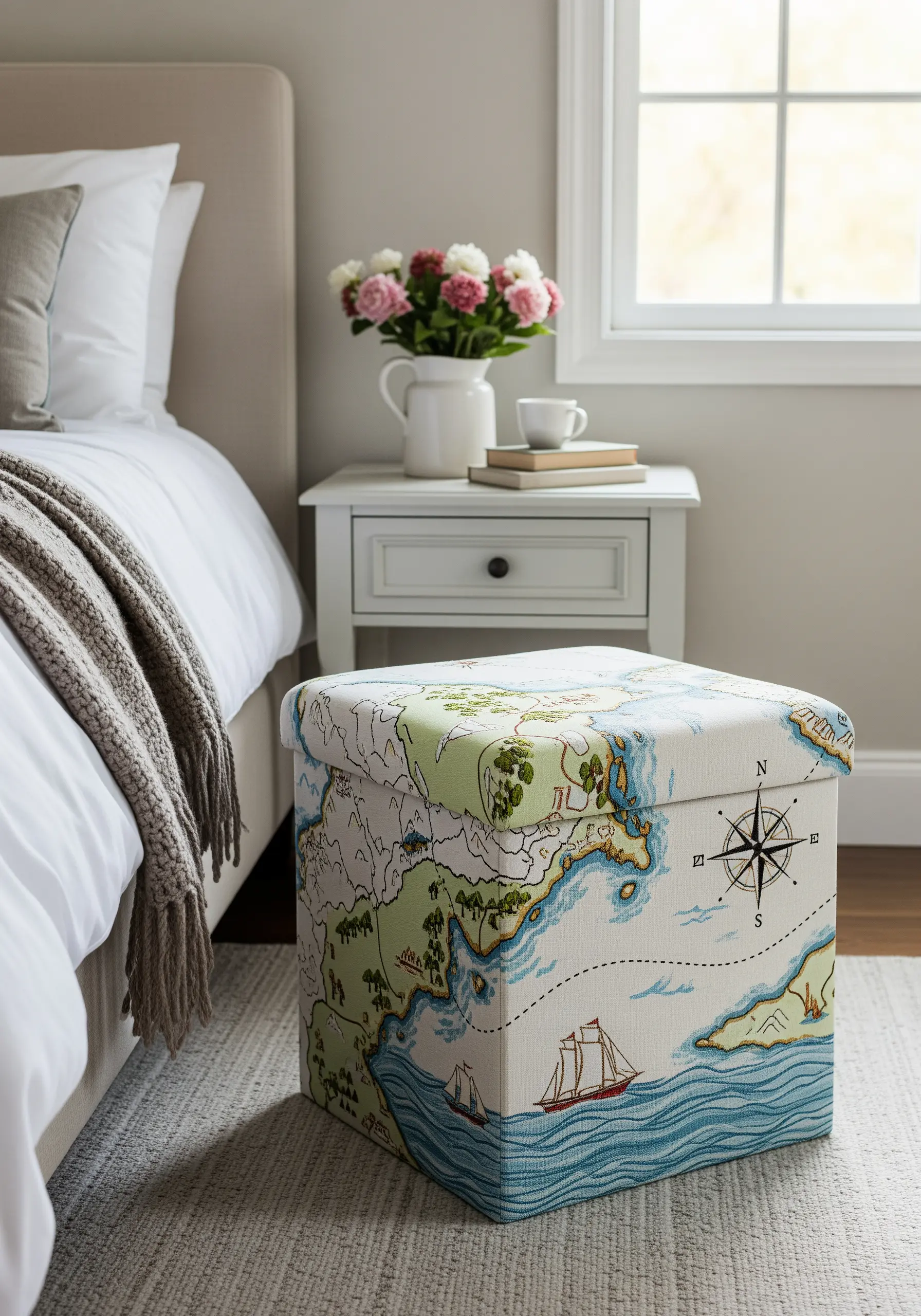
Personalize an ottoman or pillow by embroidering a map of a meaningful coastline.
Transfer a simplified map outline onto plain fabric using a water-soluble pen or transfer paper.
Use a simple backstitch or stem stitch to trace the land and a contrasting color for the water’s edge.
You can add small, iconic details like a compass rose or a sailboat to complete the scene.
This minimal travel-themed embroidery idea turns a simple piece of furniture into a cherished conversation starter.
21. Create a Sense of Movement on a Bed Canopy
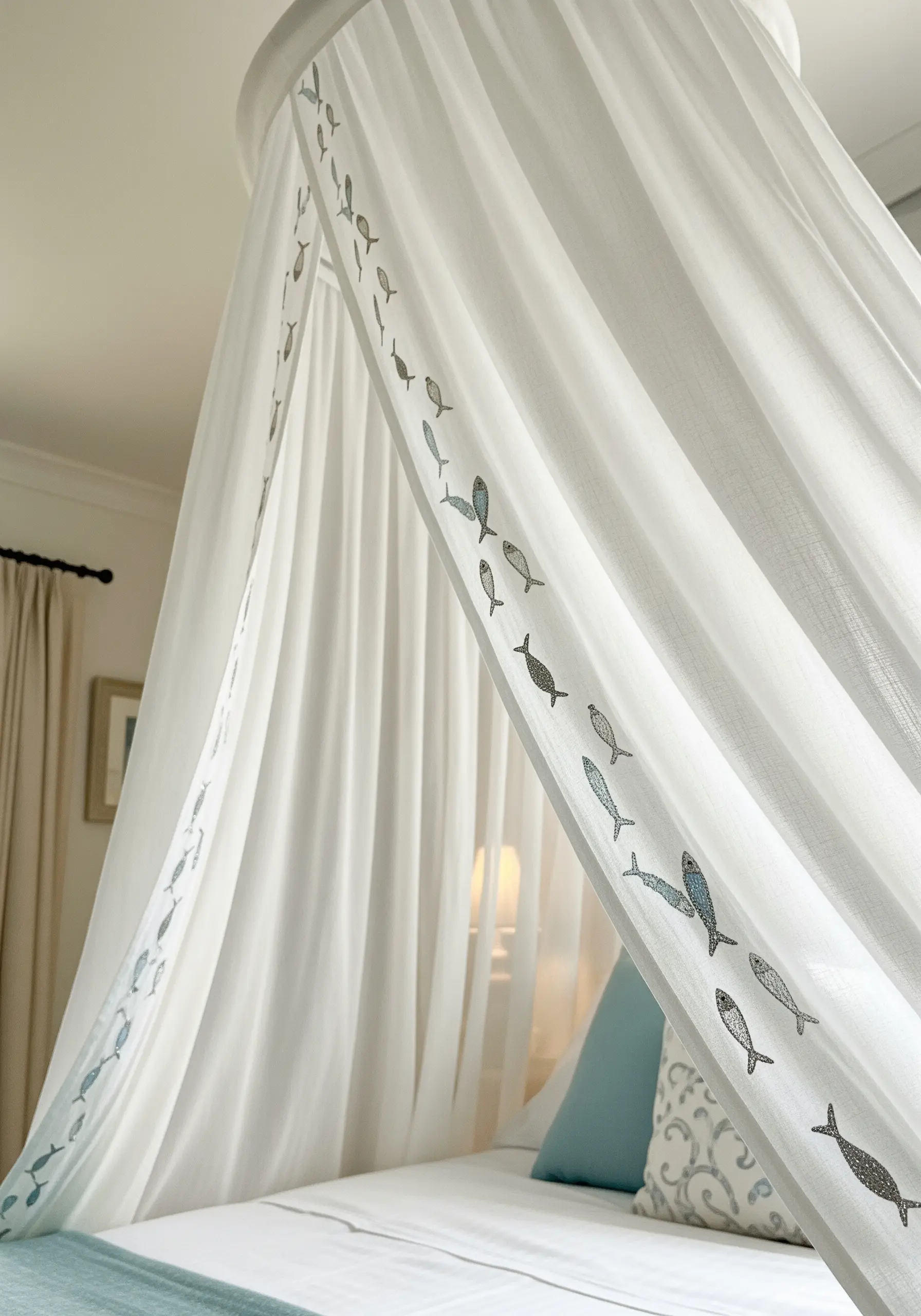
Add a touch of magic to a sheer bed canopy with a flowing stream of embroidered fish.
Stitch a simple fish outline using a split stitch or backstitch, arranging them in a gentle upward curve to create a sense of movement.
Vary the thread colors, blending shimmering silver, soft aqua, and deep blue to mimic the way light catches fish scales underwater.
Stitching on sheer fabric requires a light hand and a stabilizer, but the dreamy, ethereal result is well worth the effort.
22. Use Contrasting Stitches to Build a Dynamic Scene
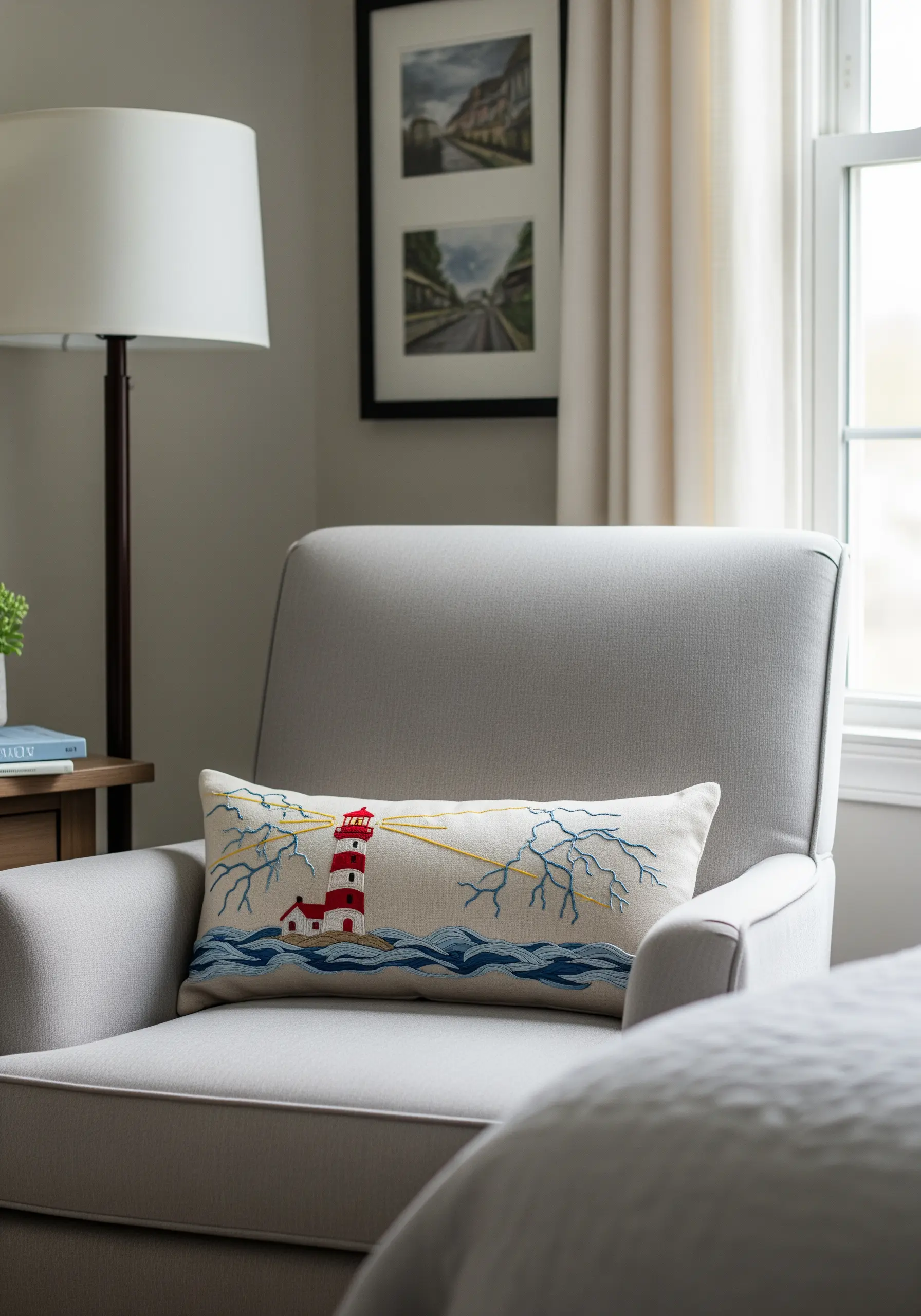
Bring a landscape to life by choosing stitches that reflect the texture of each element.
On this lumbar pillow, use clean, smooth satin stitch for the bold red and white stripes of the lighthouse, creating a solid, man-made feel.
Contrast this with turbulent, looping chain stitches or bullion knots for the crashing waves to evoke motion.
For the sharp, electric energy of the lightning, a jagged whipped backstitch in a bright thread provides the perfect finishing touch.
This deliberate contrast makes the entire composition more engaging and visually dynamic.
23. Create Graphic Bubbles with Metallic Thread
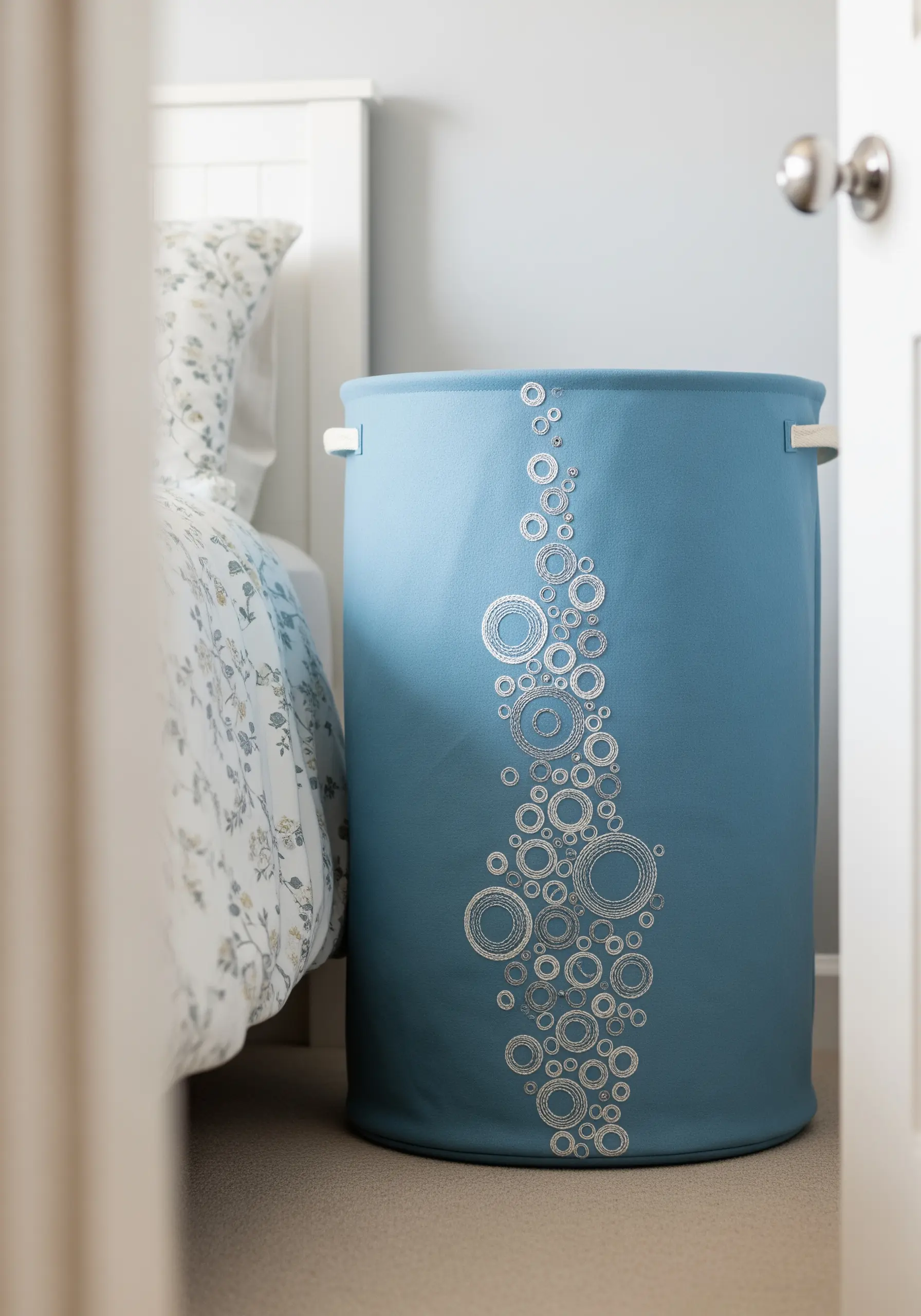
Add a touch of playful elegance to a laundry hamper or storage bin with an abstract bubble motif.
Use a metallic silver or pearlescent white thread to catch the light and suggest the shimmer of real bubbles.
A whipped chain stitch or a heavy satin stitch will create bold, clean circles that stand out against the fabric.
Vary the size and overlapping of the circles to create a dynamic, upward-flowing composition.
Consider using metallic thread wall art projects as inspiration for other decor items.