Perhaps you’ve mastered the satin stitch and your backstitch is perfect, but you feel a creative pull beyond the confines of the fabric hoop. It’s a desire to see your threads take on a new dimension—to float, to sculpt, and to interact with light and space in a way that fabric simply cannot allow.
This is where wire and suspended structures will transform your practice. By replacing fabric with a rigid frame, you are liberating the thread. It’s no longer just an embellishment on a surface; it becomes the surface itself. Tension, geometry, and color take on new roles, allowing you to build art that is both delicate and architectural.
Here, you’ll discover how to think like a sculptor while using the familiar, gentle medium of thread. From minimalist line art to complex geometric forms, these techniques will give you the confidence to let your stitches leave the fabric and take flight.
1. Compose a Geometric Mobile with Color Blocking
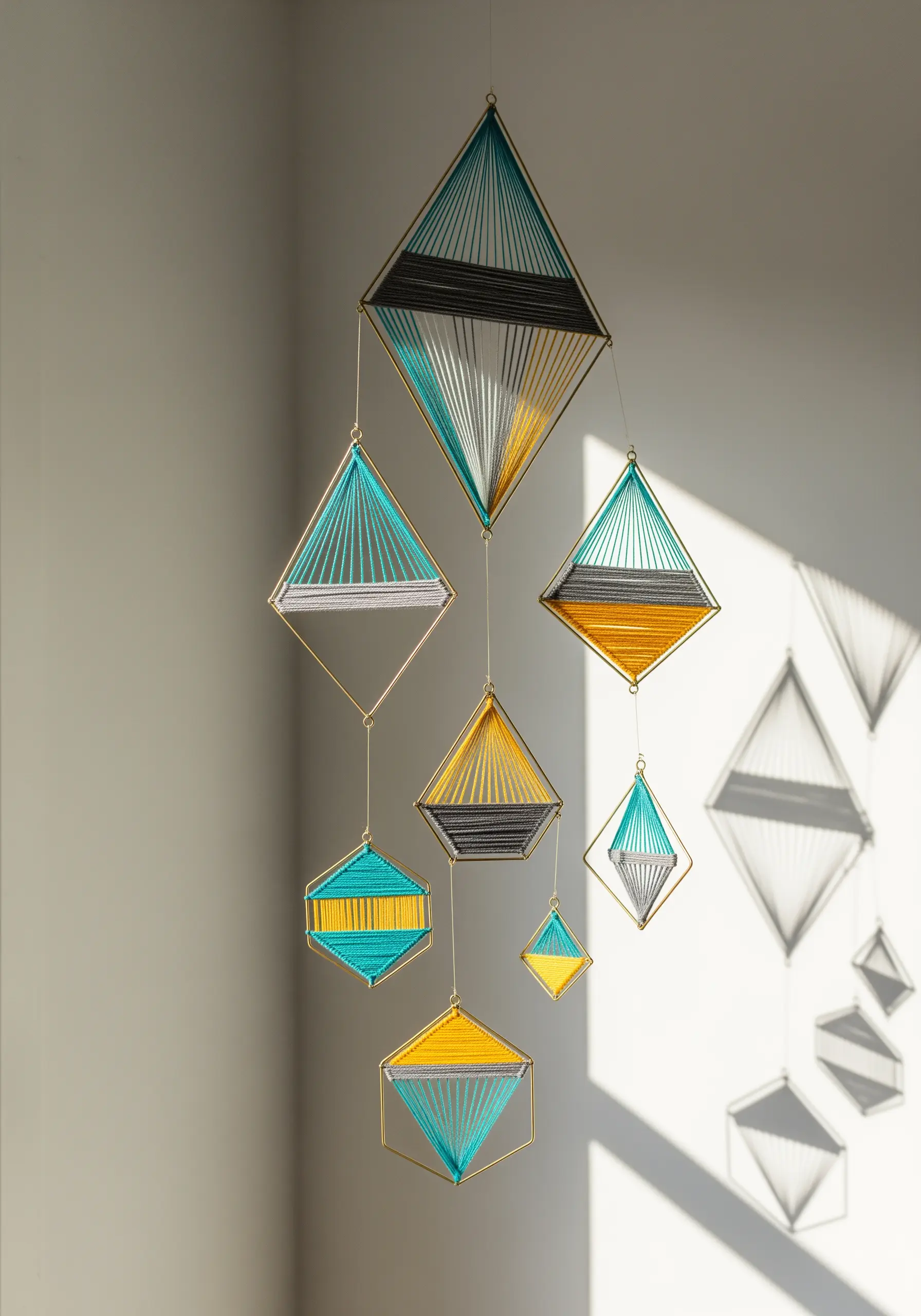
Begin by sourcing or creating several simple brass or steel geometric frames—diamonds, hexagons, and squares work beautifully together.
Arrange them in a cascading layout, considering how each shape will balance the others visually and physically.
Assign a distinct color palette to each frame, using thread to create clean, graphic blocks of color.
To achieve the sharp diagonal lines, wrap your thread from one corner to a series of points along an adjacent side, maintaining consistent tension.
This technique turns simple thread wrapping into a study of form, color, and balance, creating minimalist embroidery wall pieces that move with the slightest breeze.
2. Sculpt an Organic Leaf with Variegated Thread
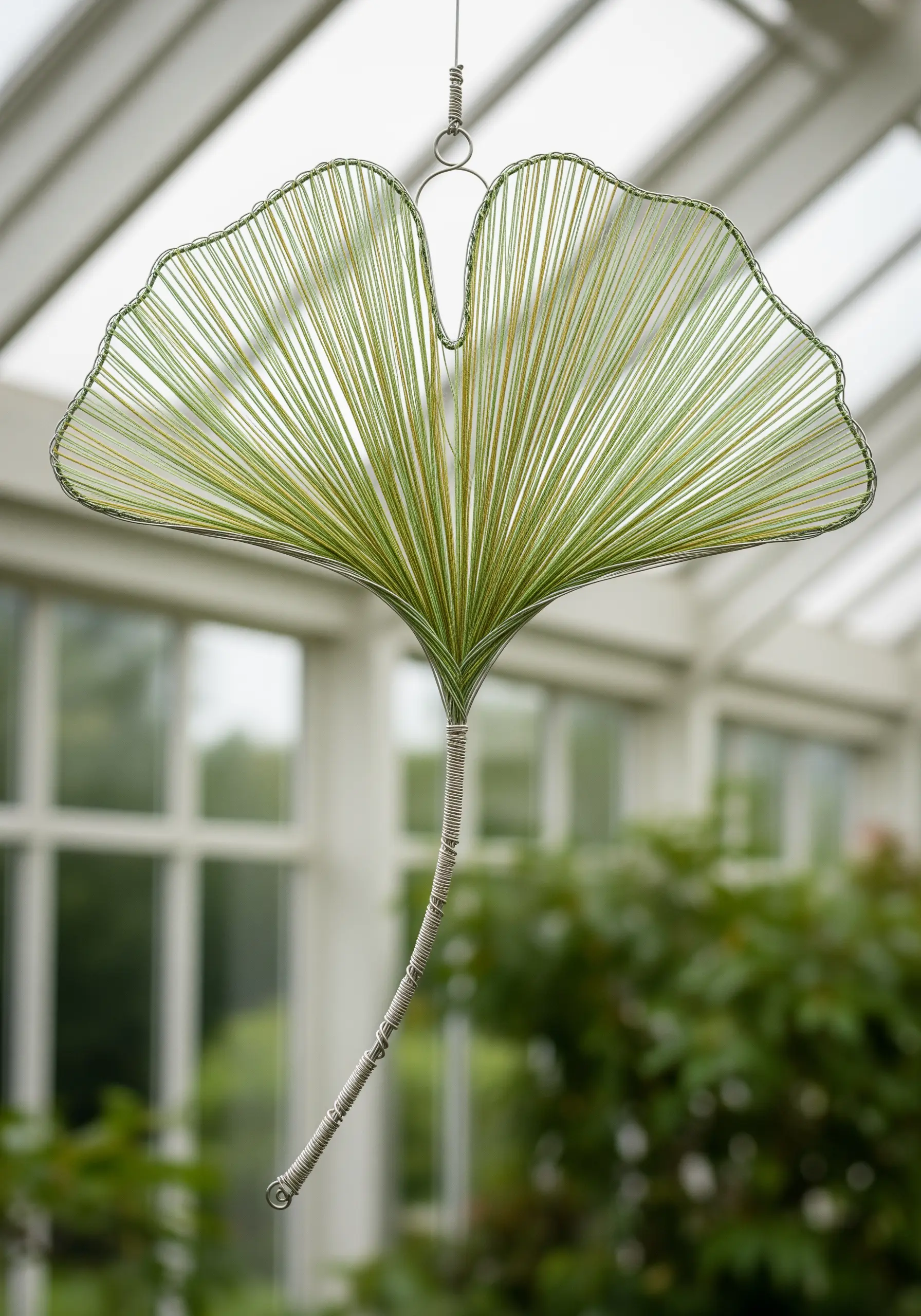
Start by bending a malleable yet sturdy wire (12-16 gauge) into the delicate, fan-like shape of a ginkgo leaf.
Create a thicker stem by tightly wrapping a finer wire around the main stem’s base, which adds stability and a finished look.
Use a variegated green or chartreuse thread to mimic the natural color shifts in a real leaf.
Anchor your thread at the base and string it radially towards the scalloped edge of the wire frame. The subtle color changes in the thread will create depth and realism automatically.
This transforms a simple botanical shape into one of your most elegant nature-calm stitching projects.
3. Map a Celestial Constellation in a Wire Hoop

Use a large metal hoop as your canvas to create an abstract, galaxy-inspired design.
Instead of a predictable pattern, stretch threads between random points on the hoop, crossing them over to build a web of intersecting lines.
Choose metallic threads in gold, silver, and copper to catch the light.
Embellish the intersections with tiny seed beads or flat-backed sequins to represent stars and celestial bodies, securing them with a dab of jewelry glue or a knotted thread.
This method allows you to explore abstract color psychology stitch ideas, creating a piece that feels both cosmic and deeply personal.
4. Weave with Chunky Roving on an Industrial Grid
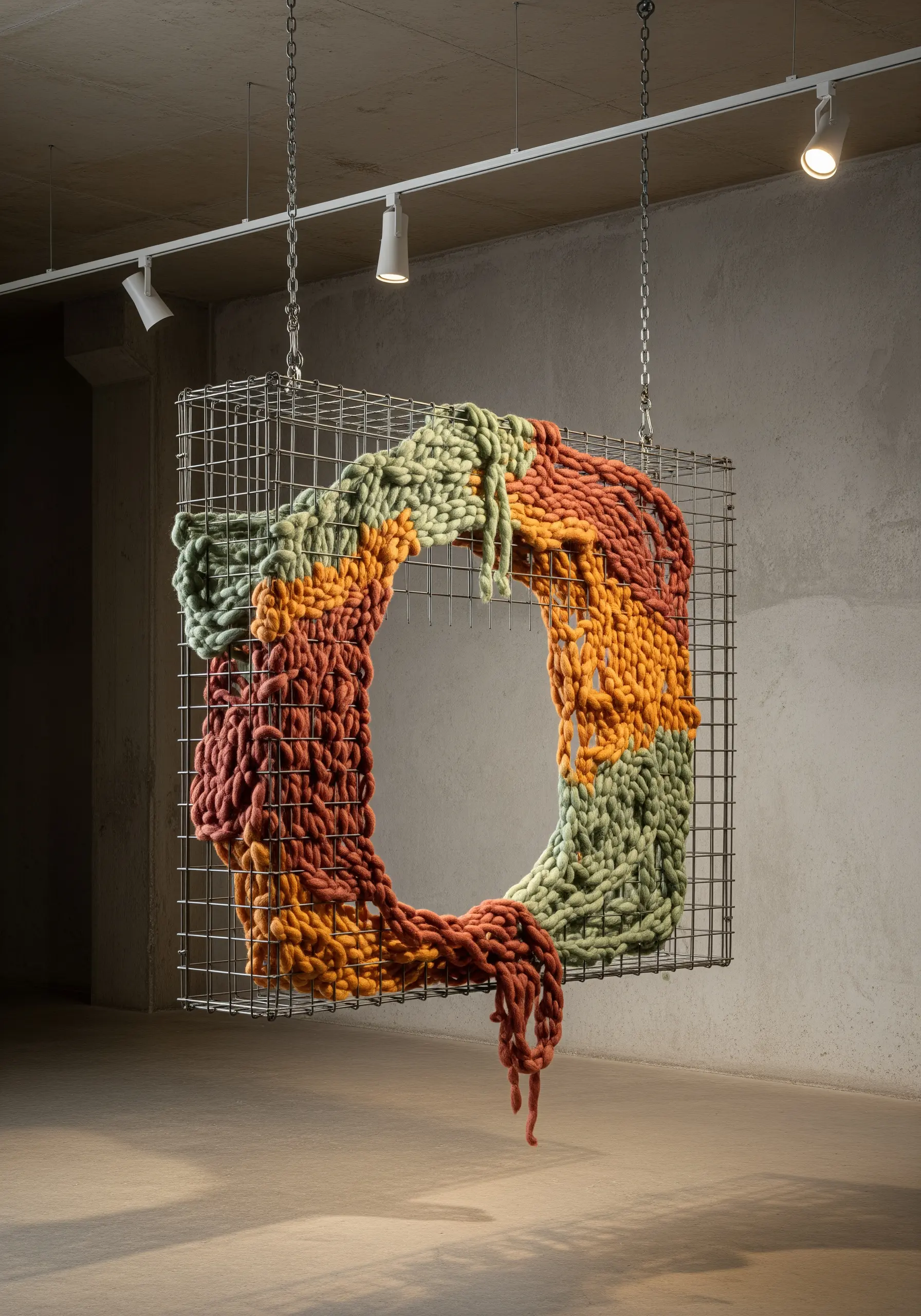
Move beyond delicate thread and embrace the bold texture of chunky wool roving or thick, unspun yarn.
Use a rigid wire mesh grid—available at hardware stores—as an industrial-style loom.
Instead of precise stitches, weave the roving through the grid openings, allowing it to loop, twist, and drape organically.
Vary the thickness and density of your weaving to create an abstract, color-blocked composition with a highly tactile quality.
This technique is perfect for creating stunning fiber art installations that command attention and invite touch.
5. Engineer a Gradient Spiral in Three Dimensions
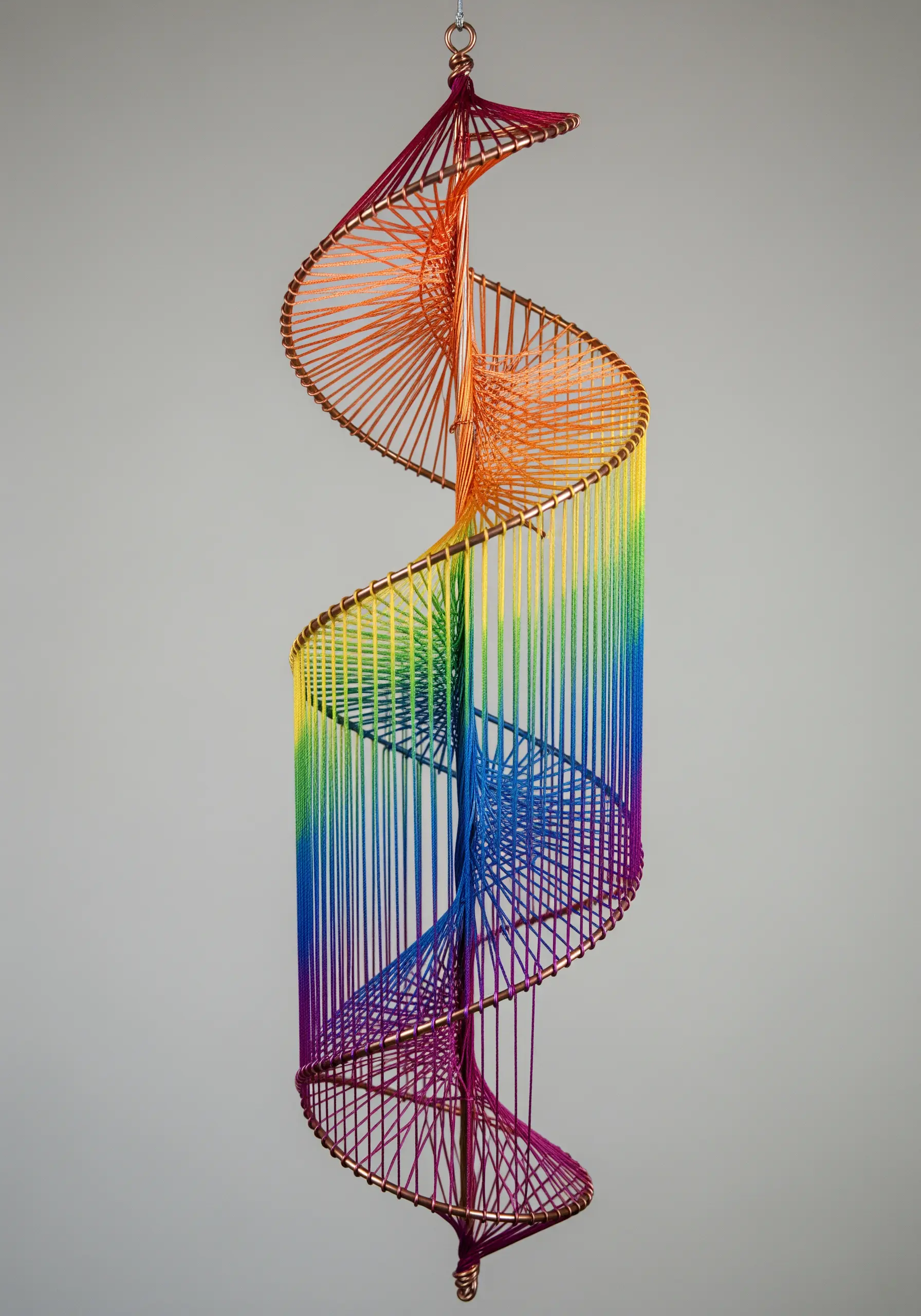
For this dynamic piece, you’ll need a pre-made spiral wire frame or the patience to shape one from heavy-gauge wire.
The key to the smooth color transition is planning. Mentally divide the spiral into sections and assign a color to each one.
Start wrapping your first color, ensuring each strand runs parallel to the last, creating a solid plane of thread.
As you move into the next color section, blend the transition by alternating the two thread colors for a few rows. This creates one of those magical contemporary rainbow blend stitches that flow seamlessly.
6. Capture Dynamic Motion with a Sculpted Wave
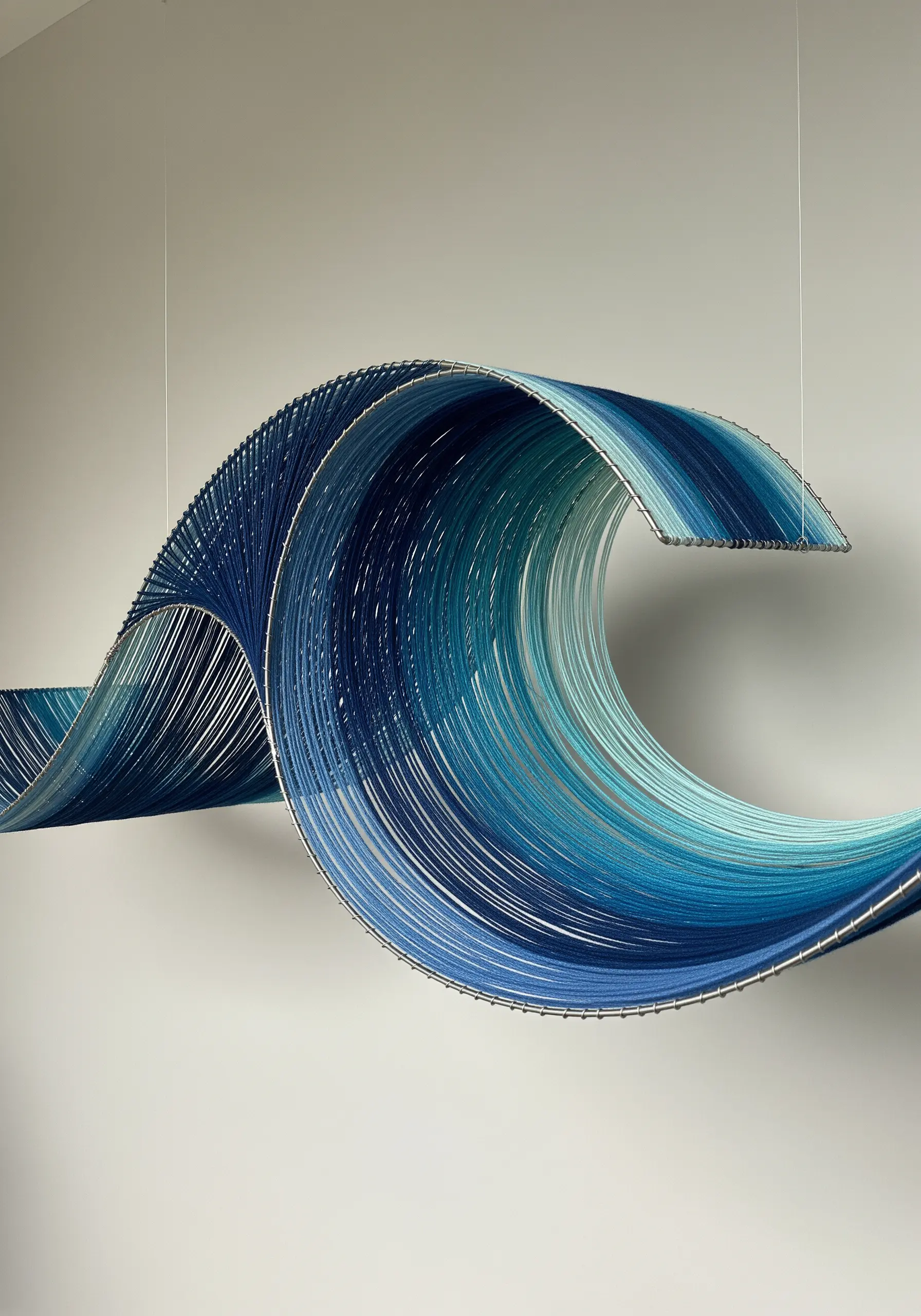
Shape a long piece of rigid wire or a thin metal rod into a fluid, cresting wave form.
To create the anchor points for your thread, either drill tiny, evenly spaced holes along the metal or meticulously wrap a secondary wire to create small loops.
Use several shades of blue thread, from deep navy to pale aqua, to create a realistic oceanic gradient.
String the threads tautly across the frame’s curve. The tension is what defines the sculpture’s form, turning simple lines into abstract thread waves swirls that feel alive.
7. Construct a Wire Tree of Life in a Hoop
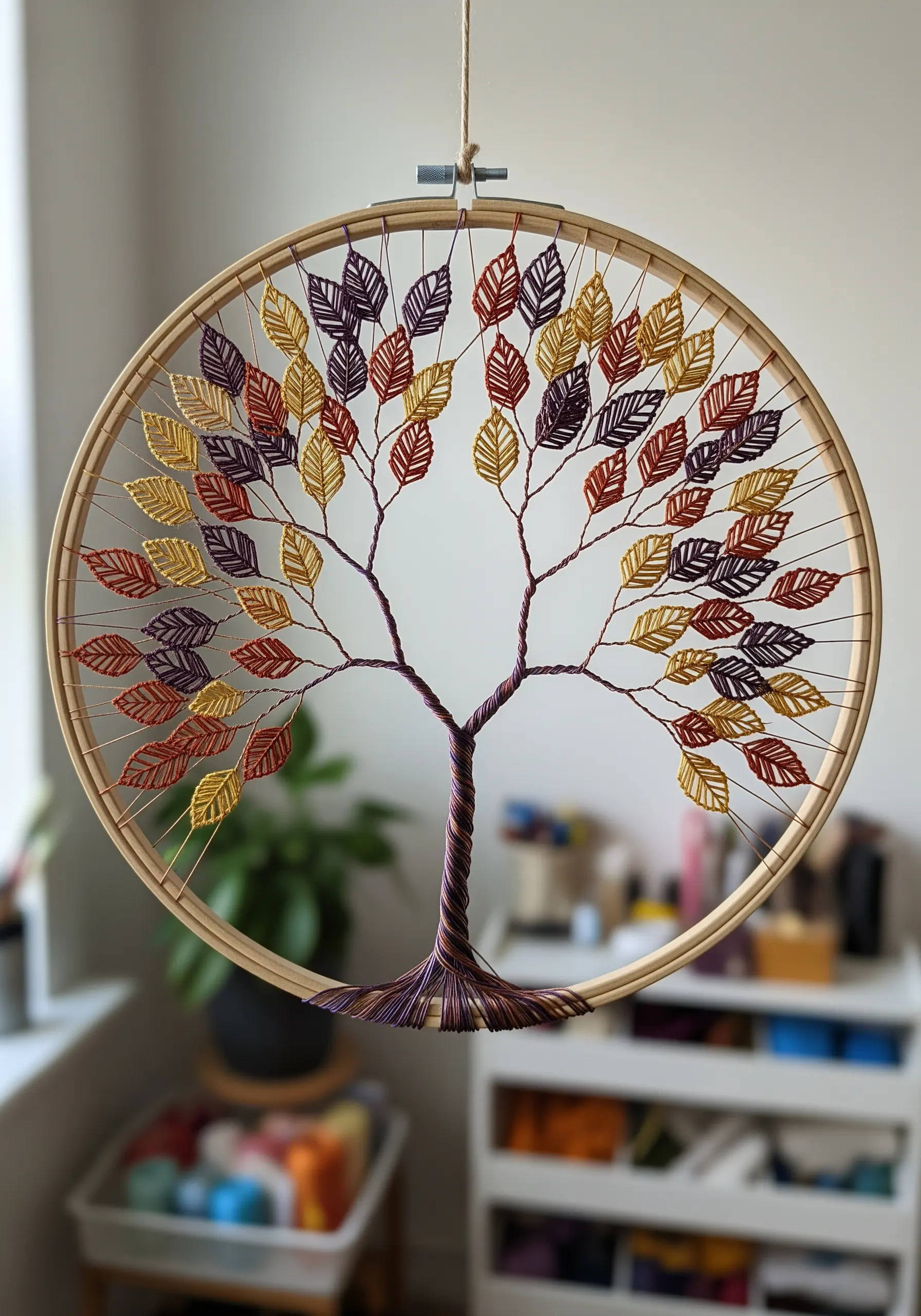
Start with a standard wooden embroidery hoop as your circular frame.
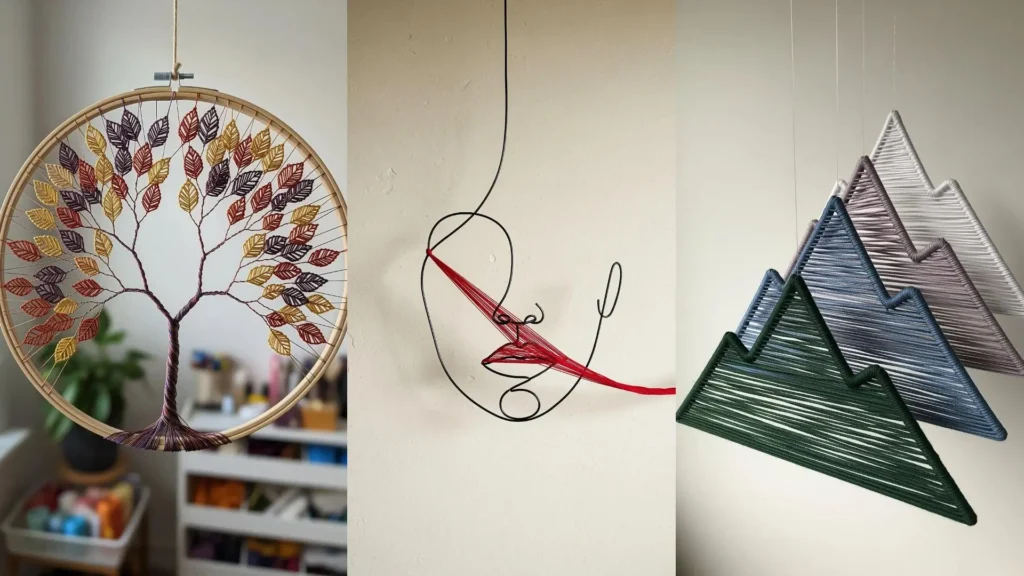
Create the tree’s trunk and roots by twisting several strands of medium-gauge, color-coated wire together. Secure the roots to the bottom of the hoop and fan the branches out toward the top and sides.
Shape smaller wires into individual leaf frames, attaching them to the ends of the branches.
Fill in each leaf by wrapping embroidery floss back and forth within the small wire frame. Using autumnal earth-tone patterns gives the piece a warm, seasonal feel.
8. Design an Architectural Grid Installation
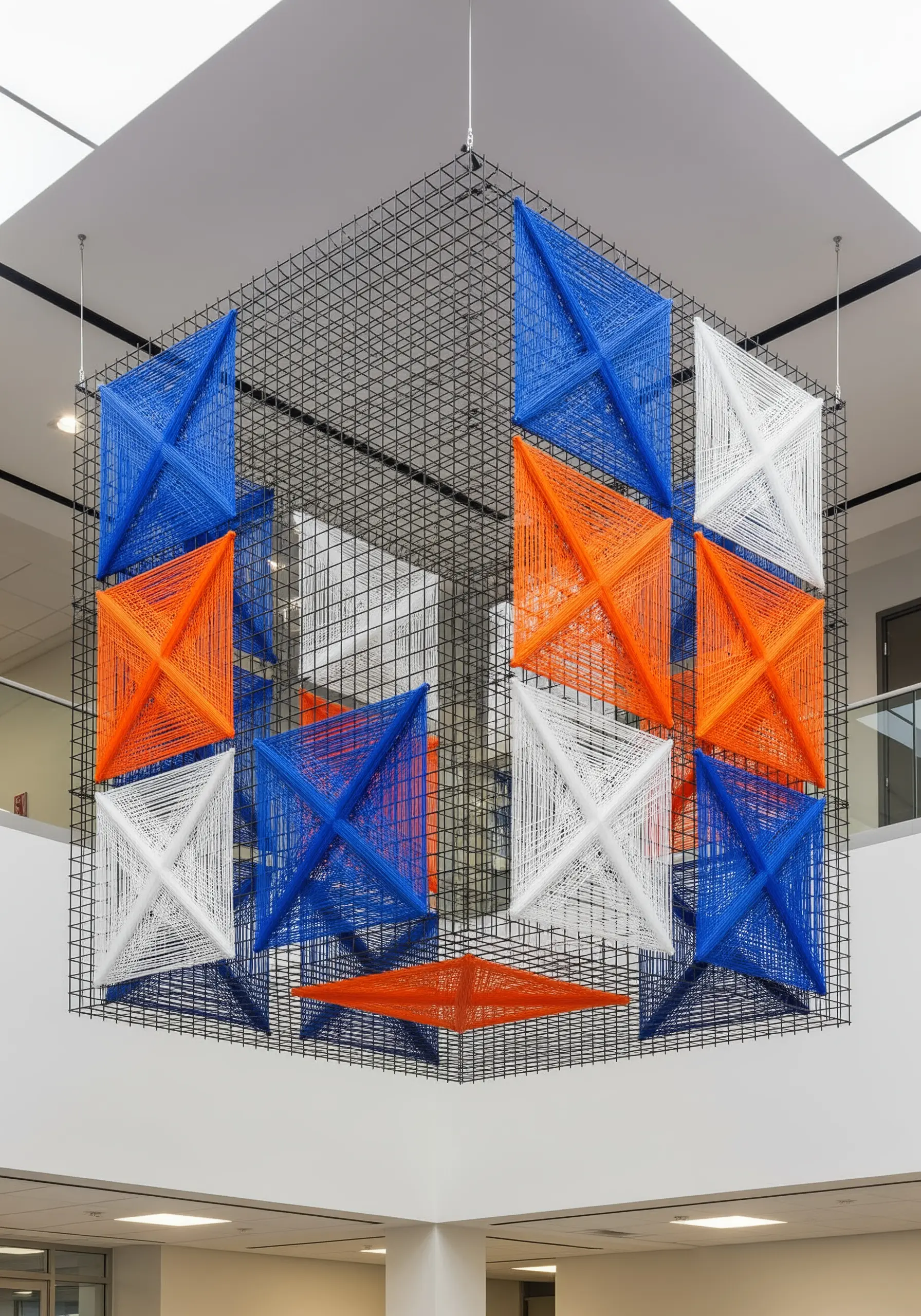
For a large-scale statement piece, construct a cube or rectangular prism from wire mesh panels, secured at the edges with zip ties or wire.
Visually divide the interior space into smaller cubic or pyramid sections. Use brightly colored, high-contrast yarn or cord to connect various points within the grid.
Stretch the yarn tautly to create sharp, geometric shapes that intersect and overlap, playing with perspective and negative space.
This method transforms simple stringing into one of the most impactful architectural string art designs, ideal for a modern, open space.
9. Layer Mountain Silhouettes for Atmospheric Depth
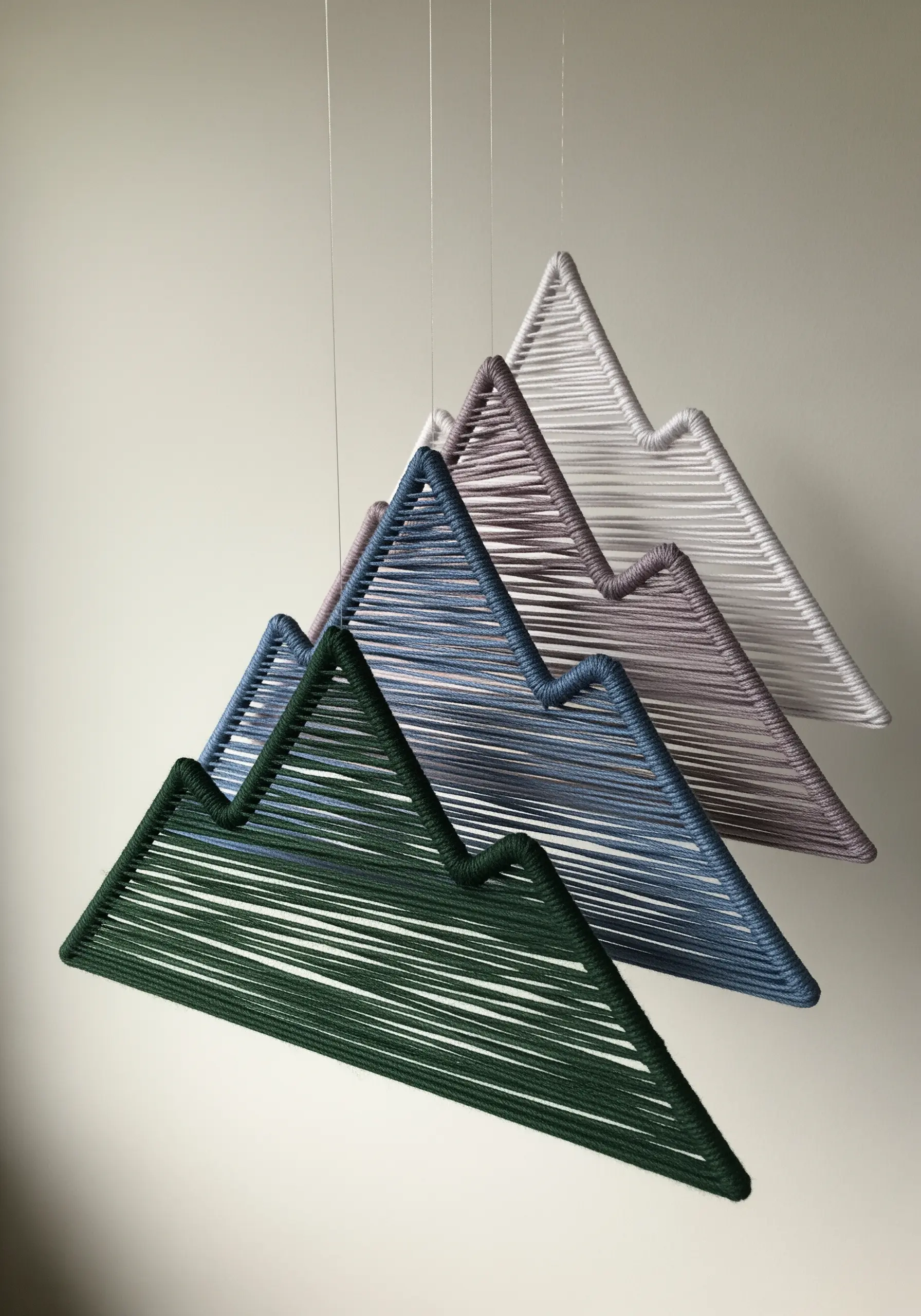
Create the illusion of a mountain range by crafting several individual mountain-shaped wire frames.
Wrap each frame in a different color of yarn or thread, using darker shades for the foreground mountains and lighter, muted tones for those in the distance.
Suspend the frames one behind the other, with slight spacing in between. This layering technique creates a powerful sense of perspective and depth.
It’s a simple way to build immersive string art landscape scenes that feel peaceful and expansive.
10. Illuminate a Polyhedron with Metallic Thread
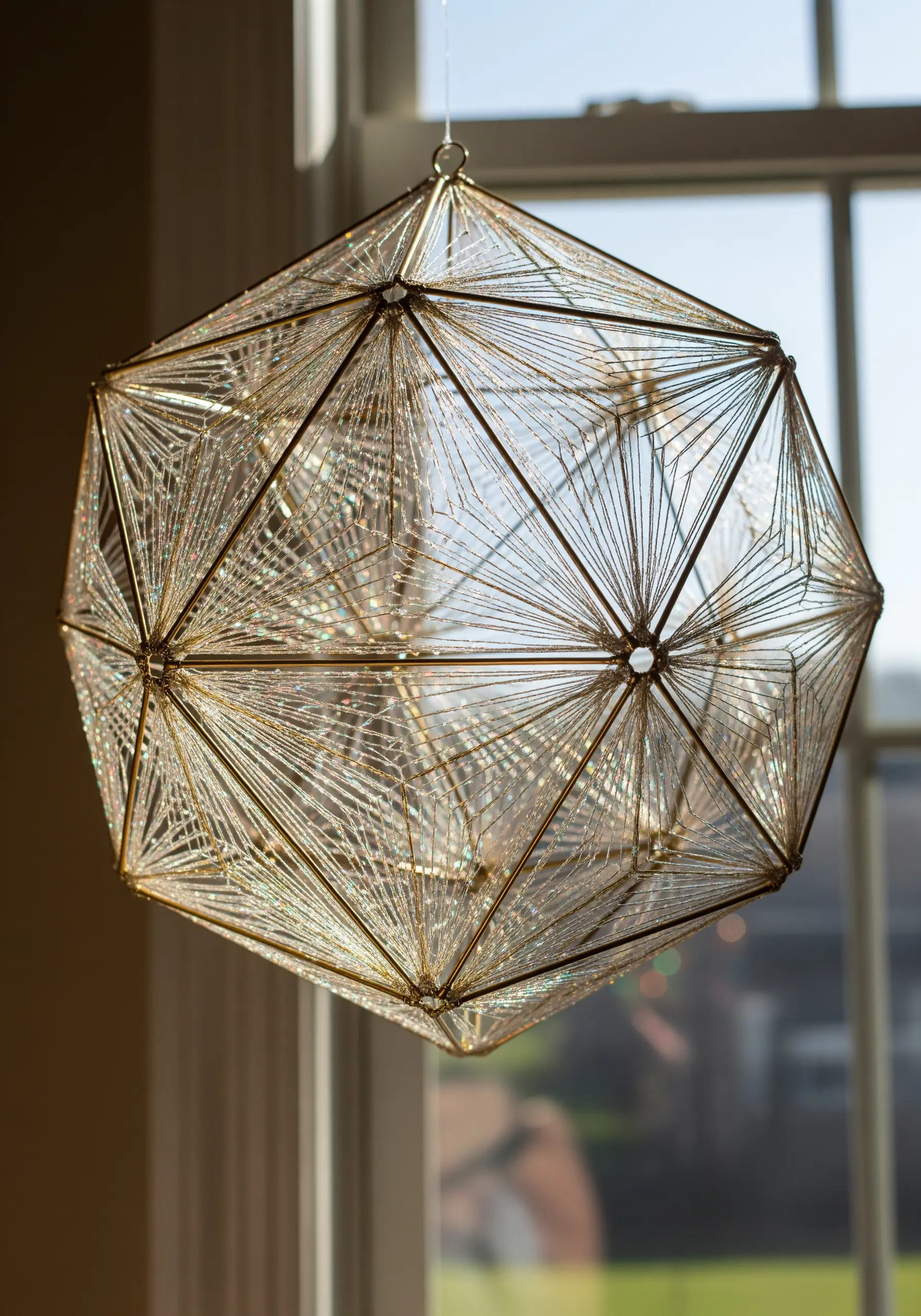
Construct or purchase a geometric polyhedron frame, such as an icosahedron, made from brass or copper tubing for a warm, elegant finish.
Choose a fine, glitter-infused or metallic thread that will interact beautifully with light.
Wrap the thread across the open faces of the shape, connecting opposite edges and vertices to create intricate, intersecting planes of light.
When hung near a window, this piece becomes a dynamic light catcher, making it one of the most dazzling metallic thread wall art projects you can create.
11. Weave Natural Fibers into Repurposed Wire Forms
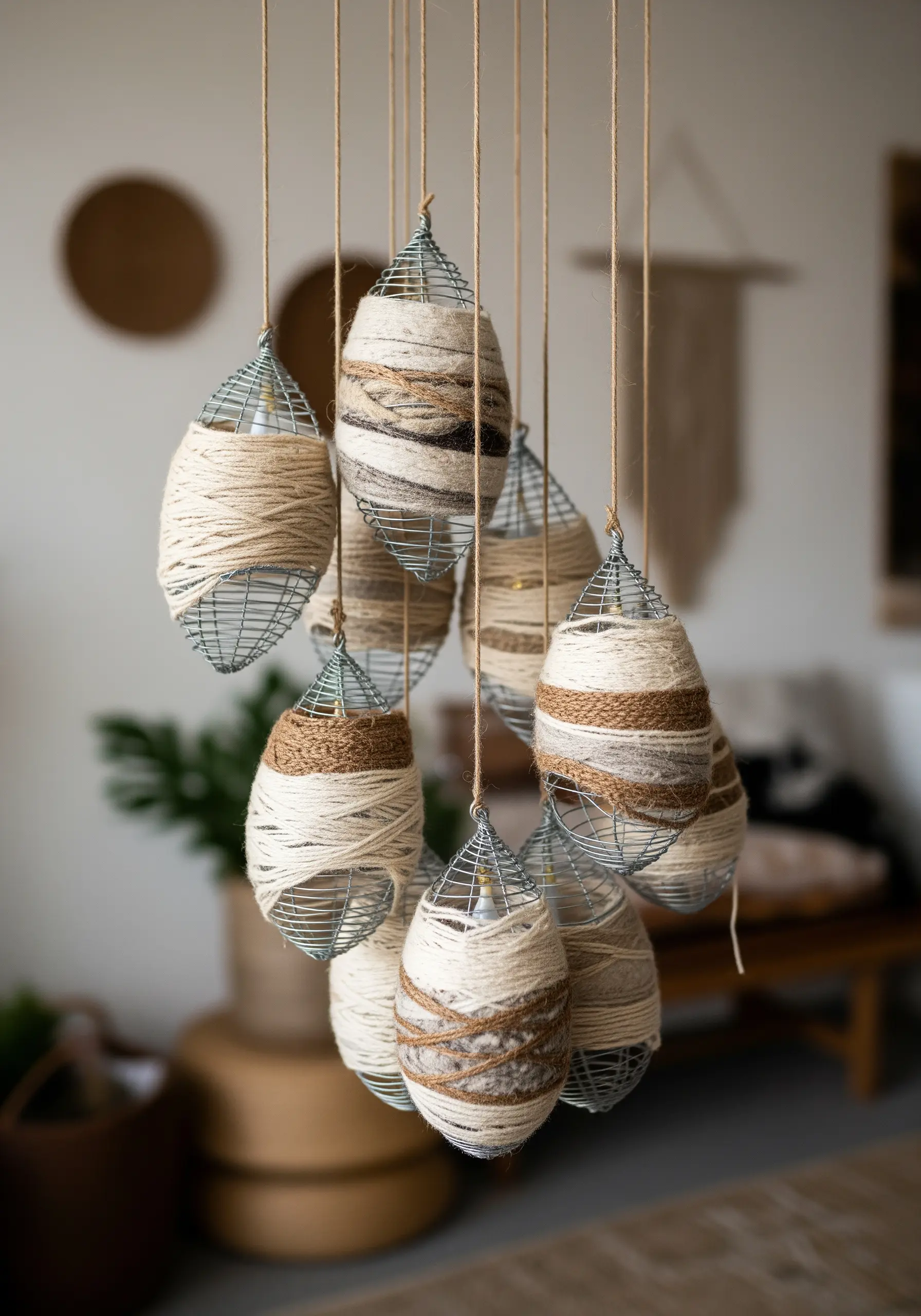
Look for interesting wire forms you can repurpose, like small wire mesh baskets or bulb cages.
Use a variety of natural, textural yarns—such as jute, wool, and thick cotton—in a neutral color palette.
Wrap the yarns around the wire cages in organic, layered bands. Don’t aim for perfection; the beauty lies in the varied textures and thicknesses.
Group several of these woven pods together to create a hanging mobile. This is an ideal way to start experimenting with cozy mixed-fiber projects that feel rustic and calming.
12. Accent a Wire Line Drawing with a Pop of Color
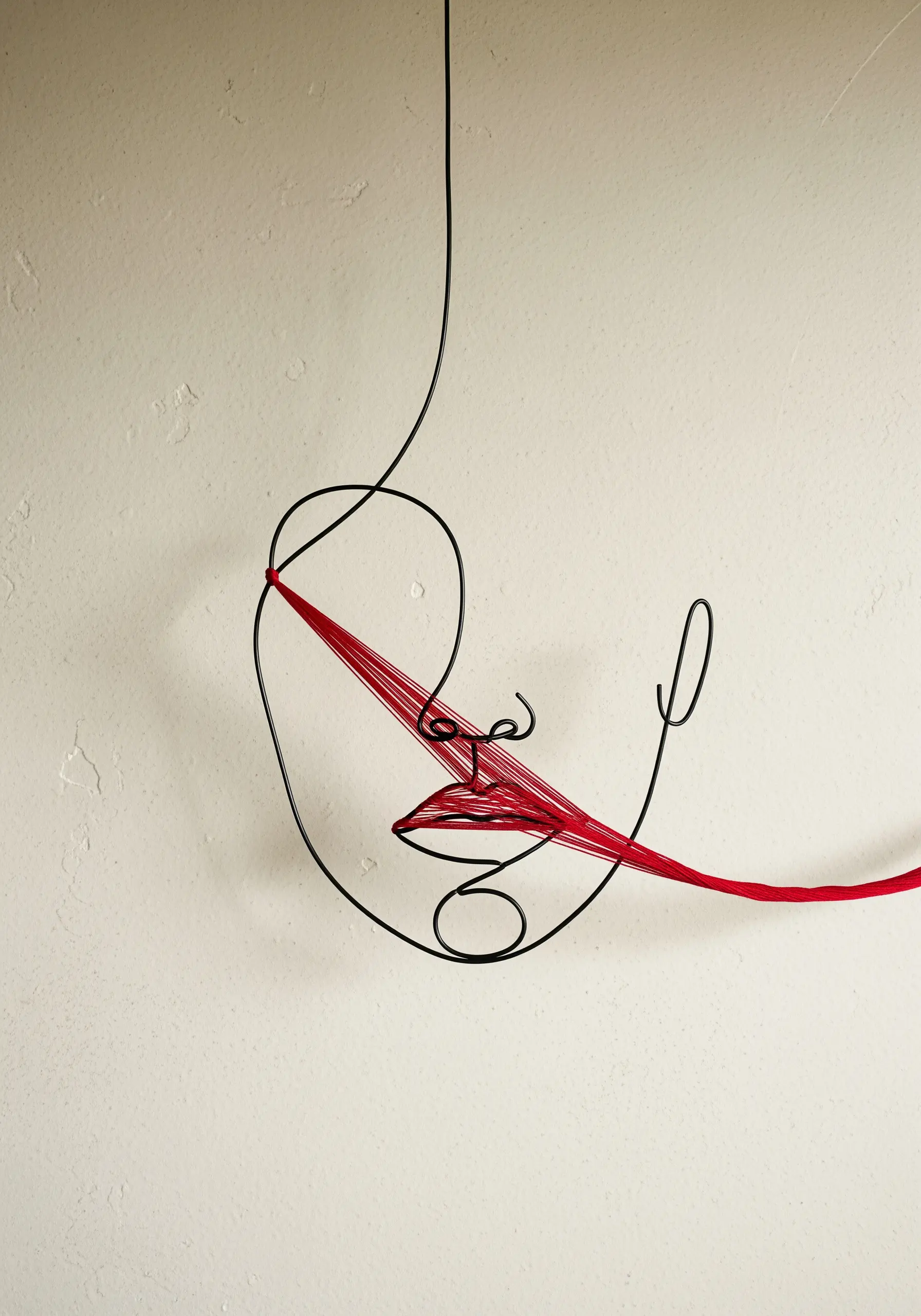
Bend a single piece of black-coated wire into a continuous line drawing, such as a face or a simple object.
Identify one key area of your design to highlight—the lips of a face, for instance.
Use a single, vibrant color of thread to fill only that specific area, stringing it back and forth between two points of the wire frame.
This minimalist approach draws the eye immediately, turning the thread into a focal point. It’s a modern way to create single-line face profiles with powerful graphic impact.
13. Create a Radiant Sunburst from a Central Ring
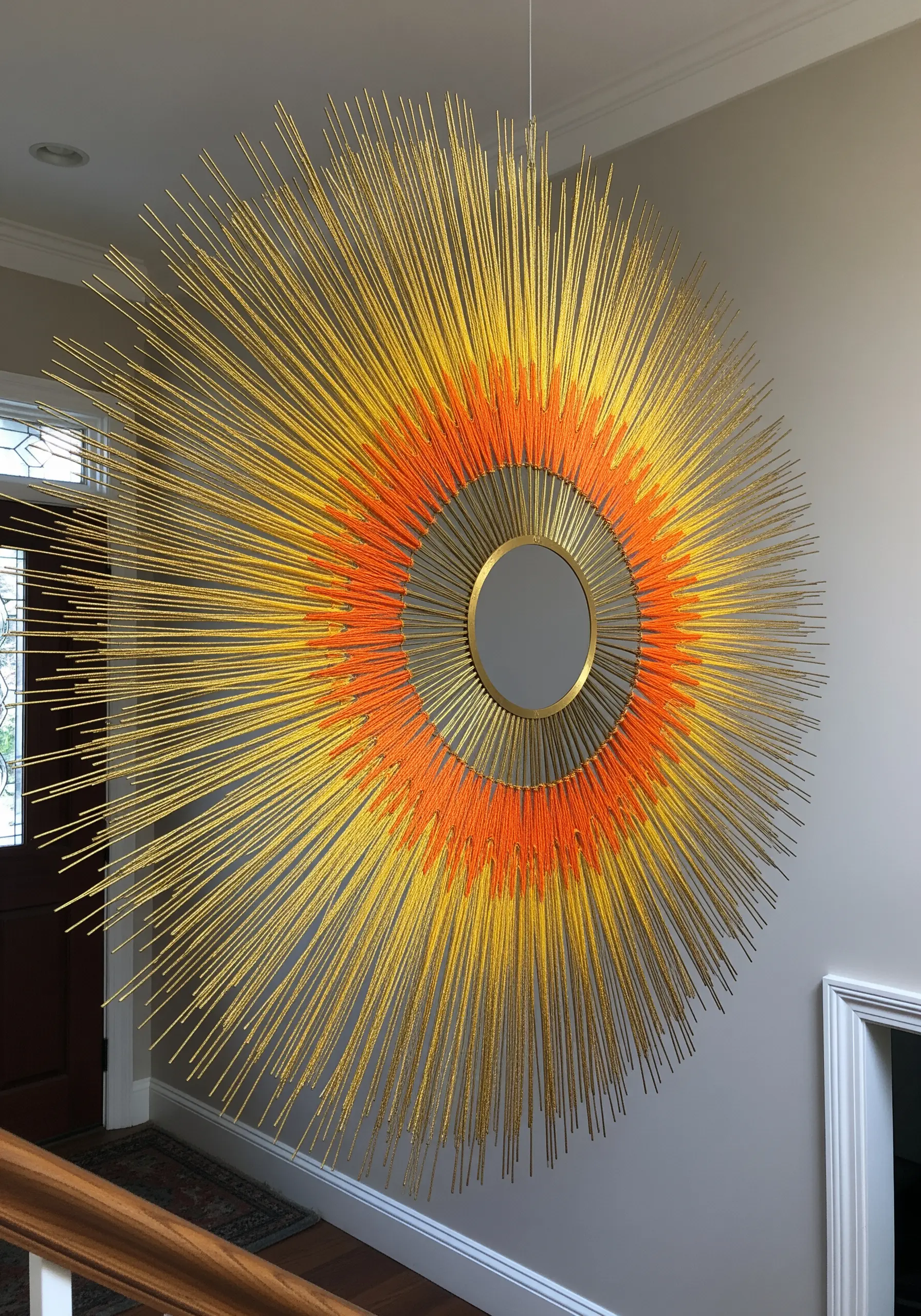
Start with a central anchor point, such as a small mirror, a metal ring, or a wooden hoop.
For the radiating spokes, use long, rigid metal rods or wooden dowels, securing them to the back of your central ring.
Wrap brightly colored yarn around the spokes, starting from the center and working your way outwards.
Create a dynamic effect by alternating colors in concentric circles or creating a sawtooth pattern where the colors meet. These vibrant yarn wall art creations make an undeniable statement.
14. Craft Floating Typography with Thread and Shadow
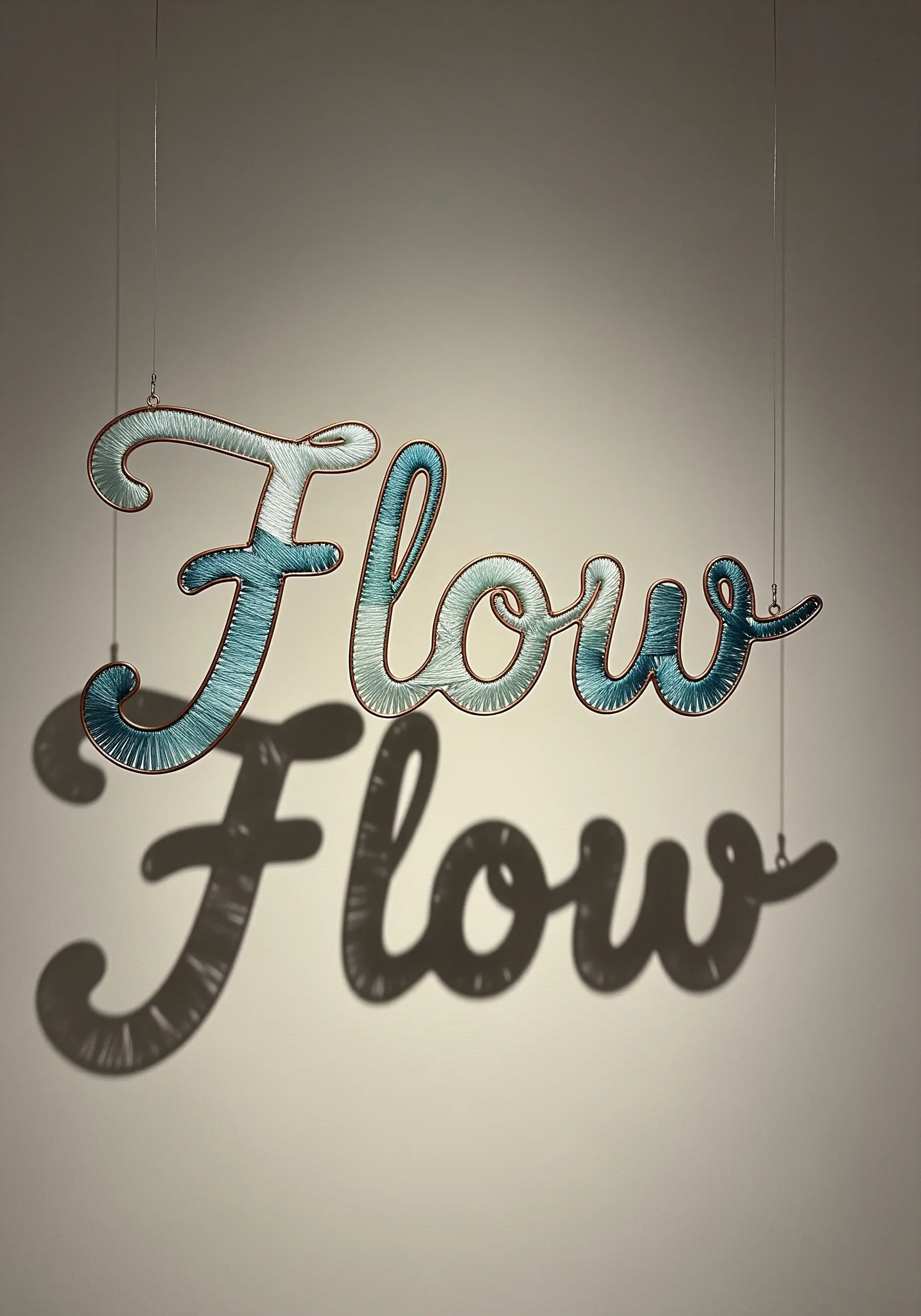
Carefully bend copper or steel wire into a cursive word or a simple phrase.
Use a single color or a subtle gradient of embroidery floss to meticulously wrap the thread from the top edge of the wire letters to the bottom edge.
The tightly strung vertical threads create a solid, filled-in effect that gives the wire form substance and color.
When suspended and lit from the front, the piece casts a dramatic shadow, doubling its presence. This is a beautiful way to craft inspirational quote string art designs that literally float.
15. Emphasize Structure with Monochromatic Lacing
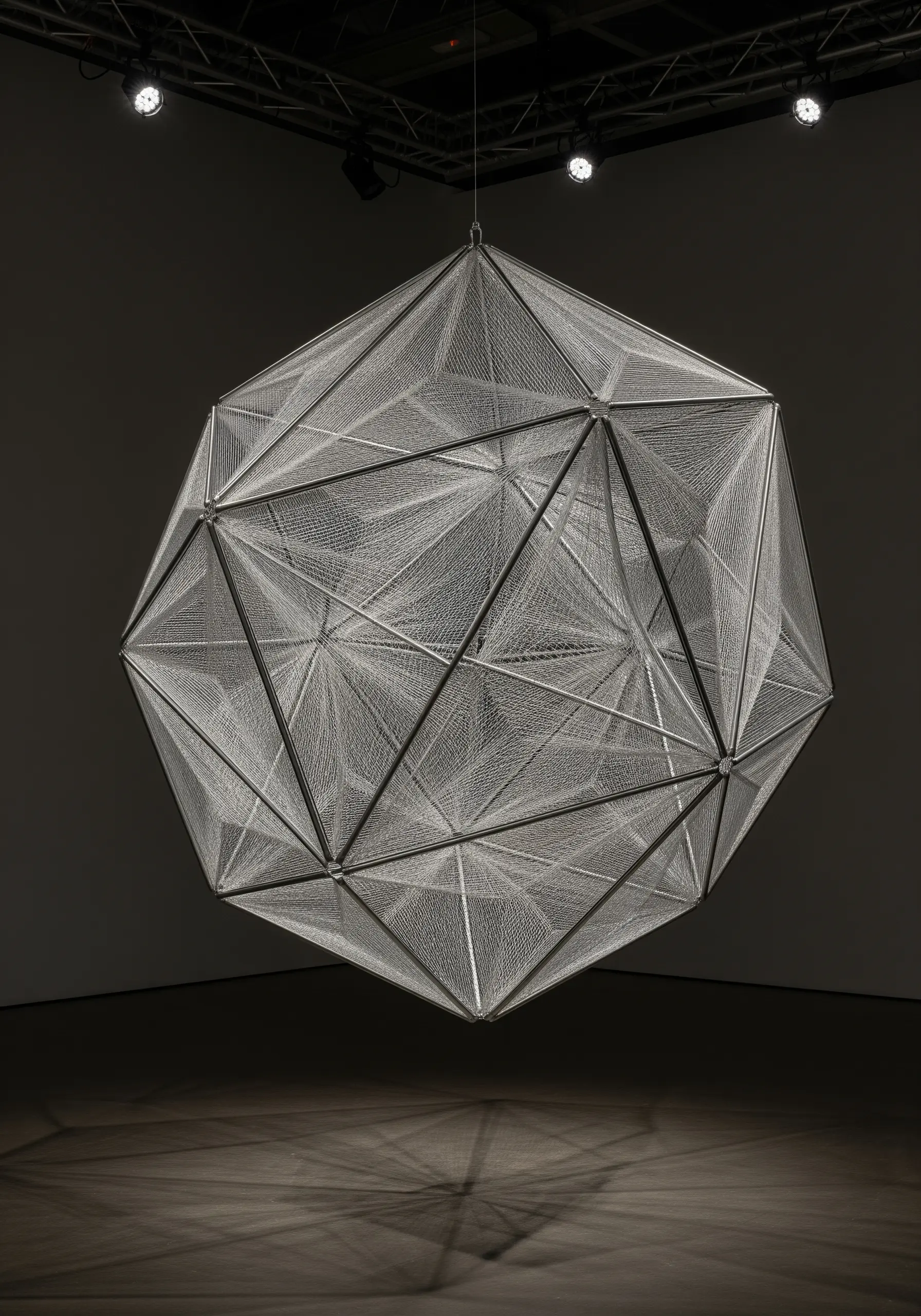
For a highly complex geometric frame, resist the urge to use multiple colors. Instead, choose a single, neutral-colored thread, like white, grey, or black.
By using only one color, you shift the viewer’s focus away from the palette and onto the intricate structure of the frame itself.
The fine threads create translucent planes that catch and filter light, revealing the geometry in a subtle, sophisticated way.
This approach elevates thread art to feel like architectural drafting, perfect for modern grid dot stitch concepts.
16. Build an Organic Nest with Mixed Fibers
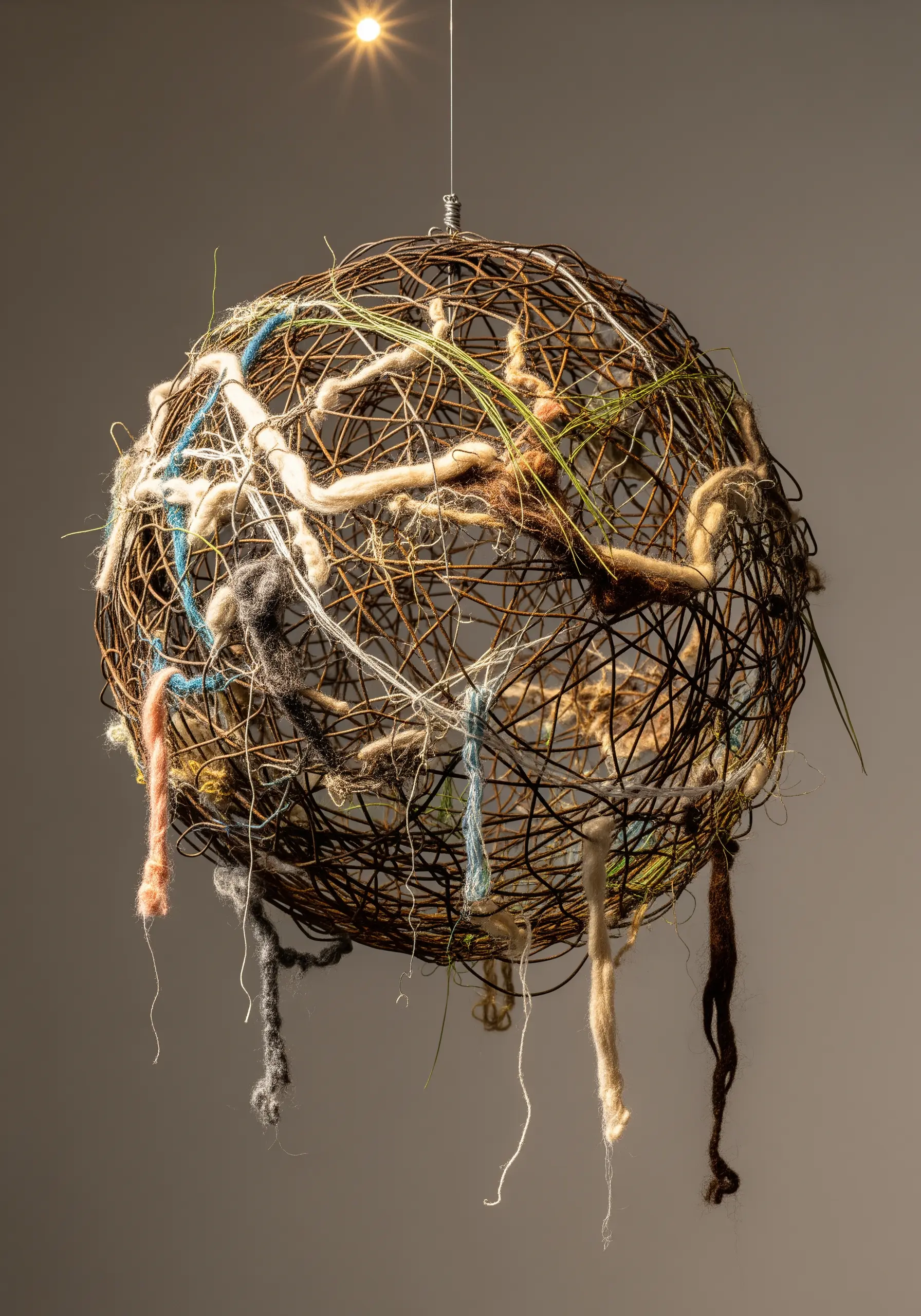
Start with a sphere made from rustic wire, like grapevine or rusted steel wire, to establish an organic base.
Instead of neat wrapping, embrace chaos. Weave, loop, and tangle a variety of textural fibers throughout the sphere.
Combine chunky wool roving, delicate silk threads, raw cotton, and even natural elements like dried grass or moss.
This technique is less about precision and more about building layers of texture, making it perfect for high-texture fabric collage embroidery projects that have a wild, untamed energy.
17. Form Lightweight Spheres with Yarn and Air
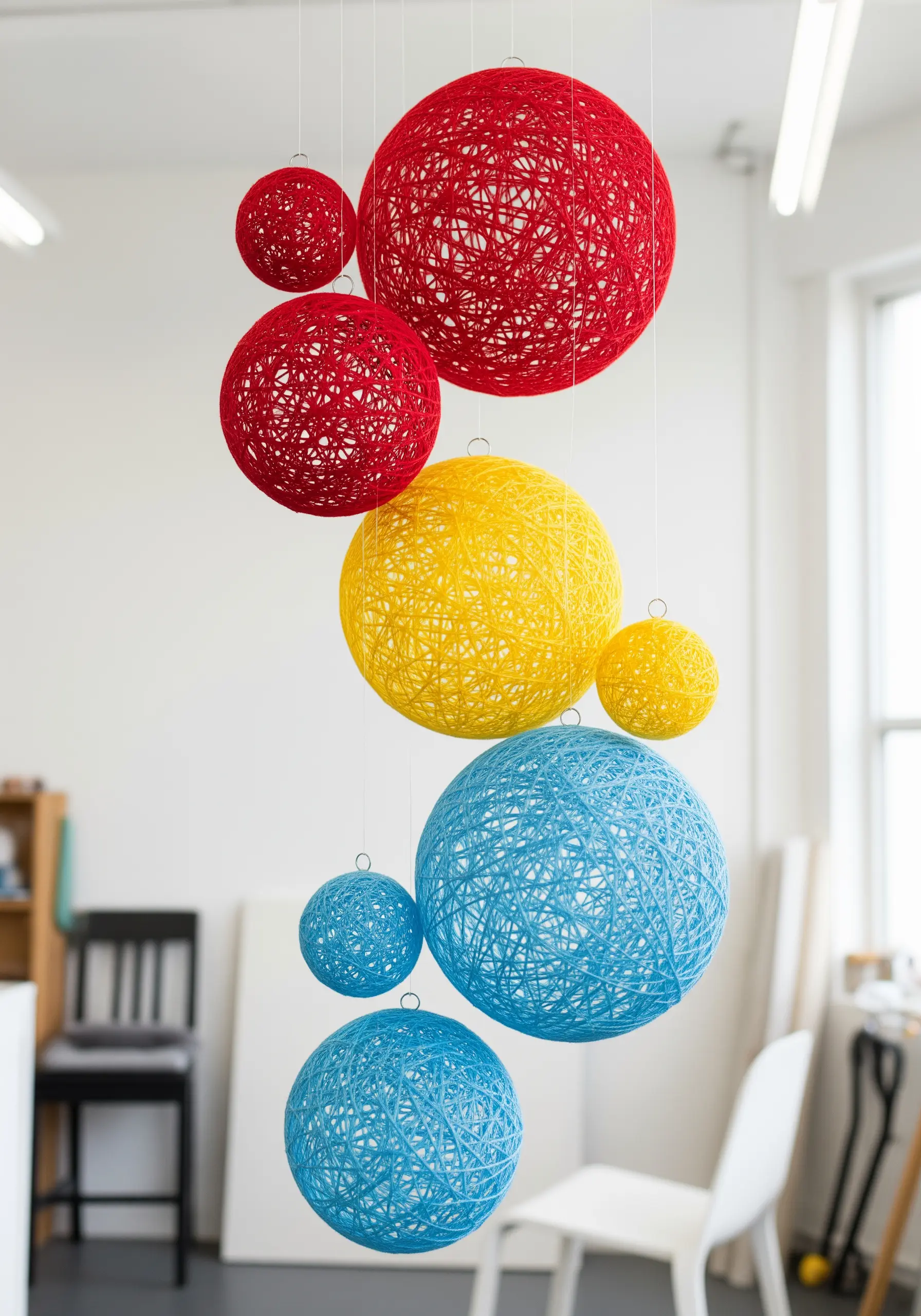
This technique requires no wire frame. Instead, inflate several balloons to your desired sizes.
Submerge cotton yarn or string in a mixture of white craft glue and a little water. Tightly wrap the saturated yarn around the balloons in a random, crisscrossing pattern.
Once the glue is completely dry and hard, pop and remove the balloons, leaving behind hollow, lightweight yarn spheres.
Group them together at varying heights to create playful playful yarn wall art crafts that bring color and volume to a room without the weight.