You have the threads, the fabric, and the desire to create something beautiful. But taking your embroidery from simply ‘finished’ to truly ‘refined’ isn’t about learning dozens of complex new stitches. It’s about learning to see differently.
It’s about the quiet intention behind each choice. Why use three strands of floss instead of two? How can a simple backstitch be manipulated to look like calligraphy? When should texture, not color, be the hero of your piece?
This collection of dusty-rose and ivory ideas is your guide to that intentionality. Each one is a lesson in composition, texture, and technique, designed to help you create work that feels cohesive, personal, and deeply calming in its beauty.
1. The Art of Tone-on-Tone Botanical Stitching
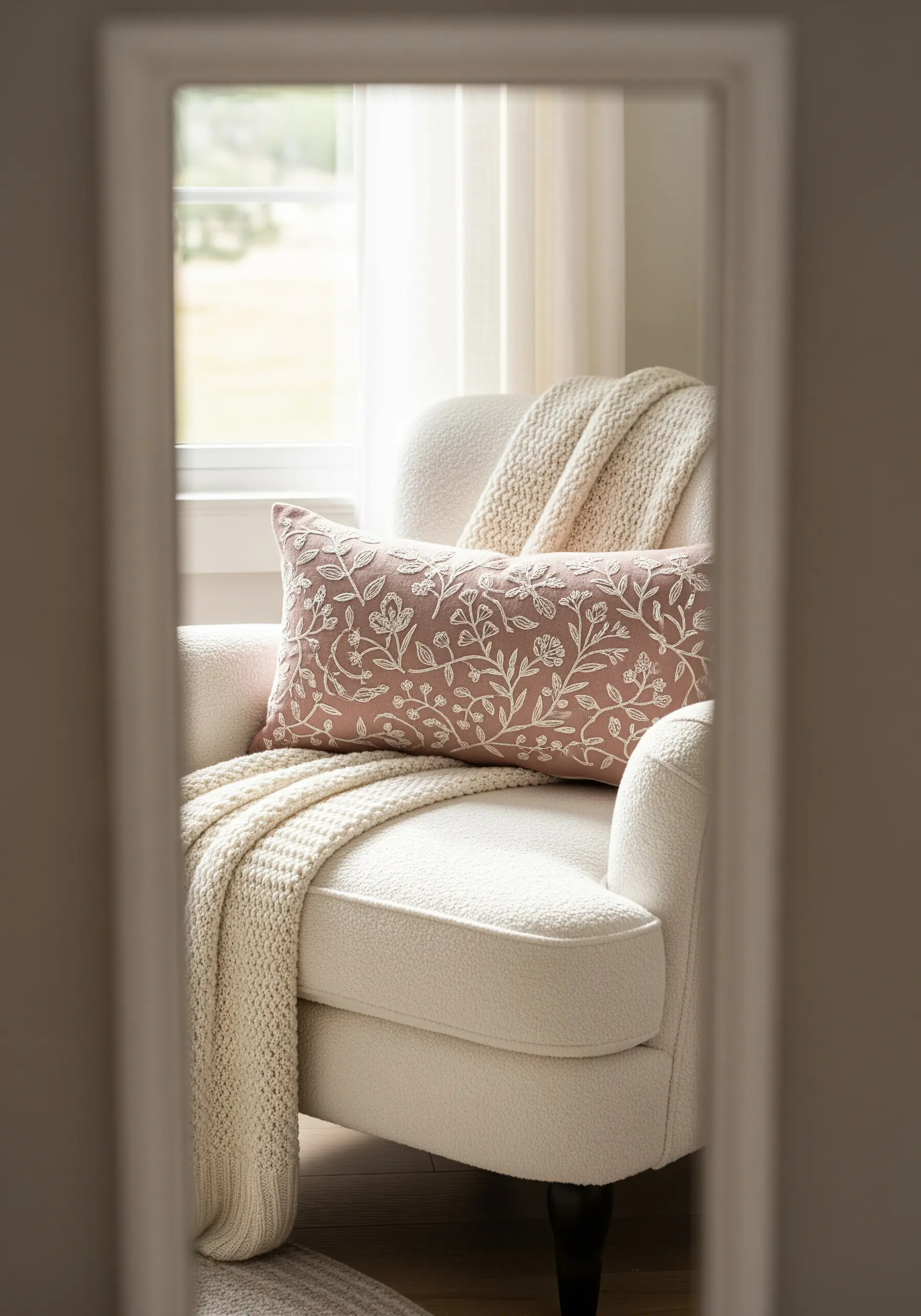
To make a single-color design feel dynamic, you must focus on texture rather than hue.
Use a variety of stitches—satin for smooth petals, stem stitch for defined outlines, and French knots for textural centers—all in the same ivory thread.
This makes the light catch each surface differently, creating depth and shadow.
On a dusty-rose linen or cotton-twill base, the contrast between the matte fabric and the slight sheen of the thread adds a quiet, luxurious finish that feels both modern and timeless.
2. Create Statement Wall Art with Yarn Couching
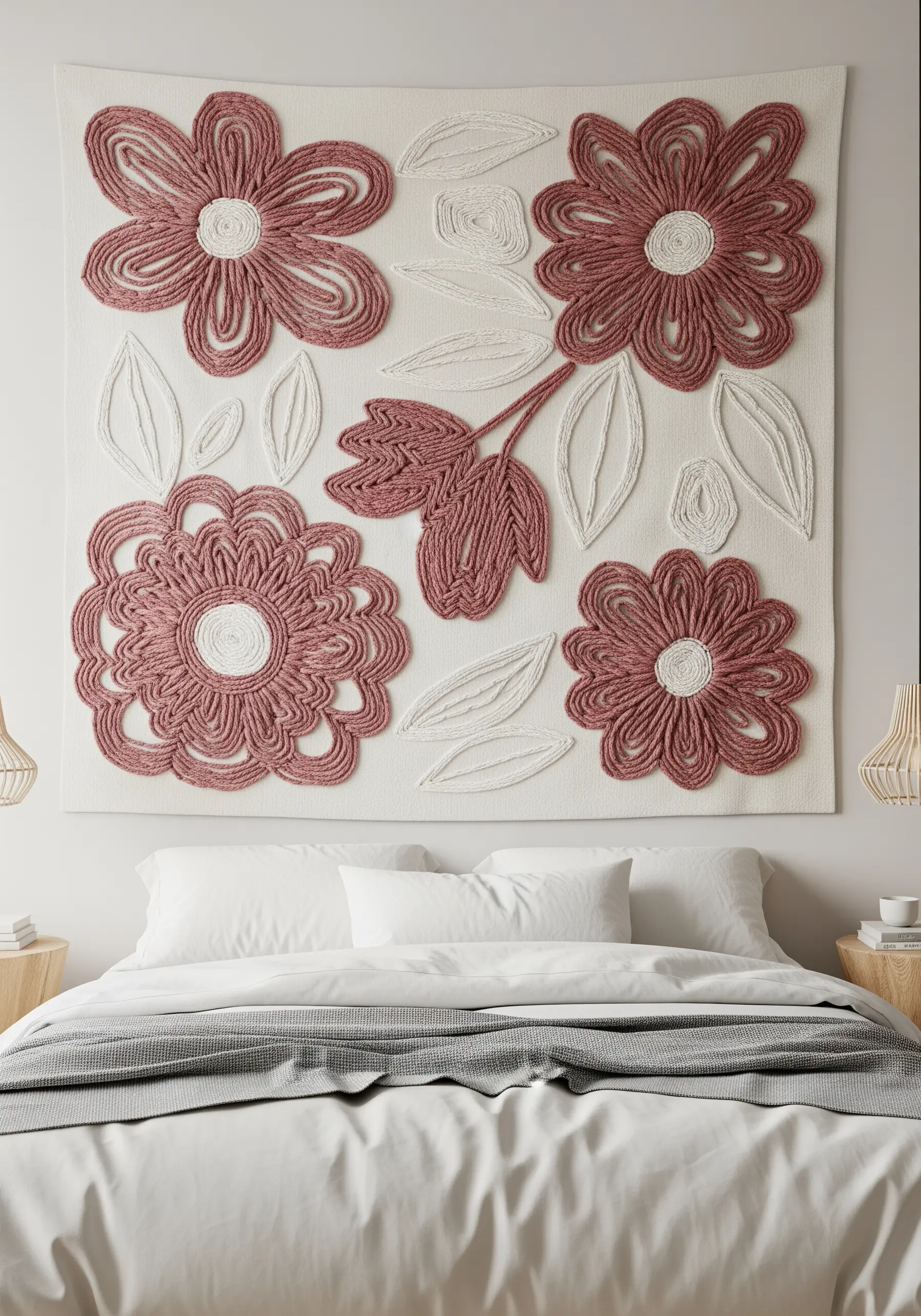
This is how you translate the intimacy of embroidery into large-scale, dramatic art without spending months on a single piece.
The technique is yarn couching: you lay thick yarn in your desired shape onto heavy canvas, then use a thinner, matching thread to tack it down at intervals.
This method is perfect for creating large-scale embroidery tapestries that rely on bold, graphic lines.
Plan your composition with continuous, flowing shapes, and consider using two different yarn weights to create a subtle hierarchy between the petals and leaves.
3. Refine Your Monograms with Satin Stitch Precision
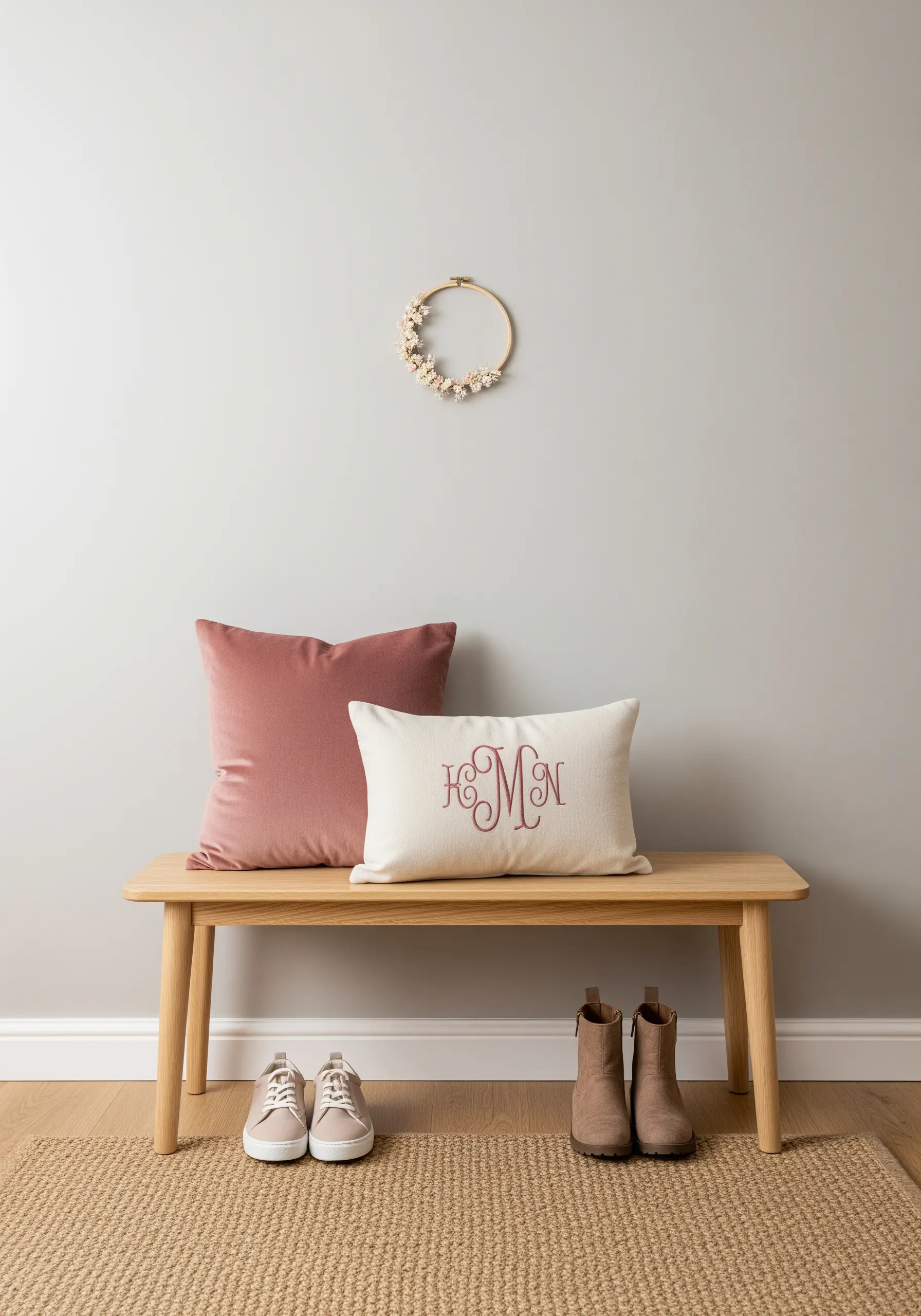
For a truly impeccable monogram, the preparation is as important as the stitch itself.
Always use a stabilizer behind your fabric to prevent the linen from puckering under the tension of dense satin stitches.
Before you begin, outline the letters with a single strand of floss in a tight split stitch. This creates a slightly raised, firm edge that your satin stitches can press against, resulting in exceptionally clean lines.
This small step is the secret to achieving the crisp, professional finish you see in high-end home textiles.
4. Design a Cohesive Tablescape with Repeating Motifs
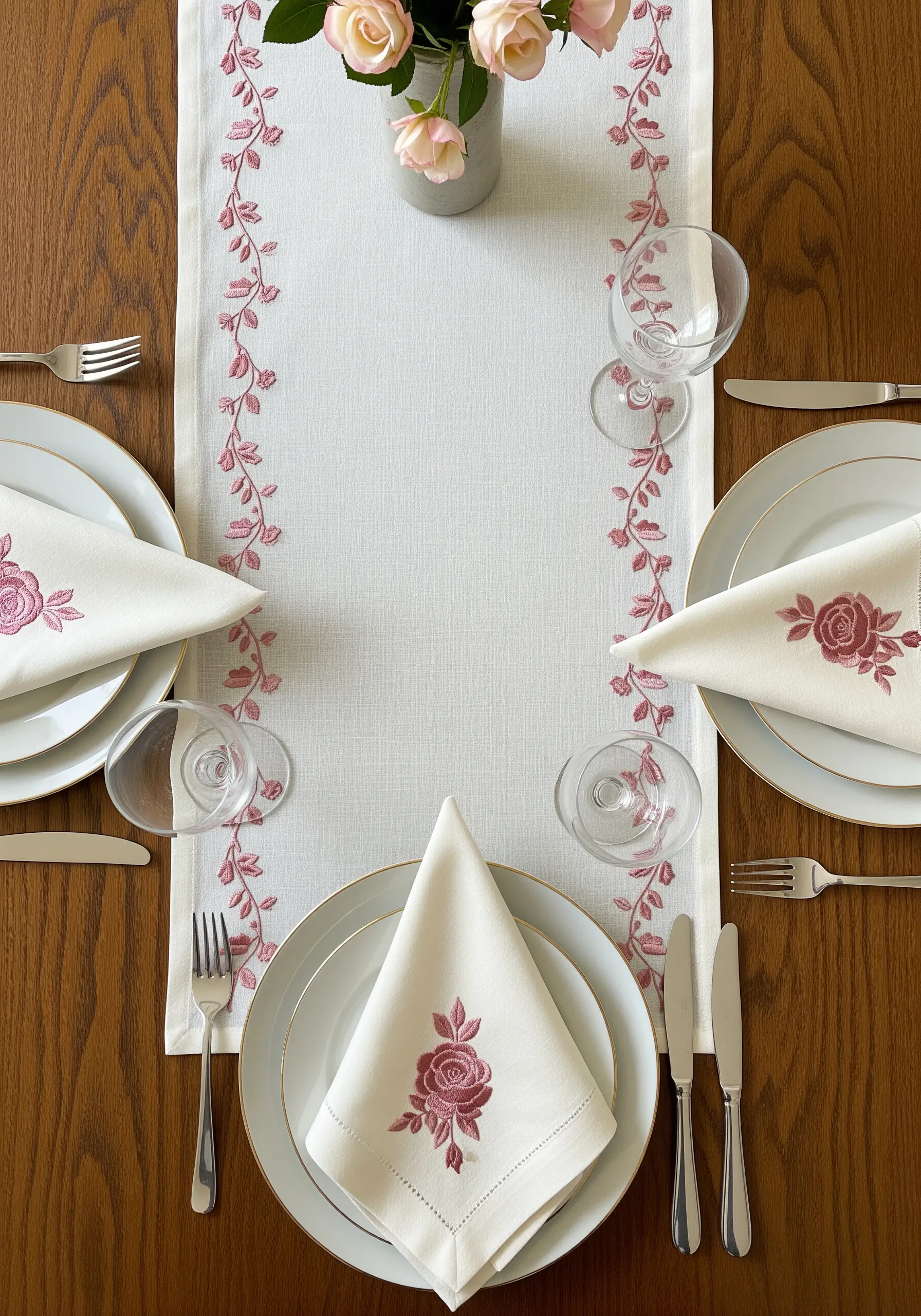
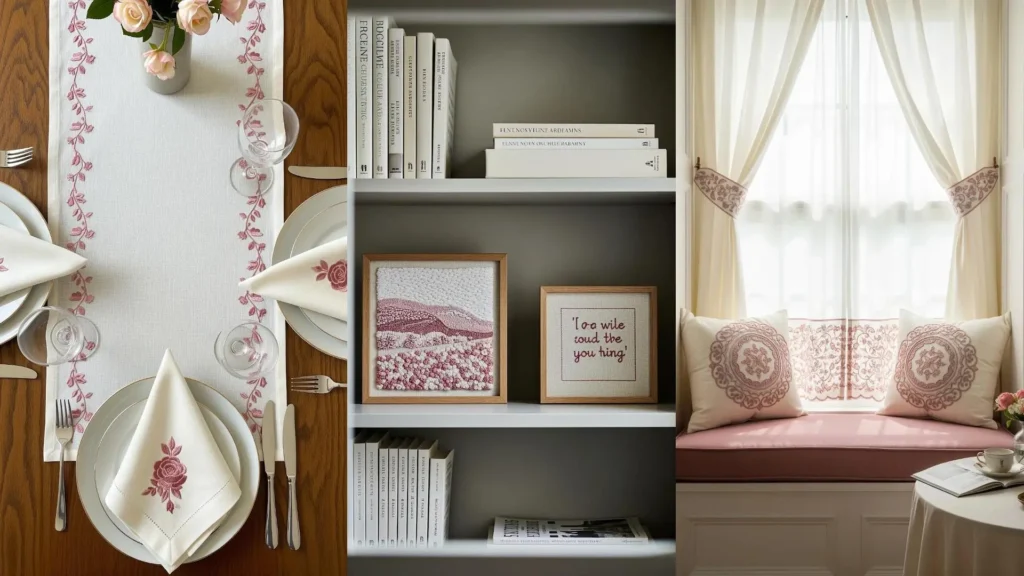
To create a coordinated set of table linens that feels curated, not chaotic, select one strong floral motif and deconstruct it.
Use the full, detailed rose for the napkin, where it can be the star.
For the runner, isolate the simpler elements—the leaves and buds—to create a delicate, rambling border that frames the table without overwhelming it.
Using a finer thread (just two strands) on high-quality linen ensures the embroidery complements the fabric instead of dominating it, resulting in a perfectly balanced and elegant set.
5. Curate a Pillow Collection with Pattern and Texture
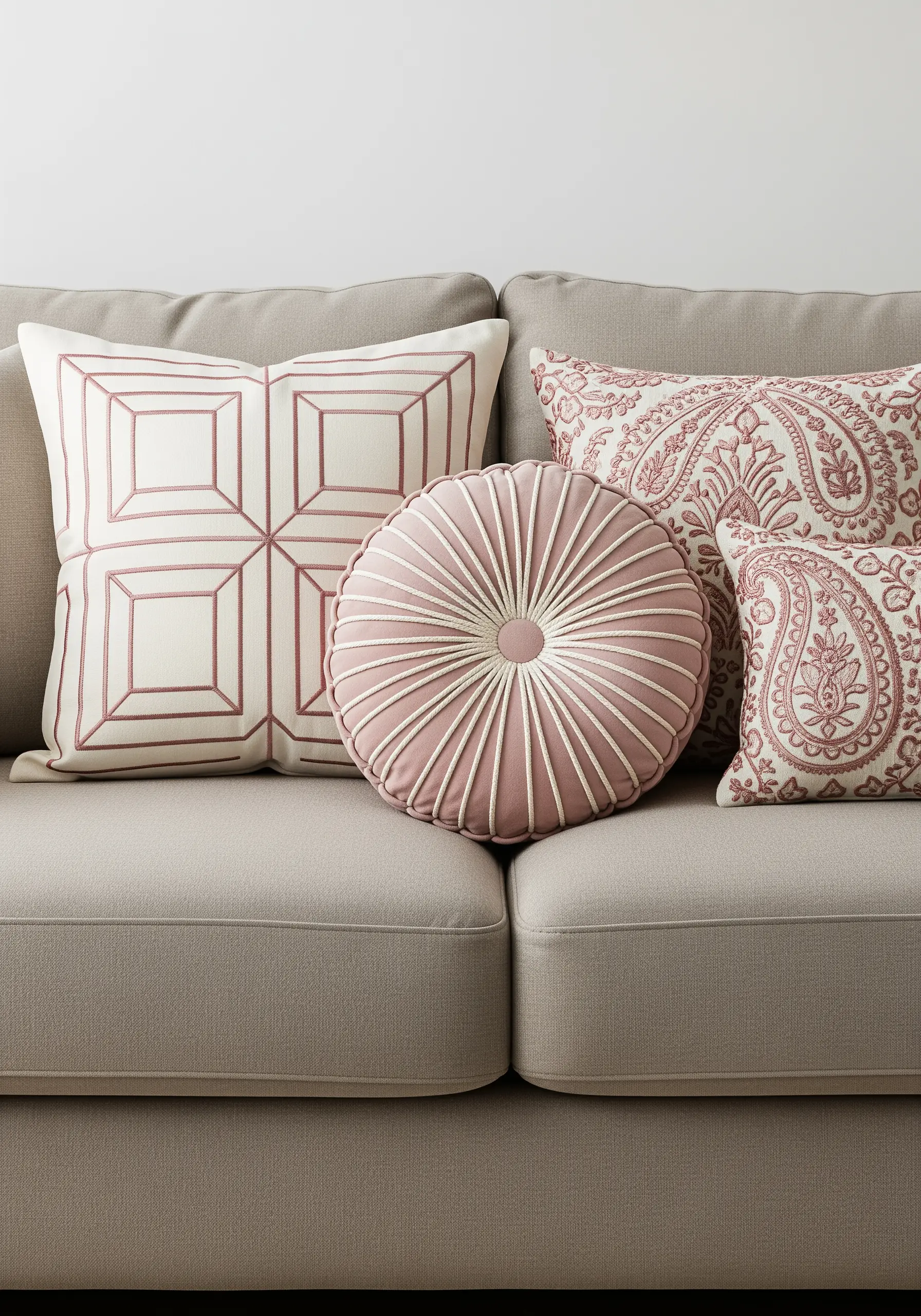
The key to a sophisticated pillow arrangement is creating harmony through contrast.
Within your strict dusty-rose and ivory palette, combine different embroidery styles: a bold, geometric pattern stitched in a thick chain stitch, a classic paisley filled with delicate seed stitches, and a structural piece with tufted lines.
The common colors tie everything together, but the varied textures and patterns are what create visual interest and prevent the arrangement from feeling flat or predictable.
These are the beige and blush embroidery pillow ideas that make a neutral sofa feel intentional.
6. Master Expressive Line Art with Negative Space
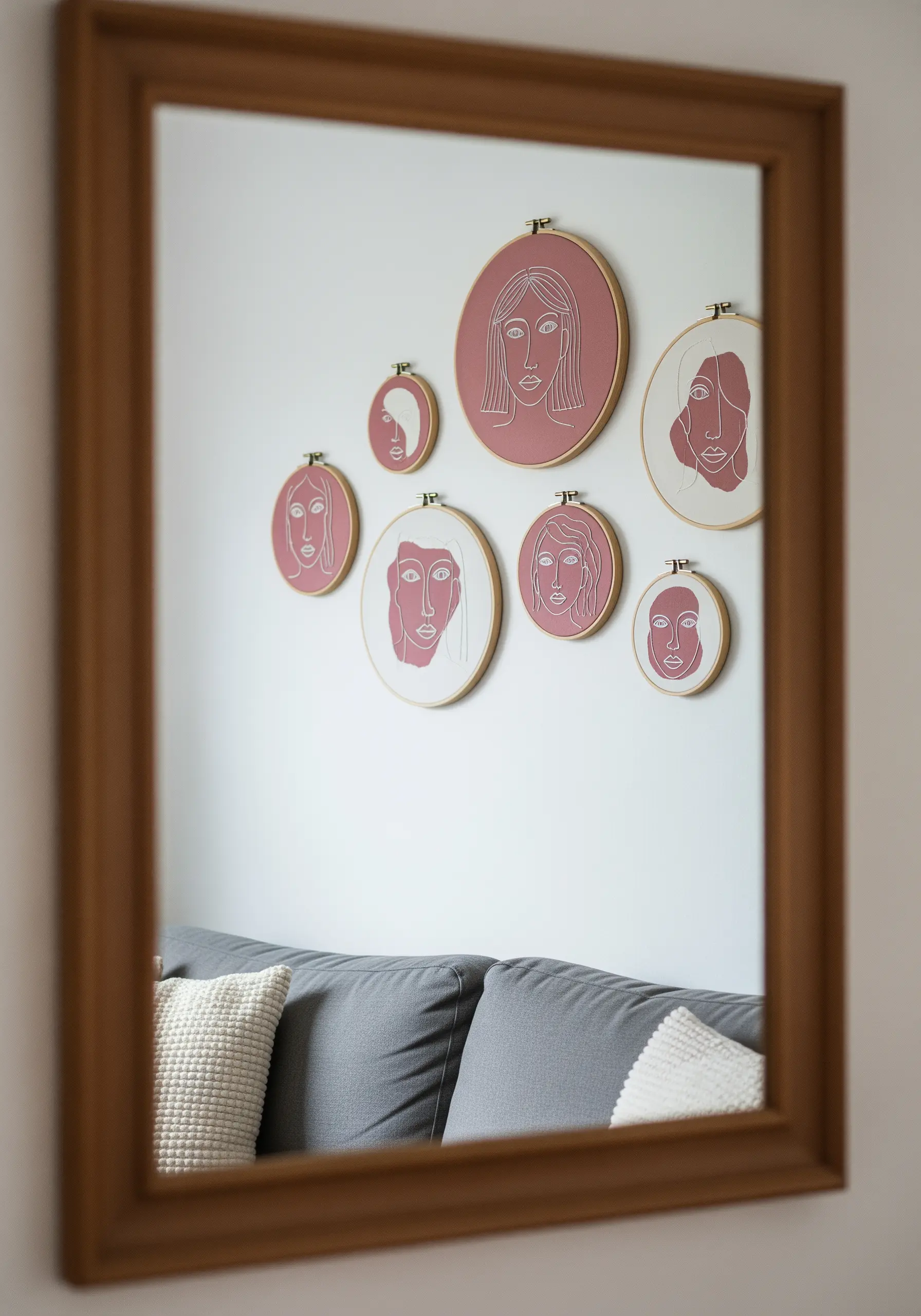
For minimalist portraits, the unstitched fabric is as powerful as the thread itself.
By using a simple ivory backstitch or stem stitch on a solid dusty-rose background, you force the viewer’s eye to fill in the details.
The power of this style comes from its restraint.
To create a cohesive gallery wall, maintain the exact same thread weight and stitch style across all hoops, varying only the scale and composition of the portraits for a dynamic yet unified display.
7. Integrate Embroidery into Functional Home Decor

Extend your stitching beyond decorative hoops and onto functional, everyday objects.
For an upholstered piece like a vanity stool, your primary concerns are durability and texture.
Choose a simple, repeating geometric pattern and use a strong stitch like a whipped backstitch or chain stitch, which creates a raised, cord-like line that resists snagging.
Pair it with a more delicate motif on a nearby hand towel to create a subtle, threaded connection between different surfaces in the room.
8. Frame a Reading Nook with Symmetrical Embroidery

Use embroidery to elevate an architectural feature, transforming a simple window seat into a true sanctuary.
Stitch identical, ornate medallion motifs onto two pillows to create a powerful sense of symmetry and calm.
Then, echo a smaller, simplified element of that design onto the curtain tie-backs and valance.
This repetition is a classic design trick that unifies the entire space, making it feel custom-designed and thoughtfully curated. These are the details that add warmth to cold rooms.
9. Paint an Abstract Landscape with French Knots
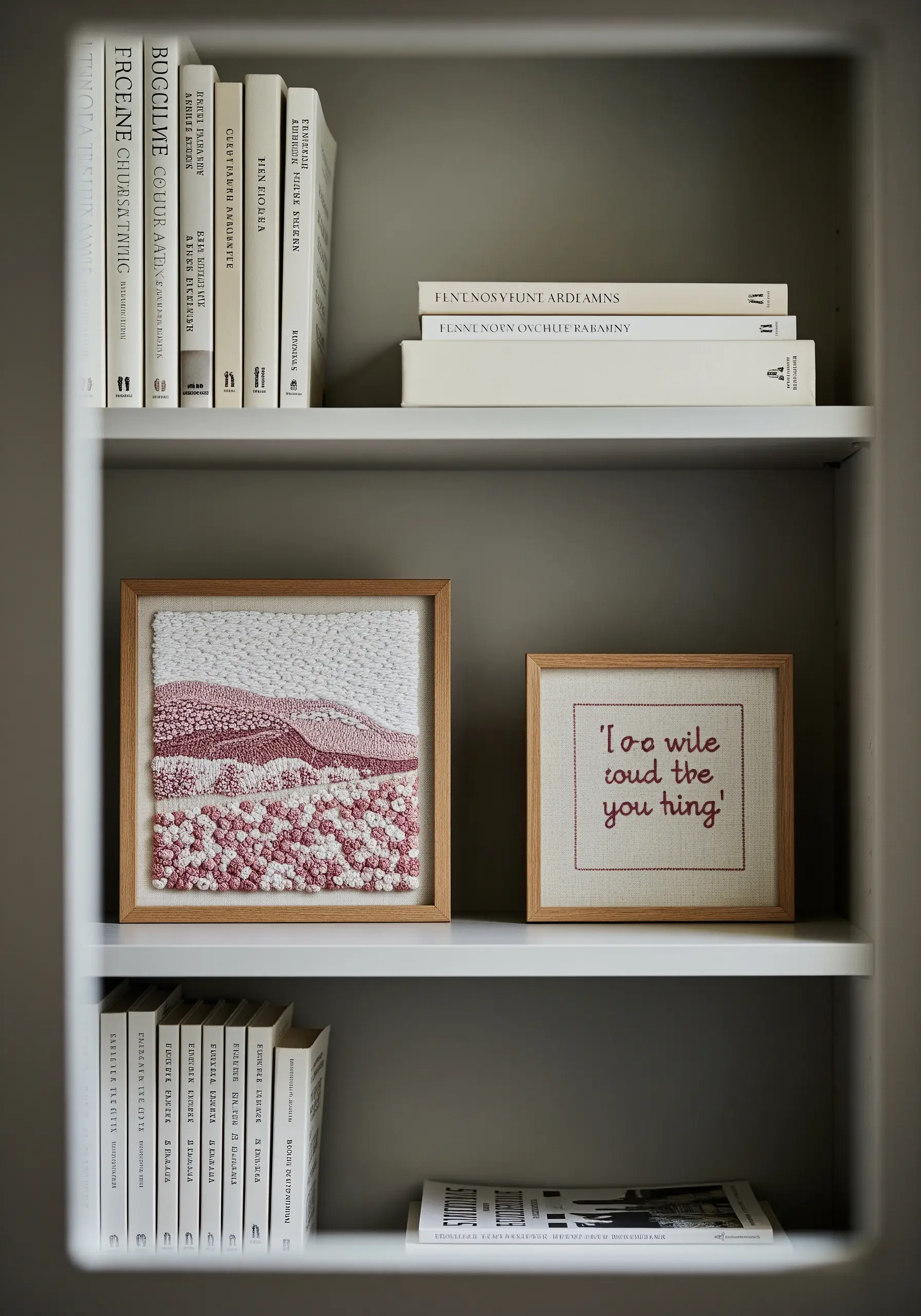
Think of your needle as a paintbrush and your thread as pigment.
You can create an entire abstract landscape using just one stitch: the French knot.
Create depth and perspective by varying the thread weight and density. Use single-strand ivory knots spaced far apart for a misty sky, and tightly packed, three-strand dusty-rose knots for a rich, textured foreground.
These are embroidery projects inspired by textures that feel incredibly artistic but are built on a simple, meditative technique.
10. Elevate Bedding with a Scalloped Blanket Stitch
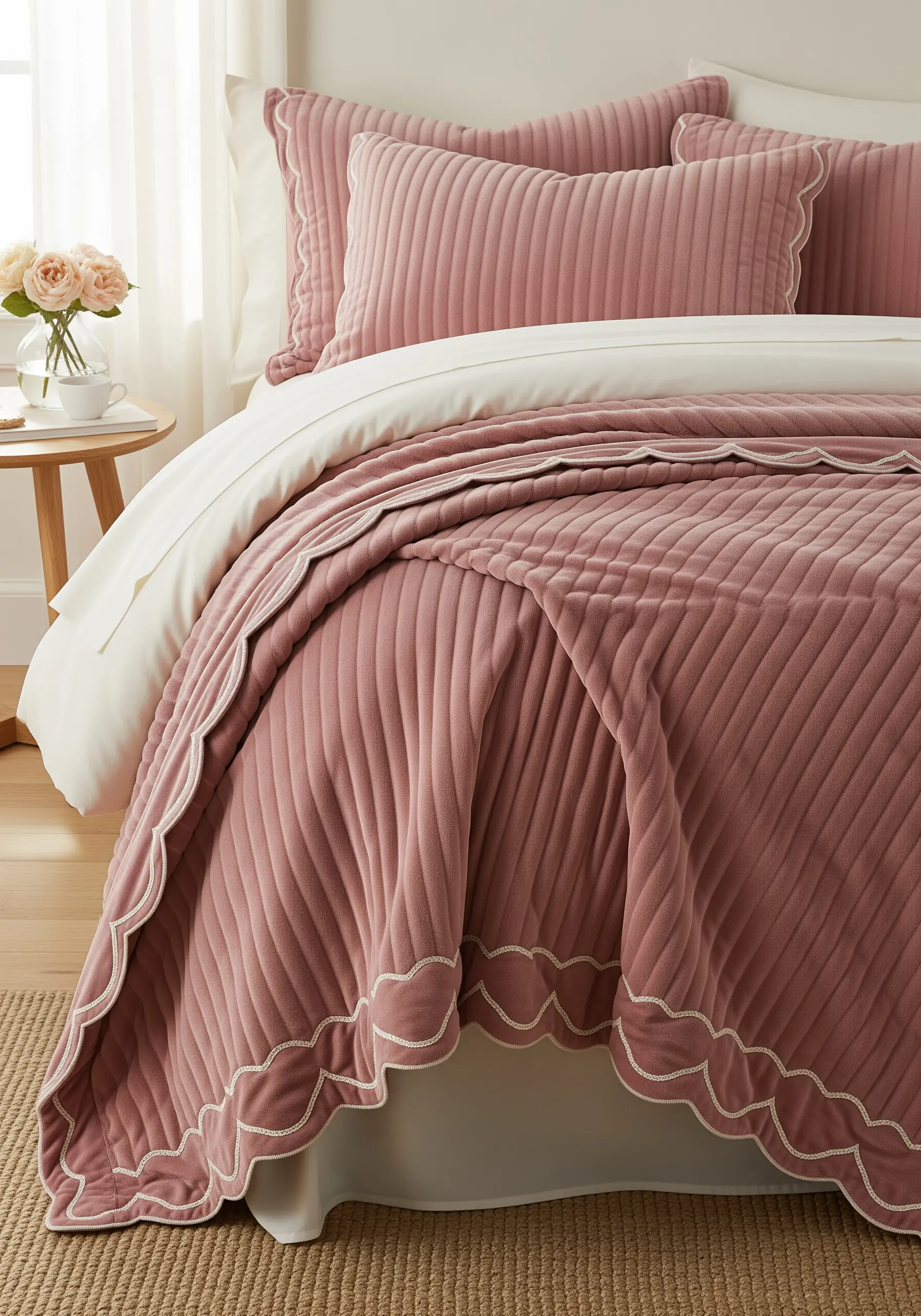
It’s the finishing touches that transform a simple textile into a cherished heirloom.
To add a soft, refined border to a quilt or coverlet, trace a gentle scallop along the edge.
Then, using a contrasting ivory pearl cotton—which is thicker and more durable than floss—work a dense, even blanket stitch along your traced line.
This simple addition provides a clean, graphic frame that highlights the shape of the bedding and adds a touch of bespoke quality.
11. Modernize a Motif with Varied Line Stitches
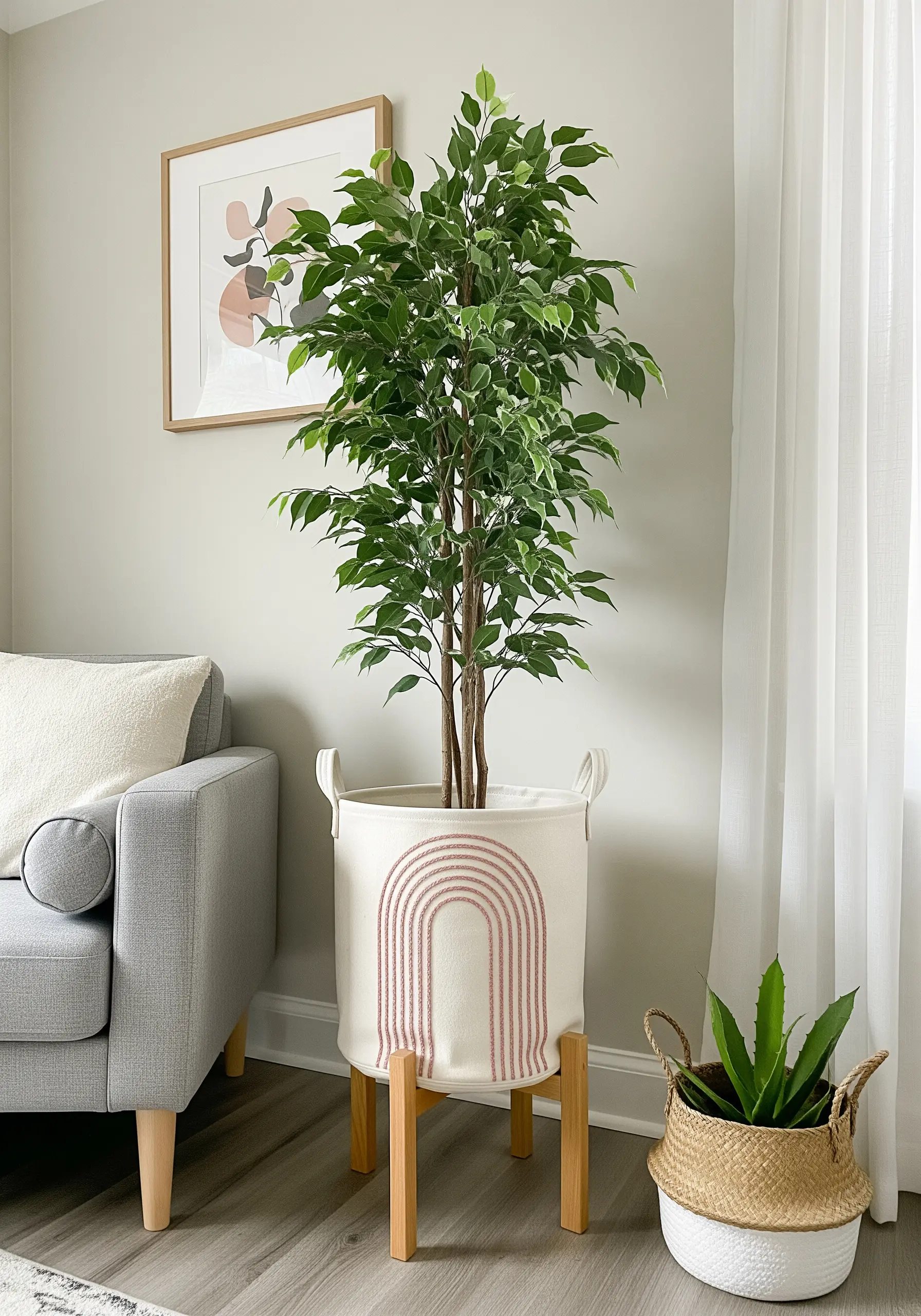
Give a simple shape, like a rainbow arch, a sophisticated textural update.
Instead of filling each band with satin stitch, define them with a curated selection of line stitches.
Work the outer arch in a clean backstitch, the next in a rope-like stem stitch, then a delicate split stitch, and finally a bold chain stitch.
This subtle variation in texture adds dimension and a bespoke feel to a minimalist design, proving that complexity can be found in the details, not just the overall pattern.
12. Achieve Flawless Script with a Whipped Backstitch
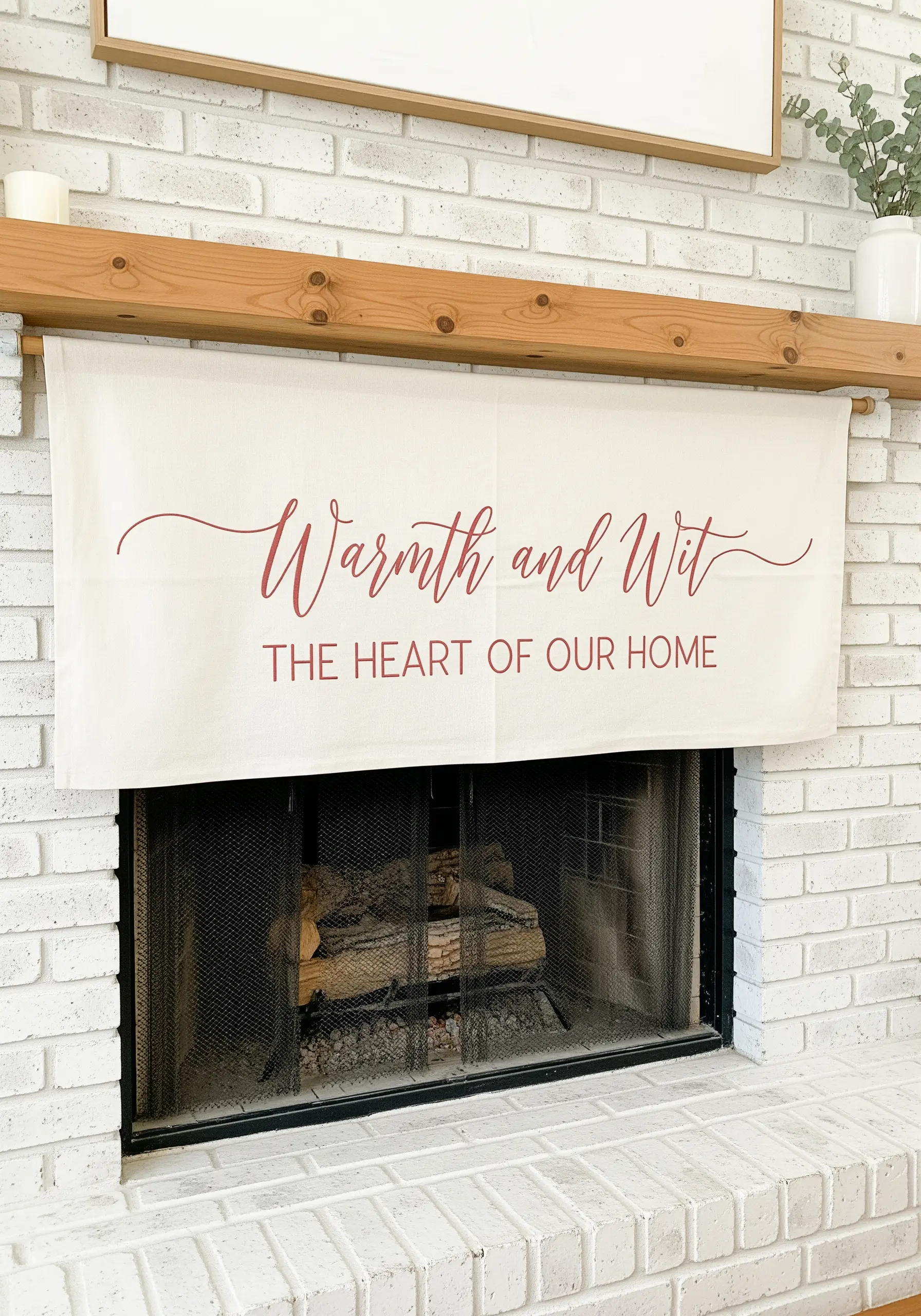
If your embroidered lettering looks disjointed, the whipped backstitch is the solution.
First, stitch your entire phrase using a standard backstitch, focusing on even stitch length.
Once complete, take the same thread and, without piercing the fabric, weave the needle under each backstitch in succession.
This action covers the small gaps between stitches, creating a smooth, continuous line that beautifully mimics the elegant flow of calligraphy. It’s the easiest way to make your text look truly professional.
13. Create Realistic Florals Through Thread Painting
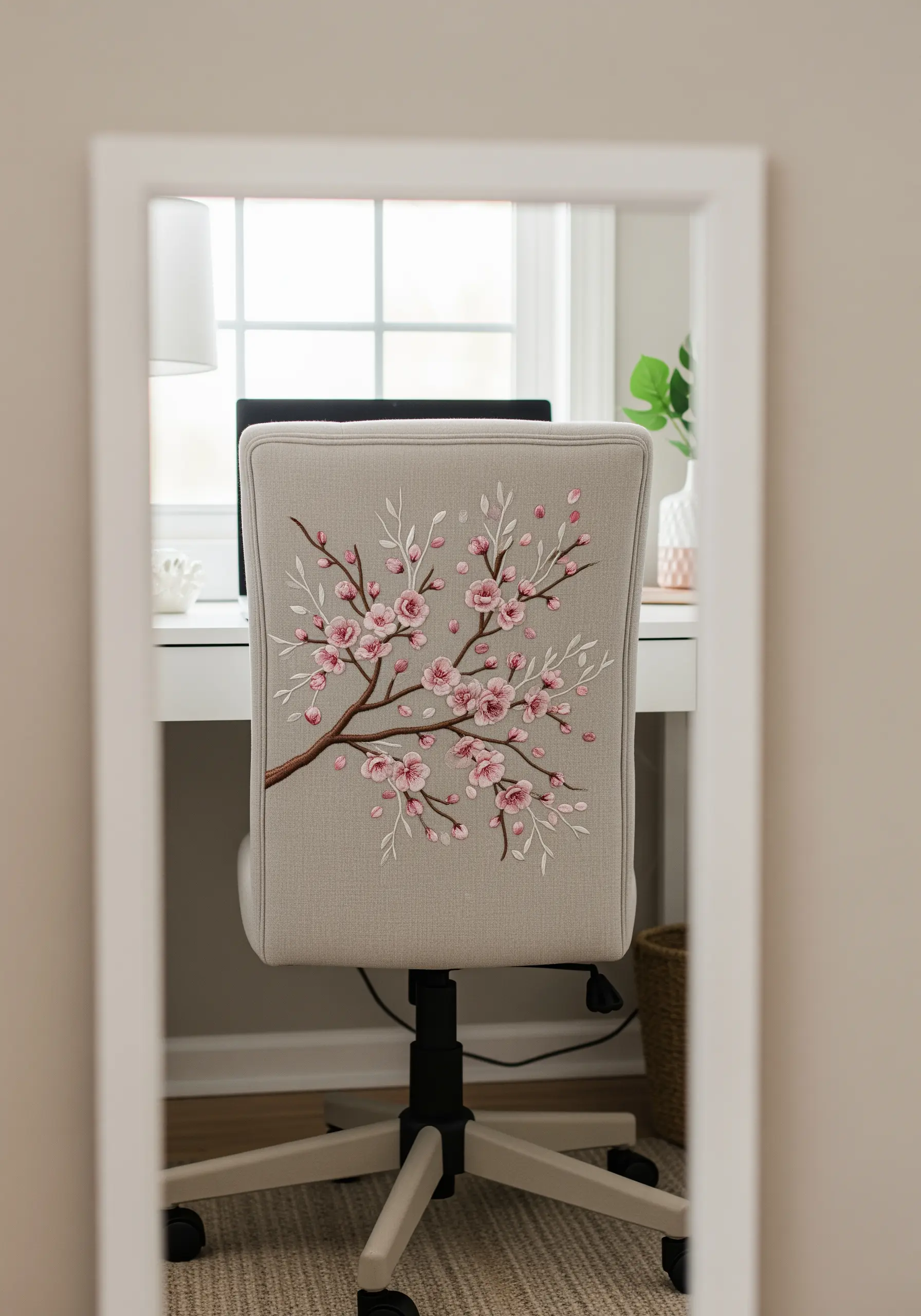
To make your embroidered blossoms look alive, you need to blend color like a painter.
Use the long-and-short stitch to fill the petals, using two or three closely related shades of dusty rose to create a soft, natural gradient. Place the lightest shade on the outer edges where light would naturally hit.
Combine this with a few strategically placed French knots in ivory to suggest tiny, unopened buds. This is one of the essential floral thread painting techniques that separates good work from great work.
14. Tackle Large Silhouettes with Patterned Fills
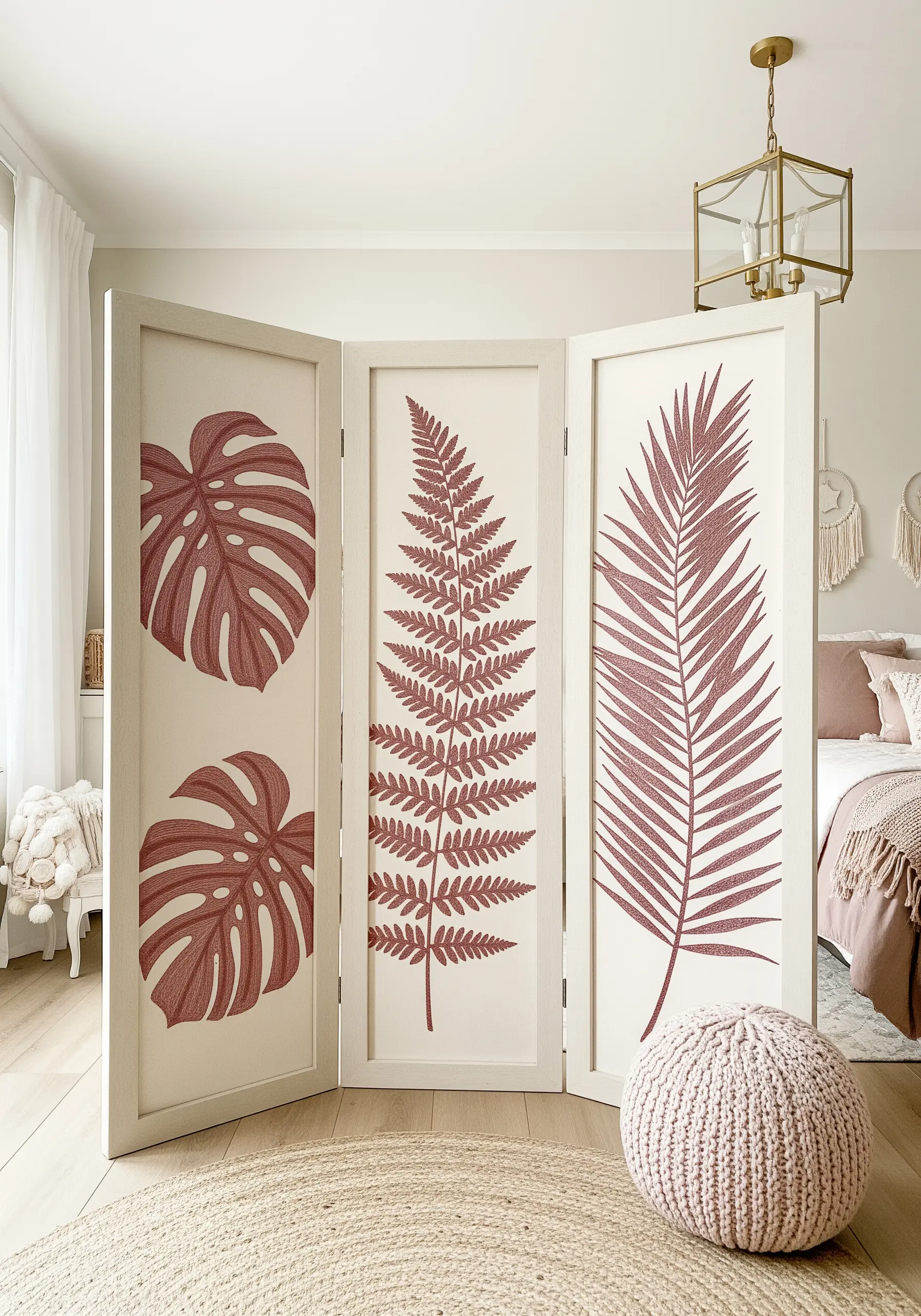
Filling a large area with satin stitch is a recipe for puckering and frustration.
Instead, outline your large botanical shape with a bold chain stitch or stem stitch to create a crisp edge.
Then, fill the interior with a decorative pattern stitch, like a scattered seed stitch or a simple darning stitch grid in a contrasting ivory.
This approach breaks up the large space, adds subtle texture, and is far more forgiving than long satin stitches, making it perfect for abstract botanical silhouettes on functional pieces like room dividers.
15. Add Subtle Charm with a Scattered Micro-Pattern
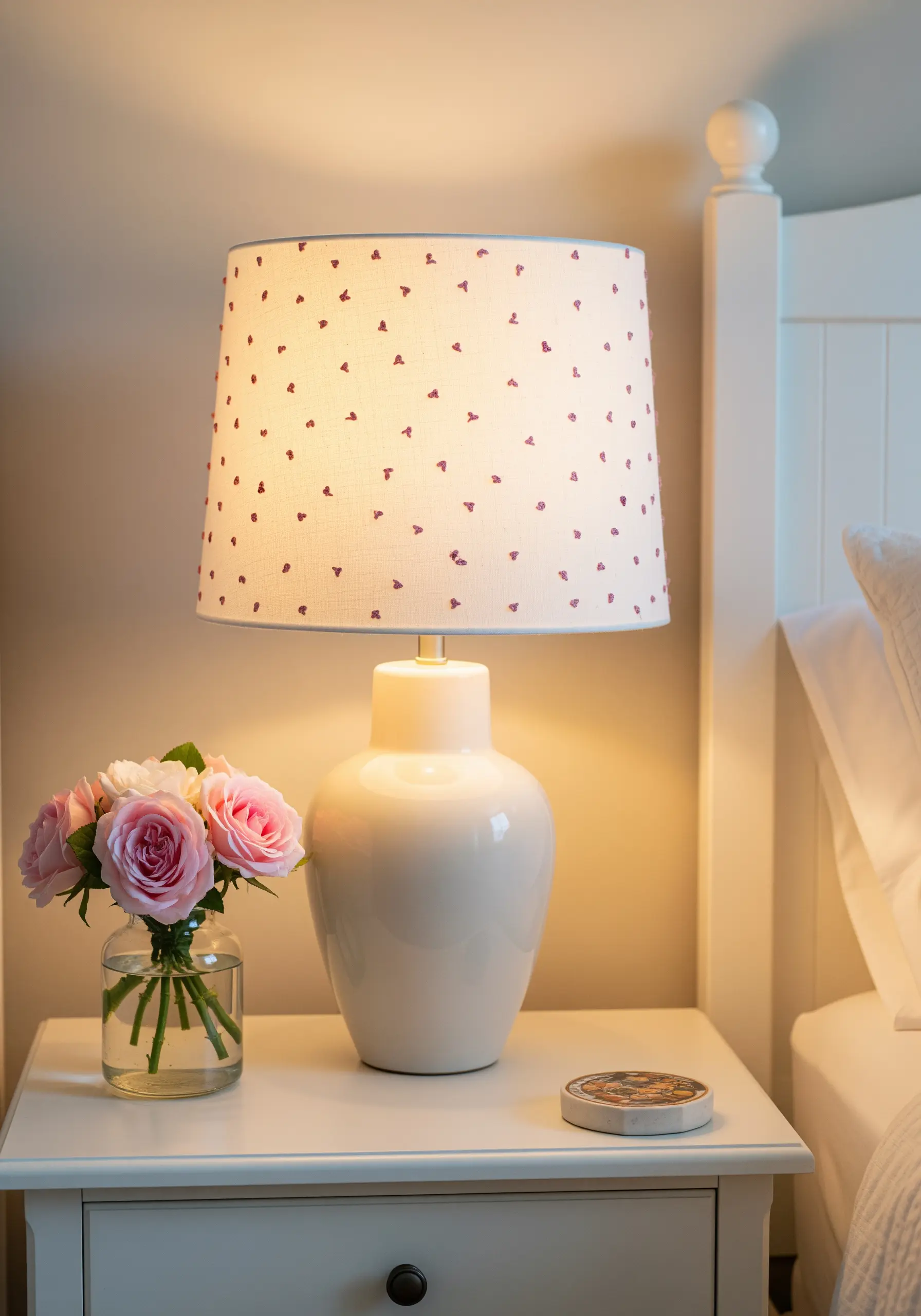
Sometimes the most impactful embroidery is the most understated.
To embellish a surface like a lampshade, choose a tiny, simple motif—a single lazy daisy stitch pulled into a heart shape works beautifully.
Using just two strands of floss, scatter the motif randomly across the fabric.
The key is to resist creating a perfect grid; an organic, imperfectly spaced pattern feels far more charming and handmade. This is a perfect way to add a tiny secret, personal touch.
16. Blend Embroidery with Complementary Fiber Arts
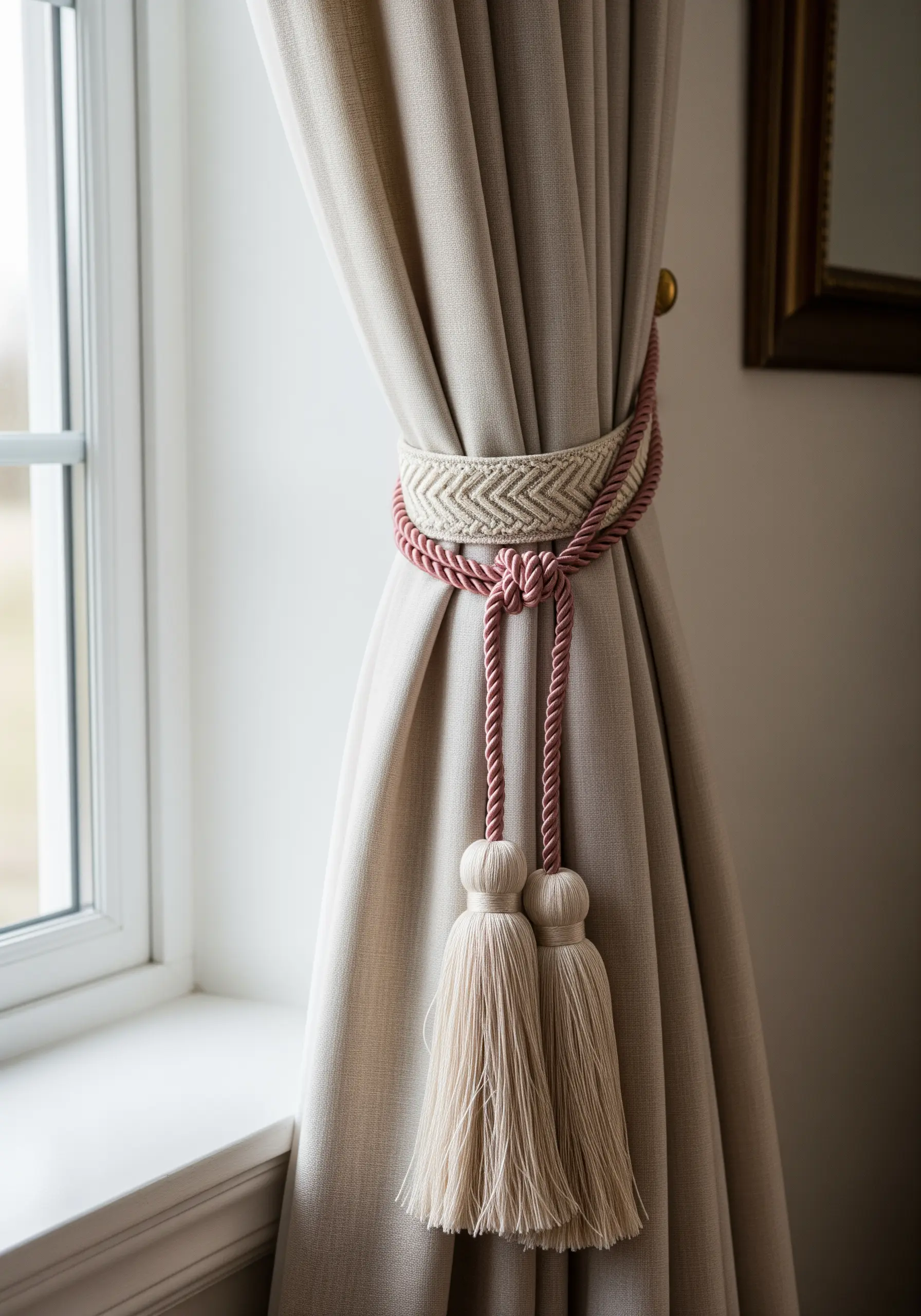
Elevate your embroidery by combining it with other fiber techniques.
For this curtain tie-back, a band of heavy-duty webbing is embroidered with a simple geometric pattern—a long-armed feather stitch creates a similar herringbone effect.
This flat, graphic element is then paired with three-dimensional braided cords and lush, handmade tassels.
This interplay between flat embroidery and sculptural fiber elements creates a piece with incredible depth, texture, and sophistication. It’s one of the most effective stunning mixed-fiber projects you can try.
17. Apply Embroidery Logic to Large-Scale Design
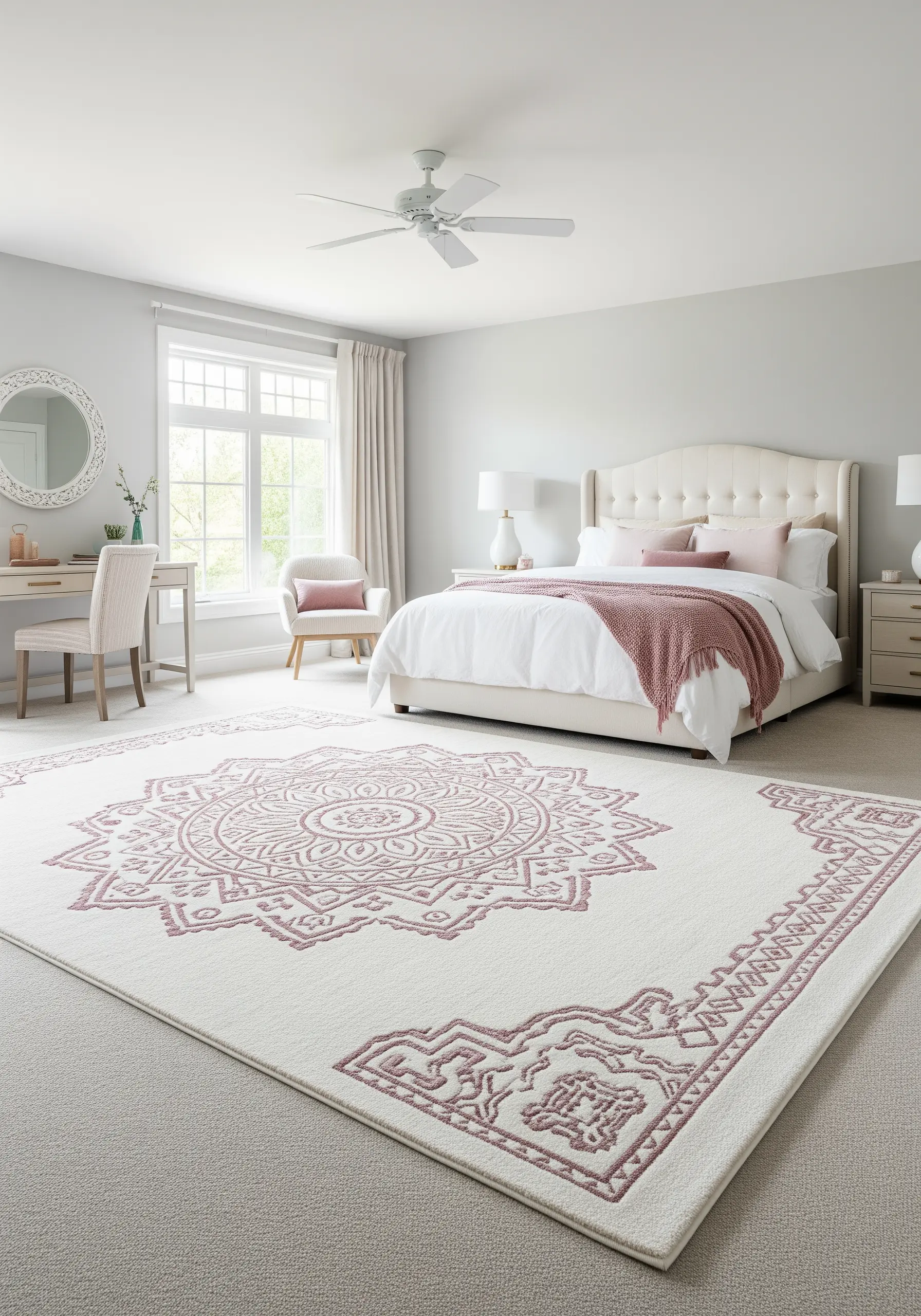
Even if you’re not stitching a rug, you can learn from its design principles.
Notice how the bold dusty-rose lines function like a stem stitch or chain stitch, outlining the intricate shapes of the mandala and providing structure.
The ivory negative space is essential, giving the complex pattern room to breathe—a crucial lesson for any embroidery composition.
When planning your next project, consider how the fundamental elements of line and space could translate to any scale, from a tiny hoop to an entire room. Explore other neutral mandala embroidery patterns to see this in action.