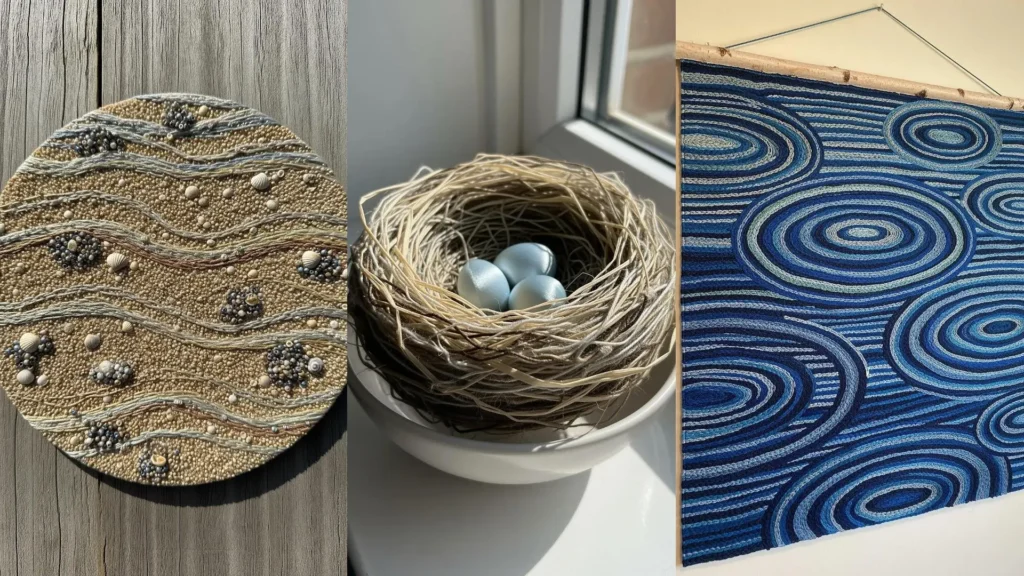
You have the threads, the fabric, and the desire to create something that feels like it truly belongs in your home. Yet, you find yourself hesitating, wondering how to move beyond a pre-made pattern and stitch something that reflects your own sense of calm and style.
The secret isn’t in mastering hundreds of complex stitches. Instead, it lies in small, intentional choices: selecting a slightly thicker thread to make a line feel bold, using one less strand to make a petal look delicate, or adding a cluster of French knots just to feel that satisfying texture under your fingertips.
Think of these ideas not as rules, but as gentle suggestions—a starting point for you to explore how texture, color, and composition can transform your space. This is your invitation to stitch with quiet confidence, creating pieces that don’t just decorate your home, but become a part of it.
1. Build a Woodland Scene with Layered Textures
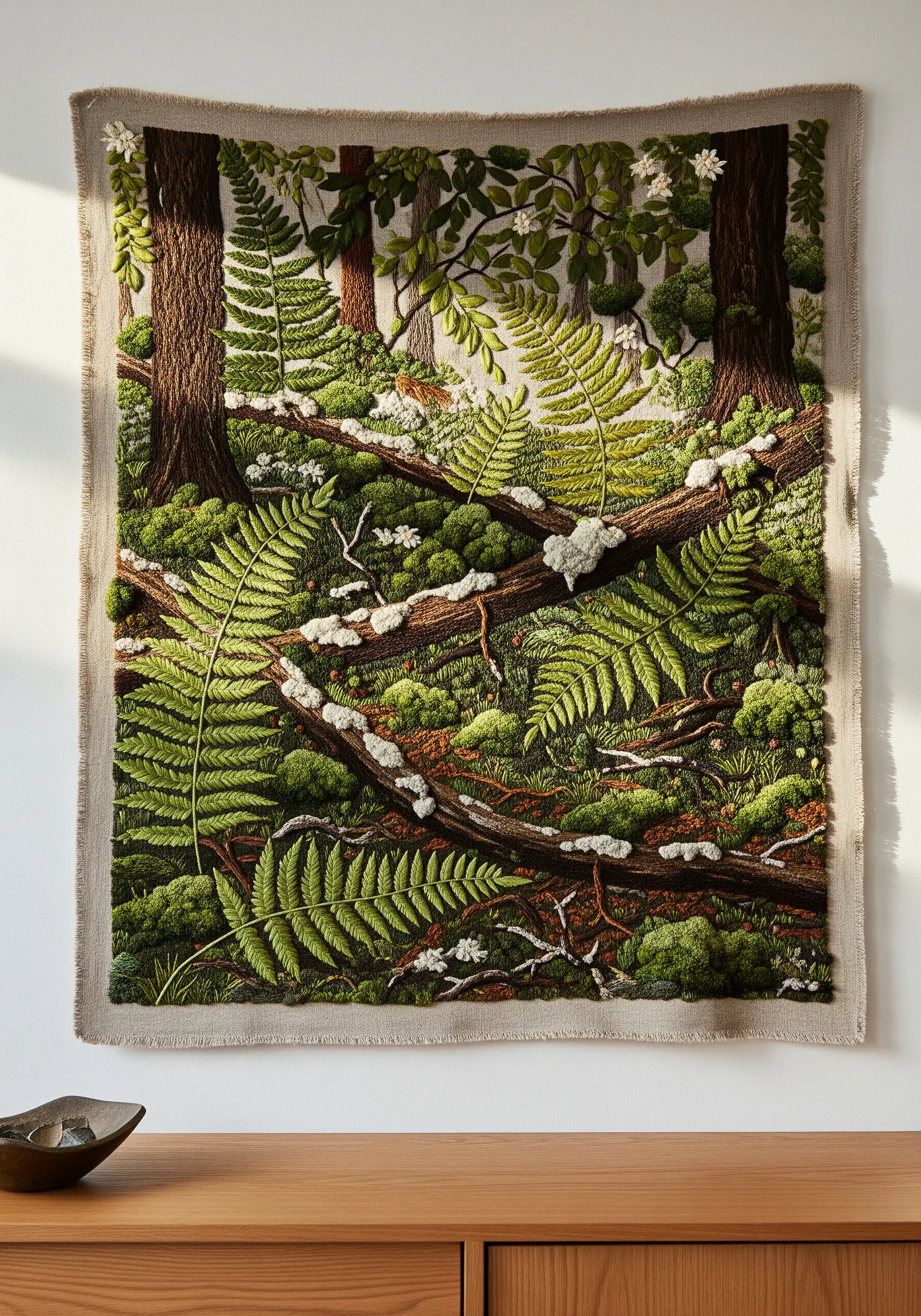
For large-scale embroidery tapestries that tell a story, think in layers of texture and depth.
Use thicker crewel wool or multiple strands of cotton floss to create a foreground of lush, touchable moss with dense French knots and Turkey work.
In the background, stitch tree trunks with a vertical long-and-short stitch, using fewer strands and more muted colors to create atmospheric perspective.
Incorporate stumpwork techniques for elements like ferns, allowing them to rise slightly from the fabric surface for a truly dimensional effect.
2. Master Detail on Small, Everyday Objects
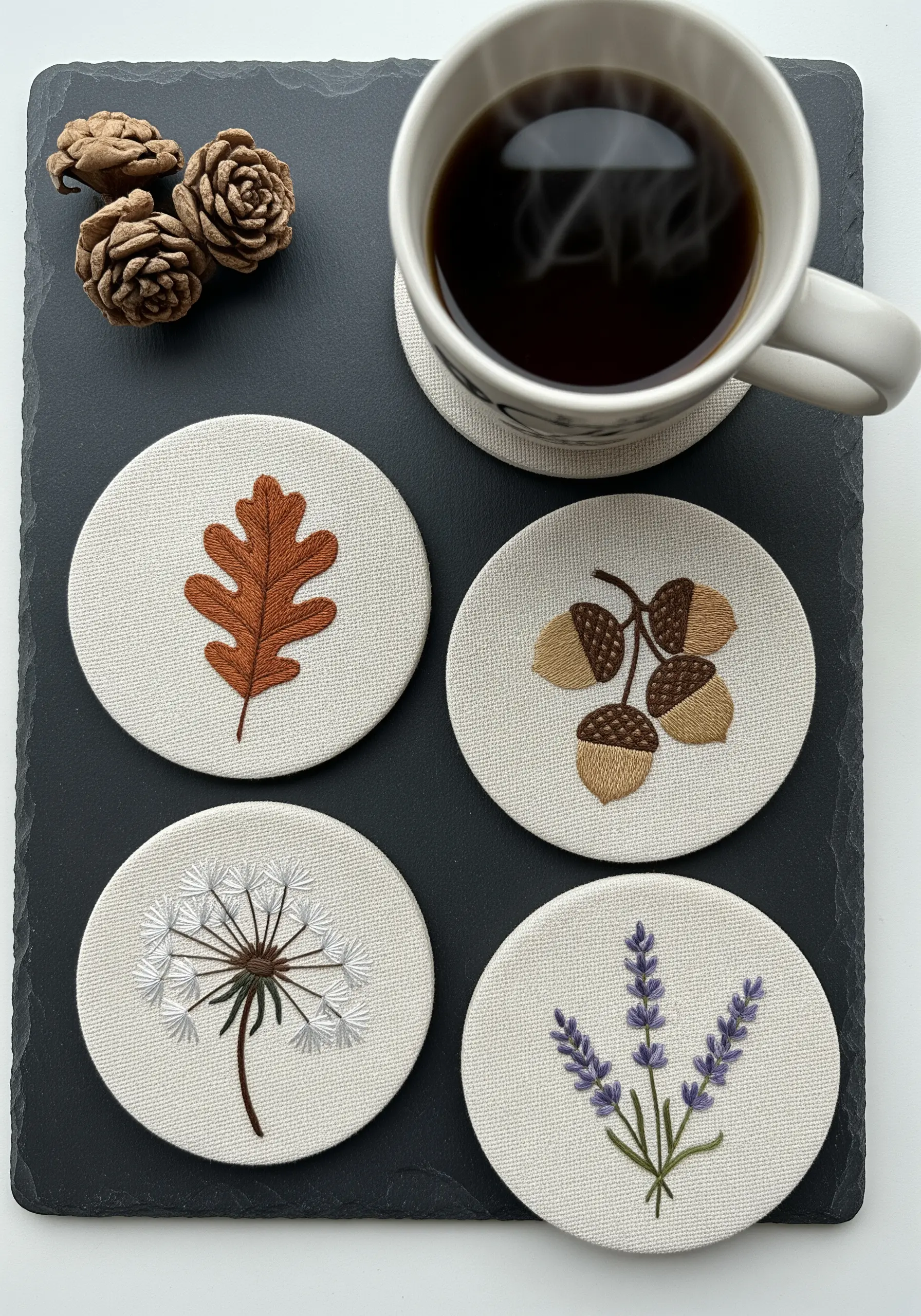
When working on functional items like coasters, precision is key to a polished result.
Use a single strand of floss on a high-count linen or cotton to achieve sharp, clear outlines with a whipped backstitch.
For the dandelion, use delicate, detached straight stitches to give the impression of seeds ready to float away.
To create the rounded shape of the acorns, apply a padded satin stitch by laying down a base of smaller stitches before covering them, giving the motif a subtle, three-dimensional lift.
3. Create Bold Graphics with Raised Stitches
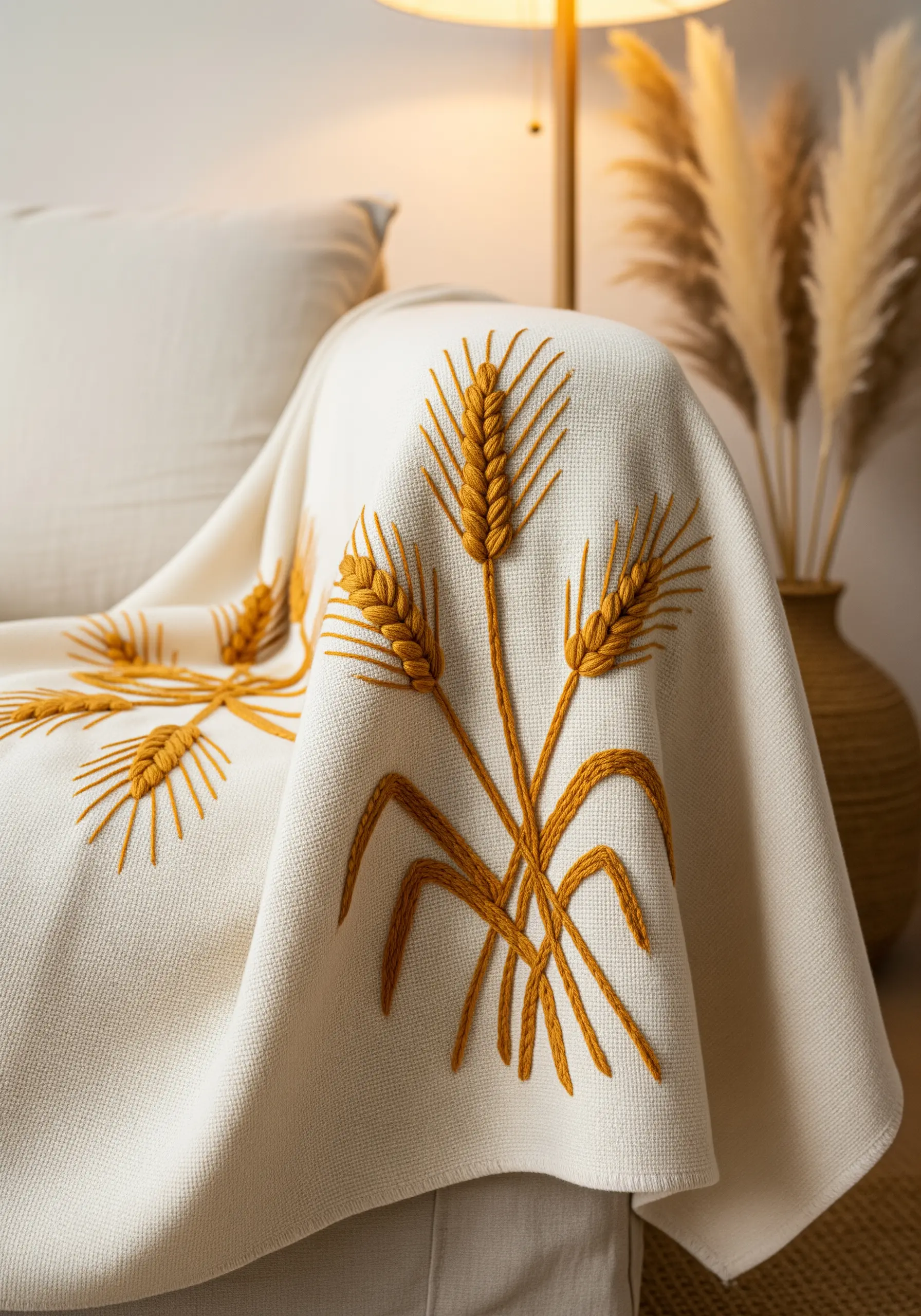
Make a simple motif stand out on heavy textiles like a throw blanket by choosing a thread with presence.
Opt for a thicker thread, such as cotton perle or fine wool, to give your design a raised, graphic quality that won’t get lost in the fabric’s weave.
Use a chain stitch for the outlines to create a substantial, rope-like texture that catches the light and adds visual weight.
This approach transforms a simple line drawing into a bold, tactile statement piece.
4. Design a Cohesive Floral Triptych
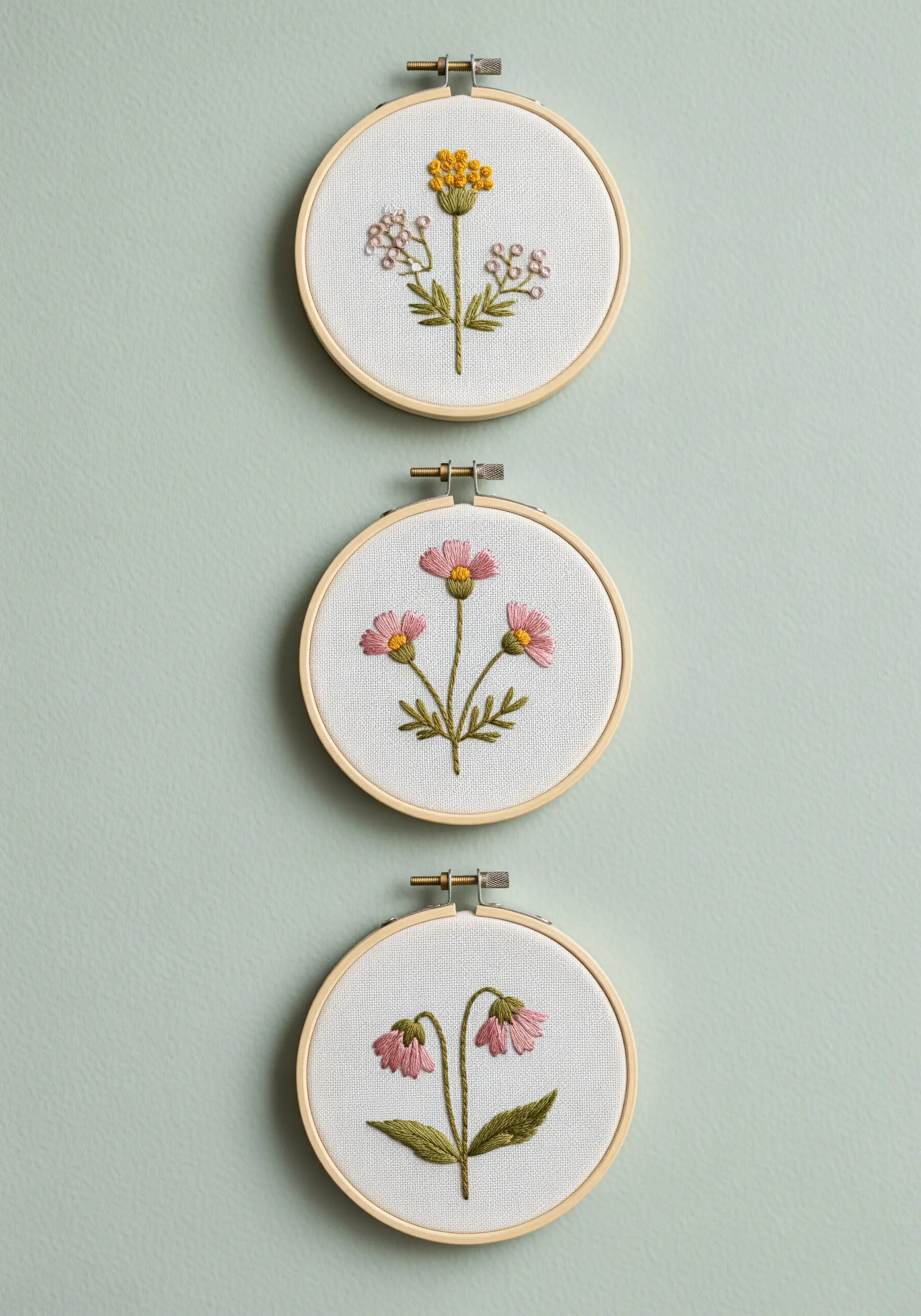
To create a unified set of circle frame minimal embroidery compositions, rely on a consistent color palette and stitch vocabulary.
Select four to five harmonious colors and use them across all three designs, which immediately creates a visual connection.
Vary the composition in each hoop to maintain interest—one sprig, a small bouquet, a single bloom.
Combine filled elements, like satin-stitched leaves, with more delicate line work, such as stem-stitched stems, to create a balanced rhythm.
5. Paint with Thread on Unexpected Surfaces
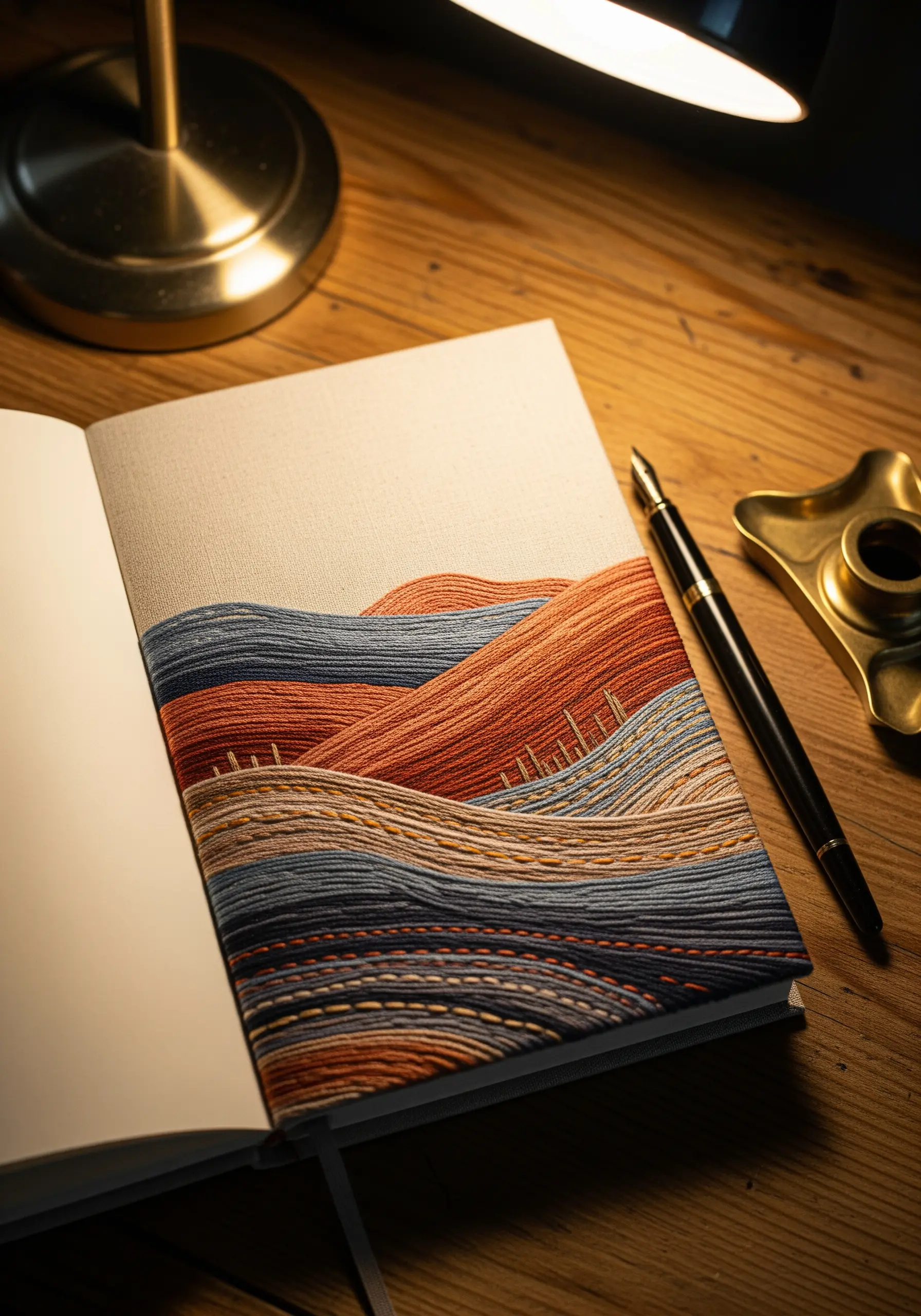
Elevate a simple object like a journal by treating its cover as a canvas for abstract thread landscapes.
Use long-and-short stitch to blend colors seamlessly, creating painterly gradients that mimic rolling hills or waves.
Vary the direction of your stitches to enhance the sense of movement and contour, making the landscape feel dynamic.
Introduce small, contrasting vertical stitches as a textural accent that breaks up the horizontal flow and adds a touch of detail.
6. Add High-Impact Texture with Yarn Couching
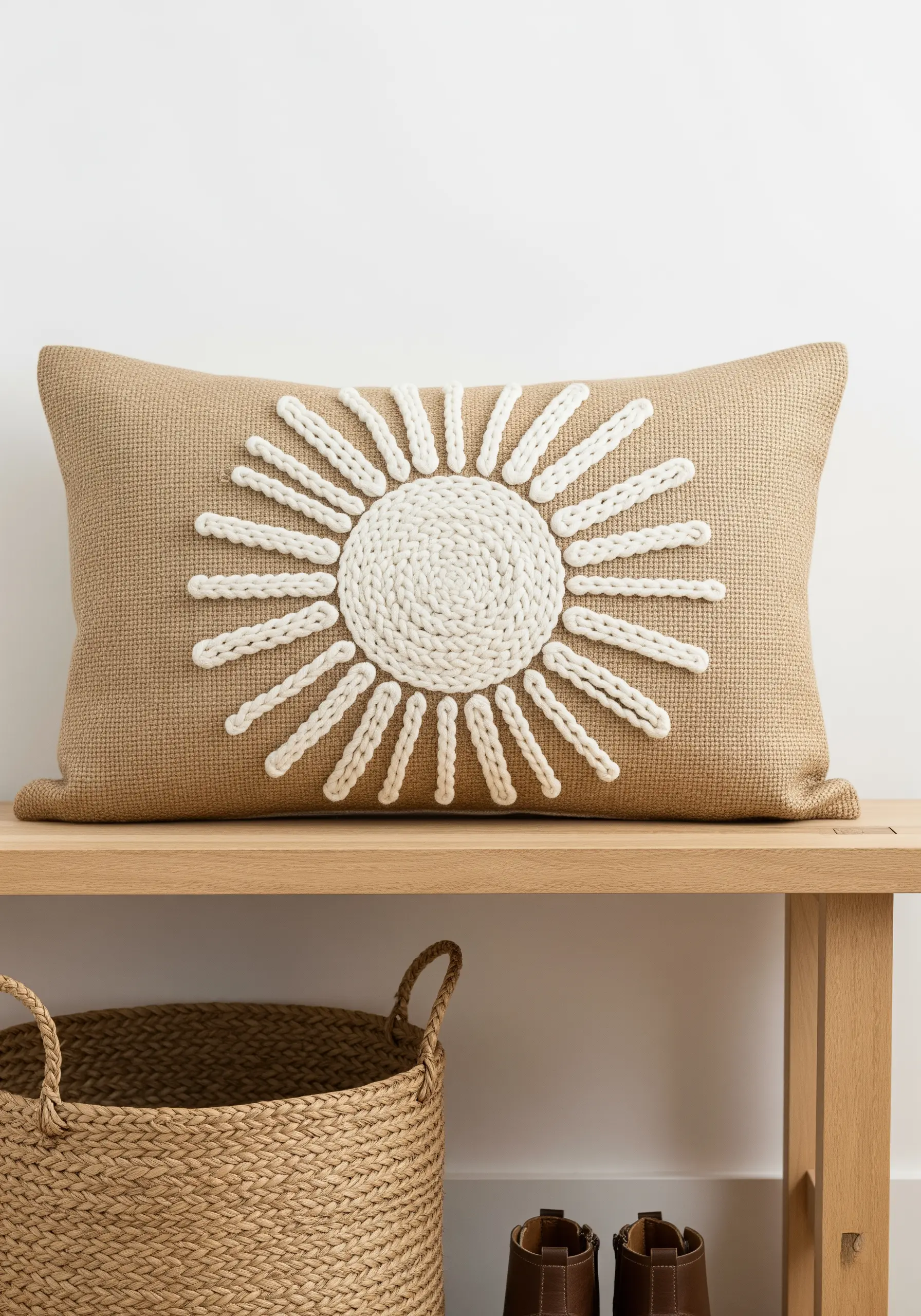
For a bold, graphic look on rustic fabrics like burlap or heavy canvas, work with chunky yarn instead of fine floss.
Use the couching technique for the sun’s rays: lay the yarn on the fabric’s surface and tack it down with a thinner, matching thread.
For the center, create a coiled braid and stitch it down, building a dense, highly tactile focal point for your embroidered pillow covers.
This method is quick, effective, and celebrates texture in a powerful way.
7. Illuminate Your Stitches on a Lampshade
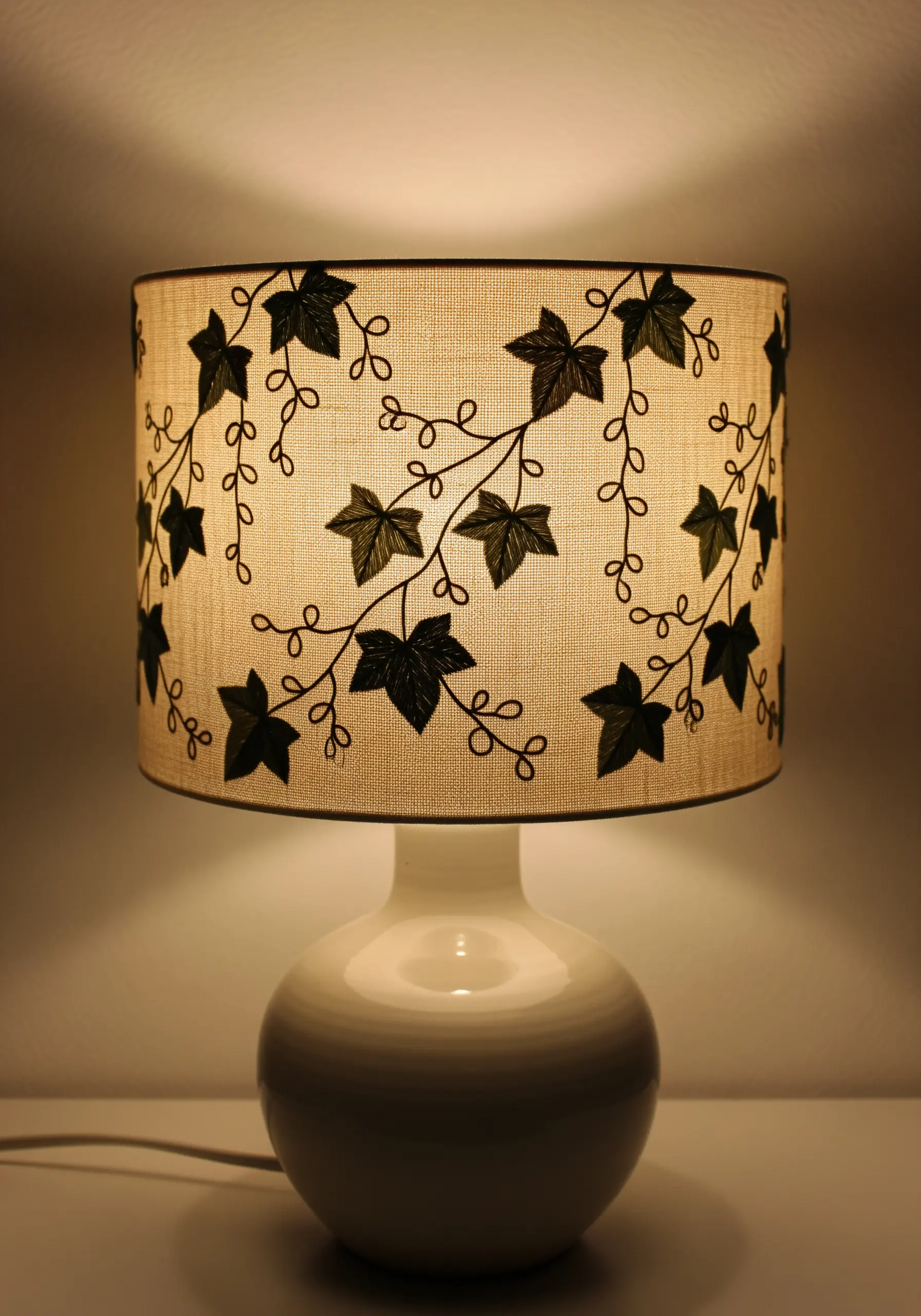
When embroidering a lampshade, your design has to work both in daylight and when illuminated from within.
Think in terms of silhouette by using dark thread on a light, semi-translucent fabric like linen or cotton scrim.
The contrast creates a stunning graphic effect when the lamp is turned on, transforming your stitching into a captivating light play.
Keep your stitches neat on the reverse side, as the light may reveal the ‘back’ of your work through the fabric.
8. Compose an Abstract Path with Satin Stitch
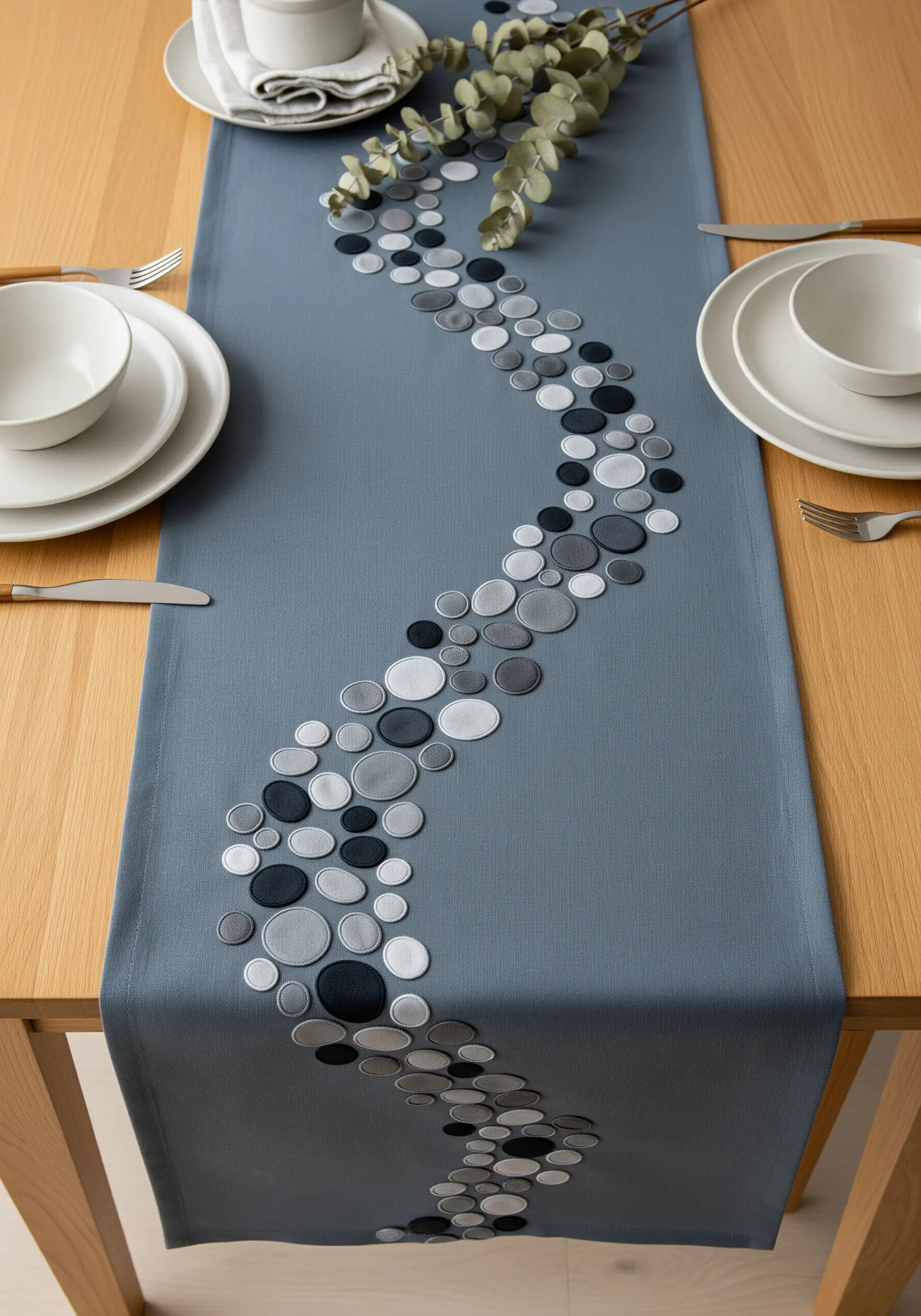
You can achieve a sophisticated, modern aesthetic by mastering one simple stitch in a controlled palette.
Create this organic, flowing pattern of ‘pebbles’ using only the satin stitch on hand-stitched table runner embroidery designs.
To ensure perfectly crisp edges on each shape, outline it first with a tight split stitch before filling it in.
Using a tonal gradient of grays, creams, and charcoals gives the composition a sense of depth and rhythm without adding complexity.
9. Sculpt a Seascape with Fabric and Thread
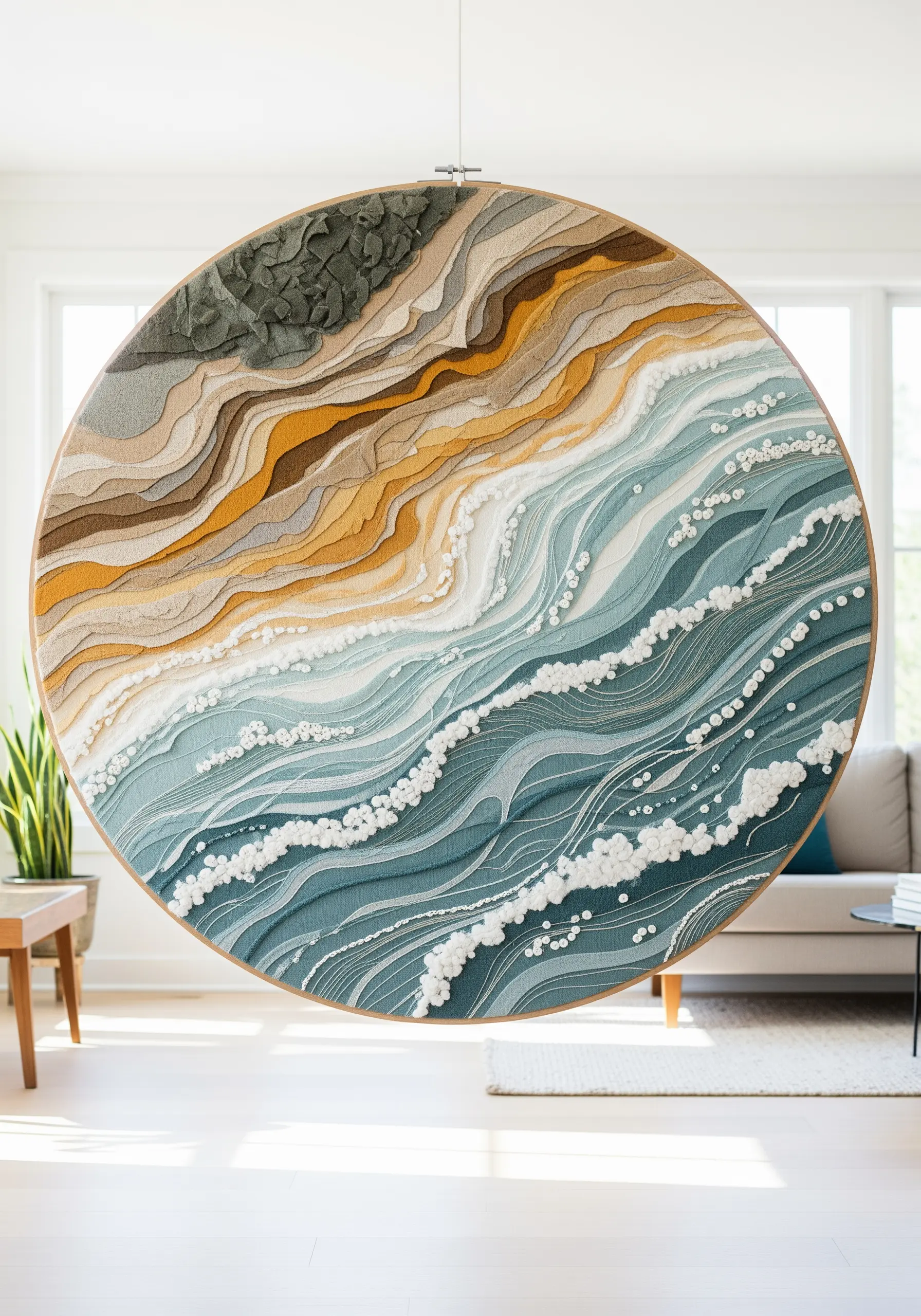
Create extraordinary depth in your hoop art by building layers with fabric before you even add a stitch.
Begin with a coastal-inspired fabric collage embroidery, cutting and layering pieces of cotton, linen, and sheer materials to form the organic shapes of sand and water.
Secure the raw edges with a simple running stitch, then enhance the scene with embroidery.
Use dense clusters of French knots for sea foam and long, flowing straight stitches to suggest the water’s movement, integrating thread and fabric into one cohesive piece.
10. Bring a Motif to Life with 3D Stitches
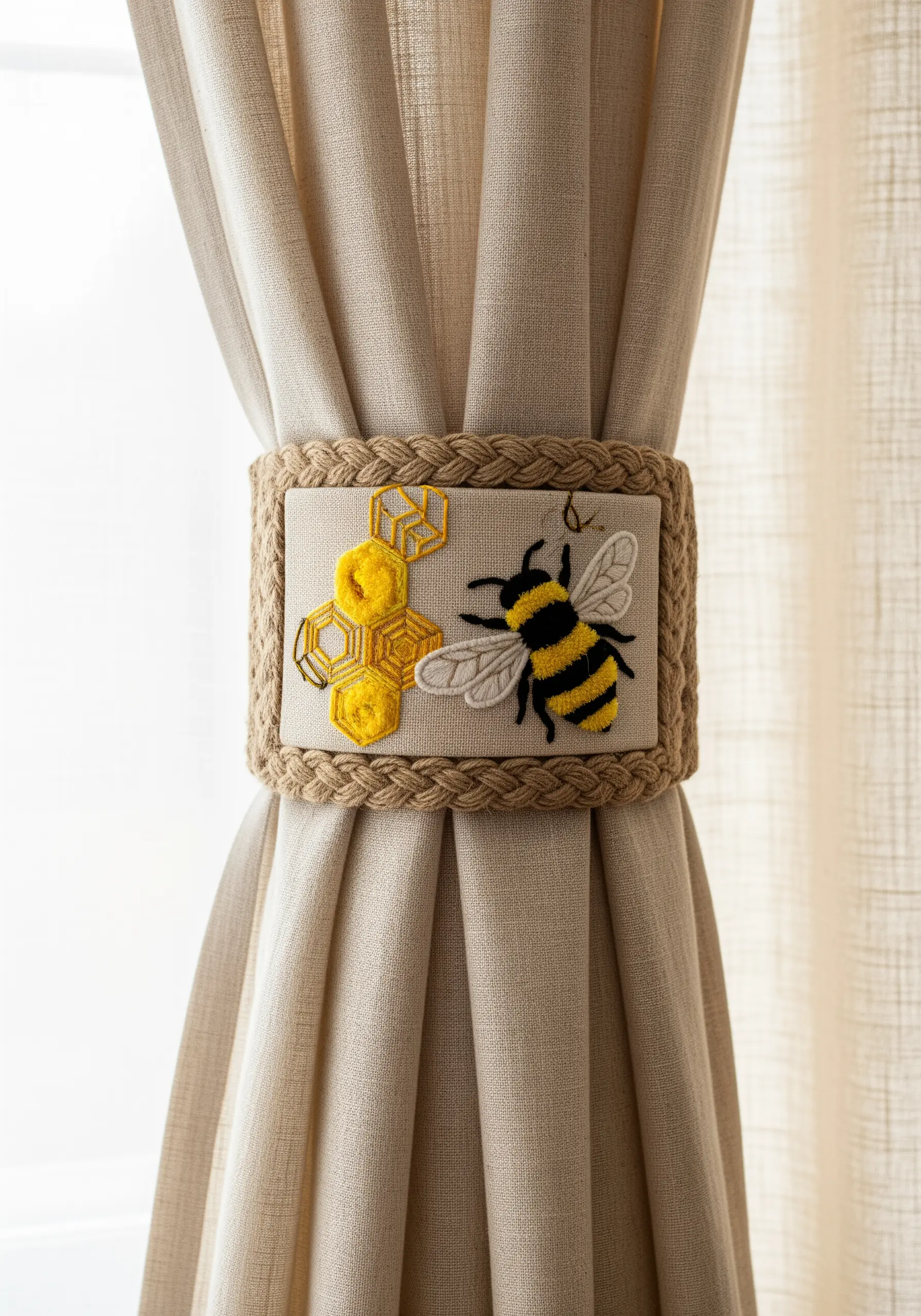
Transform a simple embroidered motif into a captivating, dimensional object by incorporating stumpwork techniques.
For the bee’s body, use a padded satin stitch to create a raised, rounded form that feels substantial and real.
Create the wings separately using a detached buttonhole stitch over a thin wire frame, then attach them to the body so they stand free from the fabric.
These tactile details turn a simple curtain tie-back into a piece of interactive art.
11. Weave a Celestial Scene on Felt
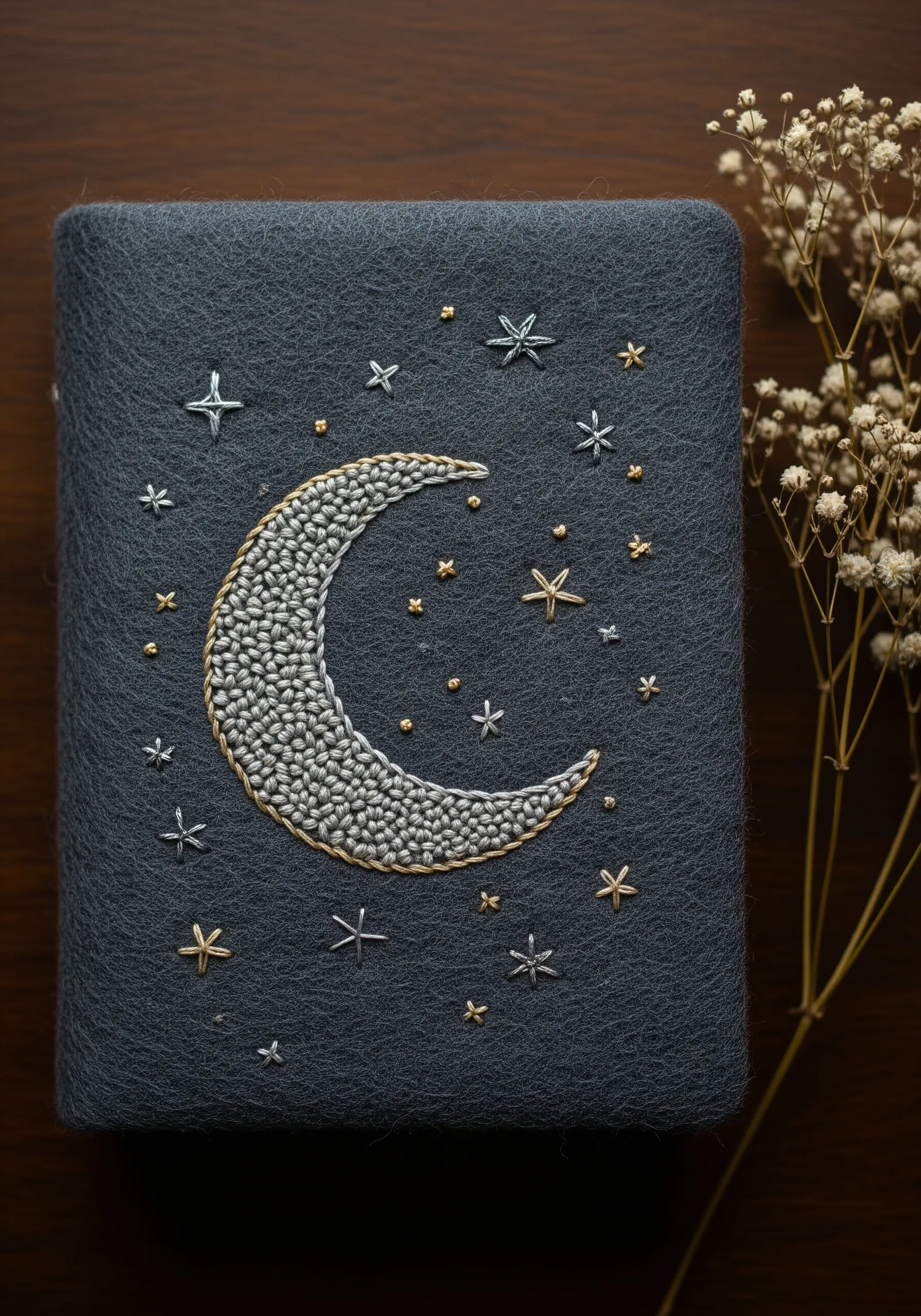
Felt provides a wonderful, non-fraying background for dense textural work and metallic accents.
Fill the crescent moon shape with hundreds of tiny seed stitches, packed closely together to create a tactile, pebbled surface.
For the perfect contrast, outline the moon and stitch the stars using a single strand of metallic floss.
The shimmer of the metallic thread against the matte, absorbent quality of the felt creates a beautiful and subtle cosmic glow in these minimal sky & moon designs.
12. Stitch Crisp Botanicals on Textured Towels
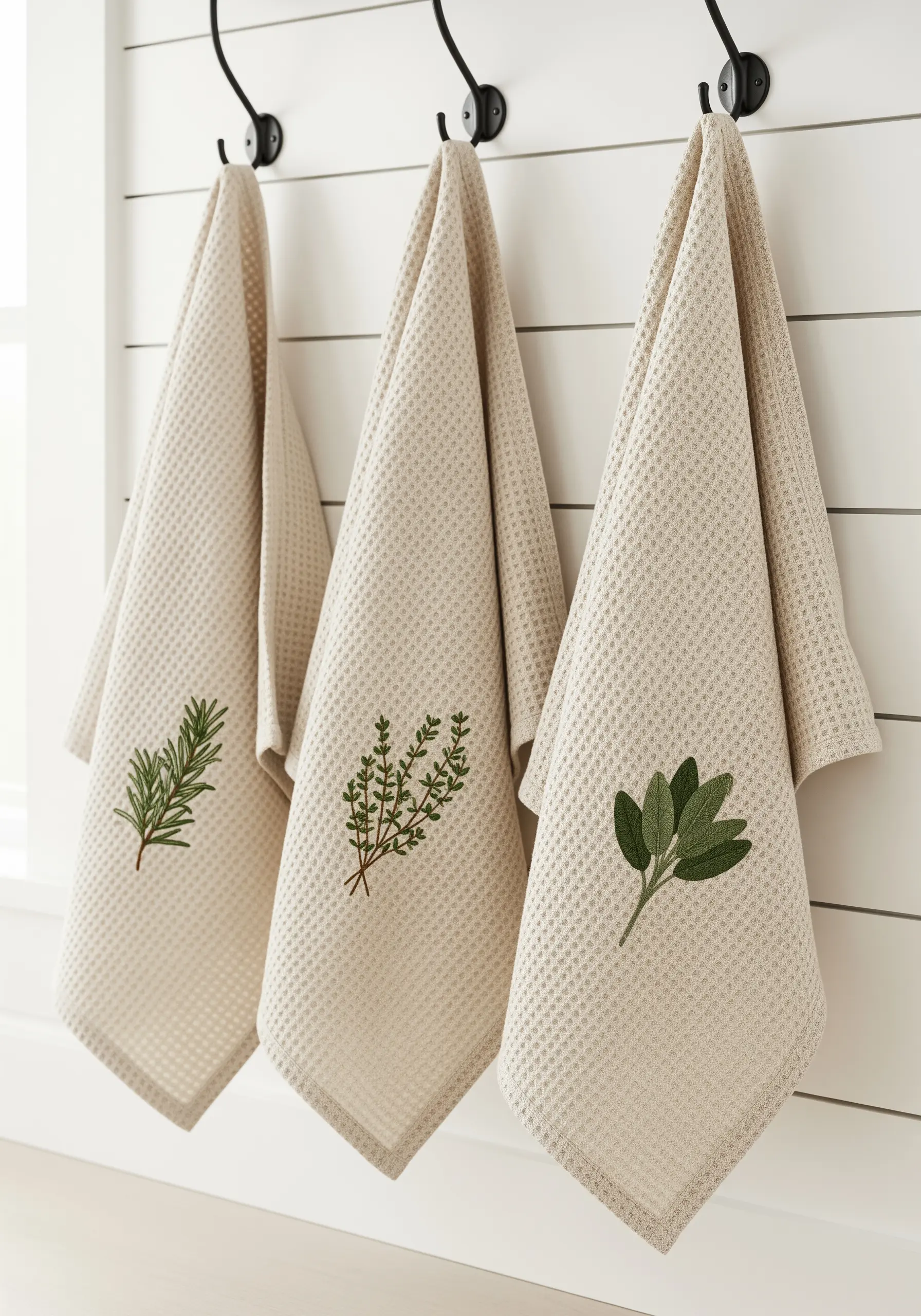
To achieve clean, professional-looking results on textured fabrics like waffle-weave or terrycloth, a stabilizer is your most important tool.
Use a water-soluble or tear-away stabilizer on top of the fabric to create a smooth surface for your stitches, preventing them from sinking into the weave.
Choose simple, bold stitches like the fishbone stitch for leaves and a basic stem stitch for branches.
This ensures your medicinal herb embroidery designs appear crisp and defined, sitting proudly on the fabric’s surface.
13. Craft a Gentle Felt and Thread Mobile
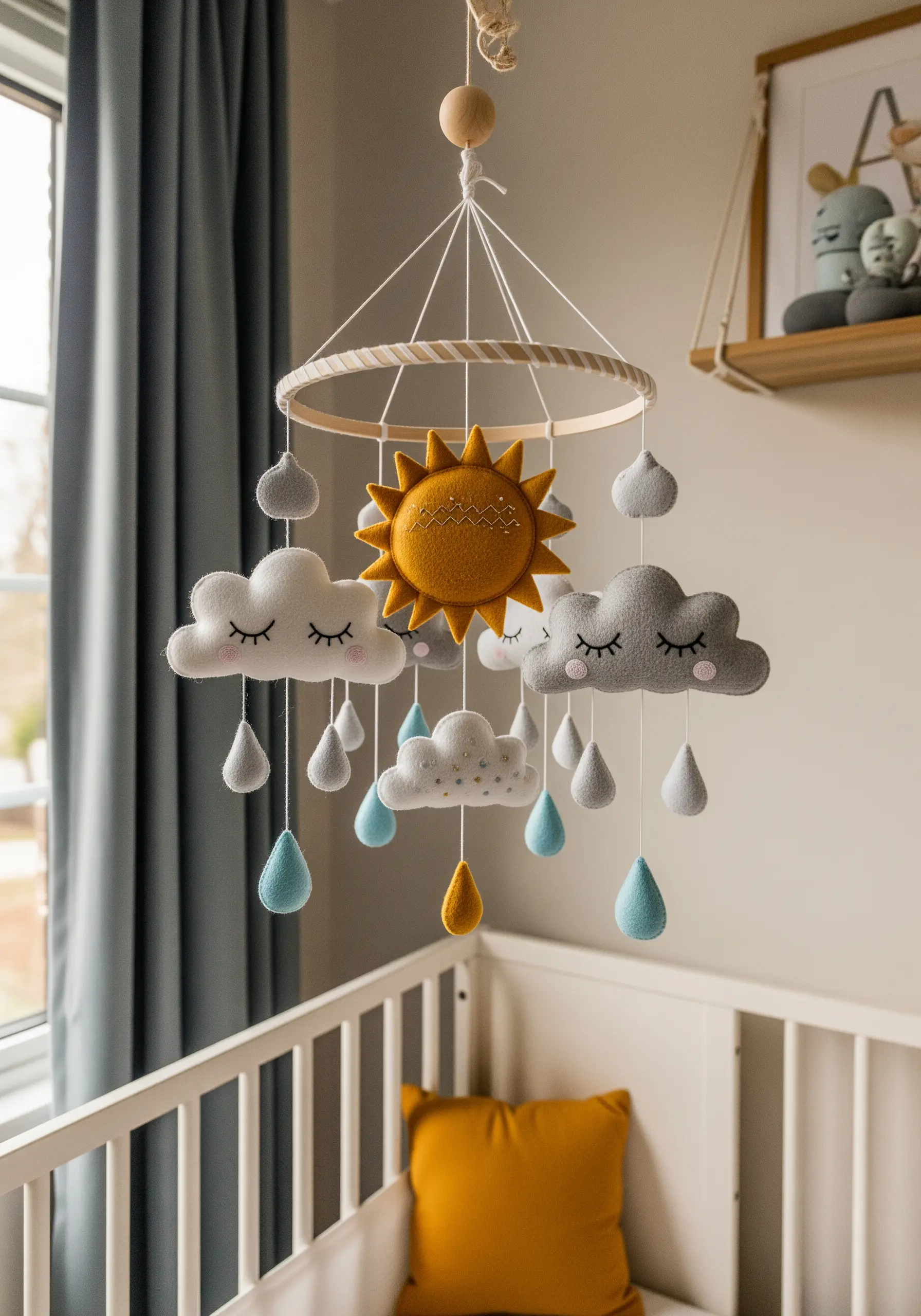
For nursery decor, combine soft felt appliqué with minimal, expressive embroidery.
The beauty of these cloud-soft embroidery hoops and mobiles comes from the clean shapes and subtle details.
Cut your forms from a quality wool-blend felt and use a neat blanket stitch along the edges for a handcrafted finish.
A few carefully placed stitches—a simple backstitch for a sleeping eye, a tiny satin stitch for a cheek—are all you need to add personality and charm.
14. Weave Geometric Patterns into a Basket
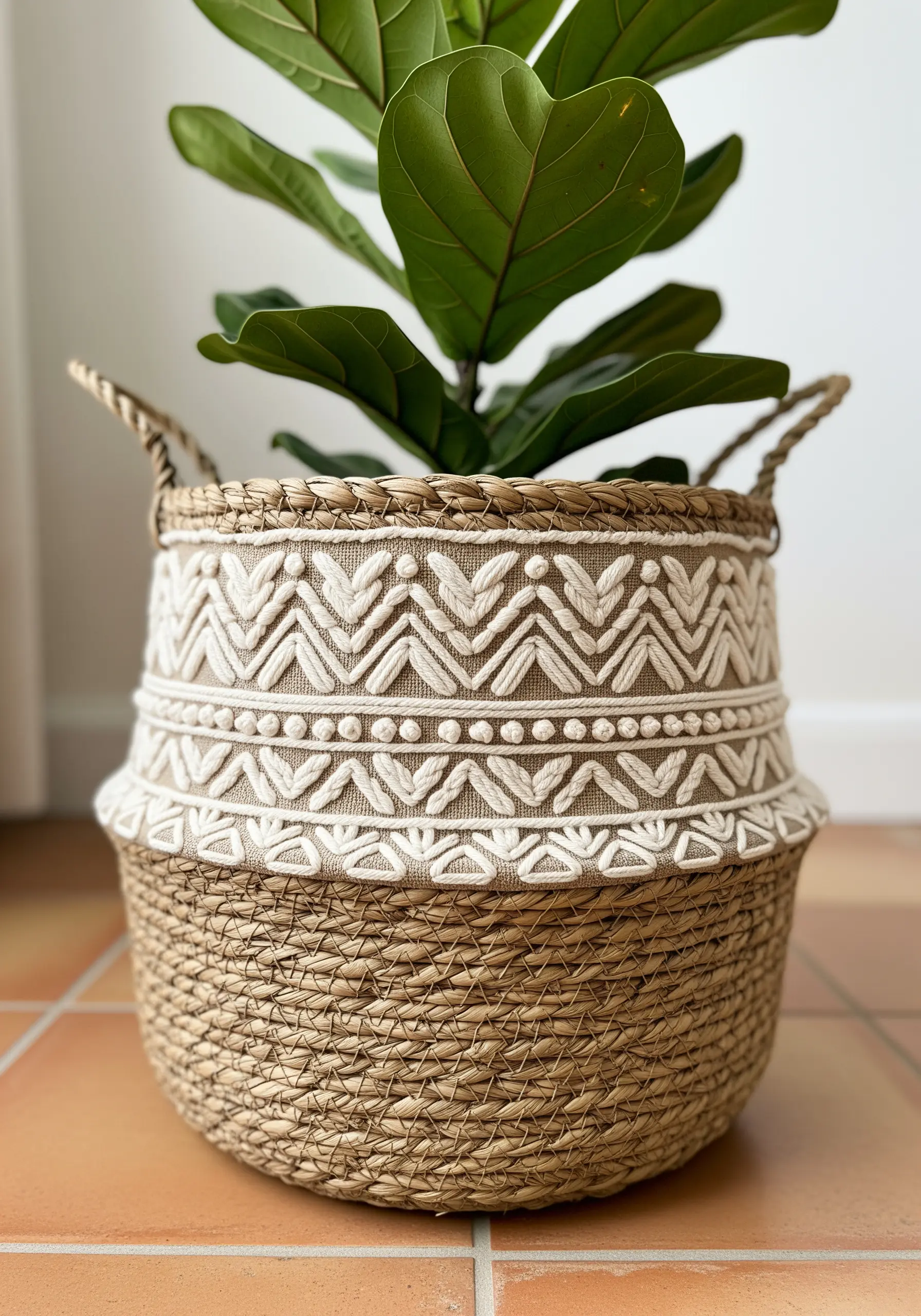
Embellish a rigid, woven object by thinking of it less as embroidery and more as weaving.
Use a blunt tapestry needle and thick yarn or wool roving to work your thread through the existing structure of the basket.
This technique requires no hoop and allows you to create bold, geometric patterns like chevrons and stripes that complement the basket’s natural texture.
It’s a perfect way to add a personalized touch to functional boho-inspired textile wall art patterns and decor.
15. Trace Topographic Lines with a Single Stitch
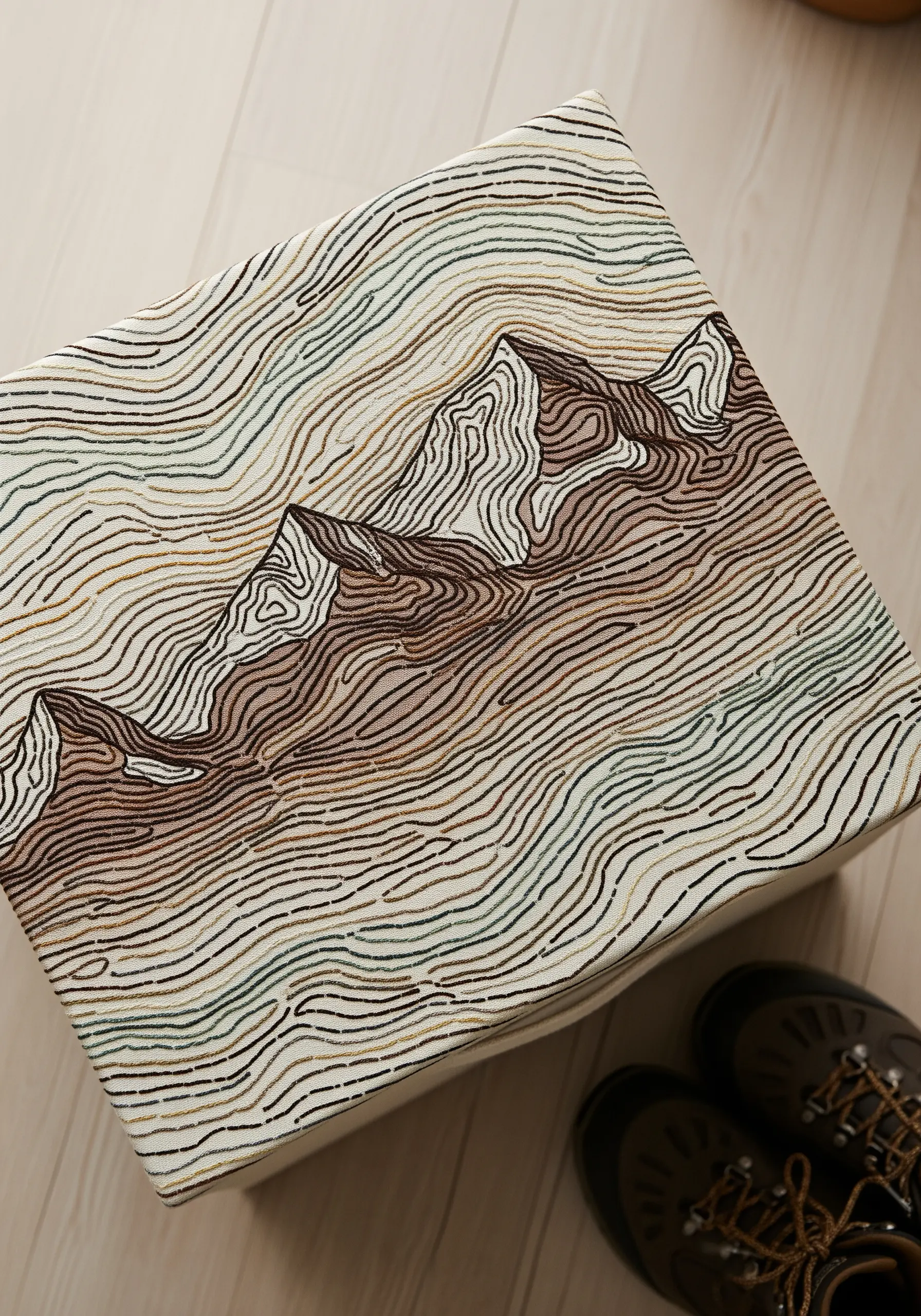
You can create incredibly complex and visually arresting patterns using just one simple stitch, repeated with intention.
This topographic effect is achieved entirely with a stem stitch or backstitch, making it durable enough for upholstery.
The design’s power lies in the density and flow of the continuous lines, which mimic the contours of a mountain landscape.
Subtly shifting your thread color creates an illusion of shadow and elevation, turning a simple surface into a piece of functional map art.
16. Add Tactile Dimension to an Upholstered Headboard
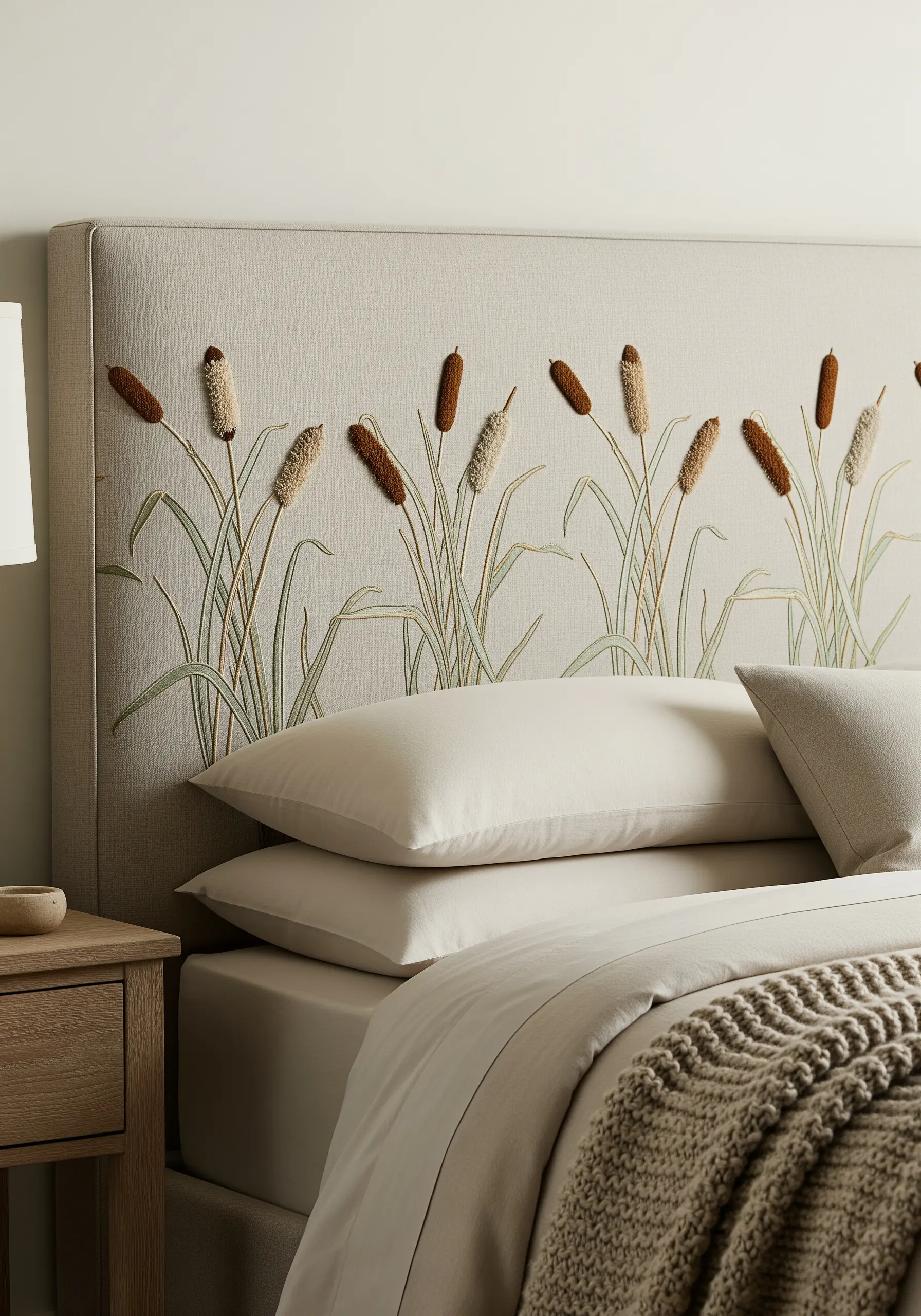
Elevate a plain, fabric-covered headboard by introducing texture-rich embroidery ideas that invite touch.
Use the Turkey work stitch to create the plush, velvety tops of the cattails; after making the loops, you can trim them for a dense, uniform finish.
Contrast this high-pile texture with the sleek, flat surface of satin-stitched leaves and stem-stitched stalks.
This play between flat and dimensional stitches creates a sophisticated design that is engaging from every angle.
17. Sketch Botanical Line Art on Canvas
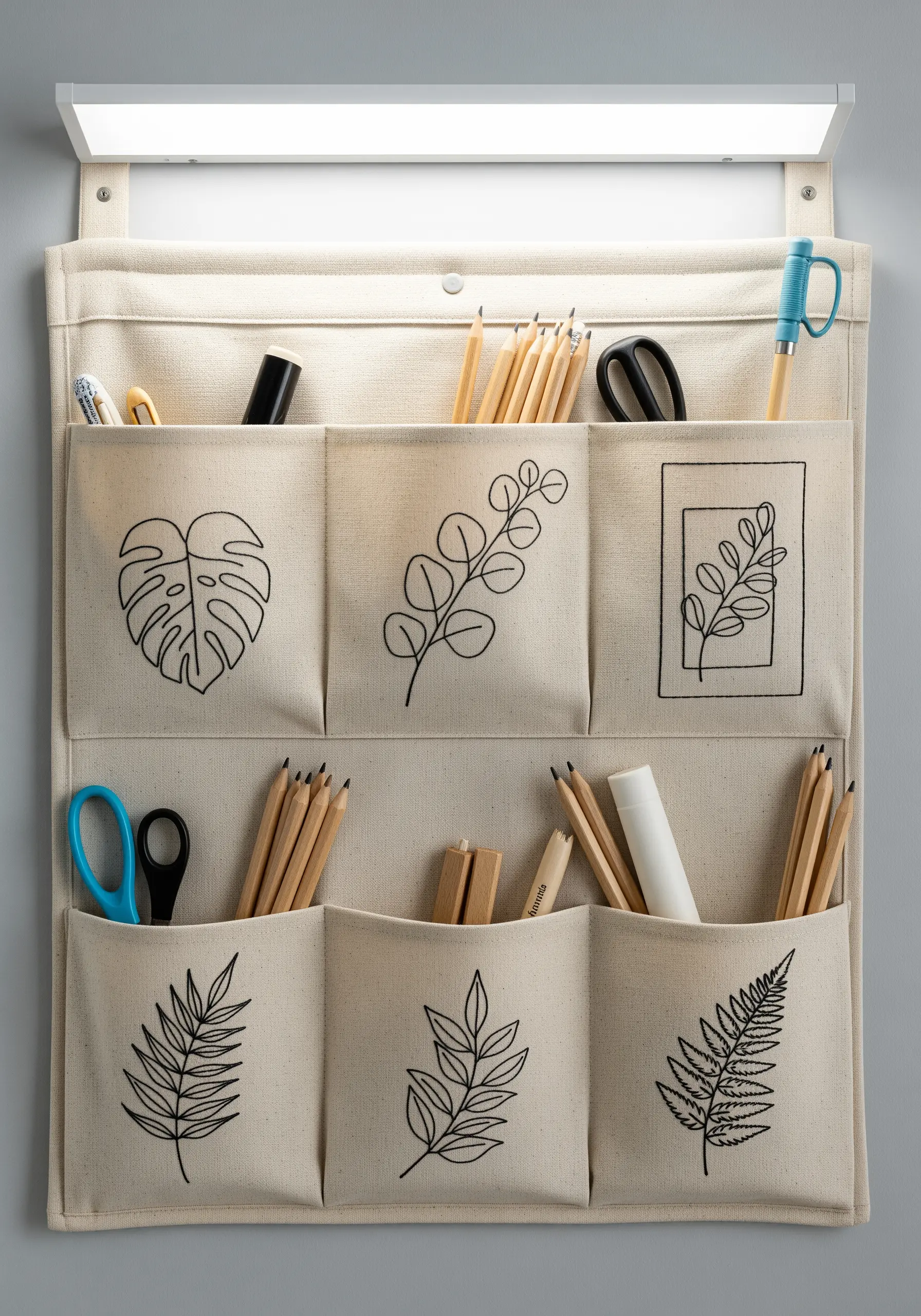
Capture the clean, modern aesthetic of a pen-and-ink drawing with thread.
Use a full six strands of black cotton floss and a simple backstitch to create bold, graphic lines that stand out on a neutral canvas background.
The key to successful minimalist line art nature embroidery is consistency: focus on maintaining smooth, even stitches, especially around curves, to achieve that effortless, hand-drawn look.
This approach is perfect for adding a touch of personalized, artistic flair to functional items.
18. Paint Realistic Feathers on Fine Linen
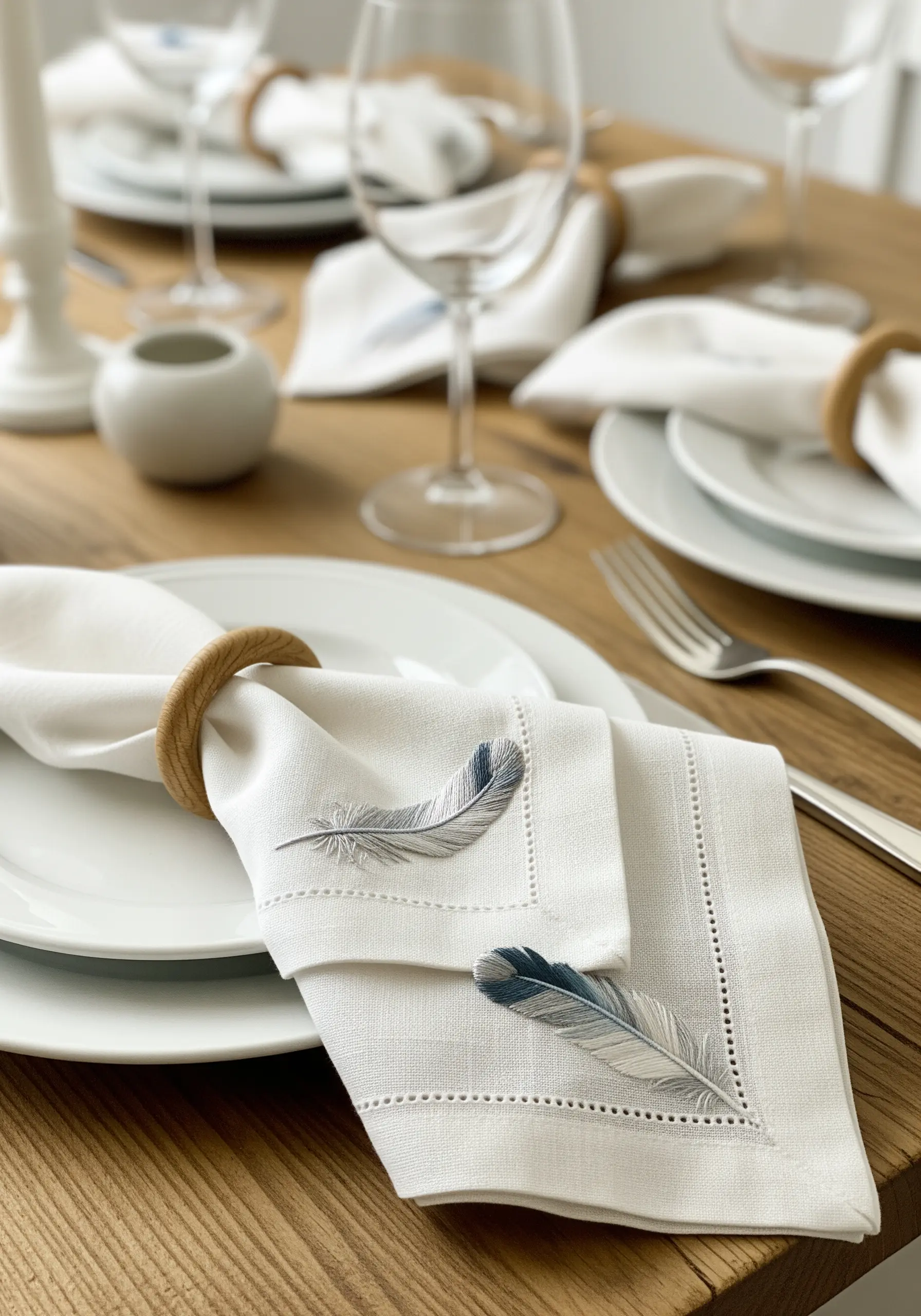
Achieve a delicate, painterly effect on fine textiles by mastering the art of thread painting.
Using just a single strand of floss, blend different shades of a color with the long-and-short stitch to create soft, seamless gradients.
This technique allows you to capture the subtle variations and soft texture found in a real feather.
Patience is essential for these realistic feather embroidery techniques, but the result is a breathtaking piece of art that transforms an ordinary napkin into an elegant keepsake.