

You have the threads, the fabric, and the desire to create something beautiful for your bedroom. But perhaps your finished pieces don’t quite capture the elegant, dreamy aesthetic you envision. The gap between the idea and the reality often comes down to small, intentional choices in technique and composition.
Let’s move beyond just following a pattern. This is about understanding *why* certain stitches create softness, *how* color choices build a mood, and *when* negative space is your most powerful tool. It’s about transforming a simple textile into a piece of art that feels deeply and personally yours.
In these ideas, you won’t find complicated instructions. Instead, you’ll discover specific adjustments you can make right now to elevate your work, turning your bedroom into a serene sanctuary stitched with your own hands.
1. Embroider a Headboard as a Wildflower Meadow
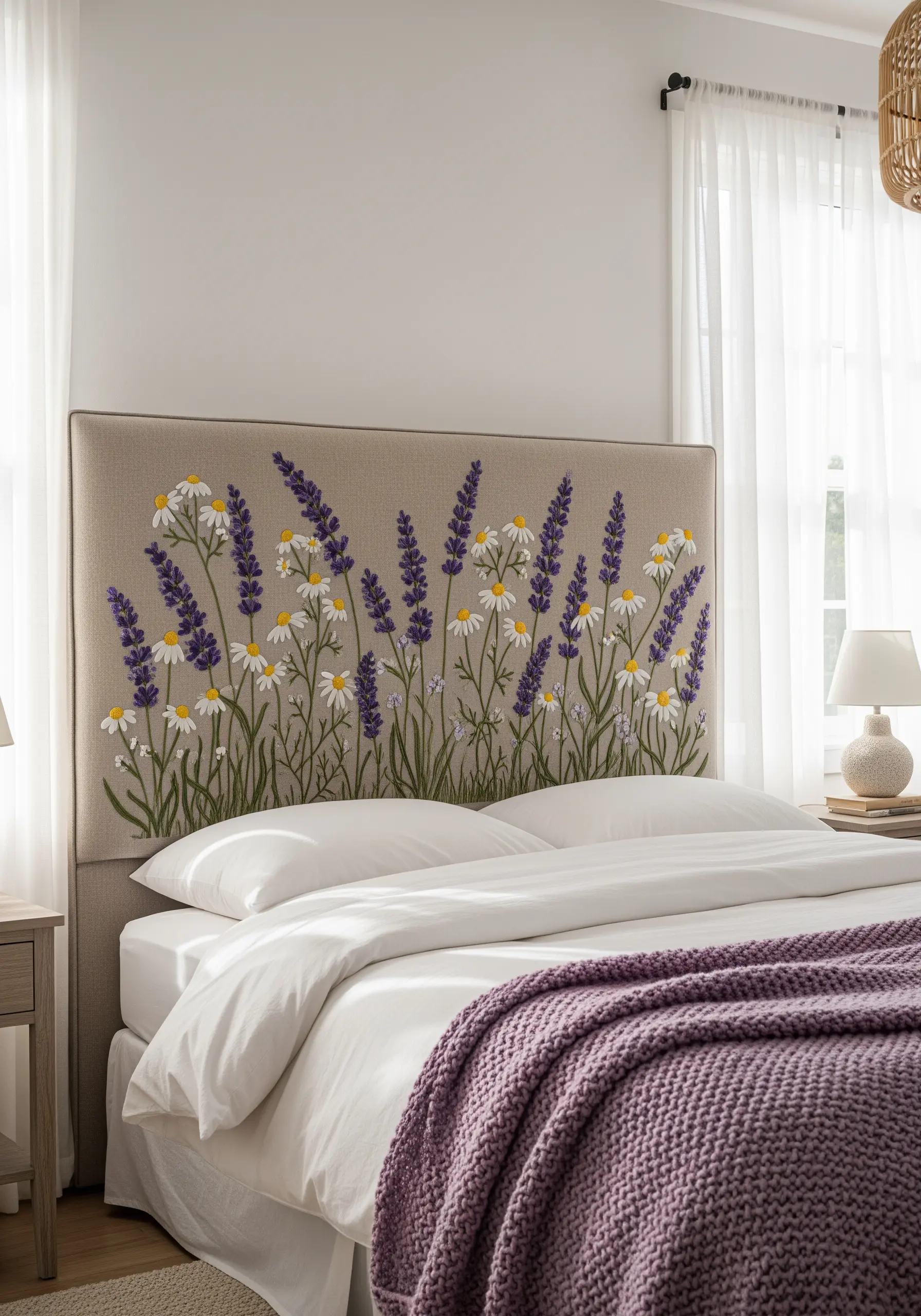
Transform a simple upholstered headboard into a statement piece of functional art.
Use a heavyweight fabric like linen or cotton canvas that can support dense stitching without puckering.
For the lavender stalks, opt for a textured fishbone stitch or satin stitch, using a slightly thicker pearl cotton to give the buds dimension.
Create the daisies with a simple detached chain stitch (lazy daisy) for the petals and packed French knots for the centers, ensuring each knot is tight and uniform for a polished look.
Vary the height and density of the flowers to mimic a natural, uncultivated field, letting the design breathe rather than filling every inch.
2. Create Cascading Wisteria with Dimensional Stitches
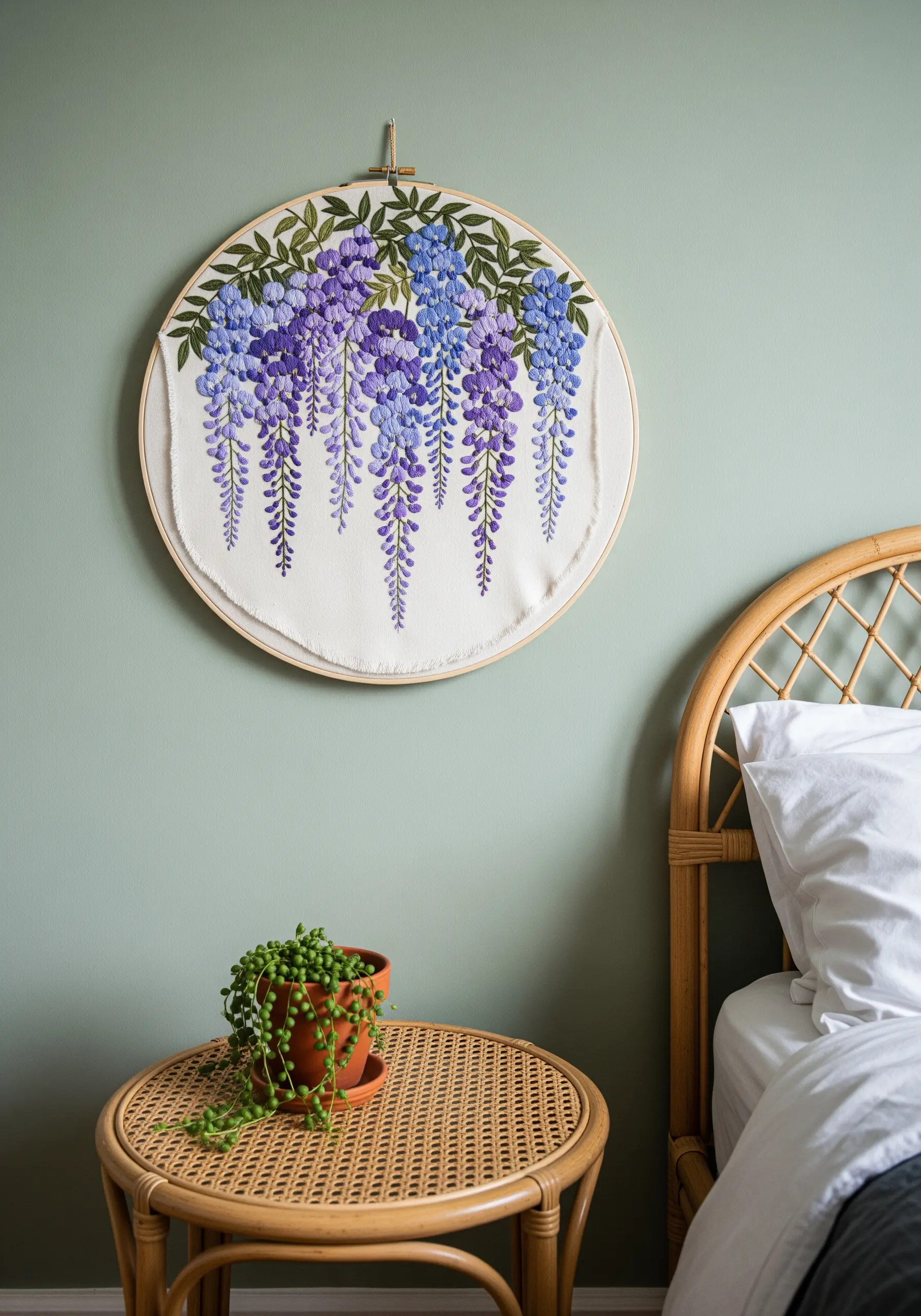
Capture the graceful drape of wisteria by mastering directional stitching and subtle color blending.
Use a long and short stitch for the petals, angling your stitches downward to create a sense of weight and movement.
Incorporate three to four shades of purple, blue, and lilac within each blossom cluster, using just one or two strands of floss to achieve a soft, painterly gradient.
To give the piece a modern, deconstructed feel, leave the edges of your linen fabric raw and slightly frayed within a larger hoop, turning the hoop itself into a frame.
This technique of color blending gives the wisteria a realistic depth that flat satin stitch cannot achieve.
3. Stitch Whispering Dandelions on Muted Linens

Embrace negative space to create a design that feels light, airy, and full of movement.
Use a single color of thread, like off-white or silver grey, against a dusty rose or taupe fabric for a sophisticated, monochromatic effect.
Stitch the dandelion heads with dense, radiating straight stitches, and then scatter the seeds across the duvet using single, delicate seed stitches or tiny backstitches.
Vary the length and direction of the floating seeds to create a convincing illusion of them being carried by a gentle breeze.
This design is a powerful minimalist statement that relies on composition rather than complex stitches.
4. Add a Cherry Blossom Canopy to Sheer Curtains

Embroidering on lightweight or sheer fabric requires a delicate touch to prevent puckering and tearing.
Always use a water-soluble or heat-removable stabilizer on the back of the curtain to support your stitches; it provides tension and washes away invisibly.
Use only one or two strands of floss for the branches (stem stitch) and petals (single straight stitches or lazy daisies) to keep the design from weighing down the fabric.
Concentrate the design at the top, letting the petals scatter sparsely as they fall toward the bottom. This creates a natural, ethereal cascade of color and gives the piece a soft, painterly feel.
5. Curate a Botanical Cushion Collection
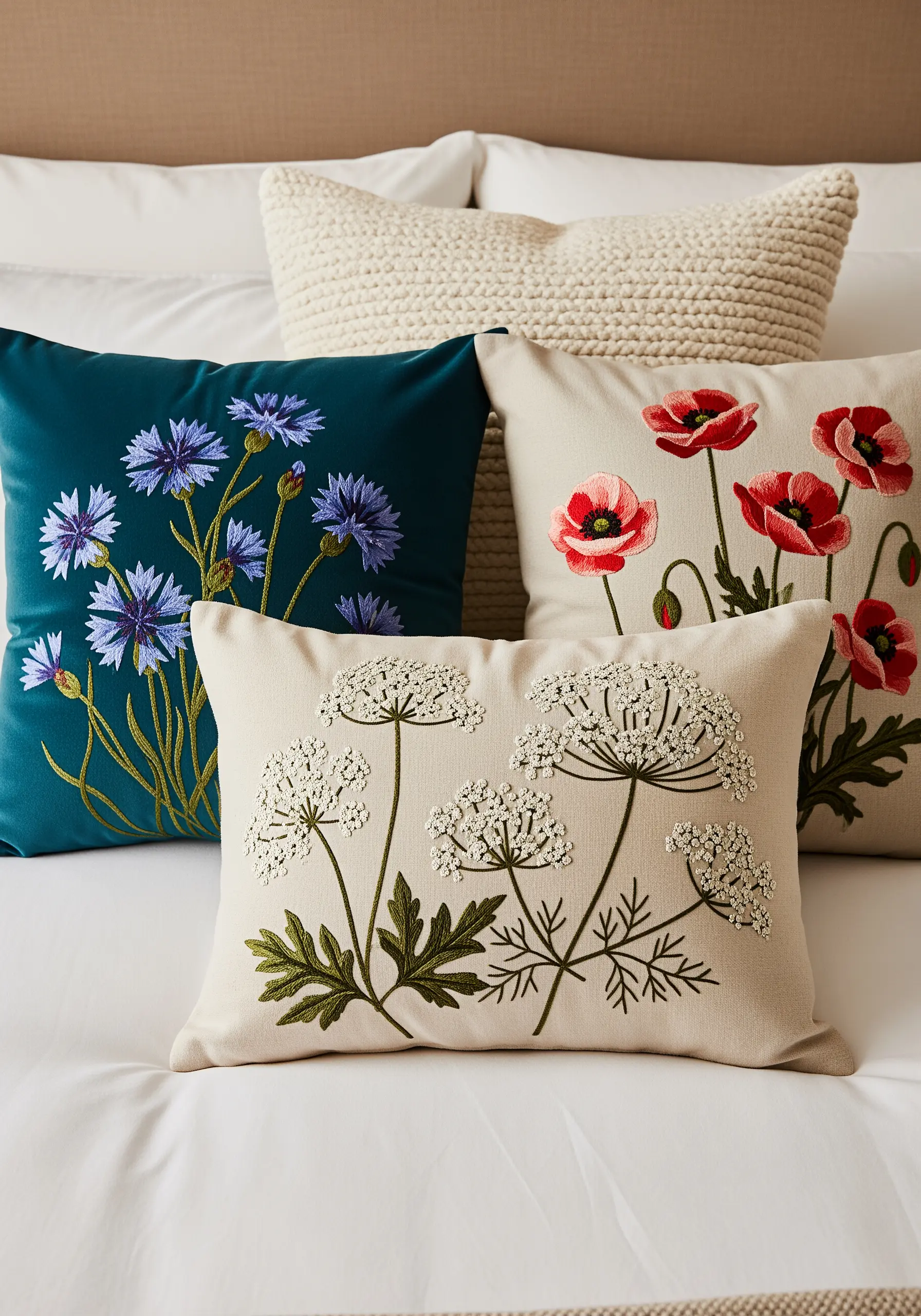
To create a cohesive collection, choose a unifying element—it could be a color palette, a stitch style, or a theme like ‘wildflowers’.
Contrast fabric textures for visual interest: stitch delicate Queen Anne’s lace (using French knots and straight stitches) on neutral linen, and bold poppies (using satin stitch) on rich velvet.
For the cornflowers, use layered straight stitches in varying shades of blue to capture their uniquely ruffled texture.
By using the same green tones for all the stems and leaves, you tie the different floral designs together, making them look intentionally curated.
6. Design Climbing Vines for a Canopy Bed
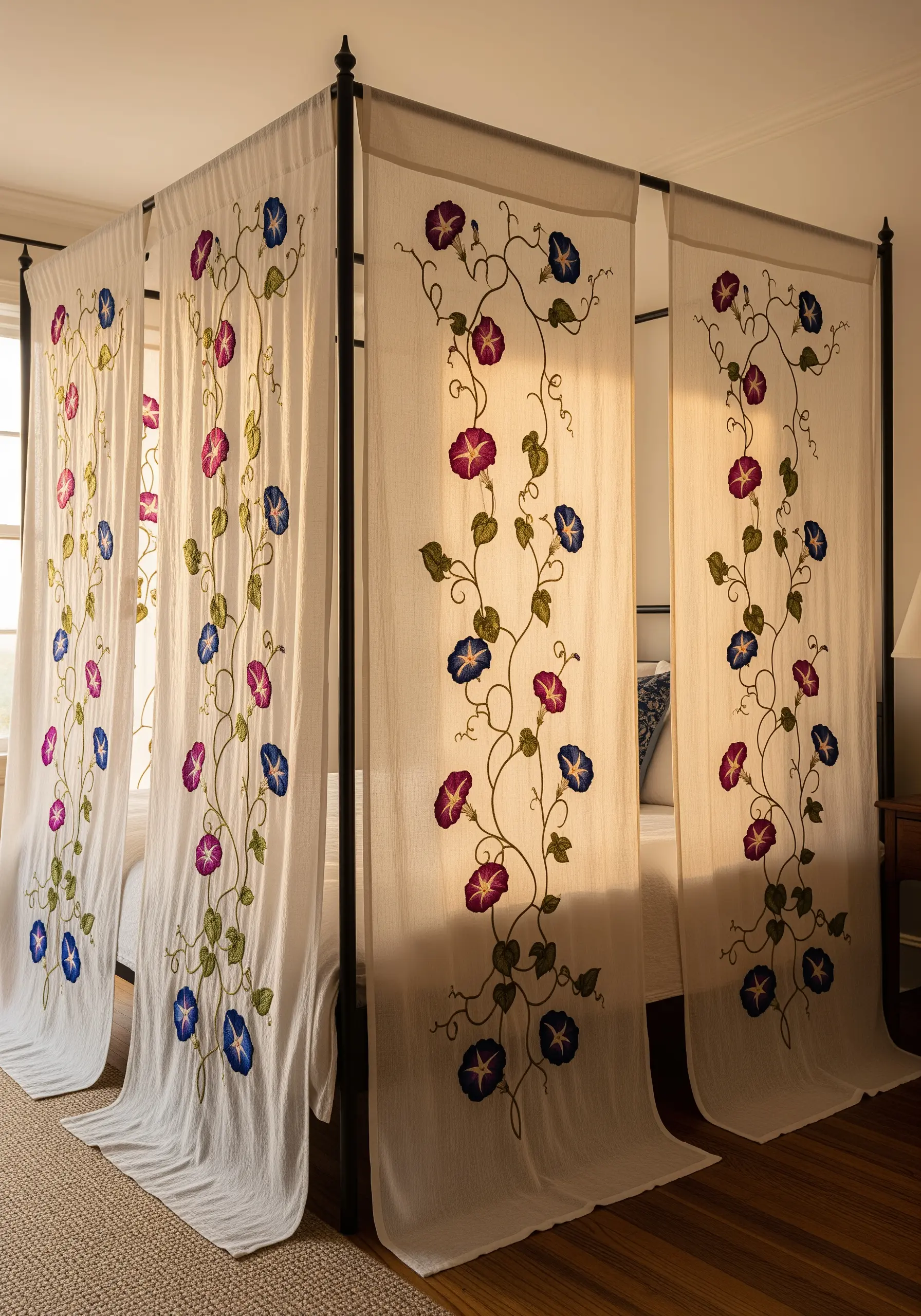
Use embroidery to create a permanent garden installation that wraps your bed in botanicals.
A whipped backstitch is ideal for the climbing vines, as it creates a smooth, raised line that looks like a real stem without any gaps.
For the morning glory flowers, use a satin stitch, angling the stitches toward the center to create a funnel shape. Add a contrasting French knot or two in the middle for the stamen.
Don’t be afraid to let the vines meander organically across the fabric panels. A perfectly straight line looks unnatural; a gentle curve will bring the garden indoors more effectively.
7. Embellish a Lampshade with a Fern Wreath

Adding embroidery to a lampshade transforms a utility item into a piece of decor that plays with light and shadow.
It’s easiest to stitch on the fabric panel before it’s attached to the lampshade rings. If your lampshade is already assembled, use a small hoop and work in sections.
Use a single strand of green floss and a fern stitch—its structure perfectly mimics the feathery quality of real fern fronds.
Intersperse the wreath with tiny blue lazy daisy stitches or French knots for a subtle pop of color that will glow when the light is on.
This simple embroidered accent adds a touch of handmade charm to your bedside lighting.
8. Master Bold Thread Painting on Velvet
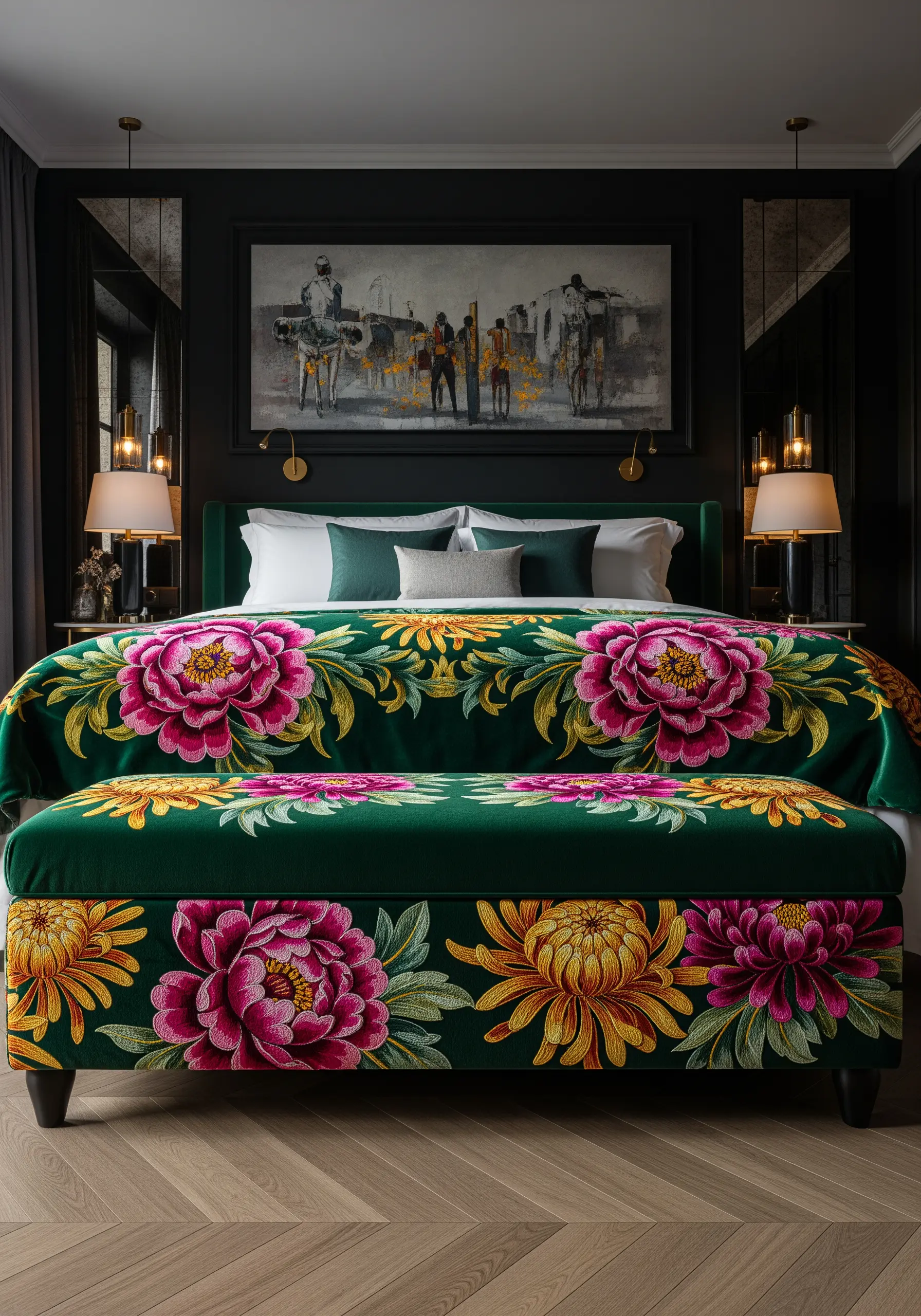
Working on a high-pile fabric like velvet requires specific techniques to achieve a clean, vibrant finish.
Use a topper stabilizer (like a water-soluble film) to prevent your stitches from sinking into the velvet’s pile. This keeps your work crisp and visible.
For large-scale florals, long and short stitch is essential for blending colors smoothly and creating a painterly effect. Use at least four to five shades per petal to achieve realistic depth.
Choose a high-sheen rayon or silk thread to contrast with the matte texture of the velvet, which will make the floral design pop. This will create a dimensional, textured effect.
9. Arrange a Botanical Embroidery Gallery Wall

Turn your collection of stitched specimens into a sophisticated art installation above a dresser or console table.
Choose a neutral, consistent background fabric, like oatmeal linen or unbleached cotton, to unify the collection.
Vary the hoop sizes and the orientation of your botanicals—some vertical, some angled—to create a dynamic, organic layout.
Keep the stitching style simple and illustrative. A clean backstitch for outlines and a light seed stitch for fill creates a refined, scientific-illustration aesthetic.
Grouped together, these simple hoops create a cozy accent wall with personal, handmade appeal.
10. Emulate High-Pile Texture with Thread

While this poppy rug is likely made with punch needle or tufting, you can recreate its lush, high-texture feel with specific embroidery stitches.
The Turkey stitch is perfect for this. It creates thread loops that you can trim to any length, resulting in a plush, carpet-like surface ideal for the flower centers.
For the petals, use a very thick yarn or multiple strands of embroidery floss and couch it onto the fabric, laying the threads down and tacking them in place with a smaller stitch.
This allows you to translate this plush texture into embroidery, creating a piece with incredible tactile appeal.
11. Stitch a Romantic Runner for Your Vanity
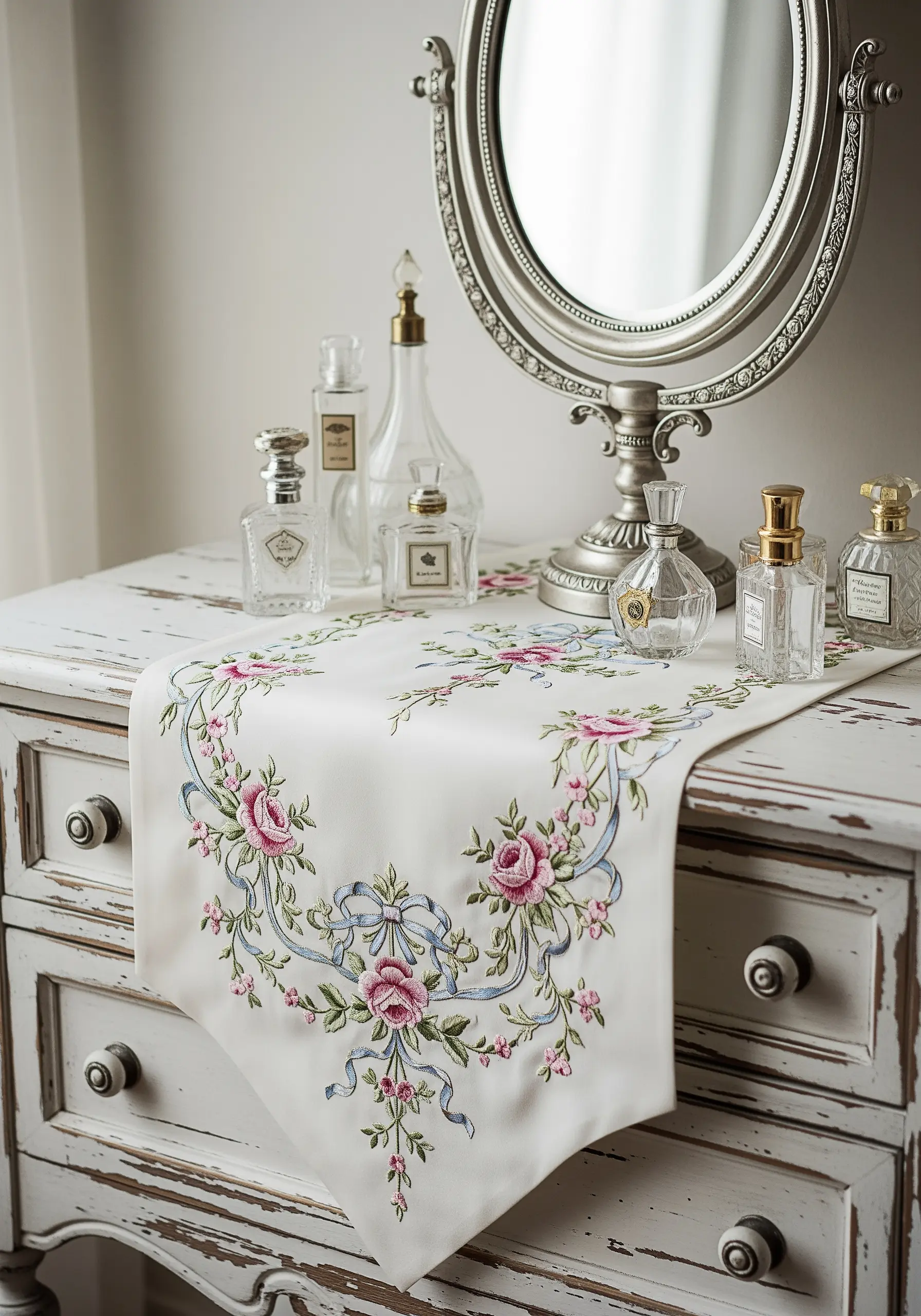
Capture a soft, vintage aesthetic with a graceful composition and a delicate color palette.
For the draping blue ribbon, use a satin stitch with a single strand of silk floss. The natural sheen of silk will create a realistic, fabric-like highlight.
Create the roses with woven wheel stitches, pulling the thread just tight enough to create dimension without puckering the background fabric.
Use a light touch with the leaves and filler flowers; simple lazy daisy and stem stitches in muted greens will complement the main roses without overwhelming them. These delicate vintage-inspired florals are perfect for adding elegance.
12. Construct a Densely Textured Floral Monogram
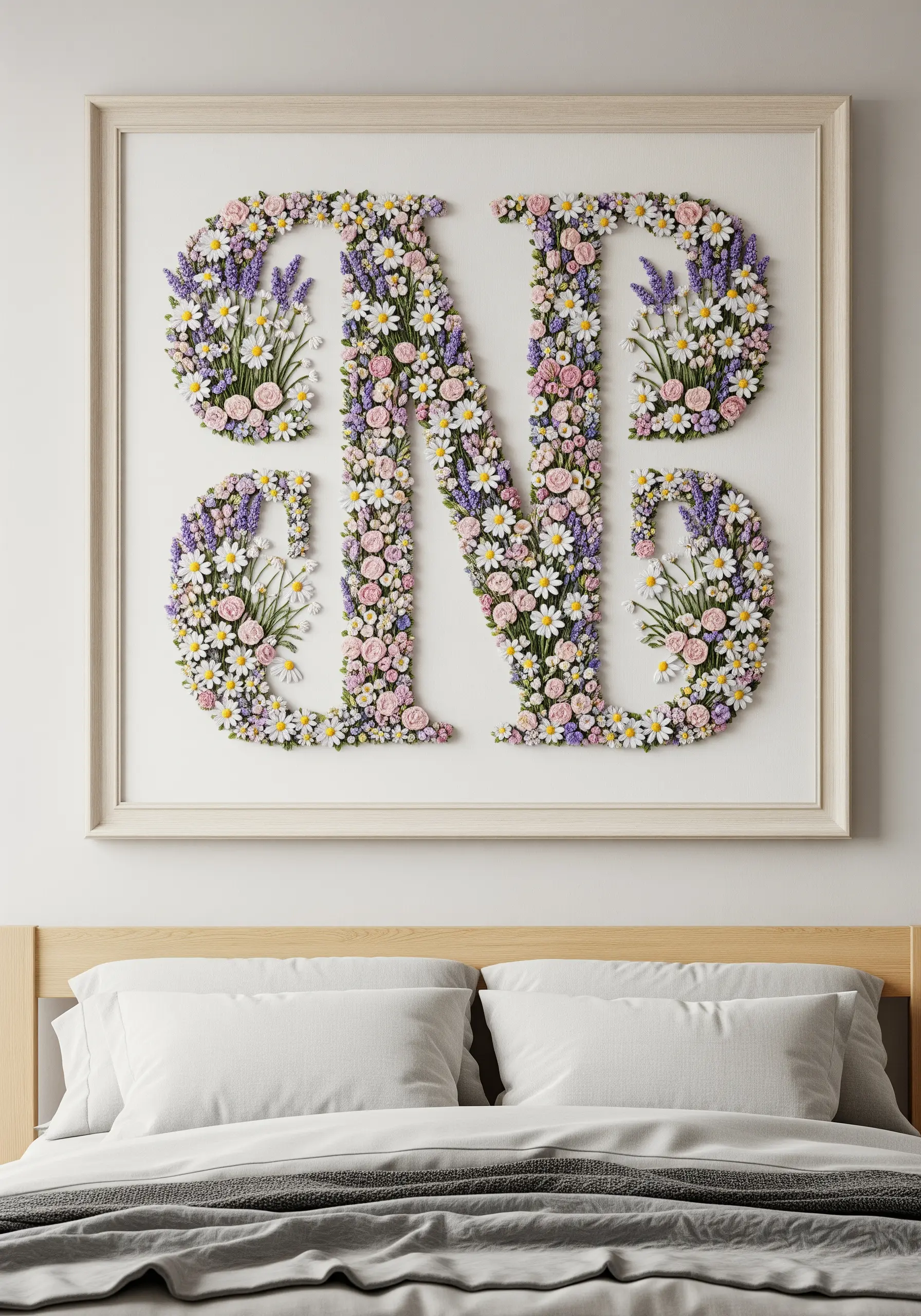
Elevate a simple monogram by building it entirely from a collage of textural floral stitches.
First, lightly trace the letter’s outline. Then, fill the shape with a dense variety of stitches: woven wheel roses, French knot clusters for hydrangeas, and detached chain stitches for leaves.
Incorporate straight-stitch lavender sprigs to add height and vary the silhouette. The key is to pack the stitches tightly, overlapping them slightly so no background fabric shows through.
This technique turns a flat letter into a three-dimensional floral sculpture, perfect for personalizing your space above the bed.
13. Design a Sampler Quilt with Botanical Blocks
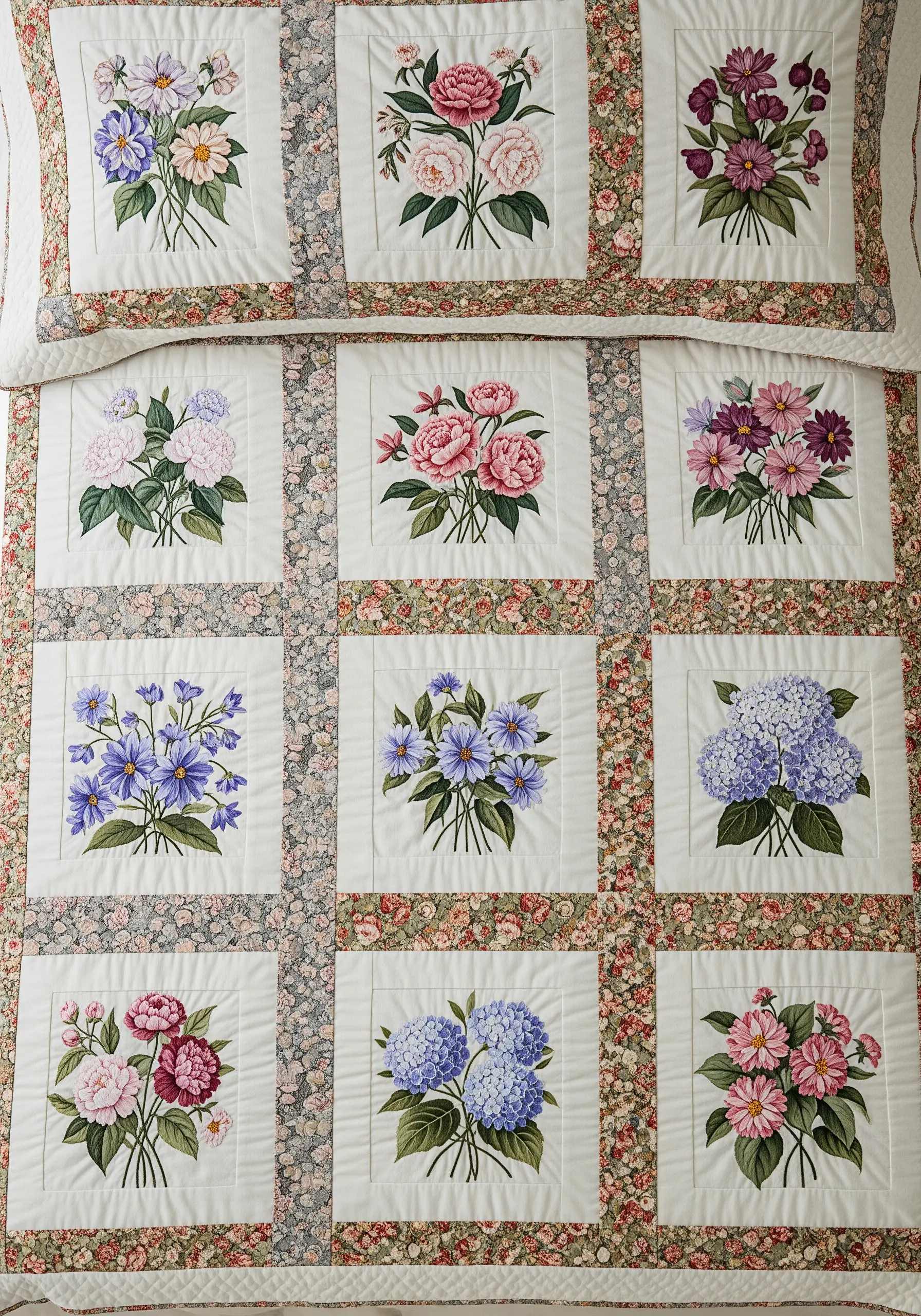
A quilt offers a perfect canvas for showcasing a variety of your favorite floral stitches in a structured format.
Assign one floral specimen to each block. This approach allows you to focus on one design at a time, making a large project feel more manageable.
Use a consistent set of six to eight thread colors across all the blocks to ensure the final quilt looks cohesive, even with different floral motifs.
Trace your designs onto the fabric squares before you piece the quilt together. This is far easier than trying to stitch in the center of a large, bulky quilt.
14. Embroider a Serene, Continuous Vine on a Room Divider
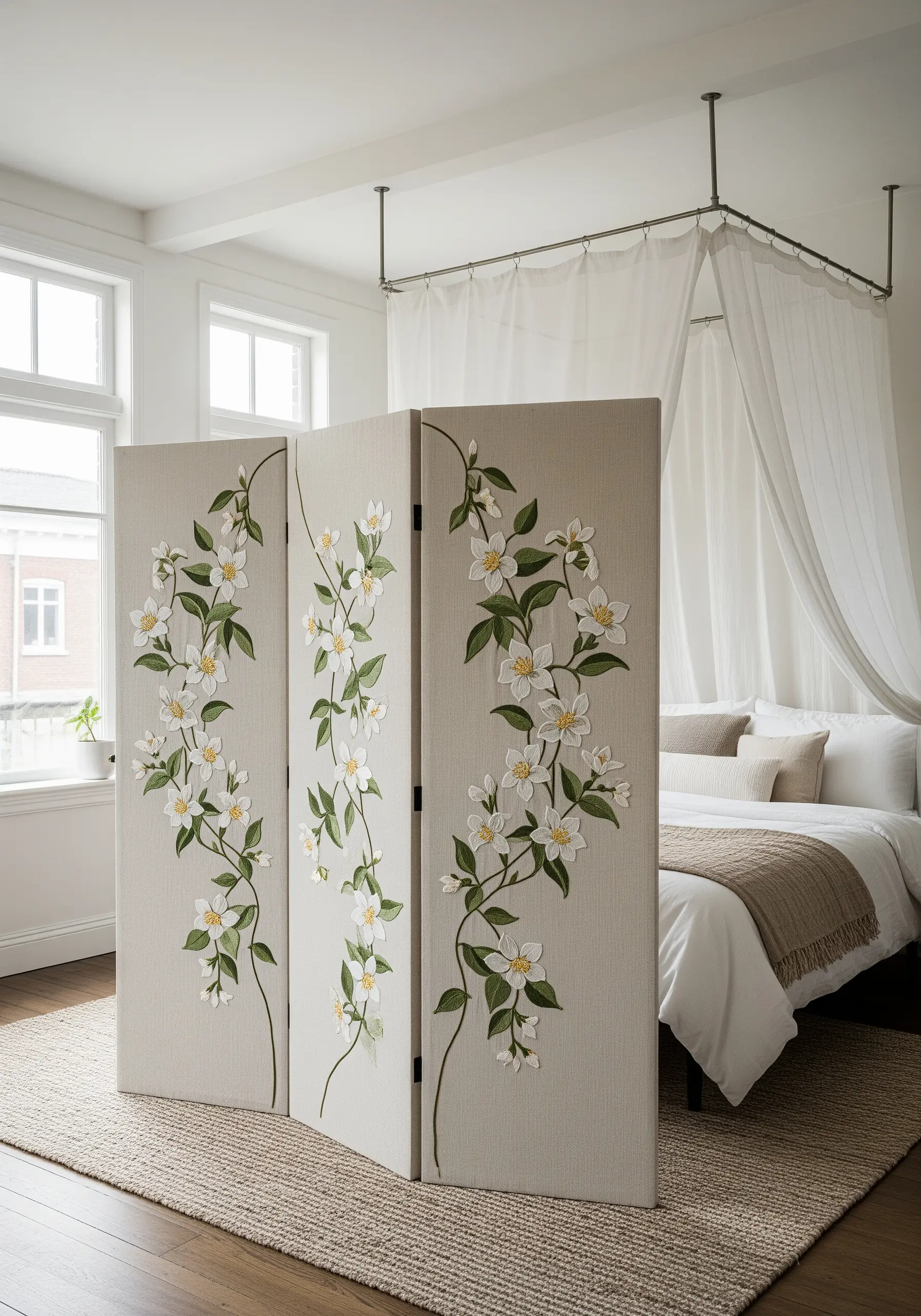
A folding screen is an unexpected canvas that can serve as a functional piece of art, dividing a space while adding beauty.
To create a continuous design, carefully plan and transfer your pattern so the vine flows seamlessly from one panel to the next.
For the delicate white jasmine flowers, use a long and short stitch in shades of white, cream, and the palest yellow to give the petals realistic shading and form.
A simple stem stitch for the vine and satin stitch for the leaves keeps the focus on the beautifully rendered blossoms.
15. Create a Bold, Graphic Valance with Sunflowers
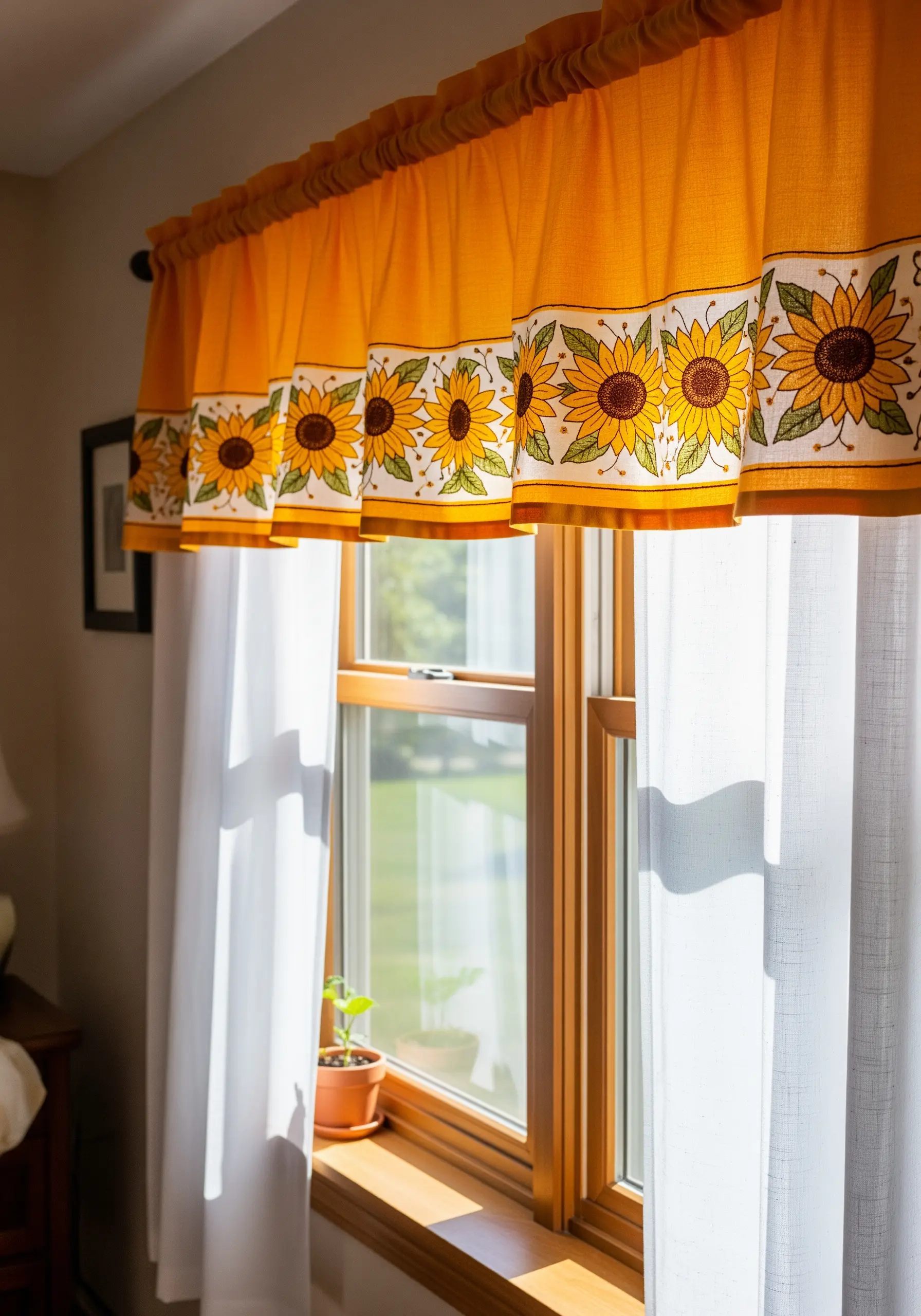
This retro style relies on bold outlines and flat color fills for a cheerful, illustrative effect.
Use a dark brown or black backstitch to outline every element of the sunflower first. This contains your fill stitches and gives the design a clean, graphic edge.
Fill the petals and centers with a dense, smooth satin stitch. For large areas, break up the satin stitch into smaller sections (known as split satin stitch) to prevent long, snag-prone threads.
This technique is perfect for creating a graphic, retro sunflower that feels both nostalgic and modernly bold.
16. Add a Solitary, Dramatic Bloom to Upholstery

A single, perfectly executed flower on a dark background can have more impact than an entire field.
When stitching on dark velvet or canvas, your thread colors need to be highly saturated to stand out. Choose the most vibrant shades in your collection.
Use long and short stitch to blend purples, from deep violet to pale lavender, creating the soft, velvety texture of a pansy petal.
A touch of yellow for the flower’s center, rendered in tiny seed stitches, draws the eye and adds a point of bright contrast. This is a powerful way to transform an everyday object into a piece of art.
17. Apply Bold Appliqué Stitches to a Knit Blanket

Embroidering on a chunky, open-weave knit requires a different approach than working on woven fabric.
Instead of a standard needle, use a blunt-tipped tapestry needle and thick yarn. This allows you to stitch through the gaps in the knit without splitting the fibers.
Create the daisy petals with long, bold straight stitches, anchoring them securely on the back. For the yellow center, use a dense satin stitch, working in a spiral from the outside in.
By working on a textured surface like this, the embroidery becomes a dimensional, appliqué-like embellishment.
18. Frame Your Pillowcases with a Delicate Eucalyptus Border
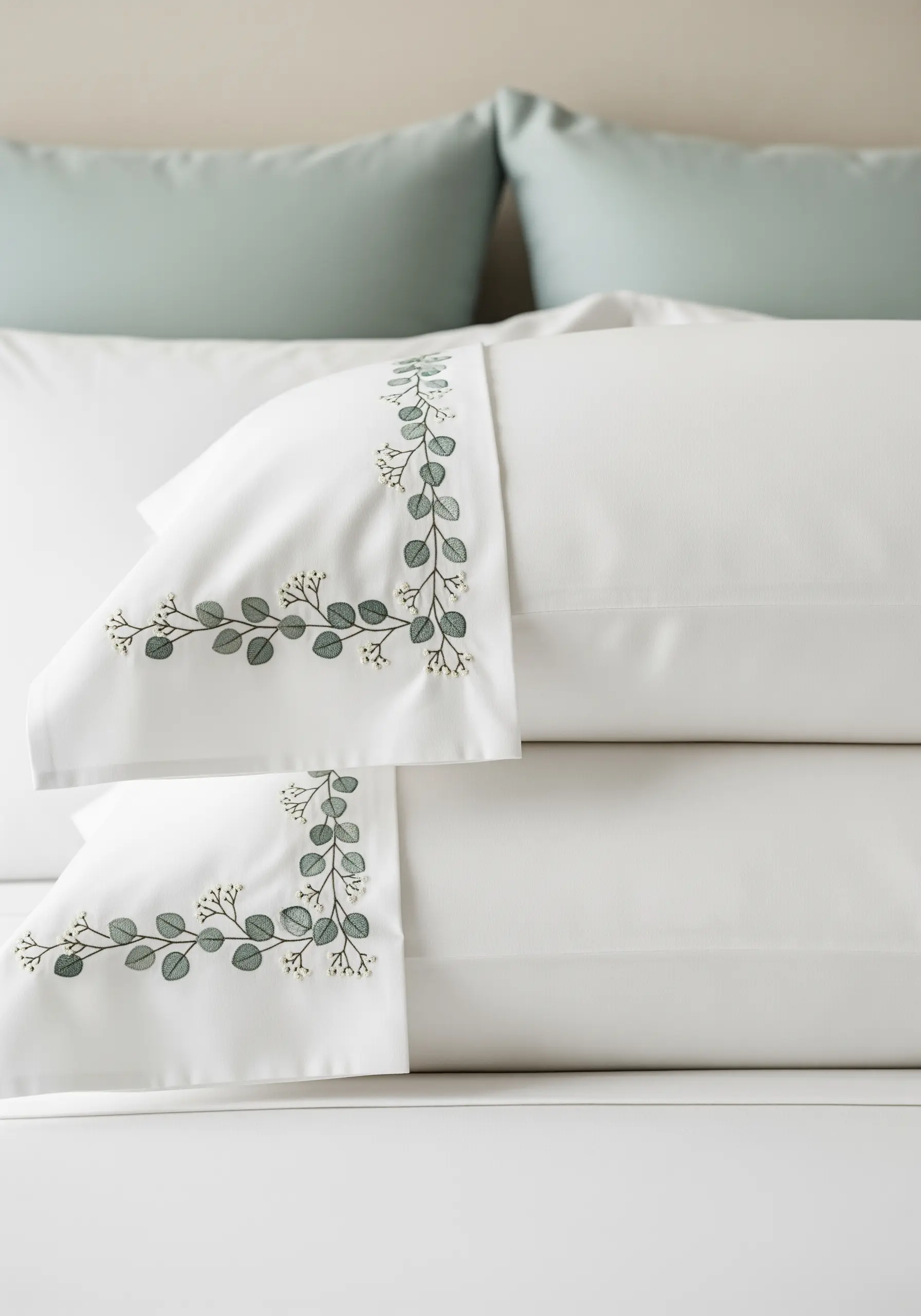
A simple, trailing border adds a touch of bespoke luxury to plain white bed linens.
Use a soft, grey-green thread in a fine weight (two strands maximum) to capture the delicate color of eucalyptus.
A simple backstitch or stem stitch works perfectly for the main branches. For the round leaves, use a satin stitch, angling your stitches slightly to create a subtle curve and hint of dimension.
Add tiny French knots in an off-white or pale yellow to represent the flower buds, giving the design a final, delicate detail. This creates an elegant, minimal border that feels calming and sophisticated.
19. Stitch a Wildflower Meadow in a Shadow Box Frame
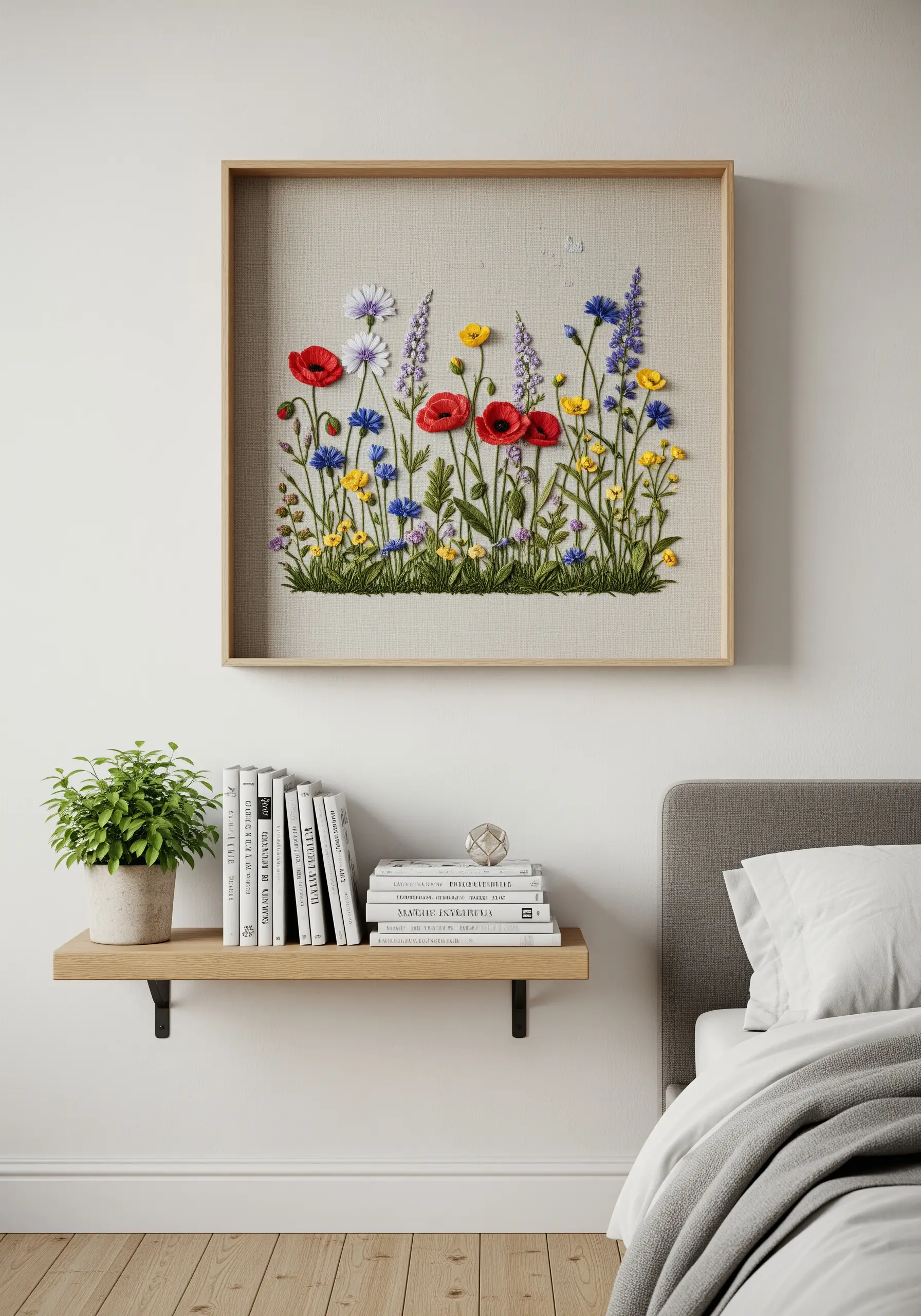
To create a meadow scene with realistic depth, you must think in layers.
Stitch the elements in the background first: light grasses and distant foliage using single straight stitches in muted greens.
Next, add the mid-ground flowers, like the lavender and yellow buttercups. Finally, stitch the boldest, closest flowers—the red poppies and blue cornflowers—on top, allowing them to slightly overlap the other elements.
Using a deep shadow box frame enhances this sense of depth, making it feel like you’re looking into a miniature world. It’s a beautiful way to create a framed piece that tells a story.
20. Weave a Celestial Garden on a Wall Tapestry
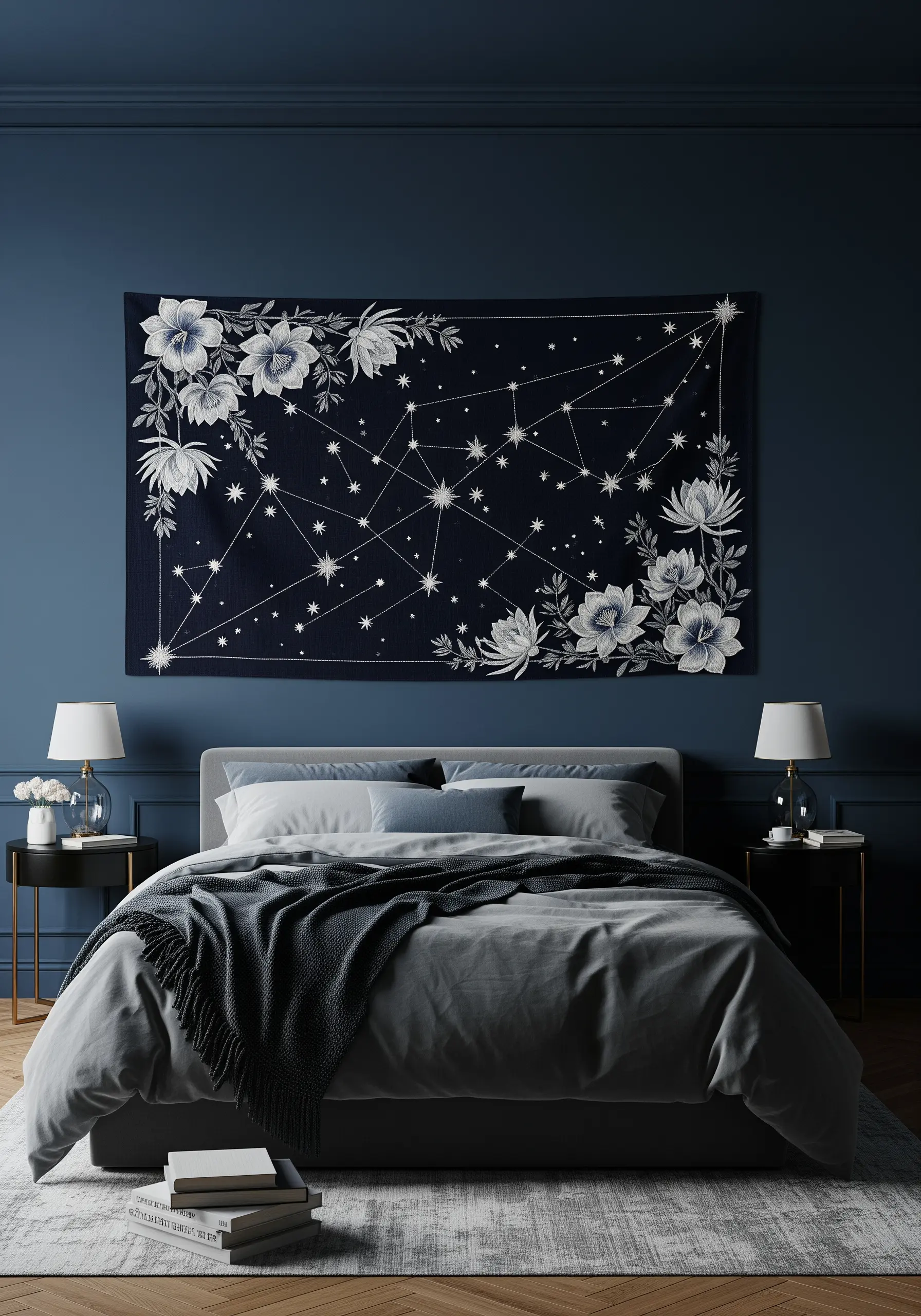
Combine the beauty of botanicals with the magic of the cosmos for a truly dreamy wall hanging.
Choose a dark navy or black fabric as your base to make the stars and flowers pop.
Use a bright white or metallic silver thread for the constellations, connecting tiny French knots or seed stitches with clean backstitches. Keep these lines sharp and delicate.
For the florals, use shades of white, cream, and light gray. A satin stitch for the petals will catch the light, creating a beautiful contrast against the dark background. This a celestial floral theme is both modern and enchanting.
21. Achieve Hyper-Vibrant Tropicals with Thread Painting

The key to bold, saturated tropical flowers is meticulous long and short stitching, often called thread painting.
Work with only a single strand of floss to allow for seamless blending between shades of pink, magenta, and red.
Ensure your stitches are packed very tightly together, with no fabric showing through. This technique creates a solid, almost-painted surface that makes the colors incredibly vibrant.
Don’t shy away from high-contrast colors. The bright pink against the deep green leaves is what gives this design its energy and allows you to create vibrant tropical flowers.
22. Frame Delicate Line Art on Sheer Fabric

Create the illusion of pressed botanicals by stitching fine line drawings onto a transparent fabric like organza or tulle.
Use a single strand of black or dark green thread to maintain a delicate, ink-drawn appearance. The simplicity of backstitch is perfect for this.
Stretch the sheer fabric in a hoop as you work, then sandwich it between two panes of glass in a floating frame. This allows light to pass through, highlighting the translucency and the fine details of your stitches.
This is a modern take on pressed botanicals, capturing their form and fragility in thread.


