

The space above your bed is more than just a wall; it’s the backdrop to your rest and your dreams. The art you place there should feel personal, intentional, and deeply comforting. With a needle and thread, you have the power to create a focal point that is not just beautiful, but also meaningful.
Elevating your embroidery from a simple craft to a piece of art isn’t about mastering hundreds of complex stitches. It’s about making conscious choices—in scale, in texture, in color, and in composition. It’s about understanding how a thicker thread can create a bolder line, or how a single stitch, repeated, can build a world of texture.
These ideas are designed to help you think like an artist. Each one offers a specific technique or a shift in perspective to help you create an embroidered masterpiece that not only completes your room but also reflects the care and creativity you pour into every stitch.
1. The Dynamic Botanical Swirl
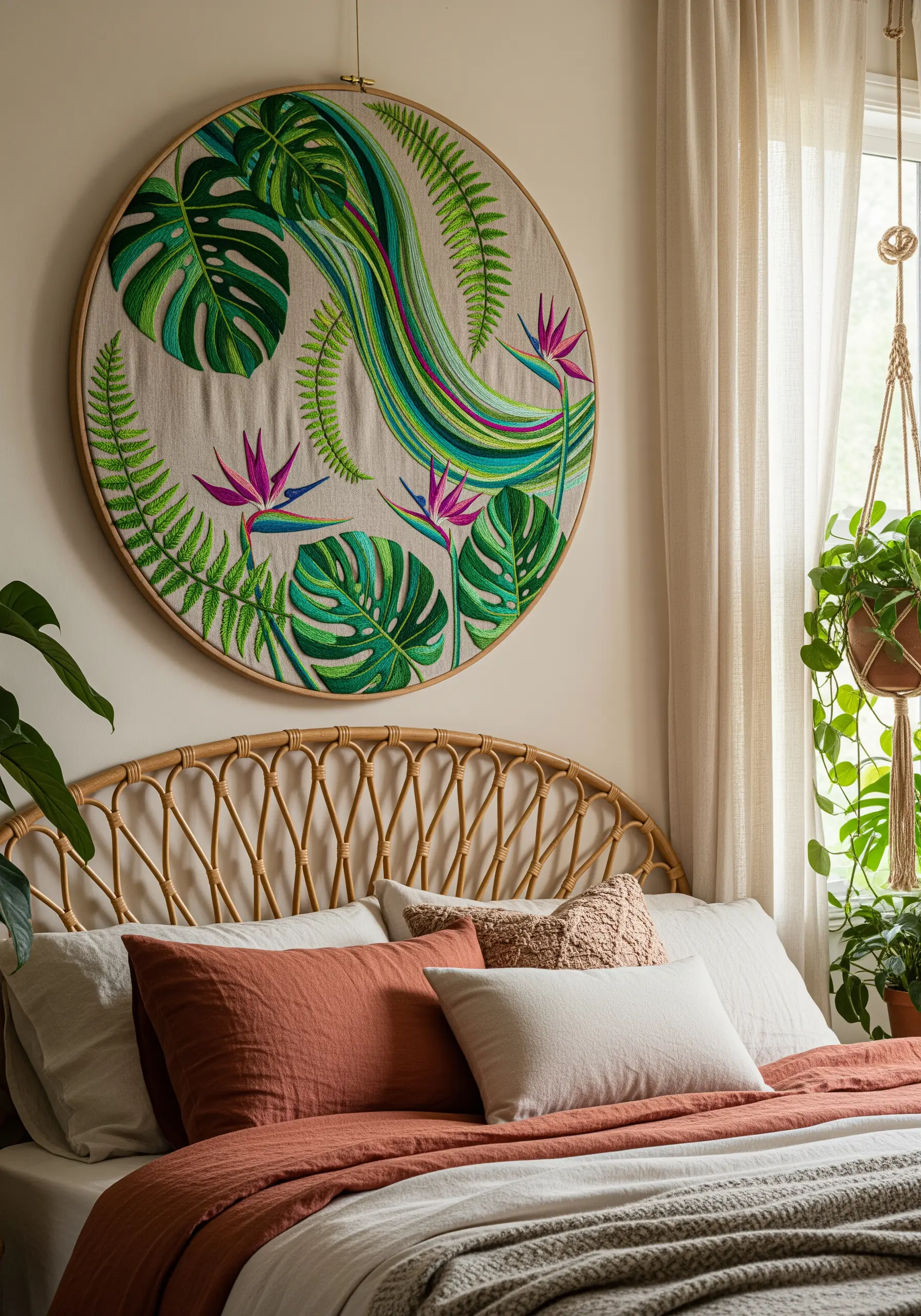
Create a central, flowing element by using long-and-short stitch to blend vibrant greens, blues, and magentas, which builds a dramatic sense of movement.
For the Monstera leaves, use a fishbone stitch to define the central vein and give each leaf section a natural, dimensional curve.
The key to realism is varying your stitch direction slightly within each section of the leaf; this mimics the way light shifts across a real plant.
A large-scale hoop like this requires tightly stretched, heavyweight linen to support the density of the stitching without puckering.
2. Metallic Thread Starburst Triptych
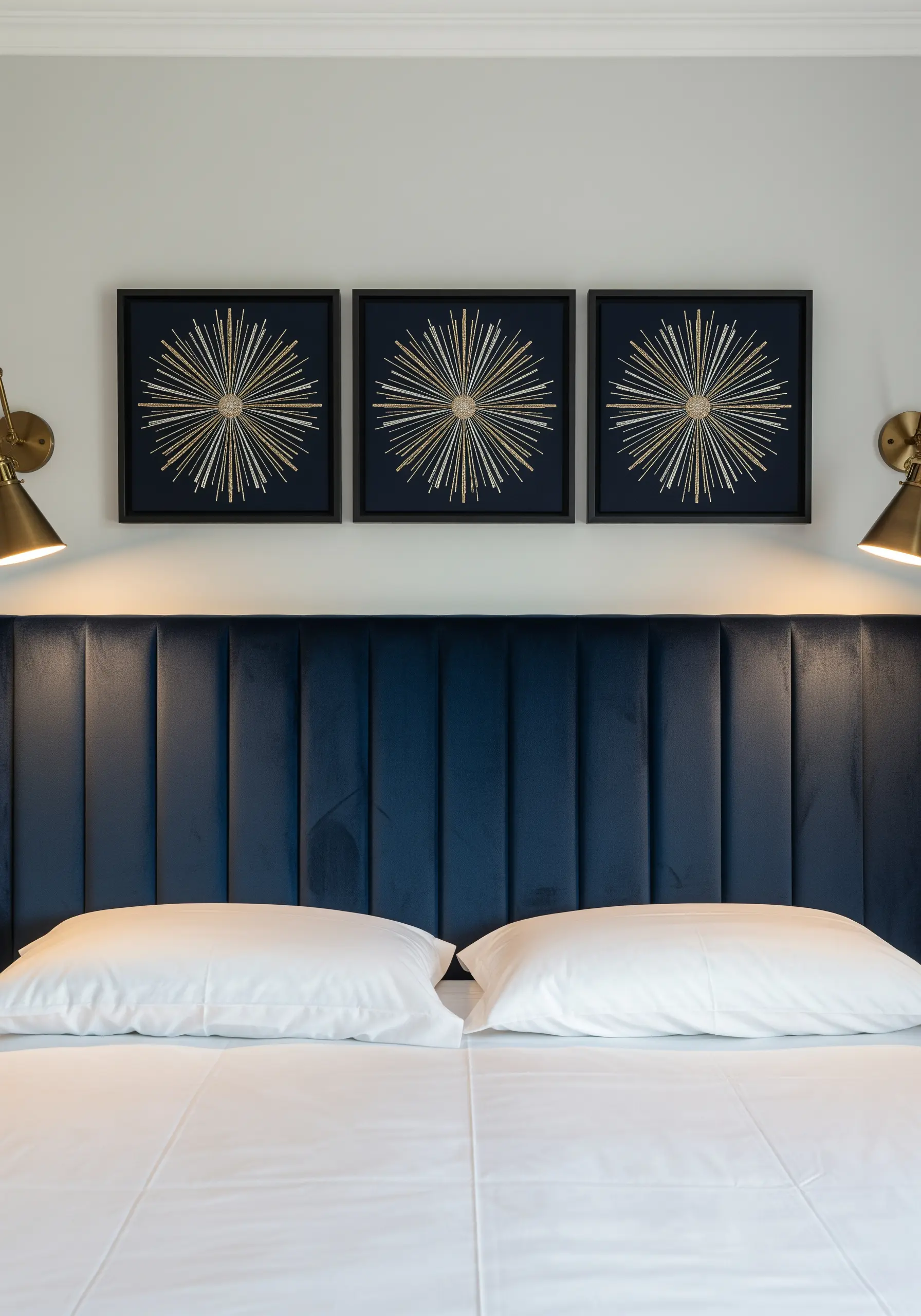
This design relies on precision and the right materials to succeed.
Choose a high-quality metallic thread that resists fraying and work on a dark, tightly woven fabric like navy linen or cotton canvas to make the gold and silver pop.
To achieve perfectly straight, taut lines, use a laid stitch couched with a finer, matching thread—this prevents the metallic thread from sagging and keeps your rays crisp.
Arranging three identical pieces in a series transforms simple motifs into a sophisticated, intentional art installation.
3. Serene Stitched Mountainscape

Build atmospheric depth by varying both thread weight and stitch density.
Use thicker yarn or six strands of floss for the foreground mountains, filling them with dense straight stitches to give them presence.
For the distant peaks, switch to a single strand of thread and use sparser stitches or simple outlines.
This technique creates an illusion of distance, making the landscape feel vast and calm without adding complex colors.
4. Celestial Moon Phase Tapestry
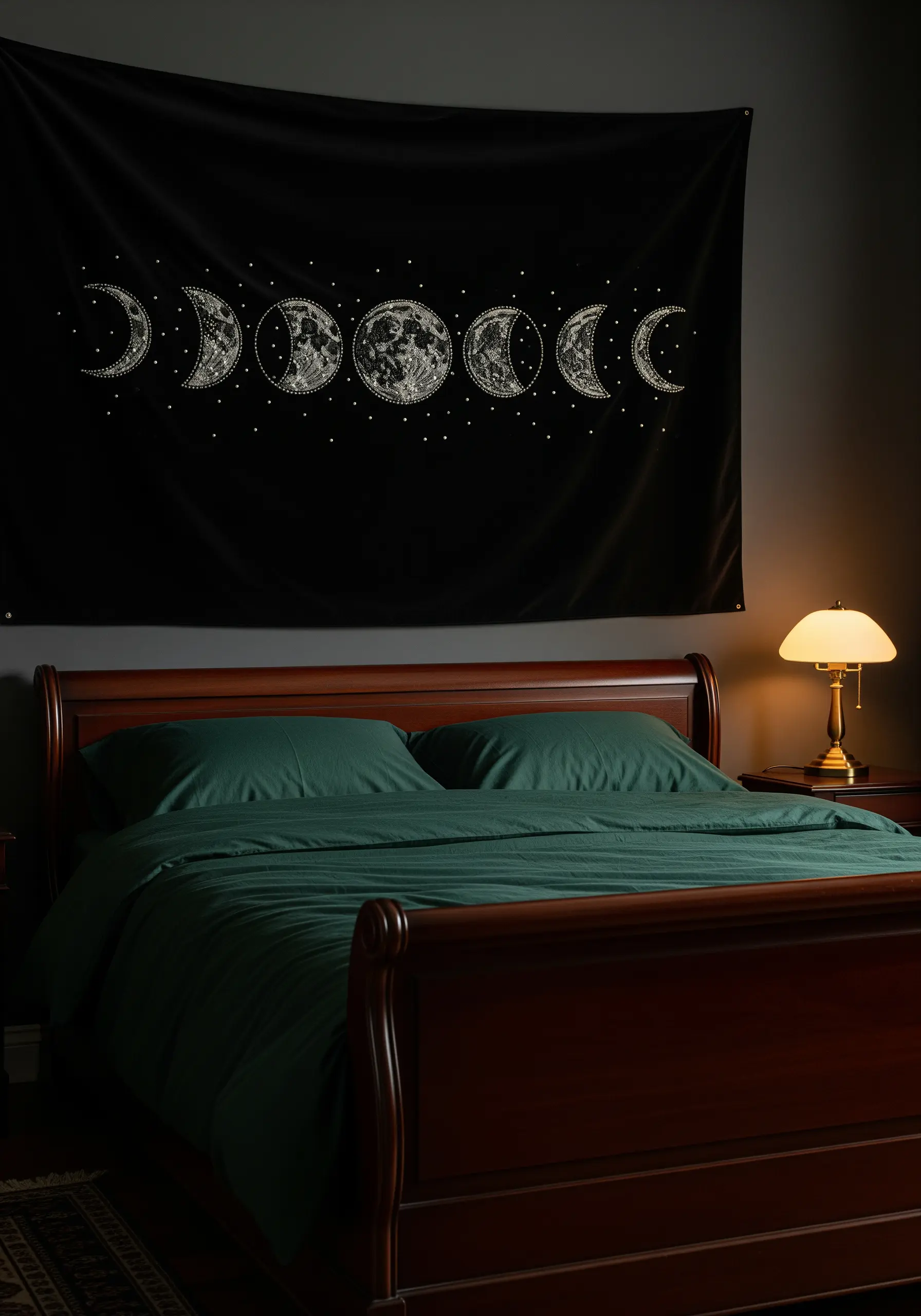
To achieve that intricate, cratered texture on the moon’s surface, combine dense French knots with scattered seed stitches using a silvery-white or ecru thread.
Working on a high-contrast black fabric, like velveteen or heavy cotton drill, makes the celestial details feel luminous and bright.
Define each moon phase with a crisp chain stitch outline before filling it with texture—this gives your shapes a clean, graphic edge.
5. The Generational Tree of Life

For a realistic trunk, use a whipped backstitch or stem stitch with a dark brown thread to create a gnarled, bark-like texture.
Avoid flat satin stitch for the canopy. Instead, fill the leaf clusters with thousands of French knots or colonial knots in two or three shades of green.
This technique gives the foliage a rich, three-dimensional quality and makes the tree feel lush and alive, preventing the large shape from looking monotonous.
6. The Cresting Wave in Thread

Capture the powerful motion of water by layering different stitch styles to create texture and movement.
Use long, flowing straight stitches for the body of the wave, always following its natural curve to enhance the sense of direction.
For the frothy crest, switch to a dense field of French knots and bullion knots in white and pale aqua, scattering detached chain stitches (lazy daisies) as sea spray.
This combination of smooth and textured stitches gives the piece incredible energy and makes the water feel alive.
7. Sakura Blossom Scroll

You can achieve delicate, lifelike petals by using the detached chain stitch for individual blossoms and satin stitch for the unopened buds.
For subtle color variation, try holding one strand of pale pink and one strand of off-white thread together in your needle.
Give the branch a rounded, three-dimensional form by using a padded satin stitch, worked over a few foundation stitches—this helps it stand out against the flat fabric.
Mounting the finished piece on a scroll adds to the traditional, elegant presentation.
8. Opulent Velvet Menagerie
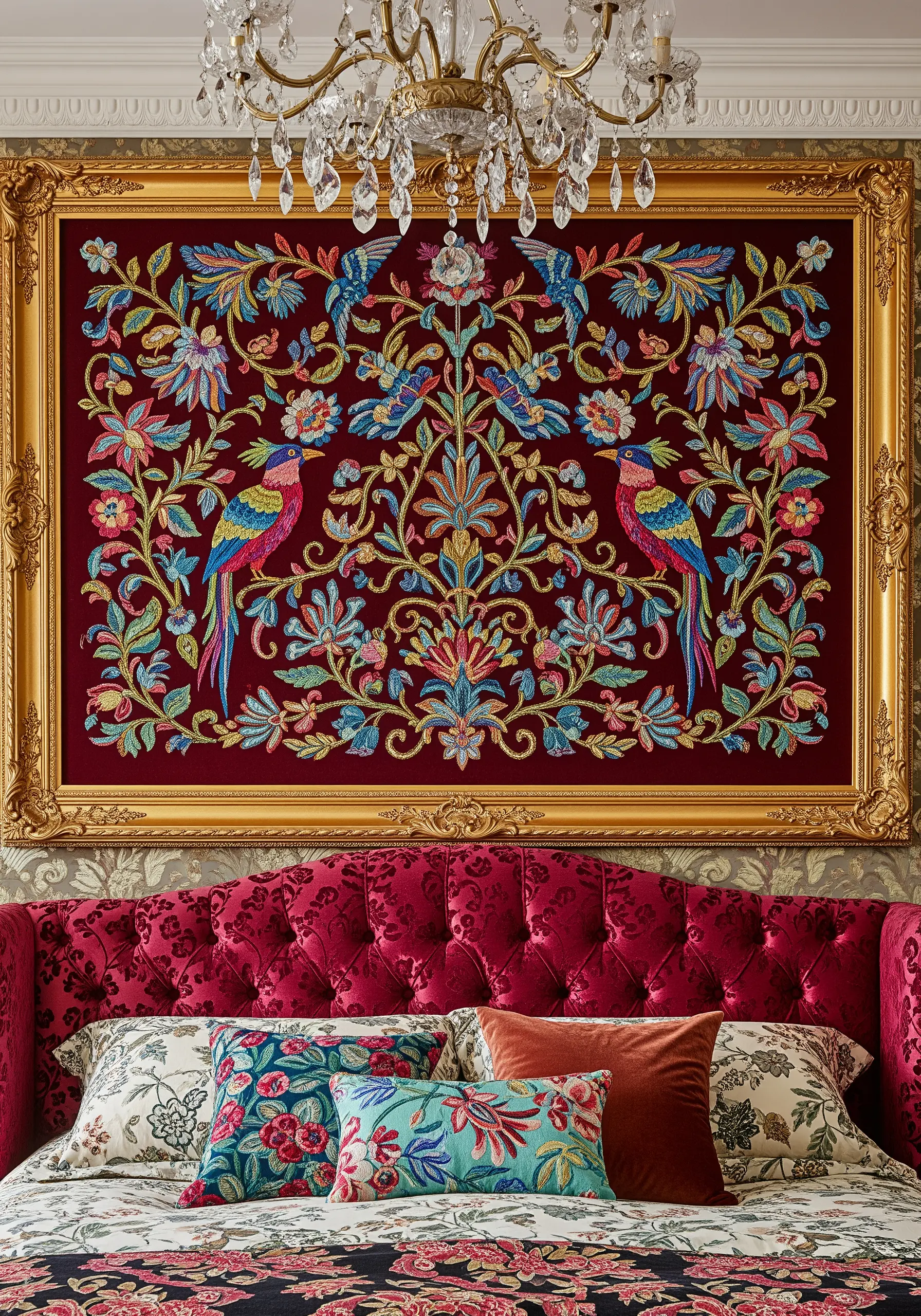
When embroidering on a pile fabric like velvet, use a water-soluble stabilizer on top to prevent your stitches from sinking into the plush surface.
To make your colors appear this vibrant, choose a silk or rayon thread, which has a much higher natural sheen than standard cotton floss.
Define your motifs and add a luxurious finish by couching down metallic threads for the outlines—a traditional technique that adds structure and opulence.
9. Curated Woodland Hoop Gallery

Create a cohesive gallery wall by using a consistent color palette and fabric choice across multiple hoops.
Stitch each design on the same neutral linen or cotton, and stick to a shared palette of earthy tones like russet, brown, and moss green.
While the subjects vary, the repetition of materials and colors ties the collection together into a single, harmonious story.
Vary the scale of the hoops to create visual interest and a balanced, dynamic composition above your headboard.
10. Interlocking Geometric Forms
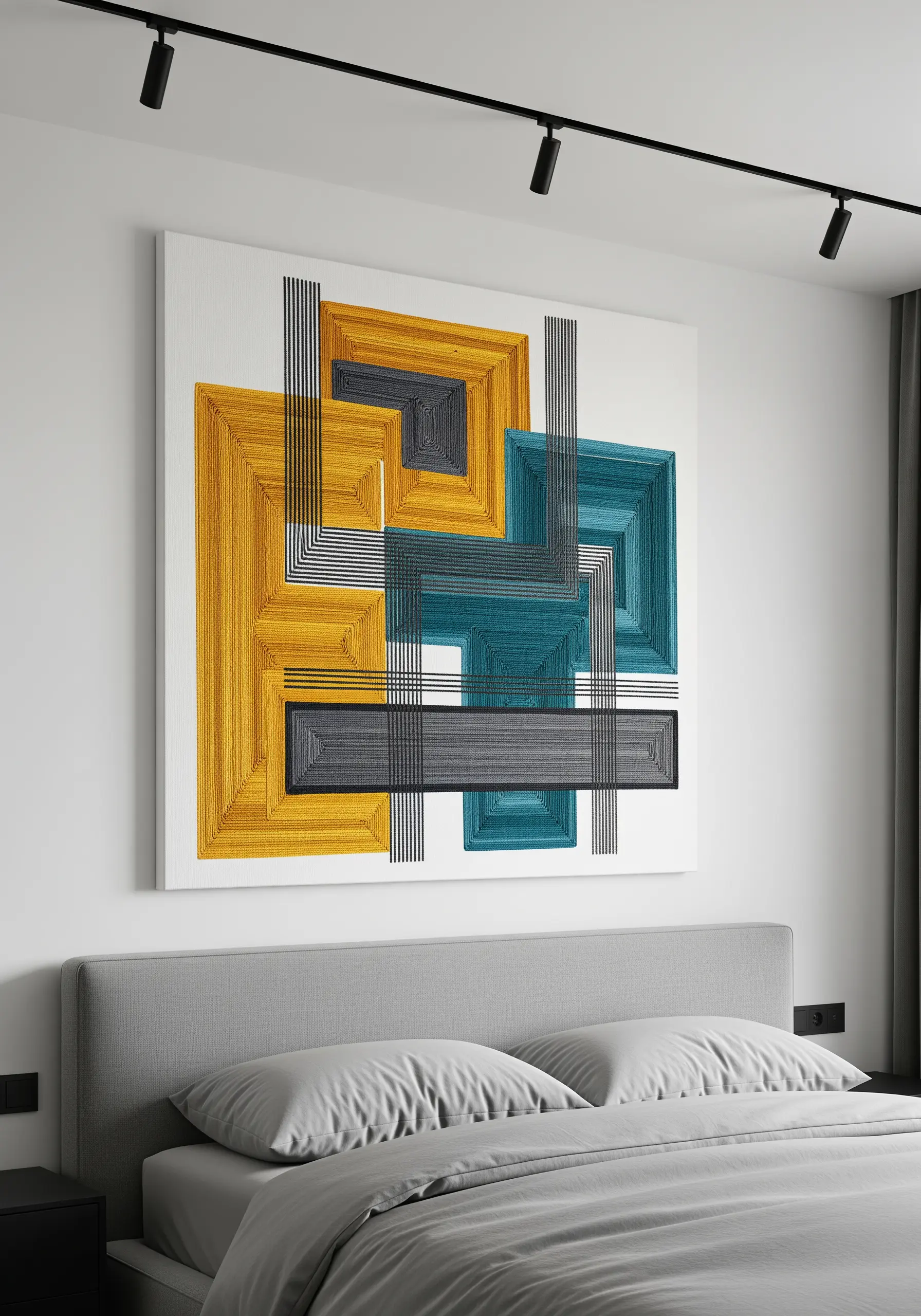
This style is a form of string art, focusing on clean lines and dense, uniform texture.
Achieve this by tightly wrapping yarn or thick thread around a stretched canvas, securing the ends on the back with tape or staples.
For the sharp, overlapping black lines, use a thinner thread and couch it down with tiny, invisible stitches to maintain perfect tension and straightness across the colored blocks.
This technique creates a bold, graphic aesthetic that feels both architectural and handmade.
11. Woven Sunset Tapestry
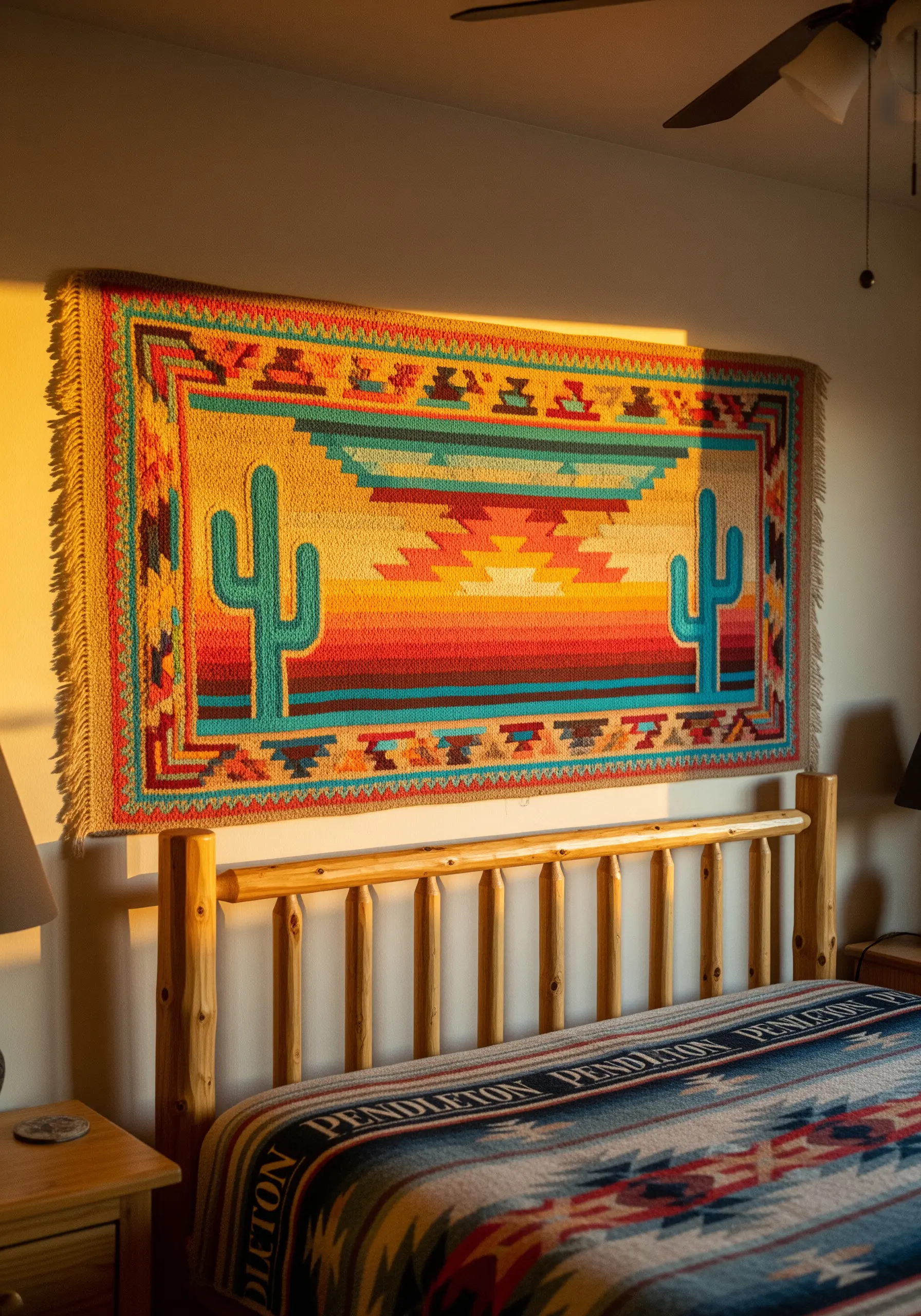
Emulate the dense texture of a woven rug by using punch needle embroidery, a technique that creates plush loops of yarn.
To create smooth color gradients, carefully plan your sections and switch yarn colors to build the sunset effect.
Work on a sturdy backing like monk’s cloth, which is designed to hold the tension of the loops.
Leaving a raw, fringed edge enhances the rustic, handcrafted feel of the finished tapestry.
12. The Celestial Cartography Hanging
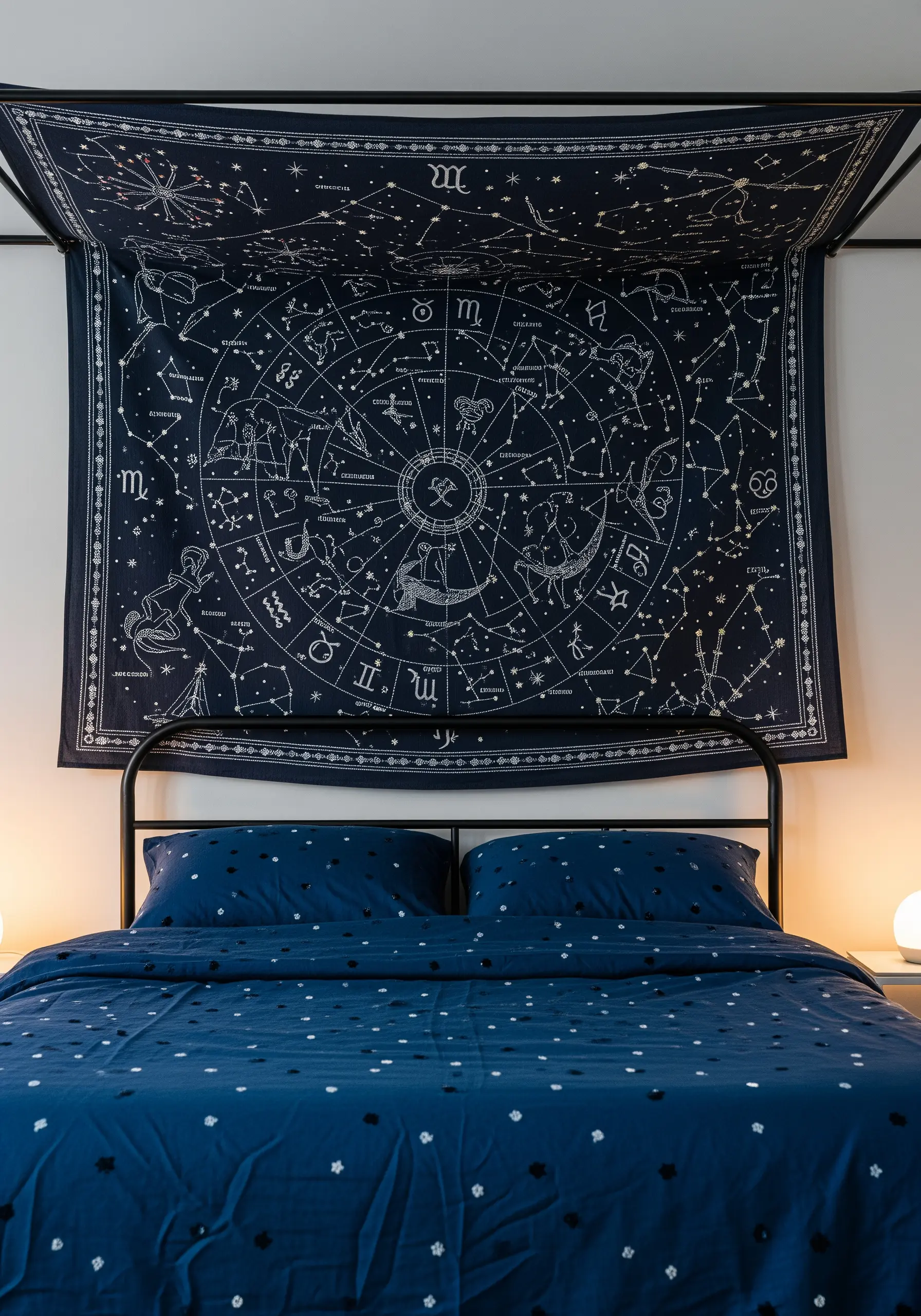
For a design with such fine, intricate line work, a single strand of white or silver metallic thread is essential for clarity.
Use a simple backstitch or stem stitch on dark blue cotton canvas to create crisp, readable constellations and symbols.
Before you begin, iron a fusible interfacing to the back of your fabric to prevent puckering and keep your lines smooth over the large surface area.
13. Metallic Ginkgo Leaf Diptych

Create an elegant, shimmering texture by filling the ginkgo leaf shape with a fan of long, straight stitches, all radiating from the stem.
Use a high-sheen metallic thread and stitch on a neutral, textured fabric like a linen blend to allow the metallic to be the star.
The simplicity of a single motif, repeated in two complementary metallic tones, creates a sophisticated and balanced pair perfect for a serene bedroom.
14. Retro Atomic Age Wall Art
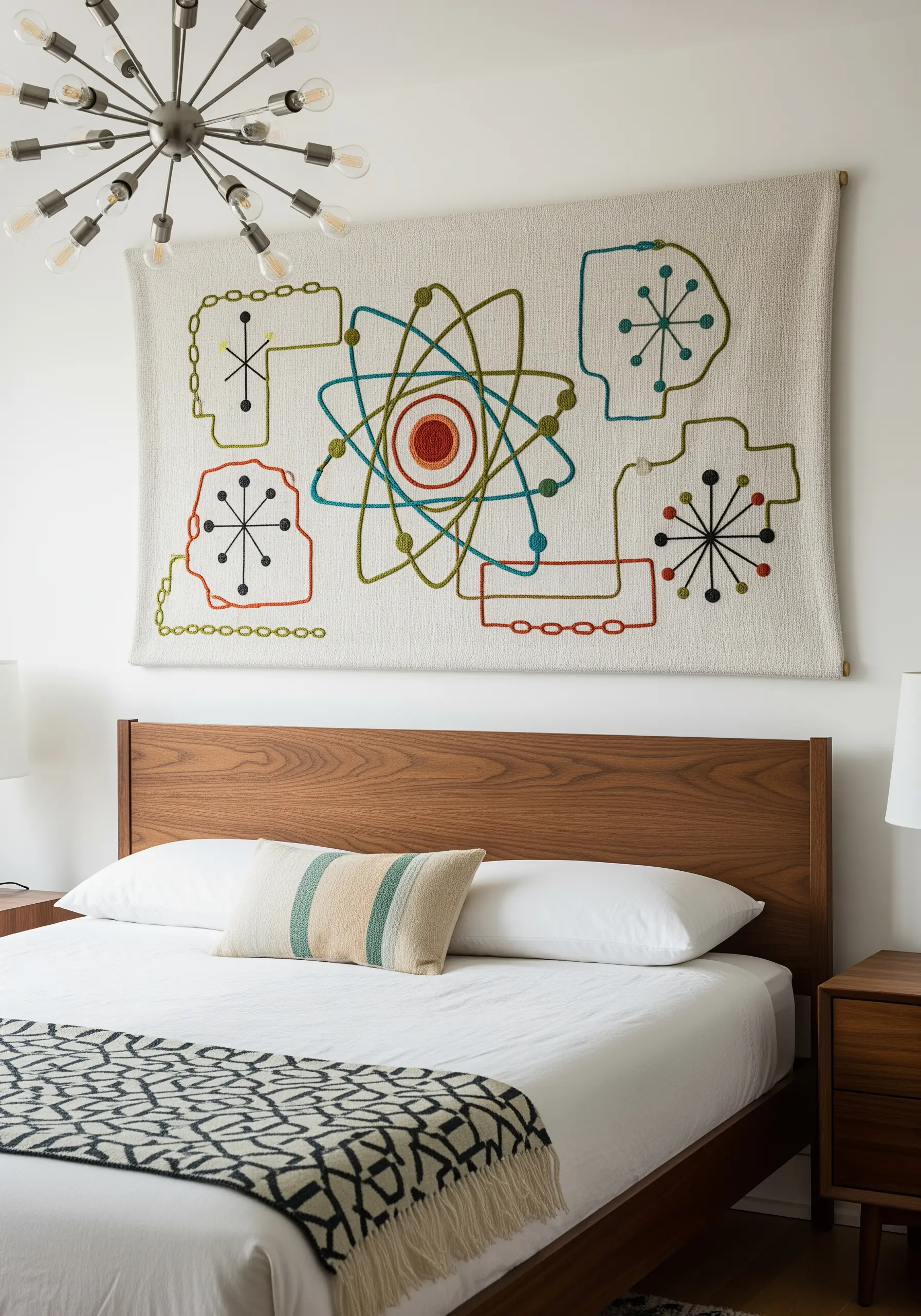
Capture the mid-century modern aesthetic by using a limited, optimistic color palette and bold outlines.
Use a chain stitch or a heavy stem stitch for all the lines to give them a uniform, graphic quality that feels authentic to the era.
The open space in the design is just as important as the stitched areas—resist the urge to fill everything in.
This careful balance creates the light, playful feel characteristic of atomic age design.
15. Voluminous Ribbon Embroidery Bouquet

To give your flowers incredible, realistic dimension, incorporate silk ribbon embroidery into your work.
Use a woven wheel stitch with ribbon to create lush, dimensional roses, and use French knots with narrow purple ribbon for the lavender.
Combine these with traditional floss embroidery for the finer details like leaves and stems.
This mixed-fiber approach results in a stunningly textural and lifelike bouquet.
16. Vibrant Otomi Animal Tapestry
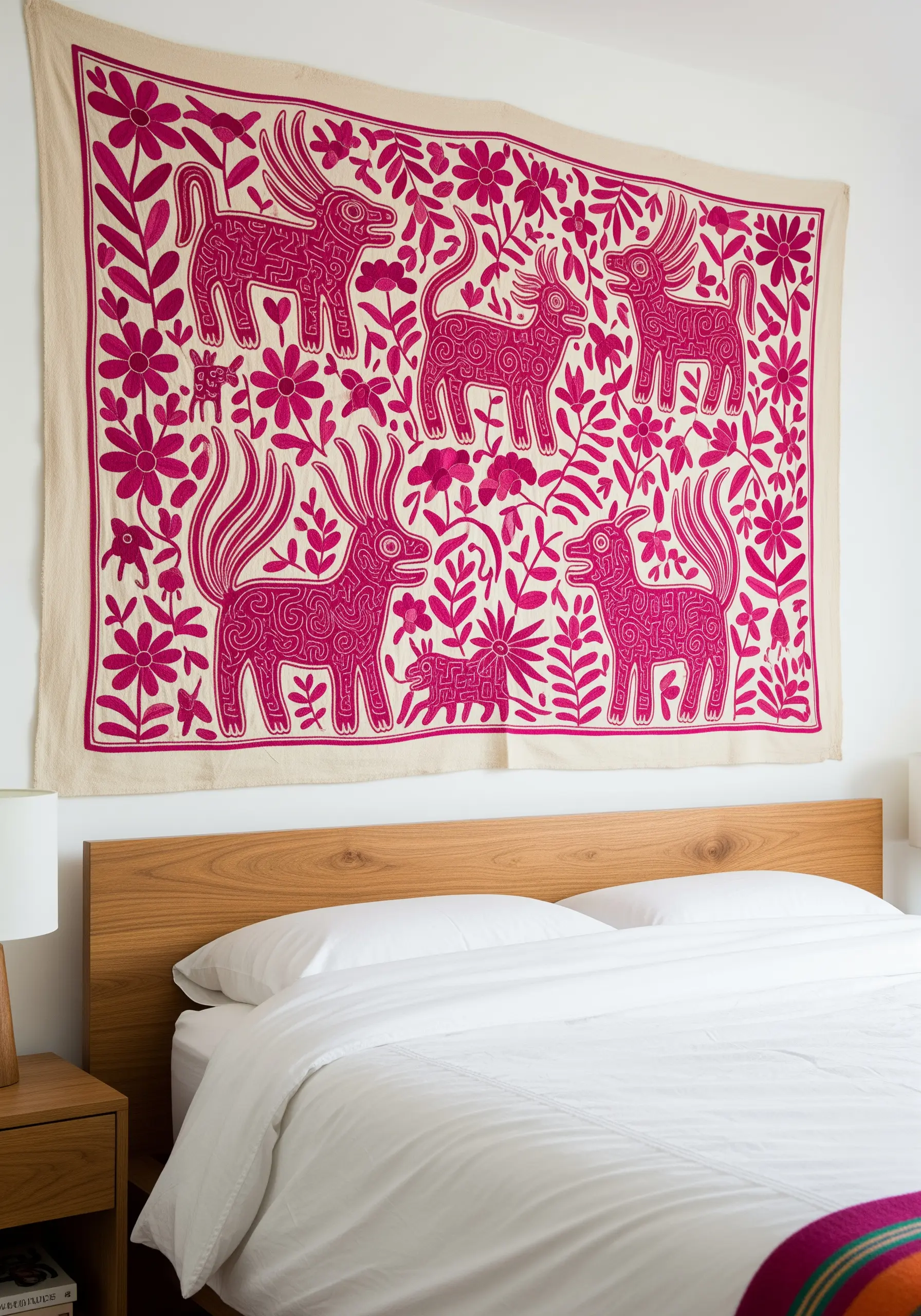
The key to the traditional Mexican Otomi style is the incredibly dense, closed satin stitch that perfectly follows the contours of the shapes.
Use two strands of a bold, single-color floss on a neutral background like natural cotton canvas (manta cloth).
Your stitches must be tight and uniform, creating a smooth, almost woven texture that makes the whimsical animal and floral motifs pop with energy.
17. Geometric Blackwork Portrait
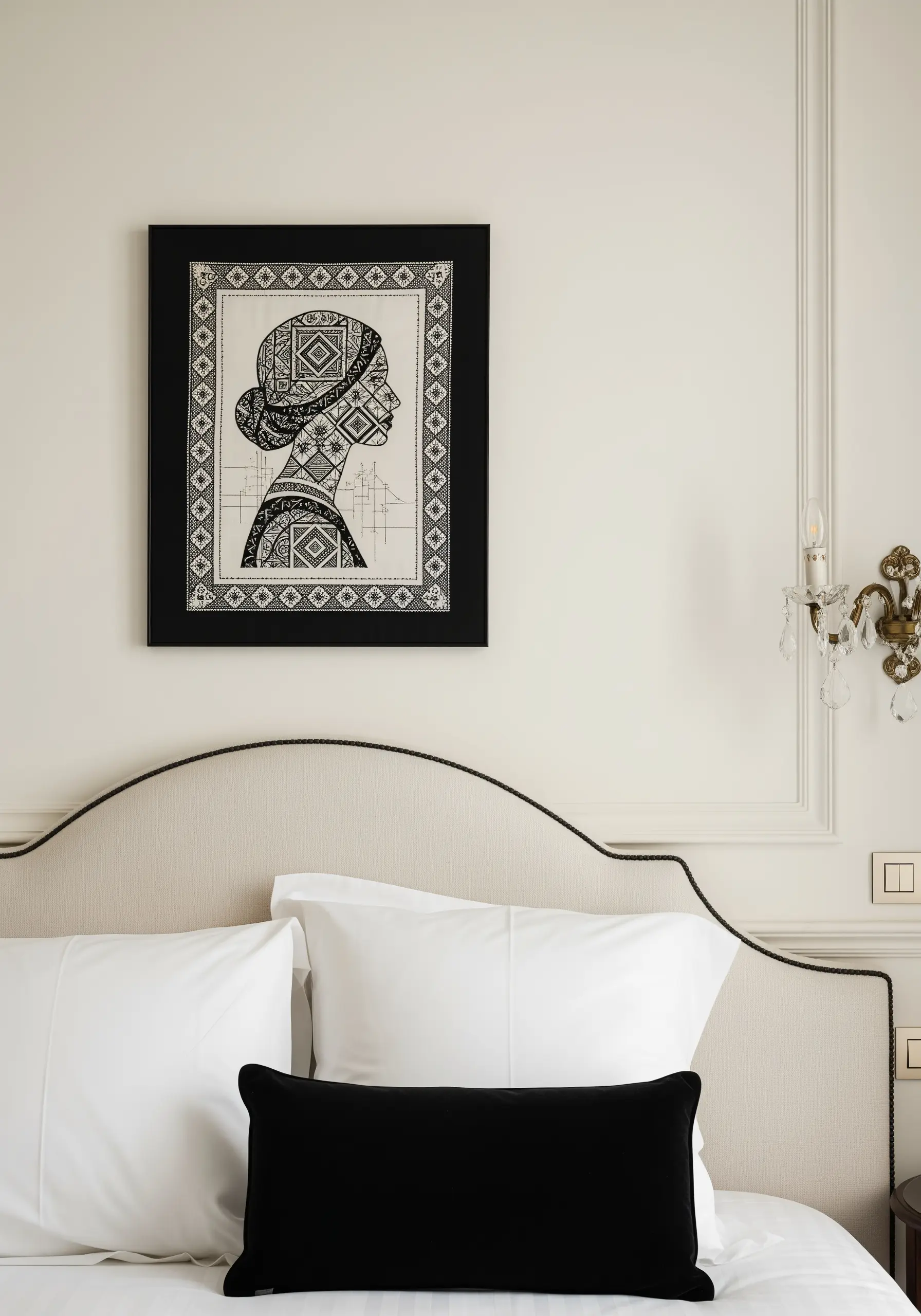
This is a beautiful example of modern blackwork, which uses repeating geometric patterns to fill large shapes.
Choose a few contrasting filler patterns (called diaper patterns) and work them on an evenweave fabric like linen, which helps with geometric precision.
Use a single strand of black thread to ensure the patterns are crisp and detailed.
The contrast between the intricate patterns creates the illusion of shading and form within the silhouette.
18. The Personalized City Map
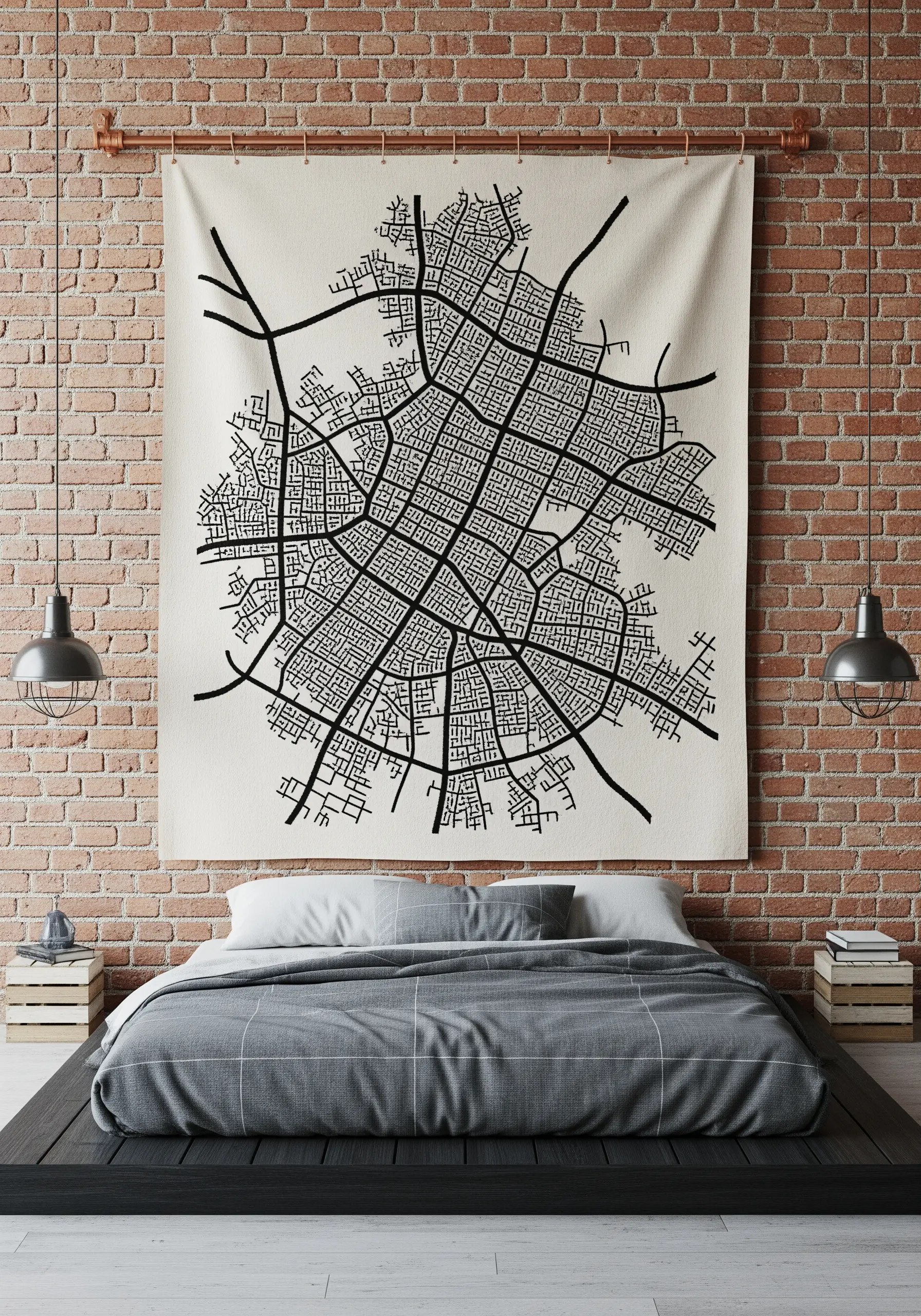
Transform a map of a meaningful city into a large-scale piece of personal art.
Trace the main roads onto heavy canvas, then use a bold backstitch with a thick black thread or yarn for the major arteries.
Switch to a finer, single-strand backstitch for the smaller streets.
This intentional variation in line weight creates a clear visual hierarchy and makes the map both graphically interesting and easy to read.
19. Atmospheric Forest Perspective
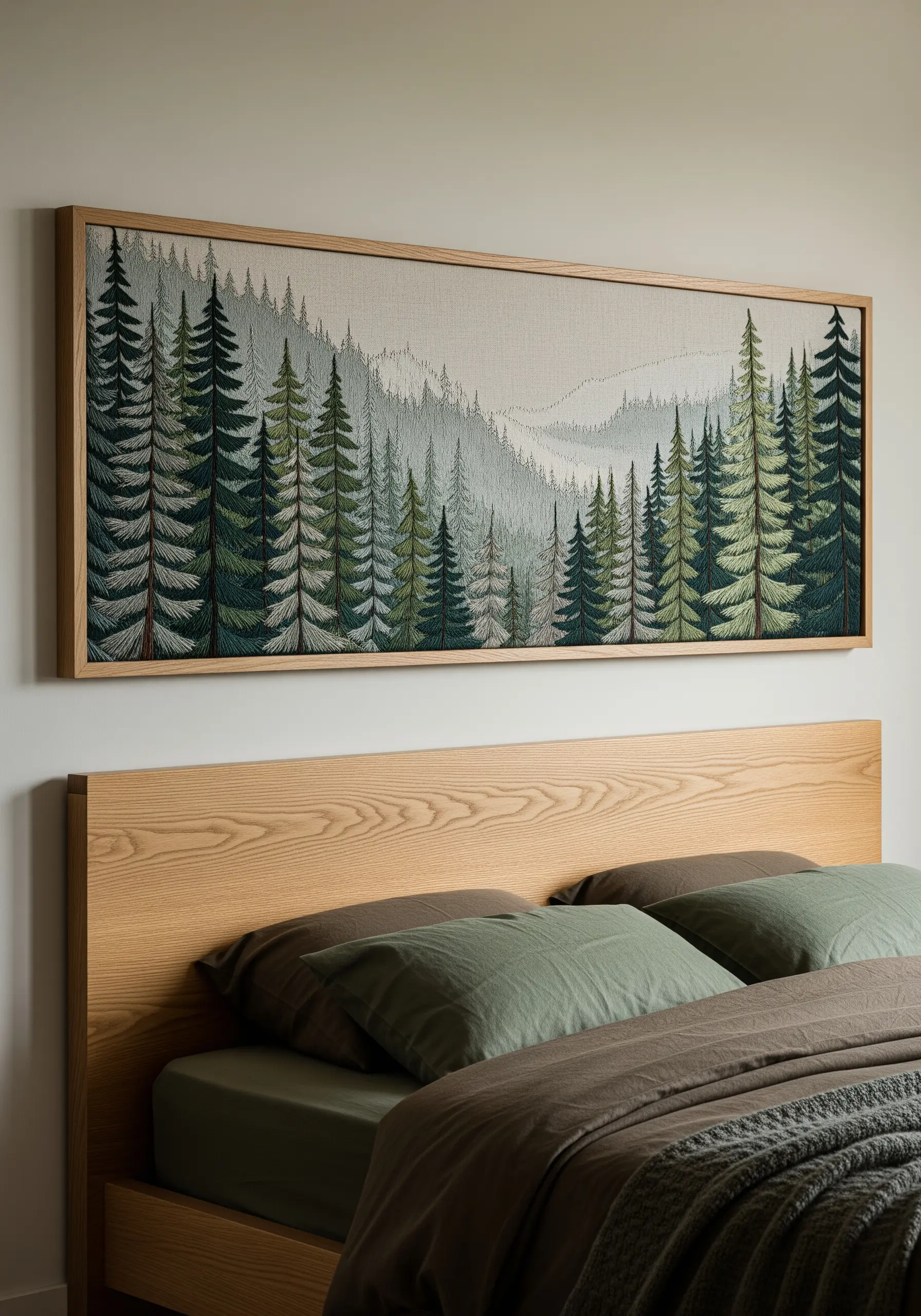
Create the illusion of a forest fading into mist by using the principles of atmospheric perspective in your stitching.
Stitch the foreground trees with darker, more saturated greens and well-defined backstitch outlines for clarity and presence.
As you move toward the background, switch to lighter, grayer shades of green and use fewer strands of floss.
For the most distant hills, use only a single strand in a pale gray to create a hazy, faraway effect.
20. Retro Psychedelic Mushroom Garden
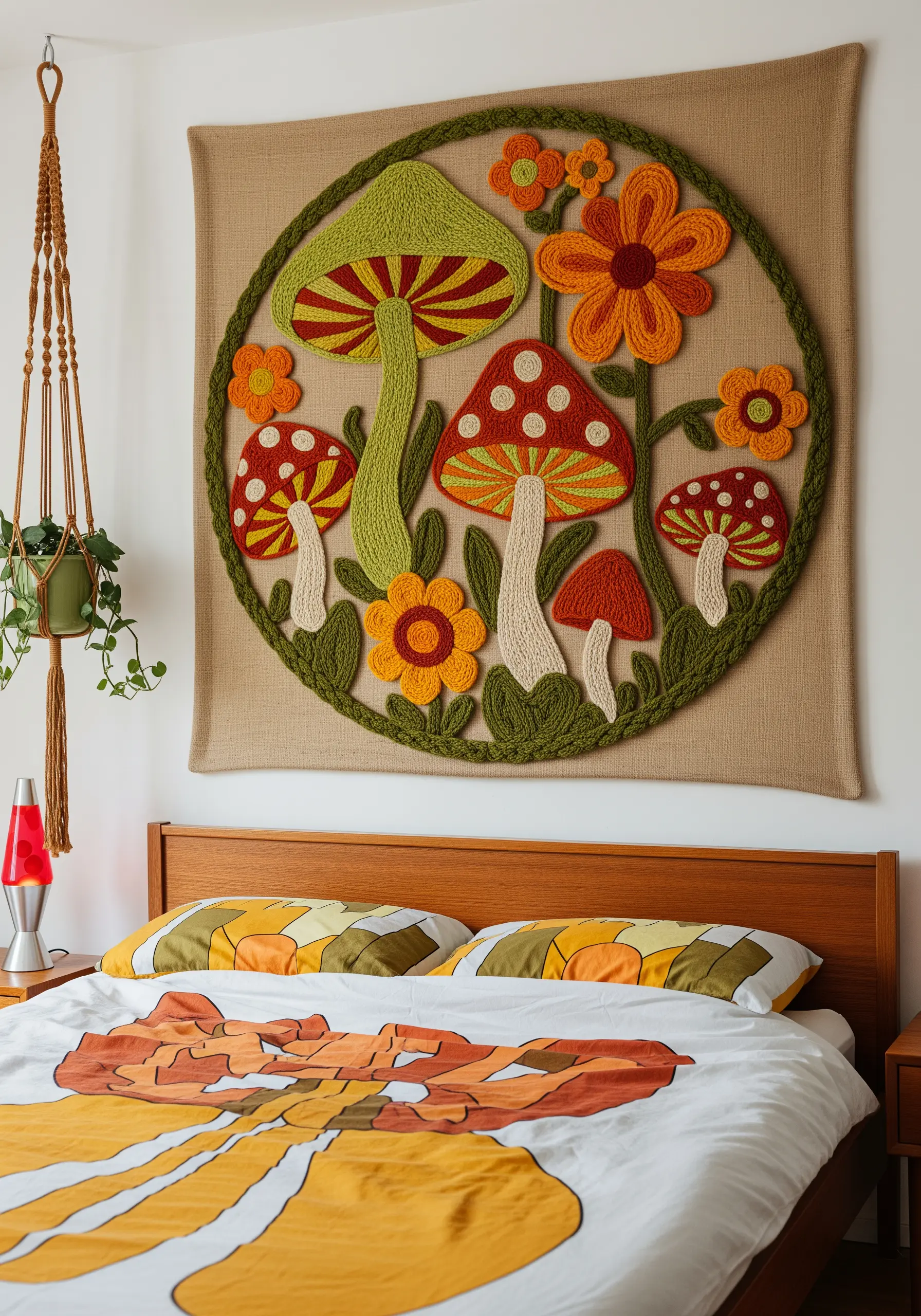
Achieve that bold, groovy 1970s look with chunky yarn and simple, graphic stitches on a rustic fabric like burlap.
Outline all your shapes with a thick stem stitch or chain stitch in a contrasting color to create a defined, cartoonish edge.
Fill the shapes with a dense satin stitch or even a punch needle technique for a plush, rug-like texture.
A warm, earthy color palette of avocado green, orange, and harvest gold is essential for the retro vibe.
21. The Monochrome Textural Sampler

Explore the pure beauty of texture by creating a monochrome sampler where stitch style is the focus.
Work on a neutral fabric like linen or wool felt, and use a variety of thick and thin yarns and threads in shades of white, cream, and ecru.
Experiment with highly textural stitches: French knots, bullion knots, woven wheel stitches, Turkey work, and couched cords.
The lack of color makes you appreciate the rich interplay of light and shadow, creating a sophisticated example of tone-on-tone embroidery.
22. Iridescent Undersea Triptych
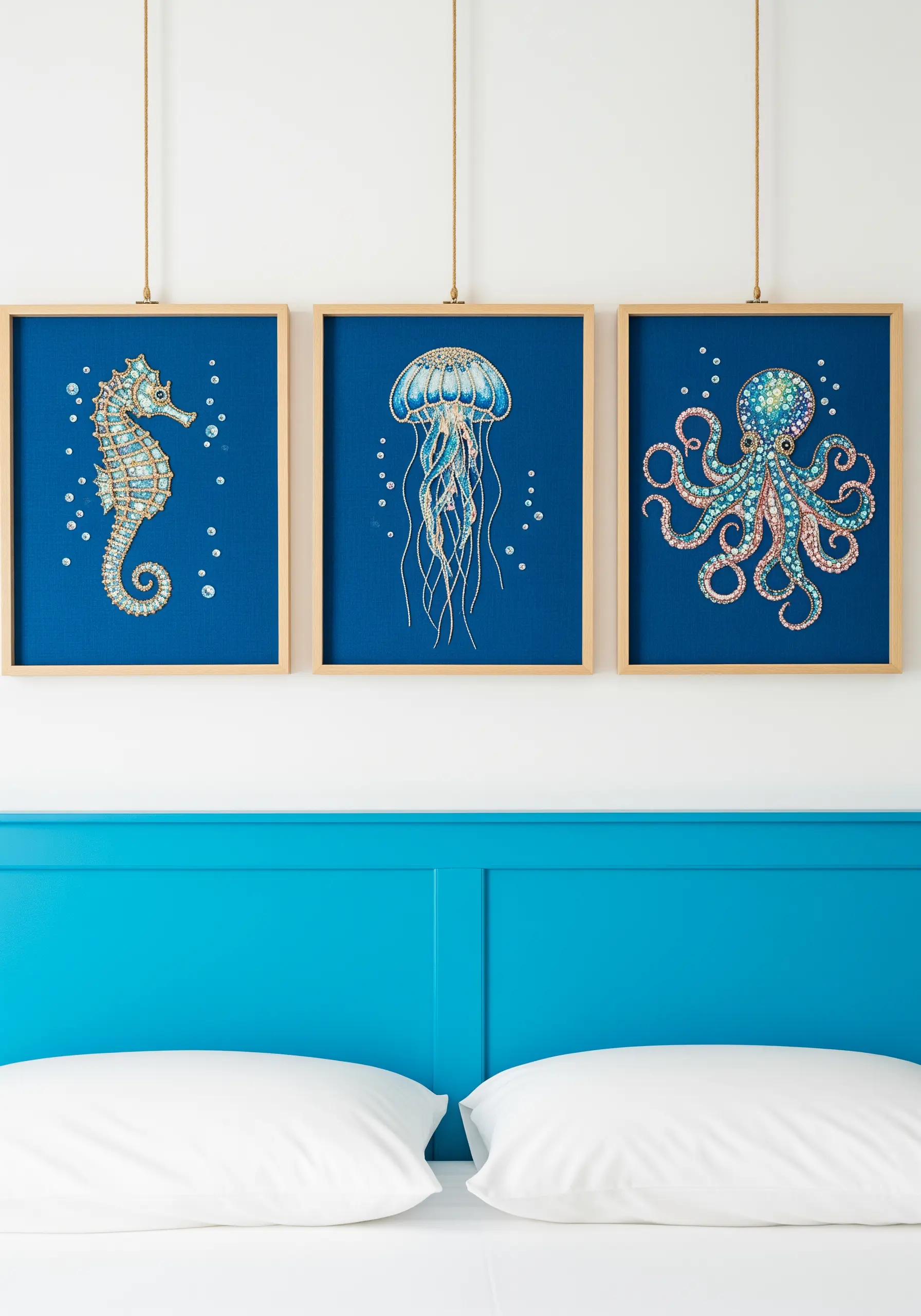
Capture the magical shimmer of sea life by incorporating beads, sequins, and metallic threads into your design.
Use a fine metallic thread to outline the shapes of the seahorse, jellyfish, and octopus for a touch of sparkle.
Then, strategically place iridescent seed beads or sequins to mimic shimmering scales or bioluminescence.
Stitching on a deep blue fabric provides the perfect dark sea backdrop, making your embellishments truly stand out.
23. The Arts and Crafts Botanical Tapestry

To replicate the look of a classic William Morris or Arts and Crafts tapestry, use crewel wool instead of cotton floss.
Wool provides a softer, matte finish and better coverage for large-scale pieces, giving your work an authentic, historical feel.
Use traditional stitches like the stem stitch for outlines, satin stitch for fills, and long-and-short stitch for gentle color blending.
A muted, nature-inspired palette of sage green, claret red, and ochre is key to the aesthetic.
24. Whispers of a Dandelion Breeze
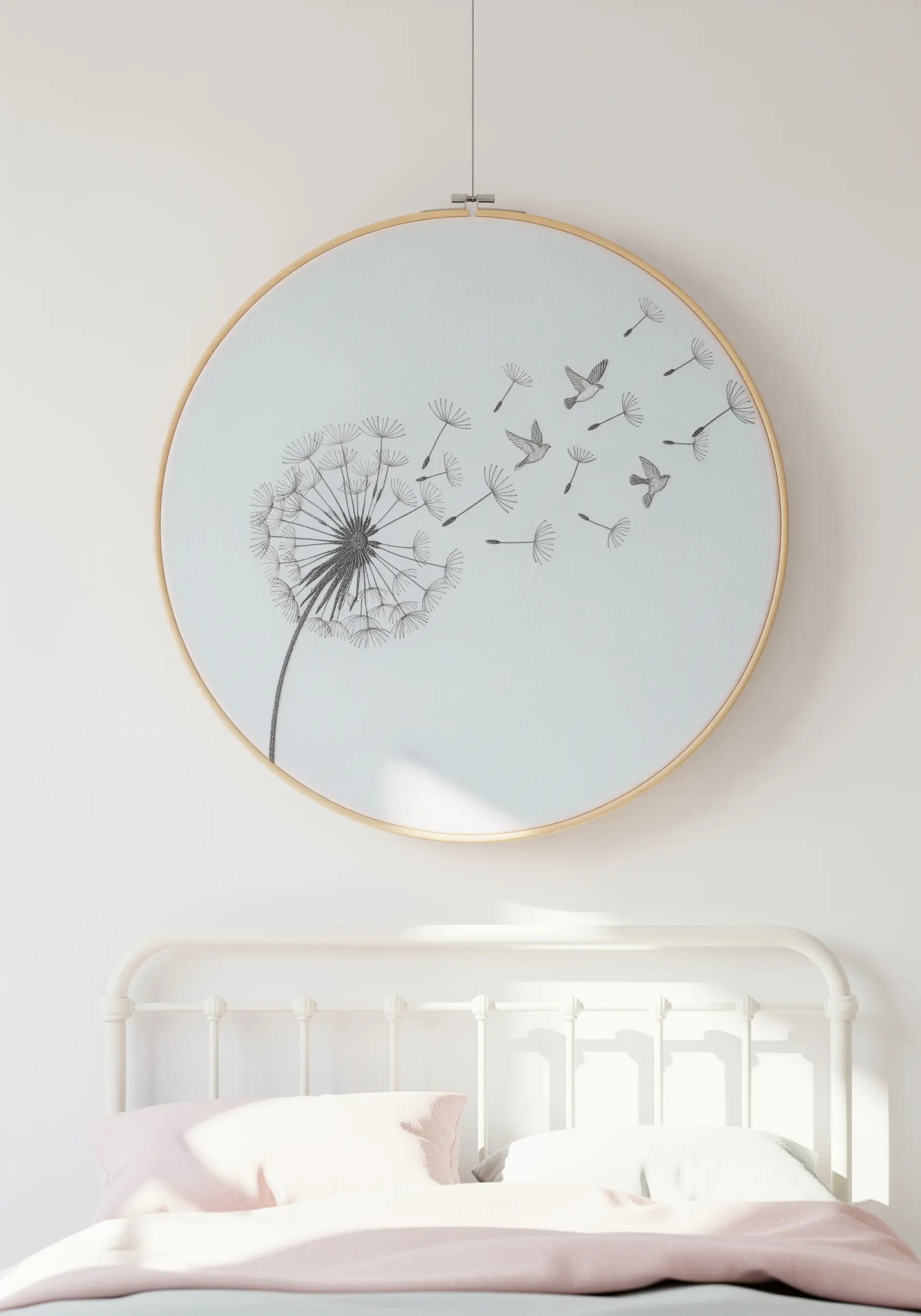
This design achieves its delicate, airy quality through the clever use of negative space and fine line work.
Use only a single strand of dark gray or black thread for maximum contrast against a light, plain-weave fabric.
The dandelion seeds are simple straight stitches, while the birds are tiny, minimalist outlines.
The key is precise stitch placement and keeping the lines incredibly fine to maintain the feeling of lightness and movement.
25. The Golden Soundwave
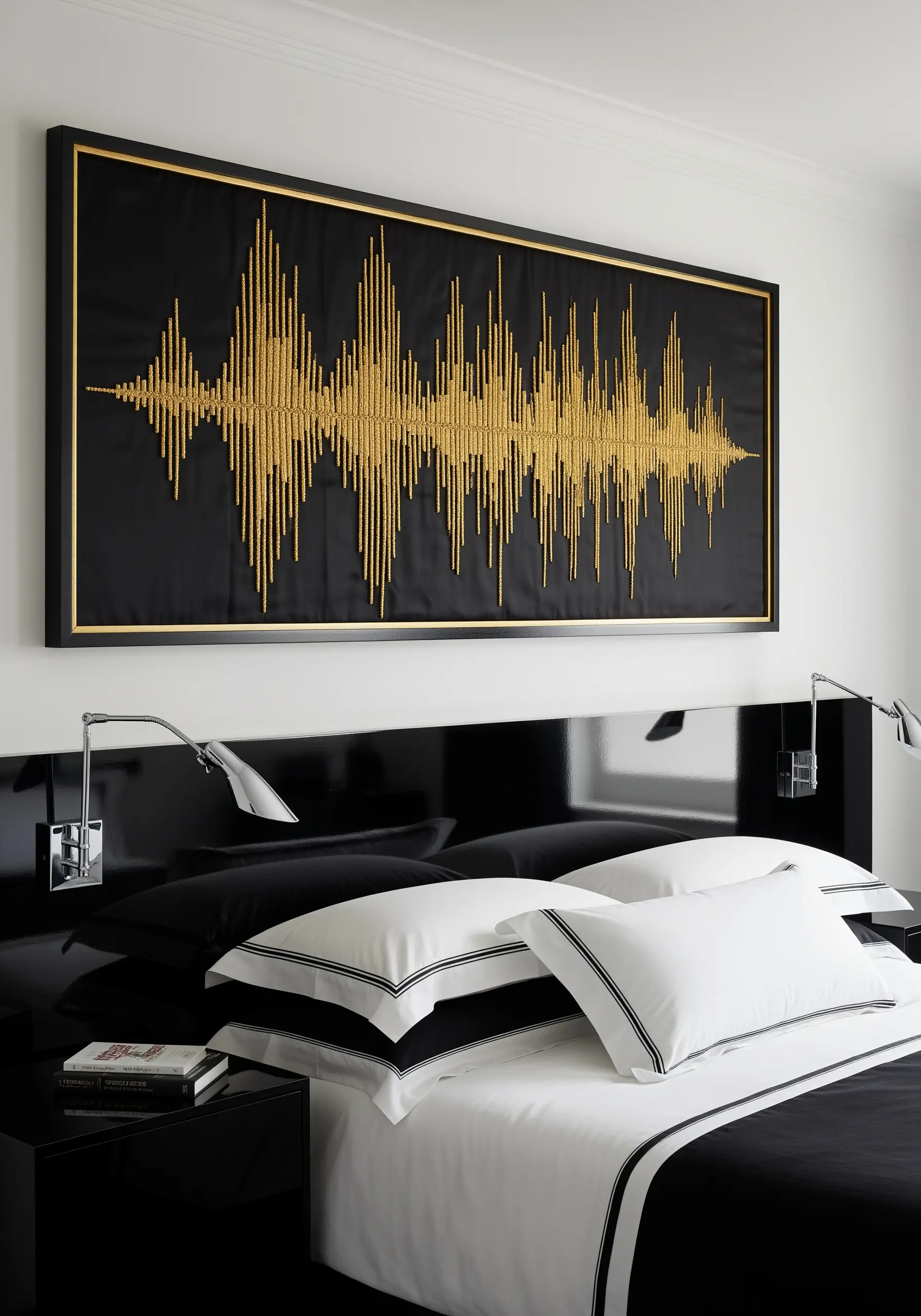
Immortalize a meaningful sound—a laugh, a line from a song, a heartbeat—in thread for a deeply personal piece of art.
Transfer a digital soundwave image onto black fabric, then use a thick, high-quality gold metallic thread for a bold effect.
Create the solid, bar-like forms using tightly packed, vertical satin stitches.
For even more dimension, use a padded satin stitch, which gives the soundwave a raised, sculptural quality.
26. The Calligraphic Wall Banner

For large-scale lettering, ensure clean, sharp edges by first outlining the letters with a split stitch and then filling them with satin stitch.
To create the thick-and-thin effect of modern calligraphy, vary the direction and angle of your satin stitches within each letter.
A heavyweight linen or canvas fabric provides the right structure and drape for a hanging banner, giving the piece a substantial, heirloom feel.
27. The Tropical Hibiscus Bloom
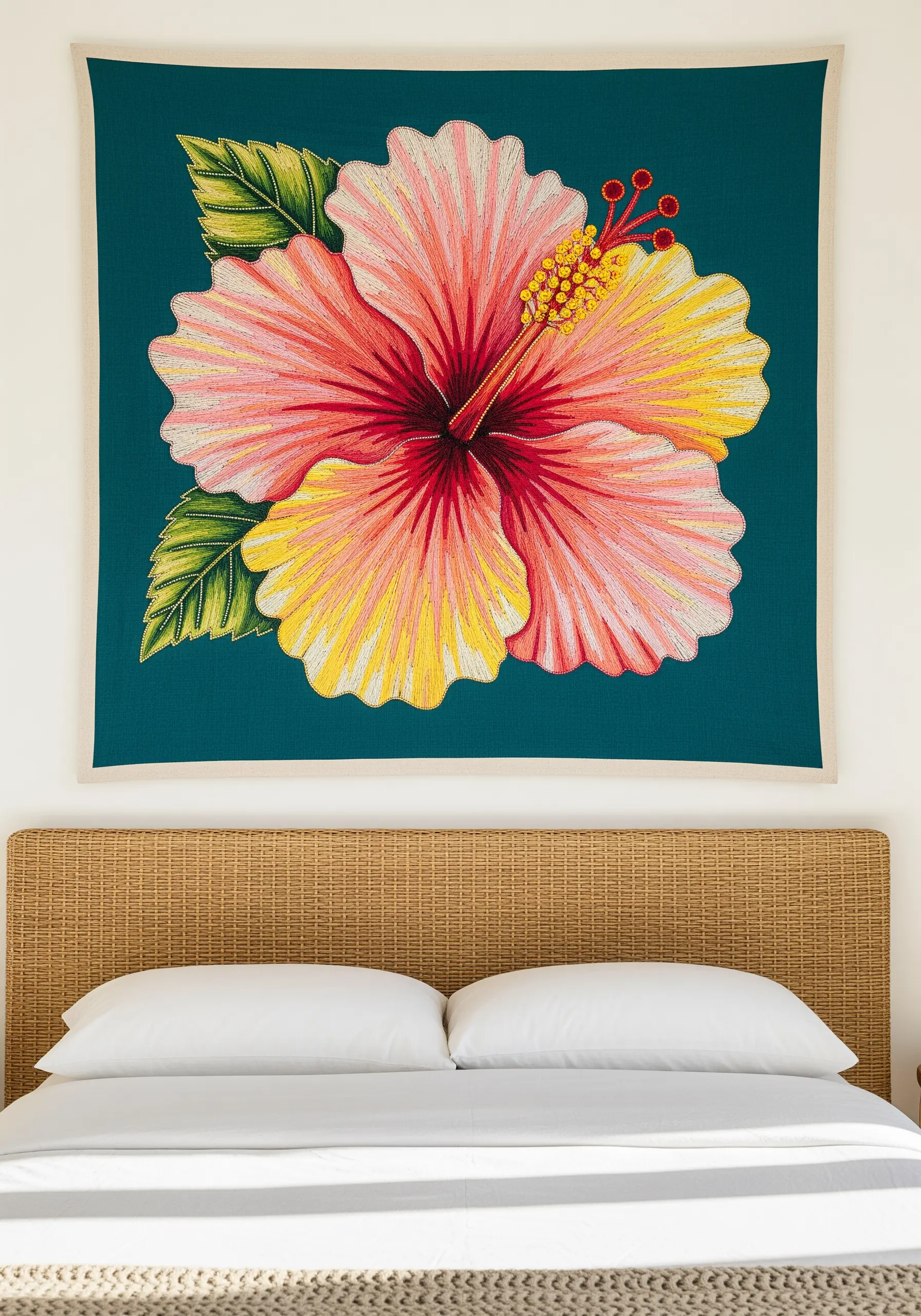
To achieve the soft, painterly blending on the hibiscus petals, you must use the long-and-short stitch, also known as thread painting.
Work in concentric sections, starting from the center of the flower and moving outwards.
Use several shades of each color—pinks, reds, and yellows—and stagger your stitches to create seamless, realistic gradients.
This technique is meditative and results in breathtakingly beautiful color transitions.
28. The Immersive Narrative Tapestry
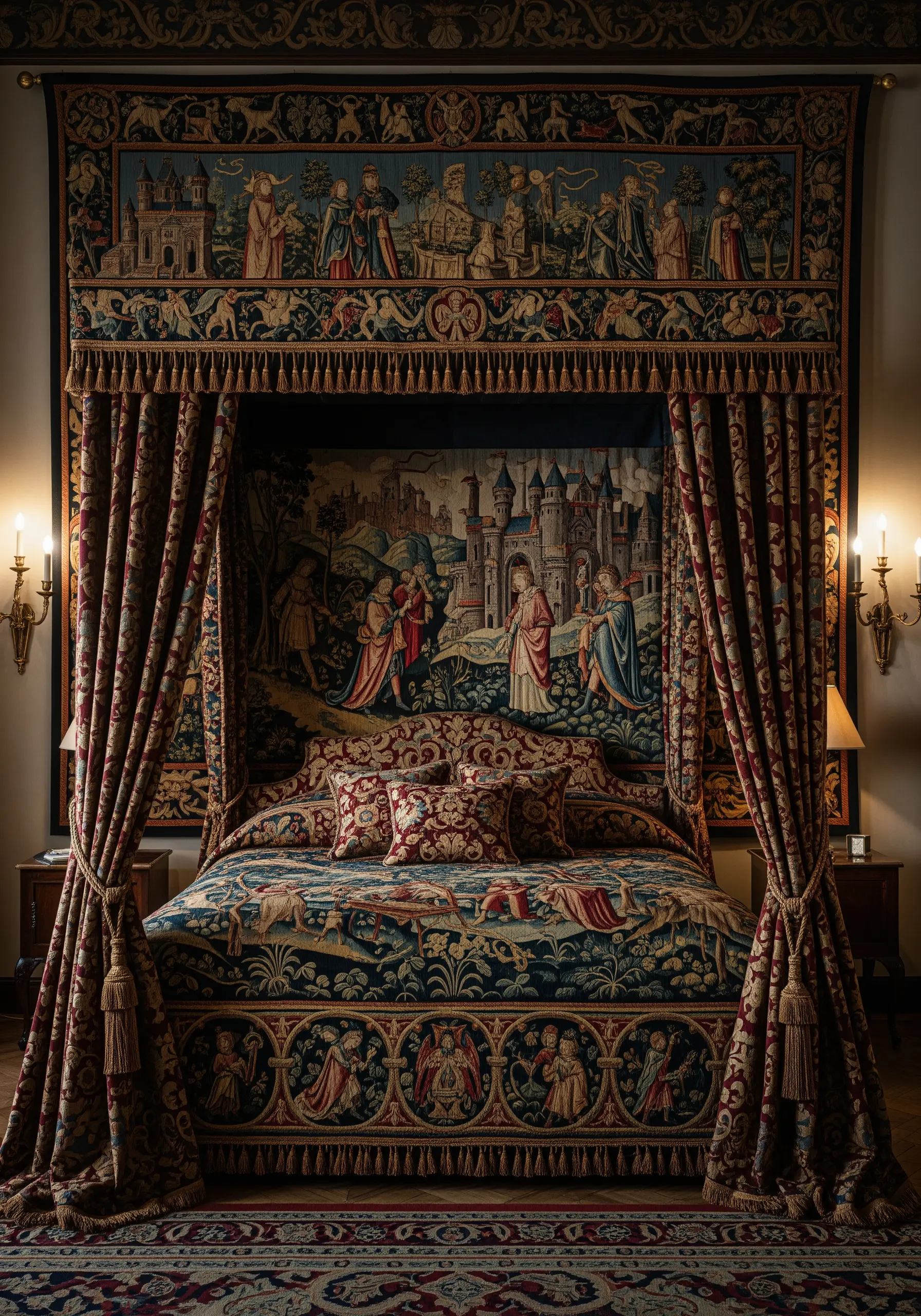
For a project of this grand scale, consider using appliqué for the large figures and architectural elements.
Cut shapes from different colored fabrics and secure them with a decorative buttonhole or satin stitch border, which covers large areas more quickly than filling with stitches.
Reserve detailed embroidery for faces, hands, and decorative patterns.
This combination of techniques is both historically accurate and a manageable way to tackle a large narrative piece.
29. Architectural Line Art Triptych
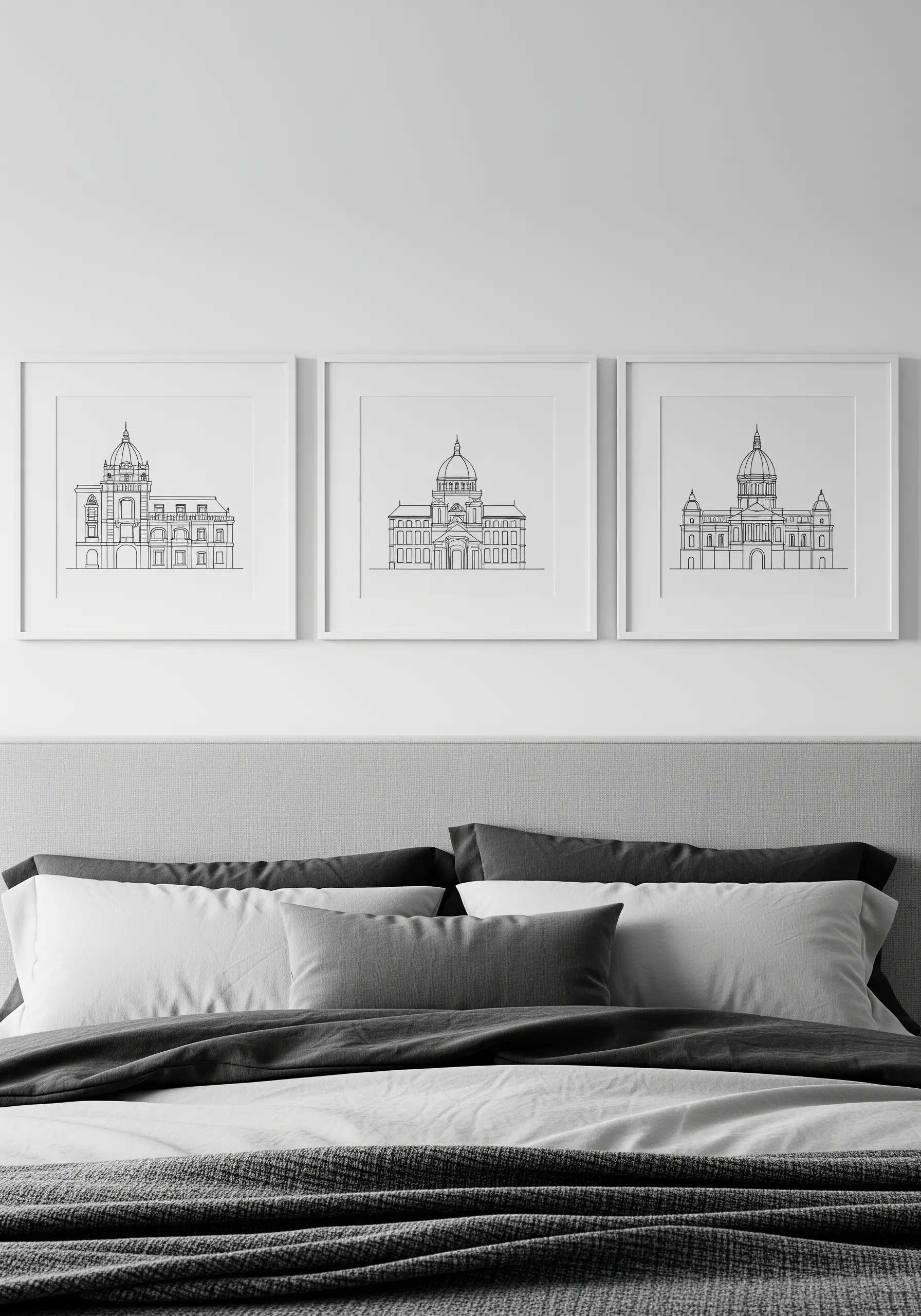
The elegance of this design comes from its absolute simplicity and precision.
Use a single strand of black thread and a basic backstitch on crisp white linen or cotton.
The key to a professional finish is maintaining consistent stitch length and even tension to create perfectly straight, clean lines.
This is a perfect example of minimalist line art embroidery that relies on skill over complexity.
30. The Woodland Stag Tapestry

This piece achieves its rustic, textural feel by using thick crewel wool on a coarse, nubby fabric like tweed or heavy linen.
Create a sense of form and texture by varying the direction of your stitches in the deer’s coat and the tree bark.
Instead of aiming for perfect, smooth satin stitches, allow for some irregularity—it adds to the handcrafted, rustic charm of the piece.
31. The Macrame-Embroidery Mandala
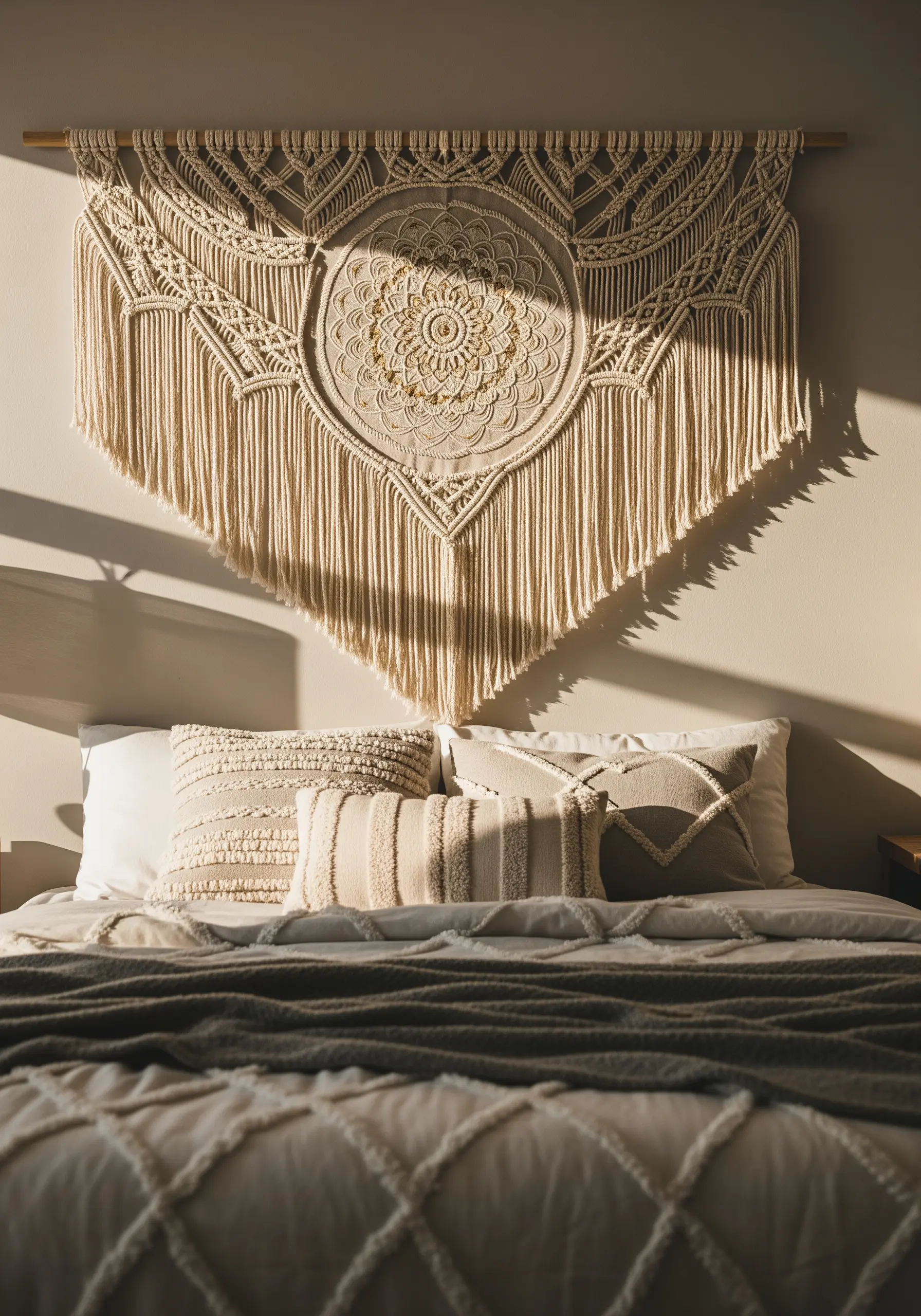
Combine the delicate art of embroidery with the bold texture of macrame for a truly unique piece.
First, create a central embroidered mandala on sturdy fabric, then stretch it tightly within a large metal or wooden hoop.
From this central embroidered point, attach macrame cords and work your knots outwards, creating the fringe and decorative elements.
This mixed-media approach creates a stunning focal point rich in texture and detail.
32. The Pop Art Anatomical Heart

For a bold, graphic look, start by outlining the entire heart and its vessels with a thick, heavy backstitch or stem stitch in black thread.
Fill the sections using long-and-short stitch, but instead of blending colors smoothly, keep the color blocks distinct to create a cell-shaded, illustrative effect.
The high-contrast, bright yellow background makes the red and pink tones vibrate, giving the piece a modern, pop-art energy.


