

If you’ve ever finished an embroidery piece and felt it was missing a certain polish, you are not alone. It’s that subtle gap between a project you’ve made and an artwork you are truly proud to display. The secret to bridging that gap isn’t about more complex patterns or expensive threads; it’s about intention.
The kitchen, a space of transformation and nourishment, is the perfect backdrop for this next step in your creative practice. Here, simple botanical and fruit motifs can become small masterpieces through thoughtful adjustments in technique, texture, and composition.
These ideas are designed to shift your perspective. You’ll learn not just what to stitch, but how a change in stitch direction can create dimension, how negative space can make a design breathe, and how a carefully chosen color palette can evoke a specific mood. This is how you create decor that feels less like a craft project and more like a piece of personal, boutique-made art.
1. Create a Cohesive Triptych with Progressive Motifs
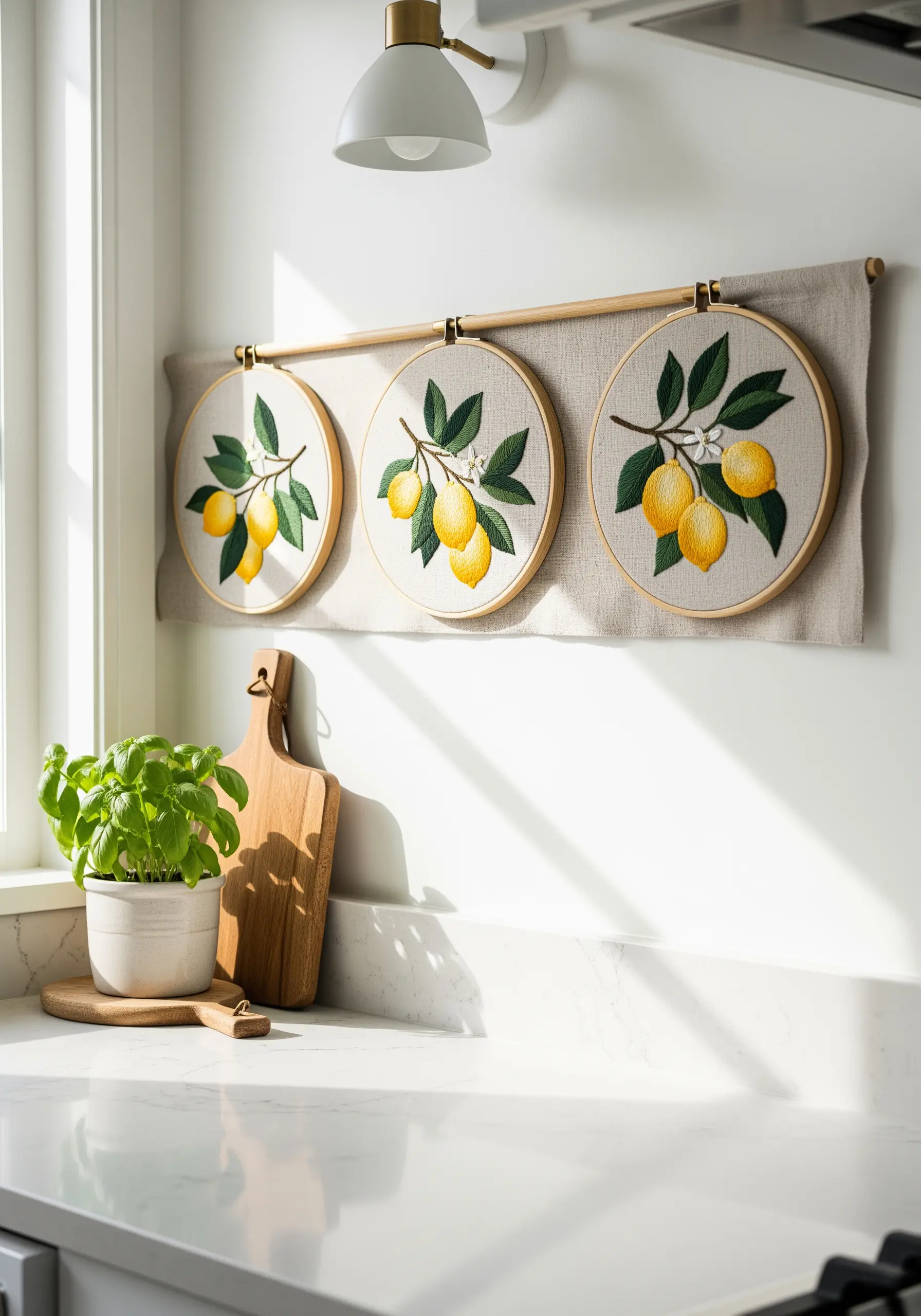
To elevate a simple lemon motif, stitch a progressive series across three hoops.
Think of it as telling a small story—one hoop might show blossoms, the next young fruit, and the final one ripe lemons.
Use a long-and-short stitch to create a smooth, painterly gradient on the fruit, using three shades of yellow for a realistic curve.
Mounting the finished hoops on a single linen runner, hung from a wooden dowel, transforms individual pieces into a unified, high-end display.
2. Master Dramatic Contrast with a Single Subject
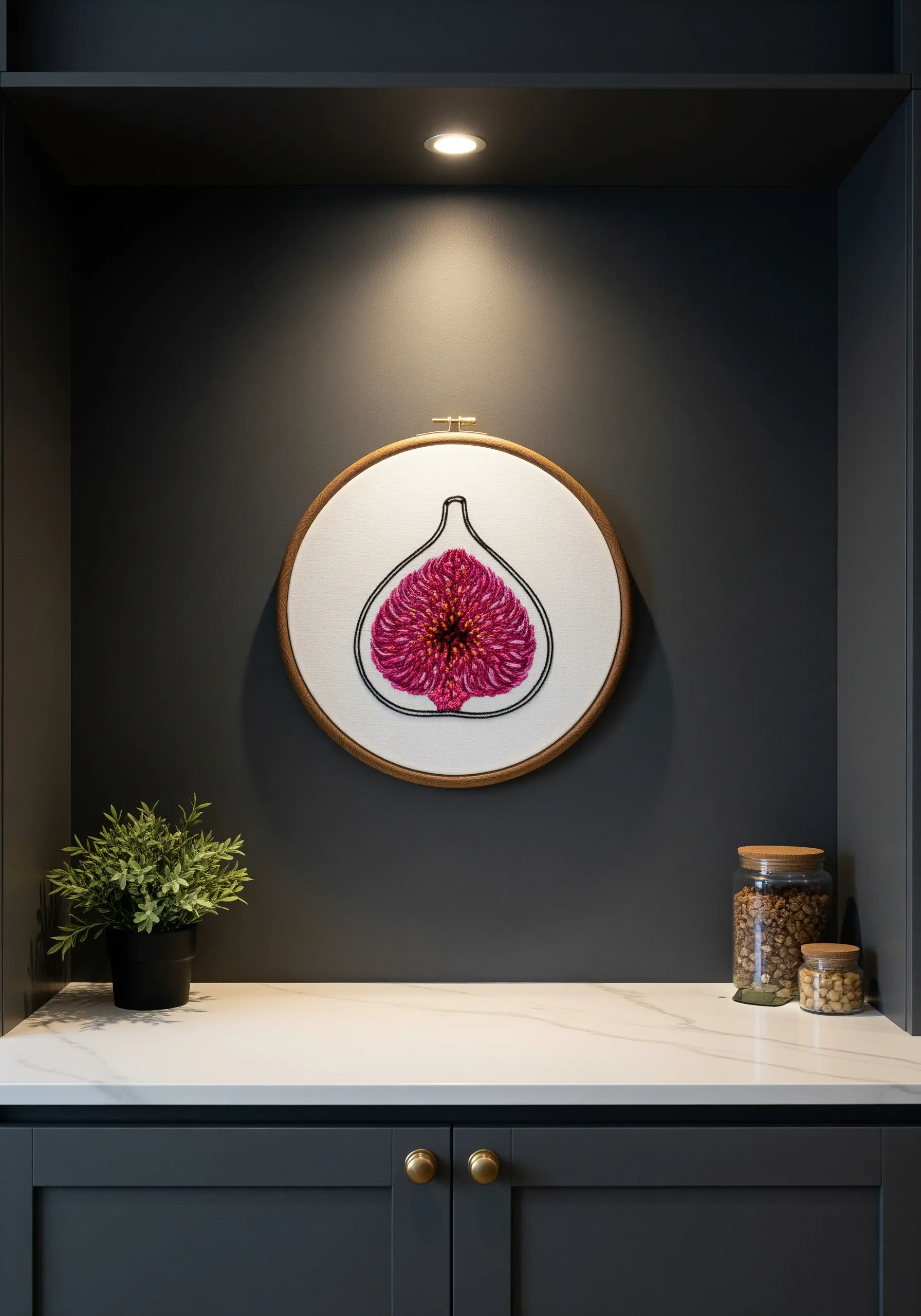
Let your subject command attention by stitching it against a stark, dark background fabric.
For the intricate texture inside the fig, use a dense satin stitch or thread painting with vibrant, jewel-toned threads like magenta and fuchsia.
Contain the vibrant fill with a clean, bold outline using a whipped backstitch in black; this simple step gives the design a sharp, graphic finish that feels intentional and modern.
This technique makes dramatic contrast your most powerful tool.
3. Achieve an Ethereal Look with Muted Greens
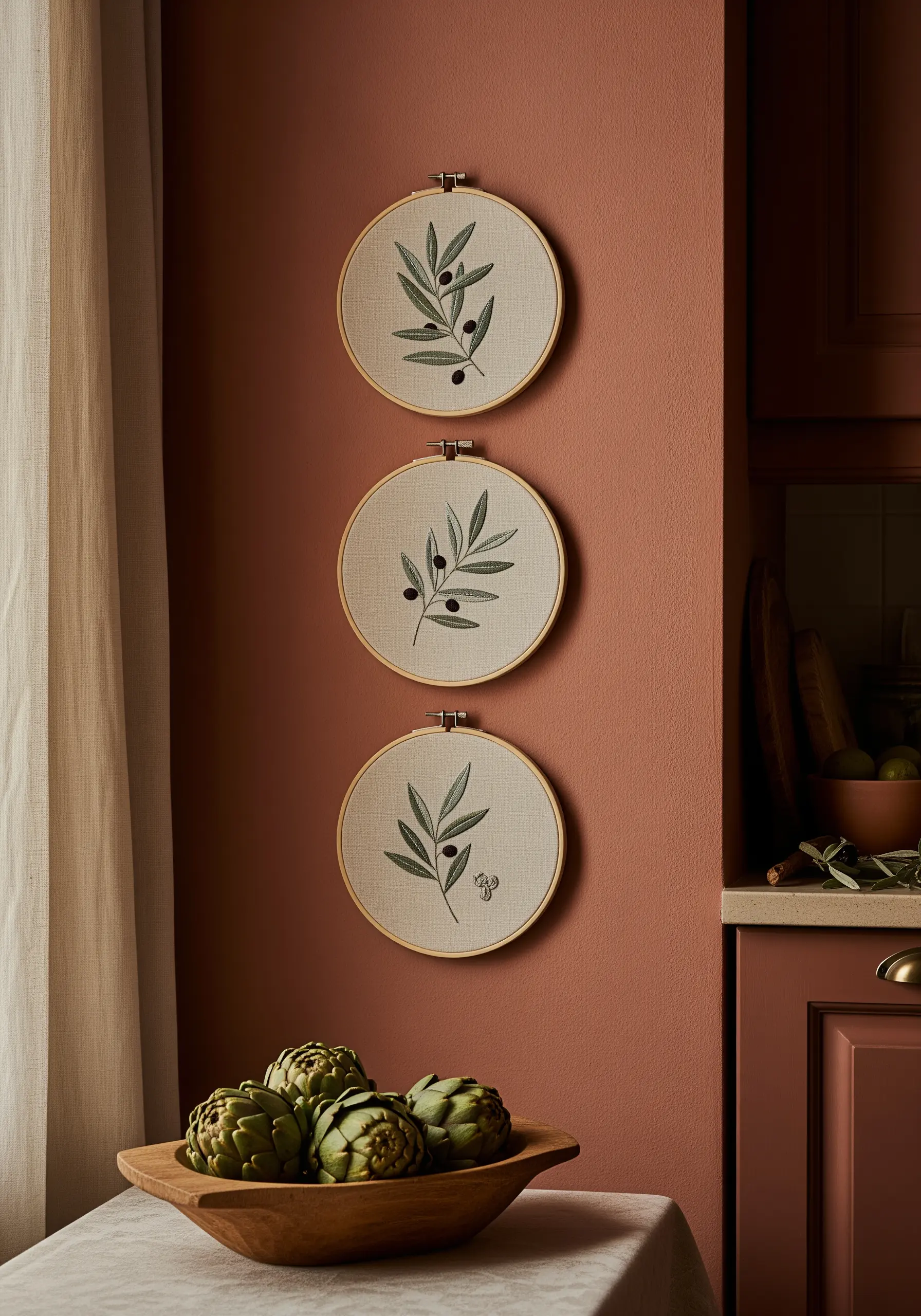
To capture the soft, dusty look of olive leaves, work with a muted color palette of sage, moss, and stone on a natural, unbleached linen.
Use fishbone stitch for the leaves, as it creates the central vein and angled texture in one fluid motion.
For the olives, use just two or three sparsely placed French knots in a dark gray or black—this restraint keeps the composition airy and sophisticated.
The overall effect is serene and organic, perfect for a calm kitchen space.
4. Design a Playful Quadtych for a Modern Farmhouse Feel

Create a single, impactful art piece by arranging four small hoops in a grid frame.
Keep the main strawberry motif consistent across all four, but introduce a tiny variation in each—a slightly different leaf angle, a missing flower, or an extra berry.
This subtle inconsistency adds personality and encourages a closer look.
Use a padded satin stitch for the berries to give them a plump, three-dimensional quality that pops against the flat fabric.
5. Embrace Bold Simplicity with Large-Scale Line Art
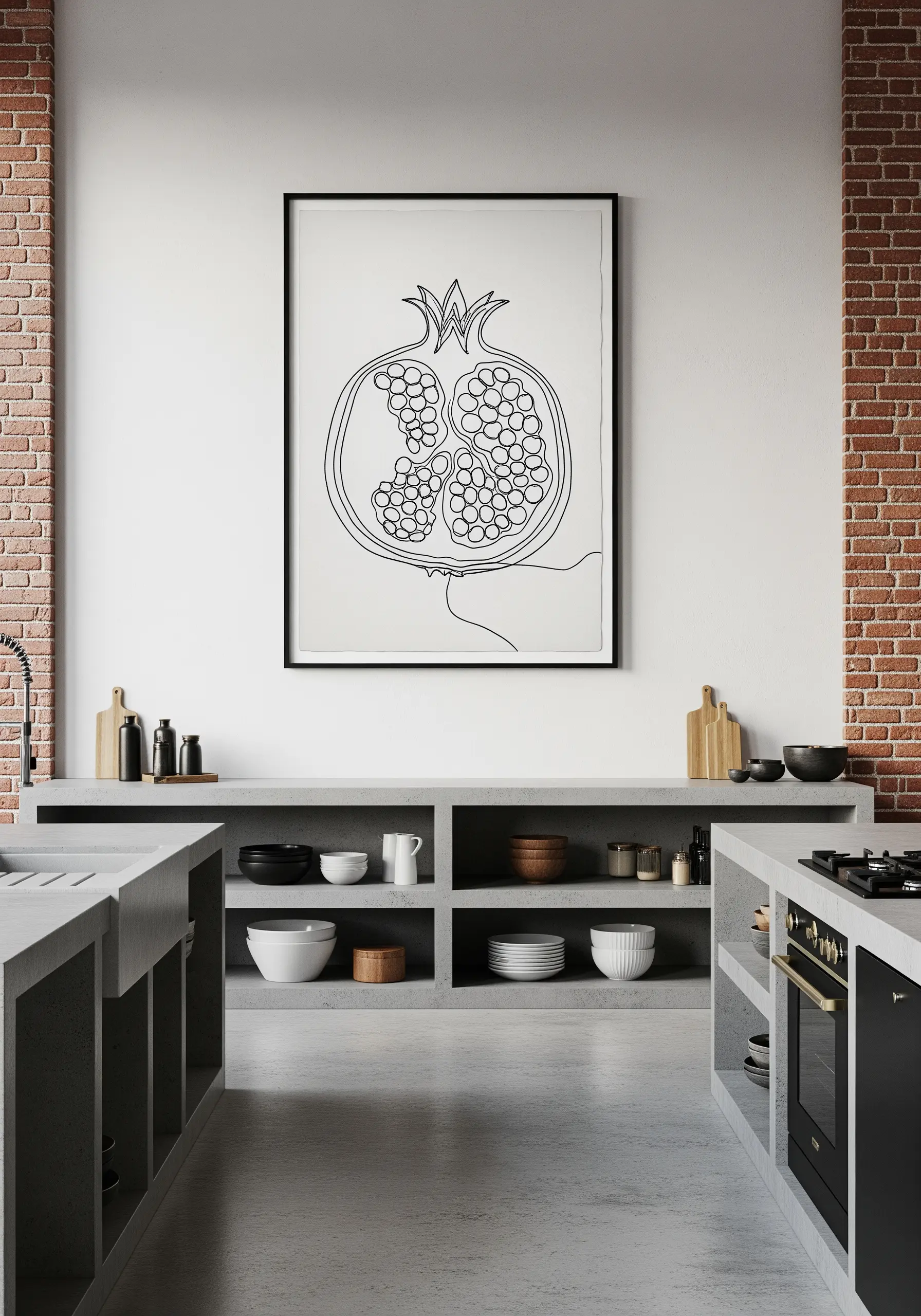
Transform a simple line drawing into a powerful statement piece by scaling it up significantly.
Instead of standard six-strand floss, use a heavier thread like Perle cotton to achieve a bold, graphic line that holds its own in a large frame.
A simple stem stitch or whipped backstitch will provide the smoothest, most consistent line, mimicking the confident stroke of an ink pen.
This approach proves that minimalist line art embroidery patterns can have maximum impact.
6. Create a Cascading Design for Vertical Spaces
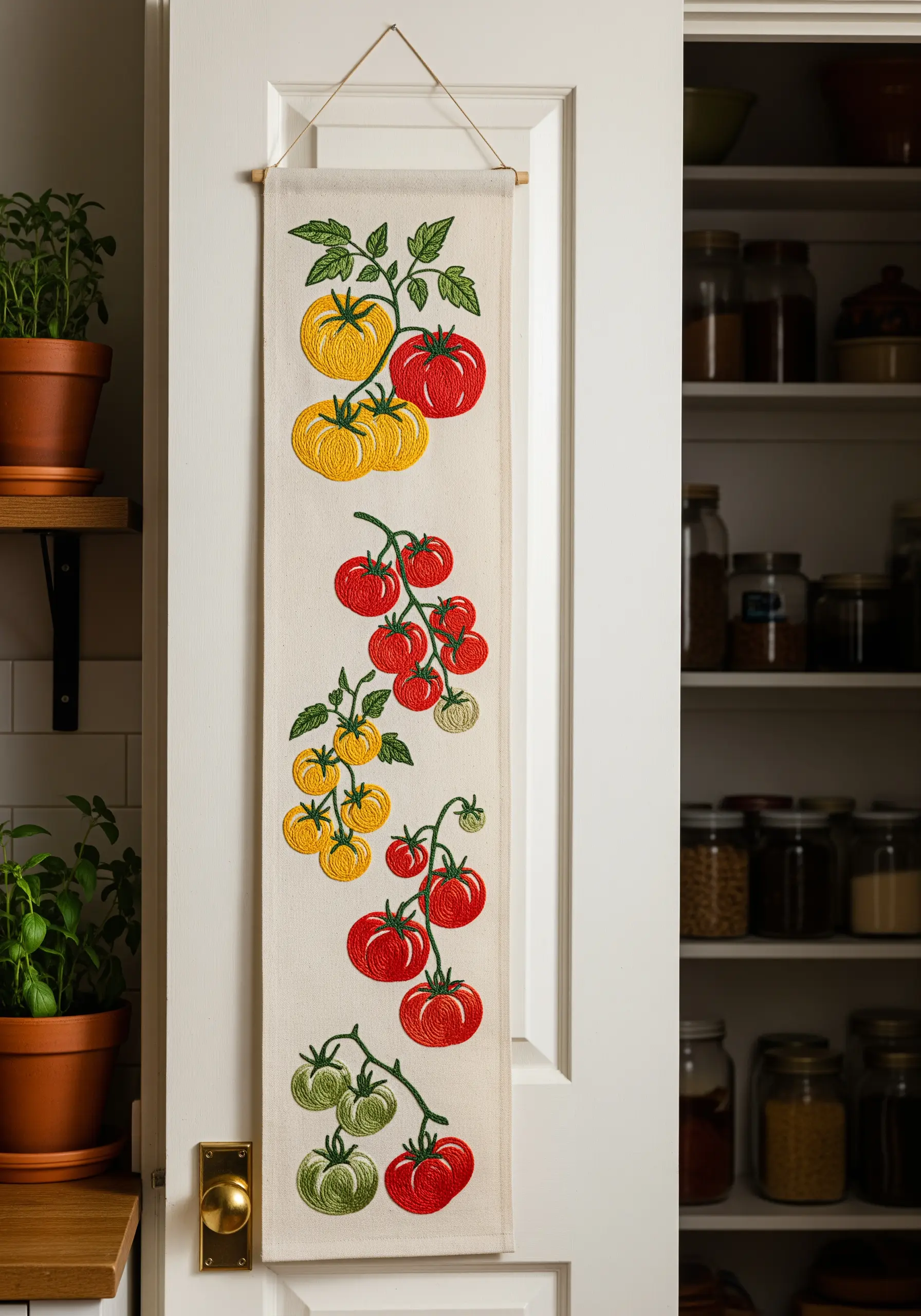
Take advantage of narrow vertical spaces, like a pantry door or a slim wall, with a cascading design.
Arrange the tomato vines to create a sense of downward movement and growth, varying the colors from green to yellow to red to tell a story of ripening.
Use a circular satin stitch for the tomatoes, angling your stitches towards a central point to create the illusion of roundness and volume.
This composition feels dynamic and draws the eye along the length of the textile.
7. Stitch Delicate Herb Silhouettes on Sheer Fabric

Create an ethereal, light-filtering effect by stitching delicate botanicals on a sheer fabric like organza or fine voile.
Use only one or two strands of thread and a simple backstitch to keep the herbs feeling light and airy.
When hung in a window, the sunlight passes through the fabric, making the stitches appear to float and integrating the view outside into your artwork.
This technique turns everyday nature into stunning art.
8. Use Negative Space for a Serene Composition
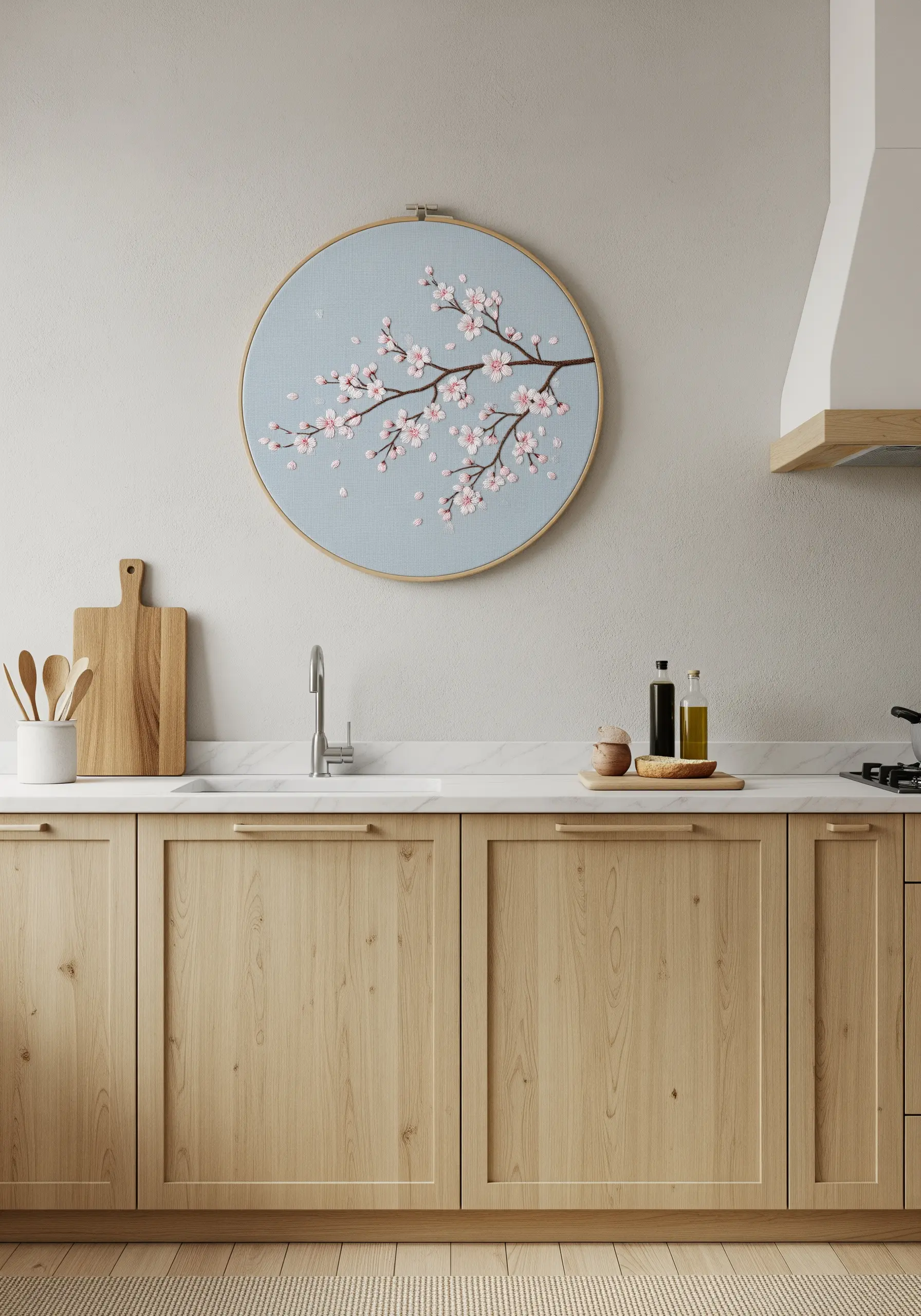
The most sophisticated designs often rely on what isn’t stitched.
Place a single cherry blossom branch asymmetrically within a large hoop to create a sense of balance and tranquility.
Stitching on a colored fabric, like a soft sky blue, makes the negative space an active and beautiful part of the composition.
Combine small straight stitches for the branch, detached chain stitches for petals, and French knots for buds to add delicate texture without overwhelming the piece.
9. Achieve a Smooth Gradient with Directional Stitching

For a realistic avocado, the key is a perfectly smooth color transition.
Use three to four shades of green floss, working from the darkest shade near the skin to the lightest shade around the pit.
The secret is directional long-and-short stitch: angle your stitches to follow the natural curve of the fruit.
This technique tricks the eye into seeing a seamless blend, giving the fruit a buttery, lifelike appearance.
10. Create a Pointillist Texture with French Knots
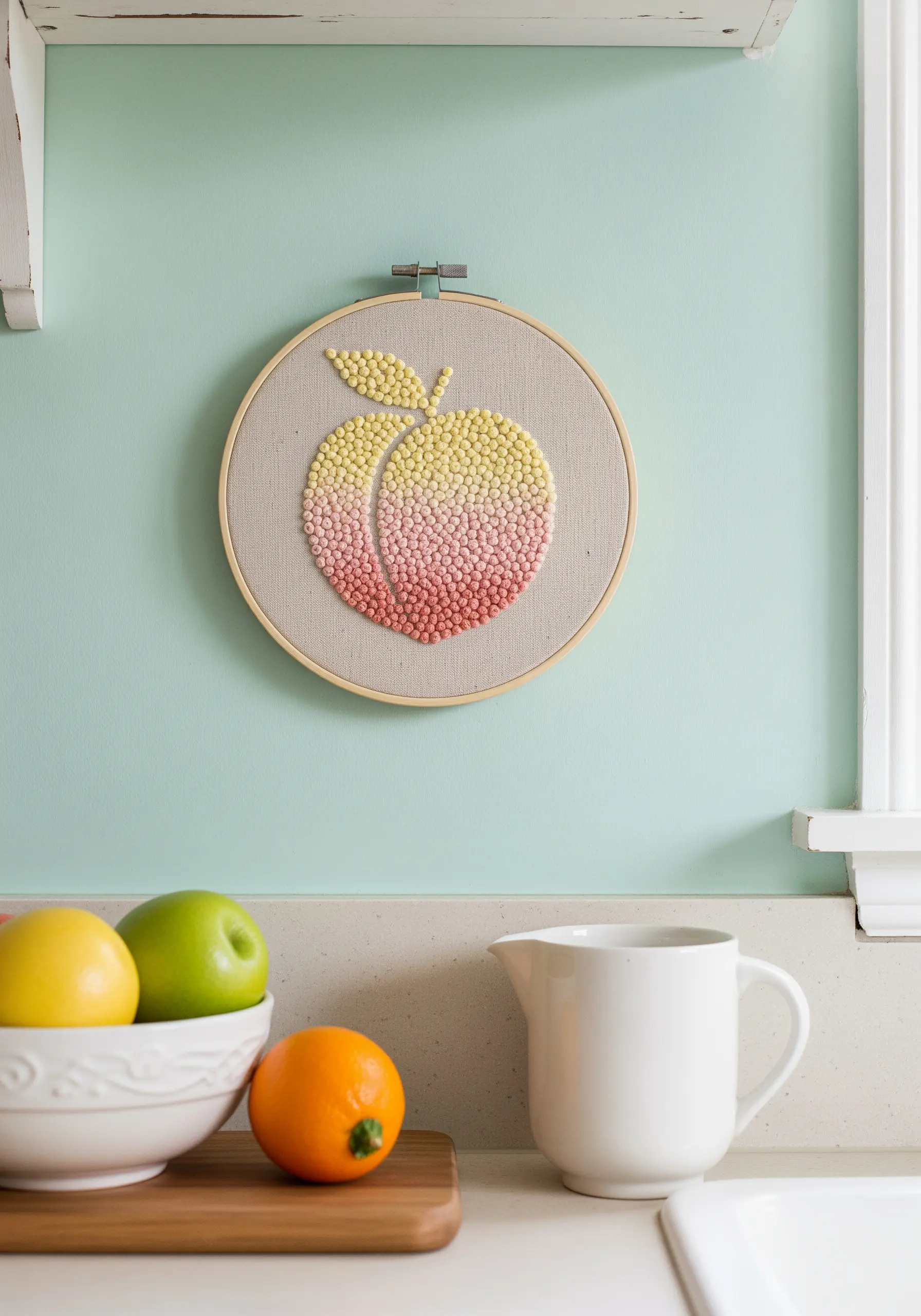
Move beyond flat fills and embrace texture by rendering a whole fruit with French knots.
To create the soft ombré effect of a peach, map out your color zones first, then fill each section with tightly packed knots.
Use a single wrap for your knots to keep them small and uniform, which allows the color gradient to be the star.
This technique is wonderfully tactile and gives a modern, graphic finish to a classic subject.
11. Build Dimension with Layered Stitches
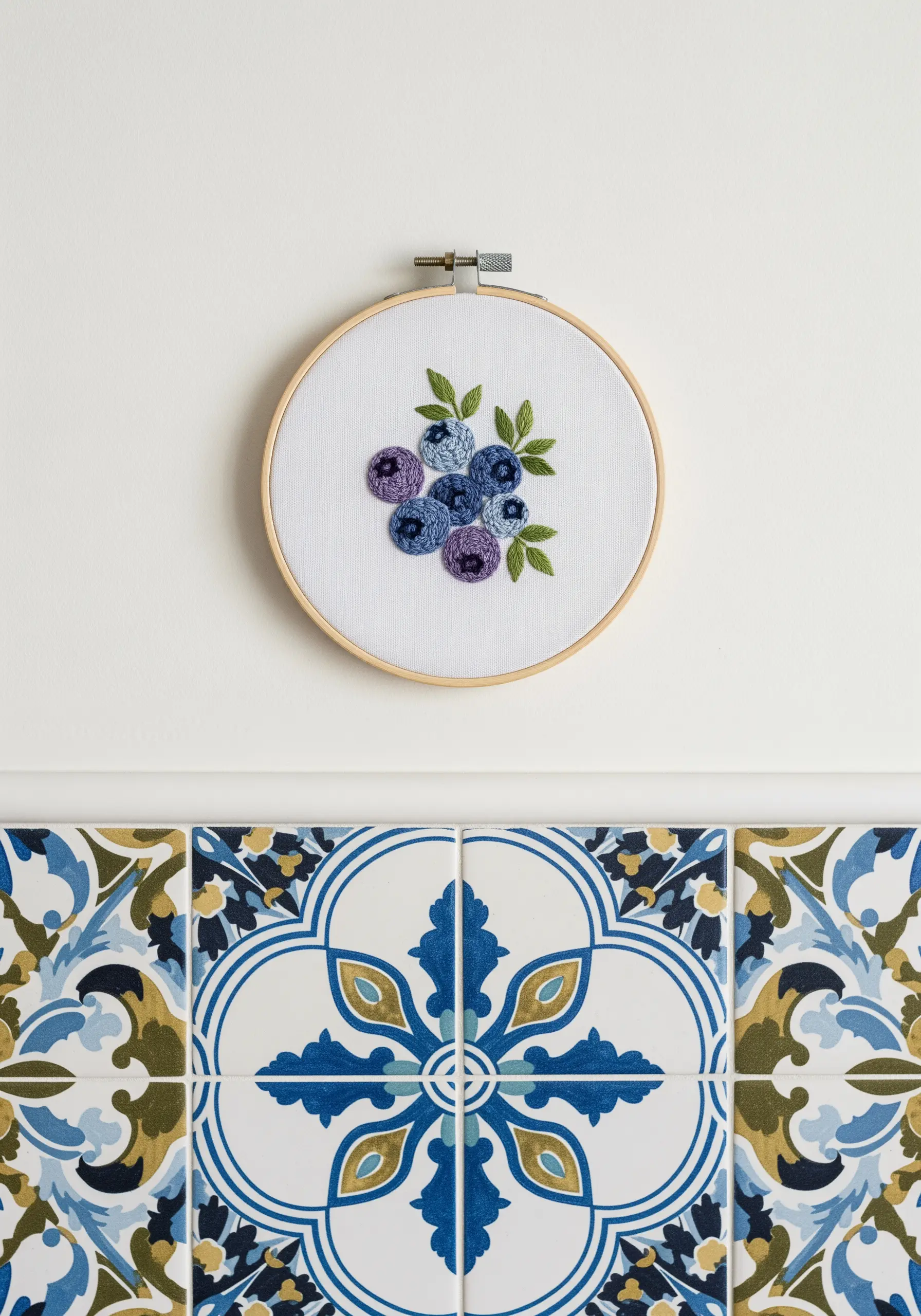
To make a small cluster of blueberries feel dynamic and three-dimensional, think in layers.
Stitch the berries in the background first using a simple satin stitch.
For the berries in the foreground, create a base of padding stitches before covering them with satin stitch. This physically raises them from the fabric.
A few scattered French knots in a lighter blue on top mimic the fruit’s waxy bloom and complete the illusion of depth.
12. Capture a Frosted Texture on Dark Fabric

To replicate the soft, silvery coating on sage leaves, the choice of fabric is as important as the thread.
Stitching with muted greens and grays on a black or charcoal linen makes these subtle colors appear more luminous and vibrant.
Use long-and-short stitch to blend the soft green with a silvery-gray thread, creating that characteristic dusty texture.
A simple stem stitch for the central vein provides just enough definition.
13. Transform a Botanical Subject into Abstract Art
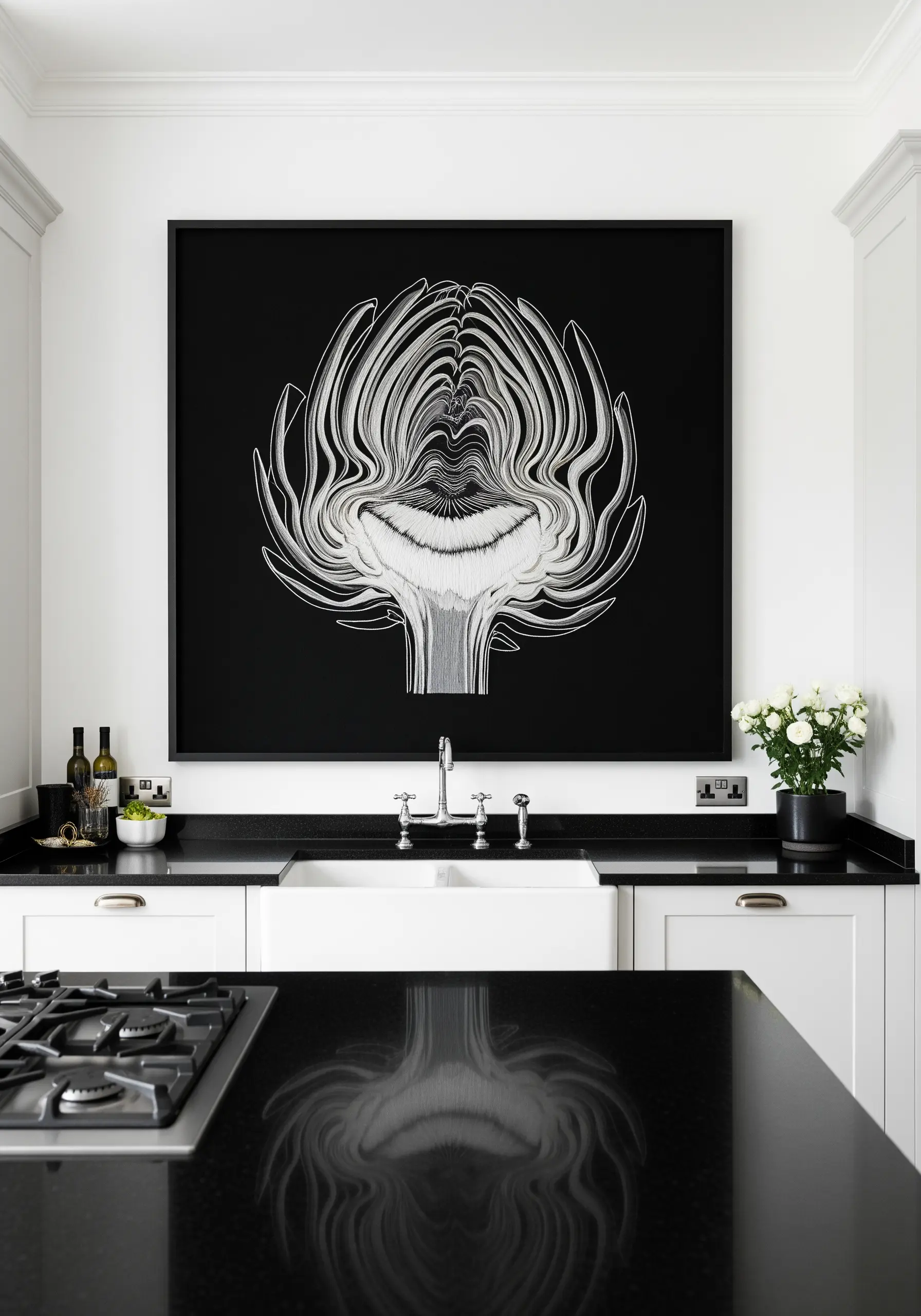
Elevate a common kitchen vegetable into a piece of fine art by focusing on its internal structure rather than its literal appearance.
Use a single, high-contrast color scheme—like white thread on black canvas—to emphasize the intricate, flowing lines of the artichoke’s layers.
Vary your line weight by switching between a thin split stitch for fine details and a bolder whipped backstitch for defining curves.
This interpretation becomes one of those abstract thread embroidery ideas that feels incredibly modern and sophisticated.
14. Create a Vibrant Series with a Repetitive Motif

A simple design repeated in different colorways creates an incredibly cheerful and cohesive gallery wall.
Choose one motif, like a citrus slice, and stitch it in the distinct palettes of an orange, lime, lemon, and grapefruit.
For crisp, clean lines between segments, use a whipped backstitch. Fill each section with a directional satin stitch, keeping the angle consistent for a uniform, reflective sheen.
15. Arrange Multiple Hoop Sizes for a Dynamic Gallery Wall
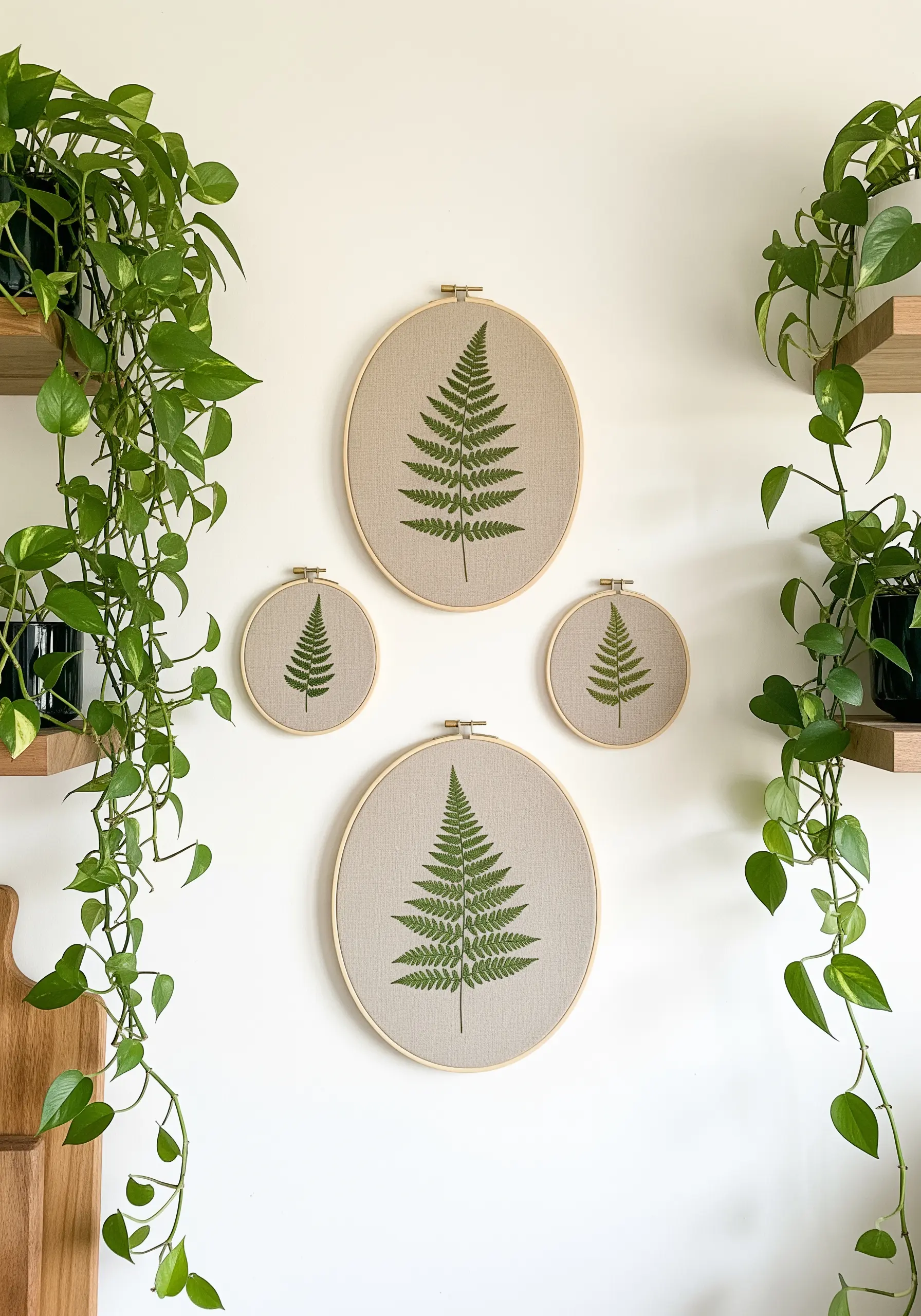
Create visual rhythm and flow by stitching the same simple motif in hoops of varying sizes.
A delicate fern is the perfect subject for this approach; its simple form prevents the display from looking cluttered.
Use fishbone stitch for the fronds—it efficiently creates the central stem and angled leaves in a single, elegant movement, ensuring a consistent look across all hoops.
The result is a display that feels like a natural, growing collection.
16. Master Photorealism with Thread Painting

To achieve the subtle color shifts and soft glow of a ripe pear, you must learn to paint with thread.
Work with a single strand of floss at a time, using the long-and-short stitch to seamlessly blend multiple shades of green, yellow, and even a touch of ochre for warmth.
The final, crucial detail is a single, tiny stitch of bright white or pale yellow to create a highlight. This one stitch is what brings the fruit to life.
17. Capture Soft, Matte Texture with a Tonal Palette
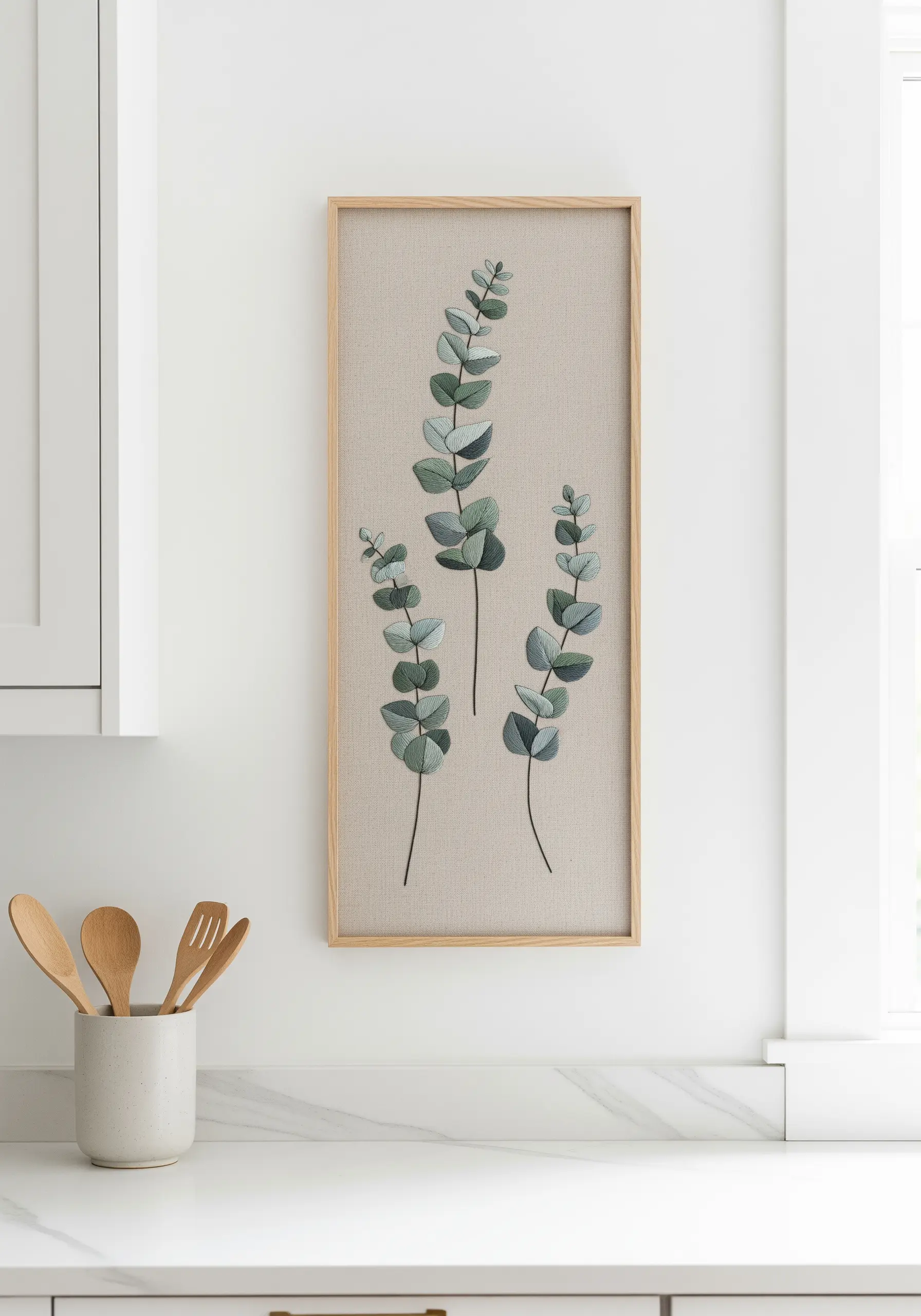
The beauty of eucalyptus is its soft, dusty appearance. Capture this by using a closely related palette of muted blue-greens and grays.
Instead of a flat satin stitch, divide each leaf into two or more sections and fill each with a slightly different shade. This creates a subtle, faceted look that mimics how light hits the matte surface.
This approach is key to creating elegant and dreamy, nature-inspired embroidery designs.
18. Create a Luxe Wall Hanging with a Repeating Pattern
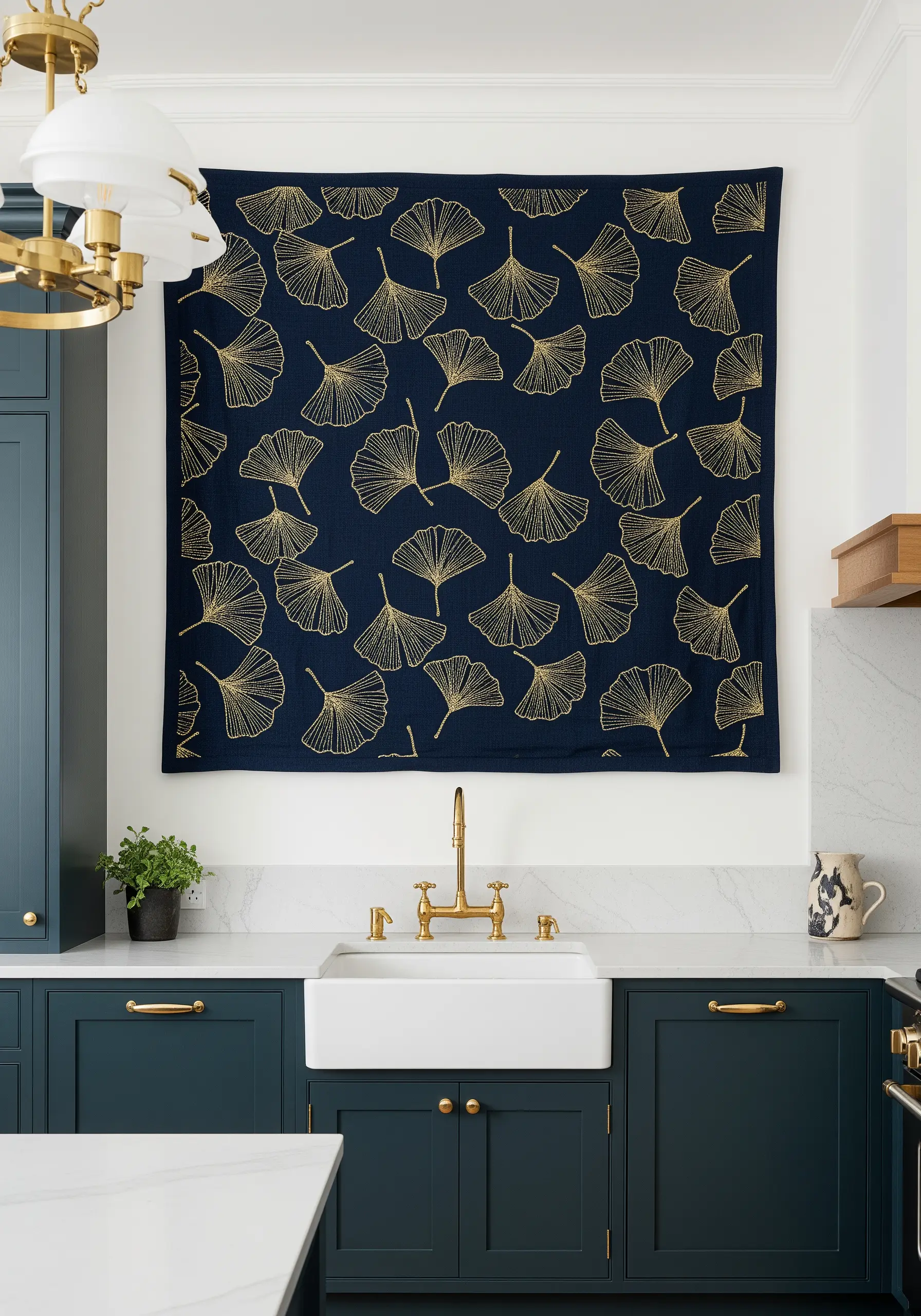
Move beyond the hoop to create a large-scale textile piece.
A repeating pattern of a simple, elegant motif like a ginkgo leaf can transform a length of fabric into a sophisticated wall hanging.
Use a metallic gold thread on a dark navy or black fabric for an instantly luxurious feel.
The repetition creates a mesmerizing effect that is far more impactful than a single, isolated design. It’s an ideal technique for creating large-scale embroidery tapestries.
19. Use Padded Satin Stitch for Plump, Realistic Berries
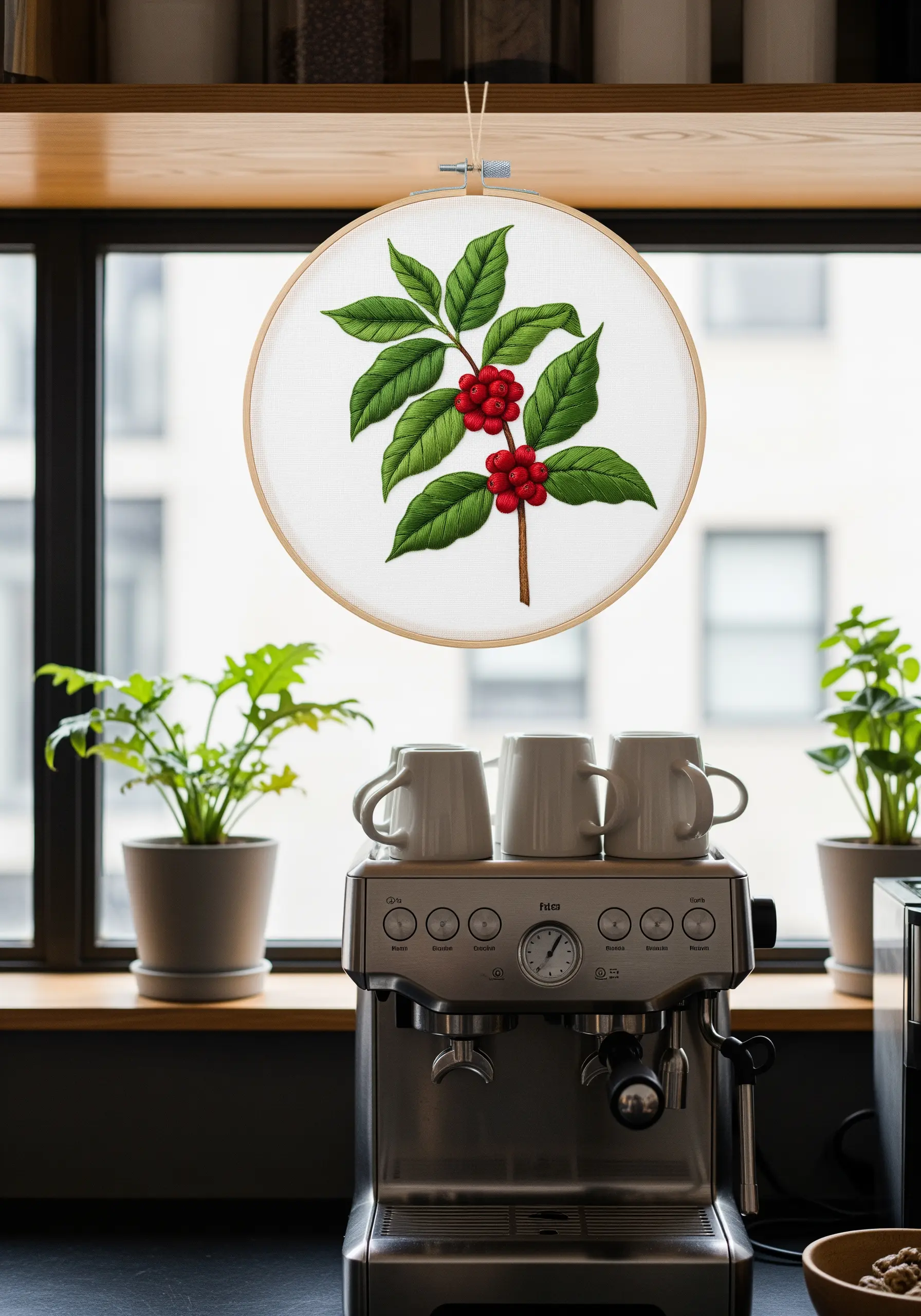
To give coffee cherries or other small fruits a convincing, rounded shape, use padding.
Before you begin your top layer, create a small mound of foundation stitches (like seed stitches or straight stitches) within the outline of the berry.
Then, cover this padding with smooth, vertical satin stitches. This technique physically lifts the thread from the fabric, creating a beautiful, tactile dimension that catches the light.
20. Replicate Realistic Berry Texture with French Knots

The unique, drupelet structure of a raspberry is perfectly suited to the French knot.
Fill the entire shape of the berry with small, tightly packed knots. Use two or three very similar shades of pink and red, scattering them randomly to create natural color variation.
This is one of the most effective ways to capture nature’s textures in your next embroidery project, as it mimics the form of the fruit itself.
21. Curate a Botanical Collection with Earthy Tones
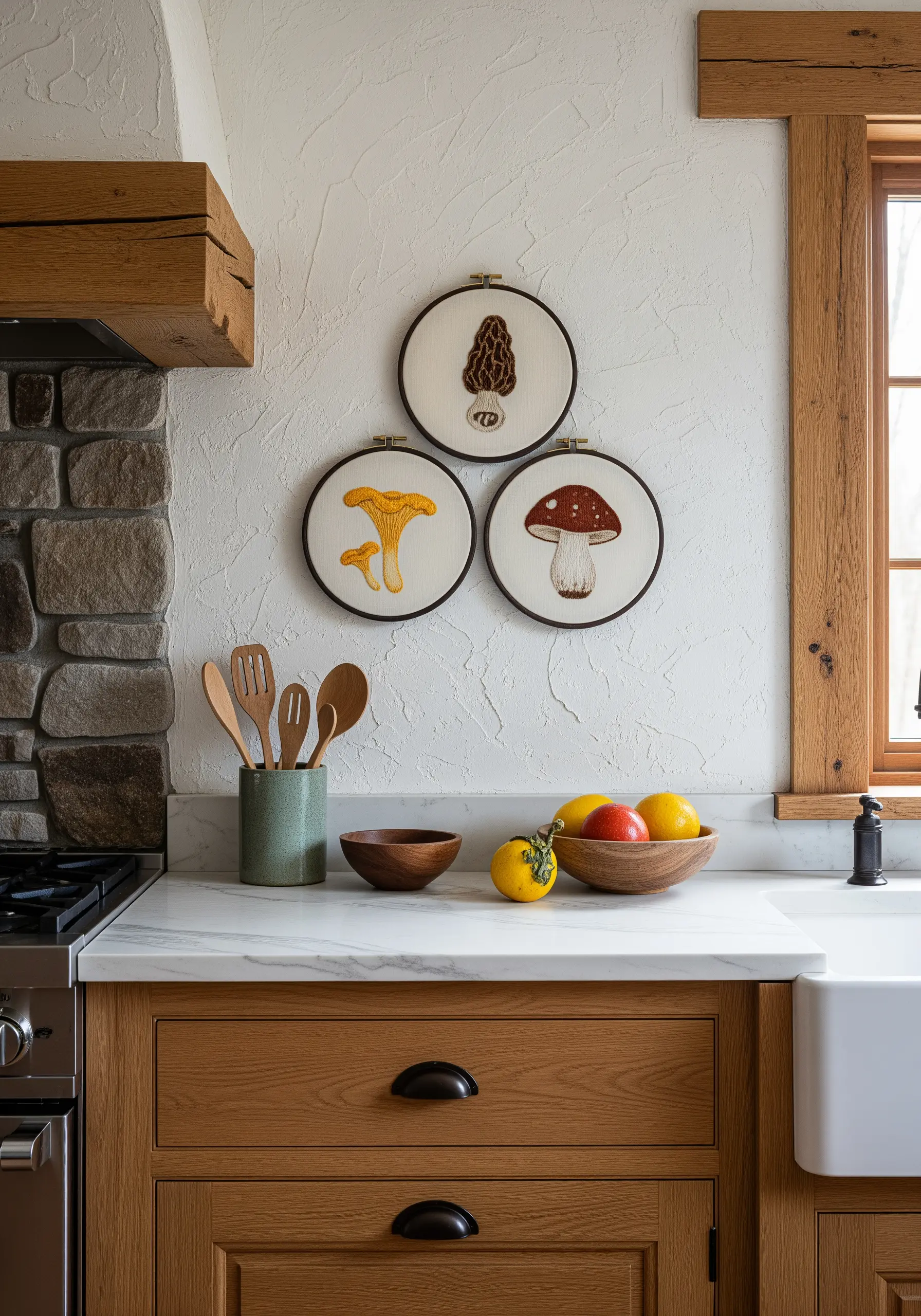
Create the feeling of a naturalist’s study by stitching a themed collection, such as different varieties of woodland mushrooms.
Stick to a cohesive, earthy color palette to unify the separate hoops into a single display.
Assign a unique stitch to each mushroom’s key feature to celebrate its texture: use vertical satin stitch for the gills, long-and-short stitch for smooth caps, and tiny seed stitches or French knots for spots.
22. Play with Abstract Color Blocking for a Modern Look

Deconstruct a traditional subject like an apple branch into a modern, graphic design.
Instead of realistic blending, fill sections of the fruit and leaves with flat, bold blocks of color.
The key to making this style look polished is the outline. Use a single, clean line of black thread in a backstitch to define each shape. This creates a crisp, illustrative quality that feels both playful and sophisticated.


