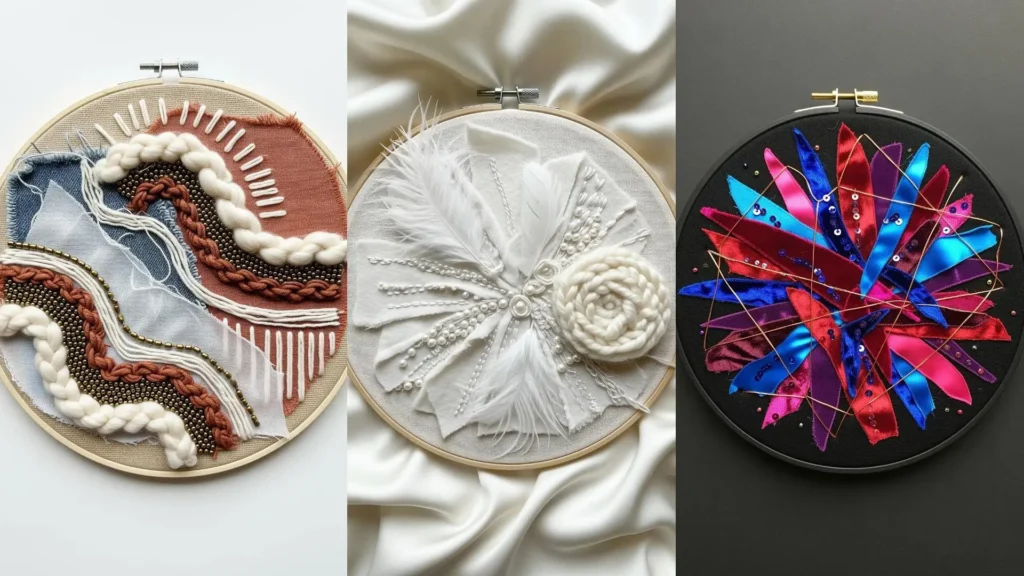
Perhaps you’re looking for more than just a pattern to follow. You’re seeking a way to connect with your creativity, to slow down your thoughts, and to make something that feels uniquely, quietly yours. That is the true purpose of stitching a mandala.
These circular designs are more than just beautiful arrangements of thread; they are a form of active meditation. The repetitive motions—the pull of the floss, the rhythm of the needle—can calm a busy mind, offering a gentle focus in a world full of distractions.
Here, you won’t find overly complex instructions. Instead, you’ll discover how simple stitches, thoughtful color choices, and an appreciation for texture can transform a blank piece of fabric into a small sanctuary. Let each stitch be a quiet breath, and let the finished piece be a reflection of the peace you found while creating it.
1. Weave a Meditative Color Wheel

Create this tactile, woven effect using a whipped backstitch or a simple chain stitch for each concentric circle.
The key to its soothing appearance is the repetition and the soft, organic texture that emerges as you build each ring of color.
Work with a muted palette of analogous colors—like these sage greens and dusty pinks—on a neutral linen fabric to enhance the calming, earthy feel.
This technique isn’t about perfect lines but about the rhythm of the stitch, making it an ideal project for stress relief.
2. Stitch a Crystalline Star

Achieve these crisp, geometric lines by maintaining tight, even tension with every straight stitch.
Use a single, bold color like navy or black on a stark white fabric for a high-contrast, modern aesthetic that demands attention.
Introduce textural punctuation with small clusters of French knots at the intersections of your lines.
This adds a delicate, three-dimensional detail that softens the sharp geometry without cluttering the design.
This precision-based work is excellent for focusing the mind.
3. Illuminate the Night with a Celestial Burst
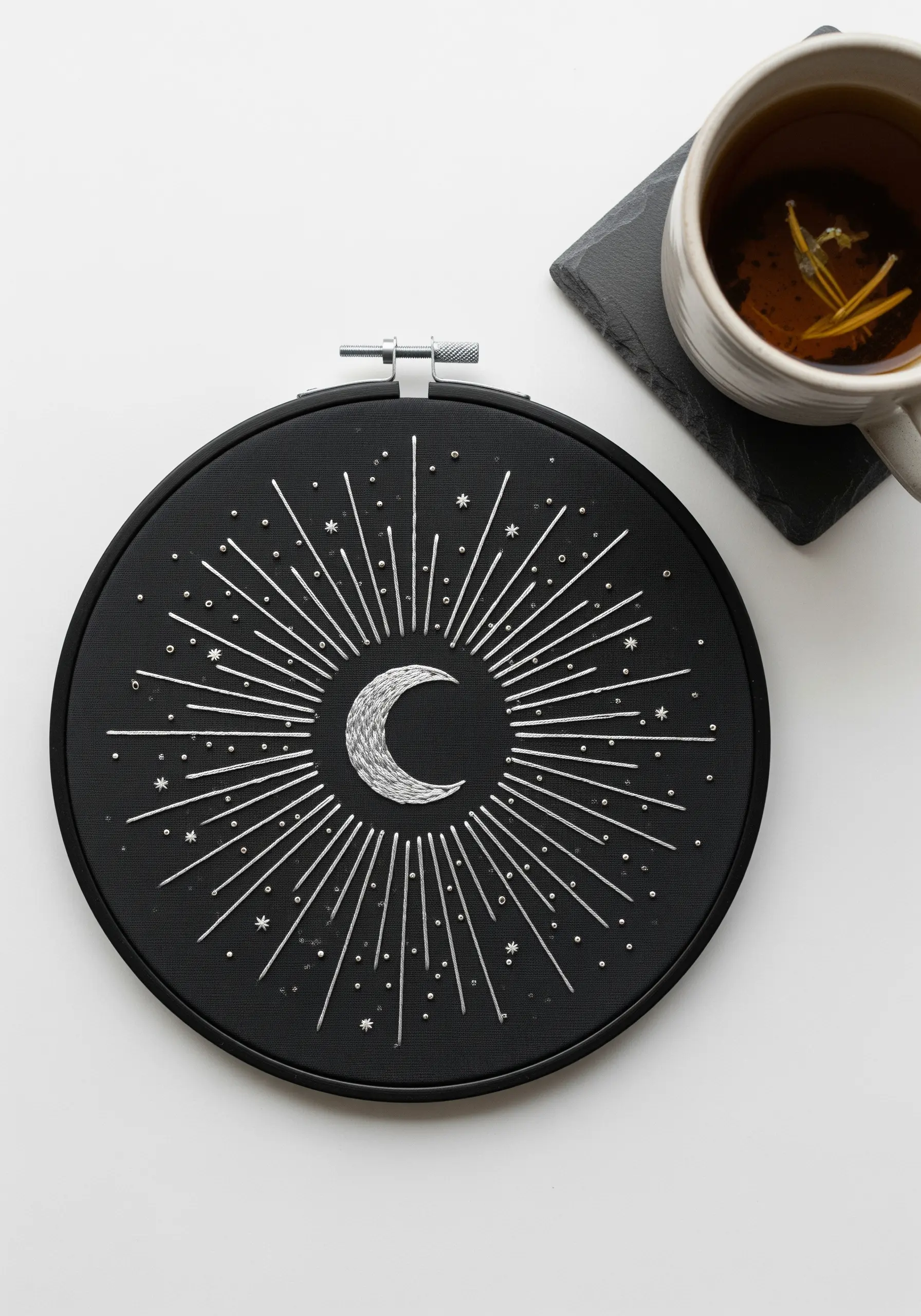
Make your design radiate by stitching with a bright white or metallic thread on black fabric.
Fill the crescent moon with a dense satin stitch, ensuring your stitches lie flat and parallel for a smooth, light-catching surface.
Create the rays with simple straight stitches of varying lengths, using fewer strands of floss for the finer lines to add delicacy and depth.
Sprinkle tiny French knots or star stitches randomly to represent distant stars, completing the cosmic scene.
4. Cultivate an Autumnal Foliage Mandala
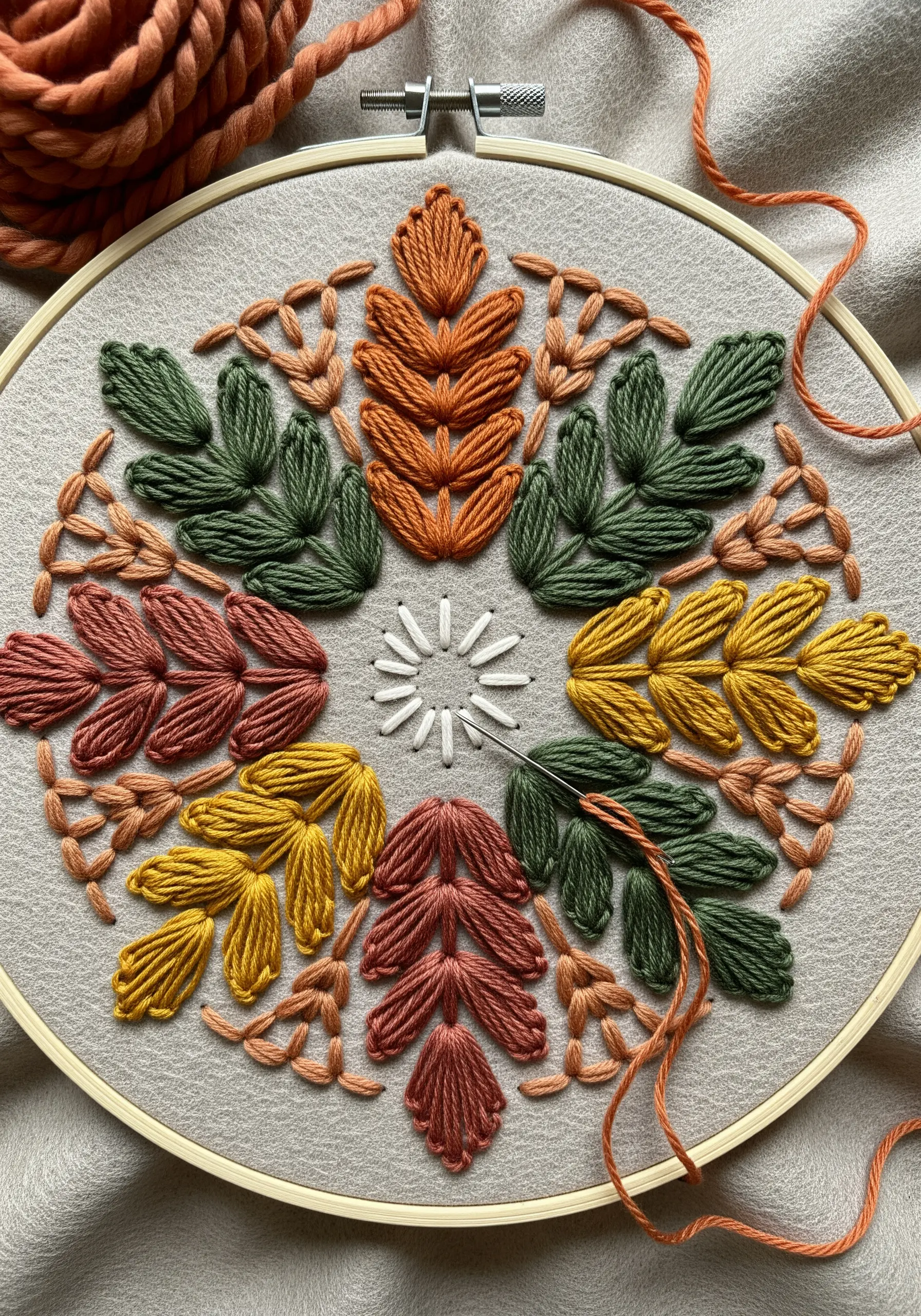
Use the fishbone stitch to create the beautiful, plaited texture you see in these leaves, which gives them a sense of volume and life.
Arrange the leaves in a circular pattern, radiating from a simple center of straight stitches, to transform individual botanical elements into a cohesive mandala.
Choose an autumnal palette of rust, mustard, olive, and wine to evoke a warm, cozy feeling.
Add delicate fly stitches or lazy daisies between the larger leaves for a touch of intricate detail.
5. Construct a Bold Geometric Color Study
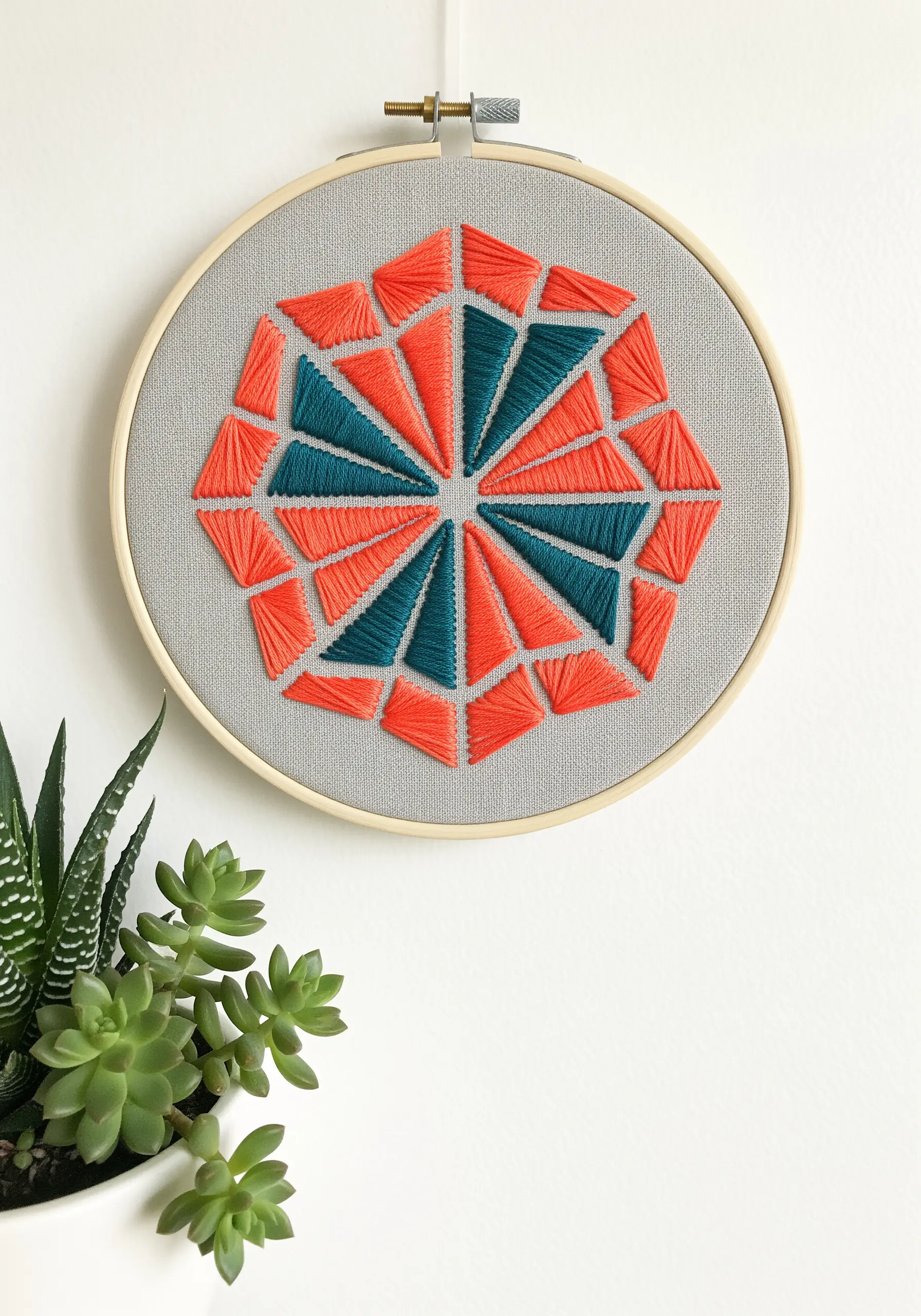
This design is a masterclass in satin stitch; fill each triangular segment with tight, parallel stitches.
To create a dynamic, shimmering effect, alternate the direction of your satin stitches in adjacent sections—one horizontal, the next vertical.
This simple trick makes the same color appear different as it catches the light, adding depth without changing your thread.
A high-contrast color pairing like coral and teal on a neutral gray fabric gives the piece a distinctly modern, graphic-art feel.
6. Design a Delicate Lavender Wreath

Combine several basic stitches to give your lavender wreath a realistic, varied texture.
Use satin stitch for the fuller buds, French knots for the tiny unopened flowers, and a fishbone or stem stitch for the delicate leaves.
Work with a harmonious palette of soft purples and blues to capture the gentle essence of lavender.
Stitching a circular wreath is a naturally calming motion, allowing you to focus on the small, repetitive details that bring the botanicals to life.
7. Create a Sunburst with Pointillist Texture
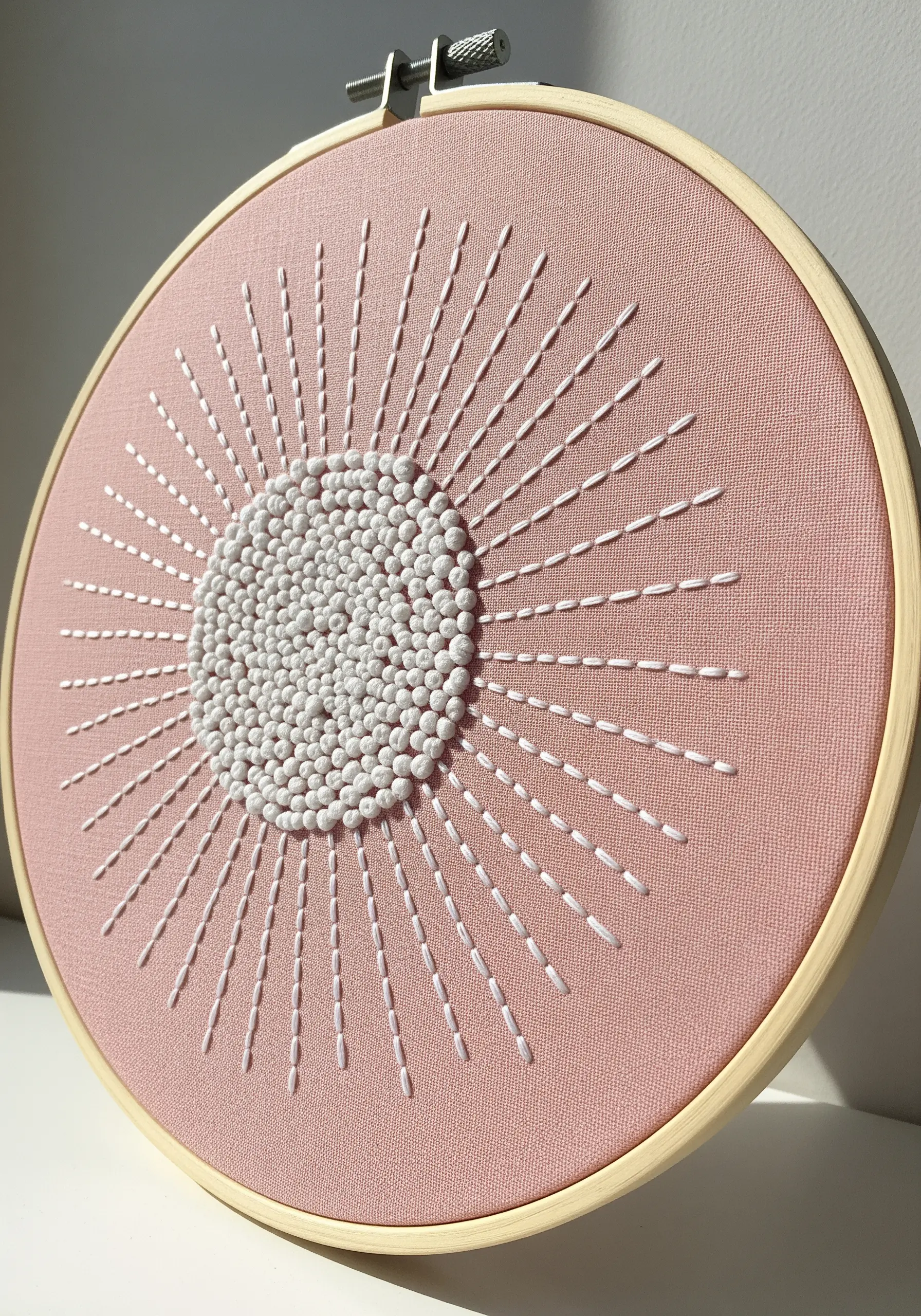
Build the center of your sun by densely packing hundreds of tiny white French knots together.
This technique creates a stunning, pebbled texture that contrasts beautifully with the clean lines of the sun’s rays.
For the rays, use a simple running stitch, varying the length of each stitch to create a radiating, energetic pattern.
The monochrome palette on a soft pink fabric results in a design that is both texturally rich and visually gentle.
8. Stitch an Abstract Seascape Mandala
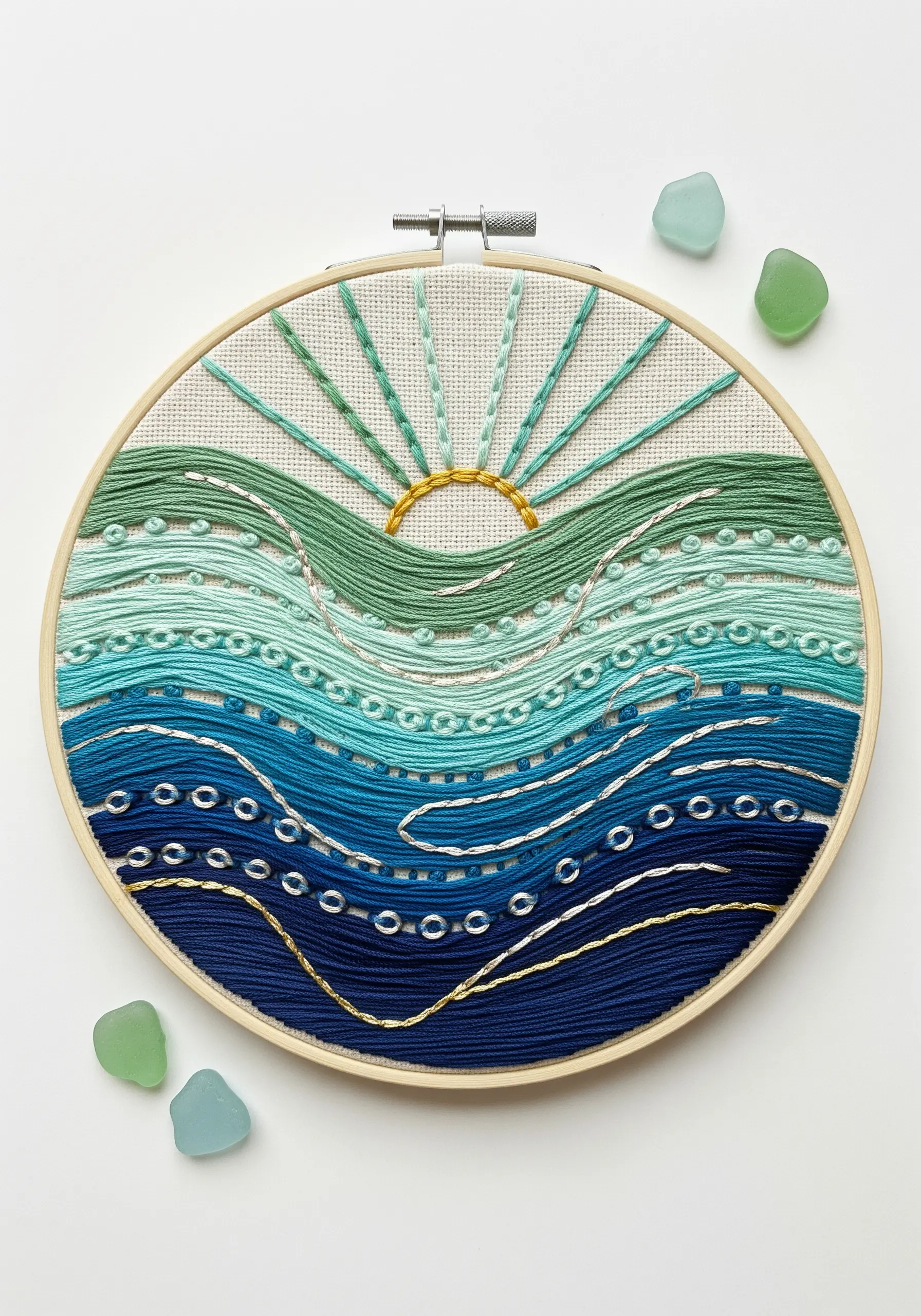
Turn a simple hoop into a sampler of stitches by assigning a different technique to each wave of color.
Use chain stitches for rope-like texture, couching for thick, defined lines, and French knots or seed stitches for sea foam.
A gradient of blue and green threads creates the illusion of water depth, moving from shallow seafoam green to deep ocean navy.
Incorporate a fine metallic thread to suggest sunlight sparkling on the water’s surface.
9. Define Shapes with Negative Space

Create a powerful design by focusing on the background rather than the subject itself.
Use a dense, smooth satin stitch to fill the areas surrounding your central motif, allowing the un-stitched fabric to form the primary shape.
Alternating between two colors, like this warm ochre and off-white, adds rhythm and definition to the contours.
This technique forces you to consider composition in a new way, where the empty space becomes the art.
10. Paint a Sunrise with Thread

Achieve this beautiful, smooth gradient by using a long-and-short stitch, which allows you to seamlessly blend one color into the next.
Select a vibrant, analogous color palette—pinks, reds, oranges, and yellows—to mimic the warmth of a rising sun.
Keep your stitches directional, following the curve of the sun to enhance the sense of form and fullness.
Long, single straight stitches for the rays provide a clean, graphic contrast to the soft blending below.
11. Add Dimension with Beadwork and Line Art
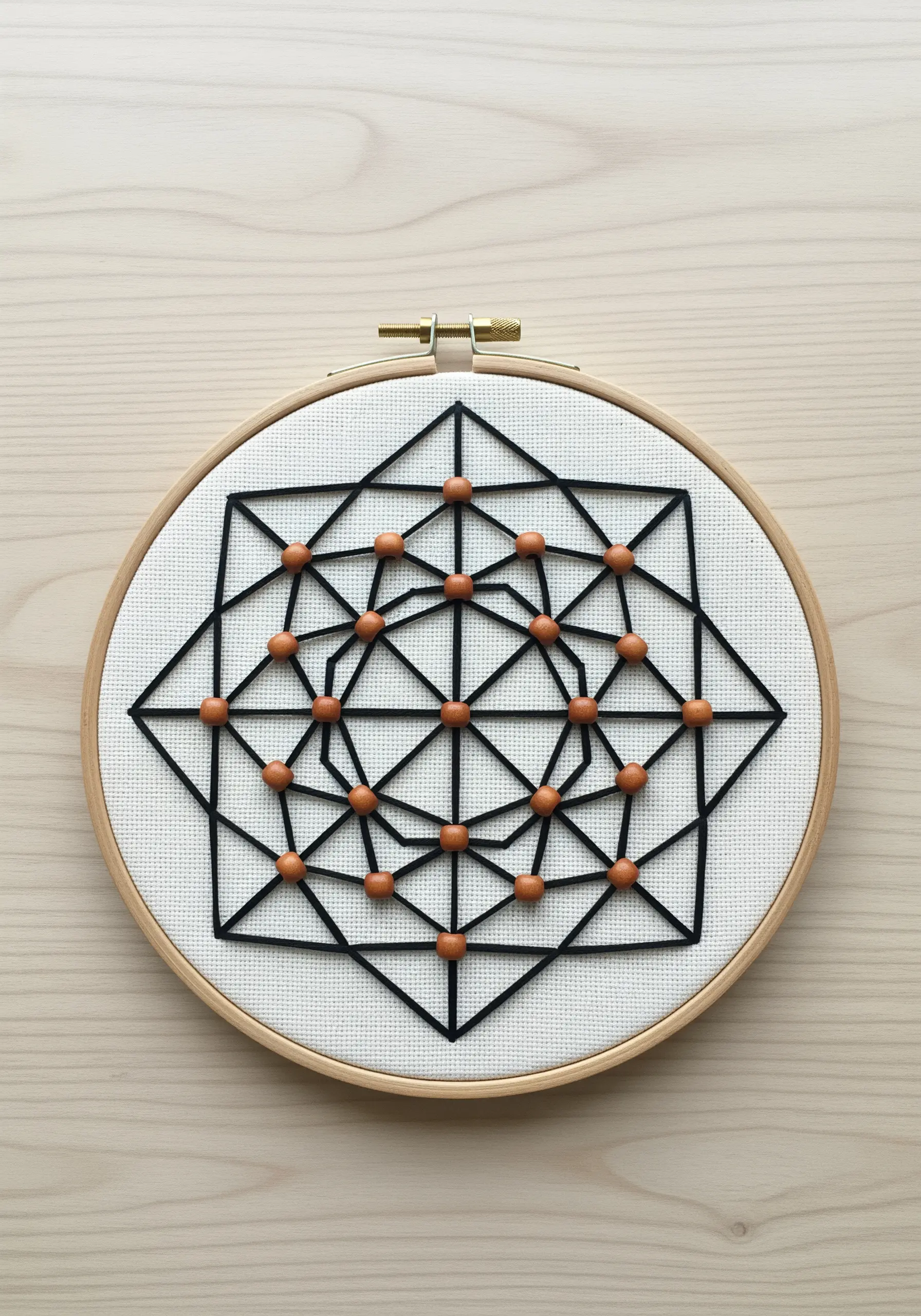
Combine the starkness of black thread geometry with the organic warmth of wooden beads.
First, stitch your linear framework using a simple backstitch, focusing on clean lines and sharp corners.
Then, securely attach beads at the key intersections of the pattern to create focal points and introduce a tactile, 3D element.
This mixed-media approach adds unexpected texture and elevates a simple line drawing into a more complex piece of art.
12. Weave Texture into Your Hoop

This dimensional look is created with circular weaving, using a foundation of straight stitches as the ‘warp’ and weaving thicker yarn or thread as the ‘weft’.
You can create this effect by first stitching an odd number of spokes radiating from the center, then weaving your working thread over and under each spoke.
Contrasting the chunky, woven center with a background of precise, graphic lines makes the texture pop even more.
This is a wonderful way to incorporate different fibers and create stunning mixed-fiber projects.
13. Embrace the Rainbow with a Chain Stitch Spiral
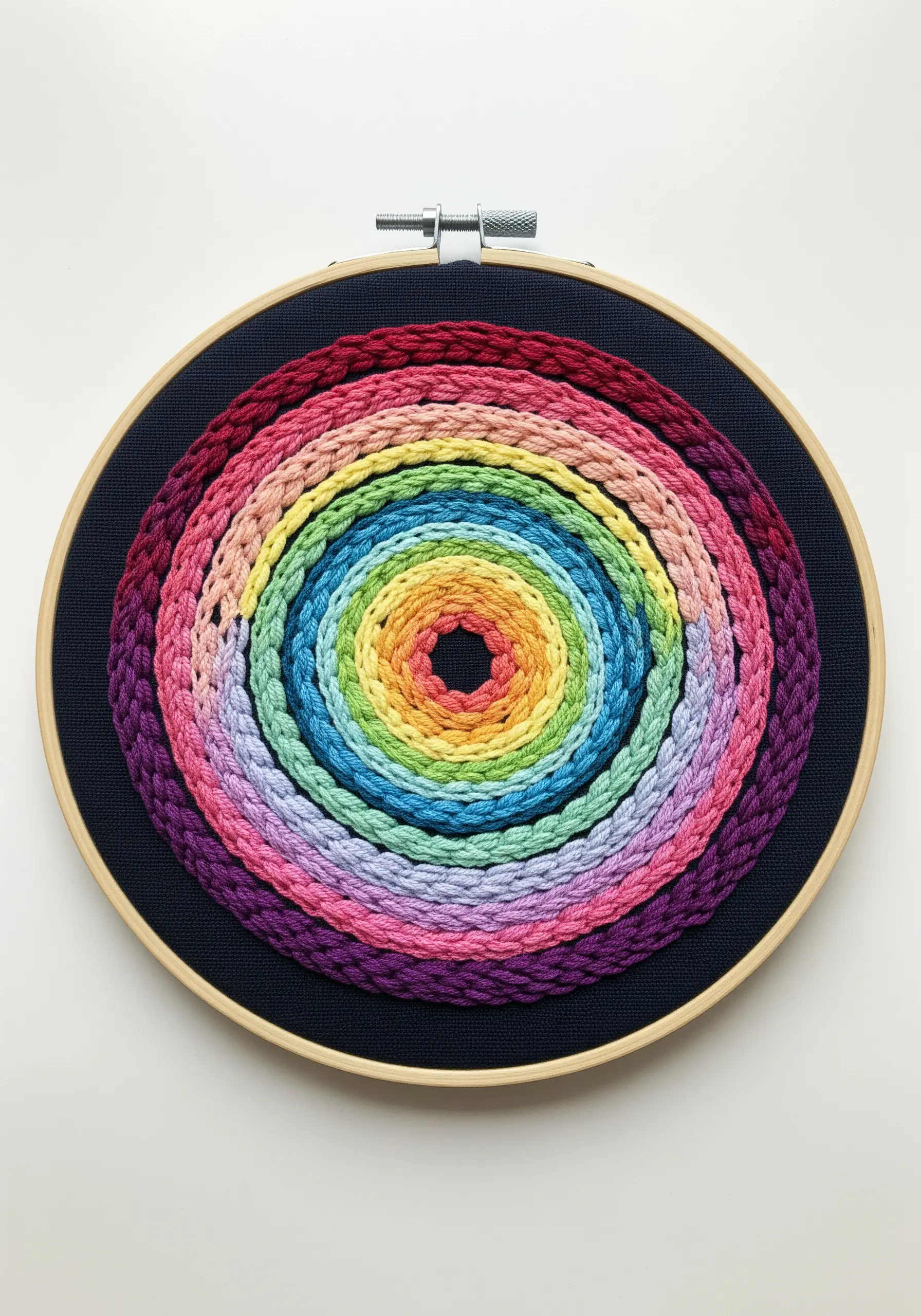
The chain stitch is perfect for creating a bold, rope-like texture that makes colors appear rich and substantial.
Stitch a continuous spiral from the center out, changing your thread color for each new ring to create a vibrant rainbow gradient.
Using a dark fabric like black or navy as your canvas will make the bright colors appear even more luminous and intense.
The repetitive motion of forming each chain link is incredibly meditative, allowing you to get lost in the flow of color.
14. Outline a Lotus with a Metallic Glow

Elevate a simple line art design by using two different thread finishes.
Outline the entire lotus flower with a fine metallic thread—a whipped backstitch will give you a particularly smooth, solid line of gold.
Fill the inner sections with a matte thread in a contrasting color, like this soft mauve, using a satin stitch or even just a simple backstitch fill.
This juxtaposition of matte and metallic adds a touch of luxury and sophistication.
15. Arrange a Mandala of Earth-Tone Feathers

The fishbone stitch is the ideal choice for creating the delicate herringbone texture of feathers.
To add depth and realism, use multiple shades of thread within a single feather, blending them gently as you stitch from the center line outwards.
A palette of cool blues and warm browns gives the design a natural, calming feel, reminiscent of forest fauna.
The precise radial symmetry of the feathers transforms them from simple motifs into a harmonious, balanced mandala.
16. Let Variegated Thread Create the Pattern
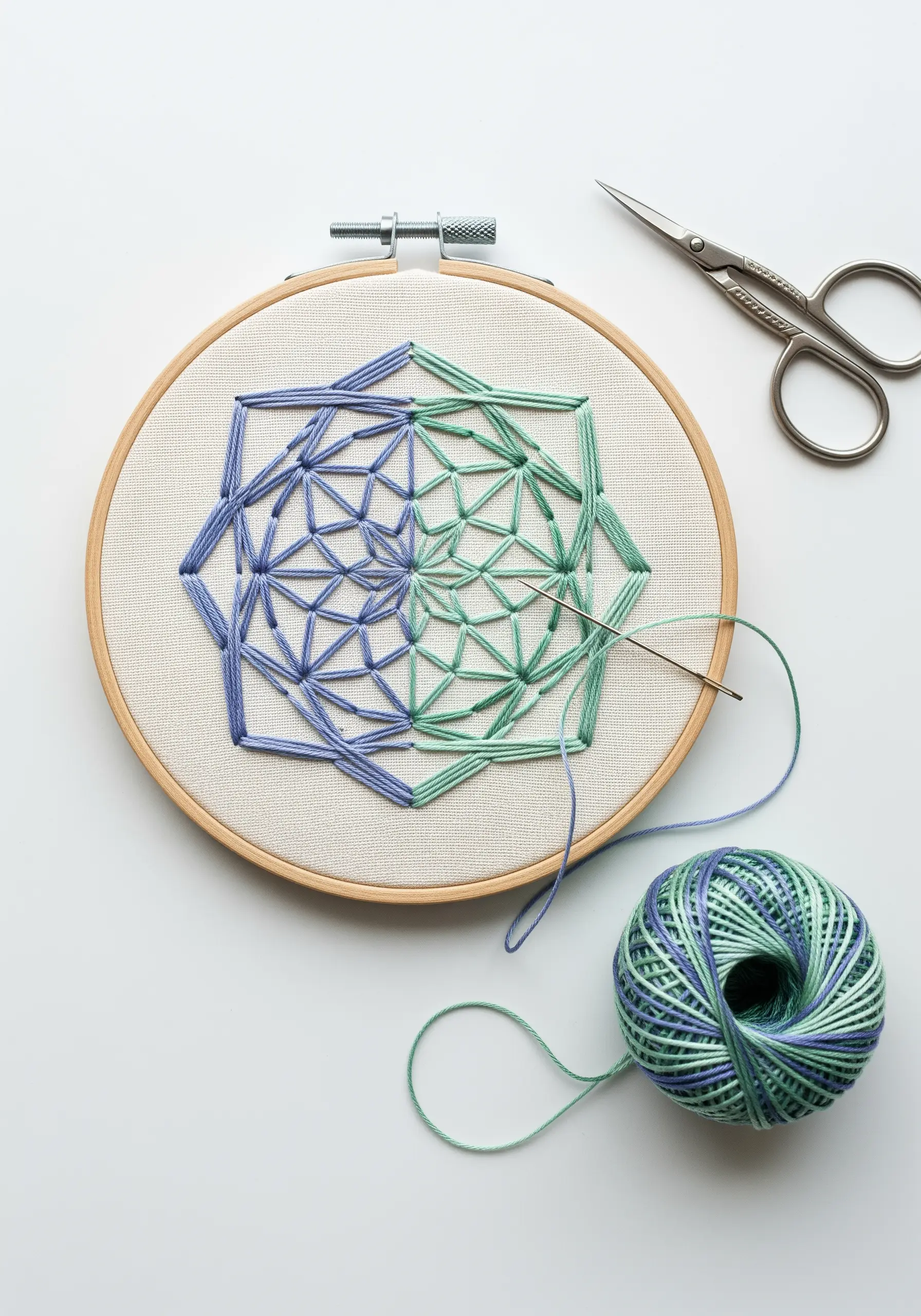
Simplify your color choices by using a single variegated thread for a complex geometric pattern.
The thread does all the work, creating beautiful, unpredictable shifts in color as you stitch.
A simple straight stitch is all you need to create this intricate, web-like design.
The straight lines and sharp angles of the geometry provide the perfect structure to showcase the soft, flowing color changes of the thread.
17. Add a Subtle Sunburst to Denim
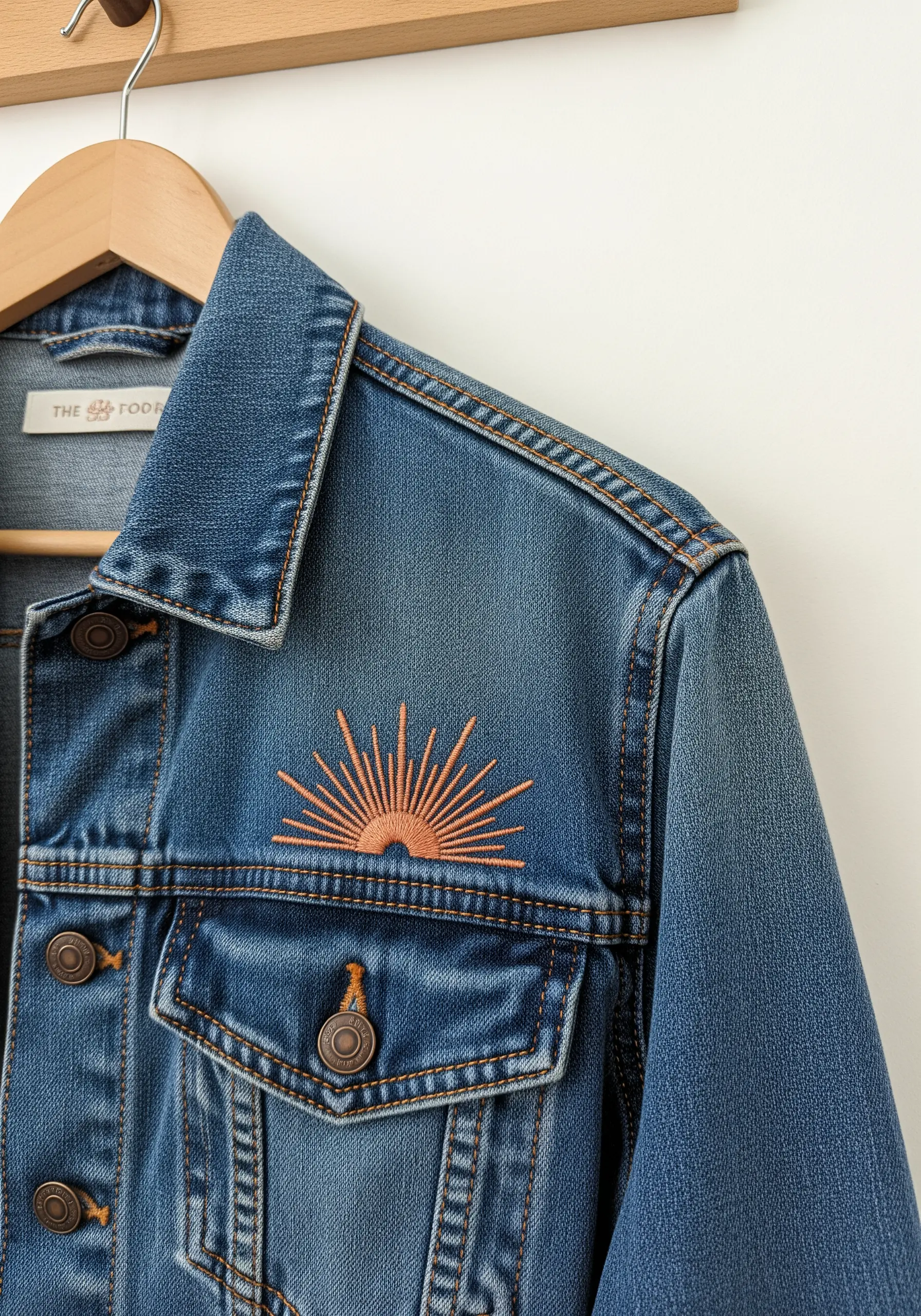
Embellish a denim jacket with a simple, modern mandala for a touch of personal style.
Choose a warm, contrasting color like this rust orange to stand out against the cool blue of the denim.
Use a basic backstitch for the rays and a small satin stitch for the sun—simple stitches that are durable enough for apparel.
Always use a tear-away or wash-away stabilizer on the inside of the jacket to prevent the fabric from puckering and to ensure your stitches are even.
18. Stitch a Meditative Chakra Alignment
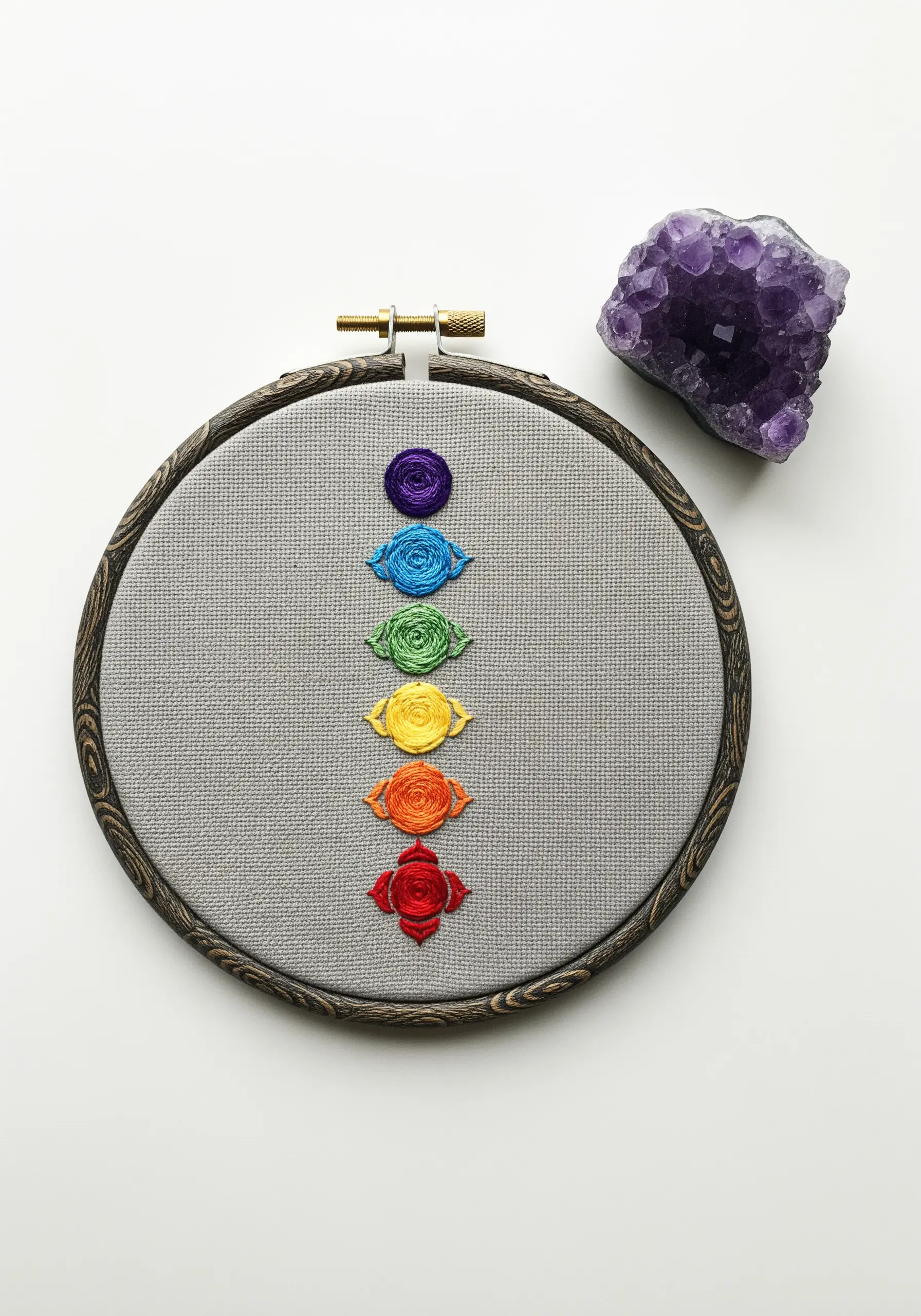
Explore the satin stitch on a small scale by creating these little spiral motifs.
The key to a neat spiral is to work from the inside out, carefully angling your stitches to follow the curve.
Arrange them vertically in the traditional chakra colors for a design that is both visually balanced and symbolically meaningful.
Stitching on a textured gray fabric, like Aida or evenweave, adds a subtle grid that can help guide your stitches and keep the shapes uniform.
19. Build a Sculptural Spiral with Couching

For a design with dramatic, three-dimensional texture, try couching.
This technique involves laying a thick fiber, like this white yarn, onto the surface of your fabric and tacking it down with a second, thinner thread.
Here, a fine metallic gold thread is used for the tacking stitches, adding a decorative element that contrasts with the soft, matte yarn.
This method allows you to add bold, graphic lines and textures that would be impossible with traditional embroidery stitches alone.
20. Layer an Icy Snowflake Design

Create a sense of depth in your snowflake by layering colors.
First, stitch the main structure in a crisp white using a simple backstitch or straight stitches.
Then, add accent lines in a contrasting icy blue, layering them directly on top of or alongside the white stitches.
This technique gives the design a more intricate, dimensional look, making it feel like a real, multi-faceted ice crystal.
21. Create a Stained Glass Effect with Thread
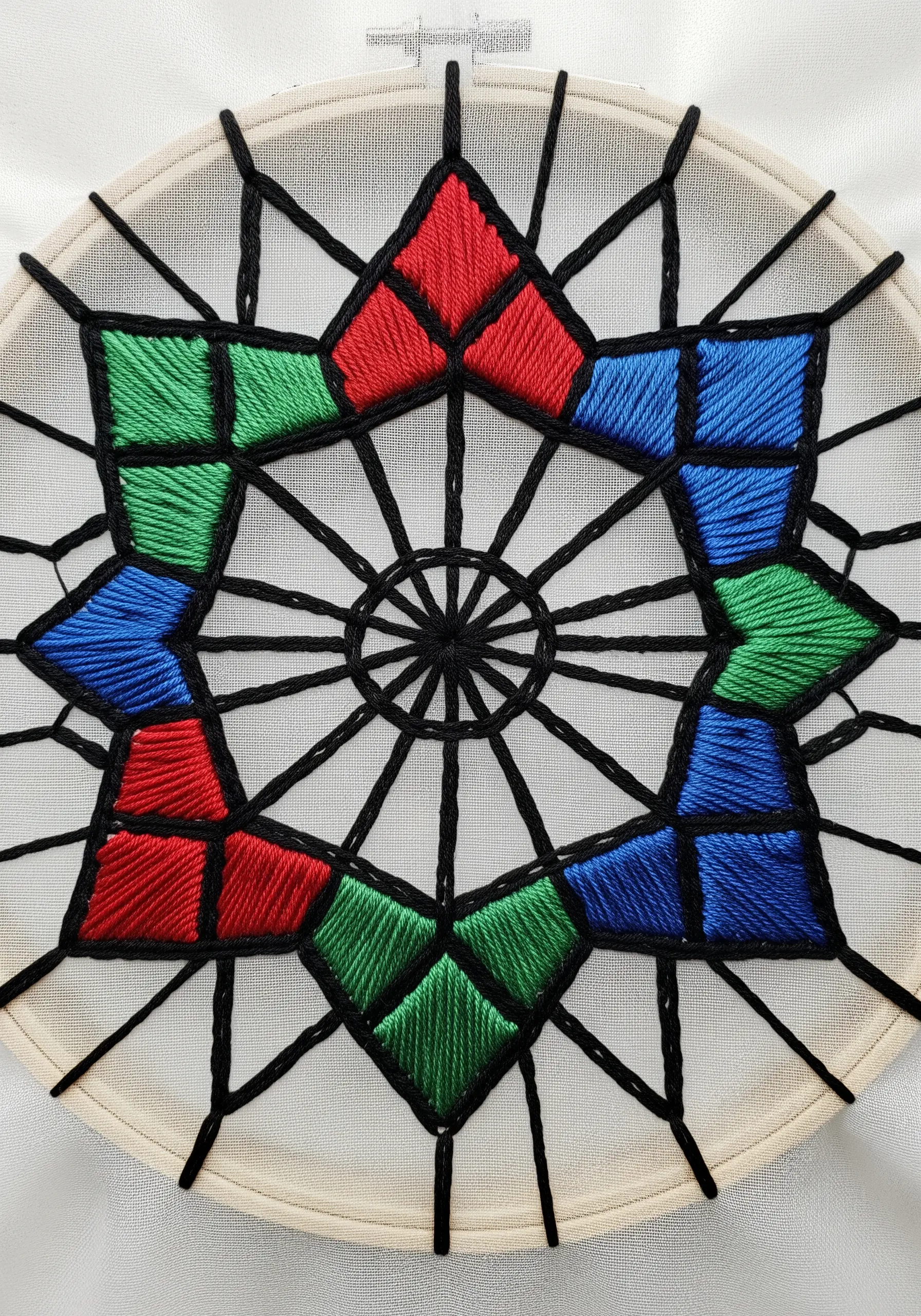
Replicate the look of stained glass by first creating a bold framework with black thread.
Use a thick outline stitch, like a chain stitch or a whipped backstitch, to mimic the lead lines in a glass window.
Fill in the sections with vibrant, jewel-toned colors using a smooth satin stitch to represent the panes of glass.
The contrast between the dark outlines and the bright fills makes the colors pop, creating a luminous, eye-catching design.
22. Capture the Delicacy of a Dandelion

Use detached chain stitches (also known as lazy daisies) to form the parachute-like tips of the dandelion seeds.
Connect them to the central hub with long, elegant straight stitches, creating a sense of lightness and movement.
Scatter a few French knots and single lazy daisies around the main form to represent seeds floating away on the breeze.
Stitching in white on a soft green fabric enhances the botanical, airy feel of the design.
23. Embellish a Pillow with a Single-Color Mandala
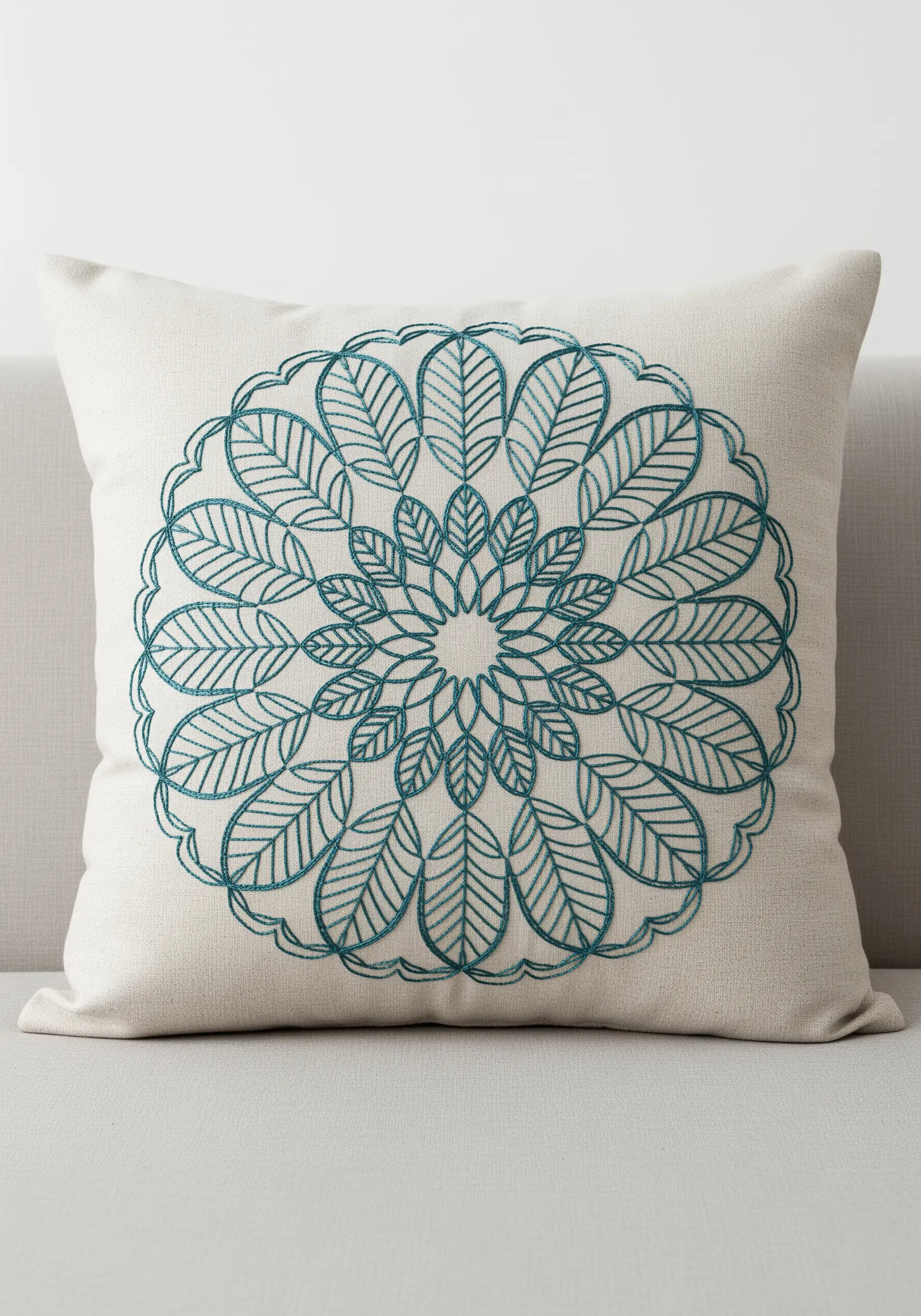
Transform a plain pillowcase into a piece of boutique home decor by stitching a large-scale mandala in a single, elegant color.
A simple backstitch or stem stitch is perfect for this, as it creates a clean, graphic line that is also durable enough for daily use.
The monochromatic approach keeps the design feeling modern and sophisticated, adding a touch of texture without overwhelming the space.
Choose a thread color that complements your existing decor for a custom, integrated look.
24. Stitch the Organic Lines of Tree Rings

Embrace imperfection by recreating the natural, wobbly rings of a tree slice.
Use a variegated brown thread with a simple backstitch to automatically create subtle shifts in color and tone, just like in real wood grain.
Don’t worry about making perfect circles; the beauty of this design lies in its organic, irregular contours.
This is a deeply relaxing project, as it frees you from the pressure of precision and encourages a more intuitive approach to stitching.
25. Weave a Geometric Web of Thread

Create this intricate, lace-like effect using only straight stitches pulled taut across a dark, sturdy fabric like denim or canvas.
The high contrast between the white thread and the navy background makes the geometric pattern pop, creating a striking visual impact.
This style, reminiscent of string art, is all about the interplay of lines and the negative space they create.
It’s a testament to how the simplest stitch can be used to build something incredibly complex and beautiful.
26. Play with Scale and Stitch Density

Create visual interest by contrasting a bold, wide ring of satin stitch with a delicate, airy inner circle.
For the large ring, use all six strands of floss to create a thick, plush texture.
For the smaller details, like the scalloped inner ring, switch to a single strand of floss and use a light stitch like a fly stitch or backstitch.
This dramatic difference in scale and density gives the piece a professional, well-composed feel.
27. Frame Your Mandala as Modern Art

Take your embroidery beyond the hoop by mounting it on artist’s canvas or board for a clean, gallery-style presentation.
This abstract mandala uses directional satin stitch in a muted, sophisticated palette of gray, black, and charcoal, with a single pop of yellow at the center.
The straight-sided frame complements the geometric and abstract nature of the stitching, turning your fiber work into a piece of contemporary art.
This finishing technique makes your minimalist embroidery decor look intentional and high-end.
28. Chart a Minimalist Constellation

For a subtle and elegant take on a mandala, stitch a favorite constellation on dark fabric.
Use tiny, crisp star stitches or single French knots to represent the stars, ensuring they are sharp and clean.
Connect them with a delicate dashed line using a simple running stitch and a single strand of floss.
This minimal sky design is a perfect example of how negative space can be the most powerful element in a composition.
29. Build a Satisfying Honeycomb Pattern

The honeycomb is a perfect example of a repeating geometric pattern found in nature.
Use a simple backstitch and a warm, honey-gold thread to create the clean hexagonal shapes.
The meditative quality of this project comes from the satisfying repetition of stitching the same shape over and over, watching the intricate pattern emerge.
For an added touch of realism, fill a few random cells with a slightly darker satin stitch to represent honey.
30. Craft a Mandala from Textured Knots

Move beyond linear stitches and build your mandala entirely from knots for a highly tactile result.
This piece uses a combination of French knots and Josephine knots, arranged in concentric circles.
The gradient of soft, muted colors—from cream to dusty rose to gray—gives the complex texture a gentle, cohesive feel.
This is a great project for practicing different types of knots and exploring how they can be used as primary design elements.
31. Carry Sunshine on a Tote Bag

Make your embroidery functional by stitching a vibrant design on a sturdy canvas tote bag.
This sunrise motif uses a blended satin stitch for the sun and long straight stitches for the colorful rays, creating a bold, graphic look.
Always use a stabilizer on the inside of the bag while you stitch to prevent the fabric from puckering and to support your stitches.
This modern tote bag embroidery design turns an everyday item into a piece of wearable art.
32. Paint a Peacock Feather with Thread

This intricate design showcases the art of thread painting, using long-and-short stitch to create seamless color gradients.
Start from the center and work your way out, carefully blending shades of blue, turquoise, and green to capture the iridescent quality of a peacock feather.
The long, curving straight stitches that form the outer wisps should be stitched last, creating a delicate, airy frame around the vibrant center.
The natural symmetry of the feather creates a stunning, organic mandala.
33. Explore Balance with a Textured Yin-Yang

Give the classic yin-yang symbol a contemporary twist by using textural filler stitches instead of flat color.
Fill the white section with organized rows of seed stitch or French knots for a uniform, pebbled look.
Contrast this by filling the black section with more chaotic, randomly placed stitches—like a mix of straight stitches and knots—to create a dynamic texture.
This approach transforms a simple graphic into a tactile study of balance and contrast.