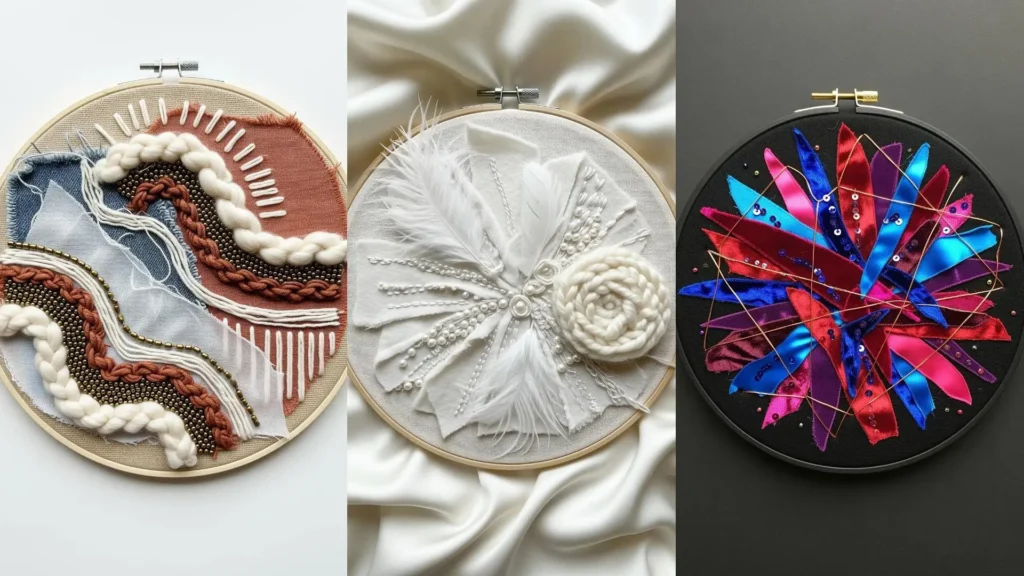
Line art embroidery is more than just tracing a drawing with thread. It’s an exercise in minimalism and emotion, where every single stitch carries weight. If you’ve ever felt your outlines looked hesitant or your compositions lacked focus, I want you to reconsider the power of a single, intentional line.
We will move beyond the basic backstitch and explore how stitch choice, thread weight, and subtle texture can transform a simple sketch into a deeply personal statement piece. These aren’t just patterns; they are opportunities to refine your technique and create something that resonates with quiet confidence.
Think of this as your guide to making lines that feel fluid, characters that breathe, and gifts that carry the true warmth of your hands. Let’s begin.
1. Master the Clean Outline for Timeless Portraits
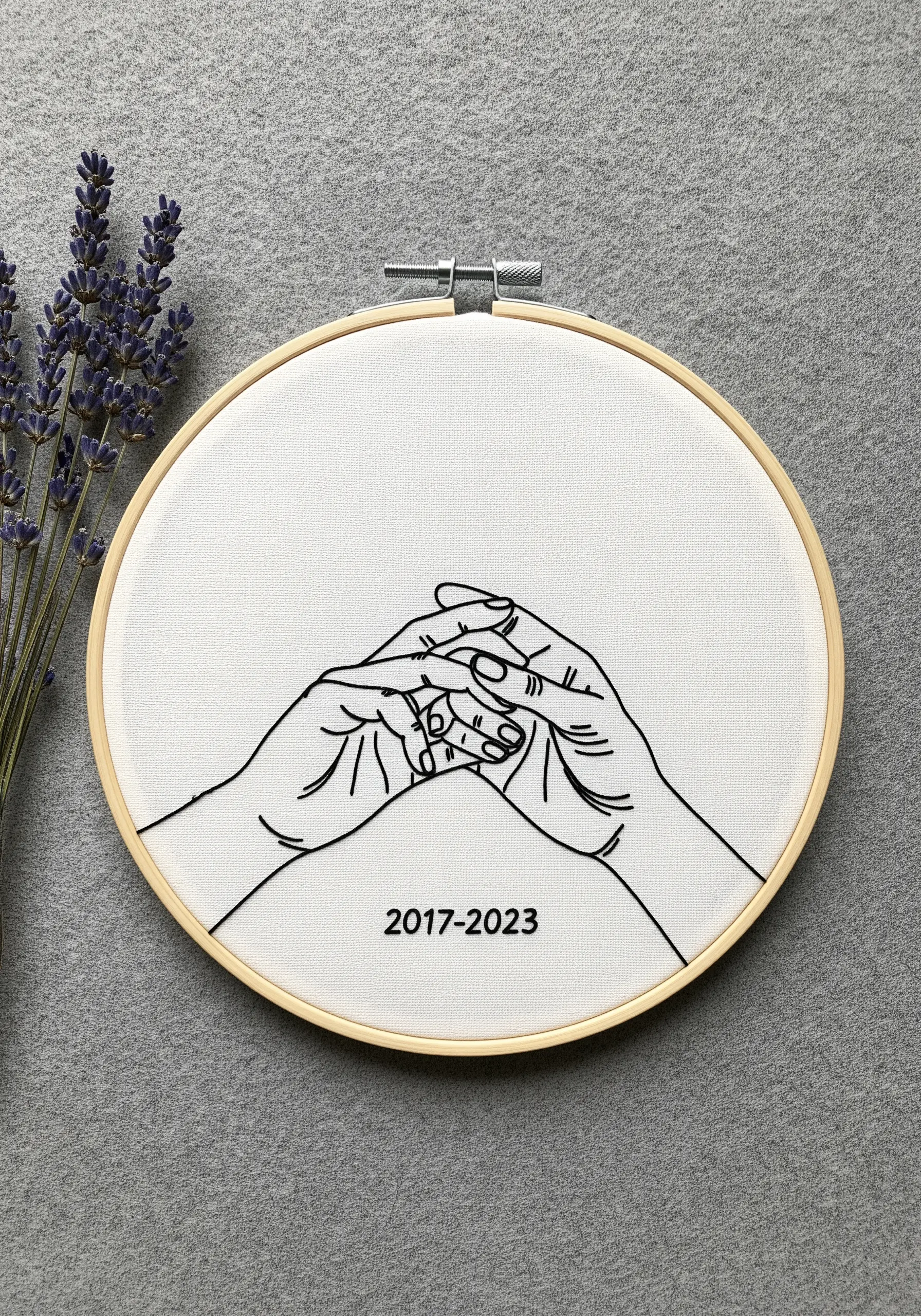
For an anniversary piece, the focus must be on precision and permanence.
Use a single strand of black six-strand floss with a sharp needle to achieve flawlessly crisp lines.
Opt for a tight backstitch, keeping your stitch length consistent—no more than 2mm on curves—to ensure the outlines of the hands look fluid, not jagged.
This technique elevates a simple line drawing into a refined, gallery-quality keepsake.
For the dates, use a smaller, even more delicate backstitch to maintain legibility without overpowering the artwork.
2. Embrace the Power of a Single Continuous Line
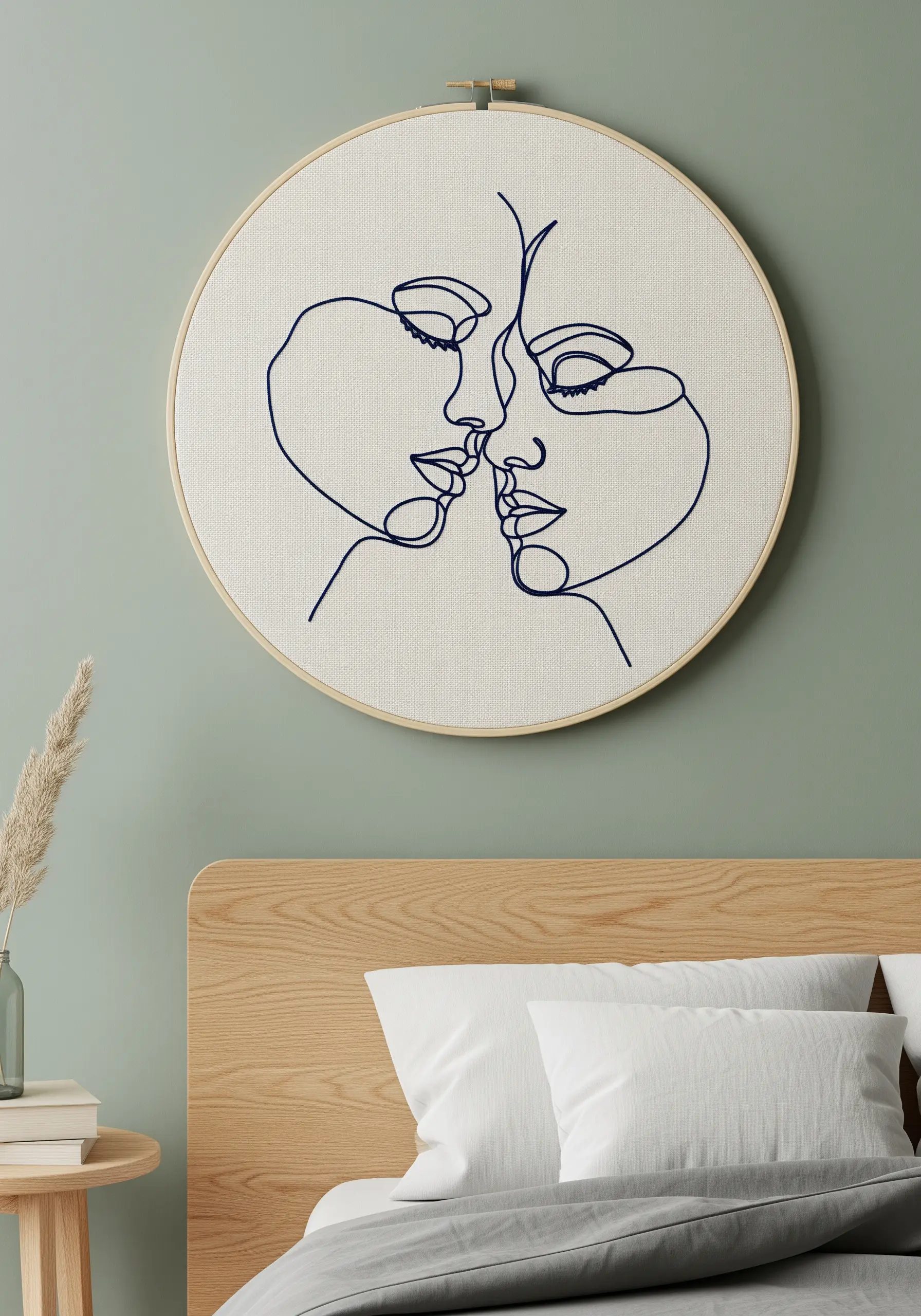
This style of abstract face line embroidery celebrates fluidity and connection, making it perfect for romantic themes.
To achieve this unbroken look, use a stem stitch, which creates a smooth, rope-like line that flows beautifully around curves.
Choose a high-contrast thread color, like this deep navy on a neutral linen, to make the single line the hero of the composition.
Before you start, trace the entire path of the thread with your finger to understand its flow and plan where to anchor your stitches for the sharpest turns.
3. Use Colored Fabric to Set a Romantic Mood
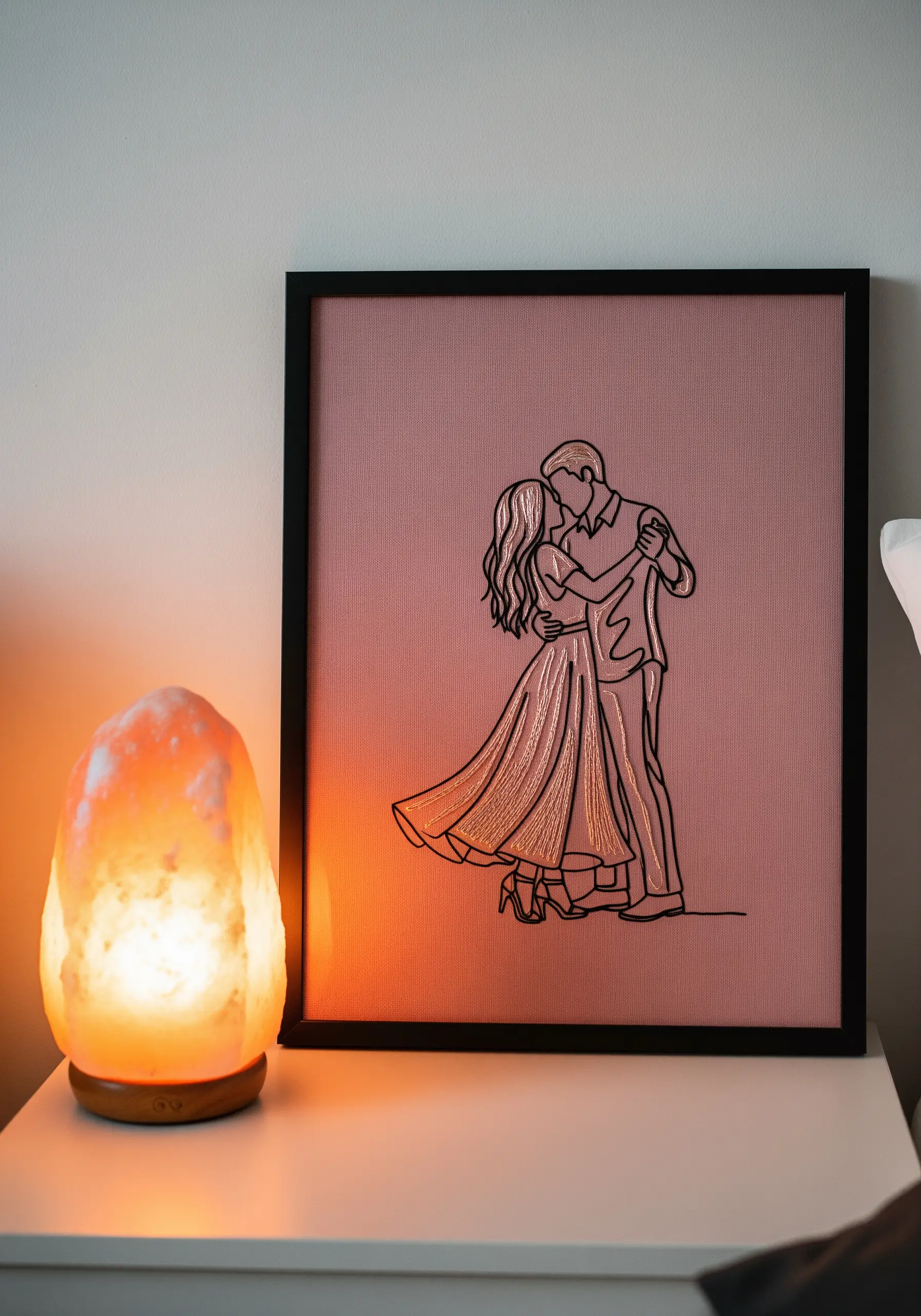
Stitching on a colored background instantly adds emotional depth.
This dusty rose fabric provides warmth and romance, allowing the black and white thread to stand out with gentle contrast.
When filling in small areas like the dress, use a split stitch instead of a satin stitch.
A split stitch offers a subtle texture that mimics fabric folds without creating the high sheen of satin stitch, keeping the focus on the elegant outlines.
Frame the finished piece without glass to let the texture of the thread and fabric truly shine.
4. Isolate Color for Maximum Emotional Impact
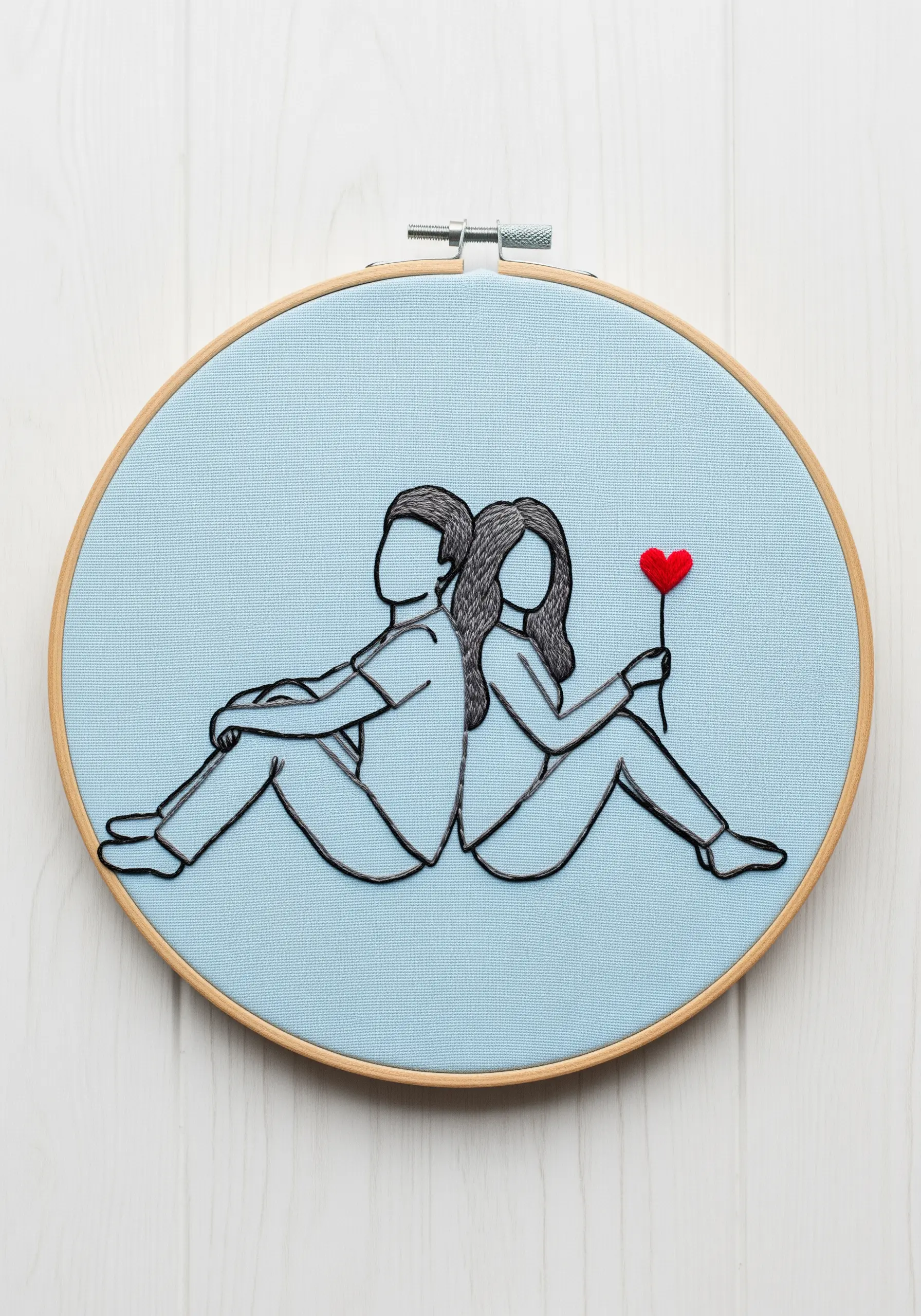
A single pop of color in a monochrome design creates an undeniable focal point.
Here, the vibrant red heart immediately communicates love and connection.
Stitch the heart using a padded satin stitch: first, outline the shape with a split stitch, then fill it with short foundation stitches before covering it with your final satin stitches.
This technique gives the heart a raised, three-dimensional quality that makes it feel more significant and tactile.
Using a sky-blue fabric as the background enhances the red, as blue and red are a classic, energetic pairing.
5. Adapt Line Art for Soft, Tactile Home Décor
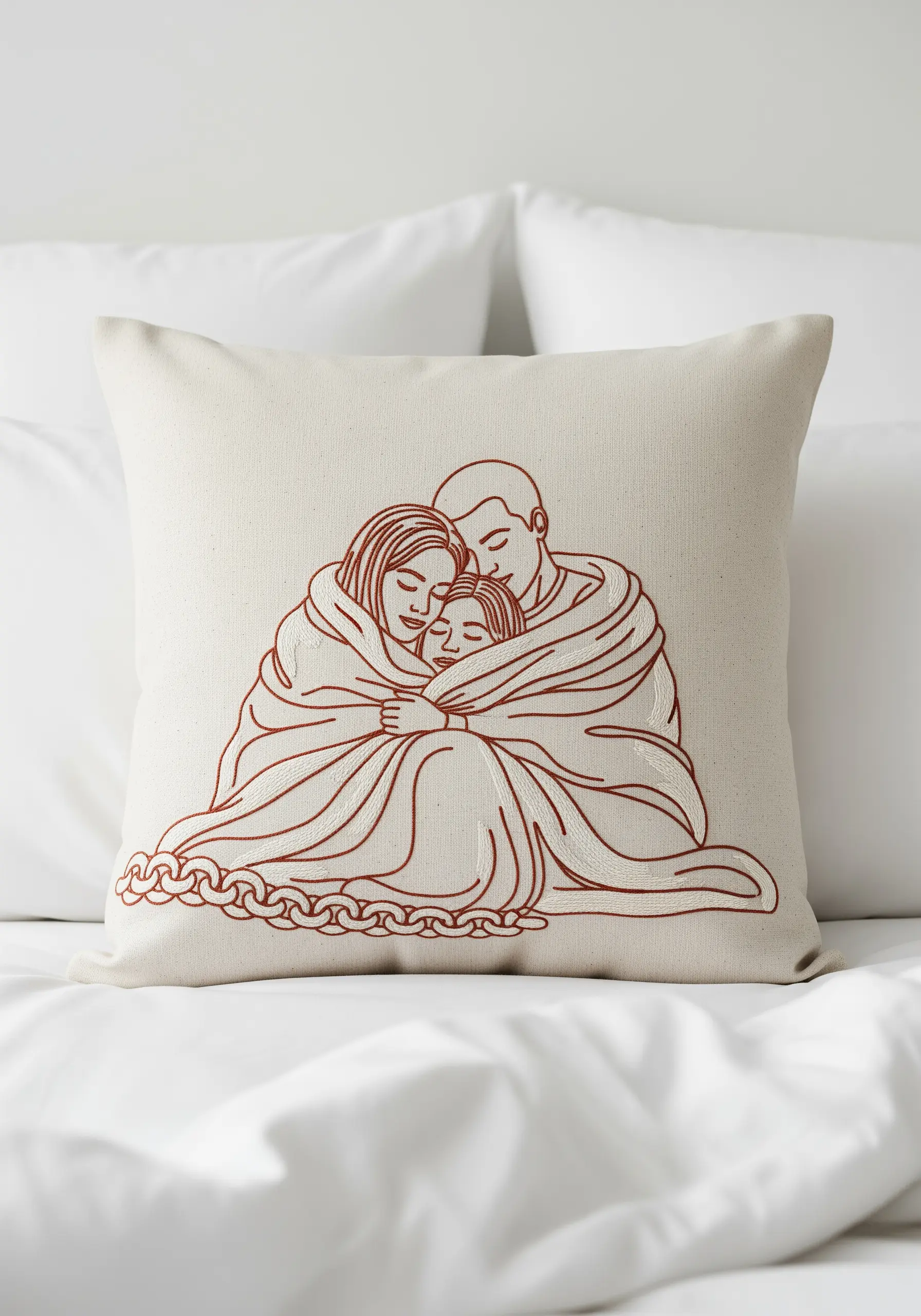
When embroidering on functional items like pillow covers, durability is as important as aesthetics.
Choose a warm, earthy thread color like terra-cotta or rust to give the line art a soft, inviting feel that complements neutral home décor.
Use a whipped backstitch for the main outlines; it creates a smoother, more solid line that is less likely to snag than a standard backstitch.
For the chain detail at the bottom, a simple chain stitch adds a touch of texture and visual weight, grounding the entire composition on the linen-tone embroidery cushion cover.
6. Create Bold, Expressive Lines on Stretched Canvas
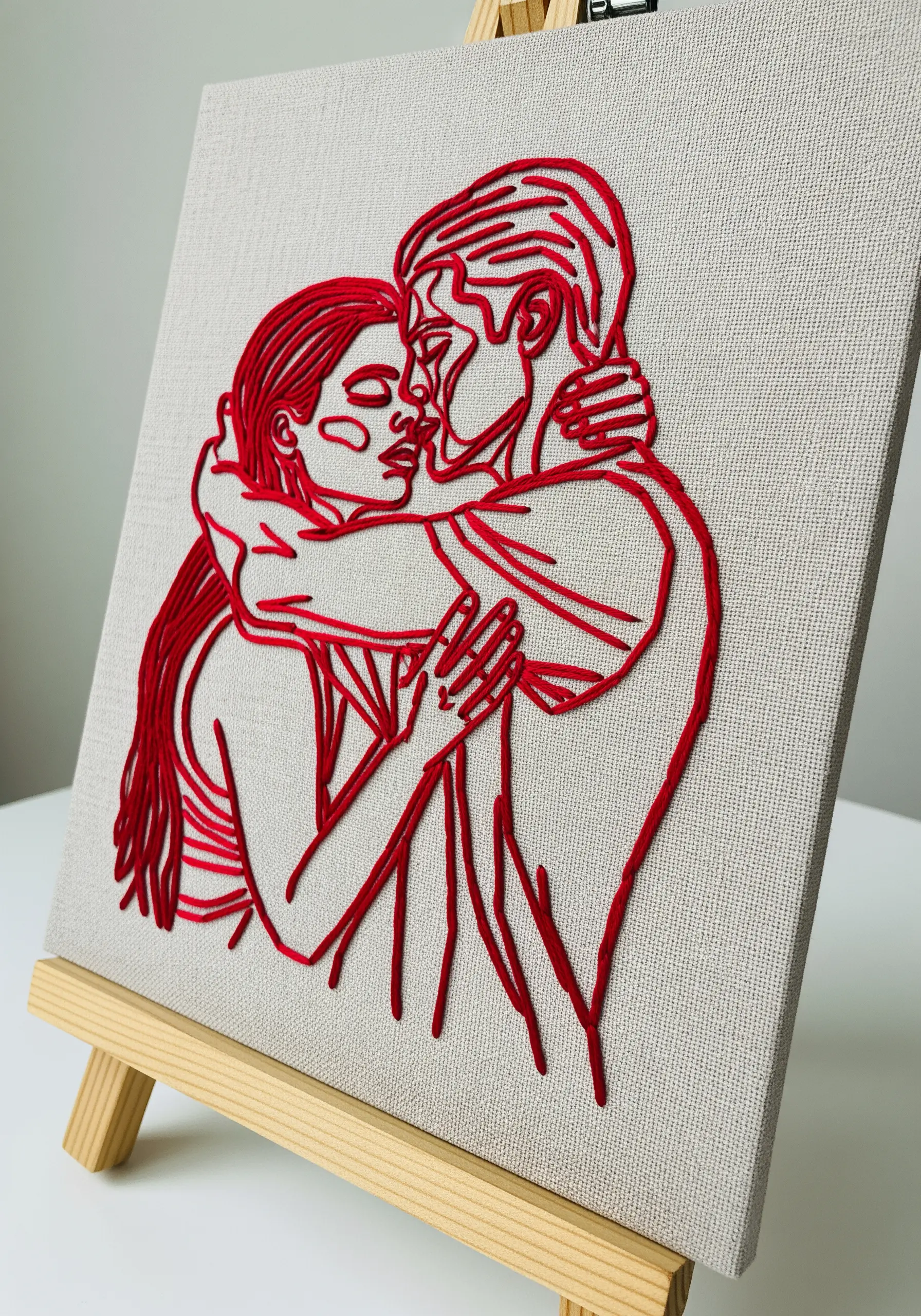
Take your embroidery off the hoop and onto a stretched canvas for a modern, gallery-style presentation.
Use all six strands of your embroidery floss or even a fine pearl cotton to create these thick, sculptural lines that command attention.
A simple running stitch or backstitch works well, but the thickness of the thread is what delivers the artistic impact.
The vibrant red thread on a neutral canvas creates a powerful statement of passion, turning a simple line drawing into a piece of contemporary fiber art.
7. Add Subtle Fills to Ground Your Line Art
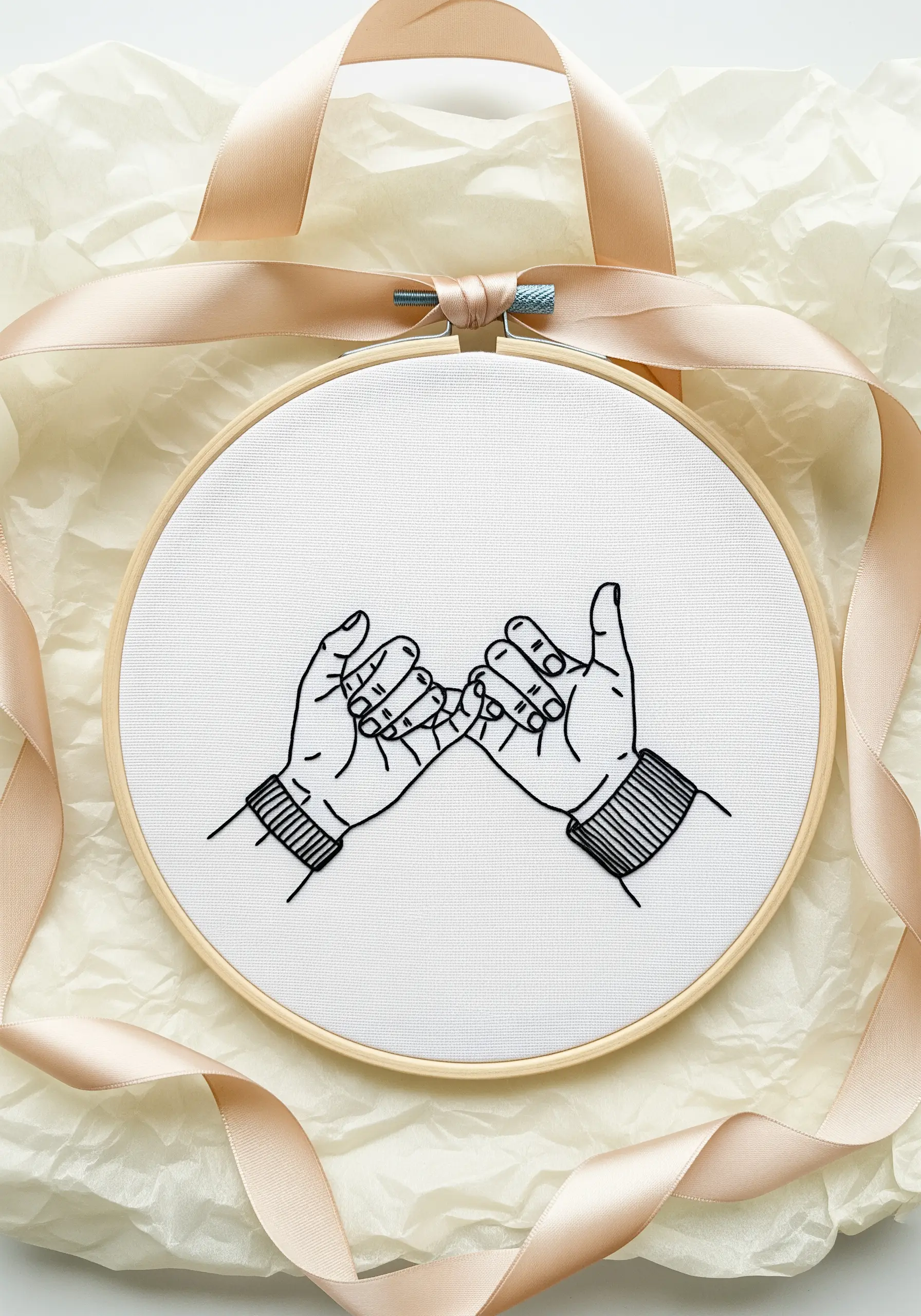
Even in minimalist designs, small areas of filled stitches can add depth and stability.
The horizontal satin stitches on the sweater cuffs provide a solid, grounding element that contrasts beautifully with the delicate outlines of the hands.
This detail makes the design feel more intentional and complete.
For the sharpest outlines on the fingers, use a two-strand backstitch, ensuring each stitch is perfectly uniform in length to maintain the clean, graphic quality of the illustration.
8. Tell a Story Across Two Hoops
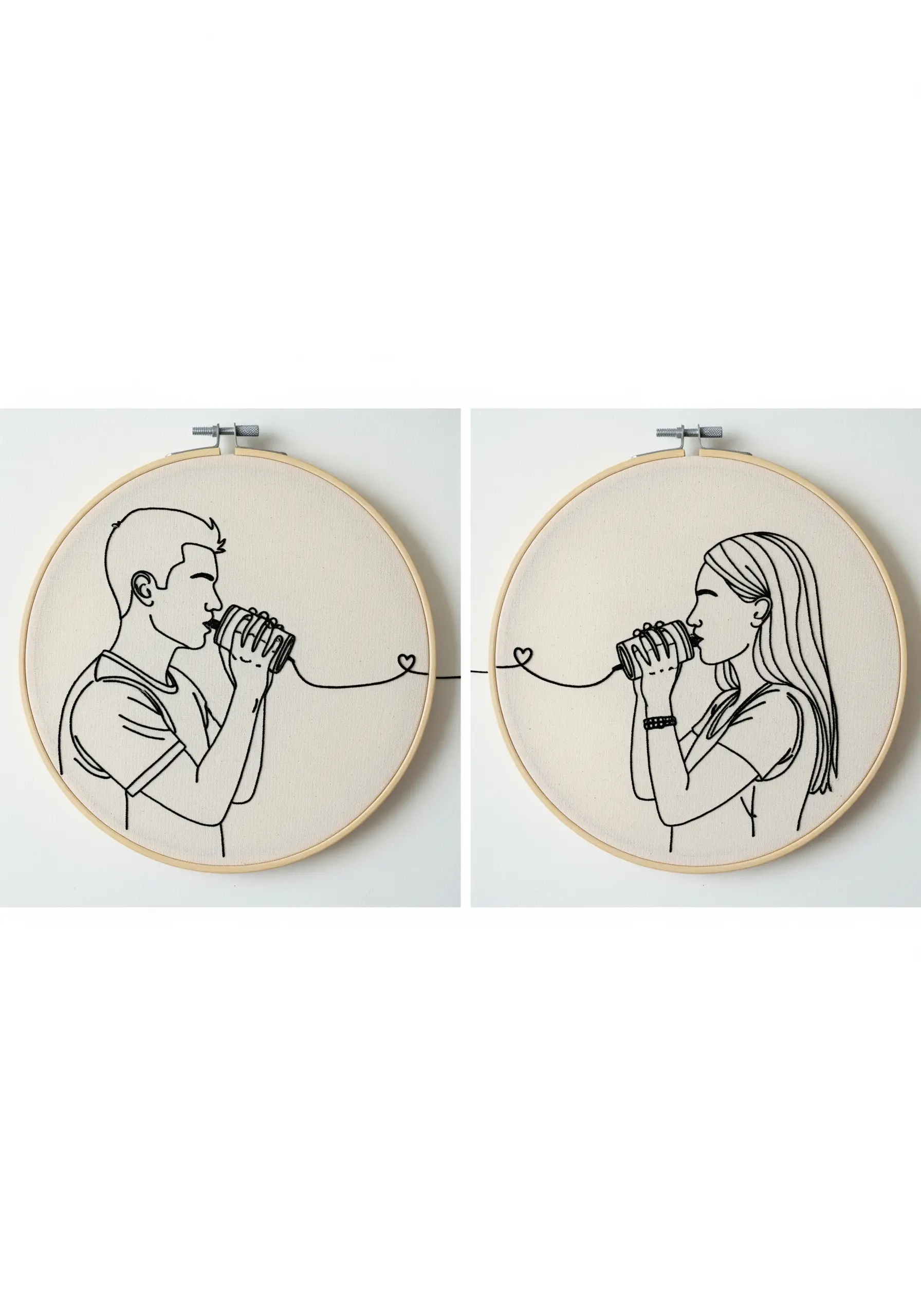
Elevate your embroidery from a single object to an interactive art installation by creating a diptych.
This two-hoop design tells a story of connection, with the thread literally bridging the gap between the two pieces.
To ensure perfect alignment, trace and stitch each half of the design in its own hoop, leaving a long tail of thread on each to connect them during display.
The tiny heart stitched into the connecting thread is a masterful detail that completes the narrative, making this a truly unique and thoughtful gift.
9. Contrast Outlines with Soft Fills for a Dreamy Scene
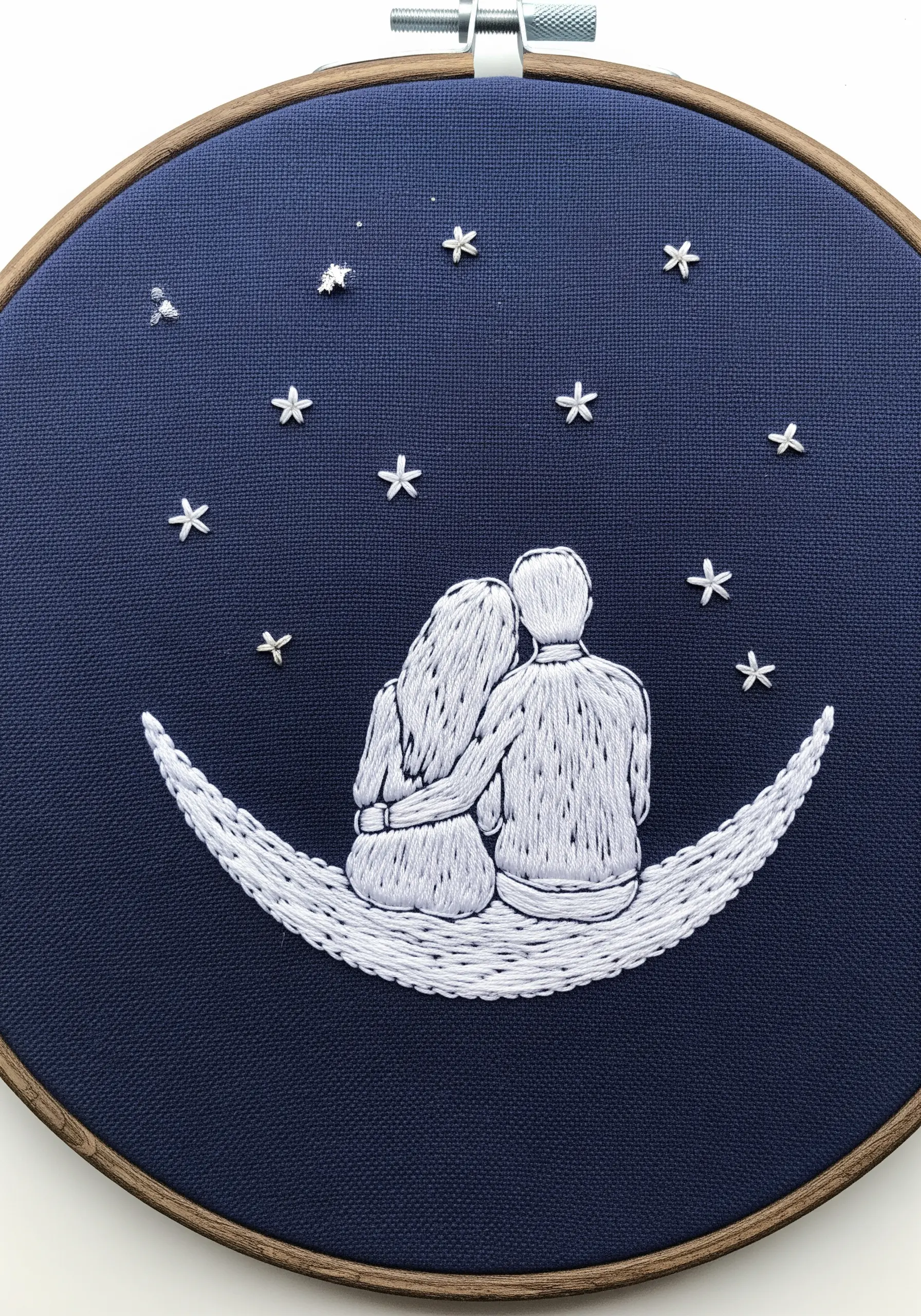
Create a magical, celestial atmosphere by combining different stitches and threads.
Use a bright white thread against a deep navy fabric for a striking, high-contrast effect that evokes a clear night sky.
Fill the couple’s clothing and the moon with a slightly varied long-and-short stitch to create a soft, textured look that contrasts with the clean backstitch outline.
For the stars, use a single strand of metallic silver thread to stitch simple star shapes or use French knots for a subtle sparkle that catches the light.
10. Weave in Botanical Elements for Symbolic Growth
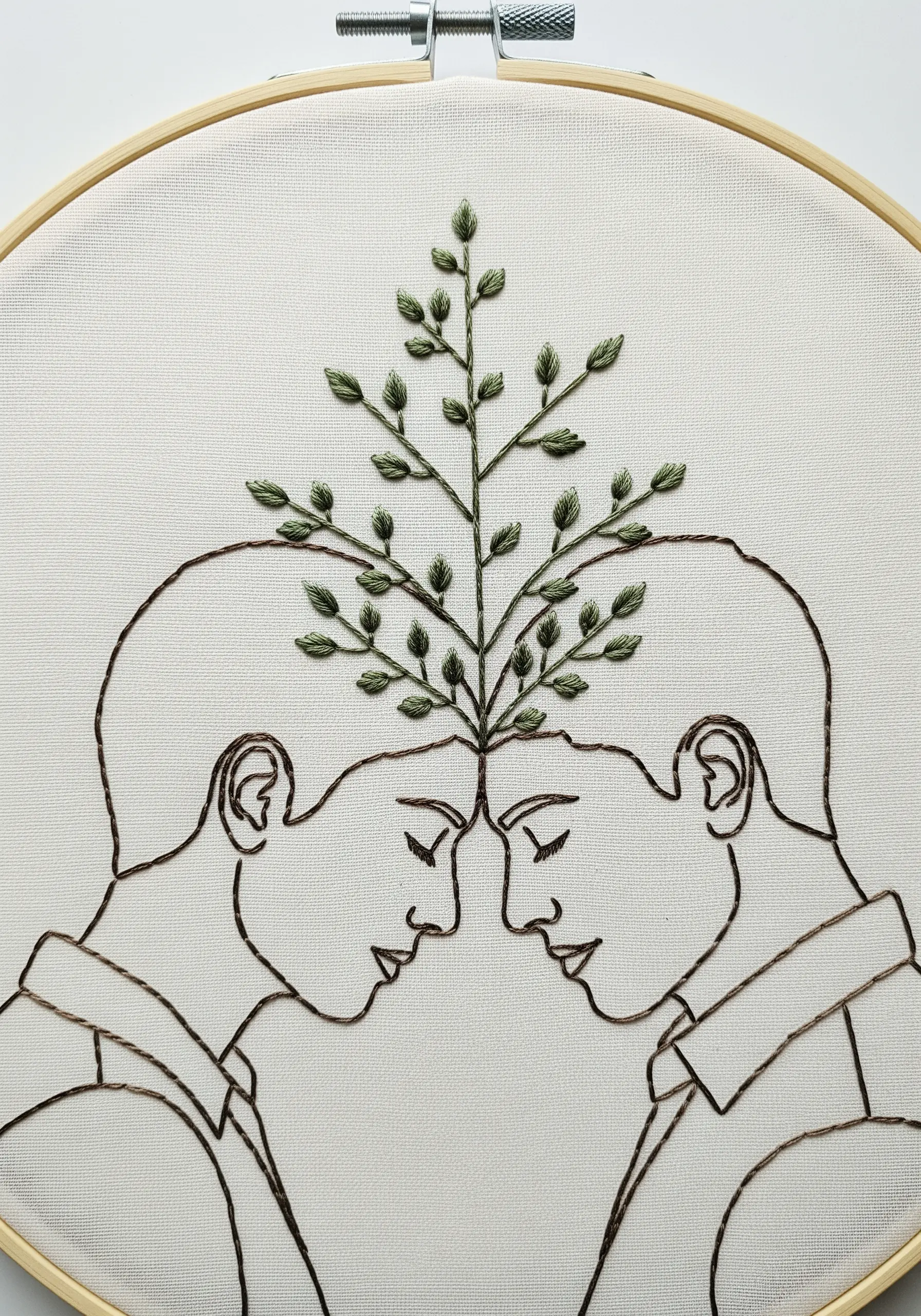
Incorporate botanical motifs to symbolize growth, connection, and shared life.
Use a simple backstitch for the portraits to keep them clean and modern.
For the leaves, switch to a detached chain stitch (lazy daisy) to create soft, organic shapes that add texture and dimension.
Vary the shades of green in the leaves to give the plant a more natural, realistic appearance.
This thoughtful combination of delicate leaf embroidery stitches and line art transforms a portrait into a meaningful story of a blossoming relationship.
11. Use Metallic Thread for a Touch of Quiet Luxury
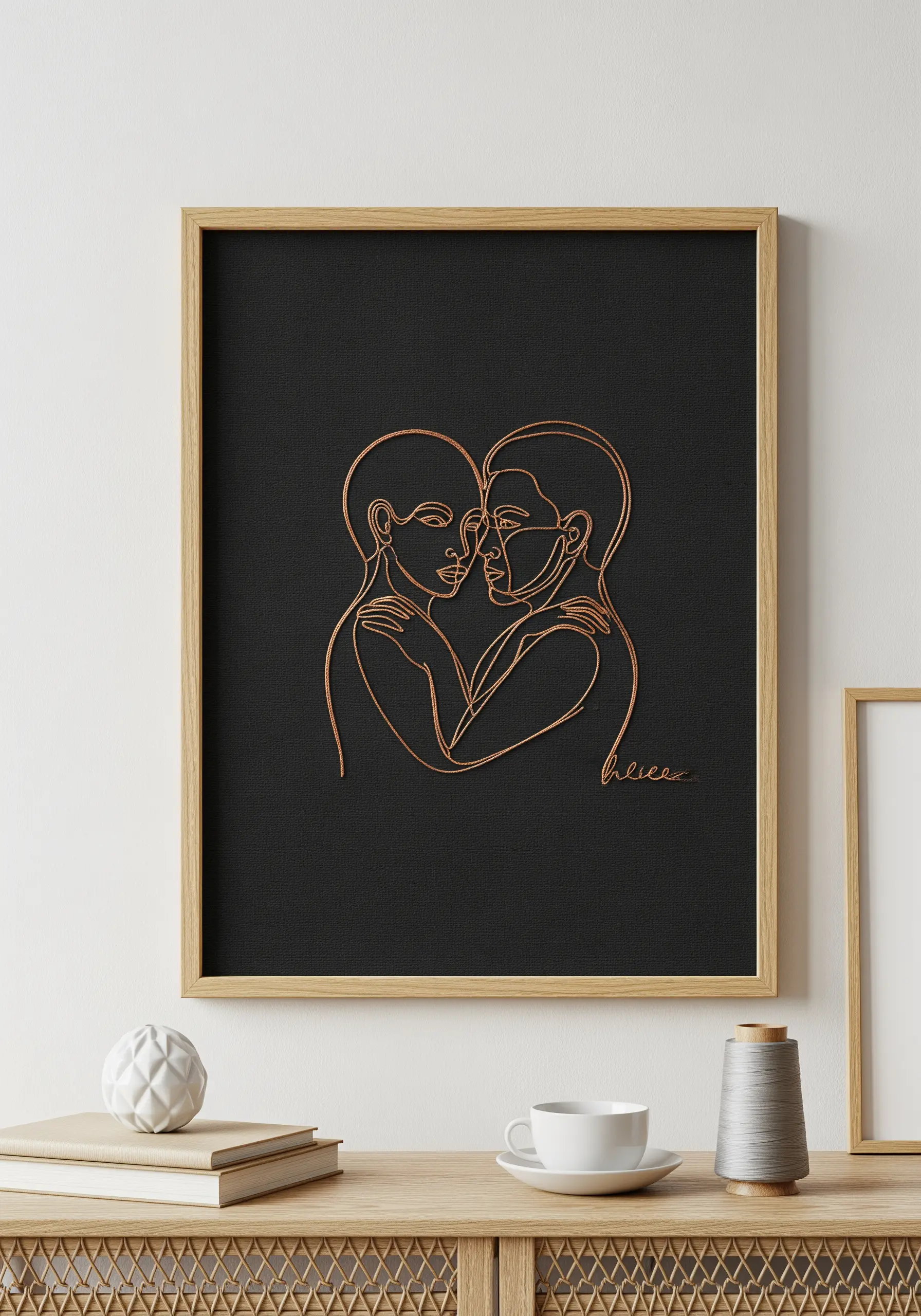
Stitching with metallic thread on dark fabric creates an effect of understated elegance and sophistication.
Choose a copper or warm gold metallic thread against a black or charcoal canvas for a rich, luxurious feel.
To prevent metallic thread from fraying or tangling, use shorter lengths (no more than 12 inches) and work with a thread conditioner like beeswax.
A simple backstitch is all you need; the materials themselves—the shimmer of the thread and the depth of the fabric—are what make the piece so impactful.
12. Capture a Sense of Movement and Joy
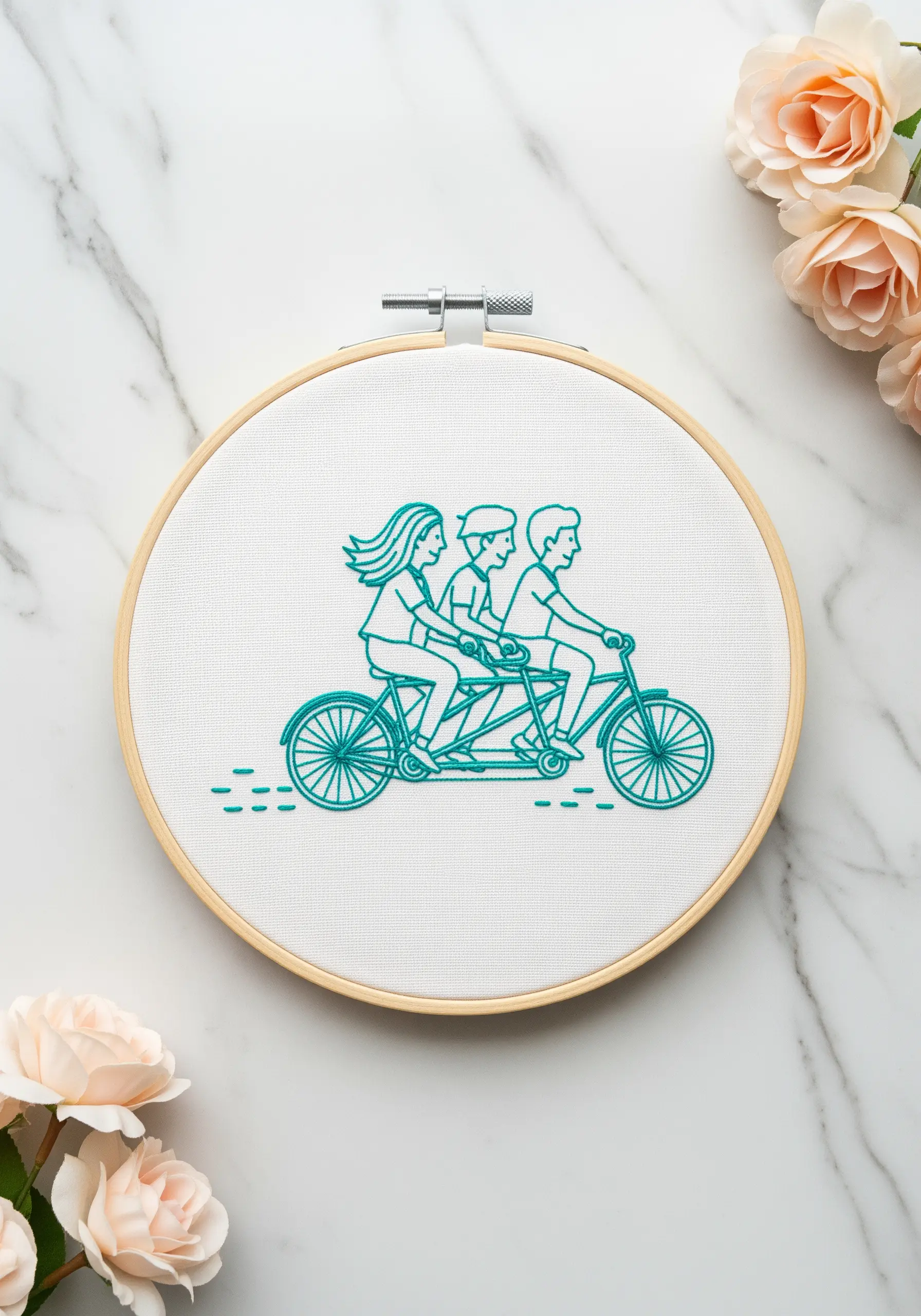
Even static lines can convey motion and energy with the right technique.
The single-line style of this design already suggests forward momentum.
Amplify this by using a whipped backstitch for the bicycle frame, which creates a solid, defined line.
The small horizontal stitches trailing the back wheel are a simple but brilliant way to indicate speed and create a dynamic scene.
Choose a vibrant, energetic color like this teal to enhance the playful and joyful mood of the piece.
13. Design for a Wall Hanging for a Modern Finish
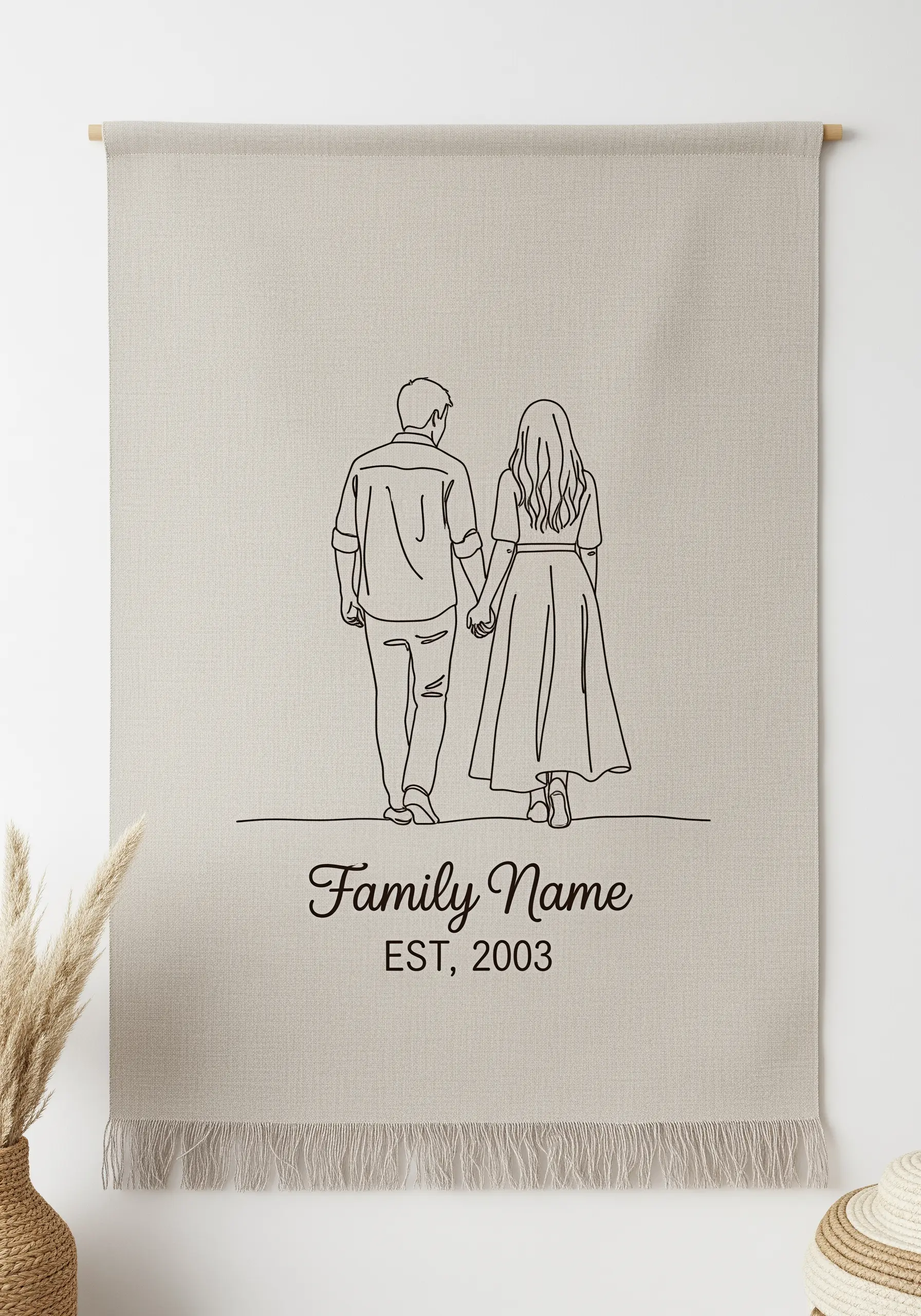
Think beyond the hoop and present your embroidery as a modern textile wall hanging.
This format is perfect for personalized pieces with names and dates, as it allows for a more integrated typographic design.
Stitch on a sturdy, high-quality linen or cotton canvas that will hang well without warping.
Use a simple backstitch for the illustration and a contrasting satin stitch or script font for the text to create a clear visual hierarchy.
The fringed edge adds a soft, bohemian touch to the otherwise clean and modern piece.
14. Let a Single Bold Color Define the Artwork
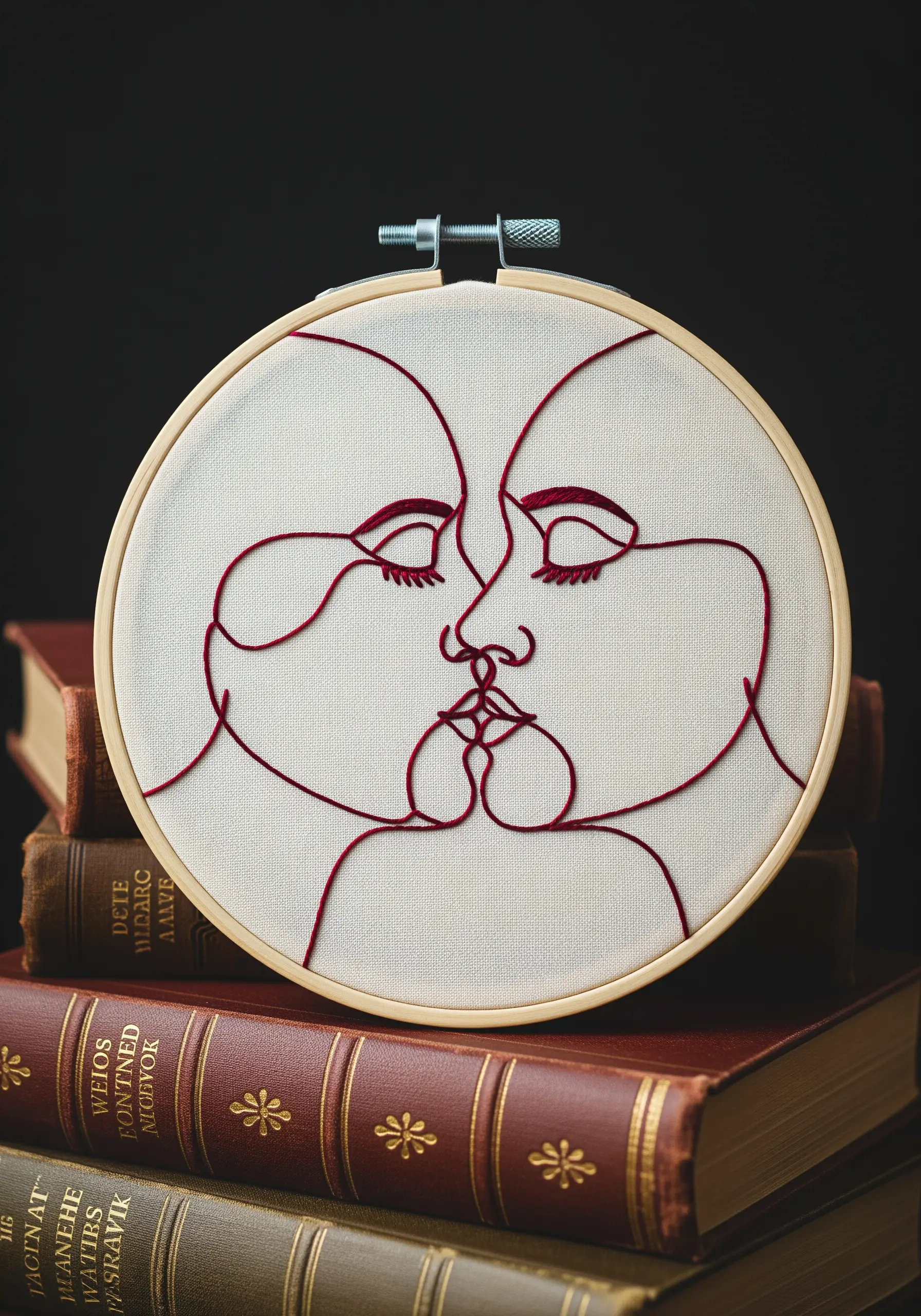
A single, powerful color can convey emotion more effectively than a full palette.
This rich crimson thread communicates passion, intimacy, and romance in one stroke.
For the continuous, curving lines of the faces, a split stitch is an excellent choice. It creates a flatter, more graphic line than a stem stitch and handles tight curves with exceptional smoothness.
When displayed against a dark, moody background like these vintage books, the color becomes even more luminous and dramatic.
15. Add Whimsical Details with Textural Stitches
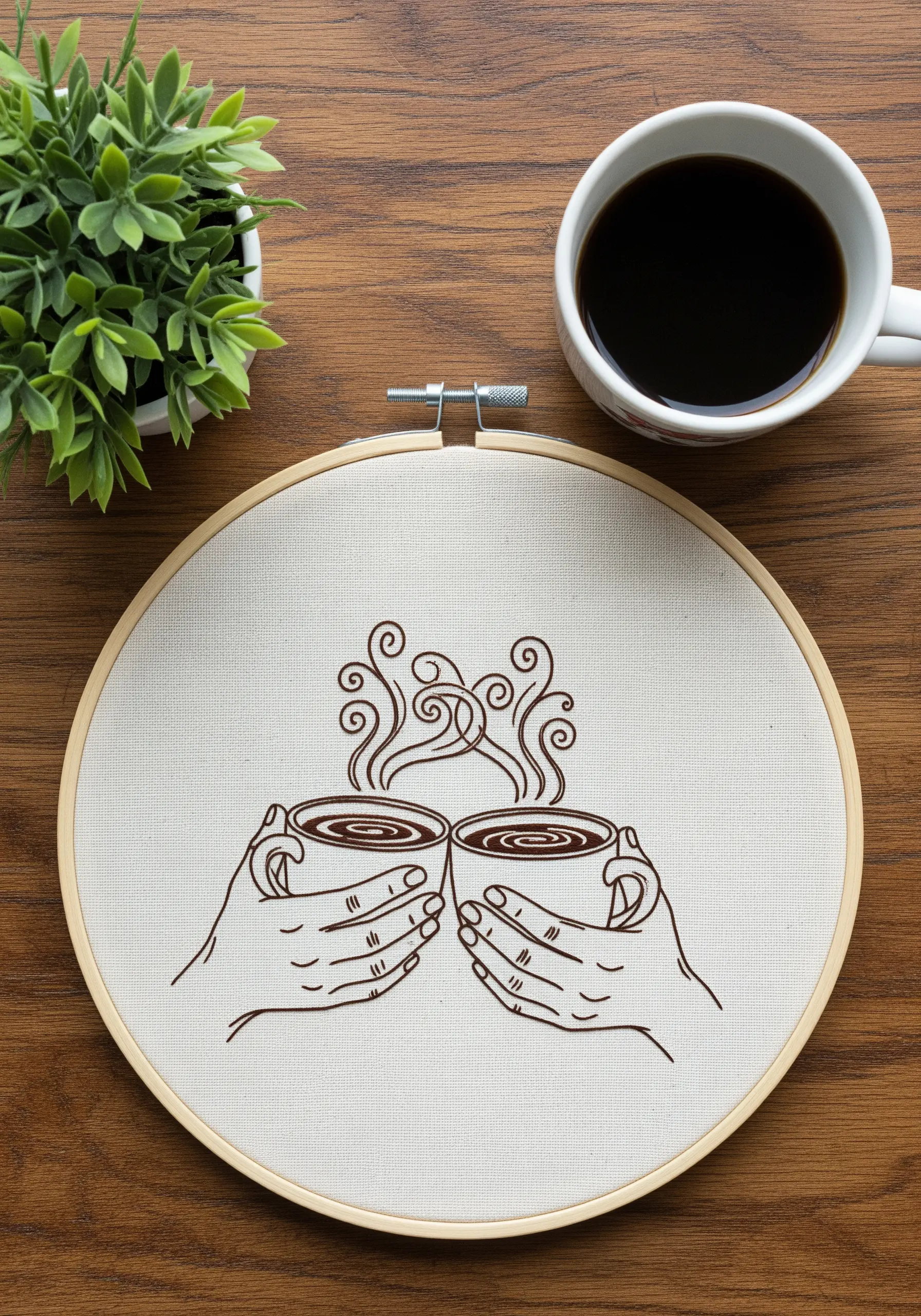
Bring your line art to life by giving specific elements a unique texture.
While the hands and mugs are stitched in a simple backstitch, the steam is rendered in swirling chain stitches.
This choice gives the steam a rounded, puffy quality that suggests warmth and movement, making the entire scene feel more alive and cozy.
It’s a simple switch in stitch type that adds a layer of playfulness and sophistication to the design.
16. Frame Your Subject with Delicate Botanical Details
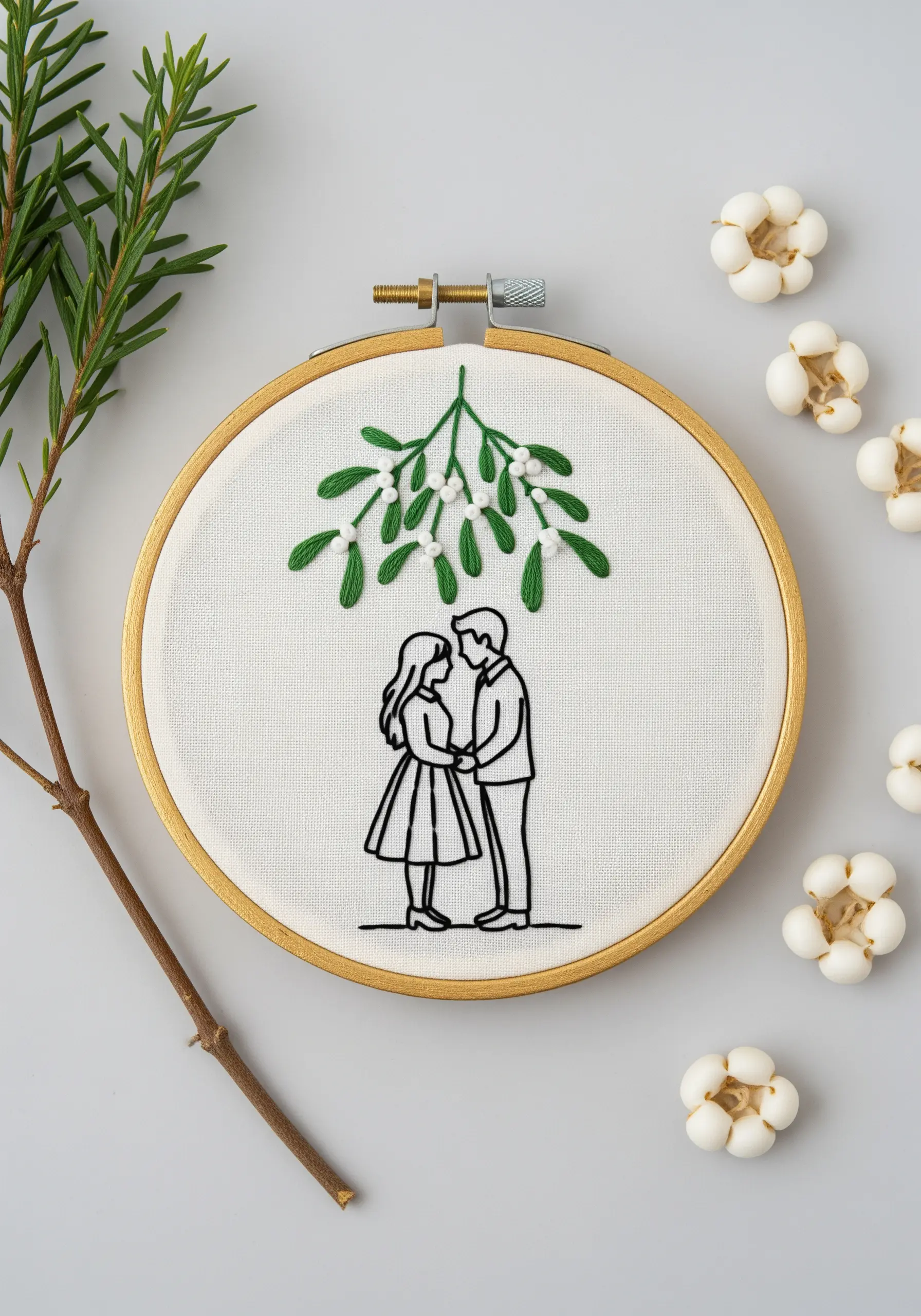
Use small, selectively colored motifs to frame your central figures and draw the viewer’s eye.
The sprig of mistletoe at the top creates a charming focal point and immediately sets a romantic, festive scene.
Stitch the leaves with a fishbone stitch to give them a central vein and a bit of dimension.
Use tiny French knots for the white berries, which adds a delicate texture that contrasts beautifully with the clean black lines of the couple below.
17. Create a Vibrant Sunset Scene on Denim
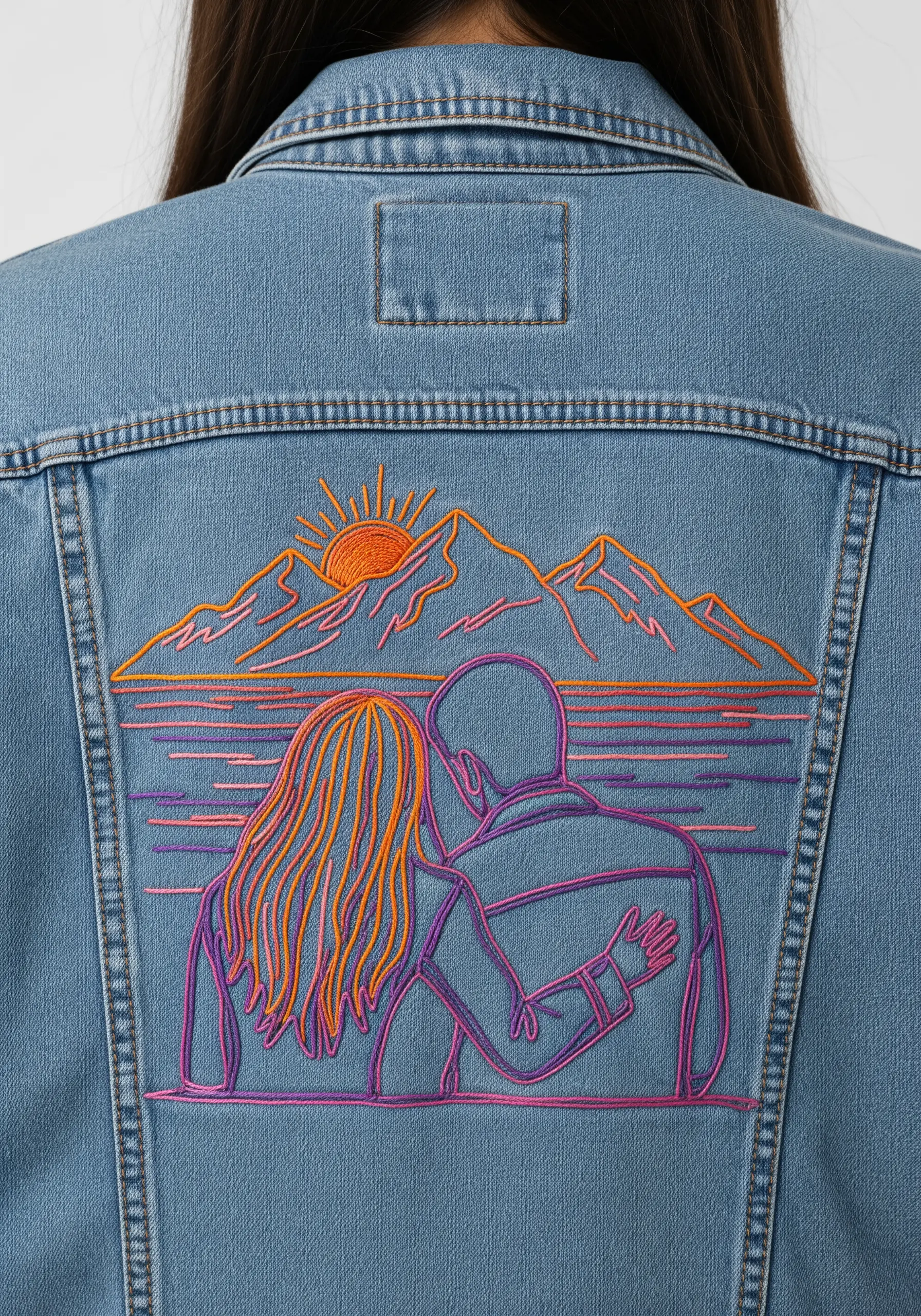
Transform a plain denim jacket into a piece of wearable art with a bold, colorful design.
Use a tear-away stabilizer on the inside of the jacket to prevent the fabric from puckering as you stitch.
Create the sunset effect by filling in the sky and water with long, straight stitches, blending shades of orange, pink, and purple for a gradient look.
Contrast these filled sections with clean, bold outlines for the mountains and couple to ensure the design remains clear and impactful.
18. Master the Art of Tone-on-Tone Stitching
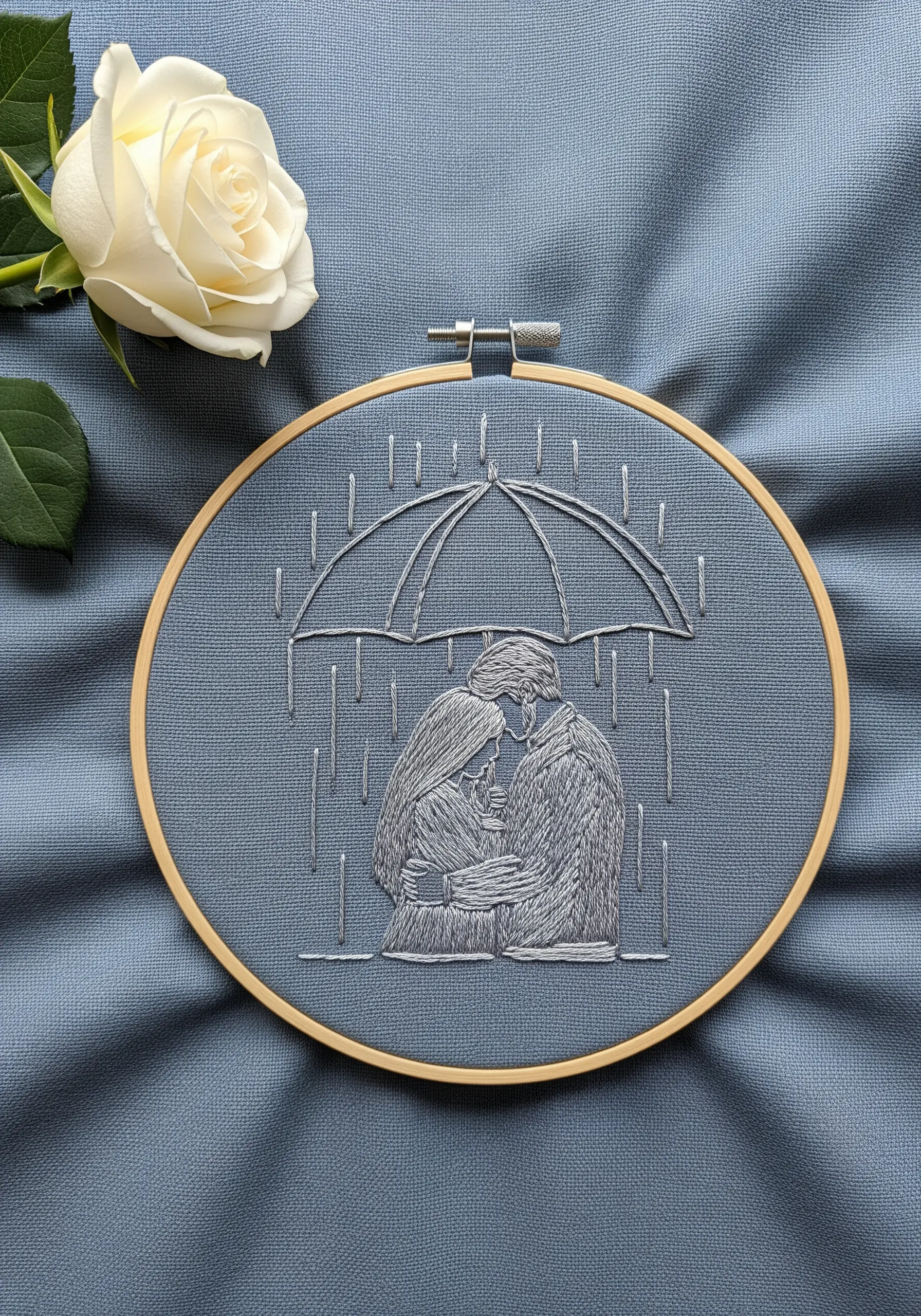
Create a sophisticated, atmospheric piece by using a thread color that is only a few shades lighter or darker than your fabric.
This technique, known as tone-on-tone embroidery, results in a subtle, elegant design that emphasizes texture over color.
Use long, vertical straight stitches for the rain to create a sense of movement and atmosphere.
For the figures, use a dense satin stitch or long-and-short stitch to make them feel solid and central to the moody, rain-swept scene.
19. Design a Matched Set for Serene Bedroom Décor
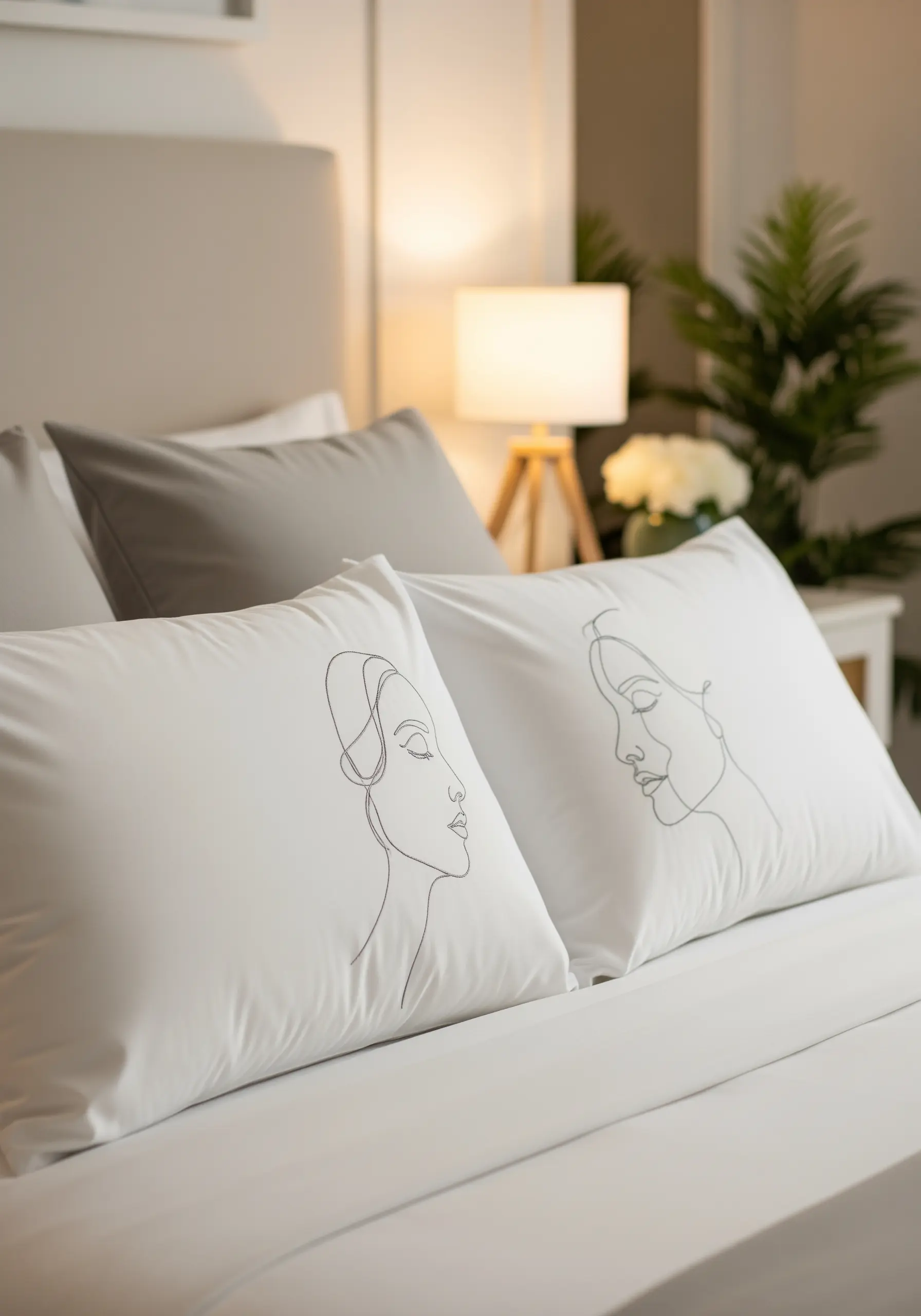
For items like pillowcases, create a mirrored or complementary set of designs for a balanced, harmonious look.
These soft and simple stitched ideas are perfect for creating a calm and cohesive aesthetic.
Choose a thread color that matches your other bedding accents, like a charcoal grey or soft taupe, for a quiet, integrated feel.
A simple stem stitch is ideal here, as it’s smooth to the touch and durable enough to withstand washing, ensuring your art remains beautiful and functional.
20. Experiment with Abstract Ribbons of Thread
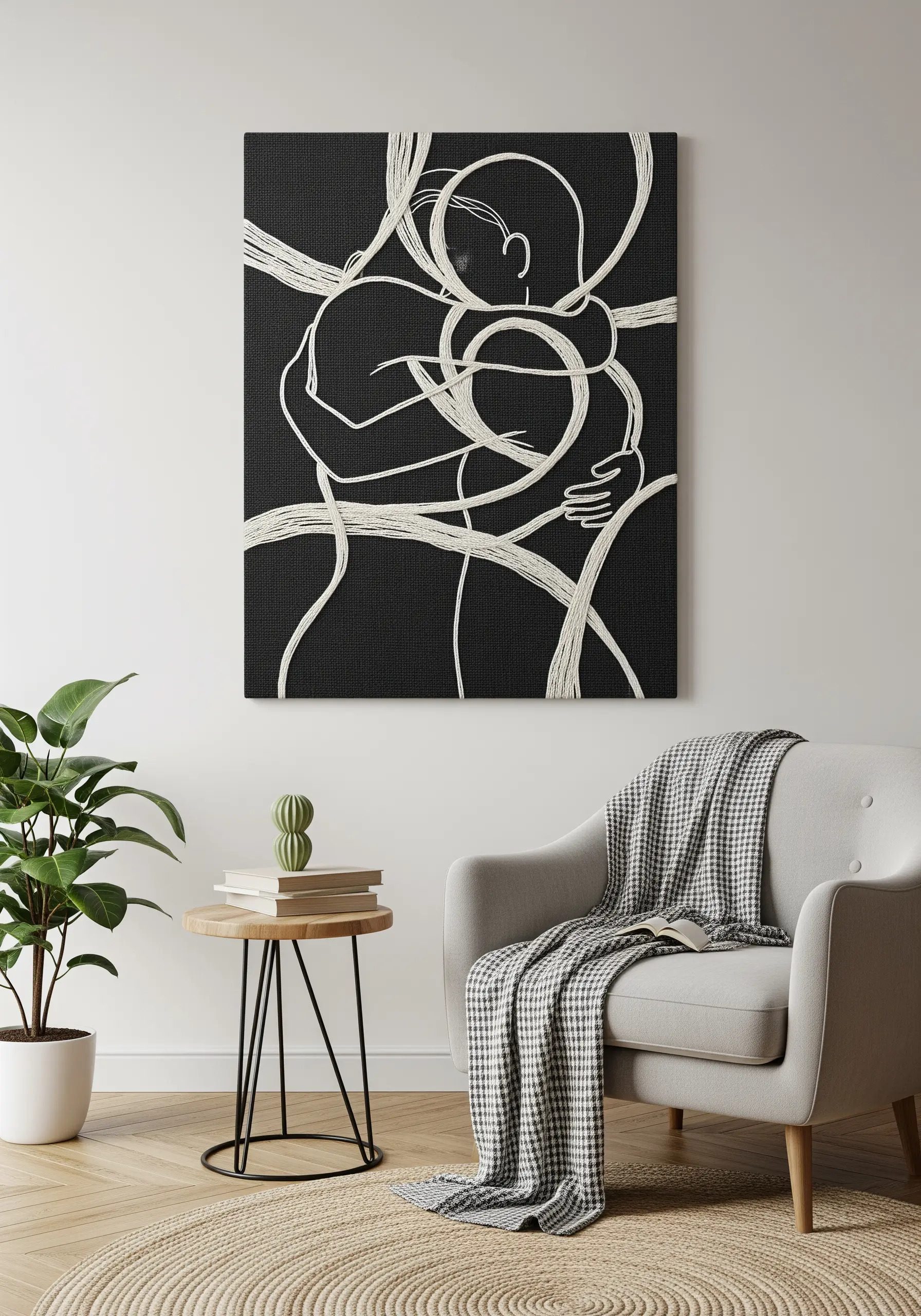
Move beyond a single line and use broad, sweeping ribbons of thread to create a dynamic and abstract composition.
Achieve this effect by laying down multiple parallel lines of thread using a satin stitch or couching thicker yarn onto the canvas.
The contrast between the fine, sharp outlines of the figures and the bold, flowing ribbons of cream-colored thread creates a stunning sense of movement and energy.
This is a perfect project for a large-scale embroidery tapestry that makes a powerful statement.
21. Use 3D Stitches for Symbolic Elements
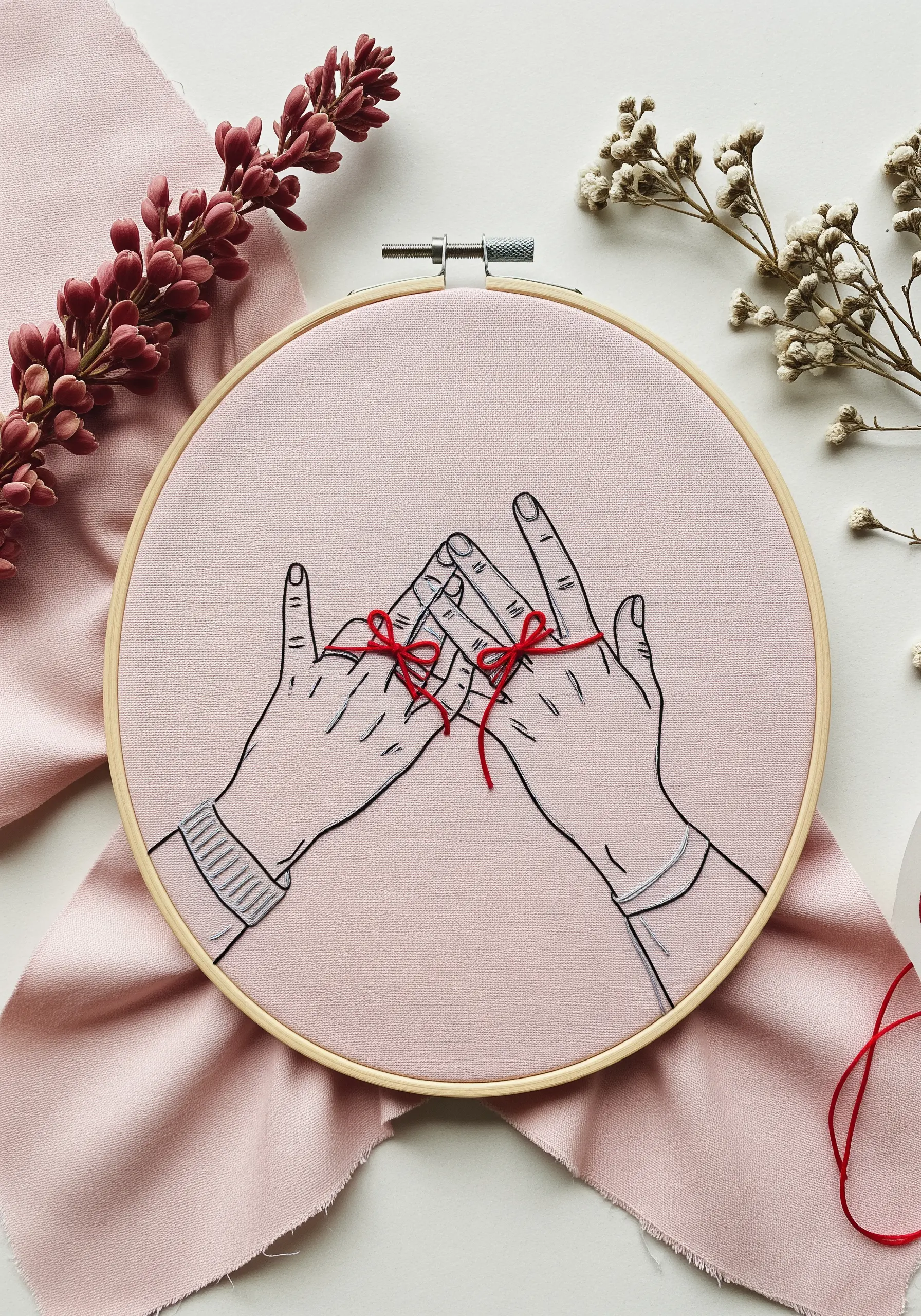
Make symbolic details literally stand out by using three-dimensional stitch techniques.
The “red string of fate” is rendered here not as a flat line, but as a woven, tactile element.
Create this effect by using a woven wheel stitch for the knots or by carefully couching a thicker red cord onto the fabric.
This small but significant detail adds a layer of artistry and meaning, transforming the piece from a simple drawing into a multi-textured artwork.
22. Weave a Story with Celestial Constellations
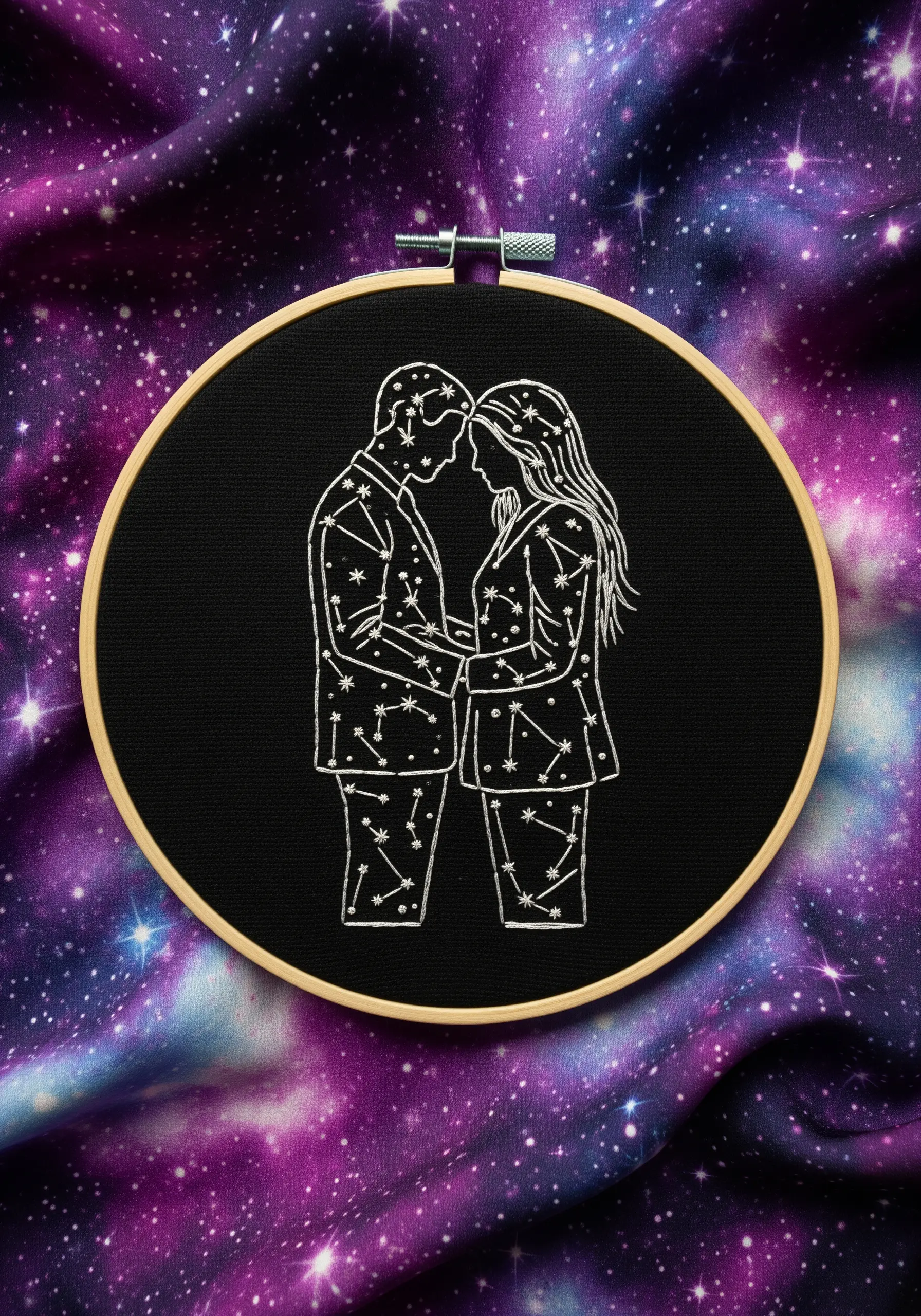
Transform a simple portrait into a cosmic love story by filling the figures with constellation patterns.
Use a bright white or glow-in-the-dark thread on a black fabric background for a dramatic, starry-night effect.
Stitch the outlines of the couple first with a simple backstitch.
Then, fill the space inside with tiny straight stitches to form constellation lines and use French knots or star stitches for the individual stars.
This imaginative fill technique adds a layer of personal meaning and celestial magic.
23. Create Softness with a Simple Stitched Frame
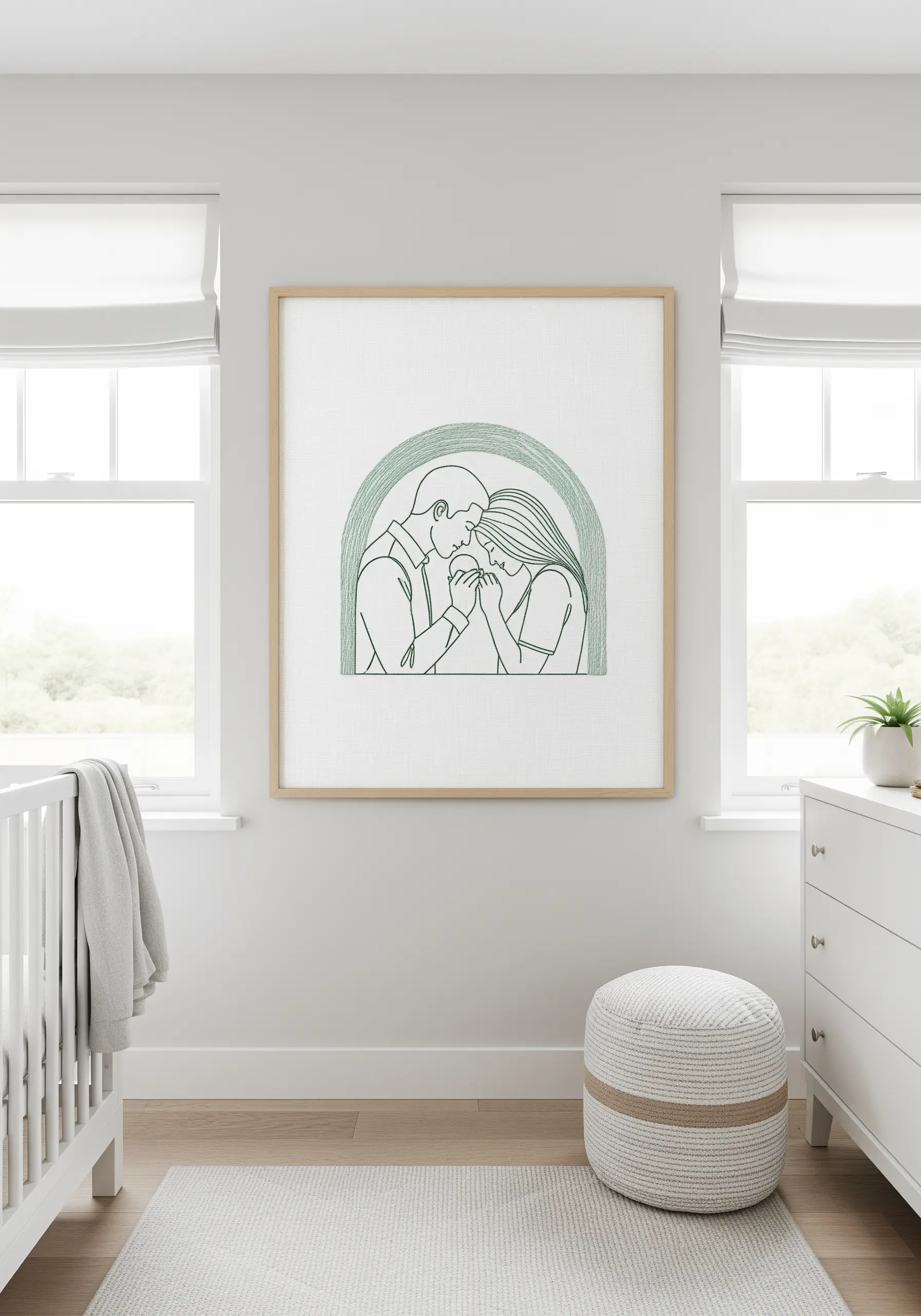
Soften a minimalist line drawing by enclosing it within a simple, stitched frame.
The gentle arch here is filled with uniform backstitches that follow the curve of the shape, creating a sense of texture and completeness.
This element helps to ground the composition and makes it feel more like a finished, intentional piece of art.
Stitching in a soft, natural color like this sage green on an off-white linen enhances the gentle, serene mood, making it perfect for nursery or bedroom décor.