The simple elegance of a neutral linen table runner is a perfect canvas. But it’s also an invitation—an opportunity to add a layer of texture, color, and personality that is entirely your own. You don’t need to stitch intricate scenes to make a beautiful impact.
Abstract embroidery is about focusing on the pure joy of the craft itself. It’s an exploration of how a single line, a cluster of knots, or a block of color can transform a surface. It frees you from the pressure of perfection and allows you to play with rhythm, balance, and texture in a way that feels both meditative and deeply creative.
In these designs, you’ll discover how a simple adjustment in technique—like padding your satin stitch for a 3D effect or whipping your backstitch for a cleaner line—can elevate your work instantly. This is your chance to turn simple stitches into sophisticated art, one thoughtful thread at a time.
1. The Art of Overlapping Color Blocks
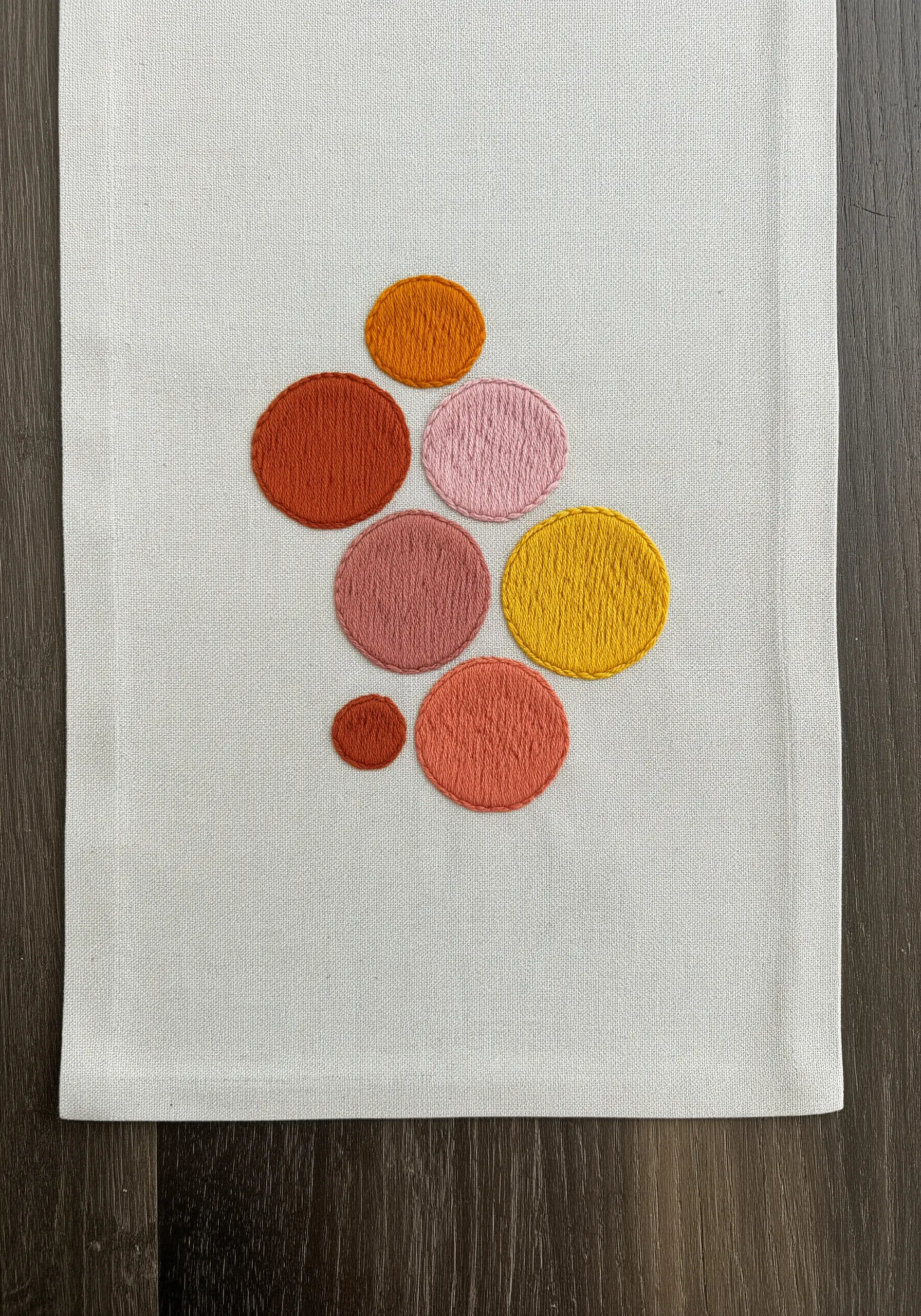
Create depth and movement by layering simple satin-stitched circles.
To achieve those perfectly smooth, raised edges, first outline each circle with a split stitch before filling it in.
This underlying ridge gives your satin stitches a clean line to press against, preventing unevenness and creating a more professional finish.
Pay attention to your stitch direction; keeping all stitches parallel within a single shape will ensure a uniform sheen.
A warm, earthy color palette of rust, ochre, and blush feels both modern and inviting against the natural texture of the linen.
2. Mondrian Grids with Satin Stitch Fills
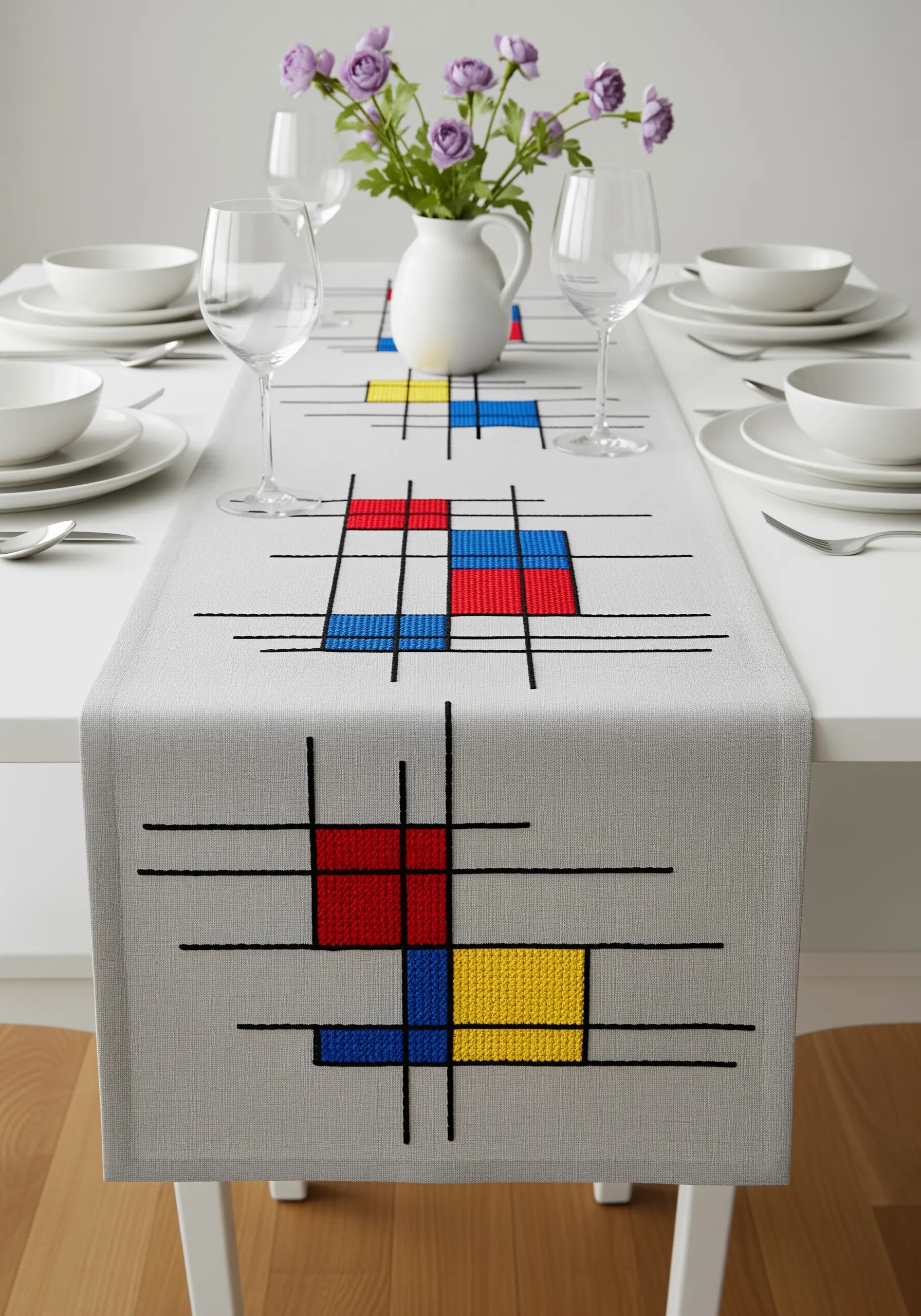
Translate iconic modern art to your table with this geometric composition.
For the sharp black lines, use a two-strand backstitch, focusing on consistent stitch length for a clean, graphic look.
Fill the rectangles with a dense, perfectly parallel satin stitch, ensuring the thread lies flat without any twisting.
The power of this design lies in the balance between the bold primary colors, the stark lines, and the unstitched negative space of the grey linen.
3. Sculptural Flow with Braided Yarn

Introduce dramatic, three-dimensional texture by moving beyond standard floss.
Couch a thick, pre-braided yarn onto the linen to create these bold, sculptural waves.
Use a strong, matching thread to tack the yarn down at regular intervals, ensuring your stitches are nearly invisible.
Accent the heavy waves with a delicate, echoing line of simple running stitch in a contrasting color—this interplay of scale is what makes the design so visually dynamic.
4. Terrazzo Texture with Seed Stitch

Create the effect of modern terrazzo by scattering small, organic shapes across your runner.
Fill each shape with a dense seed stitch—tiny, randomly placed straight stitches—to build a nubby, tactile surface.
For a natural and balanced composition, vary the size, shape, and orientation of your “chips,” avoiding any obvious patterns.
A sophisticated palette of earthy greens, rust, and cream keeps the playful pattern feeling grounded and elegant.
5. Rhythmic Monochrome with Vertical Lines

Explore visual rhythm and gradient using only simple lines and shades of grey.
Use a vertical satin stitch to create uniform blocks of color, ensuring each stitch is pulled to the same tension to avoid puckering.
The artistry comes from the subtle shifts in tone—from light grey to charcoal to black.
Arrange your thread colors before you begin to plan the gradient effect.
Remember that the negative space between the stitched blocks is a crucial part of the design, creating pauses that guide the eye.
6. Abstract Landscapes in Thread Painting
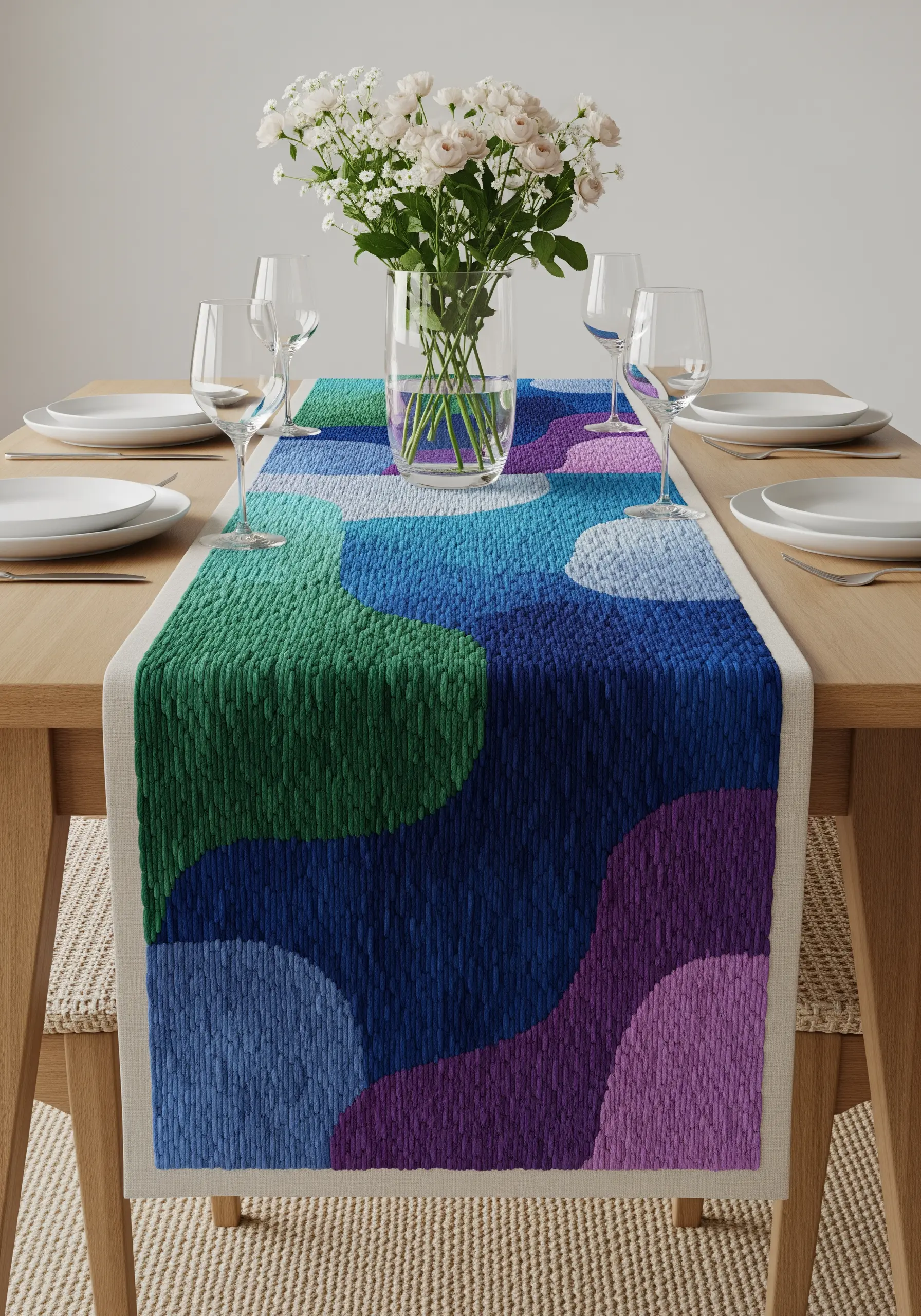
This design transforms your table runner into a canvas for an abstract, flowing landscape.
Use the long-and-short stitch to fill these large, organic shapes, which allows for seamless color blending.
Where two colors meet, interlock the stitches from each shape to create soft, natural transitions, much like watercolor paint bleeding on paper.
Vary your stitch direction to follow the curves of each form, enhancing the sense of movement and depth.
7. Tactile Compositions with Mixed Media

Move beyond thread to create a design that invites touch and tells a story through texture.
Couch thick, natural-fiber rope to create bold spirals and outlines that stand off the fabric.
Incorporate rows of bugle beads for a delicate, light-catching element that contrasts with the matte rope.
Adding a block of appliqué fabric in a complementary color introduces another layer, turning the composition into a true mixed-media piece.
8. Celestial Geometry with Metallic Thread
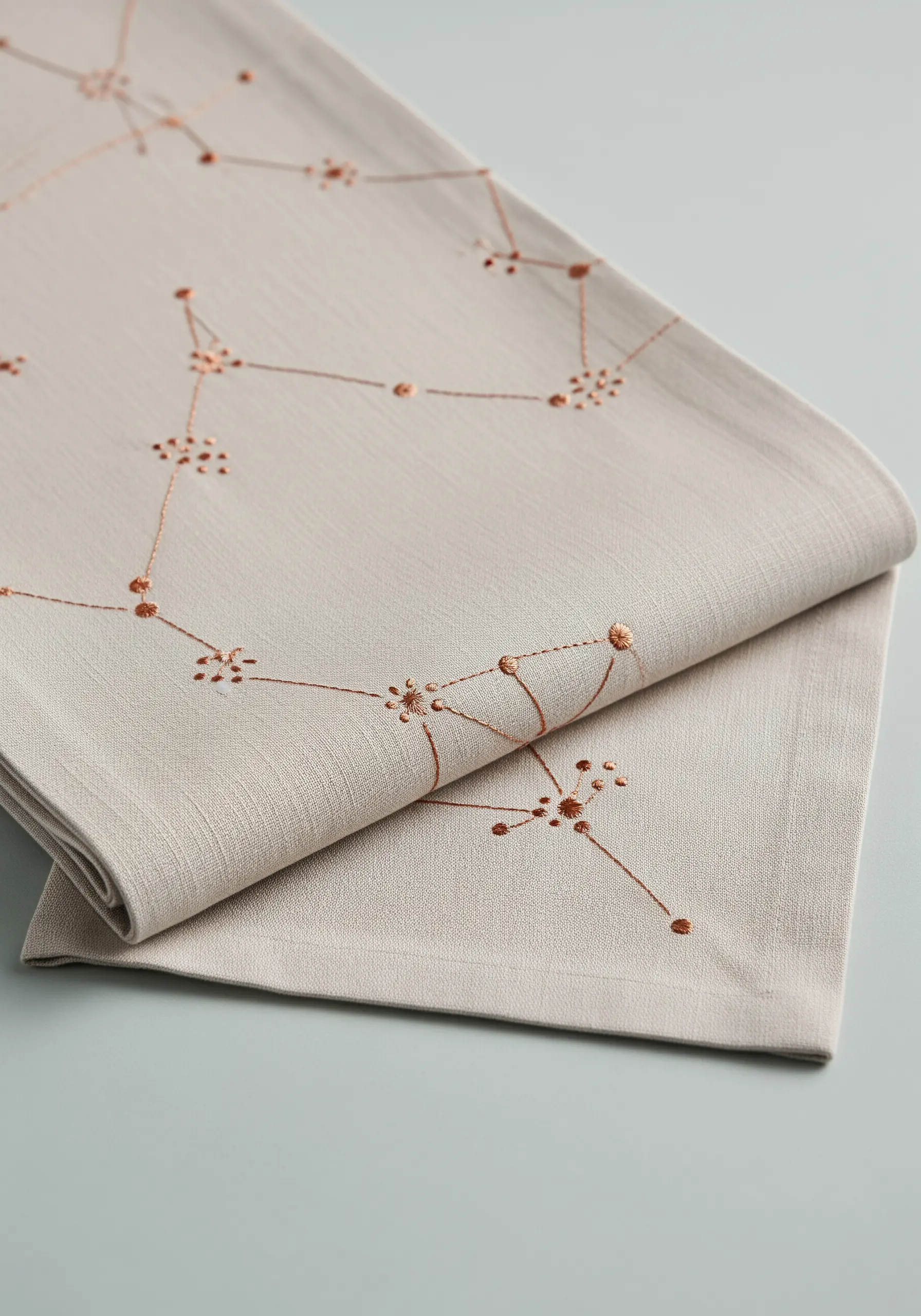
For an effect of understated elegance, stitch minimalist constellations across your linen.
Use a fine metallic thread in copper or rose gold, which offers a warm shimmer that complements neutral fabric beautifully.
The design is built from simple backstitched lines connecting small clusters of three to five French knots.
To prevent puckering when working with less-forgiving metallic threads, consider using a lightweight, tear-away stabilizer on the back of your fabric.
9. Vibrant Botanical Forms with Open Fill Stitches

Instead of filling shapes completely, use an open fill stitch like the fishbone or fly stitch.
This technique creates texture and visual interest while allowing the linen fabric to show through, making the entire design feel lighter and more breathable.
First, define each leaf shape with a crisp split stitch outline.
Then, work your open fill from the outline inwards, creating a pattern that feels both structured and organic.
A vibrant color palette of teal, magenta, and orange gives this traditional technique a modern, graphic energy.
10. The Expressive Brushstroke in Thread
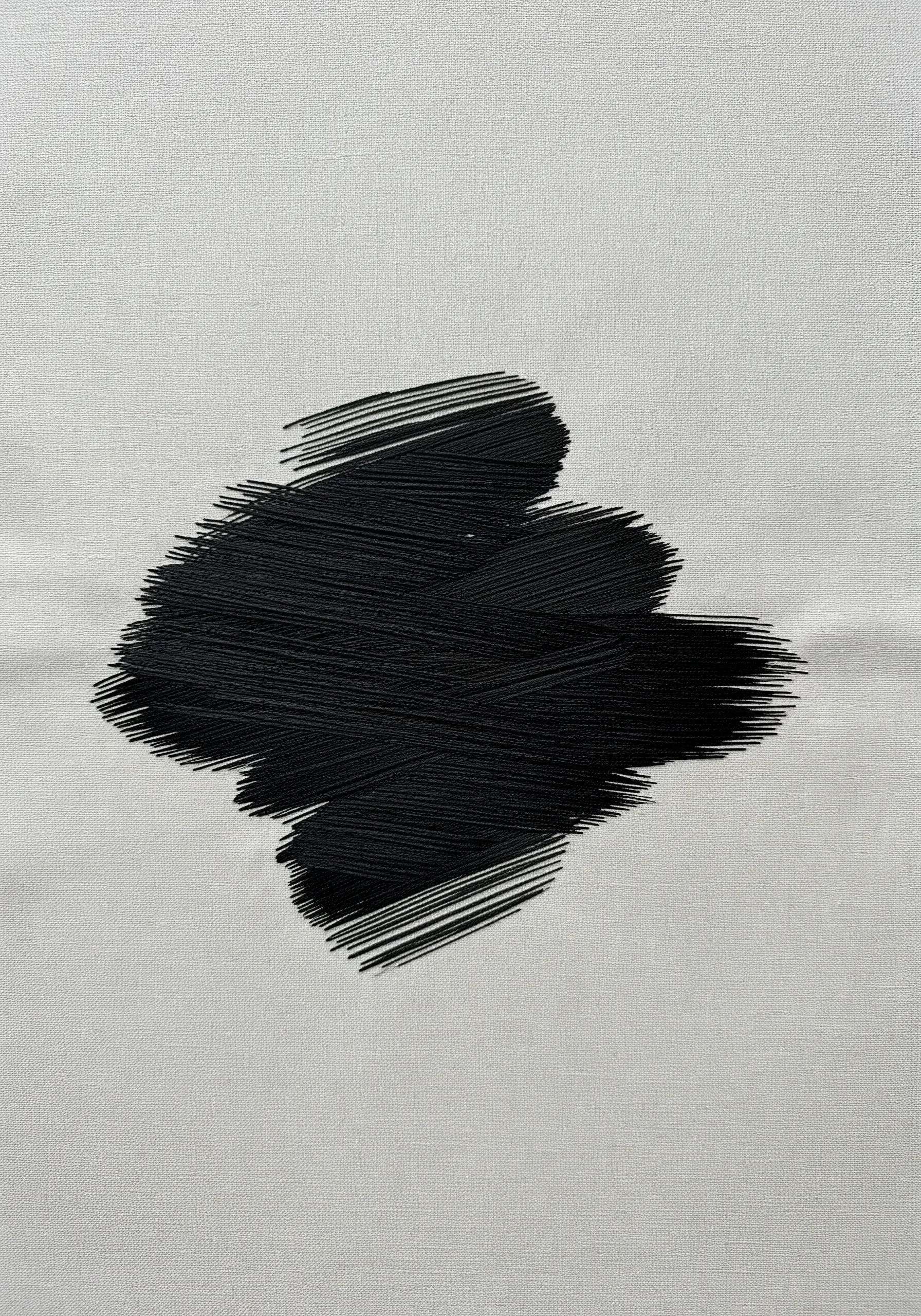
Capture the dynamic energy of a painter’s mark using layered straight stitches.
Use all six strands of black embroidery floss to give your stitches weight and presence.
Work in multiple directions, allowing stitches to overlap and cross one another to build up density and create a sense of movement.
The goal is not perfect coverage, but expressive texture. The frayed ends of the stitches contribute to the raw, artistic feel.
11. Art Deco Waves with Metallic Outlines

Evoke the glamour of the Art Deco era with this precise, repeating fan pattern.
Fill each segment with a flawless satin stitch in a cool, tonal palette of blues.
The defining element is the shimmering metallic outline. Use a fine silver thread and a neat backstitch—or couch a single strand of metallic cord—to create the crisp divisions between each shape.
This detail is what elevates the design from a simple pattern to a statement of sophisticated style.
12. An Earth-Tone Sampler of Textural Stitches

Turn a simple striped design into a tactile landscape by dedicating each band to a different stitch.
This is a wonderful opportunity to practice and showcase a variety of textures: the bumpy surface of French knots, the raised loops of bullion stitch, the radial weave of spiderweb stitch, or the braid of a heavy chain stitch.
A cohesive earth-tone color palette unifies the varied stitches, creating a design that feels both exploratory and intentional.
13. Geometric Interlace with Negative Space
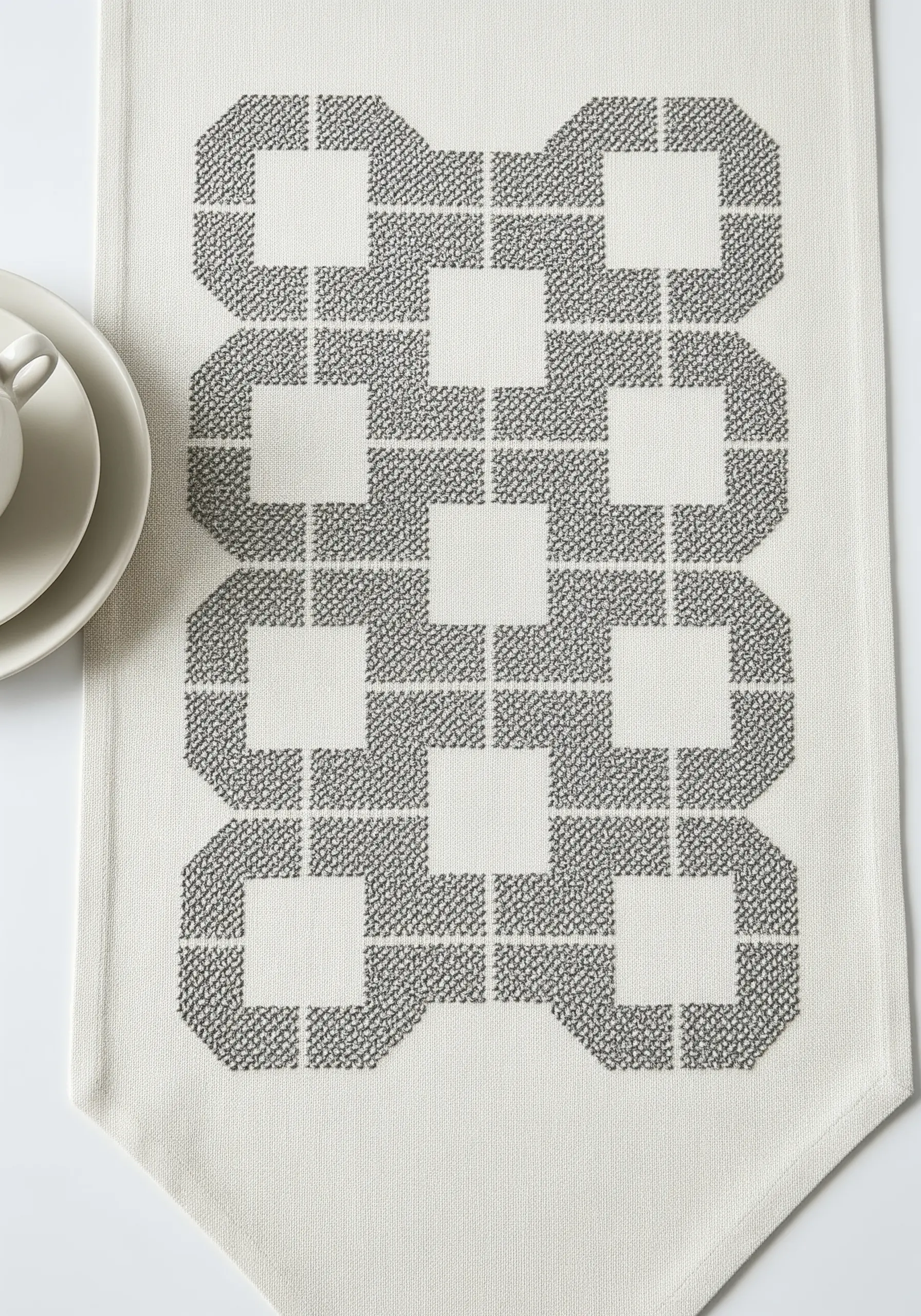
In this design, the unstitched fabric is as important as the embroidered areas.
You are using thread to create a frame that highlights the negative space, turning the plain linen into a key feature of the pattern.
Fill the grey shapes with a simple darning stitch or a dense seed stitch for a subtle, woven texture.
To achieve the sharp, clean edges, outline each block with a split stitch before you begin filling it.
14. A Geometric Study of Line and Form
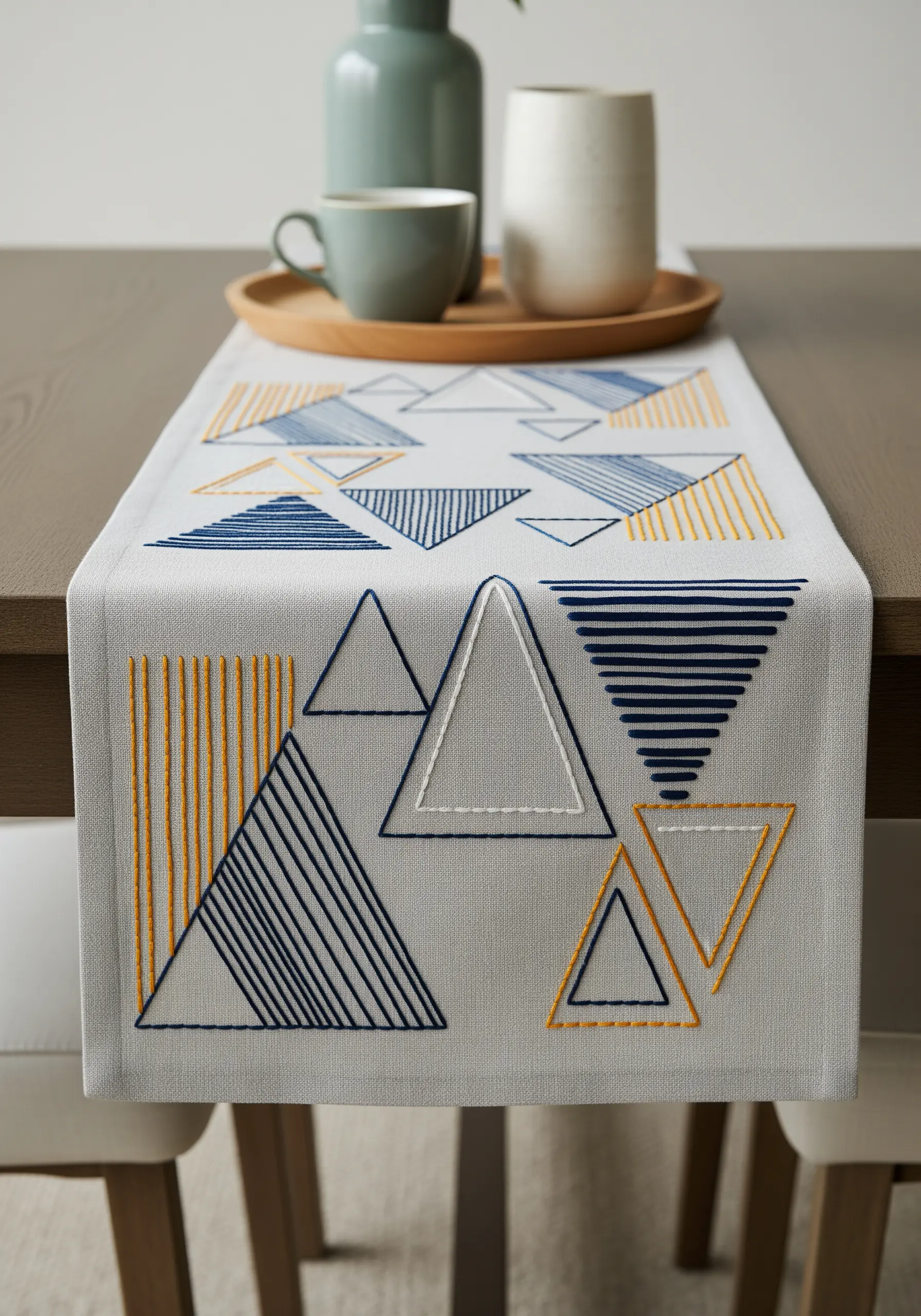
Explore the versatility of a single shape—the triangle—by treating it in different ways.
Keep some triangles as simple outlines using a neat backstitch.
Fill others with evenly spaced straight stitches, varying the direction (horizontal or vertical) to create visual rhythm and texture.
This contrast between solid and open forms, combined with a high-contrast palette of navy, mustard, and white, makes the composition feel dynamic and modern.
15. A Sculptural Grid with Braided Cord
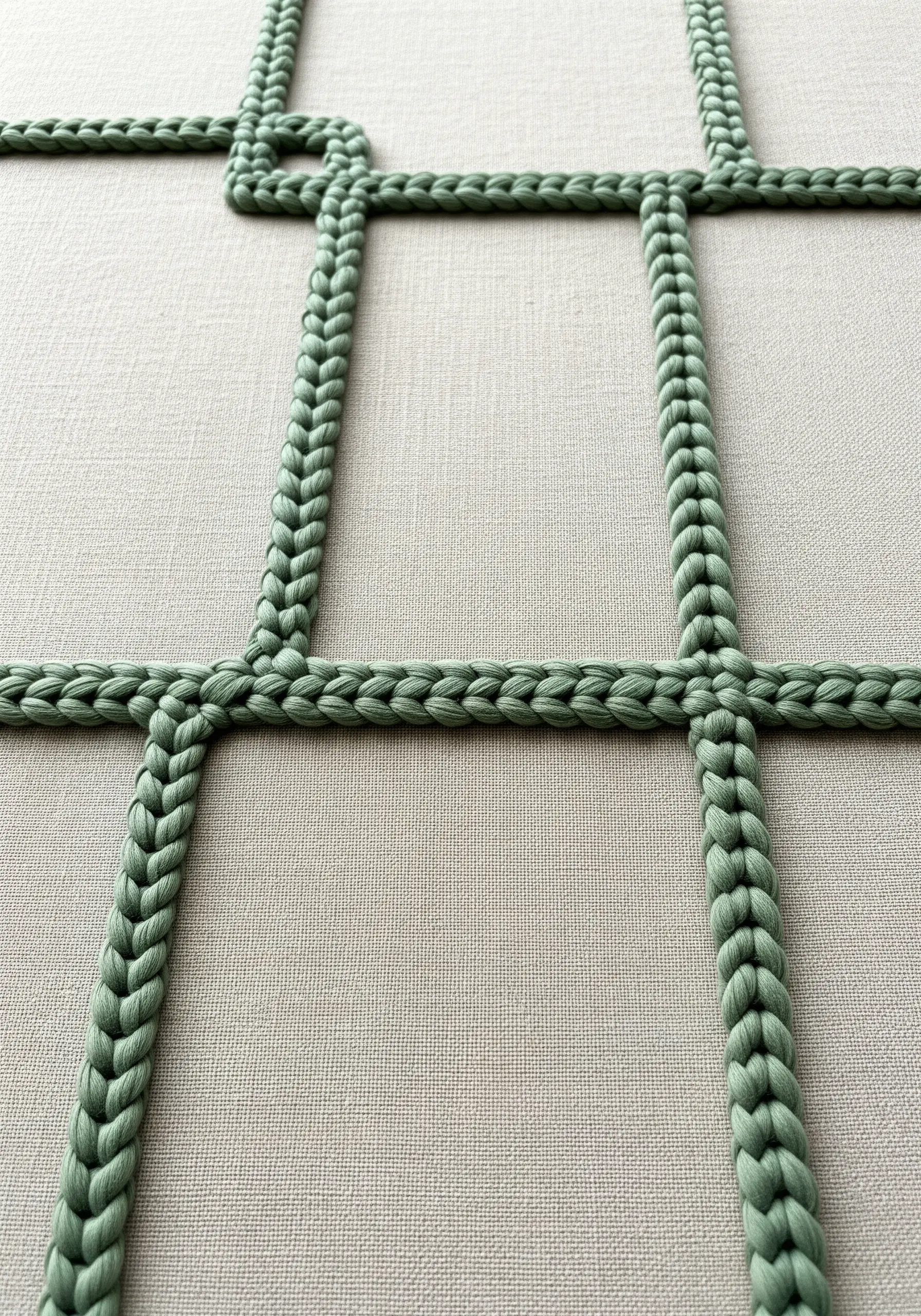
Elevate a simple grid into a tactile, architectural feature by using dimensional materials.
Couch down a thick, pre-braided cord in a matching thread color, hiding your tacking stitches in the valleys of the braid.
The key to a successful grid is ensuring the intersections are sharp and secure.
Tack down the cord firmly on all four sides where lines cross to maintain crisp 90-degree angles.
16. Playful Confetti with Satin Stitch and Knots

This design captures a feeling of spontaneous joy, but its success relies on thoughtful placement.
Use tiny, single satin stitches for the rectangular “sprinkles” and French or colonial knots for the dots.
Vary the colors and orientations, scattering them across the fabric to create a sense of balanced randomness.
Step back occasionally to check the overall distribution, ensuring you avoid unintentional clumps or large empty spaces.
17. High-Contrast Chevrons with Directional Stitching
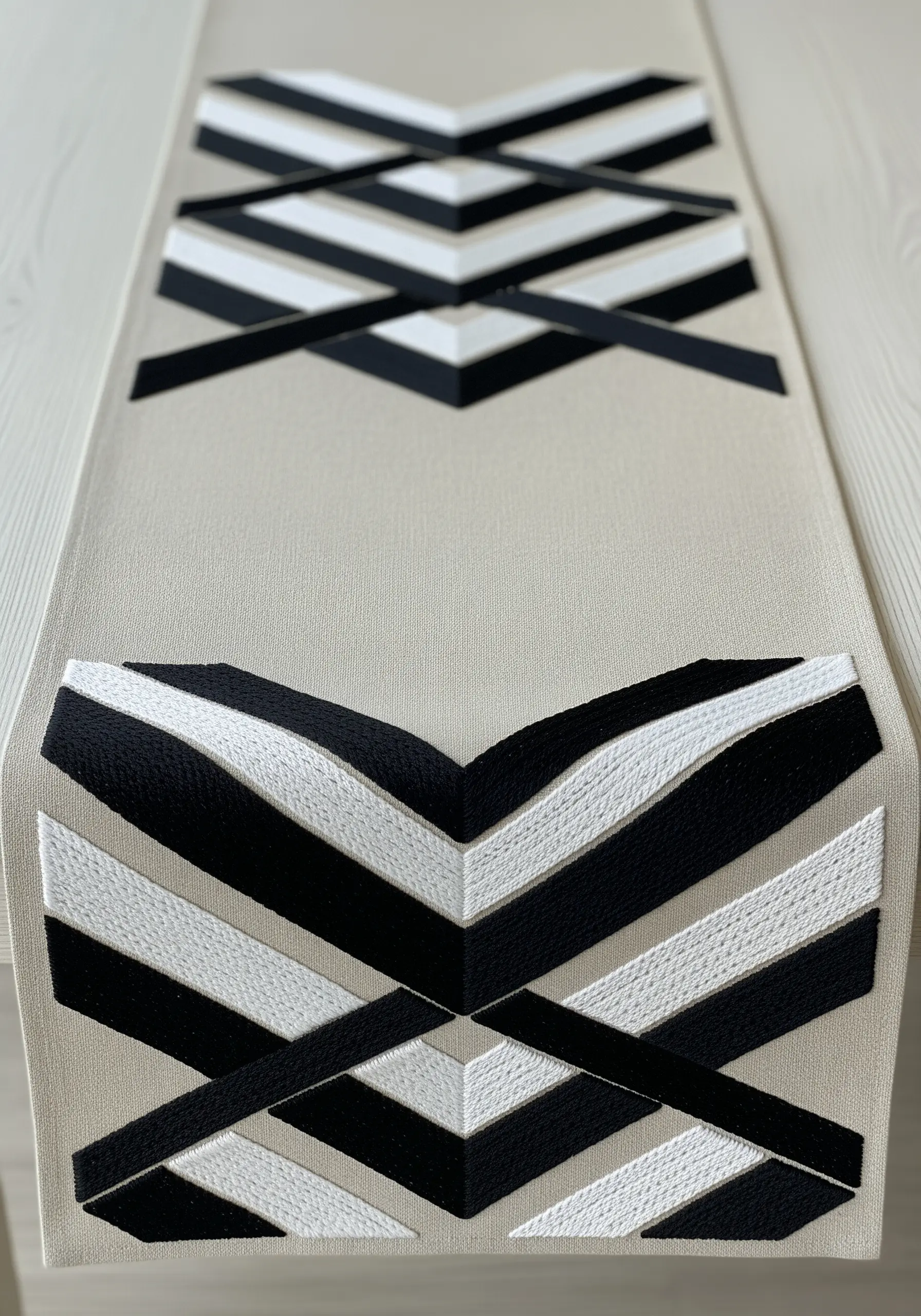
Create a bold, graphic statement with this high-contrast geometric design.
Use a dense satin stitch, but pay close attention to the direction of your stitches.
For each segment of the chevron, angle your stitches to run parallel to one edge of the ‘V’ shape.
This technique enhances the geometry of the pattern and creates a subtle sheen that catches the light.
The stark black and white against the neutral linen delivers maximum visual impact.
18. Abstract Drips with Blended Threads
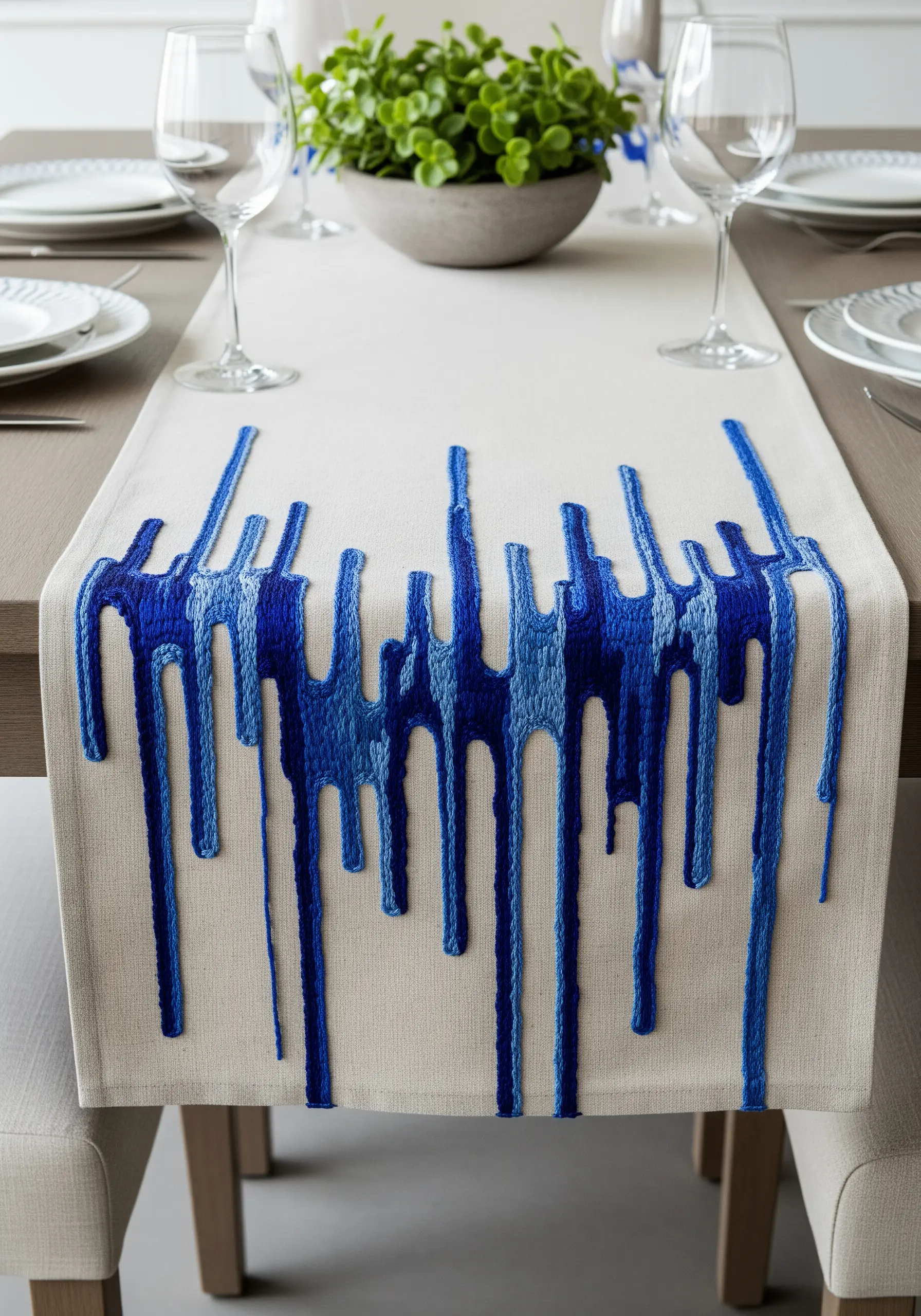
Capture the organic, fluid movement of dripping paint with vertical satin stitches.
To create a natural, blended color effect, thread your needle with two or three different shades of blue at once.
As you stitch, the colors will mix randomly, giving the drips a more authentic, variegated look than solid blocks of color would.
Vary the lengths of your stitched drips to create an uneven, dynamic bottom edge that feels spontaneous.
19. A Pebbled Texture with Densely Packed Knots

Create an incredibly tactile surface by filling an organic, amoeba-like shape with French knots.
The secret to a uniform, professional finish is consistency in both the size of your knots and their density.
Work from the outline inwards, packing the knots as closely as possible so that no fabric shows through.
A preliminary backstitch outline provides a crisp boundary and helps contain the knots for a clean edge.
20. Retro Curves with Gradient Satin Stitch
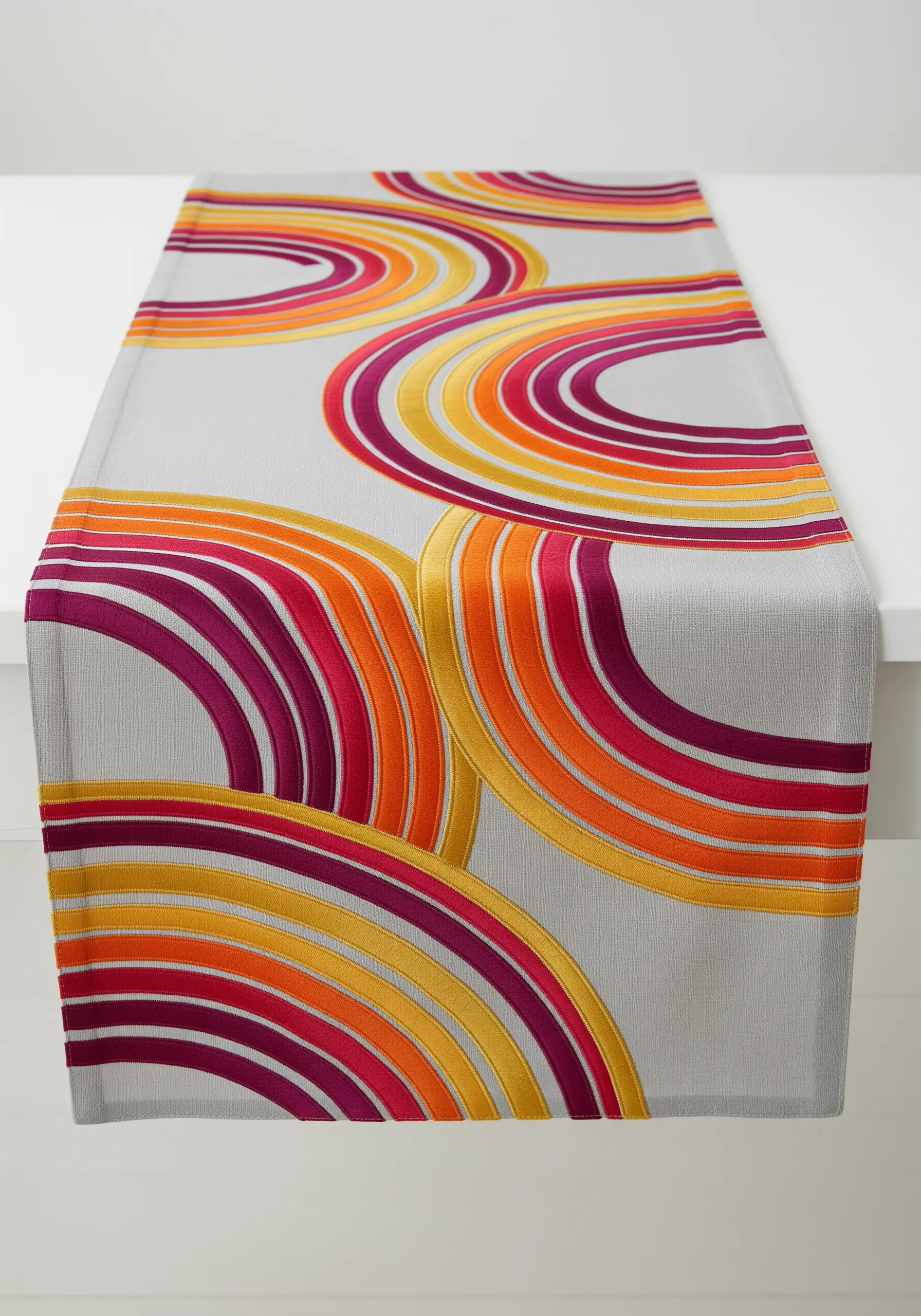
Channel a ’70s aesthetic with these bold, interlocking curves and a warm, vibrant palette.
The key to the gradient effect is using three or four distinct shades within each color family (e.g., light yellow, goldenrod, deep orange).
Stitch each shade as a solid block within the curved band, creating a stepped gradient that feels both graphic and fluid.
The natural sheen of a perfect satin stitch is essential for capturing that polished, retro feel.
21. Minimalist Glyphs with Simple Backstitch
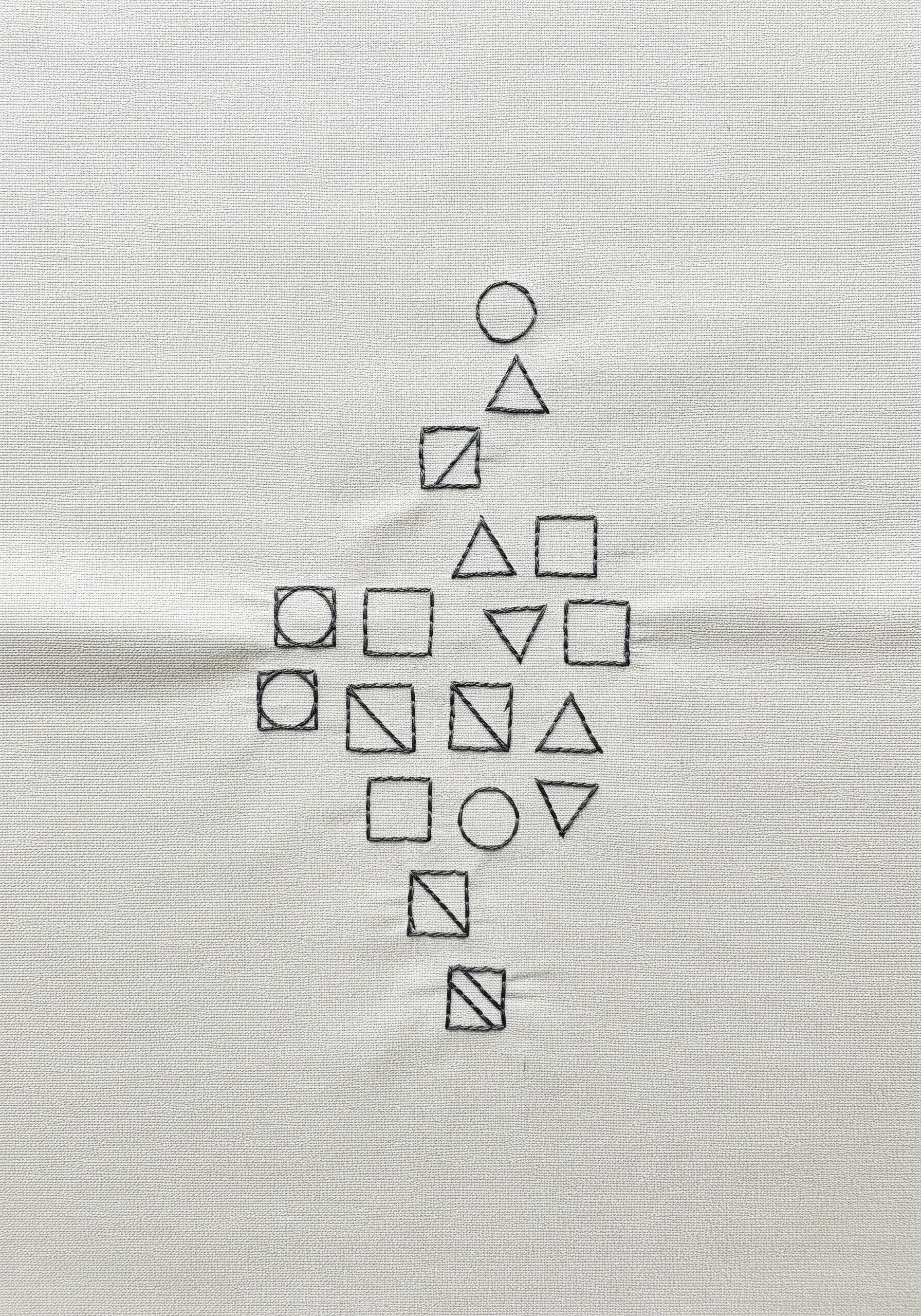
This design proves that you don’t need complex stitches for a sophisticated result.
Using a single strand of black floss and a neat, precise backstitch, create a collection of small geometric symbols.
The artistry lies in the composition. Arrange the shapes thoughtfully, playing with spacing and orientation to create a pattern that feels like a secret alphabet or a modern hieroglyph.
It’s an exercise in restraint and precision.
22. A Mixed-Media Sunburst
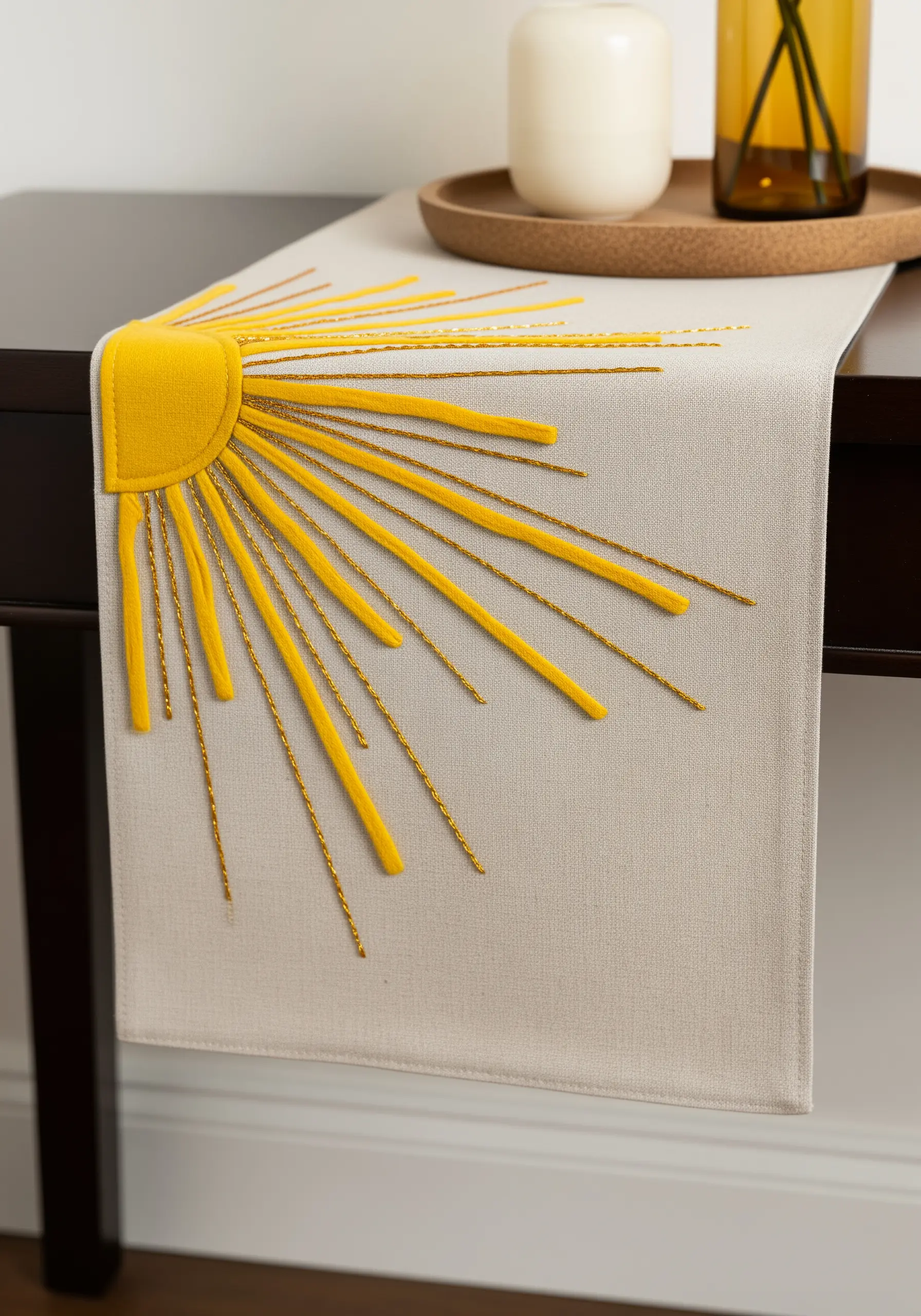
Combine fabric appliqué and embroidery to create a bold, textural sun motif.
Cut the semi-circle from a piece of non-fraying material like felt and attach it with a neat blanket stitch around the curved edge.
For the sun’s rays, alternate between a matte cotton floss and a shimmering metallic thread. This contrast in texture creates a beautiful play of light and adds visual depth to the simple design.
23. Rhythmic Arches with Whipped Backstitch
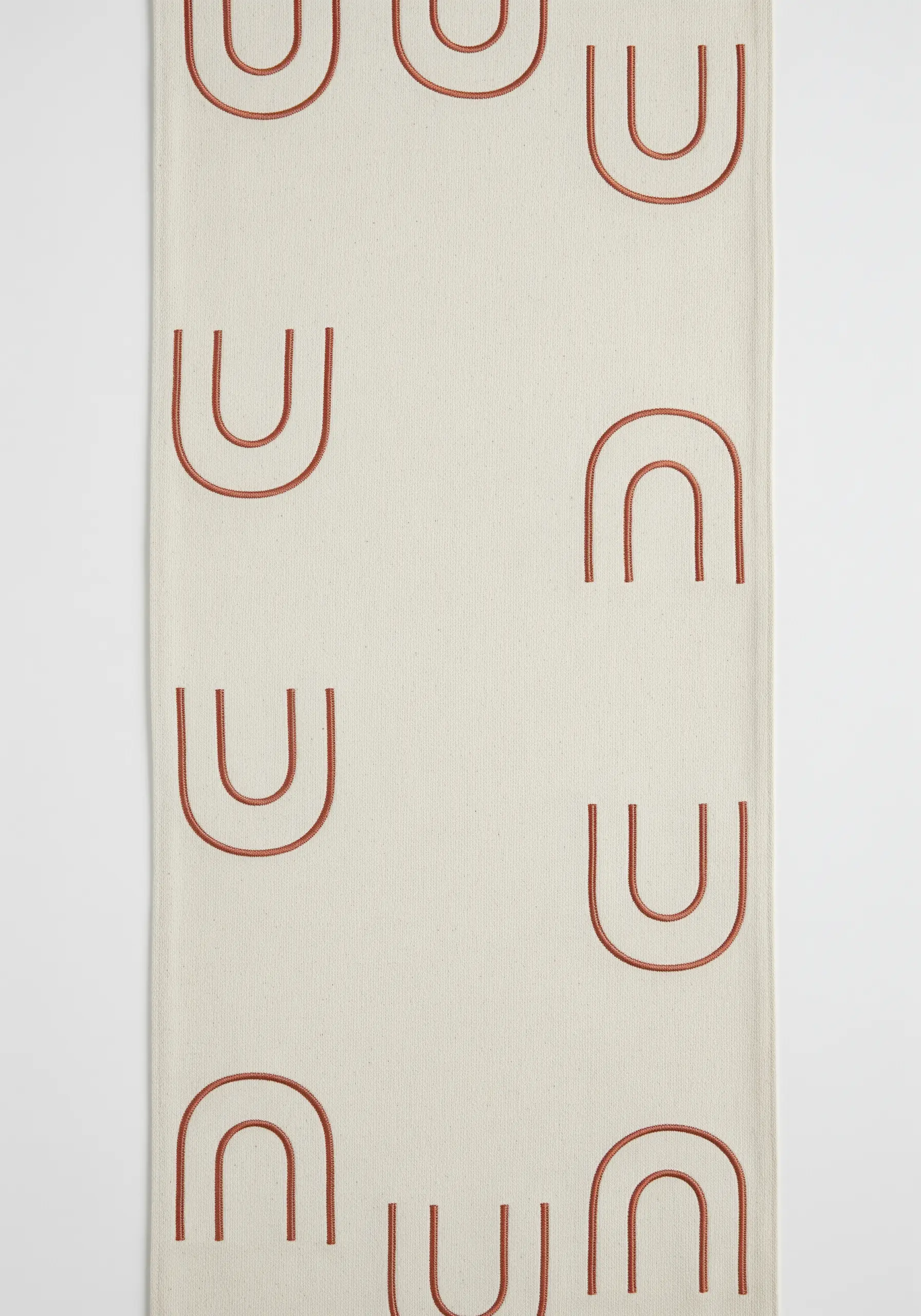
This calming, modern pattern relies on the power of clean lines and simple repetition.
First, create the arches using a standard backstitch.
To elevate the line quality, go back over your stitches with a second thread, “whipping” it around each backstitch without piercing the fabric. This covers the gaps between stitches, resulting in a smooth, solid, cord-like line.
24. A Sampler of Contrasting Textures

This is a compelling exploration of texture contained within a simple grid.
Alternate squares filled with bumpy, dense French knots with squares filled with flat, orderly vertical straight stitches.
The dynamic interplay between the knotted and linear surfaces is what gives this design its sophisticated appeal.
Using a single, neutral color of thread unifies the different contrasting textures and keeps the focus on their tactile qualities.
25. The Dimensional River
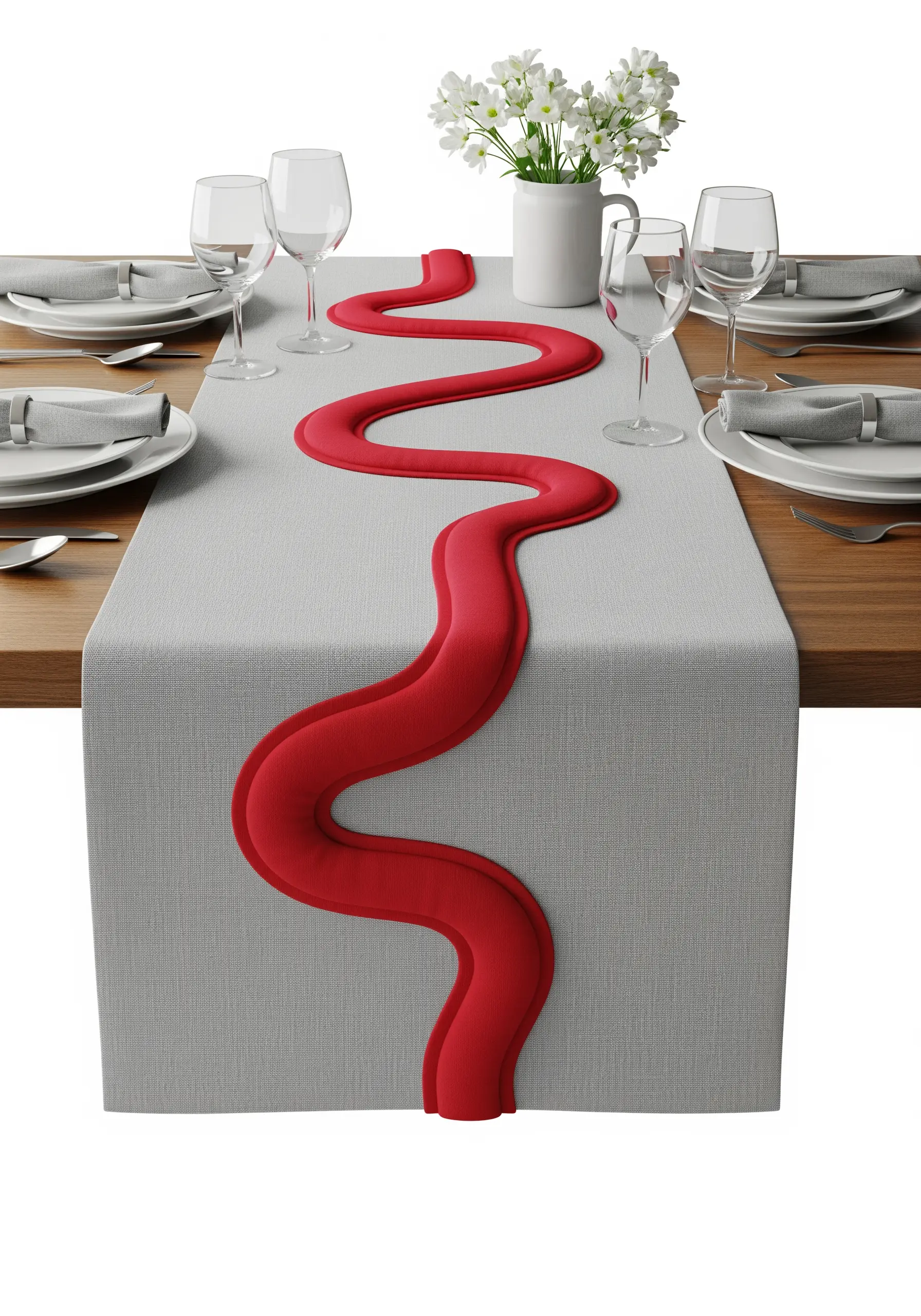
Create a truly sculptural element on your table runner using a raised embroidery technique known as stumpwork.
First, bend a piece of craft wire into your desired serpentine shape and carefully tack it onto the fabric.
Then, work a tight, dense buttonhole stitch or satin stitch over the wire foundation, building up a padded, three-dimensional form that rises dramatically from the flat linen surface.
26. Crystalline Structures with Satin Stitch Lines

Give your geometric lines weight and presence by stitching them with a narrow satin stitch instead of a simple backstitch.
This technique transforms a simple line into a solid, light-catching band, mimicking the faceted edges of a crystal.
Using a metallic silver or pearlescent white thread will further enhance this effect, creating a design that feels both modern and delicately architectural.
27. Pointillist Cloud with French Knot Gradients
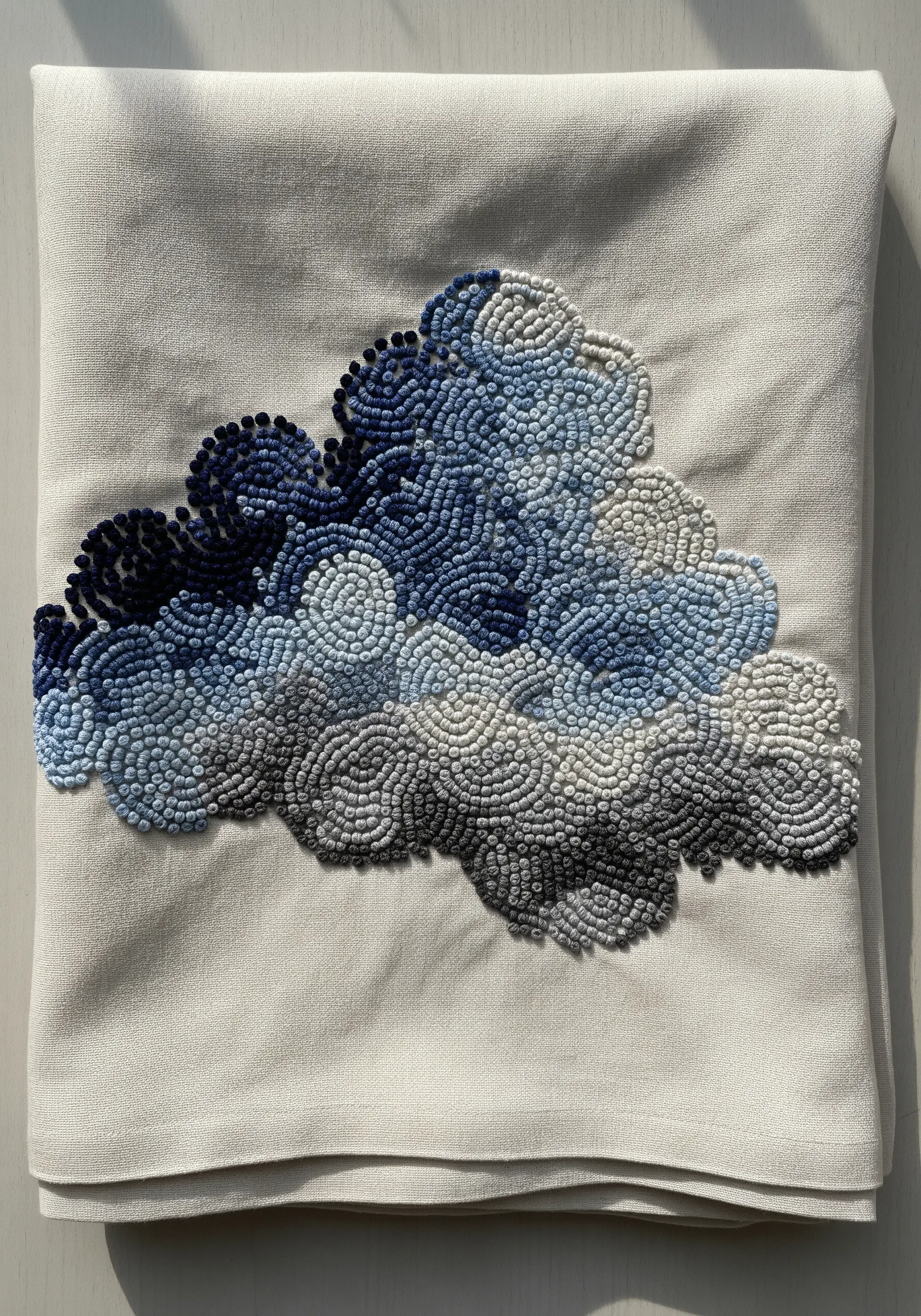
Use French knots as your “dots” of color to paint a soft, ethereal cloud, much like a Pointillist painter.
Map out your color zones first, from the dark, stormy blue at the bottom to the bright white at the top.
Fill each zone with densely packed knots, and subtly mix the colors where the zones meet to create a seamless, soft-focus blend.
The resulting texture is as important as the color gradient itself.
28. Autumnal Scatter with Fishbone Stitch
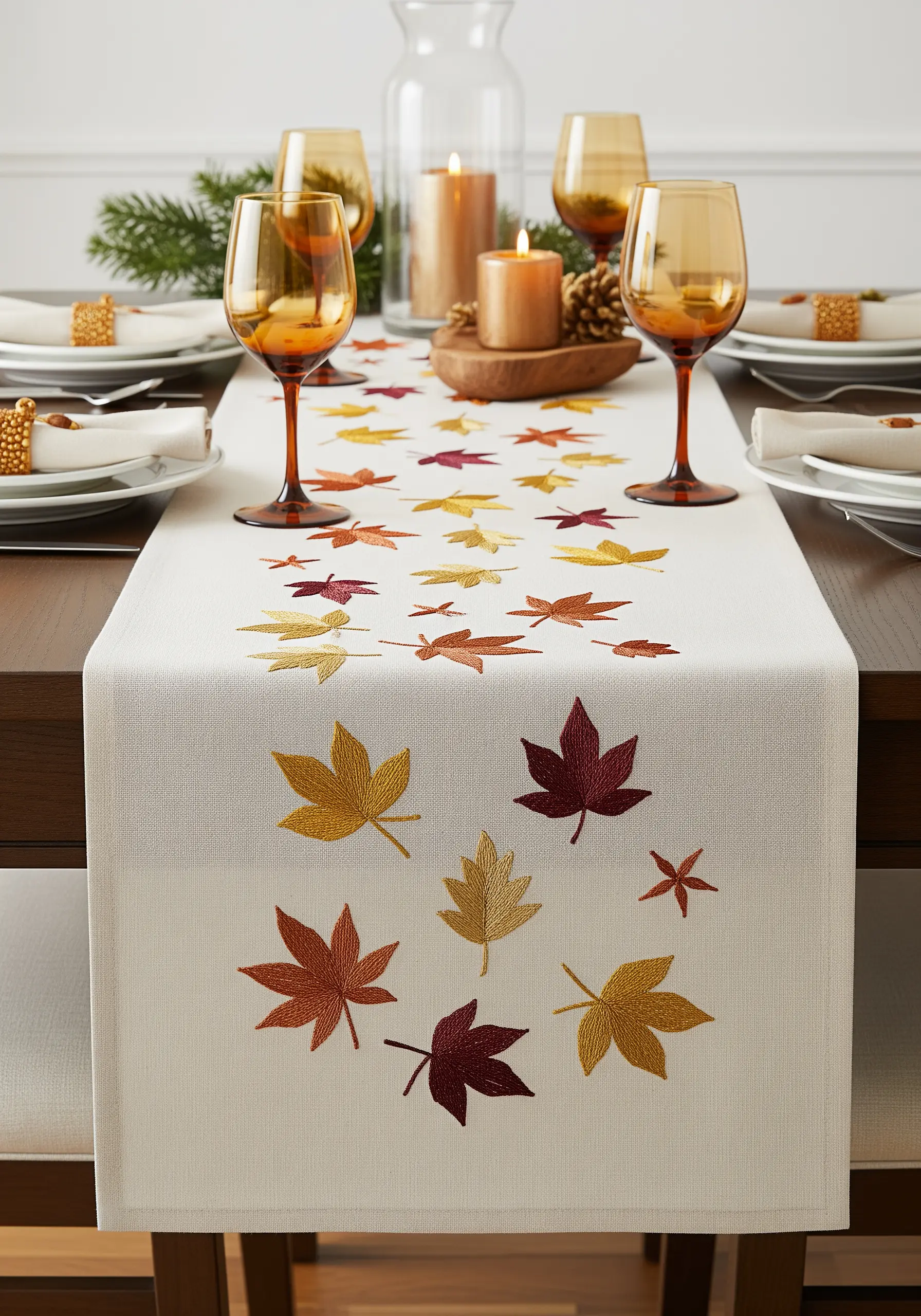
The fishbone stitch is the ideal choice for creating stylized yet recognizable leaves.
The central spine and angled side stitches naturally form the vein structure, giving each leaf a sense of realism and movement.
For a natural-looking composition, stitch the leaves in varying sizes and orientations, as if they have been scattered by the wind.
A classic autumnal palette of gold, deep red, and burnt orange provides warmth and seasonal charm.
29. Architectural Lines with Contrasting Threads

This design is a study in contrast—thick versus thin, matte versus sheen.
Use a heavy, matte thread like cotton perle or all six strands of floss for the bold, dark satin stitch blocks.
Then, use a very fine, single-strand metallic or silk thread for the delicate intersecting lines, stitched with a simple running stitch.
This juxtaposition of weight and texture is what gives the composition its sophisticated, architectural feel.
30. Faux Weaving with Interlaced Stitches
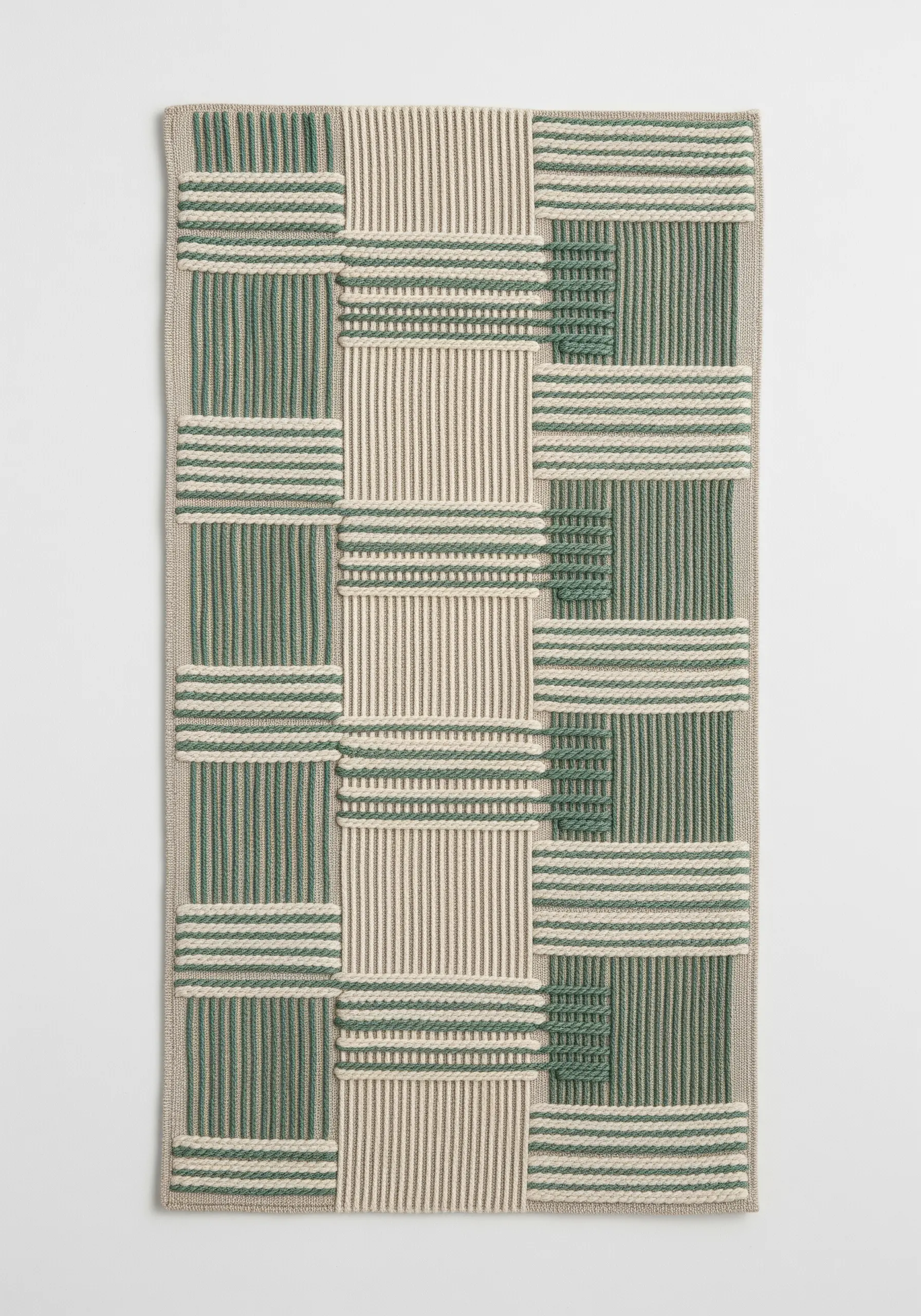
Create the intricate illusion of woven fabric using simple embroidery techniques.
First, lay down a foundation of long, parallel vertical stitches (the “warp”).
Then, use a tapestry needle to weave another thread horizontally through these stitches (the “weft”), going over and under the vertical threads without piercing the fabric.
By varying the colors and the spacing, you can create countless patterns that mimic complex textiles.
31. Serene Pebbles with Padded Satin Stitch
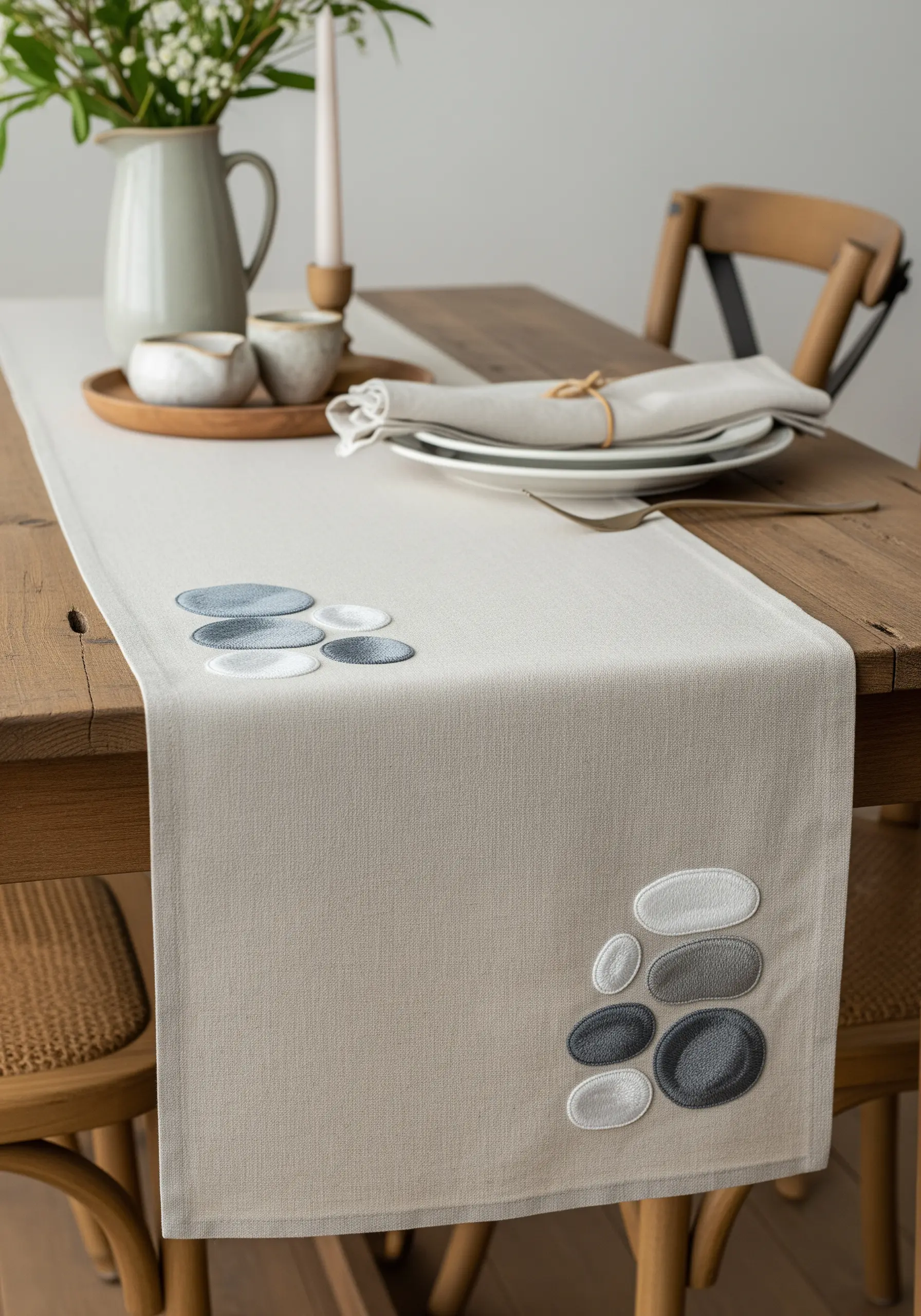
To give these organic stone shapes a smooth, rounded, 3D appearance, use a padded satin stitch.
First, fill the interior of each shape with a foundation of small seed stitches. This underlayer creates a raised base.
Then, cover this padding with a layer of flawless, horizontal satin stitches.
The padding lifts the shape from the fabric, enhancing its smooth, pebble-like quality. A cool grey and blue palette reinforces the serene, natural aesthetic.
32. Neon Labyrinth on a Dark Canvas
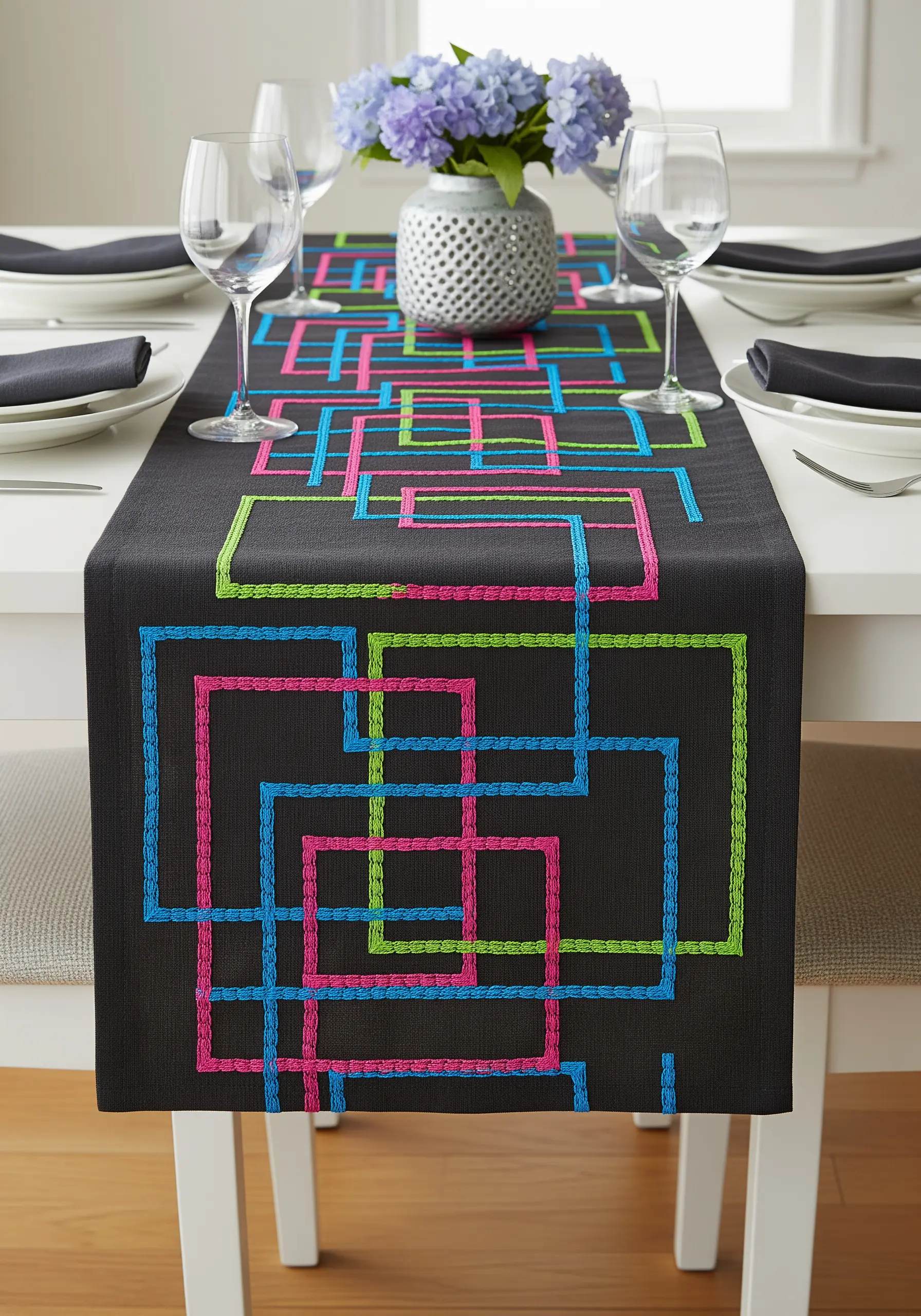
The impact of this design comes from extreme color contrast.
Using bright, neon-colored floss against a dark charcoal or black linen makes the lines appear to glow.
Use a simple, clean stitch like a two-strand backstitch or a stem stitch for the outlines, focusing on creating sharp corners and perfectly straight lines.
The interlocking geometric pattern feels energetic and modern, making a bold statement on your table.
33. The Minimalist Grid with Seed Stitches
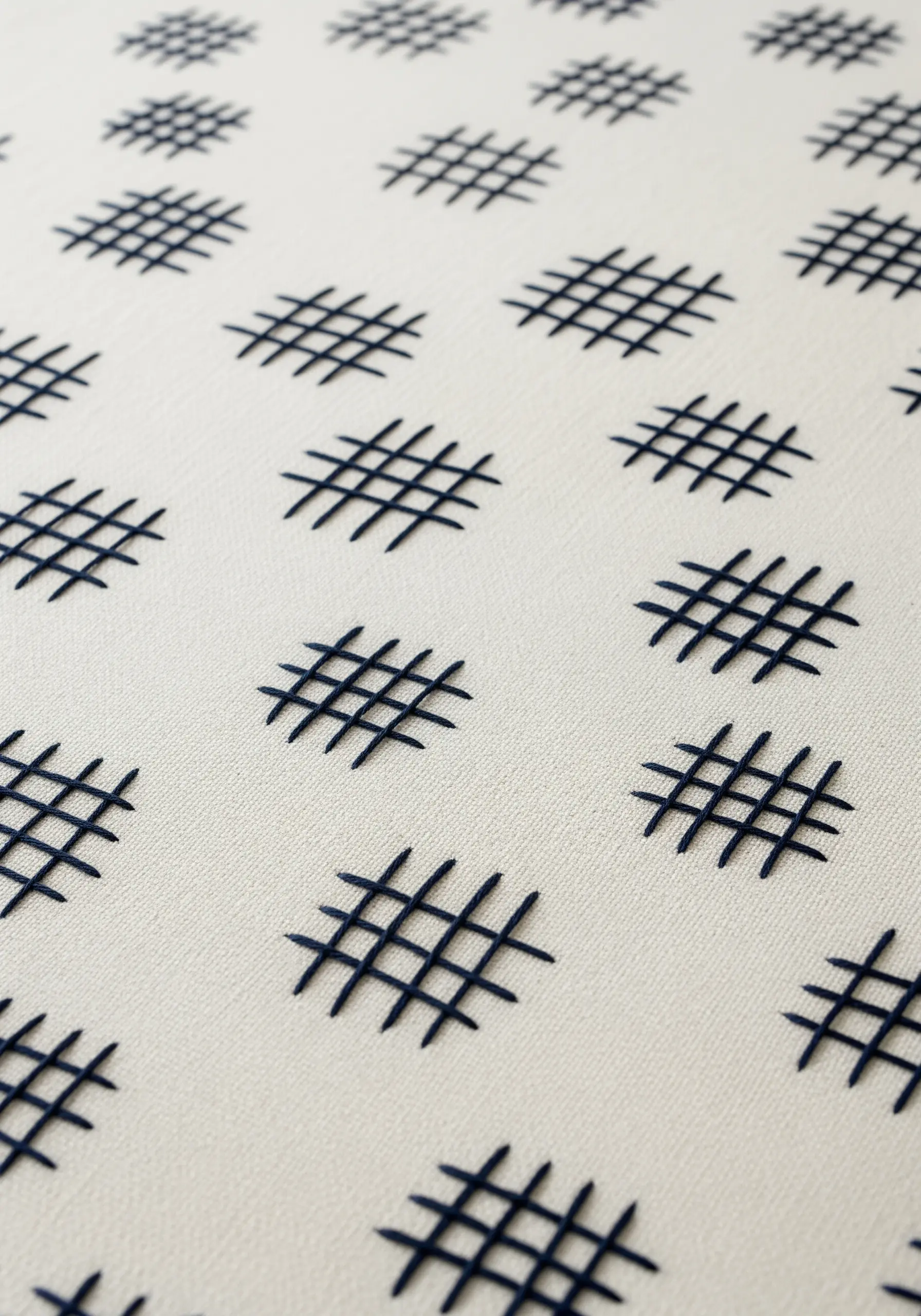
This design celebrates the quiet beauty of a simple, repeated mark.
Each tiny hash mark is created with just four small straight stitches: two vertical and two horizontal.
The artistry is found in the consistency and repetition. Strive to keep the size of each mark and the spacing between them uniform to create a clean, orderly pattern field.
It’s a meditative process that results in a subtly textured, sophisticated, and modern finish.