You have the threads, the fabric, and the desire to create something beautiful for your home. But perhaps you feel that your work, while lovely, could have a little more… intention. A little more of that polished, artistic quality you admire in other pieces.
I want you to know that elevating your embroidery isn’t about mastering dozens of complex stitches or investing in expensive new supplies. It’s about small, thoughtful adjustments—choosing the right stitch for texture, understanding how thread direction can create movement, or seeing how a simple line on a plain pillow can change the energy of a room.
Think of these ideas not as strict patterns, but as invitations. They are starting points for you to explore how a few well-placed stitches can transform a simple textile into a personal, meaningful piece of art that makes your bedroom feel more like *you*.
1. Capture Botanical Realism with Directional Stitches
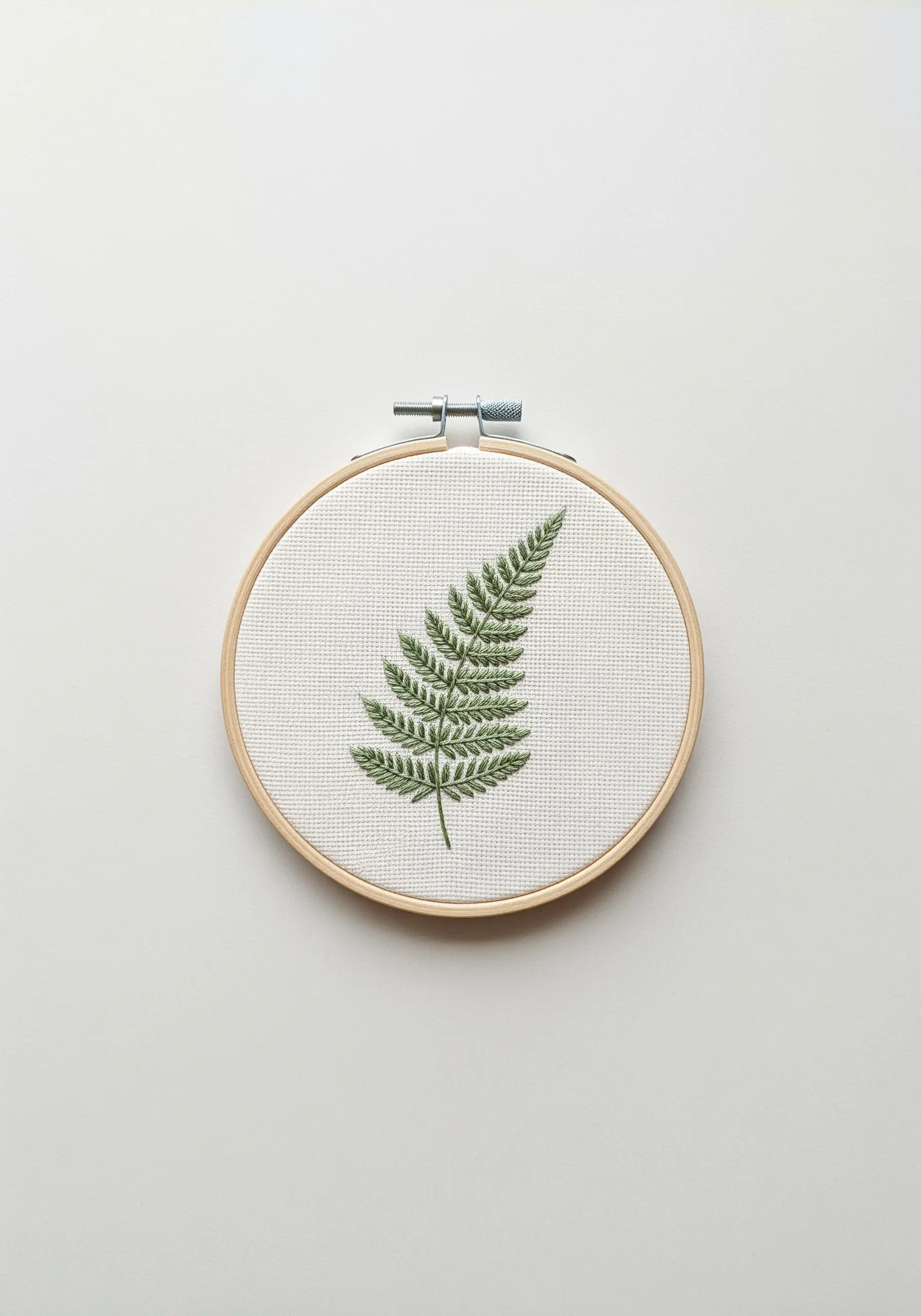
To achieve a lifelike fern, let the direction of your stitches do the work.
Use a fishbone stitch for each leaflet, angling your stitches from a central spine outward and downward, just as they grow in nature.
This creates natural shading and dimension without changing your thread color.
Opt for a fine Aida cloth or linen and use only two or three strands of floss to maintain a delicate, airy appearance perfect for realistic foliage.
2. Elevate Textiles with Minimalist Line Art
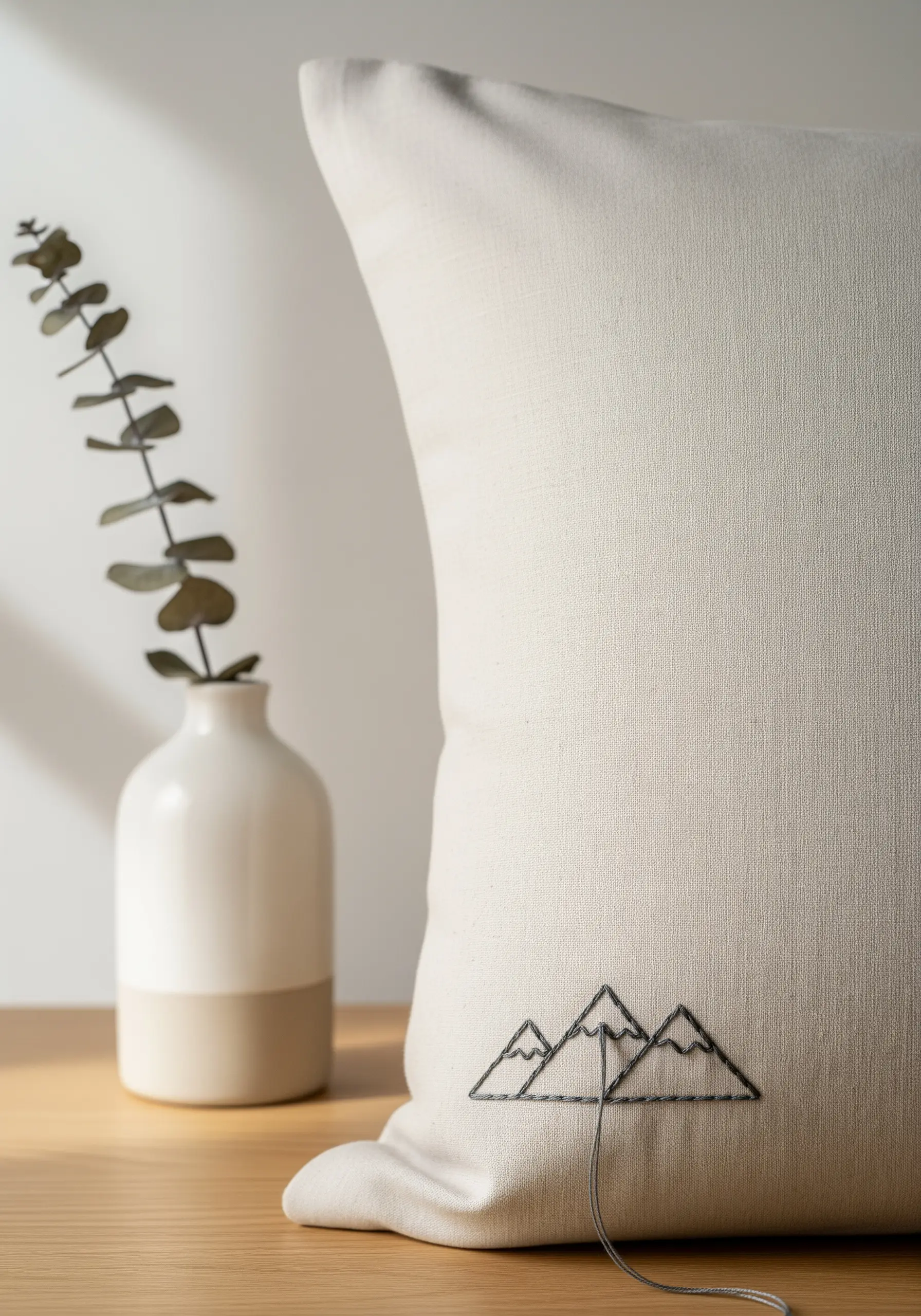
A simple outline can have a profound impact, especially on functional items like pillowcases.
Choose a durable stitch like a backstitch or stem stitch for clean, continuous lines that will hold up to use.
On a textured fabric like linen or cotton canvas, a slightly thicker thread (such as all six strands of floss or pearl cotton) ensures the design stands out.
This is a perfect example of minimalist line art nature embroidery that feels both modern and calming.
3. Create Tactile Dimension with French Knots
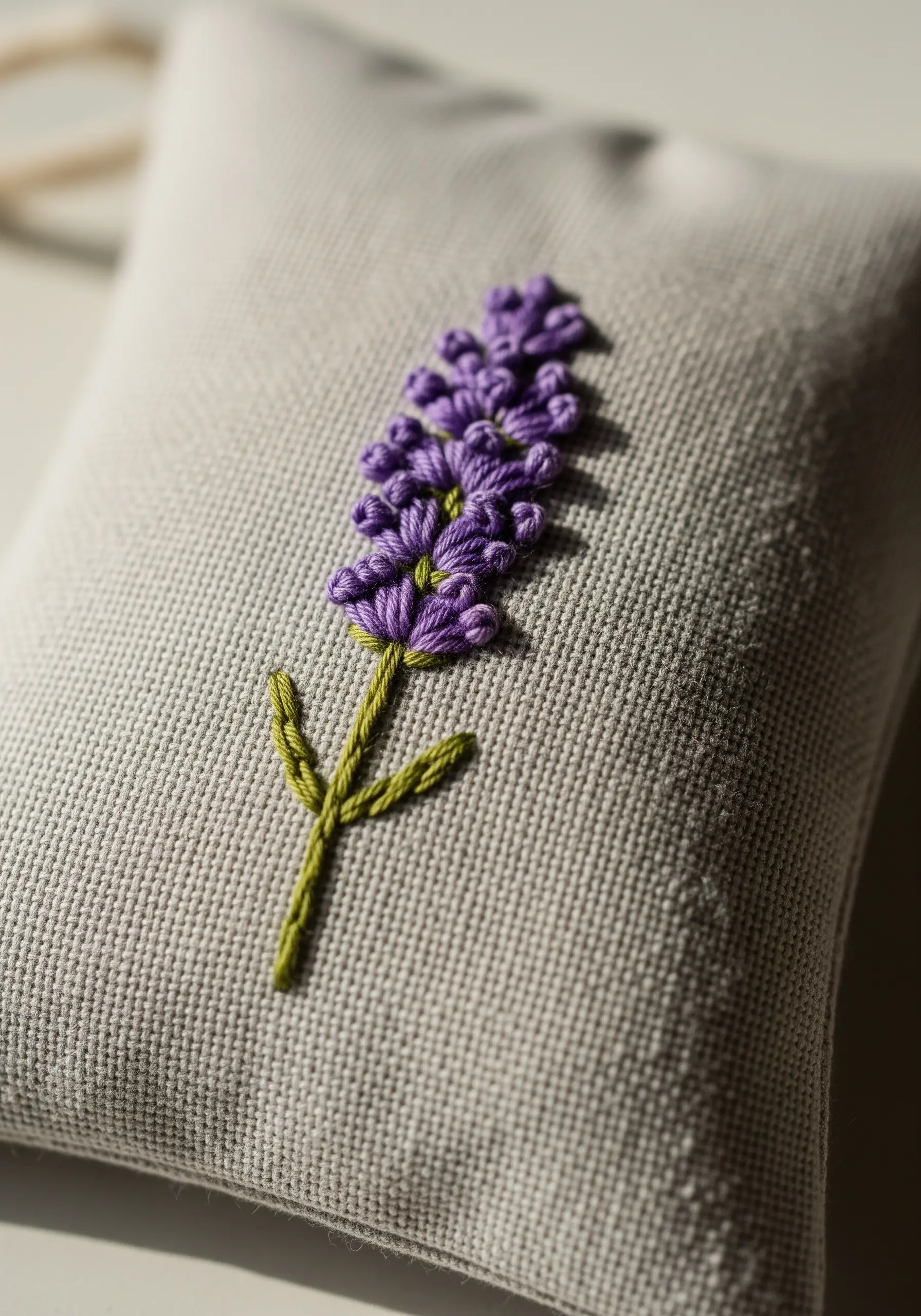
Give your floral motifs a sculptural quality by using French knots for texture.
For lavender buds, tightly pack French knots together, varying the number of wraps around your needle (one or two) to create subtle differences in size and depth.
Contrast this high texture with a smooth, flat stem stitch for the stalk and leaves.
This technique turns a simple drawing into a touchable piece of art, perfect for creating calming bedroom art.
4. Illuminate Dark Fabrics with Celestial Motifs
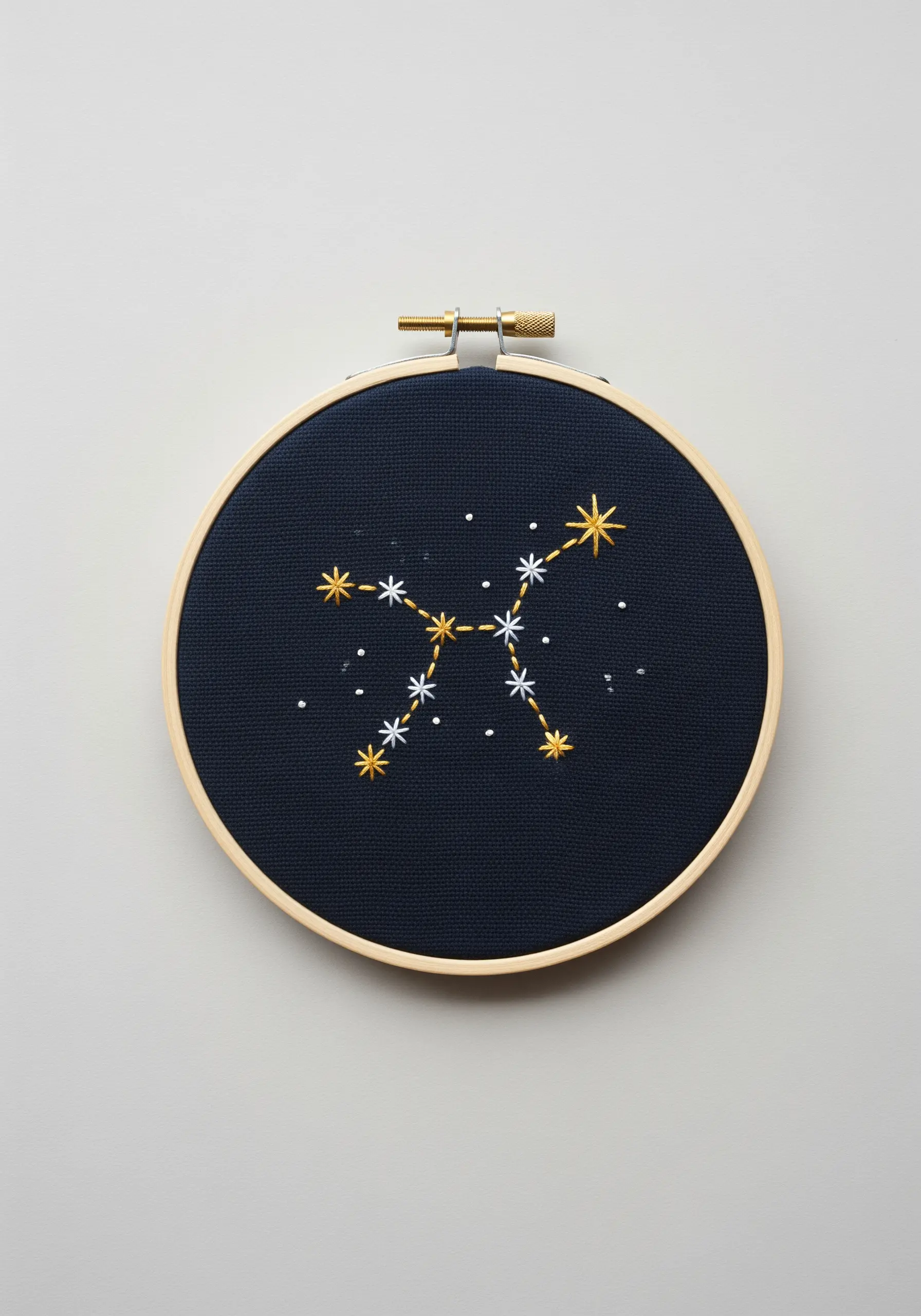
Stitching on dark fabric creates a dramatic backdrop that makes light and metallic threads pop.
Choose a deep navy or black cotton and combine metallic gold floss with classic white for varied shimmer.
To prevent fraying, work with shorter lengths of metallic thread and use a sharp needle.
Use small straight stitches or tiny star stitches for the constellations, and add a few scattered French knots to represent distant stars. This method is ideal for creating dreamy night sky embroidery designs.
5. Master the Modern Abstract Sunrise
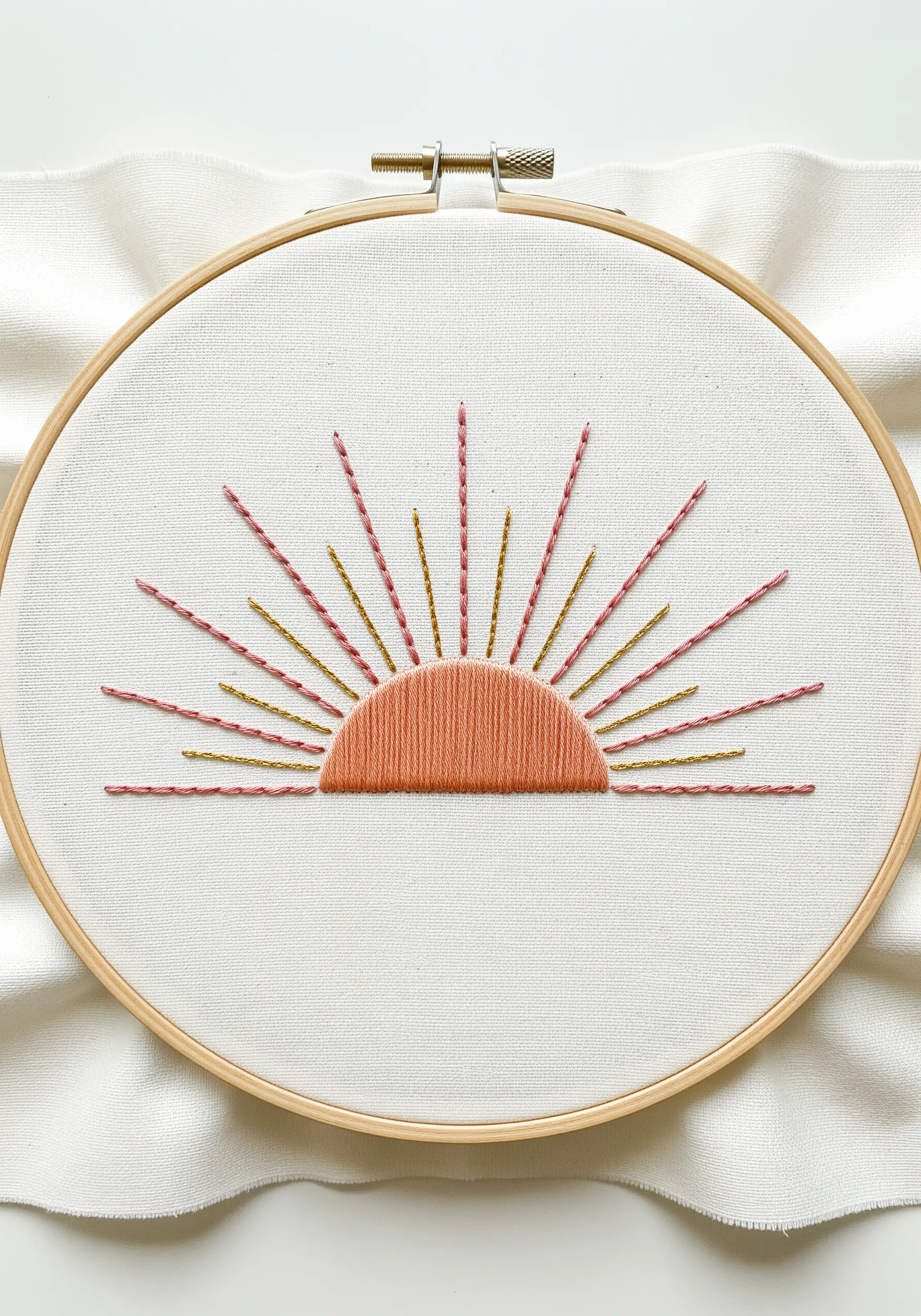
This design gains its power from the contrast between solid fill and delicate lines.
Create the sun’s semi-circle with a smooth, dense satin stitch—the key here is maintaining even tension to avoid puckering.
For the rays, alternate between a standard floss and a single strand of metallic gold.
This subtle introduction of a different texture catches the light differently, adding a dynamic quality without overwhelming the minimalist aesthetic.
6. Achieve Fluid Lines with the Couching Technique
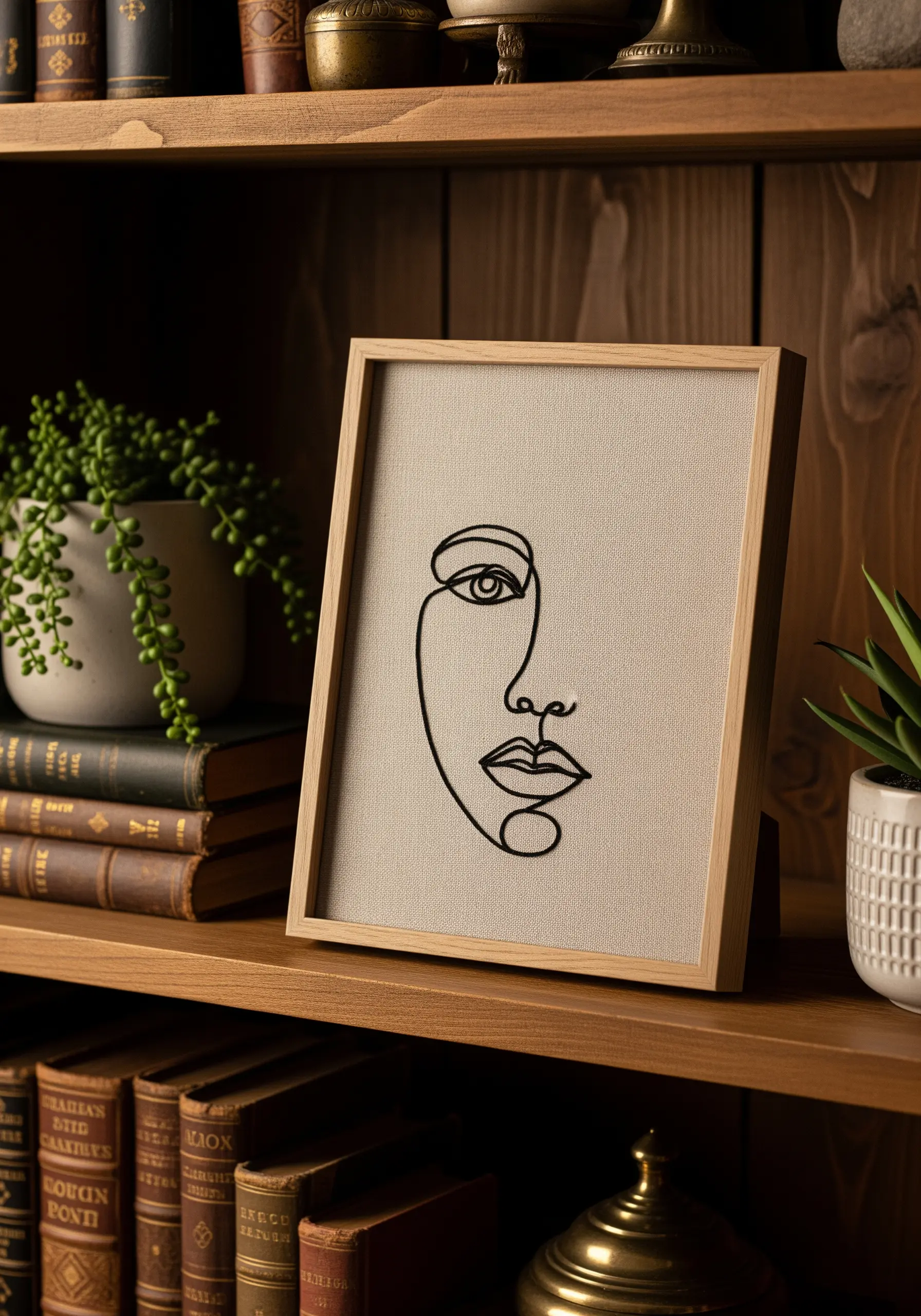
For a continuous line that mimics an ink drawing, the couching stitch is your best tool.
Lay down a thicker cord or several strands of floss along your design line, then use a second, finer thread to tack it down with tiny, perpendicular stitches.
This technique allows for perfectly smooth curves and sharp angles that a standard backstitch cannot achieve.
This approach is ideal for abstract face line embroidery designs, creating an effortlessly chic and modern piece for your wall.
7. Define Bed Linens with a Statement Border
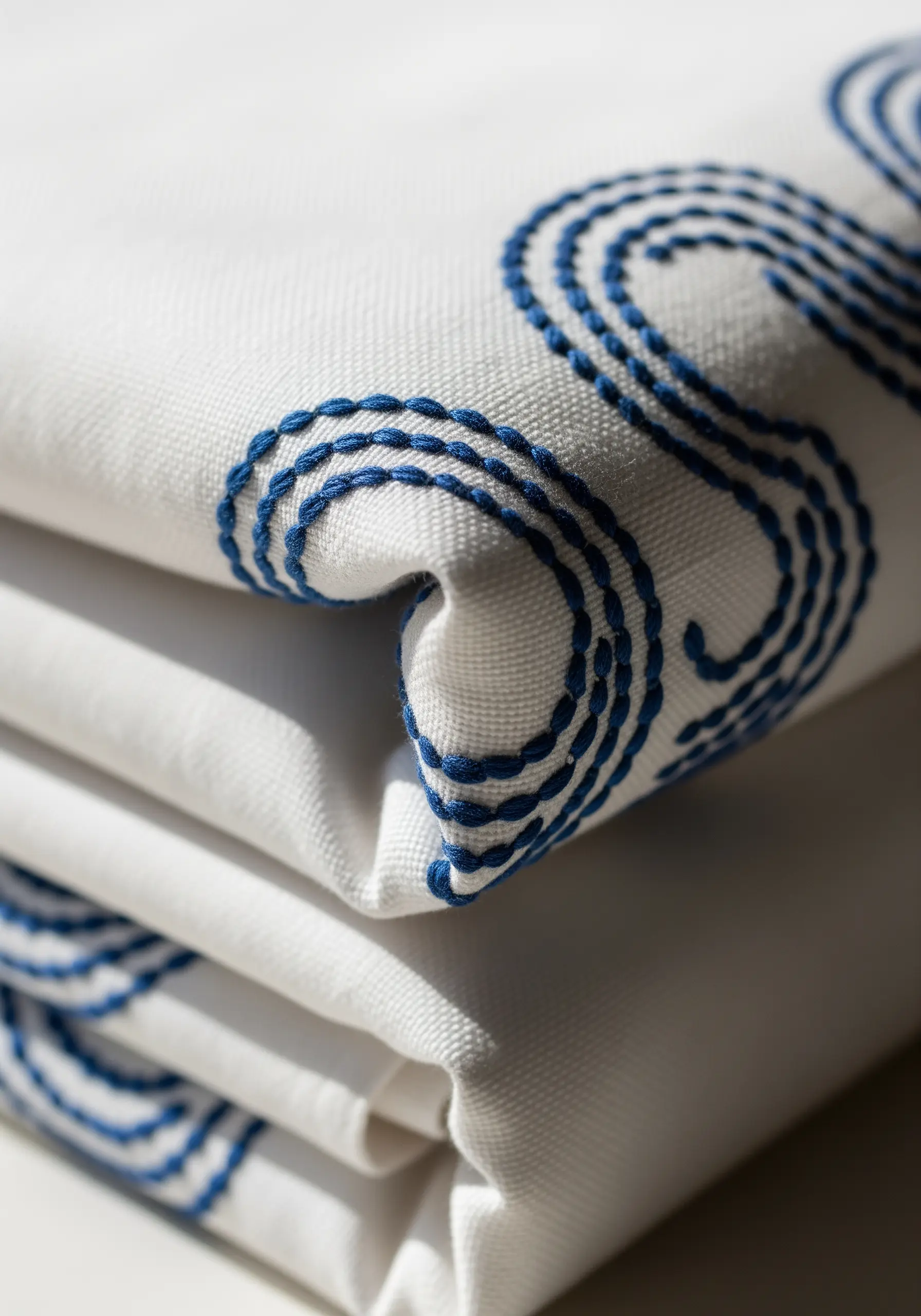
Transform standard pillowcases or duvet covers into bespoke pieces with an embroidered border.
Use a heavy chain stitch or a whipped backstitch to create a raised, cord-like line that adds both visual weight and a pleasant texture.
Choose a high-contrast thread color to make the design pop.
This simple addition of a modern minimal border design instantly elevates your bedding from simple to sophisticated.
8. Shape Organic Forms with Directional Fill Stitch
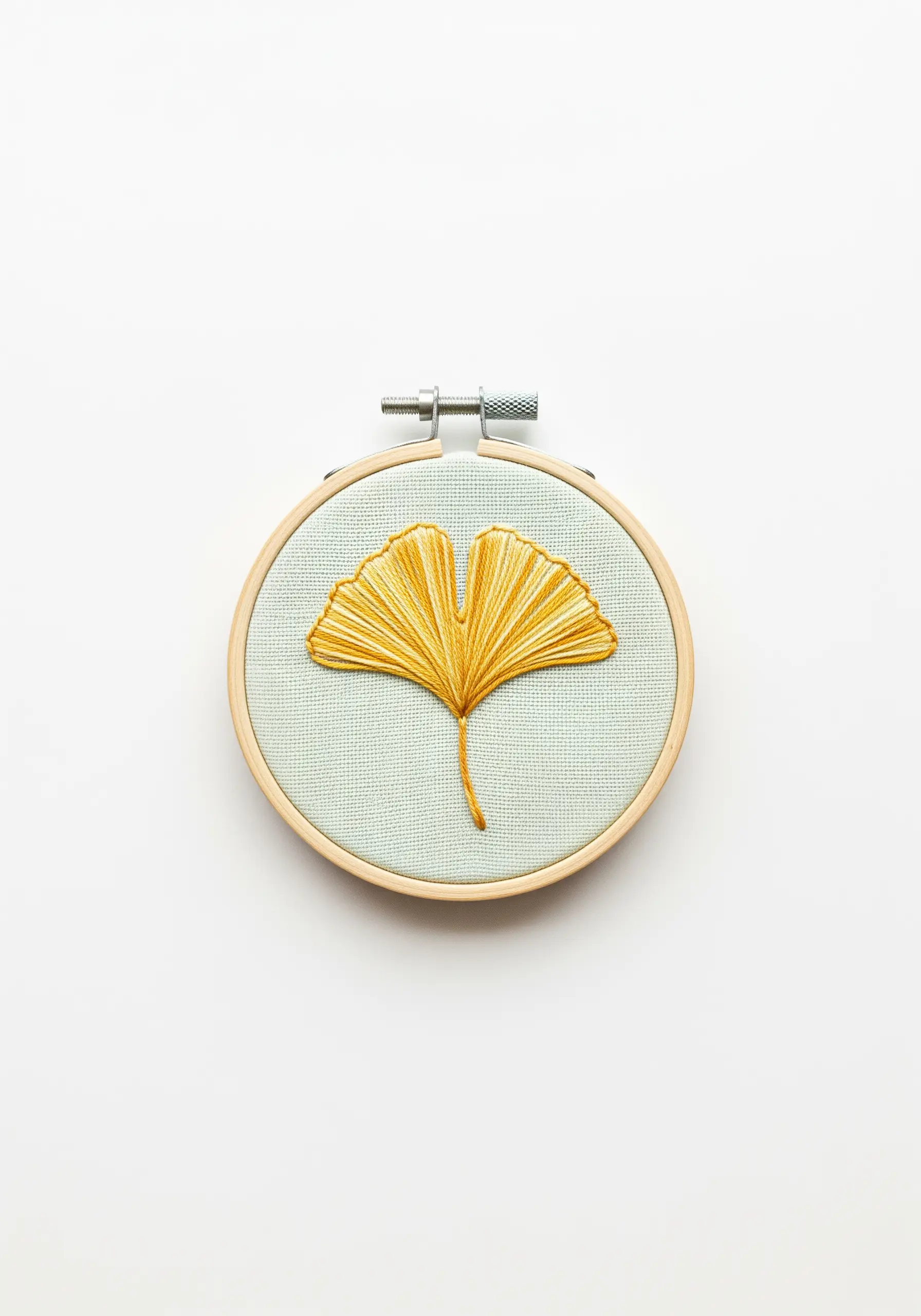
To prevent a leaf motif from looking flat, use the direction of your stitches to create movement and realism.
For a ginkgo leaf, use a long-and-short stitch that fans out from the stem, following the natural lines of the leaf’s veins.
This approach creates subtle highlights and shadows as it catches the light, giving the shape life.
Pair a bold color like this marigold yellow with a muted fabric to make the motif the undisputed focal point.
9. Embellish Functional Objects with Textural Clusters
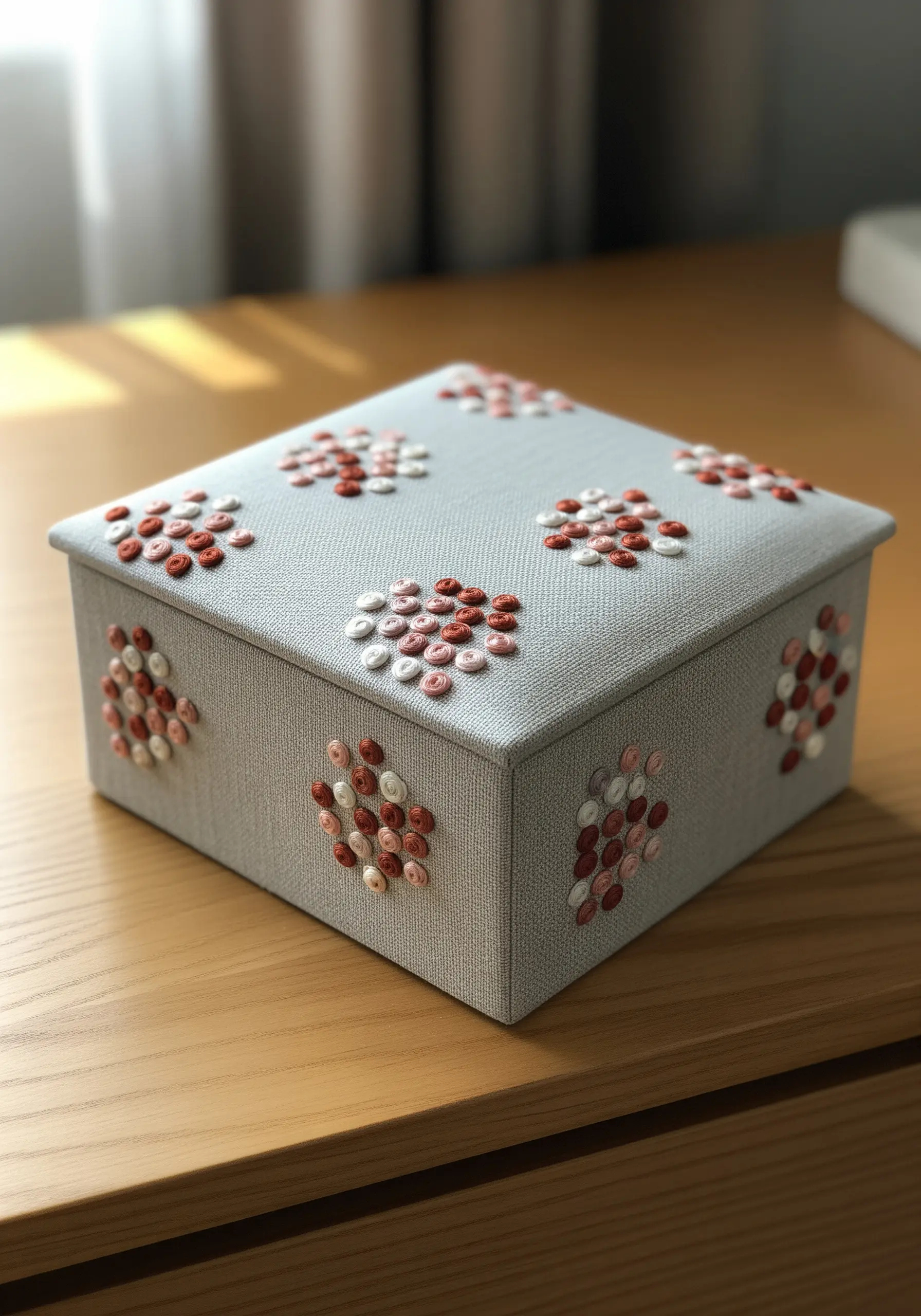
Take your embroidery beyond the hoop by embellishing a fabric-covered keepsake box.
Use raised, textural stitches like French knots or colonial knots grouped into small, organic clusters.
By blending three or four harmonious shades within each cluster, you achieve a painterly, pointillist effect that adds depth and sophistication.
This is a beautiful way to turn simple storage into a piece of decorative art.
10. Fill Shapes with a Shimmering Seed Stitch
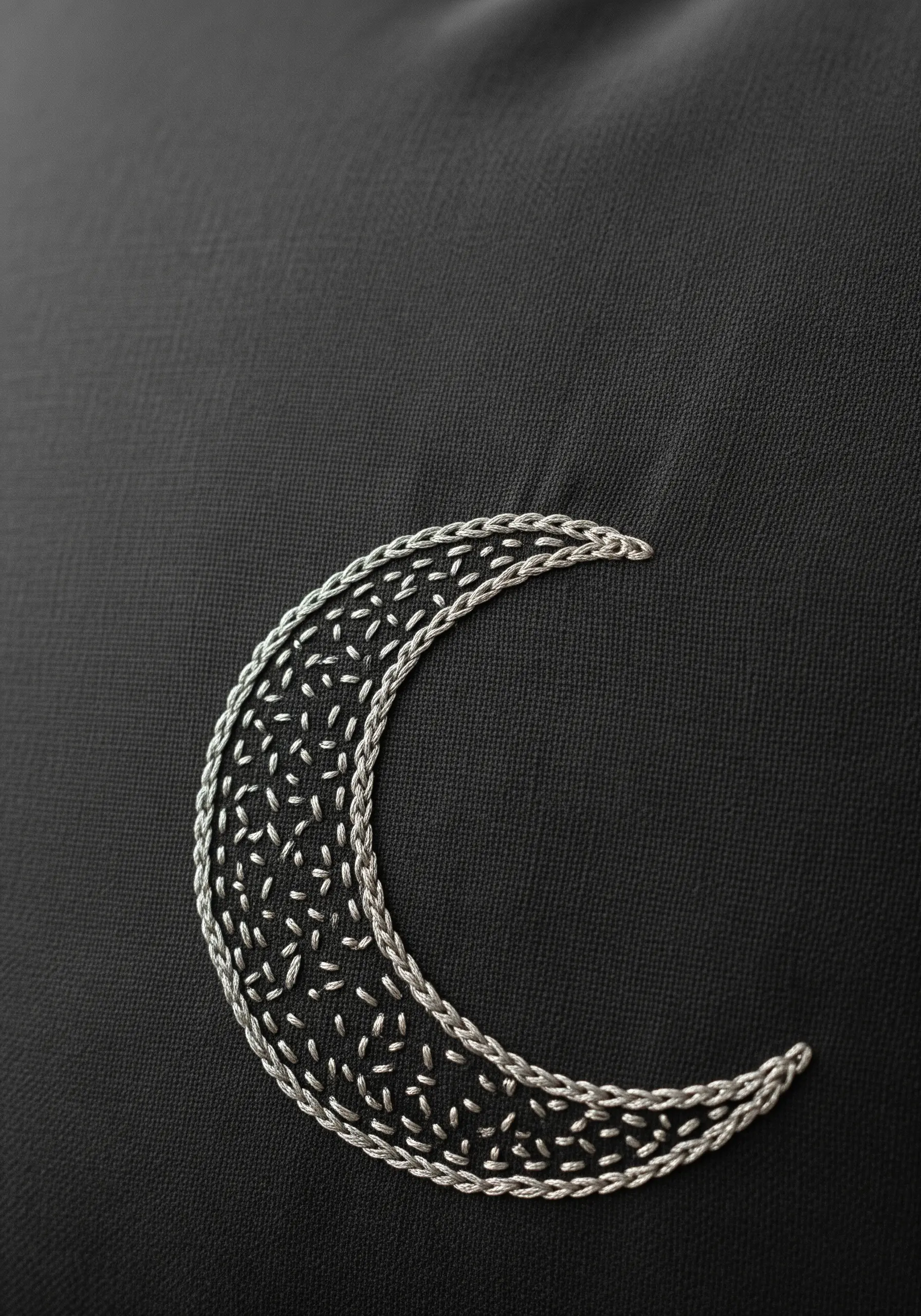
Instead of a traditional flat satin stitch, fill a shape like this crescent moon with a dense seed stitch for a completely different effect.
Use tiny, randomly placed straight stitches to create a mottled texture that beautifully catches and reflects light, mimicking a shimmering surface.
For a clean, polished finish, frame the shape with a crisp whipped backstitch or chain stitch outline.
11. Convey a Message with Minimalist Typography
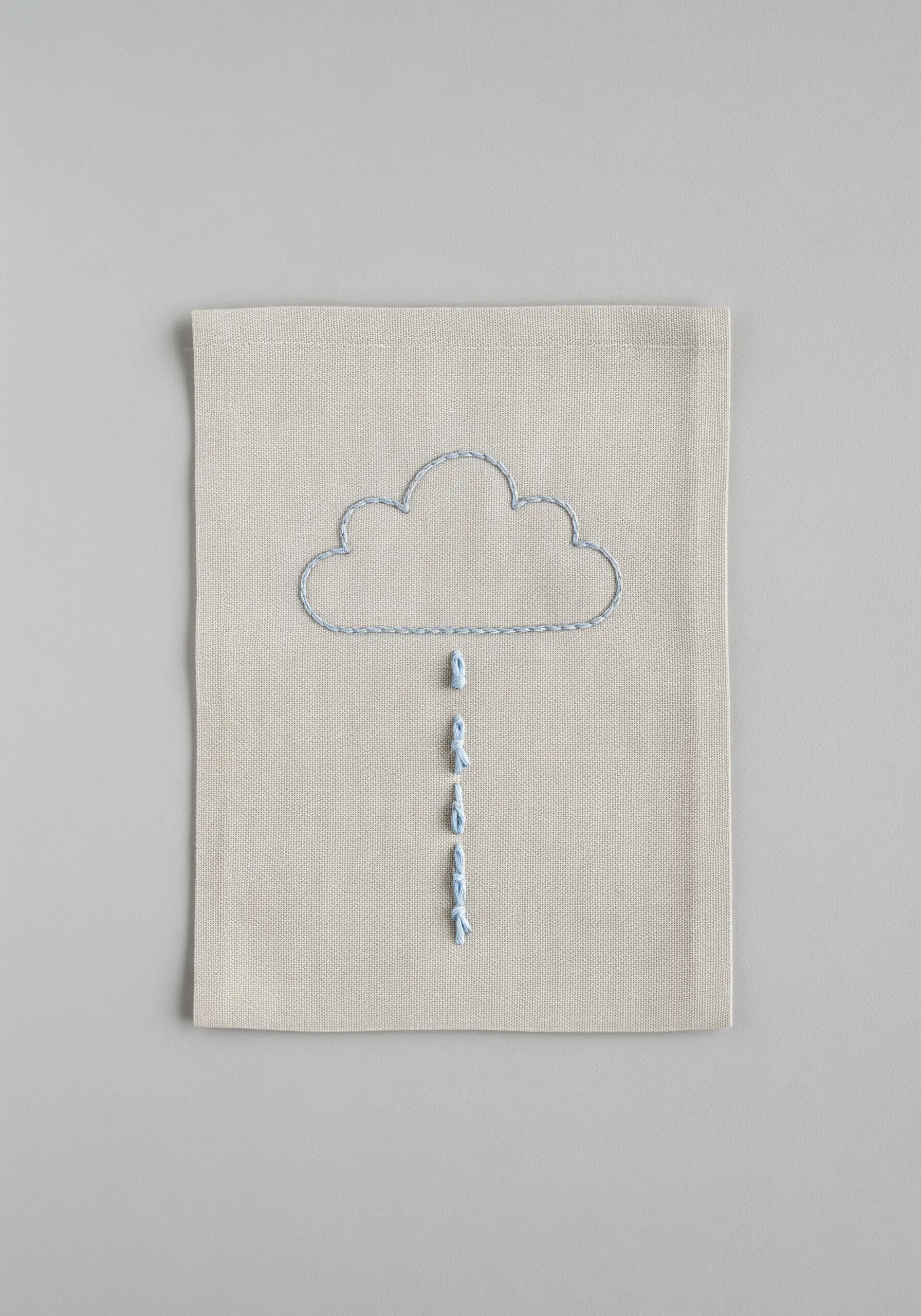
Combine a simple outline with stitched text to create a piece of art that tells a small, clever story.
Use a light backstitch for the cloud to keep it feeling airy and delicate.
For the ‘raindrop’ letters, stitch each one with a few vertical straight stitches, allowing the negative space and composition to convey the meaning.
This is a perfect project for a small wall hanging or to embellish a laundry bag.
12. Create Crisp Silhouettes with Cross-Stitch
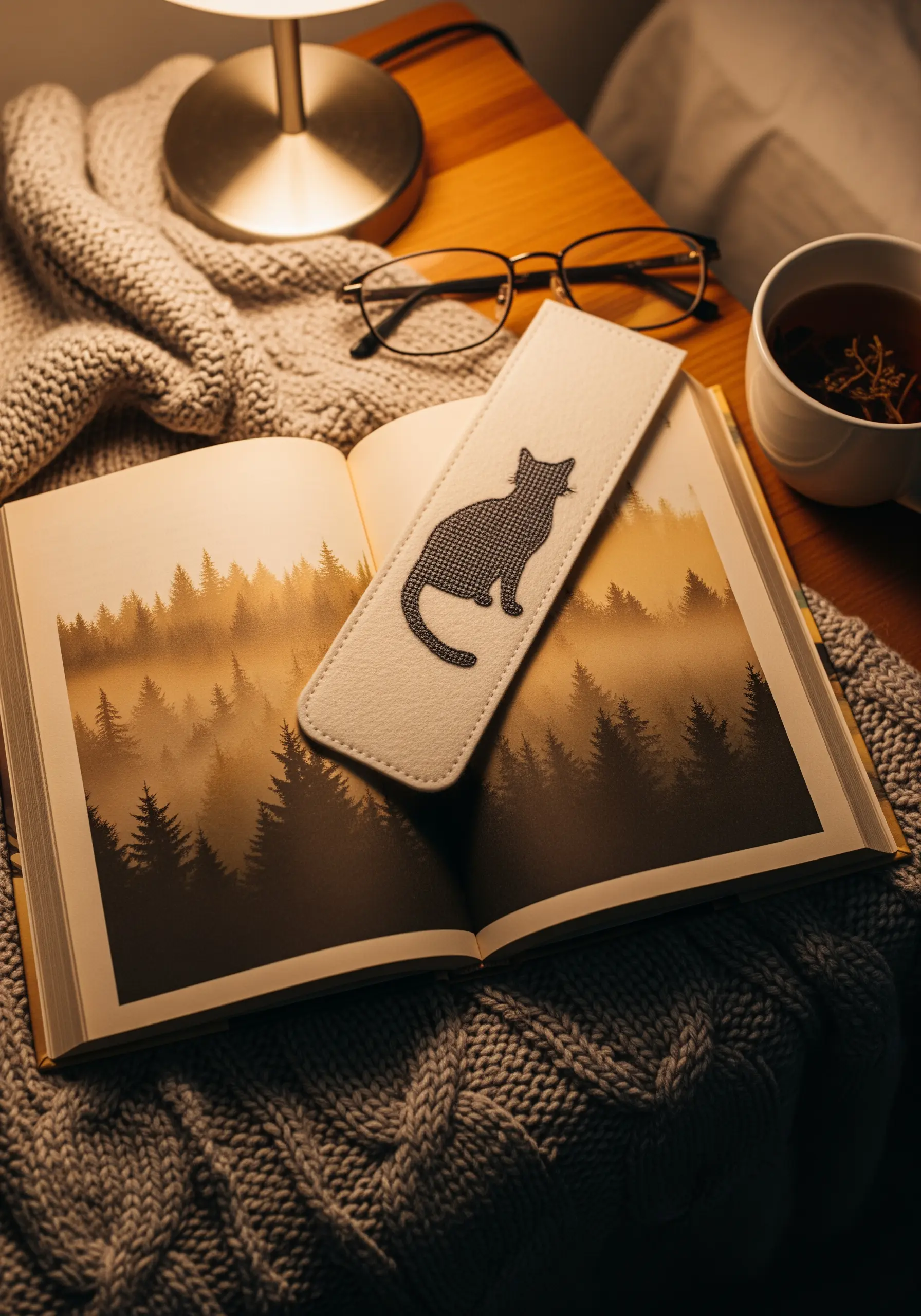
For a bold, graphic look, turn to the precision of cross-stitch.
Working on felt or linen provides a sturdy base for a functional item like a bookmark.
By filling a silhouette entirely with a single color, you create a modern, high-contrast design that is both striking and timeless.
This technique is perfect for any design where clean edges and a solid shape are essential.
13. Personalize Linens with a Floral Monogram
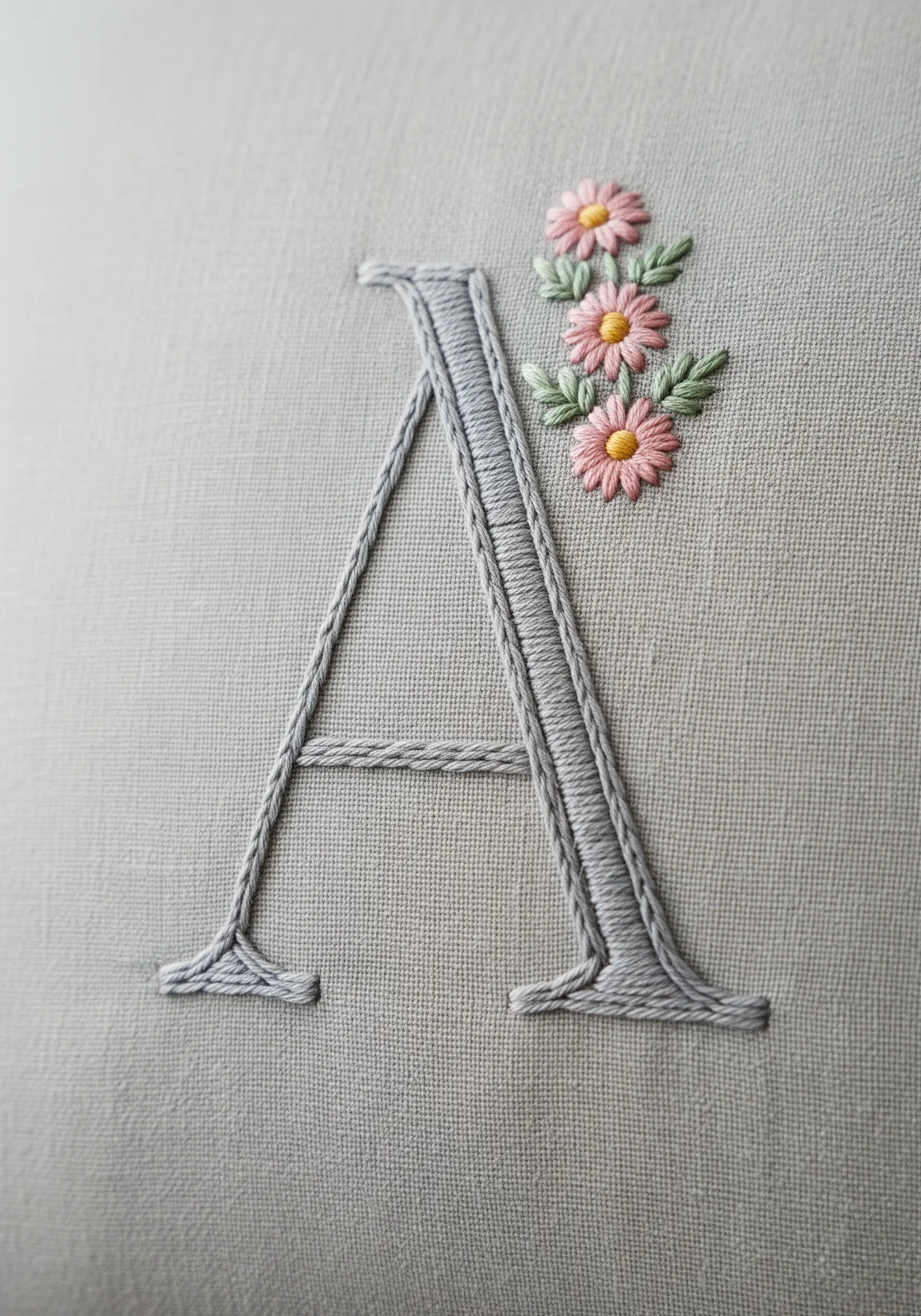
A botanical monogram is a timeless way to personalize linens or create a focal point for a gallery wall.
For a raised, three-dimensional letter, use a padded satin stitch: first outline the shape with split stitch, fill it with foundation stitches, then cover it all with a smooth top layer of satin stitch.
Adorn the letter with a small cluster of lazy daisy flowers and straight-stitch leaves for a soft, elegant counterpoint.
14. Explore Texture with Tone-on-Tone Stitching
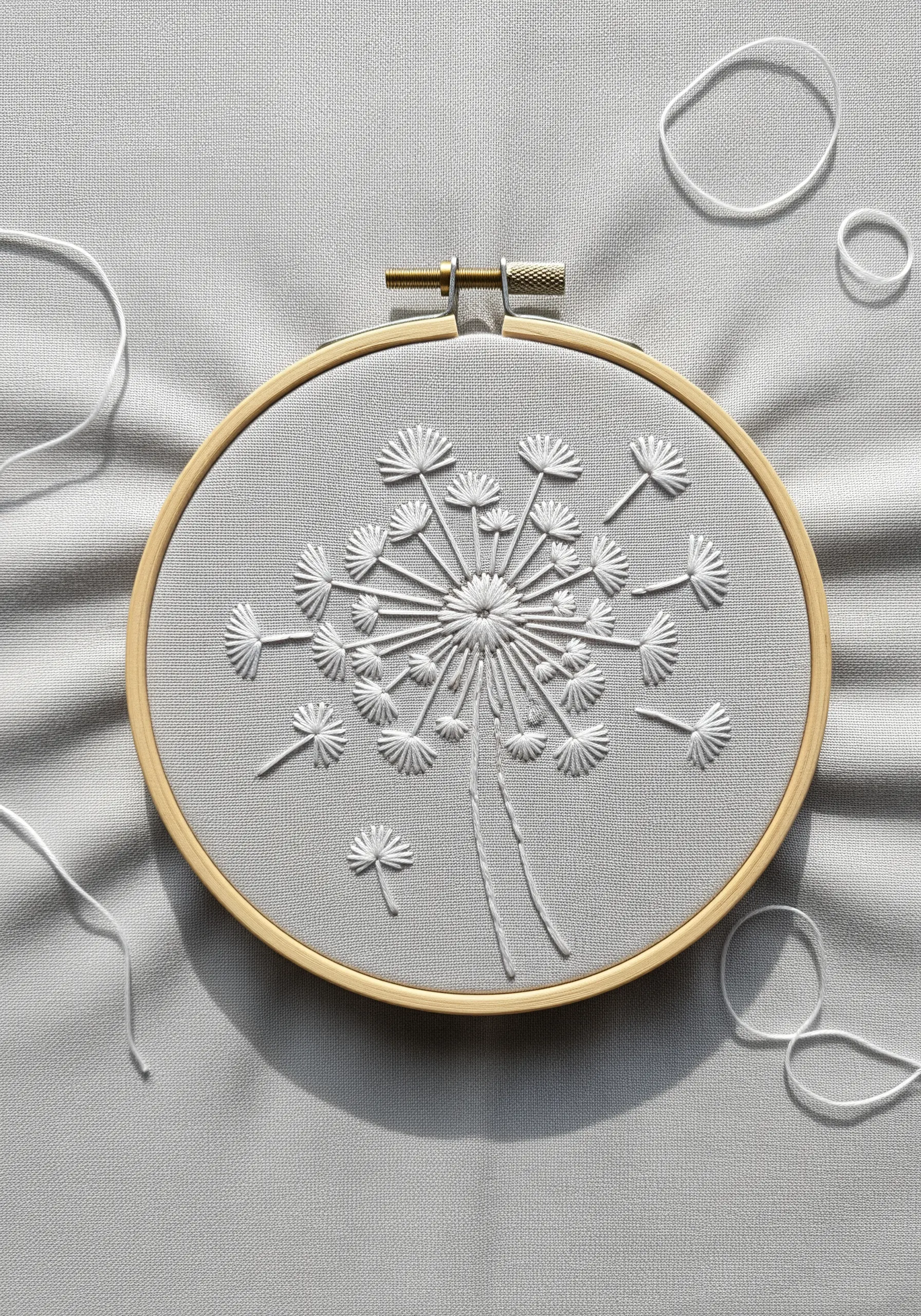
Create an incredibly sophisticated and subtle piece by using thread that is the same color as, or very close to, your background fabric.
With this technique, the design is revealed through light and shadow, relying on texture rather than color.
Use highly textural, raised stitches—like the satin stitch pads and French knots seen here—to make the dandelion motif stand out.
This is a beautiful way to create monochrome embroidery ideas that feel luxurious.
15. Add a Whimsical Detail to Apparel
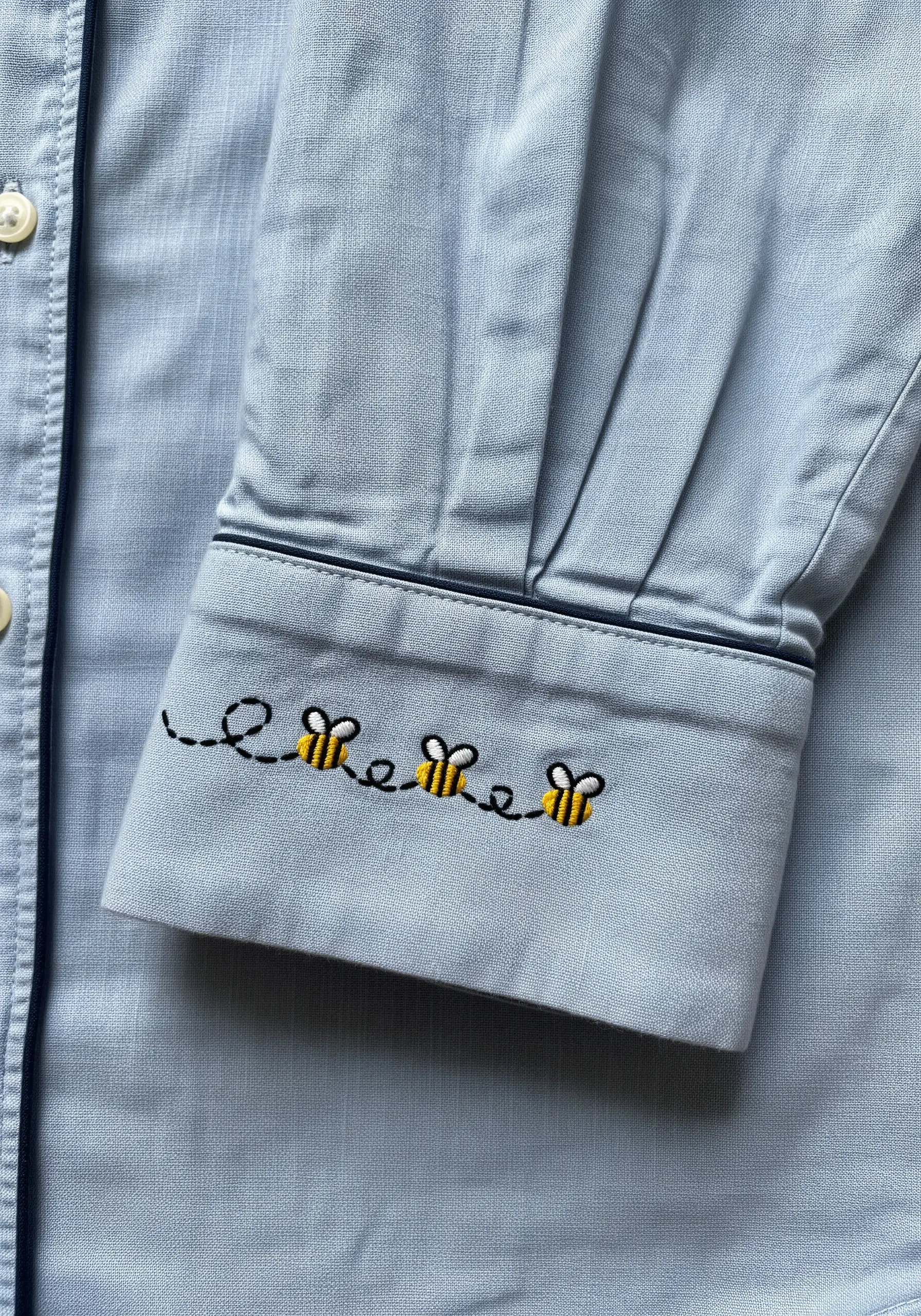
The most delightful embroidery is often found in unexpected places.
Elevate a simple pajama top or blouse by adding a tiny, playful motif to the cuff.
Use a looping backstitch to create a flight path, suggesting movement and energy.
Simple satin stitches for the bees’ bodies and detached chain stitches for wings are all you need. Consider adding these tiny stitching ideas to collars or pocket corners for a secret touch of joy.
16. Make a Statement with a Single-Color Outline
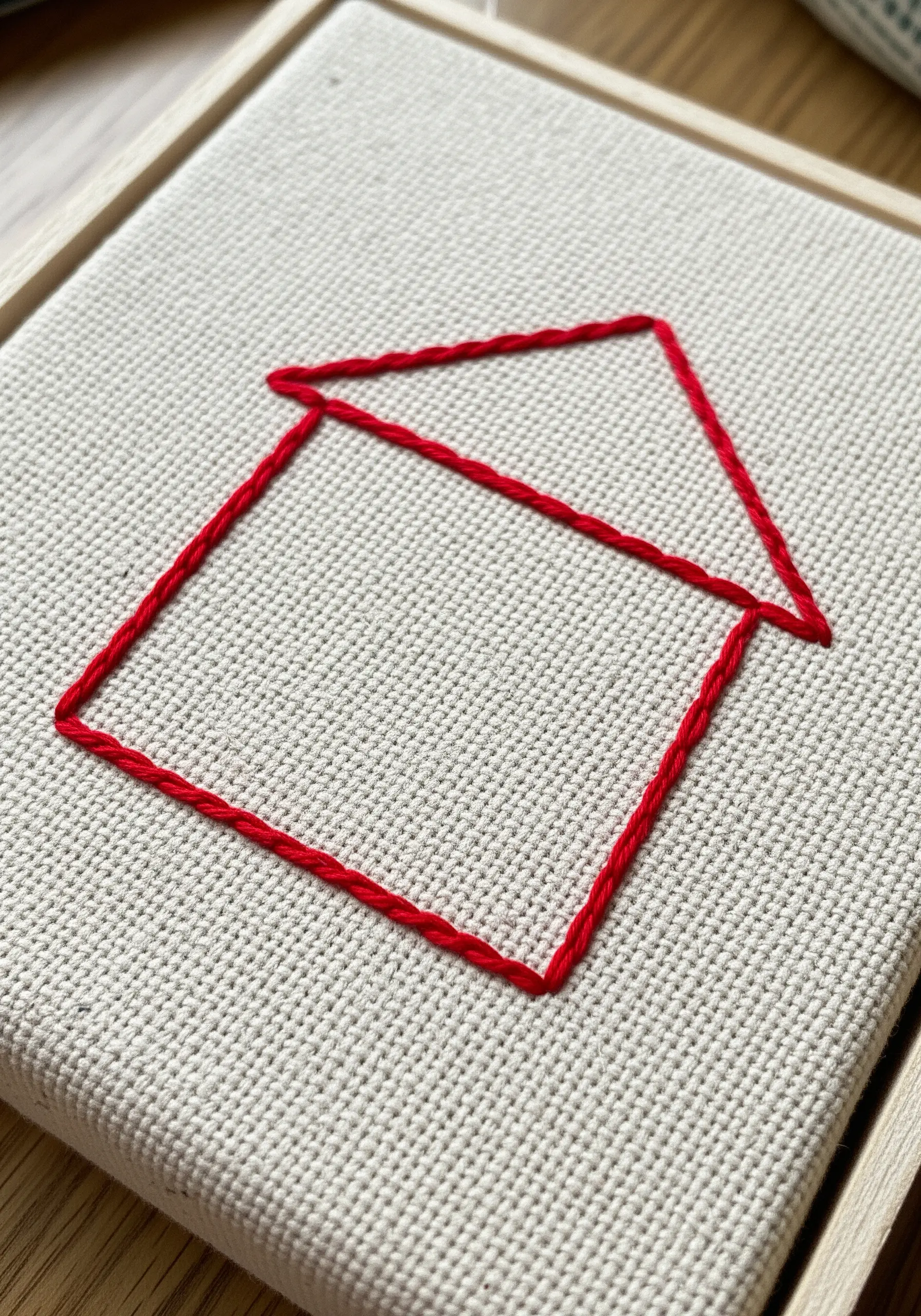
You don’t need a complex design to create a meaningful piece of art.
A simple outline of a house, stitched in a bold, primary color on a neutral, textured fabric like Aida cloth, becomes a powerful symbol of home.
Use a crisp backstitch or stem stitch, focusing on perfectly straight lines and sharp corners for a clean, graphic impact.
This minimalist approach is perfect for framing and adding to a gallery wall.
17. Craft 3D Florals with Woven Picot Stitch
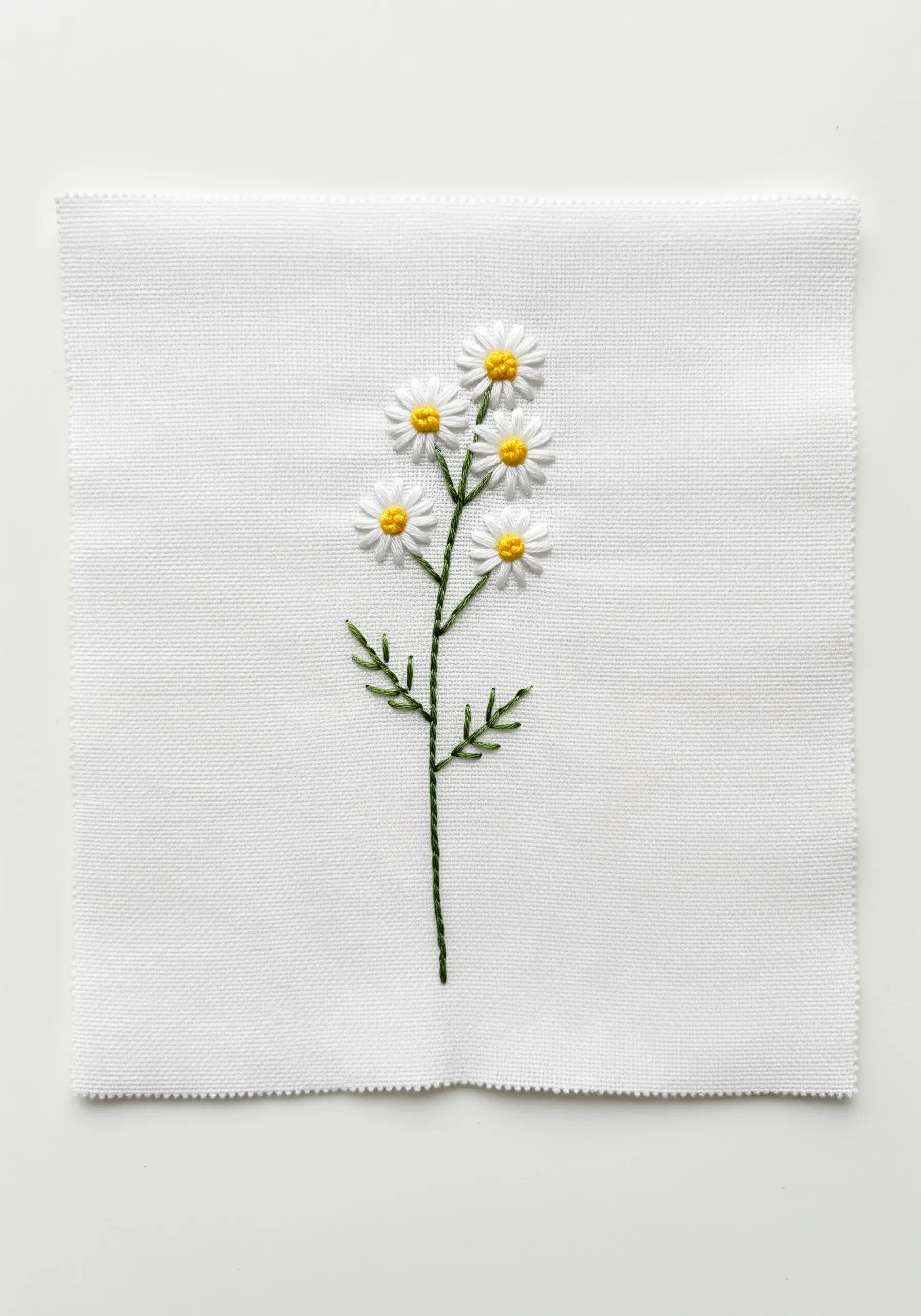
To make your embroidered flowers lift off the fabric, you need a stitch that creates true dimension.
The woven picot stitch is perfect for this, allowing you to create detached, three-dimensional petals that you can shape and layer.
Pair these woven petals with a dense center of French knots for a highly realistic and tactile daisy.
This is one of the best 3D floral embroidery techniques to add stunning realism to your work.
18. Add Instant Glamour with Gold Thread Outlines
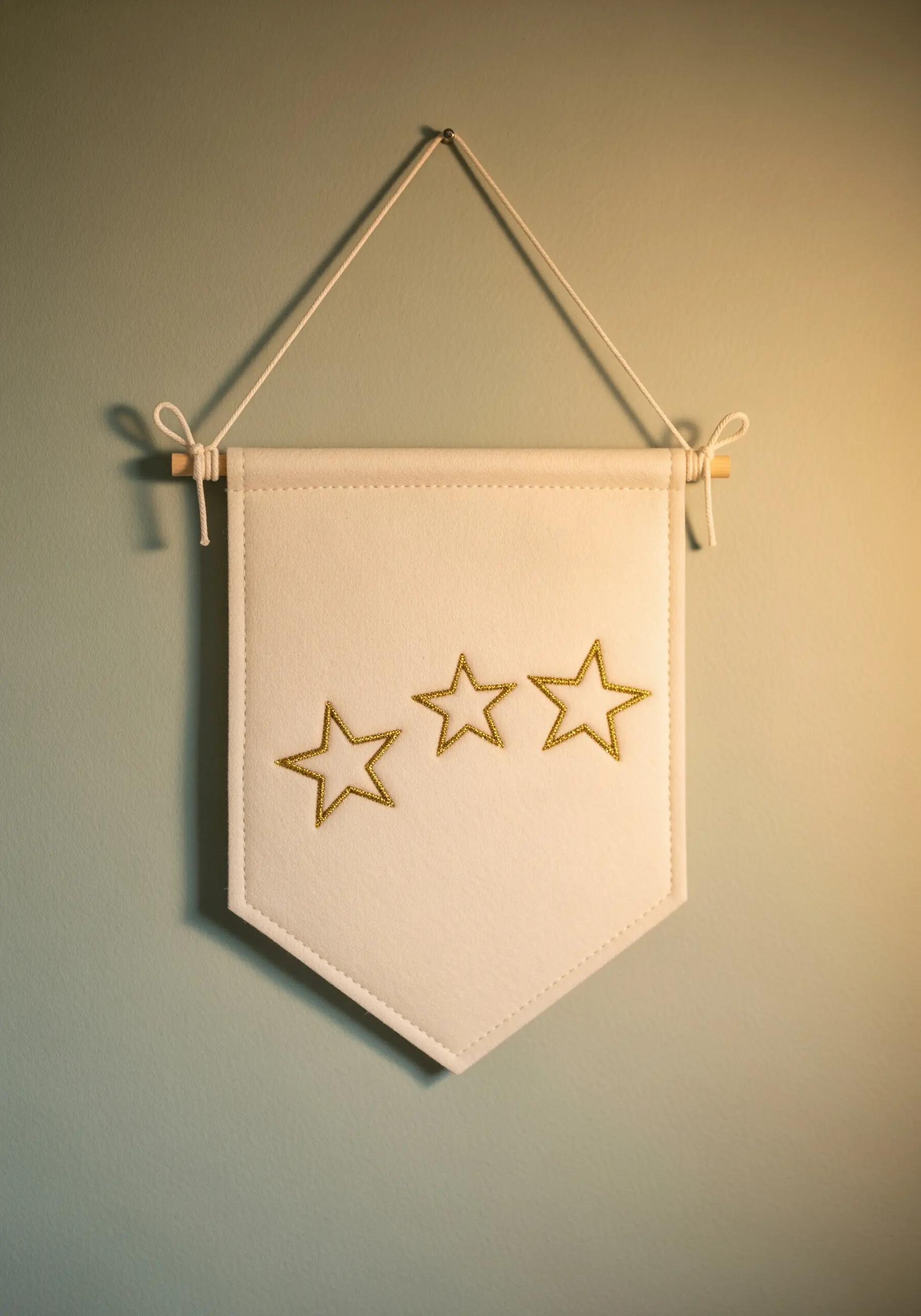
Elevate a simple felt banner or wall hanging with the refined shimmer of metallic thread.
To make working with metallic floss easier, use shorter strands and consider a thread conditioner like beeswax to reduce tangles and fraying.
A simple backstitch is all that’s required to outline clean shapes like these stars, adding a touch of light and magic to your decor.
This is an easy way to make gold thread luxury wall art projects on a small scale.
19. Create Graphic Patterns with Geometric Fills
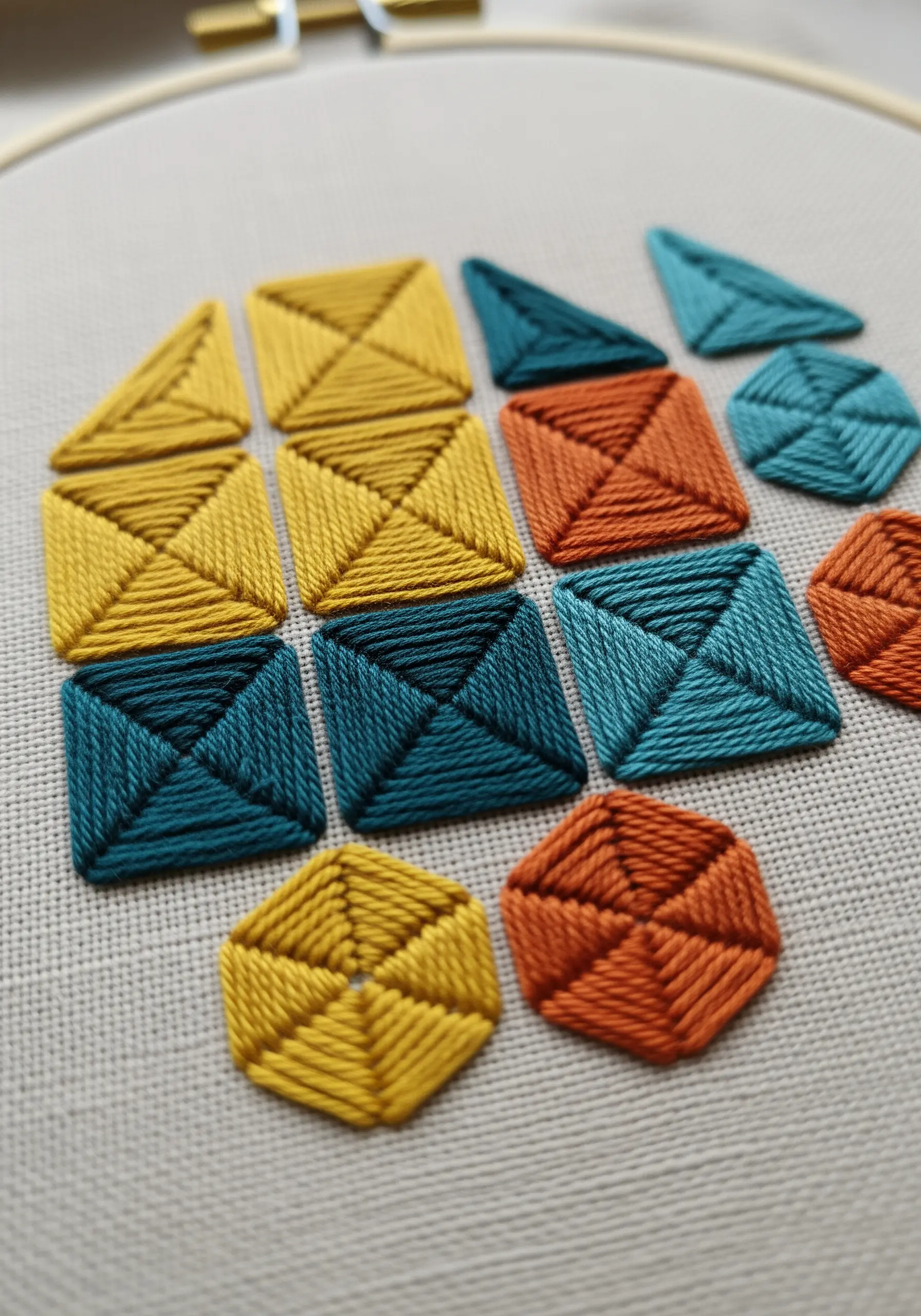
Use basic shapes as a canvas for exploring texture, color, and pattern.
This design uses a simple straight stitch fill, but the magic is in the direction: by changing the angle of the stitches within each triangle, you create a pattern that looks woven and dimensional.
This is a meditative and rewarding way to create geometric abstract thread patterns that feel both orderly and artistic.
20. Imply Movement with Delicate, Curved Lines
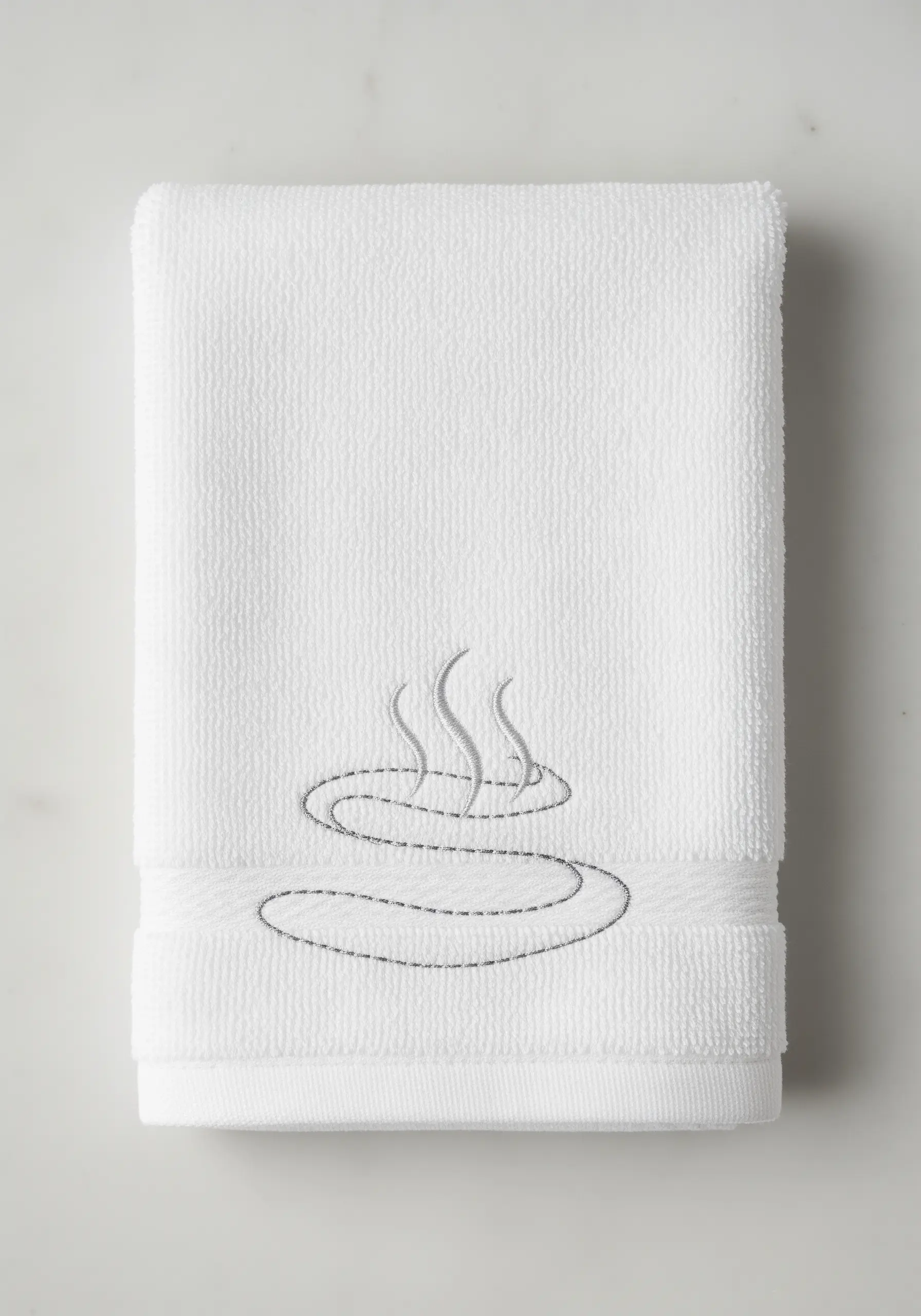
Sometimes, the most elegant embroidery is the most suggestive.
On a high-pile fabric like a terrycloth towel, simple is always better. Use a clean backstitch to create delicate, curved lines that evoke the feeling of steam or flowing water.
Choose a thread with a subtle contrast—like this soft grey on white—for a spa-like, tranquil aesthetic.
This concept is perfect for tiny bathroom embroidery art projects, adding a sense of calm and luxury.