It’s time to move beyond simple stitches and unlock the true artistic potential of your thread. If you’ve ever felt your work was missing that final layer of polish or emotional depth, the answer lies not in more complex techniques, but in a new way of seeing—treating thread not just as a material, but as a medium for sculpting light, shadow, and form.
These string art-inspired portraits will show you how to think like a painter and a sculptor. You will learn to build dimension with layers, tell stories with color, and create breathtaking texture with unexpected materials. This isn’t about just filling in shapes; it’s about making every single strand count.
Forget the idea that museum-quality work is out of reach. With a solid surface, some pins, and the thread you already own, you can create portraits that feel deeply personal and look astonishingly professional. Let’s begin this journey and transform the way you approach fiber art, one powerful portrait at a time.
1. Master Photorealism with Thread Density
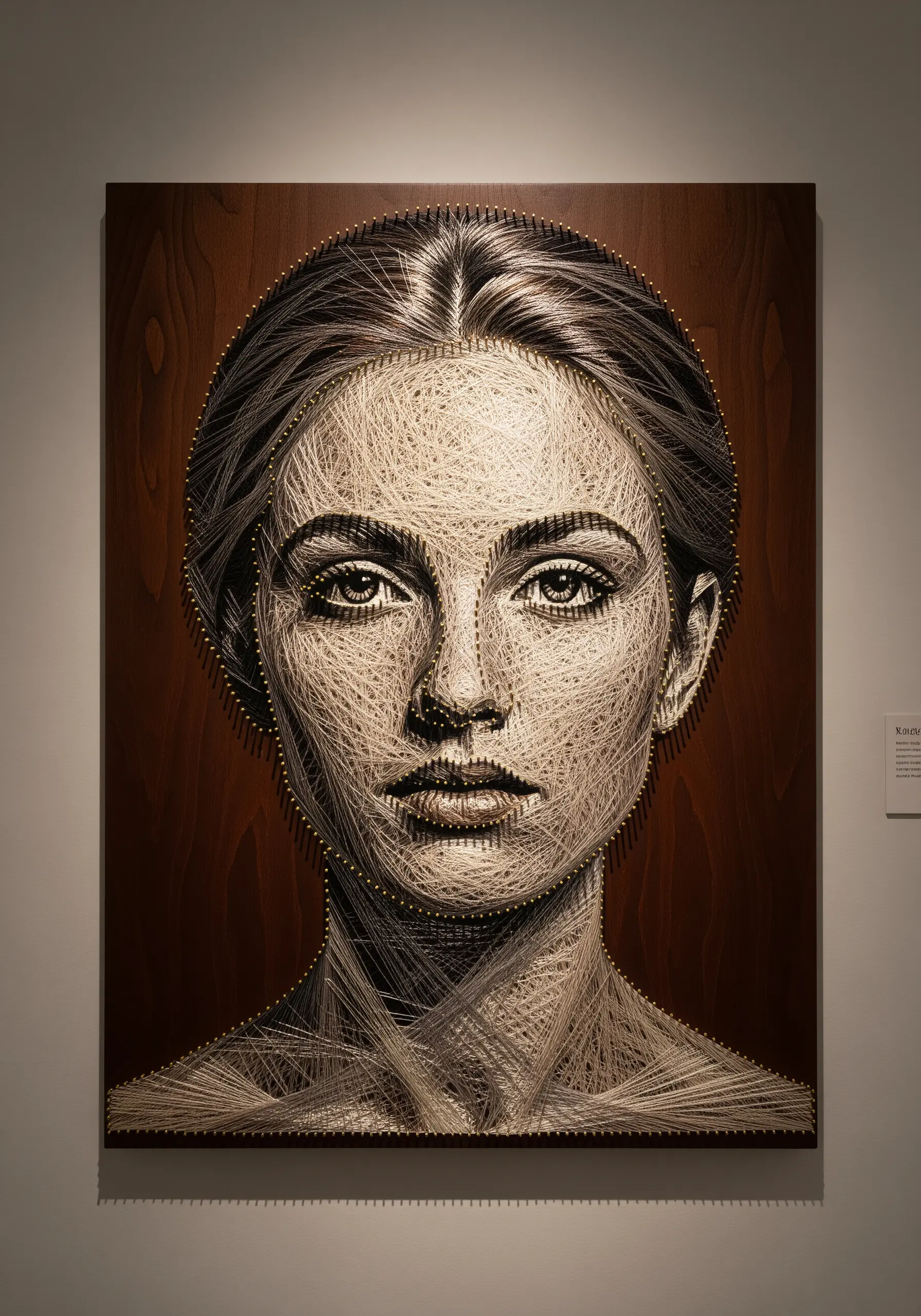
Create hyper-realistic portraits by treating thread like a pencil for shading.
Instead of changing colors, vary the density of a single thread color—like off-white or silver—to build highlights and shadows.
Map out your anchor points (nails or pins) closer together in areas that need deep shadows, such as under the cheekbones or along the jawline.
Stretch the thread back and forth repeatedly in these dense regions to build opacity.
For highlights on the forehead and nose, use sparse, single strands that allow the dark wood background to show through, creating a luminous effect.
This technique relies on layering, not complex stitches, making it a powerful way to achieve depth with minimal materials.
2. Construct a Geometric Portrait with Color Blocking
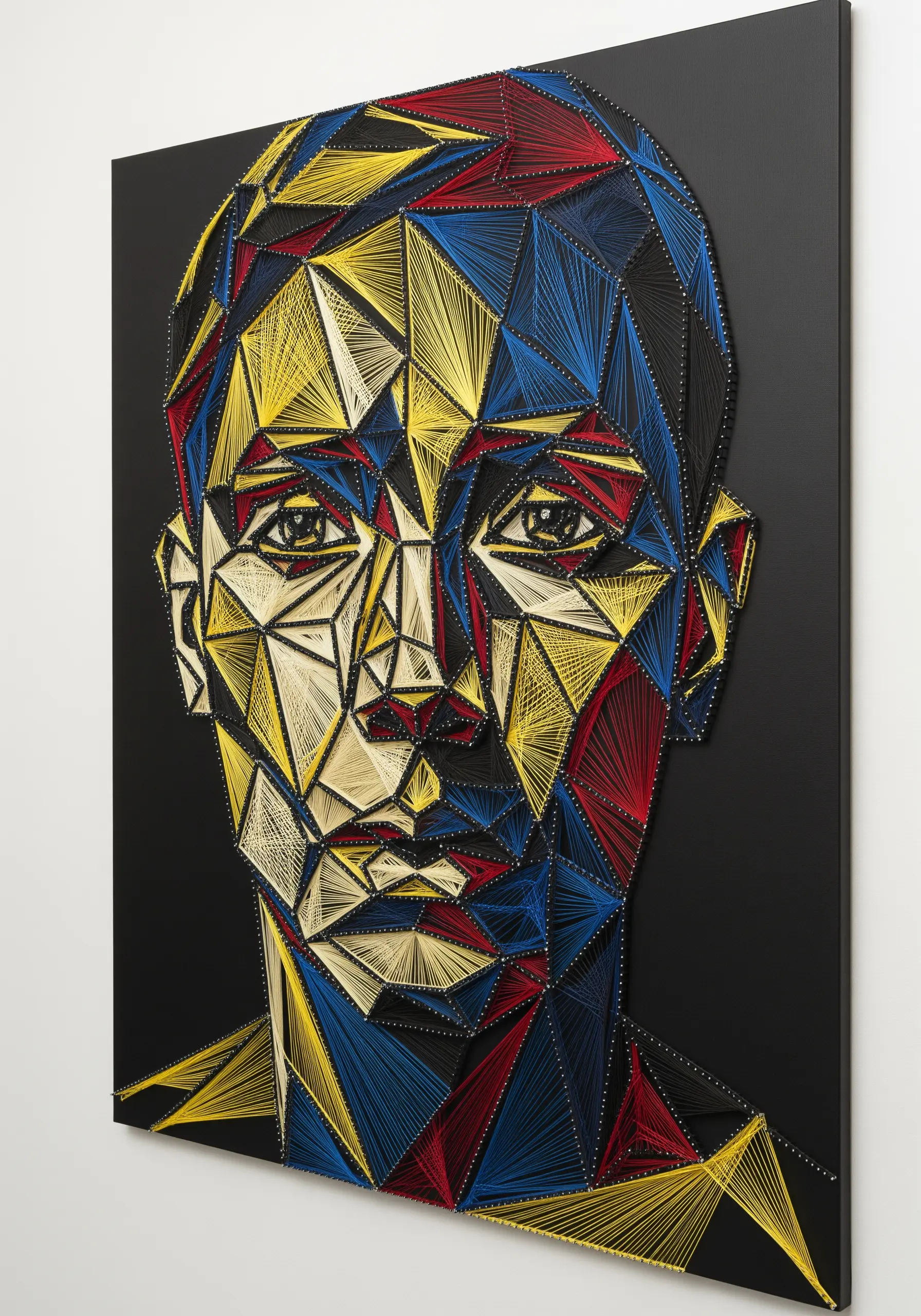
Translate a portrait into a mosaic of vibrant, geometric shapes.
Start by sketching a simplified, angular version of the face, breaking it down into triangles and polygons.
Assign a primary color—red, yellow, or blue—to each major section to create a bold, graphic statement.
Fill each shape with tightly wound thread, ensuring the lines run in different directions for each adjacent polygon to maximize visual contrast.
Use black thread for the defining outlines to give it a sharp, vector-art finish that makes the colors pop against the matte black background.
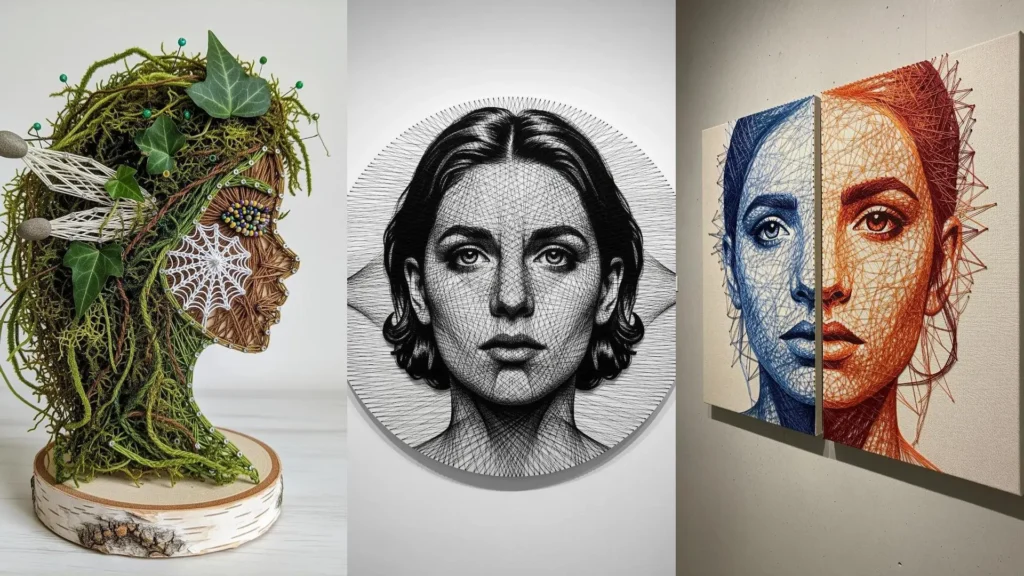
3. Frame Your Portrait in a Modern Circle
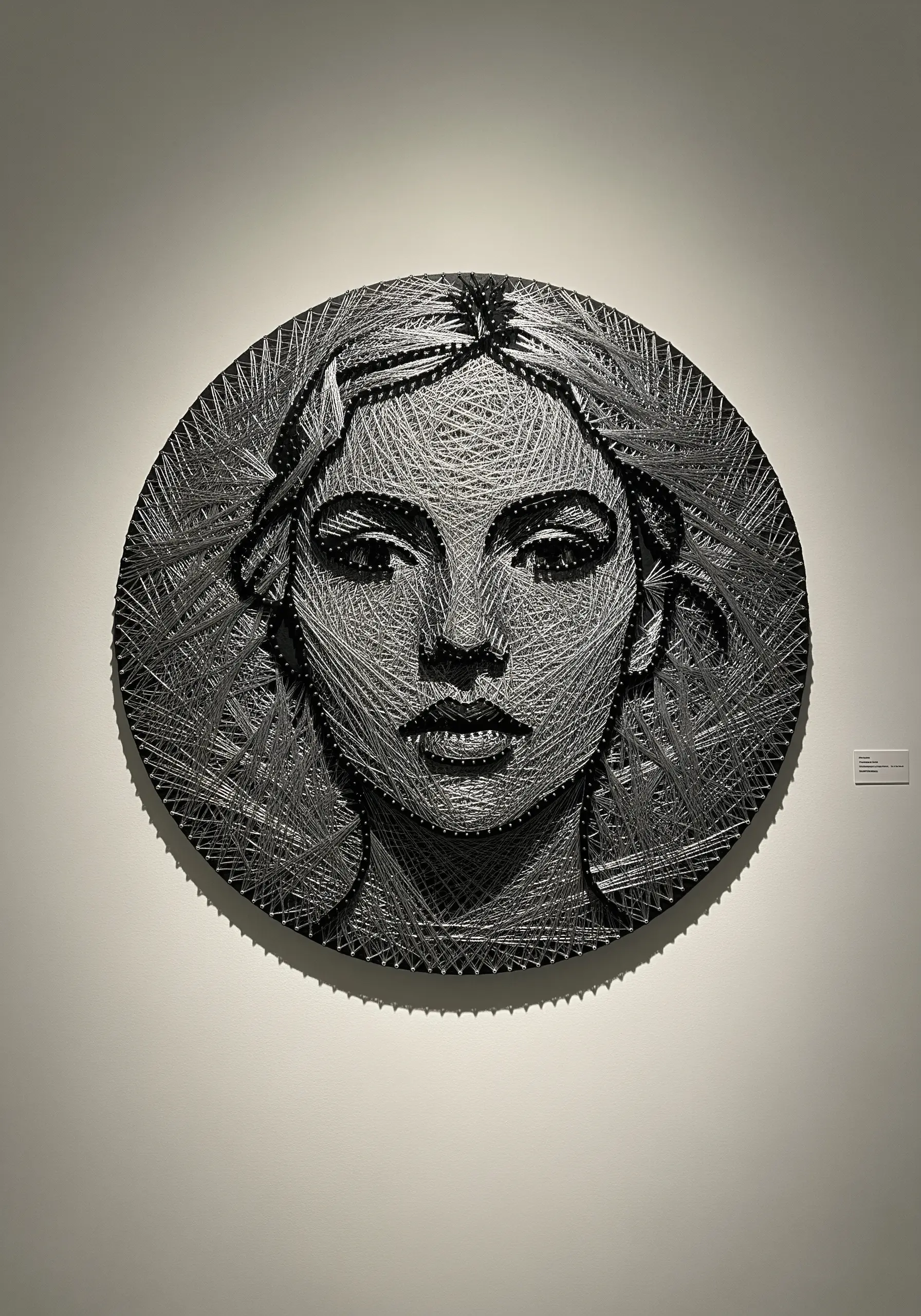
Move beyond the traditional rectangle and compose your portrait within a circular frame for a softer, more focused aesthetic.
Arrange your anchor points evenly around the circumference of a round board.
When creating the portrait, focus on radiating lines inward from the edges to define the central features, allowing the circular shape to naturally vignette the image.
Use a single color of metallic or high-sheen thread against a dark, matte background to emphasize the interplay of light and shadow created by the overlapping strands.
This format draws the viewer’s eye directly to the center, making it perfect for intimate and contemplative portraits.
4. Split Your Portrait with a Vibrant Color Quad
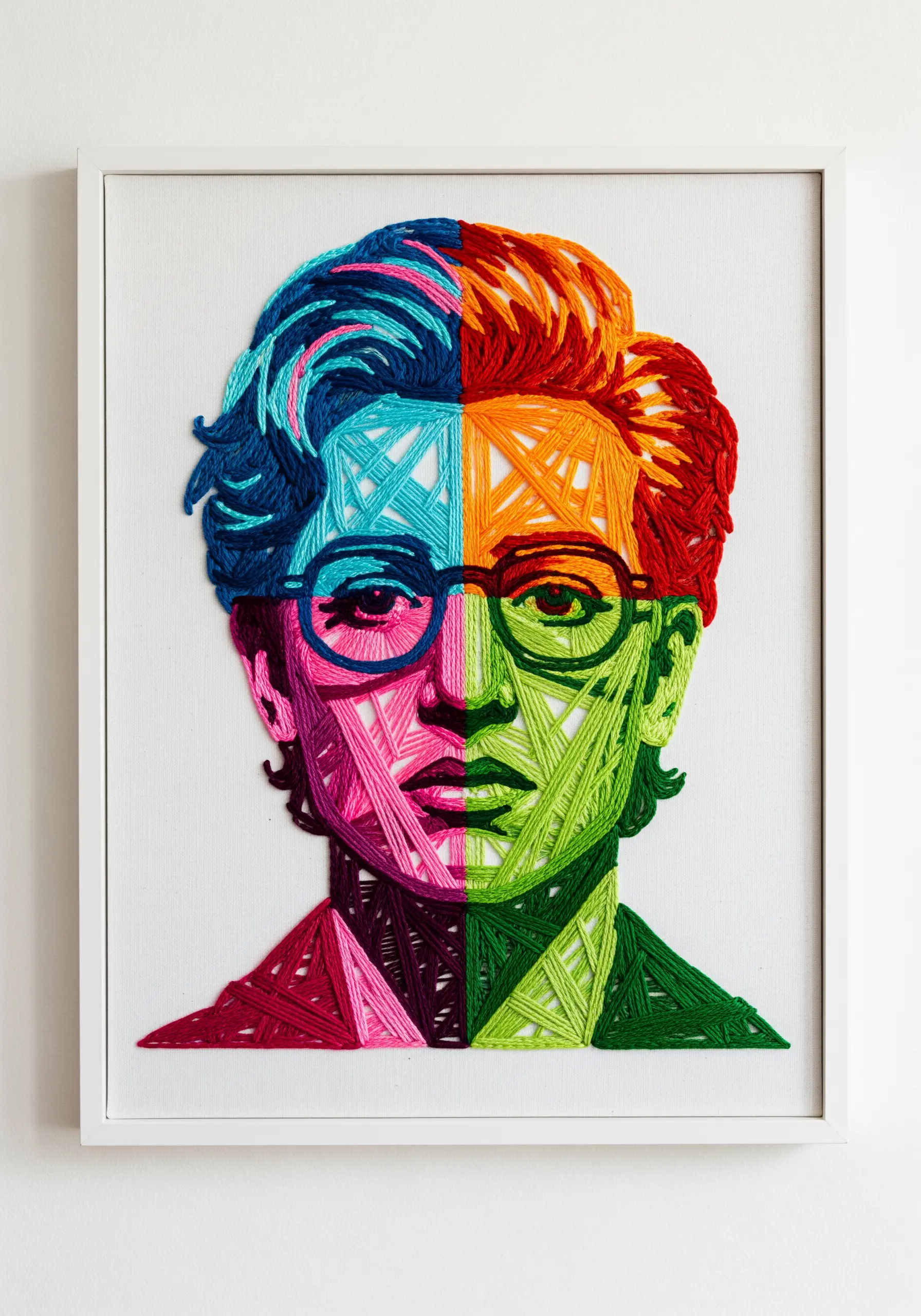
Divide the face into four distinct color zones to create a dynamic and expressive piece.
Imagine two intersecting lines—one vertical, one horizontal—that split the portrait into quadrants.
Assign a different, high-contrast color palette to each section, like pairing cool blues and pinks with warm reds and oranges.
The key is to maintain the continuity of the facial features across the color divides.
This technique allows you to explore emotion and identity through color, transforming a simple portrait into a powerful statement piece perfect for color blocking embroidery patterns.
5. Weave an Art Nouveau-Inspired Botanical Portrait
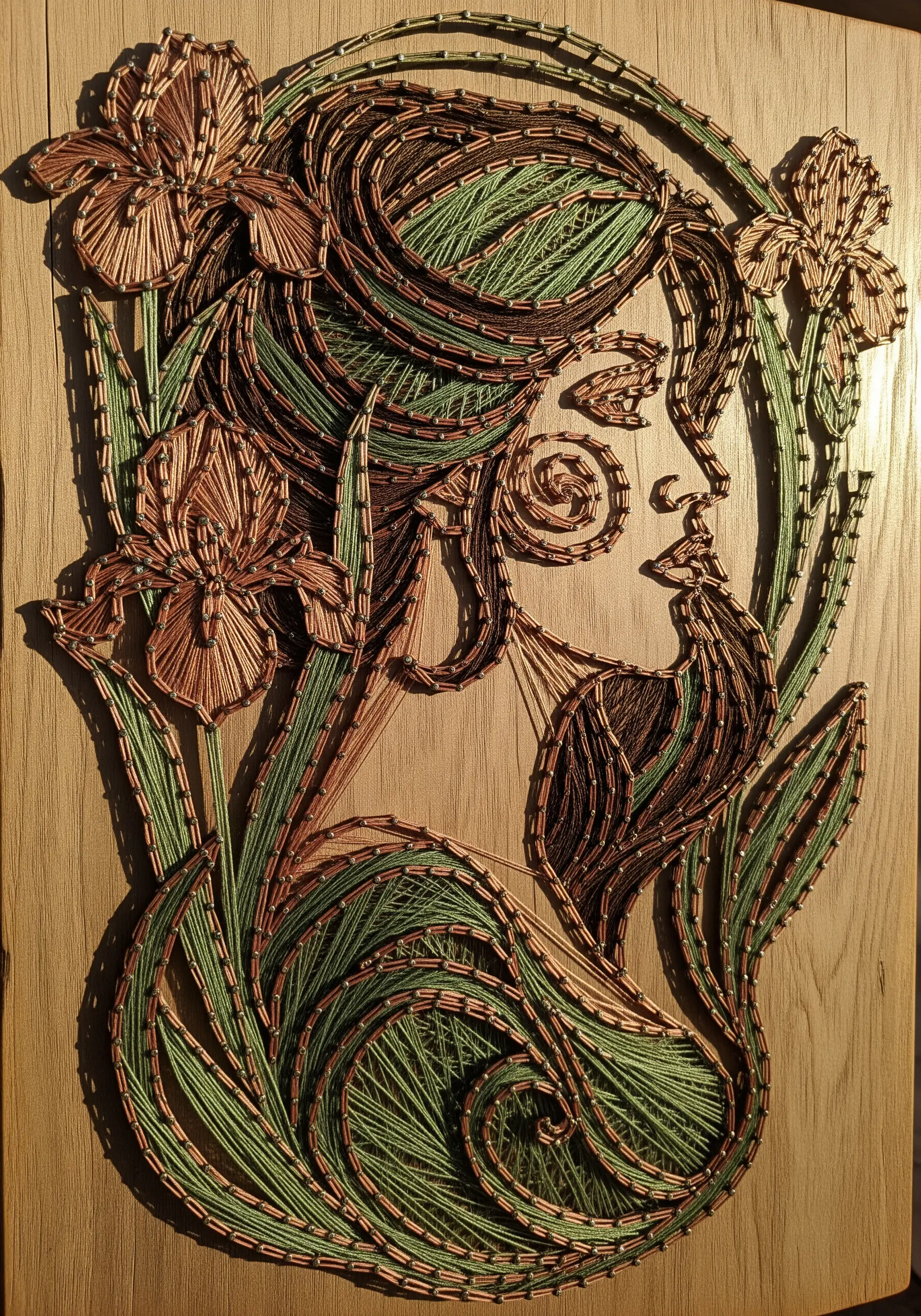
Merge portraiture with the flowing, organic lines of Art Nouveau by integrating botanical elements directly into the composition.
Use the subject’s hair as a starting point, extending the lines outward to become swirling stems and leaves.
Frame the face with elegant flowers, like irises or lilies, using their petals and leaves to complement the curves of the profile.
Choose an earthy color palette of copper, bronze, and moss green to evoke a natural, timeless feel.
This approach transforms a static portrait into a narrative piece, blending human and natural forms seamlessly.
6. Design a Cyberpunk Portrait with Neon Thread
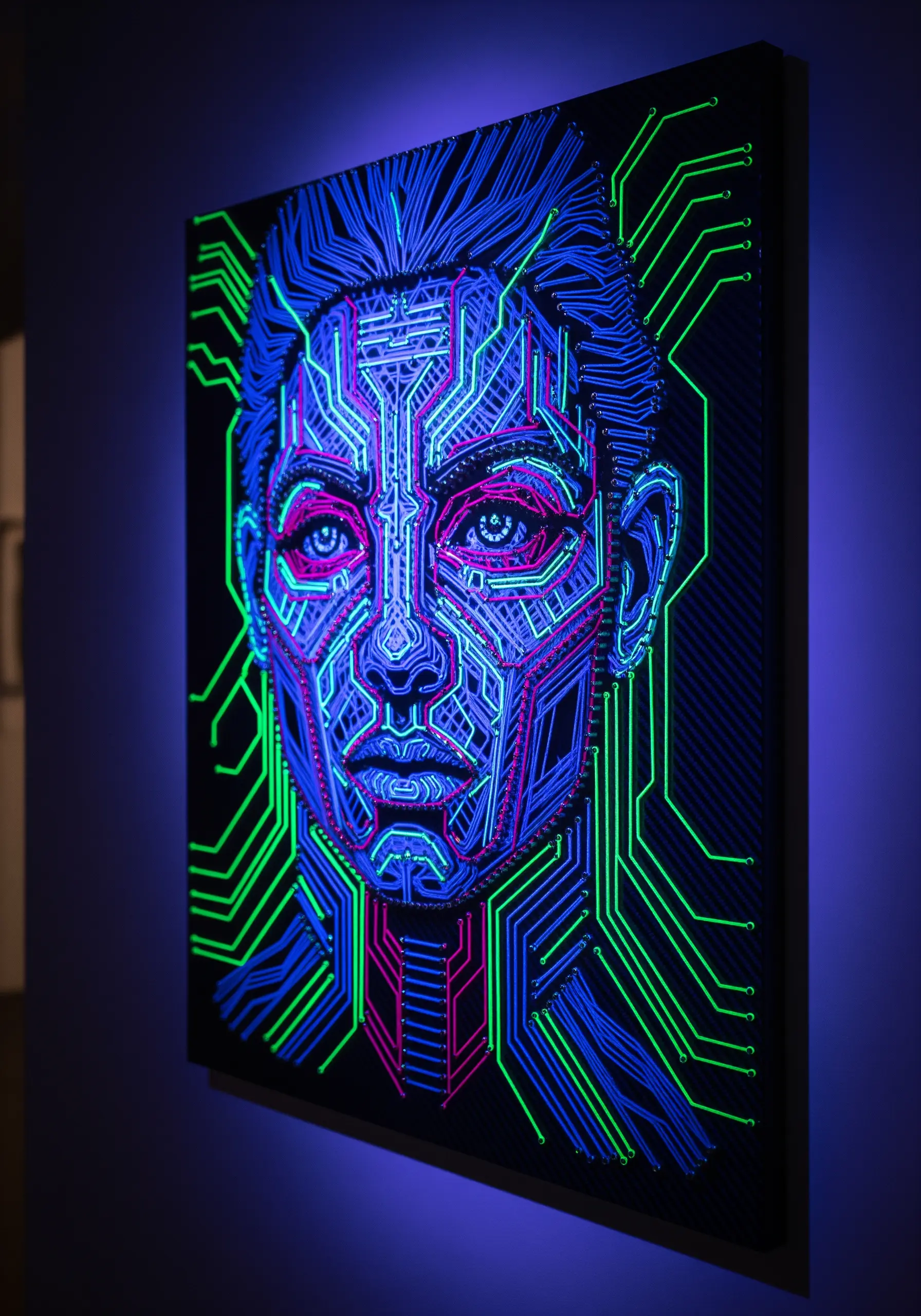
Create a futuristic, high-tech portrait using neon or UV-reactive thread on a dark carbon-fiber or matte black canvas.
Simplify the facial features into a network of glowing lines that resemble a circuit board.
Use electric blue for the primary structure, hot pink for accents like the eyes and lips, and lime green for the surrounding circuitry.
This technique is all about sharp angles and precise lines to mimic digital pathways.
Displayed under a blacklight, the threads will glow intensely, transforming your artwork into an electrifying installation.
7. Capture Character and Age in a Triptych
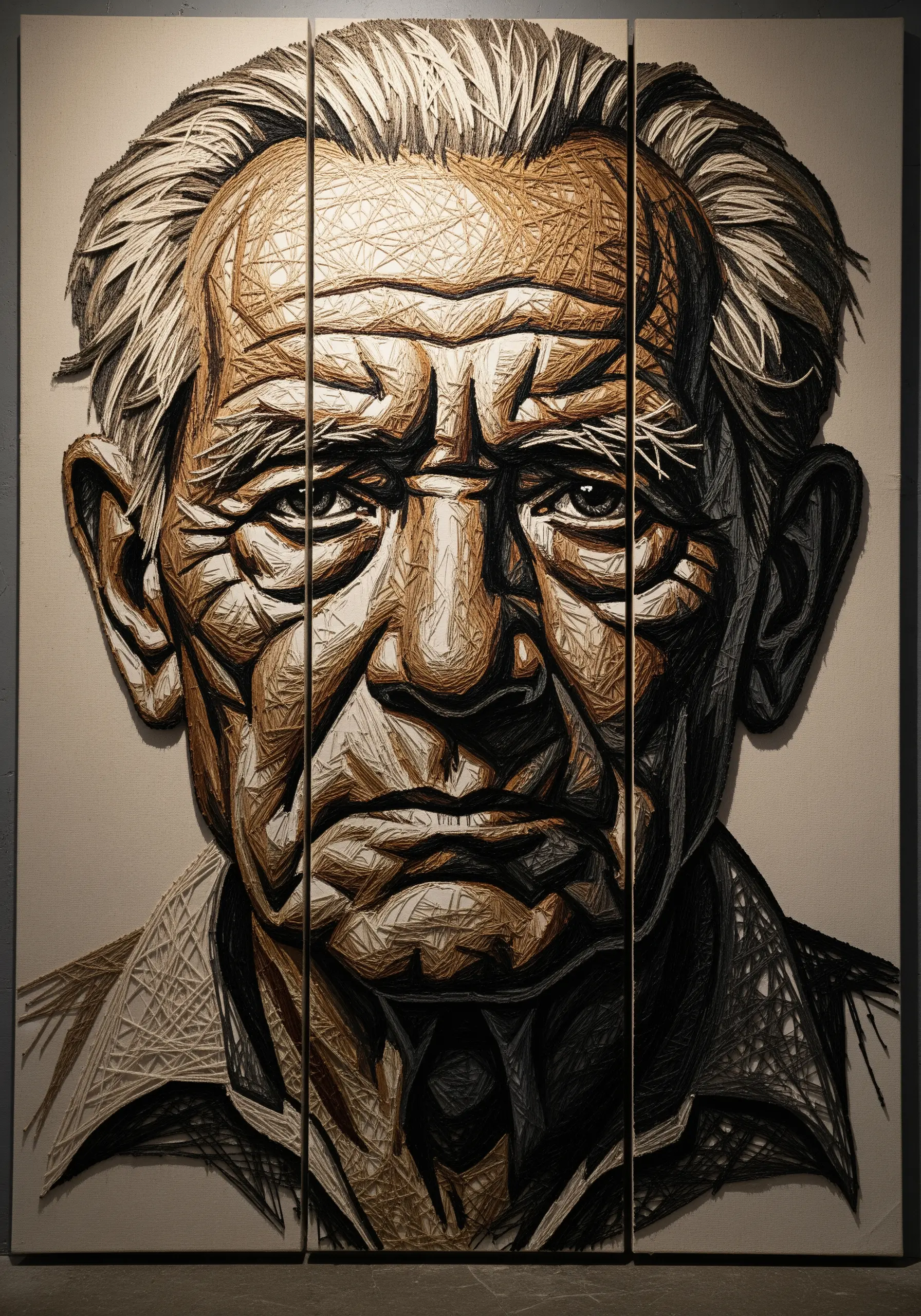
Add depth and gravitas to a portrait by presenting it across three separate panels (a triptych).
This format forces the viewer to engage with each part of the face individually, highlighting details that might otherwise be missed.
Use the direction of your threads to mimic the texture of weathered skin—horizontal lines for forehead wrinkles, and cross-hatching for the contours of the cheeks.
A muted, sepia-toned palette of browns, grays, and creams enhances the sense of wisdom and history.
The physical gaps between the panels add a modern, deconstructed feel to a classical subject.
8. Create a Celestial Being with Metallics and Swirls
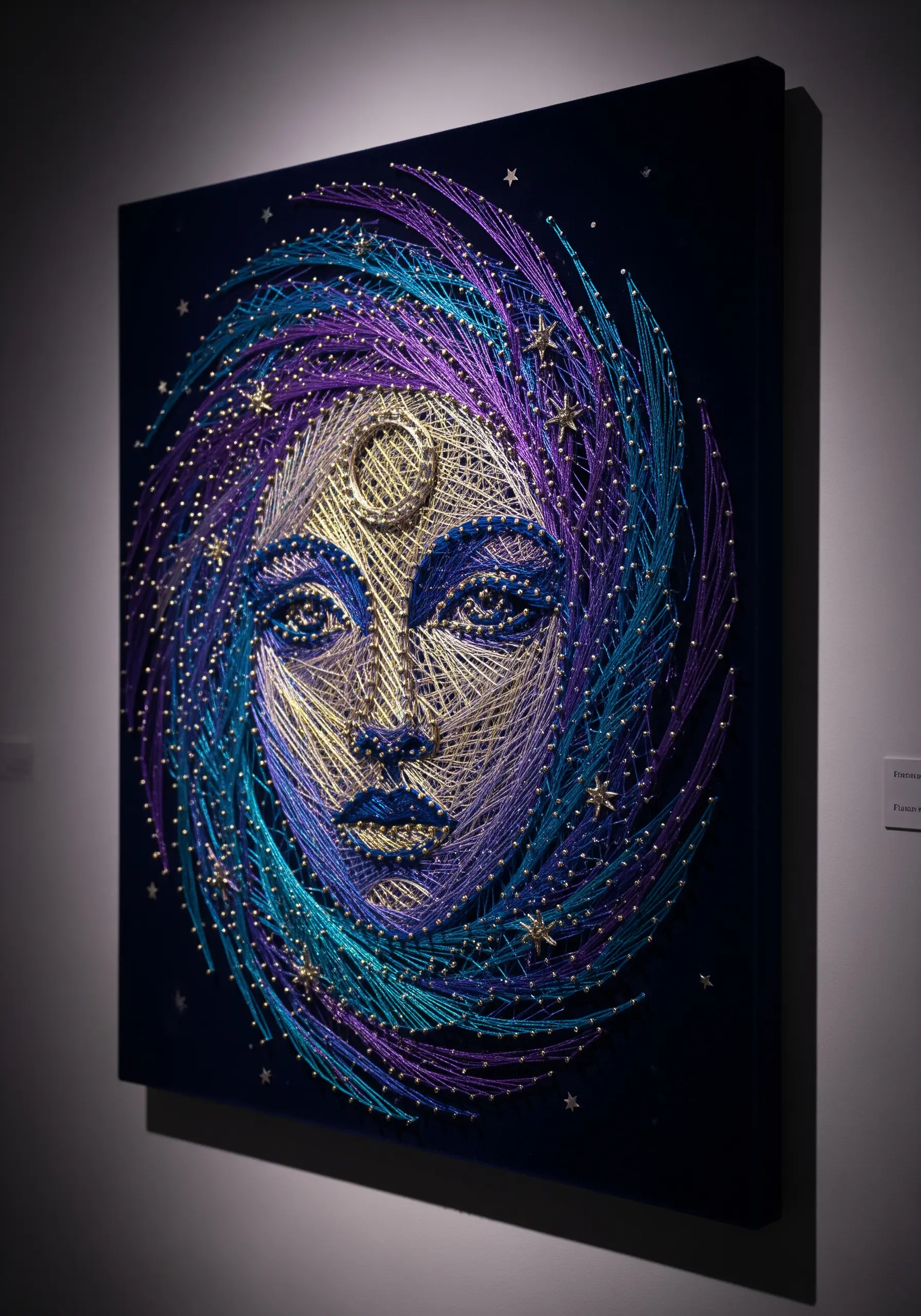
Elevate your portrait into a cosmic entity by using a celestial theme and rich materials.
Work on a deep navy or black velvet background to represent the night sky.
Use gold metallic thread to define the facial features, giving them a divine glow.
Surround the face with swirling galaxies made from threads in shades of purple, turquoise, and royal blue.
Incorporate tiny star-shaped beads or metallic pins as anchor points to add a layer of texture and sparkle. This turns the portrait into a piece of tiny night sky embroidery made grand.
9. Embrace Minimalism with Single-Line Contours
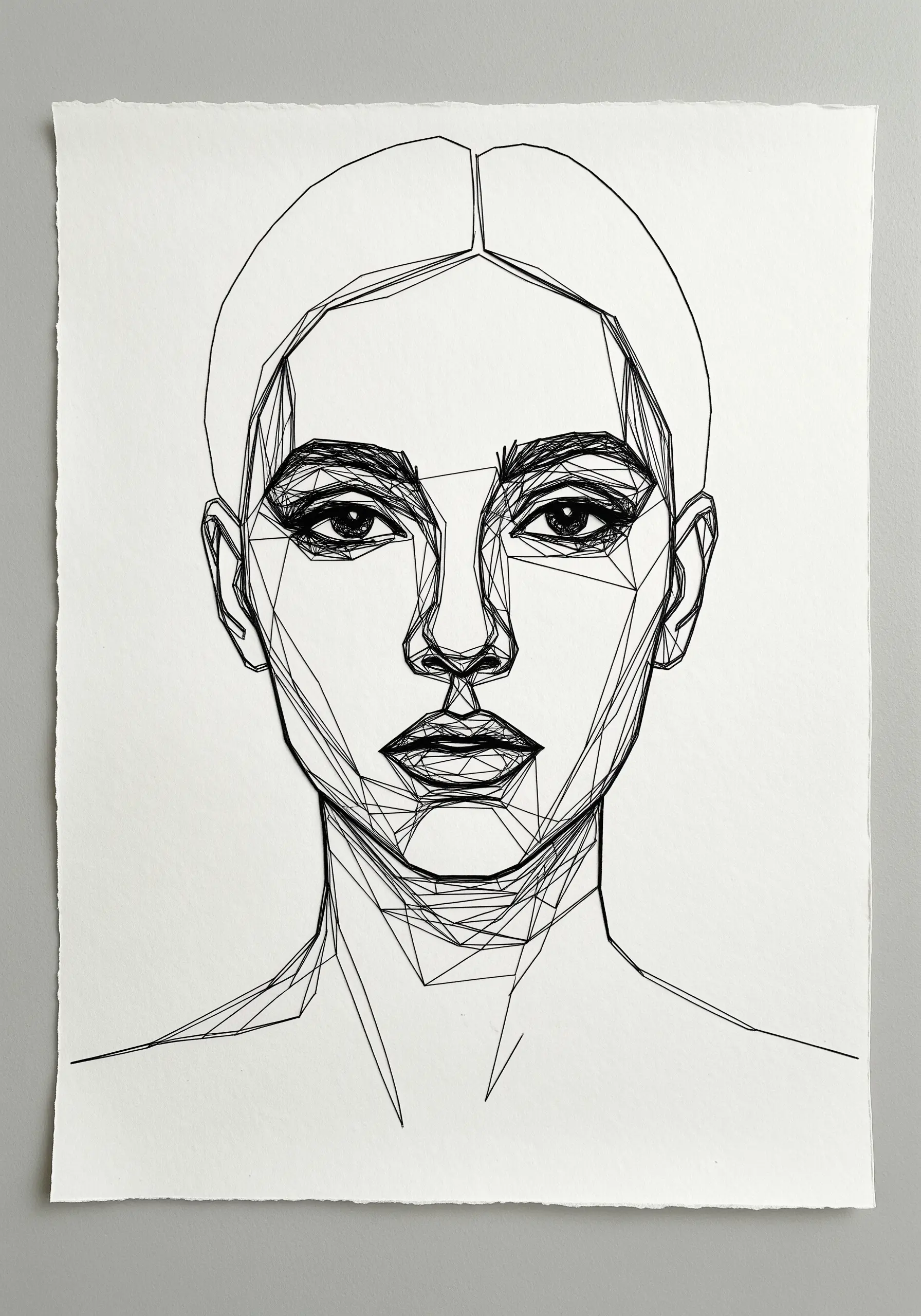
Capture the essence of a face with the barest of elements, inspired by minimalist line art.
This technique uses a single, continuous thread to create an abstract, geometric portrait.
Instead of filling shapes, you are drawing with thread, focusing on the power of the outline and negative space.
Work on high-quality, textured paper and use pins so fine they almost disappear, keeping the focus entirely on the thread’s path.
This approach proves that complexity isn’t necessary for a portrait to be compelling and emotionally resonant.
10. Explore Form with a Cubist Perspective
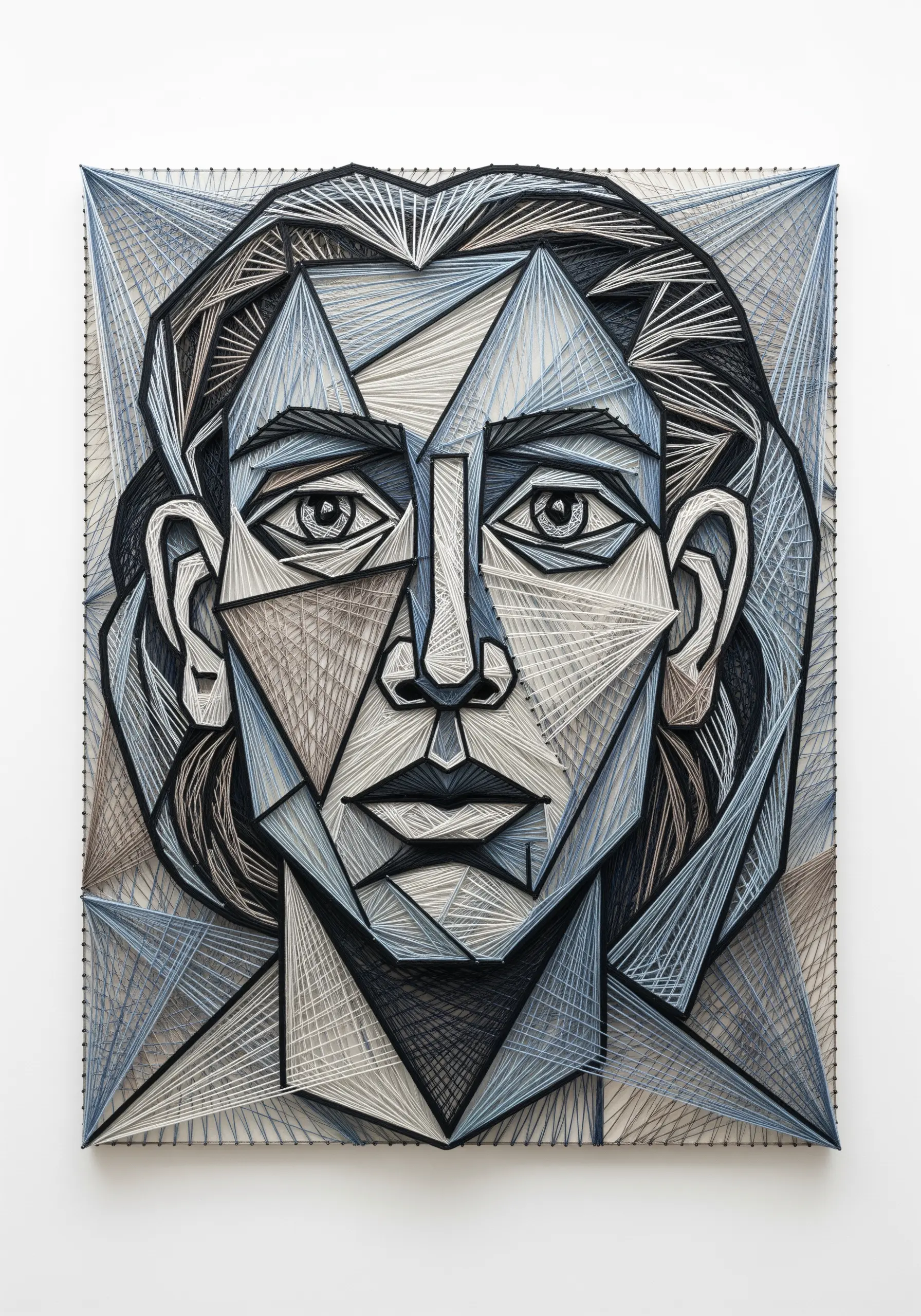
Deconstruct a portrait into geometric planes and facets, in the style of Cubism.
Break the face into angular shapes that represent different viewpoints simultaneously.
Use a sophisticated, muted color palette of slate blue, taupe, and off-white to emphasize form over color.
Fill each facet with thread running in a distinct direction to create textural contrast between the planes.
Use a bold, black thread to outline the major structural lines, giving the portrait a strong, sculptural quality that feels both classic and modern.
11. Sculpt a 3D Nature Spirit with Mixed Media
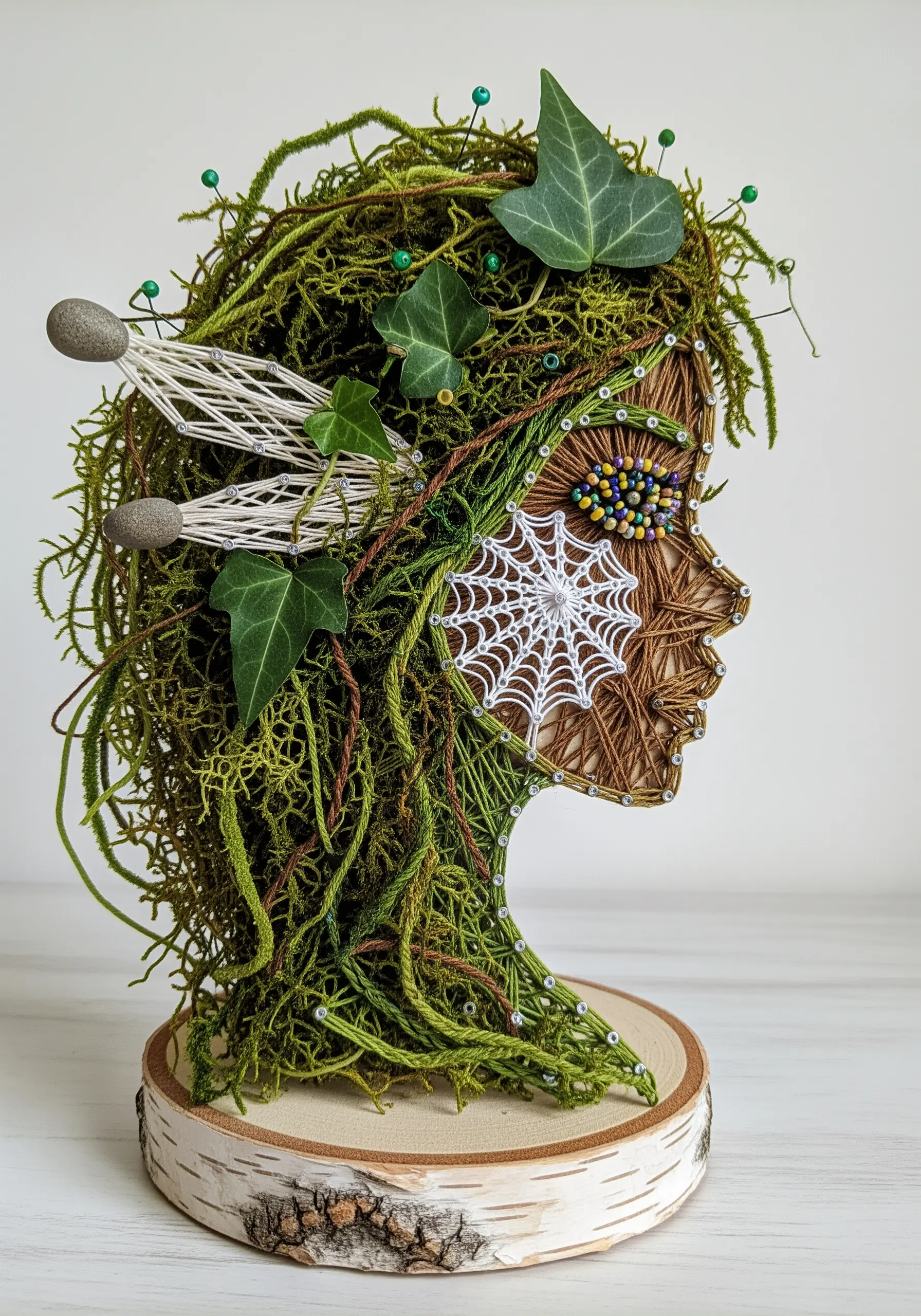
Go beyond thread and incorporate natural, textural elements to create a sculptural portrait.
Use a wooden cutout of a profile as your base.
Fill the facial area with traditional string art, but create the hair from preserved moss, ivy leaves, and delicate twigs.
This contrast between the precise lines of the thread and the organic chaos of the botanicals is visually stunning.
Add small beads or polished stones for extra detail, turning the piece into one of the most eye-catching embroidered mixed media projects you can imagine.
12. Recreate Renaissance Elegance with Textured Threads
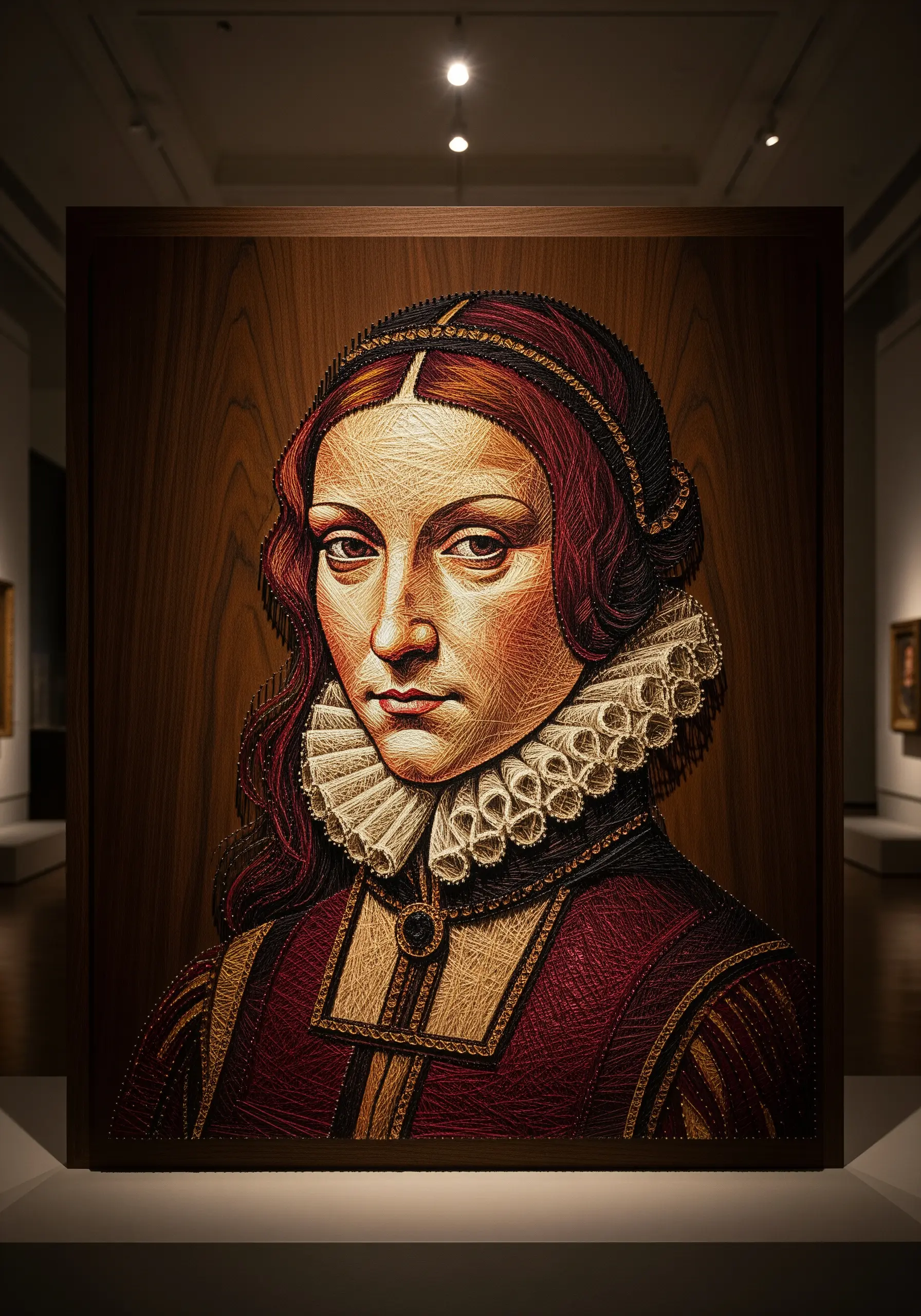
Capture the richness of a Renaissance painting by focusing on texture and material imitation.
Use fine, off-white thread to build the intricate lacework of a ruff collar, layering threads to create a sense of delicate, transparent fabric.
For the skin, blend threads in soft peach, cream, and ochre to achieve subtle, painterly gradients.
Select a deep crimson or burgundy for the velvet garments, winding the thread tightly to give it a rich, dense appearance.
The dark wood background adds to the historical authenticity, making the portrait feel like a treasured heirloom.
13. Impose a Graphic Grid for a Technical Feel
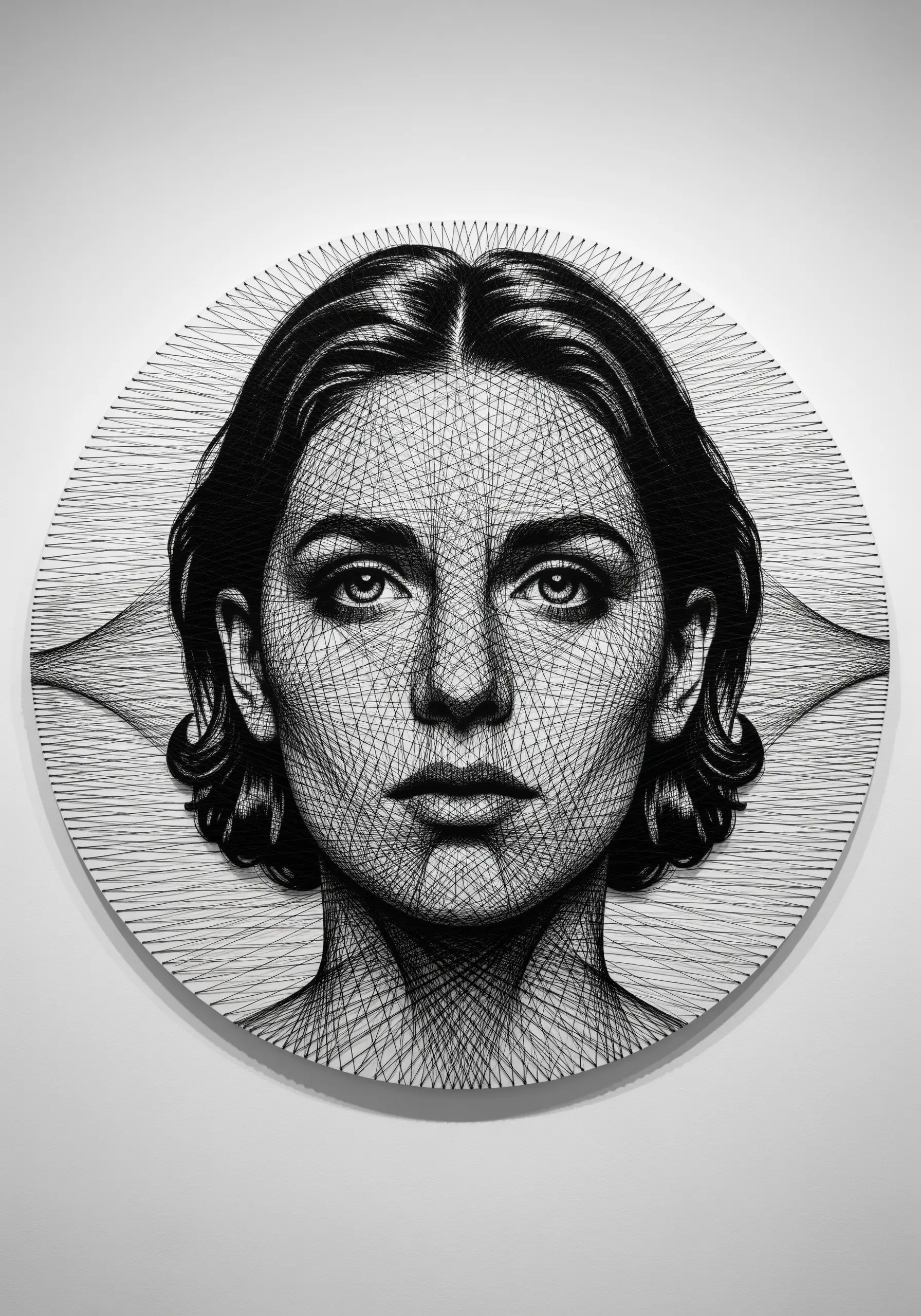
Create a striking visual effect by overlaying a precise grid of threads on top of a realistic portrait.
First, complete the foundational black-and-white portrait, focusing on light and shadow.
Then, add a secondary layer of pins in a geometric pattern—like a grid or intersecting diagonals—and run a single, continuous black thread through them.
This overlay adds a scientific, almost digital dimension, as if the portrait is being analyzed or rendered.
It’s a sophisticated technique that combines artistic realism with clean, mathematical precision.
14. Achieve a Stained-Glass Effect with Bold Outlines
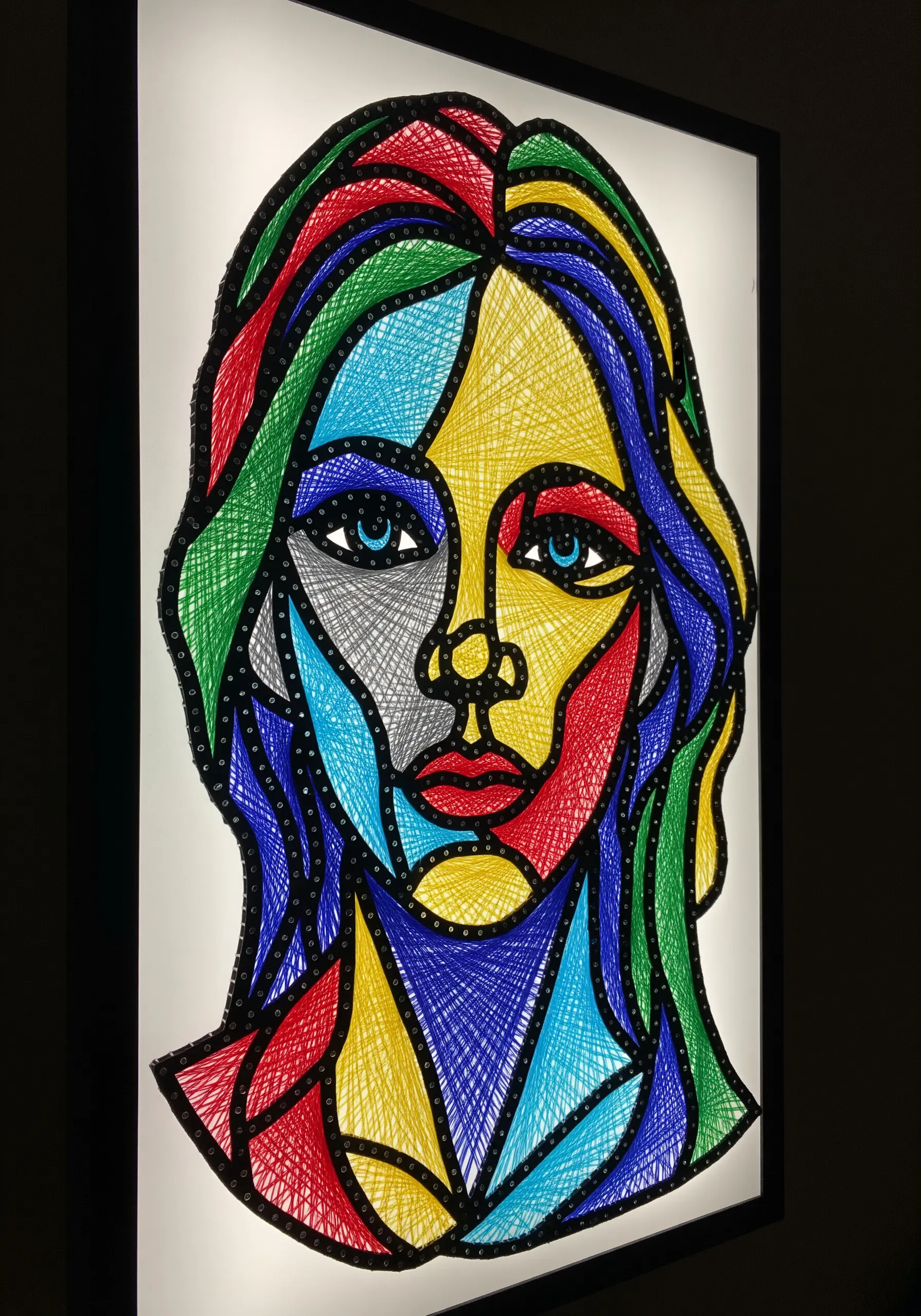
Emulate the look of stained glass by using thick, dark outlines and filling the sections with luminous color.
Map out the portrait with simplified, flowing shapes, similar to a coloring book page.
Use a heavy, black yarn or multiple strands of black thread to create the bold ‘leading’ that defines each segment.
Fill each section with a single, vibrant color, keeping the thread density consistent.
To enhance the effect, mount the finished piece in a lightbox or against a window, allowing light to pass through and make the colors glow.
15. Embellish a Regal Portrait with Pearls and Gold
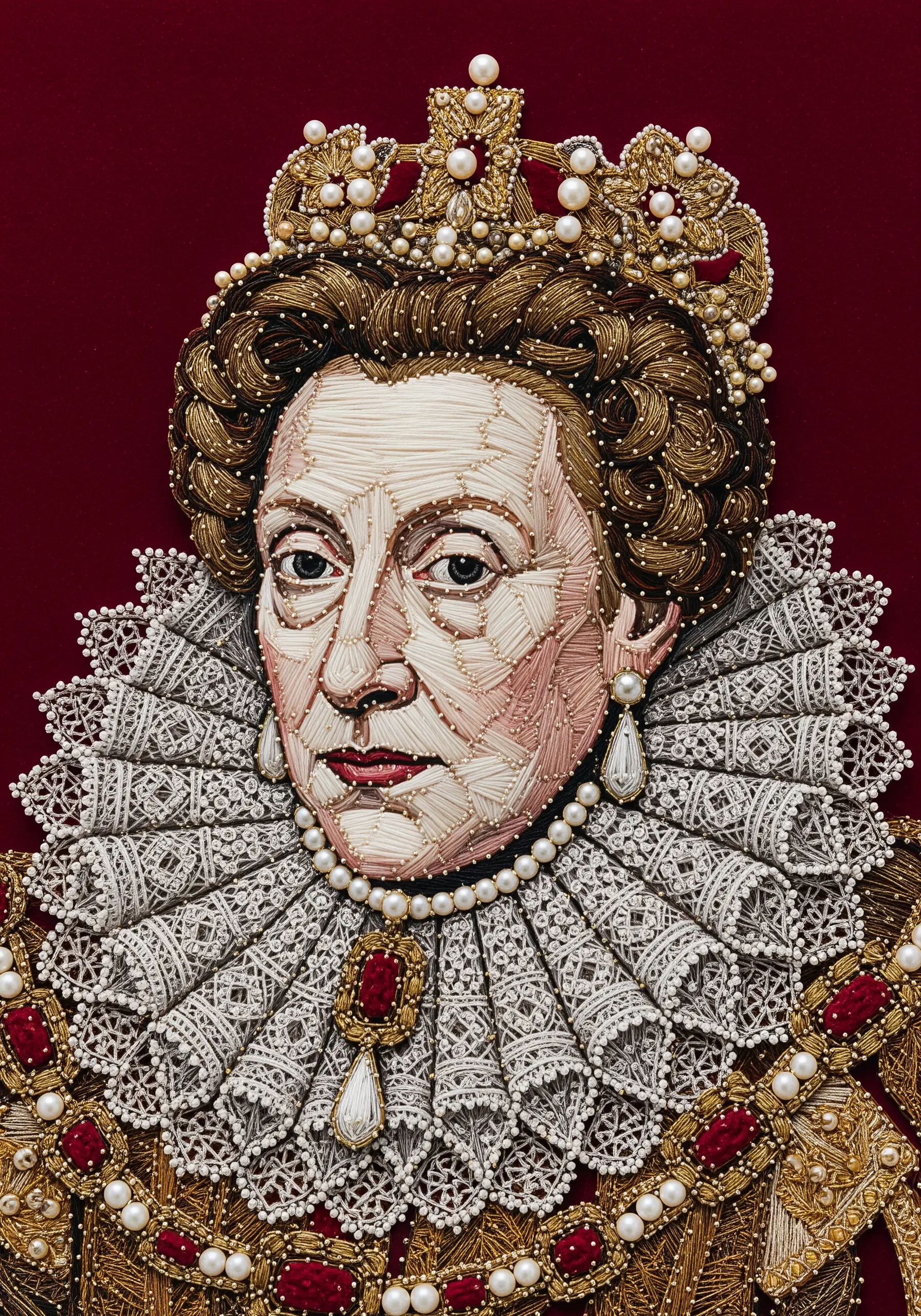
Craft a portrait of unparalleled opulence by incorporating beads, pearls, and metallic cording.
Use these embellishments to recreate jewelry, crown details, and decorative elements on clothing.
Instead of using only pins, strategically place small pearl beads as anchor points along the lace collar or hairline.
Weave gold and silver metallic threads through the hair and garments to catch the light and add shimmer.
This method transforms the portrait from a two-dimensional image into a lavish, multi-textured treasure, creating elegant framed embroidery artworks with royal flair.
16. Blend Fine Thread with Chunky Yarn for Texture
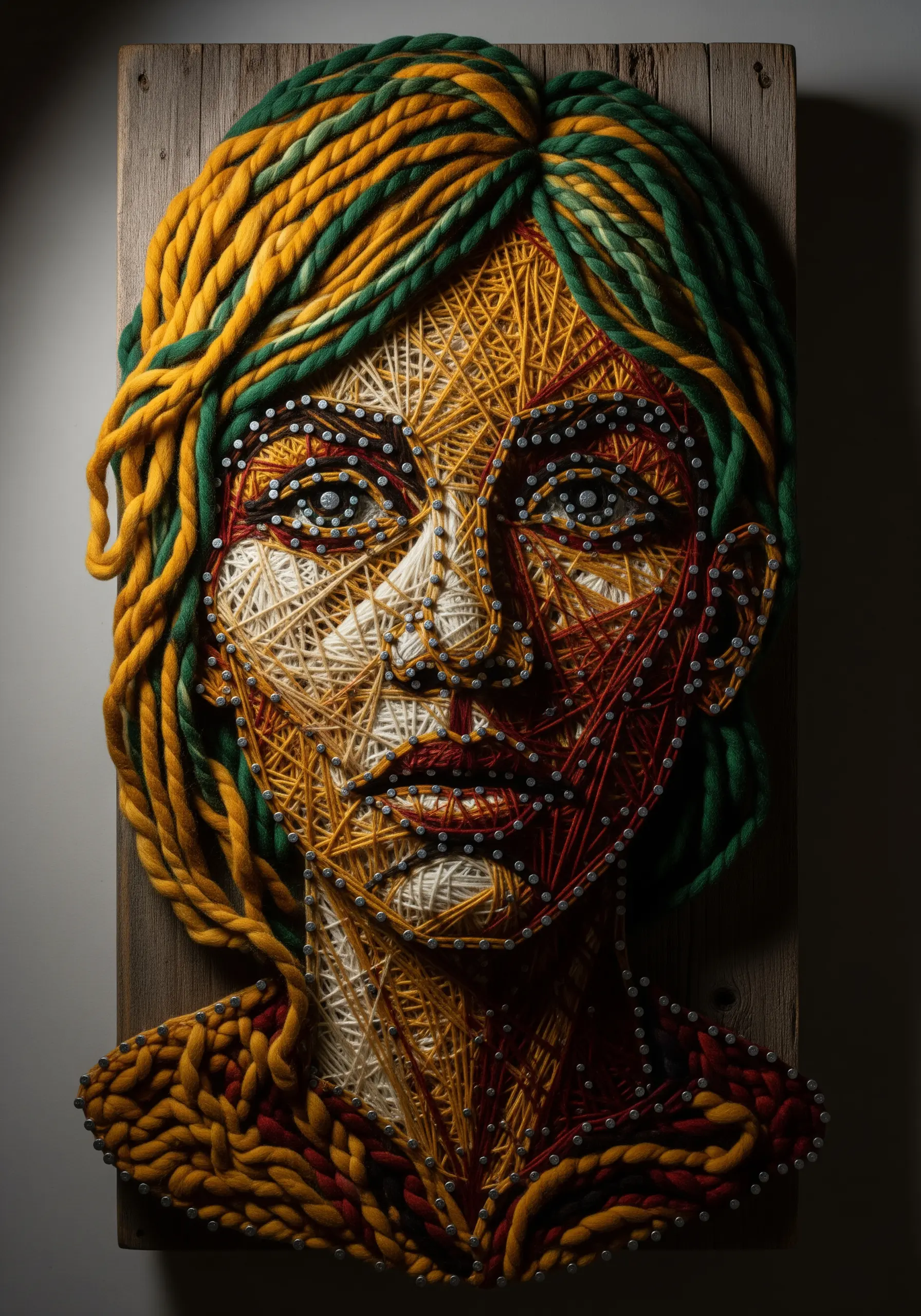
Create a dramatic textural contrast by combining delicate embroidery floss with thick, chunky yarn.
Use the fine thread to render the detailed features of the face, capturing subtle expressions and shadows.
Then, switch to thick, braided yarn to create bold, sculptural hair.
You can lay the yarn in flowing lines or even braid it before attaching it to the board for a truly three-dimensional effect.
This tactile approach adds an unexpected, rustic charm and invites the viewer to not just see, but also feel the artwork.
17. Explore Duality with a Split-Color Diptych

Tell a story of contrast and connection by splitting a single portrait across two canvases.
Render the left half of the face in a cool color palette, like shades of deep blue, to evoke calmness or introspection.
Create the right half in a warm palette, such as fiery oranges and reds, to suggest passion or energy.
The key is to ensure the facial features align perfectly when the two canvases are placed side-by-side.
This diptych format offers a powerful visual metaphor for duality, making your hand-stitched portrait wall art a profound statement.
18. Craft a Mythical Siren with Bioluminescent Hues
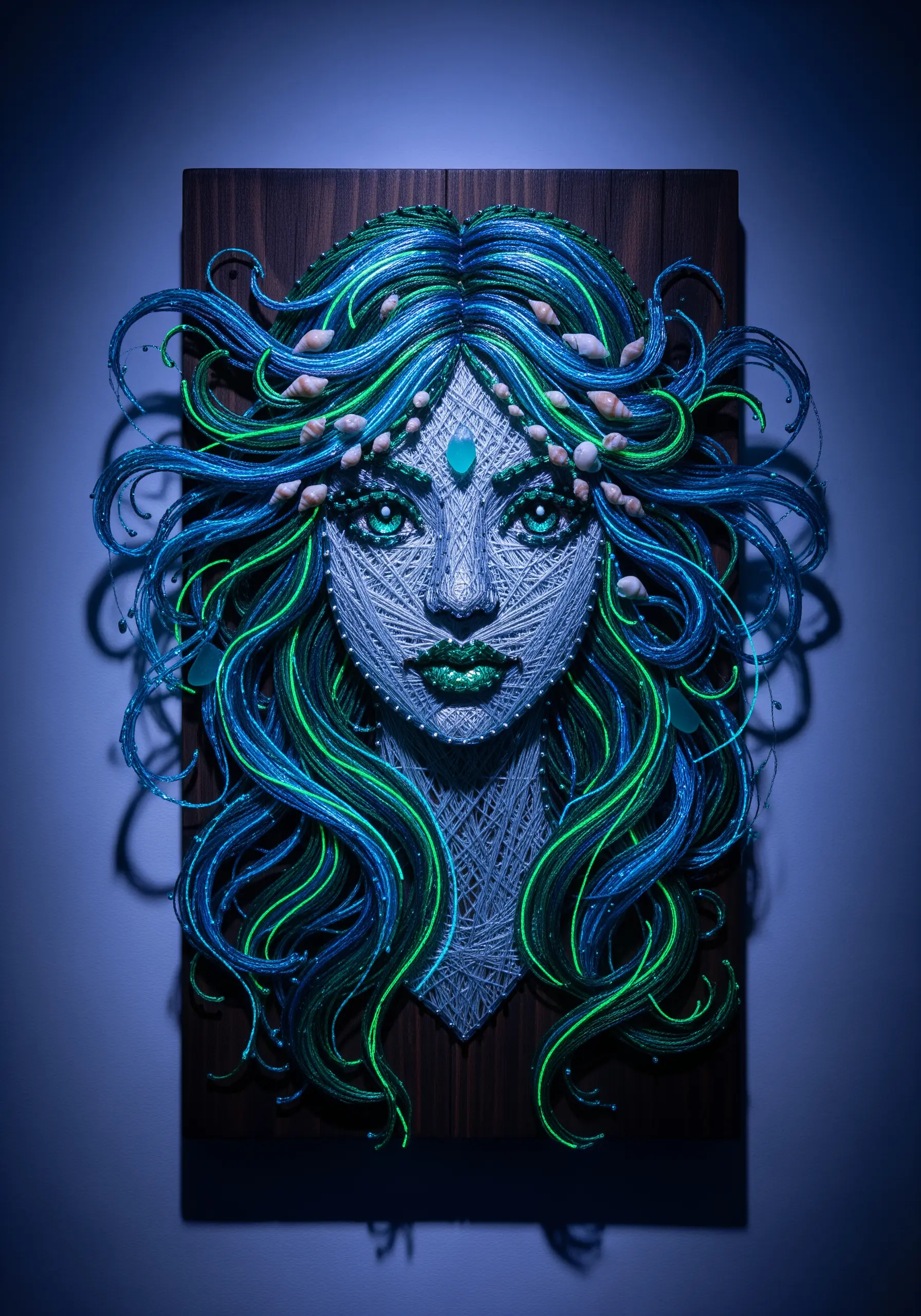
Design an ethereal, underwater-inspired portrait that seems to glow from within.
Use a base of silvery-white thread for the face to create a pale, moonlit complexion.
Weave in strands of glow-in-the-dark or fluorescent green and blue thread, especially in the hair and around the eyes, to mimic bioluminescence.
Incorporate small, iridescent shells, sea glass, or aqua-colored crystals as anchor points or decorative accents in the hair.
The finished piece will have a mystical, otherworldly quality that changes depending on the light.
19. Sculpt with Light Using Metallic Thread
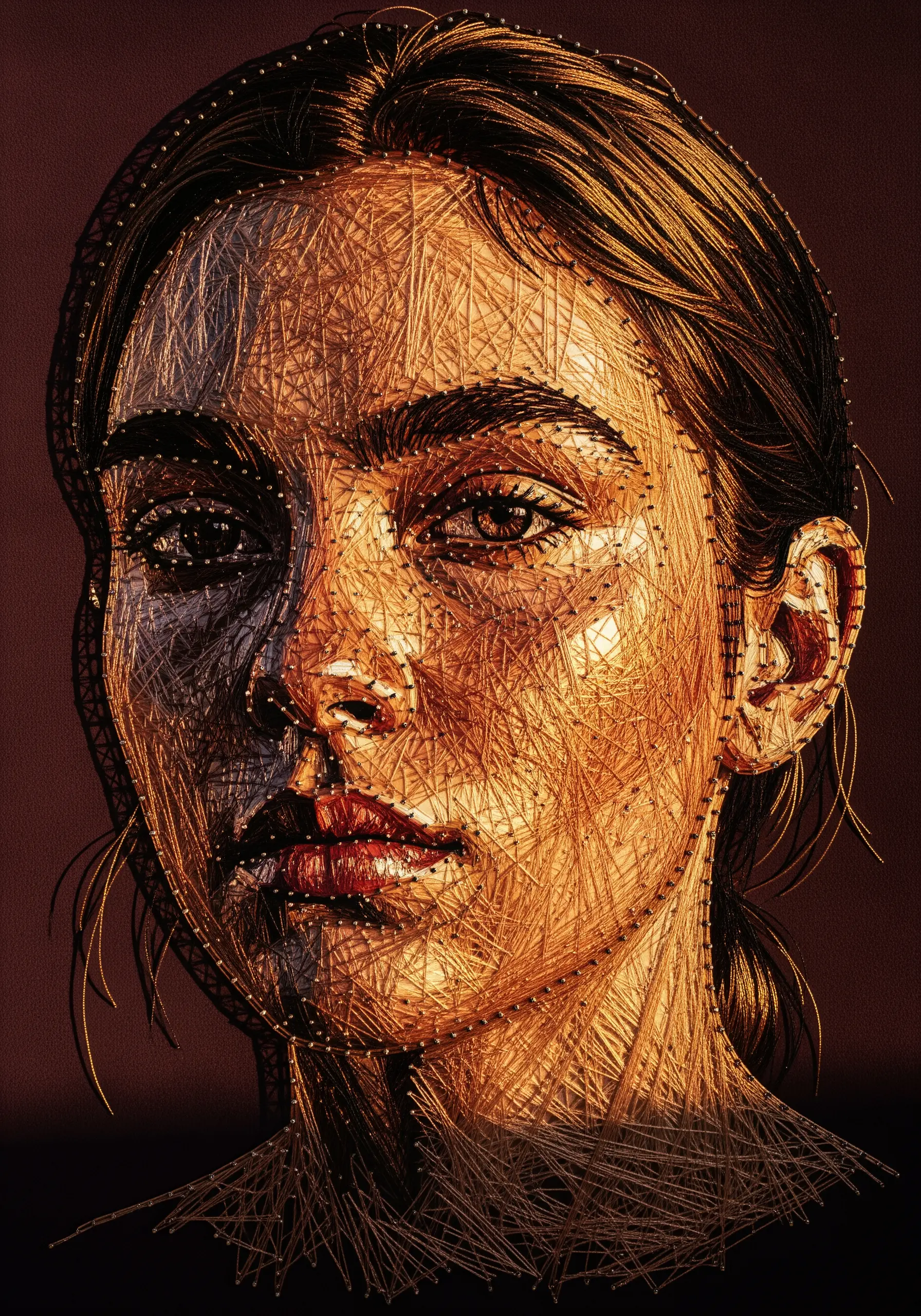
Create a portrait that feels like it’s cast in bronze by exclusively using metallic threads.
Work on a dark, warm-toned background like burgundy or chocolate brown to make the metallics shine.
Use gold, copper, and bronze threads to build the portrait, paying close attention to how light would realistically hit the face.
Layer the brightest gold threads on the high points—cheekbones, bridge of the nose, and brow bone—to create intense highlights.
The reflective quality of the thread will interact with the ambient light in the room, making the portrait feel dynamic and alive.
20. Integrate Steampunk Elements for a Mechanical Twist
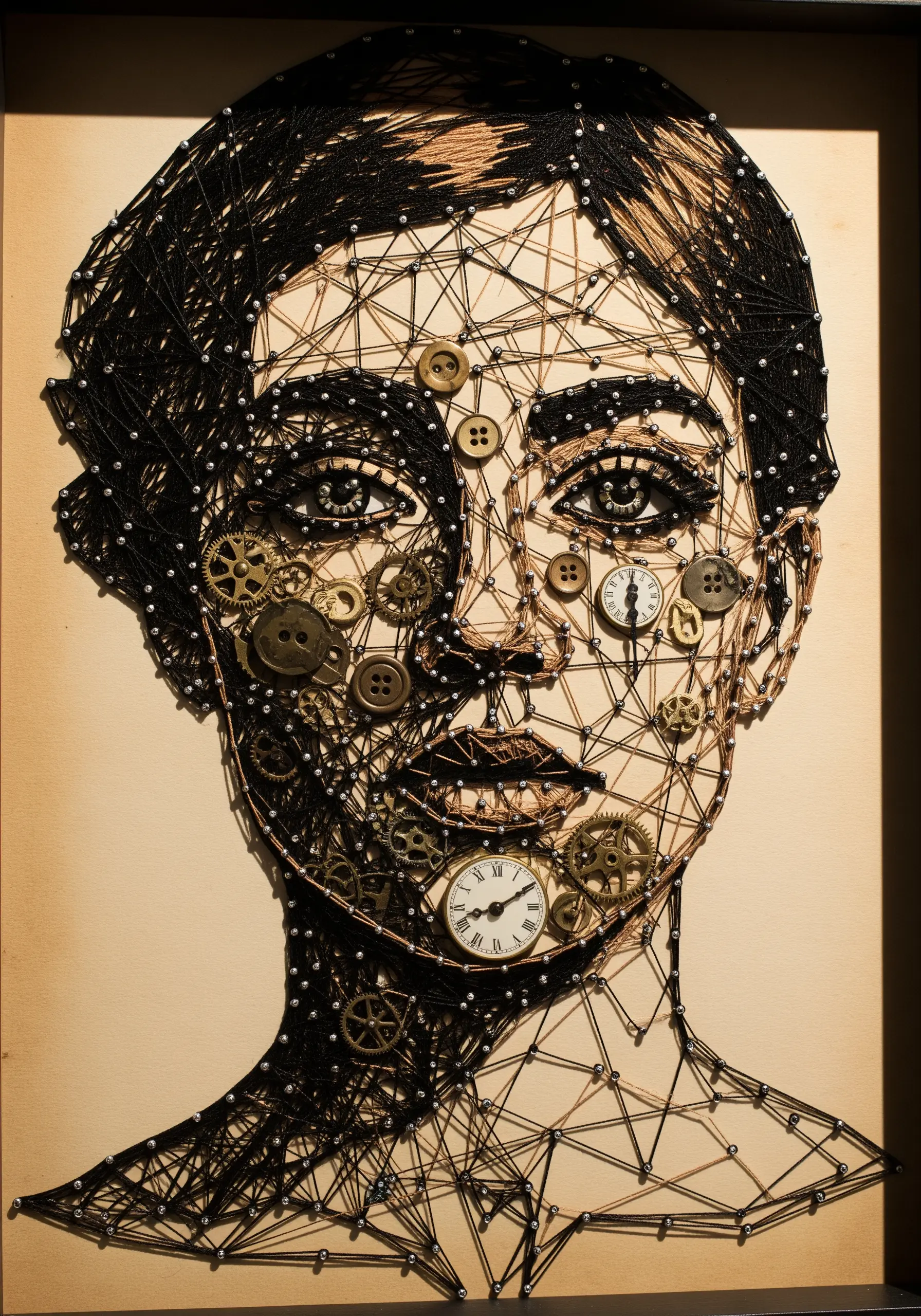
Merge the human form with mechanical fantasy by incorporating steampunk elements into your portrait.
Use a monochromatic palette of black, brown, and sepia threads to establish a vintage, industrial mood.
Strategically embed small, lightweight objects like watch gears, tiny clocks, and vintage buttons directly into the artwork, using them as focal points or even as unconventional anchor points.
This mixed-media approach adds a narrative layer, suggesting a story of invention, time, and machinery behind the face.
21. Replicate Classical Sculpture on Marble
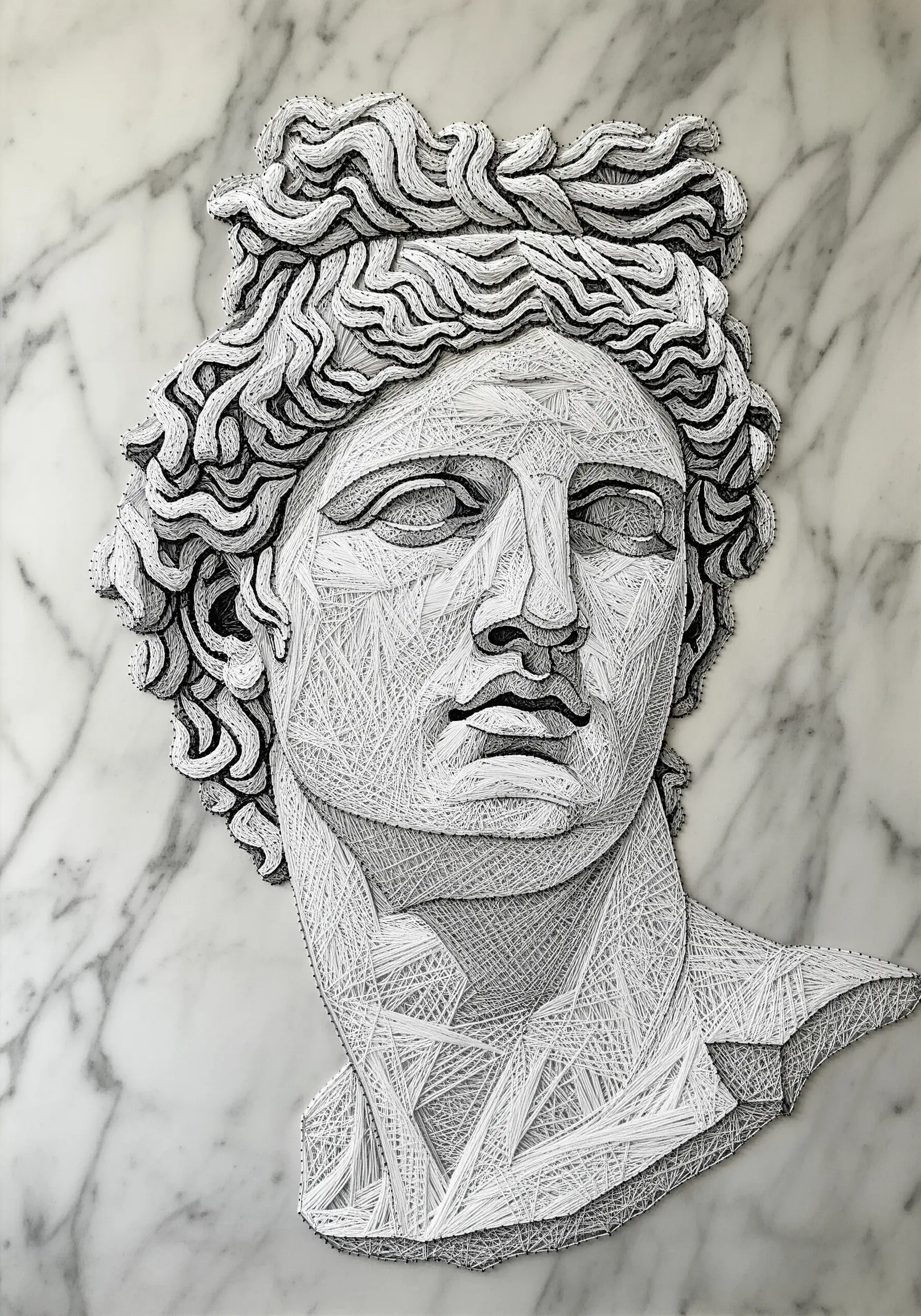
Evoke the timeless beauty of a Greco-Roman statue by creating a string art portrait on a marble-effect background.
Use only white, cream, and light gray threads to mimic the subtle tones of carved stone.
Pay close attention to form and shadow, using denser layers of thread to define the hollows of the eyes and the structure of the jaw.
The marble background adds an immediate sense of classical luxury and weight.
Focus on creating texture in the hair with looping, overlapping strands to replicate the look of carved curls, completing the sculptural illusion.