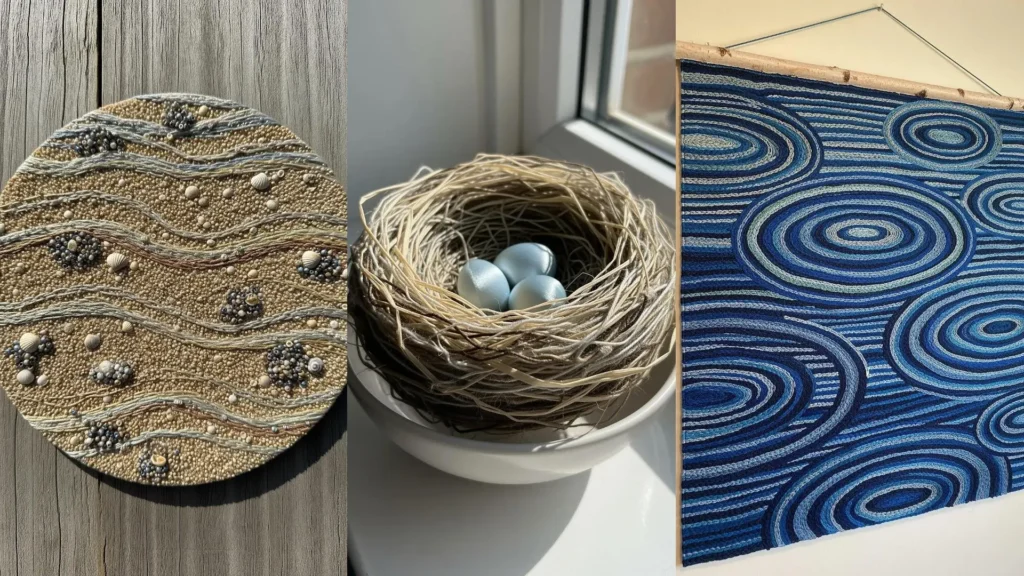
There’s a quiet satisfaction in the slow, steady rhythm of stitching, isn’t there? But sometimes, that calm process can lead to a finished piece that feels… not quite right. You know it has potential, but it’s missing the polish, the intention that would make you proud to display it in your home.
The secret isn’t necessarily more color or more complex patterns. It’s in the thoughtful use of neutrals. When you limit your palette to shades of ivory, sand, grey, and charcoal, you stop relying on color to do the heavy lifting. Instead, you begin to truly see the power of texture, the elegance of a clean line, and the beauty of a balanced composition.
Think of these ideas not as rules to follow, but as invitations to refine your eye and your technique. Each one is a small adjustment—a different stitch, a thicker thread, a focus on negative space—that can elevate your work from a simple craft to a piece of personal, serene art. Let’s begin.
1. Craft a Statement Wall with Yarn Couching
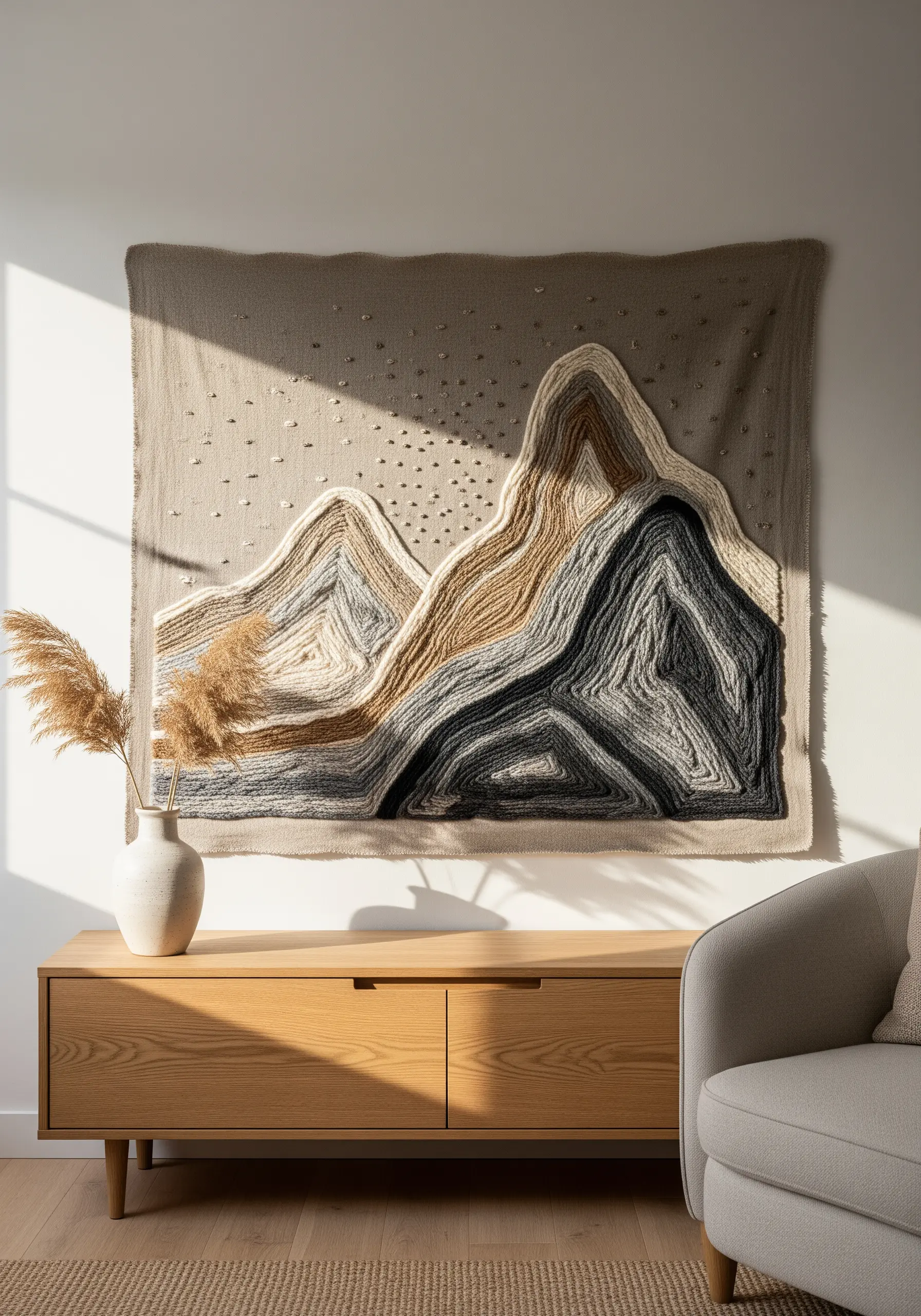
For a piece with genuine presence, move beyond floss and embrace thicker fibers like wool yarn or roving.
Use the couching technique—laying the yarn on your fabric and tacking it down with a finer thread—to create bold, flowing lines that mimic a topographical map.
This method allows you to work on a large scale, building dramatic texture and depth that transforms a simple wall into a focal point.
Select a sturdy backing fabric like linen canvas or burlap to support the weight of the yarn.
2. Master Tone-on-Tone Satin Stitch for Depth
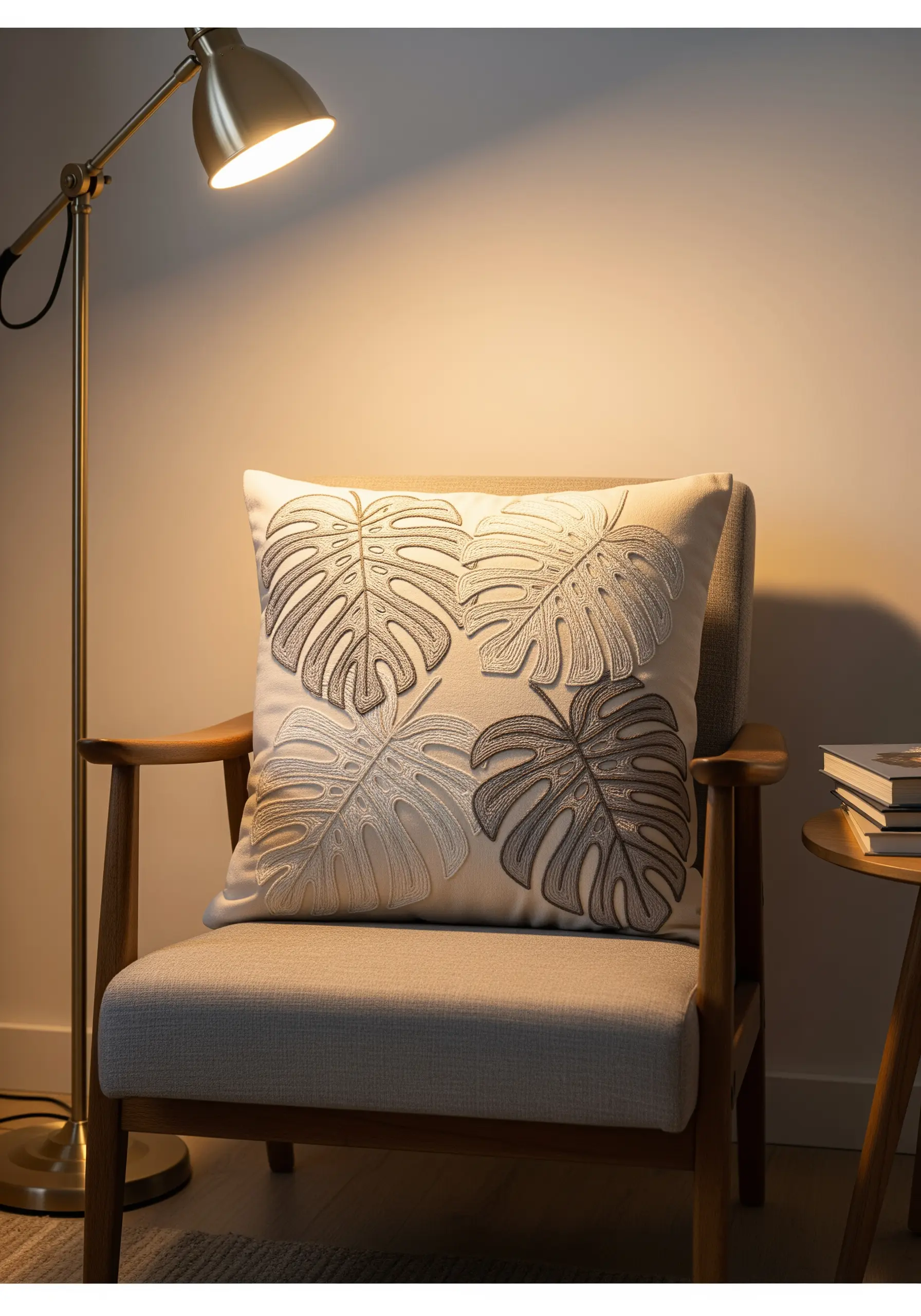
To create a sophisticated, rhythmic design, embroider the same motif using several adjacent shades from a neutral palette—ivory, sand, taupe, and charcoal.
By keeping the shape consistent but varying the tone, you add quiet depth and prevent the composition from appearing flat.
Use three strands of floss for a dense satin stitch with a soft sheen, which beautifully highlights the subtle shifts in color.
This tone-on-tone embroidery technique makes your work look cohesive and effortlessly elegant.
3. Sculpt with Thread Using Raised Stitches

To give your embroidery a three-dimensional, sculptural quality, combine different high-relief stitches.
Use a padded satin stitch for raised circular shapes by creating a foundation of small straight stitches before covering them.
For the flowing lines, a whipped backstitch or thick stem stitch will create a pronounced, cord-like effect that stands out from the fabric.
Choose a thread with body, like pearl cotton, to enhance the texture and make your design truly touchable.
4. Curate a Cohesive Hoop Art Gallery
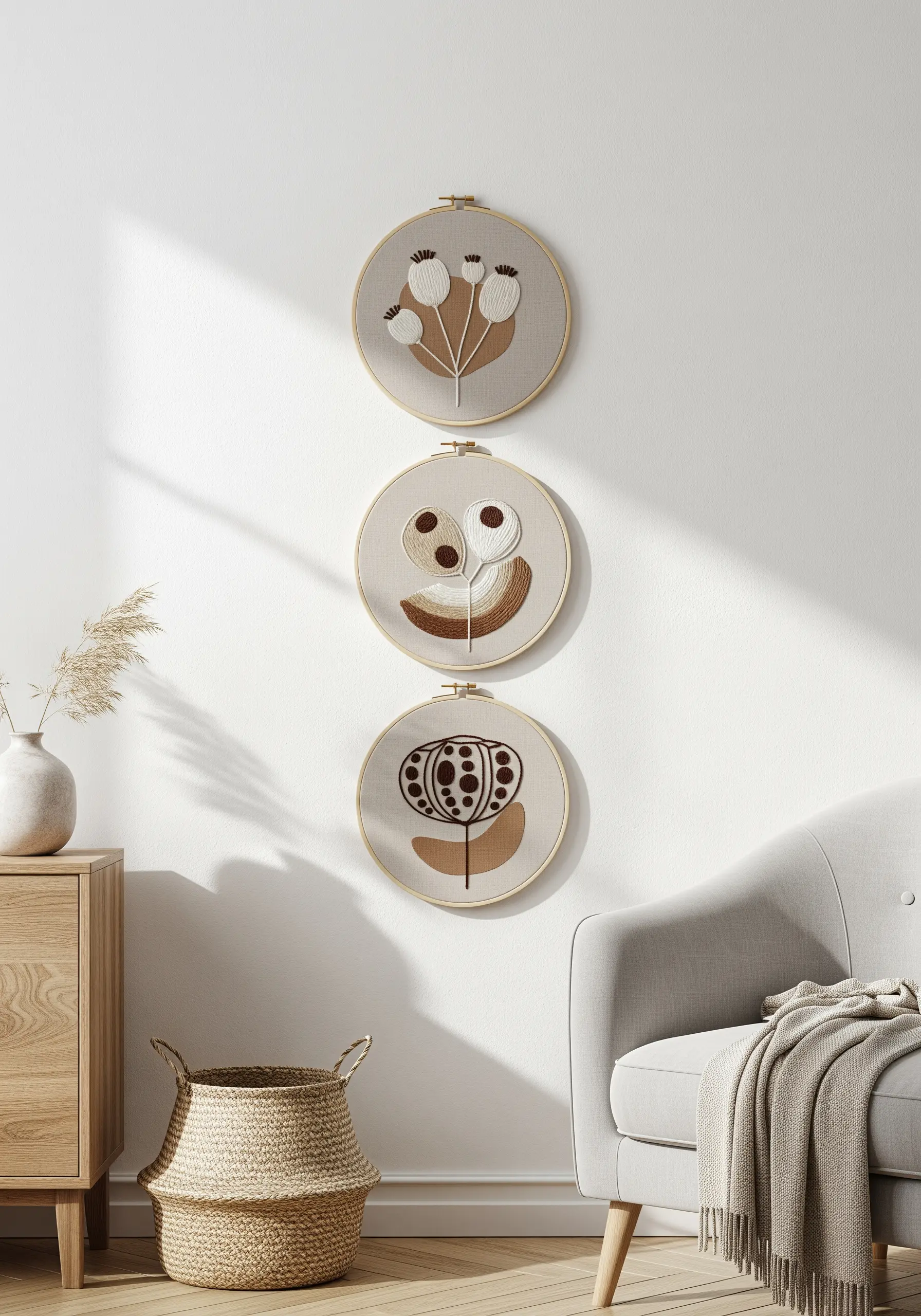
Create a polished display by grouping three or more hoops into a single, intentional collection.
Unify the series with a strict neutral color palette and a recurring theme, such as abstract botanicals or geometric forms.
Embrace negative space in your compositions; this allows each piece to breathe and contributes to a modern, uncluttered aesthetic.
Arranging them together transforms simple hoops into a sophisticated creative gallery wall.
5. Add Graphic Impact with Super-Chunky Couching

Instantly transform a plain knit throw or cushion by couching super-chunky yarn directly onto the surface.
Lay the thick yarn in a bold, geometric pattern and use a matching, thinner yarn to tack it down with small, discreet stitches between the knit loops.
This technique adds dramatic, graphic lines without compromising the softness and texture of the original piece, making it feel custom and high-end.
6. Create Depth with Fabric and Thread Collage
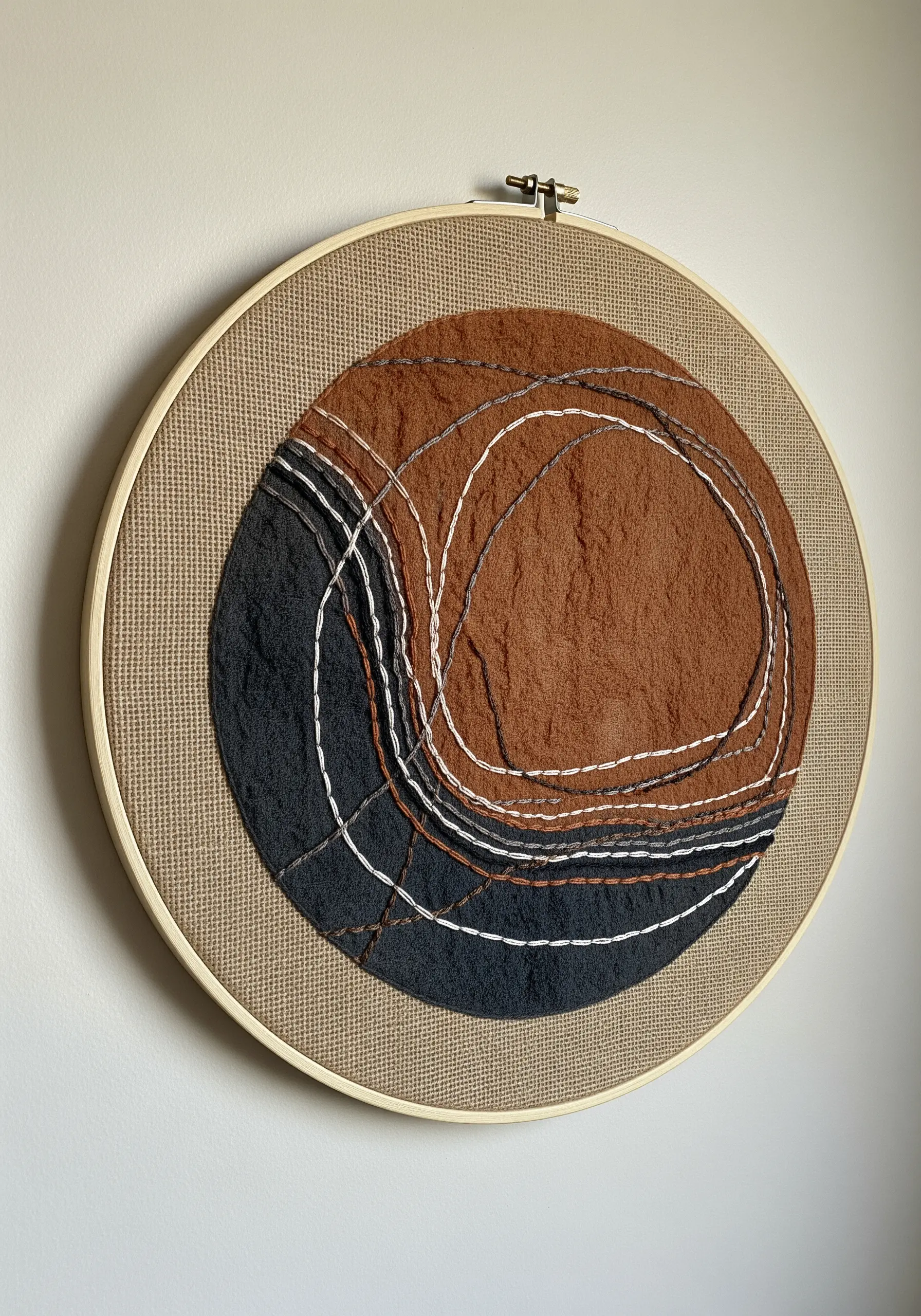
Before you even thread your needle, build a foundation of texture by appliquéing swatches of neutral fabrics onto your base cloth.
Choose materials with varied weaves and weights, like raw silk, wool felt, or linen, to create tactile interest.
Then, use simple running or backstitches to connect and overlay these fabric shapes, turning your embroidery into a thoughtful, abstract fabric collage with layers of depth.
7. Paint with Texture Using French Knot Fills
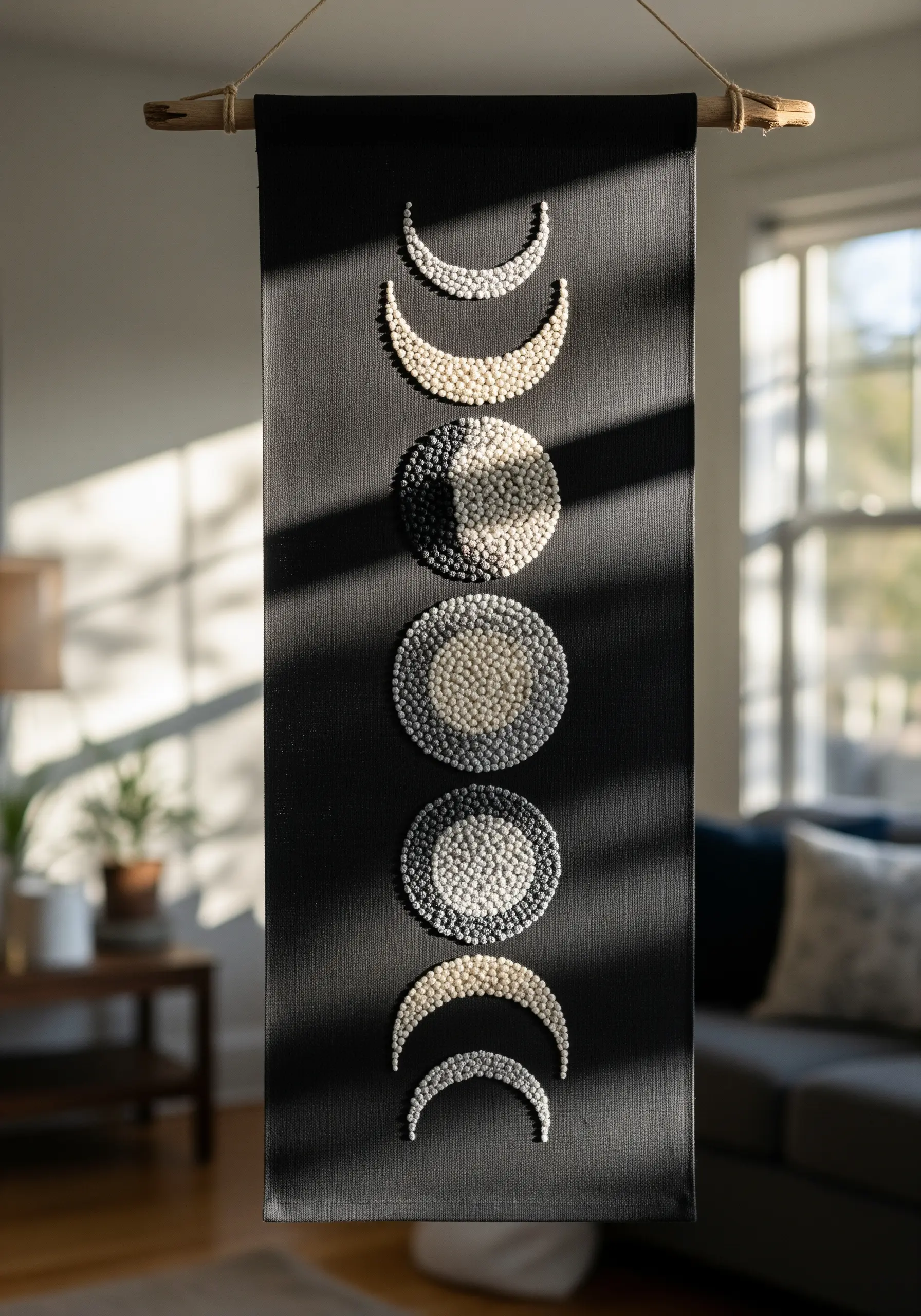
Move beyond flat fills and use dense clusters of French knots to create a rich, pebbled texture.
To achieve a subtle gradient, as seen in these moon phases, work with three or four closely related neutral shades, blending them together organically.
By packing the knots tightly, you create a pointillist effect that gives simple shapes a tactile, visually complex quality that invites touch.
This method transforms your floss into a textural paint.
8. Elevate Furniture with Geometric Repetition

A simple, repeating geometric pattern is a powerful tool for transforming a plain piece of upholstered furniture into a bespoke statement.
Use a durable thread like pearl cotton and a clean backstitch to ensure your lines are crisp and uniform.
The key to a professional finish is precision: use a water-soluble marker and a ruler to map out your grid before stitching, ensuring perfect symmetry and alignment.
9. Weave Delicate Botanicals with Straight Stitches
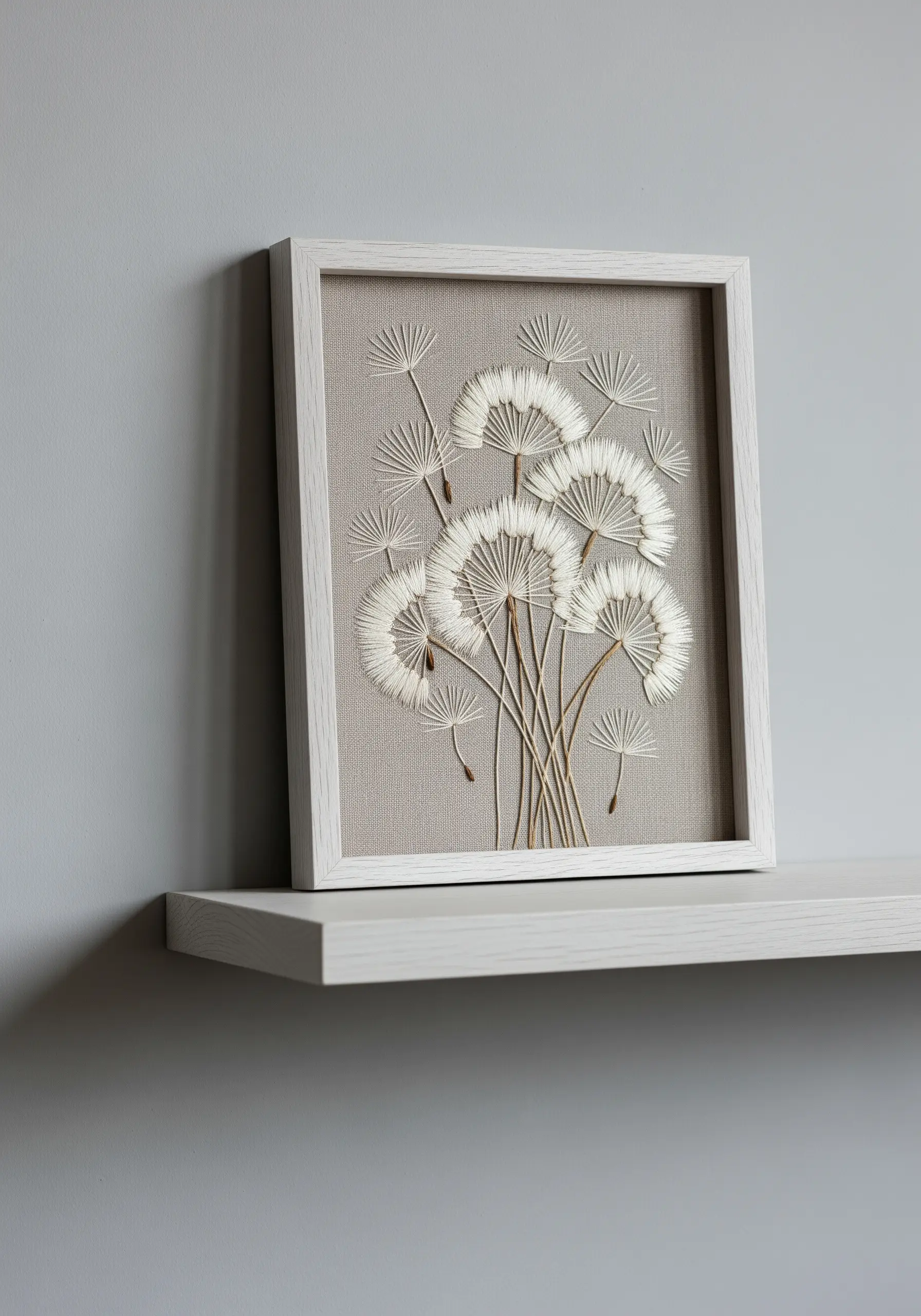
You can create incredibly light and airy forms, like these dandelion clocks, using only the humble straight stitch.
Build the structure with long stitches radiating from a central point, then add shorter, layered stitches to create the fluffy seed heads.
Using a single strand of floss enhances the delicate, almost-transparent quality, while the contrast between dense centers and sparse stems adds beautiful movement.
10. Add Graceful Details to Sheer Fabrics

Embroidering on sheer fabrics like linen voile creates a magical effect where the stitches seem to float.
The technical key is to use a water-soluble stabilizer; it provides the necessary support during stitching and then washes away completely, preventing any puckering.
Choose a simple, elegant motif and a lightweight stitch, like a backstitch or stem stitch, for a clean, ethereal finish that enhances the light-filtering quality of the fabric.
11. Integrate Crocheted Elements for 3D Texture
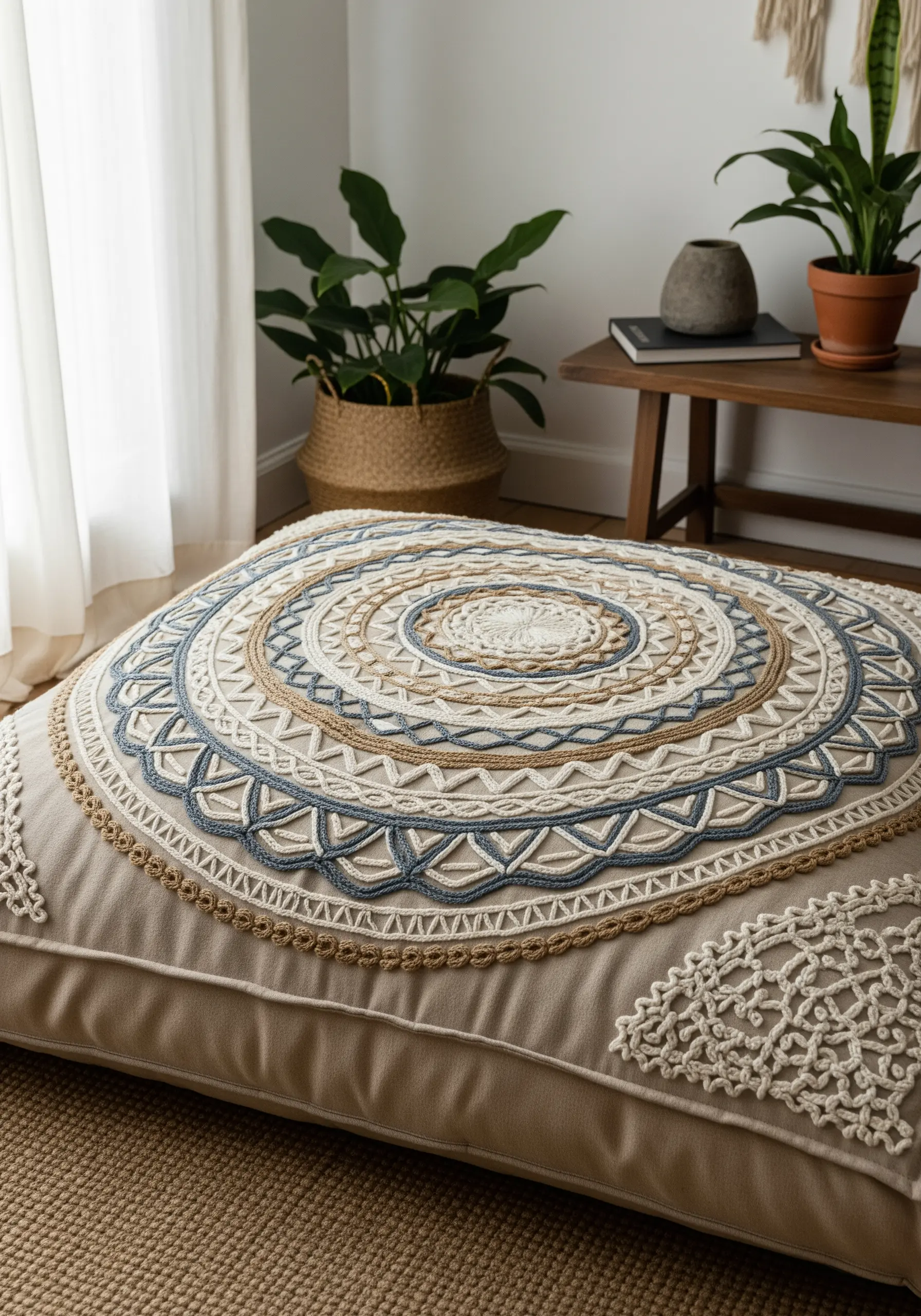
For a truly unique, multi-dimensional piece, combine your embroidery with crochet details.
After stitching the flat portions of your design, create small crocheted medallions, picot edges, or simple chains separately.
Securely tack these elements onto your fabric surface to add a layer of rich, handmade texture that flat embroidery alone cannot replicate.
This mixed fiber approach adds incredible depth and a cozy, bohemian feel.
12. Achieve Botanical Realism with Thread Painting
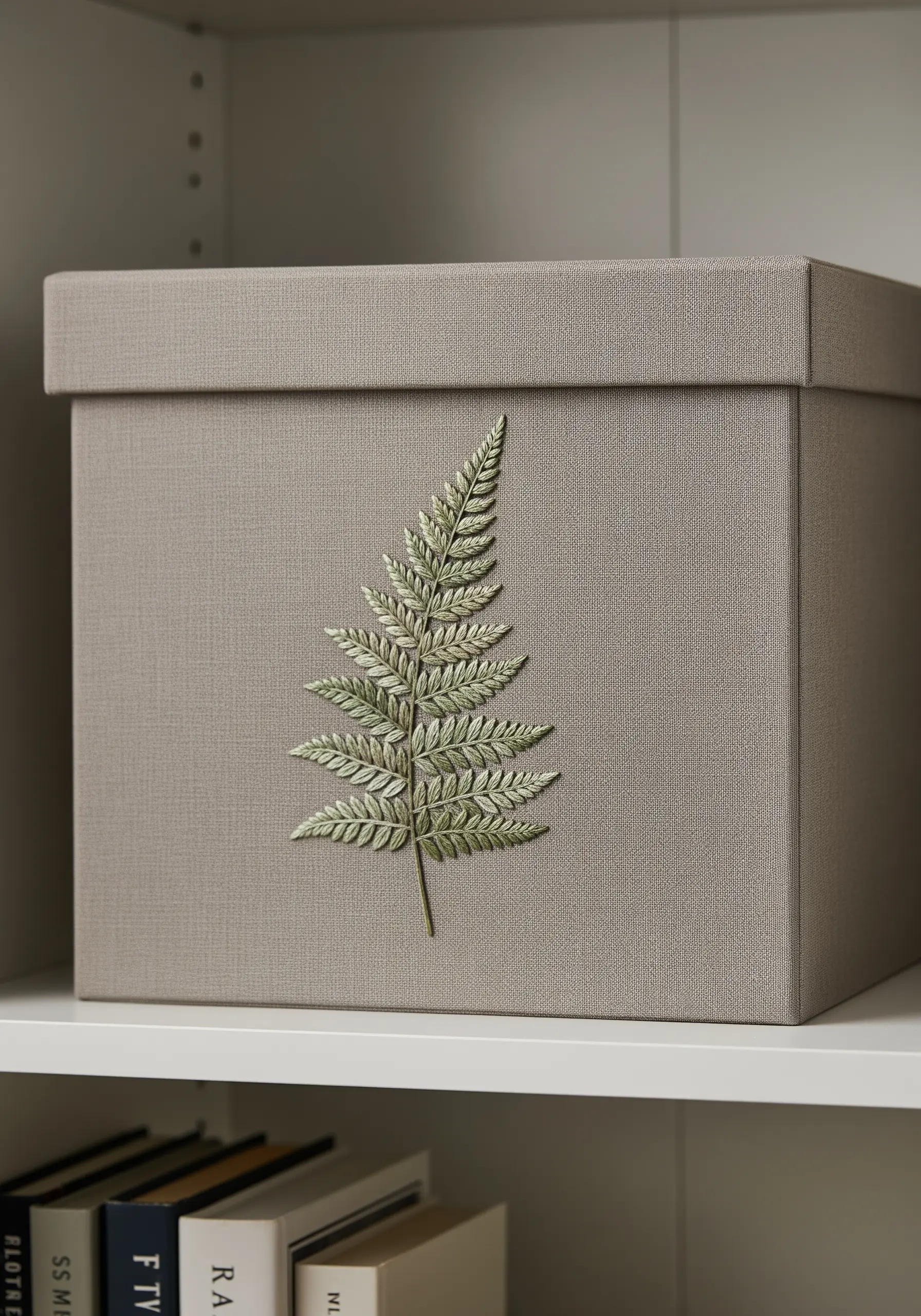
To capture the lifelike detail of a single fern frond, use the long-and-short stitch, also known as thread painting.
Work with a single strand of floss and two or three very similar shades of a neutral green or grey to create subtle highlights and shadows.
Vary the length and angle of your stitches to follow the natural, organic growth of the leaf, allowing the colors to blend seamlessly and create a realistic, dimensional effect.
13. Define Minimalist Icons with Raised Stitches
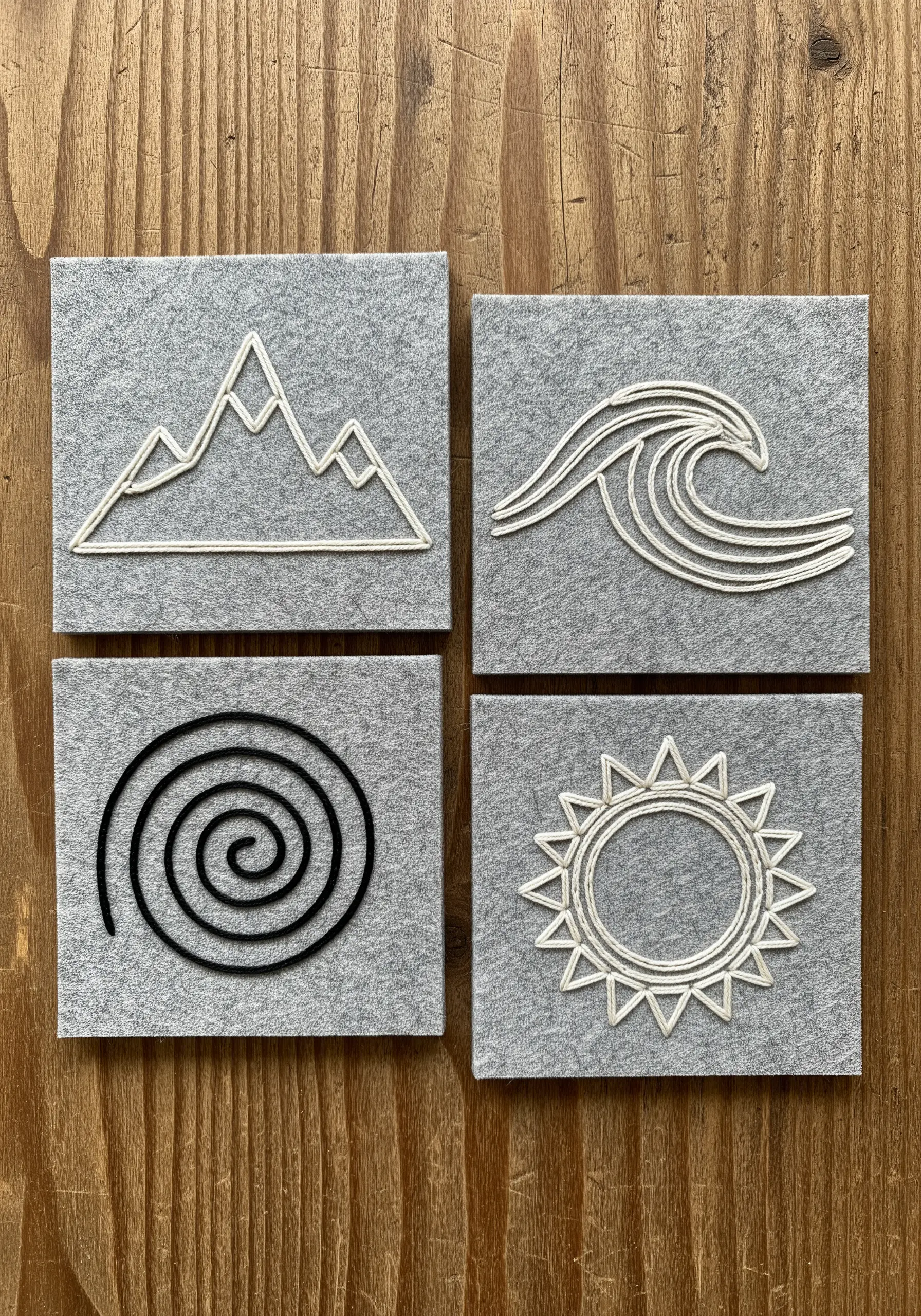
Make simple line art feel substantial and modern by using a stitch that creates a raised, cord-like line.
A whipped chain stitch or a heavy stem stitch worked in pearl cotton will give your minimalist symbols a clean, sculptural quality.
This technique elevates basic icons from flat drawings to tactile objects, adding a sophisticated finish to items like coasters or small art pieces.
14. Create Drama with Negative Space and Silhouette

When working on a large canvas, the unstained fabric is just as important as your stitches.
Choose a strong, simple silhouette and place it off-center to create a dynamic composition.
Fill the shape with a dense, textural stitch like seed stitch or French knots, allowing the quiet of the surrounding negative space to amplify its impact.
This balanced approach creates a powerful piece of art that feels both intentional and serene.
15. Capture Movement with Directional Stitching

To evoke the flow of rolling landscapes or gentle waves, use long, directional straight stitches as your paintbrush.
Work with several neutral shades simultaneously, letting your stitches follow the contours of your imagined terrain.
By blending the colors and aligning your stitches with the form, you create a powerful sense of movement and transform a static design into a dynamic, abstract thread landscape.
16. Design a Subtle Pattern with Scattered Motifs
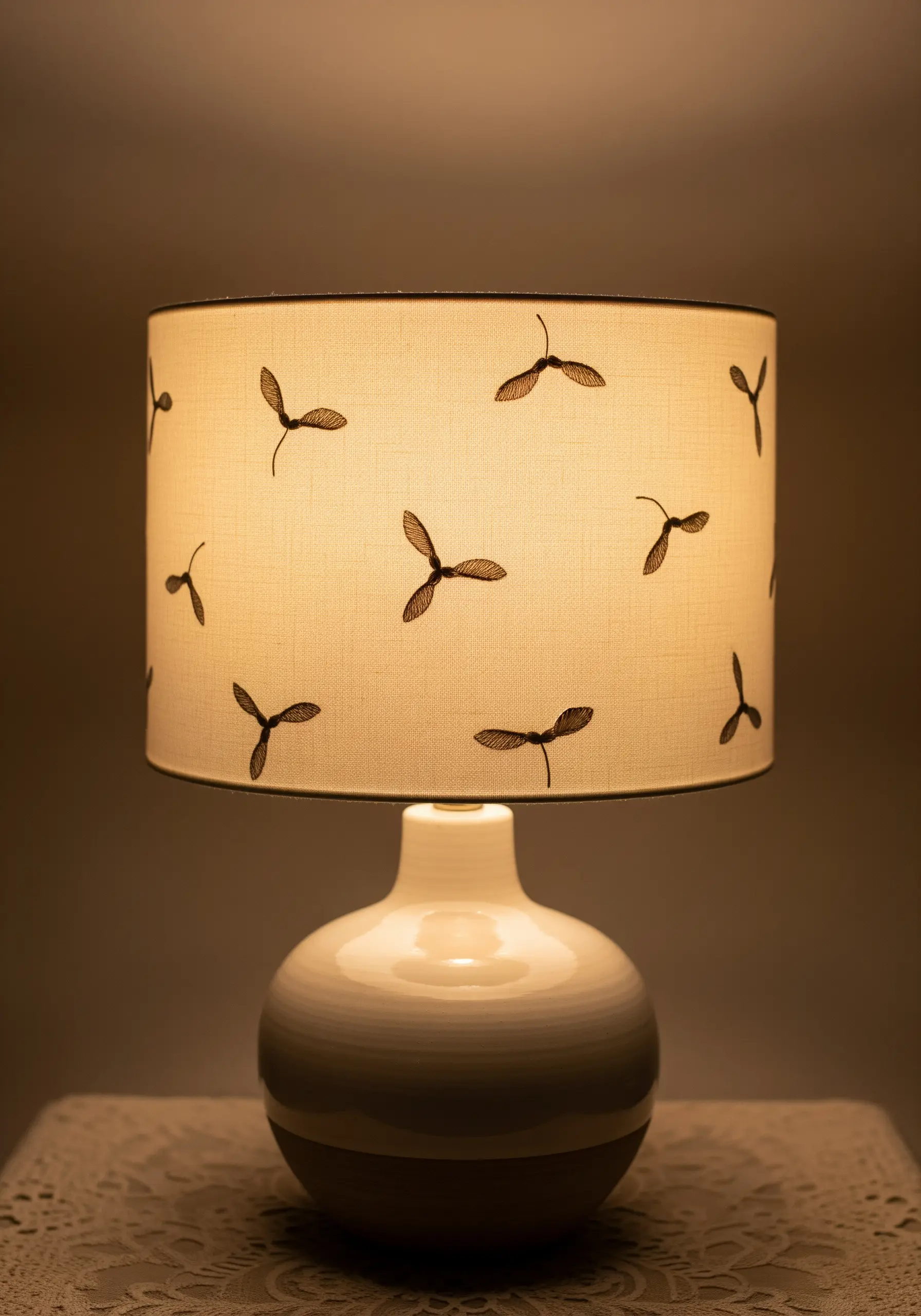
Add a delicate, custom touch to home textiles by scattering small, simple motifs instead of creating a formal repeating pattern.
Embroider your chosen icon—like these seed pods—in a random arrangement using a simple satin stitch or outline.
This technique gives the piece an organic, gentle feel and is a perfect way to personalize functional items like lampshades or napkins without overwhelming them.
17. Construct a Wall Hanging with Mixed Fibers
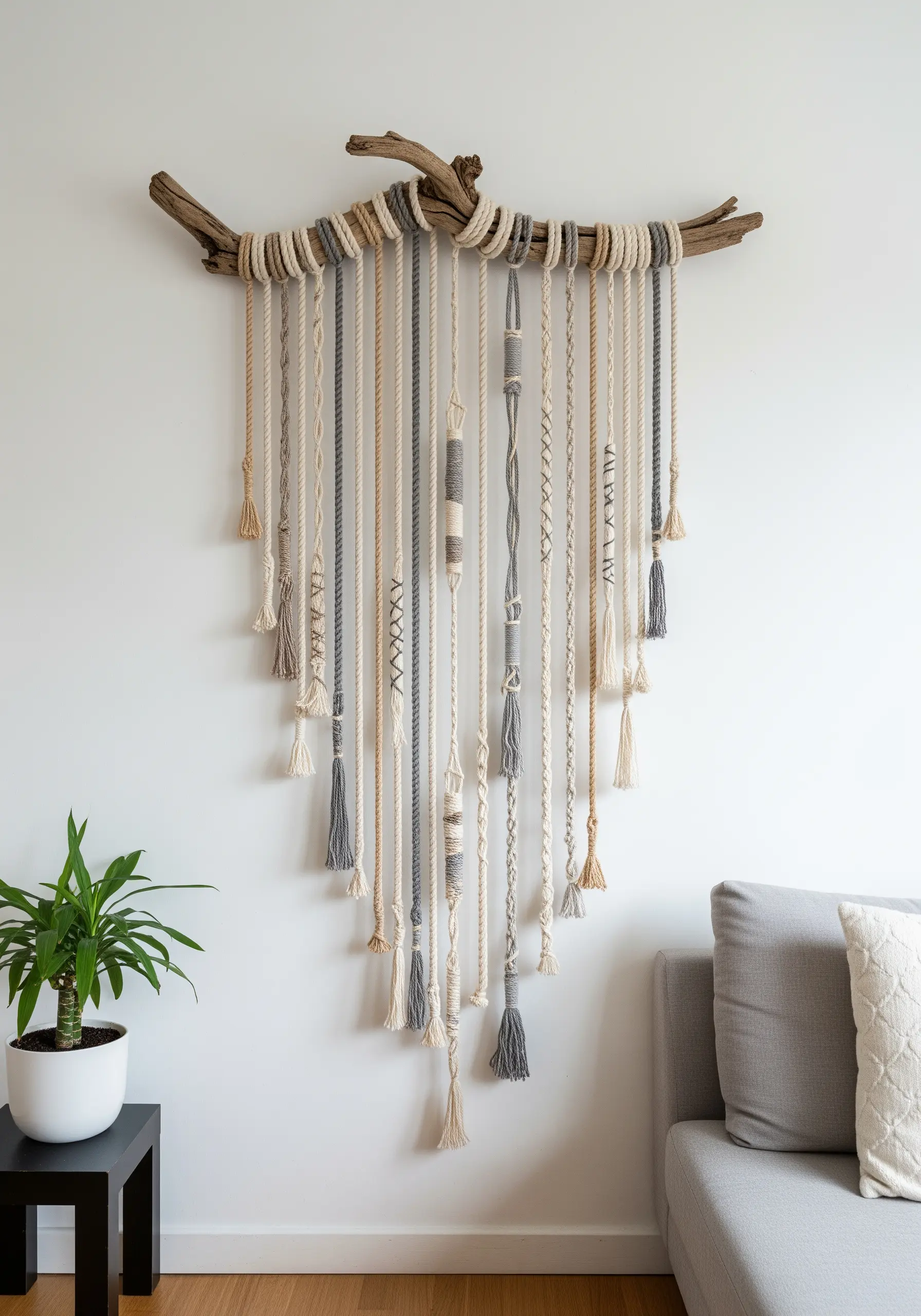
Move your stitching off the hoop and onto a sculptural form by creating a textural wall hanging.
Begin with a natural element like a piece of driftwood, then anchor an assortment of neutral-toned ropes, yarns, and threads to it.
Incorporate simple stitched details—wrapping, knotting, or couching—directly onto the hanging fibers to create a mixed-fiber art design that celebrates texture, dimension, and material.
18. Add a Modern Accent with a Chevron Border
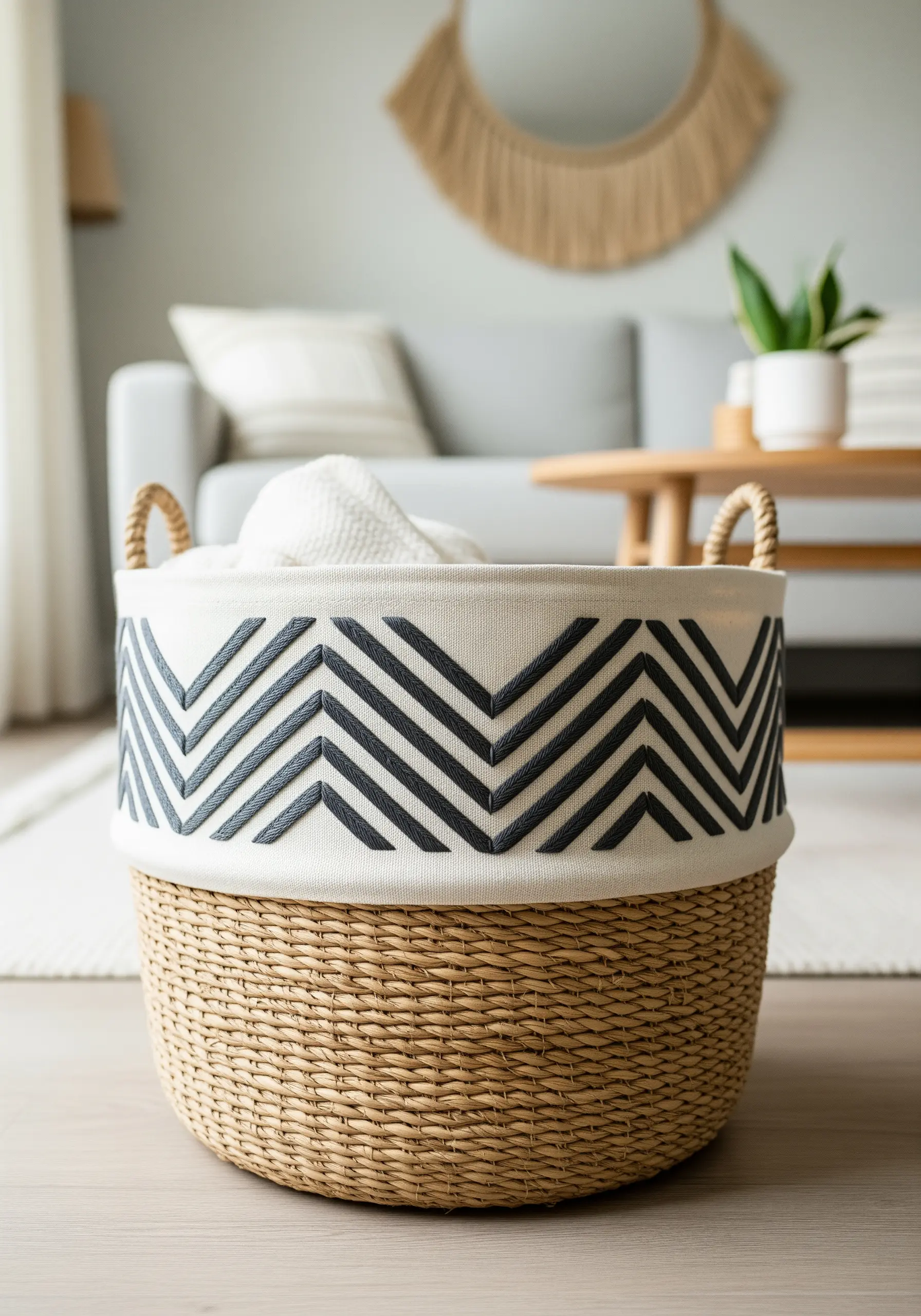
Elevate everyday objects by adding a custom embroidered band.
A bold, graphic pattern like a chevron, worked in a dense satin stitch, creates a sharp, modern contrast against a natural texture like wicker or linen.
Stitch the design onto a separate strip of fabric, then wrap and secure it around your item.
This versatile method allows you to add a clean, tailored finish to baskets, vases, or planters.
19. Build Geological Textures with Layered Stitches

Mimic the beautiful, stratified look of sedimentary rock by building up dense layers of varied stitches.
Work in horizontal bands, alternating between French knots, seed stitches, and straight stitches in a palette of earth tones.
The different textures create visual strata, giving your piece the feeling of a natural cross-section.
A clean frame contains the intricate detail, turning it into a sophisticated piece of abstract art.
20. Animate Botanicals with Strategic Stitch Direction
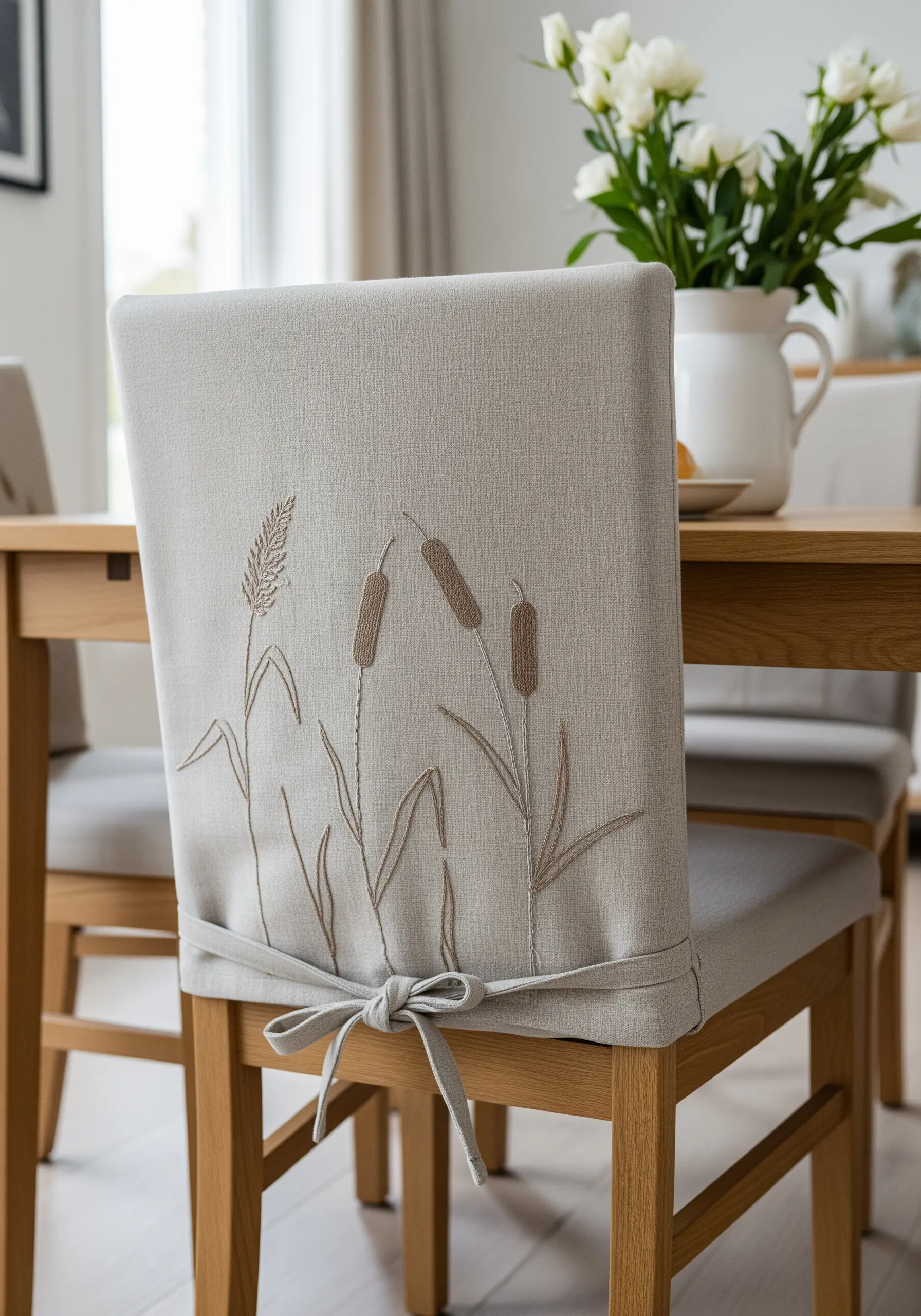
Bring simple botanical motifs to life by letting the direction of your stitches follow the plant’s natural form.
Use a single, curving backstitch to create elegant stems. For the cattail heads, use a padded satin stitch with vertical stitches to give them a plush, rounded dimension.
This attention to detail makes your work feel dynamic and organic rather than flat and static.
21. Personalize Storage with Minimalist Motifs

Transform a purely functional item, like this fabric organizer, into a piece of subtle decor with tiny, hand-stitched details.
Instead of words, use simple, minimalist icons to label each pocket.
A few carefully placed backstitches in a contrasting neutral thread are all that is needed to add a touch of personality and handmade charm, making organization feel more intentional and artful.
22. Define and Enhance Space with a Continuous Border
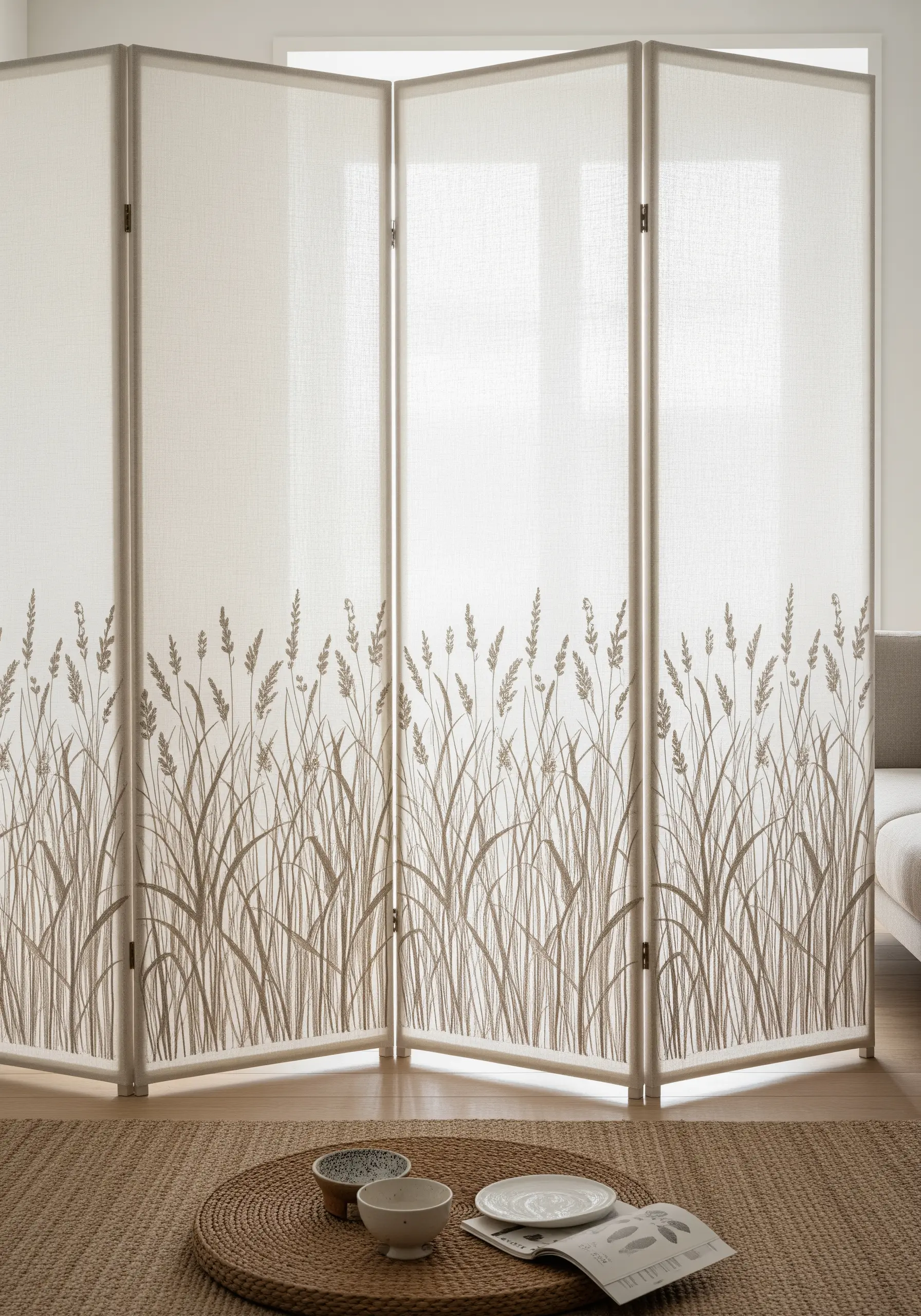
On a large piece of furniture or a room divider, an embroidered border can create a beautiful visual frame.
Stitch a continuous pattern of a natural element, like these wheat stalks, along the edge to ground the piece.
Use a light, open stitch like a stem or split stitch to keep the design from feeling heavy, elegantly defining the space without enclosing it.
23. Create Bold Line Art with Couched Cord

To translate a fluid, single-line drawing into embroidery with maximum impact, couch a thick cord onto your fabric.
This technique is faster and creates a much bolder, more sculptural line than using multiple strands of floss.
Simply lay the cord along your design and tack it down with a single, matching strand of thread.
It’s the perfect method for minimal portrait line embroidery and expressive abstract figures.
24. Compose a Mosaic with Punch Needle Pebbles

Use punch needle embroidery to create a wonderfully tactile, abstract composition.
Draw organic, pebble-like shapes on your canvas and fill them with dense punch needle loops in a curated palette of neutrals.
By varying the size, shape, and color of each ‘pebble,’ you can create a balanced, mosaic-like piece with a satisfying texture that feels both modern and earthy.
25. Craft a Meditative Centerpiece with Coiled Rope

Create a powerful, minimalist art piece by coiling natural fiber rope into a tight spiral.
As you work, use a sturdy needle and matching thread to stitch through the coils, securing them together into a flat medallion.
Mount the finished circle onto a contrasting background, like dark linen, to emphasize its simple, graphic form.
The result is a piece with a strong, centering presence that adds a touch of organic modernism to your wall.
26. Embellish Utilitarian Objects with Simple Stitches
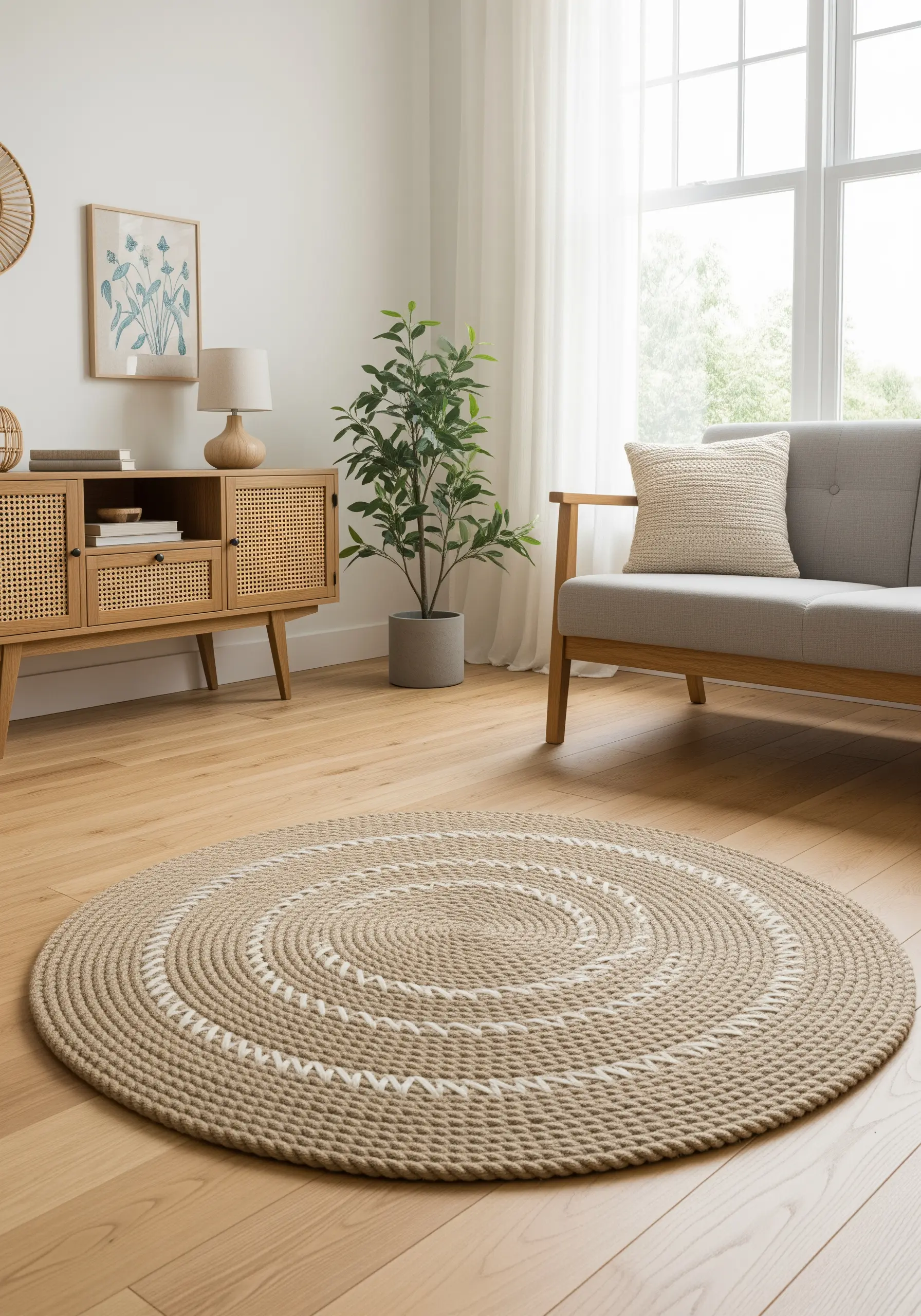
Elevate a simple, functional object like a coiled rope rug or basket with a touch of decorative stitching.
After the main construction is complete, use a thick, contrasting yarn and a large darning needle to add a simple whipstitch or running stitch along the coils.
This small detail not only adds visual interest and a handmade feel but can also help reinforce the structure of the piece.
27. Replicate Delicate Veins with String Art Stitches

For fine, web-like details such as leaf veins, borrow techniques from string art.
Use a fine but strong thread and create anchor points along the outline of your shape.
Stretch the thread in long, straight lines between these points, crisscrossing them to build up a delicate, intricate network.
This method is perfect for capturing nature’s textures with a unique sense of lightness and fragility.