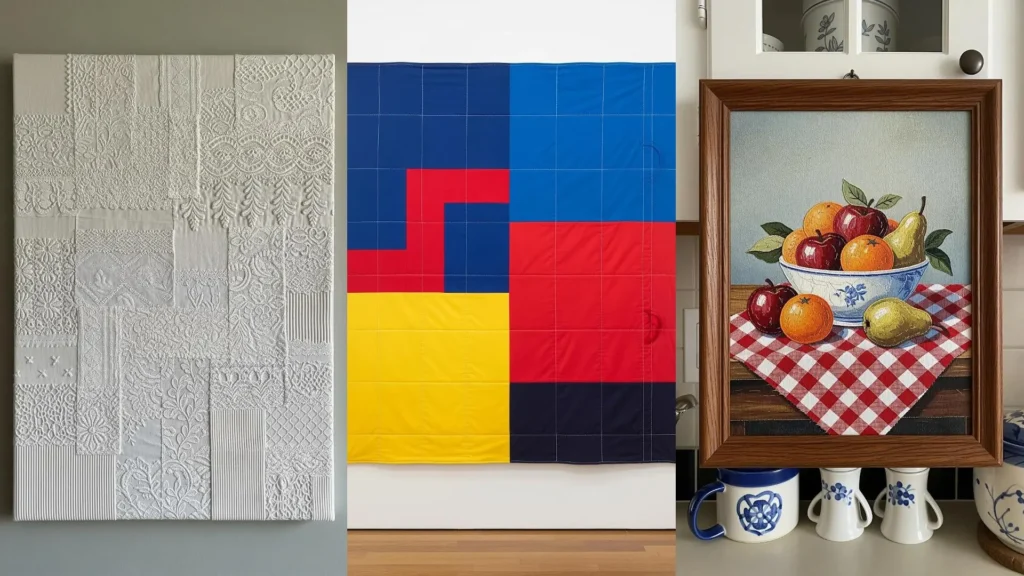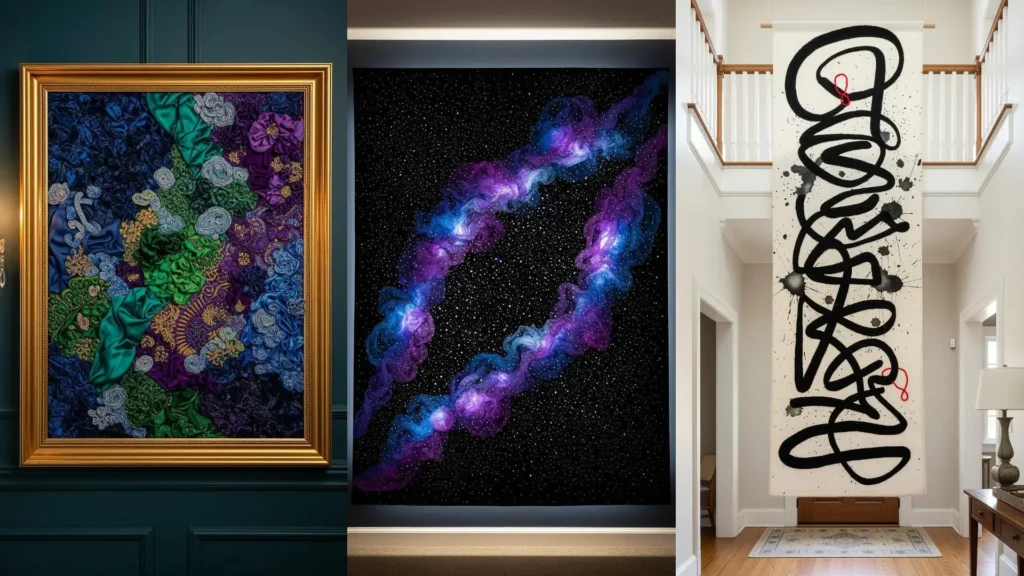
If you’ve ever felt that your embroidery could be more expressive—more like painting and less like following a pattern—then it’s time to explore the world of abstract fabric collage.
This is where you set aside precise outlines and instead think in terms of color, texture, and form. It’s an invitation to use your fabric scraps and threads not just to fill a shape, but to build a surface rich with depth and personal expression.
Here, your needle and thread become a tool for drawing, layering, and unifying. You’ll learn to see your materials differently, transforming simple stitches and leftover fabric into intentional, modern art for your walls. Let’s begin.
1. Explore Tonal Fields with Seed Stitch
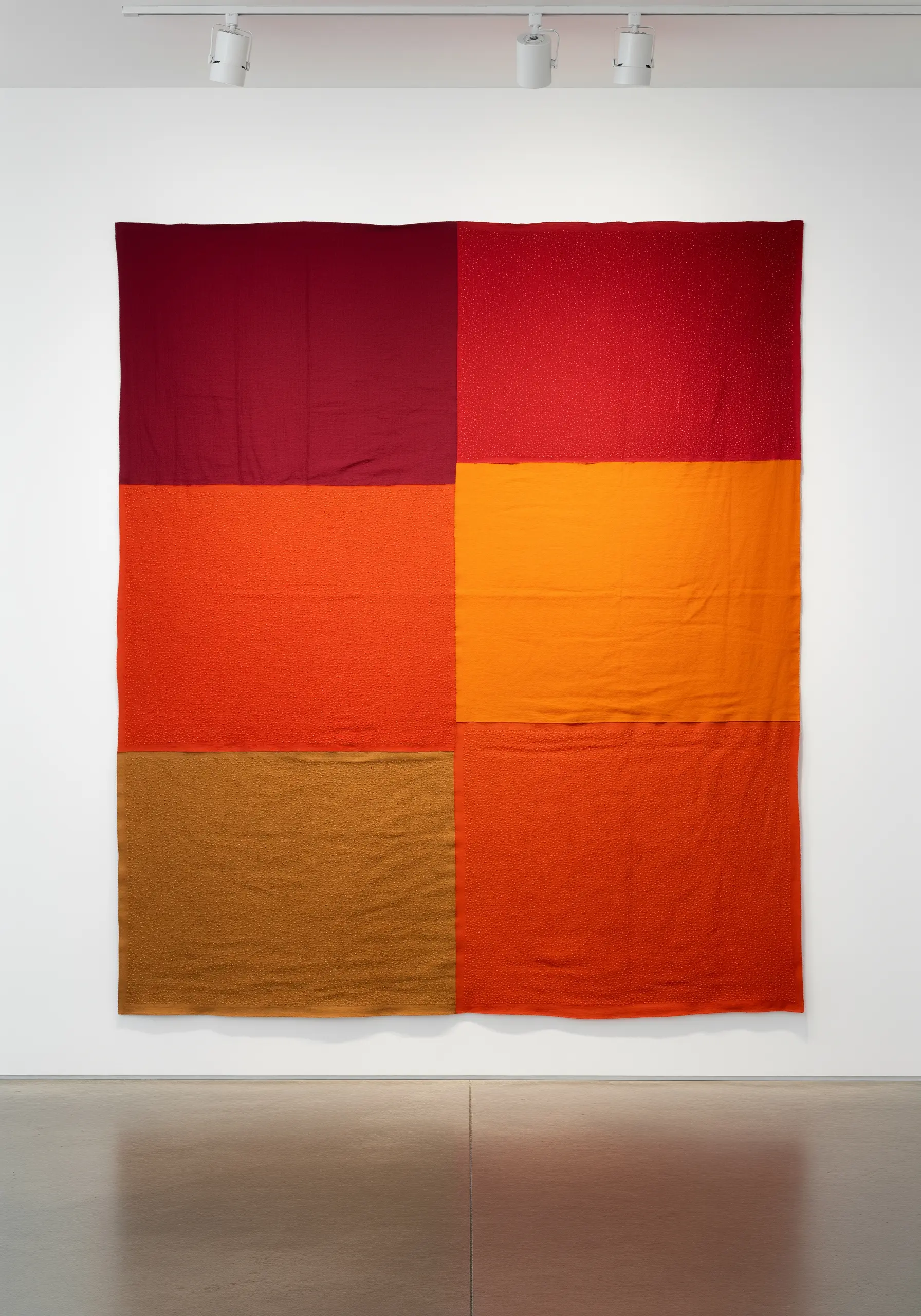
Create a large-scale color block composition by stitching together solid panels of fabric.
Instead of leaving the fabric plain, unify the entire surface with a dense, scattered seed stitch using a thread that is one shade darker or lighter than the fabric itself.
This adds a subtle, shimmering texture that catches the light, transforming simple fabric squares into a cohesive, painterly surface.
The goal isn’t perfect uniformity but a gentle vibration of texture that makes the color feel deeper and more alive.
2. Deconstruct Geometry with Visible Mending Stitches
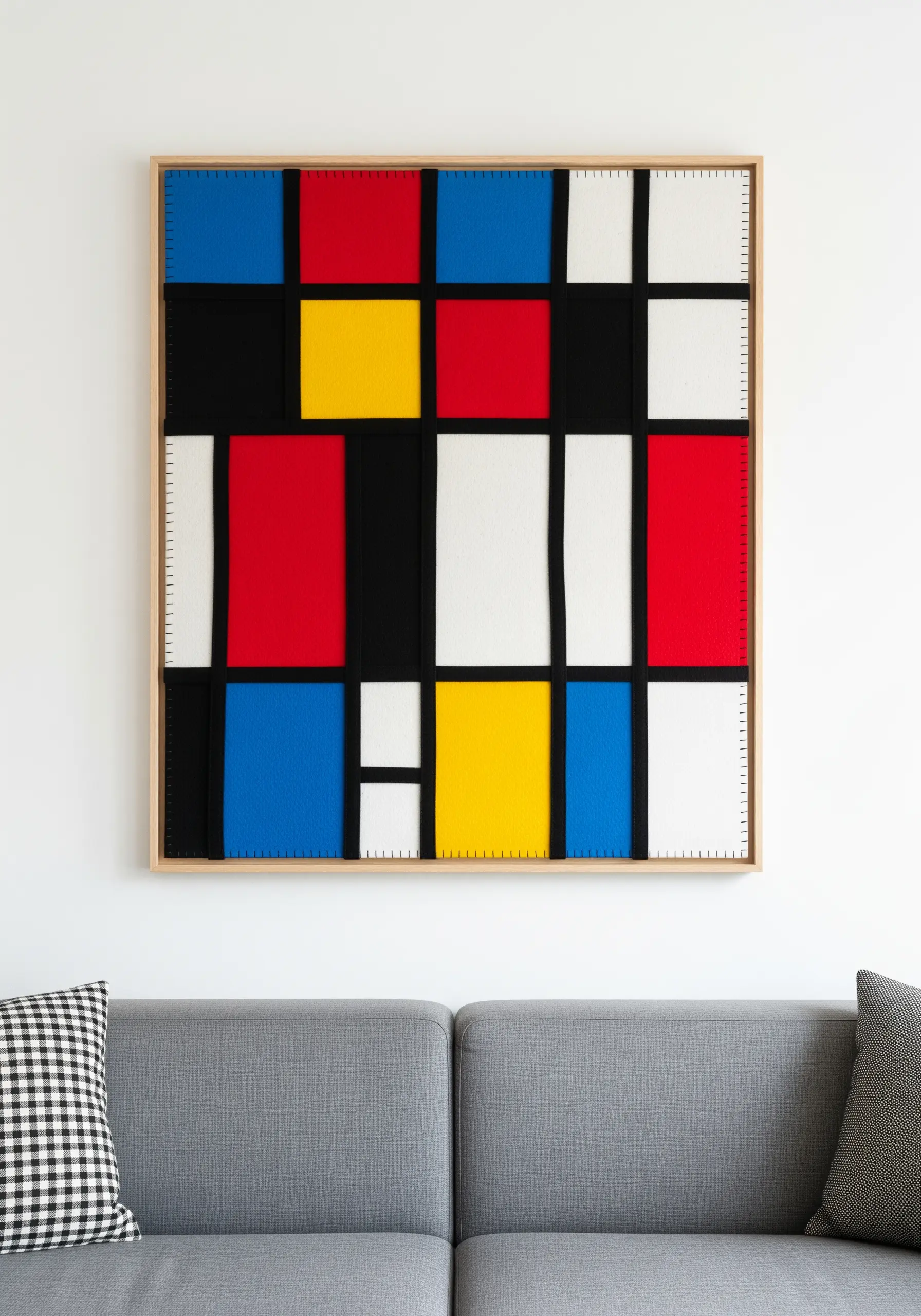
Build a composition inspired by modern art, using bold, solid-colored fabric blocks.
Instead of hiding your seams, connect the pieces with a prominent, contrasting running stitch, similar to Japanese Boro or Sashiko.
This technique turns the construction itself into a design element, celebrating the hand of the maker.
Use a thick, soft cotton pearl thread for stitches that have presence and a clean, graphic quality against the solid colors.
3. Create Ethereal Flow with Layered Organza
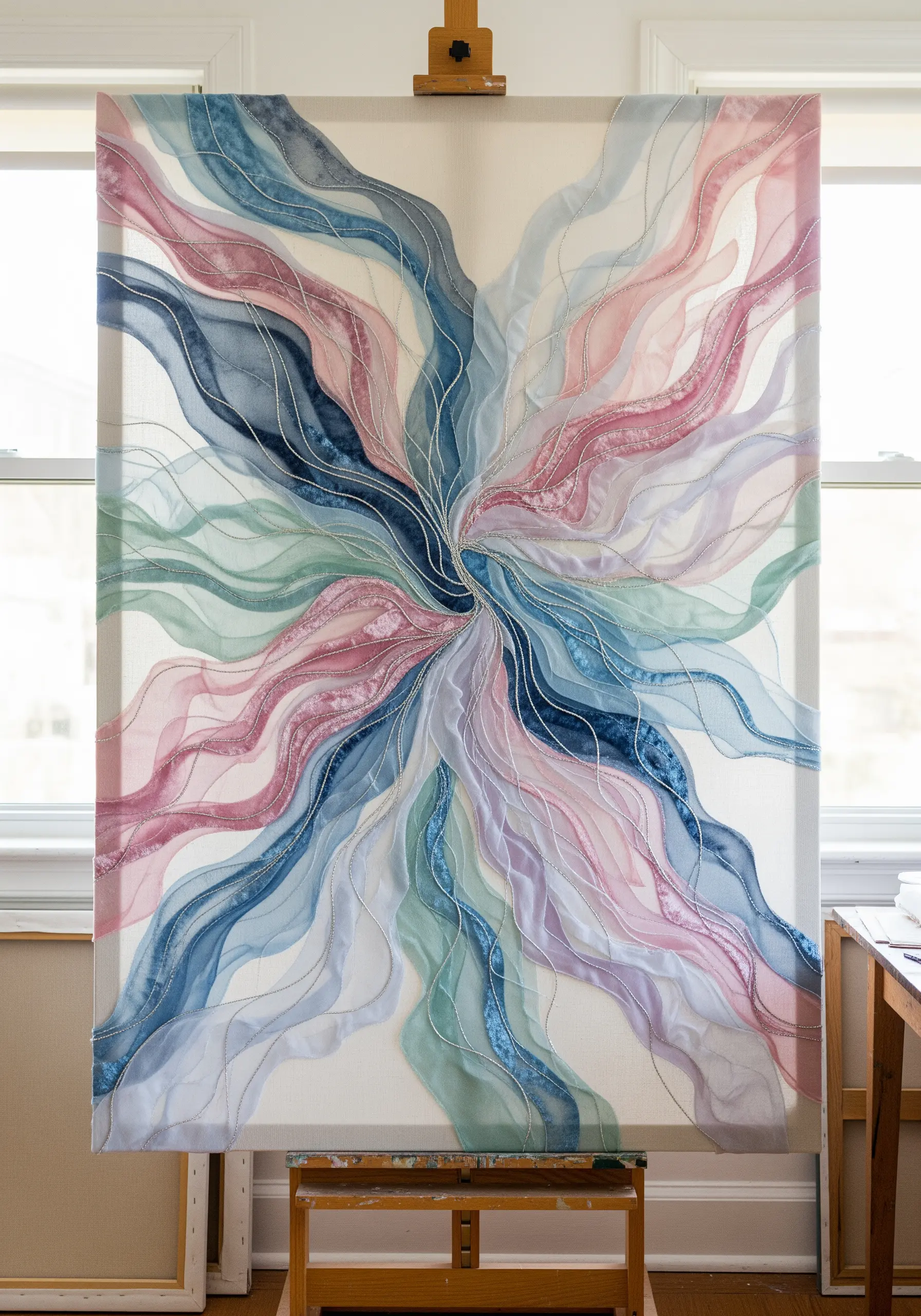
To achieve a delicate, watercolor-like effect, work with strips of sheer silk or synthetic organza.
Layer different colored strips on top of one another to create new, blended hues where they overlap.
Secure the flowing shapes with a fine, almost invisible couching stitch along the center or edges, using a single strand of thread that matches the fabric.
This preserves the fabric’s natural drape and airiness, making your composition feel weightless and fluid.
4. Unify Chaos with Expressive Thread Painting
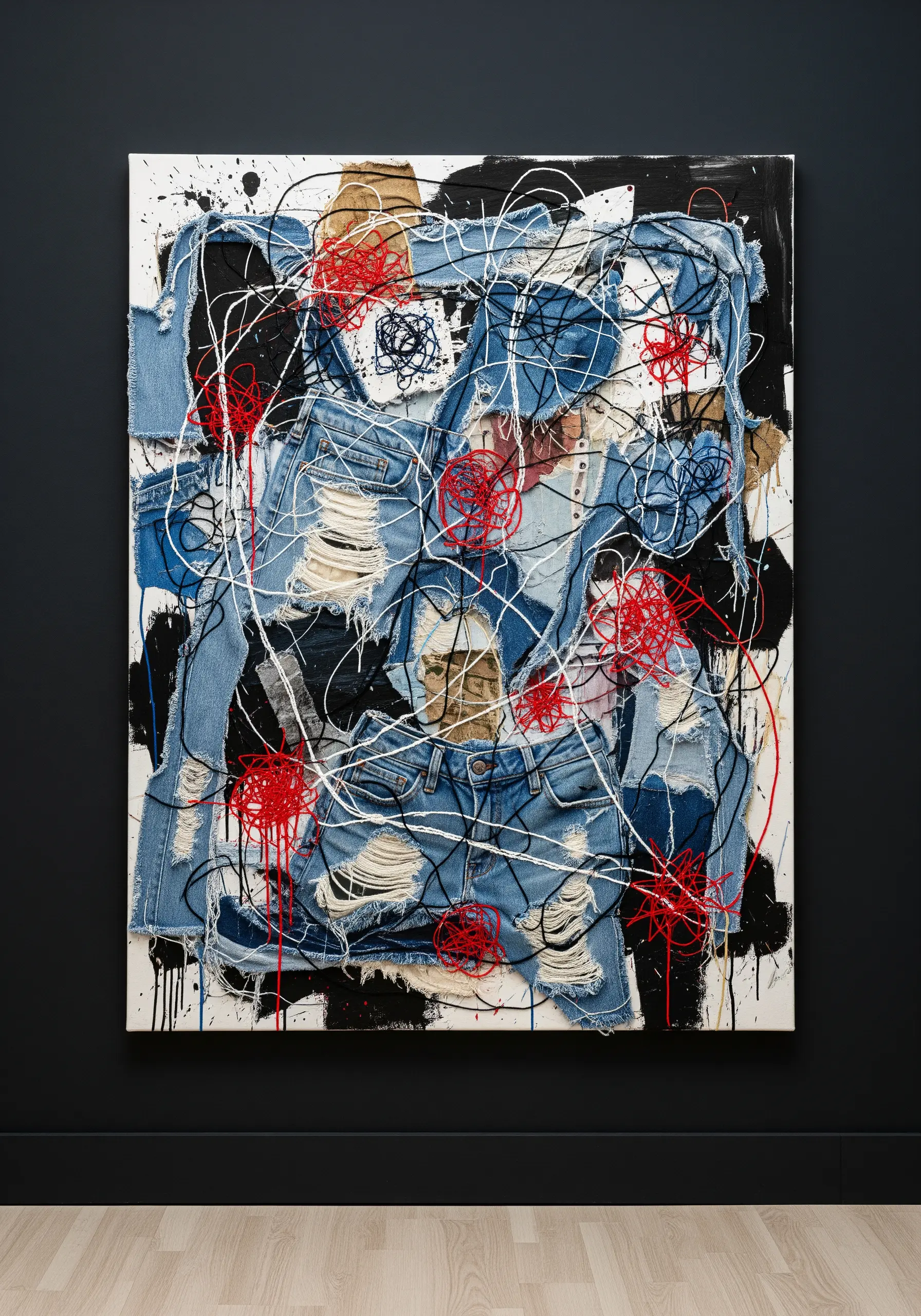
Combine disparate materials like ripped denim, canvas, and paint splatters into a dynamic collage.
To bring these chaotic elements together, use free-motion machine embroidery or bold, gestural hand stitches that travel across the different textures.
Think of the thread as a final layer of paint—a scribble of red or a slash of white that connects everything.
This energetic stitching adds a final, unifying layer of texture and movement.
5. Juxtapose Texture and Line for Minimalist Impact
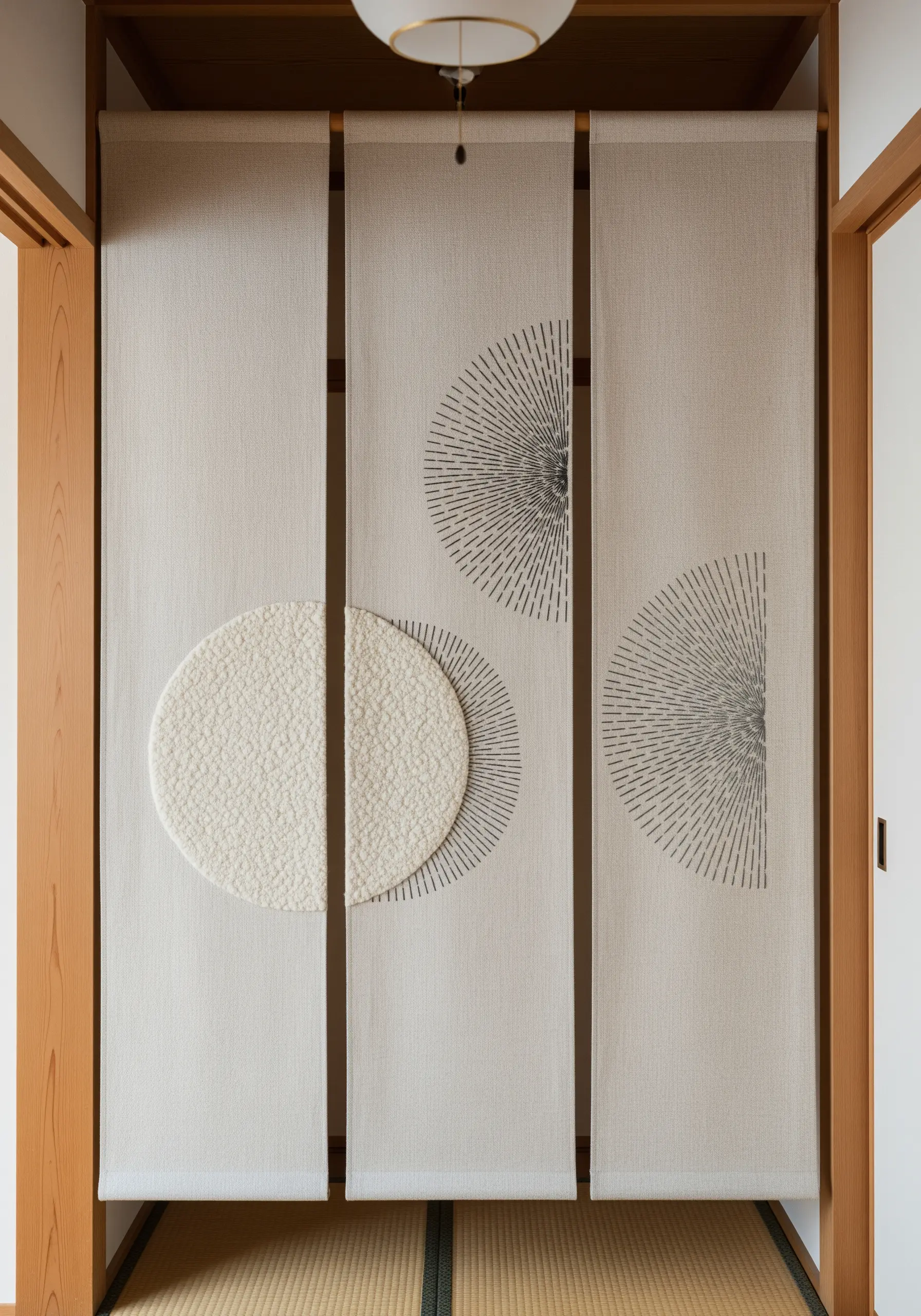
Create a sophisticated statement by contrasting a high-pile texture with clean, graphic lines.
Appliqué a circle of tufted wool or a dense patch of French knots onto a smooth linen background.
Then, stitch precise, radiating straight stitches that emerge from behind the textured element.
This play between the soft, diffused texture of the wool and the sharp precision of the stitches creates a beautiful and balanced focal point.
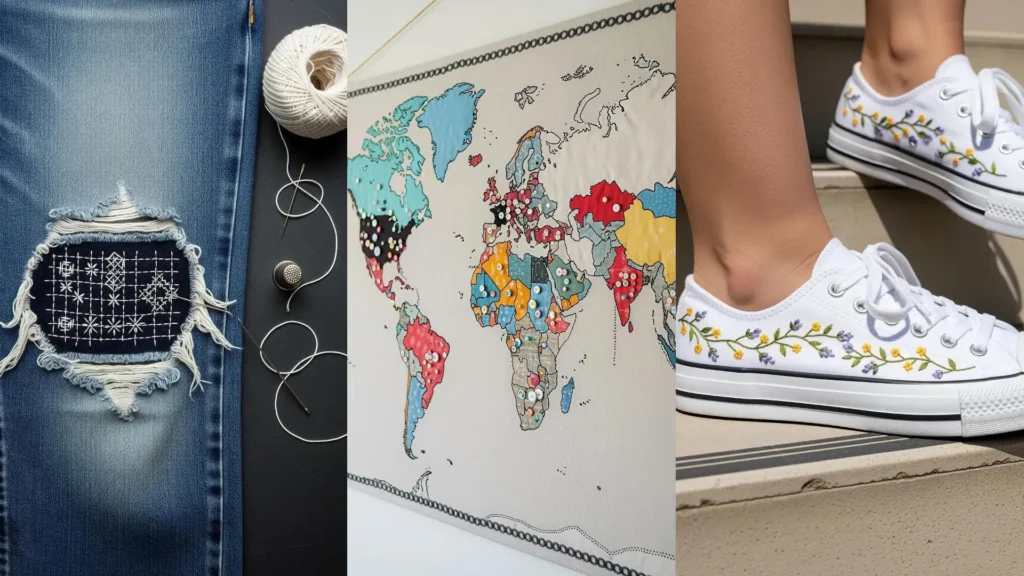
6. Modernize Boro with Geometric Denim Patchwork
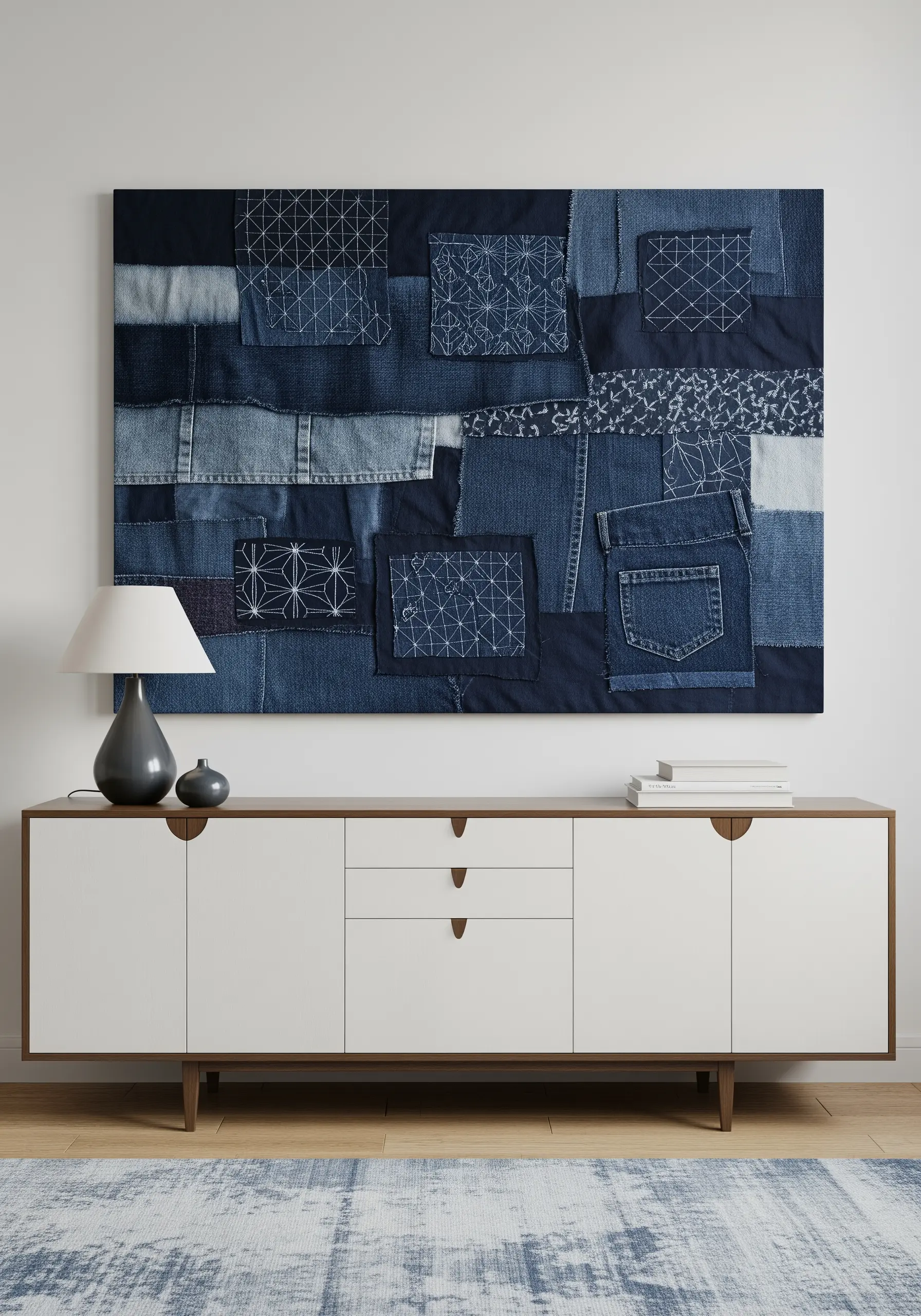
Arrange patches of varying shades of denim on a dark cotton or linen backing to create a rich, monochromatic tapestry.
Instead of traditional mending stitches, fill some patches with clean, geometric Sashiko-inspired patterns using a crisp white thread.
This Sashiko-inspired denim collage honors a traditional craft while feeling contemporary and graphic.
Leave other patches unstitched to create negative space and allow the texture of the denim itself to stand out.
7. Sculpt Topographic Lines with Couched Cord

Build three-dimensional, map-like contours in your work by couching thick rope or yarn onto a heavy base fabric like burlap or canvas.
Lay down the cord in swirling, organic lines, and secure it with a thinner, strong thread in a contrasting or matching color.
Fill the sections between the raised lines with blocks of felt or wool fabric, creating colorful, tactile regions.
This technique transforms a flat surface into a sculptural, topographical landscape you can touch.
8. Impose Order with an Architectural Thread Grid
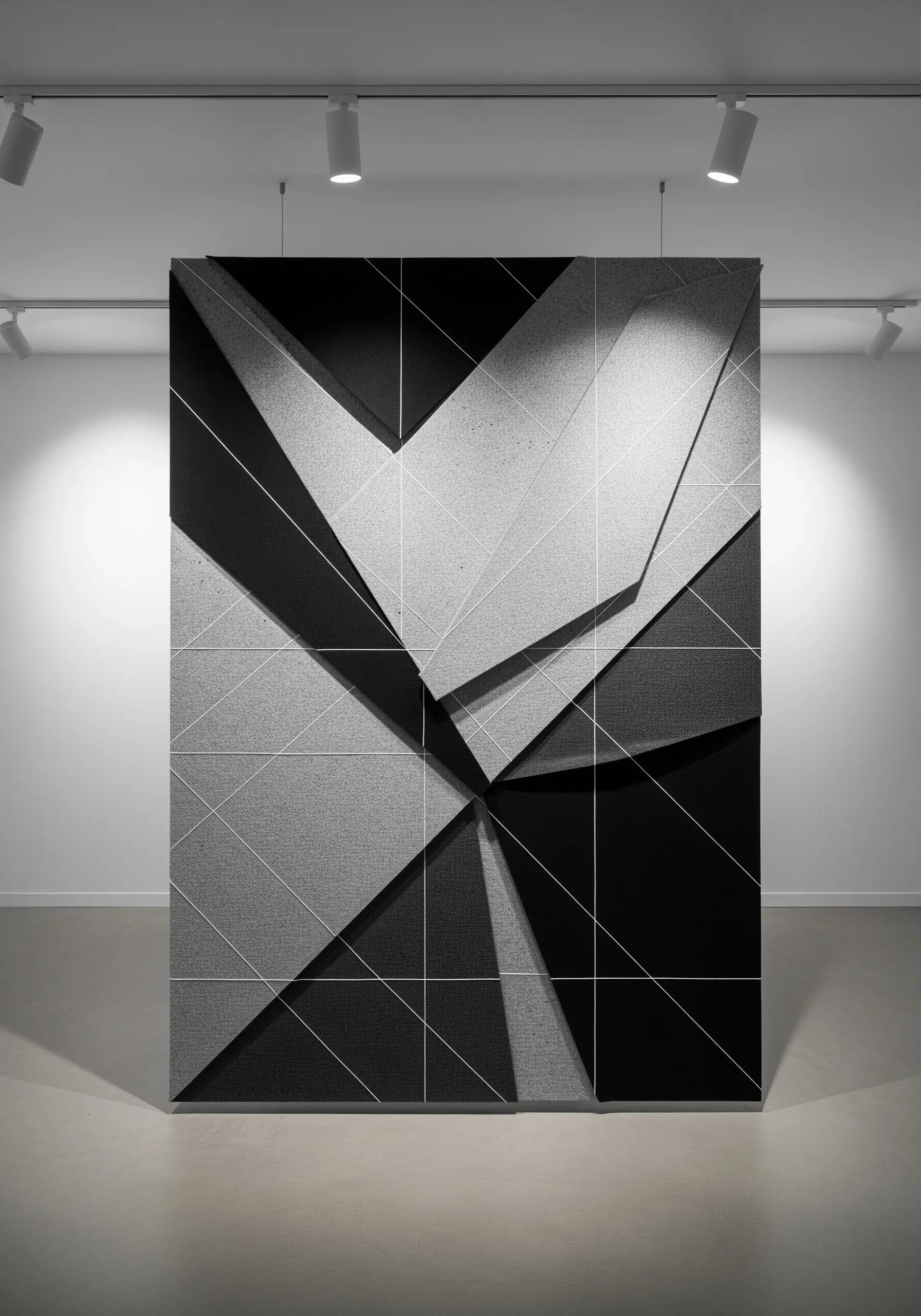
Begin by creating an abstract composition with layered, angular pieces of fabric in a monochromatic palette.
Then, superimpose a precise grid of thin, straight stitches over the entire piece.
This grid acts as a unifying element, lending a sense of architectural structure and mathematical precision to the abstract forms beneath.
The tension between the geometric layers of fabric and the rigid grid of thread creates a compelling visual depth.
9. Explore Nuance in a Monochrome Texture Study

Focus solely on texture by layering scraps of fabric in a single color family, such as whites, creams, and grays.
Combine linen, gauze, raw cotton, and muslin, allowing their raw, frayed edges to become part of the design.
Connect the layers with simple, utilitarian stitches like a basic running stitch or whip stitch in a matching thread.
The beauty of this monochrome texture approach lies in the subtle interplay of light and shadow across the different weaves and weights of the fabric.
10. Embrace Maximalism with Jewel Tones and Metallics
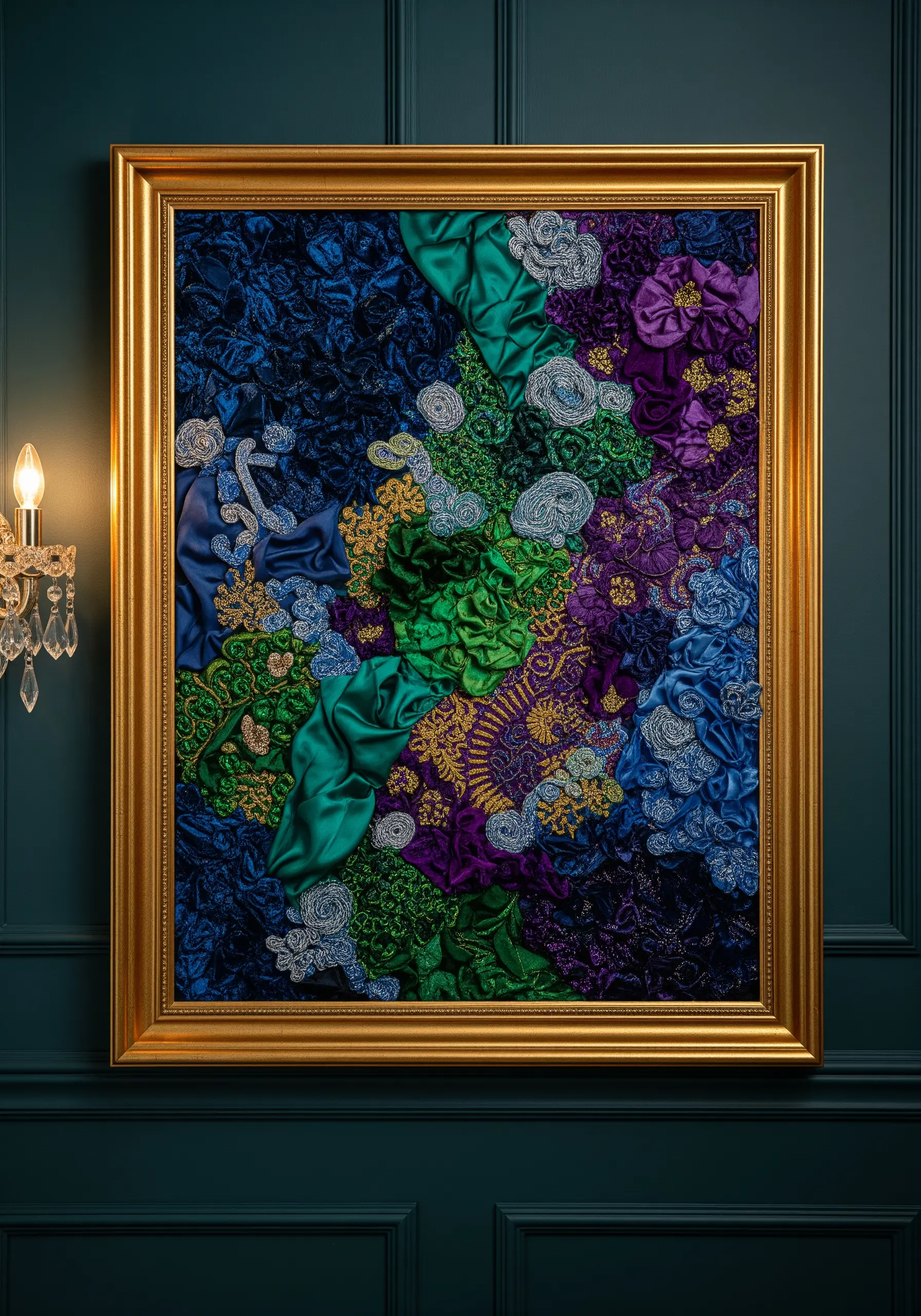
Create a lavish, opulent surface by collaging rich fabrics like velvet, silk, and brocade in deep jewel tones.
Introduce areas of manipulated fabric, like ruched silk or folded satin, to build physical dimension.
Then, integrate areas of dense seed stitching or French knots using gold or silver metallic thread.
These shimmering accents act as highlights, catching the light and guiding the eye through the complex, luxurious textures.
11. Define Shapes with a Graphic Blanket Stitch
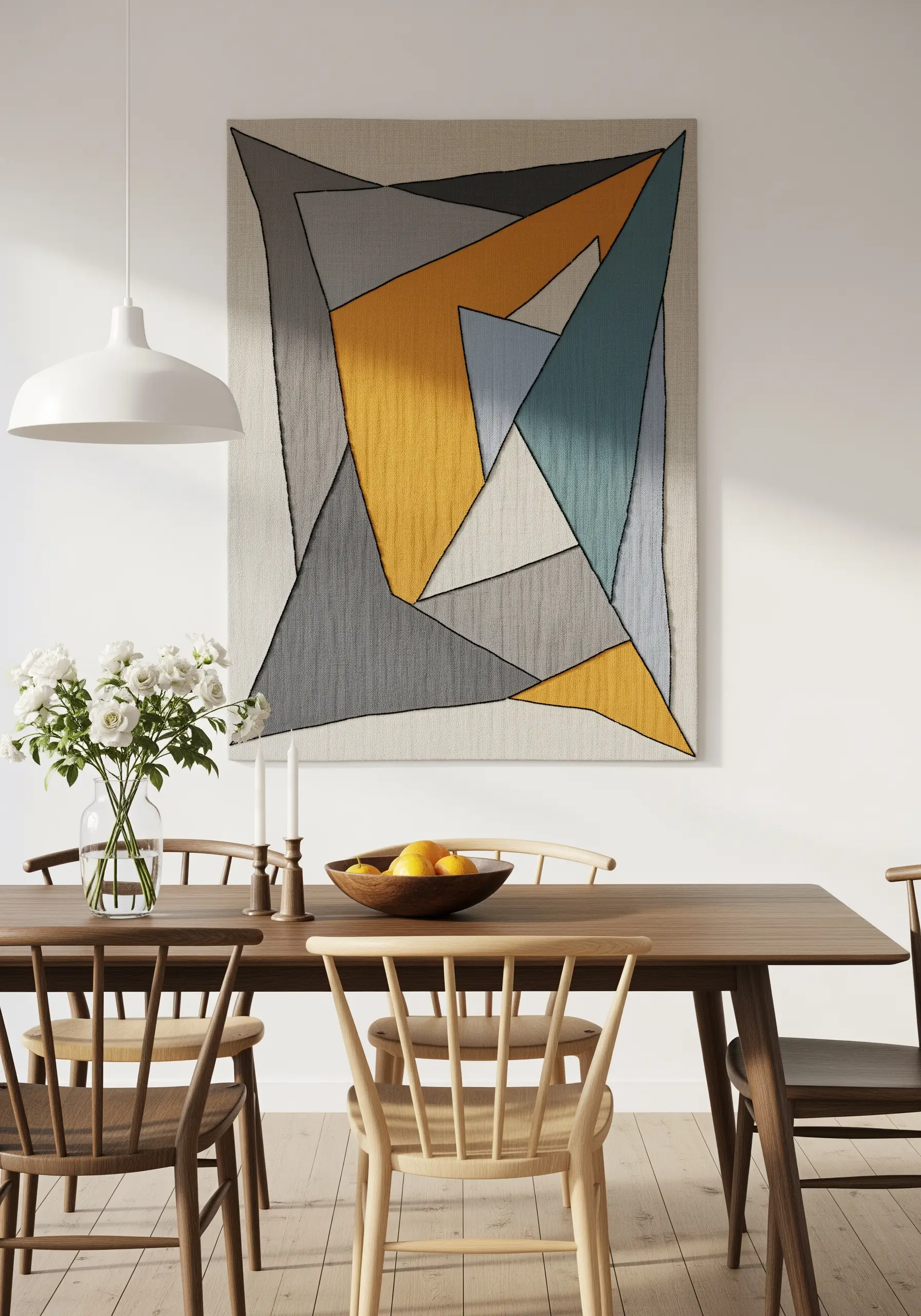
For a clean, modern aesthetic, use solid-colored cotton or felt to create a hard-edged geometric composition.
Instead of a hidden appliqué stitch, secure your fabric shapes with a deliberate, visible blanket stitch or whip stitch around the perimeter.
Use a contrasting thread color to make the stitches pop, turning them into a key graphic outline that defines each shape and adds a touch of handmade warmth to the crisp geometry.
12. Capture Gesture with Calligraphic Appliqué
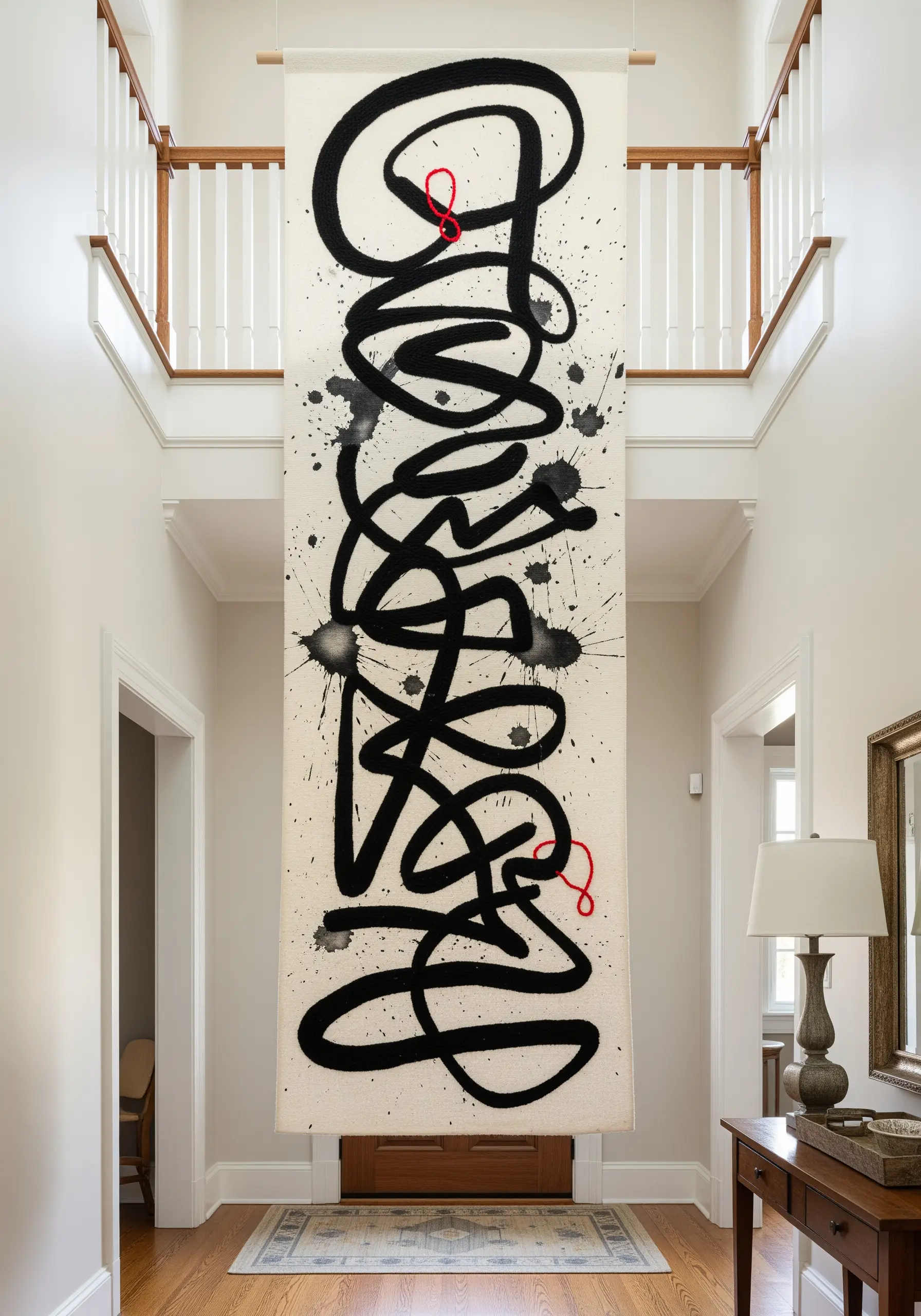
Translate the energy of a brushstroke into fabric by cutting a bold, sweeping shape from a single piece of black felt or wool.
Appliqué this singular, powerful form onto a neutral, textured background like raw canvas or linen.
Introduce a tiny, surprising pop of color with a single, hand-stitched loop or knot in a bright red thread.
This small detail creates a focal point and balances the energy of the large calligraphic mark.
13. Stitch a Cosmos with Tulle and French Knots
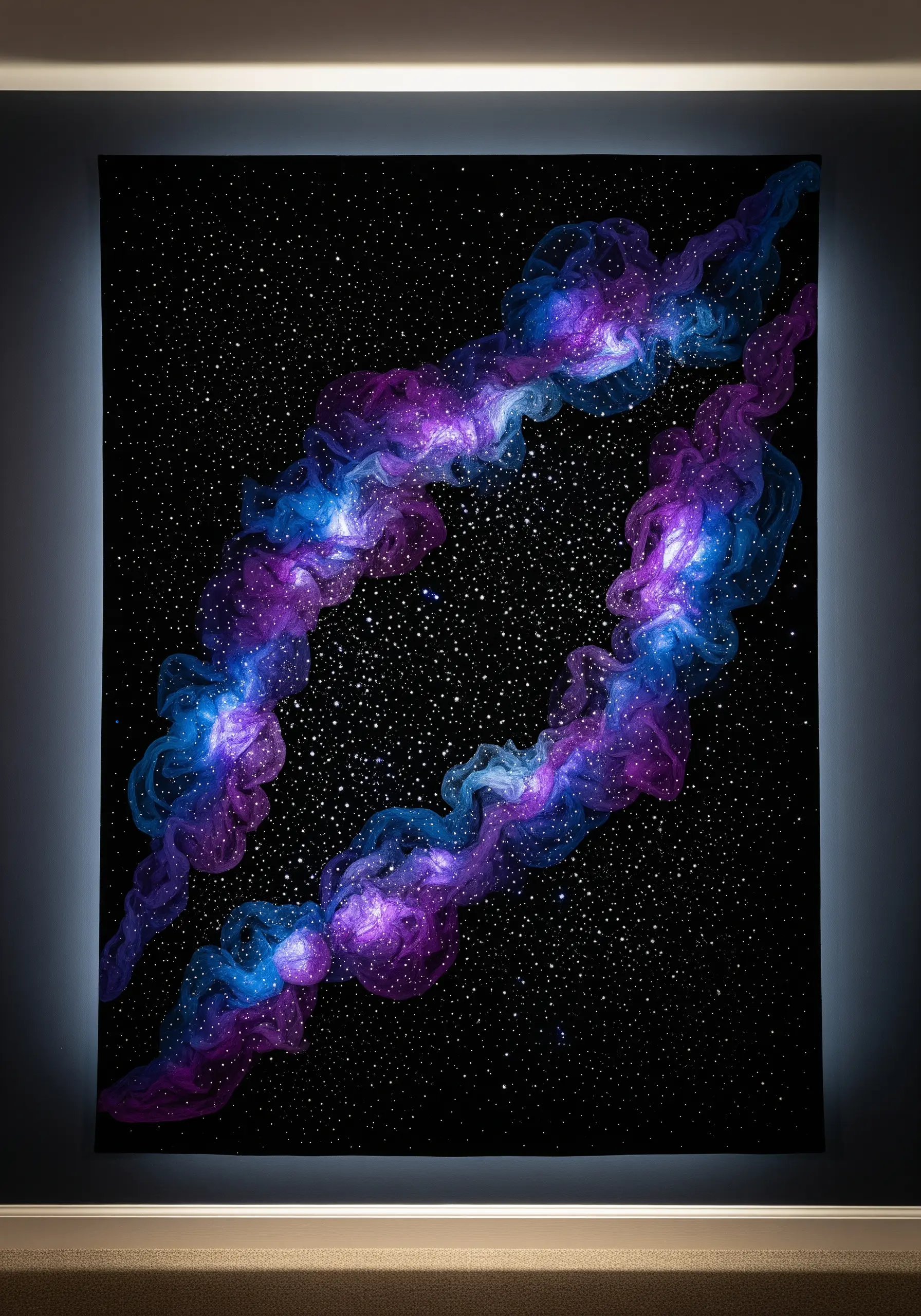
Create the illusion of a nebula or galaxy by layering gathered and folded pieces of sheer, colorful tulle on a black fabric base.
The overlapping layers will create soft, ethereal clouds of color.
Once your tulle is secured, scatter hundreds of tiny French knots across the entire piece using white, silver, and iridescent threads.
This creates a convincing field of stars, adding depth and sparkle to your cosmic scene.
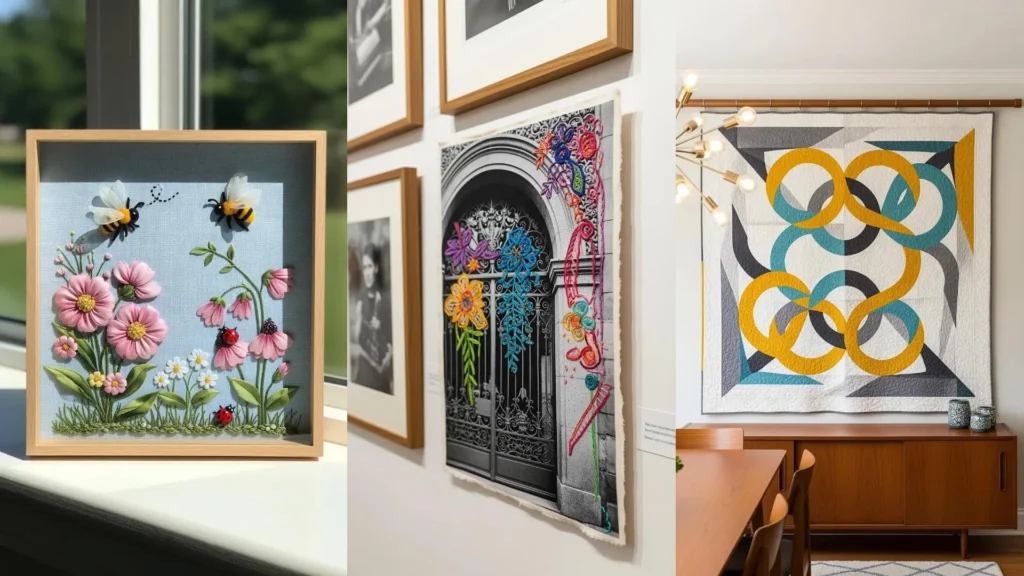
14. Build Soft Dimension with Padded Appliqué
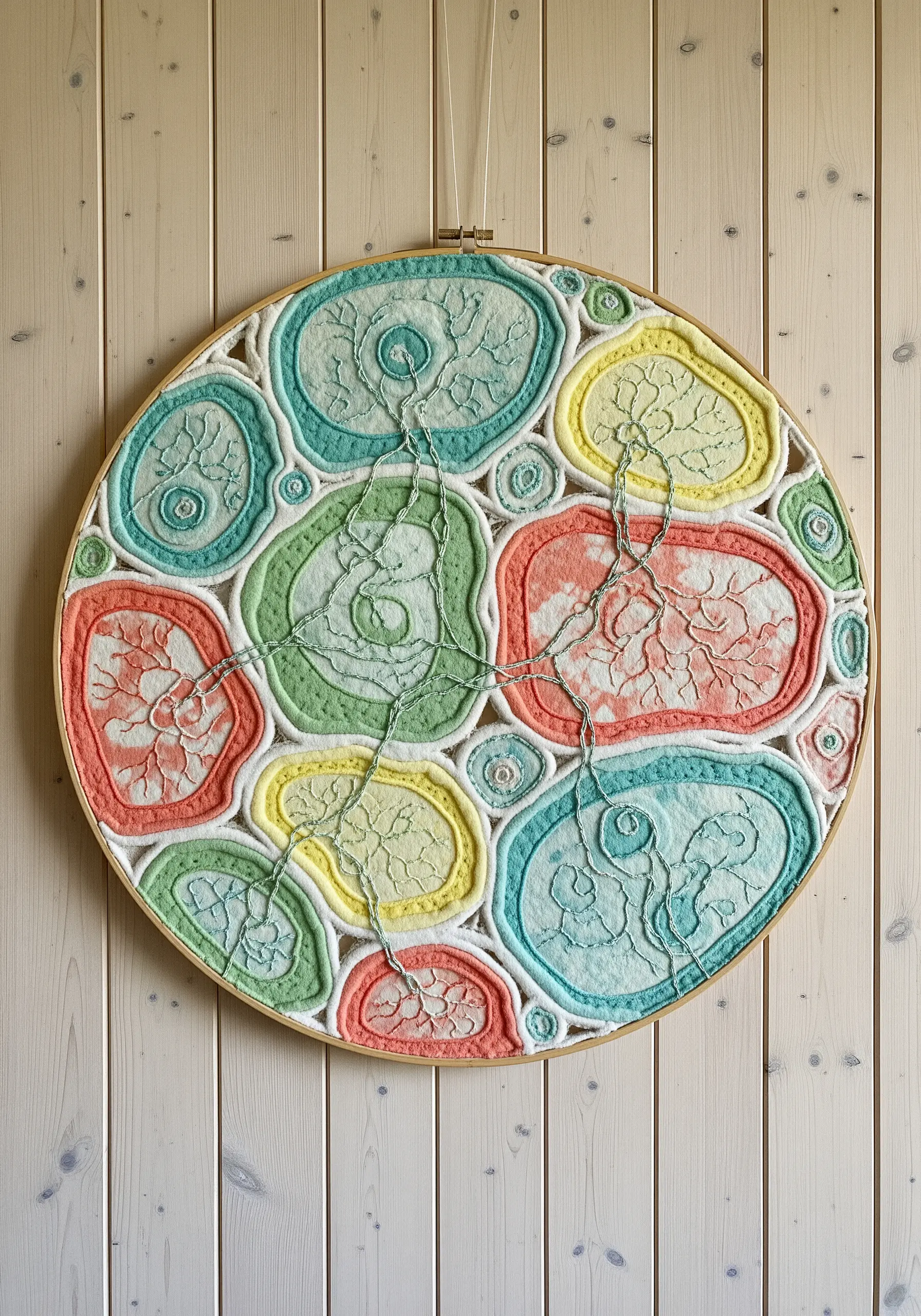
Give your fabric collage a soft, sculptural quality by adding a thin layer of batting or felt behind your appliqué pieces.
Appliqué with padded forms adds a gentle, bas-relief effect that invites touch.
Outline these puffy, cell-like shapes with a couched yarn or thick cord to create a defined, soft border that enhances the dimension.
Finish with delicate, linear stitching inside each shape to add a final layer of subtle detail.
15. Contrast Matte and Gloss with Faux Leather

Create a high-impact, graphic composition by combining matte black fabric with glossy red and white faux leather or vinyl.
These materials have incredibly sharp, clean edges when cut, which is perfect for hard-edged abstraction.
Stitch the pieces together with a simple, clean running stitch along the seams. The quiet, handmade quality of the stitch provides a beautiful contrast to the sleek, almost industrial finish of the vinyl.
16. Design a Contemporary Sampler in a Neutral Palette
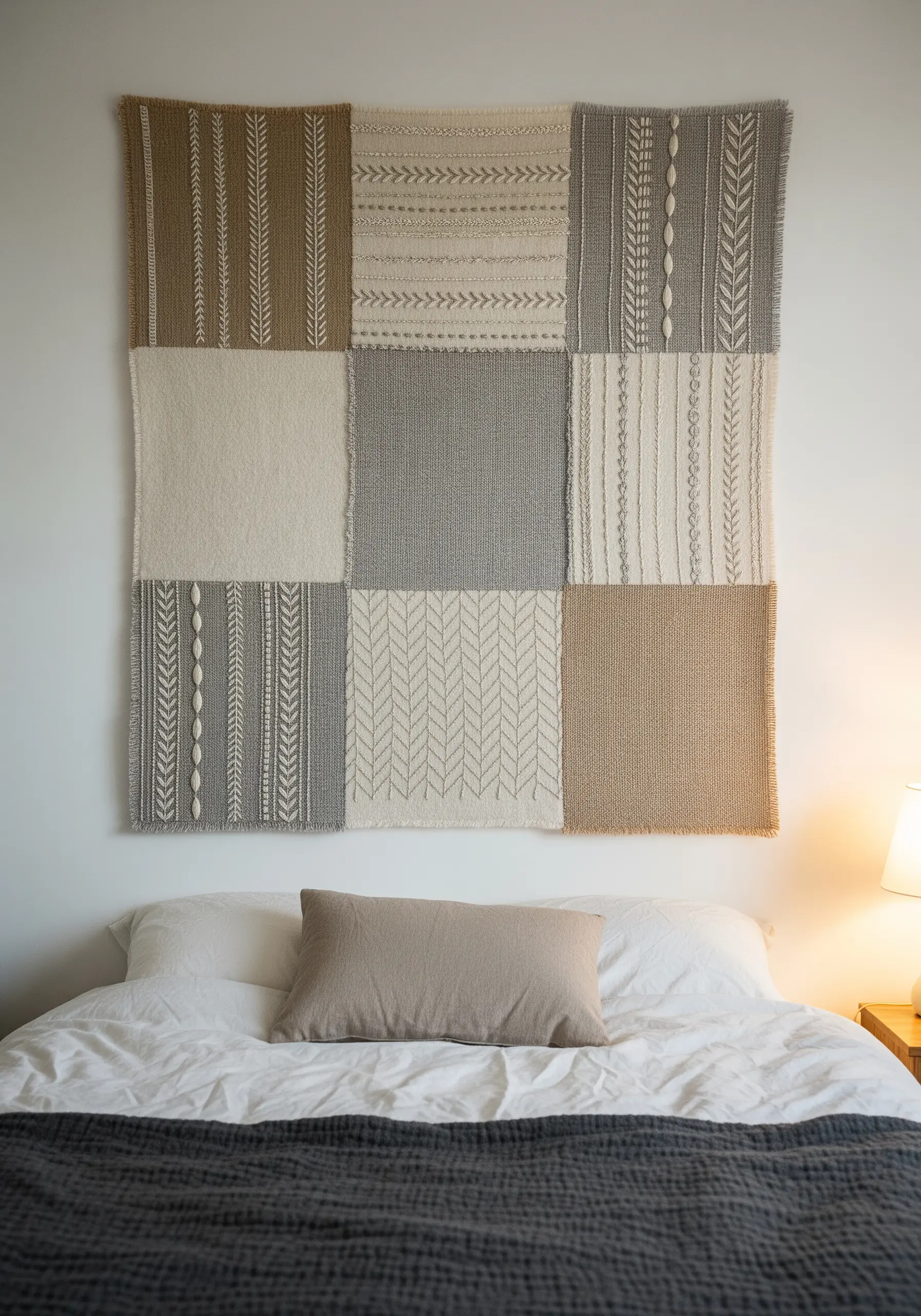
Create a modern take on the traditional embroidery sampler by dividing your canvas into a simple grid.
Fill each square with either a different textured neutral fabric (like wool, linen, or chunky knit) or a different textural stitch pattern (like long satin stitches, seed stitches, or herringbone).
Working within a restrained, muted, neutral palette allows the focus to remain entirely on the rich interplay of textures, creating a calm and sophisticated piece.
17. Paint a Sunset with Linear Thread Wraps
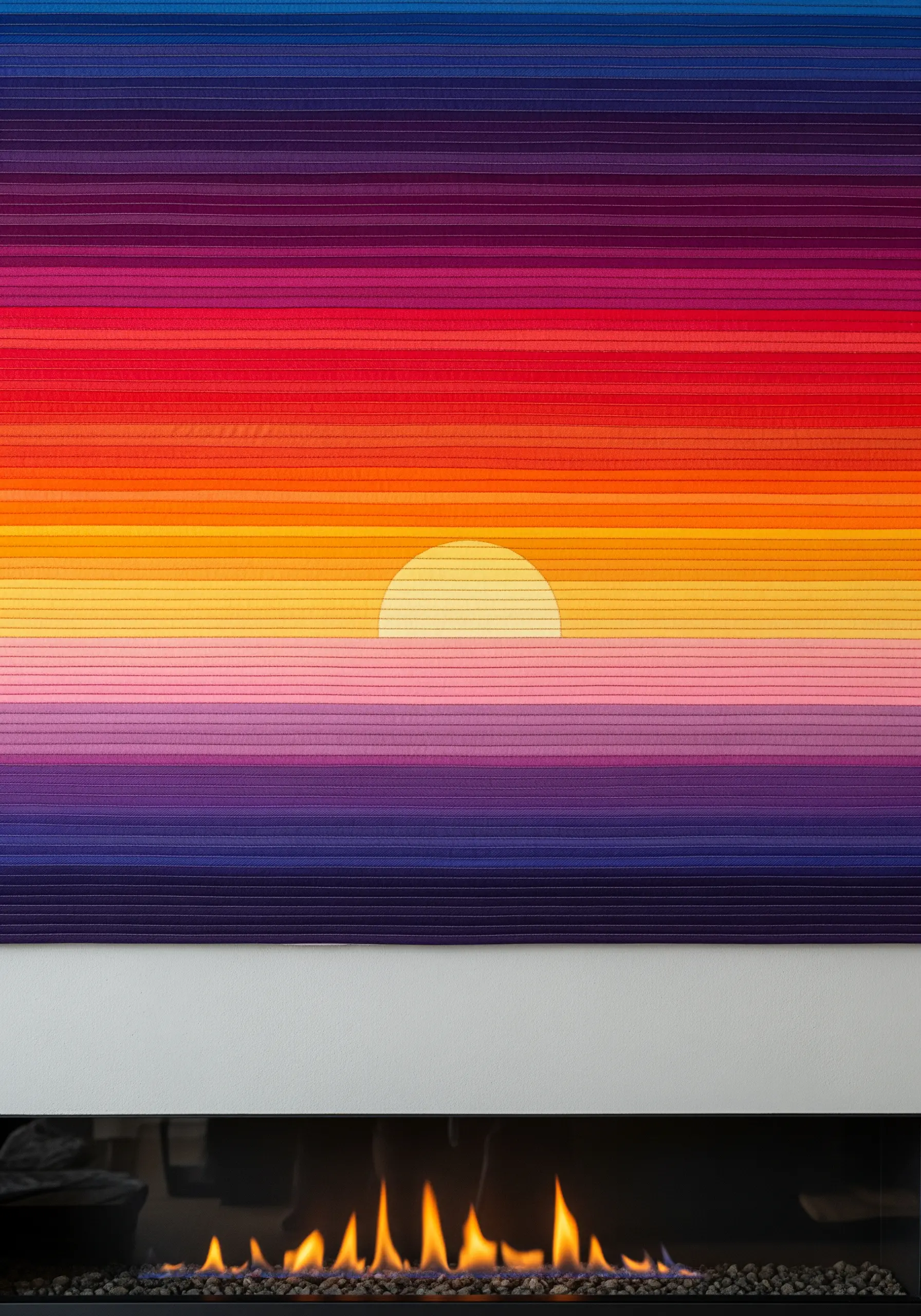
For a truly unique approach, create your color fields entirely from thread.
Tightly wrap strands of embroidery floss or fine yarn across a sturdy frame or canvas, placing colors side-by-side to form a gradient.
This technique mimics the precision of digital pixels but with the warmth and texture of fiber.
The key to a seamless gradient is careful color selection and maintaining consistent tension as you wrap the threads.
18. Engineer a Circuit Board with Metallics
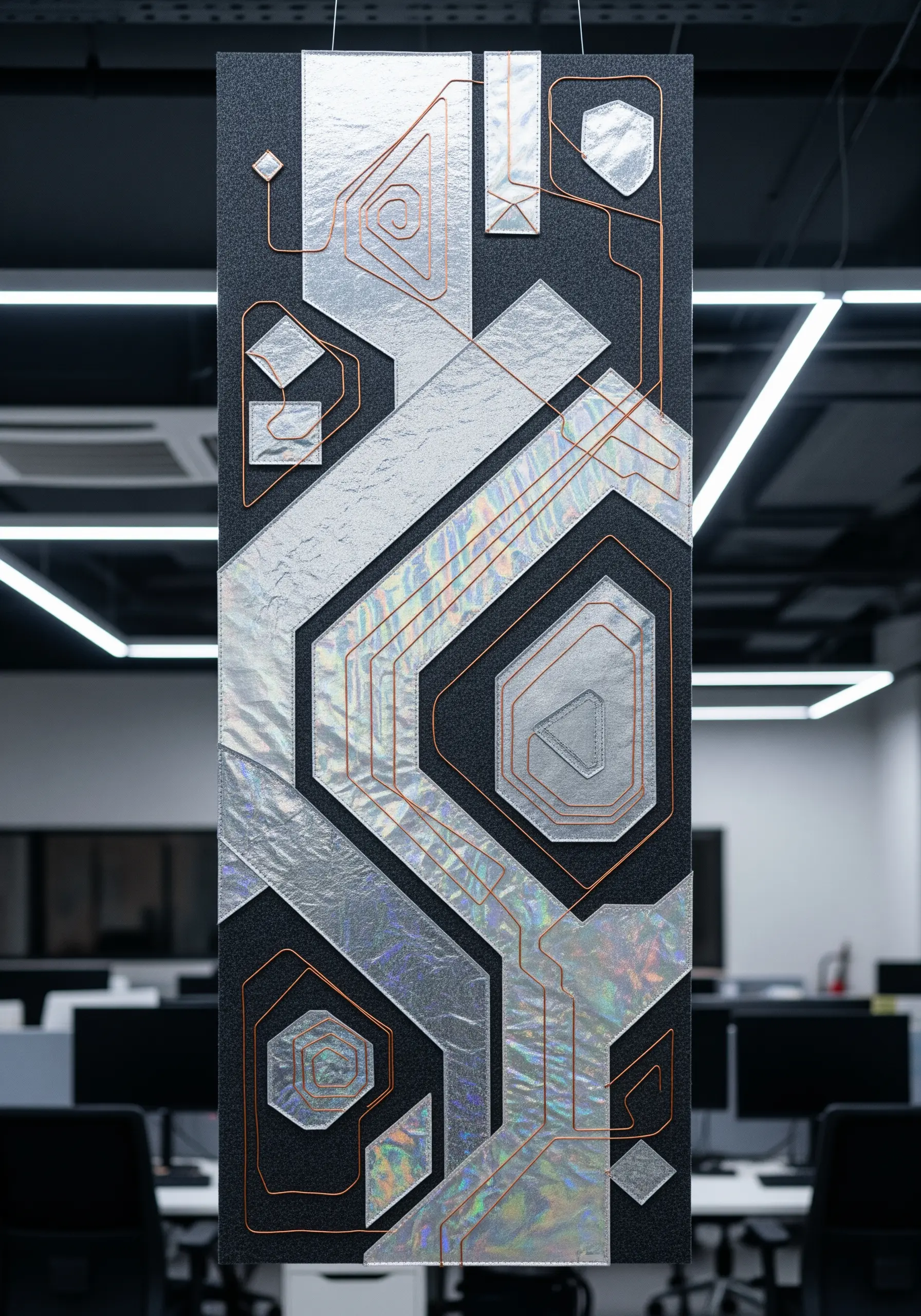
Combine futuristic and handmade aesthetics by collaging with holographic and metallic fabrics on a dark, matte background.
Create clean, graphic lines reminiscent of a circuit board by couching down copper wire or thick metallic thread.
You can use a simple running stitch to secure the wire at intervals, making the process much easier than trying to stitch with the wire itself.
The contrast between the high-tech materials and the simple hand-stitching is visually compelling.
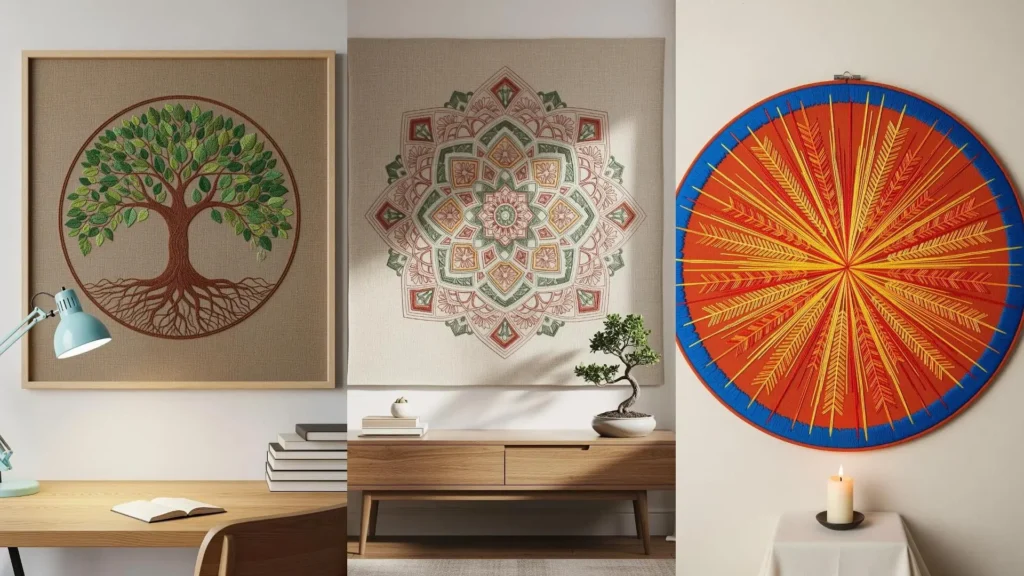
19. Revisit Bauhaus Principles with Primary Shapes
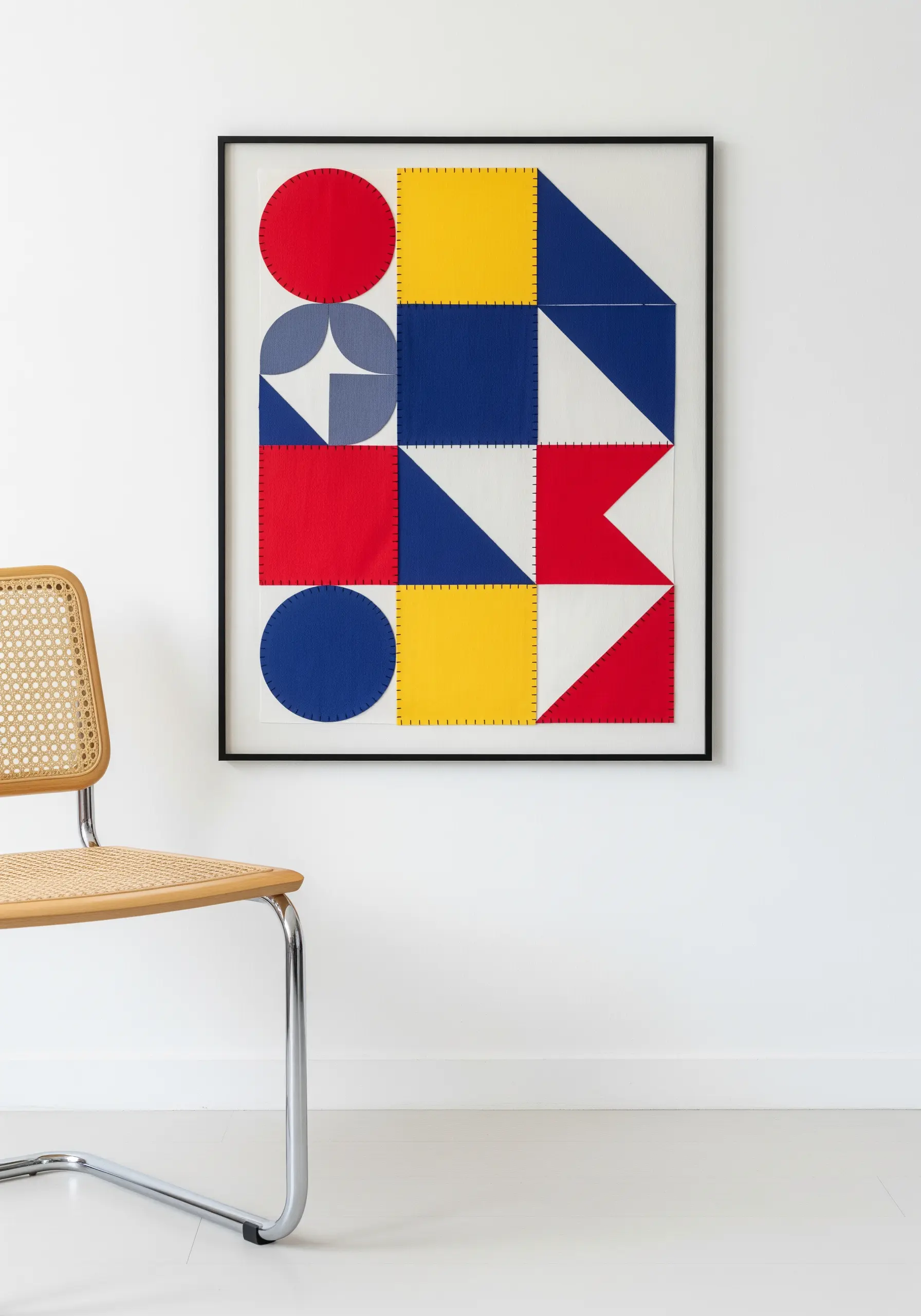
Channel the spirit of the Bauhaus by composing your artwork with basic geometric shapes—circles, squares, and triangles—in primary colors.
Use felt for its saturated color and non-fraying edges.
Arrange the shapes in a balanced, grid-like structure and attach them with a simple, contrasting whip stitch.
This visible stitch emphasizes the piece’s construction and handmade nature, grounding the abstract design in craft.
20. Depict Movement with Sheer, Wavy Layers

Evoke the feeling of ocean waves or rolling hills by layering wavy-edged strips of translucent fabric like chiffon or voile.
Arrange them in an analogous color scheme, allowing the colors to deepen and shift where the layers overlap.
A simple, undulating running stitch in a light-colored thread can be stitched across the layers, enhancing the sense of movement and securing all the pieces at once.
21. Integrate Heavy Textures for Industrial Contrast

Push the boundaries of fabric collage by incorporating unconventional, heavy-duty materials.
Contrast the softness of denim and cotton with the roughness of thick jute rope or even soft, sculptural chains made from fabric.
Use strong couching stitches with yarn or twine to anchor these weighty elements to your canvas.
This technique creates a powerful dialogue between hard and soft, industrial and domestic.
22. Add Retro Flair with Starburst Accents
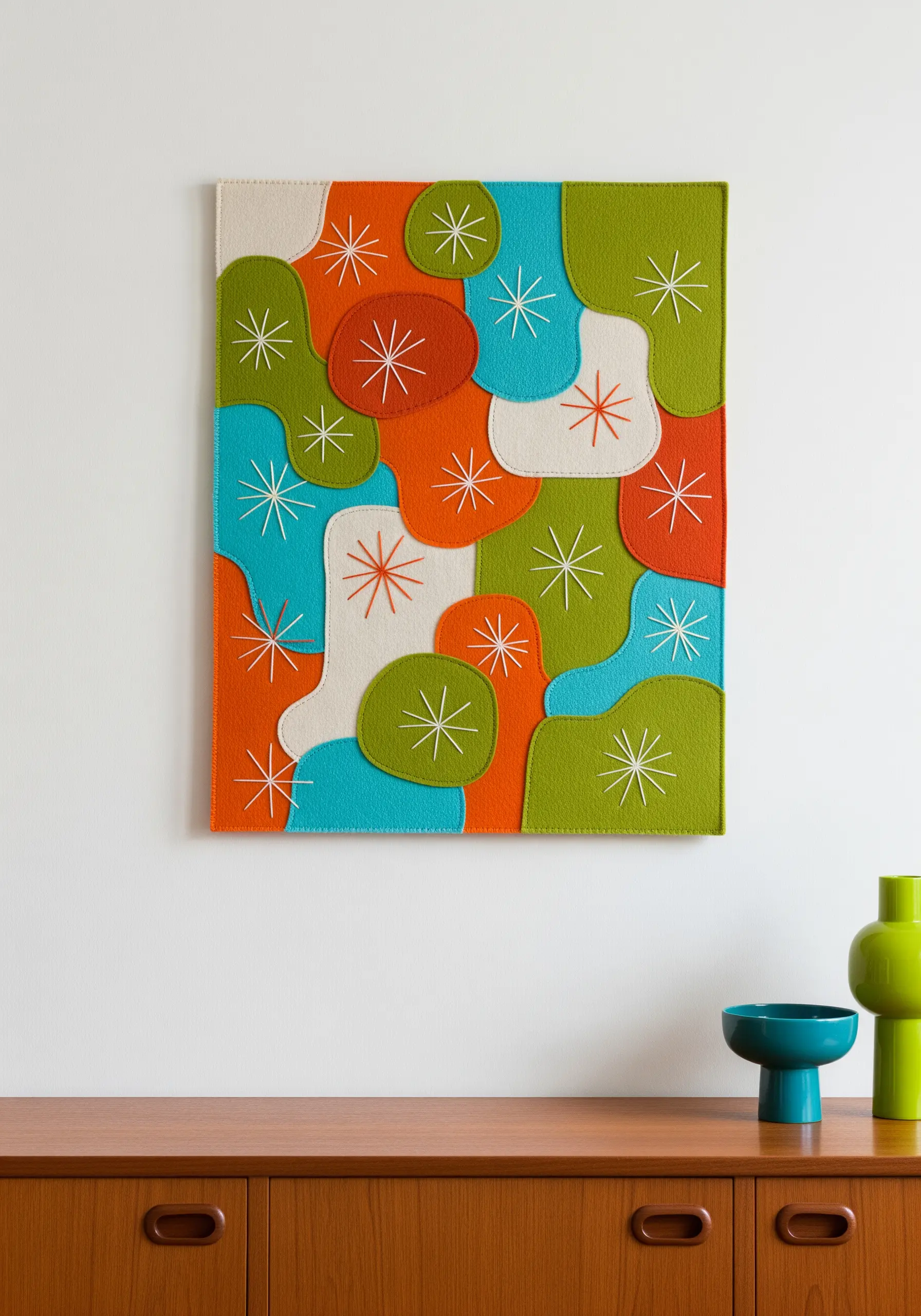
Create a playful, mid-century modern-inspired piece using organically shaped blocks of felt in a retro color palette.
Use a simple whip stitch around the edge of each shape to keep the look clean and graphic.
Then, add a unifying decorative element by stitching simple starbursts or asterisks across the composition using a contrasting thread color.
These repeating motifs tie the disparate shapes together and firmly place the design in a beloved aesthetic era.
23. Map Your World with Varied Textures
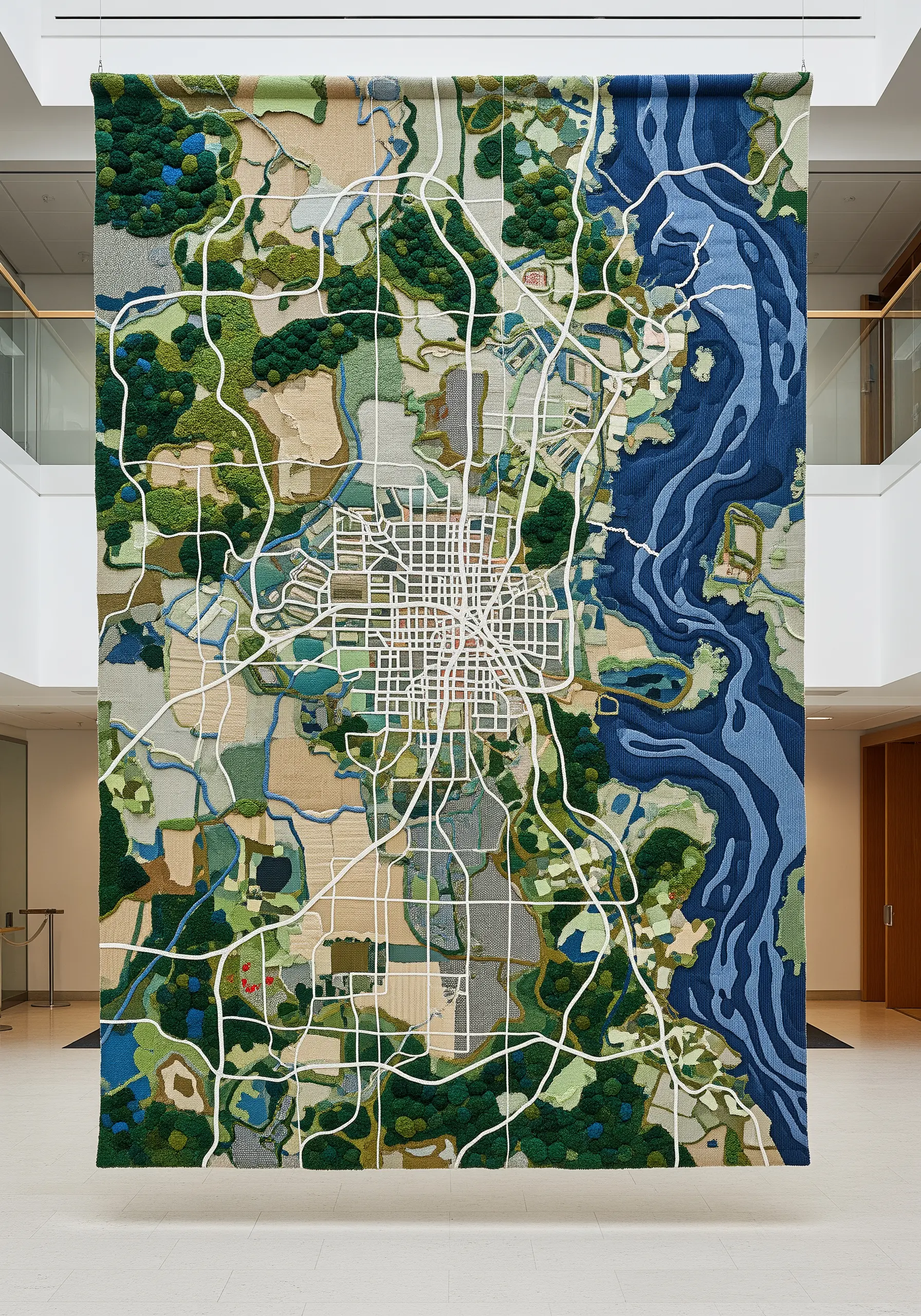
Transform an aerial map or landscape into a large-scale textile piece by assigning different fabrics and stitches to different features.
Use tufted yarn or French knots for forests, smooth blue satin for water, and tweed or corduroy for fields.
Define roads and city grids with clean, raised lines of couched white cord or thick chain stitch.
This approach turns a flat map into a rich, tactile representation of place.
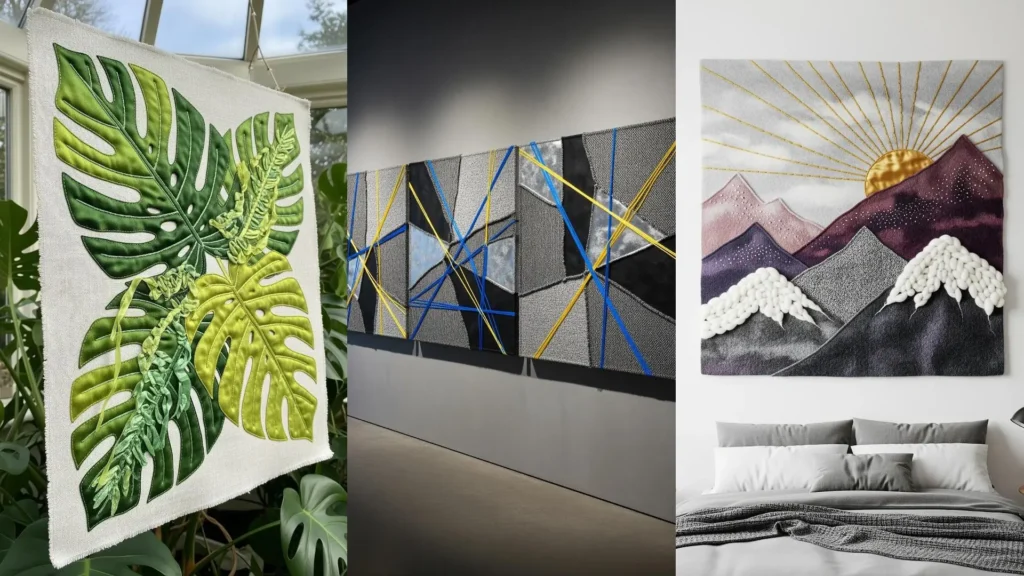
24. Build a Lush Jungle with 3D Fabric Foliage
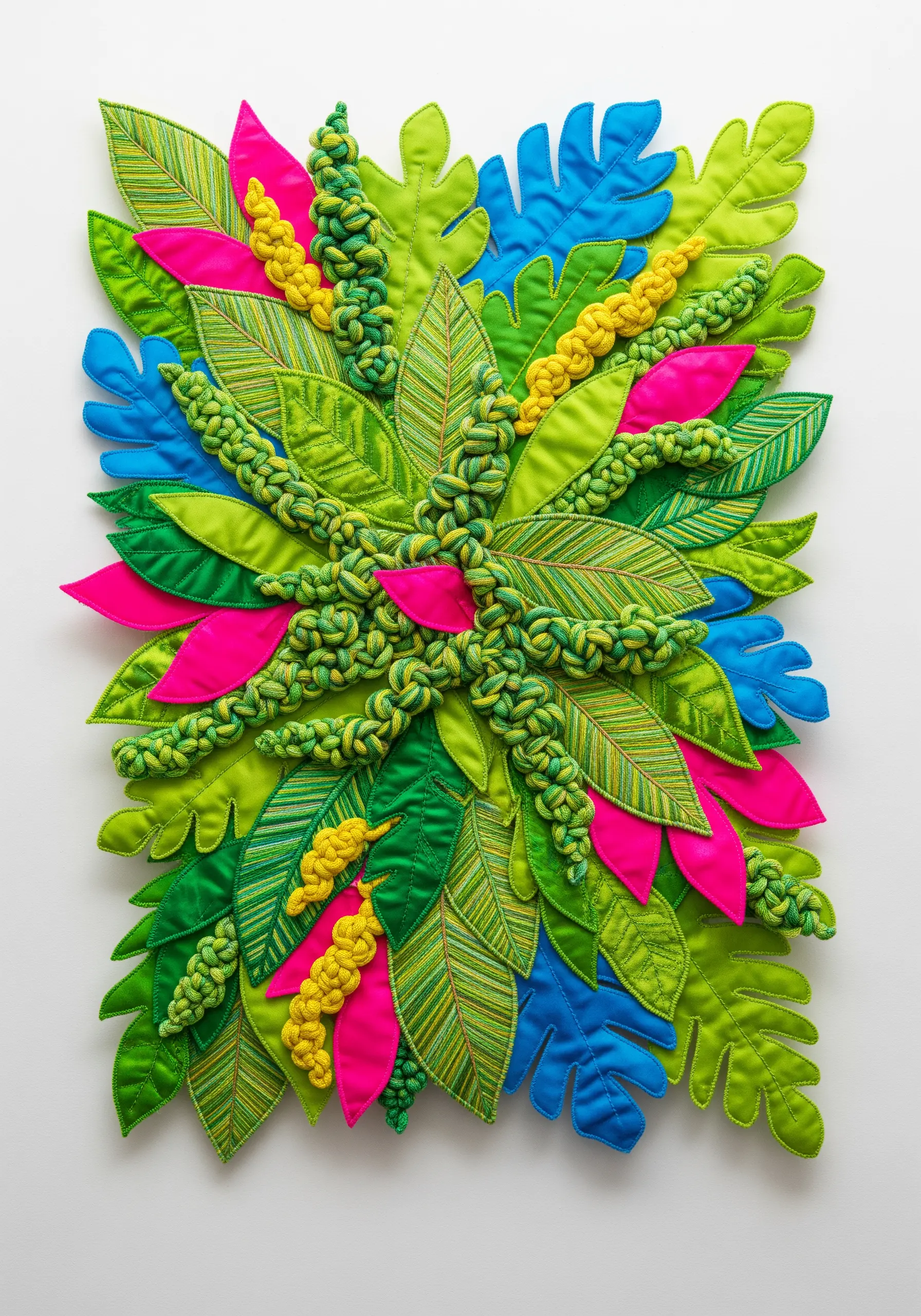
Create a vibrant, dimensional botanical piece with sculptural appliqué and machine embroidery.
Cut leaf shapes from various fabrics, using machine stitching to add detailed veining before you attach them.
Layer the leaves, tucking some behind others, and only stitch them down in the center to allow the edges to lift away from the background, creating natural shadows.
Incorporate knotted or braided yarn for extra-dimensional elements like flowers or vines.
25. Paint a Landscape with Raw-Edged Appliqué
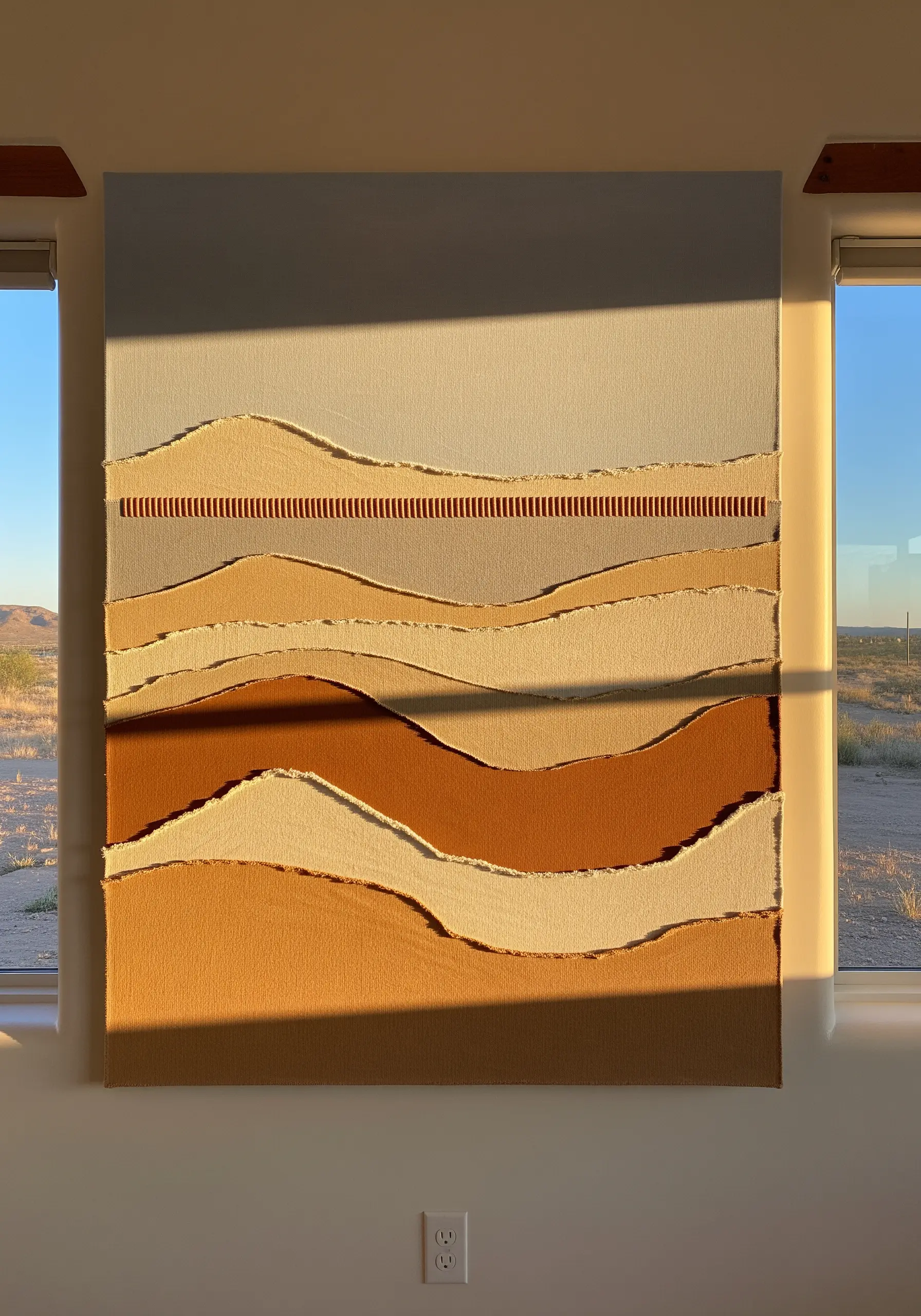
Capture the soft, layered feel of a desert landscape or a misty morning by using torn, raw-edged strips of canvas, linen, and other textured fabrics.
Layer these strips to create gentle, rolling hills and distant horizons, letting the frayed edges add softness and texture.
Introduce a single, sharp line of dense, horizontal satin stitch to act as a focal point or horizon line.
This clean stitch provides a beautiful contrast to the organic, torn edges of the fabric.