Your dining table is more than just a piece of furniture; it’s a canvas waiting for a story. Instead of reaching for disposable decor, imagine transforming your table linens into works of art that speak of tradition, travel, and timeless beauty.
This is your invitation to explore the rich visual languages of Indian, Turkish, and Japanese embroidery. These are not just patterns, but centuries-old traditions filled with meaning, rhythm, and exquisite detail. They offer a way to connect with culture and craftsmanship in a deeply personal way.
Here, you won’t find overly complex instructions. Instead, you’ll discover the core techniques that make each style so captivating. We will translate intricate designs into clear, manageable steps, empowering you to create stunning, heirloom-quality pieces for your home with confidence and artistry.
1. Japanese Sakura: Mastering Petal Gradients
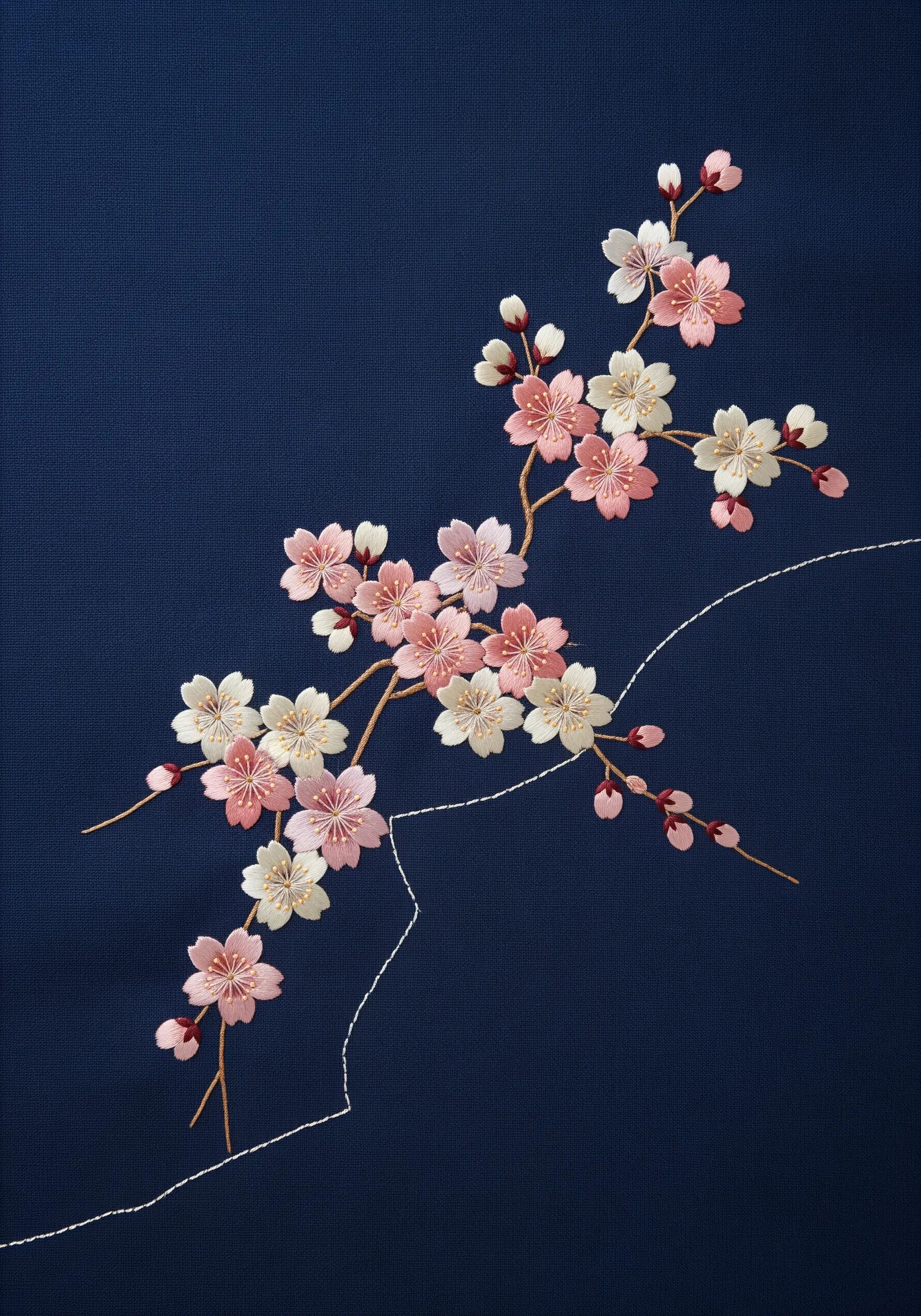
To capture the delicate nature of cherry blossoms, use a single strand of floss for the petals.
Work a long-and-short stitch, blending two or three shades of pink and ivory to create a soft, realistic gradient.
The stitch direction should radiate from the flower’s center, mimicking how real petals grow.
For the branches, use a whipped backstitch with a dark brown thread to give them a rounded, dimensional quality that contrasts beautifully against the flat petals.
The deep navy fabric makes the pale blossoms appear to float, enhancing their ethereal quality.
2. Indian Phulkari: Vibrant Geometry with Darning Stitch
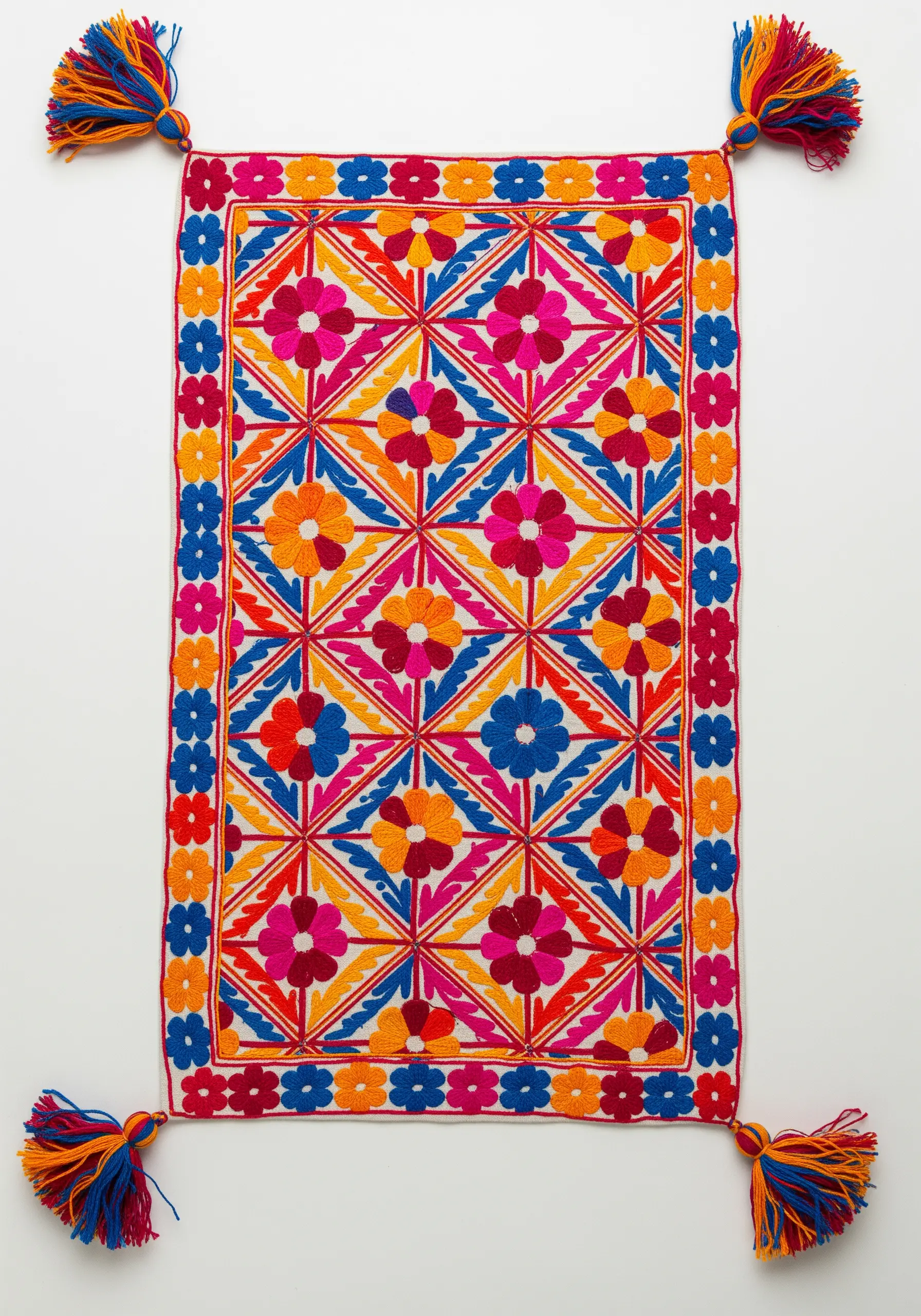
Embrace unapologetic color and dense pattern, the hallmarks of Phulkari embroidery.
Traditionally made with a darning stitch from the reverse side, you can achieve a similar effect with bold, flat satin stitches that completely cover the fabric.
Work within a simple geometric grid—diamonds, triangles, and squares—and fill each shape with a high-contrast color like magenta, royal blue, and marigold.
The key is consistency in stitch direction within each block to create a smooth, woven appearance.
Finish with multicolored tassels at the corners to complete the festive, celebratory look.
3. Turkish Iznik Border: Bold Outlines and Stylized Florals
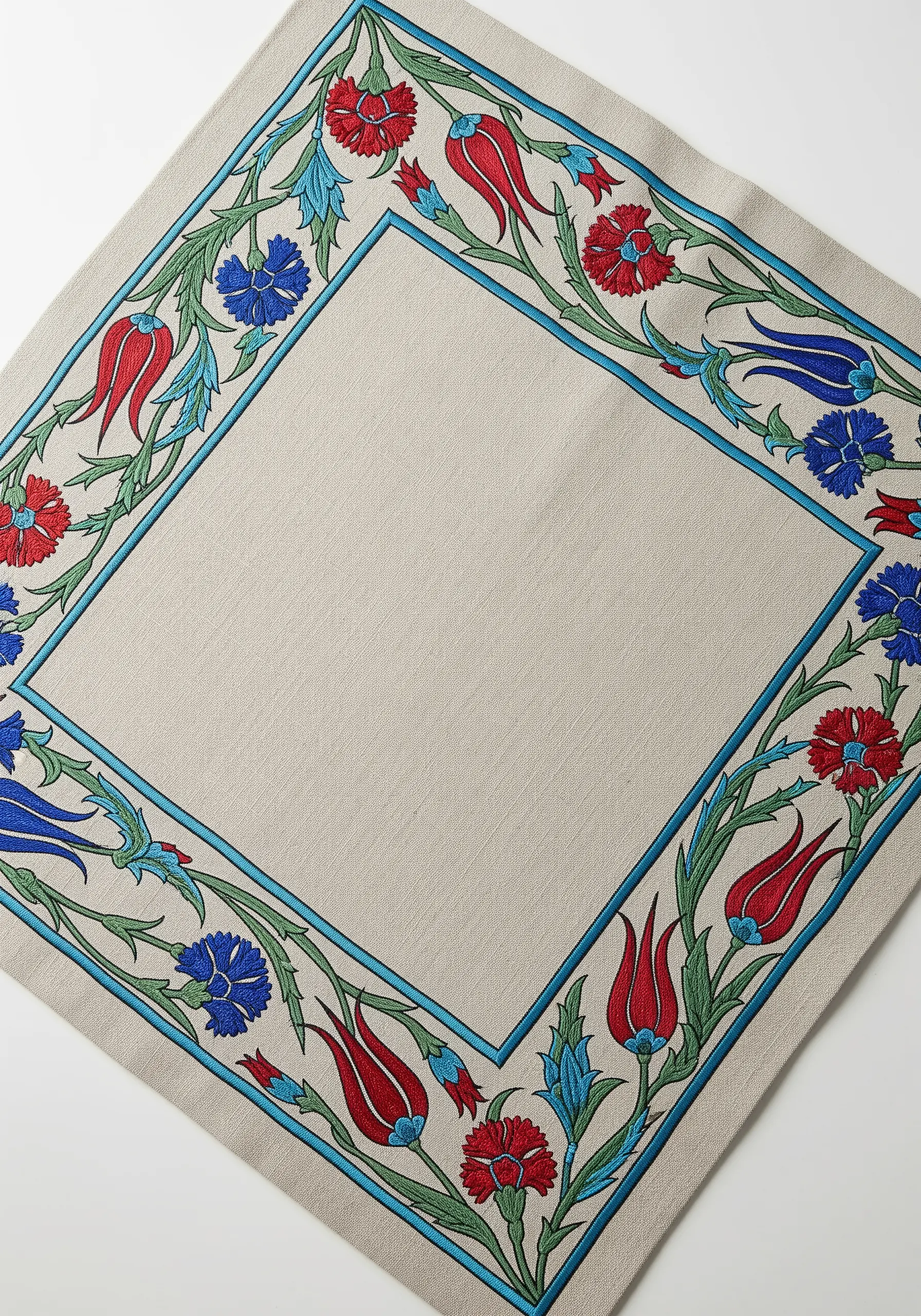
Recreate the graphic elegance of Turkish Iznik tiles by focusing on crisp, clean outlines.
Use a two-strand split stitch or stem stitch for all contours to ensure they are sharp and defined.
Fill the tulip and carnation motifs with a smooth, flat satin stitch, ensuring your stitches lie perfectly parallel.
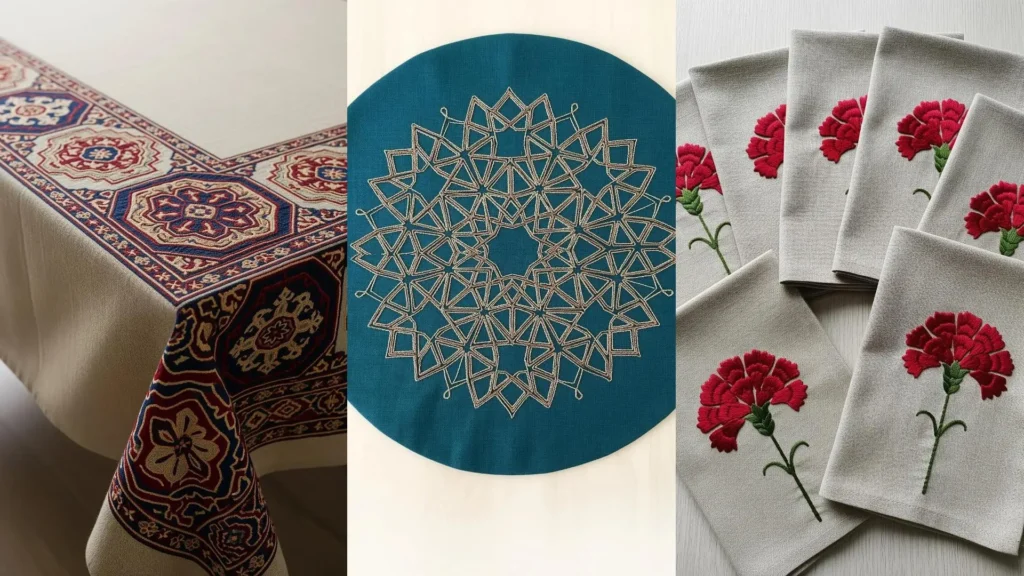
The genius of this style lies in its limited color palette—typically cobalt blue, turquoise, and crimson—which creates harmony and allows the negative space of the linen to frame the design.
This makes an excellent project for a set of coordinated placemats or napkins.
4. Indian Zardozi: The Art of Metallic Threadwork
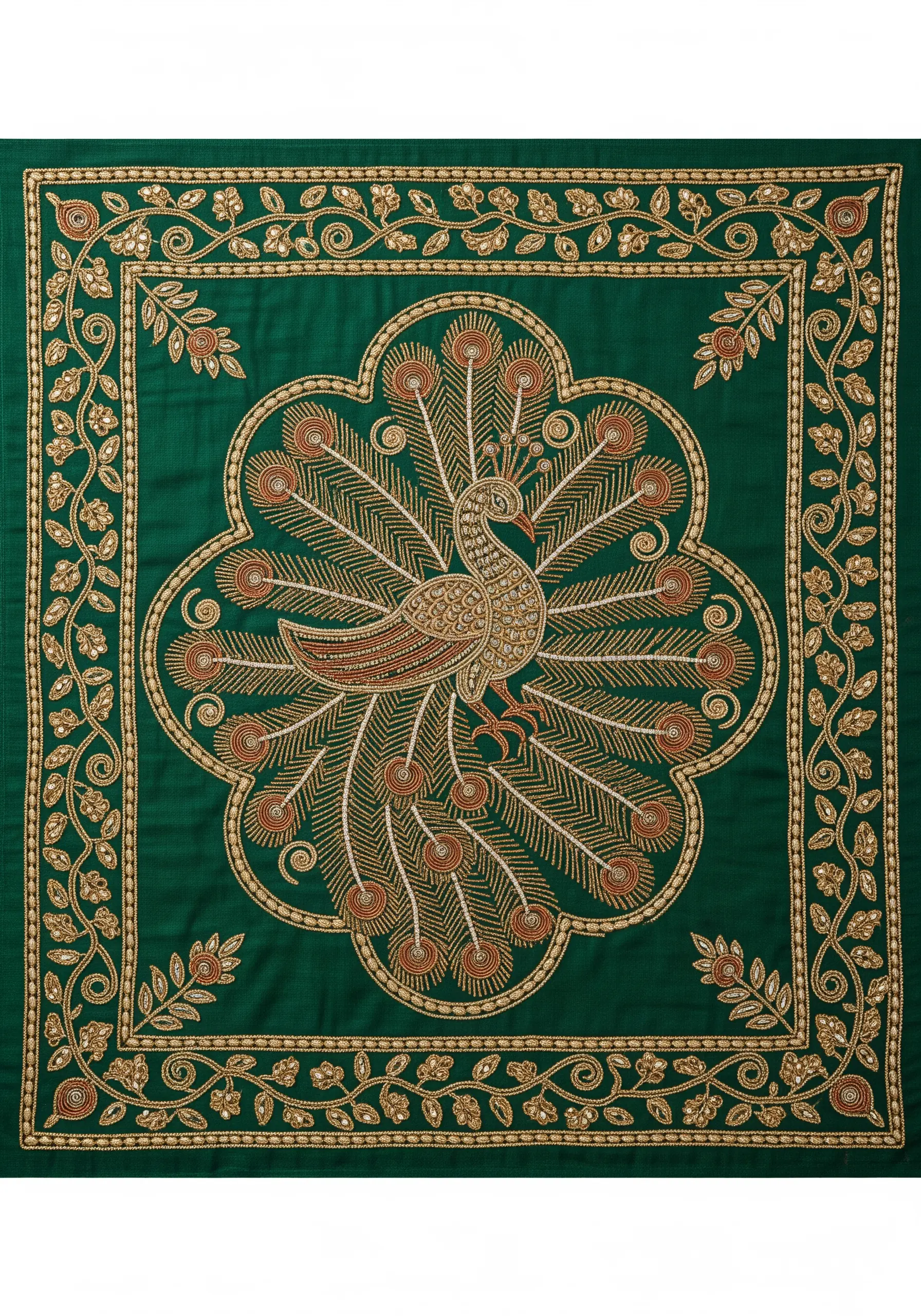
Introduce a touch of opulence to your table linens with Zardozi-inspired techniques.
Use fine metallic threads in gold, copper, and bronze to create a rich, layered effect.
To achieve the characteristic raised texture, lay down a foundation of felt padding or several layers of satin stitch before covering it with your metallic thread.
For the intricate details, like the peacock’s eye feathers, use couching to tack down thicker metallic cords or create tight French knots.
The deep emerald green fabric provides a luxurious backdrop that makes the metallic work shimmer.
5. Japanese Sashiko: Meditative Rhythm in Seigaiha Waves

Explore the beauty of minimalism with the Japanese Seigaiha, or wave pattern, executed in Sashiko.
The entire design is created with a simple running stitch, but the artistry is in the precision: keep your stitch length and the gaps between them perfectly uniform.
Use a thick, high-contrast Sashiko thread on a loosely woven fabric like linen or burlap to emphasize the texture.
This monochrome approach is not just a technique but a meditative practice, creating maximum visual impact through rhythm and repetition.
6. Mediterranean Pomegranate Border: Symbolism in Satin Stitch
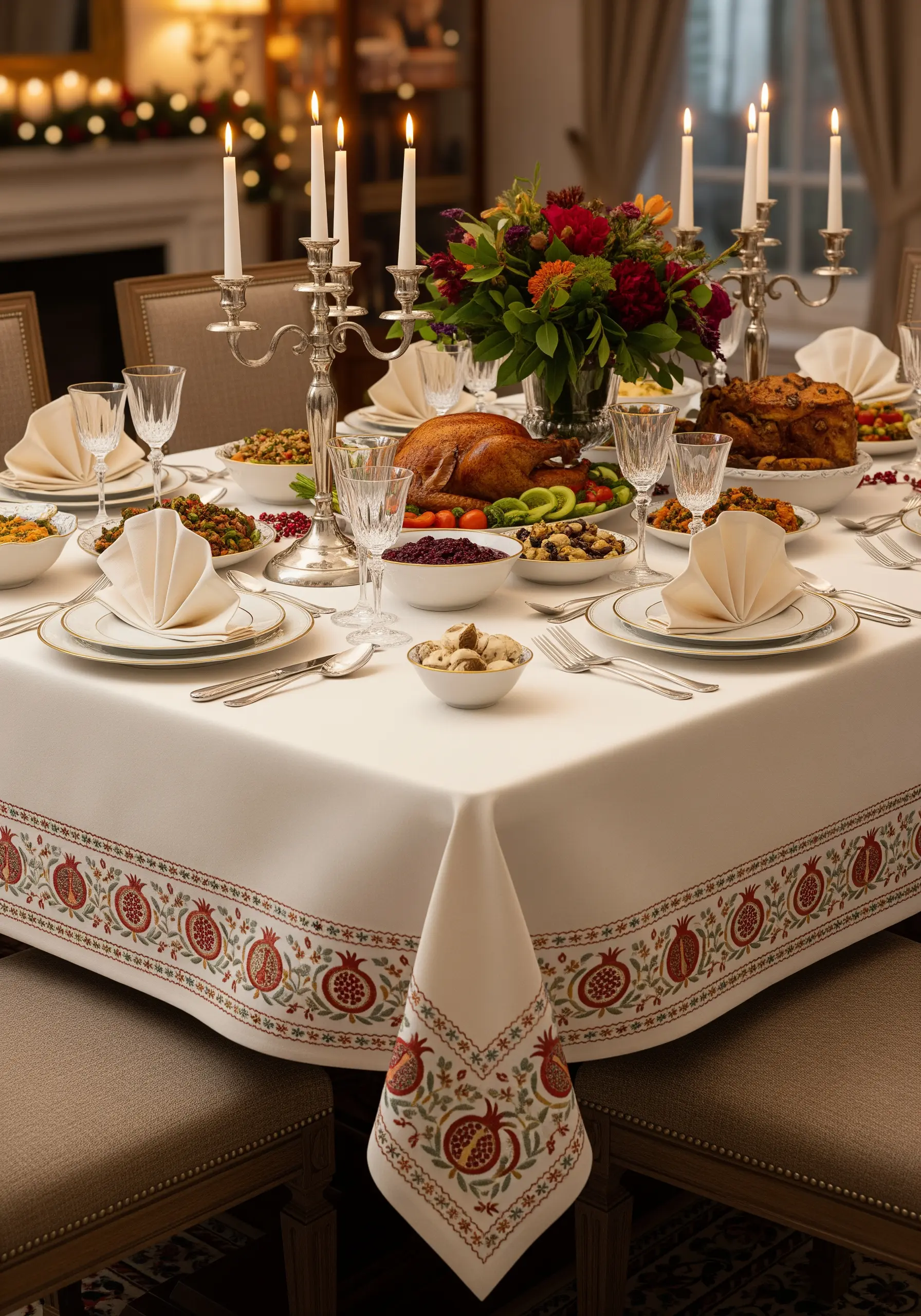
Stitch a border rich with symbolism using the classic pomegranate motif.
Create the rounded fruit shape with satin stitches, angling them slightly to follow the curve and reflect light.
Use tiny seed stitches or French knots in a contrasting pale pink or cream to represent the seeds, giving the fruit a burst of texture.
Arranging the motifs in a repeating pattern along the edge of a tablecloth creates a timeless, elegant frame for your dining setting.
Using a variegated red thread can add subtle depth without needing to switch colors.
7. Indian Blue Pottery Motifs: Monochrome Elegance
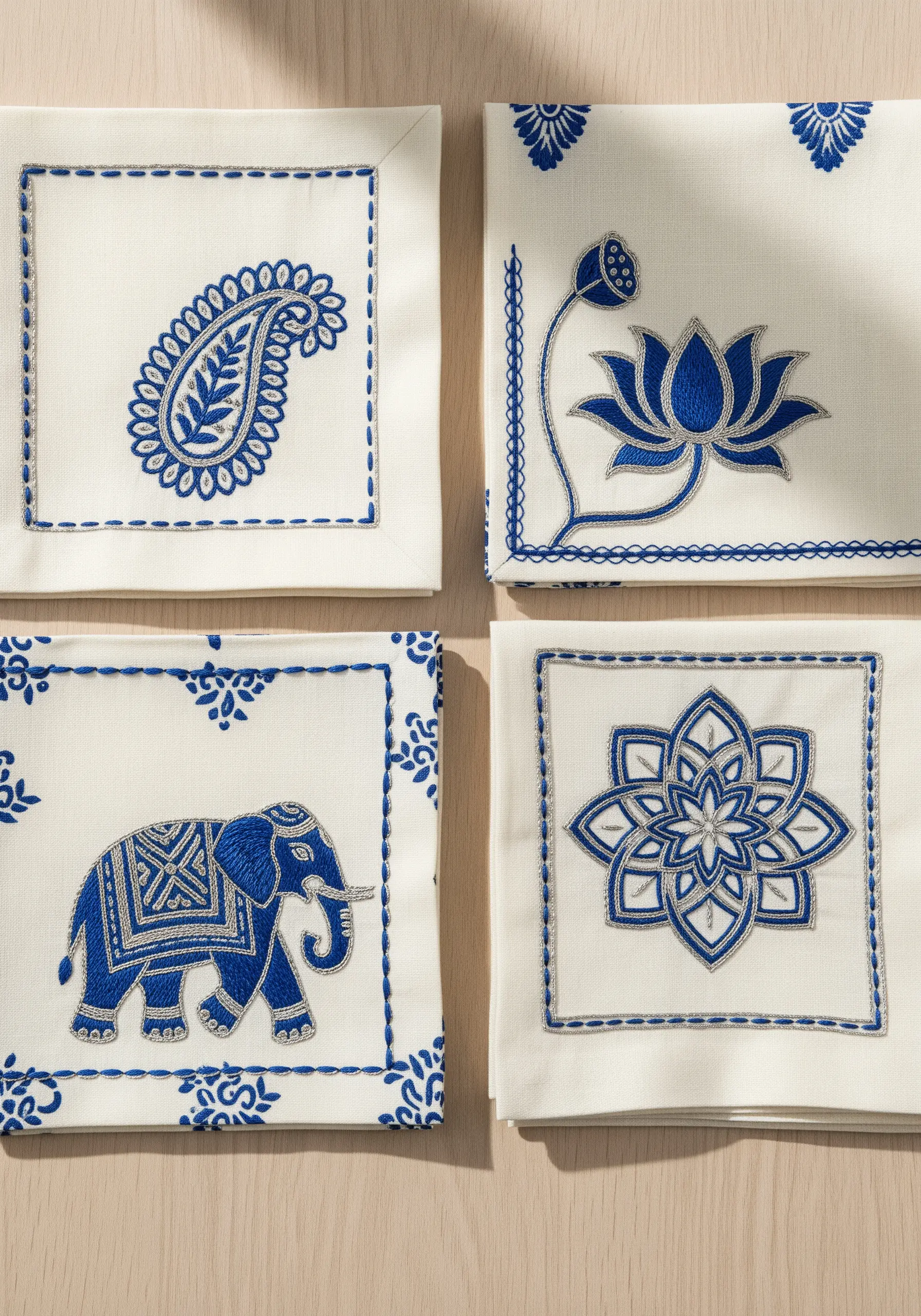
Channel the iconic look of Jaipur blue pottery by working with a sophisticated two-tone color scheme.
Select a primary color, like royal blue, and an accent, like silver or light blue, to use across all your motifs—paisley, lotus, elephant, and mandala.
Create visual interest by contrasting textures: use a dense satin stitch for the main fills and a delicate, sharp chain stitch or backstitch for the intricate outlines and details.
This contrast between bold fills and fine lines is what gives the designs their crisp, graphic quality on bright white linen.
8. Japanese Koi: Thread Painting for Dynamic Flow
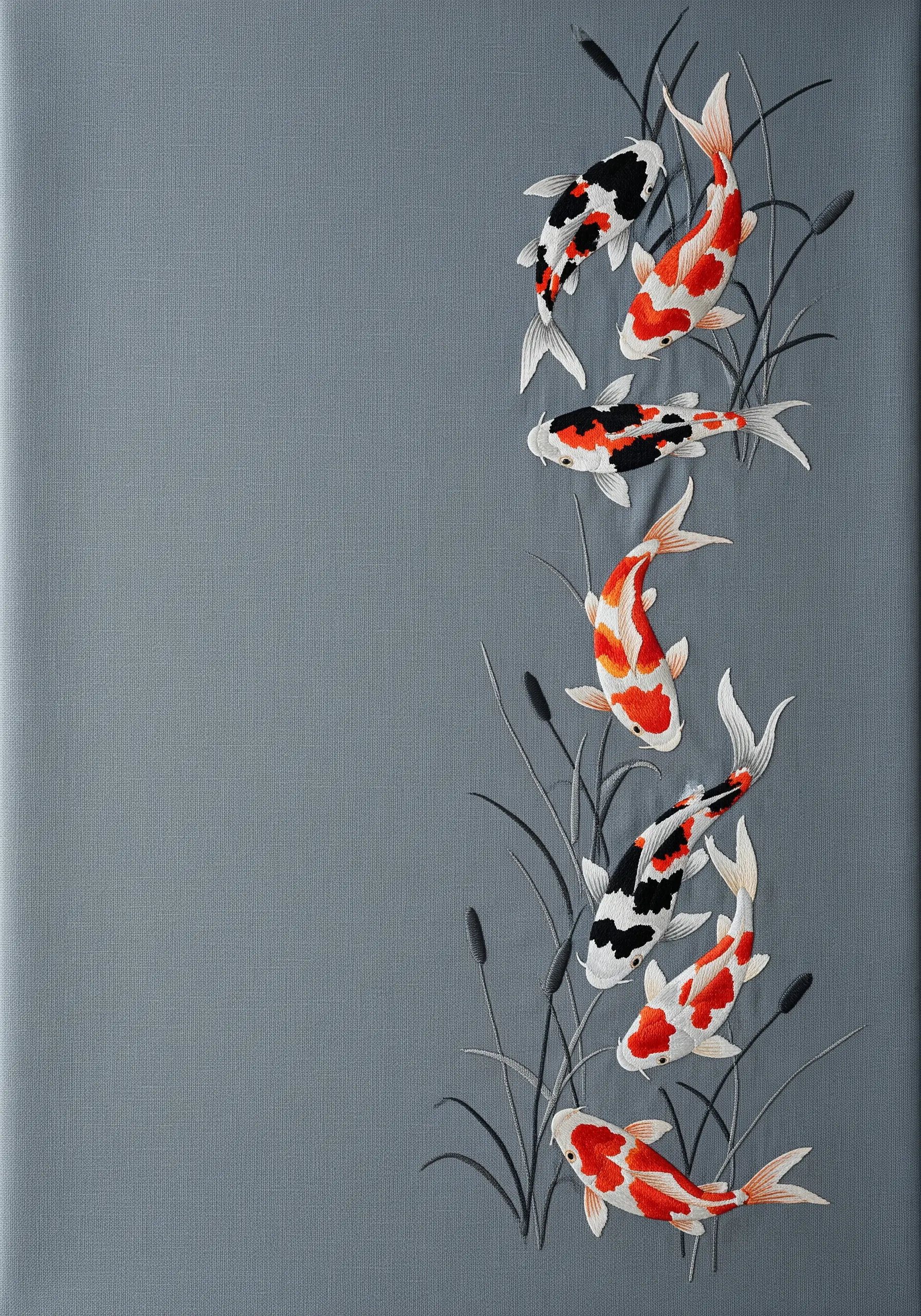
Bring the illusion of movement to your fabric by mastering the art of thread painting on Koi fish.
Use a single strand of floss and the long-and-short stitch to seamlessly blend the red, black, and white markings.
The most crucial element is your stitch direction; it must follow the curves of the fish’s body and the flow of its fins to create a sense of realism and motion.
Keep the surrounding elements, like the reeds, simple and sparse—thin straight stitches are enough to ground the scene without distracting from the beautifully rendered fish.
9. Anatolian Kilim Design: Weaving with Thread
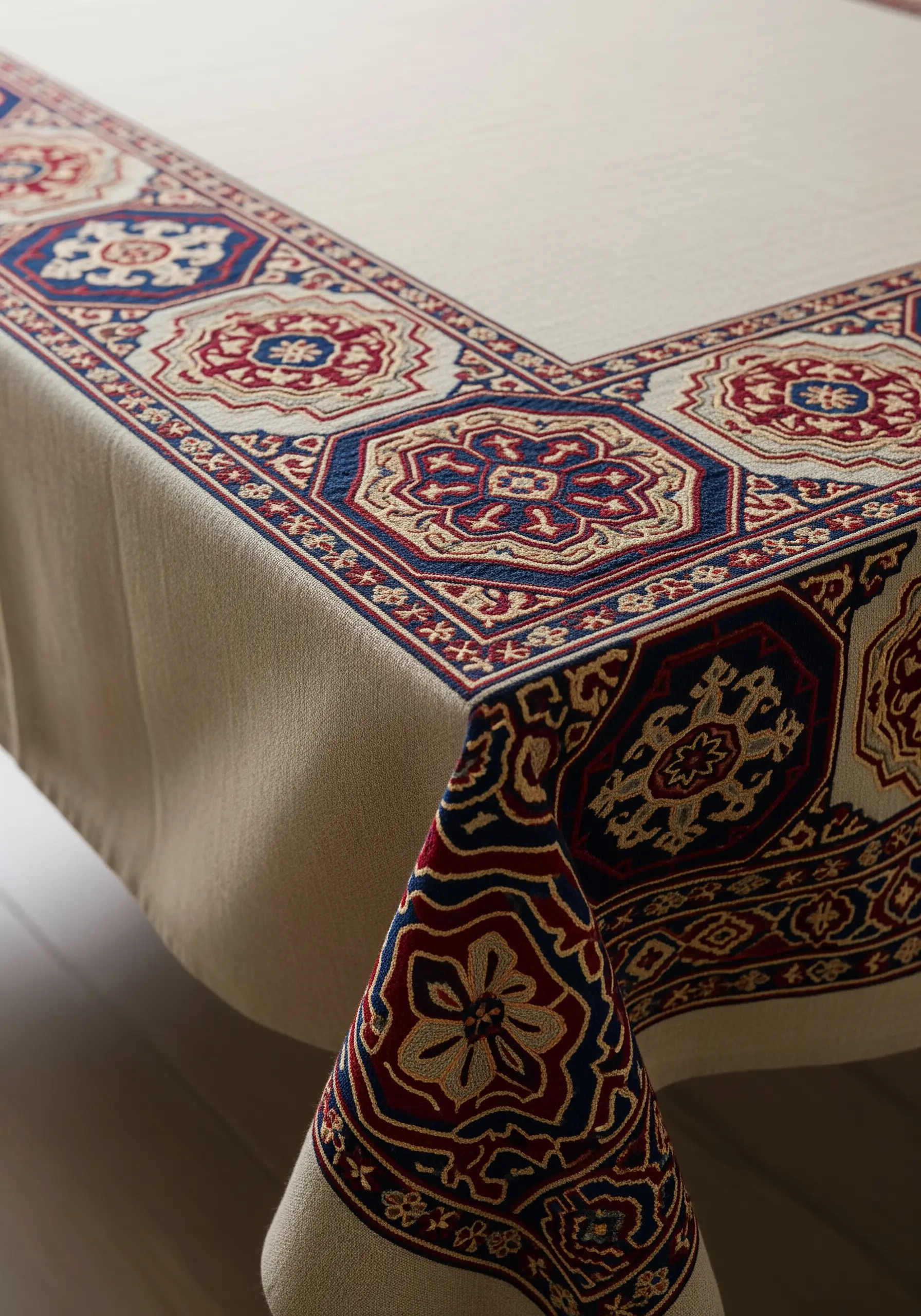
Replicate the bold, graphic look of a woven Anatolian Kilim rug on your table linens.
To mimic the flat, dense texture of a weave, use a brick stitch or perfectly aligned satin stitches to fill the geometric shapes.
The design’s power comes from the interplay of interlocking motifs and a classic color palette of deep navy, crimson, and ecru.
Choose a sturdy, medium-weight linen or cotton blend that can support the density of the stitchwork without puckering, creating a substantial and impactful border.
10. Indian Shisha Work: Adding Light and Reflection

Incorporate Shisha, or mirror work, to make your table linens sparkle and catch the light.
You can purchase small craft mirrors specifically for this technique.
First, create a foundation of holding stitches over the mirror to secure it to the fabric, then work a tight, decorative buttonhole or chain stitch around the edge to frame it beautifully.
Surround the mirrors with vibrant floral motifs in joyful, high-contrast colors like hot pink and bright green to make the reflective elements the star of the show.
11. Japanese Crane: Stitching Over a Painted Canvas
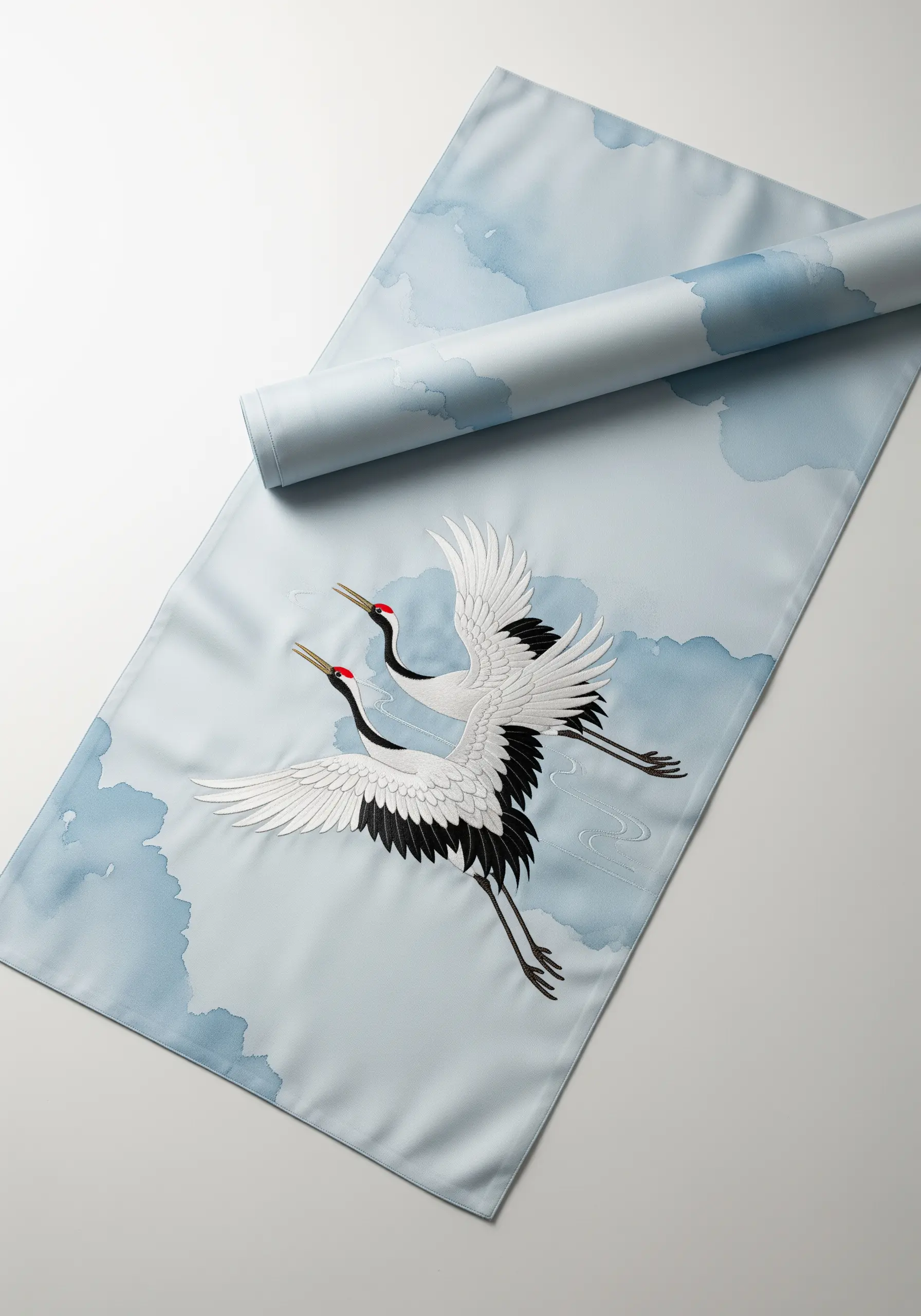
Combine embroidery with fabric painting for a piece with incredible depth and atmosphere.
Start by creating a soft, ethereal background on your fabric using watercolor-style fabric paints, then let it dry completely.
Use your embroidery to add sharp, tactile detail and focus, like the intricate feathers and crisp outlines of these cranes.
This mixed-media approach allows the background to establish a mood, while your stitches bring the primary subject to life with texture and precision.
12. Turkish Oya: The Art of Needle Lace Edging
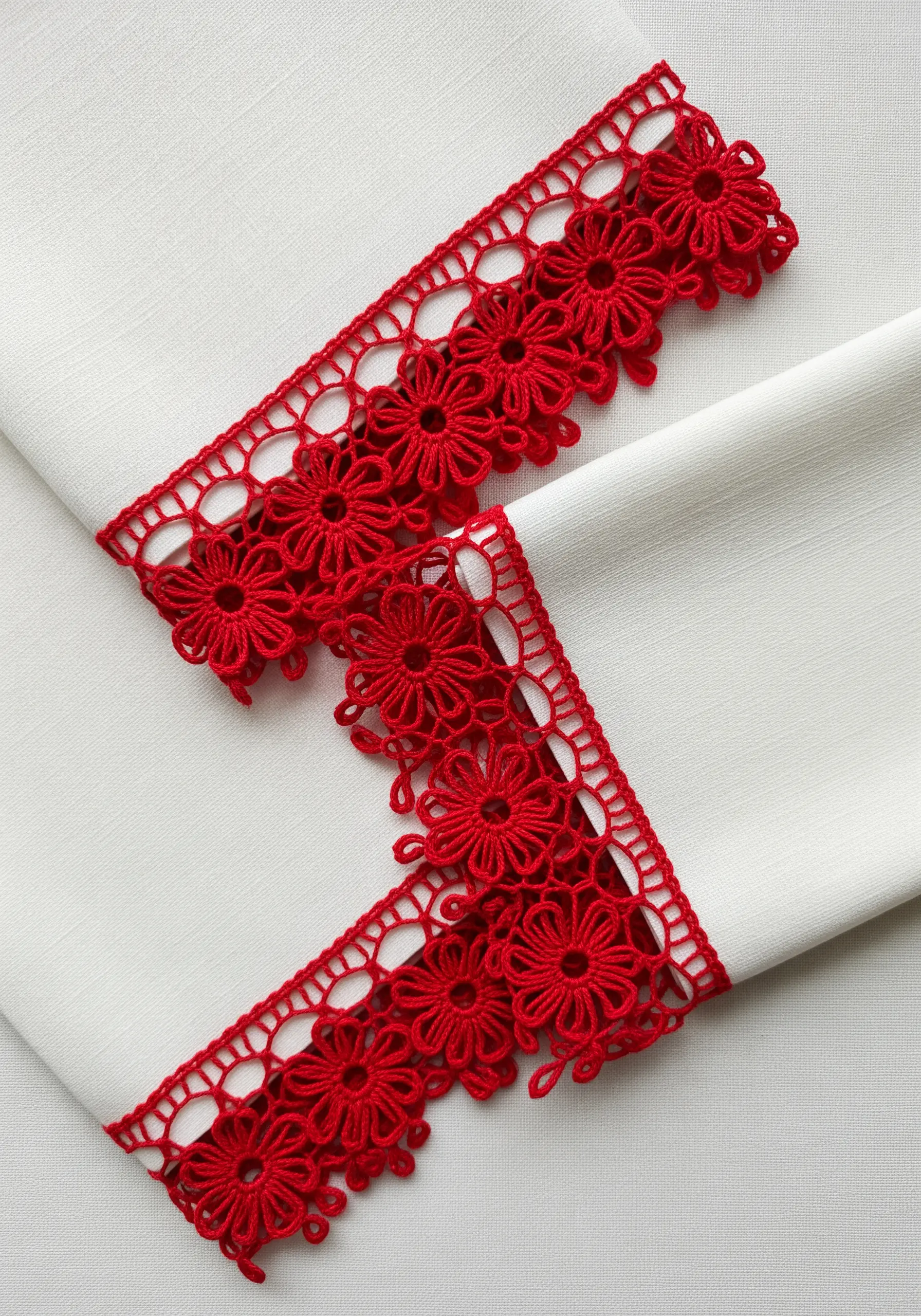
Add a delicate, three-dimensional finish to your napkins with an edging inspired by Turkish Oya, or needle lace.
While traditional Oya is a highly skilled art, you can create a similar look by working a series of detached buttonhole stitches off the edge of the fabric to build up floral and geometric shapes.
The technique creates an airy, sculptural border that feels incredibly refined.
Using a bold, contrasting color like this vibrant red against crisp white linen makes the intricate lace detail truly stand out.
13. Indian Kantha: Storytelling with Running Stitch

Discover the expressive power of the simple running stitch, the foundation of Indian Kantha work.
Use this single stitch to both outline the paisley and floral motifs and to fill the background with parallel lines.
This dual application creates a beautiful, rippled texture that gives the fabric a soft, quilted feel.
Choose a high-contrast thread, like white on black fabric, to highlight the rhythmic, handmade quality of every stitch. The slight imperfections are not flaws but part of its unique charm.
14. Islamic Geometric Pattern: Precision and Harmony
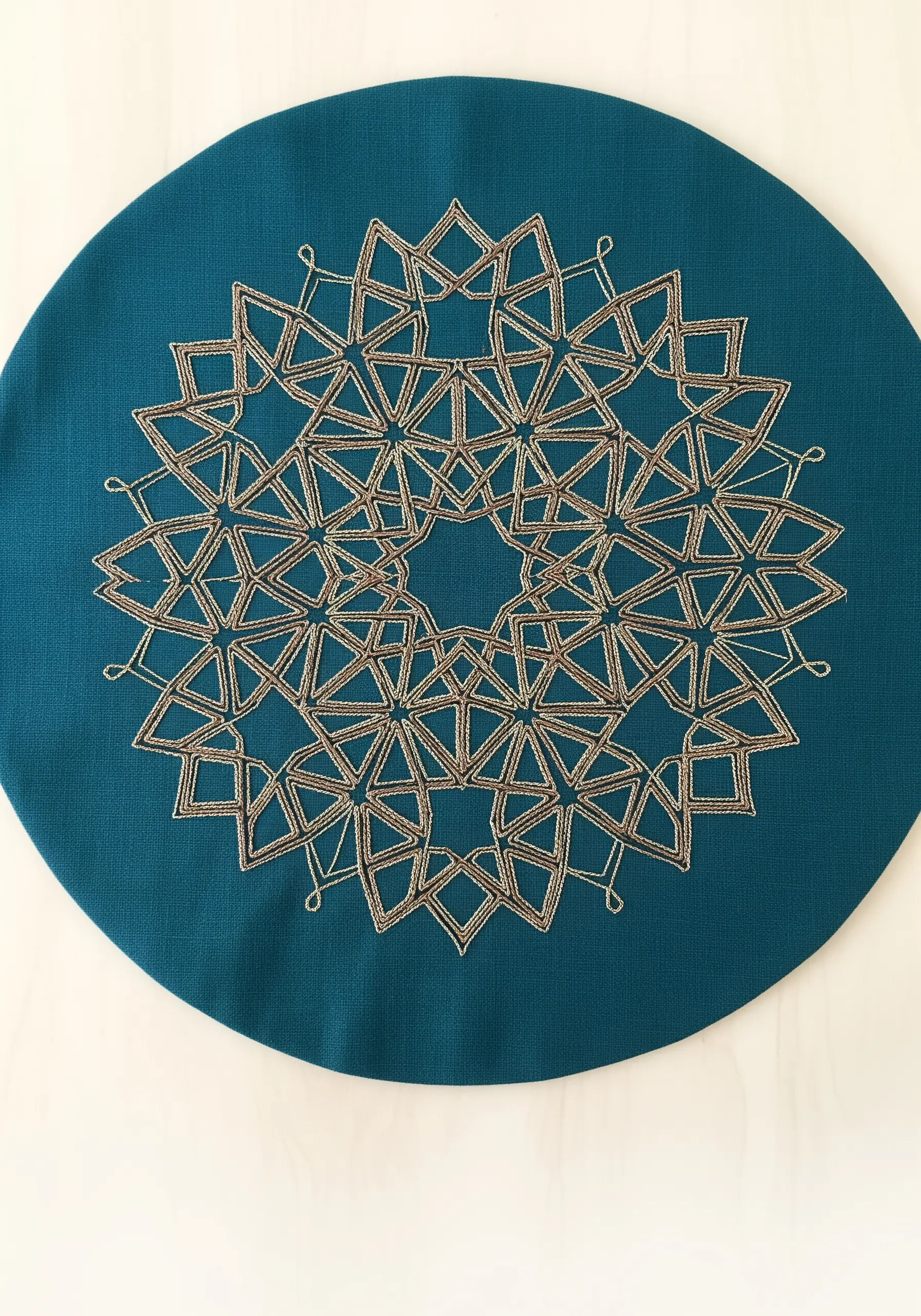
Channel the mathematical beauty of Islamic art by focusing on flawless symmetry and clean lines.
The success of this style depends on an accurately transferred pattern, so take your time with this step.
Use a fine, single-strand thread in a metallic or silk finish and trace the lines with a simple backstitch or stem stitch.
The complexity is in the design, not the stitch. A single color on a solid, contrasting background creates a sophisticated and contemplative mandala that feels both ancient and modern.
15. Japanese Momiji: Capturing Autumnal Hues
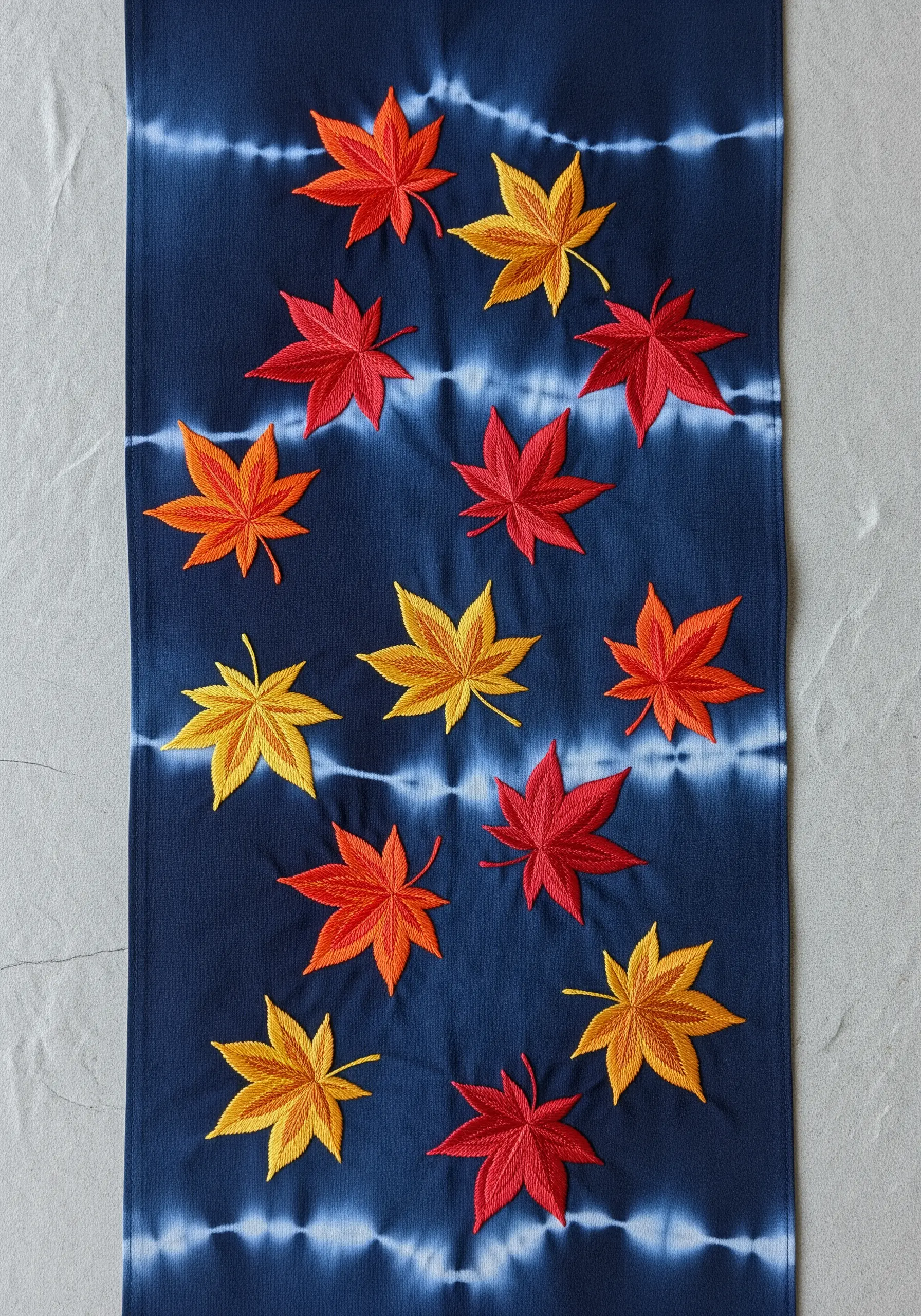
Celebrate the beauty of autumn with Momiji, the Japanese maple leaf, stitched in a blaze of color.
To achieve the variegated, natural look, fill each leaf using a fishbone stitch. This technique creates a central vein while the angled stitches on either side mimic the structure of a real leaf.
Instead of using a solid color, blend two or three shades of red, orange, and gold within a single leaf to give it a stunning, realistic gradient.
The tie-dyed Shibori-style background adds an extra layer of authentic Japanese artistry.
16. Rajasthani Procession: Narrative Detail in Miniature

Transform your tablecloth border into a narrative canvas inspired by Indian miniature painting.
Tackle this detailed scene by breaking it down into manageable shapes. Use a fine split stitch with a single strand of thread for all the outlines to keep them crisp and clear.
Fill in the areas of color with a smooth satin stitch, paying close attention to the direction to define forms.
Incorporate small touches of metallic gold thread for the jewelry and decorative elements to give the scene a truly regal finish.
17. Turkish Carnation: Layered Satin Stitch for Petal Texture
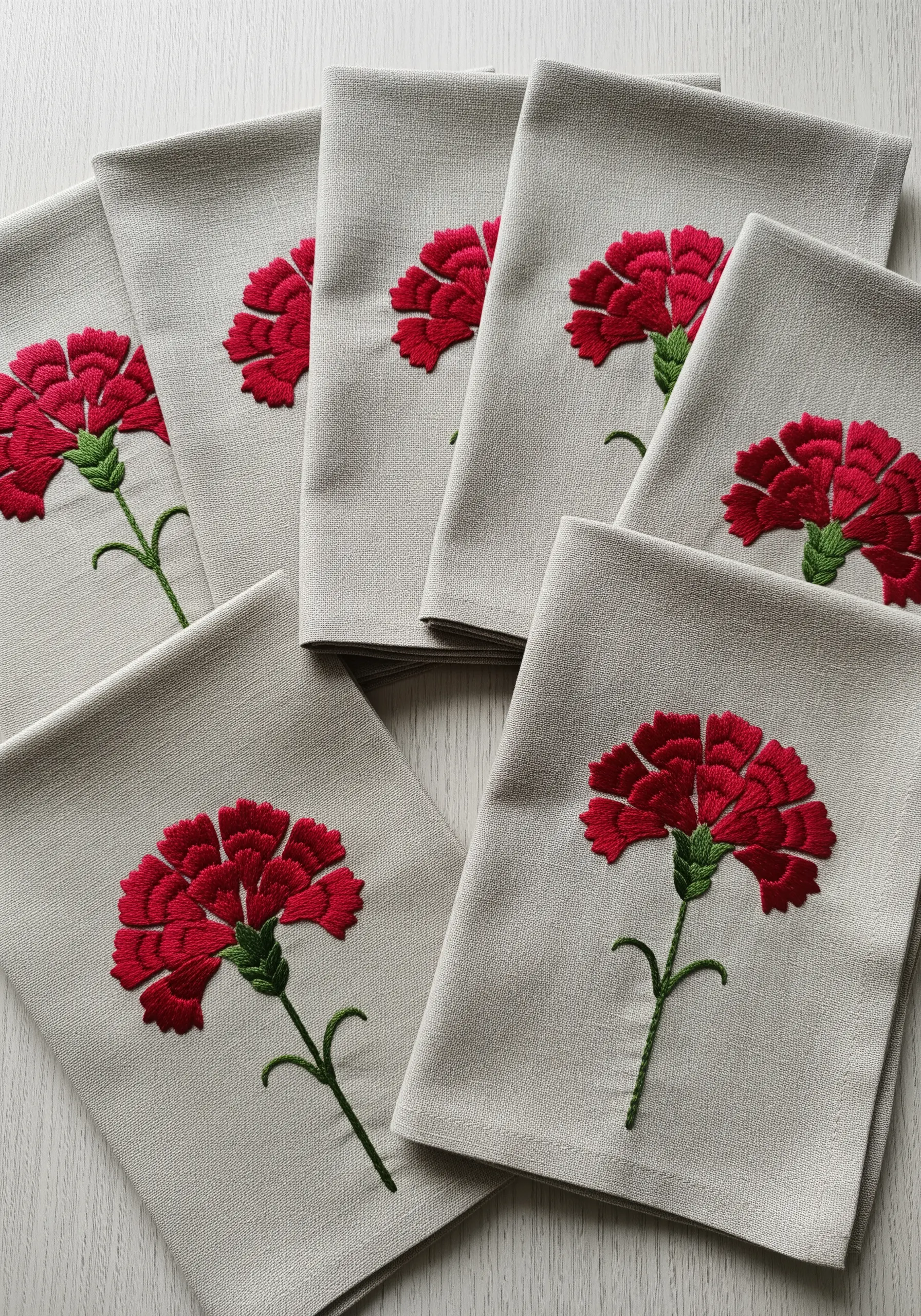
Give your stylized florals dimension and texture, as seen in this classic Turkish carnation.
Instead of filling the entire flower with one block of satin stitch, work the ruffled petals in individual, overlapping sections.
By slightly changing the angle of your stitches in each section, you create subtle shifts in how the light hits the thread, giving the impression of layered, delicate petals.
Using a single bold color on a neutral linen background ensures this textural detail becomes the focal point.
18. Japanese Zen Garden: Minimalism and Contemplative Stitching

Capture the serene essence of a Japanese Zen garden through minimalist stitching and thoughtful use of space.
Create the raked gravel path with two parallel lines of backstitch, then fill the space between them with evenly spaced straight stitches set at an angle.
For the rocks, use a padded satin stitch in several shades of grey. The padding gives them a smooth, rounded, three-dimensional feel that stands out from the flat path.
This design is a masterclass in how negative space can be as powerful as the stitches themselves, creating a truly calm and artistic piece.