Have you ever felt that your embroidery, while lovely, is missing a certain spark? You follow the patterns, master the stitches, but the final piece doesn’t quite capture the expressive, artistic vision you have in your mind.
The secret to bridging that gap isn’t about learning more complex stitches. It’s about shifting your perspective. It’s time to stop seeing thread as just a line and start treating it as a painterly medium. Your needle can be your brush, your fabric a canvas, and your floss a tube of paint rich with texture and sheen.
These projects are designed to free you from the constraints of perfect representation. Here, you’ll explore color, form, and texture for their own sake. You will learn to sculpt with fiber, paint with gradients, and draw with gestural, expressive lines. Embrace the abstract, and you’ll discover a more intuitive, personal, and profoundly artistic way to stitch.
1. Build Tactile Landscapes with Sculptural Fibers
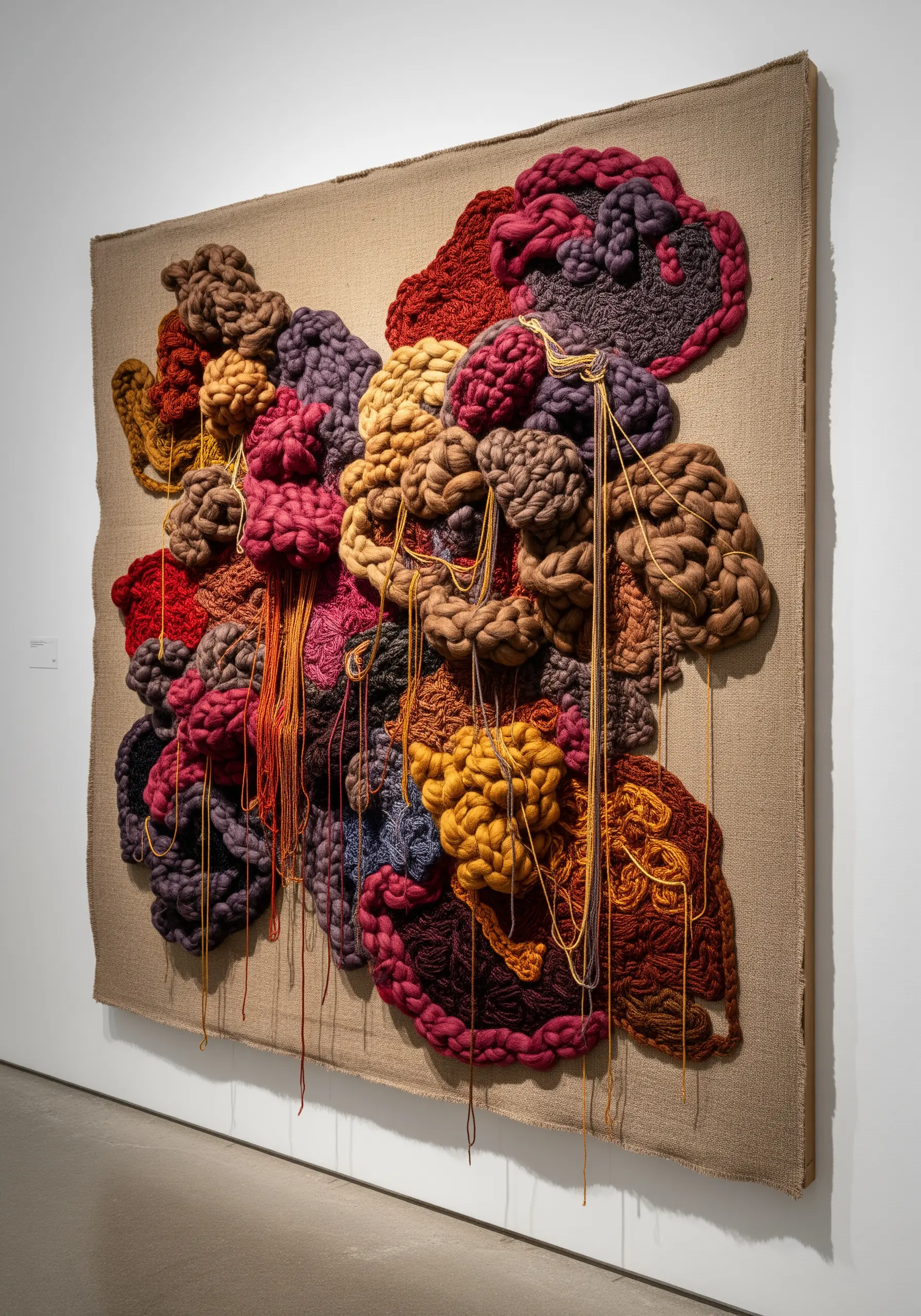
Move beyond flat stitches by incorporating thick wool roving or chunky yarn to build dramatic, three-dimensional surfaces.
Anchor these heavy fibers onto a sturdy base like burlap or hessian canvas using a couching stitch with a stronger, thinner thread.
Create organic, mounded shapes by coiling and looping the roving, securing it intermittently to allow for natural volume and shadow.
Don’t be afraid to leave some threads hanging loose; this choice adds a raw, process-driven feel to the finished artwork, celebrating the materials themselves.
This method transforms your canvas into one of the abstract embroidery stitches that turn plain fabric into bold wall sculptures.
2. Paint with Thread Using Luminous Color Fields
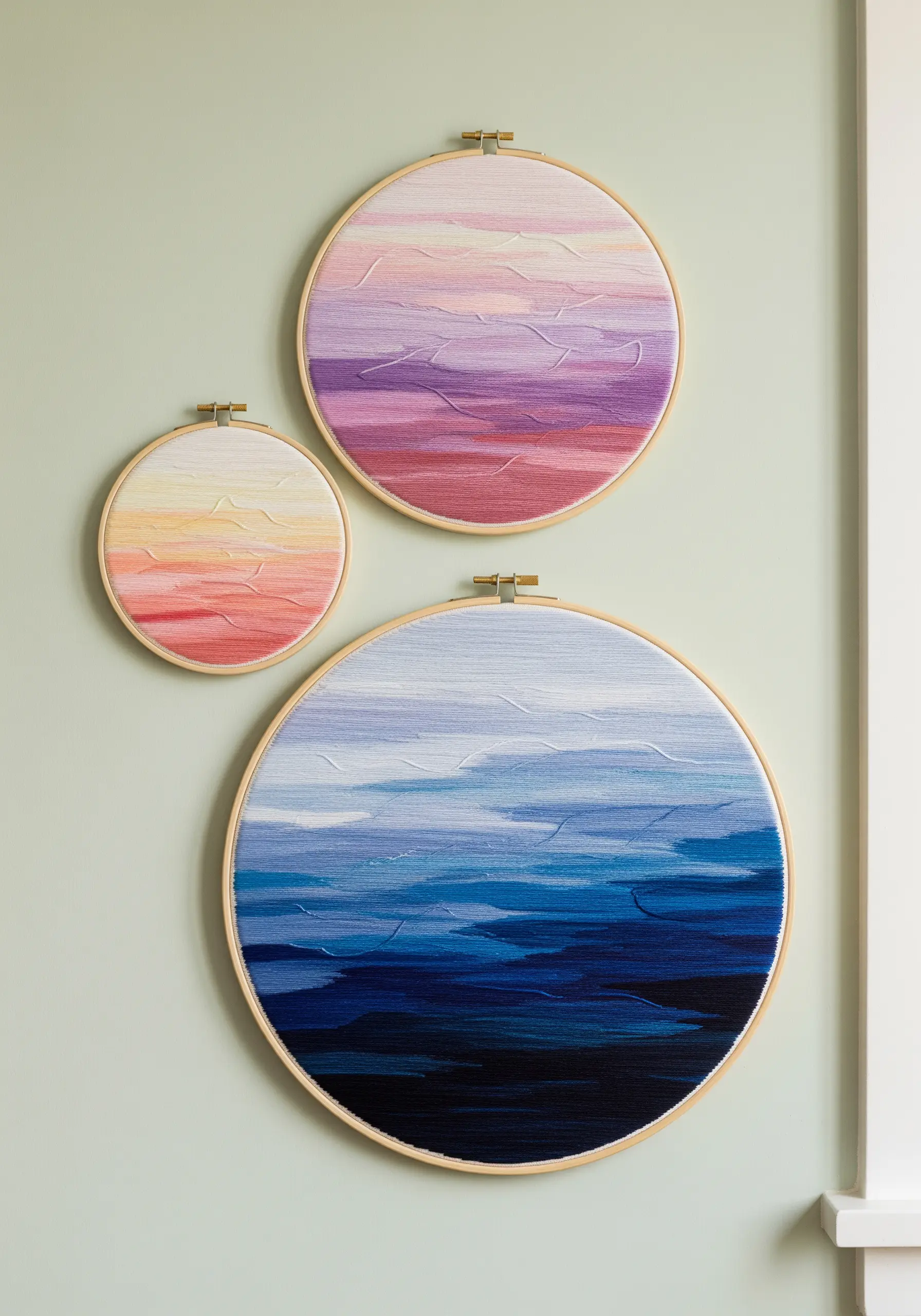
Create the soft, blended effect of a watercolor painting by using satin stitch or long-and-short stitch in broad color blocks.
To achieve a seamless gradient, ensure the edge of each new color block slightly tucks into the previous one, blurring the line between them.
Use a single ply of satin floss or a fine pearl cotton to maximize light reflection, giving your work a subtle, elegant sheen.
Group hoops of varying sizes to create a cohesive installation; this allows you to explore different color stories—like a sunset and a seascape—that harmonize when displayed together.
This is a perfect way to build a gallery wall with your own unique creations.
3. Achieve Graphic Precision with Geometric Thread Wrapping
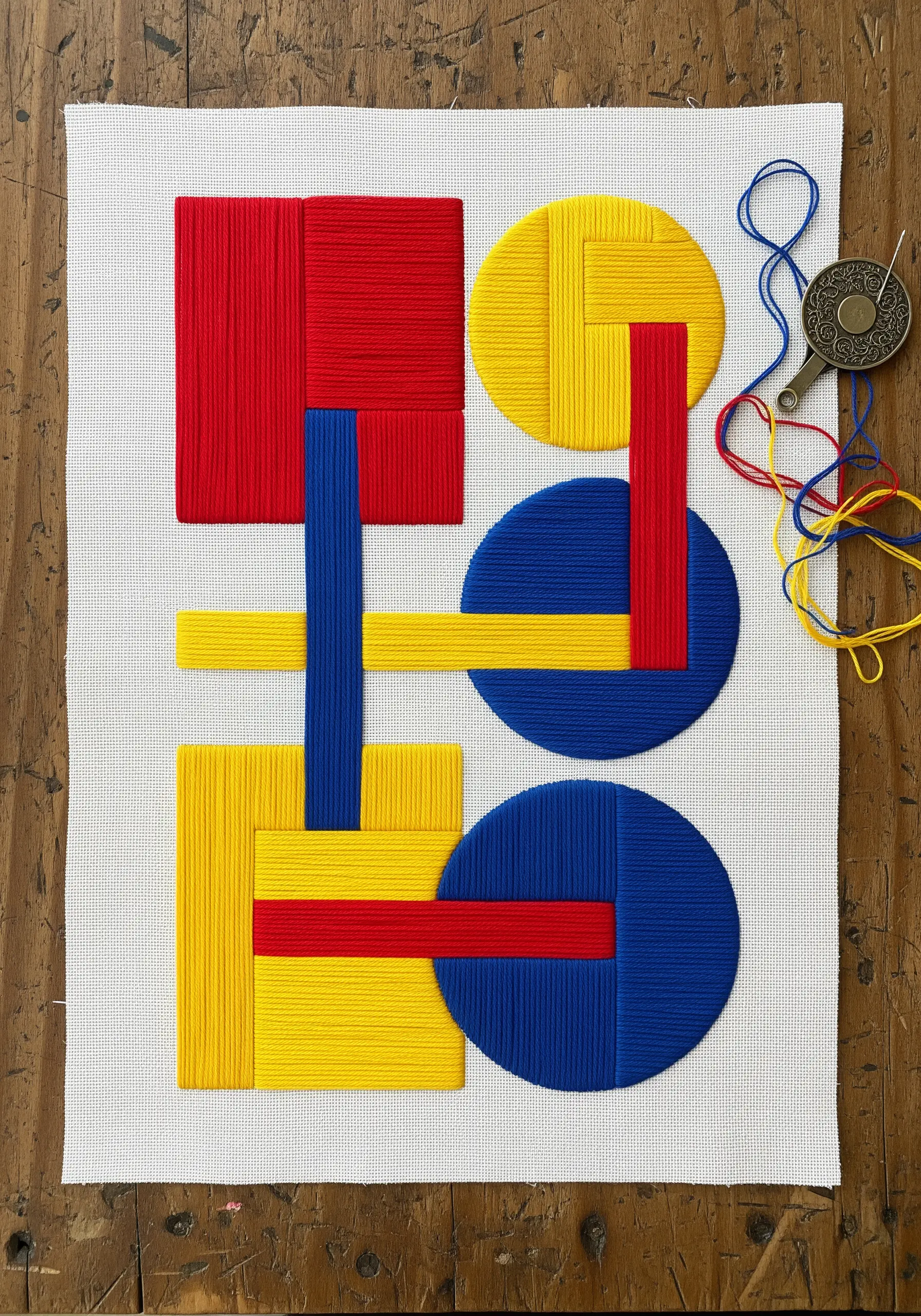
For perfectly crisp edges and ultra-dense color, explore thread wrapping instead of traditional fill stitches.
Cut your desired geometric shapes from stiff cardstock or felt, then tightly and evenly wrap them with embroidery floss.
Secure the wrapped shapes to your canvas using a discreet appliqué stitch around the perimeter, creating a raised, graphic effect.
This method allows for flawless color blocking and sharp intersections, channeling the clean aesthetic of Bauhaus design without the struggle of maintaining perfect stitch tension over large areas.
4. Master Controlled Chaos with a Radiating Thread Burst
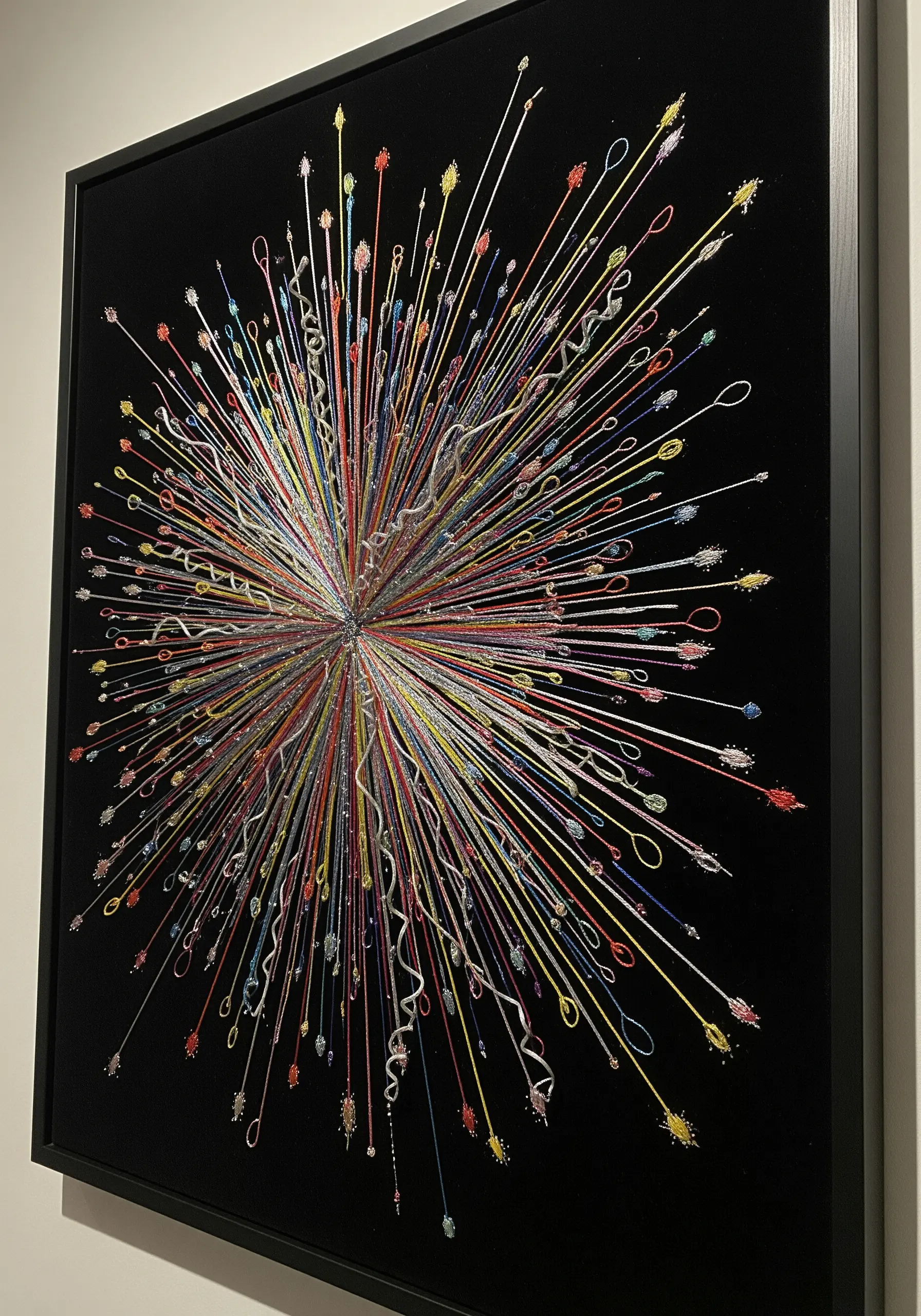
Create a powerful sense of energy by stitching lines that radiate from a single point on your canvas.
Work with a variety of thread types—metallic, variegated, silk, and classic cotton—to build layers of texture and light reflection.
Instead of pulling every stitch taut, intentionally leave some threads looped or secure them with a knot at the end to add unique dimensional details.
Using a dark background, like black velvet or linen, provides the perfect contrast to make your vibrant colors explode visually. These are some of the most dramatic abstract thread burst techniques.
5. Weave Textural Strata Inspired by Geology
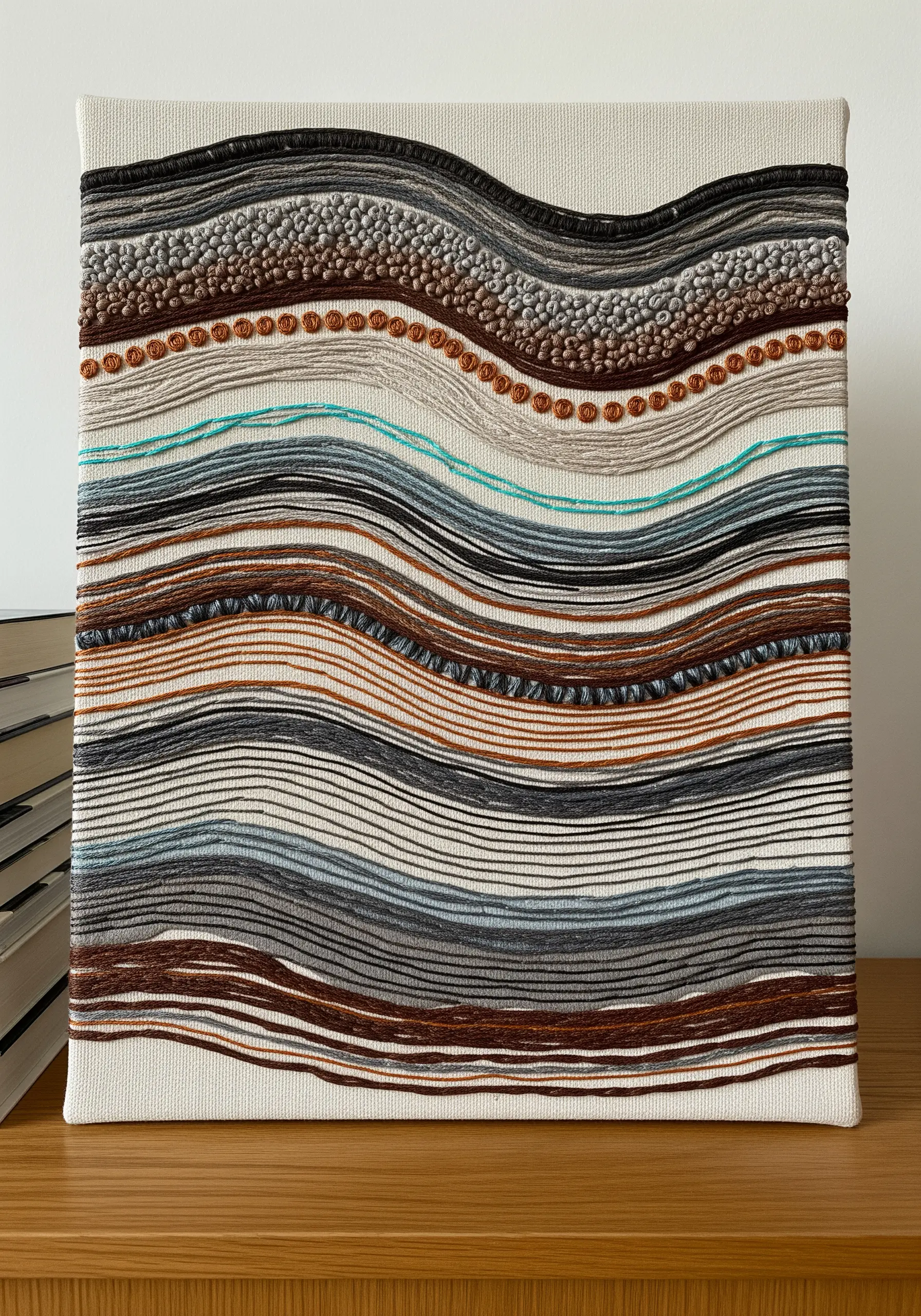
Evoke the feeling of a landscape’s cross-section by working in horizontal bands of varied stitches and fibers.
Dedicate each row to a different texture: dense French knots, smooth satin stitches, couched chenille yarn, or delicate seed stitches.
This approach allows you to stitch natural textures like a pro, focusing on the interplay of light and shadow.
A restrained, earthy color palette unified with a single, unexpected accent—like a pop of turquoise—lends the composition a modern and sophisticated feel.
6. Capture Movement with a Minimalist Thread Stroke
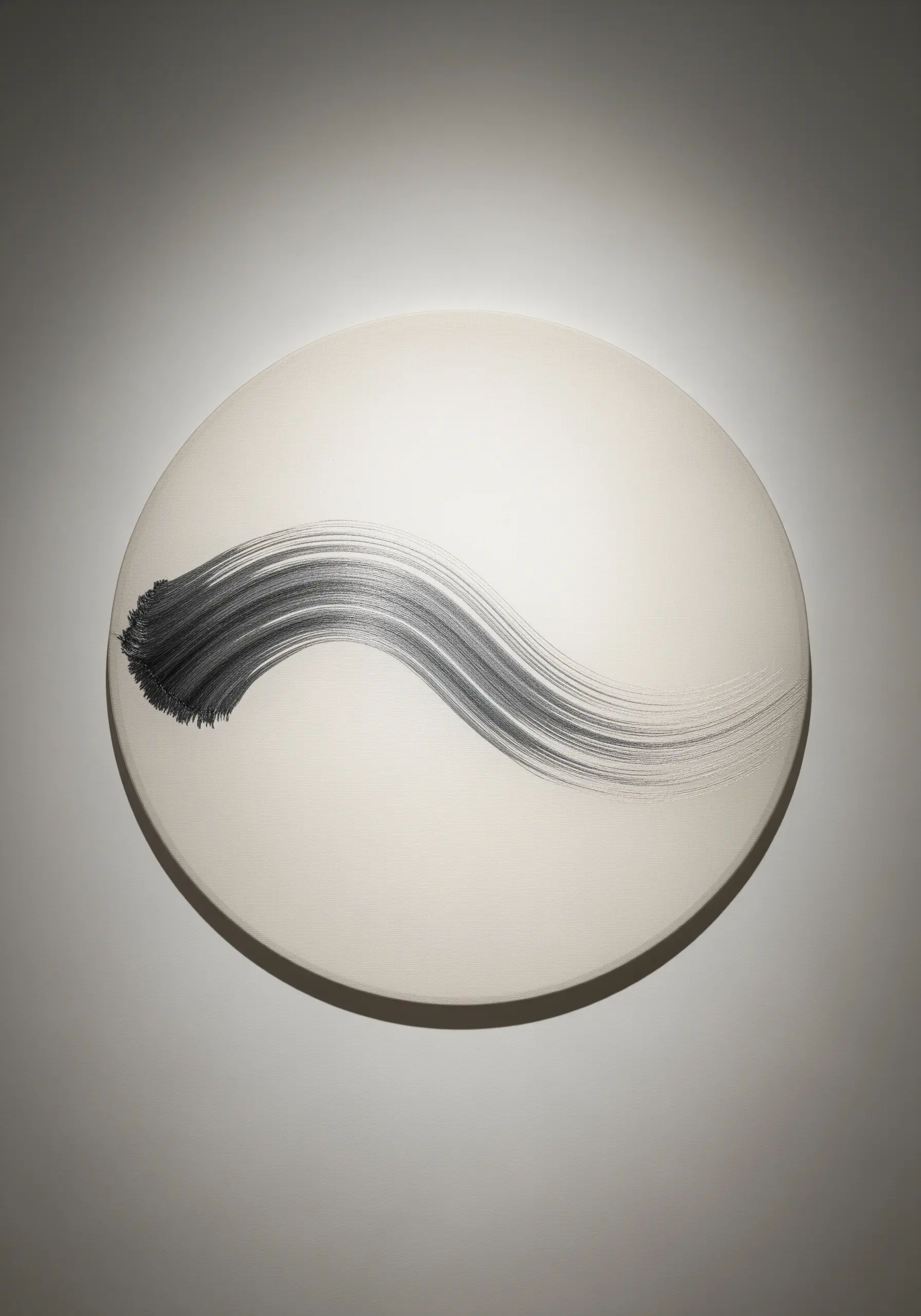
Achieve the elegant fluidity of a calligraphy brushstroke using meticulously placed parallel stitches.
Start by drawing a simple, sweeping guide shape onto your fabric with a water-soluble marker.
Fill the shape with hundreds of straight stitches, keeping them close together in the thicker parts of the curve and gradually spacing them out to create a feathered, tapering edge.
By using a single color on a stark background, you combine thread and negative space to command attention, focusing entirely on movement and form.
7. Map Your World with Contoured Color Fields
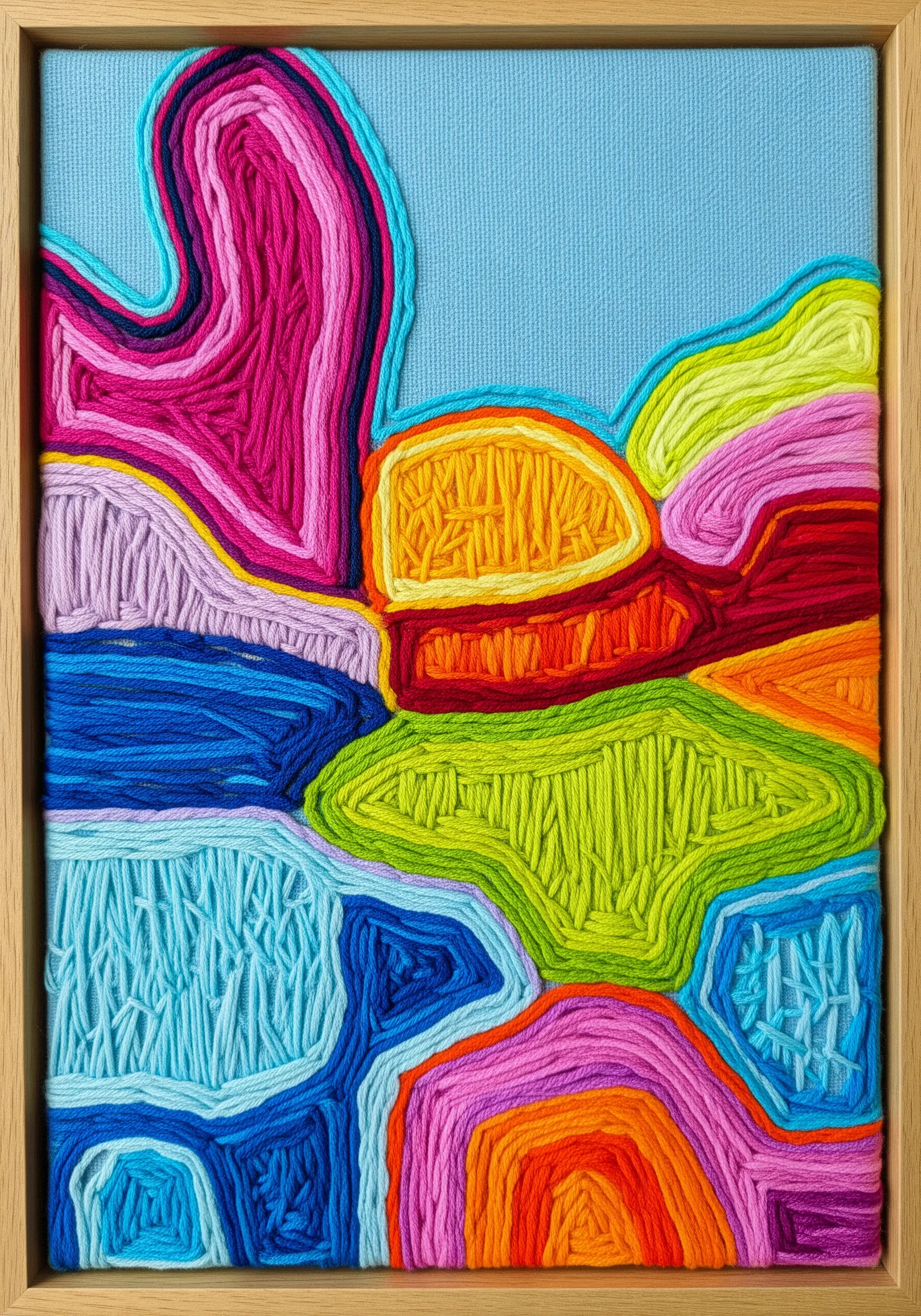
Design an abstract landscape by treating your fabric like a topographical map.
Begin by drawing interlocking organic shapes, then outline each one with a bold chain stitch or a thick couched yarn to establish clear boundaries.
Fill each shape with directional satin or long-and-short stitches, varying the angle of the stitches in adjacent sections to create visual movement and depth.
This technique turns simple fills into a dynamic composition of textured territories.
8. Explore a Universe of Texture in Monochrome
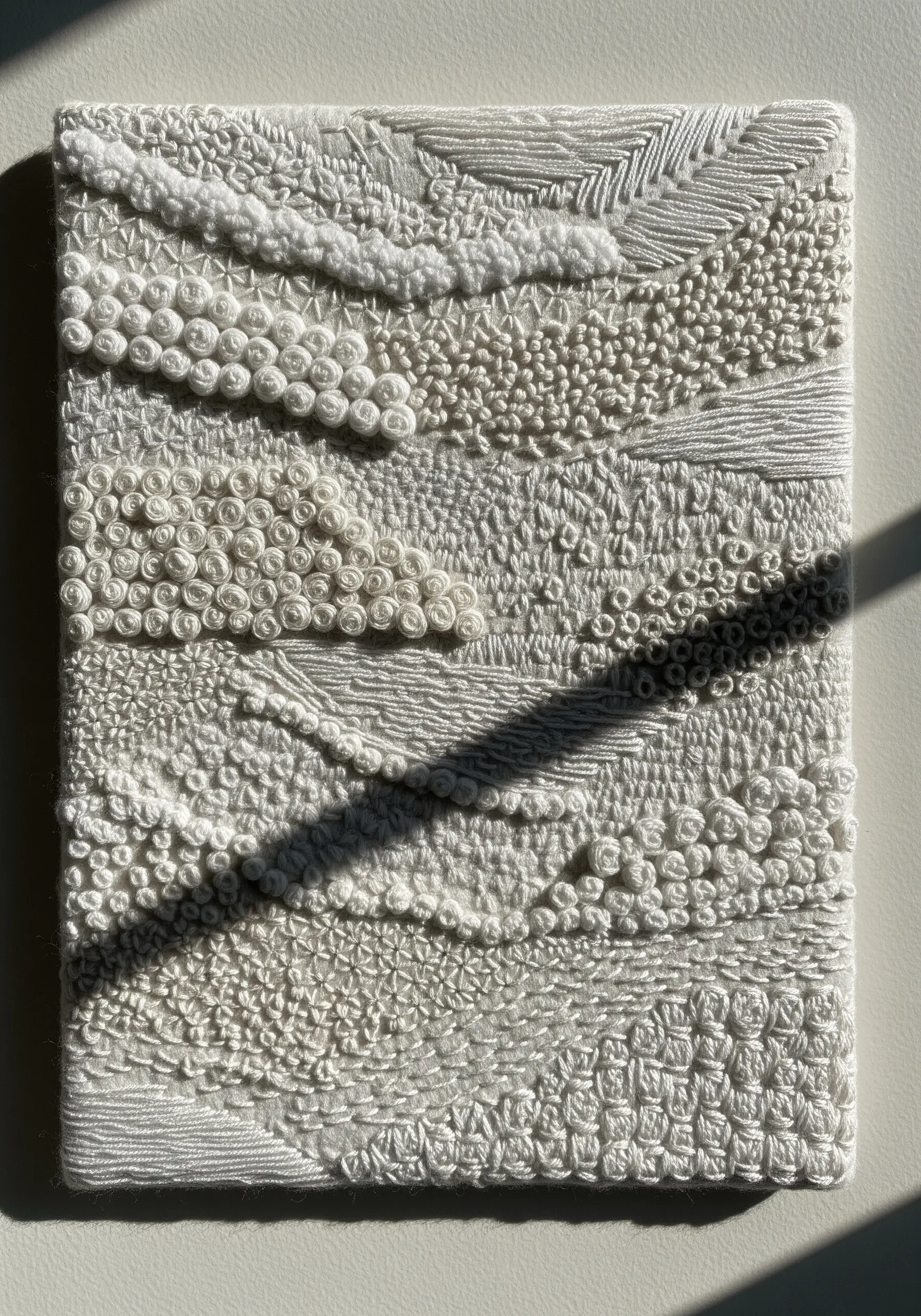
Prove that texture can be more powerful than color by creating a composition using only a single hue.
This practice sharpens your focus on how different stitches reflect light and create shadows.
Divide your canvas into organic sections and fill each with a distinct textural stitch: dense French knots, raised bullion knots, smooth padded satin stitch, or intricate woven picots.
These tone-on-tone embroidery techniques result in a sophisticated, tactile artwork that invites touch and closer inspection.
9. Practice Pointillism with 3D Knots
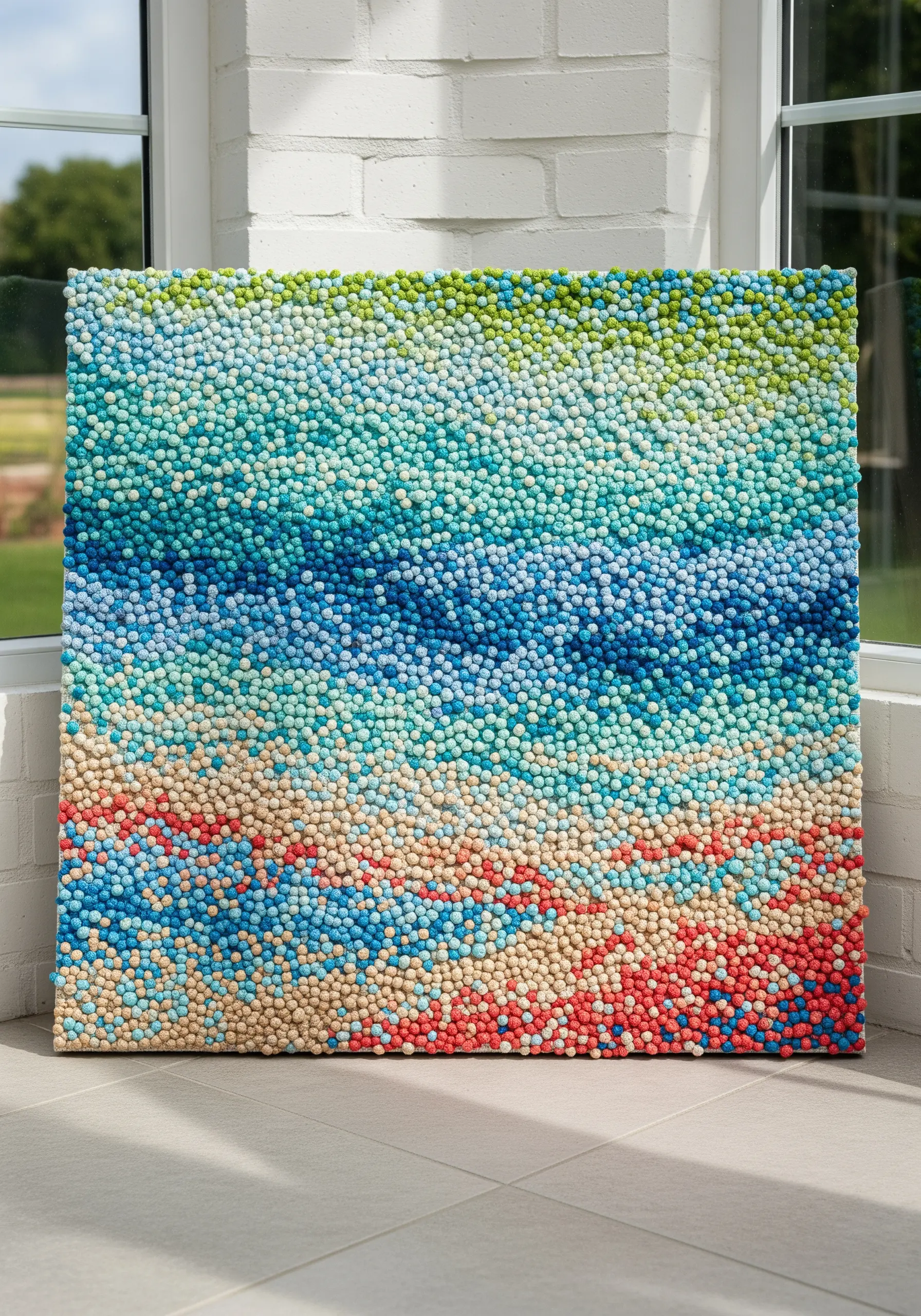
Mimic the pixelated effect of Pointillist painting by covering your canvas with thousands of tiny, raised dots.
For a classic embroidered look, use densely packed French or colonial knots, planning your color transitions to create a soft, gradient landscape.
To achieve an even more pronounced 3D effect, stitch on small wool felt balls or pre-made mini pom-poms, which add significant volume and a playful texture.
The visual impact comes from the sheer density of the elements, transforming simple dots into a cohesive and stunning image.
10. Design a Dripping Thread Waterfall
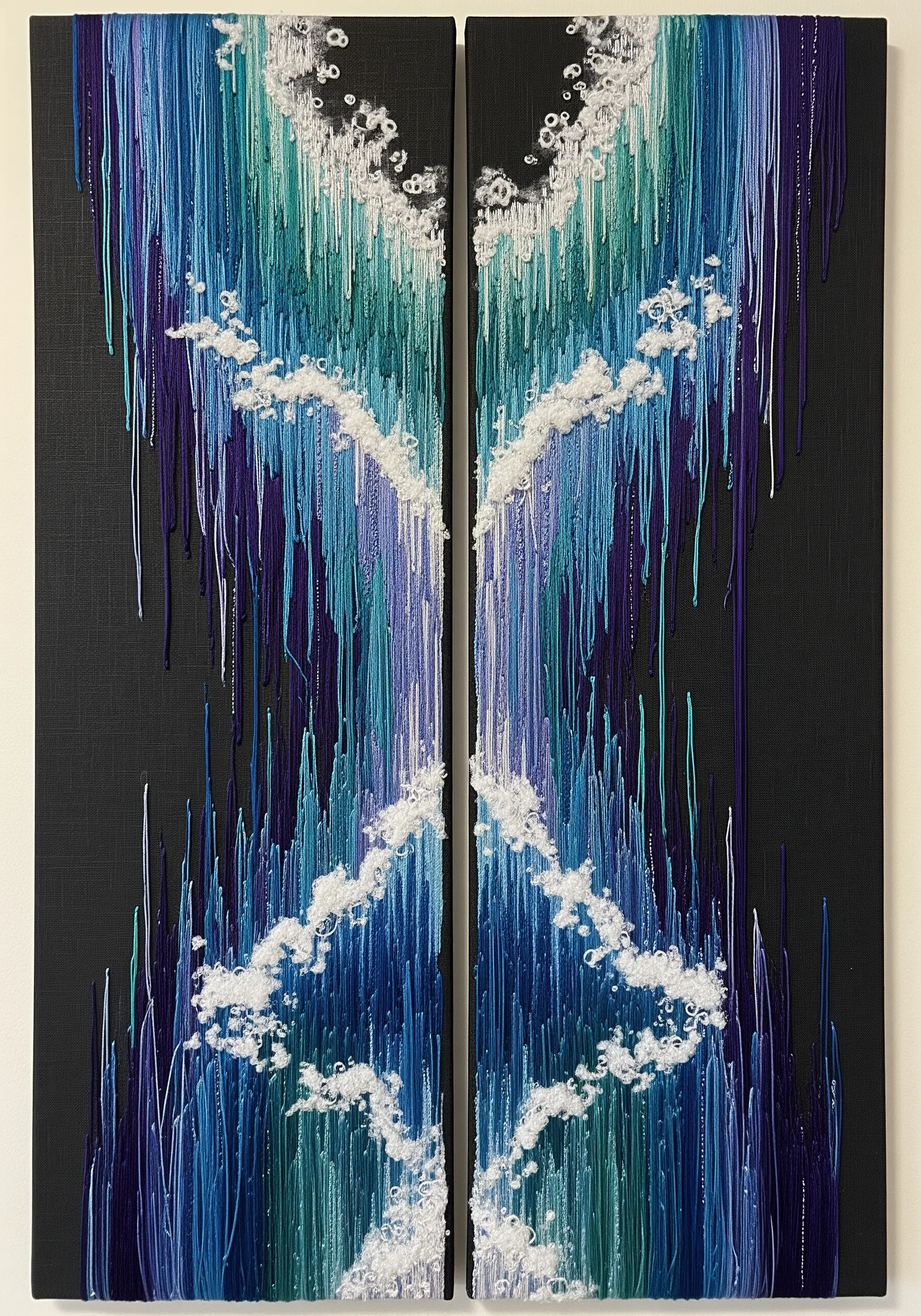
Create a stunning sense of gravity and motion by letting threads hang freely from your canvas.
Secure threads only at the top edge, allowing them to drape downwards. Layer different colors, weights, and textures of yarn to build depth and complexity.
To introduce a contrasting texture, couch down fluffy, unspun yarn or use needle-felting techniques to add soft, cloud-like forms that interrupt the linear flow.
This creates one of those unexpected fiber art installations that blend sculpture with stitching.
11. Layer with Deconstructed Fabric and Stitch
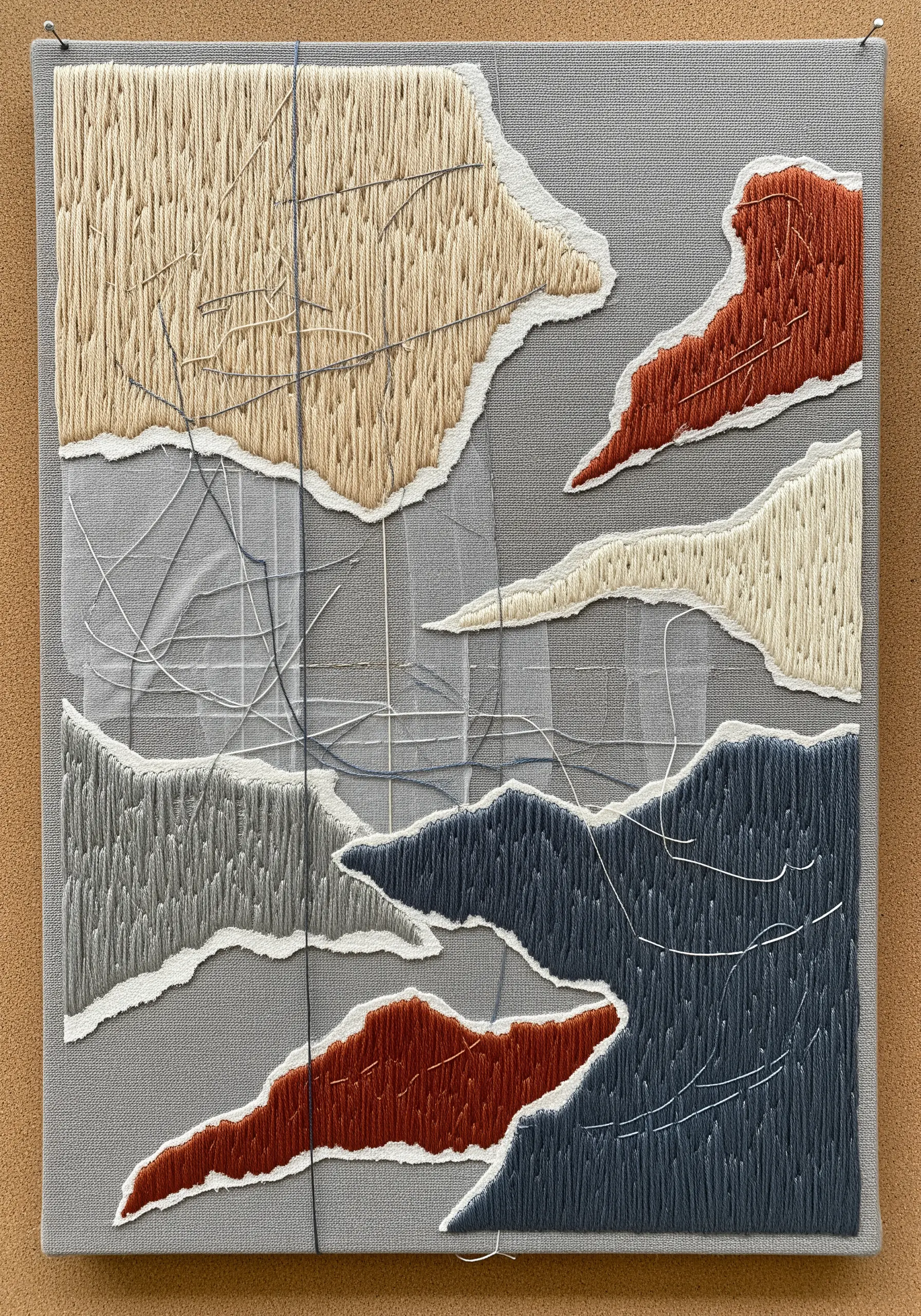
Build a composition with rich visual history by combining raw-edge appliqué and dense fill stitches.
Start by tearing or cutting shapes from contrasting fabrics and arrange them on your base canvas, then stitch them down.
Fill these fabric shapes with uniform, directional straight stitches; this creates a striking contrast between the controlled stitches and the frayed, organic edges of the appliqué.
Adding a few loose, intersecting threads as a final layer enhances the deconstructed aesthetic, turning your piece into one of your new favorite fabric collage embroidery compositions.
12. Visualize Sound with Stitched Waveforms
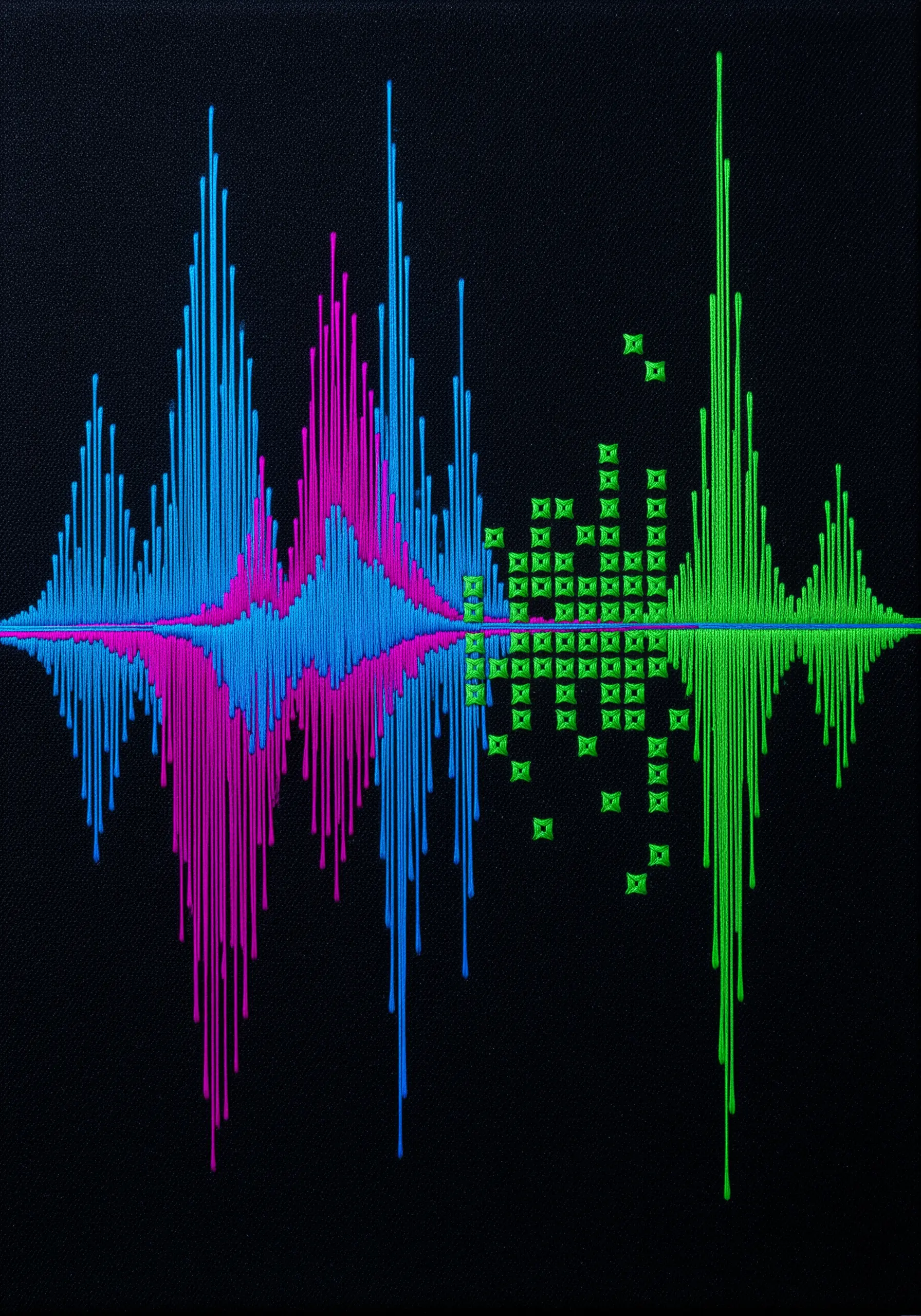
Transform your favorite song, a spoken word, or even a heartbeat into a graphic work of art.
Use an online app to generate a visual waveform, then transfer the pattern onto a dark canvas.
Render the peaks and valleys with dense vertical satin stitches, using vibrant, high-contrast thread colors for a digital, glowing effect.
You can even assign different stitch textures to different parts of the sound, like using tiny cross-stitches to represent a different frequency, adding another layer of data visualization to your art.
13. Sculpt Soft, Dreamlike Wool Clouds
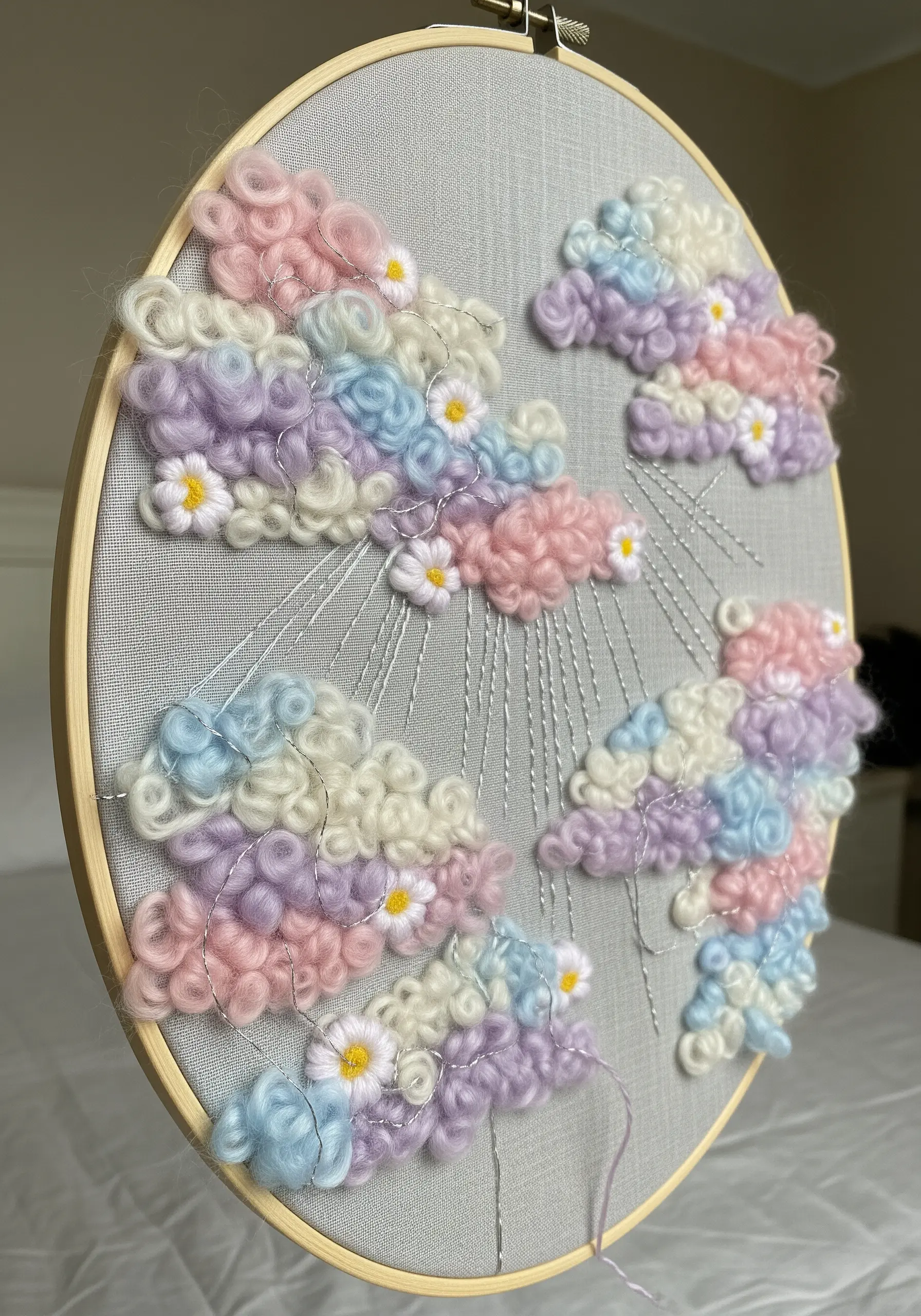
Introduce unparalleled softness and dimension into your work by sculpting with wool roving instead of stitching fills.
Use a felting needle to tack down small puffs of wool directly onto your fabric, blending different pastel colors to create a soft, ethereal gradient.
This technique creates a gentle, three-dimensional form that stands out beautifully from the flat background.
Accent your cloud-soft embroidery hoops with delicate stitched details, like tiny daisies or radiating sunbeams made from metallic thread, to complete the dreamy scene.
14. Stitch a Psychedelic Burst of Energy
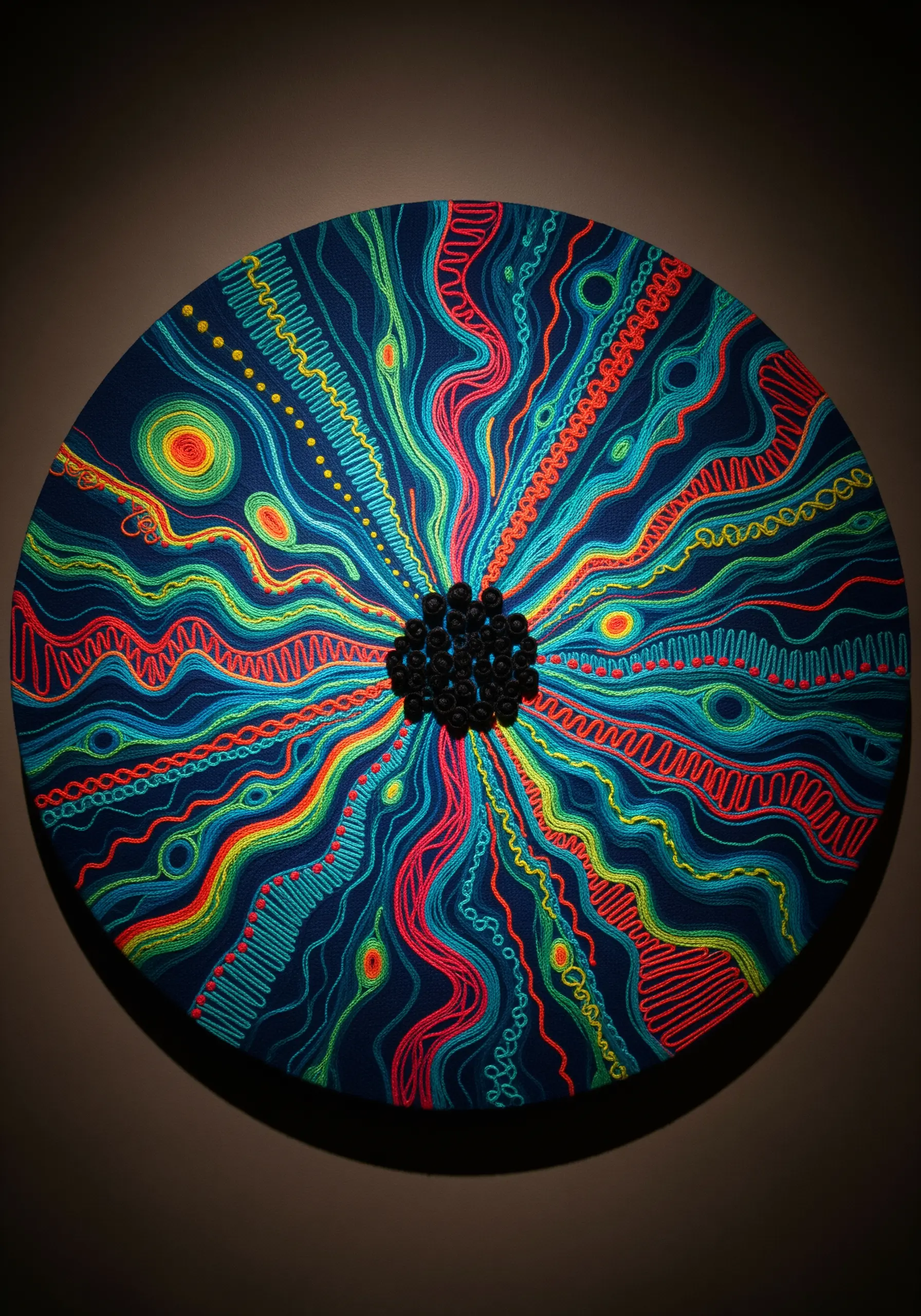
This design is pure visual motion, achieved by radiating lines of varied stitches from a central anchor point.
The key to its dynamic feel is constant variation: alternate between backstitch, chain stitch, and whipped stitch, and frequently switch thread colors and weights.
Ground the energetic composition with a dense, dark center, like a tight cluster of French knots, which makes the radiating colors appear even more vibrant.
This approach allows you to create abstract optical illusion stitches that trick the eye and pulse with energy.
15. Embrace Expression with Scribble Stitching
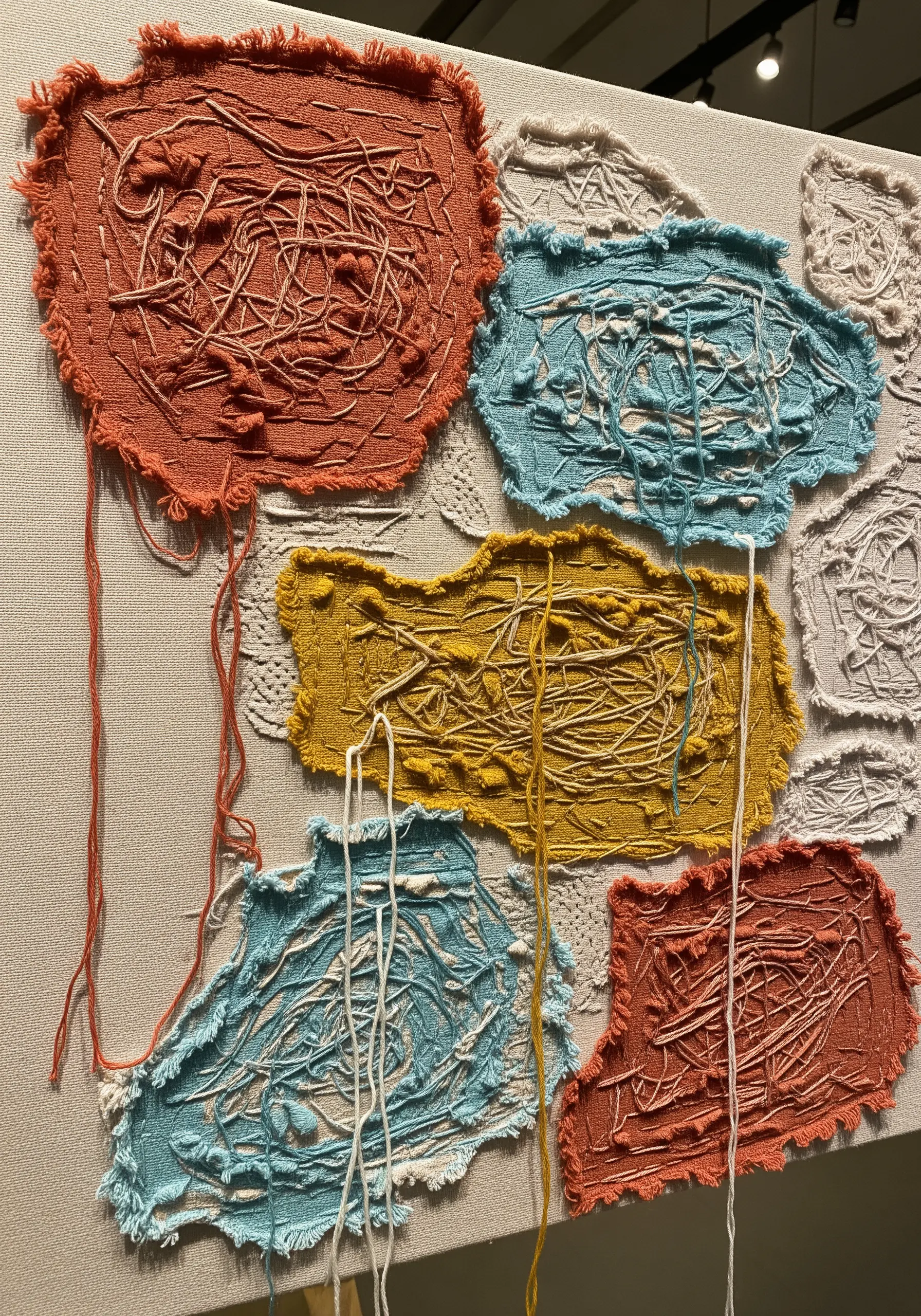
Channel the gestural energy of abstract expressionism by layering fabric and intentionally messy stitches.
Begin with roughly torn patches of fabric appliquéd to your canvas. Then, using either a free-motion sewing machine or a freehand running stitch, scribble across the surface.
Don’t trim your threads—let them trail off and tangle. This technique celebrates imperfection and captures a feeling of raw, spontaneous creativity. It’s one of the most freeing abstract fabric collage embroidery ideas you can try.
16. Layer Bold Forms Over a Thread Splatter Canvas
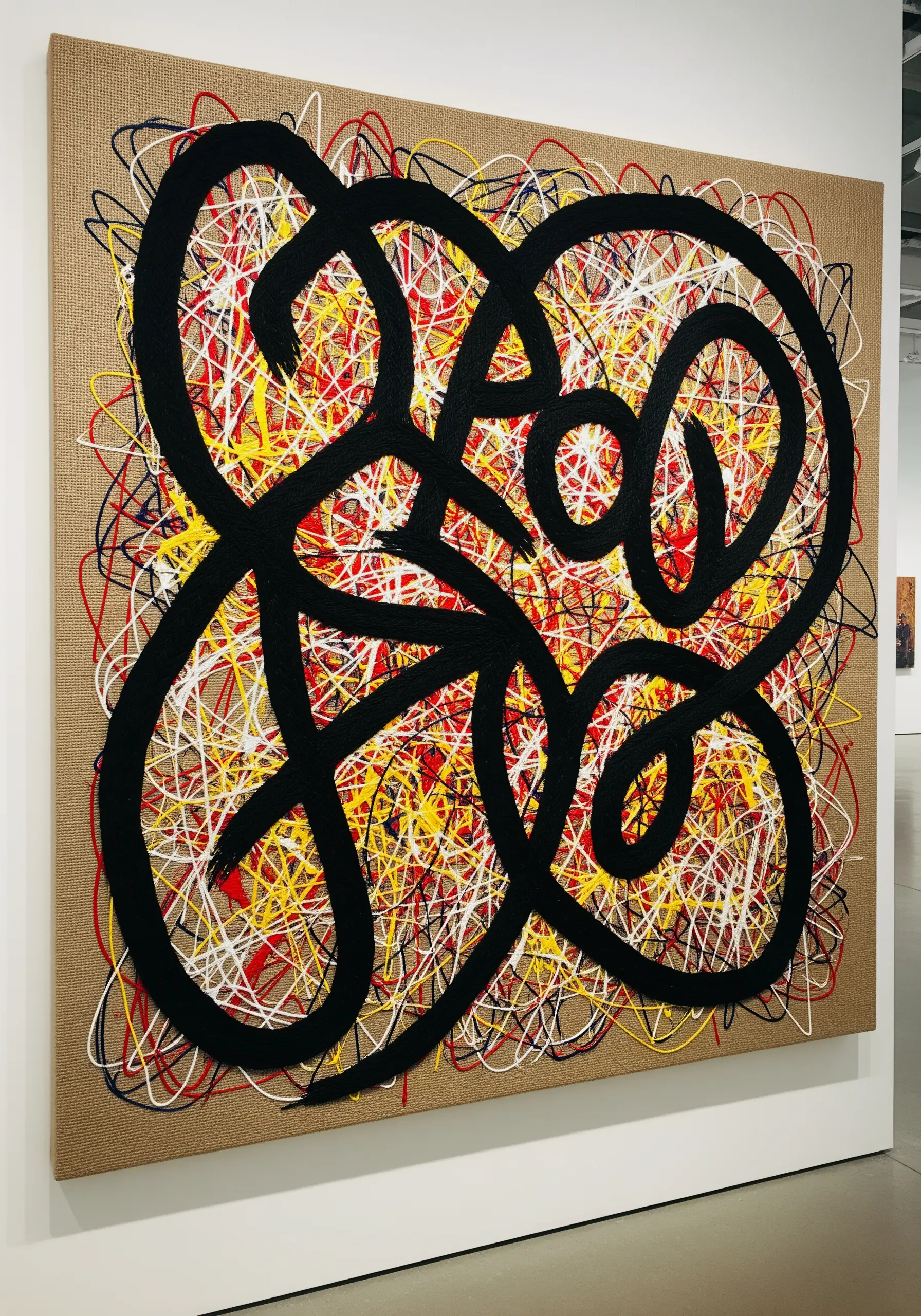
Create powerful visual depth by contrasting a chaotic background with a dominant foreground motif.
First, build the background with an abstract thread splatter, using short, randomly angled straight stitches in various colors to mimic paint flecks.
Once the background is complete, add a bold, graphic form on top. Use a thick, couched cord or a heavily padded satin stitch to give the shape dimension, ensuring it sits clearly above the energetic base layer.
17. Draw with a Single, Delicate Thread
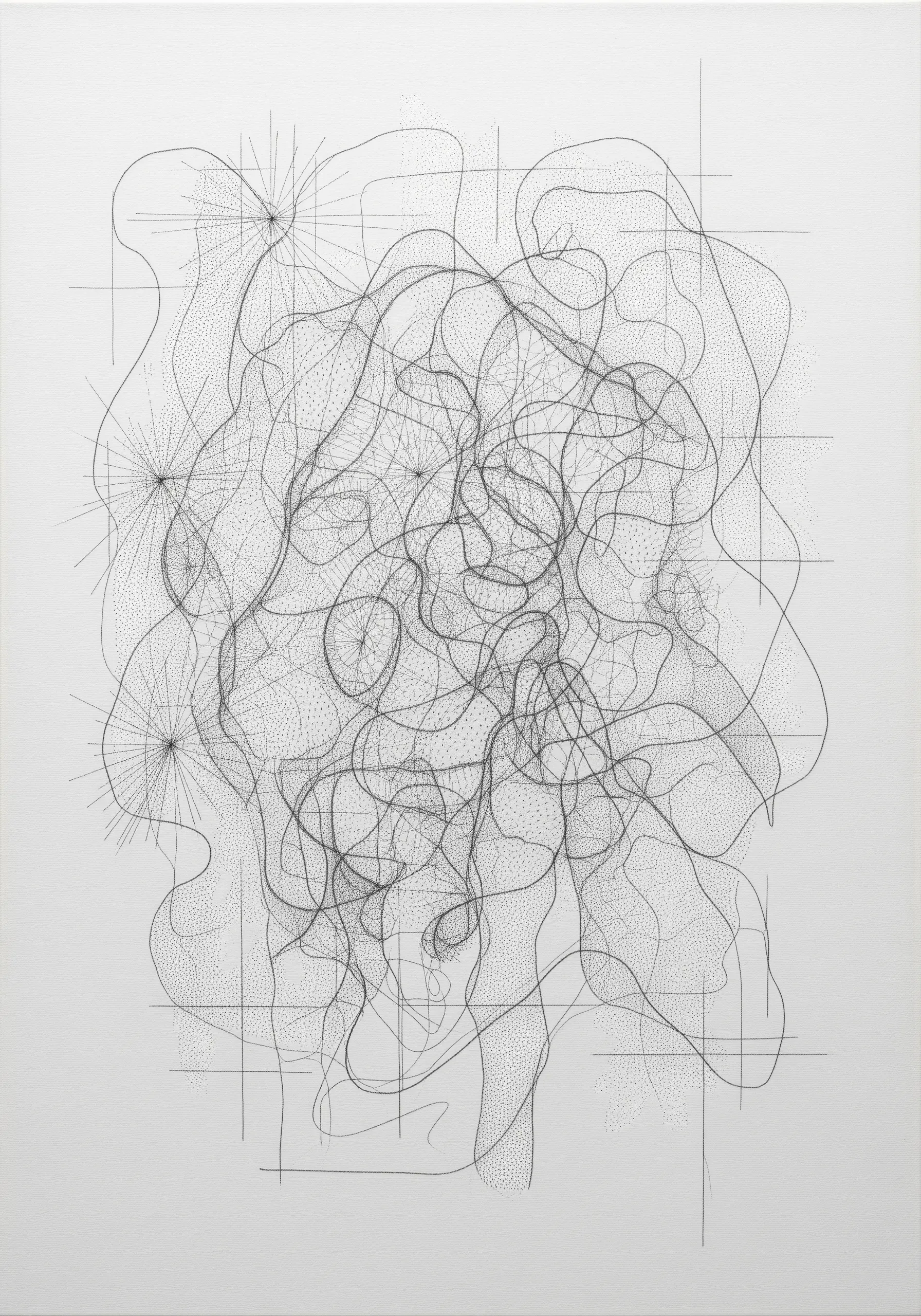
This technique explores the elegance of pure line work, creating patterns that feel like technical drawings or intricate neural maps.
Use a single strand of black floss on a plain white background to ensure every detail is visible.
Combine clean, continuous lines of backstitch with sections of tiny seed stitches to create a stippled or dotted texture.
This interplay between solid and broken lines gives the piece a delicate complexity, turning it into one of your favorite minimalist line art embroidery patterns.
18. Curate a Monochromatic Stitch Library
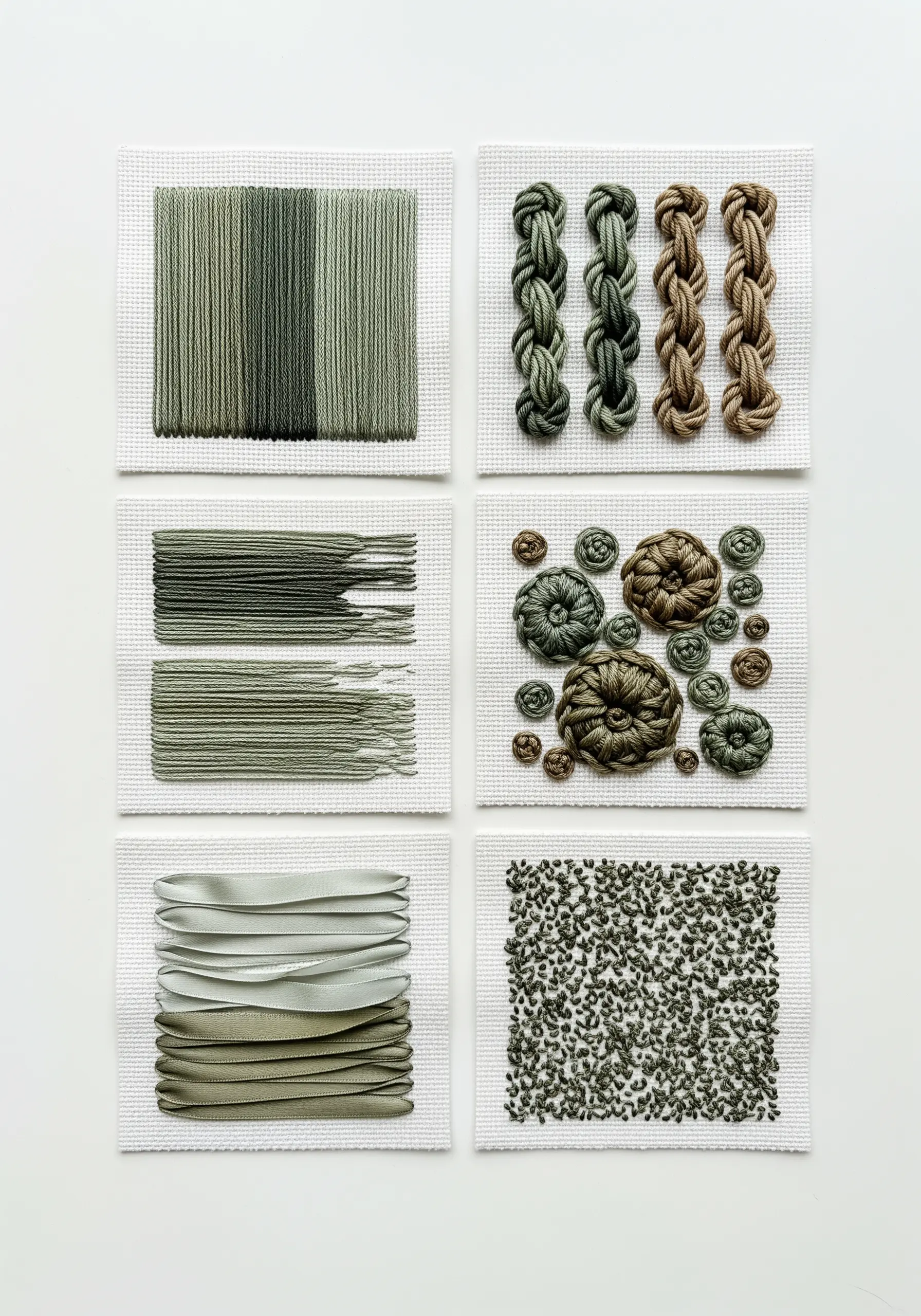
This gridded sampler is both a meditative practice and a stunning final piece, allowing you to focus purely on texture.
Choose a single color family—like these sophisticated olive greens—and divide your canvas into a grid.
Dedicate each square to mastering a different technique: a smooth satin stitch gradient, woven wheel stitches, couched braids, or dense knot clusters.
The result is a beautiful and educational showcase of your skills, proving the richness of neutral earth-toned embroidery projects.