
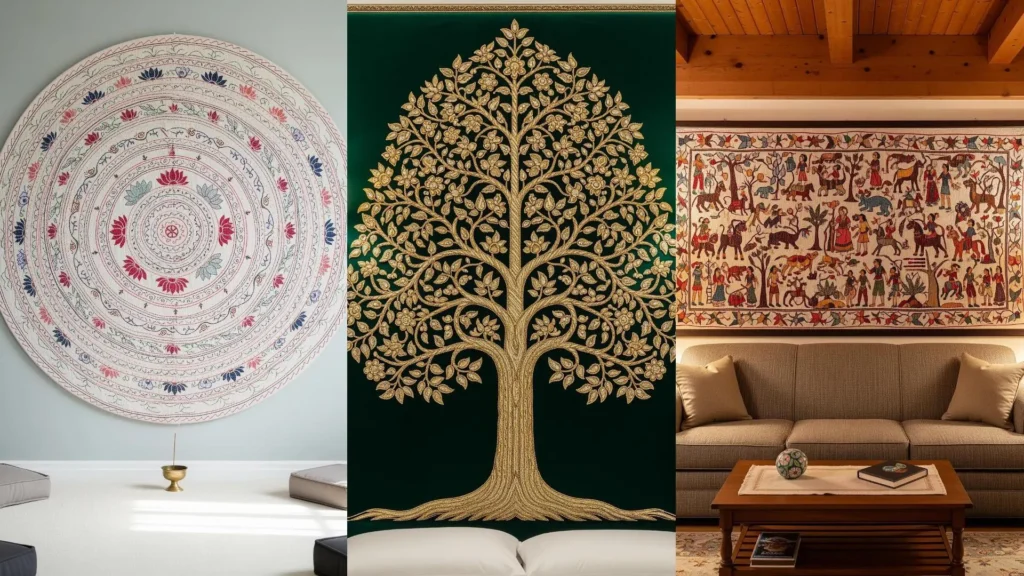
You have the threads, the fabric, and the desire to create something beautiful. But sometimes, a piece doesn’t quite capture the feeling you intended. It’s not about learning a hundred new stitches; it’s about understanding how one or two, chosen with intention, can transform your work from a craft project into a piece of art.
Indian embroidery traditions hold a profound lesson in this. They are not just collections of patterns, but languages of texture, color, and light. Whether it’s the quiet shadow play of Chikankari or the opulent gleam of Zardozi, each style teaches you to think differently about your needle and thread.
In this collection, I want to show you how to borrow that intention. You will learn not just the what, but the why—how a specific stitch creates a mood, how a color choice builds a story, and how a traditional technique can find a modern, meaningful place in your home and your hands.
1. The Regal Procession: Mastering Zardozi Couching
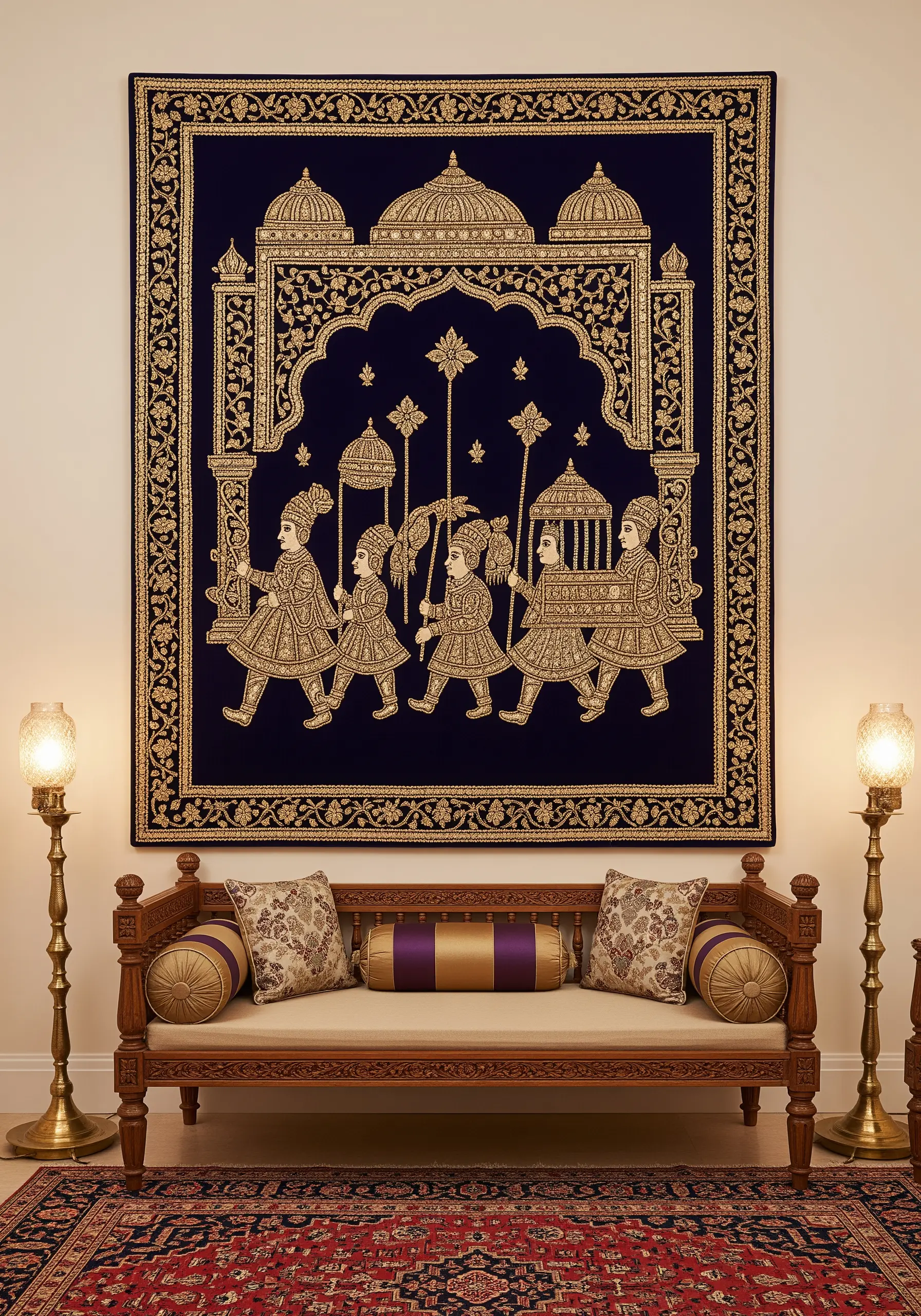
Create a sense of opulence by working with Zari (metallic) threads on a rich, dark fabric like velvet or raw silk.
Use the couching technique to secure the metallic threads onto the surface; this allows you to create fluid lines without constantly pulling a delicate thread through the fabric.
For the main outlines of figures and architecture, use a thicker metallic cord, and fill smaller details with finer Zari thread using satin stitch.
This contrast between the dark, light-absorbing background and the reflective gold thread creates unparalleled drama and luxury, turning your wall into a focal point.
2. Serene Sophistication with Chikankari Shadow Work
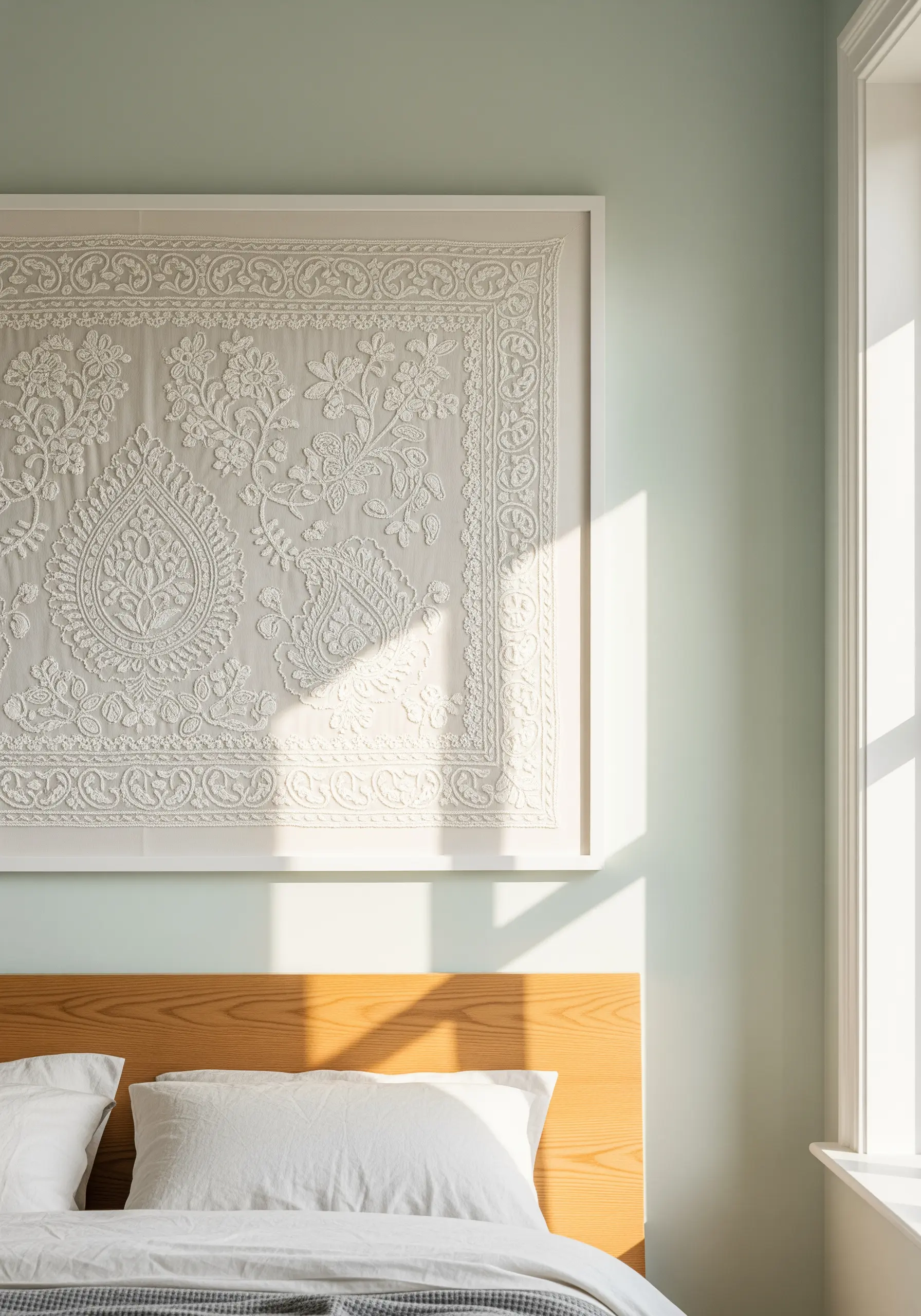
Achieve this ethereal, white-on-white effect with Chikankari, a technique that values subtlety over contrast.
Work on a semi-sheer fabric like muslin, voile, or organza.
Create the signature ‘shadow’ by using a herringbone stitch on the reverse side of the fabric, which shows through as a delicate, muted shape on the front.
Combine this with fine stem stitch for outlines and tiny French knots for texture to create a piece that feels both intricate and incredibly serene.
These tone-on-tone embroidery techniques are perfect for creating calm, sophisticated decor.
3. Phulkari’s Vibrancy: The Art of Darning Stitch Geometry
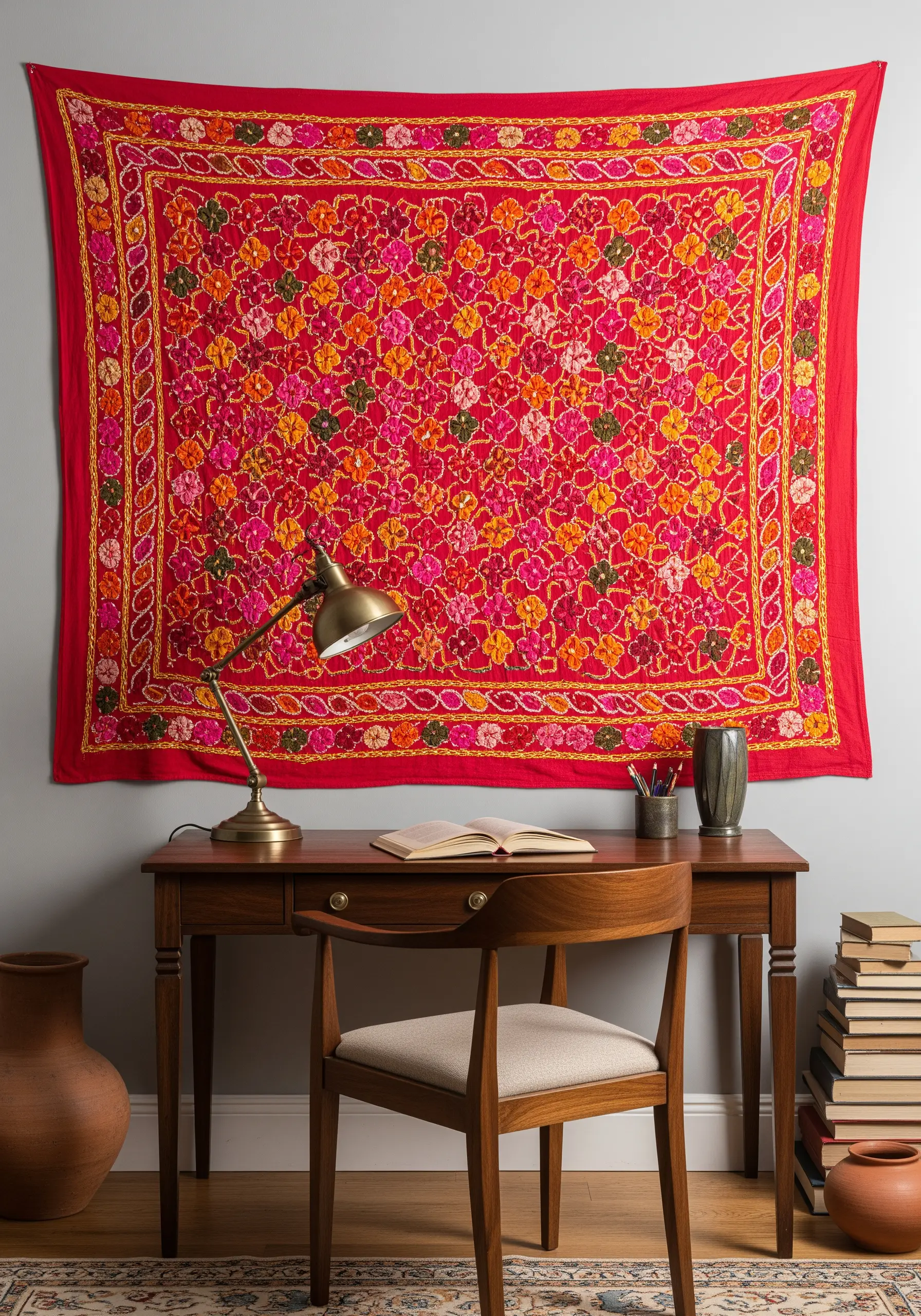
Embrace bold color by working with Phulkari, a technique where the embroidery completely covers the base fabric.
The primary stitch is a simple darning stitch worked from the back of the cloth, creating a geometric pattern on the front.
Use untwisted silk floss (pat) in vibrant shades of pink, orange, and yellow on a coarse cotton base.
The beauty of this style is its imperfection and density; the stitches are meant to sit side-by-side, creating a rich, textural field of color that feels alive and energetic.
It’s the perfect way to revive boring white walls with a single piece.
4. Kutch Mirror Work: Securing Shisha with Chain Stitch
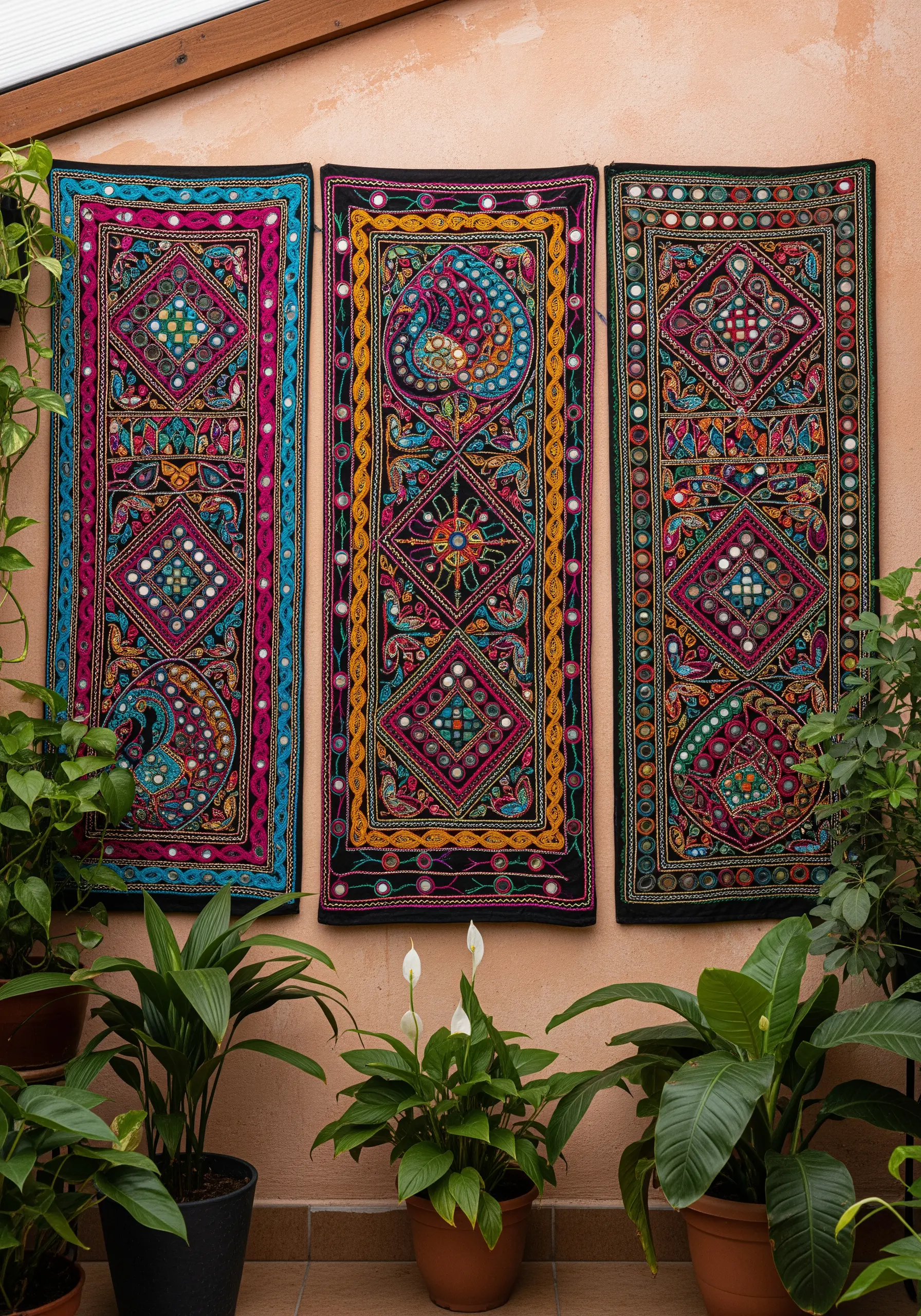
Incorporate light and reflection into your work with Shisha (mirror) embroidery, a hallmark of Kutch textiles.
To secure a mirror, first create a frame of straight stitches over it, then anchor those threads with a tight buttonhole or chain stitch worked around the mirror’s edge.
Surround the secured mirrors with vibrant, contrasting thread colors using interlaced stitches and geometric patterns.
These traditional cultural embroidery motifs are not just decorative; they create a dazzling interplay of light and texture.
5. The Narrative Tree: Storytelling with Crewel Embroidery
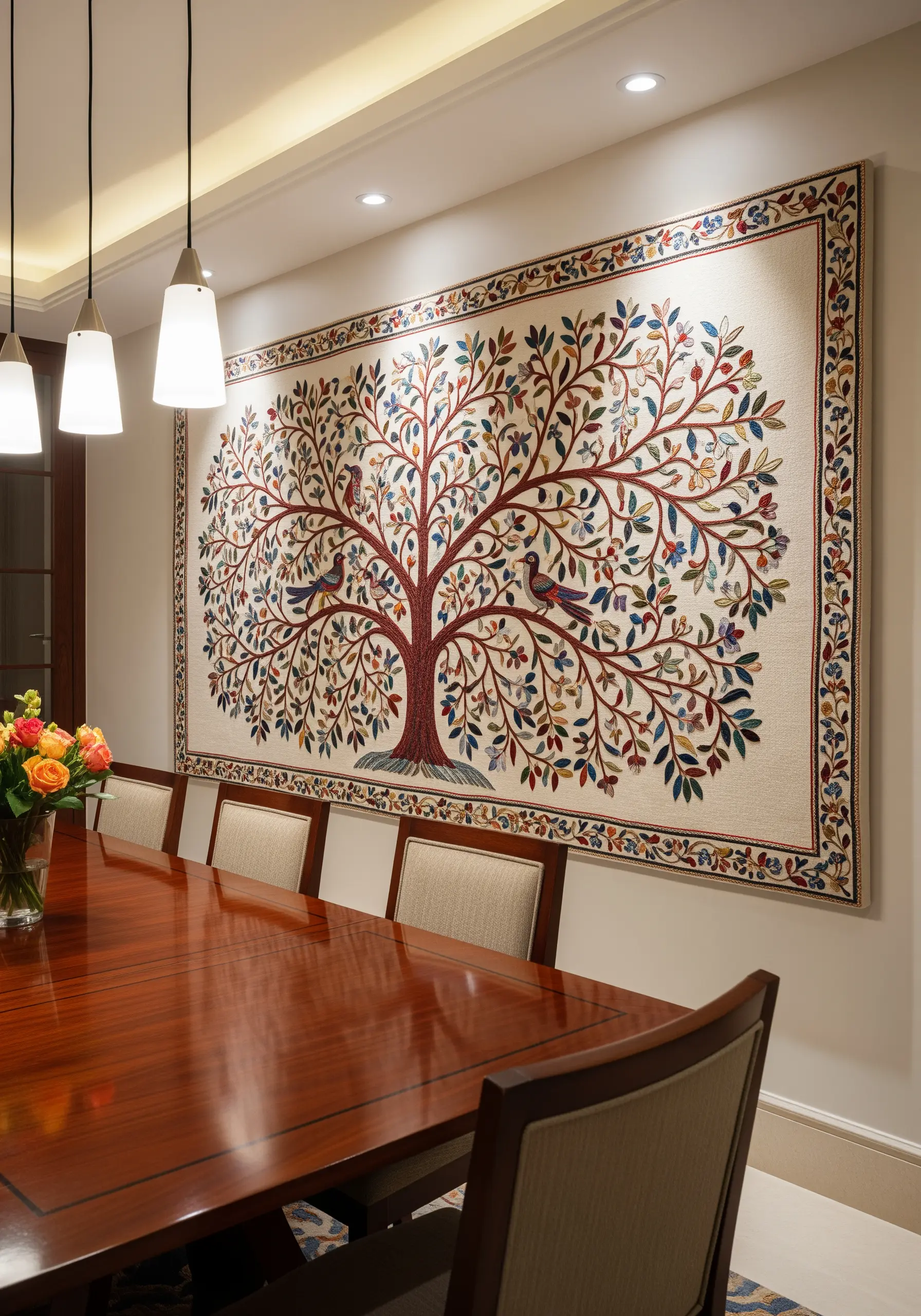
Tell a story on fabric using the Tree of Life motif, a classic in Kalamkari and crewel work.
Use wool thread on a sturdy cotton or linen base to achieve the characteristic texture of crewel embroidery.
Vary your stitches to give life to different elements: a heavy chain stitch for the trunk, satin stitch for leaves, French knots for flowers, and long and short stitch for the birds’ feathers.
This combination of textures transforms a simple motif into a rich, narrative tapestry, making it one of the most effective large-scale embroidery tapestries for a dining or living space.
6. Bold Geometry: The Graphic Power of Naga Embroidery
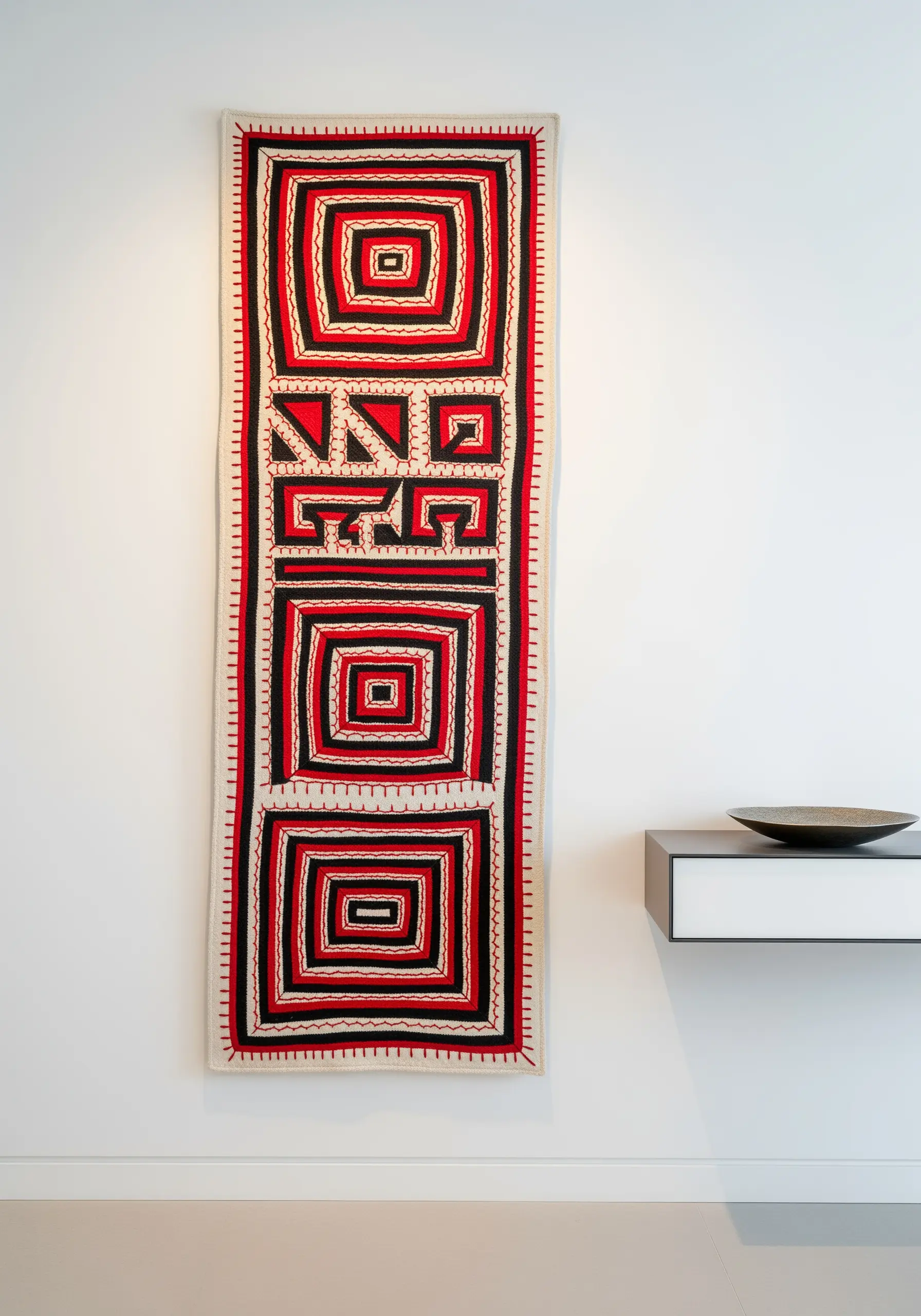
Create powerful graphic art using the bold, symbolic patterns of Naga textiles.
Limit your palette to high-contrast colors like red, black, and natural white to emphasize the shapes.
Work with thick cotton or wool yarn to achieve a substantial, rustic texture.
Instead of delicate stitches, focus on filling geometric blocks with simple stitches like herringbone or running stitch, letting the rhythm of the pattern create the visual impact.
This style is a perfect example of how modern geometric thread art ideas can be rooted in ancient tradition.
7. Zardozi Grandeur: Layering Metallic Threads and Gems
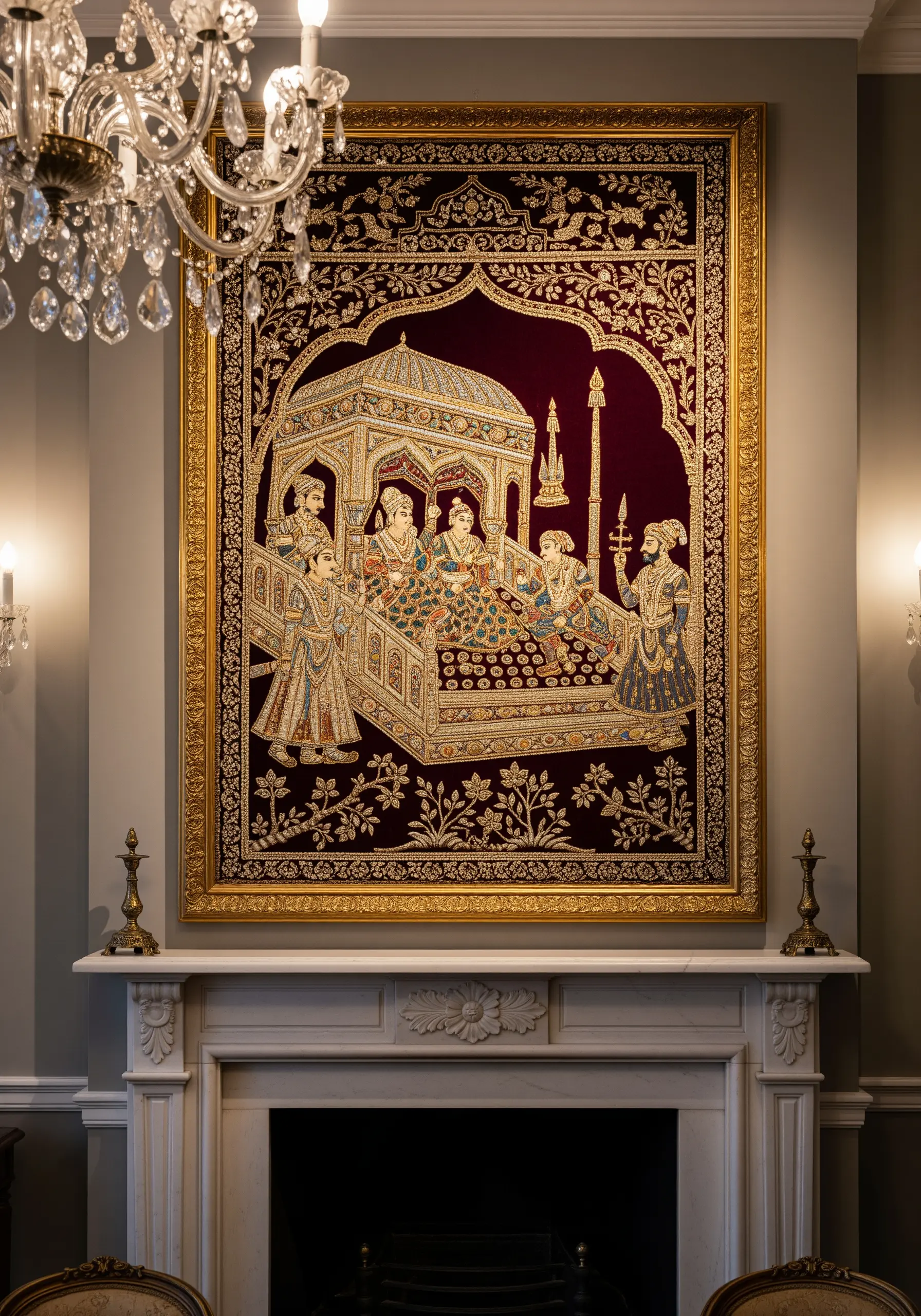
Elevate a Zardozi piece by creating layers of texture and reflection.
Use different types of metallic threads: a smooth, coiled wire (Dabka) for outlines and a flatter thread (Kasab) for shimmering fills.
Incorporate small beads, pearls, or semi-precious stones at key points in the design, such as in jewelry or architectural details.
This combination of varied metallic surfaces and gem embellishments creates a three-dimensional opulence that feels truly royal and is a hallmark of gold thread luxury wall art projects.
8. Meditative Circles: The Rhythm of Kantha Running Stitch
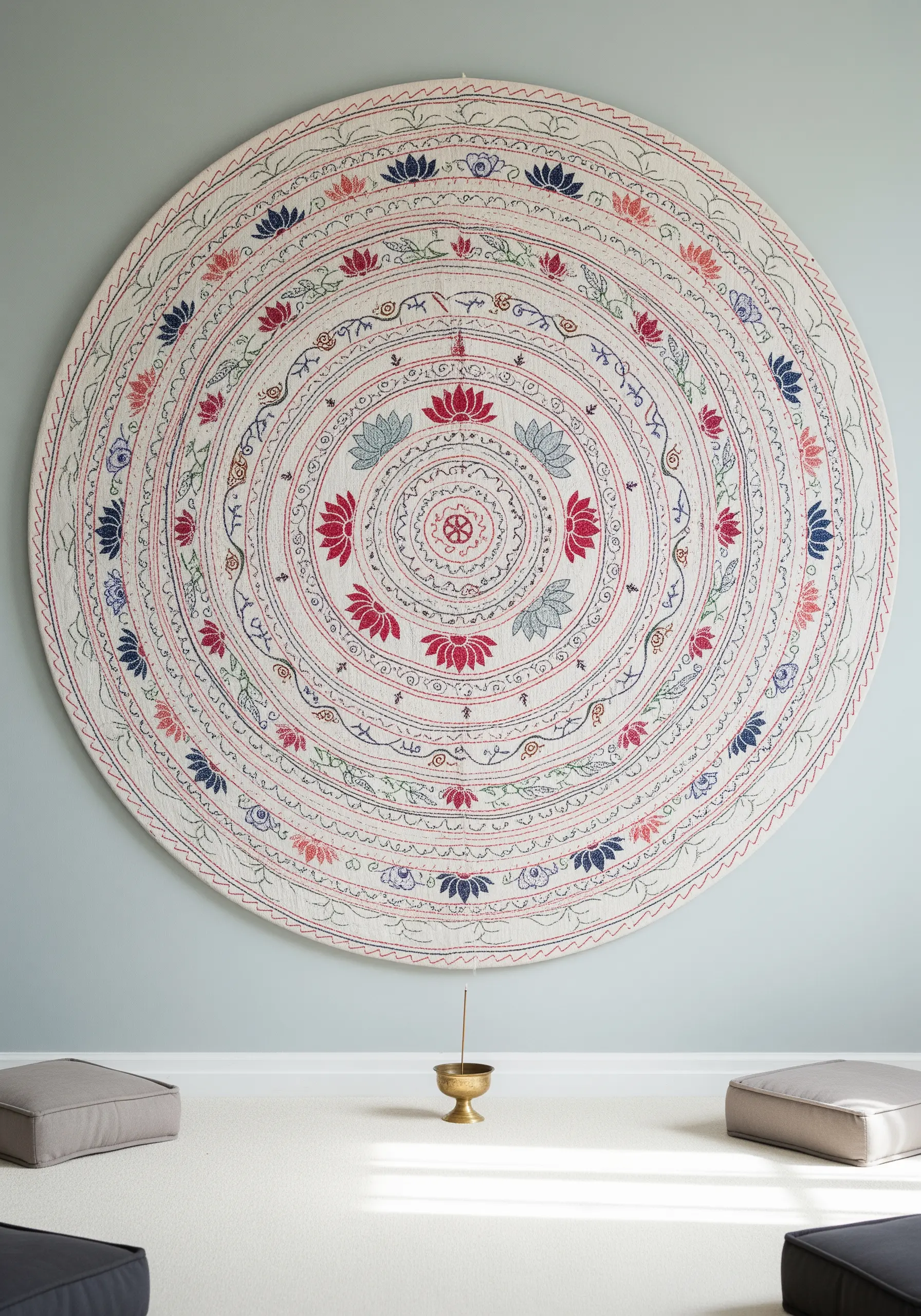
Explore mindfulness through stitching with a Kantha-inspired mandala.
The entire piece is constructed with the humble running stitch, making it accessible yet visually complex.
Use several strands of embroidery floss to create bolder lines, and vary the color and direction of your stitch rows to define different sections of the mandala.
The beauty lies in the texture created by thousands of tiny, rhythmic stitches, turning the process itself into a form of meditation.
This approach transforms simple hoops into stunning mandala embroidery wall art ideas.
9. Curated Culture: Framing Textile Fragments as a Collection
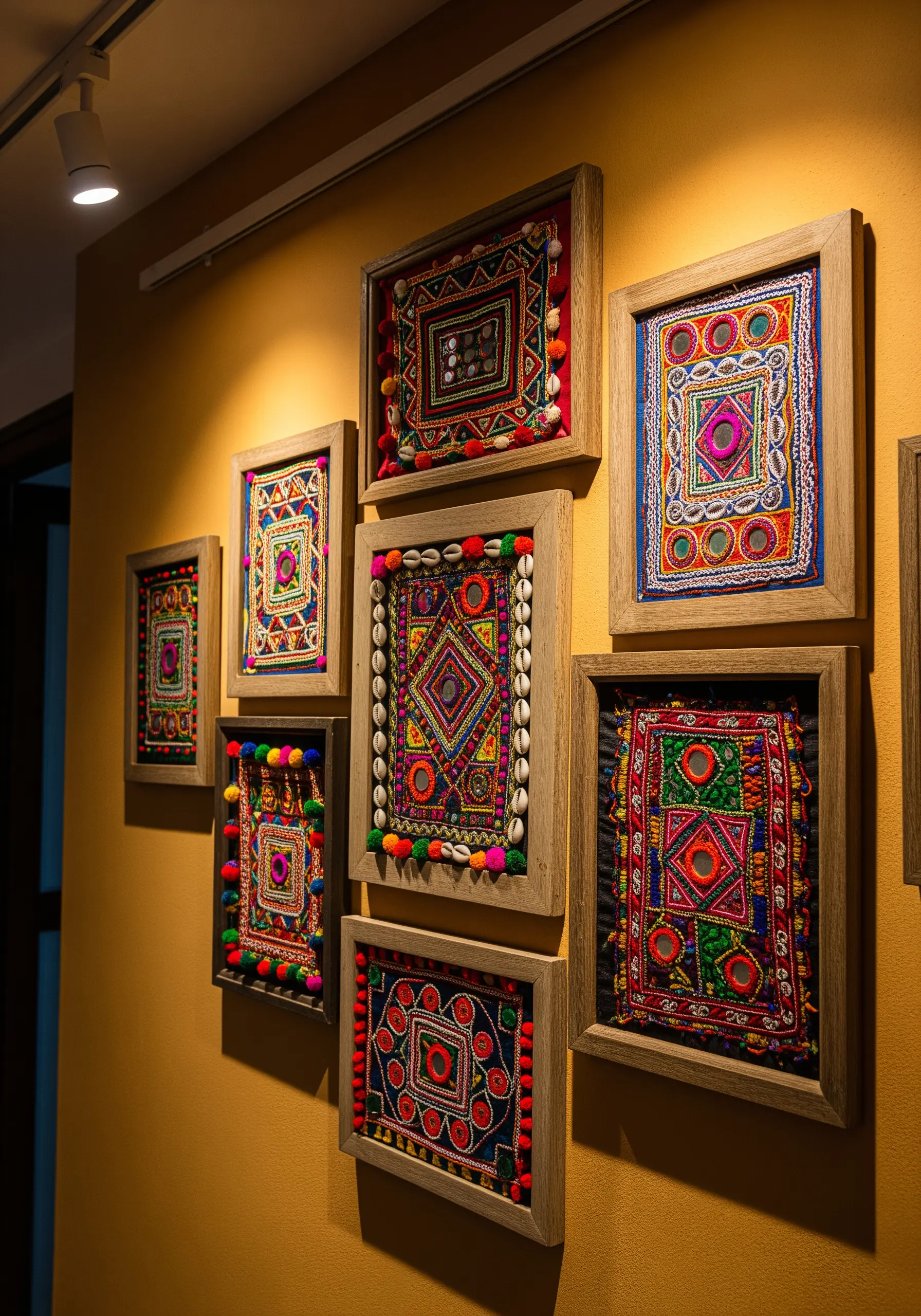
Instead of creating one large piece, source or stitch several small squares of vibrant Kutch or Rabari embroidery.
Frame each piece individually in simple, uniform frames—natural wood or black works best to let the textile’s color and texture shine.
Arrange them asymmetrically on a gallery wall to create a modern, curated display.
This approach allows you to appreciate the intricate detail of each fragment while making a cohesive, powerful statement. You can create framed embroidery artworks that capture tiny details from larger, damaged textiles.
10. Architectural Kasuti: Precision in Line and Symmetry
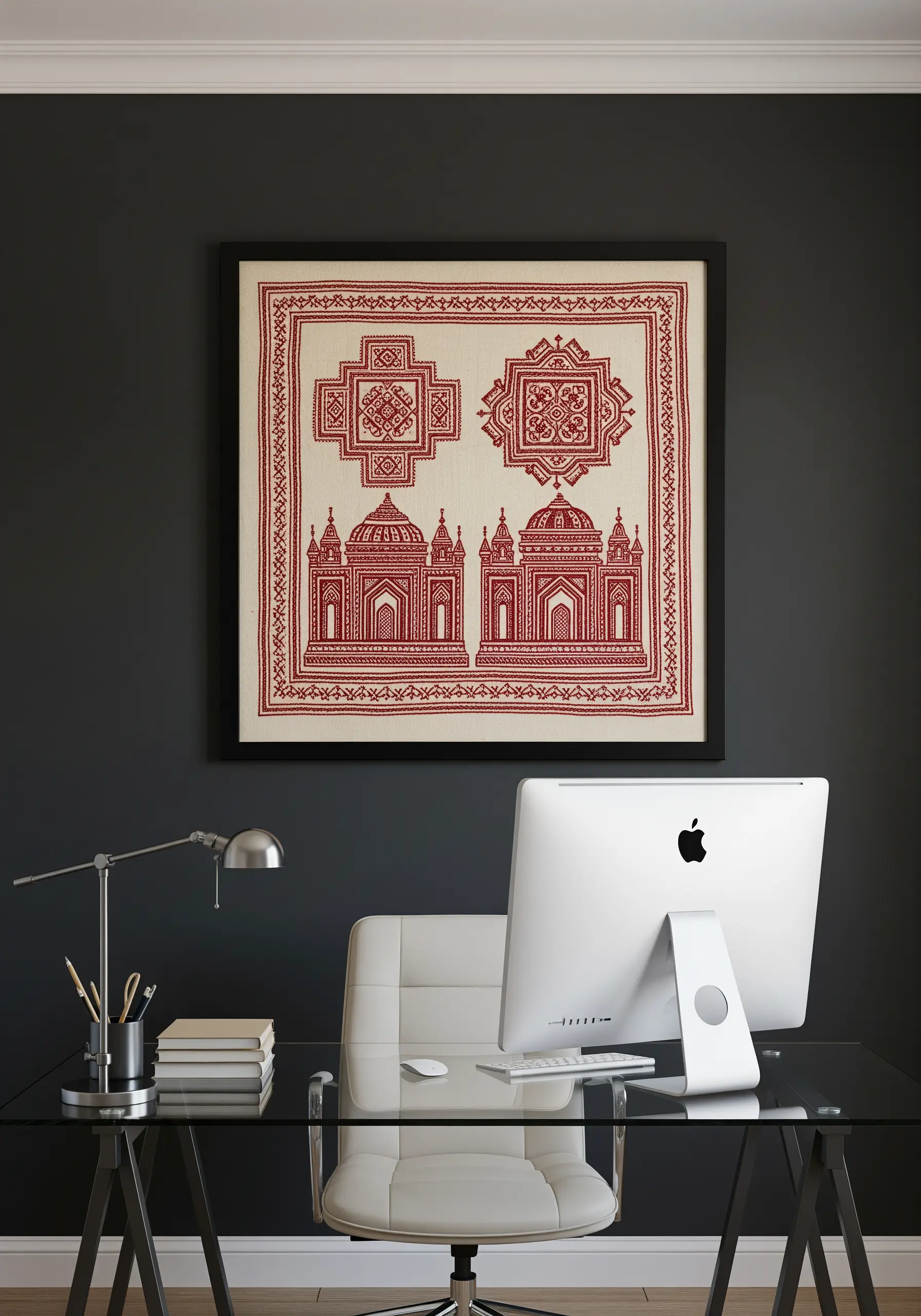
Capture the elegance of Indian architecture using the precision of Kasuti embroidery.
This technique relies on counting the threads of the fabric, so work on an evenweave linen or cotton for the best results.
Use a double running stitch (Gavanti) so the design appears identical on both the front and back of the fabric.
A single color of thread against a neutral background emphasizes the intricate linework and symmetry, making it perfect for structured, geometric designs. This is one of the most elegant monochrome embroidery ideas for a sophisticated space.
11. Sujani Storytelling: Drawing with Chain Stitch Outlines
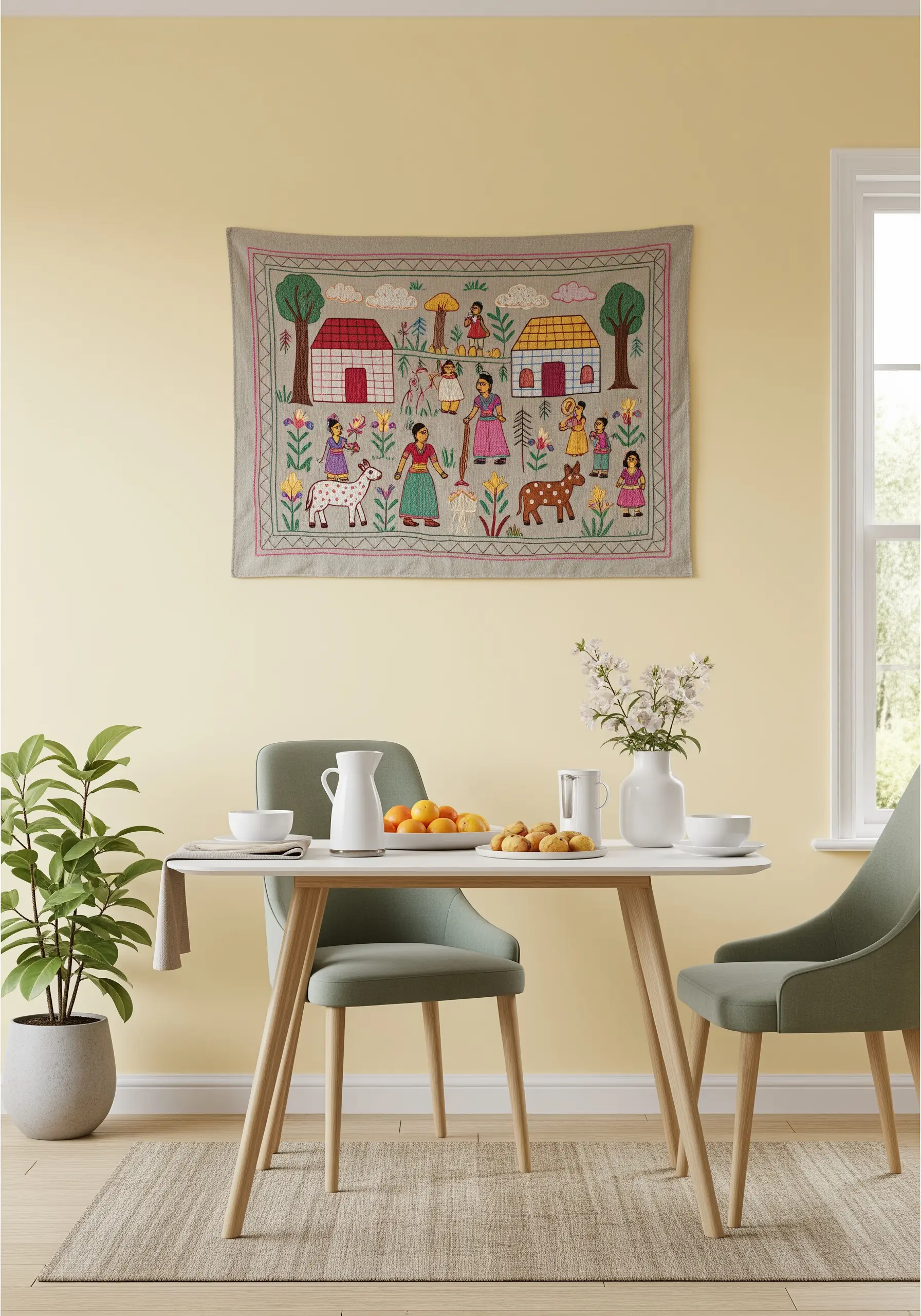
Tell a visual story of village life or folklore using the Sujani technique.
The primary method is drawing with thread: use a dark, thick chain stitch to create bold outlines for all your figures and motifs.
Fill in the shapes with a contrasting, lighter-colored running stitch or a finer chain stitch.
This clear distinction between outline and fill gives the work a graphic, narrative quality that is expressive and easy to read, almost like a textile illustration. It’s a wonderful way to create hand-stitched portrait wall art ideas with a folk-art feel.
12. Pichwai Panels: Translating Devotional Art into Thread
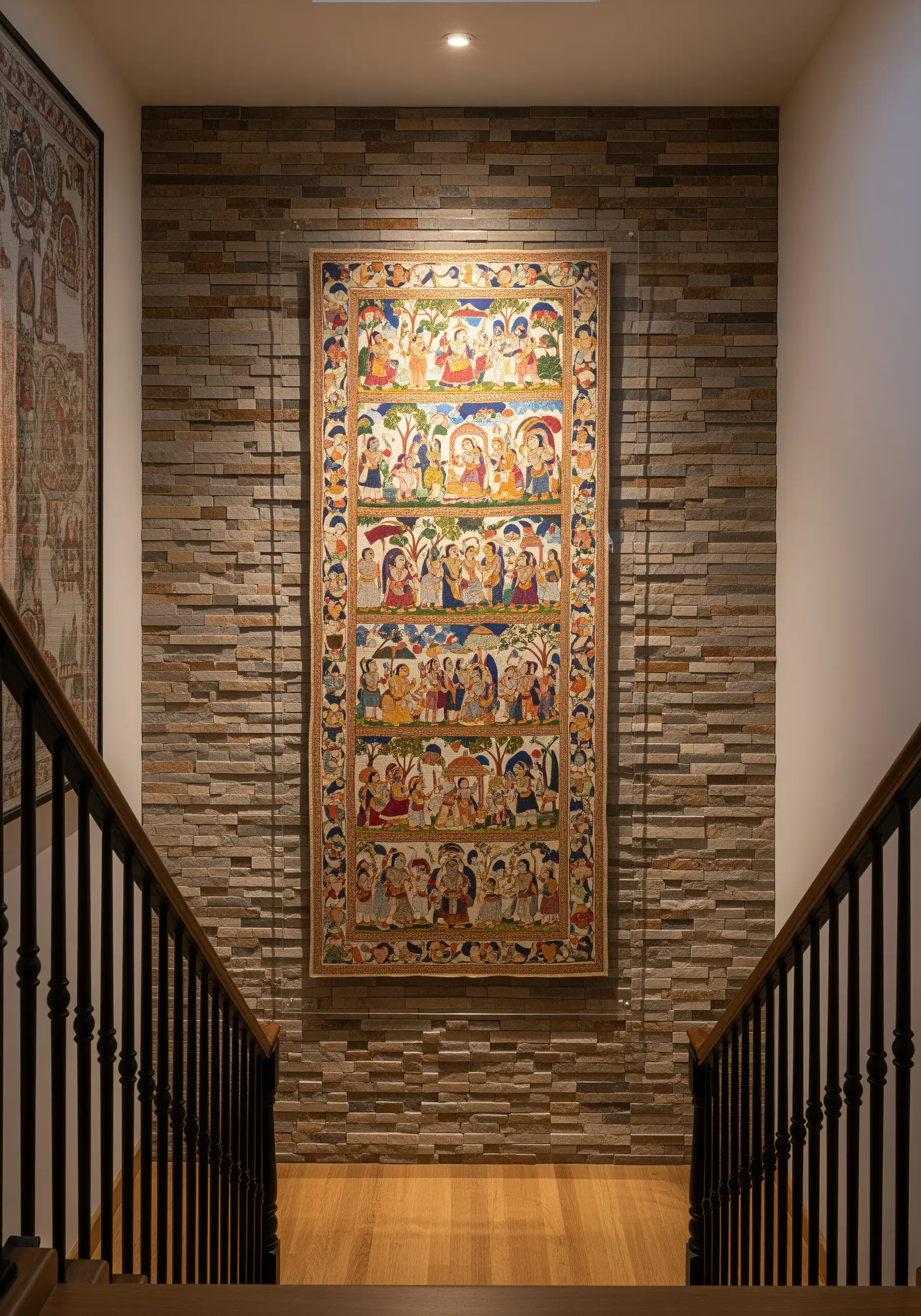
Capture the essence of devotional Pichwai paintings by focusing on key motifs and textures.
For a large piece, use fabric appliqué for the main figures, such as deities or sacred cows, to block in color efficiently.
Then, embellish these shapes with dense embroidery—use satin stitch for garments, couched gold thread for ornaments, and French knots for textural details like flowers.
This mixed-media approach allows you to build layers and complexity, turning your wall into a shrine of textile art. These make for incredible embroidered textile wall hangings.
13. Abstracting Tradition: Freeform Rabari Stitching
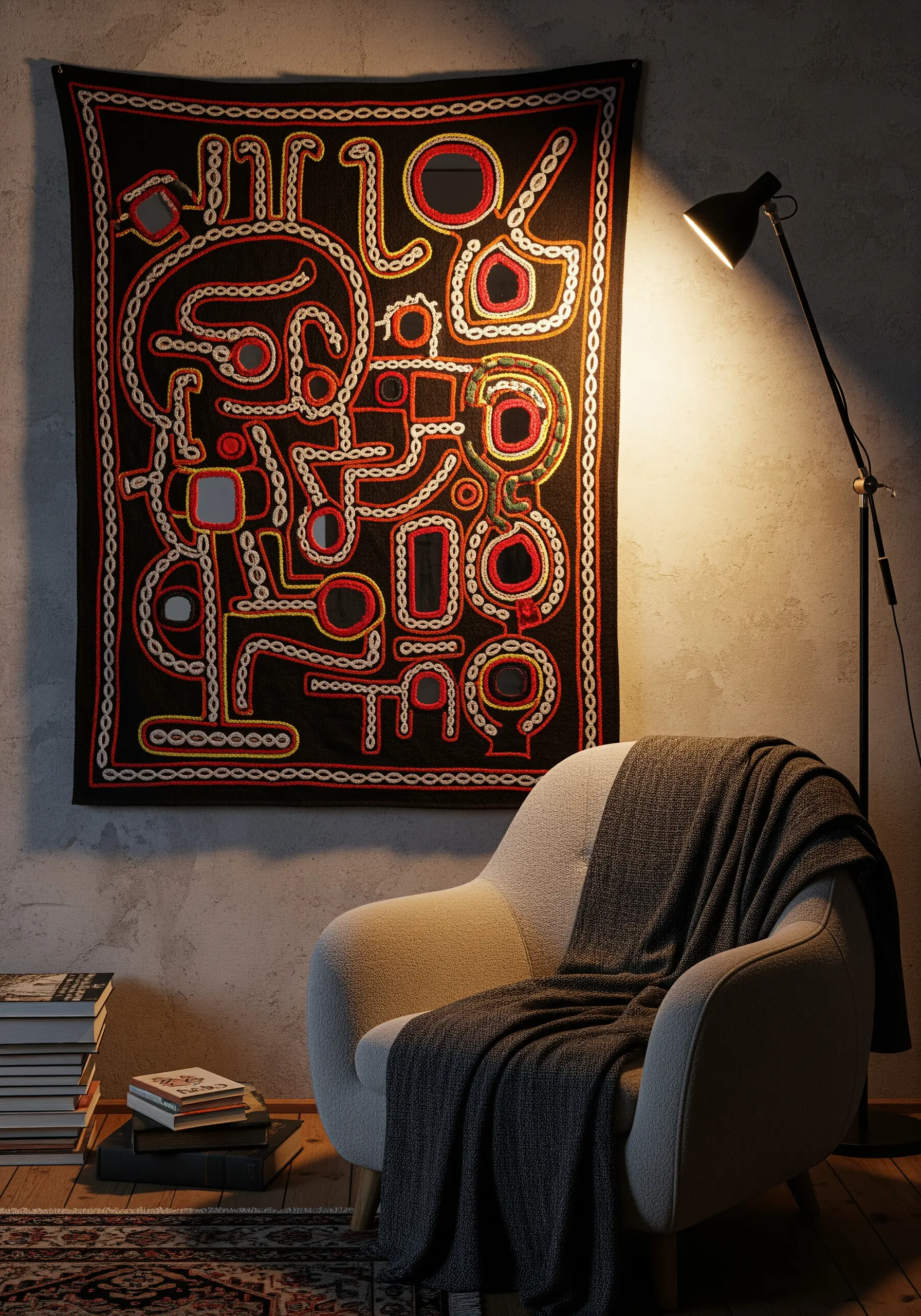
Take the core elements of a traditional style and rearrange them into a modern composition.
Use the characteristic stitches of Rabari embroidery—bold chain stitch outlines, square chain stitch fills, and inset mirrors—but apply them to abstract, free-flowing shapes rather than traditional motifs.
Let thick, graphic lines meander across the fabric, punctuated by the reflective flash of a mirror or a block of dense, textural stitching.
This is how you create abstract thread embroidery ideas that are deeply rooted in heritage yet feel entirely new.
14. Aari Elegance: The Fluid Lines of Hook Embroidery
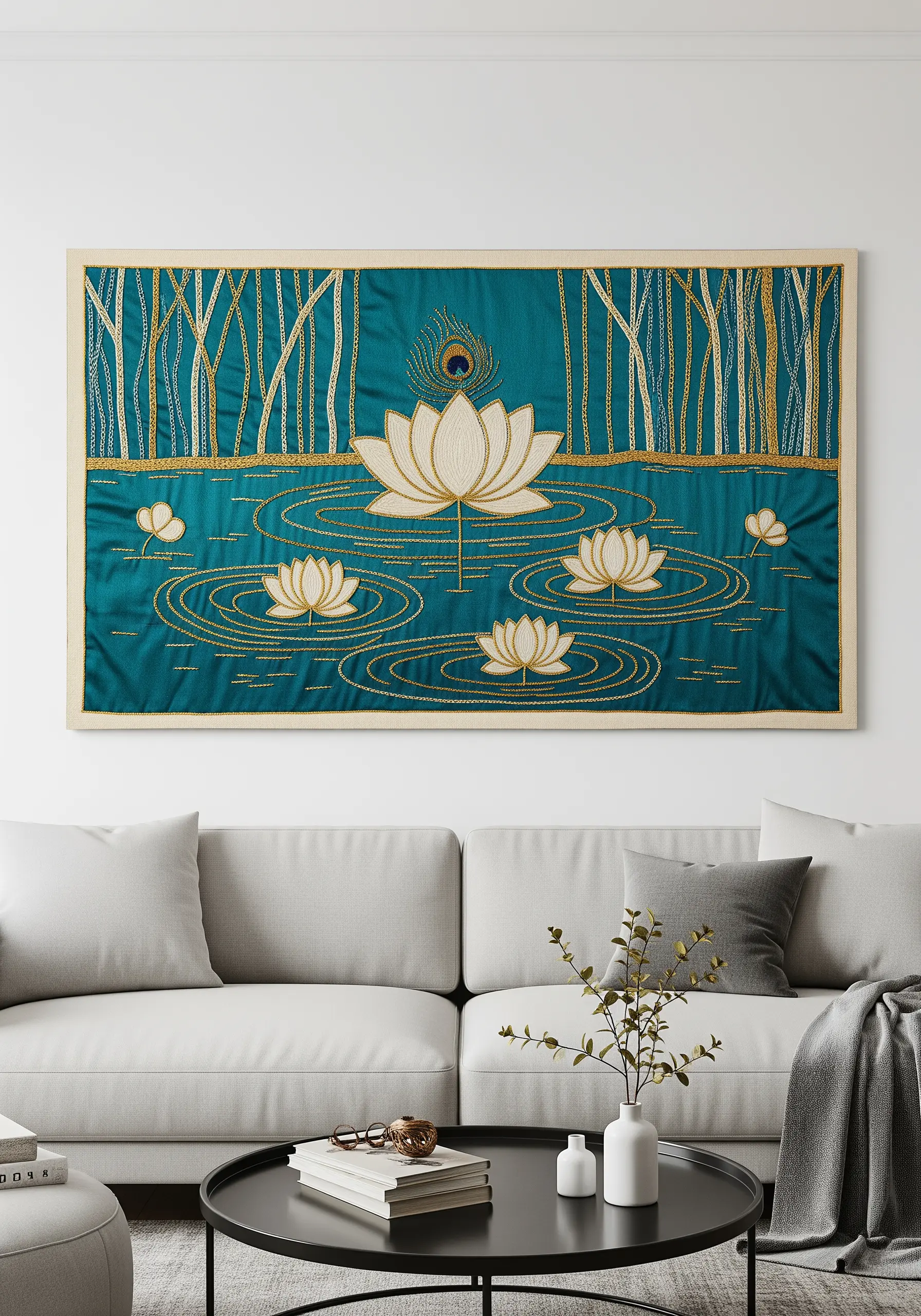
For designs that require graceful, continuous curves, Aari work is unparalleled.
This technique uses a fine hook (like a tambour hook) to create chain stitches with speed and precision.
Stretch your fabric tightly in a frame to allow the hook to move smoothly.
Use Aari to create the delicate ripples in water, the swirling stems of plants, or the outlines of a peacock feather. The uniform, rapid chain stitch creates a beautifully consistent texture, perfect for elegant embroidery accents.
15. Parsi Gara Grace: Painting Nature with Satin Stitch
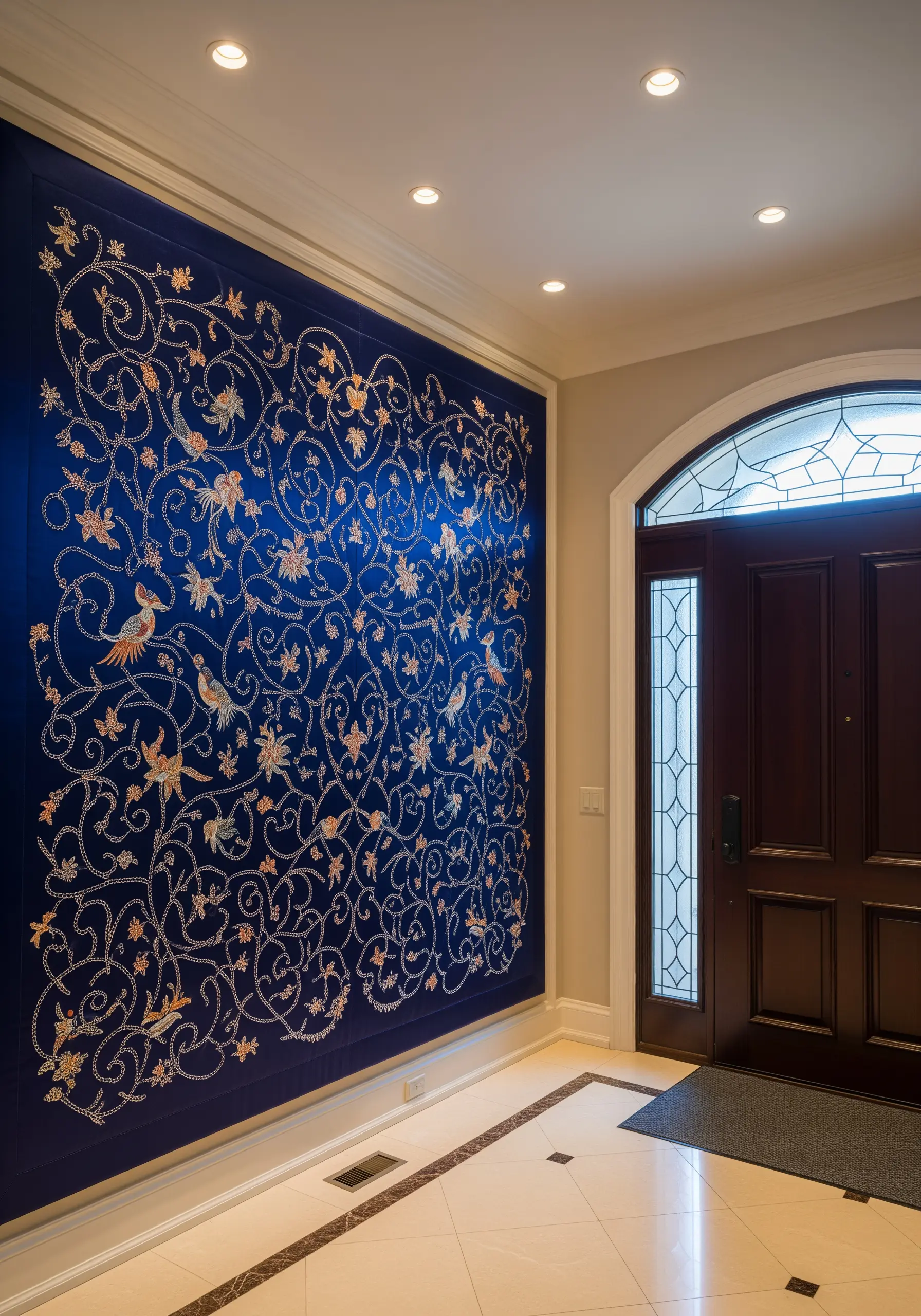
Recreate the delicate, painterly effect of Parsi Gara embroidery by mastering the satin stitch.
Work with very fine, single-strand silk thread on a dark satin or crepe background. The key is to blend colors subtly within a single motif.
Use a long and short stitch to create soft gradients on petals and leaves, giving them a realistic, three-dimensional look.
The incredible density of the stitching and the sheen of the silk thread against the dark fabric creates a feeling of floating, delicate beauty. It is an ideal way to capture nature’s textures in your next embroidery project.
16. Chinoiserie Charm: Blending Cultures with Thread
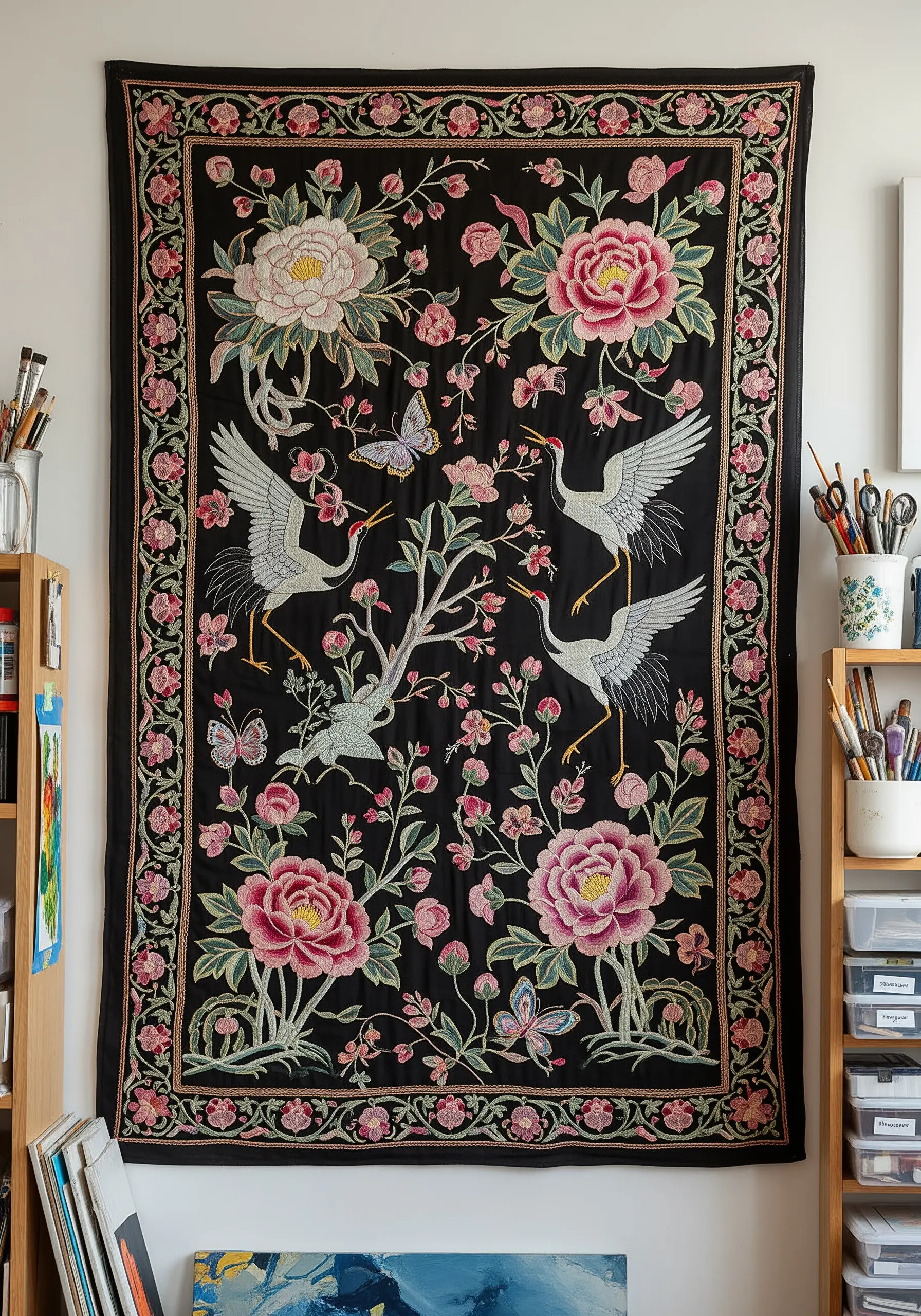
Capture the fusion of Eastern motifs and Indian craftsmanship found in Kashmiri and Parsi work.
Choose a dark fabric background to make the Chinoiserie-inspired motifs, like cranes and peonies, truly pop.
Use long-and-short stitch to achieve soft, realistic color blending in the petals and feathers.
This technique allows you to ‘paint’ with thread, creating gradients that give the motifs life and depth. It’s a perfect technique for lovers of bird & butterfly embroidery patterns.
17. Coastal Kantha: Modern Motifs with a Traditional Stitch
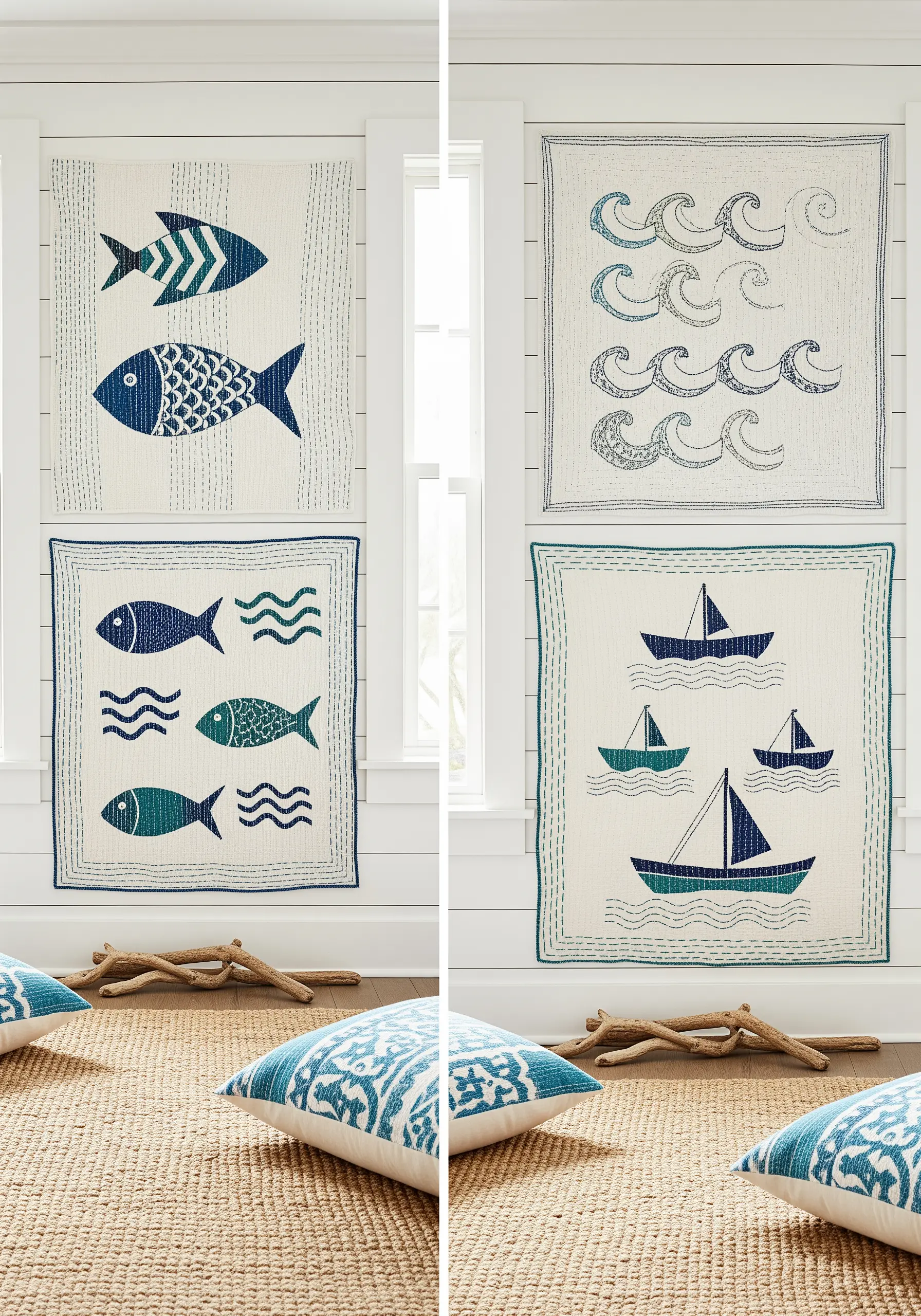
Prove the versatility of traditional techniques by applying them to modern, graphic designs.
Use the simple Kantha running stitch to fill minimalist shapes like fish, boats, or waves.
The texture created by the dense, parallel lines of stitching adds a layer of handcrafted warmth and depth to otherwise simple motifs.
This fusion of an ancient stitch with a clean aesthetic is perfect for creating minimalist embroidery ideas for a modern, chic look that still feels soulful.
18. The Gilded Tree: Zardozi on Statement Furnishings
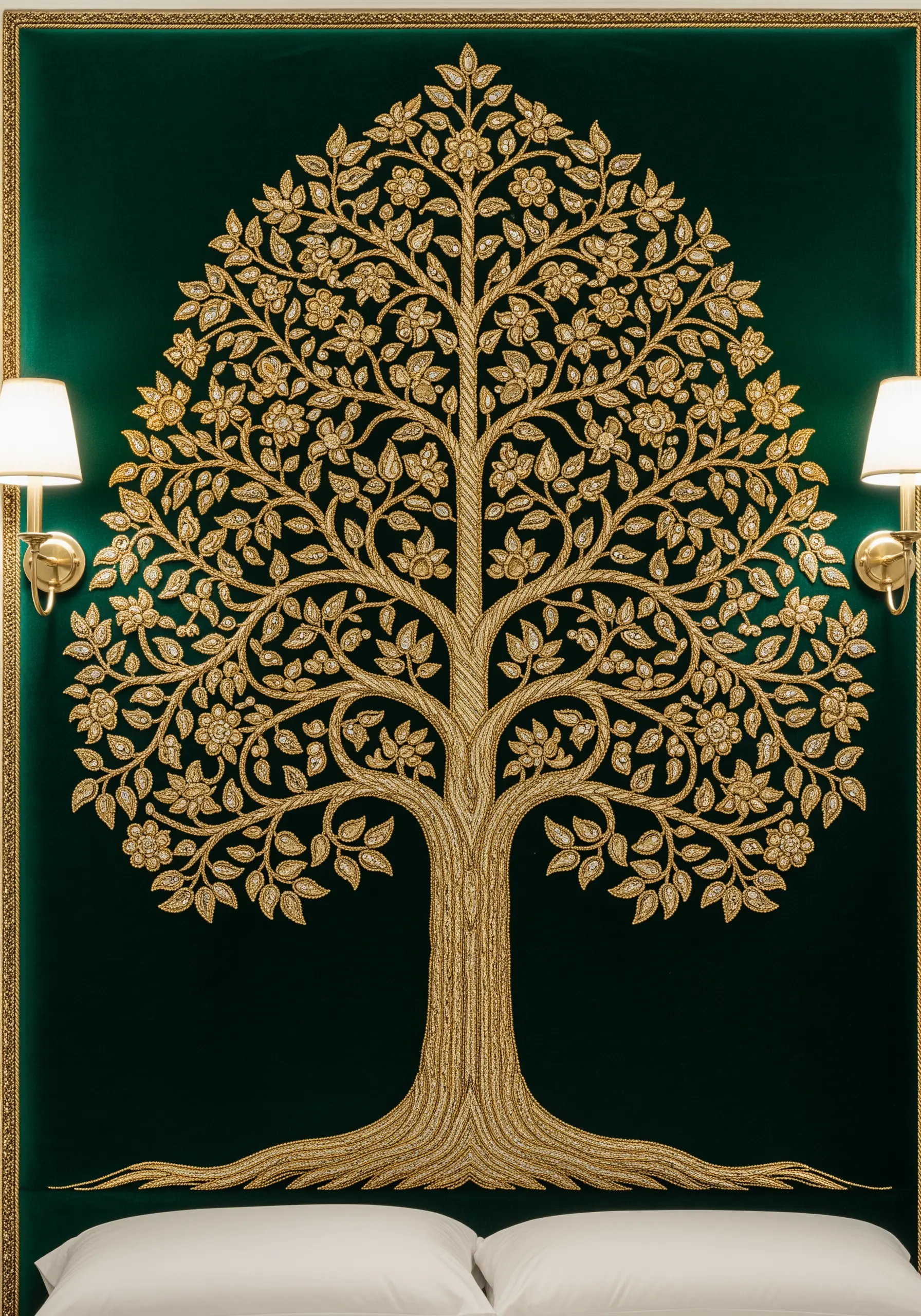
Move your embroidery beyond the wall frame and onto a functional piece of decor.
A fabric headboard or a large ottoman provides a fantastic canvas for dimensional Zardozi work.
Use a padded appliqué technique for the main trunk and branches to create a raised effect, then embellish with couched metallic cords, sequins, and beads.
This transforms a standard piece of furniture into a bespoke work of art and is one of the most impactful embroidery accent furniture ideas you can try.
19. Deconstructed Shisha: A Modern Take on Mirror Work
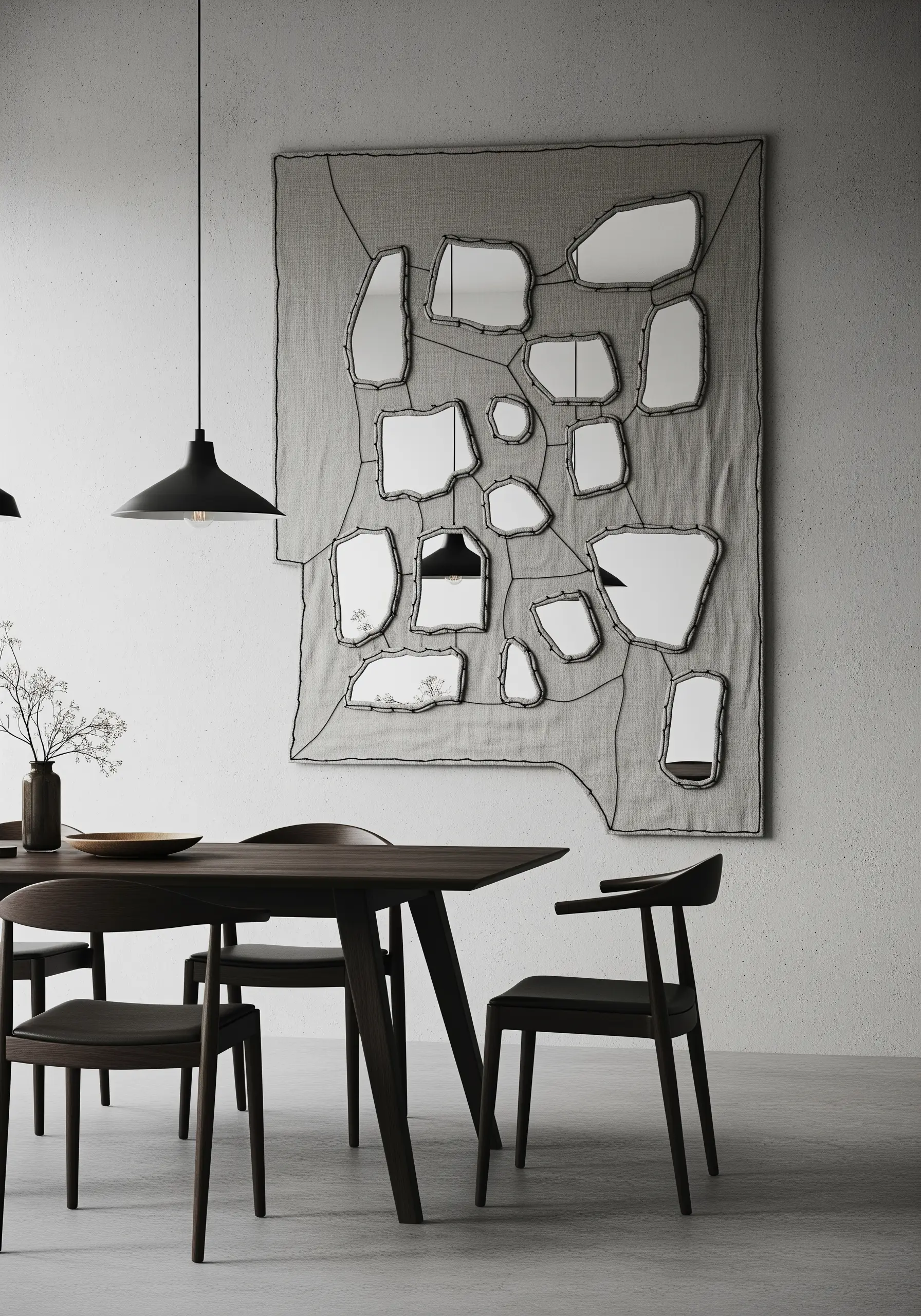
Reimagine traditional mirror work with a minimalist, contemporary approach.
Use mirrors in irregular, organic shapes instead of perfect circles, and scatter them across a neutral linen background.
Secure them with a simple, open stitch frame rather than dense, decorative embroidery.
The beauty of this style lies in the interplay between the raw fabric, the clean lines of thread, and the sharp reflections of the mirrors. It’s an excellent way to create abstract embroidery patterns with a sculptural feel.
20. Folkloric Tapestry: Weaving Stories with Simple Forms
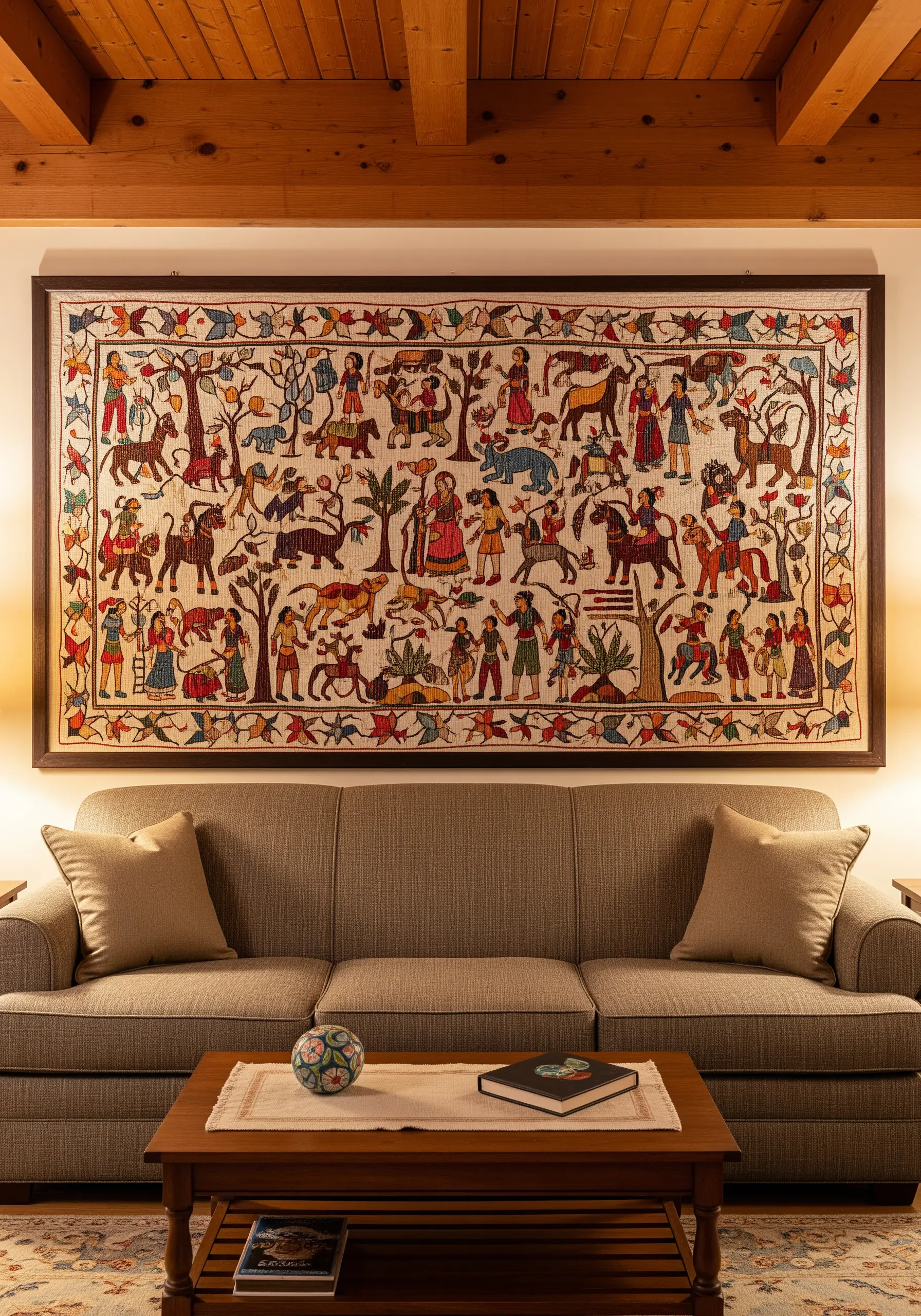
Create a dense, narrative scene inspired by folk art styles like Warli or Madhubani.
Focus on building a complex composition from very simple, repeated shapes and figures.
Use basic line stitches like stem stitch, backstitch, and running stitch to create your characters, animals, and trees.
The visual power comes not from intricate stitch techniques, but from the rhythm, pattern, and sheer volume of the storytelling. These are embroidery hoops that tell a story through collective action.
21. Pipli Appliqué: Bold Color-Blocking with Fabric
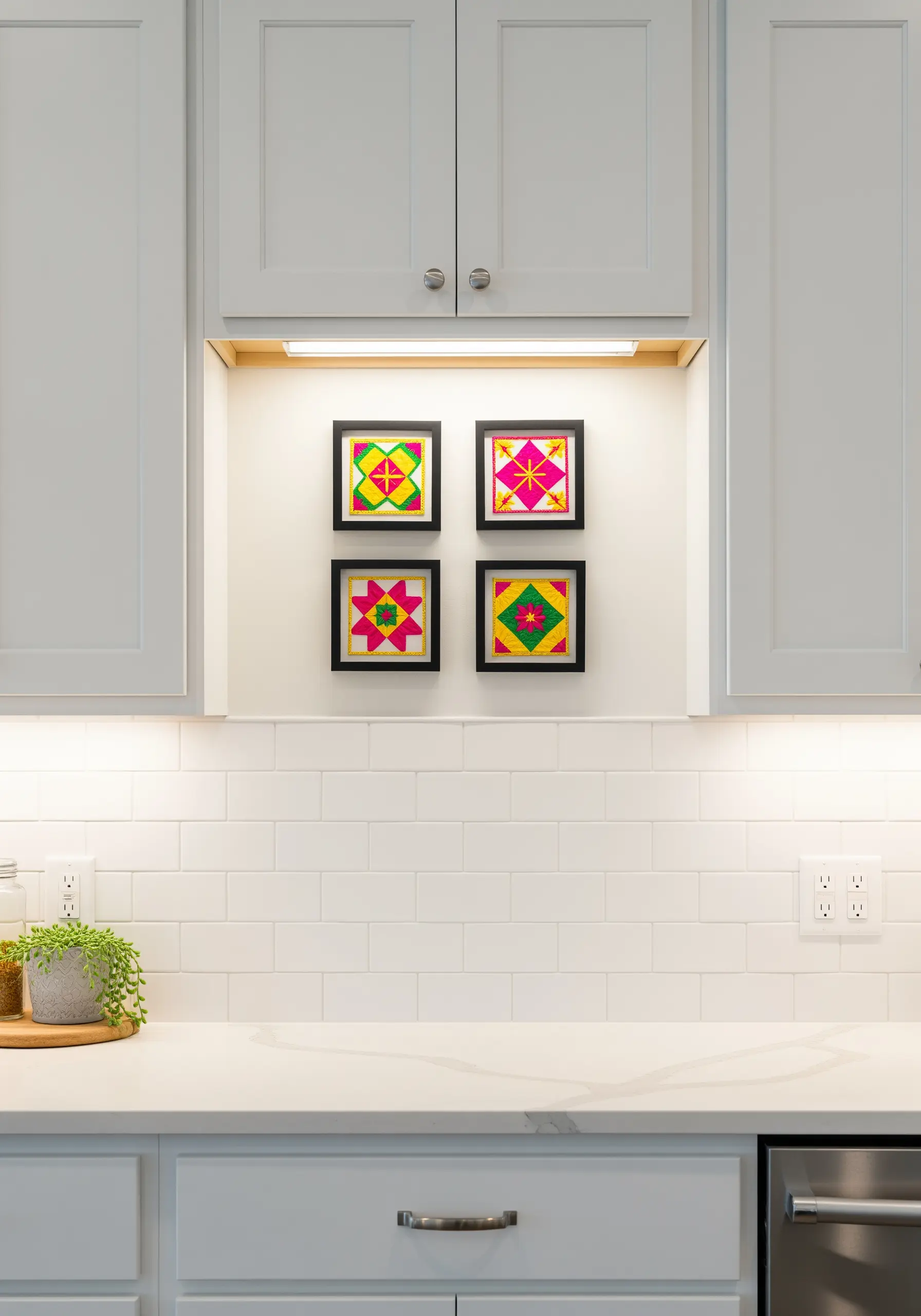
Achieve a bold, graphic look quickly with the appliqué techniques of Pipli.
Cut sharp geometric or floral shapes from brightly colored felt or cotton fabric.
Arrange these shapes on a contrasting background and stitch them down around the edges with a decorative buttonhole or chain stitch.
This method is essentially ‘painting with fabric’ and is perfect for creating small, high-impact pieces of art that look clean and modern. You can make many tiny wall decor ideas using this technique.
22. Maximalist Texture: The Vibrancy of Banjara Embroidery
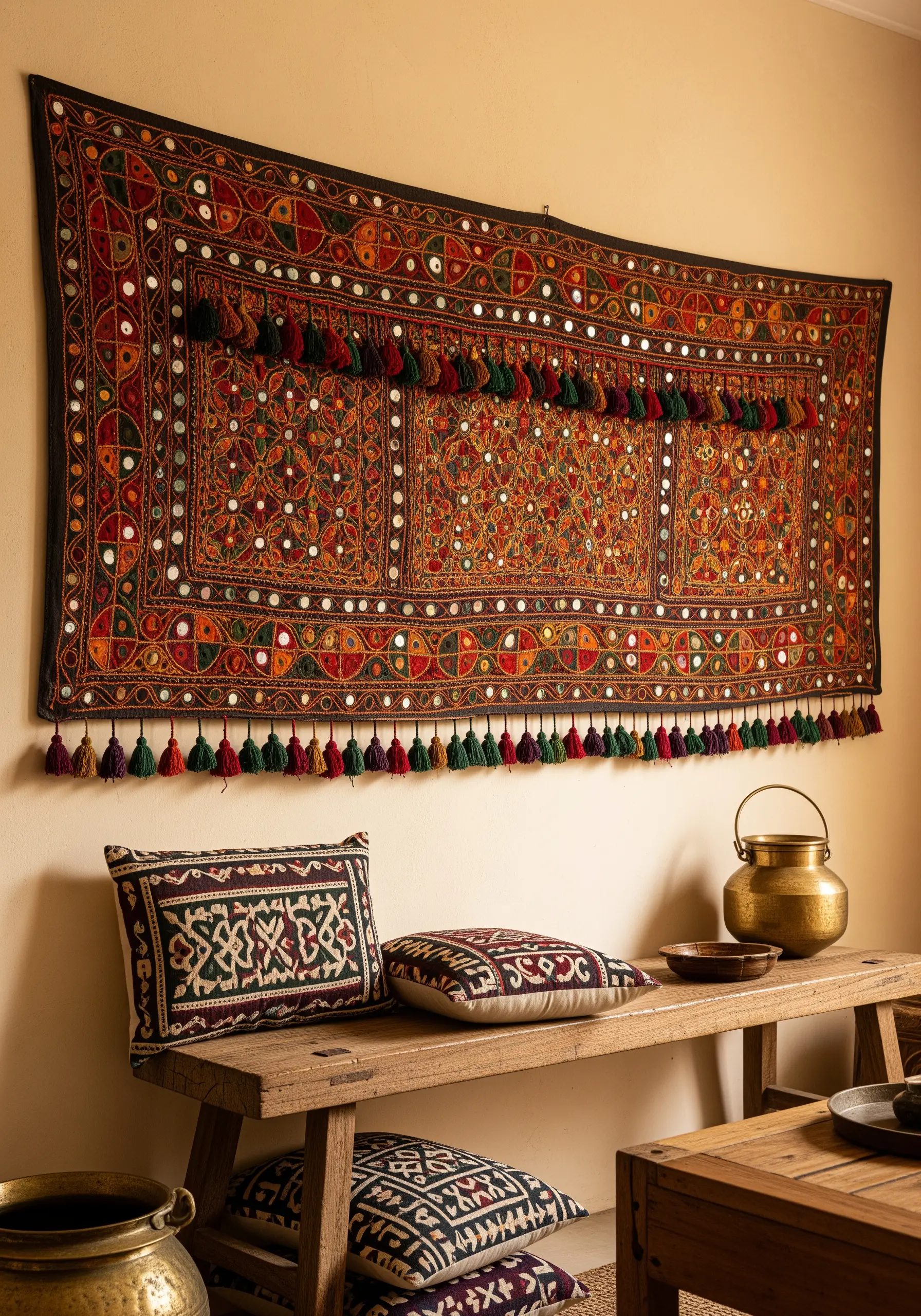
Embrace a rich, tactile aesthetic by combining multiple embellishments in one piece.
Start with a base of dense, colorful stitching, using chain stitch and herringbone stitch to create geometric patterns.
Then, liberally add shisha mirrors, cowrie shells, beads, coins, and yarn tassels.
This maximalist approach, characteristic of Banjara nomadic textiles, creates a piece that is not just visually stunning but also texturally fascinating. It’s a perfect example of boho-inspired textile wall art.
23. Minimalist Paisley: The Power of Negative Space
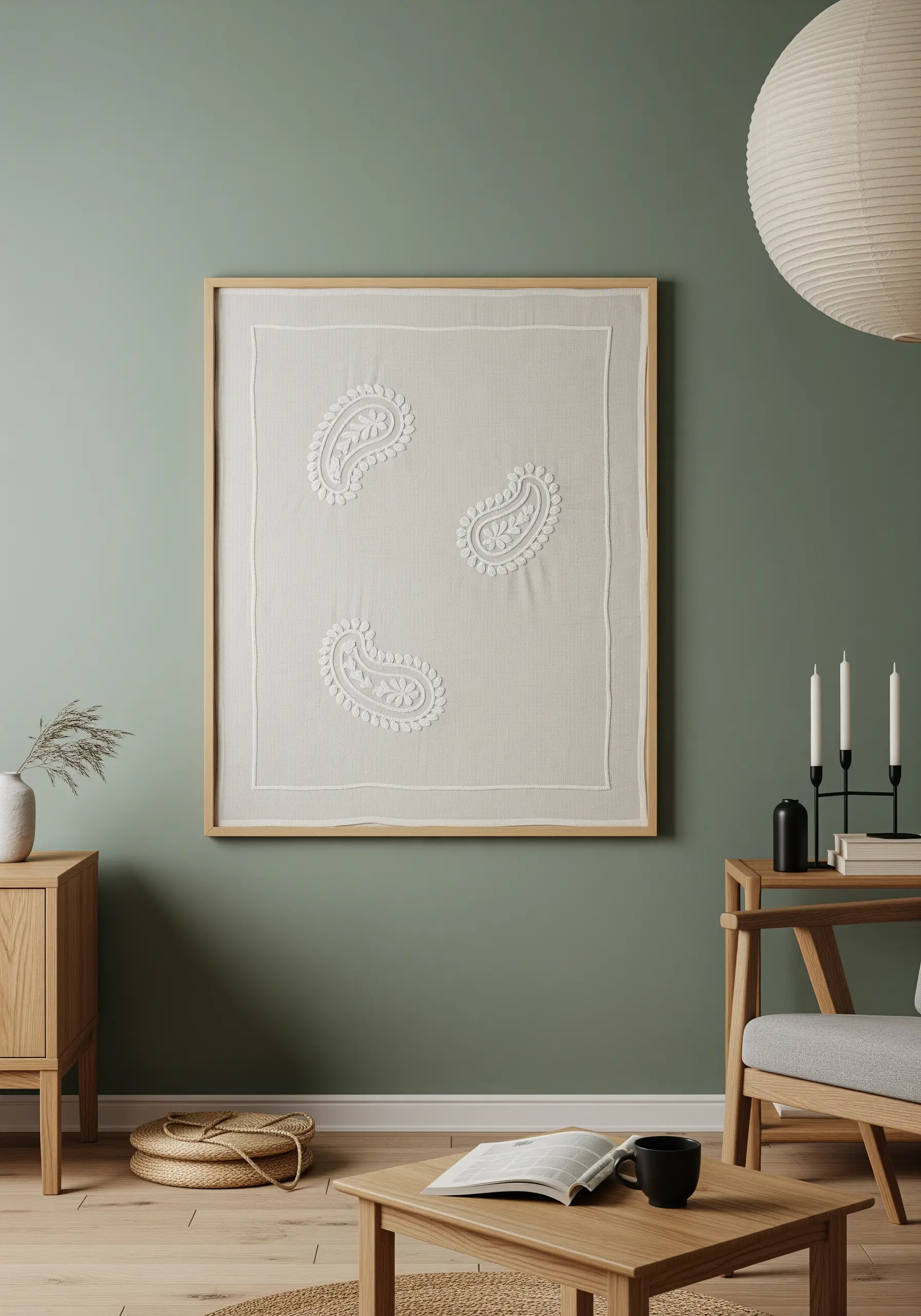
Create a profound sense of calm by focusing on just one or two well-placed motifs.
Using a single color of thread—white on natural linen is classic—stitch a few paisley shapes using a raised stem stitch or padded satin stitch for subtle dimension.
The key is to leave plenty of ‘breathing room’ or negative space around them.
This forces the eye to appreciate the elegant form of the motif and the subtle texture of the stitching. It’s a masterful way to combine thread and negative space for a sophisticated result.
24. The Embroidered Garden: Creating Depth with Layered Stitches
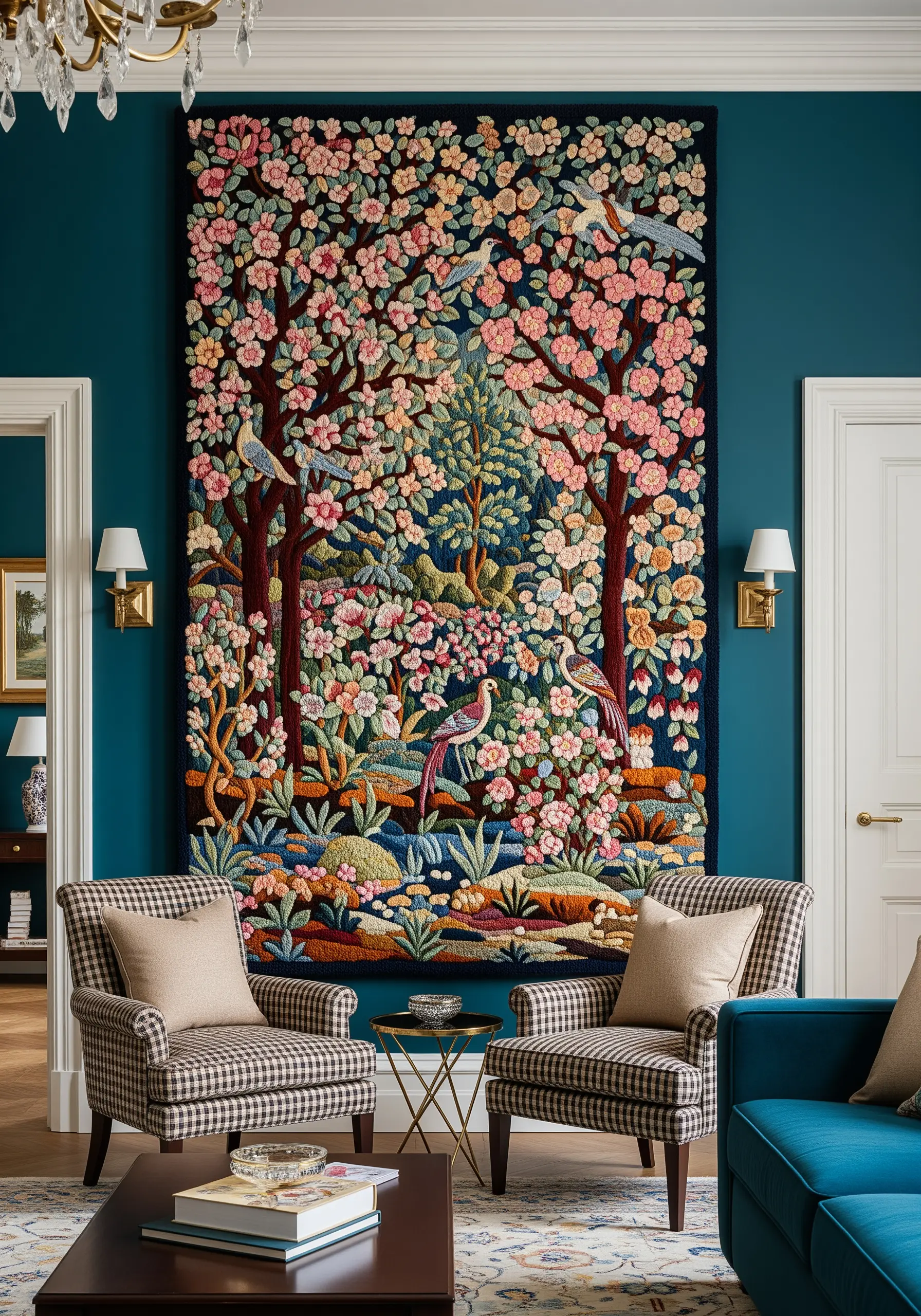
To achieve a lush, tapestry-like effect, you must build your composition in layers.
Begin with the background elements, like distant hills or water, using flatter stitches.
Next, add the mid-ground elements, such as tree trunks and branches, with chain stitch or stem stitch.
Finally, stitch the foreground flowers and birds using more dimensional techniques like padded satin stitch or French knots. This layering creates a true sense of perspective and depth. These are the ultimate botanical textile art ideas for an immersive feel.
25. Heraldic Goldwork: Sculpting with Metallic Thread
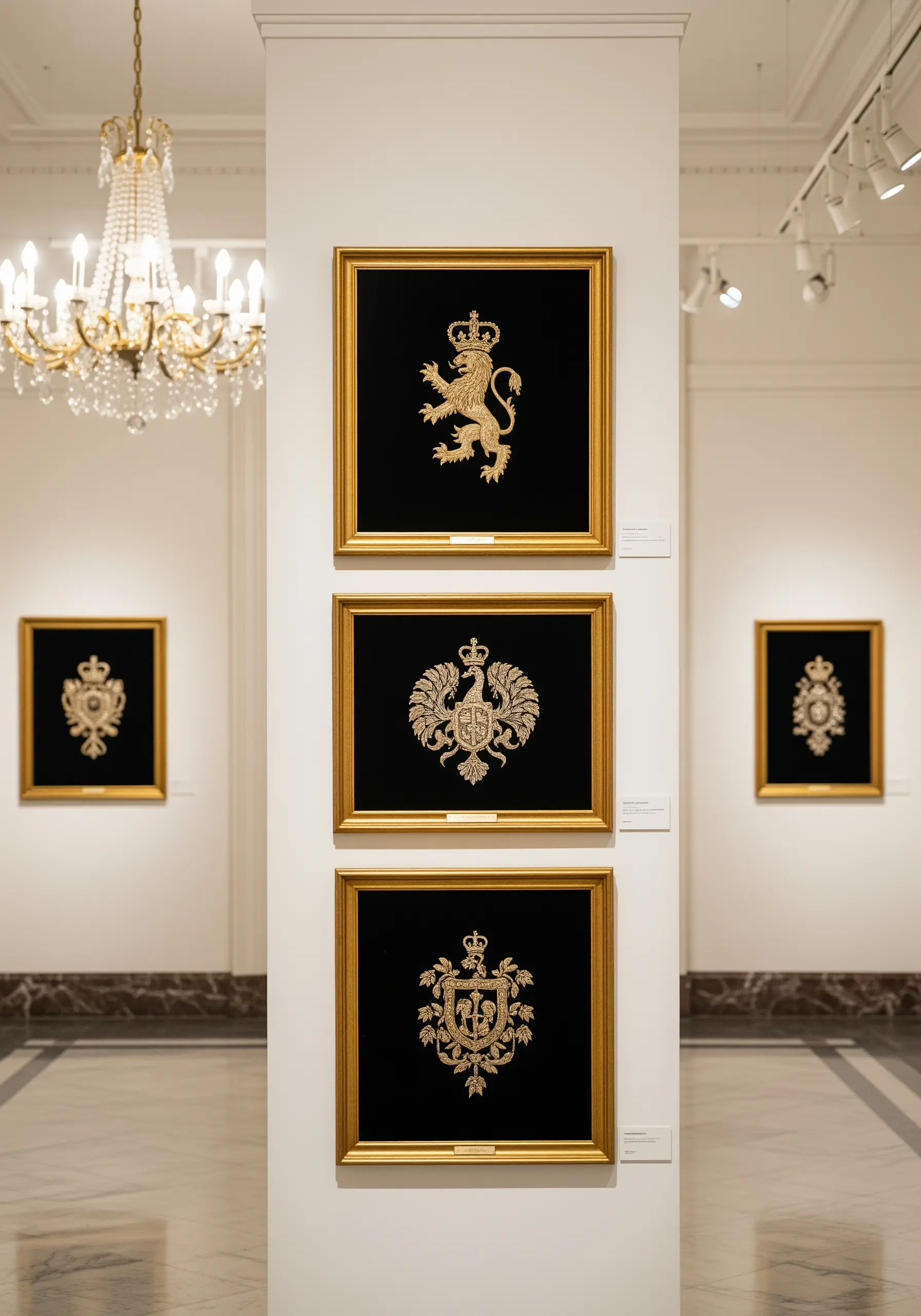
Create regal, three-dimensional emblems using the techniques of goldwork.
The secret to the raised effect is padding: use layers of felt or string stitched onto the fabric as a base.
Then, couch stiff metallic threads, like purl or check, over this padding, allowing the threads to conform to the raised shape.
This highly sculptural technique gives the embroidery a weighty, armor-like quality, perfect for crests and coats of arms. Abstract metallic thread projects also benefit from this textural approach.


I ‘m interested in your craft . i would like to buy. Do you ship to Malaysia. Where is your location
Hi Mala,
Thank you for your interest in the embroidery designs featured on Stitzo.
Currently the designs are shared as inspiration, but we are exploring options to offer handmade pieces in the future. Shipping to Malaysia may be possible depending on the piece and size.
If you are interested in a specific design from the article, please let us know which one you liked and we can guide you further.
Warm regards,
Team Stitzo
HOW TO BUY
WHAT MEANT BY EMBROIDERY WORK. I like your tree life inspired work with kalamkari design. But i cant imagine the work in embroidery style. Is it custom made? Can i choose my own colour?