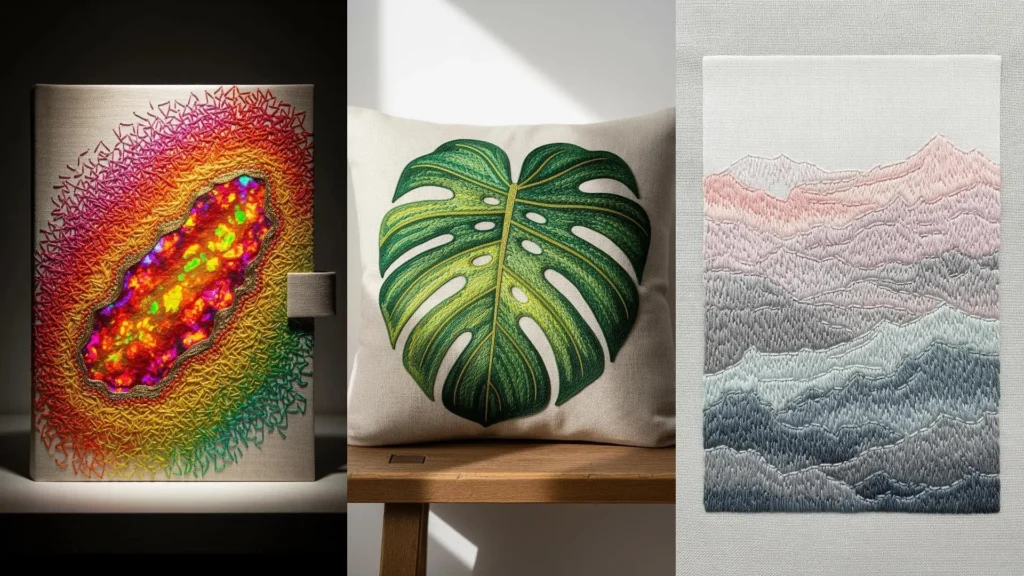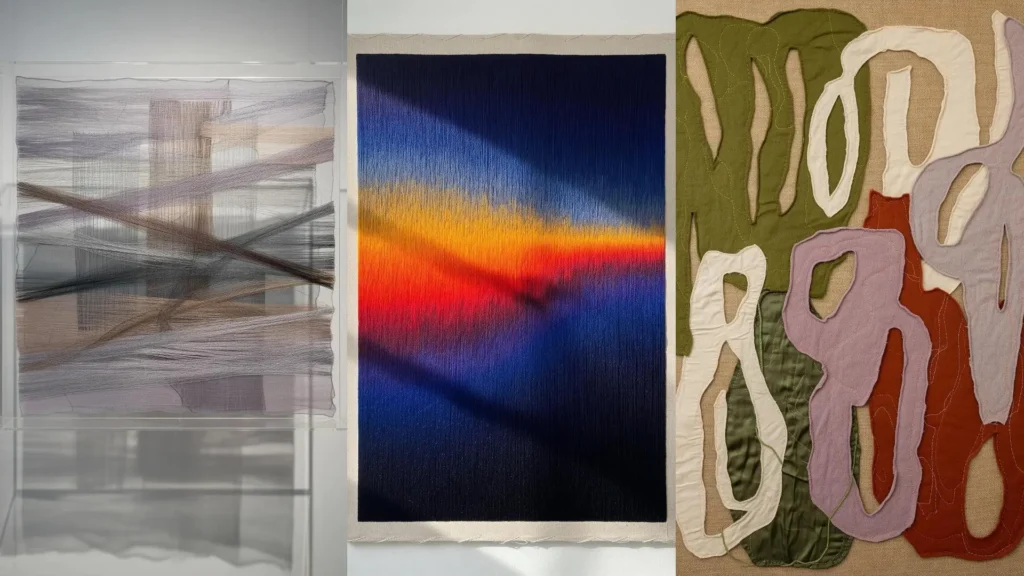
Abstract embroidery is not about abandoning technique—it’s about liberating it. It’s your chance to let color, texture, and line do the talking, moving beyond literal representation to express a feeling, an energy, or a mood. Think of your needle as a paintbrush and your floss as the pigment.
Here, you will learn to see thread differently. We’ll explore how to build fields of seamless color, create illusions of depth with simple lines, and combine textures in ways that feel both spontaneous and intentional. Each idea is a starting point for your own artistic exploration.
Forget the pressure of perfection. Instead, focus on the rhythm of the stitch and the way colors blend and interact. This is where you can trust your intuition and transform a simple piece of fabric into a canvas for contemporary art.
1. Master the Vertical Gradient
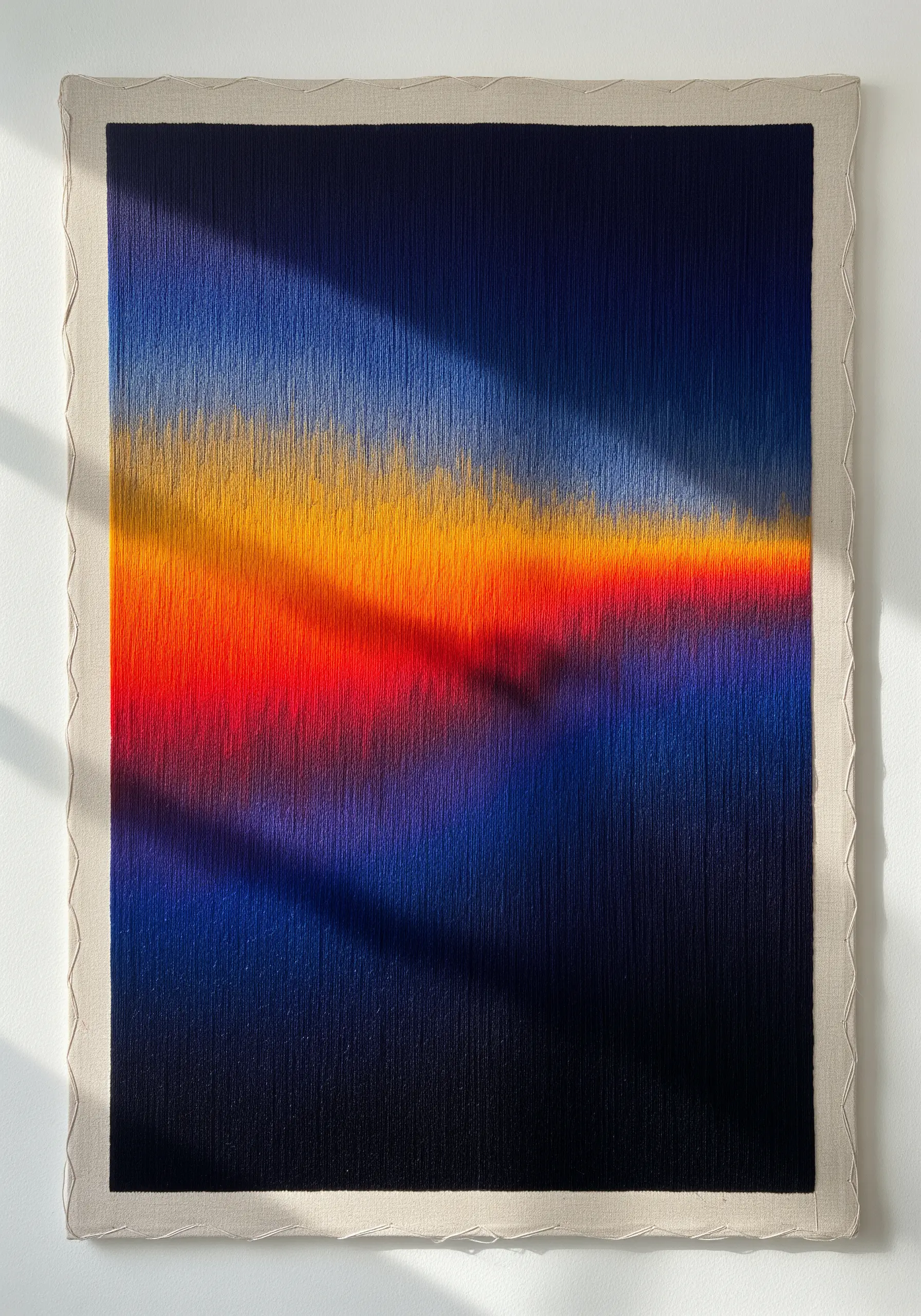
Create a seamless flow of color by dividing your canvas into vertical sections and filling each with dense, straight stitches.
For a painterly effect, use a single strand of embroidery floss and slightly overlap the color zones.
This technique mimics the soft blur of a photograph, turning your thread into a wash of color.
Work on a tightly stretched, non-stretch fabric like cotton canvas to prevent puckering under the high thread tension.
2. Stitch Geometric String Art Illusions
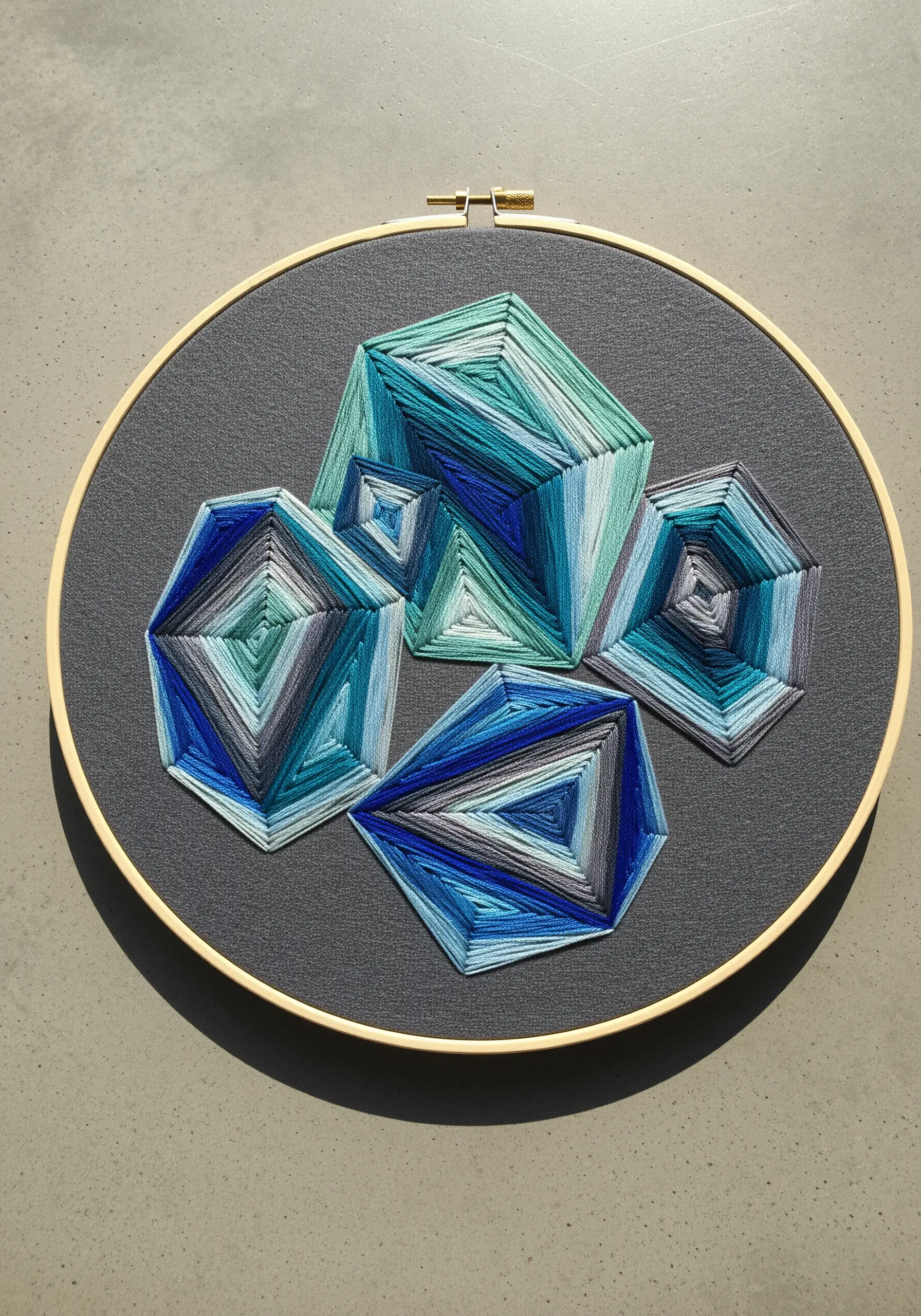
Translate the principles of string art to fabric by creating anchor points around a geometric shape.
Use a single, continuous thread wrapped between these points to build layers of color and create the illusion of curved surfaces.
The key is consistent tension and a dark, solid background fabric that makes the colors pop.
Choose a high-contrast palette, like blues and greens on charcoal gray, to emphasize the form and depth of your stitched gems.
3. Sculpt Organic Forms with Directional Fill
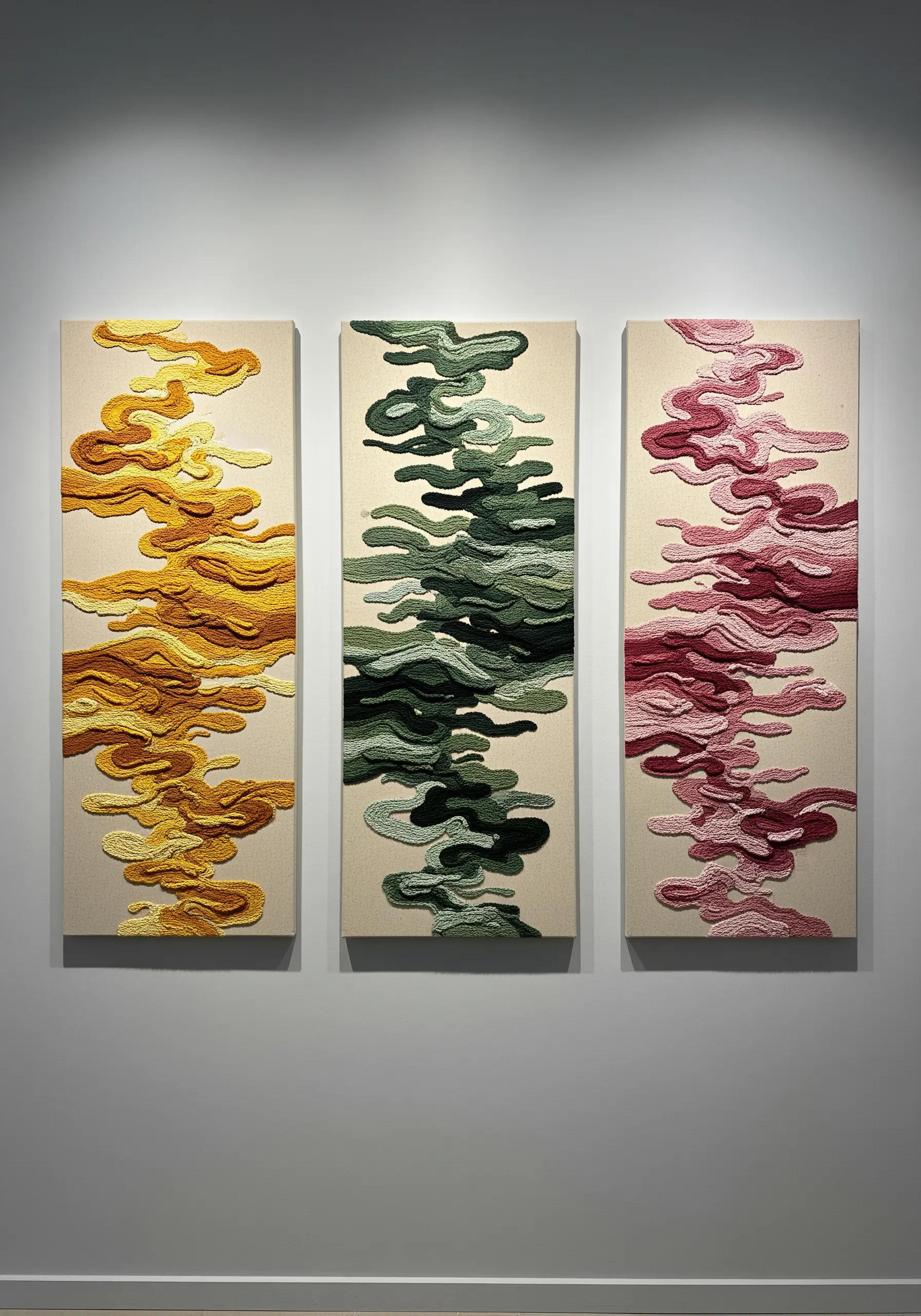
Instead of a standard satin stitch, fill your abstract shapes by changing the direction of your stitches to follow the curves of the form.
This creates a sense of movement and volume, making the shapes feel like they are flowing across the canvas.
Use a thicker thread, like pearl cotton, to build texture quickly and enhance the three-dimensional effect.
Arranging your work as a triptych allows each color story to stand alone while contributing to a larger, cohesive piece.
4. Create a Galactic Burst with Beads
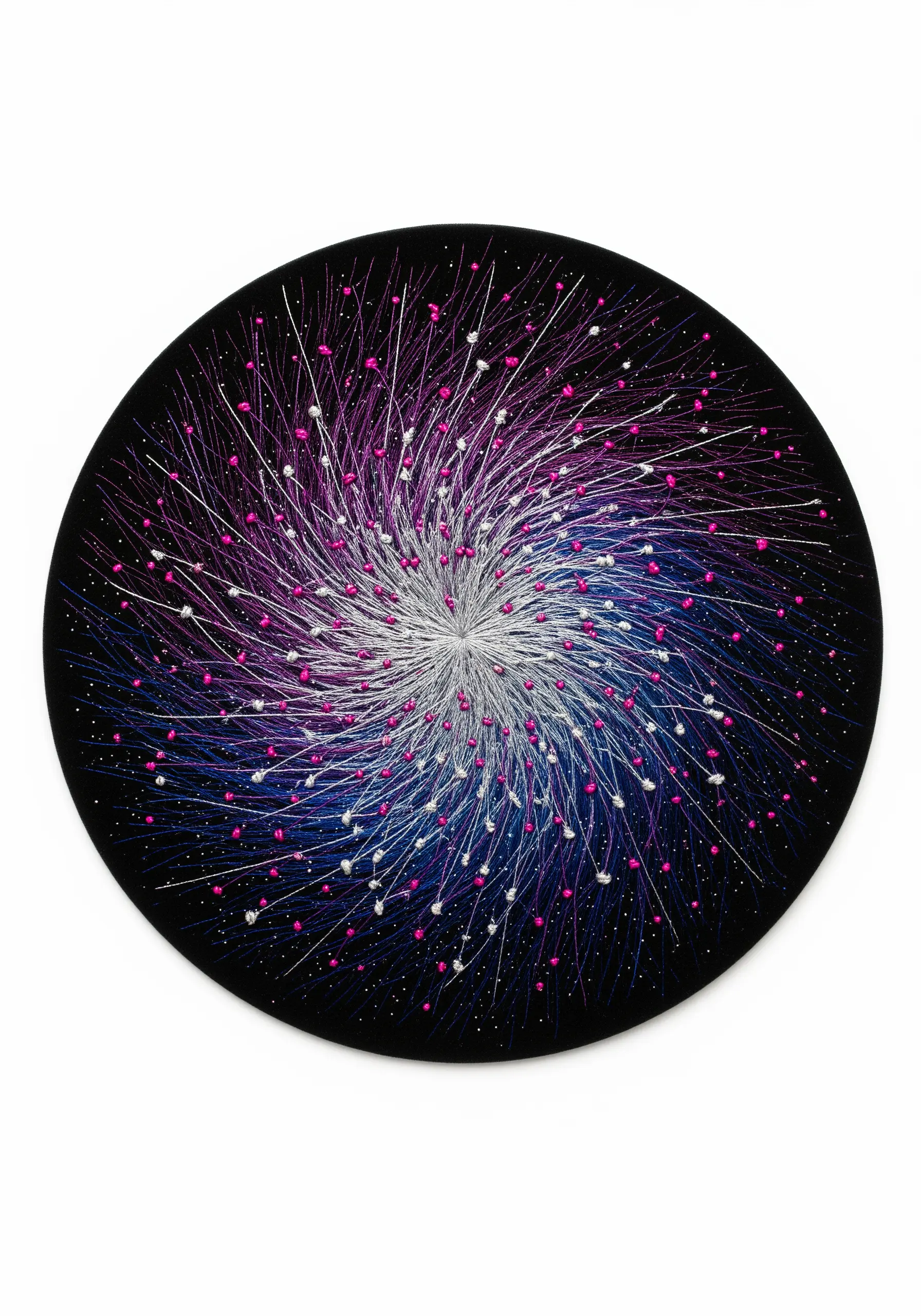
Create a dynamic focal point by stitching radiating straight lines from a central point, varying their length and density.
Introduce a secondary color that spirals outwards to create a swirling motion, suggesting cosmic energy.
Incorporate French knots or seed beads at the ends of some threads to add sparkle and a tactile, star-like texture.
Using a black velvet or velveteen fabric as your base will absorb light and make your metallic and bright threads appear even more vibrant.
5. Weave a Topographical Landscape
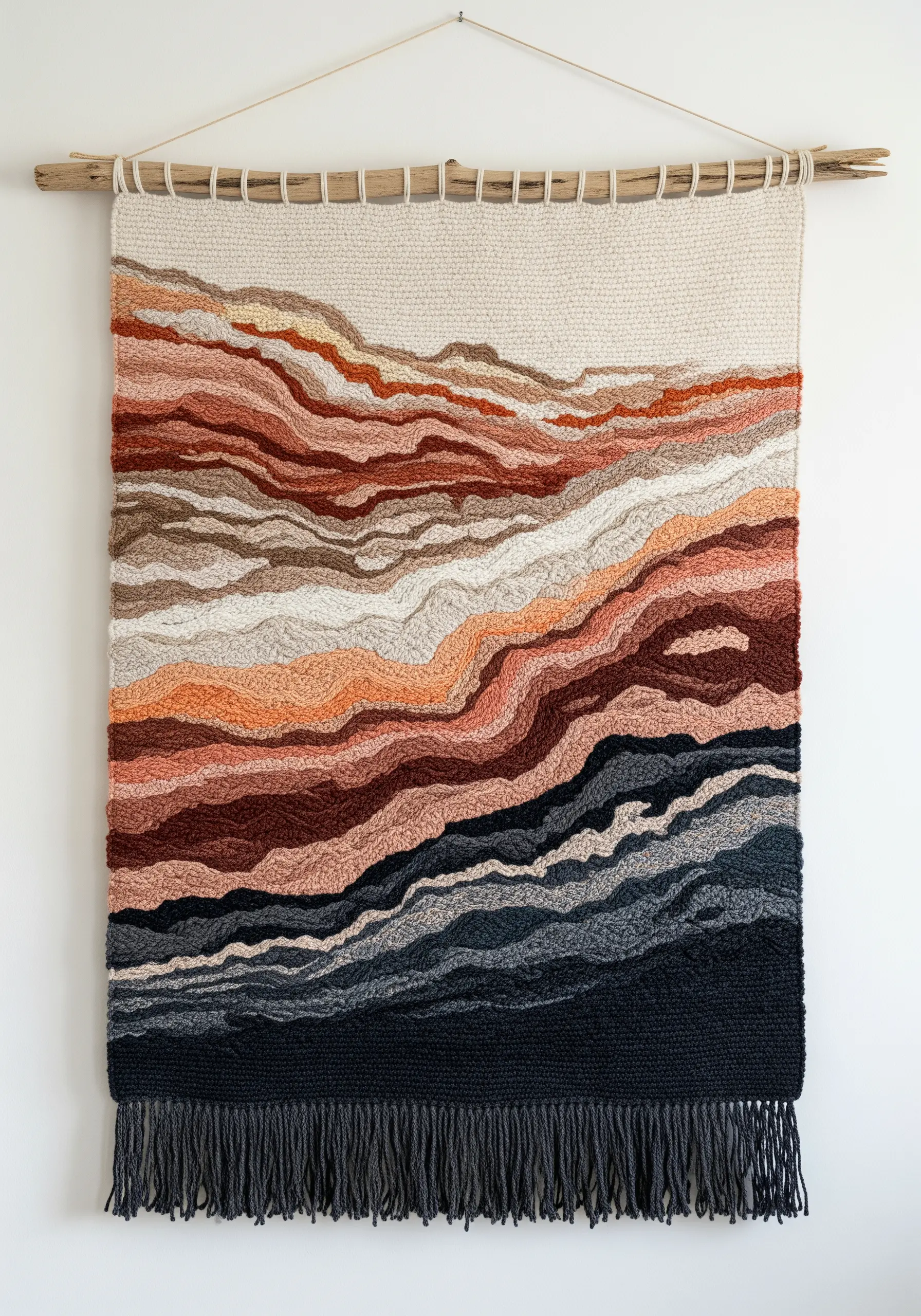
Mimic the layered look of sedimentary rock by combining punch needle loops with flat stitches.
Vary the height of your punch needle loops and the thickness of your yarn to build physical depth and a rich, tactile surface.
Work with an earth-inspired color palette to enhance the geological feel.
Finishing the piece with a fringe adds weight and completes the modern tapestry aesthetic.
6. Achieve Serenity with a Minimalist Arc
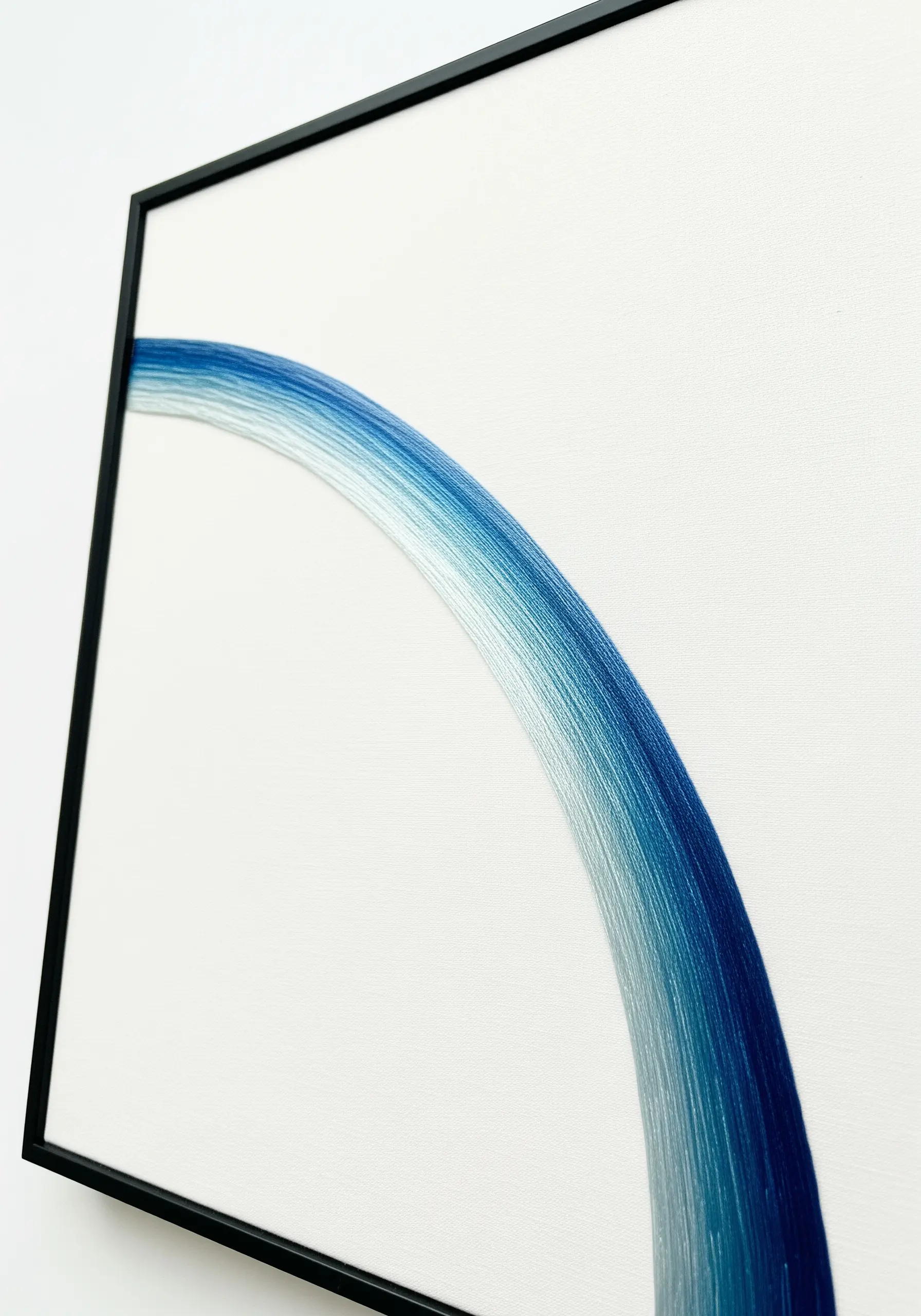
This design is an exercise in precision, using parallel straight stitches to form a perfect color gradient.
To achieve this, draw precise guidelines on your fabric and use a single strand of floss for the smoothest possible transition between shades.
The negative space is just as important as the stitched area; framing the arc off-center creates a modern, balanced composition.
This is a perfect example of how minimalist embroidery projects can create maximum impact.
7. Embrace Chaos with Abstract Couching
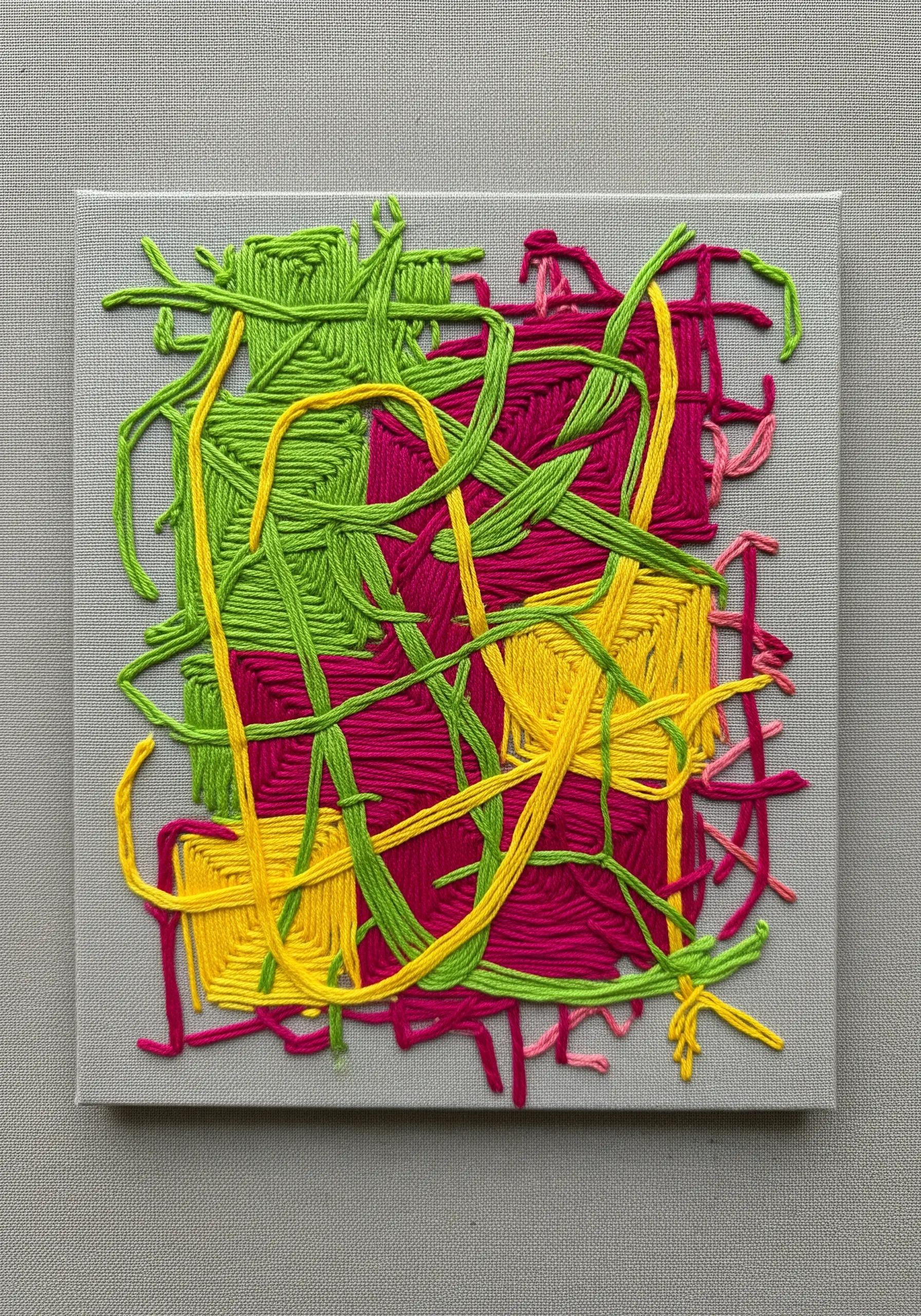
Move beyond structured stitches and lay down thick yarn or cord in a free-form, overlapping pattern directly onto your canvas.
Secure the yarn with a finer thread using the couching technique—small, discreet stitches that tack the main fiber in place.
This method allows for spontaneity and expressive energy, turning your thread into a three-dimensional line drawing.
Let the ends of the yarn remain loose for an intentionally raw and dynamic finish.
8. Visualize Sound with Monochrome Lines
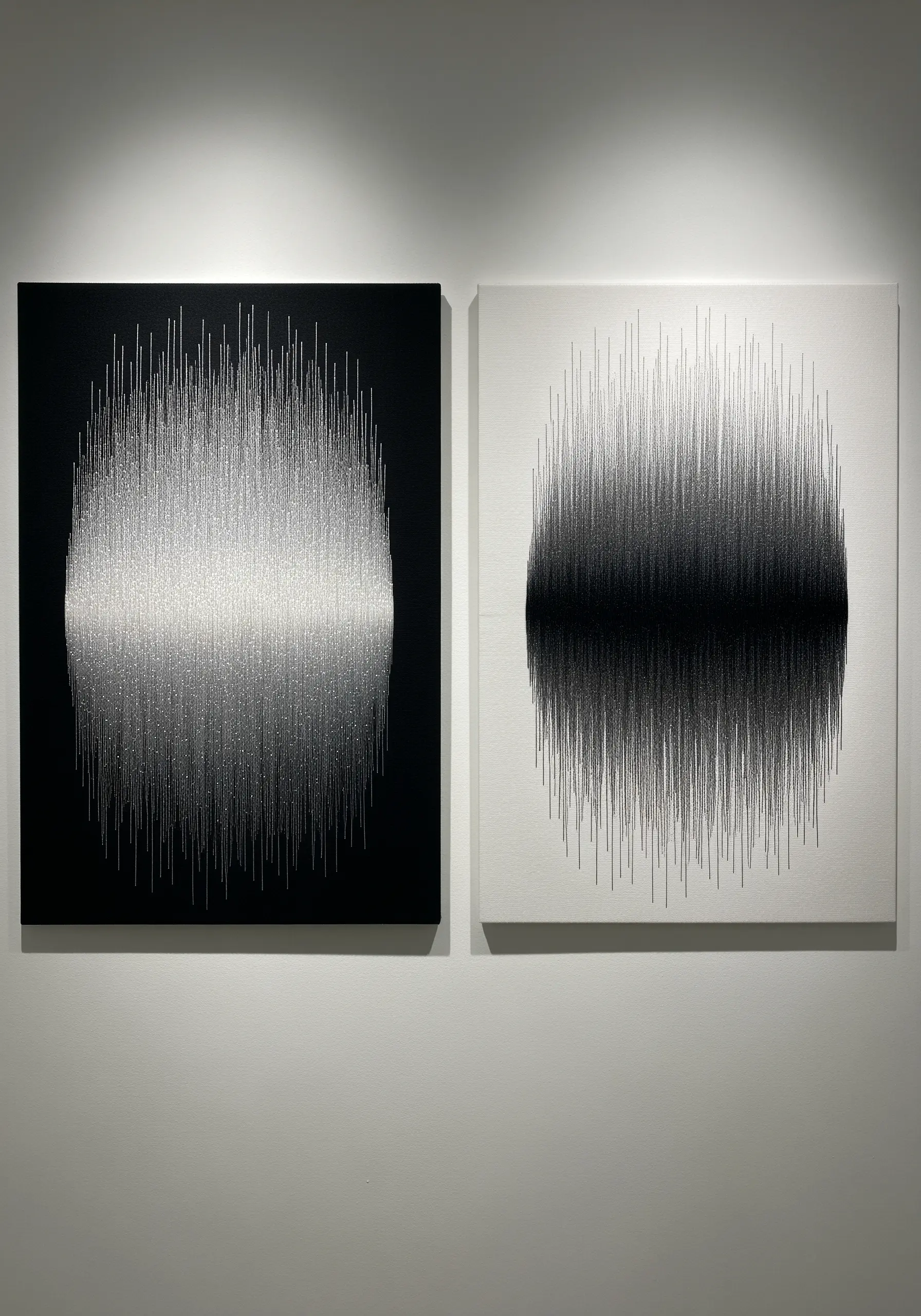
Create a powerful visual statement using only black and white threads to represent sound waves or digital data.
Use a grid to guide your placement, stitching vertical straight lines of varying lengths to build a dense, vibrating texture.
The diptych format—presenting a positive and negative version side-by-side—amplifies the conceptual nature of the piece.
This technique explores how monochrome embroidery can be incredibly dynamic and visually complex.
9. Paint Nature’s Textures in a Hoop
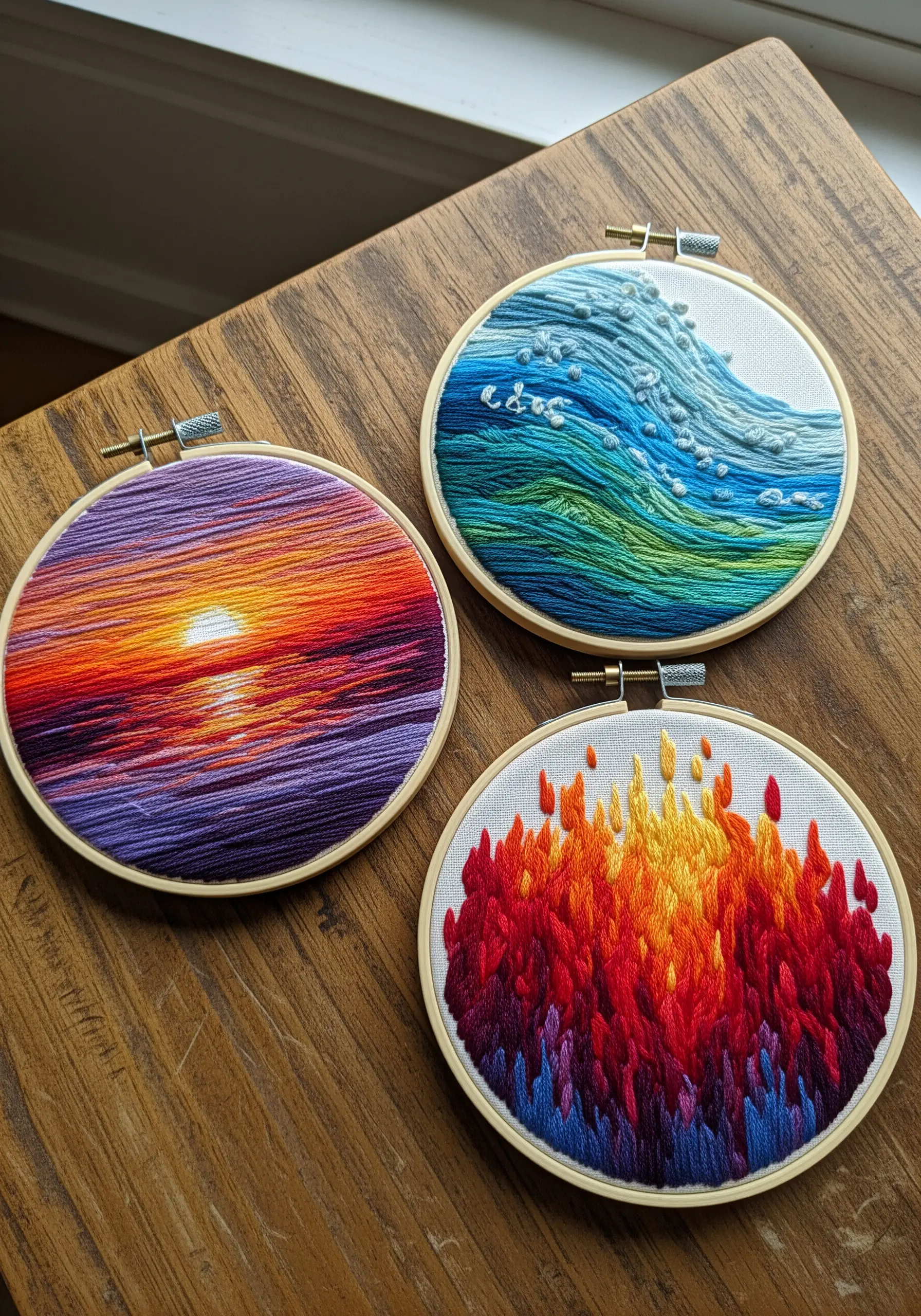
Adapt your thread painting to capture the unique energy of different natural elements.
For water, use curved, flowing long-and-short stitches; for a sunset, use horizontal stitches to create a calm horizon; for fire, use short, upward-flicking stitches to mimic flames.
Don’t be afraid to mix in French knots or use a chunkier thread to add textural highlights, like sea foam on a wave.
Grouping these abstract thread landscapes together creates a powerful story of nature’s forces.
10. Imply Form with Ethereal Clouds
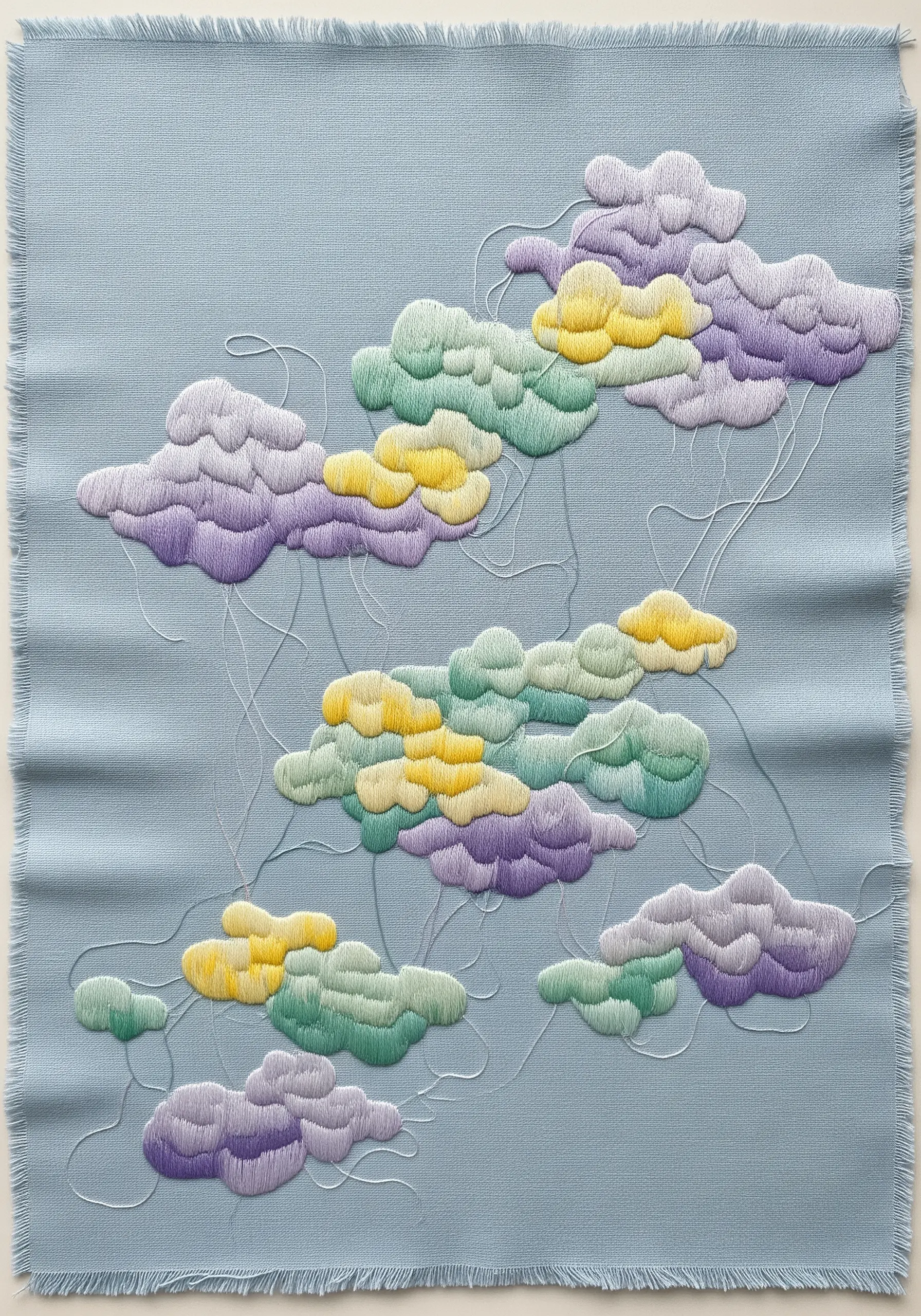
Create soft, pillowy shapes using a padded satin stitch with gentle, curved edges.
To add a delicate, unfinished quality, allow single strands of thread to trail off from the edges of your shapes, as if they are unraveling or dissolving.
This technique works beautifully on a solid, muted background, which allows the subtle textures and loose threads to become the focus.
The frayed edge of the fabric complements the whimsical, deconstructed feel of the embroidery.
11. Collage with Fabric and Line
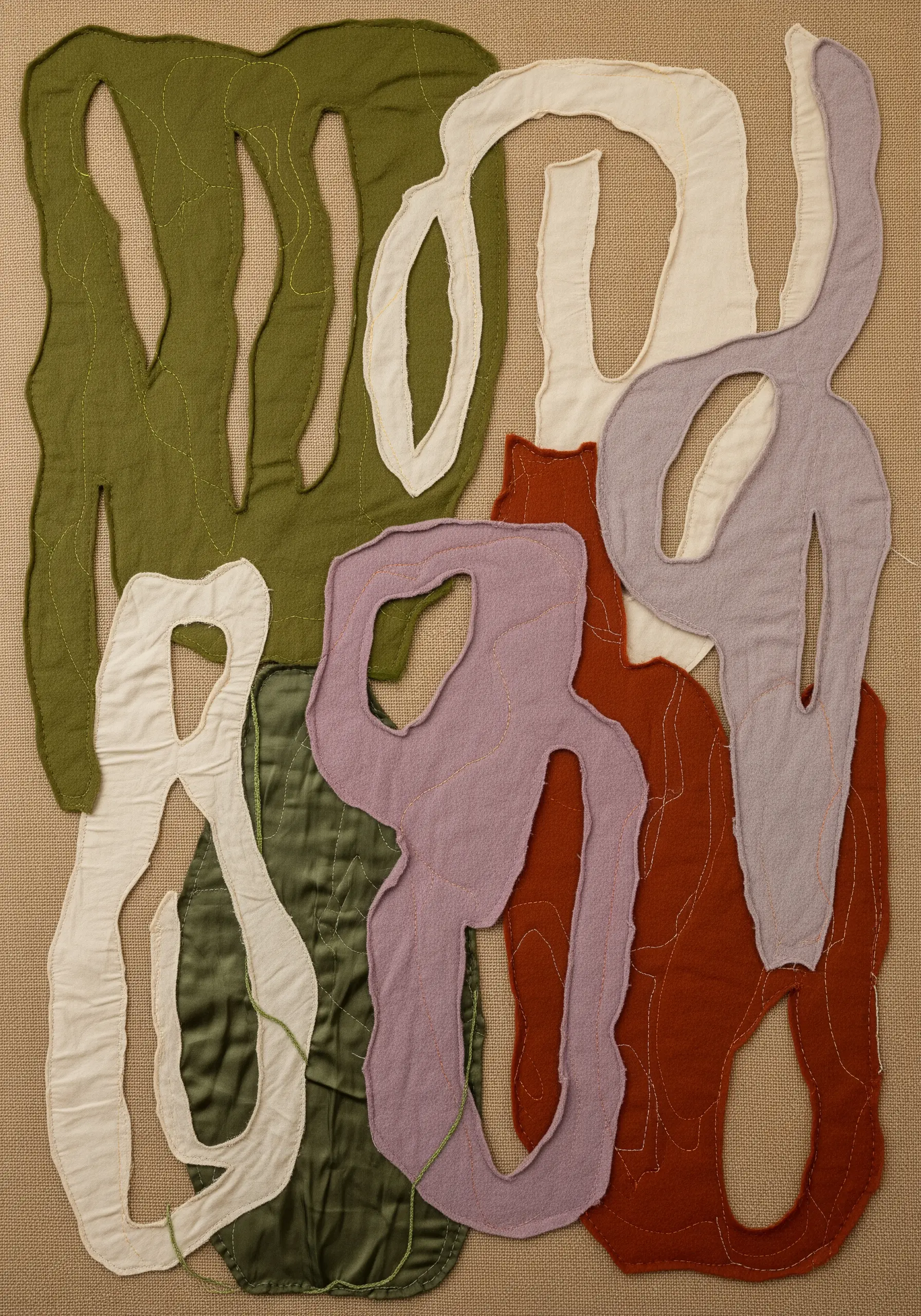
Block in large areas of color by cutting organic shapes from different fabrics and layering them onto a base fabric like burlap or linen.
Use a simple running stitch or a machine stitch to secure the appliquéd pieces, adding a linear, graphic quality to the soft forms.
This fabric collage embroidery technique is a fast and effective way to explore composition and color relationships without filling large areas with thread.
Play with contrasting textures—like smooth silk against rough cotton—to add another layer of sensory interest.
12. Build Digital Glitches with Satin Stitch Blocks
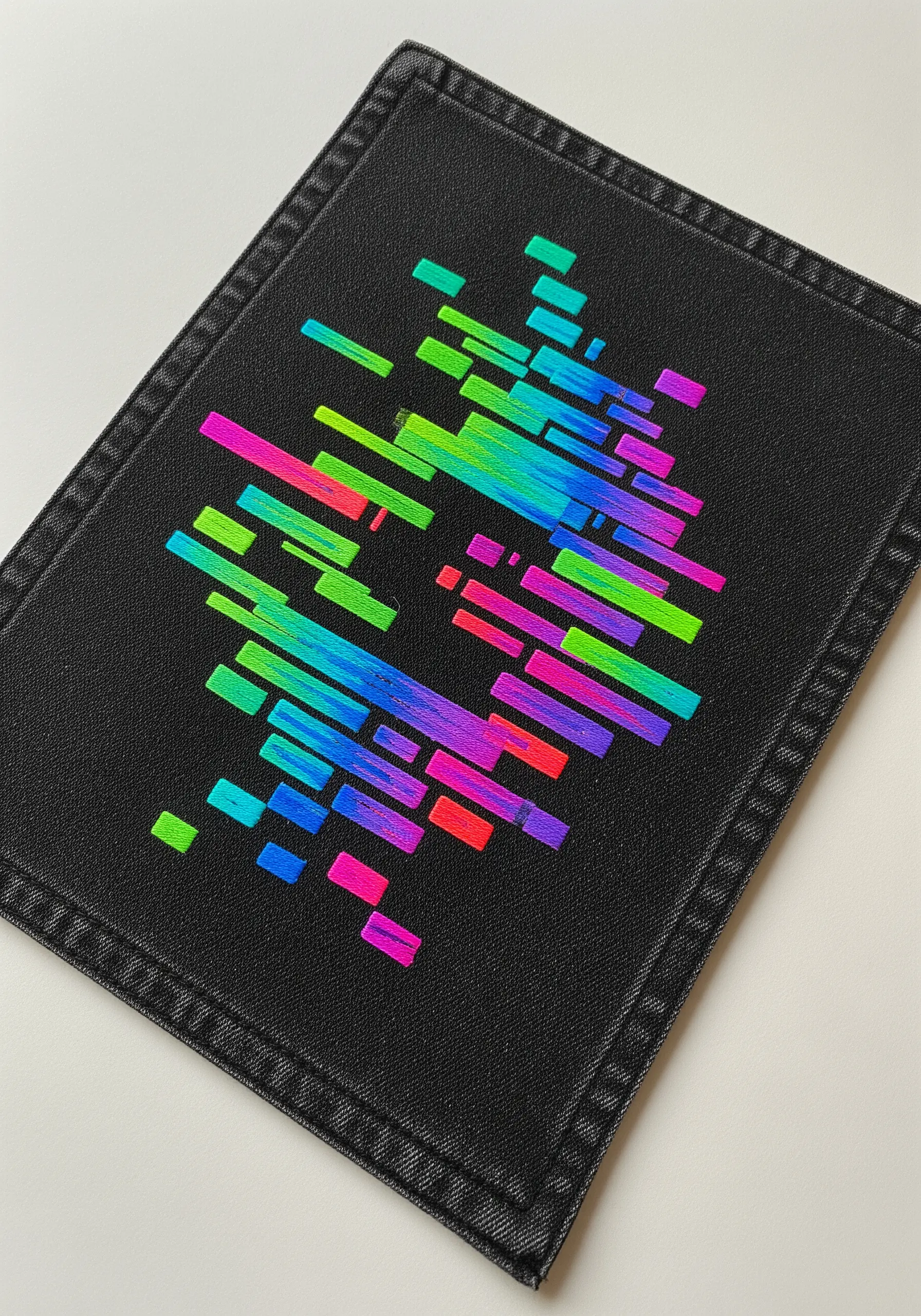
Create a pixelated or glitched effect by filling small, rectangular blocks with satin stitch.
Arrange these blocks in a seemingly random pattern, but use a cohesive color gradient to tie the composition together.
The contrast between the sharp, geometric shapes and the soft texture of the thread creates a compelling visual tension.
A dark, sturdy fabric like denim provides the perfect stable and high-contrast background for these vibrant, graphic stitches.
13. Explore Depth with Contoured Stitching
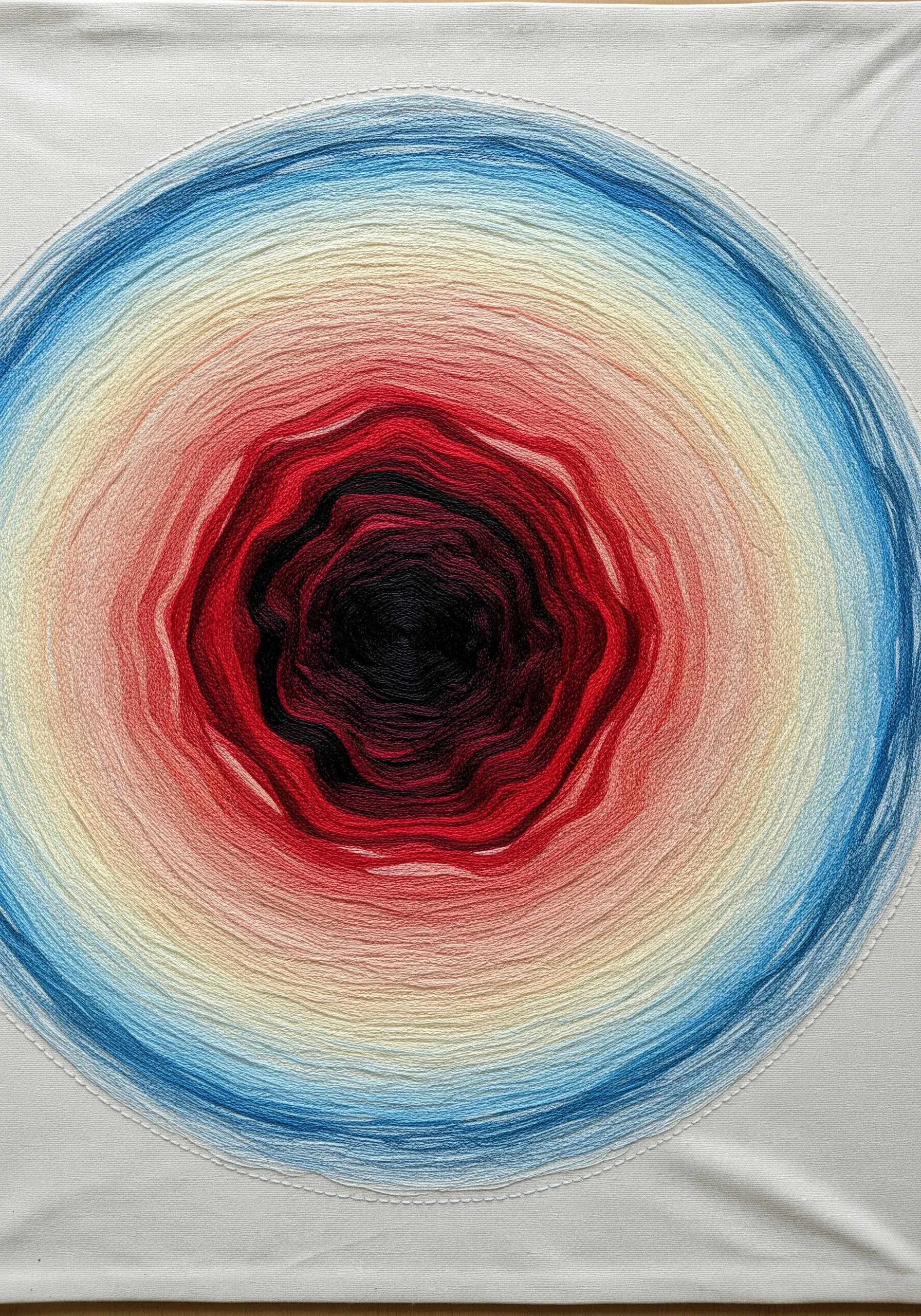
Instead of filling a shape from side to side, stitch along its contour, creating concentric rings of color that draw the eye inward.
Let the inner rings become more organic and unpredictable, contrasting with the perfect circle of the outer layers.
This technique is a meditative way to blend shades, as each ring of color influences the next.
The transition from light, warm tones to a dark, dense center creates a powerful illusion of depth and recession.
14. Suspend Threads for a Floating Effect
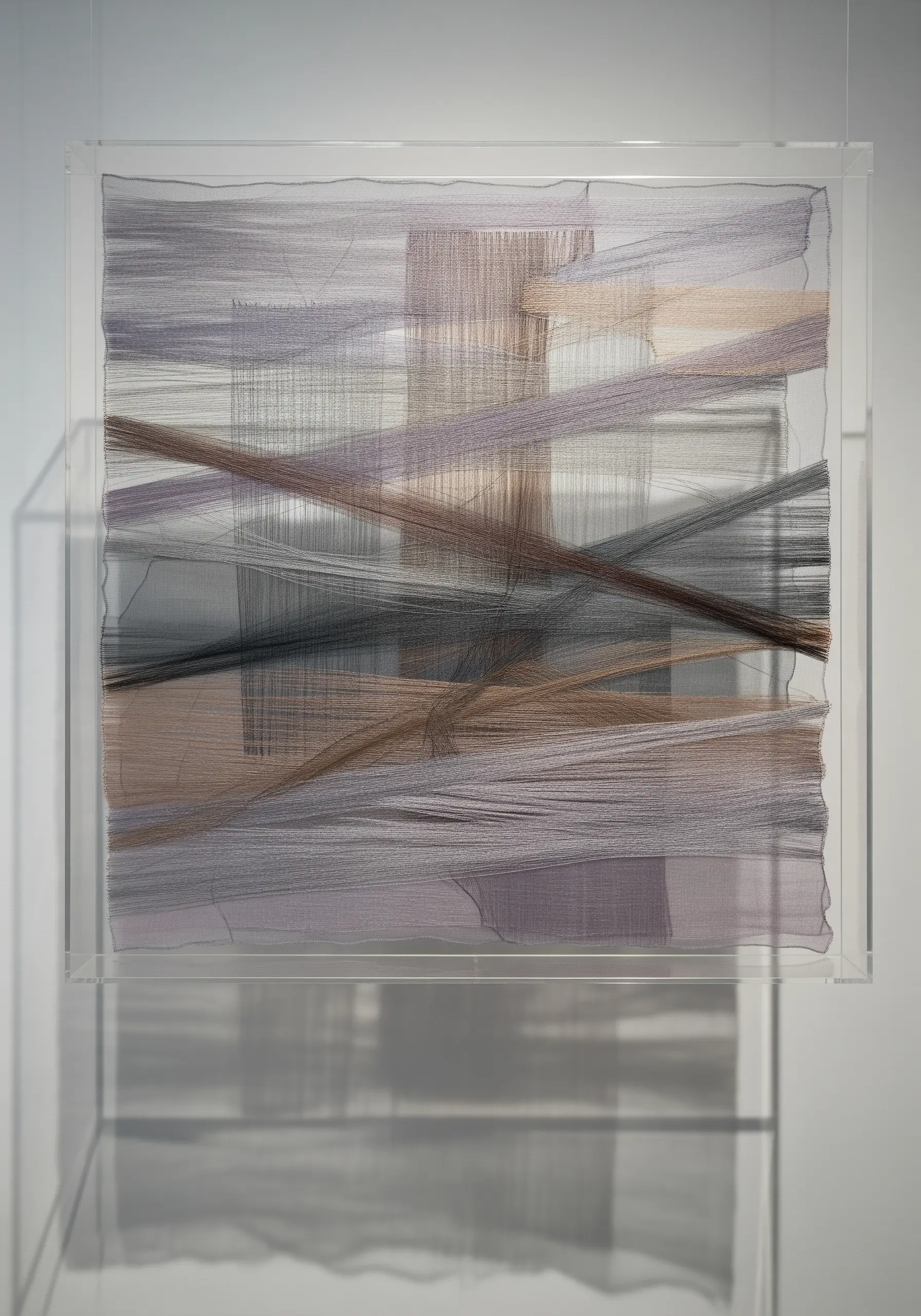
Create an ethereal, transparent artwork by stretching threads across an empty frame or between two sheets of acrylic or glass.
Layer different colors and thread weights, pulling them taut to create straight lines that intersect and build translucent color fields.
This method removes the fabric entirely, allowing your composition to interact with light and shadow in a unique, sculptural way.
This is a perfect technique for exploring abstract thread designs using negative space.
15. Reveal Color with Paint and Thread
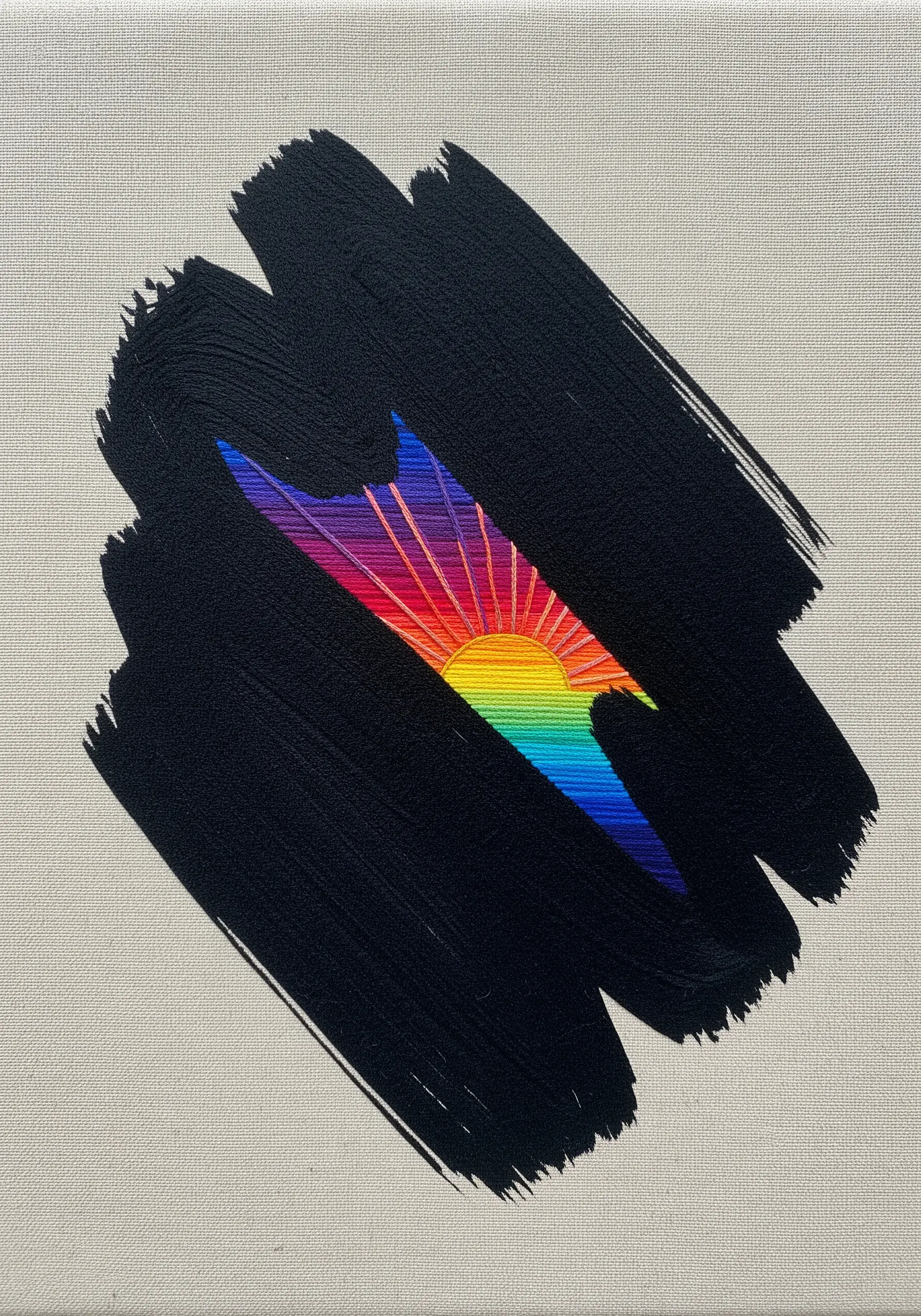
Combine two distinct mediums by painting a bold, abstract shape on your canvas, leaving a specific area blank.
Fill the negative space with precise, vibrant thread painting, creating a window into a different world.
The contrast between the matte, textural paint and the smooth, lustrous thread creates a striking focal point.
This mixed-media approach allows you to explore how different textures can define and enhance each other.
16. Sculpt with Directional Split Stitch
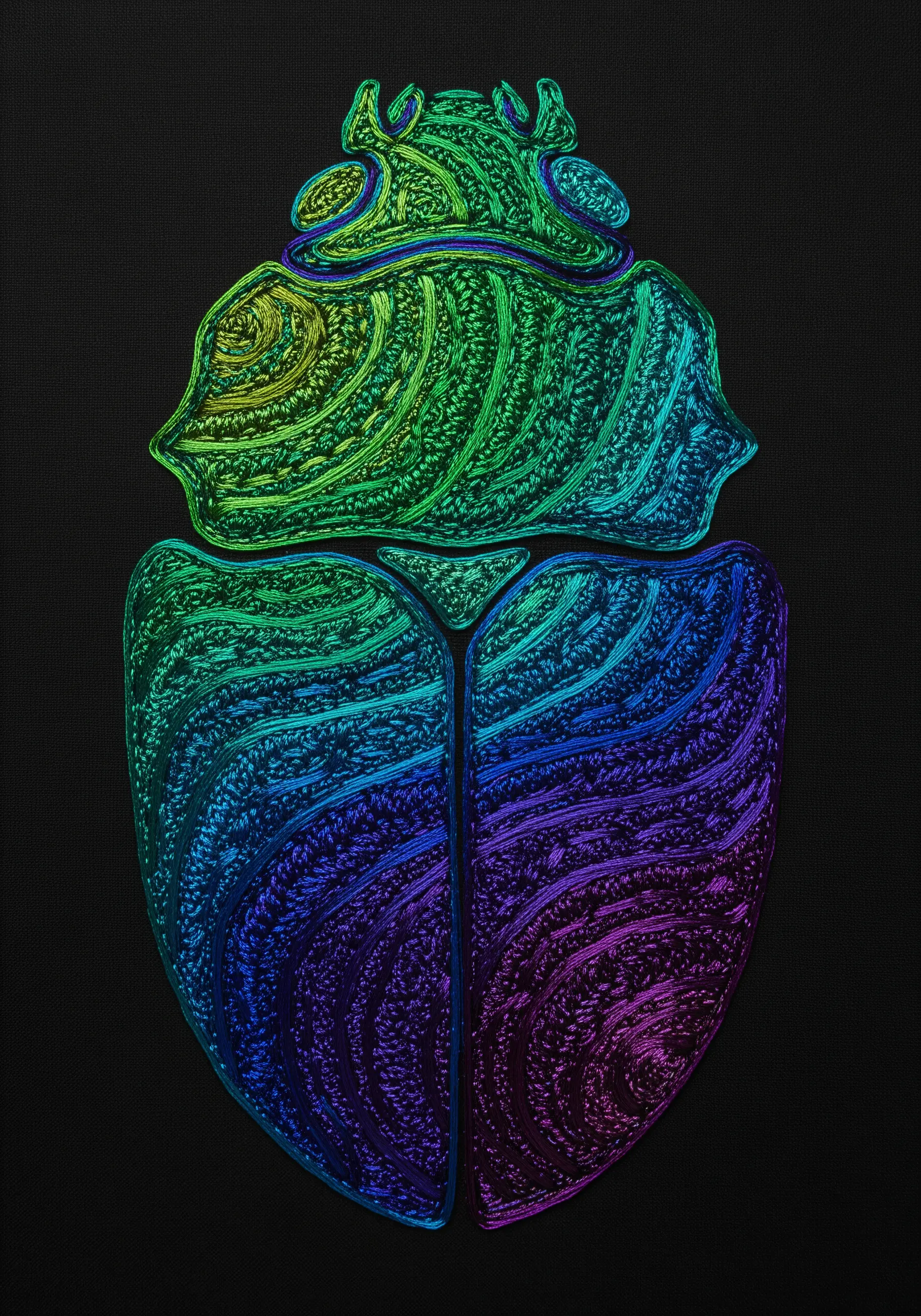
To create an iridescent, contoured surface, fill shapes with tiny split stitches that follow the form, much like lines on a topographical map.
Blend colors subtly by introducing new shades one stitch at a time, allowing them to mix organically.
The swirling patterns of the stitches catch the light from different angles, enhancing the illusion of a shimmering, three-dimensional surface.
This detailed technique works especially well for botanical and insect motifs, where texture is key to realism.
17. Stitch a Soundwave with Cascading Threads
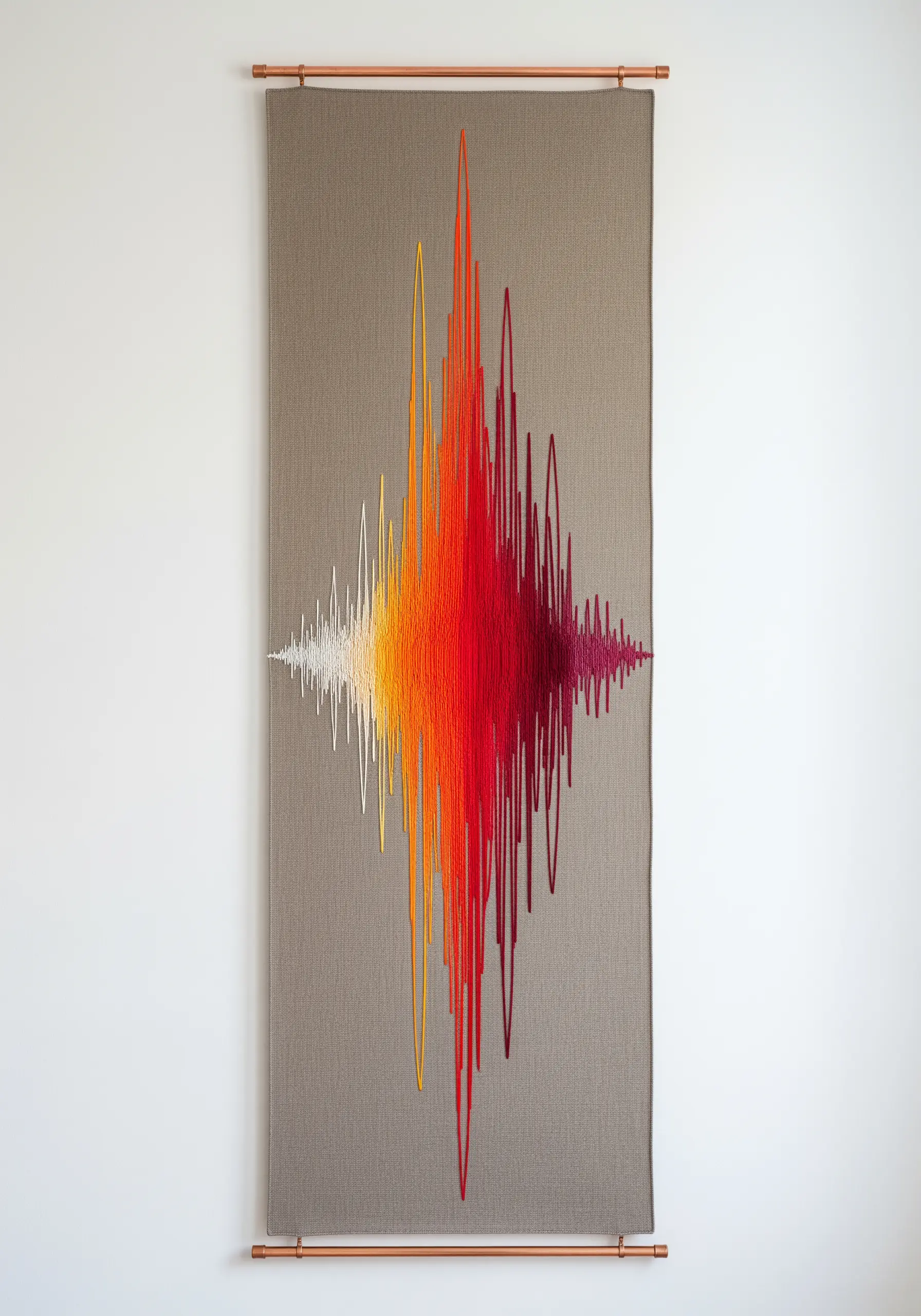
Map out a soundwave or other linear data pattern and stitch the upper contour onto your fabric.
Instead of completing the stitches, let the threads hang loose and trim them to follow the lower contour of the shape.
This transforms a flat design into a statement-size embroidered textile with tactile movement and energy.
Using a heavy linen or canvas provides the necessary weight and stability to support the hanging threads without buckling.
18. Create Texture with Woven Darned Stitch
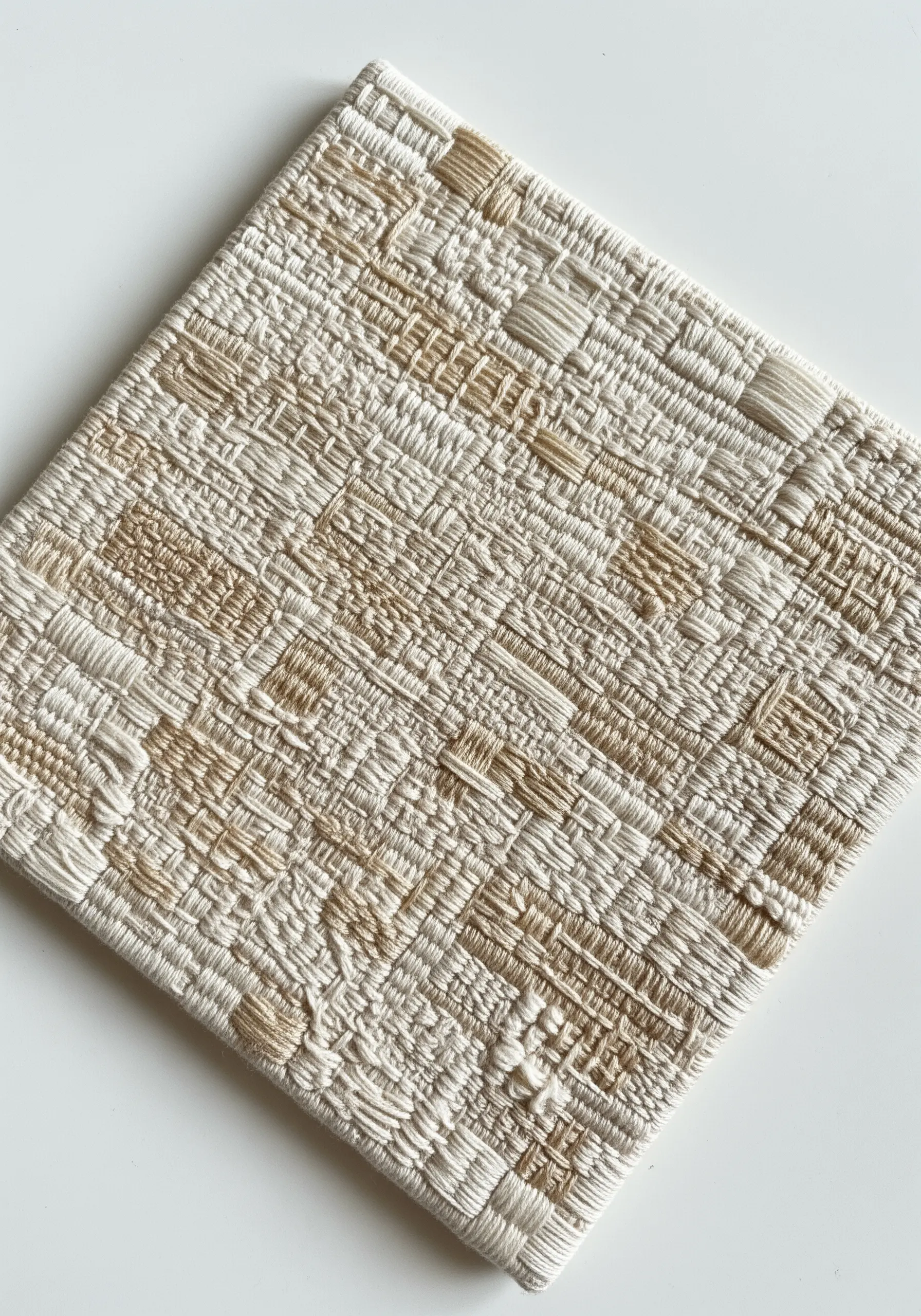
Build a subtle, geometric pattern using darning stitch or weaving techniques directly on the fabric.
Work with a thick, soft thread in a monochromatic color scheme to emphasize texture over color.
By alternating the density and direction of your woven blocks, you can create a design that feels both structured and organic.
This technique is perfect for creating neutral-toned embroidery projects with a sophisticated, tactile quality.