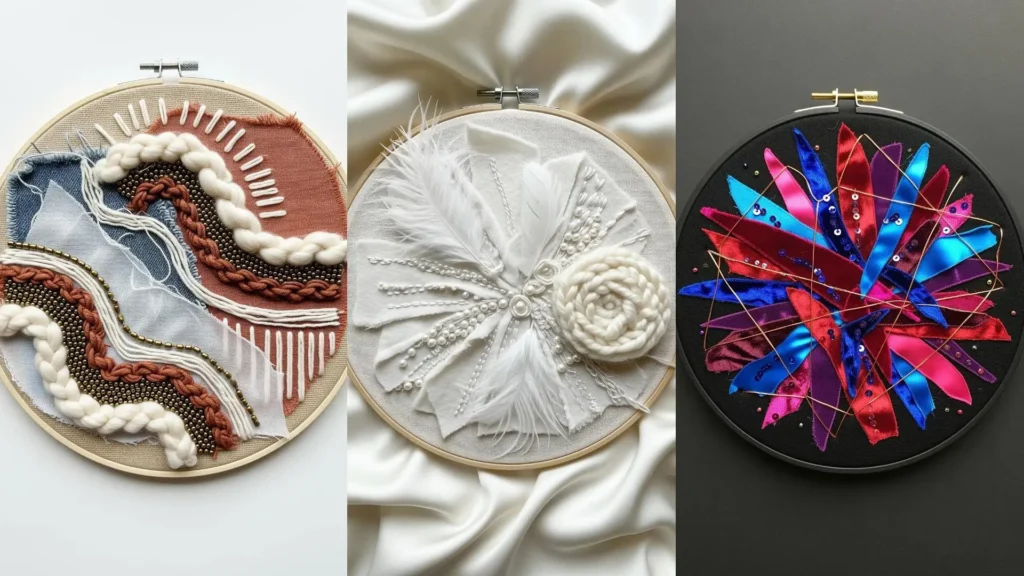
Metallic thread can feel intimidating. It’s known for being stiff, slippery, and sometimes difficult to work with. But I want you to set that aside for a moment and think about what it truly offers: the ability to stitch with light itself.
Unlike cotton or wool floss, which absorb light, metallic threads reflect it. This single property opens up an entirely new dimension in your work. It’s not just about adding sparkle; it’s about creating depth, directing the eye, and building textures that shift and change as you move around them. It’s about turning a flat surface into a dynamic object.
Here, you won’t find overly complex patterns. Instead, you’ll find concepts built on simple stitches but elevated by thoughtful choices in color, texture, and composition. Consider this your invitation to play with reflection, to embrace contrast, and to see how a single, shining thread can transform your embroidery into something that truly glows.
1. Kintsugi-Inspired Metallic Fractures
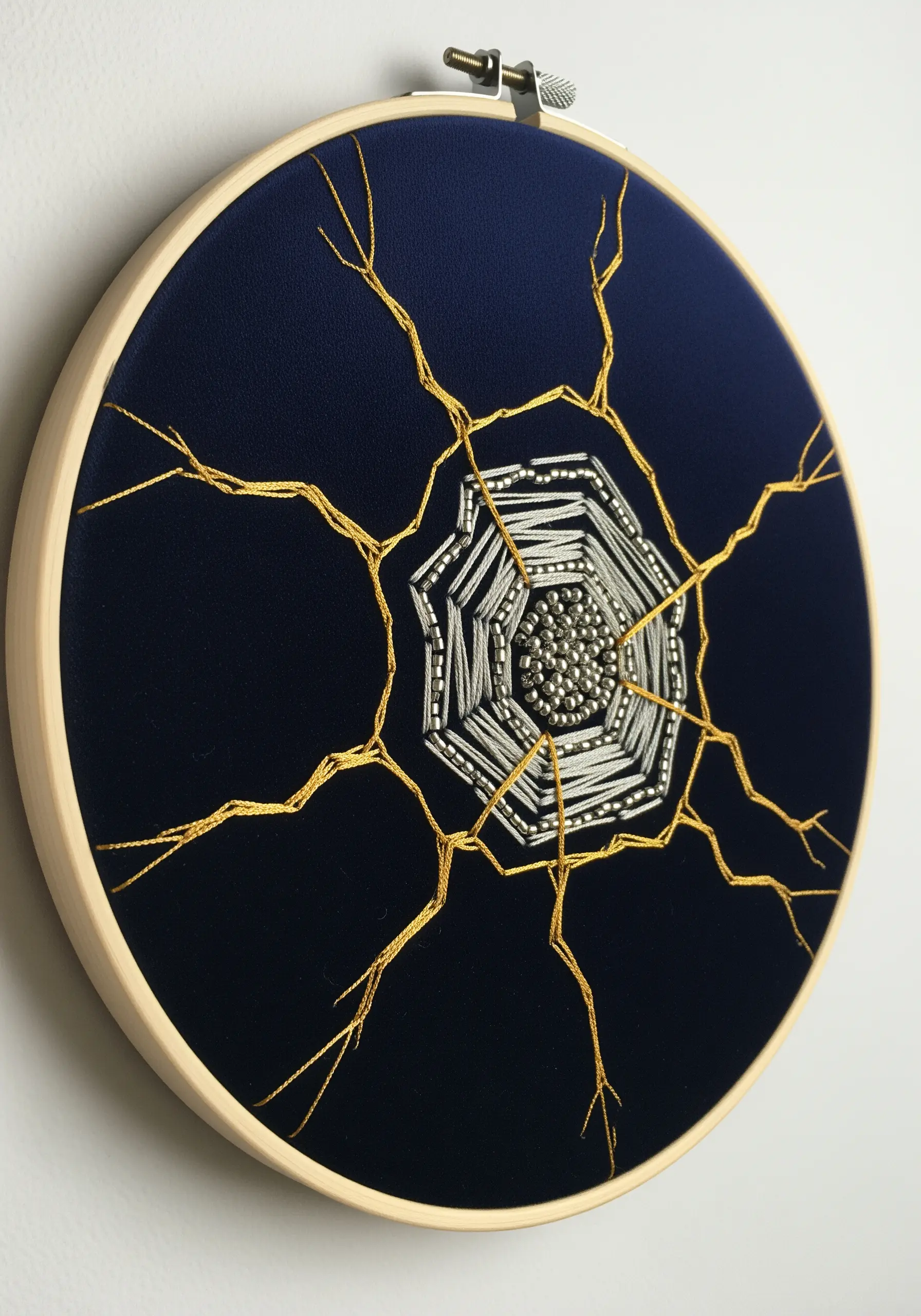
Embrace the Japanese art of kintsugi by creating controlled “fractures” on dark fabric.
Use a couching stitch to lay down a thick gold metallic thread, which gives you perfect control over the sharp, organic lines without the thread twisting.
For the central element, contrast the stark gold lines with a dense texture of silver satin stitches and tiny metallic beads.
This juxtaposition of textures—smooth lines, filled shapes, and beaded points—creates a focal point that draws the eye inward.
The deep navy or black fabric acts as a void, making the metallic elements appear to float and shine even more intensely.
2. Galactic Swirls with Metallic French Knots
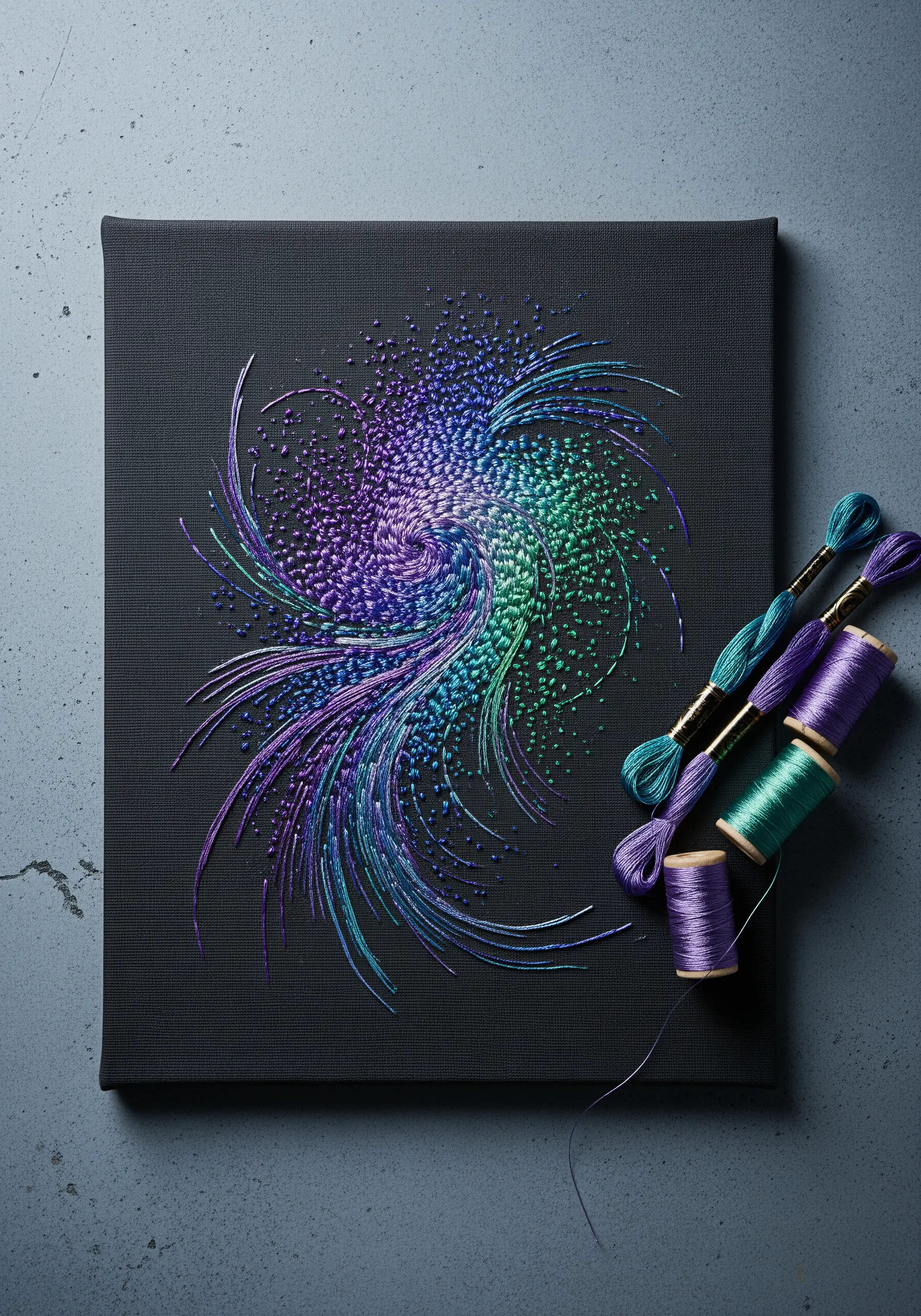
You can paint with texture by using dense clusters of metallic French knots.
To create this swirling nebula effect, vary the density of your knots—pack them tightly at the core and let them scatter as they move outward.
Work with three or four complementary metallic shades, like violet, teal, and emerald, stitching small patches of each color to create a seamless, iridescent blend.
Each knot acts as a tiny, multi-faceted bead that catches and reflects light from every angle, giving the piece an incredible sense of depth and movement.
3. Large-Scale Gestural Thread Couching
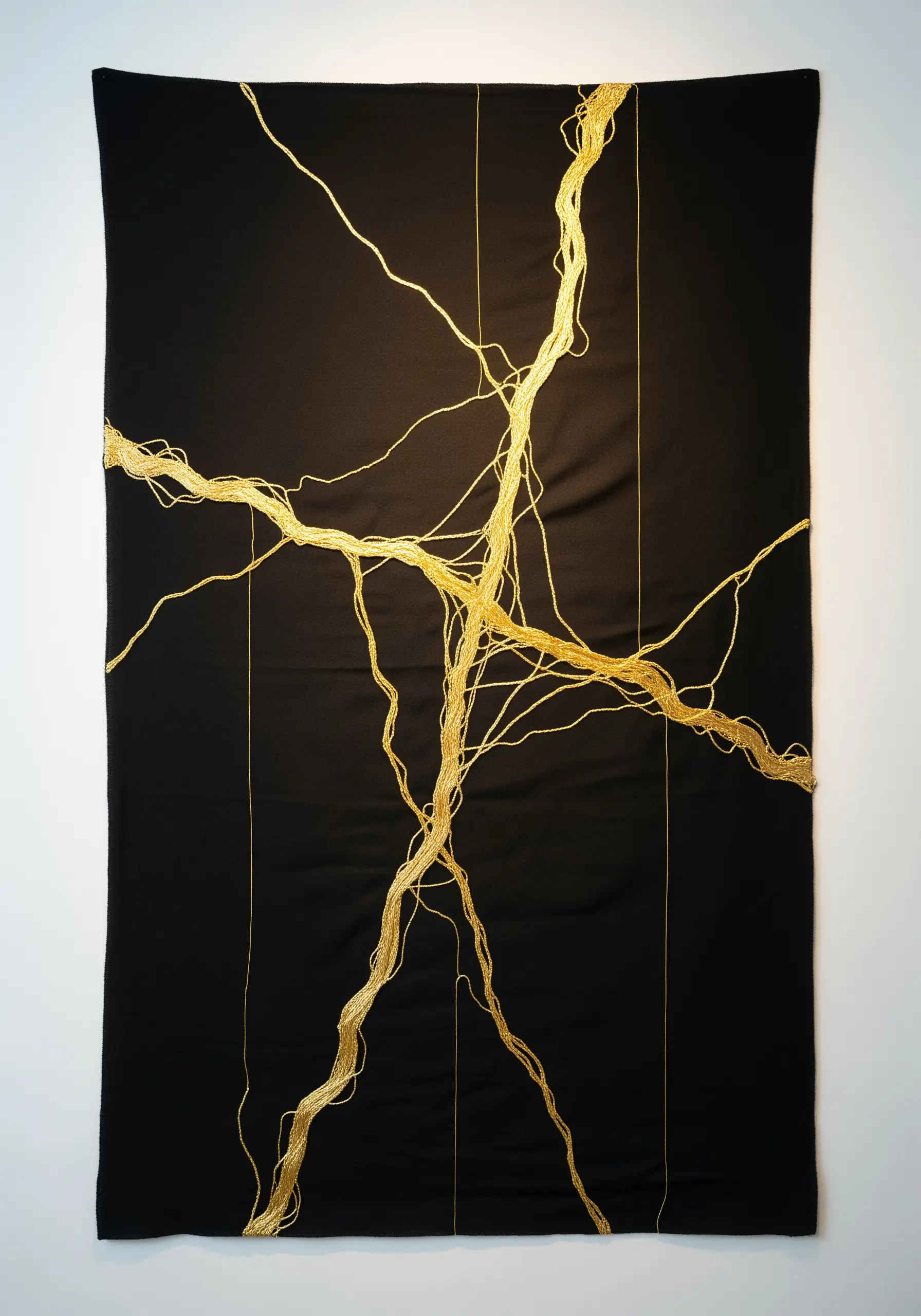
For creating impactful, large-scale abstract art, couching is the most effective technique.
Instead of standard embroidery floss, use a heavy metallic cord or braid that has a significant presence.
Lay this cord onto your fabric in bold, sweeping gestures and secure it with a much finer, matching metallic thread every centimeter or so.
This method allows you to “draw” with thread on a grand scale, creating powerful lines that define the space without the time-consuming process of filling it.
4. Braided Metallic Rings for Textured Depth
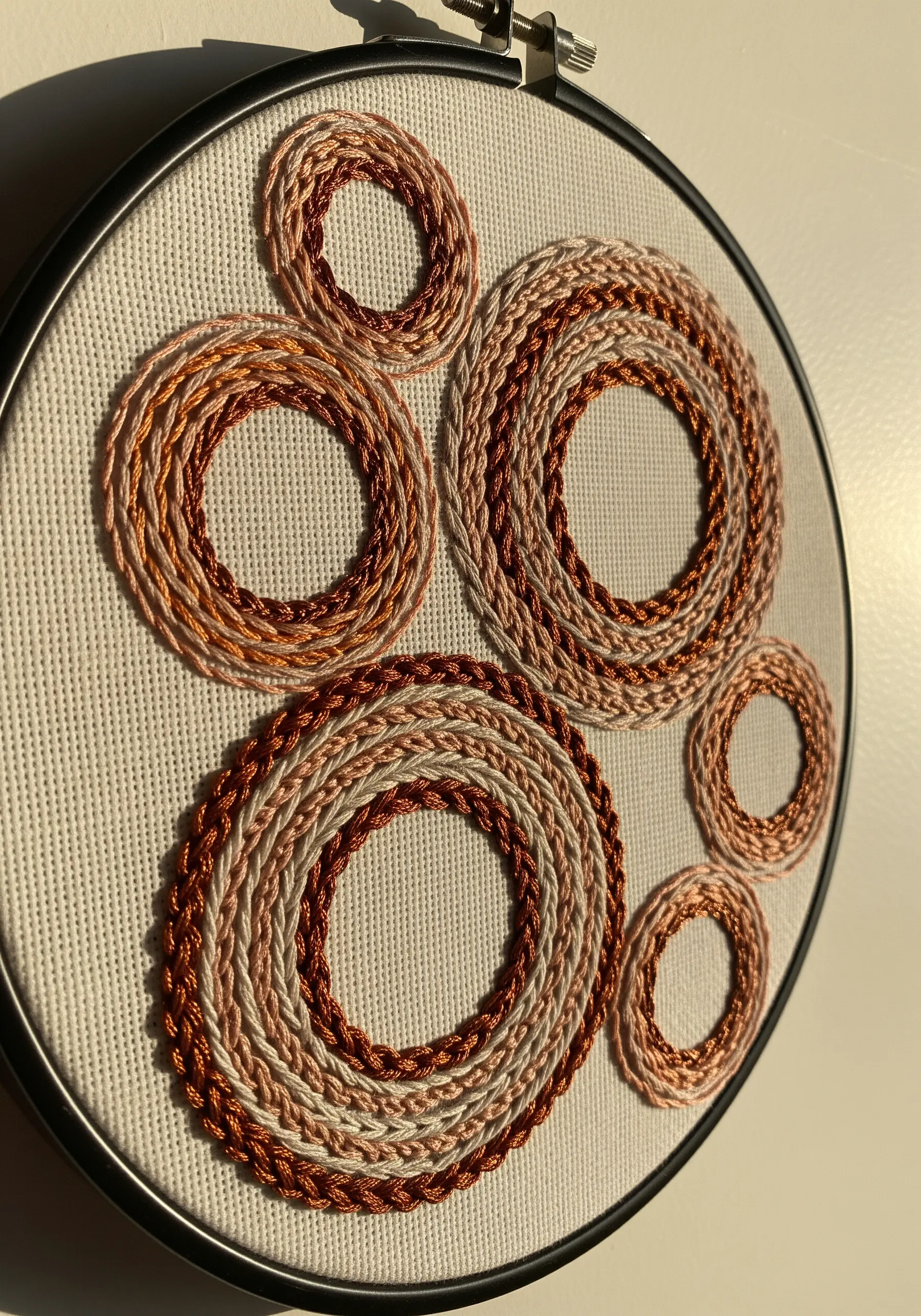
Add instant dimension to your work by creating your own textured thread before you even start stitching.
Take two or three different shades of metallic floss—like copper, rose gold, and pale bronze—and twist them together tightly to form a single, thicker cord.
Use a heavy backstitch or chain stitch to form concentric circles with this new, variegated cord.
The twisted strands will catch the light individually, producing a rich, rope-like texture that feels both rustic and refined.
5. A Triptych of Minimalist Metallic Motifs
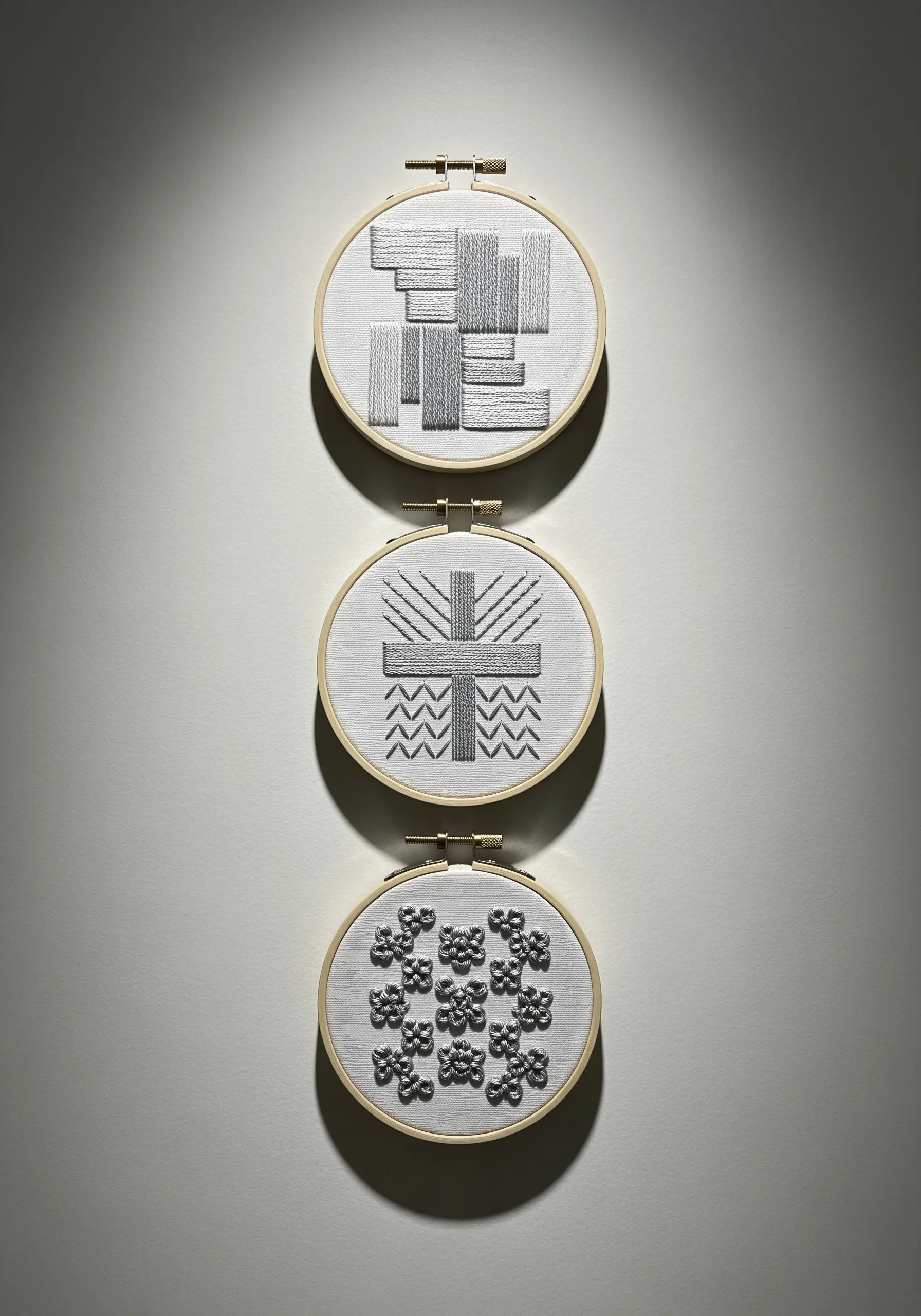
Explore the versatility of a single spool of metallic thread by creating a series of small studies.
In one hoop, focus on geometric blocks of satin stitch, ensuring each stitch lies perfectly flat to create a smooth, sheet-like shine.
In another, use sharp, angular running stitches to create patterns that feel light and graphic.
For the third, experiment with clustered stitches like French knots or bullion knots for pure texture.
Displaying them as a triptych transforms these simple explorations into a cohesive piece of aesthetic embroidery projects.
6. Liquid Gold Contour Stitching on Velvet
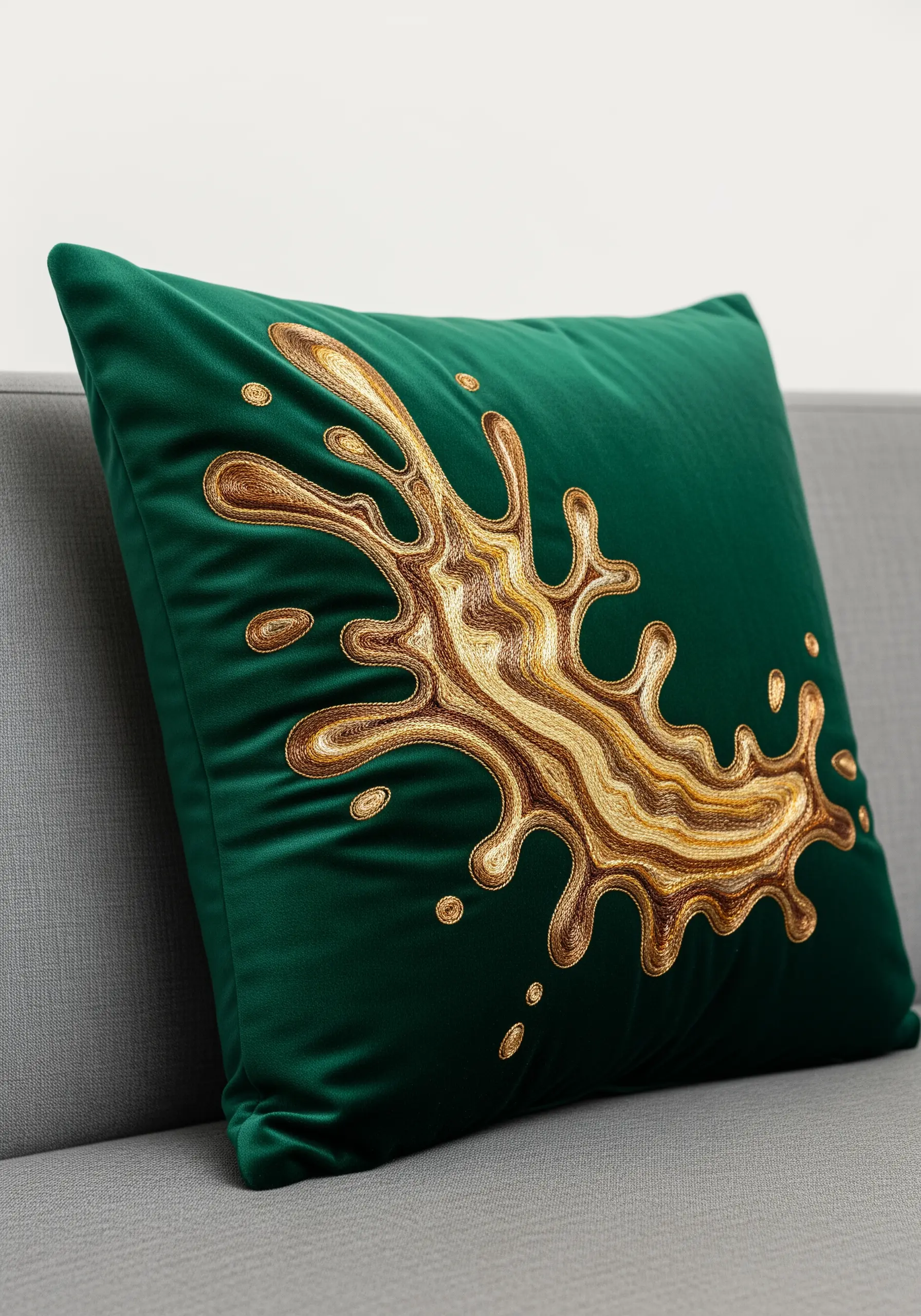
To capture the fluid, dynamic look of molten metal, you need to make your stitches follow the flow of the shape.
Use a split satin stitch, angling your stitches to mimic how light would hit the curves of a liquid splash.
Introduce two or three shades of gold and bronze, blending them with long-and-short stitches to create highlights and shadows that give the shape volume.
Stitching on a plush fabric like velvet is a brilliant choice, as its matte, light-absorbing pile makes the metallic threads appear exceptionally luminous.
7. Architectural Schematics with Fine Metallic Thread
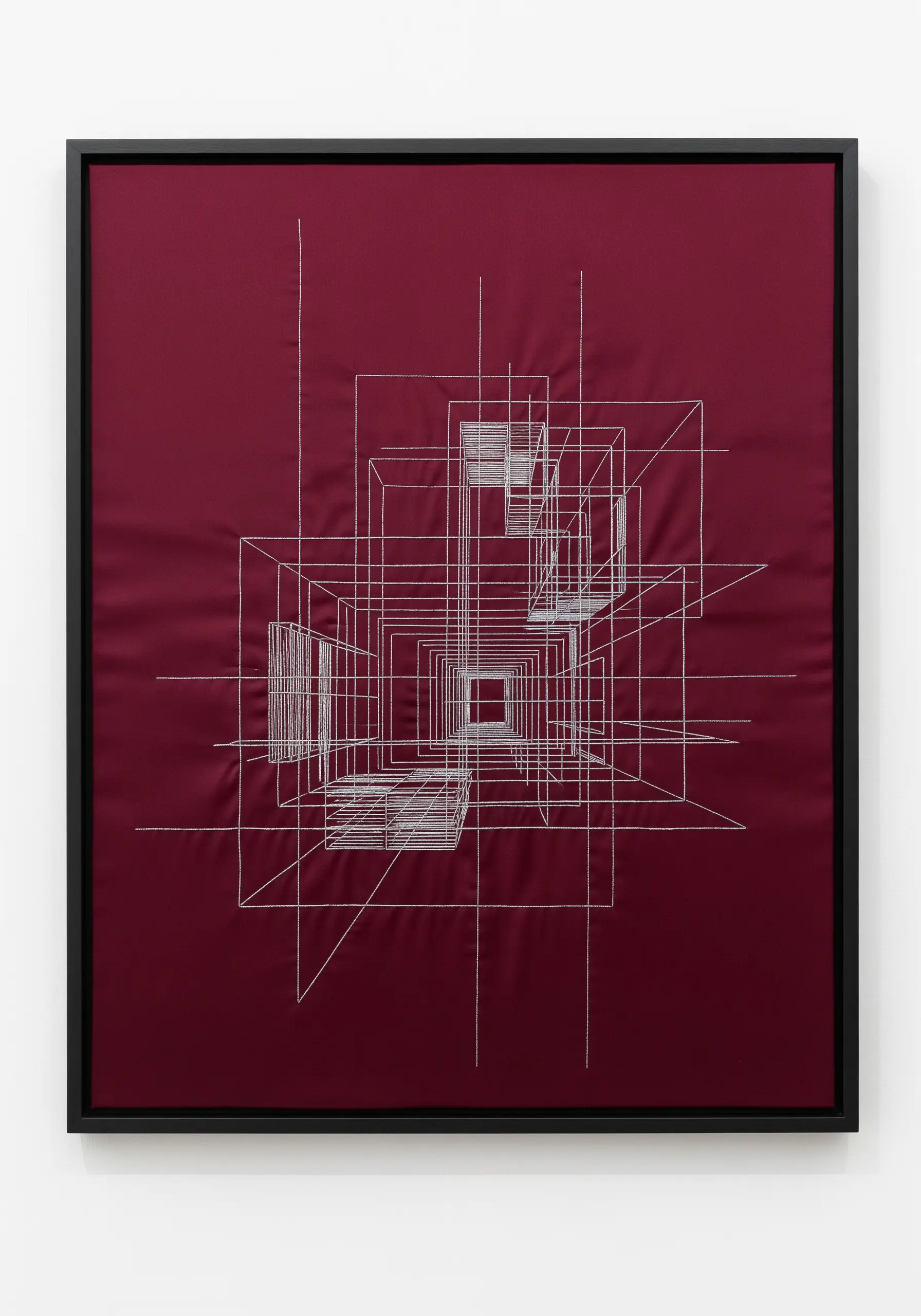
You can create the illusion of a 3D architectural drawing with nothing more than straight lines.
Choose a high-contrast combination: a fine, bright silver metallic thread on a dark, matte fabric like burgundy silk or cotton sateen.
Use a simple backstitch for precision, focusing on maintaining consistent stitch length and sharp angles.
The key here is tension—keep the fabric drum-tight in its frame to prevent any puckering and ensure every line is perfectly crisp and clean.
8. Topographical Landscapes with Couched Cords
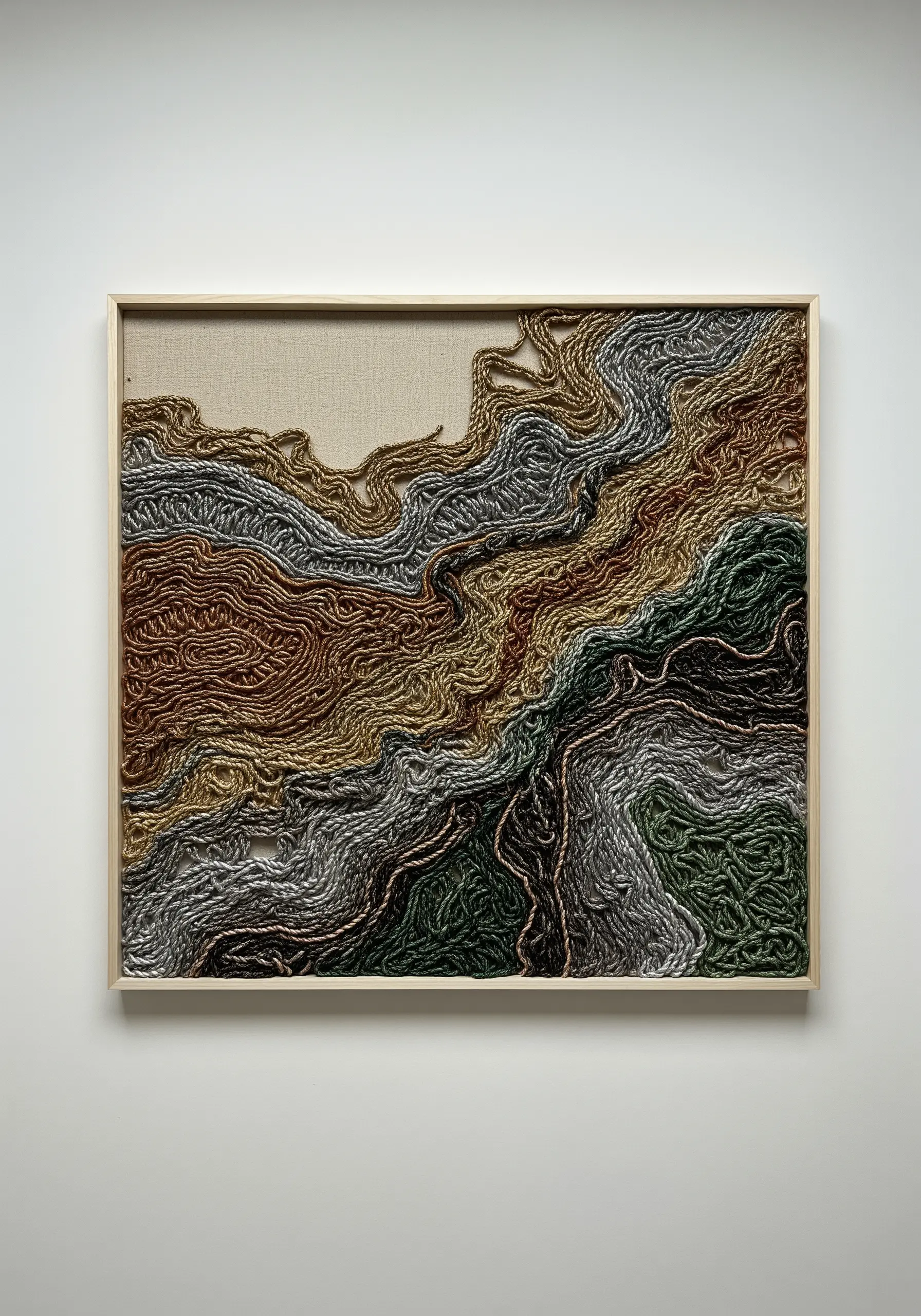
Build a richly textured surface that evokes an aerial map by couching a variety of threads and yarns.
Combine thick metallic cords with matte wool, bumpy bouclé yarn, and smooth cotton floss.
By placing these different textures side-by-side, you create a landscape of contrasting sheens and surfaces.
Overlap the couched lines and vary their density to build layers suggesting elevation and terrain, turning your hoop into one of your own abstract thread landscapes.
9. Sculptural Calligraphy with Padded Satin Stitch
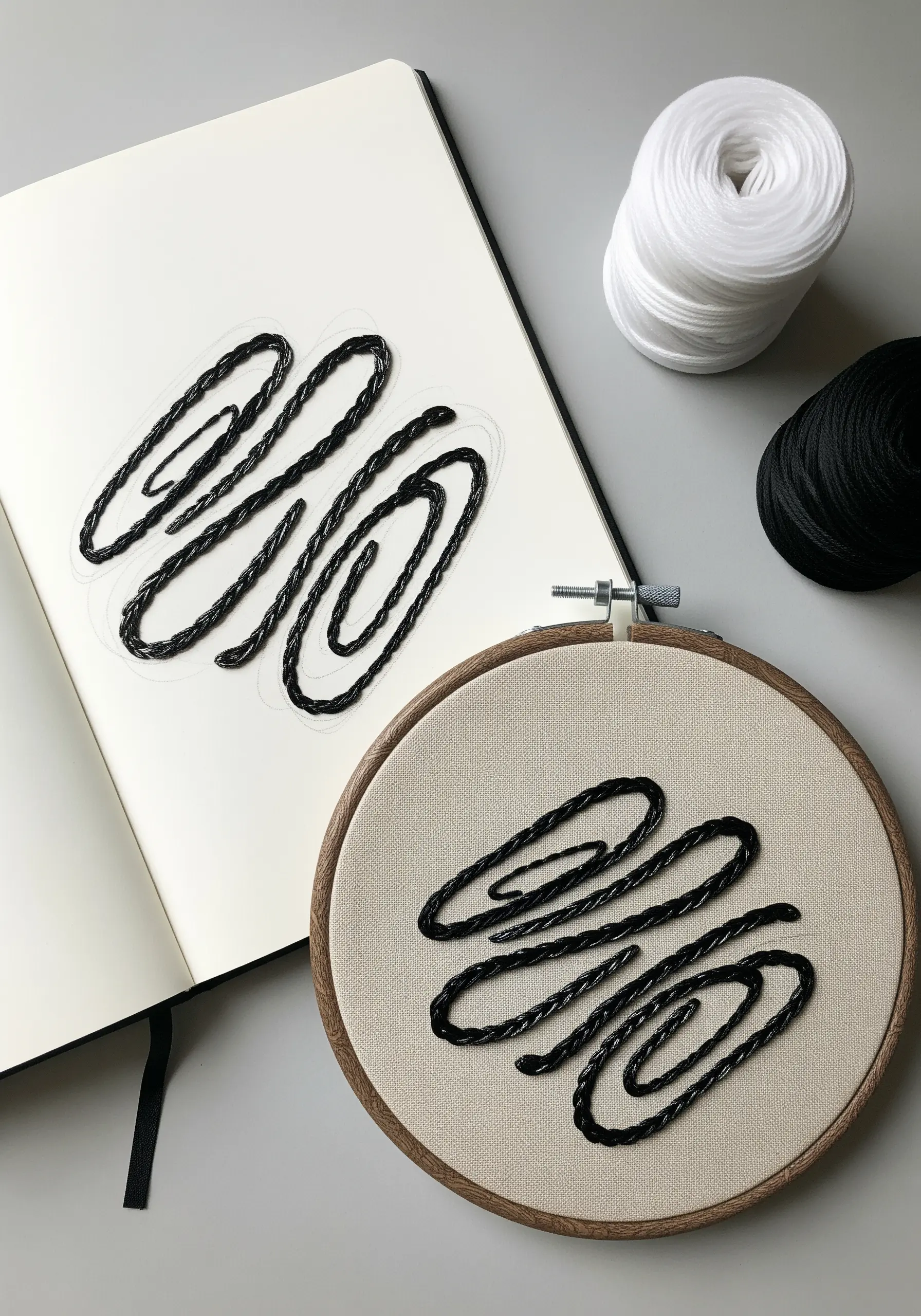
Transform a flat design into a raised, tactile object using padded satin stitch.
First, create an underlay within your abstract shape using several layers of running stitches or by securing a small piece of felt.
Then, work your metallic satin stitches over this padding, pulling them taut so they completely encase the base.
This technique gives the metallic thread a smooth, curved surface that catches light beautifully, making the design physically pop off the fabric.
10. Celestial Burst with Radiating Straight Stitches
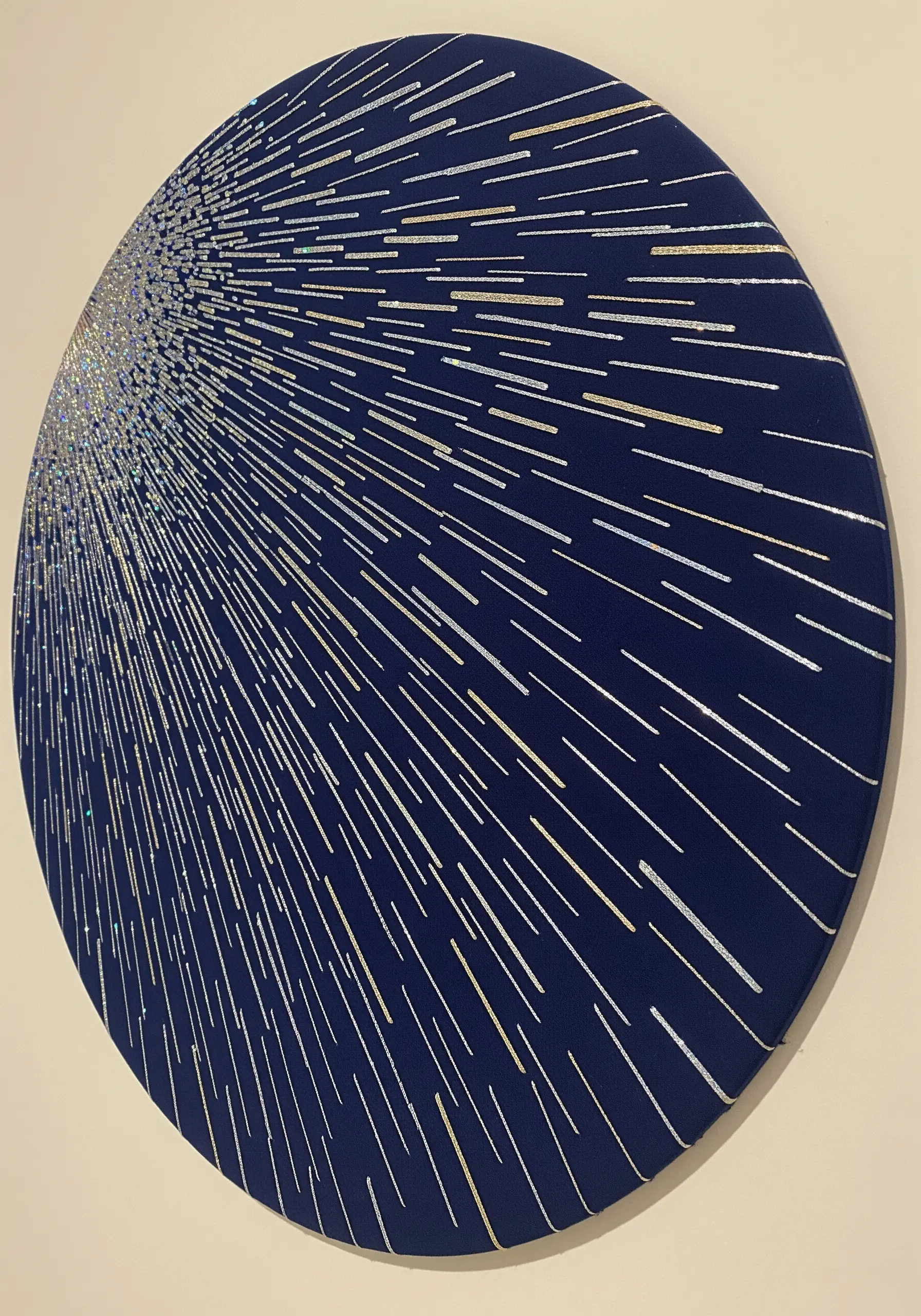
This entire explosive effect is built from the simplest stitch: the straight stitch.
Create a sense of movement and direction by making your stitches radiate from an off-center point.
Vary the length of each stitch, keeping them dense and overlapping near the origin and gradually spacing them out as they extend.
For maximum shimmer, use two or three different types of silver thread together—a smooth filament, a twisted metallic, and a glitter-flecked thread—to create a multi-layered celestial sparkle.
11. Translucent Layers on Sheer Organza
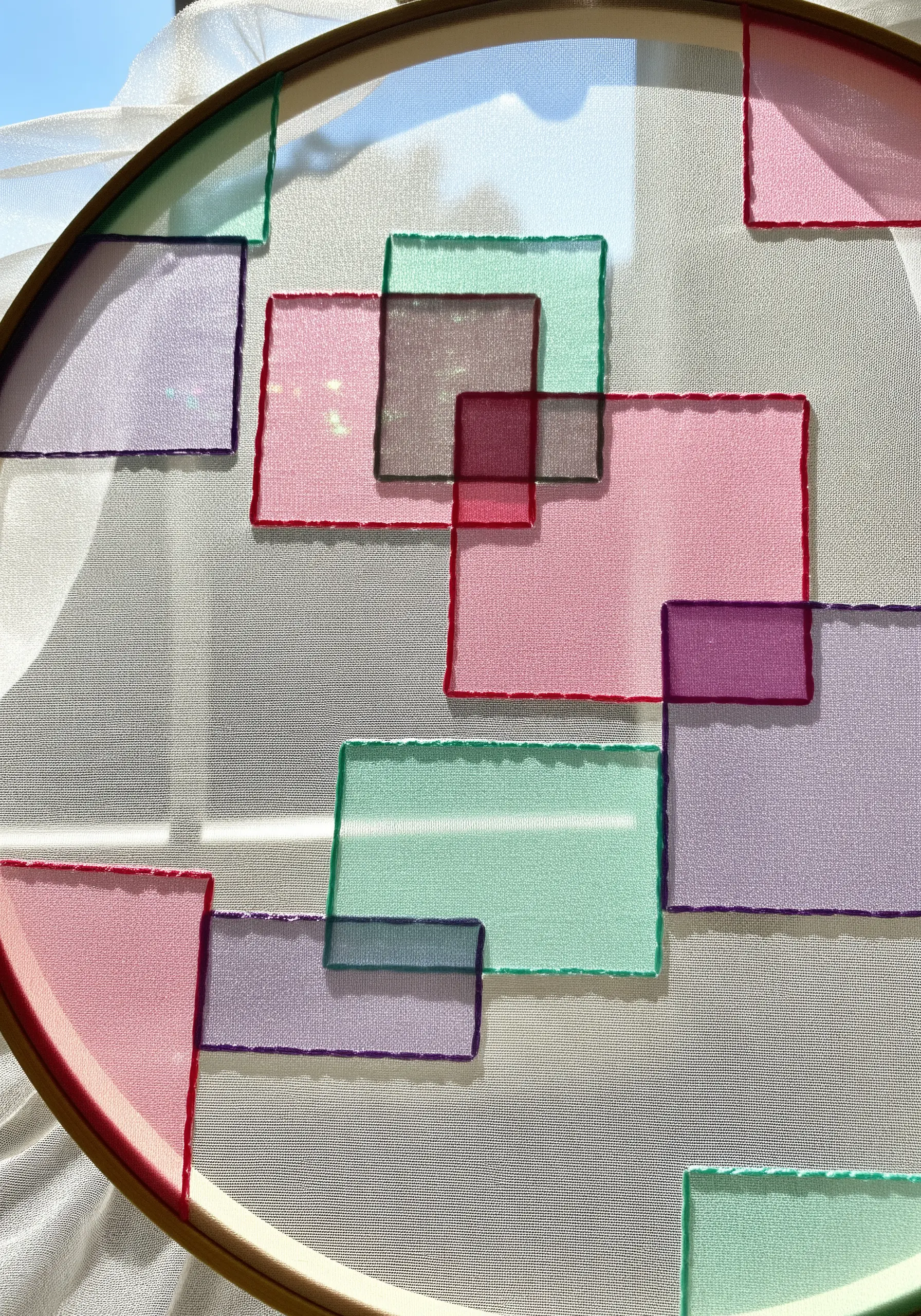
Working on sheer organza or tulle opens up a world of ethereal layering possibilities.
Fill simple geometric shapes with a delicate seed stitch or a light satin stitch using a single strand of metallic floss.
As you stitch shapes that overlap, the sheer fabric allows the colors underneath to show through, creating new, blended hues.
This technique gives your work a light, airy quality that changes depending on the light source behind it.
12. High-Voltage Denim Embellishment
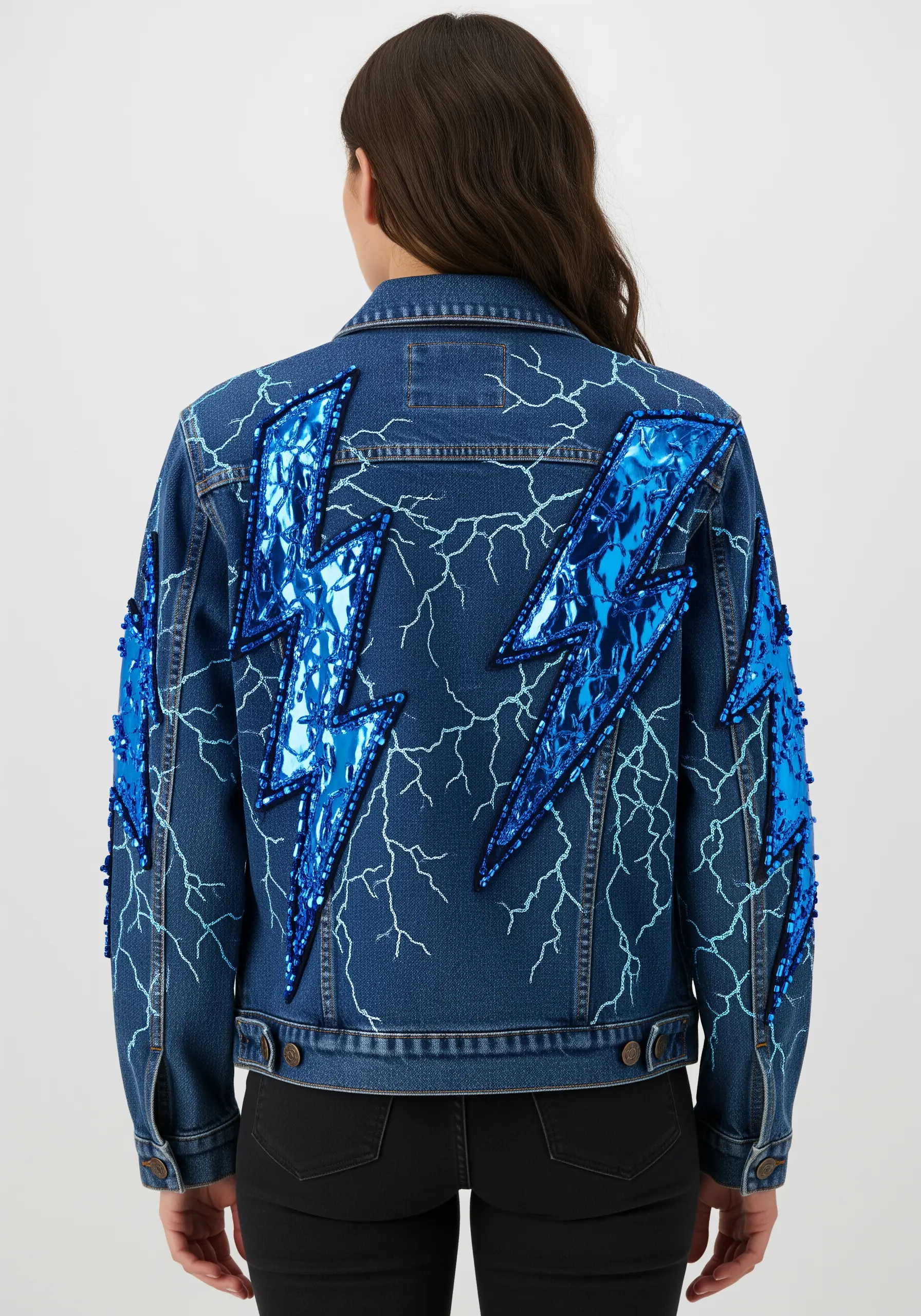
For a design that truly pops on durable fabric like denim, combine appliqué with embroidery.
First, appliqué bold lightning bolt shapes cut from a metallic faux leather or sequined fabric.
Then, add the finer details by stitching energetic, crackling lines radiating from the bolts using a contrasting light blue metallic thread.
This mix of bold, solid shapes and delicate, energetic line work creates a powerful sense of motion and makes for stunning vintage-inspired denim jacket embroidery motifs.
13. Visualizing Sound with Metallic Stitches
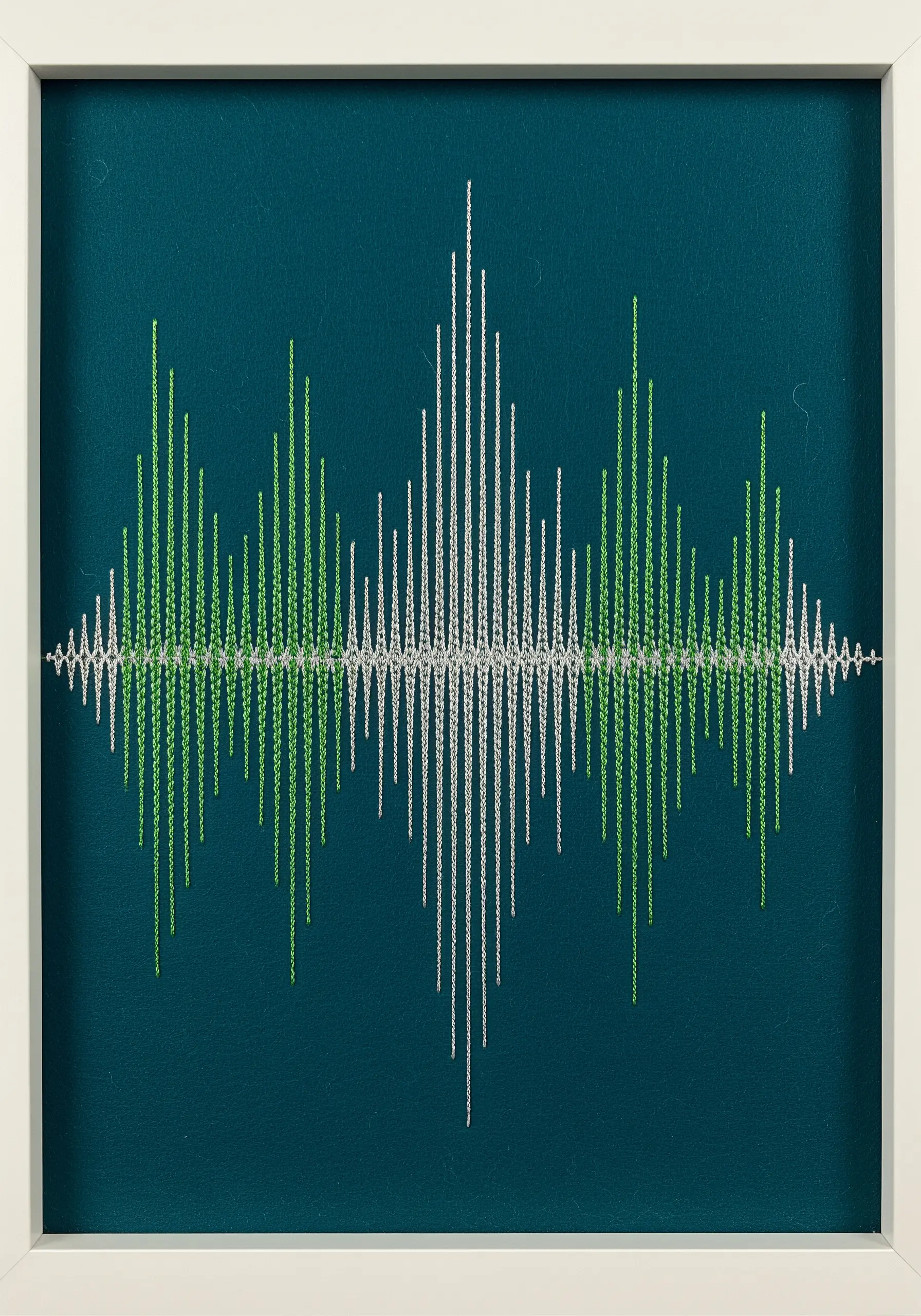
You can translate any audio file—a favorite song, a spoken word—into a unique piece of visual art.
Use an online tool to generate a visual of your chosen soundwave, then transfer the pattern to your fabric.
Render the wave with precise vertical satin stitches, using two distinct metallic colors to create a clear visual separation or gradient.
The key to a clean finish is uniform stitch tension and perfectly parallel lines, making this a perfect way to literally stitch sound.
14. Pixelated Metallic Gradients with Cross-Stitch
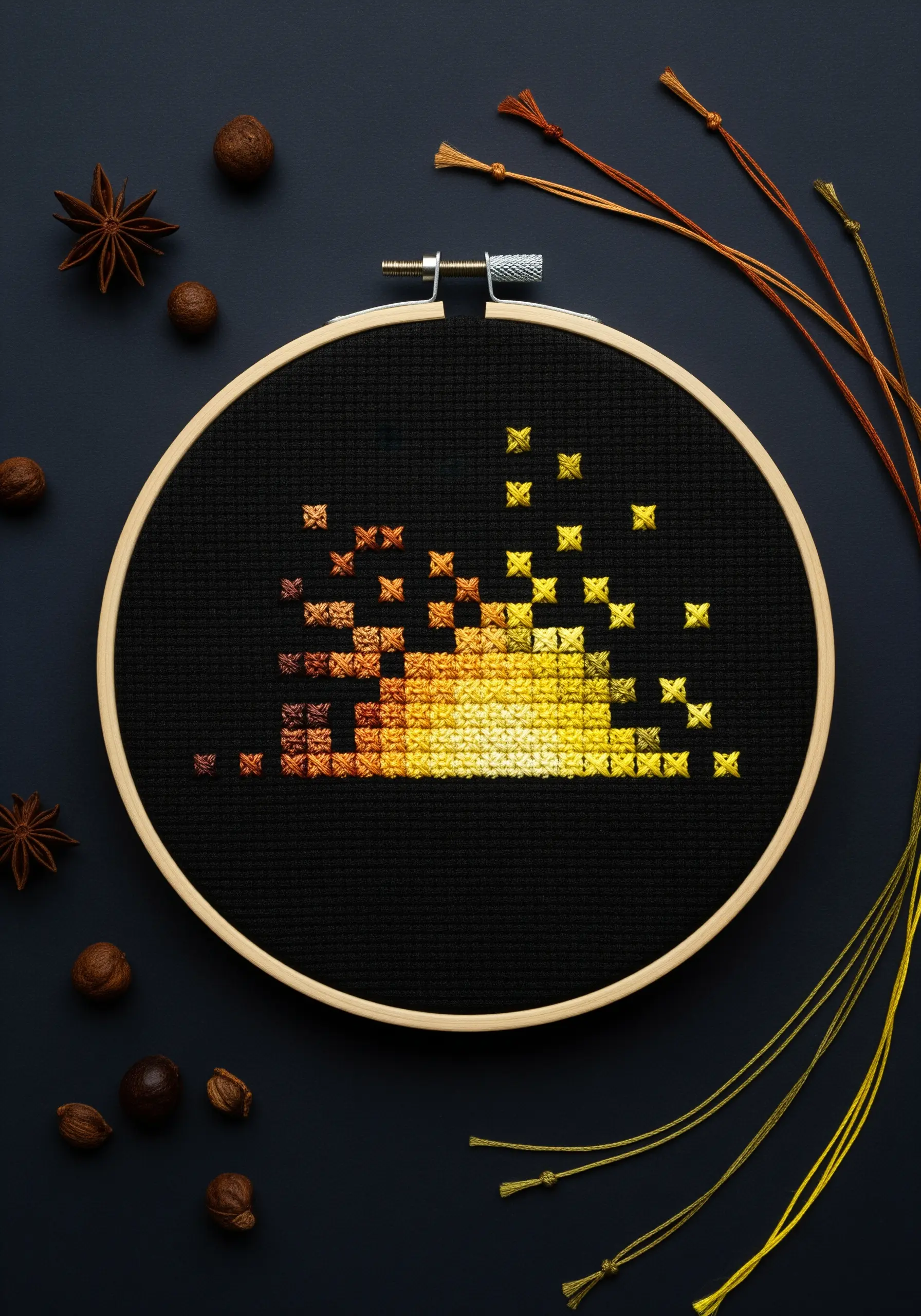
Create the illusion of a digital glow using the analog technique of cross-stitch.
On black Aida cloth, which makes metallic colors pop, use four to five shades of metallic floss in the same color family (e.g., from dark bronze to brilliant gold).
Cluster the brightest color in one area and create a dissipated, pixelated effect by scattering the darker shades around it.
This careful color placement tricks the eye into seeing a radiant light source emerging from the darkness.
15. Punctured Light Starburst Lampshade
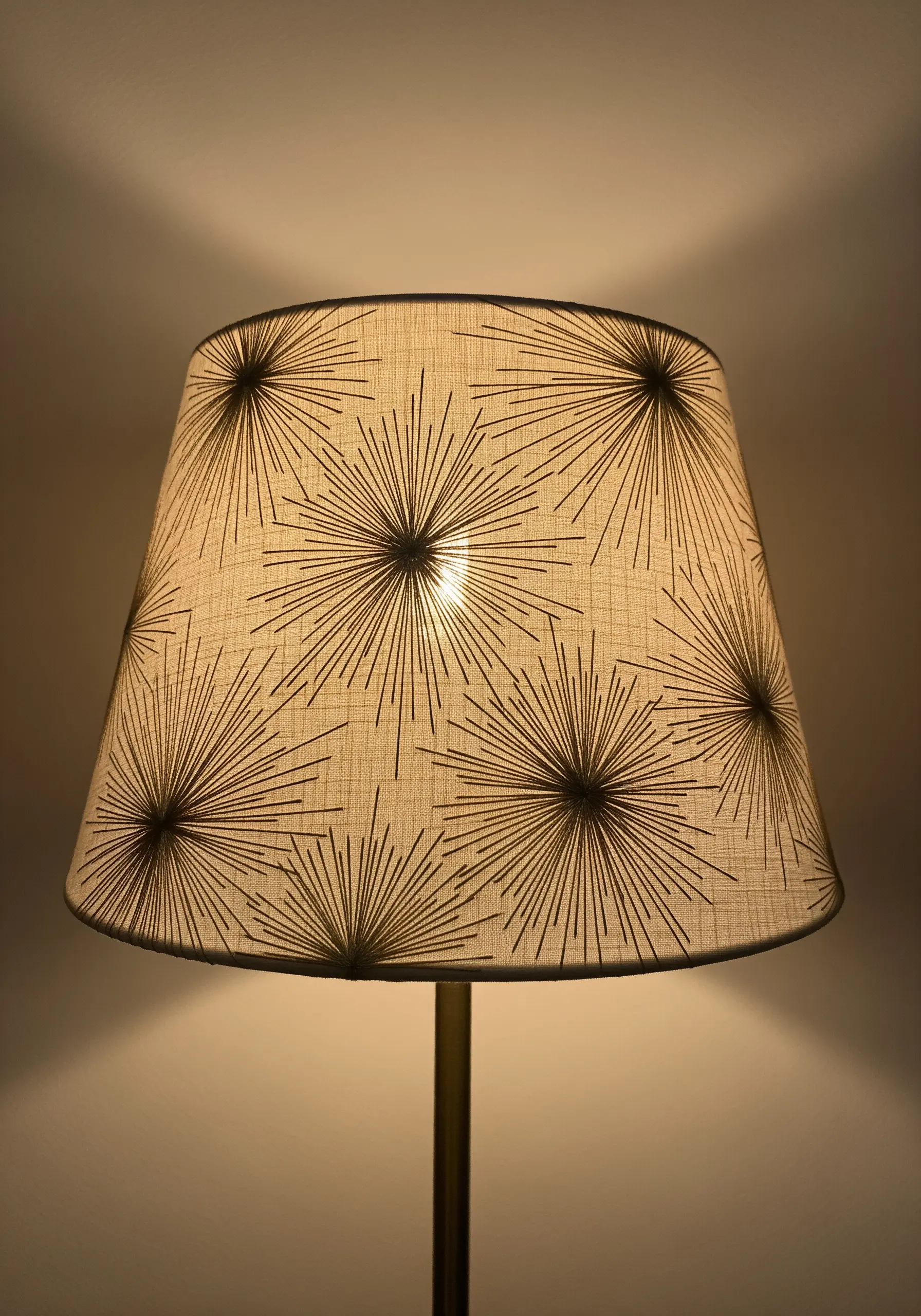
Turn a plain fabric lampshade into an interactive art piece that transforms when illuminated.
Use a dark metallic thread to stitch simple starbursts made of radiating straight stitches.
When the light is off, you have a subtly decorated object.
But when you turn the lamp on, the light shines through the tiny holes your needle made, creating a delicate, starry night effect while illuminating the sheen of the thread itself.
16. Fluid Metallic Pathways on Felt
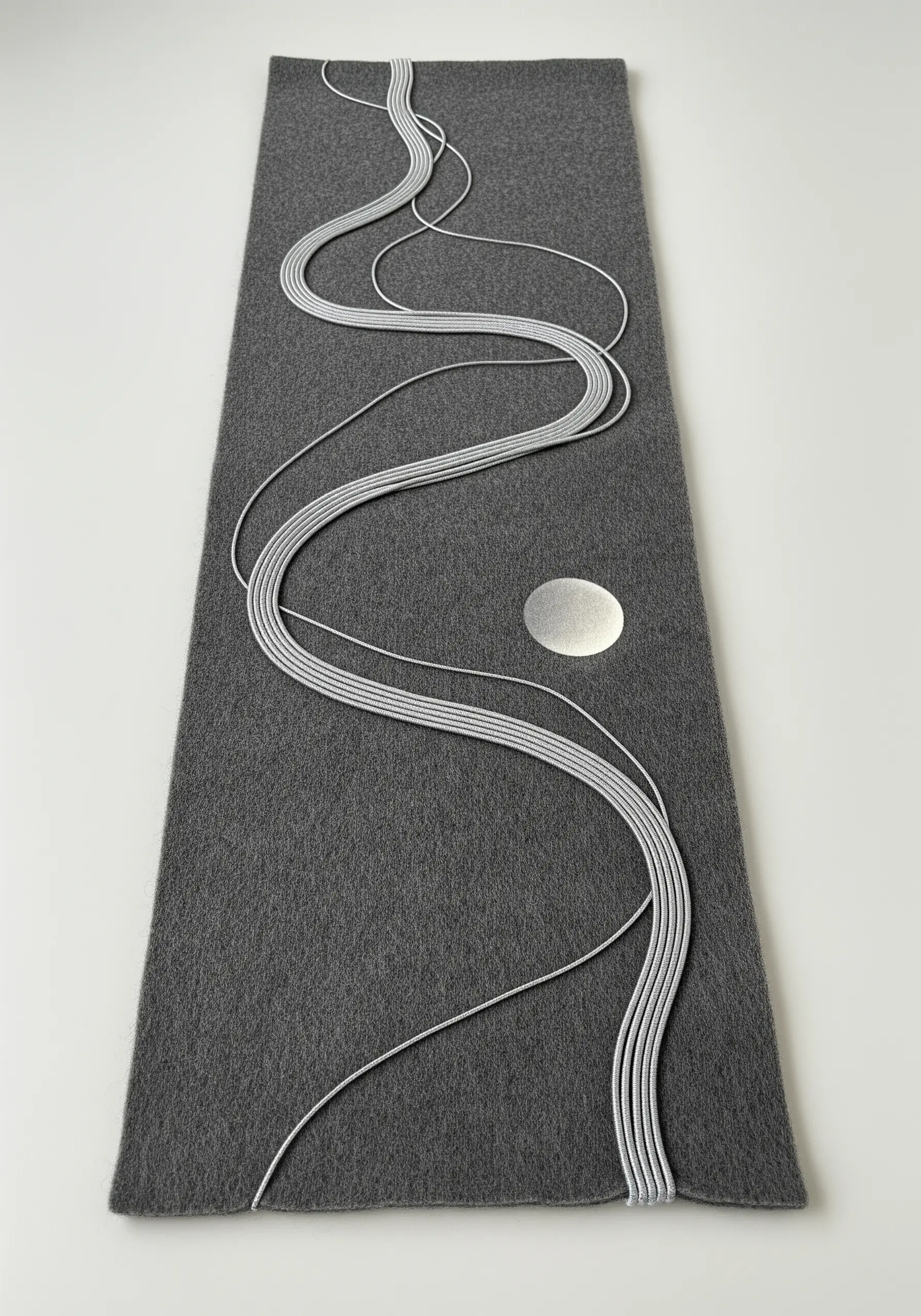
The beauty of this design lies in its stark textural contrast.
Select a thick, matte, and slightly fuzzy fabric like wool felt as your base.
Then, couch a smooth, highly reflective metallic cord onto its surface in gentle, meandering lines.
The felt absorbs the light, making the sleek metallic cord appear even brighter and more defined as it carves a path across the soft landscape—a perfect idea for elegant hand-stitched table runner embroidery designs.
17. Metallic Mandala with Sequin Accents
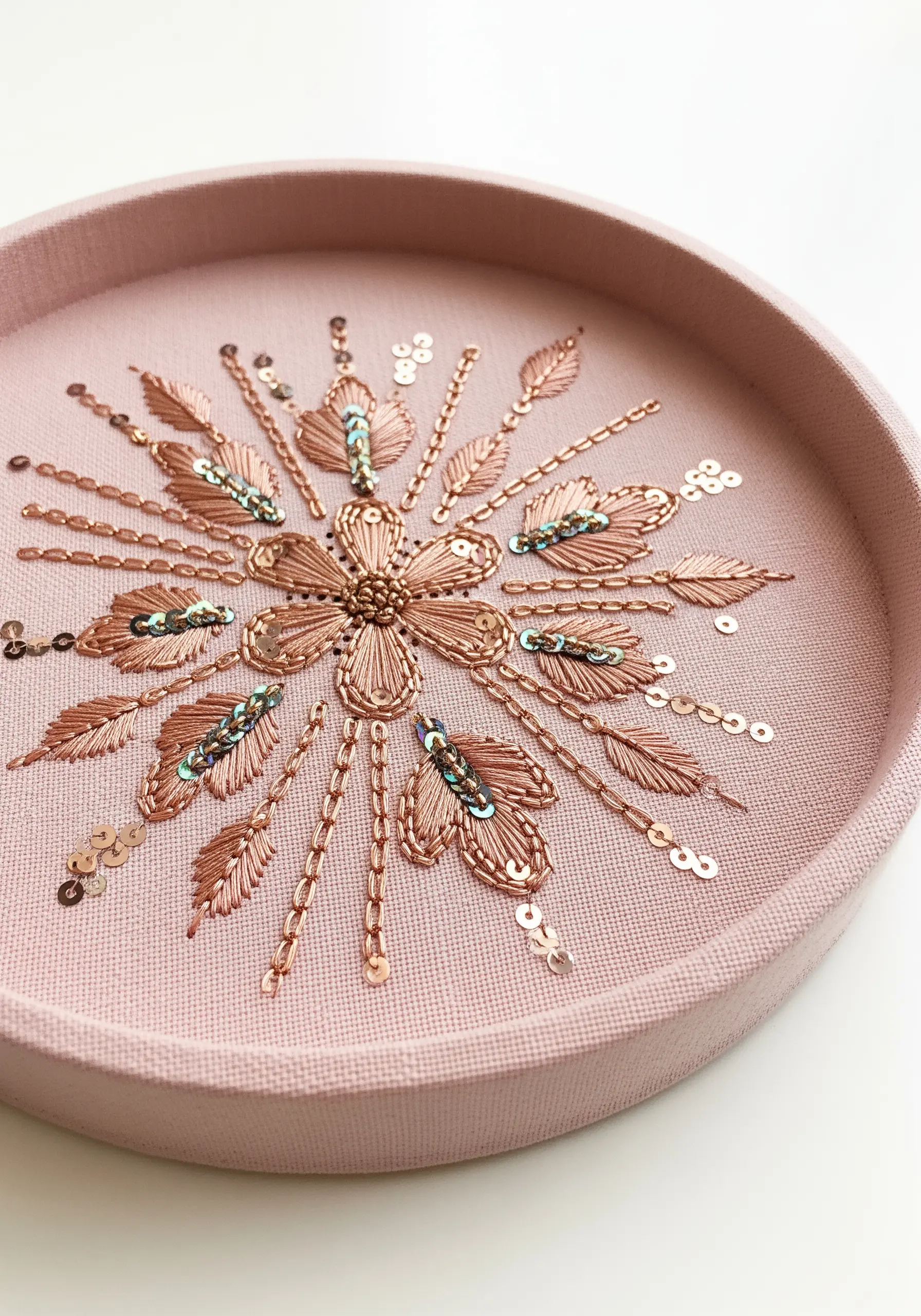
Integrate different types of reflective materials to create a design with complex sparkle.
Stitch the foundation of your mandala or floral motif with a rose gold metallic thread, using satin stitches for petals and backstitches for stems.
Then, strategically add small, iridescent sequins at the tips of leaves or the center of flowers.
The thread provides a warm, consistent glow, while the sequins add sharp, dazzling flashes of light as the viewing angle changes.
18. Sculptural Metallic Clusters on a Grand Scale
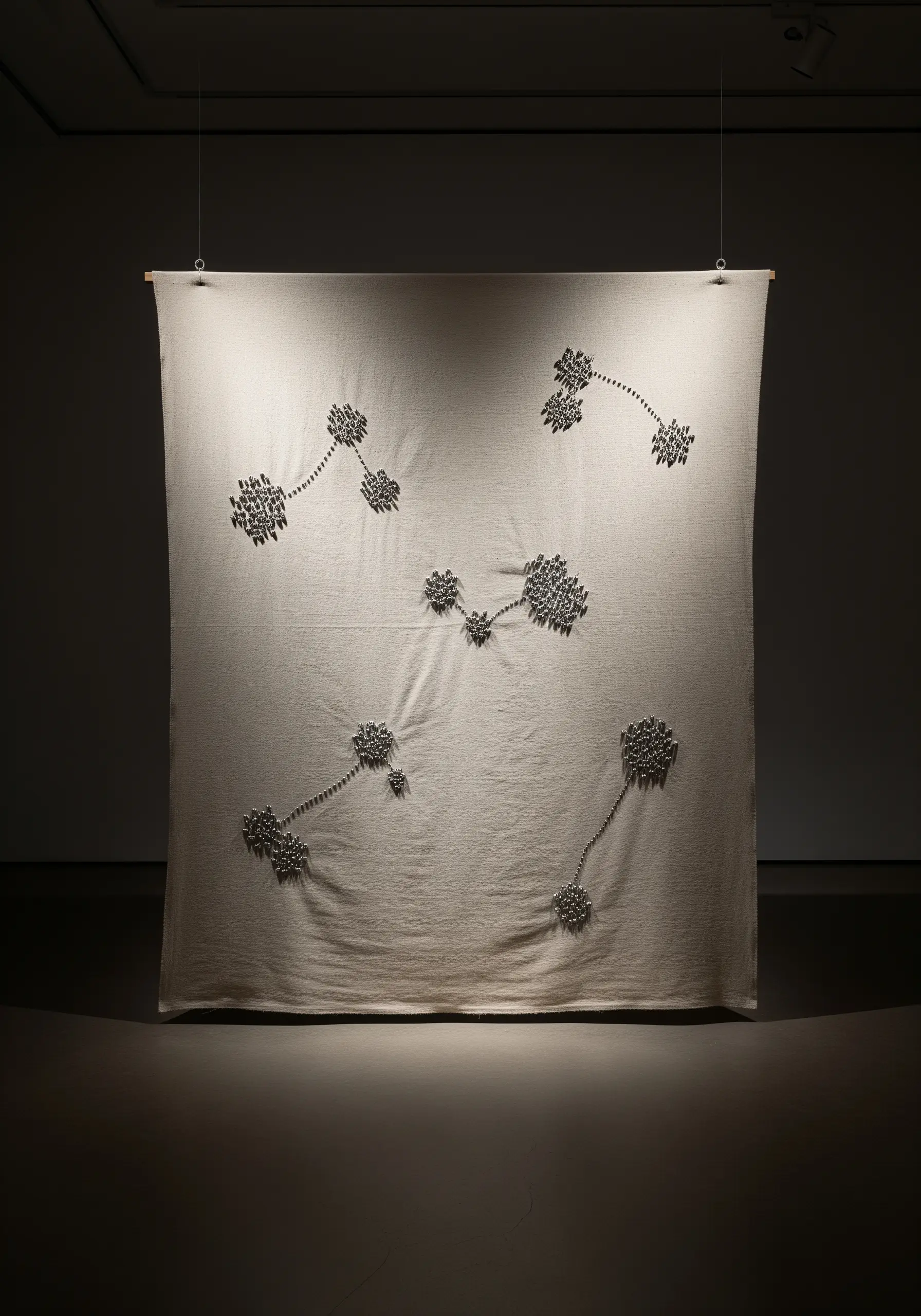
Move beyond flat stitches and build low-relief sculptures with thread.
Use dimensional stitches like bullion knots, cast-on stitches, or padded stumpwork techniques with a heavy-gauge silver metallic thread.
Group these stitches into dense, organic clusters across a large expanse of fabric.
The significant height and texture of these stitches create their own shadows and highlights, turning your embroidery into a statement-size wall art piece that demands to be touched.
19. Ornate Scrollwork for Embroidered Bookbinding
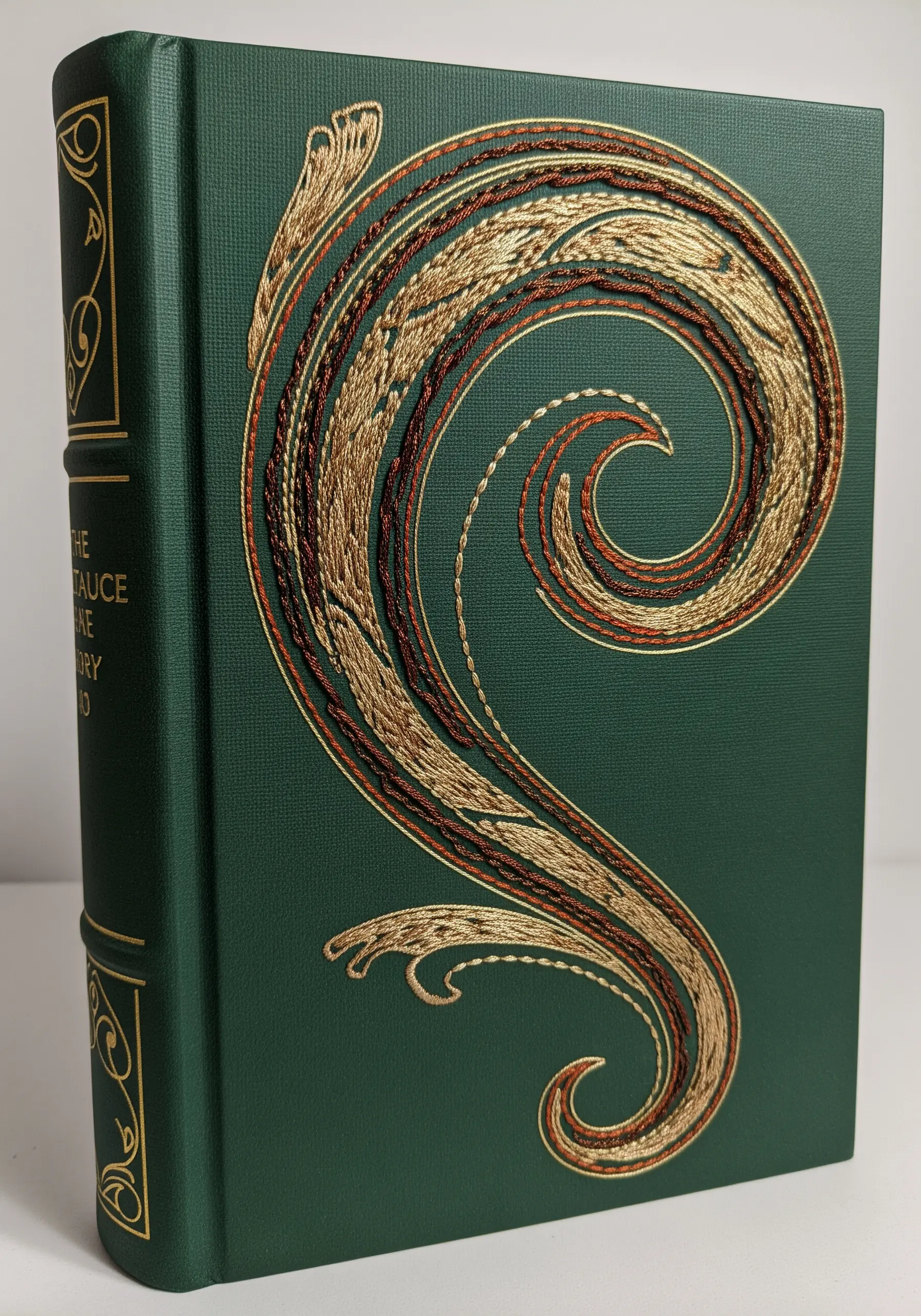
Stitching on a non-traditional surface like a book cover requires precision and the right materials.
Use a very fine metallic thread and a sharp, sturdy needle.
Trace an intricate scrollwork design and use small, tight stitches like split stitch to navigate the tight curves smoothly.
To create a richer, more antiqued look, blend two harmonious metallic tones like gold and bronze, using one for outlines and the other for fills.
20. Contoured Reflections with Parallel Stitches
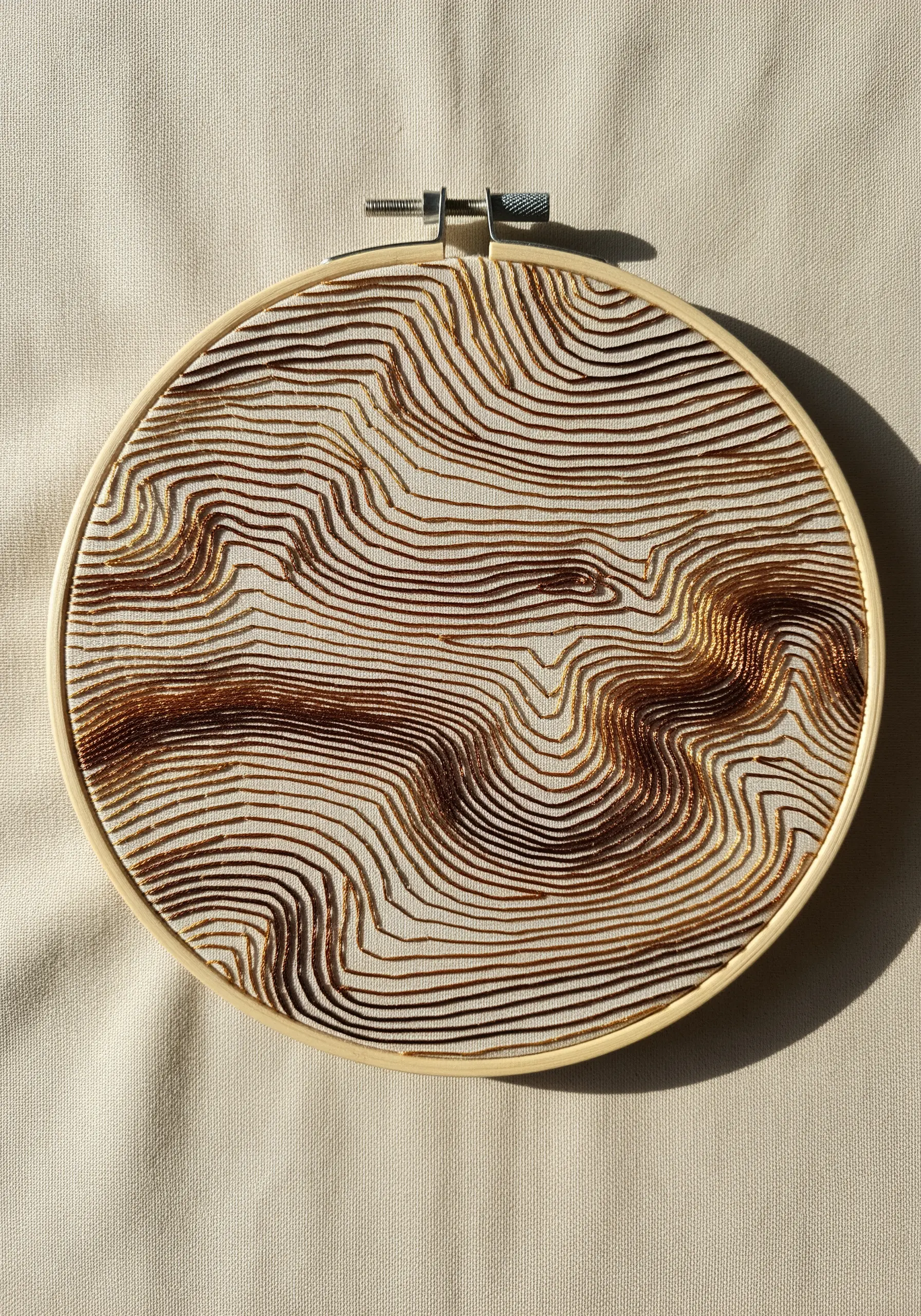
You can create an incredible illusion of movement and dimension using only parallel lines.
Fill your hoop with dense, flowing contour lines using a simple backstitch or stem stitch.
The magic is in the material: a smooth, highly reflective metallic thread will catch the light along its parallel paths.
As you or the light source moves, a ripple of light will travel across the surface, mimicking the shimmer on water or the grain of polished wood.
21. Architectural Embroidery on Semi-Sheer Panels
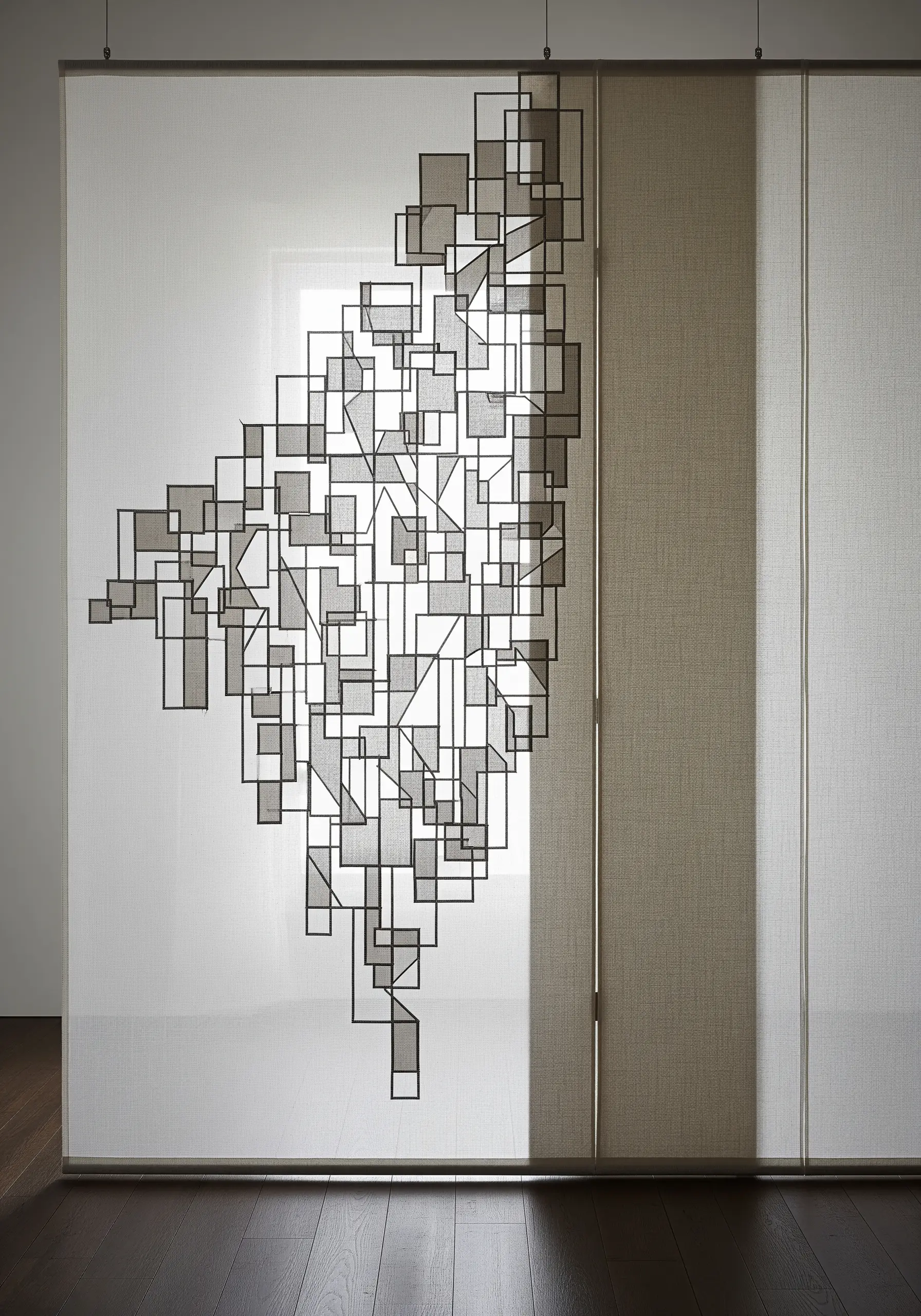
Use embroidery to create a light-filtering screen or room divider.
On a panel of semi-sheer linen or cotton voile, stitch a network of geometric shapes using a simple backstitch and a dark, subtly metallic thread.
The design defines the space and adds a graphic element without blocking light.
It acts as a piece of architectural art, casting faint shadows and interacting with the daylight that passes through it, making it ideal for rent-friendly embroidery wall tapestry ideas.
22. Radiating Colorburst for Accessory Embellishment
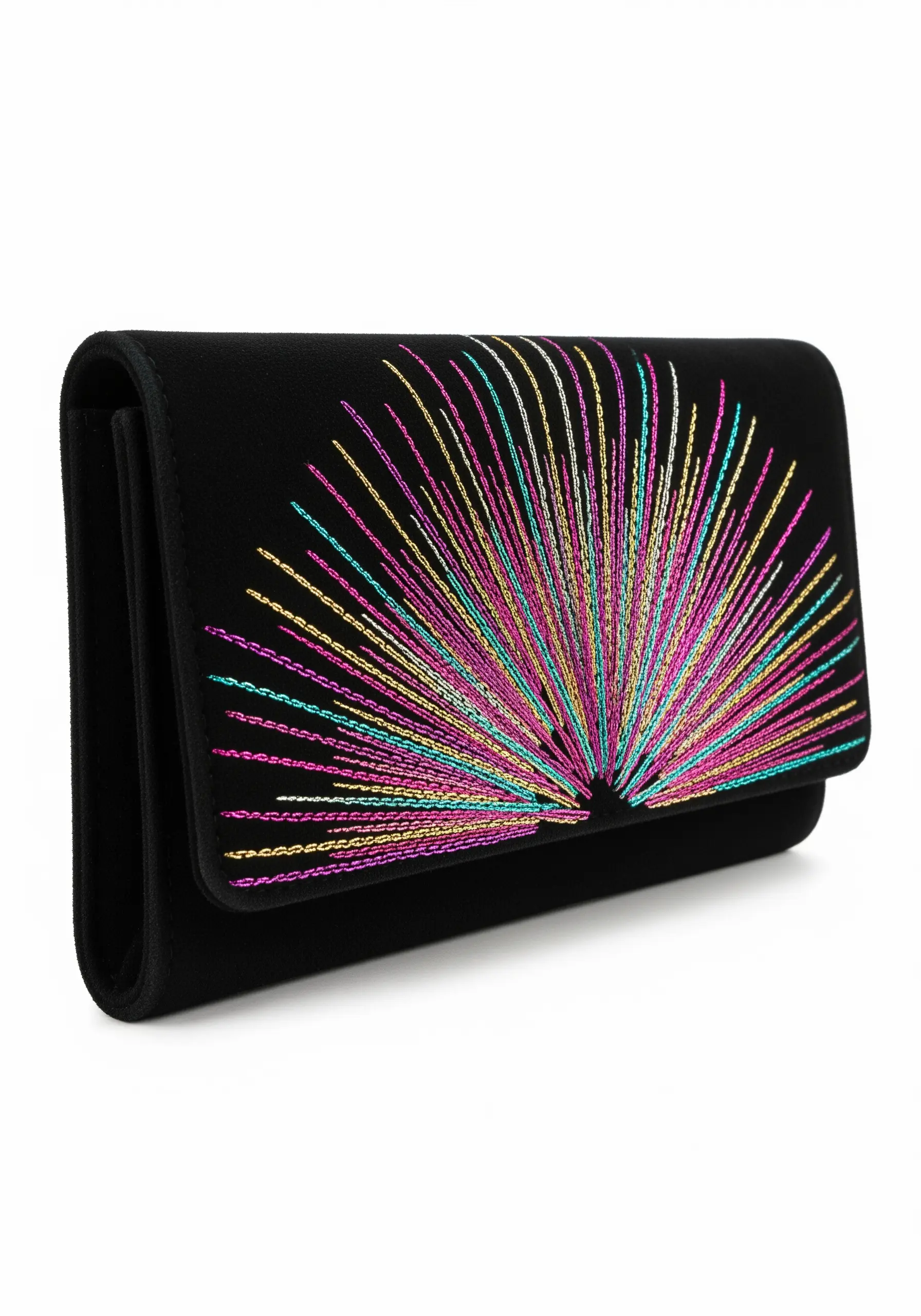
Create a spectacular firework burst on a small accessory like a clutch or pouch.
Instead of switching colors for every stitch, thread your needle with three or four different strands of metallic floss at once—think magenta, cyan, and gold.
Now, make long straight stitches radiating from a single point.
This method creates an instant, energetic blend of colors in every stitch and gives the burst a wonderfully chaotic and vibrant look.
23. Shattered Glass Mixed-Media Embroidery
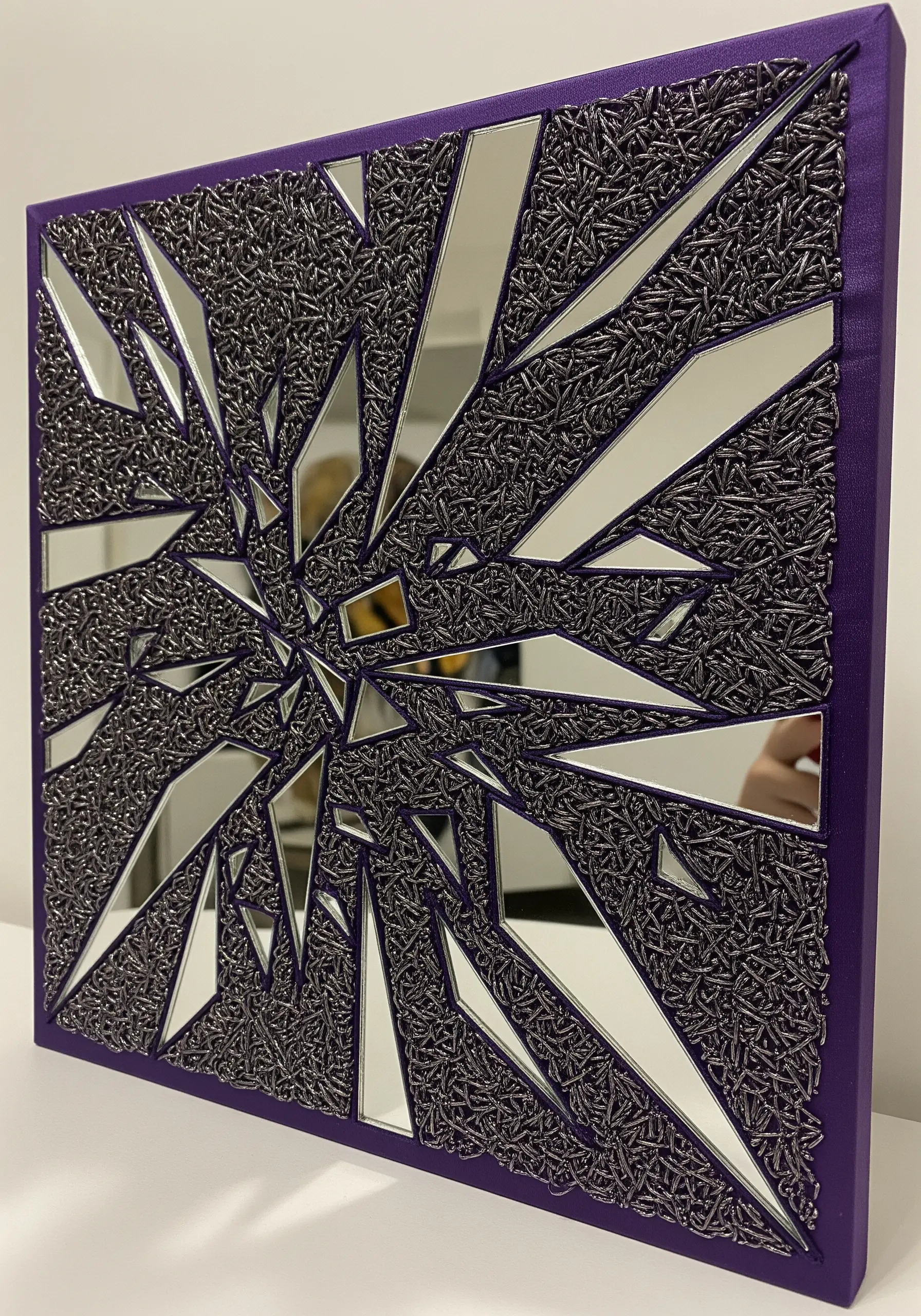
This high-impact design combines the texture of thread with the sharp reflection of mirrors.
First, securely glue small, craft-safe mirror fragments onto a sturdy canvas in a shattered pattern.
Then, fill all the negative space around them with dense, chaotic seed stitches using a dark metallic thread like gunmetal or pewter.
The contrast between the smooth, reflective mirror surfaces and the tangled, light-absorbing texture of the thread is incredibly dramatic and is a great example of mixed-media contemporary embroidery designs.
24. Minimalist Gold Accents for Functional Art
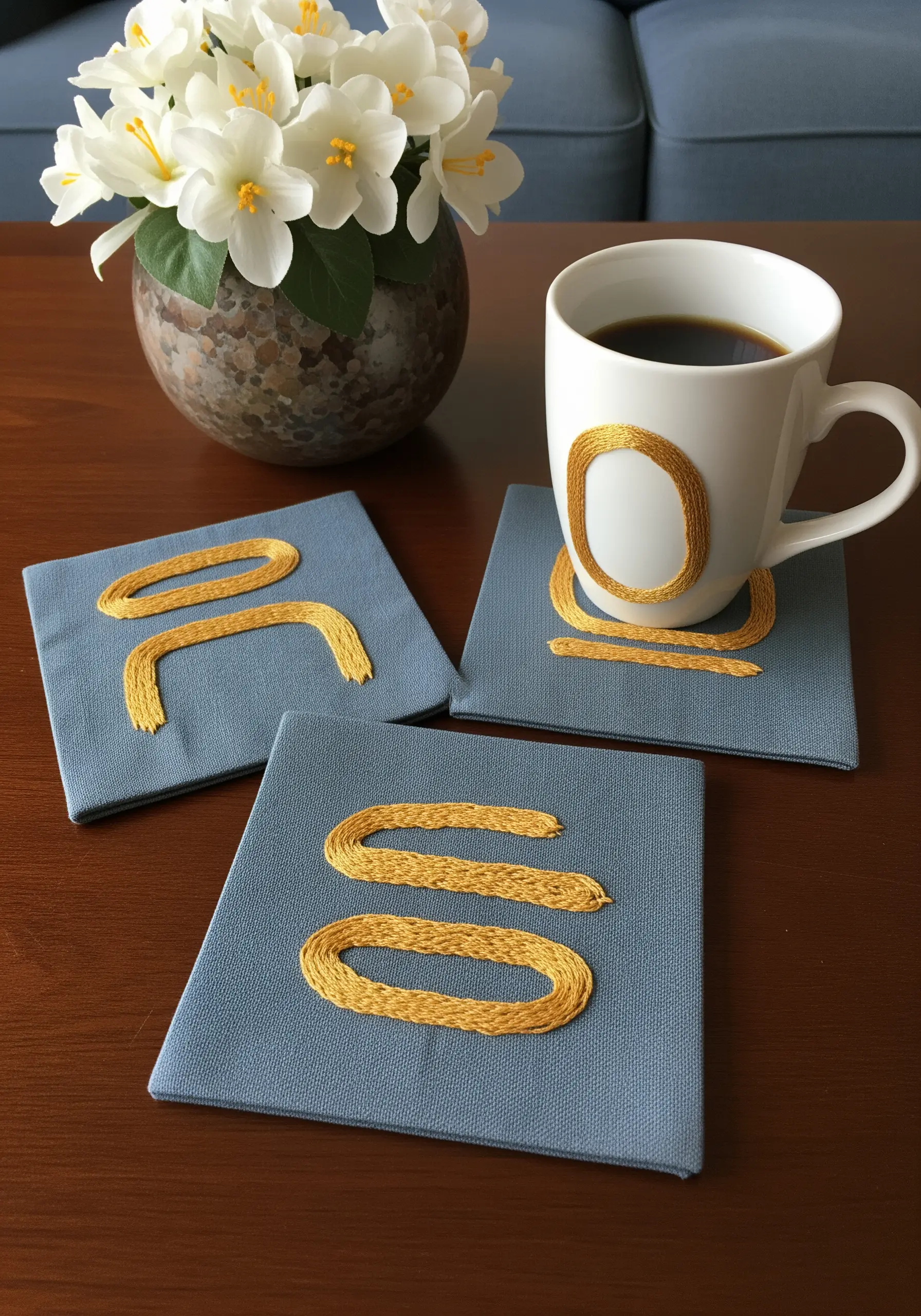
A single, perfectly executed motif can elevate an everyday object into something special.
On a set of simple fabric coasters, stitch a bold, abstract shape using a flawless satin stitch with a high-shine gold metallic thread.
The key to success is ensuring every stitch lies perfectly parallel and flat, creating a solid, uniform block of reflection.
Against the matte blue fabric, this minimalist gesture feels both modern and luxurious.
25. Intersecting Threads on a Painted Canvas
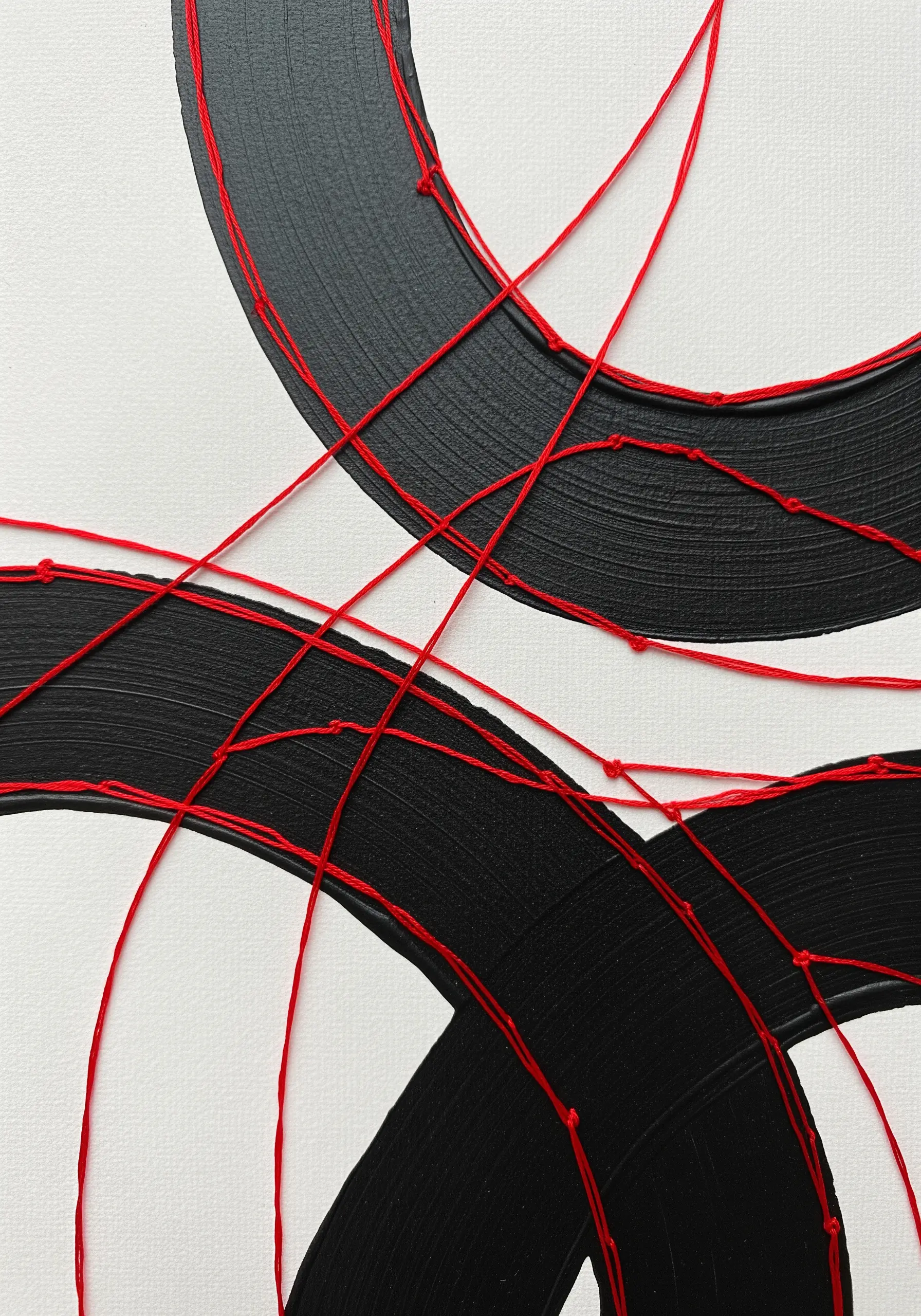
Create a true mixed-media piece by introducing thread as a final layer to a painting.
On a canvas with bold, abstract paint strokes, use a sharp needle and a brightly contrasting metallic thread to add a new linear dimension.
You can stitch lines that intersect, wrap around, or cut across the painted forms, creating a sense of tension and physical connection between the two mediums.
This is a great technique for DIY wall art projects combining embroidery and mixed-media magic.
26. Organic Networks on Rustic Burlap
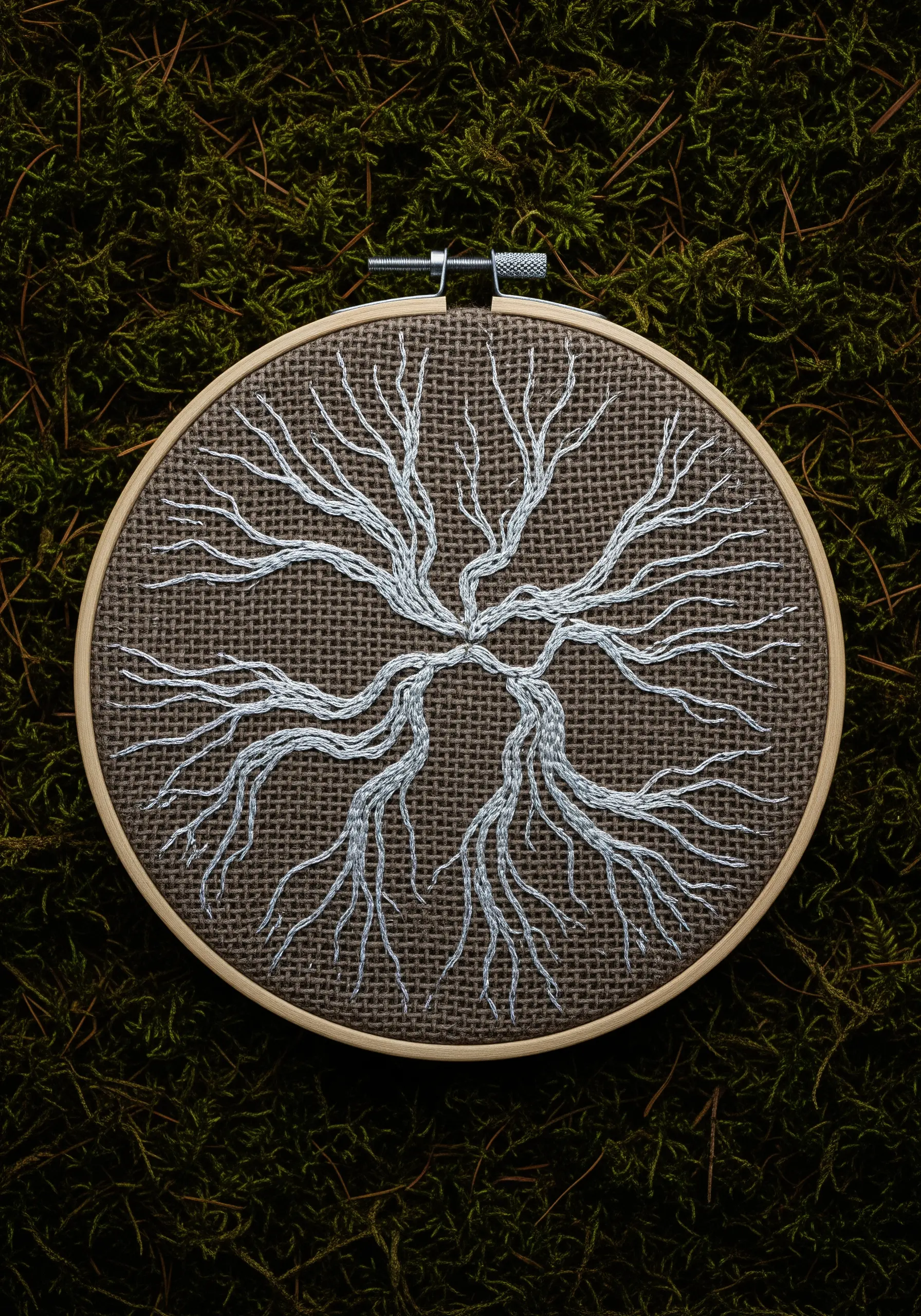
The power of this design comes from a deliberate clash of materials.
Choose a coarse, organic fabric like burlap, with its loose weave and earthy texture.
Then, stitch a delicate, branching pattern—like a root system or neural network—using a sleek, bright silver metallic thread.
A whipped backstitch will create smooth, uninterrupted lines that stand out dramatically against the rough background, creating a beautiful dialogue between the natural and the manufactured.
You can find more creative embroidery ideas inspired by tree bark and leaves online.
27. Meditative Rings of Golden Chain Stitch
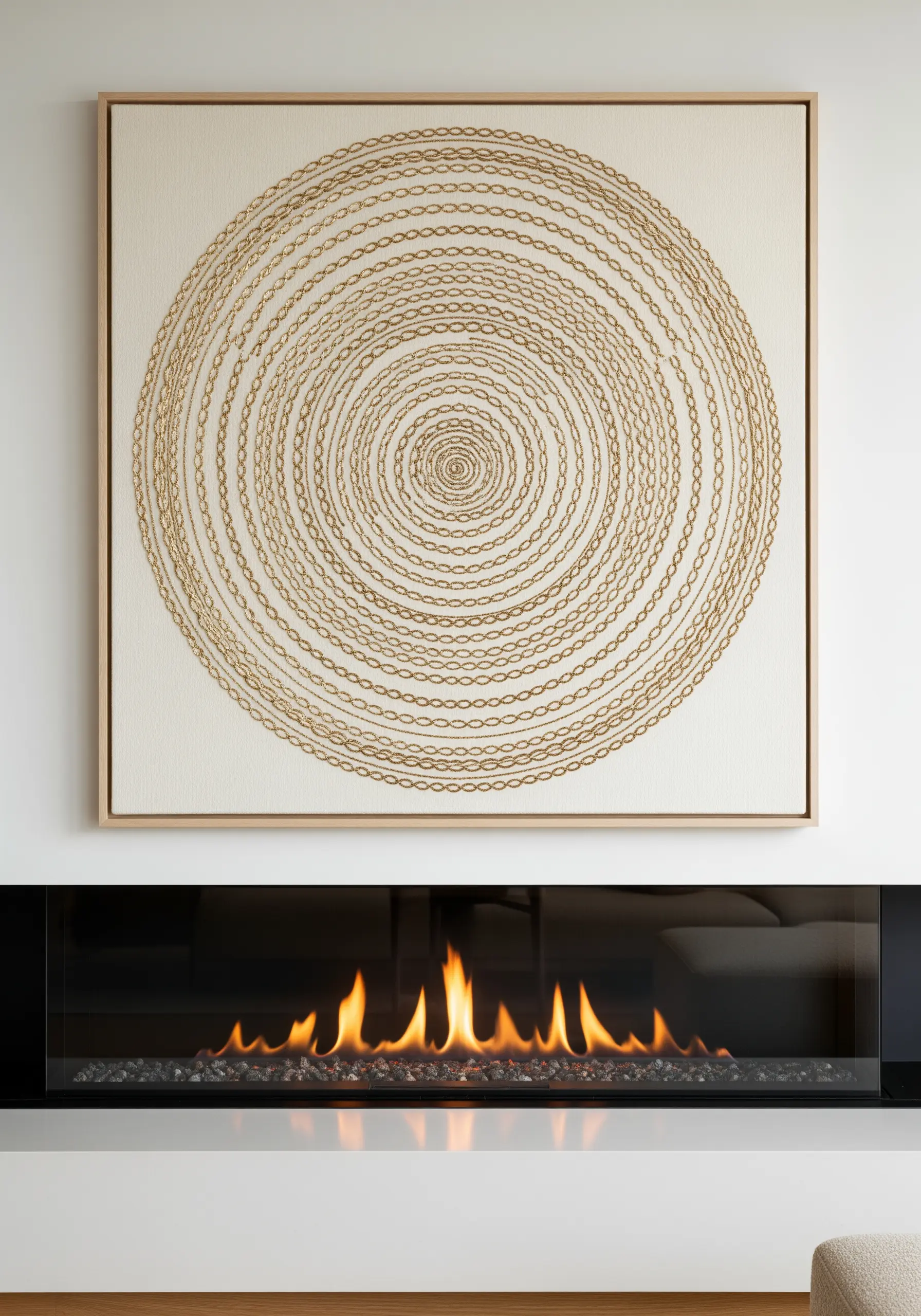
For a large-scale piece that feels both intricate and serene, rely on the rhythmic repetition of the chain stitch.
This stitch creates a beautiful, textured line that resembles a delicate braid, catching the light consistently along its length.
By working in concentric circles with a warm gold metallic thread, the process becomes meditative.
The final artwork has a calm, hypnotic quality, drawing the viewer’s eye toward the center in a gentle spiral.