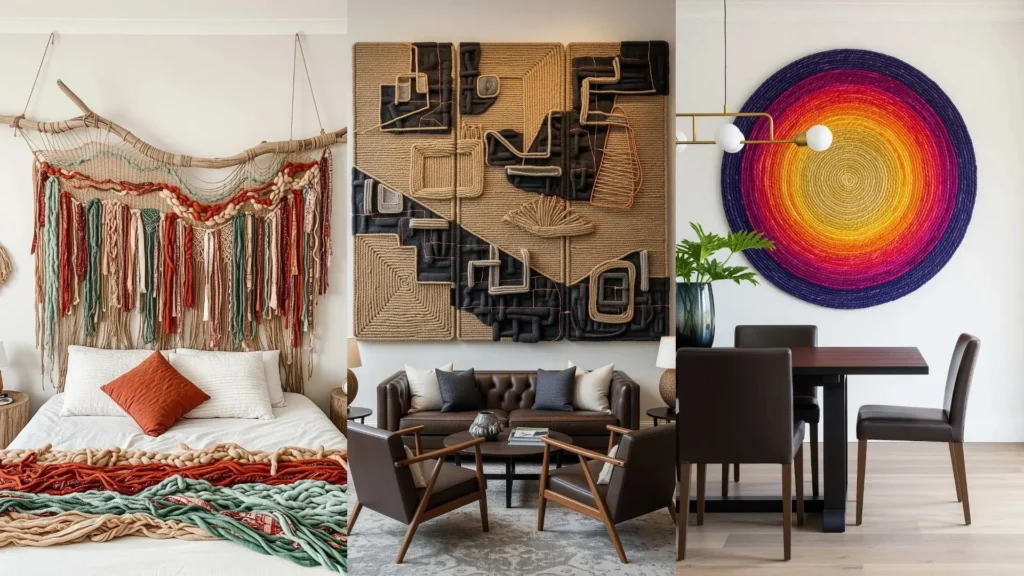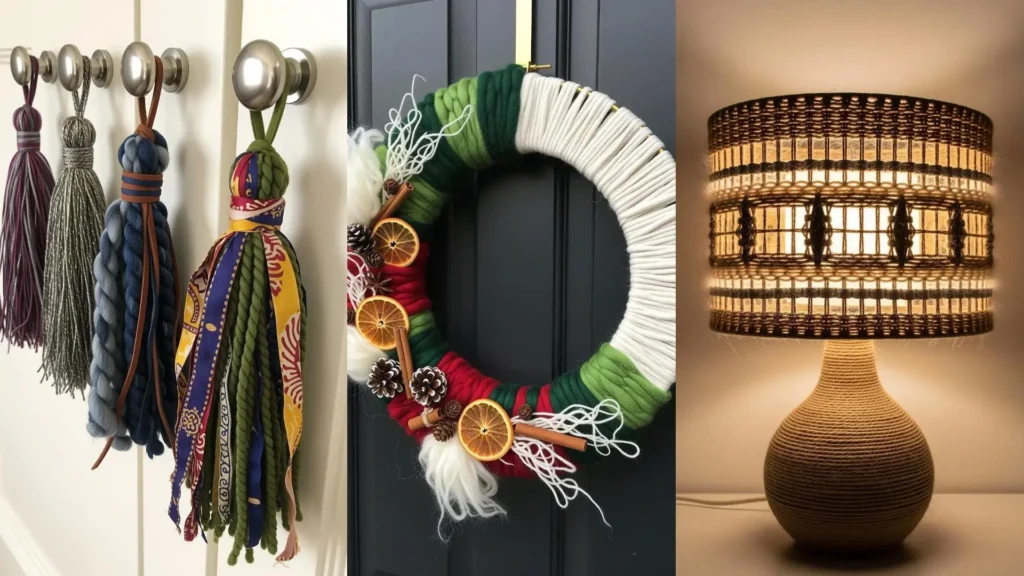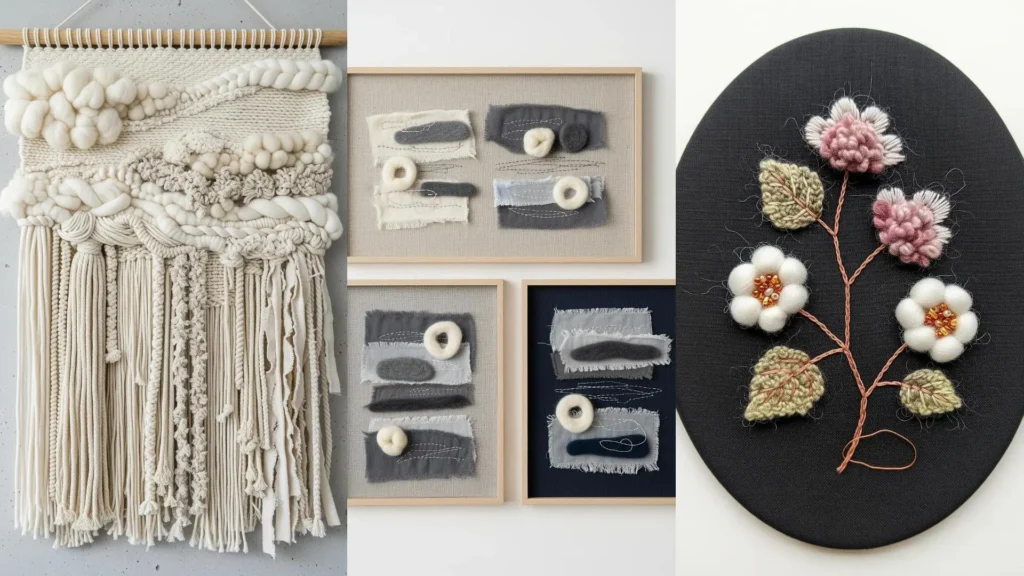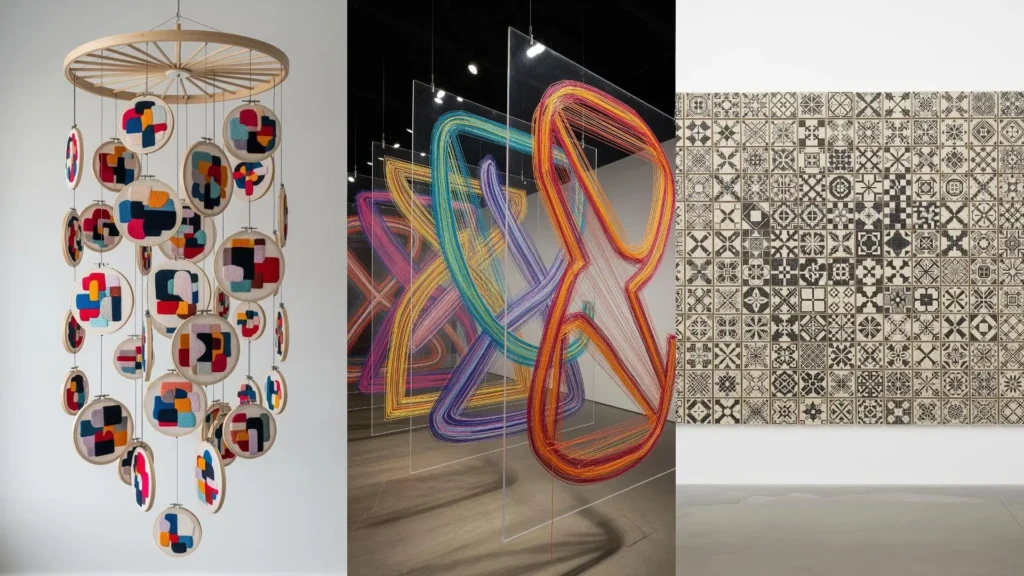
Have you ever felt that your stitches, no matter how neat, are missing a certain magic? You follow the pattern, choose beautiful colors, yet the final piece feels… flat. It’s a common feeling, but the solution isn’t about mastering more complex stitches—it’s about learning to see thread differently.
Think of your thread not just as a line of color, but as a sculptural material. It can create depth, cast shadows, and play tricks on the eye. It can build forms that feel both solid and weightless. By shifting your focus from filling space to shaping it, you unlock a completely new dimension in your work.
Here, we’ll explore how the principles behind large-scale fiber art installations can be scaled down to your hoop. You’ll discover how to use tension, color, and texture to create optical illusions and dynamic energy, transforming your embroidery from a flat image into an immersive experience.
1. Construct a Corridor of Color
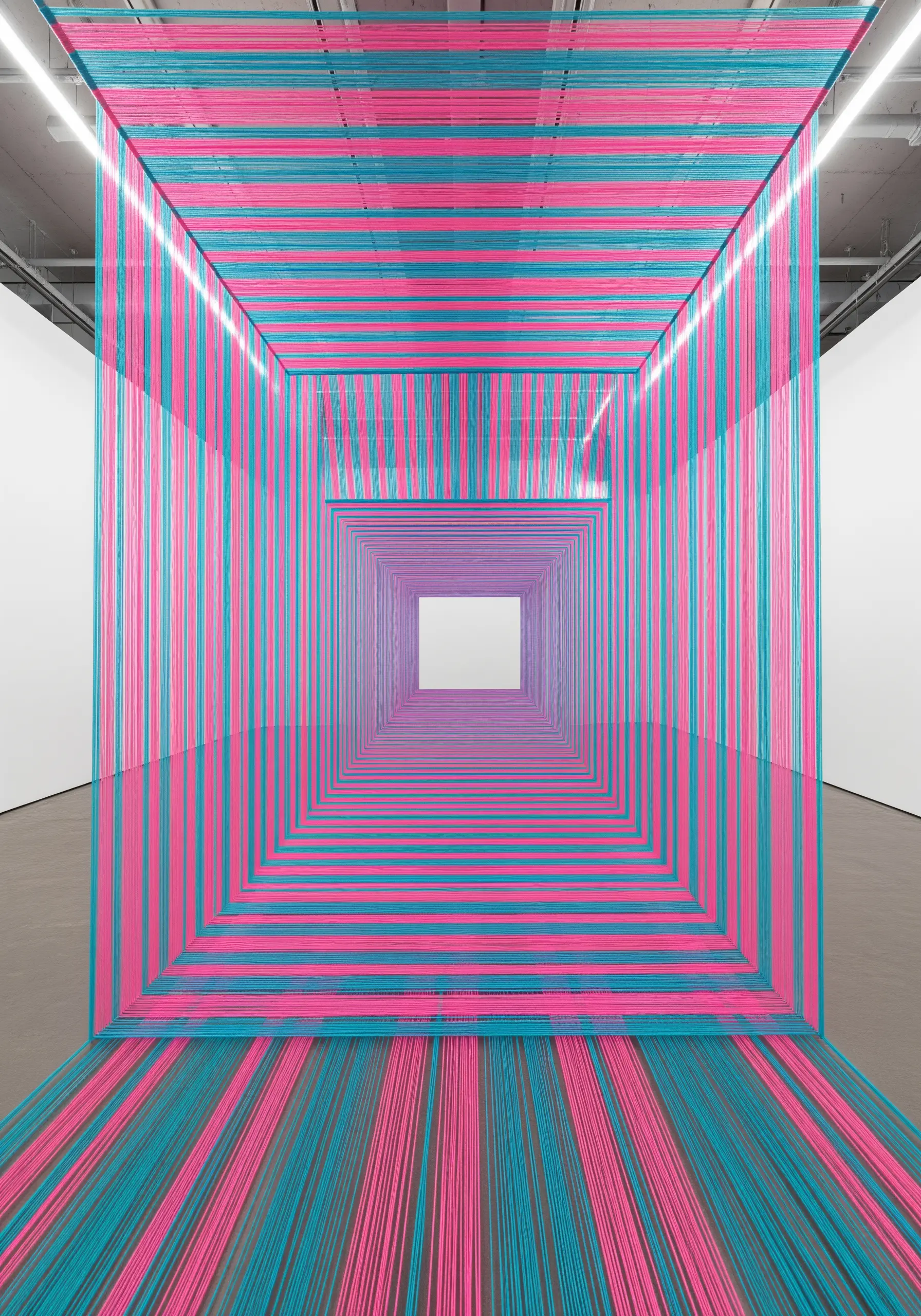
You can create the illusion of depth on a flat surface by using perspective and color theory.
Start by drawing concentric squares on your fabric, making the space between them smaller as they approach the center.
Use two high-contrast colors, like this vibrant pink and teal, and alternate them for each square using simple straight stitches or satin stitches laid side-by-side.
This rhythmic alternation forces the eye to perceive a tunnel-like space, pulling the viewer into your composition.
2. Stitch an Illusion of Digital Static
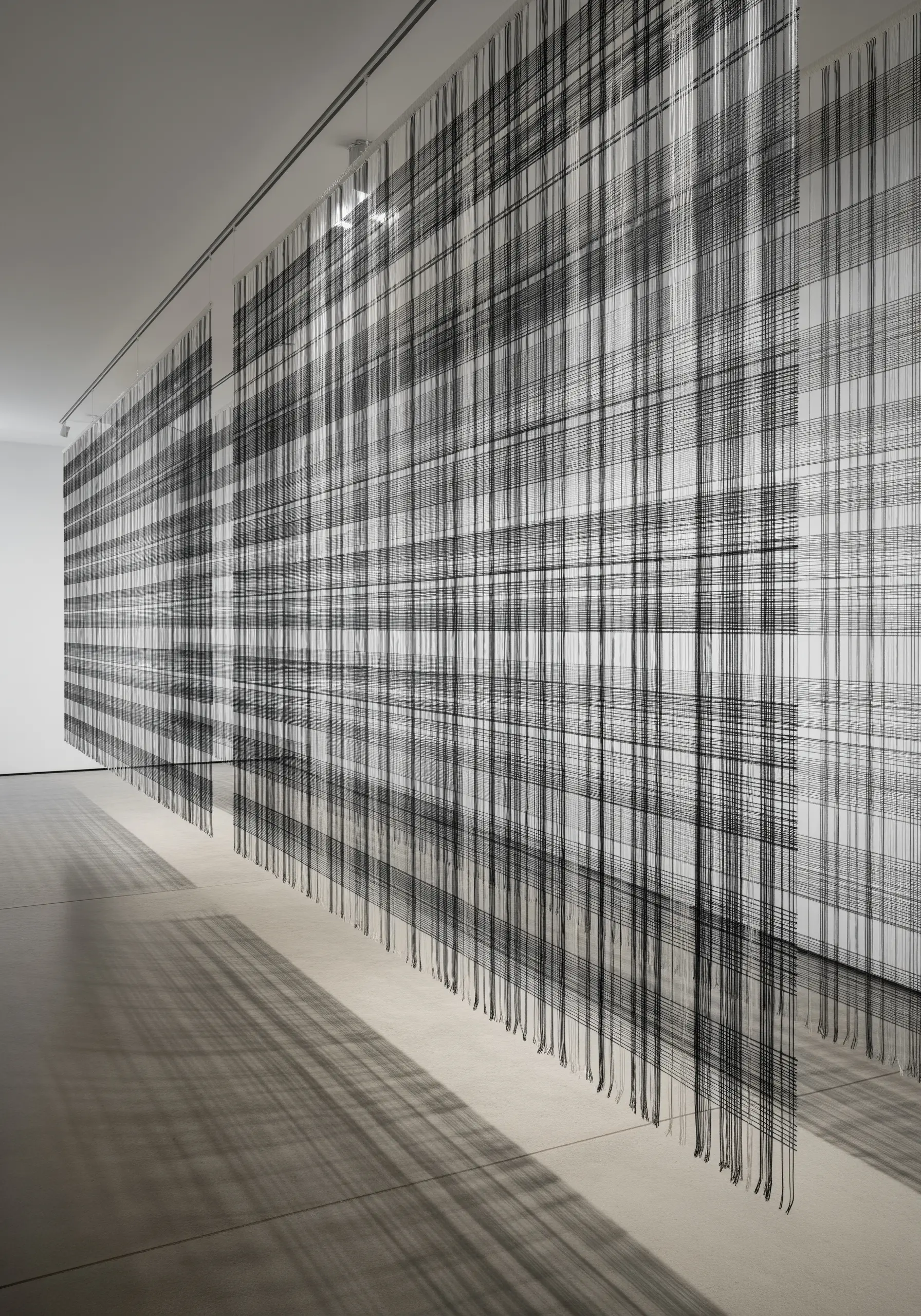
To create a visual texture that hums with energy, think in terms of density rather than just stitch type.
Work with a single color, like black, but vary the weight of your thread—from a single strand of floss to all six, or even fine wool.
Lay long, vertical straight stitches parallel to one another, intentionally varying the spacing and thread thickness.
This creates a moiré-like effect where some areas appear solid and others transparent, mimicking the beautiful imperfection of a digital glitch or woven textile.
3. Build a Floating Geometric Form
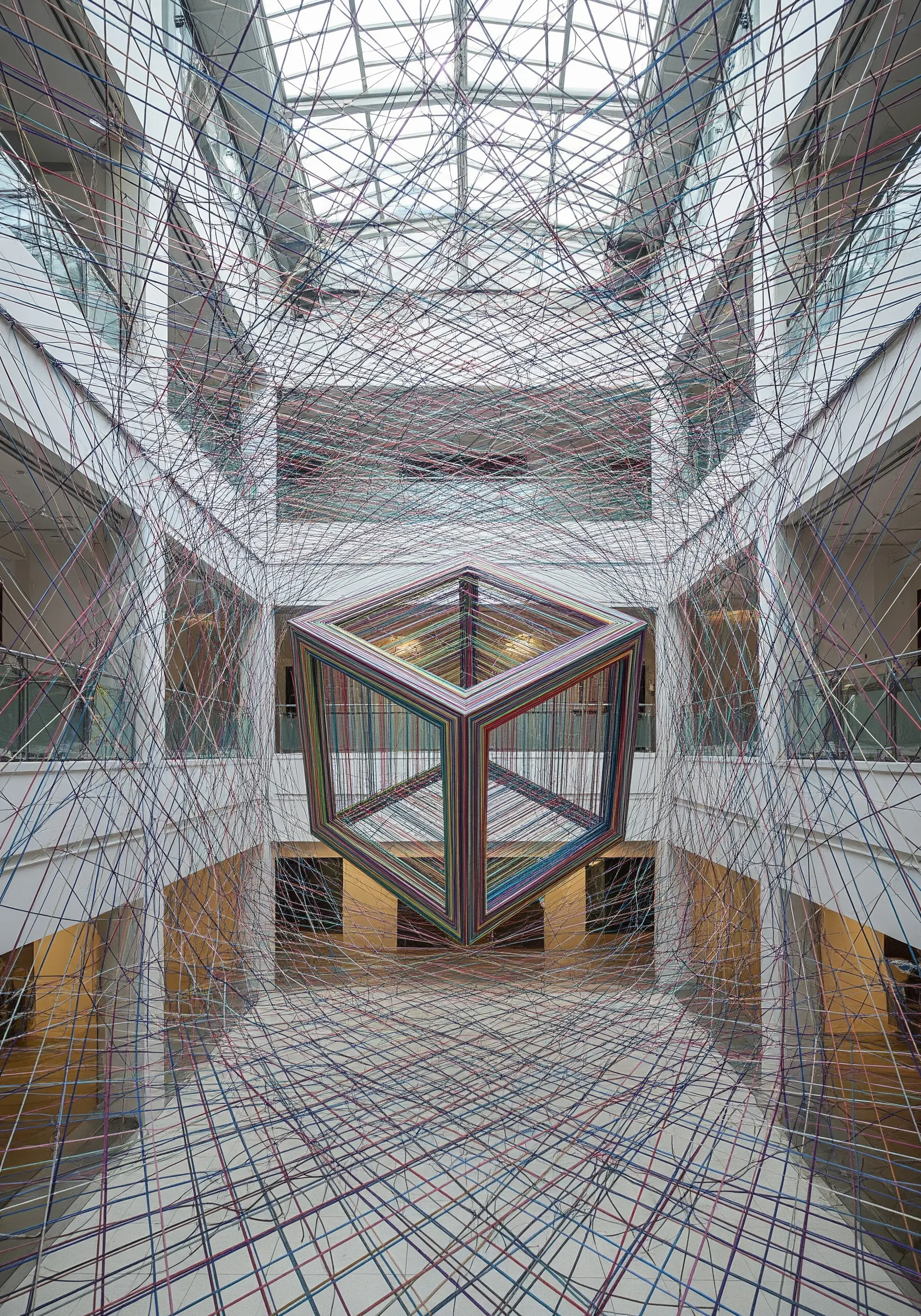
Translate the principles of string art into your embroidery to give simple shapes a three-dimensional feel.
Instead of filling a shape, use straight stitches to connect points across a frame or hoop, layering threads to build translucent planes of color.
The magic happens where the threads overlap; these areas become denser and more opaque, suggesting solid edges and vertices.
This technique allows you to construct a floating geometric form that seems to hover in space, defined only by tension and color.
4. Master the Art of Optical Vibration
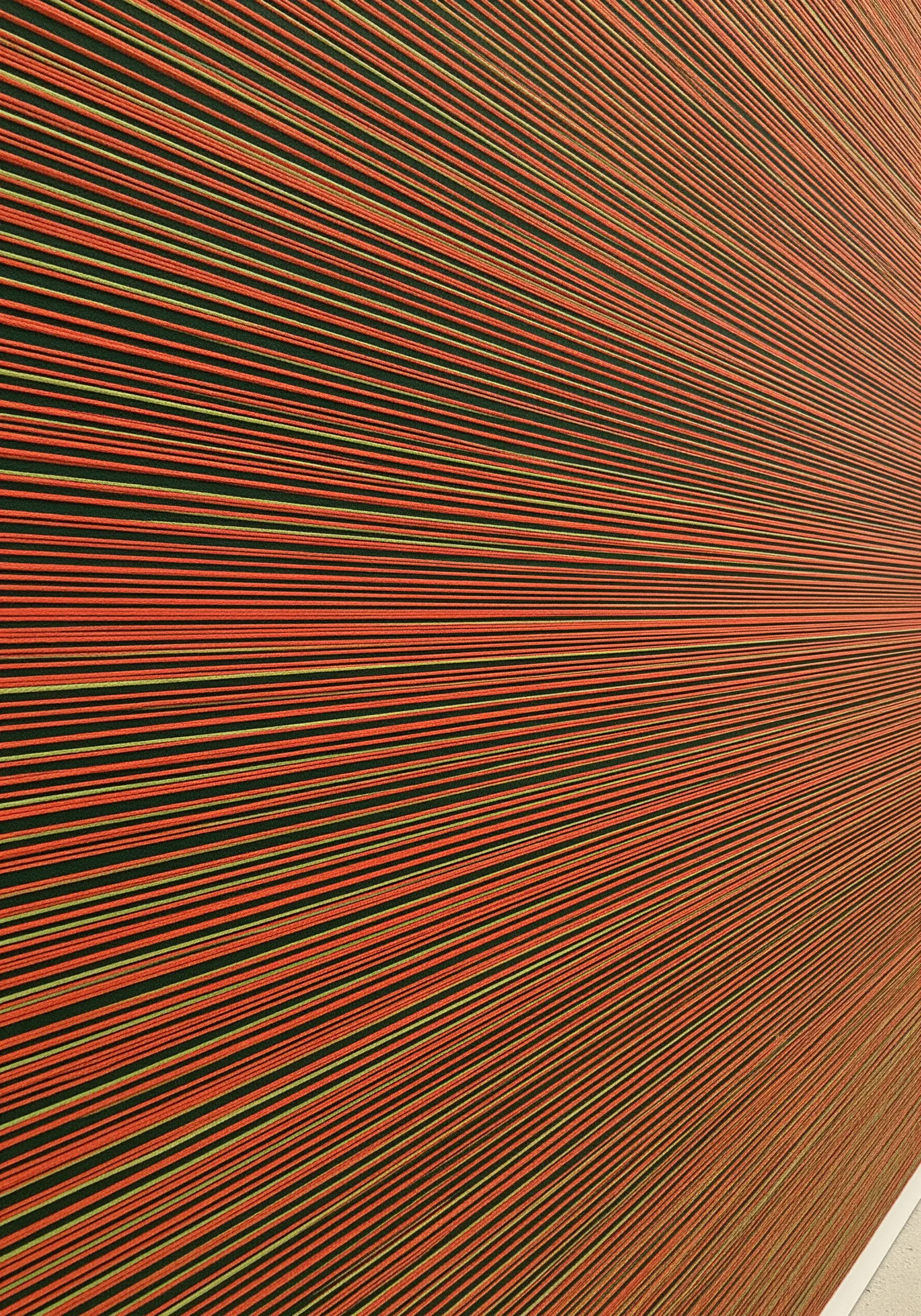
You can make colors appear to vibrate by placing thin, contrasting lines directly next to each other.
Choose two or three complementary or high-contrast hues, like this intense orange and green against black.
Using a single strand of floss for precision, fill your entire hoop with tightly packed horizontal straight stitches, alternating the colors in a random or planned sequence.
The eye struggles to focus on one color at a time, resulting in a shimmering, energetic surface that feels alive with movement.
5. Render Portraits with Thread Veils
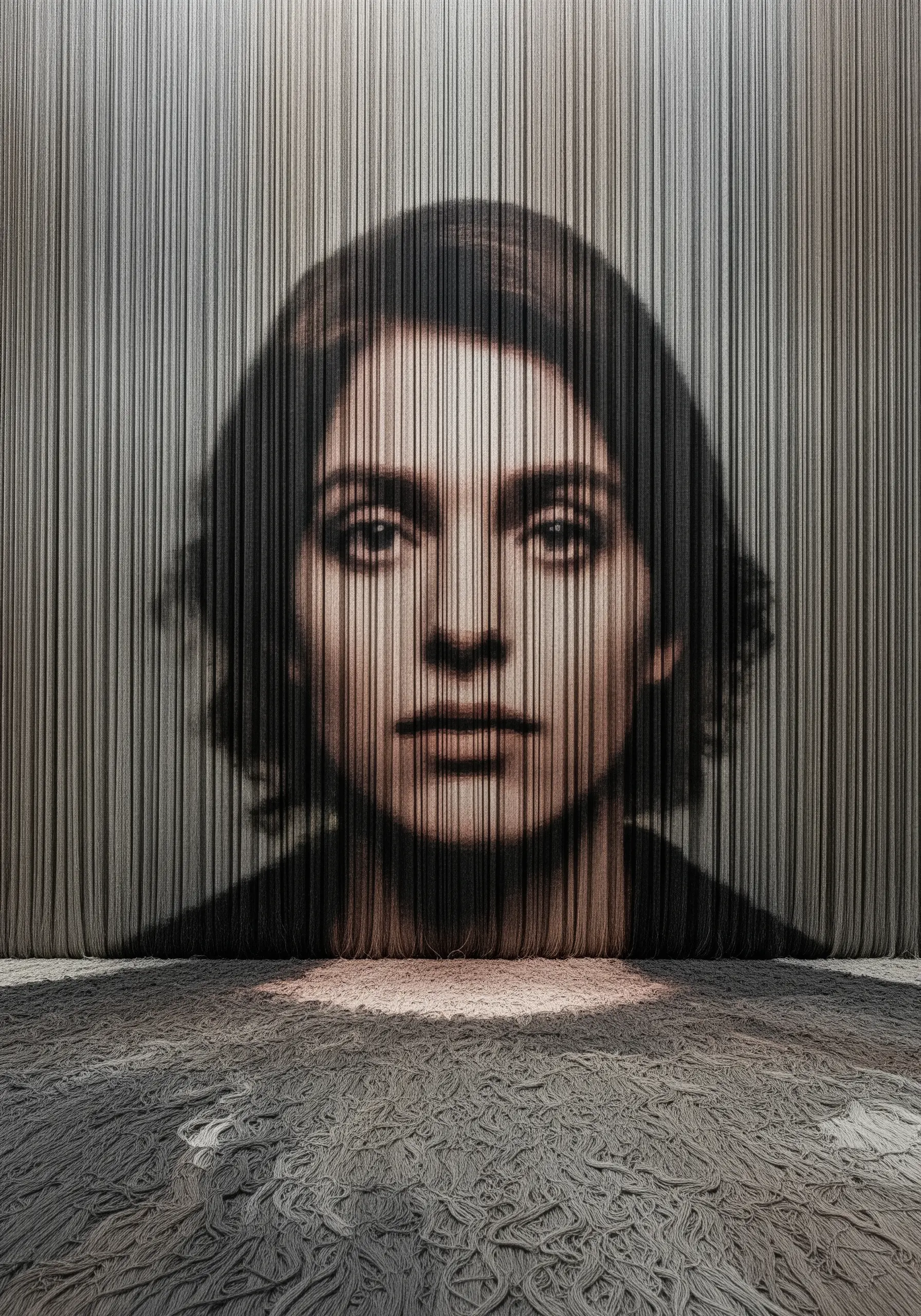
Move beyond traditional thread painting by building an image from vertical lines alone.
To adapt this, transfer a high-contrast portrait onto your fabric.
Instead of filling shapes, use single strands of thread in varying shades (from light grey to black) to create long vertical stitches that run the entire height of the face.
Where the image is darkest, place your stitches closer together or use darker thread. This creates a haunting, veil-like quality, revealing the portrait through a curtain of thread.
6. Sculpt with Softness and Shadow
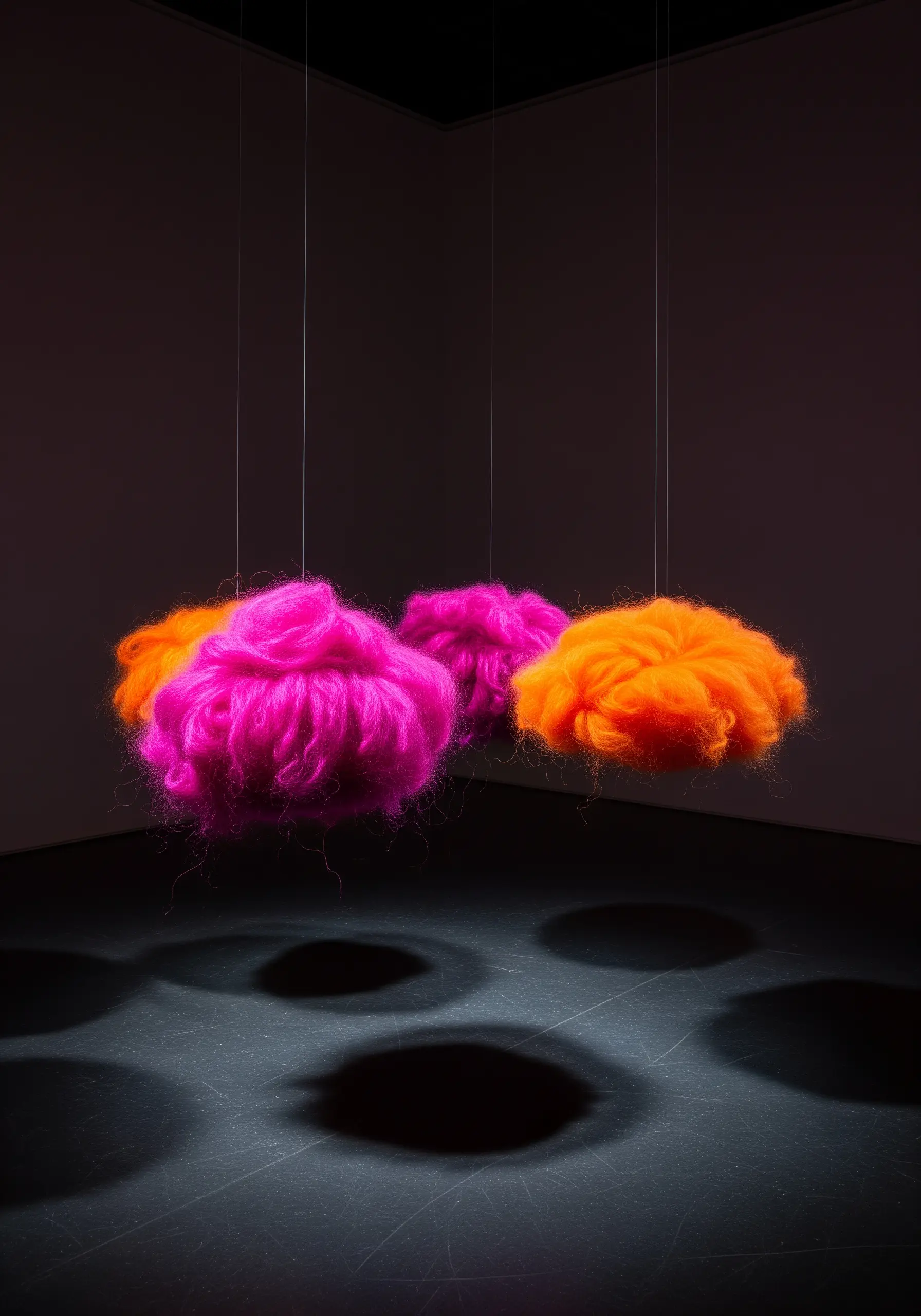
Explore dimension by creating forms that literally come off the fabric.
Use a Turkey work stitch with long loops, then trim them to create dense, fluffy pom-poms that sit on the surface of your work.
Alternatively, create actual pom-poms from chunky, airy yarn like mohair and attach them to your canvas.
When you light your finished piece from the side, these soft sculptures will cast dramatic shadows, adding a whole new layer of depth and intrigue to your composition.
7. Define Form by Wrapping, Not Filling
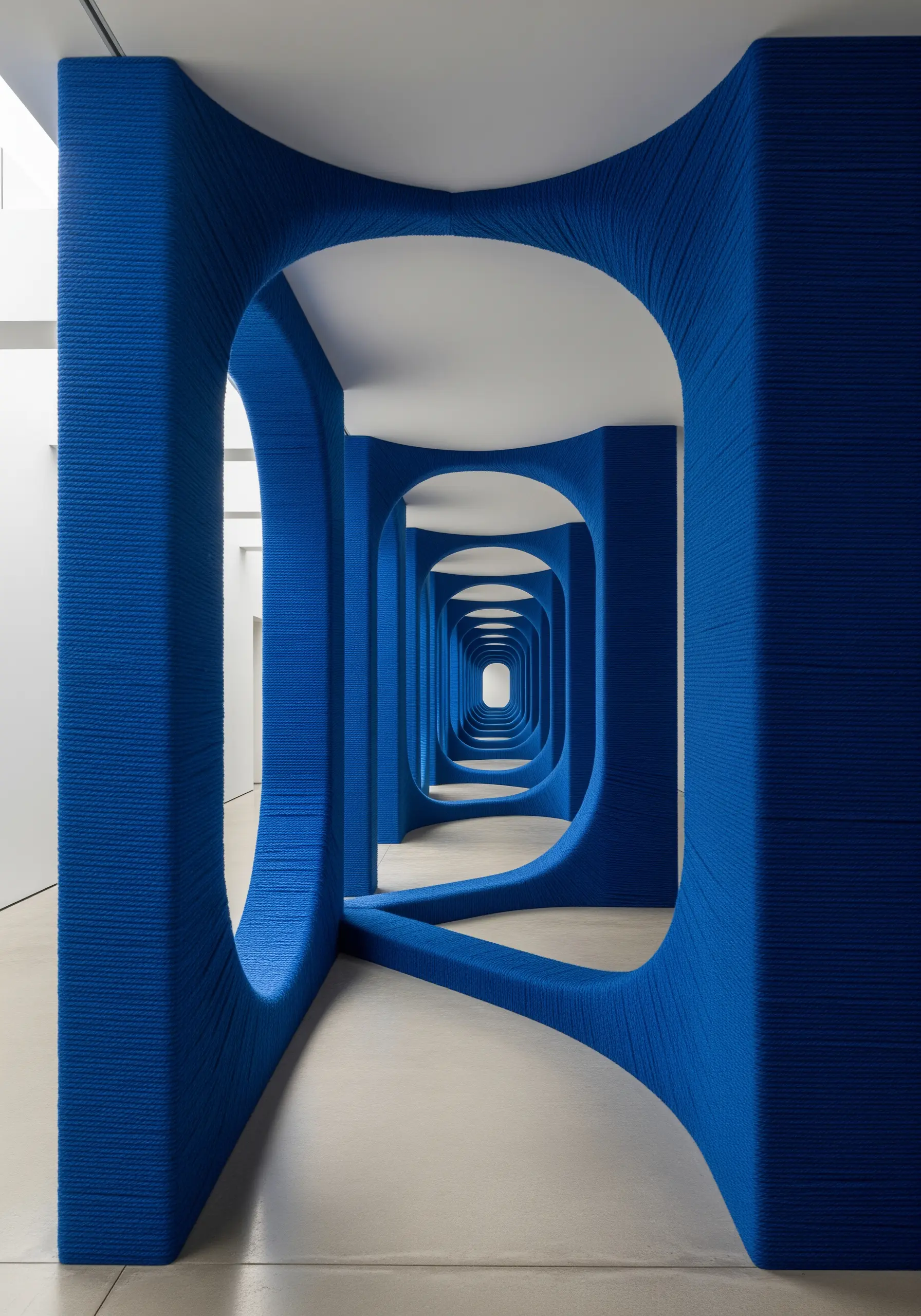
Instead of filling a shape with stitches, consider defining it by wrapping it completely in thread.
Create a base form from cardboard, wire, or even a piece of wood, then meticulously wrap it with yarn or floss.
The wrapped texture itself becomes the main aesthetic feature, creating a grooved, sculptural surface that highlights the object’s contours.
This method transforms thread from a decorative element into the very skin of the object, offering a powerful, tactile presence.
8. Blend Color Gradients for Immersive Depth
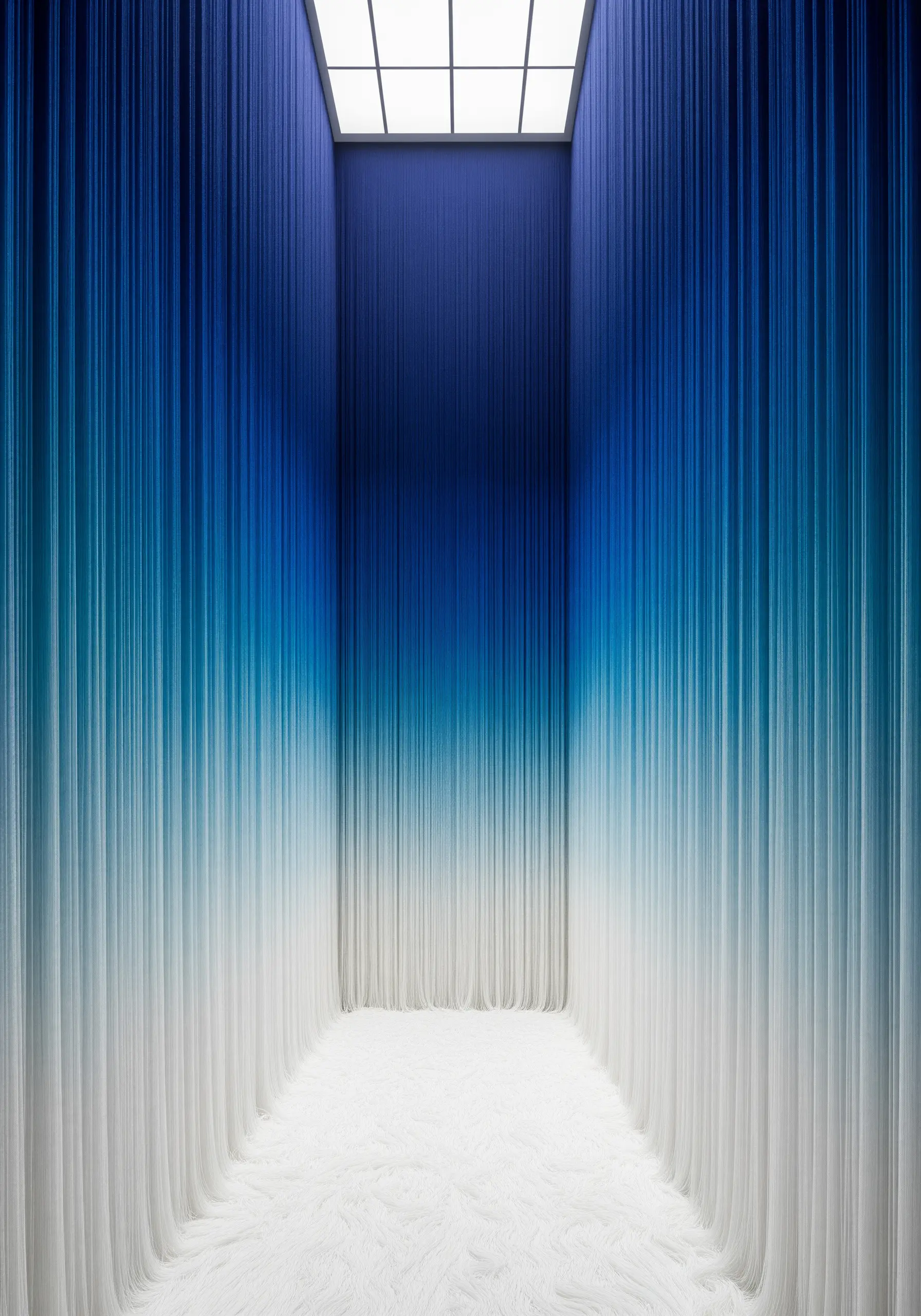
Create a seamless flow of color to evoke atmosphere and emotion.
To achieve a smooth gradient, select a range of floss colors from a single family—like these blues, from deep navy to bright white.
Arrange long vertical satin stitches side-by-side, subtly introducing the next shade thread by thread. This is a simplified version of long-and-short stitch, focusing on the verticality.
The result is an ombré effect that feels less like stitching and more like a soft wash of watercolor, pulling the eye through the transition of light and shadow.
9. Translate Pixel Art into Tactile Worlds
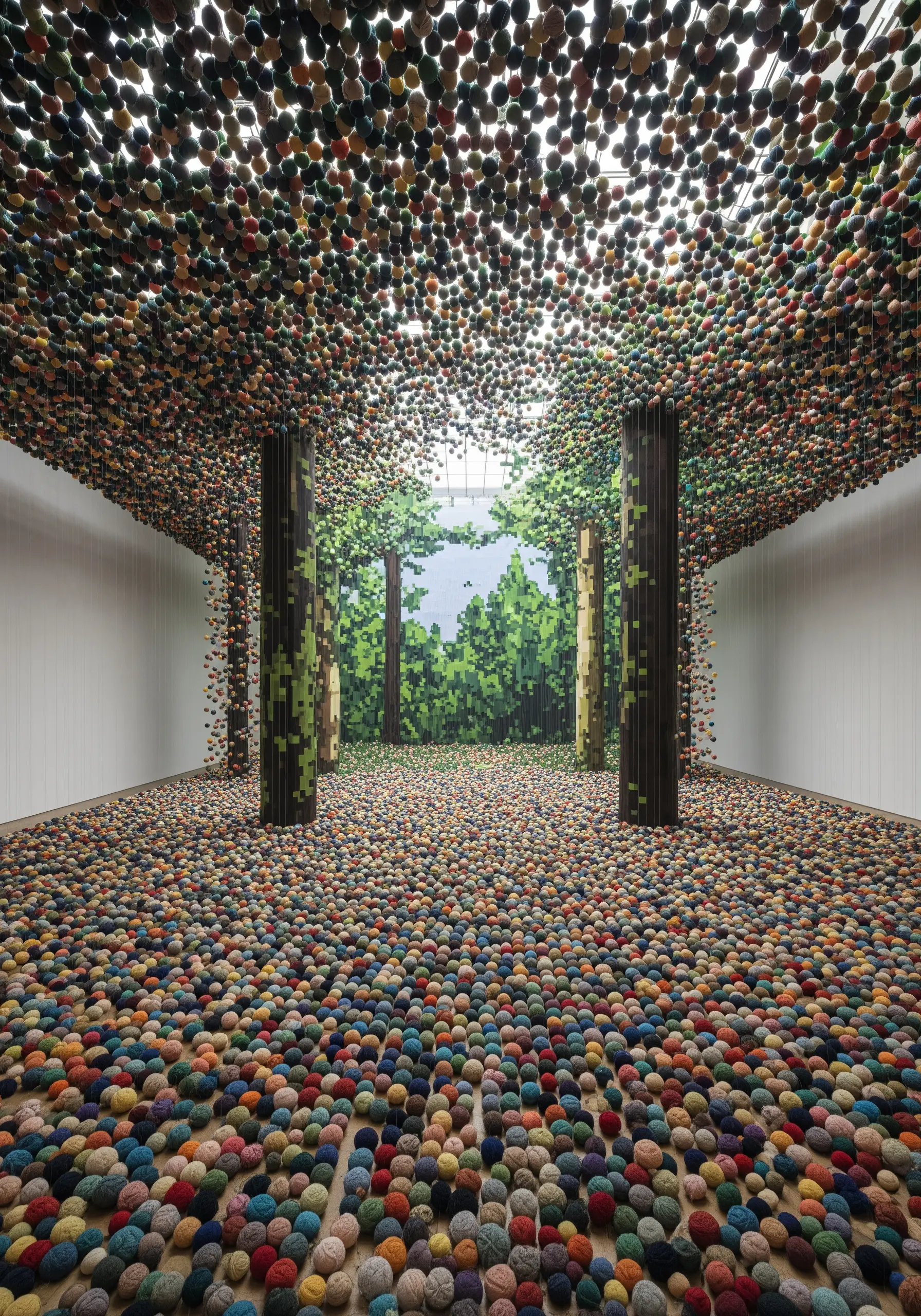
Embrace the aesthetic of the digital world by translating pixels into tangible, textural forms.
Combine two distinct techniques: use cross-stitch or small squares of satin stitch to create a pixelated background image on your fabric.
Then, introduce a contrasting texture in the foreground. Make hundreds of tiny, dense French knots or yarn pom-poms in various colors and stitch them down.
This contrast between the flat, graphic background and the bumpy, chaotic foreground creates a surprising and immersive sensory experience.
10. Bend Light and Line with Color Theory
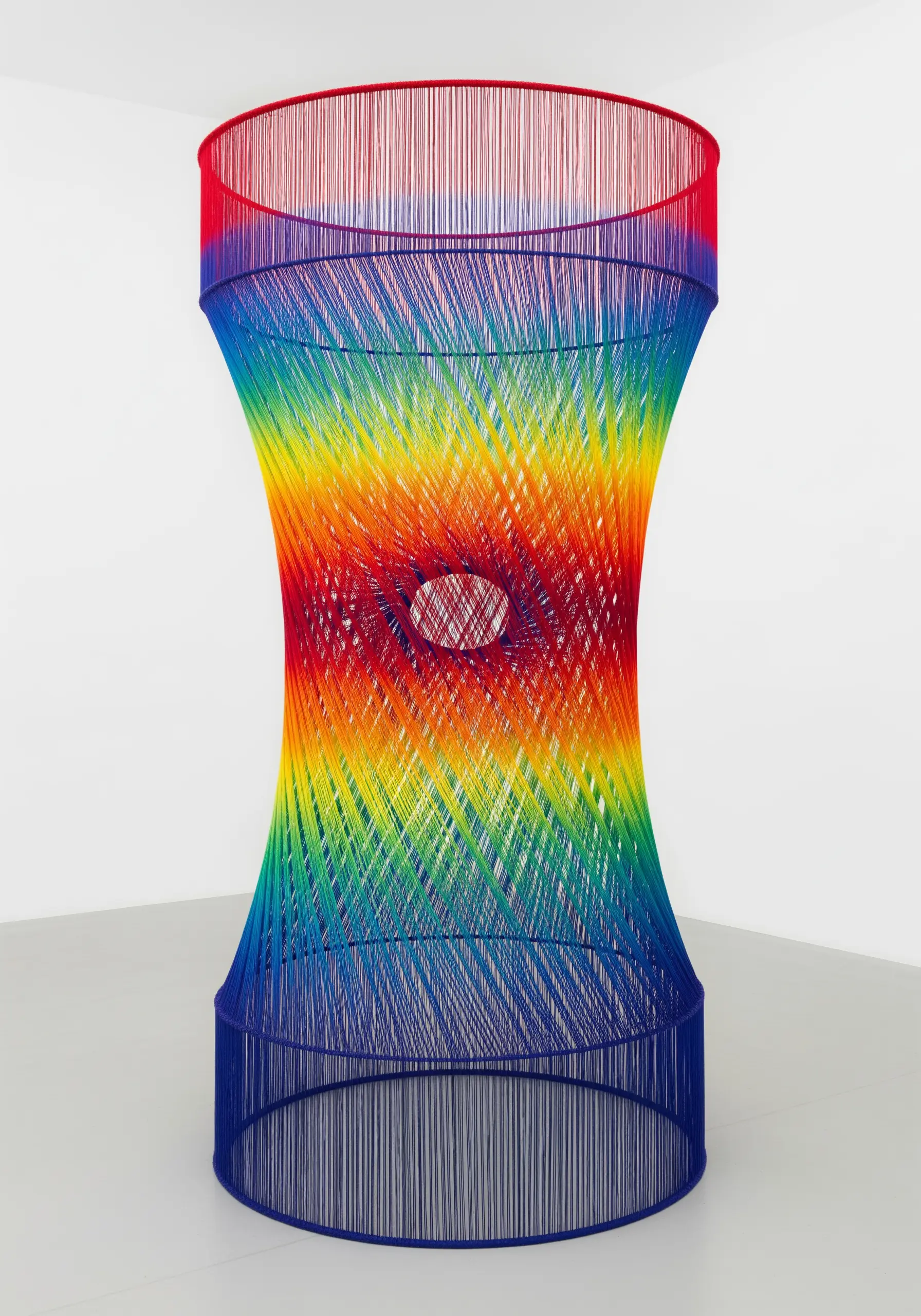
You can create the illusion of a curve using only straight lines—a foundational technique of string art that translates beautifully to a hoop.
Mark evenly spaced points around a circular hoop or along the edges of a square frame.
Then, stretch thread from one point to another across the open space. By following a pattern—for instance, connecting each point to the one ten spaces away—you will see elegant curves emerge.
Using a rainbow color progression enhances this effect, making the form appear to twist and bend light.
11. Coil a Hypnotic Metallic Spiral
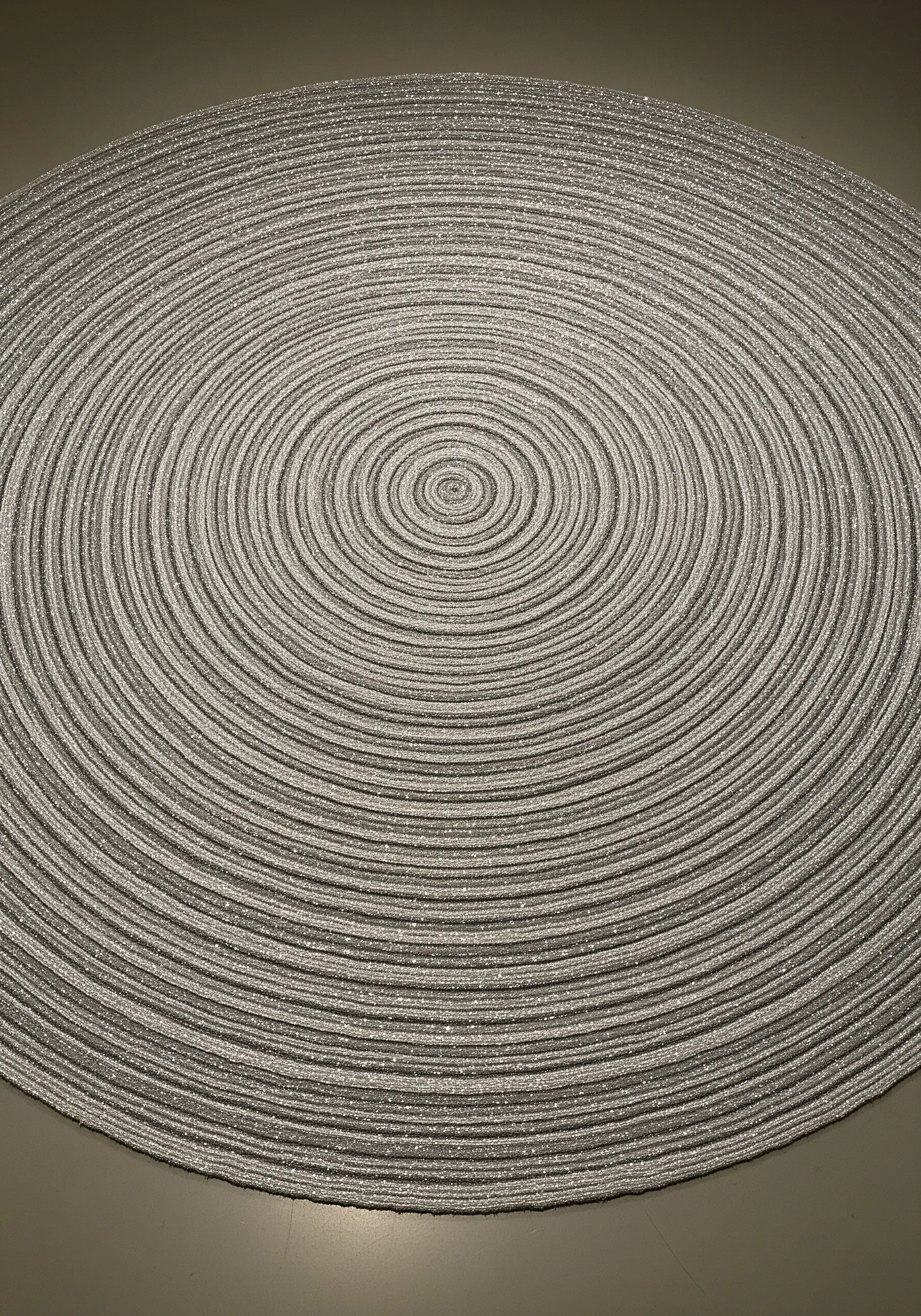
For a mesmerizing effect with minimal effort, focus on a single, continuous line.
Select a textured, high-shine thread, like a metallic cord or a thick braided floss.
Instead of traditional stitching, use couching: lay the metallic cord on your fabric in a spiral shape and use a thinner, invisible, or matching thread to tack it down at small intervals.
This preserves the cord’s smooth, unbroken texture and creates a perfect, hypnotic spiral that draws the eye directly to its center.
12. Stitch a Portal with Neon Threads
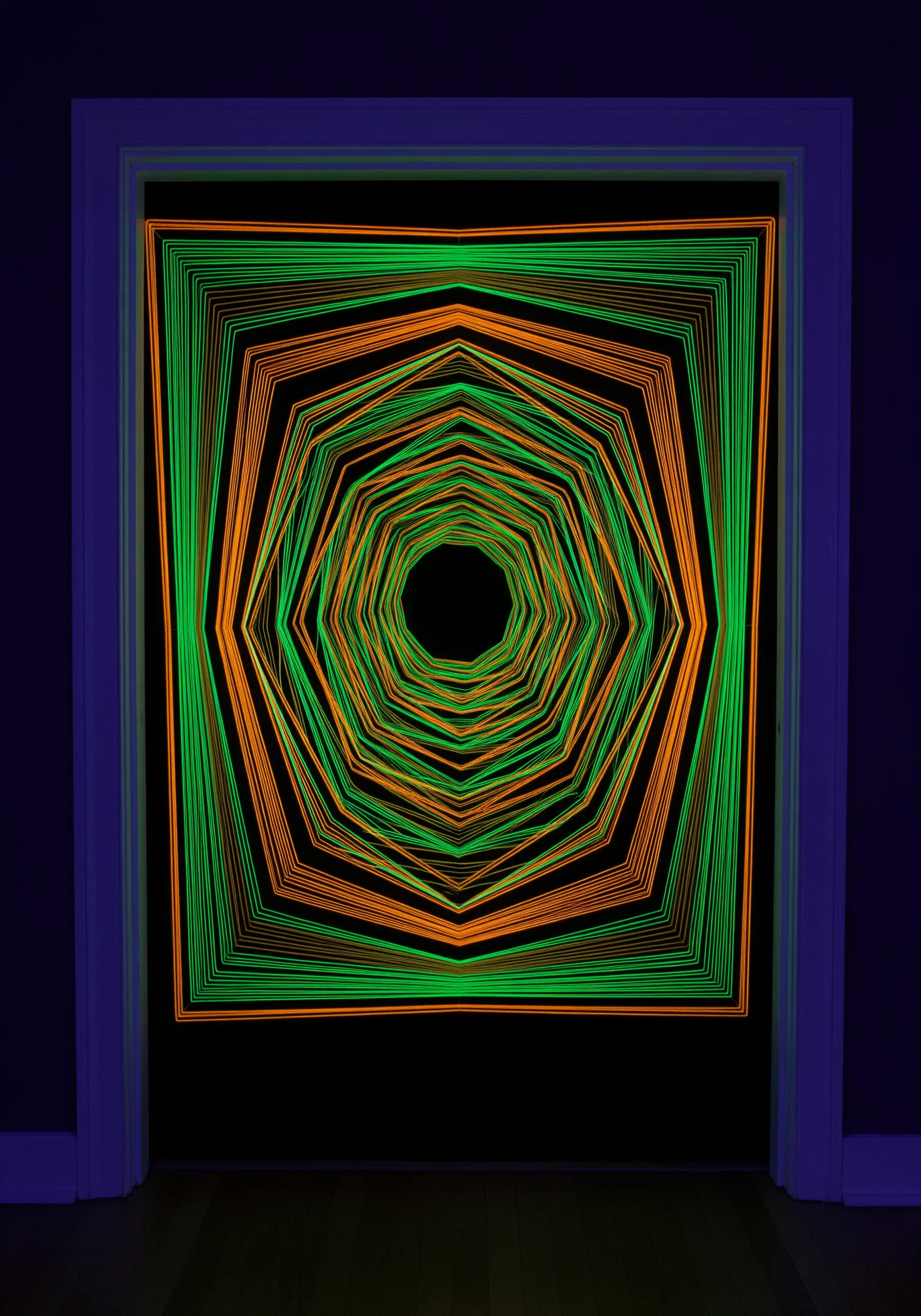
Create a design that truly glows by combining fluorescent thread with a dark background.
Work on black or navy fabric to maximize contrast. Use neon green, orange, or pink floss for your line work.
Outline a series of concentric geometric shapes, slightly rotating each one to create a spiraling tunnel effect.
Under a blacklight, the threads will activate and appear to float, turning your simple embroidery into a vibrant, otherworldly portal.
13. Design with Thread and Its Absence
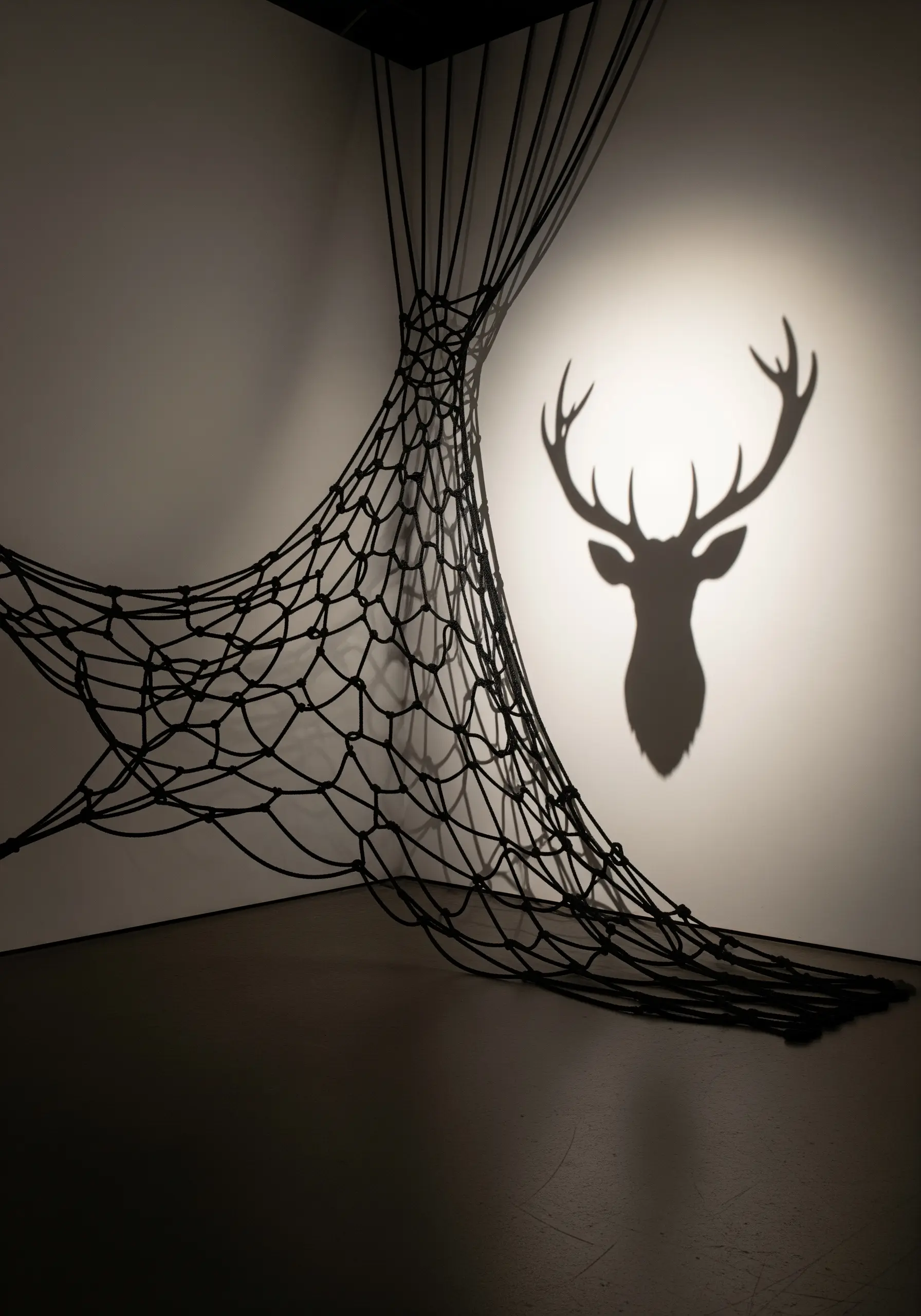
Elevate your work by considering its shadow as part of the final piece.
Create an open, net-like structure using macrame knots or by stretching threads across an empty frame, leaving significant negative space.
When you hang the finished piece an inch or two away from a wall and light it from an angle, the thread itself becomes secondary to the crisp, dark shadow it casts.
You are no longer just stitching a design; you are sculpting with light and absence.
14. Weave an Iridescent, Light-Catching Form
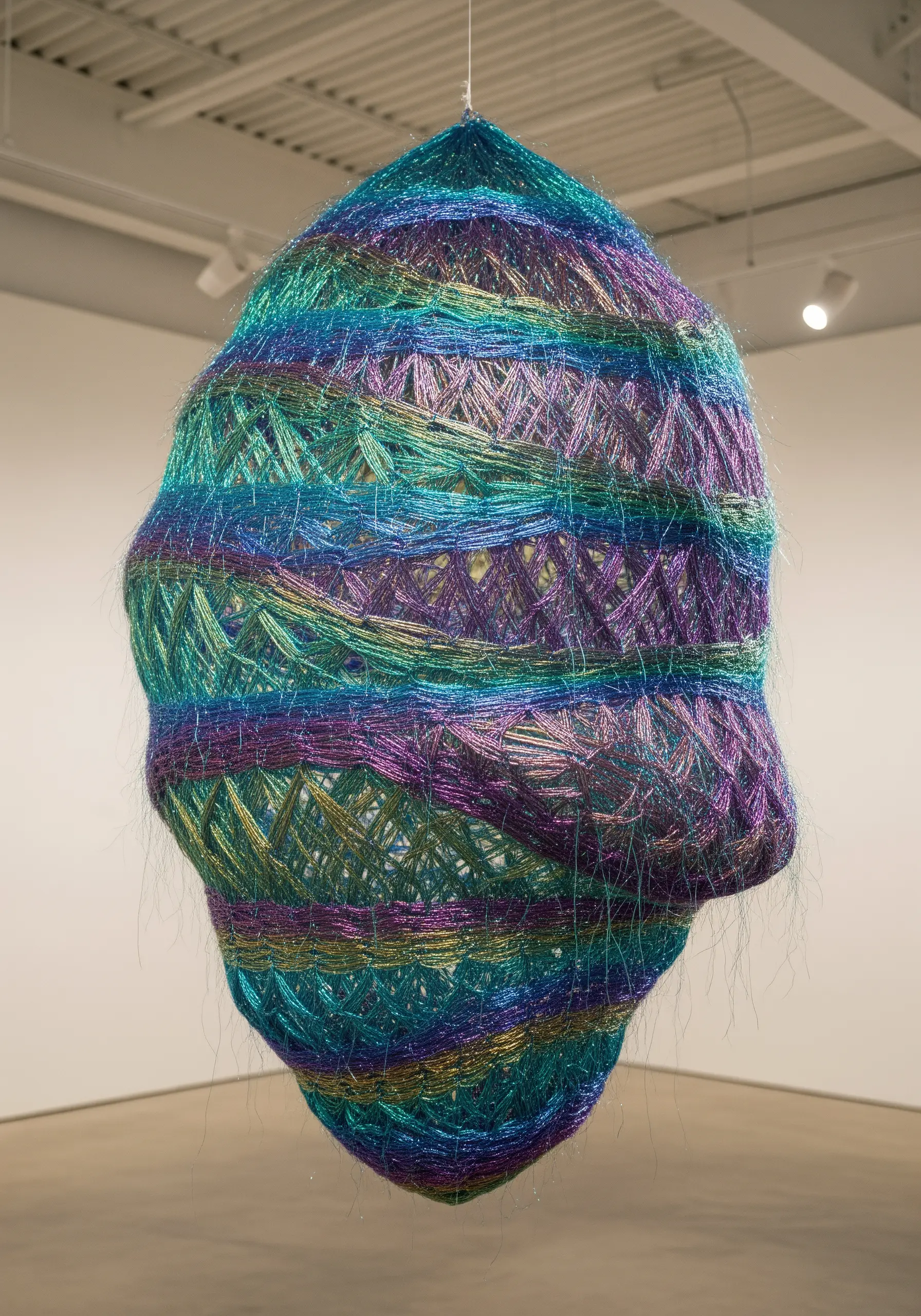
To build a piece that changes with the light, combine multiple types of specialty threads.
Gather variegated threads (which change color along their length) and metallic or iridescent threads (which reflect light).
Instead of stitching onto fabric, try wrapping these threads around a three-dimensional object, like a smooth stone or a wire armature.
As you layer the threads, their different finishes will interact, creating a shimmering, complex surface that looks different from every angle.
15. Stitch a Shape and Its Mirrored Echo
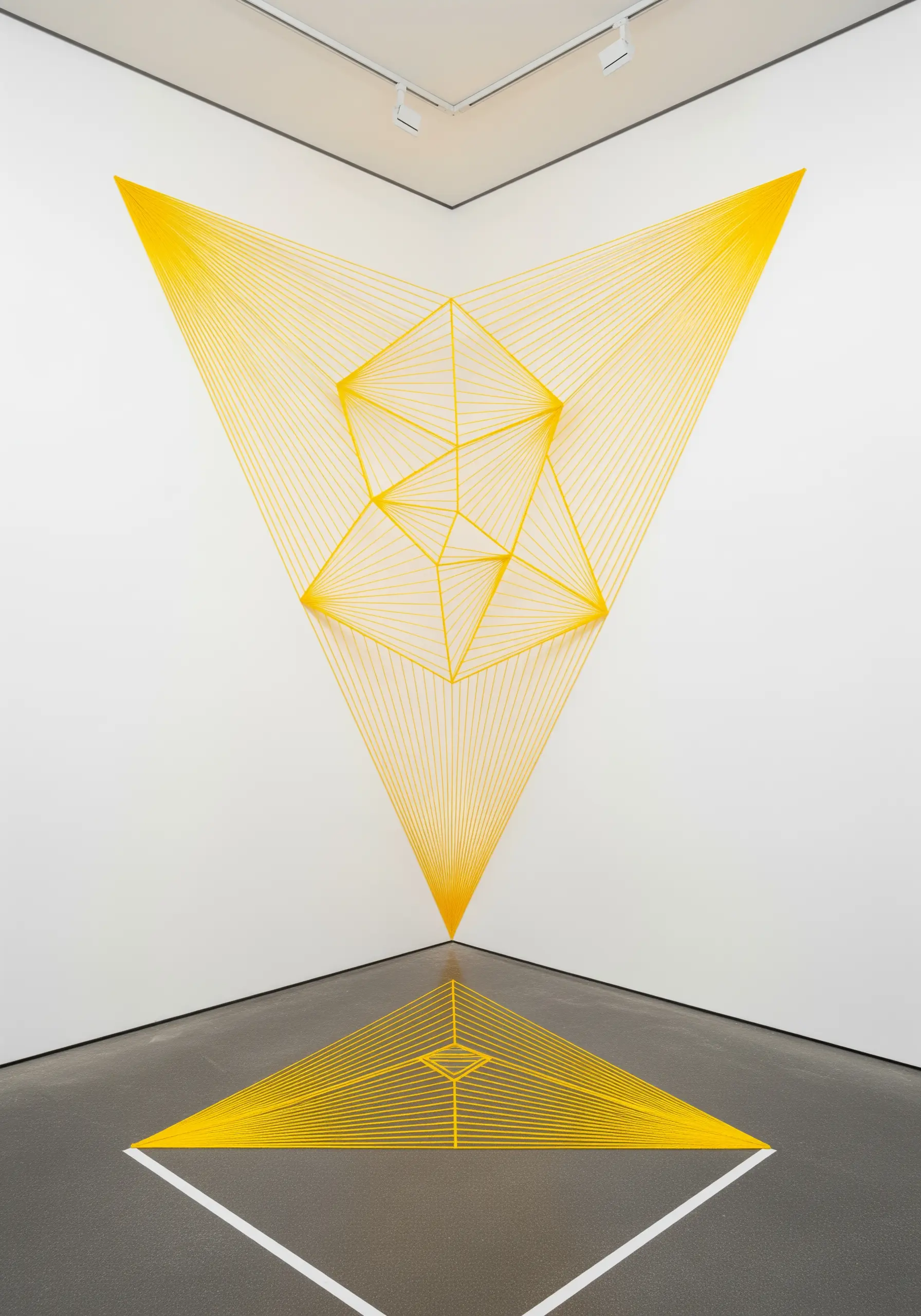
Create a compelling illusion of reflection by playing with symmetry and perspective.
Divide your composition in half with a horizontal line. In the top half, construct a geometric shape using stretched straight stitches anchored at the top and sides of your hoop.
Then, create a mirror image in the bottom half, anchoring the threads to the bottom edge.
This creates a powerful sense of an object hovering over a reflective surface, adding conceptual depth to a simple geometric design.
16. Integrate Stitched Forms into Natural Spaces
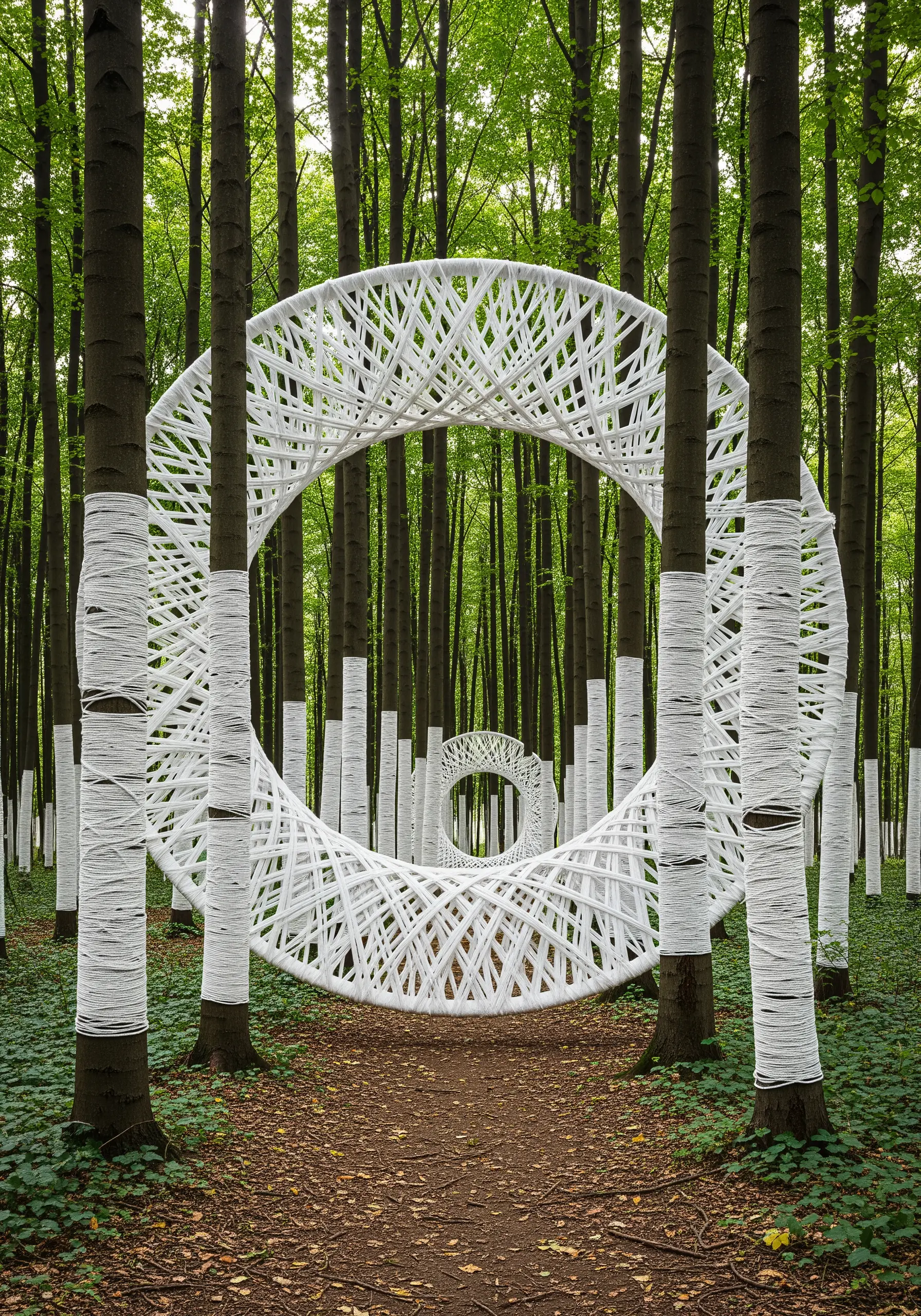
Take your fiber art beyond the hoop by bringing it into an unexpected environment.
Instead of stitching on fabric, try wrapping objects in the wild, like tree trunks or smooth stones, with white or brightly colored yarn.
This act of wrapping transforms the natural object, highlighting its form and texture while creating a startling, surreal intervention in the landscape.
On a smaller scale, bring a branch indoors and wrap it with thread to create a beautiful sculptural object for your home.
17. Sculpt Soft Waves with Chunky Fiber
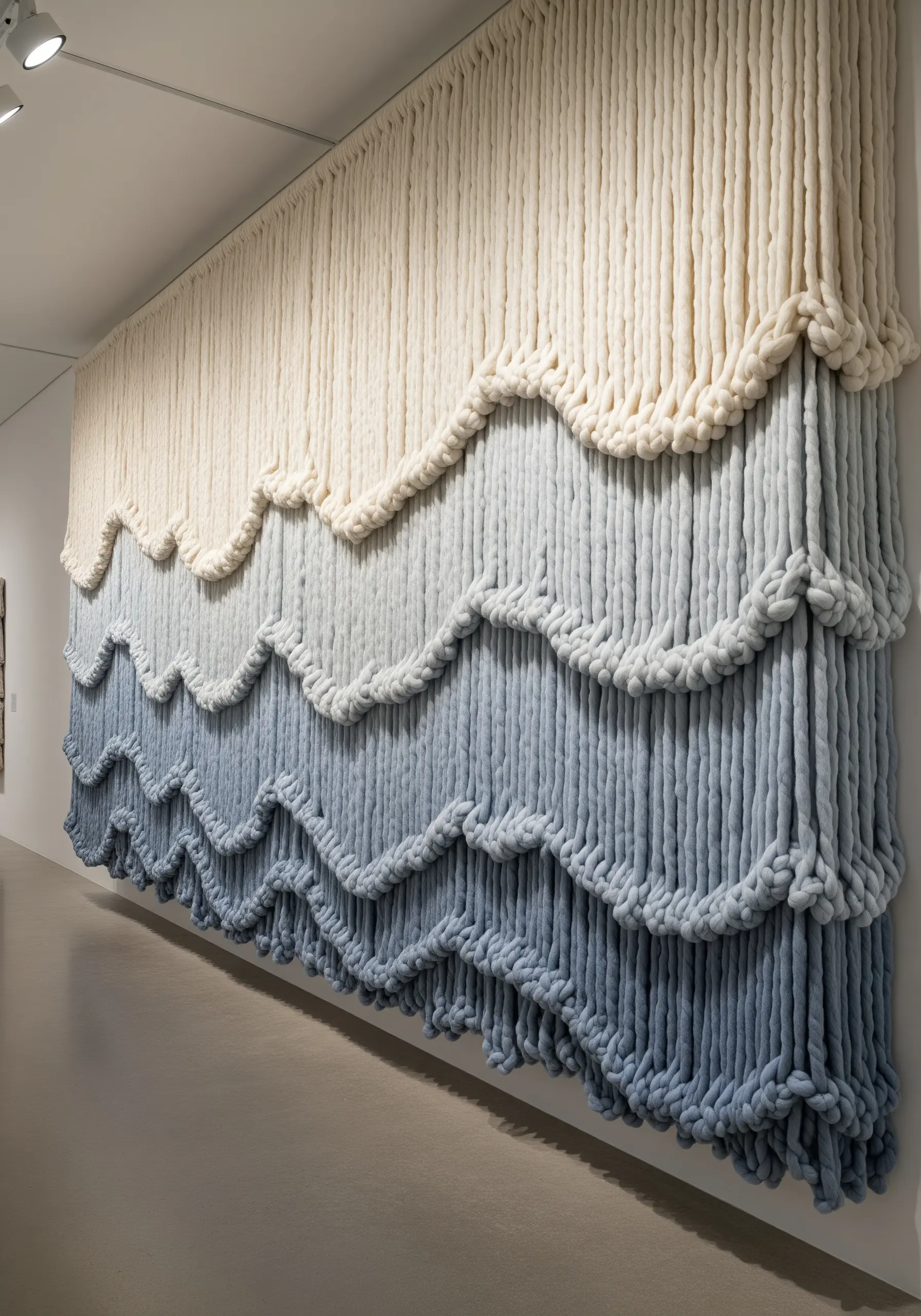
Explore extreme texture by working with unspun wool roving or super-chunky yarn.
You can create deep, sculptural waves by using simple weaving or looping techniques on a large-scale frame or canvas.
Drape long pieces of roving vertically, then use your fingers to pull and loop sections into soft, scalloped edges.
The sheer volume of the fiber creates its own structure, allowing you to build a plush, touchable wall hanging that mimics clouds or ocean waves.
18. Engineer Architectural Forms with Thread
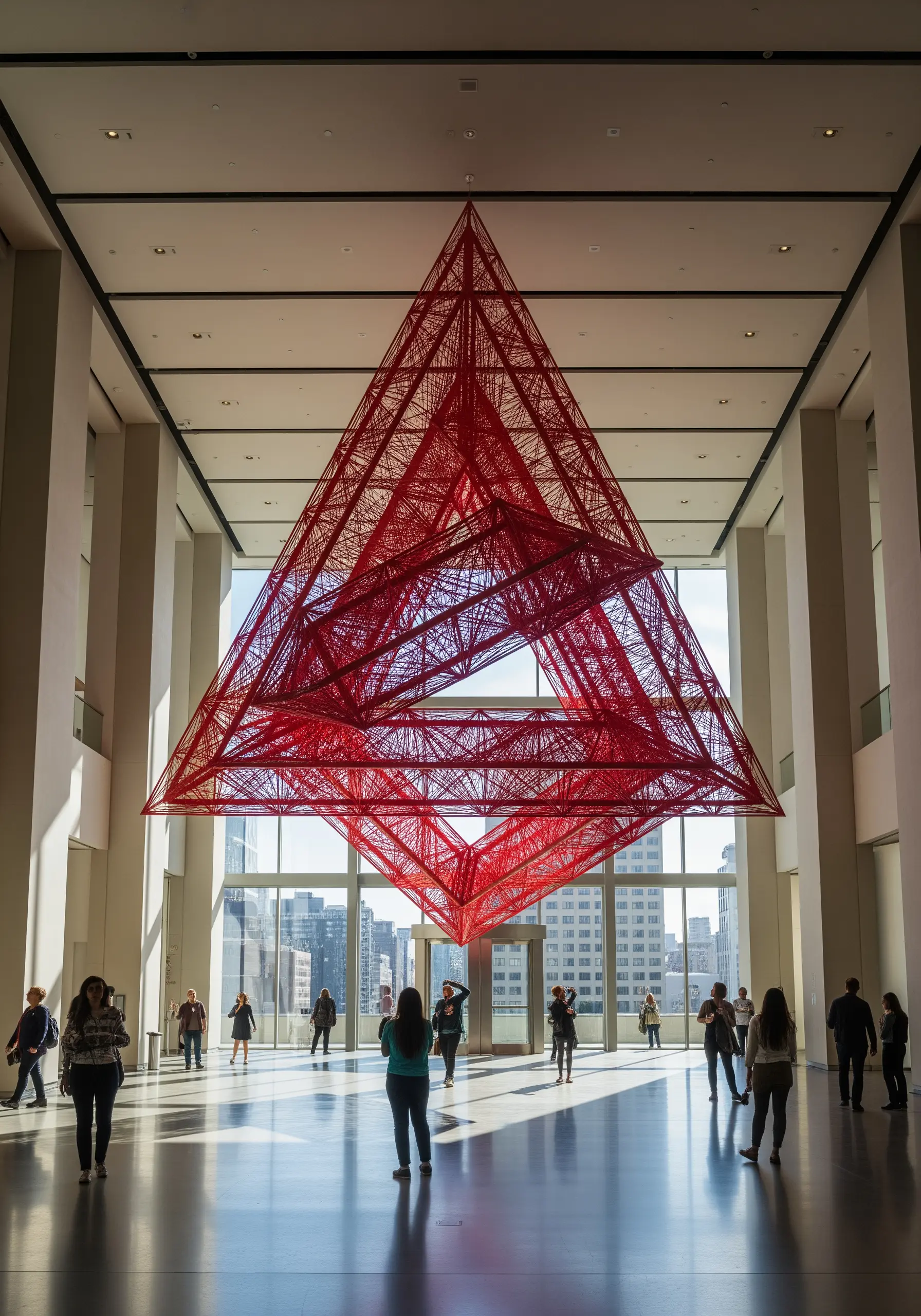
Challenge yourself to build large, complex structures using only thread and anchor points.
This technique relies on creating multiple layers of stretched thread within a frame to form intricate, transparent structures that you can see through.
Plan your design on paper first, mapping out the anchor points for each geometric plane.
By connecting these points with taut thread, you can construct pyramids, prisms, and other complex shapes that feel both massive and impossibly light.
19. Whipstitch a Vortex of High Contrast
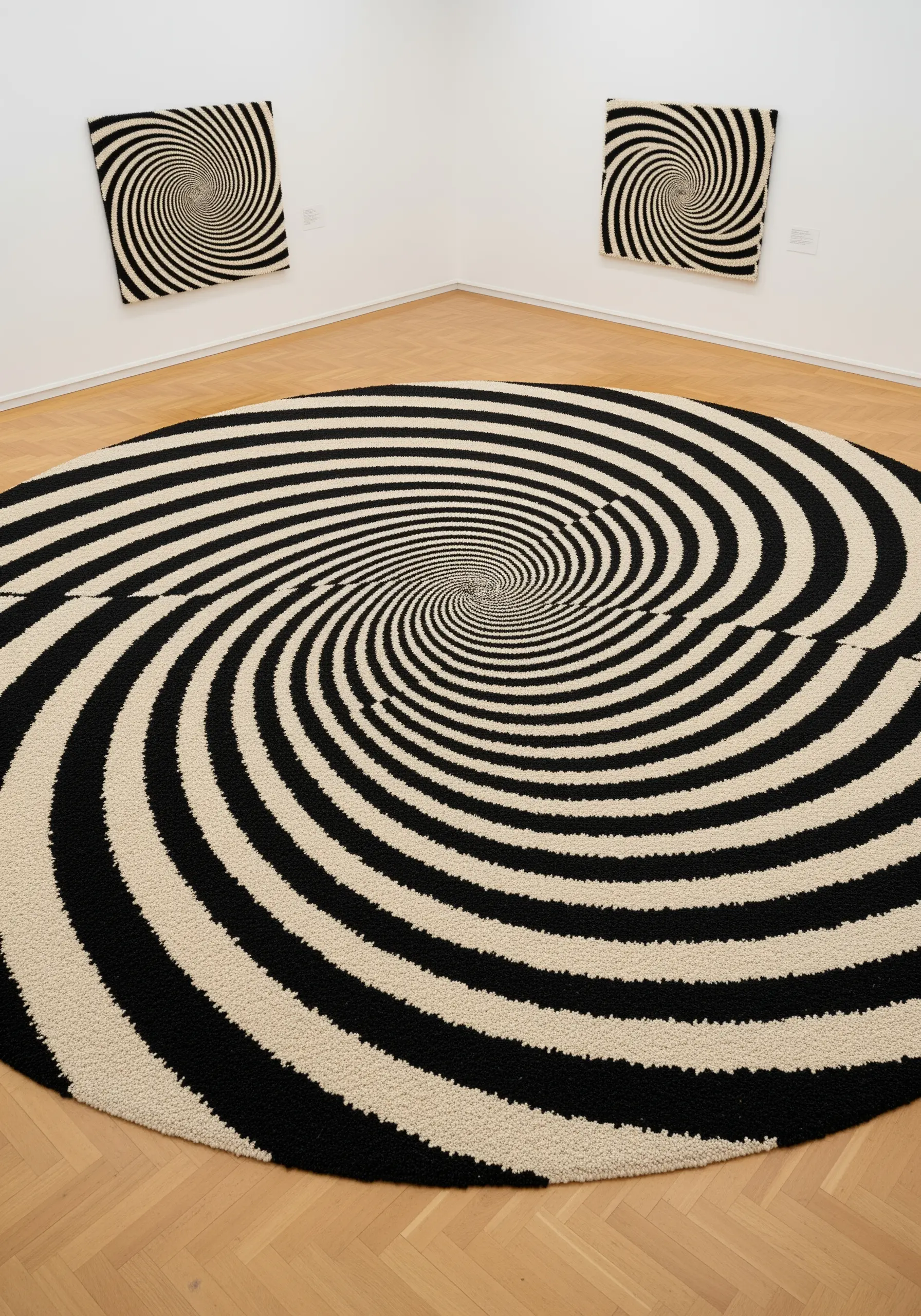
You can create a powerful spiral illusion using a simple whipped backstitch and two contrasting colors.
First, create a spiral on your fabric using a basic backstitch. Then, take a blunt tapestry needle and your contrasting color thread and ‘whip’ it around each backstitch without piercing the fabric.
This technique creates a smooth, raised, and uninterrupted line. When worked in a tight spiral with black and white, it produces a dizzying vortex effect that seems to spin and pull the eye inward.
20. Map a Shimmering Cube with Points of Light
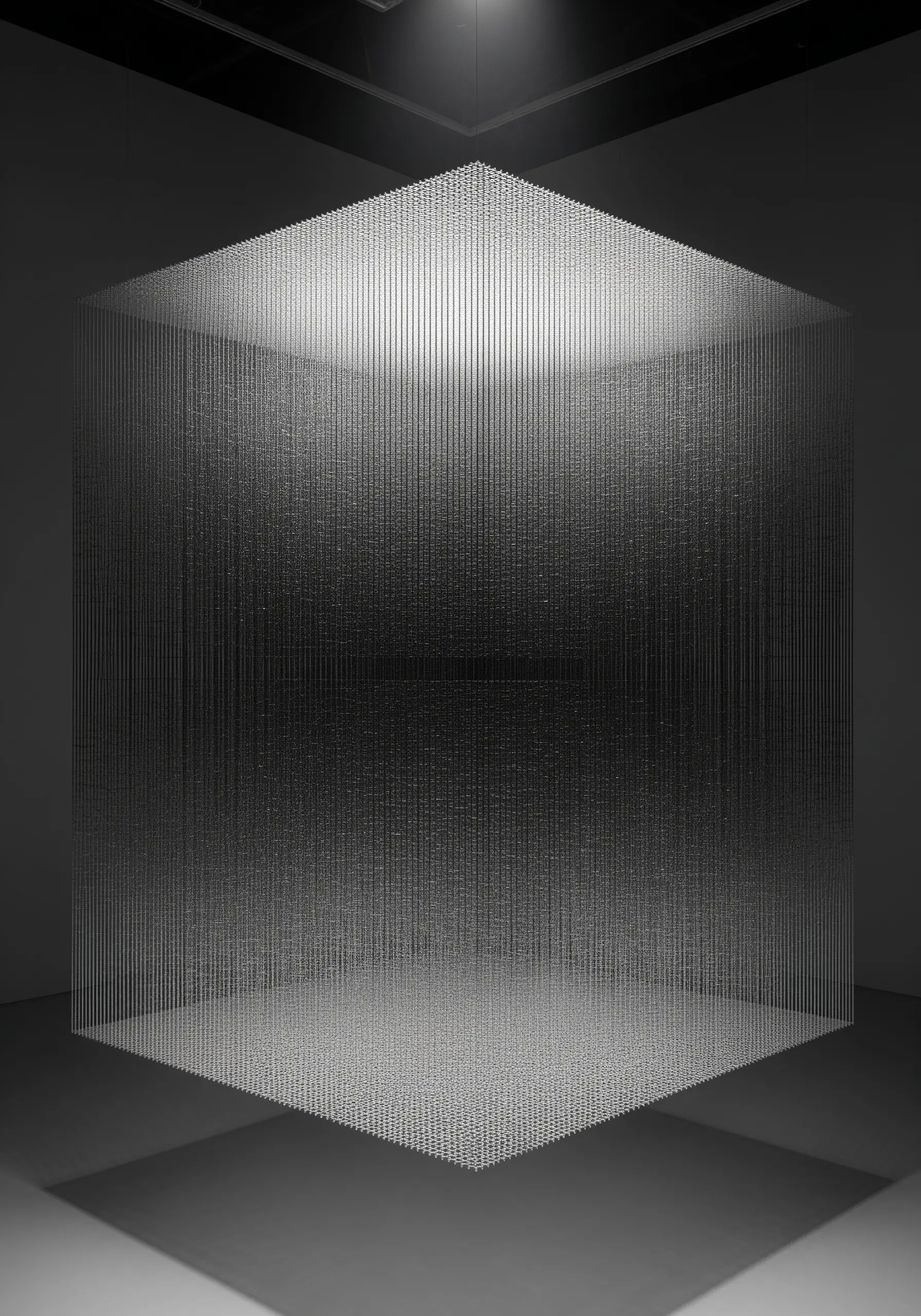
Instead of defining a shape with solid lines, suggest its form with points of light.
Lay down a grid of very fine, almost invisible vertical threads.
Then, come back with a metallic or pearlescent thread and create a tiny French knot or attach a single seed bead where the lines of your desired shape would intersect with the grid.
The result is a shimmering, ethereal form that seems to materialize out of the darkness, defined only by these disconnected, glittering points.
21. Master the Vanishing Point for Dynamic Motion
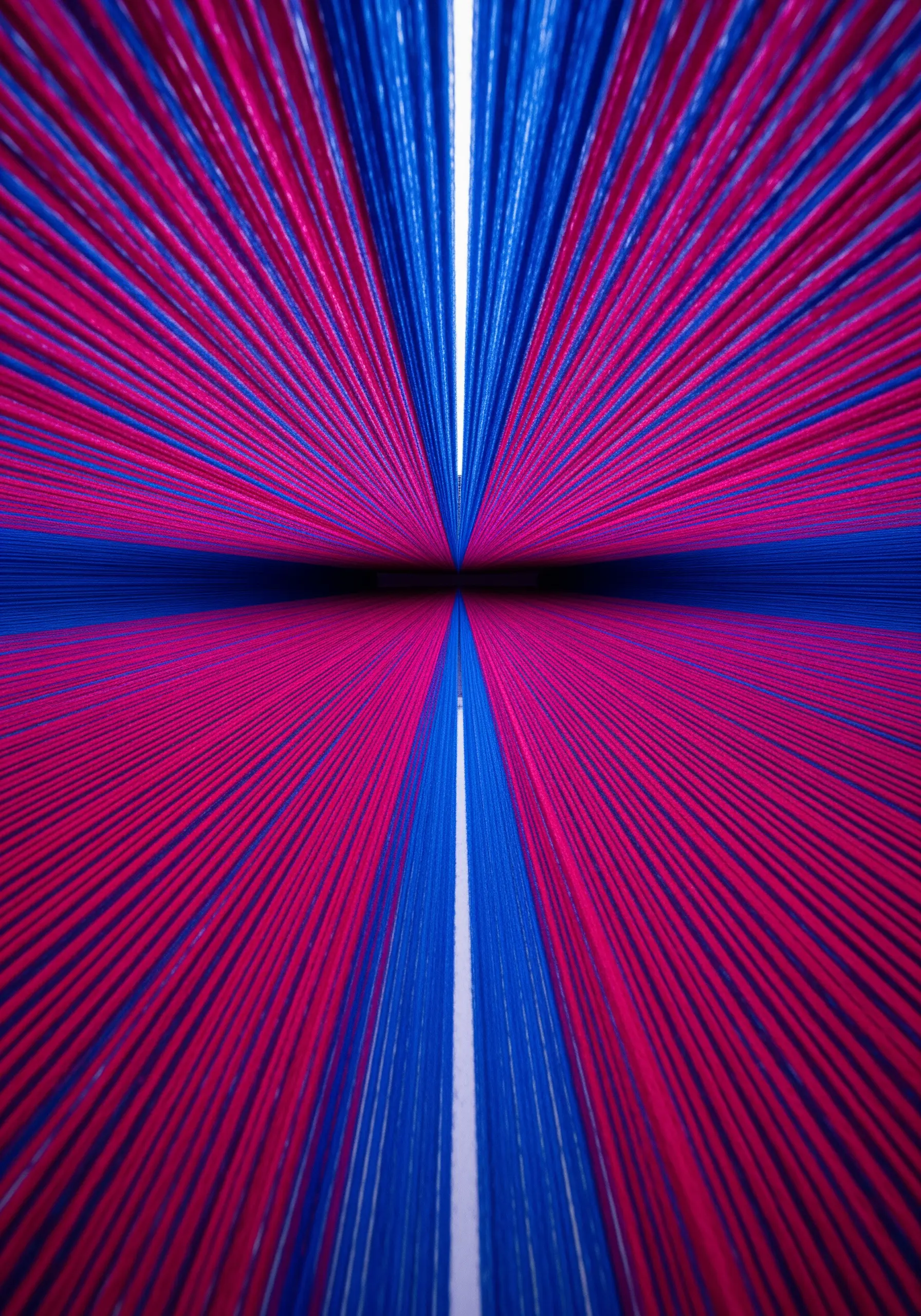
Create an explosive sense of speed and perspective by anchoring all your stitches to a single vanishing point.
Mark a central point on your fabric. Then, use long, straight stitches that radiate from the outer edges of your design area directly to that central point.
Alternating two bold, contrasting colors enhances the effect, creating receding lines that trick the eye into seeing a long, fast-moving corridor.
This is one of the most effective abstract optical illusion stitches for conveying motion.
22. Drape a Structure with Knotted Nets
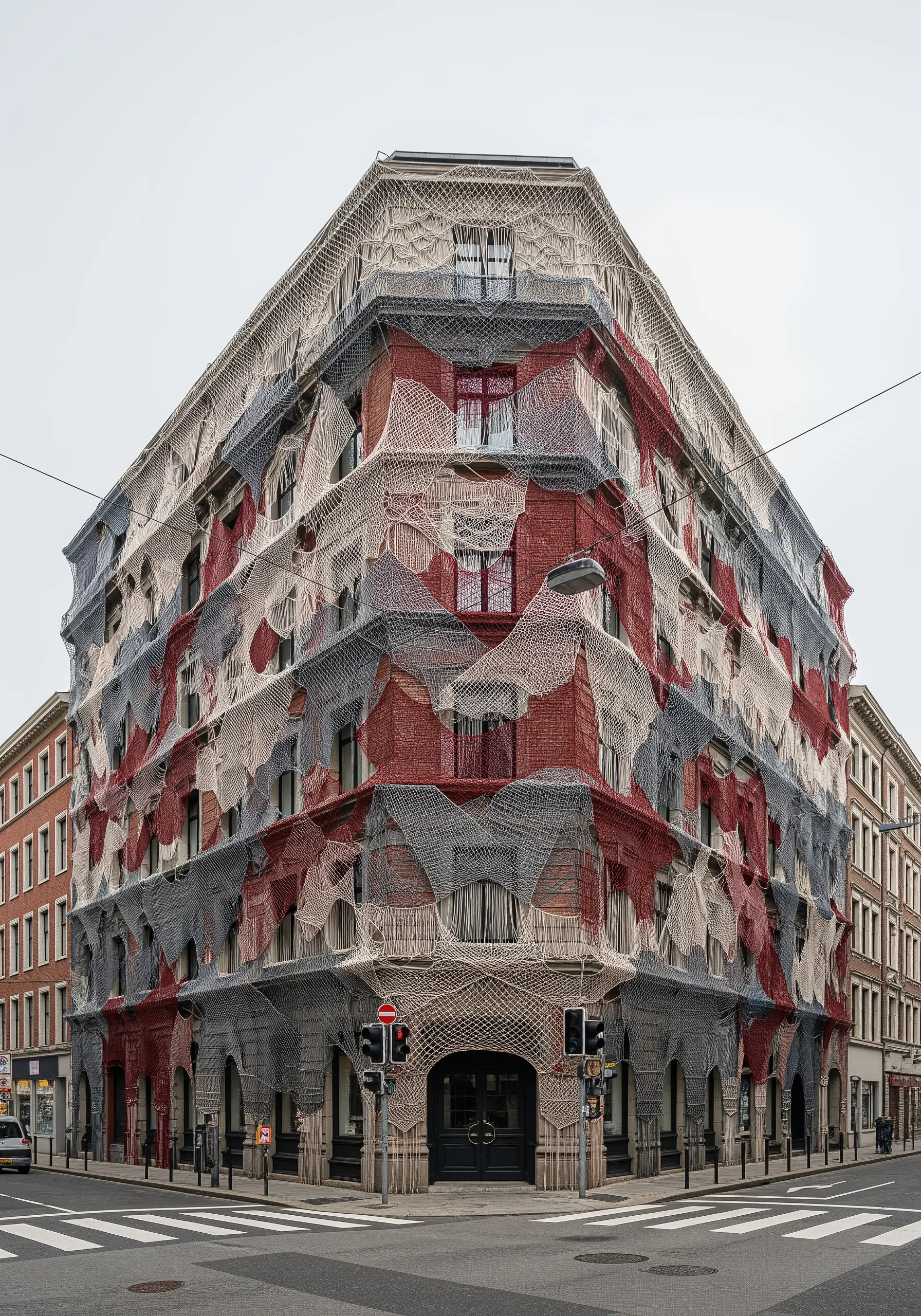
Think of thread as a structural element, not just a decorative one, by exploring knotting techniques like macrame.
Instead of filling a surface, create an open, net-like fabric using simple square knots.
You can vary the density of the net by leaving more space between knots, creating organic, web-like patterns.
This technique is perfect for creating semi-transparent layers or for adding a textural, grid-like element over an existing piece of fabric or art.
23. Create a Canvas for Projected Light
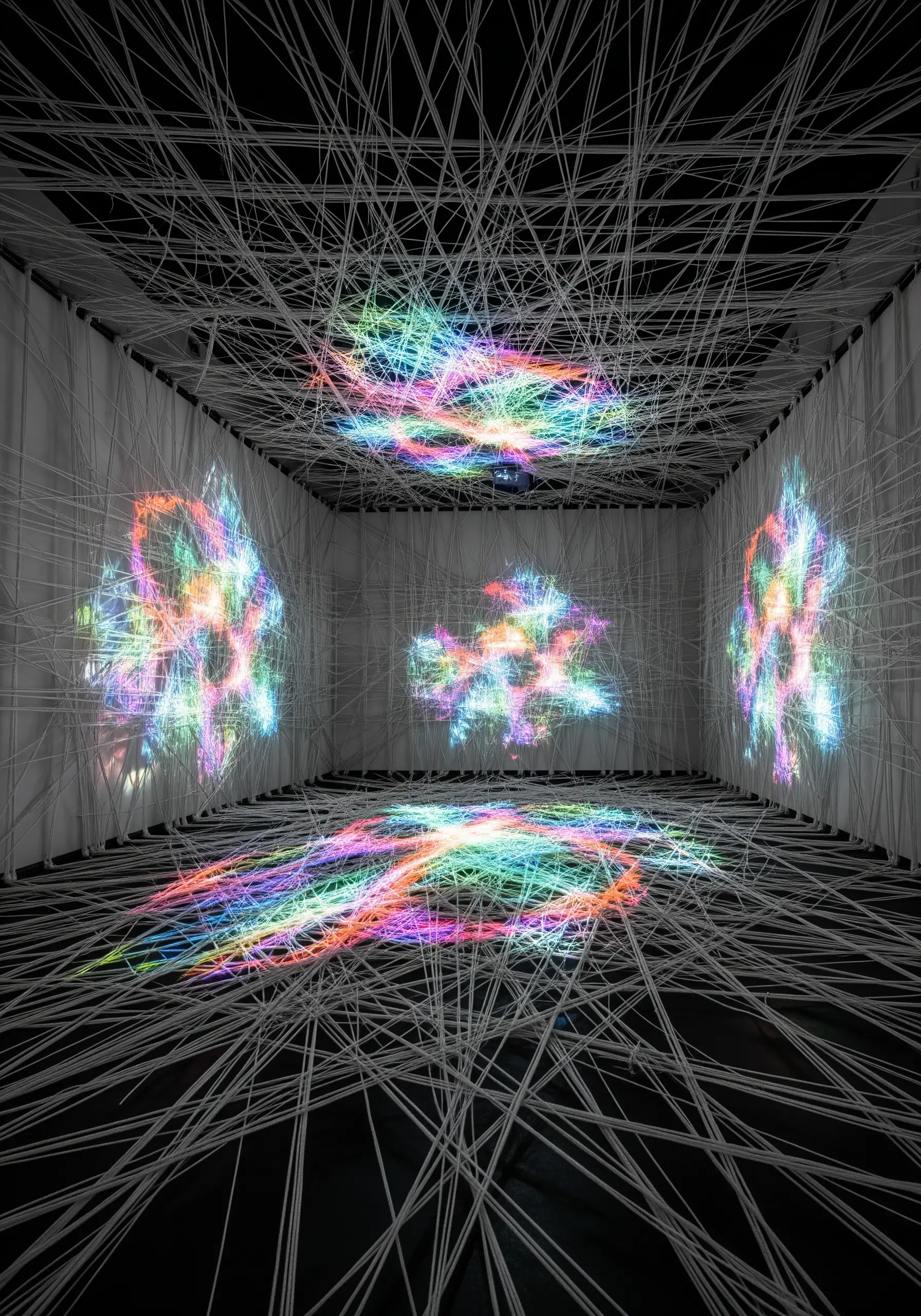
Use your thread work as a three-dimensional screen for light and color.
Stretch white or off-white thread randomly and chaotically within a box frame, creating a dense, web-like mass.
This tangled structure is the perfect canvas for light. You can shine colored LEDs through it or even use a small projector to cast images onto the threads.
The light will catch on the different layers of thread, creating a mesmerizing, holographic effect that lives and breathes.
24. Stitch an Infinite Tunnel of Color
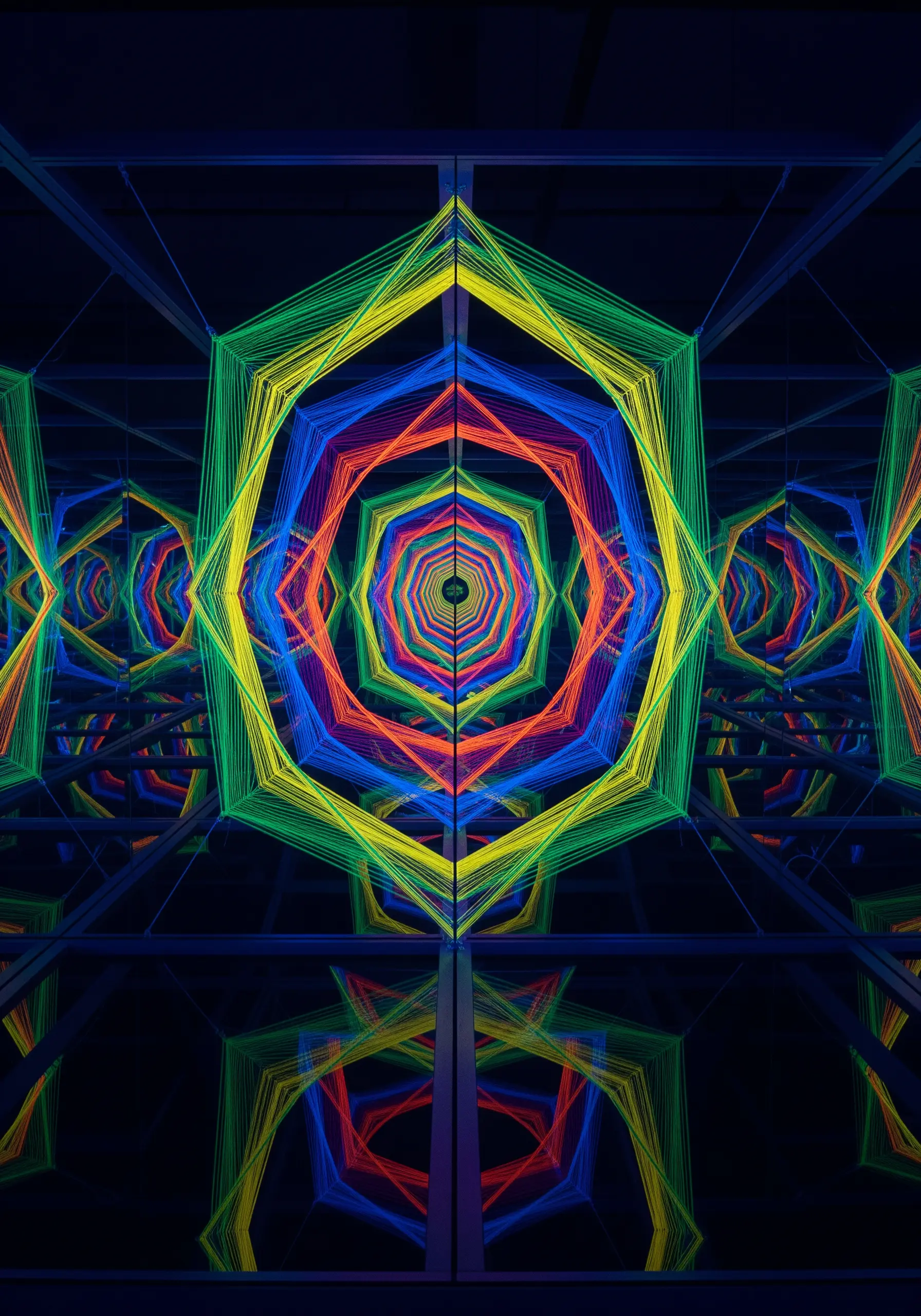
Push the illusion of depth to its extreme by incorporating mirrors into your fiber art.
Create a string art piece inside a box or deep frame. Stretch colorful threads to create a series of concentric, receding shapes.
Then, line the inside of the box with mirrors. The reflections will create the illusion of an endless, glowing tunnel of color that extends into infinity.
It’s a simple way to transform a finite object into a boundless visual experience.
25. Cascade Textures to Mimic Flowing Water
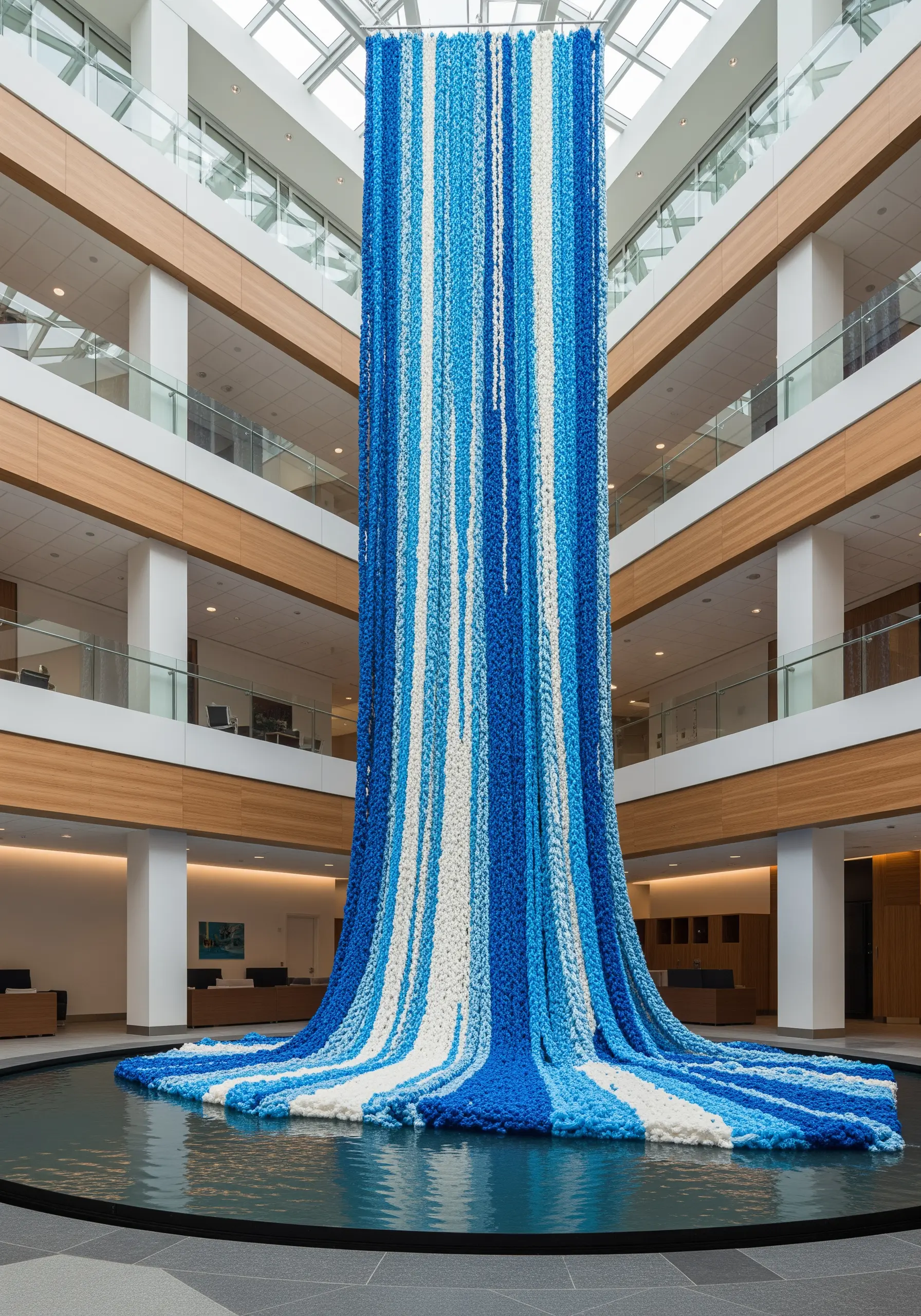
Evoke the movement of a waterfall by focusing on texture and gravity.
Select a variety of threads and yarns in a single color family—like blues and whites—but with different textures: smooth cotton, fuzzy chenille, bumpy bouclé, and thick wool.
Secure them at the top of your piece and let them hang freely, trimming the ends at the bottom.
The mix of textures and the natural drape of the fibers will create the powerful illusion of cascading, frothing water, turning your wall into a dynamic landscape.