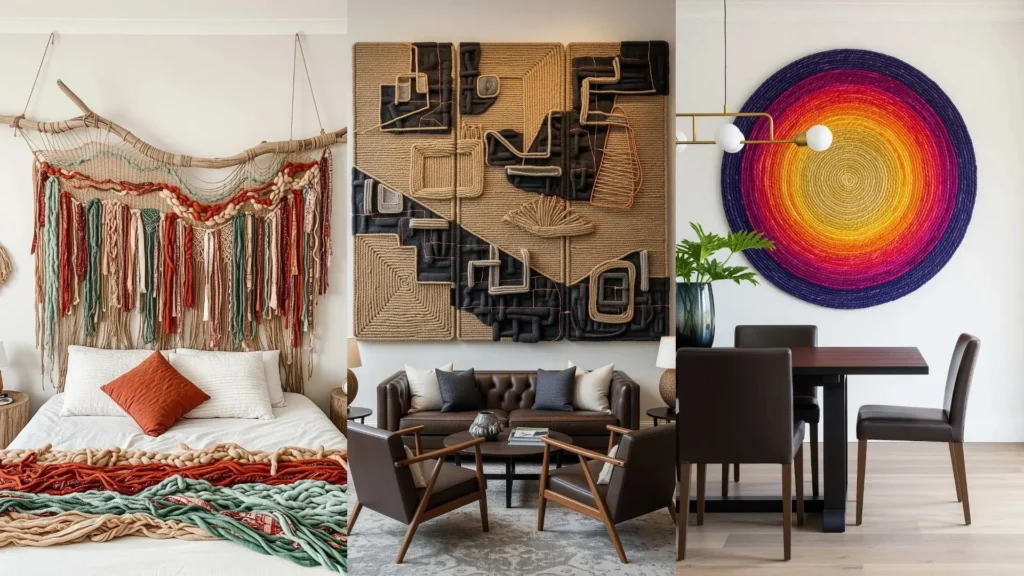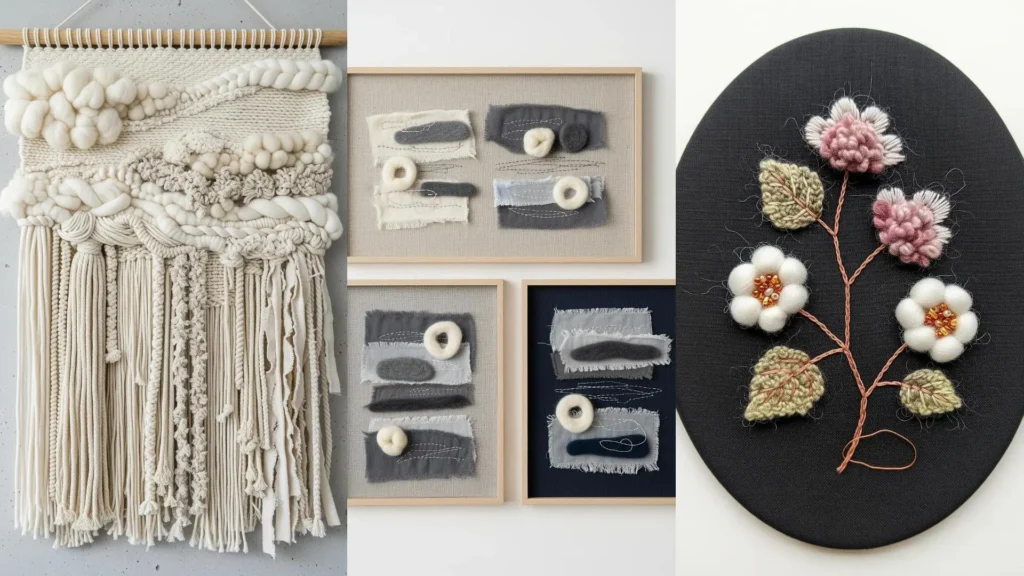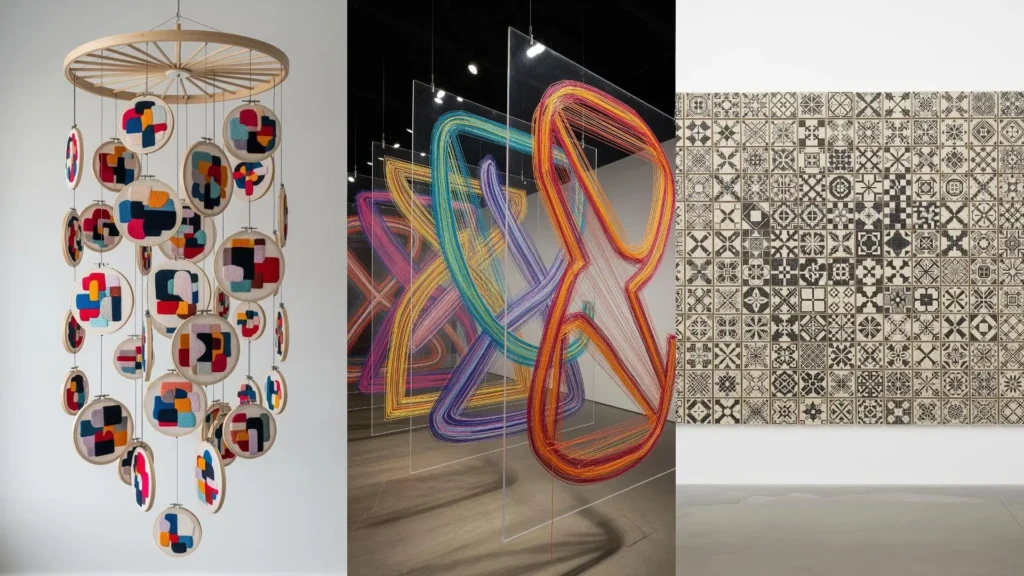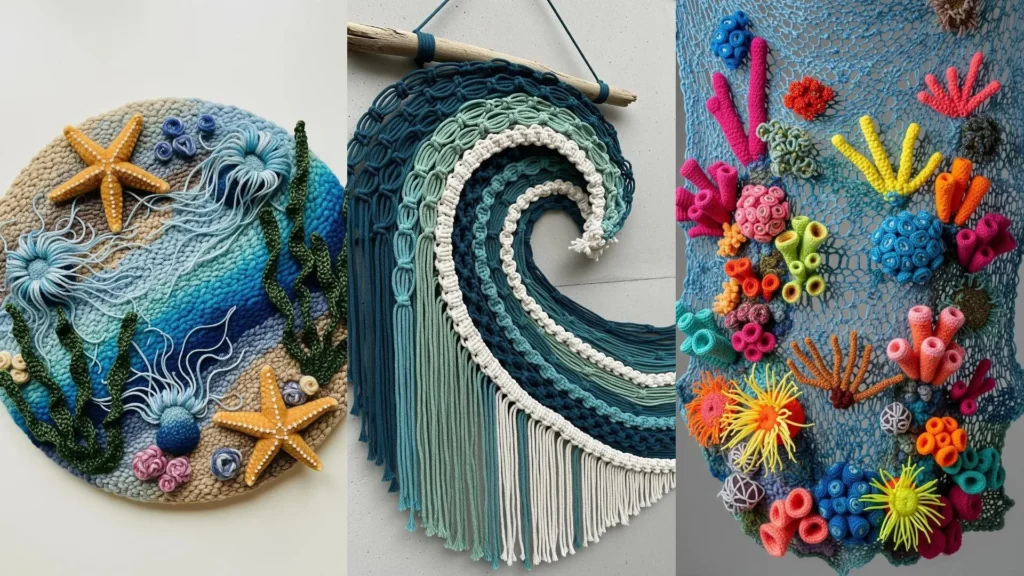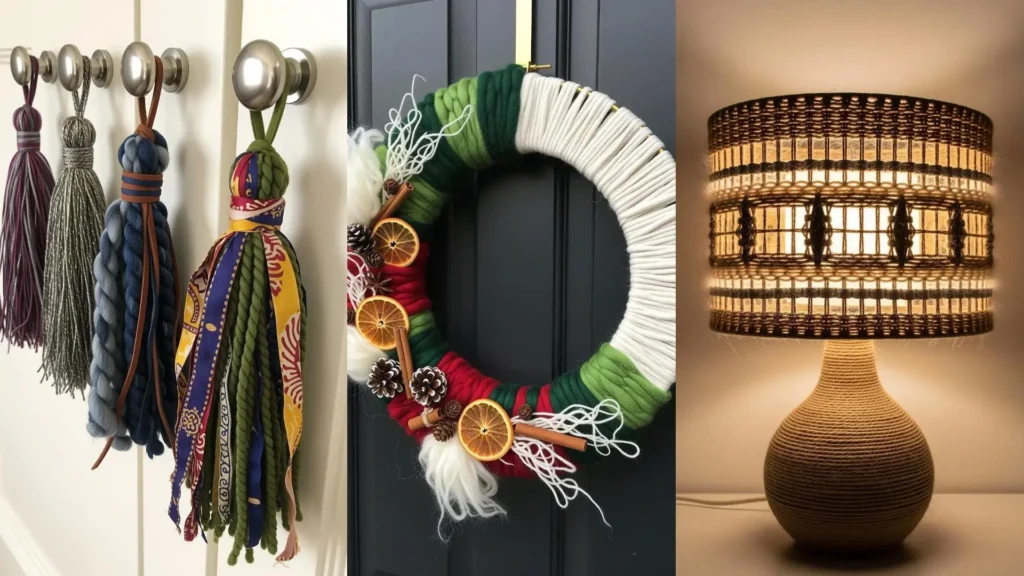
When the days grow shorter and colder, our hands often search for something tactile and comforting to create. This is the perfect moment to move beyond a simple embroidery hoop and explore the rich world of mixed fibers.
Instead of just thinking about stitches, I want you to think about texture, weight, and dimension. How does chunky wool feel next to smooth linen? What happens when light hits a metallic thread woven beside matte cotton? These are the questions that will transform your work from a simple craft into a piece of personal, expressive art.
Here, you’ll find projects that invite you to play with yarn, felt, roving, and rope. Each idea is a starting point, a technique you can master right now to create decor that not only looks cozy but feels deeply, authentically yours.
1. Weave a Statement with Roving and Knots
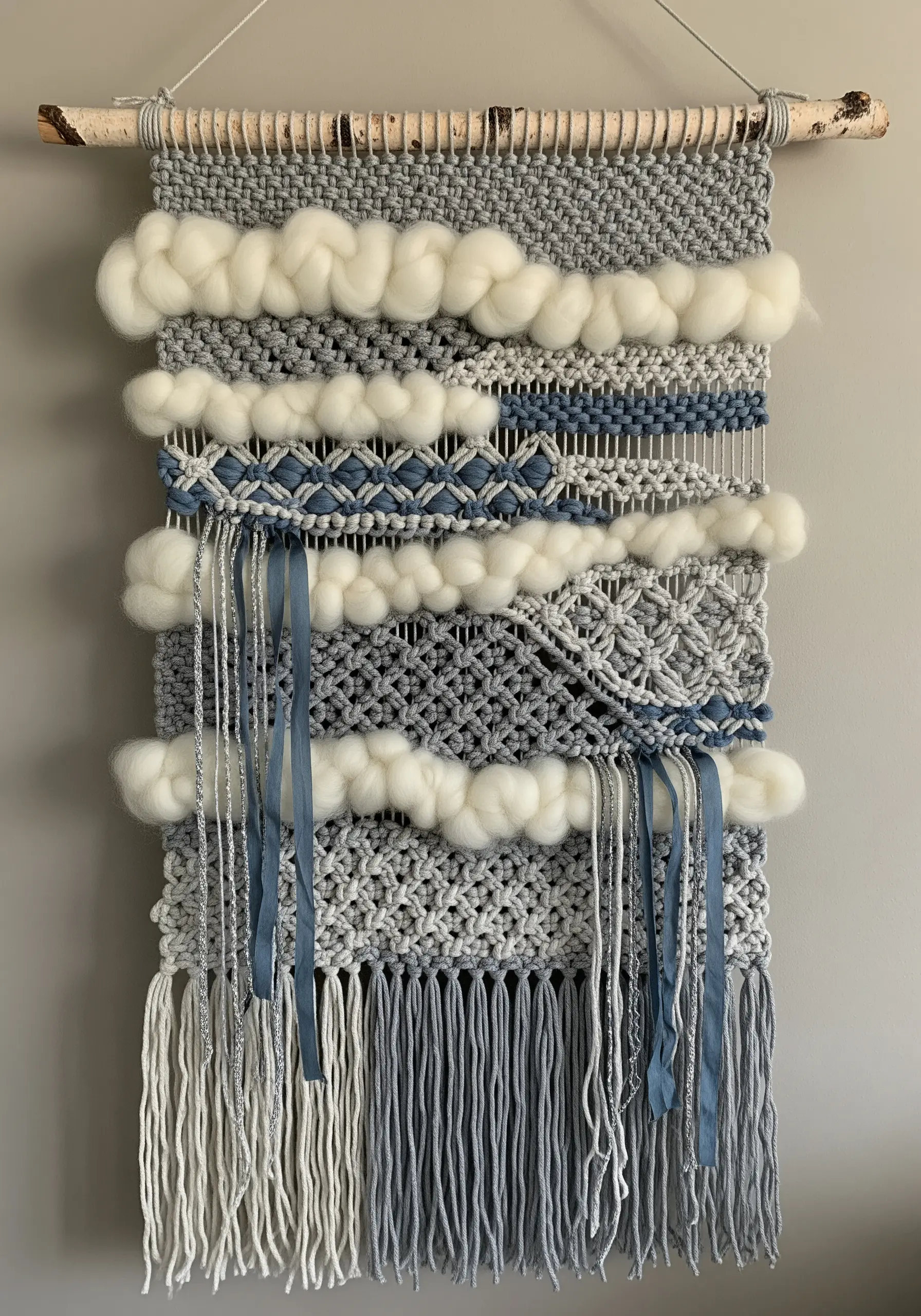
Create dramatic textural contrast by pairing thick, unspun wool roving with tightly woven sections or macrame knots.
The roving adds soft, cloud-like volume that beautifully offsets the structured grid of a plain weave or the detailed pattern of square knots.
To secure the roving, simply lay it across the warp threads and weave a few rows of thinner yarn above and below it, which locks it in place without compressing its loft.
Incorporate unexpected elements like satin ribbons or metallic cords that fall loosely to catch the light and add a layer of refined detail.
2. Reimagine the Wreath with Yarn Wrapping

Transform a simple wreath form by wrapping it tightly with chunky yarn, focusing on clean color blocking for a modern aesthetic.
Vary the texture by alternating between thick, single-ply yarn and thinner, twisted strands to create subtle ridges and depth.
To create the wispy, ethereal accents, gently pull apart strands of white mohair or alpaca yarn and needle-felt them directly onto the wrapped surface.
Finish with natural elements like cinnamon sticks, dried orange slices, and small pinecones, securing them with a hot glue gun for a design that is both festive and organic.
3. Create Graphic Definition with Punch Needle

Achieve crisp, graphic winter motifs on your coasters by outlining your design first with a single row of punch needle loops.
This creates a defined border that prevents your fill colors from looking blurry, making snowflakes and tree branches appear sharp and intentional.
Work on a tight-weave backing fabric like linen or monk’s cloth to ensure your loops are dense and uniform.
For the background, use a seed stitch or a simple knit stitch to create a pebbled texture that makes the central motif pop.
These are more than just coasters; they are mini handmade objects that bring life to any tabletop.
4. Master the Art of the Chunky Hand-Knit Throw

The key to a luxurious, airy chunky blanket is consistent tension without pulling the yarn too tight.
Instead of knitting with needles, use your hands and arms to form the stitches, keeping the loops loose and even to create that signature plush, open weave.
Choose a chenille or tube yarn, as it’s less likely to shed or pill than unspun merino roving, ensuring your blanket is both soft and durable.
Plan your color changes at the end of a row to create clean, intentional stripes rather than a random, mottled effect.
This is one of those embroidered throws and blankets to make winter even cozier and more personal.
5. Assemble a Garland with Balanced Textures
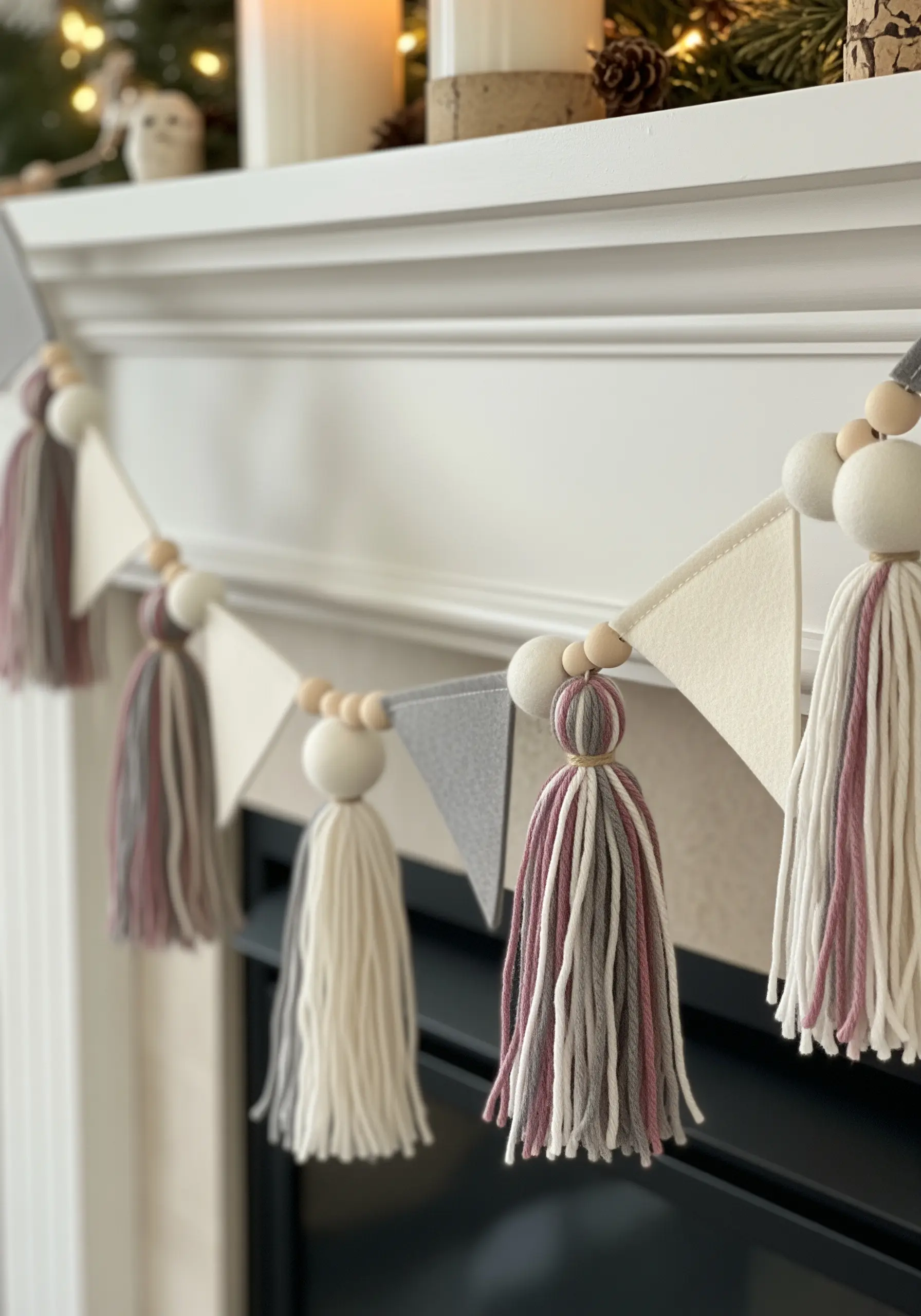
Elevate a simple garland by focusing on the interplay of materials: soft yarn, smooth wood, and structured felt.
To make perfectly uniform tassels, wrap your yarn around a piece of cardboard of your desired length, tie it off at the top, and then cut the bottom loops.
Use a single strand of a contrasting color to wrap the neck of each tassel for a polished, professional finish.
Alternate the felt pennants with wooden beads to create visual rhythm and prevent the softer elements from clumping together.
6. Weave a Tactile Landscape for Your Table

Design a table runner that feels as good as it looks by weaving with yarns of varying weights and textures.
Introduce thick, cloud-like sections using wool roving, which adds dimension and a focal point to the piece.
Alternate these high-texture areas with flat-woven sections to ensure that tableware can still sit stably on the runner’s surface.
The final piece becomes a central element of your tablescape, one of those line art garden motifs that transform table runners into functional art.
7. Sculpt a Sphere with Punch Needle Loops
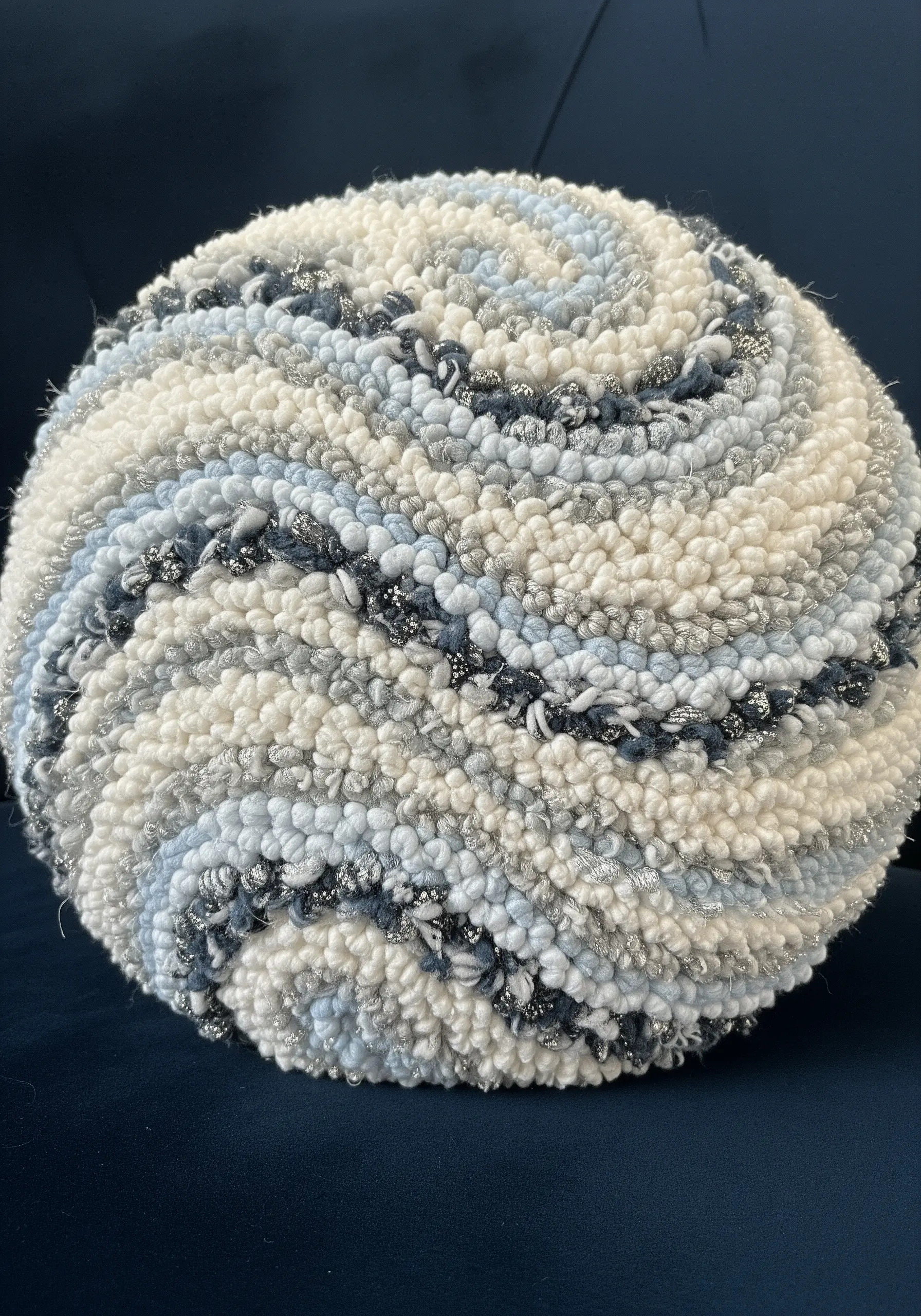
Create a stunningly textured spherical pillow by working punch needle on a flat pattern that can be stitched together into a 3D shape.
Use a mix of bouclé and metallic yarns to introduce shimmer and an irresistibly tactile surface.
To achieve the spiral effect, draw your design onto the fabric and change yarn colors as you follow the lines, blending them slightly where they meet.
The dense loops of the punch needle technique naturally hide the seams, resulting in a cohesive, sculptural object.
8. Craft Coiled Baskets with a Touch of Gold

Construct sturdy, elegant baskets by coiling cotton rope and stitching the layers together with a zigzag stitch on your sewing machine.
Introduce a metallic gold thread for select rows to add a touch of luxe warmth that contrasts beautifully with the matte cotton rope.
To ensure your baskets are perfectly round and hold their shape, maintain consistent, firm tension as you feed the rope into the machine.
Create a nested set by simply adjusting the diameter of the base for each basket, making them as practical as they are decorative.
9. Paint a Winter Scene with Thread and Yarn

Move beyond standard embroidery floss to create a dimensional winter forest scene.
Use couching—tacking down thick yarn with small, discreet stitches—to form the textured bark of the larger trees.
For the delicate, snow-dusted branches, switch to a single strand of fine white thread and use fly stitches or simple straight stitches.
Create the illusion of a misty background by filling the sky with long, vertical satin stitches in varying shades of deep blue, which gives the piece a painterly depth.
This is a perfect example of how to use embroidery ideas inspired by the subtle textures of nature to create atmosphere.
10. Illuminate Your Weaving on a Lampshade

Turn a basic lampshade frame into a functional piece of fiber art by using it as a circular loom.
Incorporate open-weave techniques like Spanish lace or soumak to create deliberate gaps in the design.
When the lamp is lit, these spaces will allow light to filter through, casting beautiful, intricate shadows on your walls.
Choose natural fibers like jute, linen, or dark wool to create a warm, diffused glow that enhances a room’s cozy ambiance.
11. Sculpt Soft Characters with Needle Felting

Bring charming woodland creatures to life by sculpting wool roving with a felting needle.
To create smooth, dense shapes like the sleeping fox, repeatedly poke the wool from all angles, tucking and shaping it as you work to compact the fibers.
For small, precise details like the mushroom spots, roll a tiny amount of colored wool into a ball, place it on the surface, and gently poke it into place.
This technique offers a sculptural freedom that’s perfect for creating embroidered nursery decor ideas with a soft, dreamy quality.
12. Create a Plush Rug with Latch Hooking

Craft a wonderfully shaggy and soft rug using the simple technique of latch hooking.
The texture comes from thousands of individual pieces of yarn knotted onto a canvas grid, creating a deep, plush pile.
Vary the pile height in different sections to add subtle dimension—for instance, a slightly shorter pile for the bear’s muzzle to make it stand out.
This method is incredibly forgiving and meditative, making it perfect for large-scale animal-themed pillow stitching ideas or custom rugs.
13. Design a Cohesive Woven Triptych
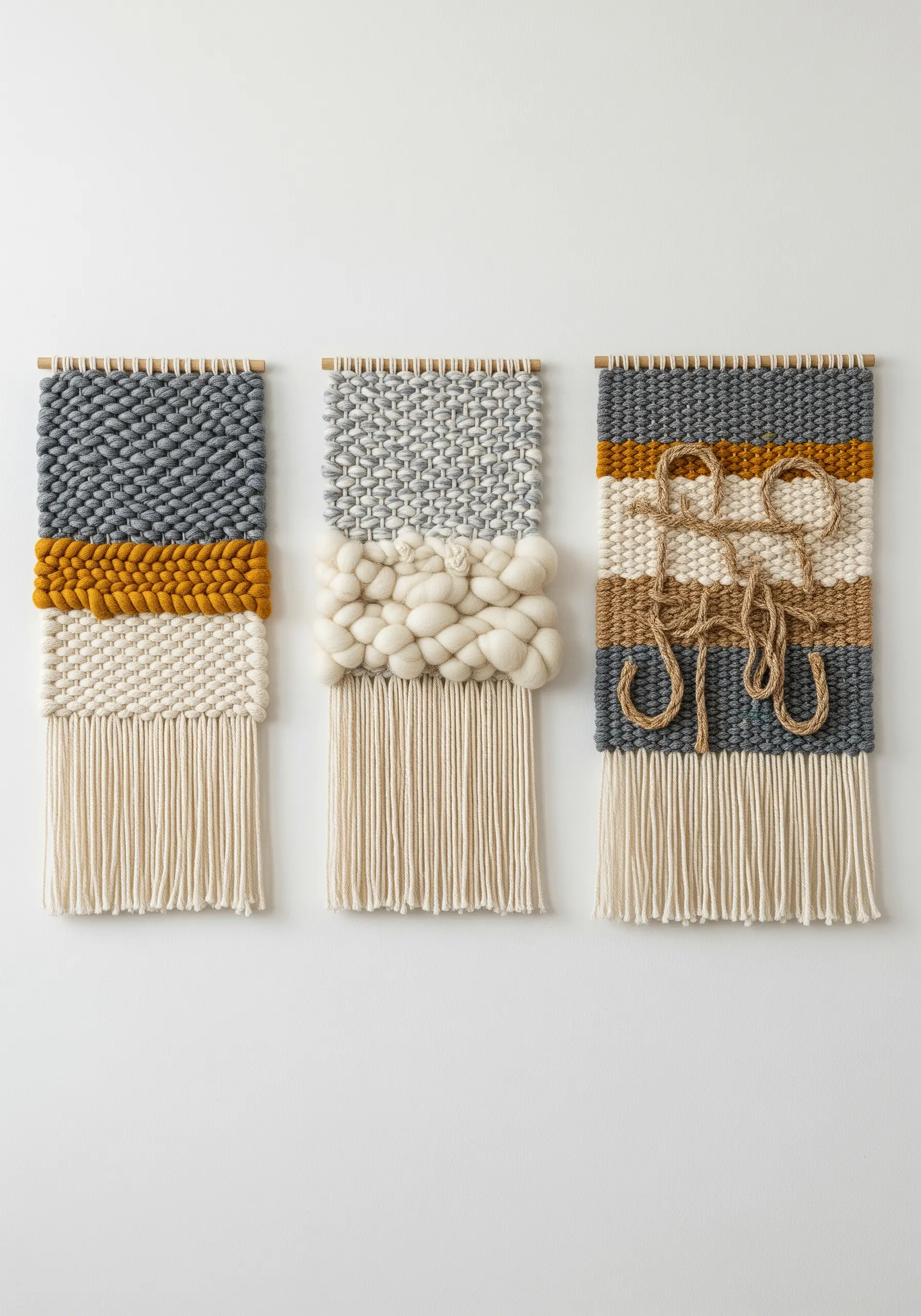
Create a sophisticated wall display by weaving a set of three complementary pieces.
To ensure they work together, use a unified color palette across all three weavings but introduce different patterns and textures in each one.
One might feature a bold geometric pattern, another a soft cloud of roving, and the third an abstract line motif.
This approach makes the collection feel intentional and curated, turning a simple craft into one of those stunning fiber art installations that transform any room instantly.
14. Adorn Natural Branches with Yarn

Transform found branches into a rustic, sculptural centerpiece by wrapping them with various yarns.
Use variegated yarn to create subtle, organic color shifts that mimic the tones of moss and lichen.
Secure the yarn ends with a small dab of hot glue on the underside of the branch for a clean finish.
Incorporate small felt leaves and real acorn caps to enhance the woodland feel, turning simple sticks into a piece of nature-inspired art.
This project is a perfect way to explore mixed fiber creations inspired by nature.
15. Weave a Clutch with Mixed Materials

Create a sophisticated woven clutch by combining soft, chunky yarn with unexpected materials like metallic faux leather or tweed fabric strips.
The stiffer materials add structure and a high-end feel to the final piece, while the yarn provides softness and color.
Finish with a silky, oversized tassel made from fine embroidery floss or rayon thread, which adds elegant movement and a professional touch.
This technique elevates a simple woven rectangle into a chic, functional accessory.
16. Join Coiled Shapes with a Decorative Stitch
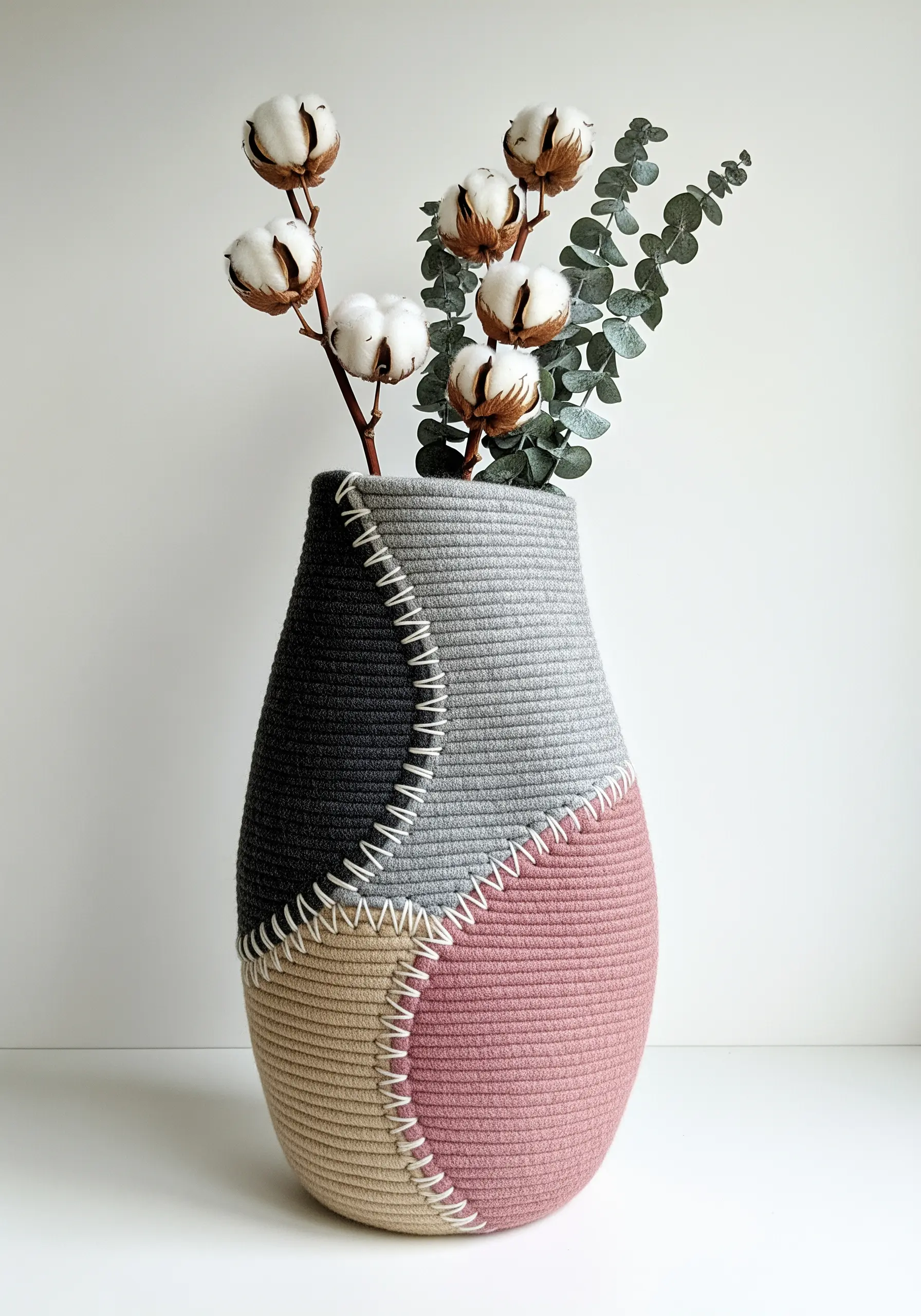
Elevate a simple coiled rope vase by making the connecting stitch a prominent design feature.
After forming your color-blocked felt or fabric panels, join them with a bold, oversized whipstitch using a contrasting, thick thread like perle cotton or tapestry wool.
The visible, slightly irregular stitches add a layer of handcrafted charm and texture that celebrates the construction of the piece.
This technique turns a functional seam into an expressive, decorative element.
17. Construct Statement Tassels with Layered Fibers

Design luxurious, eye-catching tassels by layering multiple types of fibers and materials.
Combine chunky yarn, twisted rope, metallic threads, and strips of patterned fabric to create incredible richness and depth.
Use a strip of leather or a wide, decorative ribbon to wrap the neck of the tassel, adding another layer of texture and concealing the mechanics.
These are more than mere embellishments; they are small, independent handmade embroidery projects to give as thoughtful birthday gifts or decor accents.
18. Quilt a Landscape with Textured Appliqué

Create a painterly landscape pillow using fabric appliqué and simple quilting techniques.
Choose fabrics with distinct textures—like corduroy, wool, and sherpa fleece—to represent different elements of the landscape, such as hills, water, and clouds.
Cut your fabric into organic, curved shapes and layer them to build your scene.
Secure the pieces with a simple, visible running stitch in a contrasting thread to outline the contours and add a final layer of hand-stitched detail, resulting in a beautiful high-texture fabric collage embroidery project.